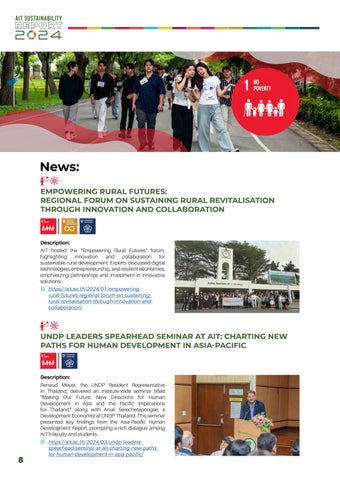
EMPOWERING RURAL FUTURES: REGIONAL FORUM ON SUSTAINING RURAL REVITALISATION THROUGH INNOVATION AND COLLABORATION
Description:
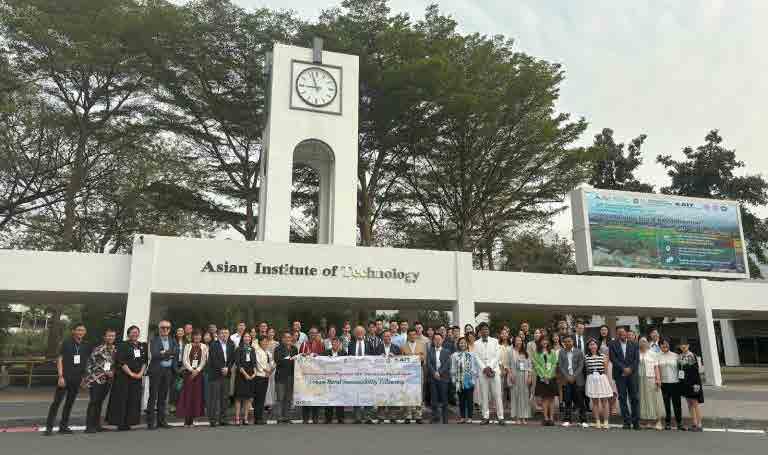
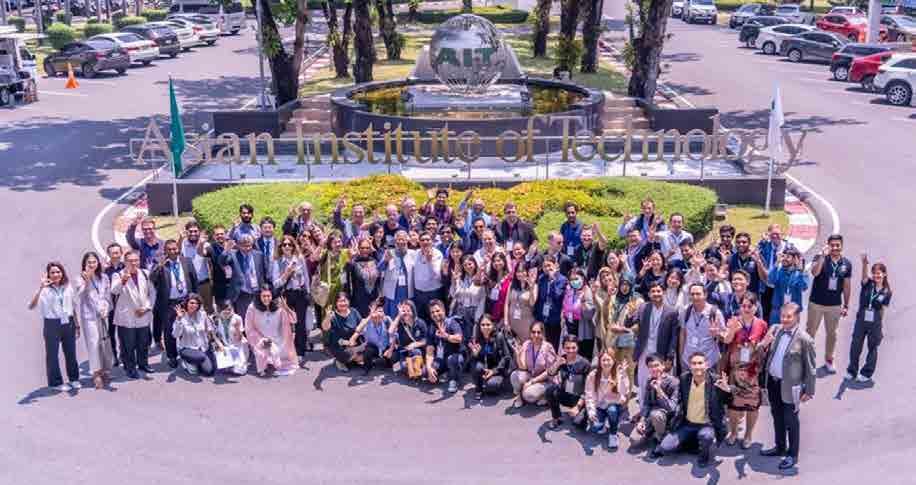
AIT hosted the “Empowering Rural Futures” forum, highlighting innovation and collaboration for sustainable rural development. Experts discussed digital technologies, entrepreneurship, and resilient economies, emphasizing partnerships and investment in innovative solutions.
� https://ait.ac.th/2024/01/empoweringrural-futures-regional-forum-on-sustainingrural-revitalisation-through-innovation-andcollaboration/
UNDP LEADERS SPEARHEAD SEMINAR AT AIT: CHARTING NEW PATHS FOR HUMAN DEVELOPMENT IN ASIA-PACIFIC
Description:
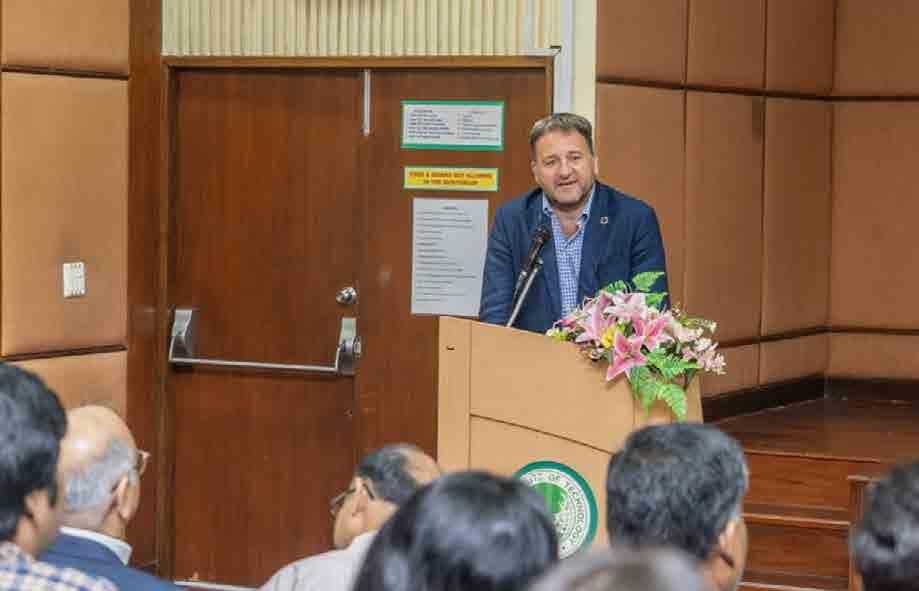
Renaud Meyer, the UNDP Resident Representative in Thailand, delivered an institute-wide seminar titled “Making Our Future: New Directions for Human Development in Asia and the Pacific Implications for Thailand,” along with Anuk Serechetapongse, a Development Economist at UNDP Thailand. This seminar presented key findings from the Asia-Pacific Human Development Report, prompting a rich dialogue among AIT’s faculty and students.
� https://ait.ac.th/2024/03/undp-leadersspearhead-seminar-at-ait-charting-new-pathsfor-human-development-in-asia-pacific/
YUNUS CENTRE AT AIT HOSTS 11TH SBAC WITH NOBEL LAUREATE MUHAMMAD YUNUS: ADVANCING SOCIAL BUSINESS RESEARCH AND COLLABORATION
Description:
At the opening of the 11th Social Business Academia Conference (SBAC), Muhammad Yunus, Nobel Peace Laureate 2006 and Chairman of the Yunus Centre, Bangladesh, delivered a compelling speech regarding the current state of university education and its impact on creativity and human dignity. His thought-provoking address left a significant impression on the attendees, urging them to consider this critical issue. The conference, co-hosted by the Yunus Center at the Asian Institute of Technology (YCA) and Muhammad Yunus, along with the Yunus Centre in Dhaka, was held on April 1–2, 2024, with the theme “Social Business Research—Objectives, Methodologies, and Priorities.”
� https://ait.ac.th/2024/04/yunus-centre-at-aithosts-11th-sbac-with-nobel-laureate-profmuhammad-yunus-advancing-social-businessresearch-and-collaboration/
RURAL REVITALIZATION THROUGH INCLUSIVE AND SUSTAINABLE TOURISM DEVELOPMENT
Description:
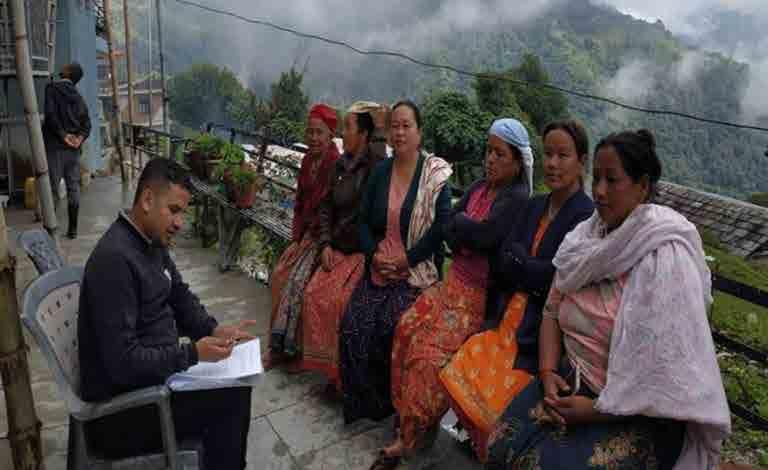
On October 23, 2024, AIT showcased research by Ph.D. scholar Surendra Tiwari on rural revitalization through inclusive and sustainable tourism in Nepal’s multiethnic communities along the Annapurna Sanctuary Trail. The study highlights how tourism enhances rural livelihoods, creates jobs, and improves infrastructure while preserving culture and nature. It also addresses challenges like environmental degradation and rising living costs, advocating for sustainable practices. The findings support multiple Sustainable Development Goals, emphasizing tourism’s role in fostering sustainable development and community empowerment.
� https://ait.ac.th/2024/10/rural-revitalizationthrough-inclusive-and-sustainable-tourismdevelopment/
Projects:
SAFEGUARDING THE REGIONAL FOOD SECURITY UNDER CLIMATE CHANGE IMPACTS VIA MAINSTREAMING NATURE-BASED SOLUTIONS-CENTERED ADAPTATION STRATEGIES (NAFOS)
AIT Research Theme: Climate Change
AIT Unit: SET-Water Engineering and Management
Project Duration: 01 Oct 2022 to 30 Jun 2025
Project Sponsor/ Client: Asian Pacific Network for Global Change Research
Project Partners:
1. Victoria University of Wellington, New Zealand
2. Nanyang Technological University, Singapore
3. Indian Institute of Technology, Bombay
4. Institute of Technology of Cambodia
5. Viet Nam National University
6. An Giang University, Vietnam
7. Stockholm Environment Institute, Sweden
Description:
The Lower Mekong River Basin (LMRB) contributes significantly to ensuring that Asia can stay food secure, yet millions of its inhabitants struggle to meet their dietary needs. Climate change (CC) renders the LMRB even more food insecure via disrupted hydro-ecological regimes, intensified salinity intrusion, and deteriorated biodiversity, albeit many structural and non-structural countermeasures have been implemented. This project seeks new opportunities from nature-based solutions (NBS) that actively harness ecosystem services (ES) to address CC challenges effectively and adaptively. The proposed project targets the mainstreamed adaptation strategies for CC that are NBS-infused to safeguard LMRB food security via the realization of 4 objectives: (i) to evaluate the CC impacts on ES that render the basin food insecure; (ii) to curate NBS best practices in agriculture management; (iii) to examine the NBS potentials in enhancing LMRB’s CC resilience and food security; and (iv) to disseminate
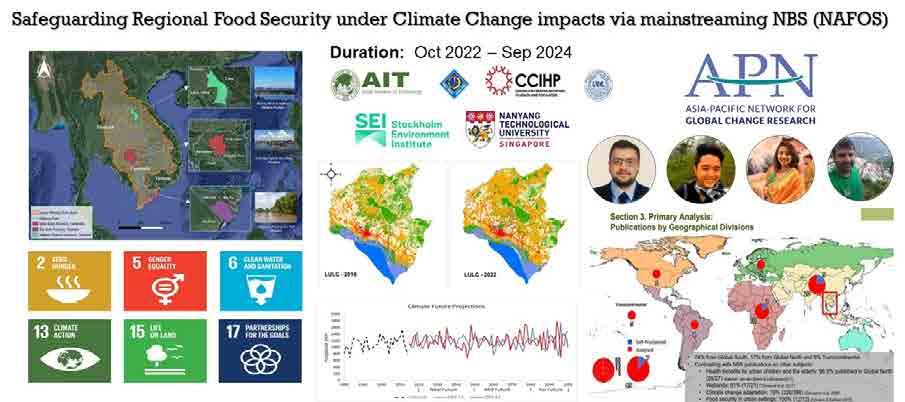
research findings and contribute to building stakeholders’ capacities to adopt and upscale NBS practices. Despite being among the fastest-growing sustainability-related topics, NBS remains underrepresented in agriculture and food security discourses, hence the verified novelty of the proposed project. The LMRB is transboundary; the project thus can create new multinational partnerships while strengthening the existing ones between involved universities, NGOs, and governments.
Expected Social Impact: The project is expected to generate a new, action-oriented body of knowledge on socially and environmentally sustainable nature-based solutions (NBS), which will be widely disseminated among collaborating organizations, boundary partners, and end beneficiaries. It aims to strengthen the capacities of relevant stakeholders to enhance resilience to climate change and improve food security. Additionally, the project will identify and verify key opportunities and challenges associated with mainstreaming NBS approaches into climate change adaptation strategies within the Lower Mekong River Basin (LMRB). Through these efforts, the initiative will foster enhanced collaboration and coordination among participating countries and partner organizations, supporting a more integrated and resilient regional response to climate change.
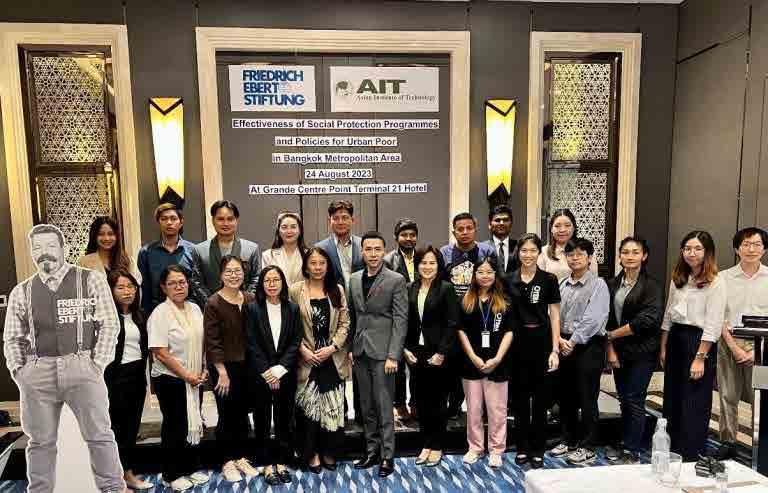
EFFECTIVENESS OF SOCIAL WELFARE PROGRAMMES AND POLICIES FOR URBAN POOR IN BANGKOK METROPOLITAN AREA
AIT Research Theme: Smart Communities; Technology, Policy and Society
AIT Unit: SERD-Urban Innovation and Sustainability
Project Duration: 01 Jul 2023 to 30 Jun 2025
Project Sponsor/Client: FES
Expected Social Impact: To recommend policies for government usage to shape more equitable and inclusive access to social protection programs that benefit disaggregated population groups with more inclusivity of women and children in the urban context.
Description:
Social Welfare Development has over 50 welfare schemes running nationwide, but lesser availability for women and children in monetary terms. Some of these national initiatives are beneficial to 40% of the population who are inclusive within the development schemes, but a major percentage of the population in the working-age groups are dropped off and this appears to be a burden for the working population since welfare schemes are financed by taxpayers’ money. Furthermore, the question of whether government spending is promoting equality
in society remains a significant concern. Therefore, the project aims to assess the impact of social assistance programs and recommend policies for the urban poor in the Bangkok Metropolitan area. The goal of this project is to recommend policies for government usage to shape more equitable and inclusive access to social protection programs that benefit diverse population groups, with a focus on including women and children in the urban context
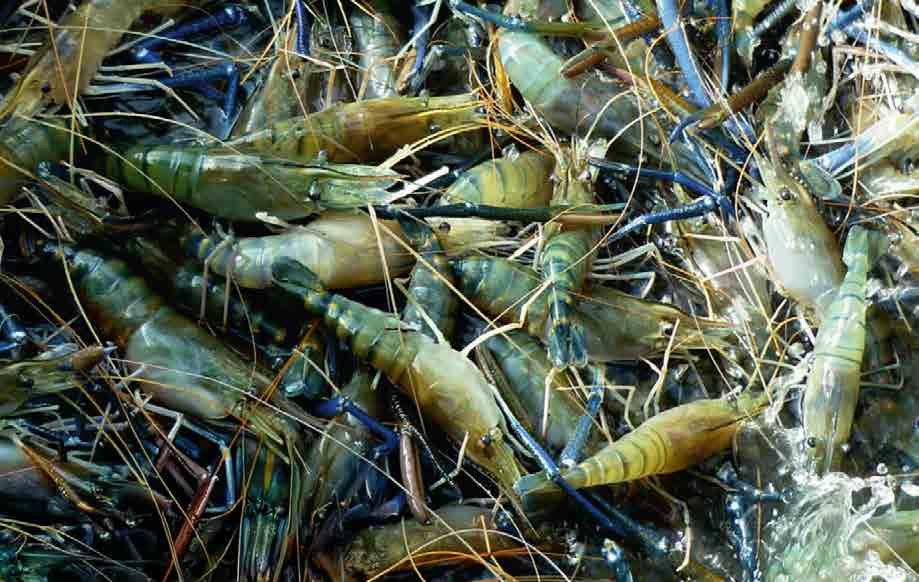
COMMUNITY-BASED TOURISM COVID-19 RECOVERY PROJECT: FRESHWATER PRAWN AQUACULTURE IN CAMBODIA
AIT Research Theme: Food-Energy-Water
AIT Unit: SERD-Aqua-Centre
Project Duration: 01 Aug 2024 to 30 Jun 2026
Project Sponsors/Clients: Asian Development Bank (ADB) through Civil Society Alliance Forum (CSAF), The Office of the Council of Ministers, Cambodia
Expected Social Impact:
1. About 100 people will be aware of the benefit of the prawn farming
2. At least 22 farmers trained in prawn farming in Angkor Borey, Cambodia
3. At least 22 farmers will earn a reasonable income from prawn farming
Description:
Civil Society Alliance Forum (CSAF) under the Office of the Council of Ministers has contracted us to provide technical assistance to develop freshwater prawn culture in Angkor
Borey and its surrounding area, Takeo Province, as a part of the Community-Based Tourism COVID-19 Recovery Project. Activities will include organizing 2-3 rounds of stakeholder meetings and a series of training programs for the staff trainers, farmers, and value chain actors during the period of about two years.
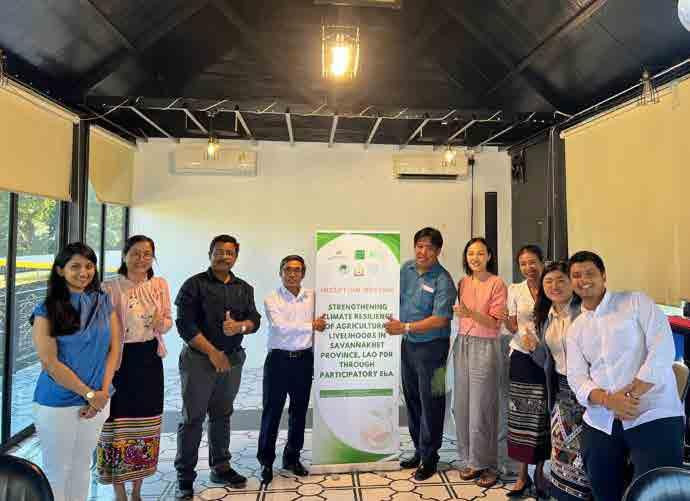
STRENGTHENING CLIMATE RESILIENCE OF AGRICULTURAL LIVELIHOODS IN SAVANNAKHET PROVINCE, LAO PDR THROUGH PARTICIPATORY ECOSYSTEM-BASED ADAPTATION
AIT Research Theme: Food-Energy-Water
AIT Unit: SET-Disaster Preparedness, Mitigation and Management
Project Partner: NUOL KU, Thailand Project
Duration: 21 Jul 2024 to 31 Dec 2025
Project Sponsor/Client: SEI
Expected Social Impact:
Enhanced climate resilience: Developing scenarios of climate-hazard impacts and assessing ecosystembased adaptation practices informs and empowers Savannakhet Province’s agricultural communities to better understand and address their unique climate challenges. These actions and interventions foster heightened resilience, specifically livelihood resilience, and contribute to reducing inequalities in adaptation. Community empowerment: Through focus group discussions, key informant interviews, and engagement with marginalized groups, the project fosters cross-sectional community involvement and empowerment through a bottom-up approach where their voices will be amplified to the national and regional level policymakers. The initiative boosts awareness, participation, and local ownership through co-development of resilience-building strategies. Influence policy changes: Identifying policy gaps obstructing ecosystem-based adaptation implementation enables the project to influence positive policy changes.
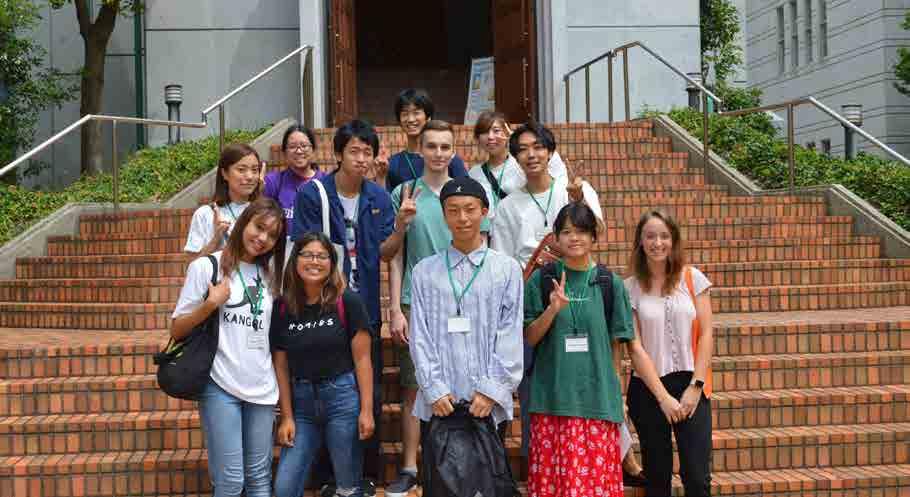
KGU WORLD STUDY PROGRAM
AIT Research Theme: Food-Energy-Water
AIT Unit: Yunus Center
Project Partner: Kanto Gakuin University, acting through the College of Intercultural Studies, a universitylevel establishment represented by Kozue Kashiwazaki, Department of Comparative Culture, duly authorized for the purposes hereof, hereinafter referred to as KGU.
Duration: 10 Sep 2024 to 31 Dec 2024
Project Sponsor/Client: Kanto Gakuin University
Expected Social Impact:
Cultural Exchange and Mutual Understanding, Capacity Building for Local Communities, Strengthening of Local Initiatives, Promotion of Sustainable Practices, Long-Term Partnerships and Networks, and Economic Impact
Description:
The project aims to enhance the climate resilience of vulnerable and marginalized groups in Savannakhet Province of Lao PDR by helping minimize the impacts of climate change on agricultural livelihoods through Ecosystem-based Adaptation (EbA). The proposed project will assess the water infrastructure regimes under current climate conditions and their impacts on agricultural production and livelihoods and suggest suitable EbA practices to enhance livelihood resilience through positive WEC nexus policy changes at the national and regional levels.
Description:
Learning the dynamics of developmental issues, especially local-income community development programs and develop action plans for the change
PROFESSIONAL DEVELOPMENT PROGRAM ON MAINSTREAMING CLIMATE CHANGE AND GENDER IN THE PLANNING AND BUDGETING PROCESS
AIT Research Theme: Technology, Policy and Society
AIT Unit: Yunus Center
Project Partner: NUOL KU, Thailand Project
Duration: 09 Sep 2024 to 31 Jun 2025
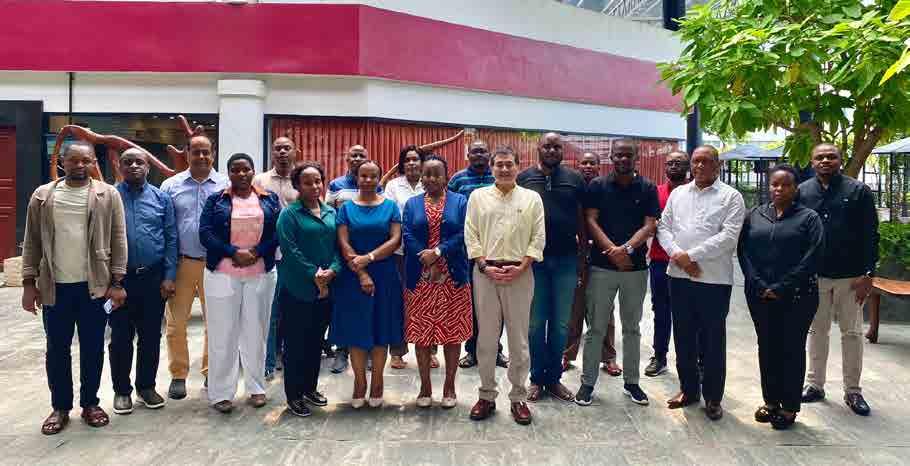
Project Sponsor/Client: Ministry of Finance, Tanzania
Expected Social Impact:
To ensure a country’s long-term stability, promote economic development, and improve the well-being of its citizens. By incorporating climate change and gender considerations, the government of Tanzania can ensure its financial resources promote a more sustainable and equitable society.
Description:
National budgets are key instruments for shaping a country’s future, ensuring responsible governance, and driving sustainable development. By integrating climate change and gender considerations into the planning
and budgeting process, the government of Tanzania can allocate resources more effectively to promote both environmental sustainability and social equity. This professional development program aims to equip participants with the knowledge and tools to incorporate these critical issues into national budget planning, ensuring that essential sectors like infrastructure, education, and healthcare receive the necessary funding to support longterm growth and societal well-being.
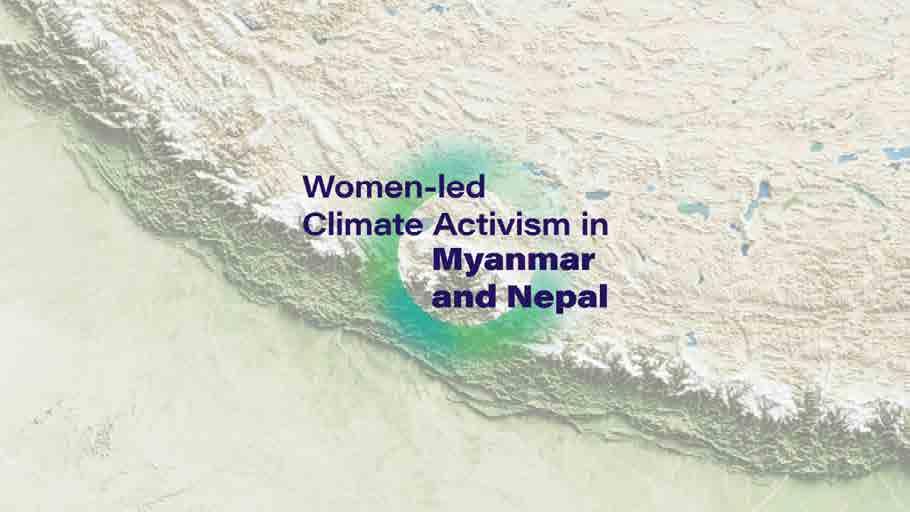
WOMEN-LED RESPONSES TO THE INTERSECTIONAL IMPACT OF THE CLIMATE CRISIS, GENERATED INEQUALITIES, POVERTY AND CONFLICT IN MYANMAR AND NEPAL
AIT Research Theme: Climate Change
AIT Unit: SERD-Gender and Development Studies
Project Partner: University of Portsmouth Higher Education Corporation and Gyanbodh
Duration: 28 Jun 2024 to 27 Dec 2025
Project Sponsor/Client: The British Academy
Expected Social Impact:
Empowered women-led organizations in Myanmar and Nepal to effectively address climate crises and genderbased violence and enhanced their capacity to advocate for gender-responsive climate action and social justice in marginalized communities.
Description:
The project’s aim is to investigate how women-led organizations in Myanmar and Nepal have gained visibility as climate crisis activists while exploring their responses to the intersections of gendered inequalities, conflict, and poverty. Building on previous UKRI-funded research, which revealed a spike in intimate partner violence (IPV) following cyclical flooding, the project will return to the
same regions for a longitudinal analysis. It seeks to update and expand the understanding of how local organizations address climate-related challenges and gender-based violence, comparing changes over time and assessing their preparedness to respond to these crises.
Expected Social Impact: Empowered women-led organizations in Myanmar and Nepal to effectively address climate crises and gender-based violence and enhanced their capacity to advocate for gender-responsive climate action and social justice in marginalized communities.
A PORTABLE PROTOTYPE OF MEASUREMENT BY SOIL PH, ELECTRICAL CONDUCTIVITY, AND NITROGEN, PHOSPHORUS, POTASSIUM NUTRIENTS
AIT Research Theme: Technology, Policy and Society
AIT Unit: SET-Remote Sensing and Geographic Information Systems
Project Duration: 01 July 2023 to 30 June 2024
Project Sponsor/Client: Land Development Regional 2
Expected Social Impact: The expected social impact of this project is significant. By providing farmers and agronomists with a portable and cost-effective tool, it will empower them to make informed decisions regarding soil management practices. Access to accurate and immediate soil data can help optimize fertilizer application, minimize environmental impact, and improve crop yields. Moreover, this technology can benefit small-scale farmers and those in remote areas who may not have access to traditional soil testing laboratories.
Description:
The project aims to develop a portable prototype device for measuring essential soil parameters such as pH, electrical
conductivity (EC), and nutrient levels of nitrogen (N), phosphorus (P), and potassium (K). This innovative device will provide farmers, agronomists, and researchers with an efficient and user-friendly tool to assess soil quality on-site, enabling them to make informed decisions regarding soil management and fertilization strategies.