


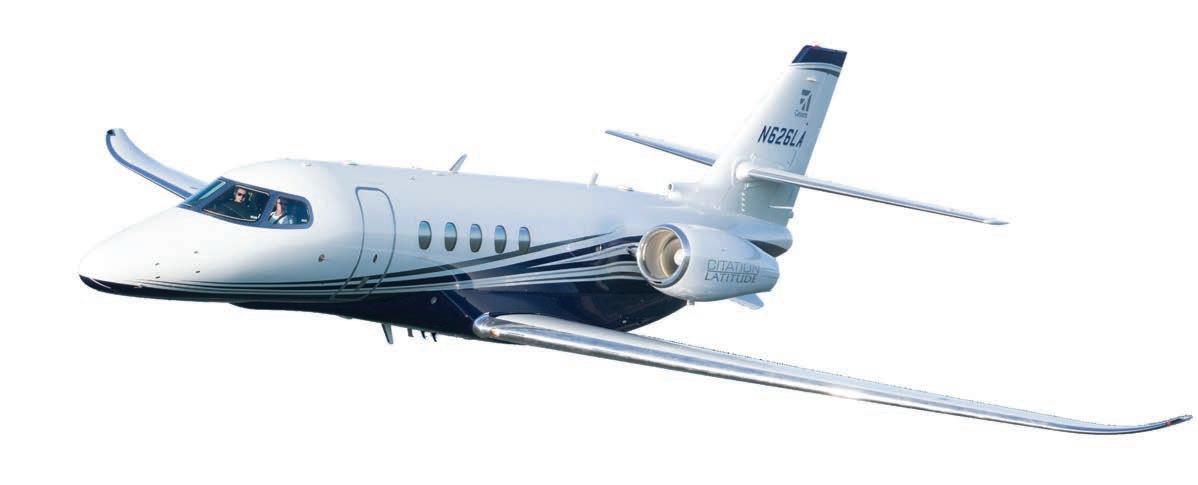
AIRCRAFT: TREVOR MILTON'S SYBERJET COMEBACK
HISTORY: LUFTHANSA'S LUXURIOUS CONSTELLATION
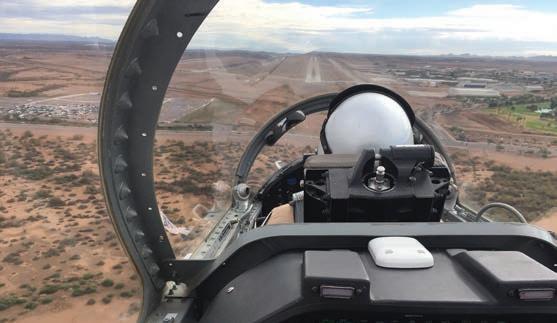
TRAINING: DON'T GET UPSET, AVIATE!
Special Report: Looking Back at 2025

AIRCRAFT: TREVOR MILTON'S SYBERJET COMEBACK
HISTORY: LUFTHANSA'S LUXURIOUS CONSTELLATION
TRAINING: DON'T GET UPSET, AVIATE!
Special Report: Looking Back at 2025
Putting eyes in the sky and helping endangered animals survive is LightHawk's crucial calling


Scan the QR code to see the mission

42 Upset prevention training producing big results at United Aviate
30 SyberJet’s SJ36 takes form in quest for rebirth DEPARTMENTS
6 Bombardier Global 8000 wins Transport Canada approval
8 Textron Aviation’s Citation Ascend gets FAA nod
10 Gulfstream hits stride as bizjet sales, deliveries soar
12 Bond to shake, not stir, frax market with $1.7B order
14 Special Report: New and upgraded aircraft aim to serve bizav's future
17 Special Report: 2025 became a reckoning year for air safety
20 Special Report: Financial gulf widens between electric aviation contenders
21 Special Report: Aviation sees sweeping changes on regulatory front in 2025
34 Pilots, wildlife, and a view for good
38 Lufthansa Technik wraps up Constellation Super Star restoration
On the Ground | 48 MRO | 50 Accidents
Compliance | 54 People in Aviation
On the cover: A cheetah cub takes in the view during a LightHawk transport flight.


Many of us in the business aviation field thought its post-pandemic growth spurt might fade after a few years. We were wrong. In fact, the industry is still booming.
A couple of key statistics:
• An estimated 825 new business jets will be delivered this year, with revenues totaling a record $26.4 billion.
• Equally impressive is the average two-year-plus backlog being reported by all the airframe manufacturers.
• Preowned business jet transactions for the first three quarters of 2025 were up 11% over the same period in 2024. With bonus depreciation being a market driver, such transaction will almost certainly set sales records for the full year.
• Flight-hour totals in the charter and fractional sectors will set records this year, thanks largely to the growing number of recent post-pandemic users of private aviation who have elected to stay in the market.
Clearly, business aviation is in lockstep with the financial markets, which also continue to prosper and could do so well into 2026. A recent Barron’s survey found that 81 percent of leading financial executives were bullish or neutral, with only 19 percent bearish.
Of course, no one can know for sure where the markets are headed. And as a good friend of mine, who owns a fractional- share company, observed: “When the stock
market declines severely, people stop flying private.”
So, we enjoy the boom and hope it continues, but we stay prepared to weather any downturns.
In my half-century with AIN, I have lived through at least four major market corrections. In every case, massive new investment, particularly private equity, has flowed into our industry before the decline. We’re seeing such an influx now, and, though I’m not suggesting this is necessarily a sell sign, it is a little daunting to witness the similarities to past cycles. Still, as I’ve noted, many knowledgeable financial people believe that, minor corrections aside, the next few years look strong.
AIN Media Group remains on a favorable course, with the business now resting firmly on three strong pillars.
The first is our legacy media business. We have been fortunate to have maintained a solid print presence with the AIN monthly magazine and our popular show issues around the world. But the growth engine for our media business has been our digital products, such as AINalerts—possibly the single most successful digital newsletter in any industry, anywhere. Every weekday, our 35,000 worldwide readers rely on this news bulletin for up-to-the-minute, authoritative reporting.
AIN’s second pillar is our events division. Our tremendously successful Corporate Aviation Leadership Summits (CALS), which we introduced four years ago, o er intimate “hosted buyer” events that our sponsors rave about because of the return they see on their investment. We present three of these invitation-only events annually in the U.S.—CALS East, CALS West, and CALS Mx—and 2025 saw us inaugurate CALS Europe in Basel, Switzerland.


Last March, we also debuted Banquet and Gala . At the event, held on the third day of NBAA’s Schedulers & Dispatchers Conference, we announced the winners of our yearly FBO survey. Mark your calendars for the next FBO Awards Banquet and Gala, which will take place at Cleveland’s Agora Theater and Ballroom on March 26, 2026.
The third pillar of our business, proprietary data, is new. Last January, under the guidance of our highly capable president, Ruben Kempeneer, we acquired AircraftPost, a subscriptiononly service that tracks historical and current, real-time market values of new and used business jets. Then, in June, we reached an agreement to acquire Leeham News and Analysis, another proprietary, subscription-only product.
Leeham, which focuses on commercial aviation, is a great fit for AIN , which has long covered this sector via our show issues at international airshows at Farnborough, Paris, Singapore, and Dubai. For more than 20 years, Leeham has been providing in-depth, unbiased reporting and analysis about aircraft technology, fleet planning, maintenance, market trends, and repair and overhaul strategies.
I ’m certain that AIN ’s deep industry knowledge and three inextricably connected business units will allow us to keep growing regardless of overall market conditions. We’re committed to the global business aviation industry, and the Leach family is excited about the company’s future.
I o er continued thanks to all of our clients, readers, and friends around the world who have made AIN the success it is. We’re proud of our reputation as the go-to source for news and information on business aviation, and we’re immensely grateful for our relationships with the many fine people who make up the aerospace industry.

Our mission at AIN is to be the first and last word in aviation. We design everything we produce to help our customers solve problems with confidence. That’s why those in our industry consider our AINalerts newsletter a must-read, and why, according to a recent subscriber survey, AIN’s monthly magazine remains our industry’s most-read publication. It’s also why attendees at our Corporate Aviation Leadership Summits (CALS) call these events essential.
As Wilson Leach notes in his accompanying report, we recently took a big step to augment such offerings by acquiring AircraftPost and Leeham News and Analysis. These world-class companies both provide proprietary aviation data that will help us further our goal of serving our customers.
Speaking of customers, I had the pleasure this year of joining some outstanding leaders in our industry in panel discussions at the IADA Spring Conference and the JetNet IQ Summit. In our talks about the changing needs and profiles of private-lift users, two themes emerged. Firstly, charter and fractional are on a charge. They are democratizing private lift through innovative business models that lower the barriers to entry. And secondly, despite the changes that technology is introducing, our industry’s trusted advisors won’t be undermined or replaced by AI bots anytime soon. That’s because personal relationships and trust remain vital to our business.
They’re vital to me, too, and I look forward to being face-to-face with many of you in the year ahead.
Ruben Kempeneer President Wilson S. Leach Co-Founder & Chair Emeritus




BY KERRY LYNCH
Bombardier’s newest flagship, the Global 8000, secured Transport Canada type certification on November 5, keeping the ultralong-range model on track for entry into service before year-end. The Canadian airframer said similar approvals from the FAA and EASA are in the works and will follow “in alignment with delivery requirements.”
The successor of the 7,700-nm Global 7500 twinjet, the Global 8000 has a maximum range of 8,000 nm and sets a new benchmark in the business aviation sector with a top speed of Mach 0.95—a figure confirmed at NBAA-BACE and up from the earlier anticipated Mach 0.94 Mmo.
Leading up to certification, Bombardier reduced the cabin altitude from the original 2,900-foot target at FL410 to 2,691 feet, which the company said is the lowest of any in-production business aircraft.
In tandem with the Global 8000 certification, Bombardier has been developing retrofit kits that will enable Global 7500 operators to bring their aircraft in line with the follow-on model, and company president and CEO Éric Martel has noted significant interest in the upgrade.
Bombardier unveiled plans for the speedier, longer-range Global 8000 in May 2022. At that point, it had already tested the aircraft—a modified Global 7500—at supersonic speeds. Bombardier made the first flight of a production model in May.
During the same week of certification, Bombardier reported its third-quarter results, including a four-unit bump in deliveries to 34 aircraft that contributed to an 11% year-over-year revenue gain. Revenues reached $2.3 billion in the third quarter, thanks to a $590 million contribution from the services business.
Bombardier delivered 21 Globals and 13 Challengers. Globals accounted for the entire four-unit increase in the quarter, up from 17 a year earlier, while Challenger deliveries were flat. For the first nine months, Global deliveries have increased by three, to 47, while Challengers are up one unit, to 46.
Even with increased Global deliveries, Bombardier’s backlog surged to a five-year high of $16.6 billion, up from $14.4 billion at the end of December, thanks to a bookto-bill of 1.3:1 in the third quarter. z
Investment firm Thoma Bravo completed its purchased of portions of Boeing’s Digital Aviation Solutions business for $10.55 billion in cash early last month. The sale included Jeppesen, ForeFlight, AerData, and OzRunways. Called Jeppesen ForeFlight, the entity is now led by CEO Brad Surak, former v-p of Boeing’s Digital Aviation Solutions. Boeing bought ForeFlight in March 2019 and Jeppesen Sanderson in 2000, but the two companies’ key products were never merged. Jeppesen data is, however, an important part of many ForeFlight electronic flight bag products.
Embraer reported record third-quarter revenues of more than $2 billion, driven by 62 aircraft deliveries, with the majority being executive jets. Of the 41 business jets Embraer delivered in the quarter, 23 were midsize/super-midsize Praetor models, and the other 18 were Phenom light jets. Net revenues grew by 18% in the quarter, while order backlogs, including defense and service/support bookings, at the end of the quarter showed 38% growth, to $31.3 billion.
After previously announcing a temporary halt to U.S. deliveries of its PC-12 singleengine turboprop and PC-24 twinjet in August, due to 39% tari s imposed on Swiss products by the U.S. government, Pilatus has committed to resuming deliveries to U.S. customers. Early last month, Pilatus handed over the first PC-12 Pro for a U.S. customer. A Pilatus spokesman told AIN, “For the time being, Pilatus will honor its contractual responsibilities towards its U.S. clients and dealers by ensuring deliveries to the USA until the end of 2025.”





Textron Aviation has received a series of regulatory approvals in recent months for upgrades to its Citation family, the Ascend becoming one of the most significant.
BY KERRY LYNCH
Textron Aviation received FAA certification for its Cessna Citation Ascend on November 5, one of a trio of approvals for new variants that the Wichita airframer has secured in recent months. In addition to the Ascend, Textron Aviation was awarded FAA nods for its CJ3 Gen2 and M2 Gen2 with autothrottle.
As for the latest iteration of the Excel/ XLS midsize jet family, the Ascend brings a flat floor to the family, along with updated Garmin’s G5000 avionics and improved performance. Slated for delivery this year, NetJets is anticipated to be the launch customer.
Coming amid the government shutdown, certification followed the aircraft’s debut at NBAA-BACE in October, the rollout of the first production model in September, and more than 1,000 flight hours accrued on two flight test articles.
The 12-passenger Ascend aircraft sports upgraded Pratt & Whitney Canada PW545D engines that improve fuel efficiency and increase thrust. It has a maximum speed of 441 ktas, a range of 1,940 nm, and a full fuel payload of 900 pounds.
Meanwhile, following 445 flight test hours, the latest CJ3 approval brings “the most comprehensive Citation Gen2 investment to market,” Textron Aviation said.
The Gen2 upgrade features autothrottles integrated in the Garmin 3000 software suite, an additional 4.5 inches of pilot legroom, and a fully customizable cabin. Along with the autothrottles, Textron Aviation is offering an optional enhanced vision system to improve situational awareness.
Customers can tailor the eight- to nine-passenger cabin with seats that track and swivel. Textron Aviation is offering an optional high-power outlet for a coffee machine, ice, and trash storage. Other new features include CoolView skylights in the lavatory, an optional sink and vanity design, and an externally serviceable lavatory.
Powered by Williams FJ44-3A turbofan engines, the aircraft has a range of 2,040 nm and a useful payload of 5,530 pounds.
Equipped with Garmin G3000 avionics, the M2 Gen2 approval brings autothrottles to Textron’s smallest jet, enabling greater control and precision for pilots. Certification was the culmination of nearly 300 flight-test hours. z
Textron Aviation delivered 42 business jets in the third quarter, one more than the same period in 2024, while commercial turboprop deliveries surged to 39 aircraft, up from 25 a year ago. The strong performance contributed to a 10% revenue increase for the segment, to $1.5 billion. Textron Aviation handed over five Citation M2s, eight CJ3+s, nine CJ4 Gen2s, four XLS Gen2s, 11 Latitudes, and five Longitudes in the quarter. On the turboprop side, it delivered 20 Caravans, four SkyCouriers, 15 King Airs, and five T-6 trainers.
Gogo has begun flight testing its nextgeneration 5G air-to-ground (ATG) connectivity network for North American customers. The test team is flying 5G ATG hardware installed aboard a Pilatus PC-24 and expects to complete the validation program soon, with commercial launch of the upgraded network expected by yearend. As soon as flight testing is complete, Gogo will apply for FAA approval of Gogo Avance LX5 and X3. Both systems have already been approved with a 4G chip.
Charter operator JetSafe has launched an aircraft ownership and membership program centered on the single-engine Cirrus SF50 Vision Jet. While customers will be able to buy shares in preowned Vision Jets, JetSafe will operate the aircraft under its Part 135 certificate. Jets will be positioned at regional primary service areas, with the first in the Southeast U.S. Each primary service area will cover 700 nm. Shares are available in 20% or 10% increments, starting at $275,000 for a 10% share. The company will also o er 35-hour annual block-time memberships.

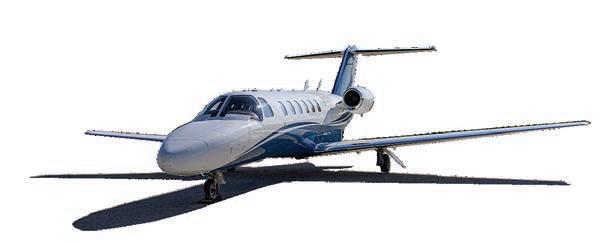
CJ 1 AND CJ2 RETROFIT
Add incredible new capabilities to your CJ1 or CJ2 with an industry-leading all Garmin solution. Upgrade with GTN™ Xi navigators, GFC™ 600 autopilot, GWX™ 8000 weather radar, FAA Data Comm and more to drastically reduce pilot workload and increase the lifespan of your aircraft.

Strong demand for Gulfstream’s new G700 and G800 jets fueled a sharp third-quarter rise in deliveries, revenues, and backlog for parent company General Dynamics.
BY CHAD TRAUTVETTER
Gulfstream Aerospace found its groove in the third quarter as business jet sales and shipments climbed 56% and 39%, respectively, Phebe Novakovic—chairman and CEO of parent General Dynamics—told investors in a quarterly earnings call. “There was robust order momentum at Gulfstream in the quarter,” she said, noting a 1.3:1 book-to-bill ratio that increased aerospace backlog to $20.6 billion, a nearly $1 billion quarter-over-quarter rise.
The company’s aerospace unit, composed of Gulfstream and aviation services firm Jet Aviation, saw third-quarter revenues soar 30.3% year over year, to $3.234 billion, and earnings jumped 41%, to $430 million. For the first nine months, these figures were $9.322 billion (up 24.2% year over year) and $1.265 billion (up 43.9%), respectively. Driving the gains were higher jet deliveries, more special-mission
work, and aircraft services, according to Novakovic.
Gulfstream shipped 39 jets (33 large cabins and six super-midsize G280s) in the three-month period, up from 28 (24 large cabins, four G280s) a year ago. Novakovic said the latest third-quarter tally included 13 G700s and three G800s. In the first nine months, the Savannah, Georgia-based company handed over 113 aircraft (95 large cabins, 18 G280s), a 27% year-over-year increase over the 89 units (76 large cabins, 13 G280s) delivered in the same period last year. To date, Gulfstream has shipped 72 G700s, she added.
According to Novakovic, Gulfstream’s “remarkable growth” is propelled by “the strength of the economy, resilient market and jet demand, and a slate of new models.” She also noted that supply-chain issues are now largely in the rear-view mirror. z
Apcela, the network systems developer that built and operated SmartSky Networks’ airto-ground (ATG) airborne connectivity system, has relaunched the service and rebranded it as Apcela ATG. The move follows Apcela’s purchase of the ATG network from SmartSky earlier this year and enables operators who installed SmartSky systems to switch them on again after the network abruptly shut down in August 2024. After sorting through financial issues with creditors and investors, Apcela had to restore and upgrade the network to improve performance and security.
Textron Inc. is shutting down its eAviation business unit and redistributing the division’s electric and conventional aviation activities among its other subsidiaries. Plans to eliminate Textron eAviation as a separate reporting segment were approved by Textron management on October 16 and will take e ect on January 4. The bulk of Textron eAviation’s business, including the Pipistrel brand, will be absorbed by Textron Aviation. Defense-related activities under the Textron eAviation umbrella will move over to Textron Systems.
CAE has introduced a data-driven training approach for business aviation pilots called Continuously Optimized Recurrent (CORe) training. The program addresses a long-standing gap in pilot instruction: emerging operational threats not typically covered in traditional task-based training. Using data gathered through CAE Rise, which aggregates anonymized pilot performance data from thousands of simulator sessions, CORe identifies trends and patterns to develop new learning scenarios.



BY KERRY LYNCH
U.S. start-up Bond has unveiled plans to launch a fractional ownership operation with a fleet of Bombardier Challenger 3500s and Global 6500s under a previously announced $1.7 billion, 50-aircraft order. Options for 70 more, potentially also including Global 8000s, could push the total value to $4 billion. Bombardier disclosed the order in June without revealing the customer. Bond plans to start service in 2027, the company revealed at NBAA-BACE.
The deal includes a service agreement under which Bombardier’s U.S. service network will provide on-site maintenance resources for the Bond fleet. “This agreement…marks a first-of-a-kind, uniquely integrated services collaboration,” said Bombardier president and CEO Éric Martel.
Led by chairman and group CEO Bill Papariella, the former CEO of Jet Edge and founder of Aero Ventures, Bond will target “premium private flyers who value exclusivity over scale.” Calling the service “Fractional 2.0,” Bond said it will have the
first 100% super-midsize and large-cabin fractional fleet. Another differentiator, according to Bond, is that every flight will have a flight attendant on board.
Program features include a limit of 10 owners per aircraft, which Bond said is the lowest of any fractional provider; an exclusive fleet reserved for fractional owners with no access to jet cards or charter; increased standby capacity with reserved aircraft pre-positioned to cover peak demand; evergreen membership; and “the highest-paid and most experienced pilots.”
As for the selection of the Bombardier jets, Papariella said, “Our relationship with [Bombardier’s] team spans many years through my previous work in the aftermarket space at Jet Edge, and I’ve seen firsthand the culture, consistency, and service mindset that make Bombardier exceptional. This relationship isn’t simply about aircraft—it’s about shared values and a long-term commitment to redefining reliability and care in private aviation.” z
$40B
Global Jet Capital’s latest business jet forecast foresees steady growth over the next five years, with transactions nearing $40 billion this year. It anticipates average annual growth of 4.2% for preowned jets and 2.7% for new-production aircraft. GJC forecasts total market volume will reach 3,383 units this year and 3,778 by 2029, up from 3,125 in 2024. Preowned transactions will account for 2,604 aircraft this year, growing to 2,926 in 2029, GJC predicts. New-production deliveries, meanwhile, are anticipated to reach 779 jets this year, up from 746 in 2024, growing to 852 in 2029.
Business aviation services group Comlux is joining forces with U.S. start-up airline Magnifica Air to outfit six Airbus A220s and a pair of A321s with VIP cabins. Magnifica Air will deploy the narrowbodies for what it calls a “private-jet-meets-first-class” scheduled commercial service. Comlux America’s Indianapolis facility will handle cabin completions. Magnifica will integrate the aircraft into its VIP operation, which it said will use private terminals at “exclusive” U.S. airports, starting in 2027.
Daher’s new operation in São Paulo will help it double sales of TBM series and Kodiak turboprop singles in Brazil, Daher Aircraft CEO Nicolas Chabbert said at NBAA-BACE. The company currently sells about three airplanes a year in Brazil and expects this number to climb to six or seven. “The use of turboprops is something that is across Latin America very popular,” Chabbert said. The company’s Brazil o ce is helmed by Paulo Cesar Olenscki.

Despite the global turmoil accompanying the threat of tari s, the dramatic changes in Washington, a series of high-profile crashes, and struggles in the advanced air mobility market, the business aviation sector gained steam throughout the year to finish with uniformly high backlogs and robust services businesses. New business jet variants were certified, even amidst a prolonged shutdown, and an entirely new aircraft developer emerged. While tari s loomed, the tax environment turned favorable with the passage of bonus depreciation in Washington. However, challenges remain, such as taxes in France. AIN takes a look at 2025 to highlight some of these moments.
It may seem like aircraft original equipment manufacturers (OEMs) have slowed the pace of new aircraft development, but there is always a lot more going on behind the scenes than is readily apparent. We’ve not only seen two new program announcements in 2025, including one from a new OEM and another representing a resurrection (Otto Aerospace and SyberJet), but the traditional OEMs have been fairly active.
This year saw the culmination of Gulfstream Aerospace’s strategy to update all of its models, with certification of the G650 replacement, the ultra-long-range, 8,200-nm G800, in April. Gulfstream also recently unveiled the G300, a replacement for the G280 featuring Honeywell avionics and oval windows in line with those in its larger siblings along with a two-foot cabin stretch. Manufacturing of the aircraft, which could see market entry in early 2028, is already underway.
BY MATT THURBER

In terms of new business aircraft crossing the certification threshold, there has been some activity, including the G800, three Cessna Citations from Textron Aviation, and Bombardier’s speedy Global 8000. Now the fastest business jet ever
certified with a Mach 0.95 mmo, the Global 8000 received Transport Canada certification in early November.
Progress continues on Dassault Aviation’s largest- and longest-range jet, the Falcon 10X, with certification and
entry into service not due until late 2027.
Honda Aircraft has assembled the metal wing for the new light jet Echelon at its Greensboro, North Carolina headquarters, and next comes the composite fuselage, which has been subcontracted. The Echelon promises midsize jet performance in a light jet, and it will also feature the trademark HondaJet over-the-wing-enginemount design.
Textron Aviation has accelerated the pace of upgrades to its jet lineup, and the recently certified Cessna Citation CJ3 Gen2 and M2 Gen2 are now each equipped with Garmin autothrottles. Both will be followed by Gen3 editions that will feature Garmin Autoland in 2027. Not to be outdone, a CJ4 Gen3 has been progressing in flight tests with certification upcoming in 2026. That model will incorporate Garmin’s new G3000 Prime touchscreen avionics suite.

More recently, the new version of the popular XLS series—the flat-floor Ascend— received FAA approval. Certification of the single-engine-turboprop Denali is now set for next year, following approval of its GE Catalyst engine in February 2025.
Meanwhile, Embraer had been quiet on the new-aircraft-development front, but at the NBAA-BACE show in October, Embraer Executive Jets president and CEO Michael Amalfitano admitted that the company is actively studying the case for entering the large-cabin

business jet market. No further details were available, although he did say that Embraer will take its time on such a project.
Two upgrades to popular high-performance, single-engine turboprops made it to FAA certification this year, the Epic Aircraft E1000 AX and Pilatus PC-12 Pro.
The E1000 AX got several upgrades, including Garmin’s autothrottle and Autoland systems, automatic yaw damper, electronic brake hold, and Garmin GDL 60 with PlaneSync remote connectivity. Other improvements include a True Blue Power lithium-ion main-ship battery, CoolView windows for UV protection and thermal shielding, and optional Starlink satcom with a permanently installed Starlink Mini antenna. Other options include Garmin 3D SafeTaxi and GWX 8000 StormOptix weather radar.
Pilatus Aircraft was the first OEM to field a Garmin G3000 Prime avionics suite, and the PC-12 Pro includes five touchscreen displays that replace the NGX’s Honeywell Apex avionics. Like many other high-performance turboprops, the PC-12 Pro includes Garmin’s autothrottle and Autoland, but it also gains 100 pounds of payload, additional cabin options, and special paint schemes.

A truly new unveiling took place in June when Otto Aerospace took the wraps off the Phantom 3500, which the company’s designers have been working on for the past three years.
Designed to deliver super midsize-jet performance in a Part 23 light jet with an mtow of 19,000 pounds, the Phantom 3500 has a cabin volume of more than 800 cu ft, much larger than that of typical light jets, and the interior dimensions are also significantly bigger. Cabin height is 6.4 feet and width 7.5 feet, larger than even

the average super-midsize jet, according to Otto.
With an NBAA IFR range of 3,200 nm (four passengers), the jet will be powered by Williams International FJ44-4 turbofans and cruise most efficiently at its FL510 maximum altitude.
An interesting feature of the Phantom 3500 is its windows, or the lack thereof. Except for a mandatory peek-through window on the aft lavatory emergency exit, the cabin walls are aerodynamically smooth to promote laminar flow (as are the wings), and there are no cabin windows. Passengers will be able to view the outside world via external cameras, delivering imagery to large 4K displays on the cabin walls and ceiling.
Another surprise this year was the resurrection of the SyberJet program by former Nikola CEO Trevor Milton, who purchased the program two years ago. With a four-foot fuselage stretch, the out-of-production SJ30-2 will be renamed SJ36 and be equipped with larger engines, new in-house-developed avionics, and fly-by-wire flight controls. First flight of the $14 million, nine occupant SJ36 is projected in 2027, with FAA certification in 2032.
BY AMY WILDER
In early 2025, aviation safety discussions centered on data, staffing, and technology. By the end of the first quarter, the conversation was about gaps—procedural, technological, or simply bureaucratic—that had allowed high-risk mixed traffic to continue in the nation’s capital region, and what it would take to close those gaps quickly.
Two fatal events, a little more than 48 hours apart, set the tone. On January 29, a U.S. Army rotorcraft operating without ADS-B Out during a routine check ride collided over the Potomac River with a PSA Airlines CRJ700 regional flight operating as American Airlines Flight 5342 near Ronald Reagan Washington National Airport (KDCA), killing all occupants on both aircraft. On January 31, Med Jets Flight 056, a Learjet 55 operated by Jet Rescue Air Ambulance, crashed in the Castor Gardens neighborhood of Philadelphia, Pennsylvania, shortly after takeoff from Northeast Philadelphia Airport, killing everyone on board and two people on the ground, and injuring many others.
In early February, aviation organizations said the industry was “united in its grief” and pledged “to ensure accidents like these never happen again,” while pressing Congress to fully fund the FAA and NTSB to do that work. Stakeholders added that controllers have been “working short-staffed, often six days a week, 10 hours a day for years at a time, with outdated equipment and facilities that are in many cases more than 60 years old and long overdue to be replaced and modernized.”
NTSB chair Jennifer Homendy made clear in March that the KDCA midair was not a one-off but the sharpest expression of a known problem. At a March media briefing on the preliminary report, she said the agency was taking the unusual step of issuing urgent safety recommendations while the investigation was still in progress. The numbers she cited were chilling:

between October 2021 and December 2024, there were 15,214 reported close-proximity events between helicopters and airplanes near KDCA, and 85 of those involved less than 1,500 feet lateral and 200 feet vertical separation.
The NTSB urgently recommended that the FAA permanently prohibit operations on helicopter Route 4 between Hains Point and the Wilson Bridge whenever Runways 15 and 33 are in use and designate an alternative route. Homendy noted that the FAA had access to voluntary safety reporting data over a three-year period but did not act on it. Lawmakers across party lines picked that up almost immediately. Two weeks before the NTSB’s urgent recommendations, the House Transportation and Infrastructure Committee had already told Transportation Secretary Sean Duffy that, in light of the crash near KDCA, he should “immediately prioritize” the 2024 FAA reauthorization’s safety programs, especially

service you can count on.
help keep pentastar your #1 fbo in the americas. we appreciate your vote!
controller hiring, runway enhancements, and technology refresh.
Duffy acknowledged that the answer in 2025 had to be both immediate risk mitigation and modernization. He said the DOT had adopted the NTSB’s recommendations on helicopter restrictions near KDCA “36 hours after the crash” and that those restrictions would stay in place, with special carve-outs for presidential, vice presidential, law enforcement, and life-saving flights.
He also said the FAA was already using AI tools to mine safety data at 12 major airports and would expand that nationwide so that “if there’s another DCA-esque situation out there, our AI tools will help us identify those and take corrective actions preemptively, as opposed to retroactively.” He argued that the NAS and ATC system had to be modernized “within four years,” replacing copper wiring and antiquated systems.
When he and President Trump rolled out the broader ATC modernization plan in May, Duffy tied it again to KDCA, warning that outdated systems can cascade into incidents and pointing to the risk posed by recent Newark ATC outages.
Congress and the industry were remarkably aligned. In February, nearly three dozen aviation organizations told lawmakers they wanted investments in ATC

staffing, technology, and facilities, not another fight over privatization. “We are aligned on not pursuing privatization of U.S. air traffic control services and believe it would be a distraction from these needed investments,” they wrote.
In March, acting FAA Administrator Chris Rocheleau told the Senate aviation subcommittee that the agency was reviewing 10 mixed-traffic “hot spots” immediately, then would do a nationwide review, and would “take immediate action if needed.”
In April, he reported the first measurable result: after the FAA required positive control and more traffic advisories for helicopters at Las Vegas’ Harry Reid International Airport, “the number of traffic alert and collision avoidance system reports decreased by 30% in just three weeks.”
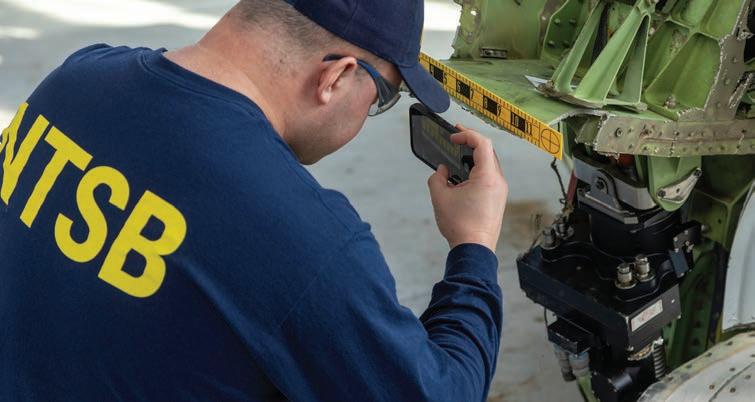
Lawmakers began reacting to ADS-B loopholes that had contributed to the KDCA outcome. In March, Sen. Maria Cantwell (D-Washington) wrote Defense Secretary Pete Hegseth that the Department of Defense’s use of a 2019 exemption to operate in the National Capital Region without ADS-B Out had been stretched beyond what the FAA intended. She noted that the Army Aviation Brigade at Fort Belvoir and Marine Helicopter Squadron One told the DOD in 2023 that they operate all missions without ADS-B Out, and she said, “It is not credible to assert that each of the several thousand helicopter flights operated annually in the National Capital Region is sufficiently sensitive to merit a blanket exemption.”
In May, Sen. Jerry Moran (R-Kansas) introduced a bill that would require all aircraft operating in Class B airspace to install and use ADS-B. And in June, Senate leaders from both parties asked for concurrent inspector general audits at DOT and in the Army covering FAA oversight of KDCA airspace design, enforcement of ADS-B exemptions, and DOD training and equipage.
The Senate Commerce Committee in October passed a compromise bill to require ADS-B In on all aircraft in controlled airspace, end certain DOD exemptions surrounding ADS-B Out, order safety reviews around busy airports with mixed traffic, and call for closer coordination with the FAA and DOD.
For its part, the FAA moved from temporary to permanent fixes around Washington. In March, Rocheleau said the FAA would make the KDCA restrictions permanent and would clear airplane traffic when essential rotorcraft operations were necessary. In June, the agency formally modified helicopter zones and routes near KDCA, reducing the size of Zones 3 and 4, moving them away from the airport, establishing a Broad Creek Transition for southbound helicopters, and requiring military and
government operators to broadcast ADS-B Out “with very limited exceptions,” noting that earlier vertical clearance on one of the routes had been only 75 feet.
By October, when the FAA published updated D.C.-area helicopter route charts in its 52-day cycle, Route 1 and several other routes were limited to priority aircraft unless specifically authorized, and notes were added “to improve clarity around altitude and operational instructions.”
The U.S. system’s surface-safety picture was a parallel 2025 concern. On February 26, a Southwest Airlines 737 executed a go-around at Chicago Midway Airport after a Flexjet Challenger 300 crossed the active runway without clearance, even after ground control had twice told the Challenger to hold short of Runway 31C; the NTSB opened an investigation the same day. In March, the DOT inspector general reported that while the FAA had implemented some recommendations from the 2023 runway-safety wake-up, it still lacked an integrated approach to analyze runwayincursion data across the agency and was relying on individual-airport analyses. In the third quarter, Engineered Materials Arresting Systems were credited with stopping a Gulfstream G150 at Chicago Executive and a Challenger 300 at Boca Raton—both on September 3.
Internationally, 2025 was not a quiet year for safety either. On February 10, EASA published the 2025 European Plan for Aviation Safety with eight new safety issues and six new rulemaking tasks, including RMT.0753 aimed at “effective implementation of regulations addressing the risks posed to aviation safety by cyberattacks,” fresh work on ground handling, and a new task to verify the integrity of parts.
By April, EASA was targeting midair risks in general aviation through a conspicuity declaration and an ADS-B “Light” protocol so that small aircraft and drones
can be electronically visible to one another; EASA’s executive director, Florian Guillermet, noted that “every year, there are an average of six fatal airborne collisions involving GA.” And in its August 27 Annual Safety Review, EASA reported that, with European traffic higher in 2024, there were three fatal airline accidents with three lives lost, seven fatal helicopter accidents with 14 lives lost, and 27 fatal GA accidents with 44 fatalities, while identifying aircraft upset, airborne collision, and runway collision as key global risk areas.
Two other 2025 developments underscore how the operating environment is changing. First, geopolitical risk: after June Israeli airstrikes on Iranian nuclear and military sites and Iran’s ballistic missile and drone response later that day, EASA issued a Conflict Zone Information Bulletin recommending avoiding Iran, Iraq, Israel, Jordan, and Lebanon “at all flight levels,” and the FAA issued parallel guidance, forcing civil traffic into congested northern and southern bypasses. Second, encroachment from below: an FAA-funded nationwide Remote ID study found that of 6,037 drone flights with altitude data, 573 were between 400 and 500 feet, and 781 exceeded 500 feet, with drones flying in crewed-aircraft airspace about 10% of the cumulative time observed, often close to heliports.
If there was a consistent through-line across all of these actions—hearings, route closures, and rulemakings—it was the shift from assuming that safety data would find its way through the system to acknowledging it must be acted on quickly. Hop-A-Jet president Barry Ellis spoke in April about the company’s response to its Feb. 9, 2024 Challenger 604 crash in Naples, Florida, saying its core lesson was to “have a plan, train your people, assess your risks honestly and regularly” because “there’s no such thing as too cautious.” In 2025, regulators, lawmakers, and operators on both sides of the Atlantic were working to apply that principle to the system itself. z

2025 has been a defining year for AEG Fuels, one of strong performance, innovation, and partnership. In a dynamic market, our teams have continued to deliver exceptional results, exceeding expectations and setting new standards for customer service and reliability across our global network.
We’ve focused on providing customers with greater flexibility and value, from expanding our FBO and bulk fuel programs to enhancing equipment leasing and logistics solutions. Through our AEGIS technology transformation, we’re improving visibility, e ciency, and responsiveness, ensuring that every interaction reflects our commitment to excellence.
What truly differentiates AEG is our culture. Our people embody the values that define who we are: Excellence and Teamwork. Respect and Trust. Entrepreneurship and Innovation. Always Doing What’s Right. These principles guide every decision and every relationship.
As we look ahead to 2026, we see continued opportunity to grow with focus and intensity, staying disciplined, serving customers at the highest level, and advancing AEG’s role as a trusted, world-class aviation partner.

This year started with the high-profile collapse of one of the more well-known European electric aircraft developers, and as 2025 drew to a close, a leading U.S. player raised $1 billion through an initial public offering on Wall Street. The contrast between the respective fortunes of Germany’s Lilium and Vermont-based Beta Technologies speaks volumes about the emerging picture that advanced air mobility has seen increasing polarization between the “haves” and the “have-nots.”
After burning through more than $1.5 billion to develop its six-seat eVTOL aircraft, Lilium was shut down in February when a consortium of prospective new owners failed to come up with promised funds for a buyout. One of several last straws was when the German federal government and Bavarian state officials refused requests for credit guarantees.
In October, its remaining assets and intellectual property were snapped up by Archer Aviation for just $21 million. Two months earlier, Archer had acquired much of what remained of another eVTOL developer, Overair, which went out of business when its Korean backer Hanwha pulled the financial plug in 2024.
Another electric aviation casualty in the early part of this year was Eviation, which in February laid off its remaining workforce, saying it had “paused” work on the nine-seat Alice aircraft. Supposedly, its owner, the Singapore-based Clermont Group, is seeking new investors, but that trail appears to have gone cold.
However, on November 5, Beta Technologies completed its IPO, seemingly giving it ample financial runway to certify both
BY CHARLES ALCOCK

its Alia 250 eVTOL vehicle and the CX300 conventional takeoff and landing aircraft.
The company has already made pre-certification deliveries to early customers, Bristow and Air New Zealand, and has a diversified business plan spanning medical logistics, cargo deliveries, military missions, and passenger transportation. It is now laying plans for larger aircraft seating between 19 and 150 passengers.
According to Craig Foster, senior consultant and co-founder of Valour Consultancy, investors are getting increasingly impatient
with delays in seeing any commercial returns from the advanced air mobility start-ups. In his view, even self-declared frontrunners Archer and Joby are not likely to meet their revised target of starting revenue-earning operations in 2026.
“My opinion is that OEMs have just underestimated how difficult and costly certification of these things are,” Foster told AIN . “There is a very steep learning curve, and, with the best of intentions, they have been too optimistic in what they’ve communicated publicly.”
There is no shortage of question marks over other innovators in the field. For instance, Heart Aerospace has gone very
quiet about its ES-30 hybrid-electric regional airliner since relocating a downsized team from Sweden to California last year.
Similarly, there is little clarity as to the direction of travel for eVTOL developer Supernal since parent company Hyundai Motor Group announced the departure of CEO Jaiwon Shin in August. The company statement conspicuously avoided any mention of what happened with the technology demonstrator for its S-A1 aircraft, which made at least one tethered flight earlier this year. Social media posts suggest the company is in the process of fundamentally rethinking its approach.
In Germany, MD Aircraft is scrambling to complete a delayed Series A funding round to make progress with its planned 10-seat electric regional airliner, the MDA-1. If it can raise around $5.8 million, this will unlock another $14 million in government grants, but it has struggled to confirm investor commitments, and plans were further derailed when Rolls-Royce shut its electric propulsion division, on which it had been counting for the motor.
According to MD’s lead development engineer, Erick Vianello, some investors have been distracted by the claims of self-promoting eVTOL air taxi start-ups who, from his perspective, have not delivered the promised progress. He believes this has blinded them to the more attainable returns on offer from companies working to provide new options for established airliner business models.
At Valour Consultancy, where Foster’s team is preparing to publish a new report on the AAM sector, there are expectations of more companies running out of cash in 2026. More positively, he predicted a shift towards hybrid-electric propulsion options to expand business cases for new aircraft, as well as more diversification into military and logistics applications.
Meanwhile, in China, two eVTOL makers—EHang and AutoFlight—have certified aircraft and hold commercial air operator certificates. This likely provokes head-scratching on the part of Western rivals, apparently crawling through treacle to make it to market in Europe and the U.S. z
BY KERRY LYNCH
In Washington, D.C., 2025 kicked o ff fast and furious but was headed to the finish line at a near screeching halt. The year brought a multitude of changes on the federal government front, from a turnover in administration to new rules, additional tax incentives, “supercharged” controller hires, and an unprecedented unanimity on air traffic control policy. It also brought a rash of firings, prolonged shutdown, shift against DEI, and quieting on sustainability, at least where the Trump
Administration has been concerned. A driver for many of the changes came as the 2024 elections brought in a new administration with Donald Trump returning to the helm as president, as well as with flipped control of the U.S. Senate from the Democratic to the Republican party. With the experience of a previous term as president and the benefit of having a Republican- led Senate, Trump pushed through his cabinet choices at nearrecord speed.

DAVID SMITH PRESIDENT AND CEO
Future of Aviation Mission Success
Robinson Helicopter Company’s (RHC) enduring success is rooted in Frank’s Way: where rugged simplicity delivers unparalleled accessibility. This principle revolutionized civil aviation with a ordable, reliable, and easy-tomaintain helicopters, and is still the optimal solution for success in current and future advanced missions.
Helicopters are indispensable due to their unique ability to hover and land in confined spaces, providing immediate access for crucial operations like search and rescue, disaster response, and utility missions. Their proven, certified designs and high dispatch reliability (95%) solve real-world challenges and significant advantages over emerging architectures facing regulatory hurdles.
Robinson intends to lead the future of aviation by leveraging this foundation. Utilizing our small coaxial UAS solutions and existing FAA-certified airframes built in our vertically integrated factory in Torrance, CA, we can ensure the lowest cost VTOLs on the market. Furthermore, through strategic acquisitions and partnerships, we are working toward a future that integrates zero-emissions electric and hydrogen fuel cell variants as well as remotely piloted and autonomous technologies for aerial cargo, ag-spray, and Manned-Unmanned Teaming systems for public safety.
By integrating proven airframes with worldclass partners and next-generation technologies, RHC will lead the future of aviation, where simplicity, affordability, and safety unlock the full potential of vertical flight.

It also led to an equally swift exodus of many key Washington leaders, including both the FAA administrator and deputy administrator, among many others. This brought the return of Chris Rocheleau, who had been NBAA’s COO, to the FAA as acting administrator and ultimately deputy administrator. Republic Airways CEO Bryan Bedford, in July, stepped in as the permanent administrator. At the Department of Transportation (DOT), Sean Duffy, a former Wisconsin congressman and more recently co-host of Fox Business’ “The Bottom Line,” took the reins as secretary. Rocheleau and Duffy had their work cut out for them right from the get-go: about a week after Rocheleau had returned to the FAA and the day after Duffy took office, a high-profile crash occurred. On January 29 a U.S. Army Black Hawk collided with a PSA Airlines Bombardier CRJ700 at Ronald Reagan Washington National Airport (KDCA), killing 67 people. That immediately shaped the rest of the year.
At the same time, a newly formed organization spearheaded by billionaire Elon

Musk, the Department of Government Efficiency (DOGE), was formed with a mandate to slash government roles. This included most anybody involved in diversity, equity, and inclusion efforts, including at the FAA/DOT, and hundreds who were on “probation”—new hires and those who shifted over to new positions, including members of the Professional Aviation Safety Specialists and the National Air Traffic Controllers Association. These employees received notices without warning from outside the agency that their positions were being terminated. Many

ultimately returned to their jobs after the courts got involved, and the heightened concern raised in the aftermath of the KDCA crash somewhat shielded the agency from the cuts.
All the while, Trump was rapid-firing executive orders (EOs), including more than two dozen on his first day. These were among some 50 actions he took immediately, but the number of EOs has since swelled past 200. The immediate ones affecting the FAA involved the elimination of DEI activities, but also a regulatory review that temporarily slowed actions as the FAA evaluated the order.
The crash, coupled with ATC, notam, and communications outages, gave Duffy and FAA leaders immediate and urgent dual mandates: press forward on air traffic controller hiring and overhaul the air traffic control (ATC) system.
Duffy tackled the former first, announcing plans in February to “supercharge” hiring. Building on previous efforts to ramp up controller hiring, he worked with FAA officials to streamline the process, increase salaries for incoming candidates, and look outside the U.S. for experienced controllers.
The secretary conceded how difficult the hiring process is during a fireside chat with Aerospace Industries Association CEO Eric Fanning at the Paris Air Show: “It’s amazing how slow [hiring] is and how hard. This is one of the most complicated things we’ve dealt with—how do we get more controllers?” Duffy also pointed to the various steps that can slow the process, such as getting the physical and awaiting medical reports.
While the target for fiscal 2025 was to cycle 2,000 controller candidates through its Oklahoma City academy, it also needed to deal with the 35% washout rate. The FAA began implementing more creative

solutions, such as providing extra support to candidates who are “kind of on the line,” he said.
These efforts began to pay off—the DOT announced in September that it surpassed the 2,000 target and laid out plans to up that to 2,200 hires in 2026 and 8,900 through 2028.
As for ATC modernization, the U.S. entered a unique opportunity in time—a rare alignment between Congress, the White House, and stakeholders across the industry. This came amid a series of ATC facility outages that cropped up throughout the year. “Decades of neglect have left us with an outdated system that is showing its age. Building this new system is an economic and national security necessity, and the time to fix it is now,” Duffy declared in May, unveiling an ambitious plan to build “a brand-new system.”
This means addressing communications, surveillance, automation, and facilities, implementing what could be done as soon as possible and laying out a template for

the rest. Plans call for adding fiber, wireless, and satellite technologies at more than 4,600 sites, replacing 618 radars, adding more runway safety equipment, and building six new air traffic control centers, along with replacing towers and Tracons, among other efforts.
The administration is hoping to secure $31 billion for these efforts. Through the “One Big Beautiful” budget reconciliation bill passed in July, Congress set aside a “down payment” of $12.5 billion. What made this unique was not only the large

sum allocated immediately, but also that the plan avoided the infighting over funding that had plagued previous ATC modernization efforts.
With the exception of a few think tanks, nobody has had the appetite to resurrect ATC privatization battles, including its most ardent supporters. “We have a historic opportunity. We need to change the system,” testified then-Airlines for America president and CEO Nicholas Calio in March (he has since retired).
Citing “woefully obsolescent, unreliable, and inefficient” systems, Calio added, “We all need to act with urgency. We’ve talked and talked...and very little has changed, at least not much for the better. We’re past the inflection point now. It’s critical that we put the debates of the past and the inherent political inertia behind us to try to actually all join together to get something done. We want action, not political debate.”
NBAA president and CEO Ed Bolen stressed similar comments before Congress, saying the aviation community is “at a really special point” where money has been furnished, the administration is motivated to move forward, the aviation community is in agreement, and the general public is supportive of such a massive undertaking.
In a step toward that progress, the FAA began initial implementation of its notamsystem overhaul in September, with full deployment expected before this July. Congress had called on the FAA to finish it a year earlier, but that effort had extended into the new administration. Also, in August, the DOT issued a request for solutions for a prime integrator to orchestrate the overhaul, with that integrator announcement expected shortly thereafter.
But in Washington, the cliché of one step forward, two steps back came into play, and Congress let funding lapse at the end of the federal fiscal year on September 30.
The administration deemed a far greater number of FAA employees as essential than in past shutdowns, and Duffy vowed progress would continue on ATC modernization. Even so, 11,000 FAA workers were furloughed, and many FAA activities came to a halt, such as rulemaking and dispute resolution.
Meanwhile, controllers were expected to continue working—without pay. As such, the ATC system began experiencing rolling controller shortages and delays rippled throughout the system. This ultimately led to mandatory cuts in operations, including at business aviation facilities such as Teterboro Airport in New Jersey, and a ban on general aviation at a dozen major commercial airports.
Duffy noted that new controller students, who continued to train at the FAA Academy in Oklahoma City, began to question their career paths. “I have young air traffic controller students who are now telling me, ‘What the hell am I doing? Why am I going to take this job?’” he noted.
At press time, an agreement was reached on Captiol Hill to reopen the government.
Threaded throughout all of this were tariffs that seemed to come and go on a whim. Beginning with Mexico and Canada at 25% and spreading globally, the tariffs swelled and shrank throughout the year. Early on, the threat of the tariffs put a chill in the business aviation market and raised significant concerns about hampering an already constrained supply chain. Research by industry consultant and data specialist Rolland Vincent Associates underscored the distress tariffs placed on the industry: 59% of business jet buyers cited tariff uncertainty as a reason to delay aircraft purchases.
Bombardier initially held off on its fullyear guidance, unsure how tariffs would affect the company. Ultimately, the U.S., and then Canada and Mexico, opted to exempt aerospace products. But the initial uncertainty was visible.

A
new French tax on business aviation charter flights has led to a reduction in flying.
While the U.S. provided an eventful year and had a ripple e ect globally with tari s, the international arena created a series of challenges, but also some progress for the business aviation community.
Notably, in March, the French government assessed a new “taxe sur les billets d’avions” levy on business aircraft charter flights from French airports. That levy ranges from €210 to €2,100 ($2,200) per passenger, an increase of up to 300% over earlier rates, according to European Business Aviation Association (EBAA) France chairman Charles Aguettant. The tax is taking its toll, Aguettant said, telling French financial newspaper Les Echos that tra c volumes for French business aircraft declined by 21.8% in the third quarter. He directly attributed this to the French government’s tax on commercial flights, which he said is 30 to 50 times higher for private aircraft passengers than it is for airline passengers.
Also this year, the European Commission (EC) imposed new rules that impose penalties on operators conducting 500 or more flights from European Union (EU) airports each year who can’t prove that they uplifted at least 90% of their required fuel from those locations. EBAA protested the anti-tankering policy, calling it fundamentally unfair and disproportionate. Reporting requirements began on March 1 for all commercial operations, with penalties for falling short of the required uplift coming in at twice the cost of the fuel. The EC provided two exemptions: uplifts necessary for safety reasons and in cases where it is not feasible to take on fuel at a specific airport. But operators must apply for such exemptions three months in advance—something that EBAA calls unworkable in business aviation. EBAA notes that some airports, such as Mykonos (LGMK) in Greece, only allow business aircraft to stay on the ground for 30 minutes.
continues on next page
“We [had] a number of order discussions stalled around the March time frame,” Bombardier president and CEO Éric Martel reported to analysts. “Uncertainty caused a short speed bump as everyone involved in transactions slowed down a bit to reassess the situation. As things progress today, we are seeing much better traction and activity.”
Even the red-hot fractional aircraft ownership market felt the impact when first announced. Airshare CEO John Owen told a panel at the JetNet iQ conference in September that there was a drop-off at the beginning of the year. “We saw a huge slowdown in Q1. I think that was all centered around political and economic uncertainty. We all sat around [asking] ‘What’s going on?’” he said.

That changed by the second quarter, Owen added. “In April, it’s like the switch flipped again and everything was back to normal. It was a scary first quarter, but since then it’s back to normal, if not better.”
Slowly, exemptions for aerospace products prevailed, such as those in the EU. But as the year has neared conclusion, tariffs are still an issue in Switzerland, and aircraft products from Brazil still face the baseline 10% U.S. tariff.
Despite all the roils of the changes in Washington and tariffs, progress was made on a couple of significant issues for
business aviation. One involved bonus depreciation, which was extended permanently and fully through the One Big Beautiful Bill. That is believed by many in the industry to have already had an impact on aircraft sales.
Another significant move was the FAA’s implementation of new privacy rules in March that enable operators to shield identifiable information from the Aircraft Registry. Congress directed the agency to permit private aircraft operators to request that their information be withheld from public dissemination.
The agency requested comments on whether to default to shielding operator information and how removal of the information would affect the ability of stakeholders to perform functions such as regulatory compliance, safety checks, and maintenance.
In its comments, NBAA stressed that the FAA can strike a balance that permits access to the information for legitimate industry uses, while safeguarding sensitive personal data. Other entities, such as legal experts, were concerned that unless the FAA provides some tiered access to registration information, it could upend aircraft transactions and other functions.
Also, on the sustainability front, government momentum slowed under the new administration, backed by a Congress that rolled back green incentives and mandates. However, a blender’s tax credit for sustainable fuels did survive in the One Big Beautiful Bill, albeit somewhat scaled back. Also, furthering electric aviation, among myriad EOs was one establishing an Electrical Vertical Takeoff and Landing Integration Pilot Program and calling for expansion of beyond visual line of sight (BVLOS) operations and applications. To that end, the FAA in August released the long-awaited BVLOS enabling proposal.
Meanwhile, the RefuelEU SAF mandate took e ect on January 1, requiring aircraft operators that fly more than 500 flights a year to upload a 2% SAF blend at designated European airports—generally those with larger volumes of operations— except those in Switzerland.
While seeing obstacles in Europe, there have been rays of encouragement in other regions that had been highly restrictive to business aviation, Saudi Arabia key among them. In May, the Saudi General Authority for Civil Aviation announced it was removing cabotage restrictions on foreign operators, easing access for business aviation charter operations. Vista Global was the first to obtain a Part 129 foreign operator certificate under the change.
Meanwhile, India’s Directorate General of Civil Aviation in June rolled out ICAO-aligned audit reforms, moving from fragmented oversight to integrated, risk-based governance and enabling more standardized licensing to enhance regulatory coherence and attract investment. This is anticipated to facilitate FBO standardization over the next year or two, and the industry hopes it will also encourage further infrastructure development in a still nascent sector. However, business aviation executives in India continue to push for changes in the 28% importation tax on private aircraft to foster growth. C.A. and K.L.
The administration also approved a sustainable aviation fuel (SAF) refinery loan in Montana, and work involving SAF continues at various government agencies.
The administration also signaled that it was full speed ahead on supersonic with an EO calling for enabling low-boom supersonic flight over land. That expediency has been the trademark of the current administration—at least until the government shutdown in October. z









3-8 FEBRUARY 2026
3-8 FEBRUARY 2026










BY KERRY LYNCH
The business aviation sector is finishing out one of its strongest years in decades as new deliveries and backlogs flourish, flight hours show no sign of easing, and the preowned market remains strong, but rationalized. Importantly, the industry has weathered the first-quarter turmoil that threatened to chill the market amid tariff concerns.
In October, aviation data and safety specialist Argus reported that business aviation flight activity had soared 5.3% year over year (YOY), making it the second-highest month since January 2007, when Argus began tracking business aircraft utilization. That month also marked the sixth positive month in a row in Europe, up 3.1%.
Demand has been strong across the board, according to Argus senior v-p, software Travis Kuhn. Fractional operations throughout the year have driven the robust flight activity, perhaps an indicator that new entrants in the market since Covid have remained, but Part 135 activity has strengthened with Part 91 edging up, showing positive signs of private flying and corporate flight department operations. “October did not disappoint from a flight activity standpoint,” Kuhn said.
But October was not an anomaly. Just a few months earlier, data specialist WingX noted that global business jet activity marked the busiest August in nearly two decades. The 327,745 flights worldwide in August represented 5%, 3%, and 30% increases from the same months in 2024, 2022, and 2019, respectively. Keeping with the trend, fractional providers NetJets and Flexjet were the busiest operators for the month.
Flight hour strength bodes well for new and preowned transactions as fleets turn over and owners look to upgrade. Business jet deliveries have been up as supply chain

constraints have allowed, but moreover, the major OEMs were seeing two-year backlogs throughout their product lines. This marks a significant turnaround from the pre-Covid market. In fact, Global Jet Capital estimated that backlogs are some 62.2% higher than they were pre-Covid.
“We’re seeing a very good and balanced market,” GJC CEO Vivek Kaushal told AIN “Clearly, we turned the page coming out of Covid, and the story has just continued to build in this really nice and steady fashion.”
GJC anticipates new-production business jet deliveries will reach 779 this year, up from 746 in 2024, growing to 852 in 2029.
“If you look at new deliveries of aircraft, we bottomed out at $14.2 billion in 2020, and that went up gradually to $19 billion by 2024. This year, we think we’re going to be at about $20 billion, and so if you look at that trough-to-peak ratio of about 50% [growth from 2020 to this year], that’s actually a Goldilocks kind of ratio from our perspective,” Kaushal said.
JetNet iQ, meanwhile, could see this year’s deliveries reaching 825 new business jets, up 8% year over year. If those deliveries play out, that would make 2025 the first year since pre-pandemic 2019 where deliveries surpassed the 800 plateau, and only the second time since 2009.
JetNet iQ creator Rolland Vincent, of Rolland Vincent Associates, pointed to simultaneous rising deliveries and backlogs, saying, “From an OEM point of view, you want to start turning that backlog into more cash. We could probably easily be doing 1,000 airplanes this year as an industry, and even for a sustained period.”
However, supply chain constraints are forcing discipline. Bombardier president and CEO Éric Martel noted the company’s desire to scale up production and told analysts its leadership was conducting a deep dive with suppliers to see what is possible. Any step change probably wouldn’t occur until 2027, and only in line with what’s possible, Martel said, while conceding that
if backlogs get too long it could hamper sales activity.
Meanwhile, the preowned market has been humming along but at a more rational pace than the Covid frenzy. The Internal Aircraft Dealers Association (IADA) reported during NBAA-BACE that the preowned business aircraft market is entering the fourth quarter in healthier condition than during the post-pandemic surge.
IADA credited two policy shifts with shaping demand in the U.S. market. First, the reinstated 100% bonus depreciation— now permanent—for qualifying new or preowned aircraft placed in service on or after Jan. 20, 2025. According to IADA, this has “pulled forward demand, sharpened year-end closing urgency, and improved net affordability for U.S. buyers.” Second, a July provisional deal between the U.S. and EU preserved tariff-free trade in aircraft, engines, and parts, reducing a major uncertainty for cross-border transactions.
“Momentum is firming after a cyclical cool-down from the 2021 to 2023 peak,” the report said. Inventory levels have normalized, pricing is more rational, and demand is supported by resilient corporate travel in North America, increasing wealth in the Middle East, and a notable rebound in largecabin activity.
GJC forecasts that preowned transactions will account for 2,604 aircraft this year, growing to 2,926 in 2029.
Permanent return of full expensing has provided a boon for both new and preowned aircraft. The JetNet iQ survey released in September showed that more than half of the respondents said the return of the tax change would increase the likelihood of purchasing a new aircraft in the next 12 months.
The JetNet iQ survey also showed how overall sentiment had started to turn from a mostly pessimistic environment to an optimistic one. In the second quarter, when tariff uncertainty had cooled the market, 51.9% of respondents were pessimistic about the market conditions for business aviation,

Ultra long-range jets such as Bombardier’s Global 7500 gained market share.
while only 34.4% believed the market was past the low point; this represented a net optimism of -17.5%. In Q3, however, net optimism jumped to +28.4% with 57.9% of respondents now saying the market is past the low point and 29.5% still believing it is on the downturn. The net optimism metric was at the highest level since the third quarter of 2022.
The optimism curve trended up in all the global regions. “That’s a really good indication for the year-end,” Vincent said. Europe is actually leading the charge on optimism,
he added, fueled by significant wealth transfer and the fact that many have yet to discover business aviation.
“We are seeing several key indicators pointing to the health of the market—customer sentiment, preowned jet sales year to date, flying aircraft, order backlogs, book-tobills, and improved aircraft purchase intent, albeit the latter still at a somewhat subdued level,” Vincent said. z
—Amy Wilder and Curt Epstein contributed to this report

BY MATT THURBER AND AMY WILDER

SyberJet aims to design its own avionics system and emission-less auxiliary power unit.
SyberJet Aircraft is putting more pieces in place for the light-jet program that Trevor Milton is hoping to resurrect. Milton, founder and former executive chairman and CEO of Nikola, unveiled his plans to revive a version of the Syberjet just ahead of NBAA-BACE in October. And then at NBAABACE, SyberJet inked a deal with Williams International, designating the 3,621-poundthrust FJ44-4A as the twinjet’s powerplant.
Milton, who purchased the SyberJet program two years ago, has detailed plans to stretch the design of the SJ30-2 and add larger engines, new avionics, and fly-by-wire flight controls to develop the new $14 million SJ36. First flight of the SJ36 is projected in 2027, with FAA certification in 2032.
While the SyberJet’s cabin width and height remain very similar to the SJ30-2’s, the four-foot stretch will enable seating for nine occupants. The SJ36’s Mmo is projected to be Mach 0.88, with a long-range cruise of Mach 0.74. Maximum altitude is the same as the SJ30-2’s—at FL490—as is the 12-psi cabin pressure differential, providing a sea-level cabin at FL410.
With a projected mtow of 18,500 pounds, the light jet will achieve a 0.389:1 thrustto-weight ratio, enabling strong climb performance and efficient high-altitude cruise.
The SJ36’s four-foot shorter predecessor, the FAA-certified SJ30-2, was fitted with two 2,300-pound-thrust FJ44-2A turbofans.
“Williams International is the clear choice for this program,” said Milton, who is CEO of SyberJet Aircraft, adding that the partnership is more than an engine deal, but a “shared vision for what the next generation of light jets should be.” He acknowledged that there were other manufacturers to choose from, but ultimately, the decision came down to his trust in the Williams engine family.
Gregg Williams, chairman and CEO of Williams International, called the FJ44-4A “a perfect match for the SJ36.”
The collaboration will be highlighted in SyberJet’s upcoming YouTube series documenting the SJ36’s development. Produced in partnership with pilot and influencer Dave “Heavy D” Sparks, the series o ff ers viewers an inside look at the aircraft
certification process from design and testing to production. Milton said the goal is to make the process accessible to aviation enthusiasts and demonstrate “what it really takes to build a modern airplane.”
Meanwhile, SyberJet is designing the avionics for the SJ36, which will be an entirely new system. But the avionics will use the SyberVision brand name that SyberJet devised for its planned revamp of the SJ30-2, which never took flight. Milton said SyberJet’s home-grown suite will feature secure over-the-air updates for databases and flight management software. The platform is said to include six high-definition touchscreens, integrated autothrottle, flyby-wire controls, and enhanced weather systems. “Our engineers and pilots have built an avionics package that’s more capable and easier to use than anything else in its class,” he said.
SyberJet will use one of the SJ30-2s as a flying testbed for the larger engines and for the SJ36’s avionics suite.
The SJ36’s flight controls will be fly-bywire, using the trim-stable design similar
to Boeing and Gulfstream fly-by-wire configurations. SyberJet will work with flyby-wire system manufacturers for flight control system components.
A unique feature of the SJ36 will be a 14-kilowatt auxiliary power unit (APU) that doesn’t produce any emissions. Milton said he would reveal details on how the APU works later. The advantage of a noemissions APU is that pilots will be able to warm up or cool the airplane inside a hangar and remotely, using the connectivity available with SyberVision, he said. This will also facilitate uploading flight plans and downloading diagnostics remotely, a capability already offered on many new aircraft.
With its 18,000-pound mtow, the SJ36 “is designed to bridge the gap between light and midsize jets,” according to the company. Development of new light jets that promise midsize-jet performance seems to be a trend, and the SyberJet is the third recent program with that goal, after the HondaJet Echelon and Otto Phantom 3500. All three are aiming for FAA Part 23 certification and thus will be single-pilot jets.
While it contributed to outstanding performance, the SyberJet’s smaller cabin has been one of its weak points, at 4.71 feet wide and 4.3 feet tall. The Phantom 3500 cabin is 7.5 feet wide and 6.4 feet tall, and it has a projected range of 3,200 nm. Honda Aircraft’s Echelon will offer less range at 2,625 nm, and it has a 5.08-foot-wide and 5.21-foot-high cabin.
Milton is a fixed-wing and helicopter pilot with more than 1,500 hours logged in a variety of aircraft, and his love of flying combined with his frustration with existing technology led him to acquire the SyberJet program.
“I love really complex problems,” he said, “if I can solve them. A lot of problems I encounter, I realized that I’m not the right guy to solve [them], it’s not my expertise. But with aviation…
“I was really frustrated that I came from the automotive world, where you can control your car from your phone. That’s what
I helped design in my previous company [Nikola]. We were one of only three companies in the world to do that. It was Tesla, Rivian, Nikola, and I love the ability to control things from my phone. And I realized how angry I got every time I had to go do a Garmin update, I had to pull an SD card out of the screen and go plug in the computer. And it literally just got me angry. My blood was boiling, and I finally said, ‘screw it. I’m mad at all this.’ And at the same time, I was following the SyberJet, and I got the chance to finally buy it, and…I was going through a really hard time in my life at the time, and I needed something to distract me. So that was what I did; I ended up buying SyberJet to distract me. And it turned out to be, I… nailed the nail on the head and perfect timing, perfect people, perfect everything.”
The hard time had to do with Milton’s former role as executive chairman and CEO of Nikola, and his conviction for securities and wire fraud and sentencing to four years in jail in late 2023, for which he was pardoned by President Trump. Recently,
the Securities and Exchange Commission moved to dismiss its case against Milton.
“If someone doesn’t take me seriously, that’s to their own detriment,” Milton said. “That’s okay. I had some really dark days. It was tough. Five years of the worst five years a human can ever go through. I was indicted for something I didn’t do. I was framed. We found emails from the executives where they were framing me to take my stock away from me. They lied to the government. They provided false information. The government indicted me because they wanted to attack free speech, and Trump came in and gave me a full and unconditional pardon. His Department of Justice looked into it, and they said it was one of the worst cases they’ve ever seen. Trump came out and said, ‘He was absolutely innocent. He did nothing wrong.’ I mean, to get wording like that from the DOJ and the president of the United States is an honor of a lifetime.
“When you go to battle, do you want to go to battle with a guy that’s had his ass
Our engineers and pilots have built an avionics package that’s more capable and easier to use than anything else in its class...
— Trevor Milton CEO of SyberJet Aircraft

kicked a lot in his life, like fought and won? Or do you want to go to battle with someone who’s never had their ass kicked? I’ve been through more hell and more learning experiences than just about anyone could ever dream of going through in their lifetime, and I came out alive, stronger, better, and much more wise. And I can tell you right now that, like anyone who doesn’t take me seriously, I hope they don’t… because it allows me to come in and completely overcome and overtake the entire aviation market. I’m going to take it over like Tesla did with the automotive world.”
SyberJet’s facilities include an office in San Antonio, Texas, with about 10 people; another in Cedar City, Utah, where former SyberJet owner MetalCraft was located; and the company headquarters in Phoenix. Selection of a location for a manufacturing facility is underway, likely in Utah or Arizona. The company employs about 100 people now, including contractors dedicated to the SyberJet program. Hiring is ramping up, and Milton expects that number to grow to 1,500. He expects the costs of the program to be about $1 billion, including $250 million for design activities and $750 million to set up the factory.
“I’ve got people working on this now,” he said—“all the main engineers that worked for me at Nikola, like the chief engineer, the chief technology officer, all the guys that I trusted that are really good. They brought all that knowledge and intellectual property about how to do over-the-air [updates], how to build electronics.”
Milton didn’t take the decision to design the SJ36’s avionics lightly, and he did consult with avionics OEMs such as Honeywell, which made the SJ30-2’s avionics, as well as Garmin. “We went to the different avionics groups and they told us to go pound sand,” he said. “So we developed the most advanced avionics system, I think, in the world now, mainly because we got told to go pound sand, and so it was almost out of necessity. We’re doing everything from the ground up, all of it.

“It’s the only avionics system where you’ll be able to control the plane through your phone. I’ll be able to turn the plane on inside a hangar. We built the first-ever zero-emission APU. We can power up the entire plane, we can run HVAC, and we can do it inside a hangar. It’s the coolest stuff ever.”
Milton is planning to seek an update of the SJ30-2 type certificate instead of applying for an all-new type certificate from the FAA. “There are major changes to this plane. We do have new engines. Avionics are a major change because [fly by wire] changes the flight controls. Our goal is to try…to change the FAA a little bit to where we can prove that we can do everything that the old SyberJet can do, but even better and safer with more redundancy, and try to simplify some of these processes that were stifling to American companies. I can’t guarantee that, but the Trump Administration is big behind [wanting] aviation built in America.
“They don’t like the chaos or the complexity that has come from Boeing. It’s unfortunate because Boeing has essentially almost destroyed the small aviation markets…because of the things that they faced. The FAA has applied the same logic to the small guys like us and almost suffocated small guys, because we don’t have the ability to just take a $2 billion a year loss like Boeing does. So our goal is to try to simplify the FAA, especially for smaller jet
manufacturing, to have it in different types of categories where they’re applicable to different rules and standards. But even if we don’t get any of the changes done, I think that the SJ36 is still going to meet its timeline within 2032. But we’ll see what happens with the FAA, because we have a new wing on the SJ36.”
As for the SJ36’s cabin, Milton said his engineers squeezed from 1 to 3 more inches of width by redesigning the environmental system, system attachments, and lighting to take up less space. “We’re able to save almost 2 inches of where your head is,” he said. “That’s a big deal…because that fuselage is already small.”
Milton explained that the SyberJet team has been running design simulations, and the SJ36’s carbon-ceramic braking system and larger tires will deliver better landing performance. “We’re trying to get our Vref down below 108 knots, which I think we’re going to achieve…we should be down in the very low 2,000-foot stopping range. We don’t know the exact numbers yet… until we are flying the plane.”
He is hoping to finalize the SJ36 design in the next six months. “I am lucky that a very brilliant man named Ed Swearingen designed an incredible plane. In my previous company, I had to build something from scratch. That was hard. Aviation is 10 times harder than anything I’ve done in automotive,” Milton said. z


BY AMY WILDER

LightHawk’s mission is to help conservation experts see what’s happening on the ground by getting an airborne perspective.
When conservationists, scientists, and decisionmakers lift off in a small airplane, the new perspective can tell a story that can’t always be seen clearly from below. That is how LightHawk got started more than four decades ago, using the perspective of general aviation to support conservation.
The nonprofit, which directs most of its efforts toward endangered animal conservation, coordinates hundreds of flights each year at no cost to its wildlife partners. It pairs a variety of missions with a nationwide roster of volunteer pilots and aircraft to monitor watersheds, survey wild places,
document coastal changes, and transport endangered wildlife.
As LightHawk CEO Jim Becker put it, “Our bread-and-butter mission is to get people in the air to see what’s happening on the ground.” Scientists, journalists, photographers, videographers, and government officials are among the regular passengers on these flights, each designed to show the right eyes the right view at the right time.
The organization’s origin story is quintessential general aviation: a pilot, an airplane, and a place at risk. It began when founder Michael Stewart learned of a proposed coal-fired plant in a sensitive
area near his home in the Southwest. “He started…taking up first friends, and then he took up journalists and photographers and county commissioners,” Becker said. The plant, he noted, “never got permitted,” and the perspective from an aircraft proved its power: “The view from 1,000 to 4,000 feet agl is exactly where you need to be if you want to understand what’s going on [in] the environment.”
Since that 1979 effort, the organization has evolved with its mission. After a period in which LightHawk owned a small fleet of its own aircraft, it sold the last one in about 2018, according to Becker, and
completed a transition to an all-volunteer fleet model. Today, the aircraft are owned by companies and individuals and flown by volunteer pilots across the country—from taildraggers to turboprops—with LightHawk’s staff matching each conservation request to the right pilot and platform.
The pace is steady: “Last year we put up about 240 flights,” Becker said in June, adding that the group expected “about 15 to 20% more than that” by the end of this year. Inside the cockpit, the work can be as straightforward as a photo flight over a river delta or as complex as using telemetry to search for missing birds in rugged terrain. It is also, by design, demanding. Many missions fly low and slow, circle precisely over a target, and require continuous coordination between the pilot and observers.
If the aerial survey is the organization’s classic mission, the transport of endangered species is its defining story. About a decade ago, Becker said, the U.S. Fish and Wildlife Service and partner organizations approached LightHawk about moving animals between breeding facilities and release sites. The goal, on its face, was simple: reduce stress, improve outcomes, and speed transfers. “Putting them on an airline and as cargo is hugely traumatic to the animals,” he said.
The work focuses on listed or threatened species and includes two distinct patterns: moving animals between breeding facilities to maintain genetic diversity, and delivering animals—often very young—to reintroduction sites in the wild.
One of LightHawk’s most evocative missions involved Mexican wolves. “They were down to about 10 or 11 wild wolves left,” Becker said, describing a program that captured remaining wolves and built a breeding network. Pups just “one or two weeks old” are then placed in wild dens—a technique called cross-fostering—so a wild female raises them as her own. “It’s really quite a process,” he said. “Now…there’s almost 300 wild Mexican wolves out there, and another couple hundred in breeding sites.”

The logistics behind those flights can be intricate. Becker recalled a multiaircraft shuttle in which he “spent the
first couple weeks of January…flying right seat in [a] Pilatus” to move wolves from northern British Columbia to Colorado. The PC-12 was the right tool: “The interior…can handle five crates, and we used every cubic inch that was available.” To protect the airplane and load efficiently, the team relied on simple but ingenious tools. “You get furniture movers, the little discs that you can use to slide furniture around. And you put the crate into the door, and you put a furniture disk under each corner so that you aren’t tearing up the floor of the airplane, and slide it forward.” The sensory memory stayed with him, too: “The aroma of five wild wolves… was almost overpowering.”
Animal welfare is central to LightHawk’s transport protocols, Becker said. “When you’re dealing with the adult wolves, the crate is lined with straw, and it’s also lined with plastic…And there’s also a big block of


ice there.” Through the perforations in the crate, handlers can monitor each animal.
“When you look into that crate, you see a very intelligent creature looking back at you, wondering, ‘What the hell are you doing?’” The wolves are typically quiet in flight. On arrival, “the doors are opened up, and the wolf… comes flying out of the [crate], sprints to the nearest tree line and turns around and looks again, going, ‘What the hell just happened?’”
California condors offer a different window into LightHawk’s work—part transport, part search. Becker called the species “another real success story.” LightHawk has transported birds from breeding facilities to release sites, and the aircraft allow field teams to cover vast distances efficiently.
The crates are smaller than those used for wolves and can fit into a Cessna 182 with the rear seats removed.
Beyond transport, LightHawk supports “telemetry flights as well, looking for missing condors,” chief advancement officer Joanna Weitzel said, underscoring that aerial platforms can serve both reintroduction and monitoring. The same approach extends to other species work when needed: “We have transported cheetah cubs,” Weitzel said. General aviation flights can accommodate caretakers on board, which is critical for young animals
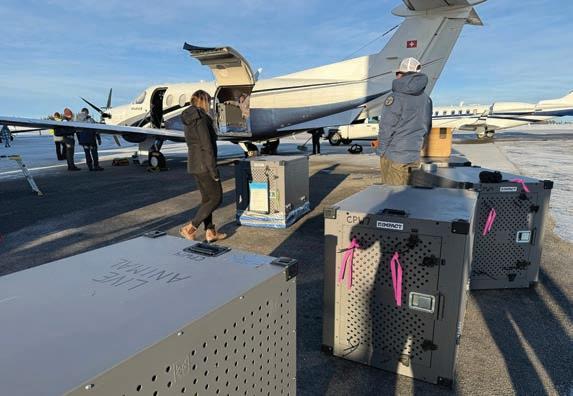
that require attention during long transits.
Not every mission crosses a border, and relatively few do. More commonly, LightHawk’s endangered species missions move animals within the U.S., across distances that would otherwise require long, stressful road trips. Within the broader portfolio, conservation flights also support indigenous communities and cultural priorities. One LightHawk pilot, Becker noted, “loves to take Navajo tribal elders up to fly along the cliffs to count the…golden eagles,” an activity aligned with cultural traditions and wildlife management.
Matching the right pilot to the right mission is both an art and a system. “When we get a mission,” Becker said, “one of our program managers gets a request for a flight [and] then it goes on the Mission Board,” a site accessible by LightHawk volunteers. “Usually there’s 50 to 60 missions on that mission board,” each with enough detail for a pilot to assess aircraft suitability, route feasibility, and schedule. Pilots tend to find a niche—such as wildlife transport, photography, or low-level survey—and return for more.
The organization’s safety bar is high: “You have to have 1,000 hours of [PIC] time,” Becker said, and pilot onboarding includes references and interviews. Over the nonprofit’s history, he added, “we’ve only had one or two accidents, and those were 25 years ago.”
The pilots’ motivations, unsurprisingly, are not transactional. “Pilots need to fly, right? So they’re always looking for reasons to fly,” Becker said. The feedback after a few missions is consistent: “They said LightHawk is the best use of a general aviation airplane that there possibly is.”
That sense of purpose is evident in the aircraft and effort that donors bring to bear. For some missions, “Pilatus pilots actually strip out the interior of their airplane,” Becker said, to make room for large crates and handlers. In spring, when timing is tight for cross-fostering wolf pups, Weitzel said the organization “need[s] more long-range fast aircraft,” because the day can start before dawn and span multiple handoffs to meet biological windows at distant dens.
In Becker’s words: “We need more heavy iron.”
If the aircraft and pilots are the nonprofit’s backbone, funding keeps the system running. “The cost of operating the aircraft is totally borne by our volunteer pilots,” Becker said, an in-kind contribution that makes flights possible for partners that could not otherwise afford it. LightHawk covers staffing and operations through “both individual donors and … grants from various foundations,” and is “expanding our partnerships with corporations as well,” Weitzel said.
LightHawk is also formalizing how aviation businesses can plug into its mission through the Wings for Conservation corporate- partner program launching in 2026. Contribution tiers range from $1,000 to $20,000. Benefits emphasize visibility with mission-aligned audiences, co-branded storytelling, and collaboration on strategic initiatives that advance stewardship while highlighting aviation’s role in these efforts. What makes LightHawk distinctive is how the elements fit together. Program staff bring conservation and environmental science expertise to vet requests and shape each flight; volunteer pilots bring aircraft, airmanship, and a willingness to do the meticulous work behind a smooth mission day; partners bring problems that can be seen—and solved—more clearly from the air.
The personal connections are as important as any metric. Pilots often “love to fly

with the passengers that are on the plane,” Becker said, because the learning runs both ways. For Weitzel, the measure of success is what happens after a safe landing: less stress on transported animals compared with other transportation modes, more informed decisions about land and water, and images that change how people think about a place. In the end, those results— wolves sprinting into the tree line, a condor seen and saved, a watershed documented before it is lost—are what justify the effort.
LightHawk began with a simple premise: if people could see what was at stake, they might act differently. Decades later, that premise still holds. The airplanes are privately owned now; the flights are donated; the missions are broader; the partners more varied. But the core is unchanged: the perspective and power of aviation can help reshape the world for the better. z A Mexican wolf pup is examined after its cross-country flight

This digital newsletter, delivered directly to your inbox Monday through Friday, is the most trusted source for daily business aviation news.
To subscribe: - Scan the QR code - Visit ainonline.com/subscribe - Email subscriptions@ainonline.com


BY CURT EPSTEIN

After 18 years, Lufthansa Technik (LHT) is finally putting the finishing touches on one of the most ambitious aircraft maintenance projects in its history. In the mid-2000s, parent company Lufthansa Group’s Deutsche Lufthansa Berlin- Stiftung (DLBS) historic flight foundation decided to add a Lockheed 1649A Super Star to its fleet of flying museum pieces, which included the Junkers Ju-52/3M.
As the final iteration of the successful four-engine Constellation family, and marking the end of the piston-engined passenger airliner era, the L1649A joined the Lufthansa fleet in 1957 on the nonstop transatlantic route between New York and Hamburg. Four of the aircraft (out of the 44 built) served until they were superseded by the Boeing 707 in the mid-1960s. The Super Star saw the inauguration of the airline’s first-class “Senator” service with an onboard chef catering to the 32 passengers who endured the nearly 15-hour flight from the comfort of sleeper beds and nearly lieflat seats.
As the aircraft were eventually retired from service, a private collector in Maine acquired three of the survivors. He had two flown to Auburn/Lewiston Municipal Airport (KLEW), his home field, while the third, in Florida, was never able to be fixed up enough to make the ferry flight north. DLBS purchased the three airframes, more than a dozen massive R-3350 Wright turbocompound radial engines, and a trove of spare parts with the goal of fielding one airworthy example.
The city of Auburn, Maine, built a hangar for the LHT crew to work on the airframe that was selected for restoration to make it airworthy. Regarding the other two aircraft, one is in the Fantasy of Flight collection in Polk City, Florida, while the other serves as an outdoor cocktail lounge at the TWA Hotel at New York JFK International Airport.
“As you can imagine, the aircraft were in very bad shape after such a long period,” said Oliver Sturm, who has been with the
program since 2008 and is leading the restoration project. “I think the last time it flew was at the end of the 1980s. It was stored in Maine, and the weather on the East Coast is a lot of rain and snow. The structure at the end was so bad we had to replace nearly every panel on the aircraft, so the structure is brand new, I could say zero-flight hours.”
The work was done by a small group of dedicated LHT technicians, supplemented by retired workers and trainees. It continued for a decade, even enduring an accidental hangar foam suppression discharge that ruined reams of paperwork and volumes of documents. While that set the project back by several months, only the structural portion of the aircraft was in the hangar during the discharge, and all components were fortunately crated up in a nearby warehouse.
By 2018, the company faced a reckoning of what it would take to recertify the aircraft in terms of time, with estimates of the project dragging on for another five years at the then pace of work, but in
the summer of that year, the fatal crash of another operator’s historic aircraft—a tri-motor Ju-52 during a sightseeing tour in the Swiss Alps that claimed 20 lives— caused European authorities to institute tighter scrutiny for vintage aircraft flights. That was the final straw; Lufthansa officials then decided to abandon plans for the Super Star’s return to flight, opting instead to prepare it for static display in honor of the brand’s 100th anniversary in 2026.
Bremen, Germany, the airframe was placed in storage until 2023, when it arrived at the LHT facility in Hamburg for the restart of the restoration program.
If you ever want to see grown-up guys with tears in their eyes, that would have been the moment...
— Oliver Sturm Restoration project leader
After another brutal Maine winter, the airplane—disassembled into four large pieces, along with more than 300 crates of parts and components—was loaded on flatbed transports in early 2019 and trucked to nearby Portland, Maine. Once it was transferred to a cargo ship and sent to

Preparing the L1649 for display rather than flight was a weight off the restoration crew’s backs. “The big difference is if you don’t have to follow any regulations, you don’t need engineering, you don’t need paperwork, and so on,” Sturm told AIN. “It makes it much, much easier to go ahead.”
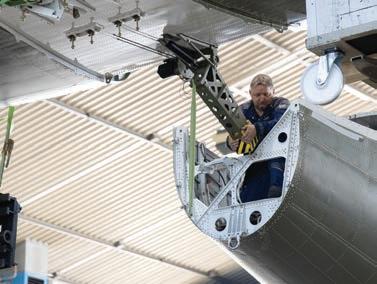
Yet, that doesn’t mean the work would be conducted with any less dedication or attention to detail. “Because we are all engineers, mechanics, and sheet metal workers, we do the job as if it were a flyable aircraft at the end,” he added. Among the surprises Sturm encountered during the course of the project was the realization that the Connie’s wings were each attached to the fuselage by just eight big bolts.
At the end of the second quarter, the reassembled Super Star was rolled out of the hangar at Hamburg and was greeted by a sea of more than 2,000 cheering company employees and guests. “That gave me goosebumps,” said Sturm. “If you

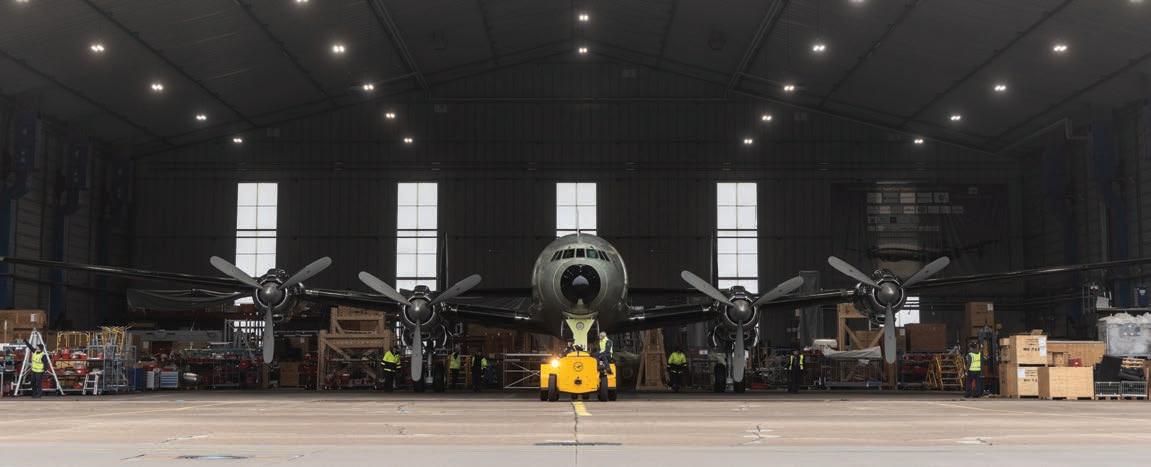
ever want to see grown-up guys with tears in their eyes, that would have been the moment.”
The aircraft was once again disassembled and trucked to Münster/Osnabrück Airport, where the four subassemblies were given the vintage Lufthansa “parabolic” paint scheme that the type wore during the 1950s and 1960s. The work was carried out by Altitude Paint Services, with Hamburg-based manufacturer Mankiewicz providing around 500 liters of special paint free of charge. Still in subassembly form, the Constellation was then moved to Frankfurt, its final destination. Once reassembled for the last time, it will be the centerpiece in the new visitor and conference center under construction at the
Lufthansa Group’s headquarters, along with the 1930s-era Ju-52.
Although regulations require the L1649A to be entirely drained of fluids before going on display, Sturm said that will be virtually the only concession in terms of
functionality. “If somebody goes to the new visitor center and looks at the aircraft, they should have the feeling that the aircraft is in flyable condition,” he explained. “If you look into the landing gear, every hose, every tube in it, every cable is installed.”
If somebody goes to the new visitor center and looks at the aircraft, they should have the feeling that the aircraft is in flyable condition. If you look into the landing gear, every hose, every tube in it, every cable is installed...
— Oliver Sturm Restoration project leader
That same level of detail goes for the cockpit as well. Since the airplane will not return to flight and did not have to incorporate any modern avionics to meet regulatory standards, the front office will be representative of 1950s technology. As for the cabin, LHT prefers to keep that under wraps until the formal unveiling of the Super Star next year during the centennial anniversary, noting only that it will have a functional 1950s coffee maker in the galley. z


Aircraft operators and other FBO users can rate airport service providers they frequent worldwide in five categories—line service, passenger amenities, pilot amenities, facilities, and CSRs—as well as give a shout out to facility sta ers who went above and beyond in providing great service.
The results will be announced at AIN’s 2nd Annual FBO Awards Dinner & Gala on March 26, 2026, and will appear in the April 2026 issue of of Aviation International News.
FBO Survey respondents will be entered to win a $250 gift card

For more information on AIN’s FBO Awards Dinner & Gala visit AINFBOAwards.com

BY STUART “KIPP” LAU

Mesa, Arizona-based Aviation Performance Solutions is supporting United Aviate Academy’s upset prevention and recovery training program.
United Airlines’ investment in upset prevention and recovery training (UPRT) for its ab initio students is beginning to show some impressive results. UPRT programs prepare pilots to counter the lossof-control- in-flight (LOC-I) threat—the leading cause of fatal aviation accidents. In general aviation, on average, the statistics are alarming; there is one fatal LOC-I accident every four days.
A recent study indicates that United Aviate Academy (UAA) pilots are much better prepared to recover from a startle or surprise airplane upset event after completing its integrated UPRT program. The independent research, validated by a former NASA/FAA human factors expert, suggests that UPRT introduced early in a pilot’s training contributes to “a transformational
improvement in applied recovery skills.”
Comparing the results from the beginning of the training program to graduation, the study participants’ performance in recovering from a novel unexpected upset improved by more than 400%. This study provides another data point that validates the effectiveness of a comprehensive UPRT program. In addition to learning life-saving strategies that mitigate the LOC-I threat, UAA students completing the program receive their CFI spin endorsement in an all-attitude aerobatic aircraft.
UAA—United Airlines’ wholly-owned flight training academy in Goodyear, Arizona—formally began the UPRT program for its students in 2022. The program is administered by Mesa, Arizona-based Aviation Performance Solutions (APS), a global
UPRT specialist. APS provides its expertise in UPRT program development and delivery to UAA.
“At United Aviate Academy, we pride ourselves on providing students with exceptional training throughout their education,” said United Aviate Academy CEO Michael Hale, discussing the integration of the UPRT program into the curriculum. “This training is ideally completed between the instrument and commercial certificates, offering students a deeper understanding of safety and situational awareness during aircraft maneuvers. Additionally, the program includes a spin endorsement, a requirement for the initial CFI certification. The APS training equips our students with these critical skills, ultimately making them safer pilots.”
UAA is the only flight academy owned by a major airline in the U.S. The program is designed to take a pilot with zero flight time through advanced certifications and ratings, which may ultimately lead to employment as a first officer at United Airlines. Students learn to fly on a growing fleet of Cirrus SR20 single-engine airplanes. UAA’s campus encompasses 340,000 sq ft with multiple hangars, classrooms, and dormitories for student housing.
APS developed a customized integrated UPRT program that is unique to UAA and tailored to the flight school student; the program includes 11 hours of combined online and classroom instruction, three instructional flights in the all-attitudecapable Extra 300L, and one hour in an advanced “class-specific” simulator. Graduates completing the full program earn the APS Gold Standard Qualification (Flight School Operations) and receive their CFI spin endorsement.
One of the most important aspects of UAA’s UPRT program is the on-aircraft instruction that each student receives in an aerobaticcapable airplane, taught by highly competent APS instructors. The foundation of this training is APS’ Every Pilot in Control Solution Standard (EPIC-S2) framework that provides comprehensive guidelines for implementing effective UPRT programs. EPIC-S2 is an integrated model that includes six critical factors: instructor qualifications (the elite instructor), program development (integrated program), program duration (intensity), industry compliance (best practices), training platforms, and other elements such as initial and recurrent training.
“Not all UPRT is the same. The results at United Aviate Academy reflect a program APS designed specifically for the flight school environment and refined over 25 years,” APS CEO Paul “BJ” Ransbury said. “It’s a proprietary integration of methods, tools, and mentoring that our elite instructors deliver student by student
under the EPIC-S2 framework. That’s why UAA students demonstrated performance improvements far beyond what conventional training can achieve—transformational gains that redefine readiness from the very start of a pilot’s career.”
The UAA UPRT program is fully aligned with current FAA and ICAO training guidelines and practices. A core component, according to APS, is its “all-attitude upset recovery strategy”—a scenario-based methodology designed to ingrain effective, reflexive pilot response under dynamic, high-stress conditions.
Introducing intensive UPRT to pilots at the beginning of their career strengthens their aeronautical decision-making skills, improves flight path awareness, enhances manual aircraft handling skills, creates an awareness of the stall/spin escalation scenario, and implements the “push-rollpower- stabilize” upset prevention and recovery strategy as a proven method that saves lives. By design, UAA’s UPRT program translates directly to United’s mainline training, since each is based on the same philosophies, procedures, and strategies to counter the LOC-I threat.
APS executive v-p of standards and compliance Clark “Otter” McNeace added, “What makes this training unique is its design. APS engineered it for flight school students to move beyond procedures into
reflexive, under-pressure performance. With EPIC-S2 principles guiding every session, our instructors mentor each student to the highest standard.”
McNeace added this produces results: “The outcome is clear—UAA students are now performing at levels once thought out of reach in pilot development, setting a new benchmark for safety readiness at the flight school stage and beyond.”
Over a three-year period, APS conducted a study to measure the performance of UAA students during a unique and unexpected in-flight upset event. Students were evaluated before UPRT training began and again upon the completion of training. To “pass” the evaluation, it was required to successfully recover from the upset event without losing control of the aircraft.
The most compelling outcome of the in-flight evaluations to recognize and counter startling airplane upset events involved 67 students who completed the entire UPRT program, from academics to on-aircraft and simulator training. Results for this group, before training, were a 16.4% success rate. After the completion of training, the same group encountered a unique (never before demonstrated) upset event, and the results improved to 86.6%, a marked improvement of 427%.

After in-aircraft upset training, students saw remarkable improvements in startle reaction.
Of interest, APS conducted a similar study in 2007 and 2008 that showed similar results by professional pilots trained through traditional flight school and type rating programs. The pass rate of these pilots—before UPRT training—ranged from 15% to 25%, which is in line with the results from the UAA students.
Results of the UAA UPRT study were validated by Aviation Research, Training, and Services president Janeen Kochan, a former NASA and FAA human factors researcher. “The United Aviate UPRT initial study was one of the first studies on the effectiveness of UPRT for ab initio pilot cadets. This study was well-constructed, had an adequate sample size for analysis, and employed objective measures,” Kochan said. “The research evaluators were all experts in the evaluation of pilot skills and experienced in the conduct of research protocols, adding specificity and consistency to the measures used. The results clearly show that both the ground and flight UPRT received by the cadets improved their understanding, prevention, and in-flight recovery skills.”
The study validated the effectiveness of the UAA UPRT program. Upon completion of the training, students were able to successfully demonstrate the ability to counter the psychophysiological effects of an in-flight upset event and apply the correct recovery strategy.
Spin training and, most recently, the spin endorsement for CFI candidates have been hot topics in general aviation flight training. Kochan, in addition to being a researcher, is a designated pilot examiner (DPE) with a background flying everything from light aircraft to heavy jets. For each UAA student who completes the UPRT program, they are well-equipped to tackle the CFI check ride based on the training and experience gained at UAA and APS. According to Kochan and many other DPEs, this often is not the case.
Kochan said, based on her experience, “Ninety-nine percent of the time an initial flight instructor applicant will present documentation of their ‘spin training’ to satisfy (a) the requirement in 14 CFR 61.183(i) and (b) Area of Operation X, Task I in the Flight Instructor for Airplane Category Airman Certification Standards (ACS). It is important to note that per 14 CFR 61.183(i), the flight instructor needs to demonstrate instructional proficiency in stall awareness, spin entry, spins, and spin recovery procedures.

JANEEN
KOCHAN FORMER NASA AND FAA HUMAN FACTORS RESEARCHER
An unacceptable response is, ‘If a student gets me into a spin, I will push the [autopilot’s level] button.’
“And, per the ACS, the guidance is clear: ‘To determine the applicant understands spins, can apply that knowledge, manage associated risks, demonstrate appropriate skills, and provide effective instruction.’”
The requirements for CFI candidates, as outlined in the regulations and ACS, seem fair, considering stalls and spins are a factor in so many general aviation accidents. CFIs need to be stall and spin avoidance experts and possess the skills required to recover from an inadvertent stall or spin; this cannot be accomplished in a single flight.
“In 95% of the practical tests, there is a rudimentary understanding of spins and a
memorized acronym for the recovery. In most cases, the applicant does not have a grasp of spin training materials, nor do they remember a ground training syllabus used in their own training,” she said. “Except in the cases where an aerobatic aircraft was used and the training provider incorporated UPRT into the program, the training flight was less than one hour (usually .7 to .8) in a Cessna, Diamond, or other aircraft certified for spins. I have heard every rendition of how to enter an intentional spin, and many of the procedures are contrary to the aircraft’s operating documents.”
CFI candidates are issued a Notice of Disapproval for an unsatisfactory spin task for several reasons. According to Kochan, it is straightforward. “The ACS has a risk management element regarding spins in every task. The applicant explains and teaches how to identify and manage risk associated with low-altitude maneuvering, including stall, spin, or controlled flight into terrain (CFIT),” she said. An unacceptable response is, “If a student gets me into a spin, I will push the [autopilot’s level] button.”
Kochan concluded, “In summary, the spin endorsement training is in dire need of enhancement. I applaud the training organizations taking the initiative to use proper equipment, meaningful training tools, and instructors experienced in teaching in the expanded envelope for their spin training. One percent of the applicants will bring an airplane certified for spins to teach and demonstrate spins on the practical test.”
United Airlines’ investment in UAA’s UPRT program provides students with transformative and comprehensive training, making each pilot better and equipping them with the knowledge and skills to recover from a LOC-I event that will ultimately save lives. Data support the effectiveness of a well-designed on-aircraft UPRT program and prove that it is never too early to start.
z


JANUARY 15 - 17, 2026
“The AIN CALS event has been a refreshing experience for leaders within the corporate aviation community and the vendors that support their businesses. 100% engagement for 2.5 days. Truly a working event that leaves us all a bit tired but very enthused!”
– CALS FLIGHT DEPARTMENT ATTENDEE
“The AIN CALS event provides excellent opportunities for high level interaction between vendors and clients. The one-on-one time and small group sessions are very valuable settings.”
– CALS SPONSOR

Canada-based Skyservice Business Aviation has expanded its footprint in the U.S. with the opening of its permanent FBO at Napa County Airport (KAPC) in California’s wine country. The company began operations from a temporary facility in 2023.
The new complex sits on 15 acres. It features a 12,000-sqft, two-story terminal with a passenger lounge, refreshment bar, concierge, massage chair-equipped crew lounge with snooze rooms and showers, flight-planning area, tenant office space, two 12-seat conference rooms, and electric vehicle charging stations. A rooftop restaurant with indoor and outdoor patio seating is slated to open next year. The Titan Aviation Fuels-branded FBO’s 40,000-sq-ft hangar can shelter the latest ultra-long-range business jets. The facility also offers nine acres of ramp for aircraft parking.
Founded earlier this year, the Velocity FBO Network has expanded to four locations with the acquisition of the FBO assets of Havasu Air Center (HAC), the lone service provider at Arizona’s Lake Havasu City Airport (KHII). The facility features a 5,500-sq-ft terminal with a reception area, an eightseat conference room, flight-planning room, pilot lounge and theater room, and aircraft arrivals canopy. It offers more than 100,000 sq ft of hangar space and four acres of ramp parking.
Under the terms of the agreement, HAC’s former owners will retain their aircraft management and maintenance operations under the Northstar Aviation Services name.
Velocity was formed from the three U.S. locations of the Odyssey FBO Network, which was purchased and rebranded by private investment firm Tallvine Partners.
Los Angeles-based aircraft charter operator and broker FlyHouse has expanded its operation with the purchase of Los Angeles-area FBO and fleet operator Sun Air Jets. In operation at Camarillo Airport (KCMA) for more than 20 years, Sun Air’s facility has a 23,000-sq-ft terminal and more than 100,000 sq ft of hangar space.
Included in the acquisition was Sun Air’s Part 135 charter certificate, which will add approximately a dozen aircraft to FlyHouse’s charter fleet, and will also integrate Sun Air’s Argus Platinum, IS-BAO, and Wyvern Wingman safety ratings.
Additionally, the purchase will give the company its own maintenance capability for the first time with an FAA-approved Part 145 repair station, as well as its first FBO, at Camarillo Airport.
Following nearly 20 months of construction, Sheltair debuted its newest location with the opening of its FBO at Sarasota–Bradenton International Airport (KSRQ) on November 1. For the Florida-based aircraft service provider, this represents its 17th FBO location overall and the 13th in its home state.
Occupying 25 acres on the field, including 12 acres of ramp, the $40 million development features a 10,705-sqft terminal with 11,680-sq-ft airside arrivals canopy; large, naturally lit lobby; two conference rooms seating eight and 14, respectively; VIP lounge; and pilot lounge and concierge.
In addition, the complex includes 46,530 sq ft of hangar space capable of accommodating the latest ultra-long-range business jets.
Sheltair noted that a CBP inspection facility is set to open on the field in second-quarter 2026, and it plans to add more large hangars and a 60,000-sq-ft MRO facility to its leasehold. z


Tucson Jet Center has had a presence at Arizona’s Tucson International Airport (KTUS) for more than three decades, starting out as a flight school and charter provider before transitioning to FBO services. Amanda Lawver, its current owner, began there as a weekend CSR back in 1999, and 20 years later she bought it.
“The first thing I did was I gutted the entire place from top to bottom,” she told AIN . “This place hadn’t been updated since 2003, so needless to say, it needed a facelift.”
The cost of the renovation to the 15,000sq-ft terminal was half a million dollars. It offers a coffee and refreshment bar, pilot lounge with snooze room and flight planning area, shower facilities, a theater room, six-seat room, and business center. Valet parking is available, as are complimentary car washes for based customers. “That’s become a lot more popular,” Lawver said. “A lot of people ask for certain things to be done, and we do take care of it for them if they are our regular customers.”
When Lawver took control of the facility, it had just two hangars totaling 18,000 sq ft, but in 2021, she acquired two additional 10,000-sq-ft hangars and a third last year.
Capable of sheltering the latest ultra-longrange business jets, they are home to 20
turbine-powered airplanes ranging from a Bombardier Challenger 604 to a pair of Daher TBM turboprop singles.
The World Fuel-branded location is also a member of the World Fuel-sponsored Air Elite Network in addition to being the CAA-preferred FBO on the field since 2019.
Its fuel farm can store 10,000 gallons of jet-A and the same amount of avgas. It is served by the FBO’s six 5,000-gallon refuelers, one of which is dedicated to carrying 100LL. Lawver noted the FBO pumps approximately 2.5 million gallons a year, and claims 40 percent of the business and general aviation tra c that is seen by the four FBOs at KTUS. “We don’t charge the excessive fees,” said Lawver. “Overnight fees, parking fees, security fees, infrastructure fees; the only fee that we charge is the airport landing fee, and that’s because we have to because that’s due to the airport.”
That is one reason for the location’s popularity; the other is something the major chains just can’t offer. “Every single person who comes through here, I know on a personal level because everybody saw me grow up here,” explained Lawver. “This is a family-run operation, the CSR is my sister, the line guy is my brother, we’re known for being family-owned and -operated, and the people generally like that.”
That situation has helped differentiate the company’s customer service. “Being a smaller FBO and not corporately-owned, we want to focus on the smaller details of everything,” said Lawver. That includes remembering customer names, preferences, or even which pets they travel with.
The facility—which has a sta of 14 NATA Safety 1st-trained employees—is open daily from 5:30 a.m. until 10 p.m., with after-hours callout available. That tracks with the schedule of the airport’s U.S Customs and Border Protection facility, which is available with advance notice from 6 a.m. until 10 p.m.
Peak season at KTUS lasts from September 1 through the end of April. The city’s worldrenowned annual gem and mineral show is in February, and customers begin making reservations months in advance for the two-week event. “In this town, you will not get a hotel, you will not get a car, you will get nothing here if you are not set up months in advance,” said Lawver. She noted the FBO can expect 20 to 25 flights a day during the first week when the “heavy hitters” arrive, some flying internationally. “During that week, we can easily sell 100,000 gallons of fuel,” she said.
To accommodate those transient aircraft, the FBO expects to add another 25,000 acres of ramp to its existing 224,000 sq ft in the next two years. C.E.

Helicopter sales and service provider Rotortrade has opened its 9,000-sq-ft U.S. helicopter maintenance, repair, and overhaul (MRO) facility at Arnold Palmer Regional Airport (KLBE) in Latrobe, Pennsylvania, after receiving FAA Part 145 approval. The regulatory approval process took less than 10 months, something Rotortrade describes as “well ahead of industry averages.” While the facility has already completed work on 15 helicopters, conducting services such as inspections, overhauls, and completions, Rotortrade already has its sights set on enlarging it and recruiting more staff to help meet the objectives of its five-year plan. By 2030, Rotortrade anticipates “targeting more than 50 aircraft annually” and “securing EASA bilateral [agreements] for global reach.”
TBO Extension is expecting FAA authorization to expand its engine life extension supplemental type certificate (STC) to include the Pratt & Whitney Canada (P&WC) PW530A and PW535A engines, which power the Cessna Citation Bravo and Encore, respectively.
The Atlantic Jet Partners subsidiary’s STC for the P&WC JT15D has been installed on more than 200 engines as a cost-effective alternative to OEM overhaul. It has added more than 2,000 hours of flight service life per engine and significantly reduced ownership costs.
Under the traditional overhaul model, operators can expect costs up to $4 million and as much as 9 months of downtime, TBO Extension noted. Under its program, the price is reduced to between $1 million and $1.5 million for both engines, including hot section inspection, and it can be accomplished in approximately six weeks.
With the STC expansion, Citation Bravo and Encore operators will now be able to extend their engine life by up to 2,500 hours through the same approach, according to the company.
Gulfstream Aerospace’s MRO network has demonstrated compliance with the FAA Safety Management System Voluntary Program (SMSVP), a milestone reached ahead of a year-end deadline. Under a bilateral agreement with the EU, U.S.-based repair stations that have EASA approvals must comply with an SMS as outlined in the SMSVP by December 31, the airframer said.
Gulfstream’s original SMS program was established in 2007, positioning it for the update to ensure that it exceeds the SMSVP requirements for all its U.S. repair stations. In addition, Gulfstream has incorporated the SMSVP at its repair and overhaul centers in Lincoln, California, and Fort Worth.
West Star Aviation was designated as an authorized overhaul facility for Embraer Praetor and Legacy landing gear under a strategic partnership with Héroux-Devtek. The designation covers the Legacy 450 and 500, as well as Praetor 500 and 600, building on West Star Aviation’s capabilities as an Embraer-authorized aircraft maintenance facility.
West Star brings a range of capabilities to support its latest designation, including collaborative training to ensure it meets Embraer’s specification and HérouxDevtek’s standards, a cadmium plating line with a chemistry lab for precise corrosion treatment, and advanced paint removal and cleaning processes, among others.

Two years after private equity firm AE Industrial Partners (AEI) acquired a majority interest in Yingling Aviation, the iconic Wichita maintenance, repair, and overhaul (MRO) business is undergoing a transformation that is rapidly expanding its size and capabilities with additional hangars, multiple acquisitions, and new services such as winglet installation and paint capability for the largest business jets.
However, company executives stress that the nearly 80-year-old company has not forgotten its roots as a long-time piston, turboprop, and light-jet services company, and in fact is enhancing that business as well. Yingling was founded in 1946 as the first Cessna Aircraft dealer.
It spent most of its first 77 years as a familyowned business, initially with the Yingling family and then in 2000, the Nichols family. The MRO was sold in 2023 to AEI, which has invested in aviation services businesses such as West Star Aviation, Global Jet Capital, and the former Landmark Aviation. After the AEI acquisition in 2023, Yingling CEO Lynn Nichols remained on the board and his son, Andrew, continued as chief strategy o cer.
AEI, however, brought over two thenretired executives from West Star Aviation: Robert Rasberry and Rodger Renaud, who took the roles of CEO and COO, respectively, in October 2023. They are working with the Yingling team and new ownership, expediting an ambitious growth trajectory that included acquiring three businesses within a year—in September 2024, Bevan Aviation, a 70-year Wichita fixture that brought avionics specialization capabilities; March 2024, neighboring Mid-Continent Aviation Services (MCAS), a full-service MRO; and January 2025, Global Engineering & Technology, which expanded on Yingling’s aircraft cabinetry and interior refurbishment capacity.
Not only have those acquisitions brought

new specialties, but they have also provided much-needed space for Yingling’s quest to push up into the largest of business jets. MCAS added 80,000 sq ft of hangar capacity. And now Yingling spans 14 hangars, 550,000 sq ft of total space, and 450 employees, a number that is rising daily.
The company is looking for additional space at Wichita Dwight D. Eisenhower National Airport (KICT), just across Runway 19L/1R from Textron Aviation’s sprawling campus. Notably, it is preparing to break ground on a 60,000-sq-ft hangar for a paint facility large enough to accommodate the Bombardier Global 7500. Construction is set to begin next year, with completion in 2027.
Renaud told AIN that customers have already begun lining up for paint, reflecting not only long relationships with a mix of customers but also a shortage of such paint capacity. Yingling has begun training for work on such a scale.
Those relationships that Rasberry and Renaud have cultivated over their decades in the industry have helped Yingling build up an entirely new clientele: the large business jet owner.
“The day we came, we knew that’s where we were headed,” Rasberry told AIN. “We laid a lot of groundwork. We had to make sure we had what we needed: resources— people, hangarage, obviously tooling, and all that—so that we didn’t fail. So we didn’t really announce that we were here while we put a team together.”
But customers still called, he said, and they responded: “We’re not going to take something until we know we [are ready]. Once we were ready, we announced, and holy cow.”
The business followed. Bombardier Globals were the first two, but a recent visit showed Falcons, Gulfstreams, Challengers, and Hawkers onsite, along with the stable of Citations, Caravans, King Airs, and other longtime regulars. The leadership has brought in technicians with expertise, and has also been able to build in-house talent.
Asked about what’s ahead for the future, Rasberry said, “We’re going to grow the legacy programs...We’re not giving those up, but since we bought this, we’re adding the larger airplanes, all of the big names. So we’re going to grow all of those.” K.L.
BY DAVID JACK KENNY
Cessna Citation CJ4, Sept. 18, 2025, Mayfield, Kentucky
The sole-occupant pilot of a Cessna Citation CJ4 told investigators he experienced “no braking action” after landing at Mayfield Graves County Airport (M25), leading to a runway overrun that ended with the aircraft striking a house. According to the NTSB’s preliminary report, the airplane had just completed maintenance at St. Louis Regional Airport (KALN) and was returning to its base under Part 91.
The pilot reported an uneventful flight until landing. He flew a straight-in visual approach to Runway 19 and said he “configured the airplane for landing later than intended,” though the approach was stabilized. After touchdown on the centerline, he “deployed the ground spoilers and pressed firmly on the brakes,” but observed no deceleration.
“The pilot applied greater force to the brakes; however, the airplane began to veer to the right, and there was still no observed slowing of the airplane,” the report states. Believing there was insufficient runway to attempt a go-around, the pilot left the engines at idle and continued rolling while maintaining directional control and “applying downward force to the yoke.”
The aircraft overran the runway, broke through the airport perimeter fence, crossed Kentucky Route 58, and struck a house. The aircraft sustained substantial damage to the left wing and fuselage, but there was no post-impact fire.
The weather at the time was clear with light winds and good visibility.
Beechcraft C90 King Air, Oct. 12, 2025, Fort Worth, Texas
The private pilot and pilot-rated passenger were killed when the twin-engine turboprop crashed inverted, striking “numerous parked, unoccupied commercial vehicles” and triggering an explosion and fire that “consumed nearly the entire airplane.” The accident occurred near Fort Worth’s Hicks Airfield (T67) about an hour and a half into what the flight track suggests may have been a training or proficiency flight.
The King Air took off from Perot Field/ Fort Worth Alliance Airport at 12:03 and “performed several approaches to the Bowie Municipal Airport.” It then flew south, making one 360-degree right turn, turned to the southeast at 13:25, and eight minutes later made a right turn towards T67. A pilot at T67 heard the crew announce a five-mile final approach, but about 1.3 nautical miles from the approach end of Runway 14, the airplane broke it off and made a left turn to the north.
Video cameras near the accident site recorded the King Air flying low over power lines with the gear extended, then beginning to descend and rolling left through 90 degrees of bank to crash inverted with the left wing low. Identifiable parts of the wreckage included both engines and propellers, which were recovered for examination.
Cessna 208B Grand Caravan, Oct. 28, 2025, Diani, Kwale County, Kenya
The scheduled flight from the Dinai airport to the Maasai Mara National Reserve struck a forested hillside in what was described as “heavy rain,” killing the Kenyan pilot and
all 10 passengers. A post-accident fire consumed much of the aircraft, and access to the site about 25 miles from the airport was impeded by unpaved roads and poor weather.
The Diani control tower reported losing contact with the pilot shortly after takeoff
Piper PA-46-350P JetProp conversion, Oct. 30, 2023, McCook, Nebraska
Data recovered from the airplane’s Electronics International MVP-50T engine monitor showed that the engine reached its maximum output of 1,070 foot-pounds of torque eight seconds before liftoff. The Pilot’s Operating Handbook for the JetProp DLX conversion called for takeoff torque of about 1,200 foot-pounds. Torque was only 710 footpounds when a positive rate of climb was recorded and had fallen to 290 foot-pounds at the last recorded data point. The 79-yearold private pilot was killed, and his sole passenger, seated in a rear-facing seat, was seriously injured when the airplane stalled from an altitude of about 100 feet. Investigators found no evidence of engine malfunction, but the throttle quadrant’s friction lock was found disengaged.
The pilot bought the airplane in March 2006 and had the JetProp conversion performed in March 2017, having completed the appropriate ground school and flight training the previous month. His logbooks showed about 4,500 hours of flight experience that included 676.8 in make and model with 15.3 in the preceding 30 days, and his last flight review was accomplished eight days before the accident. A pilot-rated friend who had flown with him frequently described him as “proficient…and…
very safe,” adding that he would “ease into the power and not go to full torque.”
Investigators determined that the airplane was loaded 554 pounds above maximum gross with its center of gravity half an inch aft of limits. A flight instructor familiar with the pilot said that he’d always seen him with “a lot of hunting gear.”
Cessna 208B, Jan. 8, 2024, Lizard Island Airport, Queensland, Australia
The pilot and all nine passengers escaped with minor injuries after the airplane ran off the end of the runway and overturned during an attempted emergency landing. Six minutes after taking off from the Lizard Island Airport on a charter flight to Cairns, as the Caravan climbed through 3,400 feet at an airspeed of 102 knots, the pilot “noted a change to the engine sound” and saw that the airplane was accelerating. Both the torque and interturbine temperature readings on the multifunction display’s engine gauges were above redline, while red Xs showed that the gas generator speed and fuel flow were no longer indicating. Propeller speed remained at the high end of its green operating range.
The airplane continued to climb and accelerate as the pilot turned back toward Lizard Island, reaching 4,000 feet at 166 knots over the next two minutes. Moving the power and emergency power levers had no effect, while moving the propeller control reduced thrust somewhat. A shallow descent under power during a wide orbit of the island with flaps deployed reduced altitude enough to attempt a landing on Runway 12; to avoid coming up short and striking a maintenance building at the approach end, the pilot made a power-on approach. The Caravan crossed the threshold at 123 knots, well above the normal 75-85 knot approach speed, and floated down two-thirds of the down-sloping runway before touching down at 100 knots. After departing the runway and crossing “undulating sandy soil and low
vegetation,” the left wing struck the ground, flipping the aircraft.
The engine runaway was attributed to a malfunction of the fuel control unit (FCU). The ATSB report notes that emergency procedure training for PT6A-powered airplanes covers rollbacks to idle but not uncommanded acceleration or inability to reduce power, though the latter is the most common type of FCU-related malfunctions or failure modes.
Bell 206L-3, July 14, 2025, 16 km WNW of Lake Evella Aerodrome, Northern Territory, Australia
A large bird subsequently identified as a white-bellied sea eagle crashed through the acrylic windshield, causing minor damage to the helicopter but fatally injuring the passenger in the left front seat. The accident occurred during a charter flight from Mirmatja to Burrum, the last of a series the pilot flew around the Arnhem region of the Northern Territory that day. In cruise flight at 900 feet, the pilot was looking out the left side when there was a loud bang, and the pilot observed “a large bird laying between the two occupants, and what appeared to be serious injuries to the passenger’s upper body.”
Unable to detect the passenger’s pulse, the pilot landed at the Lake Evella Aerodrome to get help from the adjacent police station. Police, a doctor, and a nurse responded but were unable to revive the passenger, who had frequently traveled this route for work and had commuted by helicopter since 1995.
Agusta A109E, Feb. 25, 2025, 200 km northeast of Mackay, Queensland, Australia
The ATSB and the aircraft’s manufacturer both attributed the helicopter’s destruction during an attempted takeoff from the bulk carrier Star Coral to an episode of ground resonance. The flight was intended to transit
to a nearby outbound ship on the second leg of a three-flight marine pilot transfer mission, picking up the outbound ship’s pilot after having transported another to the inbound Star Coral. Two airmen were on board for what was typically a single-pilot operation in order to provide a new hire with pilot-in-command experience under the supervision of a company check pilot.
The inbound flight and landing were completed without incident. The helicopter remained on the helideck at flight idle for about five minutes as the crew waited for the outbound ship to approach. Pre-takeoff checks appeared normal. As engine torque increased above 50%, the pilot flying began raising the collective and felt the craft become light on its landing gear; then both pilots experienced “a sudden and substantial vibration.” Seeing the cyclic in “an abnormally aft position,” the supervisor seized the controls unannounced while the pilot flying continued trying to take off. Each subsequently suggested that the other had lowered the collective, causing the helicopter to “bounce heavily on the helideck.”
The vibrations intensified “into a violent vertical oscillation of the airframe,” the cyclic became uncontrollable, and the crew struggled to shut down the engines. The helicopter eventually came to rest. The tail rotor had separated, the main rotor blades were fragmented, and the fuselage sustained substantial damage. Both pilots suffered minor injuries, and the freighter’s crew was unharmed.
Ground resonance is a phenomenon specific to helicopters with fully-articulated main rotor systems, in which a jolt can knock one blade out of phase with the rest, causing vibrations that, if not corrected, can quickly amplify until the aircraft shakes itself apart. With sufficient main rotor rpm, lifting off allows aerodynamic forces to realign the blades automatically. Otherwise, lowering the collective and reducing main rotor rpm as rapidly as possible offers the best chance of avoiding damage. z
— Amy Wilder contributed to this report
BY GORDON GILBERT
Dec. 31, 2025
U.S.-based FAA Part 145 holders that also have or want to apply for EASA Part 145 certification must establish an FAA/EASA-approved SMS. Operators unable to meet the original compliance deadline of Oct. 10, 2025, will have an additional two months to comply if there is a declaration included in their supplemental documents stating that they will be in compliance with all SMS requirements no later than Dec. 31, 2025.
Dec. 9, 2025
Australia’s Civil Aviation Safety Authority (CASA) is proposing updates to its current research and development work for uncrewed aircraft systems (UAS) operations. The agency wants to know how current regulations support or hinder R&D operations, including sandboxes and flight tests. Another update under this proposal would include removing the small UAS excluded category (2-25 kg) so operations can occur over an operator’s owned land for any purpose, including paid work, and over land not owned by the operator if the pilot holds a RePL (remote pilots license). Comments are due by Dec. 9, 2025.
Dec. 11, 2025
The FAA is requesting proposals from state and local governments and the private sector to partner with the agency in its planned establishment of an electric vertical takeoff and landing (eVTOL) and advanced air mobility (AAM) integration pilot program. The agency said it welcomes comments from organizations with “demonstrated experience in eVTOL or other AAM development, manufacturing, and operations, or new supporting technologies enabling AAM operations integration into the national airspace system.”
Interested entities must submit proposals to participate in the partnership program by Dec. 11, 2025.
Dec. 31, 2025
The multi-year replacement phaseout schedule of Halon as a fire extinguishing agent in aircraft continues this year. Per Annex V of Regulation (EU) 2024/590, the final important deadline for Halon replacement in portable extinguishers used for protecting cabins and crew compartments is Dec. 31, 2025. Halon 1211, 1301, and 2402 are considered ozone-depleting substances, and their production in EU member states and other countries has been banned under the Montreal Protocol since 1994. However, they remain in the EU market under exemptions for certain ‘‘critical uses,” including on some aircraft systems designed to quell cargo compartment fires.
Jan. 1, 2026
After consideration of responses received to a consultation issued early in 2025, the government will proceed with the creation of the UK Airspace Design Service (UKADS) with the aim of becoming operational by the beginning of 2026. The initial priority for the UKADS will be to redesign the airspace around London, which is considered the most complex airspace in the UK. Airspace
changes would include requirements for a third runway at Heathrow. Consultation responses also identified opportunities to streamline and simplify operational regulations associated with UKADS. A consultation period on this effort is expected to start by September 2025.
Jan. 1, 2026
Starting Jan. 1, 2026, so-called “open category” drones must meet new product standards. The UK’s Civil Aviation Authority (CAA) has been appointed as the Market Surveillance Authority (MSA) to ensure that drone manufacturers, importers, and distributors comply with the new standards. The open category covers “low-risk drone flights and leisure activities.” The MSA monitoring and enforcing these new standards “means users will have more confidence that drones they purchase are safe and comply with safety standards,” said the CAA.
Jan. 1, 2026
Starting on Jan. 1, 2026, fossil-fuel private aircraft operations will be banned from operating at Eindhoven Airport. “As private flights have a relatively large noise and CO2 footprint per passenger and only marginally meet our region’s mobility needs, we have decided not to allow them at Eindhoven

BY JESSICA REED
Syria’s new government recently appointed business aviation executive Omar Hosari as president of the country’s General Authority for Civil Aviation. Hosari, who hails from Syria, is a co-founder of Dubai-based flight operations support specialist UAS International Trip Support.

Go Rentals marked its 30th anniversary with a series of leadership appointments and promotions, including advancing two longtime executives to senior leadership roles. Trissy Pickett was named senior v-p of aviation development and industry relations, and Clair Joseph became senior v-p of aviation partnerships. To further support the company’s growth, several new executives joined the leadership team. Martin Elliott, formerly CFO of Spanx, was appointed CFO. Shawn O’Brien, previously a partner at Bain & Company and longtime advisor to Go Rentals, became COO to oversee daily operations and strategy execution. In addition, Cory Glass joined as v-p of sales and business development, and Shayma Hesari as v-p of marketing.

Paul Fermo, v-p of business development at Ascent AeroSystems, became president of the company on October 1, following the retirement of cofounder
Peter Fuchs . Fermo, a former U.S. Navy aviator, has worked at Ascent for more than five years.
Gregory Krekeler, previously v-p and general manager of StandardAero’s facility in Maryville, Tennessee, was named president of the company’s component repair services business. Krekeler’s 20-plus years of experience in aerospace and defense include leadership roles with Boeing and McDonnell Douglas. Michael Kaplan also rejoined StandardAero as chief legal officer. Kaplan recently worked at law firm Norton Rose Fulbright as senior counsel, and he had previously held the titles of senior v-p, general counsel, and chief security officer at StandardAero.
Elliott Aviation promoted Rick Rogers, general manager of the company’s headquarters in Moline, to v-p of nationwide operations. He served as head
of program management for Comlux before joining Elliott Aviation, and he also previously held the title of manager of programs at StandardAero.
John Witzig of Pfizer was named to a second term as chairman of the NBAA board, and Matt Byrd of Hillwood Aviation has taken the role of vice chair/treasurer of the business aviation association. Witzig and Byrd were among several of those elected during the NBAA board of directors annual meeting in October. Daniel Baker , founder of FlightAware and currently with BakerVentures, and Tyson Weihs, ForeFlight co-founder and currently with Makana Holdings Management, were each re-elected to three-year terms on the board of directors. Other moves included a change in the Advisory Council: Bill Dolny of MedAire replaced Weihs as chair; Lannie O’Bannion of Textron Aviation will serve as first vice chair; and Joe Barber of Clay Lacy Aviation is second vice chair. Dolny, O’Bannion, and Barber will also serve as the business member advisors on the NBAA board. Ron Duncan, Monte Koch, and Lloyd “Fig” Newton each are returning for another one-year term as chair emeritus, providing mentorship and guidance to directors.

Heidi Williams was named NBAA’s v-p of air traffic services and infrastructure. Williams, who joined the association in 2016 as air traffic services director, represents business aircraft operators on the floor of the FAA’s Air Traffic Control System Command Center. She previously worked for Lockheed Martin and AOPA.
Trent Zwiers, project manager at Duncan Aviation, was promoted to interior manager of the company’s MRO facility in Provo, Utah. He joined the company in 2015 and has held roles in customer service, production management, and project leadership.

Raminta Kaspare joined C&L Aerospace as regional sales manager for corporate parts. Her 12 years of experience in the aviation industry include 10 years in business aviation, with roles such as procurement, sales, and project
coordination. C&L Aerospace also hired Guillermo Soto as regional sales manager for Latin America. His four decades of experience in aviation include working as a commercial pilot and in aircraft sales for Saab and Embraer.
Hunt & Palmer USA added industry veteran Helen Hollis to its North American management team as v-p of key accounts. She had worked for Hunt & Palmer’s UK office more than 20 years ago and has since gained deep knowledge of the North American market.
The National Air Transportation Association appointed Natasha Eckard Hammond to its board of directors. Hammond is NetJets’ director of government and external affairs, and her
previous experience includes serving as policy advisor for John Boehner, speaker of the U.S. House of Representatives at the time.
Corporate Angel Network hired Ericka Essington, founder and CEO of Air Nurses, as its ambassador. Essington is a registered nurse with 18 years of experience and previously served as clinical director of medical transport for a major healthcare organization.
Matt Pfaeffli joined Jetcraft as sales director for Southern California, Arizona, Nevada, and Utah, and is now based in Orange County, California. Pfaeffli’s prior experience includes 15 years of client management and business development at NetJets. z
For more than a decade, his day job has hinged on helping discerning clients secure just the right aircraft on just the right terms. But after doctors told Don Dwyer he needed a new heart, the task of accessing infinitely hard-to-source critical resources took on a whole new level of intensity.

Guardian Jet’s managing partner received his new heart in May and is now on a recovery path he has embraced with a renewed sense of gratitude. The procedure at Vanderbilt University Medical Center in Nashville has given Dwyer a new lease on life, after years when amyloidosis—in which protein deposits undermine the effectiveness of heart muscles— presented the chilling prospect that his days might be numbered.
In the initial stages of care at Yale New Haven Hospital near his home in Connecticut, it became all too apparent that while surgeons with the right skills were in ready supply, replacement hearts were not. “I’d been on the waiting list for five months and was told it could be at least another year to wait for a heart and that I would likely get sicker,” Dwyer told AIN. “That’s when I started doing research [to find where a heart could be more readily sourced.]”
Dwyer—a popular and habitually upbeat figure in the industry—takes nothing for granted and is profoundly thankful for his survival. His role at Guardian Jet, which he runs with his brother Mike and other family members, is a core motivator as his recovery progresses. That said, he freely admits that his perspective has been profoundly recalibrated by what he’s been through.
Support and encouragement have been abundantly forthcoming from across the business aviation community. Friends, colleagues, and competitors all echo their admiration for how this successful and widely-respected entrepreneur is dealing with such a critical ordeal.
“It’s surreal when they tell you that you need a new heart,” he reflected. “These days, the procedure has a 90% success rate, but it makes you take stock. There is no time to adjust, and everything unimportant is stripped away. I had a good attitude throughout: I call it embracing the suck.”
Part of this embrace has seen some curious twists of fate along the way. After coming out of Vanderbilt’s intensive care unit, a nurse came into his room and told him, “There’s a guy down the hall who sells jets.” That guy was Steven Nix, who gave up a career in the music business to work with Vertical Jet Sales, only to discover that he, too, needed a new heart. The two men have found plenty of common ground in their recovery process.
“I love this industry, and the day I started selling airplanes changed my life,” he reflected. His role with Guardian Jet seems set to be more advisory going forward, which makes him thankful for the next generation of professionals the company has brought through the ranks.
The heart transplant journey has dominated his life for the past three years, and Dwyer declared himself to be entirely comfortable with whatever the future brings. “Now it’s really a case of how do I grow old graciously and stay relevant,” he chuckled. “I’m surprised at how happy I am.” C.A.
Leonard Michael Greene , the late Safe Flight Instrument founder and Corporate Angel Network co-founder, and aviation pioneer Ross Perot Jr. are among a slate of individuals selected for the 2026 National Aviation Hall of Fame (NAHF) enshrinemment, the organization announced at NBAA-BACE 2025 in October. In all, seven individuals were selected in the 2026 class, also including famed pilot C.B. “Sully” Sullenberger ; the late John Odegard , founder of the University of North Dakota’s School of Aerospace Science; the late William Bahret, known as the “father of stealth;” and pioneering astronauts Peggy Whitson and Shannon Lucid.
Pete Bunce, former GAMA president and CEO, and EAA chairman and CEO Jack Pelton were inducted into the International Air & Space Hall of Fame during ceremonies on November 8 at the San Diego Air & Space Museum.
NATA has named two managers at Signature Aviation who stepped in to help in the aftermath of the January 29 midair collision at Ronald Reagan Washington National Airport (KDCA) as recipients of its 2025 Industry Excellence Leadership Awards. Adam Cope and Connor Thoreck— the respective general manager and operations manager at Signature Aviation KDCA—were honored for their “extraordinary leadership every day and particularly during the January 29 air disaster over the Potomac River, which claimed 67 lives,” NATA said. Cope was recognized with a Leadership Excellence Award for guiding his team for emergency response and for coordinating with federal and local agencies to support recovery e orts. Thoreck was recognized with the Future Leader Award for professionalism during the crisis.

JAMES HOLAHAN (1921-2015), FOUNDING EDITOR, WILSON S. LEACH, FOUNDER & CHAIR EMERITUS
EDITOR-IN-CHIEF – Matt Thurber
MANAGING EDITOR – Charles Alcock
DIGITAL EDITOR – Chad Trautvetter
EDITOR AIN MONTHLY MAGAZINE – Kerry Lynch
BUSINESS AVIATION SERVICES EDITOR – Curt Epstein
SENIOR EDITOR – Hanneke Weitering – Technology Editor
COPY EDITOR – Jessica Reed
NEWS REPORTER – Amy Wilder
CONTRIBUTORS – Charlotte Bailey – Europe, David Donald – U.K., Jennifer Leach English, David Jack Kenny – Safety, Gordon Gilbert, Jennifer Meszaros – Southeast Asia, Dale Smith, Richard Pedicini, James Wynbrandt
PRODUCTION MANAGER – Martha Jercinovich
GRAPHIC DESIGNER – Grzegorz Rzekos
DIRECTOR OF VIDEO – Ian Whelan
SENIOR DEVELOPER – Cameron MacPherson
FRONT END DEVELOPER – David Lohmeyer
EXECUTIVE CHAIR – Dave Leach
PRESIDENT – Ruben Kempeneer
HEAD OF PEOPLE & BRAND – Jennifer Leach English
SENIOR DIRECTOR, INDUSTRY AFFAIRS AND EVENTS – Nancy O’Brien
ADVERTISING SALES
DIRECTOR OF SALES - Henry Specht
Victoria Tod – Northeastern U.S./Eastern Canada/United Kingdom, +1 (203) 733-4184
Michelle James – Western U.S./Western Canada, +1 (520) 343-0236
Joe Rosone – Midwestern U.S., Southeastern U.S./Caribbean/Brazil, +1 (301) 693-4687
Diana Scogna – Europe/Middle East, +33 6 62 52 25 47
DIRECTOR OF MARKETING AND CLIENT SERVICES – Lisa Valladares
AUDIENCE DEVELOPMENT DIRECTOR – Eileen Silberfeld
EVENTS SPECIALIST – Brien O’Brien
MARKETING SPECIALIST – Alyssa Barry
SOCIAL MEDIA MARKETING – Zach O’Brien
SALES ADMINISTRATOR – Cindy Nesline
MANAGER OF FINANCE & HUMAN RESOURCES – Tracy Britton
ACCOUNTS PAYABLE – Mary Avella
ACCOUNTS RECEIVABLE – Bobbie Bing
U.S. HEADQUARTERS
214 Franklin Ave., Midland Park, NJ 07432, +1 (201) 444-5075
Advertising Inquiries: +1 (201) 345-0085, adsales@ainonline.com
Circulation Inquiries: +1 (201) 345-0085, subscriptions@ainonline.com
WASHINGTON, D.C. EDITORIAL OFFICE:
Kerry Lynch: klynch@ainonline.com, Tel: +1 (703) 969-9195
EUROPEAN EDITORIAL OFFICE: Charles Alcock: calcock@ainonline.com, Tel: +44 7799 907595
Aviation International News (ISSN 0887-9877) is published twelve times per year (monthly). Periodicals postage paid at Midland Park, N.J., and additional mailing o ces. Postmaster: Send address changes to AIN Media Group, 214 Franklin Ave., Midland Park, NJ 07432. Allow at least eight weeks for processing. Include old address as well as new, and an address label from a recent issue if possible. Subscription inquiries: +1 (201) 345-0085 or email: subscriptions@ainonline.com.
Aviation International News is a publication of AIN Media Group, 214 Franklin Ave., Midland Park, NJ 07432; Tel.: +1 (201) 444-5075. Copyright © 2025 All rights reserved. Reproduction in whole or in part without permission of AIN Media Group is strictly prohibited. AIN Media Group publishes Aviation International News, AINalerts, AINonline, Business Jet Traveler, BJTwaypoints, ABACE Convention News, Dubai Airshow News, EBACE Convention News, Farnborough Airshow News, FutureFlight.aero, VAI Convention News, LABACE Convention News, MEBAA Convention News, NBAA Convention News, Paris Airshow News,
Save time and money by monitoring the value of your aircraft in 'real-time'.

Subscribers can also:
– Generate a comprehensive list of all aircraft transactions in the last 12 months
– View a detailed photo gallery for your specific aircraft
– Receive a weekly report summarizing market fluctuations


With three market-leading businesses, world-class operations and investments in research and development, we offer capabilities no one else can. Together, our global team pushes the boundaries of known science—and finds new ways to connect and protect our world.
Learn more at rtx.com








With three market-leading businesses, world-class operations and investments in research and development, we offer capabilities no one else can. Together, our global team pushes the boundaries of known science—and finds new ways to connect and protect our world.
Learn more at rtx.com