UNDERWRITER DIVISION MODERNISING THE AVIATION UNDERWRITING WORKFLOW
AIA IN EUROPE HIGHLIGHTS AND TAKEAWAYS FROM THE AIA LONDON SYMPOSIUM SAFETY REPORT
BRIDGING TRAINING GAPS IN BUSINESS AVIATION WITH CBTA
President’s Message from london to dallas
education committee what’s the difference?
agent / broker division
Broker Takeaways from the AIA London Symposium
division claims perspective of the AIA London Symposium
underwriter division
Modernising the Aviation Underwriting Workflow: A Practical Look at What Comes Next
aia in europe 2025 aia london symposium highlights
aia 2026 conference registration opens february 4
report
Bridging Training Gaps in Business Aviation with CBTA
PRESIDENT’S MESSAGE
from london to dallas
Ian Wrigglesworth, Global Head of Aviation and Aerospace Specialty, Guy Carpenter aia president 2025–2027
The AIA is going from strength to strength, as demonstrated by the now annual AIA London Symposium, which was very well attended last November. This conference has become a key date for many senior aviation market leaders to meet socially with their industry colleagues. Excellent speakers covered a wide-ranging mixture of aviation insurance-relevant topics, and a lively networking session followed. We have found a larger venue for the next London symposium on 27 October 2026
I was pleased to see so many of the next generation of aviation insurance professionals attending the London symposium. In no time, the AIA will depend on you, the ambitious contingent from your organisations who will challenge the existing leaders and lead your generation in the market. The more AIA can support your learning and help you grow your contacts, the better.
We are looking forward to the AIA conference in Dallas at the beginning of May, where AIA will celebrate its 50th anniversary. We are a larger and more international conference than in the earlier years, and we must thank the many who have contributed to building this association into what it is today.
the AIA will depend on you, the ambitious contingent from your organisations who will challenge the existing leaders and lead your generation in the market.
As we reach this time of year, many policies and contracts will have been recently renewed. The risk transfer process can look outdated in parts, but when I think of the result, which keeps the world’s goods and people moving and also gives pleasure to the many private pilots, it works well despite this process. The transfer of risk to those insurance and reinsurance businesses from individuals and companies is not far short of incredible.
Themes at year-end centre on the basics: getting claims paid swiftly; encouraging timely, honest, and open dialogue; ensuring rate adequacy across every segment of the
PRESIDENT’S MESSAGE
business; and efficiently administering and documenting the process. It is amazing how far from these basics we can find ourselves at times, but the better we know and trust each other, the better we seem to get back to these basics.
In today’s note, I want to particularly thank all the wonderful and skilled aviation claims people. They are our industry’s shop window, and their work is scrutinised and commented on disproportionately. They need to work with the policy language that they have been given to adjust a claim fairly and to give their best estimates of case outcomes that may not be closed for many years, during what can sometimes be a volatile process.
This praise comes into even sharper focus amid large leasing claims from Russia and Ukraine, many of which are now being paid.
Continuing on the claims theme, from my area (reinsurance), I also continue to encourage the closest of relationships, with transparency and continuous communication during the entire period of the claim process from insurers to reinsurers. These reinsurers are partners in the payment of many claims — not just the very large ones where reinsurers can end up paying 80%, but also the smaller ones, where additional payments are sometimes notified unexpectedly after some years.
I hope you will all have enjoyed the end-ofyear holidays, and I look forward to seeing you all in Dallas at the beginning of May.
Ian Wrigglesworth
Ian Wrigglesworth currently serves as Global Head of Aviation and Aerospace Specialty at Guy Carpenter, based in London, U.K. As an active AIA member for more than 25 years, Ian has served in several capacities on the AIA Board of Directors. He assumed the role of AIA President in April 2025.
education committee
what’s the difference?
Joe Williams, EVP/MD, Marsh McLennan Agency SE AIA Course Instructor and Education Committee Member
What’s the Difference?
is a new, recurring column in The Binder discussing the difference between two closely related topics having to do with aviation insurance: insurance terminology, industry terminology, similar aircraft, etc.
In this issue, we’ll discuss a common terminology difference in the Open Pilot Warranty (OPW). The OPW is one of the “3Ps” under which a client may have a Breach of Warranty; the other two are Policy Territory and Purpose of Use (more on these in future articles).
These two statements look minimally different on the surface, right? After all, the only phraseology difference is the additional word “calendar.”
But the difference in the event of a claim is whether coverage is available in black-and-white terms.
In an industry where a single insurance carrier working with a broker will insure a $10 million Agreed Value and $100 million aircraft liability limit (and often much greater), every word matters.
What’s the difference between a training requirement of:
Within the preceding 12 months
Within the preceding 12 calendar months
The underwriter’s intent and the words in the policy might not match in this circumstance. Ultimately, the claims adjuster and the judicial system will ask, “What do the words say?” after the occurrence has arisen.
education committee
Definitions
The difference between the two training requirements is the word calendar.
Calendar month means the entire month. Twelve months means one year to the day.
For example, if a pilot completes training on February 4, 2024, and the OPW contains the “preceding 12 months” verbiage, they must next complete training by February 4, 2025. If the OPW contains the “preceding 12 calendar months,” the pilot has until February 28, 2025, to complete training.
That means there is potentially a difference in the applicable coverage for the aircraft in the event of an accident inflight between February 4 and February 28, 2025, especially if the pilot has not completed recurrent training by February 4, 2025.
There may be a Breach of Warranty under the Open Pilot Warranty if the “preceding 12 months” language is included and the pilot has not completed training by February 4.
There is potential for Errors & Omissions issues for agents and brokers if the pilot has misunderstood the specific date of the training requirement. No aircraft owner or operator will be willing to forego a check from the insurance company (or the defense and liability coverage if third party property damage, bodily injury or passenger legal liability arises) over what appears to be a very modest difference in pilot training requirements.
Why the Difference Occurs
So why is there a difference between how training requirements are stipulated? Two main things:
1.Underwriter preference of wording
2.FAA termi nology
education committee
Some underwriters specifically tailor every OPW to every risk they underwrite. Other underwriters, especially in the automated class of business, use homogenous wording for comparable risk classes. When the system does the quoting, the OPW is automatically completed by the system, and the underwriter often has no control over the wording.
The FAA references “calendar months” numerous times throughout 14 CFR Parts 61 and elsewhere — notably 61.55, 61.56, and 61.58. Hence, pilots often get used to having the entire calendar month to complete various regulatory tasks, such as completing crew training, obtaining a medical certificate, or completing an aircraft annual inspection. The aviation insurance community and the FAA phraseology do not always align. Brokers and underwriters can work together to ensure the OPW is adequate for the client’s needs.
Conclusion
Thank you for reading the first edition of What’s the Difference? We hope you enjoyed the article and sharpened your knowledge. If you’d like to suggest a topic, have a question, or want to co-author a future edition, please email info@aiaweb.org.
Joe Williams is an Aviation Insurance Broker and Managing Director of Aviation for Marsh McLennan Agency SE. Prior to that, he served as an aviation insurance underwriter at AIG and then Starr. In addition to serving on the AIA Education Committee, Joe co-teaches the AIA’s Core Principles and Introduction to Aviation Insurance courses. He is a former certified flight instructor as well as a former corporate pilot.
Modernising the Aviation Underwriting Workflow: A Practical Look at What Comes Next
Andy Yeoman, CEO, Concirrus
The aviation insurance market is experiencing a clear shift in how underwriters work. Submission volumes are rising, risks are becoming more varied, and brokers expect faster responses. Underwriters are handling more information in more formats, yet the time available to review each submission has not increased. This imbalance is shaping the next phase of underwriting modernisation.
The Changing Workload
Many teams feel that their current tools cannot keep pace with what the market now demands.
Industry research highlights how the workload has changed, reporting that many underwriters spend a large portion of their day on tasks outside of true underwriting. Studies reveal that up to 70% of their time is absorbed by administration, document handling, and chasing missing information rather than evaluating risk. When combined with rising submission activity, this creates pressure across the entire workflow. Recent industry discussions echo the same theme: growing submission volume, tighter renewal windows, and inconsistent data formats continue to stretch capacity across the market.
Only a small share of underwriters describe their tooling as effective. This reflects the reality that aviation underwriting was not designed for today’s volume, variability, and speed expectations.
Information arrives inconsistently, data quality varies, and the process relies heavily on manual steps that add friction rather than clarity.
A demographic shift adds further complexity. A significant proportion of the insurance workforce is expected to retire within the next 15 years, increasing the importance of structured workflows that support consistency and knowledge transfer. Modernising the underwriting process is not simply a technology upgrade. It is also about protecting long-term expertise and creating an environment where new talent can contribute more quickly.
underwriter division
Introducing New Tools and Workflows
Across the market, insurers are responding by investing more deliberately in digital capabilities that support the full underwriting lifecycle. These changes are not about removing human judgment. They are about reducing the operational weight placed on underwriters so they can apply judgment more effectively.
One area seeing progress is the early stage of the workflow. Automated submission capture, which extracts information from documents and presents it in a structured format, is becoming more common. This reduces manual rekeying and helps underwriters start their evaluation with cleaner data. When combined with better integration into market systems, automated
Technology expectations are also changing as new generations enter the workforce. Many younger professionals expect intuitive, integrated systems that match the digital environments they use elsewhere. Providing these tools will help the industry attract and retain underwriting talent and support greater consistency as experienced colleagues retire.
submissions enable teams to understand incoming risks more rapidly.
Structured triage is also developing. Modern workflows can identify incomplete submissions, highlight potential appetite misalignment, and surface key attributes earlier. This makes the process more predictable and reduces the back-and-forth communication that often slows quoting. Rules-based checks support consistency without removing the ability to use judgment where needed.
underwriter division
Streamlining Business Tasks
Pricing integration is another area of focus. Many organisations are exploring ways to connect pricing tools directly to underwriting platforms. This reduces duplication, improves alignment, and helps underwriters move more smoothly between evaluation and pricing activities.
Portfolio visibility is becoming increasingly important as well. Real-time views of aggregate exposure help underwriters understand how individual risks fit within broader portfolio objectives. This matters in aviation, where accumulation, geography, and operational categories often interact in complex ways.
Connectivity with brokers is evolving, too. The market is steadily moving toward digital portals, API-based document exchange, and integrated rating engines. These tools reduce friction on both sides and create a clearer picture of the information being shared. Although the shift will take time, the benefits in speed and transparency are already becoming clear.
Across all of this, demand for transparency continues to grow. Brokers and insureds want clearer explanations of how decisions are made and how pricing is structured.
Stronger data foundations, clearer audit trails, and consistent frameworks all support this expectation.
Conclusion
The path ahead is unlikely to involve a dramatic break from existing practices. Instead, it will be a steady move toward more structured, connected, and streamlined workflows that reflect how aviation underwriting now operates. The objective is not to remove the underwriter from the process. It is to give underwriters the capacity and clarity needed to focus on the areas where their expertise delivers the greatest value.
Aviation underwriting will continue to rely on human judgment. Modern tools simply help ensure that this judgment is applied with the time, consistency, and insight required in a market defined by rising submissions, increasing complexity, and continued pressure for faster response times.
Andy Yeoman is the Chief Executive Officer of Concirrus. He works closely with underwriting and operational leaders across the specialty market to support the modernisation of underwriting workflows. Andy is an active member of the Aviation Insurance Association.
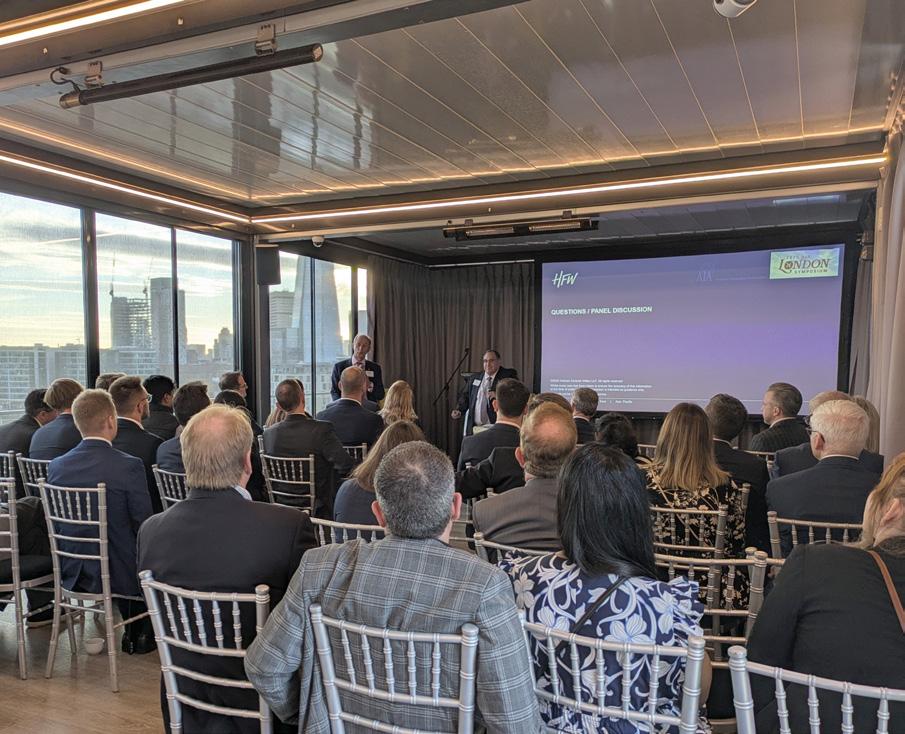
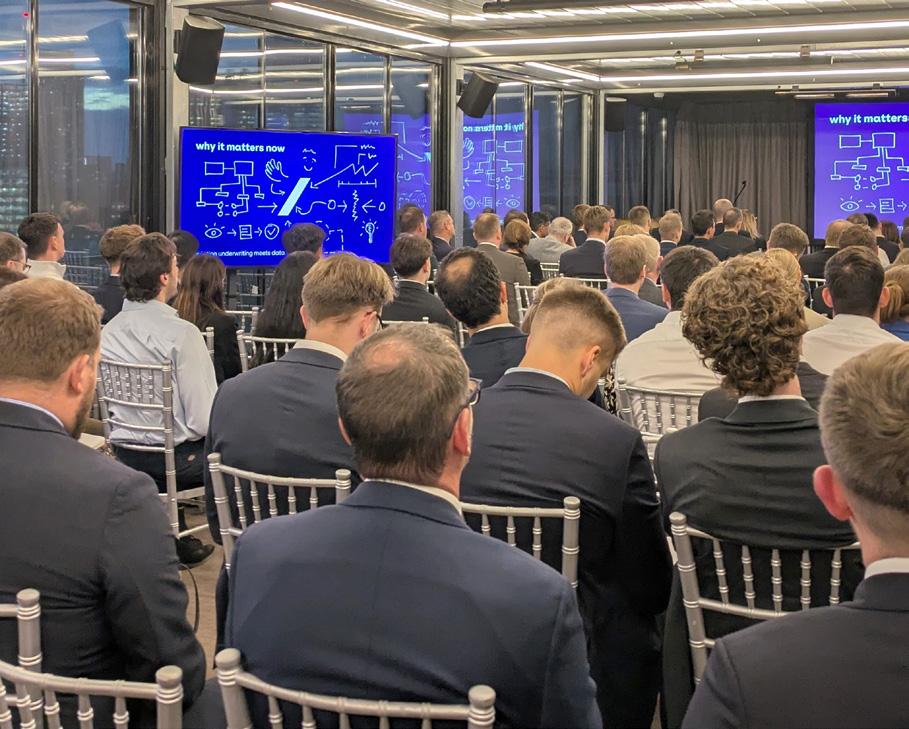
2025 AIA London Symposium Highlights
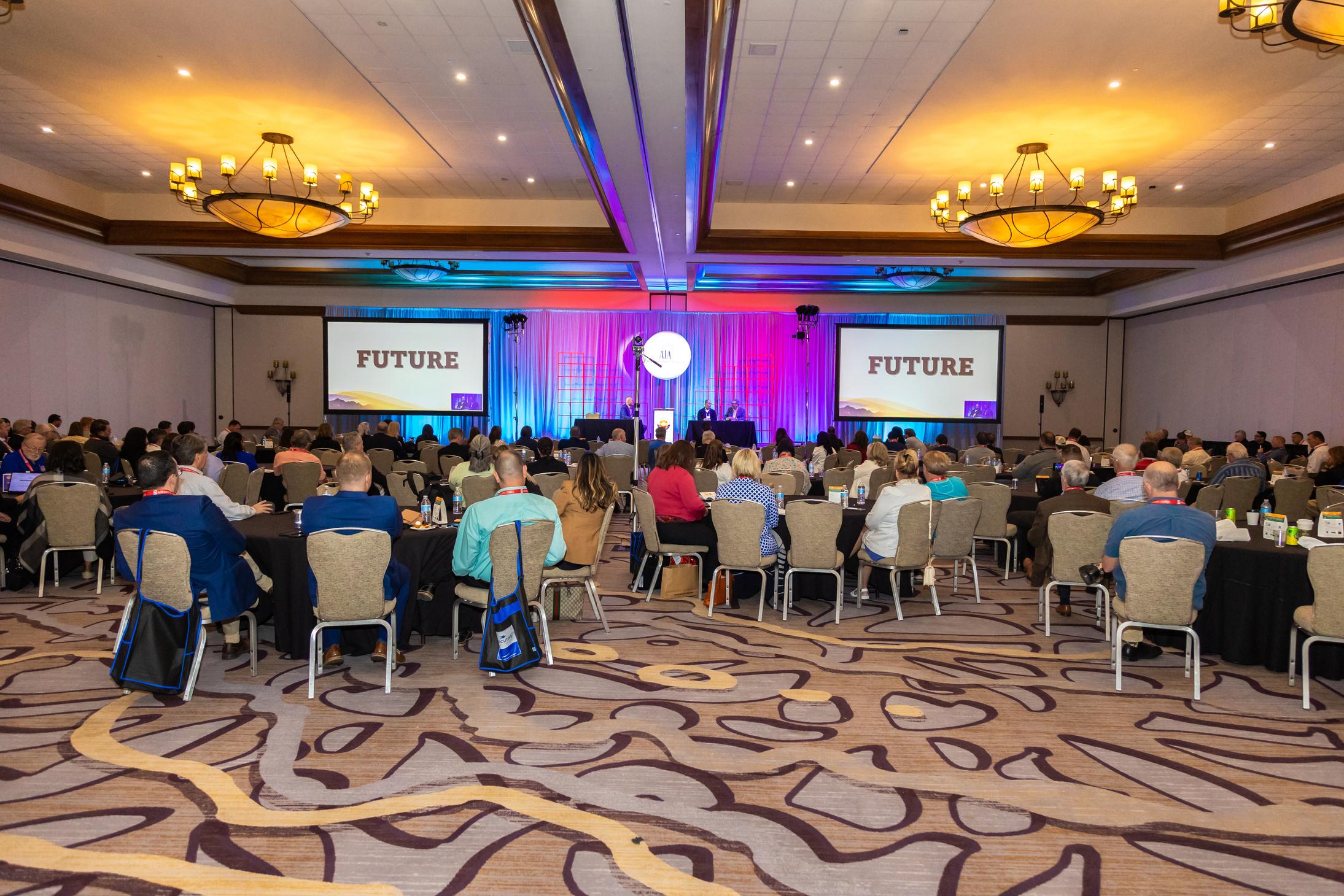
Thank you to the more than 130 aviation insurance professionals who attended the 2025 AIA London Symposium on November 4. Since expanding the education program in 2024, the Symposium continues
to grow with attendees from eight different countries participating in the 2025 program. See highlights from the symposium on the following pages with the full photo gallery available on our website here.
A special thank you to the Guy Carpenter team for their event assistance: Abigail Allchorne, Lisa Berlie, and Kelly Wix.
2026
aia in europe
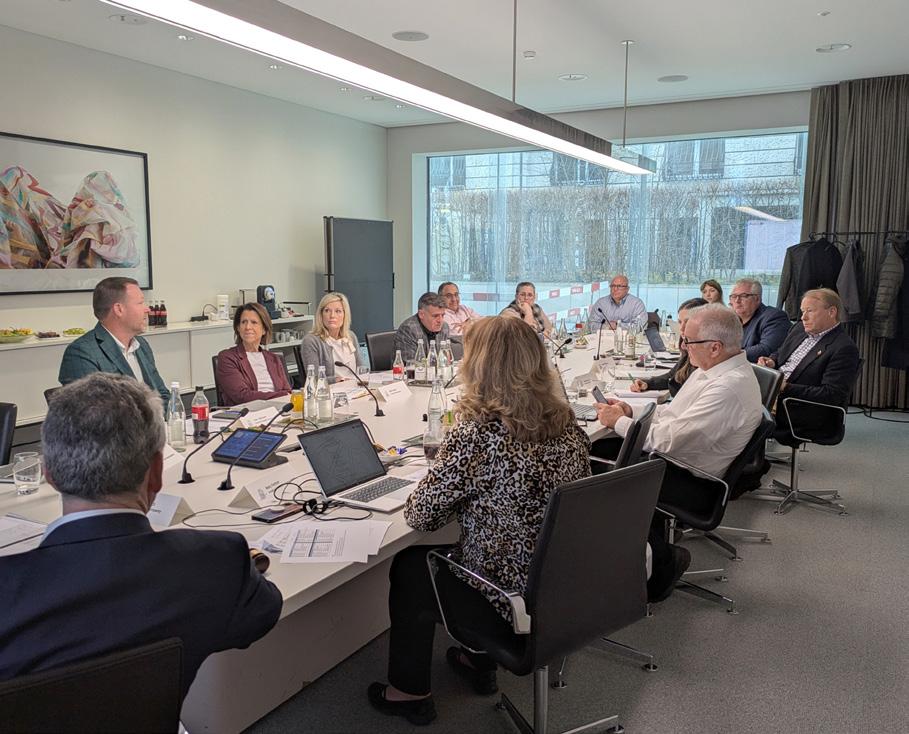
Following the 2025 London Symposium, the AIA Board of Directors travelled to Zurich for their Fall Board Meeting. SCOR and Sompo International generously hosted
a reception for our AIA members and industry leaders in Zurich to meet the Board of Directors. The photo album is available here.
The AIA London Symposium began as a networking event to provide opportunities for its London and European members to connect without having to fly to the United States. Now an annual event, the Symposium has cemented itself as a significant educational and networking opportunity in the AIA’s yearly lineup.
This year’s topics attracted aviation insurance professionals from various backgrounds: brokers, consultants, insurers, and reinsurers. Such a diverse group of both speakers and attendees truly expanded opportunities for learning about the aviation insurance lifecycle in greater detail across its various stages. The afternoon commenced with three hours of educational programming (allowing a break for tea, of course), followed by a two-hour networking reception. Though the topics presented may not appear to be broker-focused on the surface, each session offered valuable takeaways.
Loss Prevention and Risk Management
Presented by Brett Dorney, Starr Consulting Services
Brett Dorney, a consultant in Safety and Risk Management at Starr Aviation, began his presentation on loss prevention and risk management by recounting an issue that insurers faced in 2018. That year saw an increase in claims due to frequent bird strikes by commercial air carriers. The goal in addressing this issue from an insurer standpoint was to reduce claims and offer a competitive premium.
...a diverse group of both speakers and attendees truly expanded opportunities for learning about the aviation insurance lifecycle...
However, addressing longterm risks such as bird strikes can often affect the operations of an entire industry. As brokers, it would be prudent for us to ensure our commercial clients have access to risk management support whenever it is available. We should strongly encourage our insureds to participate in available safety and risk management programs by communicating their value.
agent / broker division
Since every client is at least partially rated based on their claims experience, having procedures in place to prevent claims benefits both insureds and insurers.
Risk management resources that brokers can inquire about for their commercial clients include:
SMS (Safety Management System) programs
FlightOps Training
Emergency Response Plans
Safety Audits
Some insurers and third-party consultants offer support in creating and simulating Emergency Response Plans, typically as a client benefit, not a requirement. Emergency Response Plan simulations can be intense, requiring a company to “play out” a catastrophic accident. Going through this type of scenario allows each employee or stakeholder to know their role during an emergency and helps to avoid freezing up in the future. This is just one of the benefits we can provide for our insureds.
In summary, risk management is a tool insurers use to reduce claims and offer competitive pricing. But for our clients, risk management resources can provide better experience reports and real skills for their employees in both safety and emergency situations.
Discussion on Russia /Ukraine Judgment and its Impact on Future Coverages
Discussion by Mark Meyer, HFW and Robert Normand, Aon
The Russia/Ukraine Judgement session began with background information on the Russia/ Ukraine conflict and the related UK court case. The case involved numerous aircraft located in Russia during the Russia/Ukraine conflict, owned by non-Russian operators and lessors. Not long after the war began, it became clear the aircraft would not be returned to the operators and lessors, despite repeated requests.
The case was brought against several insurers who took the position that the aircraft were not covered under the policies, including both All Risk and War Risk insurers. The judgment was that insurers, primarily the War Risk insurers, had to pay out over $1B to indemnify the insureds, with a small portion to be paid by the All Risk insurers.
After this background was given, Mark Meyer presented questions to Robert Normand, an insurance broker of the defendants in the case.
As a broker to these clients, he was tasked with navigating a multi-year battle to indemnify them, which, amid insurers’ assertions that coverage did not apply, sparked some distrust. Even before the ruling, Normand saw War Risk premiums skyrocket, and not all of his clients renewed War coverage during that time.
agent / broker division
The takeaway is that, as brokers, we must navigate difficult situations with cool, collected professionalism, both when interacting with insureds and when acting on their behalf. Sometimes insurance companies can let our clients down (and vice versa, to be fair), but if we know the coverages, conditions, and exclusions offered in our insureds’ policies, we are better poised to support them through difficult and even catastrophic situations.
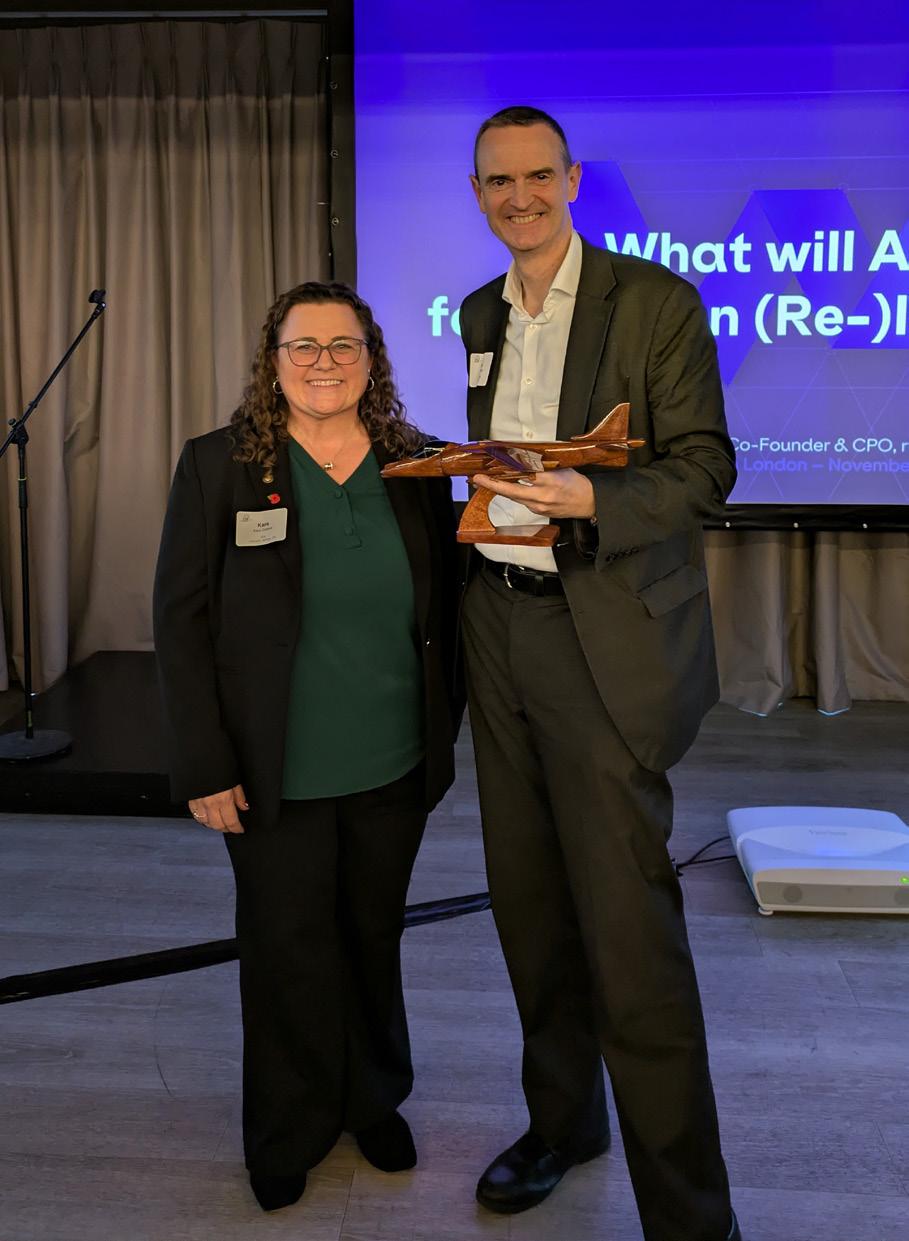
What will AI do for Aviation (Re-)Insurance?
Presented by Marco Peyer, Risktec Marco Peyer, co-founder of Risktec, a company that provides artificial intelligence (AI) solutions to reinsurers, gave an incredible representation of what AI can do for our industry — quoting, rating, and policy analysis, to name a few. He laid it out plainly for a room full of aviation insurance professionals to truly understand: AI should be a co-pilot.
Though AI can assist with tasks such as policy and endorsement analysis, these processes still require human oversight. So no, we are not out of a job. In fact, AI can often handle mundane, cookie- cutter, or overly time-consuming tasks that don’t require the level of expertise many of us have in this industry
Peyer also made it clear that AI is here and presents an opportunity for smaller companies to catch up with larger companies through the efficiency it offers. Larger companies often take a long time to make big changes and add new systems and technologies, while smaller companies could be poised to catch up if they take advantage of AI.
agent / broker division
This sentiment applies to brokers as well; those who can integrate AI and automation into their processes will gain efficiency advantages. The advantages do not come without risk, however. Peyer cautioned that when using AI to analyze data, one must ensure the quality of the data. Be sure to consider the age, accessibility, integrity, consistency, and the source of the data.
The State of The Industry
Presented by Tom Fadden, Allianz Tom Fadden closed the event with a comprehensive overview of the state of the industry. Air carriers have seen a rise in passenger numbers, which are expected to exceed pre-Covid levels. For most commercial aircraft risks, we expect premiums to rise as exposure increases, driven by higher hull values and higher War premiums.
Another factor impacting premiums is claims costs. With inflation on the rise, the cost of adjusting a claim and indemnifying
the insured is higher on all counts. While the GA market is seeing some softening due to an increasing number of competitors, Fadden advised new MGAs (managing general agents) entering the market to set themselves apart, stating, “many are called, few are chosen.”
Despite the competition, we may eventually see the large payouts in the recent Russia / Ukraine ruling trickle down to all sectors of aviation. Truthfully, the majority of aviation insurance policies are reinsured by a handful of reinsurers, which means unprecedented payouts for one sector could eventually affect all sectors.
Rachel Lewis began her career as an assistant to the president at Schrager Hampson Aviation Insurance and is now a licensed insurance agent. In May 2025, Rachel was elected to the AIA Board of Directors as the Agent/Broker Division’s DirectorElect. She will serve as Director-Elect for one year before beginning her two-year Director term.
claims division
Claims perspective of the 2025 London Symposium
Jeff Sheets, VP, Regional Claims Manager, Applied Underwriters Aviation
AIA Director, Claims Division
Greetings, fellow claims professionals!
What a year it’s been! 2025 brought us a whirlwind of events, each stirring its own set of emotions. Given the global reach of our industry, one event that deserves some spotlight is the AIA London Symposium. Thanks to the generous support of my employer (a fantastic AIA partner, too), I had the privilege of attending the event this past November. It was an excellent opportunity to reconnect with old friends and colleagues, as well as meet a dynamic mix of seasoned and rising professionals within the aviation insurance world. If you ever have the chance to attend, I highly encourage you to make the effort — it’s truly worth it.
series of expert presentations organized by AIA. We’re grateful to all the speakers who volunteered their time and expertise to provide such important insight into the current state of the market from a global perspective.
First up was a presentation on risk services — specifically, how leveraging harvested data and industry expertise can significantly benefit operators. As a claims professional, this really resonated with me. It’s striking how the lessons we learn in the claims process align so closely with the benefits of using data to better manage risk. One interesting point was that large companies are now facing crisis events every 4-5 years, and the frequency of these incidents continues to accelerate.
. . .large companies are now facing crisis events every 4–5 years, and the frequency of these incidents continues to accelerate.
The event wrapped up with a fantastic networking session, where over 100 of us mingled and chatted about everything from aviation to our personal lives. But before the socializing kicked off, we were treated to invaluable formal education through a
This is a wake-up call for all of us. Claims professionals are often the ones cleaning up after these events, but we must also be proactive in helping to manage the ripple effects. You might wonder how we can do that when we’re dealing with the aftermath of an
claims division
incident. The answer? We’ve all become risk and safety consultants over time. As we handle claims, we see firsthand where risk management is succeeding — or failing — and with a little digging, we can often identify the root causes.
Claims professionals are experts in spotting risk patterns, whether we formally track them or not. By handling various types of claims, whether related to airports, workers’ comp, or aircraft categories, we build a unique perspective. This makes it crucial that we use our experiences to inform our insights.
It’s important to push past our biases, avoid jumping to conclusions, and ensure that we gather and share valuable, actionable information with our stakeholders. Ultimately, we’re in a position to uncover deeper issues that go beyond the obvious, such as “I forgot to tighten the bolt.” Only with good information can we help correct future operations and prevent future losses. We also heard from a team of defense
experts who shared updates on Russiarelated disputes between lessors and carriers, war-risk insurance claims, and the complexities of AVN48D clauses. Naturally, given that litigation is still ongoing, much of the information was already part of the public record. But having it distilled and summarized for our collective benefit was incredibly valuable. As we know, every claim reaches a conclusion, and there are always lessons to be learned from even the most challenging cases.
Another speaker addressed trends in the world of “heavy iron” claims amid recent tragic losses in the market. The outlook?
It’s going to remain tough, as the projected costs of these claims keep rising. This is information most of us are already familiar with, based on our own claims experience and the ongoing litigation trends. The world is shrinking in terms of how quickly news and verdicts travel across borders.
With airlines expanding their fleets, next-
claims division
gen aircraft becoming more complex and expensive to repair, and parts growing increasingly difficult to source, the challenges are stacking up. And let’s not forget the operational stressors: rising passenger loads, weather disruptions, government shutdowns, and shortages of pilots and mechanics. It’s clear that aviation remains a challenging environment in which to do business.
What does all of this mean for us as claims professionals? We need to pull together more than ever before.
Whether it’s providing support to insureds, helping claimants recover, or collaborating with our colleagues, it’s vital that we leverage all our resources to manage these growing challenges. And where there’s a shared benefit, let’s not be afraid to reach out and offer a helping hand.
Here’s to staying strong, staying informed, and, most importantly, staying connected as we navigate the year ahead!
Jeff Sheets is vice president and claims manager with Applied Aviation. A private pilot, Jeff has been in the insurance industry since 2003, and he has spent the past 17 years in a management capacity. Jeff was elected as Director-Elect of the Claims Division in May 2023 and began his two-year term as Director of the Claims Division in May 2024.
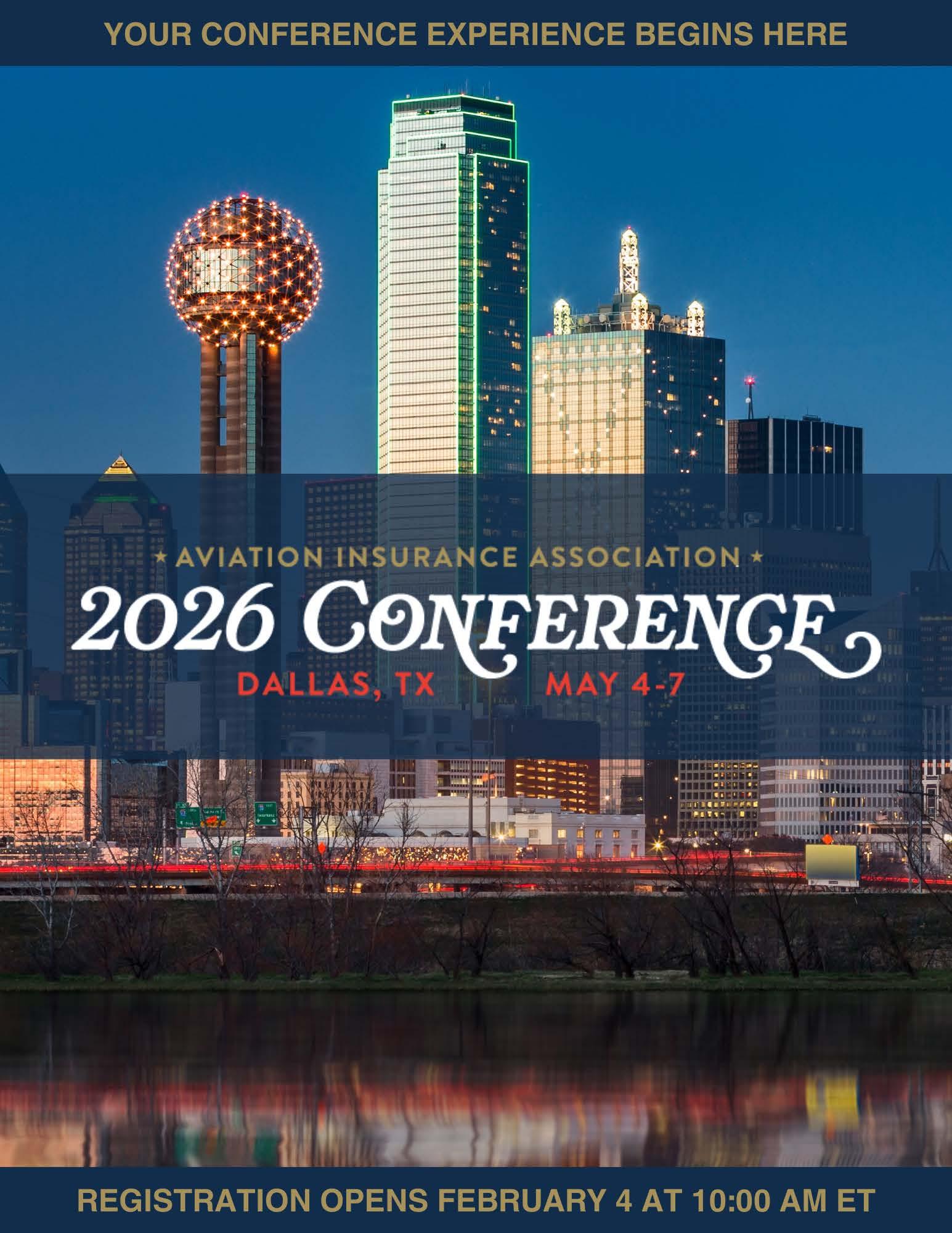
AIA 2026 Annual Conference
May 4 - 7 (Dallas)
Core Principles and Concepts Course
August 13 - 14 (In-Person and Virtual)
2026 AIA Open
September 21 (Atlanta)
2026 AIA London Symposium
October 27 (London, United Kingdom)
24/7/365
Nationwide Environmental Response, Regulatory Reporting, and Contractor Management for Aviation Incidents
YOU’RE INVITED TO AIA 2026
Don’t miss this milestone conference! Join the Aviation Insurance Association in Dallas as we celebrate 50 years of serving the aviation insurance industry. The AIA Annual Conference is your chance to reconnect with trusted colleagues, forge new partnerships, and position your business for growth—all in one dynamic setting. Network with peers during the receptions, earn continuing education credits, and engage directly with every segment of the association.
What’s Included with Your Registration:
Access to the full conference program
Up to 12.0 hours of CIE- and CLE-accredited education
Several formal and informal networking opportunities
Access to the Exhibit Area featuring the latest industry technologies and services
Education led by aviation insurance experts on topics impacting your organization
Inspiration from the General Session Keynote speakers
8:00 AM - 12:00 PM Continuing Insurance Education Morning Program
12:00 - 1:00 PM Lunch with Exhibitors
1:00 - 5:00 PM Continuing Insurance Education Afternoon Program
THURSDAY, MAY 7
7:30 - 8:30 AM Committee Meetings
7:45 - 9:15 AM Breakfast with Exhibitors
9:00 AM - 2:00 PM General Session
2:30 - 3:30 PM Division Meetings
6:00 - 9:00 PM Closing Party at Gilley's
INDUSTRY-LEADING EDUCATION
Continuing Legal Education (CLE) Sessions | Monday, May 4
Our CLE programming delivers four hours of legal education focused on issues impacting attorneys specializing in the aviation insurance industry. Topics will include: the FAA update on pilot medical clearance and its impact on crash litigation the “Butterfly Effect” and how seemingly insignificant actions at the beginning of aviation litigation can trigger huge consequences, and the impact of contractual risk transfer scenarios on coverage.
Continuing Insurance Education (CIE) Program | Wednesday, May 6
The CIE programming features a full day of insurance education specific to our industry led by aviation industry experts you’ll recognize. This year’s sessions include:
Understanding How Artificial Intelligence Can Be Used In Claims
Accidents Hurt, Safety Doesn’t - The Sequel!: Aviation Ground Handling Accidents and Risk Management Strategies
Coverage B Takes Flight: Personal & Advertising Injury Risks for Drones
Breaking Down Ancillary Coverages: Does One Size Really Fit All?
Expert’s Guide for Placing Quota Share Risks
Behind the Scenes: What Really Happens in the Claims Process
So, You Think You're Covered? You did what, where, when? You've Got to be Kidding Me!
AI’s Effect on Brokering and Underwriting Aviation Insurance: Practical Applications,
Coverage Considerations & Emerging E&O Exposures
MEET OUR LUNCHEON KEYNOTE
We are excited to welcome aviation safety and risk management pioneers John and Martha King, owners of King Flight Schools, Inc., to present at our General Session on Thursday, May 7.
Straight Talk About Safety
When we say “safety is our highest priority” do we really mean what we say? Wouldn't grounding the airplane be the safest thing? This startling presentation will provide a provocative approach with new concepts, a new vocabulary and fresh insights on the subject of aviation risk management.
About the Kings
John and Martha King have delivered millions of courses to pilots for more than 40 years. The Kings estimate their training has helped approximately 50 percent of the total certificated pilot population pass at least one knowledgebased exam. They are recognized as pioneers in groundbreaking programs on aviation risk management for general aviation pilots and were influential in the FAA’s adoption of risk management-based testing in the new Airmen Certification Standards. In addition to being a pioneer in general aviation risk management, they are the only couple to both hold every category and class of FAA rating on their pilot and instructor certificates.
OMNI DALLAS HOTEL
Situated near downtown restaurants, shops, and the popular Dallas Arts District, the Omni Dallas Hotel (555 S Lamar, Dallas, TX 75202) provides a modern, welcoming environment to learn, conduct business, and network with your peers on and off property.
Discounted Rates for Attendees
Beyond simple convenience, staying at the host hotel offers opportunities for spontaneous connecting and learning outside of organized functions. We are pleased to offer our AIA guests a negotiated hotel rate of $290++ per night for reservations made by Monday, April 13, 2026 (subject to availability; open to registered attendees only).
ABOUT DALLAS
Dallas, Texas, is an emerging global city known for its thriving arts scene, rich Western heritage, and powerful economic influence. With its iconic skyline and vibrant cultural districts, Dallas blends modern urban energy with deep historical roots. The city’s economy is broad and resilient, anchored by major sectors such as technology, finance, healthcare, and transportation. Dallas Fort Worth International Airport (DFW), one of the largest and busiest airports in the world and serves as a major global gateway, supporting millions of passengers annually. Explore more about what makes Dallas a standout destination at www.visitdallas.com.
PRICING
& DEADLINES
Conference registration opens on Wednesday, February 4, at 10:00 AM Eastern Time. Remember to renew your AIA dues before registration opens to receive the discounted member rates. Early Bird registration is available through March 18, 2026.
Registration Rates
Exhibitor Tabletop Display Fees
Additional information about exhibitor opportunities is available here.
Event Fees
CIE for Credit: $75
CLE for Credit: $100
Golf Tournament: $250
Sporting Clays Tournament: $250
Guest Rates
Guest Package A (Welcome Reception and Closing Party): $280
Guest Package B (Welcome Reception Only): $95
Guest Package C (Closing Party Only): $185
THANK YOU SPONSORS
As of January 28, 2026
Major Event Sponsors
Class A Insurance Services
Acrisure Aerospace
QBE US
Function Sponsors
Aeris Insurance Solutions
King Air Academy
Murray, Morin & Herman, P.A.
Engagement Sponsors
Aerospace Insurance Managers, LLC
Aircraft Builders Council
Amundsen Davis LLC
AXA XL
Concirrus
Dan Moore Aero LLC
Eiger Insurance Services, Inc.
Executive Flight Training
Platinum Patron Sponsors
AIG Aerospace
Applied Underwriters Aviation
Cunningham Swaim, LLP
Eiger Insurance Services
London Aviation Underwriters
Rosen & Schneider, LLC
Simply Easier Payments
Worldlink Specialty, LLC
Gold Patron Sponsors
Beacon Aviation Insurance Services
Global Aerospace
National Hangar Insurance Program
Old Republic Aerospace
Rokstone Aviation
Starr
Victor Rane
Interested in maximizing your impact at AIA 2026? View our sponsorship opportunities here.
Bridging Training Gaps in Business Aviation with CBTA
Tim Schoenauer, Global Senior Director, Training Solutions Business & Helicopter Aviation Training, CAE
Business aviation has never operated in a more dynamic or demanding environment.
New-generation aircraft, increasingly complex airspace, evolving threats, and rapid technological change have elevated the expectations placed on pilots. Yet many pilots continue to train exclusively to the regulatory standards that have remained largely unchanged for decades. While regulated task-based training ensures compliance, we can do better to prepare crews for today’s highly variable operational landscape.
From Task Completion to True Competence
CBTA represents a structural evolution in aviation training and is increasingly supported by regulators such as the FAA, EASA, the UK CAA, and Transport Canada. Rather than teaching pilots to complete a series of prescribed tasks, CBTA uses realistic scenarios — often informed by issues other pilots have recently encountered — to expose crews to the types of challenges they are most likely to face.
This gap has real implications for insurers, brokers, underwriters, claims professionals, and aviation attorneys. When an unexpected event occurs — often in the margins between known procedures and the unpredictable — pilot resilience becomes a key determinant of outcome, liability, and ultimately, risk exposure. The industry needs training that develops adaptable, data-informed, real-world competencies. That is precisely where Competency-Based Training and Assessment (CBTA) comes in.
The industry needs training that develops adaptable, datainformed, real-world competencies.
CBTA focuses on developing and assessing nine pilot competencies and observable behaviours, such as decisionmaking, situational awareness, workload management, flight path management, and communication. These competencies are critical in preventing accidents, not just managing them.
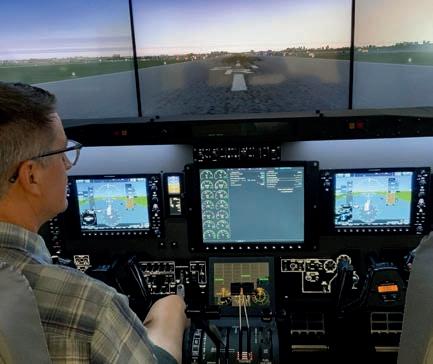
Beginning in January 2026, CAE is implementing CBTA principles in business aviation recurrent training, starting with Phase A of the EASA recurrent curriculum. CBTA principles are also reaching our customers in the Americas through an introductory initiative called CORe, described as follows:
safety report
Training powered by Real Data
CAE’s training methodology sits at the intersection of learning science, advanced technology, and evidence-driven insights. It integrates three pillars:
Learning sciences: experiential, scenariobased training proven to enhance retention and performance
Competency-based frameworks: measurable behavioural outcomes that directly translate to real-world performance
Evidence-based practices: curriculum continuously refined by data, not assumptions
The engine enabling this transformation in business aviation is CAE CORe: Continuously Optimized Recurrent training.
identifying emerging risks or skill gaps is difficult, leaving pilots dependent on syllabi that may not reflect current operational realities.
CORe fills this gap by delivering the data needed to inform CBTA scenarios. It is a data-driven, aircraft- and regulatoryagnostic training method that enhances recurrent training with scenarios derived from real operational trends. CORe modules draw from multiple sources, including anonymized performance data from CAE Rise™ collected during CAE training sessions, along with robust inputs from OEMs, operators, and trusted databases such as EASA’s DATA4SAFETY.
CORe: Turning Insights into Action
Commercial airlines have long used operational data to shape their simulator training. By contrast, most business aviation operators lack the scale to generate meaningful datasets: more than 80% operate a single aircraft, and over 95% operate five or fewer. Without large datasets,
All insights are tailored to the evolving needs of business aviation pilots.
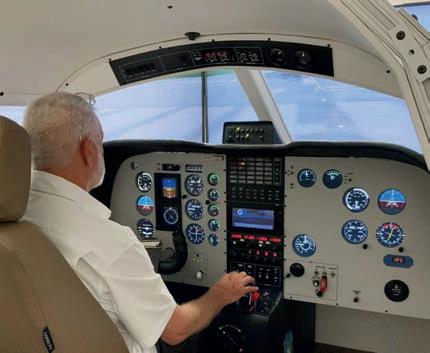
CORe exercises address risks and prepare pilots for situations that fall outside traditional compliance training. When emerging issues appear in the data, relevant findings are integrated into new simulator
Photo credit: Kim Rosenlof
safety report
scenarios. These insights are translated into short, focused CORe modules that expose pilots to both recurring risks and new threats beyond regulatory requirements.
Examples include runway excursions, GPS jamming or spoofing, or sudden airport diversions caused by social or geopolitical unrest. These scenarios frequently contribute to incidents not because pilots lack technical skill, but because they were never trained to anticipate or manage these real-world dynamics.
A Better Standard for an Evolving Industry
For the insurance community, CBTA and CORe represent meaningful advancements in risk mitigation. Better-prepared pilots lead to fewer incidents, more effective threat management, and improved outcomes when abnormal events occur.
CAE is committed to advancing training standards across business aviation by
leveraging science, technology, and global data networks to ensure pilots are fully ready, and not just compliant. As we expand CBTA delivery across our worldwide business aviation network, we are elevating the performance and preparedness of every pilot who trains with us.
In a sector defined by complexity and responsibility, bridging today’s training gaps is essential. With CBTA and CORe, we are giving pilots and the organizations that insure them the confidence that they are truly ready for the moments that matter.
Tim Schoenauer leads CAE’s Training Solutions Team, which is focused on modern, innovative training and regulatory and operational solutions in business aviation. He has held senior leadership and flying positions in the past 25 years in both commercial and business aviation, including captain, TRE, flight crew licensing inspector, head of training, director of operations, and accountable manager with global organizations. In addition to his responsibilities at CAE, Schoenauer is engaged in several industry committees and remains current flying the Gulfstream 650.
Photo credit: Kim Rosenlof
Board of Directors
President
ian Wrigglesworth
Guy Carpenter
London, United Kingdom
VICE PRESIDENT
Luke Uithoven
Kimmel Aviation Insurance Agency, Inc. Greenwood, MS
Treasurer
Nicole Wolfe Stout
Strawinski & Stout, P.C. Atlanta, GA
Secretary
David Hampson
Schrager Hampson Aviation Insurance Agency Bedford, MA
Director, Agent / Broker Division
Kristen Suarez
BWI Aviation Insurance Agency, Inc. Warrenton, NC
DIRECTOR-ELECT, AGENT / BROKER DIVISION
Rachel Lewis
Schrager Hampson Aviation Insurance Agency Bedford, MA
Director, Attorney Division
Mark Meyer
HFW
London, United Kingdom
Director, Claims Division
Jeff Sheets
Applied Underwriters Aviation Los Angeles, CA
DIRECTOR-ELECT, CLAIMS DIVISION
Stephanie Short
Great American Insurance Company Bellingham, WA
Director, Reinsurance Division
Raffaella Basile
Swiss Reinsurance Company Ltd Zurich, Switzerland
Director, Underwriter Division
Meghan Griffin
Sompo International Alpharetta, GA
International Director
nick redgrove
Price Forbes
London, United Kingdom
Director-at-Large
Michael McGrory
Amundsen Davis, LLC Chicago, IL
Director-at-Large
Jeffrey t. Sutton
London Aviation Underwriters, Inc. Federal Way, WA
International Director-at-Large
Paul O’Ryan
Starr Aviation Toronto, Canada
IMMEDIATE PAST PRESIDENT
Christopher S. Morin
Murray, Morin & Herman, PA Tampa, FL
AIA General Counsel
Bob Williams
Victor Rane PLC Pittsburgh, PA
Executive Director
Mary Gratzer
Aviation Insurance Association Lexington, KY
Glossary of Common Aviation and Insurance Acronyms
AIA — Aviation Insurance Association
AOPA — Aircraft Owners and Pilots Association
ASAP — Aviation Safety Action Program (FAA)
ASIAS — Aviation Safety Information Analysis and Sharing system (FAA)
ASRS — Aviation Safety Reporting System (FAA)
CASA — Civil Aviation Safety Authority (Australia)
CAAC — Civil Aviation Administration of China
COPA — Cirrus Owners and Pilots Association
DPE — Designated Pilot Examiner
EAA — Experimental Aircraft Association
EASA — European Union Aviation Safety Agency
E6B — A type of manual or electronic flight computer
ESG — Environmental, Social, and Governance
EVTOL — Electric Vertical Takeoff and Landing Vehicle
FAA — Federal Aviation Administration (U.S.)
FBO — Fixed base operator (service station for aircraft and pilots)
FDM/FOQA — Flight Data Monitoring / Flight Operations Quality Assurance
GA — General Aviation
GAMA — General Aviation Manufacturers Association
GHSP — Ground Handling Service Providers
HUD — Heads Up Display
IATA — International Air Transport Association
IBAC — International Business Aviation Council
ICAO — International Civil Aviation Organization
IFR — Instrument Flight Rules
IMC — Instrument Meteorological Conditions
IS-BAO — International Standard for Business Aircraft Operations
IS-BAH — International Standard for Business Aircraft Handling
MRO — Maintenance Repair Organization
NBAA — National Business Aviation Association
NTSB — National Transportation Safety Board (U.S.)
P&C — Property and Casualty
SMS — Safety Management System
UAM — Urban Air Mobility
UAV — Unmanned Aerial Vehicle (also known as a drone)
VFR — Visual Flight Rules
VR — Virtual Reality
WAI — Women in Aviation International
This is an abridged list of aviation insurance terms that appear in current and previous editions of the AIA’s The Binder.