Age Scotland is the Scottish charity for older people. We work to improve the lives of everyone over the age of 50 and promote their rights and interests.
Our vision is a Scotland which is the best place in the world to grow older.
Our mission is to inspire, involve and empower older people in Scotland, and influence others, so that people enjoy better later lives.
We have three strategic aims:
We help older people to be as well as they can be
We promote a positive view of ageing and later life
We tackle loneliness and isolation
How we can help
We know that growing older doesn’t come with a manual. Later life can bring changes and opportunities to your life and you may need to know about rights, organisations and services which are unfamiliar to you.
That’s why we provide free information and advice to help you on a range of topics including benefits and entitlements, social care, legal issues such as Power of Attorney, housing and much more. All of our guides are available to download for free from our website, or you can contact our helpline team to have copies posted to you for free.
Our helpline is a free, confidential phone service for older people, their carers and families in Scotland looking for information and advice.
Later life can bring times when you just need someone to talk to. Our friendship line is part of our wider helpline and older people can call us for a chat. We’re here to listen, provide friendship and offer support.
Introduction
This guide is for anyone living with early stage dementia. It provides information about services that can support you and things you can do to help yourself. It also talks about the practical things you may want to think about, to help you now and in the future.
Everyone experiences dementia differently, but having support and a plan in place can help you live well for as long as possible. Family members, friends and carers of people living with dementia may also find this information useful.
NHS Scotland has produced online resources to support people living with dementia and those around them. Visit rightdecisions.scot.nhs.uk/practical-dementia-resources.
This information guide has been prepared by Age Scotland and contains general advice only. It should not be relied upon as a basis for any decision or action, nor used as a substitute for professional advice. Neither Age Scotland nor any of its subsidiary companies or charities accepts any liability arising from its use and it is the reader’s sole responsibility to ensure any information is up to date and accurate.
Please note that the inclusion of named agencies, websites, companies, products, services or publications in this information guide does not constitute a recommendation or endorsement by Age Scotland or any of its subsidiary companies or charities.
The original version of this guide was funded by the Life Changes Trust, supported by the Big Lottery.
Where do I get support?
Who’s who?
After a dementia diagnosis you are likely to meet a lot of different professionals. This can feel overwhelming and it might be difficult to understand who does what. The guide below explains who you might meet and how each person can help.
Community Psychiatric Nurses are mental health nurses who visit people in their homes. They provide practical advice and support for people living with dementia. They can also administer medicines and keep an eye on any side effects.
Dementia Advisors are a local point of contact for people living with dementia, their families and carers. They can help you keep active in the community, put you in touch with other people living with dementia and provide information and advice.
Dementia Link Workers offer one-to-one support for people living with dementia, their families and carers. They can provide information and advice and help you plan for the future.
Dietitians can diagnose and treat diet and nutrition difficulties. They give information and advice on food choices.
District Nurses visit people in their homes and provide practical help with a range of health issues including wound care and supporting someone to manage problems with continence.
Admiral Nurses are specialist dementia nurses who provide free expert support and advice to families affected by dementia, via the charity Dementia UK. To find out more, call 0800 888 6678 or visit dementiauk.org/what-is-an-admiral-nurse.
GPs look after people’s general physical and mental health needs. They can prescribe medicines and make referrals for specialist support if you need it.
Occupational Therapists support people to live independently and to continue doing activities that are important to them. They can give advice on changes to your home and equipment that can help with daily life. This might include memory aids.
Physiotherapists can help people who have difficulty walking or are at risk of falls. They can prescribe exercises to improve strength and balance, and equipment to help with walking and moving around.
Podiatrists treat problems and conditions affecting the feet. They give advice on how to look after feet and what types of shoes to wear.
Social Workers assess the care and support needs of people who have physical and mental health difficulties, people with disabilities and carers.
Speech and Language Therapists support people who have difficulty with communication. They also help people who have difficulties with eating, drinking and swallowing.
Post diagnostic support
People diagnosed with dementia in Scotland should receive at least 12 months of support on the things that matter to them most following their diagnosis.
For example, you may want help with:
• Understanding dementia and its symptoms
• Staying connected to your community
• Managing your health, well-being and personal routines
• Planning for your future, including the care you want to receive
Since April 2024, people diagnosed with dementia have had a choice of how and when to receive this support. The options available depend on where you live. It may be offered by Alzheimer Scotland, an NHS professional, or through peer support.
You can ask your doctor for a referral for post diagnostic support or contact Alzheimer Scotland for more information.
Most people living with dementia will at some point need support to live safely and comfortably. For example, you might need help with washing and dressing, taking medicines, or remembering to switch off the oven.
If you are noticing you need help, you can ask for a care needs assessment from your local council’s social care department. There is likely to be a waiting list, so it is a good idea to ask for help as soon as possible.
A social worker, occupational therapist or other health professional will visit you to find out what help you need. They will want to speak to you and anyone who already helps you. They will then write a care plan listing the support they feel you need. They should provide any personal or nursing care for free, but they may charge for other types of support.
Your care team should review your care needs every 6 months, but you can ask for this sooner if you know your needs have changed.
The rules of Self-Directed Support mean you can choose how your care is arranged. You can ask the council for a budget so you can arrange it yourself, or you can ask them to arrange it for you.
Self Directed Support Scotland can provide advice about your options. Visit www.sdsscotland.org.uk or call 0131 475 2623.
Age Scotland’s guides Care and Support at Home: Assessment and Funding and Care and Support at Home: Practical Help explain more about the help available.
A friend, family member or partner who is providing you with help is entitled to get support too. Call the Age Scotland helpline on 0800 12 44 222 for more information.
Care Information Scotland provides information on care services for older people in Scotland, their carers and families.
0800 011 3200 www.careinfoscotland.scot
Talk to others
It can be useful to talk things through with friends and family and explain how dementia is affecting you. Many people worry they will be treated differently if they tell people about their diagnosis, but knowing your diagnosis can help people understand what you are going through. It also gives them the opportunity to offer their support if you need it.
Peer support
You may like to speak to other people with a dementia diagnosis. Dementia groups are a good way to meet people in your situation and to share experiences. No matter what you are going through, there is probably someone who has been through it too and understands how you feel.
There are many ways to connect with others living with dementia:
You can call the Age Scotland helpline on 0800 12 44 222 for help finding groups and activities near you.
Meeting Centres provide a social space where people with dementia and their loved ones can meet others in the same situation and enjoy activities. Peer support might be offered at some Meeting Centres. This could be provided as part of your post diagnostic support.
To find out if there is a Meeting Centre near you, visit www.meetingcentres.scot. You can also call DawnClaire on 07526 563 108 or Lorna on 07526 562 871.
Alzheimer’s Society hosts an online forum accessible worldwide, for people living with dementia, their carers and families. forum.alzheimers.org.uk
Support from health services
It is important to look after your physical and mental health. If you are finding things difficult or feeling stressed, anxious, tired or depressed you should speak to your GP. Let them know how dementia is affecting you and tell them how you are feeling. There is a lot of support available so don’t be afraid to ask for help.
Counselling
A counsellor will listen without judgment and has the training to support you through your challenges. Your GP can provide information about local services and may refer you for free support. The British Association for Counselling and Psychotherapy also keeps a list of qualified professionals, including information about how much they charge.
British Association for Counselling and Psychotherapy 01455 88 33 00 www.bacp.co.uk/search/therapists
Looking after yourself
Diet
Eating a varied, balanced diet is one of the best ways to look after yourself. Being healthier generally makes it easier to cope with life’s challenges. A healthy diet includes lots of fruits and vegetables, starchy foods such as bread and pasta, and moderate amounts of meat and fish.
Eating a healthy diet is not always easy. Some people living with dementia have difficulty remembering to eat and drink. Others find it hard to concentrate on finishing a meal. Background noise can make this worse for some, while others find soft background music helps them to relax and concentrate on their meal.
You might find you don’t enjoy the same foods as before, or have a smaller appetite. You could try exploring stronger flavours as these can sometimes be more appealing. You could also try eating smaller portions and regular snacks.
Make sure you also drink plenty of fluids. Not having enough to drink can make dementia symptoms worse. Aim for 6-8 cups of liquid a day. Water is a healthy choice but any liquids count. This includes tea, coffee, diluted fruit juice and even soup.
Age Scotland’s guides Eat Well and Hydration Matters provide more information. You can order copies by calling the Age Scotland helpline on 0800 12 44 222 or visit www.age.scot/information.
Being active
Regular physical activity can help to ease stress and improve well-being, as well as being good for overall health. It may also help you to feel more positive and could improve your concentration.
Adults who can do so safely should aim to be active for 30 minutes a day, but even 10 minutes helps. You are more likely to stick to an activity you enjoy. You could try swimming, football or a fitness class. You could ask friends or family to come with you if you need support. For help finding groups or activities in your area, including those that are dementia friendly, call the Age Scotland helpline on 0800 12 44 222.
You do not have to go out of your way to be active. Stretching, gardening or even doing housework all count. Small changes to your routine can also make a big difference.
Our Keeping Active in Later Life guide provides more ideas. Call the Age Scotland helpline on 0800 12 44 222 or visit age.scot/information.
Walking Scotland supports free community walking groups across Scotland. These health walks are led by volunteers and are accessible to people of all abilities. Some areas offer dementia-friendly walking groups.
Walking Scotland
walkingscotland.org.uk or call the Age Scotland helpline for help finding a walk in your area.
Social connection
Social connection has been shown to be good for physical as well as mental health. A Dementia Advisor can help you find activities you might enjoy.
Age Scotland’s Friendship Calls provide connection without the need to leave the house. Contact the Age Scotland helpline on 0800 12 44 222 for more information.
Alzheimer Scotland has a wide range of dementia friendly community activities, such as singing groups, sporting memories groups, walking groups, cinema groups and much more. Visit www.alzscot.org or call 0808 808 3000.
Dementia Dog trains dogs to be companions and helpers for families affected by dementia. Visit dementiadog.org for more information.
Keeping warm
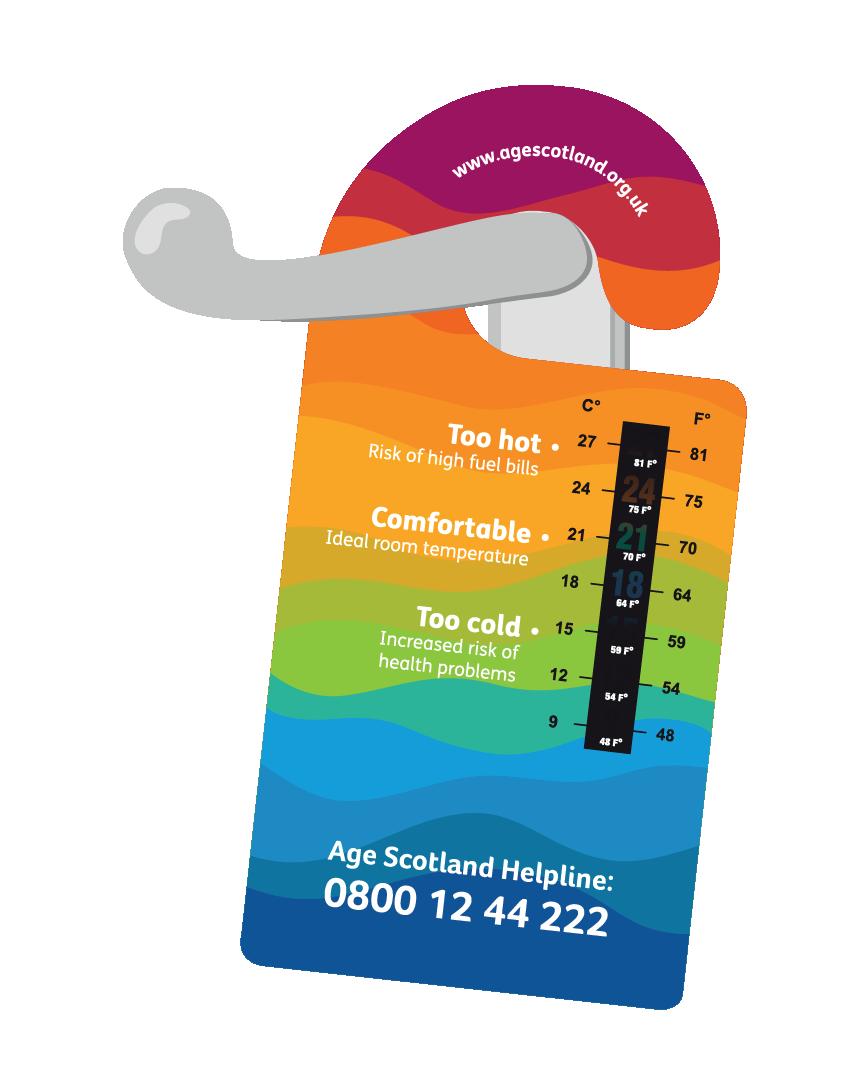
Over the winter it is important to keep warm in your home. Being cold for any length of time can put us at risk of colds, flu and hypothermia. It can also increase the risk of heart attacks and strokes in older people.
Try to make sure that the rooms you use during the day are kept warm to at least 23°C (65°F). Keep your bedroom window closed at night so you do not breathe in cold air as this can increase the risk of chest infections. Layer your clothing to maintain body heat and try to avoid sitting down for long periods of time. Get up, move around and have hot meals and drinks.
There are benefits, grants and schemes for making homes more energy efficient that may help you save money on fuel bills.
Call the Age Scotland helpline on 0800 12 44 222 for advice and to ask for a free benefit check.
You can also ask for a copy of our Warm and Well guide or visit age.scot/information.
Smoking
It is common knowledge that smoking is bad for our health, but if you have memory difficulties it could also increase the risk of a fire. Your GP or pharmacist can help if you want to stop or cut down on smoking or you could contact Quit Your Way.
Quit Your Way advisers give free information and advice about how to stop smoking. They can help you to come up with a plan that’s right for you, and tell you what support is available locally.
Quit Your Way
0800 84 84 84
www.nhsinform.scot/quit-your-way-scotland
If you do continue smoking, try to make it as safe as possible. For example, use disposable lighters instead of matches.
The Scottish Fire and Rescue Service can provide a free Fire Safety Plan, including personalised advice. They may also recommend a free Home Fire Safety Visit.
The Scottish Fire and Rescue Service 0800 0731 999 www.firescotland.gov.uk
Alcohol
Many of us enjoy an alcoholic drink now and then, and alcohol can be an important part of socialising and celebrating. However, regularly drinking more than the recommended daily limits can seriously harm your health.
Some people living with dementia find that drinking alcohol increases confusion or memory problems. It can also stop medicines working as well as they should. Ask your GP or pharmacist if you are unsure about the effects of alcohol on the medication you take.
If you want to drink less and would like support, contact your GP or a specialist service:
WithYou provides free, confidential support with alcohol, drugs and mental health, through a local service or online.
WithYou
www.wearewithyou.org.uk or call the Age Scotland helpline on 0800 12 44 222 for help finding a service near you.
Alcoholics Anonymous provides free self-help groups across Scotland. Its 12-step programme involves getting sober with the help of regular support groups.
Alcoholics Anonymous 0800 9177 650 www.alcoholics-anonymous.org.uk For more information on staying well, see our guide Health and Wellbeing in Later Life. Call the Age Scotland helpline on 0800 12 44 222 or visit age.scot/information.
Managing day to day
Dementia affects everyone differently and no two people will have symptoms that develop in exactly the same way. Ideas that work for some may not work for others. You will figure out what works best for you, but the suggestions below may help:
Checklists and reminders
• Short checklists can help with everyday tasks. For example, instructions on how to make a cup of tea, or what to take with you when you leave the house.
• Many people pin up reminder notes about things like locking doors at night, taking medicines and switching the oven off. It is best to place these somewhere you will see them at the time you need to remember.
• A daily to-do list can help you remember appointments and medicines to take. Some people keep a list on the fridge so they see it during the day.
The Age Scotland Lifebook provides a place to write down important information and contact details. This may help you keep things organised. Call the Age Scotland helpline on 0800 12 44 222 or visit age.scot/information.
Age Scotland Lifebook
Getting into a routine
Having a routine can make it easier to complete daily tasks. Try to get up at a similar time each morning and make a timetable of the things you need to do. This could include things like taking medicines, brushing your teeth and preparing meals.
Simple gadgets can also help. Examples include pill boxes with different compartments, reminders on your phone and clocks that show the day of the week.
Adapting your home
Age Scotland’s guide to Creating an enabling home for someone living with dementia looks at small changes that can make a home more dementia-friendly.
Disability Information Scotland provides information, support and advice to people living with long-term conditions and their families.
0300 323 9961
www.disabilityscot.org.uk
Care and Repair services offer advice and assistance to older people and disabled homeowners to repair, improve or adapt their homes so they can live safely and comfortably. Call the Age Scotland helpline if you need help finding the number of your local service.
www.careandrepairscotland.co.uk
Early Stage Dementia: Creating an enabling home for someone living with dementia
Technology
Some people with dementia find technology can support them to live well. Products vary in price and some may be provided free by your local council following a care needs assessment.
Assistive technology can help with daily tasks that you are starting to find more difficult. For example, item locators can help to find commonly misplaced items, such as keys. Reminder aids can play messages at a certain time, such as telling you to lock the door at night.
Telecare supports people to remain safe in their home. For example, a personal alarm can allow you to call for help if you have fallen or are unwell. Gas, smoke and flood detectors automatically alert staff at a response centre or a family member if there is a problem. Some gas detectors can switch off the gas supply when they detect a problem.
The Scottish Government has a self check tool that can tell you what types of telecare equipment you may find useful. Visit www.telecareselfcheck.scot or ask your local council for a care needs assessment.
Digital technology is not for everyone, but some people living with dementia find it useful. Alzheimer Scotland has an online catalogue of technology that has been tested out by people living with dementia. Alzheimer Scotland www.meetadam.org
Living Made Easy also provides information about equipment and technology for daily living. Living Made Easy www.livingmadeeasy.org.uk
Shopping
Some people living with dementia find shopping difficult. Shops can be crowded and noisy, which can be overwhelming. You may have trouble finding the things you need, or struggle to read and understand the labels.
Talk with family members, friends or a carer and let them know you are finding shopping difficult. You could ask someone to go shopping with you to give you a hand. If you are shopping by yourself, you could ask a member of staff for assistance.
If crowds are a problem you could try shopping during weekdays when it is usually quieter. Most supermarkets offer an online shopping and delivery service so you could try ordering your shopping online. Ask a friend, family member or carer for help if you are unsure how to do this.
Travel
Some people living with dementia feel anxious or confused about travelling. However, there are many ways to get support.
Train: most train companies offer assisted travel, where a member of staff supports you during your journey. You will need to book this in advance. One train company can organise assistance for your entire journey, even if you will be travelling on different services.
Plane: plan to arrive at the airport with plenty of time to check in. You can ask your airline or tour operator for assisted travel in airports. Make sure you give at least 48 hours’ notice.
Bus: you can ask bus drivers to let you know when the bus reaches your stop. You could also ask your local council whether they run a Dial-a-Bus scheme. You can book these buses to pick you up from your home and take you to local places, such as shopping centres. You might like to carry some cash and the number for a taxi you can call in case you need help getting home.
For more advice about travelling, contact Alzheimer Scotland.
Help cards
You may like to carry a card explaining the help you need. You can show this to travel operators, shop workers and police.
Alzheimer Scotland offers a free Helpcard. The card explains that you have dementia and may need extra help. It also has space for emergency contact details. 0808 808 3000 / www.alzscot.org
Thistle Assistance provides a free card and app you can use to explain your travel needs. The card and app are recognised by many public transport operators across Scotland. 0131 524 5153 / www.thistleassistance.com
Communication
Some people living with dementia find their ability to communicate is affected, especially as their condition progresses. Here are a few things it may be helpful for you and those around you to know.
• Background noise can make it harder to focus. Try turning off the TV or radio before having a conversation.
• It can be helpful if people use simple everyday language and avoid jargon. Speaking clearly, calmly and not too fast is also important.
• Non-verbal communication can be just as important as the words people use. Eye contact, smiling, nodding and gestures, can all help make meaning clearer.
• You may need extra time to respond to questions. It may also be easier to answer questions that only need a yes or no answer.
• Asking people to use other ways to explain things can be helpful if words are becoming difficult. For example, a sketched map could help you understand the way to the bus stop.
• Some people with dementia find their reading and writing is affected. You may need to ask someone you trust to explain your mail to you or give you help to fill out forms.
Resources for friends and family are available from Alzheimer
Scotland. Call 0808 808 3000 or visit www.alzscot.org.
Practical things to think about
While the period after a diagnosis can be emotional, it can also be a good time to think about legal, financial and healthcare matters for the future. Making decisions for the future while you still have capacity can help you feel reassured that your views and wishes will be followed if you lose the mental capacity to make decisions for yourself.
Mental health and wellbeing:
A guide to mental capacity in Scotland
Mental capacity is explained in Age Scotland’s A guide to mental capacity in Scotland.
Power of Attorney
Family members, friends, carers and relatives do not have the automatic right to make decisions on your behalf. A Power of Attorney is a legal document that can give someone the right to make certain decisions if you are no longer able, and to help you with your finances.
There are two main types of Power of Attorney in Scotland.
• Continuing Power of Attorney allows you to appoint a specific person (or people) to look after your property and financial affairs. With your permission, this could include powers to manage your bank accounts, benefits and bills, even if you could still do this yourself.
• Welfare Power of Attorney allows you to appoint a specific person (or people) to make decisions about your health and welfare if you become unable to make these decisions yourself.
It’s a good idea to ask a solicitor to help you make your Power of Attorney. They can check for mistakes and make sure it is properly registered with the Office of the Public Guardian in Scotland.
If you lose mental capacity before setting up Power of Attorney, the people closest to you would have to get permission from the court to be able act on your behalf. This can be expensive and can take some time.
See Age Scotland’s publication Guide to Power of Attorney in Scotland for more information, or contact The Office of the Public Guardian (Scotland).
Guide to Power of Attorney in Scotland
The Office of the Public Guardian in Scotland can provide information and guidance about financial matters relating to the Adults with Incapacity (Scotland) Act 2000. Visit www.publicguardian-scotland.gov.uk or call 01324 678300.
The social work department of the council where the granter lives can provide welfare attorneys with advice and guidance about use of their welfare powers. You can find their contact details at www.mygov.scot/contact-local-council or call the Age Scotland helpline on 0800 12 44 222 if you do not use the internet. Being an attorney is a big responsibility and requires a time commitment. If someone you know has asked you to be their attorney, it is important you understand what this means before deciding whether to accept.
Our Being an Attorney: Understanding the role guide provides an overview of the things it might be helpful to know about the role of an attorney in Scotland, so you can decide whether this is right for you.
Being an UnderstandingAttorney: the role
Wills
It is important that everyone, whatever their age, thinks about arranging a Will. A Will allows you to decide what happens to your money and belongings when you die and can give you peace of mind. It is best to have a Will either written or checked over by a solicitor as small mistakes can make the Will invalid. Wills can be changed at any time, as long as you still have the mental capacity to understand and make this decision. Changes should also be checked with a solicitor.
See our Making your Will guide for more information.
Advance Directives and Advance Statements
An Advance Directive allows you to write down decisions about receiving certain life-saving treatments or care. An Advance Statement is for recording your preferences about how a mental health condition is treated. Both documents let medical staff and family know your wishes in case you cannot express these at the time.
See our Planning for your future healthcare guide for information.
Insurance
Most insurance policies will be invalid if you do not declare that someone covered by the policy has a diagnosis of dementia. This includes life, car, travel and home insurance policies.
Planning for your future healthcare
Driving
Many people living with dementia are able to continue driving for a while. However, you must by law tell the Driver and Vehicle Licensing Agency (DVLA) and your insurance company about your diagnosis. If someone living with dementia has not disclosed their diagnosis to the DVLA and is involved in an accident, they can be prosecuted.
Age Scotland’s Driving in Later Life guide includes information about your rights and responsibilities. Call the Age Scotland helpline on 0800 12 44 222 to order a copy.
If you do have to stop driving it can be very difficult to accept, but it does not mean you will lose your independence. By planning ahead it is still possible to travel and get around while living with dementia. See page 18 for information about help available to support you.
in Later Life
Traveline Scotland provides timetables and a journey planner for all bus, rail, coach, air and ferry services in Scotland. 0141 465 1878 www.travelinescotland.com
Driving
Bus passes and carer discounts
In Scotland, people over the age of 60 are entitled to a bus pass called a National Entitlement Card. This allows free travel on buses and coaches.
People living with dementia under the age of 60 may also be entitled. Contact your local council to check if this applies in your area.
If you need help when travelling by bus you can get a companion logo on your National Entitlement Card. This will allow a carer, friend or family member to travel with you for free.
To apply for a National Entitlement Card, visit getyournec.scot or contact your local council. Call the Age Scotland helpline if you need help finding your council’s contact details.
Carer discounts at local attractions
Many local services offer carers free or discounted entry. This can be useful if you need someone to help you when you visit leisure centres, cinemas, museums, etc.
Care homes
Some people living with dementia may never need to live in a care home. For others, a care home may be the best option for getting the right support. If you are not managing at home, you should contact your local council’s social care department and ask them to assess or reassess your needs.
Age Scotland has a range of publications about care at home and moving to a residential care home. Call the Age Scotland helpline on 0800 12 44 222 or visit age.scot/information.
Life Story Book
A Life Story Book records memories about your life. This could include information about where you grew up, names and pictures of friends and family, and details of important life events.
Many people living with dementia like to share their Life Story Book with the people who care for them. This helps to communicate the things that are important to them.
For more information and a template life story, visit the Dementia UK website at www.dementiauk.org/creating-a-life-story.
Money matters
Dealing with money
Managing money can become difficult for some people living with dementia. You might find it hard to recognise coins and bank notes, or to remember your PIN.
Contactless bank cards can be used to pay up to £100 just by tapping your card. However, you will still sometimes need to use a PIN code. You could ask your bank for a chip and sign card instead. You will need to sign the receipt, and your signature will be checked against the one on your card. You may wish to set up direct debits for regular bills such as gas, electric, TV licence and Council Tax. This will mean you don’t have to remember to pay them each month.
Whatever else you do, it is important to check your bank statements regularly. This is to check for any transactions you don’t recognise. You could ask a trusted family member or friend to help you with this.
Our Money Matters guide provides more information about keeping on top of managing your money. Call the Age Scotland helpline on 0800 12 44 222 or visit age.scot/information. Money Matters
Benefits and social security
You may be entitled to financial support from the benefits and social security system.
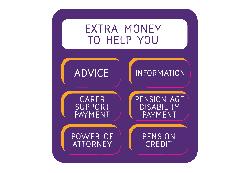
Pension Age Disability Payment is the benefit for people who have reached State Pension age and need help looking after themselves due to a health condition or disability. It has replaced Attendance Allowance for people living in Scotland. You can claim it regardless of your income and savings. Most people living with dementia are likely to become entitled at some point.
Adult Disability Payment is the new working age disability benefit for people in Scotland. This is also available regardless of income and savings.
Pension Credit gives you extra money if your income is low and you, and your partner if you have one, have reached State Pension age.
Carer Support is a benefit for some people who spend at least 35 hours a week caring for someone who has a disability. It has replaced Carer’s Allowance for people living in Scotland. The person being cared for must be getting a benefit such as Pension Age Disability Payment.
Did you know? Some older people do not claim the benefits they are entitled to. They may be unaware of their rights or they might think the process of claiming will be too difficult, but help is available.
Call the Age Scotland helpline on 0800 12 44 222 for free copies of our benefit guides or to book a free benefit check.
Your rights and dementia
Discrimination and dementia
Unfortunately some people living with dementia find that others treat them unfairly because of the condition. You should not be discriminated against because you are living with dementia.
The Charter of rights for people with dementia and their carers in Scotland sets out your rights. This includes the right to be able to participate in community life, to be involved in making decisions that affect you, and to be treated with dignity and respect. You can get a copy of the charter of rights from the Health and Social Care Alliance Scotland (The ALLIANCE). The
If you think you have been discriminated against or treated unfairly and would like advice, call the Age Scotland helpline on 0800 12 44 222.
Campaigning
DEEP, also known as The UK Network of Dementia Voices, connects groups of people living with dementia across the UK. It supports these groups to change services and policies affecting the lives of people with dementia. Call the Age Scotland helpline if you need help finding the number for your local group.
www.dementiavoices.org.uk
Age Scotland coordinates the Dementia Friendly Communities (DFC) Network. The DFC Network brings together people and communities in Scotland committed to helping people living with dementia to feel included and enabled.
Anyone interested in supporting dementia friendly communities in Scotland is welcome to join. Visit www.age.scot/dfcn for more information or call the Age Scotland helpline on 0800 12 44 222
Advocacy
Sometimes people living with dementia find it difficult to have their views and wishes heard, particularly if they are living alone or do not have a lot of friends and family around. This can be really worrying, especially if you are having to communicate with many different services and professionals.
An advocate can help to make sure that your views are taken into account when decisions are being made about your life. The Scottish Independent Advocacy Alliance can help you to find advocates in your area.
State Pension age is increasing from 66 a little at a time, until it reaches 67 by March 2028. As this happens, it is likely that more people will be diagnosed with dementia while they are still working.
In general, employees do not have to tell their employer about their diagnosis. However, in some professions you will need to declare this according to your contract. Examples include if you are in the armed forces, if you work on a plane, ship or building site, or if you operate heavy machinery.
Some people diagnosed with dementia do not want to tell their employer. However, your employer may be able to support you if they know about your diagnosis.
Employers have a duty to make reasonable adjustments to help any employee to overcome disadvantage in the workplace. Adjustments might include noise reduction, better lighting in your workspace and time off for appointments.
What is considered a reasonable adjustment will depend on the size and resources of your employer and how effective the adjustments will be. You can contact your local Citizens Advice Bureau or the Equality Advisory Support Service (EASS) for advice.
Useful contacts
Age Scotland helpline 0800 12 44 222
The Age Scotland helpline provides information, friendship and advice, to older people and their relatives and carers.
If you need an interpreter, simply call the helpline and state the language you need, e.g. Polish or Urdu. Stay on the line for a few minutes and we will do the rest.
You can also call the helpline for a copy of our publications list or any of our guides. To read, download or order guides online, visit www.age.scot/information.
Admiral Nurses
Specialist dementia nurses who provide free expert support and advice to families affected by dementia.
0800 888 6678
dementiauk.org/what-is-an-admiral-nurse
Alzheimer Scotland
Provides services and support for people with dementia and their families. Their digital tool ADAM provides information on technology useful for daily living.
Provides information on care services in Scotland.
0800 011 3200
www.careinfoscotland.scot
Citizens Advice Scotland
Provides independent advice and information about a wide range of welfare topics. Call the number below or visit their website to find details of your local bureau.
0800 028 1456
www.cas.org.uk/get-advice
Disability Information Scotland
Disability Information Scotland provide information, support and advice to people living with long-term conditions and their families.
0300 323 9961
www.disabilityscot.org.uk
How you can help
Our vision is a Scotland which is the best place in the world to grow older.
All the information we provide is free and impartial. It helps older people access their rights and entitlements and can be life changing.
We are also a lifeline for older people who are feeling lonely and isolated. You can help us to support older people who need us most. Together, we can make a difference.
Make a donation
No matter how small or large, donations make a massive difference and help us continue our important work.
Call 03330 15 14 60
Visit age.scot/donate
Complete the donation form and return by Freepost
Fundraise
Whether it’s having a bake sale or running a marathon, there are so many ways to raise vital funds to support our work. To find out more, call 0333 323 2400 or visit age.scot/fundraise.
Leave us a gift in your Will
By choosing to leave us a gift in your Will, your legacy will help us to continue being there for older people for generations to come. To find out more, call 0333 323 2400 or visit age.scot/legacy.
Please donate today
Complete the form and return by Freepost to RSBS-KEHC-GBBC, Age Scotland, Edinburgh, EH9 1PR
Your details
Title: Forename:
Address:
Postcode:
Surname:
City:
Date of birth:
By providing us with your telephone number and email address you are consenting to us contacting you via phone, text and email.
Email:
Home tel:
I WOULD LIKE TO DONATE
£75 £50 £25 Other (£) I wish to pay by (please tick):
MasterCard Visa CAF
CharityCard Cheque
Mobile tel:
Name on Card
Card No
Expiry date
Security code (payable to Age Scotland)
Signature Date
I prefer not to receive a thank you acknowledgement for this donation
I would like information about leaving a gift in my Will
I WOULD LIKE TO MAKE MY DONATION WORTH 25% MORE
I want Age Scotland** and its partner charities to treat all donations I have made for the four years prior to this year, and all donations I make from the date of this declaration until I notify you otherwise, as Gift Aid donations
I am a UK tax payer and understand that if I pay less income tax and/or capital gains tax than the amount of Gift Aid claimed on all my donations in that tax year it is my responsibility to pay any difference
Yes, I want Age Scotland** to claim Gift Aid on my donations I do not wish you to claim Gift Aid on my donations
Keeping in touch
Date
You can read Age Scotland’s privacy policy at . We will stay in contact by post unless you ask us not to We will never sell your data and we promise to keep your details safe and secure. You can change your mind at any time by emailing us on contact@agescotland.org.uk or calling us on 0333 323 2400.
Age Scotland is the Scottish charity for older people. We work to improve the lives of everyone over the age of 50 so that they can love later life.
Our vision
is a Scotland which is the best place in the world to grow older.
Let’s
keep in touch
Contact us:
Head office
0333 323 2400
Age Scotland helpline 0800 12 44 222
Email info@agescotland.org.uk
Visit our website www.agescotland.org.uk
Sign up to our newsletter
Our regular newsletters by email contain details of our campaigns, services and how you can support our work.
Sign up today at age.scot/roundup
Follow us on social media
Our social media channels are a great way to keep up to date with our work and issues that affect older people.
Age Scotland, part of the Age Network, is an independent charity dedicated to improving the later lives of everyone on the ageing journey, within a charitable company limited by guarantee and registered in Scotland. Registration Number: SC153343. Charity Number: SC010100. Registered Office: Causewayside House, 160 Causewayside, Edinburgh, EH9 1PR
We are grateful to the Scottish Government for part-funding this publication