




In February 2026, Minister for Foreign Affairs Helen McEntee TD told the Munich Security Conference: “Ireland is militarily neutral but neutrality doesn’t mean standing still. It doesn’t mean standing apart from others.”
From a European perspective, Russia’s war in Ukraine has prompted sharp increases in defence spending across most EU member states, compounded by Donald Trump’s demands that NATO members allocate more of their national budgets to defence. The UK plans to raise defence spending to 5 per cent of GDP by 2035. Germany has committed to an increase of more than 25 per cent in its 2026 defence budget compared to 2025. France, Poland, and others have made similar commitments.
Ireland, meanwhile, aims to increase defence spending to 0.3 per cent of GDP by 2028, a modest target which nonetheless represents a rise of more than 30 per cent on current levels. In 2023, former Defence Minister Willie O’Dea TD confirmed the longstanding secret arrangement with Britain’s Royal Air Force to protect Irish airspace. Britain poses no immediate threat to Ireland, but it remains the only country in history to have occupied Ireland, making this a culturally uncomfortable arrangement.
In this context, raising defence spending is an unpopular but necessary element of the Government’s agenda. Reports that the Irish Air Corps intends to purchase up to 14 fighter jets to end reliance on Britain reflect that reality.
Although Ireland is not diplomatically neutral, having consistently championed justice in Palestine and more recently in Ukraine, military neutrality has served us well. It kept us out of the crosshairs of superpowers during the Second World War and the Cold War. Any military alignment with a foreign power would be both unpopular and unnecessary. Any attempt to alter our longstanding foreign policy must therefore face the highest scrutiny.
I hope you enjoy this 74th issue of eolas Magazine, and I thank our sponsors, interviewees, and contributors for playing their parts in what is a fascinating issue examining Ireland’s infrastructure, social inclusion, and retrofitting policies, in addition to our usual current and public affairs.
Joshua Murray Deputy Editor
March 2026
Editorial
Owen McQuade, Managing Editor owen.mcquade@eolasmagazine.ie
Joshua Murray, Deputy Editor joshua.murray@eolasmagazine.ie
Ciaran Brennan ciaran.brennan@eolasmagazine.ie
Gareth Hamill gareth.hamill@eolasmagazine.ie
Harry McGoldrick harry.mcgoldrick@eolasmagazine.ie
Advertising Sam Tobin sam.tobin@eolasmagazine.ie
Design
Gareth Duffy, Head of Design gareth.duffy@eolasmagazine.ie
Jamie Hogan jamie.hogan@eolasmagazine.ie
Events
Lynda Millar lynda.millar@eolasmagazine.ie
Become a subscriber!
Annual subscriptions:
€30.00 + €5.00 P&P
Contact: Sharon Morrison Email: subscriptions@eolasmagazine.ie Online: www.eolasmagazine.ie/subscribe
eolas Magazine
bmf Business Services Clifton House Lower Fitzwilliam Street Dublin, D02 XT91 Tel: 01 661 3755 Web: www.eolasmagazine.ie
Printed by: GPS Colour Graphics








72 Minister for Social Protection Dara Calleary TD on building a socially inclusive Ireland
76 Manchester City Council’s Sherelle Fairweather on bridging the social digital gap
84 Analysis: Roadmap for social inclusion 2020-2025
96 Analysis: National Residential Retrofitting Plan
100 Interview: DCEE’s Stephen Brophy discusses incentivising retrofitting
104 Bebhinn Kennedy of the TUS Sustainable Development Research Institute on bio-based and circular solutions for retrofit
122 Maria Walsh MEP: ‘Ireland must lead in criminalising devastating deepfakes’
124 Political commentator Larry Donnelly on the state of relations between Europe and the US
126 Mol an Óige: Paul Lawless TD
132 Political platform: Rory Hearne TD
136 Timpeall an bhoird: Committee on Standing Orders and Dáil reform
140 Back page: Senator Patricia Stephenson on progressing the Occupied Territories Bill

Two separate but similar cases brought forward by Sinn Féin TD Pa Daly and People Before Profit TD Paul Murphy challenging the constitutionality of attendance by ‘super junior’ ministers at cabinet meetings have been dismissed by Dublin High Court judges.
In December 2025, a three-judge High Court panel ruled that there had been no breach in any provision of Bunreacht na hÉireann in the attendance and participation of junior ministers at cabinet meetings.
Super junior ministers are ministers of state (junior ministers) who attend cabinet meetings but are not members of the cabinet.

Former assistant secretary at the Department of Transport Garret Doocey will lead the Housing Activation Office (HAO) having been appointed assistant secretary general of the Department of Housing, Local Government and Heritage in February 2026.
The HAO was established in April 2025 with the aim to remove infrastructure delays to accelerate housing delivery. As assistant secretary at the Department of Transport, Doocey oversaw infrastructure projects such as Bus Connects and MetroLink. Doocey’s appointment comes nine months after the controversial proposed selection of Brendan

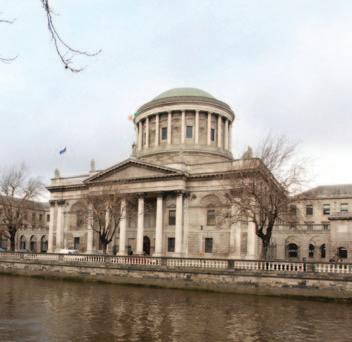
Both Daly and Murphy argued that the attendance of these junior ministers at cabinet was in contravention of section 28 of Bunreacht na hÉireann, which states: “The Government shall consist of not less than seven and not more than 15 members who shall be appointed by the President in accordance with the provisions of this Constitution.”
However, in their deliberation, the three-judge panel, comprised of court president Judge David Barniville, Judge Siobhán Phelan, and Judge Conleth Bradley, says: “There is no constitutional provision, express or implied, which limits the attendance of meetings of the Government.”
Murphy and Daly are able to appeal the High Court’s verdict, but have not indicated their intentions at the time of publication.
HOUSING
McDonagh, chief executive of the National Asset Management Agency (NAMA).
It was initially reported that McDonagh would retain his NAMA salary of around €430,000 as head of the HAO which prompted a backlash from opposition parties and the public.
McDonagh subsequently withdrew his name from consideration. The Government advertised the position in late 2025 with a revised salary of up to €217,000, which aligns with deputy secretary-general levels within the civil service.
The Department states that the HAO is developing a coordinated programme of investment with infrastructure agencies and local authorities. In January 2026, the €1 billion Housing Infrastructure Investment Fund was launched. It will be managed by the HAO and is designed to “support direct investment in housingenabling public infrastructure and to accelerate housing delivery”.
“The arrival of the deputy secretary will bring further laser-focus to this coordination,” the Department says.

Minister for Agriculture, Food and the Marine, Martin Heydon TD announced the extension of the nitrates derogation by three years after approval by the European Commission in December 2025.
The agreement was reached with the Nitrates Committee of the European Commission on a three-year implementing decision.
Ireland’s nitrates derogation allows farmers to farm at higher stocking rates, above 170 kg livestock manure nitrogen/ha up to 250 kg nitrogen/ha, across the entire land declared on BPS.
The implementation decisions set out the conditions under Ireland must operate the derogation, alongside several additional requirements from 2028 for derogation farmers in Ireland’s four biggest catchments.
From 2028, the annual maximum grassland fertilisation rate from chemical fertilisers on holdings with an authorisation is to

be reduced so that, as of 2028, the rates are 5 per cent lower than the rates published in the Nitrates Action Programme (NAP).
Minister Heydon says: “Ireland’s request is based on the scientific criteria as provided for in the directive and which align with Ireland’s grass based, outdoor production model. Today’s vote marks the success of that part of the process.”
Head of Advocacy with An Taisce Elaine McGoff, however, has highlighted the “abysmal track record” the State has in protecting its waterways form agriculture pollution.
“The evidence clearly shows Ireland has serious water pollution problem that is not getting any better caused largely by agricultural nitrogen. Recent EPA data on water quality is unambiguous. We are going backwards.”
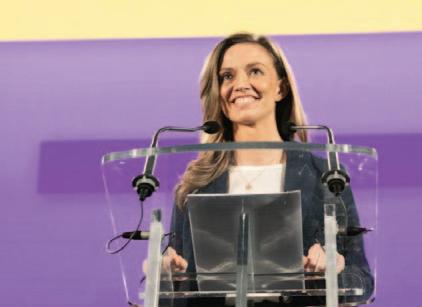
Social Democrats leader Holly Cairns TD outlined her “unashamedly ambitious” plan for the party at its largest ever conference in Cork in February 2026.
Around 450 people attended the party’s seventh conference which was its first to take place outside Dublin.
Cairns’ speech was critical of the Government for its “broken promises”. She outlined her own party’s housing policy, which she stated would protect renters with a rent freeze, end no-fault evictions, and deliver social housing.
The Social Democrats leader also confronted the Government’s handling of migration, saying that it has
allowed the debate to become toxic and “erase the people at the heart of it”.
Cairns called on Taoiseach Micheál Martin TD to stand up to US President Donald Trump during his St Patrick’s Day visit to the White House. She said the Taoiseach “must make the position of the Irish people clear”.
“We stand alongside our EU allies, we are not joining the Board of Peace, and we do not bow down to bullies.”
From 1 March 2026, annual rent increases will be capped at the rate of general inflation, up to a maximum of 2 per cent, under new legislation reforming renting rules approved by the Government.
The rate of general inflation will be measured by the Consumer Price Index (CPI). Reforms will apply to new tenancies made on or after 1 March 2026, including private rented housing and student-specific accommodation.
Private sector landlords will be able to increase rent to market value if previous rates were below market value, however, they

will not be allowed to reset the rent after a ‘no-fault eviction’, where the landlord ends a tenancy although the tenant has made no error. This is to prevent landlords evicting tenants to increase rent.
To protect tenants, all new tenancies will become tenancies of minimum duration (TMD). These will last for a minimum of six years and will continue in six-year cycles and automatically become a TMD when no valid notice of termination is given after six months.
A new public service media (PSM) organisation that combines both RTÉ and BBC Northern Ireland should be established in the event of a united Ireland, a report has found.
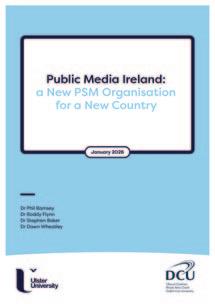
Public Media Ireland: a New PSM Organisation for a New Country, written by researchers from Dublin City University and Ulster University, asserts that “it cannot be taken as a given that RTÉ would simply take over from BBC Northern Ireland”. It also suggests the creation of 10 regional journalism hubs across the island.


The report identifies funding as a potential challenge due to evasion rates of TV licences across both RTÉ and BBC Northern Ireland. However, the report suggests introducing the Finnish model to combat this issue.
Under this model, individuals pay 2.5 per cent of their “total earned income and capital income” above €14,000, with the maximum payment being €163 per year. Organisations with taxable incomes above €50,000 also pay, with a maximum rate of €3,000.
Report author Phil Ramsey says: “This report kickstarts a debate on what the future of media might look like across Ireland.”


“Ireland is militarily neutral but that doesn’t mean standing still. It doesn’t mean standing apart from others.”
Foreign Affairs Minister Helen McEntee TD speaking at the Munich Security Conference.
“Whether a Democrat or a Republican is in the White House, Europe can no longer be as confident that America will be firmly in its corner, either economically or militarily.”
Political commentator Larry Donnelly writing in eolas Magazine.


“This Board of Peace has nothing to do with that. It’s a much more general board of the power of one person.”
Former President Mary Robinson on Donald Trump’s
Board of ‘Peace’.
“You’re in our country. Tonight I’m going to your country.”
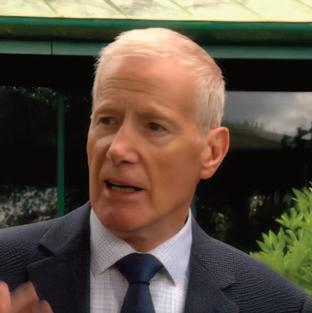
DUP MP Gregory Campbell’s welcome to President Catherine Connolly when she visited Derry in February 2026.

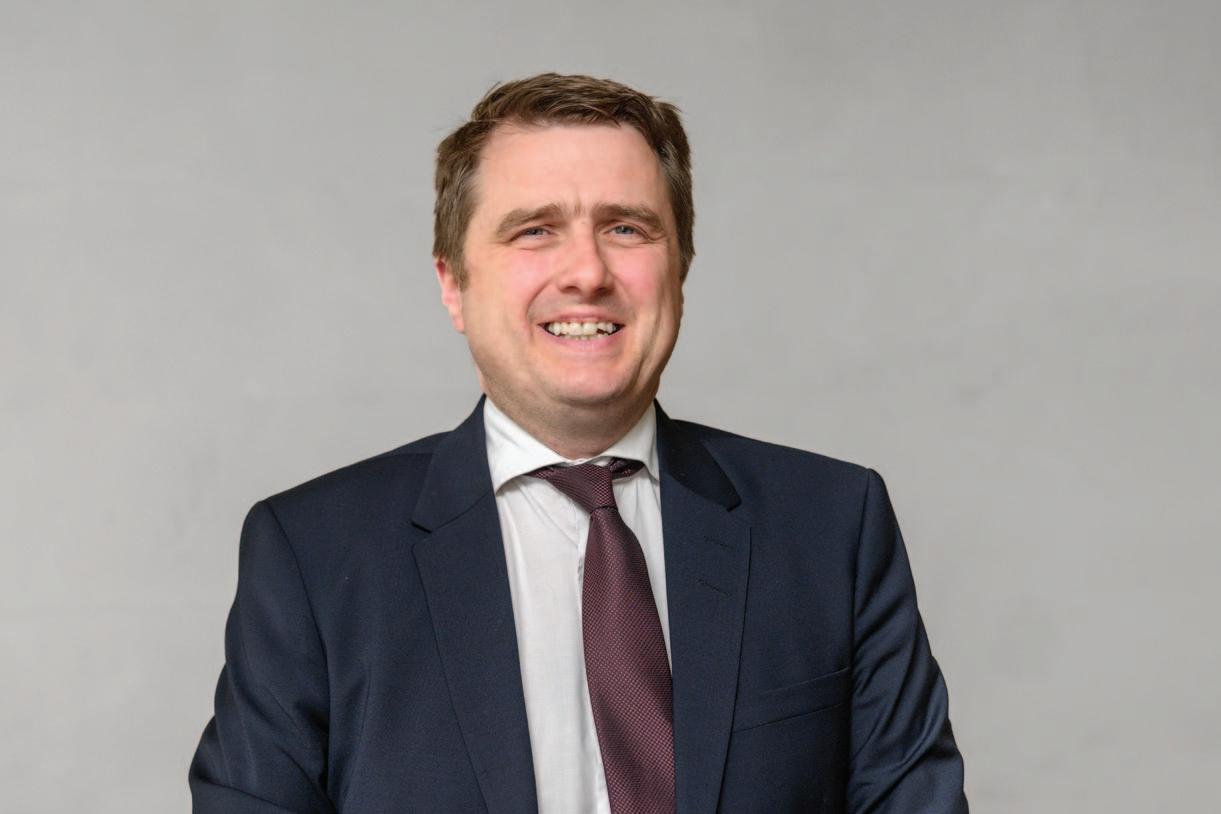
Writing in eolas Magazine, Minister for Housing, Local Government and Heritage James Browne TD states that the Government’s new housing action plan, Delivering Homes, Building Communities, is the roadmap to tackling the housing crisis.
Housing remains the defining social and economic challenge of our time.
It impacts families, communities, our workforce, and our national competitiveness. That is why the Government’s new housing action plan, Delivering Homes, Building Communities reaffirms the delivery of homes as the number one priority for every arm of Government, national and local, and sets out a clear, ambitious, and realistic path to deliver the homes people need.
The plan sets a target to deliver at least 300,000 new homes by 2030. Let us be clear; this is a floor, not a ceiling. If we can deliver more, we will. Because increased supply is the single most effective way to moderate price growth, improve

affordability, tackle homelessness, and allow more people to put down roots in communities.
Is that 300,000 figure ambitious? Yes, it is, but I believe that it is possible. If we are focused and determined enough to use every single lever at our disposal across government departments, local authorities, agencies, NGOs, and the private sector.
Fortunately, we have a firm base of recent progress to build on. Under Housing for All, over 137,000 new homes were built, 44,000 social homes delivered, and nearly 16,900 affordable supports provided, including more than 4,500 cost rental homes, a tenure type that did not even exist five years ago. These achievements give us a strong foundation.

“Activating supply means removing the structural barriers that have slowed housing delivery for too long and caused barriers in planning, infrastructure, land availability, regulation, skills, and finance.”

However, now we must do more, and we must do it faster and at greater scale.
So how will we do that? Well, our new plan is laserfocused on two key pillars: activating supply and supporting people.
Activating supply means removing the structural barriers that have slowed housing delivery for too long and caused barriers in planning, infrastructure, land availability, regulation, skills, and finance.
Activating supply also involves the largest public capital investment programme in the history of the State. Over the next decade, €275 billion will be invested, ensuring delivery of the infrastructure needed for housing.
To ensure this investment translates into actual homes on the ground, the Government has established the Housing Activation Office. It is up and running and already engaging with all local authorities and industry. Its task is this: identify and remove blockages so land can be activated and homes can be built without delay.
Indeed, recently, through our €1 billion Housing Infrastructure Investment Fund to support direct investment in housing infrastructure, the Housing Activation Office sought applications from projects to get much needed infrastructure built quickly. I want short, sharp, and shovel-ready projects that demonstrate how they will activate housing or it will not be funded.
We are also reforming the planning system through the implementation of the Planning and Development Act 2024, providing certainty, clearer timelines, and better outcomes. A revised National Planning Framework has already allowed the zoning of significantly more land.
Across government, the work of the Accelerating Infrastructure Taskforce will work alongside these measures to ensure there is a pipeline of zoned, serviced land in place to support housing delivery over the lifetime of this plan.
Much of our challenge in growing supply lies in the number of blockages and obstacles to the viability of much needed projects. To boost viability, especially for apartments – this government has introduced a suite of complementary measures, including tax incentives, that could reduce the delivery cost of apartments by up to €160,000 per unit, unlocking developments that were stalled only months ago.
Additionally, our new Residential Tenancies Bill, once enacted, will provide stronger encouragement for apartment building by balancing greater certainty for landlords with stronger protections for tenants.
Increasing skills and capacity is also essential. That is why we are doubling investment in Enterprise Ireland’s Built to Innovate programme, supporting the adoption of modern methods of construction, and ensuring at least 25 per cent of social and affordable homes will use these faster, more efficient building techniques.
And to support SME builders, the backbone of housing delivery in many areas, the Government has approved €400 million in ISIF equity investment for homebuilding and €200 million more for Home Building Finance Ireland.
Our housing action plan is targeting any of those obstacles that are slowing or blocking delivery and ensuring that the way is clear for building to proceed at pace and scale.
That is only one half of the story.
The second pillar of our plan, supporting people, will ensure that the homes we build meet the needs of all our people.
Homelessness, particularly child homelessness, remains one of the most urgent issues facing the State and it is one which I personally am determined to significantly reduce. It is not acceptable.
“Delivering Homes, Building Communities recognises that we must both increase supply of housing and tackle the root causes of homelessness to be successful”.

Minister for Housing, Local Government and Heritage
James
Browne TD

Delivering Homes, Building Communities recognises that we must both increase supply of housing and tackle the root causes of homelessness to be successful.
In our new plan, we reaffirm our commitment to work towards ending homelessness by 2030. We also will implement a child and family homelessness action plan, design and implement a homelessness prevention framework, and provide an additional €100 million in capital funding in 2026 to help families exit emergency accommodation.
The most powerful tool we have to tackle homelessness, however, is the delivery of social housing. Over the lifetime of the plan, we will provide 72,000 new build social homes and provide 90,000 affordable supports. This year alone, over €9 billion in capital funding will support social and affordable delivery through the exchequer, the LDA and the Housing Finance Agency.
We are also tackling vacancy and dereliction head-on: through the expanded Vacant Property Refurbishment Grant, the extended Living City Initiative, and a new Derelict Sites Tax. These measures will bring thousands of homes back into use, revitalising our villages, towns, and cities. Finally, the plan recognises the changing needs of our population. An action plan for housing for older people will support rightsizing options and increase the delivery of suitable homes. Funding for the enhanced Housing Adaptation Grant for Older People and Disabled People has been increased to €130 million, and
investment in Traveller-specific accommodation will rise to €34 million in 2026.
There is no magic bullet to solve the housing crisis, but there is a variety of solutions which, taken together, can create the momentum we need to build more, build better, and build faster. That is why Delivering Homes, Building Communities is not a single programme or a single policy. It is a collective national effort which is long-term, collaborative, and ambitious.
We have record investment, we know what needs to be done, and we have a shared belief that every person in this country deserves the security of a place to call home. All it takes now to succeed is the drive and will to implement the plan we have. As Minister for Housing, I will be daily focused on delivery. Impatient with both myself and others, I will be driving progress across both pillars of our plan and I will be determined that we do not miss any opportunity to push progress further.
I do not underestimate the scale of the challenge ahead. But in Delivering Homes, Building Communities we have a clear plan, the resources to deliver it, and a shared determination to succeed.
James Browne TD is the Minister for Housing, Local Government and Heritage. He has been a Fianna Fáil TD for Wexford since 2016.




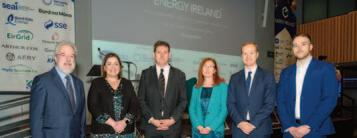
The turbulent geopolitical upheaval of the last decade continues unabated. In 2026 the world order is rupturing. It is against this backdrop that Ireland is transitioning to a low carbon energy system. This year will be the 30th Energy Ireland and it will look back at the progress Ireland has made over the last 30 years in transforming its energy system and look for any lessons for the future.
Energy Ireland 2026 will look across the energy sector, covering all technologies and challenges facing it, including a fast growing economy; growing skills gaps and the rise of AI and data centre demand. The main focus will be on the implementation of policy, and regulation to underpin Ireland’s energy transition and the delivery of the pipeline of projects to make the transition a reality.
Speakers confirmed so far:
Caoimhe Archibald MLA
Minister for the Economy Northern Ireland
Cathal Marley
Chief Executive EirGrid
Dave Kirwan
Managing Director
Bord Gáis Energy
Laura Brien
Chief Executive Officer
Maritime Area Regulatory Authority (MARA)
William Walsh
Chief Executive Officer
Sustainable Energy Authority of Ireland
Denis O’Sullivan Director of Development
Centrica Power
Niamh McGovern
Partner and Energy and Renewables Sector Lead Arthur Cox
Neil Walker Director
Walker Energy Consulting
David Kelly
Chief Executive Officer
Gas Networks Ireland
Brian Ó Gallachóir
Associate Vice President of Sustainability and Director
Sustainability Institute
University College Cork
John FitzGerald
Adjunct Professor
Department of Economics
TCD
Úna Nic Giolla Choille
Energy Ireland Conference
Chair

Major Sponsors


Sponsors


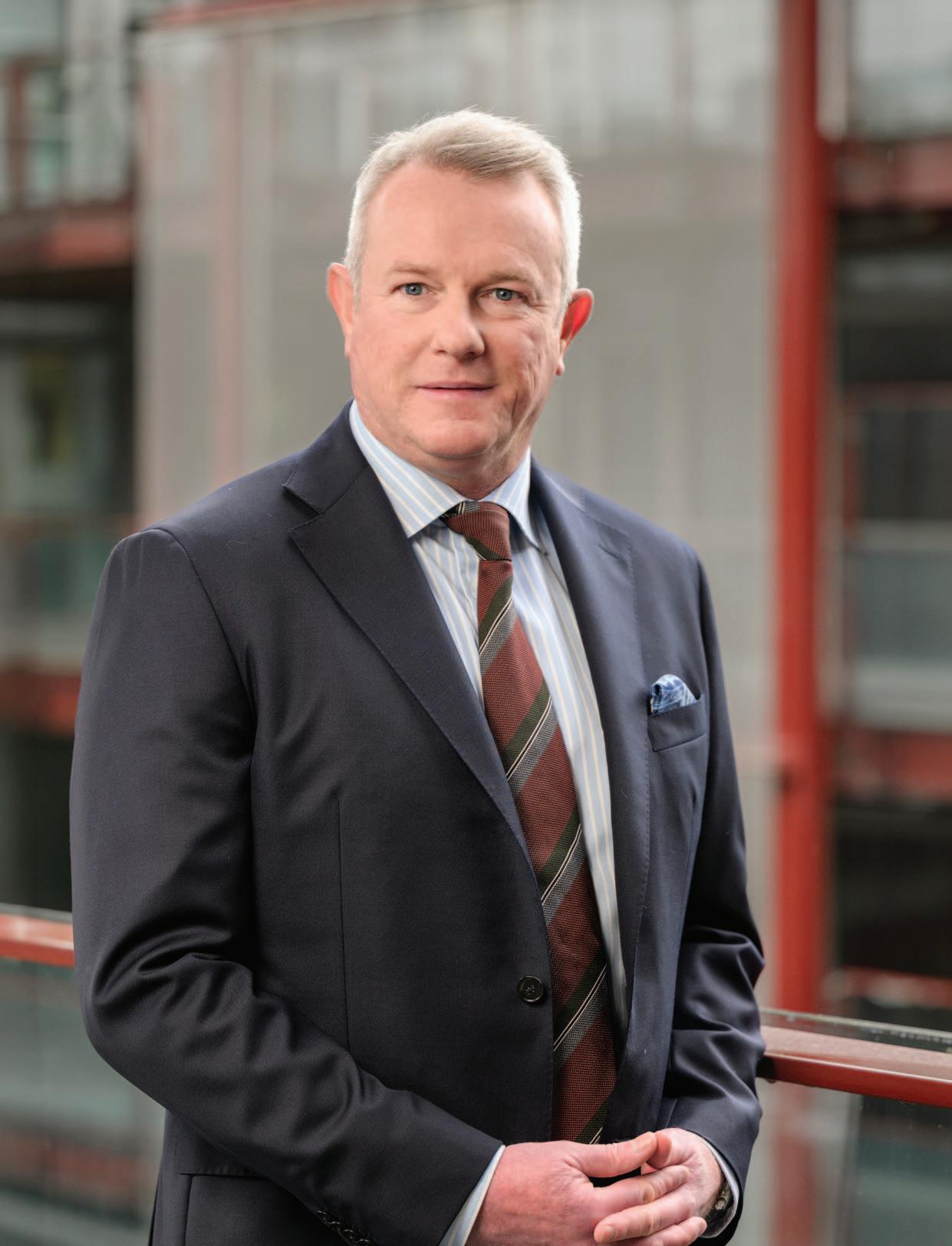
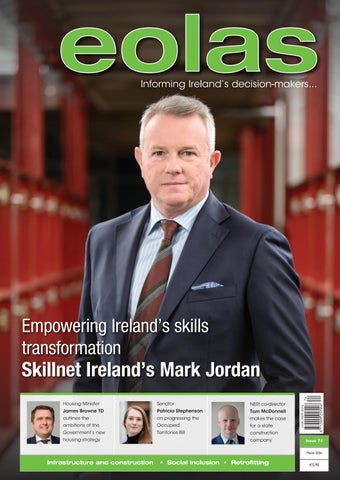
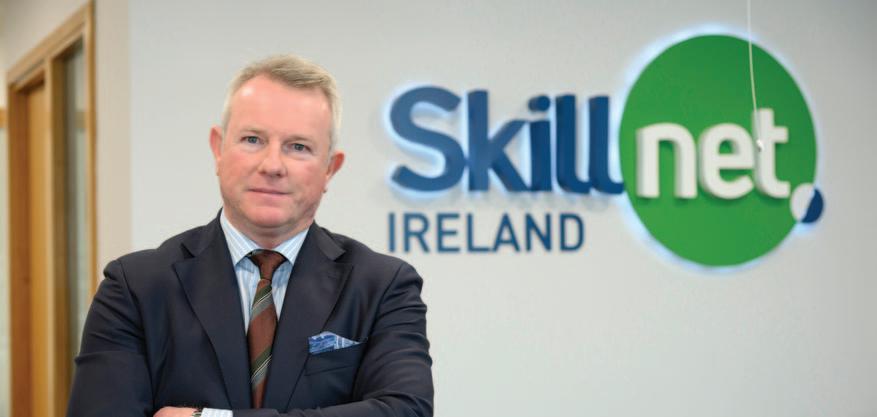
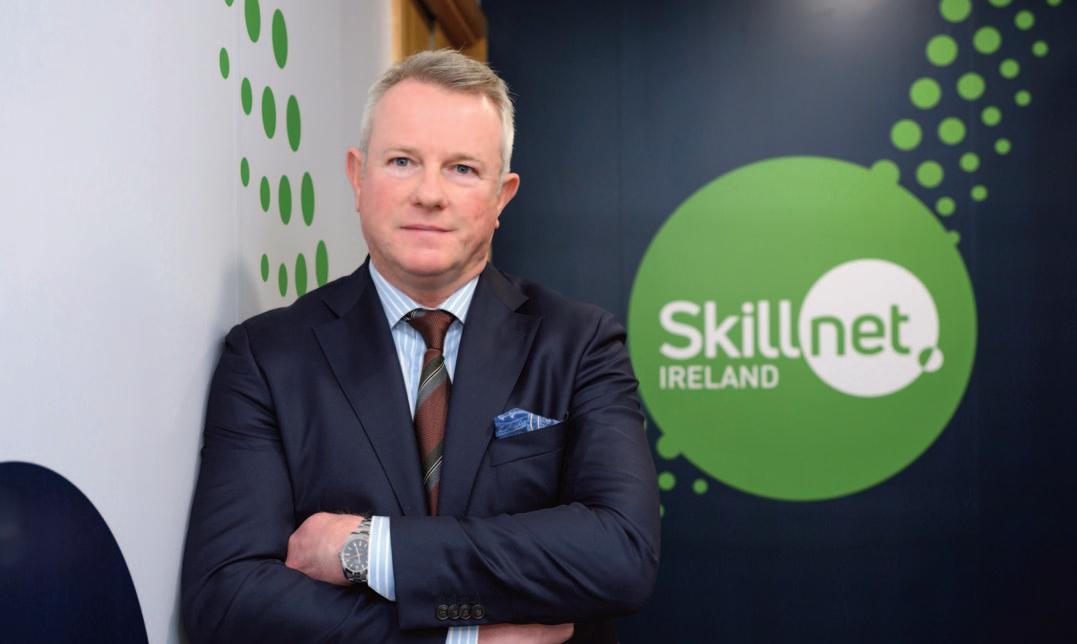
Mark Jordan, chief executive of Skillnet Ireland, speaks with Joshua Murray about his strategic priorities, the race to build capability in digitalisation, AI, and climate action, and why employer-led, lifelong learning will determine Ireland’s competitiveness in the decade ahead.
When Mark Jordan stepped into the Chief Executive role in April 2025, he did so with the advantage of familiarity.
Having previously served as Chief Strategy Officer for almost six years, he already understood the machinery of the organisation, the expectations of government, and the intricate network of stakeholder relationships that underpins its work with enterprise.
However, the transition has still been transformative. The CEO role, he says, brings a wider lens and a sharper emphasis on representation, influence, and readiness for growth.
“It has been a very productive first year. A lot of my focus has been on further developing the profile of Skillnet Ireland across our stakeholder groups and continuing to work with our Minister and the Department of Further and Higher Education, Research, Innovation and Science as well as the broader skills and enterprise support ecosystem. At the same time, we have been strengthening our internal capacity and making sure we are prepared to scale.”
The dual strategy of external engagement and internal preparation defines the environment Skillnet Ireland now finds itself in. Demand for upskilling has never been clearer but meeting it requires constant evolution in how programmes are designed, funded, and delivered.
Alongside this, Jordan, and the Skillnet Ireland board have been developing the agency’s next three-year statement of strategy, which will guide the organisations priorities out to 2028. The organisation’s new strategy Empowering Enterprise 2026-2028 – A Strategy for Building Next Generation Capability was developed over the past year following extensive consultation.
“Ireland’s economic success is built on talent and innovation and now more than at any other time in our history, it is critical that we keep pace with evolving technology and working methodologies to ensure our skilled and agile workforce remains the primary driver for our industrial growth.”
“Future-focussed upskilling drives economic resilience and business transformations.”
“Our new strategy outlines Ireland’s desired global position as a hub of talent while also detailing practical enablers and signals how the agency addresses both enterprise needs and labour market policy. We are placing a strong focus on future skills and innovation to enhance Ireland’s competitiveness and sustainable growth across all sectors and regions.”
Jordan is quick to return to a foundational principle. Skillnet Ireland is employer-led and industry-driven. Its legitimacy comes from alignment with the commercial ambitions of firms.
“We are the national workforce development agency, but everything we do is in partnership with business,” he explains. “We talk to companies about where they want to go commercially and then ask, do you have the talent to get there?”
If the answer is no, the organisation helps to close the gap by sourcing, adapting, or co-creating the necessary provision. Skillnet Ireland supports more than 24,000 companies and over 90,000 trainees annually and this ranges from SMEs seeking incremental improvement to large corporates undertaking major transformation initiatives.
Some upskilling interventions are highly technical and sector-specific while others are cross-cutting, focusing on leadership, management capability, digital adoption, or sustainability literacy. Together, they form a national infrastructure designed to make enterprise more adaptive.
Jordan states that three strategic anchors shape his decision-making: digitalisation, artificial intelligence, organisational optimisation and sustainable business practice.
“When we engage with industry through network and programme partners, steering groups or direct company interaction, the conversation consistently leads back to those key mega trends.
“Business needs vary widely. At one end of the spectrum are organisations building AI products and platforms. At the other are firms simply trying to understand how existing tools can be embedded into daily operations. Through our 70 Skillnet Networks and national initiatives we serve both.
“We cover the full range. From postgraduate programmes co-designed with universities right through to
introductory certificates or even one-day tutorials. Adoption, implementation, and development are all part of the picture.”
Sustainability follows a similar pattern. While technical green skills matter, leadership understanding how a sustainability strategy affects competitiveness, access to markets, and long-term resilience is equally critical.
“How do you run a sustainable business? How do you develop strategies that allow you to compete domestically and internationally?” he asks. “Those are the capabilities our business leaders want to develop.”
Strengthening Ireland’s culture of lifelong learning, Jordan believes, is fundamentally important, especially as skills evolve and working practices change.
“Technology plays a key role in this, and we want to make sure we are equipping our businesses and workforce to be successful and competitive as these changes evolve. In areas like AI and digital technology, delays in undertaking upskilling can be costly as innovation can outpace user readiness, creating frustration and lost productivity.”
Over the course of the next three years, Skillnet Ireland will focus its supports to ensure that companies across Ireland have access to the skills and capabilities they are seeking. Enterprise-led training offers employers many benefits, believes Jordan.
For companies, the benefit extends beyond performance. Investment in development aids retention and signals seriousness about the future. “It is important now, but it is also critically important for where the business wants to be in five or 10 years,” Jordan says. “If you invest in your people, they are more likely to go on that journey with you.”
One of the most important consequences of that responsiveness is the ability to support workers looking to traverse sectors to meet evolving national challenges.
“Economic change rarely happens evenly. Some industries slow while others surge, and Ireland must be able to redeploy talent efficiently,” Jordan says.
Offshore wind provides a vivid example. Even before full infrastructure is in place, companies entering the sector are already scaling and seeking specialised expertise.
“There are technical nuances that do not yet exist elsewhere, but there are adjacent sectors where people have core competencies. The task is to create pathways so they can acquire the additional skills and transition,” Jordan says.
Insight into employer thinking is sharpened by the organisation’s research. The Ireland’s Talent Landscape 2025 report offers a snapshot of sentiment across industry.
Its figures are striking. 40 per cent of businesses report difficulty finding employees with essential skills. Almost 80 per cent expect their staff will require digital upskilling. 66 per cent foresee a need for climate and sustainability capability.
For Jordan, this is confirmation that awareness is high. “Businesses are telling us they can see the challenge coming. They know they do not have everything they will need in the future.”
“We want Ireland, through the Skillnet model, to continue to be recognised as a world leader, and the standardbearer for lifelong learning.”

That honesty creates opportunity as it enables Skillnet Ireland to focus investment where it will make the greatest difference and to reduce the lag between emerging demand and available expertise. “It is empowering for us. It shows where we can really move the dial for the economy.”
Leading a national body that operates across diverse regions and sectors demands flexibility. Jordan emphasises empowerment, where industry partners are given parameters and strategic direction but are trusted to engage and deliver the right solutions locally.
Skillnet Ireland’s proximity to enterprise gives it an advantage and its networks are in constant conversation with firms and can react quickly when demand shifts.
The obligation is to keep improving. “We can never stand still. Business competitiveness does not stand still, and the development needs of our businesses and workforce keep evolving,” he says. Increasingly, Skillnet Ireland’s engagement with companies resembles advisory work, linking talent decisions directly to commercial strategy, digital transformation and sustainability mandates.
Jordan’s leadership of Skillnet Ireland is shaped through strategic direction. Jordan frames his vision for Ireland to be a world leader in terms of how government, enterprise and education can collaborate. He also wants to ensure employers clearly understand the Skillnet Ireland value proposition and to expand its reach.
In the medium term, he aims to build an environment that allows the organisation to scale, supporting more companies and more workers, while developing the systems and resources necessary to do so.
In the long term, the ambition is national. “We want Ireland, through the Skillnet model, to continue to be recognised as a world leader, and the standard-bearer for lifelong learning” he says, acknowledging the attention that this approach already receives internationally, particularly within the European Union.
Mark Jordan is chief executive of Skillnet Ireland, the agency responsible for advancing enterprise-led workforce development. Appointed in April 2025, he previously served almost six years as the organisation’s chief strategy officer.
Jordan brings more than two decades of international experience in financial services and fintech, having previously lived and worked in the UK, US and Switzerland. Raised in London to parents from Clare and Wexford, he moved to Ireland eight years ago. He lives in Kildare with his wife, two teenage sons and rambunctious golden retriever.
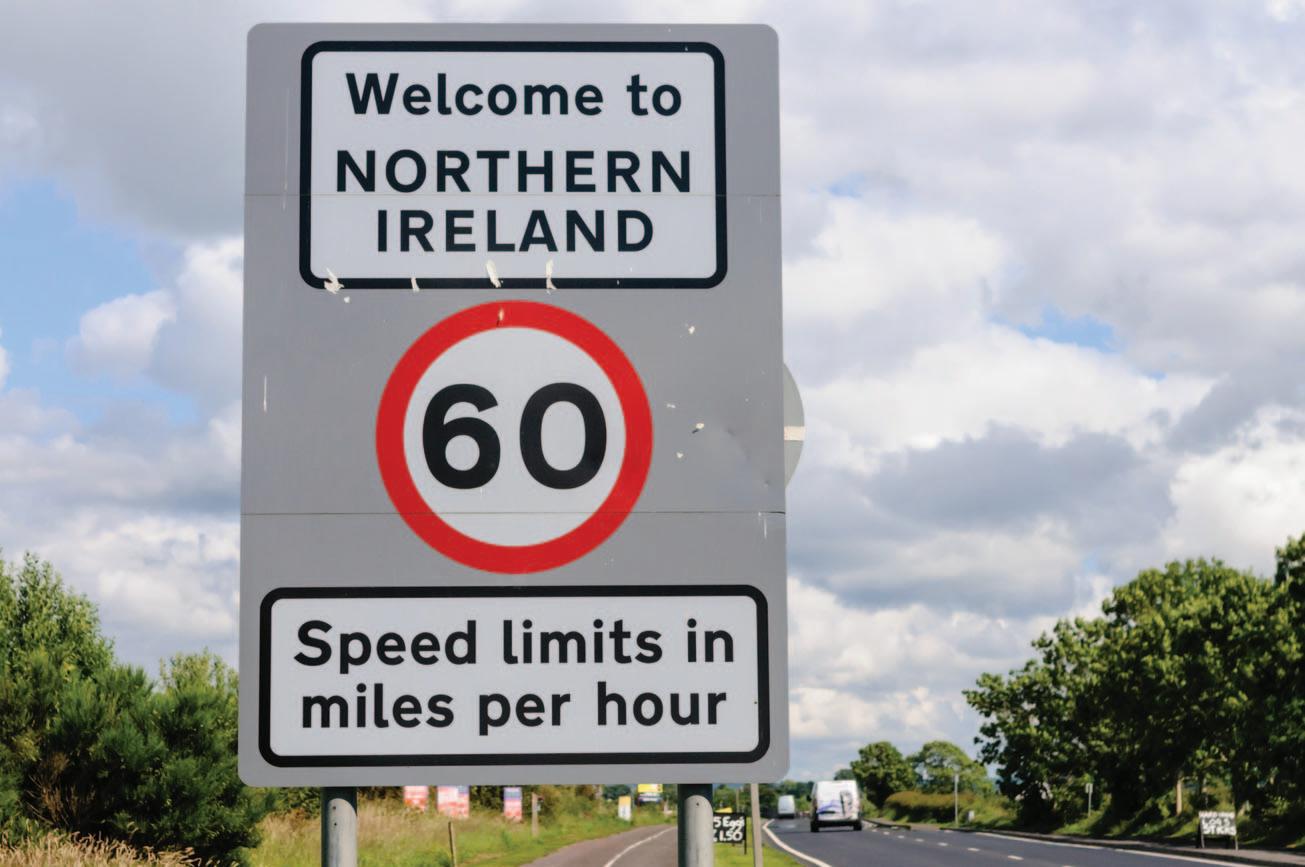
A new ESRI report has found that while Northern Ireland’s economy is growing and outperforming the UK average, deep structural gaps with the Republic persist across income, employment, demographics, and education.
Assessing economic trends in Ireland and Northern Ireland, published in December 2025, is the first in a planned annual series examining economic performance across the island. Drawing together comparable data from both jurisdictions, it presents a picture of two economies moving in the same direction, but at very different speeds.
On headline growth, the findings offer some encouragement for Northern Ireland. In the year to Q2 2025, output grew by 2.8 per cent, driven primarily by services and construction. This compares favourably with the UK as a whole and with Scotland. However, the Republic remains the fastest-growing economy across the UK and Ireland, with modified domestic demand increasing by 3.2 per cent over the same period.
Forecasts cited in the report suggest this divergence is likely to continue. Private-sector forecasts expect Northern Ireland’s gross value added to grow at just over 1 per cent in both 2025 and 2026, while forecasts in the South anticipate stronger domestic growth and continued job creation, albeit at a slower pace than in recent years.
Both jurisdictions recorded similar year-on-year employment growth in 2025, the long-term picture is markedly different. Since 2010, employment in Ireland has grown by 45.5 per cent, compared to 19.1 per cent in Northern Ireland.
The ESRI says that the Republic’s post-pandemic labour market expansion has been particularly strong, with female employment rising sharply. Northern Ireland’s labour market, by contrast, continues to be characterised by higher inactivity and weaker participation.
Although Northern Ireland’s unemployment rate stood at just 1.8 per cent in 2024, compared to 4.4 per cent in Ireland, the report cautions against interpreting this as a sign of stronger labour market performance. Instead, it reflects a larger share of the working age population being economically inactive. Almost one-quarter of people aged between 15 and 64 in Northern Ireland are not in the labour market, compared to just over one-fifth in the Republic.
Between 2015 and 2024, the Republic’s population grew by 14.8 per cent, driven largely by strong net migration. Northern Ireland’s population grew by just 3.9 per cent over the same period.
The Republic’s population is younger, with a lower old age dependency ratio, while Northern Ireland is further along the ageing curve. The ESRI highlights this as a key long-term challenge, particularly for labour supply and public services. Migration has become a significant driving force of economic growth in the Republic, while Northern Ireland’s more modest migration flows limit its growth potential.
The most pronounced differences emerge in measures of living standards. In 2023, the Republic’s GNI* per capita stood at €63,500, compared to GDP per capita of €34,500 in Northern Ireland, which is an 84 per cent gap. While the South’s GDP is known to be distorted by multinational activity, the ESRI emphasises that alternative measures still show a substantial and widening divergence.
After adjusting for purchasing power, hourly earnings in the Republic were 29 per cent higher than in Northern Ireland in 2024. Household disposable income is closer but still favours the South by around 10 per cent.
Life expectancy, which the ESRI describes as a robust indicator of overall wellbeing, also highlights persistent inequality. In 2022, people in the Republic lived longer on average than those in Northern Ireland, with a two-year gap for men and a 1.5-year gap for women. The gap has widened over time, suggesting structural differences in income, education, and access to services.
The Republic consistently outperforms Northern Ireland in post-compulsory education participation, with higher retention rates beyond age 16 and lower levels of early school leaving. NEET rates remain higher in Northern Ireland, at 10.6 per cent compared to 8.6 per cent in the South.
The report warns that weaker engagement with education and training risks reinforcing productivity gaps and limiting future growth, particularly as both jurisdictions face tightening labour supply due to ageing populations.
The ESRI also points to fundamental differences in policy capacity. The Republic, as a sovereign state, controls taxation and spending and has used this autonomy to support growth, though the report cautions about rising public expenditure and reliance on volatile corporation tax revenues.
Northern Ireland, by contrast, operates within a constrained fiscal framework. The Executive has limited revenue-raising powers and depends heavily on the block grant determined by the Barnett formula. While funding increased in 2025/26, pressures remain acute, particularly in health, which accounts for more than half of departmental spending.
A recurring theme throughout the report is the lack of timely, comparable data for Northern Ireland. Gaps in household income, skills, and trade in services data limit the ability to assess policy effectiveness and track convergence or divergence over time.
The ESRI argues that improving all-island data cooperation should be a strategic priority, supporting more informed policymaking and shared responses to common challenges.
The report concludes that while Northern Ireland’s recent growth performance is relatively strong within the UK context, it continues to lag significantly behind Ireland on income, employment, education, and living standards. Addressing these gaps will require sustained policy focus, improved data, and a realistic assessment of the structural constraints facing the Northern Ireland economy.
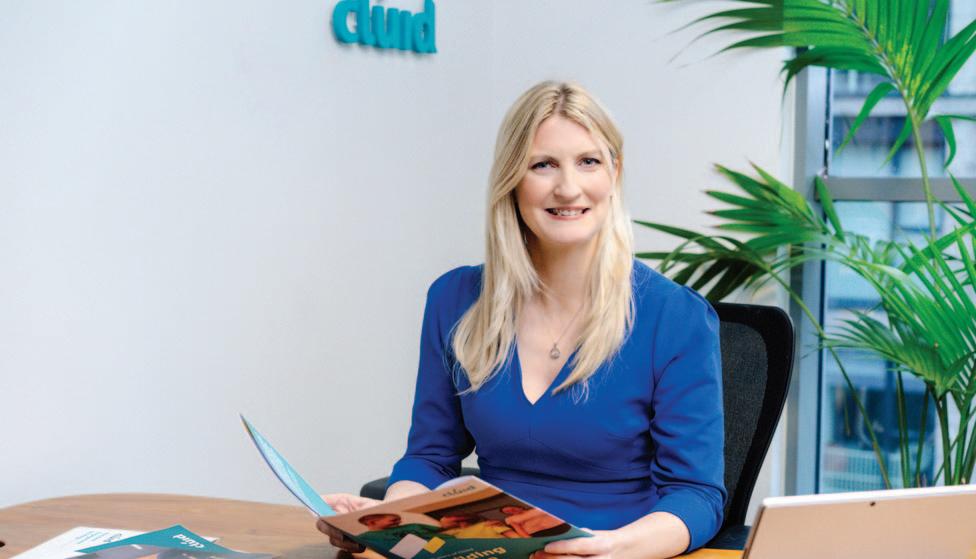
Clúid is an award-winning, not-for-profit housing body, providing a safe and secure home to 35,000 families and individuals in over 14,000 high-quality social, age-friendly and affordable homes across Ireland. In November 2025, Averil Power became its new Chief Executive Officer.
“My connection to this work is personal,” Power tells eolas Magazine. “I grew up in social housing in a great community, with a secure home that my parents could never have afforded privately. It breaks my heart that so many families just like ours are denied that opportunity today.
“Clúid is working to change this through its advocacy and by directly delivering record numbers of social, affordable and age-friendly homes. I am incredibly proud to join such a strong, values-led organisation and to work with Clúid’s talented team to ensure more people have a great place to live.”
Power brings extensive leadership and advocacy experience to the role, having previously served as CEO of the Irish Cancer Society, CEO of the Asthma Society, an elected member of Seanad Éireann and a policy adviser in three Government departments. She holds degrees in business and law from Trinity College Dublin and the King’s Inns, and a diploma in ESG from the Corporate Governance Institute.
During her tenure at the Irish Cancer Society, the organisation delivered record growth in the number of people benefiting from its services and research. It achieved the highest public trust level of any charity in Ireland, according to the Irish
Charity Engagement Monitor, and was named Ireland’s Charity of the Year at the Charity Excellence Awards 2025. Power also used her political and policy experience to help deliver significant changes in Government investment and policy, with lasting impact for people affected by cancer.
At the heart of Power’s work is a deep personal commitment to equality and social justice. As a Senator, she was a key figure in the 2015 referendum campaign for marriage equality and spearheaded legislative change to give adoptees a right to their birth identities. As the first person in her family to finish school, she also championed initiatives to tackle educational disadvantage.
Her move to the housing sector reflects a desire to make a difference to one of Ireland’s most pressing social challenges.
“As a public representative and CEO of two health charities, I have seen first-hand the toll the housing crisis has taken on people’s mental and physical health. Working with Clúid gives me the opportunity to help those who are struggling in the private housing market and need a better, more secure alternative.”
Established in 1994 and led by the recently retired CEO Brian O’Gorman for the last 25 years, Clúid has a strong track record in delivering high-quality social housing to people in housing need on local authority waiting lists. Since 2021, it has also been delivering homes under the Government’s Cost Rental Scheme, with rents at least 25 per cent below market rates.
Clúid’s housing delivery has increased significantly in recent years, with 1,391 new build homes delivered in 2025 alone. This growth has been enabled by close collaboration with its funders and partners, including the Department of Housing, Local Government and Heritage, the Housing Finance Agency, the Housing Agency, local authorities, developers and community groups nationwide.
“We have a number of exciting developments on site at present,” Power says, “including Ireland’s tallest residential building at the Railyard in Cork and an 850-unit development at Oscar Traynor Woods in North Dublin. With a skilled team of 400 professionals across construction, legal, finance, housing and community services, and decades of delivery experience, we are well positioned to do much more in the years ahead.”
Power’s appointment coincided with the publication of the Government’s new housing plan, Delivering Homes, Building Communities, and the report of the AHB Strategic Forum. Both highlight the increasingly important role approved housing bodies such as Clúid now play, delivering approximately 50 per cent of all new social and affordable homes in Ireland.
“Record Government investment in housing, a fixed loan rate of 3.75 per cent from the Housing Finance Agency, and the introduction of an equity element to cost rental funding have enabled Clúid's recent growth,” Power notes. “Recent retrofit funding improvements will also help us make existing homes more energy-efficient and comfortable for residents.
“However, as highlighted in the Strategic Forum report, further reforms are needed if the sector is to reach its full potential. Historic underfunding of some schemes and inadequate funding for community infrastructure remain key challenges.”

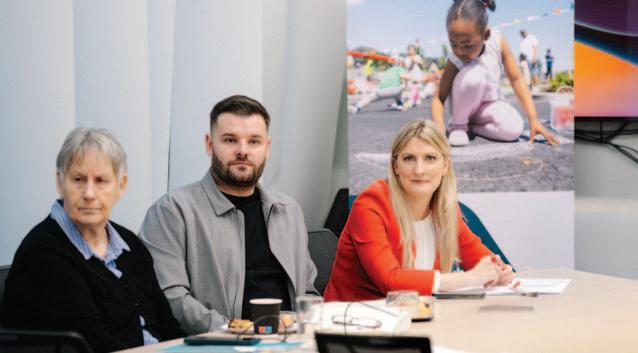
While delivery at scale is critical, Clúid places equal emphasis on the quality of the resident and community experience, reflected in a sector-leading resident satisfaction rate of 85 per cent.
Homes are managed through locally based housing officers, supported by a national housing advice centre. Most day-to-day repairs are carried out by Clúid Works, the organisation’s in-house maintenance service, enabling faster response times and greater accountability.
Beyond housing provision, Clúid invests in tenancy sustainment and community development to help residents build stable, connected lives. This includes tailored supports for older residents in its Clann homes, alongside initiatives that promote social connection, wellbeing and inclusion.
“Secure housing is about much more than a roof over your head,” Power says. “It is about dignity, stability and belonging.”
As Clúid enters its fourth decade, Power sees an opportunity to deepen its impact not just by delivering more homes, but by helping to shape a housing system that is fairer, more sustainable and more people-centred.
“Housing is the foundation of a thriving society,” Power says. “Clúid has shown what is possible when supportive public policy, long-term investment and a mission-driven organisation come together. My focus is on building on that success to help realise Clúid's vision of an Ireland where everyone has a great place to live.”
With the housing landscape facing unprecedented pressures, Clúid’s combination of scale, experience and values positions it and its new CEO as a leading contributor to Ireland’s response.
For more information: W: www.cluid.ie


Over his 10-year spell as Government Chief Information Officer (CIO), Barry Lowry has emerged as one of the most distinguished civil servants in the State. Due to depart the role in April 2026, Lowry speaks to Joshua Murray about the evolution of AI and digital services over his time in office, the threats and misconceptions about AI, and his plans beyond OGCIO.
When Barry Lowry arrived in Dublin in 2016 to take up the post of Government CIO, Ireland’s digital landscape was at an inflection point. Momentum had stalled, major ICT programmes faced scrutiny, and confidence required rebuilding.
A decade later, Ireland ranks strongly in OECD and World Bank digital government assessments. Core platforms such as MyGovID are embedded, life events reform is reshaping service delivery, a digital wallet is about to go into beta launch, and AI has moved from exploration to structured deployment across the public sector.
“For the last 10 years, we have done exceptionally well,” Lowry says. “Ireland is now right up there in the OECD ratings,
right up there in the World Bank ratings. It has been an incredible achievement for a country with a relatively small budget for digital transformation.”
Lowry is deliberate when describing the trajectory of AI in the public service. “I think ‘evolves’ is a good word,” he says.
The Office of the Government CIO (OGCIO) undertook three proofs of concept spanning front-office and backoffice applications. Some departments conducted their own pilots, while OGCIO projects examined both structured and unstructured data, alongside chatbot functionality.
“What we have seen is probably an acceleration of use of AI, but not anybody going over the top in terms of pace,” Lowry says. “It is cautious enough, but it is allowing innovation to happen and rollout to take place.”
Within his own department, all staff have access to Microsoft Copilot. Compared to earlier experimentation, Lowry says current tools are “better, cheaper, and more agile”.
“Copilot is effectively supporting the user in curating the information there and then for the query that they have,” he explains.
“As you would expect, people who naturally lean towards use of technology are doing really great stuff with it. Those that are not that interested are keeping it




“Leaders should remove obstacles rather than micromanage. The idea is you get things out of the way for them.”
at arm’s length. It is no different to any introduction of technology.”
On adoption of the use of AI, Lowry asserts that this follows familiar patterns, with enthusiasts innovating early, while some prefer to wait while confidence in the technology grows over time.
“I would say the evolution has been very positive,” he says. “That trajectory will continue over the next two to three years. Confidence will grow. Capability will grow and you will see a lot more happening.”
The most visible development is imminent, with the launch of a chatbot on gov.ie. “We are about to launch a bot on gov.ie. We are just working through all the preparations.”
The system draws on lessons from earlier pilots but is underpinned by a strict design principle in that it uses only validated gov.ie information.
“It is using stuff that we know is valid, and we can stand over,” he explains. “It is giving people a better front end to access that information and a better search facility to find things.”
The launch will be in beta format. “That is the whole point of going live in beta,” he says. “You learn what people actually want.”
The same philosophy underpins work on Ireland’s digital wallet, which is currently in final testing. Feedback loops, including short post-transaction surveys and even video submissions that can be analysed and summarised using AI, are being explored.
“What we want is for people to choose the online route,” Lowry says. “That frees up resources to help the most vulnerable. But if you start to drop off [a digital transaction], why did you drop off? Was it something we did? Or did you just run out of time?”
As use of AI has become more widespread, questions of accountability have sharpened. Lowry explains: “Ultimately, it is the practitioner that is responsible. They are given excellent guidance, aids, and tools and so there is no excuse for irresponsibility.”
Referring to some well-publicised incidents in other countries, where AIgenerated reports were used without checking references, Lowry states that professional accountability must take precedence over the mere use of the technology.
He analogises: “If you were writing an article and you deliberately used false information, is that on you or on your employer? Ultimately, your employer’s name gets dragged through the mud, but it would still be your lapse.”
The Irish Government’s AI guardrails therefore emphasise that humans remain accountable for everything they submit into public discourse or ministerial decision-making.
“Nobody should be submitting anything to a minister or into public dialogue that has not been double and triple checked. They know this and they are trained in it “Anybody can make a mistake but if you are deliberately not checking material that you are submitting, that is inexcusable.”
In reference to AI gone wrong incidents, Lowry is asked why AI generates false content. He states that is “all to do with the data”. He explains that, when asked a question or told to carry out a task, an AI system will attempt to find evidence and construct an answer based on that material. He also says that it does not fabricate with intent, but rather synthesises from available sources.
“The bot will not lie,” he says. “It finds one source of material or joins to one source of material, which happens to be wrong.”
The fluency of the bot’s output, however, can create ambiguity when false or inaccurate information is used. “You always look at the references,” he says. “If I ask a bot to carry out a task for me and I do not like the references, I will not use the answer.” He compares the bot’s actions to a child offering the best answer it can with the knowledge it has.
The principle of verification becomes more acute in frontline contexts. In healthcare, AI has the ability to assist clinicians in analysing information. However, unchecked error would have profound consequences.
“If you have got a cancer diagnosis wrong because you did not check the information properly, that is catastrophic,” he says. Consequently, clinicians will use AI to supplement other tests such as physical examinations and blood tests.
Similarly, he references the debate around facial recognition technology in policing and public order contexts. In Italy, facial recognition has been tested in football stadiums to identify individuals engaging in racist abuse.
Such applications are intended to protect victims and deter misbehaviour, but they also raise privacy concerns. Lowry analogises that this exemplifies “the moral debate every country needs to have”. “AI will not do this by itself. It will only do it if policy has enabled it.”
Lowry believes regulation is necessary, particularly given the rise in online scams and exploitation of vulnerable people.
“I think most people, certainly in Ireland, would say we need some regulation,” he says. “It cannot be a totally free game for everyone, because that is where abuse and fraud kick in.”
At the same time, however, he cautions against overcorrection: “It is just about getting it right,” he says. “It is not the technical solution that is hard; it is getting the policy and getting the consultation right.”
Looking ahead, Lowry identifies two ways in which AI will underpin future public services. The first is advisory. As government reorganises services around life events such as starting a family, high-quality content becomes central.
“If that content is really good, the advice will be really good. It gives people assurance. It avoids them, for example, going to a government office or GP unnecessarily. The system works quicker and is unclogged.”
The second and, in Lowry’s view, more transformative, is orchestration through agentic AI. “The whole idea of agentic AI is it sets up this menu of services and creates an experience that is more than the sum of the parts,” he explains.
Lowry adds that different specialist bots could interact across departments such as Health, the HSE, Social Protection, and Revenue to deliver a coordinated experience for citizens navigating a life event. “It brings in different solutions from different parts of government,” he explains.
“Effectively, how it works is that you have a trigger event, for example the birth of a child, and with the mother’s permission, related services such as birth certificates, vaccine appointments, and benefits are initiated automatically.”
Despite widespread commentary about automation and job losses, Lowry does not foresee widespread job displacement due to AI.
When asked if AI will lead to job losses, he says: “Absolutely not. AI cannot ultimately look after customers well and what we are very, very good at in Ireland is looking after people.”
Instead, he anticipates a shift in emphasis. “We will see less time on forms and related back-office activities, and more time looking after people.”
Lowry’s path to digital leadership was far from predetermined. Growing up and working for most of his professional life in the North, he initially considered becoming a teacher. A summer job in the Northern Ireland Civil Service, however, changed that trajectory.
Encouraged by his mentor to apply for a trainee programmer role, despite professing that he ‘did not like’ computers, he entered the world of IT. He studied parttime at Queen’s University Belfast and progressed through various analytical and leadership roles, eventually becoming the equivalent of CIO for the Northern Ireland Executive.
After nearly a decade in that post, he received a phone call encouraging him to apply for Ireland’s Government CIO role. “I applied, and the rest is history,” he says.
Asked what advice he would offer his successor, Lowry says: “When you are in a leadership role, my motto has always been ‘help brilliant people be brilliant’.
“Leaders should remove obstacles rather than micromanage. The idea is you get things out of the way for them.”
Concluding, Lowry says: “The best advice you can give anyone about successful transformation comes from an old friend of mine and is honour the past and invite people to co-create the future.”

Climate Action Plan 2026, which was initially due to be published in December 2025, will not be brought to the Cabinet until “later this year”, according to reports.
The Climate Action Plan, which was first published in 2019, sets out the State’s decarbonisation ambitions, while subsequent updates and legislation has set a decarbonisation target of reducing greenhouse gas emissions by 55 per cent 2030, and then net zero greenhouse gas emissions by 2050.
The plan operates within a framework of carbon budgets which sets emissions caps for the periods of 2021-2025, 2026-2030, and 2031-2035. However, the first two carbon budgets face significant overruns, and Minister Darragh O’Brien TD has also accepted that Ireland will not meet its 2030 targets under the Climate Action Plan.
This is not the first piece of significant policy to be delayed by government. The 2025 National Development Plan update and the Government’s successor housing strategy to Housing for All, Delivering Homes, Building Communities, were both delayed by several months.
was set to be published. The Department responded with the following statement:
“The latest Climate Action Plan was published in April 2025 and, taken with previous plans, contains a very significant national programme of measures capable of reducing emissions very significantly.

Leading academics from Maynooth University, Dublin City University, University College Dublin, University College Cork, in a letter to the Minister, have argued that there has been “an extraordinary failure on climate action governance”.
They add: “The primary focus of CAP26 has to be on bringing forward new, additional and accelerated actions to deal with overruns in the current carbon budget. There is no sense in which such entirely parallel statutory processes of carbon budget adoption or revision must, or should, delay CAP26.”
In December 2025, eolas Magazine enquired to DCEE as to when CAP26
“The Climate Act sets down an obligation to prepare sectoral emissions ceilings for different sectors of the economy, within the limits of the relevant carbon budget. The next Climate Action Plan must be consistent with the carbon budget programme and address the first three carbon budgets in effect. It must set out detailed measures for 2026-2030 and pathways to 2040. Sectoral emissions ceilings must also be revised once a new carbon budget programme is adopted.
“The proposed second carbon budget programme (2031-2040) has recently been scrutinised in detail by the Joint
Oireachtas Committee on Climate, Environment and Energy. The committee’s engagement, and the contributions of the many experts who appeared before it, has been an important part of the technical and democratic oversight envisaged under the Climate Act. The report it published is extensive, and a testament to the hard work and effort the committee and its witnesses have put in. It has presented 38 comprehensive recommendations, spanning multiple sectors including electricity, transport, just transition, buildings, and agriculture and extends to policy areas beyond the proposals themselves.
“These wide-ranging recommendations will need to be carefully evaluated before the Minister brings any further proposals to government and that is what we are now focussing on, in addition to the work that has already been taking place over the course of the past few months. Once this work has been completed and the programme adopted, this will form the carbon budget framework under which the new plan will be delivered.”
In a subsequent statement to The Irish Times, the Department said that the 2026 plan needs to take account of the post2030 period and the carbon budgets for this time period.
Although it has been reported that CAP26 will be published in April 2026, the Department’s statement says that although “work has commenced” in drafting the plan, there is only “a view to bringing a draft to government later this year”.

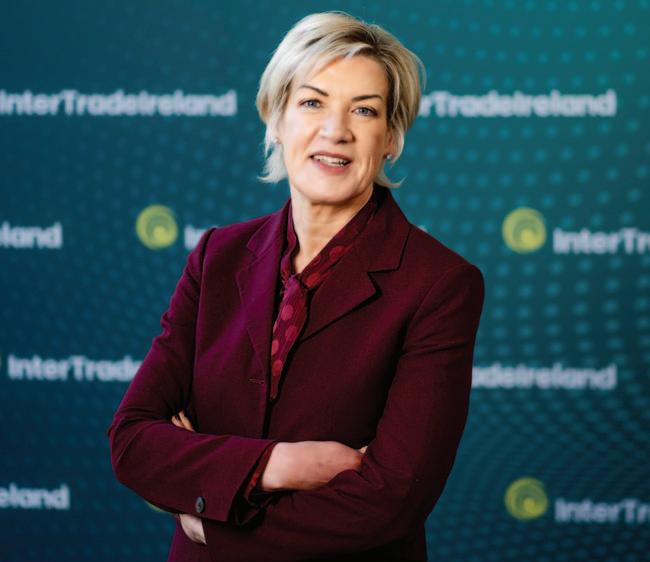
With all-island trade now at an all-time high, eolas Magazine talks to InterTradeIreland Chief Executive Margaret Hearty to find out why it has never been more important to harness the opportunities in the cross-border market, and how the organisation’s strategic priorities will support indigenous SMEs to do just that.
As global trading uncertainty continues and supply chains realign, regions that collaborate effectively are gaining an advantage. Across the island of Ireland, cross-border business activity has become a crucial source of both resilience and growth for indigenous firms.
For many SMEs, the cross-border market is the most accessible route to scale, allowing them to grow, innovate, and build their export capability without the
cost and risk associated with more distant markets. Given the challenging trade environment, ensuring businesses can access these opportunities and supporting collaboration that translates into economic impact, is an increasingly important policy priority.
“In an uncertain global economy, businesses gain real benefit from markets and partnerships closer to home,” says Margaret Hearty. “Strengthening
economic links across the island gives our indigenous SMEs a platform to build scale and compete internationally.”
Established under Strand Two of the Good Friday Agreement, InterTradeIreland has a unique mandate to support economic cooperation across the island. In doing so, it contributes directly to the delivery of Programme for Government commitments in both jurisdictions on growth, productivity, and regional economic development. In practice, this means helping businesses trade, innovate, collaborate, and scale using the opportunities available in both economies.
InterTradeIreland’s work is underpinned by its research and engagement activity, which provides policymakers and businesses with a shared evidence base on trade, competitiveness, and enterprise growth. The most recent data show cross-border trade continuing to expand, while its All-Island Business Monitor, a quarterly survey of 750 SMEs, shows that those active in the crossborder market typically demonstrate stronger profitability and growth.
As Hearty explains: “What we consistently see in the data is that firms trading across the island are more resilient and more likely to grow. Our role is to make it easier for businesses to access those opportunities.”
The cross-border market provides a practical first step into exporting for many SMEs, allowing them to build their confidence, capability, and supply chains before expanding into more distant markets. Liscarroll Engineering in County Cork illustrates how this works in practice. Supported by InterTradeIreland, the dairy equipment manufacturer expanded sales into Northern Ireland, increasing cross-border trade from between just 1-2 per cent of turnover to 16 per cent. Success in the cross-border market helped the company to go on to secure new business right across Great Britain.
Hearty notes: “Success in the cross-border market builds the confidence and capability needed to compete internationally. Our experience shows that many businesses who take that first step then go on to export off-island.”
While many businesses have enjoyed success by first trading across the border, others are also benefitting from participating in all-island clusters and networks. With a direct mandate to lead economic collaboration across the island, InterTradeIreland’s role as a connector and convenor between businesses, academia, and policymakers is crucial to unlocking those opportunities.
For ambitious SMEs, the challenge is often not a shortage of ideas but access to the finance, skills, and networks that enable them to scale and turn those ideas into economic reality. InterTradeIreland’s investor readiness competition, Seedcorn, mirrors the fundraising process for startup and early-stage firms with a panel of expert judges. Regional finals and a special sustainability prize fund mean that the whole island’s talent can be involved.
Recent winners include Limerick-based supply chain decarbonisation platform Mavarick AI, and Cork based biotech spinout Arraypatch. Through Seedcorn, an annual Venture Capital Conference, and a suite of funding advisory offerings, InterTradeIreland connects entrepreneurs across the island to secure investment, refine their market proposition, and scale their business.
Another significant policy focus for both governments is cluster development. International evidence shows that SMEs especially benefit from cluster participation, because the shared expertise and resources that they can access allows them to grow more quickly. Collaboration offers a scale that neither economy would be able to offer on its own, and this allows cross-border clusters to compete internationally.
A key theme of the Irish Government’s Shared Island Enterprise Scheme has been clusters; InterTradeIreland has been central to this work, organising the global TCI clustering conference in Dublin in 2025 in partnership with Invest Northern Ireland and Enterprise Ireland and leading the
development of all-island clusters in strategically important sectors.
The Fintech Corridor demonstrates how this approach has already delivered results. With InterTradeIreland as its lead partner, the initiative links companies across cybersecurity, payments, and emerging financial technologies, helping firms collaborate, enter new markets and attract international investment.
A central focus has been addressing skills gaps through partnerships with education providers along the Dublin–Belfast corridor, including establishing a new Fintech Academy, postgraduate qualifications, micro-credential programmes and specialist training. Through partnerships with universities, institutes of technology, and industry, the initiative has created the island’s first coordinated fintech ecosystem supporting internships, apprenticeships, and skills development.
As Hearty highlights: “Businesses scale faster and are more competitive when they can access the right markets, partners, and expertise. Our role, and it is central to everything we do, is to make those connections together across the island so firms can compete and grow more effectively than they would working on their own. For the ambitious business, the border is not a barrier: it is a launchpad.”
As global markets become increasingly volatile, the most effective tool for an SME is a strong regional network. By bridging the gap between North and South, InterTradeIreland is building an island-wide engine of competitiveness and resilience. Strengthening these practical links ensures that firms in both jurisdictions do not just survive in the changing global economy but can lead it.
Visit www.intertradeireland.com to find out more about how InterTradeIreland connects business to opportunities across the island.
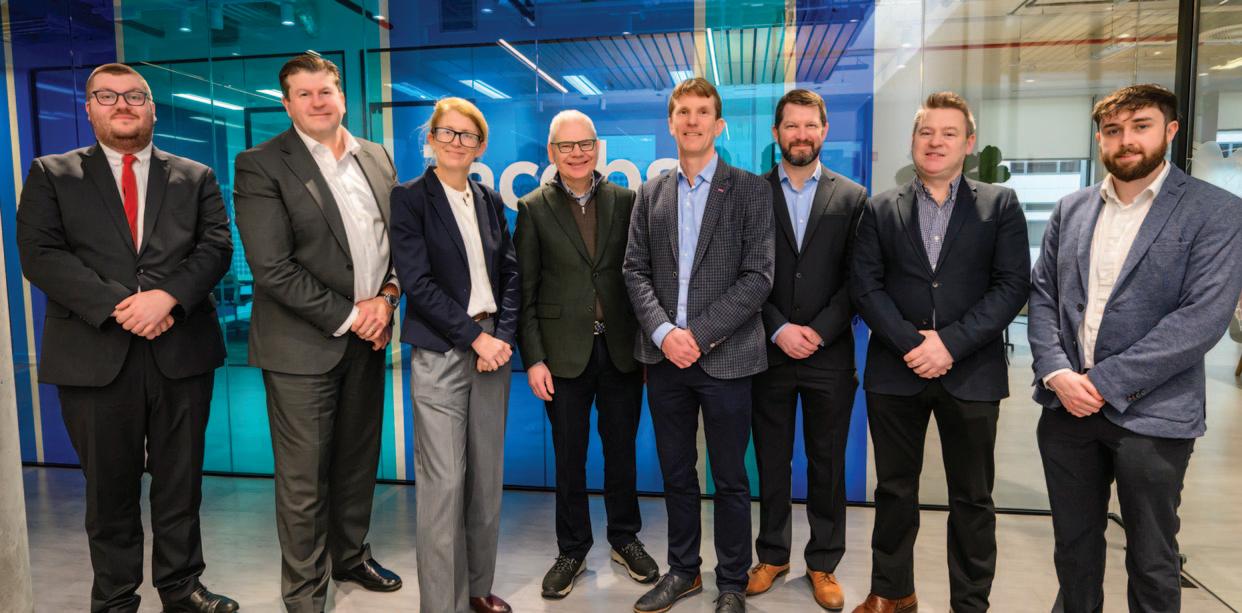
Following the Government’s announcement of the Accelerating Infrastructure Report and Action Plan, Jacobs hosted experts from across the public and private sectors for a round table discussion on accelerating Ireland’s infrastructure.
How can we accelerate infrastructure delivery while protecting the public’s right to be heard and building social acceptance?
Kevin Buckley
Opposition to infrastructure often dominates debate while wider public benefits are ignored. Ireland must improve how it communicates the value of major projects before they enter planning. The Government’s Accelerating Infrastructure Report and Action Plan provides 30 actions and clear timelines; delivery now depends on implementing them. Early engagement is critical. Examples such as grid projects show that meeting communities early, listening to concerns, and adapting proposals can smooth the path to approval. This approach should be standard practice. If we engage sooner and demonstrate national and local benefits clearly, we can reduce resistance and build broader support.
Shane Brennan
Over the past five years, we have embedded community forums wherever projects are developed, where we involve communities, volunteers, and local politicians in decision-making from the earliest stage of delivery on routes, options, and technology. That participation helps people understand the project benefits early on and enables everyone to find the least impactful solution for communities while still delivering a stronger and better electricity grid. We pair this with community benefit funds to provide direct benefits to communities who are closest to new transmission infrastructure. This fund can help communities transform their area supporting sustainability, community facilities and biodiversity, with communities helping to decide how the money is allocated. The establishment of a forum, paired with benefit sharing has delivered real results: several projects passed planning quickly with few objections and no planning hearings. Still, we must keep improving the communication of benefits from
Round table discussion hosted by
infrastructure projects. Government advocacy and leadership is essential too, especially in promoting wider economic and social gains linked to infrastructure.
Angela Ryan
Uisce Éireann is committed to early stakeholder engagement with communities and individuals who may be impacted by our projects. Dedicated liaison teams meet individual landowners multiple times, gathering feedback and adjusting designs to reduce impacts long before planning submission. We also progress extensive public information events. The goal is to address as many issues as possible before a design is finalised and the planning application is lodged. A good example of this is the Water Supply Project – East and Midlands Region. The proposed pipeline for this project will interface with 500 landowners. Through the development stages, there were over 20 engagements with each individual landowner, and over 30 per cent of all change requests could facilitated for pipeline route alignment based on engagements. In 2025, in partnership with the Irish Farmers’ Association (IFA) and the ICMSA, a voluntary land and wayleave package was developed which over 75 per cent of landowners had signed up to before the planning application was lodged. However, it is critical that support for major infrastructure extends beyond project promoters. Where projects are in the national interest or the greater “common good,” government regulators and public bodies must have a greater role in enabling a greater understanding. The public acceptance pillar of the Accelerating
Infrastructure Report seeks to address this. Ultimately, water, energy, and transport infrastructure is publicly owned and serves everyone. The right to be heard is already embedded at many statutory stages. Judicial review should remain a final safeguard rather than a default step, and must have consideration of the common good.
Nigel O’Neill
Projects are effectively paced by the last objector, which leads to irrational timelines. Planning and permitting now take so long that total lifecycles are stretching toward decades rather than years. Delays stem from overlapping consents, conflicting or shifting rules, and policy churn. Other regions show reform is possible: strong environmental protections can remain without enabling endless obstruction. We already know most citizens want water, energy, and transport delivered faster. The accelerated infrastructure framework identifies what to change; it should be implemented firmly. Where objections arise to reform itself, political leaders must stand behind the broader public interest.
Joe Duignan
Building social acceptance is integral to sustainably accelerating infrastructure delivery. That means being far clearer about the benefits of infrastructure and also the cost of doing nothing. In line with the Government’s Accelerating Infrastructure Report and Action Plan we must tell that story better. Consultation through the development of national planning statements and local area plans can build shared understanding early, making infrastructure delivery smoother. The reform agenda ensures that participation rights are built into multiple steps and this will remain. In fact, many actions should strengthen trust and transparency. Implementing the full plan, including the elements around communication and public acceptance, is essential to moving faster.
Mitch Tunikowski
We should implement the four-pillar framework of the Accelerating Infrastructure Report and Action Plan transparently so people see how delivery will happen. Beyond the traditional business case, we need a stronger sense of shared purpose. Most people want infrastructure; delays driven by a small number end up costing everyone, including objectors. Public acceptance can therefore be an opportunity rather than a barrier. If the purpose and benefits are communicated clearly, and communities see consultation has been meaningful, planning timeframes can shrink. People often resist uncertainty more than projects themselves. Reframing proposals around outcomes and collective gain could help unlock progress more quickly.
What innovations have the greatest potential to shorten infrastructure delivery timelines over the next two to three years?
Joe Duignan Firstly,

Shane Brennan is Senior Programme Manager for Phase 2 Offshore in EirGrid and has managed several major transmission projects including the cross border North South Interconnector project. He is a member of Engineers Ireland with post graduate diplomas in environmental engineering and corporate governance. He has over 25 years’ engineering and infrastructure experience managing projects throughout Ireland and Northern Ireland and in 2025 was seconded to the Infrastructure Division of the Department of Public Expenditure, Infrastructure, Public Service Reform and Digitalisation, as an electricity sector expert to work on the development and delivery of the Accelerating Infrastructure Report and Action Plan

Kevin Buckley is Operations Director and Head of Engineering for Murphy, with over two decades of experience delivering complex infrastructure, energy, and industrial projects across Ireland. A Chartered Engineer and Fellow of Engineers Ireland, Buckley began his career with Murphy in 2002 after graduating from University College Cork. In his role, he provides strategic leadership across the natural resources, power, and industry sectors as well as Murphy’s structural steel and pipe fabrication facilities in Newbridge. As Head of Engineering for Murphy in Ireland, he directs the Graduate and Engineering CPD programmes and champions the continuous development of engineering capability across the organisation.

Joe Duignan is a regulation and policy senior manager with ESB, having recently served on secondment as an electricity sector expert to the Infrastructure Division of the Department of Public Expenditure, Infrastructure, Public Service Reform and Digitalisation (DPER), where he contributed to the development of the Government’s Accelerating Infrastructure Report and Action Plan With more than 20 years’ experience in the electricity sector across Ireland, Britain, and southeast Asia, he has held a range of technical, regulatory, commercial, and strategic roles spanning multiple parts of the sector. Before joining DPER, he was regulation and commercial senior manager at ESB Networks.

Nigel O’Neill is director of capital programme for Transport Infrastructure Ireland (TII). O’Neill has BSc and MSc degrees in engineering and is a chartered engineer and member of the Institution of Engineers of Ireland. O’Neill has more than 30 years’ experience in the private and public sectors including civil engineering, project management, public procurement, strategic transport planning, public private partnerships (PPP), tolling operations, and light railway operations.

Angela Ryan is a senior manager in the Asset Management and Sustainability Directorate at Uisce Éireann, Ireland’s national public utility responsible for water and wastewater services. Ryan is a nominated member of EurEau, the European Federation of National Associations of Water Services, where she contributes to policy development and knowledge sharing across the European water sector. In 2025, Ryan was seconded as an expert to the Infrastructure Division of the Department of Public Expenditure, Infrastructure, Public Service Reform and Digitalisation, where she contributed to the development and delivery of the Accelerating Infrastructure Report and Action Plan, established by Minister Jack Chambers TD to address key challenges in national infrastructure delivery.

Mitch Tunikowski is the head of growth and sales for Europe in Jacobs. He has held several positions in his 24-year tenure in Jacobs, spanning both the advanced facilities and infrastructure businesses. These include project delivery and sales operations in advances facilities, client account management, regional growth, project delivery, major programmes, country leadership and regional leadership roles.
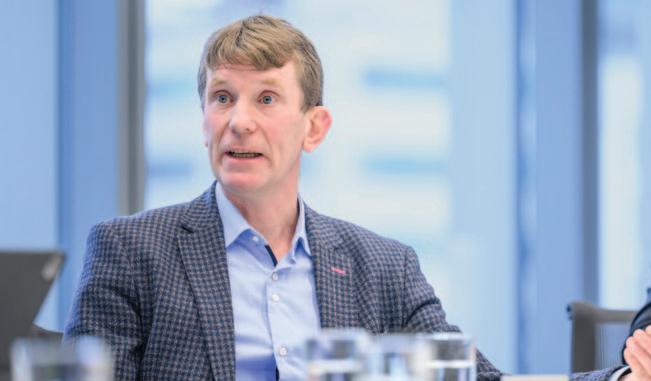
“Coordination must be paired with real collaboration and extend beyond 2026 into a sustainable medium and long term.” Joe Duignan
the utilisation of our existing assets and new infrastructure. This minimises the infrastructure needed and allows you to focus on delivering essential infrastructure. In relation to shortening infrastructure delivery timelines, one example in ESB Networks is innovation in the modularisation of substations to accelerate the delivery of EV charging points and upgrading substations, which is having a real positive impact. Collectively in addition to technical innovations, we also need to innovate in how we think and work. We need to look within and across our organisations to consider how we collaborate and work together.
Shane Brennan
We identified numerous challenges in finding a route for part of the Powering Up Dublin project and after much research into international practices, we are adopting a three-metre diameter micro-tunnel which will run at depths well below any services and utilities along the route and cause less disruption to society. The Accelerating Infrastructure Report and Action Plan mentions a Critical Infrastructure Bill to enable the delivery of key strategic projects across the electricity, water, and transport sectors. This will enable public bodies and agencies to take a more progressive approach that considers how projects can be delivered, rather than why they should not be, and faster.
Mitch Tunikowski
We need to standardise infrastructure development. This would enable the supply chain to invest in building modular facilities to unlock modern methods of construction capabilities. A joined-up approach will minimise design and construction time. It will also reduce the objection cycle because society will be familiar with how projects are delivered.
Kevin Buckley
We do not do a massive amount of modular construction in Ireland. Around 90 per cent of small houses in Sweden are built in modular format. We are way off that rate of delivery in Ireland and we need huge investment to get there. There
is also a skills gap and manufacturing facilities which will need to be delivered. They require capital grants and guarantees for their delivery to show investors this is the trajectory of construction. Another thing we do not see a lot of in Ireland is early contractor involvement. Regulated bodies in the UK use that to huge success. It shifts design risk to the left and enables early involvement of experts.
Angela Ryan
Standardisation will reduce projects’ lead-in and delivery time. For example, Uisce Éireann has over 1,200 wastewater treatment plants. Our wastewater discharge licences or authorisations for each of these sites is bespoke. This in turn means every treatment plant is bespoke. This adds an enormous amount of time and costs to individual projects, with licence applications taking up to two years. Increased standardisation, based on banding of outcomes, would allow Uisce Éireann to develop standard solutions which could be rolled out at scale. The benefits to the consenting agencies is that the solutions are understood, including performance, that allows for ease of authorisation and licencing. The sequential nature of projects approvals and consents is also a major delay. Improved regulatory simplification and coordination under the proposed Critical Infrastructure Bill will address this.
Nigel O’Neill
I think it is important to consider technical innovation in relation to people’s attitudes. We hope to begin Luas Finglas in the next year or so. Its track bed is modular and manufactured
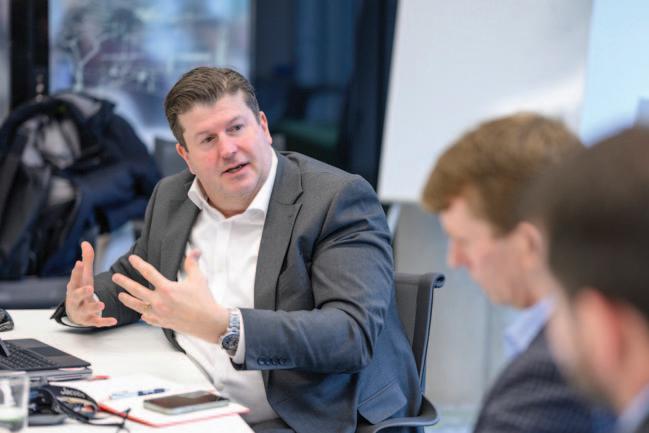
“If agencies align from the outset instead of acting in silos, we can present a stronger combined purpose and value proposition.”
Mitch Tunikowski
off site. It will have 40 per cent less embodied carbon compared to the Luas which was delivered 10 years ago. There is a culture of risk aversion when it comes to innovation. This is why regulators take so long on permitting and consenting. Additionally, the accountability culture of the civil services tends to centre around blame allocation. This focus should shift more on achieving results and outcomes.
How will analytics, AI, and digital tools change how Ireland plans, delivers, and manages critical infrastructure over the next decade?
Angela Ryan
Analytics provide greater scope to coordinate projects and can assist in portfolio management. There is a bottleneck at present with regard to major infrastructure projects out to tender at the same time. The proposed portfolio unit in the Infrastructure Division in DPER will assist with such issues in the future. Building information modelling (BIM) is the forefront of the efficient delivery of new projects and will also help with the whole lifecycle management of assets. Additionally, the recast Urban Waste Water Treatment Directive, will require water utilities to develop integrated drainage and wastewater plants for their wastewater networks. These plans will require live control of the networks. Digital twins for complex networks will be a cornerstone of this, allowing network operators to actively control weather events and rainfall ingress into the sewer network.
Mitch Tunikowski
Jacobs has become a solution provider for the water sector. We have developed technology called Aqua DNA which enables us to optimise existing networks, thus avoiding massive capital intervention. It features sensors deployed across the network which provide data on rivers. This informs our customers of regulations they are in danger of breaching so they can avoid this. Decision-making informed by AI-run scenarios will assist capital planning and operational capital deployment.
Nigel O’Neill
In TII’s ecosystem of national roads offices, local authorities, delivery partners, contractors, and so on, we experience a persistent resource shortage of about 20 per cent. There are unfilled vacancies because of challenges to recruitment. Systems can be improved by making datasets accessible and using agentic AI to perform the functions of roles that cannot be filled. Aside from
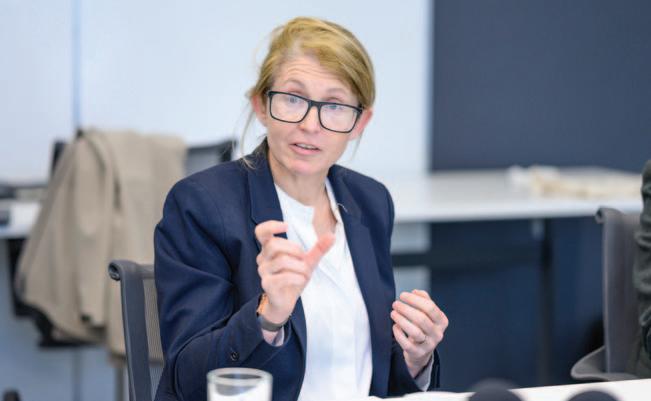
“The volume scale and complexity of environmental regulation has increased exponentially over the past 20 years.” Angela Ryan
that, there is a heavy governance burden in the public sector. This leads to up to 10 per cent more expended on overheads because you have to be super transparent as you are spending public money. AI could assists in addressing this.
Kevin Buckley
We need to make digital twinning a standard in Ireland, particularly for large infrastructure projects. It is a large investment but it will definitely pay dividends later on in the project. It will lead to better design, planning, and construction. The European Commission expects for the digital twinning market to be worth around €100 billion over the next three years. That is a sign it is working around the world. We need to buy into it and invest.
Shane Brennan
We all have our own unique geographic information system (GIS) data of our assets and systems. We need to share those with other utilities so we have all of the right information which enables us to make the correct decisions. Nigel mentioned the amount of reporting necessary in public bodies. We are looking at dashboards in smart innovative ways to integrate our reporting, risk management, and decision-making. PR6 is quite a large integrated transmission programme and we must find ways to implement it more efficiently and use data from the existing system to come up with the correct solutions.
Joe Duignan
Digital tools, analytics, and AI are already being used extensively in ESB Networks to plan, deliver and manage Ireland’s
electricity infrastructure; their importance will continue to grow over the next decade. In recent years ESB Networks has significantly expanded the use of data-driven planning tools to support more efficient and effective network development. Digital tools can also be leveraged to empower customers too by providing high quality data, such as ESB Networks’ capacity heat maps, which support more informed planning and connection decisions. Using analytics, AI, and digital tools is central to optimised management and utilisation of infrastructure, and this can impact on how much new infrastructure will be needed in the future.
How can regulatory reform be balanced with environmental responsibility to enable faster infrastructure delivery?
Mitch Tunikowski
Any sort of reform should focus on process certainty, standardised templates, and front-end loaded environmental work. That cannot take place without having the right dataset for technology such as AI to help us with. Better data leads to a faster environmental assessment which in turn results in fewer queries, enabling faster infrastructure delivery. If things are standardised, everybody knows what to expect and everything in the environmental space at the moment is bespoke. Without us collaborating to
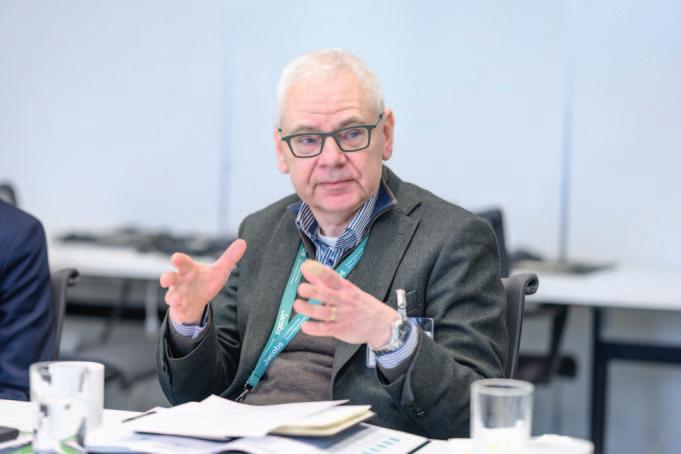
“Systems can be improved by making datasets accessible and using agentic AI to perform the functions of roles that cannot be filled.” Nigel O’Neill
develop a repository of information, people that object to projects will continue to have the ammunition to pull us apart.
Shane Brennan
One of the things we have looked at is nature-inclusive design proposals across our grid projects. We have been working with conservation bodies, partners, and our own in-house ecologist on nature restoration projects to attract wildlife and species to areas around substations through specific planting. As part of our community fund we also look to promote biodiversity and sustainability initiatives in communities. Regulators could perhaps look at allocating specific funding to incentivise environmental responsibility.
Angela Ryan
There is a lot of narrative in the public domain that regulatory reform and simplification will result in poorer environmental outcomes. That is not the case, in fact it is the opposite.
Environmental regulation is extremely complex, involving multiple pieces of legislation, regulations, guidelines and agencies. The volume scale and complexity of environmental regulation has increased exponentially over the past 20 years, however, it is not driving improved environmental outcomes. This
is demonstrated by the failures to meet targets under the Water Framework Directive, and continued biodiversity loss. In many cases valuable ecologists and environmental scientists spend significant amounts of processing or producing paperwork for project planning, instead of developing environmental solutions that will improve the environment. Similarly, many environmental judicial review cases are driven by complex procedures as opposed to environmental outcome. These issues subsume valuable resources and money that could otherwise have been spent improving the environment. The sole purpose of a wastewater treatment plant is to reduce pollution, delays to such projects actually impact the environment.
Nigel O’Neill
Public bodies take environmental protection and sustainability very seriously. Over-regulation is an issue but public bodies are not looking for deregulation. The environment has to be protected. There needs to be a systems approach; at the moment, environmental protection is approached in silos. We have exemptions in one set of regulations which are completely undercut by thresholds in another set of regulations. We have thresholds in Ireland that are less than 10 per cent of what a typical European member state would have. Where is the accountability around arriving at those thresholds? You have one piece of law in Ireland undercut by another. That needs to be addressed.
Kevin Buckley
The number of judicial reviews is still exploding. We are spending far more time on judicial reviews pertaining to infrastructure than the UK. There were significant increases in the number of judicial reviews in both 2024 and 2023. If we do not address those numbers, investors will start leaving the country. Energy in particular is dependent on foreign investment to keep things going. Genuine cases of environmental and community concern deserve their day in court, but anything designed to slow the process has to be minimised or eliminated.
Joe Duignan
Environmental responsibility is fundamental and reform does not change that. The infrastructure we are delivering is designed to benefit the environment, yet this is not communicated effectively enough. By enabling clean, renewable electricity for heating, transport, and wider society, we are supporting improvements in climate, environmental
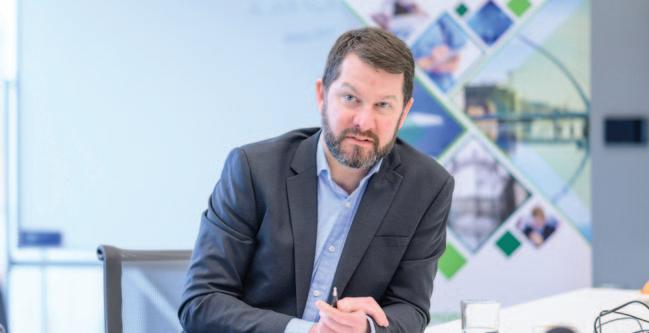
“We need to make digital twinning a standard in Ireland, particularly for large infrastructure projects.” Kevin Buckley
quality and public health. The objectives of the Climate Action Plan will not be achieved without the acceleration of infrastructure delivery. Reform is really about simplification and streamlining. We must still comply with the same directives, but we need to navigate a way to do this more efficiently.
What early co-ordination across sectors would help create a predictable pipeline of consented, delivery-ready projects in 2026, and what countries or industries should Ireland learn from?
Nigel O’Neill
A visible, reliable pipeline of projects is the single biggest lever. If the State defines what is needed and commits to it, the private sector will mobilise skills, competition, and capital to deliver efficiently, while citizens fund outcomes through taxes or charges. Certainty lets markets work. Transport-led development shows the multiplier effect as new lines unlock land, housing, and wider economic gains far beyond the asset itself. Provide continuity and industry will respond. Without it, capability drifts away. Government must therefore prioritise clear sequencing and long-term commitment so delivery becomes routine rather than episodic.
Mitch Tunikowski
I strongly agree on the need for a dependable pipeline and for keeping talent on the island. When investment stalls, experienced people leave and are hard to replace. Early, intentional coordination across sectors can multiply benefits: major transport or utility projects can unlock land and development, and those who gain should contribute to enabling infrastructure. If agencies align from the outset instead of acting in silos, we can present a stronger combined purpose and value proposition. That clarity would build support, reduce conflict, and improve capital efficiency while sustaining a virtuous cycle of skills and delivery capacity.
Joe Duignan
Coordination must be paired with real collaboration and extend beyond 2026 into a sustainable medium and long term. Structures like the Joint Utilities and Transport Clearing House (JUTCH) approach show how breaking silos can create tangible progress. A whole-system view which bring together electricity, water, transport, and local authorities helps everyone understand constraints and opportunities. Recent examples demonstrate that when organisations sit together and solve problems collectively,
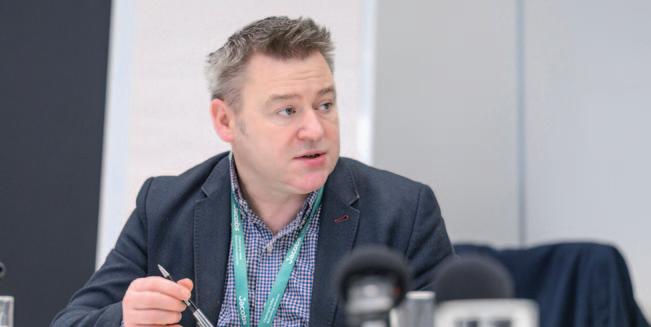
“We have embedded community forums wherever projects are developed, where we involve communities, volunteers and local politicians in decision-making from the earliest stage of delivery.” Shane Brennan
timelines can shrink dramatically. We now need to scale that behaviour nationally so integrated planning becomes normal practice rather than the exception. Another example of coordination across sectors is the way secondees worked together supporting the development of the Government’s Accelerating Infrastructure Report and Action Plan which proved the value of shared understanding.
Angela Ryan
Predictability starts with credible commitment. The Accelerating Infrastructure Report and Action Plan must be more than a list. It needs visible backing, clarity, and follow-through. Cultural change is also essential. The actions involve multiple sectors and agencies, departments, regulators and utilities, and faster delivery requires change across all of these. The action plan will only succeed if everyone involved tasks themselves on improvement, not on focus on excuses to maintain the status quo. Internationally, highly integrated master planning offers lessons. Long-term sequencing across transport and utilities can drive remarkable outcomes. While Ireland is different, applying similar integration, especially in major urban areas, could significantly enhance delivery.
Kevin Buckley
We need a transparent, published pipeline across sectors. Other countries provide markets with clear forward visibility, giving contractors confidence to
invest and stay. Without that certainty, firms and skills migrate elsewhere. Poor sequencing also creates spikes, where several mega-projects land together and overwhelm capacity. A national pipeline that signals priorities and timing would smooth demand, support competition, and stabilise pricing. It would also help rebuild delivery capability domestically. Predictability, not sporadic announcements, is what convinces industry to commit people and resources for the long haul.
Shane Brennan
Forum-based coordination has worked well in Dublin, bringing utilities, authorities, and stakeholders together to align programmes and identify conflicts early. The challenge is extending that model nationwide, because delivery ultimately happens locally. National planning statements could provide a common foundation, with similar collaborative structures built region by region. Alongside this, several task forces are already helping unblock priority areas, and proposed legislation may further streamline matters. Internationally, shared or parallel infrastructure corridors offer useful inspiration. Even where full integration is difficult, we should at least future-proof works by adding capacity or ducting while the ground is open.
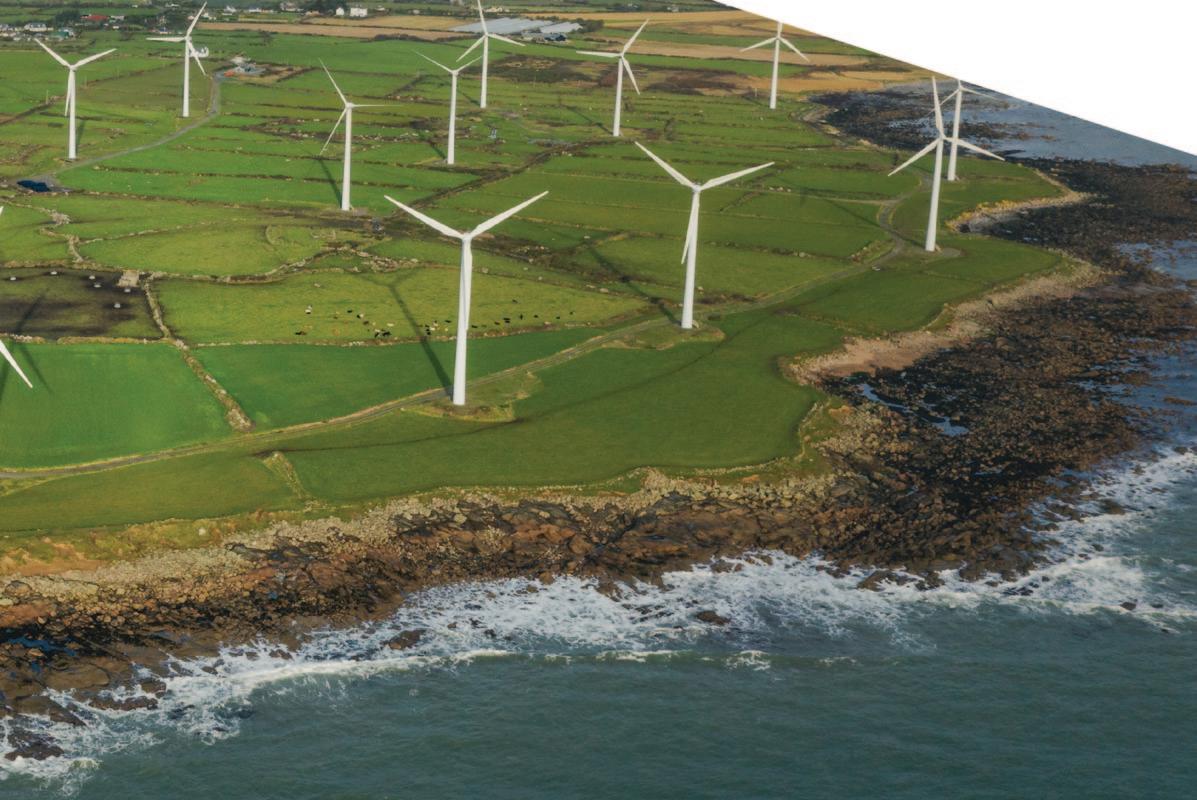


A study from the International Energy Agency finds that Ireland has emerged as a global leader in wind integration and renewable electricity. However, the report warns that rapid demand growth, fossil fuel import dependence, and grid delivery risks will test electricity security through 2035.
Powering Ireland’s Energy Future, published in December 2025, assesses the outlook for Ireland’s electricity security to 2035.
Prepared in collaboration with EirGrid, the study examines how Ireland can align its climate, energy, and socioeconomic ambitions while maintaining a secure and affordable electricity system.
The report identifies Ireland as a frontrunner in wind power integration. In 2024, wind supplied around one-third of electricity demand, placing Ireland among the highest shares globally for systems of comparable scale. Overall renewable electricity accounted for approximately 40 per cent of supply. At the same time, natural gas remained the largest single source of generation,
accounting for more than 40 per cent of output and providing essential system services.
The IEA states that Ireland’s power sector transformation to date has been significant. Coal has been phased out of generation and battery storage capacity has expanded rapidly. However, the report emphasises that the next phase of transition will be more complex. Ireland has set a target of 80 per cent renewable electricity by 2030 and aims to operate a system largely based on wind, solar, storage, and imports by 2035.
The study highlights electricity demand growth as a central challenge. Between 2015 and 2023, electricity demand increased by roughly 20 per
cent. Data centres accounted for a significant share of this growth and represented 22 per cent of total electricity consumption in 2024. Residential and transport electrification are also expected to increase demand further.
Under the IEA’s Adapted Transition Pathway, electricity demand could nearly double by 2035. Growth in housing, data centre activity, electrified heat, and electric vehicles all contribute to this projection. The report states that managing this demand securely will require accelerated infrastructure delivery and system flexibility.
The IEA notes that electrification presents both benefits and pressures. Replacing fossil fuel-based heating systems and vehicles with electric alternatives could reduce Ireland’s reliance on imported fossil fuels by 38 per cent and lower annual import costs by an estimated €2.8 billion. However, without coordinated grid expansion and demand-side flexibility, new electric loads could increase peak demand pressures.
The report examines how Ireland’s generation mix must evolve to meet rising demand. In the Adapted Transition Pathway, renewables could supply 88 per cent of electricity by 2035. Wind and solar would provide the bulk of generation, supported by expanded battery storage and interconnection.
Natural gas would continue to play a role but shift from bulk supply to backup and flexibility. The utilisation rate of gas-fired plants could fall from around 46 per cent in 2023 to approximately 12 per cent in 2035. The IEA states that this decline in operating hours may reduce the commercial viability of thermal units, creating challenges for market design and capacity remuneration.
To maintain adequacy, Ireland may require up to 16GW of dispatchable capacity by 2035, including thermal generation, storage, and interconnectors.
The study stresses the importance of regularly reviewing capacity requirements as demand projections evolve.
The IEA identifies operational security as a defining issue of the next decade. As renewable penetration increases, Ireland’s system will rely heavily on converter-connected technologies such as wind, solar, and batteries. These resources do not inherently provide inertia or frequency stability in the same way as conventional generators.
Ireland is already operating at one of the highest shares of converter-connected generation internationally. By 2035, inertia and other system services in the Adapted Transition Pathway would be delivered largely by batteries, demand response, and synchronous condensers. The report states
that this level of reliance has limited international precedent and will require continued modernisation of system operations.
EirGrid and SONI’s operational roadmap is cited as central to enabling secure high-renewable operations. The IEA emphasises the need for advanced modelling, updated grid codes, and strengthened cybersecurity as the system becomes more digital and decentralised.
Grid development is identified as a critical enabler. Transmission and distribution networks must accommodate both rising electricity demand and expanding renewable generation. Ireland plans record grid investment of €10-14 billion between 2026 and 2030, compared to €5 billion between 2021 and 2025.
The report notes that long lead times, permitting processes, and supply chain constraints pose risks to timely delivery. Climate resilience is also highlighted following recent severe storms that caused prolonged outages in rural areas. The IEA recommends incorporating resilience upgrades into future grid planning.
Ireland’s reliance on imported fossil fuels remains a structural energy security concern. Imported fuels account for approximately 80 per cent of total national energy supply. Natural gas is particularly significant, representing around 60 per cent of national gas consumption for power generation.
The IEA states that reducing fossil fuel dependency through renewable expansion and electrification can strengthen long-term security. However, continued reliance on gas-fired generation for adequacy and flexibility means exposure to international market volatility will persist during the transition.
The report sets out five pillars for policy action. These include establishing a cross-sectoral energy security strategy for the 2030s, accelerating enabling infrastructure, expanding generation and flexibility resources, enabling secure system operation under high renewable penetration, and advancing workforce skills and partnerships.
The IEA concludes that Ireland can build on its progress in wind integration to operate a secure renewables-led system. However, it states that delivery risks, infrastructure constraints, and rising demand require coordinated policy action.
In 2025, the world’s wind and solar farms generated more electricity than coal plants for the first time ever, marking a turning point for the global power system. With Ireland’s last coal-fired power station closing in June 2025, the country is firmly part of that momentum, writes Finlay McCutcheon, Managing Director, SSE Thermal.
This milestone is significant, but it is not the finish line. It marks a turning point that calls for fresh thinking about how we generate power.
In 2025, wind energy supplied one-third of Ireland’s electricity demand, a clear indicator of progress and the growing influence of renewables. That represents a notable increase in the decade since 2015, when wind met only 22 per cent of demand. SSE has been a key contributor to Ireland’s shift toward renewables,
building a strong onshore wind portfolio and advancing plans for offshore development. But as Ireland integrates more renewables, the need for new flexible, reliable power also becomes increasingly urgent. A renewable-led system cannot stand alone. It must be supported by other power generation technologies that can respond quickly, operate efficiently, and complement intermittent sources.
The Climate Action Plan sets out a clear roadmap for this transition. It recognises the delivery and integration of onshore and offshore wind and solar as the most effective mitigation measures to reduce emissions at scale and speed. But it also notes that this must be matched by the delivery of at least 2GW of new flexible gas-fired generation. Without it, Ireland risks undermining the very progress it has made.
Tarbert Next Generation Power Station is a strong example of how these new assets can be innovative and offer a path to decarbonisation. Located on the site of a former oil-fired station in north Kerry, it represents continuity and change: retaining the value of existing infrastructure while preparing for a lowercarbon future. Construction is underway on the new up to €300 million ‘peaker’ plant, which will deliver 300MW of fastresponding capacity when the system needs it. It will be powered by hydrotreated vegetable oil (HVO), a sustainable biofuel sourced from 100 per cent waste feedstocks and compliant with EU sustainability standards.
Tarbert is not just a strategic energy investment, it is a local story of transformation that supports national climate ambition. For decades, Tarbert Island has been synonymous with power generation and local expertise. It has played a vital role in Ireland’s progress since the original plant was developed in the 1960s to meet rising electricity demand during the Rural Electrification Programme. With its strategic setting and unique history, the site is ideal for a trailblazing project that supports a just energy transition.
This is a first-of-a-kind project in Ireland. It is designed to meet today’s system needs while being future-proofed for
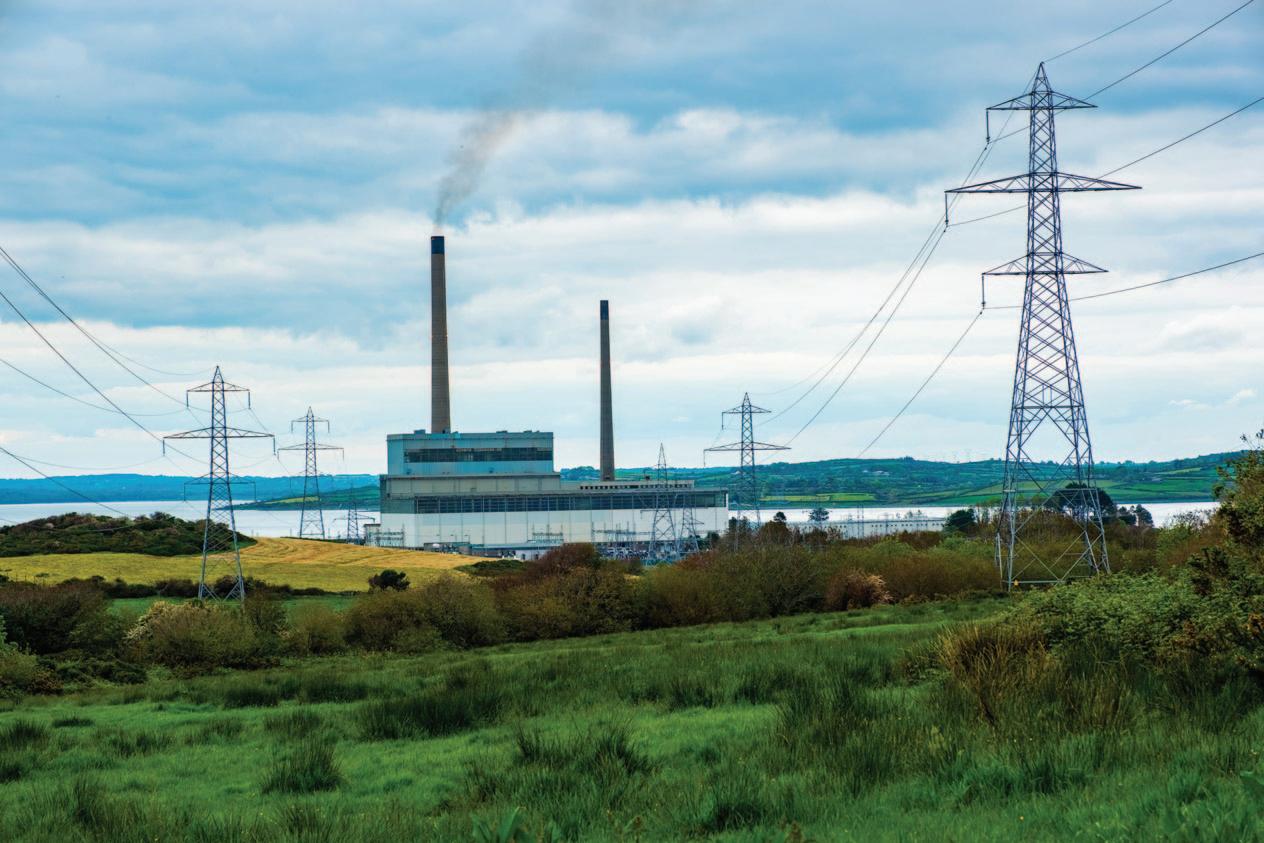
tomorrow, with the potential to convert to hydrogen when the right infrastructure and policy frameworks are in place. We stand ready to work with the Government and industry partners to make this vision a reality.
The Accelerating Infrastructure Taskforce report published at the end of 2025 is a welcome signal that the Government recognises the urgency of delivering projects that underpin energy security and decarbonisation. For too long now, delays in planning and delivery have slowed progress on critical infrastructure, threatening Ireland’s ability to meet climate targets, ensure energy security and maintain competitiveness. This report offers a roadmap to overcome those barriers, setting out 30 headline actions that will be implemented over the coming years. The ambitious recommendations span necessary legal reform, regulatory simplification, improved coordination and fostering public acceptance. If implemented effectively, these measures could enable Ireland to move faster on policies and projects that will help integrate emerging technologies, such as hydrogen, into the grid.
Now that the direction of travel has been made clear, and the specifics of the plan have been detailed, the challenge is delivering it at pace. The vast majority of the actions detailed in the report are targeted for completion this year, leaving little room for delay or complacency. Ireland’s climate targets and energy security depend on timely decisions and coordinated action across government, industry and communities.
Looking further ahead, the Government should also consider market reforms that strengthen investment certainty for low-carbon flexible generation. There is scope to improve market support measures such as the Capacity Remuneration Mechanism (CRM), so they provide stronger incentives for these technologies, creating a more reliable route to market and better aligning security-of-supply needs with emissions reduction goals.
For companies like SSE, clarity and speed are essential to unlock the investment needed to drive this sort of progress. By enabling innovation and removing barriers, Ireland can ensure projects like Tarbert Next Generation Power Station are not rare exceptions, but rather the beginning of a new era in innovative energy infrastructure.
To achieve its goals, Ireland must take an ‘and/and’ approach, delivering renewables alongside modern, lower-carbon flexible generation. Without this balance, the system will fall back on its least efficient, highestemission plants during calm, cloudy periods.
Ultimately, Ireland needs a power system that is reliable, sustainable, and ready for future demand. One that ensures our energy security, delivers on climate action promises, and supports continued economic growth.
W: www.ssethermal.com

Just over 18 months since becoming Green Party leader, Roderic O’Gorman TD talks to Ciaran Brennan about rebuilding the Green Party, his reflections on governing with Fianna Fáil and Fine Gael, and Ireland’s political landscape.
O’Gorman took over as leader from Eamon Ryan, who resigned in June 2024 following the local and European elections which saw the Greens fall from 49 councillors to 23 as it lost both of its MEPs.
O’Gorman led the party in the November 2024 general election which saw the Greens fall from 12 Dáil seats to just one: O’Gorman’s. Green Party Senator Malcolm Noonan also managed to retain his Seanad seat.
O’Gorman, who was a serving Cabinet minister when he assumed the party leadership, outlines why he wanted to take charge of the party at such a low ebb: “I felt it was important that the party exited the Government in a way that got as many of our final policy achievements over the line as possible.”
The Green Party has been in a similar position before. In the 2011 election, it was wiped out as a
consequence of being a junior coalition party in government with Fianna Fáil which oversaw the 2008 financial crash.
O’Gorman was party chair at this point and says this experience stood to him in 2024: “Challenging and all the elections in 2024 were, they were nothing like 2011 where we had no TDs, no senators, and two county councillors in the whole country.
“We have a TD, we have a senator, and we have 23 excellent councillors,” he continues. “We are in a much stronger position than we were in 2011 but I know how to take the methodical steps to rebuild the party.”
These methodical steps include the publication of a strategic plan in September 2025, and the establishment of an electoral taskforce which is analysing how the party can rebuild. O’Gorman
“We are in a much stronger position than we were in 2011 but I know how to take the methodical steps to rebuild the party.”
indicates that the 11 other Dáil seats it held in the Dáil term will be a key focus, along with increasing its share of councillors in the 2029 local elections.
The party’s poor election results can be partly attributed to government failures on housing and health, and backlash from the agricultural sector and rural areas which felt green policies were designed without their best interests in mind.
Analysing the fallout for the Greens, O’Gorman says the party did not spend enough time speaking publicly about its policies and intended aims. He adds that the party should have spent more time pushing against “baseless attacks” of its policies, which he says often came from its coalition partners.
O’Gorman indicates that he aims to address this failure to engage with the electorate. He also intends to address the narrative that the Green Party is urban-centred and does not deliver for rural areas.
“There is a narrative pushed by some of our political opponents that we do not care about rural Ireland,” he says. “I think that is entirely untrue.”
In the previous Dáil, most Green TDs were urban-based and O’Gorman says this may have made it difficult for the party to convey its message in rural areas. He says: “I am Dublin born and bred, it is hard for me to make the case to someone living in a rural townland that the Green Party has the policies for them. They need to be hearing that from a Green member who is rural themselves.”
Asserting that the party was scapegoated by its coalition partners towards the last days of the Government, O’Gorman says the Greens
were tasked with defending unpopular decisions around climate, transport, and migration.
However, when asked if he would enter government with Fianna Fáil and Fine Gael again, after a pause, O’Gorman says: “It would depend. Ultimately for us, despite the bad election results, we got a lot done in those four-and-a-half years.
“You can have the best election results ever from opposition because you have never taken a risk.”
When asked how radical his party is compared to its Green counterparts in Europe, O’Gorman says: “Our party has had the privilege of serving in government twice and when you are a smaller party in government, you have to make compromises.
“Some of our European colleagues have never served in government,” says O’Gorman. “So they have not had to make those compromises that being in government involves but I am in politics to actually implement the policies I talk about.”
The temperature of Irish politics has risen significantly in recent years, demonstrated by increasing numbers of physical attacks and online abuse of politicians. O’Gorman has experienced this increasingly volatile climate more than most.
Protestors, brandishing a noose, gathered outside Leinster House to oppose his appointment as Minister for Children due to his sexual orientation. While canvassing ahead of the 2024 general election, O’Gorman was assaulted and verbally abused with a homophobic slur.
Although political violence is not something he worries about day-to-day, O’Gorman insists it is more prominent than when he first entered politics. His primary concern is that this discourages people from getting involved in politics.
“As much as I have to be upfront about the challenges of politics, you also have to remind people that you can achieve really positive changes,” he says. “It is worth rolling up the sleeves and actually getting involved.”
As Minister for Integration, he received regular abuse from far-right conspiracy theorists. In April 2024, masked protestors gathered outside his home, erecting signs and posters featuring anti-immigration messages.
O’Gorman outlines his worries about the influence of the far right in Irish political discourse: “The far right is an ideology based around anger, based around rage.
“As long as there have been far-right politics over the last 100 years, I think ultimately they are damaging to countries.”
O’Gorman says he is “enjoying being in opposition”. He explains that he was worried opposition would just be about “shouting across the chamber” without achieving anything. “But I was able to get progress on the HPV vaccine campaign,” says O’Gorman.
In January 2026, the Department of Health announced the Laura Brennan HPV Vaccine Catch-Up Programme. Under the initiative, the vaccine to prevent human papillomavirus infection is offered to young people who missed earlier opportunities to do so.
O’Gorman had raised the issue on numerous occasions in the Dáil.
“That was something to tell me you are not just going to be the cross guy in the Dáil for five years,” he says.
When asked if the Dáil is a lonely place as the sole Green Party TD, O’Gorman says: “It would be better if there were more of us.
“I would not say it is overly lonely. I chat away to people from other parties as well. Some of them I have known from my county council days, some I would know from my time in government.”
O’Gorman is hopeful that the Green Party will be successful in the upcoming by-elections in Galway West and Dublin Central. The party’s candidates are Dublin City councillor Janet Horner in Dublin Central, and former Galway County councillor Niall Murphy in Galway West.
On the prospect of entering government again, O’Gorman asserts that he would take the opportunity to negotiate with any party in the Dáil, but that “it would have to be on the basis of a strong programme for government”.
Catherine Connolly’s successful campaign with support from an alliance of left-wing parties raised the possibility of a similar coalition forming a government. However, O’Gorman once again states that the Green Party’s involvement would depend on the programme for government in such a coalition “having a very strong element of Green Party policy”.
“There is a lot of policy areas that, with some of the parties that supported Catherine Connolly, that does not exist right now. That is not to say that it could not exist.
“We have seen the same two parties in government for almost two decades. I think change would be good, but it cannot just be change for change’s sake.”
Sponsored by


Ireland is at a pivotal moment: our economy is strong, and our population is growing, but infrastructure delivery has not kept pace, writes Minister for Public Expenditure, Infrastructure, Public Service Reform and Digitalisation Jack Chambers TD.
This current sluggish nature of infrastructure development demands faster action and greater ambition. This government has placed infrastructure delivery at the heart of its ambitions and as minister with responsibility for infrastructure, my focus is on putting in place both the investment and the reforms necessary to grasp this oncein-a-generation opportunity.
Success will require alignment across government, industry, and communities. I am confident, from speaking to individuals, businesses, and political representatives across the country, that there is an understanding of the need to radically transform how Ireland delivers infrastructure, for the current generation and generations to come.
The delivery of essential infrastructure is a key driver in ensuring our economy’s competitiveness and resilience. In the past five years, there has been more than €65 billion invested in capital infrastructure projects across our country to improve people’s lives through the National Development Plan (NDP), with total capital investment in 2026 estimated at €19.1 billion. This represents the highest annual spend to date in this country.
While this funding has delivered a significant amount of infrastructure including roads, houses, schools, hospitals and more, all of which have improved the lives of the people living in Ireland, the Programme for Government recognised that more investment is needed to address infrastructure deficits.
In July 2025, we reaffirmed that commitment with a revised NDP that will deliver transformational investment to safeguard Ireland’s future.
€102 billion is being allocated for the next five years, an additional €33.9 billion on what was previously allocated in the NDP, with a further €100 billion for the period 2030 to 2035. In total, €275 billion of public capital investment is allocated for the period to 2035.
This scale of investment is not simply a matter of upgrading infrastructure; it is about safeguarding the economy, protecting jobs, enhancing competitiveness, and ensuring prosperity for communities at a time of global volatility. In line with the Programme for Government, we are directing resources toward the critical sectors that underpin growth: housing, water, energy, and transport. By investing in these building blocks, we are laying the foundation for Ireland’s future.
Key investment allocations to support delivery of our 300,000 new homes target include:
• a total of €3.5 billion in equity has been earmarked for ESB Networks and Eirgrid;
• €12.2 billion for the water sector for water and wastewater services; and
• €24.3 billion for the transport sector, including low carbon transport projects such as Metrolink.
Sectoral investment plans were published by government departments at the end of 2025, providing the construction and built environment sector with a clear and structured pipeline of projects to be delivered over the next five years.
Even with the necessary investment and a structured project pipeline in place, the path from planning to delivery remains far from straightforward. Additional expenditure alone cannot address infrastructure deficits. From planning to procurement, from environmental assessment to final approval, the infrastructure development cycle has become increasingly complex and uncertain.
Today’s landscape is shaped by successive reforms aimed at addressing regulatory requirements, environmental protection, value for money and public participation. Each of these goals is important and was developed with the best of intentions. However, consideration of the cumulative impact that each additional requirement imposes on the development of infrastructure and the risks of delay this creates has been missing.
There is strong evidence that the development lifecycle for infrastructure is lengthening considerably. Uisce Éireann has assessed that the development time for a small wastewater treatment project in Ireland is seven to 10 years. This is four to five years longer than the delivery timeline for similar sized projects in other EU member states.
ESB Networks notes that the development cycle for a basic electricity substation has now reached five to six years for a typical project, while a more complex development may take 8.5 years. Major road projects can now have a development cycle of up to 15 years. In essence, it appears that development timelines have, in many cases, approximately doubled compared to the development cycles typical of just 20 years ago.
These delays are not abstract problems. They have real-world implications. Each delay translates into higher costs, missed opportunities, and mounting pressure on essential services.
When water and electricity systems cannot keep pace with demand, housing delivery slows. Constraints on secure, affordable, low carbon energy directly affect energy costs, competitiveness, employment, and progress toward climate commitments. And when transport networks lag behind growth, we see greater congestion, higher operating costs, and huge frustration for businesses and communities and more time lost for people.
We also know that the current development cycle, characterised by slow processes and significant delays, demands a step change in both pace and ambition.
The Programme for Government, published in January 2025, was very clear that the ambition was to secure our future with the delivery of critical infrastructure as the key driver of this objective. All government bodies, with leadership from my department, are now tasked with reassessing how they prioritise their work and remit to ensure that they are supporting the objectives of government in delivering critical infrastructure.
“Prioritising the common good, through consistent leadership, clear decision-making, and a shared commitment to delivery, is essential to ensuring Ireland’s infrastructure keeps pace with demand.”
Government launched the Accelerating Infrastructure Report and Action Plan in December 2025. This report sets out a comprehensive programme of reforms to break through inertia and accelerate the delivery of infrastructure that our people, communities, and businesses urgently need.
The action plan addresses 12 key barriers that were identified through stakeholder consultation and sets out 30 specific, time-bound actions to speed up the pace of infrastructure delivery in Ireland.
Reform actions are structured around four pillars:
• legal reform;
• regulatory reform and simplification;
• co-ordination and delivery reform; and
• public acceptance.
These measures provide for a whole-ofgovernment approach, with ownership of actions spread across the public service. Taken together, these actions will ensure that the unprecedented levels of capital investment translate into timely, coordinated delivery of the infrastructure essential for our country’s long-term growth. My focus is on ensuring that the positive impact of these actions is tangible in communities throughout the country and we build abundance in our economy and society, so we deliver the essential public services, amenities and infrastructure our communities need, at pace and at scale.
Time is of the essence, and implementation of these actions is already underway. Earlier this year, I established the Joint Utilities and Transport Clearing House to provide a structured forum for resolving coordination issues that delay infrastructure projects. Government has also launched a new service through which the National Development Finance Agency will support departments at every stage of major capital projects.
In recent weeks, I updated the Infrastructure Guidelines, which set out the value for money guidelines for the evaluation, planning and management of public investment projects. These updates remove up to 20 weeks from the
approval process for major projects, allowing them to progress more rapidly through the delivery lifecycle.
I have also established the Infrastructure Regulatory Simplification Unit within my department, which will work to examine opportunities for regulatory reform to speed up project delivery.
These actions demonstrate the appetite across government for tangible, impactful change. Work will continue to put in place further necessary reforms over the coming months, as we work to unpick the tangled regulatory web that has made delivery so difficult.
Ultimately we are increasing the risk appetite across our public services, supported by risk appetite statements, so we back decision makers across out public sectors to get projects approved, commenced and completed in the national interest.
There is real momentum across government and industry, and I am committed to driving this forward to deliver meaningful, lasting change. Prioritising the common good, through consistent leadership, clear decisionmaking, and a shared commitment to delivery, is essential to ensuring Ireland’s infrastructure keeps pace with demand.
Accelerating delivery is not about impatience but responsibility. Families, communities and businesses cannot afford the cost of inaction. By accelerating infrastructure delivery, we will unlock the homes that families need, the transport networks that connect communities, and the energy systems that power our economy and drive our decarbonisation.
There is now a systematic whole-ofgovernment commitment to reform and to the timely delivery of the suite of actions set out in this plan. It demands urgency, collaboration, and accountability at every level and it will happen. The people of Ireland deserve no less, and this government will deliver.

After nearly a decade in London working on global infrastructure programmes and large-scale regeneration, I have returned to Ireland. Much has changed for the better. The National Development Plan is channelling unprecedented investment, confidence has returned, and there is a renewed appetite for long-term thinking. Ireland is thinking big again.
Yet the gap between ambition and delivery remains painfully clear.
For me, this is both professional and personal. I have worked on infrastructure programmes that reshaped cities: rail corridors that unlocked tens of thousands of homes, Olympic venues converted into thriving neighbourhoods, new towns delivered at pace. I have seen what happens when ambition meets delivery capability and when it does not.
Ireland’s housing crisis is less about resources or intent, and more about how delivery is currently structured. Demographic pressures, returning talent and infrastructure expansion demand a fundamentally different approach. The Government’s target to deliver 300,000 homes by 2030, including 72,000 social homes, is ambitious, but achievable if we adapt the best international lessons.
The current arithmetic is unforgiving. Ireland delivered 36,000 homes in 2025, an improvement on previous years, but still 14,000 short of the 50,000 annual average needed to meet the Government’s 2030 target. Even
Ireland has the will and the funding to solve the housing crisis; now it is about building the delivery machinery to match, writes Ronan Devlin, Central Government Portfolio Director at Jacobs.
optimistic forecasts project 40,000 completions by 2026. On current trajectory, Ireland will deliver perhaps 240,000 homes by 2030, leaving 60,000 families without the housing promised. Incrementalism is not working. The gap is not closing fast enough.
Urban development zones, as proposed in the Planning and Development Act 2024, are sensible in theory: focused development, coordinated infrastructure and streamlined planning. In practice, they can struggle to deliver at the pace now required. Fragmented land ownership, limited compulsion powers and complex institutional coordination mean they often encourage development rather than enable it at scale in a timescale that addresses immediate delivery needs. The result is likely to be incremental growth where transformation is needed.
The UK’s post-war New Towns programme took a different approach. Dedicated development corporations were given land-assembly powers, longterm funding certainty and a mandate to deliver complete communities: housing alongside transport, utilities, schools, green space and jobs. Milton Keynes, Stevenage, and Harlow were not accidents but planned outcomes that now house more than 2.8 million people.
Ireland now has an opportunity to do something similar. The Land Development Agency has made important progress in the delivery of housing since its establishment, particularly in the area of affordable housing. While well-funded and wellintentioned, its remit remains constrained. The LDA has a focus on state-owned land, has limited compulsory acquisition powers, and operates within fragmented planning structures. Critically, it cannot create entirely new settlements with integrated governance. The LDA has access to the new Housing Infrastructure Investment Fund, with €1 billion committed over five years to unlock enabling infrastructure. This is a significant step but funding alone is not sufficient.
Ireland needs a true development corporation: a body with authority over defined geography, the power to assemble land, and capacity to coordinate utilities, transport and housing delivery with clear accountability and pace. Infrastructure remains a binding constraint. Water, wastewater and grid capacity already limit housing growth. These challenges cannot be solved project by project; they require coordinated, place-based delivery.
The UK’s New Towns Taskforce provides a live case study. Planning up to 12 new communities of 10,000 homes each, its focus is removing delivery friction rather rewriting policy. New towns succeed when governance matches ambition.
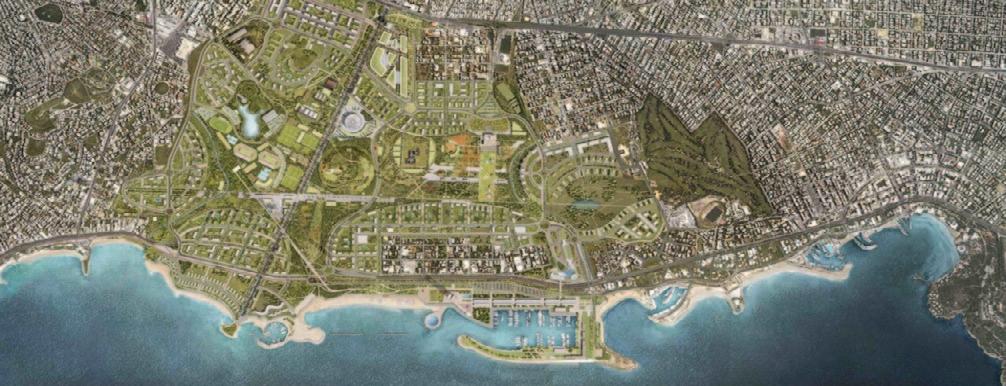
Transit-oriented development is one of the most powerful delivery accelerators available. Concentrating higher-density housing around quality public transport reduces car dependency, lowers commuting costs, tackles land scarcity and supports climate targets.
I have seen this on East West Rail, connecting Oxford, Milton Keynes and Cambridge. With over 100,000 new homes planned along its length, the railway offers more than transport; it is a growth corridor. Stations become anchors for housing, employment and investment.
Ireland has a similar opportunity, particularly along the Dublin-Belfast corridor, home to roughly a third of the island’s population. Programmes like MetroLink, DART+ and regional rail investment are transformational. Yet transport and housing still operate in parallel: separate departments, funding models and statutory processes. Rail is delivered first, followed by years of debate about what can be built around stations.
While the Dublin-Belfast corridor is an obvious starting point, given its population density and committed transport investment, the same model applies elsewhere. The Cork-LimerickShannon axis and Galway-AthloneDublin corridor are both suited to building new transit-led communities. The objective is not to prioritise one corridor over others, but to establish a repeatable delivery model that can be scaled nationally.
Done well, transit-oriented development is not just efficient; it is equitable. It places affordable housing near jobs, reduces the penalty of distance for lower-income households and supports mixed-income communities.
There is an immediate opportunity to rethink ‘temporary’ worker accommodation for major infrastructure projects. Large programmes require thousands of workers over many years, making dedicated accommodation unavoidable. The mistake is treating it as disposable.
Olympic villages offer another model. Built for short-term use, they are designed from the outset for permanent residential conversion. Stratford’s regeneration following London 2012 demonstrates how temporary demand can leave a lasting housing legacy.
Ireland should apply the same thinking to MetroLink and other National Development Plan projects. Where worker accommodation is required, it should be located on transit-accessible land and designed for post-construction conversion into affordable housing. This represents a near-term housing dividend hiding in plain sight.
The same legacy mindset applies to large brownfield regeneration. The Ellinikon, Europe’s largest housing project, in Athens, shows how a former airport can be transformed into a mixeduse district delivering housing at scale. Legacy thinking means asking one simple question early: what happens next?
Ireland’s housing crisis is real, but so is the opportunity. Investment levels are historic, infrastructure pipelines are established and talent is returning.
International experience is clear: housing at scale requires delivery structures that match ambition. That means new town programmes with real powers, transportled development planned as a system, and infrastructure designed with longterm legacy in mind.
The question is not whether we can do this. The capability exists. What is required now is the confidence to think bigger and the discipline to deliver.
Ronan Devlin is a Central Government Portfolio Director covering the island of Ireland with Jacobs. With a background in architecture and project management, he has spent the past decade working at the intersection of public policy, consultancy and major infrastructure delivery. He has advised government clients in the UK and Ireland on housing, transport and place-based regeneration, with a particular focus on governance, delivery models and infrastructure-led growth.


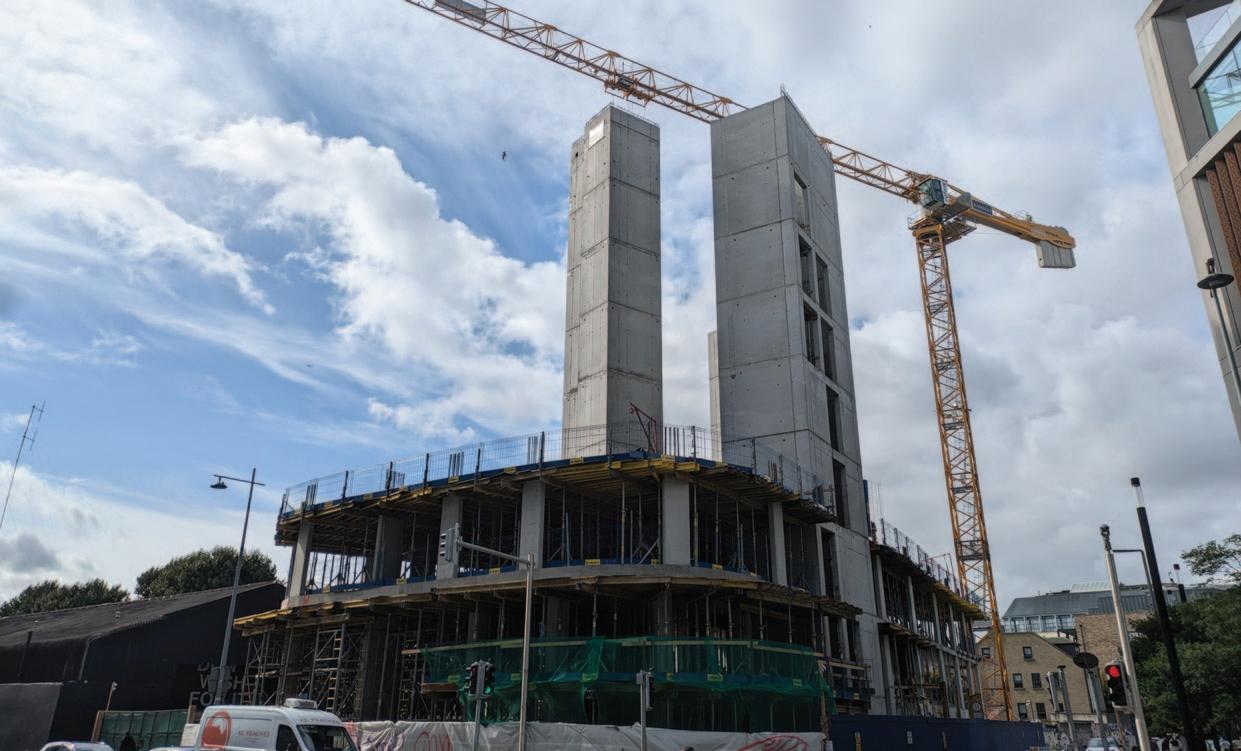

The Government has set out 30 key actions aimed at enhancing the State’s critical infrastructure, under the aegis of the Accelerating Infrastructure Report and Action Plan.
The action plan, published in December 2025 following the Government’s landmark National Development Plan Review 2025, sets out four pillars aimed at accelerating infrastructure development in light of various barriers to development, as well as challenges with the current consenting process.
Although there has been an increase in infrastructure development in recent years, historically, Ireland has maintained a comparatively modest level of infrastructure stock relative to other high-income European countries. This is primarily due to its relatively recent transition to highincome status. Constrained by limited fiscal capacity throughout the 1970s and 1980s, Ireland’s infrastructure stock was almost 50 per cent below the European average by the mid1990s.
In 2025, the Government invested approximately €17 billion in capital projects, with NDP expenditure projected to reach €19 billion in 2026. This represents more than 5 per cent of gross national income (GNI*), placing Ireland among one of the
highest capital investors in the EU and nearly quadrupling the level of investment recorded a decade ago.
According to the IMF, Ireland’s physical infrastructure stock is roughly 32 per cent below that of comparator high-income economies (covering transport, energy, water, etc.), with a 27 per cent quality deficit as well. The Irish Fiscal Advisory Council (IFAC) finds Ireland’s overall infrastructure stock is about 25 per cent below the average for high-income European countries.
The consequences of this are most acutely felt in housing provision, where construction levels have consistently fallen short of meeting the needs of a growing population, homelessness is at a record high, and the Government has consistently failed to meet annual construction targets.
The broader societal and economic impacts are also evident in declining quality of life indicators, such as urban congestion. Traffic delays result in significant time losses, with drivers in Dublin losing an estimated 81 hours
annually, 67 hours in Galway, and 51 hours in Cork due to congestion. Public transport users are also affected by this congestion, which also has negative impacts on air quality in towns and cities.
The Accelerating Infrastructure Report on Stakeholder Consultation and Engagement with Emerging Themes on Infrastructure, published in July 2025, forms the basis for the action plan’s 12 identified barriers to development. The 12 barriers were categorised into three broad areas:
1. the regulatory environment; 2. planning and legal systems; and 3. internal systems.
Many of the barriers are interconnected and have consequences for other areas of infrastructure development processes. For example, the increased risks associated with judicial reviews have lengthened approval timeframes as environmental assessments expand to react to court
precedents and regulatory decisions become more cautious. The 12 barriers are identified as:
1. Public acceptance: Insufficient public awareness of the consequences of poor infrastructure tends to magnify opposition.
2. Increased regulatory burden: Multiple, distinct and often overlapping regulatory processes increase complexity without necessarily improving outcomes.
3. Risk aversion: Threat of judicial review on procedural matters drives a culture of caution, limiting the scope for coordination and engagement that could lead to improved outcomes.
4. Increasing judicial reviews: The increasing number of judicial reviews is contributing to uncertainty, longer timelines and higher cost, driving risk aversion at all other steps.
5. Consequences of judicial reviews: Lack of fast track for priority projects; procedural flaws can often significantly delay infrastructure without means for consideration of wider consequences.
6. Insufficiently co-ordinated approvals: Limited coordination on licences, consents, and permissions leads to duplication of efforts and sequential processes that could be conducted in parallel, saving time/money.
7. Slow processes: Unclear that current procedures on project assessment add value that is commensurate with the time burden imposed.
8. Inconsistent planning decisions and timelines: The extent of competing issues can lead to inconsistency and hence drive uncertainty.
9. Prioritisation and co-ordination of infrastructure: Semi-state companies and regulatory agencies are often limited in their ability to prioritise and to consider wider societal aims in decisionmaking.
10. Procurement challenges: Current processes are leading to falling competition in public tenders, impacting value for money and incentives for investment in skills/capability.
“There is now a systematic whole-of-government commitment to reform and to the timely delivery of the suite of actions set out in this plan.”
DPER
Minister Jack Chambers TD
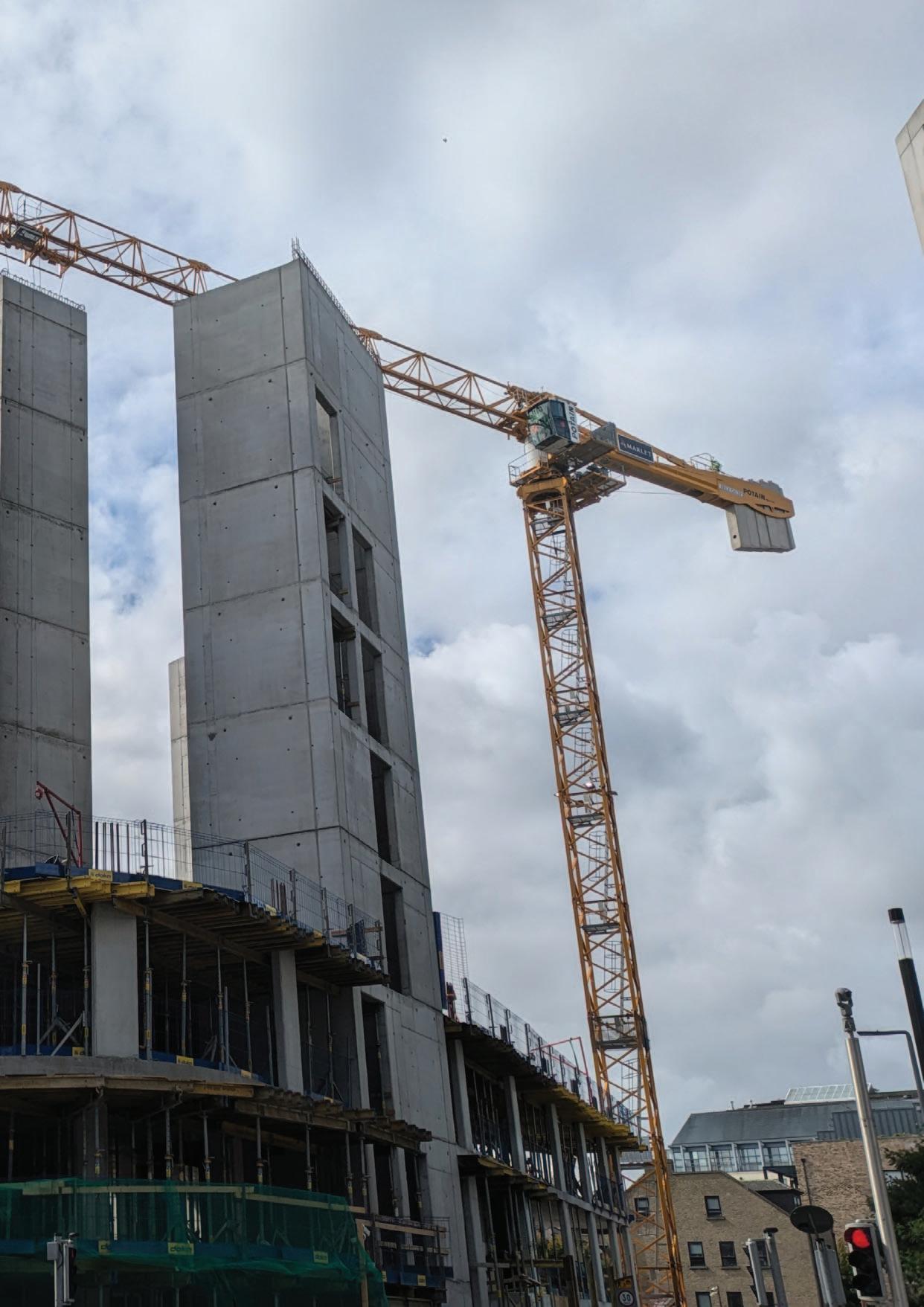
11. Uncertainty of funding and project pipelines: Uncertainty around the timing and feasibility of government investment plans is limiting interest in the Irish infrastructure market among potential developers.
12. Construction sector capacity and productivity: Construction sector capacity and productivity is identified as a constraint.
A common theme emerging across the three sectors of water, transport, and energy is the significant volume of consents, licences, and permits that an infrastructure project potentially requires.
The action plan explains: “Although the framework that has been developed is compliant and ensures robust environmental and public health protection, it is also fragmented and involves multiple agencies, often with overlapping responsibilities. Multiple consents may be required from a variety of agencies/bodies, many of which are seeking similar information, working off different timelines, often with no prioritisation for critical infrastructure projects.”
The Planning and Development Act 2024 includes a range of reforms intended to enhance the efficiency and predictability of the planning system. A key reform is the introduction of statutory decisionmaking timelines for ACP, which is expected to provide greater certainty for project developers and support more timely project delivery.
However, the action plan acknowledges that there are linear processes which mean that different organisations are responsible for different infrastructure delivery processes. With the success of
planning reforms introduced in 2024 yet to be seen, the action plan simply states: “Government is determined to reduce these delivery timelines through the actions set out in this report.”
With judicial review having played a significant role in reducing infrastructure output across all sectors, the action plan contextualises that “the number of judicial reviews continues to rise”.
“2024 saw a 43 percent increase compared to 2023 and already, 2025 has seen a further 30 percent increase in the number of cases brought to the Planning and Environment Court. As of today, An Coimisiún Pleanála is facing 131 individual judicial reviews. The number of judicial reviews has increased to such an extent that the Government’s chief legal advisor, the Attorney General, has branded the proliferation of legal challenges, especially in the planning and environmental areas, as being of significant political and public concern.”
Therefore, the action plan states that there will be reform to the judicial review process which will be in line with the Aarhus Convention standards for affordability, but with a “more efficient courts system”. The plan also states that emergency legislation will be introduced by the Government in 2026, which will streamline the process for development of nationally critical infrastructure.
The action plan also outlines the aim to implement other targeted legislative reforms, progress domestic reforms to environmental assessment in parallel with the EU Simplification Agenda, increase exemption thresholds for critical infrastructure, respond rapidly to precedent, and enact the Civil
“It is filled with minor tweaks to the existing system, the creation of new working groups and promises to deregulate the planning process.”
Sinn Féin DPER spokesperson Mairéad Farrell TD
Reform Bill to legislate for judicial reviews.
The report identifies that Ireland’s regulatory system has grown significantly over time, with 95 bodies now having some regulatory remit, creating inefficiencies that slow the delivery of critical infrastructure such as roads, rail, electricity, and water networks. While regulation provides essential safeguards for consumers, society, and the environment, it also imposes administrative and developmental burdens that increase costs and timelines. Overly complex legislation, lack of coordination between agencies, and risk-averse interpretations of law have contributed to delays, judicial challenges, and fragmented processes. The report emphasises that regulatory reform should balance the need for protection with efficiency, adopting proportionate, transparent, and consistent measures that facilitate timely infrastructure delivery.
To address these challenges, the report outlines a comprehensive action plan, including the development of national planning statements, establishment of a regulatory simplification unit, rationalisation of legislation, and reform of agency processes. Key measures include standardising licensing and consenting procedures, implementing statutory timelines, enabling developer-led infrastructure projects, and strengthening coordination on EU legislation. Additional initiatives focus on improving the role of the Office of the Planning Regulator, integrating digital data systems, and promoting best practices in planning. Together, these reforms aim to reduce consenting timelines by up to 12 months, lower administrative burdens, provide
greater certainty for investors, and accelerate the delivery of energy, water, and transport infrastructure while maintaining societal and environmental safeguards.
Pillar three focuses on transforming Ireland’s infrastructure delivery from a fragmented, slow, and risk-averse system into a coordinated, efficient, and outcomes-driven framework. With the ambitious National Development Plan allocating €102.4 billion for 2026-2030, the Government aims to convert funding commitments into tangible infrastructure outcomes, particularly in electricity, water, and transport. Historical delays caused by siloed responsibilities, sequential approvals, and judicial reviews have extended project timelines, impacting housing, renewable energy, and environmental compliance. To address these challenges, Pillar three emphasises stronger programme governance, integrated planning, clearer decision rights, and a culture that balances risk with timely delivery, ensuring that infrastructure supports both societal needs and national objectives.
The pillar outlines a suite of actions to achieve these goals, including publishing sectoral investment plans to create predictable project pipelines, enhancing DPER’s coordination function, introducing risk appetite statements, improving utility coordination through a joint utilities and transport clearing house, and increasing construction sector capacity through workforce expansion and modern methods of construction. Additional measures target faster project approvals, expert support for major projects via the NDFA, and procurement reforms to streamline processes, promote competition, and reduce administrative burden.
The action plan asserts that public opposition to infrastructure projects often arises when projects affect local communities or landowners, causing delays, legal challenges, and higher costs. Building trust through transparent communication, early engagement, and practical measures like land access is described as essential to reduce resistance.
Key actions include requiring state bodies to make land available, strengthening leadership support at national and local levels, improving government communication on infrastructure benefits, and establishing a benefits realisation framework to quantify societal value. These measures aim to minimise opposition, streamline approvals, and create a coordinated environment that supports efficient project delivery.
In his ministerial foreword, Minister for Public Expenditure, Infrastructure, Public Service Reform and Digitalisation Jack Chambers TD says: “There needs to be a fundamental reappraisal of the balance between the competing pillars of the protection that regulation affords and the timely provision of infrastructure that benefits all of society. I believe that there is a clear need for judicious and targeted deregulation.
“There is now a systematic whole-ofgovernment commitment to reform and to the timely delivery of the suite of actions set out in this plan.”
Sinn Féin spokesperson on Public Expenditure and Reform, Mairéad Farrell TD, describes it as “a squandered opportunity to address the crises in critical infrastructure and housing”.
“The so-called ‘action plan’ announced today, involves very little action at all. It is filled with minor tweaks to the existing system, the creation of new working groups and promises to deregulate the planning process; a heap of announcements from this do-nothing government in the hope they can sit back and let big developers fix their problems.”

Mike Healy, Programme Director for Strategic Projects in Uisce Éireann, talks to eolas Magazine about two of the largest infrastructure projects in the State’s history: the Water Supply Project and Greater Dublin Drainage.
As Ireland prepares for the next generation of strategic water and wastewater infrastructure, Uisce Éireann is advancing two of the largest projects in the State’s history: the Water Supply Project Eastern and Midlands Region (WSP EMR) and the Greater Dublin Drainage (GDD) project.
Mike Healy discusses how these transformational projects are progressing, why they matter, and what lies ahead.
As an architect by profession, Healy has built his career on the core principle of safe delivery. He is focused on getting projects safely delivered, on time, to a high standard, and with real and lasting legacy.
“Our job is to deliver,” Healy says. “These projects matter to communities, to the economy, and to the country’s future, and delivery is how we make the difference.”
It is an approach shaped by an impressive portfolio. Before joining Uisce Éireann, Healy worked on some of the UK’s most high-profile engineering undertakings, including London 2012, Heathrow Terminal 5, and London Bridge Station. He also spent nearly a decade in the water sector, working with Thames Water and later leading Affinity Water’s capital programme.
Healy first collaborated with Uisce Éireann in 2013 as part of the national domestic metering programme and joined the organisation five years ago.
The desire to deliver as quickly as possible is supported by key stakeholders. Building on the initiatives of the Accelerating Infrastructure Taskforce, the Government is very supportive in removing the numerous barriers to these projects.
For Healy, the focus remains firmly on progress: securing contractors, building
market confidence, maintaining the project’s current momentum, and realising benefits. The goal is not just to deliver infrastructure, but to unlock housing, enable economic development, and ensure resilient services for decades.
The Water Supply Project is the largest and most strategically important water infrastructure project in the history of the State. Its purpose is to deliver a new, sustainable, secure and climate resilient water source for the Greater Dublin Area (GDA) and the wider Eastern and Midlands Region, with the capacity to support the water supply needs of up to 50 per cent of Ireland’s population.
Water supply across the GDA is on a knife edge. Almost 85 per cent of the region’s drinking water currently comes from a single source (the River Liffey) and the two major treatment plants at Ballymore Eustace and Leixlip are operating at or near their maximum sustainable capacity.
Without a new source, the region faces increasing risks of water restrictions, supply outages, and an inability to support housing and economic development.
The WSP will provide the first major new water source for the region in 60 years. A new abstraction point will be developed at the Parteen Basin on the River Shannon (using a maximum of 2 per cent of long-term average flow).
The project will deliver a new water treatment plant near Birdhill, County Tipperary and a 172km pipeline transporting treated water through Tipperary, Offaly, and Kildare to a new termination reservoir at Peamount in South Dublin. This will create capacity for future regional offtakes, enabling supply to communities in Tipperary, Offaly, Westmeath, and increased resilience for Meath, Kildare, Carlow and Wicklow.
In December 2025, the planning application was submitted to An Coimisiún Pleanála (ACP) after extensive non statutory public consultation. ACP’s statutory seven week public consultation closed on 25 February 2026.
Nearly 80 per cent of landowners have already signed voluntary wayleave agreements, while dedicated community clinics continue throughout 2026.
“Building trust with landowners and communities is essential. Their cooperation and insights are shaping this project.
“Stakeholders view WSP as critical national infrastructure, central to housing, climate resilience and economic growth. Engagement is strong, informed and increasingly proactive. While community level concerns remain, we want to work with those communities and we have a Community Liaison Officer appointed to give information to them throughout the process,” Healy says.
A planning decision is expected within 48 weeks. If granted and if there is no legal challenge, construction is scheduled to begin in 2028, with water entering supply in 2032.
The Greater Dublin Drainage (GDD) project is another one of Uisce Éireann’s most significant national infrastructure programmes. Its purpose is to provide a new regional wastewater treatment facility and supporting network infrastructure in Clonshaugh to serve north Dublin and parts of Meath and Kildare, addressing longstanding capacity constraints across the Greater Dublin Area.
Demand for wastewater services in the GDA is rising sharply due to population growth, economic expansion and climate pressures. Wastewater volumes in the region are projected to increase by over 50 per cent by 2050. Existing treatment infrastructure, particularly the Ringsend Wastewater Treatment Plant, which currently treats 40 per cent of all wastewater nationally, is operating at capacity. Without GDD, new housing and economic development could face restrictions as soon as 2028, due to insufficient treatment and network capacity.
Once operational, GDD will have the capacity to treat wastewater for the equivalent of up to 500,000 people, relieving pressure across the wider network and enabling growth across the region.
Following its planning milestone in December 2025, the GDD project is now entering its next critical phase. Preliminary construction works are scheduled to commence in late 2026 or early 2027.
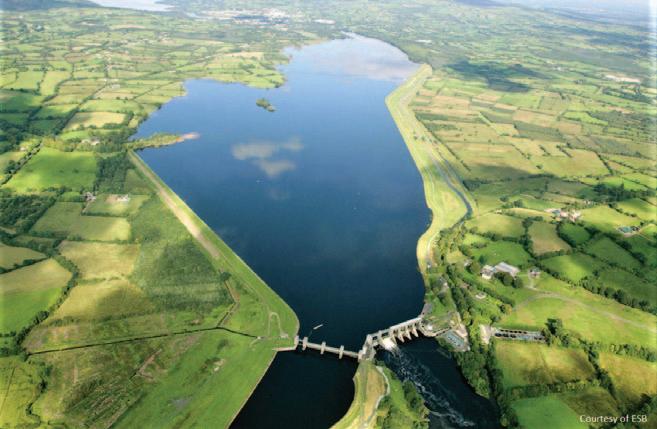
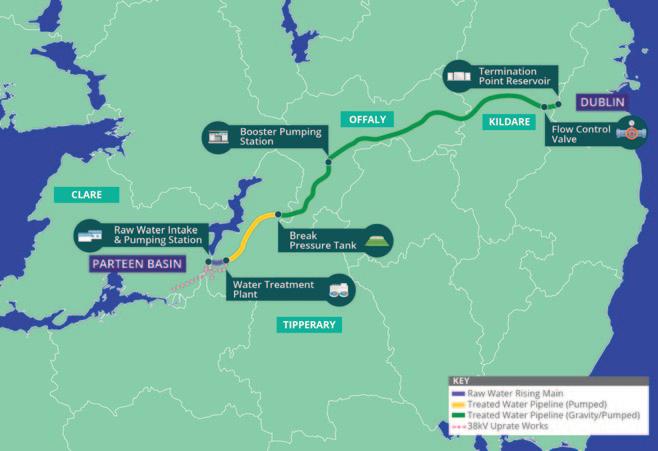
Construction is expected to take approximately three years once commenced, with the project required to be operational by 2032 to avoid network and development constraints.
While the Water Supply Project and GDD serve different technical functions, Healy sees them as complementary pillars of the strategic national infrastructure long term plan. “When you step back, both projects are about ensuring Ireland has the essential water and wastewater infrastructure needed for the next century,” he explains.
“That is why we have a joint procurement approach which will be launching soon. We have listened to the market, engaged extensively with industry, and structured our approach to provide confidence, clarity and momentum.
“Delivery of water and wastewater infrastructure and services delivery underpins Project Ireland 2040 and is the backbone to social and economic development,” he says.
Healy concludes: “These projects will define Ireland’s water landscape for generations. It is a privilege to help deliver them and to work with communities, colleagues and stakeholders who share the same commitment to Ireland’s future.”
W: www.water.ie

The National Development Plan Review 2025, published in July 2025, provides €275.4 billion to address the State’s “infrastructure deficit”, increase housing delivery, and enable underlying infrastructure for greater private sector building.
This includes an allocation of €102.4 billion to government departments for capital investment over the period 20262030. Almost €24 billion in additional capital funding has been allocated relative to the previous National Development Plan (NDP) 2021-2030 ceilings.
The review aims to facilitate balanced regional development and contribute to climate obligations. Delivery of housing is identified as the “core ambition” of the review.
It identifies prioritisation of housing, energy, water, transport, and health digitalisation as key to the Government’s target of delivering
300,000 additional homes by 2030. The review notes constraints to delivery including the State’s fiscal parameters, labour shortages, timelines for planning, and inflationary pressures.
Additionally, the review asserts that delivery of projects has faced challenges including judicial reviews of successful planning decisions, additional environmental consents, and labour shortages.
Project prioritisation under the review is guided by critical infrastructure investment priorities identified in the PfG; sectors’ capacity to deliver proposed projects; the cost of proposals balanced against conflicting
priorities and capital funding levels; and projects’ alignment with housing delivery and economic competitiveness.
A total of €10 billion has been provided for the period 2026-2030 to support delivery of large projects in the water, energy, and transport sectors including:
• €3.5 billion to ESB and EirGrid in 2025 to fund enhanced energy grid capacity to support the Government’s housing and competitiveness objectives;
• €2 billion to Uisce Éireann to 2025 to deliver 300,000 additional homes to 2030;
• a further €2.5 billion to Uisce Éireann for large scale projects to 2030; and
• €2 billion from the Infrastructure, Climate and Nature Fund for lowcarbon transportation such as MetroLink.
For the period 2026-30, the Department of Housing is provided with €35.95 billion in the review. This is split with €7.68 billion provided to water and €28.27 billion provided to “housing and other”. The Department of Transport receives €22.33 billion, while the Department of Climate, Energy and the Environment receives €5.64 billion.
An allocation of €7.55 billion is provided to the Department of Education and Youth for construction of school places in primary, post-primary, special classes, and special schools for the period 2026-2030.
The review states that construction sector employment reached 177,000 in Q1 2025, “the highest level in over a decade”. It adds: “Meeting the scale of the project pipeline outlined in this NDP will require a significant and sustained expansion of the construction workforce.”
The Irish Fiscal Advisory Council (IFAC) estimates that 80,000 additional construction workers will be required to meet existing infrastructure targets including housing and retrofit. However, if construction sector productivity increased to average high-income European levels, 20,000 fewer additional workers would be required, the IFAC estimates.
Construction sector analysis by the Department of Further and Higher Education, Research, Innovation and Science finds that 10,000 few new entrants would be required if there is widespread adoption of modern methods of construction (MMC).
The review outlines delivery of projects under the NDP to date including 170km of new roads, over 1,200km of active travel infrastructure, and completion of almost 53,000 new local authority scheme dwellings.
“Our plan to invest in our capital infrastructure and address our infrastructure deficit is the best way to safeguard our economy, drive growth, protect jobs, increase competitiveness and ensure prosperity for our people and communities at a time of growing international uncertainty.”
Minister Jack Chambers TD
Furthermore, it says 100,000 premises have been connected to high-speed broadband through the National Broadband Plan, a new city campus for TU Dublin has been developed, and 800 school building projects have been completed with 300 more under construction.
The review outlines that the Government has allocated over €550 million for shared island projects including the commencement of construction of the Narrow Water Bridge, launch of phase two of the Ulster Canal restoration, and the hourly rail service between Dublin and Belfast.
Minister of Public Expenditure, Infrastructure, Public Service Reform Jack Chambers TD established the Accelerating Infrastructure Taskforce to identify barriers to delivery of infrastructure on time. In December 2025, the Department published taskforce’s findings in the Accelerating Infrastructure Report and Action Plan
It outlines four key pillars under which to tackle barriers to infrastructure development: legal reform; regulatory reform and simplification; co-ordination and delivery reform; and public acceptance.
Minister Chambers says: “Our plan to invest in our capital infrastructure and address our infrastructure deficit is the best way to safeguard our economy, drive growth, protect jobs, increase competitiveness and ensure prosperity for our people and communities at a time of growing international uncertainty.”
Sinn Féin spokesperson on Public Expenditure and Reform, Mairéad Farrell TD, says: “We want to see real progress and finally get a handle on the housing and healthcare crisis. But as they say the devil is in the detail, and right now many of those details are still missing.
“We are still left wondering where all this money is going to go, how they will address the current bottlenecks, and whether ‘value for money’ will just be another political cliché.”


As Ireland accelerates housing delivery under its new national housing plan Delivering Homes, Building Communities 2025-2030, approved housing bodies (AHBs) continue to play a central role as trusted delivery partners to Government and local authorities.

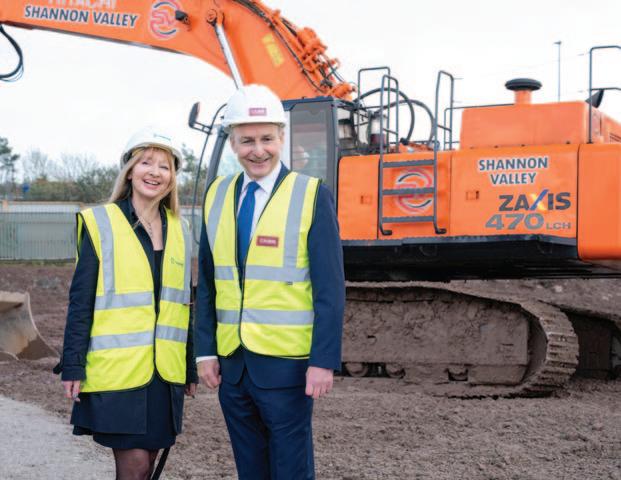

Organisations like Respond, currently delivering thousands of social and cost rental homes, are operating at significant scale within a complex and evolving construction environment.
Broadly, the publication of Delivering Homes, Building Communities marks a significant step forward in setting out a clear, long-term framework for housing delivery over the coming years.
The plan recognises AHBs as key delivery partners and acknowledges the scale, capability, and track record the sector has developed in delivering homes and supporting communities across the State.
This recognition provides confidence to delivery partners operating at scale and supports the sustained investment and planning required to maintain momentum.
Ongoing uncertainty in the construction market is a shared challenge across the housing system. Inflationary pressures, capacity constraints, and changing market conditions all affect how housing is delivered at scale.
In this context, managing uncertainty, particularly around cost and timelines, has become central to ensuring that homes are delivered at scale, on time, and with value for money.
Respond’s experience in delivering large scale developments provides practical insight into how collaboration and strong delivery partnerships support successful delivery outcomes on the ground.
With 3,458 homes currently in construction, Respond is actively engaged across a range of social and mixed-tenure developments. Delivering at this scale highlights the importance of funding certainty and construction programme discipline in maintaining momentum and managing risk.
Existing funding structures have enabled significant progress in recent years, and the accelerated Cost Rental Equity Loan (CREL) process in particular has supported the expansion of cost rental delivery.
In 2025, Respond delivered 231 cost rental homes with a further 1,842 currently under construction, providing strong foundations on which to continue building supply.
Delivering housing at scale, particularly mixed tenure developments, requires close alignment between policy ambition and delivery frameworks. From Respond’s experience, predictability around funding approvals and timelines play an important role in supporting effective construction programmes and avoiding the cost pressures associated with stop-start delivery.
Where funding streams align well and provide clarity over timeframes, delivery partners are better positioned to plan effectively and deliver homes in a coordinated way.
Introduced earlier this year, the new single-stage approval process signals welcome reform that reflects the realities of large-scale delivery and supports a more streamlined approach for local authorities and AHBs alike.
Respond looks forward to ongoing engagement as the process is refined, ensuring that it supports efficient delivery in practice and continues to evolve in line with delivery experience.
Alongside this, the new housing plan, the Report of the Approved Housing Body (AHB) Strategic Forum provides an important roadmap for the future development of the sector.
Its focus on funding reform, governance, sustainability, and long-term capacity reflects the growing role AHBs play in Ireland’s housing system and the need to support that role through clear, coordinated frameworks.
Respond welcomes the publication of the report and looks forward to continued engagement on its implementation as the sector continues to scale responsibly.
At a European level, the publication of the first-ever European Affordable Housing Plan signals growing recognition of housing as a shared societal challenge across member states.
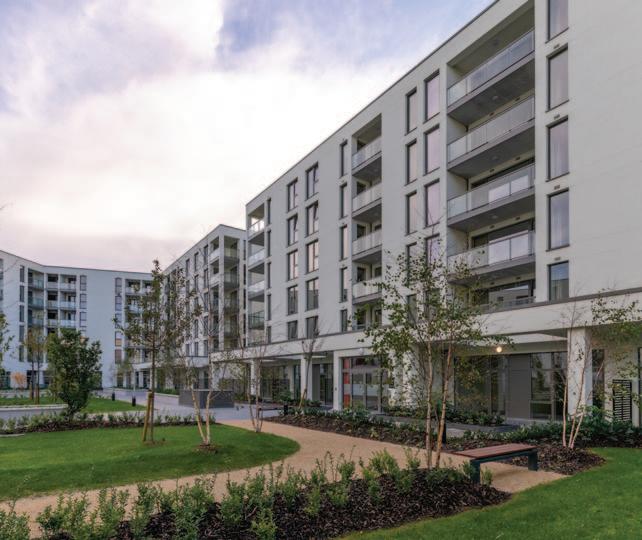
While housing policy remains a national competency, increased coordination and collaboration at European level can help support investment, innovation, and delivery capacity across member states.
For delivery organisations operating at scale, this wider policy context reinforces the importance of long-term planning, stability, and partnership.
A stable and predictable policy and funding environment has proven to be a key enabler of delivery at scale. Where certainty is provided, delivery partners like Respond can plan efficiently, manage risk responsibly, and maintain momentum on complex developments.
As delivery programmes continue to expand, Respond’s experience highlights the importance of structured engagement between policymakers and delivery partners, ensuring that front-line delivery insight can inform the ongoing evolution of funding and approval frameworks. Such engagement supports alignment across policy objectives contributing to more predictable delivery outcomes over time.
As a not-for-profit, construction-led AHB, Respond typically acquires land linked to development contracts and funds construction directly, with in-house development professionals overseeing delivery.

This model enables Respond to deliver homes that may not otherwise be delivered, without competing for existing housing stock, while maintaining a focus on asset management, tenancy sustainment, and community sustainability. Operating at scale, this model supports effective risk management and strong oversight throughout the construction process.
As housing delivery continues to scale nationally, Respond’s experience demonstrates the value of stable policy direction, collaborative engagement, and delivery-focused frameworks.
Building on recent reforms and the momentum created by the new housing plan and strategic initiatives, AHBs as trusted delivery partners are well positioned to continue supporting the State in delivery high quality, social and cost rental homes, even in challenging market conditions with support and collaboration at local, regional, national, and European levels.
T: 01 808 7700
E: info@respond.ie
W: www.respond.ie

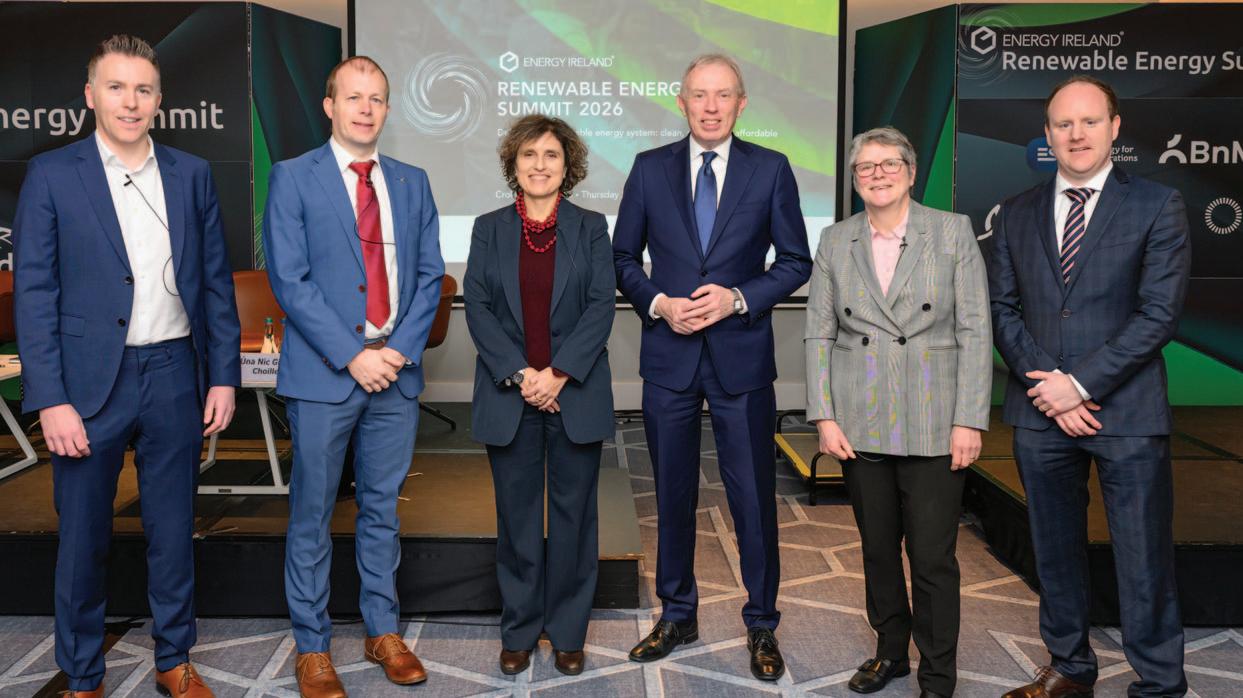

The 22nd Energy Ireland Renewable Energy Summit took place on 5 February at Croke Park, Dublin. Over 200 delegates attended the Summit which was sponsored by ESB, Gas Networks Ireland, BnM, EirGrid and Bord Gáis Energy. Delegates in attendance heard from a top line-up of speakers, both visiting and local, from organisations including the Department of Climate, Energy and the Environment; European Commission; IEA; CRU; The Scottish Government; UCC and E3G.
We would like to take this opportunity to thank the 2026 conference sponsors, all speakers, exhibitors and delegates who joined us at Croke Park, Dublin and made the conference a huge success.
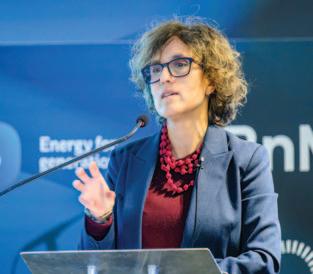
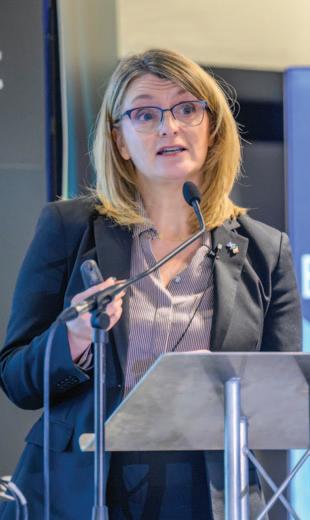
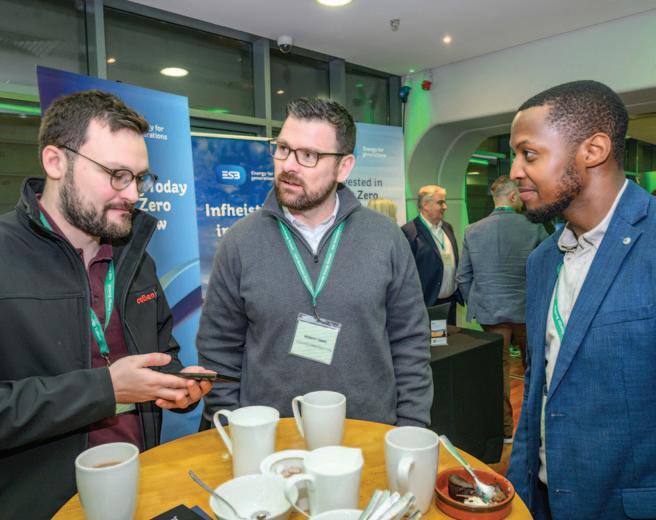
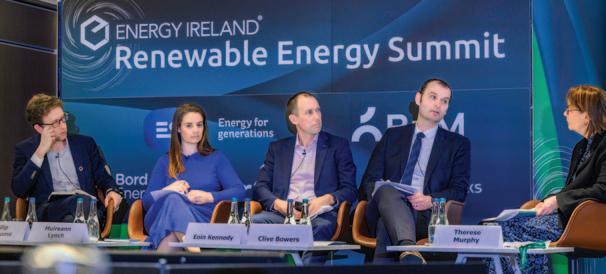
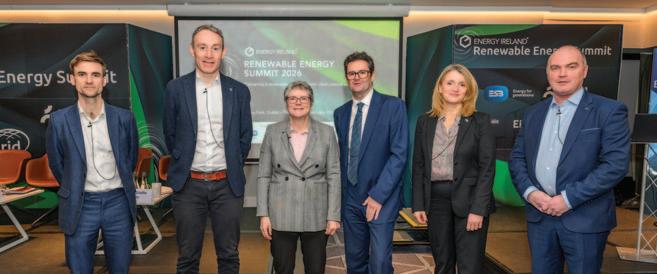
Cities across Europe are facing intensifying pressures, rapid population growth, congested road networks, and urgent climate action. With 72 per cent of Europeans now living in urban areas and road transport being responsible for almost 73 per cent of all transport CO2 emissions, the need for reliable, low-carbon, high-capacity transport has never been clearer, writes Caroline Lewis, Market Director, Amey.

Against this backdrop, light rail has emerged as an increasingly essential mode of urban transport. More than a way of moving people from A to B, it is helping cities adapt to growth, respond to climate targets, and create healthier, more connected places to live and work.
So, what truly differentiates light rail from other modes of transport, and why is it becoming critical to the future of thriving cities?
At its core, light rail is defined by its ability to be designed around how people live and move. Unlike buses or other modes of public transport, it creates fixed, high-quality corridors that support reliable, high-frequency services, and provides the capacity needed to move large numbers of people efficiently through growing urban areas.
But its value extends far beyond mobility alone. When planned and delivered well, light rail helps shape urban form, supporting better place-making, enabling walkable, wellconnected neighbourhoods, and providing the transport backbone needed to unlock housing and regeneration opportunities along its routes. These corridors become focal points for growth, easing pressure on roads while improving access to jobs, education, and essential services.
Light rail also plays a critical role in improving health and wellbeing. By reducing car dependency, it contributes to cleaner air, quieter streets, and greater encouragement of active travel. Its electric operation and high passenger capacity provide a credible pathway to cutting emissions, easing congestion and supporting long-term sustainability goals.
Taken together, these benefits show that light rail is not simply a transport solution, but a strategic tool for shaping more inclusive, resilient and liveable cities.
This momentum is already visible across the UK and Ireland. In Dublin, for example, the Luas light rail system forms a core part of the city’s public transport network. Public transport journeys now exceed 343 million annually, with Luas accounting for a significant share of daily travel.
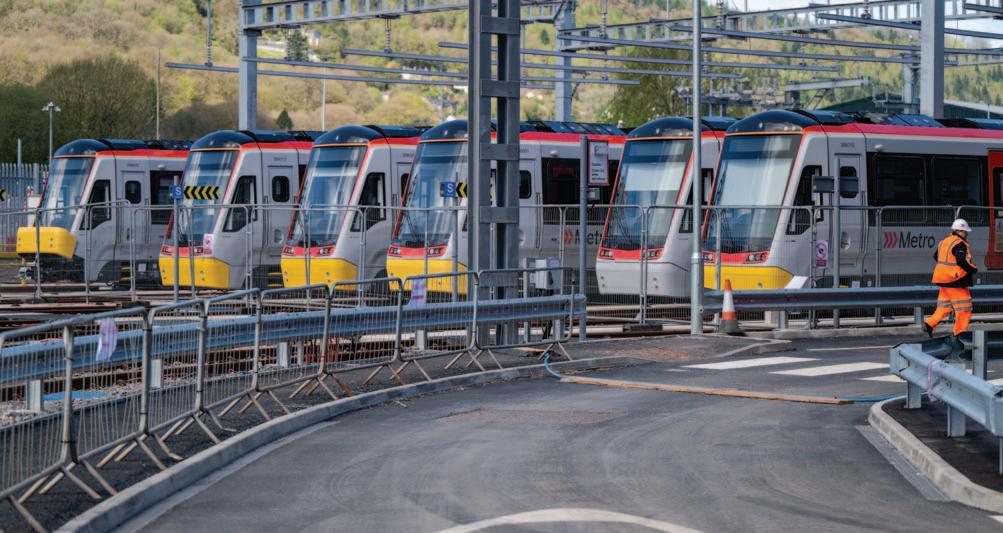
As the Greater Dublin Area is projected to grow substantially by 2040, Luas demonstrates how light rail can scale alongside population growth, helping cities manage rising travel demand while maintaining reliable, high-capacity services. Its success highlights the role light rail can play in keeping cities moving as pressures on transport networks intensify.
The question now is how other cities can replicate this success, and, crucially, how light rail needs to be delivered to maximise long-term value.
Delivering a world-class light rail network requires a different mindset altogether; one grounded in systems thinking, where engineering decisions are coordinated and connected across the entire asset lifecycle. As cities look to harness the full potential of light rail, they need multidisciplinary delivery partners who can integrate data and analytics, design and engineering, and operations and maintenance into a truly wholelifecycle approach.
A clear example of this is the Core Valley Lines (CVL) rail upgrade in Wales where Transport for Wales commissioned Amey to support the modernisation of a network serving communities across the Valleys.
Communities across the Valleys experienced long journey times, infrequent services, and ageing
infrastructure that constrained access to jobs, education, and essential services. At the same time, the network needed to be modernised without the prolonged disruption and cost typically associated with traditional electrification, particularly given the number of historic structures along the route.
While electrifying and re-signalling more than 170km of track, Amey applied a systems-thinking approach that brought together signalling design, overhead line equipment (OLE), track, telecoms, civils, electrification, and operations within a single, integrated design process. Timetable scenarios were modelled early and embedded into the Core Valley Lines Integrated Control Centre, allowing design teams to shape solutions proactively; optimising maintenance access, signal sighting, and driver visibility.
This integrated view also informed a smart, discontinuous electrification strategy, avoiding major civil interventions such as bridge reconstructions, reducing disruption, accelerating delivery, and saving millions in infrastructure costs.
The outcome was a safer, more efficient upgrade programme that reduced rework, improved delivery certainty, and enhanced the passenger experience. Investment in a new £100 million depot and control centre has created hundreds of long-term skilled jobs and laid the foundations for reliable, future-ready operations.
By viewing the railway as a connected system rather than a collection of isolated assets, the programme embedded resilience, maintainability, and performance from the outset; demonstrating how delivery choices directly shape long-term social, economic, and operational outcomes.
For cities across the UK and Ireland, the opportunity is clear. As populations grow and pressures on transport networks intensify, light rail will play an increasingly important role in shaping sustainable urban mobility.
The challenge now is not whether to invest in light rail, but how to deliver it. By embracing partnerships that combine integrated engineering, digital insight, and whole-lifecycle thinking, cities can unlock the full potential of light rail; creating transport networks that support growth, resilience, and prosperity for generations to come.
W: www.ameygroup.ie

The Rail Project Prioritisation Strategy has set out how major rail schemes across the island could be sequenced and delivered over the coming decades, with upgrades and line reopenings in the North and on crossborder corridors placed at the forefront of the programme.
The strategy, developed to support the All-Island Strategic Rail Review and launched in December 2025, identifies which projects outlined in the review should be progressed first, which can be delivered in the short term, and which will require sustained investment over the medium to long term.
In doing so, it places particular emphasis on improving connectivity between Belfast, Derry, and Dublin, while also restoring rail access to parts of Northern Ireland that have been without services for decades.
The strategy sets out a wide-ranging programme of upgrades across the State, including electrification, line speed improvements and capacity enhancements on key intercity routes such as Cork-Dublin, Galway-Dublin, and Waterford-Dublin. One of the most
critical bottlenecks identified is the Hazelhatch-Portarlington section west of Dublin, where capacity constraints affect services across much of the national network.
A notable cross-regional project is the proposed reinstatement of the Claremorris-Athenry line, which would restore a missing link on the Western Rail Corridor. This would enable new passenger services between the west and south of the island and support the development of rail freight, particularly in conjunction with port connectivity.
Decarbonisation underpins much of the strategy. Around 750km of track are identified for electrification, including major intercity and cross-border corridors. This would enable the majority of long-distance passenger services to operate using electric
traction, reducing emissions while also improving performance and operating efficiency.
The strategy adopts a phased delivery approach, with smaller, lower-cost interventions designed to unlock capacity and resilience in the short term, and more complex, capitalintensive projects sequenced over longer timeframes. All projects remain subject to detailed feasibility studies, environmental assessment, and the securing of funding and statutory approvals.
While the document does not commit governments to specific delivery dates, it provides a clearer roadmap than previously existed, indicating how the vision set out in the All-Island Strategic Rail Review could be translated into a sustained programme of investment.
If delivered, the prioritised projects would significantly reduce journey times between major cities, improve service frequency and reliability, and extend rail access to communities across Northern Ireland and the border region. More broadly, the strategy positions rail as a central component of future transport policy on the island, supporting economic development, regional balance, and long-term decarbonisation goals.
Among the most significant projects identified is the upgrade of the BelfastDerry line, which has long suffered from slow journey times and limited frequency. The strategy prioritises capacity and frequency enhancements alongside line speed improvements, with the aim of delivering faster, more reliable services, and supporting regional economic development in the northwest. These works are identified as a major project to be delivered in phases, subject to further appraisal and funding.
The Belfast-Dublin corridor, the island’s busiest cross-border rail route, is also prioritised for further enhancement. Building on the Enterprise Fleet Replacement Programme, the strategy identifies electrification and line speed improvements as key next steps. These interventions aim to support journey time reductions, improve reliability, and significantly reduce carbon emissions on a corridor that plays a critical role in cross-border mobility and trade.
Beyond upgrading existing routes, the strategy places renewed focus on rail reinstatement in Northern Ireland, with several long-closed lines identified for progression. The reopening of the Lisburn-Antrim line would reintroduce a strategic link within the Northern Ireland network, improving flexibility and resilience while also enabling, in the longer term, a rail connection to Belfast International Airport.
The Portadown-Armagh line is also identified for reinstatement, reconnecting Armagh city to the rail network for the first time since the 1950s. Armagh is the only city on the island of Ireland with no railway station.
1. Develop and implement an All-Island Rail Decarbonisation Strategy that includes an electrified intercity network.
2. Develop plans to invest in the skills, supply chains, and rolling stock to deliver decarbonisation.
3. Procure hybrid and electric rolling stock in the medium term.
4. Upgrade the cross-country rail network to a dual-track railway (and four-track in places) and increase service frequencies.
5. Upgrade the core intercity railway network to top speeds of 200km/h (125mph).
6. Develop short sections of new railways on congested corridors.
7. Develop a cross-Dublin solution.
8. Provide more direct services between Ireland’s West and South Coasts.
9. Ensure regional and rural lines have at least one train per two hours.
10. Increase line speeds to at least 120km/h (75mph).
11. Upgrade Limerick Junction and the Limerick Junction -Waterford line.
12. Reinstate the Western Rail Corridor railway between Claremorris and Athenry.
13. Extend the railway into Tyrone, Derry~Londonderry, and Donegal.
14. Reinstate the South Wexford Railway.
15. Develop the railway to boost connectivity in the North Midlands.
16. Integrate bus service and rail service timetables to connect communities where direct rail access proves to be unviable.
17. Connect Dublin, Belfast International, and Shannon Airport to the railway and improve existing rail-airport connections.
18. Extend double tracking in the Belfast area.
19. Segregate long-distance/fast services from stopping services.
20. Explore the case for developing new stations in the Belfast, Cork, Derry~Londonderry and Limerick -Shannon city regions.
21. Develop a sustainable solution for first-mile-last-mile rail access for Dublin Port.
22. Reduce Track Access Charges for freight.
23. Strengthen rail connectivity to the island’s busiest ports.
24. Develop a network of inland terminals close to major cities on the rail network.
25. Continue to invest in initiatives that deliver a seamless customer journey.
26. Continue to benchmark and monitor service quality and deliver continuous improvement.
27. Ensure future rolling stock specifications are aligned to the infrastructure-led interventions outlined in this Review.
28. Invest in improving integration within rail and between rail and other transport options.
29. Deliver ‘clock-face’ timetable calling patterns.
30. Develop cross-border structures to improve the effectiveness of cross-border infrastructure and rail service planning.
31. Invest in a rolling programme of accessibility improvements, including step-free access.
32. Review and update the All-Island Strategic Rail Review once a decade, taking account of latest policies and developments.
Source: Department of Transport
In addition, the strategy highlights a reinstated and partially new corridor from Portadown to Derry via Letterkenny, which would create a new cross-border rail spine serving the northwest and linking into the wider allisland network.
Taken together, these projects would significantly expand rail accessibility in Northern Ireland and strengthen crossborder integration, addressing longstanding regional imbalances in transport provision.
While the strategy focuses on major projects over the medium to long term, it also identifies a series of early interventions to be delivered by 2030.
On the Belfast line, these include the reinstatement and increased use of passing loops, which would support hourly Dublin-Belfast services and improve reliability in the shorter term. A new spur at Portadown station is also proposed to future-proof the route for onward services towards Derry.
Minister for Transport Darragh O’Brien
TD says: “I welcome the publication of this strategy which provides a way forward for faster rail services, improved frequency, and greater accessibility and connectivity across this island. I look forward to the progression of the rail projects in the years ahead.”


Now in its 19th year, Transport Ireland® has firmly established itself as a major annual conference event in the Irish transport sector’s calendar. Taking place in Croke Park, the 2026 conference will bring together key stakeholders from across Ireland – north and south. The Transport Ireland 2026 conference will host a variety of expert domestic and international speakers who will comprehensively explore the latest ambitions, challenges, and tangible opportunities for decision makers to transform Ireland’s transport sector.
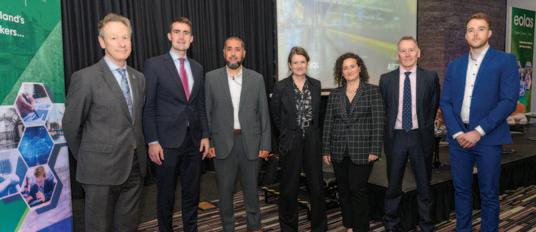
and exhibition
Join Ireland’s leading organisations in partnering with Transport Ireland® 2026. An excellent way to showcase your organisation at Ireland’s major annual transport conference, there are a number of opportunities for interested organisations to become involved with this conference as sponsors or exhibitors. This is an excellent way for organisations to raise their profile with a key audience of senior decision-makers from across Ireland’s transport sector.



For further information on how your organisation can benefit, contact us directly on +353 (0)1 661 3755 or email Lynda.Millar@eolasmagazine.ie.
(0)1 661 3755

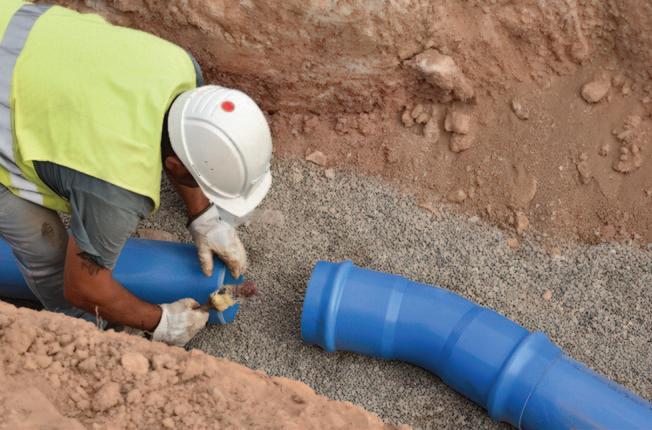
Water management has become a global challenge, and with World Water Day approaching on 22 March 2026, it serves as an annual reminder of the importance of thinking about the role that infrastructure plays in protecting this essential resource.
In this context, Molecor, a Spanish company with 20 years of experience and a presence in over 30 countries, has established itself as an international benchmark in water supply, contributing to the modernisation of networks and the development of more efficient, safer and sustainable infrastructure.
Molecular orientation, the PVC revolution
Its technological leadership is based on molecular orientation technology, used to manufacture the world’s widest range of PVC-O pipes, from DN90 to DN1200 mm, TOM® pipes. The manufacturing process is continuous and fully automated, which ensures the maximum product reliability and a quality control pipe to pipe for 100 per cent of the production.
TOM® is manufactured in Class 500, the highest level recognised by ISO 16422, which guarantees superior mechanical properties: greater resistance to internal pressure, high ductility and exceptional performance in the event of impact and deformation.
In addition, Molecor launched the first PVC-O fittings on the market, ecoFITTOM®, available from DN110 to DN500 mm, which allow for more continuous systems and perfect
compatibility with PVC systems for infrastructure.
These fittings optimise the use of raw material and use less energy during their manufacture, obtaining a product with higher hydrostatic resistance and higher resistance to impact than fittings of other materials.
The best choice for transporting pressurised water
These Molecor solutions provide key benefits for hydraulic infrastructures: large hydraulic capacity, high impact resistance, excellent hydrostatic resistance, great ductility, high resistance to water hammer and total watertightness.
Another key aspect is its exclusive genuine air system, which replaces the use of boiling water with air throughout the entire orientation process, optimising energy efficiency and reducing environmental impact. Among other features, this technological development allows Molecor’s PVC-O solutions to stand out for their excellent performance against corrosion and chemical agents, guaranteeing the highest quality of the water transported.
TOM® and ecoFITTOM® are 100 per cent recyclable and contribute directly to more efficient, resilient and environmentally friendly infrastructure, aligning with global objectives for responsible water management and current sustainability demands in the sector.
E: info@molecor.com
W: www.molecor.com/en
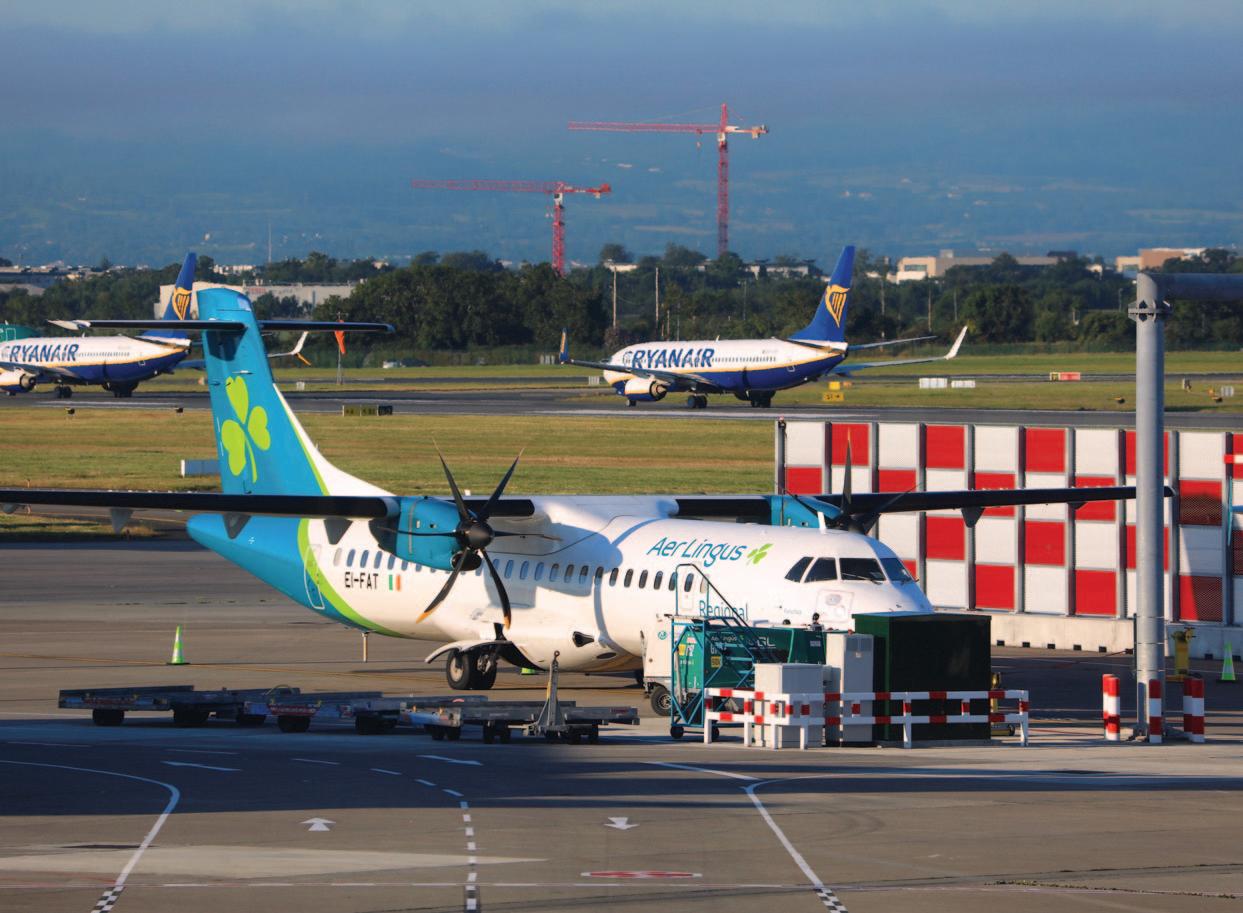

In spite of the now scrapped passenger cap at Dublin Airport, more than 50 million passengers passed through Irish airports in 2024, the most recent year for which data is available.
In 2024, around 41 million passengers travelled through the five airports in the State, while an additional 9.3 million passed through the three commercial airports in the North.
In Dublin, in spite of the governmentmandated cap of 32 million passengers per year, which was subsequently scrapped in February 2026, figures from the Central Statistics Office (CSO) show that 34.6 million passengers used the airport, a record since figures were first recorded in 1998. Since figures were first recorded, air traffic has nearly trebled, with 11.6 million passengers having travelled through Dublin in 1998.
The last year at Dublin Airport has also seen the establishment of new
routes throughout the United States, with Aer Lingus now offering services to Nashville, Tennessee; Cleveland, Ohio; and Minneapolis, Minnesota. The airline is also scheduled to commence new routes to Pittsburgh, Pennsylvania, and Raleigh, North Carolina in 2026; and will briefly serve the Caribbean for the first time with a route from Dublin to Barbados in March and April 2026.
While Ireland’s route network to the United States and Europe is extensive, long-haul options elsewhere in the world remain limited, with the Government’s recentlyabolished passenger cap meaning that new routes have been difficult to establish. There remains a route to Beijing, China through Hainan Airways, while Doha, Qatar; and Abu Dhabi and Dubai in the United Arab Emirates are served by Qatar Airways, Etihad Airways, and Emirates respectively.
South America, Oceania, and sub-Saharan Africa remain inaccessible from Dublin Airport.
Cork Airport recorded a record high number of passengers in 2025 (the figures were released by the airport itself rather than the CSO), with just under 3.5 million passengers using the airport in the last year. 2025 also saw Cork awarded with Airport Council International (ACI) EUROPE Best Airport Awards’ best European regional airport award.
The airport has also announced a €200 million investment plan that includes a new pier and additional gates, new solar farm, car park extension and new security screening technology. The plan also requires the demolition of the old terminal and air traffic control tower. The upgrade aims to enable the airport to cater for five million passengers per annum.
Although far from its historical numbers, passenger use at Shannon Airport has risen in consecutive years since 2021 and the end of the Covid-19 restrictions. In 2024, two US carriers announced that they would return to using Shannon Airport, with Delta Air Lines flying from New York to Shannon and Chicago, and Newark being served by United Airlines. Aer Lingus continues to offer services to Britain, New York, and Boston, while Ryanair offers a fairly comprehensive route network to the European mainland.
There are five regional airports in the State: Ireland West (Knock), Kerry, Donegal, Waterford, and Sligo.
Ireland West and Kerry have been resounding success stories in recent years. More than 400,000 passengers passed through Kerry Airport in both 2023 and 2024, and the airport is served with routes to Britain, Germany, Portugal, and Spain with Ryanair, as well as a number of small French airports with the French regional airline, Chalair Aviation. Furthermore, the domestic route to Dublin, which was historically subsidised by the Public Service Obligation (PSO) scheme, is now run on a commercially viable basis by Ryanair.
In Ireland West, nearly 950,000 passengers passed through the airport in 2025, a record high for the airport and the third consecutive year in which a record was set. Ryanair offers a comprehensive route network covering Britain, Spain, Italy, Germany, and Portugal while Aer Lingus offers routes to London Heathrow and Groningen, the Netherlands.
Elsewhere, however, success has been limited. Sligo Airport has not operated commercial routes since the 2008 Great Recession. The same is true for Galway Airport, which has since closed. Waterford Airport, in spite of significant investment for increasing the size of both its terminal and runway, has had no commercial routes since 2016.
Industry experts have cited the potential of the regional airports to subsume the demand being placed on Dublin Airport.
In the North, both airports in Belfast, Belfast International and Belfast City, have recovered well post-pandemic, with the International airport recording a record 6.7 million passengers in 2024 and a comprehensive summer holiday network which offers routes to Mexico, the Caribbean, and the United States, as well as across Europe.
Belfast City Airport recorded 2.4 million passengers in 2024, with a comprehensive regional network serving Britain, and a small number of European destinations being served by KLM, Aer Lingus, and EasyJet.
The City of Derry Airport, however, continues to struggle, with a modest 174,000 passengers passing through the airport in 2024 and a handful of routes in Britain being offered. However, the Government has announced that it will fund a regional route to Derry from Dublin with the PSO scheme, meaning Derry will get a new route. The PSO contract is set to be awarded in Q3 2026.
• 300 large projects and 50 high-volume programmes under the organisation’s 2025–29 capital works programme
• Approximately 130 standalone capital projects in progress at any one time
• Projects range in scope from low value high volume to €150 millionplus infrastructure builds
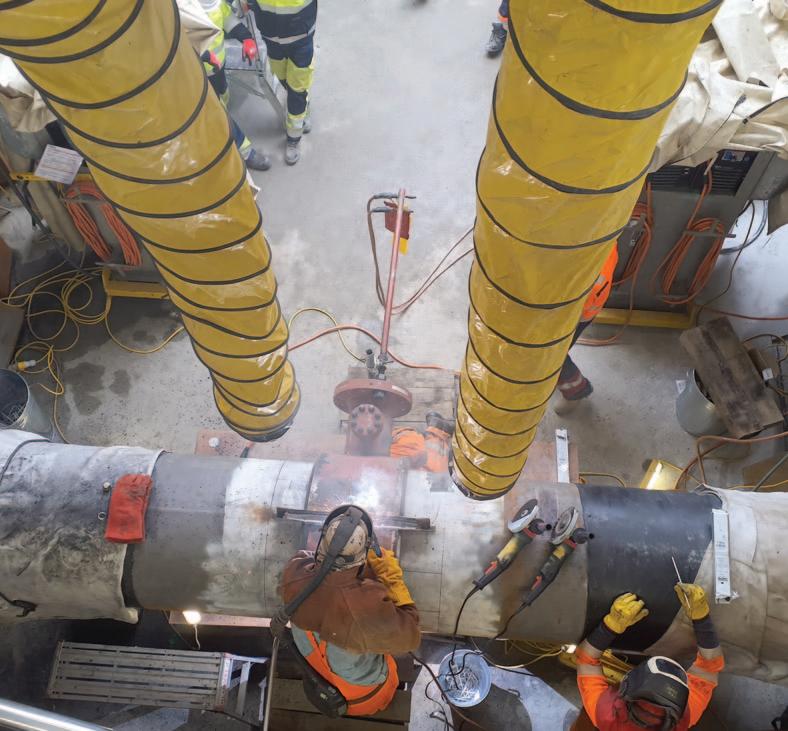
As operators of Ireland’s 14,758km gas pipeline and associated infrastructure, Gas Networks Ireland is responsible for a significant programme of capital works to ensure the national gas network is meeting the energy needs of the country today, and into the future.
Gas is the cornerstone of Ireland’s integrated energy system, providing approximately 40 per cent of the country’s electricity generation, increasing to 90 per cent at times of peak energy use. Gas also plays a critical role in providing security and stability as the country transitions to renewable power sources.
In 2025, the capital expenditure programme was in excess of €200 million and in 2026, that figure is set to rise to €237 million. This body of work focuses on maintaining, upgrading, expanding and decarbonising Ireland’s gas network.
The ongoing investment in this €3 billion national asset means Ireland can continue to boast one of the safest and most modern renewables-ready gas
networks in Europe. It also ensures that the 720,000 domestic and commercial customers, as well as the population at large, can rely on the gas network to stabilise the overall energy system while building out renewable capacity.
Gas infrastructure is economic infrastructure. Without gas the country would be unable to support ongoing foreign direct investment and indigenous growth in high-demand sectors such as pharma, tech, and manufacturing. At the other end of the scale, renewable gas is providing new ‘green economy’ opportunities for the agricultural sector in regional locations as biomethane comes onstream.
This year will mark significant investments in new infrastructure projects for meeting capacity demands
and decarbonising the network. This is in addition to a rolling programme of work which includes connecting new customers, facilitating pipeline alterations/diversions for third-party construction projects, reinforcing the network in response to usage trends and ongoing refurbishments.
Gas Networks Ireland’s €32 million Central Grid Injection (CGI) facility in Mitchelstown, County Cork is a key project in the expansion of Ireland’s renewable gas infrastructure. Delivered in partnership with GMC Utilities Group, the facility will enable large-scale biomethane injection into the national gas network and play a pivotal role in meeting Ireland’s climate and energy targets.
Once operational, the Mitchelstown CGI facility will be capable of injecting up to 700GWh of renewable biomethane annually, equivalent to meeting 12 per cent of Ireland’s 2030 biomethane
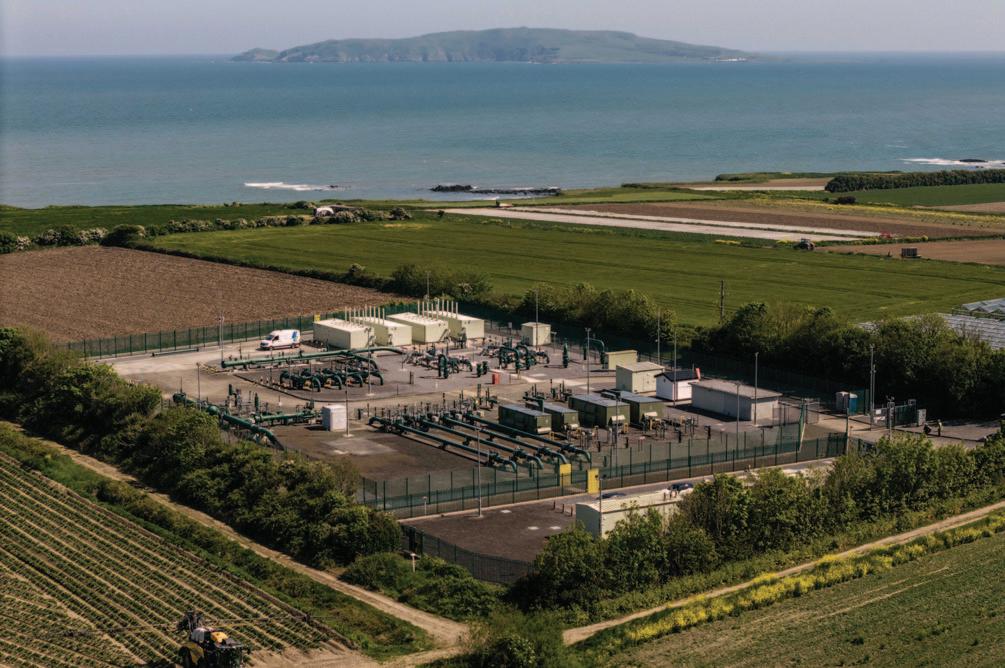
production target. This clean energy injection will support a reduction of approximately 130,000 tonnes of CO2 emissions each year, strengthening Ireland’s path toward a fully decarbonised gas network.
The facility represents a major step toward Gas Networks Ireland’s vision of a repurposed, resized and net zero gas network by 2045. As demand for sustainable energy solutions increases, infrastructure projects like Mitchelstown will be essential in helping Ireland’s largest energy users meet their decarbonisation goals and will provide new economic opportunities for the agricultural sector.
Gas Networks Ireland is currently delivering on a multi-million infrastructure programme for the provision of high-pressure natural gas connections to ‘peaker’ power stations. Peakers utilise a type of gas turbine that can quickly be ramped up or down depending on how much power is available from wind and solar at any given time. They operate when electricity demand is especially high, typically on cold days with low wind and low sun, known as ‘Dunkelflaute’ conditions.
Because peakers are only used when renewable power is insufficient to meet consumption, they reduce reliance on fossil fuels while also ensuring continuity of energy supply in times of peak or fluctuating demand.
Under the Government’s Climate Action Plan, Gas Networks Ireland has been directed to provide gas connections for two gigawatts of power generation by 2030. To date, construction has been completed on eight out of 13 peakers in counties Dublin, Roscommon, and Westmeath for customers that have been awarded capacity contracts by the State regulator. The remaining five peaker plants are at design and planning stage with one of these due to go into construction in coming months.
The majority of Ireland’s 14,758km network is distribution pipeline, where gas is distributed at medium pressure (4 bar) or low pressure (25 to 75 mbar) suitable for end users’ requirements.
As well as completing new connections, Gas Networks Ireland monitors and forecasts gas usage and demand and proactively ‘reinforces’ the network so that existing customers do not experience any problems with supply. In 2025, approximately 7.5km of new distribution pipeline was installed, 1.4km
of which was to reinforce the network. The remaining 6.1km was laid for various customer projects, mains alterations and internal refurbishment projects. Gas services were installed for 2,100 new customers spanning domestic dwellings and sites, along with small, medium, and large businesses.
There is also a comprehensive maintenance capital works programme to preserve the integrity of the national gas assets. This can include replacements, refurbishments and upgrades for equipment and infrastructure that needs repair, is at end of life or no longer fit for purpose. Last year, over 76,000 high volume replacements and over 850 individual refurbishment projects were completed. A similar volume of maintenance capital projects is due to be carried out in 2026 at locations right across the country.
W: www.gasnetworks.ie

A state builder, if well designed and implemented, could address a number of the structural problems in the market for housing supply, writes Tom McDonnell, codirector of the Nevin Economic Research Institute (NERI).
That we have a housing crisis is well understood. We can see it in rising rents, high house prices, young people stuck in the family home or emigrating, and record levels of homelessness.
The reality is that the housing market has been in some form of dysfunction for fully a quarter of a century if we include the pre-2008 housing boom. Systemic under-building in the wake of the construction sector’s devastating boom and bust of the early 2000s coincided with significant pentup demand from a growing economy and rapid population growth. This led to a major mismatch of supply and demand and to the current crisis.
Our seemingly intractable supply shortfall is caused by a variety of factors including a large deficit of skilled labour, high construction and financing costs, weak productivity, ongoing issues of dereliction and land hoarding, and an extremely cumbersome and unpredictable planning system.
The housing crisis is fundamentally a dysfunction of coordination and of capacity. Supply is burdened by a number of challenging structural problems and a fragmented delivery system.
While there is certainly no silver bullet to end the crisis, it is surely time to at least consider alternatives or modifications to our current approach.
One notable policy option we have yet to fully explore is a state builder or state construction company (SCC). There are a number of potential advantages. A state builder if well designed and implemented could address a number of the structural problems in the market for housing supply.
Such an entity could be a completely new body or it could be a transformed Land Development Agency (LDA) given its own direct build capacity. Either way, a state builder would have to eventually employ thousands of direct employees if it were to become a meaningful actor. Crucially, we would want it to provide additional capacity to private builders and certainly not replace them.
The potential advantages include guaranteed minimum output during downturns and restraint during private booms in housing output. This would help smooth the economic cycle and housing output. Secondly, a state builder would lead to less fragmented delivery by providing a single, scalable, and reliable delivery arm for building on state-owned land. Even so, supply would realistically only be gradually ramped up over a three-to-sevenyear period with a focus on pilot projects and learning in its earliest years. Third, a state builder could train apprentices at scale and make construction a less volatile and therefore more attractive career prospect by placing a floor on annual construction output. In this way it would help calibrate labour supply and labour demand in the construction sector over the medium term.
Fourth, through removing developer profit margins, through central procurement and bulk purchasing of materials, through investing in R&D and productivity, and through the utilisation of a very small number of standardised reusable designs, it could reduce build costs and bring down prices. Its scale and long-term reliability as a buyer of standardised components would also improve the viability of building one or more large-scale modular factories in Ireland using modern methods of construction.
The state builder could conceivably even own and operate a modular factory itself as part of its supply chain strategy. Finally, working with the LDA and local authorities it could ensure housing is built where it is most needed rather
than where the market decides it is most profitable.
There are of course a number of challenges and risks. Establishing a state construction company of meaningful size would be very expensive. It would eventually have an annual capital spend running into the billions of euro. New legislation would be required either to amend the LDA Act 2021 to expand the LDA’s function to provide for direct construction or, alternatively, to enact a new SCC act to establish a new semi-state akin to the ESB.
The state builder’s activities and structure and its interaction with public procurement rules would need to be compatible with EU and domestic law. In practice, it would probably be restricted to building on public land as a direct builder for public authorities (mainly local authorities using the Teckal exemption) and even then, only for cost rental and/or social housing. Political interference and bureaucratic sprawl would need to be robustly countered.
In addition, there would likely be significant recruitment challenges in the early years. But even success in recruitment carries its own risks in our current full employment labour market. A major concern is that the state builder might crowd out small builders, particularly those reliant on public contracts. Thus, the establishment and ramping up of a state builder would need to be accompanied by a campaign to nudge new people into construction trades via an expanded apprenticeship programme and via an attractive and well advertised package of terms and conditions aimed at construction workers living outside Ireland.
An SCC is not a panacea for the immediate crisis. Many additional problems need to be resolved including the slow and unpredictable planning process and the infrastructure and utility connection bottlenecks.
The reality is that a state builder would take a number of years to establish itself and its formation would be hotly contested and derided by private developers and vested interests keen to keep away competition. But these drawbacks do not make it a bad idea and we should at least debate its merits and risks.
In my view, if we had had the foresight to set up a state construction company in 2016 we would be in a better place today. Let us hope we do not have the same regrets in 2036.
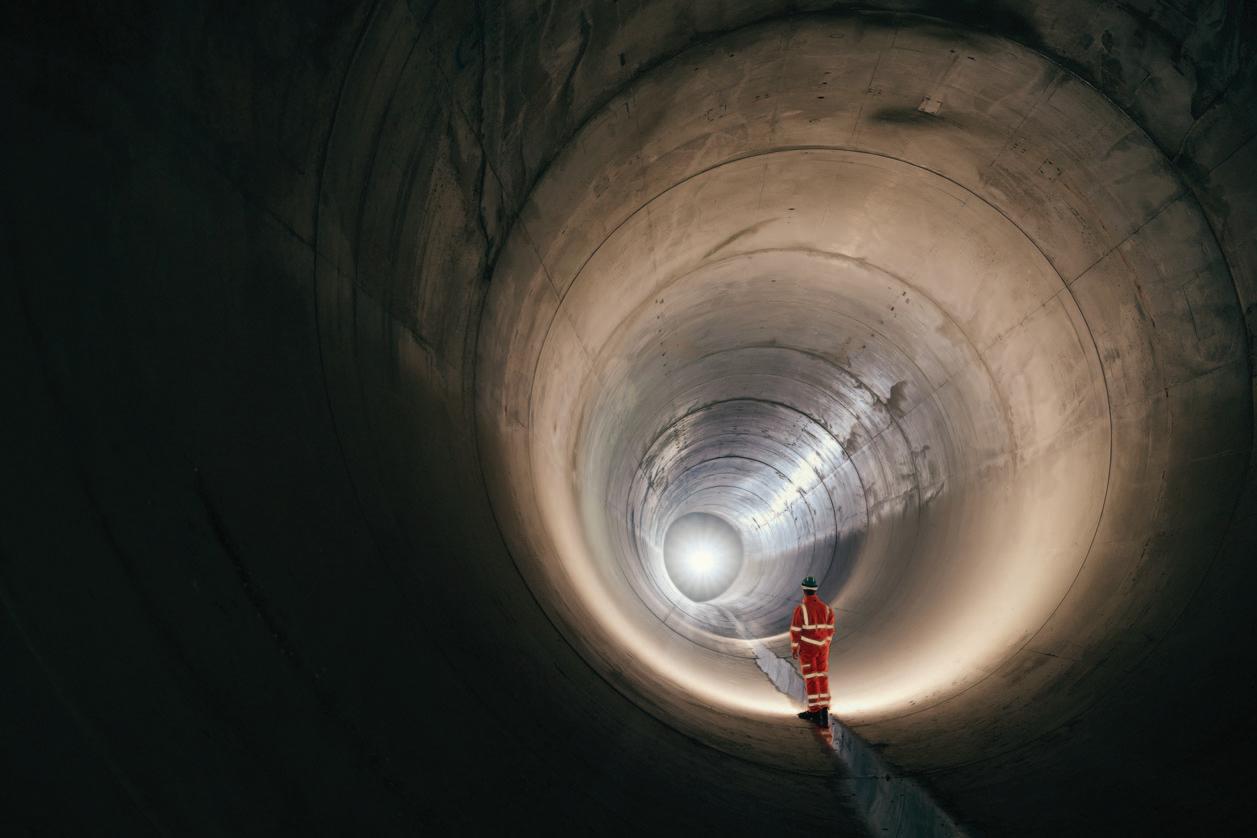
Securing the talent to deliver Ireland’s ambitious infrastructure programmes in this ‘decade of delivery’ offers both risk and opportunity.
Over the next 10 years, we will deliver some of the largest and most complex infrastructure projects, many at the same time in our Capital City. This ‘decade of delivery’ is not aspirational; it is funded, prioritised, and already underway. The capital envelopes are in place. The political mandate is clear. The pipeline is published.
Dublin MetroLink, the Greater Dublin Drainage Scheme, the Water Supply Project all commenced procurement for contracting teams in February 2026. Something they all have in common; a need for talented engineers, technicians, ecologists and quantity surveyors to name just a few of the skills. One question looms above all others: who will deliver it?
Ireland is already experiencing acute shortages across engineering, construction management, architecture, planning, environmental science, and specialist trades. These gaps are widening as experienced professionals retire and global competition for STEAM talent intensifies. Without decisive interventions now, our infrastructure ambitions risk becoming bottlenecked not by funding or intent, but by the availability of skilled people.

One of the most powerful tools we have, apprenticeships embedded directly within construction contracts, is also the one we risk overlooking.
Ireland has an apprenticeship system, with more than 28,400 apprentices and a target of 10,000 annual registrations. Yet uptake remains modest in the very disciplines that our infrastructure pipeline urgently needs: engineering technicians, construction supervisors, planners, ecologists, digital technicians, architectural technologists, environmental scientists.
As we move toward shovel-ready delivery on our biggest national projects, we have a once-in-a-generation opportunity to use government procurement, the State’s most powerful lever, to scale technical apprenticeships rapidly and sustainably. But doing so requires action now, before major contracts are signed, not once the

workforce crisis is already constraining delivery. If we act decisively now, we can build a resilient skills pipeline through integrated training that strengthens Ireland for decades.
Ireland is not the first country to face this challenge. The UK confronted a similar crossroads during its own major programme era, and the results are telling. With an ambition for 590 apprentices, the Transpennine Route Upgrade (TRU) programme created the TRU Apprenticeship Academy, providing rotational learning across engineering, ecology, surveying and project management. This helped build capability along the entire route, not just on isolated sites. It is a blueprint ready-made for Ireland’s regional spread of water, rail, and energy projects.
London’s Thames Tideway Tunnel faced a distinct challenge: a shortage of tunnelling operatives. Instead of competing for scarce labour, Tideway created the UK’s first Tunnelling Operative Apprenticeship, achieving between 82 per cent and 84 per cent retention and leaving a lasting capability legacy now used on other megaprojects. This shows how apprenticeships can be strategically deployed to solve deeply niche shortages.
Perhaps the most replicable model for Ireland is Crossrail’s use of contractual levers. The project required one apprentice for every £3-5 million of contract value, ensuring consistent delivery across all tiers of contractors and suppliers. This simple requirement generated thousands of skilled workers and created a workforce that has since powered other major UK projects.
The UK evidence is unambiguous: apprenticeships work when they are explicitly required, sufficiently supported, and integrated into procurement. They reduce shortages, stabilise delivery, lower costs, widen access, and create long-term regional capability.
Ireland can and must do the same.
Ireland’s major programmes are approaching the point of no return: contracts for enabling works, civils, systems integration, and programme delivery will be signed within the next 24 months. Once that happens, the window to embed meaningful apprenticeship expectations narrows dramatically.
If apprenticeship requirements are not included in early works contracts, and especially in main works procurement, we will lose the chance to scale technical training quickly; the ability to build local capability instead of importing it; the opportunity to support social value and regional employment and the foundation for long-term sector resilience.
We cannot train apprentices retroactively. We must plan for them at the very start. We can make a number of actions without the need for any legislative changes. It is more about a mindset shift.
We could embed apprenticeship requirements into all major infrastructure contracts, mirroring Crossrail. Using the pipeline of programmes to be delivered, there could be increased alignment with the National Apprenticeship Office and SOLAS to expand Level 6-10 programmes in engineering, planning, environmental science, and architecture.
There is the opportunity to establish project-linked apprenticeship academies, following the TRU model, to ensure consistent standards across the supply chain. Consideration on how additional support can be given to contractors with funding, mentoring frameworks, and regional training partnerships, as seen on Tideway. This all requires leadership, coordination, and a willingness to apply procurement levers already available to public sector clients.
Ireland is already moving in the right direction. The forthcoming Action Plan for Apprenticeships 2026-2030 offers a strong foundation and a clear national commitment to modernising and expanding pathways into technical professions.
Public sector clients can now translate that national ambition into practical action by embedding apprenticeship expectations into project delivery, championing technical pathways, and ensuring the next generation of engineers, planners, architects, scientists, and specialists are trained on Ireland’s most important projects.
This is not just a workforce strategy. It is a nation building opportunity.
If we embrace it, our decade of delivery can also become a decade of talent; one that leaves Ireland stronger, more capable, and better prepared for the challenges ahead.
W: www.jacobs.com


Thursday 28 May 2026
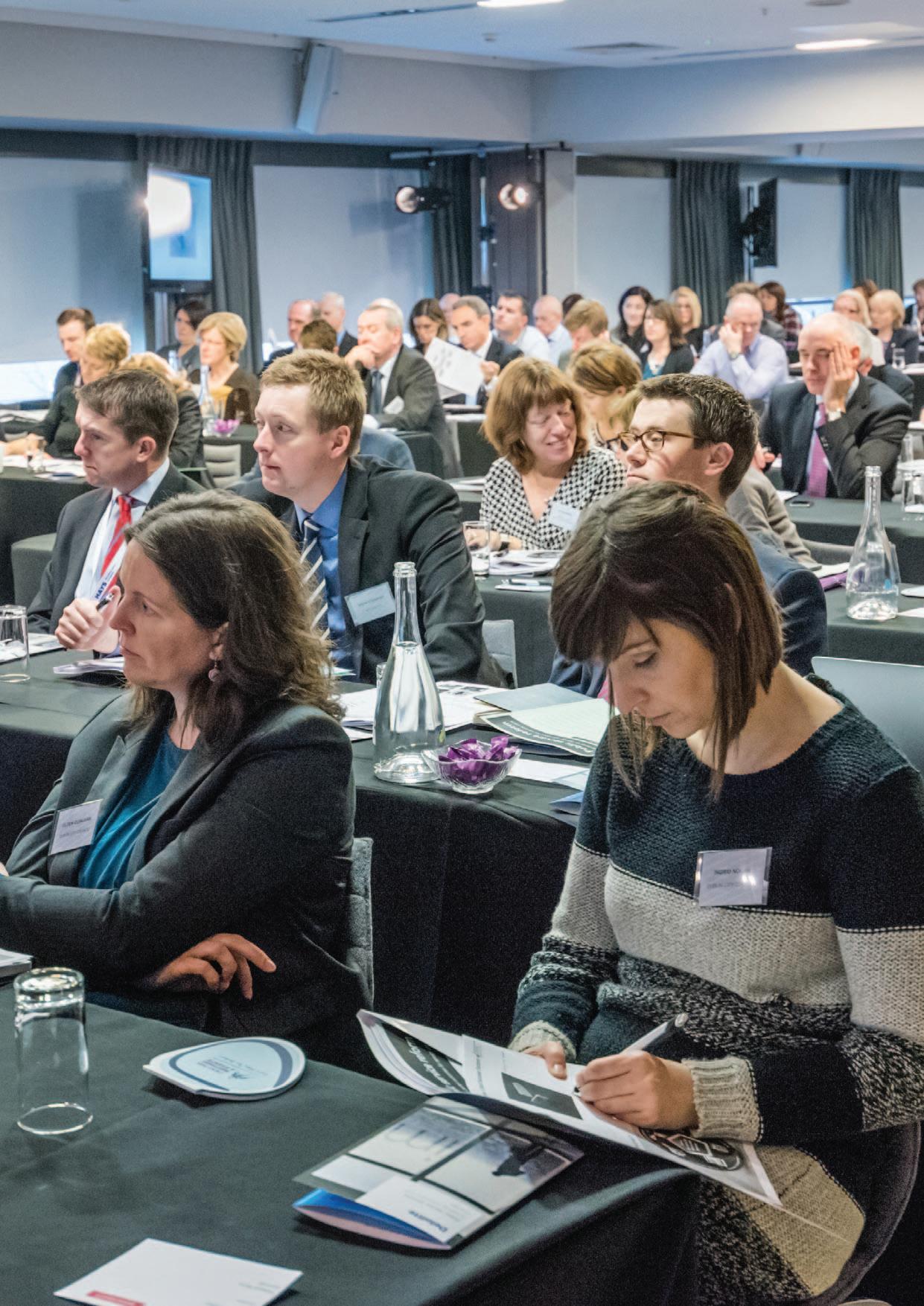
Launched in 2023, Better Public Services is the transformation strategy for the public service aimed at delivering for the public and building trust. The Public Service Transformation Framework is at the core of the strategy and comprises three priority themes: Digital and Innovation at Scale; Workforce and Organisation of the Future and Evidence-Informed Policies and Services Designed with and for the Public.
In November 2025, the Government launched the Digital Public Services Plan 2030, which sets out a roadmap for delivering seamless, inclusive, and user-centred public services through digital transformation. The vision is to create an inclusive, digitally enabled and integrated public service provision that meets the needs and improves the lives of the people of Ireland. Real progress is being made. This conference will bring together key stakeholders from across Ireland’s public service to look ahead to what’s next and how we can deliver transformation at scale.
Confirmed speakers include:


Louise O'Hare Assistant National Director Sláintecare Transformation and Innovation Office (STIO)
Soulmaz Alavinia Head of Department Campus de la transformation publique French Government
Kevin Horan Head of Digital Design HSE


Paula Lyons Head of Service Development Department of Social Protection
Caoimhe McMahon Service Design Course Coordinator
DesignLab: Civic, National College of Art and Design
Aideen Maguire Director
ADRC NI
Full programme coming soon!
Sponsored by Key themes:
3 Better Public Services: Update on delivery;
3 Embedding user centric design across our public service;
3 Engaging with the service user –becoming citizen-centric;
3 Data-driven research to inform policy-making;
3 Designing inclusive and accessible public services;
3 Driving equality, diversity and inclusion within organisations;
3 Innovation in healthcare delivery;
3 Sectoral update: health; justice; education; local government;
3 Best practice case studies.
Exhibition opportunities available
Join Ireland’s leading organisations in partnering with Public Services 2026. There are a small number of high-profile packages available. For further information on how your organisation can benefit, contact us directly on +353 (0)1 661 3755 or email Sophie.Adair@eolasmagazine.ie

Whether it is working families and the rising cost-of-living, a person with a disability seeking meaningful employment, or a carer balancing work and care, the social protection system must be a source of security, dignity, and opportunity, writes Minister for Social Protection Dara Calleary TD.
In Budget 2026, my first as Minister for Social Protection, I secured a total budget of €28.9 billion, including a package of over €1.15 billion for new measures. During 2026, this will enable my department to advance an ambitious reform agenda; reforms designed not only to protect people today, but to build a more equitable Ireland for the future. At the heart of this work is a simple principle: a fair society is one that supports its most vulnerable and enables everyone to participate fully in our communities and economy.
More than two decades after it was first discussed in Dáil Éireann, I am really proud that we have successfully delivered our key Programme for Government commitment to implement the State’s new automatic enrolment retirement savings system, known as MyFutureFund.
So far, over 763,000 employees, working for 104,000 employers have been automatically enrolled in MyFutureFund. In addition, over 5,000 employees have applied to join the scheme voluntarily, recognising the merits and benefits of being part of MyFutureFund.

MyFutureFund is truly revolutionary in terms of pensions for Ireland. It will benefit so many hard working people over the coming years and decades, making sure they have more money in retirement than they otherwise would.
One of my key priorities this year is the introduction of a permanent cost of disability payment. The Government fully recognises that disabled people face unavoidable and ongoing extra costs in their daily lives – transport, equipment, medicines – to name but a few. As such, the response will be a whole-of-government approach.
I have listened carefully to disability organisations, advocates, and individuals. Their message has been clear: support must be consistent and reflect the lived experience of disability. It will be a cornerstone reform, acknowledging that equality of opportunity requires equality of support.
Work on this is already well underway. I and my team are consulting with disabled people and their advocates, and a public consultation is currently open. This is hugely important to ensure that their voices are central to shaping this new payment. Following this work, I intend to bring a proposal to government in the coming months in advance of Budget 2027.

This new cost of disability is a statement of values. It says to people with disabilities that we recognise the real costs you face, and we support you to live full, independent lives.
Financial support is essential, but it is only one part of the picture. People with disabilities consistently tell us that they want to work, contribute, and participate but that challenges remain. In 2026, we are intensifying our efforts to remove those barriers and open pathways to meaningful, sustainable employment.
This includes expanding tailored employment supports, strengthening employer engagement, and ensuring that work always pays for people with disabilities.
Ireland cannot afford to ignore talent. More importantly, we cannot accept a society where people are excluded from opportunity because of structural barriers. Our goal is clear: to create a labour market where people with disabilities have the same opportunities as everyone else to build careers, contribute their skills, and shape their futures.
In my time as Minister for Social Protection, I have met many disabled people who bring extraordinary skills and talents to their workplaces. I have seen how employers across the country also recognise the valuable contribution these employees make to their business. But we can and must do more.
Carers are the backbone of our society. They provide extraordinary support – often quietly, often at personal cost – to loved ones who depend on them. In June 2026, the largest-ever increases in the income disregards for Carer’s Allowance will come into effect.
As a result, many more carers will now qualify for support. For example, a couple with a joint income of €108,000 will still qualify for Carer’s Allowance. This is a major step forward in recognising the value of care and demonstrates my commitment to ultimately phasing out the means test over the lifetime of this government.
Reducing child poverty remains one of the most urgent social challenges facing Ireland. In Budget 2026, we delivered a substantial packaged aimed at tackling child poverty and support working families. This included the largest-ever increases in the Child Support Payment, ensuring that families have greater financial stability at a time of rising costs.
We are also extending the Fuel Allowance to approximately 50,000 families receiving the Working Family Payment, with effect from March 2026 and backdated to January 2026. This is a targeted, practical intervention that will help working families manage energy costs and reduce financial pressure during the winter months.
These measures reflect a broader commitment: to ensure that work is rewarded, that families are supported, and that no child grows up in poverty.
In May 2026, we will publish a new Roadmap for Social Inclusion for the period 2026-2030, setting out Ireland’s strategy to reduce poverty, strengthen social inclusion, and improve outcomes for disadvantaged groups over the coming years. This roadmap will build on the progress made to date while addressing evolving challenges.
The roadmap will be grounded in evidence, shaped by consultation, and focused on measurable outcomes. It will guide our efforts to ensure that every person –regardless of background, ability, or circumstance – has the opportunity to participate fully in Irish society.
From July to December 2026, Ireland will hold the presidency of the European Union. During this period, I will chair the EPSCO Council, which brings together EU ministers responsible for employment, social policy, health, and consumer affairs.
Our presidency will place a strong emphasis on antipoverty, disability supports, employment participation, among other key issues. The priorities we are advancing at home will be reflected in our leadership at European level.
Ireland has long championed a social Europe. During our presidency, we will work to strengthen social protections, promote fair working conditions, and ensure that the EU remains focused on improving the lives of its citizens.
Ní bhíonn deireadh le hobair na coimirce sóisialaí riamh. Bíonn aird leanúnach, síor-athchóiriú, agus toilteanas éisteacht agus oiriúnú de dhíth. Ach tá an chonair soiléir. Táimid ag tógáil córas a chosnaíonn daoine ar lagchuidiú, a thacaíonn le rannpháirtíocht, agus a léiríonn luachanna comhbhá, cothroime, agus deiseanna.
In 2026, trí thacú le daoine faoi mhíchumas, pinsinéirí, cúramóirí, teaghlaigh ag obair, agus grúpaí eile ar lagchuidiú, tá dul chun cinn suntasach á dhéanamh againn i dtreo Éire níos ionchuimsithí.
Tá uaillmhian simplí againn: Éire ina bhfuil deis ag gach duine a bheith rathúil.
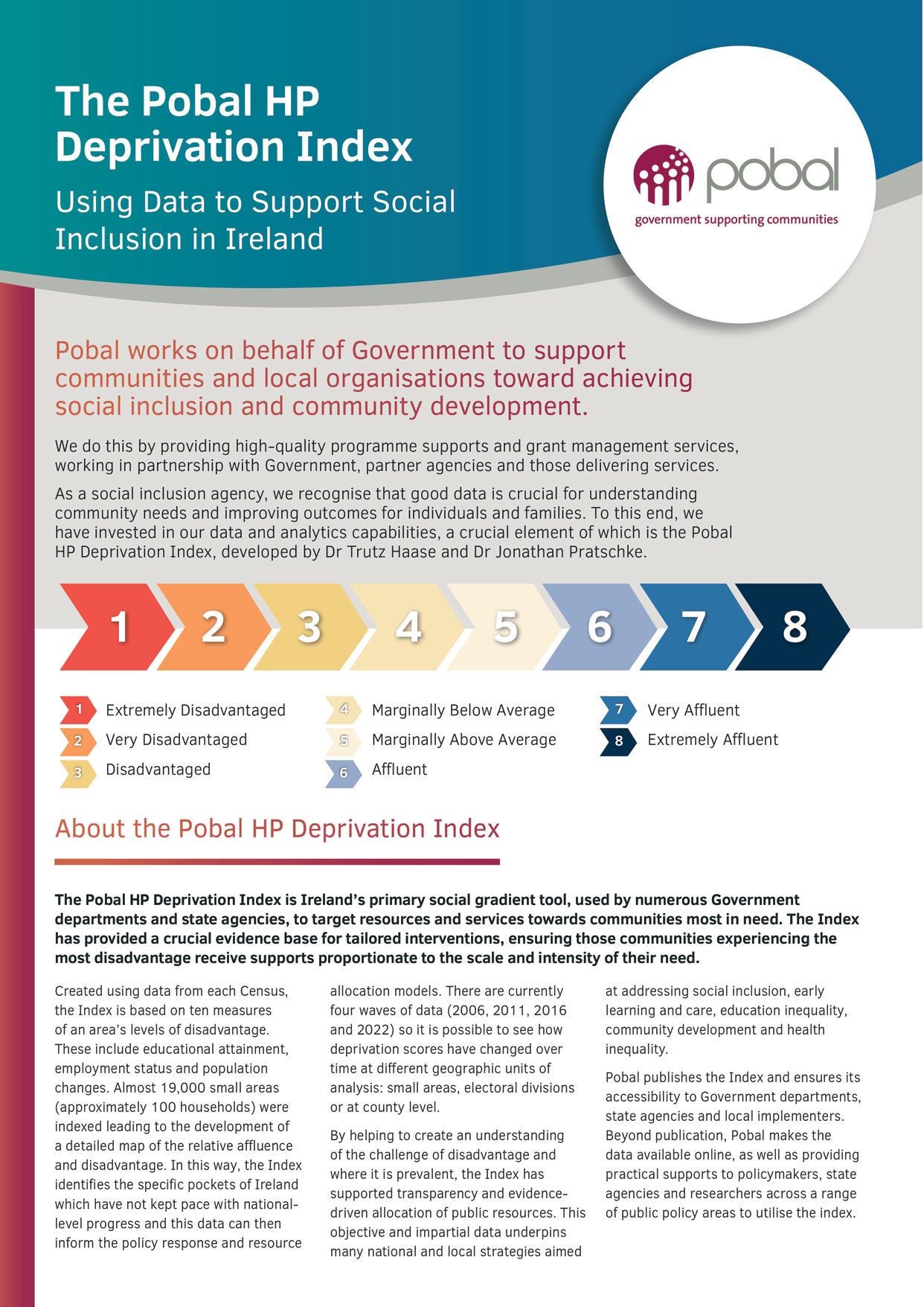
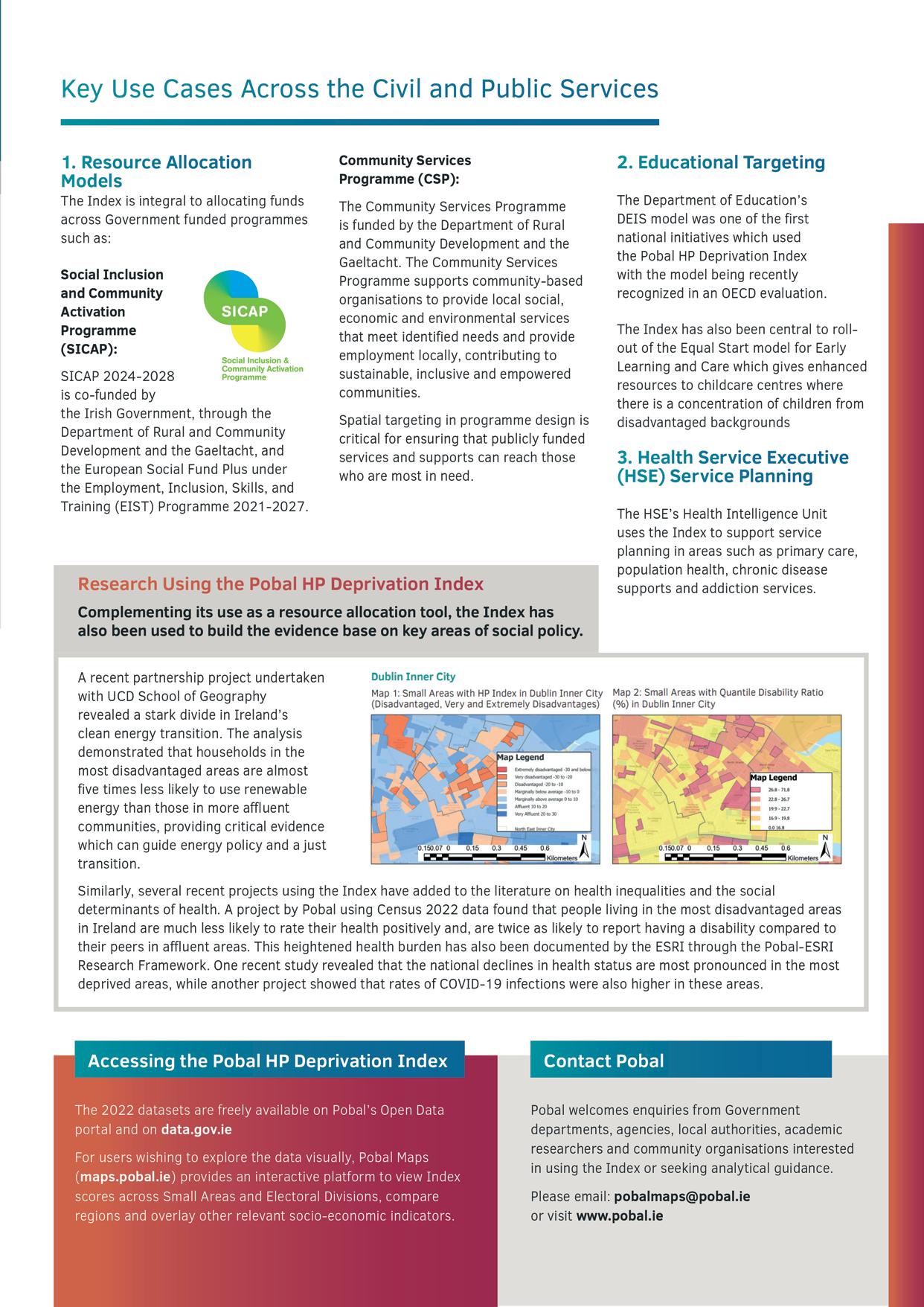


cities, says Sherelle Fairweather, Digital Strategy Lead at Manchester City Council.
Fairweather states that the growth of tech in Manchester is the largest of any city in the UK outside of London. However, she adds that a large percentage of young people and families are continuing to experience poverty. She describes the statistics around this as “harrowing”, and insists that it means many people are not feeling the benefits of tech growth in the city.
Fairweather asserts that Manchester City Council takes a human-centred approach to technology. She explains that the authority is endeavouring to make Manchester an “AI-ready city”, adding that it is important to consider what this entails for the city and if it will lead to “sustainable growth for all”.
The city of Manchester is part of the ‘smart city’ movement. This has included development of internet of things (IoT) infrastructure, integrating ICT systems around core infrastructure assets, and scaling up IoT projects in urban areas.
Fairweather discusses Manchester’s digital strategy, Doing Digital Together. It contains four thematic areas. First is ‘Remarkable People, Extraordinary Opportunities’, under which the council aims to ensure everyone in Manchester is represented.

Second is ‘Connecting Places, Enhancing Lives’, which underpins the cities aim to provide the digital infrastructure that drive’s digital inclusion and provides capacity for AI uptake.
Third is ‘Pioneering The Future, Prosperity For All’. Fairweather explains: “As more big tech companies move to the city, that pipeline for smaller non-for-profit, tech-for-good organisations is not necessarily growing. How do we retain that legacy knowledge from those organisations?”
Fourth is ‘Rising To Challenges, Future-Proofing Our City’ which underpins the strategy’s aim to “mindfully” deploy tech and use it to address challenges such as emissions targets.
Fairweather asserts that digital inclusion is the core of everything the strategy delivers. “We do not think we can grow, sustain, scale, and digitally transform without ensuring people have access to the things they need,” she says.
“A lot of this work started after the pandemic and there were lots of attempts to support people but initially not much thought was given to people’s capacity to access it online.”
To address this, Manchester City Council created a team which focused on this area. Initially, the team was reacting to emerging problems. Now, the team operates more in a consultancy capacity for services and community organisations to help them identify their challenges and deliver impactful digital inclusion initiatives.
Fairweather explains: “We have been using a data-led approach to understand where there might be specific challenges in the city through an open-sourced model called the Digital Exclusion Risk Index. It is not perfect but it is helping us to focus resources.”
Fairweather asserts that the council intends to make the strategy “more intentional”. She explains that
“People sometimes trust the technology but they do not tend to trust us. People assume that they do not trust the technology, but there is that challenge of trust in us as officers or leaders.”
building is not a challenge for Manchester as it is “seen as quite an attractive city for industry”. However, challenges remain such as overbuilding and connectivity quality.
“We have been working with Inakalum and Network UX to map the quality of mobile connectivity and, furthermore, Ofcom and Greater Manchester Combined Authority to gather more data around high footfall spaces such as events or travel spaces.
“Quality often depends on how many people are accessing at once. Buildings, such as high-rise apartments, can also impact the quality of someone’s connectivity.
“This is where we are being more intentional. We are focusing more on areas of deprivation.”
Fairweather explains that the council is also assessing how it shares infrastructure. The council is set to roll out EV charging points and Fairweather asserts that areas where they are rolled out will need to have appropriate internet quality ensuring smart, safe, and reliable operation.
Fairweather states that Manchester is recognised as being the “most AI-ready city” in the UK outside of London. She states that there is

significant focus on the cost-saving benefits of AI and economic growth but adds that there should be consideration given to what these costs can be used for and the wider social benefits.
Continuing, Fairweather says Manchester City Council is “focussed on how we can put the human back into AI”. She adds that one of the council aims to achieve this is through its ‘People Panel for AI’.
The council is working with Manchester Metropolitan University to ensure people are involved in the design of services. Using the risk index, the council identifies people likely to be excluded from the AI conversation. It then travels to these areas to talk to them about various uses for AI as well as provide training.
Citizens can then opt in to become paid panel members, where they provide feedback to people creating services and products with AI. A report follows these discussions outlining how the council has acted upon views expressed.
Concluding, Fairweather says: “People sometimes trust the technology but they do not tend to trust us. People assume that they do not trust the technology, but there is that challenge of trust in us as officers or leaders.”
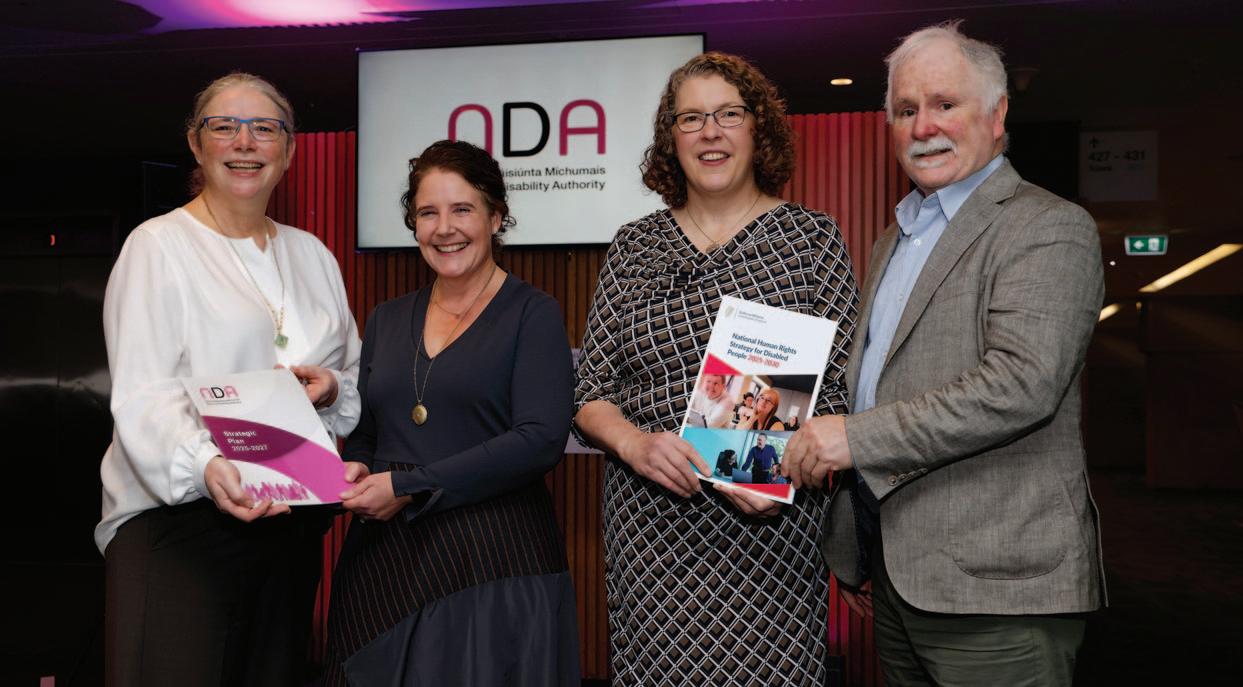

It is impossible to talk about genuine social inclusion without considering the more than 21 per cent of our population who have a disability.

The National Disability Authority (NDA) has a role to advise the public sector on ways to improve inclusion while also monitoring progress against various strategies, policies and legislation. In doing so we highlight examples of good practice and identify areas where further focus is required.
The NDA is the independent statutory body with a duty to provide evidenceinformed advice and guidance directly to government on disability policy and practice. Established under the NDA Act of 1999, the organisation has seen its role and remit evolve and grow over the
last quarter century in response to increased focus on the State’s efforts to foster an inclusive society.
The NDA is also lucky to have within it the only statutory Centre for Excellence in Universal Design (CEUD) in the world. Universal Design is the design and composition of physical and digital environments, products and services, so that they can be accessed, used and understood by all users, regardless of age, size, ability or disability.
In September 2025, the Government published its National Human Rights Strategy for Disabled People 2025-2030 (NHRSDP). This articulates a whole-ofgovernment commitment to realising the rights of disabled people.
The five pillars under the Strategy recognise the domains of life which we can take for granted, but where many
disabled people can encounter barriers to inclusion. Government departments and public bodies have since set out their action plans to address these barriers, and the NDA has a role to monitor progress against these plans, but also to provide data and evidence to inform policy decisions.
It is a strategy for the full life course, looking at education, employment, independent life in the community, health and wellbeing, and transport and mobility.
The Strategy recognises that genuine inclusion begins early in life, where places of childcare, education and learning are universally designed to meet the needs of the full population, and the physical environment, curricula and assessment processes also recognise the varied requirements of those teaching and learning within these settings.
Employment is also recognised as a key enabler of social and economic inclusion. Over the past number of years, the NDA has carried out research with partners such as the ESRI and OECD showing that Ireland has one of the largest employment gaps for disabled people in the EU27 and OECD. The gap between the percentage of disabled people of working age in employment and the percentage of their non-disabled peers is 22 percentage points and has proven a difficult gap to close. People are watching closely to see if the implementation of the new Strategy will be successful in narrowing the gap.
One of the NDA’s annual responsibilities is to report on the proportion of the public sector workforce made up of disabled people. In 2024, 5.4 per cent of employees in this sector declared a disability, exceeding the minimum target for that year which was 4.5 per cent.
Analysis of the 2025 figures will begin shortly, applying a newly increased target of 6 per cent. Success is not just about meeting the target but in creating truly inclusive workplaces where disabled people can have confidence that they will receive the accommodations they need to fully achieve their potential.
Our research has shown that most accommodations cost little or nothing, and can range from allowing flexibility with regard to working patterns, ensuring office spaces are fully accessible, to designing job specs that focus on the truly essential requirements of the role rather than criteria that are often automatically included for example, clean driving license, but which may never be called on or can be easily adapted. Some of our work involves sharing evidence about good practice in this area with other public bodies so that employers can feel confident and empowered in tapping into this talented and under-utilised labour force.
We have other statutory monitoring responsibilities that ensure we keep a focus on aspects of public services that can foster rather than hinder participation and inclusion. We monitor how public body websites meet the requirements of the EU Web Accessibility Directive, seeing improvements in performance year-on-year as a result.
We also examine how public bodies meet their obligations under the Disability Act 2005 to provide accessible services and information, as well as implementation of the Irish Sign Language Act of 2017. The evidence-base provided through these monitoring activities is key to driving continuous progress across the public sector, and we balance this with provision of practical information and guidance to help public bodies on their journey.
Policy decisions related to disability should always be informed by the voice of those impacted. Disability groups often use the phrase ‘nothing about us, without us’. As a party to the United Nations Convention on the Rights of Persons with Disabilities (UNCRPD), the State is required to closely consult and engage with disabled people through their representative organisations (called Disabled Persons’ Organisations) on all relevant policy matters. An example of this process was evident in the development of the NHRSDP, including wide-ranging consultation and co-design of the finished product. This is still an area that is new to many public bodies, however, and the NDA has developed practical guidance to help them along this journey.
This type of engagement with people with disabilities reminds us of the day-to-day challenges experienced by so many in the disabled community, including inaccessible infrastructure such as buildings, transport, and public spaces in our towns and communities. Public bodies should also give consideration to staff training in disability equality and evolving language relating to disability.
Access to suitable housing is a significant challenge for many disabled people, highlighting the need for a stock of universally designed housing to enable disabled people to live ordinary lives in ordinary places. There is also a well-documented additional cost for many to having a disability, as well as challenges in navigating access to publicly funded services and supports. Without addressing these challenges, disabled people can find themselves continuously marginalised and excluded from the socioeconomic life of the State.
W: www.nda.ie
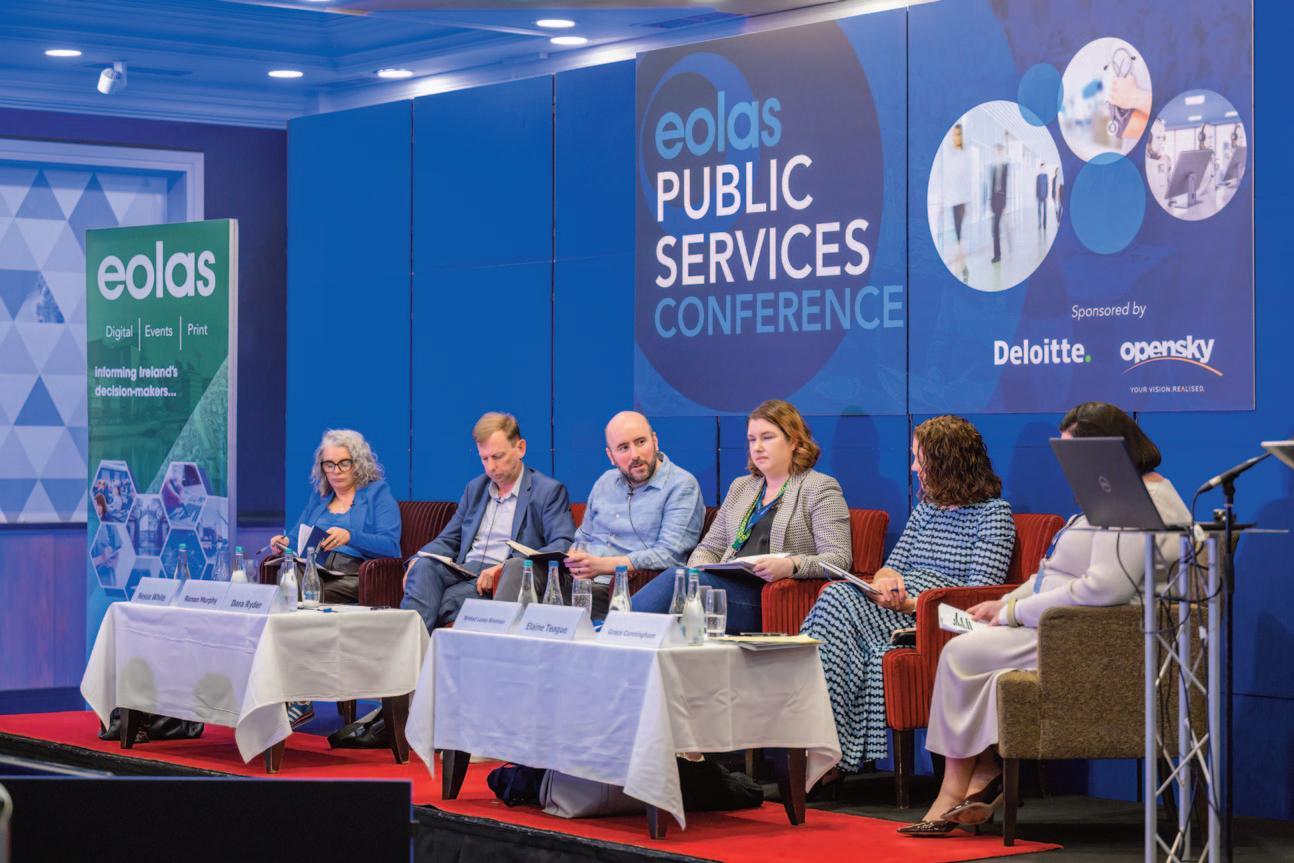

At eolas Magazine’s annual Public Services conference, experts discussed how to design inclusive and accessible public services.
How can we ensure inclusive design in public services?
Elaine Teague
Initially, accessibility focused on physical access but over time, we have added subtitles, Irish Sign Language interpretation, and other supports. We have been on a journey towards inclusion. Public services are for everybody. If we design for everyone, everyone is included. If we design for only one part of the population, we inevitably have to retrofit later. The challenge now is moving beyond physical spaces. We broadly understand physical accessibility with the introduction of ramps, doors, and accessible bathrooms. Now, we need to think about communication, policy design, engagement, and decision-making.
Dara Ryder
Ireland has one of the lowest disability employment rates in Europe, which is deeply concerning for a wealthy and progressive country. Addressing this is one of the biggest inclusion challenges of the next decade. In many workplaces, there are far more disabled people than employers realise, but people do not

disclose due to fear or lack of trust. They are constantly weighing the cost-benefit of disclosure. When we create environments where people feel safe to be open, we unlock lived expertise that directly improves design decisions. We see this increasingly through disability employee resource groups, which play a real role in shaping organisational policy.
Ronan Murphy
For us, consultation starts at the very beginning of any project. We involve disability user groups from the outset. A recent example is our wayfinding project across 147 stations. We developed several design options, discussed colour contrast and usability with our accessibility groups, piloted signage in stations, gathered feedback over a two-month period, and then refined the final design based on lived experience.
Sinéad Lucey Brennan
Feedback mechanisms must accommodate diverse communication needs and have things like extended survey times, phone conversations, written submissions, and accessible formats.
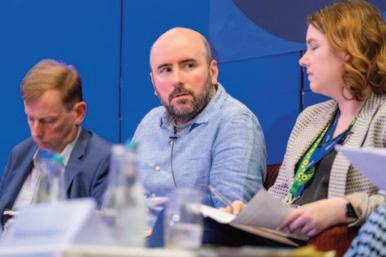

These are not ‘nice to haves’; they are civil rights. If people feel heard and see action, trust is built. Disabled people should be paid and valued as professional consultants; not expected to contribute for free.
Nessa Whyte
Inclusive design requires listening to the people who experience barriers every day. It is important to involve disabled people not just in consultation but in decisionmaking at every level from strategy to policy and operational design. Small details, like clear signage, font size, and seating arrangements, can make a big difference. Co-design ensures solutions are practical and meaningful rather than theoretical.
As more services move online, what steps can organisations take to ensure services remain accessible across both digital and physical systems?
Elaine Teague
We must retain offline options. While digital capacity is built, people must still be able to engage in person. Otherwise, we risk excluding people further. EU legislation, including the European Accessibility Act and AI regulation, is also pushing us to be more careful and inclusive in digital design.
Dara Ryder
Inclusion must be operationalised. It is not one person’s responsibility, it must be embedded across systems. Digital accessibility is highly measurable. We have clear standards through the Web Content Accessibility Guidelines, which are written into law for public services. This requires skilled IT teams, accessibility audits, and user testing. It also requires training content creators, but most people can learn accessible content design in a day.
Nessa Whyte
Digital accessibility must consider real-world usage. People have different devices, internet access, and digital literacy levels. Online services need to be intuitive, compatible with assistive technologies, and provide alternatives like phone or in-person options. Accessibility is only meaningful when it works for all users, not just in theory.


Sinéad Lucey Brennan is a lived-experience disability advocate and who promotes awareness of invisible disabilities. Brennan introduced the Hidden Disabilities Sunflower initiative to the island of Ireland.
Ronan Murphy is Head of Customer Care and Accessibility of Iarnród Éireann, the organisation which manages Ireland’s rail network.



Dara Ryder is Chief Executive Officer of AHEAD, a non-profit organisation aiming to create inclusive environments in education and employment for people with disabilities.
Elaine Teague is Chief Executive of the Disability Federation of Ireland (DFI), a national support organisation advocating for the rights and inclusion of people with disabilities in Ireland.
Nessa Whyte is Interim CEO of SOLAS, the Further Education and Training (FET) Authority.
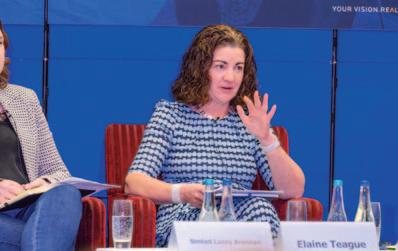



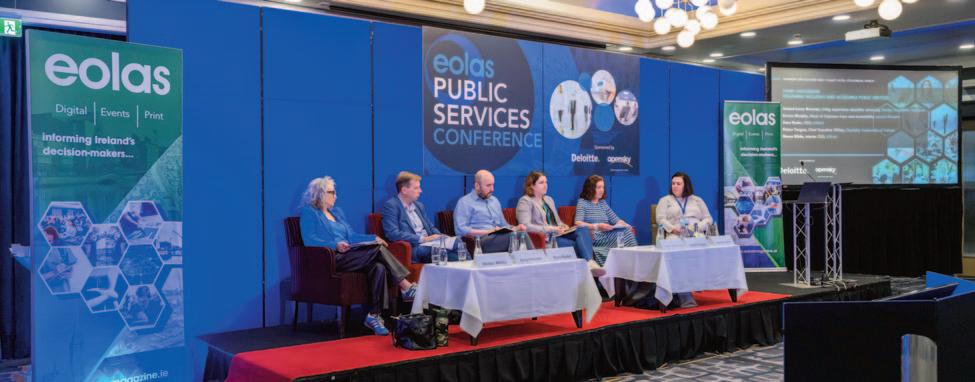
How can organisations best learn from the people who use their services?
Sinéad Lucey Brennan
Structured participation is key. Consultation must be meaningful and lead to action. Feedback mechanisms must be flexible to meet diverse needs such as surveys, phone calls, written submissions, and other accessible formats. People need to feel their inputs shape change. Professionalising the role of disabled consultants is important. People should be valued, recognised, and compensated for their expertise.
Elaine Teague
Outcomes must be measured, not just processes. Policies should result in tangible improvements in access, engagement, and quality of life. Ask disabled people directly if measures are making their lives easier. Employment, transport, and education are all areas that should feature in outcome measurement.
Dara Ryder
Some things are measurable; some are qualitative. We must be careful not to force disclosure. Universal design should reduce the need for people to identify themselves as ‘different’. Better data sharing, within GDPR limits, can help us understand what is working nationally.
Ronan Murphy
We use customer satisfaction surveys, mystery shopping, and direct engagement with user groups. We also track assisted journeys. Consultation must lead to action. Otherwise, it is meaningless.
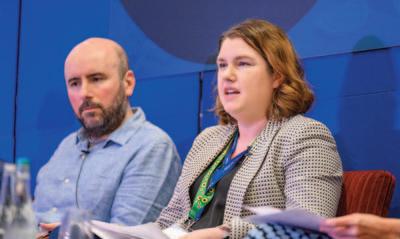
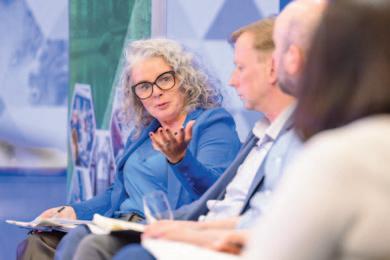
How can we measure progress and ensure best practice?
Elaine Teague
We must focus on outcomes. Policies must translate into better lives, not just processes. Ask disabled people if life is easier and assess the areas that matter most such as employment, transport, and education.
Sinéad Lucey Brennan
We need to move beyond counting ramps and accessible toilets. Real participation matters. We need to find out are disabled people using services at the same rate as others? Are complaint rates dropping? Are completion rates improving? This is vitally important because universal design benefits everyone.
Nessa Whyte
Learning from service users requires ongoing dialogue. Oneoff surveys are not enough. Organisations should embed feedback loops into everyday operations, document how changes are implemented, and communicate back to users. This builds trust and ensures solutions reflect real needs.
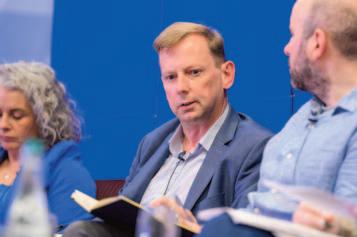

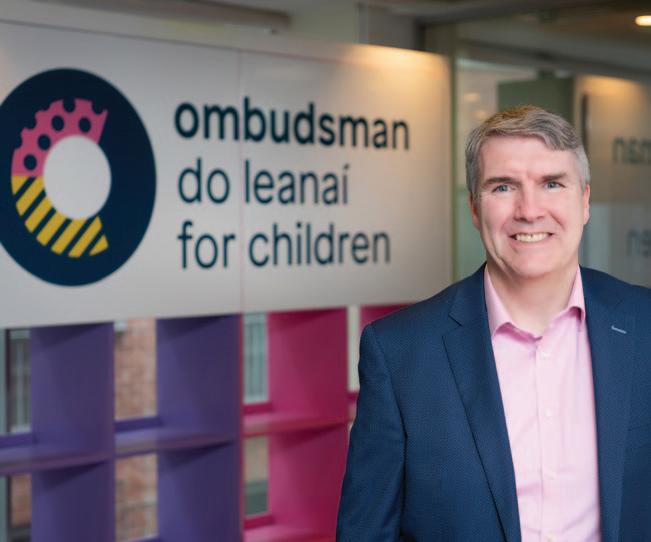
The Ombudsman for Children’s Office (OCO) is a human rights organisation set up in 2004 to promote the rights and welfare of all children living in Ireland.
Accountable to the Oireachtas, the OCO investigates complaints about children’s public services. The service is free and independent. The Ombudsman for Children is Niall Muldoon, who was first appointed to the role in 2015 by President Michael D Higgins and reappointed for a second term in 2021. The Ombudsman for Children Act 2002 sets out the framework for the OCO’s complaints work. Under this, it determines if a public body’s administrative actions have had an adverse effect on a child or children. Anyone can make a complaint to the
OCO, including a child or an adult on their behalf, if they have already gone through the local complaints process with that service and are still not happy with the outcome.
The majority of complaints to the OCO come from parents or professionals working with children, and in 2024, 3 per cent of complaints were from children themselves. Education, Tusla and concerns about health services are typically the most complained about issues. The OCO also publishes investigations arising from its complaints work with recommendations for a public
body where it sees the need to highlight systemic issues that are impacting children.
Central to the OCO’s work in promoting children’s rights is consulting directly with children and ensuring their voices are heard on issues that affect them. The OCO’s Youth Advisory Panel of young people aged between 13 and 18 is integral to this. The OCO also meets with more than 2,000 children every year through its rights education workshops with schools at the OCO Office in Dublin city centre, as well as through outreach visits, consultation and OCO events.
Child Talks, the OCO’s annual flagship event celebrating World Children’s Day at the Helix in Dublin, brings together children from across the country to speak about the issues that affect their lives. This provides a unique, national platform for children to highlight their experiences and concerns and reinforces the importance of listening to children in discussions about public services and society more broadly.
The OCO also runs a School Ambassador programme where it teams up with primary and secondary schools every year to work with them to raise awareness of children’s rights. Providing advice to Government on policies and laws that impact children is another way the OCO promotes the rights of children.
The UN Convention on the Rights of the Child (UNCRC) guides the work of the OCO. Despite being ratified by the State more than 30 years ago, it is not part of our law. The OCO is calling for full and direct incorporation of the UNCRC into domestic legislation to be the bedrock of the Government’s commitment to children, so that their rights are always considered when decisions are being made that impact them. This would be a game changer for children’s rights in Ireland and the OCO will continue to push for this to happen. Let’s get it right for children’s rights.
Find out more: W: www.oco.ie


The Department of Social Protection is due to publish a successor to the Roadmap for Social Inclusion 2020-2025 on 27 May 2026, setting out the State’s direction on poverty reduction and equality for the second half of the decade.
The Roadmap for Social Inclusion 2020-2025, is the Government’s framework aimed at reducing deprivation, making Ireland “one of the most socially inclusive countries in the European Union”, and lowering the rate of consistent poverty to 2 per cent or less.
It is expected that the next plan must respond to a dramatically altered social and economic landscape.
The existing roadmap was drafted before the Covid19 pandemic, the energy shock triggered by Russia’s invasion of Ukraine, and the sharp rise in housing and living costs that dominated much of the period.
When it was launched in early 2020, the 2020-2025 roadmap outlined an aim of reducing the rate of consistent poverty to 2 per cent or less and to place Ireland among the strongest performers in Europe on a wide set of social indicators.
It translated that ambition into dozens of commitments spread across employment, income supports, childcare, disability, housing, health, and community participation. In total, more than 80 actions were attached to government departments and agencies.
By the end of 2025, the Department of Social Protection reported that 59 commitments had been completed or were in place on an ongoing basis, with the remaining 22 still in progress.
That represents substantial administrative movement, and the Government has consistently pointed to reforms such as the expansion of childcare subsidies, labour market activation measures, increases in core welfare rates, and new disability and housing initiatives as evidence of delivery.
On the central metric, Ireland did see long-term improvement across the lifespan of successive antipoverty plans dating back to the late 1990s. Consistent poverty fell to a historic low of 3.6 per cent in 2023. However, the 2 per cent target has not been reached, and the rate increased again in 2024.
The rise in consistent poverty can be linked to the post-Covid cost-of-living rise, with significant increases having been recorded in the prices of rent, energy, and food. In addition, a number of pandemic income supports that had temporarily

boosted household finances have since been ended by the Government.
The roadmap also sought to push Ireland into the top tier of EU performers on measures such as the proportion of people at risk of poverty or social exclusion, income distribution, and deprivation.
Absolute improvements were recorded on many of these indicators in the early years of the strategy. Severe material deprivation, for instance, declined from pre-roadmap levels.
But Ireland’s relative ranking is influenced by how other countries perform, not just domestic change. Maintaining or improving a top-five position proved challenging as other member states also advanced or, in some cases, moved more quickly.
Another recurring theme across the period was that headline averages often masked stubborn inequalities.
Traveller and Roma communities, people with disabilities, those unable to work due to longterm illness, lone-parent households, and many renters continued to experience poverty rates significantly above the national average.
Stakeholder groups involved in the mid-term review of the roadmap argued that while strategies and reports multiplied, delivery did not always translate into lived improvements, particularly in housing supply and income adequacy.
They also warned that full employment at national level does not automatically mean an inclusive labour market, with discrimination and caring responsibilities still limiting access for some.
The successor strategy will therefore land in a more complex climate than the one its predecessor envisaged.
While the economy continues to perform relatively well and the State’s public finances are in a strong position, affordability remains a significant challenge.
Housing costs in Ireland are among the highest in the EU, at over double the EU average, and property prices and rents have continued upward trends in recent years. Despite this, measures of housing cost burden show Ireland somewhat below EU averages on some affordability ratios, although for these trends to not apply for people under the age of 40.
On broader cost-of-living concerns, 84 per cent of Irish adults report being worried about meeting household costs, with energy and food prices contributing to continued household strains.
Furthermore, recorded hate crimes and haterelated incidents in Ireland have risen in recent years, with official Garda data showing an increase from 651 incidents in 2023 to 676 in 2024, and anti-race motives forming around 39 per cent of cases. Hate crime incidents have also increased by 24 per cent since 2021.
There will also be scrutiny of whether the Government retains the 2 per cent consistent poverty ambition or attempts to reframe success in a different way.
At the time of writing, DSP is finalising the text prior to the stated release date of 27 May 2026.
While specifics are not yet known, consultation documents and reports indicate that the next strategy will again span multiple departments and broadly align with EU and UN commitments, while trying to balance economic competitiveness with as of yet unspecified social inclusion targets.
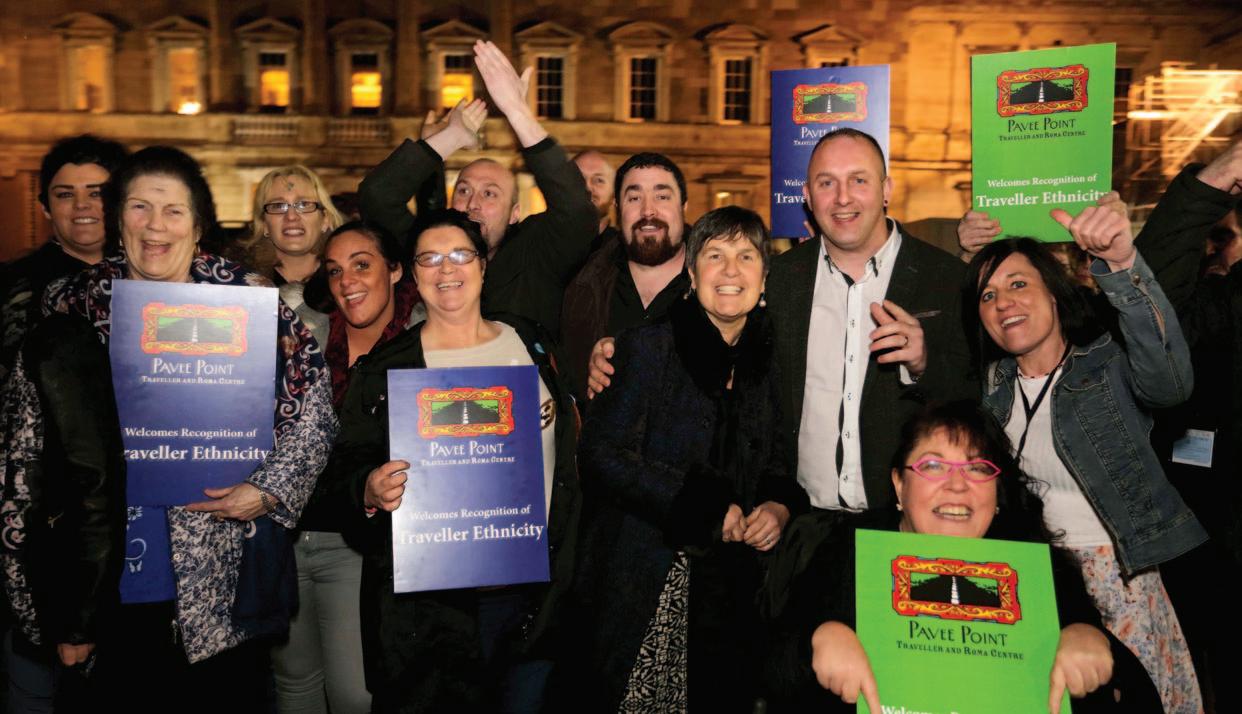
‘Nothing about us without us’
Achieving equality for, and with, Travellers and Roma requires sustained investment and political will in order to tackle pervasive systemic and social inequalities.
In 2025, Pavee Point marked 40 years of work for and with Travellers and Roma in Ireland. From the first education programme in Meath Street in 1985, Dublin Traveller Education and Development Group (now Pavee Point) has worked towards the empowerment of Travellers in Ireland; the coordination of community and collective action; and the ending of a vast web of discriminatory structures.
Traveller experiences in Ireland are marked by racism, social exclusion and long-standing inequalities which successive governments and local authorities have failed to adequately address. But more importantly, they are experiences marked by resilience, the determination of a community that has endured, organised and fought to assert its rights and dignity in the face of exclusion.
Laws on land use and public order have undermined Travellers’ right to live a nomadic way of life. Legal barriers make it harder to challenge discrimination, including in pubs and licensed premises. These laws may not name Travellers directly, but in practice they exclude communities and entrench inequality. While the recognition of Travellers as a distinct ethnic group in 2017 represented a landmark for the community, it does not disrupt the entrenched inequalities that continue to shape Travellers’ lives
Civil society organisations and national and international human rights bodies, in their reviews of Ireland’s record in implementing our international human rights law obligations, have been consistent in highlighting historic and ongoing inequalities: calling for concrete improvements by the state. Countless calls have been made to tackle systemic issues regarding low educational
attainment, profound barriers to employment, and access to healthcare, to name a few areas where fundamental rights are not, or only partly, being realised.
Giving lived currency to the recognition of Traveller ethnicity requires that these calls by national and international bodies are acted upon; that discriminatory legislation is repealed; and that equality and human rights are upheld in practice.
The National Traveller and Roma Inclusion Strategy (NTRIS) 2017 marked the first national whole of government inclusion strategy for Travellers and Roma with Pavee Point and other Traveller organisations contributing to the development of the strategy and now overseeing its implementation. The second iteration of NTRIS, with particular focus on questions of discrimination, addresses inequalities in areas such as health, education, housing, and employment.
Sustained advocacy work followed the publication of Our Geels: All Ireland Traveller Health Study in 2010, and the National Traveller Health Action Plan
2022-2027 was developed to address the severe inequalities and social determinants of health affecting Travellers. Building on the work of NTHAP, and under the remit of NTRIS II, the Roma Health Action Plan became the first Roma-specific health plan to address unique barriers faced by the Roma community. NTRIS II also includes an evaluation of the national network of Primary Health Care for Travellers Projects (PHCTP), an initiative began by Pavee Point in 1994, in order to strengthen these Traveller-led health interventions across the country.
Pavee Point, and other Traveller organisations and groups working with Roma, was also actively involved in the development of the first Traveller and Roma Education Strategy (TRES). This is the first national strategy to address the Traveller and Roma educational inequalities and aims to ensure that Travellers and Roma have equality of access, participation and outcomes at all levels of education and throughout the education workforce.
NTRIS II, alongside the National Action Plan Against Racism (NAPAR), includes commitments by the State to address anti-Traveller and anti-Roma racism. This includes Traveller and Roma specific cultural awareness and antiracism training to be introduced across the public sector: working to address the role of institutions in reproducing systemic racism.
With regards to employment, a Public Service Traveller and Roma Internship Programme was started to increase representation within the public sector. The Special Initiative for Travellers (SIT) aims to increase engagement with employment programmes.
There are positive outcomes from these policy initiatives, and a large proportion of credit there goes to the work of Traveller organisations on the ground, particularly that of Primary Health Care for Travellers Projects (PHCTP). For example, the overall life expectancy of Travellers has changed, with more Travellers living over the age of 65; Travellers have gained greater access to mainstream services, including higher rates of health screenings; and there are higher rates of health literacy amongst Travellers.
Despite such positive developments, structural factors relating to overpolicing; lack of culturally appropriate
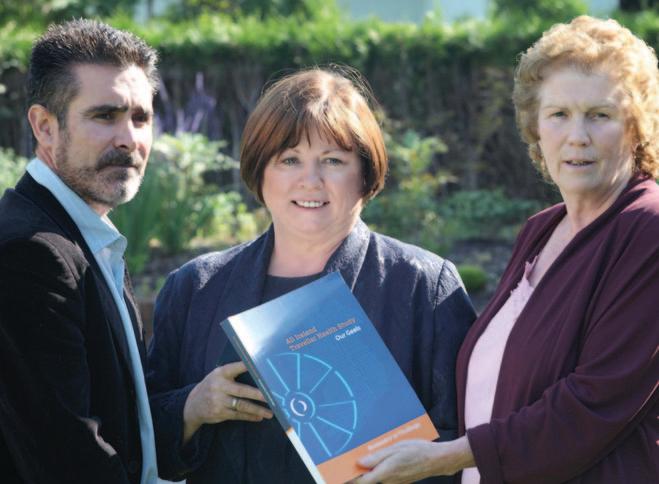
accommodation; and a lack of sustained funding, across the necessary sectors, hinder the full realisation of the appropriately ambitious aims of NTRIS II and other government policies. The continued absence of ethnic data collection across state agencies and services, conducted in line with human rights standards, produces policy blind spots when it comes to responsive action.
In this way, securing long-term social and systemic equity for Travellers and Roma requires structured and sustained political; cultural; and financial investment.
Speaking at the recent launch of a Pavee Point/EU Fundamental Rights Agency (FRA) partnered nationwide survey concerning Traveller and Roma rights, Senator Eileen Flynn vividly recounted practices and instances of exclusion that continue to affect Travellers to this day.
Senator Flynn described living a double life as a Traveller: one life amongst Travelling People; and another life amongst settled people. As she socialised with her peer group as a young woman, she felt herself having to hide the fact that she was a Traveller; unable to take pride in her identity as a Traveller.
The FRA survey underlined the alarmingly high levels of day-to-day
racism and discrimination faced by Travellers and Roma in Ireland: 75 per cent of Travellers experiencing instances of discrimination in the year before the survey; and 60 per cent of Roma disclosing similar instances of discrimination. The findings underline that a robust response is required in order to achieve any sort of equality for Travellers and Roma, with particular attention needed to address the systemic inequalities and racism that impact on both groups.
While that same survey pointed to incremental progress made in terms of Traveller inclusion in health, education, and employment, Senator Flynn described the situation as one only moving from “very, very bad” to “very bad”. In order that the lived experience of Travellers and Roma might one day be described as “good”, it is essential that policymakers make good on the promises made to Traveller and Roma communities.
W: www.paveepoint.ie

Public support for government action to reduce income inequality has remained consistently high and is above the European average, the Economic and Social Research Institute (ESRI) has asserted.
Public support for welfare and redistributive policies in Ireland, published in February 2026, states that around 75 per cent of Irish residents indicate that they agree that the Government should take measures to reduce differences in income.
This proportion is slightly higher than the European average (71 per cent) and the proportions in other northern European countries. Support for income redistribution is higher among females, those in the lowest income quintile and those from the unskilled and skilled manual social classes.
The report also states that young people and those born in Ireland, as those who identify themselves as having left-wing views are also more supportive of redistribution.
The study also explores the attitudes to more concrete welfare and tax policy, as well as ideological basis for redistribution. While the connection found between social position (for example, low income) and support for
redistribution might be explained by self-interest (for example, the belief that greater redistribution would improve their own material conditions), the study finds that “there is also evidence that it is influenced by people’s views on fairness”.
In Ireland, perceptions about unfairness of the income of the rich is associated with support for redistribution as much as perceptions of how unfairly low the income of the poor is. In countries such as Norway and France, however, the ESRI states that “unfairly high incomes are more strongly associated with support for redistribution”.
A high proportion of respondents in Ireland (64 per cent) believe that social benefits prevent poverty (down slightly from 69 per cent in 2009), however, there was a small increase in the proportion of respondents who agree that ‘social benefits lead to a more equal society’ from 52 per cent in 2009 to 53 per cent.

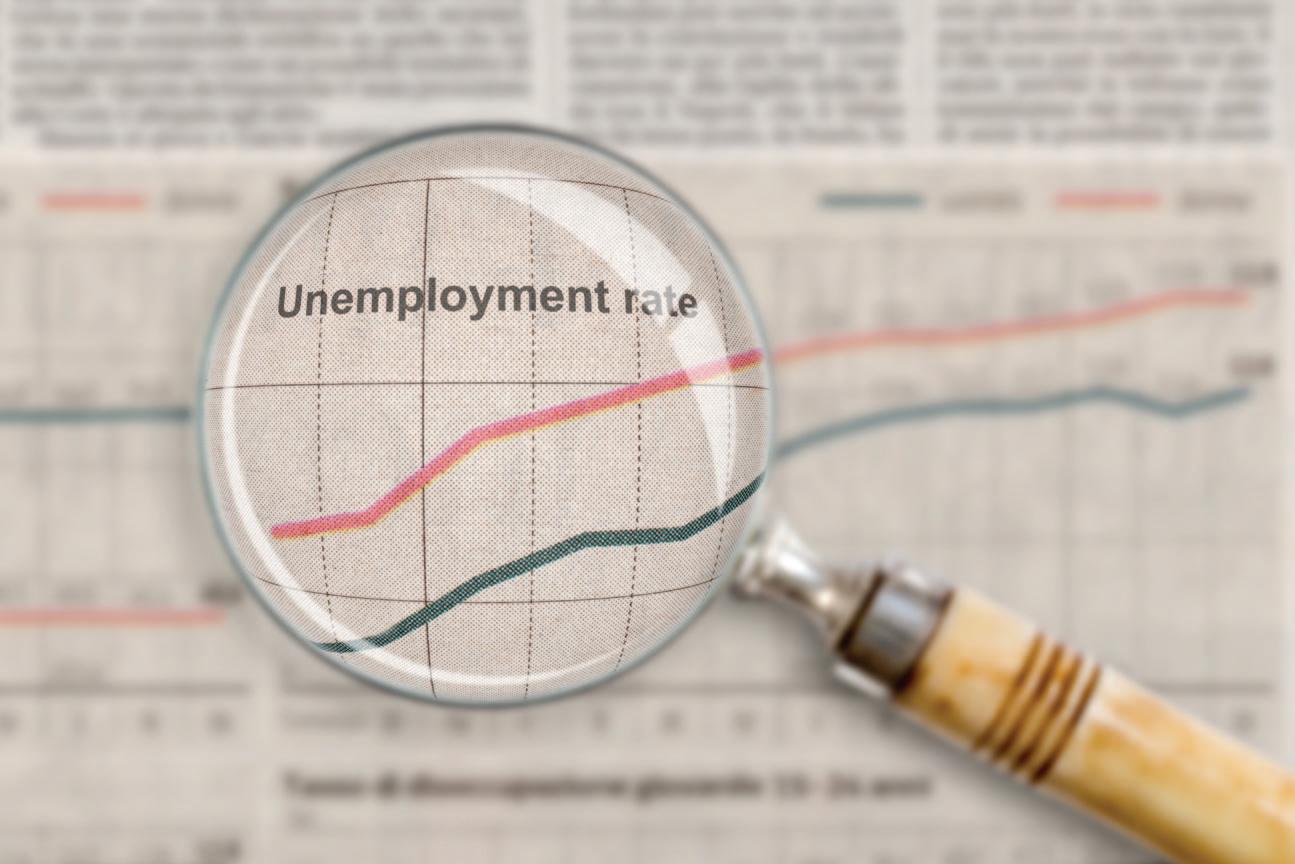

However, alongside these positive beliefs, there are also more negative sentiments, with 58 per cent believing in the sentiment that “social benefits make people lazy”. Younger people, those on the right of the left-right scale, and those with lower educational attainment are more likely to agree that “social benefits make people lazy”.
While that belief declined over time, Ireland has one of the highest proportions in Europe of respondents agreeing with this statement.
There is a higher level of support for government spending on older people and childcare for working families than there is for those who are unemployed. The same pattern is observed in most European countries but, in Ireland, the gaps between these three groups are significantly smaller. One-third of respondents indicated that they would agree with higher taxes if it meant more or better public services. This is the sixth highest percentage across the 27 participant countries.
Over the period 2002 to 2023/24, support for redistribution in Ireland fluctuated around 75 per cent. Trends differ across social class groups. Support for income redistribution among the working class in Ireland is now at the highest level since 2002. Events such as a government campaign focused on welfare fraud and budget announcements have a significant but short-lived impact on welfare attitudes and support for redistribution. Those who experienced job loss during the Covid-19 pandemic are more supportive of redistribution, regardless of their financial situation, suggesting that the enhanced role of government in supporting incomes during that period boosted support for redistribution.
These findings suggest that there is a strong basis of support for government policies of redistribution; however, these are sensitive to framing, with a focus on fraud rather than citizens’ entitlements, leading to more negative sentiment about redistribution.
The ESRI states that attitudes to social welfare are also “sensitive to trade-offs and perceived hierarchies of deservingness”.
“Awareness of one’s own potential reliance on social benefits motivates support for redistribution but so does people’s sense of what is fair. Lessons from behavioural studies suggest that providing information to individuals about the extent of existing inequalities influences individual support for redistribution.
“These findings underscore the importance of governments addressing misperceptions related to welfare recipients and providing reliable information about inequalities in society.”
Daniel Capistrano, researcher at the ESRI and co-author of the report, says: “This report shows a solid social support for enhancing the welfare state in Ireland. Policymakers have a favourable environment to design and implement policies that meet the demands for better distribution of income, opportunities and living conditions in Ireland.”
Denise Charlton, Chief Executive of Community Foundation Ireland, a partner on the research, states: “The study shows that even in times of challenge and complexities, there is a sense of fairness and support for equality within our society. Something all of us should be proud of. These important findings will inform our future work as a philanthropic hub with an equality mission, as well as our 5,000 community, voluntary, and charitable partners.”
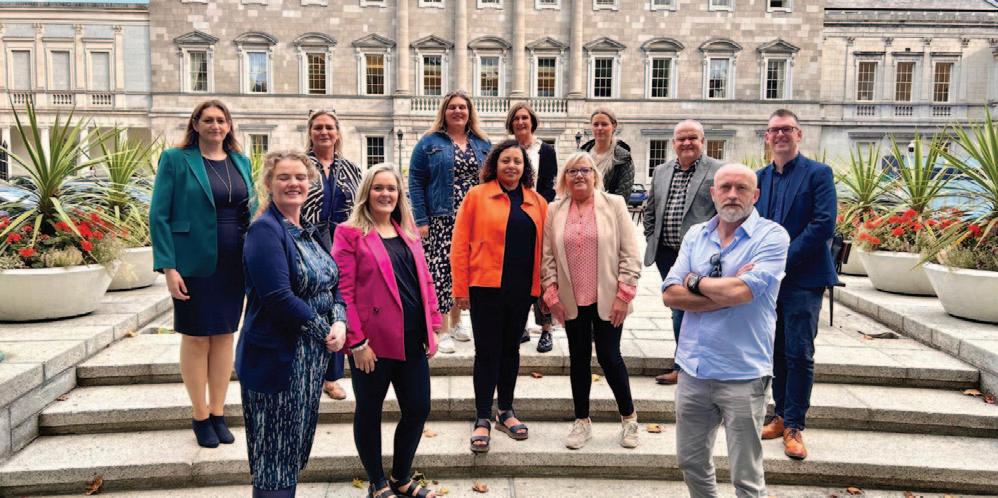
Family Resource Centres are one of Ireland’s most effective but under recognised engines of social inclusion. The Programme for Government commits to expanding and funding FRCs, with 10 new centres announced (now 136 nationwide) and core funding increased to €180,000 per year, writes Fergal Landy, CEO, Family Resource Centre National Forum.
FRCs are a critical and increasingly fundamental part of the mix of community infrastructure needed to build cohesive and inclusive communities. As an agile policy lever. FRCs help deliver the elusive whole-ofgovernment approach sought by policymakers and politicians alike and to address priority areas, such as child poverty or support for people with disabilities.
Whilst policy objectives are assigned for implementation by government departments directly or by various state
agencies and local authorities, implementation is unlikely to be well received by communities unless those communities are engaged as active agents in those policy objectives.
This is true not just of community cohesiveness and social inclusion but also many other inter-related policy areas such as child and family wellbeing, poverty eradication with a particular focus on child poverty, community health and wellbeing, lifelong learning through community education, community safety and crime prevention, climate change,
biodiversity and a just transition, and participatory democracy.
Family Resource Centres (FRCs) are community-based hubs that help families and individuals access support, build skills, and feel connected locally. They do not just replace public services; they make them reachable, coordinated, and human. They offer community development activities, community education, childcare and parenting support, counselling and therapeutic support, support for older people and so much more.
This CLG structure also helps to integrate the silos that can occur as an unintended consequence of departmental funding streams. Using a belt and braces analogy, if governmental agencies are the braces for policy implementation, communities are a woven belt, and FRCs are the golden thread. Unique within the landscape of Irish community and voluntary organisations, FRCs operate a human rights-based approach to community development and family support across the life-course.
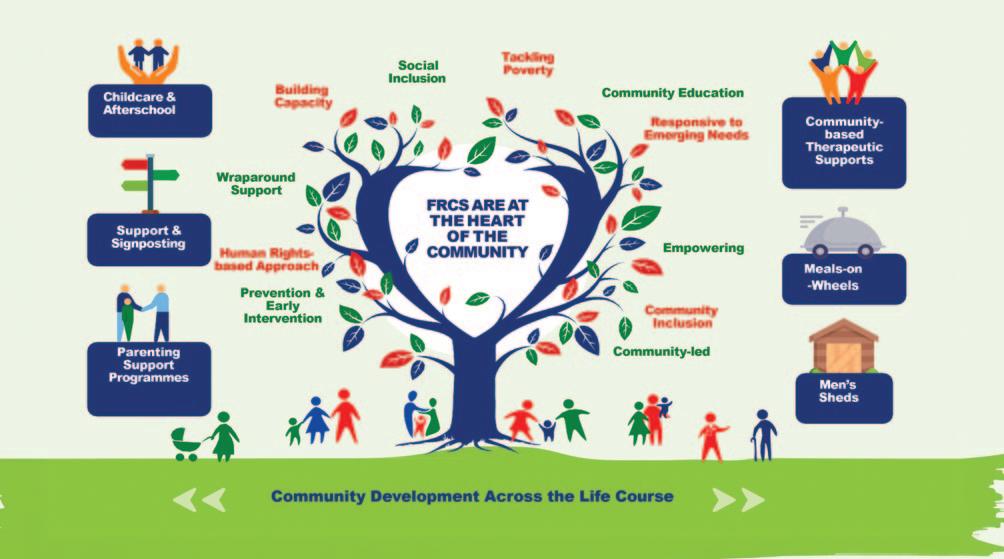
For FRCS, this starts with identifying the strengths of the community and then responding to the needs by acting as a broker between the complex tapestry of informal, semi-formal and formal supports that help to create meaningful social inclusion. Some FRCs are in urban areas where there is a concentration of poverty and inequality, many are the heart of a rural village or town and the surrounding hinterland. Place-based identity, the need to belong and to matter, are not only key to the work of FRCs but are also the evidencebased bedrock of lifelong health and wellbeing.
Integral to FRCs, is that each FRC is an independent company limited by guarantee (CLG) with trustees derived from the local community. These community representatives provide governance and oversight of a strategic plan developed in partnership with the community and implemented by a professional staff team acting alongside the community.
This highly devolved governance model delivers community autonomy, distributed leadership, and individual agency, it is also a mechanism to deliver meaningful social inclusion by creating the opportunity for marginalised groups to directly participate in the governance and oversight of funding allocated for their community.
This CLG structure also helps to integrate the silos that can occur as an unintended consequence of departmental funding streams.
Using the core funding managed and administered on government’s behalf by Tusla, each FRC leverages and pools funding streams to deliver developmental opportunities and wrap around supports to the community in a joined-up manner under one roof.
The increasing governance and compliance required of Irish charities is undoubtedly a challenge for many locally led organisations. Rather than framing them as a burden, to be alleviated through centralisation and specialisation, FRCS offer the opportunity to re-frame governance and compliance requirements as process and outcome in a theory of change based on empowering rather than fixing communities.
FRCs understand that communities are struggling with intergenerational poverty and inequality, frequently without access to housing, fulfilling employment opportunities, leisure amenities, or proper public services in areas like health, including mental health, disability, education and public transport. Specific groups within communities, such as the Traveller and Roma communities, migrants, the LGBT+ community, lone parents, people with disabilities, and older people experience social exclusion.
The community development approach of FRCs is fundamentally about seeking change. Community is where change starts and where it is experienced, whether that is local, national, or indeed global change. FRCs have been working closely with communities on methods for
dealing with those who seek to divide their communities with divisive rhetoric.
FRCs bring the community together in a safe and trusted space to have conversations designed to create mutual understanding and solidarity, FRCs are empowering communities to address the structural causes of the challenges they face. This creates a real alternative and antidote to division.
Where FRCs are resourced, the community is much better equipped to respond and to deescalate such situations because the relationships of trust within the community have already been established.
This is why it is vital that the community development work of FRCs is resourced, so that we can build cohesive communities with meaningful social inclusion. There is a real opportunity now to grow this potential as part of a longterm strategy to address decades of poverty and inequality and to counteract divisive forces. If social inclusion is the policy objective, then government must continue to expand the capacity and network of FRCs and critically provide all FRCs with the adequate, sustainable funding needed to deliver meaningful social inclusion.
E: ceo@familyresource.ie W: www.familyresource.ie
“The NCSE’s mission focuses on promoting a continuum of inclusive education through research, policy advice, and supporting schools and families.” This vision in closely aligned with The Roadmap for Social Inclusion 2020-2025
Achieving this vision includes the NCSE’s ongoing work with the Department of Education and Youth, (DEY), schools, patrons and families when expanding special classes for autistic learners requiring such provision. Through sustained advocacy by school principals, working in formal partnership with parents and the NCSE, autism class provision in the area in 2025 expanded to 47 autism classes across Dublin 15 schools, with plans to further develop this provision for the 2026/27 academic year, increasing fully inclusive participation of autistic learners in mainstream and special schools with their peers.
Despite support from the NCSE network of Special Educational Needs Organisers, (SENO), families have
According to NCSE CEO John Kearney, “the National Council for Special Education (NCSE) envisions a world-class, inclusive education system where children and adults with special educational needs are supported to achieve their potential and participate fully in society”.
continued to express experiencing significant challenges navigating the autism class admissions process:
• making applications to multiple schools;
• tracking multiple admission windows; and
• repeatedly submitting extensive documentation.
These systemic barriers prompted the Dublin 15 Primary Principals’ Network, in partnership with the NCSE, to design a more transparent and equitable approach: D15 Autism Class Application Trial (D15ACAT).
D15ACAT was established as a schoolled initiative, developed in close partnership with the NCSE, with the following aims:
• to preserve each school’s independent admission policy and criteria;
• to introduce a single application window across all schools and a common application form;
• to reduce the administrative burden on families and schools;
• to improve clarity and consistency of communication;
• to provide structured and accessible parent supports; and
• to enable the NCSE to improve forward planning based on accurate, localised data on specialist provision requirements.
Extensive consultation underpinned the model, including engagement with school patrons, the Irish Primary Principals’ Network, the Irish National Teachers’ Organisation, the National Association of Boards of Management in Special Education, the National Parents Council, local parent groups, education welfare officers and HSE children’s disability network teams. The DEY’s governance and special education sections were also consulted.
As the statutory body responsible for sanctioning and reviewing autism classes, the NCSE was uniquely positioned to take on the role of data controller, formally embedding partnership at the core of D15ACAT.
In 2024/25, 13 schools participated in the initial trial, offering 24 autism class
places. A joint communications strategy ensured wide awareness, including information on school websites, early years services, disability teams, local and national media, and a dedicated D15ACAT page on the NCSE website.
In the first year, 105 applications were received.
The initial trial demonstrated clear benefits for families, including submitting one application rather than multiple forms. Schools retained full autonomy in applying their own admissions criteria and managing offers and waiting lists. However, several areas for improvement were identified by principals, parents and the NCSE.
For the 2026/27 admissions cycle, D15ACAT expanded to 17 participating schools. Sixteen places were available through the ACAT process, with 38 places available across the wider network.
A key development was the introduction of an online application platform. This significantly simplified the process for parents and enabled:
• automated acknowledgements and follow-up communications;
• structured, scaffolded support for parents who required assistance; and
• clearer tracking of application status.
This also substantially reduced the administrative burden on schools.
Principals reported ease in applying admissions criteria consistently and efficiently. Notably, there was a 0 per cent error rate in applications received by schools, reducing time-consuming administrative workload significantly.
Parent engagement was strengthened further through a layered support model. Prior to the opening of one unified application window across all participating schools, principals and NCSE staff jointly delivered morning, evening and online parent information sessions.
During the trial NCSE, SENOs provided in-person support sessions one day per week in nominated schools. Sessions ran across mornings, afternoons and evenings, included provision during the mid-term break, and rotated across different days to maximise accessibility for parents.
A coordinated communications campaign also supported access. Posters, short explainer videos and digital content were shared across school websites, social media platforms and NCSE channels. Clear, step-by-step guidance was provided on how to access D15ACAT, to improve parental understanding of the process.
The 2026 cycle received 139 applications:
• 101 applicants (72.7 per cent) were eligible for autism class placement
• 28 applicants (20.1 per cent) were eligible for special school placement
• Only one application (0.72 per cent) indicating strong alignment between clinical assessments, school referrals and parental applications.
• Nine applications were incomplete.
As D15ACAT enters its next phase, the partnership between schools and the NCSE continues to evolve. Priorities include refining digital systems, strengthening early communication around eligibility deadlines in alignment with the relevant Department of Education and Youth circular and similar trials, and exploring options within legislative constraints to address identified issues.
The D15ACAT demonstrates the impact of collaborative, system-level leadership, combining school-based expertise with statutory partnership.
Kearney says: “When schools and agencies work together, meaningful and sustainable system improvement which promotes and supports fully inclusive education practices becomes achievable. This is key to our work with schools and families.”
Andrew Torrance, Principal Officer, NCSE
E: andrew.torrance@ncse.ie
T: + 353 1 603 3433
Helena Trench, Principal Powerstown ETNS
E: principal@powerstownet.com


The HSE’s assessment of need (AON) process for people with disabilities is set to be reformed to address the backlog of AON applications and free up therapists to perform their core duties instead of “writing endless reports”.
Currently, applications are sent to an assessment officer in the HSE to decide if a child is eligible for an AON under the terms of the Disability Act 2005. Assessments are then carried out by a team or a single healthcare professional to decide if the child has a disability or not. Should a child be deemed to have a disability, the family is given a service statement listing the services and support the HSE would provide.
However, the Department of Children, Disability and Equality states that therapists spend up to one-third of their time producing clinical assessments under this process. This restricts their capacity to perform their core functions. Under the General Scheme for the Disability (Amendment) Bill 2025, published in February 2026, assessment officers are to be supported by 11 new teams, each comprising four expert staff to provide clinical guidance during the process. The four members are to be a psychologist, a speech and language therapist, an occupational therapist, and an administrator.
Guidelines will be provided to assessment officers to outline that the AON process should focus on establishing the child’s needs and not on a diagnosis of disability.
The requirement for professional reports, such as AON reports, for entry into special schools and classes is set to be removed. A new process is set to be agreed in its place.
HSE figures show that 20,290 children were overdue an AON with 16,960 waiting over three months. This includes 1,006 applications where an extended timeframe was agreed with the parent due to exceptional circumstances.
A total of 13,186 applications were received in 2025, a 23 per cent increase from 2024 when there were 10,690. There were 5,949 AONs completed in 2025, a 43 per cent increase from 2024 when there were 4,162 completed.
The Disability Act 2005, which introduced AONs, stipulates that they must be completed within six months of the application being received. In 2025, 9.4 per cent of assessment were completed within this timeframe.
Minister for Children, Disability and Equality Norma Foley TD says: “I know that families have been enduring incredible stress and unacceptable delays in receiving AON reports and some existing AONs are taking up to 30 hours to complete, which is far too long. We are introducing a faster and more efficient way of carrying out AON reports.”
The Labour Party’s spokesperson for children, Mark Wall TD, says: “This government has rushed out a press release today promising more ‘targeted reforms’ on assessment of needs. Without the structures in place, this will not be worth the paper it is written on.
“The crux of the issue is even if a child does get an assessment of need, we simply do not have the staffing required to provide the vital therapies that these children need.”
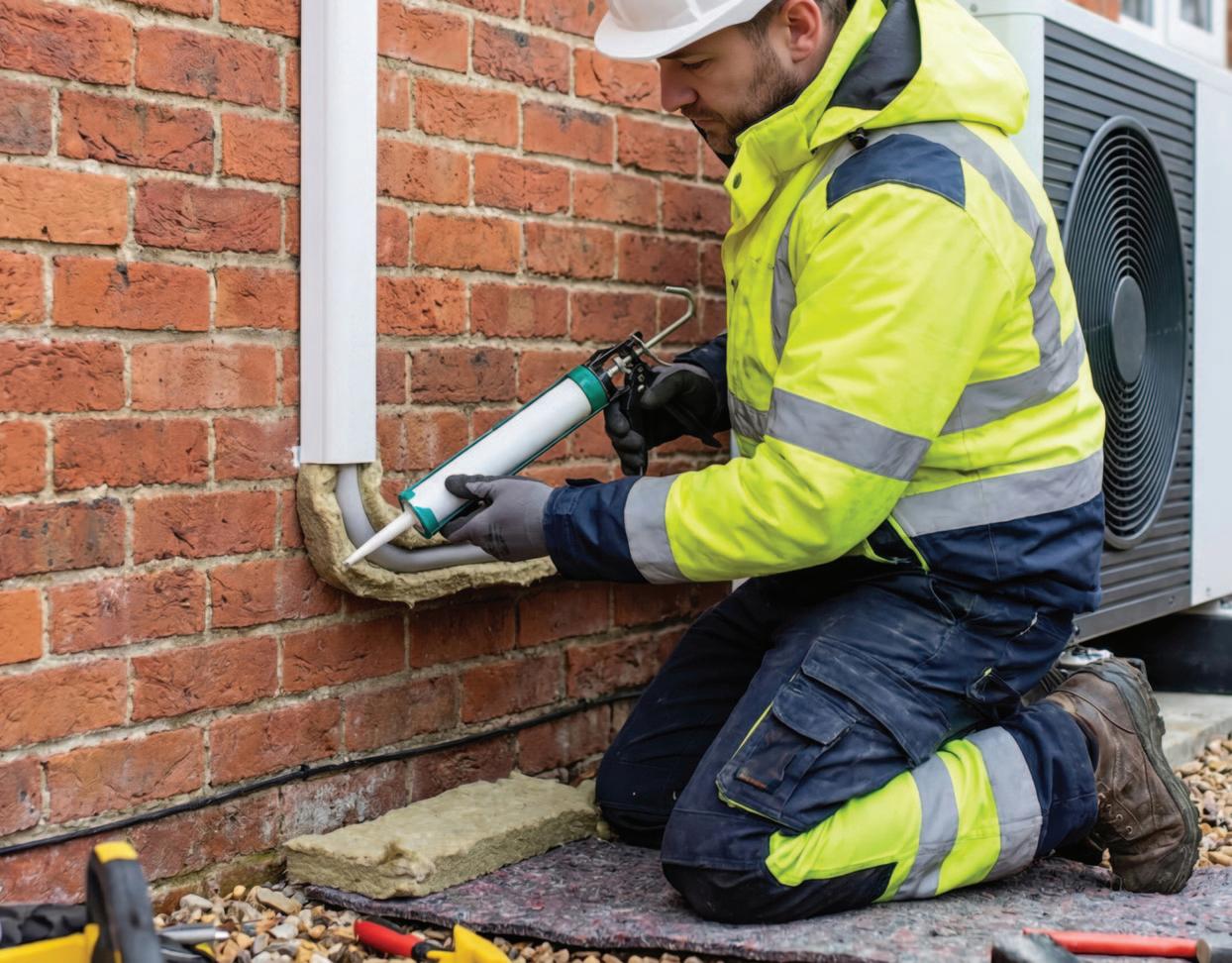
The Government’s National Residential Retrofit Plan 2026 sets out an expanded, system-wide programme to accelerate home energy upgrades, reduce emissions, and improve energy affordability, backed by record levels of capital investment and a suite of revised grant supports.
Published by the Department of Climate, Energy and the Environment, the National Residential Retrofit Plan outlines how Government intends to scale up retrofit delivery to 2030, positioning residential decarbonisation as central to climate action, energy security, and cost-of-living resilience. Anchored by four pillars – driving demand and activity, financing and funding models, supply chain and skills, and governance – the plan seeks to address persistent barriers to uptake, including high upfront costs, limited consumer awareness, supply chain constraints, and perceived complexity in the retrofit journey.
The plan builds on recent progress. Since 2019, almost €1.7 billion has been provided in SEAI supports, delivering 244,000 home energy upgrades, including 32,700 fully funded retrofits for households at risk of energy poverty and 18,000 heat pump installations. In 2025 alone, 58,128 upgrades were completed under SEAI schemes.
Government identifies consumer hesitancy and complexity as structural challenges to deeper retrofits. To counter these, a renewed national awareness and demand generation campaign is being funded with €4.2 million in 2026, emphasising comfort, cost savings, and environmental benefits.
The expansion of the ‘one-stop shop’ model remains central. There are now 28 registered one-stop shops providing end-toend project management services, managing assessment, grant applications, contractor engagement, and final BER certification. In 2025, 14,016 home energy upgrades were delivered through this mechanism.
Community activation is also prioritised through the Sustainable Energy Communities programme, which enables area-based retrofit planning supported by SEAI-funded energy master plans.
Financial barriers are identified as a principal constraint to scaling delivery. The 2026 capital allocation of €640 million for SEAI residential and community schemes, including €558 million from carbon tax revenues, represents the largest annual investment to date. Under the Department’s 2026-2030 NDP Sectoral Capital Plan, up to €3.7 billion in carbon tax receipts will be directed towards residential energy efficiency.
Grant supports are being recalibrated from February and March 2026, while attic and cavity wall insulation grants under the Better Energy Homes Scheme are to be restored to 80 per cent of median costs. A new 100 per cent grant for attic insulation will be introduced for first-time buyers of existing homes, while households eligible for the Warmer Homes Scheme will be able to access fully funded attic and cavity insulation immediately through the Better Energy Homes Scheme to reduce waiting times.
Heat pump supports are also being strengthened. From February 2026, a fixed grant equivalent to approximately 80 per cent of median installation costs (90 per cent for island homes) will apply under the Better Energy Homes Scheme. In addition, the minimum energy uplift requirement under the National Home Energy Upgrade Scheme and Community Energy Grant Scheme will be removed from March 2026 to enable heat pump-ready homes to participate without undertaking additional fabric works solely to meet technical thresholds.
The Government-backed €500 million Home Energy Upgrade Loan Scheme continues to provide loans between €5,000 and €75,000 at interest rates starting from 2.99 per cent, supported by a European Investment Bank guarantee and State subsidy.
The plan places a strong emphasis on energy poverty and equity. The Warmer Homes Scheme, which provides fully funded upgrades to eligible low-income households, has invested €827 million since 2019, upgrading 32,754 homes.
Grant rates for approved housing bodies are set to increase to enable deeper retrofits in the social housing sector, while local authorities will be permitted to access Better Energy Homes grants for shallow measures alongside their deeper retrofit programmes.
Targeted schemes are also being advanced for traditionally built homes, defective concrete block properties, and medically vulnerable households requiring solar PV installations.
Delivering retrofit at scale is framed as contingent on workforce expansion. A 2023 skills analysis identified the need for 22,779 additional entrants to the retrofit workforce by 2030. Approximately 13,254 jobs were supported by home energy upgrade activity in 2025.
Six nearly zero energy building centres of excellence are operational nationwide, with over 18,000 course enrolments since 2020.
Apprenticeship reform continues, with 6,362 registrations in construction-related programmes in 2025, up 67 per cent on 2020.
Standards and research are also being developed, including an SEAI study examining the current heat loss indicator requirement for heat pump eligibility and a pilot of 100 high-temperature heat pumps to assess performance and cost implications.
The residential building stock remains a significant contributor to the State’s emissions, with a substantial proportion of homes built before modern energy standards. Around 16 per cent of dwellings predate 1945, while many others require fabric upgrades to accommodate low-carbon heating technologies.
The 2026 plan aims to scale the retrofitting of the residential sector by combining revised grant supports, loan financing, supply chain development, and governance reform. The plan is also clear of the aim to accelerate delivery while maintaining a just transition for vulnerable households.
In his foreword to the plan, Minister for Climate, Energy and the Environment Darragh O’Brien TD states: “By promoting retrofitting, renewable heating, and solar energy, we will make homes warmer, cheaper to heat, and less reliant on fossil fuels.”
Electric Ireland Superhomes is a retrofit one-stop shop for approved housing bodies (AHBs) and local authorities.
Electric Ireland Superhomes is a joint venture between Tipperary Energy Agency and ESB (Electric Ireland) established in 2021. We are an SEAI registered one-stop shop looking after all the key stages of a home energy retrofit, from design, contractor selection, project completion and management of SEAI grant funding to bring houses and apartments to a minimum of a ‘B2’ BER standard.
We support larger-scale retrofit projects for local authorities, approved housing bodies and non-corporate landlords under relevant SEAI funding programmes, including the Better Energy Communities Scheme. Electric Ireland Superhomes’ vision is to
empower our customers to achieve warmer, healthier, low-carbon homes with a renewable energy focused approach. We are currently on track to achieve our target of retrofitting over 30,000 homes by 2030.
Electric Ireland Superhomes delivers retrofit solutions with the support of a multi-disciplined staff of over 50 people comprising of retrofit advisors, energy engineers, surveyors and BER assessors. We now have a dedicated team that specifically focuses on larger projects with special focus on housing owned and managed by local authorities, approved housing bodies and non-corporate landlords. This team is led by Mike O’Rourke, who has over

28 years’ experience in building services engineering, with the last seven years in the housing retrofit sector and supported by David Ahearne, who has over 25 years in project and account management roles and experience within the retrofit sector.
The dedicated Large Projects team bring a wealth of expertise in planning, execution, and oversight, ensuring that projects are delivered on time and within budget. With a keen understanding of the intricacies of project management, they can effectively navigate potential challenges, mitigate risks, and optimise available resources. Their ability to
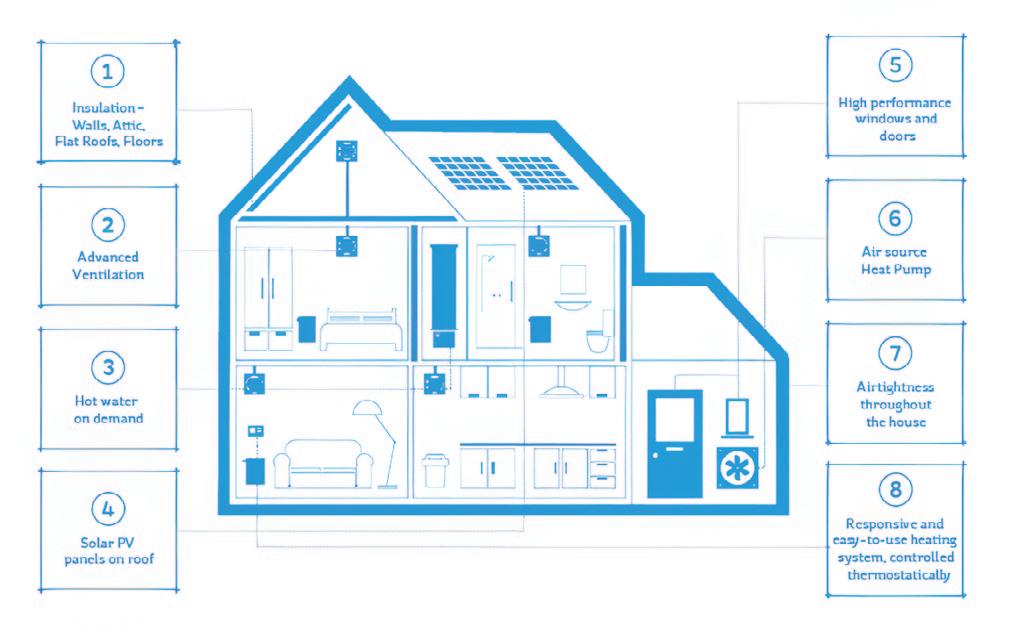
anticipate potential roadblocks and implement strategic solutions contributes to the overall success of the project.
Ultimately, by entrusting Electric Ireland Superhomes with the oversight of their Energy Retrofit Programme, a local authority or approved housing body stands to benefit from enhanced efficiency, cost-effectiveness, and successful project outcomes.
For local authorities, Electric Ireland Superhomes can provide a range of services to meet their needs from a full energy retrofit consultancy service to the provision of services expected under the Energy Efficiency Obligation Scheme.
From 2022 to date, our Large Projects team has been engaged by several local authorities, for the delivery of energy retrofit works of over 1,000 units.
In line with programme rules, our objective is to deliver a minimum ‘B2’ post BER rating on all homes. Since 2024, 74 per cent of all our local authority houses achieved an ‘A’ post works BER rating.

This year, we have been contracted by additional local authorities for their Energy Efficiency Retrofit Programme and we are forecasting significant growth in this sector.
For approved housing bodies and noncorporate landlords, Electric Ireland Superhomes can provide a full one-stop shop service that can avail of the SEAI grants for houses that were built and occupied before 2011 and have an existing BER of ‘B3’ or lower. SEAI grant supported retrofit measures include insulation upgrades (including roofs, walls, and floors), replacement doors and windows, mechanical ventilation, airtightness, solar PV, and heat pumps.
The process for an energy retrofit starts with an initial consultation to establish your requirements followed by a detailed house survey that includes the building fabric and heating systems. An energy report is then prepared that recommends a package of measures.
Once satisfied with the recommendations in the report, we can finalise the design of the works, prepare documents for tender or pricing, and manage the grant process. We carry
out interim checks on the retrofit works in progress and a detailed final inspection once the project is completed. A health and safety file and post works BER certificate are provided on completion of the project.
Grants offered are provided by the Government of Ireland through the Sustainable Energy Authority of Ireland (SEAI).
For more information contact:
Mike O’Rourke, Head of Contracting and Safety
T: +353 86 440 2565
E: mike.orourke@electricirelandsuperhomes.ie
David Ahearne, Corporate Account Manager
T: +353 87 489 6572
E: david.ahearne@electricirelandsuperhomes.ie
Or email
E: multiples@electricirelandsuperhomes.ie
Stephen Brophy, principal officer leading the public sector and enterprise energy efficiency section at the Department of Climate, Energy and the Environment, talks to Ciaran Brennan about what the Department is doing to incentivise retrofitting.


Ciaran Brennan (CB): What is the Department doing to drive retrofitting uptake?
Stephen Brophy (SB): We have substantially increased funding every year since 2020; 2026 will be another record year for funding for domestic and non-domestic retrofits. We have grant levels that are up to 80 per cent for some works, 100 per cent grant funding for energy audits for businesses. Beyond that, we have a supply pillar where we work closely with the Department of Further and Higher Education and SEAI to deliver the skills and the people to deliver retrofits, working across the supply chain to ensure that we have everything that we need to make a homeowner’s journey really smooth when they arrive at a one-stop shop when they decide they want to retrofit.
“There has to be a product or an upgrade journey that works for everybody.”
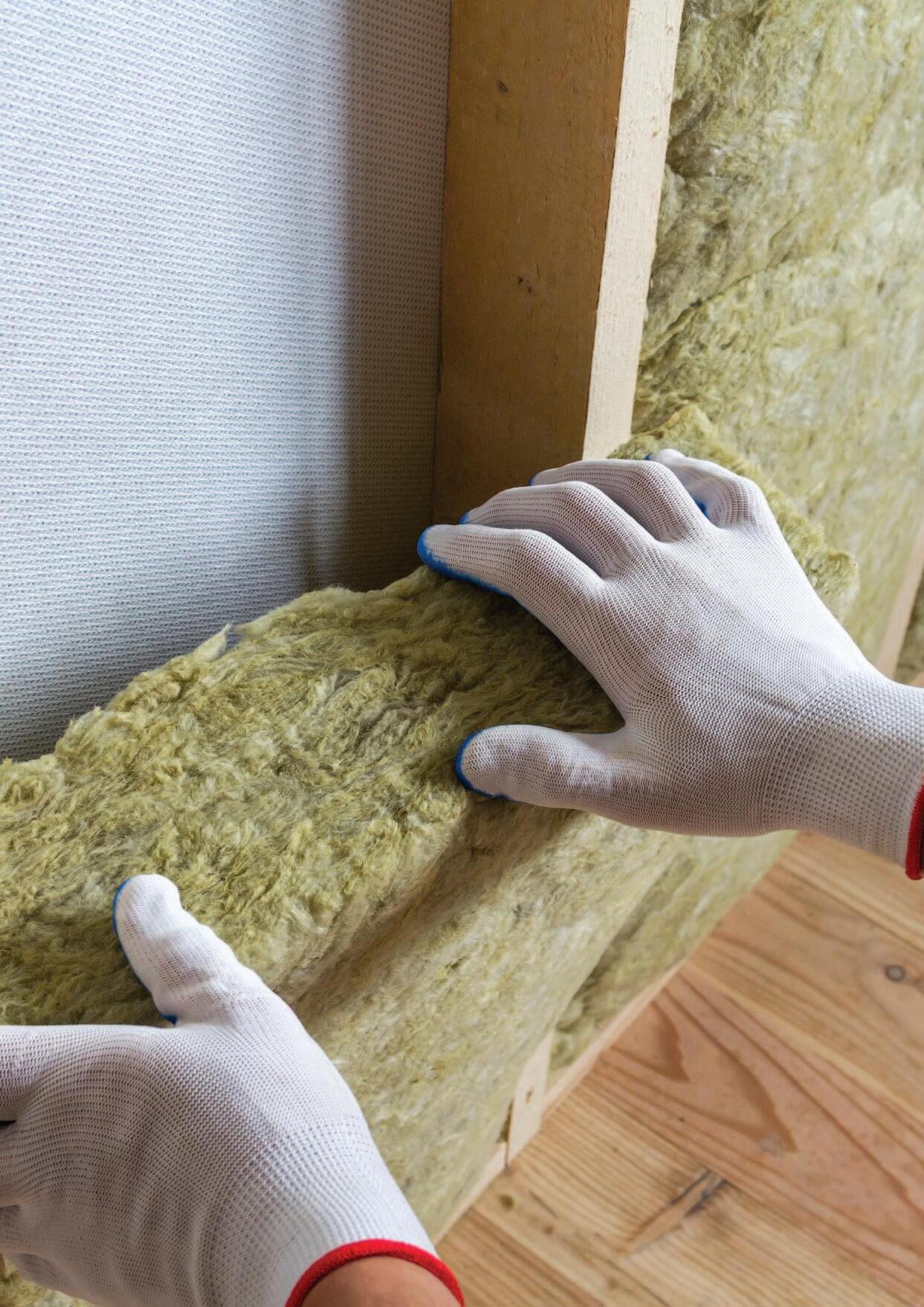
CB: What is one measure the Department is implementing which has been effective?
SB: Solar panels have been extremely popular. I think they give that wow factor for people. People like to see solar panels on their house, they like to show the app at their dinner parties and explain to people how they are exporting energy and how their electricity bills have gone down. Schools are really keen to have solar panels installed, business like to have them as a visual. I think the micro-generation support schemes have been way more successful than even we hoped.
CB: What challenges does the Department face?
SB: Heat pump take-up is a lot lower than we would really like. It is not a unique problem for Ireland, it is something that we see across Europe. I think there is a combination of fear of the unknown, consumer resistance, and that really high upfront cost compared to a gas boiler. That is a challenge we have to attack on multiple fronts.
CB: How do you navigate demystifying retrofit technologies?
SB: It is just time. There is research that you need to tell people things a lot of different times and in a lot of different ways before it really flips
how they think about something. One thing that has come up which has stuck with me is that a couple of years ago we were in the middle of Covid. People have actually fundamentally changed how they use their houses since then. Hundreds of thousands of people now work from home. That means they are using their heating in a steady state, that means that a heat pump makes even more sense than it did but that message has not percolated through yet. I think time and hitting those messages will really transform that market.
CB: How does the Government’s target to deliver 300,000 homes by 2030 impact the Department’s retrofitting activities?
SB: That is about 10 houses every day. The numbers have to keep coming through the doors of all those one-stop shops. All those parties have to be engaged, ready to hit the right message for the right person. Our thing is that there has to be a product or an upgrade journey that works for everybody.
Do one measure and then you get a passport which shows you the next thing you can do and then you can plan. When you are ready to pick up the phone, we will get the next one done for you. It is about meeting people where they are and being ready to have a product that works for them.
Stephen Brophy is the principal officer leading the public sector and enterprise energy efficiency section at the Department of Climate, Energy and the Environment. He leads the Department’s work on the Energy Performance of Buildings Directive. Brophy is also responsible for schemes including the Business Energy User Scheme, the Excellence in Energy Efficiency Design Scheme, and the Energy Efficiency Obligation Scheme.
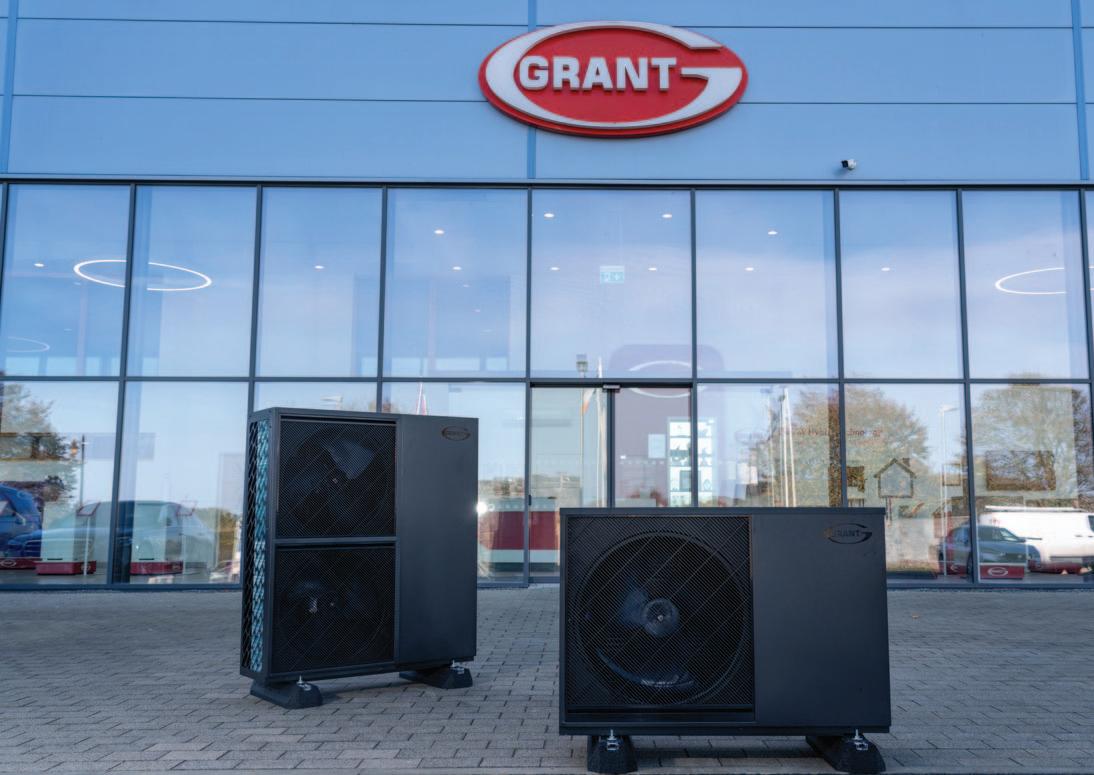
Ireland’s retrofit challenge is increasingly defined by the ability to deploy solutions across a wide range of property types and retrofit scenarios.
With ambitious national decarbonisation targets in place, success depends on heating technologies capable of consistent performance across diverse applications, while operating reliably in Ireland’s climate and integrating well with existing housing stock.
A large proportion of Irish homes were built before modern energy standards, making system design, installer expertise and proven technology critical factors in achieving real-world emissions reductions.
Leading Irish heating technology manufacturer Grant continues to support low carbon retrofits by developing sustainable heating solutions designed specifically for the Irish and UK climate. Through ongoing investment in research, product development and professional training, Grant is supporting homeowners, architects,
engineers, installers and contractors in the delivery of retrofit solutions that improve comfort, reduce emissions, and future-proof homes.
At the forefront of this effort is Grant’s award-winning Aerona R290 air-towater heat pump. Designed in Ireland specifically for local climate conditions, the Aerona R290 provides a nextgeneration solution capable of supporting a wide range of retrofit applications, from individual homes to larger housing developments.
The Aerona R290 has been recognised for its outstanding innovation at industry awards where it was described as ‘redefining heating innovation and sustainability and setting a new benchmark for low carbon heating solutions’. The Aerona R290 was also named ‘Heat Pump of the Year 2025’ at the Plumbing and Heating Awards.
From a technical perspective, the Aerona R290 delivers reliable operation in challenging environments, achieving A+++ ErP ratings, with SCOPs up to 4.88. The system is capable of 75°C flow temperatures, though correct system design ensures lower, more efficient temperatures are used where appropriate. The range includes five models with outputs from 4kW to 16kW, providing flexibility across a variety of property types. Integrated remote monitoring and management capabilities with the Aerona Smart Controller also support ongoing optimisation and diagnostic support as needed.
Crucially for retrofit projects, the Aerona R290 uses natural refrigerant R290, which has a Global Warming Potential of just three. Combined with ultra-low noise performance recognised by Quiet Mark, the system aligns with national and European sustainability objectives while remaining suited to established residential areas.
Beyond the technology itself, Grant continues to invest in the skills and knowledge required to support

About the Grant Aerona R290 Air-to-Water Air Source Heat Pump
• Innovative design
o Environmentally friendly R290 refrigerant
o Ultra-low noise levels recognised by Quiet Mark
o Modern styling and colourway
• Exceptional performance
o Highly Efficient A+++ Energy Rating
o Rated at -5°C air temperature and 55°C water flow temperature
o Five models with outputs from 4kW to 16kW
o Remote monitoring and management
• Peace of mind
o Designed by Grant to suit many types of housing
o Awarded for outstanding innovation
o ‘Heat Pump of the Year 2025’ at Ireland’s Plumbing and Heating Awards
o Design and on-site technical support
successful retrofit delivery. Through a combination of onsite training at the purpose-built Grant Training Centre and online learning via the Grant eLearning Academy, installers and industry professionals can access up-to-date courses on products including the Aerona R290 heat pump. This focus on education supports consistent
Grant continues to support those working in the trade and on retrofit and new build projects through a range of training courses covering products including the Grant Aerona R290 heat pump. Courses are available on site and online through the Grant eLearning Academy.
For more information on training, email training@grant.ie
installation quality and helps ensure that retrofit systems perform as intended over their operational lifetime.
W: www.grant.ie
Facebook and X: @GrantIRL
Instagram: @Grant_IRL
LinkedIn: GrantEngineeringULC
YouTube: GrantEngineeringIE

Bebhinn Kennedy, project officer at the TUS Sustainable Development Research Institute, discusses how TUS is developing bio-based retrofit solutions and how they can be applied to heritage buildings.
Kennedy outlines two projects: DeCO2 (Dynamic Decarbonization Pathways Framework: Integrating Technological, Social, and Policy Innovations for Sustainable Renovations in the Built Environment) and HeriSol (HeriSol –Prosumer Solutions for Listed Buildings Based on Buildingintegrated photovoltaics BIPV).
DeCO2, funded by the European Commission under Horizon 2020, is a European project that focusses on creating a decarbonisation pathways framework “integrating technological, social, and policy innovations for sustainable renovations in the built environment.” Kennedy outlines the project objectives:
1. showcase and implement circular and technological innovations that contribute to the decarbonisation of the built environment;
2. foster social innovation by people-centred, inclusive, creativity-driven, participatory processes and activities;
3. promote policy innovation by providing practical guidelines to public authorities;
4. demonstrate the effectiveness and viability of innovative digital solutions within the three demonstrator sites; and
5. assess the scalability and replicability of the demonstrated built environment decarbonisation pathways.
The demonstration building in Ireland is O’Connell Avenue FET Campus, owned and operated by Limerick and Clare Education and Training Board (LCETB). This building is “largescale” and comprises “mainly heritage buildings”.
“We are looking at a location-based, user-centric portfolio of materials and renovation systems that is built to embrace local industrial ecosystems and verticals,” explains Kennedy.

“The overall objective of HeriSol is to demonstrate the innovative integration of clean energy solutions into architectural heritage.”
DeCO2 digital tools aim to “speed up the transition of the construction industry towards decarbonisation through Construction 4.0 enablers”. Construction 4.0 refers to digital advancements to progress the construction industry. Kennedy explains that the regulatory sandboxes in DeCO2 “establish safe spaces for legal and regulatory testing of innovations”.
As part of the project, TUS aims to improve the energy efficiency of the campus. Ian Major’s team at the Polymer, Recycling, Industrial, Sustainability and Manufacturing Research Institute (PRISM) at TUS is developing bio-based insulation installations that sequester carbon for the site.
TUS will also assess installing green roofs, vegetated roof systems, at the site. “There are huge benefits to green roofs, but when you actually look at their buildup, there are lots of plastic-based components,” says Kennedy. “The question that must be asked is: how green is the green roof you are installing?”
TUS-PRISM is examining how polymer-based layers in green roofs can be replaced with bio-based solutions. Green roof testbeds will be installed on the roof of the FET College campus’ gymnasium with bio-based components replacing the plastic elements and their performance will be monitored.
Additionally, as part of other retrofit upgrades, light fittings are being upgraded to LEDs and more energy efficient windows are being installed. TUS-SDRI and LCETB will utilise digital twin technology to monitor these retrofit upgrades and assess feasibility of other measures at the site.
Continuing, Kennedy says: “We are developing practical retrofitting and circular guidelines for the construction industry and building owners. Within the DeCO2 project, TUS recently developed a circular toolkit and that is looking at materials and how we can replace those materials as well.”
She explains that TUS-PRISM has created a panel that will simulate the performance of an insulated plaster slab which was installed in the gymnasium building. Heat loss from the panel will be tested for 10 days and this data will then be analysed to understand its performance before the next insulation sample is installed and monitored.
Kennedy also discusses the HeriSol project which aims to provide “prosumer solutions for heritage buildings based on building integrated photovoltaics (BIPV)”. Herisol is co-funded under the Clean Energy Transition Partnership.
“The overall objective of HeriSol is to demonstrate the innovative integration of clean energy solutions into architectural heritage, converting heritage buildings from consumers to prosumers and thus into active elements of the energy system,” outlines Kennedy.
The project includes the creation of a digital twin, which enables real time monitoring of a heritage building’s energy performance and turns a historical site into a smart, active participant in efficient energy management.
She indicates that solar panels “are not the most aesthetically pleasing”, adding that people are unsure whether to install solar panels on heritage buildings. However, she explains how BIPV can address this problem.
“The BIPV product that is being worked on in this demo site is going to morph onto the roof and take on the slate or tile finish.”
Kennedy explains that solar PV will be installed on the Limerick City Gallery of Art along with bio-based insultation. Samples of tiles have been taken from the site and sent to project partners in Germany. BIPV panels using morpho film technology are being developed to mimic existing materials.
Additionally, TUS is developing a bio-based polyurethane (PU) panel which will be installed at the art gallery. “We are evaluating the insulation performance versus standard foams using the formulas they are developing at TUS PRISM,” says Kennedy.
TUS-PRISM is investigating the feasibility of nonisocyanate bio-based PU foam. Furthermore, panels are being analysed to discern their physical and thermal performance.
The team is also developing a mycelium-based insulation which is a “complete bio non-chemical alternative to PU”. Next, PRISM aims to test full-scale prototype panels which will require scaling up of mycelium growth.
“This product is almost ready to come to market; it just needs some more feasibility testing. Give it a few more years and you never know; you might be buying mycelium-based insulation,” says Kennedy.
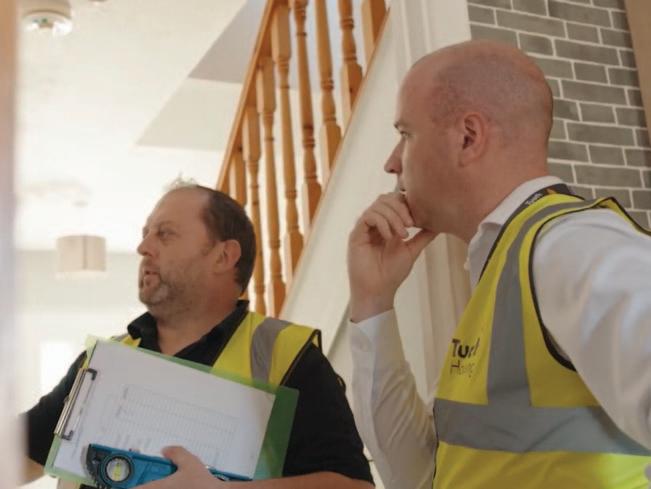
Tuath Housing is Ireland’s largest approved housing body (AHB), now managing over 17,500 homes across the country. The organisation has grown in scope as well as scale in recent years; putting sustainability at the centre of our homes.
“We understand the responsibility we have to lead by example,” says Jennifer Whitty, Sustainability Manager at Tuath. “We are ambitious in our aim to provide secure, quality homes in vibrant communities; while also reducing impact on our planet.”
Tuath’s dedicated sustainability team supports colleagues across the business to embed this core principle in all operations. With energy efficiency a key aim for reducing reliance on fossil fuels and lowering greenhouse gas emissions, Tuath has been evaluating its older housing stock and has embarked on an ambitious programme of retrofitting.
Tuath’s Energy Upgrade Programme brings together two core priorities: improving quality of life for residents and supporting Ireland’s climate goals. By enhancing the energy efficiency of its homes, Tuath aims to reduce carbon emissions, lower energy costs for residents and future-proof its housing stock.
By end of 2025 Tuath had completed 711 cumulative retrofits. Works include replacing traditional gas central heating systems with air-to-water heat pumps, installing new windows and doors, insulating homes and adding solar panels. The latest figures show that 88 per cent of Tuath-owned homes now have a minimum BER rating of B2, while 81 per cent of Tuath-owned homes have a BER A+ rating, an increase of 5 per cent on the previous year. Looking ahead, the organisation has committed to upgrading its owned housing stock to a minimum BER of B2 by 2030.
“We are very pleased with the quality of work delivered through the retrofit programme, which has improved the quality of homes and increased comfort levels for our residents,” says Paul Grennan, Building Services Engineer with Tuath.
“Collaboration with the Sustainable Energy Authority of Ireland (SEAI) and our retrofit contractors has been key to the programme’s success; helping to minimise disruption and ensure residents are supported in adapting to new technologies such as heat pumps.”
With the energy upgrade programme growing, Tuath is now focusing on the lessons it can draw from the retrofitting journey to date. Whitty and her team have commenced a detailed impact assessment, examining the technical performance of retrofitted homes and capturing stakeholder feedback.
“We want to gain deeper insight into what works well, and where there are opportunities to improve the experience for everyone involved,” she explains.
Tuath has invested heavily in retrofits, spending over €3.3 million on energy upgrade works in 2025 alone. The assessment will capture the impact of this investment on energy efficiency within homes. It will also examine how retrofits are experienced in practice, including resident understanding of new heating systems, concerns around
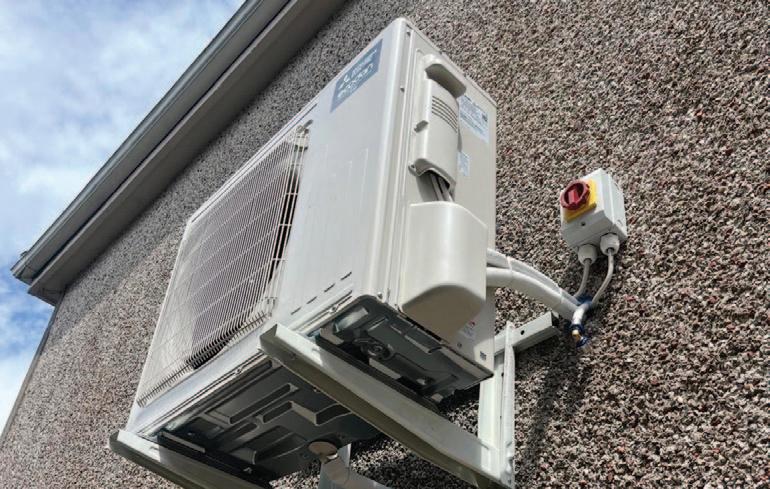
energy costs and the level of disruption during works.
Initial findings are promising, with residents reporting warmer homes, fewer draughts and reduced noise following fabric and heating upgrades. There is also evidence of reduced energy consumption and running costs.
Sustainability Coordinator Caoimhe Magee, one of the project leads, says resident feedback is central to the future success of the programme.
“Capturing our residents’ experience is crucial as we continue to upgrade our housing stock,” she says. “We want to understand the positive impact that retrofitting has had and apply those lessons as the programme continues to grow.”
Upgrading older housing stock is recognised across the public housing sector as essential but is not without it its challenges. Cost is a primary challenge, making collaboration with sector and statutory partners critical. Tuath has worked closely with fellow AHBs in the Irish Council for Social Housing (ICSH) and the Housing Alliance, alongside government partners including the Department of Housing, Local Government and Heritage, the Department of Climate, Energy and the Environment and the SEAI, to ensure continued funding.
Tuath recently welcomed the SEAI’s announcement of a boost in funding for retrofits for AHB homes later this year. Under the National Residential Retrofit Plan 2026, grants for energy upgrades for AHBs will be increased to around 75 per cent of the overall cost, rising
to around 80 per cent for homes facing fuel poverty. Together with the support available from obligated parties under the Energy Efficiency Obligation Scheme (EEOS), this could provide AHBs with funding in excess of 90 per cent of the cost of projects. It is a hugely positive step, according to Whitty.
“This outcome is testament to what can happen when sector partners come together to address common challenges in tackling climate change,” she says.
“Our external stakeholders not only listened but took action, enabling AHBs to access greater grant funding, making a real impact on decarbonisation of the sector.”
Another challenge is that carrying out energy upgrades at scale is a relatively new piece of work for AHBs. Again, sector collaboration is essential in overcoming gaps in knowledge.
“The sector is at the beginning of its retrofitting journey, but the strong working relationships and exchange of knowledge between peers gives me full confidence that our sector can contribute meaningfully to Ireland’s national climate targets,” says Whitty.
W: www.tuathhousing.ie
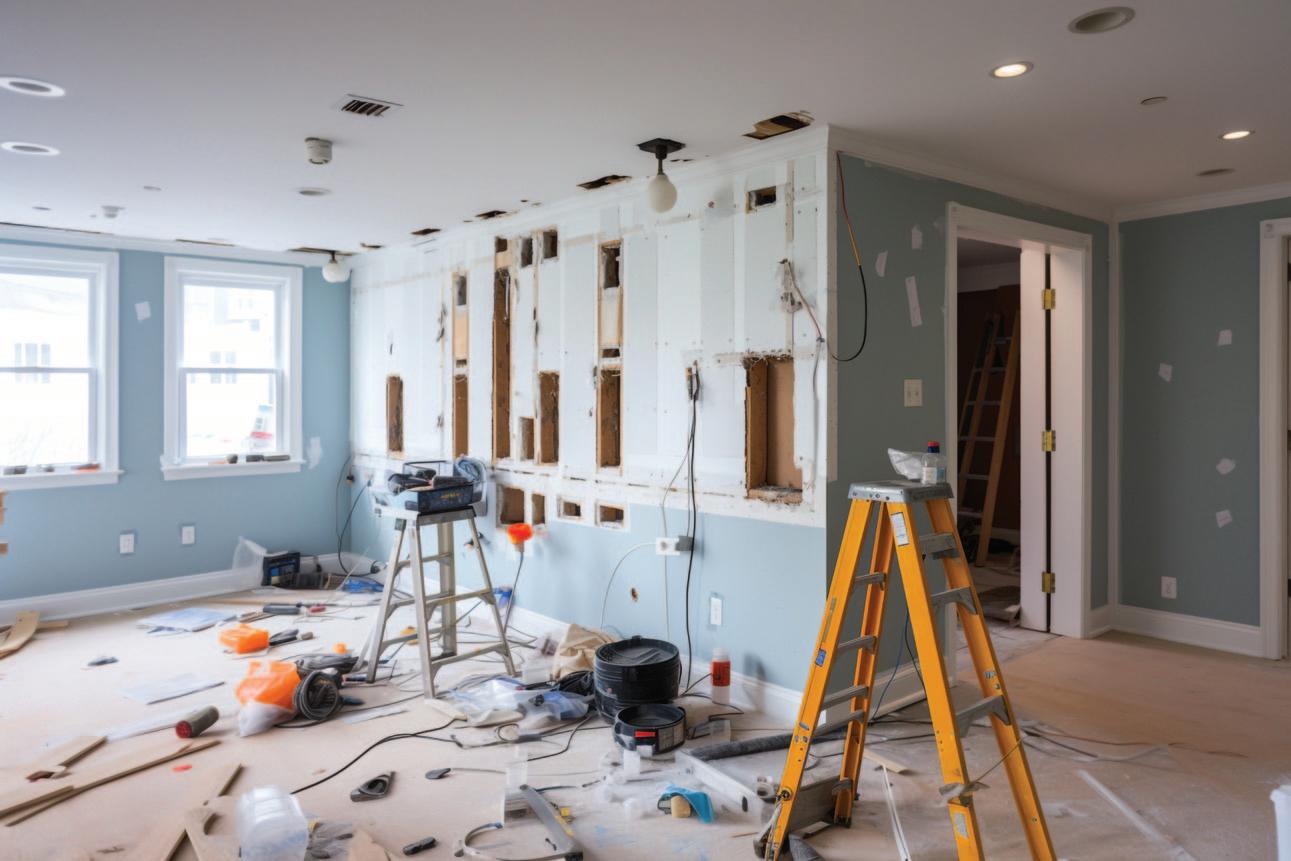

“People will make big decisions on their home when it satisfies emotional needs, not just financial payback criteria,” says Hall.
“The messaging seeking to incentivise retrofitting that is rooted in cost and carbon savings does not hit home. Incentives are not triggering change. Between 60 and 80 per cent of households who received subsidies for retrofitting would have done it anyway.”
He indicates that people may not always understand their options regarding retrofitting, are not necessarily equipped to maximise utility, and can be inconsistent in their choices.
Empathy-led design can encourage people to retrofit their homes in a way that current measures are failing to achieve, Steve Hall, political economist of energy futures at the University of York, tells eolas Magazine.
Hall says a person’s perspective on their home corresponds with how many improvement measures they decide to make. This perspective is influenced by their stage in life, and whether they view their home as starter, fixer-upper, or forever home. Understanding this perspective enables market segmentation.
“If we want to understand people’s stories, we need to start with empathy in the types of policy that we design,” says Hall.
A partnership between the University of York and various combined authorities (city region level local governments),
along with the UK Energy Research Centre, found that a more relational and human-centred approach to people’s decision-making would be more effective in achieving retrofit uptake.
Hall demonstrates the value of humancentred design by recounting a use case from the book Creative Confidence by co-founders of design practice IDEO. This case shows how design thinking was applied to MRI scans of children. “When small children come for an MRI scan, they often need sedating because it is scary,” explains Hall.
Redesigning the MRI machine was not possible, but altering the experience of an MRI scan was. Providers turned the experience into a story for children, such as pretending they were going on adventure. This led to an 80 per cent reduction in sedations. “A huge difference just by taking a different perspective,” says Hall.
The university’s work on this empathybased approach was synthesised into the Retrofit Policy Lab website. It features a persona box comprising multiple chatbots representing stakeholders in the rental market with varying positions on energy, climate, and retrofit. The site aims to provide an understanding of these stakeholders on a one-to-one basis.
Wendy, one of the chatbots, is a 42year-old self-employed mother living in a heritage semi-detached in Whitby, north Yorkshire. Hall states that “the idea that she is going to take on a deep fabric first retrofit is bananas”.
“Wendy is not disengaged, she is knackered,” explains Hall, adding: “But there is a way you can bring Wendy along with you.”
For people like Wendy, Hall asserts that you must reduce the expectations of what she can accomplish in her home regarding retrofitting. Therefore, it is important to focus on delivering adjustments with a positive impact which can be felt quickly.
Hall discusses a study conducted in the South Yorkshire Mayoral Combined Authority. It explored different relationships in the rental market and how it relates to the energy performance of the property. “Low- to mid-income, early career young people need different stuff than hard-pressed tenants in the lowest income group,” explains Hall.
This does not mean that a separate policy has to be designed for each group, Hall says, adding: “One size does not fit all but we think about five sizes fit most. It is about designing that journey in a different way.”
“We must design differently because you do get to a point where people are just not interested in grants.”
Different narratives on retrofitting will work for different stakeholders. “We must design differently because you do get to a point where people are just not interested in grants,” says Hall.
“This is not because it is not attractive for them but because it is not landing in their world. When you achieve that, it enables you to build that bridge between what you want them to do and what they are likely to take up.”
This requires “empathy mapping”, where a profile is built on landlords which considers their retrofitting efforts, smart metre data, and their buildings’ energy performance certificate (EPC), the UK’s equivalent of the BER. Hall says it is also valuable to speak to landlords to gain an understanding of their perspectives on retrofitting. He adds that it is important to reflect landlords’ concerns in policy.
The University of York synthesised landlords’ perception of their treatment of tenants and their emotions and created a tool called ‘Pragmatic Paul’. “All of my economic thinking comes from the understanding that people make emotional decisions, not rational decisions,” says Hall.
“Our job with ‘Pragmatic Paul’ is to find policy that flips those emotions. Instead of worried, they need to feel confident. Instead of confused, they need to feel informed.
“We need a prototype solution that is going to land in their relational and emotional world in that way and then we design something form there.”
The solution they created was the LetZero project. It is a three stage journey aimed at delivering fabric improvements for landlords. Stage one includes an initial review to see how challenging it would be to improve a landlord’s property portfolio to EPC C.
In stage two, landlords are provided with a retrofit scenarios report that compares renovation pathways to EPC
C. Stage three involves the renovation process which Retrofit Policy Lab assists landlords in navigating.
Concluding, Hall says: “That is where empathy-led design gets you. It offers a different perspective on a problem we often think is too big and scary to do anything but throw a lot of capital at.”
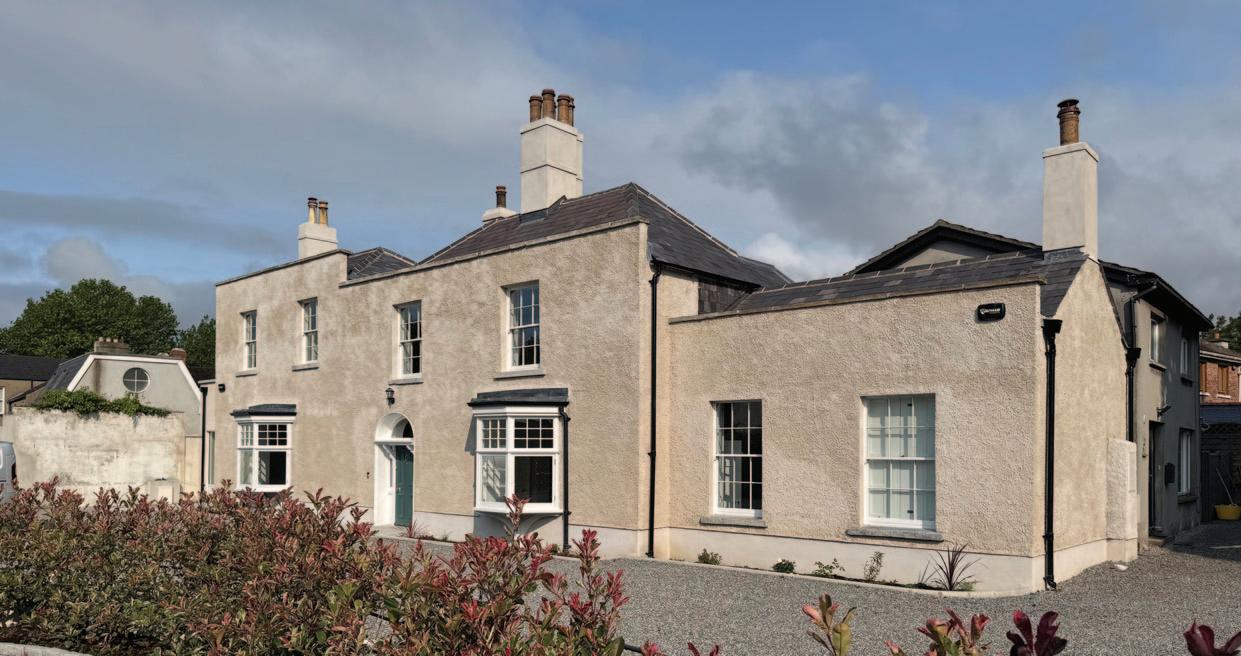
As Ireland accelerates efforts to improve the energy performance of its existing building stock, traditional buildings present a significant opportunity to increase energy efficiency, as well as specific challenges, writes Niall Crosson, Group Technical Director, Ecological Building Systems.
These buildings form a substantial part of our country’s landscape, and their retrofit requires a sensitive, informed approach, one that improves comfort and efficiency while respecting historic fabric, performance and character.
Traditional buildings need a sympathetic approach to retrofit because they are constructed and perform in fundamentally different ways to modern buildings. This has been clearly outlined in the recently-published government guidance Improving Energy Efficiency in Traditional Buildings. Built with breathable materials such as stone, brick, timber and lime, these buildings manage moisture through natural evaporation rather than impermeable barriers.
SPAB, the RIAI and other conservation bodies consistently emphasise minimal intervention, repair over replacement, and the use of compatible materials to avoid trapping moisture and causing long-term damage. Retrofit measures must respect historic fabric, architectural character and traditional performance,
ensuring energy improvements enhance comfort and sustainability without compromising durability, significance, or the building’s ability to breathe.
At its core, building better in traditional buildings is about balance. Rash interventions and the use of inappropriate impervious insulation or decorative finishes can cause long-term harm. It is essential that these buildings continue to provide safe, healthy and beautiful places to live and work, while remaining viable and relevant long into the future.
Why traditional buildings require a more sympathetic approach
Traditional buildings are typically constructed using permeable materials and assemblies that rely on moisture movement and evaporation to maintain fabric health. Building elements are in a constant state of flux, moving between moisture absorption and desorption. Thermal upgrades must respect and preserve this hygrothermal behaviour.
The inappropriate use of impermeable materials risks moisture entrapment, fabric decay and long-term deterioration. Desktop hygrothermal assessment tools, such as WUFI, a support service supplied by Ecological Building Systems, assists in assessing moisture risk and identifying the most appropriate thermal solution.
The historic fabric of traditional buildings embodies their architectural, cultural and evidential significance. Thermal interventions
should minimise harm, avoid unnecessary loss of original material and, where possible, be reversible, in accordance with established conservation principles.
Traditional buildings also exhibit thermal performance characteristics that differ fundamentally from modern construction, often relying on thermal mass and vapour-permeable materials to regulate internal conditions. Retrofit strategies must therefore adopt a wholehouse approach, informed by a thorough understanding of traditional construction methods, to avoid inappropriate or ineffective interventions.
The application of modern impervious paints, finishes and synthetic insulation materials can disrupt moisture movement, increasing the risk of condensation and fabric deterioration. Achieving an appropriate balance between energy conservation and a moisture-open thermal strategy, while also reducing draughts through improved airtightness and providing effective ventilation, is essential to delivering a comfortable, resilient and durable retrofit solution.
Inappropriate thermal upgrades can introduce unintended consequences such as condensation, timber decay, masonry damage or reduced indoor air quality. A conservation-led approach requires holistic assessment of building fabric, ventilation and use, ensuring that energy efficiency improvements enhance, rather than compromise, longterm sustainability.
In a changing climate, contemporary construction can learn much from our forebears. Thousands of traditional buildings across Ireland stand as proof of their resilience and durability. They respond to local climate through generations of knowledge, using locally sourced materials, regional craftsmanship and a clear focus on longevity.
From the thatched cottages of Donegal to traditional farmhouses across the Lake District in the UK, these buildings are deeply rooted in place. They embody principles now recognised as essential: reuse of materials compatible with both building fabric and climate, adaptable use of space, and careful material optimisation. Thermal stability, thoughtful use of light and natural airflow combine to create robust and sustainable building fabric.
In many cases, demolition and replacement carries a significant carbon burden. Refurbishment, by contrast, is key to retaining built heritage, providing much-needed housing and reusing materials with minimal environmental impact. Like fingerprints, no two traditional buildings are the same. There are no quick wins when it comes to their thermal refurbishment.
Successful outcomes come from careful assessment and a considered, sensitive approach, that retains key architectural features while delivering meaningful thermal improvements through breathable materials and finishes.
For over 25 years, respect for tradition and the unique qualities that define traditional buildings has driven our work at Ecological Building Systems. At our heart is providing best-practice guidance with integrity and seeking appropriate thermal solutions and decorative finishes, solutions that work with the building fabric and deliver comfort and stability, ensuring buildings remain warm, characterful and enduring for decades to come.
As conservation architect Fergal McGirl FRIAI notes: “The area of retrofit of historic buildings is a challenging one that requires careful technical and heritage assessment of the structure’s characteristics to ensure appropriate approaches are followed. Ecological Building Systems have developed a suite of materials in recent years that are compatible with traditional buildings and offer flexible solutions to a number of the issues that arise.
“During the Cherrymount House, Phibsborough project, the technical staff provided comprehensive advice and risk assessment at specification stage that was supported by site inspections during construction stage to maintain quality control.”
In my experience, after almost 25 years in building, one thing has remained constant: people value beauty, comfort and stability. This was true when our earliest ancestors sought refuge in Neolithic caves, and it remains true today in low-energy contemporary buildings.
At its simplest, building better should give occupants a sense of wellbeing, comfort and solidity, equally applying to traditional and modern construction. As we look ahead, we are choosing to lean more clearly into what has always guided our work: building better.
T: +353 46 9432104
E: info@ecologicalbuildingsystems.com
W: ecologicalbuildingsystems.com
Ecological Building Systems Main Street, Athboy, County Meath
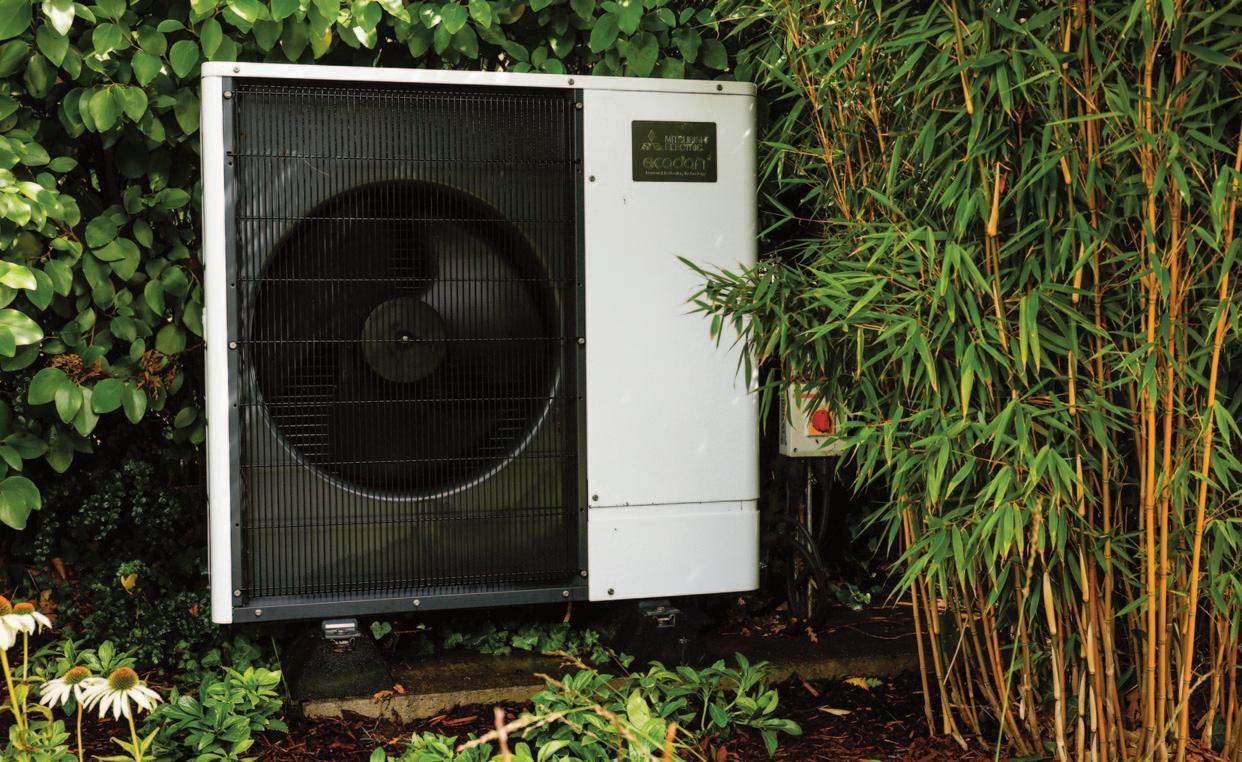
Mitsubishi Electric Ireland highlights the personal retrofit journey of Irish architect, television presenter, and brand ambassador Dermot Bannon, whose transformation of a 1920s Drumcondra home has become a benchmark for comfort, efficiency and sustainable living.
Central to the project is the Mitsubishi Electric Ecodan air source heat pump, delivering reliable heating, abundant hot water and a significant uplift in energy performance.
When Bannon purchased the centuryold property in 2018, it suffered from poor insulation, unreliable heating and frost-lined windows in winter, all symptomatic of its original G BER rating, the lowest on the national scale. Bannon embarked on a deep retrofit in 2019 with a clear objective to create a modern, efficient home capable of meeting and exceeding contemporary energy standards.
“We knew that breathing new life into an older structure meant rethinking every element of its performance, from insulation and ventilation, through to heating and everyday liveability,” says Bannon. “Selecting the right technology was essential to achieving a comfortable, future ready home that also aligned with Ireland’s shift away from fossil fuels.”
Bannon’s retrofit strategy was built on three core principles: deep insulation, high-quality ventilation and an advanced heating system. At the heart of the design, Bannon specified the Mitsubishi Electric Ecodan heat pump.
“After some research, we knew the Ecodan system would allow us to enjoy cosy, reliable heating and hot water while significantly reducing our carbon footprint.”
Despite understanding the theory behind heat pumps, Bannon sought real-world reassurance. He consulted plumbers and installers he trusted, asking one simple question: “If you were installing a heat pump in your own house, which one would you choose?” The answer, he recalls, was Mitsubishi Electric Ecodan.
“Installing the Ecodan heat pump was a natural choice for a home where both comfort and environmental responsibility were priorities,” added Bannon. “It is a great example of how modern technology can complement older buildings.”
Since installation, comfort has been consistent year-round. “One of the biggest surprises has been consistency,” said Bannon. “Nothing changes from July to December, the house feels the same all year round. You do not think about heating anymore, and that’s the ultimate success.”
Even high-demand scenarios are effortless, delivering what Bannon describes as “infinite hot water”. “We never have to control anything or switch anything on,” he explains. “It is invisible heating; it just works.”
Watch the full case study: W: https://les.mitsubishielectric.ie/theheating-hub

Janez Kren of the Economic and Social Research Institute (ESRI) discusses the energy efficiency of Ireland’s private rental housing stock, the cost of upgrading it, and the capacity of landlords to finance those upgrades.
The private rental sector has grown steadily over time and now plays a much larger role in Ireland’s housing system. “30 years ago it was under 10 per cent, but now it is 21 per cent of the overall housing stock.”
The profile of renters has also shifted: “In the past it was more of a transitional thing. Renting is no longer confined to younger households, just under half of all households with the reference person aged 30 to 34 are still in the private rental sector. Even when the reference person is 50 years old, still about 10 per cent of these households are in the private rental sector.”
Research shows that rental properties are typically less energy efficient than owneroccupied homes. “The rental sector is consistently less energy efficient compared to owner-occupied housing,” Kren says.
A central issue is the split incentive. “In a typical arrangement, the tenant pays for the energy bills but they cannot upgrade themselves,” he explains. “The landlord will have to pay, but the tenant benefits, and there is no direct incentive there.”
Information gaps also play a role. “Prospective tenants will not really account for or will not know what is the expected bill cost based on the property,” Kren says. In a tight housing market, the ESRI researcher states that “the energy efficiency of the building or the apartment will not be really on the top of the list in terms of what tenants are seeking”.



To estimate the energy efficiency of the rental sector, the ESRI combined census data with Residential Tenancies Board (RTB) registrations and BER certification records. “From 2022 there is a mandatory annual registration of every rental property in Ireland,” Kren says, providing a baseline estimate of the stock.
However, data gaps remain. “Over half of registrations do not have BER information,” he says. As a cross-check, the analysis also uses BER data where the reason for certification is listed as rental, although “both data sets are much fewer observations than there should be, so we have to do some adjustment on that”.
After correcting for missing data and selection bias, the results show a clear pattern. “About 6 per cent of rental housing stock is F or G-rated, 8 per cent is E, and the majority, about 60 per cent, is C or D,” Kren says. “There are about 21 per cent that are A or Brated.”
Protected structures were excluded from the analysis. “We estimate that about 5.5 per cent of the rental housing stock is in protected buildings,” he explains. “They will have very different costs to upgrade, so we excluded them from the analysis.”
The second stage of the research estimates retrofit costs using data from local authority social housing upgrades and SEAI one-stop shop projects. “What we have is the total cost of the upgrade, the energy efficiency before and after, and some basic characteristics,” Kren says.
Costs rise sharply for the least efficient properties. “If a building is currently G-rated, to get to B will be about €43,000,” he says, emphasising that these are average figures and that “there is lots of variation there”.
Applying these costs across the rental stock produces large aggregate figures. “If you focus on the G-rated properties, which are about 10,000 units, that is about €430 million,” Kren says. “If you put everything together, from G to C, the total cost is around €7 billion.”
A more limited approach still implies substantial investment. “If you just want to upgrade everything that is G, F or E, the total cost is about €1.7 billion,” he says.
To assess landlords’ financial capacity, the ESRI used household survey data focused on private, household landlords rather than institutional investors. “About 80 per cent of all rental housing stock is with landlords with less than 20 properties,” Kren says.
Many landlords rely primarily on non-rental income. “For 60 per cent of landlords, the rental income is less than 20 per cent of their overall income,” he explains. While median net wealth is relatively high, “most of it is the property itself,” and “only about €30,000 median is in more liquid assets”.
The result is limited capacity to self-finance upgrades. “Half of the landlords would not have sufficient internal funding to cover a €25,000 investment,” Kren says. “Only about 40 per cent of household landlords could directly fund a €10,000 investment.”
Age is another barrier. “Many landlords are 50 or more, which would be another barrier to obtaining bank loans,” Kren explains.
Kren states that improving energy efficiency in the rental sector will require targeted policy intervention. “Most landlords would not be able to afford outright,” he says. “There will be need for substantial, external financing.”
He also highlights the risks for tenants. “Many with low income are renters,” Kren notes, and “the renters with the lowest incomes tend to live in the least energy efficient buildings because they tend to be the cheapest”. Any retrofit strategy, he argues, must account for “the increased risk of eviction and increasing rent”, particularly for more vulnerable households.
“That is really the challenge,” Kren concludes. “The rental sector is more challenging than owneroccupied housing.”
SSE Airtricity is working with governments, local authorities, and domestic customers to support the decarbonisation of homes across the island of Ireland.

As a leading provider of cleaner, greener energy for homes and businesses across Ireland, we are all about making Ireland a more sustainable place.
Stuart Hobbs is the Director of SSE Airtricity Energy Services (AES), a business dedicated to delivering home energy upgrades and utilising energy efficiency technologies to deliver a cleaner greener environment. SSE AES offers home energy upgrades under a number of different government-funded programmes: SEAI One Stop Shop retrofit programmes, Better Energy Homes, local authority energy efficiency retrofit programmes (EERP), and SEAI Warmer Homes. Up to 1.5 million homes in Ireland are in need of energy upgrades by 2050, as energy efficient buildings are essential to meet our climate action targets. These upgrades typically include external wall insulation, energy efficient windows and doors, attic insulation, heating controls, heat pumps, solar PV and battery systems, and electric vehicle (EV) charging points.
Part of the Irish Government’s Climate Action Plan includes a national retrofit programme aiming to see 500,000 homes, one-third of Ireland’s housing stock, retrofitted to a ‘B2’ building energy rating by 2030. SSE AES is supporting the retrofit of 40,000 homes in Ireland over the next 10 years, with over 5,000 upgrades already completed. These works will drastically reduce the emissions of thousands of homes, saving millions on energy costs for consumers and making their homes warmer, healthier. Once delivered, this will equal approximately €20 million in reduced energy costs every year.
An SSE Airtricity Home Energy Upgrade is the perfect way to upgrade your home. Hobbs states: “We offer an award-winning retrofit service with a full range of home upgrade options, expert project management and a streamlined grant application process. We have partnered with Ireland’s leading experts in energy efficiency upgrades. From solar PV to windows and doors, internal and external insulation, heat pumps, and EV chargers, we only work with the best. Our customers receive a free home consultation to discuss their home upgrade requirements and receive expert recommendations from our team of specialists. It is one call, it is one job, it is one point of contact.”
SSE Airtricity has been providing home energy upgrades since 2012, working with SEAI, local authorities and other housing bodies on joint initiatives. SSE AES help local authorities deliver their Energy Efficiency Retrofit Program (EERP) obligations by taking a lot of the hassle and complexity away, enabling them to deliver larger projects at a better cost and with more flexibility than
their own resources might allow. “Over the last decade, we have delivered significant energy upgrades to fuel poor and social housing units, and we have significant ambitions to expand and increase these partnerships. SSE AES’s award-winning service provides a full EERP turnkey solution for local authorities, managing the works from start to finish on a partnership basis with local authorities or housing bodies. We offer pre- and post-BERs, full project design, guidance and preparation and management of all tender documents to be fully compliant with EU procurement requirements, including full end-to-end project management.” SSE AES also compiles all certificates and associated paperwork for the local authorities to make a successful claim to the department. In addition, SSE offers financial support to the project in the form of energy credits generated, as well as offering bridging finance for local authority EERP projects. SSE AES has a body of retrofit contractors and resources ready and able to deliver in all 26 counties in the Republic of Ireland.
Warmer Homes is a nationwide retrofit scheme administered by the SEAI delivering free energy upgrades for households in receipt of certain government benefits. Energy retrofit measures delivered under this scheme include high energy efficiency heating systems, ventilation, external wall
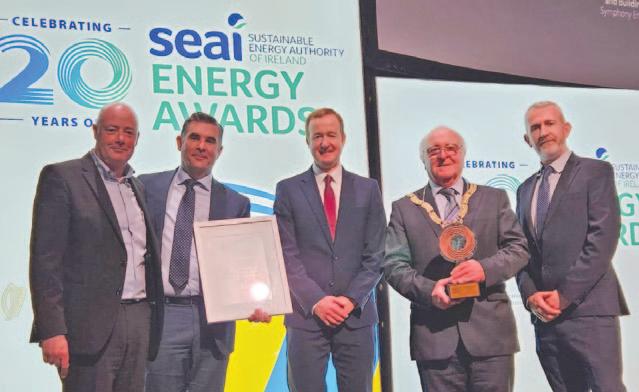
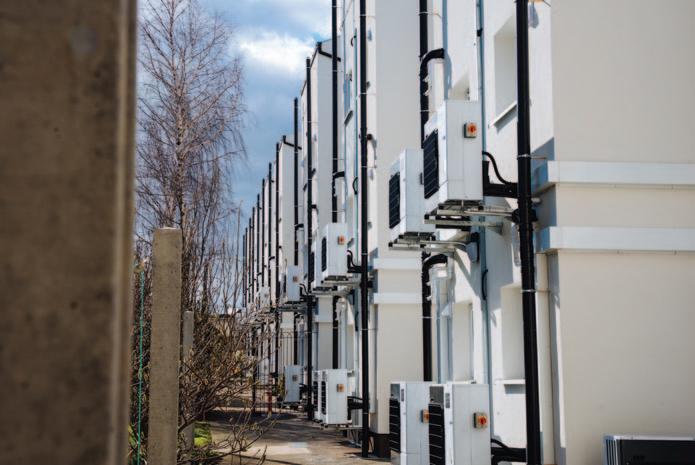
insulation and in some cases windows and doors; making these homes warmer, healthier, and more economical to run. SSE AES is a registered SEAI Warmer Homes contractor to deliver energy upgrades under this national scheme. SSE AES has delivered over 606 homes energy upgrades under this scheme since 2020 across a range of shallow and deep retrofit measures and have recently been successfully reappointed to the SEAI 2023 Warmer Homes Contract, to continue delivering energy retrofit upgrades on behalf of SEAI over the next four years.
SSE AES retrofit programs received awards and recognitions over the past few years for their various retrofit services. In 2023, SSE AES received nominations and secured wins
alongside their local authority partner, Dún Laoghaire-Rathdown, for their upgrade to 58 units in Beaufort OAP Complex in Glasthule. These included winning the Residential Energy Upgrades Awards category at the SEAI Energy Awards 2023, the Local Authority Innovation Award category at the Chambers Ireland Excellence in Local Government Awards, and achieving the gold award in the Energy Initiative/Project of the Year at the AllIreland Sustainability Awards. Also, our One Stop Shop Service won the Best Retrofit Service at the 2024 Bonkers Awards.
For further information on SSE AES programme supports, contact Stuart Hobbs on: T: 087 923 6404
E: stuart.hobbs@sse.com
W: www.sseairtricity.com


Carlos Ochoa, senior researcher at the Tyndall National Institute, outlines how the EU-funded DigiFab project aims to accelerate energy retrofitting across Europe through digitalisation, prefabrication, and occupant-centred design.
With 85 per cent of Europe’s building stock having been built before the year 2000, buildings account for a substantial share of energy demand. “We are using 42 per cent of our energy to heat up these buildings,” Ochoa explains. While deep renovation is essential, progress remains slow. “We are only doing 1 per cent as an average in Europe per year.”
Traditional approaches to energy renovation face multiple barriers. “Traditional energy retrofitting is very disruptive,” Ochoa explains. “It takes a lot of time, and it is also very expensive.”
Prefabrication is often proposed as a solution, but uptake has been limited. “We have so many buildings, and prefabrication is, by definition, something that repeats itself,” he says, highlighting the difficulty of applying standardised solutions to highly varied structures.
A lack of reliable information is another obstacle. “If you take a building from the 1950s, you are lucky if you have the plans, and therefore you have to start guessing what you have inside and then try to adapt to that kind of building.”
Information is also fragmented across stakeholders. “The building managers know something, the inhabitants know another thing, the constructor knows something else, so there is nothing centralised.”
Logistics further complicate matters. “You need a very well-detailed logistic plan in order to tackle prefabrication,” Ochoa says, warning that, without this, “this can make it unprofitable, especially for construction SMEs”. Occupant acceptance is equally critical as “when we are dealing with occupants, we have to take into account their desires, their motivation, in order to provide acceptance and cooperation”.
The DigiFab project, funded in the context of Horizon Europe by the European Commission, seeks to address these challenges through a fully digitalised renovation process. “The project proposes energy retrofits across the EU for several building typologies,” Ochoa says, with the aim of “strengthening the value chains”.
Central to this is a shared digital backbone. DigiFab proposes “a digital process as a single source of information”, replacing fragmented data flows where “you go one way and look for documents in another”.
Accurate data collection is essential. “We are proposing using laser scanning and surveying in order to make a digital twin or BIM model of the building,” Ochoa explains, capturing both interior and exterior features. “This is to have accuracy when developing retrofitting components and minimise thermal bridging.”
The process also includes “a manual inventory of the wall conditions” to assess load-bearing capacity, resulting in “a BIM model for the energy analysis”. This information is then translated into simulation tools. “We define the baseline and the target that we must achieve,” he says, and “recommend how we can reach, for example, the BER B2, according to characteristics like the thickness and the type of technology suitable for the site”.
All data is shared through a cloud-based platform.
“This is information that will be available in a proposed data cloud so that the manufacturers can use it,” Ochoa explains.
A distinctive feature of DigiFab is its focus on social acceptance. “We are getting the occupant and stakeholder input through a co-creation process in which the innovations of the future are co-designed with the users themselves,” Ochoa says.
These sessions are carefully structured. “If you ask people all of a sudden what they want, they might go in a different type of conversation, so these are sessions that are guided in order to get the relevant inputs.
“The drivers are not only carbon emissions. In the Austrian demonstrator, for example, people are cooperating because they are going to get an elevator.
“Energy renovation becomes acceptable because it makes their life easier.”
User preferences also shape technical decisions. “In the traditional energy analysis, specialists may say eliminate thermal bridges, take off the balconies, but people like them and we need to account for this.”
DigiFab integrates a range of prefabricated solutions. “We are developing lightweight concrete panels that have insulated and recycled materials,” Ochoa says, alongside, bio-based material panels, made from wood waste products.
On active façade systems, he says: “We have active heating and cooling façade elements,” he explains, which circulate hot water through the façade. In addition, “we have PV panels that are just plug and play”, combined with energy management solutions to make buildings smarter.
These systems are customised through digital design. “This is how to customise an industrial product,” Ochoa says, while “the carbon footprint is reduced compared to conventional systems”.
“Lifecycle impacts are also considered, with the rollout of lifecycle analysis calculations considering the extended lifetime of the building,” he explains. “Now we are extending it maybe another 20 or 30 years. Construction waste is minimised, and any that is generated is sent to appropriate locations for recycling.”
Installation is designed to be rapid and low impact. “We are going to have 200 square metres of surface in two days,” Ochoa says, using large, prefabricated elements. The approach aims for 30 per cent reduction in costs by eliminating delays and intermediaries.
Worker safety is integrated through digital monitoring of the construction site. “The workers are wearing sensors on their clothes and helmets,” he explains, allowing detection of falls, proximity to machinery, and excessive noise exposure.
Early results are promising with a study on the EU legal framework, also including Ireland, Ochoa says, concluding that it is “mostly positive” for prefabrication.
The target to retrofit 36,500 social housing units to a B2 standard by 2030 in line with the Climate Action Plan is unlikely to be met, a report by the National Oversight and Audit Commission (NOAC) has found.
The Local Authority Performance Indicator Report, published in September 2025, finds that current annual retrofit completions must double to reach the target. It adds that “it is not certain that it can be accomplished”.
There were 2,634 units retrofitted in 2024 of which 2,461 achieved a BER rating of B2 or above. This included the installation of 2,393 heat pumps. In 2023, there were 2,445 housing units retrofitted of which 2,315 achieved a BER rating of B2 or above. Houses retrofitted in 2024 delivered energy savings of 37,711.8 MWh and carbon emissions reductions of 10,360.3 tCO2e.
The National Residential Retrofit Plan 2026, published in January 2026, states that Department of Housing has funded more than 11,000 local authority retrofits to BER B2 level “or cost optimal equivalent” between 2021 and 2025.
Retrofitting of social housing is supported by the Department through the Local Authority Energy Efficiency Retrofit Programme (EERP). A total of €140 million has been provided under the EEPR for 2026 aimed at delivering around 3,500 upgrades. The plan states that €90 million was spent under the programme in 2025 to delivery 2,673 home retrofits.
In the NOAC report, local authorities advised that houses retrofitted to date were the “low hanging fruit” of housing stock, those that are easier and less expensive to retrofit. The report states: “As they progress with their programmes, they will be dealing with the older, more technically difficult, and more costly to retrofit units.”
Barriers to progress include insufficient financial and human resources and the operation of the retrofit scheme on an annual rather than multi-annual work programme.
“Furthermore, the major urban authorities are faced with additional financial and technical challenges, in that they are required to retrofit old multi-storey flat complexes, and there is a question as to whether the existing retrofit scheme is appropriate for such units,” the report says.
Dublin City retrofitted the most homes in 2024 with 408 units, up from 259 in 2023. The report finds that many local
authorities including Donegal, Cavan, Galway County, Louth, and Laois had capacity to carry out additional retrofits which they proceeded with in some instances. However, due the lack of funding, they were unable to include any additional units in their 2024 results.
Limerick City and County reported the lowest number of retrofits with two, while Roscommon was second lowest with seven, and Kerry was third with 13.
The report outlines that Limerick City and County sad that it did not have the claims submitted for the 2024 programme. Therefore, units completed in 2024 will now be counted in 2025.
“Cavan, Galway County and Leitrim expressed concern about the way the programme is funded and found it a challenge and at the current rate of progress they were doubtful of reaching their target,” the report adds.

Following
widespread AI
generation of ‘deepfakes’, most prominently on the X AI bot Grok, Fine Gael MEP Maria Walsh asserts that Ireland must take the lead as Europe seeks to criminalise deepfakes.
Almost two years ago, I stood in the European Parliament and warned of a looming threat: the rise of sexualised deepfakes targeting women and girls. Back then, it felt almost futuristic; a technological unknown better suited to a science fiction thriller than our everyday reality.
Sadly, however, that warning has been borne out as we have seen women and young children abused by Grok and other AI platforms in recent months.
I believe that deepfakes represent the next frontier of gender-based violence. As defined by the Cambridge Dictionary, a deepfake is “a video or sound recording that replaces someone’s face or voice with that of someone else, in a way that appears real”. What makes them so dangerous is not just their realism, but their speed, reach, and the near impossibility of retracting them once published.
Most deepfakes involve non-consensual sexual imagery, and women are overwhelmingly the victims. 96 per cent are sexual images or videos, with women and girls making up 99 per cent of those targeted. These videos, superimposing a person’s face onto explicit scenes without consent, are designed to intimidate, control, and humiliate. Careers, reputations, relationships, and personal lives are all at stake.
Beyond the personal consequences, deepfakes actively discourage women from participating in public life, politics, or careers that place them in the public eye. A study from University College Cork found that one-in-five people who watched deepfake videos of Irish politicians formed false memories of events that never occurred, showing just how deeply these technologies can distort reality.
For too long, victims have had no clear road to justice. The law is struggling to keep pace with AI’s rapid advancement, leaving individuals feeling helpless. The EU’s Digital Services Act and AI Act are important steps, but they do not go far enough to address sexual deepfakes. Having worked on this issue since the beginning, I believe the EU is failing to keep our women and girls safe online. While I first raised the issue of deepfakes almost two years ago, only last month did we see the Commission begin an investigation into Grok for their deepfake technology.
This is where Ireland has a responsibility to lead. Our country is home to the European headquarters of many of the world’s largest social media companies, including X. With this comes a moral obligation to lead within the EU, demonstrating that the creation and sharing of non-consensual deepfake content is not tolerated.
National legislation explicitly criminalising the creation and sharing of sexual deepfakes is urgently needed. It is not enough to rely solely on voluntary measures from tech companies nor wait for the EU to catch up. Strong laws must set clear penalties, hold perpetrators accountable, and offer victims real avenues for justice. Ireland, with its upcoming presidency of the EU Council in July 2026, can and
should lead the charge at a European level, setting a standard for others to follow.
This is a once-in-a-decade chance to leave a lasting legacy in Europe: a safer digital environment where women, children, and all citizens can participate freely without fear of manipulation or harassment. However, legislation alone is not enough. We need technological solutions to detect and prevent harmful content from spreading in the first place. We need education programs to raise awareness among the public about the dangers of AI-generated sexual content. Social media companies must step up their monitoring and reporting mechanisms, ensuring victims are supported and abuse is curtailed before it goes viral.
The consequences of inaction cannot be underestimated. Deepfakes threaten political integrity, distort public debate, and erode trust in our institutions. But most critically, they inflict real harm on real people; women and children whose lives can be turned upside down in an instant. I have heard countless stories in my constituency and across Europe of individuals whose images or voices have been misused in this way. The trauma is profound.
I remain committed to this cause, advocating at every level for laws, tools, and awareness campaigns that safeguard our citizens. In March 2026, I am travelling to the United Nations on behalf of the European Parliament armed with a very clear message; deepfakes are the next frontier of genderbased violence. As the lead negotiator for the EPP, the Parliament’s largest political group, on the EU’s priorities for the 70th session of the United Nations Commission on the Status of Women (CSW), I will be ensuring deepfakes are on the political agenda in New York.
Deepfakes are not just a technological threat; they are a societal challenge, a gender equality issue, and a call to moral action. By taking bold steps today, Ireland can protect victims, restore trust, and lead Europe in confronting this new frontier of digital abuse.
Political commentator and law lecturer Larry Donnelly examines the state of relations between the United States and Europe, and whether President Donald Trump is a reliable partner for Europe.
“Mr Secretary, I’m not sure you heard the sigh of relief through this hall when we were just listening to what I would interpret as a message of reassurance, of partnership,” said the chairman of the Munich Security Conference, Wolfgang Ischinger, in reaction to United States Secretary of State Marco Rubio’s recent address to the gathering of key global players. European Commission President Ursula von der Leyen added that she was “very much reassured”.
But was theirs an overly kind assessment of Rubio’s remarks, a collective ‘phew’ that his delivery was not as caustic as Vice President JD Vance’s was in 2025 or another attempt to genuflect and hence curry favour
with President Donald Trump’s loyal deputies? In all probability, it was a mixture of the three.
For notwithstanding Rubio’s more genteel tone, the content was fairly indistinguishable from his colleague’s. While using some flowery, evocative language to pay homage to the longstanding ties between Europe and the US, there was no shortage of chastisement and not so thinly veiled criticism on an array of fronts: inadequate military spending, “open borders” immigration laws, a war on free speech, the perils of the welfare state, subservience to flawed international institutions, appeasement of the “climate cult”, and more.
In sum, in Rubio’s words, America and Europe may have “saved and changed the world” and the US again wants to chart “the path for a new century of prosperity” jointly, but if Europe does not get its act together, Uncle Sam will go it alone.

Such rhetoric presents ample cause for concern. First, as has been posited subsequently, Rubio’s admonitions are based on a blend of half-truths and outright falsehoods about the cited policy failings. Second, acceding to any of these preconditions with a view to “renewing the alliance” would, without being excessively glib, arguably constitute an abandonment of what it means to be European.
Third, there is a sizeable, receptive audience for these sentiments, if not for the negativity they emanate from, within the US. Its membership is not confined to the MAGA movement.
Although the data indicates that a majority of Americans broadly approve of the European Union, approximately half agree that EU countries need to increase their defence spending and a smaller fraction consider it a major economic power in 2026. Affection for Europe is prevalent, as many have a particular grá for the land “their people” left behind for a new life, yet so is a sense that, owing both to their ideological and non-political beliefs, the continent’s future will not match its storied past.
Simultaneously, and not surprisingly in the wake of President Trump’s now stalled campaign to take Greenland, European opinions of the US have sunk to their lowest ebb since pollsters began tracking them. Indeed, the only priority outlined by Secretary of State Rubio for which there is popular support is a reduction in immigration. Against this backdrop, what might a redefined transatlantic relationship look like and how can Ireland best position itself?
Those in Europe, who lament the rapid change and total unpredictability that have been the hallmarks of this administration and comfort themselves by pointing to the fact that Donald Trump will no longer be president in 2029, have a point, to an extent. But once the metaphorical genie is out of the bottle, it is difficult to get it back in. The thrust of ‘Trumpism’, without the volatile personality and the unexpected,

foolhardy interventionism during the last 12 months, is that the US should mind its own business and let other nations do the same. Polling shows isolationist thinking is at its highest level in decades. Consequently, whether a Democrat or a Republican is in the White House, Europe can no longer be as confident that America will be firmly in its corner, either economically or militarily. The EU is absolutely correct to invest in defence and, while pushing to ensure that vital trade with the US continues, to explore new markets.
On the bright side, post-Trump presidents and congressional leaders can hopefully be convinced that close cooperation is necessary to vitiate the myriad threats posed by a burgeoning kinship between China and Russia. As one commentator wryly declared, perhaps President Trump has done Europe a favour in forcing it to stand on its own two feet and assert itself.
As for Ireland, it is important to note that this country has always been served well, and continues to be served well, by its diplomatic team in the US. They have nurtured and strengthened our widely envied, mutually beneficial friendship. Increasingly, however, political engagement is also crucial as our interests and stances on lots of big
issues diverge. This is an undeniably rocky and potentially pivotal moment.
Bringing the next generation on board by creating caucuses of state legislators with an affinity for Ireland was a great idea which should pay dividends.
Appointing a credible, experienced Irish political figure to be a new envoy to the US Congress, taking the temperature and advocating for this island’s interests on Capitol Hill, would be wise, too. Politicians instinctively ‘get’ other politicians. And the Irish on the ground must cultivate Republicans, as well as Democrats.
These suggestions are merely scratching the surface of how to deal with an incredibly complex situation, the de facto reconfiguration of the world order, for Europe generally and Ireland specifically.
To resort to an awful expression, we are where we are. We have to act accordingly.
Larry Donnelly is a Boston-born and educated attorney, a law lecturer at the University of Galway, and a regular media contributor on politics, current affairs, and law in Ireland and the US.



Knock native Paul Lawless made Aontú history at the 2024 general election when he became the party’s second ever Dáil representative. The 33-year-old talks to Ciaran Brennan about his political origins, his priorities for Mayo, and Aontú’s “common sense” politics.
Prior to Lawless’ entry to politics, he was a promising footballer who had represented the Republic of Ireland in soccer at underage level. He earned a spot in the Derby County Football Club’s youth academy, but eventually returned to Ireland to study at University College Cork. Lawless then earned a soccer scholarship which saw him attend Clayton State University in the US state of Georgia.
Upon returning to Mayo following his time in the US, he began training with his local GAA club, Aghamore,
where he learned that many of his peers were settling in Dublin. This inspired him to put his name on the ballot paper in the 2019 local elections.
While leafleting, Lawless discovered that many people in Mayo were awaiting cataract surgery. To address this, he organised a bus from Mayo to Belfast for local people to avail of cataract surgery under the HSE’s Cross Border Directive. The scheme enables people to get planned healthcare in another European Union or European Economic Area country.

‘‘
“The long-term ambition, I think, is to be in government making decisions that are right for the country.”
Paul Lawless TD
Although he was unsuccessful in 2019, the campaign and the Cataract Bus initiative enhanced his political profile. Lawless expanded the campaign after the election to provide people with services at Kingsbridge Private Hospital in Belfast and Derry. It enabled patients to bypass waiting lists for hip replacements, carpal tunnel surgery, and more.

Following an unsuccessful campaign in the 2020 general election, Lawless was elected to Mayo County Council in June 2024. He was elected to the Dáil shortly after. It was a surprise victory for the party and Lawless, a former maths and PE teacher at Ballyhaunis Community School.
“What inspired the success? I do not know,” says Lawless. “The bookies did not see it. The media did not see it. I worked hard on delivering for people in the area and I am passionate about Mayo.”
Lawless asserts that he “never ran for self-adulation or anything like that”, adding that “there would have been easier roads to Leinster House”.
Tracing his political origins, Lawless says he “did not come from a party-political household”. He continues: “I would have voted for various different politicians over the years from all parties.”
Tracing his political influences, Lawless says: “My politics is inspired by community. My politics is inspired by obligation.” When asked what drew him to Aontú, he describes the party as one led by “common sense”.
“I think Aontú is a growing party, we are going very well. I think our common sense politics is resonating,” he adds.
Aontú is one of the most vocal parties regarding its support for a united Ireland. Lawless asserts that “the all-Ireland economy” is the greatest opportunity presented by a united Ireland. He says that the greatest challenge is the integration of services.
The Knock native adds: “We are not making sufficient preparation for that, and I think that is a key challenge and the potential for poll to happen prematurely without the necessary preparation.”
Outlining his priorities, Lawless states that he wants to put the west of Ireland “on an equal footing”, to the rest of Ireland adding that it “needs targeted investment”. He says he wants to see the west’s infrastructure developed. Welcoming the Western Rail Corridor, he indicates that he wants it to be expanded. Lawless also states that road infrastructure needs to be upgraded and Knock Airport needs to be developed further.
The 33-year-old asserts that “housing delivery is falling behind the rest of the country”. He says only five affordable homes have been delivered in Mayo in recent years. In December 2025, Mayo applied for the development of 35 affordable homes in Castlebar under the Affordable Purchase Scheme.
Lawless states that his issues might have been identified earlier if there were more young politicians. “Every age and type of person has a different instinct or a different perspective and that should be represented,” he says. “I think it is very important to have all types of people in politics including young people.”
Discussing the Government’s new housing plan, Delivering Homes, Building Communities, published in November 2025, Lawless says there are “some positives”.
However, he asserts that it does not address the high costs of building houses. He says there are people who have planning permission approved and mortgages secured that “cannot afford to build their homes” in Mayo.
Lawless states that he wants “to see the protection of farmers”. He outlines one issue he sees facing farmers: “The Common Agricultural Policy [CAP] is set to have a significant reduction of about 20 per cent.
“Any cut to CAP will have significant impact on Ireland in general but particularly in the west where there are smaller farms.”
Lawless also pins crime as one of his priorities. He asserts that “Garda numbers are effectively falling in Mayo”. This has a “knockon impact” on gardaí and “people’s perception of safety”. He states that people’s perception of safety changed between the local election campaign in 2019, and the general election campaign in 2024.
Lawless devotes a significant amount of his attention to immigration. He asserts that Aontú “helped significantly change the course” of the discussion on immigration.
“The previous government was driven by ideology over right and wrong and over what was logical. We were the first party to lead a discussion about how the IPAS [International Protection Accommodation Service] system needed to be a rules-based system,” he says.
The current government has demonstrably shifted closer to the right in its discussion of immigration. Taoiseach Micheál Martin TD recently said “about 80 per cent” of asylum seekers are refused on their first stage of appeal, adding that “what you are looking at here is economic migration, primarily”.
However, government figures show that the average monthly percentage for refusals on final applications from January 2025 to October was 53 per cent. The data does not include details of applicants being refused because they were identified as economic migrants.
Despite this, Lawless stated that “80 per cent of [IPAS] applicants are actually economic migrants”, in a social media video he posted opposing an IPAS centre in Ballyhaunis, Mayo.
Furthermore, in a social media video posted on 2 October 2025, Lawless stated that IPAS incurred costs of €1.5 billion in 2024, citing the report on the Accounts of the Public Services 2024 by the office of the Comptroller and Auditor General.
“I think Aontú is a growing party, we are going very well. I think our common sense politics is resonating.”
Paul Lawless TD
The report states: “The IPAS incurred expenditure of almost €1.1 billion on the provision of accommodation and related services to IP applicants in 2024.”
When these inaccuracies presented by Lawless are outlined to him, he says: “First of all, the majority of IPAS applicants do fail. That is a fact. That is information that we brought into the public domain. Many do reapply, many are supported by NGOs. Many remain in the system for years and ultimately get leave to remain. That is a fact.
“We will be unapologetic in relation to calling this out and we believe in a rulesbased system, we believe that people who genuinely need our help, people who are fleeing war and persecution deserve our help.
“But those who are using our system, and abusing our system should be shown the door and that is only right and proper in a functioning democracy.”
The Economic and Social Research Institute’s (ESRI) January 2026 report, The role of misperceptions in attitudes to immigration, finds that people who hold more inaccurate beliefs are “significantly more likely to feel negatively about immigration and to cite it as a major national issue”.
When this is outlined to Lawless in the context of the inaccuracies he previously presented, he maintains that his broader point stands, saying that “people’s attitudes are changing”. He continues: “People want a compassionate approach but people want to know that the system is not being abused.
“The spend in terms of the IPAS system is phenomenal and the majority of those people, and therefore the majority of the spend, is actually unnecessary because of the system.”
Lawless requested time to research the inaccuracies presented to him by eolas Magazine and respond. No response has been received at the time of writing.
When asked what “common sense” policies Aontú would introduce, Lawless points to the referendums on family and care in April 2024 in which Aontú advocated for a no-no vote.

The then-coalition government of Fianna Fáil, Fine Gael and the Green Party had advocated for a yes-yes vote along with opposition parties Sinn Féin, the Social Democrats, Labour, and People Before Profit.
Both referendums were defeated, with 67.69 per cent voting ‘no’ in the family referendum which proposed to alter the wording in the constitution to include families which are not based in marriage. The care referendum aimed to change the wording around the role of women in the home was also defeated with 73.93 per cent voting ‘no’.
Pointing to more common sense politics, Lawless outlines how Aontú led the campaign for Maria Steen to get on the ballot paper for the presidential election. Lawless indicates that this decision was taken because there was a “very narrow field of candidates”.
There were three candidates: eventual winner Catherine Connolly, former Fine Gael TD Heather Humphreys, and former Dublin senior football manager Jim Gavin who dropped out but remained on the ballot paper.
Lawless asserts that Connolly and Humphreys “were never going to reflect the myriad of
opinions that exist in Ireland”. The Mayo TD says the narrow field meant some topics such as crime and the cost-of-living were not discussed to the extent they should have been.
“That was our primary objective: to ensure there was a rich field where people had an opportunity to vote for someone they felt reflected their views.”
Lawless insists that his ambition for his political career is to deliver for his constituents. Indicating that Aontú can achieve more by working with other parties, Lawless states that the goal for the party is to become “a player in a government and in a coalition”.
“We can achieve so much in opposition, we can push the Government in a particular direction, and I think we have done that quite well for a small party, but ultimately the long-term ambition, I think, is to be in government making decisions that are right for the country,” he says.
Asserting that he is not a politician for “power or any personal gratification”, he says: “The day I feel I cannot deliver for my community is the day I will retire.”





1926 Fianna Fáil – The Republican Party is founded on 16 May by Éamon de Valera following a split with Sinn Féin over abstentionism and the oath of allegiance. The party commits to constitutional politics within the Irish Free State and has two main policies: the revival of the Irish language and a united Ireland.
1927 Fianna Fáil enters Dáil Éireann for the first time after de Valera leads his TDs in taking the oath “as an empty formula”.
1932 Fianna Fáil wins the general election and forms a minority government. De Valera becomes President of the Executive Council, ending 10 years of Cumann na nGaedheal rule.
1933 Fianna Fáil secures an overall majority and begins a period of near-continuous dominance of Irish politics.
1937 Bunreacht na hÉireann is enacted following a referendum. Drafted by de Valera, it replaces the Free State constitution and establishes the modern Irish state.
1939-1945 During the Emergency (Second World War), Fianna Fáil maintains neutrality and suppresses IRA activity. Executions of IRA members demonstrate the party’s prioritisation of state stability over revolutionary republicanism.
1948 Fianna Fáil loses office for the first time, with John Costello leading an inter-party government for the next three years.
1959 De Valera is elected President of Ireland. Seán Lemass succeeds him as Taoiseach, marking a generational and ideological shift.
1960s Under Lemass, Fianna Fáil embraces economic modernisation and free trade. Lemass also applies to join the European Economic Community.
1966 Jack Lynch becomes Taoiseach following Lemass’s retirement. De Valera also narrowly secures re-election as President.
1969 The outbreak of ‘the Troubles’ in the North places severe pressure on the Lynch government. It later emerges that Lynch considered a military intervention in the North known as Exercise Armageddon.
1970 The Arms Crisis leads to the dismissal of senior ministers Charles Haughey and Neil Blaney, exposing deep internal divisions within Fianna Fáil.
1973 Fianna Fáil loses office as Ireland joins the EEC under a Fine Gael-Labour coalition.
1977 Fianna Fáil wins a landslide election victory under Jack Lynch, securing the largest Dáil majority in history.
1979 Lynch resigns; Charles Haughey becomes Taoiseach after a contested leadership battle. This is a significant comeback for Haughey following his dismissal over the Arms Crisis.
1980s Fianna Fáil alternates in and out of government amid economic crisis, high debt, and political instability.
1987 Haughey returns as Taoiseach, leading a minority government that initiates fiscal retrenchment and social partnership.
1992 Fianna Fáil wins its lowest vote share since 1927, but enters coalition with Labour for the first time, with Albert Reynolds as Taoiseach.
1994 Fianna Fáil leaves government after Labour withdraws support, leading to the Fine Gael-led ‘rainbow coalition’. Bertie Ahern succeeds Albert Reynolds as party leader.



Charles Haughey’s leadership was mired by scandal, ruining Fianna Fáil’s image as a clean party.

Ahern’s
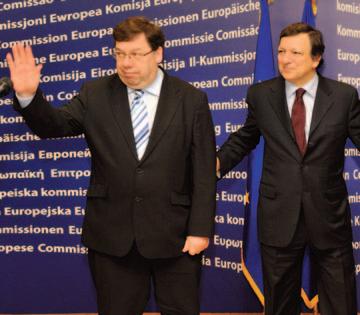
Brian Cowen’s ill-fated spell as Taoiseach saw the State’s finances managed by foreign banks and governments.

1997 Bertie Ahern leads Fianna Fáil back into government in coalition with the Progressive Democrats.
1998 The Good Friday Agreement is reached, meaning the end of Articles 2 and 3 of Bunreacht na hÉireann and the state’s claim of sovereignty to the North. This marks a significant shift in Fianna Fáil’s historic republicanism.
2002 Amid the height of the Celtic Tiger, Bertie Ahern emphatically secures re-election, coming close to an overall majority and governing again with the Progressive Democrats.
2007 Fianna Fáil wins a third consecutive term under Ahern, forming a coalition with the Green Party.
2008 Brian Cowen becomes party leader and Taoiseach. Cowen’s ill-fated spell includes the defeat of the Lisbon Treaty and the fallout of the Great Recession.
2008 The global financial crisis hits Ireland. The Fianna Fáil-led government issues a controversial blanket guarantee to Irish banks, defining the party’s modern legacy.
2010 Ireland enters an EU-IMF bailout programme following the collapse of the banking system. This leads to the rollout of austerity, the loss State’s economic sovereignty, and a collapse in Fianna Fáil’s popular support.
2011 Michéal Martin becomes leader and leads the party to a historic electoral defeat, reduced to only 20 TDs (down from 77) in the general election.
2014 Micheál Martin leads a partial recovery in the local election, but the party loses all its representation in the European Parliament due to vote mismanagement.
2016 Fianna Fáil returns as a significant opposition force and wins 44 seats. Micheál Martin uses the mandate to prop up its historical rival, Fine Gael, through a confidence-and-supply arrangement
2020 Fianna Fáil enters government in coalition with Fine Gael and the Green Party. Micheál Martin becomes Taoiseach, marking the end of the two-party system as Sinn Féin becomes an equal political force to both Fianna Fáil and Fine Gael.
2022 Martin assumes the role of Tánaiste as Leo Varadkar becomes Taoiseach under the coalition agreement.
2024 Fianna Fáil decisively wins the general election, securing a second term as Taoiseach for Micheál Martin
2025 Fianna Fáil is forced to withdraw Jim Gavin as the party’s presidential candidate after it emerges that Gavin failed to pay money owed to a former tenant. Having pushed Gavin as a candidate, this threatens Martin’s leadership.
2026 Fianna Fáil marks 100 years since its foundation, having been the most electorally successful party in the history of the State.
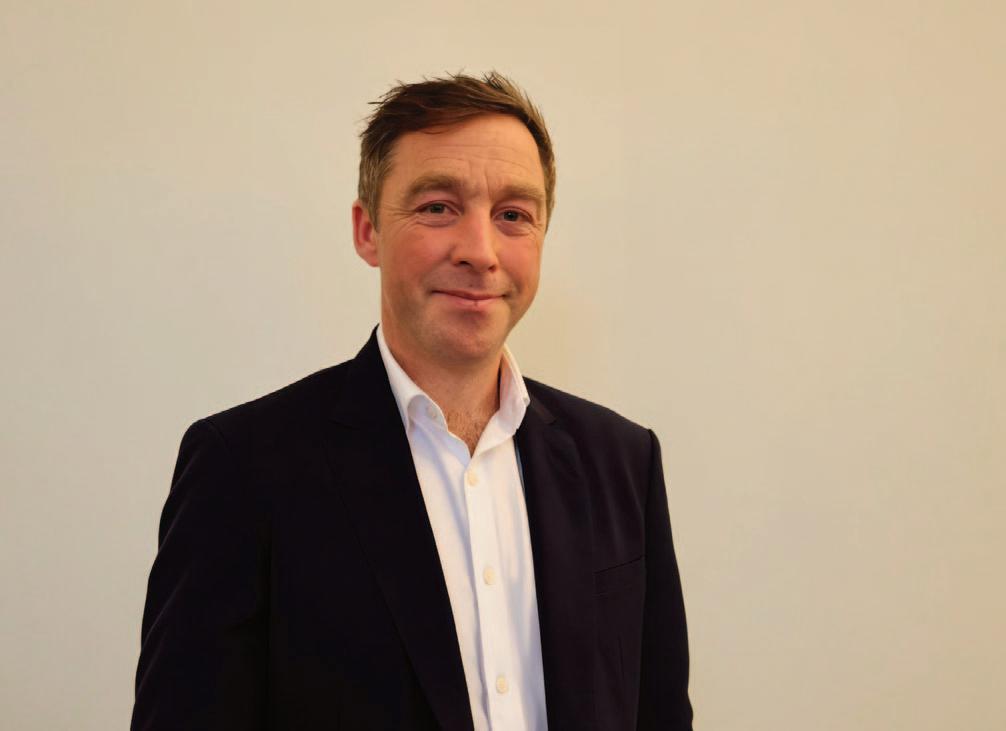
Rory Hearne TD
academic and Social
Democrats TD Rory Hearne speaks to eolas Magazine about his proposals for solving the housing crisis, why he decided to enter politics, and his political views beyond housing.
What inspired you to get into politics?
I have been working on issues of housing for over two decades: from researching how the shift in social housing policy to a market model resulted in communities being disadvantaged and public land sold in Dublin for my PhD in the early 2000s, to then working full time on the ground as a community worker and regeneration policy officer in Dolphin’s Barn addressing issues of substandard housing, community engagement, and council-led social housing regeneration from 2007 until 2013, to then researching economic and housing policy with the
“I am proud of challenging the Government’s policy agenda of making very negative changes that affects renters such as removing the inter tenancy rental cap and their ongoing failure to ban no fault evictions.”
think tank, TASC, and then going lecturing and researching in social policy and housing as an associate professor in Maynooth University and writing two books on housing, Housing Shock (2020) and Gaffs (2022).
All that time I was also actively campaigning with community groups for a right to housing and addressing the growing housing crisis in Ireland, including with Home for Good and Raise the Roof. Within all this work, I saw how politics shapes housing policy and the outcomes for people on the ground.
I wanted to be at the heart of shaping housing policy and solve this housing disaster and I got involved with the Social Democrats as, for me, they were leading on shifting our approach to how housing is treated in social democratic countries like Sweden, Austria, and Denmark: as a human and social right. I wanted to get into politics to make a difference for everyone locked out of housing and to bring real change for people in Dublin North West and across this country.
Well I am only elected one year, but what a year it has been. I am proud of the policies I have developed with the Social Democrats in our proposal for the Homes for Ireland state-led savings scheme like the Livret A in France that has the potential to fund thousands of affordable homes, and our alternative housing budget which included proposals for funding a state-led housing delivery programme including modular home factories, a state construction company, and getting local authorities and approved housing bodies (AHBs) to lead in the delivery of social and affordable housing.
I am proud of challenging the Government’s policy agenda of making very negative changes that affects renters such as removing the inter tenancy rental cap and their ongoing failure to ban no fault evictions.
There are many people who have inspired me and influenced me in terms of being a voice for social justice. People like
Rory Hearne TD
Peter McVerry, Mary Robinson, Christy Moore, Rita Fagan, John Bissett, Róisín Shortall, Catherine Connolly, Greta Thunberg, Bernie Sanders, and Noel Browne.
drew
I was very impressed by people like Róisín Shortall, Catherine Murphy, and Holly Cairns and their vision for a social democratic Ireland: their politics that sought a better Ireland built on valuing public services, ensuring people have access to health, education, housing, and decent standards of income and services, and that the economy should work for society and not just corporate profit and endless mindless growth.
What are your key priorities for your constituency?
The key priorities are addressing the cost-of-living crisis and the housing issues, along with ensuring public transport works for people, ensuring children with disabilities and additional needs have access to proper services and appropriate school places, and supporting community social enterprises, and that local parks, playgrounds, and sports facilities are there for people.
I also believe in young people and involving them in politics and their communities. I think we need to develop affordable community-led housing that can provide affordable homes to buy and rent on a cooperative basis, that nurtures community and enables our young and old to find affordable housing that is suitable for their needs.
What are your interests outside of work?
I have three young children aged six, 10, and 11 so when I am not working I am parenting, well, even when I am working I am parenting too, on the school and sports WhatsApp groups etc! It is crazy, but I always put my kids first. They are the most important thing. I also really love sports. I still run and play hurling with Whitehall Columcilles GAA.
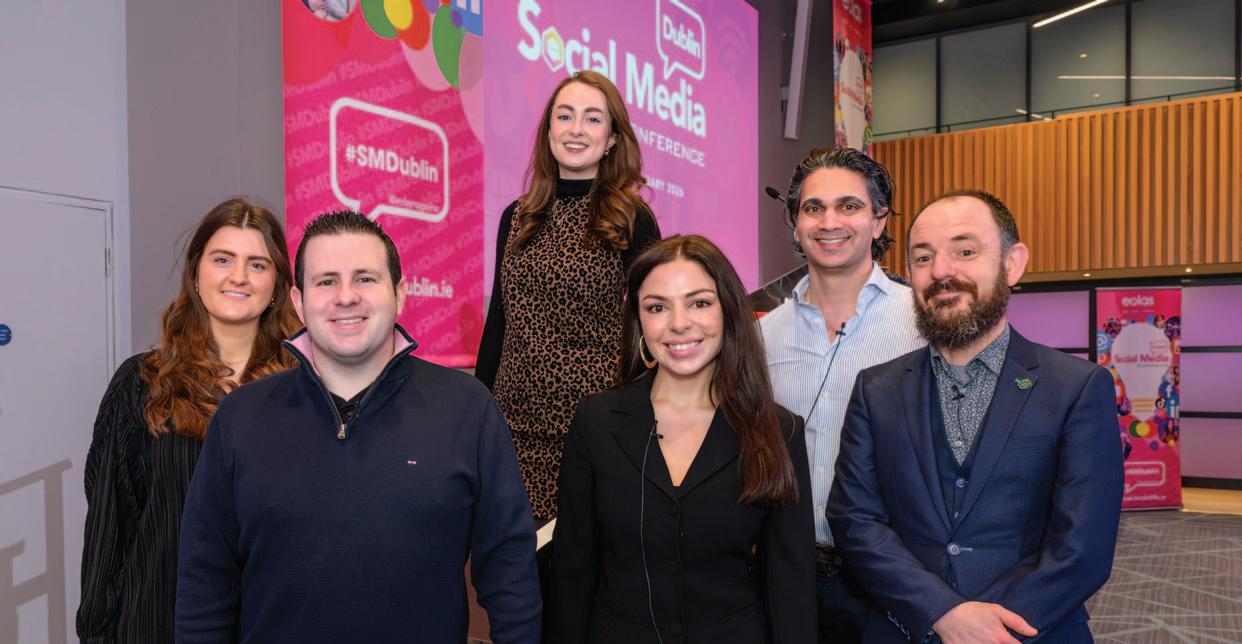

Now in its 12th year, Social Media Dublin took place on 29 January 2026 in Croke Park, Dublin. Bringing together over 350 attendees, this is the major event for Irish social media and communications industry. With speakers delving into the future of social media for 2026 and onwards, showcasing successful social media campaigns from Ireland and beyond.
Delegates heard from a range of expert speakers, both visiting and local, from organisations including Bluesky; European Commission; RTÉ; RNIB Northern Ireland; Libera Studio; Oxfam Ireland; Aldi Ireland; Octave Digital; and The Open University.




The early weeks of 2026 saw Donald Trump’s wrecking-ball impulses at work again as he demanded Denmark cede control of Greenland. His threats escalated over the course of a month, mooting tariffs ranging from 10 per cent to 200 per cent, and European leaders seemed wrong-footed over whether to appease him or oppose him, writes Irish Congress of Trade Unions (ICTU) General Secretary Owen Reidy.
One year into the second Trump administration, and this was the third time Trump had threatened tariffs against European countries, only to step back at the last minute. He has made no attempt to hide his antipathy for European nations or the European Union.
The particular difficulty for Ireland is that our economy, more than any other in Europe, is tied to the fortunes of the US economy and its political direction. The tariffs threatened by Donald Trump would pose a severe risk to the Irish economy, and by extension, hundreds of thousands of workers across Ireland.
The seemingly arbitrary nature of the tariffs threatened makes estimating their exact impact difficult to judge, though the Department of Finance estimated that 60,000 jobs were at risk from the tariffs proposed in early 2025.
There are certain lessons that Irish and European political leaders need to learn quickly if we are to survive the remaining years of the Trump administration relatively unscathed.
First, the Irish Government must have a ready-to-go plan for supporting workers in the event of tariffs. Consideration should be given to appropriate schemes, such as an adequate short-time work scheme, to protect jobs, workers’ incomes and skills in vulnerable but viable businesses.
The economic instability created by the first round of tariff threats gave us a raft of government row-backs on workers’ rights. A repeat of this and the Government will find out that you cannot sacrifice workers’ rights for economic stability. Government has to work constructively with trade unions and employers in responding to economic uncertainty.
Second, the volatility created by the Trump administration is a stark reminder of the risks associated with Ireland’s overreliance on corporate tax receipts. In the context of a hostile and vindictive US administration, Ireland’s economic model begins to look extremely risky.
The Government must look seriously and urgently at how we can derisk and reorientate our economic model to ensure stability and certainty. We can no longer allow our economy to be disproportionately exposed to the actions of any one country or sector. This is not about abandoning foreign direct investment, but broadening our tax base and employment bases to ensure we are not wholly reliant on FDI.
This is something that has been repeatedly stressed by the Fiscal Advisory Council, ESRI, Nevin Economic Research Institute, among others. The trade union movement has set out its own vision for how this can be done in our New Economic Model document.
The final lesson is one of morality. It is right that the Irish Government and European leaders sought to de-escalate tensions over Greenland through negotiation. However, negotiation should not mean appeasement of the Trump administration.
It is incumbent on European leaders to unite and push back coherently against the Trump administration’s continued assault on European sovereignty and democratic norms.
Whether in industrial relations or international relations, the principle of standing up to the abuse of power remains the same. We have seen the contempt and violence with which Donald Trump treats his own citizens, never mind his foreign allies.
Europe, including Ireland, must be willing to assert its values and shared interests in the face of these threats. If Government and its colleagues across Europe can demonstrate the mettle and vision required, we can emerge from this period stronger for it.




The Committee on Standing Orders and Dáil Reform is a standing Dáil committee responsible for reviewing and recommending changes to the rules and procedures that govern the operation of Dáil Éireann.
Working within the framework of Dáil Standing Orders, the committee examines proposals to amend parliamentary rules, improve legislative scrutiny, and modernise working arrangements in the House. Its remit includes consideration of private members’ time, the scheduling of business, speaking arrangements, voting procedures, and the functioning of


committees. The committee may also review matters referred to it by the Ceann Comhairle or the Dáil, including procedural issues arising from new legislation, constitutional requirements, or evolving parliamentary practice.
Operating as an internal reform body, the committee focuses on how the Dáil conducts its business rather than on the substance of government policy. It seeks
Verona Murphy TD, Independent (Cathaoirleach)
About: Independent TD representing Wexford since 2020. Murphy became Ceann Comhairle in 2025 after securing support from Fianna Fáil, Fine Gael, and independent TD supporting the coalition government. Murphy ran a haulage firm before entering politics and served as President of the Irish Road Haulage association from 2015 to 2019.

Shay Brennan TD, Fianna Fáil
About: Fianna Fáil TD for Dublin Rathdown since 2024. Former member of Dún Laoghaire-Rathdown County Council and son of former cabinet minister, the late Séamus Brennan.

to enhance transparency, efficiency, and fairness in parliamentary proceedings, while ensuring that the rights of both Government and Opposition are respected. Its work can include consultation with party representatives, examination of comparative international practice, and recommendations designed to strengthen democratic accountability and effective scrutiny.
Brian Brennan TD, Fine Gael
About: Fine Gael TD for Wicklow-Wexford since 2024. He took over from his father running a pub and restaurant in Gorey before going on to run the Arklow Bay Hotel and the Brennan Hotel Group for over 20 years. He runs a hospitality consultancy business.

Mary Butler TD, Fianna Fáil
About: Currently serving as Government Chief Whip, Butler has been a Fianna Fáil Waterford TD since 2016. Butler is also a junior minister at the Department of health and former Cathaoirleach of the Committee on Jobs, Enterprise and Innovation.


About: Has served as a Sinn Féin TD in Louth since 2024. Byrne was a councillor in Louth County Council from 2016 to 2024, representing Drogheda, and is the former chairperson of Drogheda United Football Club, which made her the first female chair in the history of the League of Ireland. She is also on the governing committee of the Football Association of Ireland (FAI).

About: Michael Collins has been a TD for Cork SouthWest since 2016. Initially serving as an independent, in 2023 he co-founded the right-leaning Independent Ireland party, which he now leads. He led the party to four seats in its first general election.

About: Emer Currie became a Fine Gael TD in 2024, having been a Senator between 2020 and 2024, and a councillor in Fingal County Council from 2019 to 2020. Born in County Tyrone, Currie is the only current TD originally from the North. Her father was former Fine Gael minister and SDLP founder, the late Austin Currie.

About: A former Meath County Councillor turned TD for Meath West in 2024, Aisling Dempsey has a background working in construction for Glenveagh Homes, and follows in her father Noel Dempsey’s footsteps in representing Fianna Fáil in Dáil Éireann.

About: Cormac Devlin, a Dún Laoghaire TD since 2020, first entered elected politics at the age of 23 when he was elected to Dún Laoghaire-Rathdown County Council in 2004. Devlin saw off a convention challenge from Fianna Fáil’s former deputy leader, Mary Hanafin, to secure his Dáil seat in 2020 and, after re-election in 2024, was elected as Cathaoirleach of the Committee on the Implementation of the Good Friday Agreement.

About: Keira Keogh became Fine Gael’s newest TD for Mayo in 2024, a constituency which has previously elected party stalwarts such as Enda Kenny and Michael Ring. Her election to the Dáil in 2024 followed a failed bid to get elected to Mayo County Council earlier that year.

About: Pádraig Mac Lochlainn is one of Sinn Féin’s most experienced parliamentarians, having been in the Oireachtas since 2011, including a stint in the Seanad between 2016 and 2020. He was previously a councillor in Donegal from 2002. Mac Lochlainn’s father was a Provisional IRA prisoner in England, which led to him being born in England in 1973.

About: Paul McAuliffe has been a Fianna Fáil TD in Dublin North-West since 2020. Prior to this, he was a councillor in Dublin City Council since 2009, during which time he served as the city’s Lord Mayor from 2019 to 2020. Having joined Fianna Fáil in the mid2000s, McAuliffe once stood as a candidate for the Progressive Democrats.

About: Denise Mitchell is a Sinn Féin TD for Dublin Bay North, where she has served since 2016. The Coolock native has a background in community activism, and was a trade union shop steward in a local knitwear factory. She emerged as a leader in the Right2Water movement, which protested against the Fine Gael-Labour government’s attempts to introduce water charges.

Paul Murphy TD, People Before ProfitSolidarity
About: TD for Dublin South-West and former MEP. A long-time activist on housing, energy, and social justice, Murphy became a People Before Profit member in 2021, after previously being a member of the Socialist Party until 2019, before leaving to form RISE that year. In 2021, RISE became part of the People Before Profit network, becoming one of the two main wings of the PBP alongside the Socialist Workers’ Network (itself a political party between 1971 and 2005). People Before Profit and the Socialist party (which stands under the name Solidarity in elections) sit together in the Dáil as People Before Profit-Solidarity.

About: Cian O’Callaghan is the deputy leader of the Social Democrats and has been a TD for Dublin Bay North since 2020. O’Callaghan was a Labour Party councillor in Fingal from 2009 to 2013, before he left the party in 2013 over disagreements with the party’s decisions in government with Fine Gael. He was a founding member of the Social Democrats in 2015, along with other disgruntled former Labour members.

About: Pádraig O’Sullivan became a Cork-North Central TD in 2019 when he won a byelection, since which he was been re-elected on two occasions. A teacher by prior profession, O’Sullivan taught Irish and history at Coláiste an Chraoibhín, Fermoy.




About: A Dublin TD since 2020, Duncan Smith was previously a Fingal County Councillor from 2014 to 2020. Smith was one of two Labour TDs to support Alan Kelly as party leader in 2020.

About: Ring-wing independent Gillian Toole became a TD in 2024, being elected in the Meath East constituency. She was part of the Regional independents Group (RIG) which negotiated the current Programme for Government, led by Michael Lowry.
About: Barry Ward became a TD for the Fine Gael stronghold of Dún Laoghaire in 2024, after being a Senator from 2020 to 2024. Ward worked as a legal advisor to Enda Kenny, prior to seeking public office and was a councillor from 2009 until his election to the Seanad. He is a former member of the progressive Democrats.
About: Aengus Ó Snodaigh is Sinn Féin’s longestserving TD, having been first elected to the Dáil for Dublin South-Central in 2002, long before Sinn Féin became one of the main parties. He joined Sinn Féin in 1983 and worked as a secondary school and literacy teacher in Dublin’s inner city. He also worked for republican publications including An Phoblacht


Taoiseach Micheál Martin TD, along with government ministers and some ministers from the North, are set to make their annual trip to the United States for St Patrick’s Day.
The Taoiseach is set to visit Pennsylvania for two days commencing 14 March 2026, and will then visit Washington DC, where he is expected to meet President Donald Trump on St Patrick’s Day and present him with a bowl of shamrocks, continuing tradition which first began in 1952.
In 2025, the annual trip to Washington DC should have marked a high point for the Taoiseach, following his victory in the general shortly prior.
Although Martin was returning as Taoiseach, he was unable to ever make the trip to meet then-President Joe Biden during his first term as Taoiseach, as there were Covid restrictions in 2021, and then the Taoiseach tested positive for Covid in 2022 and was forced to meet Biden via video screen in the Oval Office.
In the end, Martin’s first St Patrick’s Day trip to the White House was one to forget.
Initially, all appeared well as Martin’s reserved manner in the Oval Office was initially widely praised as a “masterclass in diplomacy” after he visited Trump on 12 March 2025, especially given that this was the first foreign visit hosted by the US Government since Trump and JD Vance’s infamous outburst against Ukrainian President Volodymyr Zelenskyy.
Indeed, the relatively friendly affair ended up with Trump even giving the Taoiseach a useful excuse for the State’s housing crisis: “You know why they have a housing crisis? Because they’re doing so well. They can’t build houses fast enough. That’s a good problem, not a bad one.”
Trump, who later boasted to the Taoiseach that “the Irish love Trump”, subsequently shocked Irish society on St Patrick’s Day 2025 by unveiling MMA fighter and convicted criminal Conor McGregor firstly in the White House
Press Room, then later that day in the Oval Office with Trump.
McGregor used his time in the White House briefing room to tell an informal press conference that it was “high time that America is made aware of what is going on in Ireland”, adding: “The illegal immigration racket is running ravage [sic] on the country.”
The 2025 occasion was also mired by Sinn Féín’s boycott, although when asked about this, Trump gave reporters the impression that he had never heard of Sinn Féin, even though Trump met and was pictured with Gerry Adams at a Sinn Féin fundraiser in New York City in 1995.
Sinn Féin has also announced that it will not attend any events in America in 2026, although the American Embassy in Dublin has since clarified that Sinn Féin has not been invited to any events, stating that “no members of Sinn Féin have been invited to the White House” and “none are expecting to be invited”. American Ambassador to Ireland Edward Walsh adds: “We will continue working closely with leaders in both the Republic of Ireland and Northern Ireland who are committed to peace, prosperity, constructive partnership, and the enduring friendship between our nations.”
Other government ministers will be travelling throughout the world on St Patrick’s Day. Tánaiste Simon Harris TD is set to travel to London and Paris, while Minister for Foreign Affairs Helen McEntee TD is to travel to Boston, Minister for Public Expenditure Jack Chambers TD is to visit Senegal and Nigeria, and Minister for Climate, Energy and the Environment Darragh O’Brien TD is to travel to Brazil.
While the North’s First Minister Michelle O’Neill MLA is to boycott the visit in line with her party, deputy First Minister Emma Little-Pengelly MLA is to travel to Washington, although it is unclear whether she will meet President Trump.

We have also seen the forced displacement of tens of thousands of Palestinians from the West Bank and the theft of their land by the Israeli colonist settler regime.
Since then, the International Court of Justice (ICJ) released a historic advisory opinion that found all states must abstain from entering into economic or trade dealings and prevent trade or investment relations with Israel regarding the illegal settlements. It is hard to believe that, eight years on from the Bill’s initial introduction, we are still having to debate its efficacy and legal status.
Passing the OTB was a central promise made by Fianna Fáil and Fine Gael during their election campaigns; it is not merely an opposition pursuit. The legality of the OTB was unanimously agreed at the Foreign Affairs Committee on a crossparty basis during summer 2025’s prelegislative scrutiny. This makes the Government’s prevarication and total disregard for the Committee’s findings even more frustrating.
The coalition references the long-awaited advice from the Attorney General as a convenient excuse when pressed by the media on when they intend to introduce the Bill. In summer 2025, Tánaiste Simon Harris TD said the Government has “no policy objection” to the Bill, a version including services, pending the Attorney General’s advice. However, he also said the advice was due in “early in the autumn, early in the next Dáil term”, and yet here we are, waiting.
The Occupied Territories Bill (OTB) was first introduced by Senator Frances Black in 2018 and was passed by both the Seanad and Dáil before the 2020 general election. Since then, we have seen the genocide in Gaza livestreamed on our phones, writes Senator Patricia Stephenson.
It is also worth noting that in 2024, advice from the Attorney General was leaked indicating a clear legal pathway for banning both goods and services in the Bill, so it is unclear to me what has changed; the Government has never clarified this.
We often hear from the Government of the importance of international law and human rights; it is a sentiment I strongly agree with. However, rhetoric is not sufficient when it comes to international law, because international law is only effective when it is implemented. It is only impactful when countries like Ireland uphold it through their own actions.
The passing of the Occupied Territories Bill would represent the Government meeting their obligations under international law, as per the ruling by the ICJ, so the equivocation and slow walking we have seen from government offices represents not only a moral deficit but a complete failure to meet the bare minimum international legal requirements.
Ireland cannot dine forever on the actions of our past. If this government continues to fail to meet their legal obligations to ban trade with the illegal occupied settlements in Palestine, we will lose our international credibility.
Ireland has long held a unique geopolitical position: our neutrality and respect of international law allowed Frank Aiken, former Minister of Foreign Affairs, to take the lead on introducing the
neutral non-proliferation treaty at the UN in the 1960s, brokering a degree of peace and opening dialogue with the US and USSR. This was only possible because Ireland was seen as a country which valued and, critically, upheld international law.
Fundamentally, the OTB is a crucial piece of legislation because it is imperative for us as a country that upholds international law to take action in the face of genocide. Far too many countries across the world are turning a blind eye to ethnic cleansing and attempts to eradicate Palestine from the map.
It is no wonder that the FAI General Assembly’s vote to ban Israel from international competitions was overruled by the FAI President. If our government does not lead by example by passing the OTB, how can we expect other organisations to demonstrate moral courage?
We often talk about the risks associated with Ireland passing the OTB, but Irish human rights lawyer Blinne Ní Ghrálaigh put it well during her testimony to the Foreign Affairs Committee that the risk is significant if we fail to take action: “It is not the legislation itself that would give rise to a challenge; it would be any continuing failure by Ireland to comply with its obligations that could give rise to a legal challenge. It is the fact of noncompliance that would be a breach of Ireland’s international obligations.”