MARCH 28, 2026 - APRIL 3, 2026
MARCH 28, 2026 - APRIL 3, 2026
By Tavon N. Thomasson
Special to the AFRO tthomasson@afro.com
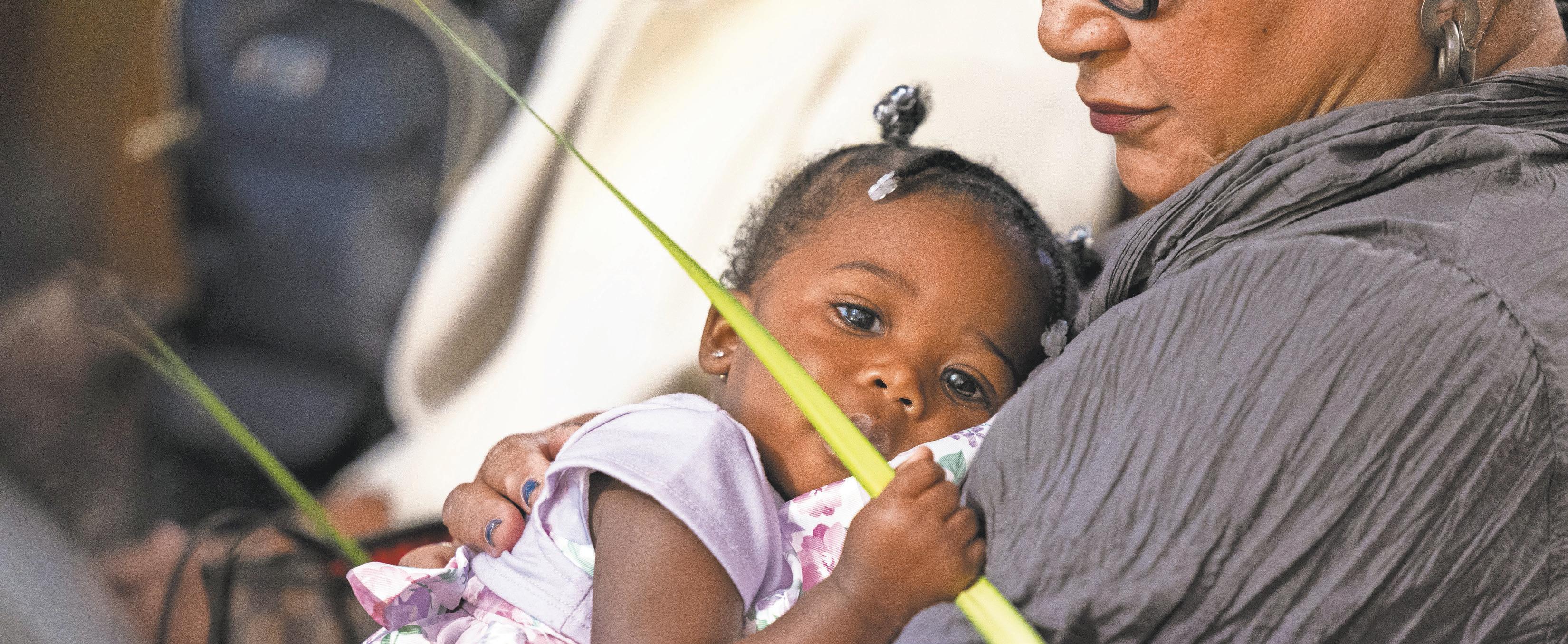
This year, while some Black churches are keeping the traditions that have long defined annual Easter celebrations, others are coming up with new ways to honor the special time of
year with family and community engagement. Church leaders said the core message of Palm Sunday and Easter Sunday remains unchanged, centered on worship and the commemoration of Christ’s resurrection. However, many congregations are rethinking how they carry that message to the next generation. From service projects and
By Meg Kinnard
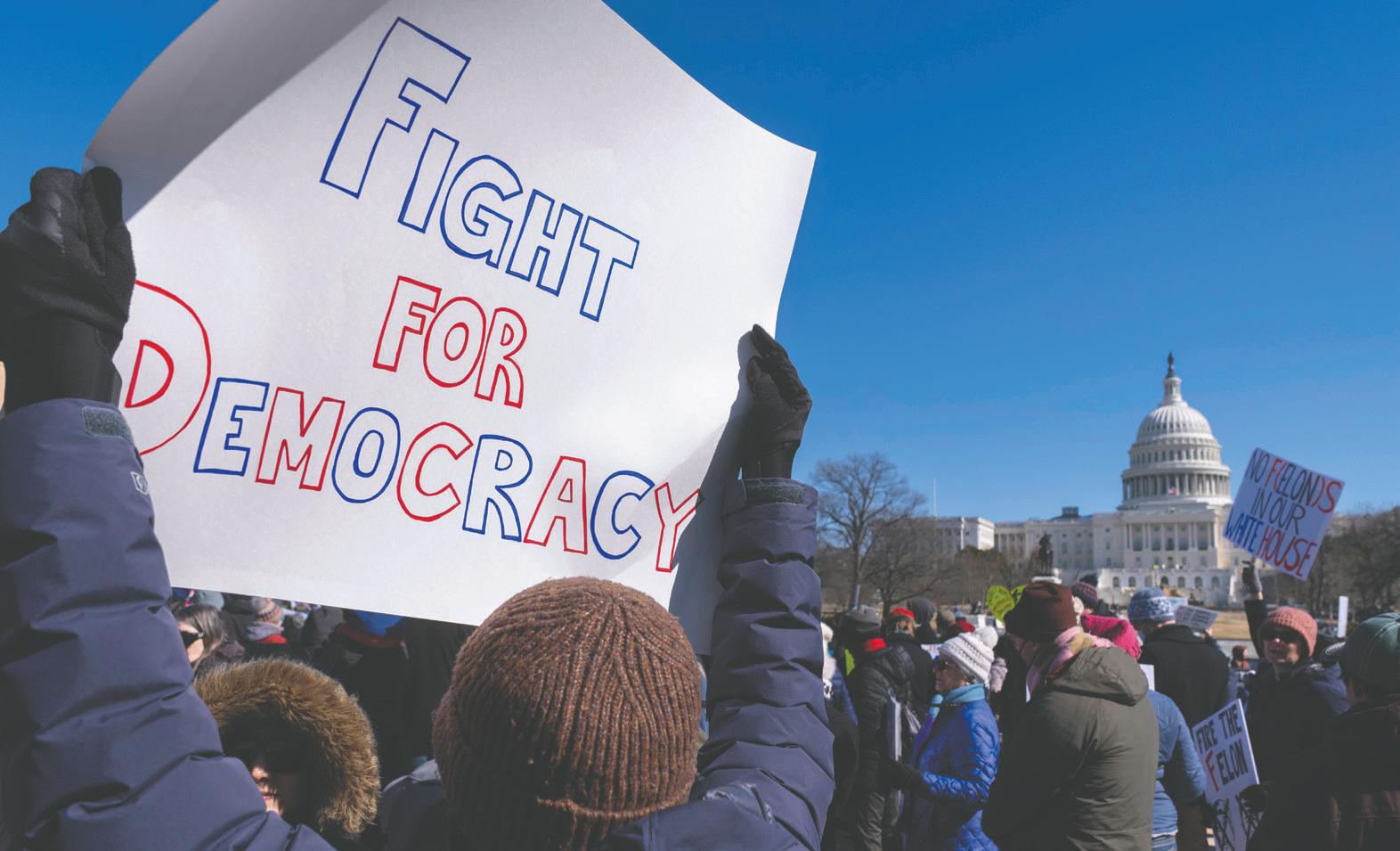
A third round of “No Kings” protests is coming on March 28, with organizers saying they are planning their largest demonstrations yet across the United States to oppose what they describe as authoritarianism under President Donald Trump.

Previous rallies have drawn millions of people, and organizers said they expect even greater numbers on March 28 in the wake of Trump’s immigration crackdown in Minneapolis, where violent clashes have led to the death of two people.
“We expect this to be the largest protest in American history,” Ezra Levin, co-executive director of the nonprofit Indivisible, previously told The Associated Press. He predicted that as many as 9 million people will turn out.
“No Kings” protests, which are organized by a constellation of groups around the country, have been a focal point for outrage over Trump’s attempts to consolidate and expand his power.
“This is in large part
family-centered events to home-based gatherings, churches are finding new ways to connect with people without losing sight of Easter’s traditions or meaning.
At New Macedonia Baptist Church in Southeast Washington, D.C., Rev. Therm James Jr. said churches can introduce new events without watering down the heart of the
message because of who it’s centered on.
“For us, it’s simple how we look at ministry: The message never changes because Jesus is the same yesterday, today and evermore, but our methods must change,” said Rev. James Jr. That philosophy is shaping New Macedonia
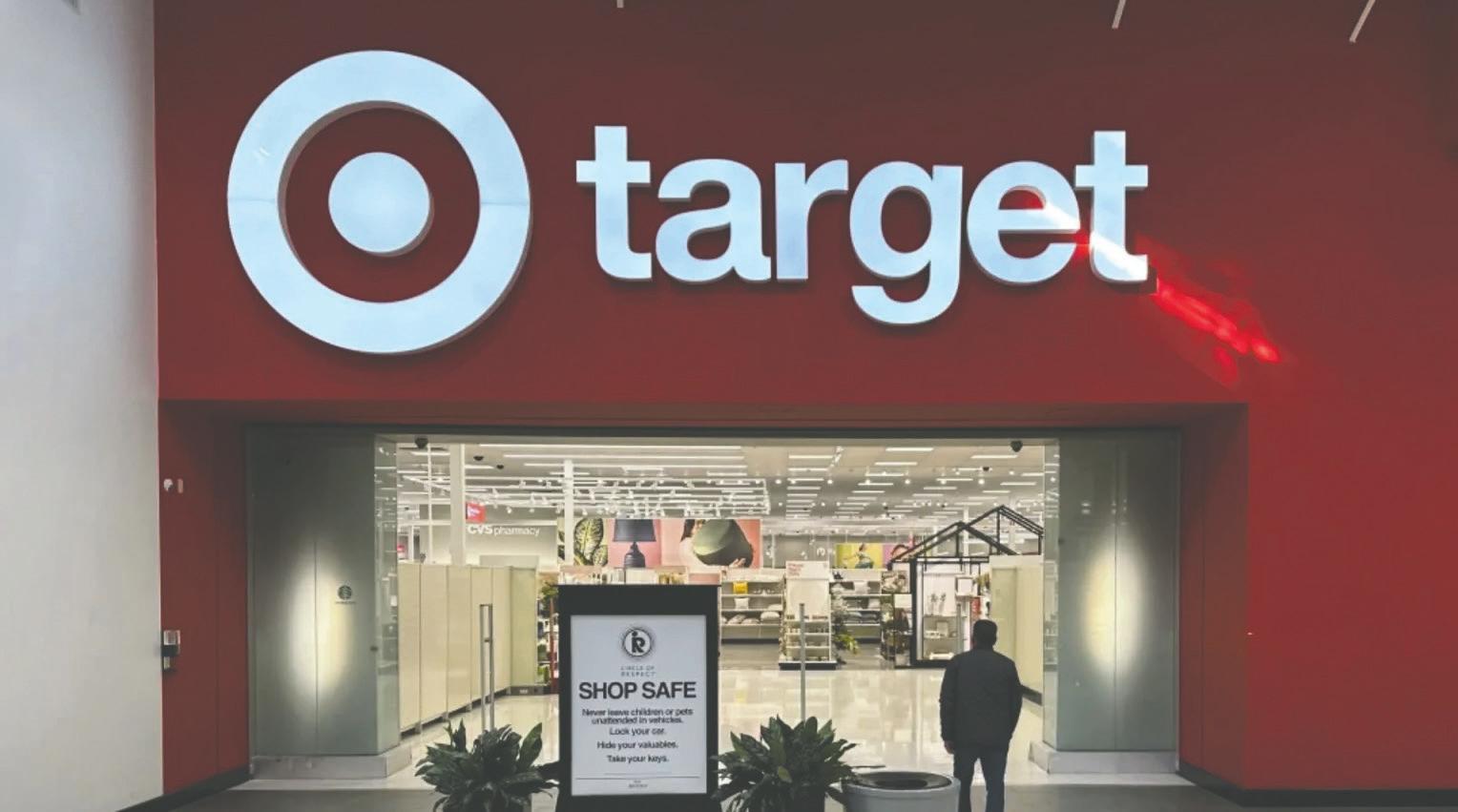
It lasted roughly 400 days, but on March 11, the nationwide boycott of Target initiated by Black leaders was brought to an end. During a news conference at the National Press Club in Washington, D.C., the Rev. Jamal Bryant, along with former Ohio state Sen. Nina Turner and activist Tamika Mallory, often referred to as the “Mothership Three,” announced the end of the campaign that began more than a year ago in response to the retail giant’s decision to retreat from its diversity, equity and inclusion commitments.
“We are claiming victory,” Bryant said. “And we, the faith-based component within this movement, are grateful for the accomplishments made so far. We have other work that requires our attention. Still, this generation needed to see victory because they have only seen settlements before today. They need to know there’s power in our voices.”
The main, high-profile Target boycott was declared by Bryant as a 40-day, faith-led “Target Fast” that coincided with Lent after Target seemed to bow to White House pressure to end all diversity, equity and inclusion initiatives. The boycott was supposed to
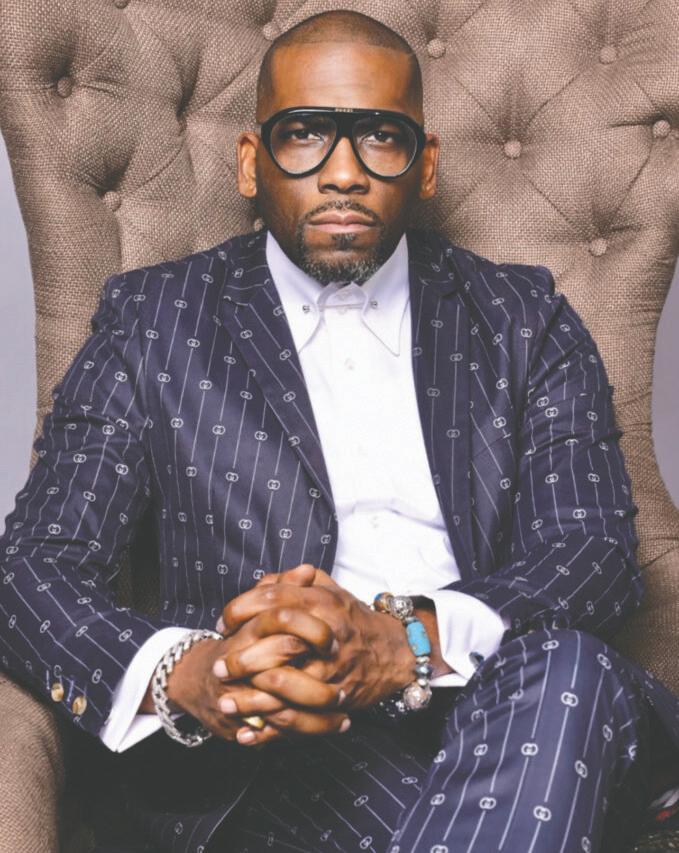
last from March 5 to April 17, 2025. The momentum grew, however, and the economic protest extended into a months-long campaign that stretched to March 11, 2026, marking 371 days.
In declaring the boycott’s end, the leaders said three of four major demands made of the conglomerate had been met, including spending with
Black-owned businesses, investments in Black-owned financial institutions and investments in HBCUs. Target also said it would maintain its existing DEI efforts but does not plan to introduce new initiatives.
Bryant said while all of their demands were not met, it
By
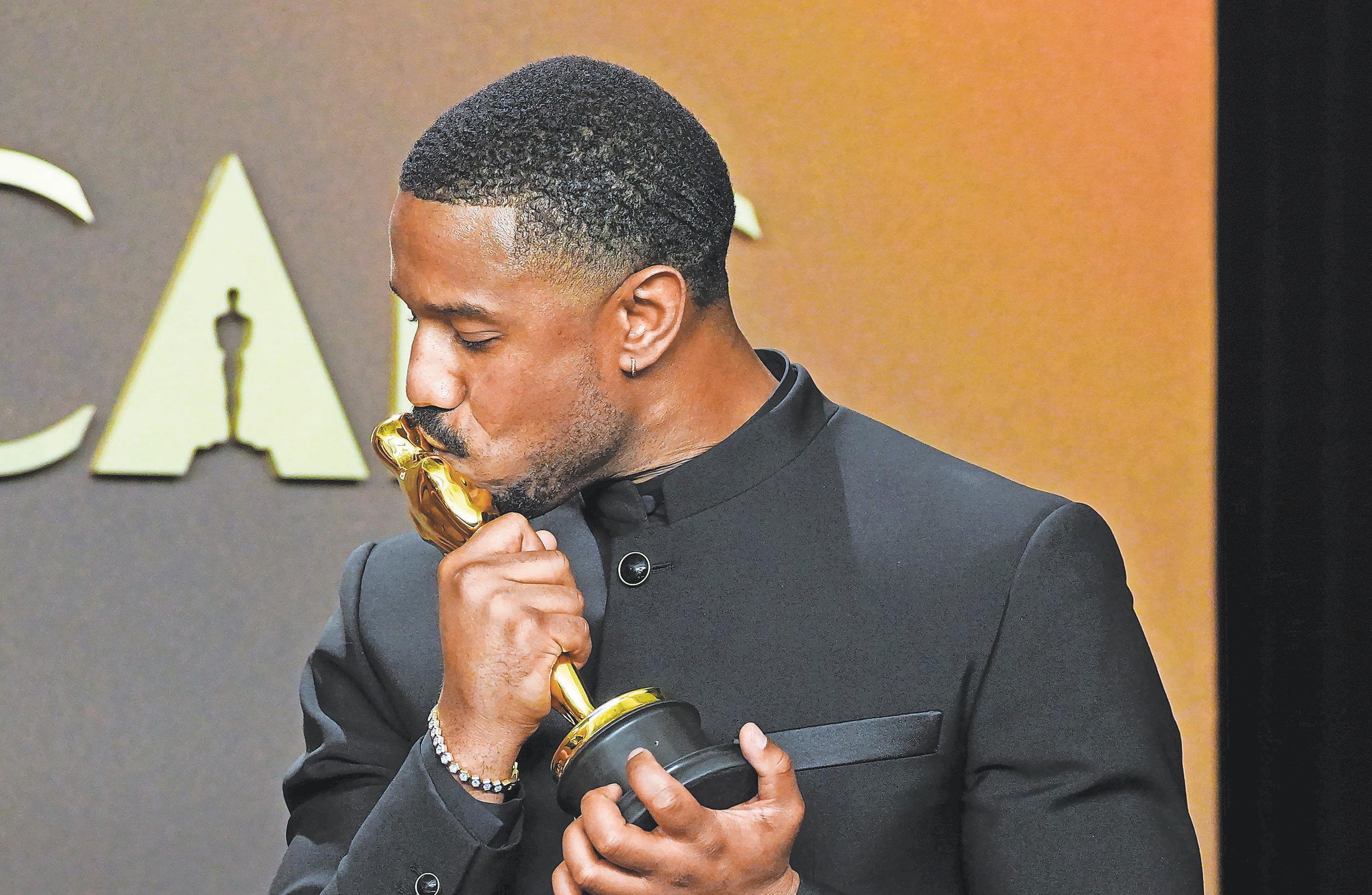
Standing on the Dolby Theatre stage before his mother, father and all of Hollywood, actor Michael B. Jordan accepted the Oscar award for Best Actor in a Leading Role on March 15.
“God is good,” said Jordan, before acknowledging his parents, siblings and the people who made the 2025 hit film, “Sinners,” a success.
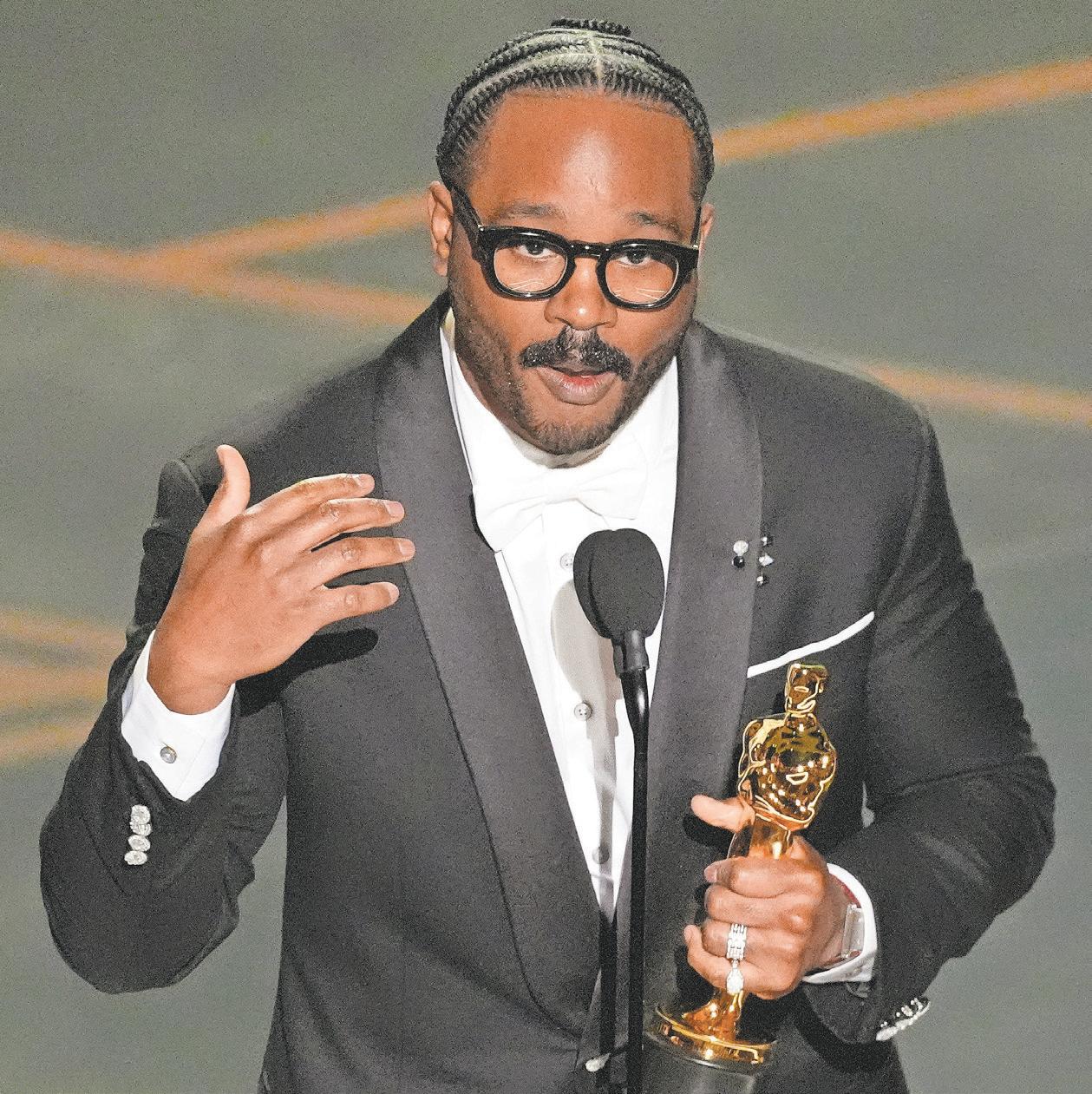
Jordan thanked “Sinners” director Ryan Coogler,
whom he called “a collaborator and a friend” that gave him “the opportunity and space” to expose his talent to the world. He also highlighted the Black performers who paved the way.
“I stand here because of the people who came before me, Sidney Poitier, Denzel Washington, Halle Berry, Jamie Foxx, Forest Whitaker and Will Smith,” said Jordan. “I’m going to keep stepping up and I’m going to keep being the best version of myself I can be.”

Your History • Your Community • Your News
The Afro-American Newspapers
Baltimore Office • Corporate Headquarters
233 E. Redwood Street 6th Floor, Suite 600G
Baltimore, Maryland 21202
410-554-8200
Customer Service, Home Delivery and Subscriptions: 410-554-8200 customerservice@afro.com
Founded by John Henry Murphy Sr., August 13, 1892
Chairman of the Board/Publisher - Frances Murphy Draper
(Publisher Emeritus - John J. Oliver Jr.)
President - Benjamin Murphy Phillips IV
VP of Marketing and Technology - Kevin E. Peck
Director Digital Solutions - Dana Peck
Receptionist - Wanda Pearson - 410-554-8200, ext. 246
Director of Operations
Andrè Draper - 410-554-8200
Director of Finance
Bonnie Deanes - 410-554-8242
Executive Director/Director of Advertising
Lenora Howze - 410-554-8271 - lhowze@afro.com
Director of Community & Public Relations
Diane W. Hocker - 410-554-8243
Editorial
Managing Editor - Alexis Taylor - 410-554-8257
Editorial Assistant - Ama Brown-Parson Evening / Weekend Editor - Zenitha Prince
Archivist - Savannah Wood - 410-554-8277
Baltimore Circulation/Distribution Manager
Andrè Draper - 410-554-8200
Creative Design and Content
Matthew McDonald
Washington Office 1140 3rd Street, N.E., 2nd Floor Washington, D.C. 20002-6723 202-332-0080
(Washington Publisher Emerita - Frances L. Murphy II)
Director of Operations - Andrè Draper - 410-554-8200

Jordan thanked the fans who “went to go see the movie once, twice, three, four, five times.”
“You guys made this movie what it is,” he said. “I love you.”
The Sunday night win marked Jordan’s first Oscar, off of his very first nomination. Jordan cut his teeth as an actor in Baltimore on the HBO cult classic series, “The Wire.” Since his time on the show as “Wallace,” Jordan has made a name for himself in several pivotal roles. His
resume includes the television series “Friday Night Lights,” and the films “Black Panther” and “Creed.” Now, Jordan is an Oscar-winning actor for his work in crafting the characters, “Smoke” and “Stack.” The twin brothers, both played by Jordan, pushed “Sinners” to blockbuster status.
Jordan and Coogler first gained attention as a creative team in “Fruitvale Station,” Coogler’s 2013 film based on the last day of the life of Oscar Grant, a California
was important to “celebrate the small steps.”
However small or large the successful outcomes were, the boycott’s momentum would continue or fizzle out because of the people who supported it and wanted to send a message to corporate America, Turner said during the D.C. press conference.
“We started this fire but it’s everyday people across America, people by the tens of thousands, who have been responsible for the real impact we’ve had,” Turner said. “Some, like the Boycott Target D.C. Coalition led by Dr. Lewis T. Tate Jr., exemplified real initiative – even gathering each Saturday in front of a Target store since the boycott began.
“Target broke its promises to us,” she concluded, “that’s why we called them out.”
Bryant noted that while the faith-based part of the boycott, which was his brainchild, had run its course, he realized that more work needs to be done.
“This is not the end of our work but rather an evolution within the movement,” he said. “More companies need to know that Black people will not allow them to take us for granted. Our next step must be securing not civil rights but silver rights.”
Turner echoed her colleague’s remarks.
“While the faith-based part of this movement has other concerns which Rev. Bryant believes must now be addressed, we are still holding Target’s feet to the fire,” she said. “I am a firm believer that, as James Baldwin said, ‘not everything that is faced can be changed. But nothing can be changed until it is faced.’”
Disgruntled boycott supporters question Bryant’s decision
While Bryant proclaimed victory on March 11, over the following days, he and his colleagues found themselves amidst a quagmire of rising opposition from those still in support of the boycott, and divisions that exist within the activist movements and their leaders were laid bare.
Among the loudest critics was a trio of Minnesota-based activists, Nekima Levy Armstrong, Monique Cullars-Doty and Jaylani Hussein, who had spearheaded a locally-based boycott which officially began last year on Feb. 1, 2025.
The cadre of Minnesota activists addressed their constituents outside Target’s headquarters, which is located in Minneapolis, Minn., after the announcement. Hussein urged consumers and institutions nationwide to continue the boycott at Target until the retailer made good on its DEI commitments.
“The facts are simple: Target has not reversed its decisions, it has not met the demands of the boycott and, therefore, the boycott continues,” Hussein said. “Communities across the country are still choosing not to shop at Target.”
Additionally, as the word
man killed by Bay Area Rapid Transit Police Officer Johannes Mehserle on Jan. 1, 2009.
After “Fruitvale Station,” the two continued their creative relationship and have collaborated on a total of five films: “Fruitvale Station” (2013); “Creed” (2015); “Black Panther” (2018); “Black Panther: Wakanda Forever” (2022) and “Sinners” (2025).
Aside from Jordan, other members of the “Sinners” team served as
quickly spread via social media and more Blacks became aware of Bryant’s announcement, a host of questions, concerns and criticisms soon emerged which illustrated the fact that many everyday boycott supporters were unwilling to hold up the white flag just yet.
In fact, because of mounting pressure from scores of disgruntled supporters, within three days of delivering his proclamation of victory at the National Press Club, Bryant was forced to clarify both his reasons for calling an end to the boycott and to share his thoughts on what the next steps should be.
Bryant recorded his comments and shared them in a video posted online.
“Over the past 72 hours, I have done a lot of soul searching – where we are, what we’ve done, and what mistakes we have made,” he said. “I am grateful to see how so many Blacks still support the boycott and I want to assure you that no private deals were made.
“It’s clear that our community takes this boycott seriously. And my part of the journey has been to organize congregations across the country as God instructed me. Now, I
staunch competition for the cast and crew of other top films, including “One Battle After Another” and “Frankenstein.” Cinematographer Autumn Durald Arkapaw made history as the first woman to take home the Best Cinematography award. Coogler took home the award for Best Original Screenplay, and Ludwig Goransson, of Sweden, was recognized with a win for Best Original Score. All three won for their work on “Sinners.”
have chosen to be a follower not a leader. And I will take my cue from the women who remain and who stand as the leaders of this boycott.”
Bryant’s conciliatory remarks were deemed insufficient and inadequate, according to Levy Armstrong, who expressed her sentiments on Roland Martin’s podcast, “#RolandMartinUnfiltered,” on March 12.
“I was not impressed by Rev. Bryant’s comments and efforts to explain why he suggested that the boycott was over and claimed that we had won,” Levy Armstrong said. “From the start, I have been appalled by his attempts to co-opt this boycott which has been led by women. His remarks, in my opinion, are little more than a theatrical response.
“As for the boycott, it’s not over and we have not won,” she continued. “Those of us who live in Minnesota can handle things on our own. I think to end the confusion, Rev. Bryant, Nina and Tamika should pack up their things and go home. Blacks have bigger fish to fry given the challenges we continue to face with Donald Trump in the White House.”
Baptist Church’s Easter weekend plans this year. Alongside its annual Resurrection Life celebration, during which the church gives away games and prizes to students from both the church and the community. The church is also launching “Serving Saturday,” a new effort that replaces the traditional observance of “Silent Saturday,” when Jesus is understood to have remained in the grave.
“For Serving Saturday, we are using seven different sites throughout the entire 7th Ward and some also in the 8th Ward, and we are having seven places for people to serve,” Rev. James Jr. said. “We are trying to get a volunteer pool of 700 people.”
“Our pastor, Patrick Jonnathan Walker, came up with this wonderful idea, and as the
team, we are trying to [carry] out this vision. We’re not just having something fun on-site for our families and community, but going off-site and serving those in our community. We’re excited about all this taking place on that resurrection weekend,” he continued.
Metropolitan Baptist Church in Largo, Md, is also blending old traditions with a fresh approach this Easter season, according to Rev. George Parks Jr. The church will continue with its classic 6 a.m. sunrise service at its main campus for “major traditionalists,” but its 10 a.m. Resurrection
Sunday worship will be held at Fairmont Heights High School this year after outgrowing its current space.
The service will still feature the familiar elements many worshippers expect, but it will also include dramatic
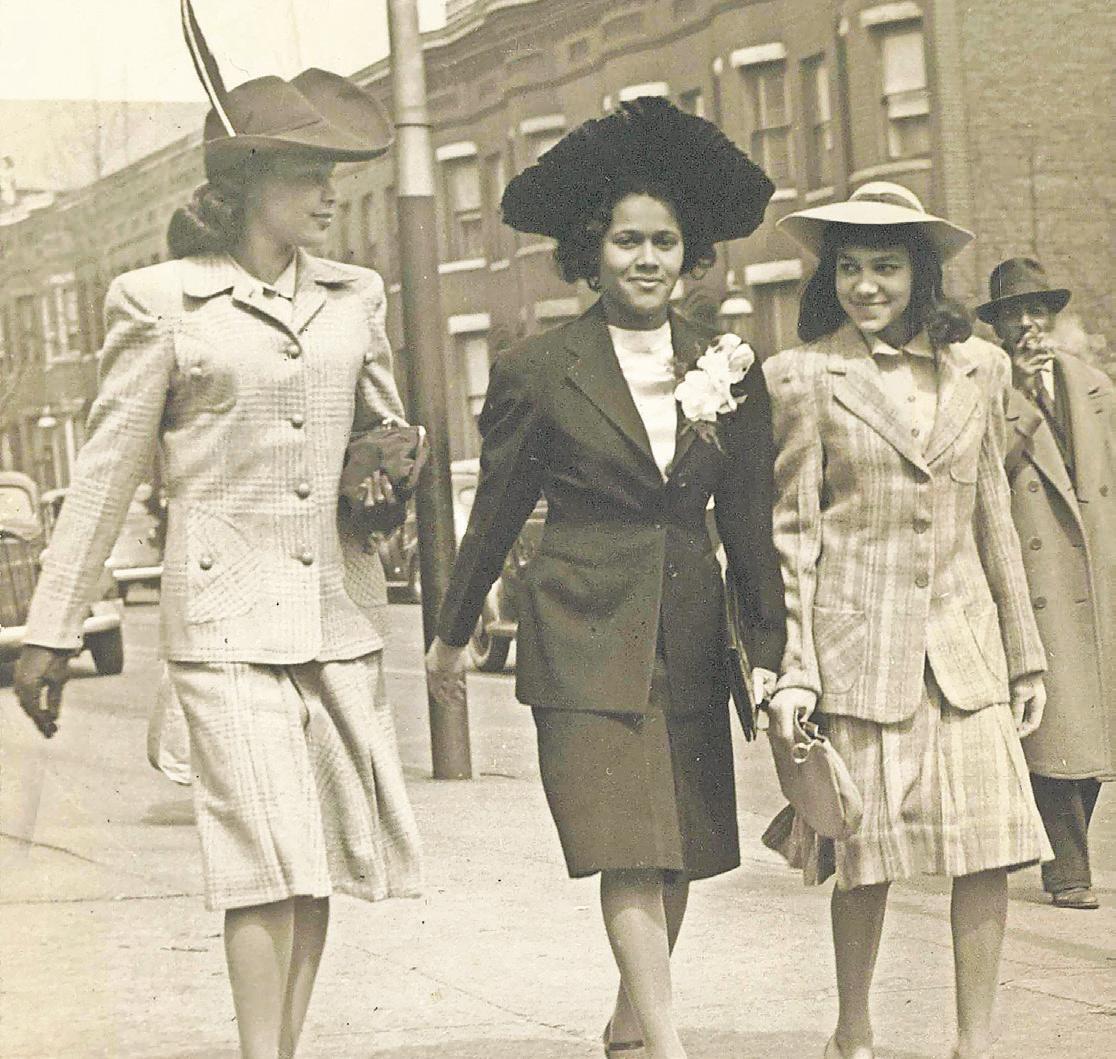
presentations, dance and a family-centered touch.
“We will be providing a special gift for everyone who comes,” said Rev. Parks Jr. “We will be providing family photos before and after worship, so we’re inviting individuals to take advantage of worship as a family.”
Andrea Evans, a church member at Oak Cliff Bible Fellowship in Dallas, Texas, said her congregation is building on something that is not necessarily new, but is still deeply distinctive. Beyond longstanding Easter traditions like an Easter play and multiple worship services, the church also centers Palm Sunday around an initiative called “Kingdom Everywhere.”
“Kingdom Everywhere is a community building exercise, where different people in our church sign up to open up their home on a Sunday to invite church members [or] neighbors,” said Evans. “We will watch service together, we take communion together and then we have a meal afterwards and discuss the sermon.”
According to Evans, the initiative is rooted in her pastor’s vision for “Kingdom Community,” which centers on the idea that faith grows and discipleship happens through meaningful connection with others. She said this initiative has given her the opportunity to connect with her neighbors from the church.
“It’s really a unique opportunity to spread the gospel and do what they did back in the early church in the Bible,” said Evans. “They went from house to house, and really built communities and studied the Bible and God’s teaching. That’s the premise – to get back to what
Courtesy of the AFRO American Newspapers Archives/Afro Charities
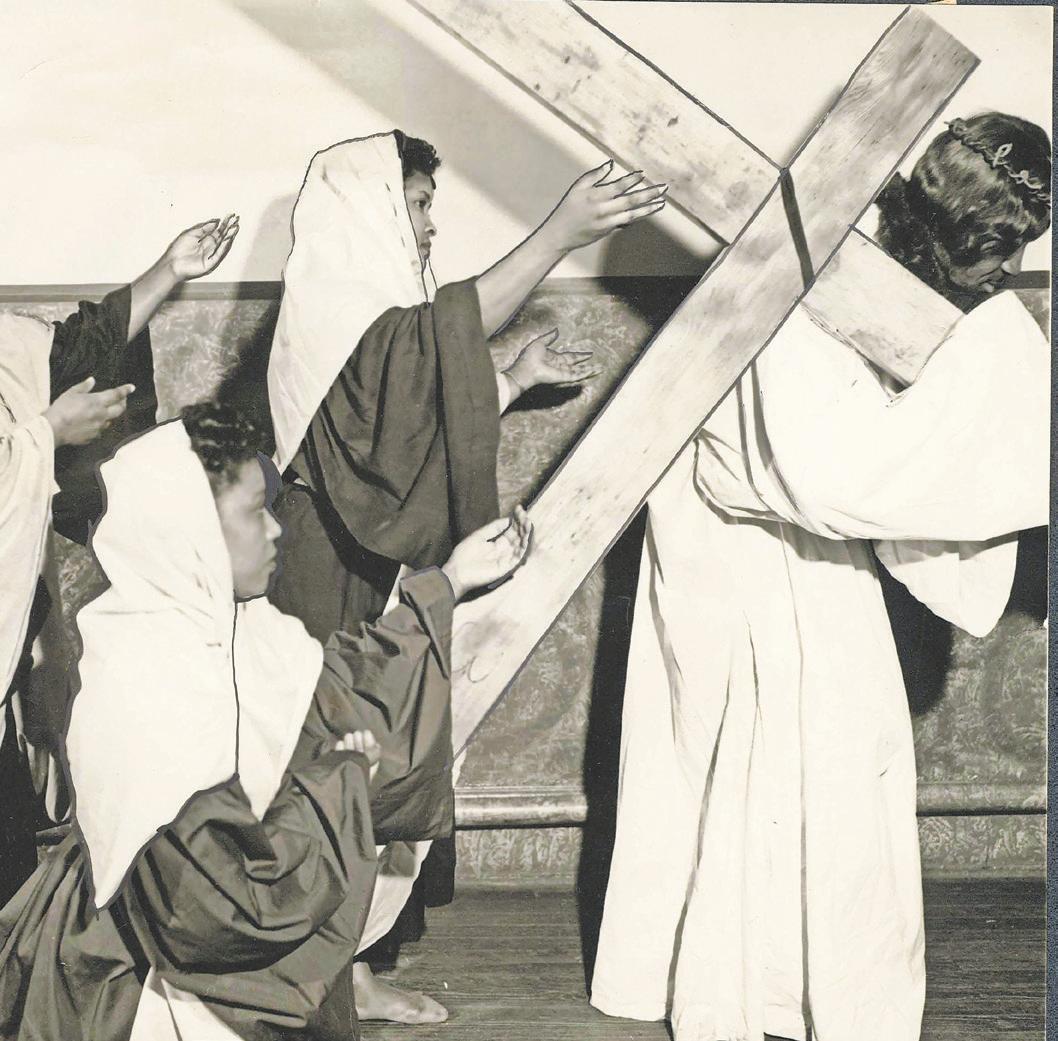
“The Resurrection” is presented on Good Friday 1957 at Mt. Calvary Baptist Church in Newark, N.J., by the Sunday School participants. James A. Melton, president of the Senior Choir, played the role of Christ. The women shown here are Lorraine Taylor, Bobbie Brown and Ola Mae Wiley, all Sunday School teachers.
community really means and just seeing people on Sunday morning.”
“Kingdom Everywhere is not just an event to have an event. It’s a catalyst to push us into kingdom communities,” she continued.
While the methods may differ from church to church, leaders are all in agreement that the meaning of Easter remains at the center of it all. From sunrise services to dramatic presentations and neighborhood gatherings, each activity is ultimately meant to point people back to the story of Christ’s resurrection after his brutal death.
The Rev. William Lamar IV, pastor of Metropolitan A.M.E. Church, said “Easter Sunday, or ‘Resurrection Sunday,’ still resonates with people because they want to hear the story even though they already know
the ending.”
“They still come back each year, but what’s really the key to Easter Sunday is that during the first one, no one knew the ending. The women at the tomb hoped that Jesus would rise from the dead, but they didn’t know,” Lamar told the AFRO. “We still don’t know if we’ll find life in the shadow of the tomb or in our lives. White evangelicals have reduced it to the rising of one man, but the key is that in Christ, death is not the final message.”
“Death wears many disguises. Death seeks to rob us of our hope,” he continued. “If we are willing to fight with God– and God is fighting death– then we understand that He is in the business of overcoming death.”
Continued from A1
a response to a combination of the heinous attacks on our democracy and communities coming from the regime, and a sense that nobody’s coming to save us,” Levin said. Last year, Trump said he felt attendees were “not representative of the people of our country,” and he insisted that “I’m not a king.”
‘No Kings’ shifts focus after Minneapolis deaths
The latest round of protests had been in the works before the crackdown in Minneapolis. However, the killing of multiple people by federal agents in recent months refocused plans.
Levin said they want to show “support for Minnesota and immigrant communities all over” and oppose “the secret police force that is murdering Americans and infringing on their basic constitutional rights.”
“And what we know is, the only way to defend those rights is to exercise them, and you do that in nonviolent but forceful ways, and that’s what I expect to see in ‘No Kings’ three,” Levin said.




By Chrissy M. Thornton
There is a quiet calculus many Black people perform before we even walk into a store.
We soften our tone. We monitor our posture. We keep receipts visible. We are mindful of where our hands are, how long we linger, whether we look “confused” or “confrontational.” This constant awareness is exhausting. But it is survival. Because shopping while Black has never been just about shopping. It has always carried an undercurrent: Will my presence be misinterpreted? Will a question be read as defiance? Will someone decide I am a problem?
On the last day of Black History Month, that calculus proved warranted.
I walked into a Dollar Tree in Reisterstown, Md. to purchase supplies for a community event. What should have been a routine errand turned into a police response. The issue began with me asking for a simple pricing clarification and requesting a manager.
What I received instead was profanity and escalation.
The manager approached, visibly agitated. She was loud, confrontational and openly hostile.
“I’m tired of this ****,” she yelled, punctuating her frustration with expletives. When I answered her question about the number of items in my cart, she snapped.
“Oh hell no, I’m not doing this,” she said, before slamming the merchandise down and walking away.
I had not raised my voice. I had not insulted anyone. I had asked a question. Instead of resolving the matter with clarity or professionalism, she cursed at me for asking. She framed my request as an inconvenience. Another associate remarked that she, too, was tired and supposed to be home, as if fatigue somehow excused disrespect.
Being tired does not authorize humiliation. It does not justify screaming at a customer. And it certainly does not justify what happened next.
As customers watched, one older woman near the front of the store commented that this manager is “always nasty” and that she would likely call the police because that “is what she does.” She said it casually, as if it were routine.
Moments later, three police cars pulled into the parking lot.
Officers approached prepared for what they believed was an aggressive disturbance. One later told me the call suggested something far more serious than a pricing question. They arrived expecting to find a violent confrontation. They also indicated that calling the police is reportedly this manager’s “go to.”
Her “go to.” Not customer service–law enforcement.
Calling the police is not a neutral act. It is not a retail management tool. It is the activation of state power. When someone dials 911, they initiate a chain of events that can include detention, restraint, arrest and in some cases, force and death. Officers respond based on how the situation is
described. If it is framed as aggressive or volatile, they arrive in a posture shaped by that framing.
For Black people, that posture carries weight.
National data consistently shows racial disparities in policing outcomes.
Black Americans are stopped at higher rates, searched more frequently, and are more likely to experience force during encounters with law enforcement.
Research on implicit bias has demonstrated how language shapes perception, how words like “aggressive” or “noncompliant” can influence threat assessment before officers even step onto the scene.
This is why weaponizing the police is so dangerous.
Weaponization occurs when law enforcement is summoned not because of imminent harm, but as a mechanism of control, intimidation, or retaliation. We have seen it across the country in parks, in apartment complexes, in stores, where minor disagreements are reframed as danger. The call itself becomes leverage. The uniform becomes pressure. And it is important to note that you do not have to identify as White to be a “Karen.”
Once police are involved, outcomes are no longer entirely within anyone’s control. Tension rises. Adrenaline spikes. Bystanders gather. And in a country where we have witnessed too many routine encounters spiral into tragedy, Black communities do not have the luxury of dismissing that risk as abstract.
Retail environments are not battlegrounds. Pricing questions are not crimes. Asking for a manager is not aggression.
Yet, in that moment, my simple request for clarification was met first with profanity, then with police. This is a failure of Dollar Tree and their lack of corporate training and accountability.
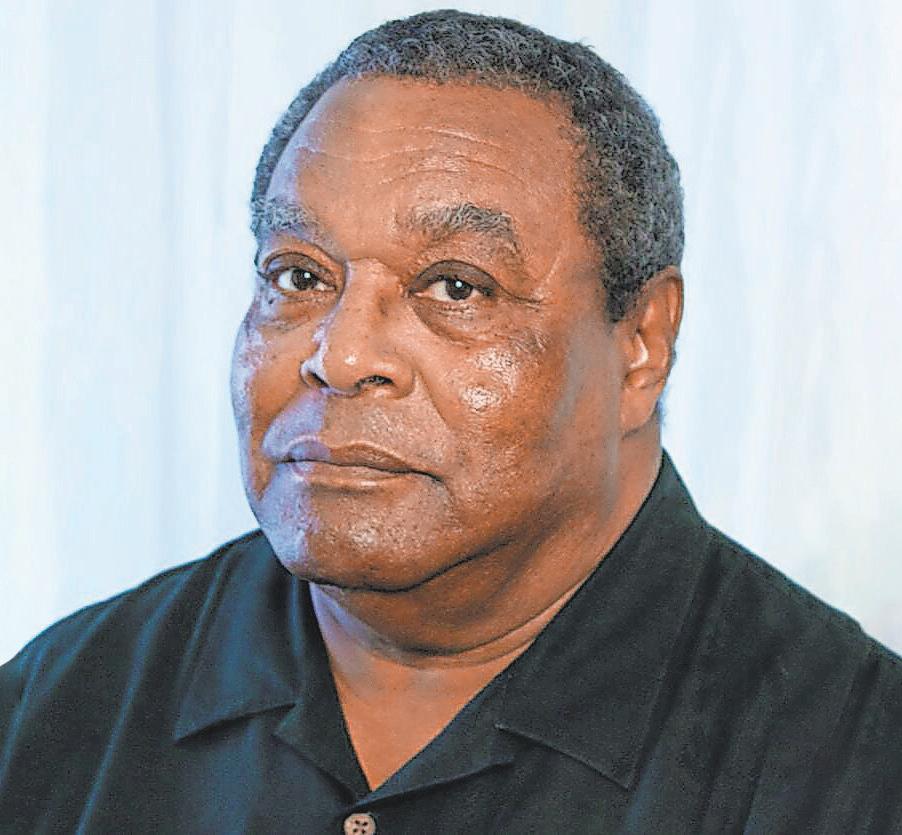
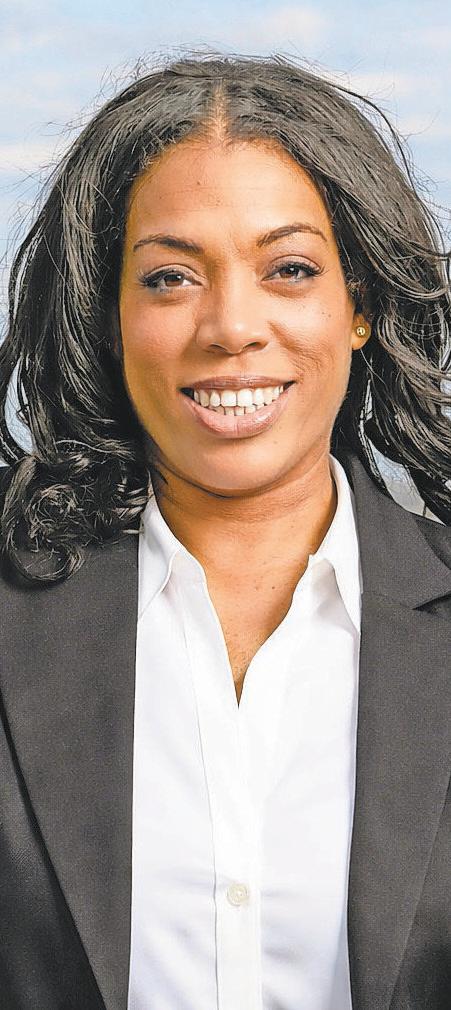
I serve as president and CEO of Associated Black Charities. My work centers on equity, leadership and systems accountability. I train institutions on de-escalation precisely because we understand how quickly ordinary interactions can become dangerous when authority is misused.
When calling the police becomes a managerial reflex, it reinforces a harmful narrative: that Black disagreement equals threat. That Black persistence equals volatility.
That Black customers must regulate not just their behavior, but their very humanity, in order to remain safe.
Since sharing my experience, I have heard from others who describe similar patterns at various Dollar Tree stores - hostility from management, abrupt escalation, law enforcement summoned over minor disputes. The consistency of these accounts is deeply troubling.
If this can happen to someone with professional standing, public visibility, and the ability to document her experience, it can certainly happen to someone without those protections. A young person. An elder. A customer without the resources or platform to
demand accountability.
Weaponizing the police does more than embarrass. It consumes taxpayer-funded resources. It strains already fragile community-police relationships. And it perpetuates a long history in which Black presence is treated as suspicion rather than belonging.
Corporations must establish clear guardrails. Police should be called only when there is a legitimate safety threat, not as a shortcut for resolving discomfort or frustration. Managers must be trained not only in operational policy, but in professionalism and de-escalation. And when escalation is unwarranted, accountability must follow.
The video I made outlining what happened went viral with over 50,000 views and interactions. I then formally escalated this matter to Dollar Tree corporate leadership and was contacted by Michael Collischan, regional director for Dollar Tree, who apologized for my experience and stated that the company had conducted an internal investigation. I explained to him that responding officers told me the call they received described the situation as involving an aggressive or potentially violent customer, which was not true. They also indicated that the manager reportedly calls police frequently and that this type of escalation is known to them as something she does on a regular basis.
He indicated the matter had been “adequately addressed,” though he could not discuss personnel actions. He also stated his agreement that no behavior on my part justified the level of escalation and aggression from the Store Manager. Skirting around his personnel conversation restrictions, I asked if it would be safe for me to return to the store, and he indicated it would be.
By James Jerome Hankins
For parents and students researching, registering and voting in the Nov. 3 midterm election, I present Lesson 39 of 54 from my book: “What We Blacks Need To Do Part 2.”
It takes a village
Please take a look at the 47th president’s village of people:
1. The majority of the GOP members in the U.S House and Senate who will not stand up and demand that all the Epstein files be made public so the rich sick
After our conversation, I was mailed a letter of apology and a refund for the pricing overage along with an additional courtesy on a gift card totaling $50, which I planned to donate. We also discussed the possibility of Associated Black Charities providing statewide workplace training to help prevent situations like this from happening again. At the time, I felt the matter had been handled satisfactorily and made a video to report such to the public.
But the story did not end there.
Shortly after sharing my update, a customer who had been in the store contacted me to report that she witnessed the same manager verbally abusing young staff members, cursing at them, speaking aggressively and threatening them in a way she found disturbing enough to intervene. I was amazed to hear that, as I assumed the investigation would have resulted in this manager being removed from a position to harm others, especially given her routine escalation to police involvement. This customer shared with me that there was a young girl there working at the register who “needed my help.” She had spoken with this store associate who shared horrible stories of the manager’s verbal abuse and threats.
So, I returned to the store.
The manager was still there.
While my transaction that day did not involve her, I heard her cursing inside the store. When I later encountered the 21-year-old employee I was asked to help, she shared that this behavior was not unusual. She described daily verbal abuse, dehumanizing treatment and threats of termination if staff spoke out. Listening to her, I realized that what I thought was resolution had only been surface level.
Sometimes accountability cannot stop at an apology. It has to look like a refusal to condone detrimental behaviors.
I immediately understood that my responsibility did not end when my own situation was addressed, albeit extremely inadequately. Leadership means using whatever platform you have to protect others who may not have one. Those in positions of influence have a responsibility to insulate others who speak out against injustice.
A few days after we met, that young woman is free from the condoned torment at Dollar Tree and is now interning at Associated Black Charities, where she is working in an environment rooted in advocacy, respect and dignity.
I will personally mentor her to undo the conditioning that tells young workers they must tolerate abuse to keep a job, that they must stay silent to stay safe, and that authority cannot be questioned.
The continued presence of this manager with a known pattern of hostility, verbal abuse and unnecessary police escalation raises serious concerns about corporate oversight and about the safety of customers–particularly Black customers–who may again find themselves in situations where law enforcement is called based on exaggerated or inaccurate claims.
men and pedophiles who molested little girls can be arrested.
2. Trump’s 15 “jackleg” cabinet secretaries.
3. The six racist Supreme Court Justices have significantly weakened the Voting Rights Act of 1965, primarily through Shelby County v. Holder (2013), which eliminated the preclearance formula for voting changes. They also granted Trump “complete immunity.”
4. Extremely wealthy Jared Kushner, Elon Musk, Vladimir Putin, Benjamin Netanyahu, Ghislaine Maxwell
Each unnecessary police call carries risk.Each misuse of authority creates danger.Each failure to act allows the pattern to continue.
Because of the seriousness of this incident, I believe my right to fair and unbiased access to a place of public accommodation was violated under Article 29 of the Baltimore County Code, which prohibits discrimination and denial of full and equal service in public accommodations. As a result, I have filed a formal complaint with the Baltimore County Human Relations Commission (HRC) and the Maryland Commission on Civil Rights (MCCR) and am actively pursuing accountability through the appropriate channels. I will pursue every level of accountability available to me.
I am seeking a resolution that addresses both the specific incident involving me and the broader pattern of conduct that allowed the situation to occur. The actions taken against me went beyond poor customer service. I was denied normal service, subjected to profanity and public humiliation and placed in a situation where police were called despite there being no threat, no disturbance and no behavior that would justify that response. In a place of public accommodation, customers are entitled to equal access to goods and services without discrimination, intimidation or unnecessary escalation.
The involvement of police in this situation raises additional concerns because of the well-documented history of unequal treatment of Black individuals during law enforcement encounters. When law enforcement becomes a routine response to disagreement, it functions as intimidation and places Black patrons at greater risk of harm.
Because this appears to involve more than a single misunderstanding, and because the manager was left in place, corrective action must go beyond an apology. Without clear intervention, there is a risk that other customers will continue to be subjected to the same treatment. Each unnecessary police call carries the possibility of escalation, injury, or wrongful arrest. The fact that this Manager’s employment continues even after an internal investigation suggests condonation and that stronger oversight, policy changes, and training are required. Associated Black Charities still stands ready to support such training.
The immediate implementation of clear policies governing when law enforcement may be contacted, mandatory training on de-escalation, professionalism and bias awareness is necessary. My goal is not only personal resolution, but prevention. No customer should have to calculate their safety before asking a question at a register.
Because no one is free until we all are free.
When calling the police becomes the reflex, and corporations cover their wrongdoing by protecting employees who create public safety risks, Black customers are placed in harm’s way. And, Dollar Tree, we are tired.
and the late Jeffrey Epstein.
5. The MAGA cult, who are teaching their “innocent” children 666 ways to hate.
On the contrary, take a look at who our progressive village people are:
1. All the 16-year-old people who will turn 17 before the Nov. 3 midterm election, and all intelligent people ages 18 to 154.
2. All parents, grandparents, aunts, uncles, ministers, teachers, coaches, church mates, fraternities, sororities, relatives, dance partners, friends, and leaders.
Question: Should Trump have his 19-year-old son, Barron, enlist in the U.S. Navy and join your poor and middle-class sons and daughters fighting, suffering and dying in the “illegal “ Iran War?
HOMEWORK ASSIGN-
MENT: YouTube Sam Cook
singing “ Must Jesus Bear The Cross Alone.” Choose ye this day which village you will join then, as the old country preacher said, “govern yourself accordingly.”
By Megan Sayles AFRO Staff Writer msayles@afro.com
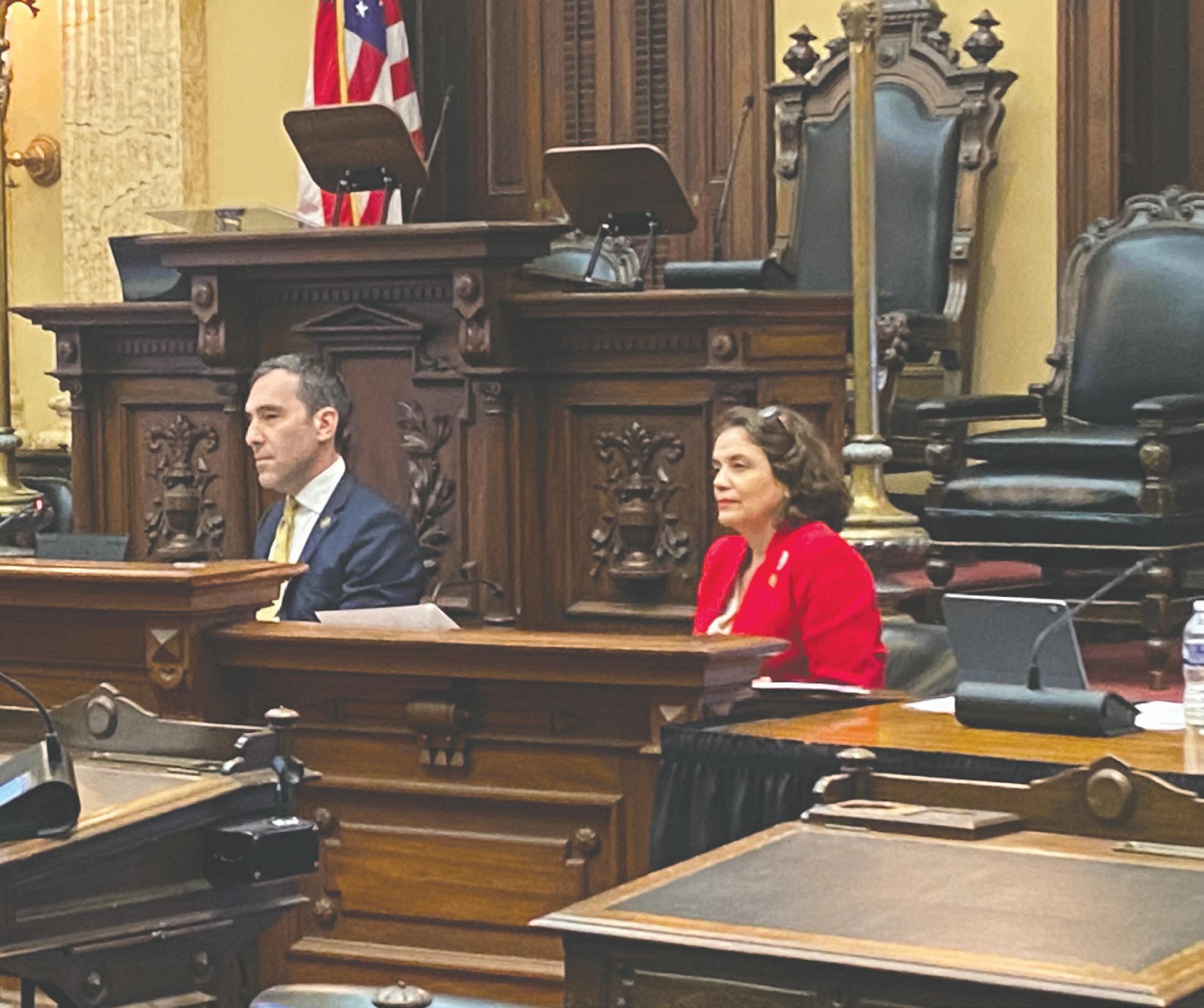
A recent report from the Baltimore City Office of the Inspector General (OIG) found that staffers in the Mayor’s Office failed to comply with policies related to the use of procurement cards (P-cards) for purchasing food, flowers and other items tied to funerals, office celebrations and sporting events.
According to the OIG report, 336 transactions totaling $167,455.06 lacked required waivers or involved prohibited purchases.
Overall, the Mayor’s Office spent more than $36 million on P-cards since June 2022, meaning the questioned transactions accounted for less than 1 percent of that spending.
“The OIG also learned that the Mayor’s Office has spent approximately $52,588.78 taxpayer funds on food or beverages at Baltimore Orioles and Baltimore Ravens games. Witnesses claimed that this has been a practice of prior mayoral administrations, as the city has a mayoral suite at both stadiums,” wrote IG Isabel Cumming in the investigation report synopsis. “A review of spending for the Mayor’s Office found that city funds, including P-cards, were used for internal celebratory events or employee appreciation for executives, including the Executive Employee 1’s farewell event. This investigation found that P-card policies regarding such events have been inconsistently enforced across other city agencies.”
P-cards are city-issued credit cards intended to streamline small-dollar purchases for government
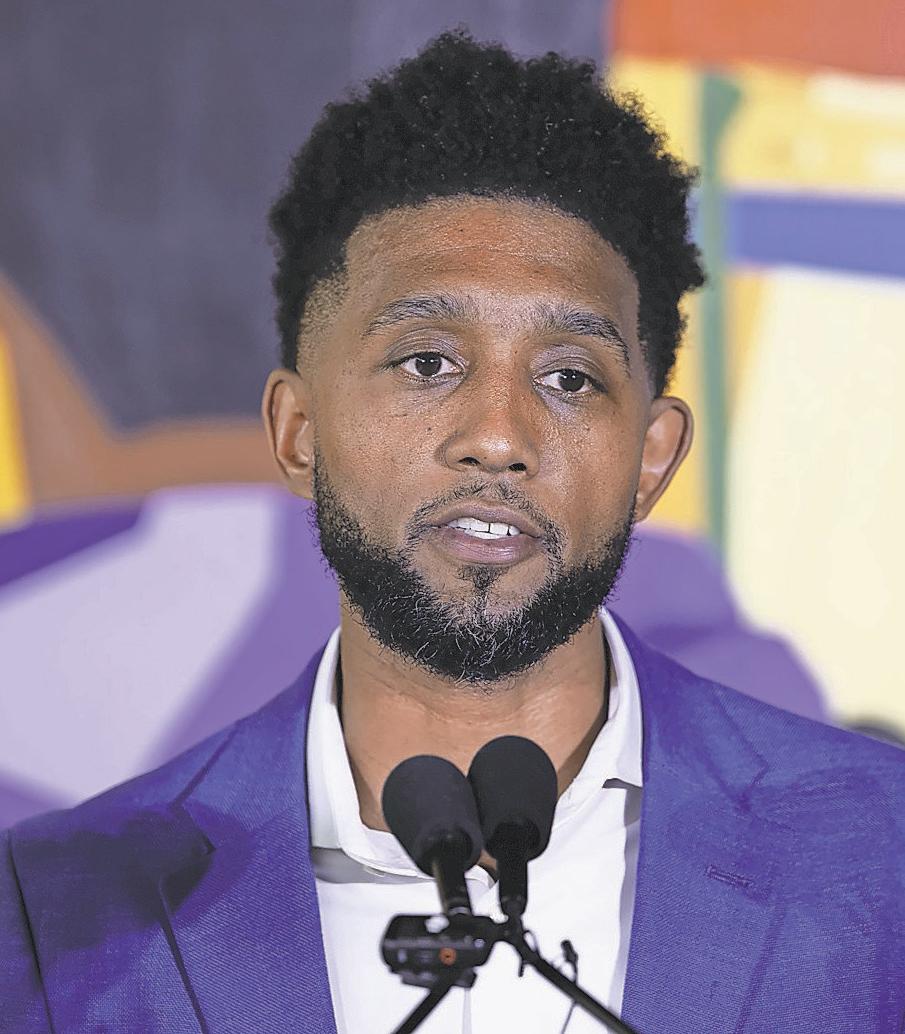
A
report from
agencies. For certain items, including food and flowers, cardholders must submit a waiver to the Bureau of Procurement (BOP) for approval.
The P-card manual also says that the cards should not be used for retirement parties, holiday celebrations or employee appreciation events. However, the report highlighted that the BOP has allowed some staff appreciation purchases for the Mayor’s Office in spite of denying waivers for similar events in other city agencies.
By Megan Sayles AFRO Staff Writer msayles@afro.com
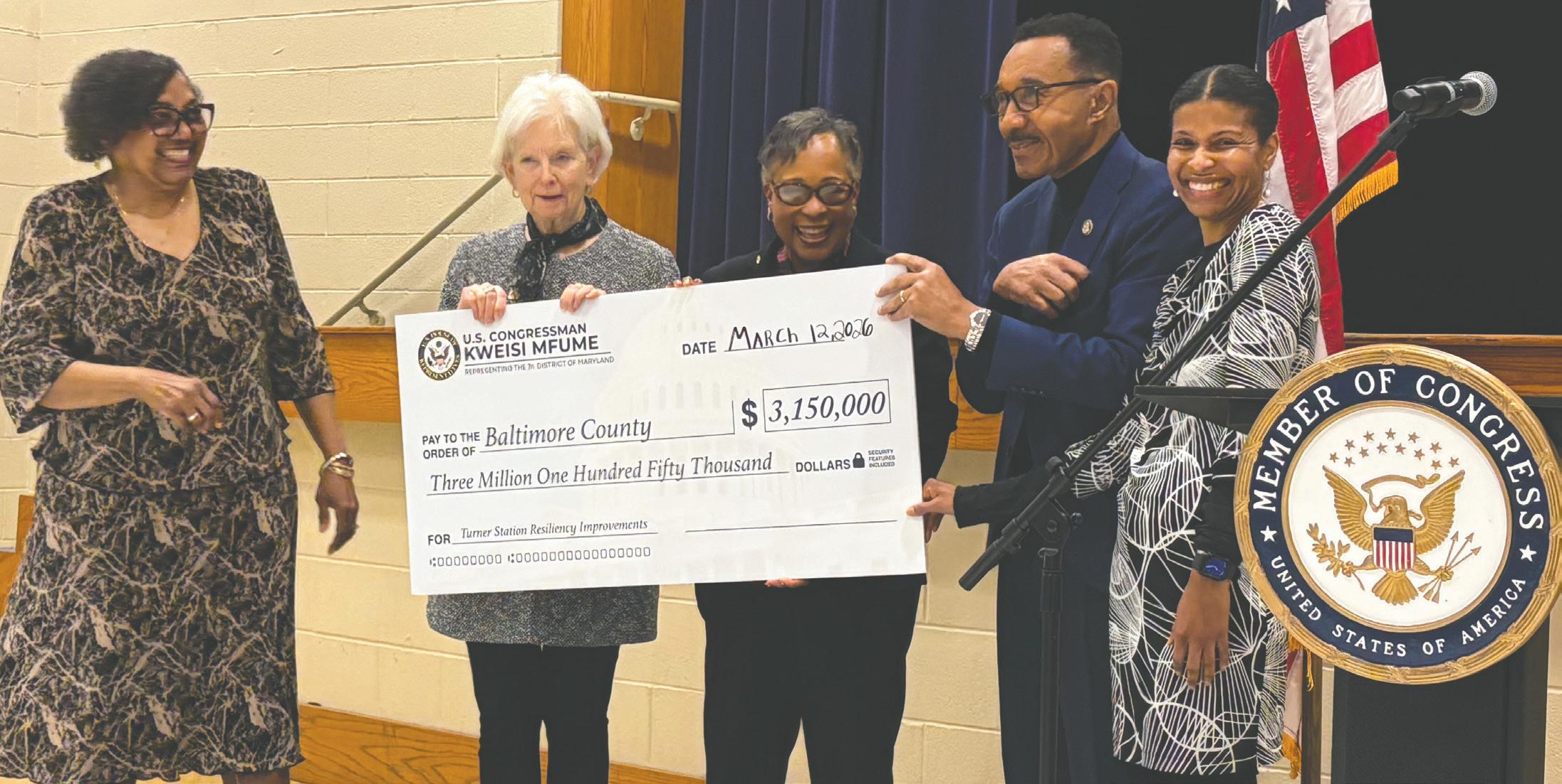
After decades of persistent flooding and property damage, Turner Station, a historic Black community in Baltimore County, has received a federal grant to the tune of $3.15 million for flood resiliency and mitigation upgrades. Congressman Kweisi Mfume (D-Md.-7), alongside Baltimore County Executive Katherine Klausmeier and leaders from Turner Station Conservation Teams, announced the funding on March 12. The money will finance the first phase of the Turner Station Flood Resilience Roadmap, which includes installation of mitigation pumps, improvements to drainage systems and the addition of
new planting to better manage stormwater and reduce future flooding. Officials said the infrastructure updates aim to protect homes, businesses and streets from future flood events.
“For decades, Turner Station has faced serious flooding that impacts upon our homes, our safety and our quality of life,” said Gloria Nelson, resident and president of Turner Station Conservation Teams, an organization dedicated to reversing historic neglect in the neighborhood.
“The funding represents an important first step toward lasting solutions, and we are hopeful this investment is just the beginning of continued support and funding to fully address flooding and strengthen our community.”
The federal grant money for Turner Station was obtained
In a response letter to the report, John David Merrill, the mayor’s chief of staff, noted that the $167,455.06 in P-card transactions lacking required waivers represents just 0.19 percent of the Mayor’s Office budget during the period reviewed. In a recent interview with the AFRO, the mayor also emphasized that the report did not detect any deliberate misuse of the cards. He noted that one individual who was non-compliant is no longer employed by his office.
“It’s not about whether any of the expenses were illegal or inappropriate, it’s that folks didn’t follow the protocols that were already in place in order to use them,” Scott said. “What we’re doing now is putting more fail-safes in there to ensure that doesn’t happen in the future.”
Scott characterized the city’s use of skyboxes at Orioles and Ravens games as a longstanding practice and noted that government
By Catherine Pugh Special to the AFRO
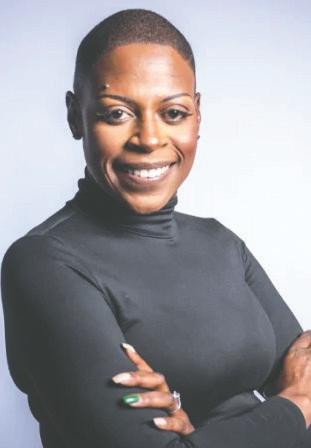
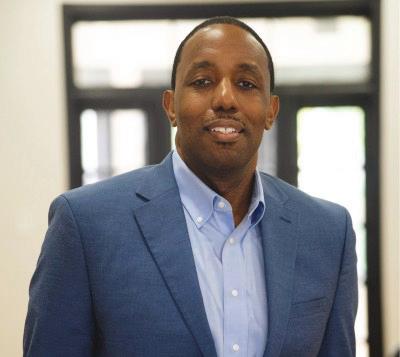
After being removed from probation, the Greater Baltimore Urban League (GBUL), founded in 1924, is moving forward.
The Aug. 15, 2025, letter placing the organization on probation was sent by the National Urban League’s Senior Vice President of Affiliate Services Herman L. Lessard Jr. The notice identified 11 violations requiring resolution. Most of the violations pertained to the actions of the Board of Directors, citing a failure to conduct regular meetings and to rotate board membership and organizational leadership. Additional concerns included financial instability, which rendered the organization non-compliant with State of Maryland laws governing nonprofits. Since August, several board members have resigned. Now, the suspension has been lifted. In a communication with the AFRO on March 10, Lessard confirmed the decision, saying GBUL submitted a comprehensive and
Continued
a
grant was delivered to the community on March 12.
by Mfume during the Fiscal Year 2026 appropriations process. A native of Turner Station himself, the congressman explained that the community’s flood problems started decades ago when Hurricane Hazel wreaked havoc across Maryland. In Turner Station, floodwaters up to 8 feet high filled homes and caused significant erosion.
“That flooding and that erosion brought about a process that many years later now is still with us. Unfortunately, this month also marks two years since the collapse of the Francis Scott Key Bridge, an event that literally and figuratively shook this entire region to its core, but particularly

By Tashi McQueen AFRO Staff Writer tmcqueen@afro.com
Baltimore residents, especially Black residents, continue to struggle with rising utility costs.
In response to these concerns, the Baltimore City Council hosted an oversight hearing on Baltimore Gas and Electric’s (BGE) skyrocketing prices on March 12.
But, BGE executives did not attend the hearing, instead criticizing the meeting in remarks to reporters.
“Because this hearing is narrow, repetitive and reductive we chose not to participate,” said Nick Alexopulos, a BGE spokesperson. “It is political theater on the part of the city council president. It’s not going to help our customers, and it’s not going to further the conversation that Maryland needs to have about bringing energy costs under control.”
He said the council hearing was too narrowly focused on utility and did not take into account other major factors that impact energy costs such as regulators and regional energy operators.
Alexopulos explained that the causes of higher bills extend beyond the utility itself, pointing to factors such as natural gas market prices, regional energy supply issues and state-approved regulatory structures.
“What the danger here is that this often gets oversimplified and what the result of that is … customers get misled,” he said.
“That’s the last thing anyone should be doing right now.”
The hearing proceeded without BGE, featuring testimony from advocates and questions and remarks from residents.
“One thing is clear, and that is that Baltimoreans are suffering,” said Council President Zeke Cohen. “The Baltimore City Council is going to continue to fight for our constituents.”
Customers are reporting hundreds of dollars in increases during peak energy-use seasons despite efforts to conserve energy, leaving them to make difficult choices between keeping a roof over their heads, putting food on the table, or staying warm.
According to Naadiya Hutchinson, an organizer with the Baltimore Public Power Campaign, Black residents across Baltimore City face higher levels of poverty and stagnant wages, making it nearly impossible to keep up with rapidly rising costs.
“We’ve done everything we are supposed to do,” said Tee Hardy, a Baltimore mother of six. “This month I received a one-month bill and the gas portion of it was $831.46. It’s not possible to use that much gas in a month; we don’t even cook that much.”
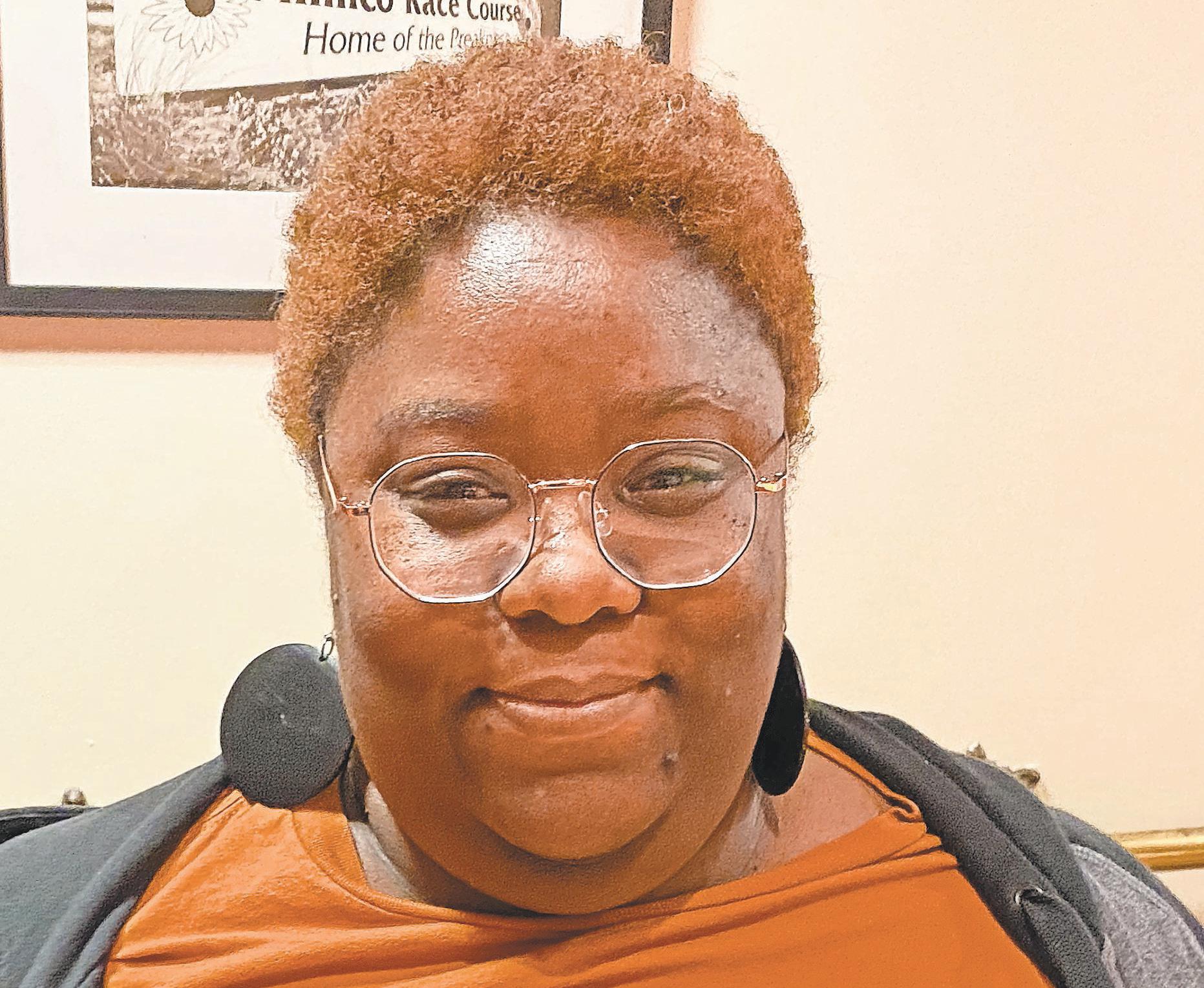
Frederique Dambreville, a North Baltimore resident, says rising utility bills are forcing her to take out loans and cut back on basic expenses as gas costs climbed from $104 to $500 a month.
well-developed strategic plan that addresses key organizational growth, including fundraising board development and longterm sustainability. All reports have been submitted on time and GBUL is maintaining up-to-date financial statements.
“The National Urban League is encouraged by the affiliates’ progress and overall recovery. The success is attributed to the guidance provided by Kevin Seawright, its new board chair,” he said.
Interim CEO Tershea Rice also credits the organization’s renewed confidence to its new leadership. She has been with the Greater Baltimore Urban League since 2021, as chief operating officer.
Seawright said the changes have given way to opportunity.
“We’ve undergone a transition that has allowed the organization to move forward,” said Seawright. “While we are meeting the obligations and commitment we’ve made to our national organization as an affiliate, the GBUL is looking forward to our upcoming Business Summit.”
The Business Summit, which will be held April 24 at 701 E. Pratt St., will be hosted by Marc Clark.
Rice said the GBUL Business Summit is “one of the signature events of The Greater Baltimore Urban League.”
“It brings a cross-section of our community together, which includes entrepreneurs, business and community leaders, individuals seeking economic growth and those wishing to go into business,” she said.
A key feature of the event is the pitch competition, in which aspiring entrepreneurs present their ideas to a panel of judges. The judges evaluate each proposal based on clarity, methodology and the quality
Hardy, 40, said she now had to make hard budgeting decisions to pay the bill on March 12 so her family’s service would not be cut.
“I had to cut into my son’s shoe budget,” she said.
“It’s getting tiresome,” Hardy added. “Everything that I was taught as a child that would make me a productive member of society has been used against me to put me in a hole, to keep me and my family in debt. My husband is disabled, and these things keep happening. It’s not just BGE, but this is where we can start.”
Another Baltimore resident described similar struggles despite following advice to conserve energy.
“Despite doing everything I can to conserve household energy, such as turning off lights and limiting heating to the point where my elderly father and I are freezing, my bill continues to rise beyond what I can afford,” said Frederique Dambreville, a North
of the business plan to determine funding recipients.
Seawright said they will continue to make the event a priority, with the help of sponsors and supporters.
“We are proud to announce that some of our former supporters have already stepped up to assure that this event is as successful, if not more than it has been in the past,” said Seawright. “We’ve received support from some area businesses that have previously been engaged with the GBUL for our Business Summit, including Baltimore Gas and Electric, Giant Foods and Wells Fargo Bank. TD Bank has also come on board to be one of our community sponsors and we expect more to engage with us on this important event.”
As in previous years the event is free to the public. Entrepreneurs and organizations can, however, purchase booths to sell their wares and showcase their services to the public.
“As an organization, GBUL is dedicated to fostering upward mobility and engaging with our community, including youth who play a vital role in shaping our future. We remain committed to educating, empowering, and training our communities to ensure they are prepared to meet future needs,” said Seawright.
A historical organization, the Greater Baltimore Urban League was founded in 1924 as a civil rights and social service organization dedicated to empowering African Americans and other minorities. GBUL serves every jurisdiction in Maryland with the exception of Prince George’s and Montgomery counties.
For additional information on the Greater Baltimore Urban League, including how to get involved, visit their website at: https// gbul.org.
“Despite
doing everything I can to conserve household energy, my bill continues to rise beyond what I can afford. My gas bill has increased from $104 a month to $500 a month.”
Frederique Dambreville, North Baltimore resident
Baltimore resident. “My gas bill has increased from $104 a month to $500 a month.”
Dambreville said she took out a loan of more than $2,000 earlier this year to pay her utilities, pushing her further into debt.
“I am now in debt of almost $3,000,” she said. “Like many working families, I already balance mortgage, groceries, transportation, insurance and other
basic necessities. Utility should not be a luxury. It should be a basic right, an essential, and it should not be fair for my elderly father to be freezing in his own house.”
“I really want BGE and the decision makers to recognize how those rising utility costs are affecting everything and everyone,” she added. “We can’t afford them anymore.”
“We’ve undergone a transition that has allowed the organization to move forward while meeting the obligations we made to our national organization.”
Kevin Seawright, Chair of the GBUL Board of Directors
By Megan Sayles AFRO Staff Writer msayles@afro.com
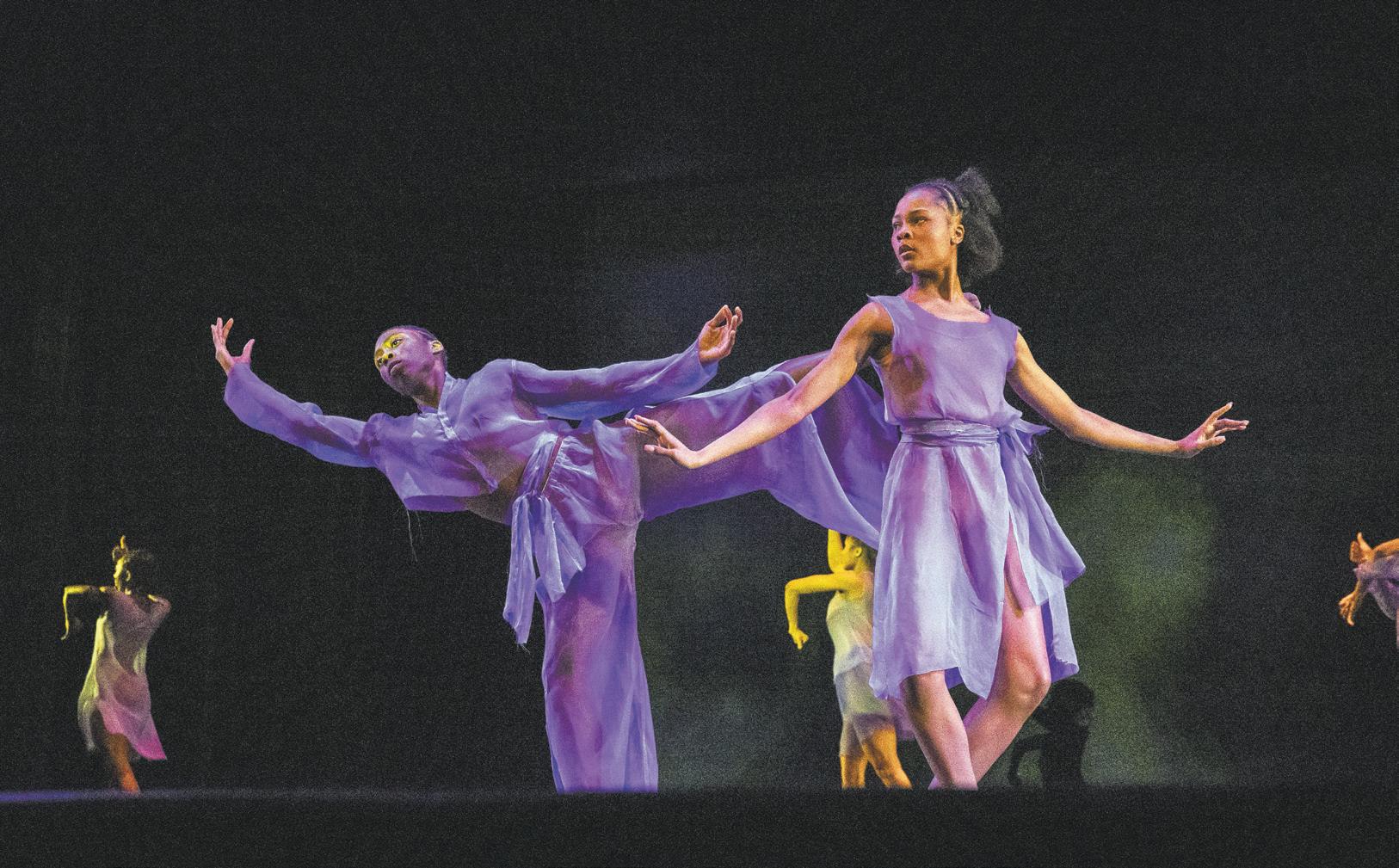
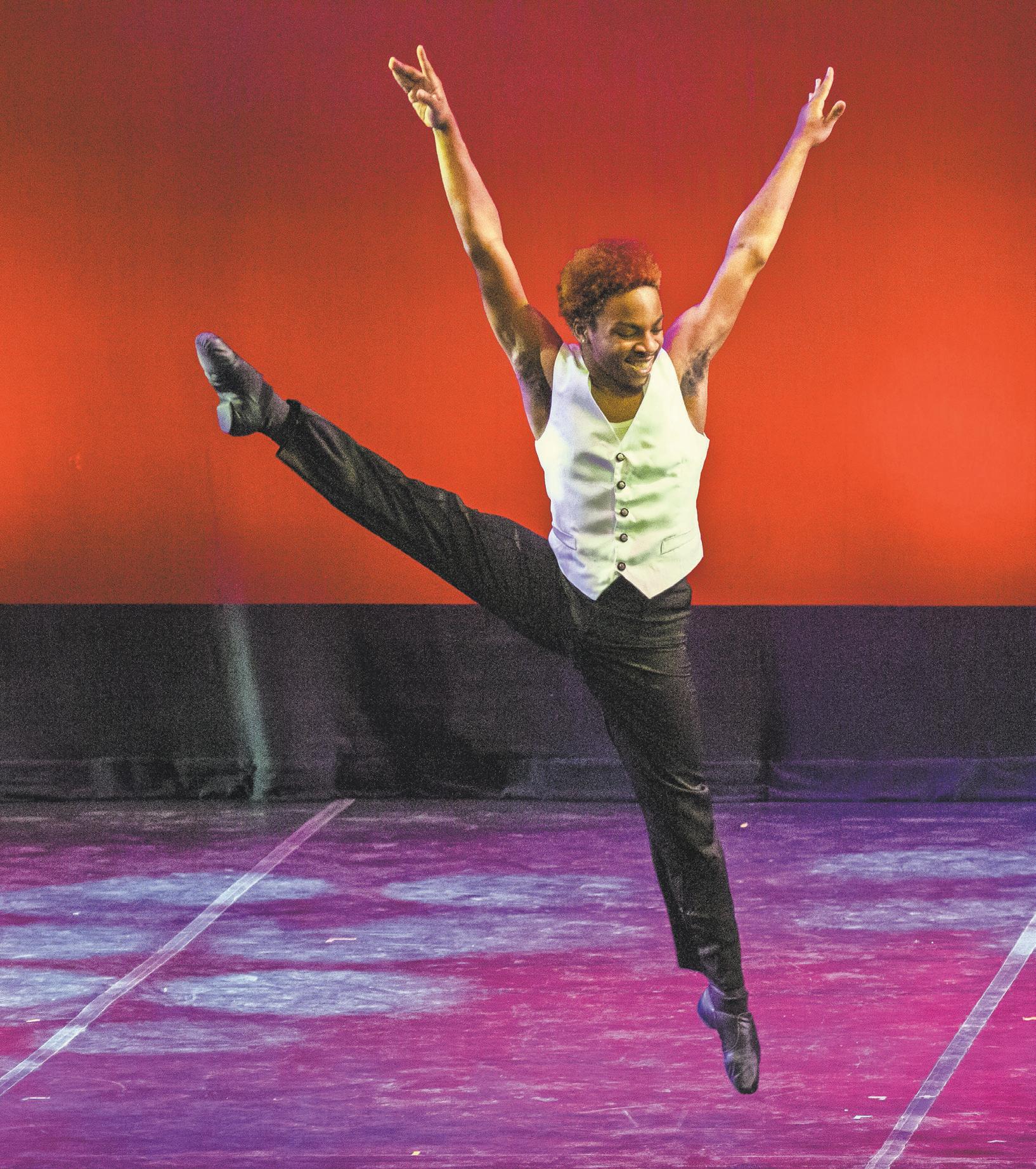
The Baltimore School for the Arts (BSA) held its annual fundraiser, “Expressions,”
March 5, 7 and 8—showcasing the creativity and talent of the city’s young artists to donors, community members and art enthusiasts.
This year, the event ran under the theme, “The Power of Wonder and Awe,” a nod to the faculty’s philosophy of encouraging BSA students to infuse wonder and awe into all of the work they create. The fundraiser raised $740,000 in gross revenue, ultimately netting $500,000 to support the school’s programming..
Stephanie Moore, director of the Baltimore School for the Arts Foundation, called the weekend “a wild success.”
“This gala is our second highest revenue-driven line item for the foundation each year. Supporting through ‘Expressions’ helps us fund the Baltimore School for the Arts,” said Moore. “It pays for all the part-time arts faculty, master classes, field trips and seminars with working artists. This money also helps us cover some costs for the TWIGS program, which is our completely free out-ofschool program for Baltimore City youth in second through eighth grade.”
Unbeknownst to some, BSA is a public high school within the Baltimore City Public School System. The BSA Foundation, the school’s fundraising partner, privately raises 33 percent of BSA’s funding to support arts training and enrichment opportunities that fall outside of the traditional school budget.
The institution is also one of the city’s top-performing schools, with attendance rates above 97 percent and a 100 percent graduate rate. There, students spend half of their day on academic coursework and the other half receiving intensive arts training in disciplines such as dance, theater, music, visual arts and film.
“These students are ready for anything when they leave here. We have students doing the full breadth—going straight out to a dance company, going to pursue their art in college and some going into astrophysics or becoming a doctor,” said Moore. “They’re going out and doing some of everything, and having that background – the dedication and passion to follow their art – builds skills in these students that push them forward.”
Rosiland Cauthen, executive director of BSA, said “Expressions” represents the height of BSA students’ talent, allowing every department to come together to perform.
She said it also serves as a community-building experience.
“We have our donors and our trustees through the foundation that are part of our stakeholder community. We have parents, alumni and partnering arts organizations in the neighborhood that all consider themselves like a part of the BSA community,” said Cauthen. “‘Expressions’ allows for all of those different stakeholders to come together and celebrate the success that is BSA and hopefully find a little joy and inspiration from what the students are able to do on stage and put together.”
Cauthen emphasized that investment in the arts is needed now more than ever, especially considering the sense of joy and inspiration they bring during uncertain times.
“I would encourage people to continue to give to the Baltimore School for the Arts because the students are so brave. They are willing to take risks to actualize their dreams,” said Cauthen. “Many of us, when we were younger, had a dream of being a singer, dancer or poet. Then life got harder and harder along the way and bills started coming in. These young people still have all the hope in the world so as much as we can support those dreams of artistry, the better we are as a community.”
spending in them is “not a new thing.” He believes some of the framing of the report and subsequent media coverage has made the spending appear questionable or improper, even though he maintains the expenditures were legal and consistent with standard city practices.
“If I’m bringing in principals from schools, DPW (Department of Public Works) workers, firefighters, police officers, kids and families
shook Turner Station and Dundalk,” said Mfume. “It reminded us—and still does—of how interconnected communities on the shorelines are, and it also reminded us that this whole issue of erosion will continue to get worse unless we are prepared to deal with it.”
Since the loss of the Key Bridge in March 2024, flooding challenges have escalated, with increased traffic and road strain further taxing local drainage systems.
“Some of you know even your homes in this community, as a result of that collapse, have structured lines and cracks in the foundation. We’ve all seen the increase in traffic and big trucks that cannot go through the tunnel. It’s been a real impact,” Mfume continued. “Communities along the water—Turner Station
of victims of gun violence and tragedy into the skybox, I’m absolutely going to feed them,” Scott said. “It shouldn’t even be a question because that’s something that has been not just standard practice in Baltimore, but around the country for a long time.”
To prevent similar issues in the future, the Mayor’s Office plans to require refresher training for all P-card holders and staff who request purchases, conduct more frequent internal audits and tighten procedures for submitting waivers and reconciling transactions.
notwithstanding— are still recovering from many of those disruptions. That’s why this investment today is so important.”
Mfume emphasized that this grant is a first step in ameliorating Turner Station’s flooding challenges. He doubled down on his commitment to seeking more funding for future projects in the community.
Lifelong Turner Station resident Olivia Lomax characterized the investment as a “long time coming” and the culmination of keeping hope alive. She emphasized that increasing flood resiliency in the community will have ripple effects—from eliminating mold in homes to saving households money on repairs.
“These are things that this flooding has done to corrupt our community,” said Lomax. “I have my great grandbaby and my granddaughter here. I’m not doing this for myself, I’m doing it for the future.”
“These students are ready for anything when they leave here. ... having that background—the dedication and passion to follow their art—builds skills in theee students that push them forward.”
— Stephanie Moore, director, BSA Foundation

By Megan Sayles AFRO Staff Writer msayles@afro.com
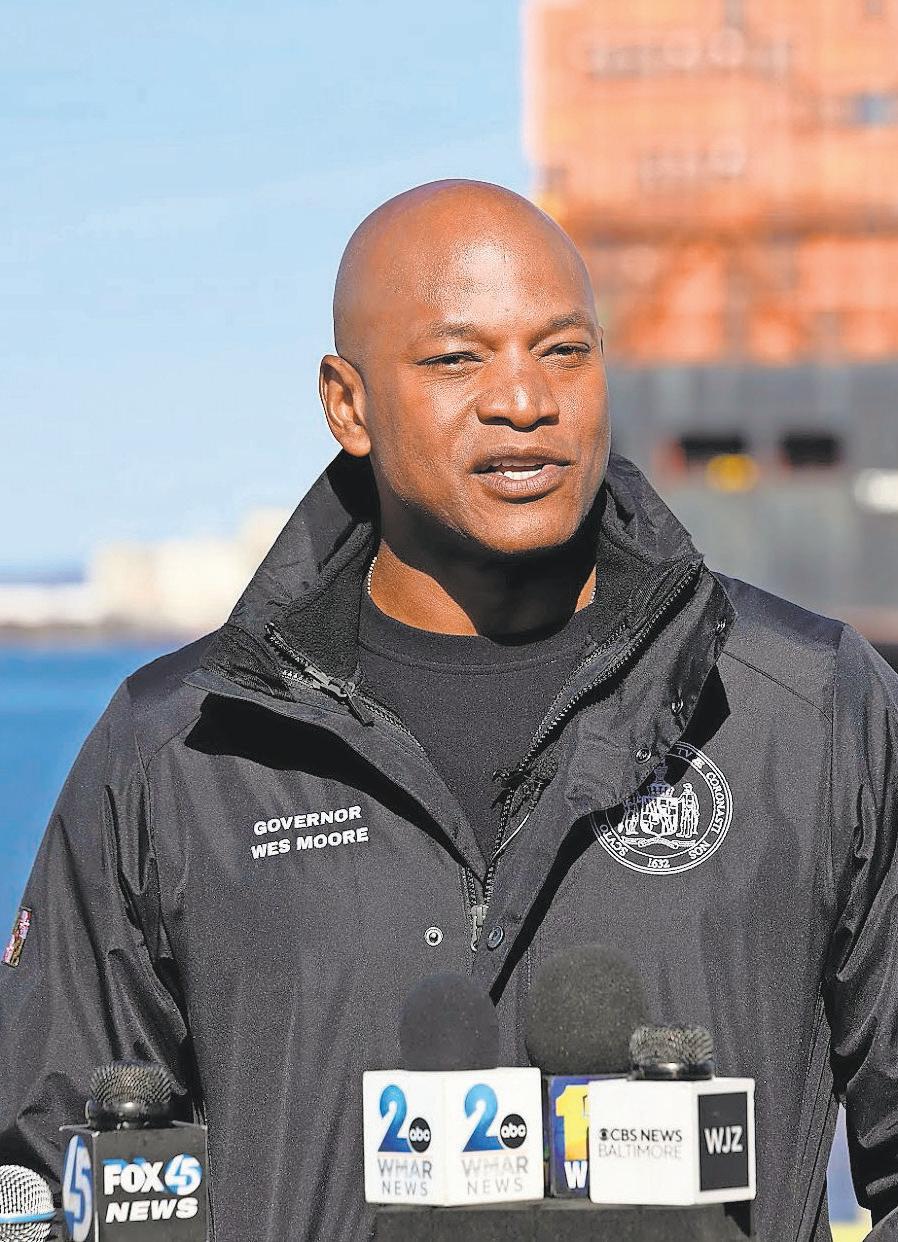
Maryland Gov. Wes Moore has announced that the Helen Delich Bentley Port of Baltimore achieved its second-highest year on record for cargo volume in 2025. The nearly 50 million tons of cargo handled last year was worth $65.6 billion, the third-highest value in the port’s history.
The March 24 announcement came just days before the two-year anniversary of the Francis Scott Key Bridge collapse on March 26, 2024, which partially closed the maritime hub’s primary shipping channel for more than two months, significantly impacting operations in the region.
Demolition of the remaining structure of the bridge took place in July 2025.
In December 2025, the Maryland Transportation Authority said the cost of the rebuild would be anywhere from $4.3 billion to $5.2 billion. It also adjusted the timeline and pushed expectations of a full reopening to late 2030.
During his tour of the port on March 24, Moore praised its resilience and critical role in the state and the nation.
“We see something that is not just responsible for about a quarter of a million jobs inside of Maryland and about $70 billion in economic activity, we see something that represents the pride of the state,” said Moore. “It’s the people who come up every single day before the sun even comes up—the ones who are moving cargo, the ones who are moving freight. This place right here represents where about two-thirds of the country gets their goods from. This place represents the largest roll-on/roll-off port inside the entire country.”
The 50 million tons of cargo included 11.1 million tons of autos, farm and construction machinery, containers and forest products. The Port of Baltimore ranked second in the U.S. for autos, processing 728,225, and first in the nation for roll-on/roll-off farm and construction equipment, with 887,513 tons moved.
Overall, the port ranked 10th in the U.S. for foreign cargo value and 11th for foreign cargo tonnage.
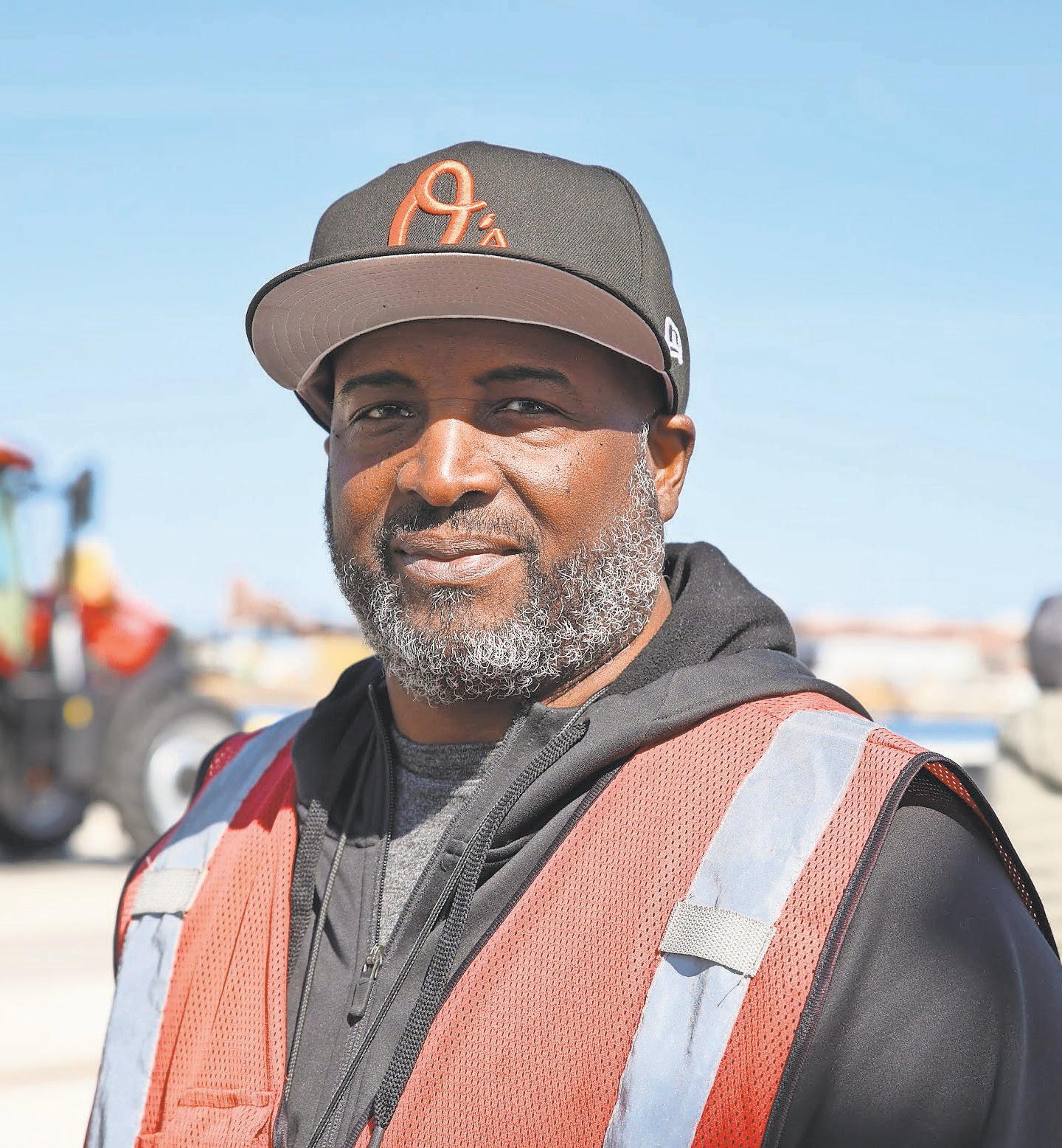
Fred Poland, longshoreman with the port for 15 years, said he was grateful for the port’s progress while remembering the risk of losing work altogether when full-scale operations were stalled.
“This port bids on work from around the country. If this work has to go to another place, we as longshoremen can’t travel in between. They would get the work, and it would be detrimental to us because we would have no work,” said Poland. “With this recovery being as fast as it was, it was a great thing. But, we still lost work, and we’re
still trying to recover.”
He recalled being out of work in the immediate aftermath of the bridge collapse. However, he had already faced a similar kind of economic uncertainty when the General Motors assembly plant, formerly located near the port, closed in 2005.
“When they left, a lot of people didn’t understand that you lost everything, your livelihood,” said Poland. “That’s what would have happened here if we couldn’t open and recover. Everybody would have to get a new job, and good jobs are hard to find.”
Despite the port’s record year, officials acknowledged that the cargo hub could have handled even more freight had the bridge disaster not occurred. Still, as cargo volumes

continue to rebound, questions are being raised about how increased activity could affect nearby communities already grappling with heavy truck traffic and aging infrastructure.
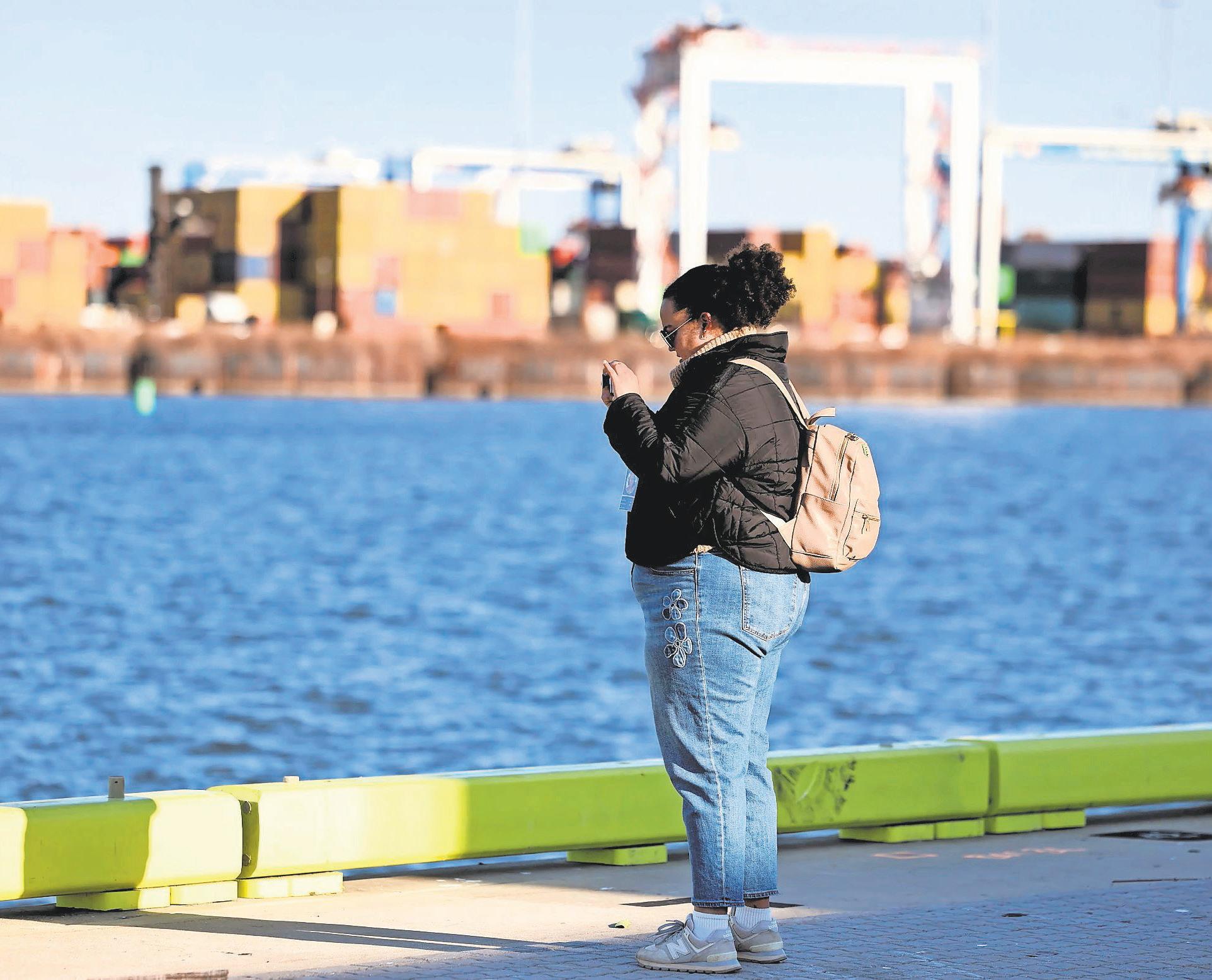
Turner Station, a historic Black community located less than 2 miles from the port, has seen a surge in truck traffic since the bridge fell, placing additional strain on roads and drainage systems that were already burdened.
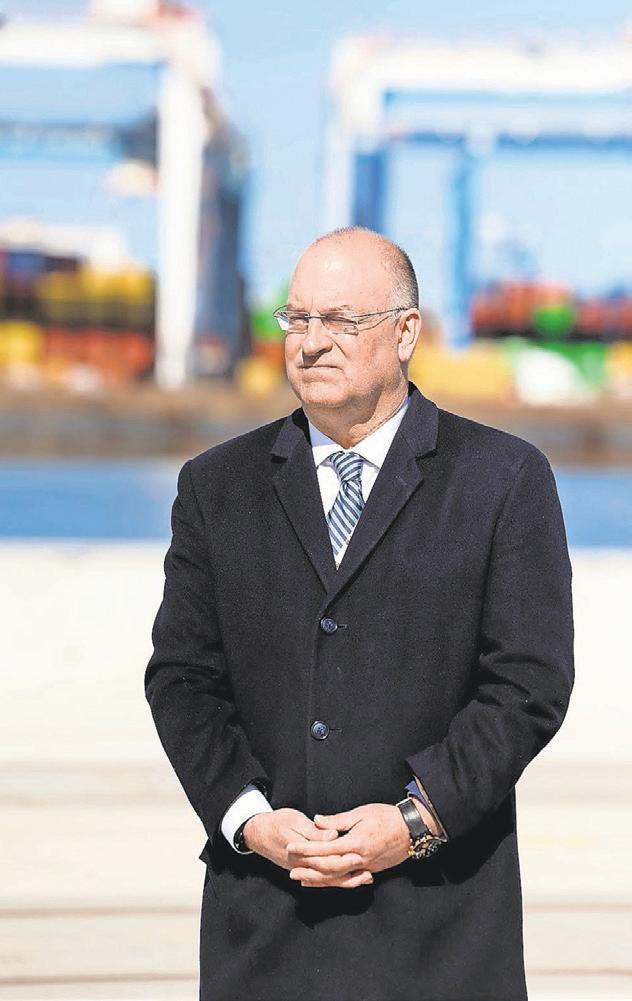
Jonathan Daniels, executive director of the Maryland Port Administration (MPA), said efforts are underway to reduce both environmental and traffic impacts.
He pointed to a recently awarded $147-million Environmental Protection Agency (EPA) Clean Ports grant that will fund the replacement of 213 pieces of fossil-fuel equipment with electric alternatives—a transition expected to reduce greenhouse gas emissions by about 35 percent by 2030.
He also said MPA is examining long-term transportation patterns to mitigate congestion in surrounding communities.
“As we’re taking a look at the long-term master vision plan, it’s not only taking a look at what impacts we have inside the gate with traffic and congestion, it’s looking at our external transportation network to make sure that the work we’re doing evolves with the community and does not overwhelm the community,” said Daniels.
As the port continues to make strides in its recovery journey, attention is turning to the status of the bridge rebuild. Officials confirmed that the reconstruction is progressing at the fastest pace for a project of its size in the U.S. Its reopening is slated for late 2030.
All AFRO Photos / James Fields


By Dr. Deborah Bailey AFRO Contributing Editor
March 24 served as a night to get the
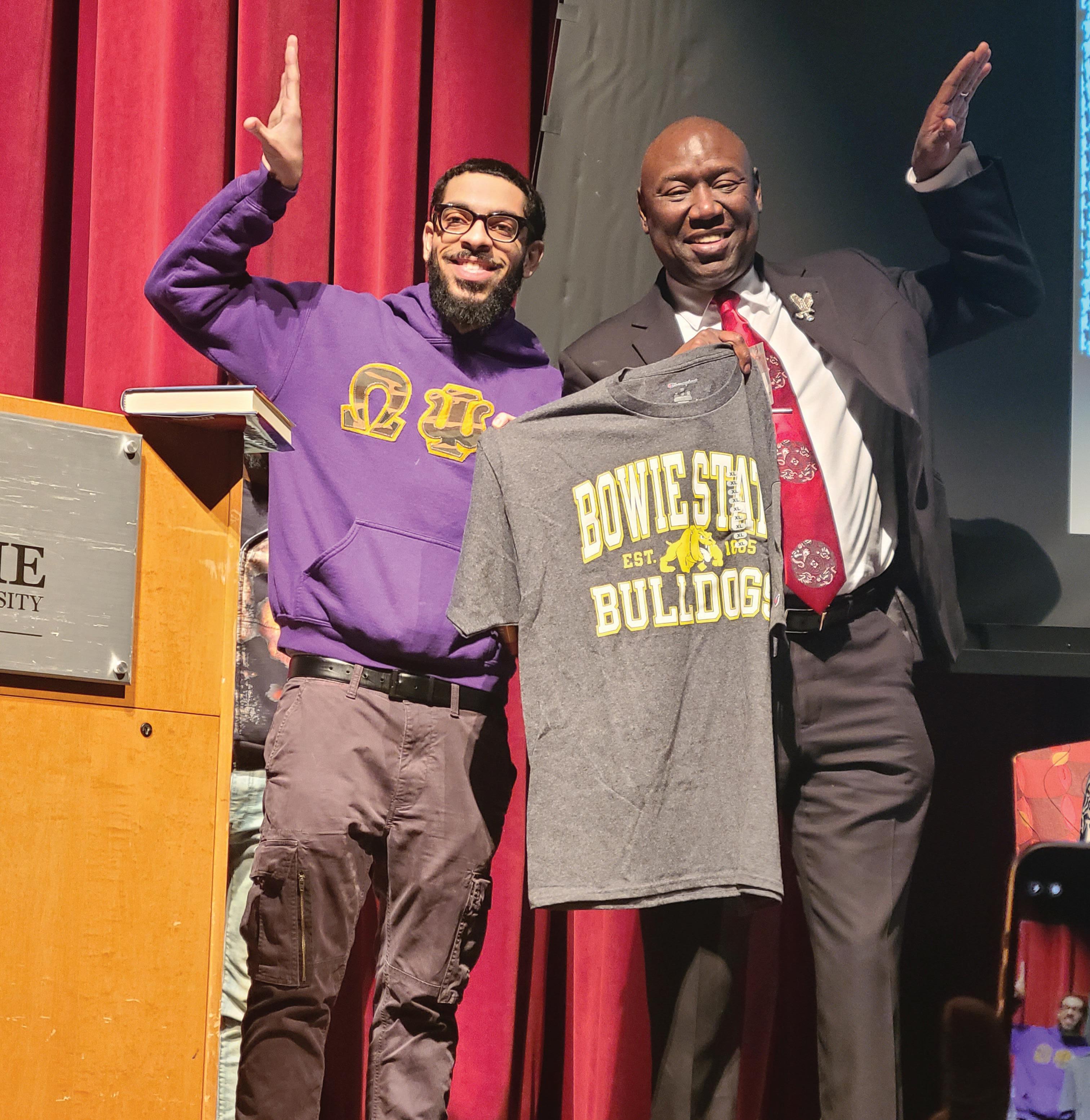
“411” not discussed on college campuses when it comes to the American legal system. The civil rights and social justice organization, Equal Justice Now, in partnership with attorney Ben Crump, hosted a panel discussion at Bowie State University that took a deep dive into legal, social and civil rights issues. Panelists included former Baltimore Mayor Stephanie Rawlings, Maryland State Delegate and civil rights attorney Malcolm P. Ruff (D-Md.-41), Dayvon Love, public policy director for the think tank Leaders of a Beautiful Struggle, Bowie State faculty members and organizations representing southeast
By D. Kevin McNeir Special to the AFRO
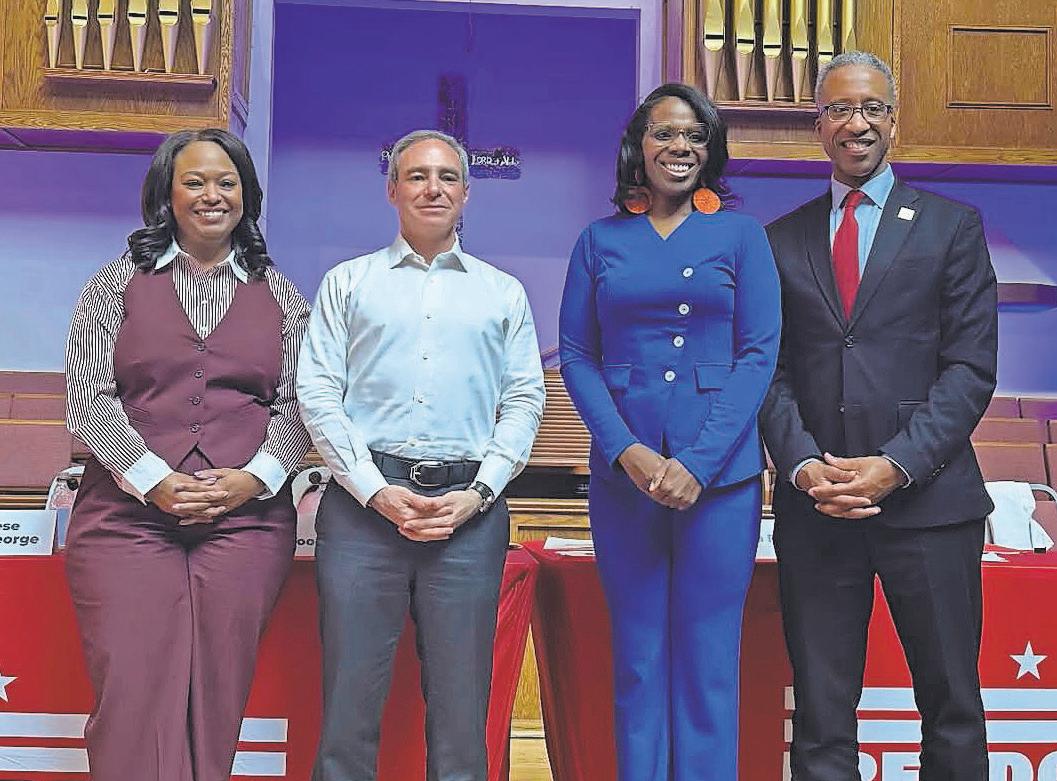
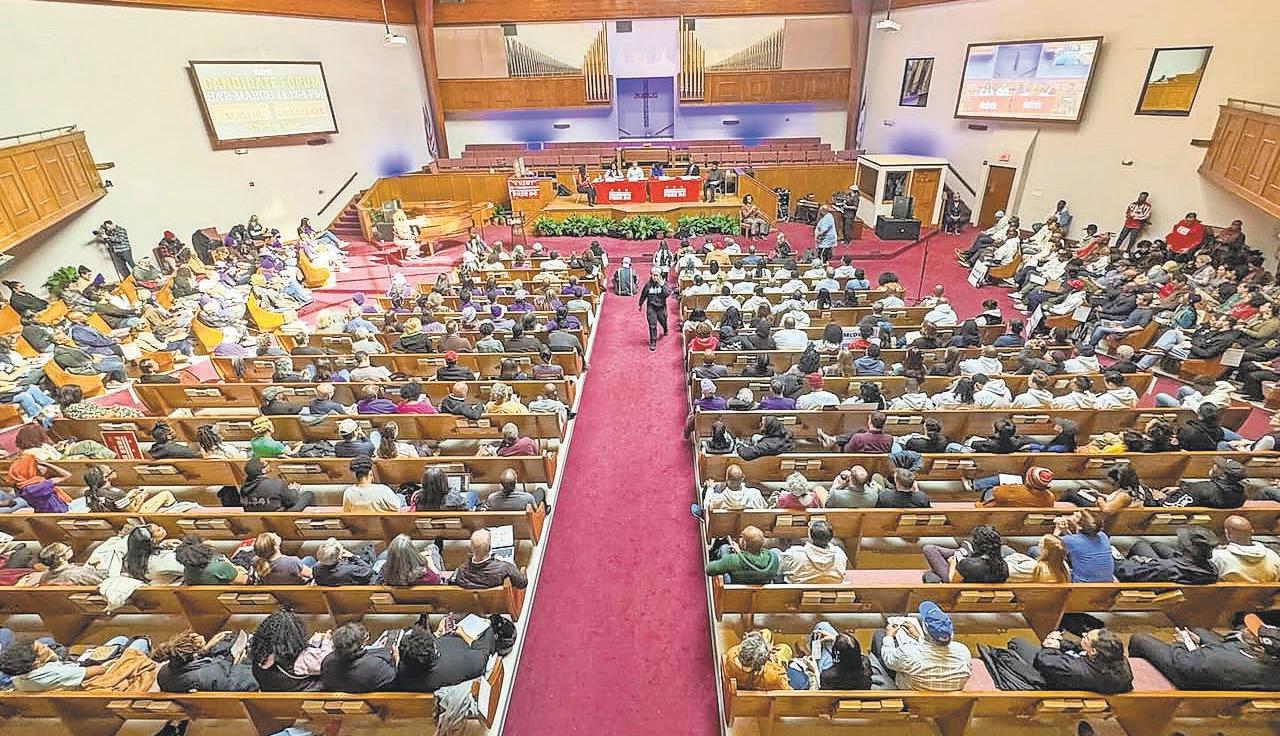
A candidate forum erupted into temporary mayhem March 14 before an energized and extremely vocal crowd of several hundred people who filled the pews at Matthews Memorial Baptist Church in Washington, D.C.’s Anacostia community.
The forum, organized by Free D.C., a nonprofit organization committed to securing statehood for D.C., featured candidates running for mayor and U.S. House delegate.
The winner in each race will replace, respectively, D.C. Mayor Muriel Bowser, who decided not to seek a fourth term in office, and Delegate Eleanor Holmes Norton, who has represented the District in Congress since 1991.
The high point or most controversial part of the forum – depending on one’s perspective – was undoubtedly the brief but explosive interchange between mayoral candidates Ward 4 Councilmember
Janeese Lewis George and former Councilmember Kenyan McDuffie.
Lewis George and McDuffie, who have emerged as the frontrunners in the race, held nothing back as things continue to heat up for a primary election showdown, scheduled for June 16.
McDuffie denounced Lewis George for making promises he said she would not be able to achieve and allegedly overstating her legislative record, while Lewis George countered that her opponent had proven to be more committed to “special interests” at the expense of the District’s working class.
“Under the watch of this chair, your utilities have gone up every single month because he has stood with Washington Gas and Pepco and not the people of this city,” said Lewis George, criticizing McDuffie’s record during his tenure as the chair of the council’s economic development committee.
McDuffie, during his closing statement, fired back.
Washington, D.C.
Nothing was left unsaid in the quick flowing exchange between panelists, who shared knowledge not found in today’s textbooks about the bail system in Maryland, the limits of law enforcement’s capacity to deal with family mental health struggles and the legal system.
“[Lewis George] hasn’t introduced a single piece of standalone legislation to deal with the problem,” McDuffie said. “Every single time she had the opportunity to vote against [confirming] the Public Service Commissioners, she voted yes.”
For just over one minute, the two candidates abandoned protocol, shouting at one another while their supporters spurred them on, as the moderator, Katea Stitt of WPFW, attempted to restore order. McDuffie eventually walked off the stage, where he was congratulated by his supporters.
The testy exchange continued on social media.
“When someone shows you who they are, believe them the first time,” Lewis George later said on Facebook, quoting the words of the author and cultural icon, Maya Angelou.
McDuffie, posting on his X social media account, said Lewis George “hasn’t delivered for [her] own ward,” and added, “I won’t legislate via
By Dr. Deborah Bailey AFRO Contributing Editor
Prince George’s County Executive Aisha Braveboy announced a $5.92 billion budget for fiscal year (FY) 2027 that addresses a $170-million structural deficit while protecting core government services. Braveboy said the FY 2027 budget will address needs that county residents depend on government to provide while positioning the county for strategic economic success.
‘‘By aligning investments with the County’s strategic priorities, we ensure that every dollar contributes to building a stronger and fiscally disciplined Prince George’s County,” Braveboy said on March 12, as the budget was released to the County Council.
Braveboy’s budget represents a 2 percent increase over the previous year and developed after three resident listening sessions throughout the county. Braveboy emphasized investments in six key areas in the $5.92 billion budget that must be adopted by the County Council by June 1 for implementation on July 1 of this year.
Six key budget priorities
The FY 2027 budget prioritizes education, public safety, economic growth and development, environmental services and sustainability, equitable communities and transportation and infrastructure.
Education
‘‘By aligning investments with the County’s strategic priorities, we ensure that every dollar contributes to building a stronger and fiscally disciplined Prince George’s County.”
Prince George’s County Executive Aisha Braveboy
Braveboy’s education request for $2.97 billion represents the largest single expenditure in the proposed budget. Education requests include a $968 million direct contribution from the county to meet requirements of the Kirwan Commission, $144 million for Prince George’s County Community College, $42 million for the Alternative Construction Financing Program that will facilitate the delivery of eight new schools, and $1 million for the Summer Youth Enrichment Program.
Public safety
The budget proposes $435.5 million for
the other two
By Megan Sayles AFRO Staff Writer msayles@afro.com
A Virginia man charged with planting two pipe bombs outside of the Republican National Committee (RNC) and Democratic National Committee (DNC) headquarters in Washington, D.C., on Jan. 5, 2021, believes the 47th president’s mass pardon of Jan. 6 insurrectionists should apply to his case.
Attorneys for 30-year-old Brian J. Cole Jr. filed a motion to dismiss the case on March 16, arguing that Cole is covered under the sweeping clemency issued by the president last year. The federal case is being tried in the U.S. District Court for the District of Columbia.
“The Pardon—like it or not—applies to Mr. Cole, based on the ordinary and plain meaning of the Pardon’s language as applied to the relevant facts in this case,” wrote Cole’s lawyers, Mario B. Williams and John M. Shoreman, in court documents.
On Jan. 20, 2025, the 47th president granted full, unconditional clemency to all individuals convicted of offenses related to events “at or near” the U.S. Capitol on Jan. 6, 2021. He also commuted the sentences of 14 convicted individuals.
Though Cole positioned the explosives on the evening of Jan. 5, his attorneys assert that his alleged conduct is still directly tied to the events of Jan. 6. They argue that the pardon’s language—covering offenses committed “at or near” the Capitol—should be interpreted broadly to include preparatory acts that were intended to affect or disrupt the following day’s proceedings.
In court documents, the attorneys claimed the commuted sentence of Kenneth Harrelson, an Oath Keepers member, demonstrates “that government is wasting time trying to convict Mr. Cole.” They noted that Harrelson received clemency despite his role in transporting and staging firearms in the D.C. area between Jan. 1 and Jan. 5.
A White House official told the AFRO that the president’s pardons “clearly” do not extend to Cole’s case given the explosives were placed on Jan. 5. The official clarified that clemency was only granted to events at or near the Capitol on Jan. 6. According to the Justice Department, the explosives were discovered by law enforcement
Continued from B1
Bail reform
Ruff explained that the current bail system in Maryland suffers from a gap in the law that allows judgess to make critical decisions about bail without written legal guidance.
“In Maryland, there is no standard of what it means to be a ‘present danger’ to the community in setting bail. It’s up to the judge. We have to get this corrected because the consequences are dire for our community,” he added.
“The impact cash bail has on our community is astonishing,” added Matasha Harris, associate dean of Bowie State University’s College of Professional Studies. According to the American Bar Association, nearly half
near the RNC and DNC headquarters on Jan. 6, 2021—just a few blocks away from the U.S. Capitol where the 2020 presidential election results were being certified that day. Neither device detonated, and U.S. Capitol Police were able to safely disarm them.
Cole was arrested on Dec. 4, 2025, and charged with transporting the explosive devices and attempted malicious destruction by means of fire and explosive materials.
a million Americans linger in jail until their trial dates, unable to pay bail.
Love added that while bail reform has had some positive impact in central Maryland, there’s still change that needs to be made
“The bad news is in the more remote regions, more people are being held,” he said, adding that individuals charged with crimes in the far Western and Eastern parts of the state still struggle.
Police responses to mental health
Crump came to the stage midway between panel sessions reflecting on themes from his new book, “Worse Than A Lie.”
“What’s worse than a lie?” Crump asked the audience.
“To tell the truth and have nobody believe you,” he answered.
In their motion to dismiss, Cole’s attorneys also point to prosecutors’ description of his alleged motive, arguing it reflects the political grievances that spurred the Jan. 6 crowd. They said Cole told investigators he traveled to D.C. to protest the 2020 election results and expressed frustration with leaders in both parties. They further argued that Cole—often referred to as the “Jan. 6 pipe bomber”—has been publicly linked to the events of that day, bolstering their claim that his case is covered by the president’s clemency.
The 47th president’s blanket pardon eliminated legal consequences for more than 1,000 individuals whose offenses ranged from assaulting Capitol police officers, to destroying government property, to seditious conspiracy. A judge has not yet ruled on Cole’s motion, but the decision could determine how far the president’s clemency extends.
Informer, moderated the portion of the forum that featured four candidates for U.S. delegate to Congress: Robert White (at-large D.C. councilmember); Deirdre Brown (chair, Ward 3 Democrats); Kelly Mikel Williams; and Kinney Zalesne (Democratic strategist).
He said despite the unexpected and temporarily distracting fireworks, he remains optimistic about the direction in which political activism is progressing in D.C.
“I think we’re moving in a positive direction as the June primary election approaches,” Collins said. “We have a lot of people who are running as candidates and there’s a real interest among voters related to who can best take on the president and advance the needs of those who live in Washington, D.C.
“That’s all good for District residents and with the mayor not running for a fourth term, and with Eleanor Holmes Norton retiring after having served in Congress since 1991, people are excited about the future.”
Collins posited that unless voters do more extensive research about the long list of candidates for mayor, he sees the race boiling down to a two-person showdown.
Crump highlighted the importance of reform when it comes to mental health and criminal justice reform.
“If you have a mental health crisis, the color of your skin should not equal a death sentence,” said Crump. He spoke on the case of Stephen Jones, the 55-year-old man who was shot by police in Hartford, Conn. He died on March 3.
Jones’ family called on police to help after he began cutting himself with a knife.
The mood of the second half of the evening turned encouraging as Poolesville High School student Emmanuel Chukwarah had the courage to ask the panel what to do with his own bouts of discouragement.
“It’s OK not to feel OK, and it is always good to get help,” said Dionne Bussey-Reeder, CEO of the Far Southeast Family Strengthening Collaborative. Reeder went on
Views vary from Washingtonians who viewed the ‘outburst” Joy Masha, a millennial African-American woman that lives in Ward 2 and is a member of and organizer for a political action committee at Metropolitan AME Church, said she’s dissatisfied with the way political campaigns are
moving in D.C.
“It’s clear that the candidates are career-driven, and what D.C. residents don’t need, especially now, is another full-time spokesperson,” Masha said. “At a time when effective leaders and those with leadership skills are so unavailable, the least candidates should have done
to add that while we are talking about mental health reform, we have to be talking about the economic conditions that disenfranchise our communities.
Bowie State University psychology professor Ayanna Lynch added, “We have to be supportive of people when they are not ‘ OK .’ Sometimes insisting ‘I’m too blessed to be stressed’ is not the message people need.”
Crump gave books and personally signed them for every person who attended the panel discussion. Bowie State senior Keoni Montgomery said the panel was life-changing.
“This really opened my eyes to so many issues I see happening around me every day,” he said. “It was also amazing to have Black men giving life lessons to me from the stage tonight.”
was explain their plan for the future and not focus on talking about what they have learned or may have accomplished in the past.”
“What I witnessed,” she concluded, “ was more like an episode of The Real Housewives of D.C.”
Theryn C. Bond, known as politicalbarbie47 on her frequently visited TikTok social media account, posted her reflections immediately after the forum’s conclusion and said she was somewhat “shocked” by the behavior of Lewis George and McDuffie.
“Whenever McDuffie threw a jab, I expected Lewis George to throw one back at him,” Bond said. “You could see how frustrated she was – you could see it on her face. Maybe her debate preparation team let her down.
“This race is about one simple question that voters are asking: In this moment of crisis, who can they trust to show up for residents in all eight wards of the District? I think Lewis George summarized it better than I ever could.”
During her closing remarks, the councilwoman said, “This race is about action versus inaction, courage versus convenience, and standing up or selling out.”
The AFRO sent questions to officials at both Free D.C. and the Anacostia Coordinating Council but did not receive responses prior to press time.
By Tashi McQueen AFRO Staff Writer
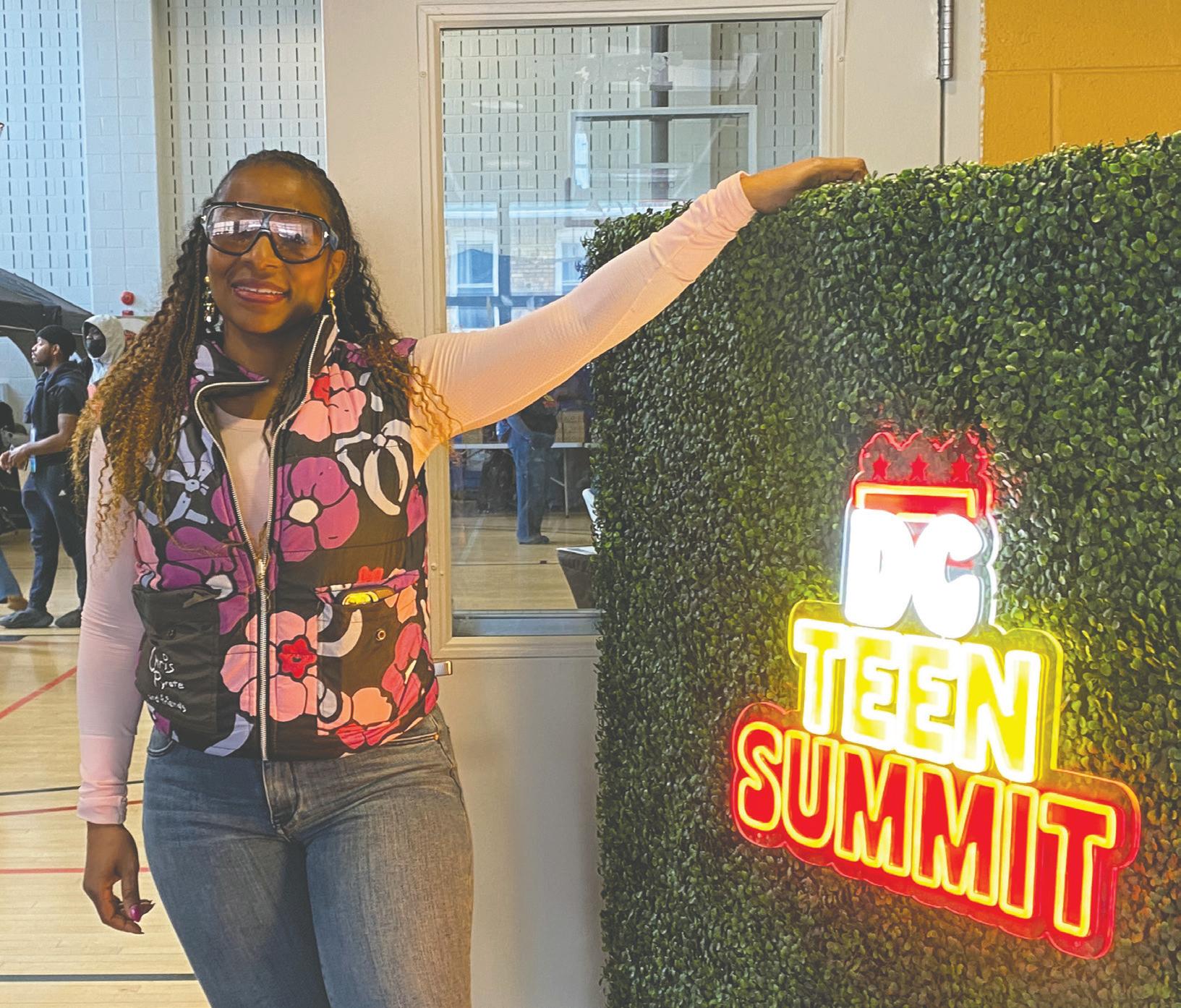
The D.C. Teen Summit returned March 13 under Theenie Freeman of the D.C. Department of Parks and Recreation (DPR). On their day off school, teens gathered in Columbia to lead discussions on mental health, social justice, creativity and leadership, sharing their perspectives and connecting with peers and adults. The event was open to teens between the ages of 13 and 18.
The event comes amid ongoing concerns about juvenile crime in the District. Though overall crime across the city has dropped 28 percent as of March 17, juvenile incidents remain a top issue.
On March 14, the Metropolitan Police Department (MPD) reported a large group of disorderly juveniles gathered in the Navy Yard. At 6:30 p.m., a small group of youth gathered in the park area between First Street and New Jersey Avenue, and by 8:30 p.m., the group had grown to around 200. Around 9:12 p.m., several suspects assaulted a juvenile victim in the 1200 block of First Street SE, stealing the victim’s shoes and jacket before fleeing on foot.
At approximately 9:47 p.m., someone fired a gun into the air in the park area. National Guard members intervened and stopped the suspect.
After two arrests and the confiscation of two firearms, the group was mostly dispersed around 11 p.m. No
injuries were reported.
Against this backdrop, the Teen Summit offered a contrasting view of youth engagement. Hosted in partnership with community organizations, the youth-centered event provided a platform for teens to share perspectives while connecting with peers and trusted adults.
Workshops and breakout sessions explored identity, decision-making, youth rights, creative career pathways, stress management and science, technology, engineering and mathematics opportunities. Resource tables linked
participants to local programs, mentors and other support.
Freeman said the summit creates a space where teens feel heard and valued, noting the impact of positive adult influence.
“A caring adult can make the difference when a teen faces a bad decision,” she said. “Ten seconds of madness will change your lifetime, but if you can pick up the phone and speak to someone that you trust, it can change your whole trajectory.”
For many attendees, the summit provided a chance to hear from peers and better
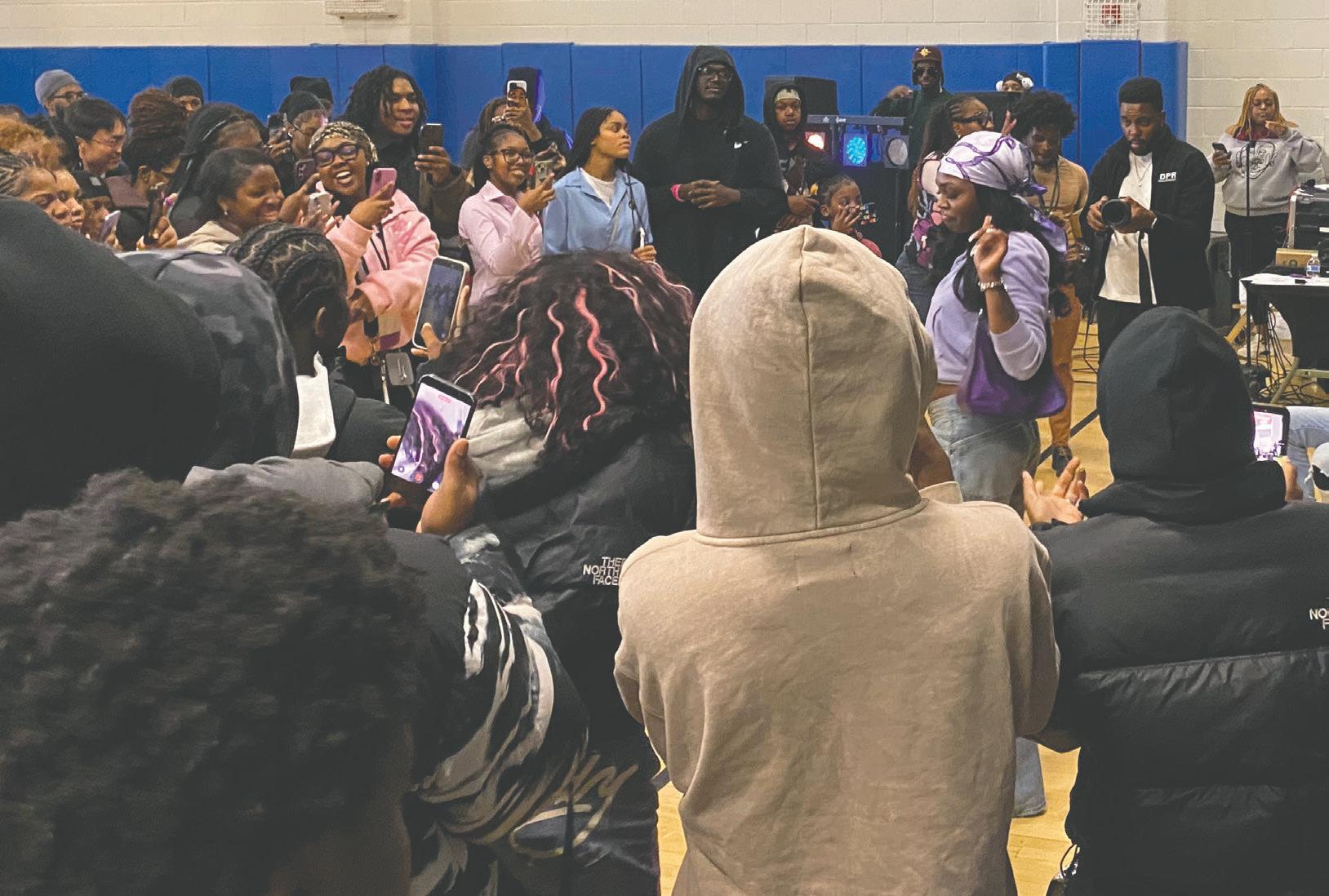
creativity and expression.
County Police Department to cover the cost of 150 new recruits, purchase of new body-worn cameras and tasers and increased investments in community policing. Another $325.9 million would go to the Fire and Emergency Management Department, to include the hiring of 100 recruits and 22 new civil service employees. The Department of Corrections is slated to receive $106.2 million, to include the cost of hiring 50 new recruits, while the Office of the Sheriff is expected to receive $5 million. The budget includes funding for Homeland Security, which is slated to receive $58.3 million for emergency preparedness. There is also $30.6 million allocated for the State’s Attorney’s Office.
Braveboy announced the county’s police department was finally getting the upper hand in public safety with a pool of residents to recruit.
“For the first time in many years, recruitment is outpacing attrition,” she announced at budget meetings with residents. “And the icing on the cake is that nearly 60 percent of our recruits are from right here in Prince George’s County,” a trend she hopes would continue in recruitment across the county’s public safety agencies.
Economic Growth and Development
There is $27.6 million, including $21.2 million for the Housing Investment Trust Fund to support new and existing workforce and affordable housing. In addition, $1.5 million has been allotted for a local business assistance program.
“I’m encouraged to see early fiscal progress, including a reduction in our deficit, and I look forward to digging into the details in the weeks ahead.”
Prince George’s County Council Chair Krystal Oriadha
Environmental services and sustainability
The budget slates $204.5 million for the stormwater management fund, which will cover $43 million for the Climate Action Plan, $3 million for tree trimming removal and maintenance, $2.6 million for clean lots waste removal, and $1.8 million for street sweeping and mowing on county right-ofway areas.
Equitable Communities
Roughly $138 million is slated to cover

ourselves and just grow and become better people.”
Wood, part of the Deanwood Radio Broadcasting Youth Journalism program under DPR, said teens sought both connection and emotional support.
understand experiences different from their own.
“I really appreciate that I got to be a part of this opportunity because ... I really got to hear other people out and what they were going through because I don’t really necessarily go through what other people go through,” said Laila Thomas, 15.
Thomas, a speaker with Global Kids, said conversations highlighted concerns around trust and relationships with authority.
“I was hearing that teens don’t really trust police or federal guards due to things they see on social media or real-life situations,” she said. “We’ve come together to see how we can change that perspective.”
She also pushed back against broad stereotypes about youth.
“I don’t believe that we are dangerous, I think that some of us are misunderstood by adults,” said Thomas. “They don’t know why certain people act the way they act.”
Other participants emphasized the importance of having safe spaces to express themselves.
“I feel as though this really just gives kids a moment to breathe,” said Hailey Wood, 18. “There are adults that are willing to listen and give time to us as Black children because we need that so we can nurture
She also rejected stereotypes about youth.
“I don’t think [people] expect me to be so articulate and actually care about these issues,” she said. “It’s truly more to me and other kids as well. Despite the stereotypes
“A caring adult can make the difference when a teen faces a bad decision.”
Theenie Freeman, DC Department of Parks and Recreation
“A lot of them came to us trying to find a middle ground where they could truly rest and relax and find comfort and they can also be themselves and emotionally open,” she said. “Top concerns were safety, emotional communication and intelligence.”
and stigmas, we really do yearn to have a better community for all of us.”
The summit concluded with a surprise performance by local rapper, Abria “Bri3” Parrish. All AFRO Photo/Tashi McQueen
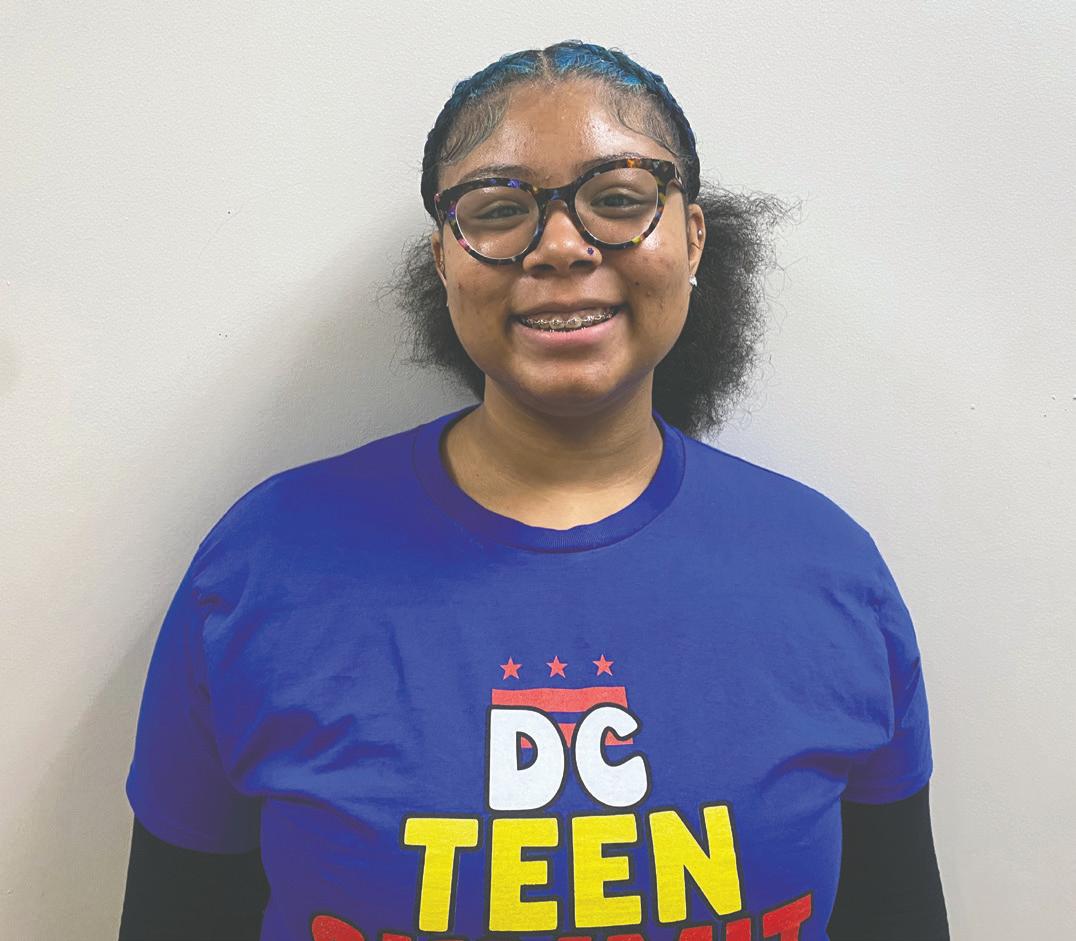
health and human services needs, including $83.8 million capital investments for emergency and transitional shelters, $89.9 million for Public Health, $27.9 million for Department of Social Services, $21.1 million for Department of Family Services (to include veterans’ services).
Transportation and Infrastructure
There is a $25.5 million allotment for road and curb rehabilitation projects in the proposed budget, including $15 million for emergency operations in extreme weather, $4.8 million bus stop improvements and $925,000 for additional bikeshares and maintenance.
County Council Chairperson Krystal Oriadha is ready to lead the legislative body through the budget deliberation process. She noted the work done by the Executive Branch to rein in the county’s initial predictions of an estimated $170 million deficit due in part to the loss of revenue from federal job cuts, and the departure of Six Flags and the Washington Commanders.
“I’m encouraged to see early fiscal progress, including a reduction in our deficit, and I look forward to digging into the details in the weeks ahead,” Oriadha said of the current budget showing a $2 million deficit.
“I am confident that the strong working relationship between the Council and the County Executive will ensure the FY 27 budget keeps the needs of Prince George’s County residents at its center,” Oriadha added.
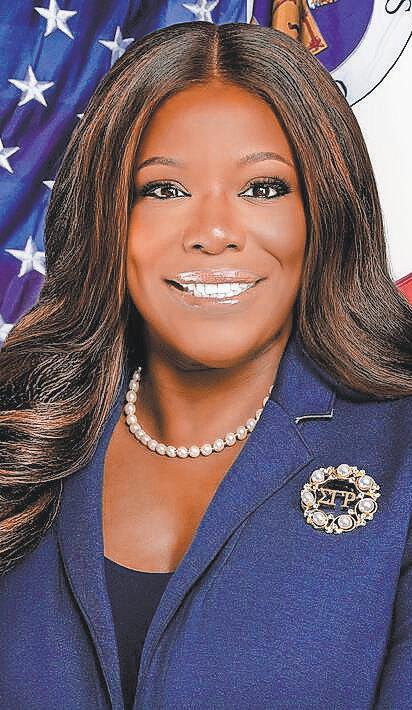

By Patricia McDougall Special to the AFRO
The second annual Caribbean and African Women of Impact Honors gala was held on March 22 in Silver Spring, Md. This year’s theme, “Bloom and Flourish,” lined up with the event’s tradition of “Giving Flowers, Honoring Legacies.” The ladies came out dressed to impress during Women’s History Month to highlight the
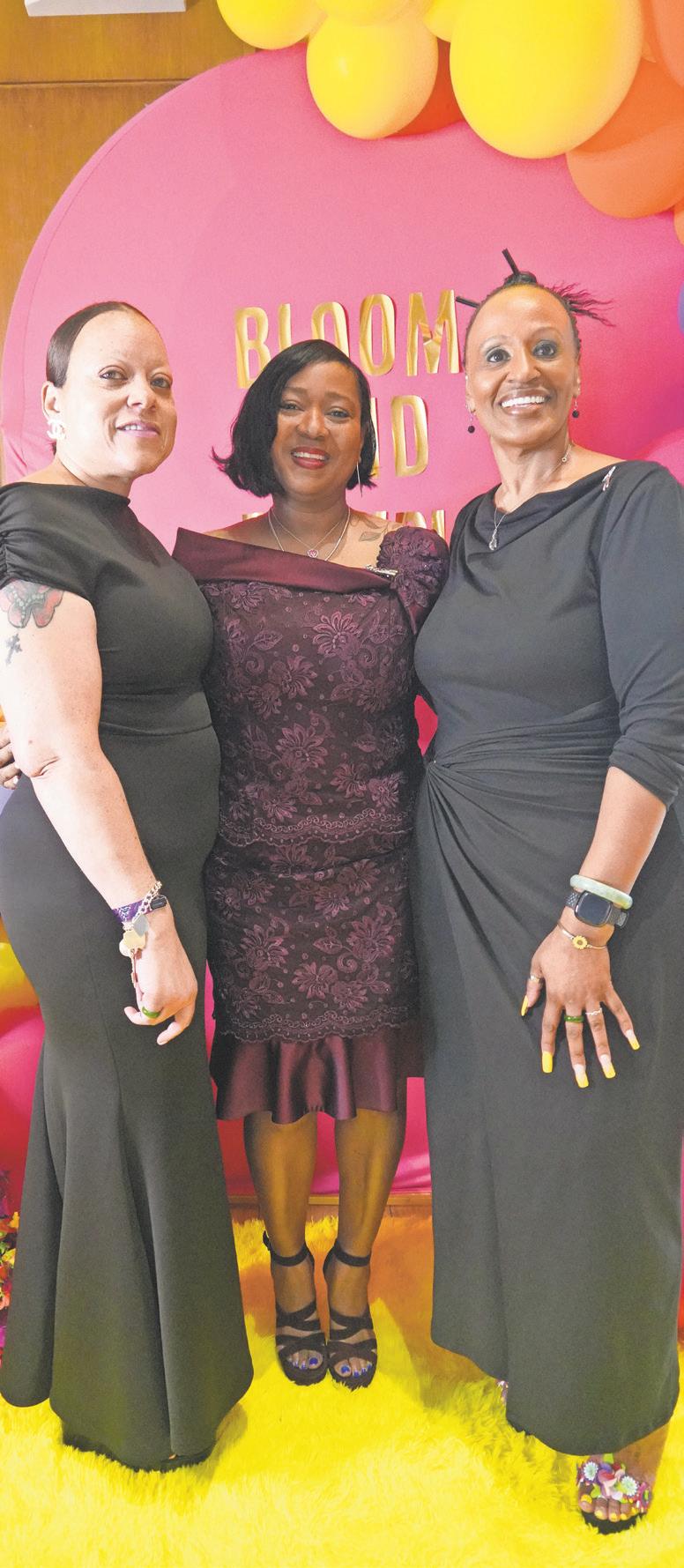
honorees for their outstanding contributions in the community. Honorees included actresses Janelle James (“Abbott Elementary”) and Gabourey Sidibe (“Precious,” “Empire”); health advocate Dr. Berthrude Albert; educator Nakeba McKoy; social media personality Vanessa Imani and leaders of the small, Caribbean store chain, Labay Market, which received the Seed to Harvest Community Impact Award.
AFRO Photos/ Patricia McDougall
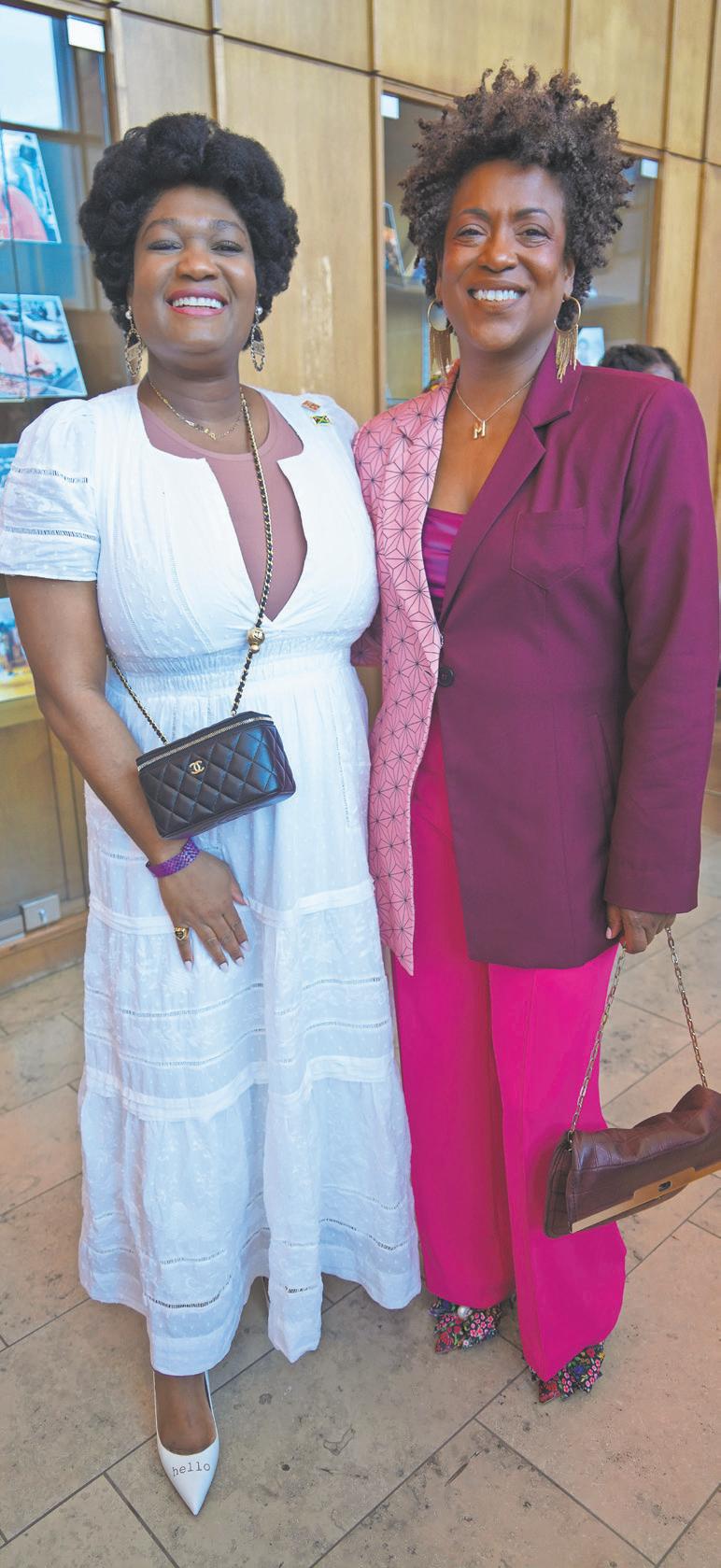
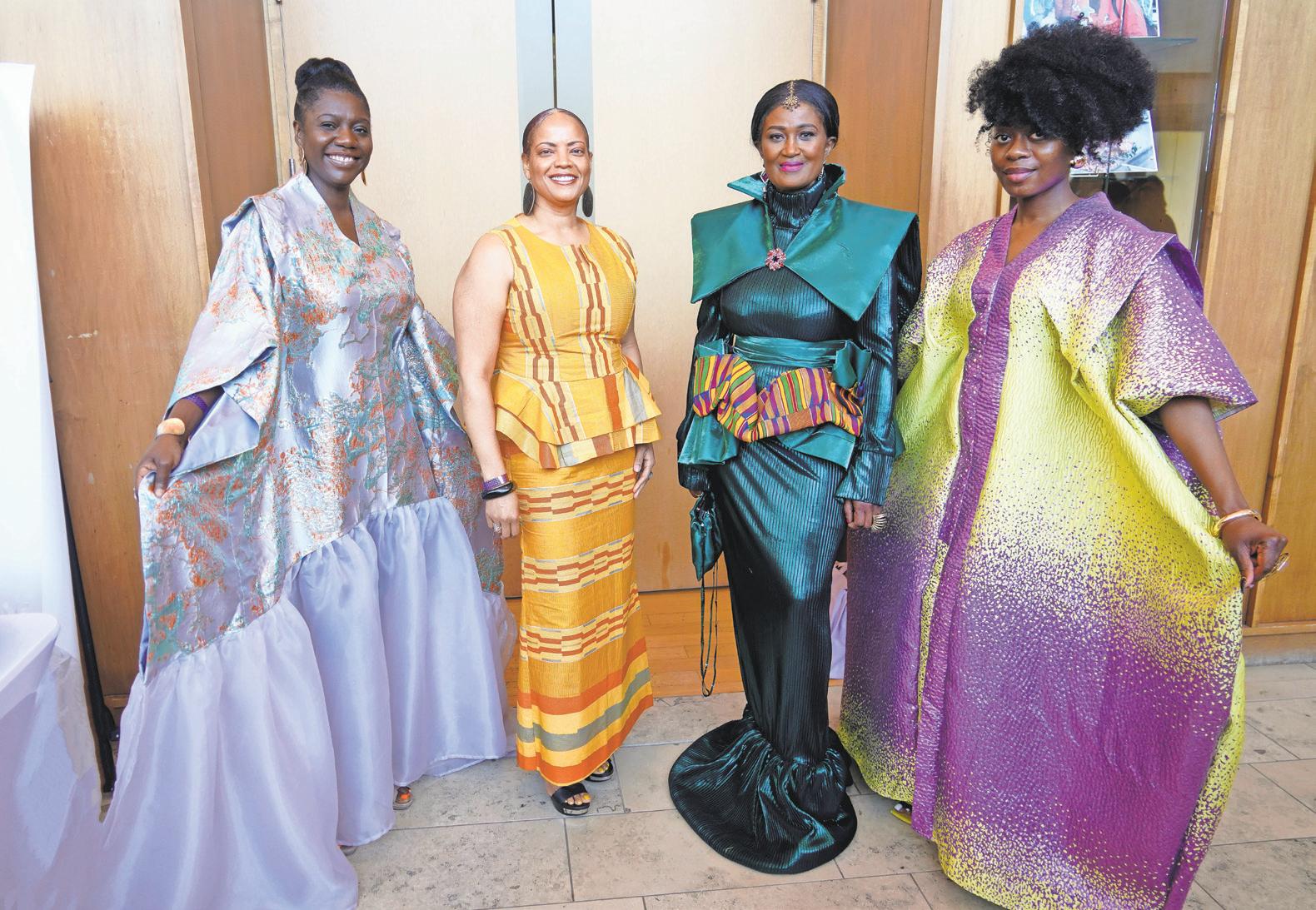
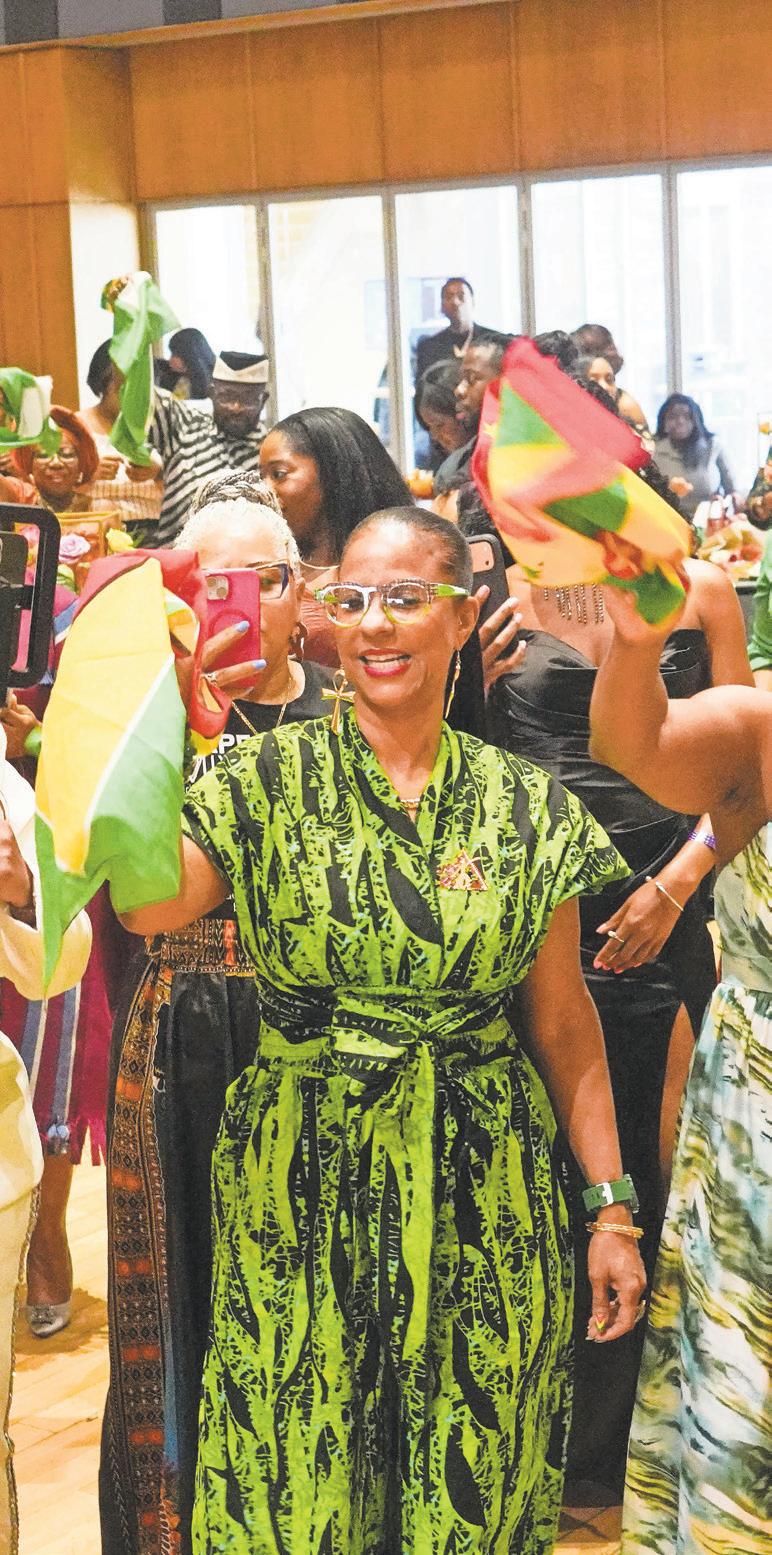
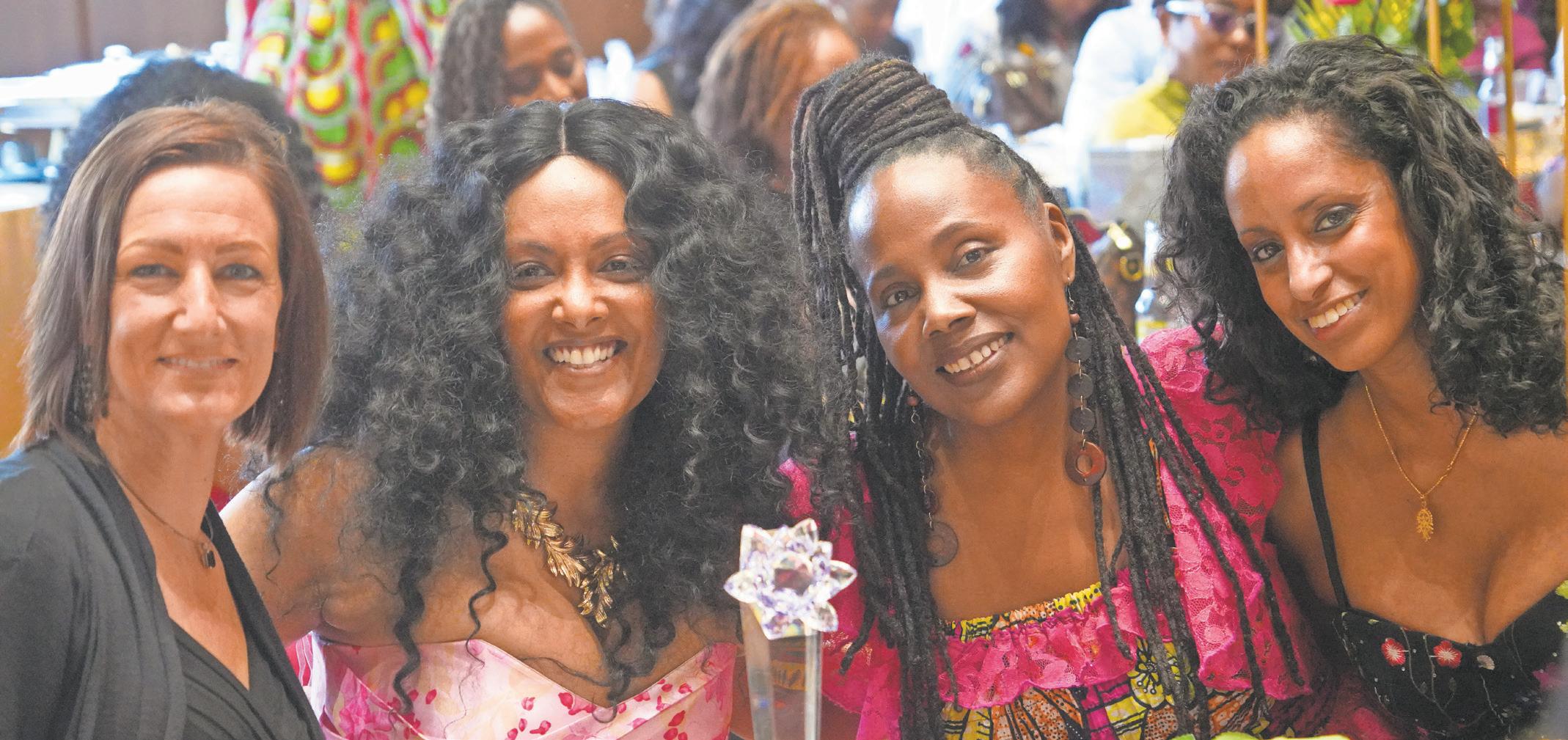
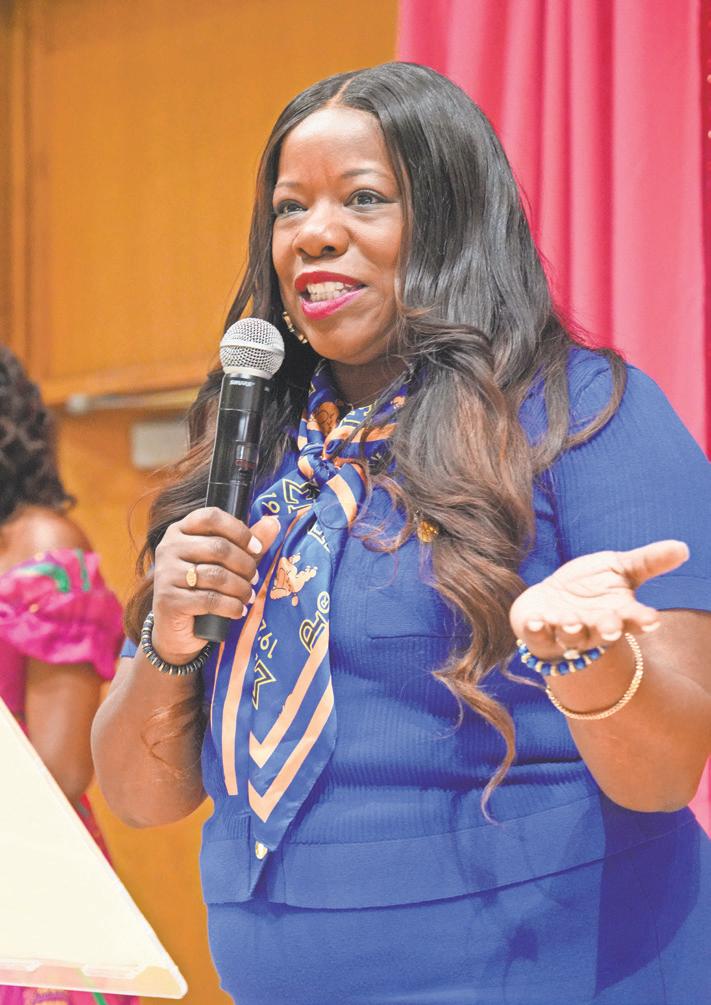
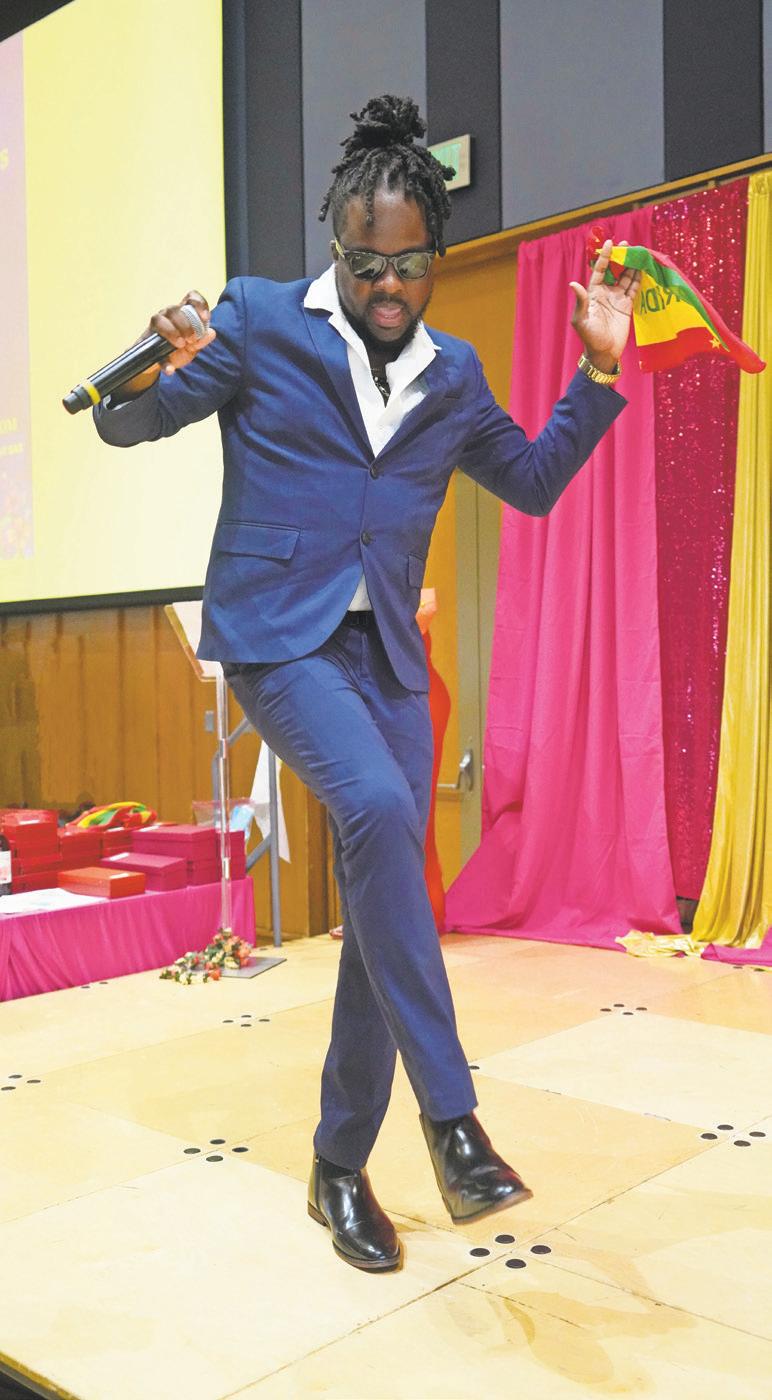
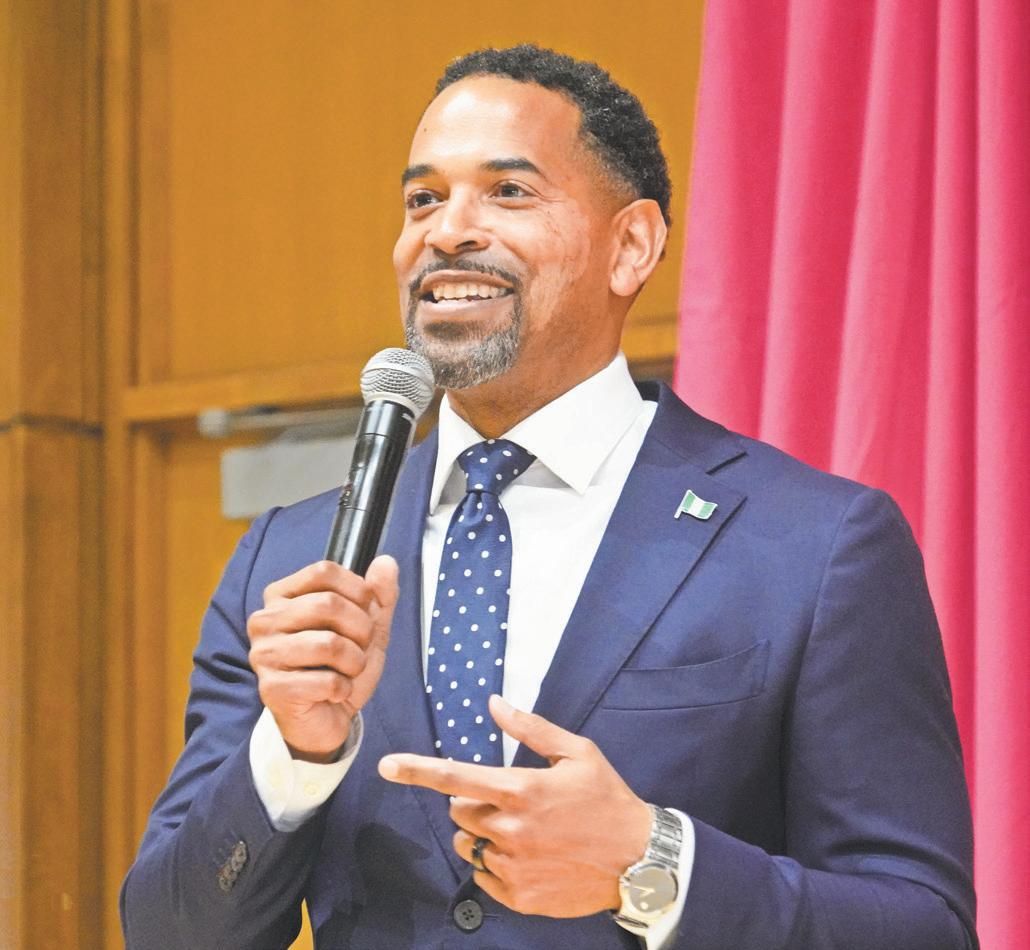
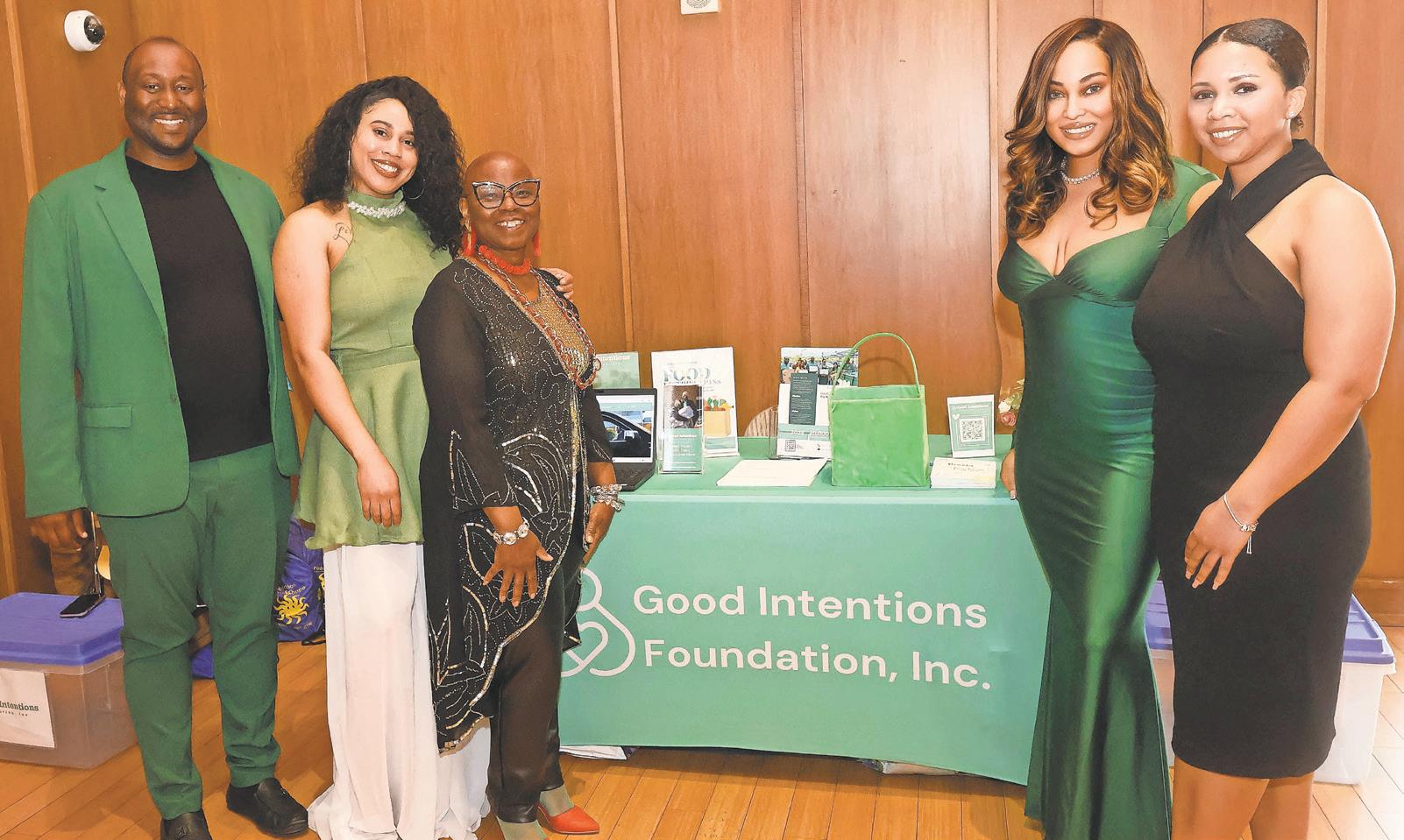
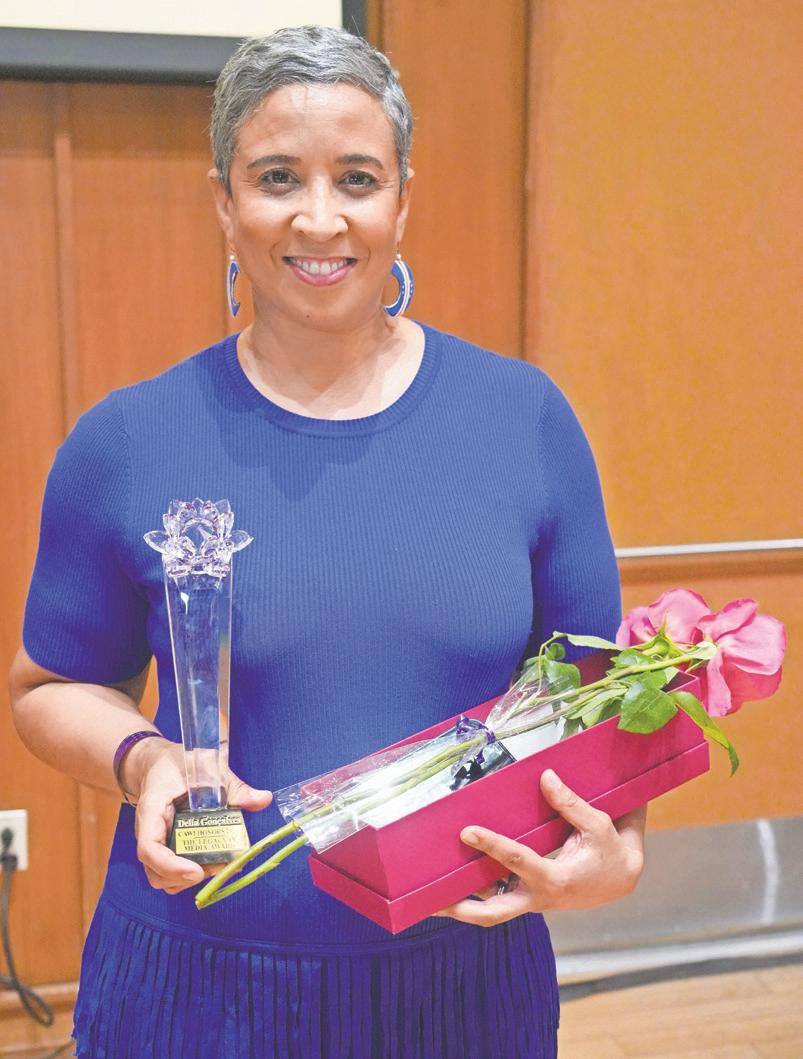
By Alexis Taylor AFRO Managing Editor
Emerging on March 16, 1827, with the debut of “Freedom’s Journal,” the Black Press was started by the intellect, hard work and courage of John Russworm and Rev. Samuel Cornish.
Though Russworm was born in Jamaica in 1799 and Cornish was a free man born to free parents in Delaware in 1795, the two began their endeavor with one top goal in mind.
“We wish to plead our own cause,” they proclaimed together in the first edition of the publication. “Too long have others spoken for us. Too long has the public been deceived by misrepresentations, in things which concern us dearly ... .”
The Black Press has sustained itself, keeping the mission alive even when faced with a variety of weapons formed against it. Early Black media professionals faced intimidation, sabotage and even death for the words and images they printed. The AFRO, for example, was founded Aug. 13, 1892, just months after The Free Speech and Headlight, a publication co-owned by teacher and activist Ida B. Wells, was burned to the ground on May 27, 1892.
In the 1940s, dozens of Black papers, including The Baltimore AFRO, were surveilled by FBI Director J. Edgar Hoover, who desperately wanted to charge members of the Black Press with sedition or anything he could for informing and organizing Black people to make change.
Now, 199 years later, journalists,
editors, publishers, photographers and media professionals at large fight daily on behalf of Black communities for justice and equality, record Black history, entertain the masses and moderate policy and social discussions focused on change. Today’s Black newspapers are working to keep up with consumer trends and integrate technology as it evolves. Though many things have changed for the Black Press, some—like government sanctioned divestment— have remained the same.
“The issues of today really have not changed. They’ve changed in how we reported, but we are still dealing with inequities. We’re still dealing with racism. We’re still dealing with a higher proportion of certain diseases impacting our community,” said Dr. Frances “Toni” Draper, AFRO News publisher and CEO. “We’re still dealing not only with the miseducation of the Negro but [also] the undereducation, as people seek to pull out books and other things from schools.”
“Those things are important, and it’s important to advocate,” said Draper. “The economic issues are still there. The inequities are everywhere.”
In 2026, Draper said members of the Black Press are tasked with covering local, national and international news with a Black angle that matters to the Black community.
“Black consumers have some unique interests and unique challenges that you don’t expect the mainstream press to cover—they can’t—that’s why it’s important to have Black-owned press,” said Draper.
Washington Informer Publisher Denise Rolark Barnes said those who take up the fight of the Black Press today can draw strength from those who overcame the challenges faced in the past.
“They’ve basically laid a road map for us. We just have to stay strong, committed and dedicated to make sure that we are passing the baton along to others who understand and appreciate the value that we give to our community,” said Barnes. “As long as we don’t forget the
mission and we keep reflecting on our ancestors and the work that they did, I think going forward is not as heavy a burden as we feel that it might be today.”
The two publishers came together almost 199 years to the day of the Black Press’ founding for Black Press Sunday, which preceded the Black Press Week celebration held from March 16 to March 20. The service was held in Washington, D.C., on March 15 at Metropolitan AME Church. Each year, the occasion represents the strong tie between the Black Church and the publications that worked hand-in-hand with faith institutions to inform and uplift the Black community.
“There is a symbiotic relationship between the Black Press and the Black Church because everything the Black Church has done—for good or for ill–the Black Press has reported,” said Rev. William H. Lamar IV, Metropolitan AME pastor. “They have shared where we have been at our best fighting for justice, equity, inclusion, beauty and they have shared what we’ve been at our worst. And all of it has to be recorded.”
“The Black Press also helped to move us ahead politically when the radical Black folks were saying, ‘Y’all need to do what’s right, or we’re going to burn this down,’ and the more moderate people were saying, ‘We will play within the confines of the system.’ The Black Press held us together ideologically, politically and socially. There is no healthy Black Church without a healthy Black Press, because both are called to the vocation of truth telling.”
This year, the sermon focused on how biblical prophet Elijah prepared his successor, Elisha, to step into his shoes. Lamar encouraged Black media professionals to train up the next generation so
well that they can proudly step up and carry on the Black Press no matter what comes their way.
Philip Lewis, president of the Washington Association of Black Journalists (WABJ), said he was heartened by the message.
“I know we’re on the right path by making sure that students are doing what they need to do to become the next journalists. I’m excited about it,” said Lewis. ”WABJ is in a unique position, especially in the nation’s capital, to advocate and support our journalists and continue to grow.”
“The Black Press is just as important today as it was 199 years ago,” he continued. “And even in the most extremely fractured time … I think it’s important that we have our own spaces that can focus on stories that we care about. It’s important for us to be able to plead our own cause.”
As the Black Press Sunday festivities came to a close, Draper reflected on what her own ancestors would say if they could see the Black Press at 199 years.
“I think our ancestors, first of all, would say, ‘Wow, 199 years. That’s a long time.’ We celebrate the 1827 founding of Freedom’s Journal, and while it didn’t last but a few years or so, the impact was immeasurable,” she said. “I think the ancestors would say, ‘Look what has survived with a few resources.’
“If they could do it with a few resources, I think they would tell us, ‘Don’t complain about what you don’t have—use what you do. You might not be able to tell every story, but whatever story you tell, tell it well, make sure that it has an impact and that you’re doing something to really uplift and inform the community.’
Nearly 100 members of the Black Press – some still honing their skills as student journalists came together March 18 to honor Black publications across the U.S. The celebration included both friends of and corporate sponsors of the Black Press, who all gathered on the campus of Howard University (HU) for this year’s Black Press Week Reception.
The program, hosted by the National Newspaper Publishers Association (NNPA) Fund, now in its 50th year and led by Executive Director Kelly Hodges, was held in the HU Blackburn Center. Highlights from the reception included a State of the Black Press address delivered by NNPA President and CEO Dr. Benjamin Chavis Jr., musical selections from the Howard University Community Choir, an AI-themed fireside chat and remarks from various speakers who updated the audience on recent initiatives related to the survival and growth of the Black Press.
As in years past, the most sacred part of the reception was the enshrinement presentation and plaque acceptance led by Karen Carter Richards, NNPA Fund chair, which celebrated the life of Bernal E. Smith II, who, prior to his death in 2017 at the age of 45, had been instrumental in restoring
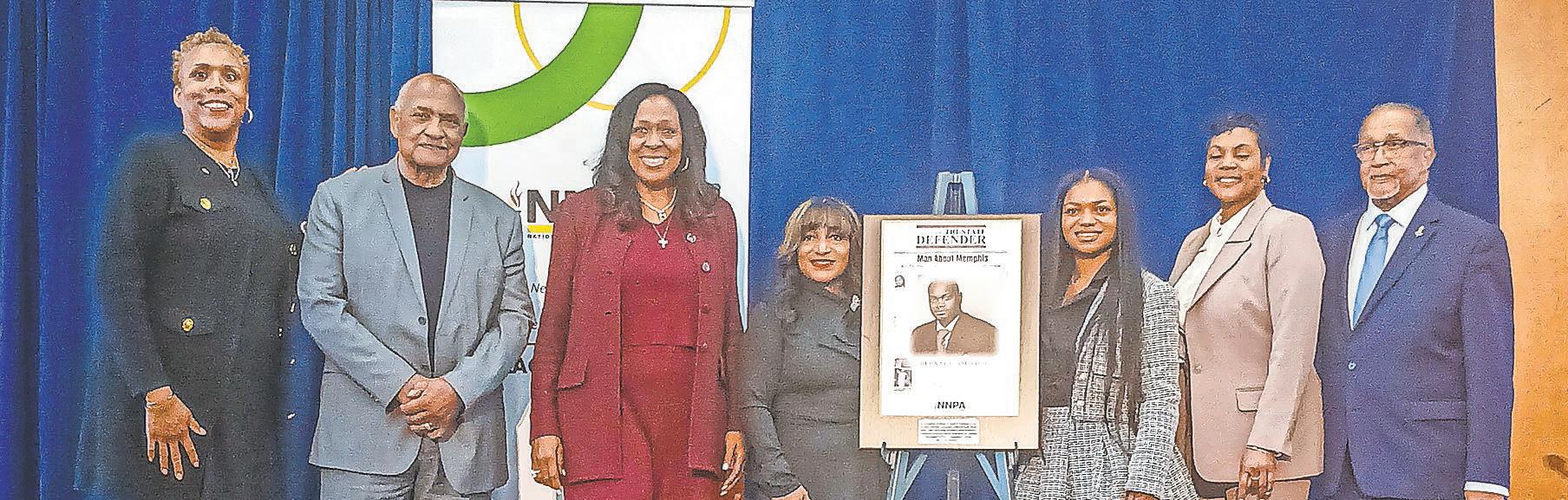
local ownership of The New Tri-State Defender in Memphis, Tenn., as its president and publisher.
Hodges described Smith as a visionary, a dynamic leader and one of the NNPA’s most widely regarded voices representing the next generation of Black Press publishers.
“He was known for his commitment to community empowerment, social justice, and innovative media leadership,” Hodges said. “We chose to enshrine him into the NNPA Fund
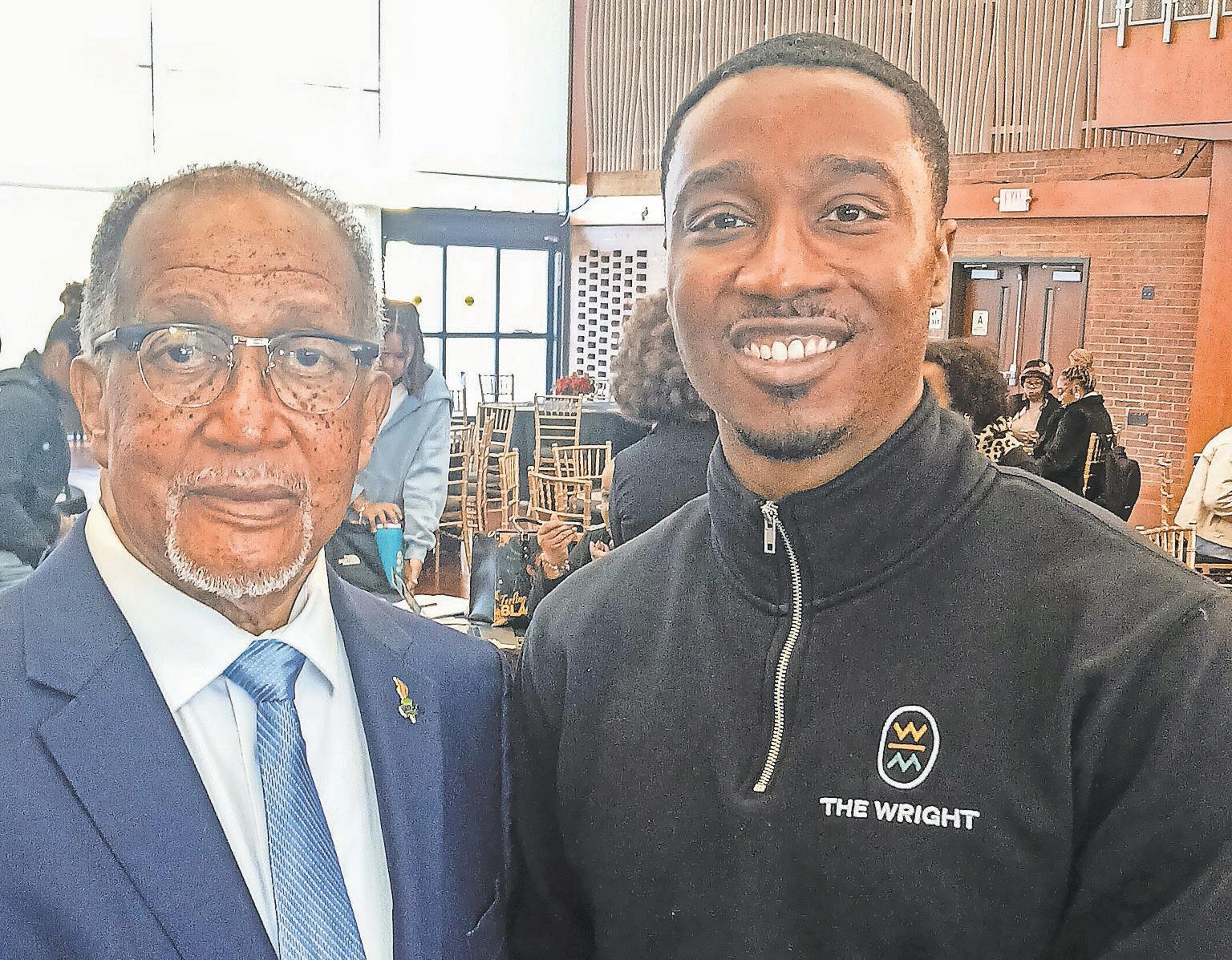
of Distinguished Black Publishers this year at Howard University where he will forever be recognized for his lasting contributions to African American journalism and the legacy of the Black Press.”
The Black Press Week 2026 reception opened with a welcome address from Karen Carter Richards, NNPA Fund chair and publisher of the Houston Forward Times, who invited the audience to join her in “celebrating the excellent legacy of those who have powered the Black Press over the past 199 years.”
John Warren, NNPA Fund board member, publisher of The San Diego Voice and Viewpoint and chair of the NNPA, delivered opening remarks that emphasized his decades-long connection and commitment to Howard University.
“I’m a two-time graduate and [alumnus] of Howard who completed law school 42 years ago and I am excited to be back on this campus,” Warren said. “We have weathered some tough times but always survived because of powerful presidents who shepherded us through the storms. Howard University represents a vast and impressive history –stories that without the Black Press may have never been documented and would have been lost to future generations.”
Chavis, who chose as the theme for his address, “Legacy, Struggle, Innovation, and the Road Ahead,” said while the nation prepares to celebrate its 250th anniversary, Blacks must
remember that our history did not begin in 1776, but rather, thousands of years earlier on the African continent.
“Even in the face of unprecedented inhumanity, torture, rape, violence, lynchings and the racist discrimination and enslavement of African people in America before and after 1776, we not only survived but held on to our sense of dignity, purpose, struggle, mission, and vision,” Chavis said. “Now, as we prepare for the 200th anniversary of the Black Press, we must consider what truths are we passing on to the next generation?
“What truths are we holding onto that shatter the sinful and hateful stereotypes that work to sustain our oppression rather than to ensure our liberation? We represent a sacred tradition of truth telling as members of the Black Press. However, it has never just been about the news – it has always been about freedom, justice, dignity and self-determination,” said Chavis, adding that the Black Press must continue to serve as a prophetic voice in the wilderness of American democracy as it challenges various forms of injustice.
As the Black Press continues its commitment to digitizing photographs and publications dating back to its founding in the early 19th century, Howard University serves as the home for archives that continue to grow and are housed on Howard’s campus under the auspices of the Moorland Spingarn Research Center (MSRC).
Reports from two representatives of the NNPA’s ongoing digitization efforts, Brandon Nightingale, senior project manager, and Sijan Shrestha, MSRC scholar, provided critical information about the NNPA’s efforts to ensure that its past works remain available for future generations.
Chavis challenged his colleagues to ready themselves for the digital transformation which is sweeping across America and the world and to recognize that the shift from print to digital publishing is far from optional but is instead essential for those who wish to survive.
“This moment demands strategic resilience, intergenerational leadership to secure the future, and the ability to move forward as innovators who understand the benefits of emerging technologies like artificial intelligence and who are not afraid of the changes that it will inevitably bring to our industry,” he said. “But changes notwithstanding, our mission remains urgent and that cause first voiced in 1827 by the publishers of Freedom’s Journal which journeyed throughout two centuries of struggle and triumph, is still before us.
“The role of the Black Press is more vital today than ever before,” Chavis continued. “As we honor the legacy of those like Frederick Douglass and Ida B. Wells, we must accept as our task the preparation of a new generation who will be called upon to
the torch.”

By Victoria Mejicanos AFRO Staff Writer vmejicanos@afro.com
As Women’s History Month 2026 comes to a close, the AFRO spoke with Black women making change via their roles at Johns Hopkins University. Dr. Keshia Pollack Porter and Maria Tildon are widely recognized scholars and experts in their respective fields of study.
Pollack Porter is the 12th dean of the Johns Hopkins Bloomberg School of Public Health. As an internationally recognized scholar, trusted leader and advocate for public health, she works to advance policy change to create safe and healthy environments.
Tildon is a public policy and government affairs expert and serves as the vice president of Government, Community and Economic Partnerships for Johns Hopkins University and Johns Hopkins Medicine, where she leads a team of nearly 40 people.
Read below to get an understanding of the possibilities available to women looking to go into economic and public policy, government affairs and more.
AFRO: How do you make change in the Black community in your current role?
Dr. Keshia Pollack Porter: One way that I make change is by simply showing up and
showing people what is possible; I know how difficult it is to imagine a world that one has not experienced. I found myself as the “first” when I began my current tenure on Aug. 1, 2025. [I was] the first Black dean of the Johns Hopkins Bloomberg School of Public Health after an international search. I am also only the second woman of the 12 deans who have led the School since its founding in 1916. When I was appointed dean, some people who had worked at the School for decades shared their joy that the seemingly impossible had become real. I carry their hopes with me every day. Prior to that, in 2022, I became the Bloomberg School’s first Black department chair. I chose to start my new role during Black History Month. I could think of no better time to start my journey as the “first” – a label that I wear proudly because time and time again, my firstness has paved the way for a second (the second Black department chair was appointed a year and a half later), and a third, and so on.
Maria Harris Tildon: In my current role, I have the honor and responsibility of shaping public policy through a lens of equity and fairness. My work spans healthcare, education, workforce development and capital deployment - all areas that directly
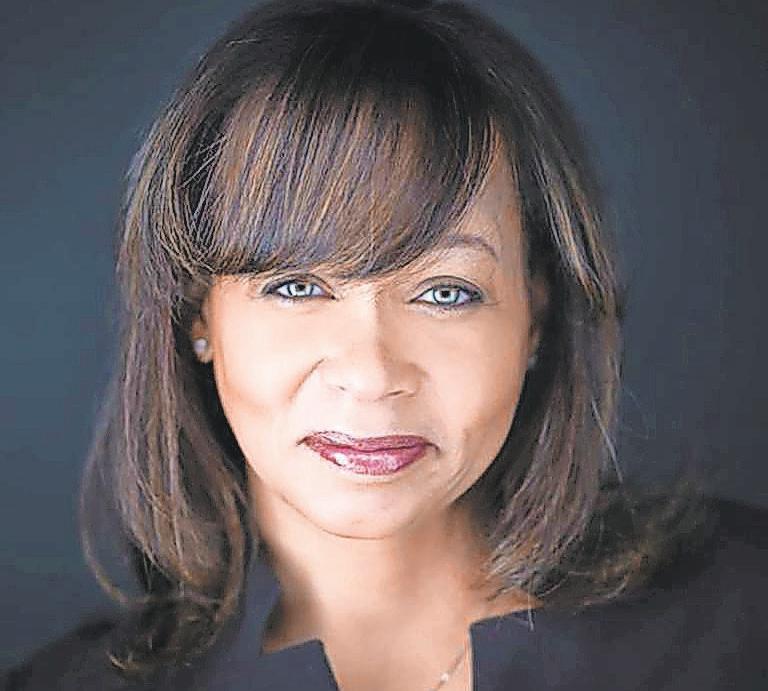
is a public policy and government affairs expert and serves as the vice president of Government, Community, and Economic Partnerships for Johns Hopkins University and Johns Hopkins Medicine
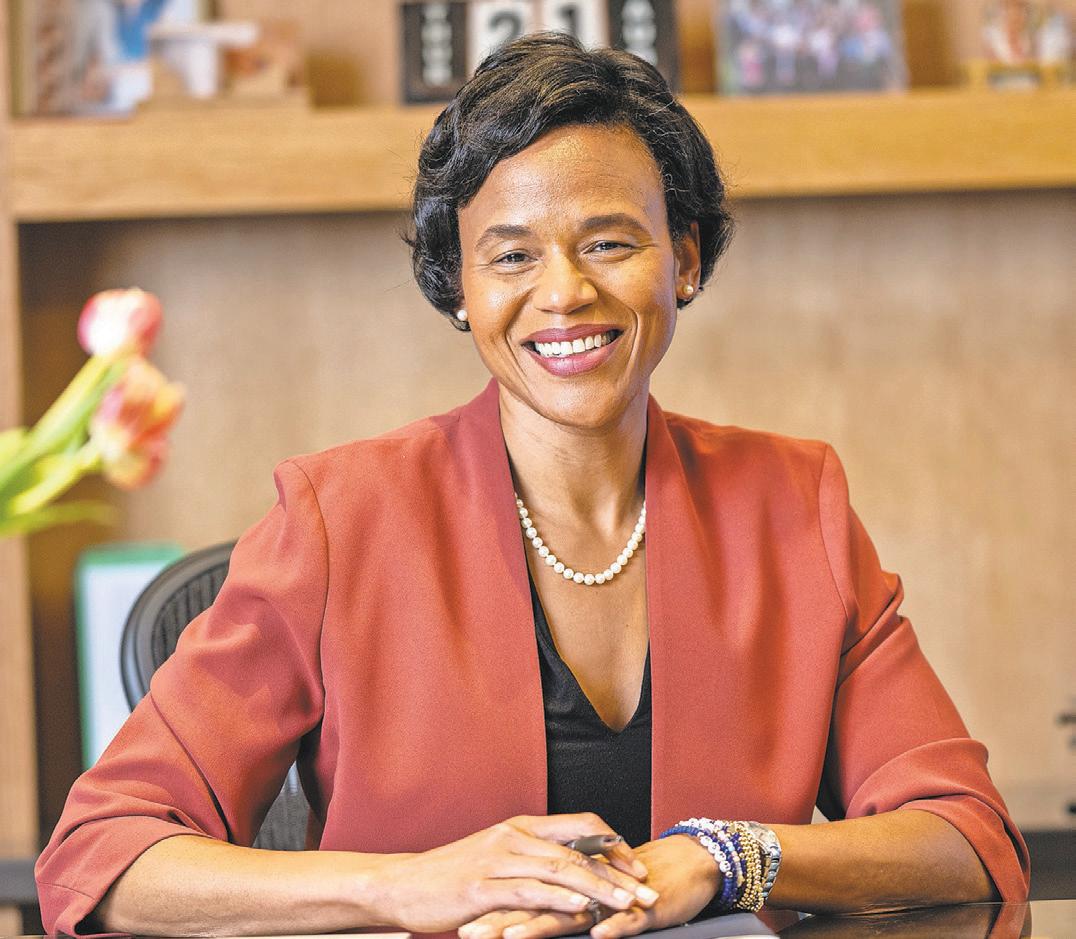
influence access to opportunity and the quality of life for our communities.
This work is especially meaningful given the outsized economic and social impact of Johns Hopkins University in the City of Baltimore. I strive to ensure that our resources and influence create tangible, measurable opportunities, particularly for the Black community, where equitable access can transform lives and generations.
AFRO: What / who is your greatest inspiration to make change?
Dr. Keshia Pollack Porter: I am the proud daughter of a Jamaican mother and Dominican-born, St. Kitts-raised father who immigrated to the U.S. in pursuit of opportunities. They, along with my paternal grandmother, instilled in me a diligent work ethic, and the belief that I was made for a purpose and am here to fulfill a purpose—a tenet that leads me each day. Through them, I cultivated my passion for service and equity, and they are a main reason that today I am a health equity scholar.
In addition to these core values, I am also inspired by the community that I am from and now am privileged to lead. Today’s challenges are real, but I know that we will navigate these times together in steadfast commitment to our mission: developing evidence-based solutions to improve health and well-being for all. The health of the collective relies on the health of each individual and thus it is in our interest to understand and
overcome disparities rather than turning away. We will continue to do this work and disseminate solutions to policymakers and decision-makers and community partners.
Maria Harris Tildon: My greatest inspiration is my mother.
Beginning at the age of 16, she raised three children while making a conscious decision that education would be the foundation of our future. I grew up watching her shoulder immense responsibility with strength and quiet determination. As a working mother, she not only graduated from high school, she went on to earn her associate’s degree, bachelor’s degree, master’s degree, and ultimately her Ph.D. All of this was accomplished while simultaneously working several jobs. What inspires me most is the perseverance, focus, and courage behind every step of her journey. She faced obstacles with resolve and always pushed forward, showing me that dedication and hard work can open doors even when the path seems impossible.
Because of her, I approach every challenge with intention. The work I do and the goals I pursue are shaped by the foundation she laid and the standard of excellence she modeled.
AFRO: What was the biggest challenge of your career thus far, and how did you overcome it?
Dr. Keshia Pollack Porter: As a leader in higher education and public health, the current challenges facing our sector and field are also the biggest
challenges of my career – ones that I never imagined. Specifically, the value of higher education is under attack, the value of public health is being questioned, and absent a dramatic turnabout in federal policy, institutions like ours are facing reduced federal research funding, which raises questions about how we will secure support for our lifesaving work.
I am incredibly proud to be part of the Johns Hopkins Bloomberg School of Public Health community. Together, we are finding ways to leverage our strengths to change and adapt while staying rooted in a strategic vision for our research enterprise. We are envisioning new ways to advance our mission while not compromising who we are.
I am moving forward by holding tightly to my core values, which include striving for equity, integrity, transparency, partnership, and collaboration. I am confident that if we think boldly, move strategically, and act with purpose and passion, we will continue to meet the challenges we face head on, and emerge from this difficult season stronger than before.
Maria Harris Tildon: One of my biggest challenges, which I addressed early on in my career, was remaining open to opportunities that didn’t align with the path I originally envisioned for myself. I began my career as a practicing lawyer, but ultimately pivoted into trade policy and later health care with a broader focus on government and community affairs at the federal, state and local levels. Each transition required me to take a leap of faith and trust that the skills I had developed were transferable. By staying open-minded and willing to grow beyond my original, more restrictive, professional plan I expanded both my impact and my leadership capacity.
AFRO: What is your advice to other women seeking to follow in your footsteps?
Dr. Keshia Pollack Porter: I must admit now is an arduous time to be a Black history maker—particularly as a Black woman leader in higher education, and a leading scholar on health equity. Despite the current challenges, I am keenly aware of my
bigger purpose as a leader: I advise women to know your purpose, embrace your power, and continue to have hope. Make no mistake–we are in a fight. This is not hyperbole. Opposite us are those who want to retain the status quo or even return us to a time when we had fewer rights than we do today. In this fight, we all have a role, and we all have power. You don’t need to be a CEO, elected official, or hold some other position of authority to influence change. I applaud all women who are speaking up and making their voices heard in the name of justice, inclusion, and equity—including our own incredibly diverse and accomplished female faculty members, staff, students, postdoctoral fellows, and alumni. And as we lean into our purpose, I remind women to hold on to the hope that the world you are working towards is possible.
Maria Harris Tildon: Never leave anything on the table. Every opportunity, no matter how small or intimidating it may seem, deserves your full attention. Take the time to reflect on every opportunity, and focus on the ones that challenge you, stretch the limits of what you believe is possible and always show up as the very best version of yourself. True growth rarely happens within the comfort zone. The moments that shape your career and your impact often present themselves as risks, detours or opportunities you didn’t plan for. Be bold enough to step into those moments, even when they feel uncertain or unfamiliar. At the same time, cultivate the confidence to know that you belong in every room you enter and that your perspective, your voice and your leadership are needed and adding value to the ultimate solution or outcome.
Above all, remember that your journey will open doors for others and redefine what is possible. Sharing your knowledge, experience and support creates a ripple effect and [helps] others see possibilities they might not have imagined. Embrace the challenge, trust yourself, invest in others and never underestimate the influence you can have when you step fully into your potential.
By Victoria Mejicanos AFRO Staff Writer vmejicanos@afro.com
Tiffany R. Wright serves as senior vice president and general counsel at Johns Hopkins University. She advises university leaders on institutional decisions. In this role she provides strategic guidance on governance, research compliance, faculty affairs and the university’s partnership with Johns Hopkins Medicine. She has worked with the university since 2023, and was appointed to her most current role May 2025.
In an interview with law. com, she shared reflections on working in highed
education uner the current administration.
“This is a difficult time to be in higher education law, where there’s a lot of defending to do—not just legal defending, but right defending. My follow-up question is always: ‘But is that the right thing to do?’ The law is a starting point. But it doesn’t always answer what’s fundamentally right,” she said.
Prior to Hopkins, Wright served in the White House, as associate counsel to the president in the Office of the White House Counsel, providing strategic and legal advice to the highest offices, including the president and vice president in areas such as
religious liberty, Title IX and LGBTQ+ rights. Reflecting on her White House service in a seperate interview with Law.com, she said that it taught her about visibility, because every potential piece of advice could become public.
This previous experience helped her aid the university in navigating challenges related to the 2023 Supreme Court decision on affirmative action in admissions, litigation on antitrust and Title IX challenges and complex labor, human resources and research-related matters.
“In moments like this, we must never lose sight of who we are. Our core mission has to guide every decision,” she
said.
Prior to her White House service, Wright directed the Civil Rights Clinic at the Howard University School of Law and served as a law clerk for U.S. Supreme Court Associate Justice Sonia Sotomayor.
When asked what the most important lesson she has learned as a leader, she said it was important to know how to make mistakes with grace.
“Everyone makes mistakes,” she said. “What matters is how you respond. Own it early, be transparent, don’t get defensive, take responsibility and help fix it.
That builds trust and shows maturity.”
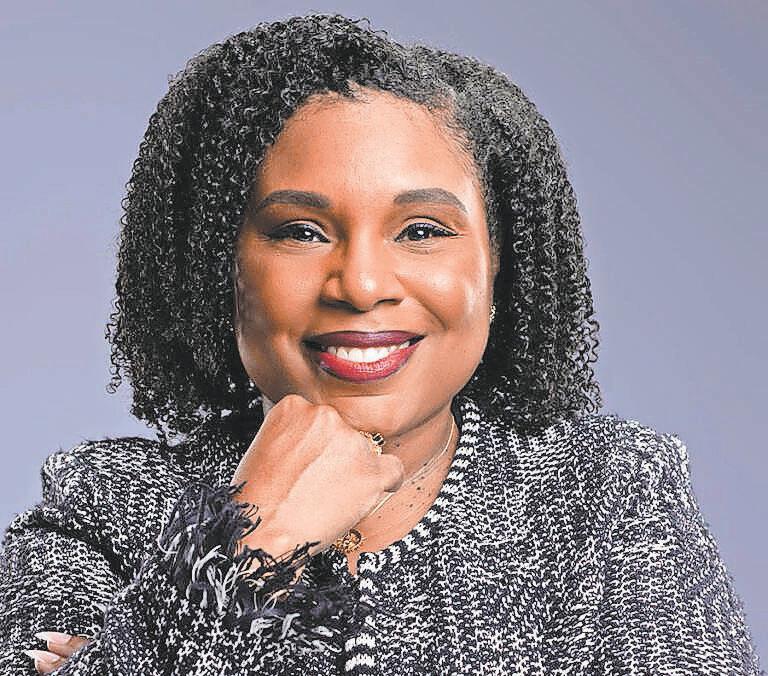
By Megan Sayles AFRO Staff Writer msayles@afro.com
For 93-year-old Verlie Rodriguez Decay and 91-year-old Hortense Haydel Reine, attending Xavier University of Louisiana (XULA) and pursuing a degree was never up for debate. The New Orleans natives both had parents who knew early on that a college education would define their daughter’s futures. Although they were not in the same class, Decay and Reine met each other after their college years and formed a friendship. Their campus experience looked very different from that of young people today. Tuition hovered around $200 per semester. Term papers were written by hand, and research was done in library stacks rather than on computer screens. Women were barred from wearing pants. Schools—along with much of public life—were segregated.
“They didn’t say ‘HBCUs’ in those days because there were no other schools we could go to,” said Reine.
“We couldn’t go to Tulane or Loyola or Saint Mary’s Dominican because they wouldn’t take Blacks.”
Despite these barriers, Decay and Reine were ahead of their time. In the 1940s and ‘50s, less than 5 percent of Black women aged 22-28 earned bachelor’s degrees, according to a 2011 study on gender gaps in education attainment. Still, Black women were slightly more likely than Black men to graduate college.
For Reine’s fellow alumna, Decay, those limits were felt in the everyday realities of being a student in segregated New Orleans.
“We weren’t allowed to use the city libraries. If you went in, they gave you all kinds of excuses about why you couldn’t check the books out and why you couldn’t use them,” said Decay.
“We just had to make do, and we did the best we possibly could with what we had there on campus.”
Despite these exclusions, the pair say XULA students and the broader community fostered their own spaces for social and cultural life.
organized by sororities and fraternities offered a sense of normalcy and joy.
The friendships they formed on campus often lasted decades.
“We had our own inner circle of friends. I had no problem with anything,” said Reine. “We just did our thing and had our own life and culture.”
“There were always social clubs, hotels and restaurants downtown where we were not allowed to go into, so we had our own social clubs,” said Decay. “We had church organizations that had events. We had our own little dances and little halls around the city.”
Both Decay and Reine said their social lives were full. Football games, sock hops and student activities
At the time, Black women’s career prospects were confined by a combination of racial and gender barriers. Reine and Decay explained that nursing, teaching and pharmacy were among the few fields that could guarantee employment after graduation. Both women ultimately decided to study elementary education at XULA and went on to have long careers as teachers.
Reine taught elementary school in New Orleans for nearly 30 years, while Decay began her career during a postwar school boom before later teaching both children and adults through U.S. military programs overseas. Decay’s four children even followed in her footsteps, later becoming XULA
Zazel-Chavah O’Garra, born and raised in New York City, remembers how her immigrant parents from the West Indies shared encouraging stories about their ancestors and passed down their traditions to help her overcome prejudice, racism and other forms of oppression.
But after being diagnosed with a brain tumor at 38, she found herself drowning in unchartered waters. Then, drawing upon the strength of and stories about other Black women who had made a way out of no way, and with a strong support team, the former dancer, model and actress doggedly refused to let her disability determine her future.
“My career was going along well with contracts with both Wilhelmina Models and CESD Talent Agency when I began to have severe headaches, hot flashes and surges, which I later learned were actually small seizures,” O’Garra said.
It’s been 24 years since she underwent a 12-hour surgical procedure to remove a benign tumor located on the left side of her brain the size of a golf ball.
“When I regained consciousness following the surgery, my
right side was completely paralyzed, my speech was impaired and the neurosurgeon’s prognosis was far from optimistic,”
O’Garra told the AFRO. “But even while I was in recovery and realized that physically I was no longer the same, my brain was still working overtime.”
“The women in my life surrounded me and we agreed that God allows things to happen for a reason and that God had more work for me to do,” she said.
“While I remain under periodic medical care and have serious side effects, I’m living a good life, contributing to my community, thriving in a positive relationship and attempting to encourage other women with disabilities to remain positive and to seek new ways to live out their dreams.”
Still, O’Garra admitted that remaining positive and maintaining her self-confidence continues to be a daunting and difficult process, not because of her own fears and doubts, but because of the ways others – many who look just like her –have treated, or more accurately, mistreated her.
Prejudice comes from all sides for those within disabled community
“I remember telling my mother, If I didn’t have high
self-esteem, I would have been a prime candidate for suicide,” O’Garra said, citing numerous examples of how she and other disabled people are often treated.
“Just hours after I awoke from surgery, a few of the nurses were looking at my portfolio and said, in my presence, how sad it was that I was no longer beautiful, no longer graceful and elegant, no longer a person who could live a productive life. But I knew better.”
Zeesy Schnur, executive vice president of the Brain Tumor Foundation, based in New York City, often calls upon O’Garra, who serves as a spokesperson for the Foundation, advocating for more financial support, encouraging others impacted by brain tumors, and touting the importance of more African Americans participating in clinical trials.
“Since our founding in 1988, we have worked with patients and their families in efforts to navigate the maze of medical issues, holding their hands as they look to the experts while facing anxiety and fear,” Schnur said.
The health advocate said the statistics on brain cancer can often be surprising to the average person.
“It’s a complicated issue because while the public views brain tumors as rare the facts say otherwise. In truth and to many people’s surprise, more than 1 million Americans are currently living with a brain tumor diagnosis [according to the American Brain Tumor Association]. And while we still do not know the cause of brain tumors, just over 94,000 will receive a primary brain tumor diagnosis this year [according to the National Brain Tumor Society],” Schnur said.
“Zazel was fortunate because her tumor was benign, not malignant, and therefore more treatable even though she – as is usually the case – will have to contend with a host of side effects for the rest of her life. What matters most in one’s recovery and their ability to handle the impact of a brain tumor is attitude. Zazel still dances, goes out and has fun,
and enjoys talking to and being around others. I’ve seen her in action and she has a rare and amazing quality. She refuses to be defined by her disability and sees the world in a positive way.”
O’Garra said while she’s always been a gregarious person, she painfully realized that as a disabled woman, she was viewed and treated differently than before her brain tumor.
“I could write a book about the challenges I have faced to find love and companionship,” she said laughing softly. “I once prided myself as being a diva, a femme fatale. But that was the old me. Now, I have a limp, I wear a brace, I walk with a cane, and my right side is still partially paralyzed.
“After I explain what happened, a lot of men either want to meet me behind closed doors or decide that I’m not worth the trouble at all. Even when I go back home to the West Indies to visit relatives and friends, I’m looked at like I’m a freak. Some people are even afraid to get close to me like they may catch something. It’s not easy and it hurts a lot. But I hold my head up high and I ignore, as best I can, the ignorance of others.”
In her more vulnerable moments, O’Garra said she relies on a small cadre of women on whom she has learned to lean and who understand her frustrations, including her older sister Kathy, an accomplished judge in the state of New York, and Dr. Donna Walton, an author, actor and advocate whose work focuses on the intersection of disability, race and representation.
Walton, who became disabled at 18 when she was diagnosed with a rare form of bone cancer that required the amputation of her left leg above the knee, both whispered and shouted in O’Garra’s ear, encouraging her to reclaim her life.
O’Garra credits her friend with being that rare ship in the storm. Walton, meanwhile, said their friendship represents what can happen when the disabled
graduates themselves.
More than 70 years later, both women still think fondly about their experiences at the small, historically Black Catholic university, which has grown from a handful of buildings to a sprawling campus with green roofs and modern facilities since their days there.
“I feel so proud to say that I went to Xavier because to me it was like the Canterbury of New Orleans for Blacks. It was a top-notch school, and the nuns really laid a good foundation for us,” said Reine. “I just loved going there.”
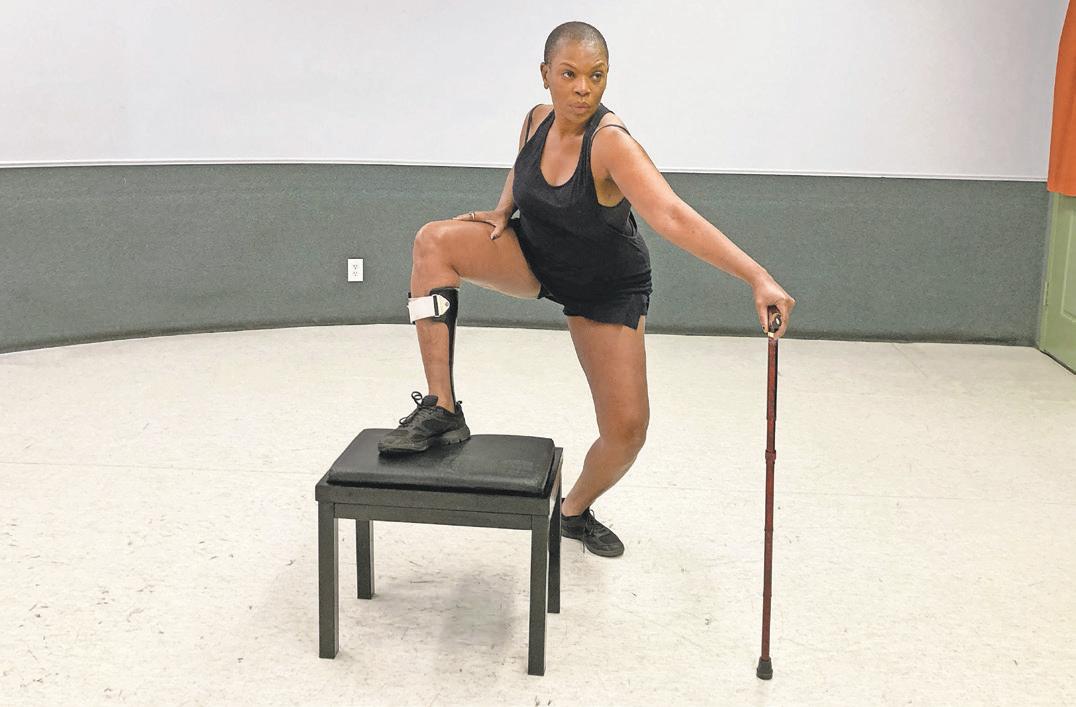
refuse to be diminished.
“The moment after the amputation, my life was reshaped, forcing me to confront a world that wasn’t designed with me in mind,” Walton said. “My family was my foundation, and while they didn’t always have the language for what I was experiencing, they had love and that sustained me.
“Over time, I found support in mentors, friends, and eventually a community of Black disabled women who understood the complexity of my journey. Support, for me, has always been about who sees you fully and helps you imagine a future beyond the moment of crisis.
As two women with disabilities, Zazel and I understand each other in ways that don’t require explanation. She’s a force – an artist, a visionary, a woman who moves with grace and fire. She inspires me, challenges me and affirms the importance of community. Her presence in my life is a gift.”
Yes! Even those with disabilities can dance Nowadays, at least from 9 a.m. to 5 p.m., O’Garra works as a licensed social worker, assisting and supporting those with traumatic brain injuries or who are suffering from chronic illnesses.
But that’s not all. During the early stages of her recovery, upon the advice of her friend Donna, she agreed to speak and dance for Brain Tumor Awareness Day in New York City. She said in the midst of her performance she was reborn.
“I discovered that even with my disability, I could still be a dancer,” O’Garra said. “On stage, even while in a chair,
I lifted my head, felt my face light up, and danced. I received a standing ovation. People were amazed – many could not believe what I had accomplished.”
O’Garra’s creative juices began to flow and 10 years ago, she founded the ZCO Dance Project – a physically integrated dance company composed of dancers with physical and mental disabilities. The dance company has performed at theaters in New York City and in other cities along the East Coast.
“We recently performed at The Tank in Manhattan with two live performances for an evening of dance theater in collaboration with the Deaf Music Ensemble,” she said. “Our program, ‘Invisible/ Visible: Telling It Like It Is,’ opened with spoken word delivered by Gha’il Rhodes Benjamin. And with choreography conceived by Chris Heller, we took the audience on a theatrical journey which seamlessly connected expressive movement, music, and integrated sign language into one powerful statement.
“I hope those who see us perform will be more open-minded and understanding of individuals who live with mental or physical disabilities. I pray that they will be inspired by the power, presence and possibilities our performers bring to the stage. Either way, we refuse to allow the short-sightedness of others or the disabilities with which we live to define us.”
For more information about ZCO Dance Project, or to reach O’Garra, email her at zcodanceproject1@gmail.com.


21224 (City Council District: 1st; State Legislative District: 46th)
SUPERIOR COURT OF THE DISTRICT OF COLUMBIA PROBATE DIVISION ADMINISTRATION NO. 2024ADM001272
JANDELLE AREGA HARROD Name of Decedent
HORACE LEE BRADSHAW, JR. 1644 6TH STREET NW WASHINGTON, DC 20001
Notice of Appointment, Notice to Creditors and Notice to Unknown Heirs LLOYD D. RUCKER, whose address is 4037 DIAMOND BLF SW, LILBURN, GA 30047
1718 Thames Street 21231 (City Council District: 1st; State Legislative District: 46th)
Applicant: CBAC Borrower, LLC T/a Horseshoe BaltimoreJames Genail Petition: Transfer of ownership with continuation of live entertainment, outdoor table service, and off premises catering Premises: 1525 Russell Street, 2105 Haines Street, & 1555 Warner Street 21230 (City Council District: 10th; State Legislative District: 46th)
SUPERIOR COURT OF THE DISTRICT OF COLUMBIA PROBATE DIVISION ADMINISTRATION NO. 2026ADM000228
EARTHA LORENE LIPKINS Name of Decedent JOHN POINDEXTER 1629 K STREET NW, SUITE 300 WASHINGTON, DC 20006
Notice of Appointment, Notice to Creditors and Notice to Unknown Heirs
CHERYL MOXLEY, whose address is 323 W. ELLIS
AVE, INGLEWOOD, CA 90302 was appointed Personal Representative of the estate of EARTHA
LORENE LIPKINS who died on OCTOBER 18, 2010,
with a will and will serve without Court supervision.
All unknown heirs and heirs whose whereabouts are unknown shall enter their appearance in this proceeding. Objections to such appointment shall be filed With the Register of Wills, D.C., Building A, 515 5th Street, N.W., 3rd Floor, Washington, D.C. 20001, on or before September 27, 2026 Claims against the decedent shall be presented to the undersigned with a copy to the Register of Wills or filed with the Register of Wills with a copy to the undersigned, on or before September 27, 2026 or be forever barred. Persons believed to be heirs or legatees of the decedent who do not receive a copy of this notice by mail within 25 days of its publication shall so inform the Register of Wills, including name, address and relationship. Date of first publication: March 27, 2026 Name of newspaper and/or periodical: Washington Law Reporter AFRO American Newspapers
CHERYL MOXLEY Personal Representative TRUE TEST COPY REGISTER OF WILLS 03.27, 04.03,
SUPERIOR COURT OF THE DISTRICT OF COLUMBIA
SUPERIOR COURT OF THE DISTRICT OF COLUMBIA PROBATE DIVISION ADMINISTRATION NO. 2026ADM000170 DAVID SMITH Name of Decedent Notice of Appointment, Notice to Creditors and Notice to Unknown Heirs TERRY MARIE SMITH and MICHELLE DENISE WIGGINS whose address are 3358 BAKER ST., NE, WASHINGTON, DC 20019 and 2104 BREWTON ST DIST HTS, MD 20747 were appointed Personal Representative of the estate of DAVID SMITH who died on OCTOBER 13 2023, without a Will and will
or visit our office at 2660 Riva Road in Annapolis,
20001, on or before SEPTEMBER 13, 2026, Claims against the decedent shall be presented to the undersigned with a copy to the Register of Wills or filed with the Register of Wills with a copy to the undersigned, on or before SEPTEMBER 13, 2026 or be forever barred. Persons believed to be heirs or legatees of the decedent who do not receive a copy of this notice by mail within 25 days of its publication shall so inform the Register of Wills, including name, address and relationship. Date of first publication: MARCH 13, 2026 Name of newspaper and/or periodical: Daily Washington Law Reporter
AFRO American Newspapers
TERRY MARIE SMITH AND MICHELLE DENISE WIGGINS Personal Representative TRUE TEST COPY REGISTER OF WILLS 3/13, 3/20, 3/27/26




SUPERIOR COURT OF THE DISTRICT OF COLUMBIA PROBATE DIVISION ADMINISTRATION NO. 2026ADM000252 DANA LYNN KENNER Name of Decedent COLBERT LAW FIRM, LLC c/o

JANELLE RYAN-COLBERT, ESQ 3060 MITCHELLVILLE RD., SUITE 218 BOWIE, MD 20716

Notice of Appointment, Notice to Creditors and Notice to Unknown Heirs




JERMAINE KENNER, whose address is 10607 MAHOGANY CT, WALFORF, MD 20601 was appointed Personal Representative of the estate of DANA LYNN KENNER who died on OCTOBER 7, 2023, without a will and will serve without Court supervision. All unknown heirs and heirs whose whereabouts are unknown shall enter their appearance in this proceeding. Objections to such appointment shall be filed With the Register of Wills, D.C., Building A, 515 5th Street, N.W., 3rd Floor, Washington, D.C. 20001, on or before September 27, 2026 Claims against the decedent shall be presented to the undersigned with a copy to the Register of Wills or filed with the Register of Wills with a copy to the undersigned, on or before September 27, 2026 or be forever barred. Persons believed to be heirs or legatees of the decedent who do not receive a copy of this notice by mail within 25 days of its publication shall so inform the Register of Wills, including name, address and relationship. Date of first publication: March 27, 2026 Name of newspaper and/or periodical: Washington Law Reporter AFRO American Newspapers










JERMAINE KENNER Personal Representative TRUE TEST COPY REGISTER OF WILLS 03.27, 04.03, 04.10.26







cense presently located at 1118 S. Charles Street to 1113 S. Charles Street, requesting live entertainment, outdoor table service, and off prem
PROBATE DIVISION
ADMINISTRATION NO. 2026ADM000137
ELLA MAE BOWMAN Name of Decedent Notice of Appointment, Notice to Creditors and Notice to Unknown Heirs
DEROTHER D. BOWMAN-BARRETT AND BELYNDA
L. BOWMAN-COOK whose addresses are DEROTHER D. BOWMAN-BARRETT, 3321 CROFFUT PL, SE, WASHINGTON, DC 20019; BELYNDA L BOWMAN-COOK, 3318 ELY PL SE, WASHINGTON, DC 20019 were appointed Personal Representative of the estate of ELLA MAE BOWMAN who died on MARCH 23, 2021, with a will and will serve without Court supervision. All unknown heirs and heirs whose whereabouts are unknown shall enter their appearance in this proceeding. Objections to such appointment shall be filed With the Register of Wills, D.C., Building A, 515 5th Street, N.W., 3rd Floor, Washington, D.C. 20001, on or before September 13, 2026 Claims against the decedent shall be presented to the undersigned with a copy to the Register of Wills or filed with the Register of Wills with a copy to the undersigned, on or before September 13, 2026 or be forever barred. Persons believed to be heirs or legatees of the decedent who do not receive a copy of this notice by mail within 25 days of its first publication shall so inform the Register of Wills, including name, address and relationship.
ises catering Premises: 1113 S. Charles Street 21230 (City Council District: 11th; State Legislative District: 46th)
Date of first publication: March 13, 2026 Name of newspaper and/or periodical: Daily Washington Law Reporter AFRO American Newspapers DEROTHER D. BOWMAN-BARRETT AND BELYNDA L. BOWMAN-COOK Personal Representative



SUPERIOR COURT OF THE DISTRICT OF COLUMBIA PROBATE DIVISION 2026FEP000024 October 1, 2025 Date of Death CARL ERNEST TAYLOR Name of Decedent

Stephen R. Danik and Roger Wesley Avery, Jr. Petition: New Class “C” BW license requesting live entertainment Premises: 2500 W. North Avenue 21216 (City Council District: 7th; State Legislative District: 40th)









NOTICE OF APPOINTMENT OF FOREIGN PERSONAL REPRESENTATIVE AND NOTICE TO CREDITORS



SHARI J. CANTOR whose address is 121 FEDERAL STREET, WEST HARTFORD, CT 06110 was appointed personal representative of the estate of CARL ERNEST TAYLOR deceased, by the PROBATE Court for WEST HARTFORD County, State of CONNECTICUT, on OCTOBER 31, 2025. Service of process may be made upon MILESTONE TITLE, LLC, C/O INCORP SERVICES, INC., 1100 H STREET, NW SUITE 840, WASHINGTON, DC 20005 whose designation as District of Columbia agent has been filed with the Register of Wills, D.C. The decedent owned the following District of Columbia real property: 2921 LANGSTON PLACE, SE, WASHINGTON, DC 20020. The decedent owned District of Columbia personal property. Claims against the decedent may be presented to the undersigned and filed with the Register of Wills for the District of Columbia, Building A, 515 5th Street, N.W., 3rd Floor, Washington, D.C. 20001 within 6 months from the date of first publication of this notice.










or

Date of first publication: MARCH 13, 2026 Name of newspaper, and/or periodical: AFRO-American Newspaper







SHARI J. CANTOR Personal Reperesenative TRUE TEST COPY REGISTER OF WILLS 3/13, 3/20, 3/27/26



Maybe you





































































































































with employment, stress, finances, mental health or finding the right resources. No matter what it is, you earned it. And there’s no better time than right now to ask for it. Don’t wait. Reach out. Find resources at