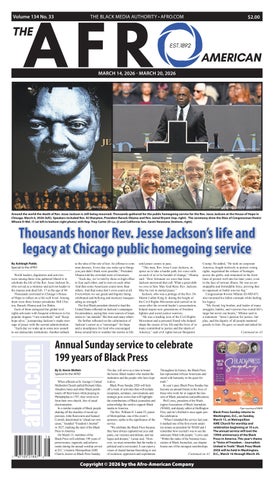
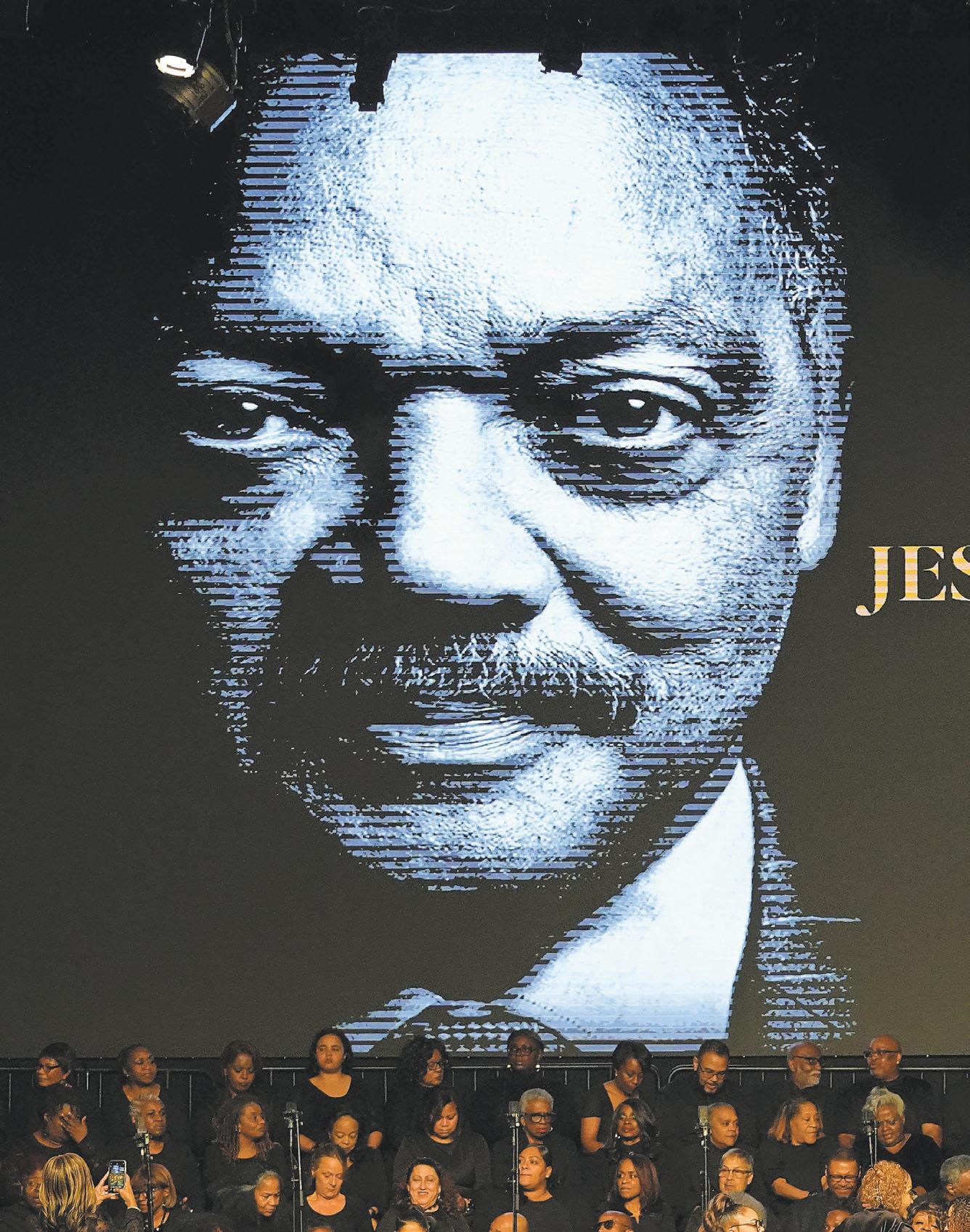
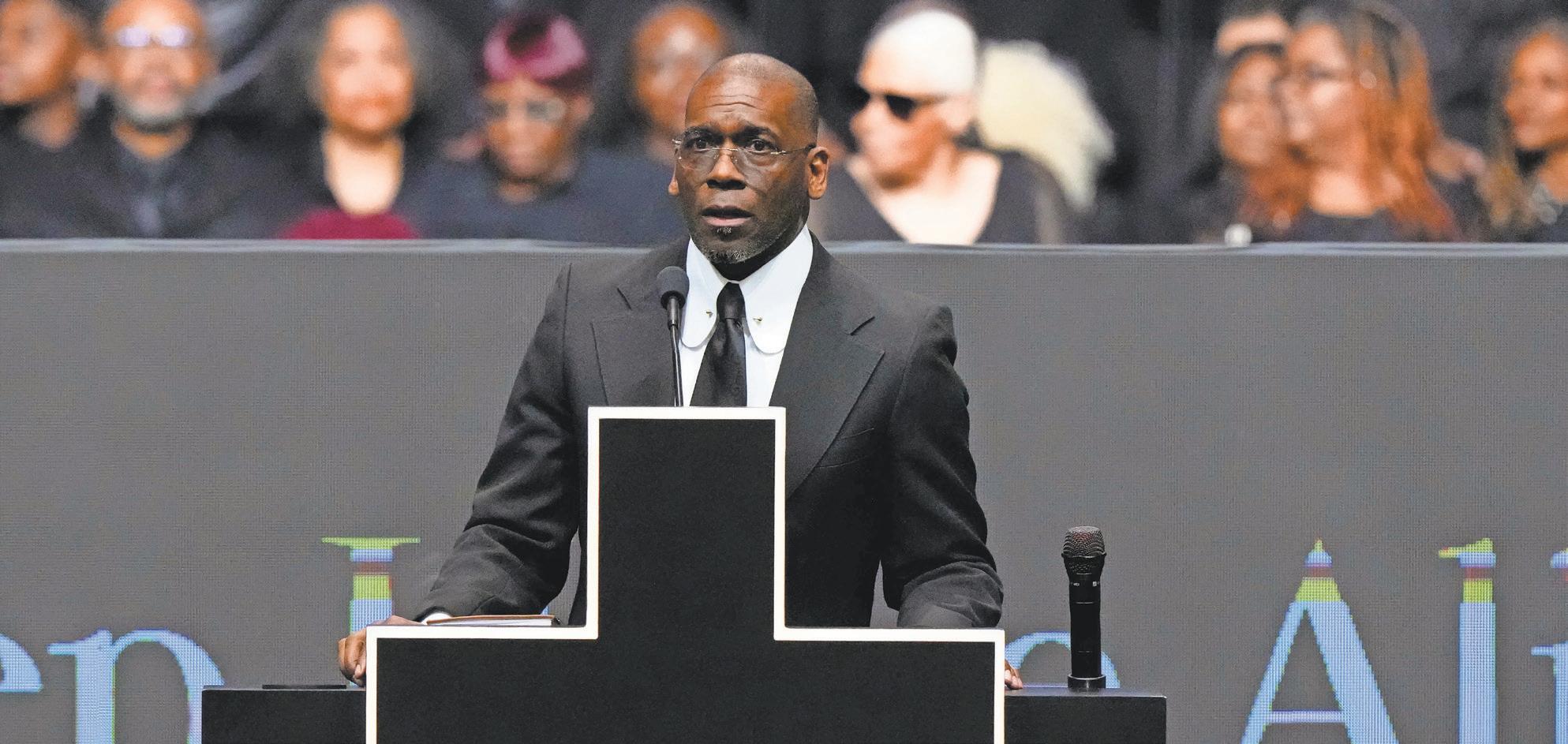
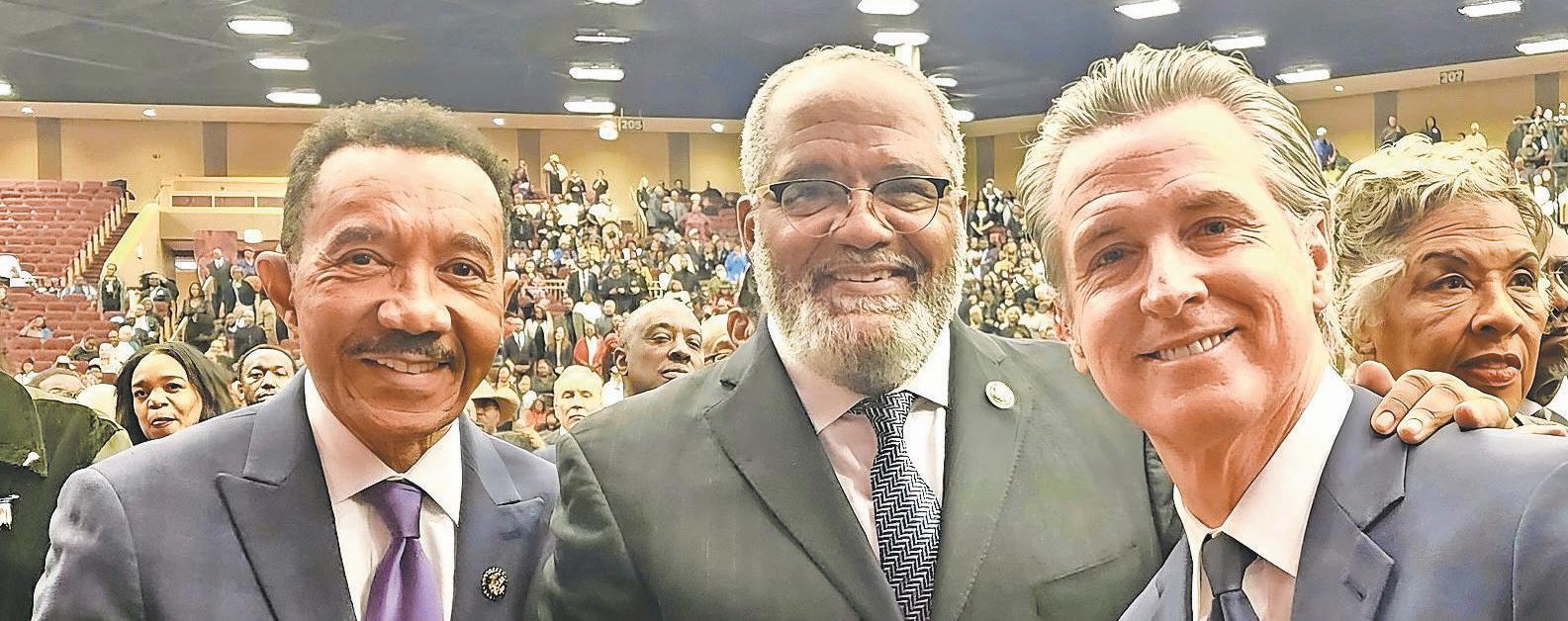
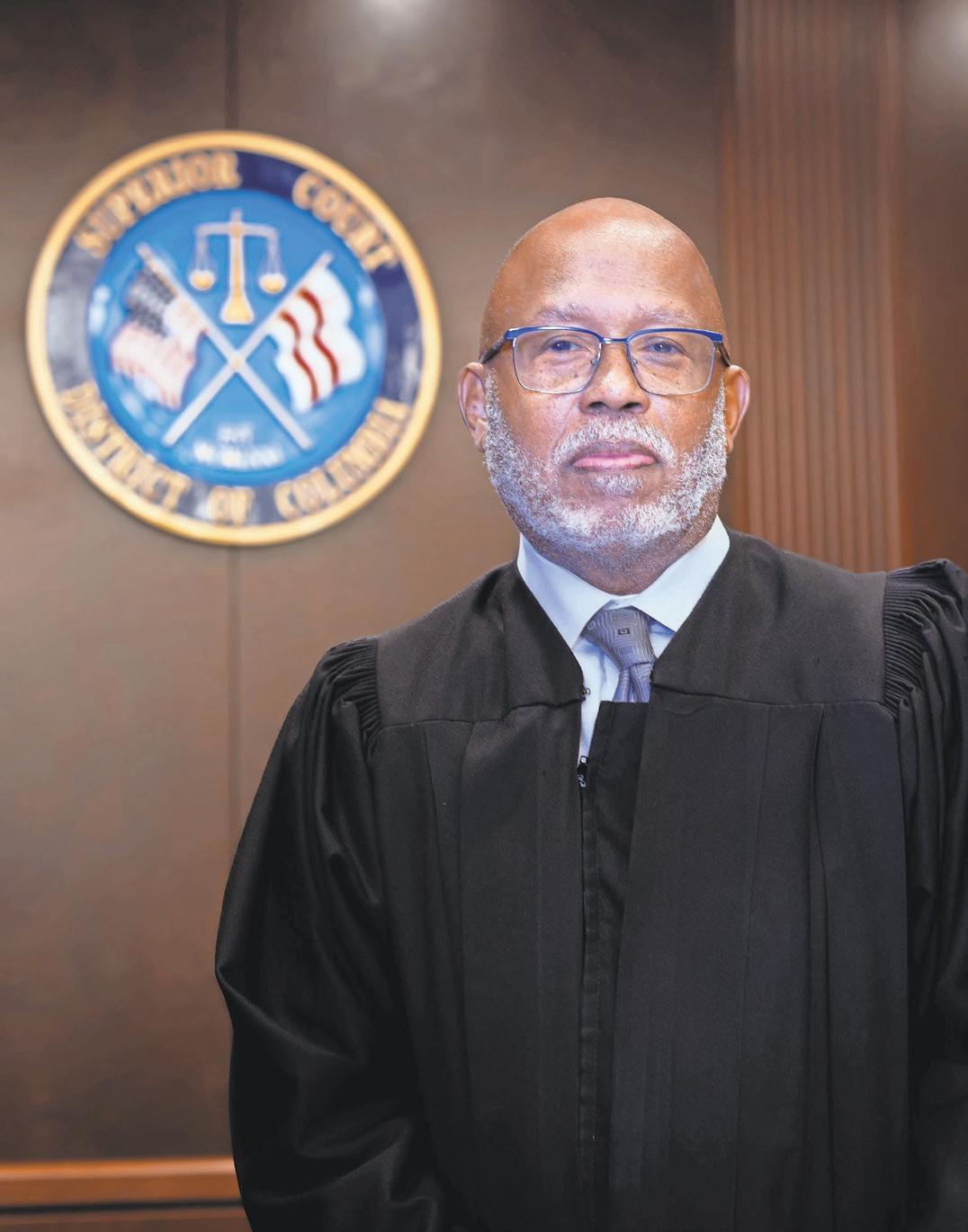
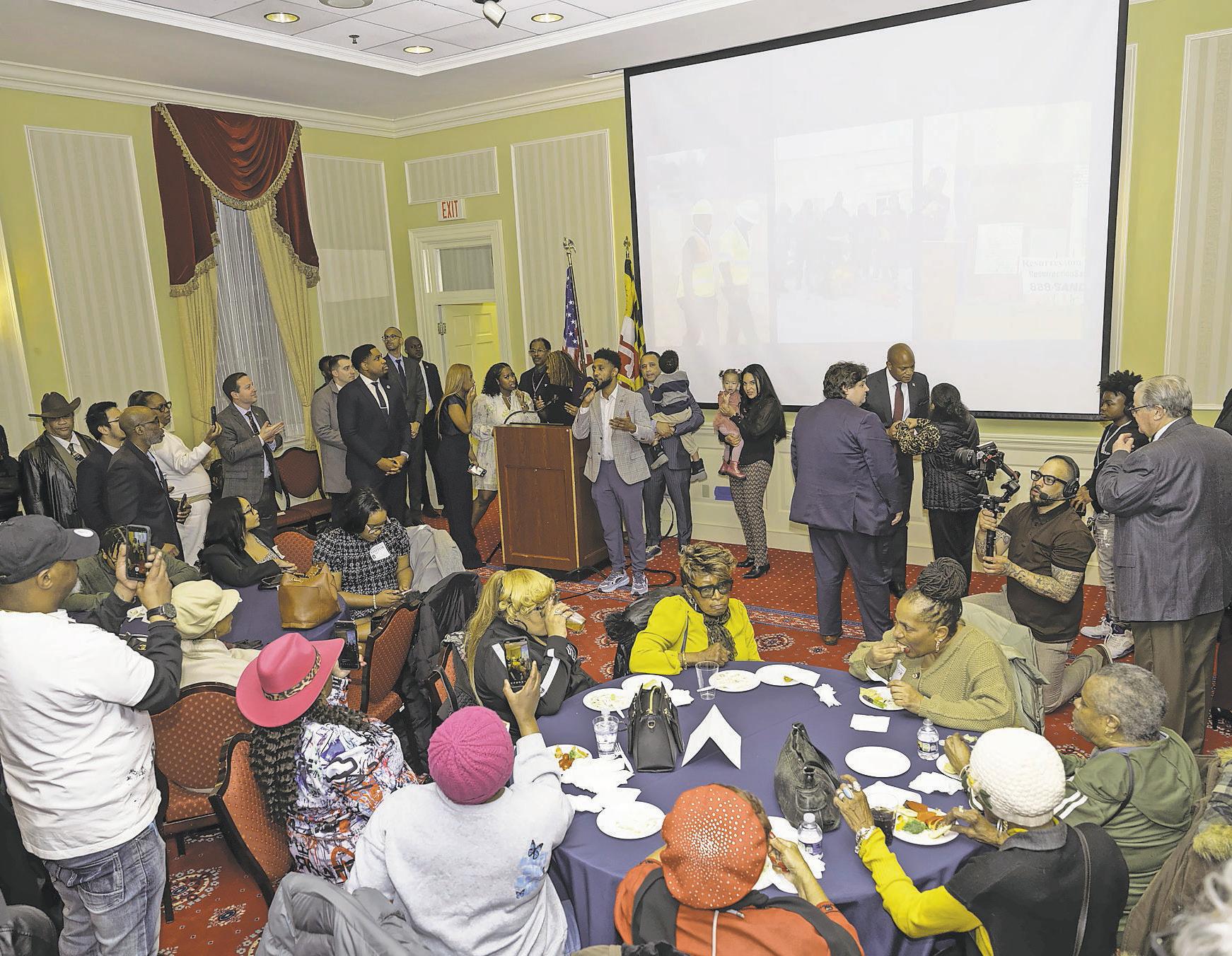
Around the world the death of Rev. Jesse Jackson is still being mourned. Thousands gathered for the public homegoing service for the
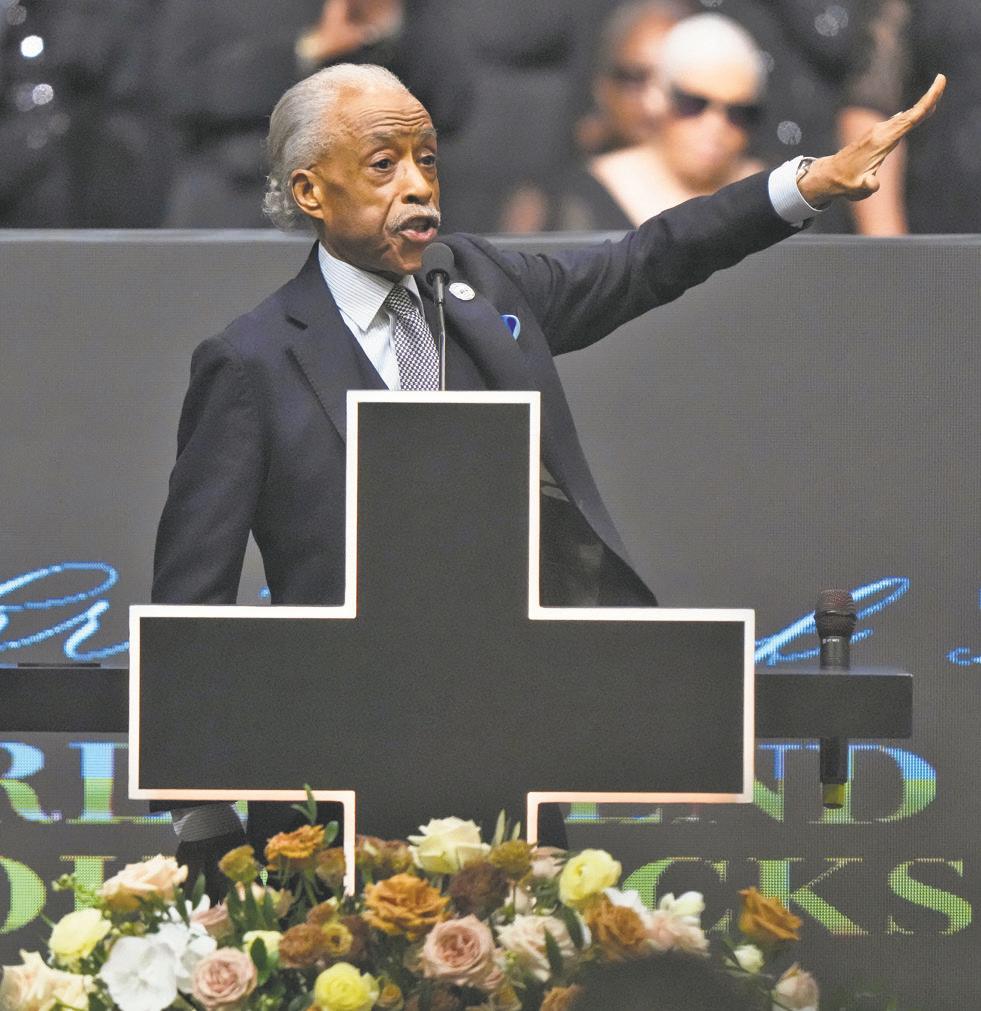
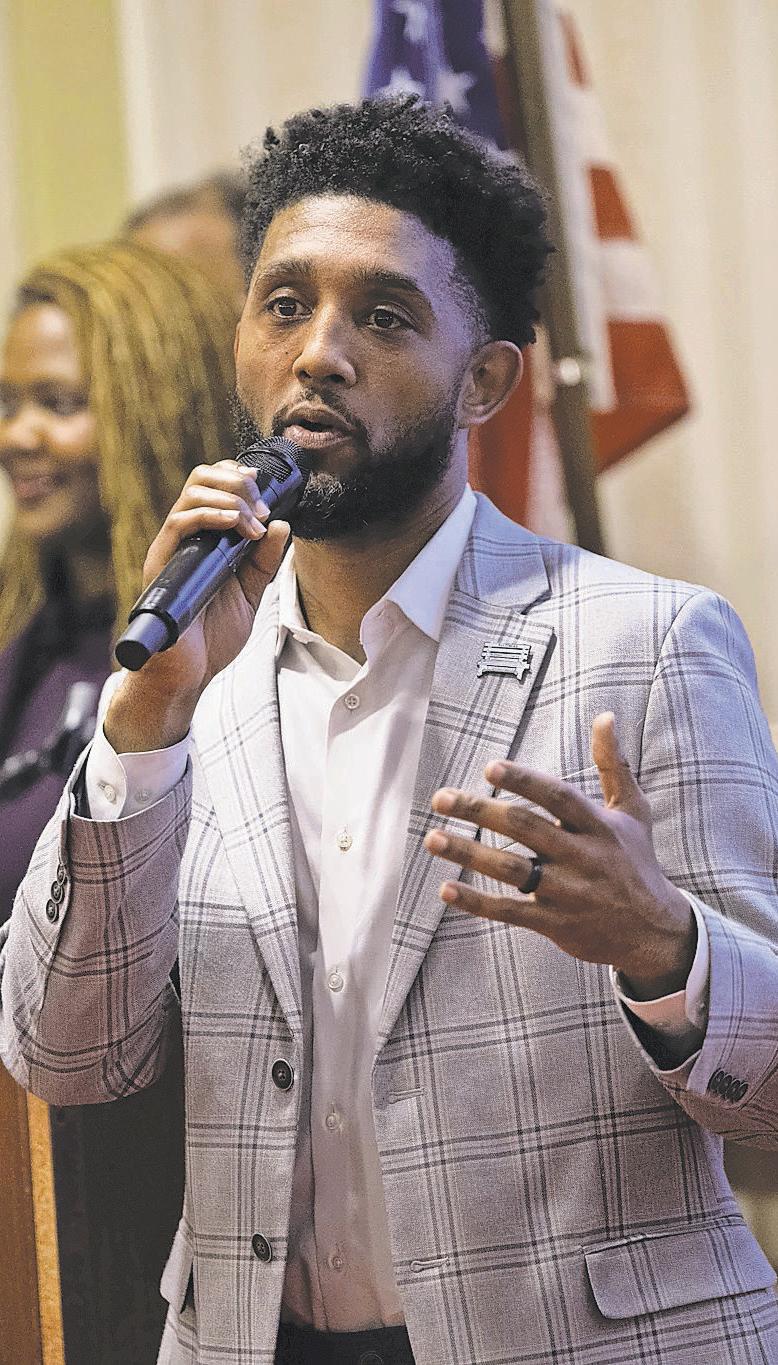
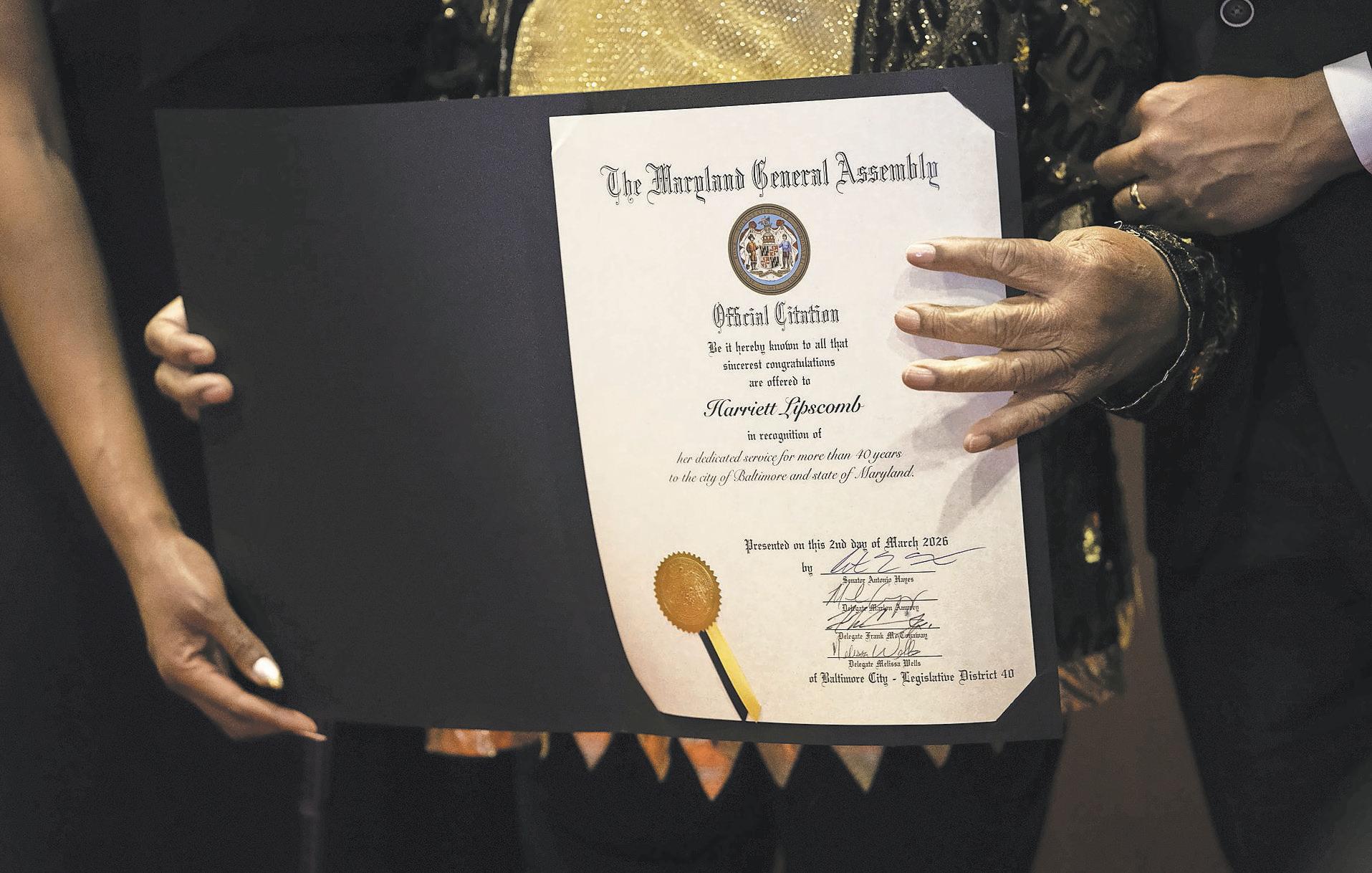
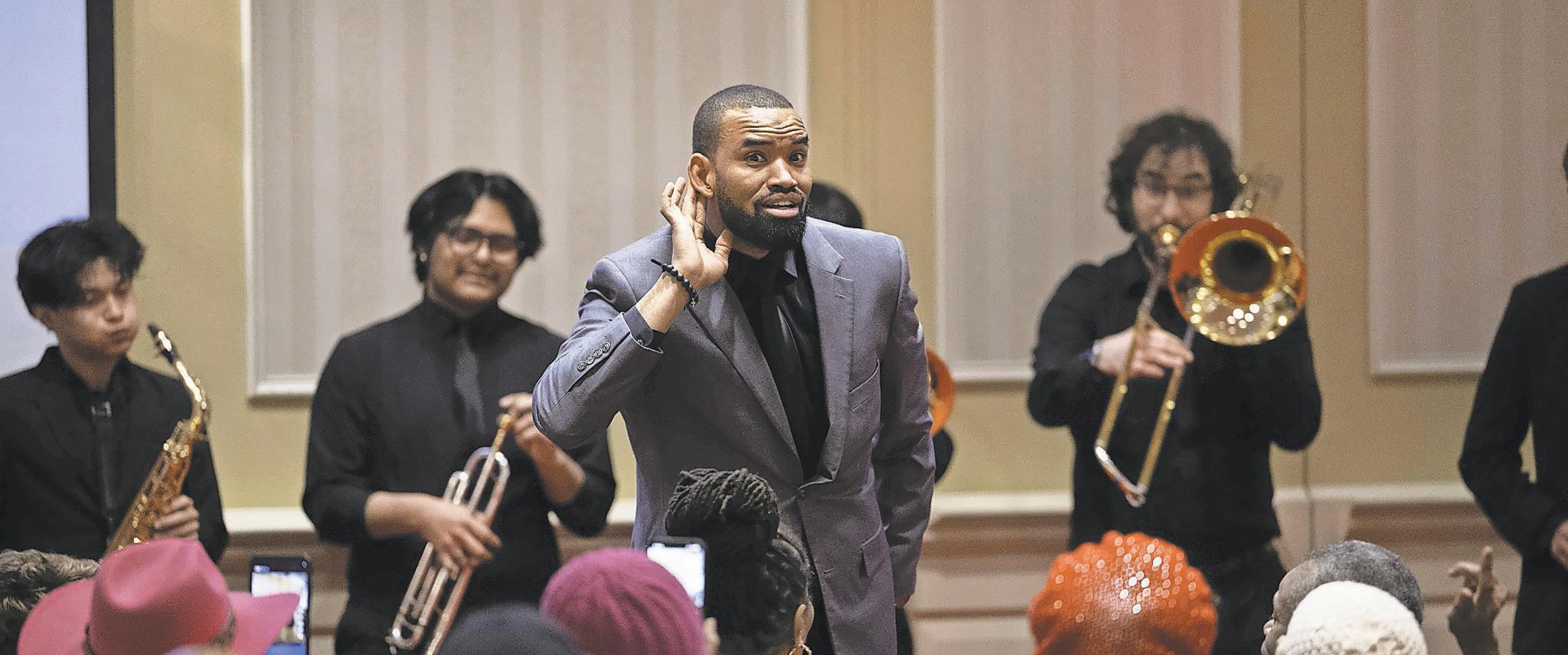
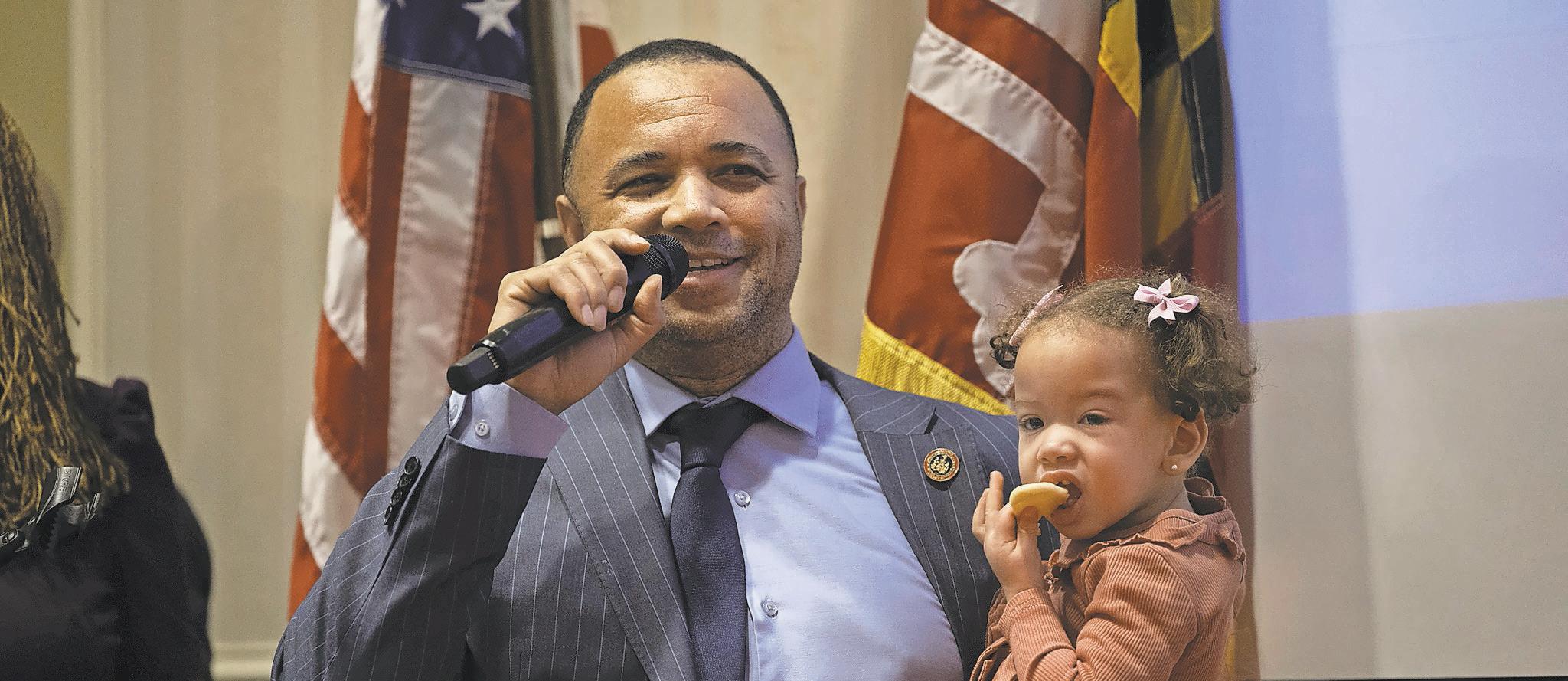
Chicago, March 6, 2026 (left). Speakers included Rev. Al Sharpton, President Barack Obama and Rev. Jamal
Mfume D-Md.-7) (at left in bottom right photo) with Rep. Troy Carter (D-La.-2) and California Gov. Gavin
Thousands honor Rev. Jesse Jackson’s life and legacy at Chicago public homegoing service
to the idea of the rule of law. An offense to common decency. Every day you wake up to things you just didn’t think were possible,” President Obama told the crowded room of mourners.
until peace comes to pass.
World leaders, dignitaries and activists were among those who gathered March 6 to celebrate the life of the Rev. Jesse Jackson Sr., who served as a minister and activist-leader to the masses and died Feb. 17 at the age of 84.
Thousands convened in Chicago’s House of Hope to reflect on a life well lived. Among them were three former presidents: Bill Clinton, Barack Obama and Joe Biden.
Each of them eulogized the global civil rights advocate with frequent references to his popular slogans “I am somebody” and “Keep hope alive,” juxtaposing Jackson’s staple message of peace with the current administration.
“Each day we wake up to some new assault to our democratic institutions. Another setback
“Each day, we’re told by those in high office to fear each other, and to turn on each other. And that some Americans count more than others. And that some don’t even count at all.
Everywhere we see greed and bigotry being celebrated and bullying and mockery masquerading as strength.”
The first Black president elected to lead the United States reflected on Jackson’s campaigns for presidency, saying they were sources of inspiration to “an outsider” like him and many others.
He further reflected on the culmination of Jackson’s career as a “messenger” for hope and a mouthpiece for God who encouraged those around him to weather the storms in life
“This man, Rev. Jesse Louis Jackson, inspires us to take a harder path, his voice calls on each of us to be heralds of change,” Obama said. “How fortunate we were that Jesse Jackson answered that call. What a great debt we owe to him. May God bless, Rev. Jackson. May he rest in eternal peace.”
Jackson, who was a protege of the Rev. Dr. Martin Luther King Jr. during the height of the Civil Rights Movement and carried on its cause after the revered leader’s assassination, helped inspire new generations of freedom fighters and social justice warriors.
“He was a leading icon of the Civil Rights Movement and a personal friend who helped shape the course of my life and the lives of so many committed to justice and the ideals of America,” said civil rights lawyer Benjamin
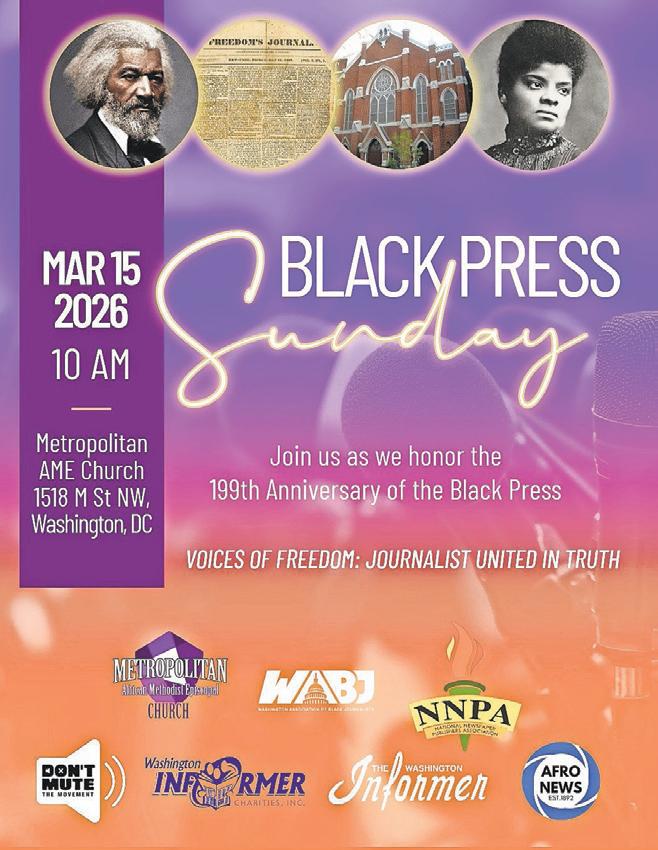
Annual Sunday service to celebrate 199 years of Black Press
By D.
When officials at St. George’s United Methodist Church pulled Richard Allen, Absalom Jones and other Black parishioners off their knees while praying in Philadelphia in 1787, they went on to form their own church, free of racial discrimination.
In a similar example of Black people shaking off the shackles of racial oppression, John Russwurm and Samuel Cornish, determined to “plead our own cause,” founded “Freedom’s Journal” in 1827, marking the start of the Black Press in America.
On March 15, members of the Black Press will celebrate 199 years of perseverance, ingenuity and achievements during the annual worship service at D.C.’s historic Metropolitan AME Church, known as Black Press Sunday.
The day will serve as a time to honor the heroic Black leaders who started the institution and the people who have kept it alive.
Black Press Sunday 2026 will kick off a week of activities that will include receptions, seminars, conversations and strategic pow-wows that will highlight the contributions of Black journalists and acknowledge the need to support Black media in America.
The Rev. William H. Lamar IV, pastor of Metropolitan, one of the event’s sponsors, spoke to the significance of the service.
“We celebrate the Black Press because they have always captured our joys and pains, our victories and defeats, and our hopes and dreams,” Lamar said. “However, we must remember that the media is political and is not neutral. It can report a vision of shared human flourishing or one of exclusion, oppression and exploitation.
Crump. He added, “He took on corporate America, fought tirelessly to protect voting rights, negotiated the release of hostages across the globe, and remained on the front lines of protest well into his later years, even in the face of serious illness. He was an unstoppable and formidable force, proving that no opponent or battle was too big.”
Congressman Kweisi Mfume (D-MD-07) also mourned his fallen comrade while hailing his legacy.
“My friend, big brother, and leader of many struggles, battles, and victories has exited life’s stage but never our hearts,” Mfume said in a statement. “Jesse’s passion for justice, fair play, and the dignity of all people mattered greatly to him. He gave so much and asked for
Throughout its history, the Black Press has represented African Americans and stood with humanity in the quest for truth.”
In year’s past, Black Press Sunday has become an annual fixture in the lives of those who work for or support the mission of Black journalists and publications.
Phil Lewis, president of the Washington Association of Black Journalists (WABJ), and deputy editor at Huffington Post, said he’s thrilled to once again join the celebration.
“When I attended the service last year, it marked one of the first events under my tenure as president for WABJ and I remember how excited I was to see the sanctuary filled with people,” Lewis said. “Within the ranks of the National Association of Black Journalists, our chapter boasts one of the strongest memberships
Black Press Sunday returns to Washington, D.C., on Sunday, March 15, at Metropolitan AME Church for worship and celebration beginning at 10 a.m. The annual service will tout the 199th anniversary of the Black Press in America. This year’s theme is “Voice of Freedom – Journalists United in Truth.” Black Press Week 2026 will be held in Washington, D.C., March 16 through March 20.
Rev. Jesse Jackson at the House of Hope in
Bryant (top, right). The ceremony drew the likes of Congressman Kweisi
Newsome (bottom, right).
By Ashleigh Fields Special to the AFRO
Photo courtesy of Meta (Facebook) / Kweisi Mfume AP Photo/Nam Y. Huh
Kevin McNeir Special to the AFRO
Flyer courtesy of NNPA
AP Photo/Nam Y. Huh
WHAT’S TRENDING ON AFRO.COM
A Florida woman has been charged in a shooting at Rihanna’s Los Angeles home
By Andrew Dalton AP Entertainment Writer
A Florida woman accused of firing gunshots at Rihanna’s home in Los Angeles was charged March 10 with one count of attempted murder and other felony offenses including 10 counts of assault on a person with a semiautomatic firearm.
District Attorney Nathan Hochman said that the singing superstar, her partner A$AP Rocky, their three small children and her mother were all on the property at the time.
The district attorney’s office said Ivanna Lisette Ortiz, 35, was charged in the shooting on the afternoon of March 8 outside the superstar’s gated home in the Beverly Hills area. No one was hurt.
Court records show Ortiz also was charged with 10 counts of assault on a person with a semiautomatic firearm and three counts of shooting at an inhabited vehicle or dwelling. All 14 counts are felonies, and she was brought for a scheduled arraignment before Judge Theresa McGonigle on March 10 in Superior Court of Los Angeles County.
Deputy Public Defender Jamarcus Bradford, Ortiz’s attorney, at first entered a plea of not guilty on her behalf, but then withdrew it in favor of postponing arraignment until March 25. She was ordered held on $1.8 million bail. Ortiz wore blue jail clothes with her blond hair in braids and spoke to her lawyer through a glass divider. The judge issued a
Your History • Your Community • Your News
The Afro-American Newspapers
Baltimore Office • Corporate Headquarters
233 E. Redwood Street
6th Floor, Suite 600G
Baltimore, Maryland 21202
410-554-8200
Customer Service, Home Delivery and Subscriptions: 410-554-8200 customerservice@afro.com
Founded by John Henry Murphy Sr., August 13, 1892
Chairman of the Board/Publisher - Frances Murphy Draper
(Washington Publisher Emerita - Frances L. Murphy II)
Director of Operations - Andrè Draper - 410-554-8200
protective order for Ortiz to stay away from Robin Fenty and Rakim Mayers –- the legal names of Rihanna and her partner A$AP Rocky –and their home. McGonigle also said Ortiz is not allowed to possess any firearms or ammunition along with several other conditions.
Earlier on March 10, Los Angeles Police Chief Jim McDonnell told media gathered
for a news conference on a different subject that 10 people were at Rihanna’s home when shots were fired.
He said investigators believe Ortiz drove to the area from Florida, but it’s not clear when.
Public records show her most recent address was in Orlando and that she has been a licensed speech pathologist for more than a decade.
Ortiz was arrested March 8 after the shooting and a weapon was recovered, police said. They have not said whether she has any known connection to Rihanna.
Voicemails and other messages left by The Associated Press, including an email sent to the public defender’s office, were not immediately answered March 10.
AP also sent emails seeking comment from Rihanna’s publicist and manager.
KABC-TV broadcasted video that appeared to show five bullet holes in the home’s front gate. The news station obtained police dispatch audio that says 10 shots were fired.
In 2018, a man was accused of breaking into another home
belonging to Rihanna in the Hollywood Hills and spending 12 hours there. The man pleaded no contest to felony counts of stalking and vandalism and a misdemeanor count of resisting arrest in 2019. He was sentenced to probation.
A nine-time Grammy Award winner, Rihanna has 14 No. 1 hits on the Billboard Hot 100, including “We Found Love,” “Work,” “Umbrella” and “Disturbia.” She founded the makeup brand Fenty Beauty in 2017. She and A$AP Rocky announced the birth of their third child, a girl named Rocki Irish Mayers, in September. This article was originally published by The Associated Press. Writer Christopher Weber contributed to this report.
For Black runners, Nathan Martin’s LA Marathon win hits different
By Liz Courquet-Lesaulnier Word in Black
I’ve run the Los Angeles Marathon eight times. Eight times I’ve stood in the predawn darkness outside Dodger Stadium, waiting — sometimes dreading — the start. Eight times, I trekked 26.2 miles across the sprawling, racially segregated, but oh-so-beautiful City of Angels. Struggling up hills, high-fiving spectators as they jangle cowbells, cheering on other Black folks I passed — or, more likely, who passed me.
Real talk: I only ever took home a finisher’s medal — the runner’s equivalent of a participation trophy.
In the years I don’t run, I’m out on Sunset Boulevard at mile 7, handing cups of water and snacks to the thousands of people who want the finisher’s medal, too. But when a Black runner comes through, I cheer a little louder. Give them that extra-special, I see you, fam. You got this!
A rare sight at the finish line
Less than 1 percent of Americans will ever complete a marathon. Out of that relatively tiny sliver of the population, Black runners are rare. The most recent Running USA data shows Black folks account for about 3 percent of distance runners in the U.S., far below our share of the population.
It all makes Nathan Martin’s victory on March 8 that much sweeter.
Martin, a 36-year-old high school cross-country coach from Jackson, Michigan, became the first U.S.-born Black man to win the L.A. Marathon. It was a dramatic finish: he trailed Michael Kimani Kamau of Kenya into the homestretch, but surged at the end to beat him by .01 seconds. It was the stuff of legends.
“At a mile and a half to go,
For many
representation
and
I could see the leader and with 800 meters to go,” Martin told the Los Angeles Times. “I was thinking, ‘I’m catching him.’”
The historic moment was also a reminder of how rare it is to see an African American — not our Kenyan or Ethiopian cousins from the Motherland — taking home the top prize in a big-city marathon.
The myth of running Distance running sells itself as the great equalizer. All you need, the pitch goes, is a pair of sneakers and the great outdoors. But for Black America, the outdoors is the problem, and the sneakers — not to mention race entry fees — ain’t exactly free.
Almost 1 in 5 Black Americans live in poverty, putting race entry fees for major events, which routinely run $150 to $300, out of reach. Quality running shoes, the kind that will protect your feet and joints from pounding out hundreds of miles on the pavement, can set you back $200 or more. Over the months of training for a marathon, you’re buying several pairs because you’ll wear them out.
Marathon training also requires 40, 50, sometimes 60 miles of running per week. Those miles require motivation and discipline, sure, but they also require time. It’s a precious
commodity usually in short supply for folks struggling to make ends meet.
Studies also consistently show that Black neighborhoods have less park space than white ones. Running in areas with wall-to-wall concrete and heavy traffic means breathing in car exhaust and all the cancer-causing fine particulate matter that comes with it.
Black folks also require safety. We have to consider: Where can I run? Who’s going to see me? Will they call the police? Will they shoot me?
The murder of 25-year-old Ahmaud Arbery, shot and killed by three white men while jogging in a Georgia neighborhood, is a reminder that worrying about these things isn’t paranoia. Arbery was unarmed, not doing anything but getting in some good old-fashioned exercise. But his killers decided he didn’t belong. They chased him down like prey with their pickup trucks, then cornered and shot him.
“For Black people, it really boils down to the systemic racism in our society, and really where Black people can and can’t go because of who they are,” Boston-based running advocate Adrienne Benton told GBH News back in 2022 when it was marathon time in the city. I know from personal
experience that that’s true. I trained for my races with a running club, which required me to schlep 20 miles from my neighborhood to Santa Monica every Saturday morning. I joined because these folks knew what it took to get through a race, and because it’s safer to run two-by-two with a pack of a few dozen other runners in my pace group. If I couldn’t make it to our group runs, I went to the gym. I didn’t run 10, 12, or 15 miles on a boring indoor treadmill for fun. I did it to keep myself safe.
“If you can’t go further than a mile outside of where you live because you’re fearful that you won’t be accepted in certain communities, then, basically, you’re probably not going to run more than a mile,” said Benton, who is a member of the National Black Marathoners Association and Black Girls Run.
Organizations like Black Girls Run, Black Men Run, and dozens of local running clubs across the country are trying to change things by creating opportunities to train together, build community, and benefit from the mental and physical health running brings. Plus, safety comes in numbers and they’re declaring Black American runners belong on every road.
Nathan Martin certainly showed that in Los Angeles, sprinting through the equivalent of seven football fields to chase down a lead most would have said was impossible to close. And isn’t that so Black? We’ve been running against all odds for so long and winning despite the race already seeming like it’s decided.
“In any race, I just want to give 100 percent,” he told the LA Times. “I saw an opportunity to race at the end and give one last push. All I wanted to do is push myself.”
This article was originally published by Word in Black.
Photo by Jordan Strauss/Invision/AP, File
A 35-year-old woman is now in custody after firing multiple shots at the Los Angeles home of superstar entertainer and business mogul Rihanna.
ABC7 Los Angeles via AP
This image taken from video provided by ABC7 Los Angeles on March 9, 2026 shows what appears to be bullet holes on a wall at singer Rihanna’s home in Los Angeles.
Unsplash/Miguel A Amutio
Black runners
supporters, Nathan Martin’s historic Los Angeles Marathon victory represents perseverance and possibility in a sport where
remains limited.
TSA workers go without pay as partial government shutdown stretches into March
By Megan Sayles AFRO Staff Writer msayles@afro.com
It’s been nearly a month since the Department of Homeland Security (DHS) partially shut down after Congress failed to fund the agency in February, and Transportation Security Administration (TSA) employees have started missing paychecks.
Hydrick Thomas, president of the American Federation of Government Employees (AFGE) TSA Council 100, said the pay lapses are affecting every aspect of workers’ lives, including affording transportation and food to paying rent and covering childcare. Thomas said some employees’ checks from the last pay period mounted to as little as $6. Still, because TSA officers are considered “essential” employees they are required to report to work.
“The TSA is protecting life. Every flight that’s in the borders of this country, we protect. We have had no incidents since the 2001 terrorist attack in New York. No flight has gone down on our watch,” said Thomas. “Now, we’re in a situation where we’re not getting paid, and that’s a critical thing.”
The partisan dispute halting the funding for DHS centers on changes to the operations of the U.S. Immigration and Customs Enforcement (ICE) and Customs and Border Protection (CPB). Democrats are calling for reforms to restrict agent conduct
Rev.
Jesse Jackson
Continued from A1
so little. His fearlessness, compassion, and meaningful life will forever be embodied in the history and eloquence of his example. Simply put for many of us, he was, and will always be, remembered as ... the man, the message, and the movement.”
Among the numerous highlights of Jackson’s history was his founding of the Rainbow PUSH Coalition, (a nonprofit that advocates for social justice, civil rights, and economic/educational equality globally. It was among the many ways he left his imprint on the world, the nation and local spaces like the District of Columbia, where he served its people faithfully as a politician, prayer leader and provocateur.
His connection to the District was based on investments in the city’s next leaders, seeds planted that later bloomed into bushels of hope.
As the first Black man to make a serious run for the highest office in the land, vying for the Democratic nomination to
Black Press
Continued from A1
with more than 500 active participants. And what’s most important is fostering relationships across the generational divide.” Lewis said he was most impressed by numerous examples of comradery that he witnessed after the conclusion of last year’s service.
“We met in the church’s fellowship hall during which the publisher of The Washington Informer, Denise Rolark Barnes, gave remarks,” he said. “It was a real celebration with soul food prepared by Black-owned caterers and conversations between people who were meeting for the first time. But what was really awesome, was seeing the reunions that occurred among veteran members of the Black Press.” Lewis said the fellowship and
and enhance oversight, including banning ICE agents from wearing masks, requiring personnel to wear visible identification and mandating judicial warrants before agents enter private properties. Republicans, however, have rejected the proposals, arguing they could hinder immigration enforcement.
While the GOP-controlled House has advanced a funding bill, the Senate has been unable to pass its own version—leaving the agency’s funding in limbo.
A TSA employee at John F. Kennedy International Airport for more than two decades, Thomas joined the agency shortly after the Sept. 11 terrorist attacks. As union president, he said he now spends much of his day fielding calls from workers across the country who are struggling to cope with the financial strain.
Thomas said he is especially concerned for young TSA officers who are early in their careers and trying to build financial stability, as well as households where both partners work for TSA and suddenly have no income.
“I have a young man in upstate Syracuse, and he’s been sent an eviction notice,” said Thomas. “He has two kids, and his wife is waiting for a kidney transplant. Now, he’s not getting paid.”
In some workplaces, employees have begun informally supporting one another. Thomas said he has
the presidency in both 1984 and 1988, Jackson pushed minorities to see themselves as viable and worthy players in a legislative sphere that had discounted them for generations.
Although the reverend did not obtain the party nomination, he did join Congress, representing the District in 1990 in the role of shadow senator. Jackson’s tenure coincided with the year that Rep. Eleanor Holmes Norton (D-D.C.) won the position of delegate. Neither held voting power, but they captivated their colleagues with extensive knowledge of policy and a platform for D.C. statehood.
Holmes Norton said Jackson understood the denial of representation to D.C. residents was a “civil rights issue at the heart of America’s unfinished democratic promise.”
At the time Jackson served as the District’s shadow senator, the nation’s capital was majority Black (65.8 percent) and had been that way since the 1950s. Jackson embedded himself in communities locally and at the forefront of national politics, mentoring a generation of leaders throughout the course of his career.
Jackson’s work with Norton
networking was crucial.
“We have to get back to that kind of community engagement, especially among Black journalists, if we hope to survive the policies that are being promoted by the current administration in the White House.”
Barnes, who, like WABJ, serves as an event sponsor in her joint roles as publisher of The Washington Informer and president and chair of Washington Informer Charities, said while the challenges the Black Press faces today are monumental, she plans to focus on following the ancestors on Sunday morning, praising God freely without fear of oppression.
“I look forward to Rev. Lamar delivering a message that will provide hope and inspiration to journalists impacted by the elimination of DEI, and the significant reductions in revenue and cuts in jobs that have plagued Black journalists and Black publications since the recent president took office” Barnes
encouraged his coworkers to bring in extra food to share during lunch breaks. He’s also reached out to nonprofit organisations that distribute produce and canned goods.
“I don’t know what to tell them,” said Thomas. “I just tell them to be patient, hopefully things will happen and we’ll get paid.”
Some workers have turned to gig work such as rideshare driving and delivery jobs, to make ends meet. But, Thomas said those options are not always realistic given TSA’s demanding schedules, which can include shifts starting as early as 3 or 4 a.m.
Airlines and travelers have also attempted to help, offering gift cards, food or tips to support TSA workers during this time. However, federal ethics rules limit what employees can accept, and TSA policy prohibits workers from receiving gifts valued at more than $20 from individuals.
“People are going to walk off this job,” said Thomas. “If they don’t get paid by next week, you’re putting them in a financial bind where they’re not just walking off—they can’t stay because they can’t even come to work.”
He believes members of Congress should face the same financial consequences as federal workers during government shutdowns.
“Shut their pay down,” said Thomas. “They’re getting paid. They go home, and they eat very well, their cars are filled with gas and their
mortgages are paid. Make the people who make the laws accept the same penalties that they impose on the workforce.”
With TSA agents going without pay, airports across the country have faced staffing shortages—leading to lengthy lines and long wait times at security checkpoints. Major hubs, including Atlanta, Houston and New Orleans, are sustaining the brunt of the impact.
“Houston Airport TSA is so backed up, we’re in the parking garage,” wrote Mahri Muh-Rye in a March 9 Facebook post.
A video shared by another traveler showed hundreds of passengers waiting in snaking lines at Louis Armstrong New Orleans International Airport
“With everything going on please make it to these airports four to five hours before your flight to allow extra time for TSA screening,” wrote Wright Lenee in a March 8 Facebook post. “TSA wait times may exceed 180 minutes. Don’t say I didn’t warn you.”
In Baltimore, however, airport officials say operations at BWI Thurgood Marshall Airport have remained largely unaffected.
“We have seen regular checkpoint operations. At this point, the current partial government shutdown has not impacted TSA security checkpoint operations here at BWI Thurgood Marshall Airport,” said Jonathan
was part of his track record of working with women in politics.
Rev. Jamal Bryant, pastor of New Birth Missionary Baptist Church in Stonecrest, Ga., spoke to this during the March 6 ceremony.
“Reverend Jackson didn’t run alone,” said Bryant. “He had the good sense and the foresight that when he was running, he took
said. “Ultimately, however, this is like any other Sunday worship service in the Black church. I don’t know about anyone else, but I’m going to be there to have church!”
Ron Moten, co-founder of Don’t Mute DC, posited that joining the other sponsors, which also include AFRO News and the National Newspaper Publishers Association, said his organization has long supported the work and mission of the Black Press.
“Given the unprecedented turn of events that have occurred under the current administration, changes that have disproportionately impacted African Americans, we need the Black Press now more than ever before” Moten said. “Black Press Sunday is about increasing awareness about the important role Black journalists play in our lives, whether we realize it or not.”
Moten said financial support is key.
strong Black women with him.”
“He understood you ain’t going to go far unless you take strong Black women with you,” Bryant said.
Rep. Glenn Ivey (D-Md.) spoke with the AFRO about Jackson’s ability to work with leaders of all backgrounds and walks of life.
“I witnessed firsthand his extraordinary versatility as a
“We’ve got to dig deep in our pockets so we can raise funds that will help support the Black Press and ensure its survival.”
Lewis emphasized that even as a Millennial and one of the younger spokesmen slated to address the audience during the service, he recognizes the historical significance of gathering at Metropolitan AME Church.
“Just think – this was the place where one of the most prolific voices of the 19th century, Frederick Douglass, worshipped,” Lewis said. “He published The North Star as part of the Black Press, reaching thousands of African Americans. He stood up when people like Donald Trump attempted to erase our history.”
“Like Douglass, it’s vital that we–as storytellers– share the good news about the Black Press and its 199 years of service,” said Lewis. “That’s what Black Press Sunday is all about. We’ve got more work to do and more stories to tell.”
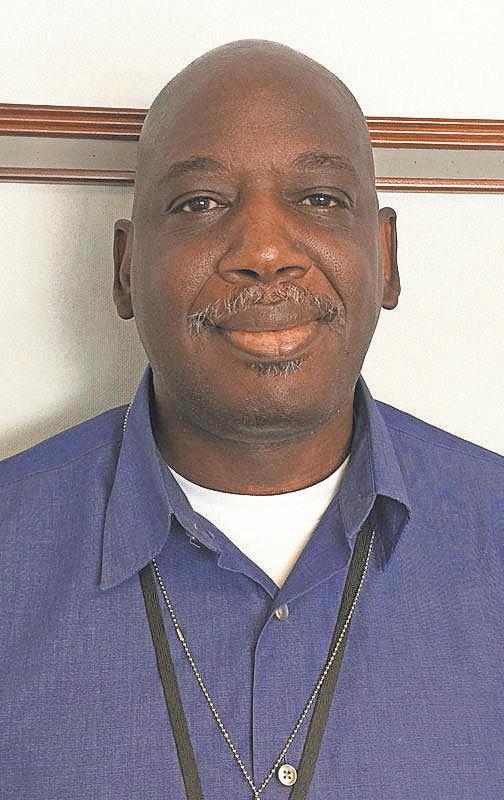
Hydrick
president of the American Federation of Government Employees (AFGE) Transportation Security Administration (TSA) Council 100, a union representing nearly 47,000 transportation security workers across the country. Thomas has been a TSA employee at John F. Kennedy International Airport for 22 years.
Dean, spokesman for the airport.
“We continue to work closely with TSA and our other federal partners to closely monitor airport conditions. We thank the federal workforce who work with us here at BWI Marshall Airport to ensure safe, secure aviation for our customers.”
Until Congress reaches a deal, TSA employees will remain unpaid, and travelers at airports nationwide may continue facing lengthy lines and delays.
speaker and a leader. He moved seamlessly from a union hall to a university auditorium, from a schoolhouse to God’s house, rallying people from every walk of life to the cause of justice. He did not just speak to audiences. He built movements,”
“Rev. Jackson was a groundbreaking leader who expanded the boundaries of our democracy and opened doors that had long been closed. His presidential campaigns, his work with labor, and his lifelong commitment to the poor and the marginalized helped reshape American politics and inspired a generation of leaders, myself included. He blazed a trail that so many of us now walk,” he added.
While young, Rev. Jackson could frequently be found in Southeast D.C.’s Potomac Gardens neighborhood, once photographed playing basketball with Mayor Marion Barry.
In later years, the late minister was also documented walking across Howard University to encourage protestors who blockaded the student center to protest for better campus housing.
D.C. Rep. Oye Owolewa (D) said Jackson was indeed the inspiration for his start in local politics.
“Rev. Jesse Jackson is a personal inspiration of mine. As a child of African immigrant parents, I know I wouldn’t be here if it weren’t for Jesse Jackson. His work to integrate libraries in South Carolina in the 1960s allowed for my parents to go to integrated university in the United States in the 1970s,” Owolewa told the AFRO. “His career as D.C.’s first U.S. senator created the opportunity for me to follow in his footsteps as D.C.’s U.S. representative decades later. … I owe him everything. May his memory continue to inspire others to get involved and serve with a higher purpose.”
During the March 6 service, Rev. Al Sharpton, fellow civil rights leader and founder of the National Action Network, called on those in attendance to ensure Jackson’s legacy lives on.
“We are allowing ourselves to be lowered and our children to feel inferior because you don’t have an ‘I am somebody’ person,” Sharpton said.
“So what I’m urging you to do is leave here with some Jackson fire in you. Not just a program book, but to say, ‘I see the things the way they are, but I’m going to turn and change them.’”
Photo courtesy of AFGE TSA Council 100
Thomas serves as the
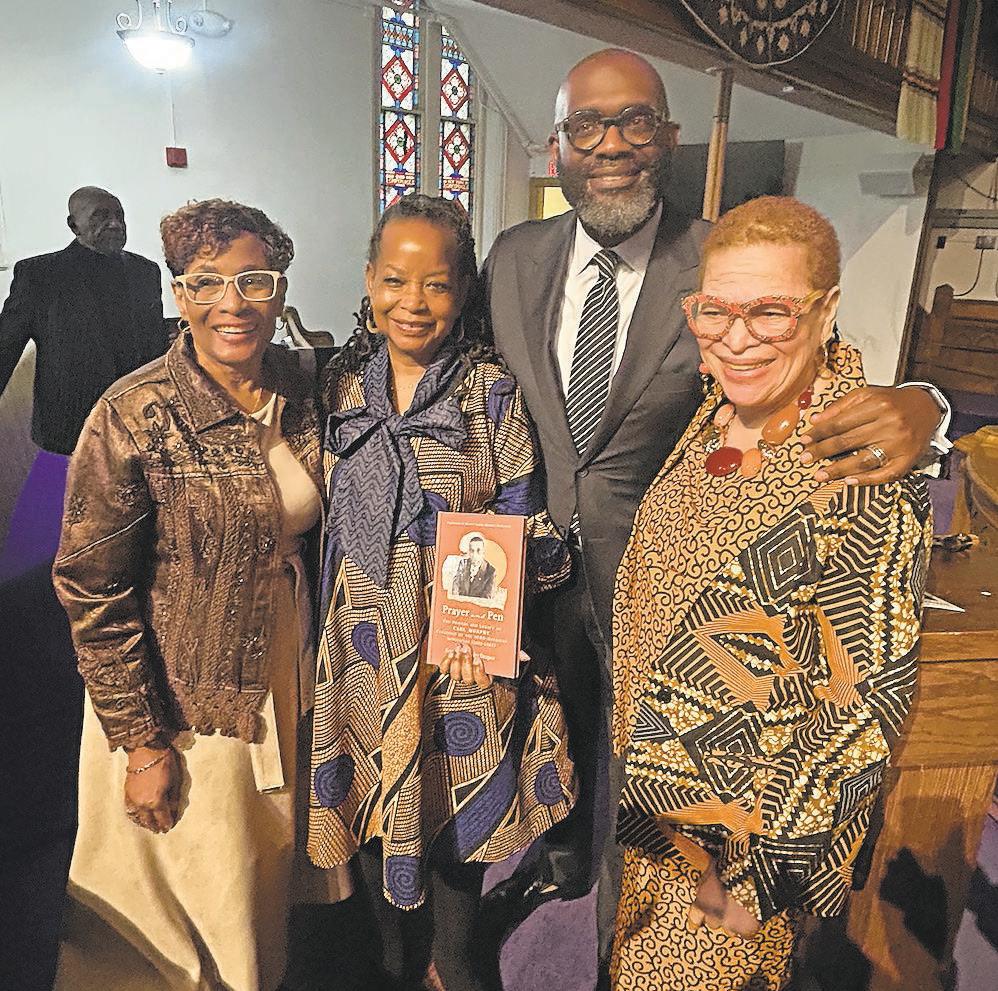
Photo courtesy Washington Association of Black Journalists / Phil Lewis Shown here, Rev. William H. Lamar IV, pastor of Metropolitan AME Church in Washington, D.C. with three of today’s most respected Black women in media: Dr. Frances “Toni” Draper (left), publisher of AFRO News; Washington Informer Publisher Denise Rolark Barnes, and author and columnist, Dr. Julianne Malveaux (right), who also serves as Dean of the College of Ethnic Studies at Cal State LA.
AP Photo/Nam Y. Huh
Rev. Al Sharpton honors the life of Rev. Jesse Jackson.
COMMENTARY
We bombed Iran—Black folks
By Julienne
When I walked into work on March 2, the conversation around the watercooler was “we bombed Iran.” As a Black woman, I knew I spoke for thousands of Black people when I asked, “Who is ‘we’”?
For Black people in this country, “we” has never been automatic. It has always been conditional.
There’s a term for that — it’s what W.E.B. Du Bois called “double consciousness.” It’s the psychological conflict Black Americans face living and navigating in a society that undervalues us. The struggle between how we are perceived and how we perceive ourselves leads to a dual identity.
The conditional “We” of American history
When I asked the question, “Who is we?” It’s because I’m used to the two-faced way America claims and uses Black people while simultaneously belittling and berating us. A few example include:
● The 3/5th Compromise, written
into our founding documents
● The erasure of the Tuskegee Airmen and Six Triple Eight from school curricula covering WWII.
● Dr. Martin Luther King’s
are asking:
statement that Sunday church service is the most segregated hour in America.
● Beyoncé winning “Best Country” Album, only to be structurally excluded the next year. Black Americans remain essential to the nation’s prosperity but peripheral to its protection.
When sacrifice is required, Black Americans are included
To be clear: Black Americans are not ambivalent to war, service, or sacrifice. Even though Black people make up only 13.7 percent of the population, we comprise 21.4 percent of all military branches. My loved ones who enlisted with the promise of paying for school and working themselves out of poverty will be sucked into a war that 93 percent of Black people openly oppose. This pattern doesn’t just begin with my peers.
Like the majority of Americans, my grandfather’s and his father’s generations served in every major war: World War I, World War II, Korea, the Gulf Wars, etc. They fought next to members of every race.
Who is ‘We’?
They defended the same flag. They wore the same uniform. They risked their lives to protect this country. At war, they were part of the “we” of America.
The “we” that disappears when soldiers come home After each deployment, Black veterans expected the brotherhood — the “we” they became part of overseas — to extend to a “we” when they returned home. They quickly realized, however, that was not the case. Instead, veterans like my grandfather returned to segregation, redlining, lynching threats, and a renewed racial hostility. While the G.I. Bill built White middle-class wealth for veterans, many Black veterans were systematically denied equal access to housing loans, education benefits, and economic opportunity. These men fought under the umbrella of “we” Americans and returned as “them,” the second-class citizens.
The plain truth: Black Americans are extended the identity of “we” when sacrifice is required — in war, in labor, in culture. But we are seen
as disposable and excluded when benefits, payment and respect are asked for.
Why many Black Americans are opting out
The current White House administration is continuing this trend: from mass incarceration to the erasure of Black history to the mass layoffs of 300,000+ Black women. No wonder we’re choosing to opt out of the “we” now.
We are tired of the game. It’s why Black Americans are emigrating and starting new lives abroad. It’s why Joy-Ann Reid hosted the People’s State of the Union. It’s why the cast of “Sinners” received a standing ovation during the recent NAACP Image Awards. The applause was as much about their performances as it was about supporting them after the dehumanizing incident at BAFTA.
So, when a president who despises Black Americans declares military action and the headlines read “we,” I ask again, “Who is ‘we’?”
This commentary was originally published by Word in Black.
Ending blind loyalty to Democrats: Moving toward a sovereign agenda and breaking the cycle of the captured electorate
By Rev. Stacy
The stewardship of the vote
True political service requires a serious commitment to learning how influence is maintained. Jesus’s call to be “wise as serpents” (Matthew 10:16) is a call to intellectual maturity; we must understand the mechanics of power to better serve our neighbors and protect our future. When any voting bloc becomes predictable, its leverage evaporates. This commentary examines the 1906 Brownsville Affair and “Captured Group” theory to argue that Black Americans must move toward a sovereign agenda, holding both parties accountable rather than providing blind loyalty.
The bitter lesson of Brownsville History warns that a guaranteed vote is a neglected one. In 1906, in Brownsville, Texas, members of the Black 25th Infantry Regiment were falsely accused of a shooting. Despite their record of service and the Black community’s support for the Republican Party, President Theodore Roosevelt waited until after the elections to dishonorably discharge
The trap of the “Captured Group”
Political scientist Paul Frymer (1999) describes a “captured” group as one where one party takes them for granted and the other ignores them. Because the Democratic Party has secured 90 percent of the Black vote for decades, a “responsiveness gap” has emerged (Hajnal and Trounstine, 2014). Leadership prioritizes “swing voters” while placing our needs last. Conversely, Republicans often fail to compete for us, leaving us without the leverage of a competitive “bidding war” for our interests.
A strategic conscience: The King and Du Bois model
167 soldiers without a trial (Rigueur, 2014).
He secured the votes first, then betrayed the men—a move so unjust it took until 1972 for the Army to grant them honorable discharges. This lesson in political disposability reminds us that our strength must be rooted in our own community and our own God, not in political “princes” (Psalm 146:3).
To break this cycle, we must adopt the position of Dr. Martin Luther King Jr. and W.E.B. Du Bois. They understood that our primary allegiance must be to justice, not a party. Du Bois eventually grew so wary of this capture that he famously remarked there was “but one evil party with two names.” By remaining unaligned, we force both parties to compete for our respect. We move from being “captured” to being “decisive.”
Defining the sovereign agenda: Our terms for progress
We must present a “servant agenda” that demands tangible fruit in these core areas:
• Economic Self-Determination: Policies that close the wealth gap by supporting Black-owned businesses and protecting homeownership.
• Educational Excellence: Fully funded neighborhood schools and robust investment in vocational and trade mastery.
Justice and Safety: A system that protects our civil rights while ensuring our communities are safe from both neglect and disparity.
Health Infrastructure: Accountability for healthcare quality and environmental safety in our specific zip codes.
From Brownsville to the modern “Bidding War”
Since 1964, Democratic candidates have consistently received 80 percent to 95 percent of the Black vote. Meanwhile, parties allocate up to 70 percent of their advertising and policy budgets toward “swing” demographics that shift by only
5-10 percent each cycle. The Igbo principle of communal stewardship reminds us that the patriarchs of our families did not endure the struggle for us to become a permanent, static asset on a party’s balance sheet. True stewardship requires us to create a “bidding war.” If one party must earn 15 percent to 20 percent of our vote to win a swing state, they are forced to negotiate.
Implementation: The serious servant’s path Implementation requires an intellectual shift from “emotional voting” to “transactional service.” This means prioritizing participation in local primaries, utilizing issue-based litmus tests rather than party rhetoric, and employing the threat of non-participation or third-party pressure as tools of negotiation.
The position of respect Parties are temporary vehicles, not permanent homes. As Malcolm X observed, putting a party first while they put us last is a cycle we must break. By holding both parties accountable to this agenda, we seek the flourishing of our community (Jeremiah 29:7) by prioritizing our progress over the survival of any political machine.
How war news affects your mental health even from a distance
By Maurice Carroll
Many of us wake up and check the news or social media before we even take a moment to check in with ourselves. We do this almost automatically, often without realizing it at the moment. It’s one of those habits many of us share but rarely talk about. We reach for updates without thinking about what we are taking in or how it may affect us. It quietly shapes how we think, feel and respond throughout the day. In the current political climate, the U.S. president has taken actions that many Americans believe push past the guardrails designed to ensure order, process and accountability. Those decisions have now engaged
the United States in a war that, according to a recent Reuters/ Ipsos national poll, is supported by only 27 percent of Americans. This means that the majority of the country either disapproves (43 percent) or is unsure (29 percent) about the actions of the military under his direction. When a crisis becomes the daily headline, we absorb more stress than we realize. When we consume war news headlines before taking a moment within ourselves first–whether it’s through social media or even in an in-person conversation–that stress takes effect. The stress isn’t just the mental flow chart that webs out so far that we don’t even remember how we got “there.”
Chronic stress can change the brain’s emotional circuits and increase cardiovascular risk. When people live under ongoing stress, the nervous system shifts into a constant alert state releasing hormones that affect both the brain and the heart. Yes, even though you may not be in the physical war zone you can still feel the effects of the war. All is not lost though. There are ways to be informed without allowing it to consume you psychologically. You can’t control the war. You can control your intake. Using the Serenity Prayer as a grounding mantra may change your perspective before you allow your emotions to take control. If we take a real look at ourselves,
we often allow our emotions to be the control instead of using them as tools for expression. Lots of times, it is our emotions fueled by ego that blinds us into becoming unrealistically attached to what we consume. Will getting upset or internalizing the events change the event itself? Are you using your tools, emotions to express yourself to be heard and understood or are you venting? Both can be true at the same time, however, having a gauge on how much you are internalizing will have a direct effect on you physically and psychologically. One idea is to do a quick and honest analysis of yourself. If you know that war coverage or even if political coverage is triggering for you, make choices that will
reduce your exposure to it. Reallocate that time and space with something that
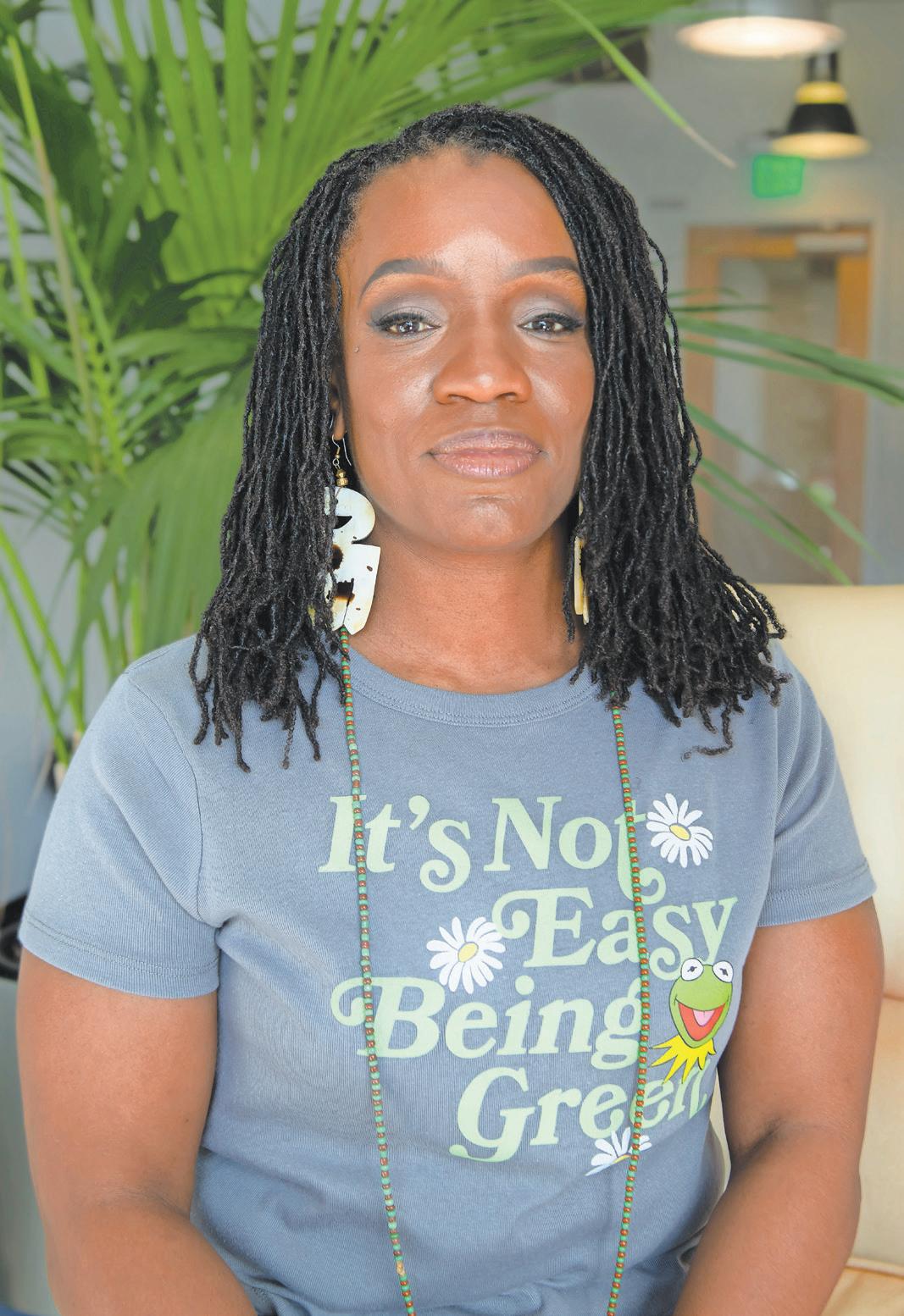
Photo Courtesy of Aisha Butler
Swimp
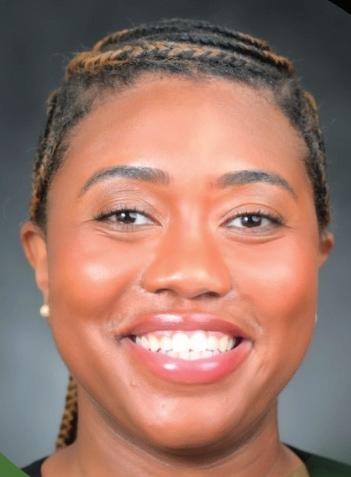
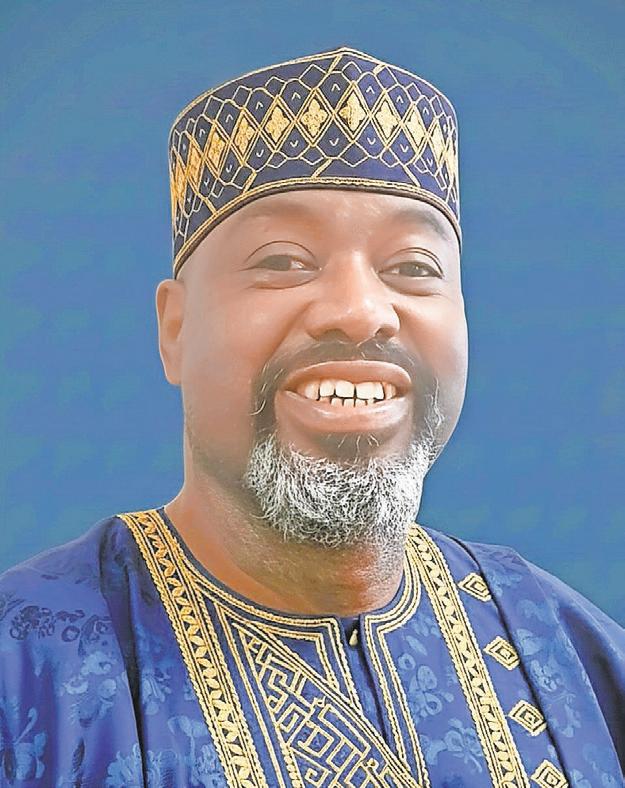
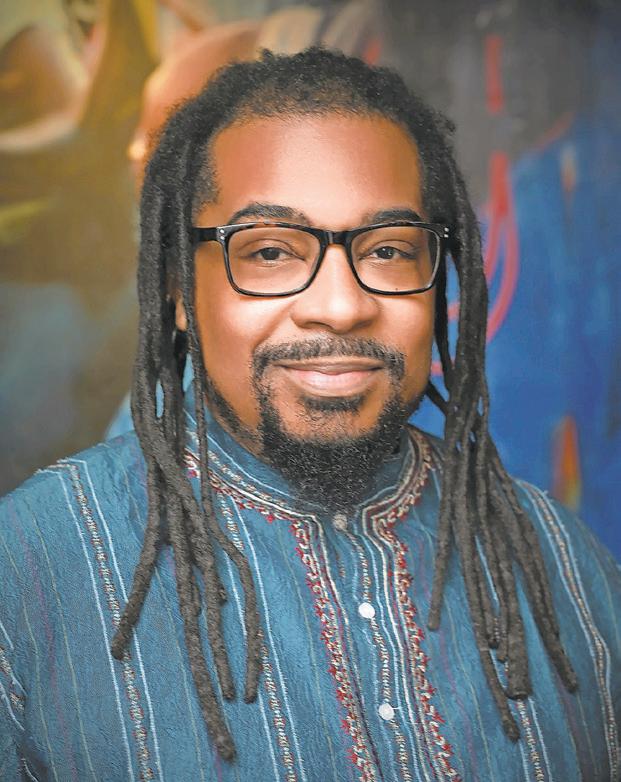
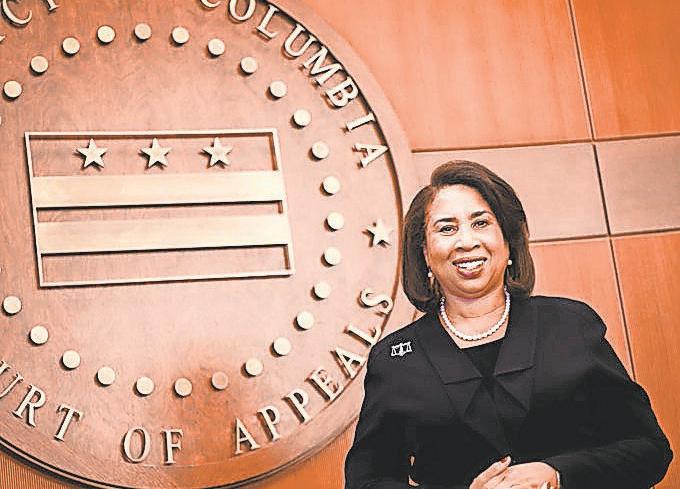
Courtesy photo Rev. Stacy Swimp is a licensed minister, award-winning social commentator, youth advocate and certified community health worker.
Louis-Anderson Word in Black
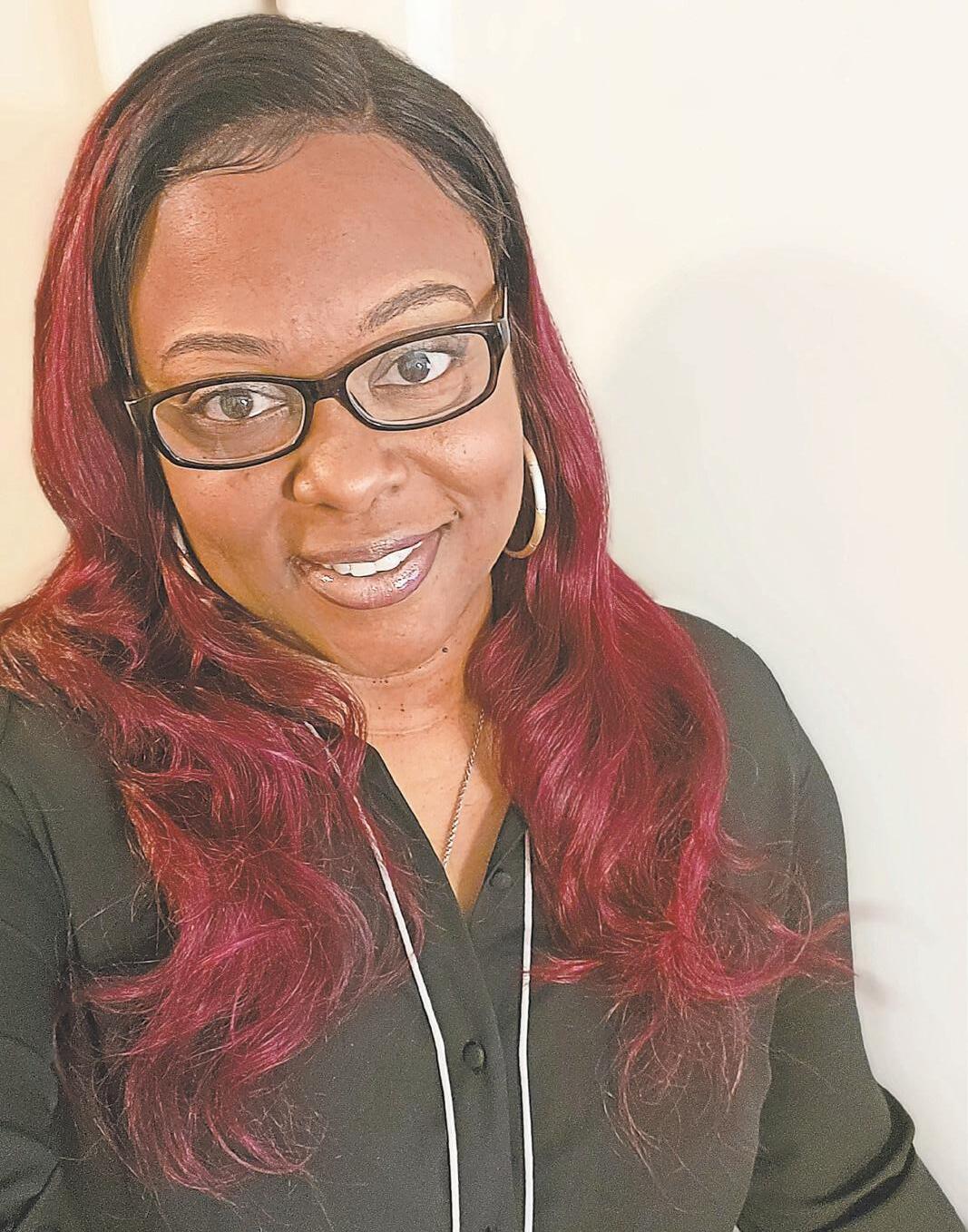
Photo courtesy of LinkedIn
Julienne Louis-Anderson is a former educator and Public Voices Fellow of the OpEd Project in Partnership with the National Black Child Development Institute.
WASHINGTON AREA
the
helped break barriers in basketball while introducing fans around the world to the
As the Globetrotters launch their centennial tour with stops in the Washington, D.C., Maryland and Virginia
McClurkin hopes the team’s showmanship and history will inspire the next generation of basketball talent.
Harlem Globetrotters bring centennial celebration to D.C.
By Jonathan Forney Special to the AFRO
The Harlem Globetrotters made a March 7 stop in Washington, D.C., bringing their centennial festivities to the nation’s capital.
The iconic starred and striped uniforms of the Harlem Globetrotters are almost as well-known as their trick shots and high-flying dunks. Founded in 1926, the organization played their
first game under the Harlem Globetrotter name on Jan. 7, 1927. As the organization begins to celebrate 100 years of entertaining audiences around the world, its players reflect on the team’s impact.
Julian “Zeus” McClurkin, who serves the team as a 6-foot-8-inch forward, remembers the first time he saw the Globetrotters as a kid. McClurkin got his nickname for his
thunderous dunks as a nod to the Greek god of thunder.
“I didn’t think it was a real team when I was a kid,” McClurkin said. “I thought they were superheroes.”
Despite having “Harlem” in its name, the team started in 1926 in Chicago. The name “Harlem” was included in the team’s title to capitalize on the excitement of the Harlem Renaissance, which was in full swing at the time of the team’s founding.
“The Globetrotters started in a time when Blacks weren’t allowed to play basketball in White-only leagues,” McClurkin said. “We used the popularity of the Harlem Renaissance to kind of springboard us into popular culture. That’s kept us around for the last 100 years.”
Since then, the team has played in 150 countries
D.C. Courts authorize community justice workers to assist residents in civil cases
By Megan Sayles
Residents struggling to afford legal representation can now lean on community justice workers for aid in civil cases thanks to an order
issued by the DC Courts on Feb. 5.
Community Justice Worker (CJW) programs are becoming increasingly common across the U.S. as a central approach to closing the “justice gap,” or the mismatch between the high amount
of civil legal needs among low-income communities and the limited access to legal resources to address them.
Under the DC Courts’ order, non-lawyers who undergo specialized training—community justice workers—will be able to help individuals by explaining court processes, providing legal advice, preparing court documents and delivering partial in-court support.
Howard University celebrates 102nd Charter Day dinner in fashion, flare
By Ashleigh Fields Special to the AFRO
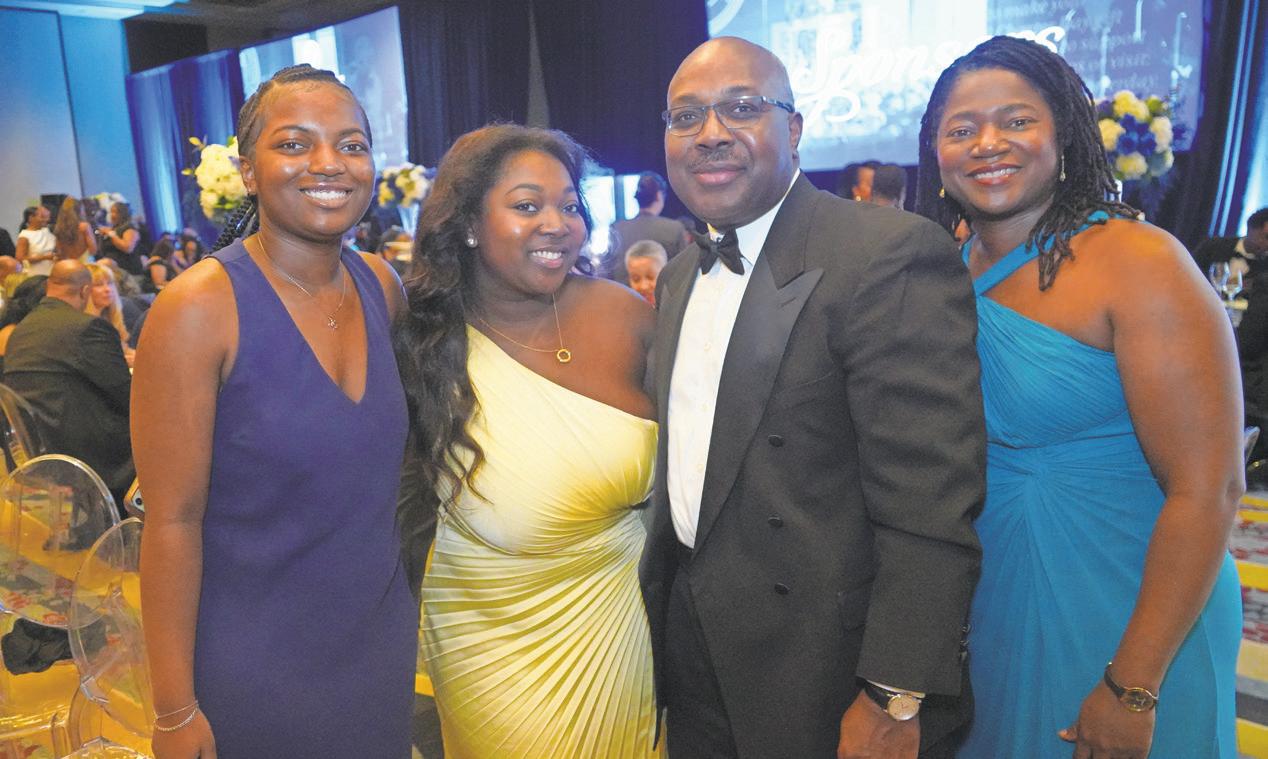
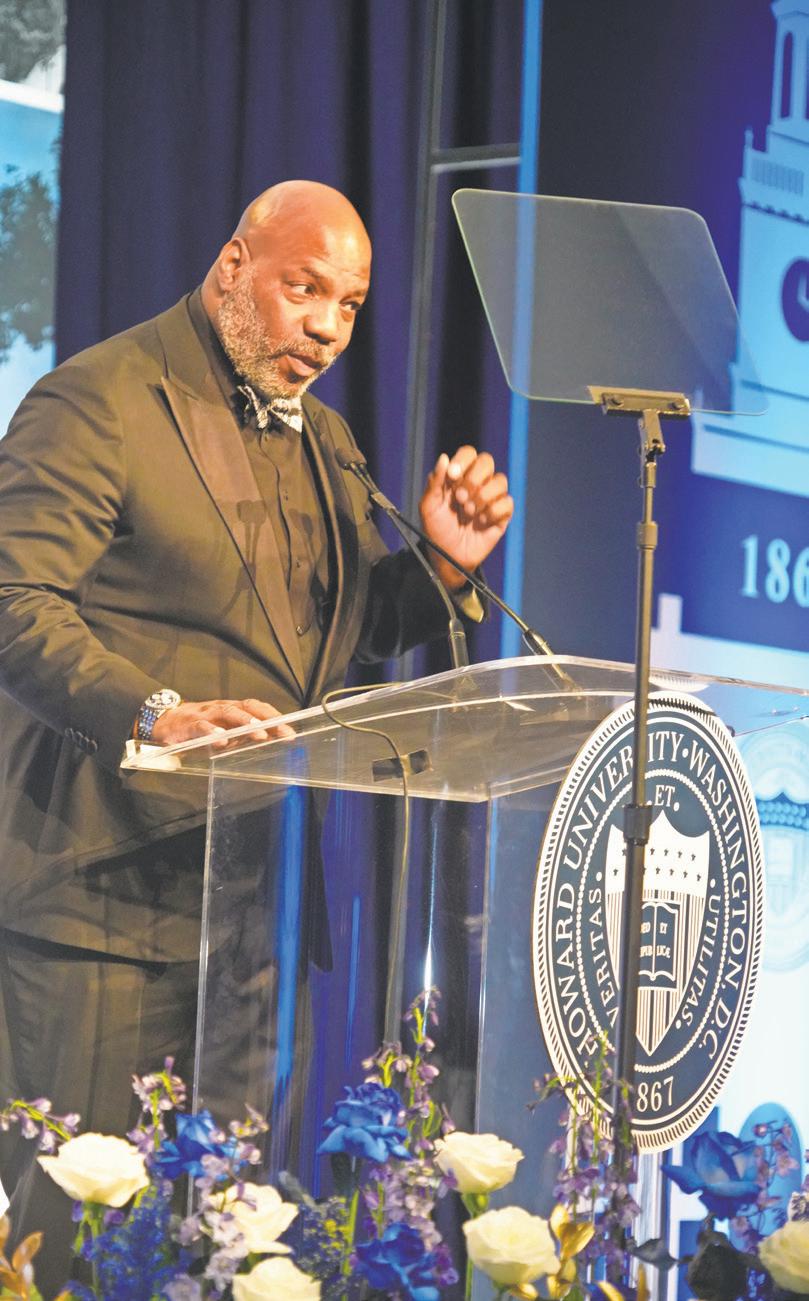
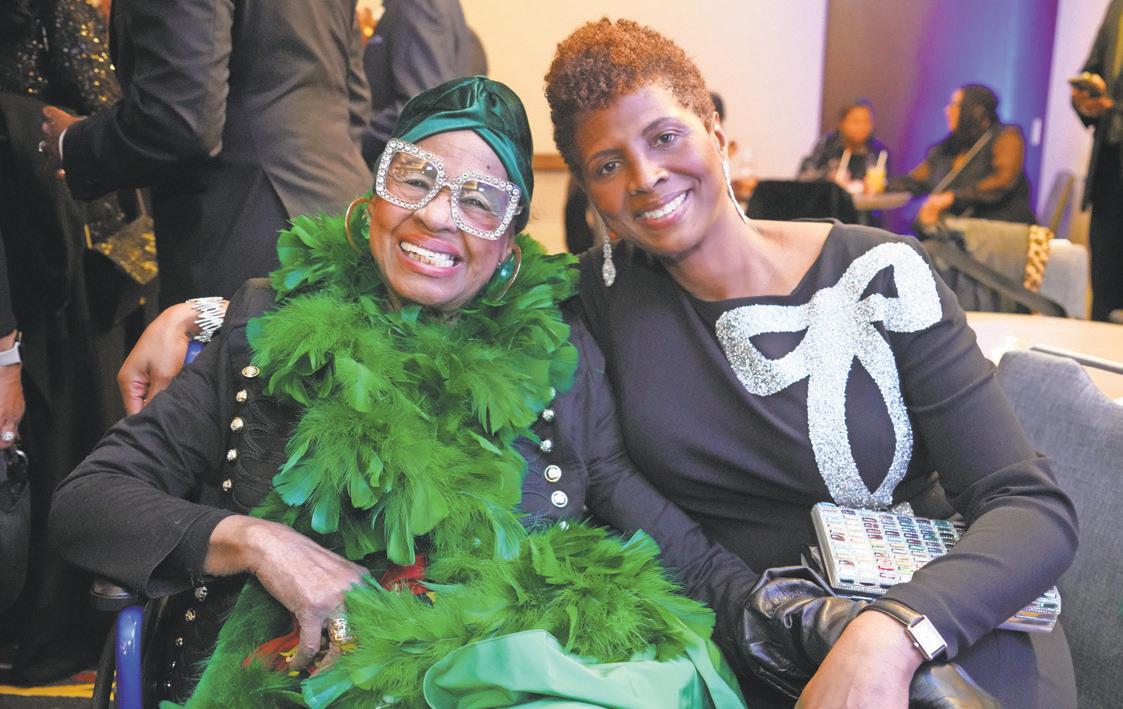
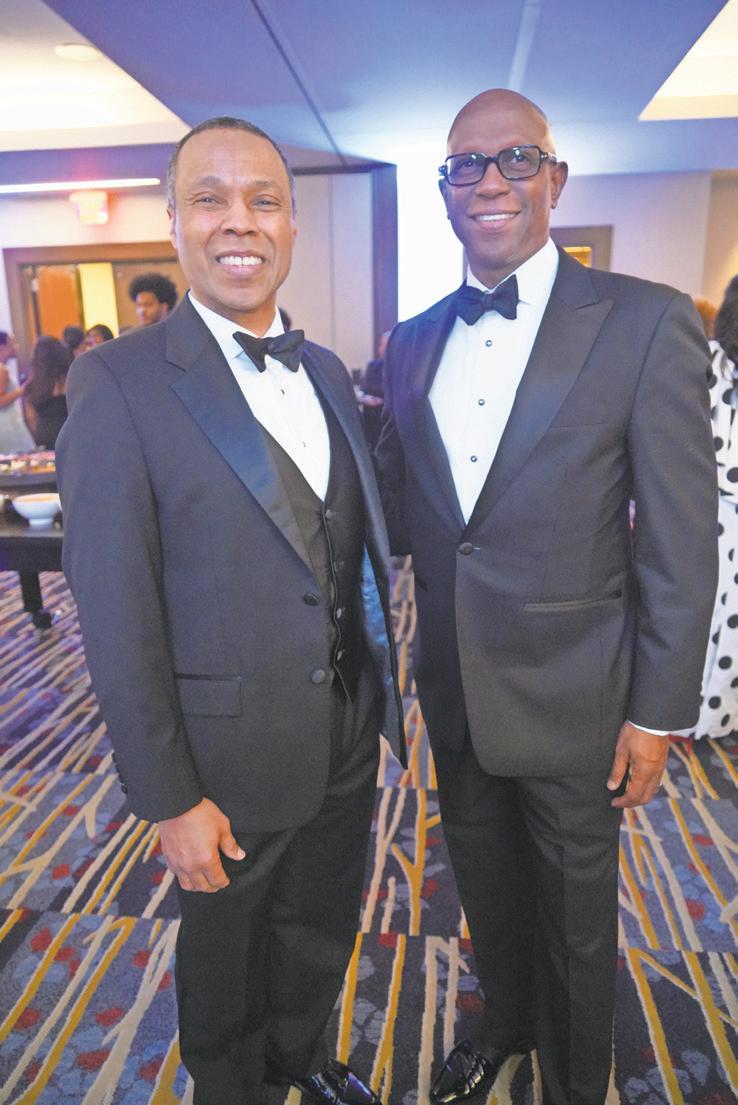
Howard University held its 102nd Charter Day dinner on March 7. The event served as a time to honor alumni who have blazed a new trail for future Howard graduates looking to create change by making a positive impact on their community. The sold-out event took place at the Marriott Marquis.
Guests collectively raised over $1.1 million in ticket sales to uplift students while celebrating the careers of four distinctive alumni.
Journalist Jelani Cobb (B.A. ’94), Judge Herbert B. Dixon Jr. (BSEE ’70), Apollo Theater Executive Producer Kamilah Forbes (BFA ’98), and physician James K. Fortson, MD (B.S. ’72) were duly recognized with awards for their distinguished postgraduate achievements..
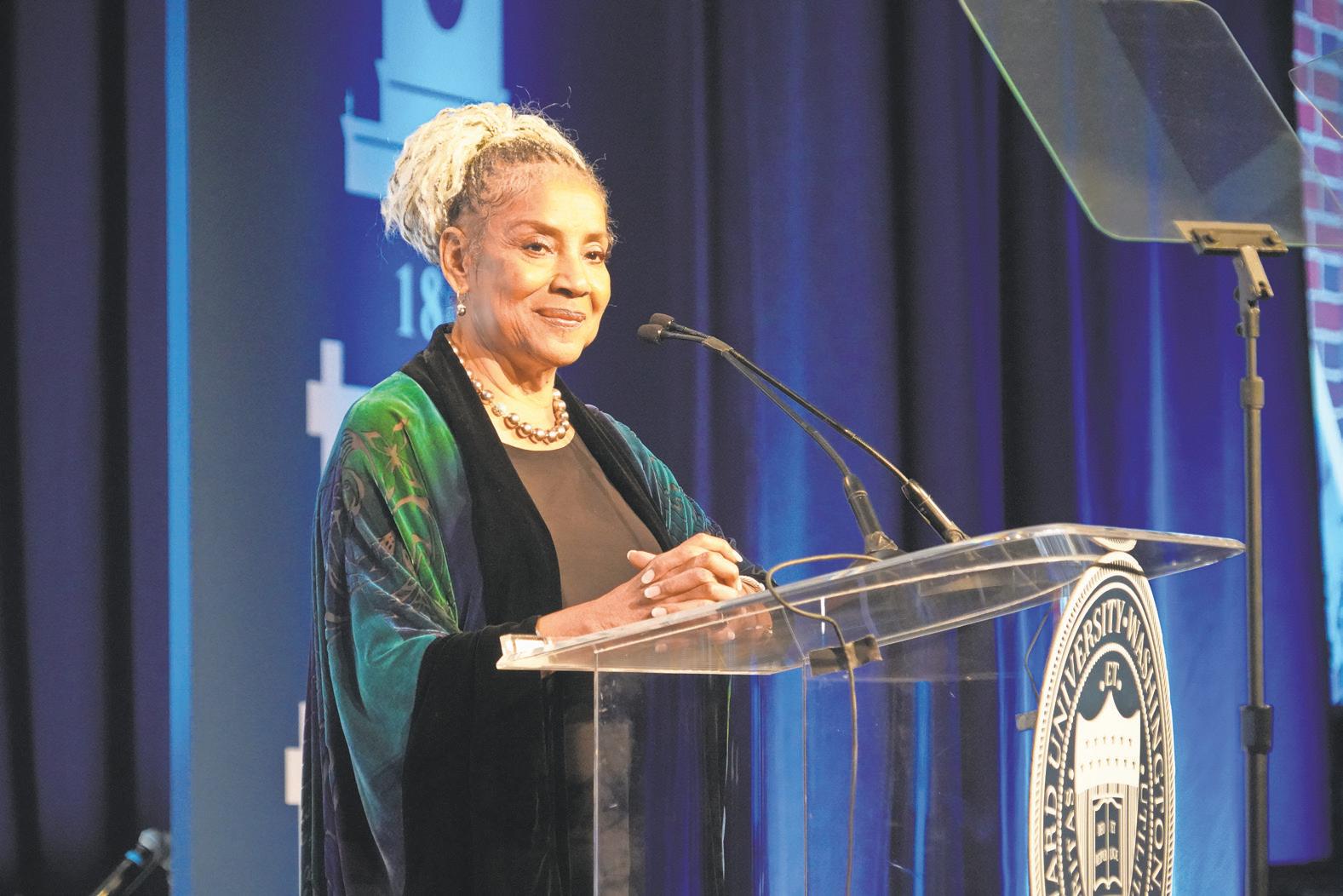
At the helm of the evening soiree was critically acclaimed actor and Howard alumna Phylicia Rashad, who served as the mistress of
ceremonies. She spoke fondly of her time at Howard reflecting on her growth and unprecedented opportunities provided at the campus in the heart of the nation’s capital.
Rashad also for a brief period memorialized her classmate, legendary gospel singer Richard Smallwood, who died late last year.
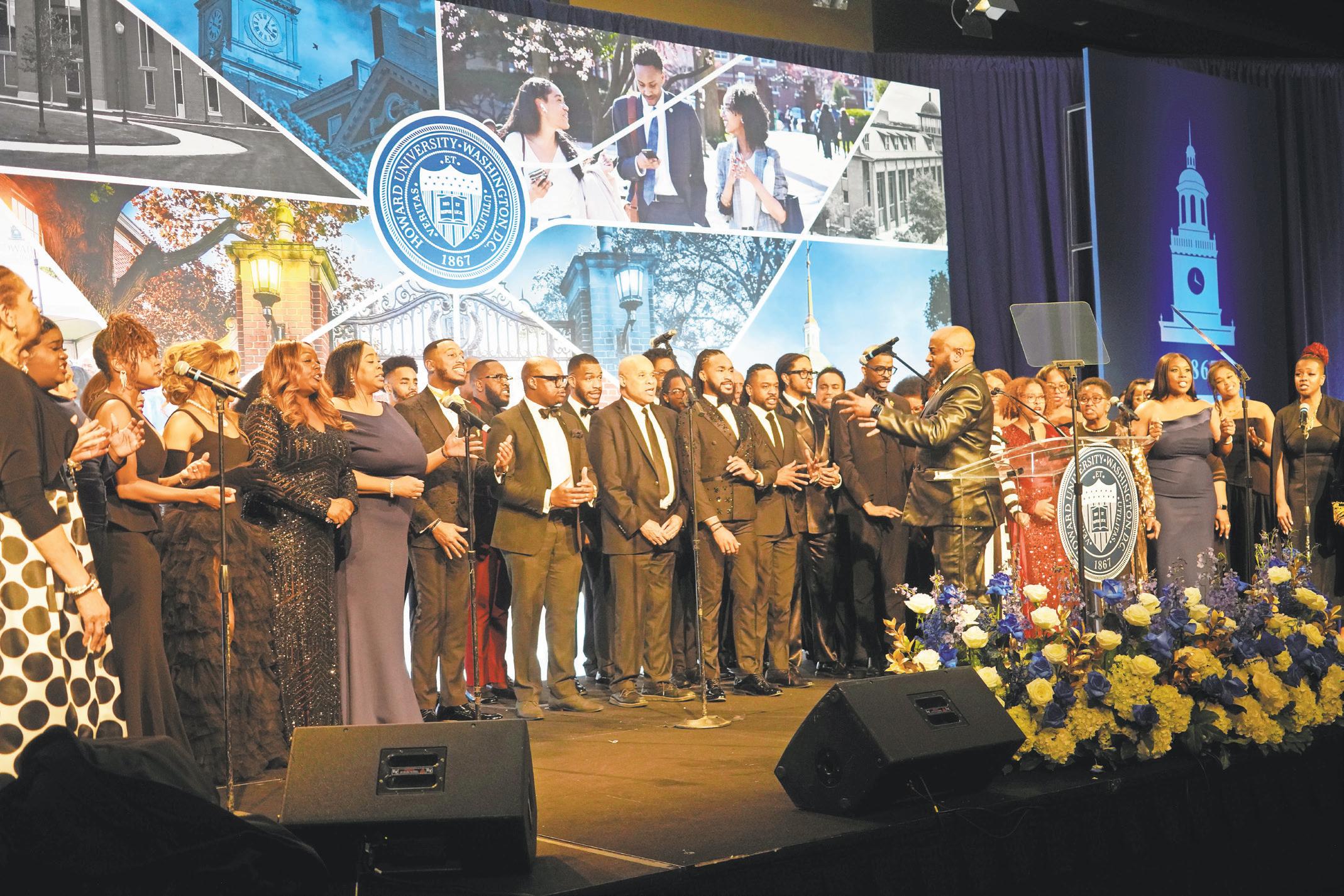
Smallwood was a founding member of the university’s first gospel choir, which surprised the crowd with a tribute glorifying his legacy at the prestigious Charter Day dinner.
“They tore the roof off the ballroom!” alumnus Kevin Harry said of their performance.
Members of the group said that’s exactly what they intended to do in honor of Smallwood. Four of the Howard Gospel Choir’s original members stood and sang alongside more recent graduates, ushering in a spirit of praise and purpose for the crowd gathered to celebrate
“Moments like these remind us of the brilliance that has emerged from our university and the impact Howard alumni continue to make around the world.”
“This initiative reflects the DC Courts’ deep commitment to ensuring that everyone who comes to us can meaningfully participate in their case,” said Judge Anna Blackburne-Rigsby, chief judge of the DC Court of Appeals, in a Feb. 5 release. “Too many people facing critical issues—like eviction, child custody or safety from abuse—have had to do so without legal help. This program will expand support where it is needed most.”
The order is a result of the Civil Regulatory Reform Task Force, which was established by the DC Courts in 2023 to assess strategies for narrowing the justice gap for low- and middle-income Washingtonians involved in civil cases. In 2025, the task force released its report, calling for the creation of CJW programs.
“It’s true—whether it’s in landlord and tenant,
small
AFRO Staff Writer
Photo courtesy of DC Courts
Judge Milton C. Lee serves as the chief judge of the DC Superior Court.
Photo courtesy of The Harlem Globetrotters
Founded in Chicago in 1926 during the height of the Harlem Renaissance,
Harlem Globetrotters
sport.
area, longtime player Julian “Zeus”
Photo courtesy of DC Courts
Judge Anna Blackburne-Rigsby serves as the chief judge of the DC Court of Appeals. The DC Courts recently issued an order authorizing trained community justice workers to
who cannot afford a lawyer in civil cases.
Montgomery County Council faces pressure over clean energy mandate for proposed data center
By Megan Sayles AFRO Staff Writer msayles@afro.com
Montgomery County environmental leaders are urging the county council to require a proposed data center in Dickerson, Md., to run on 100 percent clean energy, warning that the facility could significantly undermine the county’s climate goals and impact public health.
The hyperscale data center would pull 300 megawatts of electricity from the regional grid, producing massive greenhouse gas emissions if powered by fossil fuels, and would require large volumes of water for cooling.
“Without a clean energy commitment, this one data center in Montgomery County will emit 1 million tons of carbon dioxide per year. That
is the equivalent of adding 200,000 dirty cars onto the roads of Montgomery County every year. That’s how much climate pollution this one data center will trigger,” said Mike Tidwell, founder of CCAN. “It will literally blow up the county’s climate goals.”
Tidwell noted that the facility would also increase county greenhouse gas emissions by 12.5 percent and represent a 1 to 2 percent rise in carbon dioxide for the entire state of Maryland.
CCAN is calling on the county council to intervene.
“If this data center company won’t voluntarily commit to this goal of 100 percent clean energy, the only entity that can protect the health of Montgomery County voters and our climate policies is the Montgomery County Council,” said Tidwell. “The
Harlem Globetrotters
Continued from A5
continents as global ambassadors of goodwill and sportsmanship.
“The Globetrotters brought this game all over the world at times when nobody even knew what basketball was,” McClurkin said. “This sport has brought people together who maybe never would’ve been together in the past.”
McClurkin would eventually play on the Washington Generals, a team known for losing to the Globetrotters, before joining the team himself. The Ohio native and historically Black college alum has been with the team for 16 years now.
“Eventually they got tired of me dunking on them and they signed me to a contract that next year,” McClurkin said.
DC Courts
claims, probate, divorce, custody, protection orders, that entire arena where there is no constitutional right to a free attorney,” said Judge Milton Lee, chief judge of the DC Superior Court, in a Feb. 5 statement. “This is the courts’ efforts to level the playing field among the thousands of litigants that come through our doors every year.”
According to a 2022 study from the Legal Services Corporation, a private, nonprofit corporation created by Congress, low-income Americans did not receive any or adequate legal assistance for 92 percent of their civil disputes. Additionally, 46 percent of people who did not seek legal aid cited affordability concerns as a reason why. Experts say CJW programs could change this pattern.
bottom line is if we can’t build a green data center in Montgomery County, where can you build one?”
In January, Montgomery County introduced a zoning text amendment (ZTA) confining data center development to industrial areas and requiring projects to undergo a conditional use review process that evaluates potential environmental and community impacts before approval.
The ZTA was sponsored by Montgomery County Council President Natali Fani-Gonzalez, Vice President Marilyn Balcombe and at-large Councilwoman Laurie-Anne Sayles. Sayles told the AFRO that Montgomery County is evaluating the energy use and emission risks of data center development—examining how projects could affect waterways, woodlands and parks, as well as the levels of light and noise pollution they might create.
“We’re trying to ensure that we are prioritizing not just responsible economic growth, protecting neighborhoods’ quality of life and ensuring that this infrastructure delivers lasting benefits, but also the public health and environmental impacts,” said Sayles. “We are open to exploring the possibility of renewable energy on site. We are asking the applicant to prioritize reducing fossil fuel reliance.”
Sayles said she commissioned an Office of Legislative Oversight (OLO) report to research best practices for data center development from jurisdictions around the world. She noted that she’s yet to see any facilities in the U.S. run entirely on renewable energy, though some overseas examples exist.
While she acknowledged that the county would ideally like data centers powered by renewables, she
that would restrict data centers to industrial
and
a conditional use review to assess potential environmental and community effects before approval.
explained that the county needs to first understand what Maryland’s grid can support. The state is currently studying the environmental, energy and economic impacts of data centers, with a final report due in September.
Montgomery County’s Climate Action Plan, created in 2021, commits the locality to reducing greenhouse gas emissions by 80 percent by 2027 and achieving net-zero emissions by 2035. Sayles
emphasized these goals will remain a guiding factor as county officials consider data center proposals.
“We’re not going to deviate from that plan just to bring infrastructure to the county,” said Sayles. “Though we know that these structures are very important to businesses and the economy, we are only welcoming data centers that are going to meet the strong environmental standards that we have prioritized to protect our communities.”
As the team comes up on 100 years, the math to calculate its history gets easier. McClurkin calls being with the team for 16 percent of its existence is a “blessing.”
Now, he wants to help inspire the next generation of talent, much like the veterans who brought him on years ago.
“I just try to pour back into the younger guys as they come in,” McClurkin said. “When I first came in, I remember people who had been on the team forever. They just poured back into the younger guys and taught them all the tricks.”
One such veteran, Coach “Sweet Lou” Dunbar has been involved with the organization—both as a player and now as a coach—for
“The Globetrotters brought this game all over the world at times when nobody even knew what basketball was. This sport has brought people together who maybe never would’ve been together in the past.”
nearly half a decade. McClurkin values getting to learn from someone with such strong ties to the historic franchise.
“It’s an honor. He’s seen the team go through so many different
phases,” McClurkin said. “I always love sitting around him and listening to his stories.”
As the Globetrotters kick off their centennial tour, McClurkin said the team’s track record on and off the
“More than 90 percent of folks who have civil legal service needs are not met. Allowing folks who are trained to provide basic advice and help is going to make a very big difference for communities of color and other poor people who can’t afford to hire a lawyer.”
David Singleton, professor of law and associate dean of clinics at the University of the District of Columbia (UDC), characterized the DC Courts’ order as a big win for Washingtonians.
“While D.C. is not the first jurisdiction to allow community justice workers, this is a growing trend across the country,” Singleton told the AFRO. “More than 90 percent of folks who have civil legal service needs are
not met. Allowing folks who are trained to provide basic advice and help is going to make a very big difference for communities of color and other poor people who can’t afford to hire a lawyer.”
Singleton emphasized that having access to legal aid can make a difference in judicial outcomes, especially in eviction and debt cases. He believes the approval of CJW programs in DC will help to build trust between residents
and the courts.
“One of the reasons that folks who are unrepresented tend not to trust the system is because the system’s designed to work against them if they are going into the courthouse without an advocate,” said Singleton. “I think, as a result of this, we will find more trust in our legal system, and that’s important, particularly in these times when we have an administration who’s trying to sow doubt in our judiciary.”
court cannot go unnoticed.
“It’s amazing to see, as I get older, how we affect and impact culture,” McClurkin said. “Not just in the world, but in particular with the game of basketball.”
The Globetrotters invented the slam dunk, the three-man weave, the alley-oop and more.
“Basically, all the cool things you see in basketball today were all impacted by the Harlem Globetrotters,” McClurkin said.
The 100-year tour will take place between February and April in the states and from February to October internationally. Aside from the stop in D.C., the team will be in Baltimore on March 15.
For those looking to catch the Globetrotters on tour, they can visit their website, harlemglobetrotters.com. There, fans can learn more about the team’s storied history, their dozens of world records, and more.
Photo courtesy of Montgomery County Government Laurie-Anne Sayles serves as an at-large member of the Montgomery County Council. Sayles sponsored a zoning text amendment
zones
require
Photo by Taylor Vick on Unsplash Montgomery County environmental groups are demanding that a proposed data center in Dickerson, Md., run entirely on renewable energy as data center development accelerates across the state of Maryland.
Photo courtesy of UDC
David Singleton is a professor and the associate dean of clinics for the University of the District of Columbia (UDC) David A. Clarke School of Law.
DC Water faces class-action lawsuit after sewage spill into Potomac River
By Jamannie Morgan AFRO Intern jmorgan@afro.com
DC Water is facing a class-action lawsuit after the Jan. 19 sanitary sewage spill that sent more than 200 million gallons of waste into the Potomac River. The incident occurred when a 72-inch section of the 54-mile long Potomac Interceptor collapsed along Clara Barton Parkway in Montgomery County, Md., near the Chesapeake and Ohio Canal National Historical Park.
Representatives for the environmental law firm Hagens Berman are seeking damages on behalf of property owners and vessel owners who claim they are facing economic losses ranging from property contamination, cleanup costs and interruption of business operations.
The lawsuit, filed March 6 in the U.S District Court for the District of Maryland, alleges the District of Columbia Water and Sewer Authority failed to install the proper safeguards and monitoring protocols to prevent catastrophic infrastructure failure.
DC Water leaders say they are working to clean up the area and have an average of 53 personnel on site daily to handle over 130 tons of debris being hauled out each day. Contractors installed a bypass system on Jan. 24, with a goal of using pumps to reroute wastewater.
District of Columbia and Maryland community leaders held meetings to provide updates on Potomac Interceptor response, current system status and next steps in emergency repair and long-term rehabilitation efforts.
“Crews have completed work to reinforce the pipe sections upstream and downstream of the collapse site using geopolymer to strengthen the pipe. The work included 320 linear feet of the upstream section, 300 linear feet of the downstream section, and drop sections where the elevation changes,” said DC Water, in a
March 9 statement. “Geopolymer, is strong like concrete but more resistant to sewer gases and when applied strengthens the pipe and provides structural integrity.”
Officials are aiming to have the emergency repairs complete by mid-March. “Environmental rehabilitation work continues in Area 1, adjacent to the collapse site
“We are aware that, although now the scientific data show that E.coli contamination is diminishing at and near the site, it is still high elsewhere and thus residents should examine the public data to determine when and where contact is safe.”
Howard
the experiences cultivated at institution, known in the Black community as “The Mecca.”
“It’s always heart-warming and inspiring to spend time with fellow Bison, reinforcing connections that have lasted for decades,” alumna Kim Singleton said of the evening.
“Moments like these remind us of the brilliance that has emerged from our university and the impact Howard alumni continue to make around the world,” she added.
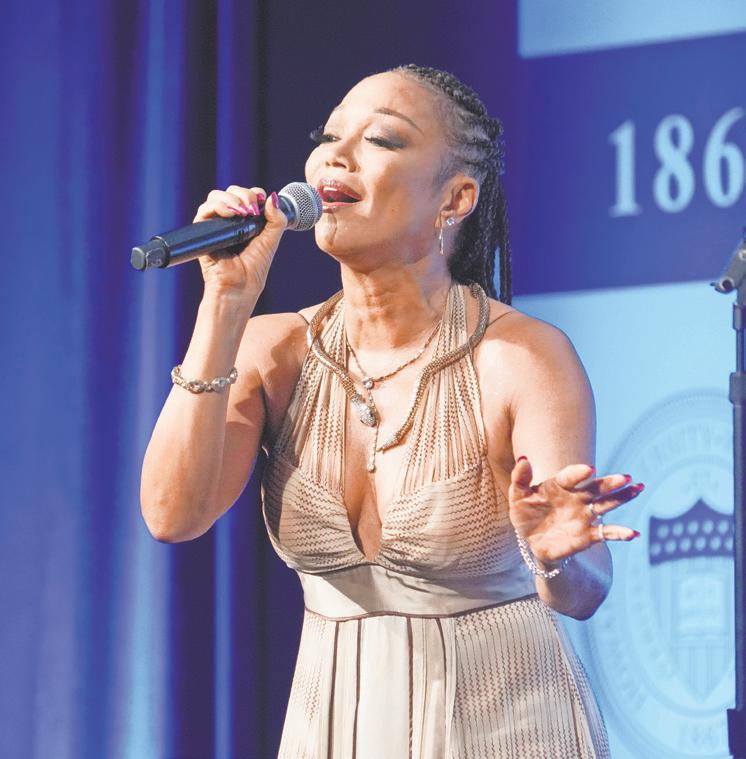
Guests were serenaded by Chante Moore in the company of celebrities ranging from reality star Candiace Dillard Bassett to Pulitzer Prize-winning journalist Keith Alexander, who has long touted the school’s ability to develop young journalists.
Cobb said he was among those whose writing was fostered at Howard. The seed planted in him by university professionals blossomed
and influences him daily as he leads Columbia University’s Journalism School as dean.
“With the exception of my family, no other institution has had as much of an impact on who I am as Howard. It’s my parents, my siblings and then Howard,” Cobb said in an interview with Howard earlier this year.
He noted that at the time of graduation the industry’s eroding norms were still intact. However, he asserted that today, students are facing an uphill battle.
“Journalists [must] be able to convey to the public how they know what they know and what they did to get the story that they have, because we have this unprecedented decline in trust and that wasn’t the context that I emerged in as a young journalist,” he said.
“The ability to tell stories that weave in the work that you did and explain the reporting that you did and how you came to know what it is, that is crucial.”
Cobb reminded reporters that they are tasked with doing something simple but “deceptively complicated, which is [to] tell the truth.”
and the drainage channel along Clara Barton Parkway,”continued the DC Water statement. “Crews are clearing vegetation, excavating contaminated soil, mucking the area, and implementing erosion control measures and soil stabilization as part of the initial clean-up.”
According to DC Water officials, “swimming is not recommended when E. coli levels exceed 410 MPN/100 mL. For the Potomac River, historical water quality data shows E. coli levels may vary from a range as low as 10 MPN/100mL to as much as 5,000 MPN/100mL on a given day.”
As of March 8, the levels at Swainson Island, roughly 8 miles northwest of the District, were recorded at 1,050 MPN/ 100 mL on March 8, down from 2,300 MPN/ 100 mL on March 2; On Wisconsin Avenue at Georgetown, researchers found E.coli levels of 291 MPN/ 100 mL on March 8, which was down from the 816 1,050 MPN/ 100 mL recorded on March 6. While some E.coli levels have gone down, in other places like Sycamore Island and Fletcher’s Boathouse,the levels have gone up. The north shore of the Potomac recorded 43 MPN/ 100 mL on March 2, followed by a
gradual increase each day to March 8, where levels were reported at 345 MPN/ 100 mL. Community leaders and advocates say they hope more will be done in the near future to rectify the disaster.
“We are aware that, although now the scientific data show that E.coli contamination is diminishing at and near the site, it is still high elsewhere and thus residents should examine the public data to determine when and where contact is safe,” said Potomac Riverkeeper Network (PRKN) President Betsy Nichola. “We wish that DC authorities would conduct testing at more sites further down the river as a means to restore the lost trust.” DC Water says the district’s drinking water supply was not impacted by the partial collapse of the Potomac Interceptor, due to it operating separately from the wastewater system. Officials also urge the public to avoid contact with untreated sewage which may contain bacteria and viruses. If exposure does occur, officials advise leaving the area immediately, washing exposed skin and seeking medical care if symptoms occur. Any exposure should be reported back to DC Water at 202-612-3400.
“With the exception of my family, no other institution has had as much of an impact on who I am as Howard. It’s my parents, my siblings and then Howard.”
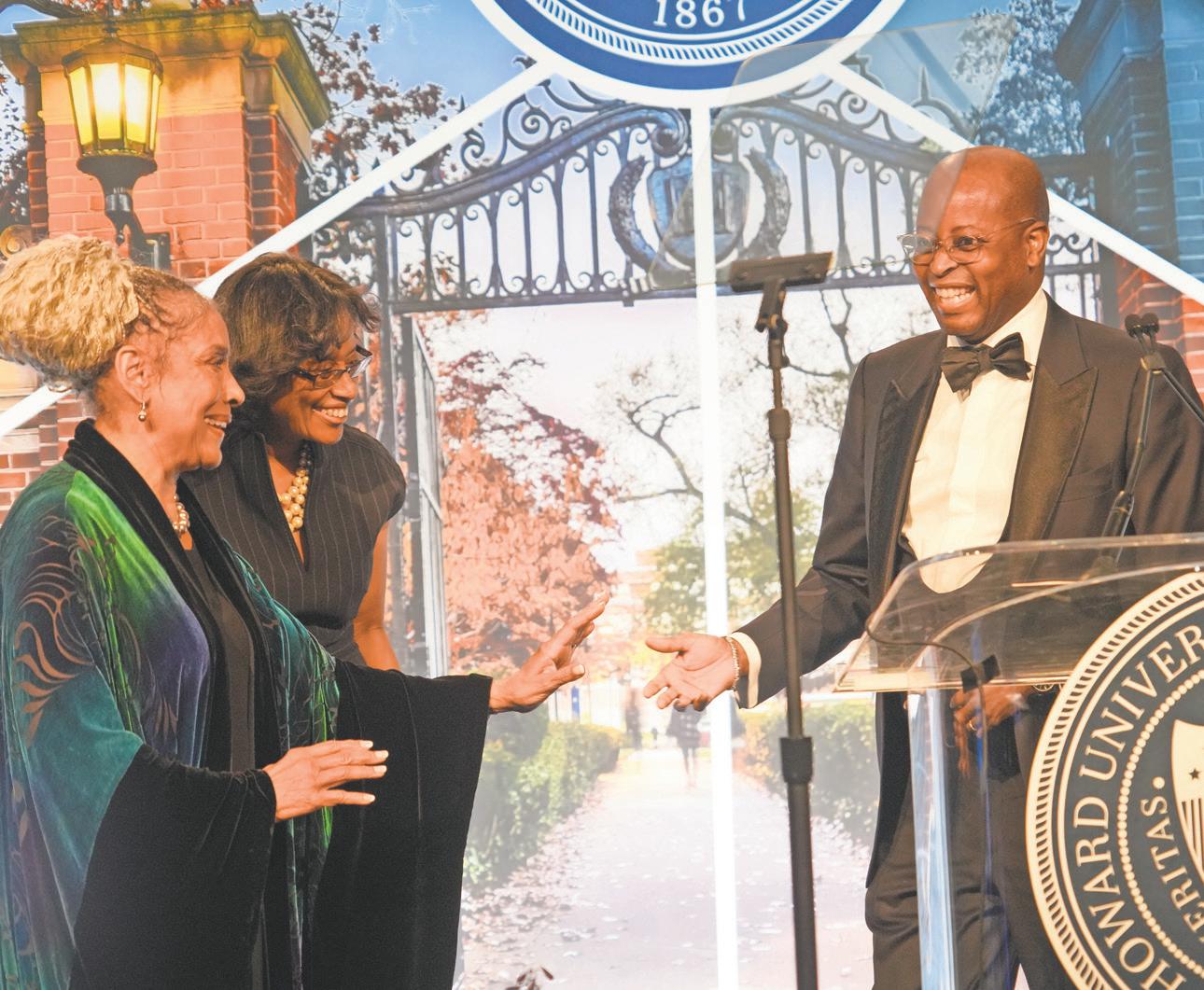
Phylicia Rashad (left), dean emerita of the Chadwick A. Boseman College of Fine Arts, receives the Presidential Medal of Achievement from Dr. Wayne A. I. Frederick (right), Howard University interimpresident, and Dr. Leslie Hale, chair of the Howard University Board of Trustees.
AFRO Photo / Patricia McDougall
The Rev. Dr. Bernard Richardson, the fourth dean of the historic Andrew Rankin Memorial Chapel, addresses the crowd.
AP Photo / Cliff Owen
Interceptor pipes rest along the canal where the collapse of a section Potomac Interceptor took place, sending more than 200 million gallons of wastewater into the Potomac River.
By Patricia McDougall Special to
On March 7, Howard University celebrated its 159th Charter Day Dinner. Phylicia Rashad, dean emerita of the Chadwick A. Boseman College of Fine Arts and celebrity actress, served as the mistress of ceremonies for the 2026 Charter Day Dinner. Rashad was also awarded the Presidential Medal of Achievement at the Dinner.
Various distinguished alumni, including Jelani Cobb, Herbert B. Dixon Jr., Kamilah Forbes and James K. Fortson, MD were awarded for their outstanding contributions. The celebration also featured celebrity artist Chante Moore and the Howard University Gospel Choir. Howard University alumni, faculty, staff, the Howard community and students all came out to join the celebration.
All
AFRO Photos / Patricia McDougall
the AFRO
Members of the Howard University Gospel Choir perform live at the Charter Day Dinner.
Celebrity artist Chante Moore performs for the crowd.
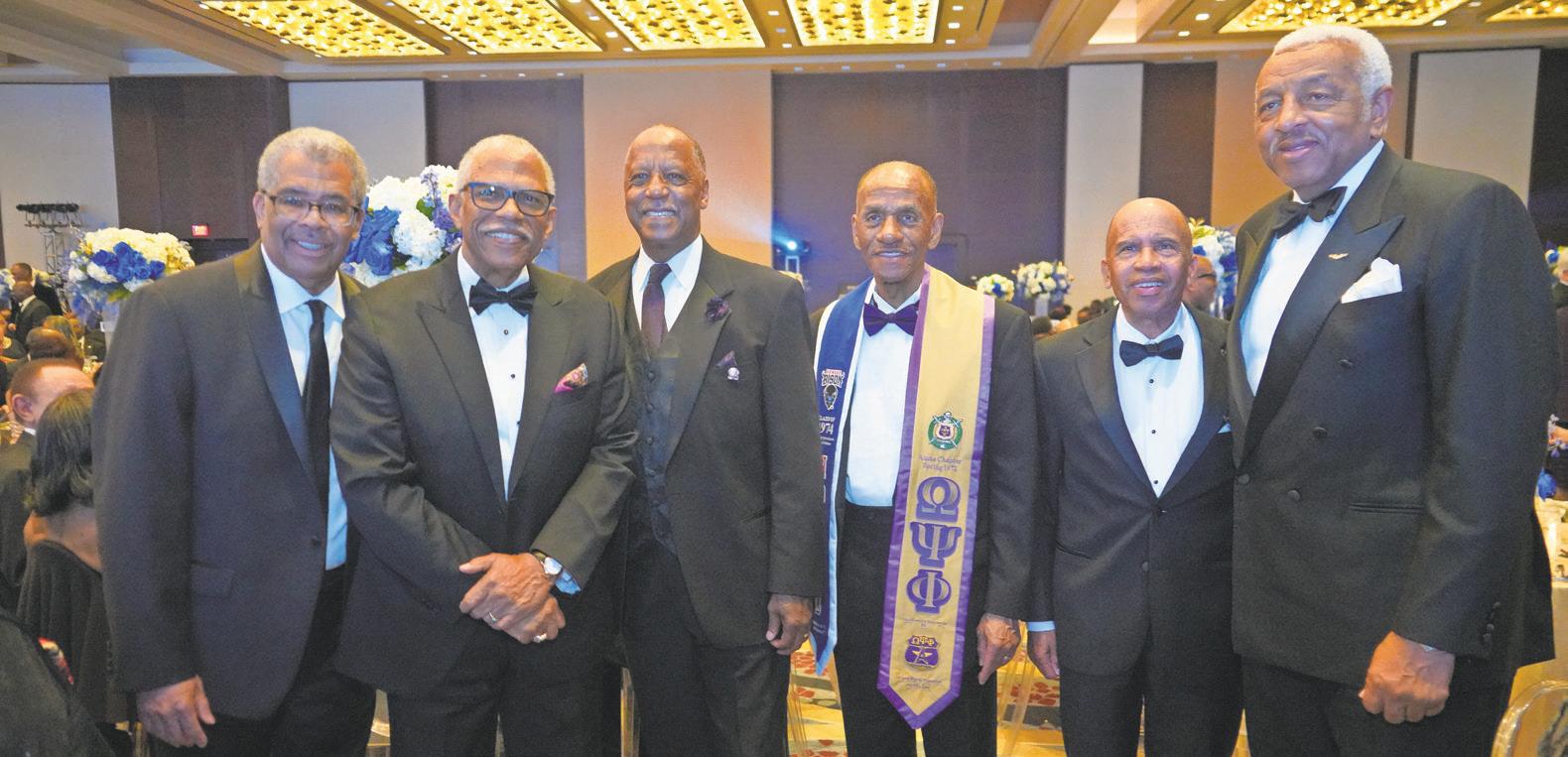
Shown here, members of the Alpha Chapter, Omega Psi Phi Fraternity, Inc. at the 2026 Charter Day Dinner: Howard University Dean Rev. Dr. Bernard Richardson of Andrew Ranking Memorial Chapel (left); Dr. Nelson Adams; Chauncey Manson III; Duane Brown; Dr. James Fortson and Anthony Holder.
Dr. Eleanor W. Traylor (left), former professor of English at Howard University, shares a moment with Dr. Dana A. Williams, dean of the historically Black institution’s Graduate School.
Guericke “Chris” Royal (left), Howard University faculty senate chair and associate professor, fellowships with Donald B. Christian, former leader of PwC U.S. East Region Advisory, who served as the 2026 Charter Day keynote speaker.
Phylicia Rashad, a magna cum laude scholar of Howard University’s Class of 1970, is dean emerita of the Chadwick A. Boseman College of Fine Arts. Rashad served as the 2026 Charter Day Dinner mistress of ceremonies. She was also awarded the Presidential Medal of Achievement.
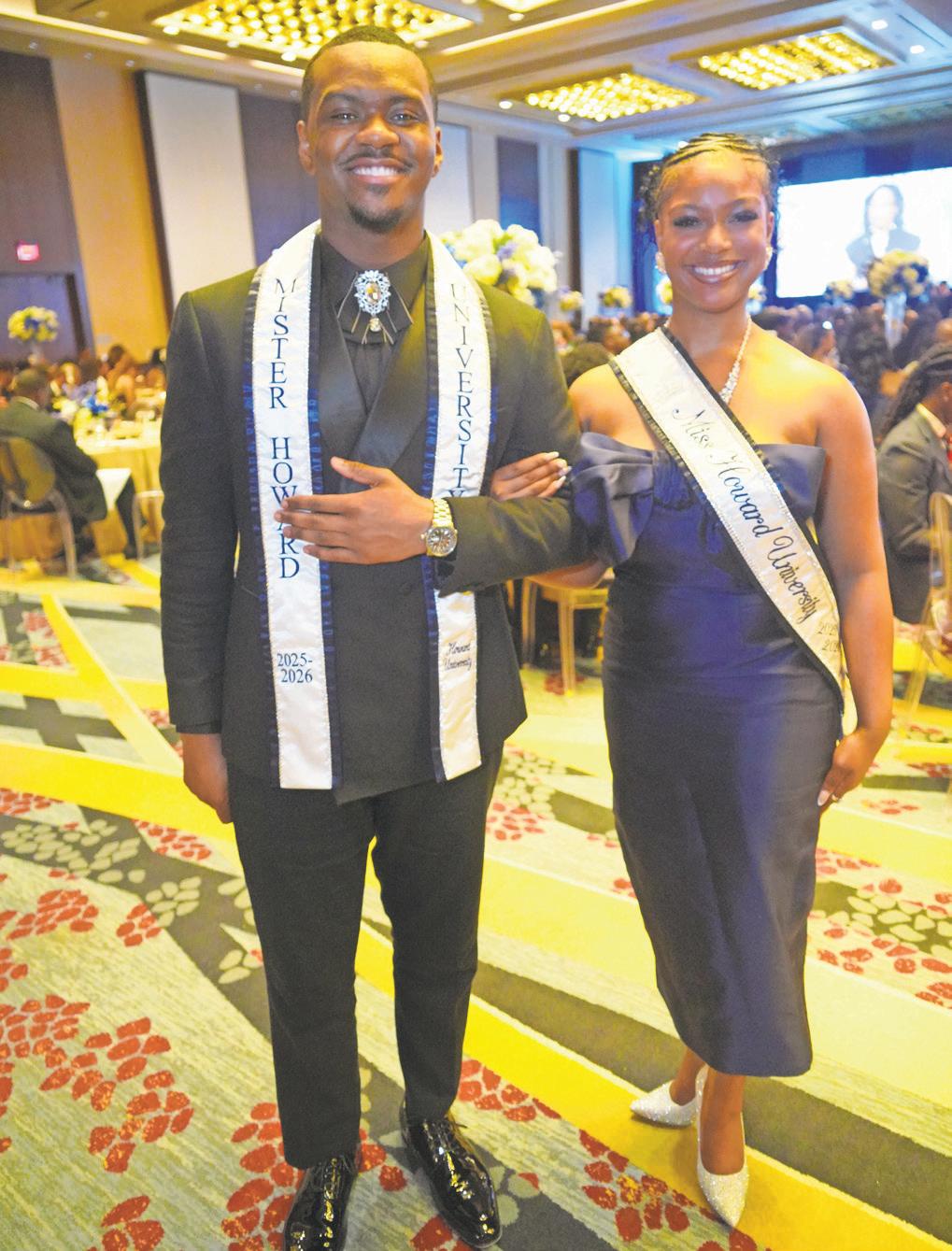
Hamid Jalloh (left), the 49th Mister Howard University, arrives with Eden Boles, the 87th Miss Howard University at the Charter Day Dinner.
Members of the Class of 2005 present a check of more than $300,000 to their beloved Howard University. Shown here, Co-chairs Conrad Woody (left), Ravi Windom, Freda Henry Wells, Chairman Steve D. Mobley Jr. and interim Howard University President Dr. Wayne A.I. Frederick.
Shown here, Niya Wutoh (left), Nadya Wutoh, Howard University Provost Anthony Wutoh and his wife, Dr. Rita Wutoh.
James K. Fortson, MD, prepares to receive the Howard University Alumni Award in the field of medicine.
BALTIMORE AREA
Attorney, family and friends of Samuel ‘Big Sam’ Brown demand justice
By Tashi McQueen
AFRO Staff Writer
tmcqueen@afro.com
The family of Samuel “Big Sam” Brown, a Black man who died days after an encounter with the Baltimore County Police Department, responded on March 5 to newly released body camera footage of the incident.
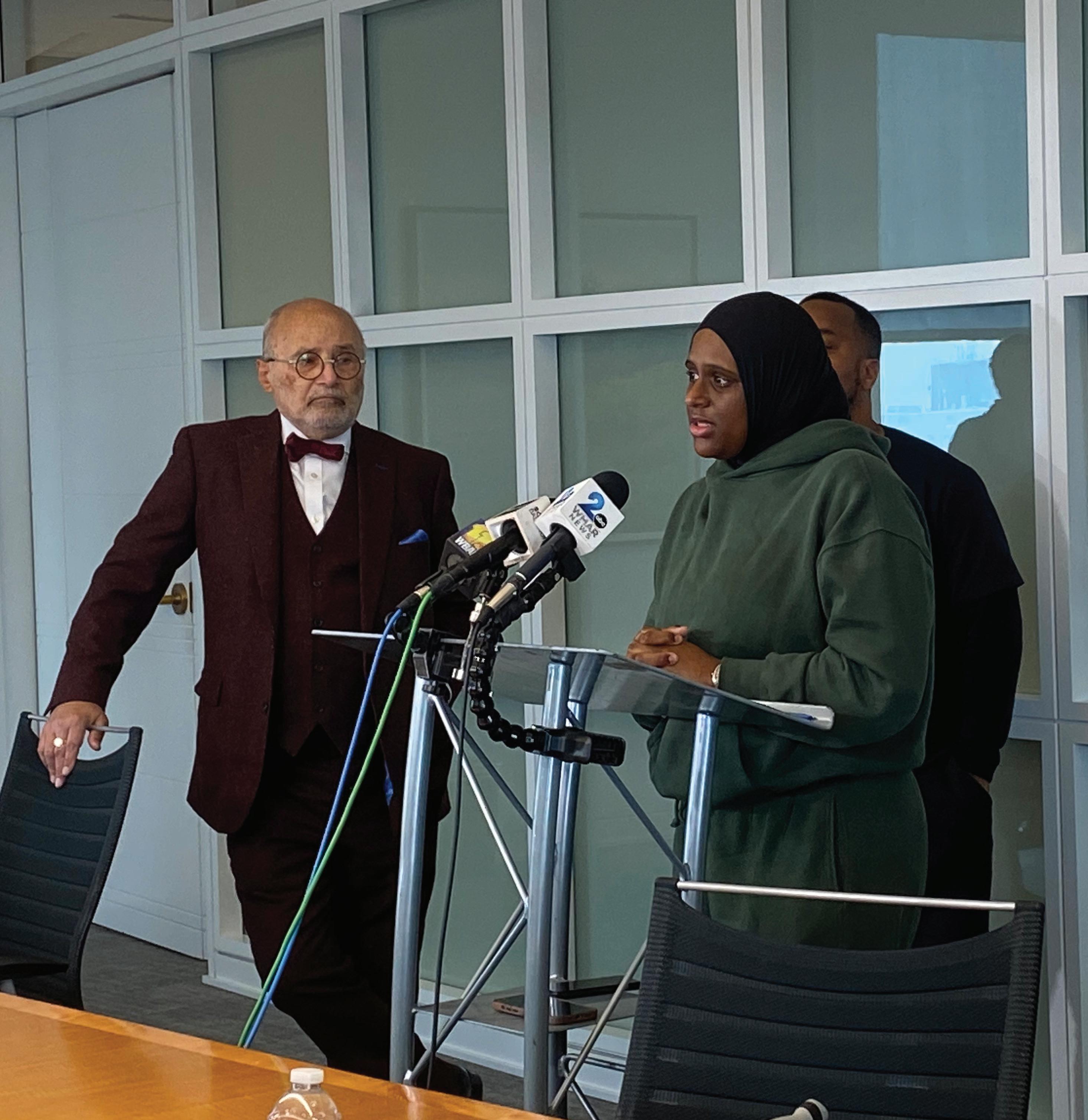
The press conference was held at the Murphy, Falcon and Murphy office in downtown Baltimore, where the family appeared alongside their attorney, William H. “Billy” Murphy Jr.
The officer involved in the Feb. 16 incident has been identified as Derek Hadel, a nine-year veteran of the Baltimore County Police Department.
“Justice requires that Officer Hadel be fired, prosecuted and sued,” said Murphy.
Murphy described what Hadel’s body camera footage showed.
“You can see that Officer Hadel, instead of deescalating the situation
“Justice requires that Officer Hadel be fired, prosecuted and sued.”
as required by Baltimore County Police Department policy, chose to escalate the situation illegally by sucker-punching Big Sam in his face,” he said. “You can see him do it suddenly, with excessive and brutal force that was so strong that it broke bones in Big Sam’s face and caused Big Sam to hit the pavement so hard that it fractured his skull. That resulted in his death a few days later.”
Murphy insisted that in the video it is clear that Brown was defenseless.
“At the time of the attack, Big Sam was obviously drunk,” said Murphy. “He was defenseless, because he was standing still with his arms at his side when he got hit. His hands were empty, he had no weapon, and you can see that Officer Hadel’s violent attack was completely unnecessary, inexcusable and in fact, criminal.”
The Brown family stood behind Murphy, holding hands and supporting one another as he spoke.
Murphy also framed the case as part of a broader pattern involving fatal encounters between Black Americans and police.
“Yet again, another Black man in his prime is killed by the police without any excuse or justification,” he said.
According to the 2025 Police Violence Report by Mapping Police Violence, Black people are nearly
Maryland leaders conduct surprise inspection of Baltimore ICE facility
By Tashi McQueen AFRO Staff Writer tmcqueen@afro.com
Maryland Democrats conducted a surprise visit to George H. Fallon Federal Building that holds the Baltimore Immigration and Customs Enforcement (ICE) Facility on March 9. Congressional representatives for Maryland, some who have been to the building before in response to concerns, carried out the inspection of the facility and then reported back to local officials, including Baltimore Mayor Brandon M. Scott (D) and Baltimore City Council President Zeke Cohen (D). Like previous requests for access to the facility, the latest visit
time. In the footage, dozens of detained men can be seen crammed into one room.
Legislators say the conditions are still deplorable.
“I am disgusted by what I just saw,” said U.S. Rep. Glenn Ivey (D-Md.-4), upon exiting the building on March 9. “I’ve been practicing law for 40 years and I’ve been in jails as a prosecutor and as a defense lawyer. I’ve interviewed witnesses and clients in jails, and I’ve never seen anything like that.”
Legislators described the state of the facility.
“Concrete floors, concrete benches, the room that was supposed to hold 70 people had one toilet and a [bowl of water] right next to it,” said Ivey.
“This facility is unfit even to house animals.”
was conducted in response to public uproar regarding inadequate conditions reported in recent months.
The poor conditions began to draw attention on Jan. 27 after a leaked video of the facility was posted to social media. Many detainees, laying on the floor, are shown using emergency blankets.
The video came during a time where the city was under a state of emergency due to the snow, ice and freezing temperatures experienced at the
Ivey likened the conditions of the site to that of slave quarters.
“I just got back from Montgomery and Selma for Bloody Sunday,” said Ivey. “Part of what we did while we were down there was tour old slave quarters, and I have got to say, they look pretty much like what we just saw upstairs. In fact, they might’ve been a little bit better than what we just saw upstairs.”
Money from Opioid Restitution Fund reaches local organizations
By Victoria Mejicanos AFRO Staff Writer vmejicanos@afro.com
A total of $2 million of the Opioid Restitution Fund has been allocated through community grants across 11 community based organizations in Baltimore, Mayor Brandon M. Scott announced Feb. 28. In partnership with the Restitution Advisory Board (RAB), Baltimore City Mayor’s Office of Overdose Response (BCMOOR) and the Mayor’s Office of Recovery Programs (MORP), these organizations will use the funds to help support functions such as outreach
and medication distribution, transportation and overall harm reduction practices.
“With this funding, these 11 organizations will expand accessibility to treatment and care, through mobile services that reach neighborhoods with the greatest need,” said Scott. “They will invest in the full array of low-barrier harm reduction services, including drug checking and naloxone distribution. They will help to connect folks to essential services like housing, job training, transportation and education. This work will be lifesaving, especially for communities hit hardest by the overdose crisis.”
The funding for these grants
is drawn from the $579.9 million in legal settlements with opioid manufacturers and distributors. The Restitution Advisory Board (RAB), which was established by a 2024 executive order has been guiding the use of these funds. The group is made up of
Baltimore City residents with lived experience, service providers, public health experts and City and state officials.
“I am extremely proud — and at the same time carefully humble — to be a part of such
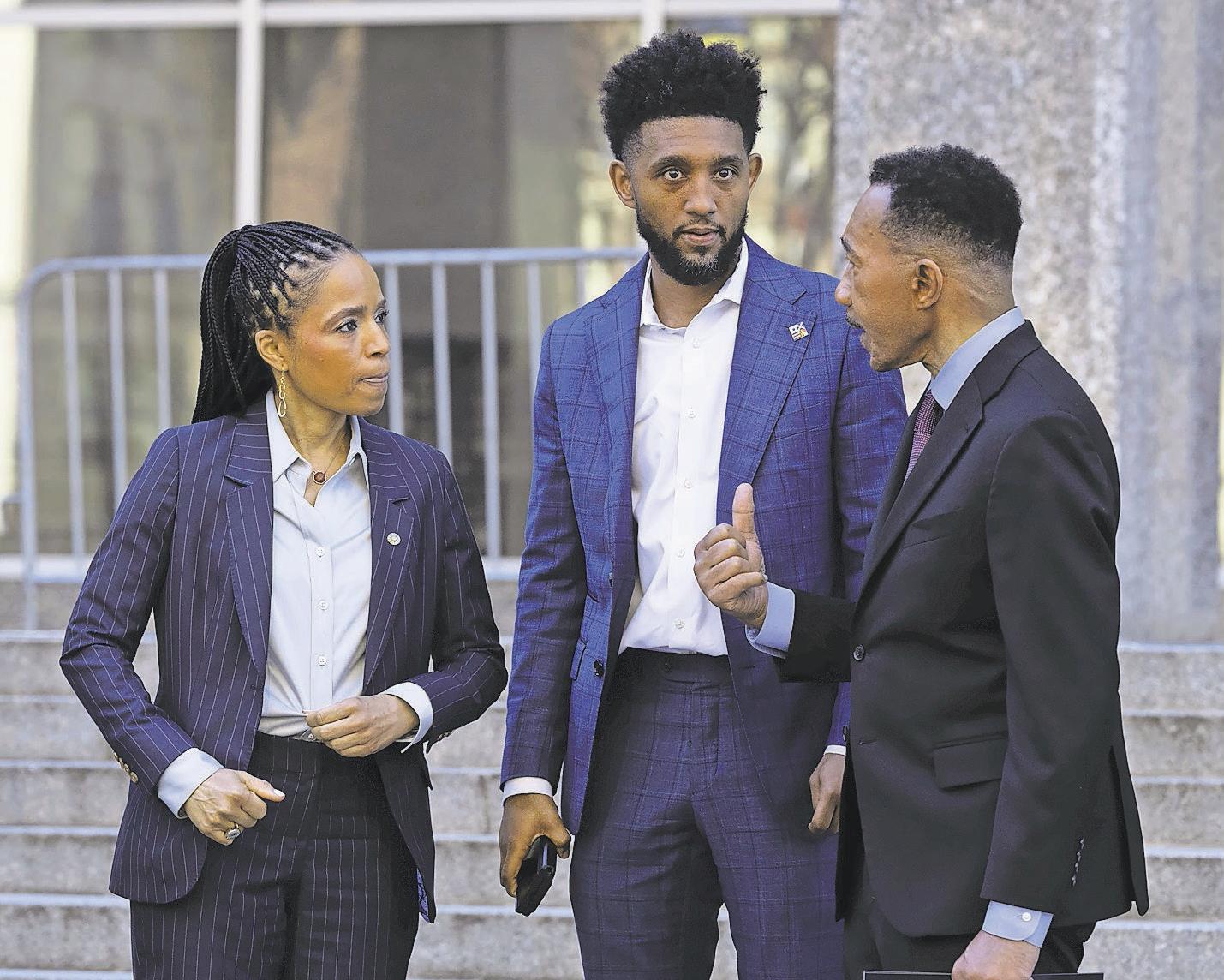
Photo courtesy of the Office of the Mayor Baltimore/J.J. McQueen U.S. Sen. Angela Alsobrooks (left), Baltimore Mayor Brandon Scott and U.S. Rep. Kweisi Mfume (D-Md.-7) gather outside the Baltimore ICE facility in downtown Baltimore on March 9.
AFRO Photo/Tashi McQueen
Samuel Brown’s 29-year-old daughter, Deja Brown (right), speaks during the March 5 press conference about the death of her father as attorney William H. “Billy” Murphy Jr. (left) and family friend Roberto “D.J. QuickSilva” Silva (back, center) stand with her.
AP Photo/John Raby Mayor Brandon M. Scott is using money from the Opioid Restitution Fund to allocate $2 million dollars in community grants to 11 organizations across Baltimore.
Baltimore to host National Society of Black Engineers 2026 annual convention
By Megan Sayles AFRO Staff Writer msayles@afro.com
The 2026 Annual Convention for the National Society of Black Engineers (NSBE) is coming to Baltimore Convention Center March 18-22, assembling thousands of students, professionals and leaders for five days of networking and career-building opportunities in science, technology, engineering and mathematics (STEM) fields.
The multi-day event, which is the largest gathering of Black engineers and technologists in the country, will feature professional development workshops, panel discussions, pitch competitions and a career fair connecting students and professionals with recruiters and top employers for on-site job offers. Organizers say the convention is designed to serve participants at every stage of their engineering journey.
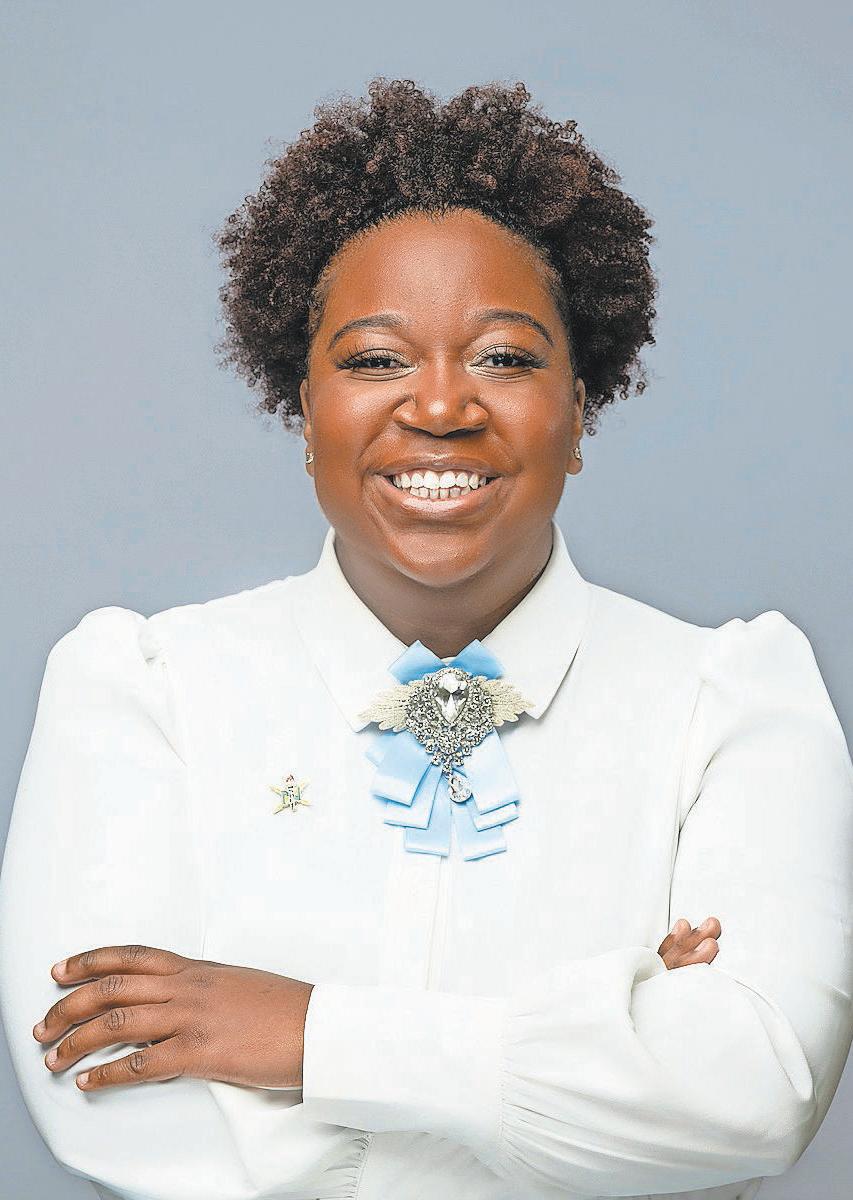
Jazmine Bullock serves as the chair of the planning committee for the National Society of Black Engineers’ 2026 annual convention. The meeting will take place at the Baltimore Convention Center from March 18-22.
“This year’s convention isn’t just about programming: it’s about people. Whether you’re a student attending your first NSBE event or a seasoned professional shaping industries, this week is designed for you,” said Jazmine Bullock, chairperson for the planning committee
Inspection
Continued from B1
Of the many leaders present, only U.S. Sen. Angela Alsobrooks (D-Md.), Ivey, U.S. Rep. Kweisi Mfume (D-Md.-7), U.S. Rep. Johnny Olszewski (D-Md.2) and U.S. Sen. Chris Van Hollen (D-Md.), were allowed into the facility. In the past, even they were denied entry. This time, they were allowed in, but the detainees were gone. Still, they say what they saw was troubling.
“This facility is unfit even to house animals,” said Alsobrooks. “These conditions are inhumane, cruel and consistent with the desires of this administration who have no interest whatsoever in making the lives of Americans better.”
On March 6, Judge Julie R. Rubin ordered the Baltimore ICE facility to limit total detainees to 55 at any given time. Previously, around 225 people could be housed in its five rooms. Legislators commended the judge for this decision.
Restitution
Continued from B1
ground-breaking service work in the city of Baltimore,” said RAB member William Staton.“The Restitution Advisory Board is comprised of some of the most caring and skilled professionals I have ever met. It is with this continued harnessing of care and applied acumen that this Board will further cultivate life-saving strategies for the populations we serve here in Baltimore.”
The $2 million investment will be deployed to the following organizations and initiatives:
$500,000 Awards:
• Behavioral Health Leadership Institute will receive $500,000 to expand low-barrier access to Medications for Opioid Use Disorder (MOUD) through streetbased outreach. Funding
Mfume said he believes ICE enforcement could be coming to Baltimore City, emphasizing the work they are doing to ensure Baltimore is prepared to fight it.
“I think they’re getting ready for a surge and just won’t seem to admit it,” said Mfume. “But, we’re getting ready to deal with the surge and we are admitting it. Everything I’ve seen says that things are getting worse with ICE, not better.”
The AFRO reached out to the Baltimore ICE Field Office, but did not receive a response prior to publication.
State and local leaders joined the legislators after their tour. Together, they spoke to the media and outlined city and state efforts to protect immigrants and the community at large from invasive ICE activity.
Baltimore City Councilman Paris Gray (D-District 8) highlighted this matter as a civil rights emergency.
“We have unmarked cars, masked agents, people being detained illegally [and] detention centers holding people inhumanely,” said Gray. “Baltimore City will
will also support harm reduction supply distribution, overdose prevention education, and the provision of street-based medical services for individuals with limited access to traditional care.
• Health Care for the Homeless will receive $500,000 to provide comprehensive harm reduction and substance use disorder (SUD) services for individuals experiencing homelessness, which include harm reduction supply distribution, SUD screenings, Medications for Opioid Use Disorder (MOUD), and integrated counseling and behavioral health services.
$250,000 Awards:
• Baltimore Harm Reduction Coalition will receive $250,000 to strengthen direct service delivery and overdose prevention efforts.
heart of who we are: builders, leaders, change agents and family.”
The theme for this year’s conference is “Advancing S.T.E.M.” More than the traditional acronym, it represents the core tenets of the NSBE: shaping the future by leading in artificial intelligence, green technology and education reform; transforming communities by breaking down systemic barriers and inspiring the next generation; empowering excellence through mentorship, professional development and access; and mobilizing innovation by building, leading and reimagining the world.
The annual convention will culminate in the NSBE Black on Purpose (BOP) Festival, a celebration full of food, music, art and live technology demonstrations at Power Plant Live!, before closing with the Golden Torch Awards ceremony, which honors Black engineering trailblazers and innovation leaders.
in a statement. “Our team has worked tirelessly to create an experience that speaks to the
not allow its staff, data, our resources or our facilities to be used as instruments of discrimination against anyone.”
Alsobrooks and other legislators stressed that, contrary to the 47th president’s administration and ICE supporters, these operations target not the “worst of the worst,” but mothers, grandmothers, aunts and uncles with no criminal record.
According to Transactional Records Access Clearinghouse (TRAC) Immigration, 73.6 percent of people held in ICE detention have no criminal conviction based on recent data up to Feb. 7. TRAC is a data research and distribution organization, founded in 1989.
Mayor Scott pressed that Baltimore will remain to be a welcoming city.
“I want–to our immigrant neighbors–for you to remember that we will always have your back,” said Scott. “We will not turn our backs on you.”
Under this promise, the Baltimore City Council is taking action to further protect immigrants and Baltimore City residents via a slate of bills.
Funding will enhance case management and clinical support, expand harm-reduction and stigma-reduction education initiatives, and support community collaboration across Baltimore.
• Check-It (Johns Hopkins University) will receive $250,000 to expand rapid-response drug checking and follow-up services. Funding will increase the organization’s capacity for drug checking, improve timely information sharing, and strengthen early-detection systems.
$200,000 Award:
• LeadingAge Maryland will receive $200,000 to expand training on harm reduction, stigma reduction, and overdose response for senior housing staff. Funding will support the expansion of onsite and mobile harm reduction services,
Buying back the block: Organizers push for community-led development
By Victoria Mejicanos AFRO Staff Writer vmejicanos@afro.com
Individuals interested in attending the 2026 NSBE annual convention can register at https://member-nsbeannual-2026.streampoint. com/.
Council President Zeke Cohen (D) introduced a bill on the afternoon of March 9 seeking to prohibit privately-operated detention centers from opening and operating in Baltimore.
“Baltimore cannot control what Washington does, but we can control what happens within our own city,” said Cohen in a statement.
“This legislation ensures that no private detention facility will be built on Baltimore soil to warehouse our neighbors. When the federal government abandons its responsibility to govern with humanity, local leaders have to get creative — and that means using every tool at our disposal to limit the reach of cruelty into our communities.”
The “Baltimore City Policies and Procedures – Safe Spaces and Communities” is also a part of the slate of bills. It will be heard in committee on March 10. If passed, it would require city agencies to create plans that will put a cap on immigration enforcement in private areas of City-owned offices, schools, parks, libraries and other public buildings.
including a focus on community workforce development.
$50,000 Awards:
• Community Builders, Inc. will receive $50,000 to provide housing stability and basic needs support alongside harm reduction education and engagement services. Funding will also support operations at its Wellness Center to improve stability among vulnerable residents.
• Drink at the Well, Inc. will receive $50,000 to provide job training and workforce development support for women in recovery and women at risk of substance use disorder.
• Good Trouble Church will receive $50,000 to expand harm reduction outreach, provide social support services through a drop-in center, and conduct community training
In Baltimore, the phrase “buying back the block” means much more than simply buying property. For organizers, planners and investors working to revitalize their communities, the work begins with understanding what residents need, how city systems operate and what controls a community’s future. There are 11,960 vacant properties in Baltimore City, according to the Reframe Baltimore website, which focuses on the city’s goal to eliminate vacancies in 15 years, with support from state, city and private funding. For many residents, being a part of “buying back the block” means reclaiming development decisions at the neighborhood level rather than leaving them solely to outside investors.
For Nneka N’namdi, the chief operating officer of Fight Blight Bmore, a social justice initiative that aims to address the issue of Blight, the phrase looks different for everyone.
For N’namdi, the phrase includes an understanding of what a neighborhood wants or needs—a pharmacy, corner store or market. What typical developers call “amenities” for a neighborhood, she calls necessities. “For me, because the work I do started in a neighborhood I live in and grew to intersect with other neighborhoods, it really was about me expanding working relationships with people in my neighborhood and in my community,” N’namdi said. “Then it also meant understanding the economic ground that I’m working on and the political landscape, the community development landscape in a particular neighborhood.”
N’namdi started fighting back against the blight seen in Baltimore in 2016 after an unsafe demolition she saw happening in her neighborhood and children navigating through it. As she asked questions and sought to understand the demolitions in her area, she realized that the barriers to community development
workshops to increase awareness.
• HARBEL Community Organization will receive $50,000 to deliver wraparound supports for individuals with substance use disorder, including housing navigation, transportation assistance, employment support, and assistance with basic needs.
Plantation Park Heights Urban Farm will receive $50,000 to provide vocational training for individuals with a history of opioid use disorder, facilitate trauma-informed wellness groups, and expand access to its 24/7 community pantry.
• The SOAP (Thriving, Healing, Empowering Seeds of Addicted Parents) will receive $50,000 to support youth peer groups, family resiliency programs,
harm reduction education, overdose response training, and care coordination services for youth and families impacted by substance use.
According to a press release, future community grant rounds will be announced and awarded competitively through a process developed by the RAB, Baltimore City Mayor’s Office of Overdose Response (BCMOOR, and the Mayor’s Office of Recovery Programs (MORP).
“The Recovery Office is incredibly proud to help administer this grant process and ensure that these vital funds reach the front lines of the overdose crisis,” said Elizabeth Tatum, chief recovery officer for the Mayor’s Office of Recovery Programs. “By investing funds in our community, in partnership with BCMOOR, we enable organizations doing critical work to scale their impact.”
Courtesy photo
Nneka N’namdi has been working to revitalize neighborhoods since 2016 after seeing an unsafe demolition in her neighborhood.
Photo courtesy of NSBE
Army (Ret.) Col. Edna W. Cummings uplifts Six Triple Eight women in new memoir
By Alexis LaRue AFRO Intern alarue@afro.com
The Reginald F. Lewis Museum of Maryland African American History and Culture recently hosted a compelling author talk in Baltimore on March 7. The event featured the revered Army (Ret.) Col. Edna W. Cummings, and served as part of the institution’s Women’s History Month programming.
The event served a dual purpose. Attendees were able to celebrate both Cummings’ new memoir, “A Soldier’s Life: A Black Woman’s Rise from Army Brat to Six Triple Eight Champion,” while also paying tribute to the women of the 6888th Central Postal Directory Battalion (Six Triple Eight), a pivotal unit in American military history. Cummings has been a staunch advocate for the women of the Six Triple Eight, and was instrumental in the women receiving the Congressional Gold Medal in 2025.
This unit was the only allBlack, all-female battalion to be deployed during World War II, delivering more than 17 million packages and pieces of mail sent to and from American troops seeking connection with their family, friends and loved ones back home.
Cummings’ work has ensured that the critical contributions of the Six Triple Eight are never forgotten.
The March 7 event featured a presentation as well as a panel discussion moderated by Dr. Constance Harris of the University of Baltimore, giving attendees the opportunity to ask questions as well as participate in discussions.
Janice Martin, daughter of Indiana Hunt-Martin, spoke about the significant role of the women of the Six Triple Eight and how they became advocates for Black women in the military.
“I don’t know where women would be in the military had they failed,” said Martin.
She characterized their efforts as a quiet form of advocacy.
“I see them as advocates, because they advocated for women and no one even knew,” she said.
Karen Taylor, whose mother was Vivian Elize Taylor, also shared a personal perspective on the importance of knowing and sharing family history for future generations.
“My mom and my dad raised us to care for others, to look into your history,” said Taylor. “You teach. You show what you are, it has to be action. Show what you have learned and what your family has taught you. Love is a verb.”
After the panel session, attendees were able to have their books signed by Cummings and take a look at some of the prized possessions handed down over the years to the Six Triple Eight descendents.
The event drew the attendance of women from all walks of life. Some, like Barbara J. Davis, even brought along their spouses. Former Maryland State Delegate Clarence “Tiger” Davis was happy to be in the number. He spoke with the AFRO after the event.
“There are no greater people in this country than African-American people,” said Davis, “And there’s no greater species on the face of this earth than Black women.”
Buying Back
Continued from B2
were more than financial.
“One of the most harmful things about racism is that it robs black people of our ability to imagine a world without whiteness,“ said N’namdi. “They have been robbed of their ability to imagine neighborhoods without over policing—without police at all, without slum lords or landlords, where people have access to housing.”
Part of rebuilding that imagination, she said, comes through access to information. She points to Baltimore’s Planning Department and its Planning Academy as a key resource, helping residents understand how development works. Building on that model, N’namdi has proposed a community development academy that would
extend the training beyond planning into long term ownership. She has also called for expanding Charm City Roots, a program supporting former residents returning to neighborhoods with family or cultural ties. Her proposal would pair redevelopment education with guidance on maintenance, financial planning and succession to help turn homes into sources of generational wealth.
For Tia Richards, an affordable housing advocate, investor and real estate strategic planner, community and generational wealth building is important.
“I’ve coined myself a solution based investor,” said Richards. “I usually don’t work on projects or do anything unless they’re serving some type of solution that is needed in our communities.”
Richards said that outside investors often misunderstand neighborhood dynamics
through abstract data points about zip codes, which she says fails to capture the reality of Baltimore.
“Baltimore is made up of very diverse communities, very diverse neighborhoods, and people like to utilize zip codes,” said Richards. “Zip codes mean nothing in Baltimore, because one block away, one block over, it could be a completely different audience, and completely different income bracket of people who can afford to live there.”
As a born and raised Baltimorean, and through her work, Richards said she came to a broader conclusion about Baltimore’s housing challenges.
According to Richards, redevelopment often introduces higher housing prices without accounting for residents having relatively the same salary. She said she has increasingly encountered
“Big
Sam”
Continued from B1
three times more likely to be killed by police than White people and are also more likely to be unarmed during fatal encounters.
Roberto “D.J. QuickSilva” Silva, a close friend of Brown, said he would rather the police had arrested Brown instead of escalating the situation by hitting him.
“He would be alive today had he been arrested,” said Silva. Brown’s 29-year-old daughter, Deja Brown, described her father as a devoted parent to her and her five siblings.
“He was Big Sam to everybody else, but he was just Dad to us,” she said with tears in her eyes. “It’s wrong. It’s devastating to all of us. He was loving, he was caring, he was whatever we needed him to be. My family is just praying that justice be served.” Brown said her father took pride in his children.
“He always bragged about us,” she said. “He always wanted us to be different.”
employed residents experiencing homelessness, which she says she believes reflects widening gaps between wages and housing costs. She also believes the city’s approach to affordability too often centers rental units rather than ownership opportunities.
“When people say affordable housing, it’s primarily geared to apartments,” said Richards. “That’s not an answer for generational wealth, because that’s nothing that they would ever be able to pass down to their kids.”
While rental housing can address immediate needs, Richards said long term solutions require policy changes that prioritize stability and ownership alongside development.
“We need consistent policies,” said Richards. “We need consistent policies across the board that will sustain because we have the inventory.”
Courtesy photo
Tia Richards is an affordable housing advocate as well as an investor and real estate strategic planner.
Photo courtesy of QuickSilvaMedia
The family of Samuel “Big Sam” Brown fights for justice following his death. Brown died days after an encounter with an officer of the Baltimore County Police Department in February 2026.
AFRO Photos / Alexis LaRue
Barbara J. Davis enjoys the book signing event with her husband, former Maryland state delegate and Morgan State University professor, Clarence “Tiger” Davis.
AFRO Photos / Alexis LaRue
Army (Ret.) Col. Edna Cummings speaks with descendants of the women who served the 6888th Central Postal Directory Battalion Battalion on March 7. Shown here, Karen Taylor (left), daughter of Vivian Elzie Taylor; Janice Martin, daughter of Indiana Hunt-Martin; Dennis Miller, grandson of Sylvia Benton, and Cummings, as they discuss the Six Triple Eight sheroes during a panel session.
Leaders, residents of 40th District meet in Annapolis
By AFRO Staff
District leaders across the state are meeting in Annapolis, Md., on their respective nights for an evening of discussion and fellowship with Gov. Wes Moore and members of his administration.
On March 2, constituents and leaders of District 40 came together. The 40th District is currently represented in the state legislature by Sen. Antonio L. Hayes (D), Del. Marlon D. Amprey (D), Del. Frank M. Conaway Jr. (D) and Del. Melissa R. Wells (D). Steven Messner is challenging Hayes for the 40th District state senate seat, and Dianté Edwards, Anderson Jean, Kevin Legacy, Crystal Jackson Parker and Tiffany Welch are all challenging the incumbents and seeking votes to represent the district as state representatives in the 2026 election. The district represents a large swath of West Baltimore where 126,162 residents live, more than 80,000 of them Black.
The primary election will take place on June 23, with the general election on Nov. 3. All photos courtesy of the Baltimore Office of the Mayor / J.J. McQueen
Rep. Melissa Wells (D-District 40) enjoys the evening set aside for District 40 residents to meet and greet the leaders that represent them in the state legislature.
To purchase this
Baltimore Mayor Brandon M. Scott addresses those present for 40th District Night in Annapolis.
Harriet Lipscomb receives recognition from the Maryland General Assembly for service to Baltimore and the state of Maryland for more than a decade. Shown here, Lipscomb with Gov. Wes Moore.
Left, the 40th District’s State Sen. Antonio Hayes speaks to constituents and leaders in the room with his daughter, Amaryllis, in his arms.
Above, Baltimore City Public School’s Jared Perry, a music teacher at Booker T. Washington Middle School for the Arts, leads a performance by local youth.
South Carolinians continue colleague’s push for maternal health
By Jennifer Porter Gore Word in Black
The state of South Carolina ranks among the highest in the nation for maternal mortality. And just like nationwide, the burden falls most heavily on Black women. But a recent gathering of healthcare leaders, birth workers and families in the state vowed not to take the situation lying down.
The group convened to honor Dr. Janell Green Smith, an esteemed nurse-midwife and doctor of nursing practice who died on New Year’s Day, not long after her daughter was born prematurely. The gathering also included a panel discussion on community-based care, mental health support, and policy changes to improve maternal health.
“We also had a mental health therapist there who could talk about how we process when things like this happen,” says Simone Lee, co-founder and reproductive justice director of the Charleston-based BEE Collective.
“But he was also a dad, so he could speak about how partners can show up for moms during labor.”
Losing one of their own
The death of a physician can have aftershocks far beyond hospital walls. For many local birth workers, Green Smith’s loss has been deeply personal, affecting hundreds of patients and scores of colleagues.
Lee, a veteran doula who had worked with Green Smith, says everyone at the event felt the weight of her absence.
“We had a community conversation, both honoring Janelle’s legacy, but also talking about ways as a community that we can pitch in to make sure that these types of tragedies don’t happen to any other moms,” she says.
The event also focused on healing.
“It has been a grief process for a lot of us,” Lee says. In January, “my organization actually hosted a grief circle in Janelle’s honor for birth workers, and we had over 60 people piled into our space wanting to process and grieve together.”
The event took place last month at The EpiCenter, a woman-owned and operated practice that offers a wide range of medical services including obstetrics and gynecological care. It’s one of a handful of Black-owned and operated practices in the state.
Efforts to improve maternal health in South Carolina have increasingly focused on expanding Medicaid support services for pregnant and postpartum patients. Dr. Annie Andrews, a board-certified pediatrician who was one of the panelists, said Medicaid currently funds half of all births and six out of 10 nursing home beds in South Carolina.
In 2022, the state extended Medicaid coverage for new mothers from just 60 days after birth to a full 12 months. State health officials said the change would help reduce pregnancy-related deaths while improving care for mothers with conditions like hypertension, diabetes and depression.
Since then, health advocates and others have sought to add reforms, such as reimbursing community doulas and more support for Medicaid patients, particularly those in rural communities, where many low-income Black residents have seen maternity services decline.
Andrews says that in South Carolina, “there’s a huge and, most concerningly, to me, widening racial health disparity when it comes to maternal mortality.”
Recent data shows that Black women in the state “are four times more likely to die as a result of complications related to childbirth,” she says. “And that is maddening in and of itself, because there’s no biological reason for that.”
Even more frustrating, Andrews says, is the “failure to address this issue by our state lawmakers, and now, of course, by lawmakers in Washington, D.C., who really just couldn’t care less about addressing this problem.”
Andrews is running in the state’s Democratic Senate primary to determine who will take on Sen. Lindsay Graham, a Republican who has represented the state on Capitol Hill since 2002. If elected, Andrews says she will immediately call for the impeachment of Health and Human Services
Secretary Robert F. Kennedy Jr.
A doula’s journey
Lee’s path into birth work began with her own experiences. A mother of three, she says two of her children’s births were difficult—and one was traumatic.
“The third time around, I said, ‘There must be something that I’m missing,’” she says. During her research, Lee kept encountering a word—doula—she did not yet understand. Not long afterward,
she began training to become one.
After realizing that many of the families she wanted to help could not afford her services, Lee co-founded the BEE Collective in 2018 with three other Black women. The acronym stands for the Beloved Early Education, and features a network of community-based doulas in South Carolina’s Lowcountry.
The group also operates what Lee describes as South Carolina’s first grassroots perinatal “safe spot,” offering services including childbirth education classes and a breastfeeding support group.
A major part of their service area is Berkeley County, Lee says, which is the state’s largest county by area but has just one hospital.
“For a lot of families, that means they have to drive 45 minutes or more to get there,” Lee says. “And it’s hard to get OB-GYNs to work in rural
An effort to remedy harm from a race-based kidney test helps Black patients seeking transplants
An unprecedented effort to reverse the effects of a racially biased medical test that blocked or delayed Black people from getting kidney transplants seems to be working.
Researchers reported March 10 that thousands of Black transplant candidates have been given credit on the transplant waiting list for time they lost because of that misguided test, moving up their priority in an attempt at restorative justice. That test used a race-based formula to calculate patients’ kidney function. It made Black patients’ kidneys appear healthier than they really were, delaying diagnosis of impending organ failure and referral for transplant.
After the U.S. transplant system ended use of the race-based test, it ordered hospitals to determine which Black patients on their transplant lists could have qualified for a new kidney sooner, by combing medical records for long-ago biased findings, and credit them with that time.
Researchers at Beth Israel
Deaconess Medical Center, Brigham and Women’s Hospital and Boston Medical Center analyzed a database of all kidney transplants between January 2022 and June 2025, comparing transplant rates before and after the January 2023 policy change.
Among the more than 21,000 Black transplant candidates given waiting time modifications, the median gain was 1.7 years, the team reported in JAMA Internal Medicine. That’s meaningful time as the wait for a kidney transplant averages three to five years but can be far longer in some parts of the country.
Black patients’ transplant rate increased right after the policy change, by 5.3 transplants per 1,000 listings, before leveling off. Overall the kidney transplant rate increased during the study period and the transplant rate for non-Black patients didn’t change significantly under the new policy, remaining highest for white patients., the researchers reported.
The findings “suggest that improving transplant care for Black individuals did not harm individuals of other races,” Dr. L. Ebony
Boulware of Wake Forest University School of Medicine, who wasn’t involved in the study, wrote in an accompanying commentary that urges similar efforts to mitigate harm from other erroneously race-based medical tests.
The policy “hopefully helps move the needle toward equity,” Dr. Rohan Khazanchi of Brigham and Women’s Hospital and Boston Medical Center, who led the study, said in an interview.
Getting a wait-time credit didn’t translate into immediate transplants—7,484 of them received a new kidney during the study period.
The biased kidney test was based on a measurement of how quickly a waste compound called creatinine gets filtered from blood. In 1999, an equation used to calculate that rate was modified to adjust Black people’s results compared to everyone else’s, based on some studies with small numbers of Black patients and a long-ago false theory about differences in creatinine levels.
That test exacerbated other disparities that already make Black
populations that are predominantly Medicaid patients because there’s not a lot of money there.” Andrews agrees.
“It’s really easy for lawmakers to be very deeply disconnected from their communities, but as a physician in a children’s hospital, it’s really hard to look away,” she says. While women are advised to get physical and mental health checkups after delivery, Andrews says, the recommendations “often do not take into account the socioeconomic barriers and challenges these parents face if you just delivered your third or fourth child and you’re struggling to make ends meet, and you don’t have reliable transportation.”
Janell Green Smith’s legacy When she thinks about Green Smith, her late colleague, “the first word that comes to mind is ‘intentional,” Lee says.
Green Smith “was very intentional
about the way she cared for people, the way she spoke to people, and the way she conducted business,” Lee says. “She could command every room she walked into with an assertiveness that let you know she was an expert in her field.”
Lee said Green Smith also encouraged others to join her in the health care field.
“One of the last things she told me was, ‘Simone, you’re needed in these spaces,’ Lee says. “I had been talking to her about going back to nursing school and worrying about the cost and time away from my children. She told me, ‘Do whatever you have to do. Take loans out. You’re needed.’”
Lee says Green Smith’s influence lives on.
“I think she’s impacting more people than she probably even realized,” Lee says.
This article was originally published by Word in Black.
Researchers say that Black transplant recipients and those in need of an organ are benefiting from policy changes that blocked or delayed them from receiving transplants.
Americans more at risk of needing a new kidney but less likely to get one. They are over three times more likely than white people to experience kidney failure and make up about 30 percent of the kidney transplant list.
Khazanchi was surprised to find that less than 1 of 3 Black transplant candidates received wait-time modifications.
That might be because some weren’t diagnosed with kidney disease until their organs had failed, an emergency that doctors call “crashing onto dialysis.” But Khazanchi said another possibility is that some transplant centers had more resources than others to do the digging
into old medical records – lab tests performed not only years earlier but possibly in different health systems in different parts of the country – to find everyone who qualified. While the ordered lookback to change wait times happened in 2023, Black patients more recently added to the transplant list should ask if they also may be eligible, he advised.
The Associated Press Health and Science Department receives support from the Howard Hughes Medical Institute’s Department of Science Education and the Robert Wood Johnson Foundation. The AP is solely responsible for all content.
Meta (Facebook) / Dr. Janell Green Smith
Charleston-area health care leaders, birth workers, and families convened to honor the legacy of Charleston native Dr. Janell Green Smith and to explore ways to achieve maternal health equity in the state.
By Lauran Neergaard
Unsplash / Nappy
3:00 p.m. Local Time Thursday April 30, 2026
SOQA26000291
STATEMENT OF QUALIFICATION
F586402 Joint 911 Center - Construction Management/ Inspection Services Contact: Kim Lee 410.222.4142
Email: phlee200@aacounty.org
Street, LLC T/a Liv’s Tavern - Patrick R. location of a Class “BD7” BWL liCharles Street to 1113 S. Charles outdoor table service, and off prem21230
Room, located at 200 St. Paul Place, Suite 2300, Baltimore, Maryland 21202. Please visit baltimorecity.gov/llb under the link for “Hearing Schedules” for confirmation of the date, time, and place for all matters being heard by the Board.
1. CLASS “A” BEER, WINE & LIQUOR LICENSE
Applicant: Mixtura Latina, LLC T/a One Stop Liquor and Shop - Tulio Ysivid Flores Panuera and Rickie Edward Lomax
Petition: Transfer of ownership
Premises: 1524 Cypress Street 21226
(City Council District: 10th; State Legislative District: 46th)
Applicant: 70 Liquors, Inc. T/a L & M Liquors - Ki Jeong Lee
Petition: Transfer of ownership
Premises: 1148 E. North Avenue 21202
(City Council District: 12th; State Legislative District: 45th)
2. CLASS “B” BEER, WINE & LIQUOR LICENSE
Applicant: TBC of Yard 56 Holding, LLC T/a Trade Name PendingSadio Noni Green and Sandra Davis
Petition: New restaurant license requesting live entertainment, outdoor table service and off premises catering
Premises: 560 Bayview Boulevard 21224
(City Council District: 1st; State Legislative District: 46th)
Applicant: 1110 South Charles Liquor License, LLC T/a Trade Name
Pending - William D. Smith
Petition: Transfer of ownership with continuation of live entertainment
Premises: 1110-12 S. Charles Street 21230
(City Council District: 11th; State Legislative District: 46th)
Applicant: Loic Sany, LLC T/a Jerk at Nite - Loic Sany Njonkam
Petition: New restaurant license
Premises: 21 N. Eutaw Street 21201
(City Council District: 11th; State Legislative District: 40th)
3. CLASS “BD7” BEER, WINE & LIQUOR LICENSE
Applicant: Inkworks, Inc. T/a Coppermine - Alexander Rossi
Petition: Transfer of ownership and location of a Class “BD7” BWL license presently located at 5736 Falls Road to 5700 Cottonworth Road requesting outdoor table service
Premises: 5700 Cottonworth Avenue 21209
(City Council District: 5th; State Legislative District: 41st)
CERTIFICATION OF PUBLICATION CITY OF BALTIMORE OFFICE OF BOARDS AND COMMISSIONS PUBLIC NOTICE
REQUEST FOR PROPOSAL - PROJECT NO. 1423
PROGRAM MANAGEMENT SERVICES FOR THE CITY’S MS4 (STORMWATER PERMIT) PROGRAM AND DRAINAGE IMPROVEMENT PROGRAM
The City of Baltimore Office of Engineering and Construction (OEC) has been authorized to request the Office of Boards and Commissions (OBC) to advertise Project No. 1423 for Program Management Services from qualified Engineering firms to provide a broader, more integrated approach to the City’s stormwater infrastructure management and to meet or exceed the City’s annual goals for its MS4 permit. The City intends to select the services of one (1) firm only. It is the expectation of the City that interested firms providing these services demonstrate and document the following for the City of Baltimore.
The scope of services will include but not be limited to:
1. Program Management Services include prioritizing, scheduling, monitoring, managing, and reviewing all projects designed and proposed.
2. Coordinate project implementation with City departments, utilities, and other agencies to minimize city-wide disruptions and reduce construction costs.
3. The streamline design approach includes design standardization and Standard Operating Procedure (SOP) creation to increase design efficiency and reduce overall costs.
4. Provide field assessments of a stream segment, an existing BMP, or a storm drain system on an as-needed basis. Provide alternate solutions and biddable documents on an as-needed basis.
5. Assist the City in providing information to the City Agencies, citizens, or any other interested entities relating to the City’s MS4 permit program and individual projects/contracts.
6. Provide on-site support staff on an as-needed basis.
7. Support hydraulic modeling on an as-needed basis.
8. Support 1D and 2D hydraulic modeling and review on an as-needed basis.
9. Develop and maintain key performance indicators to reflect the City’s progress toward its MS4 permit and Total Maximum Daily Load goals.
10. Supervise and manage the design consultants and construction contractors.
11. Develop RFPs to solicit future design, construction management, and other project-related consultants.
12. Entering projects and contracts in Envista software (web-based utility coordination software), or any other software systems and updating them same periodically, resolving conflicts, etc.
13. Provide appropriate training and support for staff development.
14. Review and approve all submittals submitted by design consultants.
15. Manage available resources to the MS4 program
16. Develop a Recovery Action Plan for projects behind schedule.
17. Perform BMP and Storm drain assessment as needed.
18. Obtain all permits and/or approval necessary for repair and construction of BMP including but not limited to joint MDE/USACE permit, Building permit, Erosion and Sediment control approval, Stormwater Management approval, Maryland Historical Trust approval, Critical Area approval.
19. Provide assistance to obtain access agreement rights of entry (ROEs) for construction and/or repair with property owners.
20. Manage various project delivery methods such as Design-build, Design-Bid-Build Emergency.
21. Develop a comprehensive project management plan incorporating all the required activities mentioned above.
22. Develop post award and inspection request for proposals, as built standards and drawings,
23. Review and justify bid tabulation for contracts, develop task orders for BMP repair and develop engineering drawing standards. The services would be for a period of six years for a fee not to exceed $ 3,000,000.00
DPW encourages all contracting firms that have the experience and capacity to work on this scope to submit their proposals. All firms must demonstrate and document their capacity and resources to deliver the required services on time. Projects must comply with the 2006 edition of “The Specifications for Materials, Highways, Bridges, Utilities and Incidental Structures”. City personnel will utilize the City of Baltimore Guidelines for the Performance Evaluation of Design Consultants and Construction Contractors for this contract/project.
Should you have any questions regarding the scope of the project, please contact Usama Ijaz at 410-545-3710 or by email at Usama.ijaz@ baltimorecity.gov
City of Baltimore Department of Finance Bureau of Procurement
Sealed proposals addressed to the Board of Estimates of Baltimore will be Received until, but not later than 11:00 am local time on the following dates for the stated requirements.
T/a Physical Education ComplexAvery, Jr. license requesting live
Aprl 15, 2026 PERSONAL CARE and HOMEMAKER SERVICES for SENIOR CARE CLIENTS RFQ-000790
May 6, 2026 COURT REPORTING SERVICES RFQ-000791
1. Experience in providing Program Management services for the development and implementation of watershed implementation plans, Environmental Restoration projects, preferably relating to stream restoration, Best Management Practices (BMP), scope development, design review, utility coordination, agencies coordination, quality control, estimating, specifications development, permitting and preparation of construction documents.
2. Experience in providing Program Management services for the development and implementation of Drainage Improvement Projects and Flood Control Projects including 1 D and 2D modeling.
3. Experience in responding to storm water system and open channel emergencies by rapidly assessing situations and recommending corrective measures.
The scope of services will include but not be limited to:
4. Experience and expertise in economizing the cost of providing Program Management services without sacrificing the design quality and construction schedules.
5. Experience and expertise in overall Capital Improvement Plan (CIP) planning, prioritizing, and minimizing project costs.
1. Program Management Services include prioritizing, scheduling, monitoring, managing, and reviewing all projects designed and proposed.
6. Experience in a document control system for all documents including design submittal, review comments, schedules monitoring or design progress, Request for Information, as-built drawings, updating Geographical Information System, etc.
2. Coordinate project implementation with City departments, utilities, and other agencies to minimize city-wide disruptions and reduce construction costs.
7. Demonstrate strong QA/QC skills in areas such as risk assessment on projects, cost control, value engineering on the deliverables, seamless design deliverables integration with electronic plat and as-built documentation system, etc.
3. The streamline design approach includes design standardization and Standard Operating Procedure (SOP) creation to increase design efficiency and reduce overall costs.
4. Provide field assessments of a stream segment, an existing BMP, or a storm drain system on an as-needed basis. Provide alternate solutions and biddable documents on an as-needed basis.
8. Project construction supervision of MS4 BMP and storm drain improvement projects.
9. Experience in program management of Municipal Chesapeake Bay TMDL plan implementation through a variety of engineering, environmental, right-of-way acquisition, and program/construction management staff augmentation services.
5. Assist the City in providing information to the City Agencies, citizens, or any other interested entities relating to the City’s MS4 permit program and individual projects/contracts.
6. Provide on-site support staff on an as-needed basis.
7. Support hydraulic modeling on an as-needed basis.
10. Experience in research technical writing and interagency communication on MS4 topics and storm drain projects.
8. Support 1D and 2D hydraulic modeling and review on an as-needed basis.
11. Experience in urban forestry, tree canopy, invasive vegetation management regulation and specifications
9. Develop and maintain key performance indicators to reflect the City’s progress toward its MS4 permit and Total Maximum Daily Load goals.
12. Experience in facilitating inter-agency MS4 program collaboration and streamlining and an agency capacity buildup of MS4 projects and storm drain improvements.
10. Supervise and manage the design consultants and construction contractors. 11. Develop RFPs to solicit future design, construction
13. Experience in benefit-cost analysis of MS4 and flood control projects.
14. Experience in the development of SOPs for MS4 projects including design scoping standardization, design plan standards, and construction specifications to increase design program consistency, efficiency, and to reduce overall costs.
15. Experience in the development of standard operating procedures for outfall and stream desktop assessment, site investigation, and prioritization of project sites.
16. Experience in training City staff in a variety of technical, design, project management, and inspection of MS4 projects.
17. Experience in GIS and other databases and program
SUBMITTAL PROCESS
All firms listed in the specific proposal for the Project must be prequalified by the Office of Boards and Commissions, including each discipline prior to submission for this Project. Any firm listed in this proposal to perform work in any existing or related category must also be prequalified. It is the responsibility of the Firm submitting the SF255 verify and include a copy of each of Consultant’s current Prequalification Certificate in the submission package. Information regarding the prequalification process can be obtained by calling the Office of Boards and Commissions on 410.396.6883.
Each Firm responding to this Request for Proposal (RFP) Project #1423
The Federal Standard Form (SF) 255 cannot be supplemented with additional pages, or additional information such as graphs, photographs, organization chart, etc. All such information should be incorporated into the appropriate pages. Applications should not be bound; simply stapled in the upper left-hand corner. Cover sheets should not be included. Inclusion and/or submittal of additional material may result in the applicant being disqualified from consideration for this project.
Firms interested in submitting a proposal for this Project, shall address a “Letter of Interest” to the Office of Boards and Commissions, or you may email: OBC.consultants@baltimorecity.gov. Letters of Interest will be utilized to assist small minority and women business enterprises in identifying potential teaming partners and should be submitted within five (5) days of the date of the project’s advertisement. The Letter of Interest must provide the name and number of your firms contact person. Failure to submit a “Letter of Interest” will not disqualify a firm submitting a proposal for the project.
Only individual firms (including, for example, individuals, sole proprietorships, corporations, limited liability companies, limited liability partnerships, and general partnerships) or formal Joint Venture (JV) may apply. Two firms may not apply jointly unless they have formed a joint venture. COSTS OF RFP RESPONSE There will be no payment or compensation provided to