Oslo, Norway
Oslo, Norway
LORELOU DESJARDINS is French and has a legal background in international human rights law. She is also an author and journalist who has been living in Norway for 16 years. Before settling in Oslo, Lorelou lived and worked in six countries, including Denmark, Indonesia, and the Philippines. She worked 17 years in the fields of law, policy and communication and speaks four languages fluently, including Norwegian and Indonesian.
Her debut book, En frosk i fjorden: Kunsten å bli norsk (Cappelen Damm, 2017- in English: A Frog in the Fjord: One Year in Norway), became a national bestseller in Norway, and then in other countries, selling over 16,000 copies. It was recommended by Forbes and is available in four languages. In the past 10 years, Lorelou has been a columnist in Norway’s most read newspaper VG and is a cultural commentator on TV and radio shows, as well as Aftenposten and NRK.
Her work on Norwegian society has also been featured in CNN, Forbes, and ELLE, cementing her position as a leading international voice on life in Norway.
Lorelou is also the founder of A Frog in the Fjord, a company that publishes books and delivers high-level cultural insight and strategic training for organizations navigating the complexities of Norwegian society and the global workplace.
HAVE YOU ever wondered why Norwegians say “hei” to strangers on a mountain path, but won’t greet their neighbor? Why taking your shoes off indoors isn’t just polite, it’s practically law? And what is it with tacos on Fridays? How Norwegian parents manage to raise toddlers who nap outside in the snow? And what Norwegians traditionally eat for Christmas?
If so, this book is for you!
Through 55 chapters covering 11 themes; from traditions to outdoor life, work, parenting, social skills, and how to endure the Norwegian weather; How to Be Norwegian will help you navigate this culture with a blend of facts and humor. I also added a glossary of Norwegian words at the end of the book.
After 16 years in Norway, I am an outsider who became an insider. In this book, I share my tips and knowledge to help you understand Norwegians, and maybe even become one along the way.
This book is not an academic analysis. It doesn’t claim to speak for everyone, and it won’t teach you how to pronounce kjøttkaker without raising eyebrows. But what it does offer is an open window into one of Scandinavia’s lesser-known cultures and societies.
Whether you’re curious about Norway, traveling here, moving here, or have lived here for years, I hope this book will help you make a little more sense of it all.
GREETING SOMEONE in any culture is usually quite simple: a handshake, a smile, a word or two. How hard can it be, really? “Just say hi,” my grandmother would say. Obviously, she has never had to approach a Norwegian.
Norwegians are not your average human beings when it comes to greetings. They have special rules for greeting that nobody else seems to follow. How to approach a Norwegian depends greatly on where you are, what time it is, what day of the week it is, your previous relationship with the Norwegian, and, most importantly, how intoxicated the Norwegian you want to greet is. If you don’t greet a Norwegian the right way at the right time, you will probably come across as a crazy person. For example, if a Norwegian is hiking on a mountain path, they will expect every person they meet to greet them and say hei. If someone doesn’t, they’ll think, “How odd that this person did not say hei.” But on a bus at 9 AM on a Tuesday, heading to work, if you smile and say hei to that exact same Norwegian, they’ll turn their head and think, “Why is this person saying hei? Leave me alone!”
When can you greet a Norwegian without looking like a crazy person? Here’s a list:
• In the forest, the mountains, or anywhere in nature more than one hour from a city: It’s customary to say hello to every Norwegian you cross paths with, whether you know them or not.
• After sharing a hardship: For instance, climbing a mountain and randomly meeting at the summit, sweat in your eyes, staring at the same extraordinary fjord, or living in a cabin together, seeing each other in woolen underwear, and cheerfully heading to the utedo (outdoor toilet) with a roll of toilet paper in hand. In these situations, that stranger is your friend for the day. But don’t get too excited, they’re not really your friend. However, you can have a conversation with them.
• In emergencies: There’s a fire in your house or any other dangerous situation.
• During a snowstorm: If your car breaks down in the middle of the road and you might die, you can talk to anyone without it being considered strange.
• When alcohol is involved.
• When unexpectedly meeting a friend, former colleague, etc.
One tip: While it might be hard to contact Norwegians and you might feel lonely, don’t resort to setting something on fire just to hear a hei from your neighbor. There are better ways! (See the chapters on alcohol.)
NORWEGIANS ARE well-known for their excellent English skills. One reason for this is that English-language movies and television shows are never dubbed, a fact Norwegians proudly point out. They often ask, “Why do other countries dub American shows?” and then quickly add, “We speak such good English because we never dub anything.” You can almost hear the pride in their voices at this point.
The second reason is more practical. With a language spoken by only 5.5 million people, roughly the equivalent of half a neighborhood in Mumbai, Norwegians must master an international language to travel, study abroad, and quite frankly, survive in a world that exists outside Norway’s borders.
That said, Norwegians typically have a noticeable accent when speaking English. I can proudly say I can spot a Norwegian speaking English from a mile away. They also often use quirky, Norwegian-inspired phrases, a tendency that increases in direct proportion to the amount of alcohol in their bloodstream.
One of the most famous examples comes from rally driver Petter Solberg, who once said in English, “It’s not the fart that kills you; it’s the smell.” Before you jump to conclusions about his meaning, let me explain. In
Norwegian, fart means “speed,” and smell means “crash.” What he was trying to say was that in racing, it’s not the speed that kills you, it’s the crash.
Another humorous quirk is Norwegians’ use of the word ass as slang. For instance, “Det var en kul fest, ass” translates to “That was a cool party, man.” Now imagine the ice-breaking potential when a Norwegian guy casually says something like, “She was great, ass.”
A sign that Norwegians are fluent, but still not native speakers of English, is their loose use of swear words, which for some, have practically become Norwegian words. For example, the F word, written føkk in Norwegian, which is used even on television.
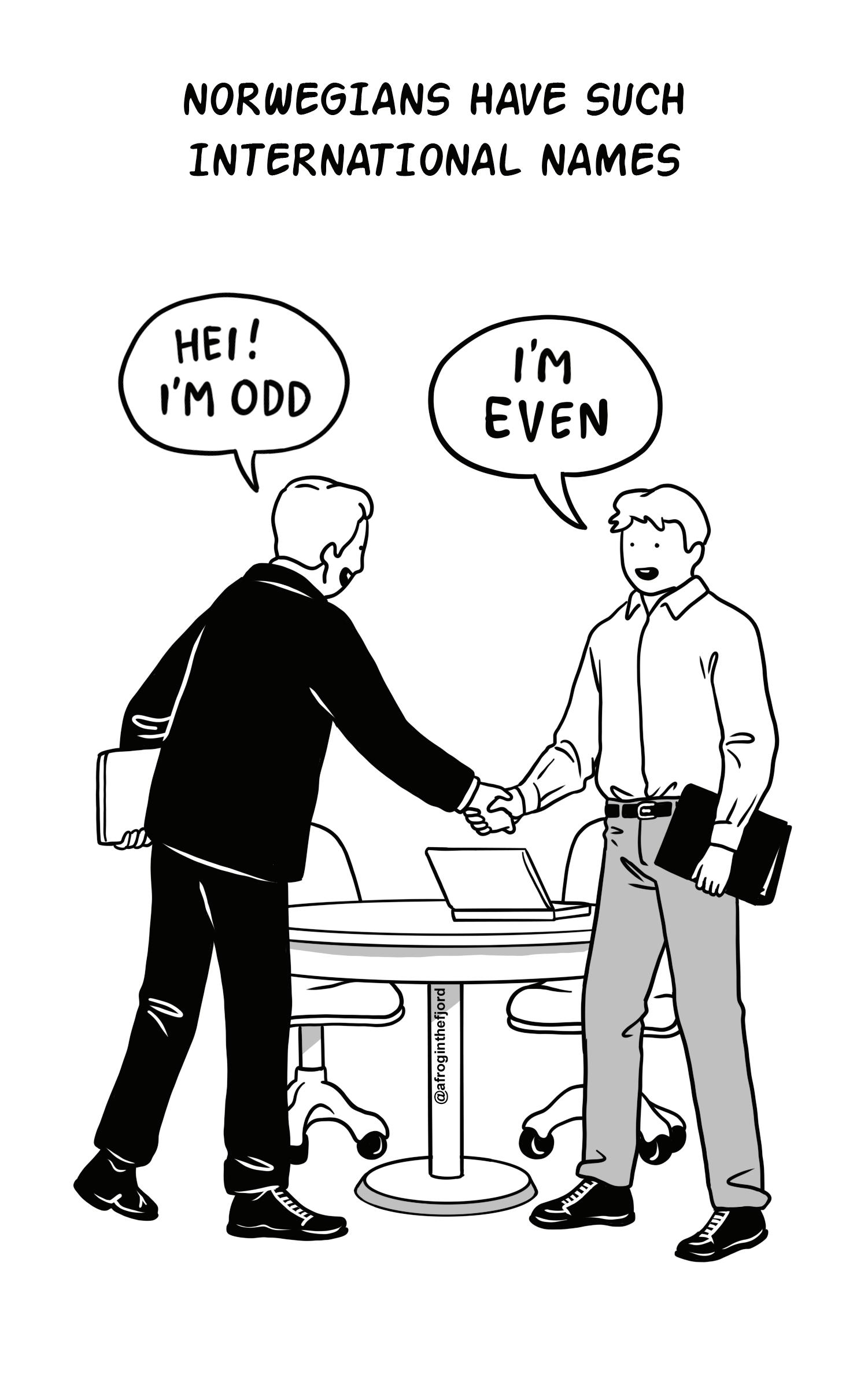
Norwegian names can also be entertaining in English. Male names include Bård (pronounced “Bored”), Gaute (pronounced “Goat”), and the truly unique Odd and Even. And the worst of all, Simen. Female names can be just as intriguing because they are a challenge to pronounce. Examples include Ingeborg, Øyvor and Gry.
Lastly, a growing trend among Norwegian teenagers is to speak English casually, often mimicking the dialogues they hear on YouTube, TikTok, video games, and memes. This phenomenon irritates many older Norwegians, whose kids answer with phrases like, “Chill, bro.”
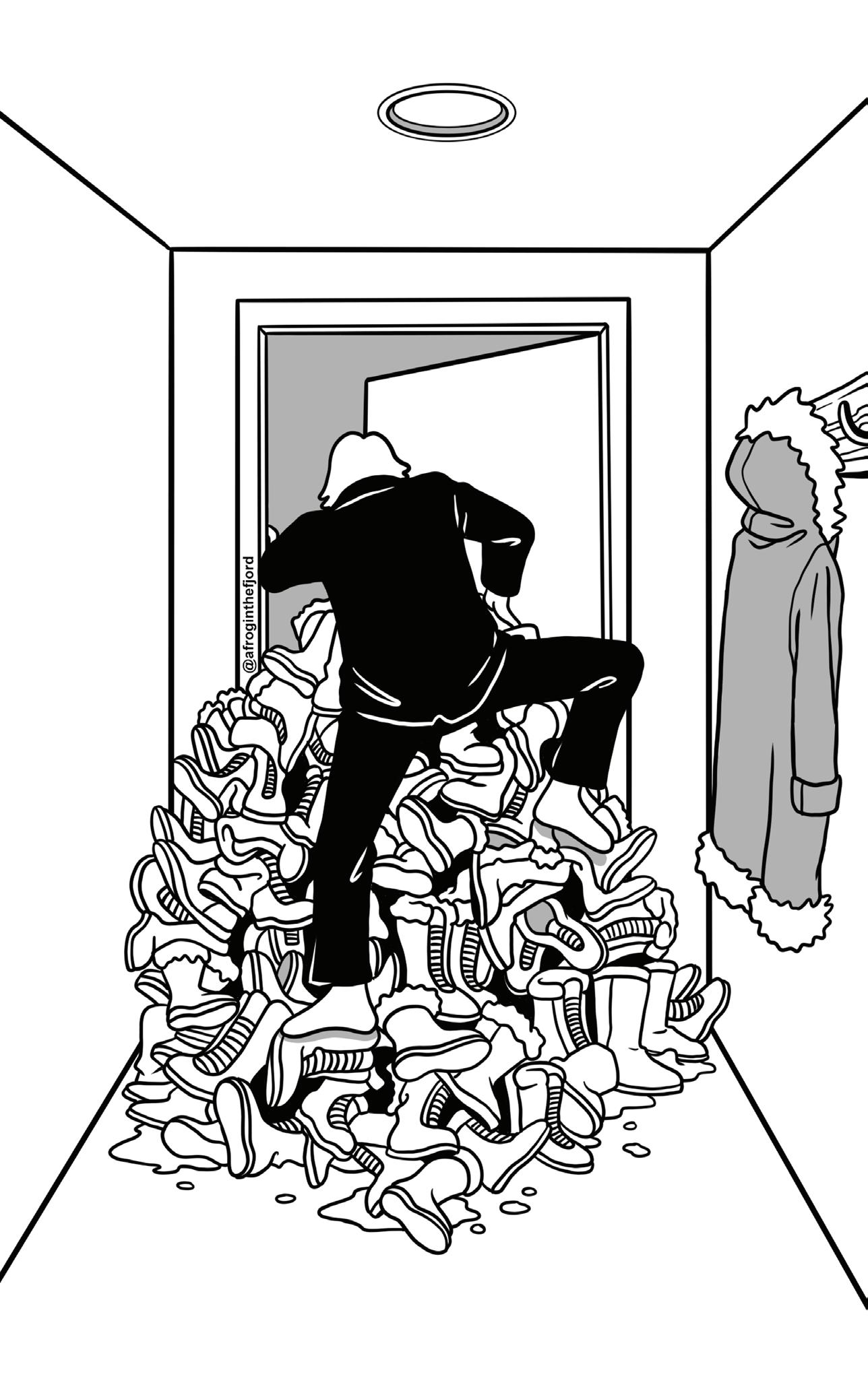
The only people exempt from taking off their shoes in Norway are workers like plumbers, carpenters, and electricians, who often wear protective or safety shoes. You’ll be so relieved they’ve come to fix your problem that you won’t mind cleaning the floor after they leave. If you don’t want to walk around in socks, consider what Norwegians call innesko (inside shoes), as opposed to utesko (outside shoes). Norwegians often bring them to fancy parties. Women typically carry a pair of heels in their bags and change into them at the entryway, leaving their snowy boots behind. Men sometimes wear protective rubber coverings over their formal shoes to avoid having to walk around in socks. The worst, in my opinion, are so-called skotrekk, blue plastic covers for your shoes that you are typically asked to use in doctors’ offices.
You’ll be surprised at how quickly you’ll adopt this Norwegian habit. When I travel abroad, I’m now shocked to see people walking inside their homes with their shoes on, it feels so dirty! Of course, the downside to this habit is a crowded entrance, especially in flats, where shoes for all seasons compete for limited floor space.
But in recent years, something changed. Norway has quietly gone from underdog to global player. In sports, it’s now producing world-class athletes (Erling Braut Haaland, Ada Hegerberg, Karsten Warholm, the Ingebrigtsen brothers to name a few) and chess world champion Magnus Carlsen. In literature, Norway finally added another Nobel Prize winner to its list (Jon Fosse) and the crime novel scene is filled with superstars (Jo Nesbø, Anne Holt and Jørn Lier Horst). In music, young artists are topping charts far beyond the fjords (Aurora, Sigrid, Girl in Red, Kygo, Alan Walker). Norwegian filmmakers and TV creators are winning international awards and streaming into living rooms worldwide (The Worst Person in the World, Lilyhammer, Ibelin).
Major companies are also Norwegian, such as Equinor, Telenor, Yara and Norsk Hydro. But unlike Sweden and its globally known consumer brands, Norway built its wealth on natural resources: fish, oil, and hydropower. Things that don’t exactly make you famous at airport gift shops.
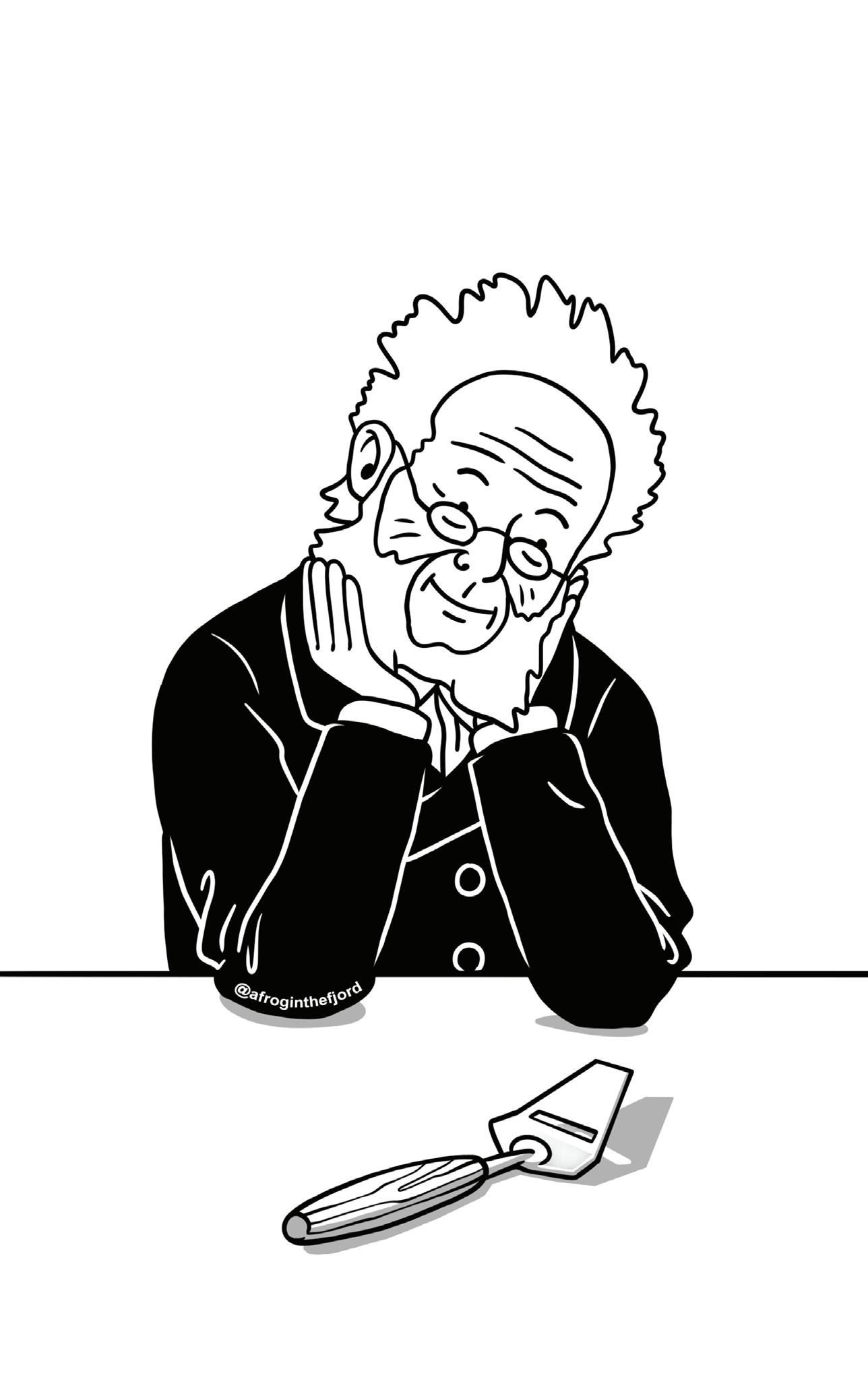
Where is janteloven when Norway achieves something big internationally? It quietly steps aside, because collective pride is allowed. As long as it’s national, not personal, and ideally involves sports, oil, or culture, Norwegians will celebrate and boast with pride. And if no one brings it up? Someone will eventually mention the cheese slicer. Or Henrik Ibsen.
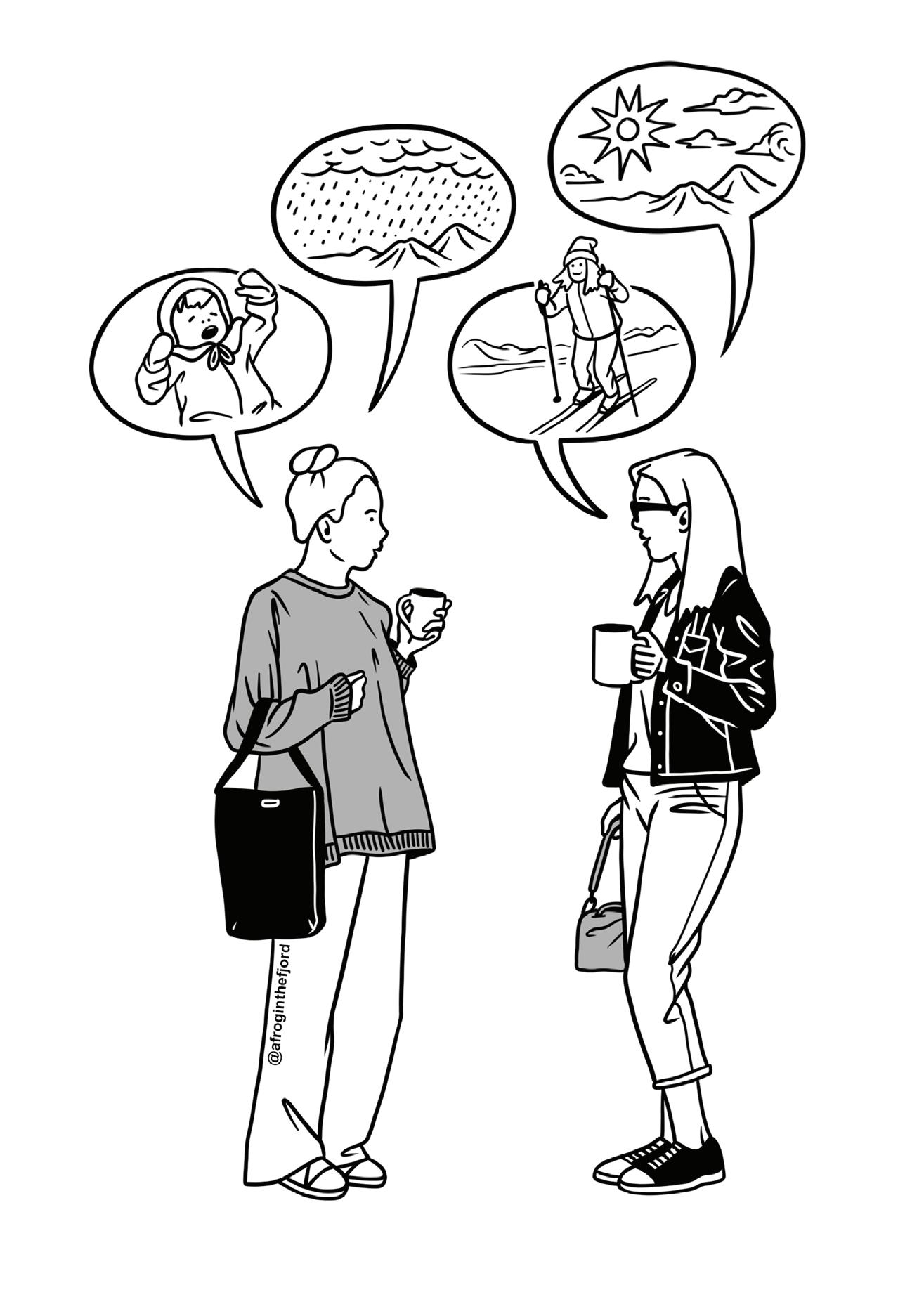
NORWEGIANS OFTEN say they are bad at small talk. That is totally wrong. They engage in small talk all the time and are masters at it, they just don’t realize it. What they dislike are awkward silences and unstructured social situations. Norwegians need clear rules and predictable patterns to socialize, especially when interacting with people outside their intimate or family life. As a result, they have developed a set of safe topics for small talk. These topics can be used with anyone (colleagues, acquaintances, neighbors) to maintain a light and enjoyable conversation. Without revealing much about personal life or opinions, you’ll avoid awkward silences, uncomfortable subjects, or God forbid, disagreements. Here are some tips on how to practice small talk the Norwegian way with “safe” topics, this is as close as one comes to an exhaustive list.
• The weather: everything from weather forecasts for this weekend, how it snowed yesterday and now it’s raining, the weather we hope to get this summer, etc.
Norwegians use small talk with most people they interact with, i.e. colleagues, acquaintances, neighbors, and even extended family members. There is a small, inner circle of people Norwegians consider their real close family and friends. With these select few, usually one or two best friends, siblings, and their partner, conversations may go deeper, allowing them to share emotions, thoughts, and personal problems.
One tip: Don’t start talking about topics not on this list with Norwegians you don’t consider your close friends. Otherwise they might react in strange avoiding ways, walking away or suddenly remembering an imaginary train they need to catch in 6 minutes.