New GE tech in food and agriculture in Africa: Deregulation of GE and products must be overturned
NEW GENETIC ENGINEERING TECHNOLOGIES IN FOOD AND AGRICULTURE IN AFRICA
Deregulation of genome editing and products must be overturned in Africa –why stringent regulation is imperative!
september 2024
years of advocating for food sovereignty in Africa
The African Centre for Biodiversity (ACB) is committed to dismantling inequalities and resisting corporate industrial expansion in Africa’s food and agriculture systems.
PO Box 29170, Melville 2109, Johannesburg, South Africa.
Tel: +27 (0)11 486-1156
Researched and written by Stefanie Swanepoel
Editorial oversight of the series and input from ACB executive director Mariam Mayet
Copyedit by Liz Sparg
Design and layout: Adam Rumball, Sharkbuoys Designs, South Africa
Acknowledgments
The ACB gratefully acknowledges the financial support of several donors though the views expressed may not necessarily reflect the views of our donors.
Please click here to read the full series.
Acronyms
ACB African Centre for Biodiversity
AU NEPAD African Union New Partnership for Africa’s Development
CRISPR Clustered Regularly Interspaced Short Palindromic Repeats
GM Genetically modified
GMO Genetically modified organism
ISAAA International Service for the Acquisition of Agri-biotech Applications
LMO Living modified organism
OFABs Open forums on agricultural biotechnology
PPPs Public-private partnerships
USAID United States Agency for International Development
LIST
genome editing and its resultant GMOs must be stringently and robustly regulated.
Introduction
There has been fierce contestation in Africa around the regulation of gene-editing techniques and their products, see ACB’s work in this regard. Agrochemical-biotech companies are calling for gene-edited products to be regulated in the same way as conventionally bred crops thus placing the techniques and products out of the scope of national biosafety laws and the Cartagena Protocol on Biosafety.
Four African countries – Nigeria, Kenya, Malawi, and Ghana – have already adopted guidelines for genome editing in the past few years that exclude both the technology and its products unless detectable foreign DNA is present in the final product. Eswatini and Burkina Faso are also set to follow suit. South Africa, where almost 3 million ha of genetically modified organisms (GMOs) are growing and have been growing for more than two decades, has decided to regulate both
the technology and the genome-edited seed/ crop plant in terms of its biosafety legislation.
In this second factsheet in the series, we present a compelling case for why genome editing and its resultant GMOs must be stringently and robustly regulated. It is not because we believe the industry’s promises as to what genome editing can achieve but because we reject the notion that the development of gene-edited products can be hidden from view – not subject to biosafety protocols, regulation, and oversight, nor linked to any liability redress or restitution protocols and measures. Whether geneedited products enter the African market or not, there needs to be public scrutiny as to what is being undertaken regarding plant germplasm, farmers’ seed rights, agricultural biodiversity, impacts on biodiversity, and most of all, because it affects all of us.
There has bEEn fierce contestation in Africa around the regulation of geneediting techniques and their products
SETTING THE STAGE FOR DEREGULATION IN AFRICA
There have been significant efforts made to harmonise policy and incentivise investments to unlock regulatory approval for gene editing and its resultant GMOs in Africa.
At the policy level
In 2023, the African Union Development Agency at the African Union New Partnership for Africa’s Economic Development (AUNEPAD) brought together policymakers from 11 African countries to discuss regulatory frameworks for genome-editing techniques (Andae, 2023). This is supported by establishing open forums on agricultural biotechnology (OFABs), implemented in Kenya, Uganda, Tanzania, Nigeria, Ghana, Burkina
There is a call for African governments to mEEt their obligations to spend at least 1% on research to actively support genome editing research.
Faso, and Malawi (National Commission for Science and Technology, 2022). There is also a push for governments to provide tax incentives and enable regulatory frameworks to attract venture capital investments into genome editing startups (Abkallo et al., 2024).
At the research level
The Genome Editing Technologies Initiatives from the Network of African Science Academies and Africa Harvest focus on embedding genome editing into African research portfolios (Abkallo et al., 2024). There is a call for African governments to meet their obligations to spend at least 1% on research to actively support genome editing research and to commit to engaging in public-private partnerships and co-finance genome editing projects (Abkallo et al., 2024). The African Plant Breeding Academy CRISPR course, held in 2023, aimed to give scientists the skills to set up genome-editing programmes in their countries (Nordling, 2023). Scientists attended from Ethiopia, Ghana, Kenya, Malawi, Morocco, Nigeria, and Sudan. The course was a collaborative effort between the University of California’s Seed Biotechnology Centre, the International Institute of Tropical
Agriculture, World Agroforestry, the International Livestock Research Institute, Morrison Foerster and AU-NEPAD and hosted by the International Institute of Tropical Agriculture in Kenya (Nordling, 2023). The course, which runs for five years, is funded for US$1.6 million a year by Bayer, Syngenta, the Foundation for Food and Agricultural Research and the venture arm of the Mohammed VI Polytechnic University in Morocco (Nordling, 2023). Participants in the course also access DNA sequence information gathered from 101 African orphan crops (Plant Breeding Academy, 2023).
At the consumer level
The African Union Development Agency at AU-NEPAD has worked with eight African countries (Ghana, Kenya, Ethiopia, Nigeria, Malawi, Zimbabwe, Mozambique, and Burkina Faso) to develop communication strategies to support the acceptance of these technologies by consumers (Ombogo, 2023). In September 2021, during the Africa Biennial Biosciences Communication Symposium, the African Coalition for Communicating about Genome Editing was launched. The Coalition is a platform for fostering open and transparent dialogue on genome editing on the continent (Dionglay, 2024). An OFAB was opened in Malawi in 2022 by the African Agricultural Technology Foundation in conjunction with the National Commission for Science and Technology. Before the launch of the forum, a two-day media training was provided. The training focused on how journalists could report on biotechnology to enhance consumer acceptance of transgenic and gene-edited crops (National Commission for Science and Technology, 2022). After this, an annual awards ceremony was established to encourage positive reporting on biotechnologies (National Commission for
Science and Technology, 2023). This feeds into the wider OFAB Africa Media Awards contest.
Use of public-private partnerships
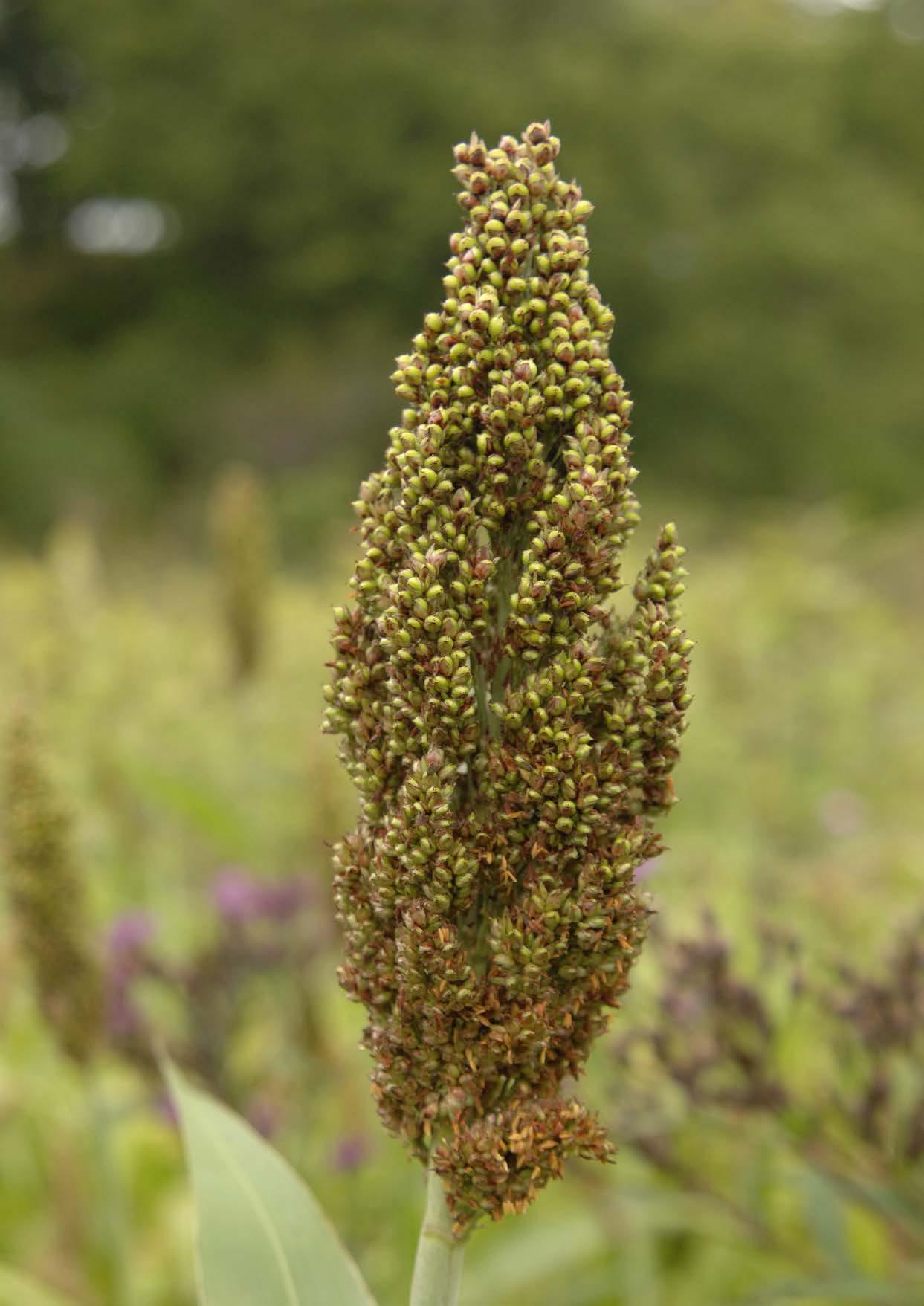
There are many examples of public-private partnerships (PPPs) with African research and education institutions. For example, in 2022, a PPP was formed with the International Service for the Acquisition of Agri-biotech Applications (ISAAA) AfriCenter, Kenyatta University (Kenya), and Addis Ababa University (Ethiopia) (ISAAA, 2022). The PPP gained nearly US$3.8 million in funding from the United States Agency for International Development (USAID) and Feed the Future. The Feed the Future Striga Smart Sorghum for Africa project launched in Kenya and Ethiopia uses CRISPR technology to develop new sorghum genome-edited varieties resistant to Striga weed (ISA, 2022).
GENOME-EDITED CROP PLANTS TARGETED IN AFRICA
Currently, there are very few gene-edited crops on the global market and none on the African market. In Africa, most projects are still in development or the laboratory stage. The crop plants targeted for gene editing in Africa include bananas, cassava, maize, sorghum, wheat, and yams. Experimental genomeediting techniques are used on bananas for disease resistance and nutrient enhancement,
Currently, there are very few gene-edited crops on the global market and none on the African market.
as well as to delay ripening and adapt the size for dwarf and semi-dwarf varieties (Tripathi et al., 2022). Cassava is edited for disease resistance and early and synchronised flowering, while maize is edited for herbicide tolerance and grain biofortification (Tripathi
et al., 2022). Sorghum is targeted for resistance to Striga weed and improved nutrition quality. Wheat is edited for improved yields and disease resistance, and yams for abiotic stress tolerance, as well as weed and disease resistance (Tripathi et al., 2022).
If this technology is not regulated, what is being gene-edited, where it is happening in the labs and fields, and how it affects farmers and consumers will be hidden. Currently, it also allows agrochemical-biotech corporations to ‘hide’ knowledge related to test results, manufacturing processes and other related information as trade secrets. This enables them to submit broad patent applications lacking the detail that would enable another company to generate the same product on the expiry of the patent. It leaves room for patenting these processes later, when their current patent ends, thus extending the time these corporations hold monopoly rights over the invention.
Table 1 indicates the gene-editing projects in Africa. Table 2 shows gene-editing projects developed outside of Africa for Africans.
Table 1: Gene-editing projects underway in Africa
In development
• Cassava – edited for bacterial blight disease by the National Root Crops Research Institute in Nigeria in partnership with the Gates Foundation (funder) and National Science Foundation (Rock et al., 2023)
• Maize – edited for maize lethal necrosis by the International Maize and Wheat Improvement Center (Mexico) in partnership with Corteva, Kenyan Agricultural and Livestock Research Organization, the Seed Trade Association of Kenya, the United States Department of Agriculture and the Gates Foundation (funder) (Rock et al., 2023)
• Maize – edited for tolerance to drought conditions by VIB-Ugent Centre for Plant Systems Biology (Belgium) in partnership with Kenyatta University (Rock et al., 2023)
• Rice – edited for resistance to Yellow mottle virus by the National Agricultural Research Organization (Uganda) in partnership with Uganda’s National Crops Resources Research Institute (Rock et al., 2023)
Proof of concept
In laboratory testing
• Sweet potato – edited for enhanced Vitamin A by the University of Cape Coast (Ghana) in partnership with North Carolina State University (Rock et al., 2023)
• Cassava – edited for timing of flowering to support crossbreeding by turning off the function that suppresses flowering by Uganda’s National Agricultural Research Organization, funded by the Donald Danforth Plant Science Centre in the United States (AfriCentre, 2022)
• Banana (Musa spp) – edited to repress genes susceptible to banana Xanthomonas wilt and banana streak virus by the International Institute of Tropical Agriculture (Nordling, 2023)
• Sorghum – edited for resistance to Striga in 2022 by ISAAA, AfriCenter, Kenyatta University (Kenya), and Addis Ababa University (Ethiopia); and funded by USAID (Genetic Literacy Project, 2023)
• Cassava – edited for resistance to brown streak disease in 2020 (Genetic Literacy Project, 2023)
• Cowpea – edited for resistance to pests by the government in 2021
• Sweet potato – edited for increased beta carotene by Ghanian University of Cape Coast
• Teff – edited to resist lodging (when stems buckle under the weight of heavy grains) by Donald Danforth Institute, Ethiopian Institute of Agricultural Research and Corteva Agrisciences (Innovative Genomics, 2022)
Table 2: Gene-editing projects that aim to enter the African market
In development
Proof of concept
In laboratory testing
In field trials
• Cassava – edited for cyanide reduction by Innovative Genomics Institute (University of California) in partnership with the Donald Danforth Plant Science Center (Rock et al., 2023)
• Cocoa – edited for resistance to swollen shoot virus by Penn State University in partnership with the National Science Foundation (funder) and the United States Department of Agriculture (Rock et al., 2023).
• Soybeans – edited for drought tolerance, seed oil composition improvement and herbicide tolerance
• Potatoes – edited to stop browning when sliced and have a longer shelf life
• Cotton – edited to reduce the length of the cultivation process and risk of loss
• Rapeseed – edited to improve shatter resistance and yield losses
• Papaya – edited for resilience to new tropical pests and abiotic stresses
• Squash, gourds, melon and watermelon – edited to build resistance to the Geminiviridae virus that decreases yields
• Alfalfa – edited to change the SQUAMOSA promoter-binding protein-like (SPL) gene
• Sugarbeet – edited to increase tolerance to biotic and abiotic stresses and enhance tolerance to salt
• Rice and maize – aimed at the global market – edited KRN2 gene that determines the size of the cell group that gives rise to flowers and then grains. The aim is to increase yields by 8 and 10%, respectively (Innovative Genomics, 2022)
• Cassava – East, Central and West Africa – edited to reduce cyanogen production by the Innovative Genomics Institute (Genetic Literacy Project, 2023)
• Cacao – West Africa – edited for resistance to cocoa swollen shoot virus by Pennsylvania State University (Genetic Literacy Project, 2023)
• Wheat – edited to boost the development of flowers – and hence grain (Innovative Genomics, 2022)
• Wheat – edited to (1) disrupt the functionality of disease-susceptible genes to make wheat resistant to powdery mildew and (2) improve a gene related to increased yield. This is the first time two genes have been modified (Innovative Genomics, 2022).
If this technology is not regulated, what is being geneedited, where it is happening in the labs and fields, and how it affects farmers and consumers will be hidden.
REGULATION OF GENEEDITED CROPS IN AFRICA
• Nigeria announced its national guidelines on genome editing in February 2022, stating that gene-edited products will not be considered genetically modified (GM) if there is no foreign DNA present in the final product (Dionglay, 2024). Where genome editing uses recombinant DNA sequences or the end product has a novel combination of genetic materials, it will be classified as a GMO and undergo the same regulatory approval processes as transgenic GMOs. If the final product does not have foreign material, it will be issued with a Biosafety Approval certificate. In 2023, Nigeria’s National Biotechnology Development Agency, with the African Union Development Agency, held a workshop to validate genome editing work (Voice of Nigeria, 2023). Nigerian scientists also attended a CRISPR course at UC Berkeley in partnership with the Innovative Genomics Institute and International Institute of Tropical Agriculture (IITA) (Voice of Nigeria, 2023).
• Kenya published genome editing guidelines in March 2022. These, similarly, treat products without foreign DNA as conventional plant varieties (Dionglay, 2024). Kenya’s National Biosafety Authority approved genome-editing projects for nitrogen-fixing bacteria, Maize Lethal Necrosis resistance, and Striga-resistant sorghum (Dionglay, 2024). By 2022, genome
editing experiments, funded by USAID with support from Corteva, involving plant varieties for pest resistance (Sprink et al., 2022) and Striga-resistant sorghum were given the green light (Ledford, 2024). Kenyan researchers backed by the Bill & Melinda Gates Foundation were also given the green light for research and development regarding the genome editing of maize, pearl millet and groundnuts for disease resistance and quality improvements (Ledford, 2024).
• Ghana published its guidelines on genome editing in 2023, following the approach taken by Nigeria and Kenya (Ghana News Agency, 2023). The guidelines were developed with technical and financial support from AU-NEPAD’s African Biosafety Network of Expertise (Ghana News Agency, 2023). In addition, the Ghanian University of Cape Coast was given the thumbs up to experiment with genome editing to increase beta-carotene content in sweet potatoes (Gakpo, 2021). The research team wants to knock out the gene for an enzyme that converts beta-carotene into other products (Gakpo, 2021).
• Malawi’s 2022 genome editing guidelines similarly regulate only products with novel DNA combinations, exempting others from biosafety regulation (Dionglay, 2024).
South Africa, breaking from the trend that has set in on the rest of the continent, has decided that gene editing and its products will undergo the same regulatory process as transgenic modification and the resultant GMOs. A powerful consortium of industry actors appealed this decision made by the Department of Agriculture in 2021 through the Agricultural Business Chamber of South Africa (ACB, 2024). While the appeal was initially successful in favour of the industry consortium, the Minister of Agriculture upheld the initial decision (ACB, 2024).
African Centre for Biodiversity (ACB) strongly opposed the proposal that new genetic techniques are exempt from strict biosafety regulatory oversight and noted that the Minister’s decision aligns with the precautionary approach necessary with new technologies that may have unintended negative environmental and social consequences (ACB, 2024). ACB noted that exemptions would accelerate the privatisation of seed and its ownership, with social and economic costs passed down to consumers and farmers, as has been the case with GM seed and crops (ACB, 2024). See ACB’s briefing paper on this issue.
To date, the ACB has not been able to access any data regarding research and development relating to genome editing in South Africa.
THE CASE FOR REGULATION AND OVERSIGHT OF GENOMEEDITING AND ITS PRODUCTS
Regulation of genome editing must adopt a precautionary approach and adherence to biosafety due process regarding the regulation of new technologies. It must inherently accept that these technologies alter the genetic material of plants, animals, and microbes, using synthetic guides, with the express goal of changing organisms’ DNA. These novel technologies create new risks and uncertainties, with possibly farreaching consequences, they must therefore be robustly regulated. Such regulation must
These novel technologies create new risks and uncertainties, with possibly far-reaching consequences.
also encompass the right to say no based on the precautionary principle. Further, traceability and the labelling of all GMOs are prerequisites for the freedom of choice for both consumers and farmers, and their exclusion from regulation would accelerate the privatisation of seed and its ownership, to the cost of consumers and farmers.
Cartagena Protocol on Biosafety
Current genome editing techniques and applications fall within the Cartagena Protocol on Biosafety definition of a living modified organism (LMO). An LMO is defined in the Protocol as “any living organism that possesses a novel combination of genetic material obtained through the use of modern biotechnology”. Whether modified or not, a living organism can transfer or replicate
genetic material (Sirinathsinghi, 2020). There can be no denying that gene-edited products have been created by modern biotechnology, that they contain novel combinations of genetic material, and that to produce them, techniques are used that breach natural physiological or recombination barriers (i.e., techniques not used in traditional plant breeding) (Sirinathsinghi, 2020). As they fulfil these criteria outlined in the Cartagena Protocol on Biosafety in its definition of an LMO, gene editing cannot be exempt from its regulations (Sirinathsinghi, 2020).
A violation of consumers’
rights
Deregulation enables corporations to simply sidestep challenges around public acceptance of these crops (Ruder & Kandlikar, 2023). This means that labelling and traceability requirements are not mandated, making it impossible for farmers and consumers to know the origin of what they are using or consuming (Idris et al., 2023). The final product on the shelf could be indistinguishable from its natural counterpart. This violates consumers’ rights to know and choose (Idris et al., 2023).
Social justice concerns
Deregulation does not consider ethical, social and sustainability issues (Idris et al., 2023). Even in current regulatory frameworks for GM seed and crops, there is insufficient focus on social and environmental risks (Ruder & Kandlikar, 2023), and power dynamics are not considered. The escalating corporate concentration in
seed and agricultural input markets should be of significant concern to governments and the communities they represent.
Social justice concerns about genome editing include achieving equal access to knowledge and technologies and not deepening the unfair distribution of benefits and opportunities (Idris et al., 2023). The broad scope of patent applications extends corporate control over traits and gene sequences found in conventionally bred plants and even those in the wild. Increased control over seed and plant varieties entrenches the market power held by agrochemical-biotech corporations and will likely intensify the spread and establishment of the monoculture industrial farming system (Idris et al., 2023). Deregulation will, thus, further root existing inequities in the global food and farming sector, exacerbating the damage done by adopting GM crops – and it will do so silently (Ruder & Kandlikar, 2023).
CONCLUSION
The only way in which gene edited products can come to market affordably is through deregulation. Hence, there has been significant lobbying and media campaigns to gain a regulatory-free pass.
There are real consequences for farmers and consumers if gene-edited seeds/crops plants and ultra-processed food containing gene edited components are not regulated. Deregulation of gene editing is taking place swiftly, and once it is complete, what is being developed and made available commercially will be hidden from public scrutiny. Once out of view, the existence of gene-edited products on our supermarket shelves and their potential negative impacts on humans and ecology cannot be held to public account.
Once unregulated, there will be no public and independent scientific scrutiny or studies and research on whether the genome-edited seeds can deliver on their hyped-up promises. Nor can there be any scrutiny regarding the effects of gene-edited products on human or ecological health let alone accountability.
Genome editing will no doubt exacerbate biodiversity loss while failing to produce healthier, more nutritious, or more diverse food for Africans, and will not allow for better incomes or fairer prices for farmers. Rather, it will function as a colonial
mechanism to entrap agricultural and food systems and secure and capture new markets for industrially produced corporateowned seed and ultra-processed food.
The beneficiaries of these technologies are certainly not the people of Africa but the corporations who own the technologies, whereas farmers will continue to be left vulnerable to changes in the climate and other shocks. Already, the handful of biotechnology companies that dominate the global commercial seed and pesticide markets also dominate ownership of the patents on genome editing technologies, techniques, and processes, see for example work done by the Greens-European Free Alliance in this regard.
The only way in which gene edited products can come to market affordably is through deregulation.
We continue to reiterate the need to urgently transition to more sustainable, ecologically and socially just agricultural and food systems based on food sovereignty imperatives.
The beneficiaries of these technologies are certainly not the people of Africa but the corporations who own the technologies.
References
Abkallo, H.M., Arbuthnot, P., Auer, T.O., Berger, D.K., Burger, J., Chakauya, E., Concordet, J.P., Diabate, A., Di Donato, V., Groenewald, J.H., Guindo, A., Koekemoer, L.L., Nazare, F., Nolan, T., Okumu, F., Orefuwa, E., Paemka, L., Prieto-Godino, L., Runo, S., Sadler, M., Tesfaye, K., Tripathi, L. & Wondji, C. 2024. Making genome editing a success story in Africa. Nat Biotechnol. 42(4):551-554. doi: 10.1038/s41587024-02187-2. PMID: 38504013.
ACB (African Centre for Biodiversity). 2024. Game-changer for regulation of genome editing as SA’sAg minister overrules industry and appeal board https://acbio.org.za/gm-biosafety/game-changer-for-genome-editing-regulation/ AfriCentre. 2022. How genome editing will address the challenge of cassava breeding inAfrica https://africenter.isaaa.org/genome-editing-will-address-challenge-cassava-breeding-africa/ Andae, G. 2023. AU roots in the adoption of gene editing to boost food production https://www.theeastafrican.co.ke/tea/science-health/au-urges-gene-editing-for-food-security-4177592 CBD (Convention on Biological Diversity). 2024. The Cartagena Protocol on Biosafety https://bch.cbd.int/protocol.
Dionglay, C. 2024. Updates on the global regulatory landscape for gene-edited crops https://www.isaaa.org/blog/entry/default.asp?BlogDate=1/24/2024.
Gakpo, J.O. 2021. Ghana scientist turns to gene editing to improve sweet potato crop. https://allianceforscience.org/blog/2021/02/ghana-scientist-turns-to-gene-editing-to-improve-sweet-potato-crop/ Genetic Literacy Project. 2023. Africa:Crops/food – global gene editing regulation tracker https://crispr-gene-editing-regs-tracker.geneticliteracyproject.org/africa-crops-food/ Ghana News Agency. 2023. Ghana publishes its guidelines on genome editing. https://gna.org.gh/2023/11/ghana-publishes-its-guidelines-on-genome-editing/ Idris, S.H., Mat Jaluddin, N.S., Change, L.W. & 曾 立纬. 2023. Ethical and legal implications of gene editing in plant breeding: A systematic literature review. J Zhejiang Univ Sci B. 24(12):1093-1105. doi: 10.1631/jzus. B2200601. PMID: 38057267; PMCID: PMC10710910, https://www.ncbi.nlm.nih.gov/pmc/articles/PMC10710910/ Innovative Genomics. 2022. CRISPRAgriculture https://innovativegenomics.org/news/crispr-agriculture-2022/ ISAAA. 2022. Striga Smart Sorghum forAfrica Project launched in Kenya and Ethiopia https://www.isaaa.org/kc/cropbiotechupdate/article/default.asp?ID=19960 Ledford, H. 2024. CRISPR-edited crops break new ground in Africa. Nature 626:245-246. National Commission for Science and Technology. 2022. Launch of open forum on agricultural biotechnology Malawi. https://www.ncst. mw/launch-of-open-forum-on-agricultural-biotechnology-malawi-chapter-1-st-april-2022-2/. National Commission for Science and Technology. 2023. Open forum on agriculture biotechnology (OFAB) annual media awards 2023: Open call for entries from journalists reporting on sustainable agricultural biotechnologies. https://www.ncst.mw/open-forum-on-agriculture-biotechnology-ofab-annual-media-awards-2023-open-call-for-entries-fromjournalists-reporting-on-sustainable-agricultural-biotechnologies/ Nordling, L. 2023. Putting CRISPR into African hands to future-proof crops. Nature Biotechnology 41:165166. https://doi.org/10.1038/s41587-023-01668-0
Ombogo, G. 2023. There is need to work together to reduce contentious issues on biotechnology, experts advise https://allianceforscience.org/blog/2023/08/there-is-need-to-work-together-to-reduce-contentious-issues-on-biotechnology-expertsadvise/
Rock, S.J., Schnurr, M.A., Kingiri, A., Ely, A., Glover, D., Stone, G.D., & Fischer, K. 2023. The knowledge politics of genome editing in Africa. Elementa: Science of theAnthropocene 11(1):00143.
Sirinathsinghi, E. 2020. Why genome-edited organisms are not excluded from the Cartagena Protocol on Biosafety. https://www.genewatch.org/uploads/f03c6d66a9b354535738483c1c3d49e4/genome-edited-biobrief-dec2020-sirinathsinghji.pdf
Sprink, T., Wilhelm, R. & Hartung, F. 2022. Genome editing around the globe: An update on policies and perceptions. Plant Physiology 190(3)1579-1587
https://doi.org/10.1093%2Fplphys%2Fkiac359
Tripathi, L., Dhugga, K., Ntui, V., Runo, S., Syombua, E., Muiruri, S., Wen, Z. & Tripathi, J.N., 2022. Genome editing for sustainable agriculture in Africa. Front. Genome Ed. 4. https://doi.org/10.3389/fgeed.2022.876697 https://www.frontiersin.org/articles/10.3389/fgeed.2022.876697/full Voice of Nigeria. 2023. Genome editing technology will transform development in Nigeria,Africa https://von.gov.ng/genome-editing-technology-will-transform-development-in-nigeria-africa-dg/