GBF-aligned NBSAPs fact sheet 3: Conserve 30% of land, waters, and seas
GBF-aligned NBSAPS to ensure just, sustainable futures for all life to thrive:
The role of African civil society
FACTSHEET 3
Conserve 30% of land, waters, and seas
The African Centre for Biodiversity (ACB) is committed to dismantling inequalities and resisting corporate industrial expansion in Africa’s food and agriculture systems.
PO Box 29170, Melville 2109, Johannesburg, South Africa
Tel: +27 (0)11 486-1156
Researched and written by ACB research consultant Linzi Lewis
Editorial oversight and input by ACB executive director Mariam Mayet
Design and layout: Katerina Sonntagova, Moss and Sea Studio
Cover art: Forest by Jessica Hooft, https://www.jesshooft-art.com/
ACKNOWLEDGMENTS
The ACB gratefully acknowledges the financial support of several donors, though the views expressed may not necessarily reflect the views of our donors.
January 2026
Acronyms
CBC Community-based conservation
CBD Convention on Biological Diversity
CBNRM Community-based natural resource management
DRC Democratic Republic of the Congo
FPIC Free, prior, and informed consent
ICCAs Indigenous and community conserved areas
IUCN International Union for Conservation of Nature
IPBES Intergovernmental Science-Policy Platform on Biodiversity and Ecosystem Services
IPLCs Indigenous People and local communities
KM-GBF/GBF Kunming-Montreal Global Biodiversity Framework
NBSAPs National Biodiversity Strategy and Action Plans
NGOs Non-governmental organisation
OEMCs Other effective area-based conservation measures
PAs Protected Areas
About this series
This series of fact sheets unpacks the Global Biodiversity Framework (GBF) goals, targets and other relevant sections to which National Biodiversity Strategy and Action Plans (NBSAPs) are being revised and aligned in the intersection of agriculture and biodiversity, and how transformational change will be required at all levels of government and society.
It is important to note that the Kunming-Montreal Global Biodiversity Framework (KM-GBF) targets are interdependent and need concrete actions, policies, and programmes to meet national and global goals and priorities (FAO et al, 2024).
In this fact sheet, the third in the series, we focus on Target 3: Conserve 30% of all land, waters, and seas.
Background: Protected areas and biodiversity conservation
Protected areas (PAs) are considered the cornerstone of in-situ biodiversity conservation (Riggio et al., 2019).1 Yet, their effectiveness is a function of a variety of factors, including both decisions made at the time of establishment (extent, design, location, connectivity,2 representativeness) and subsequent management decisions (Rodrigues and Cazalis, 2020).
The removal of humans and societies in the management, conservation and co-evolution of species and landscapes is at the heart of the controversy surrounding Target 3 of the KunmingMontreal Global Biodiversity Framework (KM-GBF), also known as the 30x30 target.3 This is as a result of the stream of myths underlying the legacy of colonial conservation, creating imagery of a wilderness separate from humans. Nowhere is this as evident as in Africa.
Target 3: Ensure and enable that by 2030 at least 30 per cent of terrestrial and inland water areas, and of marine and coastal areas, especially areas of particular importance for biodiversity and ecosystem functions and services, are effectively conserved and managed through ecologically representative, well-connected and equitably governed systems of protected areas and other effective area-based conservation measures, recognizing indigenous and traditional territories, where applicable, and integrated into wider landscapes, seascapes and the ocean, while ensuring that any sustainable use, where appropriate in such areas, is fully consistent with conservation outcomes, recognizing and respecting the rights of indigenous peoples and local communities, including over their traditional territories.
1 According to the International Union for Conservation of Nature (IUCN), an effective PA is: “a clearly defined geographical space, recognized, dedicated and managed, through legal or other effective means, to achieve the longterm conservation of nature with associated ecosystem services and cultural values” (Dudley, 2008).
2 Connectivity is a function of the distribution and types of natural vegetation patches in the agricultural landscape (Hilty et al., 2006).
3 See https://www.rainforestfoundationuk.org/wp-content/uploads/2023/01/30x30_The-Good-the-Bad-and-Whatneeds-to-happen-next_EN.pdf for more info on some of the concerns surrounding the 30x30 target.
This target builds on Aichi Target 11, which aimed to achieve 17% of land and 10% oceans to be protected by 2020, which was nominally realised (Obura et al., 2021). 4 While coverage increased, the damaging focus on the quantity of PAs rather than their quality and their effective management coincided with the greatest biodiversity loss in history (Intergovernmental Science-Policy Platform on Biodiversity and Ecosystem Services (IPBES), 2019; Rainforest Foundation UK, 2023). This is due to the lack of attention paid to structural problems and the reduction of threats from global capitalist and extractive economic systems, driving biodiversity loss, climate change, and rampant pollution, thereby threatening all lifesupporting systems. With this in mind, looking towards 2030, the target to increase 30% of areas under protection, a number considered both unscientific and unrealistic, seems daunting and worrying (Rainforest Foundation UK, 2023; Büsher and Duffy, 2022).
Since the adoption of the GBF, along with a focus on area-based conservation, as outlined in Target 3 of the GBF, many questions arise about how this renewed ambition to conserve 30% of the Earth’s land, water, and seas by 2030 will contribute towards conserving half of the Earth by 2050. The question of how this will be designed, implemented, and financed, and in whose interests, is at the heart of this dilemma. The history of displacement, human rights abuses, and continued extraction even within PAs (see below) illustrates that “living in harmony with Nature” – the overall vision of the GBF – stands at odds with this Target. While caution is required when considering the unjust history of the establishment and management of conservation, and the renewed interest to purchase land, which could evict and exclude even more people from their ancestral lands, it does also represent an opportunity to reimagine conservation.
4 Aspects such as effective management, ecological representativeness, and connectivity fell short. Furthermore, they only partly cover important sites for biodiversity and are not yet fully ecologically representative and effectively or equitably managed (IPBES., 2019; Lo and Jang, 2022).
Decentralising and decolonising biodiversity
Globally protected areas now cover 15% of terrestrial and freshwater environments and 7% of marine areas (IPBES, 2019). Historically, many of the PAs on the African continent were established as game reserves used by colonial hunters. These were converted into national parks around or following independence through mass forced evictions, separating traditional communities from their ancestral lands (Caro, 2003). PAs remain at the heart of conservation efforts, with over 9,000 designated sites or landscapes covering 19% of land and inland waters, and 17% of Africa’s marine area (Bakarr, 2022). When considered in isolation, less than 10% of inland waters in Africa are protected, the lowest globally (Bastin et al., 2019).
There are efforts to extend conservation actions across national boundaries by, for example, setting up transfrontier conservation areas (Stoldt et al., 2020), to establish wildlife corridors, while simultaneously downgrading, downsizing, and degazetting protected areas across Africa due to industrial activities, local land pressures, and land claims (Golden Kroner et al., 2019). At the same time, the militarisation of PAs in Africa has gained momentum, alongside increased global ambitions to formally conserve and preserve greater areas, leading to rampant human rights violations and forced evictions, deepening inequalities, destruction of livelihoods, and the perpetuation of instability in areas of high biodiversity (Counsell, 2022).
Similar forced displacements and land grabs linked to the historical, colonial establishment of conservation and protected areas must not be replicated in attempts to achieve the 30x30 target. This is a particular concern whereby cheap land and insecure land tenure offer opportunities for carbon and biodiversity offsetting under the guise of so-called naturebased solutions (Eisen and Mudodosi, 2021). Current and ongoing buying up of conservation concessions for profit by global conservation non-governmental organisations (NGOs) and elites, such as the African Parks Network, 5 are reinforcing oppressive power dynamics reminiscent of colonial practices (World Rainforest Movement, 2022). The expansion of PAs must not serve as a continuation of harmful practices and the further commodification of nature while overconsumption continues in other parts of the world (Rainforest Foundation UK, 2023). These dangers must be averted. Large, international conservation NGOs and African governments must ensure the rights of communities to give or withhold free, prior and informed consent (FPIC) with oversight and accountability mechanisms, and replace this outdated approach with one that protects both biodiversity and people’s livelihoods and traditions, as the same.
To meet Target 3, it is necessary to effectively decolonise PAs and, therefore, biodiversity conservation. Decolonising biodiversity conservation science and practice involves a transition towards more locally rooted, plural, socially just, and convivial forms of conservation, moving away from mainstream conservation approaches, such as PAs or market-based instruments that are strongly rooted in Eurocentric ontologies and epistemologies (Corbera et al., 2021).
Conservation paradigms
A fundamental paradigm shift is needed, one that moves away from militarised, exclusionary approaches toward models that respect rights, build trust, and recognise local communities as essential partners in conservation efforts. Alternatives to fortress conservation, described below, prioritise human rights, equity, and the inclusion of local people in decision-making and management. These models include indigenous-led conservation, community-based conservation/natural resource management (CBC/CBNRM), indigenous and community conserved areas (ICCAs), other effective area-based conservation measures (OECMs), and integrated landscape management. While these are relatively nascent and have had many challenges, they offer opportunities for shared governance and decision-making where local communities and rights holders require locally contextualised solutions for conservation, across intact, shared, and fully altered spaces, which can be adapted for different scales.6
New radical and transformative conservation paradigms are necessary that effectively disrupt the inequitable, resource extractive political and economic status quo that maintains our separation from the rest of the natural world and its commodification. Such approaches must respond to and with the plurality of perspectives and realities, and focus on human wildlife co-existence (Massarella et al., 2023).
6 It would be good to follow up on the commitment by the DRC to use ICCAs, through community forests and other rights-based approaches: https://environews-rdc.net/2022/12/14/cop15-objectif-30x30-la-rdc-presente-sa-vision-a-lamontreal/
Fortress conservation and human rights abuses
In recent years, the conservation industry’s reputation has been called into question, following several scandalous human rights abuses at the hands of international conservation NGOs. One of the cases that involved the World Wildlife Fund (WWF) occurred at Salonga National Park in the Democratic Republic of the Congo (DRC) and is reflective of a set of broader, systemic issues across the conservation industry. Local communities that live and rely on these natural areas for diverse reasons, and who have maintained DRC’s ecosystems through customary management practices for millennia, are excluded from PAs through essentially militarised force (Oakland Institute, 2024). Another example is in Tanzania, where forced evictions from local ancestral lands, kidnapping, etc., are taking place under the guise of expanding conservation areas, while these areas are used for elite tourism and trophy hunting (Weldermichel, 2025). Concerns are further compounded by competing interests over resources, whereby illegal extraction continues to take place within and adjacent to PAs, facilitated by what is termed as fortress conservation, which ends up fuelling conflict over resources as armed groups and state security forces vie for control of mining sites (Oakland Institute, 2024). In Zimbabwe, previously a pioneer of “community-based conservation” through programmes such as CAMPFIRE,7 international donors have stepped in due to state collapse, along with the return to a fortress conservation approach. This is promoting the privatisation, militarisation, and securitisation of conservation, reminiscent of colonial-style exclusionary conservation, essentially based on racism (Scoones, 2020).
The conservation industry, including international conservation organisations, donor agencies, and national conservation authorities, still has much to answer for in terms of accountability for ongoing crimes, but also in terms of how to systematically change the paradigm, financing, and practices underpinning conservation in Africa (Fulmmerfelt, 2022).
It is urgent to change course and produce effective and equitable environmental protection, with respect and full participation of indigenous peoples and local communities (IPLCs). At least a quarter of the global land area is traditionally owned, managed, used, or occupied by IPLCs (IPBES, 2019). These areas include approximately 35% of the area that is formally protected, and approximately 35% of all remaining terrestrial areas with very low human intervention.
Overall, conservation initiatives should be founded on respect for human rights and grounded in biocultural diversity conservation through inclusive governance and effective management to meet long-term biodiversity outcomes. They must be inclusive of diverse contributions to conservation within and beyond PAs. While discourse has changed over the years, in practice, communities whose lives, livelihoods, and cultural and spiritual practices depend on these areas, continue to be marginalised, removed, and ignored or met with violence.
Local, national, and regional policy, planning, and coordination will help to ensure connectivity and effective biodiversity outcomes (Brodie et al., 2025). The African Union’s Biodiversity Strategy and Action Plan calls to strengthen the collective management of transboundary or shared ecosystems and landscapes/seascapes, including PA management and the management of specific species, considering the Kigali Call for Action of the Africa Protected Area Congress (African Union, 2024). The Kigali Call to Action is a useful start in transforming and redressing past and present injustices in biodiversity conservation in Africa (AWF et al., 2022).
7
Towards more equitable and effective conservation
The first appearance of OECMs8 as a concept in international law was under Aichi Target 11. OECMs are defined more in terms of their outcomes, as opposed to their objectives, and could include a range of areas, including sacred or cultural sites (Sinthumule, 2025). OECMs have the potential to recognise and formalise areas already conserving biodiversity, often led by communities, pastoralists, small-scale fishers, or other actors, rather than imposing new regulations (Kowalski and Smith, 2025). This approach has the potential to strengthen both conservation and livelihoods, building inclusive governance and cost-effective conservation. Yet despite its inclusion in Aichi Target 11, little progress was made in this regard.9
OECMs have the potential to increase the amount of land that is connected and protected by 30 times. In Algeria, OECMs increase the percentage of protected and connected land 15 times, with almost half the country now protected and connected (49.4%), due to the large area of the OECMs (Jones et al., 2024). While OECMs can increase the area under conservation as well as support connectivity between PAs, it is vital that other actors be adequately recognised through this process, and to improve the linkages between equitable and effective conservation, using robust guidelines, and improved monitoring to ensure the integrity of OECMs (Alves-Pinto et al., 2021).
Clearly, more work is needed to ensure that OECMs are developed further and, therefore, continue to contribute to meeting equitable and effective conservation outcomes.10 This includes considering how productive lands, in particular agricultural land, watersheds, inland waters, and oceans, can qualify as OECMs, discussed further below.
8 An OECM is defined as a geographically defined area other than a PA, which is governed and managed in ways that achieve positive and sustained long-term outcomes for in-situ conservation of biodiversity, with associated ecosystem functions and services and, where applicable, cultural, spiritual, socio-economic, and other locally relevant values (CBD, 2018).
9 According to Jones et al. (2024), as of February 2023, a total of 820 sites had been reported on the World Database on OECMs across nine countries and territories, namely, Algeria, Canada, Colombia, the Kingdom of Eswatini, Guernsey, Morocco, Peru, Philippines, and South Africa. But their status at the moment is unclear, see: https:// data-gis.unep-wcmc.org/portal/apps/mapviewer/index. html?layers=87f390e616024ca4aa359848f5be2e3f.
10 There are many examples of community conservation,for example, the community conservancies, forests and fisheries in Namibia (MEFT, 2023), community mangrove conservation through selling carbon credits in Kenya (https://mikokopamoja.org/), and other buffer area community conservation (Kgalagadi Transfrontier Park in South Africa, Namibia and Botswana, and around the Gashaka Gumti National Park in Nigeria), which need recognition as OECMs.
Integrating biodiversity into agricultural and food systems
Agriculture is the most extensive form of land use, occupying more than one-third of the global landmass, and imperilling 62% of all threatened species globally (Wanger et al., 2020). Habitat conversion and conventional farming practices, including heavy use of agrochemicals, have negative effects on biodiversity, even spilling into PAs (Köhler et al., 2013; Winkler et al., 2021; Rigal et al., 2023). Therefore, agricultural areas must shift from an extractive and resource-depleting model feeding global export supply and value chains, to an agroecological model, regenerating soils, integrating biodiversity, and supporting food sovereignty and territorial food networks.
This requires fundamental shifts in social and societal norms and technological practices, including rehabilitation and restoration as part of agricultural production, changes in dietary patterns from highly processed foods and high meat consumption towards whole food diets similar to many indigenous diets, considerations of pastoralism, smallscale fishing communities, and integrated systems, such as agroforestry, silvopastoralism, and other biodiversity-based systems.
These elements of Target 3 interact with other GBF targets, such as Target 5 that the use, harvesting, and trade of wild species is sustainable, safe, and legal; Target 7 on pollution reduction (including pesticides); Target 9 that management of wild species is sustainable and benefits people; Target 10 on sustainability of agriculture; and Target 16 on consumption.
There is a case for recognising agroecological production systems as OECMs, where they ensure long-term biodiversity outcomes, support ecosystem function, and produce food. Agroecological practices, such as inter alia crop diversification, animal integration, building and feeding soils, creating on-farm habitats (edges, intercropping for pests, etc.), directly enhance biodiversity on and around the farm, and have significant benefits downstream. Agroecological planning is not only exclusive to the farm, but also involves the landscape (Wezel et al., 2020). The enhancement of soil health, water conservation, and health, and nutrient cycling — all integral to agroecological production — helps restore degraded lands, maintain ecosystem health and connectivity beyond the farm gate (Acevedo-Osorio et al., 2024).
On-farm functional biodiversity enhances ecosystem health and contributes to natural pest control, pollination, etc., which directly support conservation agendas. Through creating more resilient agricultural and food systems, agroecological production contributes to climate change adaptation and mitigation (Mijatovic et al., 2013). As agroecological systems are often rooted in local and traditional knowledge and smallholder farming communities, these systems offer unique and effective governance and environmental stewardship, with long-term benefits.
The case for agroecological production, as with OECMs, calls for the recognition that conservation and nature can occur within actively managed, sustainable production landscapes, rather than exclusively in fenced-off PAs. It also ensures that the high environmental and health costs associated with industrial agricultural production, i.e., monocropping, high agrochemical use, and degrading soils and ecosystems, are avoided. Similarly, beyond only focusing on marine protected areas (MPAs), small-scale fishing communities living by inland waters and marine areas often sustainably harvest and ensure positive biodiversity benefits.11
Shifting financial resources to these models, which support biodiversity in the soils and in the waters, is fundamental to realise a variety of targets (including targets 2, 3, 5, 7, 9, and 10). Recognition for community-led conservation safeguards the autonomy, participation, and collective management of these areas.
11 An example is the Kenyan Collaborative Management for coral reefs, which involved local fishing communities establishing and managing their own marine protected areas to restore reefs, boost fish stocks, and support livelihoods, using techniques like coral gardening and artificial reefs. This proved successful in areas like Kuruwitu, which showed 37% higher coral cover than non-closure reefs (Himes-Cornell, 2024).
Ecological corridors
As so much of Earth’s terrestrial surface is fragmented, improving or sustaining connectivity among and between PAs and OECMs is vital for the effective conservation and management of biodiversity (IUCN, 2020). The concept of conservation, biodiversity, or ecological corridors12 is useful to support the connectivity between PAs and to restore and rehabilitate degraded or transformed landscapes. Inviting biodiversity alongside roads, in urban and agricultural areas, among others, can significantly improve the habitability, productivity, and ecological function of an area, and provide essential linkages between areas. Essential and beneficial insects, pollinators, birds, wildlife, and other life flourish in such contexts. This facilitates inter alia genetic diversity through supporting the genetic exchange between populations; vital ecosystem processes such as pollination and seed dispersal, vital for the health of natural and productive landscapes; climate regulation and climate change adaptation by having the ability to shift their ranges in response to changing climate. Essentially, rewilding areas along roadsides in urban areas and across agricultural areas (such as wild hedges) is necessary to improve the ecological function and integrity of areas beyond and between formal conservation areas. Areas beyond formally protected and conservation areas must also receive attention, as their potential is far-reaching.
This concept emphasises the need for a mosaic of protected and conservation areas, connecting terrestrial areas with inland waters and coastal and marine systems, ecological corridors, and across productive landscapes, including agricultural and urban areas.13 This links in particular to Target 1 of the GBF, under participatory spatial planning, respecting the rights of IPLCs, as well as considering the upstream and downstream impacts of land use change and on inland waters in particular.
12 A clearly defined geographical space that is governed and managed over the long term to maintain or restore effective ecological connectivity.
13 See www.30x30.solutions
Considerations for realising Target 3 in Africa
PAs exist largely to conserve biodiversity in situ. Yet encroaching and expanding industrial agriculture and urbanisation, along with poor governance and management, have rendered current conservation approaches ineffective at curbing biodiversity loss. As we consider effective ways to conserve and cultivate mutually beneficial socio-ecological systems, it is first necessary to halt and reduce threats to these systems while building alternative economic futures. Therefore, we must call on our governments to:
1. Prevent extractive industries from operating in and around conservation and protected areas, such as destructive oil, mining, agro-industry, and logging concessions, as well as large-scale commercial poaching activities. Importantly, the 30x30 target must not be used as a pretext for continuing biodiversity destruction elsewhere through biodiversity offsetting.
2. Ensure the full range of ecosystems is represented in area-based conservation plans and activities.
3. Adopt a human rights-based approach to conservation to ensure that local communities are part of conservation, aligned with the United Nations Declaration on the Rights of Indigenous Peoples (UNDRIP), the United Nations Declaration on the Rights of Peasants and Other People Working in Rural Areas (UNDROP), and Article 8j of the Convention on Biological Diversity (CBD), by:
a. Ensuring the rights of IPLCs to own, govern, and manage lands, waters, and territories, to participate in decision-making and to give or withhold FPIC, therefore placing these areas back in the hands of traditional human custodians.
b. This includes recognising smallholder farming communities, pastoralists, and small-scale fishing communities and their lands and waters as OECMs, securing land and water tenure, access and mobility rights, and leveraging traditional ecological knowledge for conservation outcomes.
c. Mapping existing and potential PAs as well as neighbouring land uses and land claims, reclassifying them as needed, to protect against forced evictions.
d. Ensuring effective grievance and accountability mechanisms are in place to raise concerns and remedy harms.
e. Human rights indicators must be established and integrated into the implementation mechanism and the monitoring framework of the GBF, linked to both the targets themselves, as well as to reinforce Section C of the Framework. This can be included in NBSAPs.
f. Funding for protected areas must be conditional on the fulfilment of these criteria. Thereby ensuring conservation programmes and funders’ compliance and monitoring with internationally recognised human rights and accountability, and legal action for non-compliance.
5. Shift focus from tourist-attractive species’ conservation to socio-ecological landscape restoration, rehabilitation, connectedness, and integrity.
6. Expand inland water protection on the continent. Design and implement integrated river basin management, particularly regarding improved connectivity and quality of water resources for people.
7. Support policy, planning, and coordination of PAs and OECMs at local, national, and regional levels for effective biodiversity outcomes and connectivity.
8. Ban and phase out the use of highly hazardous pesticides.
9. To ensure productive landscapes, devote certain areas to conservation, and effectively account for 30% of their area, and potentially recognise and align agroecological and regenerative agricultural practices as OECMs.
10. Building on traditional protocols of IPLCs, including smallholder farming communities, small-scale fishing communities, and pastoralists, to develop models to ensure the regeneration and restoration of areas.
11. Develop ecological corridors along with communities to support connectivity and ecological functions outside formal conservation and protected areas, such as sacred sites, among others.
12. Develop income streams to support the above for local communities, such as wild seed and plant nurseries and guides, among others.
13. The need to explore sustainable finance mechanisms that follow the above principles, for formal PAs as well as for OECMs, including CBC initiatives, such as community trust funds. This will ensure local communities have autonomy and agency over how the conservation area is managed for long-term biodiversity outcomes, such as conservation basic income (CBI) and community insurance, among others.
Conclusion
Fundamentally, the unprecedented degradation of the Earth’s life-supporting systems through extraction — driving inter alia biodiversity loss, greenhouse gas emissions, and extensive pollution — stems from a flawed and contradictory economic logic, model, and paradigm (Otero et al., 2020). Unless this underlying, structural conflict is resolved, through a complete overhaul of our gravely inequitable, industrial, and development aspirations, biodiversity loss will continue to decline. This said, as we look forward, some options do exist to protect what remains and rehabilitate and restore degraded and fragmented ecosystems.
The goal of a just transformation in conservation is to radically shift research, policy, and practice in a way that pays particular attention to issues of power, addresses historical and contemporary injustices, and questions who is recognised and who gets to participate in knowledge production and decision-making (Temper et al., 2018; Martin et al., 2020; Álvarez and Coolsaet, 2020; Mabele, 2020). Ultimately, decolonial approaches to biodiversity conservation are required, considering “whole Earth” approaches rather than a “half Earth” approach.14
Within the context of mainstream conservation, path dependencies, political interests, and the reliance on international tourism shape current conservation practices in many countries in Africa. Kiwango and Mabele (2023) propose a socio-ecological justice approach to facilitate transformative change of mainstream conservation in the global South, through for example promoting diversity of conservation knowledge and perspectives to embrace ecological integrity and social justice in policy and practice; promoting systemic recognition of the rights and responsibilities of different stakeholders in conservation agencies and benefits commensurate with the costs; and establishment of CBC insurance as an alternative funding mechanism to reduce dependence on international tourism revenue.
14 Half earth vs. whole earth is a debate that has emerged largely between conservation biologists who argue that the survival of non-human life on Earth hinges on sufficient levels of habitat protection, and conservation social scientists who believe that this expansion of conservation territoriality will not only impact on already vulnerable peoples, but it also fails to address the root causes of environmental degradation and climate change deriving from capitalism and overconsumption (Büscher et al., 2017; Cafaro et al., 2017).
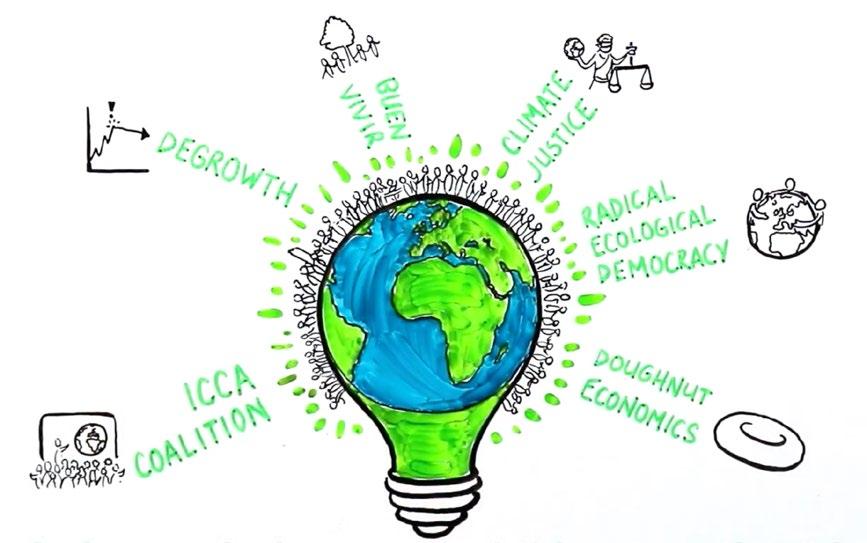
New approaches and practices to conservation are required. Convivial conservation is an example of an alternative vision, framework, and set of principles for a more socially just, democratic, and inclusive form of biodiversity governance. It calls for structural change in the current global economic model and the inequalities it creates, both among people and between humans and non-humans (Büscher and Fletcher, 2019).15
Figure 1: The Conservation Revolution: a post-capitalist manifesto for conservation16
We need to effectively deepen and decolonise the discourse, research, and practices within and beyond PAs in Africa. “Despite moves towards rights-based approaches and increased visibility of IPLCs in discussions and discourses, conservation is still primarily based on, and driven by, the ideologies of Global North institutions, which routinely invoke western science to define global biodiversity crises, propose what they consider new and innovative solutions, and often exclude other forms of knowledge” (Massarela et al., 2023; p 9). In terms of developing just, transformative change in biodiversity governance, embedding the philosophy of ubuntu in Southern Africa could act as a powerful tool for grounding justice issues — and conservation more broadly — in traditional ways of knowing, values, and notions of justice (Massarela et al., 2023).
15 Linked to other transformative approaches to biodiversity governance, such as radical ecological democracy (Kothari 2014) and Territories of Life (ICCA Consortium 2021)
16 See https://www.youtube.com/watch?v=pXRhftD0384
References
Acevedo-Osorio, A., Cárdenas, J.S., and Martín-Pérez, A.M. 2024. Agroecological planning of productive systems with functional connectivity to the ecological landscape matrix: two Colombian case studies. Sustainable Food Systems, (8). https://public-pages-files-2025. frontiersin.org/journals/sustainable-food-systems/articles/10.3389/fsufs.2024.1257540/ pdf
African Union, 2024. African Union biodiversity strategy and action plan 2023-2030. https:// espas.secure.europarl.europa.eu/orbis/system/files/generated/document/en/AU_Biodiversity_Strategy_12_08_2024.pdf
Álvarez, L., and B. Coolsaet. 2020. Decolonizing environmental justice studies: A Latin American perspective. Capitalism Nature Socialism. 31(2): 50-69.
Alvis-Pinto, H., Geldmann, J., Jonas, H., et al. 2021. Opportunities and challenges of other effective area-based conservation measures (OECMs) for biodiversity conservation. Perspectives in Ecology and Conservation. 19 (2): 115-120. https://www.sciencedirect.com/ science/article/pii/S2530064421000043/pdfft?md5=0484c9dbc10a807942e091a9f753162d&pid=1-s2.0-S2530064421000043-main.pdf
AWF, APAC, IUCN, et al. 2022. Africa Protected Areas Congress: Kigali call to action for people and nature. https://www.awf.org/sites/default/files/2022-07/APAC_KigaliCallToAction_230722.pdf
Bakarr, M.I. 2022. Reimagining protected and conserved areas in Africa: perspectives from the first Africa Protected Areas Congress. Conservation Letters: A journal of the Society for Conservation Biology https://conbio.onlinelibrary.wiley.com/doi/pdf/10.1111/ conl.12944
Baker, J., Milner-Gulland, E.J., Leader-Williams, N. 2012. Park gazettement and integrated conservation and development as factors in community conflict at Bwindi Impenetrable Forest, Uganda: drivers of community conflict at Bwindi. Conserv Biol. 2012. 26(1): 160–70.
Bastin, L., Gorelick, N., Saura, S., Bertzky, B., Dubois, G., Fortin, M-J., et al. 2019. Inland surface waters in protected areas globally: Current coverage and 30-year trends. PLoS ONE. 14(1): e0210496. https://doi.org/10.1371/journal.pone.0210496
Brodie, J., Deith, M.C.M., Burns, P., et al. 2025. The contribution of other effective area-based conservation measures (OECMs) to protecting global biodiversity. Nature Communications. 16 (7886). https://www.nature.com/articles/s41467-025-63205-8.pdf
Büsher, B. and Duffy, R. 2022. Biodiversity treaty: UN deal fails to address the root causes of nature’s destruction. https://theconversation.com/biodiversity-treaty-un-deal-fails-toaddress-the-root-causes-of-natures-destruction-196905
Büscher, B., and R. Fletcher. 2019. Towards convivial conservation. Conservation and Society. 17(3): 283-296.
Büscher, B.R., Fletcher, D., Brockington, C., et al. 2017. Half-Earth or whole earth? Radical ideas for conservation and their implications. Oryx. 51(3): 407–410.
Cafaro, P., T. Butler, E., Crist, P., et al. 2017. If we want a whole earth, nature needs half: A response to Büscher et al. Oryx 51(3): 400.
Caro, T. 2003. Umbrella species: critique and lessons from East Africa. Animal Conservation 6(2):171-181
Corbera, E., Maestre-Andrés, S., Collins, Y.A., et al. 2021. Decolonizing biodiversity conservation. Journal of Political Ecology. 28 (889-903). https://research-repository.st-andrews. ac.uk/bitstream/handle/10023/29712/Corbera_2024_JPE_Decolonizing-biodiversity_ CC.pdf?sequence=1&isAllowed=y
Counsell, S. 2022. Fortress conservation is heading for a crisis that can’t come soon enough. Survival International https://climate-diplomacy.org/magazine/conflict/fortress-conservation-heading-crisis-cant-come-soon-enough
Dudley, N. (ed.) 2008. Guidelines for Applying Protected Area Management Categories. Gland, Switzerland: IUCN. https://doi.org/10.2305/IUCN.CH.2008.PAPS.2.en.
Dyer J, Stringer LC, Dougill AJ, 2014. Assessing participatory practices in community-based natural resource management: experiences in community engagement from southern Africa. J Environ Manage. 137:137–45.
Eisen, J. and Mododosi, B. 2021. 30x30 – a brave new dawn or a failure to protect people and nature? International Institute for Environmental and Development https://www.iied. org/30x30-brave-new-dawn-or-failure-protect-people-nature
Flummerfelt, R. 2022. To purge the forest by force: organized violence against Batwa in Kahuzi-Biega National Park. Minority Rights Group International. https://minorityrights.org/ app/uploads/2024/01/mrg-invrep-drc-en-apr22v3-1.pdf
Galvin, K.A., Beeton, T.A., Luizza, M.W. 2018. African community-based conservation: a systematic review of social and ecological outcomes. Ecol Soc. 2018;23(3):39. https://doi. org/10.5751/ES-10217-230339
Gayo, L. 2025. Community-based conserved areas in advancing sustainable development and conservation in Sub-Saharan Africa. Discover Conservation. 2:27. https://link.springer. com/content/pdf/10.1007/s44353-025-00047-x.pdf
Golden Kroner, R. E., Qin, S., Cook, C. N., et al. 2019. The uncertain future of protected lands and waters. Science, 364(6443), 881–886. https://doi.org/10.1126/science.aau5525
Hilty, J. A., Lidicker, W. Z., and Merenlender, A. M. 2006. Corridor ecology: The science and practice of linking landscapes for biodiversity conservation. Washington and London: Island Press.
Himes-Cornell, A., Bowser, L., Hoelting, K., Sánchez, J.L. 2024. The good and the bad of OEVM recognition for small-scale fisheries, indigenous Peoples and local communities. MSEASE, FAO https://meetings.pices.int/Publications/Presentations/2024-MSEAS/S3Himes-Cornell.pdf
IPBES, 2019. The Global Assessment Report on Biodiversity and Ecosystem Services – Summary for Policymakers
Kiwango, W.A., and Mabele, M.B. 2022. Why the convivial conservation vision needs to be complemented to be a viable alternative for conservation in the Global South. Conservation and Society. 20(2): 179-189
Kothari, A. 2014. Radical ecological democracy: A way for India and beyond. Development 57(1): 36–45
Kowalski, P. and Smith, C. 2025. Securing ocean biodiversity in South Africa: A roadmap for how marine OECMs can contribute to 30x30. Cape Town, WWF, South Africa
Lee, D.E., and Bond, M.L. 2018. Quantifying the ecological success of a community-based wildlife conservation area in Tanzania. J Mammal. 99(2):459–64. https://doi.org/10.1093/ jmammal/gyy014
Lo, V. and Jang, N. The Global Biodiversity Framework’s “30x30” Target: Catchy slogan or effective conservation goal? IISD. https://www.iisd.org/articles/insight/global-biodiversity-framework-30x30-target#:~:text=Aichi%20Target%2011%20was%20partially%20 successful%20in,and%20are%20not%20equitably%20and%20effectively%20managed
Martin, A., M.T. Armijos, B. Coolsaet, N. et al. 2020. Environmental justice and transformations to sustainability. Environment: Science and Policy for Sustainable Development. 62(6): 19-30.
Mabele, M.B.,2020. In pursuit of multidimensional justice: Lessons from a charcoal ‘greening’ project in Tanzania. Environment and Planning E: Nature and Space. 3(4): 1030-1052.
Massarella, K., Krauss, J.E., Kiwango, W.A., and Fletcher, R. 2023. Convivial Conservation: From principles to practice. Chapter 1: Exploring convivial conservation in theory and practice. Introduction: transformative change and convivial conservation. https://www. researchgate.net/profile/Kate-Massarella/publication/370824914_Convivial_Conservation_From_Principles_to_Practice/links/6464d55d66b4cb4f73ba2a87/Convivial-Conservation-From-Principles-to-Practice.pdf?_tp=eyJjb250ZXh0Ijp7ImZpcnN0UGFnZSI6InB1YmxpY2F0aW9uIiwicGFnZSI6InB1YmxpY2F0aW9uIn19
Mijatovic, D., Van Oudenhoven, F., Eyzaguirre, P., and Hodgkin, T. 2013. The role of agricultural biodiversity in strengthening resilience to climate change: towards an analytical framework. Int. J. Agric. Sustain. 11, 95–07. doi: 10.1080/14735903.2012.691221
Ministry of Environment, Forestry and Tourism (MEFT). 2023. The State of Community Conservation in Namibia: A review of communal conservancies, community forests and other community-based natural resource management initiatives. Annual Report 2022. https:// conservationnamibia.com/other/meft-nacso-state-of-community-conservation-namibia-2022.pdf
Obura, D.O., Katerere, Y., Mayet, M., et al. 2021. Integrate biodiversity targets from local to global levels. Science. 373(6556):746-748
Ogutu, J.O., Kuloba, B., Piepho, H-P., and Kanga, E. 2017. Wildlife population dynamics in human-dominated landscapes under community-based conservation: the example of Nakuru Wildlife Conservancy. Kenya PloS ONE. 2017; 12(1):e0169730.
Osano, P.M., Said, M.Y., de Leeuw, J. 2013. Why keep lions instead of livestock? Assessing wildlife tourism-based payment for ecosystem services involving herders in the Maasai Mara, Kenya. Nat Resource Forum. 37(4):242–56. https://doi.org/10.1111/1477-8947.12027.
Otero, I., Farrell, K.N., Pueyo, S., et al. 2020. Biodiversity policy beyond economic growth. Conservation Letters. https://conbio.onlinelibrary.wiley.com/doi/full/10.1111/conl.12713
Rigal, S., Dakos, V., Alonso, H., and Devictor, V. 2023. Farmland practices are driving bird population decline across Europe. PNAS., 120(21). https://www.pnas.org/doi/ epdf/10.1073/pnas.2216573120
Riggio, J., Jacobson, A.P., Hijmans, T., et al. 2019. How effective are the protected areas of East Africa? Global Ecology and Conservation. 17 https://www.sciencedirect.com/science/ article/pii/S2351989418304323/pdfft?md5=658fc8fb917de0308626f8e229967b8f&pid= 1-s2.0-S2351989418304323-main.pdf
Rodrigues, A.S.L and Cazalis, V. 2020. The multifaceted challenge of evaluating protected area effectiveness. Nat Commun. 2020;11(1):1–4. https://doi.org/10.1038/s41467-02018989-2
Scoones, I. 2020. The return of fortress conservation: why excluding people means biodiversity conservation will fail. https://www.future-agricultures.org/blog/the-return-of-fortress-conservation-why-excluding-people-means-biodiversity-conservation-will-fail/
Sheppard, D.J., Moehrenschlager, A., Mcpherson, J.M., and Mason, J.J. 2010. Ten years of adaptive community-governed conservation: evaluating biodiversity protection and poverty alleviation in a West African hippopotamus reserve. Environ Conserv. 37:270–82. https://doi.org/10.1017/S037689291000041X
Sinthumule, N.I. 2025. Sacred natural sites as other effective area-based conservation measures (OECMS) for biodiversity conservation in South Africa: Key opportunities and challenges for policy and practice. https://www.sciencedirect.com/science/article/pii/ S1617138125001128/pdfft?md5=665963ec837769ecc10dc9a9a057ab40&pid=1-s2.0-S16 17138125001128-main.pdf
Stoldt, M., Göttert, T., Mann, C., and Zeller, U. 2020. Transfrontier conservation areas and human-wildlife conflict: The case of the Namibian component of the Kavango-Zambezi (KAZA) TFCA. Scientific Reports, 10, 7964. https://doi.org/10.1038/s41598-020-64537-9
Taylor R. 2009. Community-based natural resource management in Zimbabwe: the experience of CAMPFIRE. Biodiv Conserv.18:2563–83. https://doi.org/10.1007/s10531-0099612-8.
Temper, L., M. Walter, I. Rodriguez, A. Kothari, and E. Turhan. 2018. A perspective on radical transformations to sustainability: Resistances, movements and alternatives. Sustainability Science. 13(3): 747-764.
The Oakland Institute. 2024. From Abuse to power: ending fortress conservation in the Democratic Republic of the Congo. https://www.oaklandinstitute.org/sites/default/files/ files-archive/from-abuse-to-power.pdf
Treue, T., Ngaga, Y.M., Meilby, H., Lund, J.F., Kajembe, G., Iddi, S., et al. 2014. Does participatory forest management promote sustainable forest utilisation in Tanzania? Int For Rev Commonwealth For Assoc. 2014;16:23–38.
Wanger, T.C., DeClerck, F., Garibaldi, L.A., et al. 2020. Integrating agroecological production in a robust post-2020 Global Biodiversity Framework. Nature Ecology and Evolution, 4: 1150-1152
Weldermichel, T.G. 2025. Tanzania’s Maasai are being forced off their ancestral land – the tactics the government uses. https://theconversation.com/tanzanias-maasai-are-beingforced-off-their-ancestral-land-the-tactics-the-government-uses-247349
Western, D., Waithaka, J., and Kamanga, J. 2015. Finding space for wildlife beyond national parks and reducing conflict through community-based conservation: the Kenya experience. Parks.21:1.
Wezel, A., Gemmil, B., Bezner, R., Barrios, E., Rodrigues, A. L., and Sinclair, F. 2020. Agroecological principles and elements and their implications for transitioning to sustainable food systems. Rev. Agronomy for Sustain. Develop. 40:40. https://link.springer.com/content/ pdf/10.1007/s13593-020-00646-z.pdf
Winkler, K., Fuchs, R., Rounsevell, M., and Herold, M. 2021. Global land use changes are four times greater than previously estimated. Nature Communications, 12, 2501. https://www. nature.com/articles/s41467-021-22702-2.pdf
World Rainforest Movement. 2022. Conservation concessions as neo-colonization: the African Parks Network. WRM Bulletin, 26. https://www.wrm.org.uy/bulletin-articles/conservation-concessions-as-neo-colonization-the-african-parks-network