AframNews.com
Current & Historical Realities Affecting Our Community”




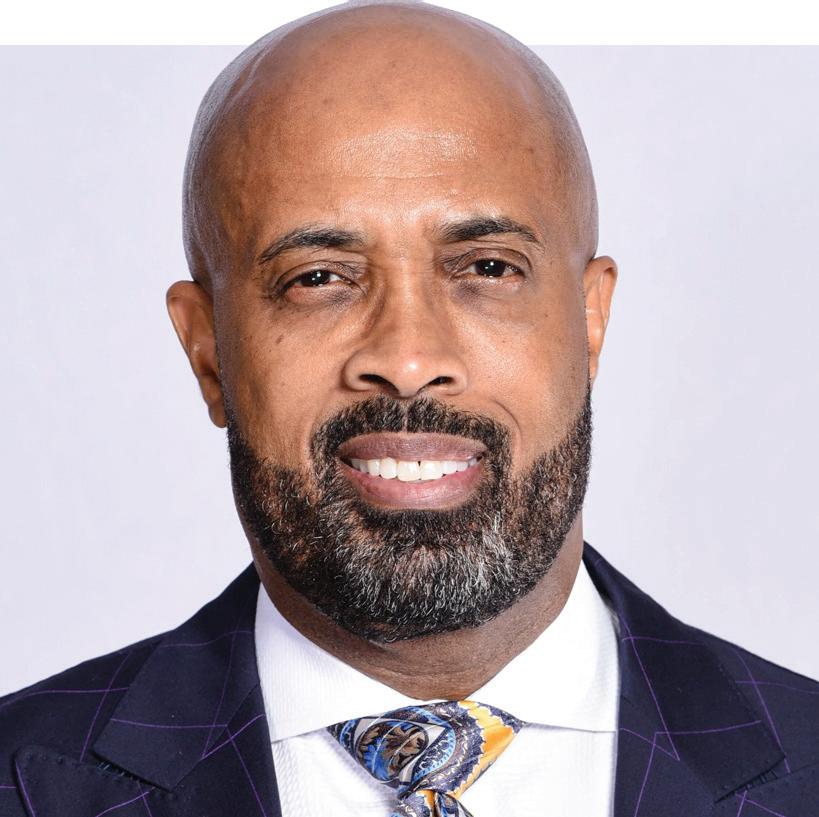
DR. FREDERICK D. HAYNES III CLAIMS HISTORIC VICTORY
By: Tara Hanney

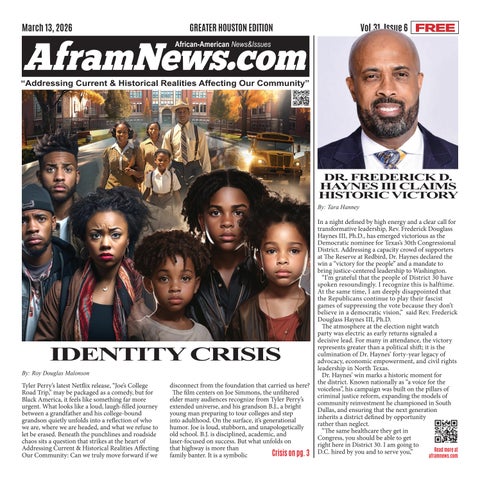
IDENTITY CRISIS
By: Roy Douglas Malonson
Tyler Perry’s latest Net ix release, “Joe’s College Road Trip,” may be packaged as a comedy, but for Black America, it feels like something far more urgent. What looks like a loud, laugh- lled journey between a grandfather and his college-bound grandson quietly unfolds into a re ection of who we are, where we are headed, and what we refuse to let be erased. Beneath the punchlines and roadside chaos sits a question that strikes at the heart of Addressing Current & Historical Realities A ecting Our Community: Can we truly move forward if we
disconnect from the foundation that carried us here?
e lm centers on Joe Simmons, the un ltered elder many audiences recognize from Tyler Perry’s extended universe, and his grandson B.J., a bright young man preparing to tour colleges and step into adulthood. On the surface, it’s generational humor. Joe is loud, stubborn, and unapologetically old school. B.J. is disciplined, academic, and laser-focused on success. But what unfolds on that highway is more than family banter. It is a symbolic Crisis on pg. 3
In a night de ned by high energy and a clear call for transformative leadership, Rev. Frederick Douglass Haynes III, Ph.D., has emerged victorious as the Democratic nominee for Texas’s 30th Congressional District. Addressing a capacity crowd of supporters at e Reserve at Redbird, Dr. Haynes declared the win a “victory for the people” and a mandate to bring justice-centered leadership to Washington.
“I’m grateful that the people of District 30 have spoken resoundingly. I recognize this is halftime. At the same time, I am deeply disappointed that the Republicans continue to play their fascist games of suppressing the vote because they don’t believe in a democratic vision,” said Rev. Frederick Douglass Haynes III, Ph.D.
e atmosphere at the election night watch party was electric as early returns signaled a decisive lead. For many in attendance, the victory represents greater than a political shi ; it is the culmination of Dr. Haynes’ forty-year legacy of advocacy, economic empowerment, and civil rights leadership in North Texas.
Dr. Haynes’ win marks a historic moment for the district. Known nationally as “a voice for the voiceless”, his campaign was built on the pillars of criminal justice reform, expanding the models of community reinvestment he championed in South Dallas, and ensuring that the next generation inherits a district de ned by opportunity rather than neglect.
“ e same healthcare they get in Congress, you should be able to get right here in District 30. I am going to D.C. hired by you and to serve you,”


“Addressing
EDITORIAL
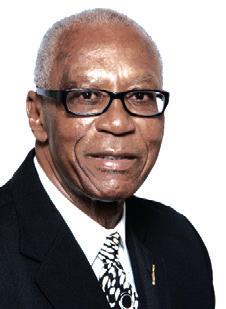
A Revival of God Consciousness
Bobby Mills, Ph.D.




713-682-1892




We are looking for historical writers That can produce stories that address current and historical realities affecting our community.
America, the Word of God surpasses any weapon in power and e ectiveness.
James Talarico’s victory in the democratic senatorial primary is living proof. Talarico is a Texas State politician, Presbyterian seminarian, and former public-school teacher, who has served as a member of the Texas House of Representatives since 2018. On Tuesday, March 3rd, 2026, Talarico won the democratic senatorial primary. anks be to God, Talarico spiritually understands that: “Righteousness exalteth a nation: but sin is a reproach to any people.” (Proverbs 14: 34).
James Talarico had a spiritually unifying political message that transcended partisan political antics: “one nation under God, with liberty and justice for all”. Texas, there was a timely-spiritual-clarion call in Talarico’s political messaging: “we can do better and Texas deserves better”. Don’t become bitter, become better. Rather than becoming resentful, strive to improve yourself. More importantly, our children deserve better, because our children are our future. erefore: “Better is a little with fear of the Lord than great treasure and trouble therewith”. (Proverbs 15: 16). Texas, we have some individuals politically leading us with great wealth and absolutely no common sense, because common sense is not common. Talarico is a nononsense political leader, not
a follower of the politically ungodly, because: “there is a way which seemeth right unto a man, but the end thereof are the ways of death.” (Proverbs 14: 12). Texas, we have too many individuals in politics that speak and act unwisely. Talarico is not in that class. He has a God conscience as well as spiritual-moral character. Moreover, Talarico spiritually understands that: “fools make a mock at sin: but among the righteous there is favour.” (Proverbs 14: 9).
e objective of the socioeconomic ruling class is to divide Americans by race, political party identi cation, and social class designed solely to perpetuate the politics of division. Talarico represents a new kind of socio-politics based upon divine love, because the love of God transcends all socioeconomic barriers, and covers a multitude of sins. As a result, Talarico is considered by some to be a contemporary political gure believed to have a divine calling to enter the divided and contentious senate and disrupt the in uence of PAC money. ank God Texans are independent thinkers and President Donald J. Trump should not decide who represents us in the U. S. Senate. Talarico’s campaign message of “love thy neighbor” is far more powerful than the question of “who is my neighbor”. Regardless of whether it’s Cornyn or Paxton, the GOP candidate will try to portray Talarico as radical. Sadly, for the ungodly love is radical. On the other hand, Talarico’s “love thy neighbor politics” is a perfect spiritual match with the spiritual teachings of the Black Church
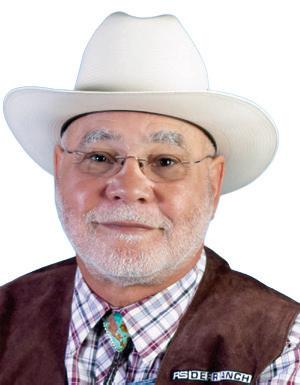
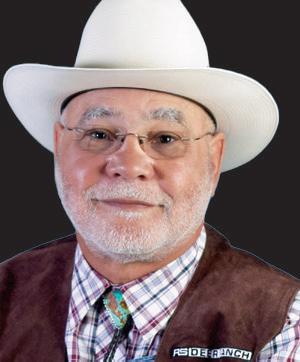
We Must Understand
Roy Douglas Malonson, Publisher
THE WORD WORKS YOU CAN’T MOVE FORWARD WITHOUT KNOWING WHERE YOU CAME FROM
ere is a dangerous trend unfolding in this country — one that tells us the past is optional. at history is uncomfortable. at identity is divisive. at success alone is enough. But for Black America, we know better. We have always known better. You cannot move forward without knowing where you came from. is is not nostalgia. It is not romanticizing struggle. It is survival. It is strategy. It is truth.
Black progress in America has never been accidental. Every gain — from voting rights to educational access, from business ownership to political representation — was built on the shoulders of people who understood their history deeply. ey knew the names. ey knew the laws. ey knew the barriers. And because they knew, they could organize, strategize, and push forward with clarity. Today, our community stands at a complicated crossroads. On one hand, we are witnessing undeniable advancement. Black enrollment in higher education remains strong. Black entrepreneurs are launching businesses at record rates. Black voices are shaping culture, technology, media, and politics. We are present in
spaces that once excluded us outright.
On the other hand, there is renewed resistance to how our history is taught, discussed, and understood. Across the country, debates over curriculum, diversity initiatives, and equity programs have intensi ed. ere are e orts to narrow conversations about race and systemic inequality. In some classrooms, educators feel uncertain about how much truth they are permitted to tell. In boardrooms, diversity commitments are being questioned. In communities, economic disparities remain stubborn and persistent. In moments like this, knowing our roots is not a luxury — it is protection. When you understand redlining, you better understand today’s housing gaps. When you understand voter suppression tactics of the past, you better recognize modern obstacles to ballot access. When you understand how education funding was historically unequal, you can more clearly see why disparities in school resources still exist. History provides context. Context provides clarity. Clarity provides power.
Without that foundation, progress can become fragile. ere is a growing temptation, particularly among younger generations striving for upward mobility, to detach from struggle. To focus solely on personal advancement. To believe that degrees, titles, and income are the ultimate measures of success. And while ambition should be celebrated, ambition without awareness leaves gaps. It risks
Crisis Cont. underfunded schools, and systemic barriers that textbooks rarely capture in full. He carries memory. He carries scars. He carries context. And he refuses to let it be forgotten in the rush toward achievement. What makes the lm powerful is that it does not present education as the enemy. It celebrates ambition. It honors progress. But it questions whether success without identity leaves something missing. A degree alone does not teach cultural grounding. A resume does not automatically provide historical awareness. A promotion does not replace pride in ancestry. e scenic route Joe forces B.J. to take becomes a metaphor for the detours our community has always had to navigate — the long way around exclusion, the extra e ort to prove worth, the resilience required when doors were shut.
journey that mirrors what is happening in Black households across this nation right now. Our young people are entering prestigious universities, launching startups, earning advanced degrees, and breaking ceilings that once felt cemented shut. is progress is real. It is hard-earned. It is historic. Yet at the same time, Black America is navigating renewed debates about how our history is taught, how our contributions are acknowledged, and whether equity initiatives meant to close gaps will be protected or dismantled. In classrooms across the country, discussions about race, systemic inequality, and historical truth are being challenged. In boardrooms and corporate spaces, diversity e orts are under scrutiny. In politics, conversations about voting rights, economic disparities, and criminal justice reform remain unresolved.
Against that backdrop, Joe’s insistence that his grandson understand his roots feels less comedic and more prophetic. e tension between Joe and B.J. represents a deeper cultural dialogue. B.J. symbolizes a generation that has been told education is the path, credentials are the currency, and upward mobility is the goal. Joe symbolizes the generation that survived redlining, discrimination,
know who you are before the world tries to de ne you.
Today, Black families are having real conversations about how to prepare their children not just academically, but emotionally and culturally. Parents are asking how to equip their sons and daughters to excel in competitive spaces while maintaining a strong sense of self. ere is pride in watching our youth rise, but there is also concern about whether they are being grounded in the fullness of our history. Joe’s loud voice may be comedic, but his message is clear:
e lm also quietly speaks to Black manhood. B.J. is preparing to become a professional. Joe is preparing him to become a man. And those are not always the same thing. In a society where Black men are o en stereotyped, scrutinized, and overpoliced, the need for strong identity and self-awareness is not optional — it is survival. Joe’s tough love re ects a style of parenting and mentorship shaped by necessity. Older generations o en communicated through blunt correction because the stakes were life-altering. Younger generations are navigating a digital age that requires di erent tools — emotional intelligence, adaptability, strategic thinking. e movie suggests that these generations are not at odds; they are incomplete without each other.
As HBCUs experience renewed attention and Black students continue to pursue higher education at growing rates, the national conversation about access, a ordability, and inclusion remains active. Economic gaps persist. Student loan burdens disproportionately impact Black graduates. Wealth disparities continue to widen.
And in many urban communities, school funding inequities remain a harsh reality. In that context, a road
trip to tour campuses is not a simple rite of passage. It represents hope, pressure, sacri ce, and expectation. By the time the credits roll, it becomes clear that the destination was never the main point. e real journey was internal. e laughter so ens the delivery, but the meaning lands with weight: progress without grounding can leave us dri ing. Success without
identity can feel hollow. And ambition without memory risks repeating what history has already taught us.
For a community that has fought to preserve its story against erasure, “Joe’s College Road Trip” feels timely. It entertains, yes. But it also reminds us that our history is not a footnote. Our culture is not an accessory. Our identity is not optional.
As Black America continues to strive, achieve, and ascend, this lm whispers a truth we already know deep down — before we chase the future, we must secure our foundation. at is not just a movie message. at is a generational mandate.


1760. Jupiter Hammon, an enslaved man from Connecticut, writes an autobiography o en considered to be the rst slave narrative.
1770. Crispus Attucks, who had formerly been enslaved, is killed by British soldiers in the Boston Massacre.
1772. Jean-Baptist-Point Du Sable, a Black pioneer trader, builds a fur-trading post on the Chicago River at Lake Michigan.
1773. Phillis Wheatley, the rst notable Black woman poet in the United States, publishes in England her Poems on Various Subjects, Religious and Moral.

1777. Vermont, not yet part of the United States, becomes the rst colony to abolish slavery in its constitution.
1781. James Armistead (later James Lafayette), an enslaved man, spies on British forces in Virginia for the marquis de Lafayette during the American Revolution.
1789. Olaudah Equiano publishes his two-volume autobiography, e Interesting Narrative of the Life of Olaudah Equiano; or Gustavus Vassa, the African, Written by Himself.
HOUSTON
PLANO

TEXAS TAKEAWAY


Legendary bull Bodacious has been named the rst animal ever inducted into the RodeoHouston Hall of Fame. Known for his unmatched power and unpredictable bucking style, Bodacious became one of the most famous bulls in rodeo history during the 1990s. e erce competitor thrilled crowds but also earned a reputation as one of the most dangerous bulls riders could face. His induction recognizes the lasting impact he had on the sport of rodeo and the unforgettable moments he created for fans at the Houston Livestock Show and Rodeo.
LUBBOCK
DISH Network customers lost access to several Gray Television stations on Tuesday, March 10 a er the companies failed to reach a new renewal agreement. e blackout a ects KCBD, Telemundo Lubbock, Lubbock’s CW and My Lubbock TV. As a result, DISH subscribers can no longer watch NBC programming including shows like e Voice, the NBA on NBC, the “Chicago” series and Dateline.
AUSTIN
e Plano, Texas City Council unanimously voted to cancel a planned election on withdrawing from Dallas Area Rapid Transit a er reaching a new funding agreement with the transit agency. e deal keeps the city connected to the regional transit system while establishing a revised nancial plan.
South by Southwest kicks o ursday with a noticeably di erent format than in previous years. e festival has been shortened to seven days and will spread across a larger portion of downtown as organizers adapt to the redevelopment of the Austin Convention Center. As a result, events and activities will be distributed across more venues throughout Austin’s downtown area.
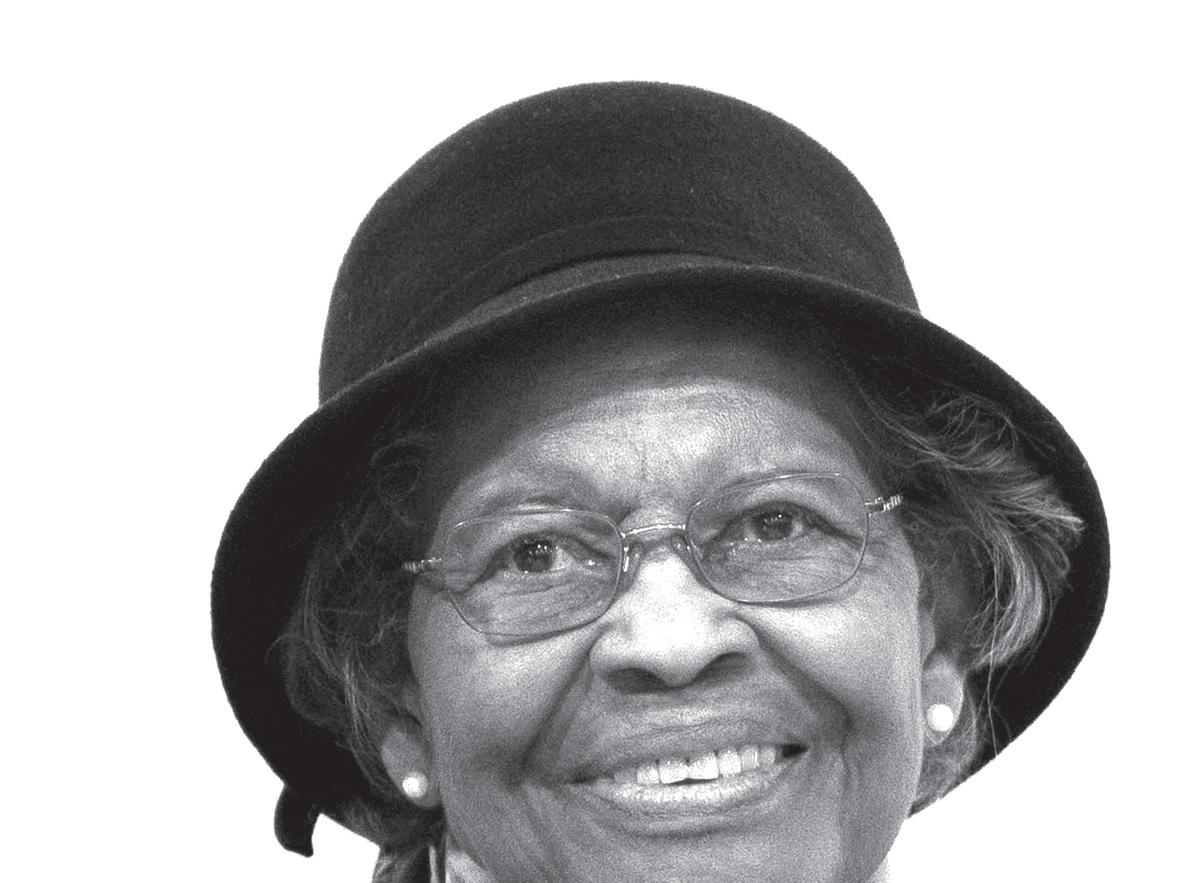
GLADYS WEST
Dr. Gladys West (1930–2026) was an American mathematician whose pioneering work in satellite geodesy at the Naval Surface Warfare Center directly enabled the development of the Global Positioning System (GPS). She developed complex computer models for the exact shape of Earth, mapping ocean data that laid the foundation for modern GPS.
nity. erefore, Congresswoman Crockett’s call for party unity is the political ground oor, but Talarico must make it the ceiling by demonstrating genuine socio-economic investment. e editorial writer believes Talarico is dedicated to universal community investments in jobs, housing, and quality of life issues. Texas may not shi politically, but Talarico is forming a coalition that could send him to the U.S. senate for the rst time in (30) years as a Democrat, bridging socio-economic racial divides. Finally, Kudos to Congresswoman Jasmine Crockett because despite the ungodly voting confusion in Dallas she demonstrated God conscience professionalism by immediately endorsing Talarico. Glory Hallelujah to God!
producing achievement without grounding.
You can earn a diploma and still not know the battles that made your enrollment possible. You can sit in a corporate o ce and still not understand the policies that once locked the door behind you. You can build wealth and still be unaware of the wealth that was systematically denied to your grandparents. Forward motion without historical understanding can create distance from community.
Our ancestors did not ght simply so we could succeed individually. ey fought for collective mobility. ey organized for community upli . ey demanded access not just for themselves, but for generations yet unborn. To move forward responsibly, we must carry that communal mindset with us.
Knowing where you came from does not mean staying stuck in trauma. It means recognizing resilience. It means honoring innovation born from necessity. It means understanding that our culture — our music, our language, our creativity, our faith, our organizing power — was forged under pressure and continues to shape the world. It also means teaching our children more than surfacelevel celebration. Black history is not limited to a single month. It is not a collection of famous names and feelgood quotes. It is economic policy. It is civic engagement. It is cultural resistance. It is strategic brilliance. It is faith in action.
As debates over education and representation continue nationwide, families and community leaders must double down on intentional teaching. Churches,
barbershops, community centers, and homes must remain places where stories are preserved and truth is spoken. If formal systems narrow the lens, our community must widen it. Moving forward requires tools. One of the most powerful tools we possess is memory.
Memory reminds us that setbacks are not new. Memory reminds us that resilience is in our DNA. Memory reminds us that we have rebuilt before. When we understand how far we have traveled — from enslavement to entrepreneurship, from segregation to scholarship, from exclusion to in uence — we walk di erently. We negotiate di erently. We vote di erently. We build di erently.
e future of Black America will be shaped by innovation, education, entrepreneurship,
and leadership. But it must also be anchored in knowledge of origin. e young professional entering a new industry, the student stepping onto a college campus, the family purchasing a rst home — each is part of a longer story. Understanding that story transforms individual success into generational progress.
You cannot move forward without knowing where you came from.
To forget is to weaken your footing. To remember is to strengthen your stride.
As we continue to navigate political shi s, economic uncertainty, and evolving cultural debates, let us resist the idea that the past is irrelevant. Our history is not baggage. It is blueprint. And blueprints are essential when you are building something meant to last.
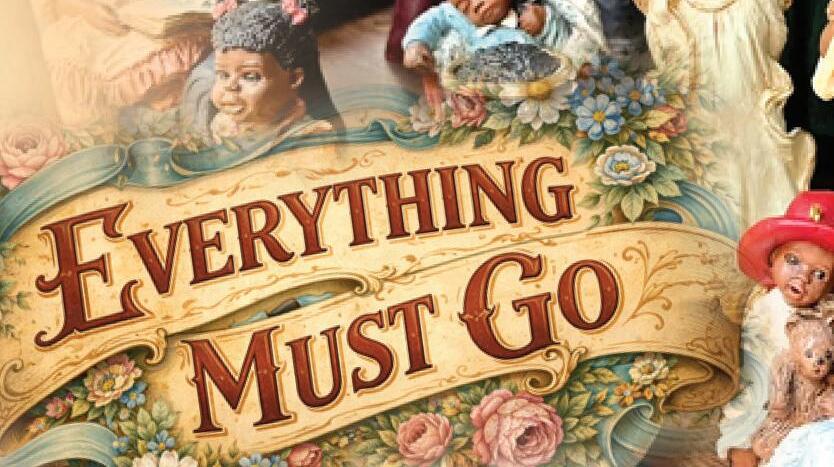
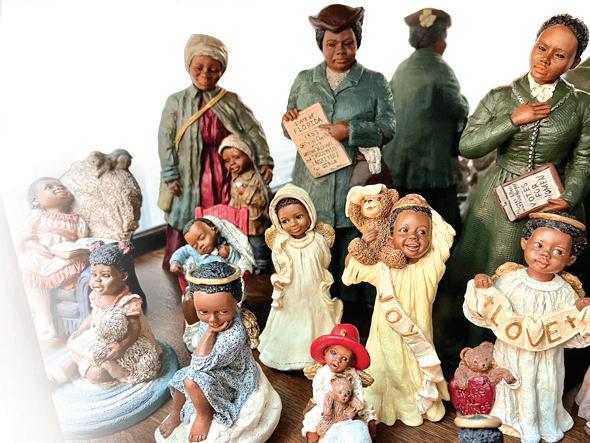
CLOSEOUT SALE



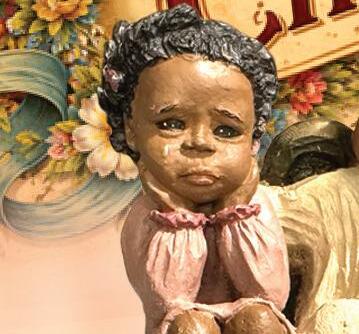
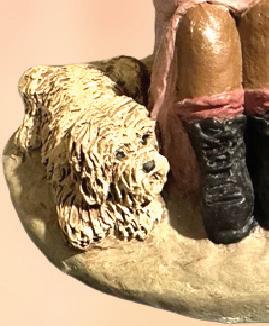







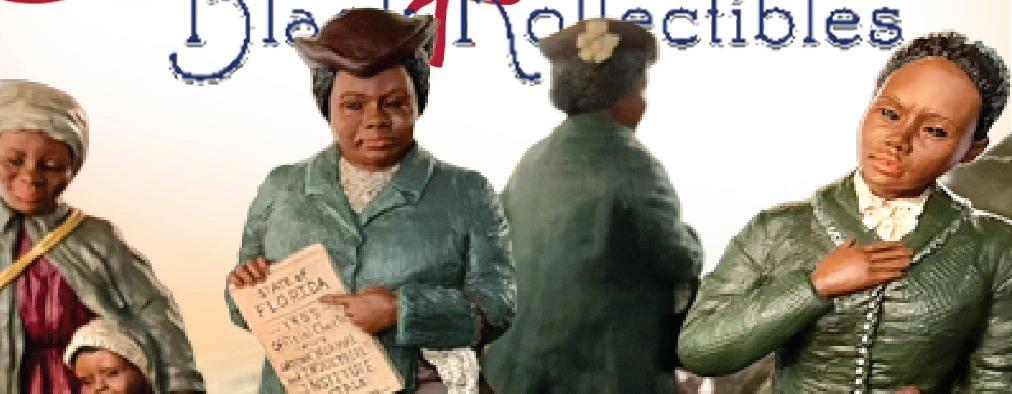










































RFP #26-03-01 CloudBased Rapid Identity Subscription. Electronic submittals due by 12:00PM, Friday, March 27, 2026.
Contact: pamela.johnson@ lonestar.edu or (832)8136782. Must Register to Bid: https:// lonestar.ionwave.net/Login. aspx. If registered, please ensure your registration is up to date. For assistance with the on-line registration process, contact MCvendors@lonestar.edu.













BUSINESS SPOTLIGHT

KABSY KREATIONS
By: Sheba CreativeAF
e Acres Home Chamber for Business and Economic Development, Inc. is proud to welcome Kabila Lapnet-Gana is a wife, mother, Acres Home resident and the owner of Kabsykreations to its business partnership directory and community!
Kabsykreations is a boutique bakery that focuses on creating cakes, cake jars, cookies and chocolate treats. Want something custom? Kabyskreations can make whatever sweet treat your heart desires, read on for more information about Kabila and her journey in Acres Home.
1. What inspired you to start your business, and why did you choose Acres Home as your home base?
Kabsykreations was inspired by my love for baking and the memories I created in the kitchen with my mother growing up. Baking became a creative outlet that naturally turned into a business rooted in celebration and connection. Choosing Acres Homes as my home base was intentional—it’s a community rich in culture, resilience, and support, and I wanted my business to grow in a place that values local ownership and collective progress.
2. What’s one challenge you’ve overcome
as a business owner, and how did it shape your journey? One of the biggest challenges I’ve overcome is learning to balance creativity with structure. As a creative, it was important for me to build systems, boundaries, and processes that allow the business to scale while still delivering a high-touch client experience. at challenge shaped me into a more con dent business owner and taught me that sustainability is just as important as passion. I continue to learn & grow.
3. How do you hope being part of the Acres Home Chamber will support your growth and connection to the community?
Being part of the Acres Home Chamber allows me to build meaningful relationships with other business owners and community leaders who are invested in local growth. I’m excited to collaborate, share resources, and contribute to initiatives that strengthen the community while also increasing visibility and opportunities for Kabsykreations.
4. What’s next for your business, and how can the community get involved or support you? What’s next is expansion—more community workshops, pop-ups, and collaborations, as well

as new o erings that allow clients to engage with the brand beyond celebrations. e community can support by continuing to shop local, sharing our work, attending events, and recommending Kabsykreations for personal and corporate celebrations.
5. What other businesses, projects, or initiatives should we be on the lookout for from you?
Beyond custom desserts, I’m expanding into educational o erings such as dessert workshops and digital resources for aspiring bakers and creatives. I’m also focused on partnerships with local brands and organizations to create experiences that blend desserts, storytelling, and community impact.

6. What would you say to a business owner looking for commercial space about joining you in Acres Homes?
I would say Acres Homes is a place of opportunity and pride. It’s a community that supports growth, values entrepreneurship, and welcomes innovation. For business owners looking for space, this is a neighborhood where your presence matters, your voice is heard, and your business can truly become part of something bigger. For more information on Kabsykreations visit them online at www.kabsykreations. com and to join the chamber, visit us online at www. acreshomechamber.com or by attending an in person event.






OF SAVINGS AISLES AISLES and