The Single African Air Transport Market, aimed at liberalizing air transport across the continent, holds the potential to transform regional connectivity, reduce transportation costs, and stimulate economic growth through tourism, trade, and job creation.
SAATM, if fully implemented, is arguably a great catalyst for intra-Africa air traffic growth. To date, the impact is partial. While Angola has affirmed its commitment to SAATM, traffic benefits are delayed by the pace of implementation, which is still ongoing.
Despite notable progress, the full implementation of SAATM continues to face several obstacles. These include restrictive bilateral air service agreements, lack of harmonized regulations, insufficient infrastructure, and fragmented airspace management. As a result, African air travel remains with cost and efficiency challenges, limiting the continent’s ability to harness the full benefits of an integrated air transport market.
Having said that, several factors have already shown positive impacts and can further enhance connectivity, such as visa facilitation, strategic partnerships, infrastructure investment, policy and regulatory convergence, and shared economic objectives within African nations.
Thus, Africa’s air transport and tourism sectors are deeply interconnected, with tourism acting as a key driver for enhanced air connectivity. Tourism is a powerful catalyst for air transport development. Increased tourist arrivals stimulate demand for flights, leading airlines to introduce new routes and increase frequencies. This direct relationship encourages investment in aviation infrastructure and services.
Message to AFRAA & the African Industry
As Angola hosts the AFRAA General Assembly, what key message would you like to share with African airline leaders, regulators, and partners regarding cooperation and shared growth?
To our distinguished colleagues, leaders of African aviation, regulators, and partners, it is an honor for TAAG Angola Airlines to host the AFRAA General Assembly in Luanda.
Receiving the African Airlines Association (AFRAA) 57th Annual General Assembly (AGA) is a significant honor and a strategic opportunity for TAAG and Angola. It solidifies Luanda’s emergence as a major African aviation hub, especially following the operationalization of the new Dr. António Agostinho Neto International Airport.
The vision of a truly connected African continent is within our reach, but its realization requires a collective commitment to strategic transformation, operational excellence, and, above all, cooperation.
A reflection of my tenure as president of AFRAA is that it has been a great challenge and a huge responsibility focused on advancing AFRAA’s primary goals for the year about sustainability, collaboration, and profitability across African airlines.
We believe that the aviation sector in Africa is crucial to the development of our nations and to connectivity with major decision-making centers worldwide.
Let us commit, not just in principle, but in practice, to a transparent and collaborative ecosystem where African airlines rise together. Our shared success depends on it.
The Single African Air Transportation Market: National Airlines at a Crossroads
Thrive or Struggle?
By Juno Beckers, Ryan Kim, and Arvind Chandrasekhar
Open Skies agreements have transformed global aviation by enhancing connectivity, lowering travel costs, and fostering economic growth. These agreements – implemented in the USA, ASEAN, and the EU – have demonstrated how deregulated air transportation markets stimulate competition, create jobs, and provide broader consumer choice.
Airports benefit from increased passenger volumes, while economies thrive through enhanced trade, business travel, and tourism. Airlines gain access to more markets, expanding networks; however, on the flip side, they face increased competition.
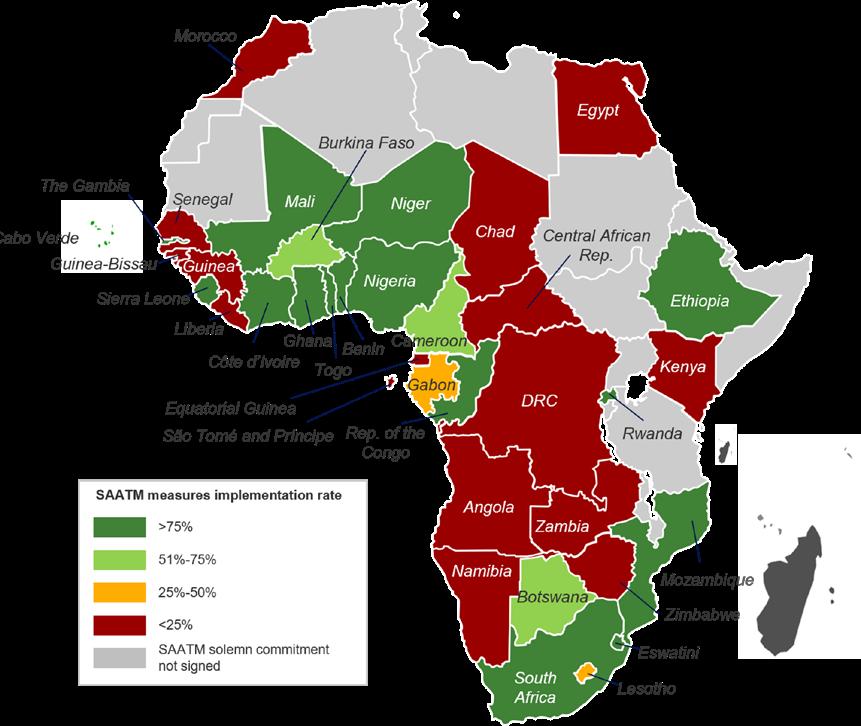
Launched in 2018, the Single African Air Transport Market (SAATM) aims to unlock these benefits for Africa. By the end of 2024, 36 African countries had signed the SAATM agreement, but only nine had fully implemented its requirements. SAATM seeks to establish a single, deregulated air transportation market across the continent; though progress has been hindered by concerns over the viability of national carriers in a more competitive landscape. This article examines SAATM’s objectives, the opportunities it
Le Marché unique du transport aérien africain (SAATM) constitue l’un des projets les plus structurants pour l’aviation du continent, visant à instaurer un espace aérien libéralisé, compétitif et intégré. Inspiré des accords « Open Skies » mis en œuvre aux États-Unis, en Europe et en Asie du Sud-Est, le SAATM ambitionne de renforcer la connectivité intra-africaine, de réduire les coûts du transport aérien et de stimuler les échanges économiques. Lancé en 2018, le dispositif repose sur six piliers clés, dont l’accès libéralisé au marché, la dérégulation tarifaire et la reconnaissance de l’African Civil Aviation Commission comme autorité de supervision. Toutefois, sa mise en œuvre reste inégale : fin 2024, seuls neuf pays appliquaient pleinement ses dispositions, reflétant les craintes persistantes liées à la viabilité des compagnies nationales dans un environnement concurrentiel. Les trajectoires contrastées d’Ethiopian Airlines et de Kenya Airways illustrent cet enjeu. La première a su capitaliser sur une stratégie intégrée et une préparation de
presents, and the challenges that must be overcome to fully unlock the potential of a liberalized African aviation market.
The launch of SAATM
According to “The SAATM Handbook by the African Civil Aviation Commission (AFCAC)” from January 2019, SAATM is built on six fundamental pillars:
•Liberalized market access, allowing eligible airlines to exercise the 1st, 2nd, 3rd, 4th, and 5th Freedoms of the Air traffic rights
•Unrestricted frequency and capacity
•Deregulated airfares Full liberalization of cargo services
•Recognition of AFCAC as the regulatory body
•Adherence to fair competition rules, consumer protection, and dispute resolution mechanisms
These measures aim to foster fair competition, lower fares, and en-
hance connectivity, making air travel more accessible to the wider traveling public. The liberalization of aviation in other regions demonstrates how lower fares and increased competition can drive passenger demand and economic growth.
Though SAATM is not yet fully implemented, early data indicates that countries adopting its principles have experienced significant growth in intra-African seat capacity, suggesting that liberalization also promotes growth within Africa. Yet, resistance from most countries impedes full implementation.
long terme, tandis que la seconde demeure freinée par des contraintes structurelles et infrastructurelles.
L’expérience de South African Airways rappelle enfin que le protectionnisme et les soutiens publics sans réformes profondes ne constituent pas une solution durable. Le SAATM doit ainsi être envisagé non comme une menace, mais comme un catalyseur de transformation, incitant les États et les compagnies africaines à renforcer leur compétitivité, leur gouvernance et leurs partenariats afin de prospérer dans un marché aérien ouvert et durable.
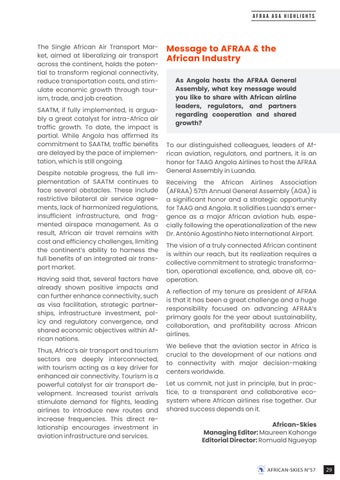
Figure 1: Top 10 International Intra-Africa seat capacity increase after SAATM (2024 vs. 2017, in thousands) Source: OAG
Success stories and challenges
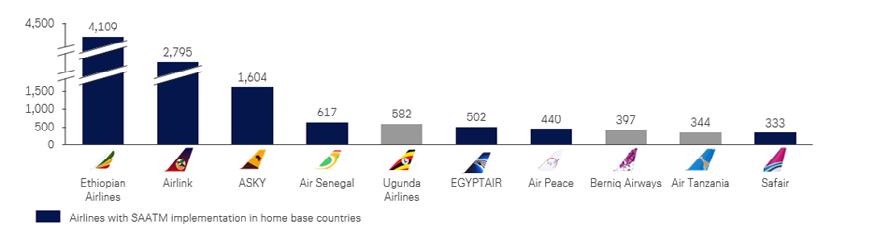
Ethiopian Airlines exemplifies how a well-structured national carrier can thrive in an increasingly competitive African aviation market. While Ethiopia’s adoption of SAATM strengthens its future positioning, Ethiopian Airlines’ success is rooted in a strategic approach that has long prioritized network expansion, operational efficiency, and vertical integration. The close coordination between the airline, airport, regulatory bodies, and government has created a strong foundation, enabling significant growth across Africa and beyond. Comparing 2024 with 2017, Ethiopian Airlines introduced over four million additional seats on the intra-African market and opened new routes to four SAATM member states, demonstrating its ability to seize new opportunities while rein-
forcing its position as the continent’s leading carrier. As SAATM gains traction, Ethiopian Airlines is well-positioned to further capitalize on Africa’s market liberalization, expanding its reach while maintaining its competitive edge.
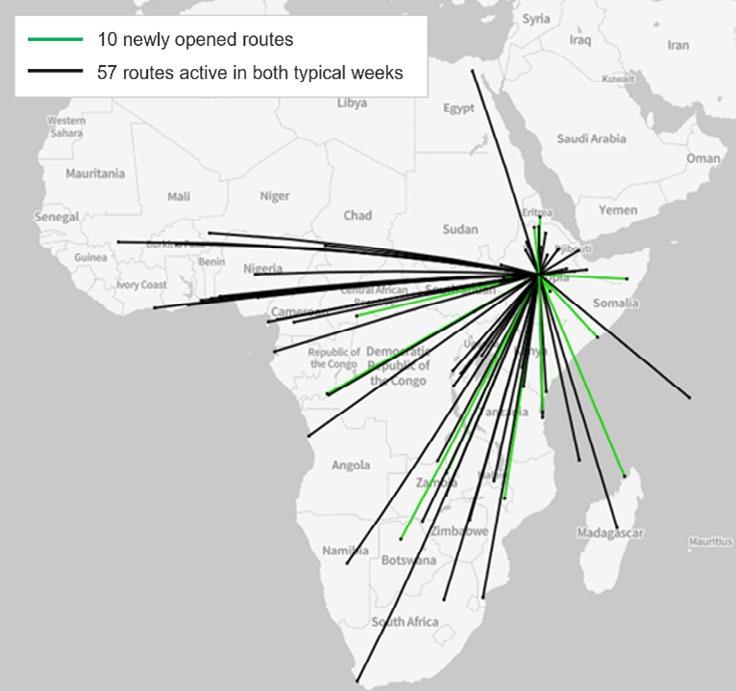
On the flip side, Kenya Airways faces ongoing challenges at its home airport in Nairobi (NBO). The airport is unable to accommodate growth due to limited capacity, operational inefficiencies, and a lack of vertical integration, all of which have hindered its ability to grow and compete effectively. Efforts to address these constraints suffered a major setback when a USD 2 billion investment fell through at the end of 2024 (according to media reports in The Pan African Review and Al Jazeera from AUG/NOV 2024), further delaying much-needed improvements.
2: Ethiopian Airlines’ direct continental passenger routes from Addis Ababa (ADD) (typical week in June, 2017 vs. 2024) Source: OAG Mapper
Figure
3: Kenya Airways’ direct passenger routes from Nairobi (NBO) (typical week in June, 2017 vs. 2024) Source: OAG Mapper
While striving to compete with Ethiopian Airlines, current stakeholder collaboration has negatively impacted Kenya Airways’ ambition. Kenya Airways has seen a net reduction of five routes since 2017, opening five new ones while discontinuing ten.
Looking at the differing implementation rates of SAATM: Ethiopia (80%) and Kenya (0%) show clear discrepancies in strategic stances toward SAATM as well. Although Kenya’s stance toward SAATM might be reluctant to protect their national carrier – it will restrict Kenya’s future growth potential.
Figure
Figure 4: Implementation rate of SAATM per country Source: SAATM Dashboard by AFCAC, as of July 2025
Overcoming resistance: ensuring SAATM readiness
Despite the benefits and potential of SAATM, only nine African countries have fully implemented its provisions, highlighting widespread and deep-rooted concerns
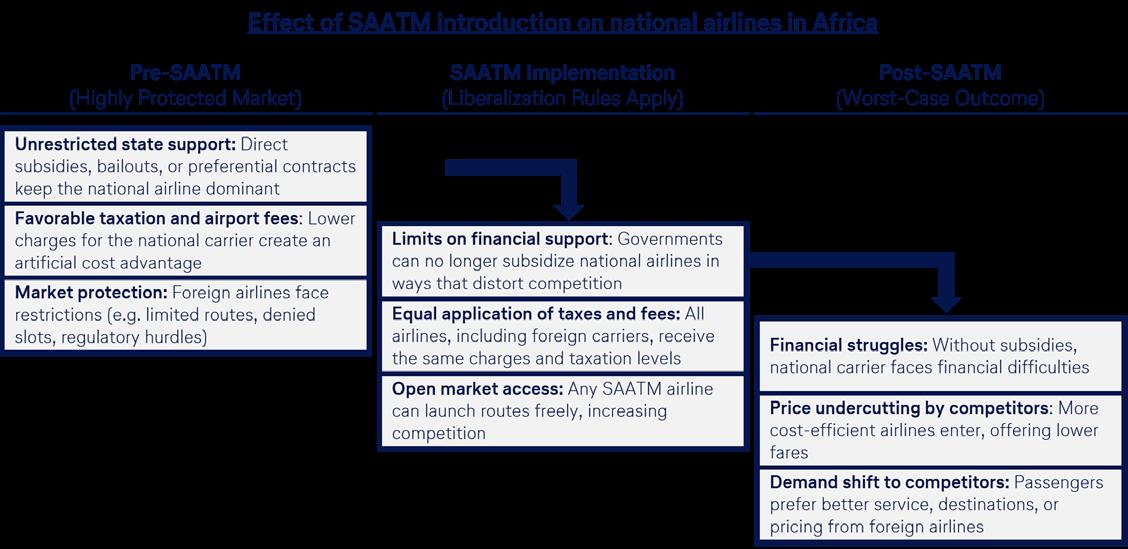
about national carriers’ survival in a liberalized market. Many African-flag carriers have relied on government protection and subsidies to survive. Opening the markets could expose them to increased competition, potentially leading to fatal consequences, including collapse. The main risks to underprepared national carriers that SAATM poses are summarized below:
Figure 5: Effect of SAATM introduction on national airlines in Africa (Lufthansa Consulting analysis)
However, these risks are not inevitable. Countries can reinforce their national carriers by focusing on key attributes that help to strengthen an airline’s operations, as illustrated here (Lufthansa Consulting analysis):
Strategic response by airlines and stakeholders
Expected outcome for African aviation
Financial struggles
Price undercutting by competitors
Demand shift to competitors
Targeted strategic investment in modern fleets, digital transformation, and cost-efficient operations before SAATM
Enhancing service quality through premium experiences, loyalty programs, and differentiated offerings
Strategic partnerships (codeshares, interlining, joint ventures) with African and global carriers to extend network reach
Increased cost competitiveness, financial sustainability, and resilience against market shocks
Stronger customer retention, increased demand, and ability to compete beyond national borders
Improved regional and international connectivity, attracting transit and business passengers
By taking these points into consideration, national carriers can transition from protected entities to commercially viable airlines capable of thriving under SAATM rather than fearing it.
Lessons from South African Airways
South African Airways’ (SAA) collapse highlights the risks of continuous government bailouts without structural reforms. Despite receiving over USD 2.7 billion in support between 1994 and 2020, the airline declared bankruptcy, with key factors including inefficient operations, excessive government in-
terference, and a lack of strategic restructuring as reported by Daily Investor in May 2023.
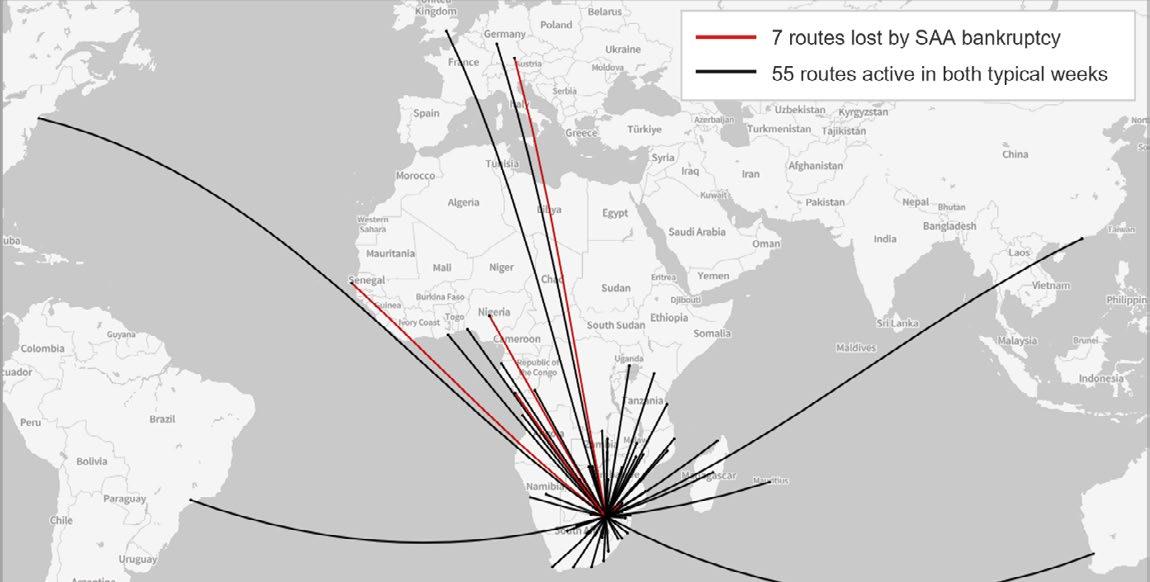
Currently, the airline is merely a shell of its former self, facing challenges in securing new funds and investments. While the gap of flights caused by SAA’s exit has been somewhat filled by other airlines, compared to 2017, ten percent of the destinations from Johannesburg have been lost.
Figure 6: SAA network from Johannesburg (JNB) in 2017, highlighting routes lost due to SAA’s collapse in 2024 (typical week in June)
Source: OAG Mapper
The lessons from SAA’s collapse are clear: The airline was not prepared to compete with more efficient and lean competitors; continuously propping up an unviable airline with financial aid is unsustainable. Instead, struggling African national carriers should embrace SAATM as a catalyst to restructure and prepare them to compete in a deregulated market effectively.
From a policy perspective, however, establishing a national carrier may not always be the most effective solution for ensuring air connectivity.
Governments can achieve more reliable and sustainable air services by supporting efficient, well-scaled operators rather than maintaining smaller national airlines. For essential but commercially unviable routes, mechanisms such as Public Service Obligations (PSOs) can safeguard connectivity without requiring a state-owned carrier. While maintaining a national airline may align
with sovereign ambitions, regional partnerships or multinational carriers can offer a more viable path to strengthening connectivity, maximizing the benefits of SAATM’s liberalization and ensuring long-term aviation growth.
A way forward
While concerns about SAATM’s impact on national carriers are understandable, prolonged protectionism will only hinder long-term growth. A fully implemented SAATM will benefit the entire continent through:
• Lower ticket prices, making air travel more accessible to a broader traveling population
• Increased connectivity, fostering trade, tourism, and economic growth
• More job creation, strengthening the aviation sector and its supporting industries
To succeed under SAATM, African nations should strengthen their national carriers through strategic investment, encour-
aging operational efficiency, service enhancements, and collaboration among stakeholders, including government bodies and airports, rather than providing them unlimited government protection.
Beyond that, secondary revenue streams and airline collaboration can further solidify a national carrier’s
The authors:
Associate Consultant Lufthansa Consulting
right to existence. Therefore, a well-structured and aligned aviation strategy at a national level can position African carriers to thrive in more open markets beyond their national borders.
The time for action is now. Africa must seize the opportunity to build a more competitive and thriving aviation market.
Managing Consultant Lufthansa Consulting
Associate Partner and Head of Solution Group Network and Fleet Management Lufthansa Consulting