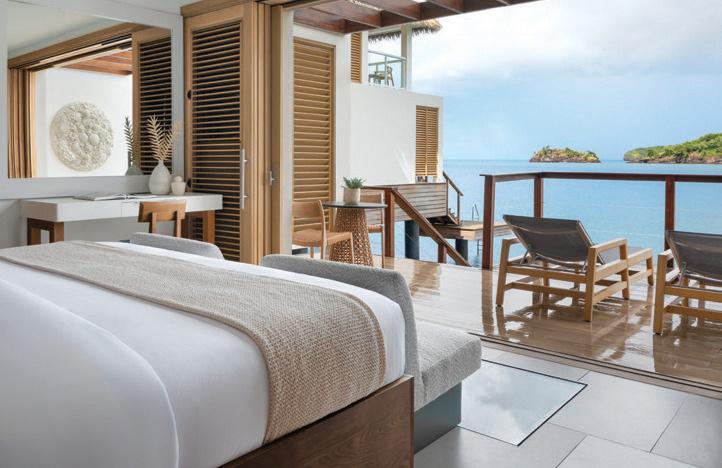
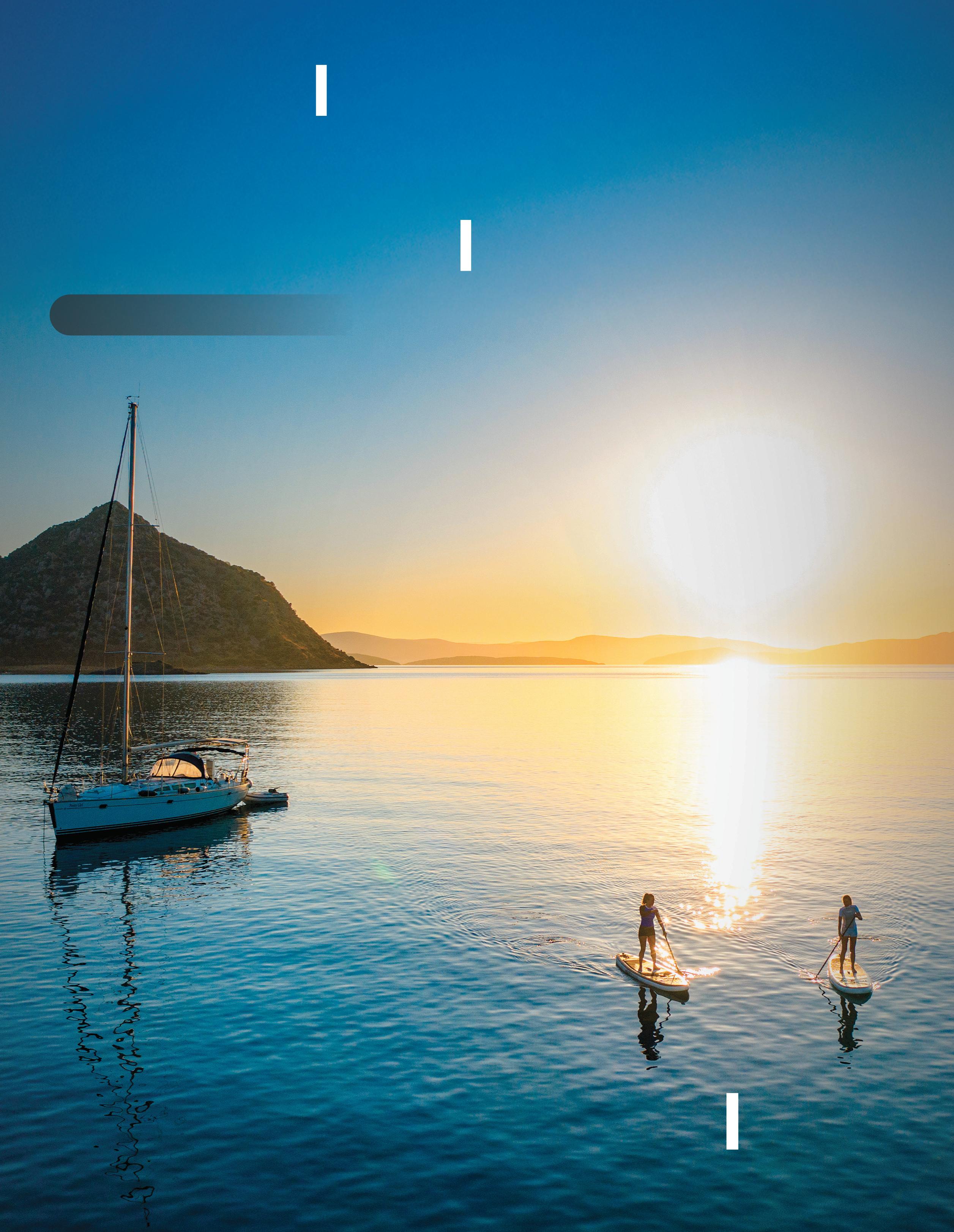
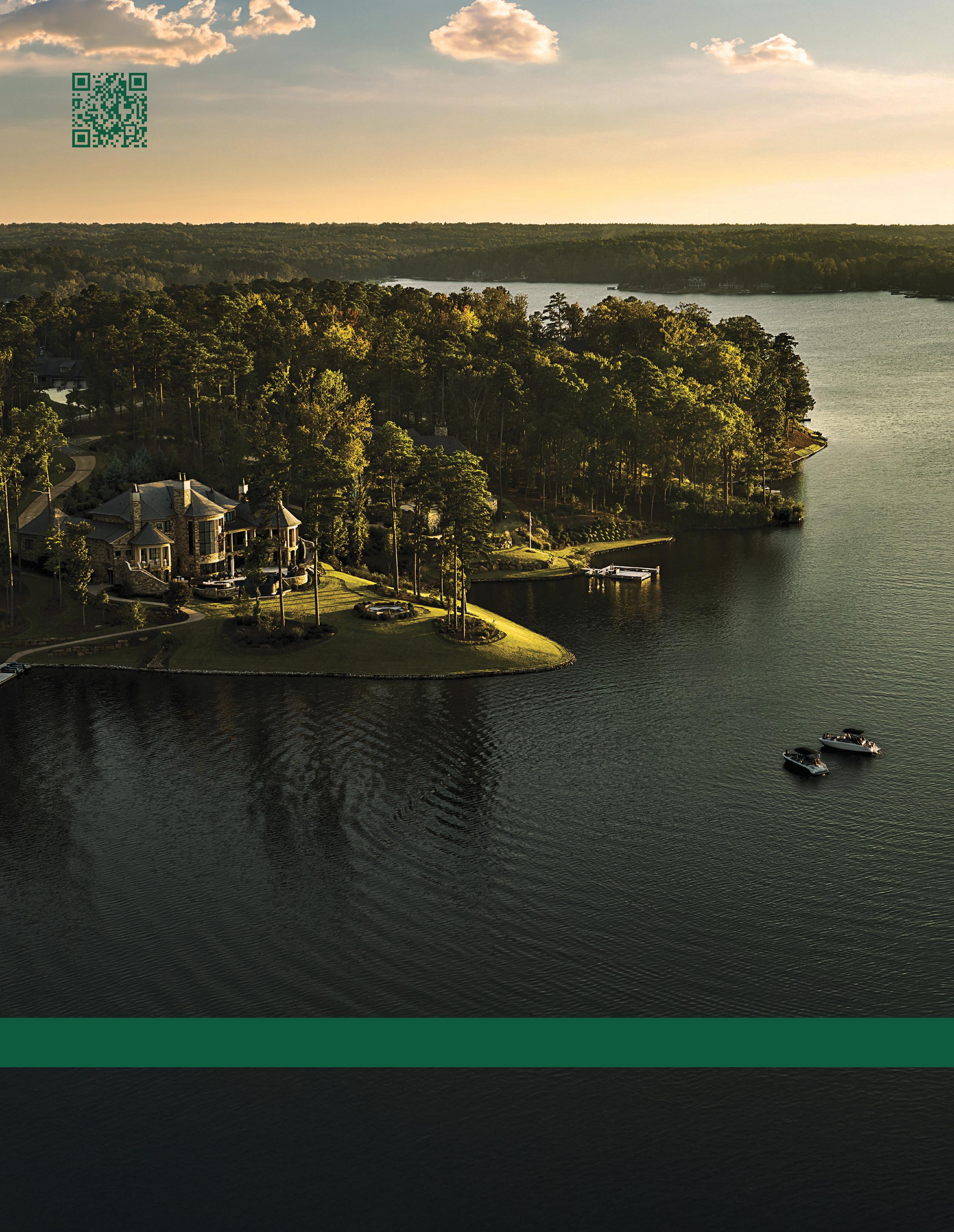
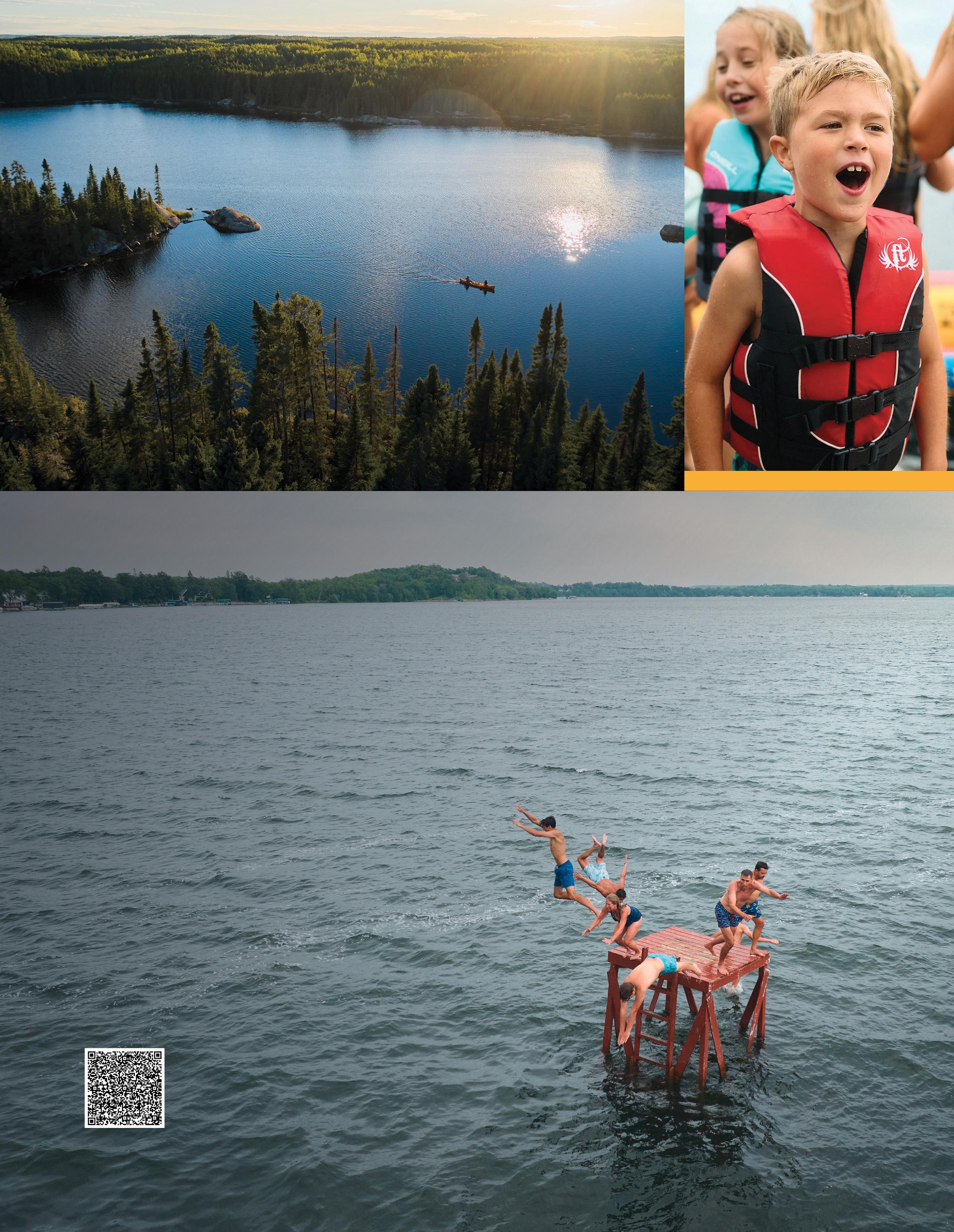
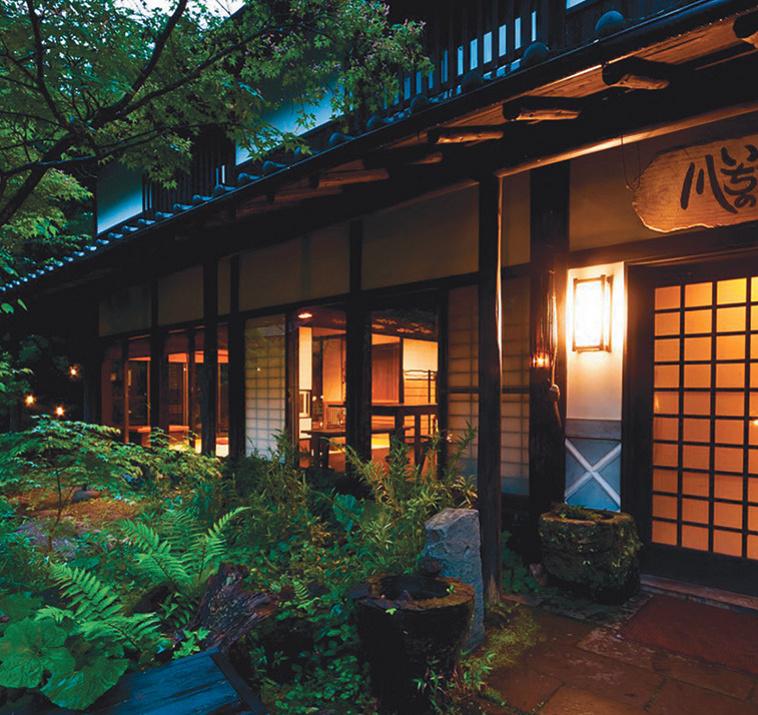
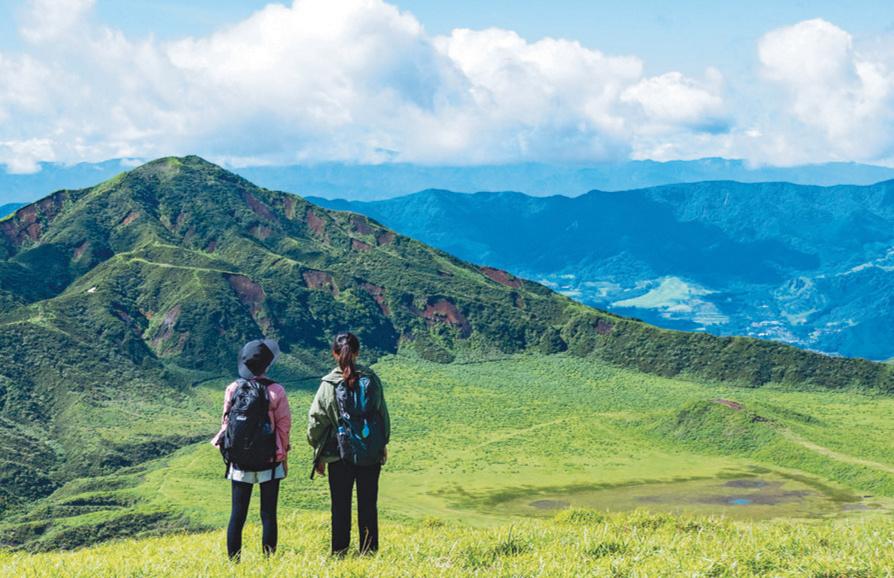
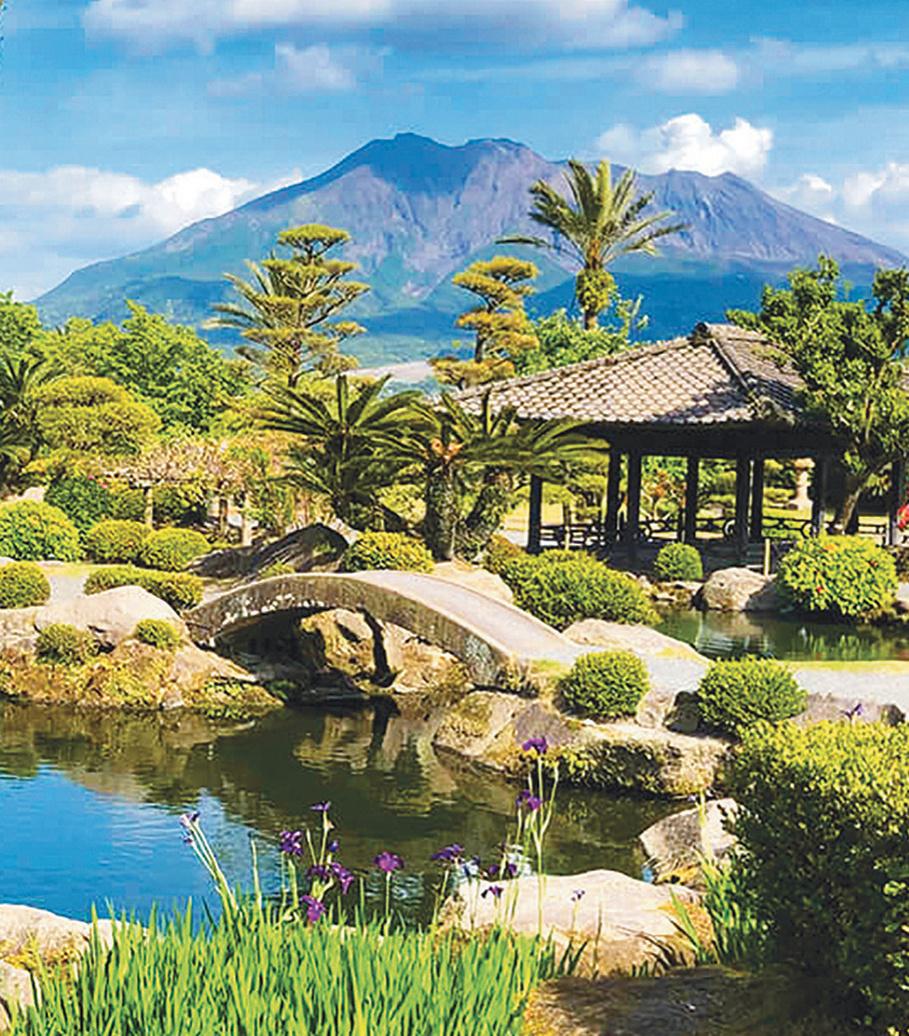
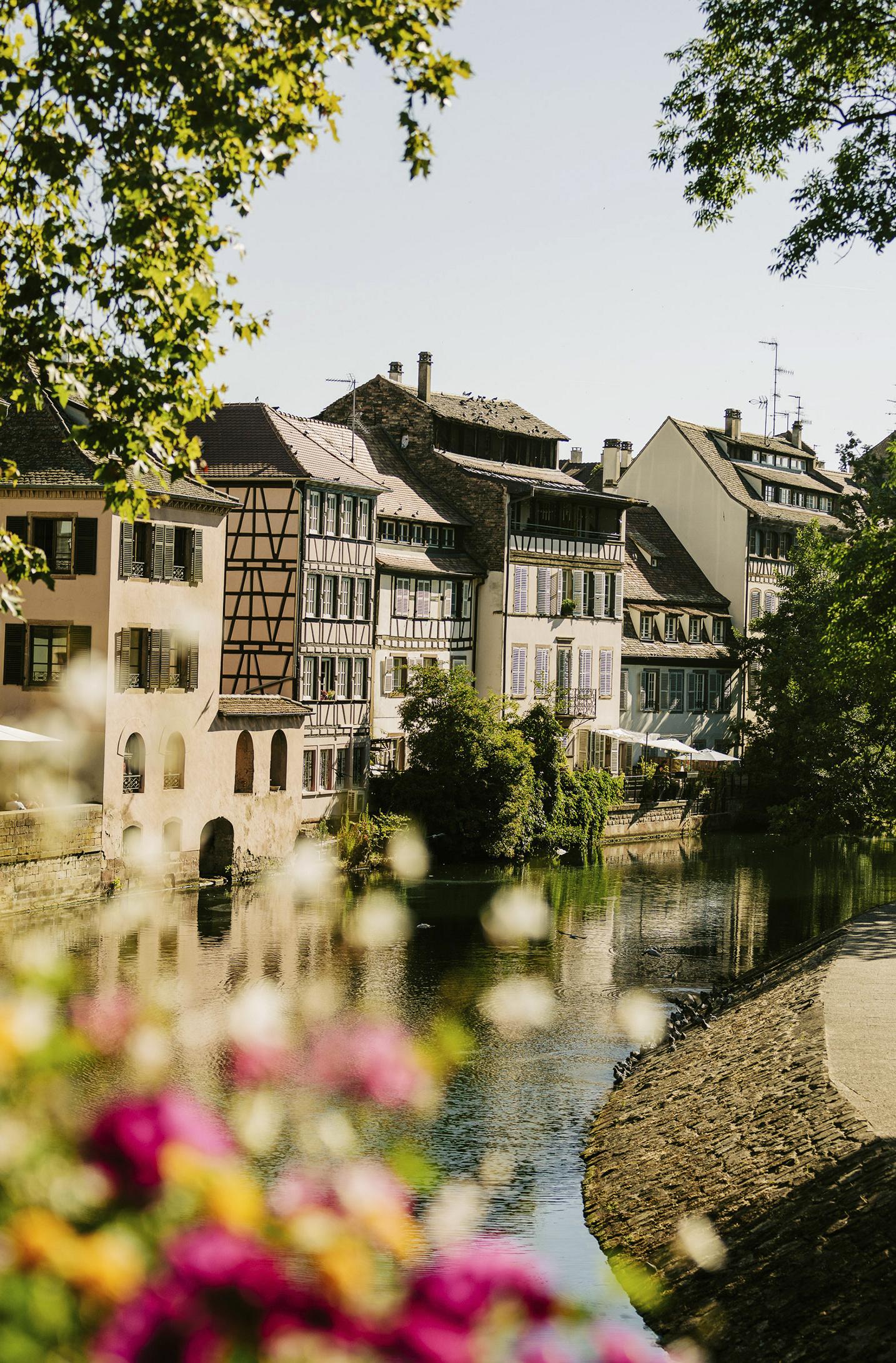
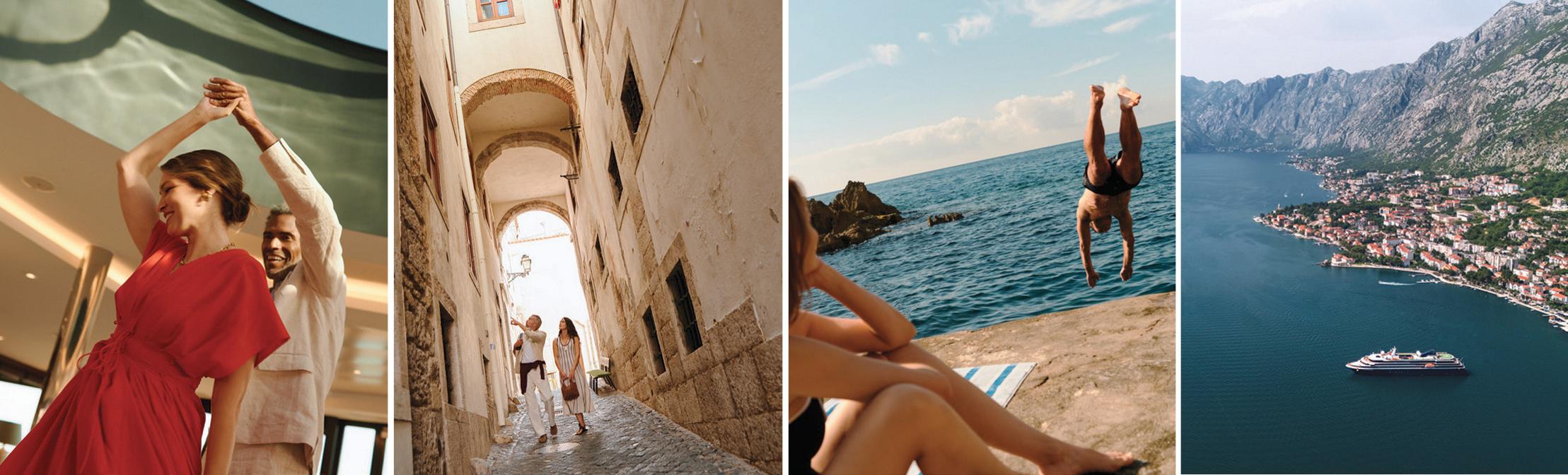
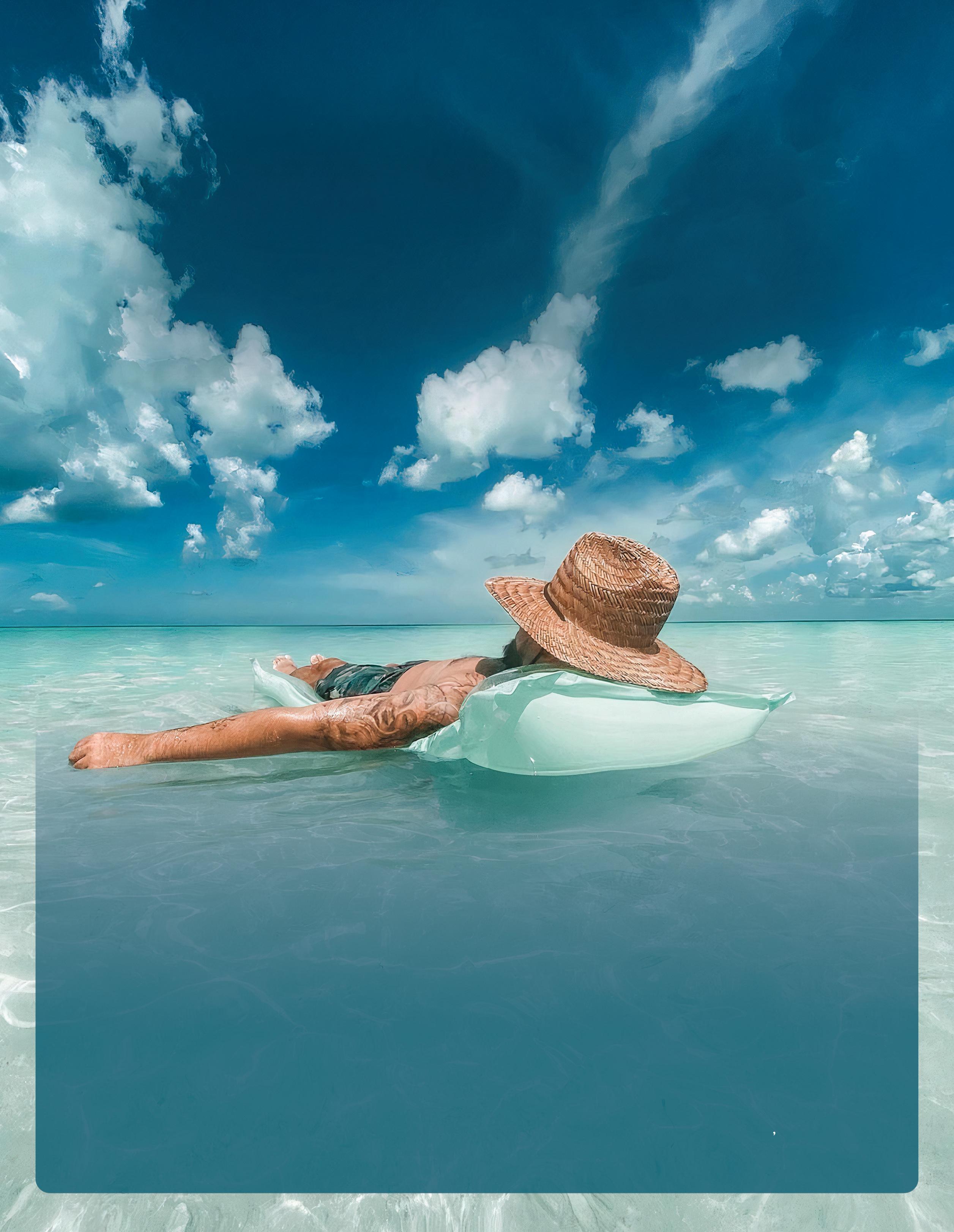
Discover the rivers of Europe, Asia, Africa and South America with AmaWaterways, where spacious, custom-designed ships and attentive crews offer ease at every turn. Follow your own rhythm with a variety of onshore experiences, from guided tours to biking and tastings. On board, farm-to-ship cuisine highlights regional flavors, Wellness Host-led fitness keeps energy high and thoughtful touches make each moment feel personal.
Contact your travel advisor, call 1-888-928-0237 or visit amawaterways.com to explore our latest offers and find your next journey.
LOREM IPSUM RESTAURANT CONSTANCE
CUSTOMSHOP
TACO MOLINO
Table of Contents
Features
90
SEA CHANGE
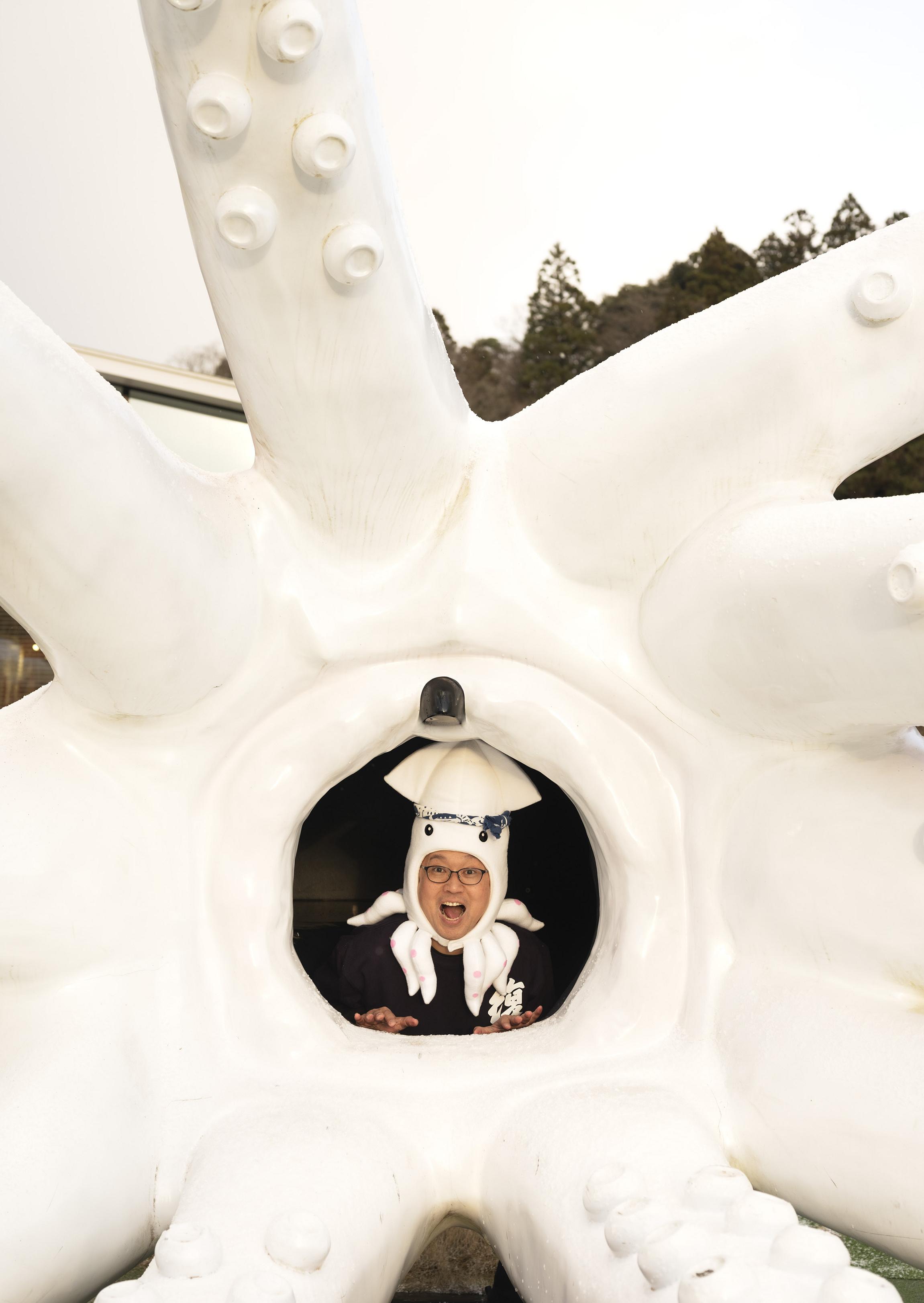
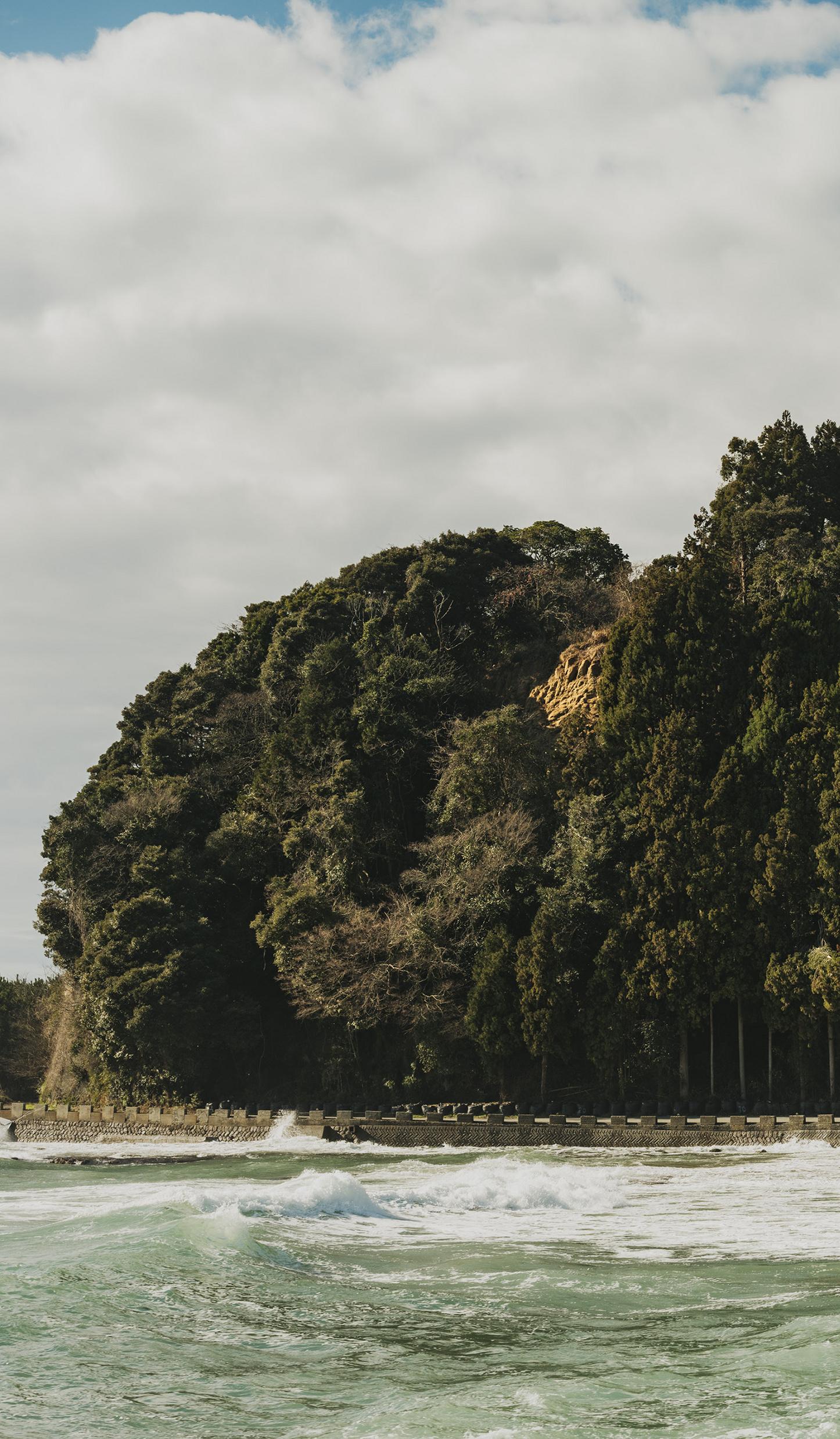
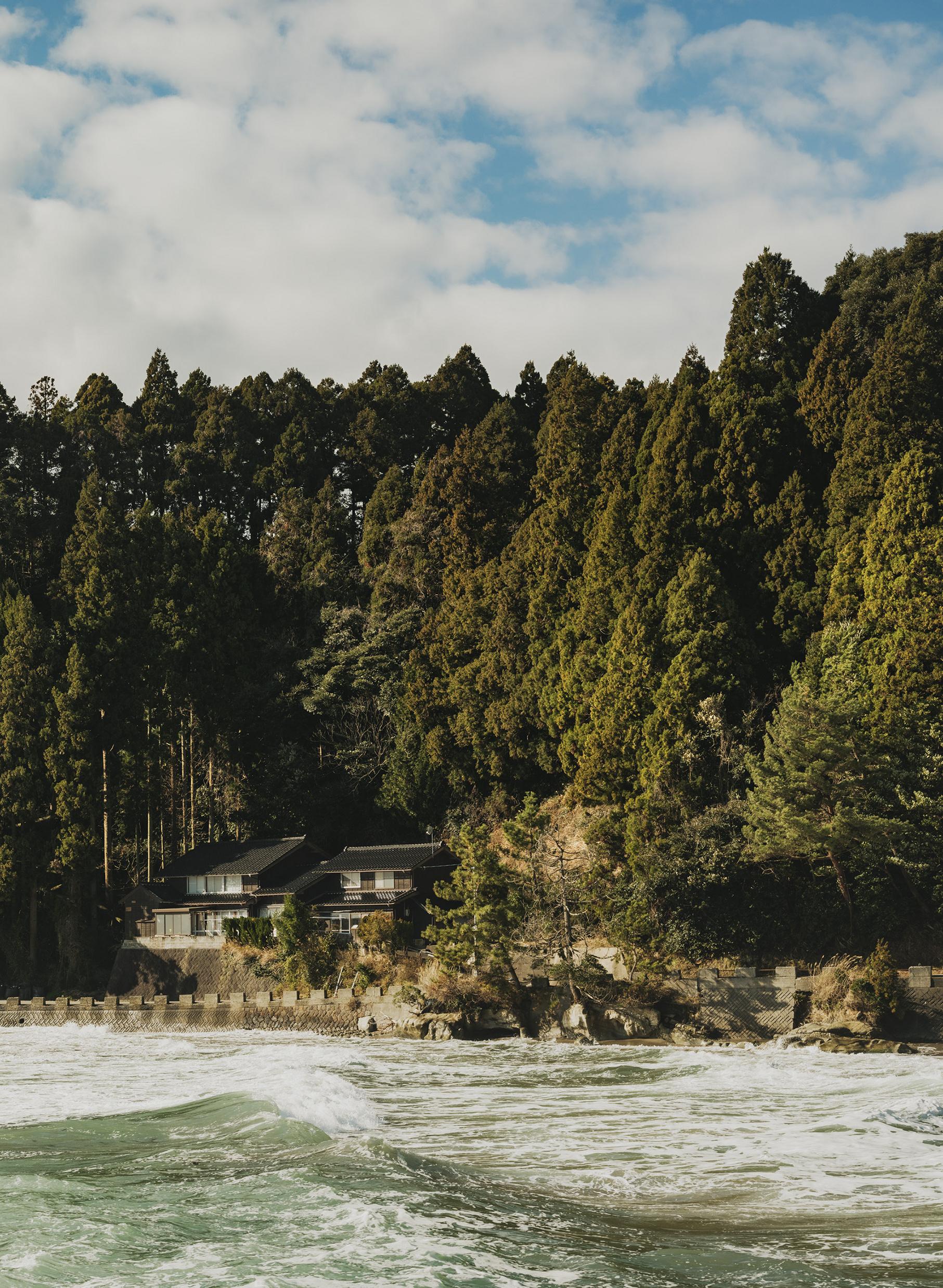
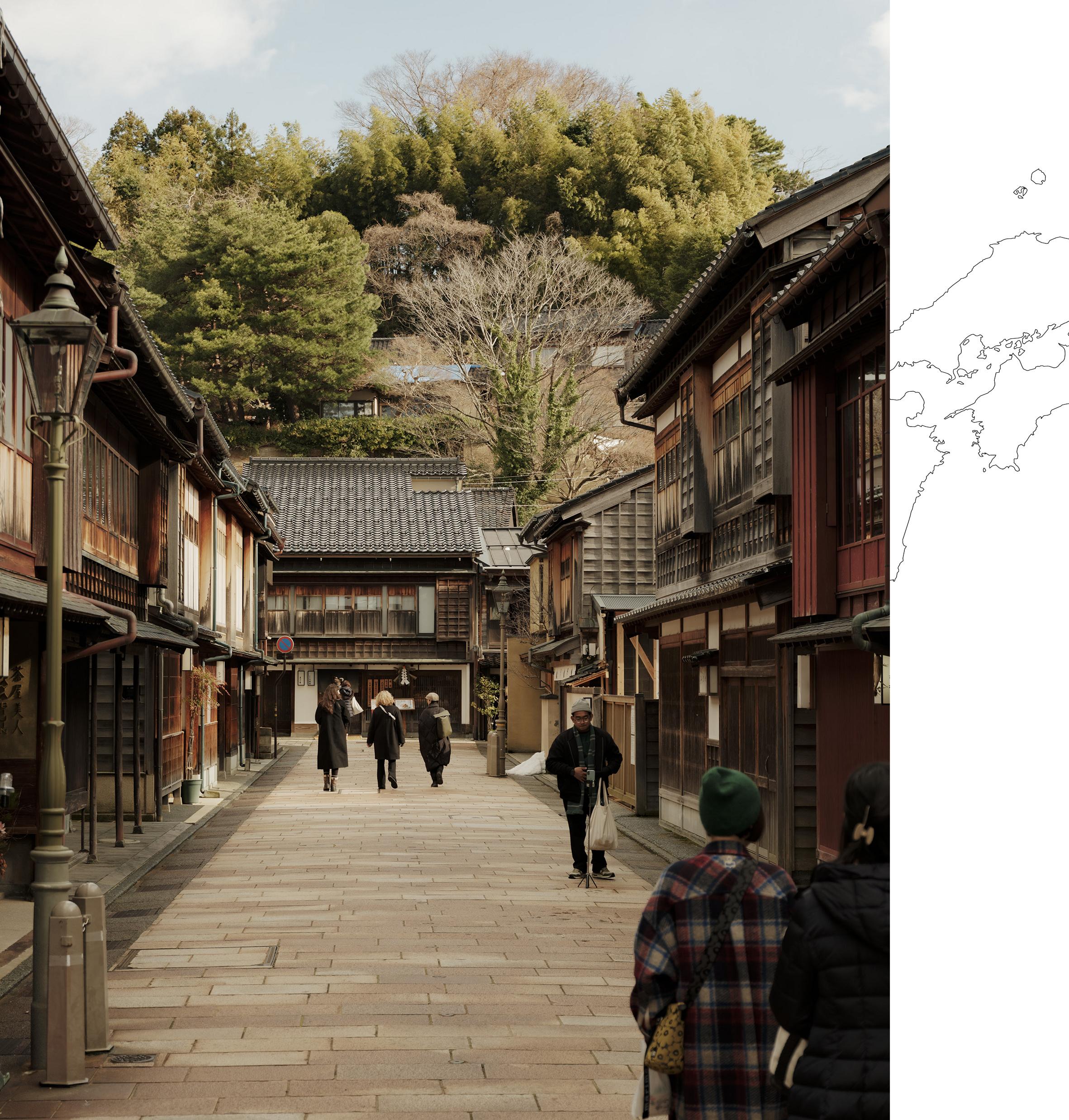
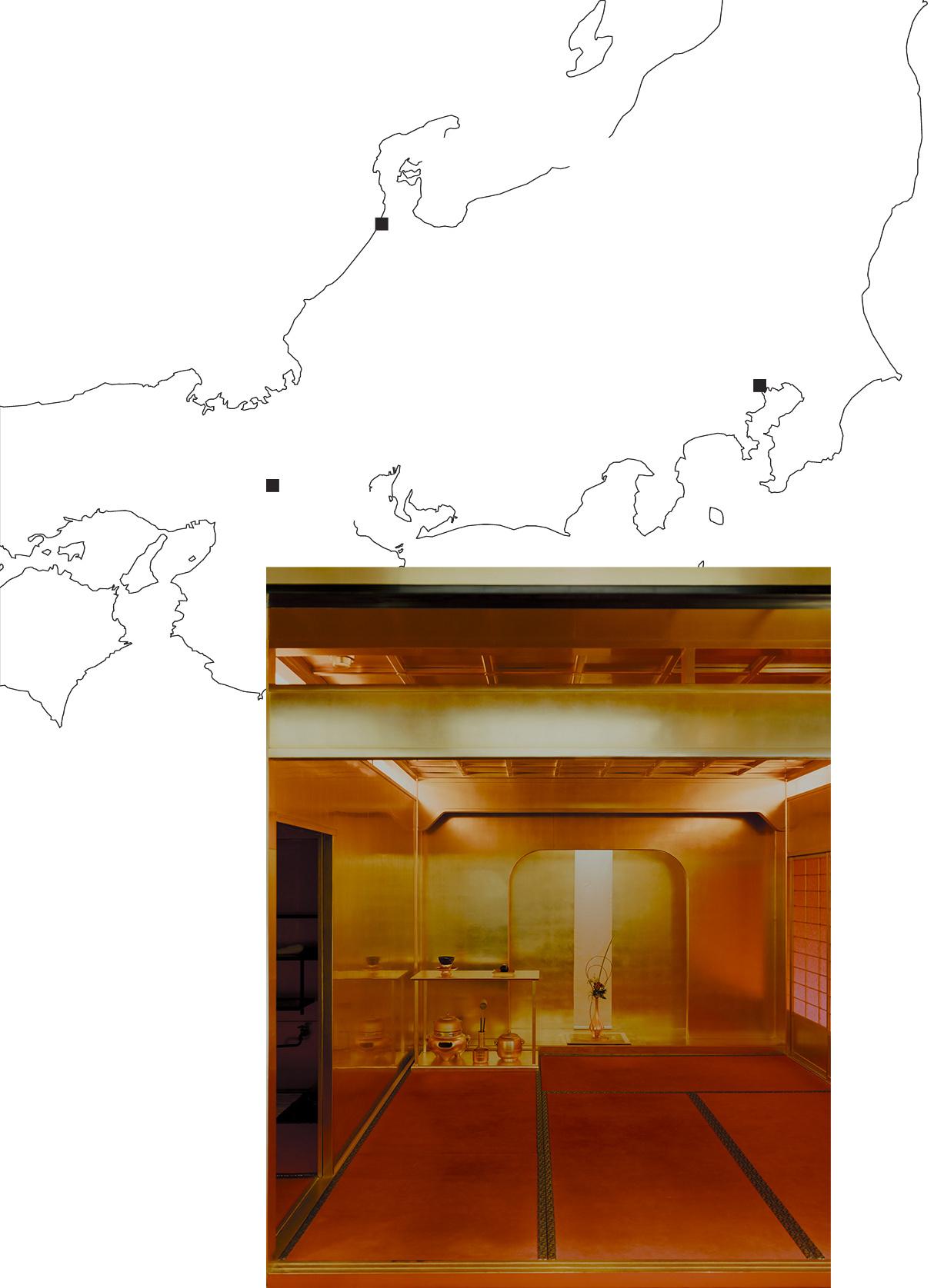
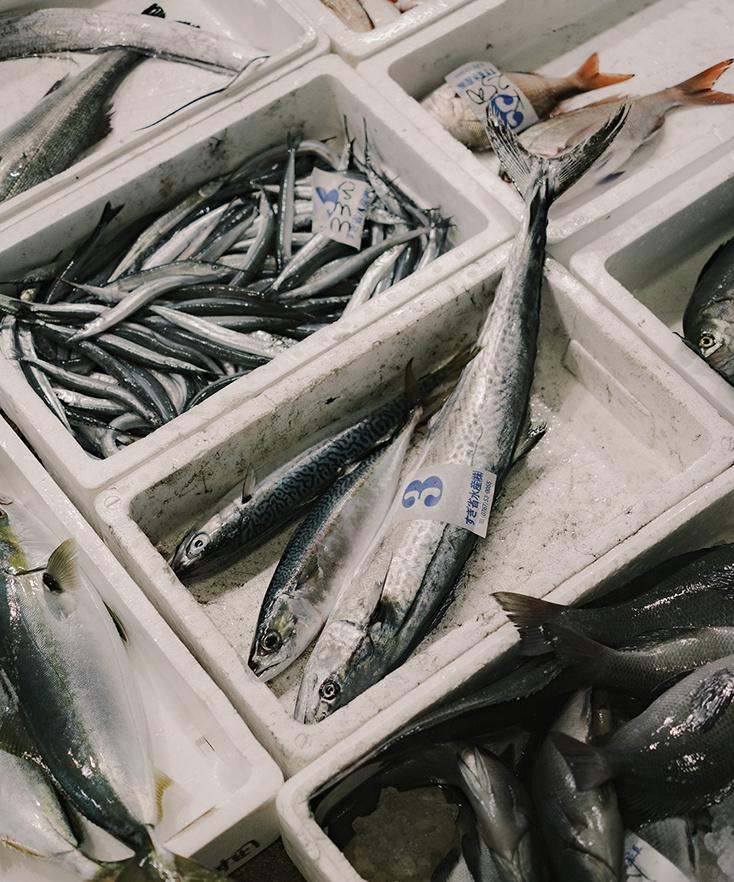
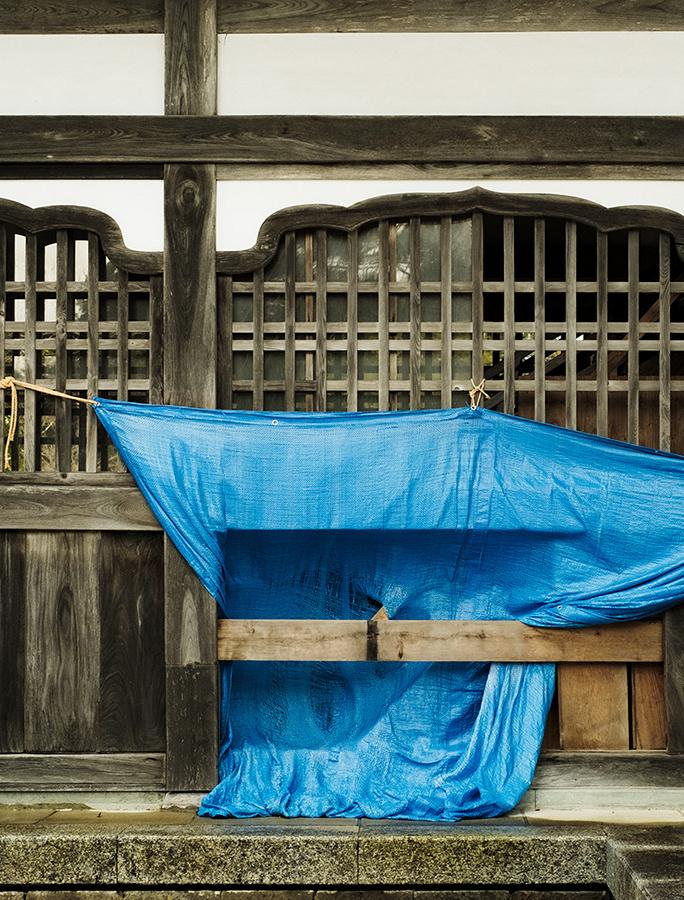
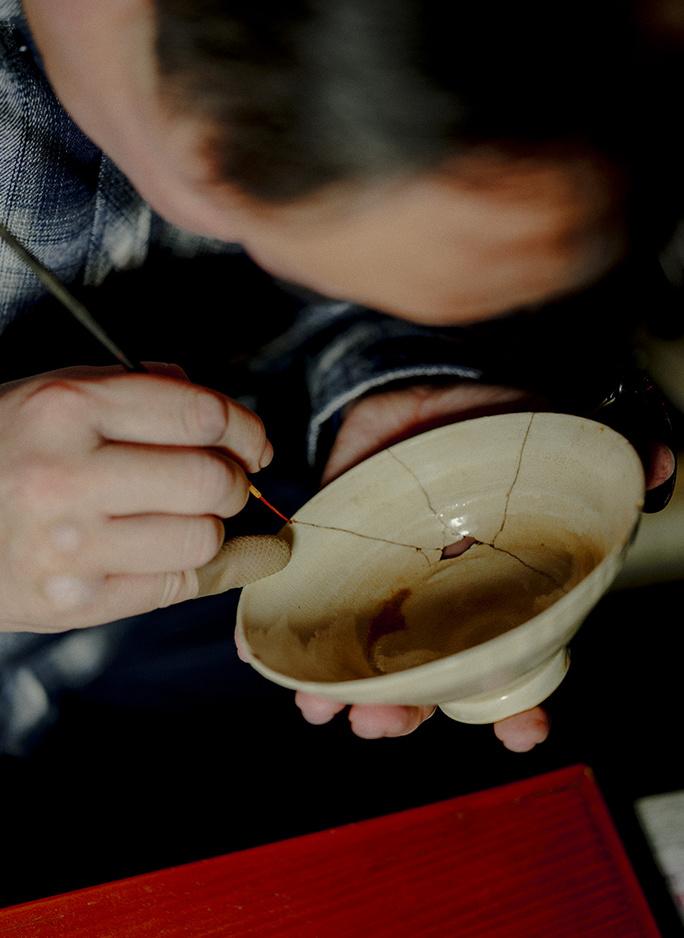
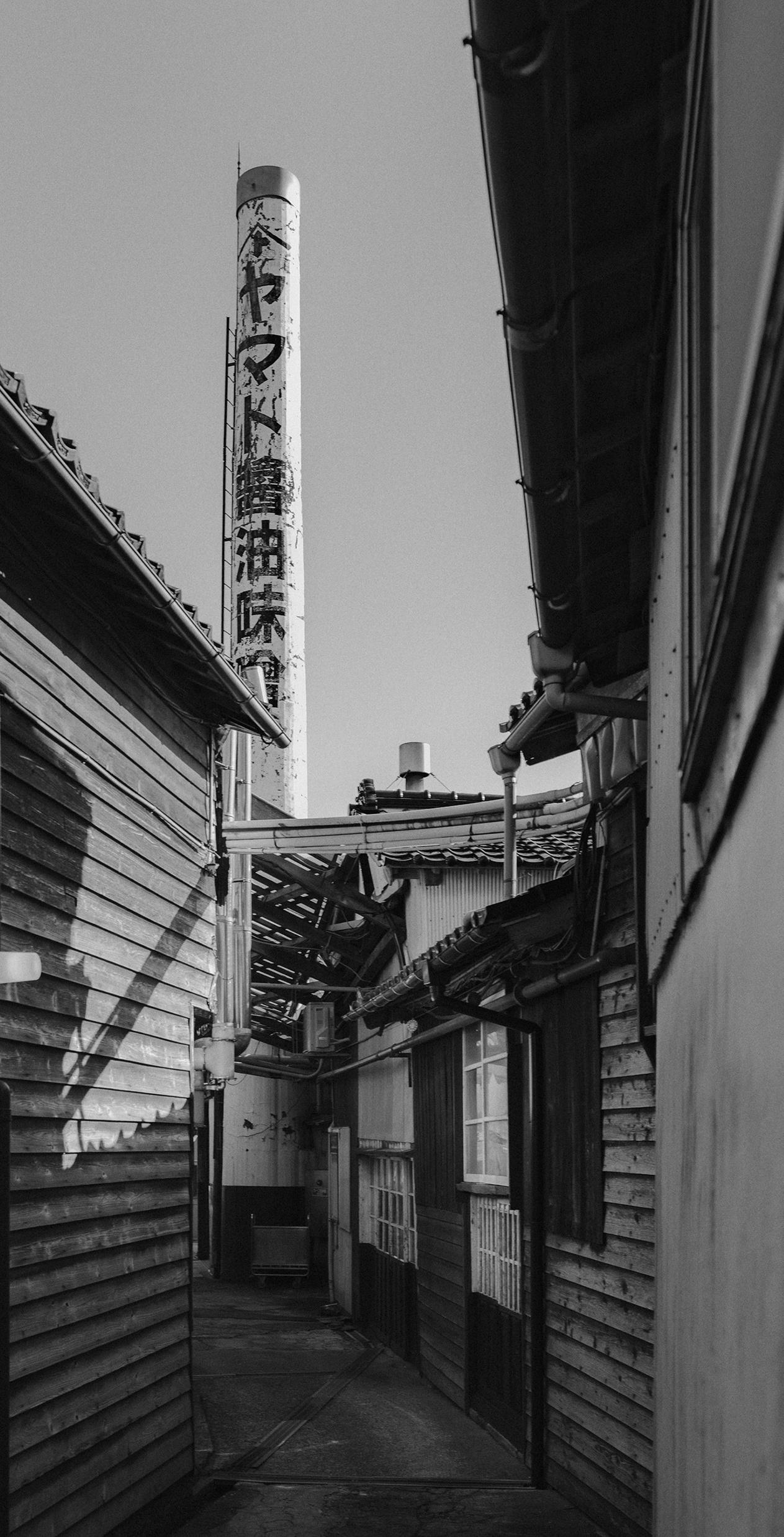
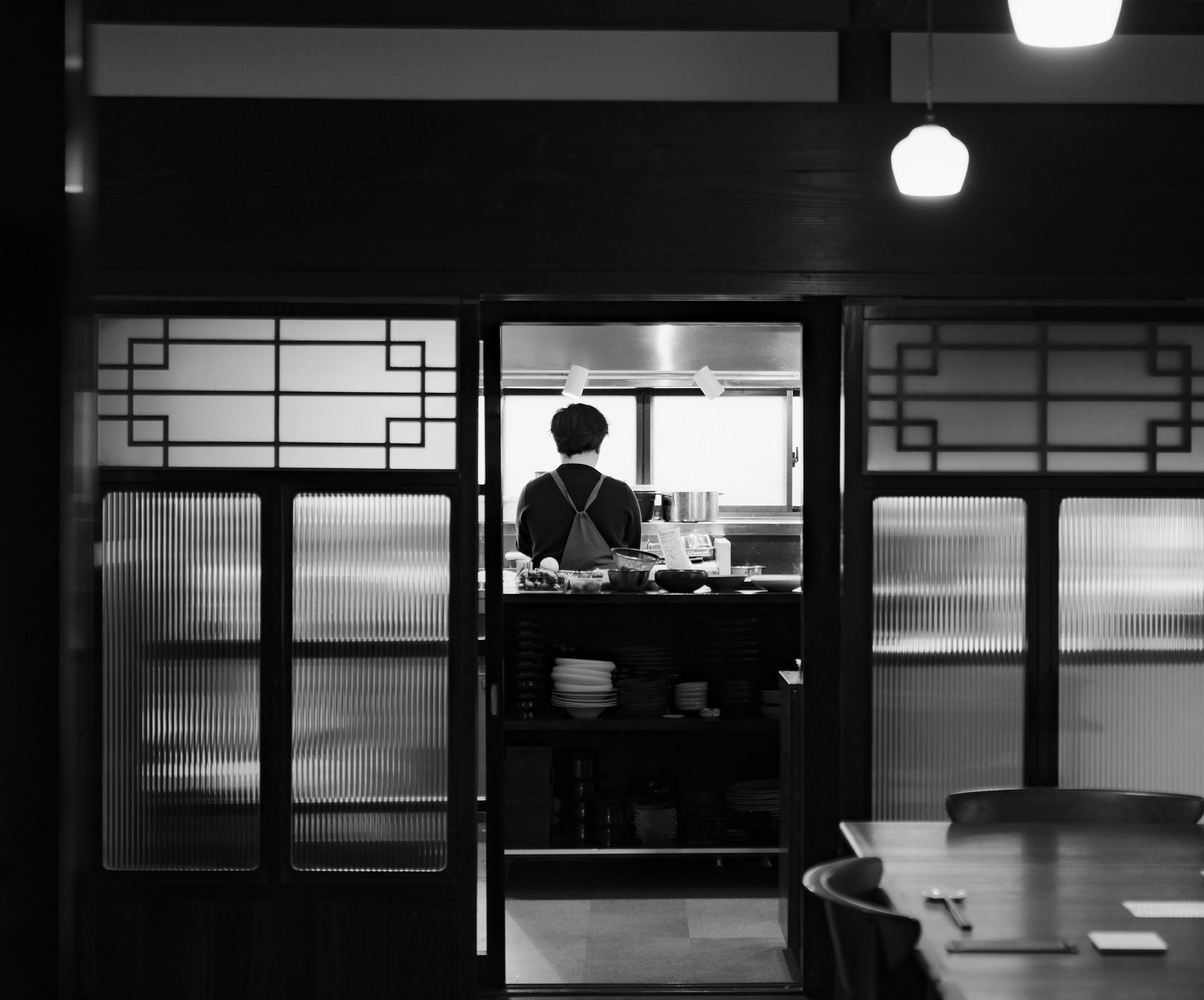
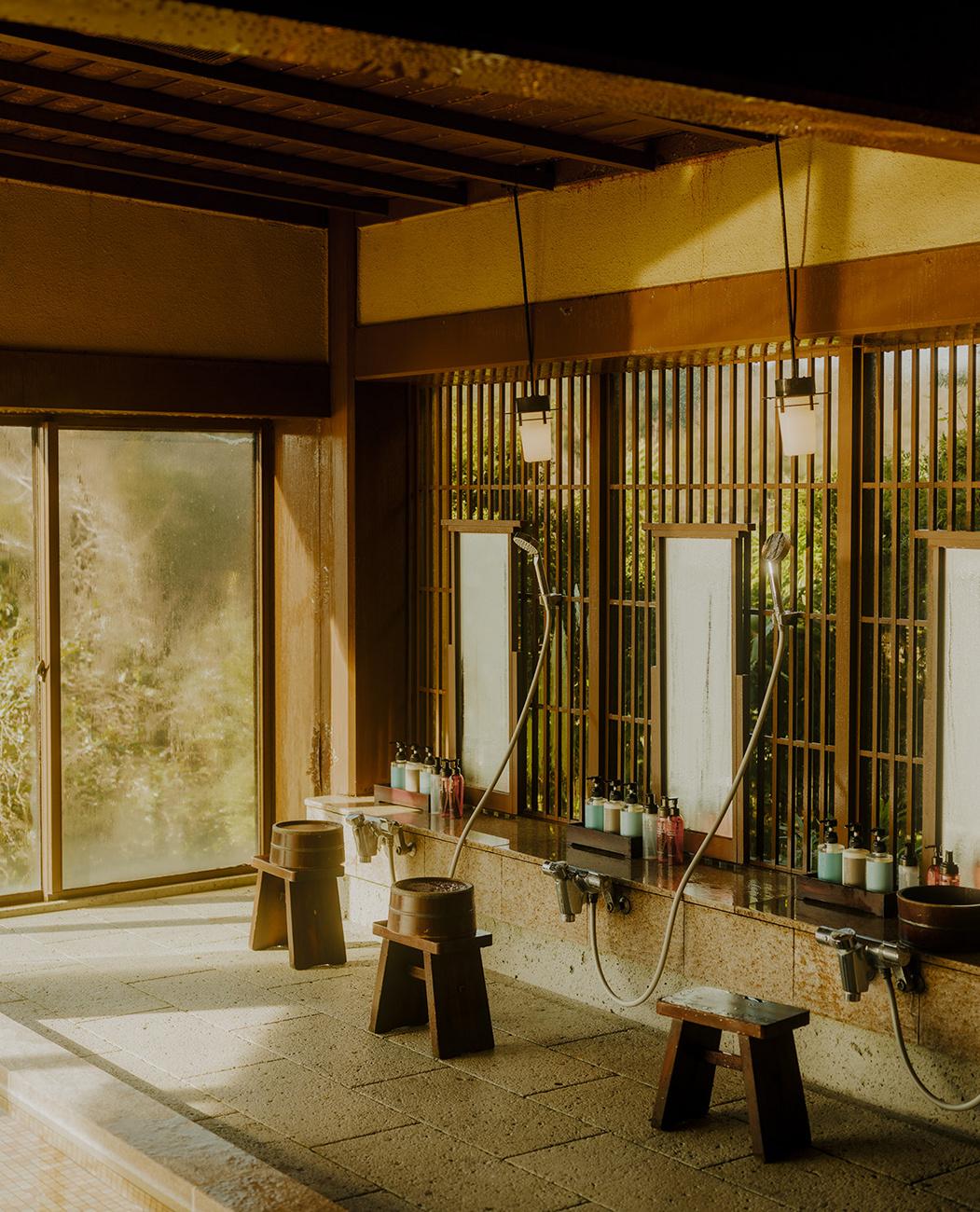
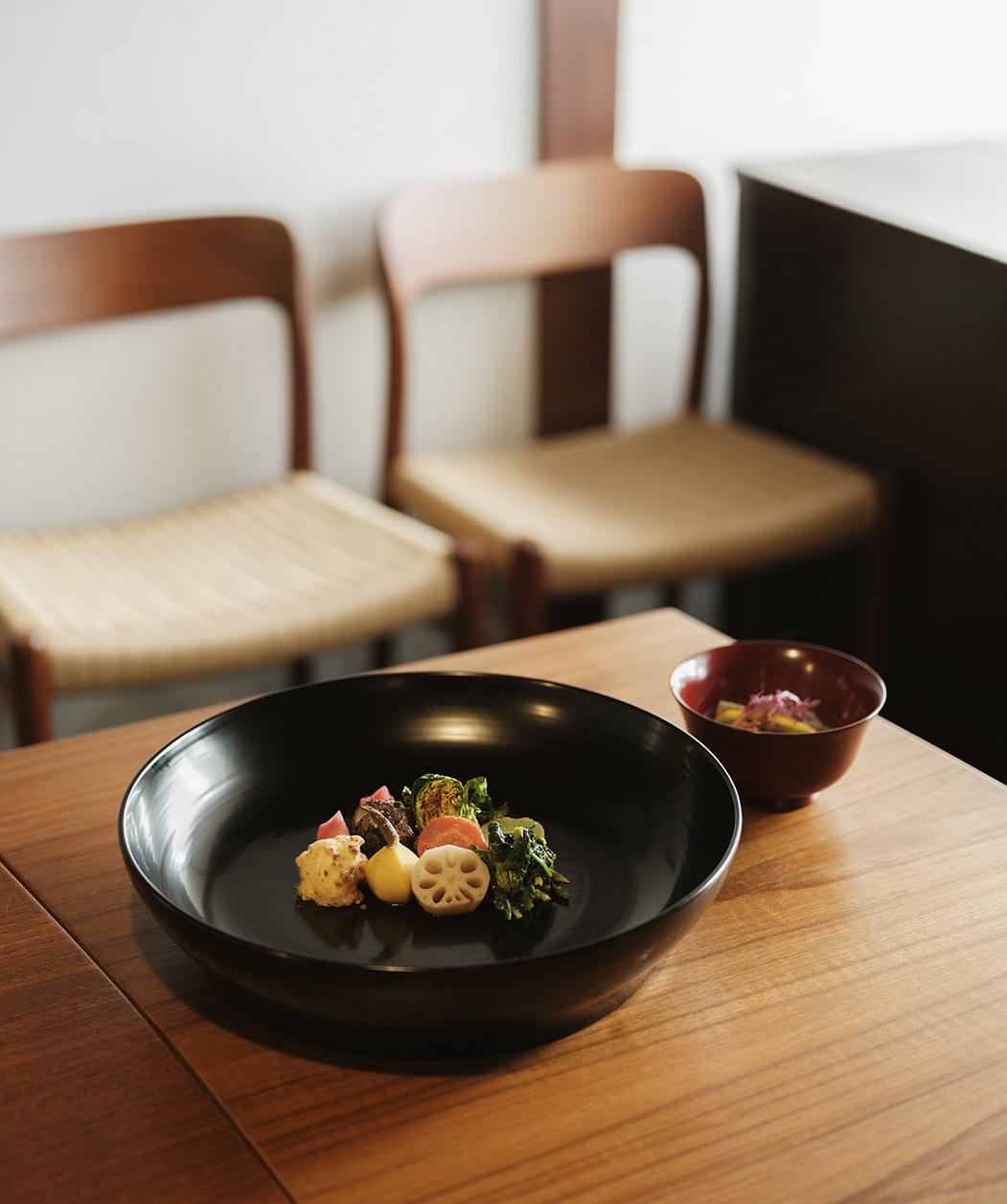
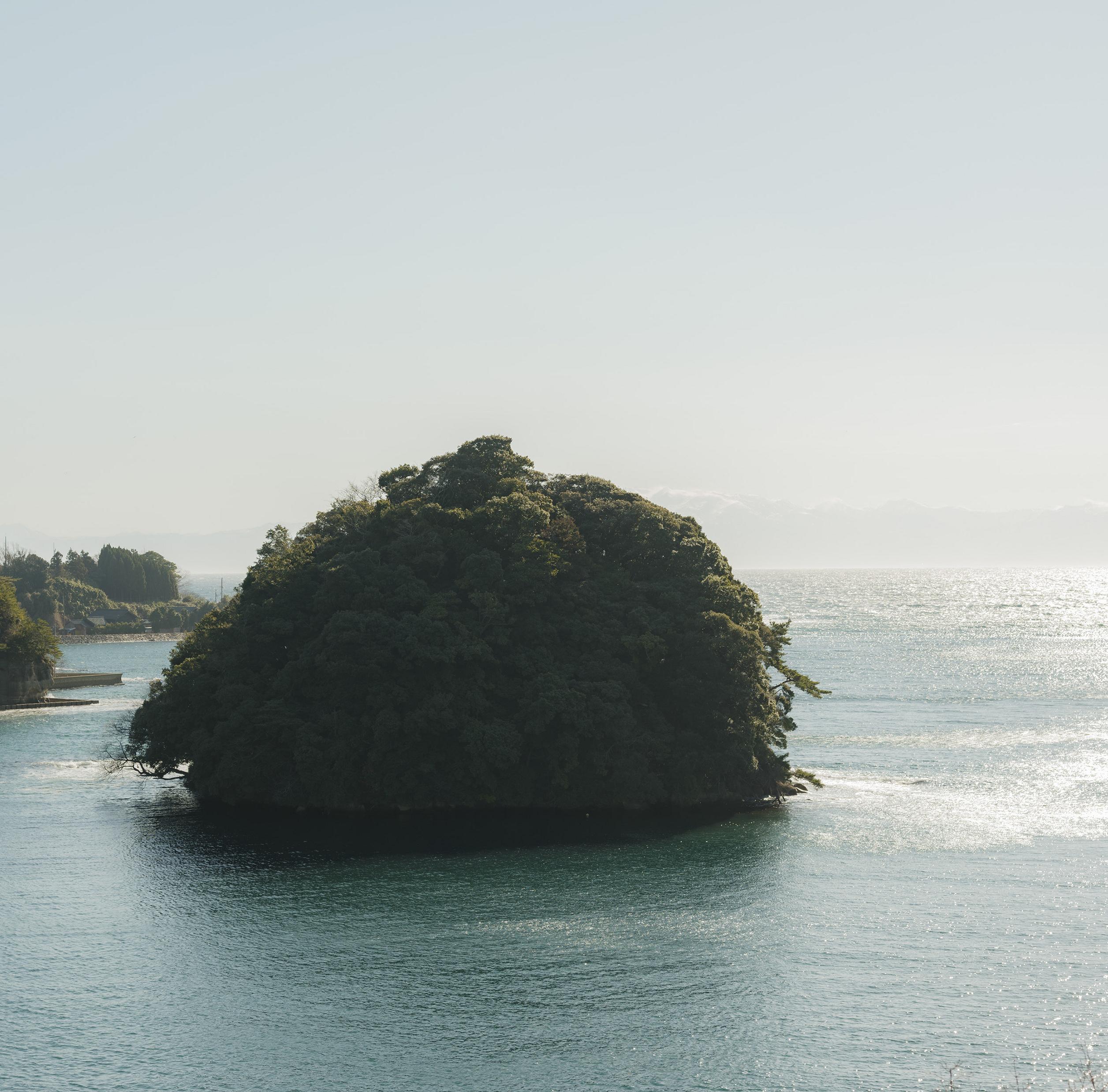
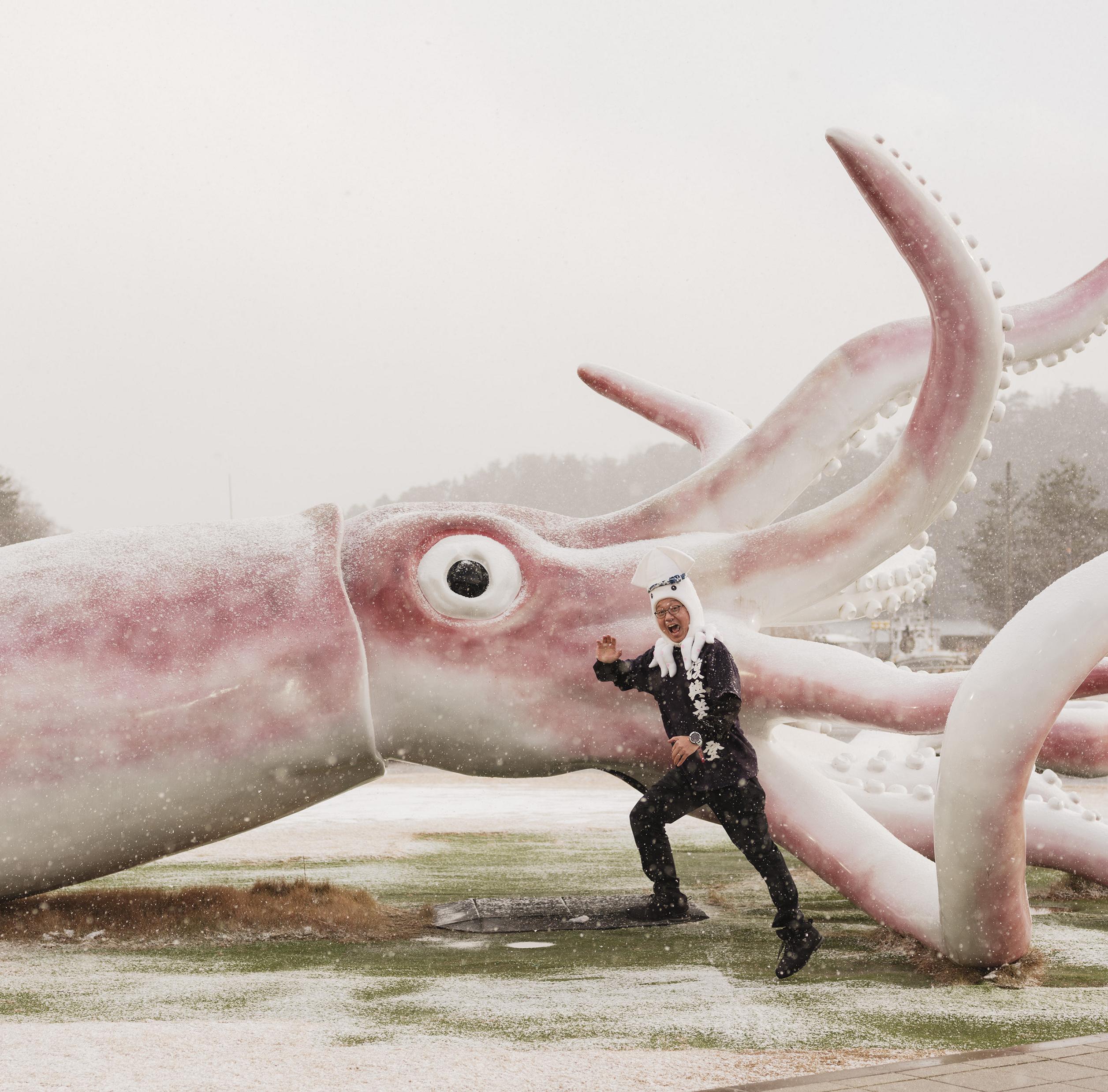
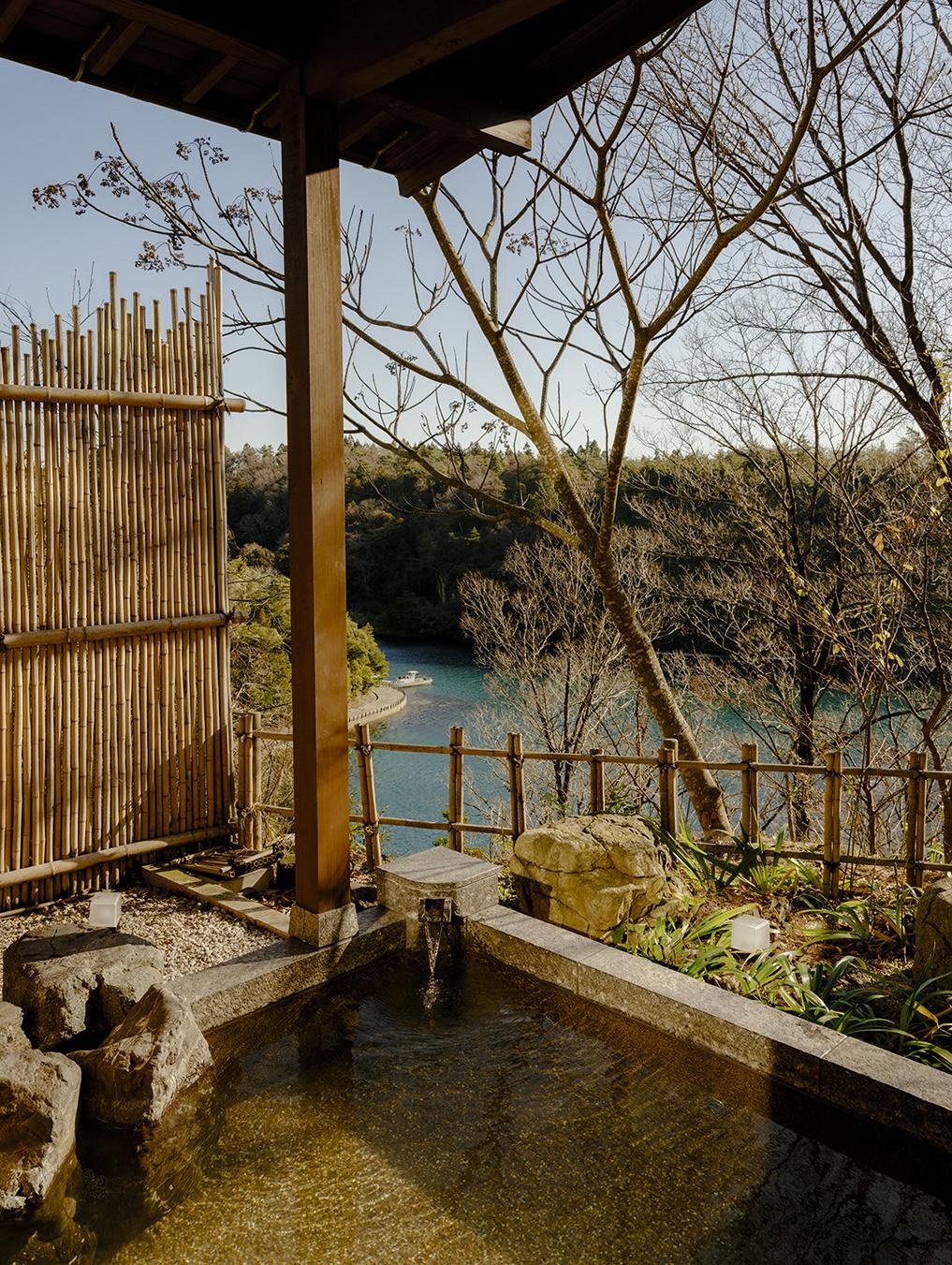
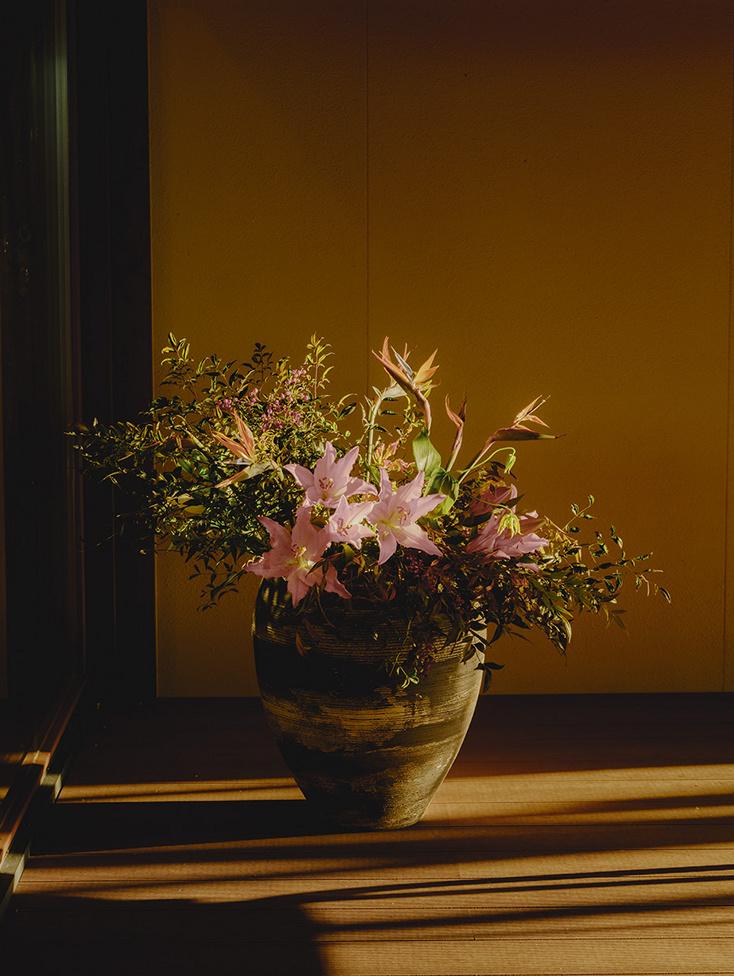
On Japan’s Noto Peninsula, contributing writer Ryan Knighton finds centuriesold craft traditions and communities looking to the future—and some outof-this-world seafood, too.
102 THE SHADOW ON THE TRAIL
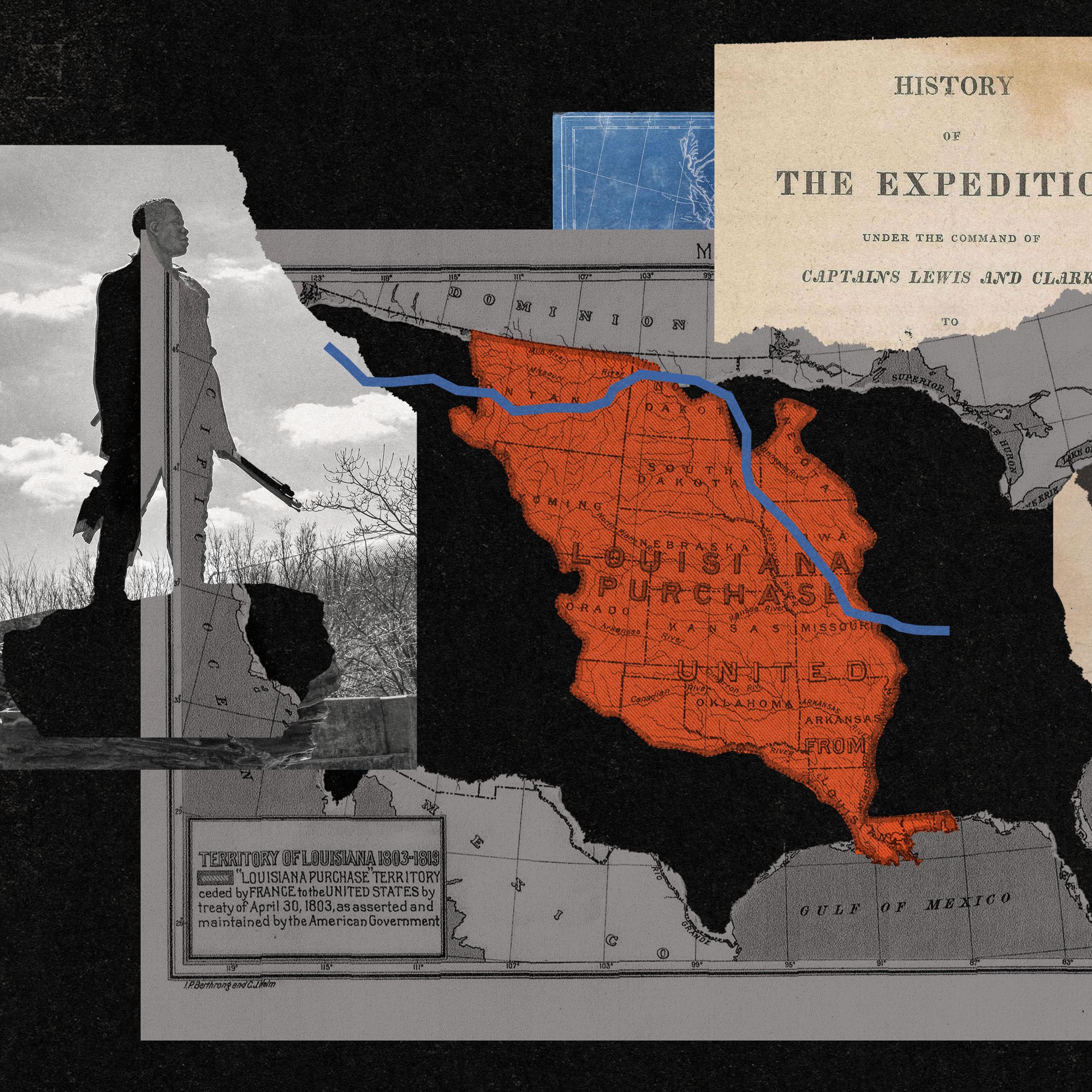
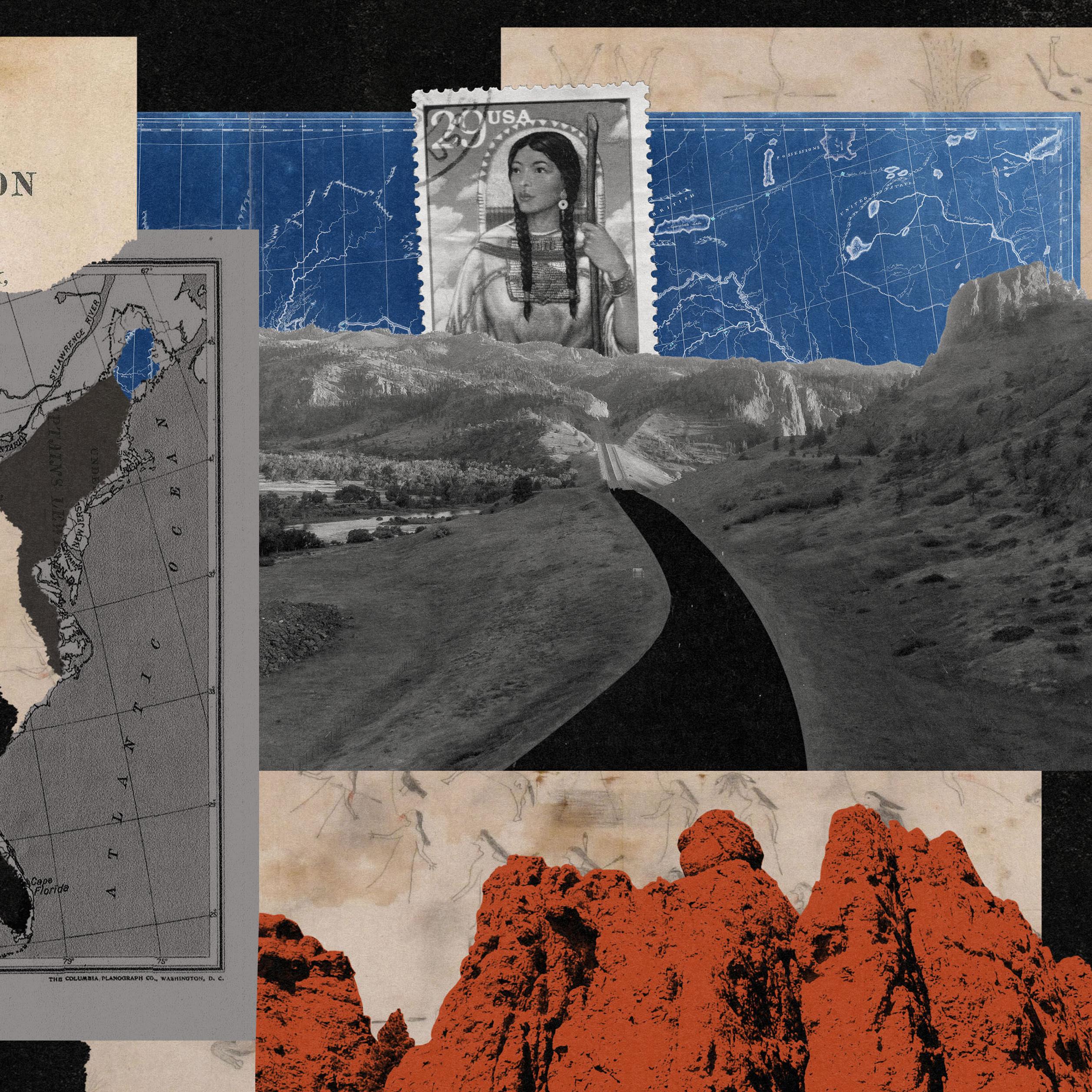
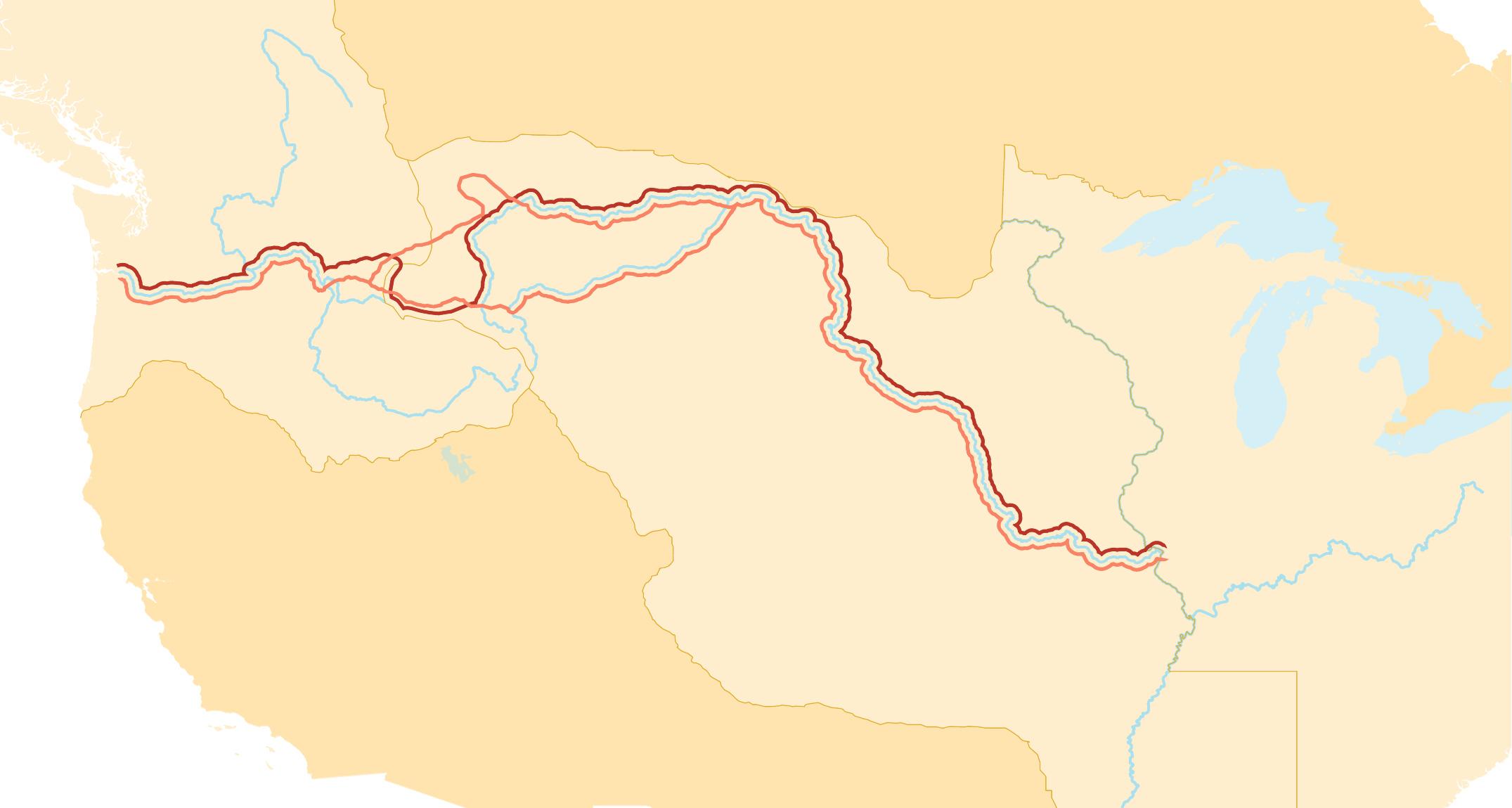
Contributing writer Latria Graham travels nearly 5,000 miles to retrace the route of the Lewis and Clark Expedition, seeking out overlooked histories along the way.
110
HERE COMES THE SUN
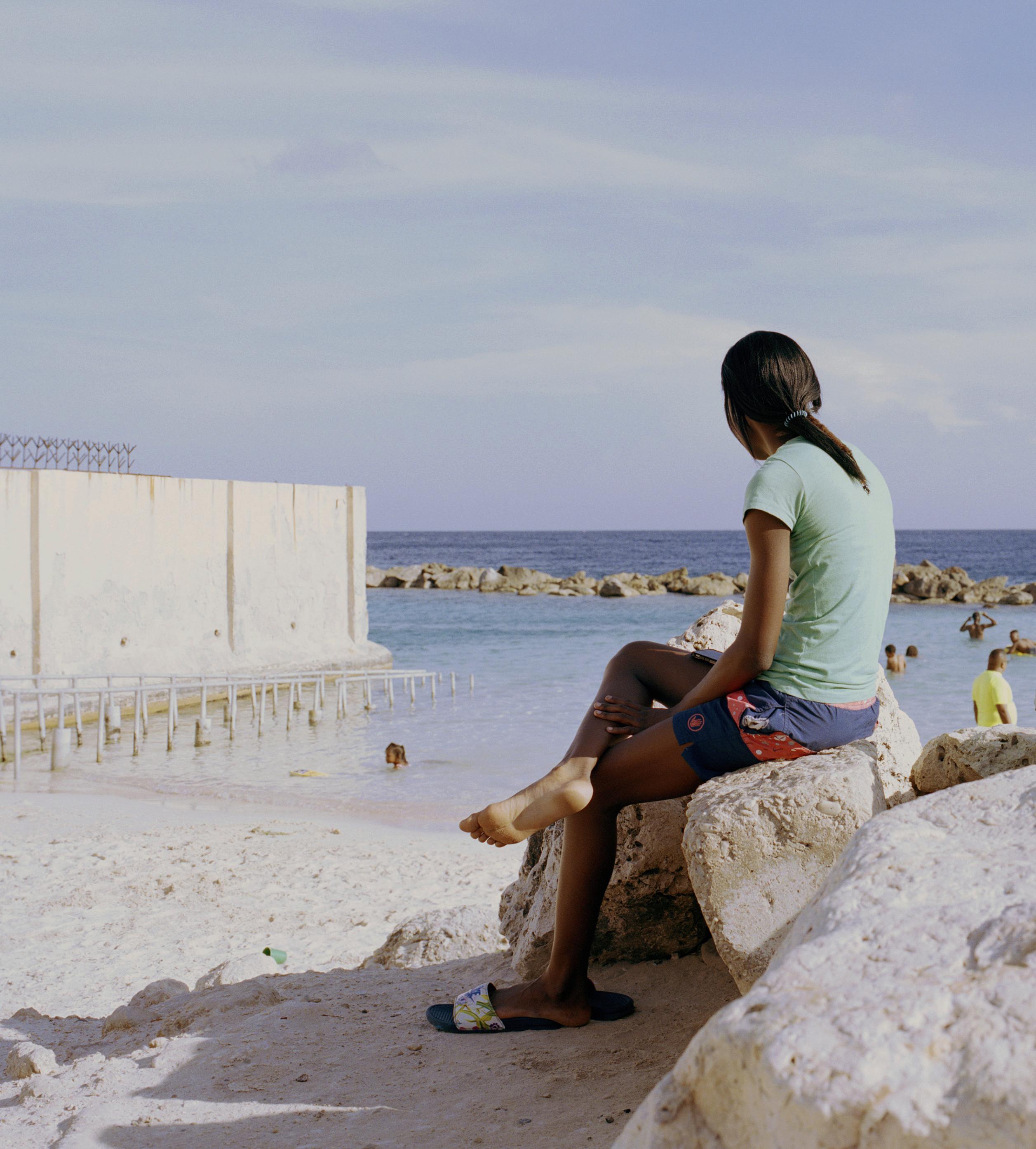
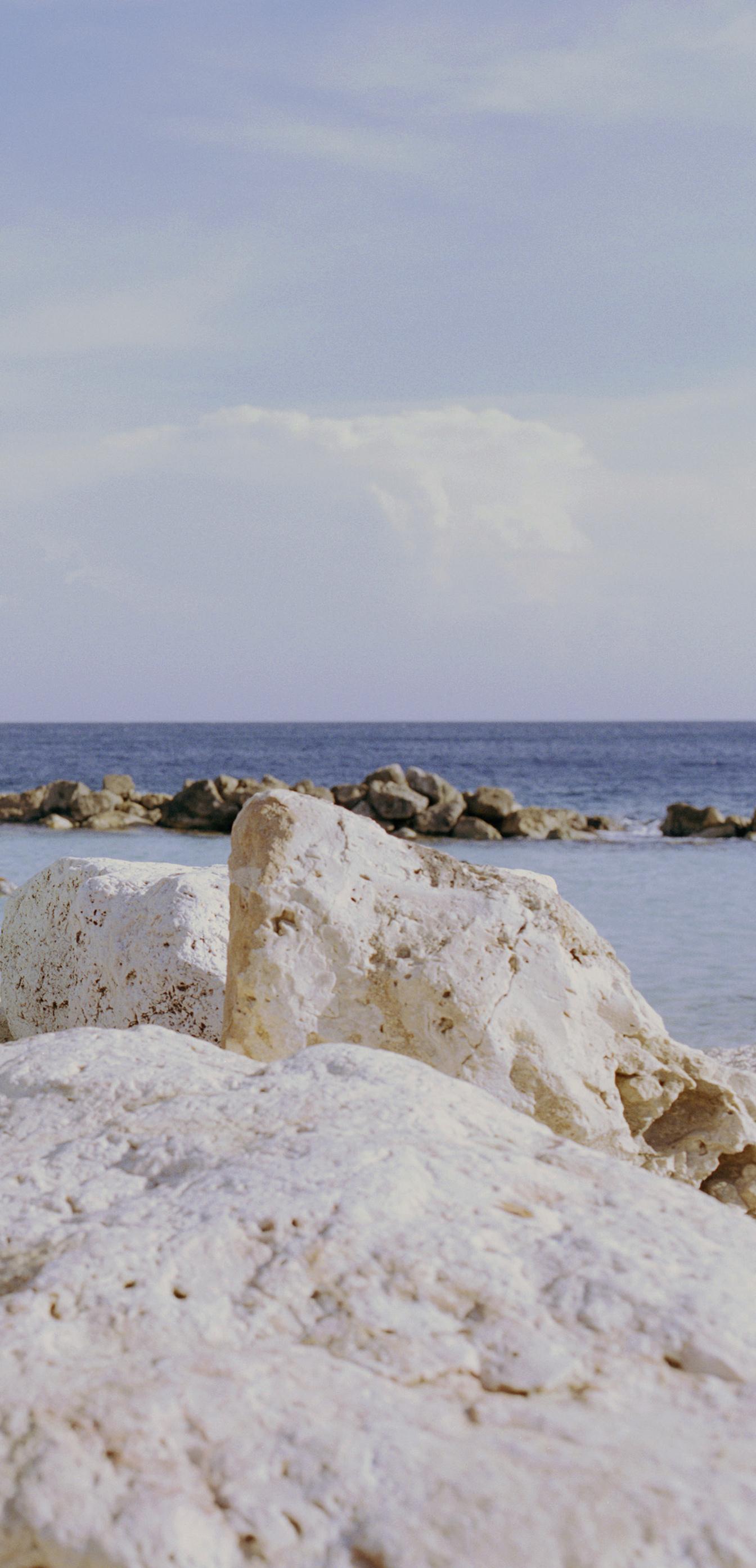
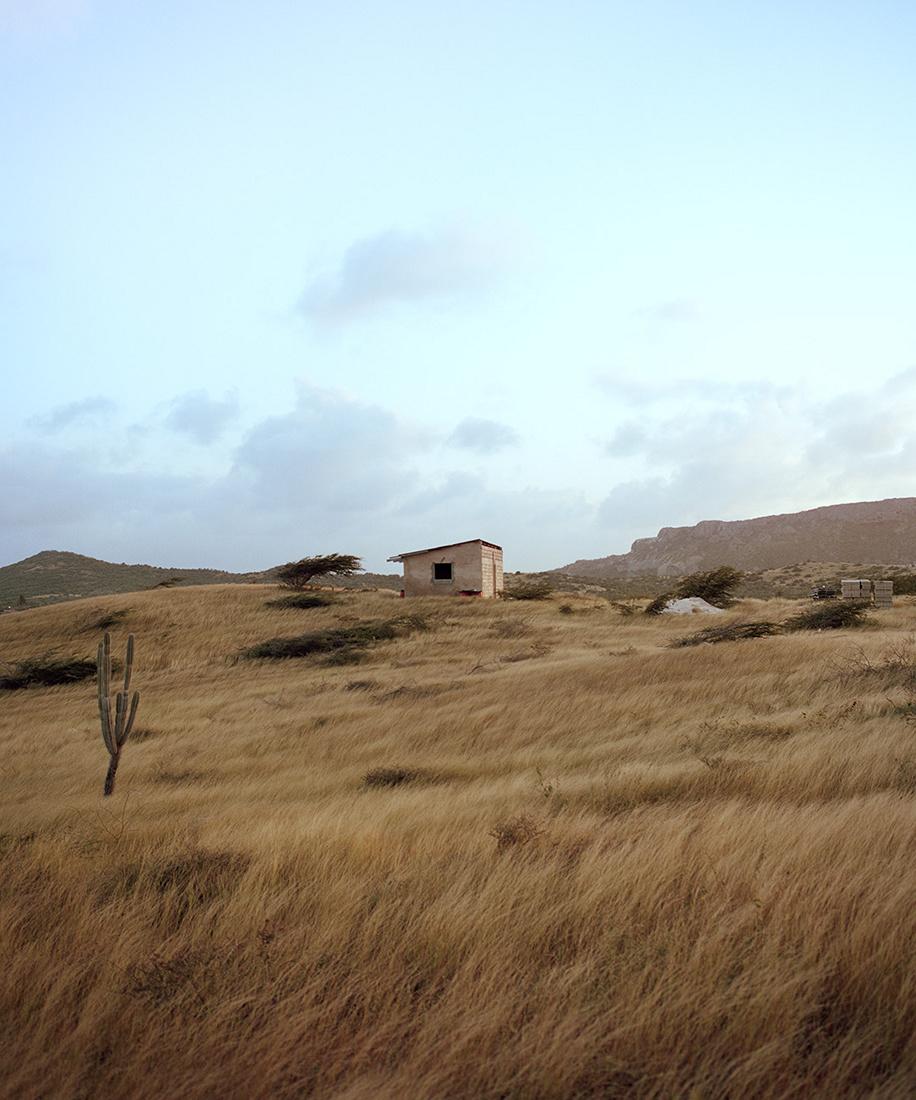
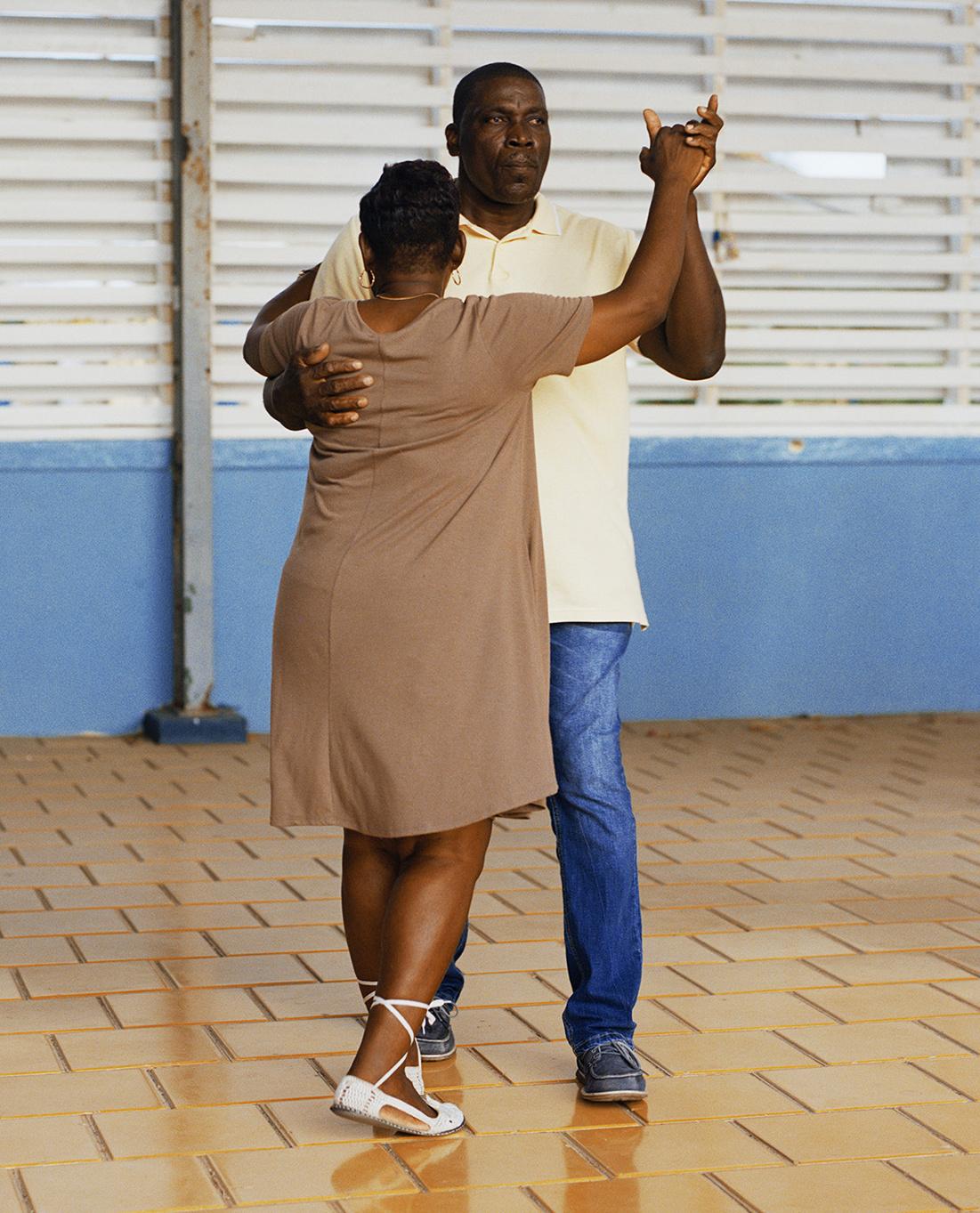
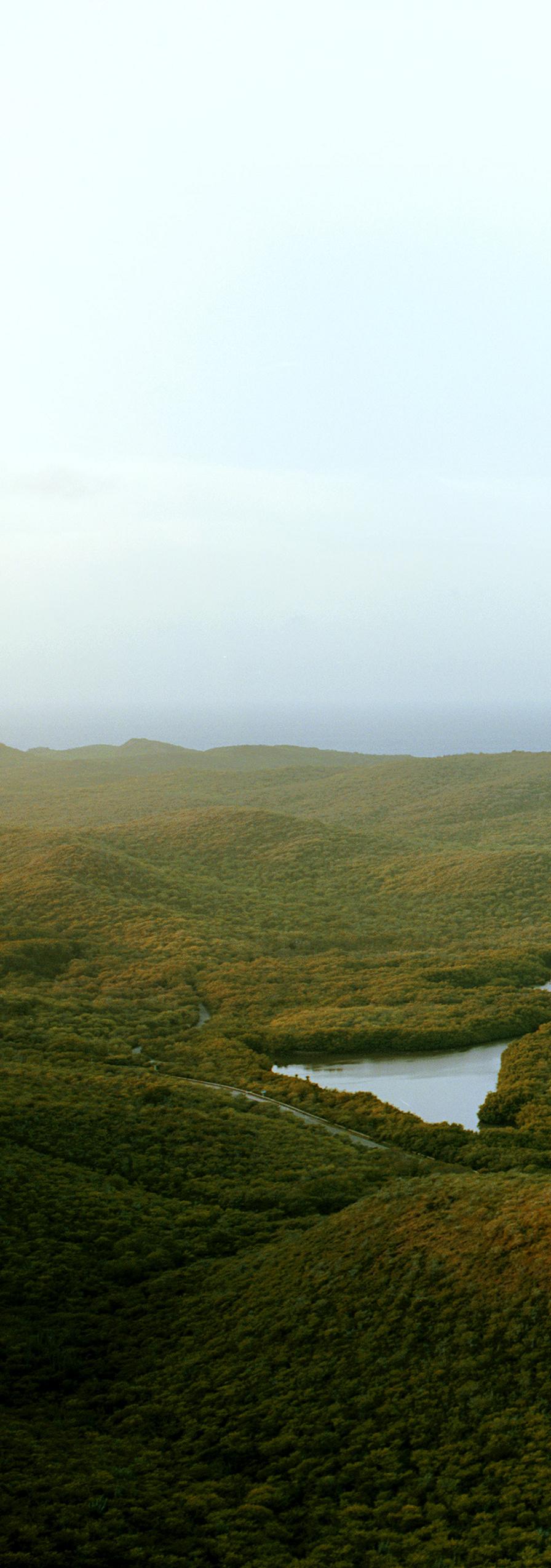
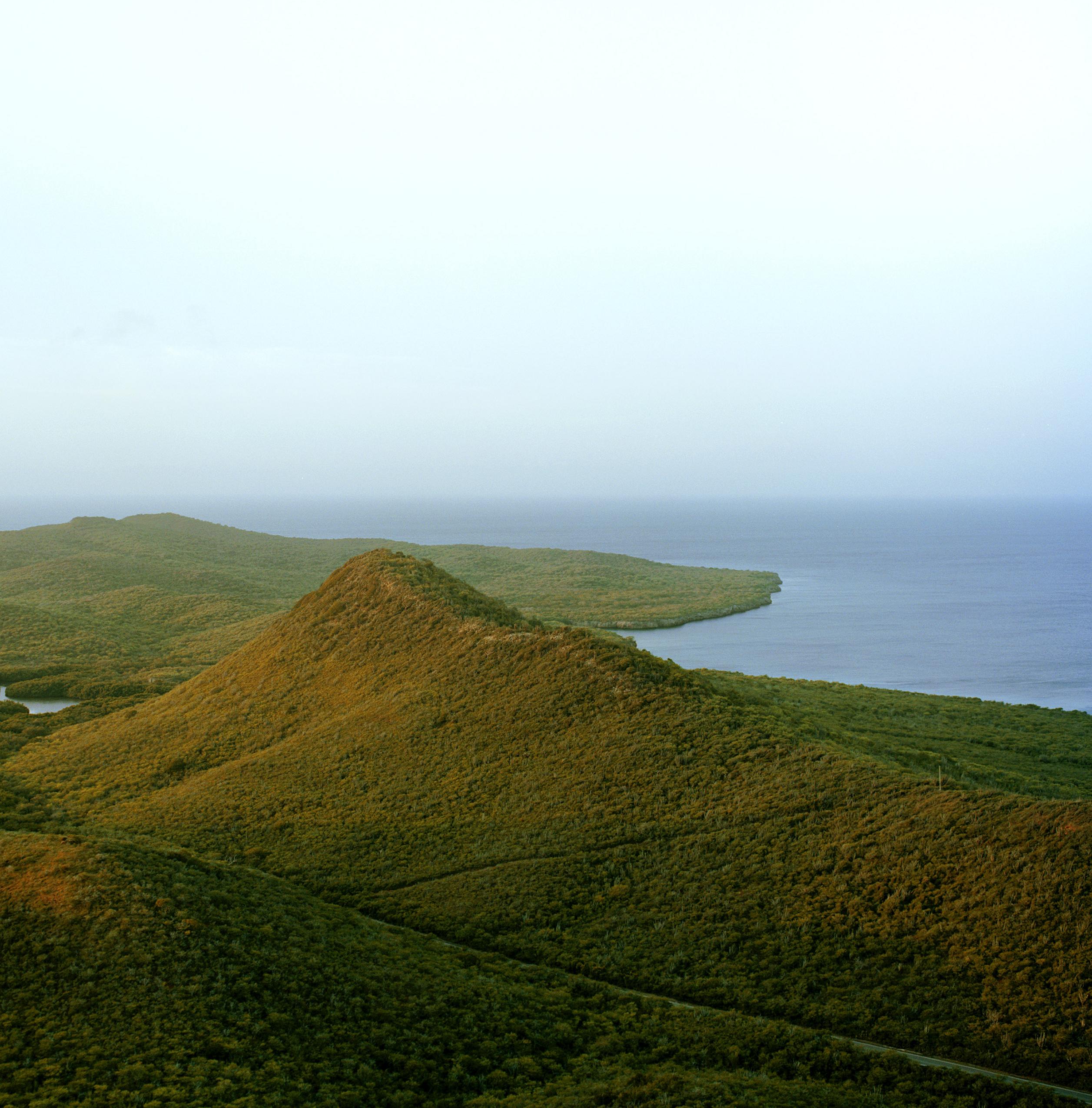
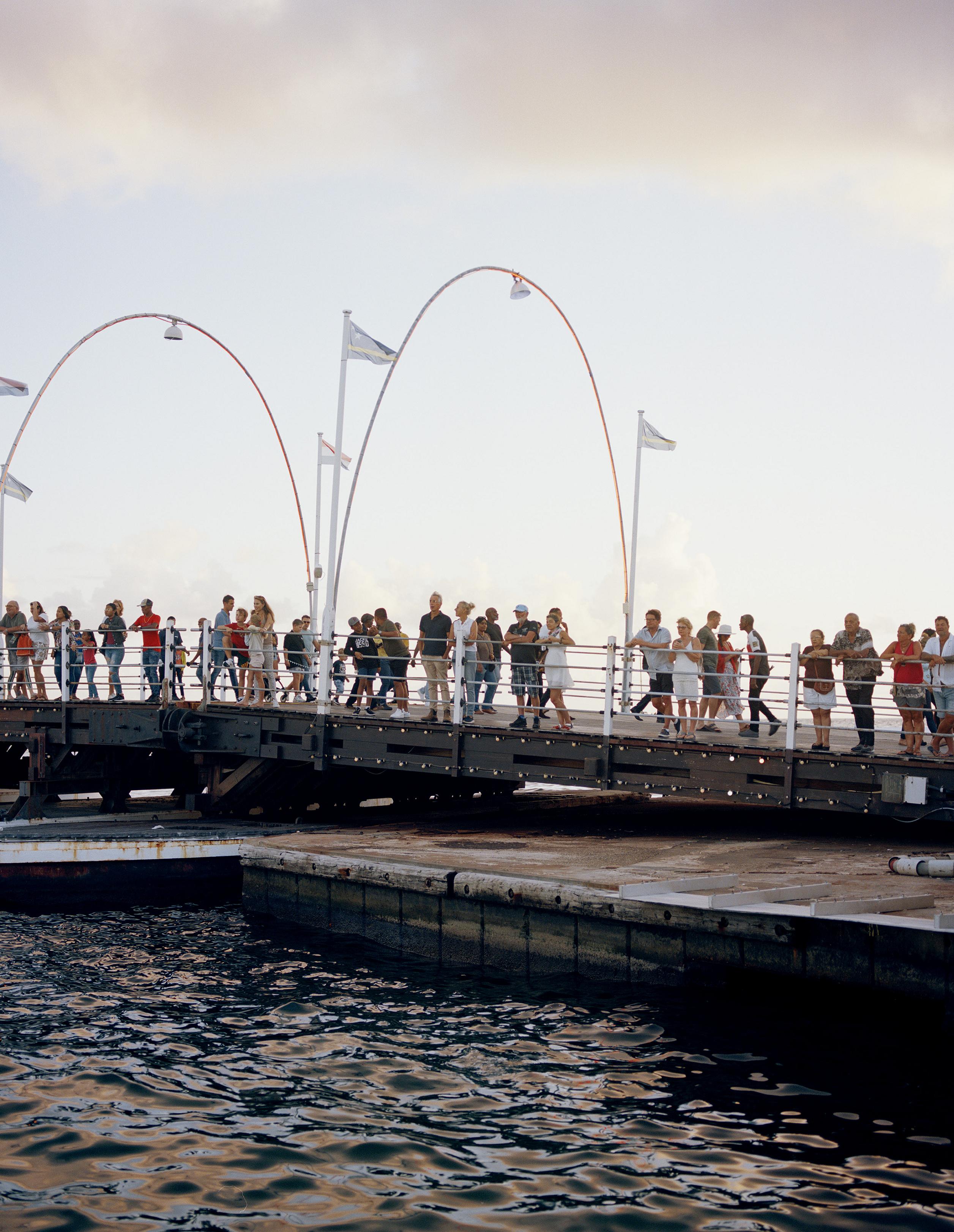
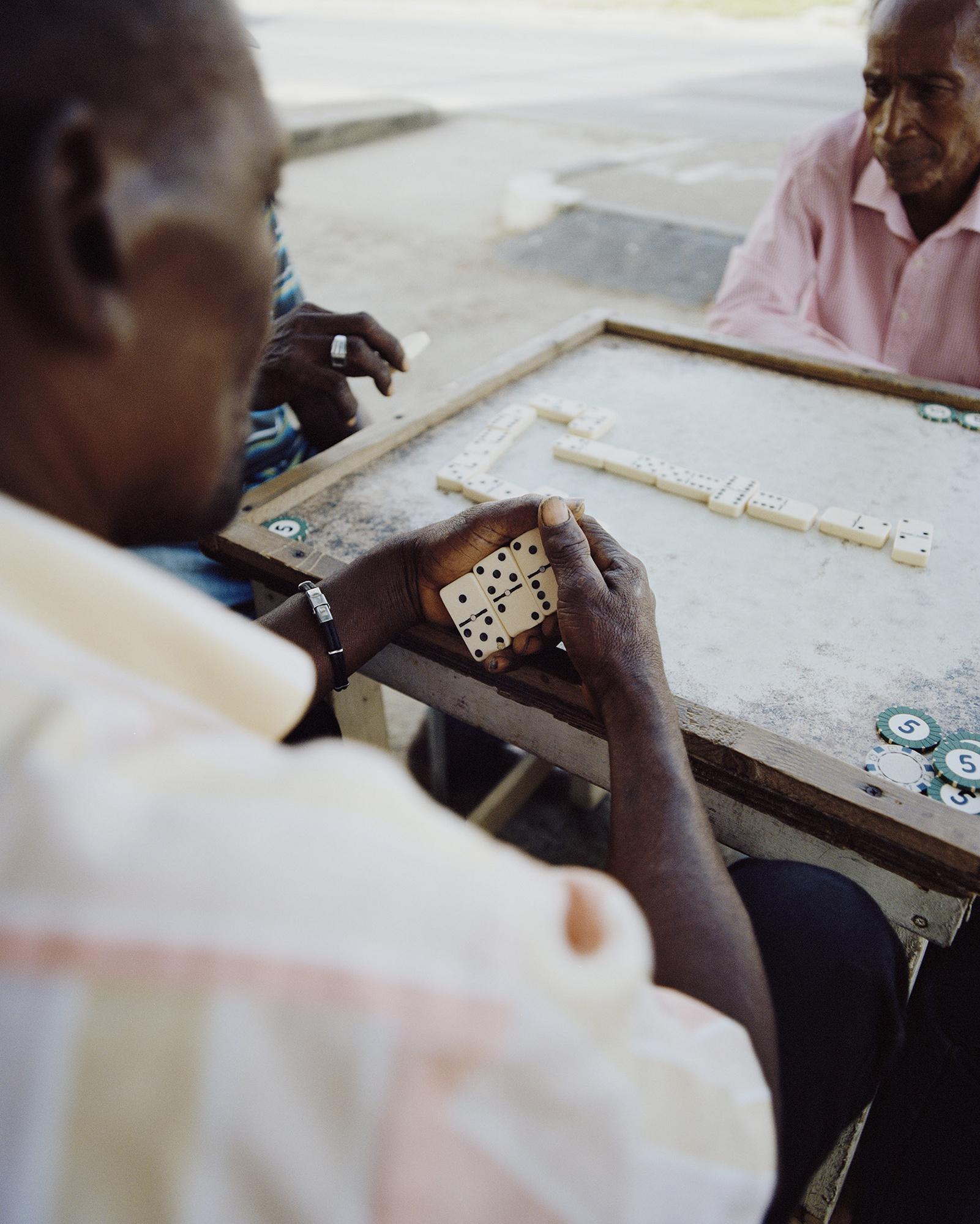
Photographer Gilleam Trapenberg goes beyond the beaches, resorts, and clichés to capture a more personal side of his Caribbean home, Curaçao.
DESIGNED FOR DISTINCTION
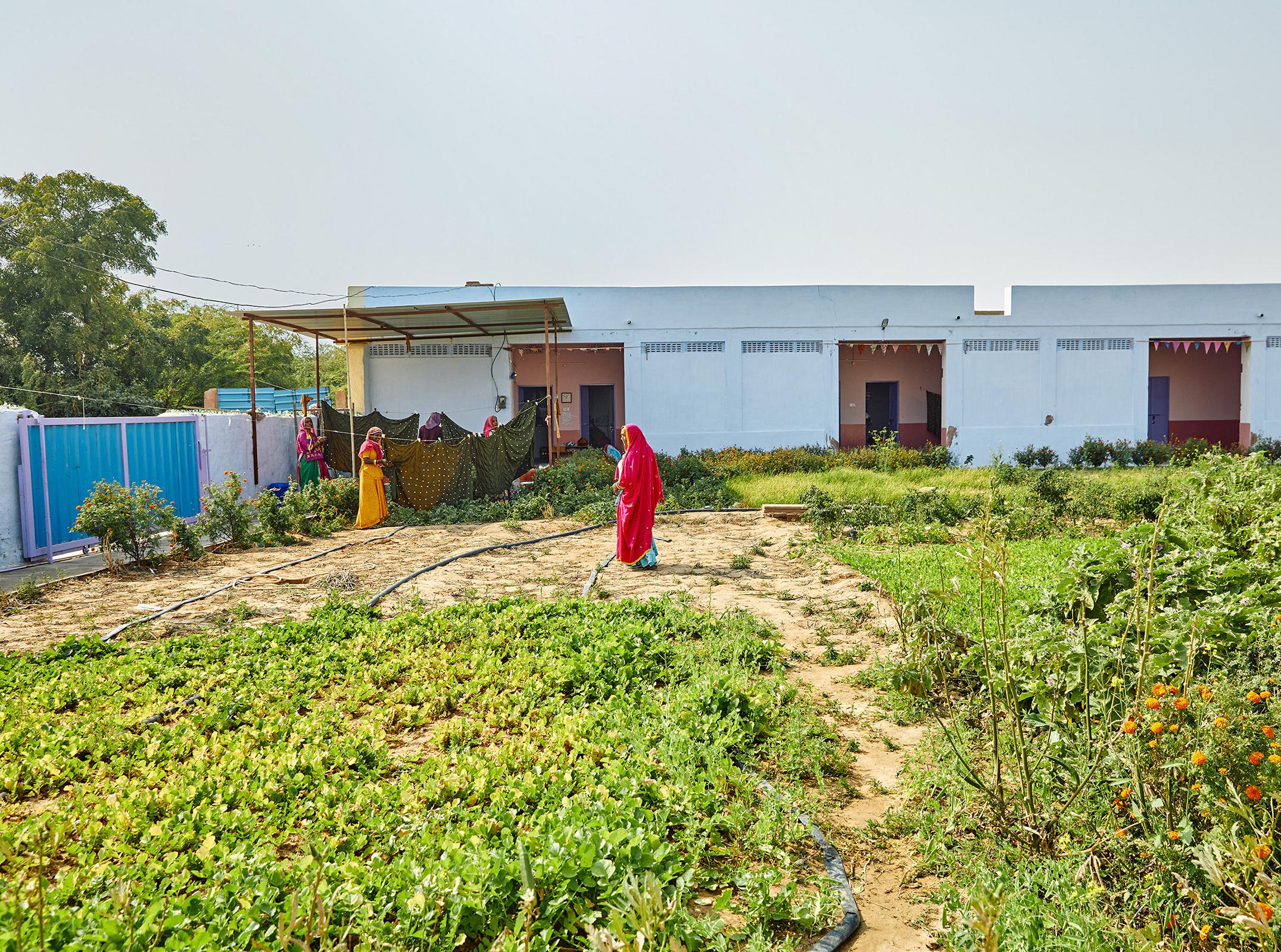
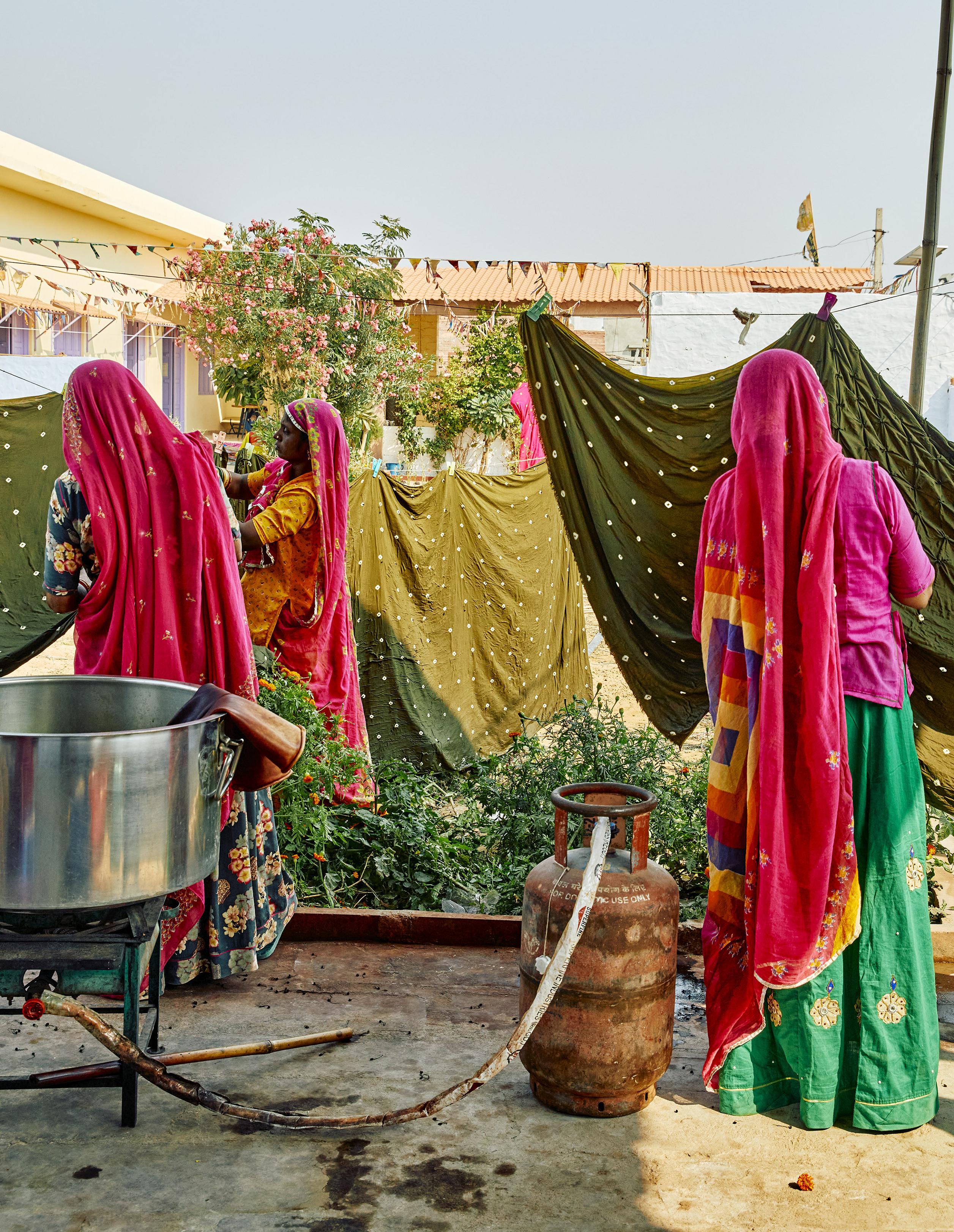
It’s time for a chai break at Saheli Women, a mission-driven textile cooperative near Jodhpur, in the Indian state of Rajasthan.
23
ONE GREAT BLOCK ATHENS, GREECE
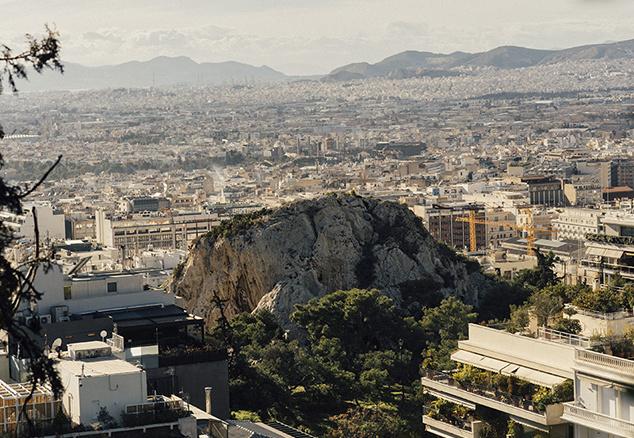
Aegean wines, pretty parks, one-of-a-kind shirts: The Exarcheia neighborhood offers the best of contemporary Greek culture and cuisine. 28
Nine new and renovated hotels and resorts in California to book next, from a tented Yosemite retreat to a reinvented San Francisco icon.
36 SENSES OF PLACE RAIL BEAUTY
On the Venice Simplon-Orient-Express, which just launched a new route, the opulent journey is as important as the destination.
Afar Editorial Director Nicholas DeRenzo visits Georgia’s capital and tunes into the city’s steady, soulful frequency.
CURRENCY
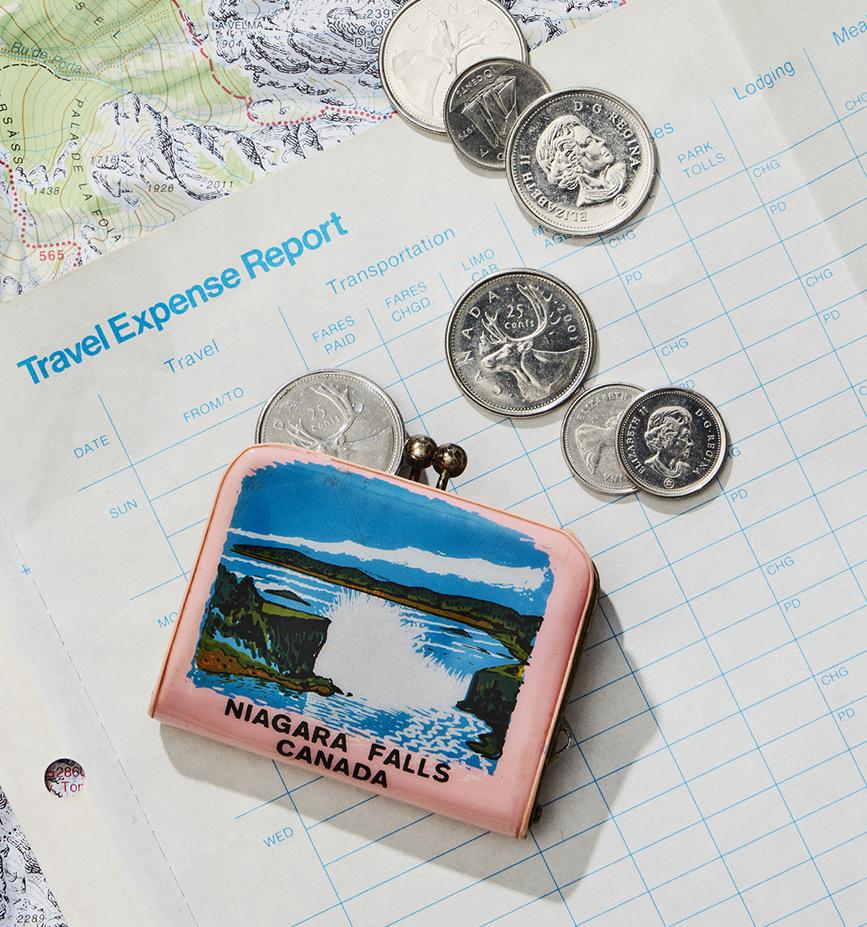
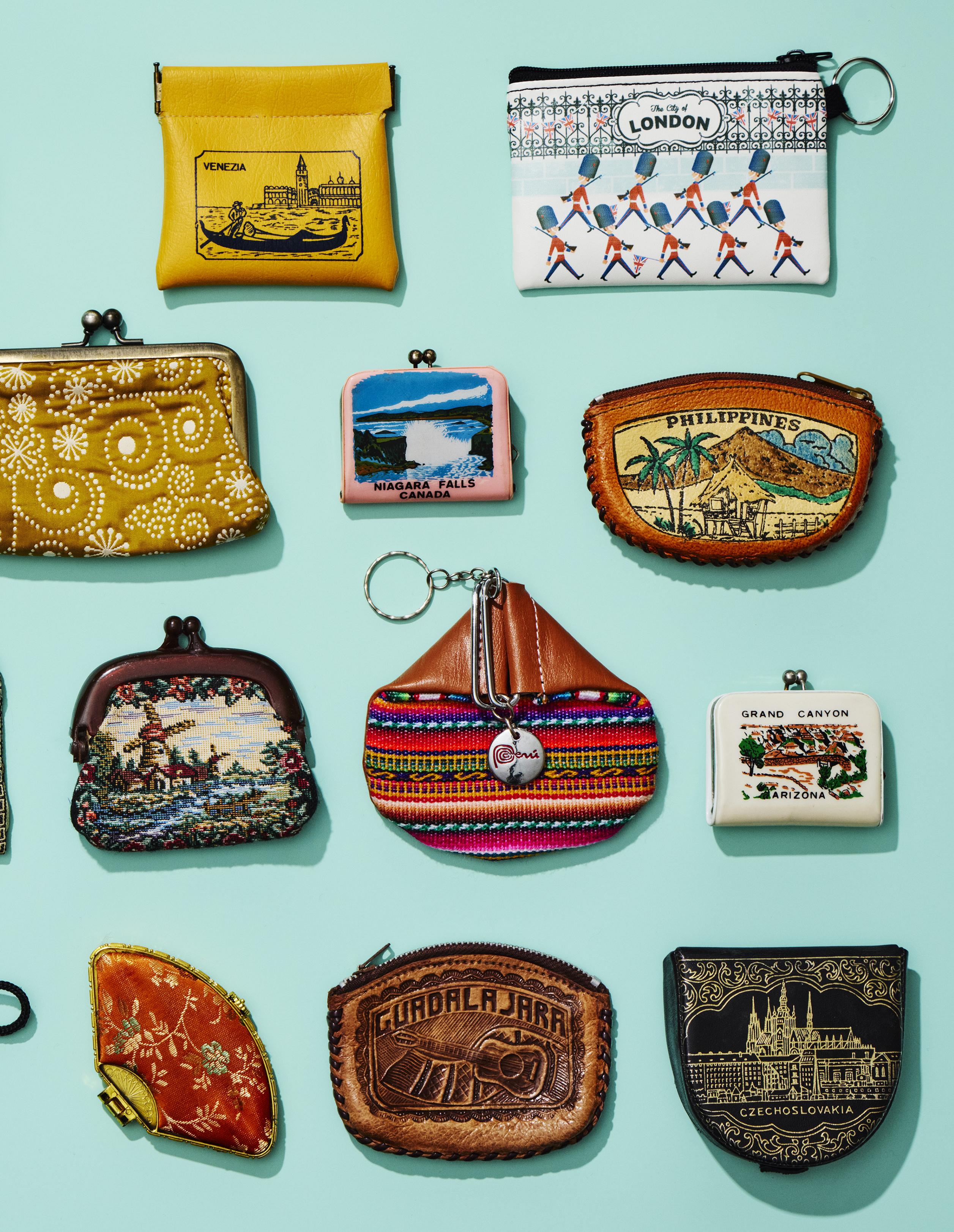
Celebrate the souvenir coin purses that help us stash our international cash.
44 WORKSHOP IN THE RIGHT HANDS
For the artisans of Rajasthan atelier Saheli Women, ancient textile techniques hold the key to a better future.
51
THE BUSY PERSON’S GUIDE TO SLOW TRAVEL
Twenty trips for staying in the moment, from a musicfocused itinerary in the American South to an English garden tour (with plenty of stopping to smell the roses).
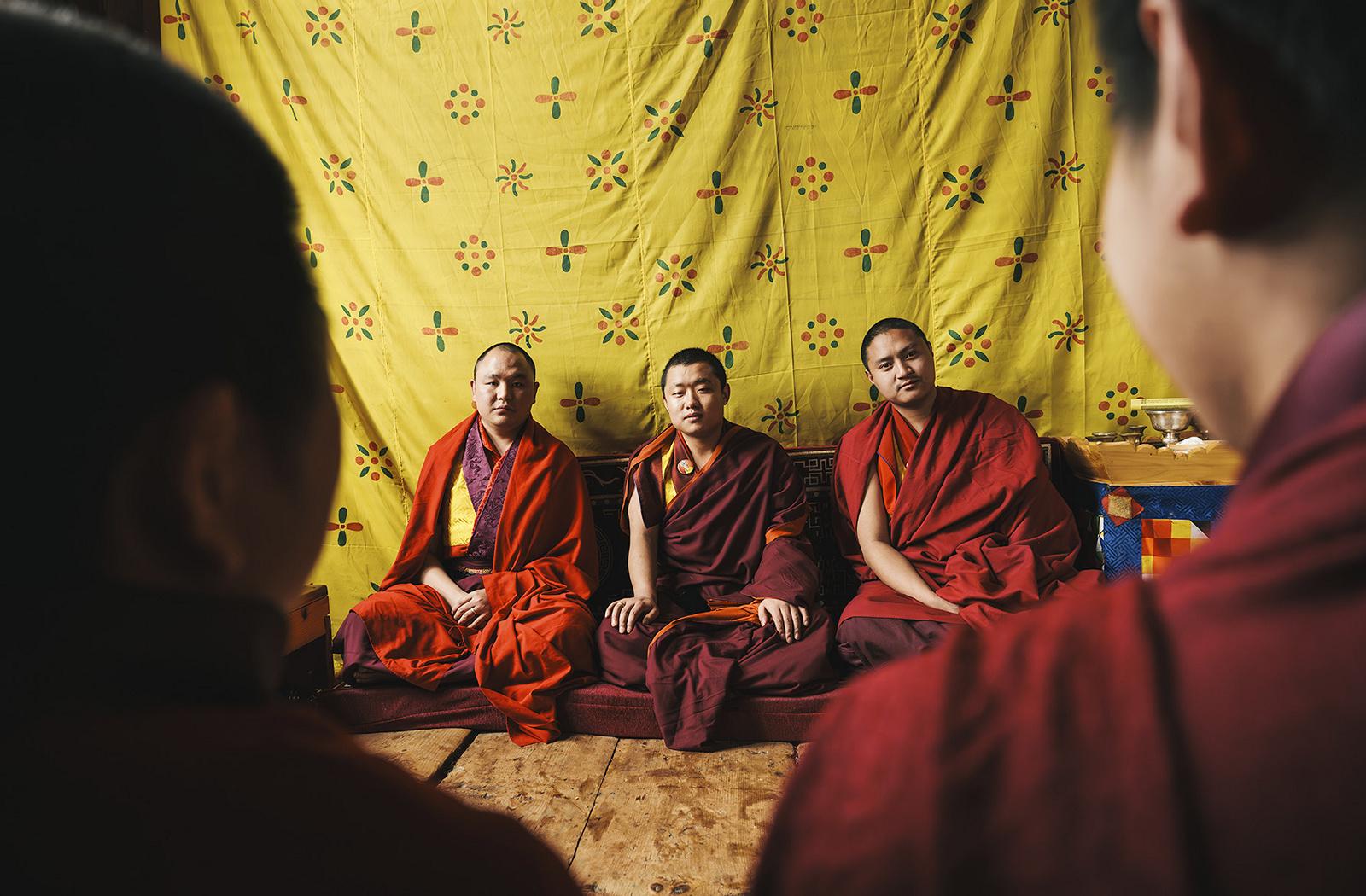
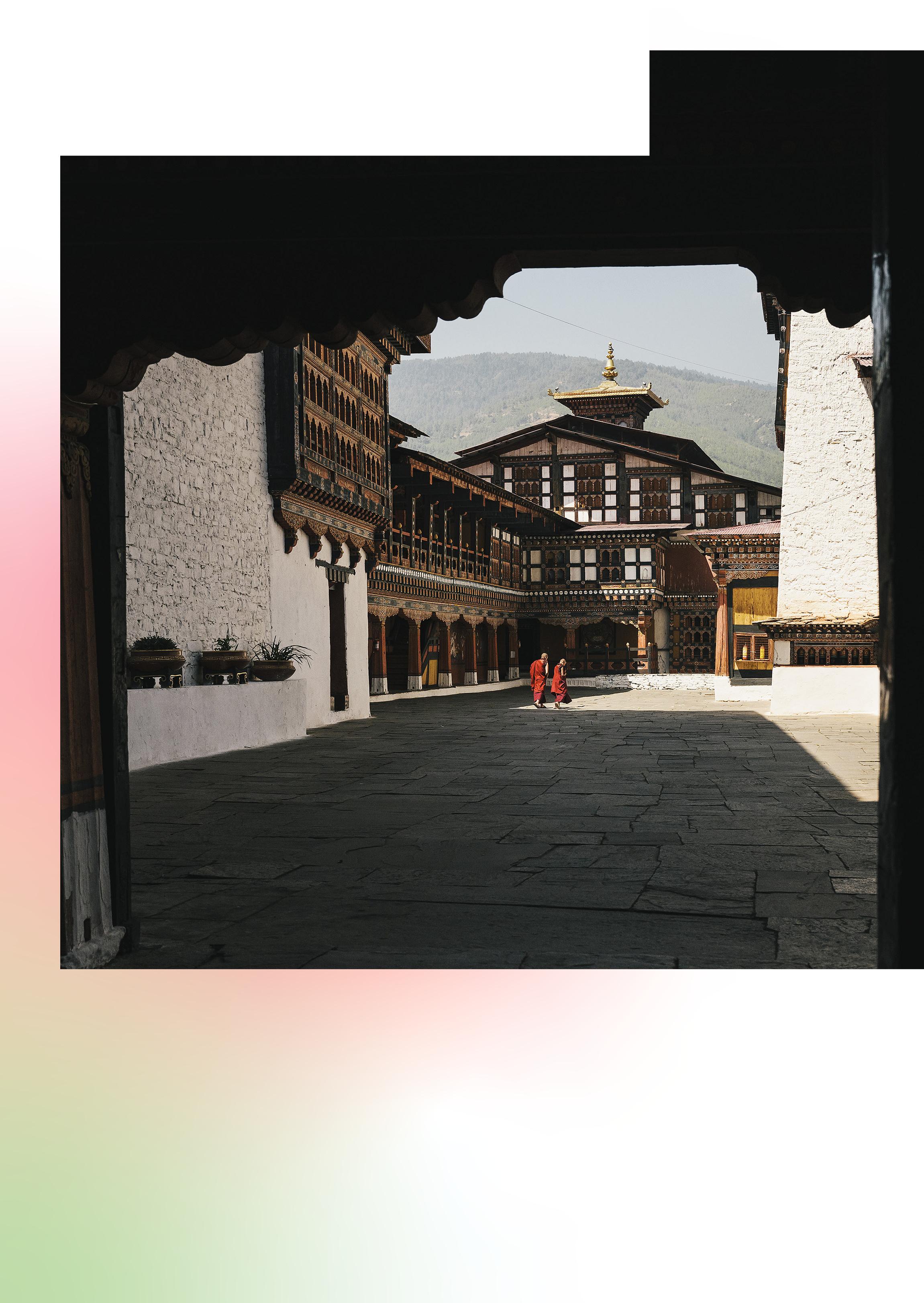
PARO TAKTSANG MONASTERY, BHUTAN
“At noon, it’s almost as if there’s no shadow, because the light bounces from everywhere.”
HERE COMES THE SUN p.110
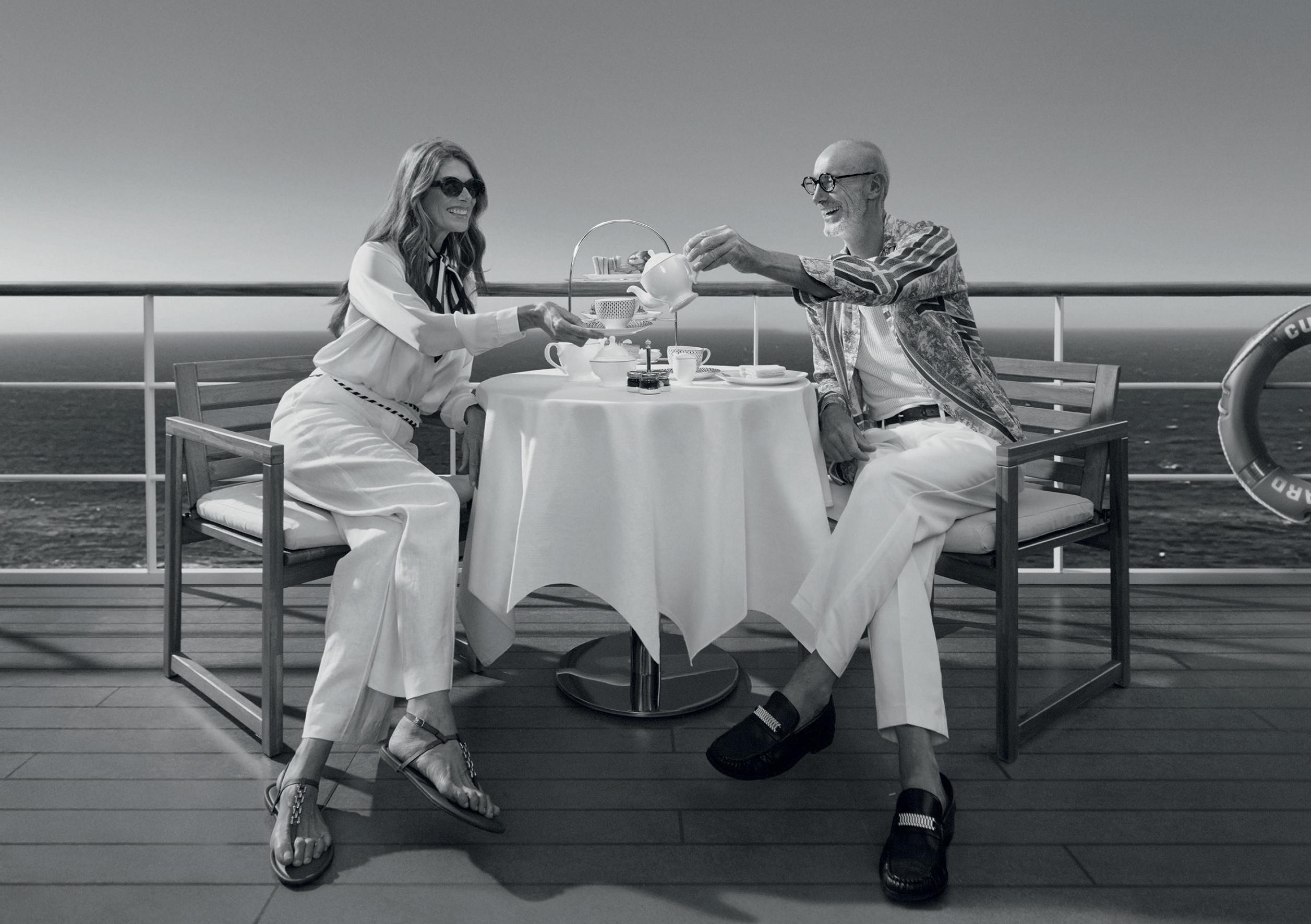
To sail with Cunard® is to dine in the finest restaurants at sea, to be inspired by unique enrichment, and to discover new cultures and coastlines. Wander sun-drenched Caribbean shores, witness the grandeur of Alaska’s glaciers, unwind on an iconic Transatlantic Crossing, or drift through the serene Norwegian fjords – each voyage crafted to delight in distinctive Cunard style.
Contact your Travel Advisor, call (800) 728-6273, or visit Cunard.com/AFAR
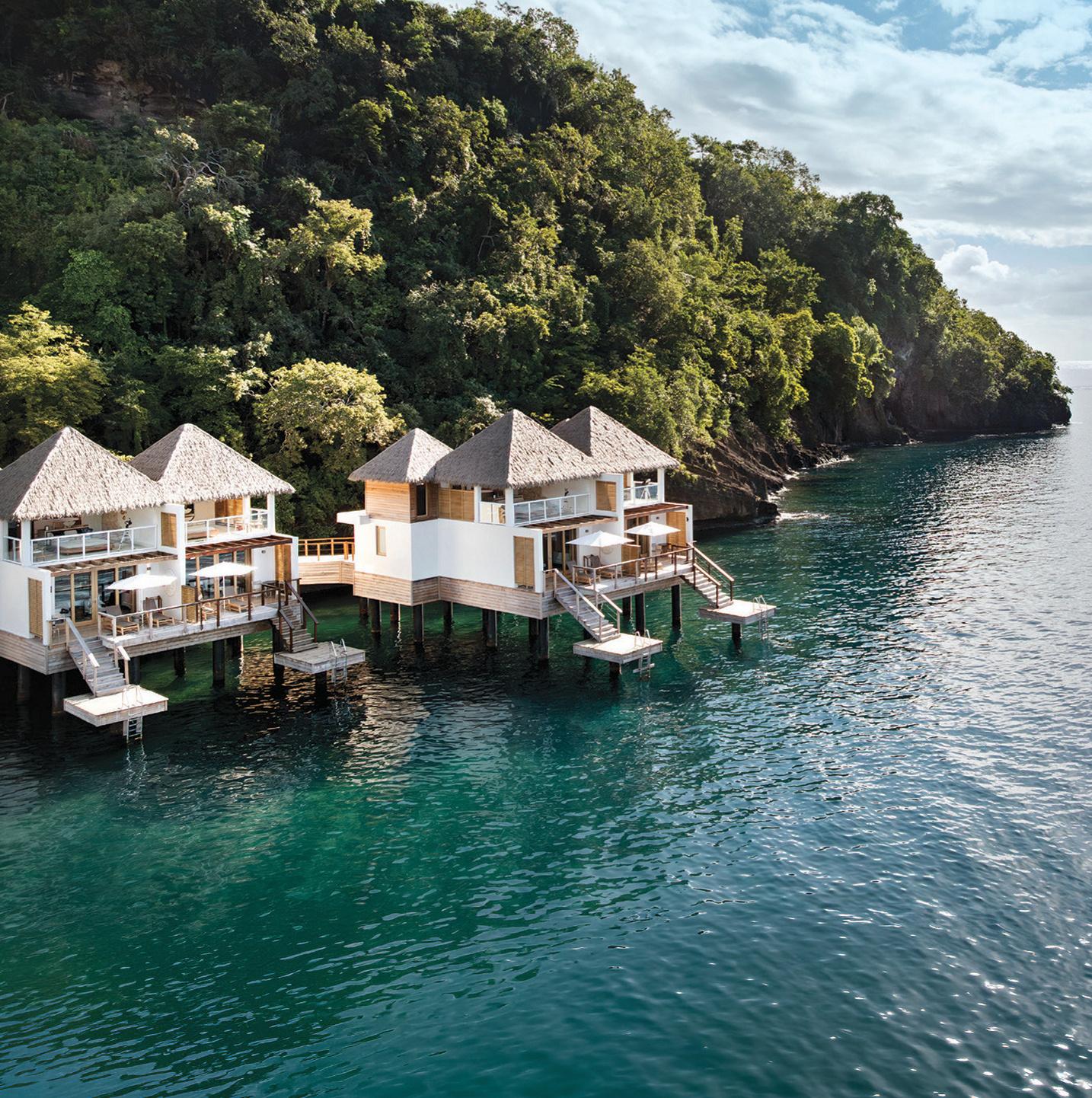
Sandals® Resorts is where you experience the Caribbean the way it’s meant to be — worries left behind, days shaped by nothing but the schedule of the sun. Across eight island destinations, our adults-only, allinclusive resorts are set on beaches you’ll want to linger on: Jamaica’s lush north coast, Saint Lucia’s sparkling blue views, Grenada’s quiet coves, Curaçao’s vivid reefs, and the jewel-bright shores of Saint Vincent and The Grenadines. Each destination has its own personality and its own path to relaxation. Some guests explore every resort on every island. Others fall in love with just one.
Here, all-inclusive means the freedom to follow your day wherever it leads. Wake when you want. Drift from beach to pool to spa. Let the world stay
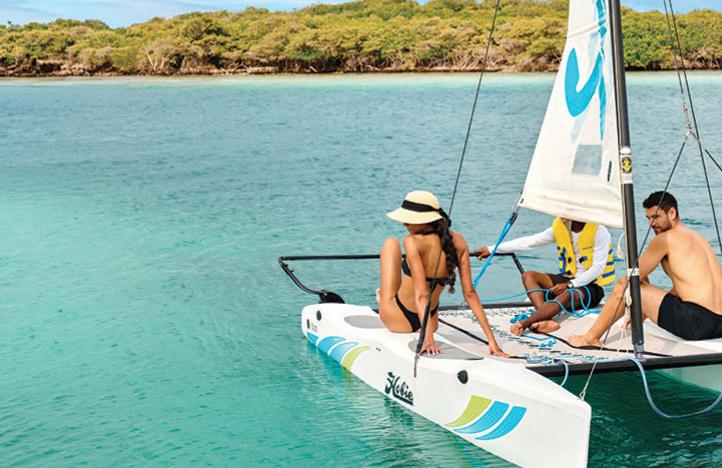
wonderfully out of reach. Or keep it sporty: sunrise pickleball, a Hobie Cat over clear water, even a PADI® scuba diving certification before cocktails at sunset. After a dinner that makes you wonder when you last had sushi this good, you’ll trade stories at the rum bar while reggae carries the evening and the sky does what it came here to do — without ever reaching for your wallet or thinking twice about add-ons.
And of course, there’s the food. Our secret ingredient? The Caribbean. Settle in at Buccan for open-flame island cooking served family-style. Swing by our Jerk Shack for authentic spice and an ice-cold Red Stripe. Wake up to coffee from Jamaica’s Blue Mountains, and sneak a gourmet dessert for breakfast. You’re on vacation — we won’t tell.
Then there are the suites designed to make staying in feel like the main event. Check into Skypool Suites with private infinity-edge balcony pools, Rondoval™ hideaways, and overwater villas like the Vincy Two-Story Overwater Villa for good-life seekers. Add butler service, and vacation starts to feel like an art form you’ve perfected.
But above all, the true difference is our people who welcome you with warmth, anticipate what you need, and make every stay feel like you belong here. We know the Caribbean because it’s home. And we love sharing it. Because islands this amazing deserve to be experienced, not just visited.
Come experience the Caribbean with us.
“I’m traveling to Wallonia, Belgium. I recently met two Belgian women who said Wallonia is where they go for nature—the Frenchspeaking region in the south has 80 percent of the country’s forested land, plus historic castle trails, excellent sparkling wines, and quirky festivals (like a bathtub regatta down the Meuse River).” —A.G.
AFAR.COM @AFARMEDIA FOUNDERS Greg Sullivan & Joe Diaz
Where is your next slow-travel trip?
“I’d love to go to Tioman Island, Malaysia. The biodiversity is amazing, and visiting there as a teen really sparked my interest in science. It’s the perfect place to take in the surrounding culture.”
—E.S.
“It will be my first time visiting Mauritius in East Africa. The island has dozens of white-sand beaches, and I’m looking forward to sunbathing, swimming, and doing very little else.” —I.W.
EDITORIAL
VP, EDITOR IN CHIEF Julia Cosgrove
EDITORIAL DIRECTORS
Billie Cohen @billietravels
Nicholas DeRenzo @nderenzo
CREATIVE DIRECTOR Maili Holiman
DIRECTOR OF PHOTOGRAPHY
Michelle Heimerman @maheimerman
DIRECTOR, PODCASTS Aislyn Greene @aislynj
EXECUTIVE EDITOR Katherine LaGrave @kjlagrave
SENIOR DEPUTY EDITOR
Jennifer Flowers @jenniferleeflowers
DEPUTY EDITOR Michelle Baran @michellehallbaran
ASSOCIATE ART DIRECTOR Elizabeth See @ellsbeths
EDITORIAL PRODUCTION MANAGER Kathie Gartrell
EMAIL MARKETING MANAGER Tarren Jessop
SENIOR EDITORS Jennifer Hope Choi @missjenchoi, Danielle Hallock, Lucy Kehoe @lucykehoe, Shayla Martin @shayla.martin, Hannah Walhout @hanhout
SENIOR PRODUCER, PODCASTS
Nikki Galteland @nicollegalteland
PHOTO EDITOR Charis Morgan
PRODUCTION EDITOR Karen Carmichael @karencarmic
PRODUCTION DESIGNER Myrna Chiu
EDITOR AT LARGE Laura Redman @laura_redman
CONTRIBUTING EDITOR Ellen Carpenter @ellencarpenter11
CONTRIBUTING WRITERS
Lisa Abend @lisaabend, Chris Colin @chriscolin3000, Latria Graham @mslatriagraham, Emma John @em_john, Ryan Knighton, Peggy Orenstein @pjorenstein, Anu Taranath @dr.anutaranath, Bonnie Tsui @bonnietsui8, Anya von Bremzen @vonbremzen
COPY EDITOR Elizabeth Bell
PROOFREADERS Alison Altergott, Jaime Brockway, Pat Tompkins
FACT CHECKERS Cait Fisher, Sophie Friedman, Michelle Lau, Jill Malter, Ellen McCurtin
SPECIAL CORRESPONDENTS
Nicola Chilton @nicolachilton, Fran Golden @fran_golden_cruise, Sally Kohn @sallykohn, Barbara Peterson, Paul Rubio, Victoria M. Walker
SUBSCRIPTION INQUIRIES afar.com/service 888-403-9001 (toll free) From outside the United States, call 515-248-7680
MAILING ADDRESS
P.O. Box 458 San Francisco, CA 94104
“I’m heading back to the Galápagos, but instead of taking an expedition cruise I’ll be checking into Hotel Indigo on San Cristóbal Island. There are some incredible surf breaks nearby, and a longer, land-based approach really lets you get a feel for the wildlife of the region.”
—B.K.
“I’m planning a trip to Panama City, Panama, for five days, and not taking any side trips. I’m excited to just spend time in the city and attend the annual jazz festival, which started in 2003 and draws tens of thousands of attendees.”
—J.R.
“I always volunteer at the Telluride Film Festival in Colorado over Labor Day. But instead of rushing home afterward, I like to stay in town for another week after all the bustle of the festival has disappeared and an offseason, almost-autumn sense of peace sets in.”
—M.C.M.
Contributors
LESLIE PARISEAU WRITER
In the Right Hands, page 44 IG @lesliepariseau
Writer Leslie Pariseau’s trip to India spanned eight flights over 12 days. Touring block-print, weaving, and embroidery studios afforded her a closer look at how women are reviving handicraft traditions throughout the country. Seeing the textiles created with such intention, especially in the state of Rajasthan, gave Pariseau a new perspective. The mundanity of these items is also what makes them profound to her: “They cover your body, and they’re the most intimate things you could carry with you.”
The Shadow on the Trail, page 102 IG @mrkhrrs_
Philadelphia-based illustrator
Mark Harris has been practicing art for 25 years, specializing for more than a decade in collage— an ideal medium for conveying the layered history contributing writer Latria Graham encountered on the Lewis & Clark National Historic Trail. “The author’s journey, seeing these waterways and open sky at night” is reminiscent of a quilt Graham mentions, Harris says; stitching together these resonant images and symbols is “all part of this whole experience [of] being outdoors.”
SEAN HAZEN PHOTOGRAPHER
Sea Change, page 90 IG @sean.hazen
Okayama, Japan–born Sean Hazen’s commercial photography frequently highlights the shinier, “beautiful side” of things, he says. While shooting on the Noto Peninsula, he was struck by the rawer moments, witnessing a region recovering from a devastating earthquake—whether capturing a lacquerware artist’s shipping-container studio or rural Wajima’s frigid coastline. “This [trip] was about telling the truth of what actually happened,” Hazen says. “It was a powerful, new experience for me.”
Feature Opener, page 89 IG @altargokart
Though she first dabbled in wood burning at around 10 years old, it wasn’t until 2020 that Ashlyn Rudolph began working in the form full time. She says she was looking for something noisier than digital illustration, “like Pop Rocks for your brain.” Now, wood burning reminds her of a time of innocent discovery and exploration that broadens horizons. For Afar, Rudolph hoped to elicit a similar reaction. “I wanted to invoke this feeling of being on a walk or journey . . . captivated by what’s around you,” she says.
Located outside Jodhpur, Saheli Women is a collective of artisans who practice ancient Indian textile production.
MARK HARRIS ILLUSTRATOR
ASHLYN RUDOLPH ARTIST
WHERE THE REVOLUTION ECHOES STILL
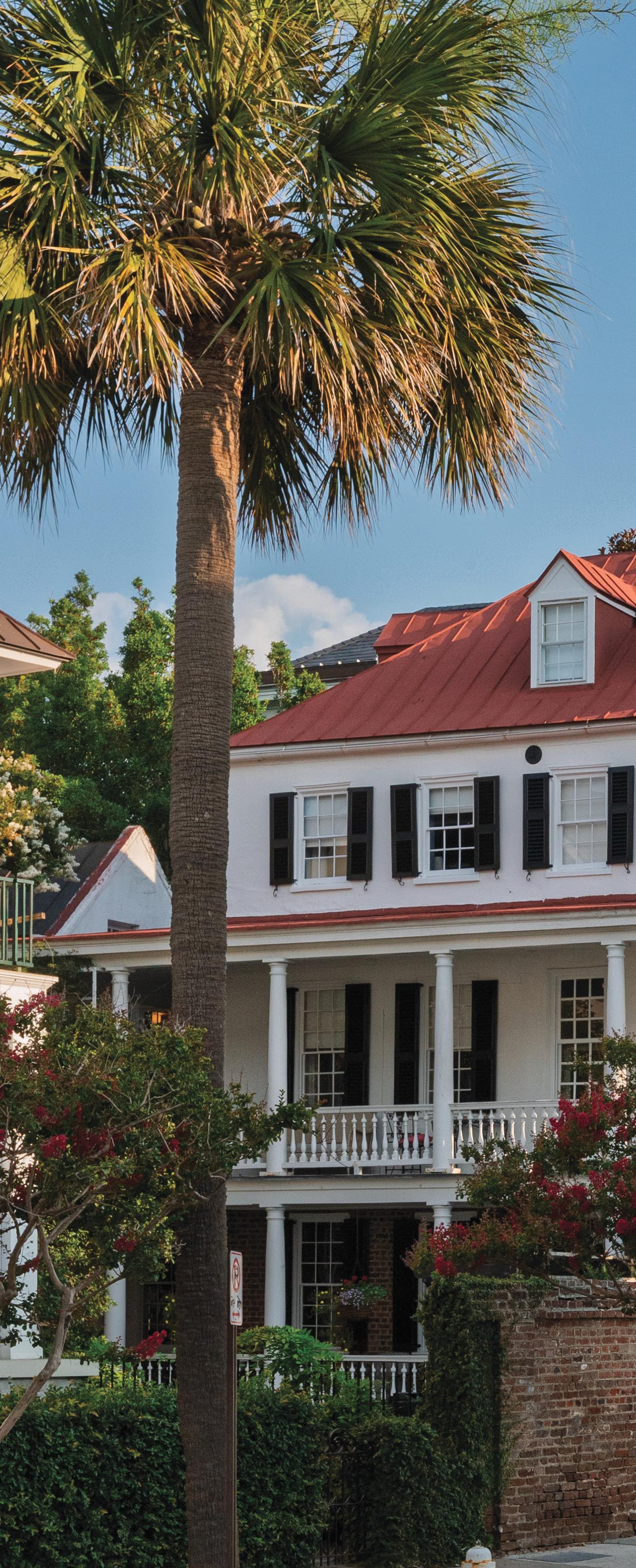
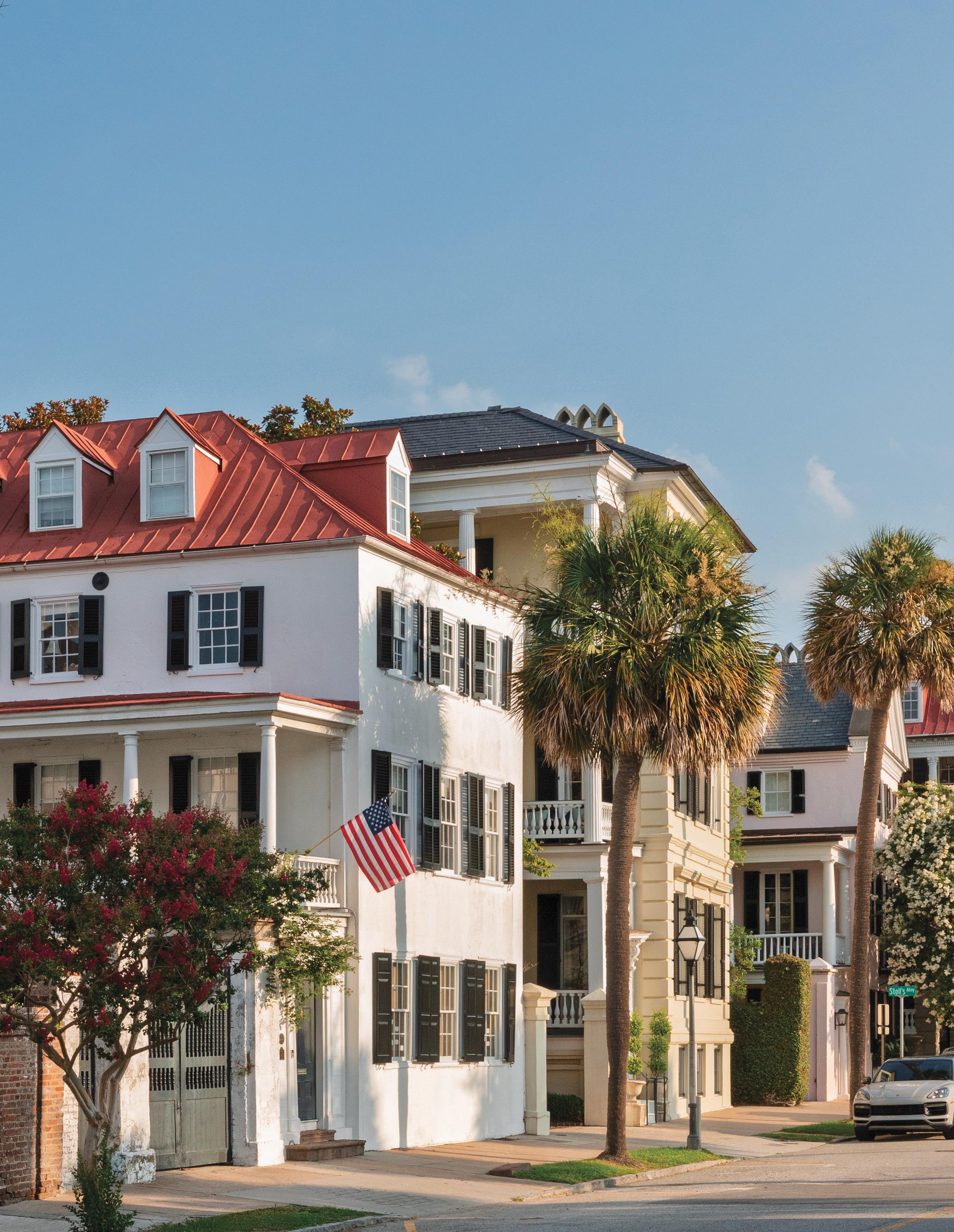
In the Charleston area, South Carolina, America’s fight for independence lives on—not only in museums but in the area’s streets, gardens, and fortifications. Once a focal point of the Revolutionary War, the region saw British occupation, colonial resistance, and the 1780 siege firsthand.
Start your journey at the nation’s first museum The Charleston Museum, to trace Lowcountry history.
Walk The Battery, where cannons once guarded the harbor. Visit The Powder Magazine, South Carolina’s oldest public building, and tour the Heyward-Washington House, home to a Declaration of Independence signer and host to President George Washington.
At the Old Exchange and Provost Dungeon, see where patriots were held and the Constitution was ratified. View the Miles Brewton House, seized as British headquarters under General Clinton.
Stand at Fort Moultrie, where palmetto logs turned back a British fleet. Explore Marion Square, once a fortified outpost, and wander the Historic District, rich with Georgian architecture and cobblestoned alleys.
Beyond downtown, visit the Charles Pinckney National Historic Site, honoring a framer of the U.S. Constitution, and travel the Ashley River to Drayton Hall and Middleton Place, two of America’s oldest plantations tied to the Revolution.
To see the Lowcountry’s natural beauty up close, make time for Cypress Gardens, where blackwater trails wind beneath towering cypress and tupelo trees, offering a glimpse of the wild landscape near the Francis Marion Swamp, where the “Swamp Fox” and his militia once used the wetlands for cover and quick movement through the Lowcountry.
Plan your journey where America’s founding story endures at every turn.
CHS250TH.COM
You are always welcome here. History loves company.
Savoring the Moment
LAST THANKSGIVING, I traveled with my husband and two daughters to northeastern Italy. I deliberately chose late November to visit, because I knew the region would be relatively free of other tourists (and I revel in moody weather). I booked an apartment in Venice’s Cannaregio neighborhood to get a feel for how people live in a place so dependent on—and challenged by—tourism.
We shopped at the local grocer and outdoor markets and walked many miles daily, venturing to the outer islands by vaporetto. I made only a few bookings ahead of time: train tickets to Trieste and Padua for day trips; a handful of midday restaurant reservations. The cadence was less frenetic than on some of our other family vacations, when I’d tried to pack too much in. Though I had more pinned locations on my map than we could ever visit, by the end of our time I felt content about how we’d
spent our week. I left Italy with a renewed appreciation for looser, calmer trips.
This issue is dedicated to slow travel—increasingly appealing in today’s hyper-connected world, in which time has become the biggest luxury. Slow travel can mean different things: decreasing the pace; staying longer in one place; allowing for serendipity instead of following a strict itinerary; traveling by foot and public transportation; and supporting locally owned businesses.
In these pages, we cross continents in search of deeper experiences,whether that means reckoningwith overlooked stories on the Lewis and Clark National Historic Trail (page 102) or traversing Japan’s Noto Peninsula (page 90). In “The Busy Person’s Guide to Slow Travel” on page 51, we share 20 bookable trips from the U.K. to Montana. And on page 110, photographer Gilleam Trapenberg, a native of Curaçao,turns his lens to the Caribbean island’s quieter side.
I hope these stories inspire you to slow down and experience more on your future travels, both near and far.
Travel well,
JULIA COSGROVE Editor in Chief
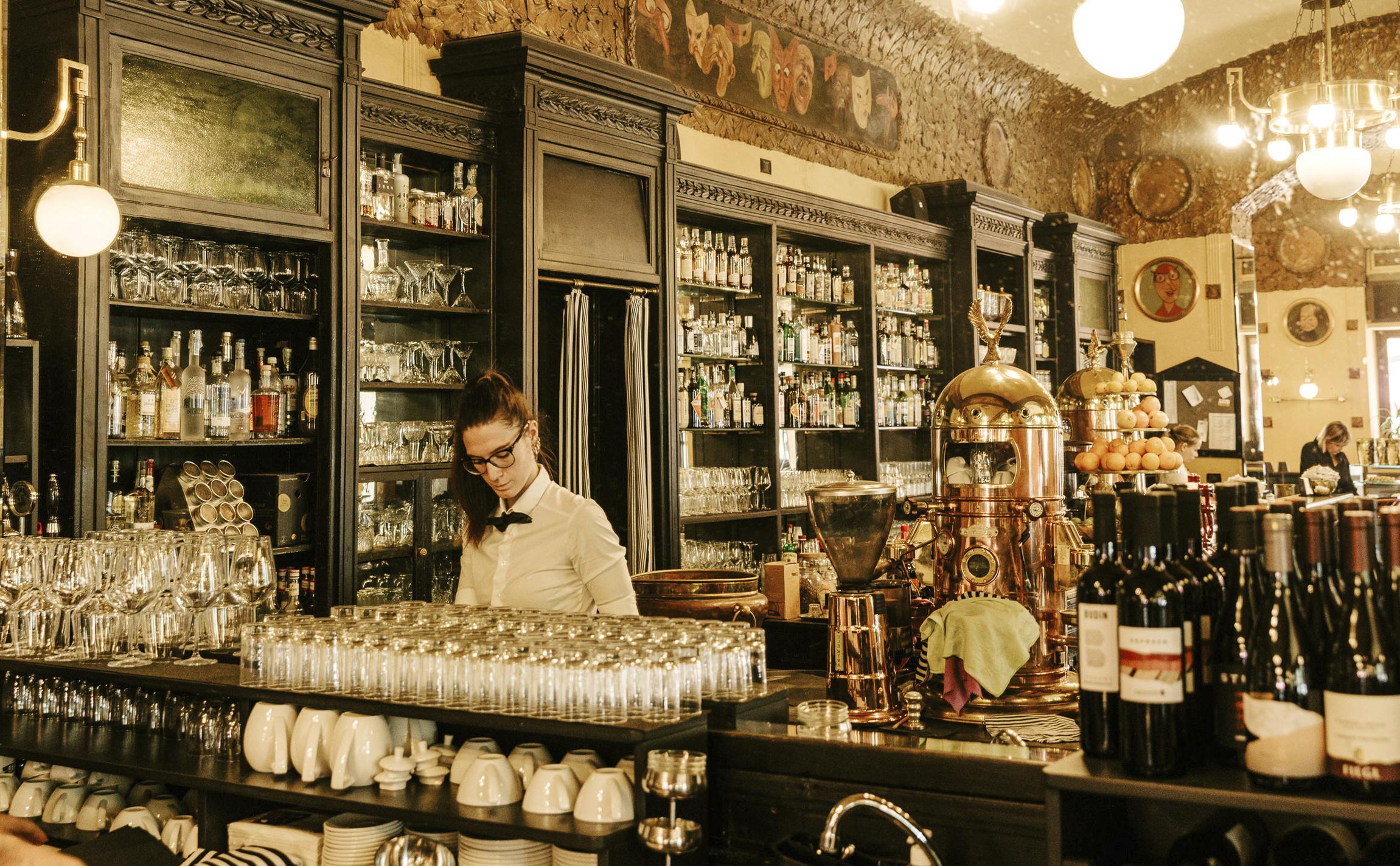
One of my favorite spots on a recent Italy trip was Caffè San Marco in Trieste, a city rich in coffee houses, literary history, and distinctive Austro-Hungarian–era architecture.
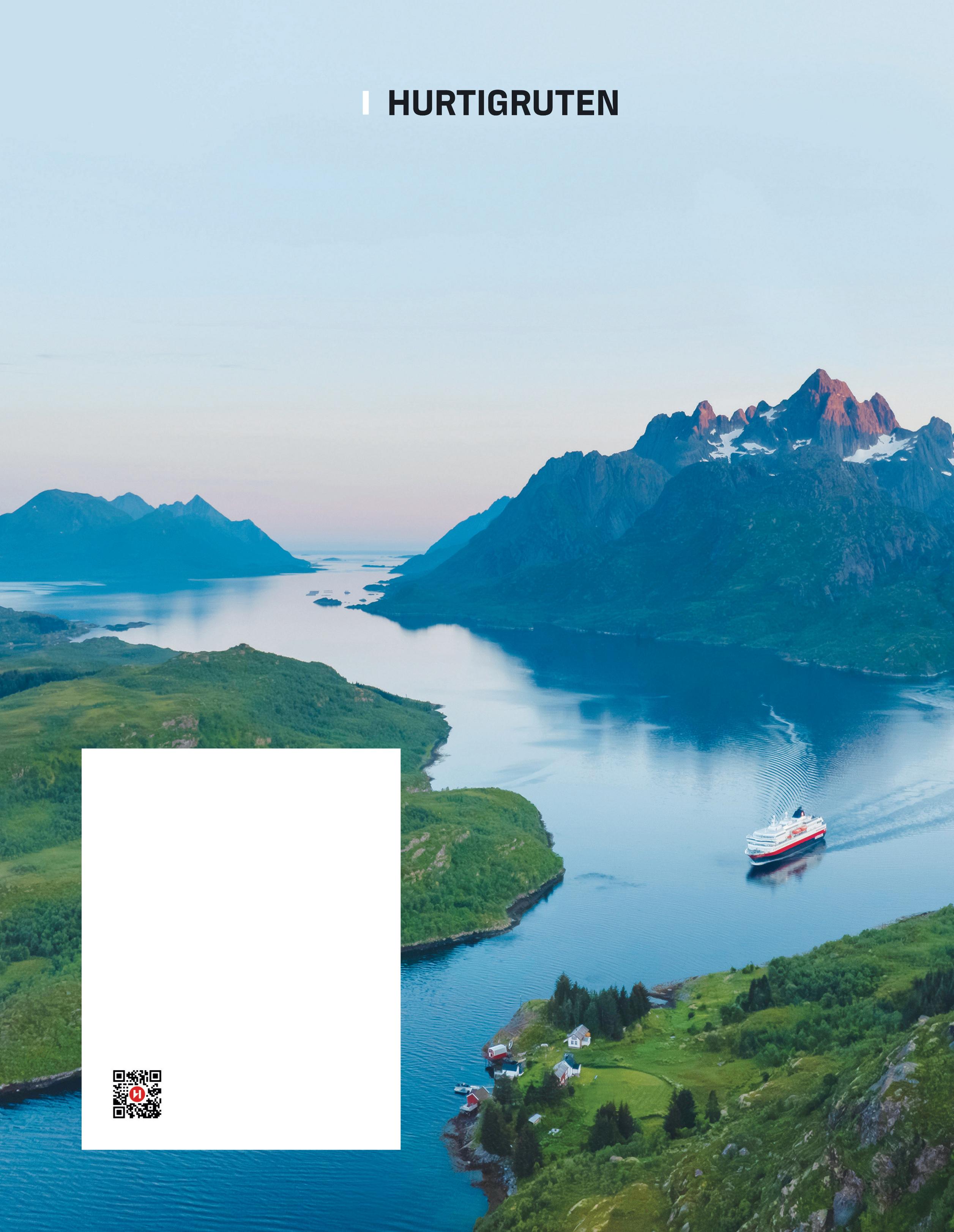
Live the Legend of Norway
Norway’s coastline is best experienced slowly
For more than a century, Hurtigruten ships have sailed these waters, connecting fjord villages, Arctic communities, and travelers seeking a deeper way to explore as they discover regional cuisine, learn from local voices and onboard experts, and witness nature’s rhythms from the Northern Lights to the Midnight Sun Because some places aren’t meant to be rushed.
Explore Norway with Hurtigruten
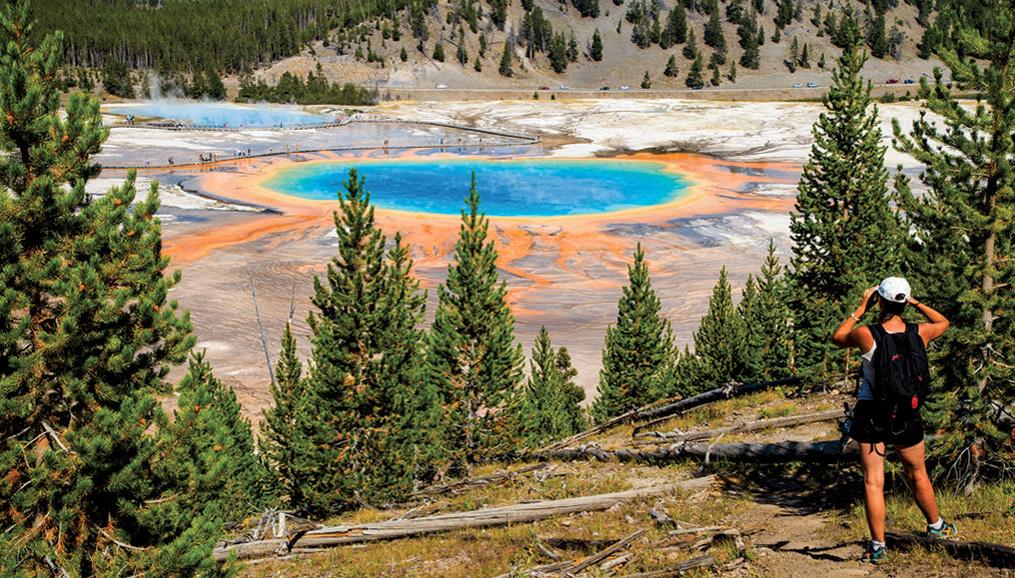
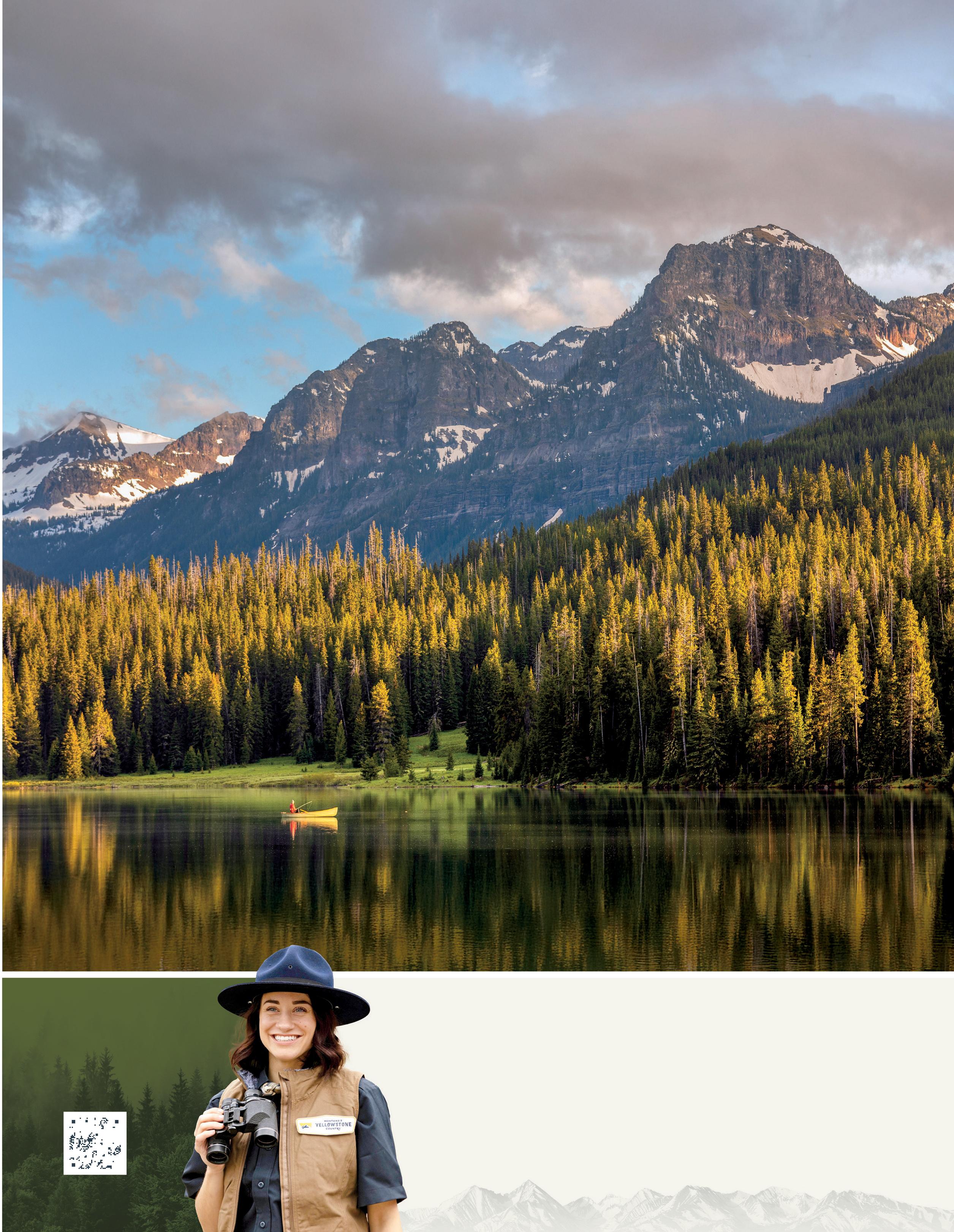
YELLOWSTONE THE MONTANA WAY
This summer, head north of the park.
There’s certainly a lot to love about Yellowstone National Park. But beyond the park in Montana’s Yellowstone Country, there’s even more Yellowstone to experience — and summer is the perfect time to do it.
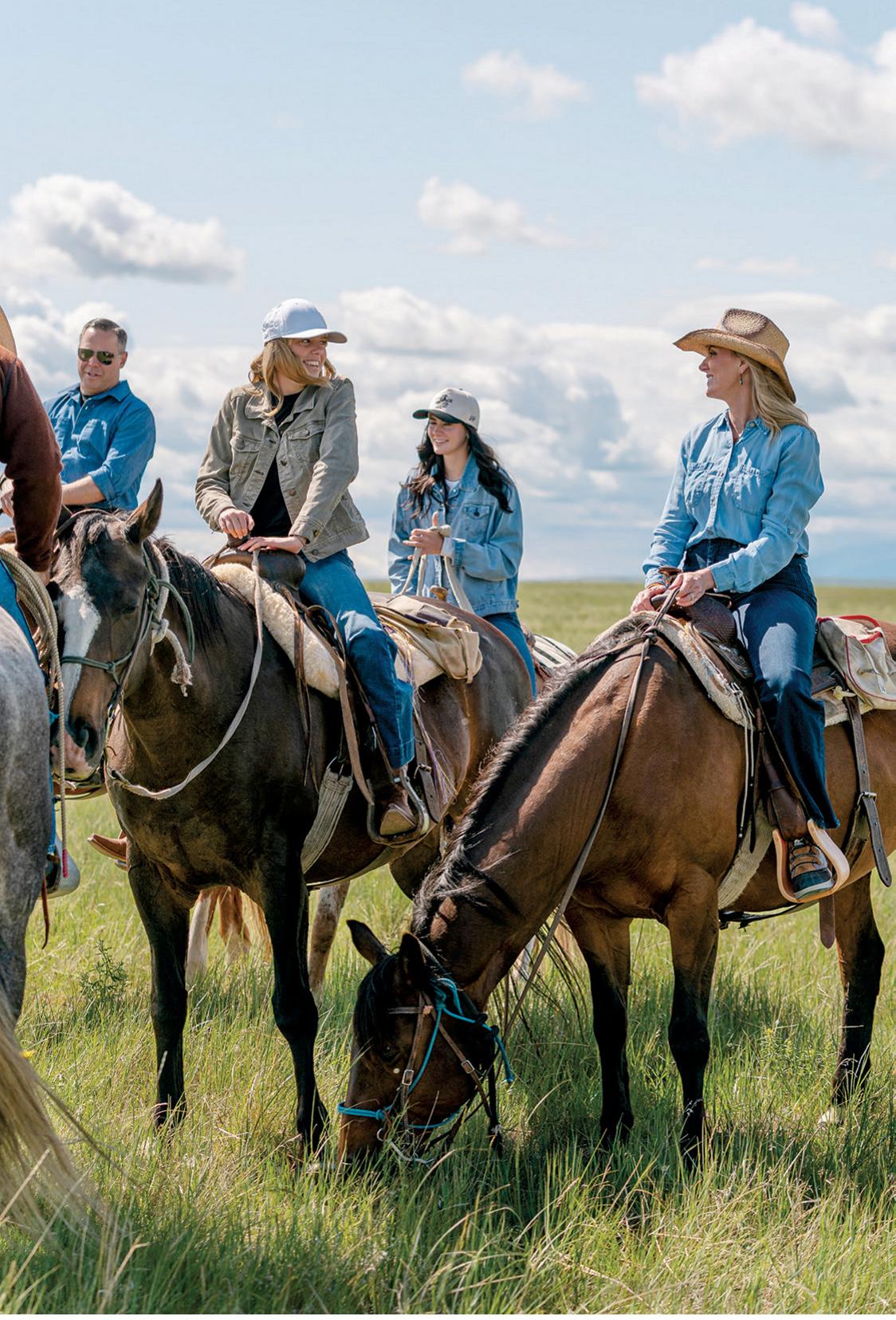
Hike, bike, fly-fish, raft and more amid awe-inspiring landscapes. Drive the spellbinding switchbacks of the Beartooth Highway and unwind with a relaxing soak in a hot spring. Discover exceptional lodging, farm-to-table dining, arts and cultural treasures and unforgettable local events in charming mountain towns. Adventures await you in Montana’s Yellowstone Country.
Know before you go (Having a lay of the land is handy out here )
WEST YELLOWSTONE
Two minutes that’s how long it takes to go from your hotel in West Yellowstone to experiencing America’s first national park
Shaped by nature and erupting with wonder, West Yellowstone is a destination where every trail, drive, and moment dares you to roam free. YellowstoneDestination.com
GARDINER
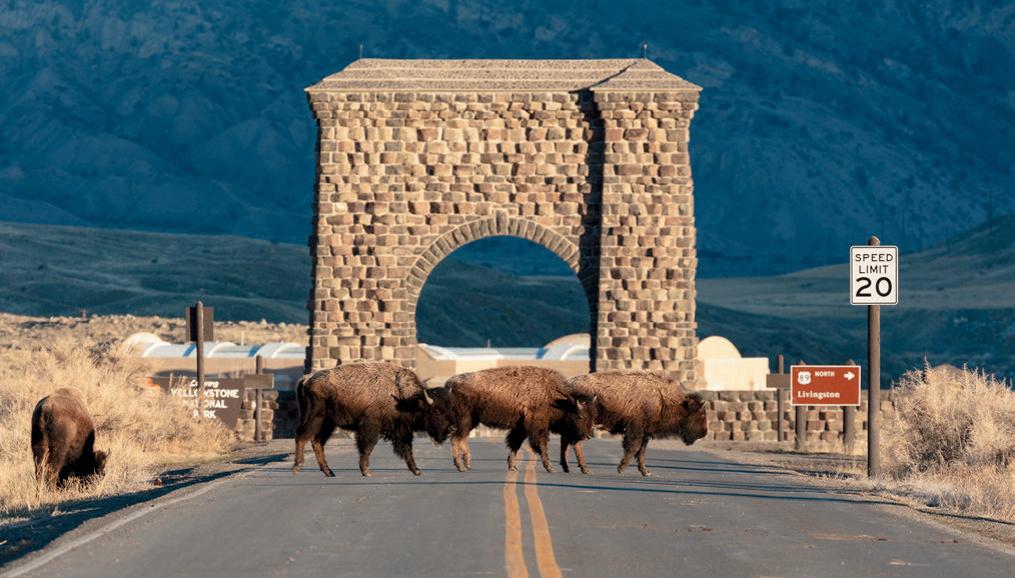
In Gardiner, Montana, Yellowstone’s North Entrance, the only crowds you’ll find are those of local wildlife roaming freely throughout our streets Stay with us to experience the best of what Yellowstone offers rich wildlife, small-town hospitality, jaw-dropping scenery, and activities fit for any outdoor enthusiast
VisitGardinerMT.com
Plan your getaway to Montana’s Yellowstone Country now at VisitYellowstoneCountry.com/Summer.
HYALITE RESERVOIR NEAR BOZEMAN, MONTANA
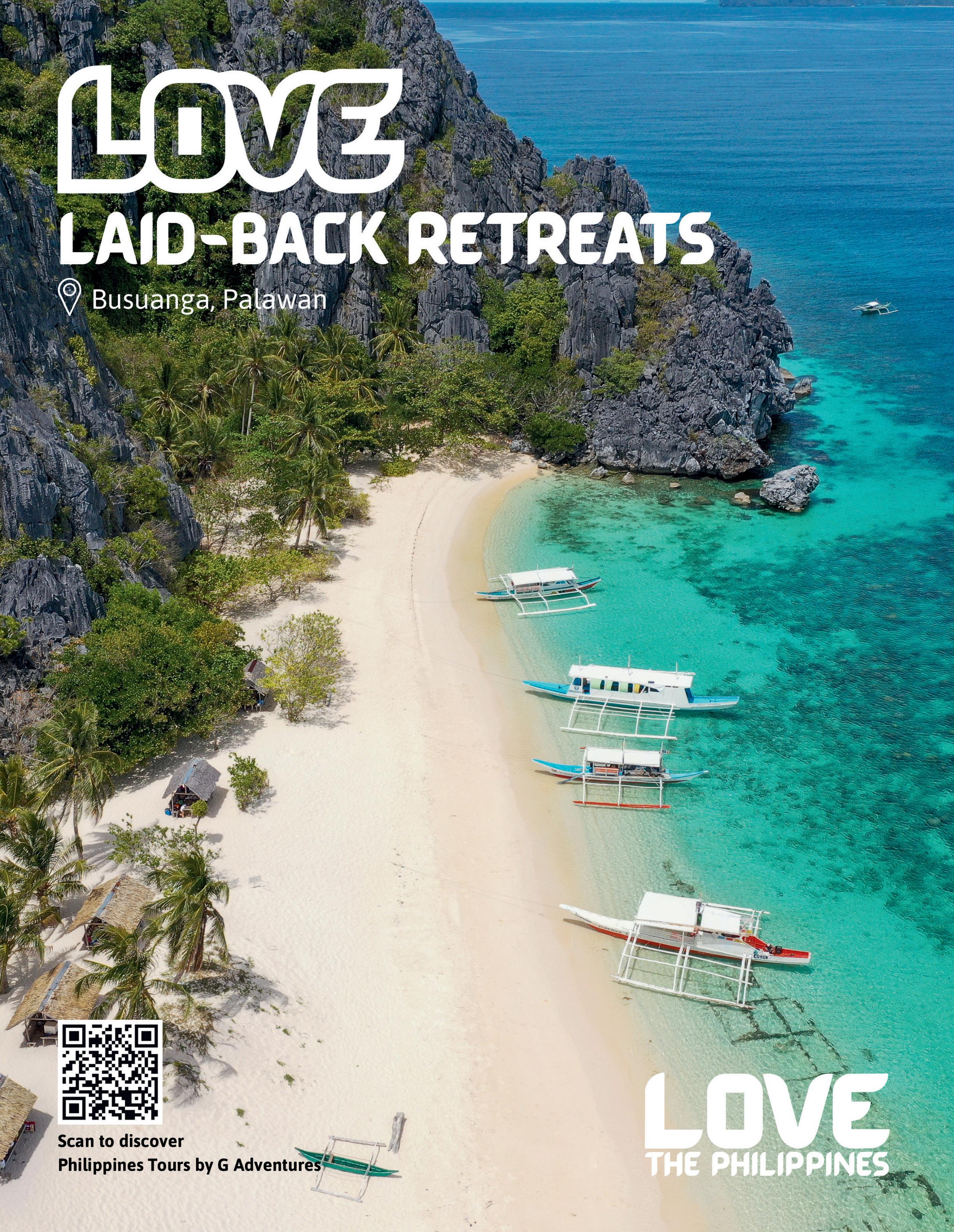
LOVE LAID-BACK RETREATS
Busuanga, Palawan
Athens,Greece
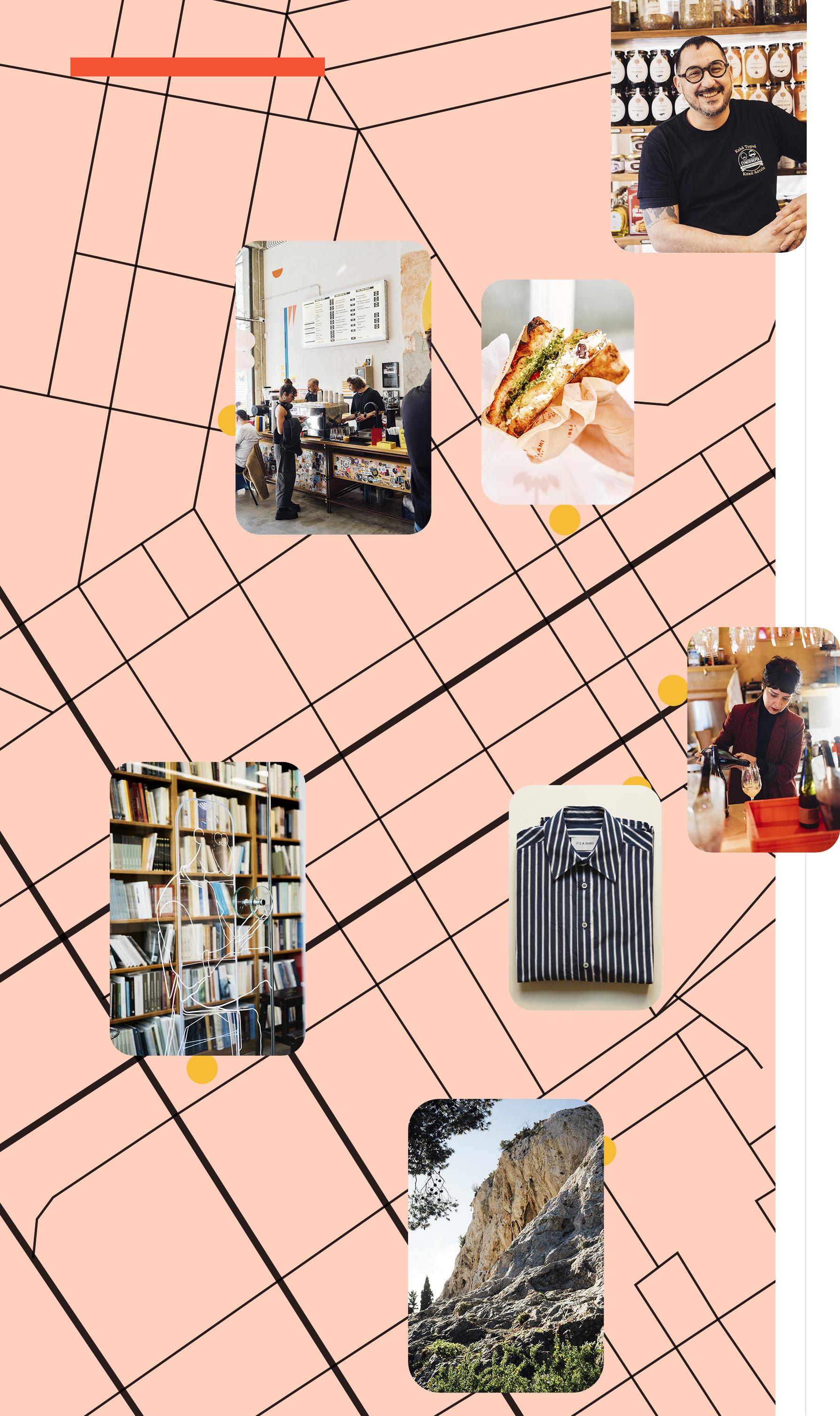
The Greek capital may be one of the world’s oldest cities, but its bustling neighborhoods feel anything but ancient. Exarcheia—known for its radical, punk past—is filled with some of the most exciting boutiques, bakeries, and bars around. Here’s the stretch not to miss. ➜
by Katherine LaGrave | Photographs by Marco Argüello
Exarcheia Athens, Greece
ZOODOCHOUPIGIS
1. Oi Sympetheroi
At this compact grocery store, owner Thanos Vrettakis sells some of the top small-batch food items in Greece— everything from Ikarian wine to Volaki cheese from Andros. Snag a seat at one of the two barstools by the open storefront window for a local draft beer.
Stournari 14
2. Behold Theman
Excellent coffee, a spacious De Stijl–influenced interior, and vegan banana bread make this artistic café one of the busiest in the city. Go anyway. Stournari 6
3. The Black Salami Microbakery
Occupying an old carpentry workshop, the Black Salami draws crowds for its limited sourdough loaves (100 per day) and housemade sandwiches with a Greek twist. The moussaka sandwich— beef ragu, béchamel, crispy matchstick potatoes, and roasted eggplant—is a crowd favorite, available seasonally. Zoodochou Pigis 71
4. Tanini Agapi Mou
With a name that translates to “Tannin My Love,” Tanini Agapi Mou is committed to wine not just in name but in offering: On the giant menu, 100 by-theglass options of Greek vintages are defined in nine categories, so visitors can easily see where each wine is from, whether it’s been aged in amphoras, the type of grape featured, and more. Ippokratous 91 & Methonis
5. It’s a Shirt
Small-run production goes extreme at chic It’s a Shirt, where fashion designer Christina Christodoulou and her father sew limited-edition unisex buttondowns (many from Greek textiles) in S, M, L, and XL—usually only one in each size. Asklipiou 67
6. Politeia
Dating to 1980 (when it had merely two employees), Politeia today is one of the largest bookstores in Greece, with four entrances divided by genre. It has a generous selection of books in English, including many translations of Greek authors difficult to find in the United States. Find English books by entrance B. Asklipiou 1–3
7. Park of the Torn Stone
Sure, Lycabettus, the highest point in Central Athens, is just east. But this “Little Lycabettus,” rich with leafy trees and a giant slab of stone, is a mostly hidden pocket of peace in the city. Views of the Acropolis add a “wow” factor. Dimaki 5–19
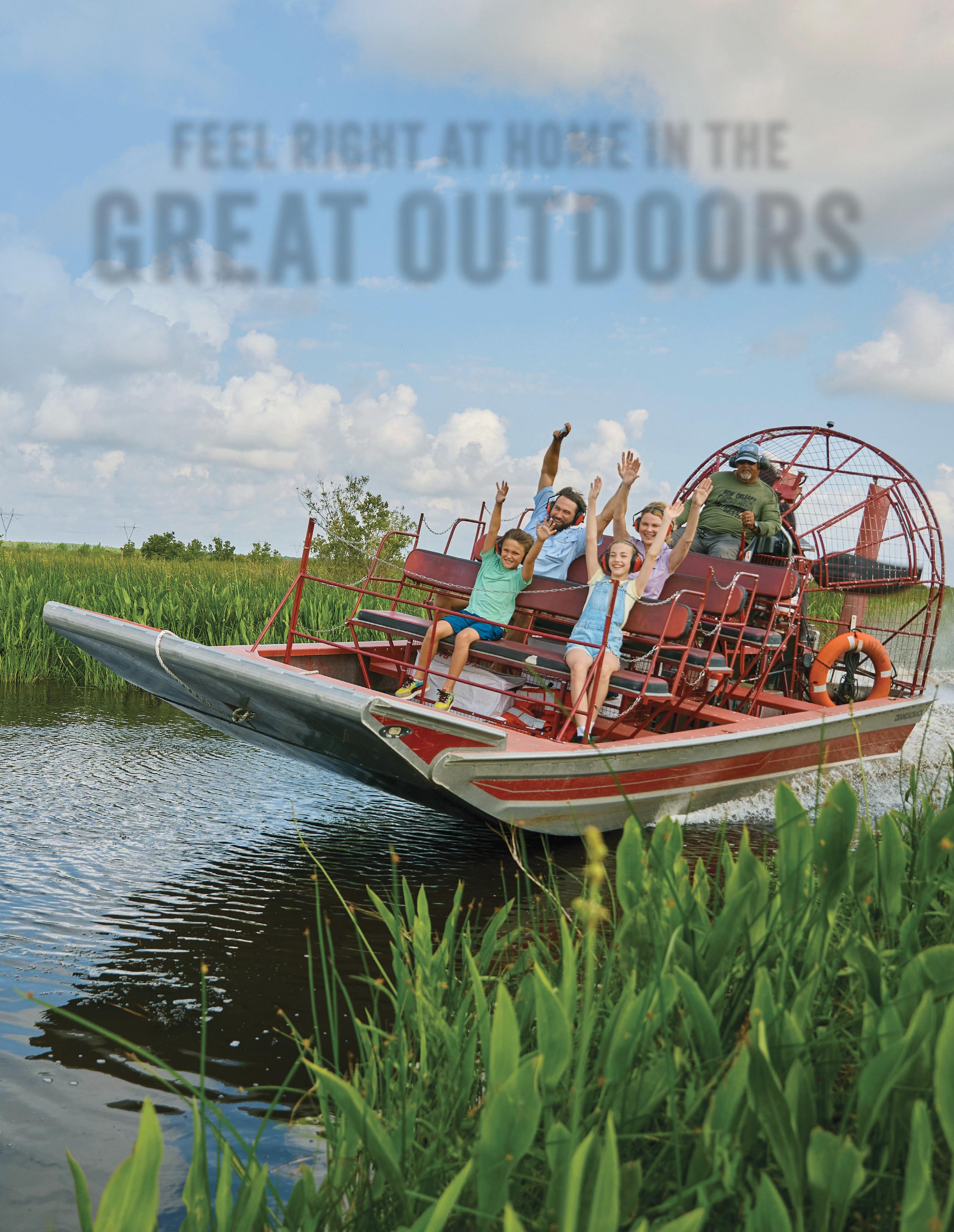
WHERE NATURE WELCOMES YOU
In Louisiana, the call of the wild is a full-on symphony. With over 7,000 miles of coastline and 21 state parks, you’ll find more fishing spots, scenic trails, and wildlife species than you can count.
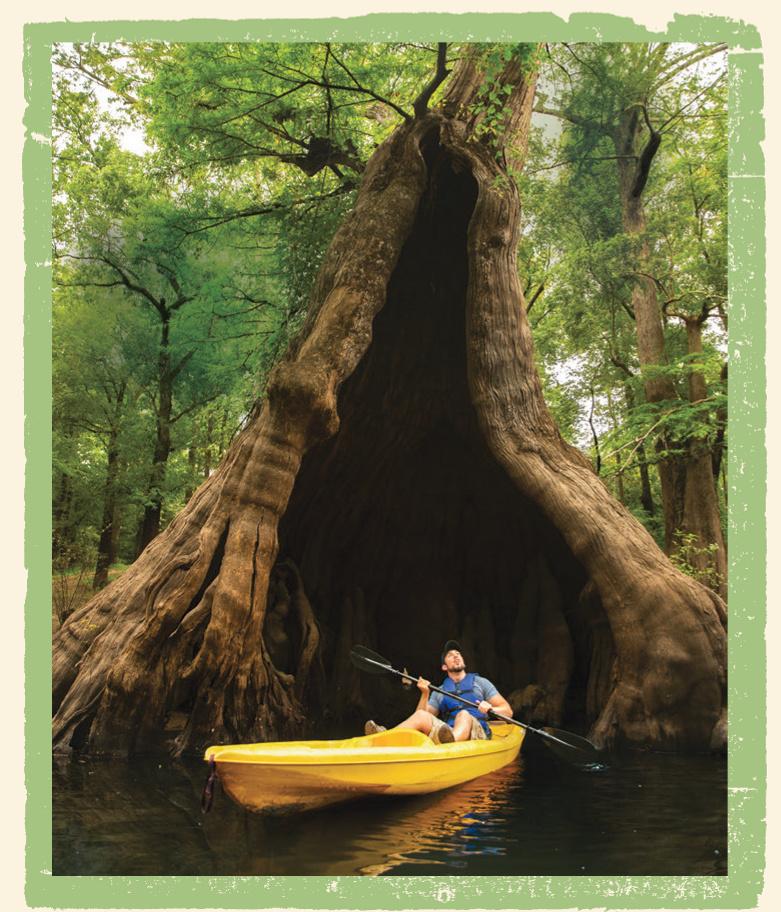
Drift through coastal marshes, complex canals, swamps lined with thousand-year-old cypress trees, or even the open waters of the Gulf. Navigate incredible trail systems on foot or by bike. Pitch a tent and camp under the stars at a scenic campground, or park your RV in the perfect spot. “Sportsman’s Paradise” is more than a slogan; it’s a time-tested truth
Enjoying the outdoors isn’t limited to sports and recreation. There are so many other ways to enjoy the state’s scenic beauty, including sculpture gardens, historic homes, outdoor concert series, and all sorts of incredible festivals
Everyone from anglers and birders to hikers, garden lovers, and festival fans will enjoy an immediate sense of connection with these wide open spaces. So get out there and start exploring! In Louisiana, the road less traveled is endless, revealing something new every time you visit
ZIP NOLA LAPLACE, LA
TELLS A STORY
Ruston Peach Festival
Lake Bistineau State Park
Tunk’s Cypress Inn
BREC’s Farr Park Equestrian Center
Fontainebleau State Park
Mardi Gras
Oak Alley Plantation
North Toledo Bend State Park
Natchitoches Christmas Festival
Creole Nature Trail
Down the Bayou Shrimp Tour
Festival International de Louisiane
TABASCO® Factory
THE ULTIMATE INTERACTIVE ENVIRONMENT
BIRDS OF A FEATHER
STUNNING WATERWAYS
Cypress-filled swamps Rivers, bayous, and marshes The Gulf Louisiana offers endless opportunities for kayaking, canoeing, fishing, and more Drift across vast spaces like the 2,700-acre lake at Poverty Point Reservoir, or wind your way through extensive river trails like those at Lake Fausse Pointe State Park. The Sabine River and Toro Creek offer sandy beaches for pleasant stops. Anglers can go after bass in Toledo Bend – the South’s largest man-made lake – or chase amberjack off the coast near towns like Hopedale. You can book guides around popular freshwater lakes and rivers, and throughout the Atchafalaya Basin region Offshore charters can be found in coastal destinations like Venice, Grand Isle, and Cocodrie
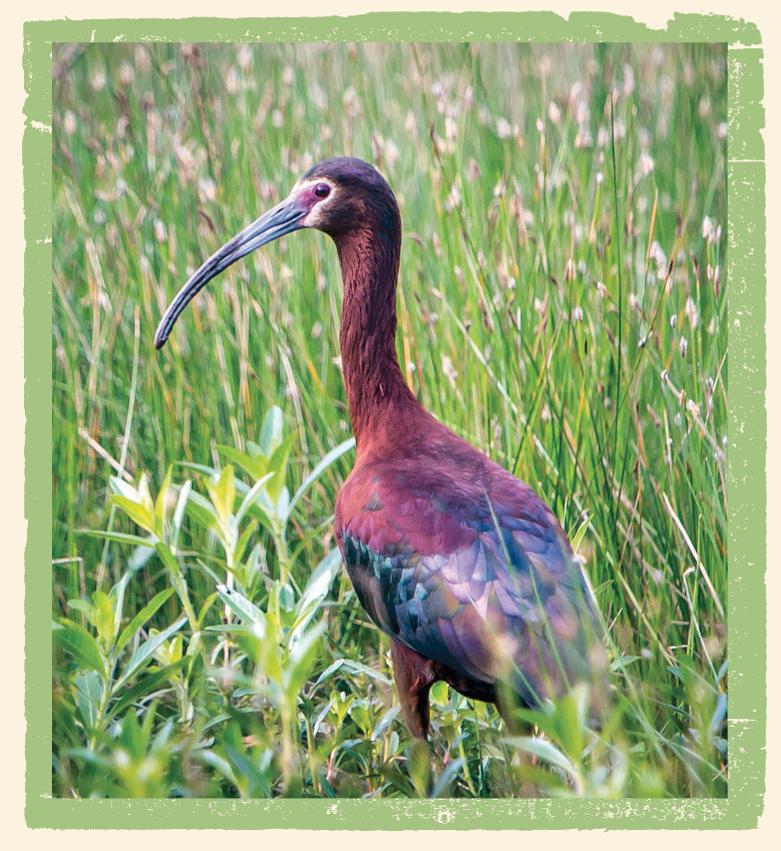
With distinct landscapes and abundant wetlands, Louisiana is a haven for birdwatchers of all levels From the majestic Bald Eagle soaring over the cypress swamps to the Grey Egret coasting through the Black Bayou Lake National Wildlife Refuge, our state boasts an incredible array of feathered friends. A coastline that gives way to hundreds of miles of open water in the Gulf also makes this an ideal stopover for migratory birds from all directions. In St. Francisville, you can even visit the Audubon State Historic Site at Oakley Plantation, where painter and bird enthusiast John James Audubon lived and worked. Start planning your visit at BirdingLouisiana com
CULTURAL EXCURSIONS
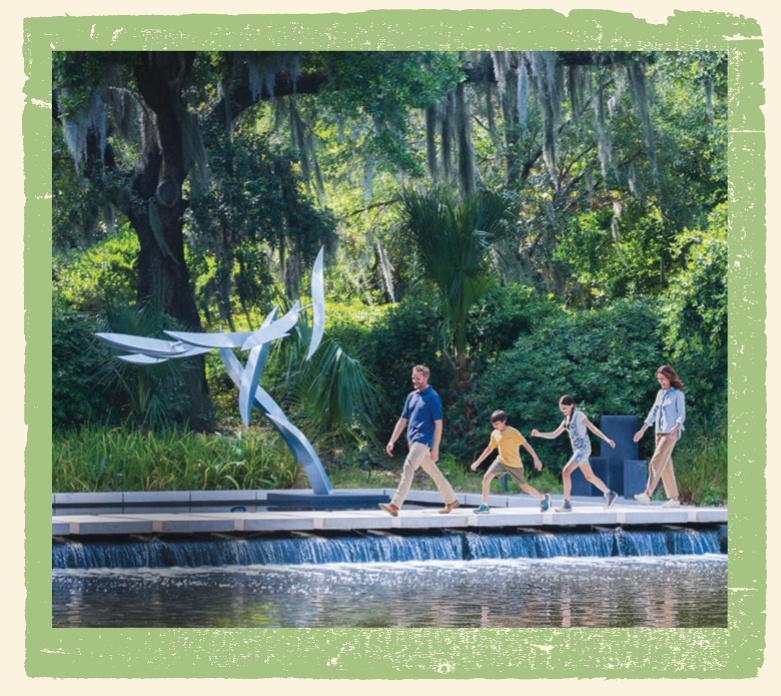
Outdoor activities don’t always have to be so active. Wander through New Orleans’ Besthoff Sculpture Garden, where unique artworks blend with the natural beauty Join 318 Restaurant Week to experience the best of the Shreveport-Bossier dining scene. Set out on the Louisiana Film Trail to track down the locations of some of the more than 2,500 films that have been shot here. Or just unwind with friends out on the spacious patio of Crying Eagle Brewing Company in Lake Charles.
ROAMING BY REGION
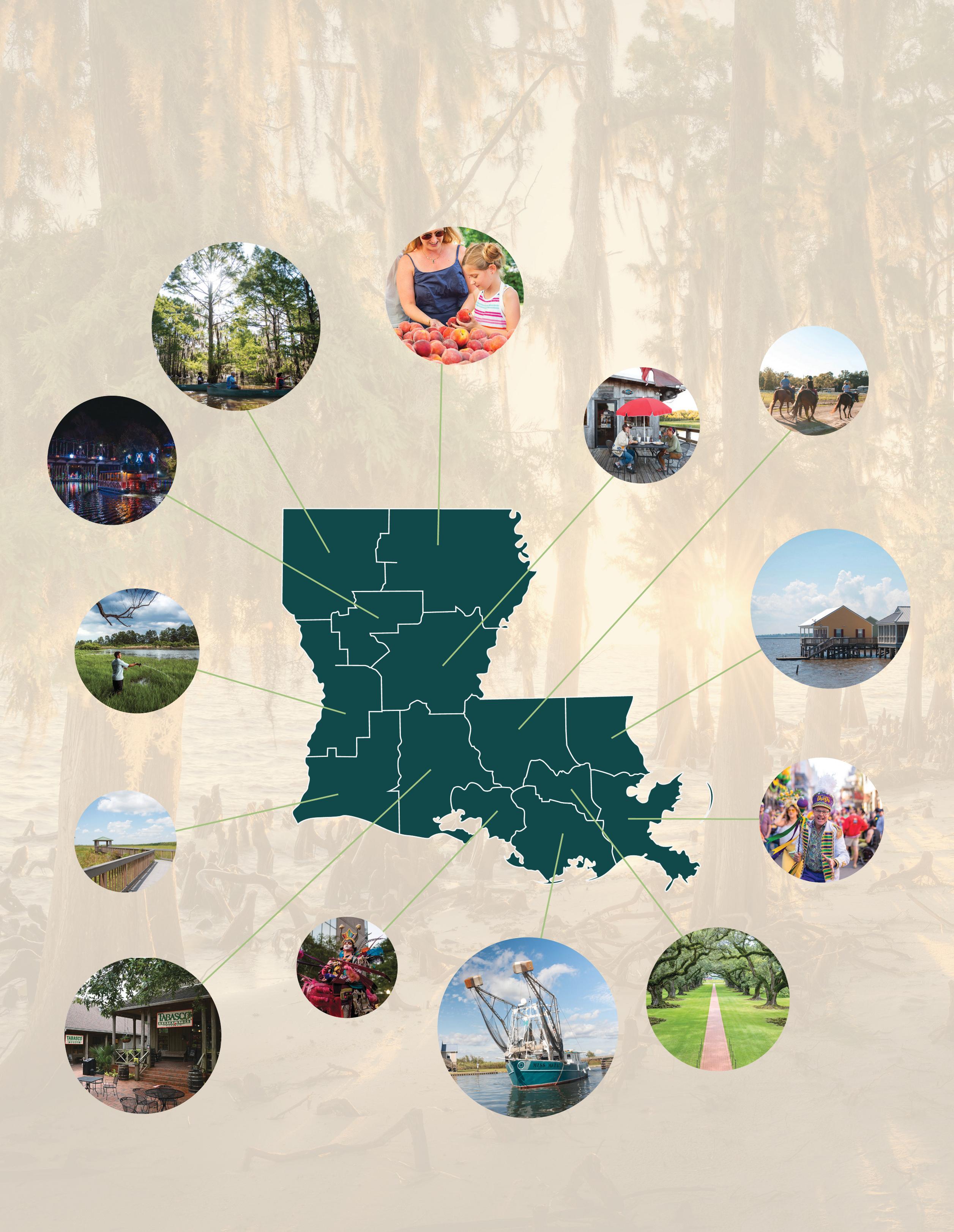
SHREVEPORT-BOSSIER CITY AREA
Explore great nature viewing areas, including Lake Claiborne State Park and Lake Bistineau State Park, with cypress-studded waterways perfect for paddling Stretch your legs on the Sugar Cane National Recreation Trail, winding through the Caney Lakes Recreation Area Learn about one of the largest Civil War engagements west of the Mississippi at Mansfield State Historic Site. Check out the vineyard and tour Kickapoo Twist Winery in Gloster.
MONROE-RUSTON AREA
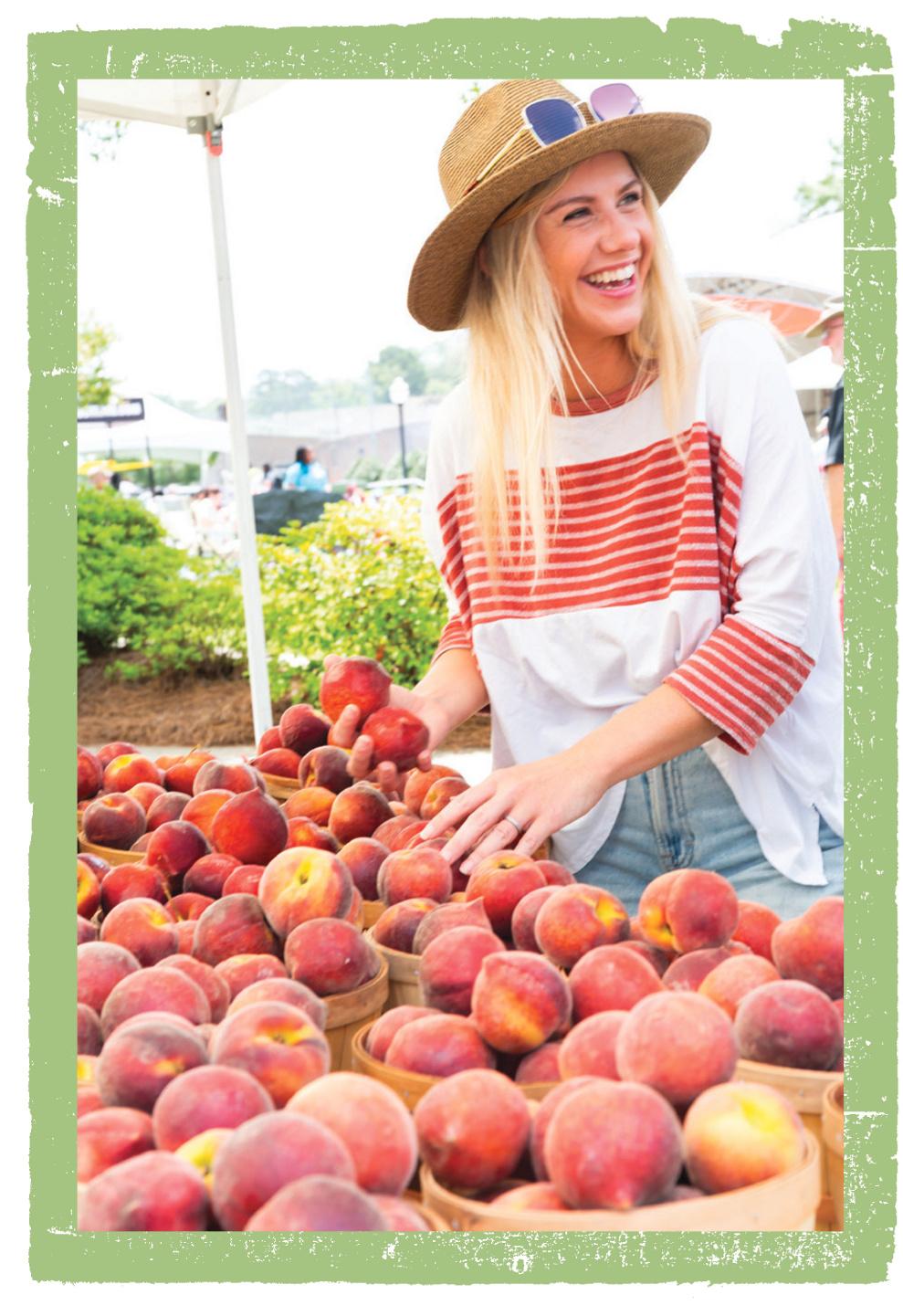
Forested hills and lowlands provide excellent hiking terrain throughout this region, while the extensive trail system in Lincoln Parish Park is also great for biking. For a little pickme-up, stop by Mitcham Farms and grab some fresh peaches. With monumental prehistoric earthworks and recovered artifacts, Poverty Point Reservoir State Park is one of the most significant archeological sites in North America
NATCHITOCHES-WINNFIELD AREA
Red-bricked Front Street is ideal for strolling along the river in Natchitoches – the oldest permanent settlement in the Louisiana Purchase. Cane River National Historical Park combines natural beauty with historically significant buildings. Left behind when the Red River changed course, Cane River Lake is one of North Louisiana’s bestkept fishing secrets
TOLEDO BEND LAKE COUNTRY AREA
With more than a thousand acres of sprawling waterways and diverse landscapes, this region offers amazing opportunities for camping, hiking, and birding Toledo Bend Reservoir State Park is also renowned for its bass fishing, boating, and water sports Explore Cypress Bend Park in Zwolle before unwinding on the family-friendly swimming beach.
ALEXANDRIA AREA
For those interested in Native American heritage, this region is essential – from Marksville and Simmesport to Vidalia. Hunters, fishermen, and nature lovers gravitate to Spring Bayou Wildlife Management Area, as well as the Lake Ophelia and Grand Cote National Wildlife Preserves The Kisatchie National Forest also has part of its massive footprint here
LAKE CHARLES AREA
Hike the cypress forests of Sam Houston Jones State Park or hit the road to drive the 180-mile Creole Nature Trail All-American Road. Fishing outfitters can guide you deep into the bayou for backcountry fishing and paddling adventures Cajun Country’s famous festivals also take the celebration outdoors with great food, music, and dancing.
LAFAYETTE AREA
The Atchafalaya Basin is the nation’s largest river swamp, containing almost one million acres of swamps, bayous, and backwater lakes. The Vermilionville Living History Museum and Folk Life Park is great for learning about the area’s rich culture. Kart Ranch lets you pump up your adrenaline with fast-paced go-karting and then chill out with some slightly slower mini golf.
BATON ROUGE AREA
BREC’s Farr Park Equestrian Center and RV Campground has fun horse rides for the whole family. Tailgating at LSU’s Tiger Stadium is a world of its own and a feast for all senses Miles of pathways along the levee are ideal for running or walking with a view of the Mississippi River For something a little more rugged, Tunica Hills Wildlife Management Area has more than 6,500 acres that are ideal for hiking and camping.
NORTHSHORE AREA
Lake Pontchartrain is perfect for any kind of paddler, and on its northern shore, 80,000 acres of wildlife refuge offer incredible birding and hiking. Take a scenic spin on the 31-mile Tammany Trace Bike Trail. Hit the water for a guided Honey Island Swamp tour or a fishing charter out of Slidell Camp under the stars at Fontainebleau
or Fairview-Riverside State Parks – both right on the water. On guided wagon tours at the 900-acre Global Wildlife Center, you can spot animals from around the globe – from antelopes to zebras.
NEW IBERIA-MORGAN CITY AREA
The Bayou Teche Paddle Trail carries you along 135 miles of Atchafalaya swampland. Cypremort State Park welcomes boaters, swimmers, fishers, and birders. More than just home to TABASCO® Sauce, Avery Island stuns with its Spanish mossdraped live oaks, subtropical flora, and Bird City wildfowl refuge For something sweet, the beautiful city of Jeanerette welcomes you to explore the world of sugar production
HOUMA-THIBODAUX-GRAND ISLE AREA
Take an airboat tour through breathtaking swamps and bayous here in the heart of Louisiana’s wetlands. Soak in the scenery as you paddle Bayou Lafourche, or spend a day at the beach in Grand Isle State Park. World-class fishing awaits in these saltwater wetlands and freshwater streams, as well as out into the Gulf. Houma’s Down the Bayou Shrimp Tours gives you an inside look at (and mouthwatering taste of) the seafood industry
GREAT RIVER ROAD AREA
Follow the winding banks of the Mississippi between Baton Rouge and New Orleans, past public parks and historic plantation homes, including Oak Alley, Laura, and Evergreen. Vacherie is home to some can’t-miss spicy stops along South Louisiana’s Andouille Trail. Strolling through Sorrento’s Cajun Village, you’ll find a colorful collection of shops featuring Louisiana artists and goods
NEW ORLEANS AREA
Enjoy the sights and live oaks of New Orleans’ Garden District as you ride the St. Charles streetcar. Join the annual festivities around Mardi Gras and the Jazz and Heritage Festival. Head south from the city to Venice and charter an exciting offshore fishing excursion. Stroll through Kenner’s historic Rivertown neighborhood along the Mississippi Discover the 23,000 acres of the Jean Lafitte National Park and Barataria Preserve, home to everything from alligators to over 300 species of birds.
JOIN FESTIVITIES T H E
It’s no secret that Louisianans love our festivals. Come for a visit and help us celebrate our rich heritage – from favorite foods to quirky traditions.
French Quarter Festival
April – New Orleans: includes 20+ stages of live music, local cuisine, and special events
Festival International de Louisiane
April – Lafayette: largest international music fest in the U.S., with gourmet food and handcrafted artworks
New Orleans Jazz & Heritage Festival
Late April - Early May – New Orleans: includes thousands of performers, crafts, great food, and cultural exchange
Washington Parish Balloon Festival
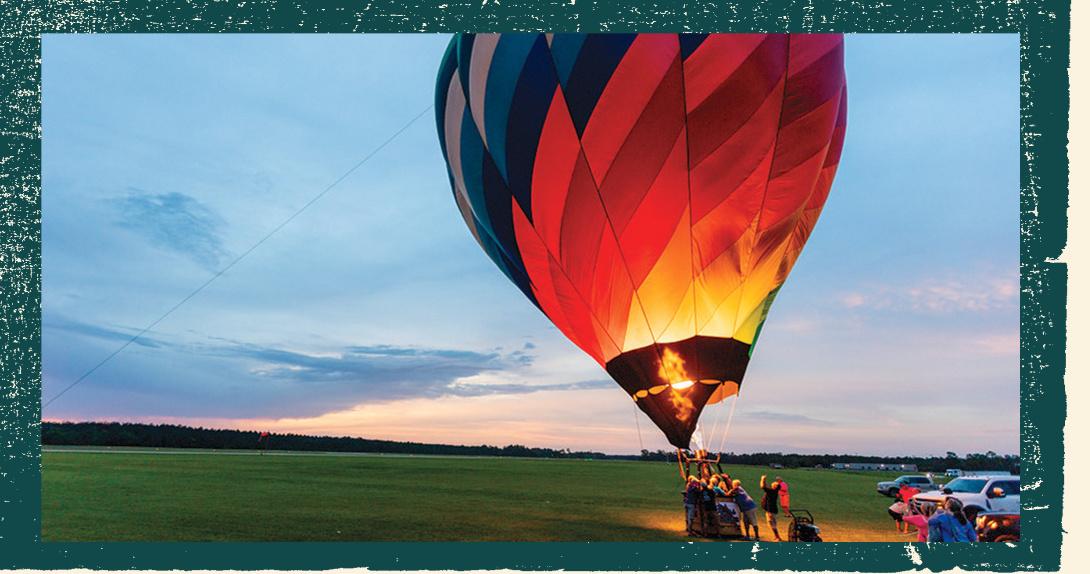
May – Franklinton: includes balloon rides, crowning of queens and Barbarian Games strongman competition
Golden Meadow-Fourchon International Tarpon Rodeo
July – Port Fourchon: includes live music, local food, shrimp boil, and giveaways
Jim Bowie Festival and BBQ Challenge
September – Vidalia/Ferriday: includes homemade pie bake-off, the Backyard BBQ Contest, live music, inflatables, and rides for the kids
Bogalusa Blues & Heritage Festival
September – Bogalusa: includes 5K run, kids’ activities, and camping
Zwolle Tamale Fiesta
October – Zwolle: includes live entertainment, contests, a 1K walk and a 5K run, crafts, street dancing, parades, and a mud bog
Natchitoches Christmas Festival
Saturday before Thanksgiving through January 6 –Natchitoches: includes more than 300,000 Christmas lights and events like Holiday Kids Fest and Cookies with Santa
WEST VIRGINIA, UNPLUGGED
Spring and summer adventures unfold across uncrowded landscapes, waterways, and charming small towns
WITH ANCIENT MOUNTAINS, mighty rivers, and wide-open skies, West Virginia invites travelers to slow down and savor the present moment From the Eastern Panhandle to the river valleys of the south, the Mountain State offers epic outdoor adventures, scenic beauty, and welcoming communities with fewer crowds
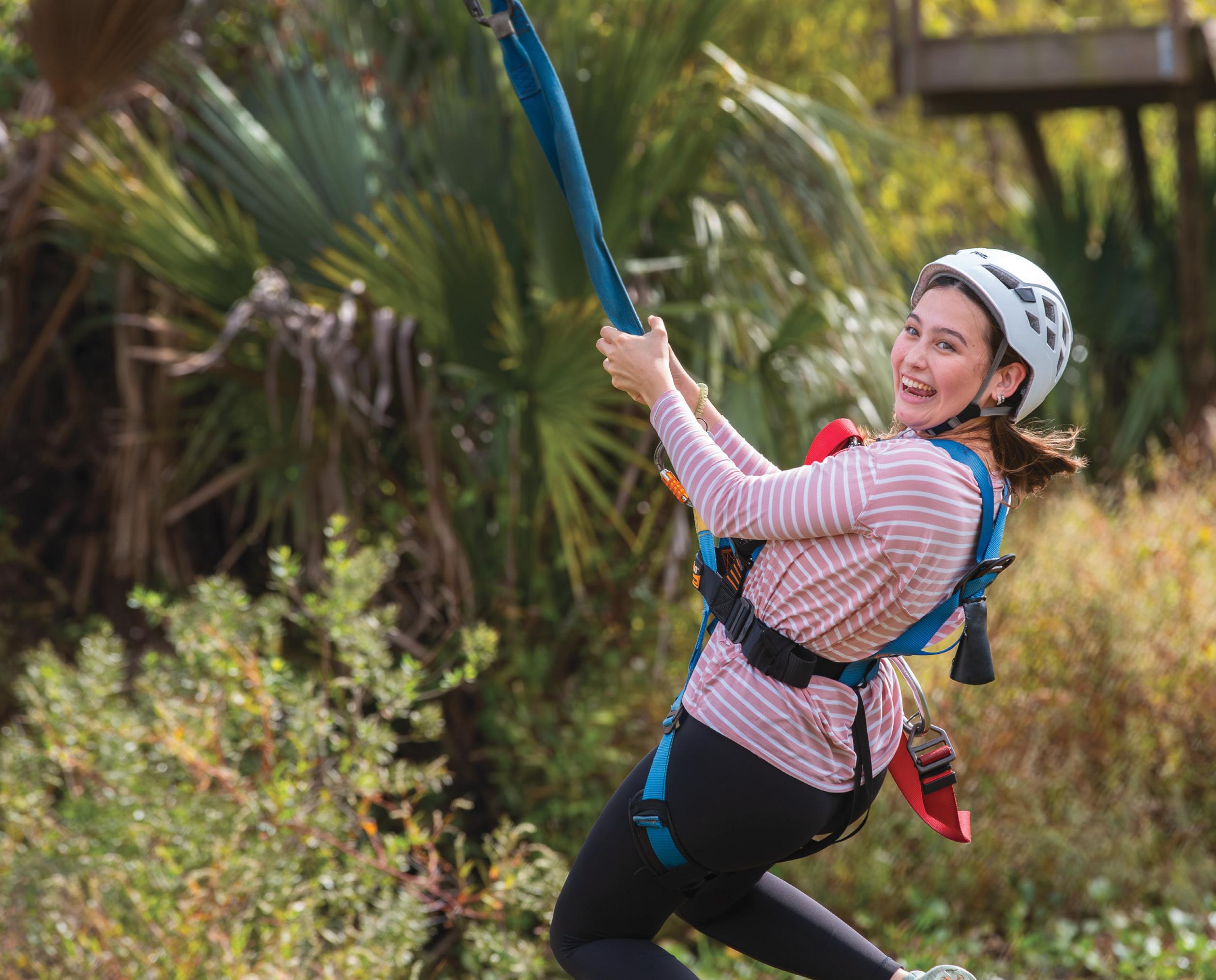
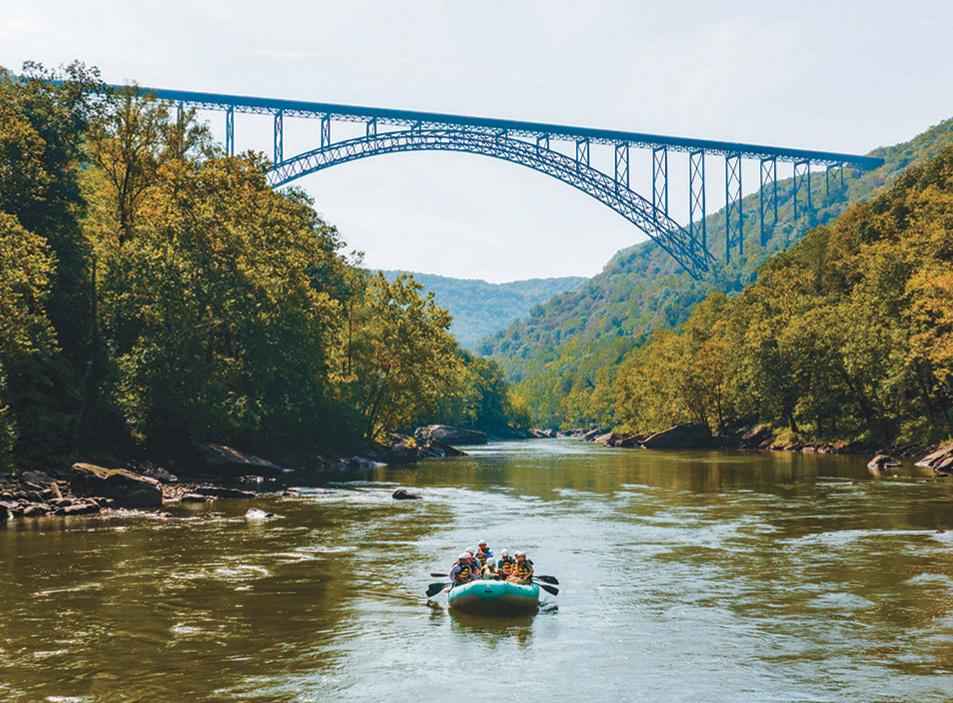
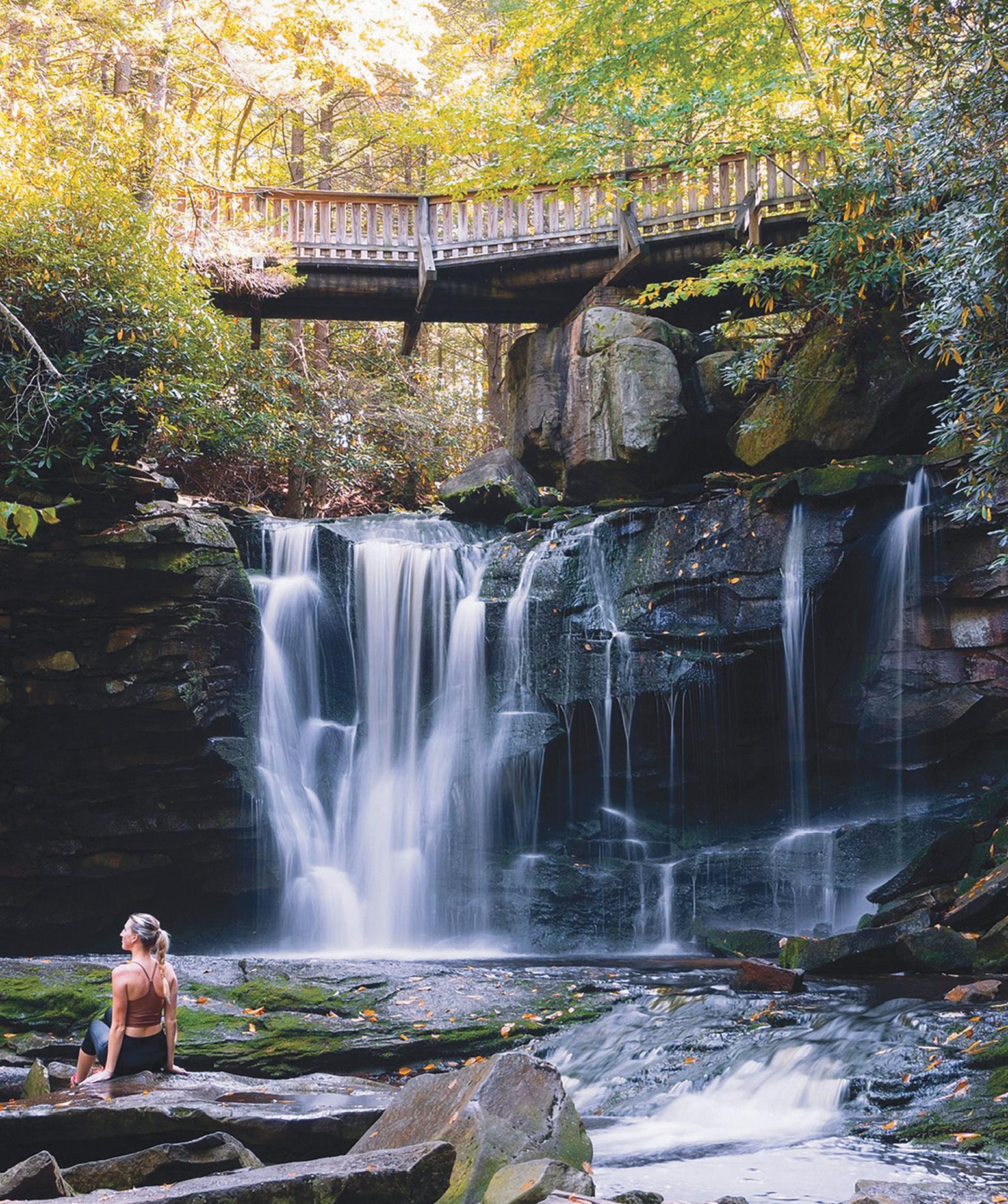
In Fayetteville and the New River Gorge area, whitewater rafters run rapids between towering canyon walls, and miles of wooded trails beckon hikers, mountain bikers, and zip-liners deeper into the landscape Across the state, the West Virginia Waterfall Trail connects dozens of cascades, making spring runoff season a prime time to explore
Cabins and lodges anchor the experience with comfy stays tucked into scenic settings Near Summersville Lake, paddlers glide among sandstone cliffs,
while Tygart Lake State Park in the Allegheny foothills is one of the state’s most underrated family-friendly escapes
In search of solitude? Watoga State Park boasts a spot on the list of International Dark Sky Places and 10,000 acres of remote forest and campsites
In Charleston, summer unfolds with signature events like FestivALL, a multiday arts celebration that fills downtown streets and parks with live music, murals, dance performances, and large-scale installations Every July, the Charleston Sternwheel Regatta brings the Kanawha River to life with boat races, fireworks, street food, and free concerts along the riverfront Between events, locals gather at the Capitol Market to shop for fresh produce and specialty foods
Farther north, Morgantown hums with collegetown vitality, craft breweries, and access to scenic y, ,
rail trails along the Monongahela River. In the Eastern Panhandle, grab coffee or tea at Lost Dog, stroll the independent shops on German Street in Shepherdstown, and learn about the state’s pivotal role in U.S. history in the nearby Harpers Ferry National Historical Park, the site of John Brown’s 1859 abolitionist raid.
With room to roam and a pace that rewards curiosity, West Virginia offers the freedom to explore without ever feeling rushed.
PLAN YOUR SPRING OR SUMMER ESCAPE TO WEST VIRGINIA AT WVTOURISM.COM
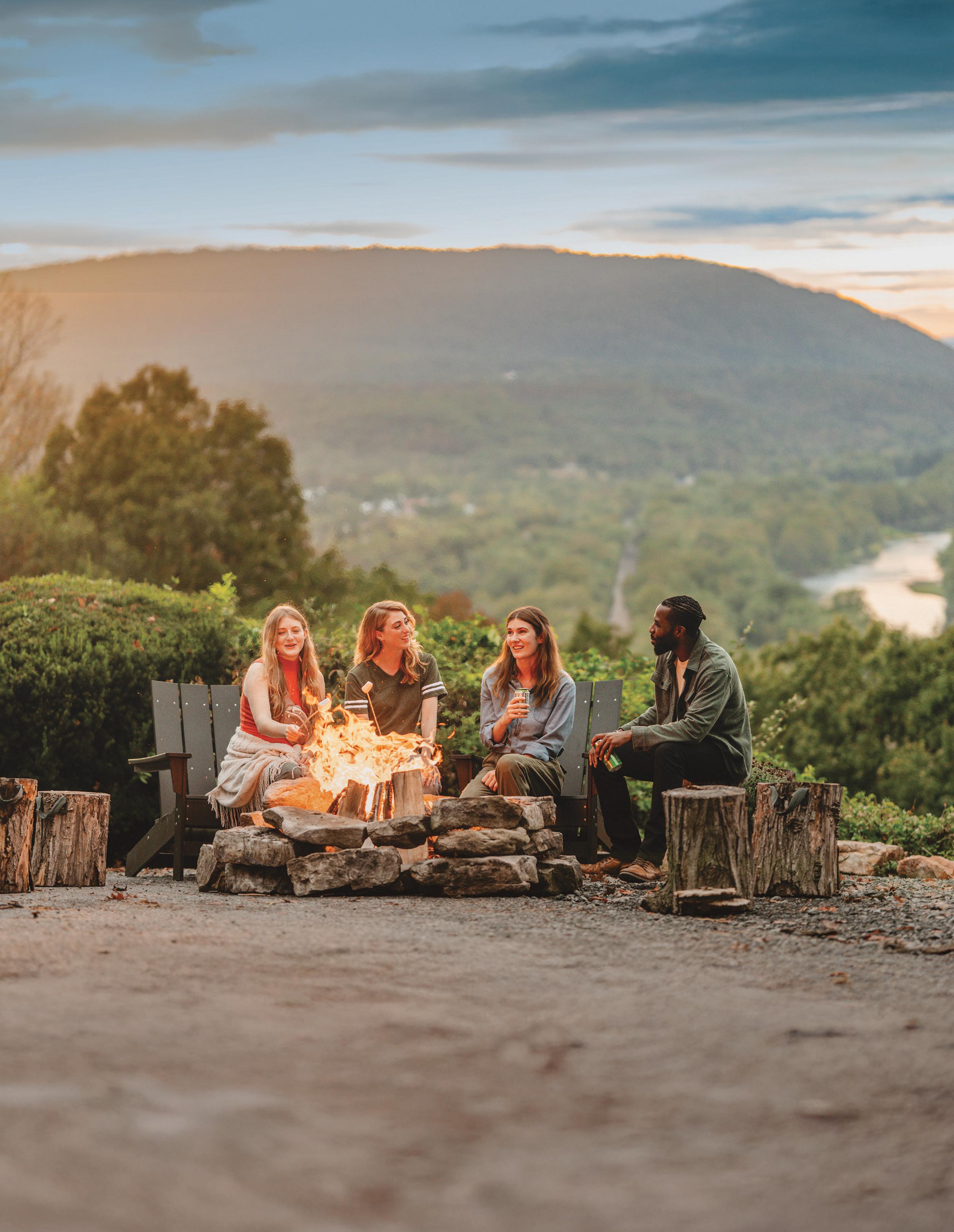
Days hiking in nature, rafting rivers as old as time. Evenings making memories ‘round the fire. Phones down. Sparks flying. This is the good stuff.
Golden State of Mind
Where to stay is often as important as where to go—and these nine new and reborn California hotels are destinations in their own right.
by Jennifer Flowers
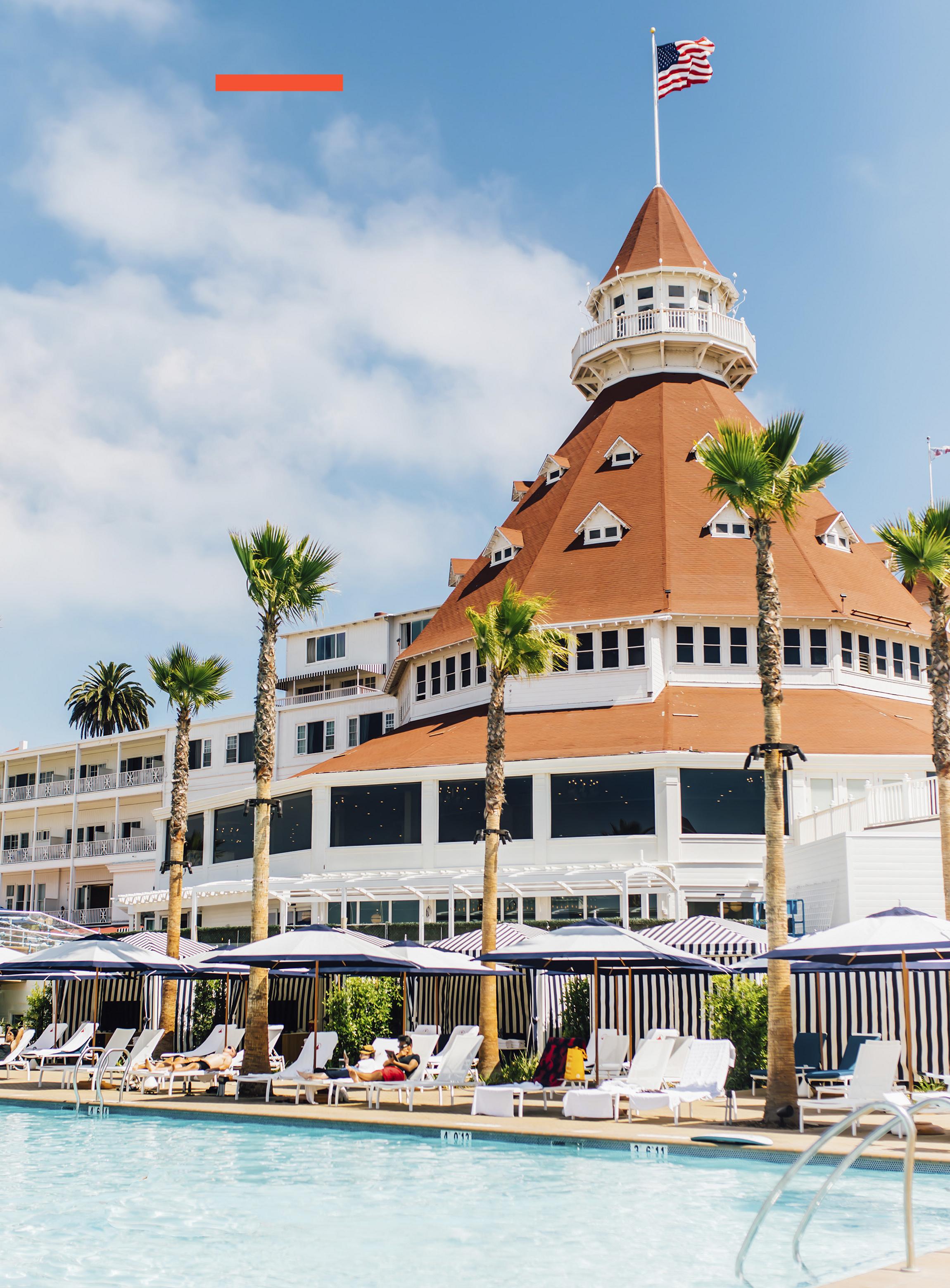
San Diego’s storied Hotel del Coronado completed a $550 million renovation last year.
NOTHING HITS LIKE A DOZEN BAGS OF “JUSTLOOKING.”
Ready, set, shop.
Why do we treat shopping like a quest, a relentless mission to leave no rack unexplored, from high-end couture to oh-so-trendy boutiques? ‘Cause we can.
Head to Healdsburg
The Sonoma County city sits in the middle of three renowned wine-producing regions.
APPELLATION HEALDSBURG
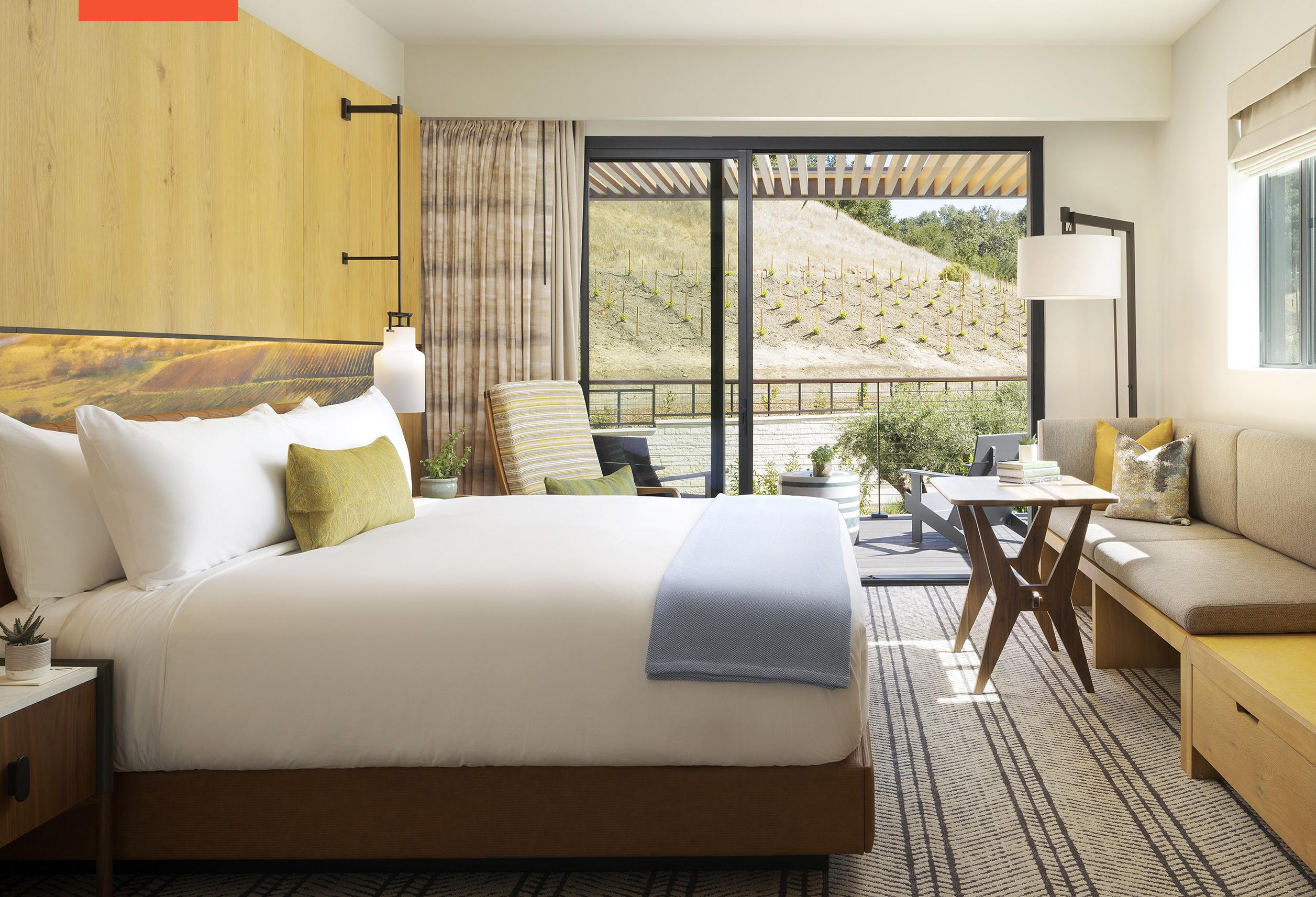
Last fall,Healdsburg saw the opening of the flagship property of Appellation, a new culinaryfocused hospitality brand from James Beard Award–winning chef Charlie Palmer and longtime Four Seasons Hotels and Resorts executive Christopher Hunsberger. Set on 8.5 acres of gardens and native trees roughly three miles
outside the city center, the hotel has 108 guest rooms and suites with access to balconies and patios.
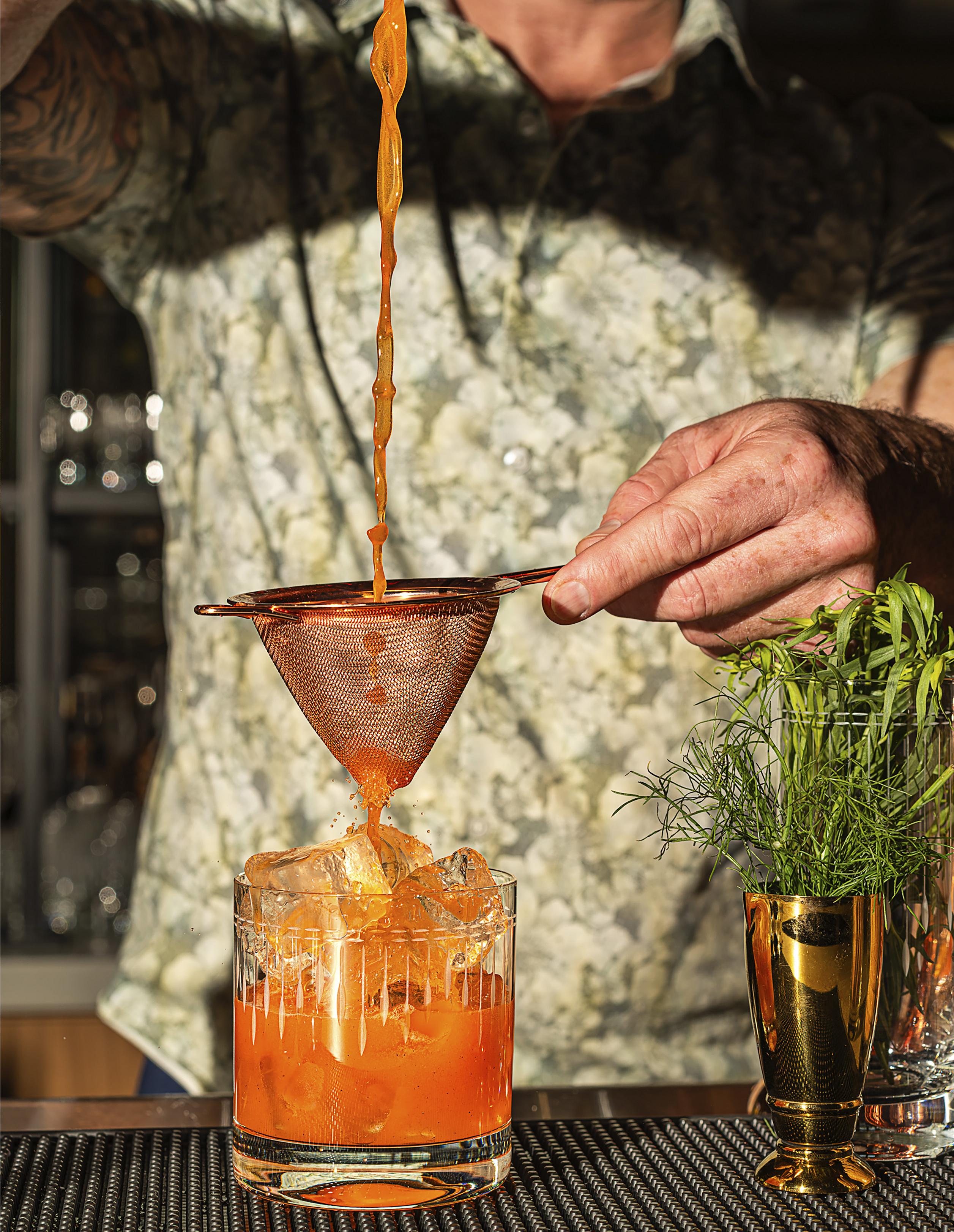
Travelers who value eating are in good hands here: At Folia Bar & Kitchen, chef Reed Palmer (son of Charlie) sources ingredients from nearby small farms and cooks on an open fire, while a bread and butter cart showcases pastry chef Nassim Bounoua’s creations, including a salt-and-pepper lavash. For
guests seeking a more hands-on experience, the hotel’s “Crafted at Appellation” program offers workshops with farmers and artisans (the art of Japanese paper marbling; how to best pair coffee and chocolate).
AFTER CHECK-IN: Instead of a nightcap, go for a postdinner spa treatment that can involve a foot soak, a light massage, or a sound bath with a glass of wine.
From $509
DUCHAMP HEALDSBURG
This spring, a new luxury hotel concept will debut downtown with the Duchamp Healdsburg.
Wine country travelers “don’t want to just visit Healdsburg— they want to live in it,” says Tom Nelson, vice president of operations at Healdsburg Hospitality Group, which operates the Duchamp, noting that the property was built to fill the gap between large resorts and the town square experience.
The 20 bright residential-style suites—all with living, dining, and sleeping spaces, Smeg refrigerators, and Blue Bottle Coffee—surround the central courtyard area and 50-foot pool. In between downtown strolls, travelers can take advantage of complimentary amenities including e-biking to nearby vineyards and kayak
At Appellation
Healdsburg, Folia Bar & Kitchen offers cocktails, vineyard views, and woodfired cooking.
tours down the Russian River. There may not be on-site dining, but guests are steps from acclaimed Healdsburg restaurants SingleThread Farm, Valette, and Willi’s Seafood & Raw Bar.
AFTER CHECK-IN: Take advantage of the on-site concierge team, which can assist with making reservations for wine tastings at Hirsch, Flowers, and Martha Stoumen around Napa and Sonoma counties.
From $750
THE COTTAGES AT LITTLE SAINT
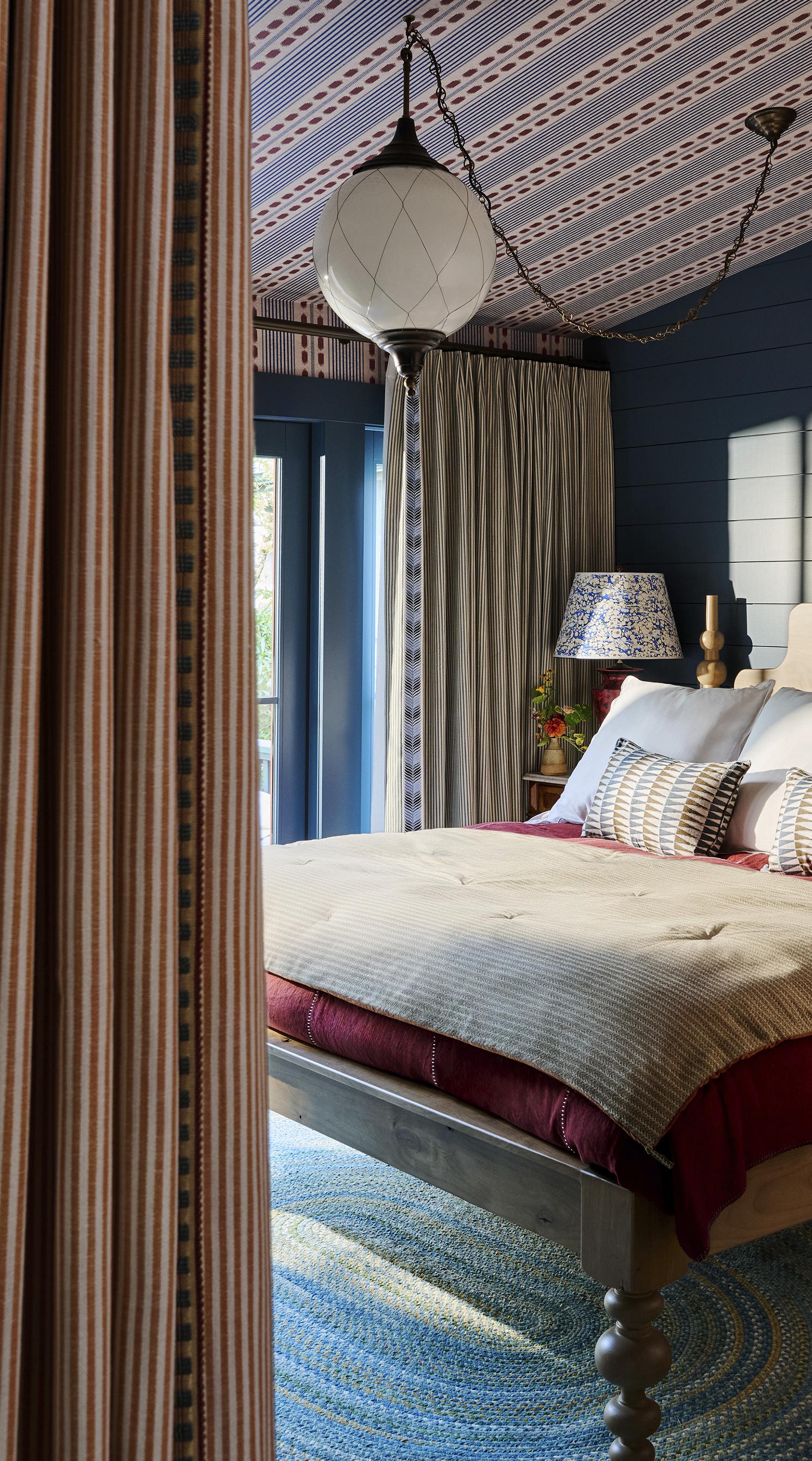
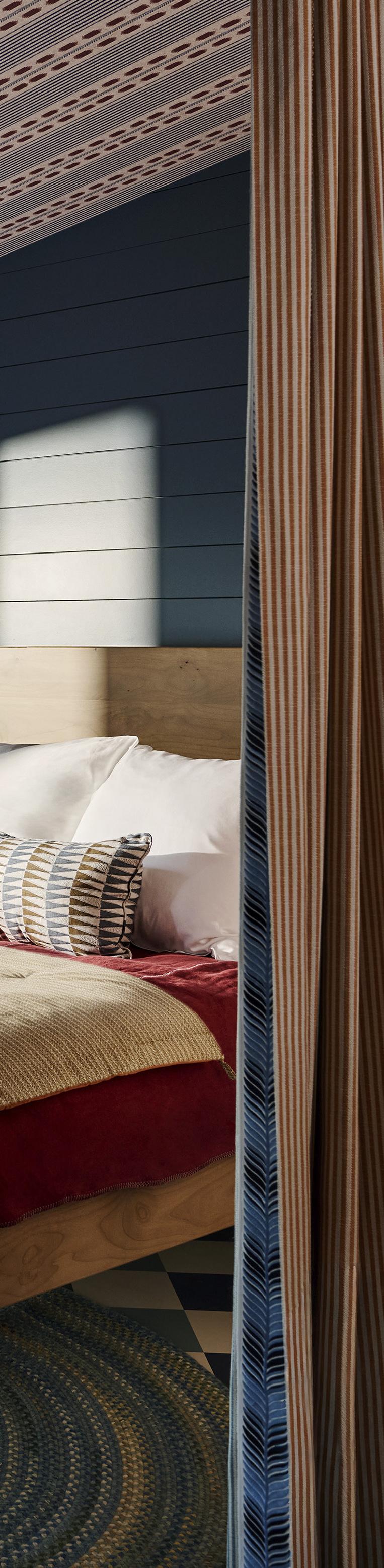
Just months ago, Healdsburg welcomed the Cottages at Little Saint, a collection of four artfully decorated accommodations behind the plant-based Little Saint restaurant. The cottages range from a smaller studio with a fireplace to the 1,000-square-foot Court, which sleeps up to four and can be combined with the studio via a hidden passageway to create a three-bedroom space. Interiors call to mind the English countryside, with ornate wallpaper, checkerboard-tiled floors, and rich textiles adorning both windows and beds. Rooms are stocked with vintage records from the ’60s and ’70s, smallbatch toiletries, and craft teas. There’s also a heated pool set within the garden.
AFTER CHECK-IN: Walk over to Little Saint and use the gift card included with all direct bookings for dishes such as waffles with lion’s mane mushrooms. The restaurant also hosts live music and literary readings.
From $375
The Cottages at Little Saint were opened by Little Saint restaurant owners Laurie and Jeff Ubben.
The Hotel del Coronado Is Back
After a painstakingly detailed renovation of 938 rooms, suites, and common areas, San Diego’s seaside grande dame has been returned to greatness. General manager Marco Tabet shares 100 words on one of the Hotel del Coronado’s most iconic spaces.
Installed in 1887, the fountain at Hotel del Coronado was known as the Naiad Queen, featuring the bronze statue Venus Rising From the Sea by French sculptor Charles Cordier. Guests were captivated by the lush palms and sound of water; at night, electric lights and music transformed the court into a scene likened to a fairyland. In 1912, the fountain and statue were removed to make way for a flower house, and over time, the original sculpture was presumed lost. In 2024, a replica (cast from a mold of a duplicate statue) returned the Naiad Queen to the Del’s garden court.
Opening Soon
Set between Napa and Yountville along the Napa Valley Vine Trail (a 47-mile walking and cycling path that runs through the region), the 50-room Elene is slated to open in late summer 2026. The Mosaic Hotel Collection property is on five acres of vineyards; expect enormous bathrooms, decks with firepits, and e-bikes for use.
The Four Seasons Resort
The Biltmore Santa Barbara, shuttered since 2020, is slated to reopen in 2026 after an extensive renovation. The Spanish colonial revival landmark, which first opened in 1927 as the Santa Barbara Biltmore, sits on west-facing Butterfly Beach and offers bungalows or oceanfront rooms.
In Pasadena, the Langham Huntington—an early 20th-century estate on 23 acres of gardens—began a substantial transformation in 2025 that’s scheduled to finish in 2027. All 362 guest rooms and suites, plus eight cottages, are being reworked. Bonus: The hotel is 2.3 miles from the Huntington Library art collection.
Huntington Hotel’s famous red rooftop sign has been a part of San Francisco’s skyline for 77 years. A multimillion-dollar investment brought in designer Ken Fulk, who aims to restore the hotel to its original grandeur. The 71 rooms and 72 suites will be among the city’s largest. Also being revamped: The old-school Big 4 restaurant.
Get set to reserve: These four properties are almost ready for guests.
Get Outdoors
Thanks to Under Canvas, camping in California is now a lot more luxe.
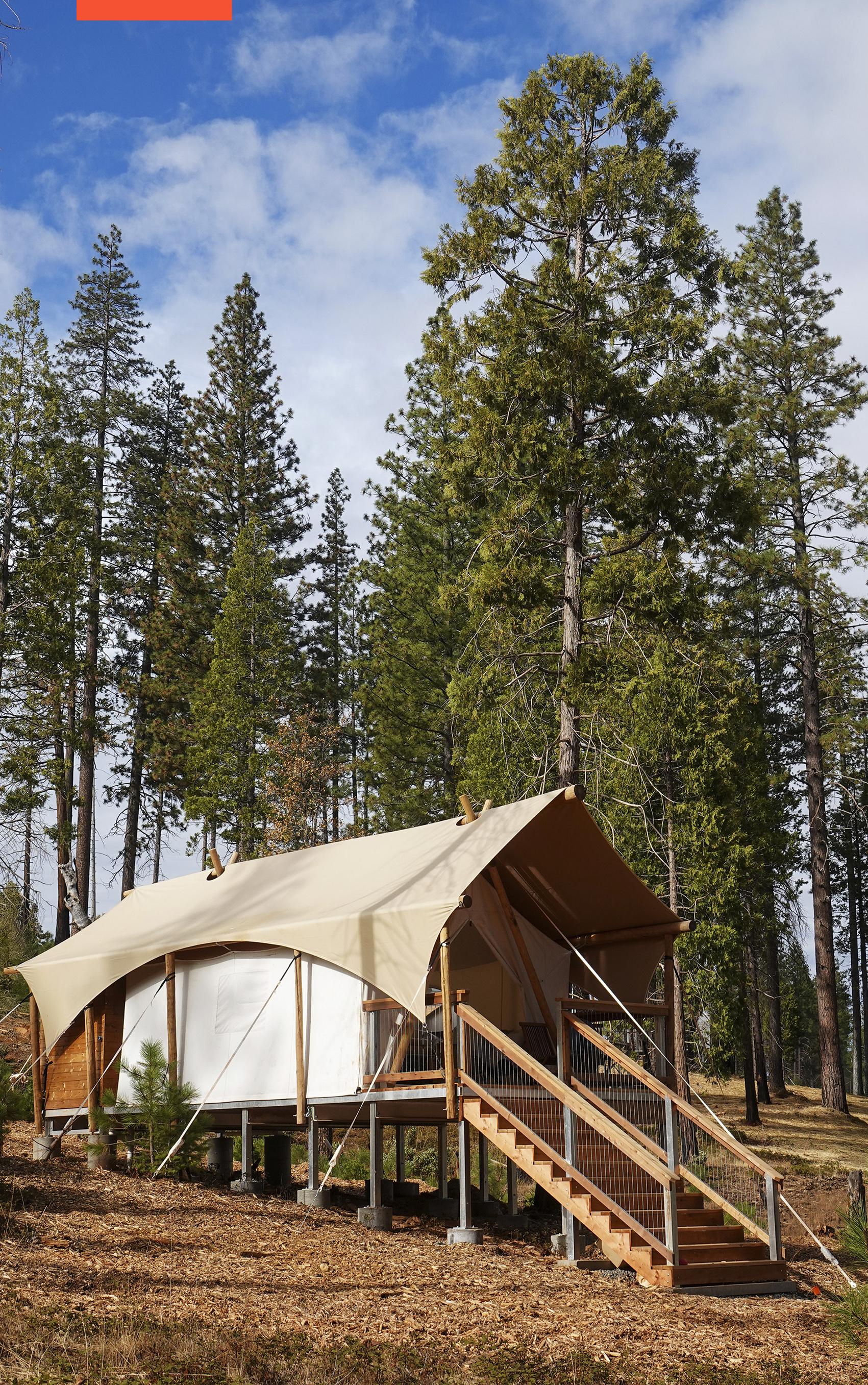
THE HIGH-END Under Canvas glamping collection continues to grow for a reason: These tented retreats place travelers in the heart of their surroundings while offering a balance of comfort and wilderness. The 13th property, and first in California, opens this spring in Yosemite National Park, just a 10-minute drive from the park’s west entrance, set on 80 acres thick with ponderosa pines and black oaks.
California is “a destination that we’ve had our sights set on for many years,” says Matt Gaghen, chief executive officer of Under Canvas. “What we’re really looking forward to with this location is offering our guests unmatched access to Yosemite.” Travelers, he adds, will have the opportunity to be “immersed in nature without sacrificing comfort and style.”
The main lounge is furnished with pieces from West Elm, while suite tents are equipped with hardwood floors, en suite bathrooms, and leather sofas. An on-site concierge can organize stargazing excursions and fly-fishing trips.
Reflecting the brand’s commitment to protecting the landscape and encouraging guests to unplug, the camps limit water use with pull-chain showers and low-flow toilets and do not provide Wi-Fi.
For a comfortable front-row seat to Yosemite’s dark skies, book one of the Stargazer Tents, which have viewing windows above the bed. From $329
The bus stop for the Yosemite Area Regional Transportation System is directly across from the Under Canvas camp.
With additional reporting by Michelle Baran and Bailey Berg
Rail Beauty
This spring, the Venice Simplon-Orient-Express, A Belmond Train, connects Paris to Italy’s Amalfi Coast for the first time. Here, we share—and celebrate—the details and secrets of the legendary train.
by Lucy Kehoe
Photographs
by
Enrico Costantini
A Storied Revival
The train known as the Venice Simplon-OrientExpress (VSOE) debuted in 1982, after American entrepreneur James Sherwood first acquired original Orient Express sleeping cars at a Monte Carlo auction and restored their art deco interiors. His revived route from Paris to Istanbul echoed the 19th-century service, which made its inaugural journey from Paris’s Gare de l’Est in 1883.
Europe On Wheels
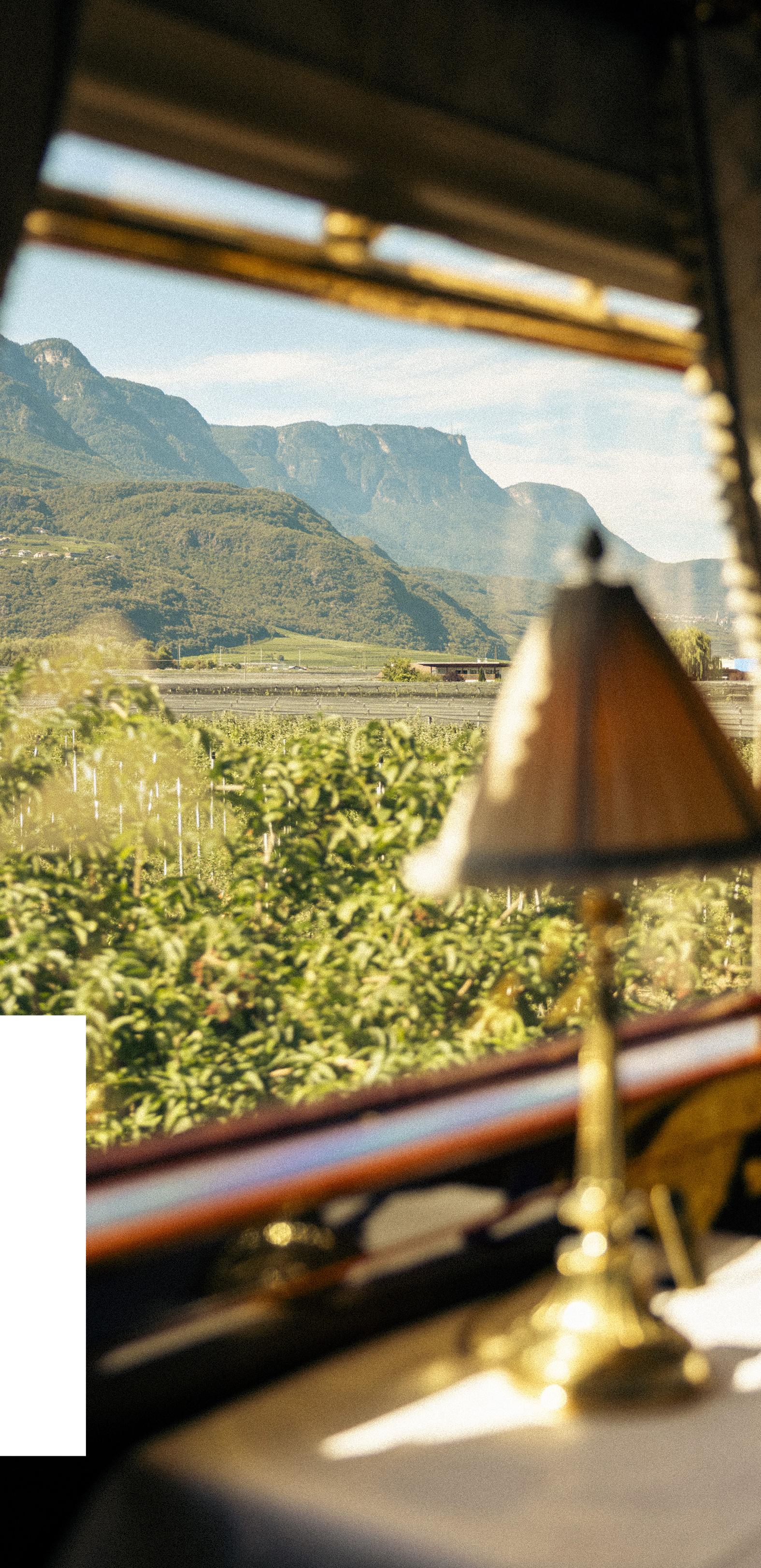
Today, the VSOE crisscrosses Europe, visiting Amsterdam, Brussels, Geneva, Prague, Istanbul, and Florence. In spring 2026, a new three-night route will connect Paris to Italy’s Amalfi Coast, with overnights in hotels such as the Caruso, A Belmond Hotel, in Ravello, along with one night spent on board the train. Cabins are without televisions, as the landscapes serve as plenty of entertainment. The VSOE travels at an average speed of 68.5 miles per hour, far slower than the fastest of Italy’s fleet of high-speed trains, which can reach 186 miles per hour.
Midnight Blue
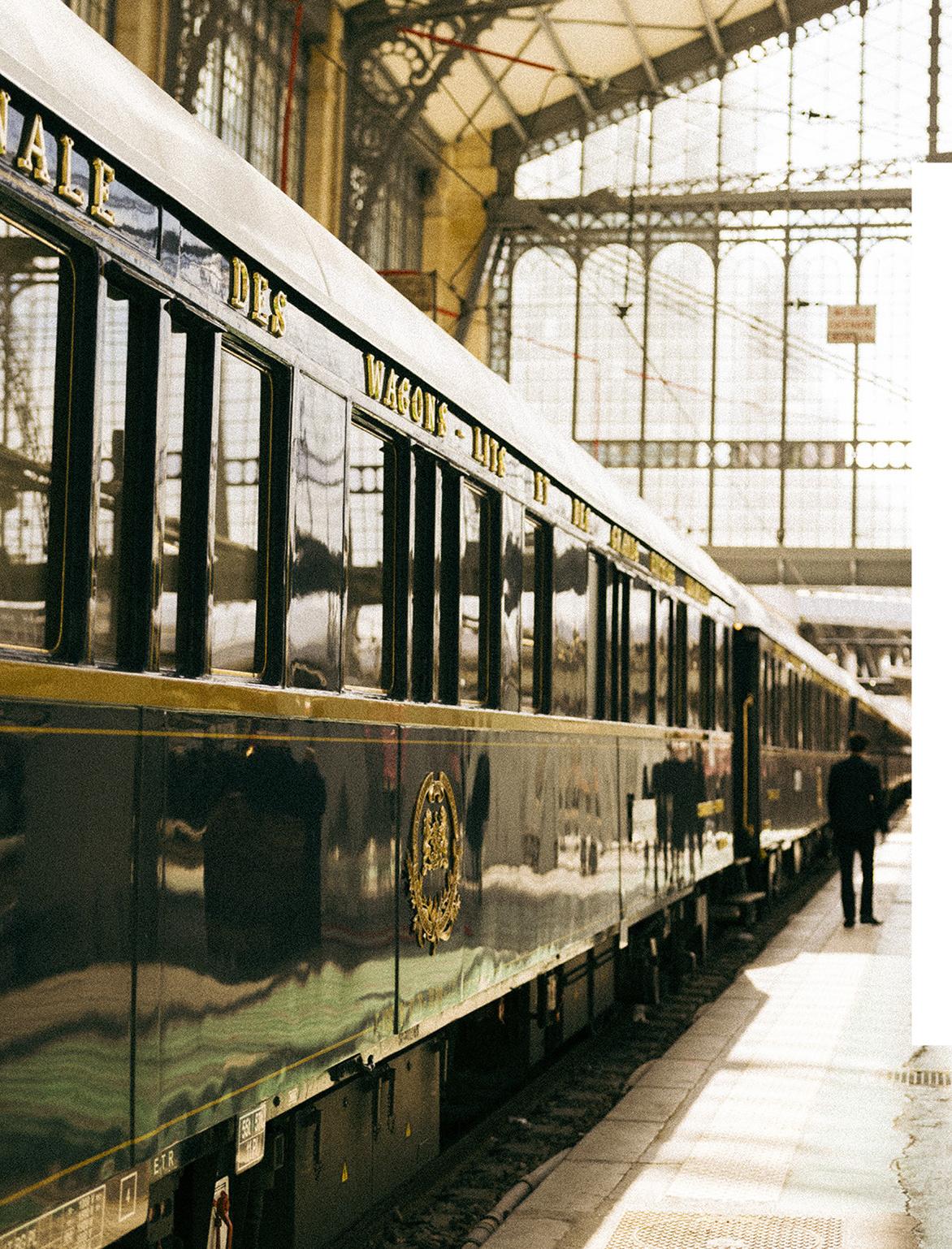
The train’s livery (a proprietary midnight blue with a white roof and brass lettering) was Sherwood’s vision. The original 19thcentury Orient Express had gray roofs, but Sherwood wanted to create a more striking color scheme to make the train instantly recognizable across Europe.
Ceremonial Departure
Passengers boarding in Paris will find a glass of champagne awaiting in their cabin, and Grand Suite guests are invited to enjoy complimentary caviar. This deliberate pacing establishes the tone of the journey: Travel is to be savored, not rushed.
Designer Pedigree
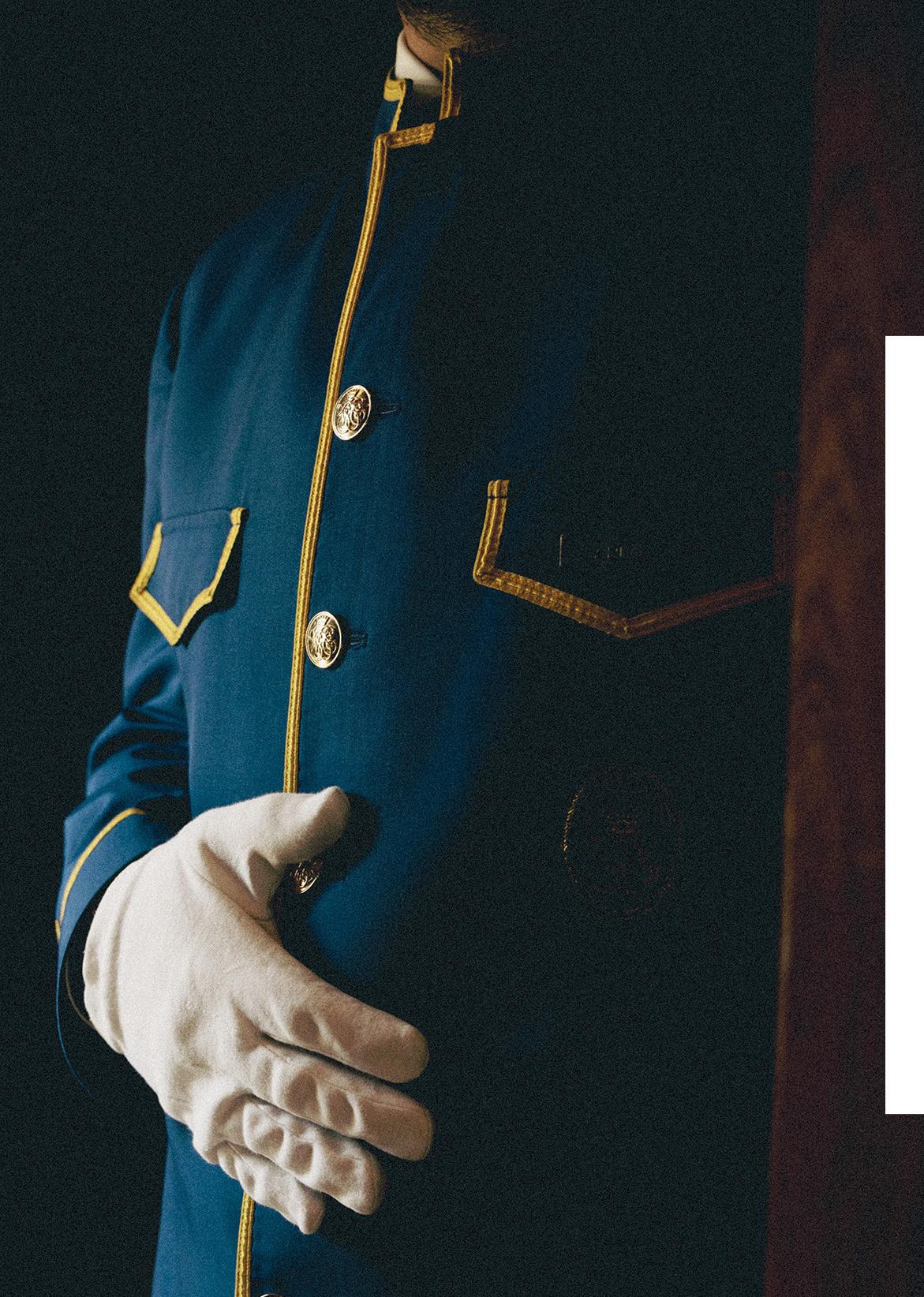
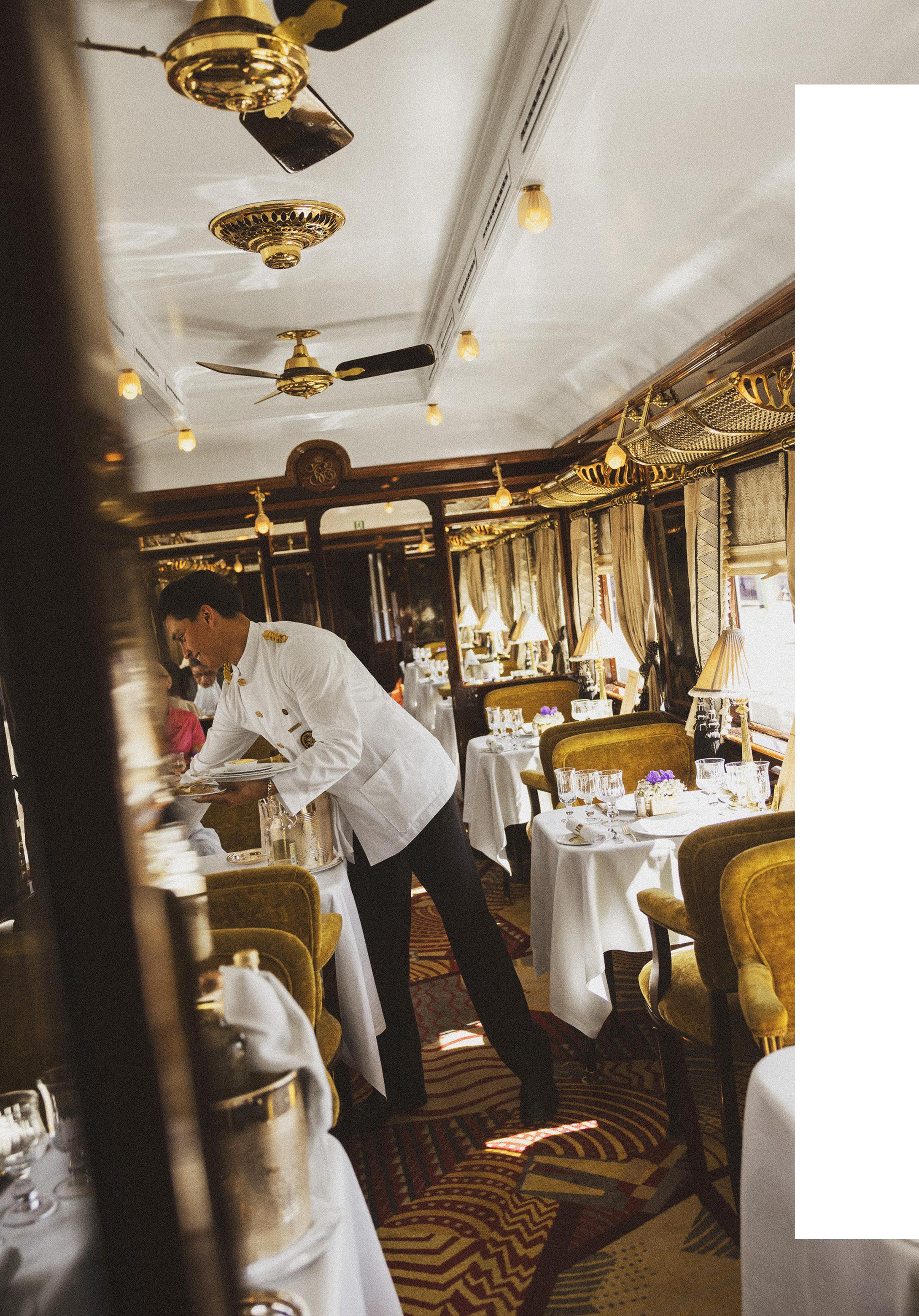
The cabin stewards’ iconic navy-and-gold uniforms were originally designed by Balenciaga in the early 1980s; the dining team’s attire comes from French fashion house Patou. All uniforms are produced in Italy, and the cabin stewards’ blue is a custom color, requiring more than 200 meters of specially dyed fabric for each production run. Every cabin is assigned a steward to attend to guests throughout their journey, summoned at the press of a call button. Grand Suite passengers enjoy a private, whitegloved butler dedicated solely to their suite.
Time to Dine
Guests can enjoy seasonally rotating lunch and dinner menus across three differently designed cars. Étoile du Nord has intricate marquetry (decorative woodwork), L’Oriental gleams with black lacquered panels, and Côte d’Azur showcases French jeweler René Lalique’s crystal work, which catches the soft carriage lighting. A maître d’ visits cabins to book tables, and riders are encouraged to try all three cars if journey length allows.
Evening Rituals
Dinner begins with Petrossian caviar and blinis, followed by four courses devised by chef Jean Imbert. Meals are served on fine china with French silverware and heavy crystal glassware. Afterward, diners move to the bar car for champagne, cocktails, and live piano music.
Bottoms Up
The VSOE serves more than 6,000 bottles of Veuve Clicquot annually. The complimentary wine list includes 15 champagnes and sparkling wines. After dinner, Bar Car 3674 becomes the train’s convivial heart, hosting a midnight brunch, which often includes lobster rolls and sandwiches with ham, cheese, and truffle.
Cocktail Hour
A dress code enhances the train’s theatrical atmosphere: Smart attire is requested throughout the day, with no jeans, shorts, or tennis shoes permitted. Black tie is encouraged for dinner, and many passengers embrace the opportunity to dress for the occasion. Sequins, tuxedos, cocktail dresses, and vintage gowns transform the dining and bar cars into scenes from another era.
The Art of Sleep
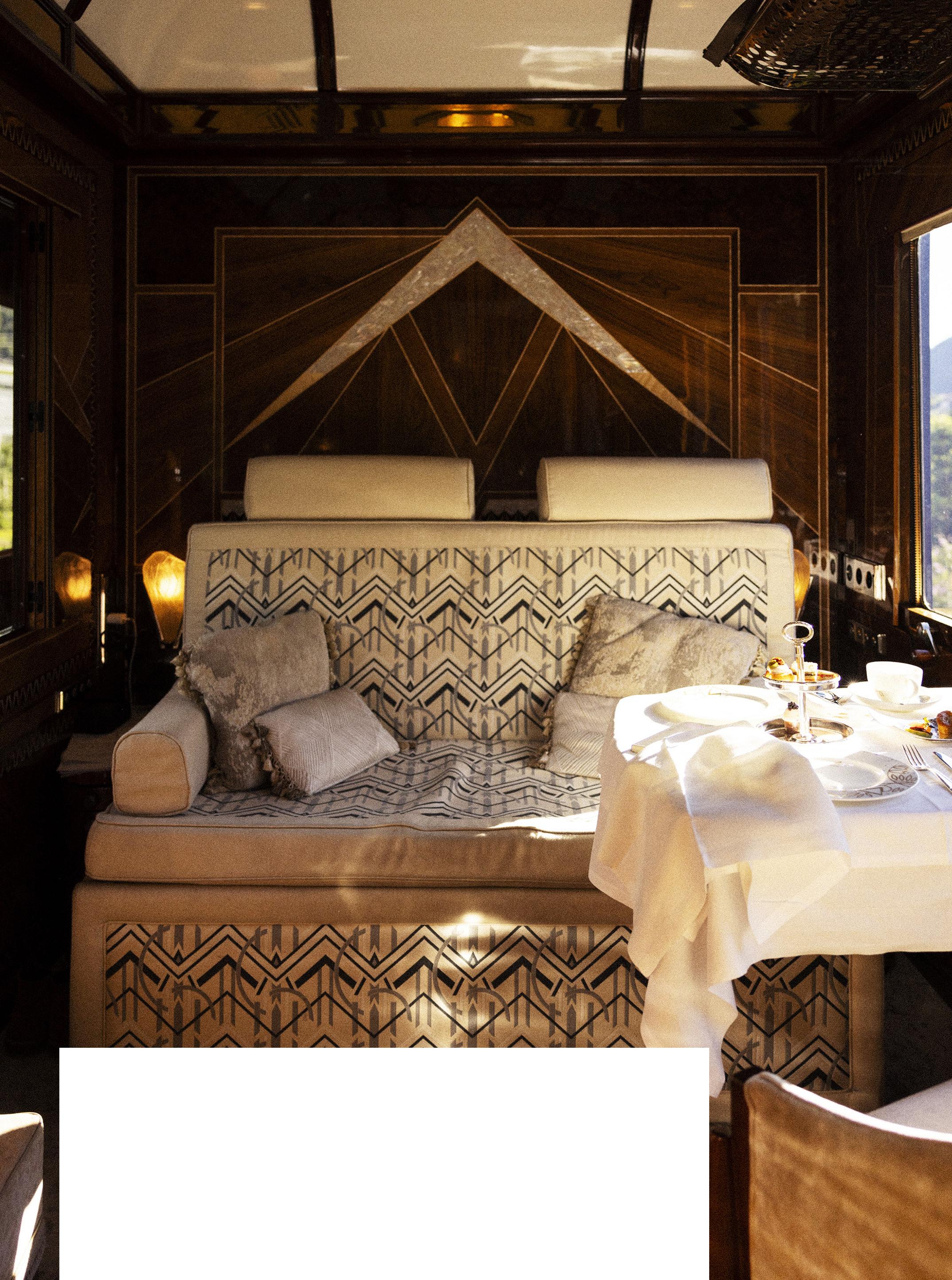
The train has three levels of sleeping quarters: historic cabins, suites, and Grand Suites named after European cities—Paris, Venice, Istanbul, Vienna, Prague, and Budapest. Grand Suite guests will find personalized bathrobes at their disposal and a button to buzz for champagne.
Generational Craft
For more than 40 years, the Allemand family workshop in Issoire, France, has maintained the VSOE’s elaborate woodwork in each cabin. Fifteen types of rare materials are used in their production.
Cabin Comforts
Paris-based perfumer Officine Universelle Buly, originally founded in 1803, provides amenities. Items such as shaving kits and silk eye masks are available on request; bow ties and even cuff links can be provided to travelers for a finishing touch.
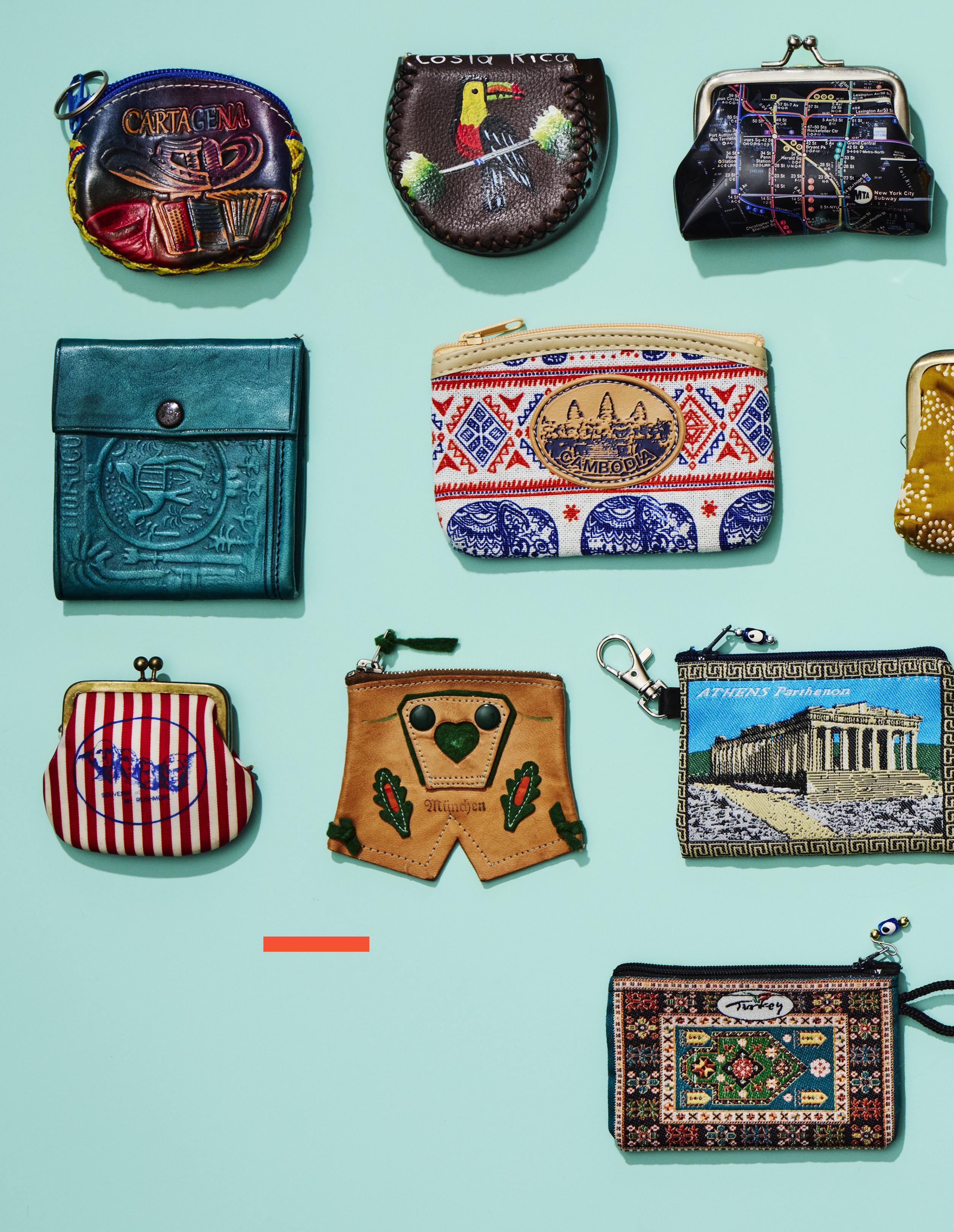
Cultural Currency
The best way to keep track of your euros, dirhams, pesos, and pounds: a souvenir coin purse with a big personality. Here, some favorites from around the globe.
CAMBODIA
NEW YORK
COSTA RICA
COLOMBIA
Photograph by Isa Zapata
THE PHILIPPINES JAPAN
ARIZONA
In the Right Hands
An artisan collective in India works to preserve and promote traditional Rajasthani textile arts— and the livelihoods of its skilled craftswomen.
by Leslie Pariseau | Photographs by Michelle Heimerman
Marigold petals are scattered onto cloth in preparation for eco-printing, a process of making one-of-a-kind designs using plants’ natural pigments.
DDOWN A ROCKY DIRT ROAD, about 10 miles north of Jodhpur, a field of okra, potatoes, and marigolds bakes in the autumn sun. Nearby, half a dozen women stand over metal basins, dipping lengths of raw silk and velvet into natural dyes colored with madder, rose petals, and indigo. A swath of rich ruby-brown fabric hangs on a drying line, lifting with the breeze, shimmering ombré as the light filters through.The women dip and toil,gold nose rings and bracelets flashing in the daylight.Two little girls pick through a small mountain of mustard-yellow marigolds. The blossoms smell spicy and wild.
Here in the rural Indian village of Kali Beri, the artisans of Saheli Women are wrapping up a week’s work before Diwali, the Hindu festival of lights.When the women finish dipping, the leftover dyes, which contain nourishing Ayurvedic properties,will become fertilizer for the garden—its vegetables nutrition for the women, their families, and the larger village. This circularity is intentional: At Saheli, every flower petal, every puff of cotton seems bound for purpose in these women’s hands.
SAHELI, WHICH MEANS “FEMALE FRIEND” in Hindi, is a collective of women artisans who practice India’s ancient art of textile production. The workshops were founded by Jodhpur native Madhu Vaishnav in 2015 with $100 and five craftswomen in a one-room studio in the desert village of Bhikamkor, 50 miles north of the city, where Vaishnav ran a skills training center out of her husband’s family home. Vaishnav, whose marriage contract discouraged her from working or continuing her education, defied expectations and attended a program for sustainable development at UCBerkeley. There, she conceived of creating a company in which “women [would] have the equal chance to learn and earn money so they could earn respect in society and give a life to their children,” she says. Artisans in the collective, many of them Pakistani Hindus or Indian Muslims who have experienced religious persecution and extreme poverty, make the equivalent of $188 to $243 per month,or about 50 percent more than the average Indian textile worker is paid. Rajasthan has historically been known as a global center of textiles, but as a result of nearly two centuries of British colonial rule, machine looms became standard, replacing handmade fabrics that had long sustained the livelihoods of craftspeople. In the last 20 years, however, a revival has taken root in the state,supported in part by government initiatives. In Rajasthan, the language of fashion is expressed via block printing,patterns made by intricately carved blocks of wood dipped and stamped on fabric; zari embroidery done with fine silver or gold thread; kota doria, similar to
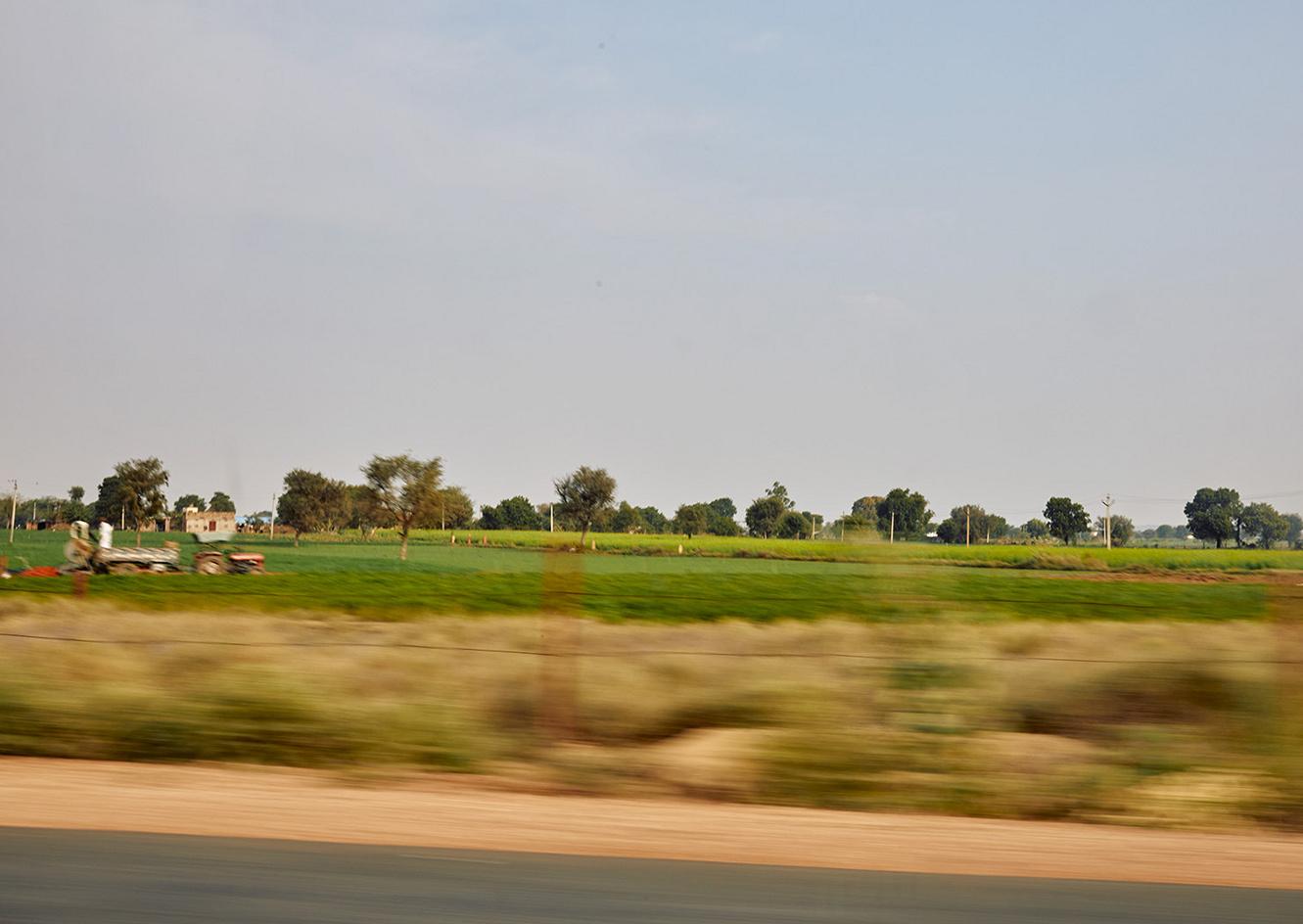
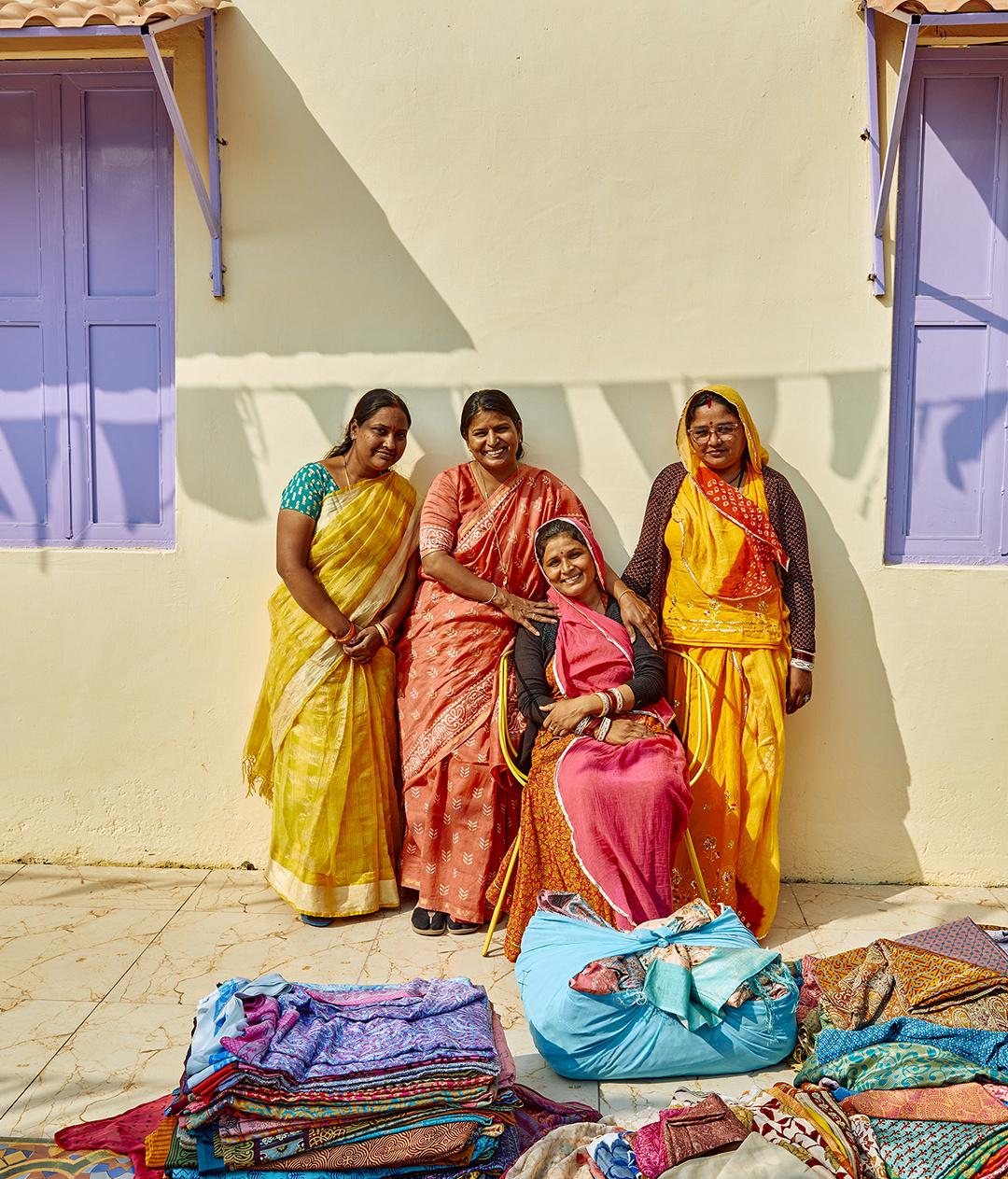
This page, from left: Outside Jodhpur, the scenery changes to semiarid farmland; Saheli Women founder Madhu Vaishnav (second from left) with craftswomen from the collective. Opposite page: Before dyeing, bandhani fabrics are gathered into many tiny, intricate knots.
organza; and handloomed textiles such as pattu, wool woven into bold patterns, and khadi, cotton cloth.
Today, 200 women are employed across the Kali Beri studio and the original workshop in Bhikamkor, which has become Saheli’s weaving center, where a recently planted cotton farm is the source for handloomed fabric. The collective is capable of full-cycle production, from making and sourcing fabrics to designing,dyeing,stitching,and creating clothing for its namesake label—and for a dozen or so designers around the globe.
In Rajasthan, the language of fashion is expressed via block printing, zari embroidery, and pattu, wool woven into bold patterns.
INSIDE THE KALI BERI STUDIO, I am with Trishala Bhansali, founder and designer of the New Orleans–based clothing company Lekha, as she presents a red-and-gold brocade dress to the team, hoping the silhouette might be replicated for her winter collection. She then sits down with operations manager Jhansi Mangal to sift through stacks of saris that will be upcycled into silk pajama sets and sundresses. Bhansali, who visits Saheli several times a year, was one of the collective’s first partners and investors nearly a decade ago, part of her larger personal mission to support Indian artisans practicing traditional textile-making.
“The women at Saheli are family,” Bhansali says.“It’s [a feeling] Madhu has created. Her own energy for what she does is the same since the day I started coming.”After working through several of Bhansali’s new designs—a shimmering zari-brocade skirt, sari-silk sundresses, a cotton button-down—we eat on the floor of the studio, sharing tiffins of chana (chickpeas), aloo (potato) masala, and paratha, the flaky flatbread. Outside, the little girls—daughters of the artisans—flick a badminton birdie back and forth with fraying rackets. The Saheli workshops provide built-in education for the women’s children and for the women themselves: Many are learning math, literacy, and chemistry in addition to mastering their complex craft. Vaishnav is working to open a vocational school by early 2027.
Vaishnav tells me the story of Jyoti Harijan, an artisan from the Dalit caste who joined Saheli five years ago.“She is the first Dalit from all the village area to leave, to get an education,” Vaishnav says, noting that, in this society, many see a Dalit’s role as to “clean the floors and not think big.” But Harijan has grown into one of the collective’s most talented weavers, and when Saheli was honored at 2025’s Camera Moda Sustainable Fashion Awards in Milan, she joined Vaishnav at the events. “Her entire village community celebrated,” Vaishnav says. “When we invest in women, women invest in generational change. They change culture.”
New Orleans–based writer Leslie Pariseau is profiled on page 14. Michelle Heimerman is Afar’s director of photography.
This page: Jyoti Harijan helms the loom at Saheli’s Bhikamkor atelier. Opposite page: For many Saheli artisans, gold accessories such as bangles and pajeb (ankle bracelets) are both an investment and a close-held manifestation of the profits of their labor.
How to Take This Trip
Saheli Women has five-day “Artisan Immersion” experiences for small groups that include workshop visits, lessons on craft and culture, meals with founder Madhu Vaishnav and the artisans, and homestays with local families. A day trip to the studios is also a possibility—get in touch through the website to book. saheliwomen.com
If you’re building Saheli into your own itinerary, make Jodhpur your base: The “Blue City” of Rajasthan, home to about 1.5 million people, has no shortage of historic places to stay. At the foot of the massive Mehrangarh Fort, Raas Jodhpur (from India’s boutique Raas Hotels
group) integrates sandstone buildings once part of an 18th-century haveli (mansion). Umaid Bhawan Palace, a Taj hotel, occupies a lavish 1920s-era structure—still an official residence of the descendants of Jodhpur royals—with 26 acres of surrounding gardens. Ajit Bhawan was previously a royal residence, too; guests can choose between the standard accommodations or tented rooms inspired by the camps of traveling royal parties. For those seeking a more urban experience, Daspan House, set in a century-old former home near the city center, has 18 quiet rooms and a rooftop pool. —Hannah Walhout
Tra ve� BUSY person’s the
guide to
Slo �
Though the term is everywhere right now, “slow travel” is no fleeting trend. Instead, it’s a sensibility, an approach—and there isn’t just one way to do it. Some tips for getting into the mindset: Prioritize depth over breadth when planning a trip, stay longer in one place, and leave plenty of breathing room in your itinerary. Here are 20 journeys grouped by focus—nature (p.52), arts and culture (p.56), adventure (p.60), food and drink (p.64), health and wellness (p.68)—that will inspire you to dig in and make real connections to a place and the people who live there.
by Ellen Carpenter · Illustrations by Elizabeth
See
Natur�
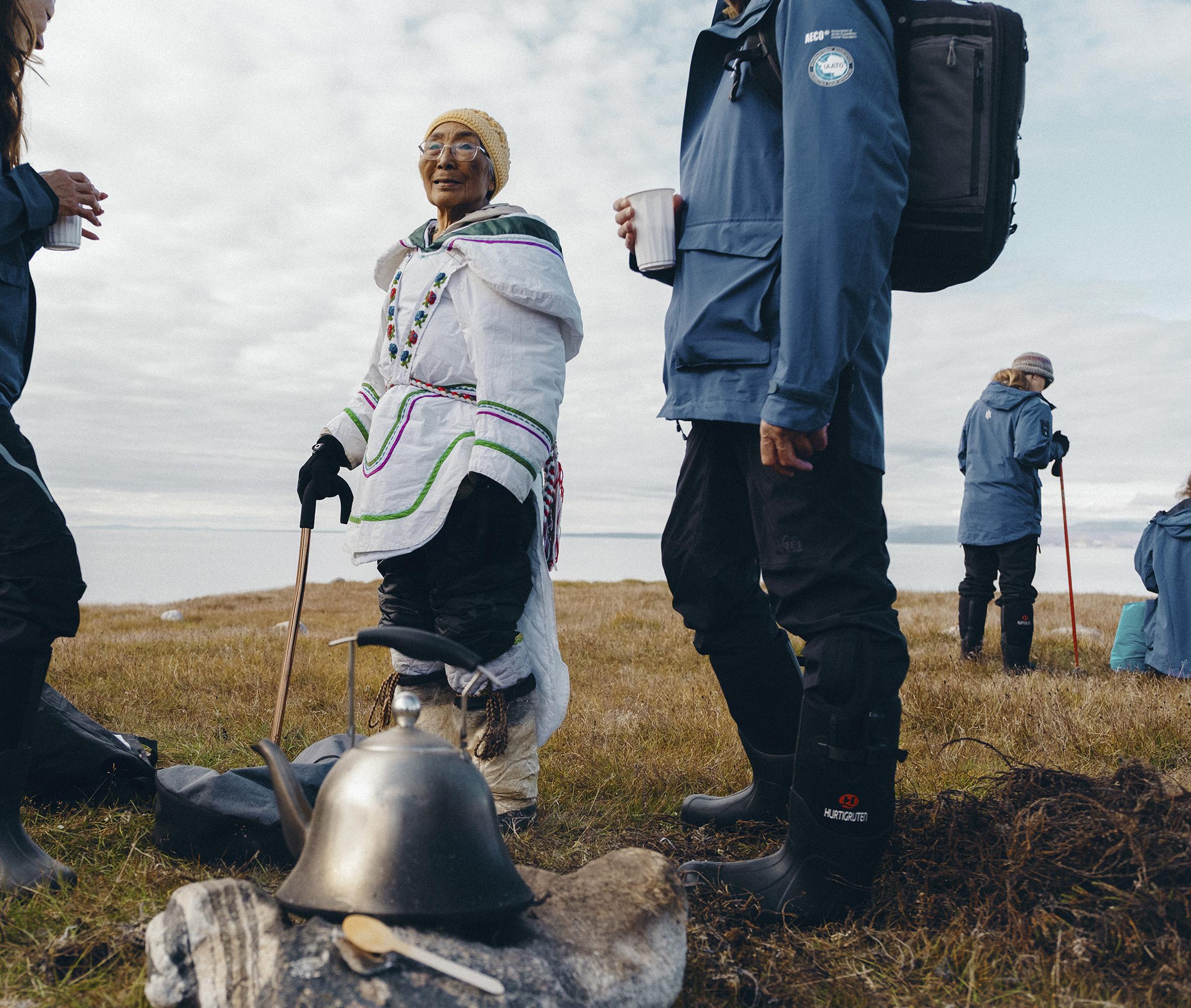
experience the arctic through its people
HX Expeditions’ “Northwest Passage—Across the Top of the World” in August is a 26-day trip from Nome, Alaska, to Nuuk, Greenland, through the end of the brief, luminous Arctic summer. Watch from the deck of the hybrid-powered 265-stateroom MS Roald Amundsen to see the scenery unfold in stark, mesmerizing layers—drifting ice sheets, bobbing bergs—and keep an eye out for breaching gray whales and sunbathing walruses. Passengers will connect more deeply with the landscapes through HX’s new community-led shore excursions, developed in partnership with Inuit elders and other residents. Hike with Indigenous storytellers in Pond Inlet on Nunavut’s Baffin Island, or fish for arctic char in Victoria Island’s Cambridge Bay. HX works exclusively with local individuals and businesses for each experience, ensuring that meaningful encounters also bring real economic benefit to the communities visited. travelhx.com
revel in england’s legendary gardens
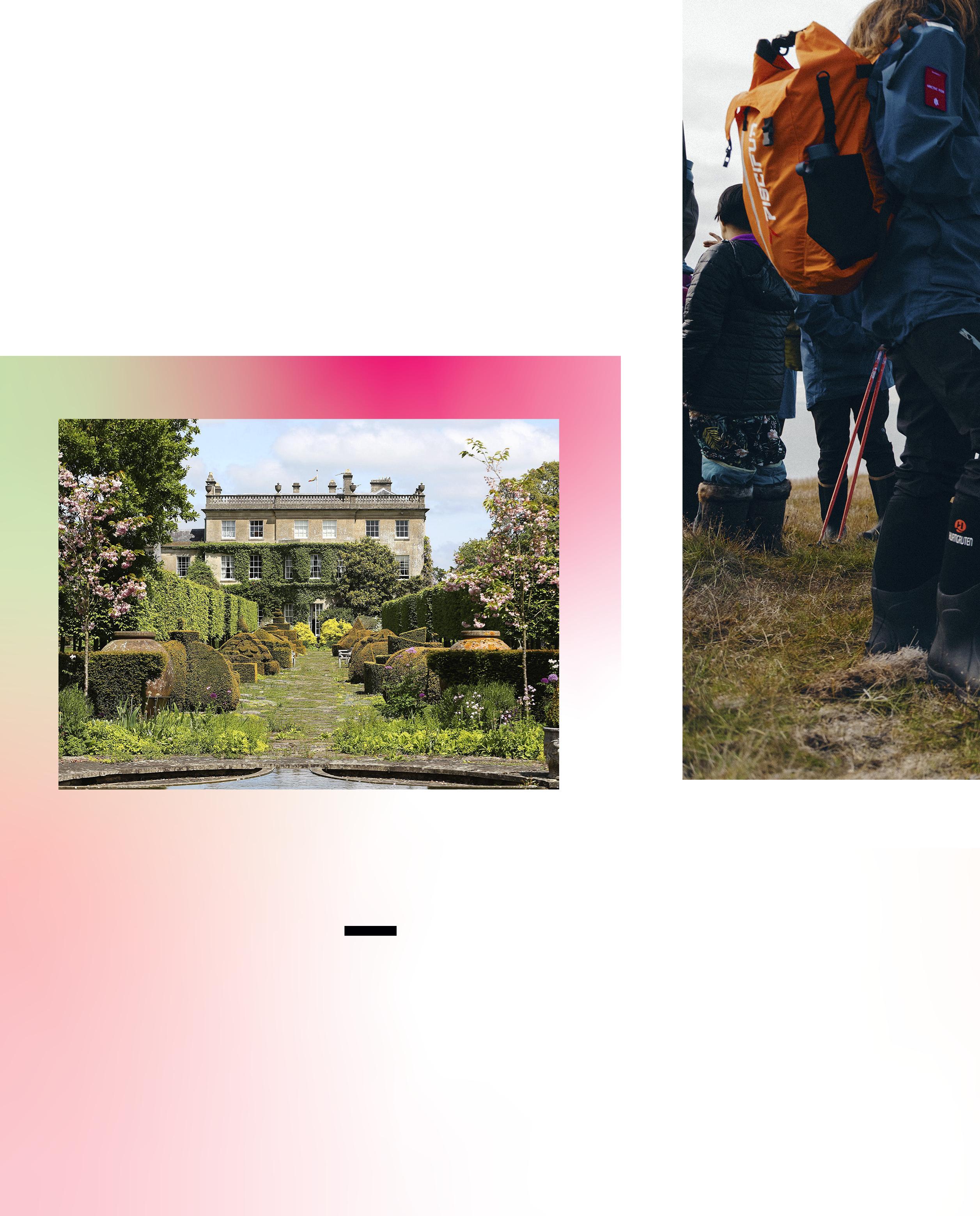
Early summer is when England’s gardens tell their richest stories—and Sisley Garden Tours knows exactly where to experience them. The 34-year-old U.K.-based company has built the kind of close-knit relationships that can unlock ivy-cloaked gates and secure appointments at rarely open private gardens and estates, often hosted by the owners themselves. The nine-day “Discovering England’s Iconic Summer Gardens” journey through the southern Cotswolds and Kent is timed for peak bloom in June, when flower beds swell with roses, delphiniums, and foxgloves. Guests enjoy pre-opening access and private tours at celebrated properties like Sissinghurst and
Highgrove House, a residence of King Charles III, in addition to family-run estates such as Bath’s Caisson Gardens. sisley.co.uk
see giant pandas in china
WildChina’s three-day “Discover Pandas in Xi’an” trip is a perfect add-on to any longer exploration of Shaanxi province in northwestern China. From a home base at the Sofitel Legend People’s Grand Hotel Xi’an, guests on the tour wander the provincial capital’s lively Muslim Quarter and see the Terra-cotta
This page: Highgrove House dates to the 1790s, but the 15 acres of gardens as they exist today began life in the 1980s as a project of King Charles III. Opposite page: The hamlet of Gjoa Haven has another name in the Inuktitut language of Nunavut: Uqsuqtuuq, or “place of plenty of blubber.”
Army—more than 8,000 life-size clay soldiers, chariots, and horses created two millennia ago to guard the Mausoleum of Qin Shi Huang, the tomb of China’s first emperor. On day two, you’ll drive 90 minutes through the Qinling foothills to reach the Research Center for the Qinling Giant Panda, first established in 1987 as a wildlife rescue. Here, Wan Hui, former director of the World Wildlife Fund’s panda conservation program in China, will illuminate the behaviors of these gentle creatures. The center houses nearly 50 giant pandas and is situated within a larger animal park, home to the beloved Qizai, the world’s only brown panda living in captivity. wildchina.com
ride the rails in canada
Get front-row seats to the epic landscapes of Canada on the Rocky Mountaineer’s 10-day “First Passage to the West Grand Adventure,” which combines travel by both luxury train and motorcoach. Eastbound departures begin in Vancouver, where you board the glassdomed, Wi-Fi–free railcars of the Mountaineer and watch the scenery shift from the emerald
fields of the Fraser Valley to the snowcapped drama of the Canadian Rockies. After the train’s last stop in Banff, Alberta, you’ll travel between the province’s mountain towns and national parks, with stays at historic hotels along the route such as the Post Hotel & Spa in the Bow River Valley or Fairmont Jasper Park Lodge. Full days are allocated for exploring: Take a gondola up Sulphur Mountain and relax in Banff’s hot springs; canoe across the turquoise waters of Lake Louise; and ride an all-terrain vehicle to the middle of the colossal Columbia Icefield in Jasper, where the journey ends. Book a westbound tour to do it in reverse. rockymountaineer.com
Arts & Cultur�
learn the visual language of mexico
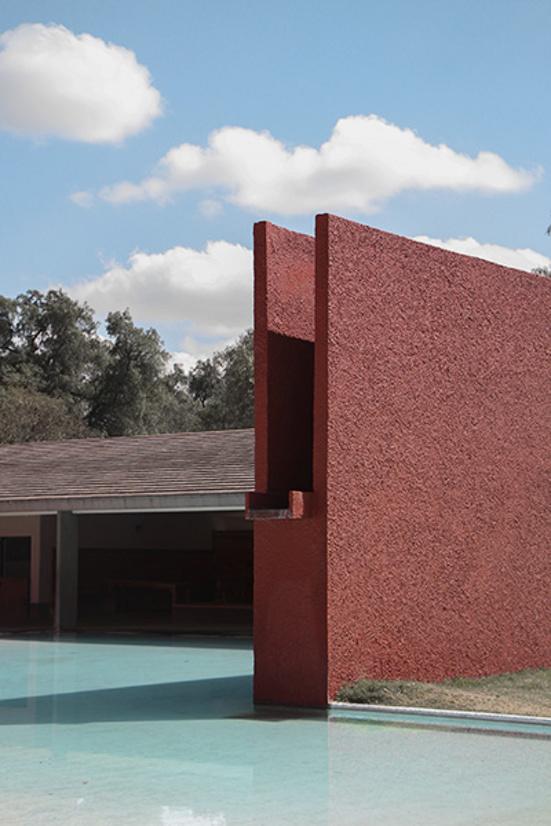
The nine-day “Art, Crafts & Design of Mexico” private journey with tour company Artisans of Leisure is designed around the creative energy of Mexico City and Oaxaca, two of the Americas’ most compelling art destinations. In Mexico City, pre-Hispanic ruins sit alongside cutting-edge architecture and a dynamic art scene. With a dedicated guide and driver, you’ll see premier museums—including Museo Jumex and Museo Tamayo, both focused on contemporary art—and the homes of artist Frida Kahlo and architect Luis Barragán. In Oaxaca, wander the colonial-era center and visit nearby villages renowned for textiles, embroidery, barro negro (black clay) pottery, and alebrijes (fantastical folk-art sculptures). artisansofleisure.com
get in tune with the american south
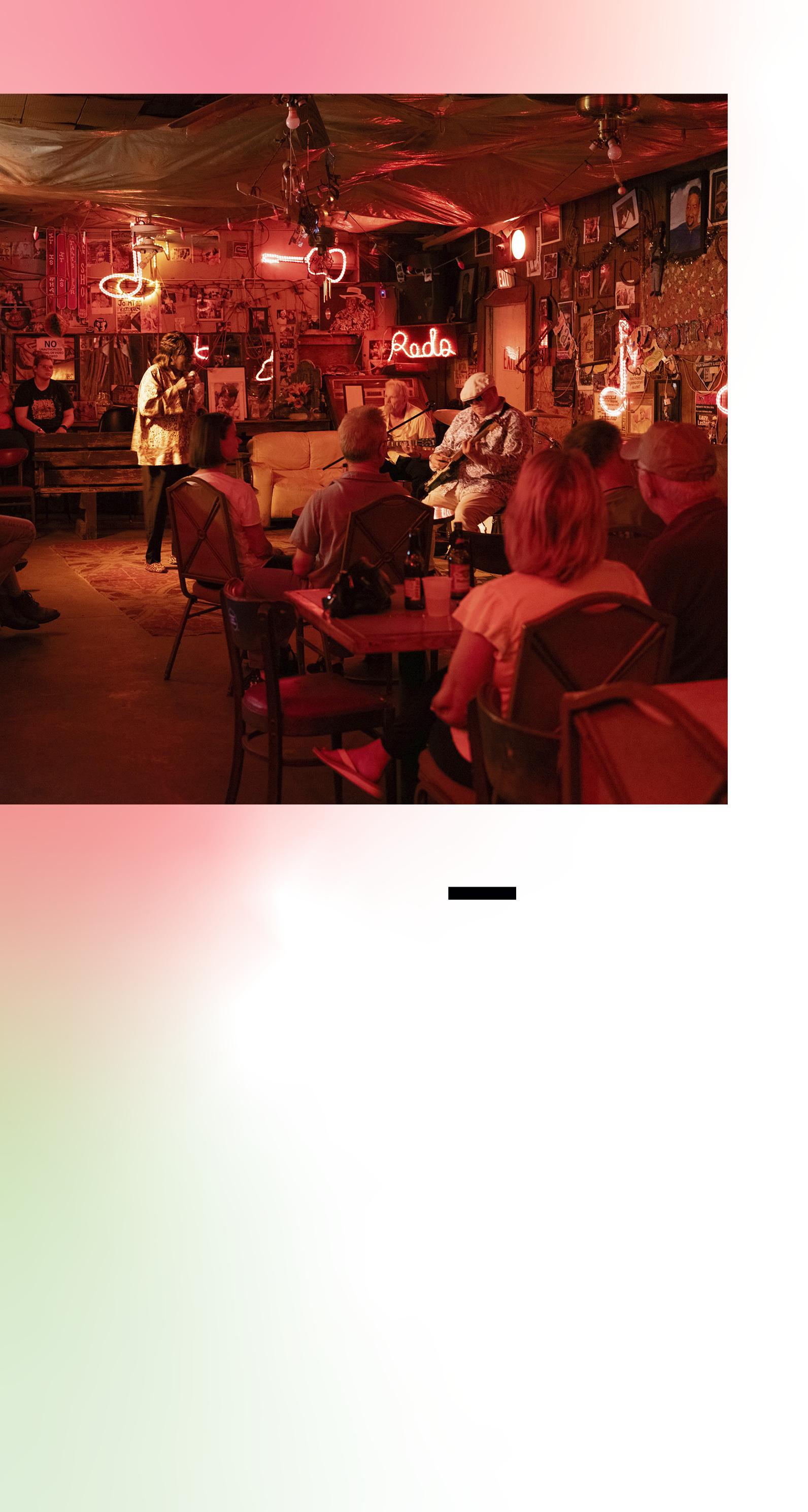
Documentarian Ken Burns explored some of the country’s homegrown musical genres in Jazz (2001) and Country Music (2019). Now, travelers can see the series come to life. For its Ken Burns American Journeys collection, tour company Tauck collaborated with the filmmaker for small-group itineraries such as “Music of America: Nashville to New Orleans.” Kick things off in Nashville with an earlyadmission guided visit to the Country Music Hall of Fame and Museum and a show at the Grand Ole Opry. In Memphis, stop by Sun Studio, where Elvis laid down early tracks, then enjoy an after-hours tour at Graceland and a private dinner among the King’s classic car collection. Blues becomes the soundtrack once you’re in Mississippi; you’ll stop for lunch and a private show at legendary Club Ebony in Indianola, where B.B. King and Muddy Waters wowed crowds in the ’50s. End in the Big Easy, where you’ll dip into French Quarter jazz clubs and take in a private performance at the historic Preservation Hall. tauck.com
turn back time on the nile
In October 2026, the luxury tour operator Abercrombie & Kent debuts its fifth Nile riverboat: the Nile Seray, an A&K Sanctuary, which will sail the storied 130-mile stretch between the Egyptian cities of Luxor and Aswan. It’s an intimate way for a small group of passengers (limited to 64 total) to encounter 5,000 years of history; each day brings guided excursions with leading Egyptologists through sites like the Temple of Edfu and the vast sacred complexes of Karnak and Philae. In the Valley of the Kings, guests enjoy private after-hours access to the grand royal tombs of Pharaohs Tutankhamen and Amenhotep III. When you’re not steeping yourself in the ancient world, take a sailing excursion aboard a felucca (a traditional style of wooden boat), or ride a hot-air balloon to see the Valley of the Queens from the sky. abercrombiekent.com
From left: Tauck’s music tour of the South stops in Clarksdale, Mississippi, home of blues legends such as Muddy Waters and Robert Johnson and iconic juke joints like Red’s Lounge; Cuadra San Cristóbal, an equestrian complex and private estate built in 1968, is one of architect Luis Barragán’s most notable Mexico City projects.
maunakeabeachhotel.com
study art history in the netherlands
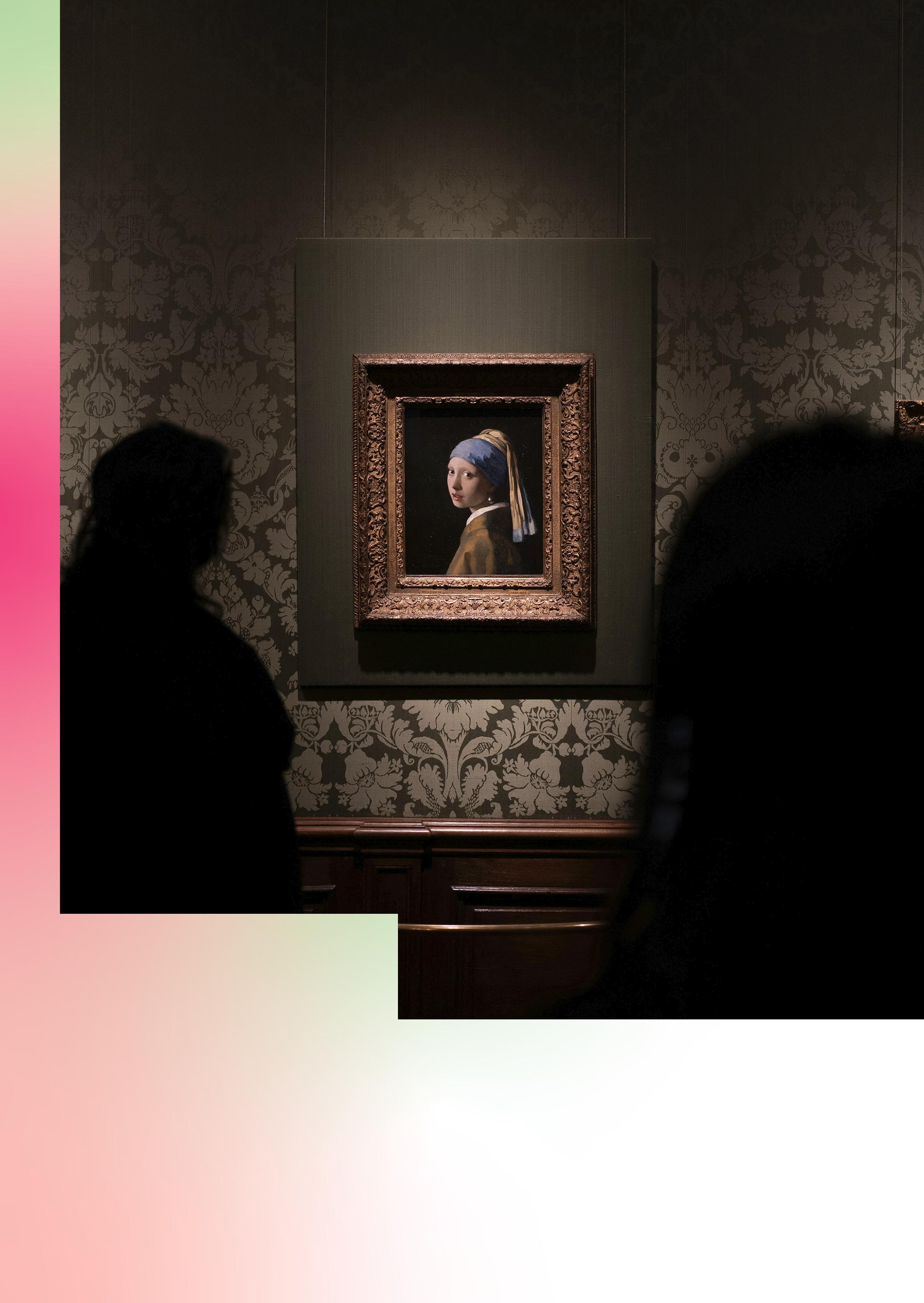
Spend real time with the Dutch Masters and their visionary descendants on Smithsonian Journeys’ nine-day “A Stay in Holland: An Art History Journey from Vermeer to Van Gogh.” Haarlem’s Amrâth Grand Hotel Frans Hals is your base for seeing the country’s world-class museums, inviting towns, and pastoral landscapes. In Amsterdam, guided tours dive into the Dutch Golden Age at the Rijksmuseum (home to Rembrandt’s The Night Watch, among other important works) then skip forward to the 19th century at the Van Gogh
Museum, with classics like Sunflowers and searching self-portraits. The Mauritshuis, in The Hague, offers an intimate encounter with Girl With a Pearl Earring; you’ll later explore Vermeer’s hometown, Delft, known for its blueand-white decorative pottery. There are also plenty of excursions beyond art and craft, including a cheese tasting in the city of Gouda. smithsonianjourneys.org
Despite the painting’s title, it’s most likely that Vermeer’s Girl With a Pearl Earring is wearing a larger-than-life imitation gem made of a material such as glass—or possibly, that the subject is not based on a real model at all.
Adventur�
traverse southeast alaska’s wildest corners
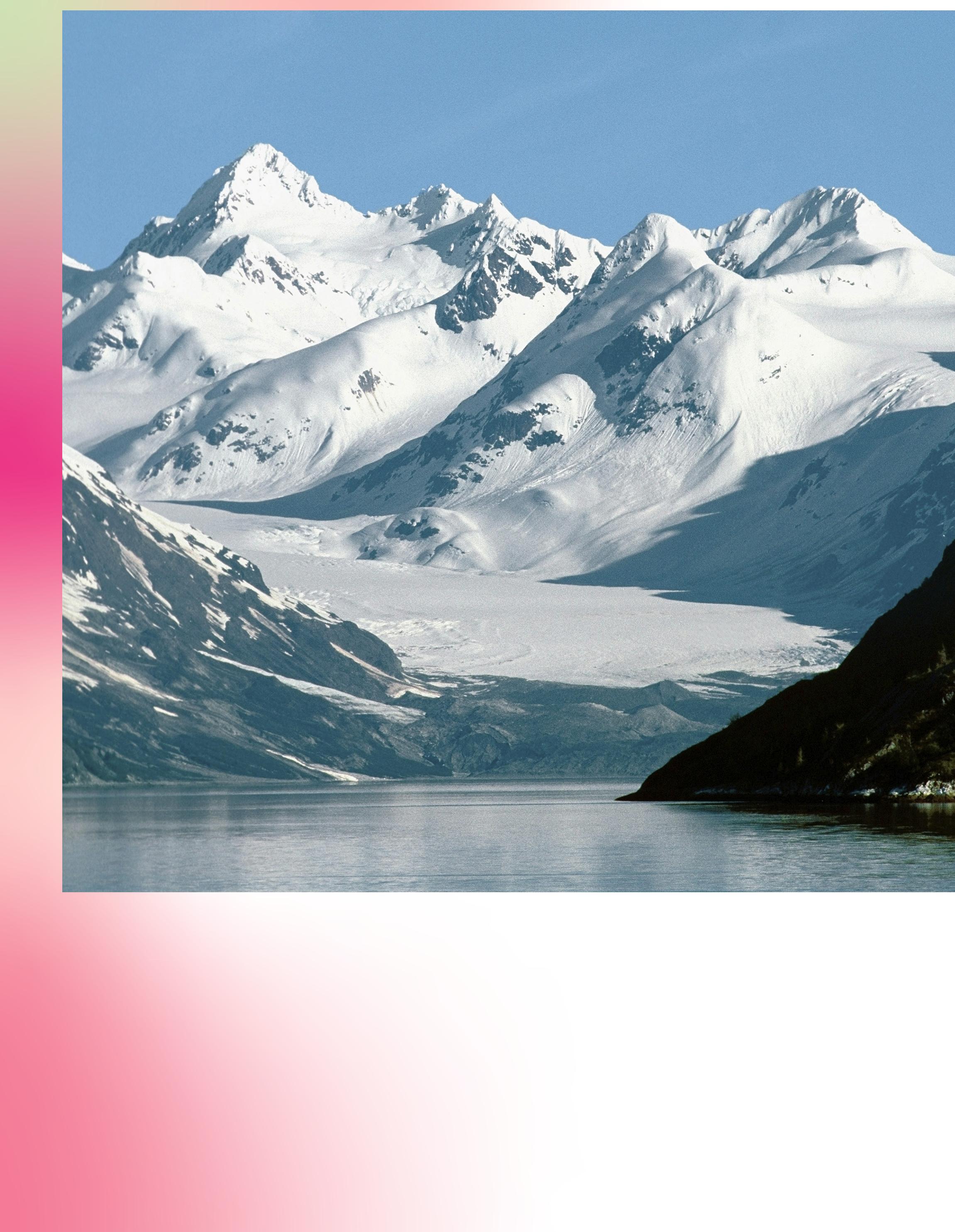
On the Glacier Bay and Juneau private-group retreat from tour operator Modern Adventure, available year-round, travelers explore jagged fjords and tidewater ice fields both on foot and by kayak. You’ll glide past breaching humpback whales (the best time to see them is late June through August) and maybe even spot bears along the shoreline (most likely in late summer). Nights are spent in wilderness lodges or camping on the north coast of Chichagof Island, where a cook prepares dinner over the fire. The retreats are fully customizable, with five days as the recommended minimum: Between guided expeditions, there’s time to visit the home of a Huna Tlingit community member, enjoy fresh-from-the-water seafood, and stop in isolated coastal towns such as Gustavus, known for its wild strawberries, ripest in July. modernadventure.com
At 3.3 million acres—roughly the size of the state of Connecticut—Glacier Bay National Park encompasses many diverse ecosystems, including vast ice fields, temperate rainforest, alpine tundra, and coastal estuaries and fjords.
JAPAN’S QUIET VOLCANIC ISLAND
On Japan’s southern island of Kyushu, volcanic intensity has shaped the region’s distinctive culture for centuries. From mineral-rich soils to rejuvenating springs, to journey through Kyushu’s Unzen, Aso, and Kagoshima regions is to experience communities where the fire below defines daily life
Unzen’s Geothermal Bounty
Unzen’s Geothermal
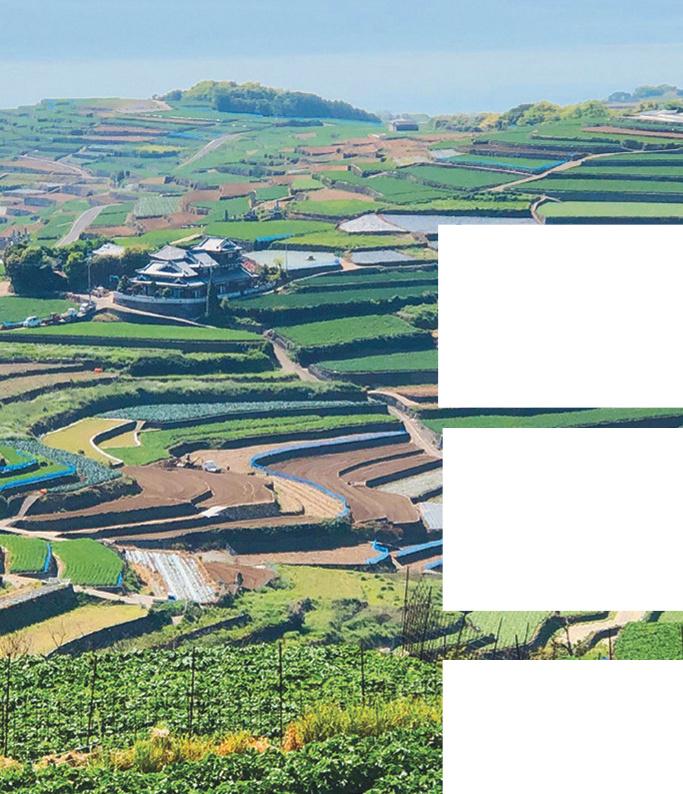
In Unzen City, the Earth’s power is a tangible, daily presence Within the Shimabara Peninsula UNESCO Global Geopark, terraced farms grow prized potatoes in the mineral-rich yellow soil, and tenmaku restaurants use volcanic steam vents to cook the harvest From trekking Mount Unzen’s peaks to strolling the sulfur-scented town square, the landscape is a sensory connection to the active forces just beneath the surface
Peaceful Moments on the Mountains
Learn how mountain worship is a part of daily life for residents of Kyushu. Here, shrines like the Aso Shrine are less about static monuments and more about a living dialogue with the landscape At the Unzen Onsen Shrine, visit the steaming “hells” where small stone jizo statues (protectors of children, travelers, and mothers) overlook bubbling vents
Natural Splendor of
Restorative Stays
Restorative
Throughout your trip, you can enjoy accommodations like Sen-no-Mori that give you a deep sense of place, rooted in the land. At the century-old inn Sozankyo on Aso, soak in natural hot springs before a multicourse meal featuring akaushiWagyu, beef raised on the area’s grasslands
Wonders at
volcano, visit a sanctuary for retired horses whose helps maintain the delicate
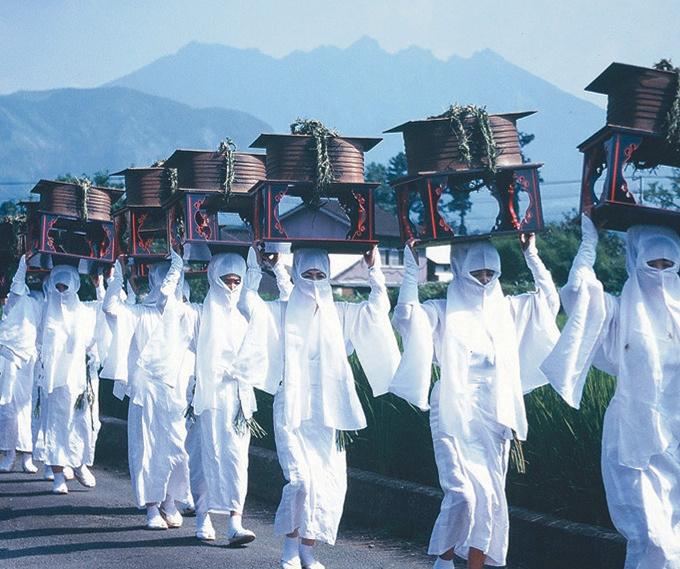
Kagoshima’s Natural Splendor In the Kirishima highlands of Kagoshima, dominated by the iconic Sakurajima volcano, visit a sanctuary for retired horses whose grazing helps maintain the delicate highland ecosystem On Sakurajima itself, join a volcanologist-guided lava walk to dive deeper into mountain life here.
Mount Aso
Sen-no-Mori
Aso Shrine
Unzen City
Kagoshima
Moments on the
get fit on the rhine
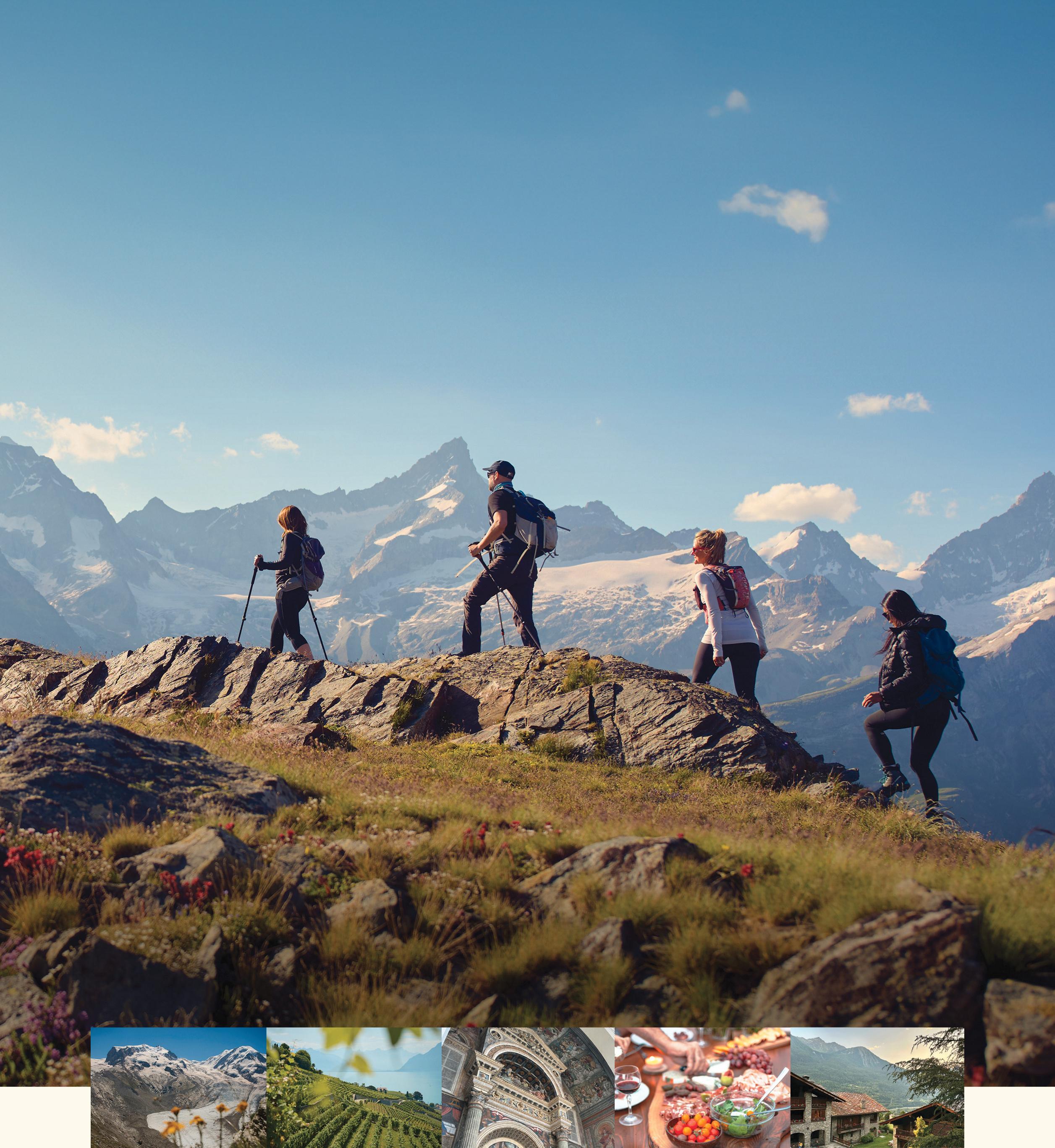
On an eight-day “Rhine River Cruise Multi-Adventure Tour” from the active-travel company Backroads, you’ll sail between Switzerland and the Netherlands (with stops in Germany and France along the way) aboard a 150-passenger ship from cruise partner AmaWaterways. It has a pool deck and multiple wraparound balconies for vistas of the passing beauty, but passengers also get to know the landscapes firsthand. Pedal between wineries and medieval villages in Alsace and along the Rhine Gorge—a UNESCO World Heritage site dense with castles and terraced vineyards—on your personal performance bike or hybrid e-bike. Kayak the canals of Strasbourg and hike Heidelberg’s Philosopher’s Walk, a favorite path of German thinkers and poets over the centuries, including Johann Wolfgang von Goethe. backroads.com
The Gunnison Valley is a favorite destination for trout fishing. Plan a stay (two nights minimum) at Eleven’s Scarp Ridge Lodge in Crested Butte, where you can book a range of guided half- and full-day fly-fishing trips on the Gunnison and Taylor rivers, stretches of which are designated by Colorado Parks and Wildlife as “Gold Medal” waters, teeming with large trout. Of course, there’s more to a stay at Scarp Ridge Lodge than angling: Other bookable excursions (all of which require an added fee) include horseback riding through wildflower fields or a guided hike to reach the 12,000-foot summit of Mount Crested Butte. elevenexperience.com
road-trip in maritime new england
Maine, where coastal highways wind between harbor towns, hidden beaches, and stretches of wooded shoreline, feels almost purposebuilt for a road trip. All Roads North offers a 12-day “Islands and Inlets: Maine Maritime Adventures” self-driving journey—complete with your choice of vehicle—with a custom itinerary that takes a leisurely pace while packing plenty of action. Each day means a new way onto the water: Ferry to rarely visited corners of Acadia National Park, hear loon calls while canoeing Moosehead Lake, or haul traps aboard a working lobster boat. Hotel stays with character along the way include Hidden Pond in Kennebunkport and Aragosta at Goose Cove. allroadsnorth.com
From left: Strasbourg’s old town, a UNESCO World Heritage site, is known for its half-timbered houses and working canals; Stonington, on Deer Isle, is Maine’s most productive lobster port.
Food &Drink
dig into culinary traditions in the lowcountry
For a deep dive into the history and hospitality of the coastal American South, book the sevenday “Charleston and Savannah: Lowcountry Culture & Cuisine” customizable getaway by private tour company Kensington. After checking into Charleston’s French Quarter Inn, stroll through the pastel-hued streets of South Carolina’s oldest city on a walking tour, tasting some classic Lowcountry dishes—shrimp and grits, she-crab soup—and visiting acclaimed restaurants Husk and the Ordinary. Head south to Georgia to check into the chic Hotel Bardo and dine at restaurants such as the Grey, from James Beard Award–winning chef Mashama Bailey, and the historic Olde Pink House, then learn the ropes yourself with a private cooking class. Between meals, wander at your own pace between Savannah sites: secret gardens, moss-draped squares, and the hauntingly beautiful Bonaventure Cemetery. kensingtontours.com
become a whisky expert in scotland
Go beyond the standard distillery circuit with an itinerary from Scottish outfitter Away from the Ordinary, which designs bespoke trips shaped for your pace and palate. Founder (and whisky enthusiast) Aeneas O’Hara brings deep knowledge and industry relationships that real scotch lovers will appreciate. Head into the Highlands for a stay at the 26-room Craigellachie Hotel—home to the Quaich Bar, a 130-year-old icon with a collection of more than 700 single malts—and private tastings at Macallan and Brora distilleries. Or spend time dropping in to Edinburgh’s best whisky bars, then continue to Perthshire via private driver, stopping on the way for a blending class at Glengoyne and ending the day with a meal at Glenturret, home to the world’s only two-Michelin-star distillery restaurant. If the islands are calling, answer with a chartered boat to Islay, where peat and sea air shape every dram. awayfromtheordinary.com
This page: To qualify as scotch, a whisky must be produced in Scotland, made with malted barley, and aged for at least three years. Opposite page: At Savannah’s the Grey, chef Mashama Bailey serves meticulously crafted comfort food inside a renovated 1930s-era art deco bus depot.
cruise atlantic france with a celebrated chef
Windstar, the official cruise line of the James Beard Foundation, partners with Gabriel Kreuther for its “French Feast: Normandy, Brittany, and Aquitaine” itinerary, a sevenday August sail aboard the 156-suite Star Legend. Travelers will sit down for a dinner prepared by the Alsace-born chef—whose eponymous New York City restaurant has two Michelin stars—and join him for a market tour and cooking demonstrations. You’ll start in Rouen, the capital of Normandy, making stops in Honfleur, St.-Malo, Guernsey, Lorient, and Bordeaux. Shore excursions emphasize local culture: Sample briny bivalves at an oyster farm in Cancale or enjoy a traditional Breton tea at the medieval Josselin Castle, one of the region’s grandest. windstarcruises.com
discover napa’s bounty on two wheels
The private, request-only “Napa Valley Villa Bike Tour” from DuVine—which curates cycling journeys that foreground superb food and wine—is more about immersion than mileage. You’ll spend a week savoring one of the world’s great growing regions, cycling scenic back roads to some of the valley’s most famous wineries (such as Cakebread and Stag’s Leap) with private tastings and picnic lunches along the way. Some days trade pedaling for hiking, cooking classes, spa visits, or canoeing on the Russian River in neighboring Sonoma County. In the evenings, your group dines at the area’s treasured restaurants—perhaps Press, in St. Helena, which has a Michelin star—before heading back to your exclusive-use villa. duvine.com
Clockwise from top left: In French cities such as Bordeaux, market shopping remains a central part of the culinary culture; Cakebread Cellars, a major player in the 1970s Napa renaissance, was founded when Jack and Dolores Cakebread bought some land on a whim (they were in the area while Jack, a photographer, was on assignment); Stag’s Leap Wine Cellars helped bring California wines to the world stage when, in 1976, its cabernet sauvignon beat out France’s best bordeaux in a historic blind tasting in Paris.
Health &Wellnes�
find yourself in the himalayas
With some of the world’s highest peaks and ancient traditions of monasticism and meditation, Nepal and Bhutan invite reflection the way few other places on Earth can. The tour company Black Tomato offers a ninenight “Luxury Spiritual Discovery” expedition through both countries. Travelers start their journey in Kathmandu, joining pilgrims making
ritual walks around the stupa of Boudhanath and visiting the Kumari Ghar, the residence of one of Nepal’s “living goddesses,” or kumaris. A stay at Dwarika’s Sanctuary, a wellness resort in the hills outside town, promises Ayurvedic treatments and yoga. The mindfulness continues in Bhutan: Learn how to make incense, and hike to the cliffside monastery known as Paro Taktsang (Tiger’s Nest). After climbing those hundreds of stone steps, a massage back at the Six Senses Paro resort is the best way to recenter. blacktomato.com
The 17th-century Paro Taktsang monastery was built around a sacred mountain cave where Padmasambhava, a medieval mystic sometimes called the “second Buddha,” is said to have meditated for more than three years.
get your mind and body in shape in st. lucia
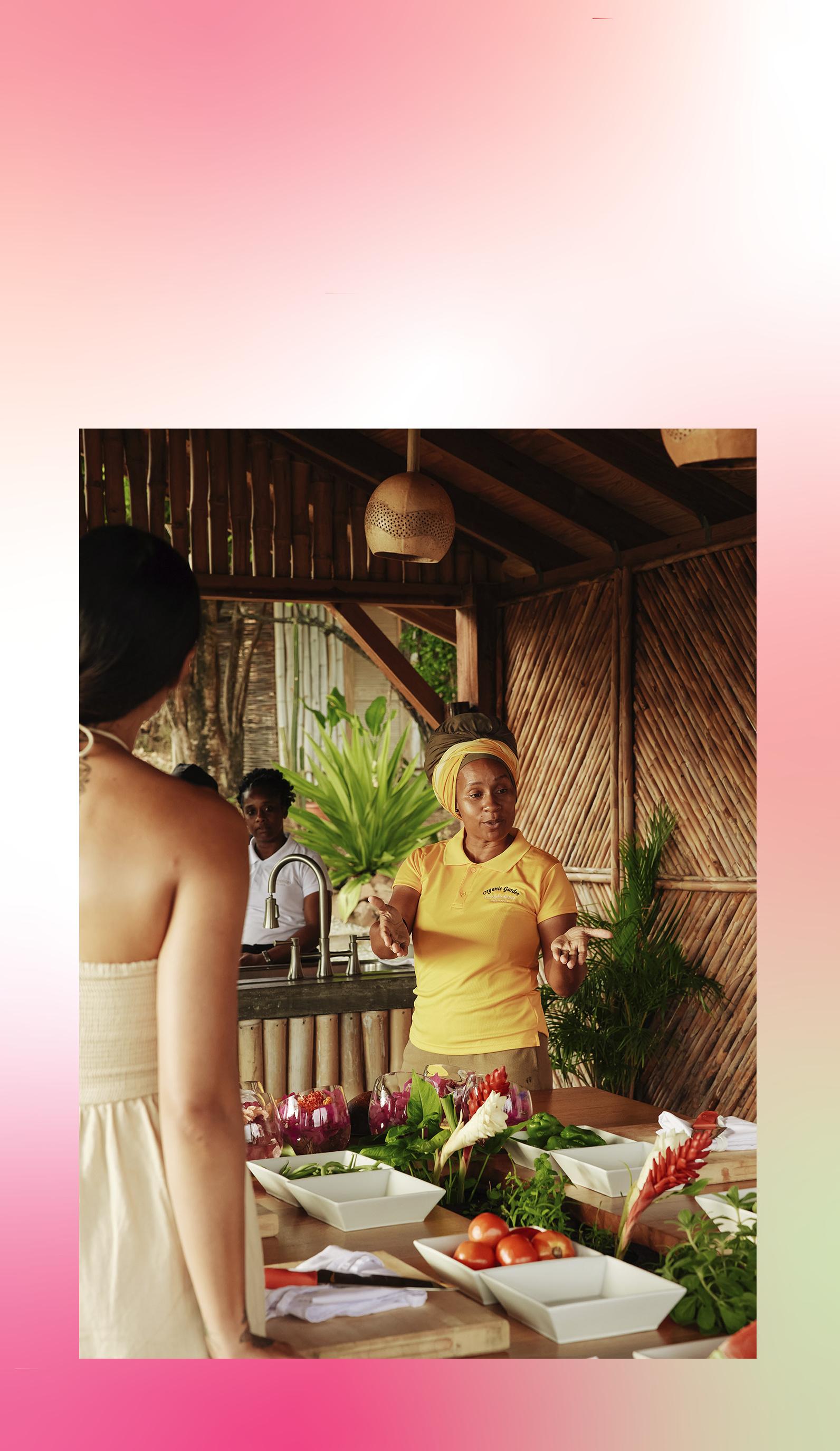
Wellness retreats can often feel restrictive, with guests told how and when to exercise and what (and what not) to eat. Think of BodyHoliday St. Lucia as a more expansive all-inclusive wellness getaway—one where the itinerary is flexible and pizza is still on the menu. If you want to hop from class to class, keeping your heart pumping, you can; the fitness menu has more than 30 offerings, from spin and dance to sailing and scuba diving. But there are opportunities to slow down, too: Room rates include a daily 50-minute spa treatment, and given the resort’s location on tranquil, palm-lined Cariblue Beach, lounging by the sea is part of the appeal. The six dining venues include the plant-based I-Tal, where meals start with a garden tour. And if your idea of self-care includes show tunes, there’s a piano bar on-site. thebodyholiday.com
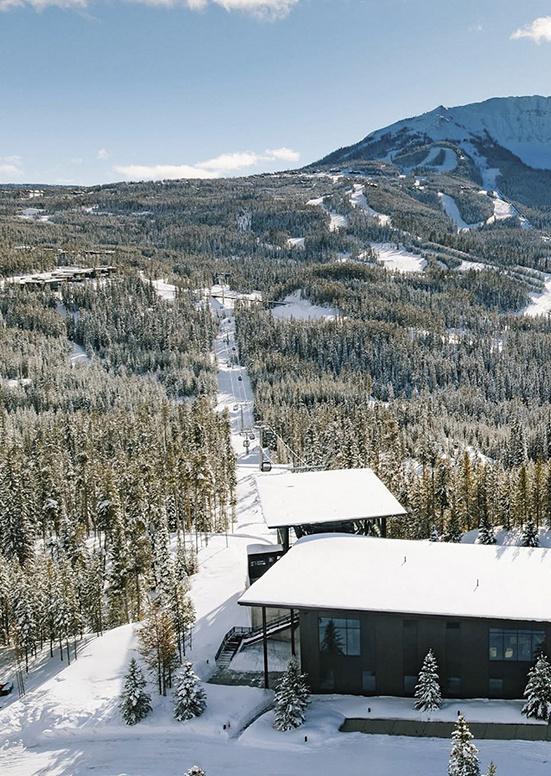
From left: Meals at BodyHoliday’s I-Tal restaurant are prepared in an open kitchen and follow the principles of Ital, the Rastafarian plant-based diet; in designing One&Only Moonlight Basin, Seattle-founded architectural firm Olson Kundig prioritized minimalist construction and ample glass for guests to feel more immersed in the mountain landscape.
Scenic Luxury Cruises & Tours introduced new “Wellness Retreat” sailings for 2026, including a 10-day South America coastal journey from Panama City to Valparaíso, Chile, aboard the Scenic Eclipse. There are no port stops in between, allowing guests to fully focus on rest and rejuvenation while at sea. Start the day with sunrise yoga, enjoy a facial at the Senses Spa, and relax into a sound-healing session. The next day, sleep in and order a green juice before sauna time or a Pilates class. Double down on the wellbeing by booking yourself a Spa Suite, which includes a steam shower with light therapy and a double-size Philippe Starck–designed bathtub. scenicusa.com
cold plunge (and then some) in montana
At One&Only Moonlight Basin, the brand’s first U.S. property, wellness is best in winter. Tune up at the on-site ski center and get fitted for boots and poles, then take a quick ride on One&Only’s exclusive heated gondola to Big Sky Resort’s Madison Base. Or stretch your legs on property with more than 15 miles of trails primed for fat-tire biking, snowshoeing, and cross-country skiing. Prefer staying cozy inside? Head to the 17,000-square-foot spa for treatments from Augustinus Bader, a science-based skin-care brand; in addition to sauna facilities, you’ll also find an oxygen bar (recommended for altitude recovery) as well as an outdoor “onsen” and a cold-water immersion pool. And every room and suite comes complete with a soaking tub and fireplace, if you’d rather just curl up with a book. With the “Night on Us” package, stays of three nights minimum include one night free. oneandonlyresorts.com
How to Slow Down in Florida This Spring
How to Down in Florida This Spring
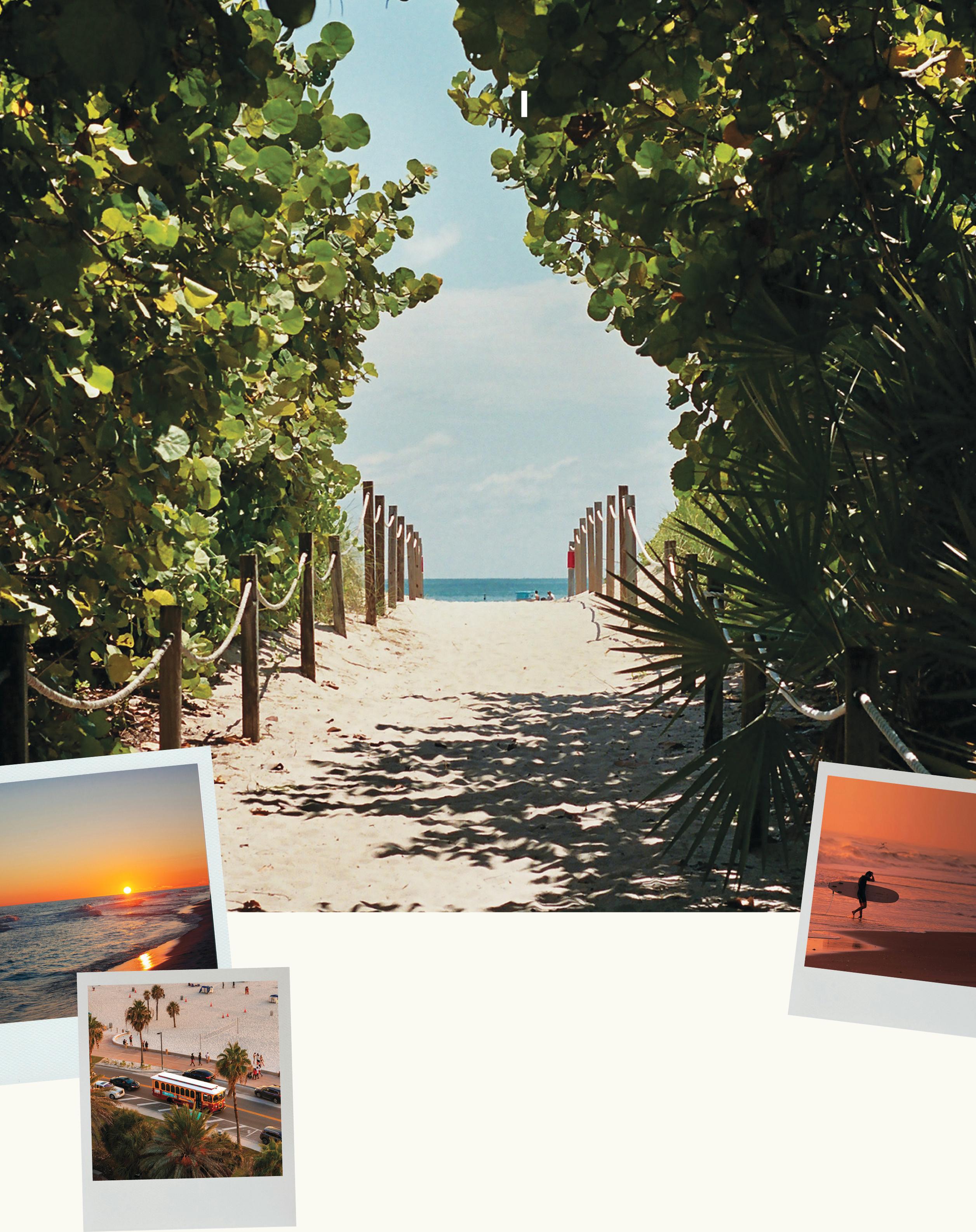
The Sunshine State’s warm weather, scenic beauty, and laid-back lifestyle all welcome mindful exploration. From lazy afternoons on Gulf Coast beaches to leisurely nature walks, these Florida destinations invite you to stay longer, move more slowly, and embrace wellness through outdoor adventures that prioritize connection and the present moment.
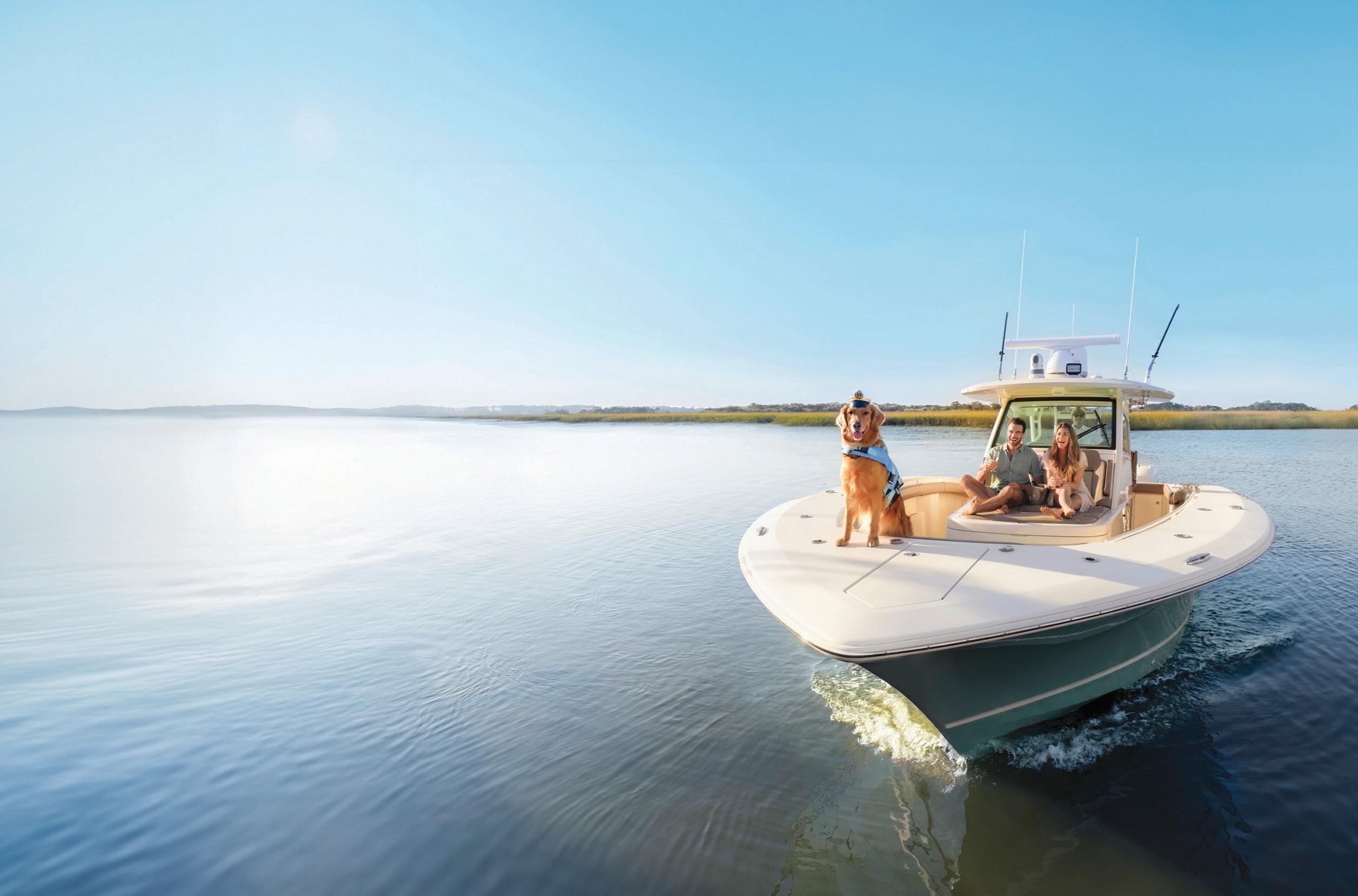
Chart a course for Amelia Island, the Northeast Florida seaside getaway where time drifts as gently as the tide. Find your unwind at AmeliaIsland.com
Wander with purpose on Amelia Island, Florida
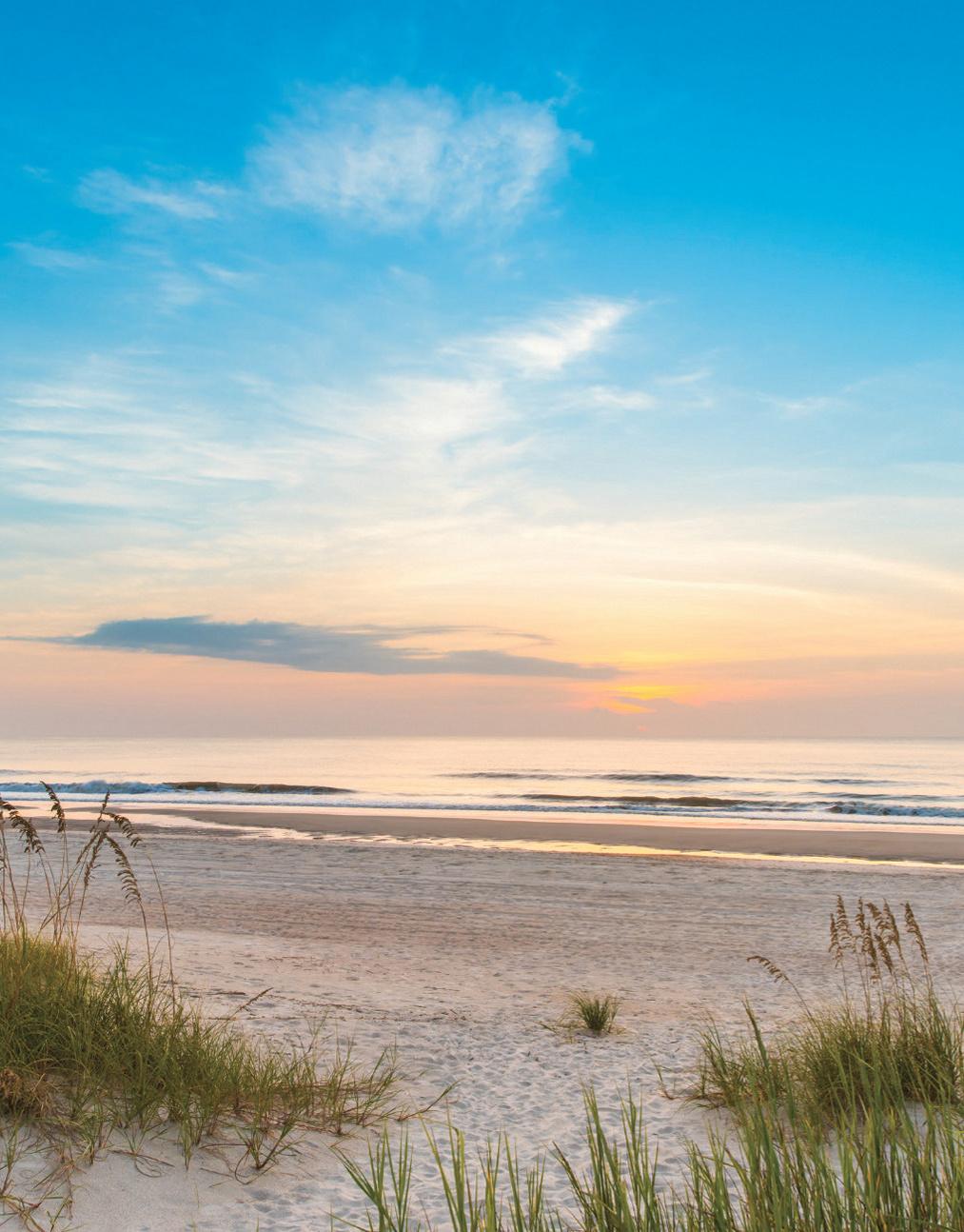
Nestled along Florida’s northeast coast, Amelia Island feels like a secret whispered on a gentle ocean breeze. Mornings are made for strolls along the shore, where pristine beaches give way to the slow sway of sea oats. Golfers can hit the fairways for 99 holes of championship play. Nature trails beckon exploration, as do the cobblestone streets of a charming downtown with outdoor cafés and canopied storefronts. As the sun sets over the salt-marsh horizon, amber-colored skies invite you to breathe deeper, linger a bit longer, and enjoy the luxury of letting go. Plan your getaway at AmeliaIsland.com
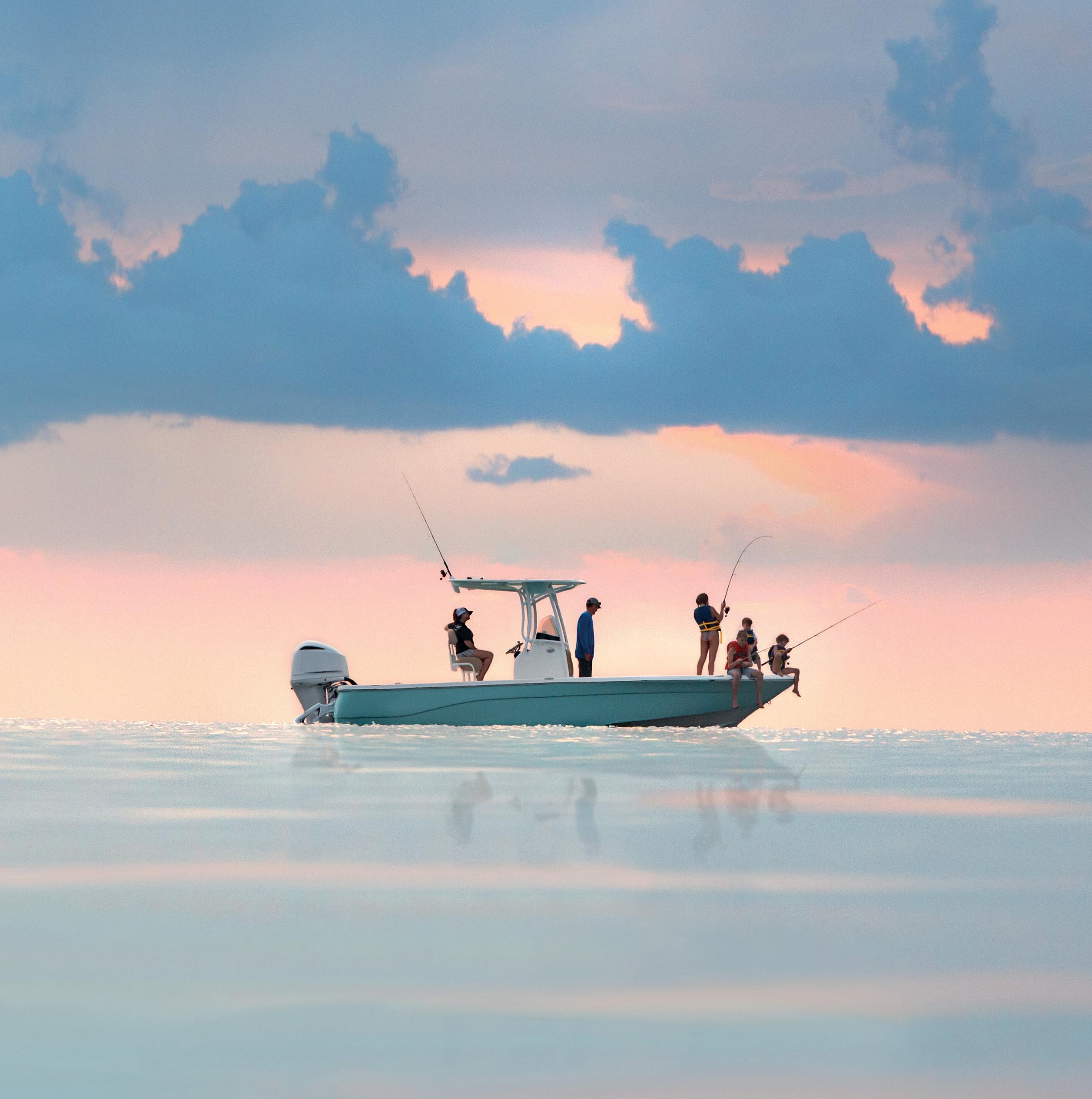
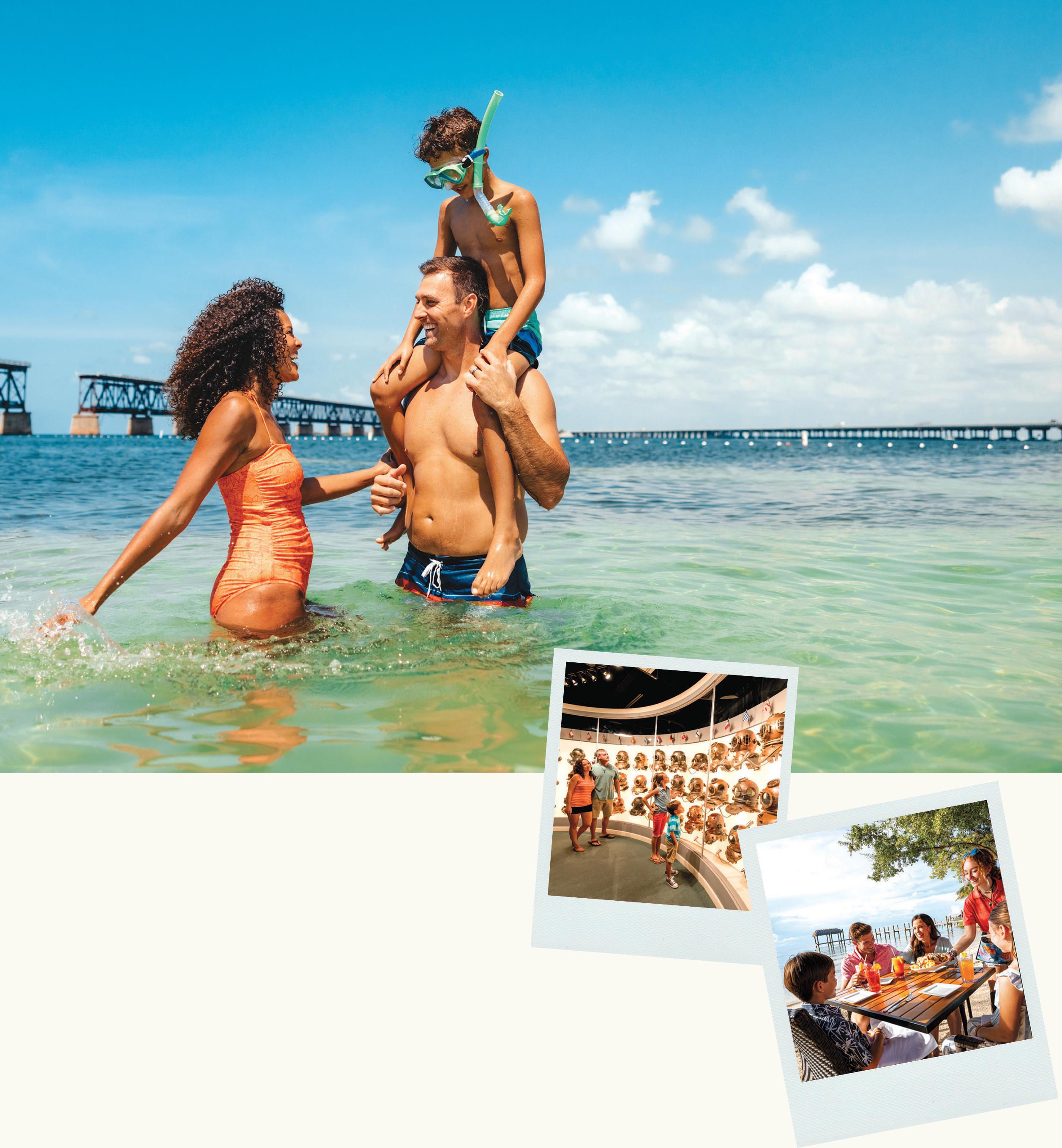
The memories are all keepers. For non-stop, action-packed days on the water, there’s no place like The Florida Keys & Key West. With warm, clear water, azure skies and an endless lineup of family activities and attractions. From fishing, diving and snorkeling to waterfront dining and a sunset cruise, The Keys has it all.
VisitFloridaKeys.com 1.800.262.7284
Travel Deeper in The Florida Keys & Key West
In Key West, rent a paddleboard from Lazy Dog Adventures and glide through the Dolphin Playground in the backcountry, where dolphins feed in shallow flats. Or take a Fury Water Adventures glass-bottom boat tour to see coral gardens and tropical fish beneath your feet.
Walk nature trails through the 63 acres of Crane Point Hammock in Marathon, winding through a tropical hardwood forest where butterflies and native plants thrive. In Islamorada, see an 18th-century diving suit at the History of Diving Museum. Then, head to Robbie’s Marina and feed massive tarpon from the dock as they leap for bait, and stick around to watch pelicans dive at sunset.
A Slower Kind of Spring Break for Families
Fewer crowds, vibrant coral reefs, dolphin encounters, and island exploration in The Florida Keys & Key West
Enjoying the scent of blooming jasmine is one of the ways families find a slower pace when visiting the five distinct destinations in The Florida Keys & Key West, an Atlantic archipelago just an hour south of Miami Watch your kids completely relax on warm days while building sandcastles, exploring nature, and creating lasting memories
Each destination offers its own character and playful, hands-on discoveries Slip on a mask and flippers to snorkel at John Pennekamp Coral Reef State
Park in Key Largo, the nation’s only living coral barrier reef Or charter a boat in Islamorada for a day on the water
Then, hand-feed rescued sea turtles at the Turtle Hospital in Marathon and experience dolphins up close in saltwater lagoons at the Dolphin Research Center End one of your days here with the sunset over the Seven Mile Bridge, one of the world’s longest spans.
Enoy an afternoon kayaking through mangrove channels
at the Great White Heron National Wildlife Refuge in the Lower Keys, spotting dolphins and birds in the quiet, protected backcountry shallows
In Key West, bike through Old Town’ s historic neighborhoods and waterfront parks, stopping for lunch at Blue Heaven. Visit the Hemingway Home and Museum to meet the six-toed cats and see the author’s writing studio, and check out the Harry S. Truman Little White House, where presidential decisions were made between poker games
Days feel unhurried in The Keys, time stretches a little longer, and these enchanting moments become part of the family story
Start planning at
Unhurried Adventures Along the Gulf Coast
Kayak coastal dune lakes, tour art galleries, and taste chef-driven cuisine in South Walton’s 16 unique beach neighborhoods.
Known as a beach destination, South Walton has 26 miles of sugar-white sand and turquoise waters that are only part of the story. Natural landscapes welcome all levels of adventurers, from thrill seekers to laid-back meanderers.
Rent a stand-up paddleboard or kayak from the Friends of Grayton Beach and Deer Lake State Parks to glide across Western Lake, one of the area ’ s 15 rare coastal dune lakes Or take it slow and see how many red-headed woodpeckers you can
spot while hiking through Point Washington State Forest’ s more than 27 miles of trails.
Enjoy a relaxing afternoon surf fishing on the Gulf for redfish, or cast a line in Choctawhatchee Bay for speckled trout Then, hop on a bike and pedal the 19-mile Timpoochee Trail through South Walton’s New Urbanism neighborhoods, from Seaside’ s pastel houses and WaterColor’ s lakeside setting to Rosemary Beach’ s European village charm. Stop to explore the fashion
boutiques in Alys Beach and the art galleries of Grayton Beach, where you’ll find regional, folk, modern, and contemporary art
Come dinnertime, head to James Beard–recognized chef Jim Shirley’s Great Southern Café in Seaside for his famous Grits à Ya Ya, smoked Gouda grits topped with blackened shrimp, bacon, spinach, and mushrooms Or visit Cuvee 30A in Inlet Beach for Vince Gill’s Pecan Crusted Grouper, one of the dishes chef Tim Creehan created for the country star’s wedding to Amy Grant
Plan your getaway at VisitSouthWalton.com
Unwind in Style at These South Walton Hotels
After hitting one of Sandestin Golf and Beach Resort’s championship golf courses, relax at the Hotel Effie
Sandestin’s rooftop pool in Miramar Beach. Or check into The Pearl in Rosemary Beach with its West Indies–style architecture and Havana Beach Bar & Grill, where you can sip an iconic Hemingway Daiquiri while the sun sets over the waves. Drop off the kids at Camp WaterColor at WaterColor Inn and Resort in Santa Rosa Beach while you take a lesson at its award-winning tennis center. Or head to Inlet Beach’s family-friendly Camp Creek Inn with five pools, including one with a lazy river and a waterslide.
YOUR GETAWAY YOUR HOMECOMING
South Walton’s turquoise water, 26 miles of sugar-white sand, and 16 beach neighborhoods in Northwest Florida effortlessly blend natural beauty, modern amenities, world class cuisine, and small town charm that draw generations together year after year.
ROOMS WITH A VIEW
From resorts to boutique hotels, South Walton is home to unique architecture, breathtaking views and accommodations to suit any style.
Experience The Lodge A – South Walton’s only select-service hotel at Seagrove’s Greenway Station. Enjoy affordable rates, a convenient location, in-room kitchenees and access to our outdoor pool and fitness center – everything you need for a perfect A stay.
TheLodgeA.com • -
STEP AWAY AND GET CLOSER
South Walton has a way of slowing down time…an ease that invites you to relax and play. From the moment your feet touch the sand, you’re home. Find your perfect beach at VisitSouthWalton.com.
Coastal Adventures at Your Own Pace
Explore the islands, beaches, and neighborhoods of Fort Myers to truly relax.
Take your time in the Fort Myers area, where adventures unfold effortlessly on land and in the Gulf’s sparkling waters Stroll the white-sand beaches at Bunche Beach Preserve on San Carlos Bay 718 acres of tidal wetlands with rare plants and wildlife then go for a swim in the quiet waters At low tide, walk the exposed salt flats and see the crabs, starfish, and other marine life in the shallow tide pools
The next day, enjoy a leisurely morning on wheels Rent a bike at Billy’s Bike Shop and pedal Sanibel Island’s 25-plus miles of trails through gardens, forests, beaches, and the J N “Ding”
Darling National Wildlife
Refuge. It has the U.S.’s largest undeveloped mangrove ecosystem and more than 245 species of birds, including roseate spoonbills Afterward, cycle to the Sanibel Café for a crab burger and key lime pie
Then, rent a boat or board a charter and go deep-sea fishing for red snapper, and mahi-mahi Or unwind with a Good Time Charters sunset cruise at Fort Myers Beach, trying to spot as many dolphins as you can
Explore more at VisitFortMyers com
5 Ways to Extend Your Fort Myers Adventure
1. Go beachcombing at sunrise at Bowman’s Beach on Sanibel Island, and see how many shells you can find.
2. Check out the tiny crabs, sea urchins, and anemones in the tidal pools at low tide on Sanibel Island.
3. Visit Lovers Key State Park at sunrise or sunset and photograph flocks of shorebirds in the golden light.
4. Kayak through mangrove tunnels along the Great Calusa Blueway Paddling Trail, a 190-mile paddling trail system that winds through inland tributaries and coastal waters.
5. See Thomas Edison’s invention laboratory at the Edison & Ford Winter Estates and walk beneath the world’s largest banyan tree.
Unwind in Miami Beach This Spring
Enjoy leisurely shopping, vibrant culture, and renowned restaurants.
From long mornings over coffee and guava-filled pastelitos to days filled with simple pleasures such as strolling on the beach, getting a spa treatment, and lingering over ocean-view meals, Miami Beach is a perfect place to slow down
Start the day with a rejuvenating session of sunrise yoga at South Pointe Park on the southern tip of Miami Beach Then, try the signature Thermal Experience Circuit at the Carillon Miami Wellness Resort After
your treatment, head to The Strand at Carillon Miami for a shrimp mango salad with oceanfront views
Continue the unhurried pace with a laid-back walking tour through the iconic Miami Beach Art Deco District, with its more than 800 pastel buildings that showcase Miami Beach’s architectural style; they make the city home to the largest art deco collection in the world A short walk away is the Bass Museum of Art, housed in another stunning
art deco building, featuring contemporary art and rotating exhibitions.
From there, walk five minutes south to Lincoln Road, an outdoor pedestrian mall and entertainment district, where you can shop the boutiques, then unwind over a Spring in Osaka cocktail at Mila’ s rooftop bar
For a picture-perfect dinner, watch the dreamy hues of the sunset as you enjoy fresh-caught fish served Mediterranean style
More Ways to Relax Outdoors in Miami Beach
Early risers can spot sanderlings, willets, and other shorebirds at North Beach Oceanside Park. Or go to South Pointe Park for group tai chi classes as the sun comes up over the ocean.
Grab your sketchpad or journal and enjoy an hour or two of quiet solitude at the Miami Beach Botanical Garden
Afterward, walk through the hidden alleys and passageways of South Beach, and discover street art and cafés, such as the well-loved pizzeria Mister 01
at Ocean Grill at The Setai, right on the beach.
Learn more at MBFindYourWave.com
RelaxRoam &
Relax Roam
Soft sugar-sand beaches invite long, unscheduled afternoons, while waterfront trails and a thriving arts scene reward those who wander. In St. Pete-Clearwater, savor both the stillness and the discovery.
Soft beaches invite unscheduled while waterfront trails and a arts scene reward those who wander. In St. savor both the stillness and the
Take It Easy with White-Sand Beaches and Renowned Culture
Visit celebrated museums, dine in Michelin-recognized restaurants, and kayak through mangrove tunnels in St. Pete-Clearwater.
Discover unforgettable art, cuisine, and nature at your own pace in St. Pete-Clearwater.
Dig your toes into Clearwater Beach’ s white sand and wade out to the sandbar for a closer look at the dolphins often playing offshore Or see an epic sunset at Upham Beach in St. Pete Beach, after you ’ ve beachcombed along the calm water’s edge and picked up a pocketful of shells
Enjoy a leisurely day in St Pete taking in the area ’ s culture
Check out the more than 2,400 paintings, drawings, prints, and
other works by Salvador Dalí at the Dalí Museum, the world’s most preeminent collection of the celebrated surrealist’s art You can also explore the Chihuly Collection’ s swirling glass flowers and cacti and go to the Museum of Fine Arts, home to pieces representing 5,000 years of history, from Mesoamerican jade to Monet paintings.
That evening, settle into your seat at the Mahaffey Theater for a performance by the Florida Orchestra Then, head to the Sonata Restaurant and
Lounge inside the theater for chef Ted Dorsey’s Southern take on coastal cuisine with waterfront views
Continue to unwind as you immerse yourself in the area ’ s natural world by kayaking some of the longest mangrove tunnels in the world at Weedon Island Preserve. Stay on land to spot year-round wading birds, including snowy egrets, tricolored herons, and roseate spoonbills
Find your rhythm at VisitStPeteClearwater com
Slow Down with St. Pete-Clearwater’s Culture and Cuisine
Visit some of the area’s multicultural communities, including Tarpon Springs, which feels like a Greek fishing village with its historic Sponge Docks and Greek restaurants. Dunedin is a walkable town with Scottish roots, known for craft beer and live bagpipe performances at the Dunedin Pier just before sunset.
For dinner, taste the signature wood-fired steak at Elliott Aster. Or try one of several Michelinrecommended restaurants, including Fortu, best known for its miso black cod; the modern Italian Il Ritorno; Sushi Sho Rexley; and Tides Market, which specializes in fresh-caught Gulf Coast seafood—such as its award-winning grouper sandwich.
FEATURES
Art by ASHLYN RUDOLPH
Sea Change
Photographs by Sean Hazen
Contributing writer Ryan Knighton visits Japan’s Noto Peninsula a year after the region’s earthquake, and finds an enduring bounty of food and craft.
My time
in Japan began in a studio filled with delicate vases and gilded ceramics. Being a blind guy, I clung to my wife Tracy like a bull terrified of fulfilling his nature in a china shop. It was late November in the Hakuza gold leaf store, which has been operating for nearly 100 years in Kanazawa, a gateway city to the nearby Noto Peninsula, and where 99 percent of Japan’s decorative gold leaf is produced.
Inside the compact space, one of the artists demonstrated the entsuke technique, which involves manually hammering a knob of gold between sheets of paper until the alloy has thinned to a thousandth of a micron. A human hair, by comparison, is a tripping hazard. The finished product is so delicate that it can only be handled with bamboo tongs or manipulated by a gently directed breath. Even the slightest charge of static electricity is enough heat to dissolve the gold. Fortunately, Kanazawa’s humidity prevents this, making the locale essential to the process. You can’t just bang out gold leaf any old place you like. Wham. Down came the hammer again.
Gold leaf is one of many riches of Japan’s west coast, where the climate and the geography have anchored its cultural and agricultural traditions for centuries. Just north of the city of Kanazawa, the Noto Peninsula, where we were heading, is known for its thousands of terraced rice paddies, dairy and salt farming, and squid and abalone, the latter typically harvested by Noto’s female skin divers, or ama. The region is also celebrated for its crafts, such as decorative lacquerware from the sleepy coastal town of Wajima, and the practice of kintsugi, in which a busted object—bowl, plate, cup—is pieced back together like a jigsaw puzzle and fixed with gold leaf binding that yields brightly gilded veins in the cracks. Why hide that something is broken when its repair can make it even more beautiful? Before we left the gold leaf store, Tracy placed a vase in my hands to feel an example. No, its damage had not been the doing of another blind man. The cause had been an earthquake. A big one.
This page, from top: The tea room in the Hakuza gold leaf store is made of 40,000 pieces of entsuke gold leaf; the Noto Peninsula is renowned for seafood including yellowtail, pufferfish, and oysters.
Opposite page: Higashi Chaya is one of Kanazawa’s three historic districts.
Pages 90–91: The Noto Peninsula’s coastline is a popular destination for walking trips in the spring and summer.
On New Year’s Day in 2024, Kanazawa and the Noto Peninsula were shaken for 50 seconds by an earthquake that measured 7.6 on the Richter scale, one of the most severe in Japan’s history. Tsunamis followed, as did aftershocks, fires, and landslides that killed more than 700 people and injured another 1,000. The peninsula, a rugged finger of land that points north into the Sea of Japan, found its few roadways buried or smashed beyond use. Estimates vary, but more than 100,000 homes were either damaged or destroyed along with 30,000 nonresidential buildings. Recovery since has been a slow and dedicated effort.
My interest in the aftermath is in part why Tracy and I joined a group of five others, as
TOKYO
JAPAN NOTO PENINSULA
KANAZAWA
Sea of Japan
Pacific Ocean
KYOTO
well as our knowledgeable guide Kaori Irwin, on tour company Walk Japan’s newest trip, which begins in Kanazawa before exploring both coasts of the peninsula. Would our presence feel voyeuristic? Perhaps. But where we travel and how we direct our tourism dollars is more important than ever. To visit Noto, I hoped, would help us glimpse what life could be like after such a catastrophe and how the people who live there carry on when so much has been lost.
We left the gold leaf store on foot. Some routes with Walk Japan can push your step count to a dozen miles per day and can involve the use of climbing ropes on ancient coastal trails. Our four-day itinerary—which would take us from Kanazawa to Wajima toward the northwestern tip of the peninsula and across to the eastern town of Noto itself,via a mix of transportation—was gently paced and geared to the modest ambitions of a blind man. Our group made a quick stop to fill our water bottles at the Fukumitsuya sake brewery and fill ourselves with sake while we were at it. Some sips tasted cloudy and rich, some boozy and tart with plum, all of it delicious. But the real marvel to me was the old well tucked away in an alcove.
Water here flows from Mount Haku (White Mountain), its sacred peak visible from the nearby harbor. We continued our walk through a lively market, red snapper and tuna eyeing us as we passed, and around a historic neighborhood of homes built by the owners of the Kitamaebune trading ships that frequented these ports in the 17th, 18th, and 19th centuries. The rains that fall on Mount Haku filter
This was a man who could lecture about miso paste the way a physicist might sermon about quantum mechanics.
This page, from top: Sojiji Soin Temple was founded in 1321. The monastery required repair from earthquake damage; the gold leaf craft of kintsugi, practiced widely in the Noto Peninsula, is seen in Japan as a metaphor for life.
Opposite page: Yamato Koji Park in Kanazawa is a national center for soy sauce production. Guided daily tours and tastings are available.
underground to travel for nearly a hundred years through ancient seashell beds before finally reaching the sake brewery’s well. That process turns the water hard, which is coveted, because bone-dry sake can be made with it. In that way, hard water and its sake are another kind of gold around here.
Sated, we continued to tread around the harbor, past tidy yards where strings of persimmons dried in the sun. We walked paths lined with hawthorn bushes or dotted with Shinto shrines whose sculptures circulated water for people to wash their hands. Water, water everywhere I tried to imagine what it must have been like to suddenly feel the ground under me heave when the immensity of the ocean is right there. Nevertheless, we had to keep a pace. Seiichi Yamamoto awaited our visit, we were told.
Yamato Soysauce and Miso Co. has been operating since 1911 in Kanazawa, when Seiichi’s grandfather first opened its doors. Our group was offered cones of the brewery’s own soy sauce ice cream as Yamamoto settled in to begin a presentation about his family’s miso and why, as his T-shirt proclaimed, KOJI IS LIFE.
Unfortunately, 20 minutes was all we could spare. Yamamoto paused to consider the number before deflating with a sigh. This was a man who could lecture about miso paste the way a physicist might sermon about quantum mechanics. We devoured our ice cream as he ripped through the 2,000-year history of soy fermentation and the finer points of cultivating good gut bacteria. Koji, we learned, is the mold that transforms rice into sake, soybeans into miso, and wheat into whiskey. Like the sake we’d sampled earlier, the soy fermented in this area is also known for its light sweetness. Had the earthquake done more damage here, that singular flavor—refined by a century of expertise and experimentation—might have disappeared along with the soy brewery itself.
Before we left, Yamamoto gestured in the direction of Mount Haku. Its water, he explained, is why his grandfather built his brewery here, why his soy’s color and flavor differ from anything made in the other regions in Japan, and why Yamamoto continues to make a monthly pilgrimage to the mountain to give thanks. I considered constants and the passage of time, marveling that the rains his grandfather had watched fall a century ago were the source of what I was sipping from my bottle now.
Gale-force winds whipped about us the next day as we hiked a path from the Fukura Lighthouse to Fukura Port along the coastline. Our bus had dropped us here, about 40 miles north of Kanazawa on the western tip of the peninsula, where the beaches and ports had suffered some
accepts reservations online, up to five months in advance.
In Wajima, restaurant Somamichi now
of the earthquake’s worst damage.Waves churned the shore as we picked our way along a rocky bluff,wind wiping away much of our guide Kaori’s narration about how centuries ago fishing boats navigated into harbor here by bonfire. To keep the fires large enough to be seen must have been an incredible challenge during winter storms, not to mention the logistics of hauling a constant supply of dry wood to the beach from . . . where? I listened to the spindly, windswept trees around us and wondered how it had all worked.
After a few hours, we came upon evidence of the earthquake. When it hit, the western side of the peninsula lifted 13 feet in the air, raising its seabed out of the water and extending the beach more than 600 feet beyond its former shoreline. Docks were left dry. The fact that the land here had risen so high is the only reason it had been spared from the ensuing tsunami. Surreal, people in our group kept saying. It looks so surreal. What made the scene come alive for me, however, was the fracture line on the boardwalk. The flat concrete had ruptured along a winding gash and jutted upward, peaking like the apex of a tent. Somebody helped me balance on top so I could walk the crack like a tightrope and feel with my feet how the ground had snapped. I never made it to the end of the fracture line. It was a sensation I won’t soon forget.
Later that afternoon, we walked into the restaurant Somamichi. No menus were offered. None were posted by the door, either, or accessed via QR code. Lunch was lunch, and it was on its way. Soon dishes began to arrive, announced to me only with the gentle clap of wooden bowls on a wooden table. We were served a filet of locally caught perch—bony and light—and a sampling of fugu, blowfish sashimi which, if not deconstructed correctly, can cause neuroparalysis in its diners. Out came fried tofu with pumpkin, then a plate of matsutake mushrooms alongside grilled Japanese mackerel. As more food materialized, Tracy and others murmured with delight at the smell of miso and dashi broth marbling the air. I reached my chopsticks into the void and drove my hand through a traffic jam of lacquerware, nearly toppling half my lunch. “Blindquake,” I joked, to quiet laughter.
As we finished our meal, Somamichi’s chef, Yutaka Kitazaki, joined us for tea. He had been away in Kanazawa on New Year’s Day in 2024, when he felt the first tremors and instantly feared for his business back home. Somamichi was scarcely eight months old. He quickly began his drive back to Noto, but a typically 90-minute trip took him seven hours. When the chef made it back, he found his restaurant demolished under rubble.
He needed a plan. Leave? Rebuild? Kitazaki didn’t want to abandon his community, so he moved Somamichi into a temporary space owned by a friend. Two years later, because of the area’s slow and difficult reconstruction, that same temporary space is where we sampled his lotus
root and squid sashimi, all served in his friend’s beautifully crafted lacquerware made from Noto’s unique clay and urushi tree sap. Combined and brought to a high polish, their mineral composition creates items that are not only beautiful but durable enough to last hundreds of years—if, as we were told, you don’t treat them any differently than you would your own skin. Here were two artists helping each other carry on with their respective crafts. In that same spirit, after the earthquake chef Kitazaki began to buy exclusively from local farmers, foragers, and fishers to help keep everybody working. It is a practice he continues to this day. Each morning, he considers what ingredients are available and designs his dishes accordingly. Somamichi’s lack of a menu now made so much more sense. You never know what tomorrow may bring.
The last leg of our itinerary took us by bus to the peninsula’s eastern side, where the land, by contrast, had dropped several feet and where a tsunami of equal size had swamped much of the coastline and its towns.To get therewe followed narrow roads, chunks still missing as if Godzilla had taken a crescent-shaped bite. We made only one stop, to taste ice cream at Malga Gelato. Though a small shop in the middle of nowhere, it is festooned with international awards.
Owner Taizo Shibano, the son of local dairy farmers, became interested in doing something more with his family’s milk and developed a keen interest in gelato. After the earthquake he began to work more closely with whatever ingredients he could source from local purveyors, inventing flavors specific to Noto that might, in a small way, support his neighbors.
Today, his menu includes sweet potato gelato, roasted tea gelato, goya (bitter melon) gelato with juniper, and even a scoop that celebrates Noto’s coveted artisanal sea salt. Though it was 10 o’clock in the morning, I inhaled two sweet potato cones—sweet, earthy, and creamy— in the parking lot before climbing back into the bus to prevent eating a third.
On our walking tour, the community spirit of the peninsula was perhaps most wildly exemplified by someone we met later that day, the man who introduced us to the town of Noto. Outside its marine center, an immense squid sculpture waves as if to welcome you, its tentacles akimbo. From the harbor here, Noto’s squid-fishing ships launch to sea, often taking their crews away from their families for more than a month at a time. To attract the squid from the deep, the boats aim powerful lights into the water while baited hooks await the creatures’ innate curiosity in the shadow under the hull. As a blind guy, I was tickled to learn you can fish with light. I was even
HOW TO TAKE THIS TRIP
Writer Ryan Knighton traveled with tour operator Walk Japan on the “Onsen Gastronomy: Noto” itinerary, which features light walking and accommodation in Japanese hotels. The price begins at approximately $3,100 and includes a Walk Japan tour leader, four nights’ lodging and meals, luggage transfers, and entrance fees. walkjapan.com
This page, from top: The Noto Tsukumo Bay Hyakurakusou fills its onsens with sea water from Tsukumo Bay; Somamichi also offers overnight stays.
Opposite page: Tsukumo Bay can be toured by stand-up paddleboard, kayak, or sightseeing boat.
more tickled to have this explained to me by a man who wore a facsimile of a squid on his head.
Mr. Squid, whose real name is Takamitsu Haiya, is a local government official and squid fishery enthusiast who was director of emergency operations the day the tsunami towers began to sing. The first thing he did? Find where they put the keys to the elementary school, which is on higher ground and served as the town’s evacuation shelter.
As Mr. Squid recalled the day of the tsunami to us, he was quick to say that the people here were calm and prepared. You must be, when the ocean can suddenly upend the world you know. But that same ocean is what has kept families thriving in Noto for generations, feeding people and grounding their way of life. It is why many have chosen to remain after the earthquake. So, as recovery efforts began, Mr. Squid began sporting the squid on his head, to celebrate the ocean as a thing of bounty and wonder, and to make people smile when smiles can be scarce. A few local kids jostled past our group and recognized him, shouting and pointing. Pleased, he waved back and smiled, as much as a squid can.
The sun was dipping low, rain picking up, but we finished the day walking on the waters of Tsukumo Bay over a path of slick stepping stones. Tracy left me on one for a while so I could listen to the waves peel toward me and dissipate just before they would have wiped me off my feet and swept me out to sea. Overhead I could hear a couple of black kites circling the water on the hunt for food. Predators imply prey, a good sign for the health and recovery of the bay. Everything here returns to water, it seems.
Later that night, back at hotel Noto Tsukumo Bay Hyakurakusou, Tracy and I soaked in a hot tub of sulfurous water on a deck overlooking the ocean. Some of the resort’s other onsens were a hundred feet underground in caves, where bedrock had protected the property from collapse when the tremors began.
This page: The resort Noto Tsukumo Bay Hyakurakusou was founded in 1934 as a ryokan (inn).
As I relaxed in a cloud of steam, I thought about Mr. Squid. I thought about the chef at Somamichi in his menuless restaurant and about joyful Yamamoto with his unwavering loyalty to the waters of Mount Haku. They have each done their own small part in continuing life in Noto or Kanazawa as they have known it, and as each place has given them. Every effort to carry on is a tiny piece of what holds the peninsula and its gateways together now. Each person, each gelato, each squid hat another tiny bit of gold binding the cracks.
Opposite page: Mr. Squid in front of Tsukumo Bay’s iconic 43-foot-long statue. After a contest, it was named Squid King.
Contributing writer Ryan Knighton hiked Machu Picchu for Afar’s Fall 2025 issue. Photographer Sean Hazen is profiled on page 14.
The Shadow on
theTrail
On the eve of America’s 250th birthday, contributing writer Latria Graham travels cross-country in the footsteps of explorers William Clark, Meriwether Lewis, and York, and confronts race, memory, and erasure.
Illustrations by MARK HARRIS
THE SUN IS HOT
on my neck as I stare down the expressway, determined to figure this out. I’ve crossed the Ohio River four times, ping-ponging between Indiana and Kentucky, before I admit to myself that I am lost. I am turned around, and if I hadn’t seen photos of the eight-foot-tall bronze statue of a Black man standing on the Louisville riverfront, I would think that I made him up.
I head for higher ground on foot until at last I spot him. Finally. The statue isn’t on the river, it is above it, on an elevated path called the Belvedere. Standing on a rock, his face turned toward Indiana, York seems unafraid; with a small axe and knife tucked in his belt, he looks like a man ready for action.
York was part of the Corps of Discovery, also known as the Lewis and Clark Expedition, a group commissioned in 1803 by President Thomas Jefferson for a 28-month, 8,000-mile journey led by William Clark and Meriwether Lewis. The purpose was to explore the land acquired in the Louisiana Purchase (“bought” from the French First Republic in that year) and the Pacific Northwest to map a direct route to the Pacific
Ocean. While on the search, the group was to document all geographic, scientific, and cultural information about uncharted-bythe-English lands. York had no say about whether he would participate. He was enslaved, the property of William Clark.
Wrote Clark in his journal in October 1804: “[T]he Indians much astonished at my Black Servent and Call him the big medison [medicine], this nation never Saw a black man before.”
Lewis, August 1805: “[S]ome of the party had also told the Indians that we had a man with us who was black and had short curling hair, this had excited their curiossity very much. and they seemed quite as anxious to see this monster as they wer the merchandize which we had to barter for their horses.”
Most people know that Shoshone guide Sacagawea was crucial to the expedition’s success, but far less have likely heard of York, who is named numerous times in the field notes. It is clear that his contributions to the mission were vast, and included foraging, hunting, and assisting imperiled crew members. His presence was so significant that there are two land features named after him: Yorks Islands near Townsend, Montana, and Yorks Dry Creek (now known as Custer Creek), a tributary of the Yellowstone River.
Fast-forward to the summer of 2025, and I am spending seven weeks driving 4,900 miles of trail from York’s Louisville dwelling all the way to the modern replica of Fort Clatsop in Oregon, where the Corps spent December 1805 to March 1806. Along the route I will stop at nature preserves, national parks, Lewis and Clark interpretive centers, and other places important to York’s story.
Though the official Lewis and Clark National Historic Trail begins close to Pittsburgh, Pennsylvania, I decided to start here, on the bluffs above the Ohio River, an area that Clark and York called home for a time. It is also a place they returned to once the expedition was over. In 2003, 200 years after the expedition was organized, the city of Louisville commissioned the sculpture of York by artist Ed Hamilton to commemorate the explorer’s contributions.
In July 2026, the United States will celebrate the country’s 250th birthday. Now, standing in front of this statue, I wonder: What can York teach me about my country?
I feel that to understand today’s United States, to get a better handle on its history— my history—I must see what is left of the places mentioned on the trail myself.
May 1804
The Lewis and Clark Expedition departs along the Missouri River with more than 45 members, including the enslaved man York, 27 soldiers, and a French Canadian interpreter. Meriwether Lewis’s dog, Seaman, is also present.
A FEW
weeks later , I stop my car in front of a large teepee painted with phases of the moon. Located on the grounds of St. Joseph’s Indian School in Chamberlain, South Dakota, the Aktá Lakota Museum & Cultural Center was established 35 years ago as a record of a dark history. Once the denizens of the Western territories were surveyed, America laid the groundwork for legislation that would result in the Dawes Act of 1887, forcing Indigenous people into mainstream American agricultural society and sending children to boarding schools where they were required to speak English and to practice Christianity.
I get out of the car and watch kids playing nearby, wrestling a basketball from one another. Their squeals of delight pierce through the stagnant humidity of the day. Not far away the Missouri River meanders as if slowed by the heat, too. Once I am inside the museum, the docent introduces herself and tells me to travel the space clockwise. The flags of different Lakota nations hang from the ceiling, and a diorama of a successful buffalo hunt, complete with a life-size replica of the 2,000-pound animal, is situated against the back wall. I move through the museum slowly, taking in art and artifact: delicate oil paintings plus beads, clothing, hides, quills, and feathers from Northern Plains Indian tribes.
At the end of the museum space, I am invited to write a prayer on a piece of paper shaped like a cottonwood leaf and tuck the message in a slot on the Tree of Reconciliation. By this point, I am one-third of my way through the Lewis and Clark National Historic Trail, and so I put down a request for strength. I have driven thousands of miles and am overwhelmed by the scale of it all—by what was traveled, and by what was extracted and altered. I consider that the expedition allowed the United States to exist, because it gave a fledgling democracy capital and resources. It also took so much from Indigenous people.
In the gift shop, I pick up a magnet with an image of a statue titled Dignity of Earth and Sky, which portrays an Indigenous woman holding a star quilt. Though I’d read about the 50-foot statue, which was installed in 2016 and designed by artist Dale Lamphere to honor the Lakota and Dakota people, I hadn’t realized how close I was to it now.
The museum docent points me in the right direction, and I navigate my way to the sculpture. Set against a cloudless sky, she is powerful, and the eight-pointed star on the quilt she carries shimmers in the sunlight. I look at her face, thinking about long-held narratives, and how the United States seized sacred lands and forced tribes to relocate. I see the nation’s contradictions, its failure to uphold foundational principles such as inalienable rights and equality under the law for Black citizens. I understand that the passage I’m on consists of miles of broken promises for many people and their descendants.
It feels like the existence of a formalized commemorative trail, as well as the country’s 250th celebrations, in some ways amplify the injustices. Who will get to tell America’s story? What—and whom—will they leave out? And yet I consider what a monument the museum is, and what this sculpture is. To make something beautiful of a moment that was designed to break a people. I feel admiration, and I wonder if I am capable of that kind of grace.
How toTravel the Trail
Officially beginning close to Pittsburgh, Pennsylvania, and ending near the presentday city of Astoria, Oregon, the Lewis and Clark National Historic Trail covers nearly 5,000 miles, crossing 16 states and the homelands of more than 60 tribal nations. (Meriwether Lewis launched a keelboat onto Pennsylvania’s Allegheny River; William Clark did not join until near St. Louis.) Originally undertaken by the Corps of Discovery from 1804 to 1806, the route was recognized by Congress in 1978 as part of the National Trails System.
Done in its entirety, the trail would take around four weeks to meaningfully complete by car. Travelers who have only a week to work with would be best served focusing on one or two states and building out their itineraries from there.
WHEN TO TRAVEL
Thanks to longer daylight hours and milder weather, May through September are the best months to tackle the drive, though summer vacation can mean increased crowds at many of the parks along the way.
HOW TO PLAN IT
The comprehensive Travel Native America app, developed by the American Indigenous Tourism Association, allows travelers to book tours and cultural experiences with tribes and build itineraries; it also surfaces gatherings that are open to the public.
The National Park Service offers a free
online guide replete with visitor centers, museums, and sites to visit in each state.
The Lewis & Clark Trail Experience app, launched in 2024, is a handy on-the-go tool for viewing upcoming events along the way; it even allows users to share their movements with friends and family.
BUY BEFORE YOU GO
Purchase an America the Beautiful Pass for an annual fee of $80, which covers the pass-holder and all car passengers (or up to four adults at per-person sites) and grants access to 2,000 federally managed recreation areas across
the United States, including forests, national parks, and wildlife refuges. To start using the pass immediately, buy it at one of the 1,100 participating federal recreation sites. Bonus: When you purchase the pass at a park, 80 percent of the revenue from the purchase goes directly to that park for its own use.
OTHER WAYS TO FOLLOW THE TRAIL
American Cruise Lines offers a nine-day riverboat cruise inspired by the Lewis and Clark Expedition, traveling between Portland, Oregon, and Clarkston, Washington,
following the Snake and Columbia rivers to the Pacific Ocean. Offshore excursions include visits to Hells Canyon— the country’s deepest river gorge—on the border of Idaho and Oregon, and Fort Clatsop, where the Corps of Discovery spent the winter of 1805–06 after reaching the ocean.
From $6,890 per person
Amtrak’s 12-day “Lewis & Clark Trail by Rail” journey begins in St. Louis, Missouri, and ends in Portland, Oregon, with stops in Chicago and Glacier National Park, Montana, along the way.
From $2,600 per person
—Katherine LaGrave, with additional reporting by Bailey Berg
THEfollowing day, I find poetry in North Dakota’s open expanses, in the prairies and the buffalo grass popping up in former pastures. As I drive, sunflowers as tall as the top of my station wagon wave from fields, rotating with the sun, their shadows trailing behind me. When I step out of my car to take a photo of the sunset near the Missouri River, I hear the whine of mosquitoes and think of York: In Lewis and Clark’s journals, they write about there being six different types of mosquitoes, an insect they spell 19 different ways. By the time the sun has begun its descent, it feels like I have encountered every single one of them. At twilight, I pull into the 1,000-acre Fort Abraham Lincoln State Park, an area that the Corps of Discovery visited in 1804. Once a 16th-century Mandan settlement of earth lodges known as On-A-Slant Village, the site was commandeered and converted into the 19thcentury military post Fort McKeen, where Lieutenant Colonel George Armstrong Custer and his cavalry waged war against the Indigenous people of the Plains. In 1907 the area was designated Fort Abraham Lincoln State Park, making it the oldest state park in North Dakota. With 19 miles of trails and places to kayak, fish, and camp, the park offers myriad ways to explore this site where the Heart and Missouri rivers meet. But I have come here for something else. I park in front of Custer’s house and begin to unpack my car, removing my hiking quilt, camp chair, binoculars, headlamp, and snacks: trail mix, Medjool dates,
November 1804
Lewis, Clark, and York establish Fort Mandan (near Fort Abraham Lincoln State Park today) as winter quarters, naming it after the Mandan people. Sacagawea and her French Canadian husband also join the expedition here.
chickpea puffs. Tonight, I’m attending the state park’s monthly summer star party—their last celestial observation event of the season.
It is late August, and even though it is technically still summer, when the sun sets this far north an edge of autumn air pervades the balm. The leaves on the trees are just starting to change color. A group of about 60 of us, of all ages—from grandparents to toddlers—have gathered to mark the end of the season, hoping for an unobstructed sky that might allow us to see the Summer Triangle star pattern.
“My weather app assures me that the clouds will be gone in about 30 minutes,” a Bismarck Astronomy Club guide tells me. With the vanishing clouds, the night is rich and dark with texture, a luxurious sable black.
My grandmother thought of the night sky as a quilt with many pieces, an eclectic patchwork of stories, and her son, my father, made sure that we knew them all. I am from a family of farmers who plan our growing seasons by the stars, so understanding our place in this world and calibrating our sense of time by the sky is an element of my ancestral wisdom. With this knowledge, if my GPS ever failed, I could
OREGON COUNTRY
BRITISH TERRITORY
RIVER YELLOWSTONE RIVER
SNAKE RIVER
MISSOURI RIVER
Clark’s Return
Lewis’s Return
LOUISIANA TERRITORY
Lewis and Clark’s Outbound Journey
SPANISH TERRITORY
INDIANA TERRITORY
MISSISSIPPI RIVER OHIO RIVER
LOUIS
MISSISSIPPI TERRITORY
The route of the Lewis and Clark Expedition, which took place between 1804 and 1806.
use the sun, moon, and stars for navigation.
The sky is clear now, and the stars, at least to my naked eye, are metallic winks of silver, blue, and green. Staring out at space, I rethink time. These constellations have carried the same names and the same stories for hundreds of years. I look for Polaris, the North Star, which is estimated to be somewhere between 430 to 446 light-years away. When that light started its journey to my eyes, the Mandan village was still here. America’s colonies weren’t British territory yet; the Corps of Discovery’s formation was generations away. When the Corps did pass this way, the night sky was its celestial compass, too, and measurements gleaned from the stars helped its members calculate latitude and longitude.
How often do I think about the past in my present? Is this part of the understanding that I’m missing, the lesson I am learning as I move further west? In some ways the group of us gathered in the night air is witnessing the same constellations, the same stars. And as I follow York, this is one of the few ways in which my contemporary world mirrors his. I just have to look up.
July 1805
During its westward journey on the Missouri River, the Corps of Discovery moves through the Gates of the Mountains canyon.
SEVERAL
days later , it is 10 a.m. in Eastern Montana, and according to instructions printed on my tour ticket, I must be in Western Montana by 1:30 p.m. to catch a 2 p.m. boat. If I take I-15 I can make the time easily, but the Corps of Discovery rarely moved in a straight line, and so I won’t, either. I want to be at the Upper Missouri River Breaks Interpretive Center as soon as it opens. I also have plans to stop by Rainbow Falls, which Lewis called “one of the most beatifull objects in nature” in his journal, and the 424-foot Tower Rock, a sacred space for the Blackfeet Nation and today a state park. I have three and a half hours, 150 miles, and several stops. But I am determined to make it—the 2 p.m. boat is one of the last of the season.
Hours later, a little out of breath, I climb aboard the Canyon Voyager and take a seat. Here was another landscape I could see as York may have. This section of Montana is often called “The Last Best Place,” and boat tours through this canyon date to 1886. In 1964 Congress designated the 28,460 acres as Gates of the Mountains Wilderness, which means there are no motorized vehicles, timber companies, or mining operations.
This stretch of the Missouri River was a vital waterway for Native people for millennia, and Steve, our guide, mentions that researchers have counted more than 125 petroglyphs (rock carvings) and pictographs (rock paintings) in and on these 1,200-foot limestone
This journey has better taught me the power of refracting, of using my light and lived experience to bend stubborn materials into stories.
cliffs. The slate-colored sky makes the pine- and fir-peppered walls seem ominous, and the slow-moving water is a deep, mossy green. As we cruise down this five-mile stretch of canyon, we search the treetops for bald eagle nests.
Surrounded by rock, the river appears to end, but we round a narrower bend and the cliffs grow wider, then spread apart, allowing us to access another segment of the waterway. This optical illusion is how the landscape got its moniker. (Though the Corps was not the first group of European explorers to navigate this place, Meriwether Lewis gave Gates of the Mountains its name.) Glacier National Park, located a couple hours north, is often called the “Crown Jewel of the Continent.” This makes Gates of the Mountains, with around 30,000 annual visitors, Montana’s diamond in the rough.
Despite all I have seen on my miles thus far, I am still struck by the river’s beauty and by the idea of novelty itself: what it means to step into an American landscape for the first time and how words can so often fail to describe it. How to put this to paper? How to tell other people about it? This experience is showing me that maybe the best telling is not really one at all: Go out and see.
November 1805
Lewis, Clark, and York reach the Pacific Ocean. They stay for the winter and begin their homeward journey east in March 1806. The Corps disbands upon its arrival in St. Louis. York asks for his freedom, but Clark refuses.
The column was dedicated in July 1926, and the outside of the monument is covered in artwork meant to tell the story of the region, from a verdant precontact Oregon replete with beavers and elk to the arrival of the railroad in 1893. The 525-foot-long mural that wraps around the pillar comprises 14 panels, and the Corps of Discovery is featured in three of them, making the group the most significant visual focal point of the artwork. Yet York is nowhere to be found.
It takes 164 steps to reach the top of the column, and a 360-degree view from the platform is well worth it. The afternoon sky is ultramarine. To my right, the Columbia River gleams green. To my left, the Pacific Ocean is a vivid blue, so deep it is almost purple. I pick out Mount Rainier and Mount St. Helens; I hear another visitor point out Mount Adams for his son. I can see for miles in every direction, and I wonder if York ever got to see the world from a vantage point like this. What did he make of a chance to look forward, to where the country was headed, and to look back toward the East and its racism at the same time?
Though I’ve made it to the end of the trail, it does not feel like any end. Instead, I have so many more questions. But I am comforted when I think of what York living history actor Hasan Davis told me when I was doing research on the trail, before setting out: “Questions give us a space to start a conversation.” The act of seeking is where power is. York’s story is not finished because of the way that I—that we—engage with it.
50 days and nearly 5,000 miles, I am at the end of the trail: Astoria Column, a 125-foot-tall scalable pillar at the top of Coxcomb Hill, high above the city of Astoria, Oregon.
This has been a journey of numerous endings. I’ve traveled to Washington’s Cape Disappointment State Park where the Columbia River empties into the Pacific Ocean, checking off the goal Jefferson gave the group. I’ve visited Cannon Beach, Oregon, where several members of the Corps went to examine a beached whale and trade with tribes for blubber. I even saw York: Terra Incognita, a sixfoot-tall brass sculpture created by Alison Saar, on the Lewis & Clark College campus in Portland. All those visits were important, but Astoria Column feels like my journey’s final stop, because this is the last point before I start my trip back East.
For so much of the country’s history, it seemed the job of the traveler was to reflect the historical perspectives provided on placards. Instead, this journey has better taught me the power of refracting, of using my light and lived experience to bend stubborn materials into stories that look more like the diverse, vibrant America I travel through. If there’s anything to celebrate as the country turns 250, it is that. And so I climb down the staircase, get back into my car, and turn once again toward the road.
Contributing writer Latria Graham pens the Unpacked column for Afar. Illustrator Mark Harris is profiled on page 14.
HERE COMES THE SUN
To experience Curaçao, photographer Gilleam Trapenberg invites travelers to go beyond the usual.
by Danielle Hallock
G“GOOGLE ‘CARIBBEAN ISLAND’ and you’ll find a Windows XP background—bluewater,palm trees,andwhite beaches,” says photographer Gilleam Trapenberg. “But I don’t feel that that’s all Curaçao is.”
At the southern edge of the Caribbean Sea, roughly 40 miles north of Venezuela, Curaçao sits outside the so-called hurricane belt and sees less rainfall than its island cousins further east and north. To Trapenberg, what helps set the destination apart is its topography: more cacti than palm trees, and volcanic rock formations juxtaposed with lush vegetation.
Trapenberg grew up in Curaçao’s capital, Willemstad, a UNESCO World Heritage site with a well-preserved historic district of Dutch-style buildings painted buttercup yellow and robin’s-egg blue. The first Europeans to land on Curaçao were 15th-century Spanish colonizers, who enslaved the Indigenous Arawak people and deported them to other Spanish territories in the region. Since 1634, the island has almost continuously been a colony or constituent country of the Netherlands. Enslaved people brought by the Dutch from the west coast of Africa and their descendants make up roughly 85 percent of the population today.
Trapenberg started taking pictures of the island as a teenager, and has been photographing Curaçao professionally since 2016. Its residents are often the focus of his work. “The Caribbean has been depicted in a certain way, which is oftentimes very exoticized,” he says. “I try to show a more authentic version of what island life is. It’s important to share stories that offer a counternarrative to this idea that people have of Curaçao and the Caribbean.”
Experiencing a more intimate perspective, for the photographer, includes eating funchi (cornmeal mush) and fried fish at locally owned restaurants. Trapenberg goes to hear live music in Willemstad, and frequents snèks—mini markets on the side of the road, usually with an open-air bar—for pastechi (stuffed fried pastries). “[Visitors should] take their time and talk to people,” he says. “And ask the tour guide for his favorite lunch spot.”
This page: At the end of the workday, many people drive to the beach to relax and spend a few moments by the water. Marie Pampoen Beach (pictured) is on the island’s southern coast.
Page 110: Less than 1,000 miles north of the equator, Curaçao averages more than eight hours of daily sunshine.
“At noon, it’s almost as if there’s no shadow, because the light bounces from everywhere,” says photographer Gilleam Trapenberg.
Page 111: “I like the idea of the anonymous portrait,” Trapenberg says. “I don’t want people to perform in front of my camera.”
Top left: Curaçaon homes such as this one, in the Santa Maria neighborhood of Willemstad, appear frequently in Trapenberg’s work. When he was first starting out, he says, “I realized that I was learning about all these European photographers and the great Ansel Adams, but that I really missed the Caribbean canon within photography—and stories that felt like home.”
Bottom right: Curaçao has nine species of cacti, which several animals (including nectar-eating bats) depend on for survival. Historically, the Curaçaons used the cacti on the island for food and as building material for fences.
Opposite page: The language spoken in Curaçao is Papiamento, a blend of Portuguese, Spanish, and Dutch, with some French and English. (It is also spoken on the nearby islands of Aruba and Bonaire.) Some estimate that the island counts more than 55 nationalities among its population, which comes together for festivals such as Seú (pictured), held annually in March or April around Easter Monday. “There’s this huge influence from Latin America, as well as Haiti and Jamaica,” Trapenberg says. “In Curaçao, this melting pot of cultures is very on the surface.”
The travel and tourism sector employs more than 20,000 people in Curaçao and makes up 48 percent of the island’s GDP. Several new hotels are slated to open in 2026, including the Pyrmont Curaçao, a 300room all-inclusive resort that’s part of Marriott’s Autograph Collection.
Curaçao is one of the Caribbean’s top dive destinations—with more than 70 stand-alone sites—and is known for hiking trails in locations such as Seru Bientu (pictured). The island’s temperature is around 82 degrees year-round and it has nearly three dozen beaches along its 79-mile coastline. Located on the northern end of Curaçao, Shete Boka National Park is a turtle breeding ground from May to December.
This page: “Conscious travel is something that really fits Curaçao,” Trapenberg says. “It’s not the kind of place where you come to and you spend your whole week inside a resort. You will get to know the people [here].”
Opposite page: In Willemstad, the Queen Emma Bridge (pictured) connects the Punda and Otrobanda neighborhoods and is a popular spot during sunset. Beyond the city, the western side of Curaçao is typically quieter and more rural. Some of the island’s top attractions include Christoffel National Park, on the northern end, and the 300,000-year-old Hato Caves site, near the airport, which features ancient petroglyphs and stalagmite limestone formations.
Danielle Hallock is a senior editor at Afar. Photographer Gilleam Trapenberg was born in Curaçao and now lives and works in the Netherlands.
Just Back From Atlanta
Sounds and the City
by Nicholas DeRenzo, Afar Editorial Director
AS A TRAVELER, I’m less stop-and-smell-the-roses, more “stop for four mini-meals,a couple of museums,and back-to-back cocktail spots before nightfall.” But thanks to a recent trip to Atlanta, I’m gradually—and grudgingly—accepting that taking it easier has its perks.
I was in town with family for a long fall weekend to see a concert by my sister’s fiancée,singer-songwriter Diana DeMuth (pictured above).It was my first time in the city, and anticipating that a larger group might make rapid-fire culture consumption tricky, I showed up a day early to fit in the High Museum of Art, some civil rights legacy sites including Martin Luther King Jr. National Historical Park, and a wine bar, Madeira Park, where bottles pair with snacks like ham and cheese beignets.
But it wasn’t until my parents and sister arrived that I was able to get on Atlanta’s wavelength: Though kinetic and urbane, the city still leaves room for unhurried chats at the cash register, and I realized I needed to slow down to really appreciate its charms.
We spent hours at the restaurant Little Bear, talking with our waiter about everything from sorghum syrup to his favorite music venues around town. We explored each nook and cranny of the vast Ponce City Market, a reborn 1920s Sears warehouse in the Old Fourth Ward, taking our time browsing art books and clothing at Souk Bohemian, which focuses on small and women-owned brands.
Still, we had just as much fun doing next to nothing: grabbing cold brew horchata and perusing succulents at Bellwood Coffee near our rental house in East Atlanta Village; walking my sister’s dog, Bear; sitting on the porch identifying the songs of nuthatches and chickadees.
On our final night, Diana played Eddie’s Attic, a historic listening room in nearby Decatur. It’s a rock club, sure—but the kind where people sit around tables, put their phones away, and actually pay attention. And it was there that I realized an ideal vacation should be like a good set list, with enough slow jams to balance out the bangers.