Paiute Lands: Democracy in the Early Americas
Interviews with Matthew Leivas Sr. (Chemehuevi Hereditary Chief) and others by Robert Lundahl
Table of Contents:
Introduction
Chapter One– Puha
Chapter Two– Gertrude Hanks
Chapter Three– Underground River
Chapter Four– The BIA Made a White Man Out of Me
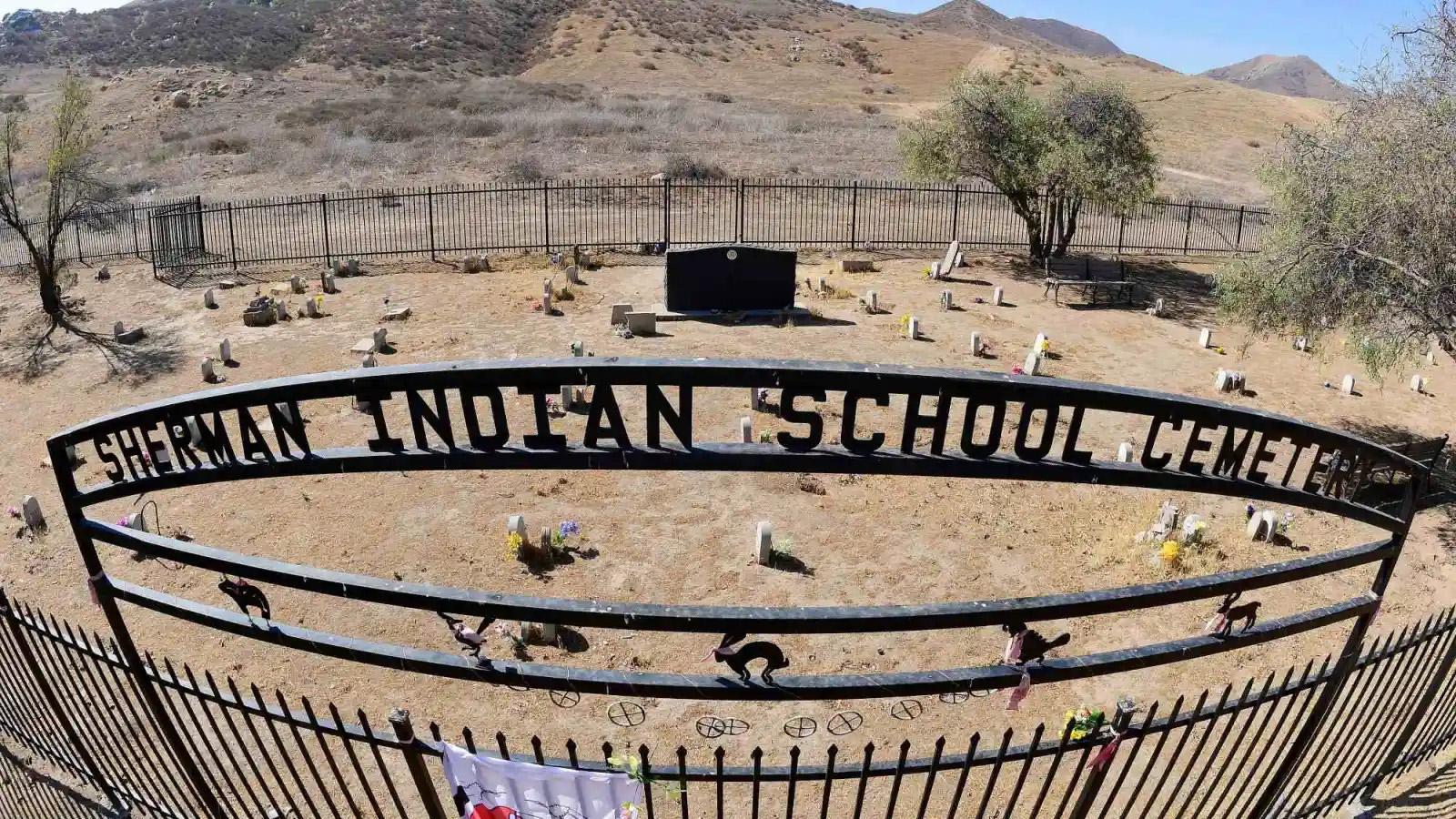
Chapter Five– Experiencing Sherman Institute and Sherman Indian High School
Chapter Six– Water in the West
Chapter Seven– Hostile Territory
Chapter Eight– Is Southern California Drinking Las Vegas’ Reclaimed Drinking Water?
Chapter Nine– Chemehuevi Sweet Corn
Chapter Ten– Rocket Fuel
Epilogue– The Gold Rush and the California
Credits
Page of 1163
Introduction
Alexis de Tocqueville travelled to the United States in 1835 from the then monarchy of France to study the social organization of the young republic.
Tocqueville was enamored by democratic systems, writing,
“The American institutions are democratic, not only in their principle but in all their consequences; and the people elects its representatives directly, and for the most part annually, in order to ensure their dependence. The people is therefore the real directing power; and although the form of government is representative, it is evident that the opinions, the prejudices, the interests, and even the passions of the community are hindered by no durable obstacles from exercising a perpetual influence on society. In the United States the majority governs in the name of the people, as is the case in all the countries in which the people is supreme.” Democracy in America, Book 2, Ch I, 1st and 2nd paragraph.
It has been understood that the Haudenosaunee (League of the Iroquois) Long House traditions played an important role in the formative understandings of the democratic traditions of the United States within the Republic.
Less known is that in the lands of the Paiute, across four states in the West, such traditions of sometimes remote self governing bodies, united by common beliefs, values, and family structures, formed a democratic nation before and within a nation, existing today as a diaspora seeking its originative principles and relationships in a modern-day Reconstruction.
-Robert Lundahl
Robert Lundahl is a practicing anthropologist and filmmaker investigating culture, consciousness, and exogenetic inheritance
f Note: All chapters are derived rom oral history traditions and structures. The same story may b be told at different times and in different ways. Each chapter reflects on the others with some overlapping content and added perspectives.
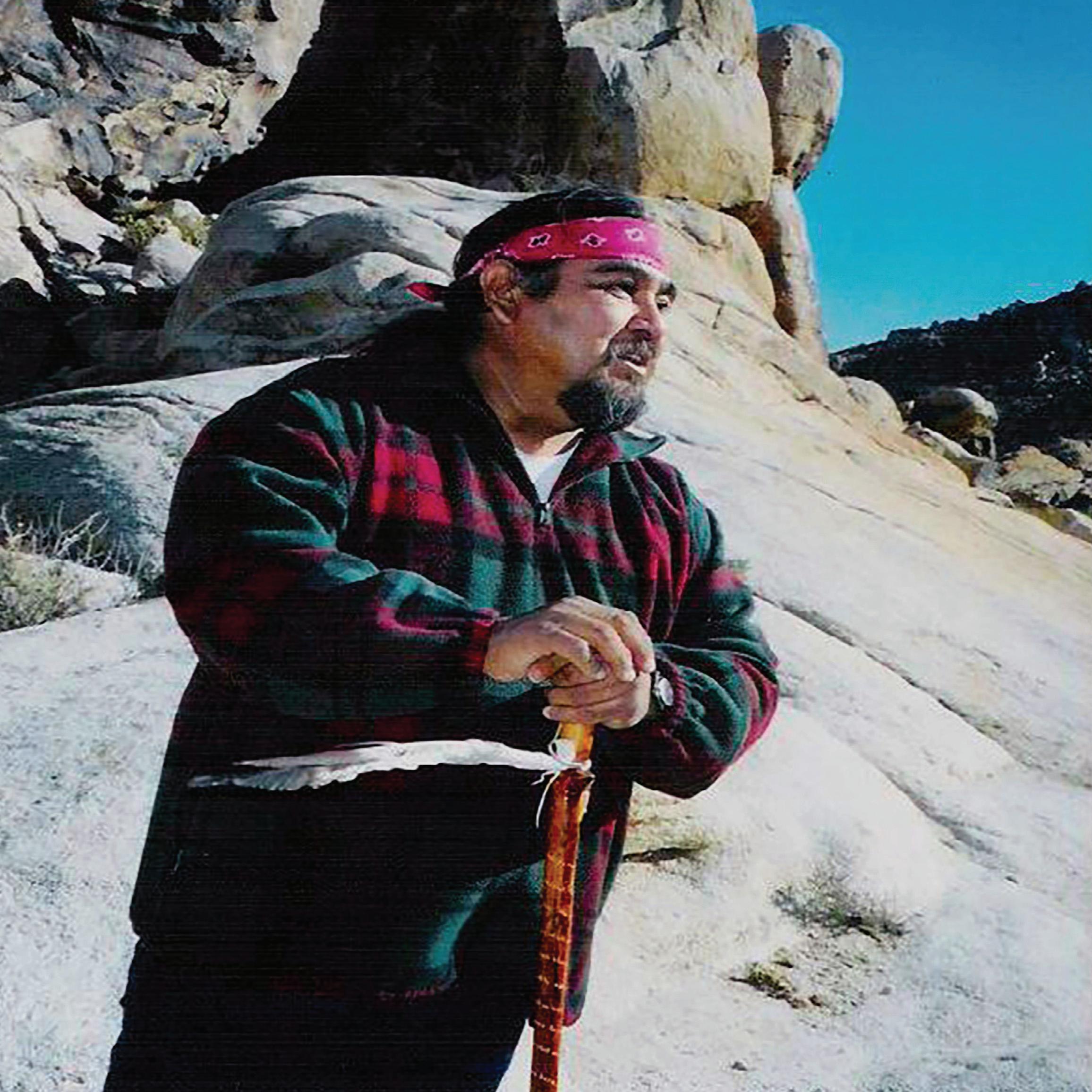
Mathew Leivas Sr. (Chemehuevi Hereditary Chief)
Matthew Leivas, Sr. (Chemehuevi) is co-founder and co-director of the Salt Song Project along with Vivienne Jake (Kaibab Paiute), sharing the vision to preserve and revitalize the Salt Songs (Asi Huviav Puruakain) of the Southern Paiute (Nuwuvi) people
Matt has served as a tribal councilman, game warden, and director of the tribe’s Cultural Center. He is a long time protector of the Colorado River, it's ecosystems and native species
Leivas attended Sherman Institute and served in the Marine Corps.
He is a Native American Land Conservancy board member, and a national leader in cultural preservation.
Page of 2163
Page of 3163
Chapter One
Puha
This is a first hand account of the movement of water, underground in the desert, from Walker Lake to the Colorado River, it's various contaminants, including Nuclear Waste and fallout, and the survival of the Chemehuevi (Southern Paiute) People, until today, facing Lithium and Gold Mining, and Water Extraction– working to protect the public and all citizens in the light of over–development and projects impacting/destroying Sacred Sites and Sacred landscapes that offer regenerative solutions.
Matthew Leivas, Sr. (Chemehuevi Hereditary Chief):
Ash Meadows, you know, it really became, more apparent to myself, on a personal level because, my recent work with, Friends of Amargosa Basin and, befriending, Susan Sorrells, and the organization, seeking assistance in protecting the area.
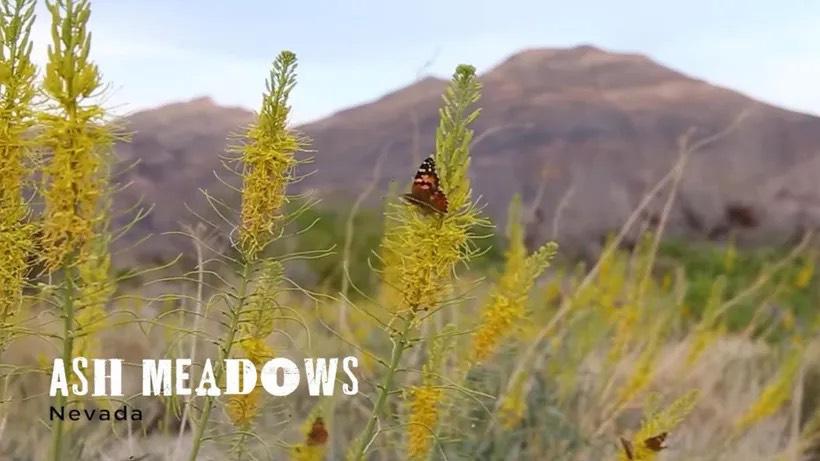
And, thanks to Susan and her invitation to come up and visit the town of Shoshone and familiarize myself with Amargosa Basin. It it was very, enlightening experience spiritual experience at that because when it was revealed to me, it was, it felt like coming home. It felt like coming home, and feeling a spiritual connection with the land, the landscape, and, just being there and all the hot springs and the Amargosa River flowing and everything.
Page of 4163
But, it really inspired me to to learn more and do more research. So my my eldest son, Daniel, and I, started researching more about our culture, about the Chemehuevi culture. And and because we're, I was working at Amargosa Basin, we're working closely with the Timbisha Shoshone, and I was more, inspired about working with them, to help them in light of what the government has been doing to them all all these years.
I felt compelled to help them in some way, and and it was in protecting Amargosa and Death Valley. But in doing our “due diligence” research and, thinking back about a book that my mother had given to each of us, her siblings, her children, is that there's a book on the Southern, Paiute. (Published by) U.N.L.V., it gave a history about the Chemehuevi.
And in that book, she inscribed to each one of us children, about the Chemehuevi, and not really knowing the origin of our people, but the general locale.
And that is up around Death Valley and namely, more so up towards Ash Meadows. There was a group of that had a village up there and interacted and intermarried with all the other Southern Paiutes.
We're all Nuwu, and when the people separated, the 29 Palms Band went south into the Mojave Desert and settled over at the Oasis at Mara at 29 Palms, which was a Serrano village.
Page of 5163
They allowed the Chemehuevi to live there and they coexisted, the Cahuilas also, and the Chemehuevis extended down into the Coachella Valley and on around to San Bernardino, and thus came another group of our people called, the Paiuchis, who settled in San Bernardino and up around the, Tejon pass up to the Mojave River up towards Victorville and Barstow.
But any rate, getting back to Ash Meadows, what was more inspiring and impressive to me was visiting the area and then, later on traveling across Death Valley, en route to Bishop for a Tribal Council meeting with the Timbisha Shoshone, on behalf of the Amargosa Basin Conservancy. And we're doing outreach, to the tribes and forming a tribal coalition, which we're still doing, to help protect Amargosa Basin.
But, just visiting the area, which is so impressive and inspiring to me. And then learning more about Amargosa Basin, not only, Devil's Hole and and the, pupfish, and the Amargosa Basin. Then learning more about the lithium mining that was allowed by the BLM for the exploration studies.
That just irritated me to know what was going on and what the federal government was allowing. It just encourages me more and inspires me more to help in some way. We're forming this coalition of tribes and is first and foremost, Moapa, Timbisha Shoshone, and the Chemehuevis.
We're reaching out to the 29 Palms Band to join with us also, and joining forces with Friends of Amargosa Basin in helping protect that valley Amargosa Basin. And as you know, the lithium mining is big time.
Page of 6163
All the old gold mining that took place, it's still taking place up there, all the contamination that's that's going going on from the extraction of gold from from, as well as the Nevada Test Site and all the contamination.
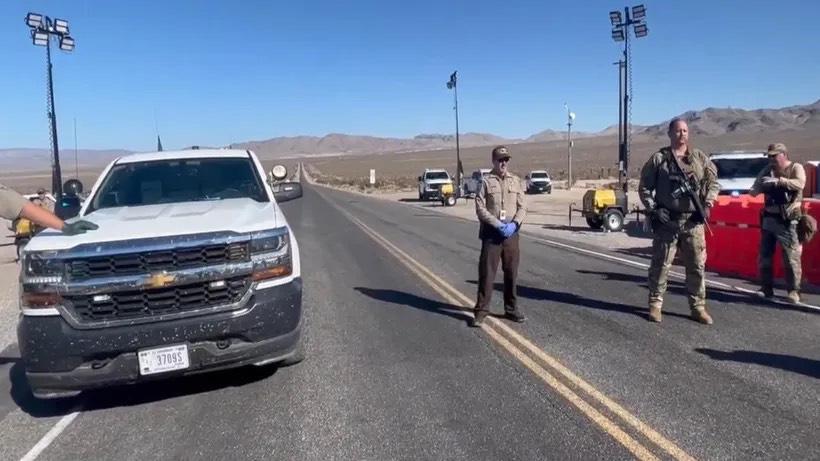
And, little did I know at the time, just until a couple of months ago, finding out that, Amargosa is fed by Walker Lake. Walker Lake, mind you, and that aquifer flows all the way down into Amargosa Basin's headwaters. And when it flows on down to, Beatty, you know, it flows right on down to the river. But, all these waters are being contaminated or have been contaminated by all the nuclear waste.
Page of 7163
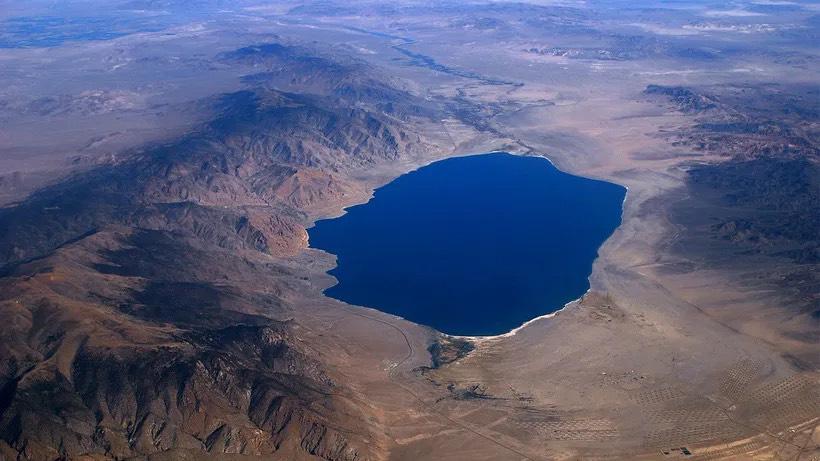
Walker Lake, Wikipedia Crkndll CC-BY-SA
And, at Beatty, Nevada, there was that one, dump site, the low level radioactive waste dump site run by US Ecology, which exploded a few years ago. Well, back in the mid-90s, it was discovered that contamination had already reached the aquifer in the Amargosa and and in the basin and, was affecting the water, contaminating the water at Beatty.
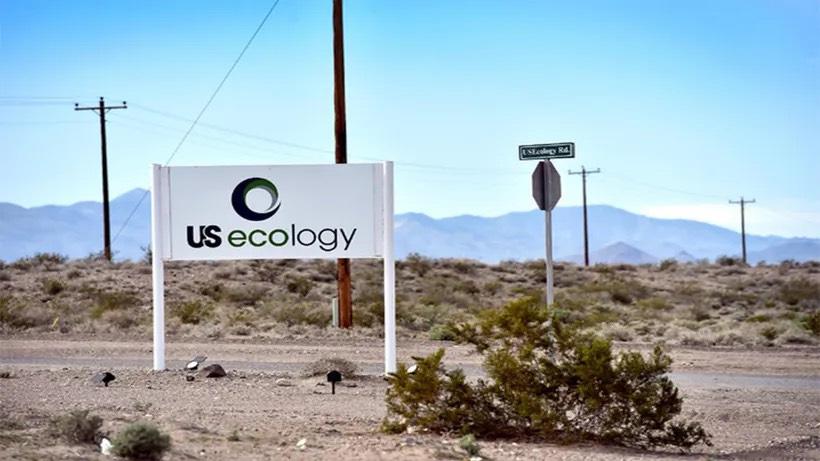
So, you know, that was evident that, all these radioactive nuclides are already moving in the water, in the aquifer underground, 50 to a 100 200 feet below the ground, below the surface, I'm sorry, but all these things are interacting, and they're all flowing down into Amargosa.
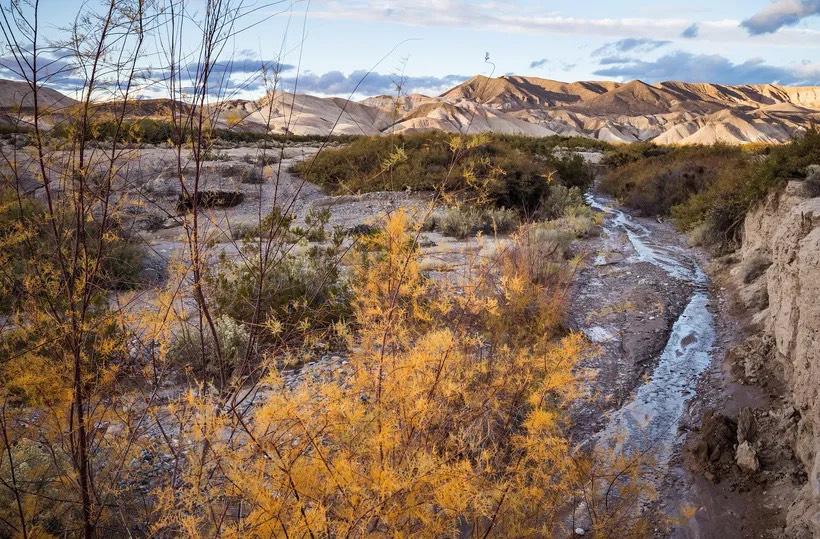
Bureau of Land Management
And more of our research shows that Amargosa Basin may also connect with Cadiz and Fenner Valley aquifer, which is threatened right now from extraction by Cadiz Water Inc., and Company, and now they morphed into a new name, Fenner Valley Water, whatever.
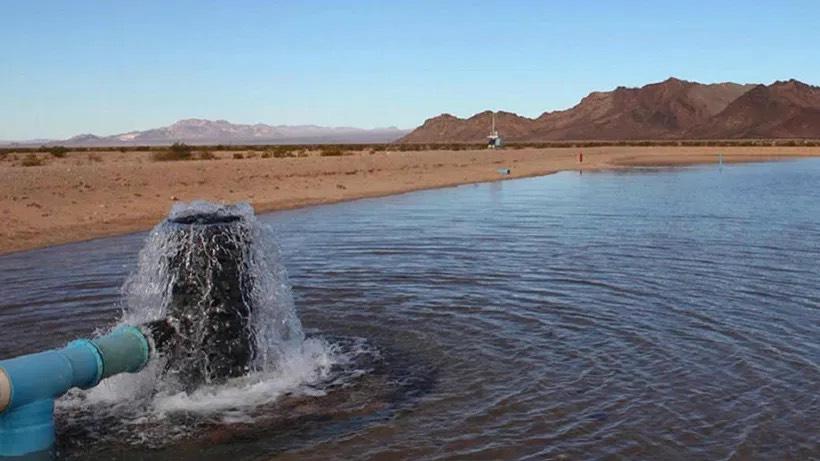
Cadiz Water Inc.
They keep on morphing from one thing to another, but water extraction is big and they're they're coming up with all these plans to extract water and drain the desert basins, and there's no call for it. No need for it at this time. You know, that's sacred water.
It's ancient water. But our connection back up to the Amargosa Basin extends further to all the other Southern Paiute bands as well as our ancient connections to to the other cultures that were in the area.
You know, the Chemehuevis expanded, and extended further south along the Colorado River and into the Mojave Desert and befriended many tribes and learned a lot of their culture and a lot of their language in order to exist, in order to survive. And that was the mode of the day–survival.
And why did they move out of the area? They were driven now by westernization and colonization coming and all the bad things that were coming with it, all the way from, back east primarily.
But you look at what was coming from, down from upstream, from, Salt Lake City, Saint George, on down to Las Vegas, was the different phase, Mormonism. And that was one of the driving forces that split our people, divided our people still today, mind you.
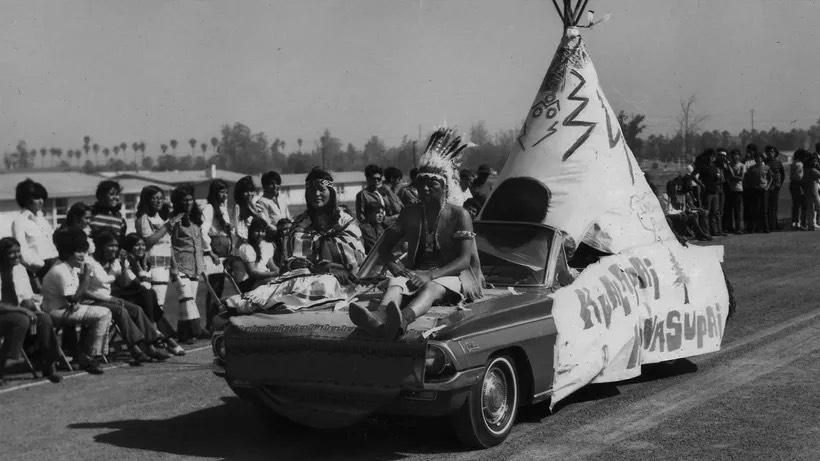
Sherman Institute Archives
That was the consequence of converting our people, convincing them that they are Lamanites and, that they converted and became Mormons, and exist as Mormons, and don't want to go back.
In our case, we want to go back and research our history and be in touch with all the relations of our other people and our cultures because it's a matter of survival.
Those are our indigenous roots, getting back to the land and healing the land. That's exactly what we're doing here at Chemehuevi Valley, healing the land and making it conducive to producing anything we want. We can grow anything we want on these lands now. And, the story is still unfolding of our, land restoration here, but it's a monumental feat and and, trying to take care of the land, trying to take care of the water, our people, and bring them healthy foods and, not contaminated by GMO’s and, you know, ridiculousness.
There's a lot of healing that has to take place, and we feel we can extend this to all other areas in Amargosa Basin. Ash Meadows is on the target for us.
Robert Lundahl, Filmmaker, Journalist
I grew up in Southern California, as you know, and there are a couple of things that we learned about the desert before I had even really been there much. And one of them is don't mess with the tortoise. I had a friend who captured a tortoise and painted his shell blue and let him run around the backyard. And tortoise are endangered. So that's
Page of 10163
Page of 11163
definitely a no no. And over time, people stopped that kind of foolishness to some degree.
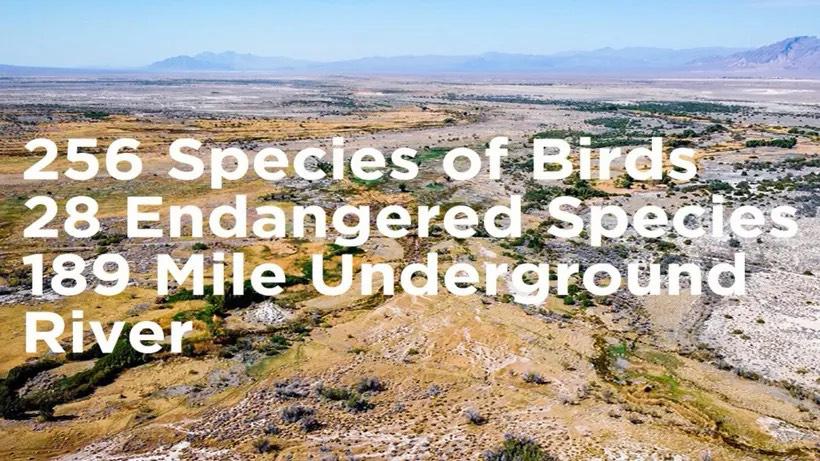
And, another thing we heard about in the “non-native” community was the famous Devil's Hole pupfish, which are an endemic species. They're an endangered species. There's 28 endangered species at Ash Meadows total. So they’re what you might call iconic. They're a symbol of something, a symbol of nature at its best. And how, species survive in harsh conditions that you you just wouldn't expect. They've been there for thousands of years and became separated from other bodies of water where they might have once been, and then they adapted and evolved in these little tiny places.
So what's special then about Ash Meadows to you as far as a living place and a supportive place for people? And what is “Puha?”
Matthew Leivas, Sr. (Chemehuevi Hereditary Chief):
Well, actually, it's a word in our language. That's a medicine man, shaman, a healer. And if, you know, when you get that, that's the medicine. There's a shaman for healing primarily. But, you know, medicine is there. There there's great medicine of healing of all sorts. Just like all the rest of the desert that the nonIndians do not understand.
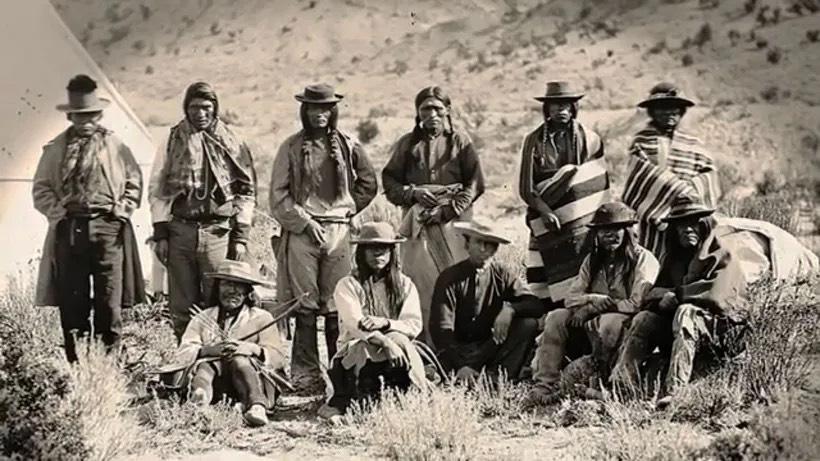
You know, they'd be viewed as a wasteland, as harsh, as a wasteland that needs to be developed and tilled and and converted. And then, you know, they they've been doing that over time in these different communities and municipalities that are popping up throughout the southwest and converting the whole ecosystem and bringing in all these foreign plants and animals and whatnot, and putting them onto these foreign soils. And, you know, next thing you know, we have trees that were grown around the world in our backyard.
I can attest to that. In my backyard.I have a California Elm tree here in the desert that my mother gave me because she loved the California Elm tree, and she said she would never see it grow to us full life. And she's gave it to me when I got my house in 1980, and said put it in your yard and make sure you put it in a place that it's gonna grow and you're gonna have plenty of room.
And we're enjoying it today. It stands 20 feet tall, but, it's a beautiful shape that we love, but it's not a desert plant. It needs a lot of water, a lot of water. And it comes from a different area, a different climate, but I'm treating it as if it's growing in its own element, so I give it a lot of water.
I've converted that, this area in my backyard, and people are doing this all over the place.
Page of 13163
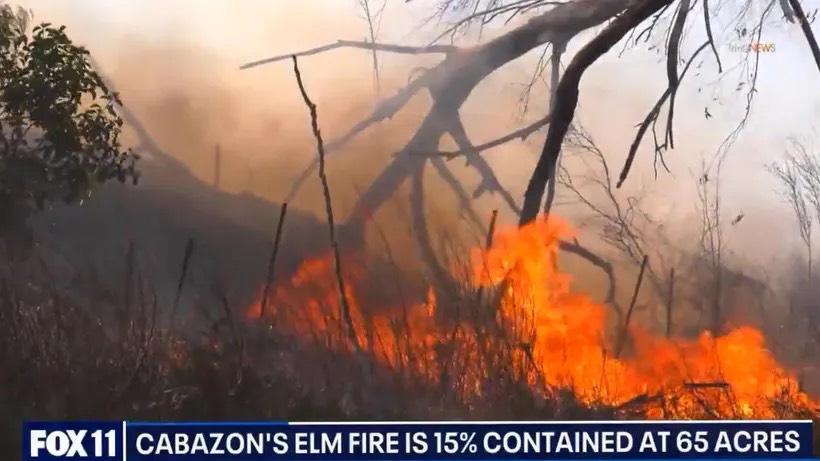
KTTV Fox 11, Los Angeles 2023
This is just one tree. You think about the 100 and 100,000,000 of trees that are in places that they shouldn't be. In the Southern California, good example.
I remember going to Riverside Los Angeles County the first time, and I was just amazed going by UC Riverside and and seeing all this vegetation growing with sprinklers going along the freeway, irrigating, oleanders all up and down the freeways.
And you look around the whole community, you see all these different types of trees. You go to Las Vegas and up around Lake Mead, and you're seeing the same damn thing. You know, and converting these areas. And this area of the desert environment, it grows things for a reason in a certain way, and medicines grow that way. You know, they take from the earth way down deep in those roots, and that's what we go for is that rich element that has that connection both to mother earth and father sky.
When it grows, you know, like a tree and it grows, it grows and we go and pray with the tree because the prayers reach out to the creator. They reach out and they expand. The tree grows and reaching out with the sunlight. You know?
Water flows. You know? It's supposed to flow downhill but it's not, as all dammed up and it creates other havoc by all these dams and and congesting things like all the river systems and whatnot.
Amargosa Basin, you know, and Ash Meadows, it's a powerful place, and they ruined it.
Page of 14163
The white men ruined it by all the nuclear testing that took place. They contaminated the whole frigging area, you know, both the air and and the land and the water and the minerals and, all the creatures.
That's why I wrote that song, that Nuwuvi song that doctor Trafzer wrote about. I call it an awakening song, and, it it starts out, you know, "...what have you done, white man? What have you done? What have you done? What have you done? What have you done white man?”
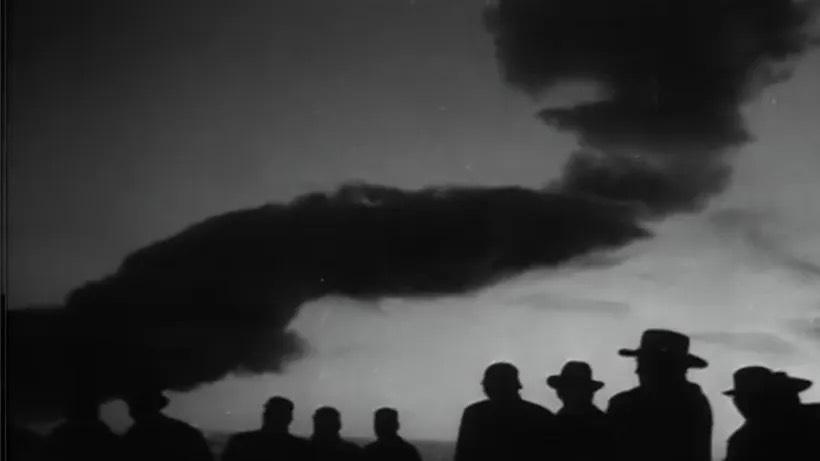
British Pathe/Nevada Test Site
And it goes on all these these different lyrics about, you know, what the white man has done to Mother Earth and to the environment and to our people and contaminating the land, contaminating the water, poisoning everything, and killing our people.
General public across the world without any care because of greed and money.
I guess, the American Dream of profiting off everything, resources, not giving a damn about the people. You know, if people would have just understood our people in the beginning when they first made contact and tried to communicate, like we were trying to communicate, instead of turning words into their tongue and, changing the whole meaning or dynamic of the word to meet what they think is right, well, come to find out, that they were wrong and they've been wrong all along.
And we try to tell them this and, you know, the, late Floyd Westerman in in his songs says it in his songs, you know, you haven't listened. You haven't heard, you know, even if we tell you straight face to face, they haven't heard.
Page of 15163
They haven't listened. They just don't understand the meaning of life on Mother Earth and what we have to do to survive, to live on this Mother Earth, and give gratitude to Creator, give gratitude to all the Elements for what they give to us to help us sustain themselves.
And, you know, the place of, it has everything up there, right there in that mountain, at Mount Charleston and around the area. Just to the north of, Ash Meadows was a vast agricultural area, which is now known as Pahranagat Valley.
In my opinion, is known as Parangarang In the Nuwu, Chemehuevi language, pumpkin.
Vegetables, corn, beans, squash, gourds, anything that they can grow because the land was so rich and the water was so abundant, and the water is so abundant, it's still flowing today out of that same same spring named Crystal Spring.
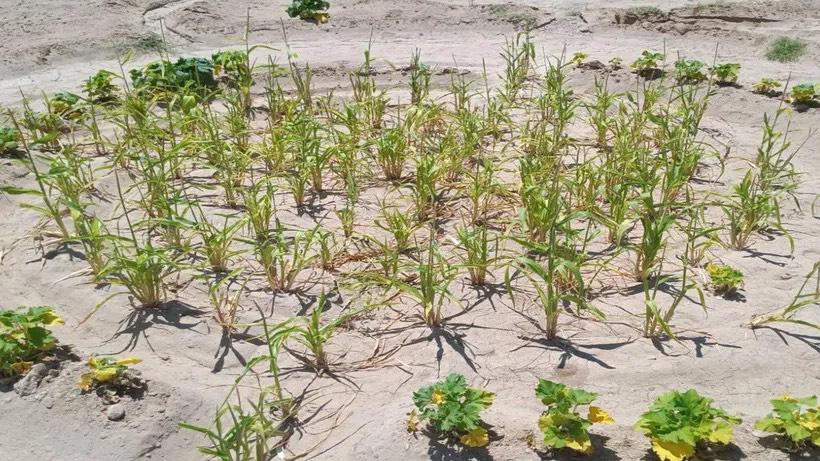
And, you know, there was a a village right near the area, but because of the Mormonism and what took place, they wiped out all that was there in that valley. All of them.
And, you know, we have documentation on this. And we even got the names of the families who took part in all these murders up there of all the Southern Paiutes and ran them out of that of that valley.
Page of 16163
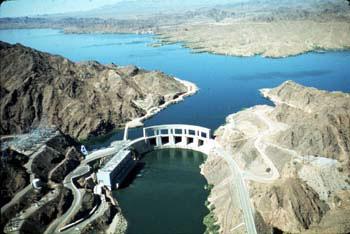
But they went further away, went to Moapa, Las Vegas, Ash Meadows, you know, and just like the, the Chemehuevis that were here in Chemehuevi Valley before Parker Dam was created.
Once the dam was created, they went, and they went to other different villages where they knew they had families. And that was the extent, long extension of our people is we were always going to visit families. It wasn't as if we were just nomadic, but we're going from different places to visit families and be with one another.
And that is the reason why they had runners who had the knack, the ability to do that spiritual running and take messages, especially those really important ones, you know, from the shamans and, chiefs.
Message they had to get from point a to point b like ASAP. That's why they were calling those spiritual runners who would run like the wind and fly and and take the message.
But, you know, Ash Meadows is is a place of power and abundance.
And, once, the people start coming into the valley and and trampling the ground, that's what they did. They're so sensitive. All that land is so sensitive. They can start compressing the land, different areas. When you look at what took place, you know, there's crisscross by roadways, railways, water lines, gas lines, electric lines. You know, the whole frigging valley that valley has been impacted by man's footprint on that ground.
And those footprints, the heavy equipment, they while they use compressed into the ground. And that changes all the other things that are happening, beneath the surface, like the aquifers and the flows of water. And you would think that a roadway would do that, but it does because of the compaction that takes place or anything else. You know? It has an impact. Everything that's happened, there is a consequence to it.
Well, it's happening there at Ash Meadows. But it's a really important place, and and, you know, we're looking at reconnecting with the area and visiting.
More of our people want to come back and make a reconnection with the area, a spiritual calling. And, mind you that, Mount Charleston is the mountain where our people were left on the basket of all of the, different nations, the especially the Nuwuvi Nation.
You know, our Creator left us there on that mountain, and everything there that we need to survive is around that mountain. So it's a spiritual place, powerful place, and we sing about that in Salt Songs as the true Salt Songs makes its way south after leaving Mount Charleston area and travels up through the Amargosa Basin, Ash Meadows, Pahrump), down to Shoshone, on down to the New York mountains and all the way down to the 29 Palms and, down to the ocean and beyond to the Salton Sea and all the way to the Colorado River and back to its point of origin.
Page of 17163
Robert Lundahl, Filmmaker, Journalist
So now we're talking to a non-Native audience too. So what can they learn? Like, we're going forward. Right? I mean, this isn't backward. We're going forward. What can we do now?
Matthew Leivas, Sr. (Chemehuevi Hereditary Chief):
Well, you know, we've been we've been working really closely with the universities, different universities, primarily with, U.C. Riverside, and, as of late with Copper Mountain College over at Joshua Tree, and work with folks over at Lake Havasu City regarding our culture, the Chemehuevi culture, and letting them know who we are, where we come from.
And, there there's, the 29 Palms Band who doesn't go by the name of Chemehuevi, but they were given the name of the 29 Palms Band, the Mission Indians. But they’re our family. There's another group of in Parker, Arizona who are members of the Colorado River Indian Reservation.
And, but, they they have a a committee called the Red Foot Committee, but they don't have any political, power, so to speak. They're just a committee, but they work closely with us.
And then we've been trying to educate the local Southern California and Arizona area about who we are and where we come from and, you know, what we're doing to, restore our culture.
And, over time, you know, the Chemehuevi tribe, got recognized in 1970, but lot of the other Chemehuevi didn't didn't, enroll with us. They were fearful of losing property and position, jobs, and whatnot, that they stayed.
And and their families, their siblings are are upset, jealous, envious about not being able to be enrolled up here, and that was your family's choice. You know, we have no we have no power over that. But yet they are still Chemehuevi. We still share the same songs, and we're reconnecting with families who had split apart because, of, who they were and the bloodlines being, less than a quarter blood. And, you know, that's been a major division amongst all of our nations in in this country is that bloodline. And and, you know, we feel that, you know, if we feel it in our heart that we're Chemehuevi, that's who we are. There's nothing else can change that.
And we wanna do cultural things, so be it. You know? We wanna get educated, so be it. You know? But it's our call as individuals, but we're letting everybody know about who we are and how we got to be and what the divisions were that separated our people.
Page of 18163
The the Mexican influence is really great, and it created a lot of, division amongst our people and my family, especially, because the name, Leivas. That that's a Hispanic name.
Tracker Ginamarie Rangel Quinones:
Wanted to say thank you for your, being here and the ability to share the family, the songs, and the trade routes, the history. I wanted to also say that your family has been affected also in the region where you are by the conquistadors and the Spaniards. the time in history that we remember is that the last name was always given over by the missionaries in the Catholic churches. So all indigenous people within the Colorado River and all of the bioregion of the Southwest have been affected by this history
Page of 19163
Chapter Two
Gertrude Hanks
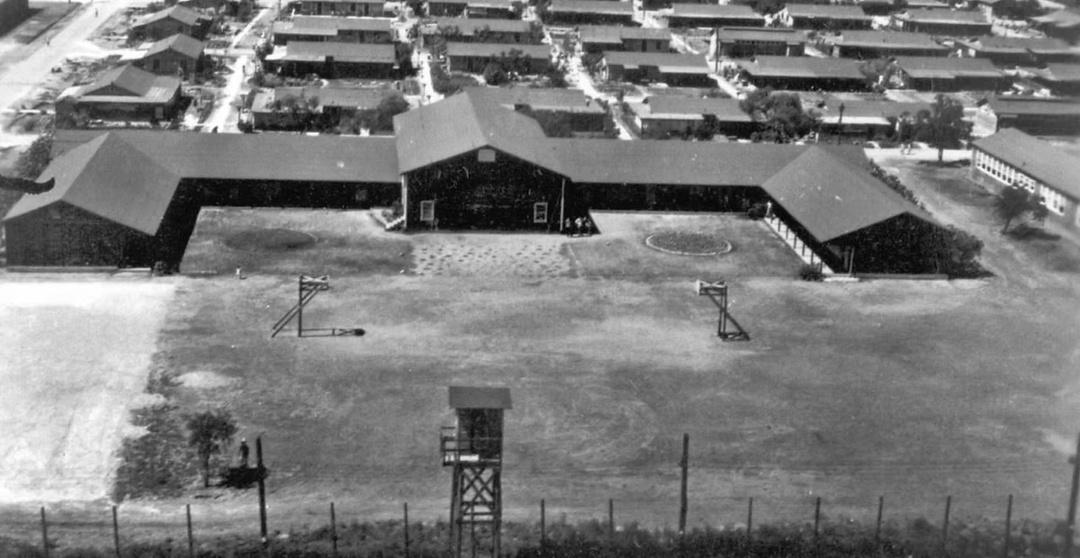
Poston WW2 Japanese Internment Camp Colorado River Indian Tribes (CRIT).
Narrator
Gertrude Hanks stepped slowly up the stairs of an unfamiliar house in the foothills of Riverside, California. It had been many years since she had last seen Herbert Neblet as a boy. Neblet, who became a dentist, had invited her for a return of sorts, the graduation of her son Matthew from Sherman Indian High School, once an Indian boarding school administered by the Bureau of Indian Affairs, to provide remedial education.
Gertrude was reminded of the time as a little girl, a big car pulled up. Debarking were a man in a fedora and a lady dressed in a flowing long skirt, Haikus, or white people, promising Applos.
There was no word in Gertrude’s Chemehuevi language for Apples, so applos would have to do. She knew what it meant. The car door slammed behind her and Gertrude was whisked off. Knowing it was the white man’s law that Indian children had to attend school, her mother stood behind fearing greater penalties.
Page of 20163
Matthew Leivas Sr. (Chemehuevi Hereditary Chief)
She told me that she recalled a car, these white people, a man and a woman got out of the car, were talking to my mother, and the other siblings were there, their sisters and brothers, she wasn't in school, and the government had a mandate to put all the Indian kids in schools, and into the government schools, BIA schools, and the government constructed a school up on the mesa at the Parker BIA agency, along with the Parker Indian Jail nearby, but they constructed a A-frame building up there, it still stands today, it's the first Indian boarding school on the Colorado River Indian Reservation.”
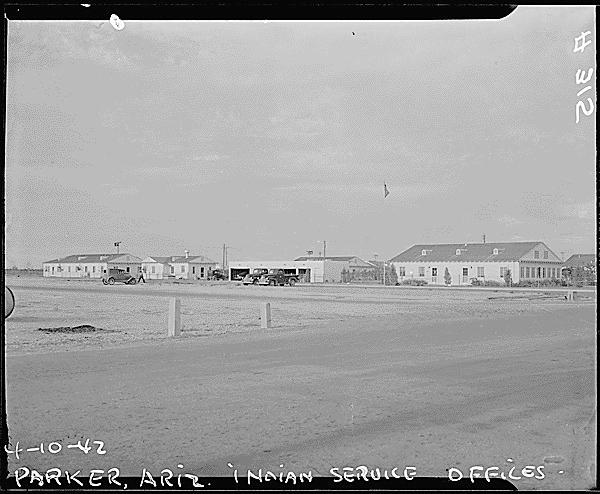
Page of 21163
Narrator
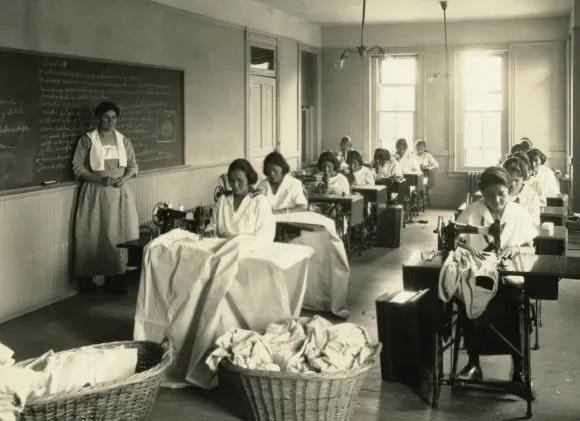
The BIA school in Poston, formerly a Japanese internment camp during World War Two was the next stop on her journey to Sherman Institute, where she learned to keep house, iron, and make pleasant the homes of her overlords, however kindly or well meaning, including raising their children.
“Come here, I want to show you something,” intoned Neblet, his hand reaching for the knob.
The hand turned producing a small “click.”
Gertrude stood fixed. She had raised Herbert, obtaining a successful job as a housemaid for the family following her schooling at Sherman.
Page of 22163
Matthew recalled how she had spoken of Sherman, how she had a good time there with her friends, like many high school girls, her age, of the time.
As the bedroom door slowly opened, Gertrude’s eyes opened wide like saucers. She saw his mother's bedroom complete, the way she used to take care of it back in 1939, 1940.
All restored, seeing his mother's bedroom, she recognized everything.
And it brought back tears and memories to her, as well as to the son, Herbert Neblet, his name was, remembering how she used to take care of them and how she left Riverside.
She left Riverside because she didn't want to be a housemaid.
She wanted to further herself more.
She did what she was taught, being a housemaid, which she did not want. And then she came back to the reservation
Upon return she dedicated herself to her own family and later to tribal politics where she was instrumental in helping to form the sovereign Chemehuevi tribe.
Page of 23163
Matthew Leivas Sr. (Chemehuevi Hereditary Chief)
In Parker she was always raising our family and whatnot. But once she had time to be involved with the politics of the Chemehuevi tribe becoming a recognized, federally recognized tribe, she fought and dedicated her life to that.
As well as with her sisters and brother and to establish the Chemehuevi tribal government and try to revive Siwavaats, that's the old village known as the homestead of our people here in Chemehuevi Valley, and not be under the auspices of the Colorado River Indian Tribes, who want to be separate and stand independent. So they gave up everything and they did.
And that's how the basically Chemehuevi tribe was born. In 1970, June, it finally happened. And then it was a matter of coming back and rebuilding. And it wasn't until 1980 that Gertrude was able to come back home after the first HUD homes were built.
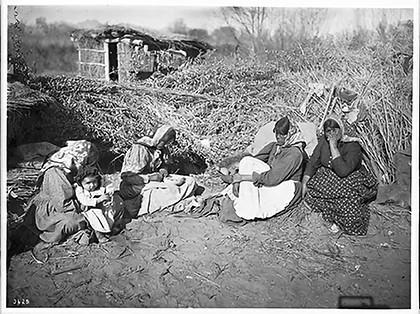
The 29 Palms Band was moving forward on their own level over there. But there was no connection.
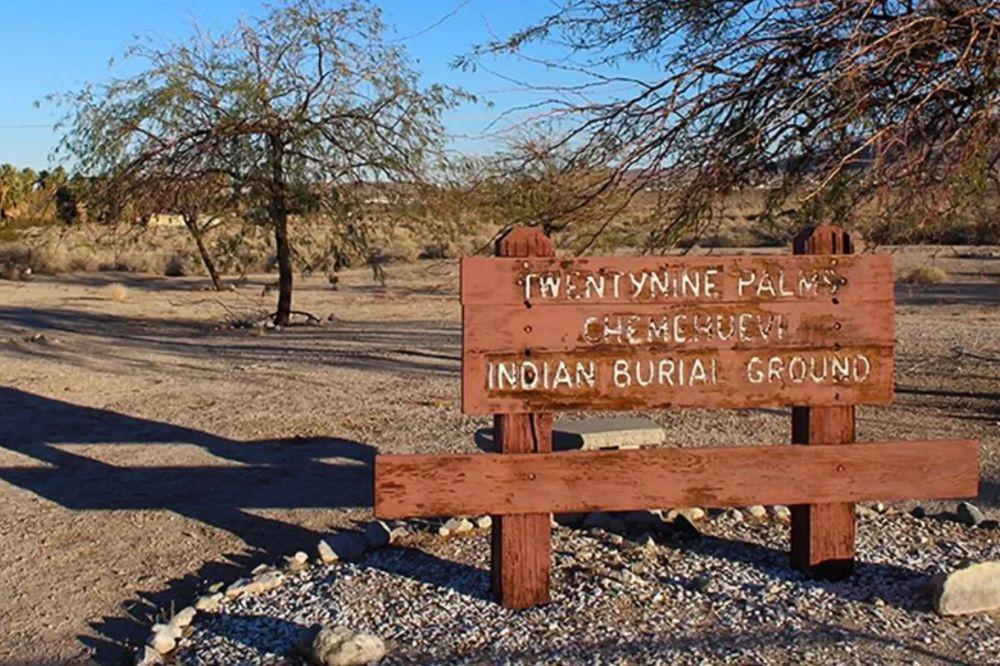
It was until the 80’s that they started to invite son Matthew out to come and talk about the connections, the family connections, and to learn more about the Chemehuevi, what had happened to them as they had they had become so colonized and Westernized that their culture had left them.”
Narrator
It wasn’t until a generation or two later that Matthew and his son Daniel began to search for the beginnings.
Matthew Leivas Sr. recalls a feeling and an insight which led them toward a rediscovery.
There were revelations for Matt as he explored water sources and transport, in this, one of the driest regions of the West.
Page of 25163
Matthew Leivas Sr. (Chemehuevi Hereditary Chief)
“And, little did I know at the time, just until a couple of months ago, finding out that, Amargosa is fed by Walker Lake. Walker Lake, mind you, and that aquifer flows all the way down into Amargosa Basin's headwaters. And when it flows on down to, Beatty, you know, it flows right on down to the river. But, all these waters are being contaminated or have been contaminated by all the nuclear waste.”
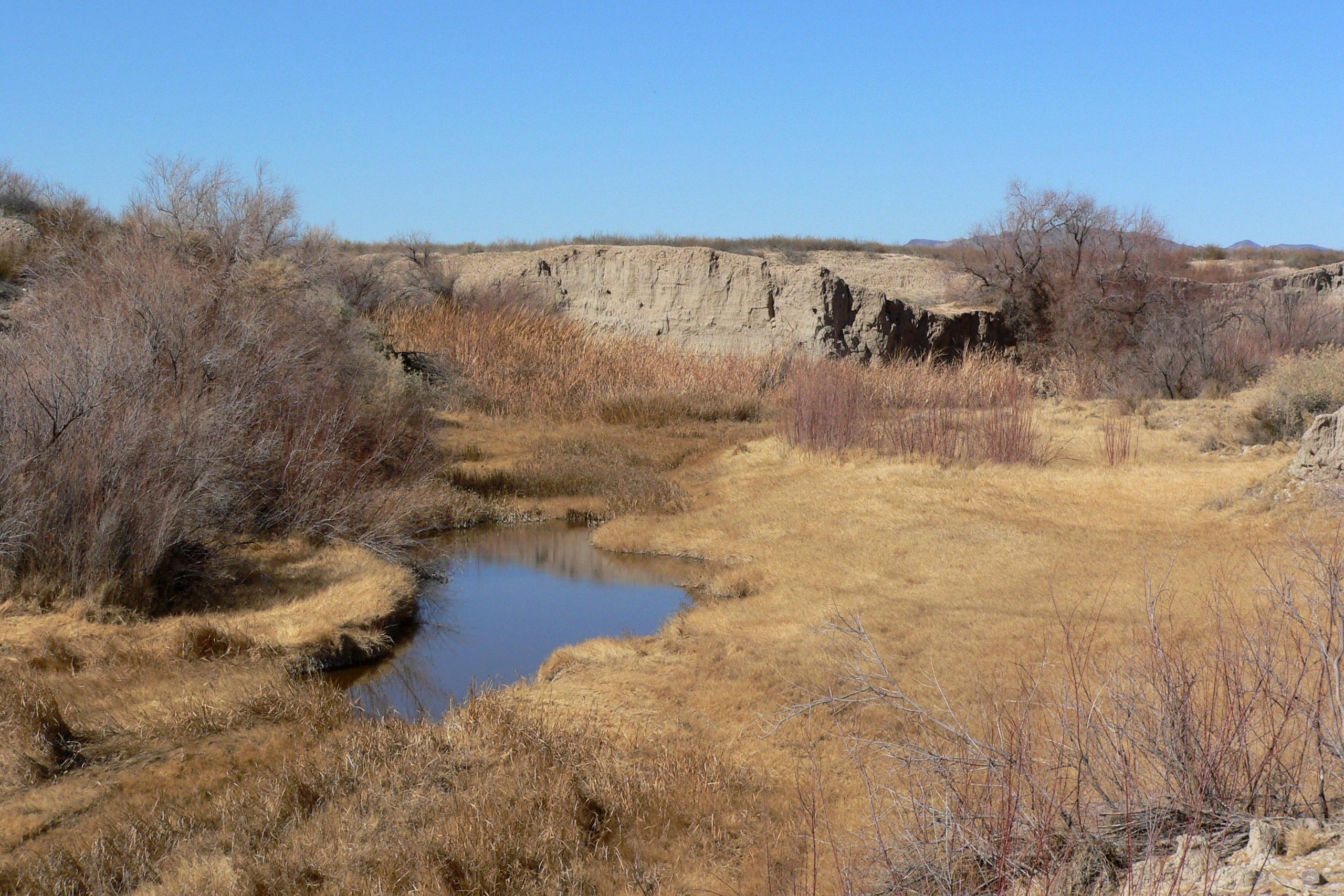
But what was coming from, down from upstream, from, Salt Lake City, Saint George, on down to Las Vegas, was cultural contamination, Mormonism.
Mandi Campbell (Timbisha Shoshone)
“My ancestors have been here forever. During the summer times, they they would go higher up, up towards Wildrose and get pine nuts and pick different foods up that way and do the hunting and stuff, and then they would travel back down during here during the cooler months, or they would head towards Beatty. It just depends on they would head towards Beatty for antelope and stuff like that. Green water to hunt rabbit. But
Page of 26163
during the hottest part of the time, they would really never be down in the valley floor. It was always too you know, just it was too the hot with no electricity and no, you know, so they would go where springs were.”
Mason Voehl (Amargosa Conservancy)
“We have, we believe, at least 70 endemic species that that only live in the Amargosa Basin. And, you know, all of those species in various degrees are, are dependent upon groundwater for their survival.”
Mandi Campbell (Timbisha Shoshone)
“And they’d travel to the springs and stuff. And the food, there's plenty of food in. They're hunting they always they, they manage to accumulate exactly what they needed.”
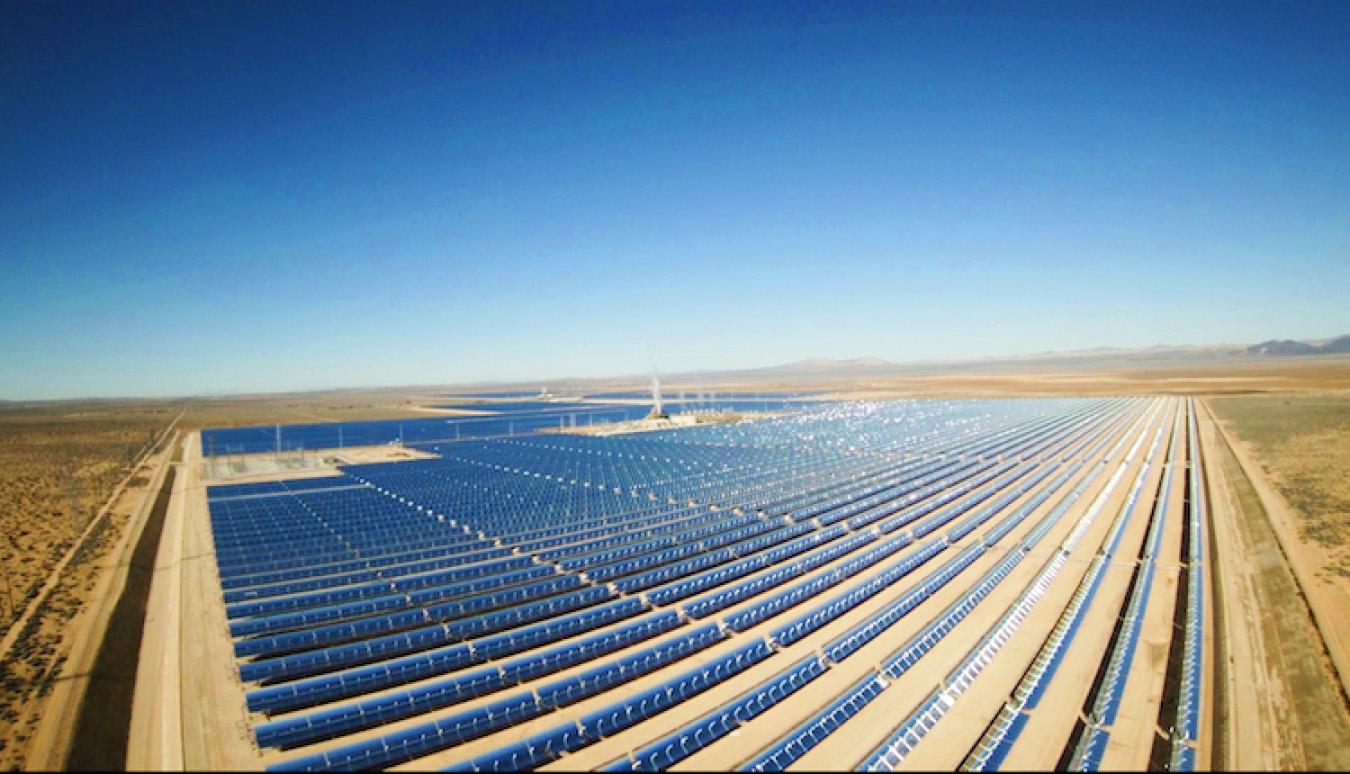
Solar Farm, Mojave Desert
Mason Voehl (Amargosa Conservancy)
“New interests appear, right? We have. We're living through this moment of this, you know, this transition from, you know, a fossil fuel dependent economy to to renewables. And as a result, we've seen a couple of threats looming on the horizon for some time. Large scale industrial solar being one and another one being new forms of extraction. Looking for some of these rare earth minerals that, of course, are are essential to us making this transition possible.”
Page of 27163
Mandi Campbell (Timbisha Shoshone)
“There's springs everywhere. And my family, they knew where it all was.”
Mason Voehl (Amargosa Conservancy)
“And lithium is actually found very commonly in these kind of these, these these basin areas we have in the Mojave Desert, these kind of semi saturated alkali wetland type places tend to also have this kind of, you know, higher concentrations of lithium.”
Narrator
Everything is connected by fate, by history and by choice. Flowing down the Amargosa, into the Colorado, and across the desert, it is sometimes unseen or misunderstood, not without possibility.
Matthew Leivas Sr. (Chemehuevi Hereditary Chief)
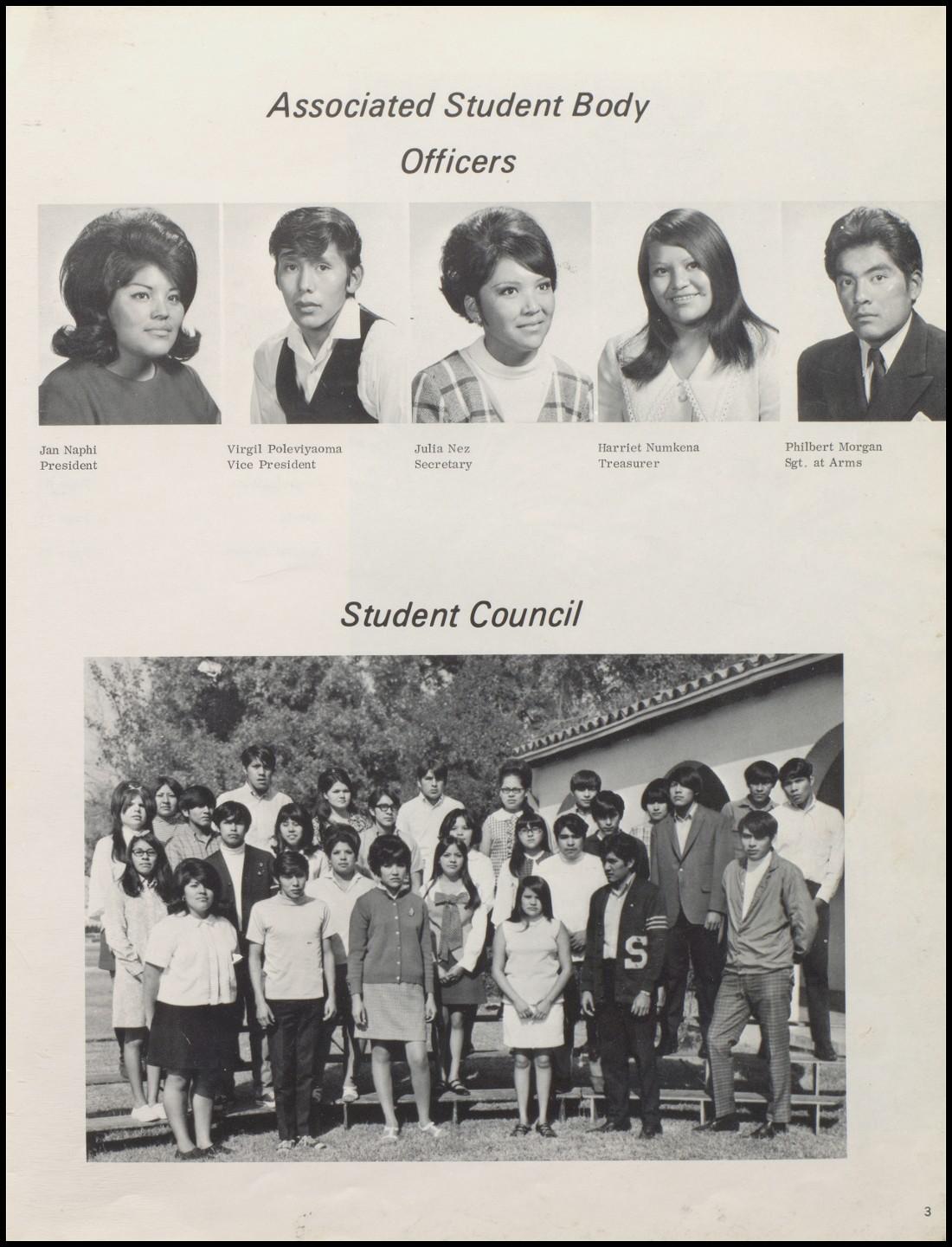
“I can recall at Sherman when the dormitory staff put a young Navajo boy in my room. And he was straight off the reservation. And what I mean, straight off the reservation. I mean, straight off the Navajo reservation living out 40 miles in the desert. No running water. You know, broken, broken English. And, and here I am, senior, getting ready to graduate, athlete, whatnot, jock, muscular and everything. They put this guy in my room. That's when I noticed.
This guy's not taking a shower. And one day, I say, take a shower, man. You can take a bath. And he just gave me a look and didn't say nothing because he's quiet. He just gave me a look. And let's go and see what you got. And he had a nice big footlocker. Opened up his footlocker, all new clothes. Still folded.
Everything. Everything is brand new. But you got to think about our people and him and his culture, where they came from.
You know, in Chemehuevi's lifestyle, a Chemehuevi man may have maybe one or two good pair of pants. Levi's at that. One good pair of boots.
Wouldn't have tennis shoes, no sneakers, rubber shoes. You know, one pair of boots. Maybe two shirts.
Maybe one or two pants. That's it. You know, you go and bathe.
Go and bathe in the river, go and bathe in the canal, bathe at home. But you know, take care of yourself, your hygiene. But being out in the remote area on the sand, they do what they do.
You know, they take care of themselves the way they do. And it's nothing to them. But you had to come to Riverside, California at a BIA boarding school with all the amenities available to you.
You wouldn't use them. And I got angry with him. And I, God, I drug them to the shower with those clothes.
Page of 30163
And they said, no, everybody in the house started coming, following and laughing, you know, boy, take care of your son. And I was ashamed and embarrassed. I was pissed or something. Then, you know, tell this guy, take a bath. Think about this. 1971.
But it did happen. And, you know, after that, we started watching each other, take care of each other and everything, helping him out, which is good, but helping him try to advance and speak and talk with us and everything. And we became friends and whatnot, but it wasn't a really good close friendship, you know, like that. But we communicated. And he was quiet and he had broken language, the Navajo language that, you know, he can speak very well. But we were able to communicate and he understood what I was trying to get across to him.
You got to change. You know, you're here, you got to change. Can't be the way you are you got to change. And he did. But I just want to share that with you about our culture and you know, the time from 1971. And this individual not wanting to do the things that we all take for granted. Because of where he came from. And, you know, that was that was a sad thing back in the day, because there wasn't only Navajo that had really broken language, the whole piece. And then some of some of the Pimas did also. And because I had the ability to speak English pretty clearly, everybody thought I was pretty smart. I really wasn't. But I can communicate.
Page of 31163
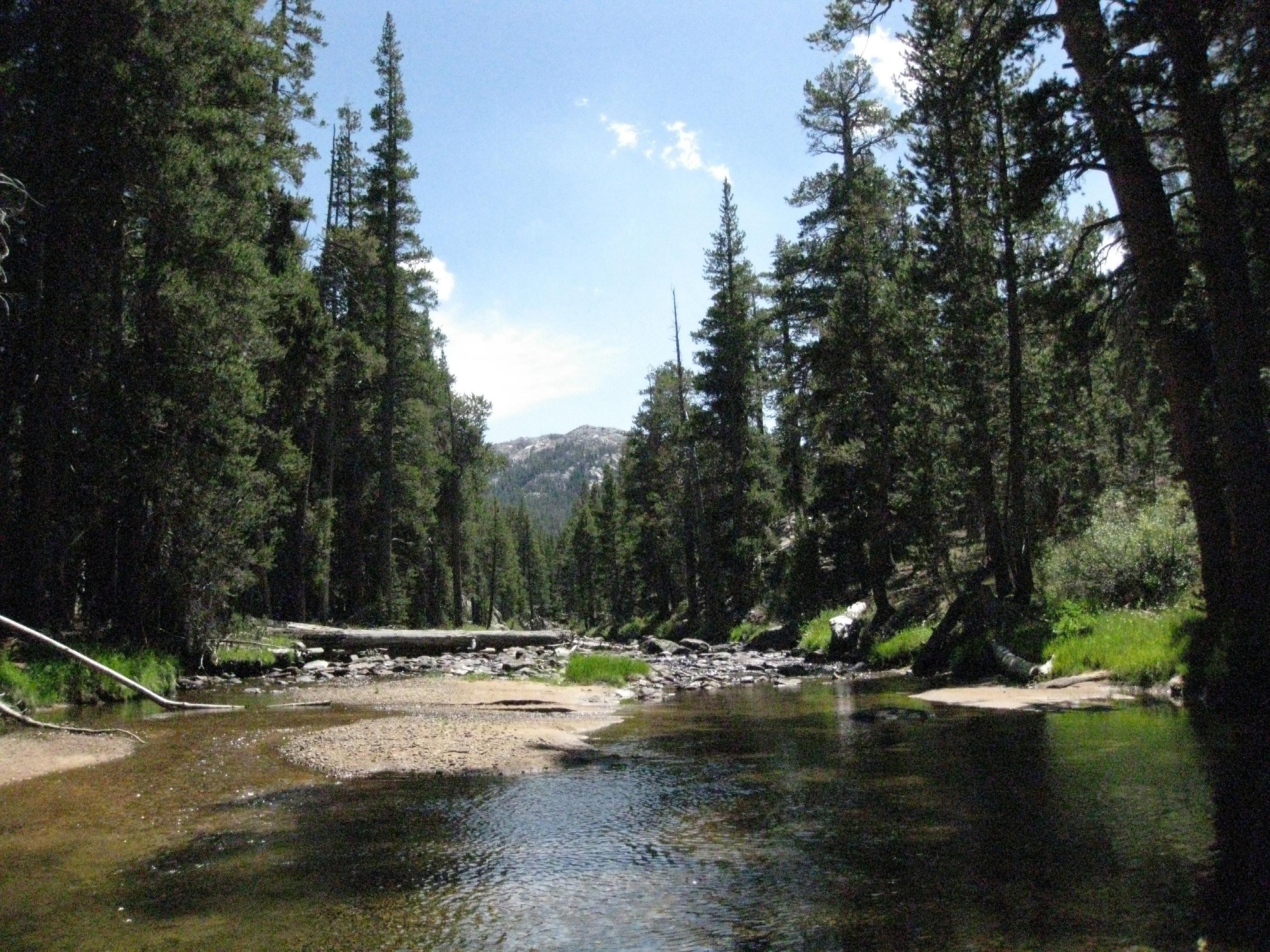
Walker River, By Dcrjsr - Own work, CC BY 3.0, https://commons.wikimedia.org/w/index.php? curid=16204693
And so that helped me a lot as far as education goes, you know. And I didn't really like things there at the school when I first got there. When I look at the academics. And I never really took academics seriously when going to school. But what I've seen there, I
was upset about because what they were doing is teaching remedial education. And I felt really bad for all the Indian students who had been going through this in the 60s.
You know, what type of education were they given? Well, that was one of the driving forces behind my efforts to help change the school and improve the school. And in 1971, the senior class took part in 70 and 71 to help get the school accredited. And we did. We were successful and Sherman Institute became Sherman Indian High School. An accredited high school in the state of California. Thanks to our efforts, the senior class of 1971.
Page of 32163
Well, that's what I'm proud about bringing to Sherman and changing the academics. And bringing it up to the same level as any other high school across the state.”
Narrator
From "Gangster Shoes," to a newly arrived Navajo Boy barely speaking English, championship football, and a newly accredited school, the '70's produced change and the people who produced that change.
Page of 33163
Chapter Three
Underground River
Robert Lundahl, Filmmaker, Journalist
Rushing waters pouring off the Sierra Nevada from Yosemite form the Walker River, plummeting across state lines into Nevada. And Walker Lake, it is a terminus or “sink” with no outlet. Where do the waters go? Underground and onward, down the Amargosa, under Las Vegas, down the Colorado toward the Gulf.
This underground river unites peoples and cultures through historical conflict, destruction of the environment and escape. Yet, it is nature's knowledge that gives us hope to realize a new future through transformation, regeneration, and perhaps reconciliation.
Matthew Leivas Sr.
Yeah, I believe it's all going down to the Southeast there, over towards Amargosa, Beatty on down the headwaters of the whole Amargosa River. Yeah, everything's beneath the surface there. You know, the aquifers are running under the ground there.
Nobody can see them. And just like the waters are running over here in the Mojave Desert that nobody can see there, you know, 50, 100, 200 feet beneath the surface. Yeah, and you said, I think we talked about the U.S. Ecology Low-Level Nuclear Waste Repository and how that had leaked.
Robert Lundahl
And then you mentioned the nuclear testing and there were radionuclides picked up, I think you said, a mile from the last test site, testing site.
Matthew Leivas Sr.
We're talking about two different subjects. The U.S. Ecology site was leaking in the 90s and it was detected and it was determined that it was contaminating the Amargosa and the water system over at Beatty.
And the other is the last underground nuclear test. A year after the explosion, they tested waters a mile away from the epicenter, the explosion site, and they detected all these radionuclides in the groundwater. And so, in my layman’s mind, I see that these things migrated in the water for over a mile and this has been going on for some time.
Page of 34163
I'd say, you know, the water is moving beneath the surface and nobody sees it, but it's picking up all these other contaminants that are unable to detect with the naked eye, unless we have scientific equipment to determine what is what, what's contaminated and what's not. But we don't know what's going on beneath the surface and there's already been so much damage done by all these nuclear explosions, not only here in the United States, but abroad and in the oceans, you know. They've contaminated the
whole entire Earth and all these other things are having a consequence to the ecosystem and all the little critters and creatures that are suffering for it and changing, morphing.
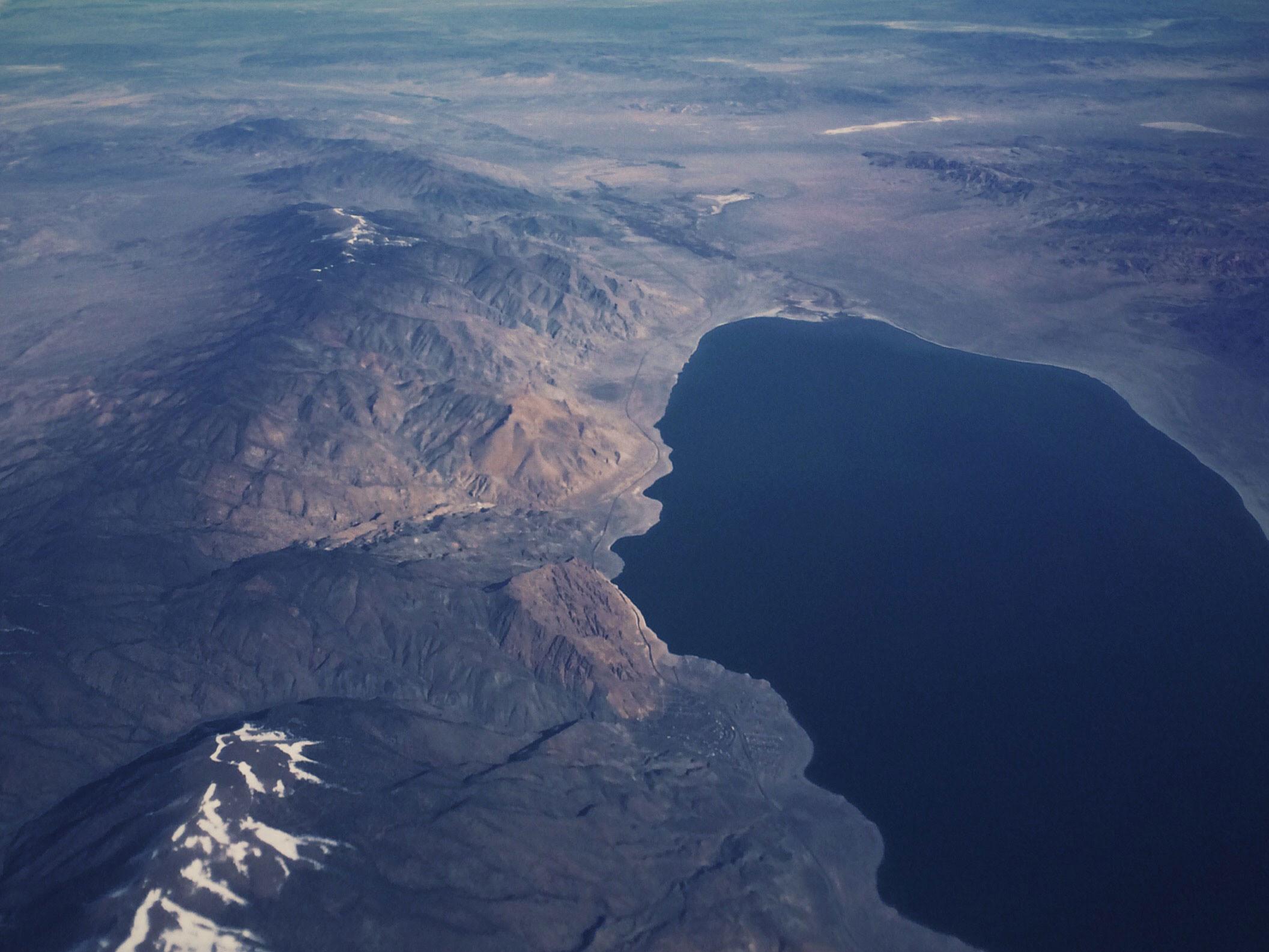
Walker Lake, “Sink,” By Gravitymonkey - Own work, CC BY-SA 4.0
It's a strange combination that has happened, what mankind has done to the Earth and the entire ecosystem, because they didn't know. They had no inkling on what they're dealing with back when they discovered this power of nuclear energy. They released the beast.
Page of 35163
Robert Lundahl, Filmmaker, Journalist
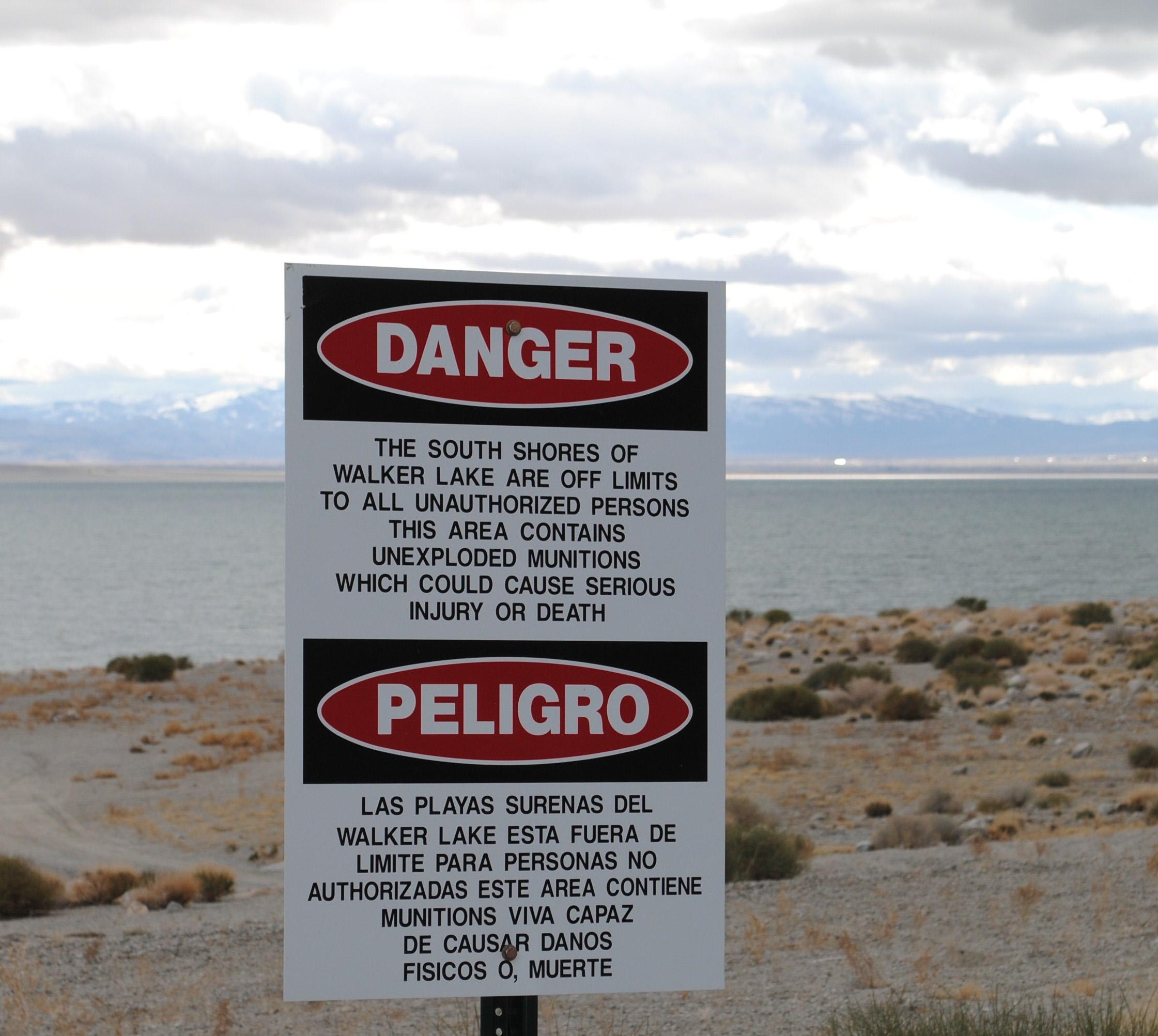
Walker Lake is right by Hawthorne, Nevada, which is the U.S. Navy Munitions Center. And one of the reasons they put it in Hawthorne is there are not many people there, so if they had a major accident, you know, it won't, you know, kill a whole large city of folks. And a lot of animals have died.
I've seen the work of a photographer named Richard Misrach, who went out there and took photographs of these pools of water with dead horses and cows in them. He attributed it to the Naval Weapons Station there at Hawthorne.
Matthew Leivas Sr.
There's a lot of evidence there that proves that. They've been contaminating the Earth wherever they go. And, you know, the simple soldier who is burning debris and not even knowing what they're burning, and yet standing downwind of all those toxic fumes and years later suffering consequences of respiratory issues, you know, not even knowing what they're burning and all these contaminants that they're releasing into the atmosphere and into their bodies that they're breathing without any type of of
breathing apparatus. And this is the federal government, mind you, you know, our wards.
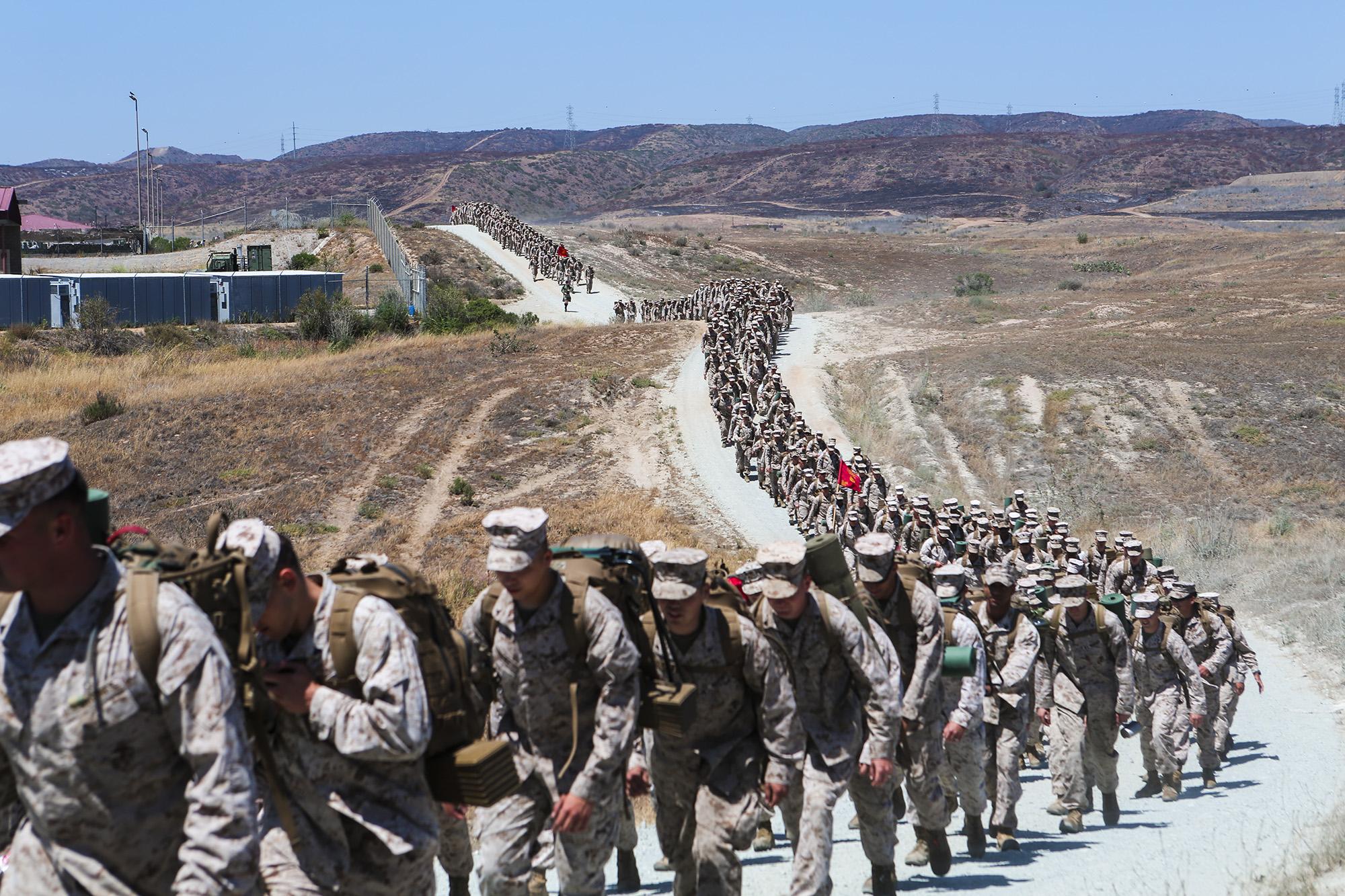
Well, mankind is disposable, you know. If you're working for the government, you really don't know what you're dealing with. And you think they're going to be watching out for you, even if you're a soldier, enlisted man in any of the services. Don't be surprised what the government will do to you. It happened to me. It happened to me, brother, and about 60 or 70 other Marines in Camp Pendleton, in the brig.
I was locked up at the brig for three months. But when I first got into the processing and we all went to our cell block, all had double beds in the bunks after lunch or anyway, everyone was knocked out. Everybody was passed out within minutes.
And I happened to be the first one that woke up out of this stupor. And I started questioning, what the hell happened? What did they feed us? What did they do to us? Why did they knock us out? But every one of those Marines in that cell block with me were all knocked out because of what they fed us. That's our government.
Page of 37163
Tell it to you in the public right now, because it happened to me and 60 to 70 other Marines.
Robert Lundahl
That's a horrific story.
Tracker Ginamarie Rangel Quinones
Thank you for your service, Matt, in the time at Camp Pendleton.
Robert Lundahl
Yeah. Well, I wanted to pick up the story of the Chemehuevi people. So now downstream, downstream from Walker Lake, like you said, you know, there's these materials moving and they move into the Amargosa Valley basin.
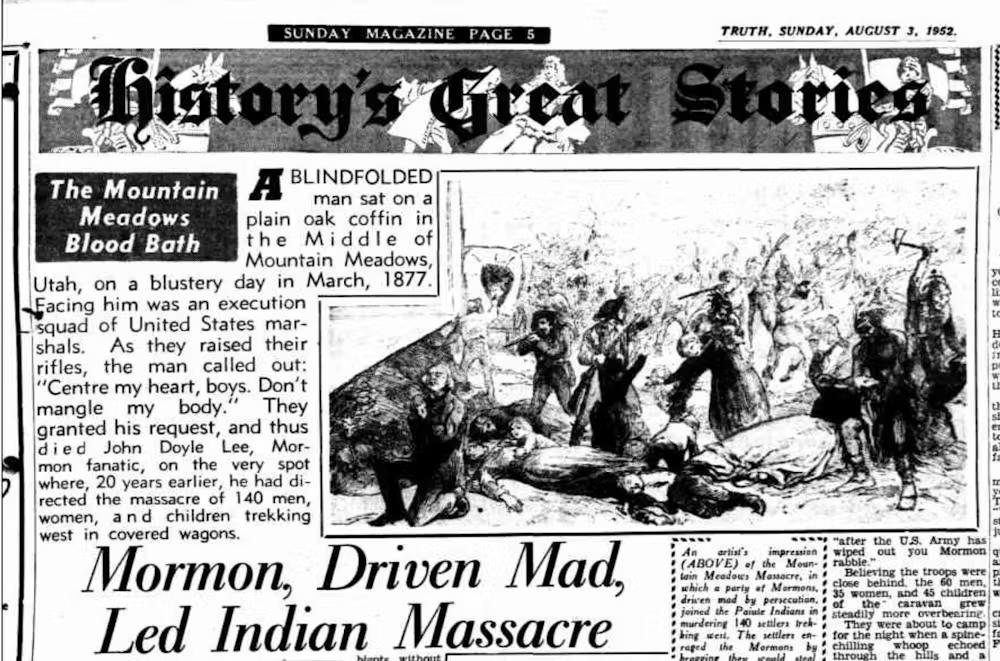
And then one of the places where that water pops up is Ash Meadows. And that provides habitat, a place to live, animals, fish, people gathering, families gathering. And we started talking about that.
Page of 38163
And you said that that was a Chemehuevi village. And I think you said the Mormons pushed them out. Is that true?
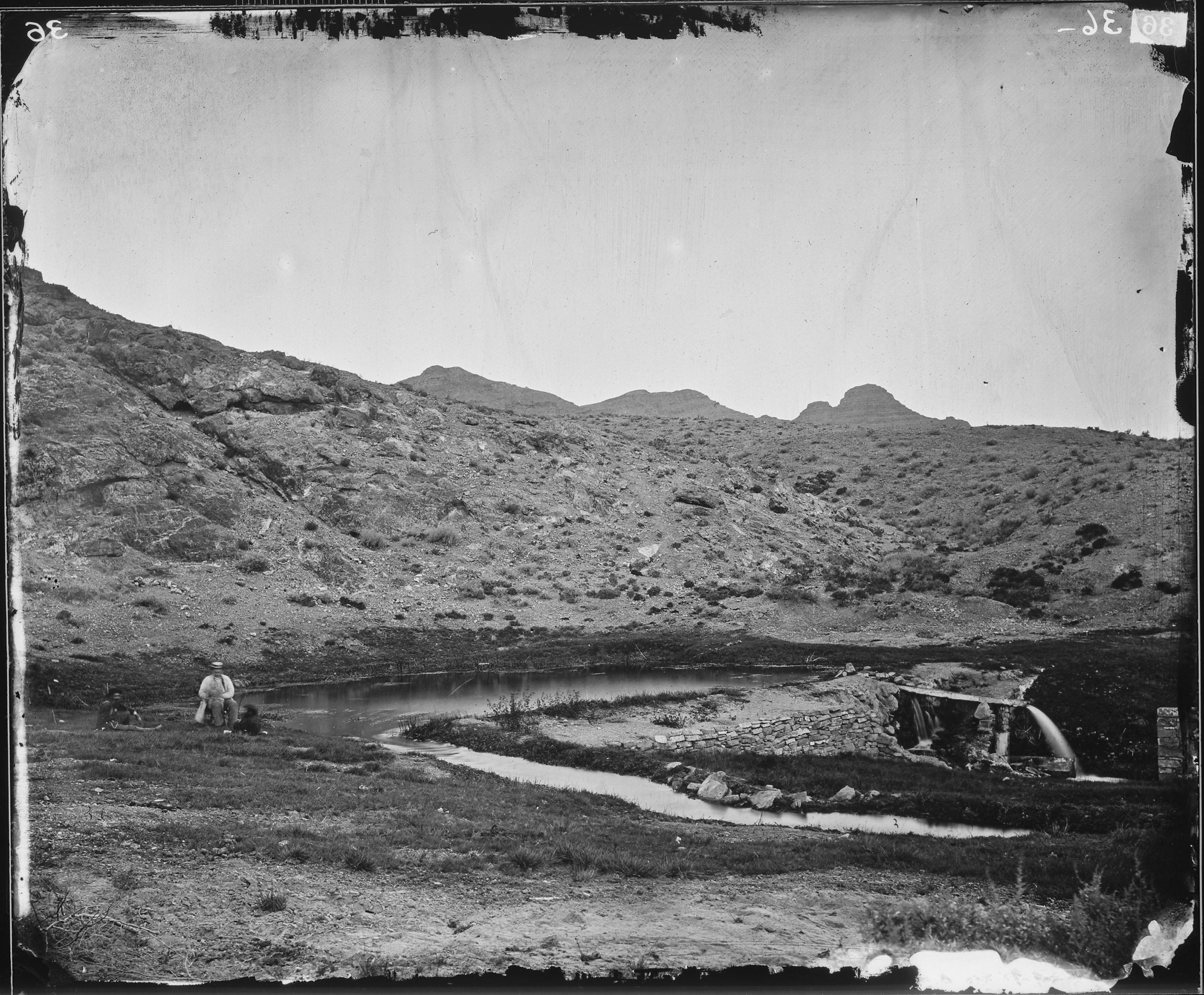
By Timothy H. O'Sullivan - U.S. National Archives and Records Administration, Public Domain, https://commons.wikimedia.org/w/index.php?curid=17427838
Matthew Leivas Sr.
Well, not just the Mormons, but society, white society, the westernization, western movement, you know, with the gold rush and everything happening in the 1800s. You know, there's a mass exodus of people coming west or in search of riches and trying to find their way and trying to make money. But, you know, they were just leaving a trail of waste behind them. And they didn't care who they went over or what they took, as long as they got to the destination. They brought all kinds of other garbage with them. And when things really started happening up here, Amargosa, Death Valley
Page of 39163
and everything, it was because of the vast influx of people coming into the region, namely the Mormons, and establishing all their own towns. And like you and your audience know that, you know, in Nevada, north of Las Vegas, there's a town up there, a Mormon town called Haiku.
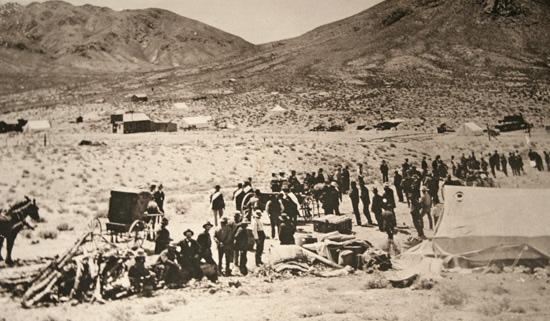
Public Domain, https://commons.wikimedia.org/w/index.php?curid=2721649
Haiku in the NuWu, Chemehuevi language, is white man. So, they named a town after themselves.
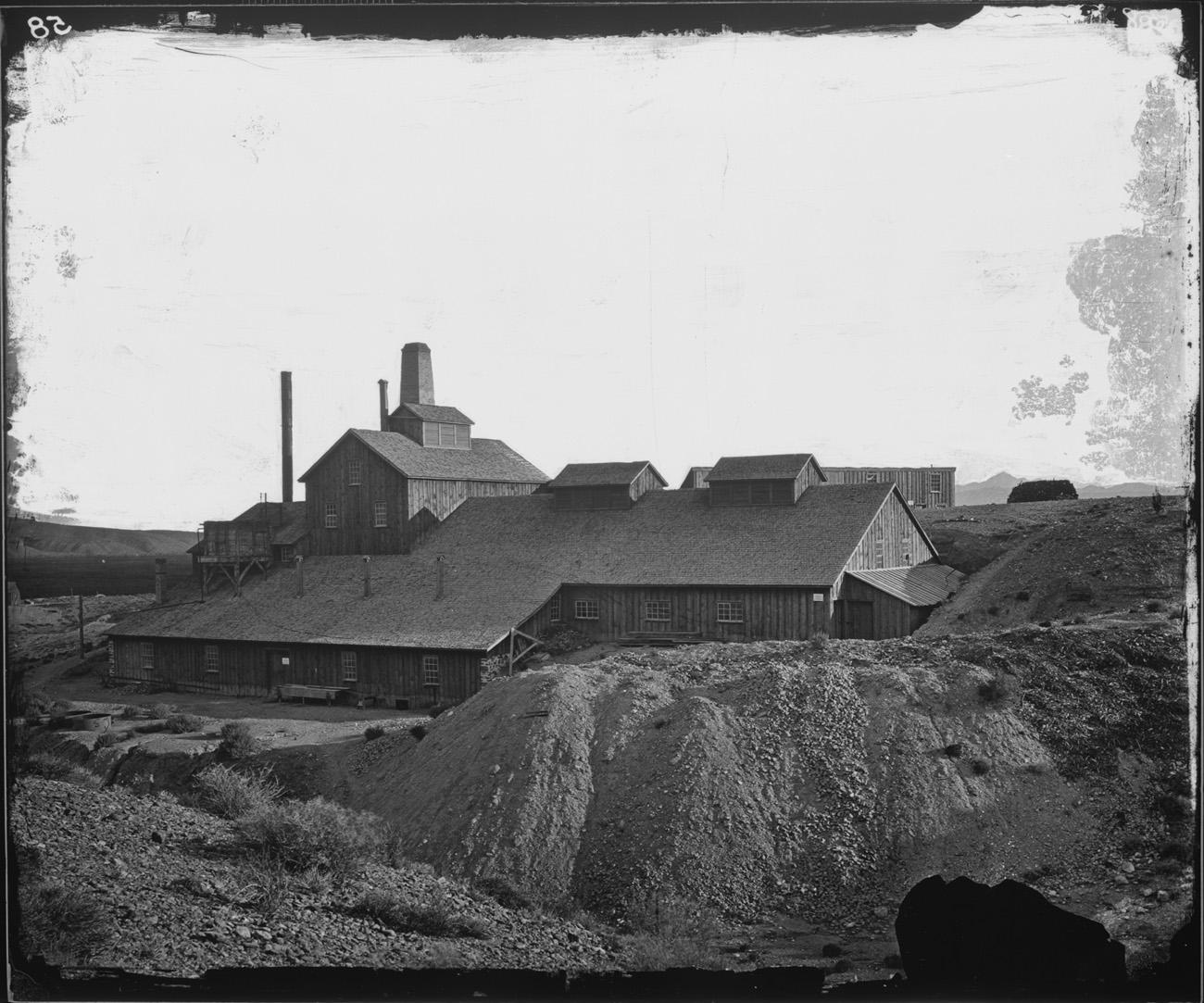
You know, and below that, below Haiku was Pahranagat Valley, the rich agricultural land that, for the Mormons, wiped out the southern Paiutes.
By Timothy H. O'Sullivan - U.S. National Archives and Records Administration, Public Domain, https://commons.wikimedia.org/w/index.php? curid=17427876
Matthew Leivas Sr. (Chemehuevi Hereditary Chief)
And that's recorded history. So Pahranagat Valley is actually the greenbelt for the southern Paiutes, so they can go and harvest and collect and distribute. But, you know, this is what's happening, colonization, westernization, and way of life and
Page of 40163
lifestyles that the white people were bringing to our people and converting them from Indigenous people to Mormons.
And then, getting the Indians to do their dirty work. You know, it was just the motive of the white man back in the day, using the views, and we were disposable. And that's the
same way the federal government viewed us as disposable and desirable.
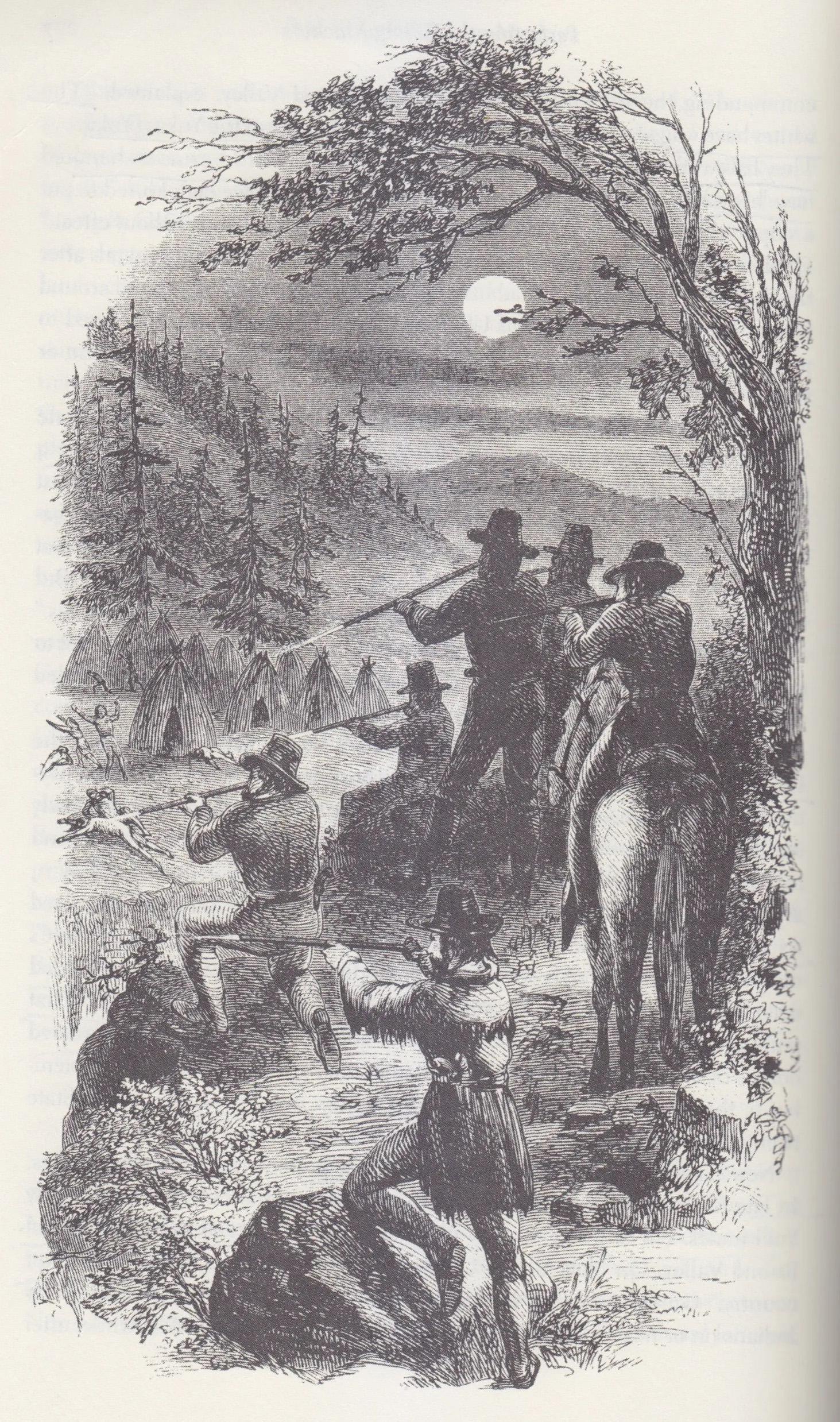
They didn't want us around. They wanted to destroy us. From the 1850s in California, with the taking of all the Indigenous lives in their state, and probably over the border too, and both borders, all borders, all state borders, just for a scalp.
Protecting the Settlers” from Harper s Magazine (1861)
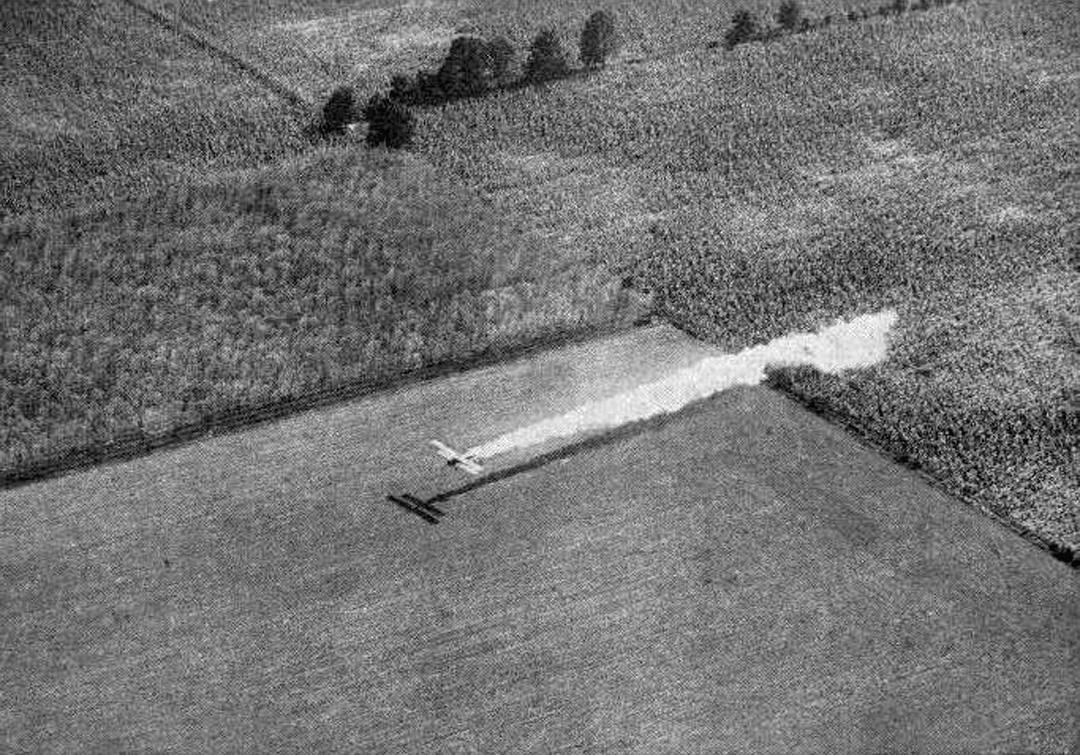
But they were doing it, and it was happening in real time back then, and our people were fleeing, trying to hide, and trying to protect, and trying to survive. And one thing bad about all these contaminants up there in Amargosa and Death Valley, with all the nuclear wastes, in comparison to what's happening down here in the Lower Colorado River, down in Parker, you know, the tribal government put out, issued warnings for the people not to harvest the mesquite beans anymore, because of all the aerial spraying that was going on for agriculture. You know, all the pesticides, herbicides, fungicides, defoliants, and this is stuff that they sprayed over our homes as well.
You know, without any type of forewarning, no notices of what chemicals are being dumped, harmful effects, nothing. They just had carte blanche, and airplanes come and go, and they are dumping their crap all over the reservation. So, the tribal government put out a notice, you know, don't be eating the mesquite beans and
Page of 41163
harvesting from the local trees.
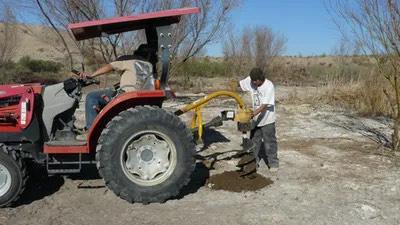
And this is why we were adamant about establishing our tribal farm here on the Chemehuevi Reservation and not allowing any chemicals on our lands, in our agricultural projects. So, we're a traditional garden, organic farm, okay, and that's where we're going to keep it. And we don't want to bombard our lands with all these contaminants, and contaminate not only the fruit, the land, but, you know, the soil, the water.
And this is what's happening all up and down the Colorado River with all this massive agriculture, is they're bombarding everything with chemicals. So, from the tri-state area, Fort Mojave, Colorado River, Indian tribes, Quechan, and Cocopah are doing this because they're being told to do this, and being allowed to do this. And it's all for profit, and the same old adage, you know, everything is for profit, everything's for making money, and they don't care about consequences as long as they can produce and get it on the market, and get it out, and make their buck.
Page of 42163
They don't care about the land, they don't care about the water, they don't care about the people. Here at Chemehuevi, we're the only tribe along the river that isn't using
these chemicals to bombard a reservation, and we're very proud about that. That's why I say when we're building our soil, and healing our land, that's what we're doing, but we're making it conducive to producing whatever we want to grow.
Anything can grow on this land now. You know, we've got rich soil, but it took time to build it up that way, naturally, and then it's happening right now, today. With, you know, all these contaminants up and down the river, and the latest thing was these other contaminants that hit the river directly, like the chromium-6, hexavalent chromium, ammonium perchlorate, you know, plus that, all the other pharmaceuticals coming from down river, it was completely contaminating this water.
It's like sewage water when it gets down to the Gulf. Wastewater.
Page of 43163
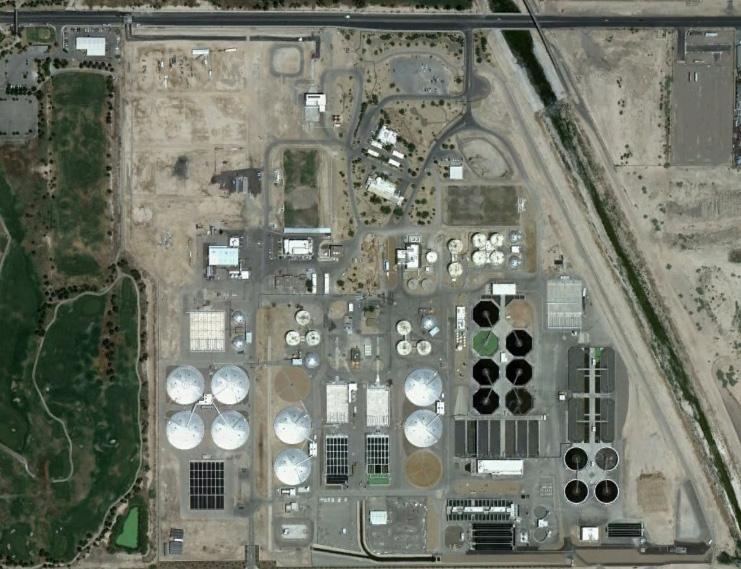
Right, well we talked about Las Vegas releasing their treated wastewater into Las Vegas Wash.
That was one of our conversations, but I want to pick up the conversation just a little bit upstream. So, we were talking about the nuclear testing, and the movement of materials through the water, and I brought up the point that Las Vegas, we talked about
Floyd Lamb Park, which is that park in the north end, and it's very lush. There's a lot of water there, and then you get down into north Las Vegas, and you don't see it anymore.
It goes underground. They built a city on top of it, and you said that the treated sewage goes into the Las Vegas Wash, comes out into the Colorado River by Jean, and so it seems like your people moved downstream to escape, and then you guys arrived at the Parker area in Chemehuevi Valley. Am I getting my scenario more or less correct?
Page of 44163
Yeah, you're correct. Page of 45163
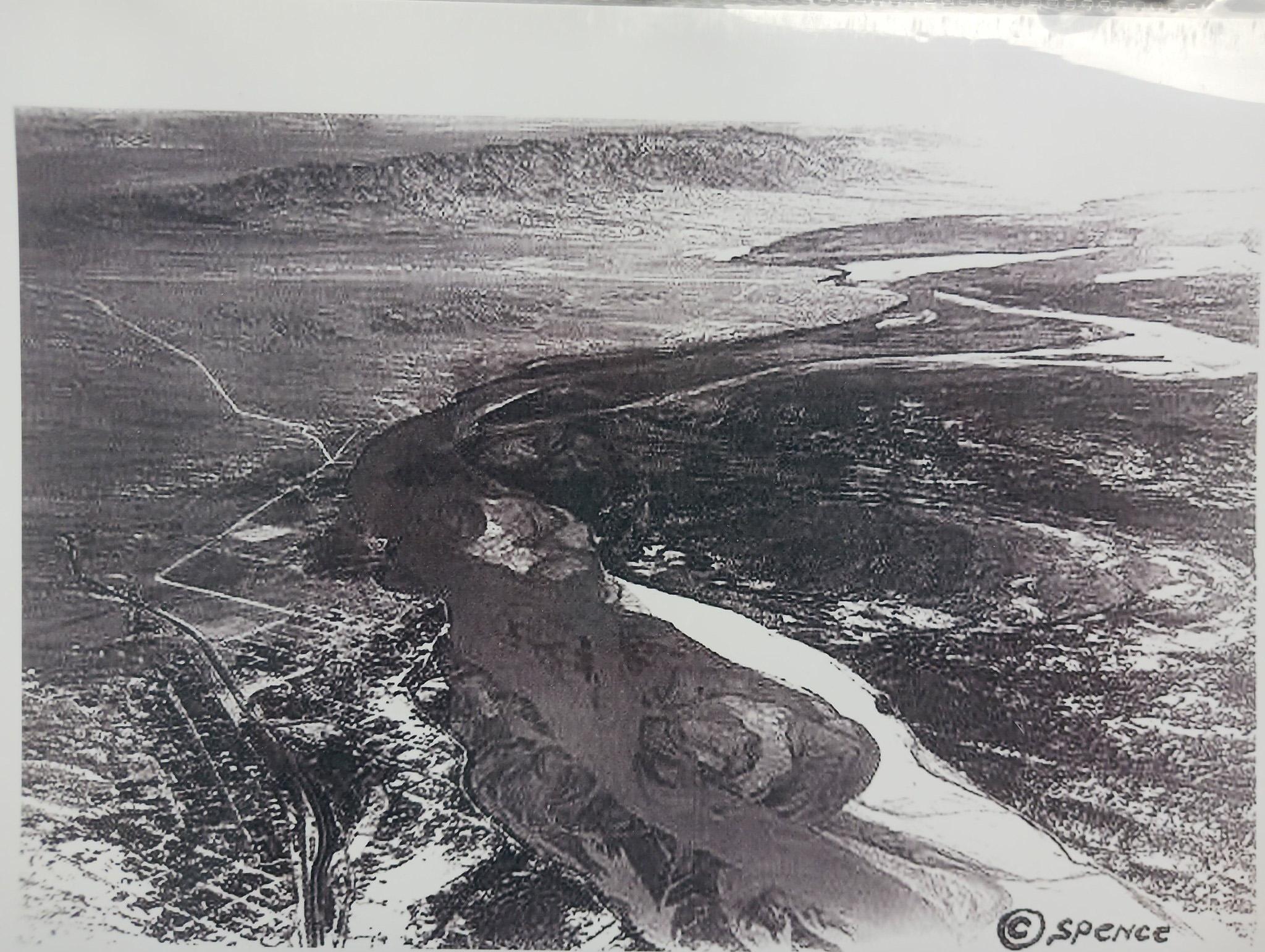
There's two different distinct groups of Chemehuevis that left Ash Meadows and the Amargosa area. Okay, the first group that left was the group that is now known as the 29 Palms Band of Mission Indians, and they're over in Coachella, California. They separated at first, but I believe the reason why they did is because of everything I had told you about the colonization and westernization coming to our people, and them not wanting to change or adapt. They wanted to keep their traditional ways, and so they left the area. Get away. Get out into the desert as far away as you can.
Go to the other tribes, and that's what they did. They settled over here at 29 Palms at the Oasis of Mara, which is a Serrano village, and they lived and coexisted with the Serranos as well as the Cahuillas, and ventured down into Coachella and Morongo and intermarried with the Cahuillas, Serranos. They intermarried with all the other tribes, and one of the other tribes that came out of this that we found out was the Paiutes over in San Bernardino, and that's another story in itself.
Yeah, you're right. The other groups that went to the Colorado River, they went from Amargosa all the way to the east to Cottonwood Island and coexisted with the Mojaves and intermarried with the Mojaves and moved further south into Mojave land, what is now the Mojave Indian Reservation. Upper, Parker Dam
Just north of the Avi Casino, there's a Chemehuevi village there called Beaver Lake, and there's a cemetery there also, and so that was a Chemehuevi establishment, and then further down south here at Havasu is where the village of Siwavaats was, and
that's all beneath the lake of Lake Havasu right now, and what we're doing here on the reservation up here on the mesa is restoring Siwavaats and bringing it back to revive it and make this mesa a green mesa and livable for our people with all the resources, the greenery, and animals that are coming with it, and that's all happening naturally.
Robert Lundahl, Filmmaker, Journalist
Yeah, and so we pick up another part of the story in Parker Valley and your mother at Parker Valley School, is that right?
Matthew Leivas Sr.
Yeah, when Parker Dam was being constructed and near the end of completion, the federal government moved all the Chemehuevis out of Chemehuevi Valley, out of Siwavaats, and that's all what's beneath the lake, all the villages and the farms and whatnot, so all the Chemehuevi's are forced out of Chemehuevi Valley, and a lot of them went to different reservations, the Southern Paiute Reservations, and some went to 29 Palms, some went to Parker, some went to Las Vegas, Pahrump, over at Tuba City, Arizona at the San Juan Southern Paiute Reservation.
Page of 46163
And anyway they just dispersed, but they went back to families, and my mother's family traveled from Chemehuevi Valley down to Parker, and they settled a couple of times, and they finally got an allotment for my grandmother, and that is now Hank's Village, and it's still in existence, and I'm on a mission to clean all that up right now and revive it, but that's what happened, the government moved the people out, and my family, the Hanks family, moved down to Parker and settled and created Hanks Village, the Double H Ranch, named after my grandfather, Henry Hanks.
She told me that she recalled a car, these white people, a man and a woman got out of the car, were talking to my mother, and the other siblings were there, their sisters and brothers, she wasn't in school, and the government had a mandate to put all the Indian kids in schools, and into the government schools, BIA schools, and the government constructed a school up on the mesa at the Parker BIA agency, along with the Parker Indian Jail nearby, but they constructed a A-frame building up there, it still stands today, it's the first Indian boarding school on the Colorado River Indian Reservation
Robert Lundahl
Well, we talked about the water flowing from Walker Lake, underground, we think, and carrying the radionuclides and some of the, perhaps the low-level nuclear waste, as you know, one concern is from Yucca Mountain, and we know about U.S. Ecology, so the river flows, it's underground, it's above ground, it's back underground, and you told me the story about the explosion in Las Vegas in the 1980s.
Robert Lundahl
I actually witnessed that, and how that, it was perchlorate, right, it let out a lot of perchlorate rocket fuel contamination that was, I believe, documented as going into the Colorado River and flowing down to Yuma, and there was a cartoon in the paper about the lettuce fields taking off like a rocket, the heads of lettuce, you know, rocketing up into the sky.
And you made the point that what goes in the river keeps going, you know, it goes into the Arizona Water Project, it goes into the canals into San Diego, and it goes down the Colorado River all the way to Yuma, so I wanted to just quote you or try to quote you a little bit on this watershed, this big watershed where water moves and we don't always see it, and you mentioned that you, the Chemehuevi people had always gotten along well with the Quechan down south, and that you have preserved the Quechan Dream Trail through your farm, in testimony or recognition of the fact that these tribal groups basically got along and respected one another.
Robert Lundahl
I started thinking of this whole watershed all the way down, you know, we don't know much about, we don't always see, but it gets in the drinking water here and there, and
Page of 47163
Los Angeles, and Lake Matthews, and Tucson even, and as I got that picture in my
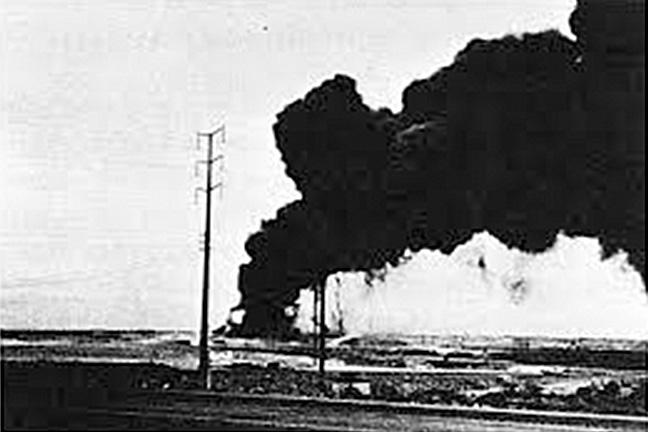
mind, I was really blown away, and I started talking to people about it, and they were blown away, because, you know, the youth and the non-Native people think of it as a desert, you don't think of it as a series of habitats, and watersheds, and areas where, you know, species grow, and interact, and thrive, and sustain themselves, and where people sustain themselves, and live, and have families, and anyway, it was a different recognition, so I wanted to raise that about how this system connects people, and communities, and civilizations, tribes, people.
Matthew Leivas Sr. (Chemehuevi Hereditary Chief)
Back in the 60s, there was a release of a reservoir over in Arizona, I believe, mill tailings from the uranium mining, and it got into the Little Colorado River, which led into the Colorado River, Grand Canyon area.
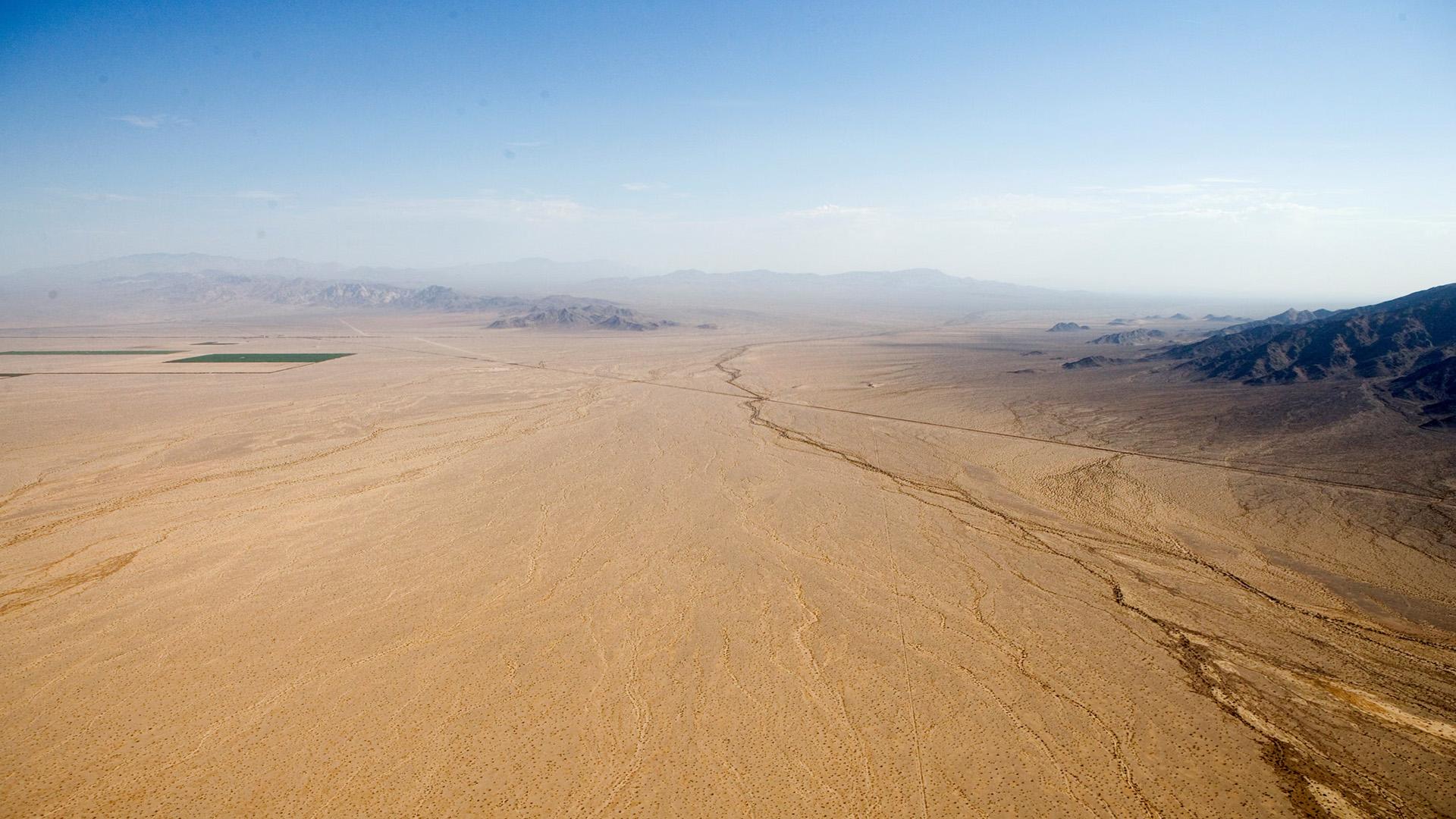
Well, you know, those contaminants were realized all the way here at Lake Havasu, in this lake, you know, it was really contamination that was detected in this lake, okay, and that was an alarm for me, but these latest things that happened with the rocket fuel oxidizer, ammonium perchlorate, that was developed there at Henderson, and
Page of 48163
that plant blew up, you know, even before that plant blew up, that retaining, that sunk they had out there with all this contaminated water was already leaking into the aquifer, and it had already migrated all the way over to Las Vegas Wash.
All right, and even before the explosion, this was already leaking, you know, how many years prior, I don't know, but it was already leaking into Las Vegas Wash. Las Vegas Wash was already carrying sewage, treated sewage, into Las Vegas Wash, which goes all the way to Lake Mead, okay, just above the dam, and after the announcement came out of that, and laughing at that cartoon of a farmer running off a field with a hole in his shoulder and a cell phone, on the other hand, yelling, Houston, Houston, we have a problem, and all these heads of lettuce are shooting up in the sky, you know, from all this contaminated water flowing over the Yuma, being used to irrigate any of the crops, all the crops, okay, so that was the point, is that, you know, it's getting into the food system.
We, you know, we're adamant about protecting the Mojave Desert, and this is why I called that meeting with our nemesis, Susan Kennedy, the other day, to talk about these issues and the importance of it to our people, and why we're so adamant about protecting the Mojave Desert and all these different natural resources, namely the water.
It's interesting that Susan Kennedy is involved with Cádiz since she became the CEO in 2024, after serving as a board member, and our board chair. Cádiz is focused on water infrastructure projects, particularly development of a pipeline system to help transfer water to drought-affected regions in California.
Page of 49163
Tracker Ginamarie Rangel Quinones
It's interesting, Kennedy was well known in California politics, and will be interesting to find out she's also co-founder of the energy storage startup Advanced Microgrid Solutions.
Matthew Leivas Sr.
Oh, Susan Kennedy, she's a very smart, articulate woman. She's the CEO for what was Cádiz Water Inc., now the Fenner Water Valley Company, but they're the proponent who is after Cádiz Water for marketing in Southern California, another place, and they've gained so much support that they're marketing water with promises of water to desert communities, and the issue is not over yet.
Tracker Ginamarie Rangel Quinones
A lot of the general population and public, even First Nation people, do not know the legal aspects of Cádiz's water projects, particularly the pipeline crossing government lands, have been overseen by Scott Slater, a water and land use attorney. Slater served as CEO before Kennedy, and has helped navigate the company through legal channels related to water extraction and environmental concerns. And the whole issue is all about profiting, and money, and more so, and we're not buying into what they're selling.
Matthew Leivas Sr.
We're not going to give in on behalf of the Native American Land Conservancy, nor the Chemehuevi Indian Tribe, and join forces with them. So we let them know straight forward that we're not supporting them, and we've also filed a resolution in opposition to the projects. And I did let Susan know that there's going to be a movie made, and I told her, you're in it.
And she looked at me, stunned, stunned look, and I said, regardless of your permission or not, you're in it, because you're a part of this whole project in the Mojave Desert, from Ash Meadows down to the Salton Sea.
Chapter Four
The BIA
Made A White Man Out of Me
Matthew Leivas, Sr. (Chemehuevi Hereditary Chief):
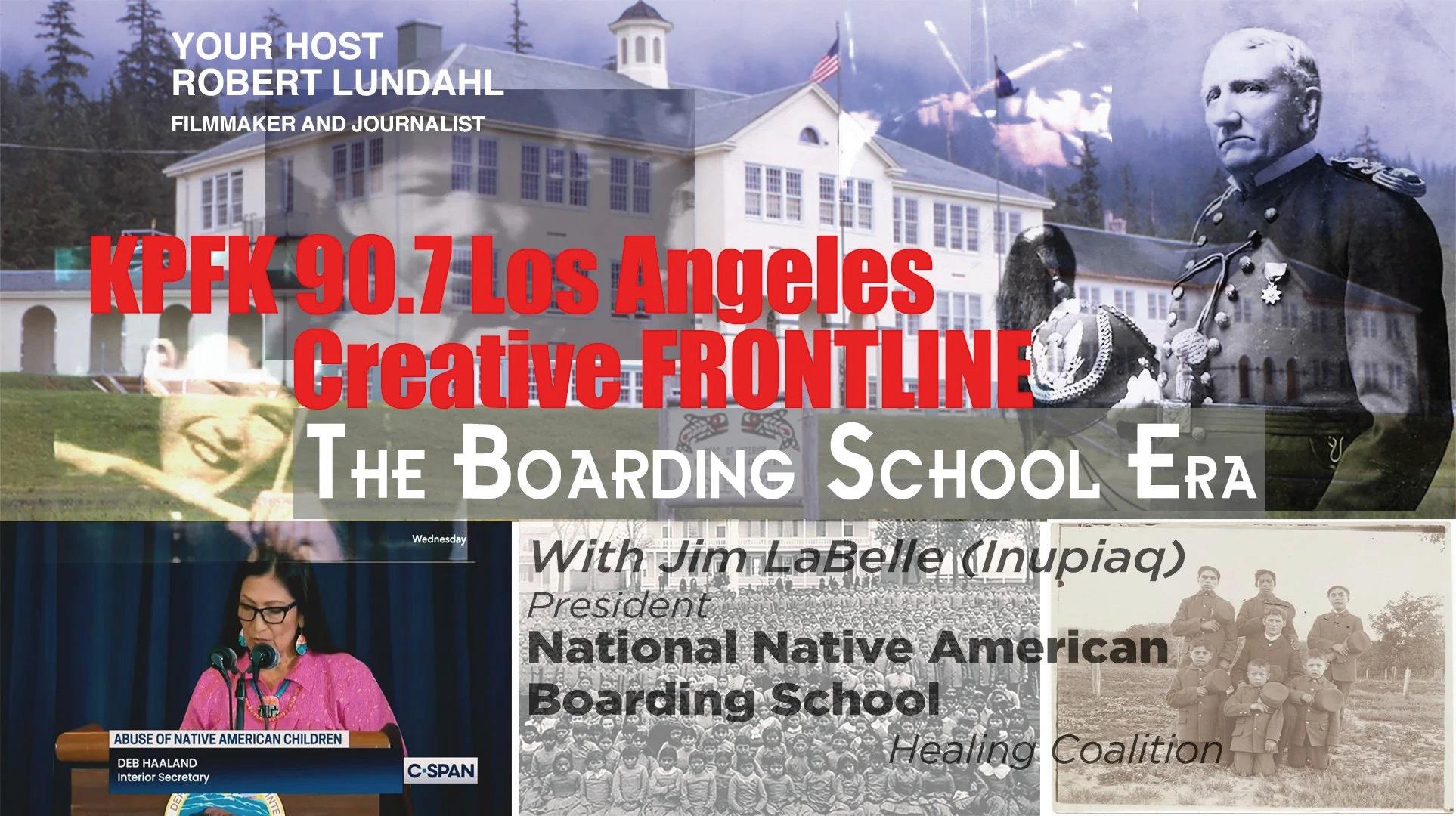
The BIA made a white man out of me. (Singing) Sent me to boarding school, you see. And it's true.
When I was game warden for the tribe. I remember stopping a fellow down here at the resort and checking for his license. And to me, he was a white man. He was a retired Los Angeles County sheriff. And to me, he was a white man. Slim did about 62. But I remember him saying well, if I was Indian, would you give me a cut?
What do you mean?
And he pulled out his card. He was a Cherokee, a registered Cherokee, but yet he wouldn't come out to all his friends and say, I'm a Cherokee because he was in his comfort zone. And that's happened all the way across our country. And that's what colonization and Westernization did to our people and took them away. And wanting to make them not want to go back.
Page of 51163
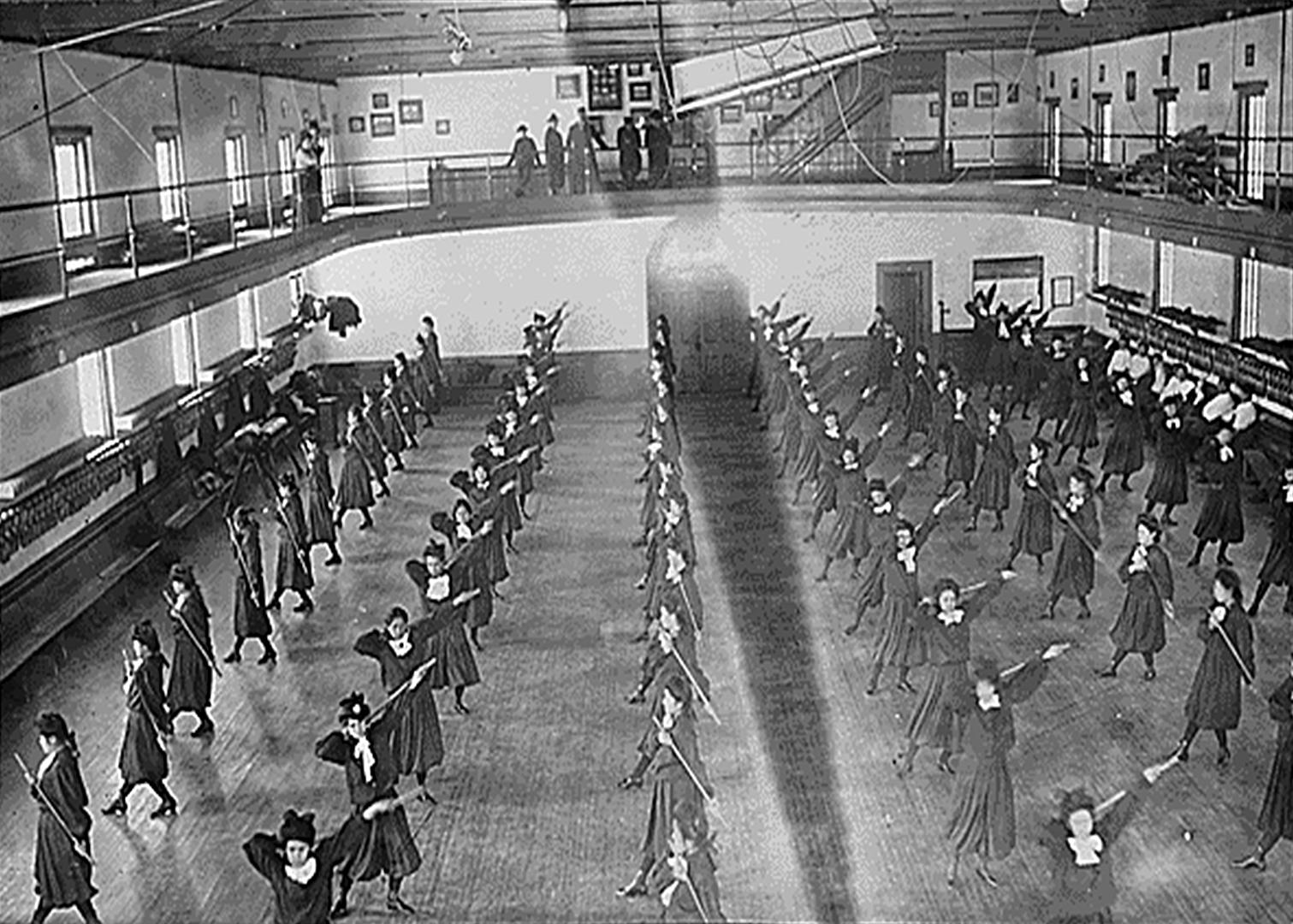
And a lot of people got too ashamed to want to go back and learn, so they just melt into the melting pot. And that's the irony of Indian boarding schools, the consequence of that. You know, you're the, you know, songs like this, you know, cut my hair, took my shoes
Indian Boarding School, Photo Not Attributed
First thing they did was convert me by taking my shoes, by putting shoes on me and making my big toes come in, and now I have bunions. You know, by wearing pointed shoes.
That's the first thing they did. They. And I remember joking about this, and I said, I don't have a foot fetish, but I happen to look at people's feet and those people's feet and Indian people's feet to see what they look like, you know. And if their toes are straight or they bend in like this, you know, they're bent in, you know, they're colonized, they're westernized, they're, you know, they really changed them by just changing their feet.
Now, now I look at my feet and I have bunions on both feet. And it's caused from pointed shoes, gangster shoes.
Page of 52163
I had the ability to speak English pretty clearly, everybody thought I was pretty smart. I really wasn't, but I could communicate.
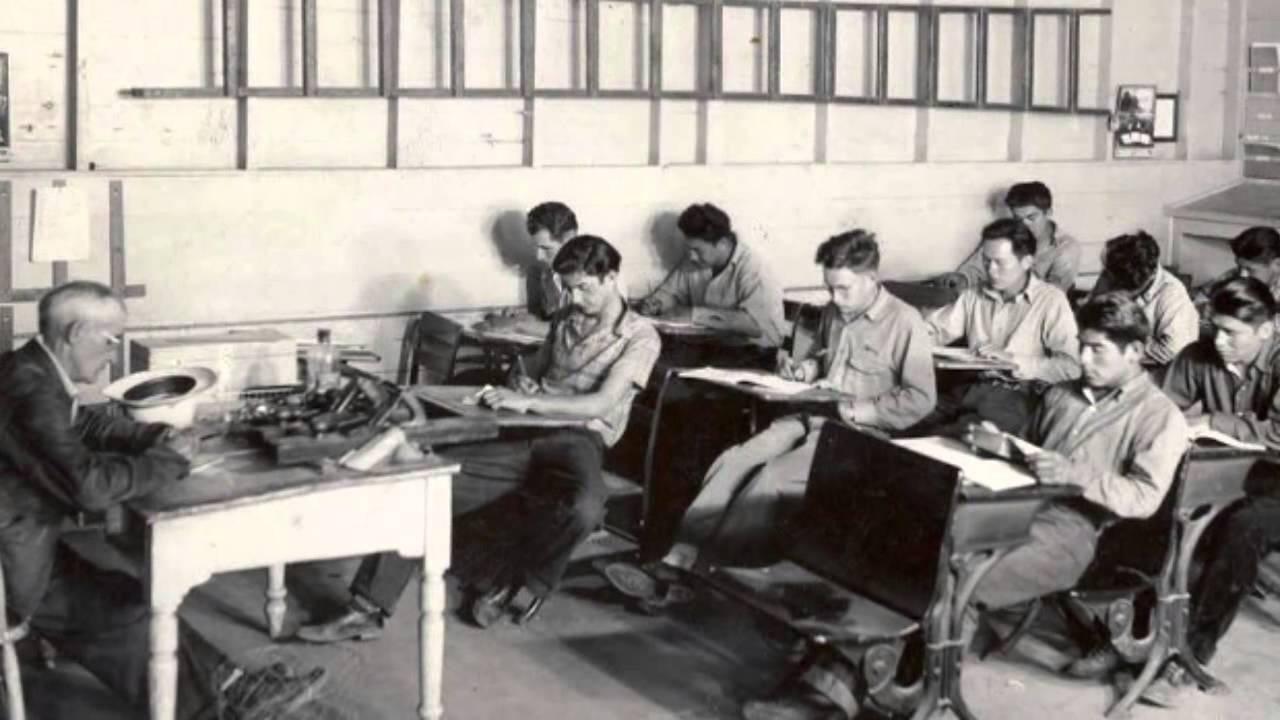
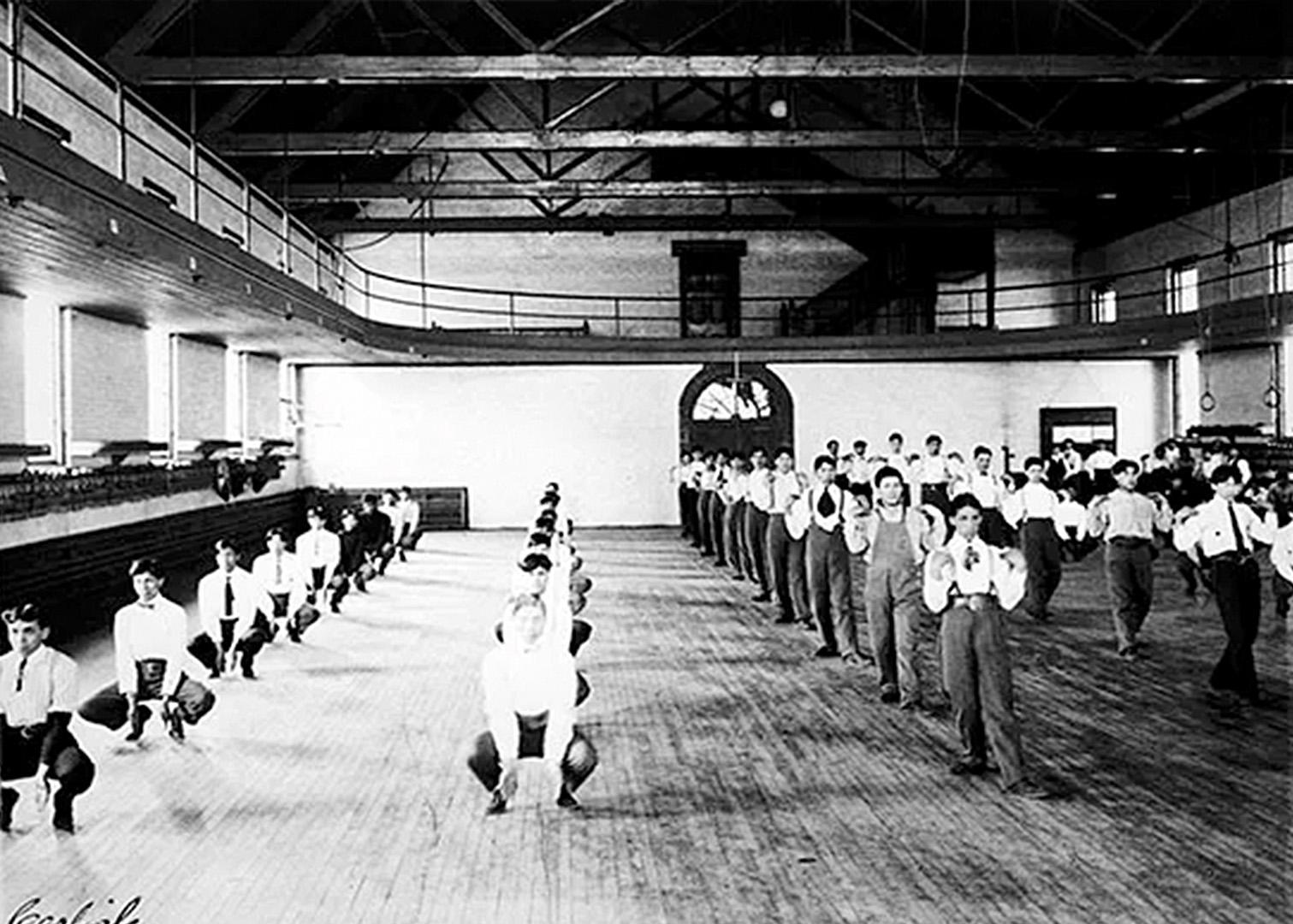
So that that helped me a lot as far as education goes. You know, and I never really liked things there at the school. When I first got there, when I looked at the academics and I never really took academics seriously when I went to school. But what I seen there, I was upset about because what they were doing is teaching remedial education.
And I felt really bad for all the Indian students who have been going through this in the 60s. You know, what type of education were they giving them? Well, that that was one of the driving forces behind my efforts to help change the school and improve the school. And in 1971, the senior class took part in '70 and '71 to help get the school accredited, and we didWe were successful and Sherman Institute, became Sherman
Indian High School, an accredited high school in the state of California thanks to our efforts.
Carlisle Indian Boarding School, Photo Not Attributed
Page of 53163
The senior class of 1971. So that's what I'm proud about bringing to Sherman and changing the academics and bringing up to the same level as any other high school across the state. So you're welcome.
Robert Thorp Lundahl:
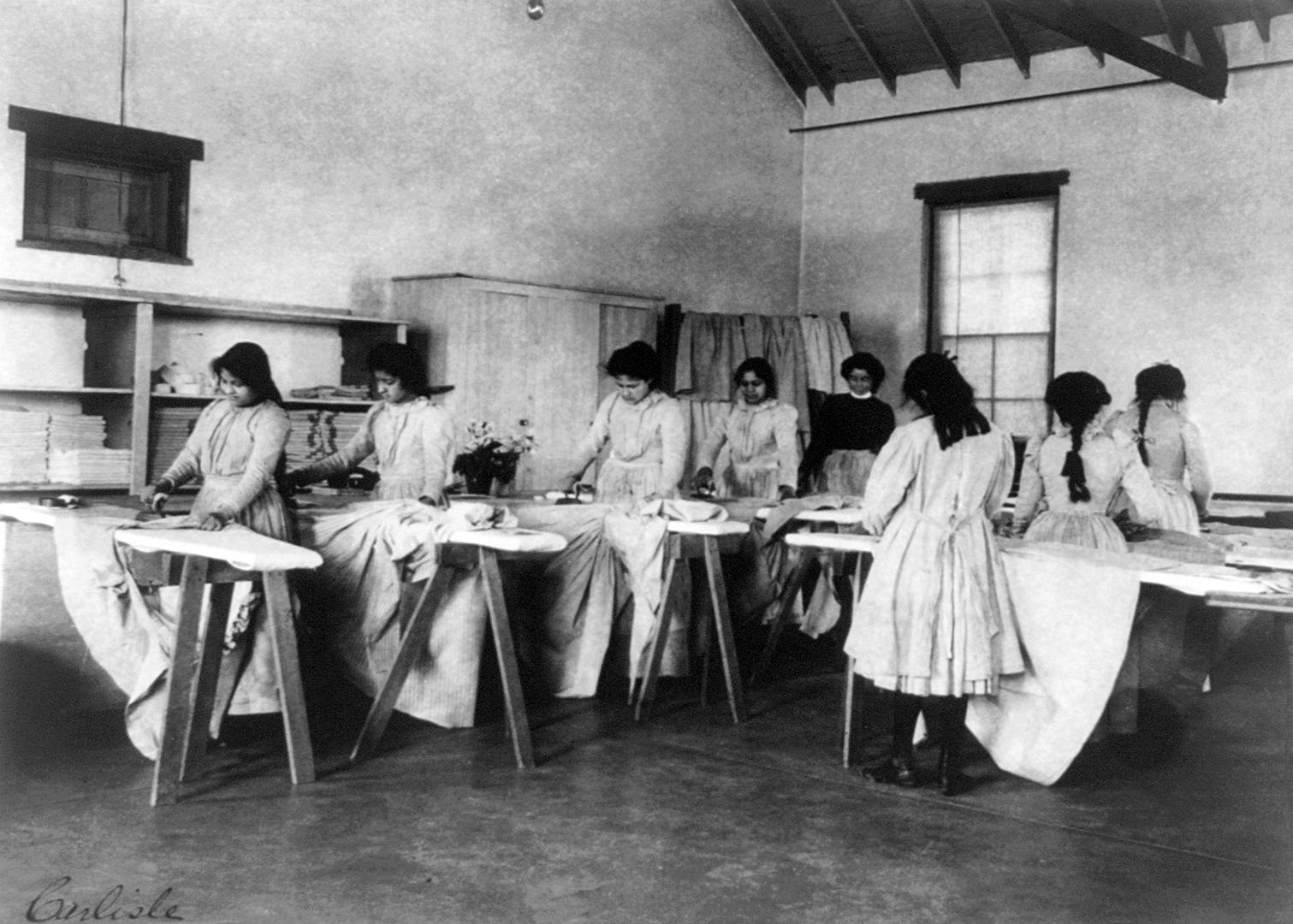
Well, I was thinking of a photograph that I saw, you know, and we put into the film that I made, Who Are My People?, And it was a classroom and it was a girl's classroom. But in this classroom there were probably 25 ironing boards and about 25 women standing up there with irons. Right? So they were learning to iron people's clothes and learning how to be housekeepers.
Matthew Leivas, Sr. (Chemehuevi Hereditary Chief):
Exactly.
Robert Lundahl:
In the in the boys classroom, there was like a brick wall. And the boys were taught to take the bricks, apply the mortar, put them in the wall.
It was also kind of a manipulation to say that your place in the world is over here. You know, you're you're the one with the iron. Exactly. And it took a long time, you know, I mean, it's really your generation. It's the 70s kids that, you know, things kind of broke open a little bit.
Matthew Leivas, Sr. (Chemehuevi Hereditary Chief):
Oh, yeah. Oh, yeah. Yeah. 70s generation was. As the movers and shakers back in the day and changing the dynamics of the school, you know, and even when we got into
Page of 55163
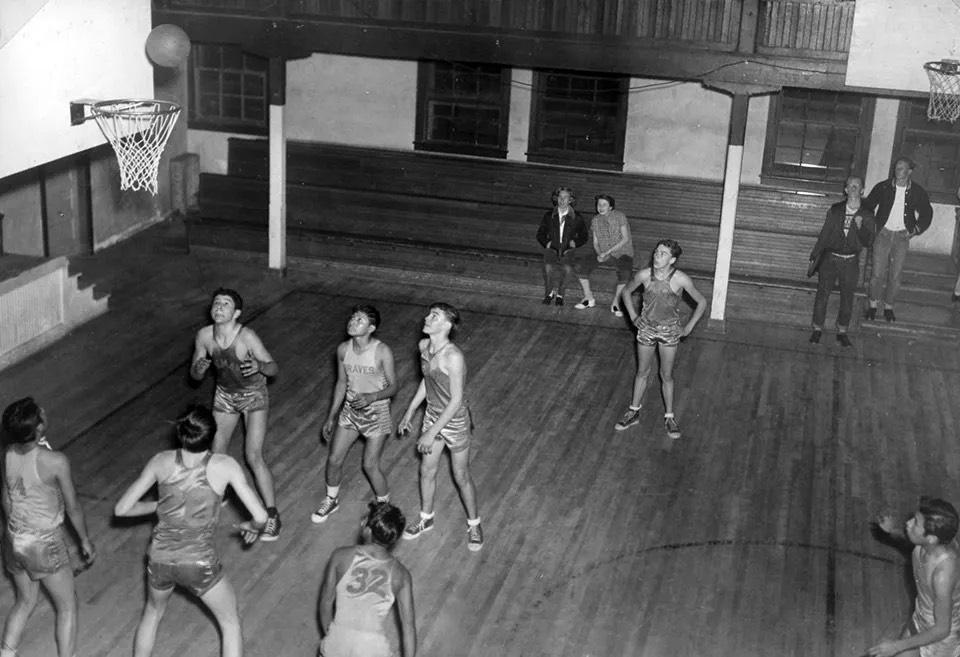
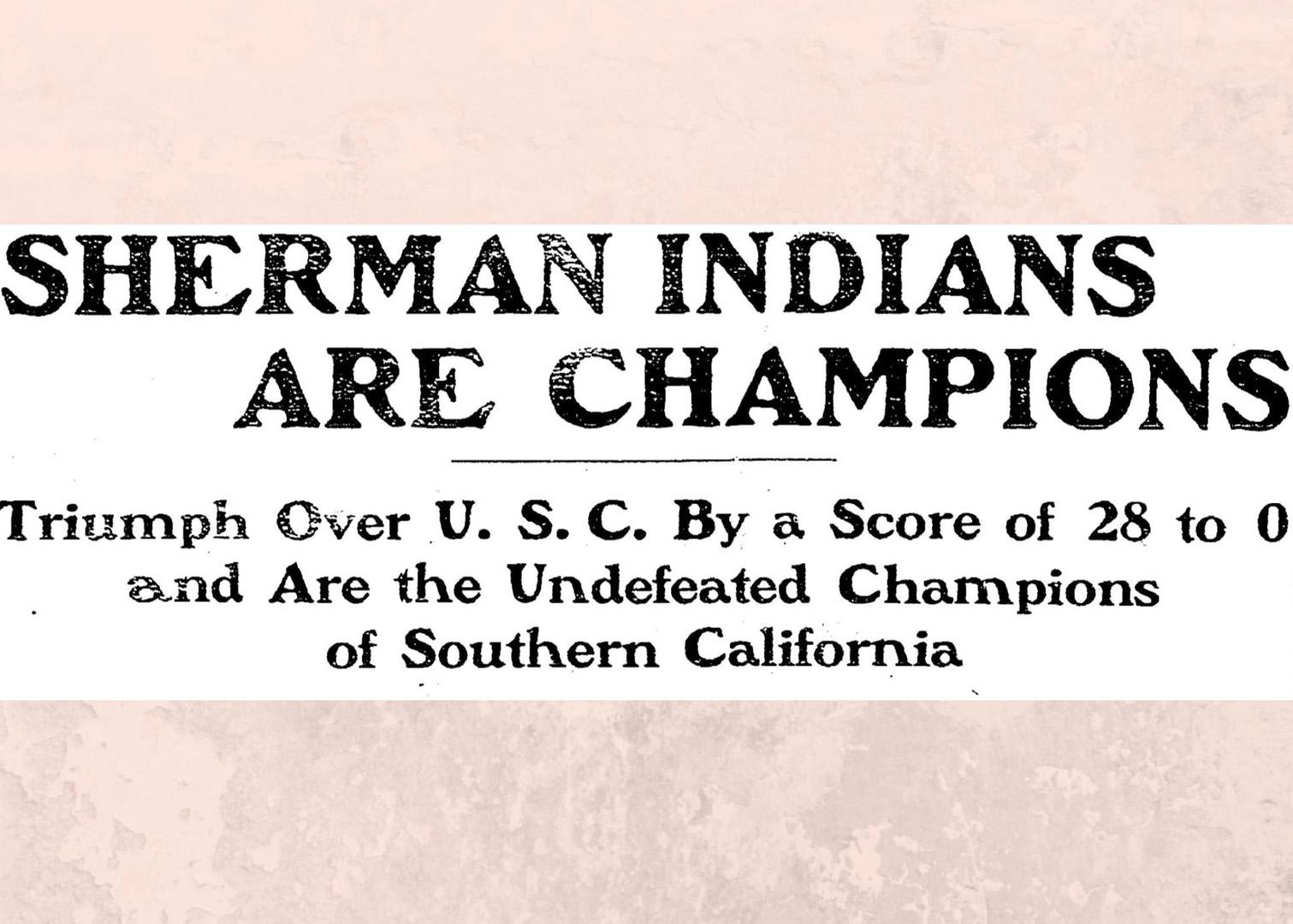
the CIF California Interscholastic Federation, that and and moved from one league to another, you know, we Sherman was never like, they never had the ability to play football in the league. For some time, I think they said 30 years or so and they wanted to start that team, and that's how I got recruited to Sherman. But back in the early days when they had teams, they were rough, tough football players, and they used to beat USC and UCLA. And back in the day, you know?
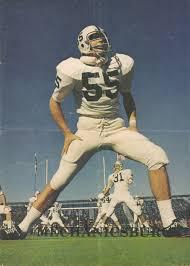
But when when the school got involved in football, you know, that was a whole new dynamic for the school and got us into the gridiron and got me into being an all star. Riverside County, and and played the game of my life, which I was so proud to play in because I felt I was representing not only Sherman, but all Indians across the country in that game.
And I played the game of my life, and that was the last time. Yeah. Yeah. (Softly). Well, life's been good. Life's been bad, you know. But, you know, we got to make the best of it. Keep on going forward. You know, this is my friend who had that prophecy about doomsday. Of all the people being kids being shipped out this way. You know, she taught me one thing, and I said, no matter what goes on, man, you know that things will go good, things will go bad. You'll have good times, bad times. You know, you gotta learn to roll with the punches. You gotta learn to roll with the punches. You know. So that's what I've done all my life.
Robert Lundahl:
This is the energy. It's like that. Let's move forward. Energy that, you know, I mean Kamala (Harris), Kamala's sister was talking about her mother from India and all these stories, it's like, let's move, let's do something, you know?
And that was just. that was us. That wasn't the teachers and the parents allowing us to do that or saying, 'hey, you guys, why don't you just start a little revolution and be with your friends? And you really, you know, start something new.' But we did exactly how it happened.
Matthew Leivas, Sr. (Chemehuevi Hereditary Chief):
Exactly. And that's why I felt about the Salt Song Trail Project, you know, just do it. Do it because, you know, it's been an intricate part of my, my life, you know, and and to see it fading away the way it was that was sad. But, you know, another big, big sad thing about going to a ceremony and back in the earlier days was hearing the language.
Tracker Ginamarie Rangel Quinones:
When I was very young. I remember you what you mentioned about the Salt Songs. And I remember a story that someone had said that the Salt Songs. are all the way up into Canada with the Cree and the Anishinaabe, and that always was in my mind about that remembering the songs, remembering the people speaking about that and how they, with the trade route along from all the way south to the north, not only came the foods and the goods and the baskets and the songs and the stories. So those are things that they took with them besides all the other goods. And so it was kind of inspiring to know that, you know, the feathers, the macaw feathers from our brothers and sisters down south made it all the way up to Canada, just like our songs.
Matthew Leivas, Sr. (Chemehuevi Hereditary Chief):
Everybody may know a word or two and whatnot. That's good. But, you know, learning how to communicate a language is another thing, because in order to learn the songs, you have to know the language. You have to learn the language to determine where you are in the song and what you're singing about, you know?
Now I understand a little (Speaks Chemehuevi language). I speak a little.
However, no one I know does know neither. I see, I hear, and I understand about the things that's going on in this world and what makes things work for the world and the creatures and the critters, you know. And that's why I made that, that statement in that video that Sean made about the Creator knows me about the work I'm doing.
Page of 57163
Matthew Laivas, Sr.
He blessed me to do these things. We communicate. He understands me. Where I'm going and why I'm doing these things is to help Mother Earth and restore our land and get our people healthy again. But this is just one group of our people. There's all the general public out there, too, and all of us have the rest of our clans who need to be educated too.
Tracker Ginamarie Rangel Quinones:
The cultural preservation, you know. Changed, I mean, stayed the same. But the traditions of the songs they are always changing. And so they adapted to the tribal people or the region because of the songs, how they you know, when they're found in Canada with the Anishinaabe and the Cree communities, they hold a deep cultural, spiritual significance and importance to them as well. And it's an expression of their region of where they're from. So it did change as the songs moved along up north.
Matthew Leivas, Sr. (Chemehuevi Hereditary Chief):
But, you know the work that we're doing now is having far reaching effects because they see our successes here in Chemehuevi Valley and our land restoration efforts on this reservation, where there was nothing growing before, and now you can come up here and see a farm that's expanding and growing and doing some wonderful things to the ecosystem and the environment and wildlife.
You know, and creatures are coming here and flocking to our reservation. And that's what's beautiful is seeing the deer come back. You know, deer that have been absent for 60 or 70 years, you know, 80 years at the Parker Dam, you know, the deer left the area. And it's funny because I say deer. And my wife took me to Parker the other day, to the hospital, to the clinic, and we saw a dead deer laying on the side of the road by Vidal Junction between the Parker and on the north side of the road.
And two months ago I went down to the hospital. We saw two dead deer in the same area laying on the opposite side of the road. And I started saying, Why? Why are you being killed right here? And the reason why the deer are being killed right there is because there's only a small gap open along the Metropolitan Water District line at Vidal Junction that the deer can cross without having to scale the canal.
A concrete canal with chain link fence. You know, but yet they. They can't jump that fence. They can't swim that canal. So there's only one outlet that they know where to go. And it's like a funnel, but yet they have no place to go. So they're trying to go through the small channel. And there you got Highway 62 running east to Parker, and you got Highway 95 running north to Needles. And the deer have to go through this pass at the Metropolitan Water District has cut off.
Page of 58163
Seeing this happening all up and down the river, that the migration routes have changed again and the deer aren't able to migrate freely, just like they along the freeways. They can't do that anymore. So they're going along the road and they're getting hit and killed. But there's only one little outlet opened available of the natural terrain where they can go to get to the next waterhole.
Robert Lundahl:
Can you give us a description of the Salt Songs and the Salt Song Trails and where Ash Meadows sits on the Salt Song trail?
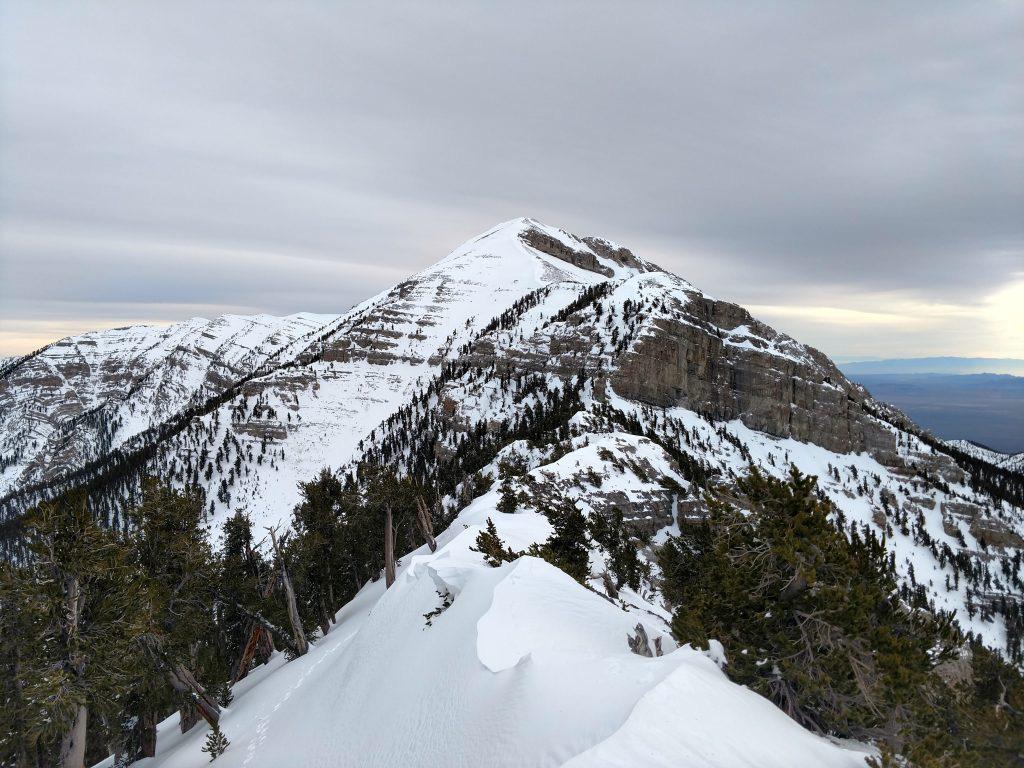
Mt. Charleston, Photo, Quincy Koetz
Matthew Leivas, Sr. (Chemehuevi Hereditary Chief):
Yeah, those those songs up there around Ash Meadows are sung around the midnight time because after they leave the the Mount Charleston area, you know, the song meanders on down into the desert by the New York. Excuse me. New York mountains on down further towards Twentynine Palms area. But all that area up there that the song does a switchback in that area because there's a couple of different communities
Page of 59163
up there. And I mentioned that when the song comes down from Saint George area into the desert near Moapa and Pahranagat and on his way down to Indian Peak and around Mount Charleston, you know those songs sing about the mountain, about Mount Charleston and all all the resources that are there for them.
Like I said, you know, that's the way you have in when our spirit passes, that's where it goes back to is Mount Charleston. Yeah. The Salt Song Trail. They they sing about all these different areas and, you know, it's a different route. I mean, a route that comes down to these different areas. And we think about the different communities that were the resided and where events took place, you know, sacred places and things like this.
And Mount Charleston is one, like I said, Pahrump. There's been another Ironwood Valley and Moapa and Indian Peak in Ash Meadows, because those are really prominent songs in about Midnight and around the Midnight Song. And it's really sad because we call it the Parting of the Ways after the midnight song, you know? And where we take a long break at midnight and the singers do, and we sing a song that's a Cry song at midnight.
What we're singing about the different areas and things that took place around all that area. And like I say, you know Pahranagat. Pahranagat, it was a place of abundance, of a lot of vegetation, a lot of food. So they went there to get resources and get water. And you go to the different springs and different mines to get different types of salt. Salt was used in prayer and medicine and healing.
You know, the medicine men would use different qualities of salt from different areas in their prayers and ward off bad spirits, such as the pine pitch. I can share that with you because it was pretty common, but pine pitch is pretty much saved served the same purpose as copal that the indigenous people used in South America. It's a sap, and it's to ward off bad spirits. And when when we have ceremony, they usually burn up like that.
The sap to ward off bad spirits who try to come in to the to ceremony. Because when we start singing these songs in the evening time the leaders would sing in, in a low tone tone in order to humble themselves and ask permission from Creator, and to invite, has permission from Creator to sing the song, but to invite spirits to come, to join in in the celebration of life of this individual. But when we invite spirits to come, bad spirits try to come in to bad spirits will try to come in to bring harm and havoc to anybody else around there.
So we say, you know, when, when, when we have ceremony, you know if you don't feel you should be there, don't go. If you're angry, upset, don't go because you're taking medicine with you. You know, you had bad thoughts and things like this. Don't go. Just don't be around stuff like this. And especially with babies and children. They're prohibited from being around ceremony like us because they're susceptible to receiving anything.
Page of 60163
Their minds are open, you know, and things can be received without even knowing it. And then the same with people, you know, you're if you're weak, sick, angry, vulnerable, these spirits will attach themselves to you and they can do things to you. They can even kill you. You know, it all depends how individuals are. But, you know, that's why we sing these songs.
We have to humble ourselves and get permission from the Creator. Sing songs and invite these spirits and then. And burn the XXXX to ward off the bad ones who try to come in bad spirits that try to come in. Keep them away. And this will burn all night, you know. And you have smudge spots around the area emitting this aroma, such as you do if you go down to the coastal. And you know, it's all your smell is around the whole area from all the different dancers burning, copal, keeping the bad spirits away. And that's what it is. But, you know, singing the songs, singing about the travels and remembering the different sites and especially the villages of our people. And that's why I mentioned.
And this hat I'm wearing the, the Quechan National Monument hat, you know, they're pursuing developing a National Monument down there to protect their sacred lands from Yuma all the way to the Salton Sea and stopping all that gold mining and lithium mining activity, but they're doing their due diligence and trying to protect Mother Earth. But, you know, our song travels right through that very same area and on on. It doesn't go around the Salton Sea, but in the front of the Salton Sea and all the way to the Colorado River.
And our Salt Song interconnects with the Quechan Dream Trail, which which is a trail that follows the entire Colorado River. And it runs right here, a mile from my house to the west. And we're protecting it here on our farm, because there's a segment of the trail that runs through here. And my son Daniel has annexed to that that trail as it goes across our farmlands. And we're not going to develop around it.
But, you know, that's our connection. And the one thing about the relationship between the Chemehuevi and the Quechan is the Quechan have always had a deep respect for the Chemehuevis, whereas they allowed the Chemehuevis to reside in their territory. They allowed the Chemehuevis to occupy all the areas up to the Yuma Proving Grounds, you know. That's all territory to the Kofa mountains.
The Chemehuevis had free reign of that area with the blessings of the Quechans. But you also had villages all the way down to Yuma along the Colorado River. And we also had name of all the different mountains from Yuma all the way up the Mojave Desert.
So, you know, we have a lot of respect for the that we support them in their all their efforts to develop a National Monument and help protect the sacred sites. But Salt Song Trail covers all these areas, and we sing about these and all throughout the whole night, from sundown to sunup. And during the night. We have specific times when we do the cry songs where the men would actually stand up and sing and women stand up, and the dancers stop and face the singers and and accept the spirit and the power
Page of 61163
and energy that's in the sacred circle, which is between the men singers and the women singers opposite from them. So that's the holy ground where, you know, there shouldn't be any anything. Bad things, no shenanigans, no bad feelings or anything.
You know, you're there for a reason, and that is to cry. And the whole name of our ceremony is a cry in our language, a Yagap, a Yagap. So when they ask, where are you going? Yeah, yeah, I'm going over there to the cry, you know?
And that's what they go for. Men. Women go there to the cry to show you respect, love and appreciation for the individual or family, or to emit those tears, to let those tensions and anxiety go. Let all of it go.
Because we as individuals, we have things to do to the next day. We have families to take care of. We have work. We have our own obligations.
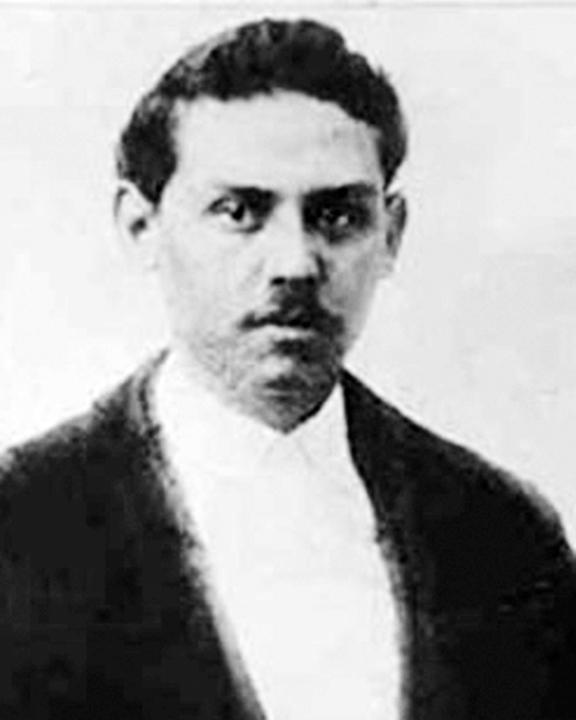
Chapter Five
Experiencing Sherman Institute and Sherman Indian High School
Today, we explore indigenous traditional knowledge where Matthew Levis Sr. was raised on a divided and fractured land nearly bombed to oblivion. Displaced from home lands along the Colorado River, Matt's mother, like so many other children, was sent off to Riverside to Sherman Institute an Indian boarding school, for a remedial education.
Page of 62163
Page of 63163
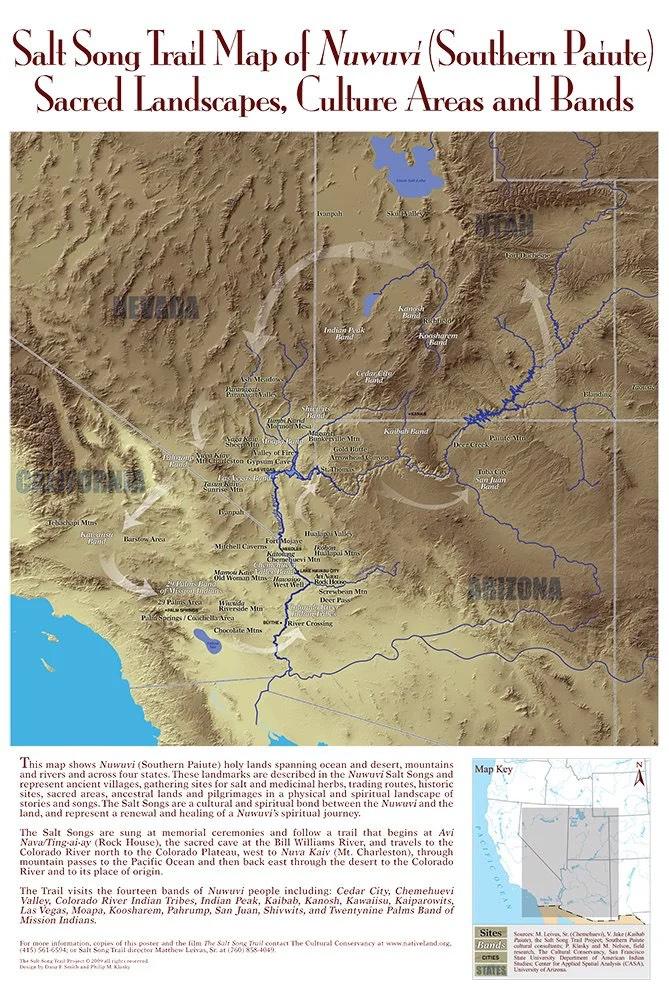
Page of 64163
Matthew Leivas Sr.
My mother was a full-blooded Chemehuevi, and it was really division amongst the family and my family, my father, my mother, my NuWu family, we were somewhat ostracized from the other family.
They didn't want to be recognized as Indians. My mother was and my father wasn‘t, and he recognized, and he always did it really good to help the Indians, the Indian people in Parker Valley, different to a lot of people.
But the other side of the family didn't, and that was a separation of our family.
The Hanks name was the indigenous name of my mother's father, Henry Hanks. And he was the chief of the Chemehuevi, the last recognized chief.
And I proudly carry that title today, as Hereditary Chief of the Chemehuevi.
His father was Pan Coyer, who signed the last peace treaty amongst the five tribes here in the Southwest, namely the Chemehuevi, Mohave, Maricopa, and then with the others, the Pima was, I believe.
But anyway, there was a five partnership treaty that was signed, and my family wasn’t involved, not signing. So what I bring to the table is culture of what I learned.
I might bring it up, and trying to educate people, but I had to reach back and try to find out about my father's family, being Opota from across the border.
They came from a little village called Trincheras in Sonora. And they were fighters, they were indigenous fighters.
And as a matter of fact, Joaquin Murietta came from that area also, and he was Opota.
But at any rate, you know, my great grandfather traveled north and to the Yuma area, and he met a Yaqui woman.
Matthew Leivas Sr.
And that's how my grandfather came about.
Perfecto Leivas.
And eventually, my father, Perfecto Gonzales Leivas, Junior, came.
So, you know, that name, was part of the division amongst our people.
Page of 65163
When I grew up at Hank's Village, that was strictly Chemehuevi, and none of the Leivas’ came to our village.
Think about it.
Tracker Ginamarie Rangel Quinones
The indigenous trade routes long before the European contact, especially the Colorado River.
And the integral lives and the tribal people, there, including the Mojave, the Hopi, Dine, and Apache, were affected by the 1945 atomic bomb.
And that included the Rio Grande River, the Colorado River and all the streams and the tributaries. And these tribes used the river not only for sustenance, but also for transportation and trade route.
Goods, such as pottery food, tools, as we know traded along the river and songs.
Matthew Leivas, Sr.
All the other NuWu, and the Mojave, Cahuilla, Quechan, Cocopah, any other tribe were welcome and came to the village.
And it was a ceremonial place. That’s what we’re trying to protect right now, because it's in bad shape and needs to be protected and cleaned up.
And it's a sacred place of Siwavaats where I grew up in the Hanks family, and that's why it's called the Hanks’ Village.
But my grandfather had a farm that he created there; It was successful, and it was named a Double-H ranch, for Henry Hanks, Henry Hanks' ranch.
But it's no more, just a dilapidated homestead. But reaching out further, you know, going to school over Sherman Institute in Riverside, California, where my mother graduated in 1939.
You know, growing up, that's all I heard. All the good times, the wonderful thing that she was doing at Sherman Institute with all of her friends. And she had a good time. She did well, and she did so well that she got a pretty good position, a job in Riverside after she graduated.
But she did what she was taught, being a housemaid, which she did not want.
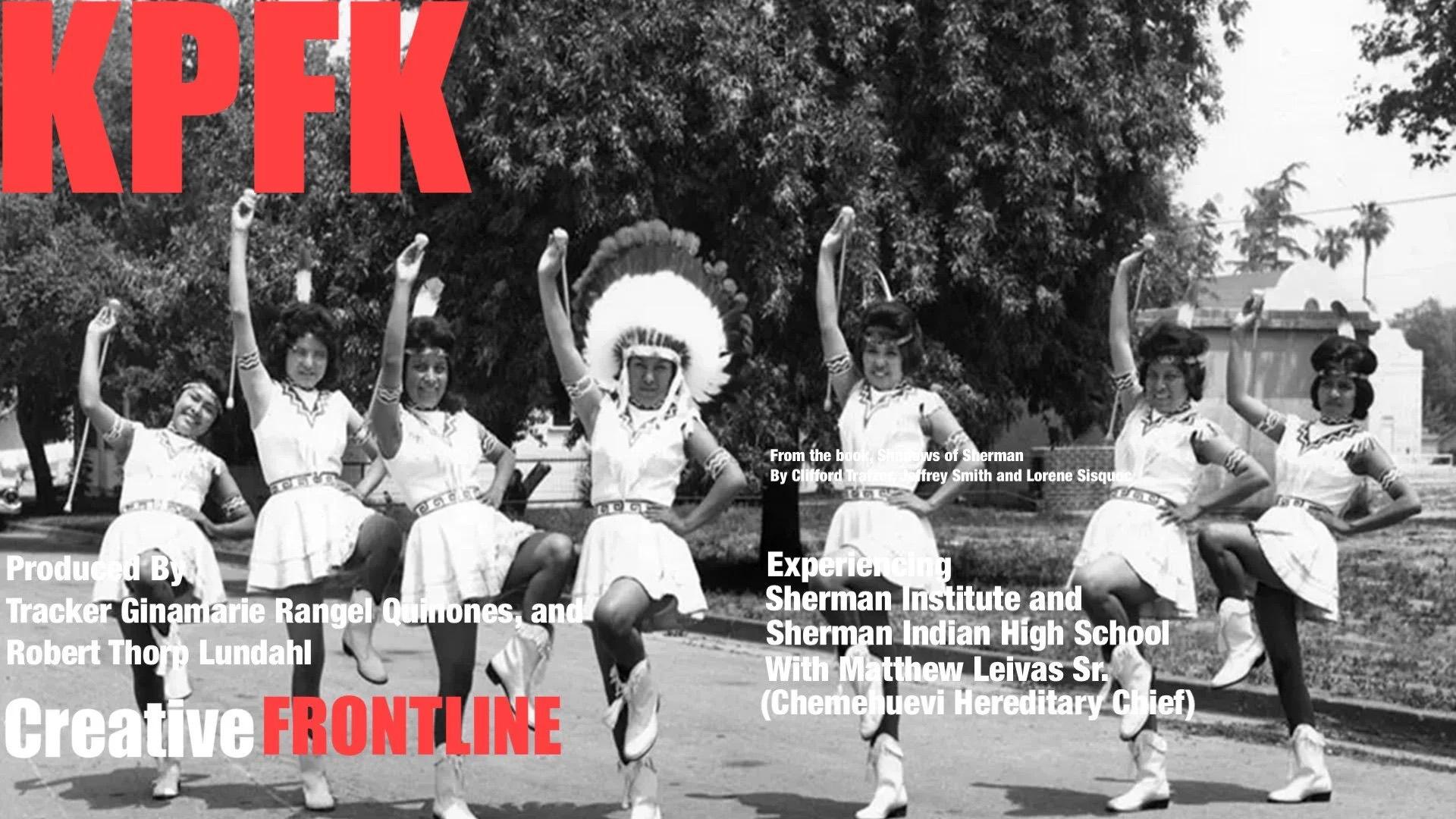
So she left that prominent family in Riverside and helped raise a few of their children that she later met in 1971, when she came out to visit me for my graduation. And got to meet about 50, 60-year-old man that she helped raise, who's a dentist in Riverside.
And took us to their old homestead and to his new home in the foothills of Riverside. And took my mother on a tour of the house.
Come here, “Let me show you something.”
So he opened the door, and she looked in the door, and her eyes were big, like saucers, because she saw his mother's bedroom complete, the way she used to take care of it back in 1939, 1940.
All restored, but his mother's bedroom, and she recognized everything.
And it brought back tears and memories to her, as well as to the son, Herbert Neblet, his name was, but remembering how she used to take care of them and how she left Riverside. But she left Riverside because she didn't want to be a housemaid.
She wanted to further herself more.
That's when she went on her way to Denver to get educated a little more.
And then she came back to the reservation.
Page of 66163
Page of 67163
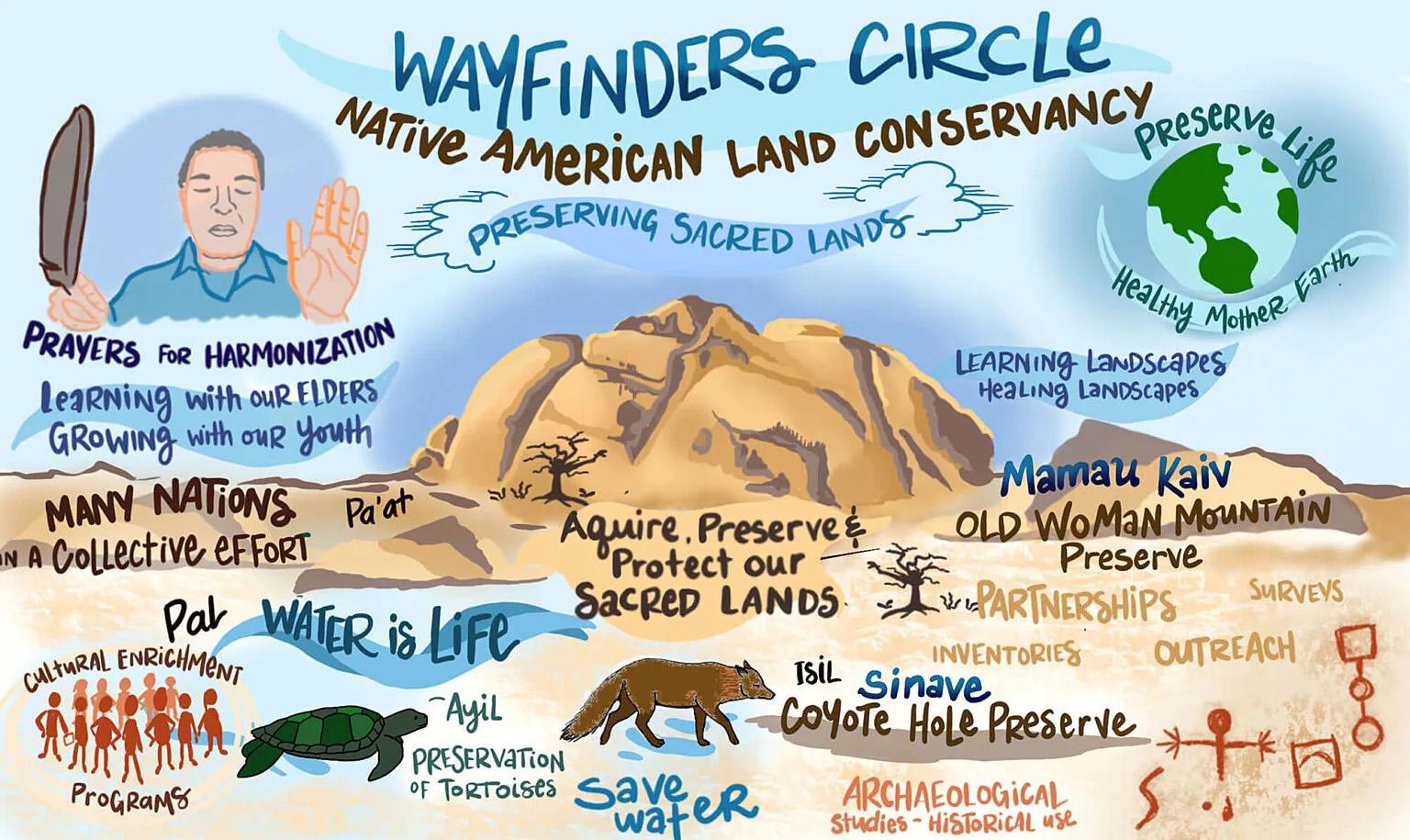
In Parker she was always raising our family and whatnot.
But once she had time to be involved with the tribal politics of the Chemehuevi tribe becoming a recognized, federally recognized tribe, she fought and dedicated her life to that.
As well as with her sisters and brother and to establish the Chemehuevi tribal government and try to revive Siwavaats, that's the old village known as the homestead of our people here in Chemehuevi Valley, and not be under the auspices of the Colorado River Indian Tribes, who want to be separate and stand independent.
So they gave up everything and they did.
And that's how the basically Chemehuevi tribe was born. In 1970, June, it finally happened.
And then it was a matter of coming back and rebuilding.
And it wasn't until 1980 that my mother was able to come back home after the first HUD homes were built.
But the 29 Palms band was moving forward on their own level over there. But there was no connection.
It was until the 80s that they started to invite me out to come and talk about our connections, our family connections, and to learn more about the Chemehuevi culture and what had happened to them as they had they had become so colonized and Westernized that their culture had left them.
Page of 68163
We came to their aid and it started a good relationship, good bonding, and bring our families back together.
But one thing that was really beautiful about it is reconnecting with the Cahuillas also. And they helped inspire one another about our singing, not only birdsong, but also Salt Songs.
That meeting and that union is what inspired the 29 Palms Band to form the Native American Land Conservancy, a nonprofit, Indian nonprofit, which I'm very proud to be one of the founding fathers of.
And we've been in existence since 1998, and made some monumental steps here to protect sacred sites in the Mojave desert from being vandalized and desecrated.
And we're protecting the land as much as we can.
As of the past couple of years, we've been on a mission to protect the springs in the Mojave desert.
And we've been acquiring springs, purchasing properties, raising money to protect the springs because the water is most precious element to mankind.
Mother Earth can't survive without it. So we're doing our bit and we're fighting the fight of our life where all of us are in California and as to protect Cadiz (Cadiz Water Inc. Water marketing company plans) water.
And through our efforts with the Native American Land Conservancy, we filed a lawsuit against the federal government, the Bureau of Land Management, along with the National Parks Conservation Association.
We've filed a lawsuit against the BLM and the decision is still pending right now. But we feel we have a good chance to win this case, and we're still putting more and more evidence together to prove that the water is precious and needs to be protected. And I've made these open statements that water is so precious, it's ancient water and that's the last resort water.
Everybody is wasting Colorado River water as it is, and they're not really taking the water, that drought seriously, thinking that they're gonna turn their tap on and there's gonna be water 24-7.
And there's gonna be a time when it's not gonna be there There's gonna be a catastrophe within an hour; that I can all stop tomorrow or today.
Anything can happen along the river.
Page of 69163
Anything can happen between the Colorado River and Los Angeles with that MWD or Central Arizona project.
Anything can happen anytime and everybody's just waiting for that to happen because it's inevitable that we don't know when.
And then we feel that we need to protect Mother Earth; we feel there's a need to share our indigenous knowledge with the public to help educate the public about the importance of saving the world, saving the land, saving the resources.
Earth is a living thing. It has water running like veins in our arms, I always say. I always refer to the rivers as veins in the arms of the world. And when they get blocked up, it creates problem to have it upstream and other things that happen, you know. All the little things that are supposed to be swimming upstream to spawn and then propagate don't have that ability to do so anymore.
Water isn't being cleansed, not being purified. Mother Earth isn't being fed, you know, and the places are being depleted from water, just in order to, for somebody to put a foreign tree in their yard, plant more grass that shouldn't be there, you know.
But that's mankind, using abuse, you know, and don't think about consequences, you know, take what you can, run, make your profit, run.
And everybody wants to run to the moon or run to Mars. They got a surprise in store for them, you know. Everybody has a big surprise in store for them. But Mother Earth is going to continue living on. Man, can might be wiped out, but Mother Earth is going to live on.
It's going to revive, it's resilient. It's going to tweak itself and heal itself because that's what it is.
It's a living organism, turning and molding, changing, morphing from one thing to another.
You know, rivers are going to continue to flow. Things are going to try to stop them, but they're going to continue to flow.
You know, on the surface or underground.
And that's what's happening over here at Amargosa Basin, and all the way from Ash Meadows to that precious water flowing, you know.
With all these latest things happening around the world, and especially here in California, in the United States, with the Ring of Fire being active. You know, it can be any time, any second that, you know, it can happen.
Page of 70163
Tracker Ginamarie Rangel Quinones
So the indigenous prophecies of the Pacific Islanders that's one of the prophecies that they speak o about the Ring of Fire as well. And then as far north and south, They have the prophecy of the Ring of Fire. And so all the way up to Alaska, too, there's indigenous groups along the western coasts of the Americas, including Chile. And now they have also recognized the destructive power of the Ring of Fire.
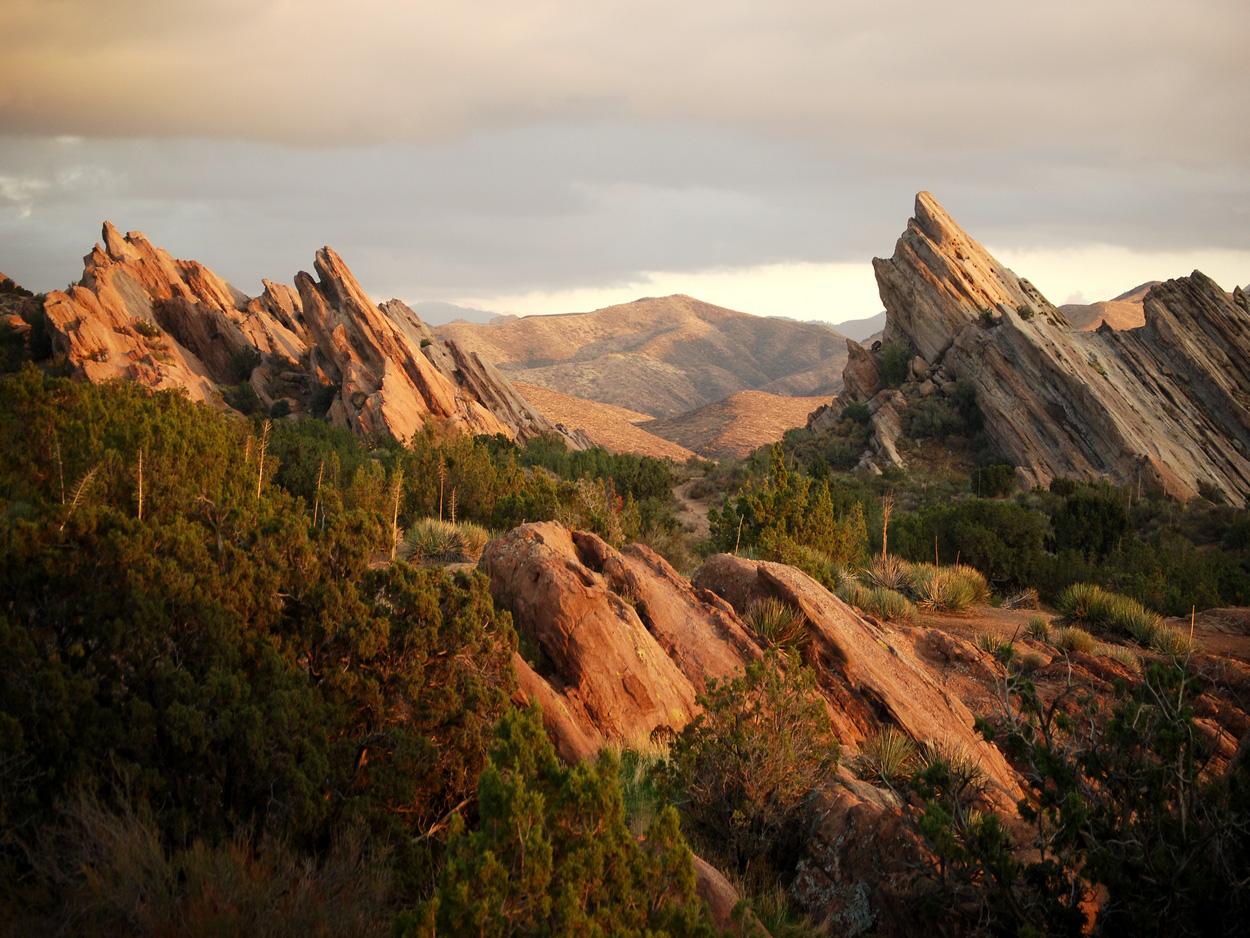
And my whole lifetime, I've heard about the Ring of Fire, and how that translates into different ways of thinking.
Tracker Ginamarie Rangel Quinones
It could be cultural and religious interpretations.
And of course, they have their scientific prediction.
Page of 71163
For the cultural and religious interpretations, for that I have heard the various religious and spiritual interpretations, the Ring of Fire is sometimes seen as a symbol of purification or a catalytic for a new era like you speak of.
New age beliefs or the seismic evidence or the seismic activity is interpreted as a global shift,
which of course has been happening that we have been able to see, feel, and experience.
And so it's like the consciousness of the earth and the natural process of renewal like you're speaking of.
Matthew Leivas, Sr.
Like the earth grandmother, her fluids, the oil and the water; she's alive, alive organism. And we all, as indigenous people, and now all people know this to be true because of the symbiotic nature and relationship that we have.
Any second now. And just think of if it did.
And I think about that all the time because of prophecies told to me from a spiritual woman from Sherman Institute.
And she told me a prophecy about the Ring of Fire and San Andreas Fault, is that there's gonna be a mass exodus of all the children, survivors.
And they're gonna, we have to take them somewhere.
They're all gonna be sent east.
And we're really gonna go to east for survival.
All along the Colorado River.
All along the river is the safest place that they're gonna be.
But you know, there's gonna be this mass exodus of all these people coming our way.
And all these children are gonna be coming and because of the federal government's gonna take care of the children and sick and elderly first, but all these children who are gonna be orphaned are gonna be coming our way.
All these youngsters, hundreds and thousands of them, with no place to go, no families to turn to.
Page of 72163
This is what I'm looking at, you know, the consequences of a catastrophe like this, a horrific catastrophe.
I can bring you have a call over at Southern California around the world, but to us here along the river, we gotta look at ourselves and try to take it of ourselves, and try to restore the land as much as we can, provide to our healthy food to our people and the public.
But we have to start thinking ahead about the future and the seven generations of our people. We have to think about consequences that are happening continuously.
What's gonna happen when all these things take place?
They have no place to go.
They have no water to drink.
They have no food.
They have no shelter.
They’re all going to be coming here along the river. Reservations are federal government lands.
Federal government lands that they can provide to them as a refuge and they will. And they will.
But, you know, getting back to Ash Meadows, Mojave Desert and the general public and letting them know, you know we've been trying to do this for a long time to educate the non-Indians.
You know, I have bookcases here of Indian authors, telling stories, and I can go over to a cultural center, you can see a few thousand books by Indian authors trying to help and educate the public about these things and consequences and prophecies because they're all happening.
It's all real.
Medicine is real.
You know, I think about the Ghostbusters movies.
They've been a big joke and look at today about all these Ghostbusters around the world who are finding out about all these spirits creating havoc in households and to people.
Page of 73163
And why?
Because they're angry.
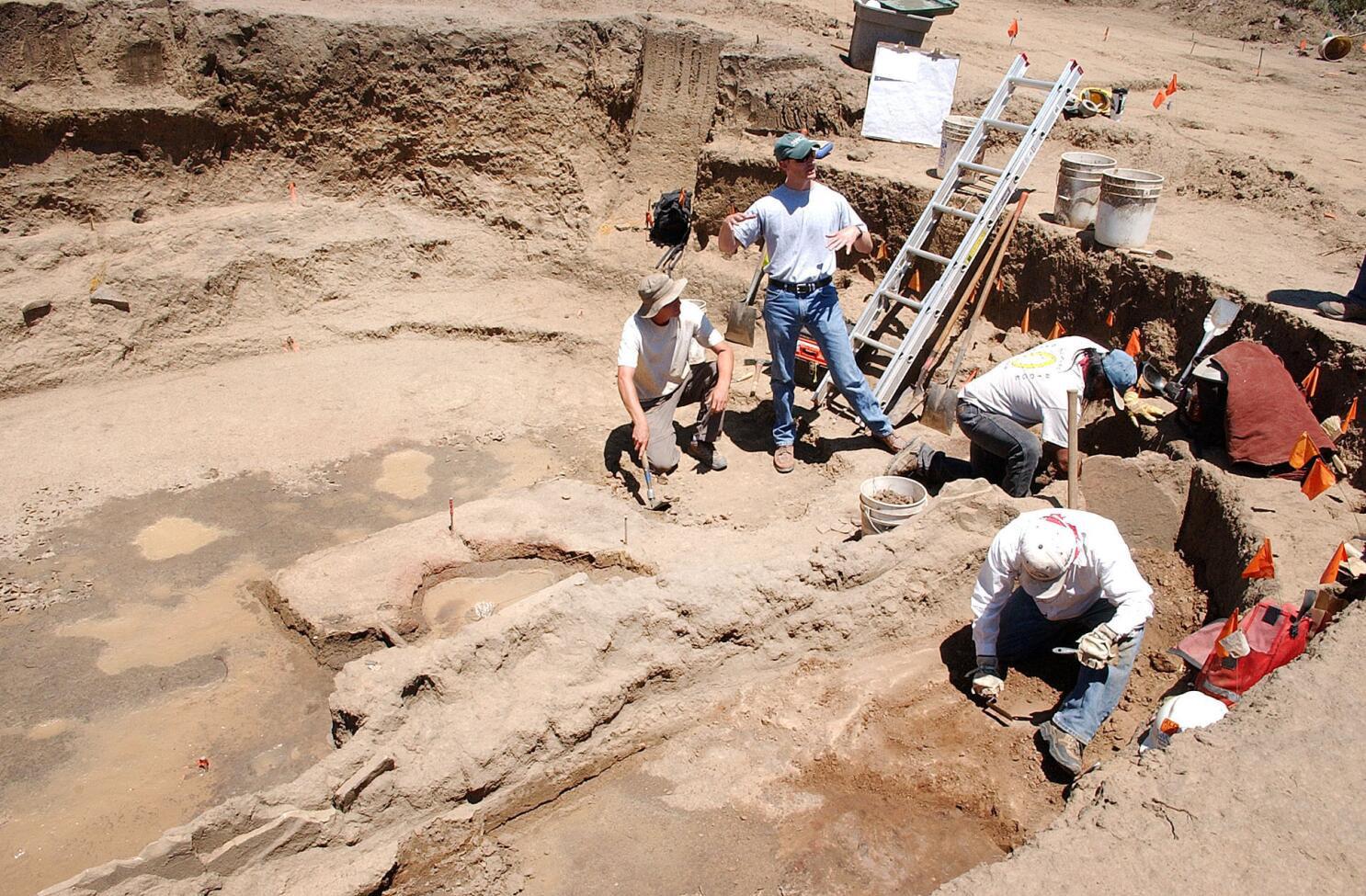
They're angry, they're upset.
Just think about all those ancestors of ours.
Matthew Leivas, Sr. (Chemehuevi Hereditary Chief)
Tens and thousands of remains in museums and in universities all the university of California.
And I really appreciate the University of Nevada and their efforts to repatriate remains with the tribes.
We took part in an event a couple of months ago, where the university did a consultation with the tribes in Nevada, including Chemehuevis, repatriating remains that have been sitting on shelves for the past 100 years.
Page of 74163
Now, we gotta get state of California and the rest of the universities throughout the county to do the same because when they went out and started desecrating these burial sites and taking remains and funeral objects, you know, they desecrated and they brought up spirits that should not have been brought out.
They were put away for a reason and given their respect, prayed over, cried over for days and months and people died of broken hearts.
You know, all these things take place and the white man doesn’t think about it.
They think about what type of scientific knowledge they want to gain from this, you know.
Why?
They died.
They passed, they had ceremony, let them rest.
I mean, that's what they don't understand.
Is the culture and spirituality of our people are connected to our loved ones and to the land and how we lay these people to rest that go back to the elements, you know, and then the spirit goes on.
That's what I just think that those things would have been like.
If the non-Indians had just taking time to fully understand and comprehend us as human beings, you know, I look at all these programs about aliens, and what I see in the non-Indian is alien-because what was brought to us is completely foreign, from language to appearance to lifestyles,
it's foreign, it's alien to us. We come from a different group of people, different understanding and our lives are on Mother Earth and dealing with Mother Earth and respecting Mother Earth and Father Sky and giving prayers, thanking even the plants for their giving to us, for healing, even the animals that give themselves to us even the water that we need to nourish ourselves, you know, it's a matter of prayer, respect, art, and that's what you need.
All the non-indians need to understand is that commonality of respect, you know, getting along, we don't hurt anybody, we don't want nobody to hurt us, we want to cause this, we want to live, we want to have a short time here, we want to have a short time, you look at it, you know, but you know, we can do a lot for everybody in that short time, and that's what we're doing so if you're doing, it's our passion, what can I say?
Page of 75163
We love our people.
Robert Lundahl
You know, do you think Ash Meadows is a good symbol, of the species and the richness of nature, and you know, you can see it.
You mentioned earlier about the pup fish and the little minnows up here at Ash Meadows and I shared with you an experience I had here at the Chemehuevi reservation in 1978, 79. On the Southern section of our reservation were the deep canyons, but a couple of days after a monsoon rain, and those little water basins here and there, catch basins, and I went to a wash and I drove my Jeep up, and I walked up into this box canyon area, and I've seen something in the water, little pool water in the alluvium, and it was the fish.
A mile away from the Colorado River from Lake Havasu, upstream in a sandy wash at a box Canyon, an ironwood wash, and there was this little shiny fish of minnow, two inches long, maybe inch and a half.
Silver and blue. I picked it up in my hand and it was a little pool of water, and I examined this fish in the sunlight, watching it flip, and then there was back from the top of the head that had a dorsal fin that had a fin, a little fin all the way around the top, the back all the way to the tail, all the way around the stomach.
And I was just amazed by this, and I put it back down in the water, I took my Jeep, went down the wash, tried to find a container, can or something, and I did, and I came back, by the time I came back, it was gone. I don't know, went into the soil or bird got it, but it was there, I've seen it.
So, this tells me that there's subterranean tunnels, catch basins, Chemehuevi Valley, there's aquifers that are connected, there's ancient species, endangered species, unknown species, the fish. Here in Chemehuevi Valley, but what other types of other fish are out here that we don't know about, and in other areas?
But they’re there, amazing thing like that to see, like a tropical fish, here in the desert, in the alluvial, flipping around, you can't even imagine that.
But I seen it, and I witnessed it, and I picked it up, and it's just like that marble I was telling you I found, a crystal marble, why did that happen, and why did it go the way it did?
But it came to me, because I wanted something, and I wanted something to be proven to me that I can do this.
But you know, I really don't need that marble to help me communicate with Creator, with anybody else, your eyes, my eyes, my voice, you just have to talk things out, show
Page of 76163
you, but I didn't need that, marble to help me communicate with Creator, with anybody, but yet it was there for me to show me, and that came from on the desert pavement, so there's nothing around, a crystal clear marble.
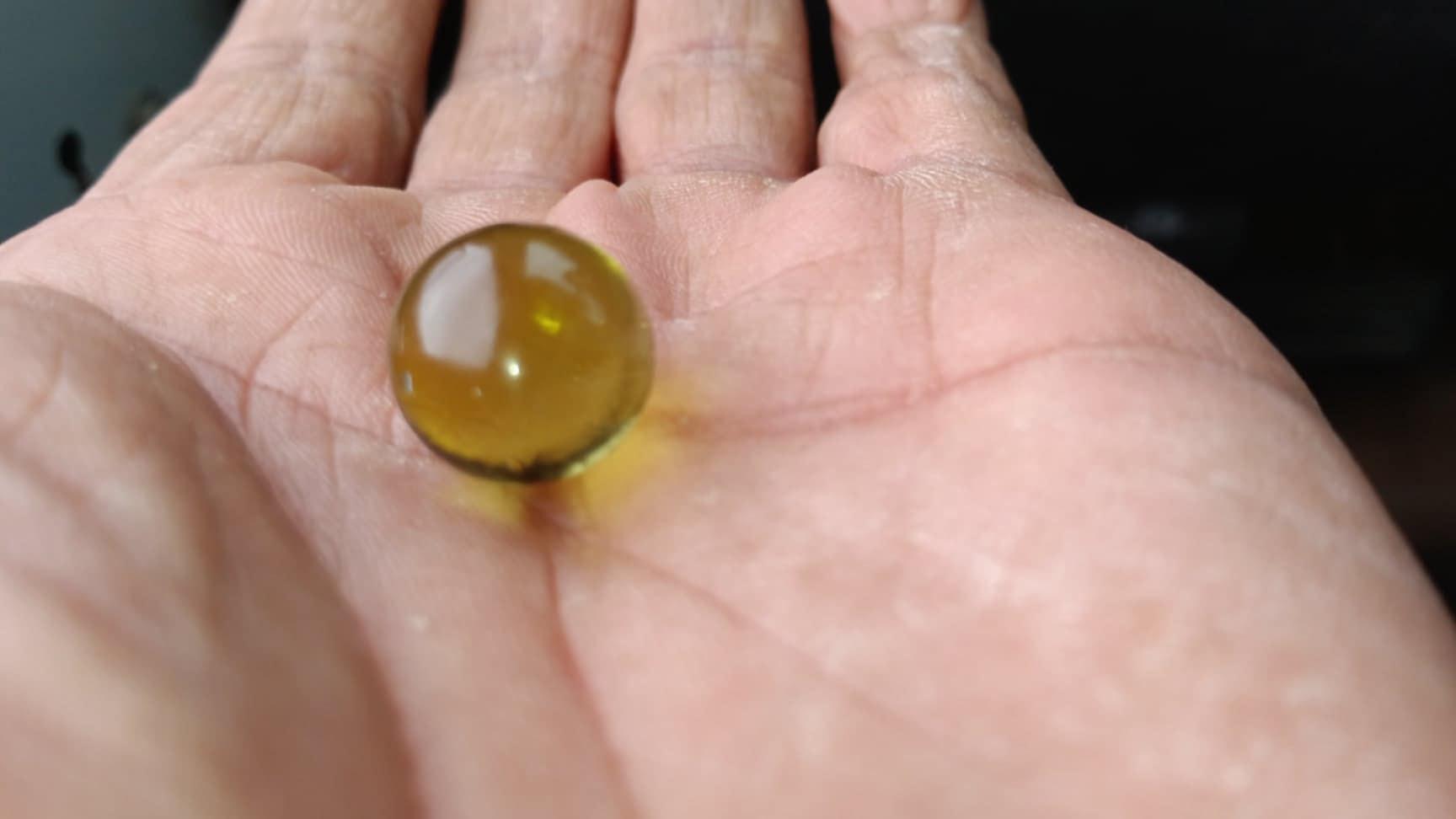
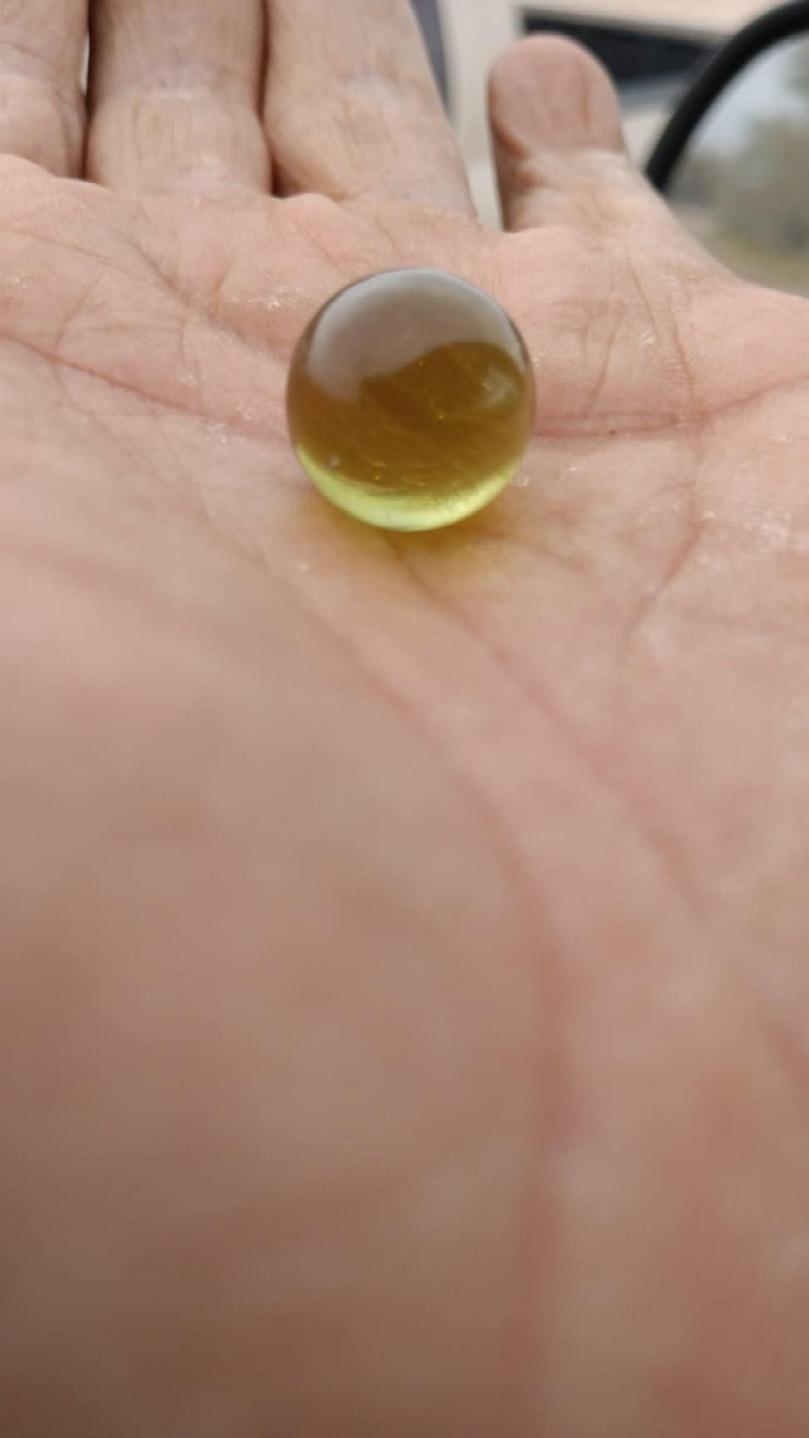
Photos: Daniel Leivas
And I wish I had it to show you, and I don't any more, it's gone, but my son Daniel took
Page of 77163
photos of it before, when I first found it, and I didn't have it, but Creator told me, we were talking about this,
Robert Lundahl
Do you think that was a trade item from the South?
Matthew Leivas Sr.
No.
Robert Lundahl
Okay, no.
Matthew Leivas Sr.
No, this came from above, it was in the desert, the desert pavement asphalt, and it was just there, crystal clear marble, a green color, like a cat’s eye.
And I had mentioned, I’ll go ask Daniel to send you the photos that he took of it, because I didn't take any photos, but it was just a beautiful thing to find, or to be given to me, but no longer, it was taken back by the spirits too.
So, in essence, and I was told by medicine, people that it can be used for good things or bad things.
And then how are you gonna use it, but you really don't need to, and it disappeared.
Chapter Six
Page of 78163
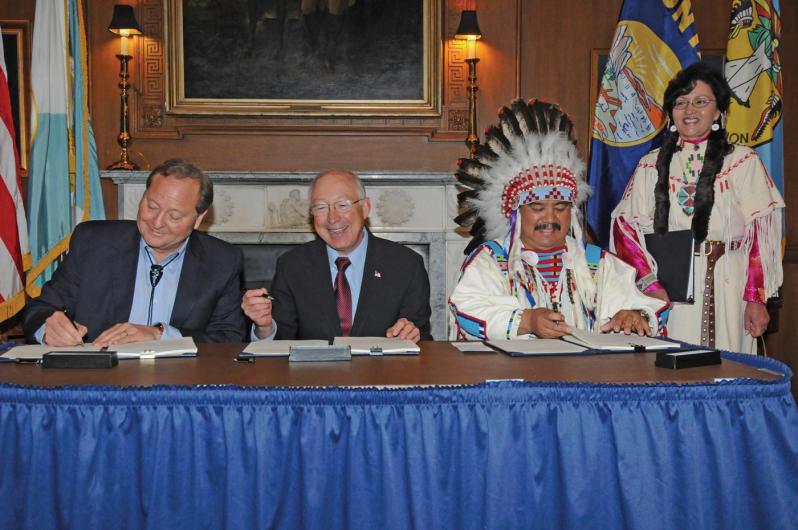
Following a war for the West, when water became more valuable than gold, motivations were sometimes called into question.
Lenny Foster, Spiritual Advisor to Leonard Peltier
Right now, as we speak, the government wants the water. They want water. They're going to steal all of the Indian water rights, research that , look into that.
Every Indian nation is affected by that. We can't live without water. But they want our water so they can have their golf courses and their manicured lawns and stuff like that. But yet we, we use water to, to plant grow corn, potatoes, melons, squash and to feed
Page of 79163
our our animals, the sheep, the horses, the cattle and even the buffaloes. Bison. They're they're right there with the Indian. They survived.
Robert Lundahl
It was a massacre of epic proportions in California, Arizona, Nevada and New Mexico. And it is set into motion and characterized today by the control of water, and therefore. The control of people.
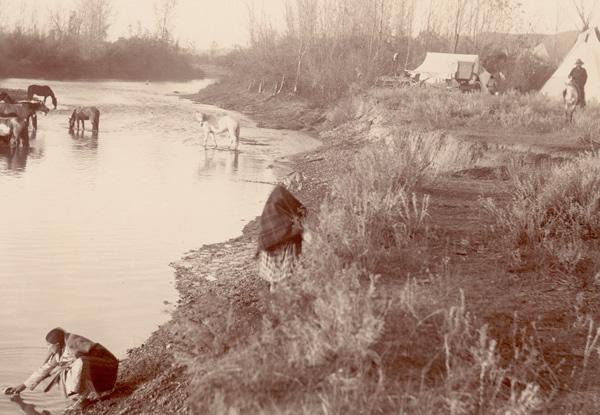
Nuwu)
When I first heard about it well, first of all, I'd like to do a big shout out to Max and Will. The first time I met them was at a community meeting in Orovada, and since then, Will kind of gave us a rundown of you know, what was going to be happening. And it scared me.
Because I, I thought about, you know, our water, the water that, you know, we use pretty much for everything. It was really peaceful out there. Really, really peaceful. It The “Sagebrush Sea” Courtesy Protect Thacker Pass
Page of 80163
It was quiet, but now it's just all, slowly getting torn up. The lithium workers are out there, and they're digging the water pipes to place those in there.
Will Falk, Attorney
When we're talking about mining on public lands in the United States, there's a law, the 1872 general mining law, which makes it so that if a mining corporation locates valuable minerals on public lands, then the federal government has to give them permits to mine. This is not a discretionary thing. If if there's valuable minerals there. The Congress has said that the highest and best use of American public land is mining.
Western Watersheds Project Page of 81163
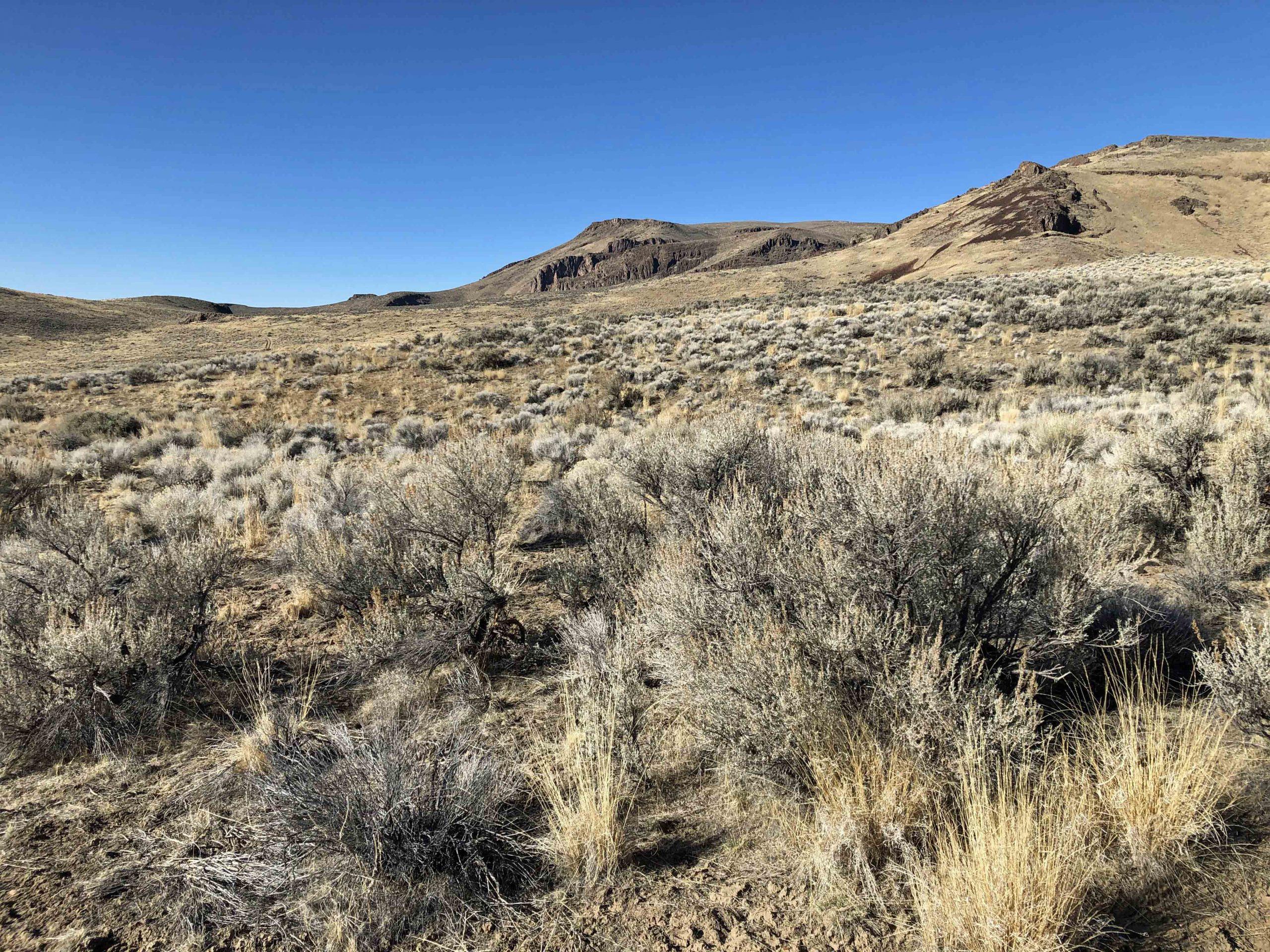
Max Wilbert, Author
Thacker Pass, in northern Nevada, is a place where Paiute people were massacred and where people lived and hunted and gathered their foods and their medicines and traveled through for thousands of years. This place is under threat right now. The mining company Lithium Nevada is building a giant open pit lithium mine here.
The approval was given four days before Trump got out of office in a nine month rush. NEPA that went through during Covid.
Dean Barlese, Paiute
They never did come down and consult with us about what was going on up here.
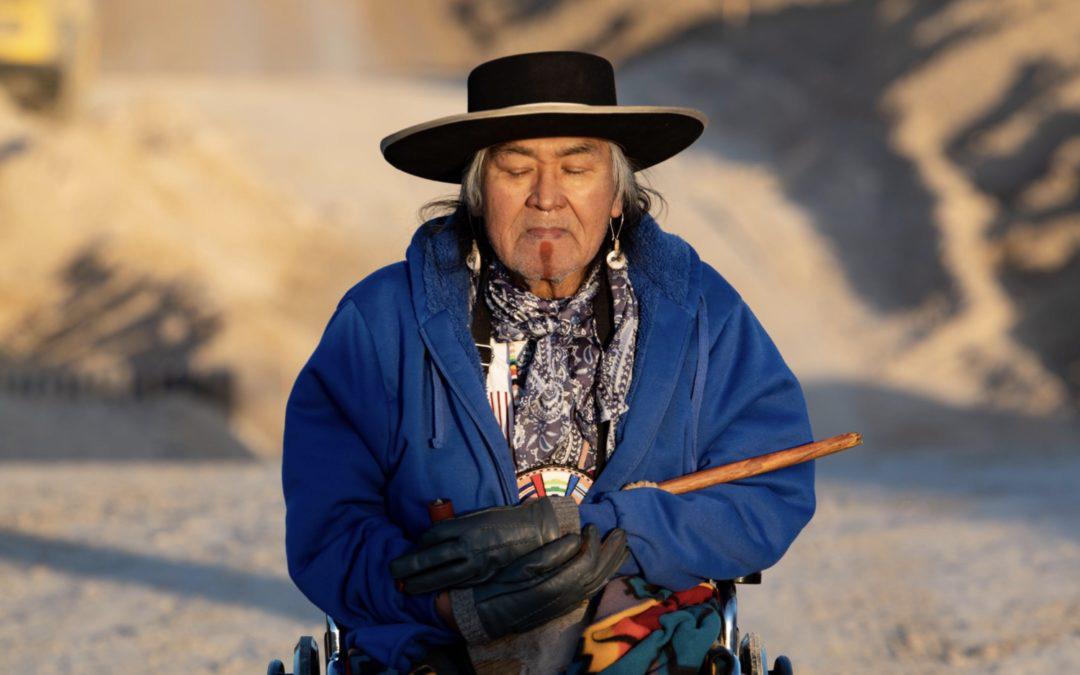
Luis Olmedo, Comite Civico del Valle
We know that these minerals that some of them are more difficult to extract. We know that lithium, as far as we've heard from the industry, we've heard from researchers. It does it is it is a science, you know, it's not like you're just trying to separate gold ore or these hard metals from from the from from an ore. They got to take it from a liquid to a solid and then to a liquid. And it's it's very interesting.
But I think a lot of this information, at least from the industry side, much of it is being characterized as Intellectual property. Now that's where we're going to have some trouble, I think.
And the reason why is because the communities have a right to be informed. We need to be informed as to what chemicals are being utilized, and what kind of risks are there to release those chemicals into the air, into the water, into our land that are going to have a harm into our environment, our entire ecosystem?
Page of 82163
Page of 83163
Robert Lundahl, Filmmaker and Journalist
Well, there's a problem. And that problem we've seen at Thacker Pass and other places where mining and extraction have become very lucrative and are subsidized by companies and by the federal government in different ways. And here then we have Ash Meadows, which you described as being lush and beautiful and home to many species, where they're also considering some level of lithium mining.
Mandi Campbell, Timbisha Shoshone
They've been trying to come in. It's been about a year. We've been fighting them. They were denied. They gave us a project plan, and BLM denied the first one, which is wonderful. They haven't turned another one back in.
We've been to Washington, DC trying to get a mineral rights. We've talked to Congress. We've talked to the people in Beatty, the people of Amargosa. The community here. Park Service is with us as well, because of the fact that if they just make one mistake drilling, it's going, you know, all they need is one mistake.
It’s unacceptable because of the fact if they can't cap it, that's a possibility that we're going to lose water here in other places. And then to top it off, if they do drill and succeed, what's going to happen to the habitat? What's going to happen to the vegetation?
Page of 84163
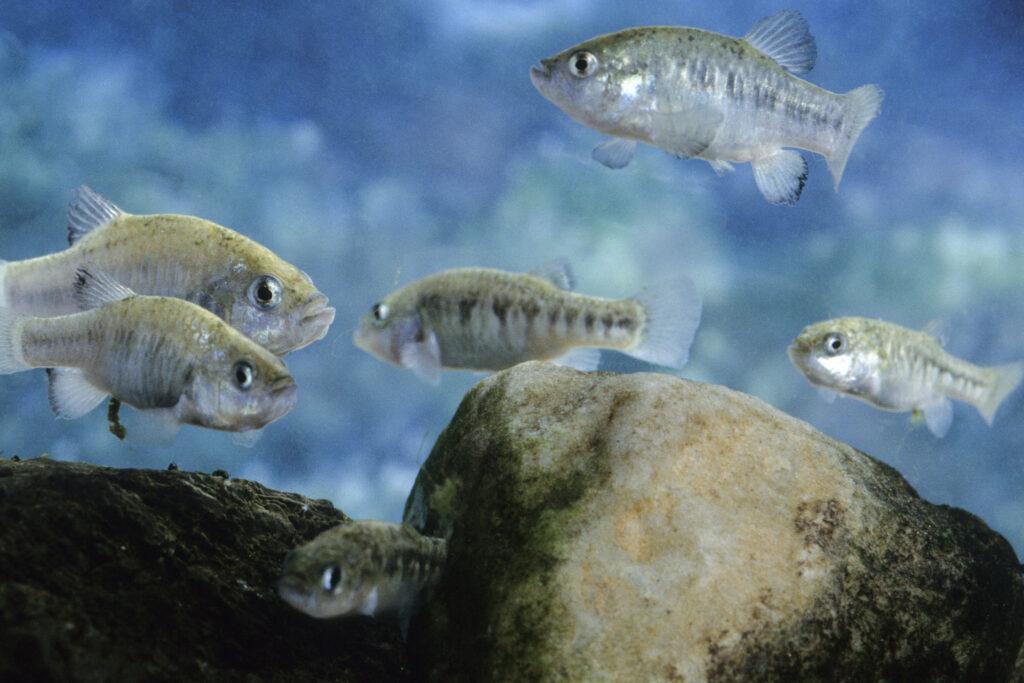
They may say that it's going to adapt to it. But really in reality, are they going to adapt to it in five years? You know, look at bottled water right now. When I was a kid, we drank water from hoses and creeks and wherever you wanted to drink water, we were fine. But now you drink bottled water and you still feel dehydrated. Look at all the stuff
that they're taking out of water now. You know, it's it's sad because all the minerals and stuff that they take out of the earth, they think isn't harming us in any way.
And it is. And the animals out there, you know. Yeah, it's fine now, but what? They haven't had time to adapt to it yet in time. You know, here in a little while they're going to not be able to. Are they really going to adapt to it? Is the vegetation really going to grow back the way it was. And then look how they leave the land.
They say, yeah, they we put a $50,000 bond, but what is a $50,000 bond to them? They got millions of dollars. They're not even from the United States. Do they care what it looks like when they leave? They don't have to come back here, you know? I know we have to have the lithium mines, but, you know, be a little bit more. How would you say it more? Maybe concerning when you go and pick someplace and you don't research what you're where you're choosing, because some of these places that you're
Page of 85163
choosing just isn't acceptable at all. I mean, no place is right, but we can't stop you on every place of, you know, every piece of land. But some of this land isn't for it.
Robert Lundahl, Filmmaker and Journalist
It looks like with those boreholes, they're planning for some sort of extraction like they're doing at Salton Sea of like a geothermal well at Salton. And then they bring up the water, and in a second stage, they extract the lithium. Is that where they're headed? To your knowledge?
Mandi Campbell, Timbisha Shoshone
That's possibly where they bring up the lithium, and then they extract the water back down in a brine. And then the brine is like a thick clay. But what a lot of the places that I've gone and site visited at what they're, they becomes a problem when the clay is in brine. You're not going to be able to keep, you know putting it down in there that clay Page of 86163
hardens and get down there and you're not going to be able to push very much clay in there.
You know, they keep putting that brine down there. And how many holes are you going to have to dig to keep putting brine down? You know, you say that it's going to be easy to put it back, is it? It isn't going to be easy to put it back. And you're still not putting everything back in the ground as it is. So. And they say that they're not using very much water. That's not true. They're actually using quite a bit of water. It's like Rhyolite Ridge. They bought up a lot of the water rights out in Fish Lake Valley. Why do you need all the water rights if you're not going to use that much water?
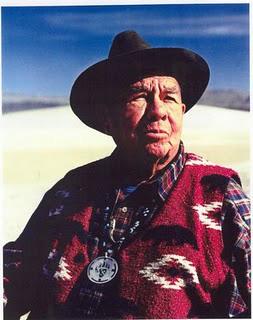
100 miles outside of Las Vegas, deep in the desert, there's a $19 billion hole in the ground. There are many unresolved scientific issues relative to the suitability of the Yucca mountain site. These issues include hydrology, inadequacy of proposed waste package, repository design, and volcanism. The Yucca site is seismically and volcanically active, porous and incapable of geologically containing the waste. Yucca aquifer drains to the Amargosa Valley, one of Nevada's most productive agricultural regions and adjacent to the busy and growing Nellis Air Force Base, and is only 90 miles from our largest metropolitan area, Las Vegas.
Page of 87163
Radio Station
The Yucca mountain nuclear waste repository has been a problematic and divisive project. Local communities and the state of Nevada have both opposed to the project.
Tracker Ginamarie Rangel Quinones
There is life, sacred lands and sacred people who have been there for thousands of years.
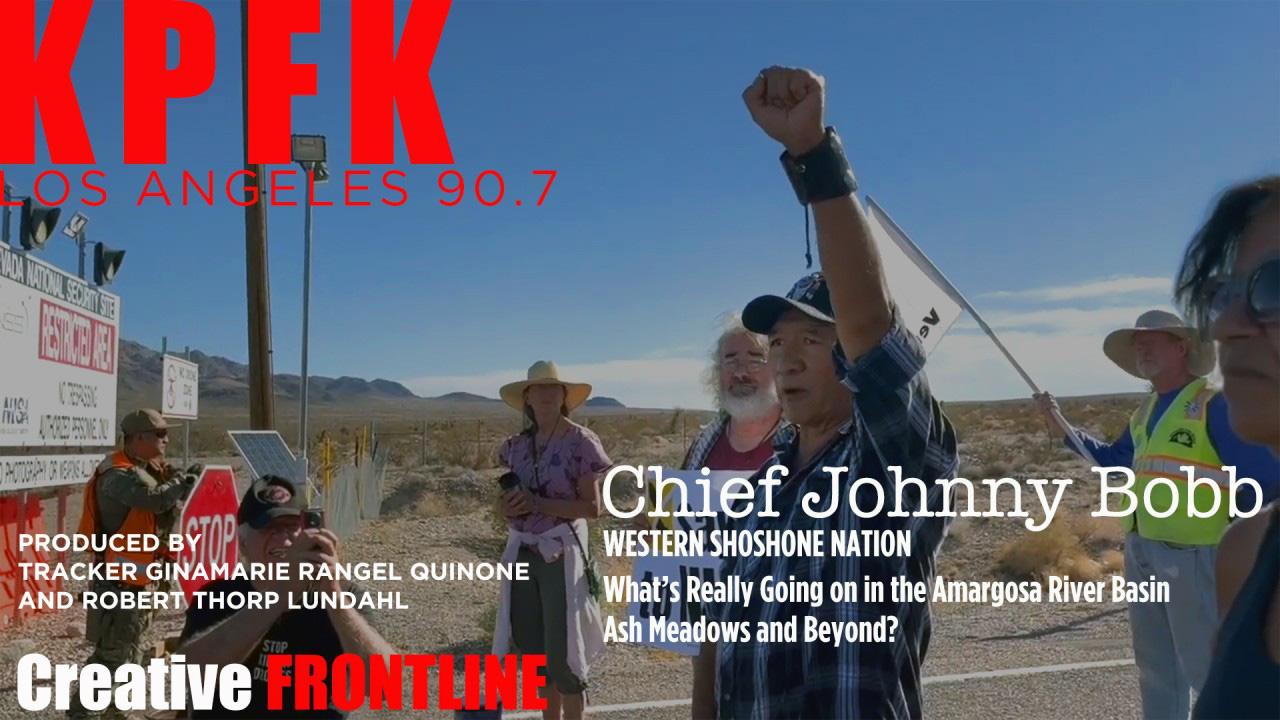
Johnny Bobb (Western Shoshone Chief)
My name is Johnny Bobb, Yomba Indian Reservation, but I was born and raised off the reservation. I haven't just got up and did what I want. I always went out and listened to my elders. Elders was most important thing in my life
Tracker Ginamarie Rangel Quinones
One of the elders he was referring to was Corbin Harney, Shoshone spiritual leader.
At the ocean, there was a gathering where Corbin Harney had words to say.
Page of 88163
Corbin Harney, Western Shoshone spiritual leader
“Remember, the land owns us. We don't own it. We're born on it. We're going to go into it again. The only way that we are going to have the world know that we're struggling. Try to keep our mother healthy. Keep our water clean, keep our air clean”
Keep the beaches clean. You see a lot of things dying on the beach. We cannot let that happen. Let's save it for the younger generation. The future generation, as they call it. They need our help.
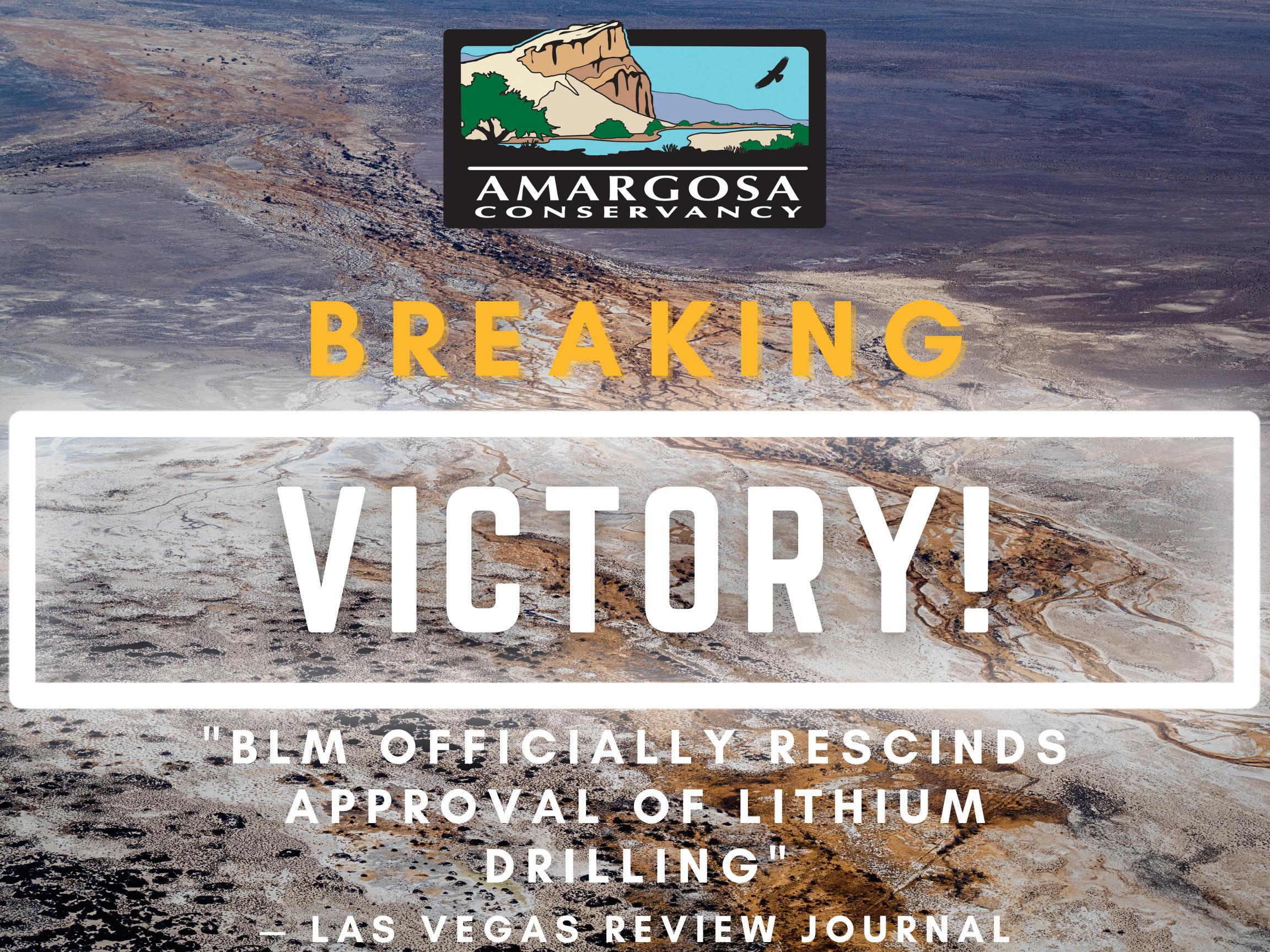
Editor’s Note: The Bureau of Land Management (BLM) withdrew its authorization for Rover Metals' exploratory lithium drilling project at Ash Meadows, a decision that was made shortly after environmental and local groups filed a lawsuit in July 2023. Later, in August 2025, the company appears to have abandoned the project entirely.
Page of 89163
Johnny Bobb
Today we Speak. Go up there and pray. We go up there. Make offerings with our food. We go over there, where the burial grounds are in the mountains and offer tobacco, food, whatever the Forest Service, BLM and all the things that's happening on our land like our mining water being taken out, fracking, oil well drilling more roads up in Pine Nut Hills to use that water. They know how to use the equipment. What is water to them? What is oil to them? What is food to them? What is everything they use for technology? What is it for them?
And there was a group of Chemehuevi who had a village up there and interacted and intermarried with all the other Southern Paiutes, and we all knew who and when the people separated. The 29 Palms Band went south into the Mojave Desert and settled over at the Oasis of Mara at 29 Palms, which was a Serrano village. And they allowed the Chemehuevis to live there and they co-existed.
Also and the Chemehuevis expanded, extended down, down into the Coachella Valley
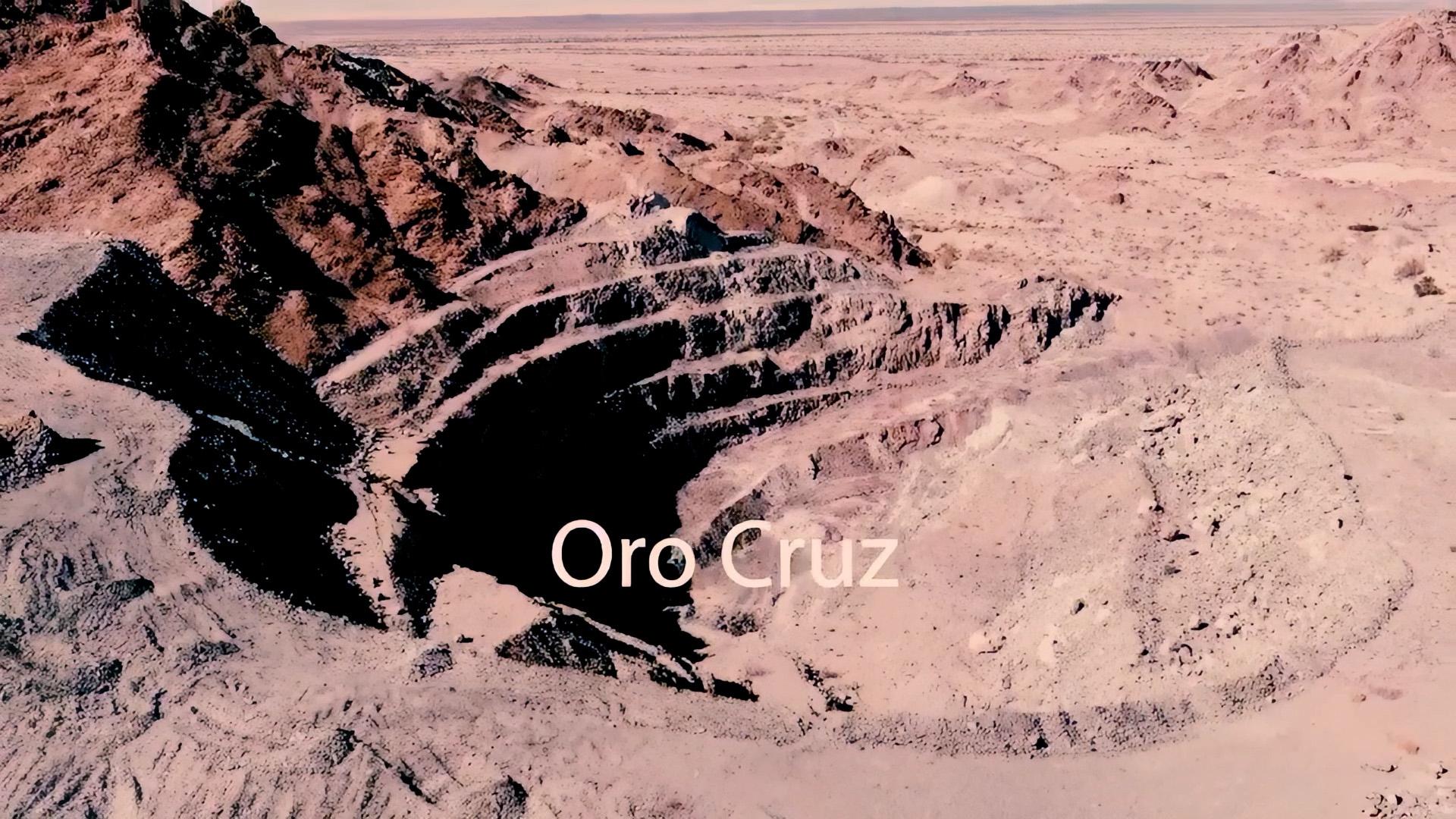
and on around to San Bernardino. And thus came another group of our people called the Paiuchis, who settled in San Bernardino and up around the Cajon Pass up to the Mojave River, up towards Victorville and Barstow.
Page of 90163
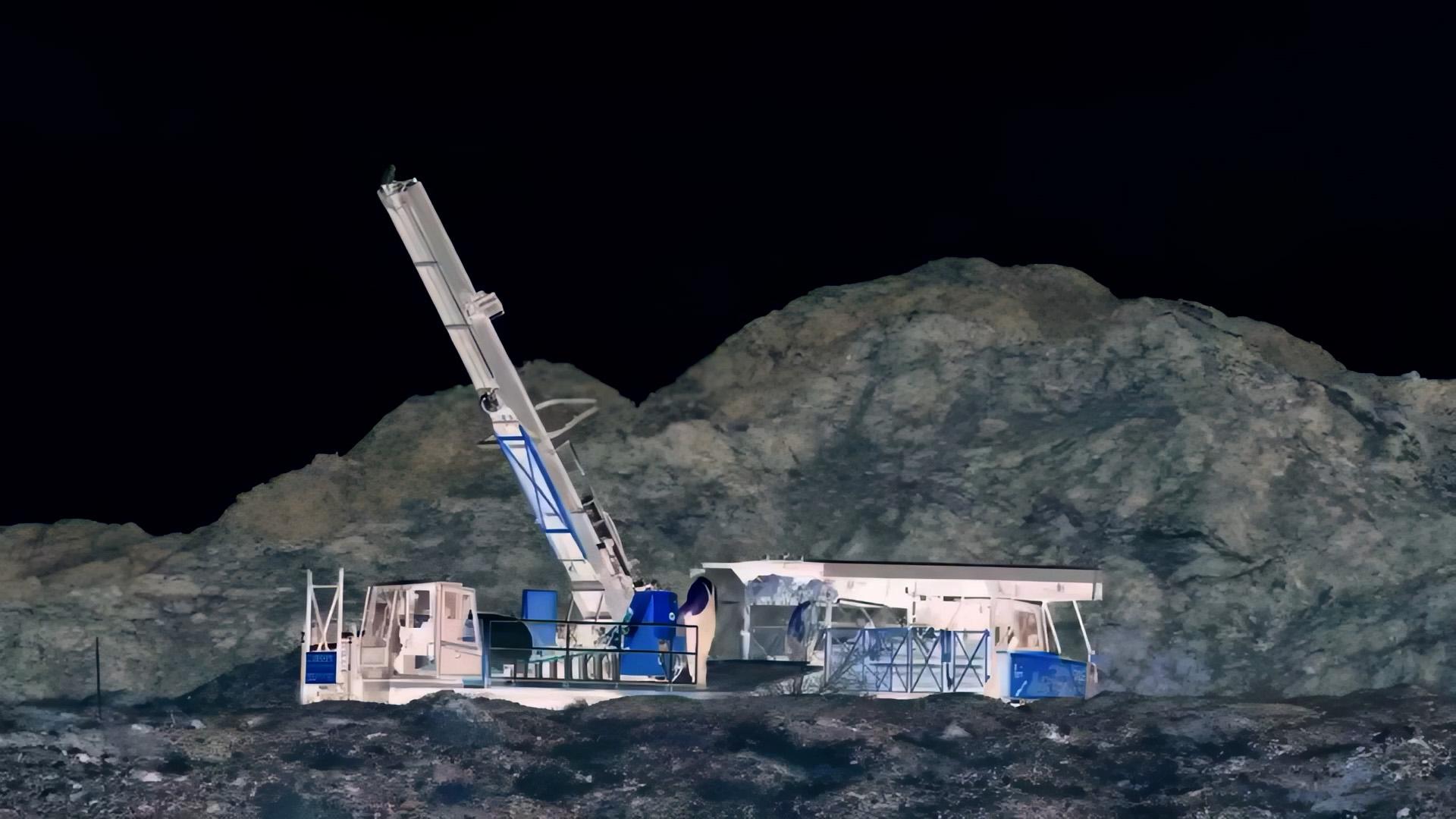
But at any rate, getting back to Ash Meadows, what was more inspiring and impressive to me was visiting the area and then later on traveling across Death Valley in route to Bishop for a tribal council meeting with the Shoshone on behalf of the Friends of Amargosa Basin. And we were doing outreach to the tribes and forming a tribal coalition, which we're still doing to help protect Amargosa Basin.
But just visiting the area was just so impressive and inspiring to me. And then learning more about Amargosa Basin and not only Devil's Hole and the pupfish and the Amargosa vole, as well as the other minnow that is endangered up there. And then learning more about the lithium mining that that was allowed by the BLM for the exploration studies. You know that that just irritated me.
Preston J. Arrow-weed (Quechan/Kamya Elder)
They're digging for gold everywhere they can. For what? You know what is. What good is that? All you're doing is for every sack full of gold that these people are getting. There's a place somewhere where they destroy the environment. They don't realize that. Somewhere creatures, animals are dying. They don't know that somewhere out there they could contaminate a lot of water. They don't know that. As long as they have that gold in their hand, they think that's good saving. That's good for their future. There will be no future if you keep doing that with the gold.
Page of 91163
And among other things that happened with that gold mine is also the lithium problem we're dealing with over here. Lithium is another thing. And I think that don't care because right now, the geothermal out there, plus the San Andreas Fault over there that they're digging right near it. If they can, they can go on until they can cause an earthquake. They can they can do a lot of damage. And so they really don't care.
They just want whatever they can get out of there. And I don't I don't I think they know it, but it doesn't matter to them. But then of course it's the public that lets them do it. You know that the corporations have a lot of money. The people with the money are doing this, and I think the people with the money are also running the government. You know, they're doing that too. So they listen to them. And then the lowest one on the totem pole is the public, the public wants it because they think they're going to get money.
They do want money. They do get money, matter of fact, they give grants and Imperial Valley grants a lot of people. And so they bought their way in there. So those things happen, but I don't. Well, also, I think even the public, they are not from this area
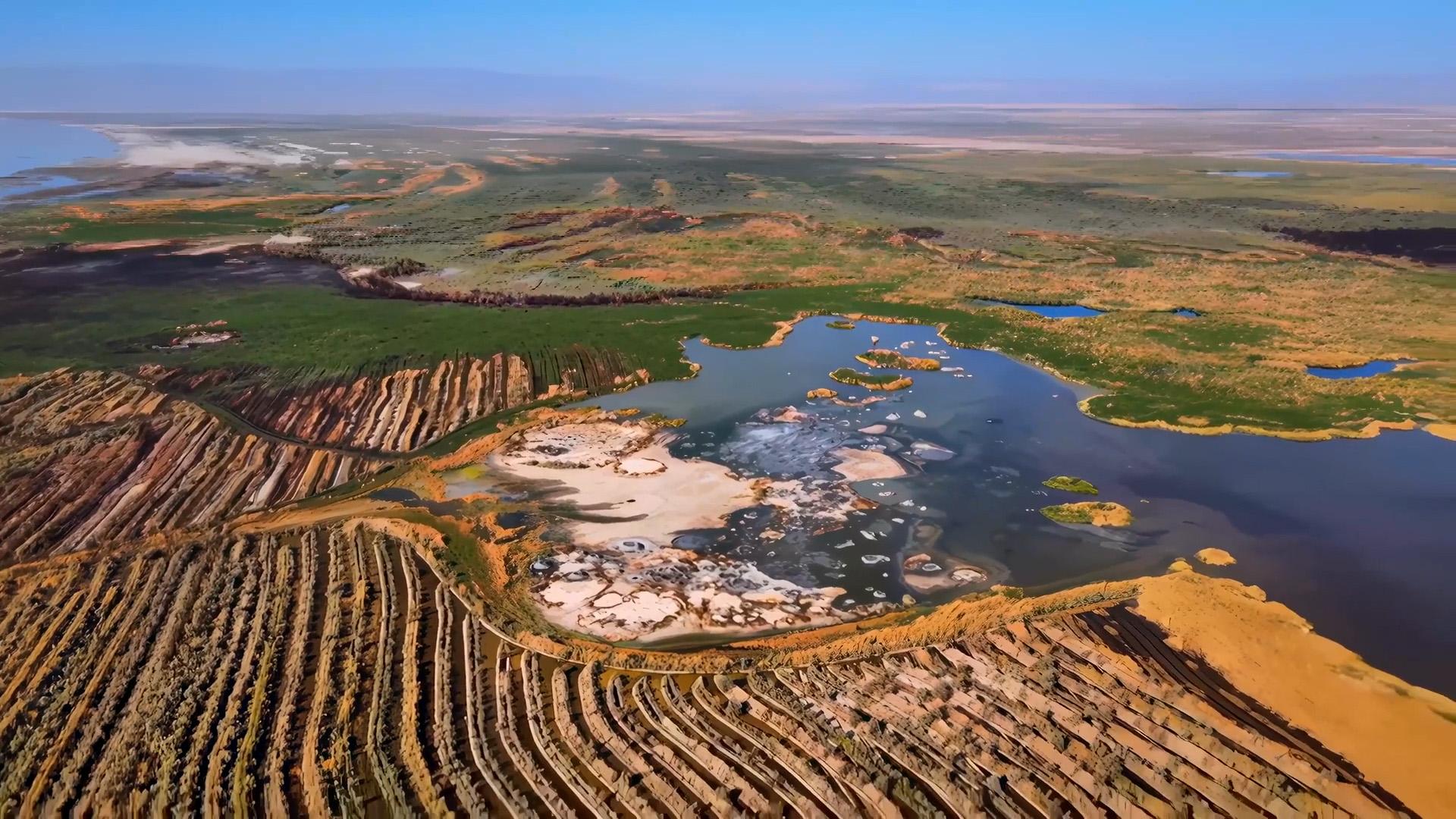
They came from somewhere else. And if anything happens that is no longer livable, they can just pack up and leave. But us, we came from here. We were here way before they came. So where can we go?
Page of 92163
All the creatures in the desert, they have no place to go either. They're going to die there. But it doesn't matter to the people. They want the gold. They want whatever
They can get the lithium, whatever. There's so many things that they do without any consideration to the the future. What can happen, what will happen.
And I think there are things that are happening in this world that they will not admit that there are things happening now. Well, one of the things the most famous thing is that the global warming, you talk about that, but the results of that are these storms and floods and the weather is changing and everything is changing. That's because of what we did. I mean, the humans done. they’re knocking the earth off balance. What they're doing, there's no longer, there's no balance anymore. And I mean, if there's gold there, Volcanic Mud that's meant to be there. If there's lithium there, it's meant to be there. They really don't know what they're doing either. They don't know what's going to happen-experimental too, what they're doing. The community community does not know the problems that we're having.
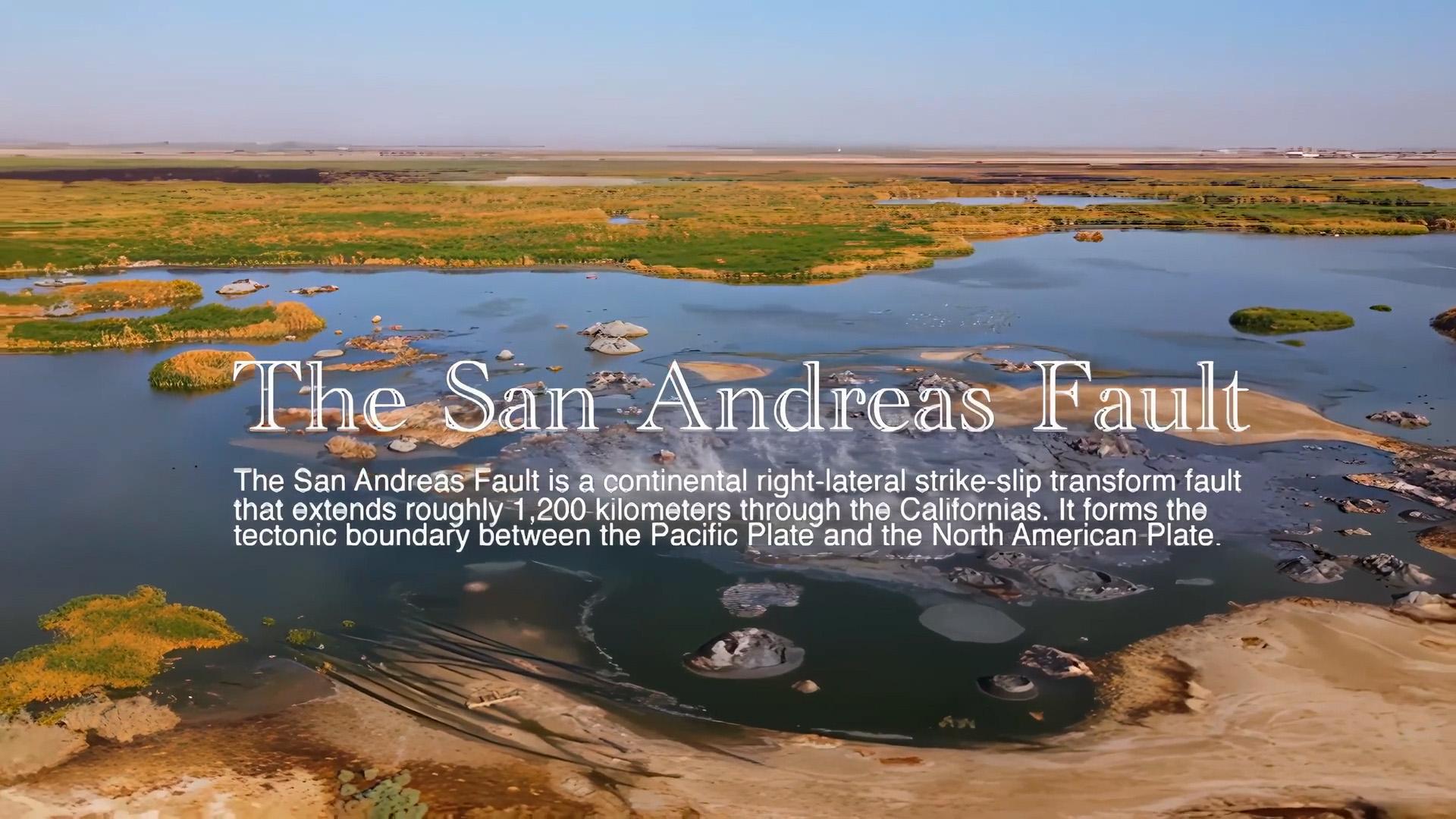
They don't know. All they know is that they can get money and that's it. But the the problems we have here, they don't know that they're, I mean, what we're talking about, like the the environment, the destruction of the environment and things like that, they don't know that. And all they want is money.
Page of 93163
(In old times) They they knew that. And for instance they, I know that they moved from place to place. When they depleted the area of certain things, they would move on. They would move on to another place and another place. Once, you know, they deplete the area of our game and let it build up again. Some people stayed. You can see that in our history where we came from the north and we came down. We lived, lived here and here, and here all the way down. But when we came to this area, for instance it was under water. And then when the water receded, we came down into the valley. They have archaeological studies done. They find artifacts also.
When that receded and they came down, there were others who went along the mountains to Jacumba, to the ocean by Juan San Juan Capistrano, up toward the mountain again by Palm Springs, and came back down south to Imperial Valley, into Yuma area. By that time the Colorado River was flowing, but it took thousands of years for that to happen.
I've heard that Russia has been accused of committing crimes against humanity. Well, that's been happening to us since they came to America. They have been committing crimes against us all these years that America has been here.And yet they talk about somebody else, yet they've been, America has been doing that to us. Look what they did to this (points to geoglyph).
They they piled rocks and made a V right along the shoreline that that V is a little opening in the water, but the water is in there, too. So what they did was they would have a big circle and they would all start making noise and whatever, and all the fish would come closer and closer. They got into that hole and went in there, and then they closed it. That's how they got their fish. And there's a lot of them over there on the west side (of the Salton Sea. But of course, it's long ago, so you can barely see them, but they're there because I've seen them.
And they were here. They were here in this area So I remember one of the songs is (Sings in Quechan language). “The land you know is given- has been given to you..” That's what it's saying.
To migrate. You can migrate. I mean, you can migrate in one day. The geese fly through here. Could fly here to the one day migration. But I don't think we did that in one day. Yeah. I heard that some people went to court. Natives, Wendsler (Nosie), Oak Flat.
And the people that wanted the land told him that that land belonged to the government. They stole it. You know, I talked about our land, and they say that BLM has it now. How did BLM get it?
For instance, the gold mining they say they're using claims. Claims that they bought from someone. They were out there and there's evidence we were there before that claim. Page of 94163
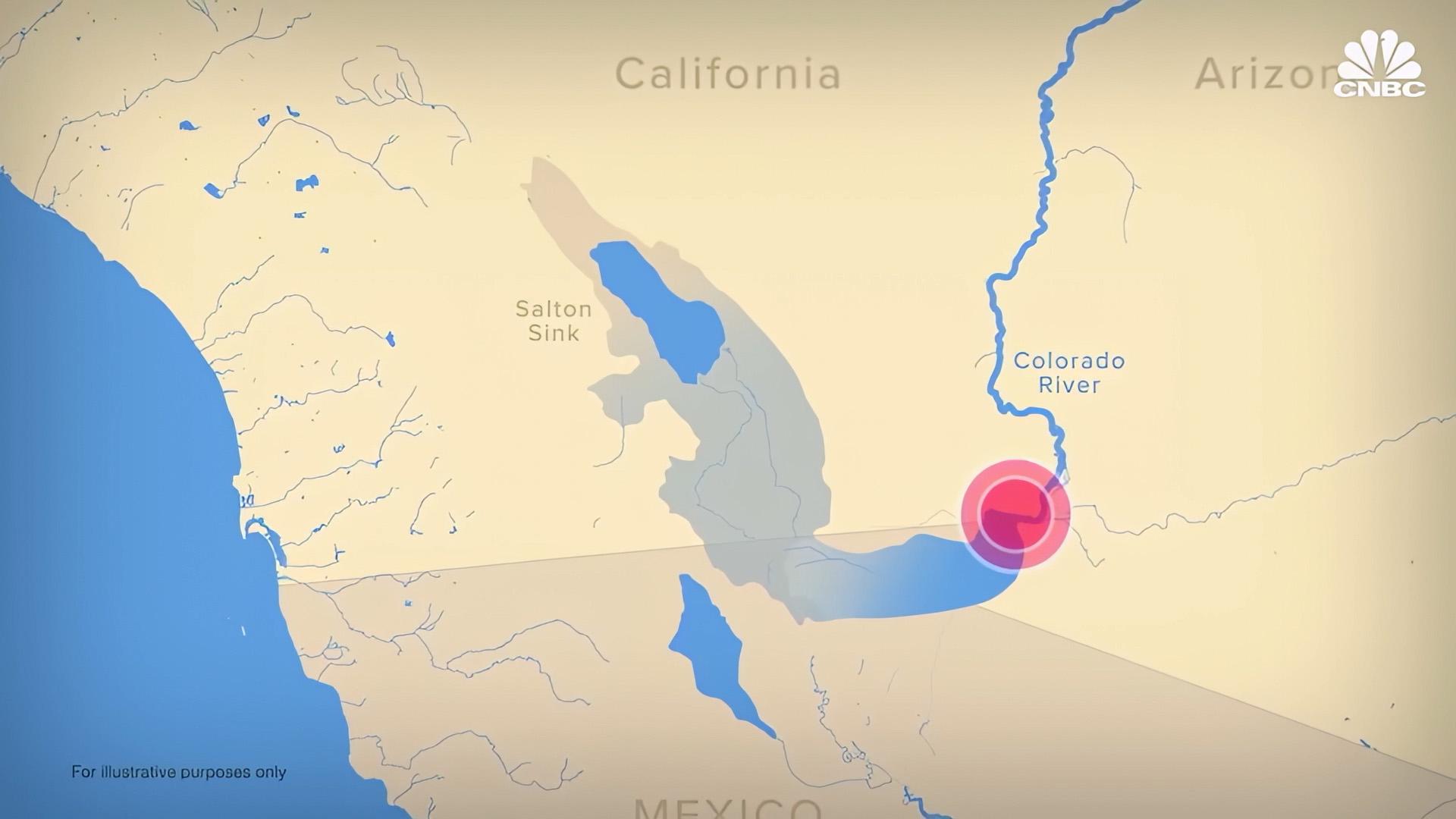
The Land You Know Has Been Given to You, KPFK, Creative FRONTLINE
I tell you the words and I'll give you the melody and you follow it. Okay. Can anybody remember the words I gave you? Come on.
Preston Arrow-weed (Quechan/Kamya)
Then whatever you know is gone. The same thing that they're using religion. Our religion was before the Bible, see. Our religion goes way back before they did that. I asked about the religion once, the Bible, and said something like 2 or 3000 years or something like that. Well, we go beyond that.
It doesn't take much courage and guts to sing this. You can do it. Okay. I'm singing. We're going to sing and you'll get the melody. (Sings)
The state of California. They wanted the land. They wanted the gold. What did they do? They started shooting and killing the Native Americans in California. And then, to make it worse, they enacted and passed the laws that there was a bounty on them.
And you can shoot them and kill them as long as you bring them over here. See, they made that law again. See, they did that too. Our belief is just as strong. Our belief was the area where the Salton Sea was, that there's some story about that and that story,
Our belief was that the giant snake came in there from the ocean. It was a white snake, big giant snake, and he had a black spots on it. The snake. And that was a repository
Page of 95163
of knowledge, came into Imperial Valley and surfaced in the ocean there somewhere. I would think it would probably be Obsidian Butte.
And they had a ceremony where they built a little house there, and the snake went in there, and they closed him up and he couldn't get out, and they burned it all that the black spots popped from the fire and all that black spots. The repository of knowledge left the body, went out and went to all the mountains in the area. And there's some mountains around that area that it went to. There's one south of them called Eagle Mountain, and all to the north, and all the way to the west. And Oro Cruz is some of that, went to those mountains, too. Well, that's what we believe.
But that doesn't mean nothing to them. You know, they expect us to believe in the Bible. So things like that happen. And I think it's wrong to even to even consider that, that their Bible is better than ours, that we should-our belief doesn't mean nothing. But it shows that our Creator does not want to destroy everything. But according to their belief, it's okay to destroy. So which is better?
Robert Lundahl, Filmmaker and Journalist
We continue with “Water in the West.” Cinema Verité radio documentary highlighting voices of transformation, regeneration and reconciliation.
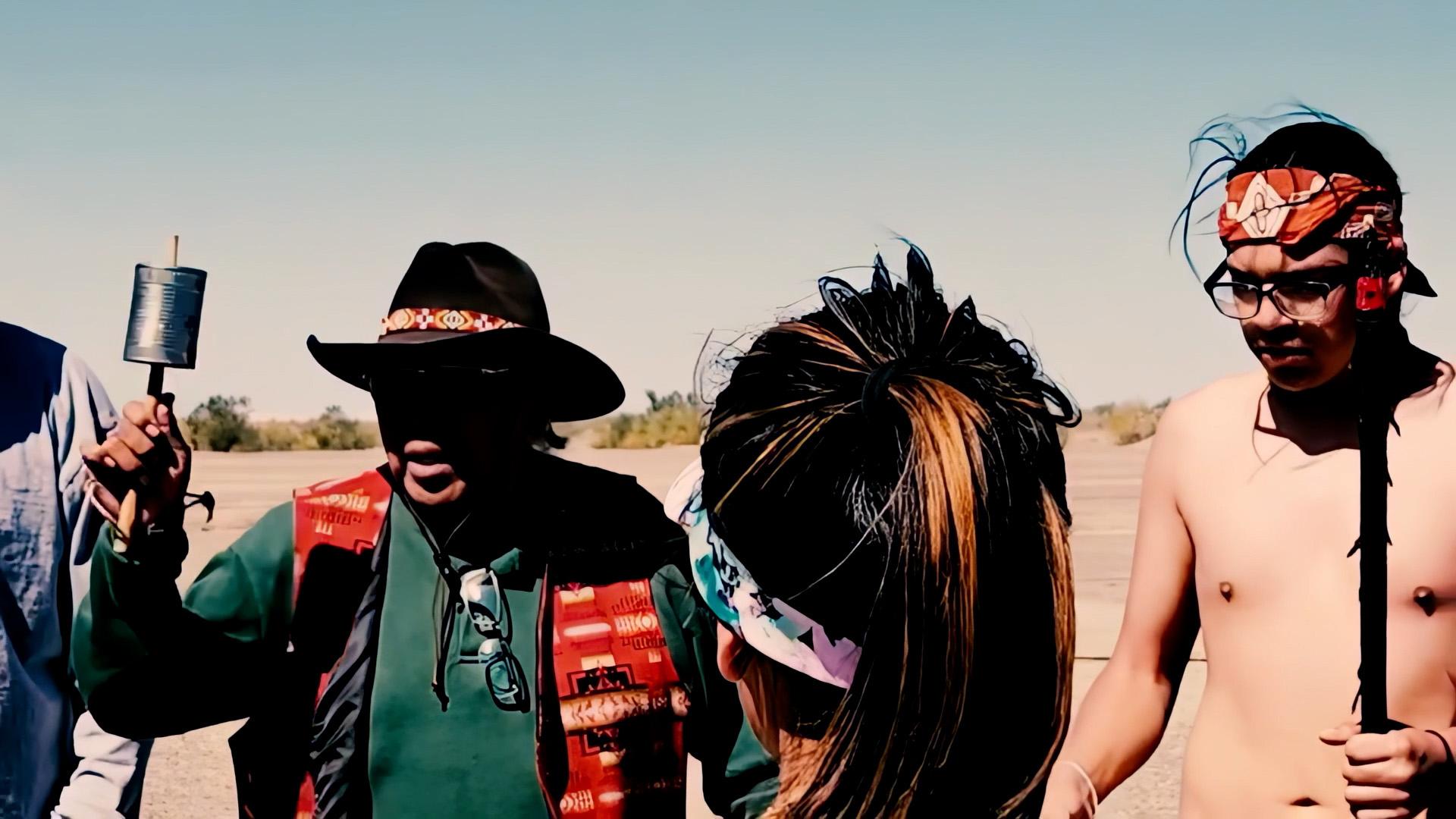
Courtesy Bradley Angel
Narrator Film “Women in the Sand”
Like the beat of your heart. Mother Earth sends out a healing tone that hits your body and soul. It moves around inside of you. It has to be in the flow of life. This is the hottest place on Earth. Death Valley, California. Homeland to the ancient Timbisha Shoshone people.
Max Carmichael (Artist)
There's a lot of well-known stories, legends, myths among indigenous people in the Western Hemisphere about the destroyers. People like us in our civilization who come to destroy. And I've taken that to heart.
The Land You Know Has Been Given to You, KPFK, Creative FRONTLINE
Mandi Campbell (Timbisha Shoshone)
My ancestors have been here forever. During the summer times, they they would go higher up, up towards Wildrose and get pine nuts and pick different foods up that way and do the hunting and stuff, and then they would travel back down during here during the cooler months, or they would head towards Beatty. It just depends on they would head towards Beatty for antelope and stuff like that. Green water to hunt rabbit. But during the hottest part of the time, they would really never be down in the valley floor. It was always too you know , just it was too the hot with no electricity and no, you know, so they would go where springs were
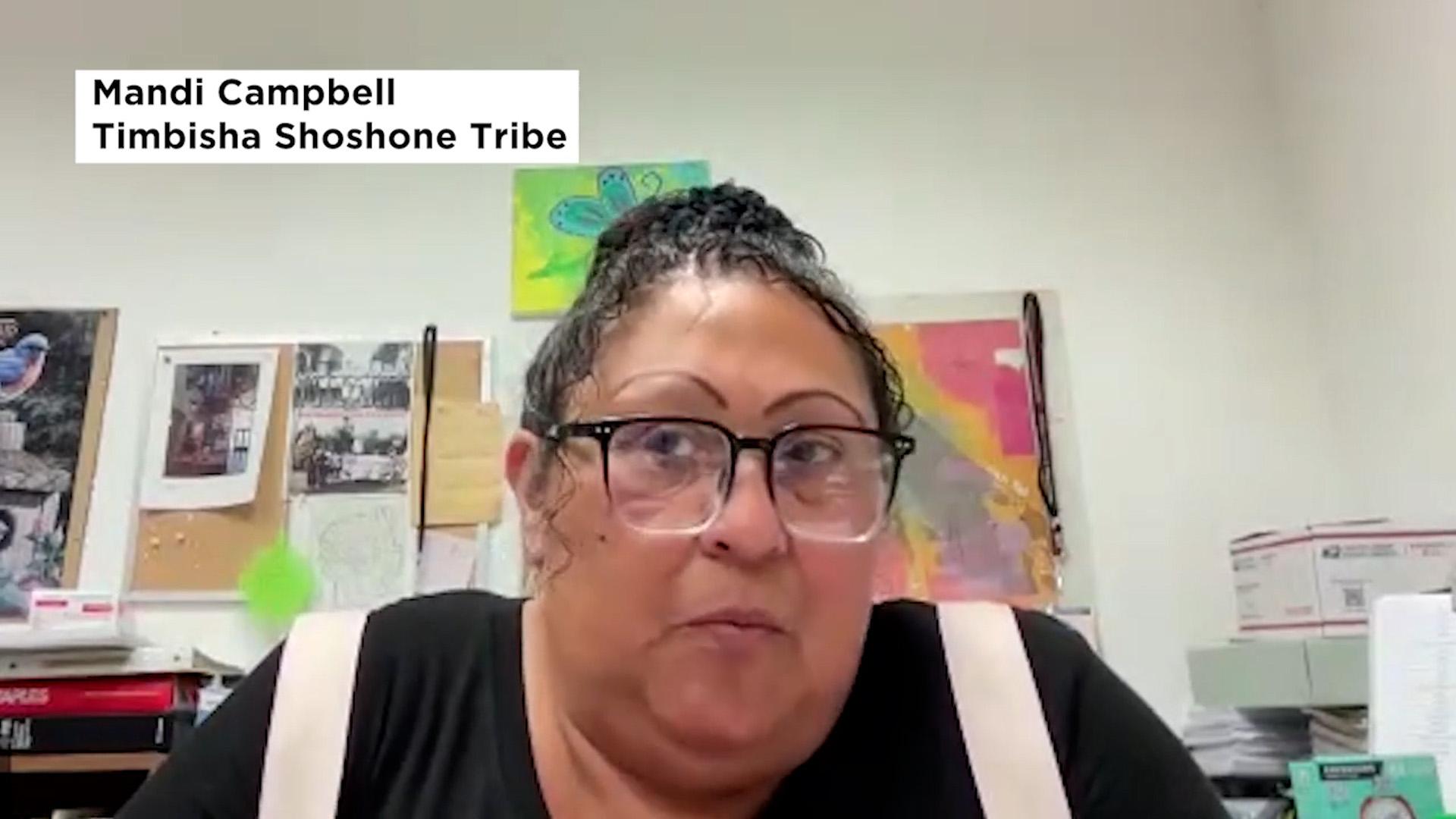
Page of 97163
Mason Voehl (Amargosa Conservancy)
We have, we believe, at least 70 endemic species that that only live in the Amargosa Basin. And, you know, all of those species in various degrees are, are dependent upon groundwater for their survival.
Mandi Campbell (Timbisha Shoshone)
And they’d travel to the springs and stuff. And the food, there's plenty of food in. They're hunting they always they, they manage to accumulate exactly what they needed.
Mason Voehl (Amargosa Conservancy)
New interests appear, right? We have. We're living through this moment of this, you know, this transition from, you know, a fossil fuel dependent economy to renewables. And as a result, we've seen a couple of threats looming on the horizon for some time. Large scale industrial solar being one and another one being new forms of extraction. Looking for some of these rare earth minerals that, of course, are are essential to us making this transition possible.
Mandi Campbell (Timbisha Shoshone)
There's springs everywhere. And my family, they knew where it all was.
Mason Voehl (Amargosa Conservancy)
And lithium is actually found very commonly in these kind of these, these these basin areas we have in the Mojave Desert, these kind of semi saturated alkali wetland type places tend to also have this kind of, you know, higher concentrations of lithium
Mandi Campbell (Timbisha Shoshone)
And sometimes when you travel from Death Valley Junction heading towards Shoshone and down that way, sometimes it'll be dry, sometimes you'll see the Amargosa River and you'll see it flowing. Sometimes you'll you'll be lucky enough to see that river flowing.
There's fish. There's 28 endangered species here. You've got the Devil's pupfish, which is only here. No place else over at Devil's Hole. I think they were saying the other day there's maybe four different 4 or 5 different pupfish over at Ash Meadows. And we also over here at Salt Creek, down here in the valley, there's right now, you can't go down there because of the Hurricane Hilary. But the pupfish have tripled their the amount that's there.
Page of 98163
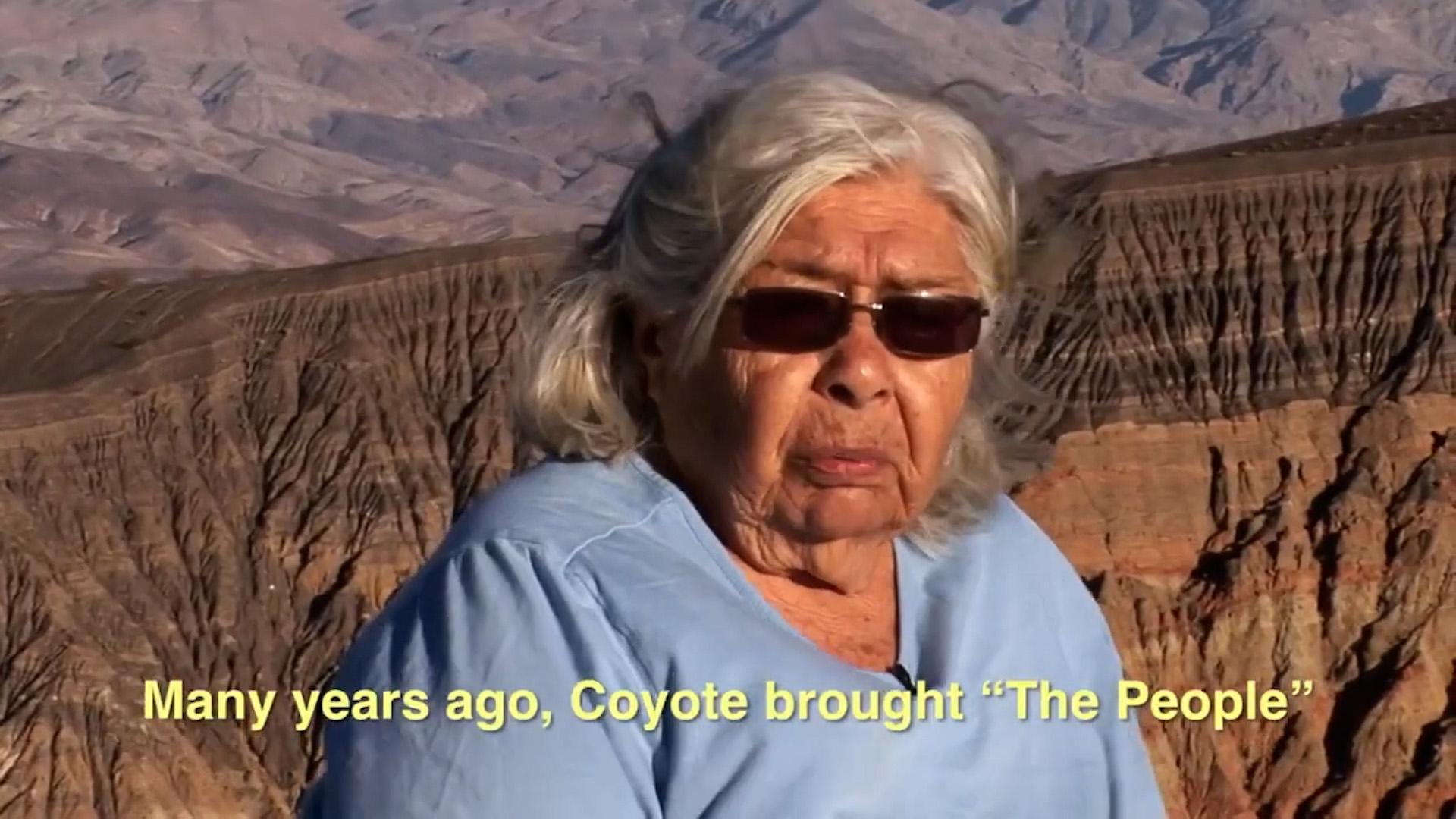
Mason
And so about a year ago, we caught wind of of a really problematic proposal proposed by a Canadian mining company who was seeking to conduct exploratory drilling for lithium directly against the northern boundary of Ash Meadows National Wildlife Refuge, which is really the heart of the whole watershed. It's a it's the largest oasis in the Mojave Desert, home to at least 26 species that only live in the refuge. It is this island in the desert, and it's also a place of extreme cultural importance to the tribal communities that that have occupied this, this region since time immemorial
Mandi Campbell (Timbisha Shoshone)
They've been trying to come in. It's been about a year. We've been fighting them. They were denied. They gave us a project plan and BLM denied the first one, which was wonderful. They haven't turned another one back in. We've been to Washington DC trying to get a mineral rights. We've talked to Congress.
Page of 99163
Ash Meadows-were told there was a meeting place for the Timbisha Shoshone. The Chemehuevi and Southern Paiute. It was, you know, a place that is still highly regarded for, you know, many things, especially the food, the medicine that that it produces. And so we saw this proposal and immediately did everything in our power to ensure that a drilling project of this caliber, which was proposing to drill holes within 1500 ft. of some of the largest springs in the refuge and presented a really direct threat to groundwater needed not only to sustain the refuge, but really to sustain the communities in this part of the watershed.
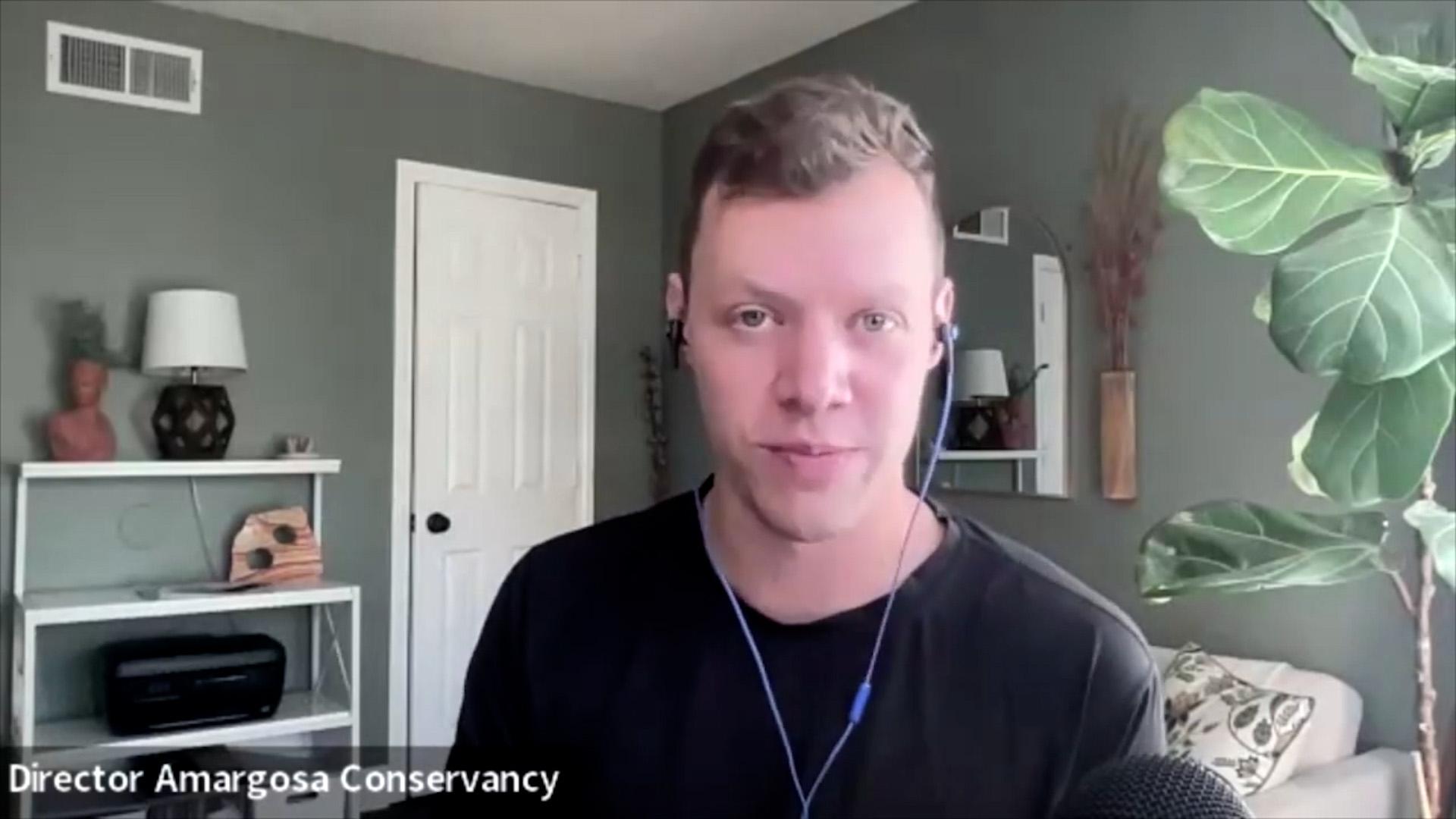
We started the sacred fire on the water line on May 11th is when we erected the tipi and started the sacred fire. So I was on the front line for a week until the officer showed up on May 19th. Towards evening is when they gave me the temporary restraining order. I believe it was like a week after the temporary restraining order was when I wasn't I wasn't given the lawsuit. The SLAPP lawsuit.
It was actually emailed to me. So And it was just the heads up, you know, from one of the, I believe it was Max that sent it to me. And so I, I didn't know about it. And so we have this lawsuit on us with myself being the only descendant of Ox Sam that is stated in this, this SLAPP lawsuit. There are other descendants Dean Barlese and you know,
Page of 100163
just there was two other Natives, BC and also Bethany, that were named in the lawsuit, and Max and I think it was Paul Cienfuegos. Yes. And TP, Protect Thacker Pass.
Voice of Chuck Banner (Lakota Law Project)
The police are returning for arrests for blocking the road.
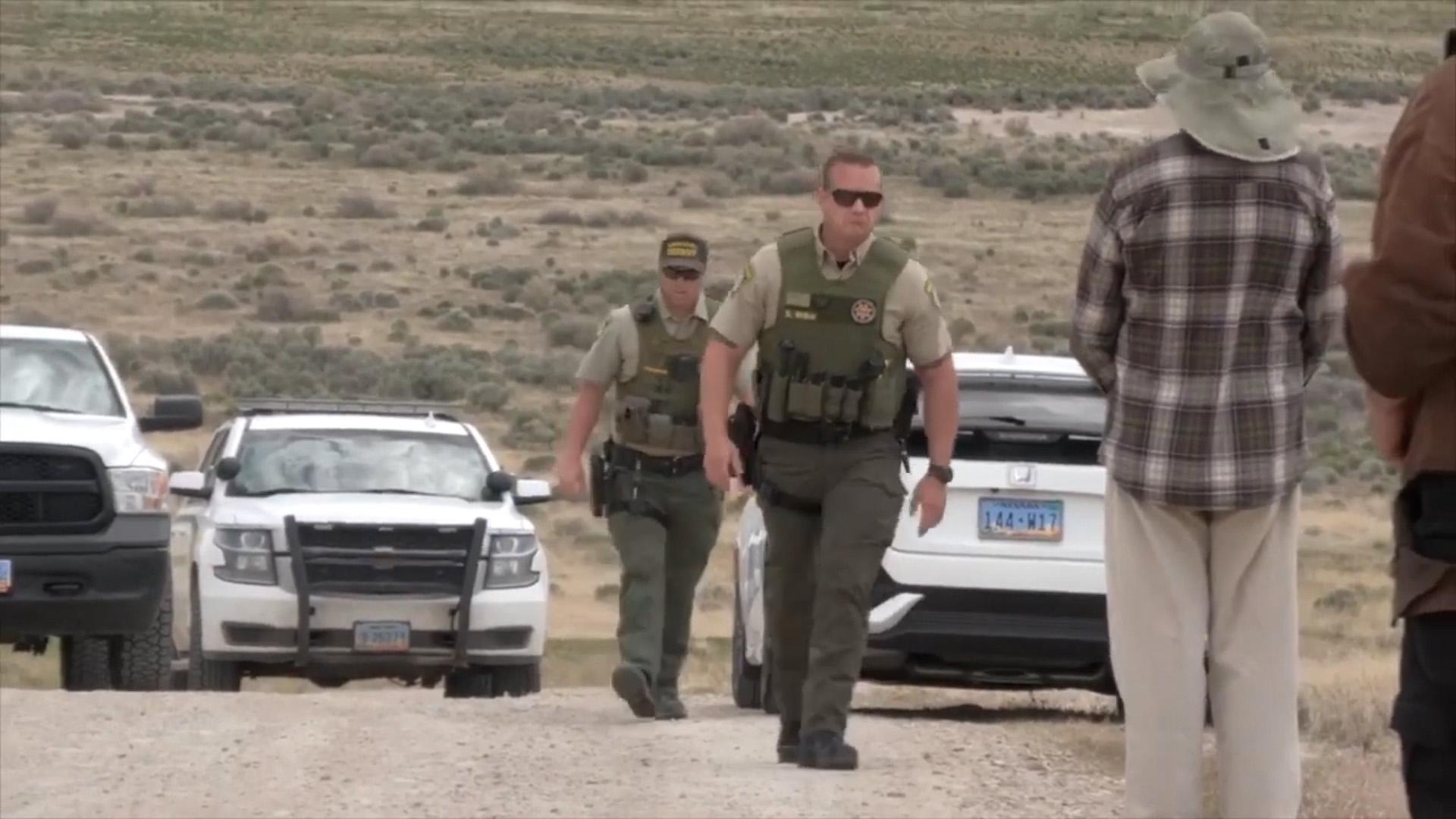
Because you know, to this day, I haven't they have never served me the lawsuit or they have never emailed me the lawsuit. The only lawsuit I've seen is a lawsuit that Max shared with us. So. Yeah.
Robert Lundahl
So he he got one. He got the actual copy. He was served.
Dorece Sam
Yeah, yeah.
Robert Lundahl
Page of 101163
And then on the lawsuit, it mentions you too. So he was calling you and letting you know, is that it?
Dorece Sam
Yeah. Yeah.
Robert Lundahl, Filmmaker and Journalist
Got it.
Robert Lundahl
And then following that. Wow. That's just unbelievable that, you know, it's you've been your land for about 10,000 years. And then they come in and they think, you know, now we're going to issue this lawsuit. And basically the point of those SLAPP suits is to is to shut people up.
Right?
Dorece Sam
Right. Yeah.
Robert Lundahl, Filmmaker and Journalist
So did that did that surprise you? I mean, it's a lot of money, right, that they're claiming in damages.
Dorece Sam (Ft. McDermitt Pai-Sho Tribe)
It is. Yeah. I guess it does surprise me. But then it doesn't scare me, though. Because I don't think it's really going to stand.
Personally, I think that the only reason why they filed this lawsuit, and the charges in the lawsuit were civil conspiracy, nuisance tortious interference and contract tortious interference with contractual relations with prospective economic advantages and unjust enrichment. (Laughs)
So you know, in the TRO, when they filed the TRO, they they first first off, it was like they said that but they can pinpoint one particular person. Right. So they're saying that in the TRO, there was four of us. It was myself, Paul, Max and Chuck. And so they were in all of the, the TRO. They were they stated that we were flying drones really close to them that the workers feared for their lives. And you know, which was all false allegations and accusing us of taking diesel from their vehicles, from their equipments. And I'm like, I don't even have a diesel, diesel vehicle.
Page of 102163
Robert Lundahl
That's odd.
Dorece Sam
Yeah. And…
Robert Lundahl, Filmmaker and Journalist
Well, I've seen all the drone footage and when when the drone is close to the workers, they're waving and smiling…
Dorece Sam (Northern Paiute)
Right, right. Correct, correct. Yeah.
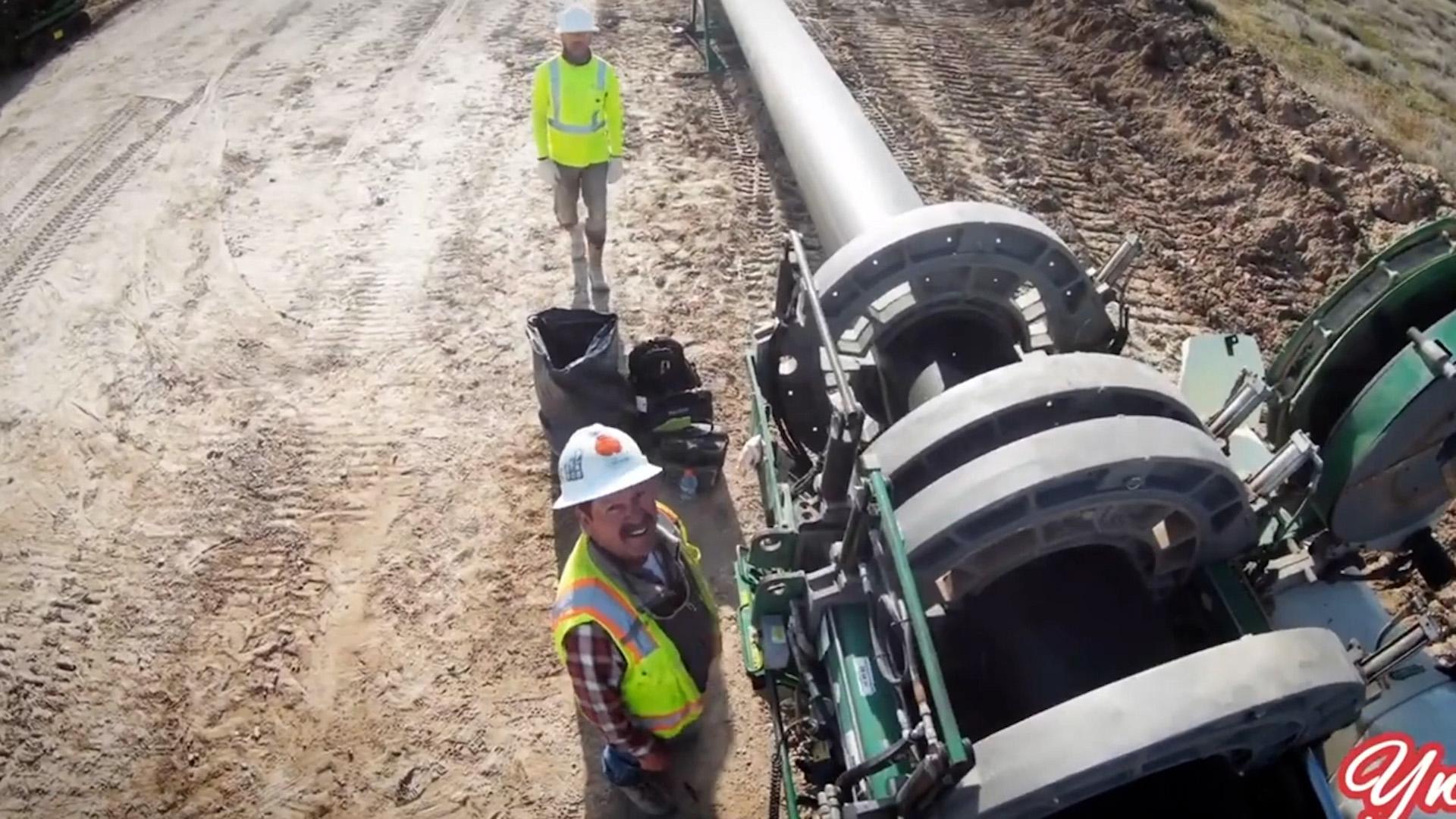
suits and Dirty Deals, KPFK Creative FRONTLINE
Robert Lundahl
So I said it didn't look like they were in fear for their lives, you know?
Dorece Sam
Page of 103163
Yeah, actually, I think they were enjoying it. The attention.
Matthew Leivas Sr. (Chemehuevi Hereditary Chief)
And here in Chemehuevi Valley, there was a company that came in, it was named Marcos Mining. And they were intending to mine in Chemehuevi Valley near Highway 95 and at the bottom of the wash along Highway 95 on the western side of the highway. They were planning to put the world's largest open pit gold mine, and they were also planning to use cyanide leaching for extracting gold.
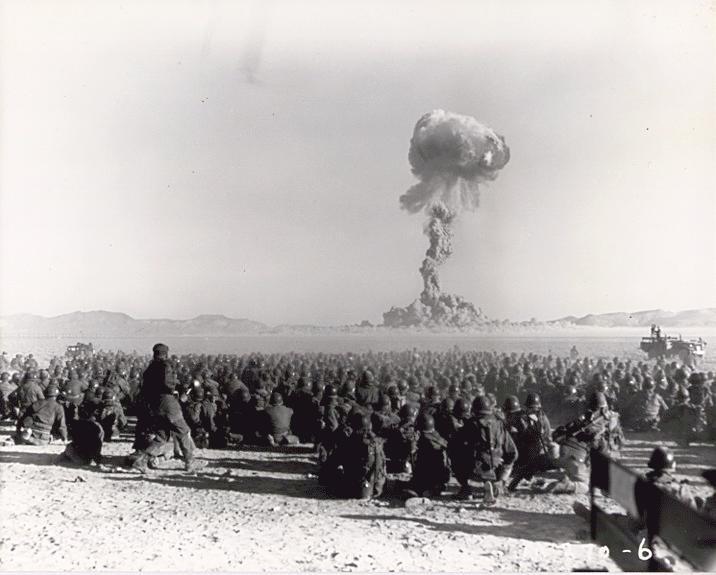
And the Indian tribe and I was representative of the tribe. I argued before the powers that be that it's always been told to us through oral history, traditional NuWu history, that underneath Chemehuevi Valley is a large underground lake. And we know it's there because we see the water that comes out at the spring at West well, at Ohio, and that's leading into the Colorado River. So water is still traveling beneath the ground and
Page of 104163
still interacting. And people never realize that high level nuclear waste will be able to travel in the water.
But I understand that a year after the federal government stopped doing nuclear testing, underground testing, that they had discovered that radioactive nuclides had traveled a mile in the water from where the last blast took place. So to me, that was evident that these things are going to migrate in the water. And also about contaminants migrating in the water at Nevada the same company that was, that was proposing to do the low level radioactive waste dump here at Ward Valley had an
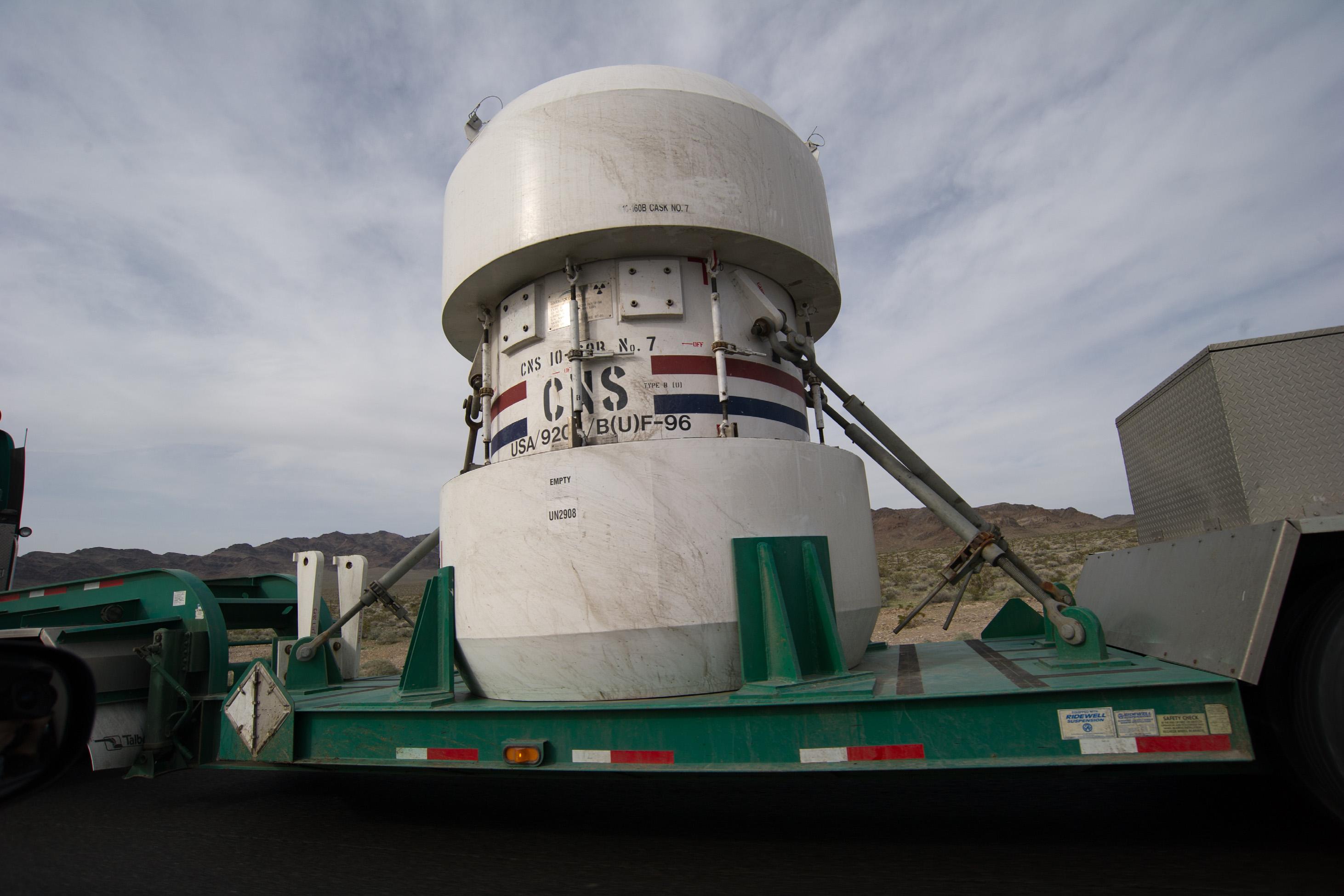
ongoing operation at Beatty, which was leaking, and that aquifer was leaking contaminants into the stream that led into the town of Beatty, now thus contaminating their water.
So it's already been proven that, you know, all these things can travel and migrate in the water, so you can put two and two together and think, how long would that take had taken to get to the aquifer and get into Lake Matthews in Southern California?
Page of 105163
Robert Lundahl, Filmmaker and Journalist
Right. Because the Colorado River is one way that Southern California gets drinking water. Isn't that correct?
Matthew Leivas Sr. (Chemehuevi Hereditary Chief)
That's correct. And they're looking at other ways of extracting other waters. But the Native American Land Conservancy is on a mission to protect all the springs in Southern California. And we've been identifying, locating and identifying springs that have cultural significance Native American occupation, sacred sites and things like this. And I'm very proud to say that we are moving forward with the acquisition of a spring in the mountains and who knows, maybe another month or two. We'll be in. It'll be in our possession, I hope.
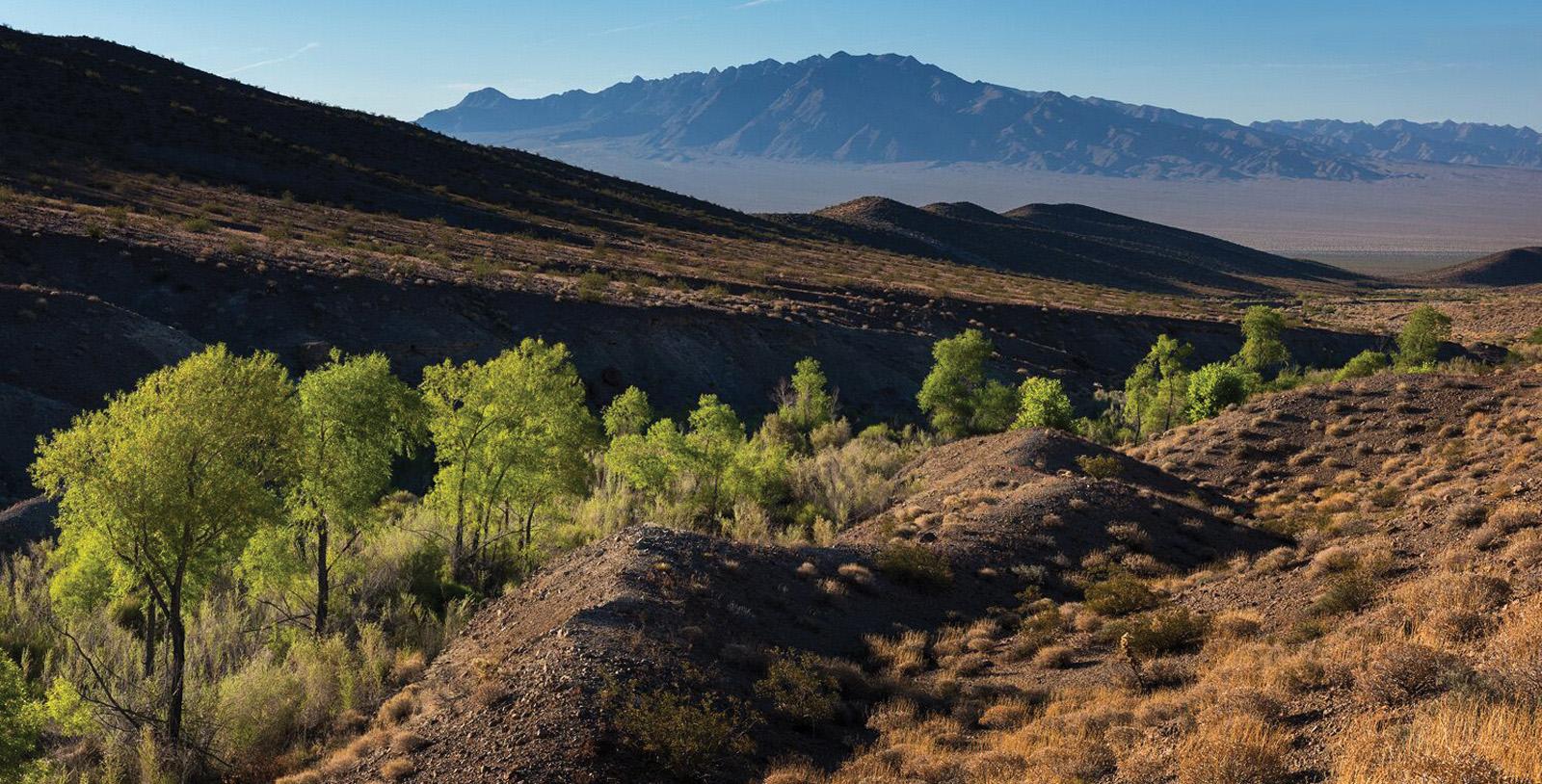
Well, you are mentioning the quite a few people as being related to the Chemehuevi, and you said that they're up in Tehachapi or historically. So can you tell me a little bit about the connection there?
Matthew Leivas Sr. (Chemehuevi Hereditary Chief)
Well, the language connection is very strong because the way that I heard them speak is the way our people over here along the river, the way we speak the same dialect.
Page of 106163
And. But if we go north to southern Nevada, the dialect like changes a little bit, but the issues are related back to us because of the Nuwu traveled all throughout that area and they went in into the mountains to to seeking shelter, refuge, and the same with the waves. And that settled out in the desert and remote areas.
They were seeking sanctuary, refuge, trying to survive. Because you got to realize, you know, what was happening back in the 1850s with the with the payment of the scalps for from non-Indian, from from the Indians by non-Indians being compensated by the federal government and the state of California. And I am happy and proud to say that the last three governors that I identified this during their Native American days. And but there's still not enough that's been done on behalf of the state or the federal government to identify what has happened to all the tribes, all of the tribes that you know about that were in California before the coming of the white man. And now a lot of these tribes have been wiped out massacred and lands taken and Stolen
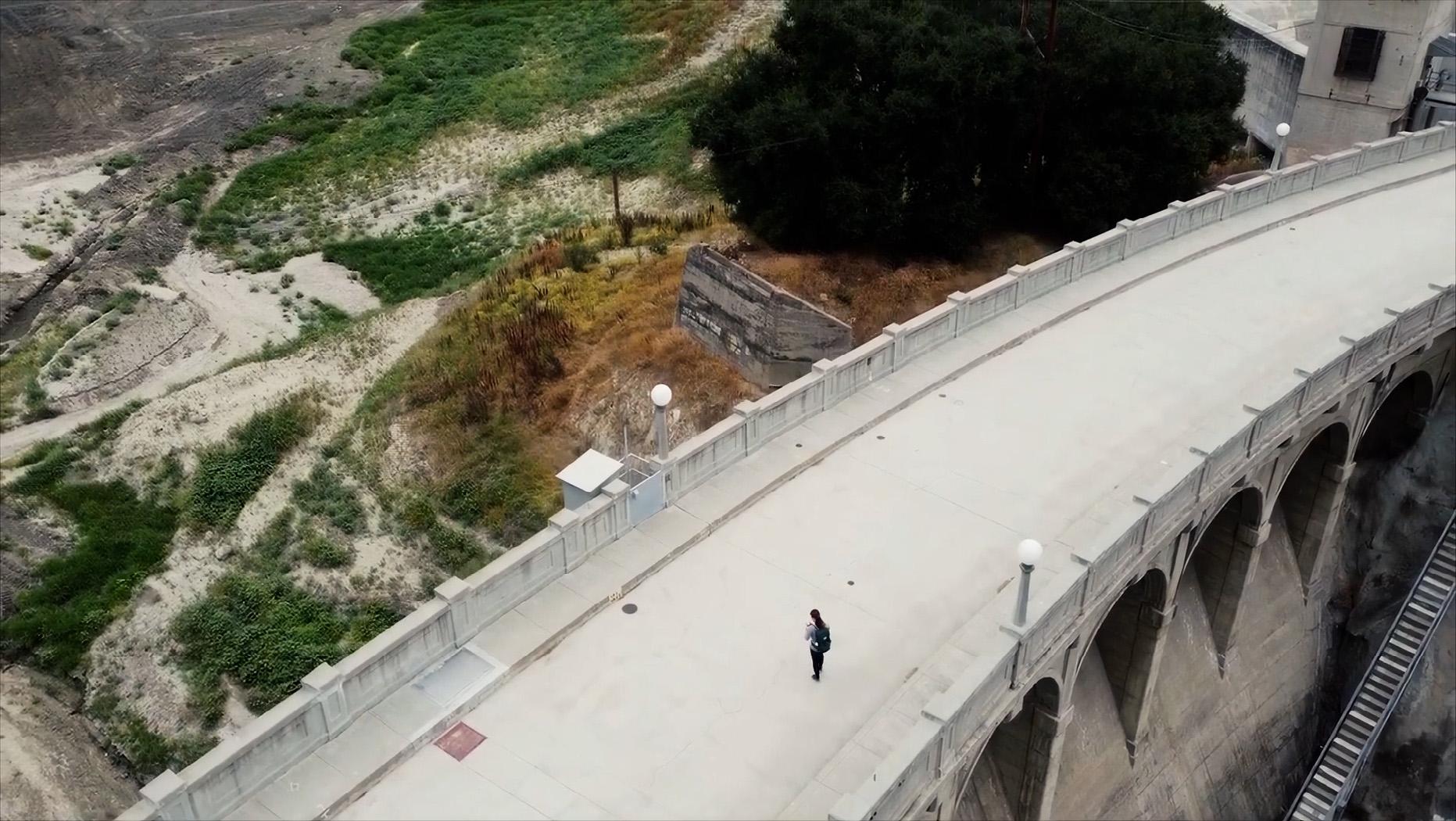
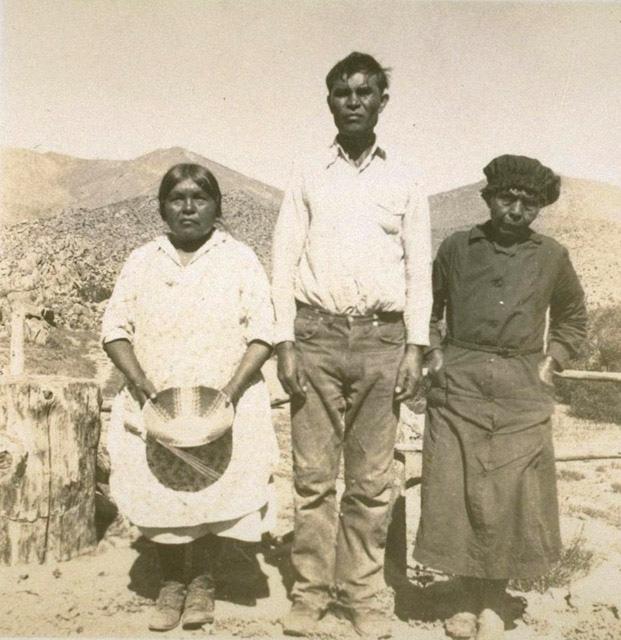
Kawaiisu Family. By Unknown author - Antelope Valley Indian Museum, Public Domain, https:// commons.wikimedia.org/w/index.php?curid=3857877
Page of 107163
Resources were taken and stolen from our people, the Southern Paiute in Utah, all the way down, the Mormons took all of the sacred places of the indigenous peoples, all the springs, all the different different gardens that they had and took control of it.
And all the Indians were forced out of the area and I think our people were forced into the desert just trying to stay ahead of the encroachment.
You know, we're looking at death, destruction by the Christians as well as by the Mormons as well as by the federal government as well as by anybody else.
I want to know who else wants a payment in California for Indian land? You know, they go out and kill the Indians. And this is what happened up at the Rabbit Springs is that those communities that were massacred there were paid.
They were, I mean, the people who killed them were compensated.
Tracker Ginamarie Rangel Quinones (Apache) Investigative Journalist
Brief Soundbites from The Last Oasis Trailer
Prophesies such as from the Hopi and the Maya and various other indigenous peoples, speak of time when humanity would face significant trials.
Corporate Representative, Brightsource Energy
Really what we generate, we generate steam.
Tracker Ginamarie Rangel Quinones
It it still happens. Those dams went up and now we have to live with that.
Reverend Ron Van Fleet (Mojave)
WeAlfredo Figueroa (Yaqui/Chemehuevi)
This right here was destroyed.
And right across the wash was destroyed too.
Tracker Ginamarie Rangel Quinones
But I do believe that consulting people of the local tribe is so important.
Reverend Ron Van Fleet (Mojave)
Page of 108163
When it's going to get to your head. You know, Do we have to fine you for $1 billion?
Tracker Ginamarie Rangel Quinones
We're talking about a history of a massacre of the last stand of the Chumash people.
Construction Worker, Solar Millennium
Pull the Cops tighter. Right here. Yeah. Pull the Cops tighter.
Reverend Ron Van Fleet (Mojave)
Or $10 billion. I think that's a pretty number right here.
Alfredo Figueroa (Yaqui/Chemehuevi)
This used to be the sun. You let the sun in?
What you destroyed can never be replaced. You see what you guys are doing? Bunch of idiots.
Tracker Ginamarie Rangel Quinones
To course correct, That would be good to have that be done in the manner of relationship to all things, all life force.
Charles Wood, Chairman, Chemehuevi Tribe
And so I used the example of the Catholic Church. I want to build a pipeline through the Vatican Mall. Well, it's really not a part of the Vatican…
Mandi Campbell (Timbisha Shoshone)
Rover metals.
They've been trying to come in. There's fish. There's 28 endangered species here. It's been about a year. We've been fighting them.
Tracker Ginamarie Rangel Quinones
The teachings of the environmental degradation, social upheaval and spiritual disconnection.
Page of 109163
Who Are My People? Film, ©Agence-RLA
Lowell Bean, PhD
History becomes religion. Ancient and important architecture that is part of our political and religious history becomes sacred.
Jamie Valadez (Lower Elwha Klallam)
The Native people working here in our hearts are broken.
Preston J. Arrow-weed (Quechuan, Kamya)
That's true. The mountains were created like you and I. It was created. We were created. They have no right to go and destroy it. For the gold
Michon R. Eben (Paiute)
To produce one ton of Lithium, you need 500,000 gallons of water.
Tracker Ginamarie Rangel Quinones
I have learned that the challenges have seen, you know, many tests, but as opportunities for growth and renewal and also for relationships.
Page of 110163
Radio Broadcast
Ladies and gentlemen, we interrupt this program. Word has just been received from the Atomic Energy Commission.
Ian Zabarte (Western Shoshone)
Used to be at one time that you could drink the water out of any of these springs. Some of the big pollution is radioactive fallout from nuclear weapons testing.
Chief Johnny Bobb
We have the power to speak up for our people.
Woke up prayers. Woke up in sweat. Woke up a little bit of tears.
Preston J. Arrow-weed (Quechan, Kamya)
The whole world was started from energy, that’s in the tribal beliefs. that it was, energy was from fire.
Tracker Ginamarie Rangel Quinones
And that's what I'm seeing now through these prophecies, is the renewing and rebirthing of relationships that have been formulating over the last, you know, 50 years. And here we are now at the rebirthing,
I'd like to also thank the energy of the keepers of the wisdom.
Boyd Jack (Lower Elwha Klallam/Arrow Lakes Band)
They sang some songs to clear any negative impacts.
Tracker Ginamarie Rangel Quinones (Apache) Investigative Journalist
Hemp has been explored as an alternative to lithium based energy systems, particularly for battery technology. Research is focusing on creating hemp based supercapacitors, which offer the potential to store and release energy much faster than traditional lithium-ion batteries.
Hemp fiber is a supercapacitor. Scientists have discovered that hemp fibers, particularly those from the plants bast, the outer bark, can be transformed into graphene like carbon nanosheets. These sheets are highly effective at conducting electricity and could be used as supercapacitors.
Page of 111163
Unlike lithium ion batteries, which store energy chemically, supercapacitors store energy electro-statically, leading to faster charge and discharge cycles. Hemp is a renewable resource that grows faster and with fewer environmental impacts compared to the mining of lithium. It is also required fewer resources like water and pesticides, making it a more eco friendly option in the long term. In contrast, lithium mining is energy intensive and can have significant environmental consequences, and we are already seeing that on First Nations sacred lands, including water depletion. radiation, also pollution and land degradation.
Ivan Looking Horse (Lakota)
My name is Ivan Looking Horse from Pine Ridge Reservation. I'm here at the Wild 12 convention in Rapid City. I'm working on a superconductor, which is done through the hemp process. And that there are scientific breakthroughs in electrical engineering.
We know that lithium is a very poisonous and and they're mining it everywhere and it's a contaminating a lot of creeks and, and aquifers. And so if we are able to bring this technology (to market) and take it to these places, there's already enough lithium on top of the Earth, you know, to keep us in solar panels for a long time.
And batteries that they're making from lithium don't need to continue any more (in light of) the natural ways of making batteries. Now the hemp process, you know, can stop a lot of that mining.
What I'm trying to present is some of the things that we want to work on that will help our nations become self-sufficient and combat these mining companies that are on our lands. Stop the mining and stop the contamination. Stop the poisoning. Because if we don't do that, you know, all our creeks and all our future of our children is going to be at stake.
You know, our People have a lot of cancer, a lot of cancer, of the liver and the kidneys. And so there are poisons in our drinking water as it is from way back in the Homestake mining.
And it hasn't been cleared up yet. And every time it floods or rains, it brings back the mixture again. So, you know, so a lot of our people have been dying of that. And so this is a new technology. We're also going to implement as a way of purifying the water, the water before you get it into the intake. So there's some new technologies that will be implemented to the tribe so they can get cleaner water to their to their table or drinking faucets. And we're working on everything that we can, because I know that some of us, we don't have a long time on this earth, and we need to make decisions and take the action today because otherwise no action will be done.
We waited for a long enough time. Now over 100 years to hopefully we can make something happen for our generation’s goals.
Page of 112163
I'd like to thank a lot of people that have been working at doing the things for our people, that they can be self-sufficient, they can stand on two feet, they can have their language, their songs. You know, everybody has a part in in helping our people go back, to go back to who they are, their identity. And so we can help each other and we can work towards a future of having a good food, good water, good clean air and good land.
You know that, and good jobs and good high paying jobs and be able to be selfsufficient with our food. We have a lot of food resources on our lands, and we didn't make those boundaries.
The United States made those boundaries in 1851. And so this is our nation that we have to stand up for and and hopefully our people can wake up before things have come to an end.
On the reservations and if you become a selfless sufficient action is has always been how I've been working throughout my lifetime and also working and helping at the Sundance.
Page of 113163
So, you know, all these things that I do and all the teamwork in it. And I like to make sure that people are well taken care of and, and things are going to go good, you know, and so I hope to keep on working and keep on on doing the things I'm doing to for the people and the other ones that are encouraged, you know, that are our people that want to work for our people, you know, just get a hold of me or see what is happening around Indian country in how we are producing some of the technical knowledge that is going to help us go into the future. And so thank you. Thank you all.
Sherry Lewis, (Lipan Apache)
And my name is Sherry Lewis, Lipan Apache. I’m Lipan Apache. So we just started Goodway Village to encompass circular economy on our reservations. We can create a clean battery out of hemp, real green technology. Teaching these skills, which is aligned with our hearts and our minds and elevating the consciousness for the preservation of humanity.
And through that, we have also started something called hemp batteries. So they're made out of graphene and aluminum. The graphene is extracted from the hemp. The aluminum is actually recycled aluminum from the ocean, from landfills. That's how we're getting our supply of aluminum as well.
And what this is about is actually creating a non toxic battery. And if any materials that do have to be used can be used through recycled materials. The technology we use today isn't really green technology.
We're connected to the electric grid. What happens when the electric grid shifts? What happens when we are completely dependent on other sources? There are many other options and alternatives that we can use.
Going to create jobs in our indigenous communities that are aligned with our hearts and our mind, and getting us out of modern day genocide is actually rising our people and in that way also creating jobs for our next generations.
The mining of lithium has caused so much destruction, and the green energy concept is actually very destructive. We have lithium being mined in so many places, even with our sacred areas.
Tracker Ginamarie Rangel Quinones (Apache) Investigative Journalist
Abundant and renewable. Hemp is a fast growing renewable crop that requires fewer resources like water and pesticides, compared to other crops like cotton and (like) traditional lithium mining. Hemp is biodegradable, unlike lithium-ion batteries, which involves toxic materials and are difficult to recycle. Hemp based batteries can potentially reduce environmental impact through bio-degradability.
Page of 114163
Hemp is low cost production. Hemp is relatively inexpensive to grow and process compared to high costs associated with mining and refining lithium.
Hemp is an incredible, versatile plant, and its fibers, seeds, and oil can be used to create a wide variety of products. Here are some of the examples. Items that can be made from hemp.
Textiles and clothing. Construction materials. Paper products. Bioplastics. Health and beauty products. Food and beverages. Energy and fuel. Household items. Medicinal and wellness products. We will be following along with the timeline and the his/her story with Greenway Village and Hemp batteries.
Chapter Seven
Hostile Territory
Robert Lundahl, Filmmaker, Journalist
Hello, Matt. How are you? It's really good to see you.
Matthew Leivas, Sr. (Chemehuevi Hereditary Chief)
Well, I'm doing fine. I'm doing fine. Thank you.
Robert Lundahl, Filmmaker, Journalist
Yeah. Can you tell us your name and your place and your interests? Real briefly, introduce your self to everyone.
Page of 115163
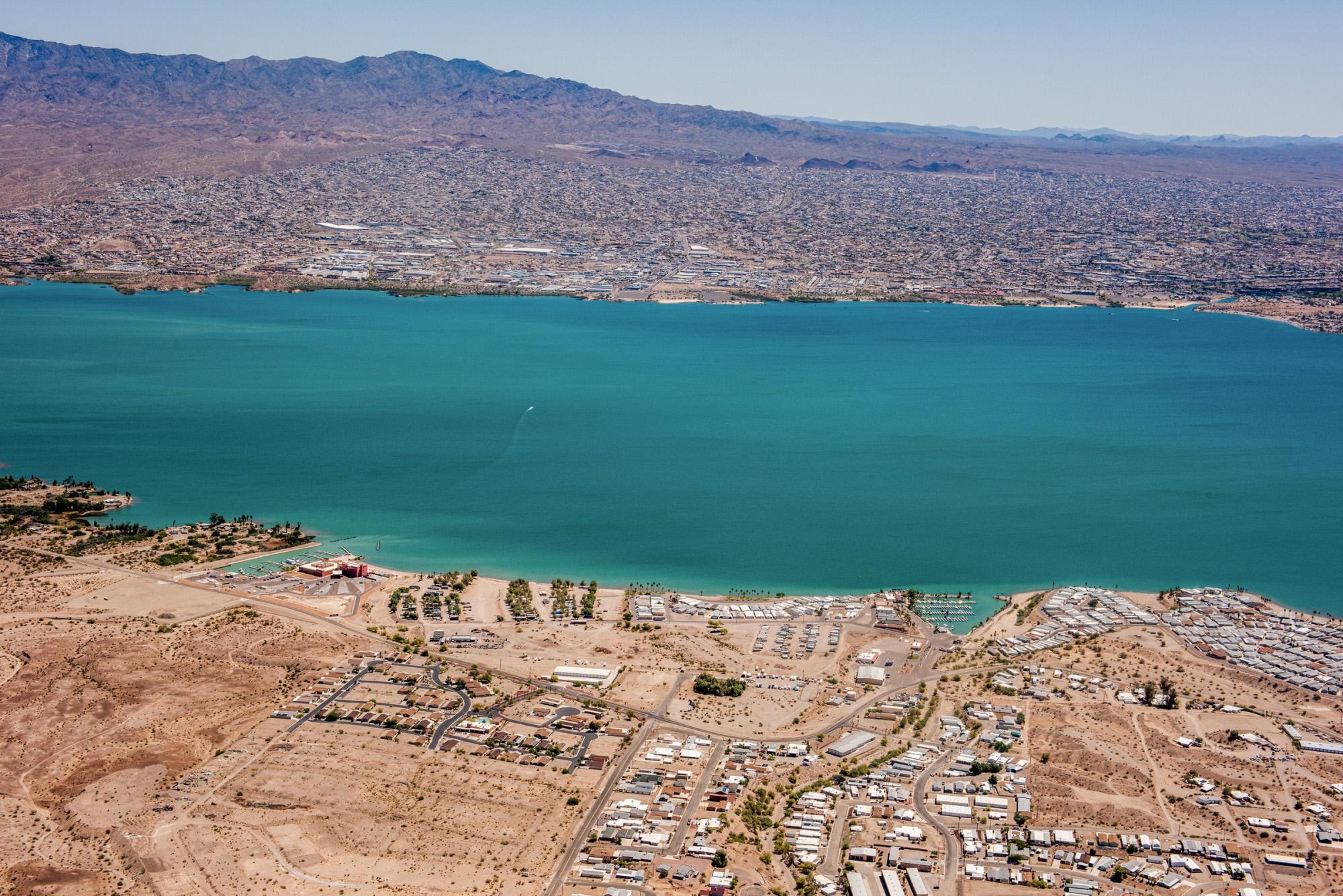
Chemehuevi Reservation, Lake Havasu
Matthew Leivas, Sr.
My Chemehuevi name is Kamuntapayo. My white name is Matthew Leivas Senior. I live on the Chemehuevi Indian Reservation with my family, and I've lived here since
1977. To give a little bit of history of the Chemehuevi tribe. We're a young tribe with barely getting our recognition in 1970, and it's been an uphill battle ever since.
The Chemehuevi Indian Reservation is located on the Colorado River in Eastern San Bernardino County at Lake Havasu. 35,000 acres of desert scrub land, as well as 30 miles of shoreline along the Colorado River. And I've worked here for many years as a game warden for the tribe and also as a council member and as a Chairman and did quite a number of other things, environmentally and culturally. We came into hostile territory here in this reservation because there was hardly any or no way residing on the reservation. We were inundated by non-Indians residing on a reservation that along our shoreline, as well as federal government allowing a private vendor to come in and establish a business called Havasu Landing Incorporated.
Page of 116163
The tribe purchased this resort back from the private empty back in 1974 to establish our tribal economy.
It's been a growing and learning process ever since. And when gaming came, that's a different change things altogether. But we're really concerned about the land, the resources, namely our water. And with the drought being a big threat all the time, we're struggling to develop our agricultural lands. We have 1,900 acres of desert lands, virgin lands, and we're currently developing 80 acres of it.
Today, and hopefully expand that to 200 acre farm and lease out other tribal lands for private ventures. Our main concern right now is about the Colorado River and all this the inundation of sand and sediment that is consuming the northern part of our reservation in the water. From where our reservation begins at Blankenship Bend, it's a prominent point along the Colorado River, south of Interstate 40. Well, at Blankenship Bend, the Chemehuevi Indian Reservation begins on the California side and continues for 30 miles on the California side to approximately one mile south south of Havasu Palms Resort. And Havasu Palms Resort is owned and operated by the Chemehuevi Indian tribe also. At the Rivers Bend at Blankenship Bend all the way past Catfish Bay, the sand and sediment has become so massive that it's created a sandbar and new landmasses and growth for a five-mile stretch.
Our concern is about the amount of water that is actually in the lake. With all the sand and sediment that has displaced the water, it answers some of the questions for the Bureau of Reclamation as to where the water is going. The water has been displaced by the sand and how is the amount of water that is actually supposed to be in Havasu has been reduced by who knows how much. But our concern is to successfully maintain our resort and our travel enterprises, our new hotel and casino, and looking at other business ventures now at this point, solar, especially.
Robert Lundahl, Filmmaker, Journalist
Gertrude Hanks was your mother, right?
Matthew Leivas, Sr.
Yes.
Robert Lundahl
She was raised as a girl in Chemehuevi Valley?
Matthew Leivas, Sr.
Yes. She and her brothers and sisters were raised here until they were forced out by the federal government because Parker Dam was near construction, finalizing the
Page of 117163
construction, and they were forced out of the valley. All the Chemehuevis that lived at the bottom of the lake there, was now the bottom of the lake, were forced out of here.
My mother and her family traveled to Parker by wagon, and that's where they settled. Other Chemehuevis that left this valley went to other Southern Paiute settlements, such as in Parker at 29 Palms, San Bernardino area, Victorville, Barstow, San Juan Paiute, up in the Navajo reservation near Tuba City, Arizona, Moapa, Nevada, Las Vegas, Pahrump. They just dispersed and they were no longer here. My mother was very passionate about wanting to come home, and it was her mother's dream to come home. She said she used to watch her mother stand out in the front yard with her hands behind her back, looking over the mountains, the Kofa mountains. There's the Chemehuevi Reservation, just over here on the other side, the northern side. But she'd be like, watch her mother, daydreaming about being home.
Robert Lundahl
What was it like during the time that your mother was raised before Lake Havasu and before the dams? What did she tell you about the the river and the fish and the land?
Matthew Leivas, Sr.
About the river, her father told her and the family to never eat anything from the river because it was dirty. Back in the day, without the dams, the water was running red and dirty, muddy. I think that was one of the reasons they were saying, Don't drink the water, don't take anything from the river. It was known by all the Chemehuevi that they would go up into the mountains to the springs and get fresh water. That's why they had all these ollas all the time to transport water, but they drink fresh water from the springs.
She also told me about back in the day when the river was running wild, that there were steelhead that used to run up river in massive quantities, and then the steamboats that would come up also. But you talk about getting up in the morning and looking to the east and across the river is a mountain, Icohom (phonetic). Now the white people call it Crossman Peak, near Lake Havasu City. But to the Nuwu, the Chemehuevi, you refer to as Icohom. The Whipple Mountains to the south, we refer to as Wiyaatuʷa. One of the other mountains we refer to way for the south, the Riverside Mountains.
That's the boundary of the CRIT reservation that's called Wewuda (phonetic). Our local mountain here, the Chemehuevi Mountain, it's named Katong (phonetic). We sing about these mountains in the Salt Song during the night.
Robert Lundahl
Can you explain how the Salt Song connects people and the different villages and the resources?
Matthew Leivas, Sr.
Well, the song is a traveling song, a story of two young women who went on a sojourn and then went to the sacred cave at Bill Williams River somewhere. And they had a vision, a dream of the Salt Song Trail, and they ultimately followed the trail and sang songs that tied the connection back to the land, to sacred places, massacre sites, places where they would collect food or medicines and things like that.
Salt was one of the main There's a lot of commodities that our people used to use in trade and bartering. There were different qualities of salt from different areas. Nowadays, you think about salt, you wouldn't think of it being as rocket fuel oxidizer contaminating the river. But that's what happened. Man is playing God with salt.
But anyway, the Salt Song started in the Bill Williams River and traveled north, came to Chemehuevi Valley, then went north on Colorado River and doubled back, and then doubled back again to the Hualapai Reservation Territory and through the Hualapai Valley And then over on through the Hualapai Reservation, they're going to cross the Colorado River and up into the Kaibab Plateau and visiting all the different villages, Nuwu, Southern Paiute villages from the Nevada-Utah border all the way up to mid state.
And it'll traverse to the east, to the west, and makes a big loop down to St. George area, to the Shivwits and then enters down into the desert to Moapa, Las Vegas, Ash Meadows, and Pahrump, and areas like that.
At midnight, we sing the parting songs for the Sisters parted. One went north, one went south. And the song continues down into the Mojave Desert and all the way to 29 Palms area, Barstow area.
One thing I didn't mention before, too, is the song did go to the ocean. We think it may have gone to Chumash country or Santa Barbara. But in the song, they sing about going to the ocean, sing the ocean. But the song went further south through Coachella, the Banning area in the realm of Coachella, as salt and sea, and crossing back to the east to the Colorado River.
And we're interconnected with the Quechan Dream Trail that follows the Colorado River north, and the trail travels north up to the Parker Valley area, and that's where the song crosses back over into the Arizona side and makes a loop back to its point of origin. So that's the Salt Song Trail.
Page of 119163
And there's a lot of things that go into these songs that bring a lot of memories and precious thoughts of people. And we sing about these places and about these things throughout the night. Over 140 songs that are song from sun down to sun up. And we always try to finish up before the sun rises because spirit has to cross over into the spirit world by way of the Milky Way.
When we sing the last four songs, that's what we're doing is singing and telling about what that individual that had passed is telling us in the song. Seeing family and things of grandeur that it's overwhelming. They're happy, they're crying, and it's a happy ending. That's the Salt Song.
One thing I've discovered is there was primarily for healing for our people, so they wouldn't be stressed out with all this anxiety and the emotions, you go there to have a ceremony. The Salt Song ceremony is actually called a “Cry” in our language. A yagap. Yagap is the ‘Cry’. That's what they go to do. I always wonder, why do they cry? Until I finally realized why. When you cry, you release all these tensions inside yourself and you heal yourself.
You won't be stressed out the next day or the following day. You’ve got to greet the morning like you usually do and tend to your work and your family and take care of business. That's the Salt Song Trail project, what we brought back to the people and helping bring creation back together, I guess.
Robert Lundahl, Filmmaker, Journalist
Now, you have a position with the Native American Land Conservancy. How does that organization help your Chemehuevi cultural perspective and to protect the areas that are important to you?
Matthew Leivas, Sr. (Chemehuevi Hereditary Chief)
Well, I'm very proud to be one of the founding fathers of the Native American Land Conservancy. We formed in 1998, but prior to that, the 29 Palms Band of Mission Indians, mainly the Mike family, had been inviting me out to the Spotlight 29 Casino, their establishment.
And we would have a cultural meeting with the Cahuillas, Chemehuevis, and Serranos. And they were grasping for culture because the 29 Palms Band had become so caught up with the culture of Westernization that colonization had changed them entirely where they don't have any connection. They did not have a connection with the culture. For all they knew is they knew about who we were, knew little about the language, and And beyond that, everything else that they knew about our people was what they read about. So they called upon me to come and tell them about the Chemehuevis here and our connection with them and ultimately, this led to finding a long lost tribe, the Paiuchis from San Bernardino. The Paiuchis are an extension of our people that settled at San Bernardino and up on the Mojave River. I told a story about a
Page of 120163
band of Chemehuevis that were massacred in Southern California, Lucerne Valley, at a place called Rabbit Springs.
It was recorded in the newspapers such as Chemehuevis. Well, about 10 years ago, I told a story before a whole audience of different denominations, theologians from all over the place, and I told that story about the massacre of our people. I went and sat at my table and this fellow came up and talked to me and he says, “Hey, you know that story you just told?” I said, Yeah, “it's my people” (he responded).
I looked I looked at him and I said, What? I said, It was recorded as Chemehuevi. He shook his head, “No, that was my people, the Paiuchis.”
I was so glad and happy. I stood up and took his hand, introduced myself to him and informed him that because he was Paiuchi, that he was a relation of mine. The Spaniards named them Paiuchis because they couldn't say Paiute. So Paiuchis was easy to say, and they, I referred to him as that. But that was his family that got massacred up there at Rabbit Springs. I befriended him and his daughter and his grandson. And we can't find any more of the Paiuchis in Southern California, but I'm sure there are some out there.
But anyway, the NALC has been very instrumental in land protection, and especially after they found out about Chemehuevi sacred site that was for sale by a family, nonIndian family. Over 2,000 acres in the Old Woman Mountains was for sale. It was an old Chemehuevi village in there. A lot of cultural resources throughout the whole area. A lot of petroglyphs, campsites, a lot of places to harvest, even harvest pinions up there, believe it or not.
But all the other desert plants, too. There's a lot of game out there. The NALC was so intrigued with this area that they took action to do a title search and all this necessary investigation. And we saw it was legit that we started raising money, and we bought it. 2,550 acres now belongs to the Native American Land Conservancy.
Before this place was out of control, whoever had a rifle or the ability to travel out there would go out there and just shoot up the place. And the place was loaded with Chuckwallas, and that was one of the favorite targets of these novices or professional gunslingers out there. Over time, I've picked up two five-gallon containers, ammunition casings, all different varieties.
It's taking me a few years, but that did show what they were doing out there. And you look up in the mountains at the Old Woman Mountains, you'll see the impression of an impact of the rounds where they hit. And I guess people were so good, they start shooting their initials up there.
And we brought it in the control, and we manage it properly now and do some restoration out there. We take children out there, Native children out there, so they can reconnect with the land. We have learning landscape functions out there. We invite
Page of 121163
different groups and bands to come out and make a connection with the land. We have instructors out there and guides to work with the kids also and teach them about the plants, the wildlife, edible foods, and everything.
And they all enjoy it. All the kids always enjoy it out there, and we look forward to having them come out. But NALC was such an aggressive organization that the issues started coming to our attention. I had befriended a non- Indian landowner, one of the landowners, a property on the western side of the Old Woman Mountains. NALC board members were invited out to talk and meet with them and to check out their area.
Sean Milanovich, Board Member, and Jeffrey Johnson Vincent, who was the monitor at the Old Woman Mountain property, and I, we went out and visited with these folks and got an education as to the things that are on the other side of the mountain. But they certainly connect with the Eastern side of the mountain, too. I had never known that there was a mesquite bosque on the other side, but there is. Where there's a mesquite, that's food, that's sustenance for our people, as well as wildlife.
Robert Lundahl, Filmmaker, Journalist
This series on the radio that we're doing is called Creative Frontline, and we discussed it as being a way to discuss all the mining that's taking place in the desert, which seems to be having a big impact on communities and people. Gold, uranium, lithium. The impacts to the water is certainly one of the concerns. What do you think about all this going on?
Matthew Leivas, Sr.
Well, water is the most precious commodity for the whole world. And it's been abused overused, contaminated for damn sure. I just did a presentation at San Diego at the Climate Summit when we showed a video that I had worked on with the Sacred Places Institute for Indigenous Peoples. We had a Q&A after, and I was explaining to everybody about the contamination in the river. W When we were made aware of the Ward Valley, the proposed low-level nuclear waste being located at Ward Valley, we got defensive because of the threat of the contamination to the aquifers, which ultimately led to the Colorado River.
It was proven by a US geologist that there were five different paths that could taken from the Water Valley if there was some type of contamination or leak that got into the aquifer, that this contaminant could have reached the fall of the river. And this was all low-level and some high-level nuclear waste. So we were trying to protect the river. And when Theresa Mike from the NLC board asked about the It is the issue because they were making it known they intended to market water, mine water, and extract it out of the deep wells and market it to Los Angeles, pretty much.
She's asked, Well, what can we do about this? I said, Well, you know that the springs in our area have dried up. It's my theory that they were dried up because of the lack of
Page of 122163
pressure. And lack of pressure because it's being pumped out of the ground 24 hours a day at Cadiz. Since 1983, the Cadiz Water Inc formed a farm out there. There's a 5,000 acre citrus farm in Cadiz Valley there. And this is west of the Old Woman Mountains and west of our properties up there. Well, since they've started extracting all this water, a lot of the springs have dried up, and now there's a threat to market water even more.
One thing that had happened is when the ideas first decided they were going to market water, they approached the Trump administration with this grandiose plan market water to Los Angeles. President Trump authorized the illegal use of a right away along the Arizona–California railway line to allow them to gain access to the Metropolitan Water district aqueduct. Their intention was to pump water from the deep walls in the Cadiz and pipe it over to the MWD and mixed it in with the Colorado River water, which MET was not happy about, and they were denying them access to that.
So what Cadiz Inc. did as they acquired, purchased the old gas line that ran across the desert and had it cleaned out with the intention of using that to to get water and extract water from Cadiz. Now, they're still trying this. And just to the north of Cadiz, five miles, six miles or so is Bonanza Springs. And Bonanza Springs is the largest amount of water of natural springs in the whole Mojave desert.
And I guess that's why they gave up Bonanza Springs because everybody, all the way, can change and stop and collect water and travel onward. But the place had been mined. Other mining activities are still taking place. I want the public to know that By us preventing and stopping the Ward Valley, that stopped potential contamination of hazardous nuclear waste into the Colorado River. But also the public needs to know that in the early '80s, when the Bureau of Land Management developed their desert conservation plan, it was an open invitation for all types of money activities.
Page of 123163
Chapter Eight
Is Los Angeles Drinking Las Vegas’ Reclaimed Water
Robert Lundahl, Filmmaker, Journalist
Matt Leivas has held many positions with the Chemehuevi Tribe, including Chairman, Council Member, and Fish and Game Manager. Leivas is a respected Chemehuevi elder, Salt Song singer, tribal scholar, and environmental activist.
We talk about water, the water table, hydrological movement, and contaminants from the Las Vegas Valley that eventually wind up in Southern California's drinking water.
You can still see it, you know, how the water flows down through the valley and it would flow basically down through Las Vegas and I guess where does the wash pick up, you know, is it over by the airport somewhere down on that side?
Matthew Leivas Sr.
Yeah, yeah, and on the other side towards Jean, Nevada, you know, that's where it separates from the other side of the mountain down into Ivanpah.
Matthew Leivas Sr.
Yeah, so that's a dire situation. That's a bigger picture than we are talking about a specific pollutant, right, because you're really talking about all the pollutants like what do people use on their lawns, you know, what kind of fertilizers do they use, you know, what about the old septics, you know, what's going on there and, you know, are they cleaned up and what about, other things that, you know, extraction, you know, that get in the water supply whether it's lead or these kinds of things. So that could be a lot.
Page of 124163
Page of 125163
Robert Lundahl
So how many people are in Las Vegas now? There's a couple million, right?
Matthew Leivas Sr.
Oh yeah, oh yeah, and then some but, you know, all the Las Vegas area and surrounding communities are all growing and you take a ride over to Pahrump, you know, that's growing considerably and you go to the north, all the north of Vegas and up towards Sunrise Mountain, all that area, it's just, yeah, grief, you know. All of Henderson is filled up all the way to the mountains. Too many people, there's just too damn many people everywhere and concentrated in one area and impacting the area and not even realizing, you know, just carrying on day by day, day-to-day work and nobody pays any attention to anything that's going around them, you know.
Robert Lundahl
It's a daily life, it's American way. Right, cultural clash in this case. Yeah.
So then tell me about the pharmaceuticals and what you found. As one example of pollutants or substances in runoff that, you know, probably shouldn't be there that impacts the water supply, how did you find out about it?
Matthew Leivas Sr.
Through the different organizations, I believe it was through Phil Klasky's organization, the Ban Waste Coalition, and they were researching other issues and contaminants too and, you know, trying to find some solutions to the problem and they raised the issue and started doing the research and they brought it to my attention and I took it to my tribal council and advised them that this new threat in the river, you know, and here Lake Havasu, as I said, you know, it's a cauldron, so to speak, with all this different stuff coming down river and it mixes right here at the lake.
But, you know, the Chemehuevi tribe, we get credits from the Bureau of Reclamation every year from the amount of water that we use for our 80-acre farm and because we're using flood irrigation to irrigate our trees, we created a water table out there and we're recharging that water table and all the excess water is flowing back into the Colorado River.
Pristine, clean, pure water, contributions by the Chemehuevi Indian tribe. And let it be known that the Chemehuevi Indian tribe is the only tribe along the Colorado River that is practicing organic cultural farming, traditional farming. So, we don't allow any chemicals on our farm at all and everything is organic and natural.
Robert Lundahl
Page of 126163
So, what are you growing?
Matthew Leivas, Sr.
Well, right now, you know, we're getting prepared to grow because we have three greenhouses that we had put up and my son Daniel is a farm manager and he's working on this as well as all the other infrastructure that he has to do and running everything through tribal council and getting the budget squared away and we're looking at a lot of improvements that we have to do.
Getting electric down to Catfish Bay so we can install electric pumps and pump water up rather than using the diesel pump that we use. That would be the backup and that's our only source of water right now for our farm.
So, we're looking at upgrading and getting power down to Catfish Bay and putting in electric pumps and also putting in a reservoir and some trunk lines, about six of them, to carry water from point A to point B on the 80 acres. And we're also looking at expanding to cover 200 acres total for the tribal farm and we're looking at leasing out the remainder of our agricultural lands. Practicable irrigable acres according to the federal government.
Robert Lundahl, Filmmaker, Journalist
I see. Is that the maximum that you can put into agriculture? Is that what that means?
Matthew Leivas, Sr.
Yes, 1900 acres total and that's the formula that was used in giving us our allocation of water per year. All the tribes up and down the river, the standard was the six acre feet per acre to irrigate and that gives us our total amount of water, 11,000 plus acre feet per year.
In addition to that, we get a credit from Bureau of Reclamation to withdraw extra water if we need it. But we don't need to because we're using so little.
Robert Lundahl, Filmmaker, Journalist
Are you growing what we would think of as commercial crops or how about traditional food crops?
Page of 127163
Matthew Leivas, Sr.
We're getting back to traditional foods, primarily the honey mesquite beans and they're growing wild right now and thank God they've been planted by the coyotes and the burros out here.
They transfer it and their dung and wherever there's water and the seeds are planted, that's where they grow. We have quite a number of volunteer trees out there, but we initially put in a quarter mile of honey mesquite trees to bring back our traditional foods, which was the honey mesquite bean. I've been teaching the process that and make the flour and the powder out of it and store it and whatnot and prepare it.
But there's a technique to it. There's a technique to it. But honey mesquite is one, the screw bean mesquite is another native food.
We have watermelons, corn, squash, beans. We can grow beans. Coyotes love our watermelons and we're competing against them now and thank God we have the greenhouses now that they can be protected from the coyotes out there.
Because our 80 acres is so green, it's a Mecca for all the wildlife. They all come to the farm. We created a nice little ecosystem out there.
It's unique. We have mule deer in our fields also. Really happy about that.
We still have a number of burros here, but they're being taken out slowly but surely. Anyway, our 80 acre farm is just in its infancy and we hope it can succeed. We're hoping to have produce for the local market.
Primarily, we're growing for our own people, for our own health. We're looking at traditional foods like the tepary beans or the black-eyed beans and things like that, corn, squash, and all the native foods, indigenous foods to help us combat diabetes for one and get people more proactive in working with the land and tying to the land and making that connection in agriculture. That's what the kids are starting to realize here now.
It's that you can produce for them and hoping that it's going to inspire a lot of them to go on with their education and become agronomists, soil scientists, hydrologists, whatever they want to be. Diesel mechanics are in demand and the farm can provide all that stuff. Right now, in today's day and age, everybody has to be familiar with a computer and high-tech equipment and whatnot.
Page of 128163
Robert Lundahl, Filmmaker and Journalist
I'm behind the times. We told two stories today just now. We told the story about Las Vegas, which is expanding beyond capacity and utilizing and disposing of various pollutants in the water.
We were questioning how smart that was and talked about the introduction of pharmaceuticals and so forth. I imagine that includes a lot of things like antidepressants and whatever people are using in their medicine cabinets and flushing down the toilet. Those kinds of things.
Then you have this vision of the farm, which is completely different and completely positive and appropriate to the environment. I remember back in college, I read this book called Learning from Las Vegas about the development mistakes that they have made. But how does Las Vegas learn?
Matthew Leivas Sr. (Chemehuevi Hereditary Chief)
Good question.
I don't know. I don't know how to answer that.
Robert Lundahl, Filmmaker and Journalist
Well, I would think someone has to show them, which is what I understand that you're creating a model of thought there, a model of being connected to the environment and adaptive to what's going on.
What are the concerns as far as the drinking water with all the stuff that's entering the Colorado River through the Las Vegas wash and everything? And then at some point, that goes into a canal, right? And that goes over to Southern California. Is that correct? And you said the pharmaceuticals were detected way downstream. I think you said San Diego and Tucson or something like that.
Did I understand that correctly?
Matthew Leivas Sr. (Chemehuevi Hereditary Chief)
Yeah. From my understanding, that's as far as they went and were detected. And when they did the backtracking, they went all the way back to the source.
And that's how they discovered it was going into the wash there. But there was other things that were happening up there in the lake also, like the fish were changing sex and whatnot, and that was attributed to either the ammonium perchlorate or the pharmaceuticals. But the biologists, fish biologists detected all that stuff.
Page of 129163
Robert Lundahl
So it already affected the aquaculture. And what else?
Matthew Leivas Sr. (Chemehuevi Hereditary Chief)
I don't know. But you look right now at what's at the bottom of that lake, you know, you find boats and bodies and whatever else.
I know that while back they were finding car batteries, boat batteries and things in the lake. But what else? What's in this lake at Havasu? What's in Lake Mojave? You don't know. After World War II, people just threw things wherever they could get rid of them.
And they thought, OK, well, we're disposing of that. So it's like we put it somewhere where we can't see it. And it's usually like in a lake or a river or something like that.
It's like clunk, you know, we're done, right? People didn't think. The humanity and the environment is suffering all those consequences from all this, you know, negligence and disposal, haphazard disposal. And, you know, all this crap from World War I and World War II and whatnot, stuff that was just dumped in the oceans, you know, still live bombs waiting to go off, you know, mines everywhere, all the other contaminants off the California coast.
Good grief, you know. And you look over at India and you see all the contamination coming right from the cities, you know, Dubai. Dubai, you know, places so contaminated, it's sickening.
It's disgusting, you know. I mean, I see crap in the river sometimes like this, you know, but not so bad. You know, back in the early days when there'll be stuff floating all the way down the shoreline and, you know, our bays, they'd be so backed up with this stuff floating on the surface, you know, along with the tules and debris, you know, it just backs up into the coves and it just stays there, compacts, compacts, year after year.
And nowadays we're out trying to clean all this crap up that's been accumulating for years here at Lake Havasu. When I was a game warden, that's all I did most of the times, pick up trash along the lake or by boat or by jeep, you know, but I was picking up trash continuously, old trash piles too. And even today you go out on a reservation, you'll find some of these old trash piles left from the non-Indians that were here before the tribe settled, you know, they're dumping stuff everywhere.
But I guess that's the way of mankind. The haikus just dispose of things, throw it away, do away with it, you know, and don't care about the environment or consequences. And just like everybody's saying about the lithium now, you know, what are the consequences of lithium? You know, I wish I had questioned the consequences of radiation back in the day, you know, and here it is in the 90s where tribes are fighting
Page of 130163
nuclear waste dumps and having to get educated on this wonderful element that’s called nuclear power.
The godsend of the haikus, you know, yes, can take care of all our problems. You don't have to pay so much for electricity, clean. What about the waste? What about the consequences, you know? And then here we are, tribes trying to educate ourselves in the 21st century about what these contaminants are and then having to do quick studies of everything just to catch up and learn about what all this stuff is.
You know, it's hard. It's hard living on reservations and especially here on the lake and the main waterway that leaves all of Southern California and Arizona now. And there's so much water being taken out of this lake, it's crazy.
But, you know, I've seen something I think is really positive over the past week or so. I've seen helicopters, look like official helicopters, flying the Colorado River, going upstream and coming back down very slowly, about 1500 feet above the water, above the lake, examining what the damage is. Because I did that video with Sacred Places Institute for Indigenous Peoples and it was shown at the San Diego Climate Summit.
And it explains all these things about the contaminants and about the sandbar that's, you know, taking over our lake and the amount of water that's actually in the lake, you know, raises a lot of questions that I hope it'll bring some answers to them. That, hey, yeah, all that water is displaced by all the sand and sediment. How many millions of tons of sediment? I can't estimate that.
Just on our reservation alone, a five-mile stretch, you know, 30 feet deep. So, was the Bureau of Reclamation surprised by the scope of this problem? Was that what happened? They woke up one day and said, I would better send the helicopters out and take some photographs and check this out? I hope it shook them up. Because we just had, I was talking with our planner and he was talking with Bureau of Reclamation folks just this past week.
And they're talking about our water issues and our water plans. And we're looking at these reservoirs and storing our water and withdrawing our allocation from the Colorado River and managing it ourselves. And that's what we're looking at.
That's the Chemehuevi Tribe's vision now. But first and foremost is to develop our agriculture lands and use our fair share of our 11,000 acre feet of water. Well, that's wonderful to hear about that.
Robert Lundahl, Filmmaker, Journalist
And thank you for sharing the story of your successes there and your direction. I think that's really good for our KPFK audience to understand and to get that out. So, I think we've covered what I was hoping to cover today, to connect the way things are, the way things could be, your efforts going forward.
Page of 131163
Is there anything else you'd like to discuss while you've got the recording going? Anything else you'd like to say in that regard?
Matthew Laivas, Sr.
Yeah, I always like to talk about NAGPRA, the Native American Graves Protection and Repatriation Act, and how it is useless to the tribes at this point when all the tribes across this great country of ours are trying to retrieve the remains of their ancestors that have been collected by all these universities throughout the country. And especially here in California, at UC Berkeley, UCLA, where there's tens of thousands of human remains, indigenous remains, as well as funerary objects that have been collected. You know, my argument has always been that, you know, the rights, last rights have been given to these people.
They were prayed over, sang over, talked about, memorialized, sent off in a good way. And yet here comes non-Indians, scientists, wanting to know what these people ate, wanting to know what's going on in their lives. Whereas, you know, rights of passage have been given to these people when they were laid to rest. And it's just not right for archaeologists to go out and dig up all these remains, and especially funerary objects, because they carry spirits with them. There's power in them. And they can turn on people, they can be used and misused, but they can bring a lot of damage to people.
And when you mess with something that's really powerful and sacred, you know, these types of things, you have to just leave alone or return back and say your prayers, leave offerings. But, you know, all these remains across the country, they have to be returned back to the tribe in order to set things back in balance. And that's what's happening, you know.
And it gets to the point of what really happened to the California Indians here. Nobody really knows. And I'd always hoped that, you know, there would be a total rewriting of California history, and academia would change and rewrite it and correct it to tell the truth about what happened to all the California Indians, all the indigenous peoples, and how all these lands have been stolen, all the goods and resources have been taken and capitalized on, and rich got richer, poor got poorer.
If you were red, you were dead back in the 1850s, you know. And the Chemehuevi tribe, we suffered that too, at Rabbit Springs, where a number of our people were massacred. But, you know, California history has to be retold, and NAGPRA has to live up to what it's supposed to do.
And I'll leave it at that. I want to thank you very much, Robert. You know, I really appreciate this sounding board for me. And I hope you get to see the videos that we worked on. And I think it'll inspire you to carry on this work that you're doing. Thank you.
Page of 132163
Robert Lundahl
So, thank you.
Matthew Leivas, Sr.
Sure thing, brother.
Chapter Nine
Chemehuevi Sweet Corn
Robert Lundahl, Filmmaker, Journalist
We have a story coming up from the farm, telling the history of Chemehuevi Sweet Corn.
Visiting with Chemehuevi Elder, Matt Leivas, about regenerative practices on the land, revitalizing vegetative landscapes, and purifying water along the Colorado River, a new and regenerative vision.
Matthew Leivas Sr. (Chemehuevi Hereditary Chief)
Well, you know, many years ago, my mother, Gertrude Hanks, was gave each of her children a book called The Chemehuevi, a Southern Paiute History.
And in it, she left an inscription about the general locale about where people originated-which is the Amargosa Basin area, migrating south. But before we settled here in Chemehuevi, along the Colorado River, our people migrated all the way over to what is currently the Navajo Nation and the Tuba City area, Arizona. And there is a Southern Paiute village there called the San Juan Paiute.
Well, there are people in the world, just like Chemehuevi, there are people. And the Chemehuevi were known to have farmed in Moenkopi Wash, which is right beneath Tuba City.
And up on the top, there's Moenkopi Village, the Hopi Village, and in the town of Tuba City, There's the San Juan Paiute Reservation, surrounded by the Navajo Nation, who, with the Chemehuevi, settled along the Moenkopi Wash, and they farmed there.
Page of 133163
And this all recorded history. They farmed there, they grew orange, squash, melon, beans, you know, the whole nine yards. And then they migrated further out of the area. But it's recorded history that the Chemehuevis occupied that area. And the San Juan Paiutes are the leftovers of our people who traversed the area and stayed there. And you know, another story, to be honest, is they’re ultimately being pushed out by the Navajo Nation. And the Southern Paiutes aren't happy about that because they changed the name of their sacred mountain from Paiute Mountain to Navajo Mountain. But that's another story.
With the Chemehuevis’ farm there at Moenkopi Wash, they grew corn. And they also, when they settled down here in Chemehuevi in Siwavaats along the river before the a Parker Dam, they grew sweet corn, melon, squash, beans, you know, all the fruits and vegetables they could grow, plus the natural fruits that they harvested. But you know, they followed the Colorado River and settled here at Siwavaats. And Siwavaats was a place where it was nice and green, and lush, a nice big valley, and plenty of farmland, which is now inundated by the Colorado River and Lake Havasu.
So they consumed 7,000 acres of the Chemehuevi reservation to create Lake Havasu. That's our history of how we are settled here along the Colorado River. Then, after Parker Dam was created, they settled in Parker, and they grew vegetables down in Parker as well.
My family, my mother's father and mother, they farmed down in Parker and they created the Double H ranch, which is known as the Henry Hanks Ranch, which occupied a portion of the CRIT, Colorado River Indian Tribes reservation, which is now known as Hanks Village. And that's where I was born and raised along with all my aunts and uncles, all my siblings and cousins, but their actual village is still standing.
We were connected to Colorado River. We have our respect for the river, and when our people first came to this area at Siwavaats, they were tired and hungry, thirsty, but they saw the river, the red river flowing, and along the river was honey mesquites beans growing. And when they seen that, they ran, and in their excitement and jubilation, the people who seen them running, they described them as running like roadrunners.
Thus came the name Ütsininüwkwiga -to run like roadrunners with their heads down their noses up.
And so that's how they got the name Ütsininüwkwiga and the Mojave referred to the people that year who settled as Chemehuev. And what our people called themselves, Chemehuev, eventually changed to Chemehuevi after Father Garses met our people.
But you know, we farmed along the Colorado River, and this is what we're doing yearlong at the river now, at Lake Havasu, and pumping water 50 feet from the lake up to the mesa, over a quarter mile away, and bringing that earth back, you know, reviving it.
Page of 134163
And thus, we are bringing all the other animals with it, naturally. And it's an amazing story to see the whole place regenerate and come to life, the desert mesa, the way it is.
And although we only have an 80 acre farm at this point, you know, we're looking at a total of 1900 acres of development, or agriculture and agriculture business. But there's more that goes into that also, which my son Daniel can explain because he's the farm manager now.
But the tribe is looking at a lot of other uses of water and creating other green belts through the reservation and reviving it, bringing back native foods, such as the honey mesquite, such as the wolfberries, and such as the the guava, the desert spinach. You know, these are edible foods for our people and you still go out and pick and harvest them today. And knowing how to do it and process it, all a matter of survival nowadays. And this is what we're trying to reintroduce to our people.
And the stone that my grandmother made, their grindstone, was made here on this reservation before Parker Dam was created. And that's in my backyard. We still use it today.
And it sits beneath the mesquite tree, the honey mesquite tree along with all the other family heirlooms and artifacts for processing native foods. In respect, of the honey mesquite beans, but what it did is saved our people. And when the tribe first created the farm, we impressed upon the farm manager to put in an orchard of honey mesquite.
So now the first crop they put in was a quarter mile of honey mesquite trees, which are thriving today. And because we changed the irrigation, they're thriving, and getting as much water as they need and producing the mesquite beans.
Because everybody's happy.
Robert Lundahl, Filmmaker, Journalist
That's an amazing story going back all that time. And to know that you're re-generating the land in the traditional way. And you hear people talk about sustainability. What do you think they’re talking about? Can you just like talk about these terms we use and how we can communicate best together?
Matthew Leivas, Sr.
And yeah, yeah, you know, it's really interesting. Because you look at what's happening in government arena nowadays. They're seriously looking and taking an account traditional ecological knowledge. And it's been recognized. And what are the hell have they been? 1492, 2024, what the fuck is going on? Excuse me, but what's going on in this country?
Page of 135163
You know, and I expressed this to some non-Indians that I'm working with who are trying to send a message out about communicating. I says, good grief. We're in 2024.
You and I can communicate, Robert. Just as anybody else in this world, we can communicate.
So why can't they communicate still today instead of trying to dictate and tell us what we need and what's good for us when we know what's good for us. And we know what's good for Mother Earth.
And that's revival. Regenerating naturally. You know, things are happening in this world today. And this Earth is heating up so much and people are dying left and right. As well as animals. I have animals dying in my yard on the heat. You know, good grief. And this heat is so intense nowadays. You know, you got to really be careful. And you have to tell people, get out of the damn sun. Are you stupid? Things are changing in this world.
Robert Lundahl
Right, traditional ways that we've been talking about are very adaptive to whatever changes Mother Earth throws at us. These little people, little, you know, we're just helpless little creatures, like the salamanders and like a lot of animals out there and everything. And you know, we lose our water and we're gone. And so can you talk about the water a little bit? And what you mentioned that the water is pumped up to the top of the mesa and then it comes down into the farm. What does that do for the aquifer?
Matthew Leivas, Sr
Well, we're on this peninsula, which is above the Colorado River 50 feet. And we pump water over a quarter of a mile with a brand new John Deere diesel pump. And our farm is originally set up for sprinklers, bubblers and you know, things like this. When I became farm manager, I seen that the land was thirsty.
I seen that the land needed that water. And that was the first thing that I did was change the irrigation technique and convert to flood irrigation. So I started creating ditches and doing flood control, erosion control, and subdividing the land so that we can capture water and and create pockets. And then ultimately what came with it, that was tree lines because you know, I put in by myself over a quarter mile of Willow, native Willow from the Colorado River and I planted all these by myself. But I put in over a quarter mile of Willow because this was used in our culture for basket making as well as the implements, gourd rattles, handles, staffs and things like this.
But a tool, you know, along just like the honey mesquite, created this water line and it was taking water to the areas where there was no water before. And it was capturing
Page of 136163
water beneath the ground. And it created its own aquifer. We created our own aquifer and water table that would put so much water on this land. And the desert being so dry and with us using the implements where they have the tractor, with the three foot rippers, we could be able to break the top soil allowing the water to penetrate and get down into the aquifer. And so it created its own water table.
And a few years ago in the tribe did a lidar scan of the northern section of our reservation, they found that we had two different aquifers water tables here that were never there before.
So that's amazing. And one thing it has done to the soil is revive the soil and help heal it and help drain all the toxins that are in the top soil. And you know, there's still a lot of fallout on the top soil throughout the whole desert area, from nuclear explosions as well as other pollutants that were being emitted from the coal fire generating plants and such.
You know, but there's a lot of fallout and a lot of debris all over the reservation and our reservation received a lot of it. So it's a matter of healing the land and working the land and did a lot of prayers out there and I have a story I can share with you about walking around out there barefoot and people coming and seeing barefoot prints out there on the soil and wondering if there's some wild Indians walking around out there. And I laughed, No, that’s only me out there saying prayers after I did the work on the land and giving my thanks.
But you know, after working the land and with the implements and opening up the valve and seeing this open ditch flow and seeing the water flowing on the land for the first time and the dust coming up and the air bubbles coming up like Mother Earth is just taking a big swallow, big drink.
Saying thank you, thank you. And then all the rest that comes with, all the rest of the things are happening in the earth and out there you can find earthworms now. Whereas 5, 10 years ago, you couldn't. And you can see the change of the soil that the composition of the soil out there changing. But you know, all these little critters are coming back and adding to it. Those are the wildlife, you know, they have field deer that are coming in and resting in the underneath the Mesquites and eating mesquites. And all the other wildlife that come in and eat it, and Danny, my son Danny, which is Nemesis, the of coyotes who love to eat our watermelons.
You know, the whole area is just thriving with wildlife. It's an amazing story. And I'm sure you can see some of this in videos that are going to be coming out shortly. I put in a, over a quarter mile of little trees, I transplant it. And we created a nursery over here for our EPA, because we're doing projects long, long, long lake restoration. And so we'll put in a nursery for growing native trees, willow and cottonwood and mosquito and screw bean. And anyway, after the the nursery is closed up, I took about 30 trees and I transplanted a quarter mile of little trees because they're used in ceremonial
Page of 137163
purposes as well as for basket making and utensils. Walking stick, bows and things of that sort.
When I did this, I created a irrigation ditch, an open ditch and water flowing to the west over a quarter mile. And it was flowing nicely. But you know, water never flowed like that before. When I did the flood control and breaking up the land, I did it strategically because we were going to be creating wind breaks throughout the area. And years ago, when we first started the farm, I had planted a number of chilies and tomatoes and they were really doing really nice.
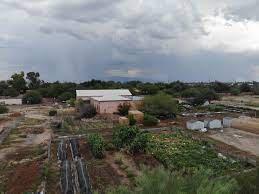
And we had these hellacious north wind sand just sandblast them, wiped them out. Wind breaks were needed. So I put it in a quarter mile of trees and we used them for ceremonial purposes. But in that, you know, with the irrigation ditch, it started attracting all the other wildlife and insects and bugs and things like this. But when we got rid of the nursery part, we took all the other trees and did some transplanting around the farm. And now we have some 30-foot cottonwood trees. 30-foot cottonwood trees out there also. And a lot of the willow trees that didn't make it because there wasn't enough water. They need a lot of water. But some are surviving
and we do have some 30-footers out there yet. But just happy to see it up there in the mesa where there's never there before.
But bringing the water up to the mesa it just revived that whole desert area, the whole topography of this changed. And if you're driving in to Lake Havasu on highway 95, you look across the lake to the California site, you see the only green patch on the California site. And that's the farm. And years ago, when we know, we were first started the farm. We were growing alfalfa also. And that really lit up the area too. That wasn't done properly because they didn’t, they didn't level the land properly. And created a lot of problems. But any rate it is what it is now. And we have a number of different tree lines separating the different areas that we're going to be farming. And the farm manager is looking at putting in more tree lines.
But it will be growing and hopefully I can expand to have a two-hundred acre farm within the near future. But all this has been developed and the farm manager is looking at creating all new infrastructure and a new reservoir to irrigate the entire eighty acres and expand. But it's not going to happen without water. And once our water is in soil, things start happening.
Robert Lundahl, Filmmaker, Journalist
We were talking about sustainability, that idea of sustainability and how we communicate. So sustainability seems like something out there. Like if you're sitting in an office in Silicon Valley and you say, oh, well, our company or our community has got to be more sustainable, this and that. And it seems like a really, you know, a concept that's questionable. It's like, what do we do? Recycle paper or these kinds of things.
And you're telling this story and it’s about how nature restores itself continually. It's about the natural sustainability. Like you said, all of the animals come. And then they poop and then seeds, you know, in more species, you know, of plant and animal. And it
just, it gathers. It gathers up, you know, this tremendous life force. Can you talk a little bit about that?
Matthew Leivas Sr.
Well, yeah, you know, the whole thing about the 80 acre farm is it's a traditional slash organic farm. And it is being registered now as a organic farm. When we're looking at sustainability, you know, farm managers is looking at composting and green waste, but adding back to the soil, soil amendments and things like this. And before we started
Page of 139163
the alfalfa farm, we had put in mung beans. And that was only going to be used as a soil amendment to build tilled under. And it worked. And then alfalfa was going to be used also as a soil amendment until build the soil. And that was working fine too. But like I said, they didn't, they didn’t properly level the land for alfalfa farming. Otherwise, you know, we can be thriving right now if it had been. But the farm manager’s looking at other ways of sustaining the land and reviving it and enhancing it.
Matthew Leivas, Sr.
One of the things that we're looking at in the past was reservoirs for fish farms, for fish growing fish for the market, as well as capturing the waste for fertilizers. But we had also the Chemehuevi Tribe, It also talked about working with universities such as U of A because they were quite interested in doing the project with us for algae farming and algae studies. But you know, they have state of the art science right now that can convert this and create fuels and other uses. So all these things can be added back into the soil here and add back into the plan of reviving our lands and making it conducive to growing whatever you want.
And right here in my back yard, I’m trying to create a little green belt area, a little tropical area that where we can keep our family cool. And we're doing it by creating that little area I'm doing right now. And I wish I could take you outside and show you what I'm doing. But I'm creating a little earthen lake behind my yard. And I'm going to be using runoff from that. There's only temporary and experimental right now, but eventually it’ll be a pool. But this is for my backyard. Now up there on the farm, that's only 80 acres. That's only a farm in its infancy. And you're looking at another 1800 acres to develop. And this is all desert land on a desert lonely area on a slope.
The alluvial fan coming from the Chemehuevi Mountains eastward to the Colorado River on the Mesa and over the Mesa is Colorado River and Lake Havasu. So what we're looking at is the entire 1900 acres of developing, but looking at all these other areas where we want to revive and bring back the native foods and trees that are growing out there.
In some areas in the southern section, we have a nice growth of ironwood. Now ironwood produces the seed, which is edible. And I never knew about it until my mother told me that it was one of her favorite foods as a child. Her mother would go out to harvest, and I imagine these same two canyons. Lower ironwood wash and upper ironwood wash. And there are ancient trees in there, but they thrive and they still produce a lot of seed and these grow seeds the size of cherry seeds. And they go out to harvest it and get them in quantity and go and leach it and take the shell off and boil
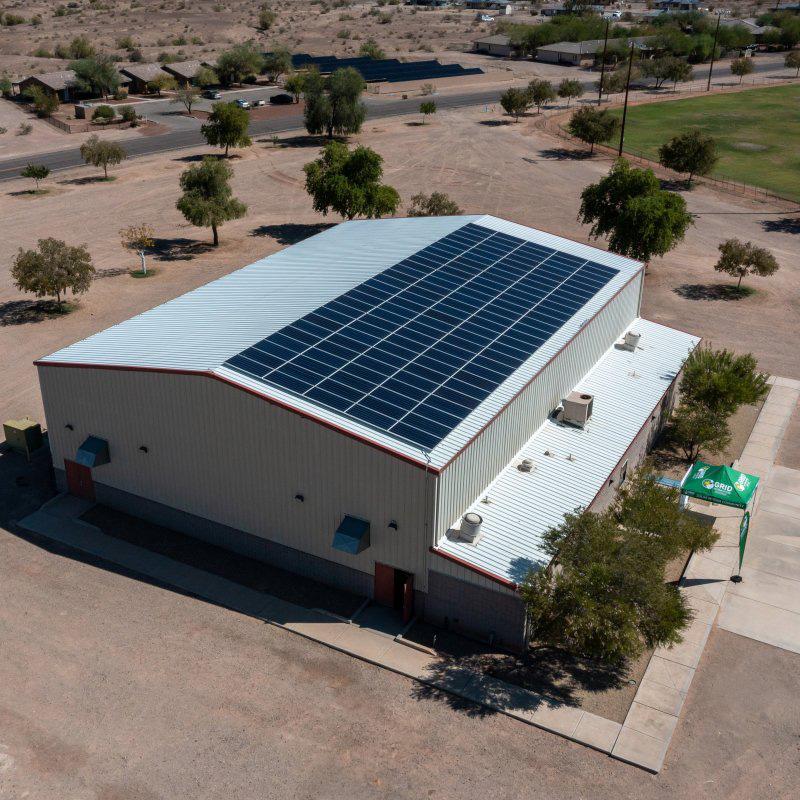

Page of 140163
Page of 141163
it. And then pulverize and make a mush out of it. It's a three day process, but my mother said that it was one of her favorite foods as a child rowing up here in Siwavaats. And as you know growing up here, and I can just imagine that. And then I've never tasted it, but I will. So that's one of the native foods, and it's in abundance. throughout the whole Chemehuevi desert.
So there's foods all over the desert that our people relied on. And because of different elevations and climates, they don't all they’re not all harvestable at the same time. So in one area, they'd be harvested in July. You know, two months later, you can go to the elevations and harvest the same product. But it's a matter of walking. How do you get there on foot?
Page of 142163
Here in Chemehuevi Valley, there was a company that came in, it was named Marcos Mining, and they were intending to mine in Chemehuevi Valley near Highway 95 and at the bottom of the wash along Highway 95 on the western side of the highway. They were planning to put the world's largest open-pit gold mine. And they were also planning to use cyanide leaching for extracting gold.
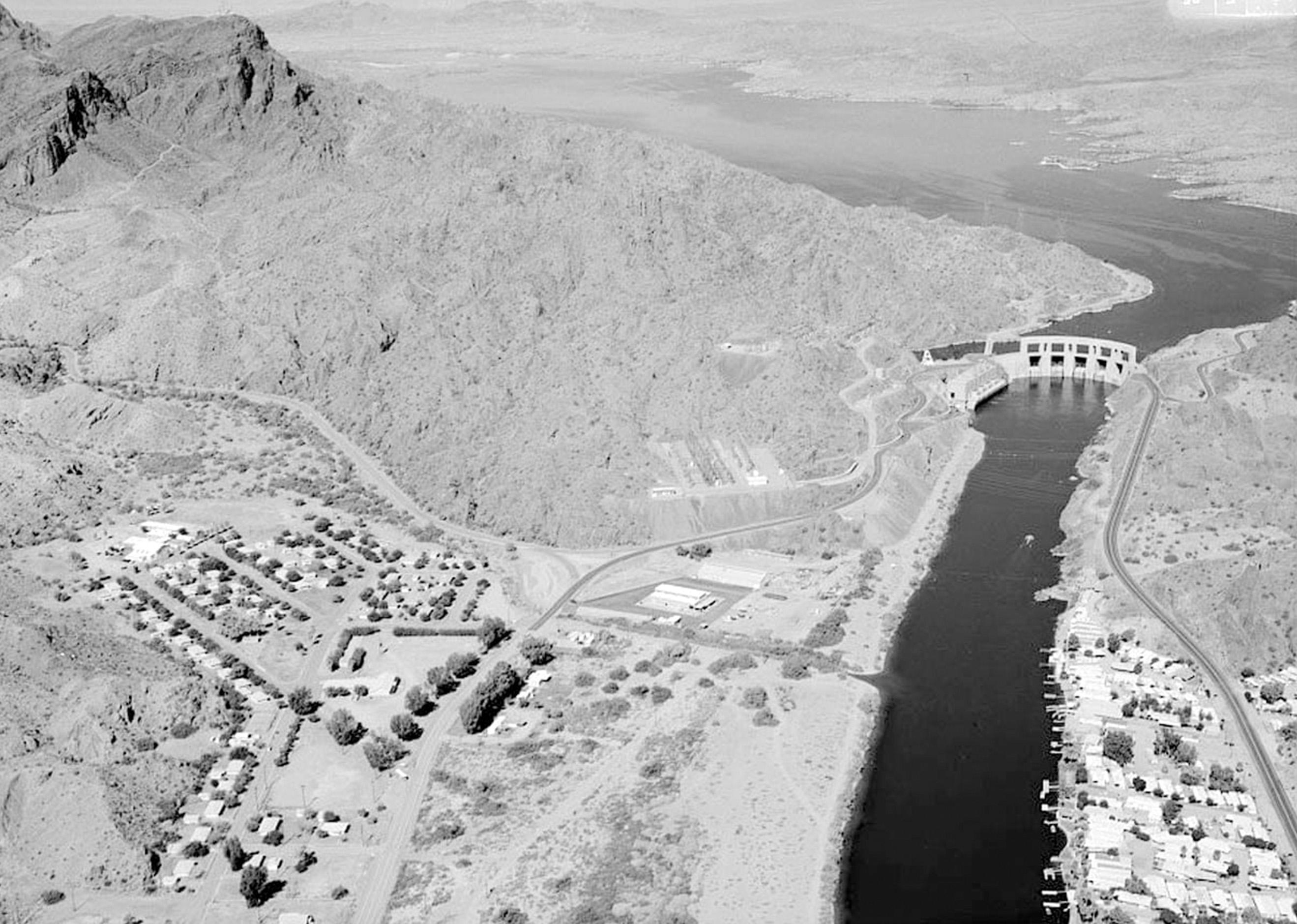
And the Chemehuevi tribe, and I was representative of the tribe, I had argued before the Parker "powers that be" that it's always been told to us, the world history, traditional NuWu history, that underneath Chemehuevi Valley is a large underground lake. And we know it's there because we see the water that comes out at the spring at West Well at Hawayo (SP.). And that's leading into the Colorado River.
So the water is still traveling beneath the ground and still interacting. And people have never realized that high-level nuclear waste would be able to travel in the water, but I
Page of 143163
understand that a year after the federal government stopped doing nuclear testing, underground testing, that they had discovered that the radionuclides had traveled a mile in the water from where the last blast took place. So to me, that was evident that these things are gonna migrate in the water.
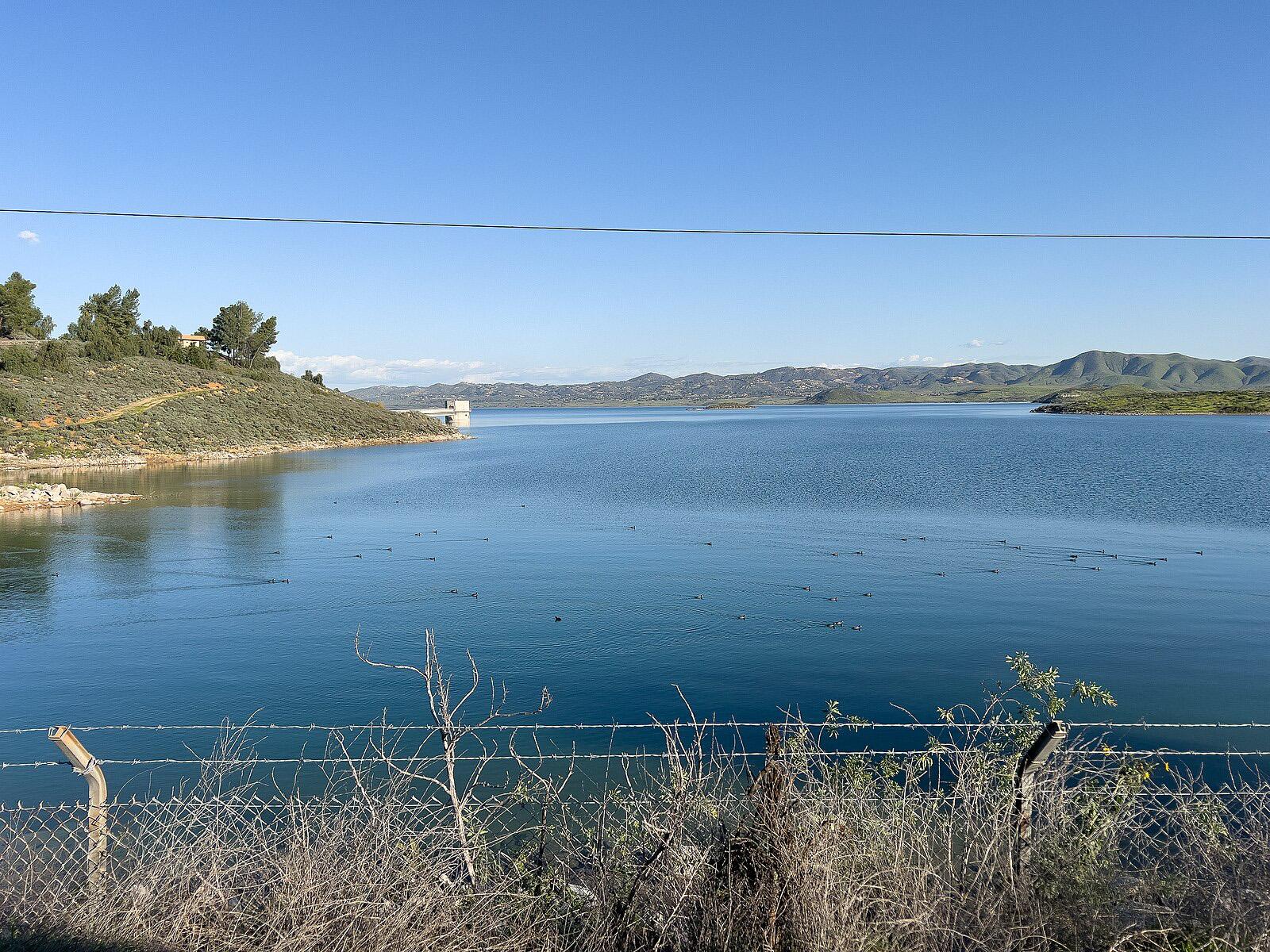
And also about contaminants migrating in the water at Beatty, Nevada, the same company that was proposing to do the low-level waste up here at Ward Valley had an ongoing operation at Beatty, which was leaking. And that aquifer was leaking contaminants into the stream that led into the town of Beatty, thus contaminating their water. So it's already been proven that all these things can travel and migrate in the water.
Robert Lundahl, Filmmaker, Journalist
So you can put two and two together and think how long would that take to get to the aquifer and get into Lake Matthews in Southern California. Right, because the
Page of 144163
Colorado River is one way that Southern California gets drinking water. Isn't that correct?
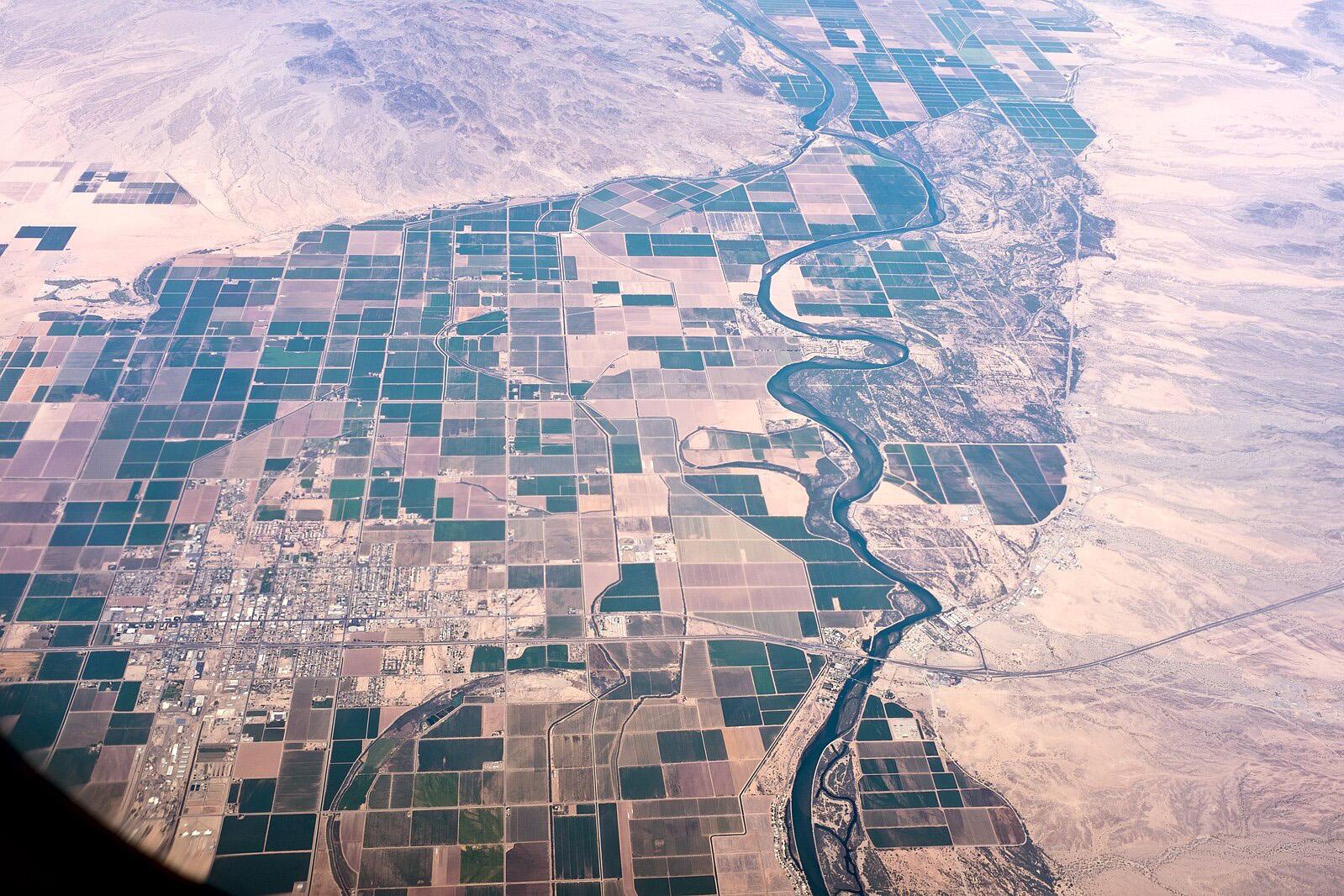
That's correct.
And they're looking at other ways of extracting other waters, but the Native American Land Conservancy is on a mission to protect all the springs in Southern California. And we've been identifying, locating and identifying springs that have cultural significance, Native American
Lake Matthews Reservoir, Riverside County, Fenced from the public. Public Domain
occupation, sacred sites and things like this. And I'm very proud to say that we are moving forward with the acquisition of a spring in the Tehachapi Mountains.
Who knows, maybe another month or two will be in, it'll be in our possession, I hope.
Page of 145163
Robert Lundahl, Filmmaker, Journalist
Well, you are mentioning the Kawaiisu people as being related to the Chemehuevis, and you said that they're up in Tehachapi historically. So can you tell me a little bit about the connection there?
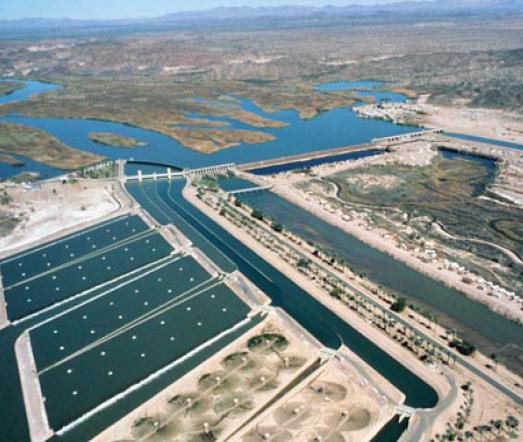
Well, the language connection is very strong because the way that I heard them speak is the way our people over here along the river, the Chemehuevi speak, the same dialect.And, but if we go north to Southern Nevada, the dialect changes a little bit. But
the Kawaiisus are related back to us because of the NuWu travel all throughout that area. And they went into the Tehachapi Mountains to seeking shelter, refuge. And the same with the Chemehuevis and Southern Paiutes that settled out in the desert at remote areas. They were seeking sanctuary, refuge, trying to survive. It was, you gotta realize, you know, what was happening back in the 1850s with the payment of the scalps from non-Indians, by non-Indians being compensated by the federal government and the state of California.
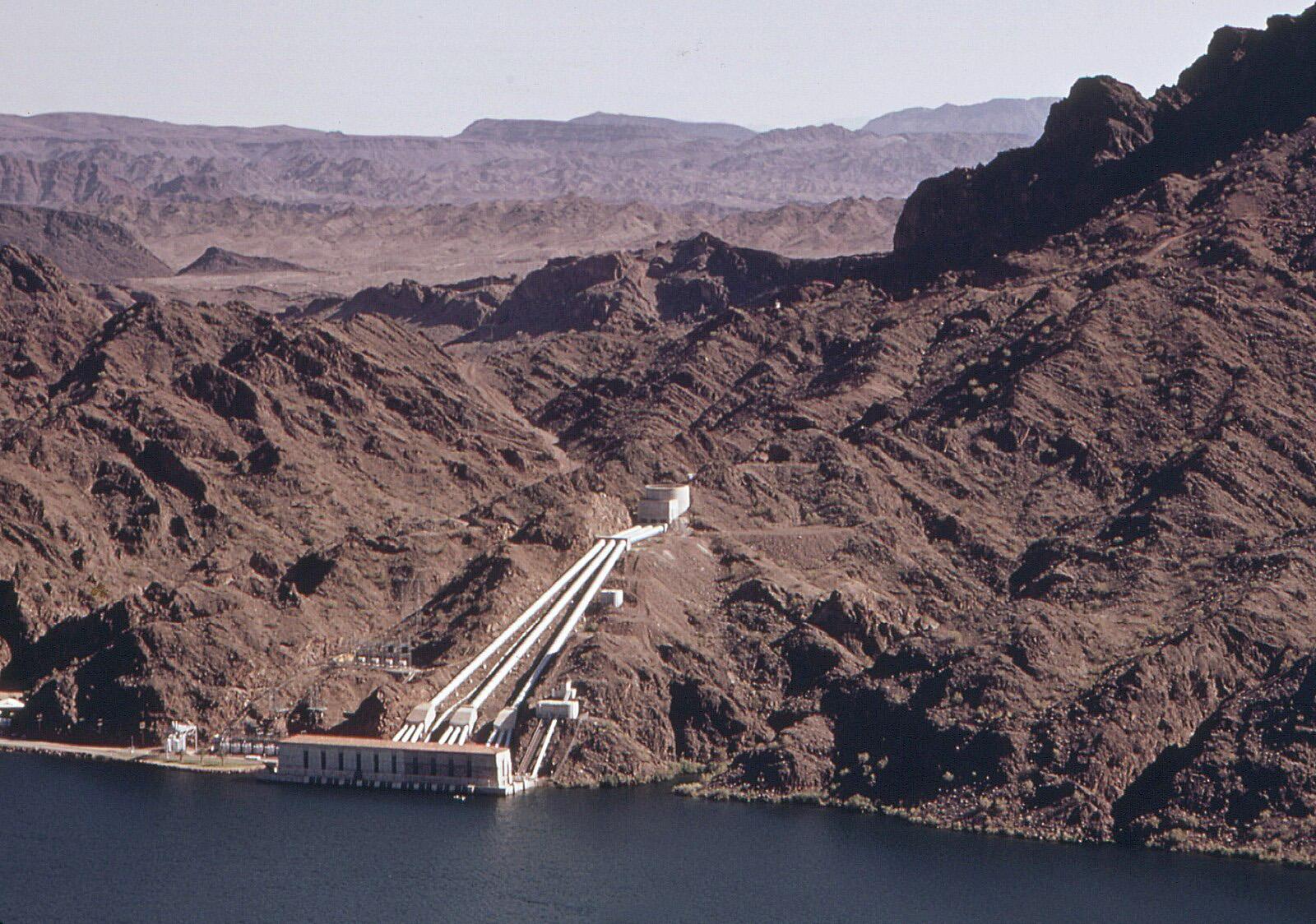
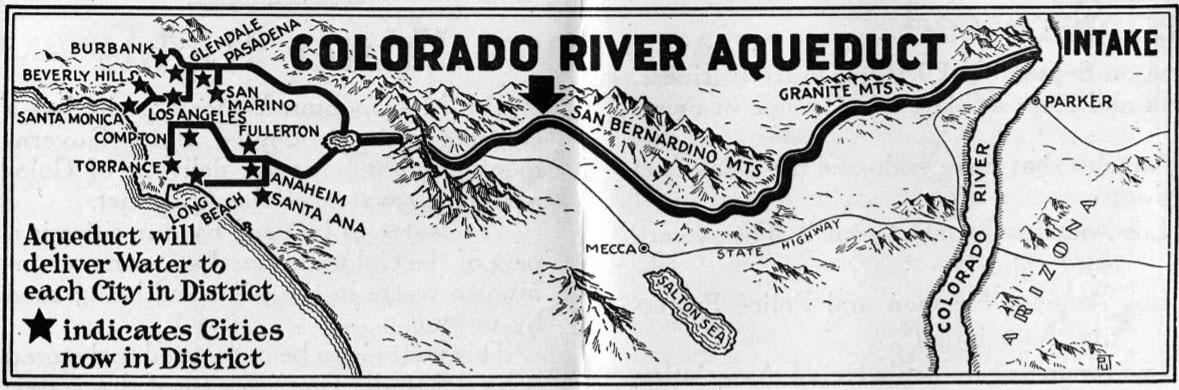
And I am happy and proud to say that the last three governors have identified this during their Native American Days. And, but there's still not enough that's been done on behalf of the state or the federal government to identify what has happened to all the tribes, all the other tribes that people don't even know about. That were in California before the coming of the white man. And how a lot of these tribes have been wiped out, massacred, and lands taken and stolen, resources taken and stolen. For our people in, NuWu, Southern Paiutes, in Utah, all the way down, the Mormons took all of the sacred places of the indigenous peoples, all the springs, all the different gardens that they had and took control of it. And all the Indians were forced out of the area. And I think our people were forced into the desert just trying to stay ahead of the encroachment. You know, we're looking at death and destruction by the Christians as well as by the Mormons as well as by the federal government, as well as by anybody else that wanted. And if you were to ask for a payment in California or Indian land, you know, they go out and kill the Indians. This is what happened up at Rabbit Springs is that those Chemehuevis who were massacred
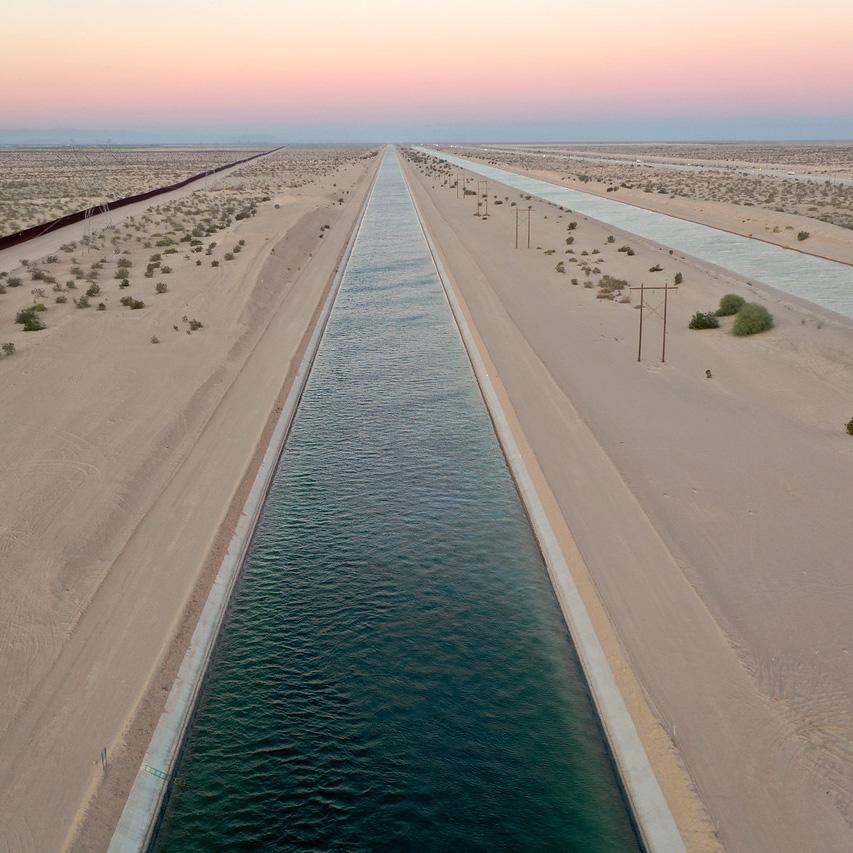
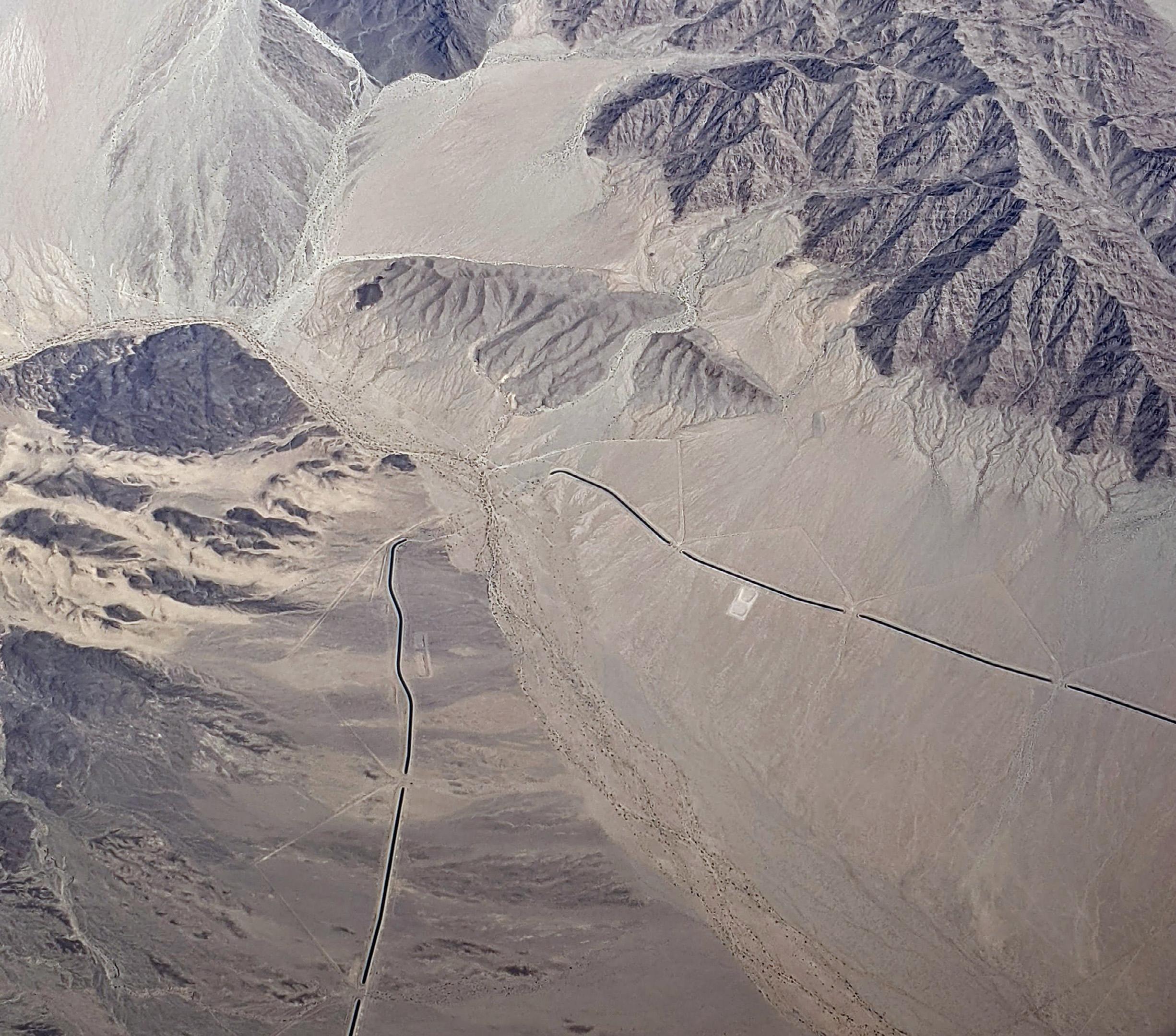
they were paid, the people that killed them were compensated or taken them out. This was in the late 1850s. But you know, the Chemehuevi-Mojave War took place after that too.
And it was told to me that my grandfather, Henry Hanks fought in that last battle between the Chemehuevis and Mojaves here along the river, just north of us. It was set on the sand dunes up there.
Robert Lundahl
You think that was because of the competition after the colonial intrusion?
Matthew Leivas Sr.
I believe so because, you know, there was a lot of competition for food and resources.
Page of 149163
And, you know, through history, California history, you can see that the whole state of California had massive amounts of game, you know. There were pronghorn deer everywhere. Deer, mule deer, white-tailed deer, bighorn sheep, bears, all the way from north to south.
Everything had been wiped out. Food resources had been wiped out. People were driven out to the desert, you know.
It was a competition. And it was said that the Mojaves retaliated against the Chemehuevi because of a confrontation that had taken place over along the Mojave River, Victorville area,
sometime earlier. And they traveled from all the way from Victorville and all the way over here to Chemehuevi Valley with the intention of massacring Chemehuevis.
And they took out a number of them at West Well. And that's why we sing about that place in the salt song. To memorialize what took place then.
But I believe I found the trail, the foot trail that led from that place to where the Chemehuevis found them on the Arizona side. It was an unusual feeling to walk that trail and thinking back about our people tracking the Mojave across the desert and to retaliate, to get revenge for the taking of all the lives of our people at West Well. And they did it, didn't just kill them.
They did all kinds of things to disgrace the people. And it was terrible, horrible.
Robert Lundahl
Is that why the Chemehuevis went over to 29 Palms? Was that another way of escaping the pressure?
Matthew Leivas Sr.
No, they were already there at 29 Palms because the Paiutes were already established in Barstow, I mean, sorry, in San Bernardino area.
And the Spaniards were down in that area. The Spaniards were the ones that were naming everybody. And they didn't say Paiutes, they said Paiuchis.
But I want to get back to the Kawaiisu, that property that we are going to acquire belonged to a elder. It made it even more interesting and compelled us even, it drove us even more to desire getting it, and we got it, we're getting it. But there's a couple of hundred acres up there and a little further down, another 20 acres, but there's a really nice spring with a lot of water, a lot of vegetation up there.
Page of 150163
Robert Lundahl, Filmmaker, Journalist
Beautiful, I'm really glad that you're on the way to obtaining that after all these years from an elder, no less.
Matthew Leivas Sr. (Chemehuevi Hereditary Chief)
Yeah, really. We looked at another piece of property over near San Bernardino Mountains called Juniper Flats, and that's an old Serrano village area that we found out, and we found out there were other villages throughout the whole area.
But there's a hot spring up there, there were three different springs that were flowing through the area, and one with a little waterfall with a big patch of wild grapes growing out there. So we're looking at acquiring that site and when I first saw it, we had a lot of cultural resources on it, grindstones and rock shelters and things like this too. But the board didn't move on it, the NLC board did not move on it.
Now we're revisiting it and hopefully trying to get the Serranos, San Manuel involved and get them to acquire it because it's their old village site.
Robert Lundahl
Mm-hmm. And that's on the other side of, let's say, Big Bear area, right? Like down the eastern slope somewhere? Yeah, that's actually the northwestern slope right near Victorville.
You can drive up to it. The area is being bombarded by newcomers coming in and setting up ranches and whatnot up there now. And when I first went up there 12 years ago, there wasn't that many people.
Now there's a lot of people up there in the high mountains, in the foothills. But that's all over. You know, when I talked to my friend Dorese Sam up at the Fort McDermitt PaiSho tribe for this series, I asked her, are you Nuwu? And she said, yes.
So, and you mentioned something about the Salt Songs going all the way north and your people traveling all the way up there. Can you talk a little bit about that connection? That's overall, that's the whole state of Nevada.
That's Oregon.
Page of 151163
Matthew Leivas Sr.
Yeah, yeah, we're right there on the border and a long drive. But three of us salt singers went up there along with a number of the Southern Paiutes from Kaibab and Shivwits area and Cedar City went.
There was an elderly woman from there who was a really close friend with Vivian Jake and also was a friend of mine because she and her husband relocated here to the Chemehuevi reservation. And she was watching my son at that time. Her husband was a Indian health service employee and they were looking for water, fresh water up here.
Look at this, so they're sinking wells around here. So I got to meet them. That was Mr. Bacon and his wife.
And anyway, they'd be friendly with you down here. Vivian wanted to ask me if we can go up there because she wanted to honor her friend. And I said, well, I knew Berdina too and I'd like to go.
So we coordinated and we went up and drove up and we sang Salt all night for her. And that's the furthest North that we took the Salt Song and sang it. Usually it's down here to the South from Las Vegas, Moapa, on down.
But that's the first time we went all the way up there to honor her and show respect for our connection with her. But the Salt Song, it's pretty much universal to our people. It did the same thing it does down here.
You go to Yagap, you go to the Cry, to the cry and you met those tears. And during the night when I was singing, I looked down at my cup of coffee. I had a cup of coffee, but coffee was bad.
So I put creamer. And at any rate, I had my coffee between my legs on the floor. And during the night when I was singing, I looked down and I seen a geometric pattern in the coffee.
Perfect, like somebody had drawn a pattern all through my coffee. I sat there in the basement. I was wondering about how this could be.
What is this? What's the connection? Sound, vibrations, a little bit of everything. And that's what it is in the song, is that feeling that can touch that nerve with someone and just get them to open up. We're hopefully gonna go back up there maybe this November or December, just check things out for ourselves, see what we can do to help.
Page of 152163
Robert Lundahl, Filmmaker, Journalist
Yeah, and that's the largest lithium mine in America now. They went in there and there's a lot of controversy over the BLM abiding by the laws that they are supposed to abide by, like section 106 requires consultation with tribes and the people there said, well, that really didn't happen. And they went ahead with the blessing of the Biden administration to start building this 400 foot deep open pit lithium mine.
And the people that I spoke with are really concerned about the water and lithium is a medicine too. It's used for a bipolar disorder and it creates some impairment in thinking. Can you talk a little bit about what you're seeing with the lithium and you've got lithium extraction at Salton Sea too that's starting and it might be impacting water, we don't know, but is this a concern?
Matthew Leivas Sr.
Oh, it's definitely a concern, every and all contaminants are a concern.
Throughout the 80s, the Chemehuevi tribe in our housing development, we had been receiving, and extracting water from the Colorado River, okay? Little did we know that up river from us, 12 miles, there's the PG&E Pacific Gas Electric Compression Plant on the California side at Topock that compressed gas pushes it to Los Angeles area. Well, they're using this hexavalent chromium, chromium-6, to clean those towers and things like this and all this wastewater was going down into the ground and ultimately reached the Colorado River and was contaminating in Colorado River all the way down. The Chemehuevi Indian tribe was the first and only downstream user on the California side.
And we were extracting this water, it was being filtered and run through a process. But at that particular time, we had a high rate of thyroid cases amongst our membership here. Well, when I became Chairman of our tribe in 1993, that was, I brag about it, that was my first great act was to get away from extracting Colorado River water and sink wells on our land.
And we did that and we found a pristine aquifer in the northern section of our reservation. And that's where we get all of our water now. And it feeds our entire reservation at this point, except for agriculture, that's separate, that's raw water.
But this is water, bottled water, quality water. And since that time, all those thyroid cases that we're having, they all went away.
Robert Lundahl, Filmmaker, Journalist
Chromium Six, wasn't that part of the Erin Brockovich story up in the Central Valley, was that the problem with water?
Page of 153163
Matthew Leivas Sr.
Exactly, exactly.
And, but nobody really paid attention to that. After that was that big explosion that took place in Henderson, Nevada at the ammonium perchlorate manufacturing plant.
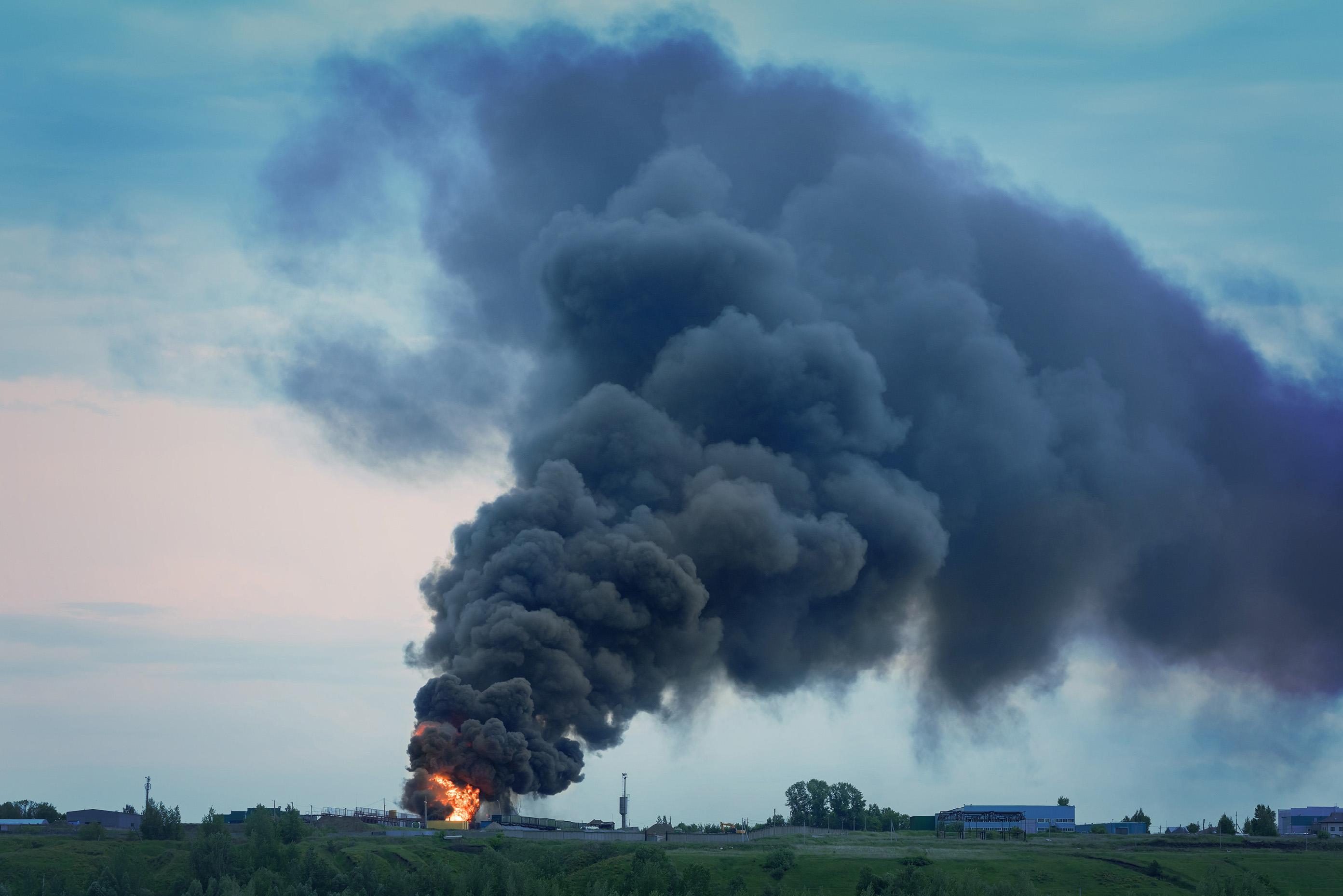
Robert Lundahl, Filmmaker, Journalist
But yeah, I was there, that was Southwest Gas and the PEPCON rocket fuel company.
And they had the gas line under the rocket fuel company and they thought it's a gas line or is it the rocket fuel, right? But it was a huge explosion.
Matthew Leivas, Sr.
Massive, and they got it on camera too. And anyway, apparently what happened to that aquifer, they were draining all this water into was had migrated from point A to the North by Northeast East to Las Vegas Wash.
Page of 154163
Las Vegas Wash, Las Vegas Wash picks up, is the wash that the drainage from the Las Vegas sewage treatment plant flows into. And from there it flows all the way into the Colorado River and thus created ecological problems, issues with fish, hermaphroditing (sic) and things like this. But ammonium perchlorate got into that aquifer and filtered into the river and it was detected from point A source all the way to the end to San Diego. Chromium Six and perchlorate were detected all the way to Phoenix and San Diego, to Tucson also because of the Central Arizona project extracting water. So you had MWD and CAP both taking contaminated water to 40 million people.
Robert Lundahl
Wow, you know, Matt, a lot of this kind of, I recall my personal history because if you remember the film that I made, Who Are My People?, it was about this kid from LA, me, going out to 29 Palms with my family and then starting to ask questions like who's out
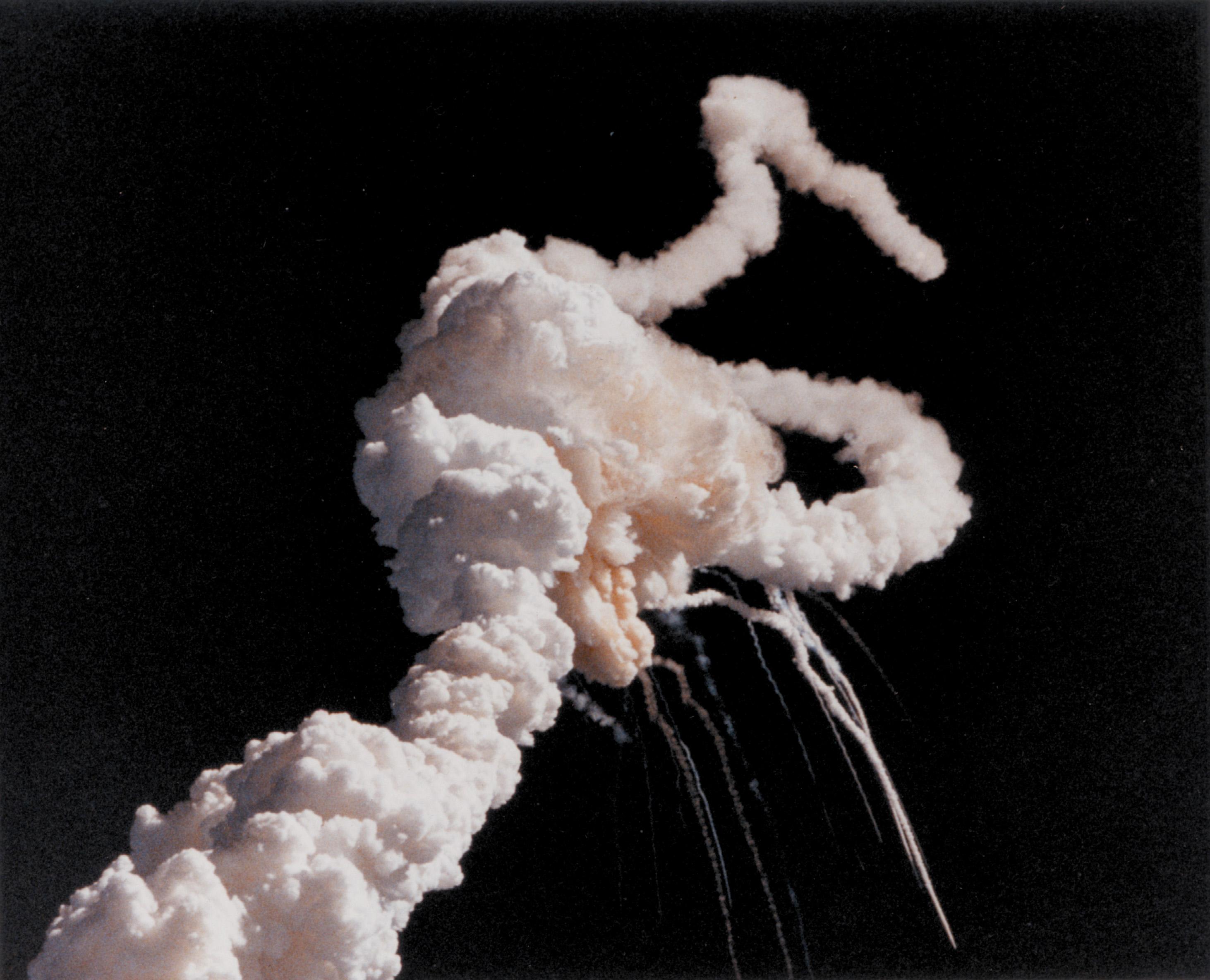
Page of 155163
here, what's out here, what's over the mountain? You know, and I think a lot of the people listening on the radio are kind of like this.
And, you know, then I went over to Las Vegas and I worked for the gas company and I had just quit when that explosion took place.
So I'm just recalling all these things from a different perspective, you know, from the non-Native perspective and the industrial perspective of working for a big company like that. And now you're filling me in on what actually happened, you know, and I'm just blown away, really, honestly.
Robert Lundahl, Filmmaker, Journalist
It was only later I came to understand what had happened. On January 28, 1986, the Challenger space shuttle and her seven-member crew were lost when a ruptured ORings in the right solid rocket booster caused an explosion soon after launch.
This photograph, taken a few seconds after the accident, shows the main engines and solid rocket booster exhaust plumes entwined around a ball of gas from the external tank. Because shuttle launches had become almost routine after 24 successful missions, those watching the shuttle launch in person and on television found the sight of the explosion especially shocking and difficult to believe until NASA confirmed the accident.
Following the accident, space shuttle launches were suspended, and suppliers had massive stocks of extra equipment and supplies on hand. One such supplier was PEPCON of Henderson, Nevada.
PEPCON was one of only two American producers of ammonium perchlorate (AP), an oxidizer used in solid propellant rockets, including the Space Shuttle boosters, Trident ICBMs, and other rockets such as the Patriot The other producer, Kerr-McGee, was located less than 1.5 mi (2.4 km) away from the PEPCON facility, within the area that suffered some blast damage. In addition to ammonium perchlorate, the plant produced other perchlorate chemicals including sodium perchlorate. The facility also had a 16-inch (41 cm) high-pressure gas transmission line running underneath it, carrying natural gas at 300 psi (2.1 MPa) gauge pressure.The invoice for this pipe, which was installed in 1956, characterized it as "limited service".
With the Space Shuttle fleet grounded as a result of the Challenger disaster two years prior, there was United States government instruction that excess perchlorate – to be used for future Shuttle boosters and which was owned by the government or its prime contractors – would be stored in customer-owned aluminum bins as customer-owned material at the PEPCON plant.
Page of 156163
Matthew Leivas, Sr.
You know, I was a whistleblower to the US EPA on that issue. And I was employed by the Chemehuevi Indian tribe through our EPA. And I read this in the paper, Arizona Republic paper about the contaminant.
What is, what, what? You know, and come to find all that out. And my boss told me to run with it, you know, do what you have to do. So I started making all the calls and we, the federal government calls for that huge meeting in Henderson, Nevada.
And I went up and spoke and introduced myself as being the whistleblower and bringing this to everybody's attention because nobody was thinking it was serious.
In Yuma, Arizona, in the Arizona Republic paper, they showed this farmer running off the field here with a hoe and had a cell phone in his hand. “Houston, Houston,” beside him was all these lettuce firing up into the sky with all this rocket fuel oxidizer.
And he's on the phone running off the field. “Houston, we have a problem.” That was funny.
Because of the amount of sediment that's coming down river, our bays are being filled in with sediment and thus the bottom is rising. And because of this, it's allowing the photosynthesis to take place and this bad algae, the microcystis algae to intensify. They're growing like crazy up there in Catfish Bay.
And when it's in full bloom, it stinks, smells like a damn sewer. And when we pump our water, our irrigation water out of Catfish Bay up to the Mesa, we're getting that smell with it too. It smells like a sewer up there.
Robert Lundahl, Filmmaker, Journalist
Is there anything else that you would like to share or get across while we're here?
Matthew Leivas Sr.
Yeah, yes. A lot of people are calling and asking about the Salt Song Trail Project. What is the status? And I've been grappling with this for a few years since Vivian and Jake passed.
And it's hard to bring people back together again because all the other tribes have formed their own Salt Song Trail Project and then are researching their areas, their geographic areas where the song travels. So that was one of the tasks that we put upon ourselves.
And the reason for that Salt Song Trail map was for us to identify with the different places that we're singing about in the song throughout the journey in the night so we
Page of 157163
can have a personal connection more so. Because a lot of people don't have the ability to go to these places. And as we're saying, if you're close by, go to it. You know these things are there, go to it, go visit, make your connection there, talk.
And one thing that Vivian and I had always talked about was, are people, indigenous people, going to visit a place like this, you know? These places, they don't know English. They know how to speak NuWu. They know the languages and whatnot. So when we go, talk your language, talk your talk, sing your songs. And this is one thing I'll always encourage everybody to do is to sing those songs. And I'm proud to say that Sean Milanovich from NALC has been doing this.
And wherever he goes, he has his rattle with them and we'll break it out and he'll be singing Bird Songs up there so he can make his connection with the place. But O'odham Mountain was one place that was very important and significant to me because it opened my eyes and my mind as to what Creator is trying to do to work with us, teach us and heal us so we can help the others and share our knowledge, you know? Basically, that's what we're doing is sharing knowledge. And I know that TEK, Traditional Ecological Knowledge, is just a euphemism, I guess, but it has a lot of impact.
And it's being called upon more and more by people in the scientific community for us to share. And people who are aware of what has gone on or what's going on throughout the country with the taking of human remains and funerary objects, that's all a no-no, should not have been done that way. You know, these things have to return back to the tribes and the people and have to be repatriated. It had been done to them before in a religious and rightful way, truly out of respect and love, but when somebody else comes along and digs it up and wants to find out what they had for breakfast, well, it's not up to them to find out.
They passed, they left, ceremony was performed, they went back to Creator, but those remains shouldn't be on display for anybody to look at, they should be returned. Funerary objects that people are picking up and taking home and using, they're bringing spirits home. And there's good ones, bad ones, friendly ones, horrible ones, there are all kinds out there. And this is why we protect ourself with sage and smudge. And when we do Salt Song ceremony, we smudge ourself with sanap so we won't be bothered or intimidated by these spirits that would have a tendency to come in and invoke themselves on one person.
By Robert Lundahl
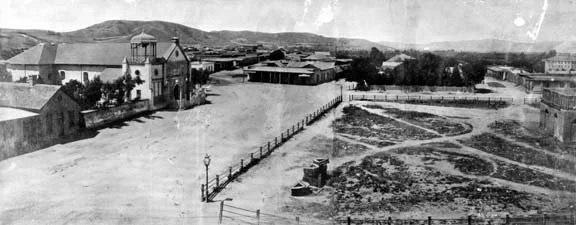
In December, 1777, Viceroy Antonio María de Bucareli y Ursúa and Commandant General Teodoro de Croix approved for the founding of a municipality at Los Angeles. The town was established by eleven “Blacks, Mulottos, Indians, and two Spaniards.” All the original settlers, including black “pobladores” (“townspeople”), Luis Quintero and Antonio Mesa, married racially mixed women and built their makeshift houses of willow branches, tule reeds and mud.
The term “Californio” is commonly used to identify a Spanish speaking, mostly Roman Catholic people, or of Latin American descent, born in Alta California from the first Spanish colonies established by the Portolá expedition in 1769, up until the Treaty of Guadalupe Hidalgo in 1848 — in which Mexico ceded Alta California to the United States.
The area had been long occupied by the Hokan-speaking people who fished, hunted sea mammals, and gathered wild seeds. They were later replaced by migrants, possibly fleeing drought in the Great Basin, who spoke a Uto-Aztecan language and were called Tongva (Wikipedia).
By the time of the arrival of the Spanish in the 18th century, there were 250,000 to 300,000 native people in California and 5,000 in the Los Angeles basin. The land occupied and used by the Tongva covered about four thousand square miles. Their trade extended to the Colorado River and beyond.
Page of 159163
In the Winter of 1845–46, the federally commissioned explorer John C. Frémont and a group of armed men appeared in California. After telling the Mexican governor he was merely buying supplies on the way to Oregon, he instead entered the populated area of California and visited Santa Cruz and the Salinas Valley, explaining he had been looking for a seaside home for his mother. Thus, the Mexican-American War was extended to California.
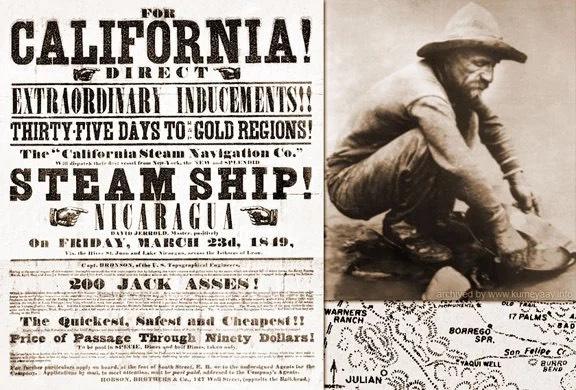
The Siege of Los Angeles was a military response by armed Californios to the occupation, which John C. Frémont began.
The Americans held northern California but General Jose Maria Castro and Governor Pio Pico planned resistance in the south around the Los Angeles area.On Oct. 8, 1846, American troops marched from San Pedro harbor up Alameda Street to the Dominguez Ranch, where they spent the night.
But the Californios had a surprise for them. Although there were only a few dozen locals against hundreds of soldiers, the Californios were able to trick the soldiers into thinking that they had more arms than they did by rolling their only cannon around the field between shots. The battle was won, but over time, the war was lost.
Page of 160163
Kumeyaay historian Gary Ballard writes: The California Gold Rush (1848-1855), in particular, was catastrophic to the indigenous population and their tribal lands. It was estimated that some 300,000 foreigners poured into California during this seven-year period. By 1900 it was estimated that less than 16,000 California Indians had survived the invasion of their homelands (some 134,000 California Indians were lost during this 52-year period while the United States Government was in control of California).
Of the principals in my film, “Who Are My People?” all four, Alfredo Figueroa, Reverend Ron Van Fleet, Phil Smith, and Preston Arrow-weed, trace their lineage to Early California and before. Chairman Anthony Pico of the Viejas Band of Kumeyaay Indians, also in the film, is a relative of Governor of Mexican California, Pio Pico. Figueroa is a relative of General José Figueroa, Mexican territorial Governor of Alta California from 1833 to 1835. Figueroa oversaw the initial secularization of the missions of upper California, which included the expulsion of the Spanish Franciscan mission officials, liberating Indians, who were by then under Mission System control.
Ballard reports, “It is believed the Kumeyaay — one of the largest and strongest precontact tribal groups in California — had only 1,000 surviving tribal members at the turn of the 20th century (1900). Some $5 million of gold was taken out of the Julian Eagle and High Peak Mines alone, during the 1870's, from deep in the heart of precontact Kumeyaay tribal mountains of San Diego County
Page of 161163
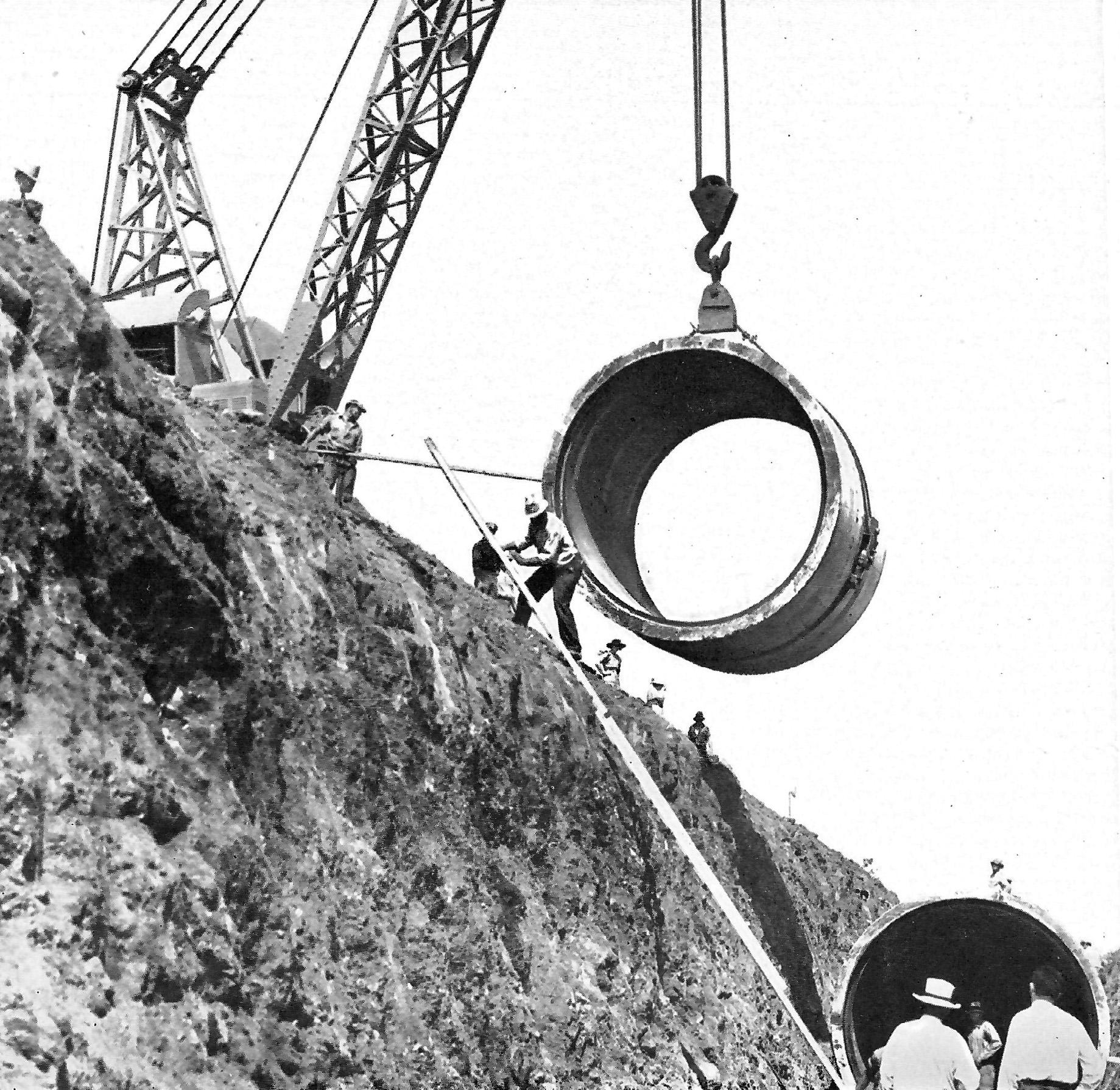
Colorado River Aqueduct Construction, 1933. Public Domain
Special Thanks to:
Matthew Leivas Sr. (Chemehuevi Hereditary Chief)
Daniel Leivas, Chairman, Chemehuevi Tribe
Alfredo Figueroa (Yaqui, Chemehuevi
Dorece Sam (Ft. McDermitt Pai-Sho)
Josephine Dick (Ft. McDermitt Pai-Sho)
Mandi Campbell (Timbisha Shoshone)
Mason Voehl, Amargosa Conservancy
Tracker Ginamarie Rangel Quinones
Good Way Village
Ivan Looking Horse
Page of 162163
Johnny Bobb
Will Falk, Attorney
Max Wilbert, Author
Preston Arrow-weed (Quechan/Kamya)
Reverend Ron Van Fleet, Mojave/Apache
Luis Olmedo, Comite Civico del Valle
Daniel Leivas, Chairman, Chemehuevi Tribe
Sherry Lewis (Lipan Apache)
NASA
Under Section 107 of the Copyright Act of 1976: Allowance is made for “fair use” for purposes such as criticism, comment, news reporting, teaching, scholarship, education, and research. Fair use is a use permitted by copyright statute that might otherwise be infringing.
Page of 163163