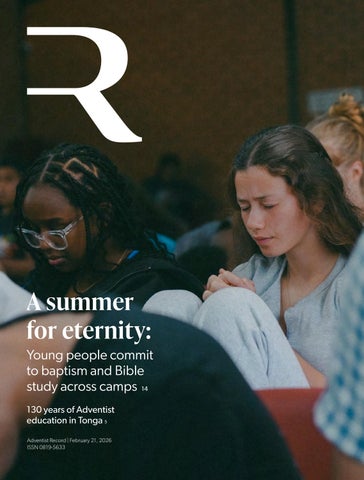
A summer for eternity:
Young people commit to baptism and Bible study across camps 14
130 years of Adventist education in Tonga 5
Adventist Record | February 21, 2026
ISSN 0819-5633
Young people commit to baptism and Bible study across camps 14
130 years of Adventist education in Tonga 5
Adventist Record | February 21, 2026
ISSN 0819-5633
What an amazing journey 2025 has been! Travelling Right Around Australia to share the story of the first circumnavigation became a powerful adventure of faith, filled with excitement and daily evidence of God’s presence. Along the way, we met people from every walk of life and shared the inspiring passion of the two young men determined to bring hope and purpose. From crowded city malls to isolated outback roads, a little car sparked countless conversations and reminded many that simple things can achieve great results and that God’s Word and promises are living and true. Time and again, we witnessed God’s hand at work through His protection on the road, His provision in moments of need, and remarkable “God appointments” only He could have orchestrated. Each encounter planted seeds of truth, courage, and hope. We give praise to God for what He has done and for what He will continue to do as those seeds grow right around Australia.

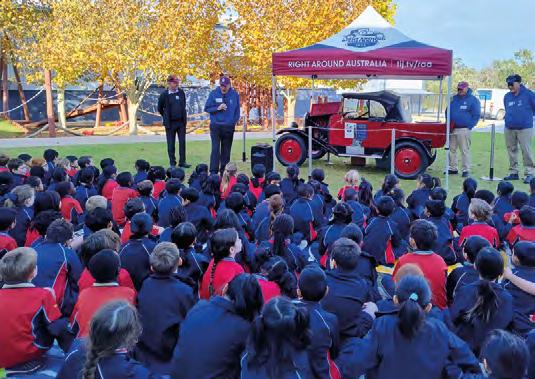
In April 1926, Nevill Westwood once again set out on missionary service. Only this time in an updated Essex Super Six. His mission was to sell books and reach displaced Aboriginal communities scattered across the country. He was joined by Rudolph Schick, a nurse with dental training from Sydney Adventist Hospital, who offered free health clinics for people in some of the most remote parts of the outback, many of whom had little or no access to health care.

This year, The Incredible Journey is planning to commemorate this historic expedition. We have secured our own Essex Super Six and are preparing to hit the road once more, with a shift in focus to ATSIM and sharing the health message.
Contact us on info@tij.tv for more information.
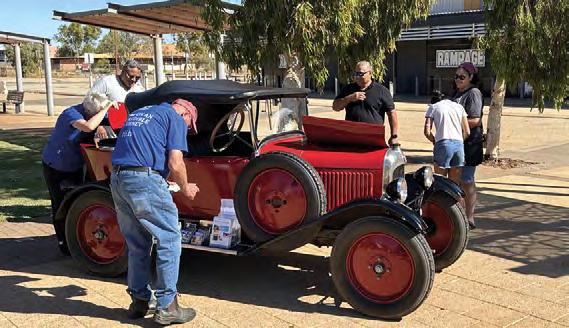
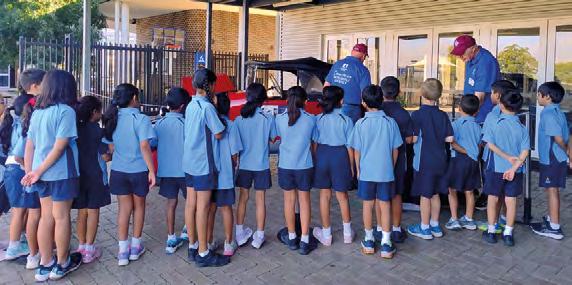

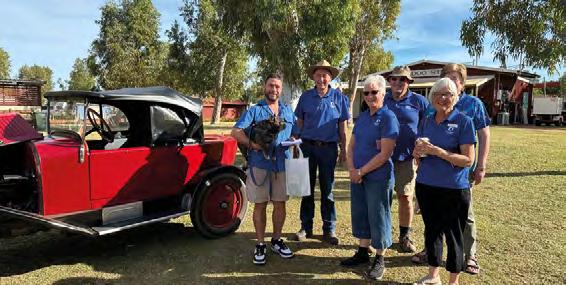
• 56,500 copies of ‘The Overlander’ booklets distributed
• 36,000 kms travelled
• 402 Events/Displays
• 265 towns/city suburbs visted throughout Australia so far (with Tasmania still to come)
• 40 Bible Prophecy seminar events
• Records at the Palmyra Dragway in Mackay = The oldest car and the lowest HP car to race the track
• Records at the Winton Motor Raceway = Fastest lap under 10 HP and oldest car to complete a lap


EDITOR’S NOTE:
Loving your neighbour online
Ashley Jankiewicz Assistant editor
The world does not need to see more angry disciples of Jesus so convinced of their rightness that they forget to be like Him.
Since joining the team at Adventist Record I’ve helped run several social media accounts and have engaged a lot more with online circles within the Church. Some of the things I’ve seen said online have surprised me.
Social media is an interesting sort of place. I say place, because it sometimes feels like the online world is a bubble, separate to our daily face-to-face lives. That bubble can feel like a safe space; it connects people and allows stories to be shared with a wider audience. But it can also be harmful—a place where cyberbullying rages unchecked. Cyberbullying is a form of bullying that occurs online and can take many forms: harassment, sharing embarrassing content, intimidation, mocking or spreading rumours.
Cyberbullying is often labelled a younger generation’s problem and may not be something you think you’d ever engage in, but as our world has shifted and become increasingly polarised, the lines seem to have blurred between what is deemed acceptable and what is not—even within our Church.
There is something about being online which makes it easier to have an argument. Something challenging to articulate or to have the courage to say in person is easier to type out and click “comment”. Typing without thinking has fewer personal consequences than speaking without thinking. We don’t have to face the person we have written to or about.
Social media algorithms personalise our content based on what we’ve engaged with, easily leading to echo chambers that confirm our existing beliefs or opinions, despite potentially being built around misinformation. This can easily feed the rumour mill and breeds the perfect playing ground for cyberbullying— saying untrue, potentially harmful things and mocking others.
This doesn’t bode well for a community of believers that are supposed to “live in harmony with one another” (Romans 12:16). It’s easy to live in harmony with one another in our echo chambers, surrounded by those with similar opinions and backgrounds to us. It’s harder when they are different from us in every way possible. It’s harder when we feel wronged, or when we feel someone has gone against our beliefs. It’s harder when the discussion is online.
So what can we do as a community of believers encouraged to “do good to all people” (Galatians 6:10) and “wash one another’s feet” (John 13:14)? The first step is understanding where harsh online posting comes from: a place of fear. Fear of interpreting the Bible or God’s commands incorrectly, fear of change, fear of the state of the world or our Church.
Fear causes us to lash out and lay blame. But the world does not need to see more angry disciples of Jesus so convinced of their rightness that they forget to be like Him. I suspect the way we speak to others online is often overlooked when we think about how to love our neighbours—the second greatest commandment besides loving God (Mark 12:31). Jesus revealed who our neighbours are in a story about a Samaritan man who helped a Jewish man in a time when their peoples were united against one another in hate (Luke 10). We would do well to remember this story before our thumbs get busy on our phone screens. Let’s not be quick to judge. Let’s not assume bad intent. Share your perspective in a way that is patient, not dishonouring others, not easily angered, keeping no record of wrongs (1 Corinthians 13).
This doesn’t necessarily mean staying silent while others spread hate because we are afraid to offend. We are called to “seek justice” and “defend the oppressed” (Isaiah 1:17). If you see an inconsiderate comment or post, call it out. Expose the cyberbullying that has crept into our online circles. The important thing is to do it in a way that is gracious and compassionate.
Watching our words can be challenging, and we can’t do it alone—we need God to change our hearts. And just like choosing Jesus is a daily decision, each day we choose how we respond to others. We will mess up, but what matters is that we keep coming back to Jesus and keep striving to be like Him.

Glenn Townend South Pacific Division president


I was driving a borrowed vehicle to special leadership workshops, listening to the Psalms on my phone. I wanted to praise God and focus on Him before I presented messages as requested on “the kingdom of God”. My mind drifted as I thought about this kingdom where Jesus is King, where the kingdom is everywhere a follower of Jesus is, where Jesus with His people is doing battle against the enemy who claim rulership in this world . . . This is what I was prepared to talk about but as Psalm 2 began to play, it was on topic so I gave it full attention.
“Why do the nations conspire and the peoples plot in vain? The kings of the earth rise up and the rulers band together against the Lord and against his anointed, saying, ‘Let us break their chains and throw off their shackles’.” It is true, I reflected, today’s leaders of the world often are against the Lord and Jesus His Son.
“The One enthroned in heaven laughs; the Lord scoffs at them. He rebukes them in his anger and terrifies them in his wrath, saying, ‘I have installed my king on Zion, my holy mountain’.”
Yes, Jesus, because of Your life, death and resurrection, You have defeated the enemy and sit in the heavenly Zion as King—but there is more to come yet—please come back and make this true on earth. Be King over all the earth.
“I will proclaim the Lord’s decree: He said to me, ‘You are my son; today I have become your father. Ask me, and I will make the nations your inheritance, the ends of the earth your possession’.”
Wow! Really! The nations of the earth are Your inheritance Jesus; every person on earth is potentially Your eternal possession. Oh, Jesus, can You please make this happen. At this point my mind focused on verse 8 and the rest of the Psalm was background words.
We launch South Pacific for Christ in Brisbane in April and right now the 11 nations of the Trans Pacific are active in disciple-making and preparing for a public harvest in July and August. Verse 8 was the verse for our Church to claim this year.
If we ask God, and uplift Jesus proclaiming Him as the victorious King, we can claim these nations for Christ. Will you join me in claiming this promise this year?


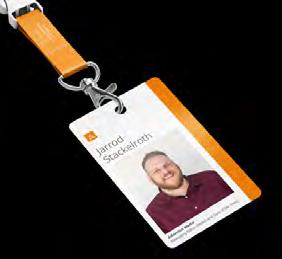
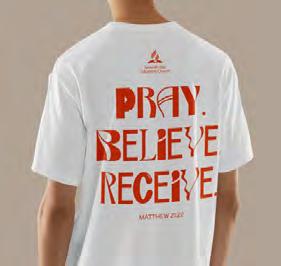
Identity resources available such as templates for church bulletins and flyers!

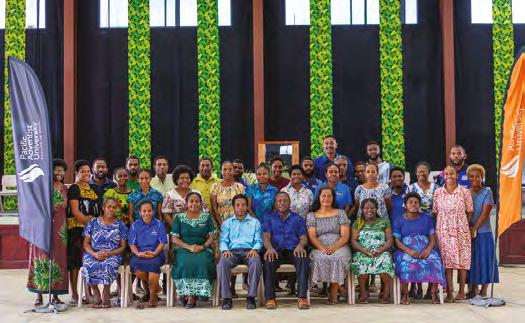

Pacific Adventist University (PAU) has expanded its academic programs into Vanuatu, launching a range of higher education courses during a ceremony held on January 20 in Port Vila.
The launch expands the partnership between PAU and Vanuatu Mission and follows a series of formal agreements, including a Memorandum of Understanding aimed at strengthening education and health training in the region. By offering programs locally, PAU is increasing access to its values-based tertiary education for Ni-Vanuatu students without requiring them to relocate to the university’s main campus at Koiari Park in Papua New Guinea.
The expansion includes a focus on critical sectors, including a Bachelor of Nursing Conversion program, and business and education courses, to address workforce shortages in Vanuatu.
Speakers at the ceremony included representatives from university
administration and church leadership, who highlighted the theme “Educate to Serve”.
“By bringing PAU to Vanuatu, we are ensuring that our students can remain within their communities while receiving an education that prepares them for both professional excellence and faithful service,” said PAU vice chancellor Professor Lohi Matainaho.
The initiative is bolstered by a scholarship program announced by the Papua New Guinea government, which assists students from Vanuatu and the Solomon Islands studying through PAU.
The Vanuatu launch is part of PAU’s 10-year strategic plan to expand its educational presence across the South Pacific. The new programs join the university’s existing affiliated sites, including Sonoma Adventist College (PNG) and Atoifi Adventist College (Solomon Islands), which provide specialised training tailored to the Pacific Islands’ needs.
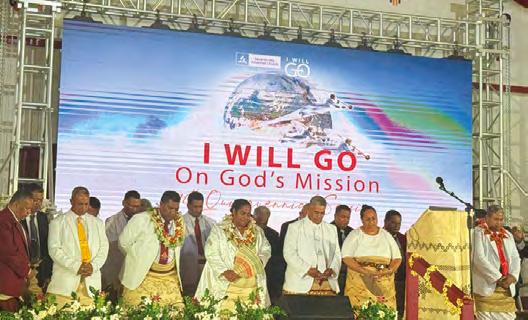
Adventist education in Tonga celebrated 130 years during the Tonga Mission’s quinquennial session, held in December, highlighting the long-standing role of schools in the Church’s mission and growth in the island kingdom.
Adventist education in Tonga began in 1895 with a one-classroom school enrolling 12 students in Nuku‘alofa. Today, the Church operates four schools, serving about 1000 students, with education leaders emphasising the contribution of schools to discipleship, leadership development and community engagement.
During the session, Mission secretary Pastor Sekope Finau reported that church membership has grown from a single baptism in the early 1900s to more than 4000 baptised members. Education was identified as a key factor in this growth, particularly through the training of teachers and pastors.
Leadership development through Adventist tertiary institutions was also highlighted. Pacific Adventist University has supported leadership capacity-
building in Tonga, including through graduates such as Lemani Matui, who holds a Master of Education and serves as an Adventist school principal.
Ministerial training has also been supported by Fulton Adventist University. In 2024, four ministers from Tonga Mission graduated from Fulton’s Certificate in Theology. At the session, Pastors Demsey Tukia, Kasitano Hakeai, Sione Finefeuiaki and Siuela Peleketi were ordained, increasing ordained pastors in Tonga from five to nine.
Reports also highlighted the role of Adventist schools in community health initiatives, including participation in the 10,000 Toes and Walk4Life campaigns, and partnerships with the Tongan government through the Health Promoting Schools program.
South Pacific Division education director Elisapesi Manson said Adventist education remains central to the Church’s mission in Tonga, despite ongoing challenges related to enrolments and changing worldviews.

Juliana Muniz/Kelsey Ryan
Hundreds of Pathfinders from across New Zealand welcomed the start of 2026 together at the About Turn Pathfinder Camporee, where 11 young people were baptised during the event.
Held from December 28 to January 2, the camporee was jointly hosted by the North New Zealand (NNZC) and South New Zealand conferences. Young people gathered at Tui Ridge Park in the North Island for a week of worship and activities based on the theme “About Turn”, inspired by Paul’s transformation.
Evening programs were a key focus of the week, with Brisbane-based pastor Caitlin Nelson delivering evening messages. According to Kelsey Ryan, NNZC Pathfinders associate director, the messages encouraged young people to reflect on God’s purpose for their lives and the possibility of change.
“The week reminded us that God meets us where we are and has the power to completely change our
direction,” Ms Ryan said.
Despite persistent rain and occasional flooding at the campsite, organisers said “the weather did not dampen the experience”. Days were filled with activities and opportunities to build friendships, while evenings featured worship, drama performances and reflection.
One of the most significant moments of the camporee was the transition into the New Year, which participants marked together on site.
Leaders said the baptisms reflected the spiritual focus of the week, with many young people making personal commitments during evening programs. “Starting the year together, focused on faith and commitment, was a powerful experience for many of our young people,” Ms Ryan said.
The Invercargill Pathfinder club travelled approximately 2200km to attend. “We all can’t wait for the next one in 2027,” said a representative.
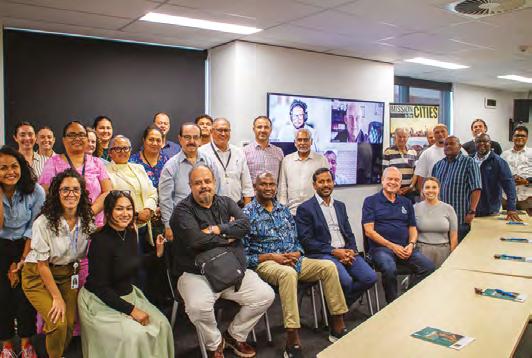
The South Pacific Division’s Adventist Mission department, in collaboration with the Greater Sydney Conference, held an interfaith symposium on January 22-23 aiming to equip Christians to connect with people of other faiths.
Themed “Building Friendships in a Diverse World: Connecting with our Hindu and Muslim friends”, the event aimed to equip attendees with the understanding, confidence and cultural awareness needed to have respectful conversations about faith with Hindus and Muslims.
The symposium was designed primarily for pastors, chaplains and teachers who work in multi-faith environments and gathered 40 attendees.
Two international speakers were invited to give workshops at the event. Pastor Umesh Nag, director of the Centre of South Asian Religions, highlighted the importance of learning about various religions, “as God’s commission was to reach all the nations”. “My major objective was to give training to the pastors and leaders, to understand how we can
serve Hindus and bring them to Christ,” he said.
Jess Stekla, chaplain at Hills Adventist College, said she attended in order to understand the pre-existing assumptions students may have and how she can explain the Bible better for them to understand. “We have a lot of kids of all religions and backgrounds,” she said. “Understanding where they’re coming from helps me explain our beliefs better.”
As a part of the symposium, Castle Hill church hosted an afternoon event on January 24 where members of the community were welcome to attend. The program featured many of the same themes that had been discussed on the previous two days.
Global Mission director Dr Wayne Krause said it is important for Adventists to engage with this topic. “It helps us build healthier communities when our chaplains, teachers and pastors learn to relate to these other major world religions in a positive way,” he said.
Wahroonga, NSW | Juliana Muniz
Adventist Record editor Jarrod Stackelroth has been appointed assistant director of communication at the General Conference (GC). He is expected to transition into the role in May, serving as news director.
In his new role, Mr Stackelroth will oversee the development and sharing of global Adventist news through Adventist News Network (ANN), support and train communicators around the world and contribute to content development for Adventist.org.
Mr Stackelroth said he is looking forward to the new challenge. “It is exciting and incredibly humbling to be called,” he said. “It is not something we expected or sought, but my family and I are trusting that God will use it to His glory. I’ve been with Adventist Record since I left college, so, while I absolutely love what I do, it’s probably time for a new challenge.”
GC communication director Alyssa Truman said Mr Stackelroth brings a rare combination of strengths to the role. “His experience in both writing and copy editing is invaluable to the team,” she said. “Even more than that is his writing experience in both news and theology.”
Mr Stackelroth has served at Adventist Record since 2007, starting as an editorial assistant and becoming editor in 2016. In 2021, he also took on the role of editor of Signs of the Times magazine. During his tenure, Record expanded from a primarily print publication into a multi-platform ministry, with increased digital reach and new content formats.
South Pacific Division (SPD) president and Record consulting editor Pastor Glenn Townend said Mr Stackelroth’s leadership helped make the publication more representative of the region it serves.
“He has also encouraged and developed more writers, particularly younger writers, and his own writing has been thoughtful, challenging and diverse,” said Pastor Townend.
SPD communication director Tracey Bridcutt said Mr Stackelroth’s influence extended beyond the publication itself. “He has been a mentor to many younger team members and has modelled integrity and thoughtful decision-making. He will be greatly missed by the Record team.”
Looking back on his time at Record, Mr Stackelroth described his almost two decades at the publication as “being in a front-row seat to amazing stories, great people, inspiring ministry and faithful service”.
With Mr Stackelroth’s appointment, Ms Bridcutt will serve as interim editor while a selection panel reviews expressions of interest for the role.
Two students from Canadian Mamawi Atosketan Native School (MANS) travelled to Abu Dhabi for the Zayed Sustainability Prize ceremony in January, where their school won $US150,000 in the “Global High Schools—The Americas” category. Their student-led “Growcer Farm Project”, a yearround hydroponic garden aimed at supporting their local community and teaching leadership, science and sustainability, was chosen from over 7700 applications.—NAD

Cuban Adventist musician Dairon Gavilán won a national award for his Christian song “Pecado”, marking a rare breakthrough for faith-based music on mainstream Cuban television. The moment drew widespread attention when he lifted a Bible on stage during the nationally broadcast gala, publicly pointing viewers to Christ.—IAD
The Northern Asia-Pacific Division in South Korea marked the end of 2025 with 20 staff personally delivering 90 gift boxes of soy milk and roasted seaweed, along with handwritten letters, to households surrounding its headquarters as a simple expression of gratitude and community care.—NSD
A study from Delhi found that patients who listened to instrumental music under general anaesthetic woke up more alert and needed less pain medication than those who did not. Researchers suggested that because hearing remains active under anaesthesia, music helped lower stress, stabilise blood pressure, and promote a faster, smoother recovery.—The Daily Aus
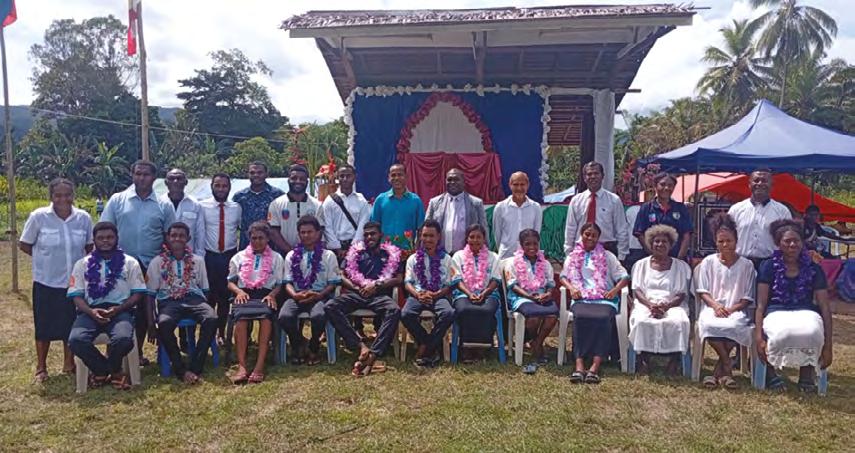
The Milne Bay Adventist Students Association (PNG) hosted its first-ever biennial convention from December 14 to 20. Themed “Tracing God’s Written Story”, the week-long event brought together hundreds of students for worship, leadership development and fellowship. A key spiritual highlight occurred on the last day, when 17 people were baptised, reflecting the convention’s evangelistic focus. The program featured guest speakers, daily devotionals and leadership sessions designed to support students in balancing faith, education and service as emerging leaders within the Church and their communities.—Raymond Aaron/Record staff
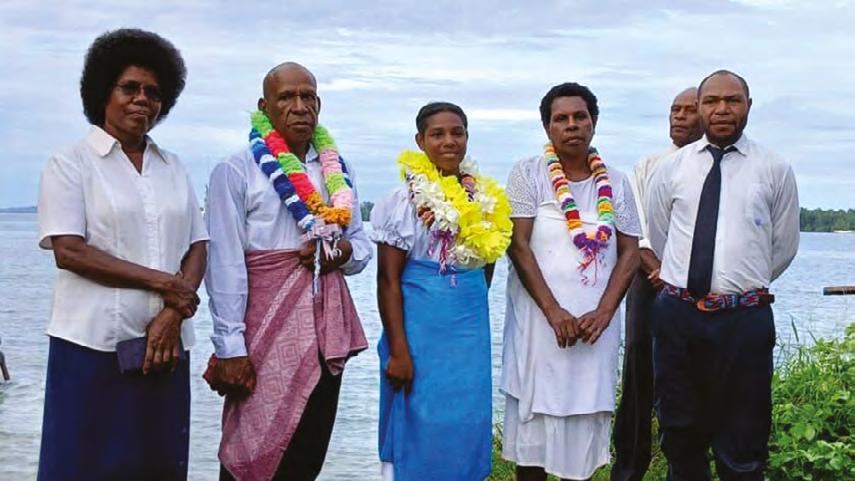
After 40 years of service, one of Papua New Guinea’s earliest female Adventist ministers has retired from pastoral ministry, concluding her work with the baptism of three individuals during a service held at Kavieng Beach, New Ireland Province, on December 20. Minister Jocabed Pomaleu served across union, mission, educational and local church settings, most recently pastoring the Vual and Pawa organised churches in the New Britain New Ireland Mission. A graduate of Sonoma Adventist College in 1985, she entered ministry at a time when pastoral leadership in PNG was largely male. Speaking at the service, she encouraged other women serving in ministry, particularly in contexts where leadership roles are limited. “You may not be ordained in the earth, but God has called you and ordained you already. Ministry is not man’s call but God’s call to serve Him with your whole heart,” said Mrs Pomaleu.—Paul Bopalo
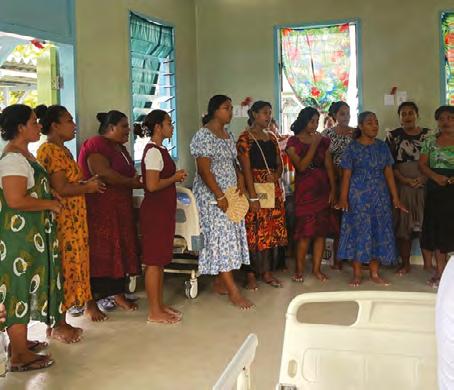
Adventist young people in Kiribati recently shared messages of hope through music and practical service during community outreach activities held on a Sabbath afternoon. Adventurers and Pathfinders from Bikenibeu church sang songs of hope at a local bus stop, while distributing free sandwiches to passing pedestrians and motorists. In Betio, youth and women’s ministries visited Tungaru Central Hospital, singing in corridors and encouraging patients in several wards. The outreach is part of preparations for Kiribati for Christ 2026.—Leeden Aluta
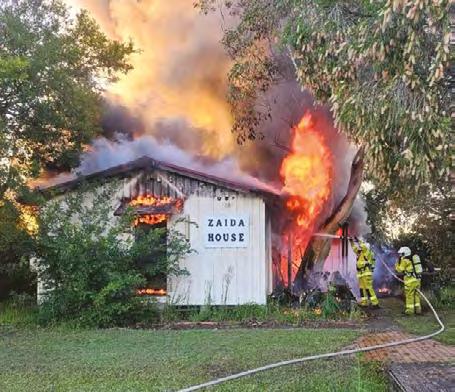
A fire at Avondale School in Cooranbong, NSW, on January 21 destroyed Zaida House, an older building on the edge of the school campus used for storage and youth Sabbath school. Emergency services responded at around 7:30pm, with 10 fire trucks on the scene to contain the blaze and protect nearby buildings. No students, staff or other school facilities were affected. Authorities described the fire as suspicious and handed the scene to police.—Juliana Muniz
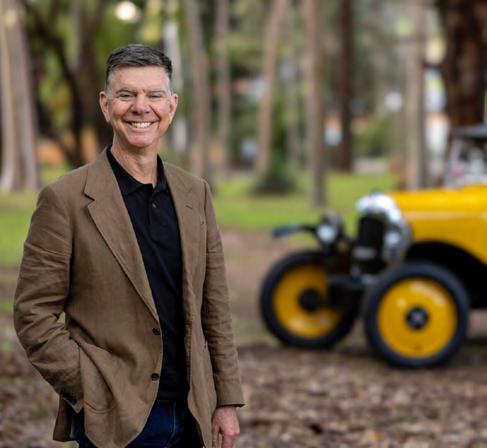
Adventist pastor and author David Riley has received significant national media attention following the release of his book Bubsie and the Boys, which tells the story of the first journey by car around Australia.
Pastor Riley and his work have featured on national radio, in major newspapers and magazines, and across a range of media platforms. A highlight was a one-hour interview with Richard Fidler on ABC Radio’s Conversations, one of Australia’s most listened-to radio and podcast programs.
Pastor Riley said the opportunity was particularly meaningful, noting he has followed the program for almost two decades.
During and after the interview, discussion turned to faith, grief and resilience following personal tragedy. In 2025, Pastor Riley’s daughter, Jessica, died from brain cancer, and later that year he was diagnosed with terminal cancer. These experiences became part of the broader media interest surrounding the book.
The Riley family’s story and faith were also featured in Woman’s Day, as well as in interviews with outlets including The West Australian and The Canberra Times. Pastor Riley said the attention has prompted conversations about belief, suffering and hope.
Bubsie and the Boys has received strong reviews. In December, The Weekend Australian listed the book among 20 notable new releases, Unique Cars magazine described it as “a must read”, and Good Reading magazine awarded it a five-star review.
Published to mark the centenary of the journey, the book recounts how two young Adventists set out from Perth in 1923 and went on to complete the first circumnavigation of Australia by car.—Nathan Brown
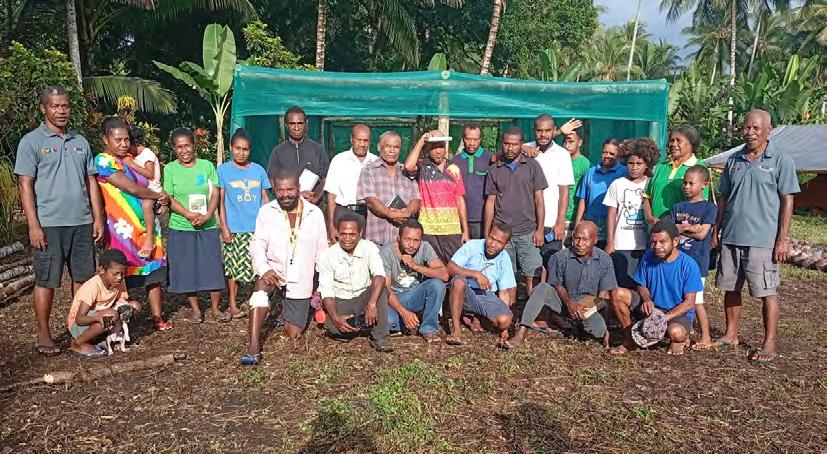
More than 30 young people have launched a mission-focused agricultural project at Dawadawa village in Papua New Guinea’s Alotau District, establishing a cocoa and coconut farm aimed at supporting local ministry. The Total Member Involvement initiative includes Volunteer in Action missionaries, local pastors and ministers, with participants clearing land and preparing the site for long-term production. The project is the first stage of a broader agricultural strategy for the Northern Milne Bay Mission, with locally generated income intended to support ministry. Local leaders said the initiative is an answer to prayer and will also support the surrounding community.
—Raymond Aaron
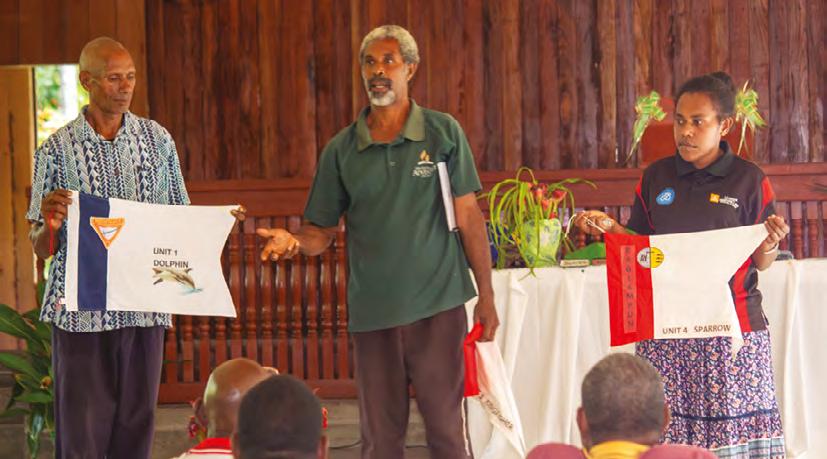
Leaders from local churches across the Markham 2 District in Morobe Mission, Papua New Guinea, recently took part in an Adventist Youth Ministries (AYM) training workshop aimed at strengthening youth leadership at the local and district levels. The workshop was coordinated by district AYM leaders and focused on core areas of youth ministry, including regular Adventist Youth meetings, Family and Friends program planning, understanding age groups within Adventist ministries, and conducting AYM opening and closing ceremonies. According to organisers, the training helped participants gain a clearer understanding of their roles and responsibilities within their local churches and the wider district. The workshop concluded with leaders encouraged to apply what they learned in their ongoing youth ministry activities —Vincent Donald/Juliana Muniz

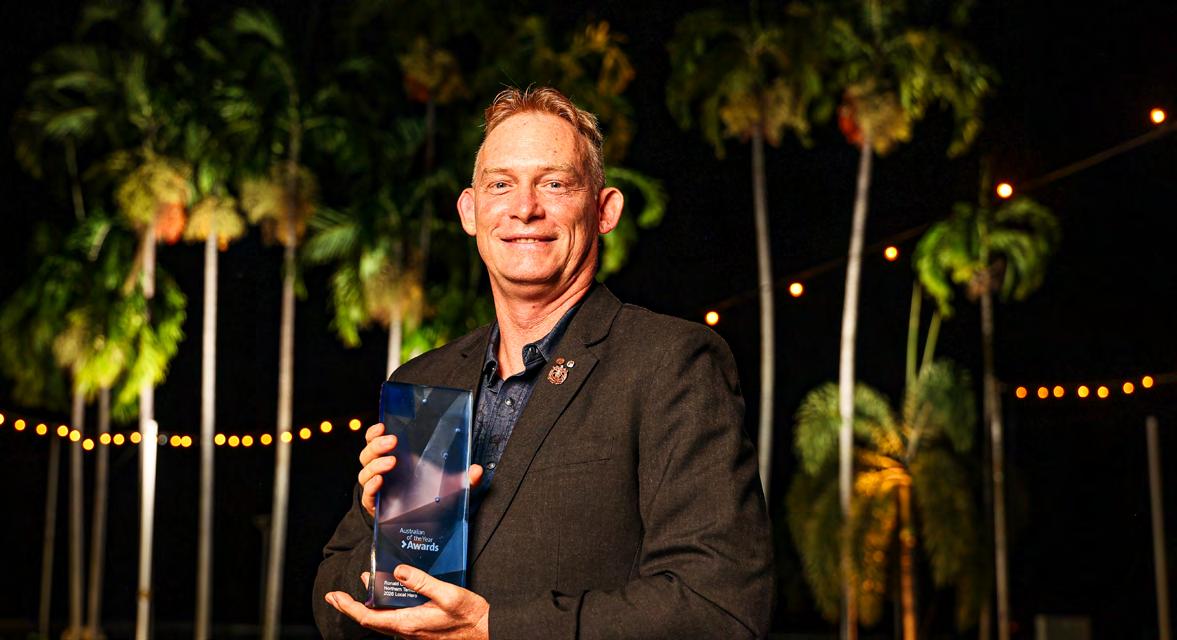
Three Seventh-day Adventists have been recognised with national and regional honours for their contributions to health, education and community service.
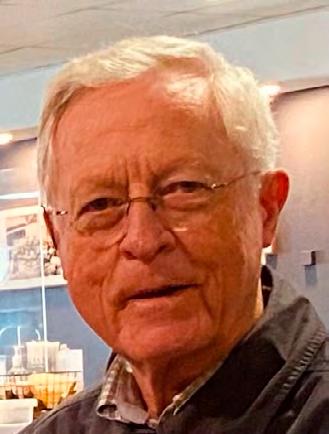
Long-serving obstetrician and gynaecologist Dr Gordon Campbell has been awarded the Medal of the Order of Australia (OAM) in recognition of his decades of service to women’s health in Australia and overseas. Dr Campbell was one of 949 Australians recognised nationally in the 2026 Australia Day Honours List.
Reflecting on the award, Dr Campbell said the moment was deeply emotional. “When our adult daughters each hugged me, I wept,” he said. “I felt I did not deserve such an award.”
Born in Papua New Guinea (PNG), Dr Campbell grew up immersed in mission life, with his parents serving as missionaries for 33 years.
After graduating from his medical studies, his first posting was to Vanimo on the north coast of PNG, where he began many years of service to communities across the country. He later specialised in obstetrics and gynaecology, serving for 30 years at Sydney Adventist Hospital and 34 years at Hornsby Hospital. He also volunteered extensively in humanitarian medical programs, including a refugee camp on the Thai-Cambodian border and women’s health programs in Nepal.
Now retired, Dr Campbell reflected on the privilege of his work. “The miracle of the safe arrival of every new baby is a magical moment I never grew tired of experiencing,” he said.
Avondale University academic Professor Tracie Mafile’o has been appointed a Member of the New Zealand Order of Merit (MNZM) in recognition of her outstanding contributions to Pacific and tertiary education. She is Avondale’s associate dean for research and research training and has worked across universities in New Zealand and the South Pacific for more than 30 years.
Reflecting on the recognition, Professor Mafile’o said the appointment affirmed work done in collaboration with others. “This recognition is certainly an honour, and I thank God for His faithfulness and goodness in my life and career journey,” she said. “It is an affirmation that decades of work . . . in collaboration with other researchers, colleagues and research students, is making a positive difference.”
Faith, she said, underpins her approach to leadership and research. “My Christian faith is a foundation from which my vision, passion and commitment flows.”
Emergency services volunteer Ron Green has been named the 2026 Local Hero for the Northern Territory, recognising more than two decades of service to communities across the Territory and beyond.
Mr Green, a Katherine resident and secondary school teacher, has played a key role in growing and sustaining the Katherine Volunteer Unit of the Northern Territory Emergency Service. He also serves as a volunteer with the Northern Territory Fire and Rescue Service and leads the Katherine Youth Division of St John Ambulance.
Reflecting on his journey into volunteering, Mr Green said his commitment to service was shaped early in life: “Watching my parents step up when others needed help— and being allowed to play a small part—really sparked my desire to volunteer.”
He said the Local Hero recognition also reflected the support of his wife Deslie. “I thank God for bringing us together and keeping us united so we can serve our community as a team,” he said.
Mr Green hopes the award will encourage others to consider volunteering. “We don’t need everyone to do everything,” he said. “We just need people to do something.” Record staff
It’s 12:30am. My husband has just got home from a long day at work and is making himself the lunch that he skipped. He started at 8am today. Oh, I mean yesterday.
There was event planning, home visits, administrative tasks, phone calls. There’s not enough time to eat or sleep, let alone spend time with his family. He is becoming severely burnt out.
His church thinks he doesn’t work. But you don’t see everything your pastor does, and indeed not all of it can be shared.
There are many highlights of the job. Your pastor is most likely in it because they delight in seeing people give their lives to Jesus. Sometimes, home visits and Bible studies are so pleasant it’s hard to believe you could be paid for it.
There are also struggles. Your pastor is probably carrying burdens you know nothing about. Over the past months, my husband and I have worked with the couple whose marriage is struggling, the lonely member who was contemplating suicide and the family who tragically lost their child, just to name a few.
Your pastor may listen to all of the problems in the lives of those around them but never share their own struggles. There is compassion fatigue, wearing too many hats and managing complaints from church members (including the constant stream of petty ones—think “You only preached 19 times this year when you could have preached 20 times. Oh, and I don’t like your sermons but you should preach more often.”)

In my time as a pastor’s wife, most of the persecution and hardships we have faced have sadly come from within the church.
Not all pastors look the same. The last pastor might have visited you several times a year and the next might focus on community outreach. Neither are doing it wrong but rather working with their own passions and strengths.
My plea to you is to try to imagine what it’s like to be a pastor. To be in leadership in a place where everyone has different ideas on what you should be doing and how you should be doing it. Where every few years your life is uprooted and you leave behind your friends and churches and everything you knew while losing tens of thousands of dollars in the process.
The life of a pastor isn’t glamorous. It's paved with difficulties; fraught with persecutions. Most of them do it for their love of Jesus and people, despite all of this.
Be kind to your pastor. Remember that they are also a person in need of grace. Assume they are doing their best and are well intentioned unless proven otherwise.
When a church and their pastor are supportive of each other and catch the same vision, the results are powerful.

We know how deposits work. When you put money down, you are investing in something you commit to buy. Paul borrows that everyday image when he calls the Holy Spirit God’s arraboˉn—a “down payment” or “guarantee” (Ephesians 1:14*). In a world where promises frequently fall short, this idea offers Christian hope a strong basis rooted in God’s assured future.
Ephesians 1 is praise from start to finish. After telling us we are “accepted” and “redeemed” through Christ’s blood (1:6,7), Paul adds that believers “were sealed with the Holy Spirit of promise, who is the guarantee of our inheritance until the redemption of the purchased possession” (v13,14). Two images sit together—seal and guarantee. The seal marks ownership and security. The guarantee funds the future. God not only puts His name on us, but He puts His Spirit within us as the first instalment of what He will finish.
The Greek ἀρραβών (arraboˉn) was a commercial language for earnest money that bound the payer to complete the deal. Paul uses it elsewhere: God “has sealed us and given us the Spirit in our hearts as a guarantee” (2 Corinthians 1:22), and again, He “has given us the Spirit as a guarantee” (5:5). The point is simple: the Spirit is God’s paid-in-advance pledge. He will not default.
What is the “inheritance”? In Ephesians, it is tied to God’s plan to “gather together in one all things in Christ” (Ephesians 1:10) and to believers as “His inheritance” (v18). Peter describes it as “an inheritance incorruptible” kept in heaven until the end (1 Peter 1:3–5). Paul links the Spirit-as-deposit with resurrection hope—“the redemption of the body” (Romans 8:23). The Spirit is a foretaste of what is to come, while the resurrection of our bodies and the renewal of creation are the fulfilment to come (Romans 8:11, 18–25; Revelation 21:3,4).
This shapes assurance. Our confidence rests not in our grip on God but in God’s pledge to us. We are sealed
—His own—and we have the guarantee—our future funded (Ephesians 1:13,14). Both stand on Christ’s finished work and the Spirit’s present ministry.
The arraboˉn changes the present. A deposit is the same kind of currency as the final payment. Likewise, the Spirit’s life now is of the same quality as life to come. Paul calls Him “the firstfruits” (Romans 8:23). Firstfruits are not different from the harvest; they are the beginning of it. So, the Spirit grows love, joy, peace and the rest (Galatians 5:22,23), empowers witness (Acts 1:8), pours God’s love into our hearts (Romans 5:5) and assures us we are God’s children (8:15,16). These are not trinkets; they are authentic tastes of the age to come.
There’s a call to holiness here. If God has paid the deposit on us, we are not our own. We were “bought at a price” (1 Corinthians 6:20). “Do not grieve the Holy Spirit of God, by whom you were sealed” (Ephesians 4:30). Put away the old life; practise kindness, forgiveness and love (v31,32).
Finally, the arraboˉn fuels the mission. A deposit creates momentum toward completion day. We preach Christ as our sure hope, because the Spirit has already arrived. Through faith, all nations receive “the promise of the Spirit” (Galatians 3:14). Every transformed life signals that the great inheritance is near.
When faith feels thin, remember this steady word. God has placed His Spirit in your heart as arraboˉn—a pledge He will never break. The deposit has cleared. The inheritance is secure. Until full redemption, the Spirit keeps giving an authentic taste of the world to come—and strengthens us to live as if that world is already dawning. In Christ, by the Spirit, it is.
*All Bible verses are from the NKJV.
Dr Limoni Manu O’Uiha dean
of the School of Theology, Fulton University, Sabeto, Fiji.

Serves 8 Prep 10 Cook 15
Using a variety of veggies to help you reach five serves a day, these veggie hash browns by Karen Stafford are packed with a range of nutrients, plus it’s a great recipe to get the kids involved.
1 cup self-raising flour
3 eggs, lightly whisked
½ cup milk
¾ cup grated cheese
¼ onion, finely diced
1 tbsp parsley, finely chopped
2 cups of vegetables of your choice, such as:
½ cup red capsicum, de-seeded and diced
½ cup corn kernels, parboiled
½ cup carrot, grated
½ cup baby spinach, shredded
Or any other combination of coloured vegetables
Salt and pepper, to taste
Extra virgin olive oil, for frying
Wholegrain toast, to serve
Sliced avocado, to serve
TIP
1. To make the fritter base, combine the flour, eggs, milk, cheese, onion, parsley and salt and pepper in a large bowl.
2. Add 2 cups of different coloured vegetables to the base mixture and stir to combine.
3. Heat olive oil in a large non-stick fry pan. Add ¼ cup of fritter mixture to the pan at a time, allowing room for the fritters to spread.
4. Cook for 2-3 minutes on a medium heat. Flip and cook for a further 2-3 minutes or until fritters are lightly browned and cooked through.
5. Serve with wholegrain toast and sliced avocado.
Use up leftover veggies so they don’t go to waste. Fritters can be prepared ahead of time and enjoyed all week. They can also be frozen. Combining the fritters with wholegrain toast and avocado gives you a well-balanced brekkie with protein, good quality carbohydrates and healthy fats for a nutritious kickstart to the day.
Nutritional Information (per serving)

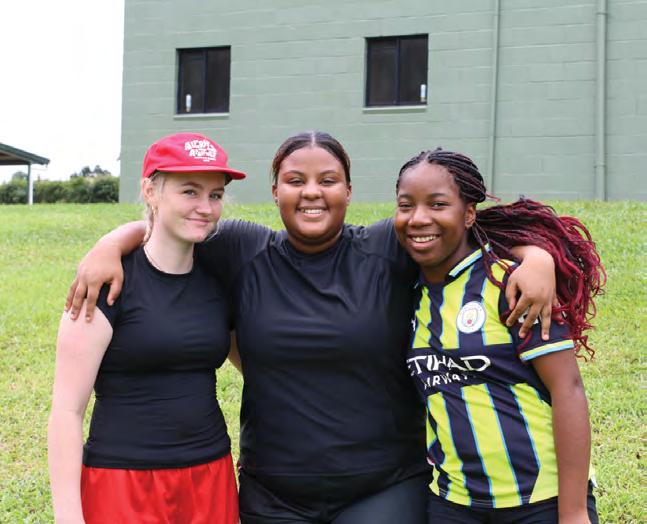


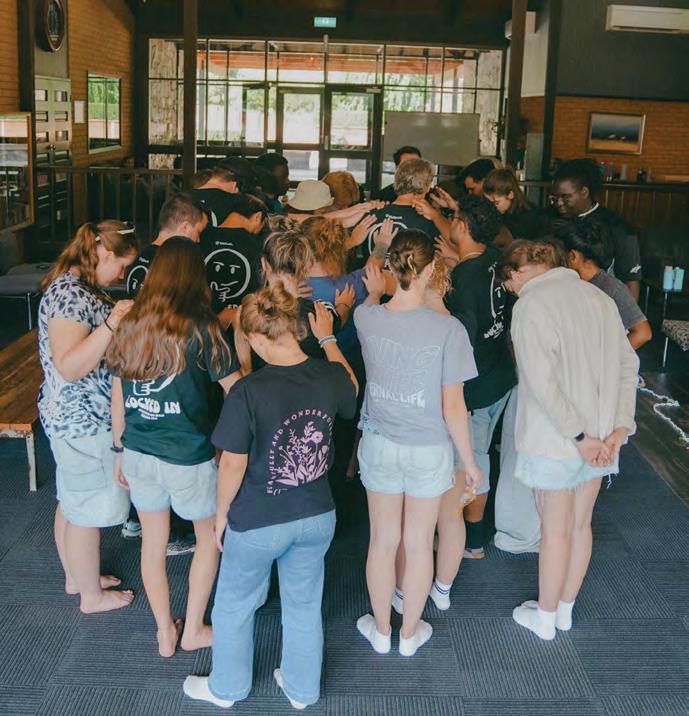
As summer temperatures climbed across Australia, thousands of young people ditched screen time to spend their holidays outdoors, making new friends, trying new activities and exploring their faith.
Run by conference youth departments, summer camps once again brought together children and teenagers from around the country for age-specific programs combining outdoor adventure with worship, discussion and mentoring.
Across Australia, 18 camps gathered more than 1800 young people over December and January, supported by 767 volunteers who served as counsellors, activity leaders and mentors.
With a spiritual focus that blends with fun and creative activities, summer camps are among the Church's most important evangelistic opportunities for young people. This summer, more than 600 campers made a commitment to baptism and 800 requested Bible studies.
“The summer camp program continues to be a platform in which Adventist young people can have a great time in the outdoors, make new friends and grow spiritually as well,” said Australian Union Conference youth director Pastor Rick Hergenhan.
A participant from the Northern Australian Conference (NAC) reflected on the program’s impact, describing it as an experience of a lifetime. “From being a counsellor, and hanging out with my friends, to the activities and being a part of the praise and worship team. Throughout the week the messages

from the speaker were really powerful and it was beautiful to see so many young people like myself have an encounter with God through the messages and worship,” the participant said.
The initiative also presents an opportunity for reaching children who might not be familiar with the Seventh-day Adventist Church. “It is a place where young people feel comfortable inviting their friends and they can be introduced to the gospel and the uniqueness of Adventism in an appealing way,” Pastor Hergenhan explained.
This summer, at least 170 attendees were young people from the wider community. One of those who attended the Greater Sydney Conference (GSC) Jets camp is excited to come back. “I’m so glad my friend invited me to come to learn more about your faith, make friends and experience these amazing activities. Next year I’m bringing my siblings,” the participant said.
Among the highlights of this summer’s camps were baptisms. In South Australia, families and the local church community visited the campground to celebrate the baptism of two young people—a camper and a cabin leader. “It was a wonderful way to close out an amazing camp,” said youth director Tim Ah Sam.
In Greater Sydney, campers witnessed the baptism of Noah Depaz at Crosslands Youth and Convention Centre (Galston, NSW).
Learning how to follow Jesus’ example in a practical way was one of the spiritual highlights in North New South Wales (NNSW). After learning about Jesus’ life through the main message, campers experienced communion in their cabins, guided by their cabin leaders. “They washed one another’s feet, drank grape juice and shared unleavened bread,” said youth administrative assistant Shanna Walters. “For some, this was a first-time experience, and it was a privilege to help facilitate it and to watch the story of the cross lead young people to reflect on what God had personally done for them.”
In Western Australia, summer camps reached more young people than in previous years, with organisers reporting their largest camps to date. “You know you’ve hit capacity when you have to put bunk beds in storage rooms to fit your youth directors in,” said youth director Pastor Sean Tavai. “There was no sight of an empty bed,” he added.
Recent upgrades to Mornington Adventure Camp (Wokalup, WA) supported camps in operating at full capacity. According to Pastor Tavai, the camp setting played an important role in shaping the spiritual experience, particularly through outdoor worship held in an amphitheatre beside the dam, which created space for reflection and connection. “We had the sunset as the backdrop and the stars as the house lights,” he said.
Even as camps across the country created space for spiritual growth and connection, the summer season also brought unexpected challenges. Bushfires in parts of
Victoria and near the New South Wales border disrupted programs in two conferences.
The South New South Wales Conference was forced to evacuate a teen summer camp on a Friday evening due to nearby fires. “We were able to get the majority of the campers to Canberra National Church where they slept the night, had our final message on Sabbath morning and then everyone left by lunch,” said youth director Huston Ford. “It was a shame that camp was cut short, but still had a good outcome, plus it’ll be a summer camp for the kids to remember.”
In Victoria, the Conference cancelled its GAP camp for 16 to 18-year-olds due to bushfires and evacuated campers and volunteers from Camp Howqua. Despite the initial uncertainty, the Conference proceeded with the junior camp after careful assessment with local authorities. “We were only delayed by a few hours, but went ahead despite the fires! We didn't expect to be able to run it but God provided,” said youth director Pastor Jonathon Gillard.
Other camps across the country also faced challenges due to heatwaves and torrential rain that brought the risk of flooding. Reflecting on the season, Pastor Hergenhan said the challenges highlighted the commitment of those involved in delivering the programs. “Despite the challenges that were faced across our various conferences, our youth director team and their committed volunteers delivered excellent camps that were well attended and left campers wanting to come back for more next year,” he said.
Greater Sydney Conference youth director Pastor Dejan Stojkovic added, “even through extreme heat and sudden rain, God met our young people and faith took root, continuing to grow beyond camp”.
Reflecting on the season as a whole, youth leaders across Australia are excited about what they've seen take place in each campground. “We had an amazing summer, and it was a blessing to see God answer our prayers as young people made the decision to choose Jesus,” said NNSW youth director Pastor Ashley Smith.
“Lives were touched, friendships were formed, and faith was awakened,” added Pastor Stojkovic.
But, they emphasised, the work doesn't end with the summer season. Pastor Hergenhan called on local churches to continue supporting those who attended camps, particularly those who made spiritual decisions. “I would like to call on all local churches who had young people attend summer camps to rally around them with support and encouragement to affirm their decisions for Christ,” he said. “I would also like to call on local churches to empower their young people by including them in the weekly functioning of the local church.”
“May what God began continue to grow in homes, churches, schools and communities as we walk forward, waiting for the soon return of Jesus,” said Pastor Stojkovic.
Juliana Muniz
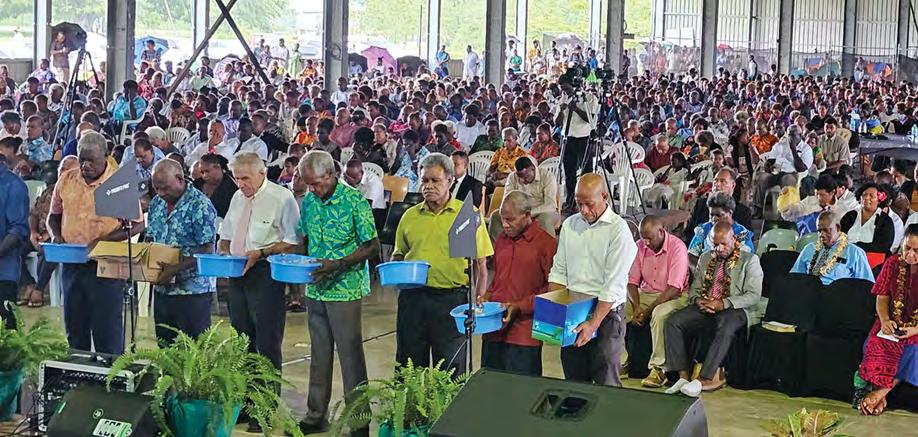
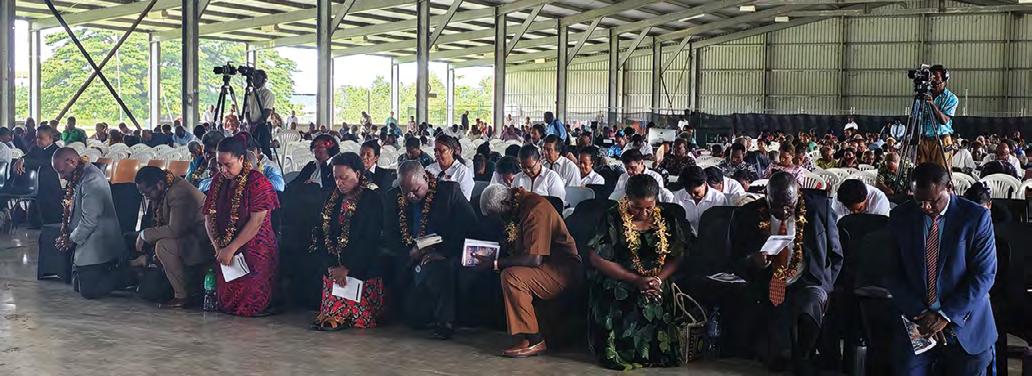
Momentum is building across the Trans Pacific Union Mission (TPUM) as preparations continue for Trans Pacific for Christ.
Speaking about the scope of the planning underway, TPUM president Pastor Charlie Jimmy said one of the key priorities has been coordinating the logistics needed to support the region-wide evangelistic initiative.
“One of the priority tasks we’ve undertaken is the collation of the number of meeting sites, the names of those sites, and the number of local and international preachers needed by each mission,” he said. “To date, we have around 1500 meeting sites across the TPUM and a total of 464 international preachers required to support our local preachers.”
The Trans Pacific for Christ meetings will be held during July and August in the Solomon Islands, Fiji, Vanuatu, Samoa, Tonga, Kiribati, American Samoa and Tuvalu. The initiative is aiming for 24,490 baptisms and 419 new church plants.
Pastor Jimmy noted that while Trans Pacific for Christ is a significant undertaking, it builds on a long-standing culture of evangelism within the Union.
“TPUM is well known for its Pentecostal harvest activities and evangelism programs each year,” he said. “Therefore, with the Trans Pacific for Christ initiative, it is not a new thing but rather motivational for church
members to continue following the farming cycle harvest model in their endeavour to connect, create relationships and lead people to Jesus.”
As he travelled throughout the TPUM region conducting mission sessions late last year, Pastor Jimmy observed growing enthusiasm among members.
“I see the excitement of the church members,” he said. “They talk about it, they share their plans as to how they can use their resources for Trans Pacific for Christ. I am excited to see every mission, local church and member making commitments to get involved.”
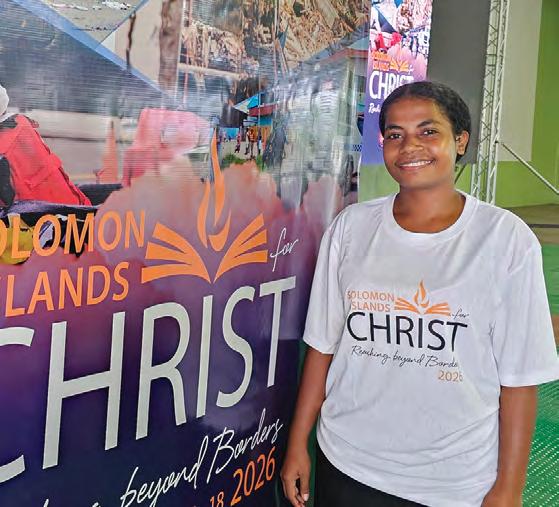
Local missions have marked the launch of Trans Pacific for Christ with special weekend programs designed to inspire and mobilise members. The most recent launch was held on Sabbath, January 17 when the Solomon Islands Mission—the largest mission within the TPUM—officially launched Solomon Islands for Christ. Health ministry will play a key role in community engagement, with the 10,000 Toes Campaign being used as an entry point into villages and communities where evangelistic meetings will be held.
Interested in becoming a Trans Pacific for Christ presenter? Contact Institute of Public Evangelism manager Pastor Lyle Southwell: <lylesouthwell@adventist.org.au>.

"I felt the Holy Spirit directing me to be involved"
When the Seventh-day Adventist Church ran PNG for Christ in 2024, the ripple effects were profound. Tens of thousands who attended the evangelistic series were baptised or made decisions for baptism. As the Holy Spirit touched hearts around Papua New Guinea, the mission on the ground was powerful. Equally life-changing was the impact on the speakers, many of whom were moved and inspired by what they experienced.
Now, preparations are gathering pace for the South Pacific’s next major evangelistic series—Trans Pacific for Christ. And once again, people from all walks of life are stepping forward to be involved. People like Dr Jillda Wright, who has committed to be part of Solomon Islands for Christ.
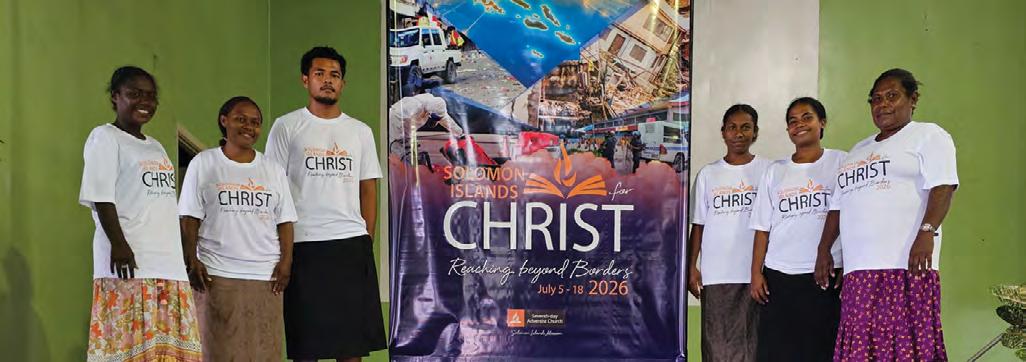
The Solomon Islands is one of eight missions and attached fields taking part in Trans Pacific for Christ, alongside Tuvalu, Tonga, American Samoa, Samoa and Tokelau, Vanuatu, Kiribati and Fiji.
A trauma counsellor for more than 25 years, Dr Wright runs her own private practice on the north coast of New South Wales. Rebaptised two years ago, she travelled with a team to the Philippines in July 2025 to present the “Secrets of Prophecy” prophecy series.
“I had never preached before, nor had any type of role in the church growing up,” she said. “But when the opportunity came up, I felt the Holy Spirit directing me to be involved.
“Preaching in the Philippines was life changing, and being entrusted with preaching the gospel definitely drew me closer to God.”
Dr Wright will return to the Philippines in March as part of a team presenting “The Mysteries Revealed” series. She will also present the series during Solomon Islands for Christ.
“Before I was re-baptised, I prayed to God and asked Him, ‘What do You want me to do?’” Dr Wright said. “Since that prayer, the Holy Spirit has spoken and impressed upon my heart the desire to preach the gospel overseas and locally. I feel that my life journey has prepared me for this time in my life and the roles that God wants me to undertake.”
For Gosford Bible worker Pam Kidd,
a mother of three adult children, her experience with PNG for Christ has inspired her take part in Fiji for Christ.
“I was sitting in church in April of 2023 when a Division pastor came and spoke,” she recalled. “During his message he spoke about PNG for Christ . . . I knew God was calling me on that mission trip. So I told my pastor I was going, and he decided to go as well.”
Ms Kidd was a speaker at Nagum Adventist Secondary School in East Sepik near Wewak, with about 500 attending most nights to hear the presentations.
“My greatest blessing was to be able to interact with the students and spend time helping them to navigate some heavy decisions, most of which revolved around getting baptised,” she said. “Everyone was so hungry for Christ and extremely welcoming.”
She’s now looking forward to Fiji for Christ. “I felt God calling to go, so I signed up before it was even an official thing,” she said. “What do I hope to experience there? More hearts finding a personal connection to Christ . . . I hope to interact personally with as many people as possible while there and show them the love of Christ on a very personal level. I love seeing people’s hearts melt in the presence of their Saviour and see them surrender their lives to Him.”
Coffs Coast (New South Wales) pastor Ben Rea was similarly moved by his experience at PNG for Christ.
He has now committed to be part of Solomon Islands for Christ, taking his two teenage daughters with him—who will also be preaching.
“What I realised over there [in PNG] was it didn’t seem to matter who the preacher was, it was the power of the Word of God, the Seventh-day Adventist message, plus the moving of the Holy Spirit and the willing hearts of the people—and the revival was happening. Like Acts chapter 2, it was happening before our eyes,” Pastor Rea said.
After returning from PNG for Christ, he challenged the two Adventist churches he pastors—Coffs Harbour and Coffs Coast Community—to run their own campaign: Coffs Coast for Christ.
They began with prayer—six months of early-morning prayer walks by around 26 people across local suburbs, asking God to open hearts. Then came practical service: STORMCo events, free food stands, health programs, plus weekly open-air preaching and testimony sharing on Sabbath afternoons.
These activities led into Coffs Coast for Christ, held over five weeks in August and September 2025, and involving 15 lay presenters, including Dr Wright. They preached in seven different locations around the Coffs Coast and since then, seven Bible study and prayer small groups have started.
Institute of Public Evangelism manager Pastor Lyle Southwell anticipates about 70 people—both pastors and lay people—from North NSW Conference will be involved in Trans Pacific for Christ.
“Our aim is to create a snowball effect where each person who goes has a life-transforming experience in leading other people to Christ and then inspires others to get involved in the upcoming New Zealand Pacific for Christ and Australia for Christ programs,” Pastor Southwell said.
Tracey Bridcutt Communication director, South Pacific Division.

To be an Old Testament prophet was a perilous calling. Most lived an ascetic life and suffered poverty, abuse and persecution at the hands of both the religious and political establishment. Take Jeremiah, who was thrown into a cistern and left to die of starvation. Or his contemporary Isaiah, who, according to Talmudic tradition, hid in a tree from the evil King Manasseh, who upon discovering the prophet, ordered the tree to be sawn in half with Isaiah still inside. Or Hosea, who is perhaps the subject of the Bible’s most painful object lesson. He is still remembered as the prophet whom God forced to marry Gomer, a serial adulterer—and even when Gomer had multiple affairs, God instructed Hosea to reconcile with her anyway.
However, there was one ancient Israelite prophet whose experience stands apart. I am, of course, talking about Jonah.
Jonah fails most of the markings of a good prophet. He is petulant, prejudiced, dishonest and wilfully ignorant of both God’s will and His character. To make matters worse, Jonah isn’t smart or self-aware—by all accounts, he’s a fool. And yet, surprisingly, he seems to be one of God’s favourite fools.
The Bible itself tells us very little about the historical Jonah. We know he lived in the eighth century BC and that his story was probably written at least two centuries after the events depicted. Outside the book of Jonah, he’s only mentioned in 2 Kings 14:23–25 where he blesses Jeroboam II’s campaign to expand Israel’s territory. It’s likely Jonah is the protagonist of this story as he represents a ringing endorsement of Israelite nationalism and lived at a time when (arguably) Israel was at its economic peak.
The actual story of Jonah is one familiar to most people, even if you’ve only heard it in passing. Jonah the prophet
is instructed by God to preach to the city of Nineveh that because of the people’s evil, God is going to destroy them. Jonah runs away, is caught in a storm and is ultimately thrown overboard. God then sends a giant fish that swallows Jonah. After three days, the fish vomits Jonah up on shore, whereupon he decides to go to Nineveh after all. The city, having received the message from God, repents en masse and God relents from destroying it—and everyone gets a happy ending. Right?
Well, sort of.
The story, though simple on the surface, is one of the most thematically and literarily complex stories in the Old Testament. It isn’t like the historical prose we see in the other prophets, so we shouldn’t read it like we would Amos or Isaiah. As literary critic Harold Bloom pointed out, Jonah “should be with the Writings—Song of Songs, Job, [Ecclesiastes]—because it too is a literary sublimity, almost the archetypal parable masking as short story”.1
We open with God’s command to Jonah to “go to the great city of Nineveh and preach against it . . .” (Jonah 1:2). Already we have a strange turn of phrase, “because its wickedness has come up before me”. This is the first clue that we should pay attention to the words, as the repeated patterns of words and phrases point to non-obvious meaning in the story. For instance, the themes of “going down” and “coming up” feature prominently. When he runs away from God, Jonah goes down to Joppa (1:3); when the storm comes up (1:4) Jonah has already gone down below deck (1:5). It is Jonah, not the sailors who instigate throwing him overboard and once again, he is hurled “into the depths, into the very heart of the sea” (2:3). Jonah blames God, even though he really has no-one else to blame but himself. Nevertheless, Jonah’s prayers “rise up” to God’s holy temple (2:7) and he likewise praises God for “bringing
his life up” from the pit.
There are many other examples of wordplay and repetition, such as the author’s use of the word “big”, which occurs 13 times or “perish”, which occurs four times. As well, other words are repeated, like “bad”, “to call”, “decree” and others. What should be clear is that the author chose specific word repetitions for a reason.
What is also surprising about Jonah are its moments of levity. For example, when the sailors cry out to God not to punish them for “spilling an innocent man’s blood”, the word for “innocent”, na¯qî, is spelled out remarkably similarly to the Hebrew phrase wayya¯qê, meaning “vomited”— foreshadowing Jonah’s fate.2 Similarly, the plant that later shades Jonah is described as a qîqa¯yo¯wn—which, spoken out-loud, sounds like “the vomiting of Jonah”.3 Then there’s the fact that Jonah’s name yo¯wna¯h sounds suspiciously like Ninevah, or nînәwêh. To be clear, the author of Jonah could have used other words—but chose not to. When read in ancient Hebrew, the story of Jonah sounds like a poem or limerick.
But Jonah isn’t just interesting linguistically. Thematically, its structure follows the hero’s journey—but subverts it. The theme of the reluctant prophet is not unique to Jonah. But whereas other prophets eventually embrace their role, Jonah resists. We’re not given any indication he will ever confront his prejudices nor that he will ever submit to God’s will. “Jonah’s deviation from the classic hero’s journey transforms him into an antihero—one who resists change rather than embraces it.”4 Jonah expresses casual indifference toward the sailors and repugnance toward the Ninevites. Ironically, it is these characters who act more heroically than the prophet. The sailors cry out to God, humbling themselves, as does the king of Nineveh and all his subjects. By contrast, Jonah flip-flops between insufferable arrogance and crippling anxiety. After he succeeds in his quest to preach to Nineveh, they all repent, and outraged, Jonah waits outside the city, hoping God will change His mind and smite the Ninevites after all. In the meantime, God makes a plant grow over Jonah to give him shade—then sends a worm to eat it. Jonah is devastated. “He wanted to die, and said, ‘It would be better for me to die than to live’” (Jonah 4:8). God is quick to point out Jonah’s hypocrisy. “You have been concerned about this plant, though you did not tend it or make it grow. It sprang up overnight and died overnight. And should I not have concern for the great city of Nineveh,” God says, “in which there are more than a hundred and twenty thousand people who cannot tell their right hand from their left—and also many animals?” (Jonah 4:10,11).
And so, the story ends. Jonah is afforded no opportunity of reply and we, the readers, are left somewhat bewildered, wondering what it was all about.
So, how should we think of Jonah? Is it simply a window into time, a cultural critique of an era long past? Must we whittle it down until only the most basic of moral lessons
remain, suitable only for Veggie Tales? As I’m sure you’ve noticed, there’s so much more to the story.
We should first consider the time when Jonah was written. During the exilic period, stories like Jonah would have served to challenge Judahite attitudes toward their neighbours. Many Jews would have looked down upon foreign nations and the Ninevites would have served as an easy stand-in for the Babylonians, the Persians or indeed, any power that both threatened military oppression and religious/moral perversion. And yet, it’s these pagans who respond as you’d expect a prophet to, and the prophet responds as you’d expect a pagan to.
In case you were still wondering, Jonah is not the hero of our story. He embodies all the worst qualities of nationalism—arrogant elitism towards pagans, while at the same time painfully ignorant to the irony of having been conquered by them. It is these pagans who embrace God and in the same way, God embraces them—just as He embraces the ever-resistant, cantankerous prophet. Jonah is also a story of human stubbornness and divine mercy— of “a prophet who runs from his calling, only to find that God’s will cannot be escaped”.5 Jonah demonstrates that we cannot be trusted to determine the boundary lines of God’s favour, or which peoples and groups are deserving of His compassion—or wrath. The sailors and Ninevites alike act as a foil to Jonah’s (and our) expectations, to remind us that those we assume are hostile to God may actually respond to Him, if given the chance—and that God may in turn love them too, if given the chance.
As scholar Tim Mackie points out, the actual focus of the book of Jonah is you. Can you accept a God who loves your enemies as much as He loves you? Are you willing to worship a God who forgives and embraces those you don’t think are deserving of His love? Are you willing to let go of your notions of political, religious or cultural exceptionalism and submit to God’s more challenging standards? “This book holds up a mirror to the one who reads it. In Jonah we see the worst parts of our own character magnified— which should generate humility and gratitude that God would love His enemies and put up with the Jonah in all of us.”6 The truth is, sometimes we are a Ninevite and sometimes we are Jonah. Thank goodness God’s grace is big enough to love us regardless of whether we’re a heathen or God’s favourite fool.
1. <nybooks.com/online/2011/07/28/harold-bloom-jonah-my-favorite-book-bible/>.
2. Baruch Halpern and Richard Friedman, “Composition and Paranomasia in the book of Jonah.” York University, University of California, San Diego.
3. Ibid.
4. Robert Justin Harkins, “Jonah and the prophetic character”. 2010.
5. Ibid.
6. <youtube.com/watch?v=dLIabZc0O4c&ab_channel=BibleProject>.
Jesse Herford associate editor, Signs of the Times
Re: “Adventist Church in Vanuatu records more than 2000 baptisms in 2025” (Online, January 19). What a truly remarkable and God-led event in Vanuatu. We rejoice in seeing how the Lord moved so powerfully, bringing so many hearts to decision and baptism.
This amazing outreach was blessed to have keynote speaker Pastor Doug Batchelor, president of Amazing Facts International. In addition, two weeks prior to the main evangelistic meetings in Port Vila, Amazing Facts Oceania prayerfully organised and provided funding for the event and for doctors, dentists, pastors and lay pastors from Australia to serve in remote communities across Vanuatu, helping prepare hearts for the larger evangelistic event that followed with Pastor Batchelor.
By God’s grace, all of this came together beautifully. Among the 2500plus baptisms were 15 prisoners, as well as five chiefs and their wives, who publicly gave their hearts to the Lord. What a testimony to the Holy Spirit working across every level of society.
We thank God for every individual, church and ministry involved, and above all, we give glory to Him for the
lives changed and the eternal fruit that will continue long after this historic event.
Katrina Milson, via Facebook
“Save our children” (Editorial, January 31). Amen and so very true.
You have expressed so very clearly and eloquently the heart of the matter and that is our precious children and grandchildren.
We as a church village and administration (division, union and conference to local church level) need desperately to recognise the importance of this area—our children from birth to Pathfinder age. It is a massive mission field and needs church-wide support and encouragement of adults in leadership and teams in Sabbath schools, Adventurers and Pathfinders.
We need to address the mission field also of our parents/carers with parenting programs and relevant Sabbath schools and study groups for them. It is very hard once you leave your last child at preschool kindy age after completing your family and look around for yourself, thinking, Now where do I fit in?—to go to a Sabbath
school that ends in time for me to pick up my children at the end of their Sabbath school
We need to empower the growth of our children’s ministry areas and recognise—as Pastor Daron Pratt and others with him have for many years— that we need to reach our children spiritually to make their decision to follow Jesus while they are young as Jesus did. To do that we need to provide a sense of belonging, ie where the church is a true all-age community. Thank you Dr Lyell Heise, Valmai Hill and Institute of Worship team with your leadership example of true intergenerational worship—a place where everyone is valued, known by name by others and has a part to play. We seem to wait until they are teens/ young or married adults before they get “given a role in church”—most likely they won’t be there by then as they’ve found another “community” to belong to.
So glad you’ve found the blessing of a supportive church community home for you and your wife and children. Prayers for you both as you raise your precious children to know Jesus and choose to live for Him.
Jennifer Edwards, via Facebook




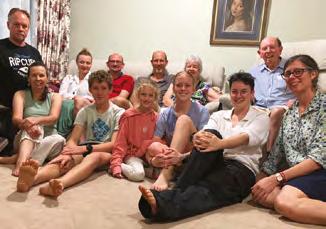
MCPHEE. Angus and Annita (nee Larwood) have commemorated their 60th wedding anniversary. They were married on 2.1.1966 at the Midland Seventh-day Adventist Church, then located at 10 Brockman Road, Midland (WA), with Pastor Wilf Rudge officiating. Angus and Annita have three sons: Conrad, who is married to Yulia (nee Oleynikova), Michael, and Luther, who is married to Rebecca (nee Browning). They are also blessed with five grandchildren. The milestone anniversary was celebrated at home with family and relatives who were able to attend.
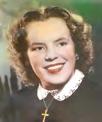
GORIS, Eve Maureen, born 27.3.1937 in England; died 4.12.25 in Morwell, Vic. Maureen is predeceased by her brother, Marvin. She is survived by her children, Jasmine, Julie, Rose, Danny, Colin, Robert and Meropi; siblings, Errol and Wendell; 14 grandchildren; and 17 great-grandchildren. Maureen was a beautiful soul, deeply loved by her family. She was a faithful follower of Jesus and will be greatly missed.
David Pearce
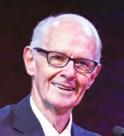
KRIEG, Pastor Morris, born 3.2.1945 in Subiaco, WA; died 27.11.25 in hospital at Wantirna, Vic. Morrie married Bernice (nee Roberts) on 5.1.1970. He is survived by his
wife; children, Julie Clark and Jon and Estelle Krieg; and grandchildren, Oliver Clark, Thomas Clark, Jonathan Krieg and Logan Krieg. Morrie trained for the ministry at Avondale, ministered in Victoria, WA, SNSW, and retired in 2005, but continued part-time work as a celebrant. He is remembered as a “great bloke” who loved his family, preaching the gospel of grace, and driving buses and trucks. Looking forward to meeting again in heaven.
Peter McGowan
PENAVA, Eva, born 20.12.1952 in Vukovar, Croatia; died 28.12.25 in Alstonville, NSW, and was laid to rest in Stanthorpe, Qld. Eva is survived by her sister and brother-in-law, Gloria and Michael Lukich (Wollongbar, NSW); brother and sister-in-law, Steve and Desanka Opacak (Stanthorpe, Qld); and her nieces and nephews, Sandra, Daniel, Benjamin and John. Eva fought cancer three times but claimed the ultimate victory, as described in her favourite Bible verse, 1 Corinthians 15:57: “Thanks be to God who gives us victory through Jesus Christ.”
Joseph Maticic
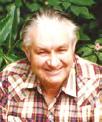
YOUNG, Norman Keith, born 10.11.1933 in Irishtown, Tas; died 4.12.25 in Emmerton Park, Smithton. Norm was predeceased by his wife, Rhona (nee Smith); sister, Beverley Fiegert; and grandchild, Natika. He is survived by daughters, Kaylene and Graham Wadd (Sunshine Coast, Qld), Janelle and Frances Choy (Coogee, NSW), and Venita and Colin Waters (Newcastle); grandchildren, Tristan, Jayden, Tianna, Matthew, Michelle and Elysse; great-grandchildren, Adalee, Lachlan, Toby, Aston, Finley, Maya and Jett; and sister, Annette Baldwin (Castle Hill). Norm was remembered as a pioneering, skilled and wise man who thrived in many trades and as a successful farmer and businessman. He loved his
family, was a man of prayer and member of Smithton Adventist Church. His life philosophy was “take it one day at a time”. Harley Stanton
IN THE STEPS OF PAUL TOUR OF TURKEY AND GREECE
September 13 to October 4, 2026. Follow the footsteps of the apostle Paul, connecting faith to the ancient sites of Ephesus, Corinth, Thessaloniki and Philipi. Visit the Seven Churches of Revelation and overnight on the Isle of Patmos. Conducted by Dr Peter Roennfeldt. Contact Anita at <alltrav@bigpond.net.au> or 0405 260 155.
THE INCREDIBLE JOURNEY
Discover the biblical sites of Israel, Jordan and Egypt in Oct-Nov 2026. Join Pastor Gary Kent on an amazing and unforgettable travel journey. For full details please contact Anita at Allround Travel <alltrav@ bigpond.net.au> or 0405 260 155.
STUDY THE ADULT SABBATH SCHOOL LESSON YOUR WAY
Accessible formats for vision loss (large print, audio CD, app, YouTube, podcast and braille) or hearing loss (Hope SS captioned). Contact CVHS on +61 (02) 9847 2296 or email <cvhs@adventistmedia.org.au>
AVONDALE FAMILY
FUNERALS. Offering compassionate cremation and burial services with dignity and care at your cemetery of choice in NSW led by an Adventist funeral director. Contact Mark Windus on 0411 797 854 or <director@ avondalefamilyfunerals.com.au>.
RECORD QUANTITIES
Is your church receiving the correct number of Record magazines? Adjust your numbers by notifying Kelli Geelan at <subscriptions@record.net.au> or on +61 (03) 5965 6300.
NOTE: Neither the editor, Adventist Media, nor the Seventh-day Adventist Church is responsible for the quality of goods or services advertised. Publication does not indicate endorsement of a product or service. Classified advertisements in Adventist Record are available to Seventh-day Adventist members, churches and institutions only. All advertisements, appreciation, anniversary, wedding and obituary notices may be submitted via <ads@record.net.au> or online at <record.adventistchurch. com>. Notices will not be reprinted unless there is an error of fact caused by Record staff.
abn 59 093 117 689 vol 131 no 3
Consulting editor
Glenn Townend
Editor
Jarrod Stackelroth
News editor
Juliana Muniz
Assistant editors
Ashley Jankiewicz
Danelle Stothers
Copyeditor
Tracey Bridcutt
Graphic designer
Theodora Pau’u
Noticeboard
Julie Laws Letters editor@record.net.au
News & photos news@record.net.au
Noticeboard ads@record.net.au
Subscriptions subscriptions@record.net.au + 61 (03) 5965 6300
Mailed within Australia and New Zealand
$A60.00; $NZ90.00 Other prices on application
Website record.adventistchurch.com
Mailing address
Adventist Media Locked Bag 1115 Wahroonga NSW 2076 Australia + 61 (02) 9847 2222
Cover credit Ken Taitin
Next issue
Adventist Record March 7
isn’t a dream—it’s a skill.
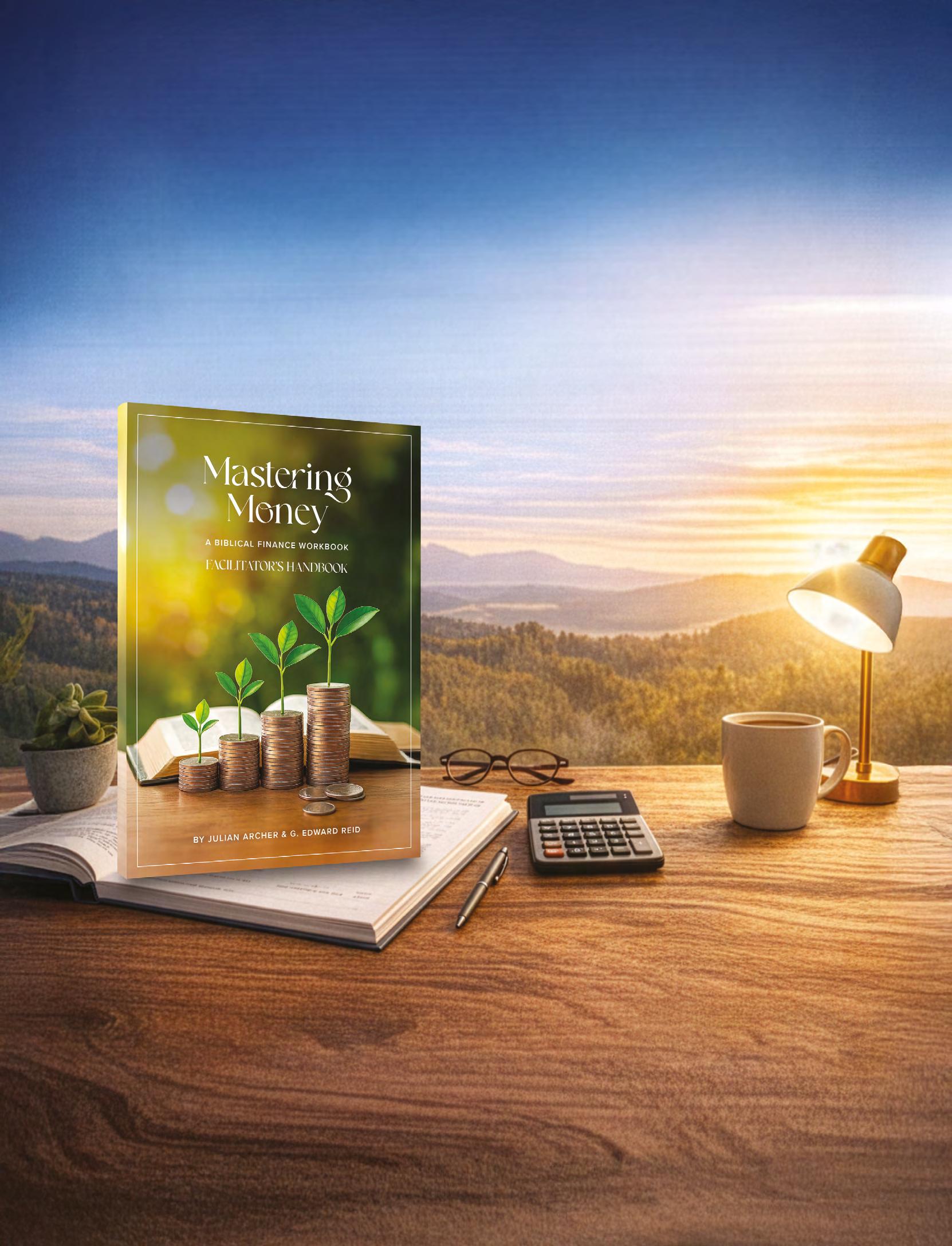
MASTERING MONEY IS A BIBLE-BASED COURSE FOR PEOPLE WHO WANT TO MANAGE MONEY BETTER IN THE REAL WORLD. Scan the QR code to

Dates: 22–24 May 2026

Patrice Macgregor Founder & Director, Gobsmacked Productions

Derek Rippingale Tech Company Co-founder & CEO

Galen Gan Investor & Property Developer
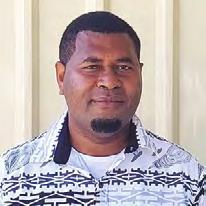

Jesse Zwiker Entrepreneur & Co-founder of Hyve

Location: Auckland, New Zealand

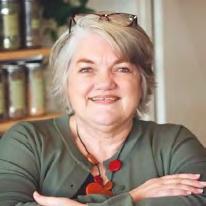
Jeremy Dixon Founder, Revive Cafe & Cookbooks Kim Stirling Director, The Herbary Dispensary & Clinic
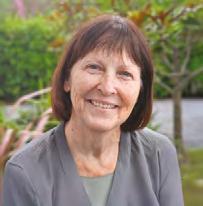
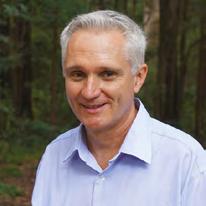
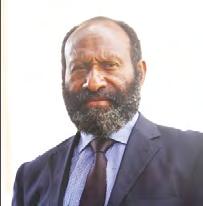
James Kiangua PNG Union Mission Stewardship Director
Ronny Davidson Business Owner, Fundraiser & Social Enterprise Manager
Manasseh Hap Managing Director & Owner of Aimop Hire Cars Jenni Rippingale Business Owner and Volunteer
McTernan Innovation & Marketing Leader, South Pacific Division