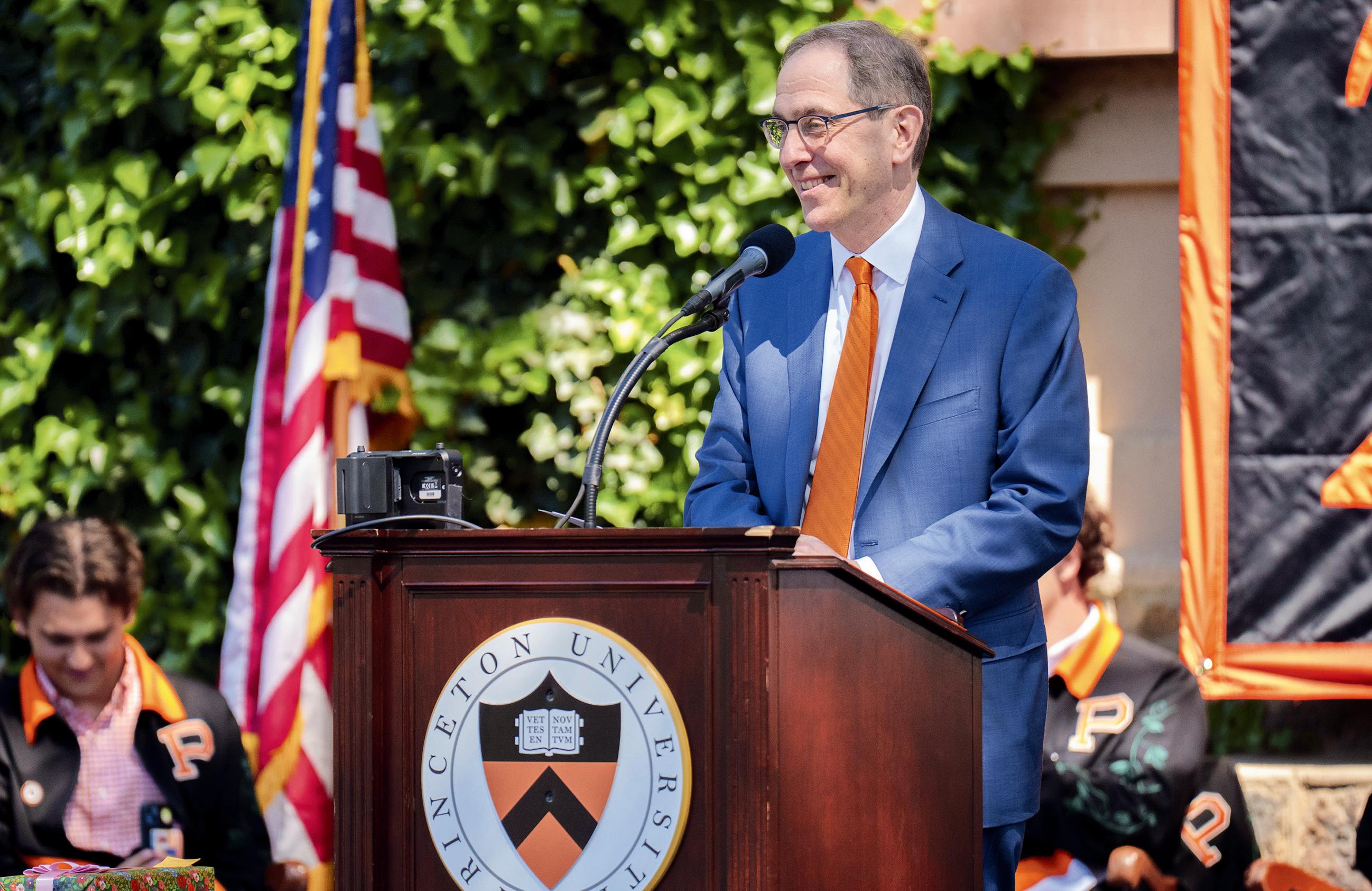
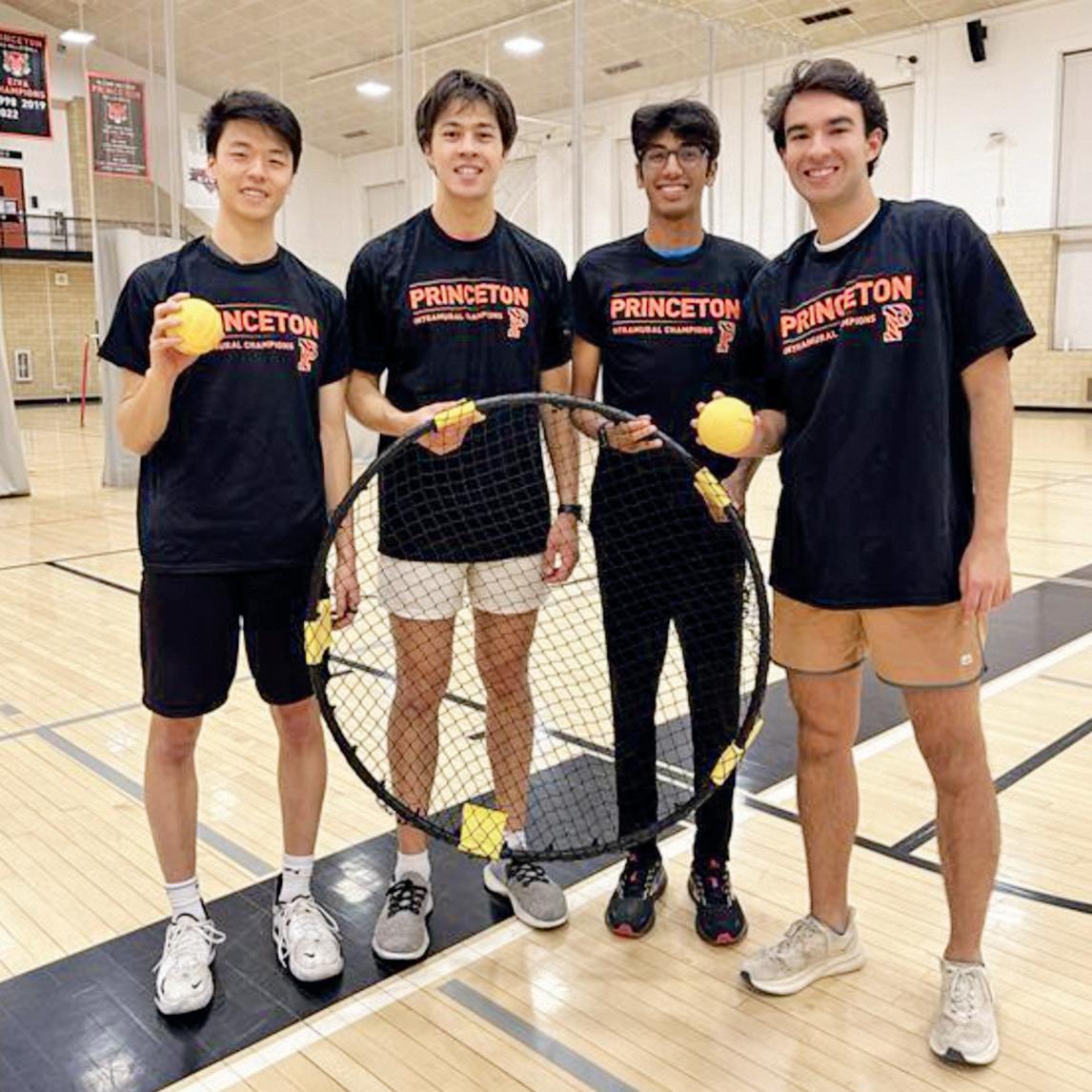
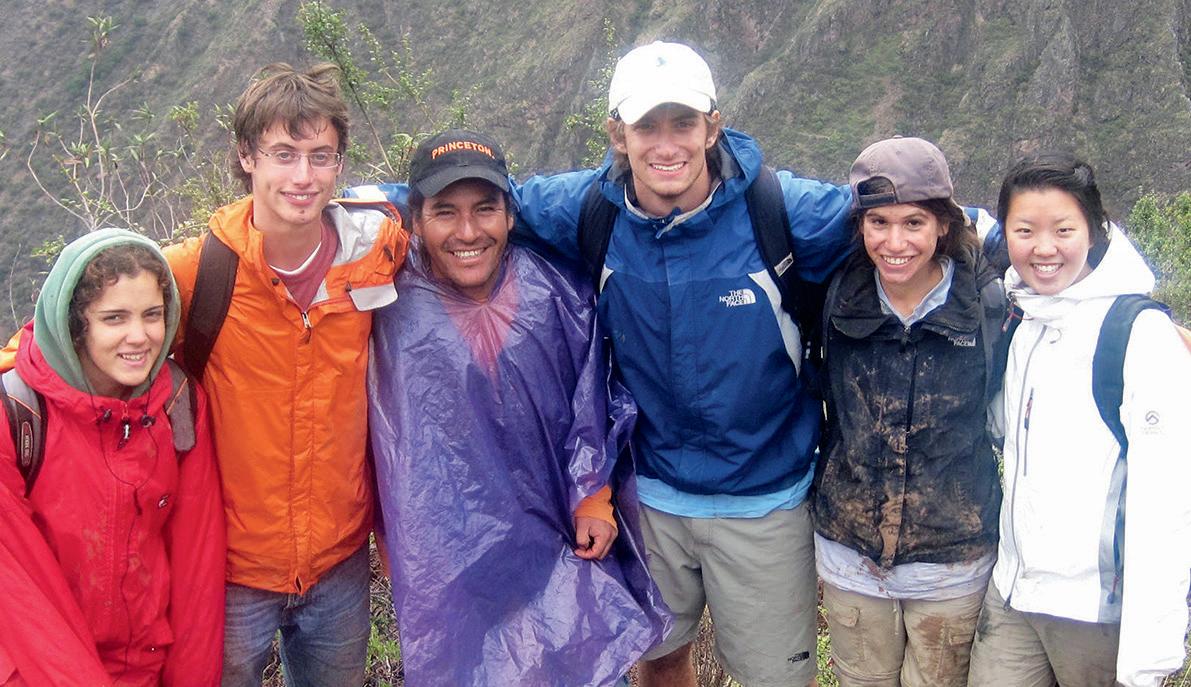
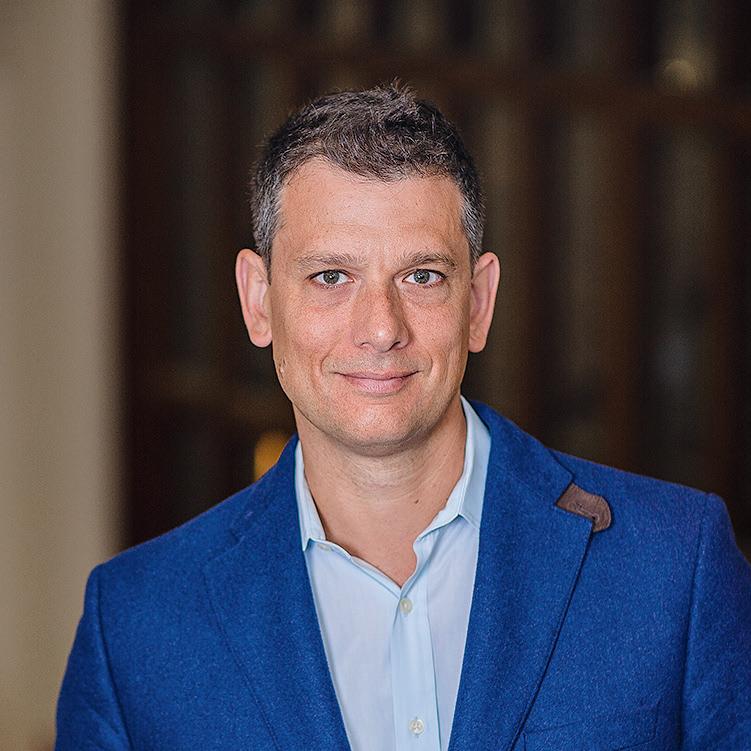
will continue to speak up vigorously and often for the values of this University, including scholarly excellence, truth-seeking research, academic freedom, free speech, diversity and inclusion, and the importance of a liberal arts education that prepares students not only for their careers but for lives of service and citizenship.”
— PRESIDENT CHRISTOPHER L. EISGRUBER ’83
President’s message of gratitude and celebration
Forward to expand transformative educational experiences
Forward to ensure that students flourish
Forward together for the next generation of Princetonians
Forward to evolve the campus for the 22nd century
Forward to advance a new era of diversity and inclusion
Forward to build alumni community beyond campus
Forward to examine fundamental questions and shared experiences
Forward to support world-class teaching and research
Forward to develop new technologies that reimagine the possible
Forward
FORWARD AND BEYOND
As we mark the completion of the Venture Forward campaign, I am filled with gratitude when I consider what we have accomplished together. Your service, your leadership, and your generosity have helped us realize an ambitious vision for Princeton, and you have emphatically reaffirmed the University’s core values while helping us build for its future. Your impact has been nothing short of extraordinary. Venture Forward, a mission-driven campaign dedicated to meeting today’s complex challenges and those of the future, has been one of the most successful campaigns in Princeton’s history, in terms of dollars raised, alumni engaged, and beneficial impact on the University’s foundational pillars of teaching, research, and service. Together, we have transformed the campus, expanded opportunity for a greater number of talented students, and made audacious bets on people who are pushing the boundaries of what we can know and discover.
New centers of inquiry and state-of-the-art facilities have made it possible for us to accelerate science and engineering discovery; address urgent challenges to the health of people and the planet; extend Princeton’s leadership in data science and artificial intelligence; and strengthen the arts, humanities, and international studies. A new Princeton University Art Museum opened in the heart of campus, and gifts to establish more than 65 new endowed professorships now support the world-class faculty whose teaching and research are making a powerful difference in the world.
A new health center along with new athletics and recreation facilities in the center of campus and the Meadows Neighborhood have advanced the University’s commitment to a culture of health and wellness for students, faculty, and staff.
Gifts for three new residential colleges, more than 350 new undergraduate scholarships, and more than 60 new graduate fellowships have allowed us to increase the size of the student body and offer a transformative education with an unprecedented level of financial aid. Your endowed gifts and Annual Giving have helped us realize an 86% increase in student support since the start of the campaign.
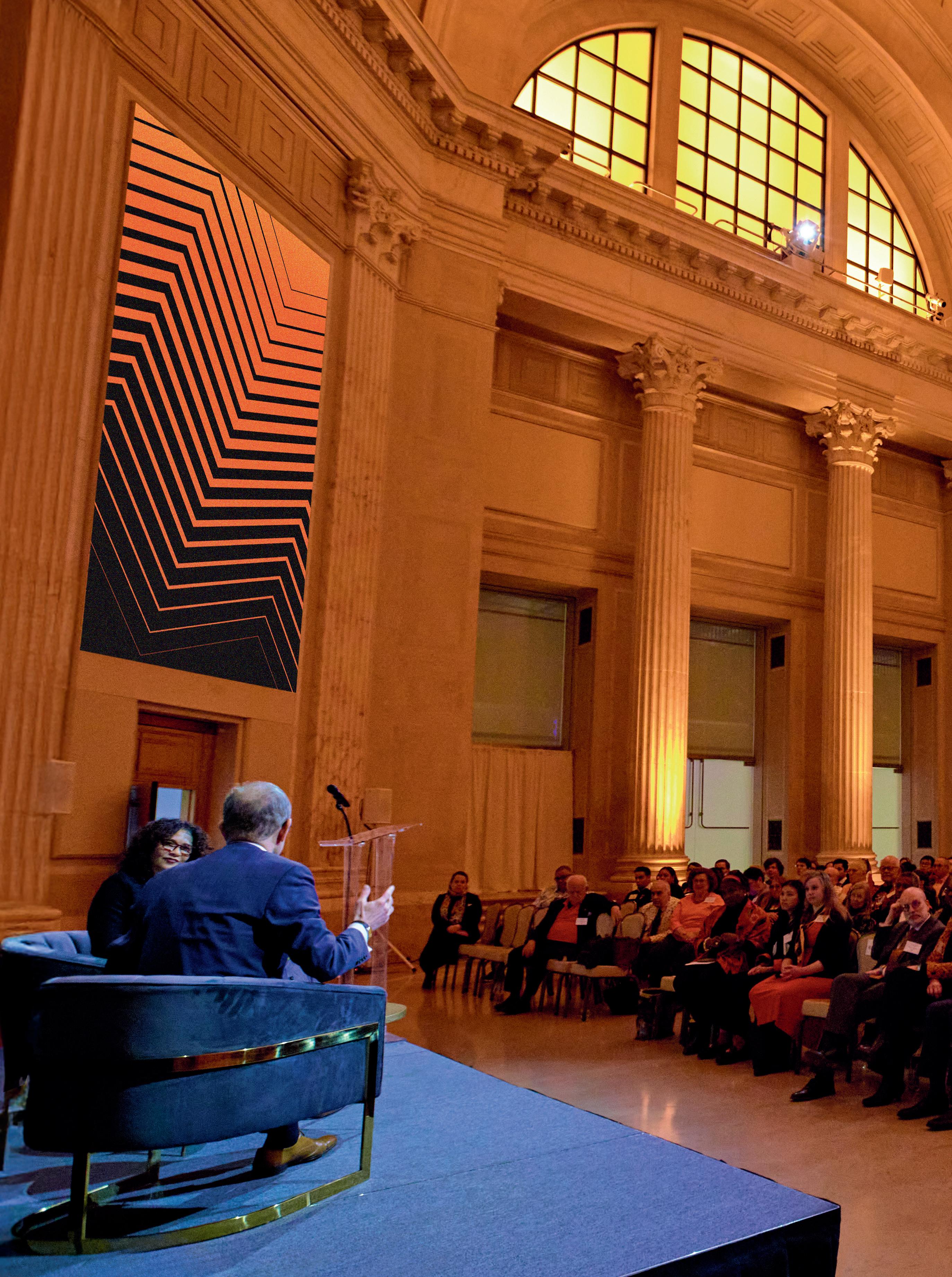
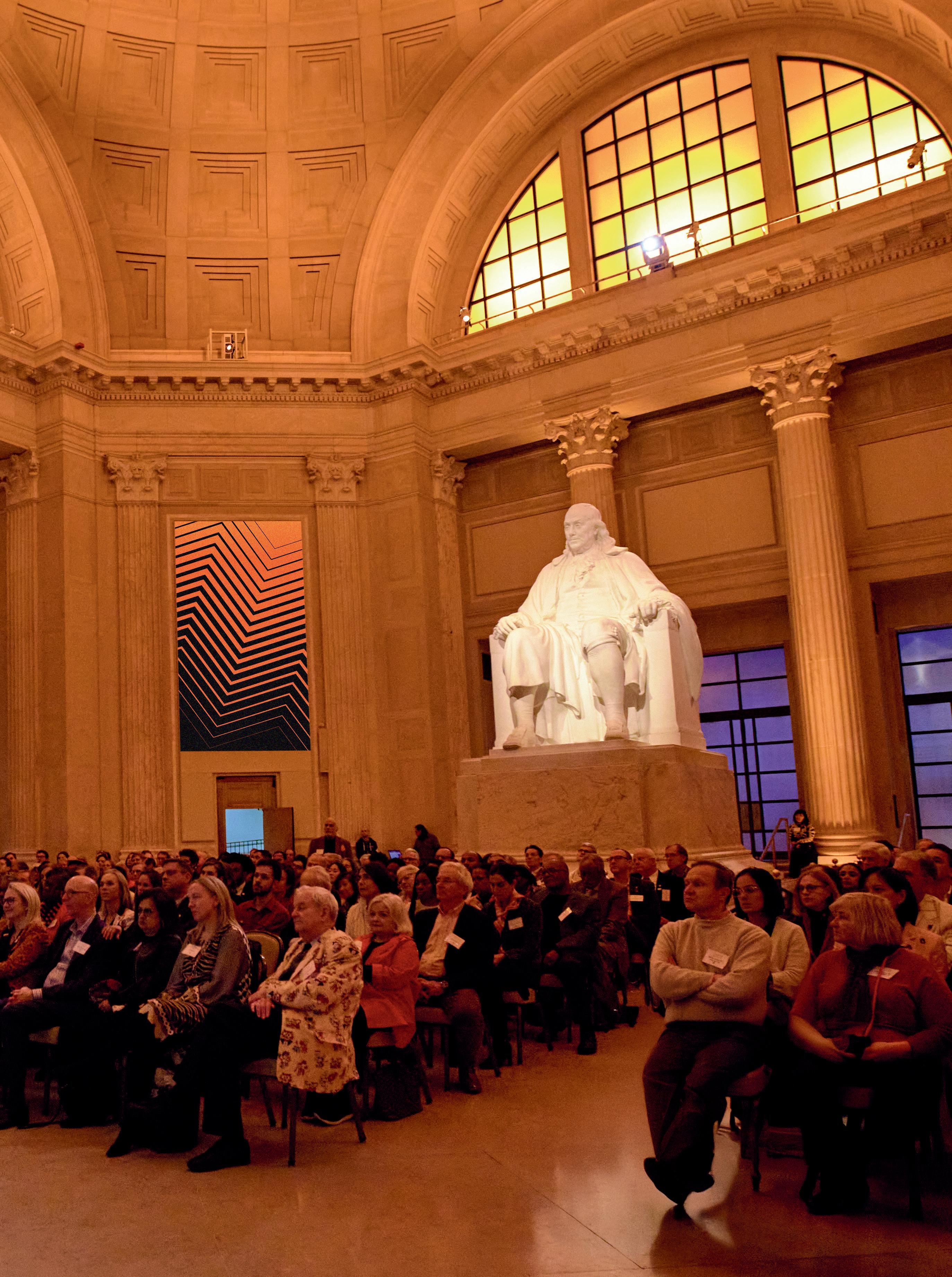
At campus events and Venture Forward gatherings, President Eisgruber shared the progress of the campaign and its support of the University’s mission.
SCAN ME to watch highlights of the all-alumni events with President Eisgruber.
On and beyond the campus, we have created new opportunities for alumni to deepen their bonds with each other and with the University. During the campaign, I have been thrilled for Princeton to engage with its vast alumni community all over the world, at all-alumni Venture Forward gatherings on four continents.
Thank you for your extraordinary support of Princeton and higher education. I hope that as you read this report, you will marvel, as I do, at the magnitude of what you have helped make possible. As we celebrate what we have built, let us also celebrate the spirit that impels us always to look beyond our present to imagine the possible. I look forward to venturing beyond with you in the coming years to pursue new avenues of inquiry, to stand up for our abiding values, and to continue to make audacious bets on human potential.
Christopher L. Eisgruber ’83 President
Venture Forward helped make it possible to say “yes” to 125 more undergraduate students who apply for admission each year.
In 2025, Princeton completed a four-year expansion that increased its undergraduate student body by 10%. Venture Forward support allowed the University not only to maintain its distinctive educational experience and abiding commitment to affordability but also to increase its financial aid for students.
In 2001, Princeton became the first university to replace loans with scholarships in its aid packages so that every admitted student can afford to attend and graduate without significant debt. Due in part to the extraordinary philanthropic support of alumni and friends, the average scholarship grant of $73,000 covers 100% of Princeton’s tuition and most housing costs, helping talented students from every background come to Princeton and thrive here.
In the Graduate School, more than 3,000 scholars are currently
pursuing doctorates or master’s degrees in 43 different academic disciplines. In 2022, the University raised graduate fellowship and stipend rates by an average of 25%, followed by another 5% increase the following year, transforming the possibilities for Princeton’s next generation of educators and researchers.
Princeton’s commitment to making audacious bets on talent — for undergraduate and graduate students — will have a transformative impact both in their lives and for humanity.
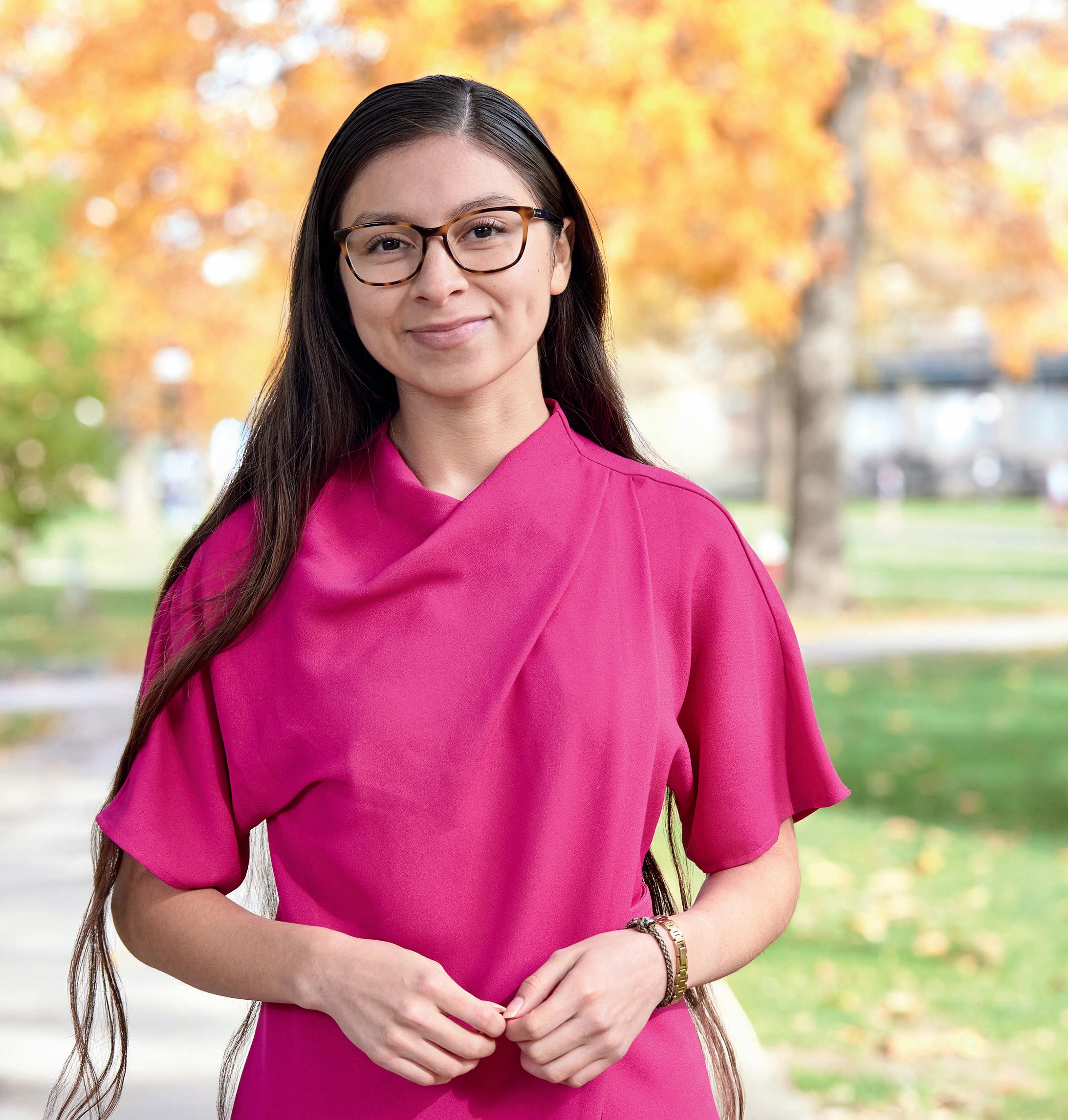
My mother [had to] stop going to school in seventh grade, so coming to Princeton is such an opportunity — not just for me, but for my entire family. I’m so grateful to the people who care so much about this place and invest in the futures of students like myself.”
NELY SERRANO RIVAS ’25, Oakland, California
NELY SERRANO RIVAS ’25 doesn’t run from a challenge. A standout student at a military school in Oakland, California, she faced a major decision as a high school senior: stay closer to home and attend a university in California or attend Princeton. Ultimately, she opted for the unknown. “Putting myself in a situation where I can’t run back home when things get hard challenged me to grow as an individual, to face things head-on,” she said. The academic learning curve was steep, but Rivas “built up the confidence to be vulnerable and asked for help.” She took classes in Latin American studies, politics and entrepreneurship, with hopes of attending law school and helping people in marginalized communities like recent immigrants. “It’s not just about, ‘Have I made a difference?’” said Rivas. “It’s about whether that change is going to create a rolling effect and not become stagnant. I feel like there’s so much more left inside me to give.”
72%
Percentage of students in the Class of 2028 who receive financial aid, a 31-point increase since Princeton introduced no-loan financial aid in 2001
$671M
Total financial support for undergraduate and graduate students for 2025-26, an 86% increase since the beginning of the Venture Forward campaign
350+
Number of scholarship funds established since the launch of the campaign, plus hundreds of additional gifts to existing funds
60+
Number of new graduate fellowships endowed during the campaign
89%
Percentage of recent seniors who graduated debt-free
FORWARD to expand transformative educational experiences
During the Venture Forward campaign, the University received more than $300 million in gifts to establish scholarships for undergraduate students and fellowships for graduate students.
SCHOLARSHIPS
2007 Venture Forward Scholarship
50th Anniversary of Coeducation Scholarship
Barbara and Marcus Aaron ‘50 P80 Scholarship
A.J. Agarwal ’88 and Roswitha Mueller-Agarwal S’88 Scholarship
Albrecht Scholarship
James C. Alexander, Jr ’43 Scholarship
Michael Anderson ’97 and Bethany Coates ’98
Venture Forward Scholarship
Joseph E. Angelo ’54 P82 Scholarship
Apple Lane Scholarship
Thomas A. Arena ’86 Scholarship
Kemal Askar ’98 and Shirley Au S98 Scholarship
Bae Family Scholarship
Bailey Family Scholarship
Georgeta Baleanu Financial Aid Fund
Barrett Family Endowed Scholarship
Martin C. Battestin ’52 Scholarship
Turner R. Batty ’08 S09 and Christine Batty ’09 S08 Venture Forward Scholarship
Richard D. Baur ’92 Venture Forward Scholarship
Ryan ’98 and Jennifer ’98 Bergsieker Scholarship
Elliot Berk ’97 and Stephanie Berk S97 Venture Forward Scholarship
Biglari *87 Family Venture Forward Scholarship
Bjorkholm Family Scholarship
Susan Blatt ’73 and Ruthie Schwab ’09 Scholarship
James H. Blessing Scholarship
Mamdouha S. Bobst Scholarship
Bologna Whatley Family Scholarship
Page and Paul Bondor ’90 Scholarship
Bordeau Family Scholarship
Michael and Mimi Boublik Scholarship
Class of ’45 Boyd Scholarship
Pete and Devon Briger Scholarship
Jose A. Briones, Jr. ’92 and Silvia Ramirez Briones ’93 Scholarship
Brodie-Hanenberger Family
Venture Forward Scholarship
James H. Bromley ’60 Scholarship
John H. ’58 and Jytte Brooks S58 Scholarship
Brown Merewether Family Venture Forward Scholarship
Angelique G. Brunner *97 Scholarship
Bryant Family Venture Forward Scholarship
Trudy and Jonathan Gunn Bunge ’58 Scholarship
Nicholas Burgin ’96 and Courtney Burgin ’96
Goldman Sachs Scholarship
Emily Wilson Burns ’91 Venture Forward Scholarship
C. Merrill Burton ’61 Scholarship
Deborah Burton Memorial Scholarship
Caravel Foundation Scholarship
R. Carter ’33 Scholarship
Daniel H. Case III ’79 Family Venture Forward Scholarship
Dr. John Chang ’10 *14 Memorial Scholarship
Joseph Jin Chang *54 Memorial Scholarship
Myo and Young Chang Scholarship
George Bunker Chapman Scholarship
Chardi Kala Scholarship
Chen Family Scholarship Cheng Family Scholarship Cheng Family Scholarship
Jonathan Y. Cheng ’01 and Claire Sutherland Cheng ’01 Scholarship
Cho Family Venture Forward Scholarship
Gyeong-Sik Choi ’10 and Natalie E. Kim ’12 Scholarship
Class of 1958 Scholarship
Class of 1960 Memorial Scholarship
Class of 1978 Venture Forward Scholarship
Class of 1979 Scholarship
Class of 1982 Scholarship
Class of 1983 Scholarship
Class of 1985 Scholarship
Class of 1986 Scholarship
Class of 1987 Memorial Scholarship
Class of 1993 Venture Forward Scholarship
Class of 1995 Scholarship
Class of 1997 Financial Aid Fund
Class of 1997 Scholarship
Class of 2002 Scholarship
Class of 2007 Scholarship
Class of 2008 Scholarship
Class of 2012 Scholarship
Class of 2016 Scholarship
Class of 2024 Scholarship
Class of 2025 Scholarship
Class of 2027 Scholarship
Classes of 1997 and 1998
Venture Forward Scholarship
Alexander and Mildred A. Cohen P66 Scholarship
Myles and Eleanor S. Cohen Scholarship
Maurice Kirby Collette Scholarship
Cooper Family Endowed Scholarship
Katherine A. Courpas ’88 and Family Scholarship
Rachel Crane ’08 and Andrew Marks Family Scholarship
Jewel Biedenharn Crosswell Scholarship
Janet L. Cruikshank ’80 Scholarship
Robert W. D’Acquisto, MD ’72 Scholarship
Ben Dahl ’96 and Erica Dahl
Venture Forward Scholarship
Yang Dai ’08 Scholarship
Dallow Family Scholarship
Professor Ronald C. Davidson *66 Scholarship
Karen Roter Davis ’94 and Eric Davis Scholarship
William Neil Dawes ’55 Scholarship
Elizabeth McVey Dawson ’98
Memorial Scholarship
Decter Family Scholarship
Dr. Paul F. Deisler, Jr. *49 *52 P78 Scholarship
David and Peggy Dennison Scholarship
DGB Legacy Scholarship
Anne Matlock Dinneen ’99 and Darren Dinneen Scholarship
Dortzbach Family Scholarship
Nicole Drapkin ’06 and Marc Schaffer S06
Venture Forward Scholarship
Dupree Family Venture Forward Scholarship
Duraiswamy Family Scholarship
Michael and Michelle Duran ’96
Endowed Scholarship
Durban Family Scholarship
Economics, Finance and STEM Scholarship
Fredric L. Edelman MD ’54 P88 Scholarship
Selden S. Edwards, Class of 1963 Scholarship
Matthew D. Eisaman, Ph.D. ’00 S00
Memorial Scholarship
William S. Eisenhart, Jr., Class of 1934 Scholarship
Robert Eisenstadt, Class of 1963 Scholarship
James Anderson Elkins, III, Class of 1974
Scholarship
Robert and Mary Tabor Engel, Class of 1986, Family Scholarship
Enomoto and Li Family Scholarship
John F. Erhard ’96 Venture Forward Scholarship
Estes ’67 Family Scholarship
Thomas F. Evans *50 Scholarship
Marlene and F. Richard Everhart, Jr., M.D. ’66
Scholarship
John R. Fadely Scholarship
Heather Fleming Faust ’02 and Nathan Faust ’02 Scholarship Felsenthal Family Scholarship
Katherine Ferguson ’00 Scholarship
Feyer Family Scholarship
Stephanie E. Fisher ’94 and Nathan D. Fisher ’94 Scholarship
William ’79 and Remy ’14 Fisher Scholarship
FitzGerald Family Scholarship
Williams Fitzgibbons
Venture Forward Scholarship
Mr. Leroy A. Foster P01 Scholarship
Karen Williams Fox K19 P90 Scholarship Friel Family Scholarship
Anne-Victoire Auriault *12 and Dr. Benjamin Connault *15 Goldman Sachs Graduate Fellowship Fund
Ben Baldanza *86 and Marcia Baldanza
Fellowship for Molecular Biology
C. Ronald Bechtle Fellowship
Hamid Biglari *87 Behavioral Science Fellowship
Mamdouha S. Bobst Fellowship
Bristol-Myers Squibb Graduate Fellowships in Molecular Biology
Chang Family Venture Forward Fellowship
George Bunker Chapman Fellowship
Mary L. Deibel *76 Journalist Education Fund in the Woodrow Wilson School of Public and International Affairs
Elkins Foundation Bioengineering Fellowship
Russell Fuller and Richard Thaler Graduate Fellowship Fund
Geoscience Graduate Fellowship Fund
Graduate Fellowship Fund at the Paul & Marcia Wythes Center on Contemporary China
Graduate School 125th Anniversary Fellowship
Grand View Fellowship in Geosciences
D. R. Grenfell Fund
Professor Steven S. Gubser ’94 *98 Fellowship
Gunning Fund for Graduate Study in Mathematics
Harold Helm, Class of 1920 Graduate Fellowships
Yan Huo *94 Graduate Fellowships in Electrical Engineering
Samuel D. Isaly ‘67 Fellowship Fund in Molecular Biology
Julis Romo Rabinowitz Graduate Fellowship
Yun Kim *62 and Harold Kim *93 Graduate Fellowship
Hisashi and Masae Kobayashi *67 Fellowship
Anna Kovner ’96 Equity Graduate Fellowship
Frances Lane Fellowship Fund in Mathematics or Physics
Mary Zi-Ping Luo *85 Graduate Fellowship
Pierre Mendelsohn *93 Graduate Fellowship
James Mi *91 and Teresa Mi S*91
Graduate Fellowship
Ilian Mihov *96 Graduate Education Fund
Anna and G. Mason Morfit ’97 Fellowship
Moskewicz Venture Forward
Graduate Fellowship
Nelson Family Fellowship
Nimick Venture Forward Graduate Fellowship
Operations Research and Financial Engineering
Graduate Fellowship
Ada and Meyer Packer Memorial Fund
Warren B. Powell ’77 Graduate Fellowship
Quandt-Willig Venture Forward Graduate Fellowship
Scharf-Ullman Fellowship
Wei-Tong Shu *90 Fellowship
Mabel Wu So S*71 and Ronald M. C. So, PhD *71 Fellowship in Chinese Studies
Edward C. Taylor Graduate Fund in Chemistry
Xu Wang *01 Fellowship
Jean Hazlett and H. Kenneth White Fellowship in Architecture
Alan Yamakawa Graduate Fellowship in Physics
Yamakawa Graduate Fellowship
Cassidy Yang Memorial Fund
S.K. Yang Graduate Fellowship and Visitors Fund
Dr. Yun Zhang *12 and Mr. Yunpeng Wang
Graduate Fellowship
Juan Zhao Fellowship
FORWARD to expand transformative educational experiences
The Venture Forward campaign has amplified Princeton’s ability to help students succeed on their journey to, through and beyond college.
The Emma Bloomberg Center for Access and Opportunity, dedicated in 2023 following a gift from Bloomberg Philanthropies and Emma Bloomberg ’01, is an integral part of Princeton’s enduring commitment to attracting, enrolling and supporting extraordinary students from all backgrounds.
The center’s programs welcome FLi students — those from first-generation, lower-income backgrounds — military veterans, and community college and transfer students. Today, about 22% of Princeton first-year undergraduates are lower-income students who are eligible for federal Pell Grants (an increase from 7% in 2008). At the Bloomberg Center, students receive the mentorship, academic enrichment and community they need to successfully navigate the path through higher education.
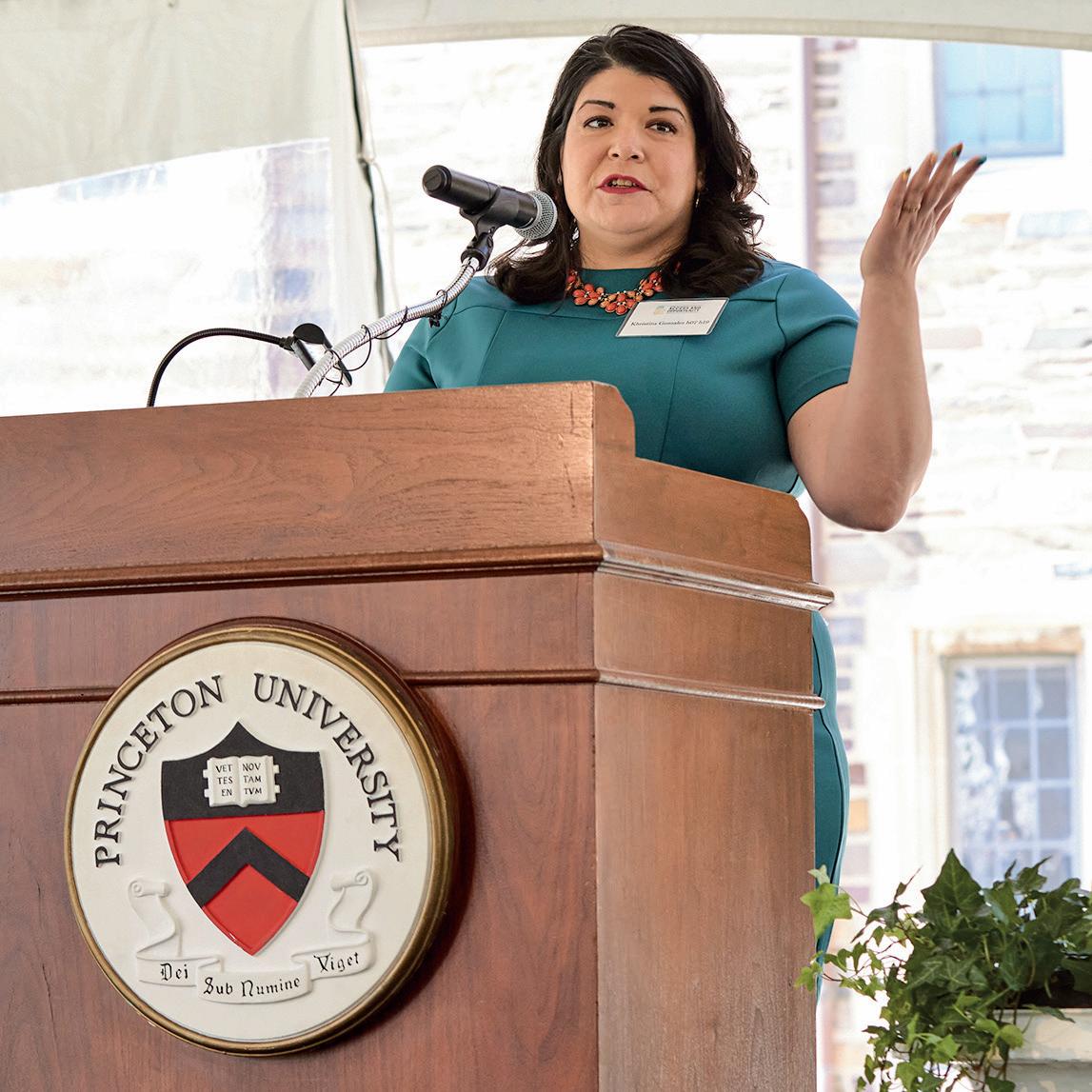
“Over the last five years, I have witnessed tremendous campus support — from faculty, staff, alumni and students — for the important work of building programs and policies that promote equity of access and opportunity and that empower the global community of FLi students to achieve their academic and professional goals,” said Khristina Gonzalez, senior associate dean of the college and Bob Peck ’88 Director of the Emma Bloomberg Center for Access and Opportunity. “These extraordinary gifts allow us to intensify these
ME to learn more about the Emma Bloomberg Center.
efforts — helping more students access college, ensuring that they have the opportunity to thrive on those campuses, and creating new channels to share best practices and research insights with other schools.”
Gonzalez, senior associate dean of the college and Bob Peck ’88 Director of the Emma Bloomberg Center for Access and Opportunity
16%
Percentage of students in the Class of 2028 who are first-generation college students
Khristina
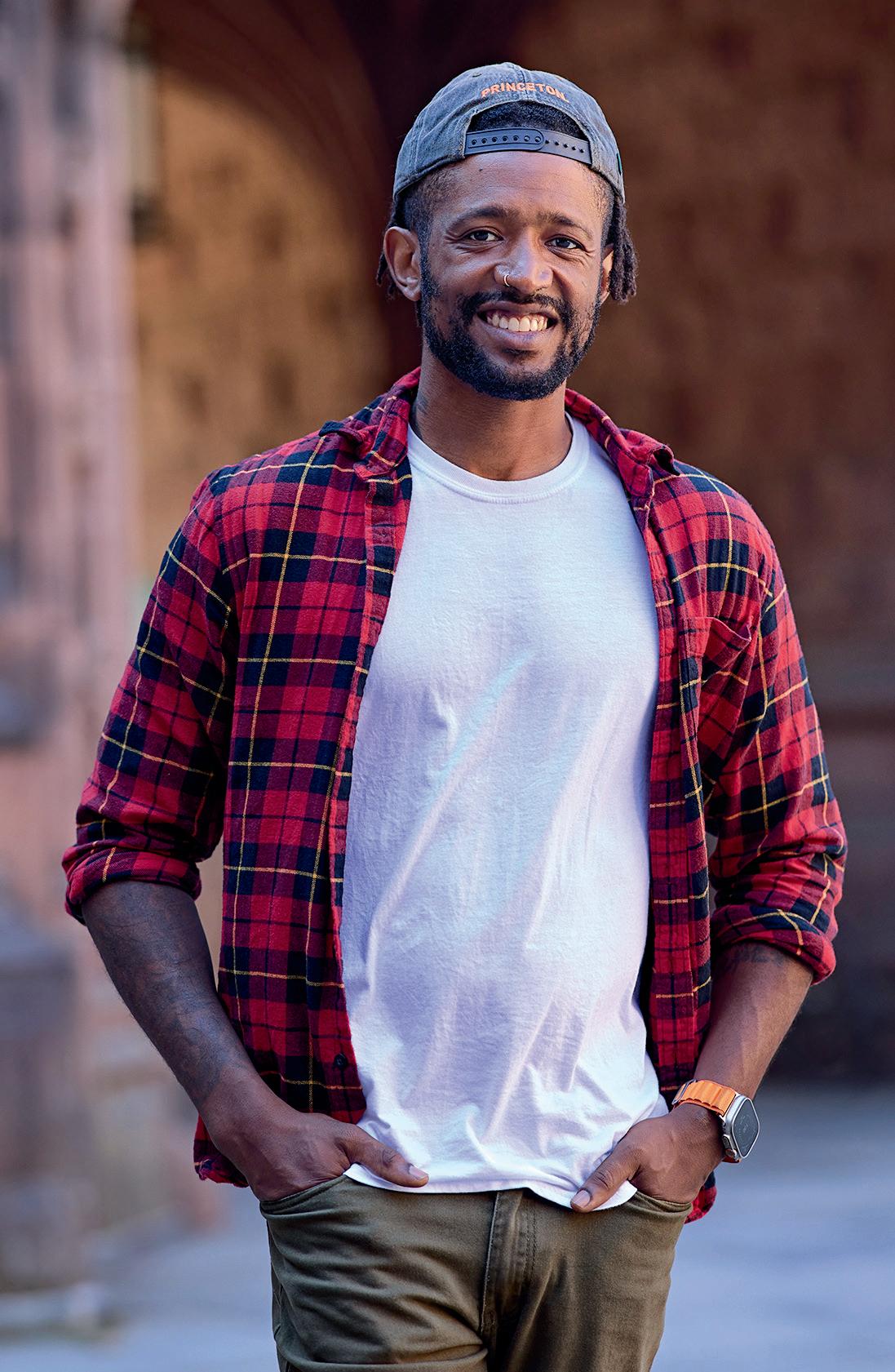
KENNY SIMMONS ’27
Hope Mills, North Carolina
Kenny Simmons’s path to Princeton has been unique. He was newly married and expecting a baby when he joined the U.S. Army, where he served as a special operations medic deployed to Uganda, South Sudan, the Congo and other locations. After 14 years of service, he left the Army to pursue his bachelor’s degree. “I got my first taste of academic life at top universities through a Warrior-Scholar Project boot camp, which simulates a week of a rigorous STEM or humanities course,” he said. After earning his associate’s degree at a community college, Simmons came to Princeton, where he is pushing his talents in science, math and medicine in new directions. “I’ve always just weaved everything into the single multidisciplinary education that I’ve been seeking,” said Simmons, who is focusing on African American studies with an eye toward law school. Being a student with family responsibilities sets him apart from many of his classmates, but Simmons credits the University’s willingness to meet the needs of nontraditional students. He praised the accessibility of professors and has found mentors across departments, from courses in photography to African American studies, who have helped him envision new possibilities for his future while staying true to his commitment to service.
111
Number of transfer students who enrolled at Princeton during the Venture Forward campaign
22%
Percentage of students in the Class of 2028 who are lower-income students eligible for federal Pell Grants
23
I have witnessed tremendous campus support for the important work of building programs and policies that empower the global community of FLi students to achieve their academic and professional goals.”
KHRISTINA GONZALEZ , Bob Peck ’88 Director of the Emma Bloomberg Center for Access and Opportunity
Number of military veterans who entered Princeton in fall 2024 as transfer students
Kenny Simmons ’27
FORWARD to expand transformative educational experiences
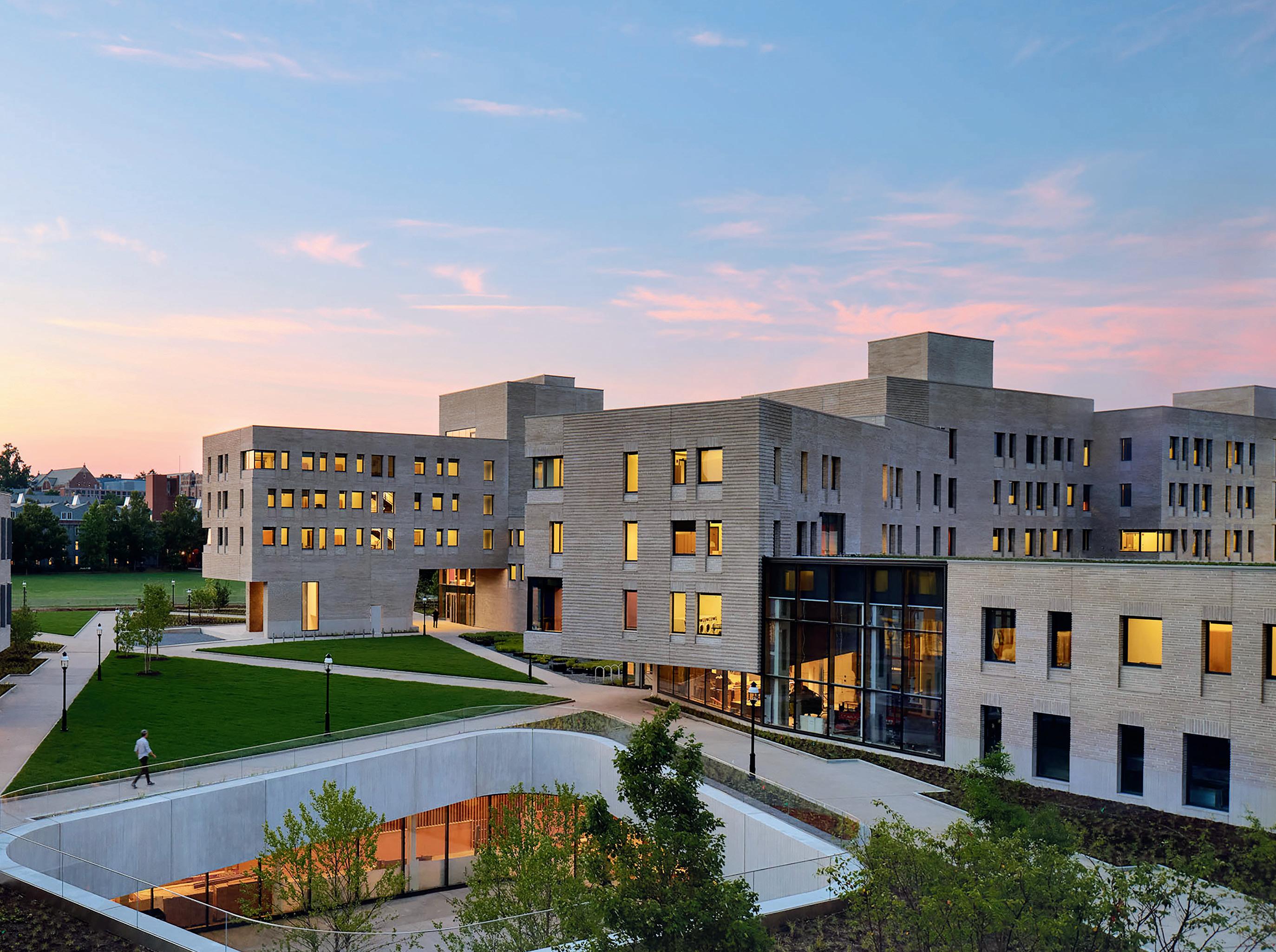
The Venture Forward campaign made the University’s strategic goal of expansion possible by enabling the construction of three new residential colleges.
In Fall 2022, students moved into two new residential colleges — Yeh College and New College West — that were built near Poe Field to support the expansion of the student body. In 2027, Hobson College will open to the residential community.
The two new colleges — one named for a gift from Jaimie and James Yeh ’87 — house approximately 1,000 undergraduates and two dozen graduate students in eight new residence halls that were designed “as a small village, full of variety and richness of experience,” according to Ron McCoy *80, University architect.
The increased capacity provided flexibility for the renovation of older living quarters, such as First College, which opened its doors as Wilson College in 1961. In its place will stand Hobson College, named for a gift from Mellody Hobson ’91. By expanding the undergraduate population by 10%, Princeton can invite more students to realize the benefits of a uniquely transformative education, enhance the diversity and vitality of the campus community, and contribute to society after they graduate.
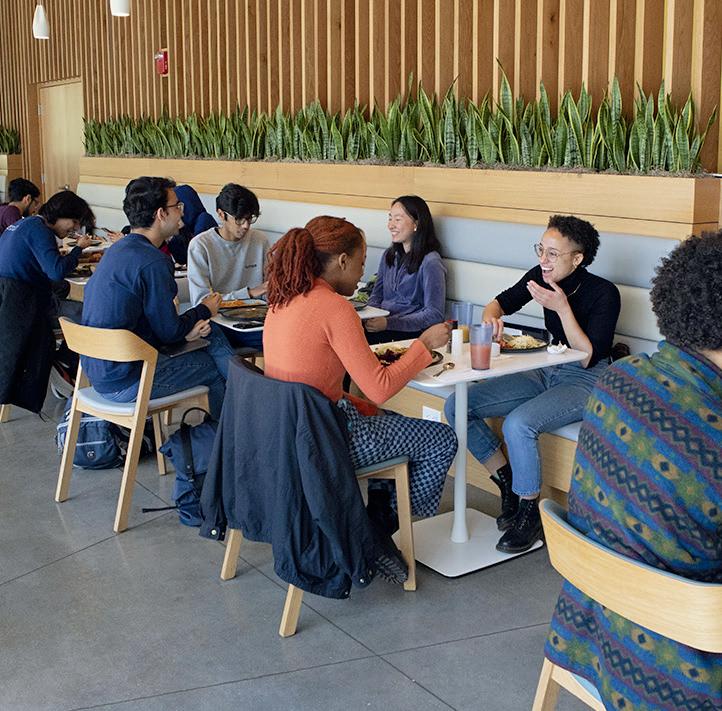
YEH COLLEGE and NEW COLLEGE WEST feature a number of unique communal spaces, including the Living Room, an outdoor sculpture of a large pink couch where students can gather, reflect and view arts performances. Both colleges are served by the Choi Dining Hall, which includes a fully enclosed courtyard for outdoor dining and gatherings.
“Our students are truly the spirit of this college,” said AnneMarie Luijendijk, head of New College West and the William H. Danforth Professor of Religion. “You can hear it in the melodies flowing from our grand piano in the Commons. You can see it in the art being created — by beginners and pros alike — in our ceramics studio. And you can even smell it in the aromas wafting from our dining hall … and from our demonstration kitchen.”
NEW RESIDENTIAL COLLEGE SPACES DEDICATED DURING VENTURE FORWARD
532
Number of additional students able to attend Princeton since Venture Forward began because of new residential college construction
1,020
Number of students who live in Yeh College and New College West
14
Number of unique living and gathering rooms and spaces in the new residential colleges
New College West and Yeh College opened in 2022.
FORWARD to ensure that students flourish
The Venture Forward campaign advanced the University’s culture of wellness with new health and fitness facilities in the center of campus.
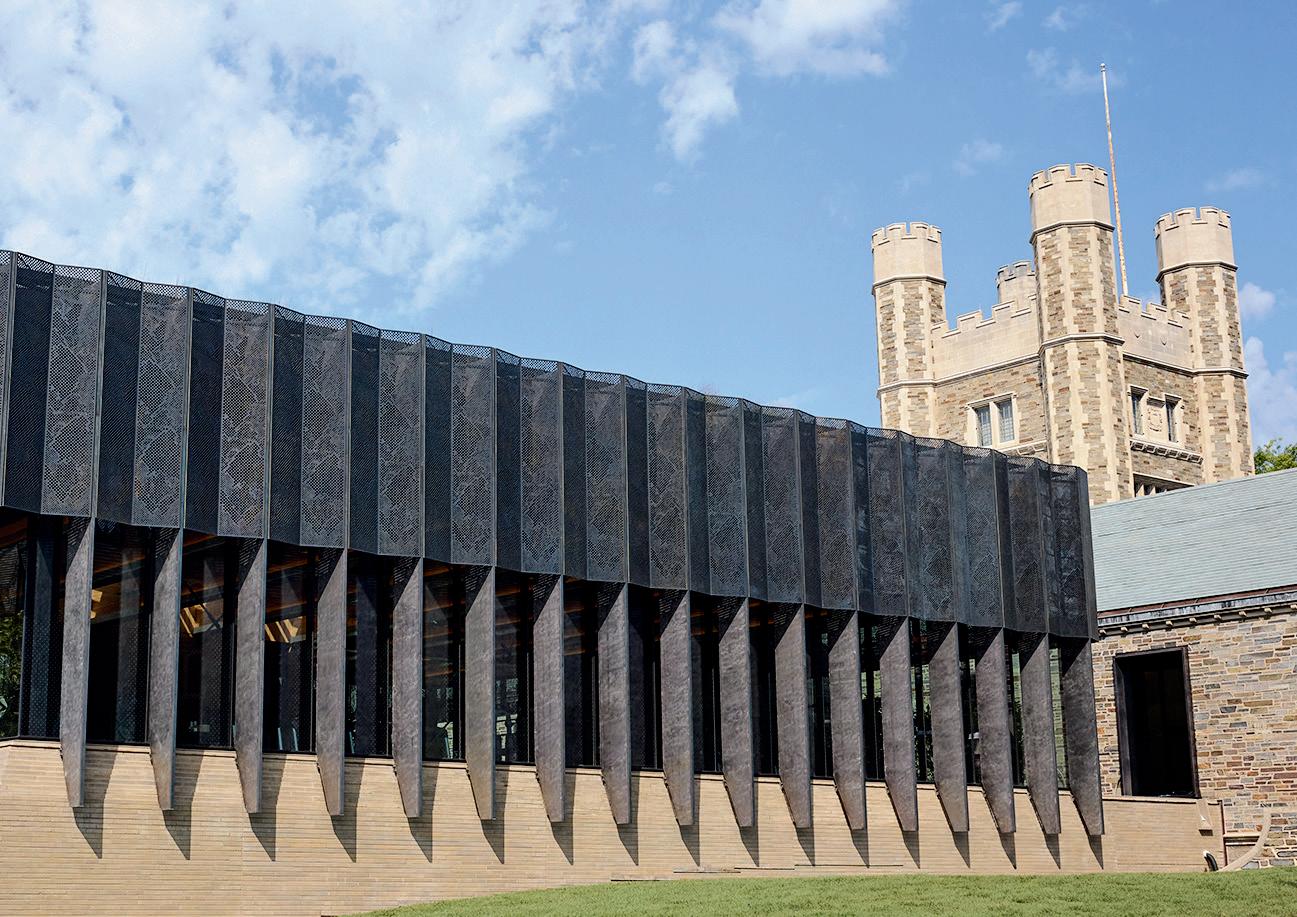
The Class of 1986 Fitness and Wellness Center is a light-filled, 40,000-square-foot building that complements the historic Dillon Gymnasium. It includes an accessible pedestrian entrance and lobby off Elm Drive and a two-story Wellness Pavilion.
The facility adds a revitalized fitness and recreation destination convenient to all the residential colleges. It provides an enhanced health and fitness experience, including new strength equipment, cardio equipment and two new fitness studios.
Dillon Gym, which houses Campus Recreation and attracts more than 300,000 visits every year, also underwent a major renovation that enhanced its Rec Pool and the Stephens Fitness Center and added a new outdoor basketball court. The new and renovated spaces increase accessibility throughout the building and further engage the University community in co-curricular experiences to inspire lifelong health and well-being.
SCAN ME to see more of the Class of 1986 Fitness and Wellness Center.
The Wellness Pavilion in the Class of 1986 Fitness and Wellness Center features an assortment of aerobic equipment, from treadmills to spin bikes to elliptical machines. Most days, the facility is open from 6 a.m. to midnight to accommodate student schedules.
FRIST HEALTH CENTER
The Frist Health Center, which opened in January 2025, is the centerpiece of Princeton’s commitment to well-being — a major pillar of the University’s strategic framework. Made possible by a gift from Thomas Frist Jr. and his late wife, Patricia Champion Frist, the Frist Health Center incorporates a renovated Eno Hall with a significant new addition to the south — creating a facility that is more than double the size of McCosh Health Center, the previous home of University Health Services.
The facility has been designed to be healing in character, with serene spaces, adjustable lighting and temperatures, and access to nature that provide an attractive setting for
a mix of academic, programmatic and social activities. Through its crossroads campus location at the intersection of Goheen Walk and Guyot Lane, the new Frist Health Center serves as a focal point of campus activity and provides dynamic health and wellness programs that serve the entire Princeton community.
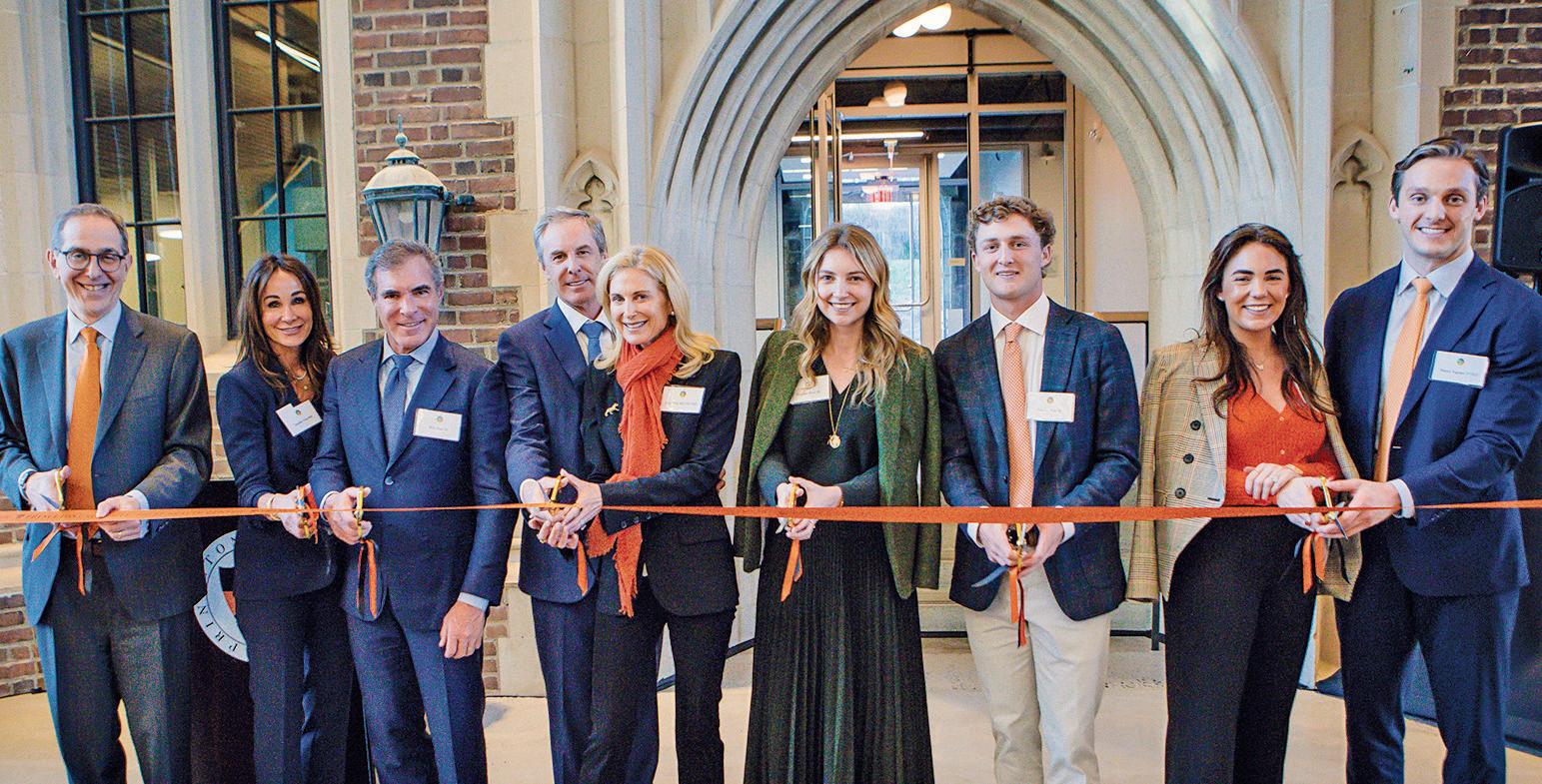
Members of the Frist family, joined by President Eisgruber (far left), celebrated the dedication of the new health center in April 2025.
FORWARD to ensure that students flourish
Venture Forward enhanced the University’s commitment to wellness and the student-athlete experience through newly endowed varsity coaching positions and state-of-the-art facilities in the Meadows Neighborhood.
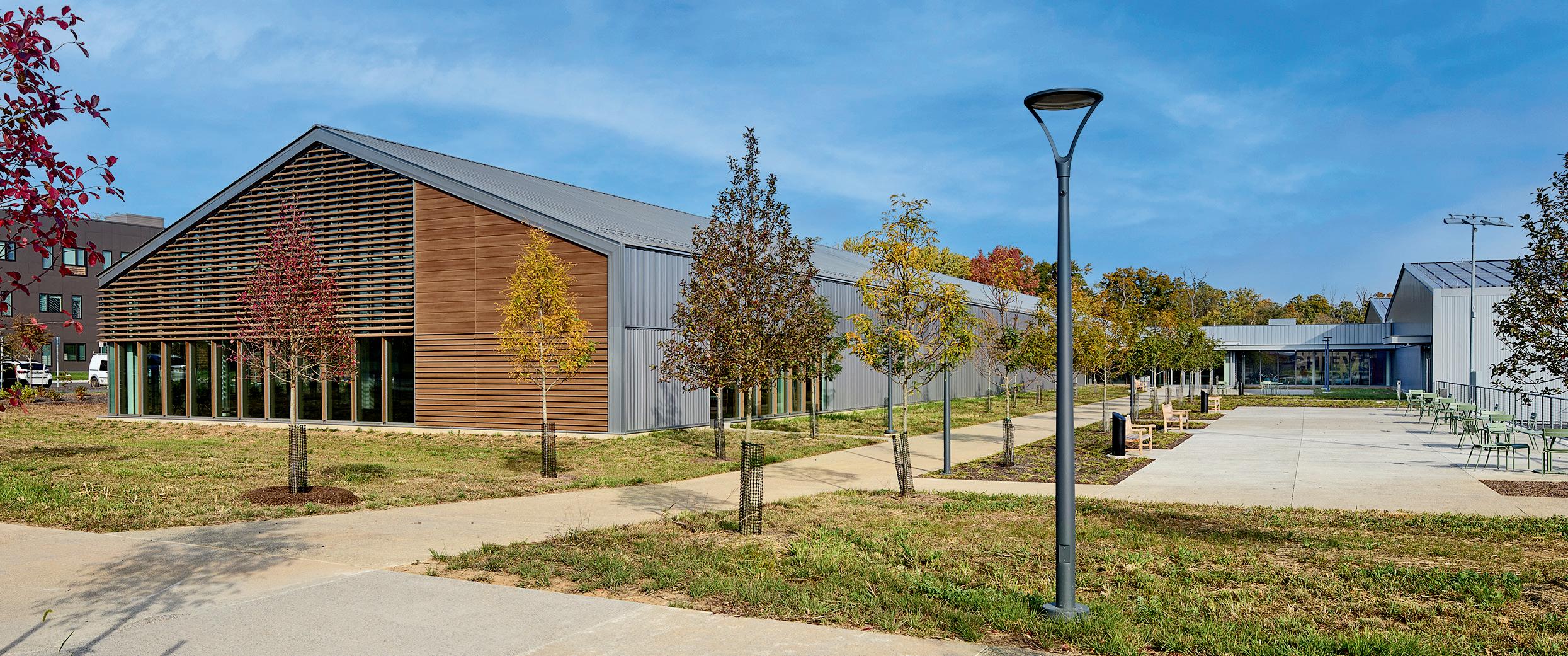
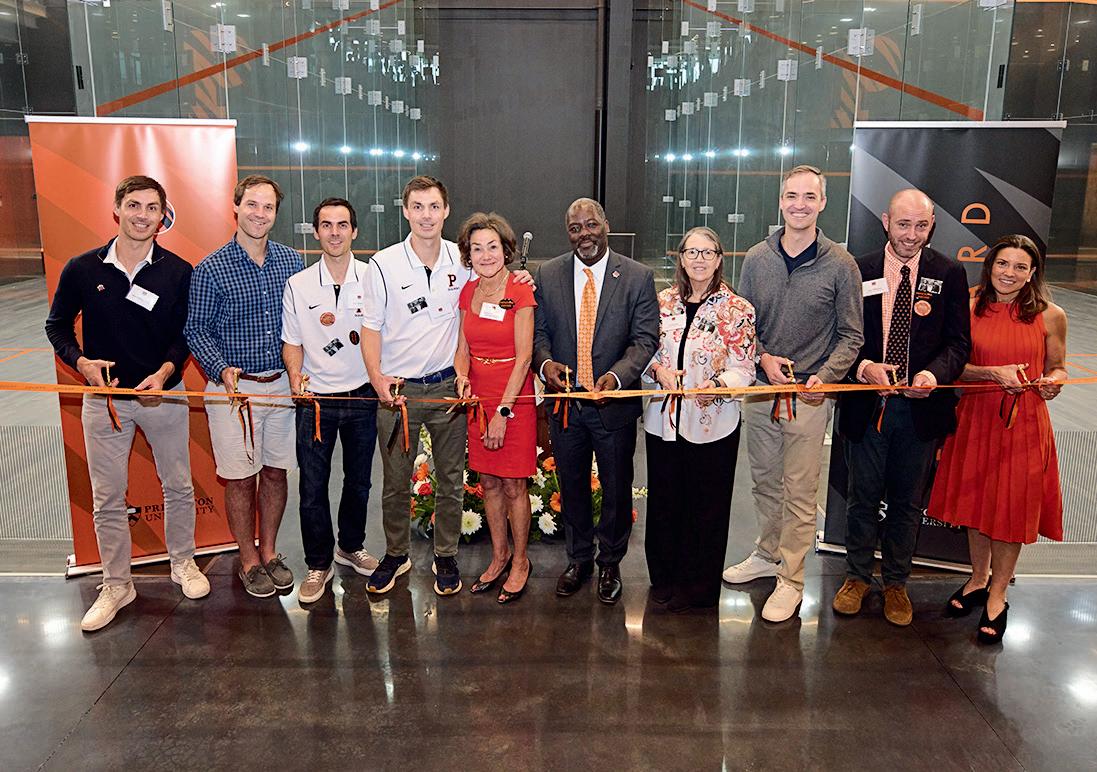
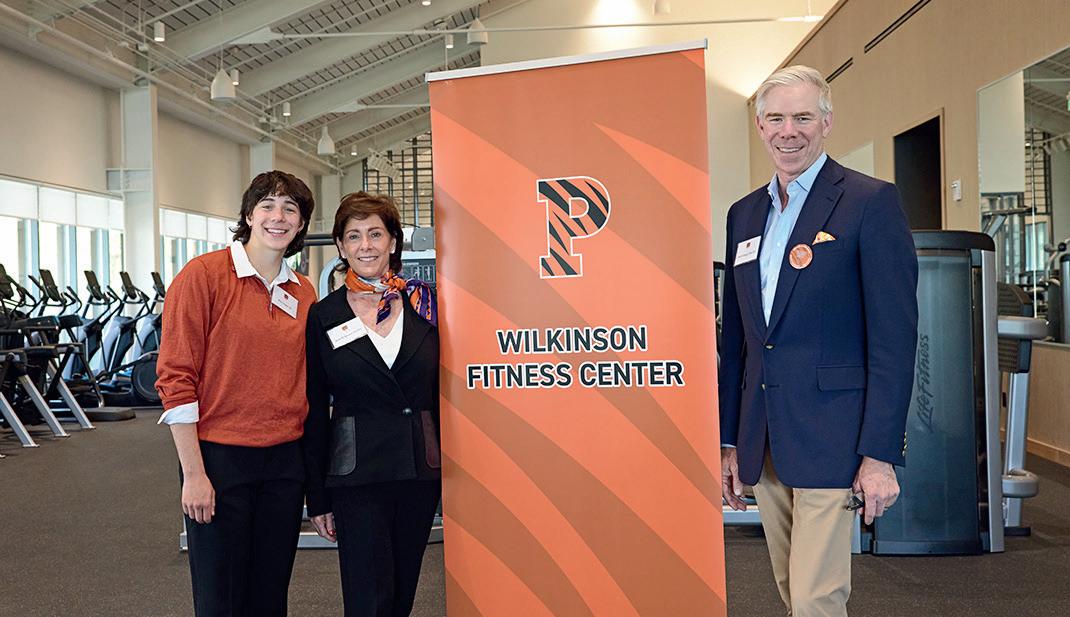
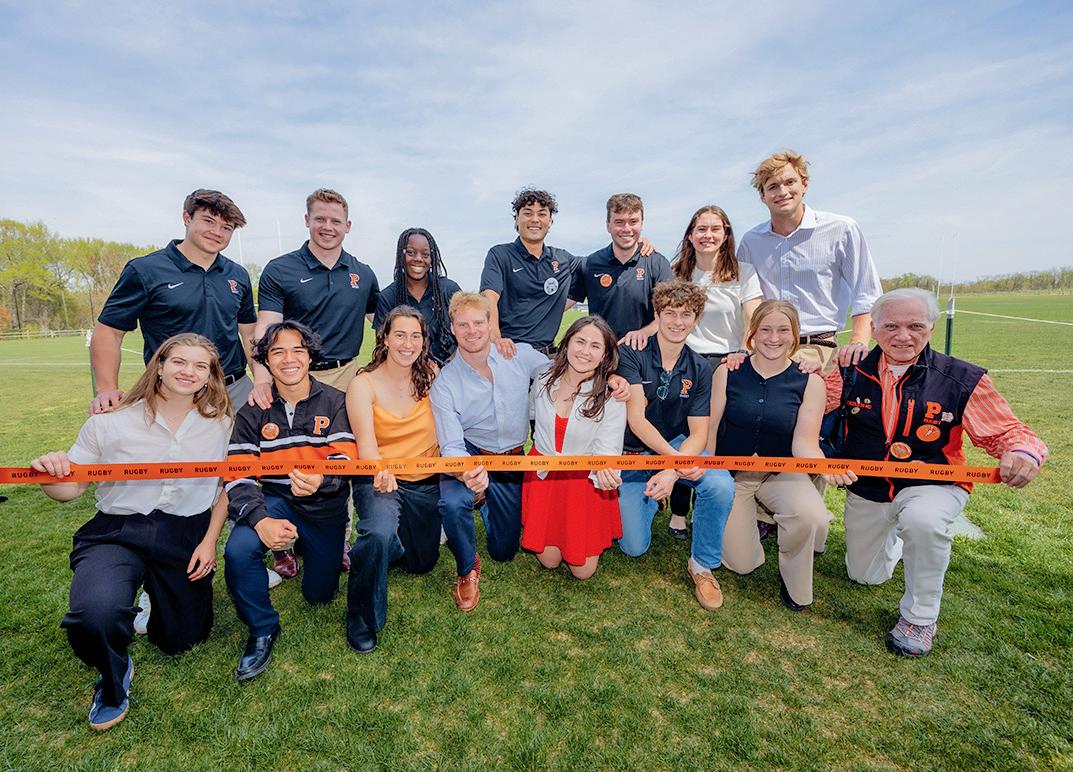
A dynamic, mixed-use development that also includes new graduate student housing, the Meadows Neighborhood is the new home of Princeton’s varsity squash, tennis, softball and women’s rugby teams, as well as the home for numerous club teams and intramural sports. All students and members of the University community have access to the new Wilkinson Fitness Center.
The centerpiece of the new athletic hub is the Racquet and Recreation Fieldhouse, which includes squash courts, the SI QIN FAMILY
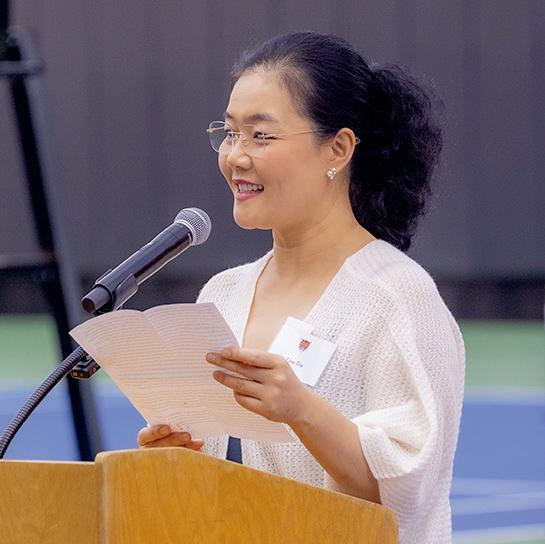
INDOOR TENNIS CENTER (inset photo of Si Qin’s wife, Lina Zha) the Wilkinson Fitness Center, athletic performance and sports medicine facilities, a student-athlete lounge, team locker rooms and coaches’ offices. Princeton’s softball, squash, tennis and women’s rugby teams now enjoy locker rooms, coaches’ offices, varsity strength and conditioning facilities, and sports medicine space all under one roof for the first time.
SCAN ME to see more of the new athletic facilities in the Meadows Neighborhood.
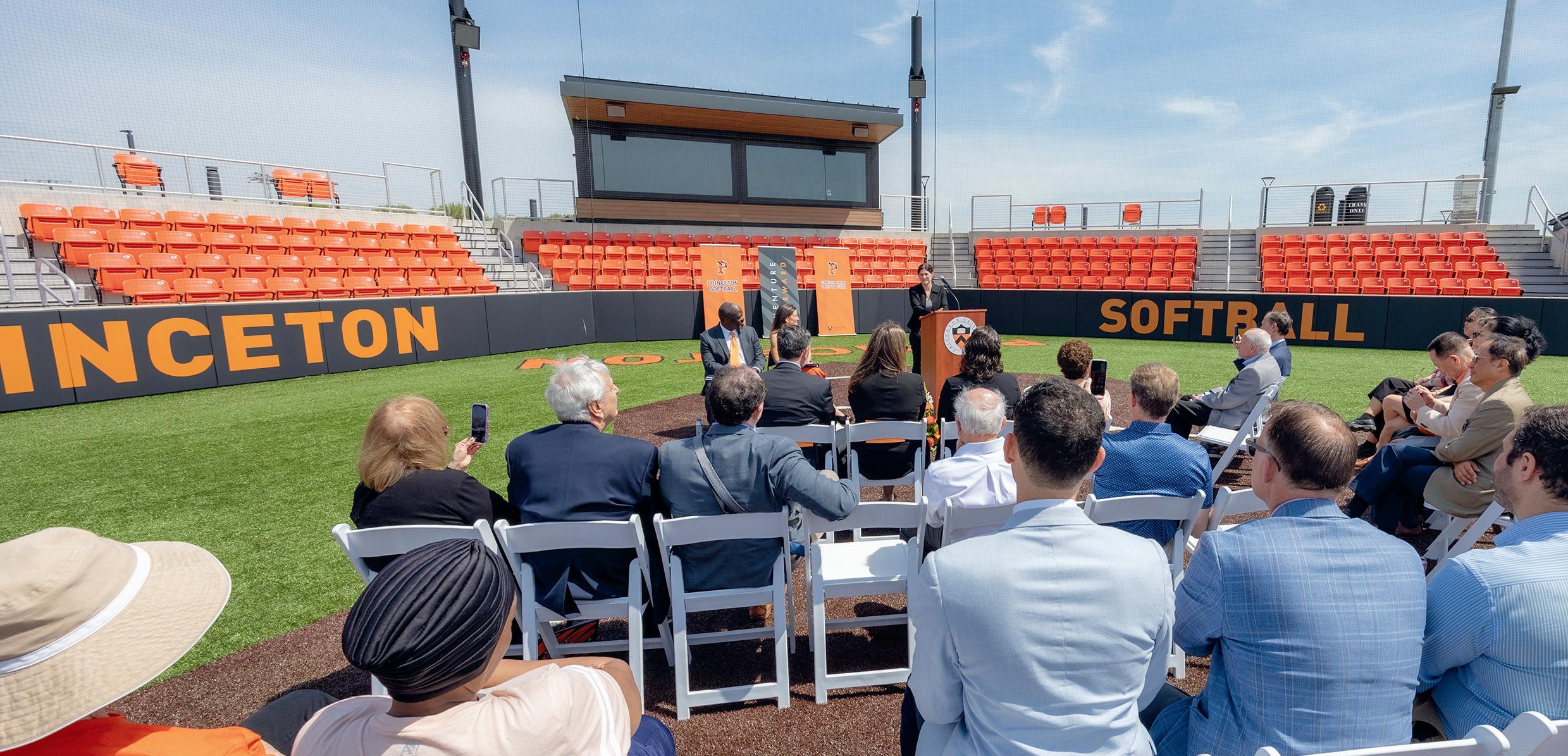
The Princeton softball team swept Harvard on March 22 in its first game at CYNTHIA LYNN PAUL ’94 FIELD .
The first Princeton athletic field to be named by and for an alumna, the field features synthetic turf, stadium seating for 300 spectators, a press box and concourse, batting cages, lights for night games and a new scoreboard.
The entire University community is welcome to use the WILKINSON FITNESS CENTER , named in honor of a gift from Beth A. Wilkinson ’84. An extension of Princeton Campus Recreation’s programs, the center has more than 9,000 square feet of workout space, a fitness studio and locker rooms that can accommodate more than 250 visitors.
Inside the fieldhouse, the Princeton squash teams compete on two new glass-walled exhibition courts with stadium seating, including BOB CALLAHAN ‘77 COURT , a tribute to the legendary player and coach who guided the Princeton men’s team to three national titles during his 32 years leading the program.
HAAGA HOUSE , which became the field-side home to Princeton’s rugby teams in 2013, has been reimagined in its new location. The new facility, named for a previous gift from Heather and Paul Haaga ’70, includes locker rooms, shower facilities, team rooms, an athletic medicine room, public restrooms and a portico for public viewing.
FORWARD TOGETHER for the next generation of Princetonians
More than 35,000 alumni and friends came together each year to support the University by participating in Annual Giving during the Venture Forward campaign.
These gifts of every size helped enhance student financial aid, strengthen transformative educational experiences with innovative student programs, and support faculty and their research when funding was cut by federal agencies.
Annual Giving funds are unrestricted, allowing Princeton to seize new opportunities when great ideas come along and provide critical funds for programs and priorities that make a Princeton education second to none. During the Venture Forward campaign — and especially in the recent period of uncertainty for higher education — Annual Giving gifts of every size combined to enhance and extend a Princeton education to the next generation of leaders.
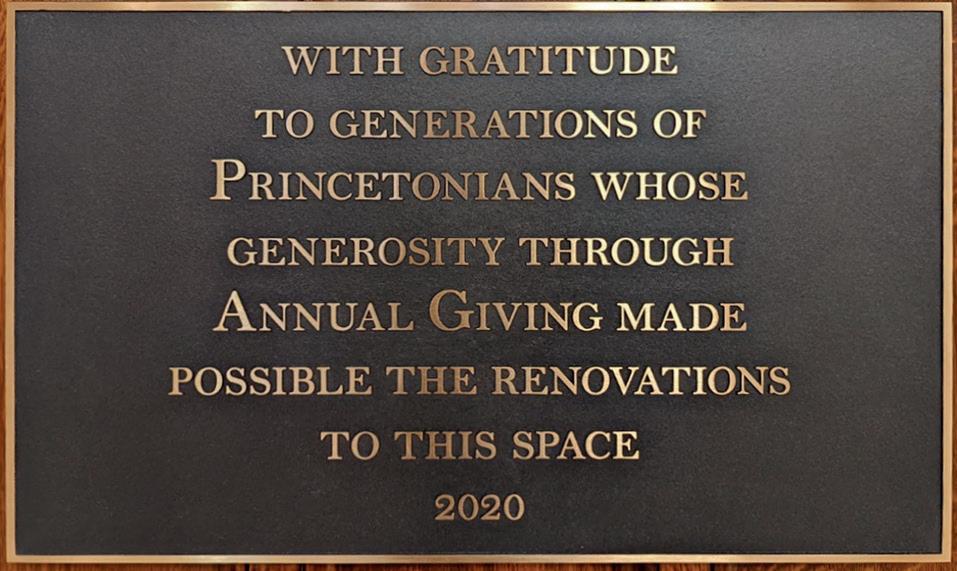
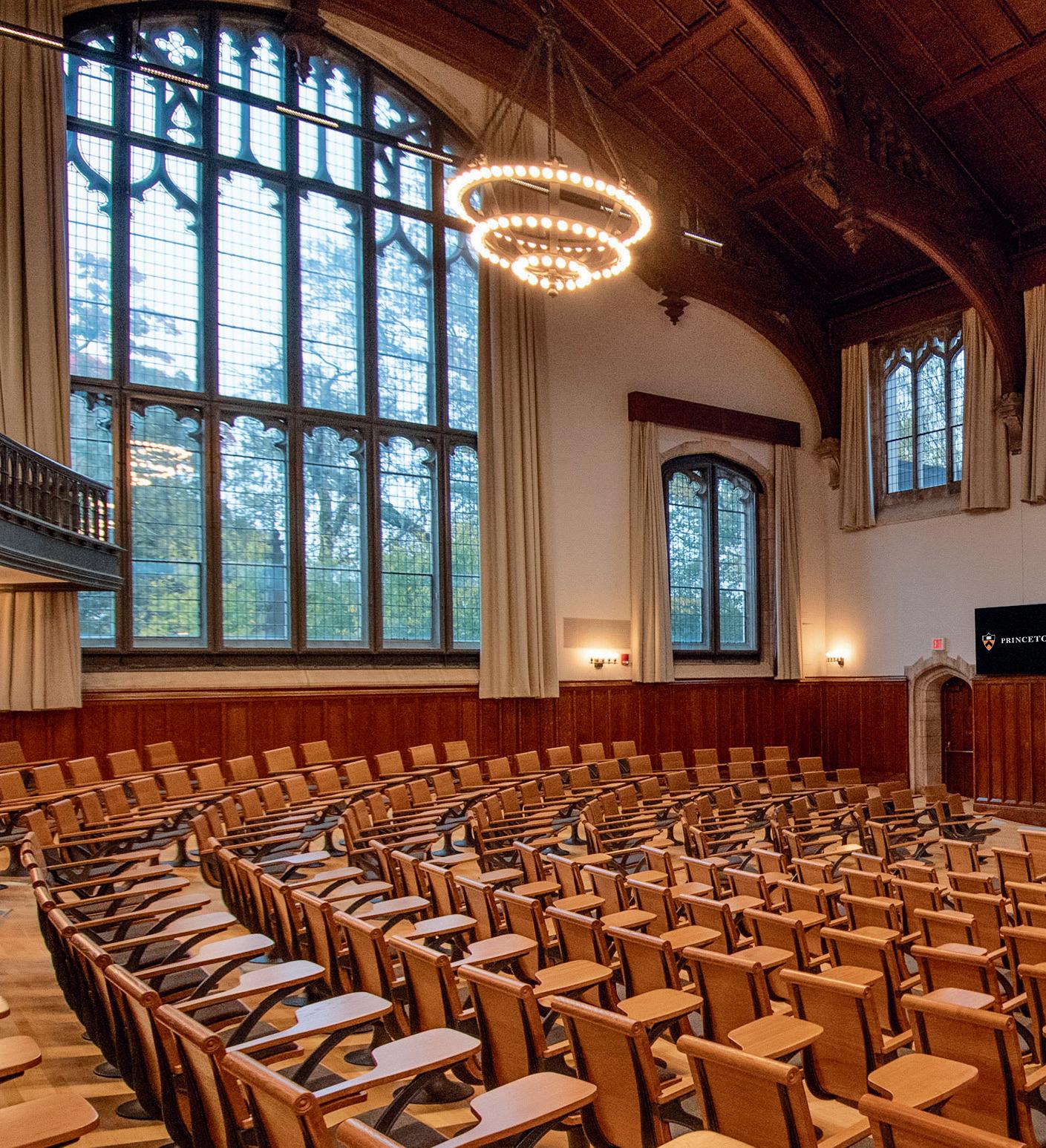
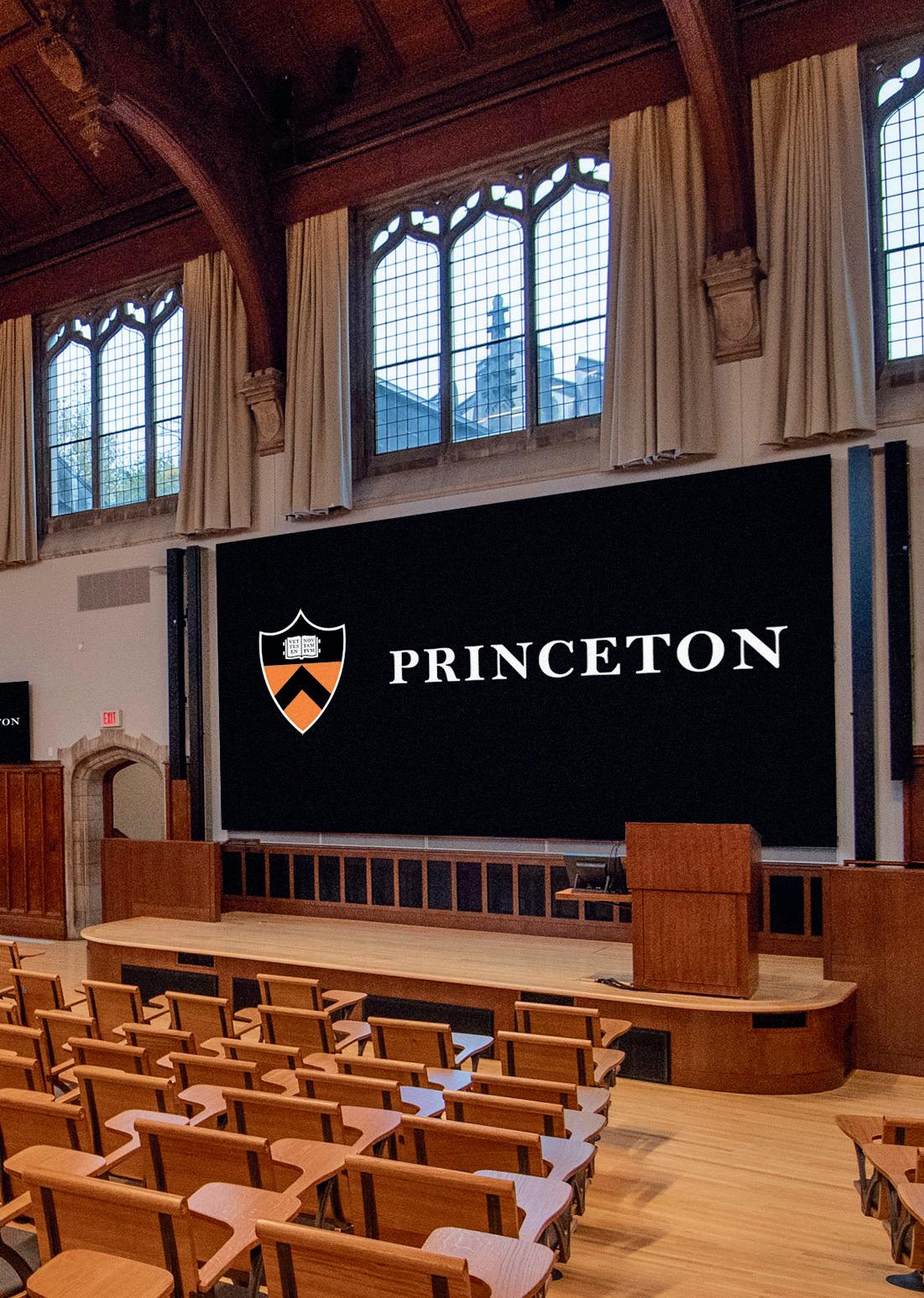
M c COSH 50 , the iconic lecture hall that opened in 1907, was renovated in 2020-21 with 21st-century technology while preserving its historic character. This remarkable campus enhancement was made possible by support from generations of alumni, parents and friends through Annual Giving.
With Annual Giving support, Princeton was able to increase GRADUATE STUDENT FELLOWSHIP AND STIPEND RATES by 25% in 2022 — and an additional 5% in 2023 — putting them among the highest in the U.S.
Annual Giving helped launch LEARNING AND EDUCATION THROUGH SERVICE (LENS) , an initiative that offers every Princeton undergraduate a paid service or social impact internship in a community beyond campus.
In 2024, Annual Giving helped advance a campus CULTURE OF HEALTH AND WELL-BEING by providing critical contributions to wellness services, including new staff, programming and athletic medicine support in University Health Services.
FORWARD
TOGETHER for the next generation of Princetonians
Alumni and friends chose to stand up to move Princeton Forward Together during challenging times for higher education.
Known for providing the “margin of excellence” that makes a Princeton education so special, Annual Giving funds support unparalleled teaching, groundbreaking research that benefits the world, a vibrant residential experience, seed funding for innovative new programs and generous no-loan financial aid. Every Annual Giving participant has their own Princeton story and reasons for supporting the next generation. Every gift, no matter what the size, matters.
RAGHUVEER VINUKOLLU *11 came to Princeton to study with world-renowned hydrologist Eric Wood. “Eric was one of the toughest advisers in the entire environmental engineering department, always challenging us to challenge ourselves,” Vinukollu said. “He was instrumental in getting me where I am today.” A longtime Annual Giving volunteer leader, Vinukollu currently serves as co-chair of Graduate Alumni Annual Giving and as a GradFUTURES mentor. “Giving back is my way of supporting the University’s mission of doing world-class research and providing a graduate education that’s second to none.”
I GIVE BECAUSE...
I want to make sure the experiences of Princeton graduate students keep getting better.”
SCAN ME to see a video about the many reasons alumni give back to Princeton.
$689M
Total amount of unrestricted dollars raised through Annual Giving during Venture Forward
65%
Percentage of undergraduate alumni who contributed to Annual Giving during Venture Forward
60K+
Total number of Princeton alumni, parents and friends who contributed to Annual Giving during Venture Forward
I GIVE BECAUSE...
I have an abundance of gratitude for everything Princeton helped make possible in my life.”
SUSIE BRENNAN ’89 fell in love with Princeton her first time on campus, and in the decades since graduating, she’s channeled that love into volunteer work for the University. “My life and Princeton are inextricably intertwined at this point,” she said. “It’s the people here who make all the difference.” The holder of a perfect Annual Giving participation record, Brennan served as a class agent for 15 years and recently became co-president of her class. “I have so many friends from Princeton, and not just from my class — the University has a way of binding people together across generations.”
5,928
Total number of alumni and parent AG volunteers during Venture Forward
$9.9M
Total amount raised from 178,575 gifts of $100 or less during Venture Forward
FORWARD TOGETHER for the next generation of Princetonians
During Venture Forward, Annual Giving helped establish and underwrite the expansion of the LENS initiative, reinforcing the University’s longstanding commitment to a culture of service.
LENS — the Learning and Education through Service initiative — ensures that every undergraduate student has an opportunity to participate in a paid service or social impact summer internship at organizations around the world.
The LENS initiative continues to expand, and gifts through Annual Giving are:
• Creating more opportunities through existing Princeton programs for students to experience socially impactful summer service internships.
• Promoting the importance of service and social impact internships, leading to related careers.
• Ensuring that summer service internships are accessible to all students, regardless of their financial means.
Internship: Free Minds Book Club & Writing Workshop (Washington, D.C.)
New Jersey
Program: Summer Social Impact Internship (SSII) Fund
In 2024, Glaser helped run the workshop’s prison book club program, which helps those who have been incarcerated better understand creative expression and literary education as a means to reintegrate back into society. “I’m someone who cares very deeply about public policy and prison reform,” Glaser said. “This helped give me first-hand experience with what the prison system looks like in the United States.”
SOPHIE GLASER ’26 Montclair,
KÉLLIA GATETE ’26 Kigali, Rwanda
Internship: Aegis Trust (Rwanda)
FERENC
NICOLAE SOMOGYI ’25 Cleveland, Ohio
Internship: Moldavian Csángó-Hungarian Association (Romania)
Program: Princeton School of Public and International Affairs Undergraduate Program Somogyi spent part of his 2024 summer in Romania with the Moldavian Csángó, a minority that speaks archaic Hungarian dialects and has, historically, faced forced assimilation into the Romanian nation. “I befriended and learned about their culture from them and lived alongside them,” he said. “I transformed my academic and cultural interest in the Csángós into human perspectives and connections.”
Program: Summer Social Impact Internship (SSII) Fund
Founded in response to the Rwandan genocide, Aegis Trust works to promote human dignity and prevent mass atrocities worldwide. Gatete was drawn to the idea of being part of an organization that addresses deeply rooted gender norms and advocates for inclusivity and social justice. “This internship has been transformative, reinforcing my commitment to using my engineering background to tackle social issues and advocate for gender equality,” she said.
848
Number of LENS internships in summer 2024 30%
Percentage of students in the Class of 2025 who participated in a LENS internship
48%
Percentage of internships that took place in or near to the student’s hometown community
12%
Percent growth in number of LENS internships from 2023 to 2024
Building a bridge to global service
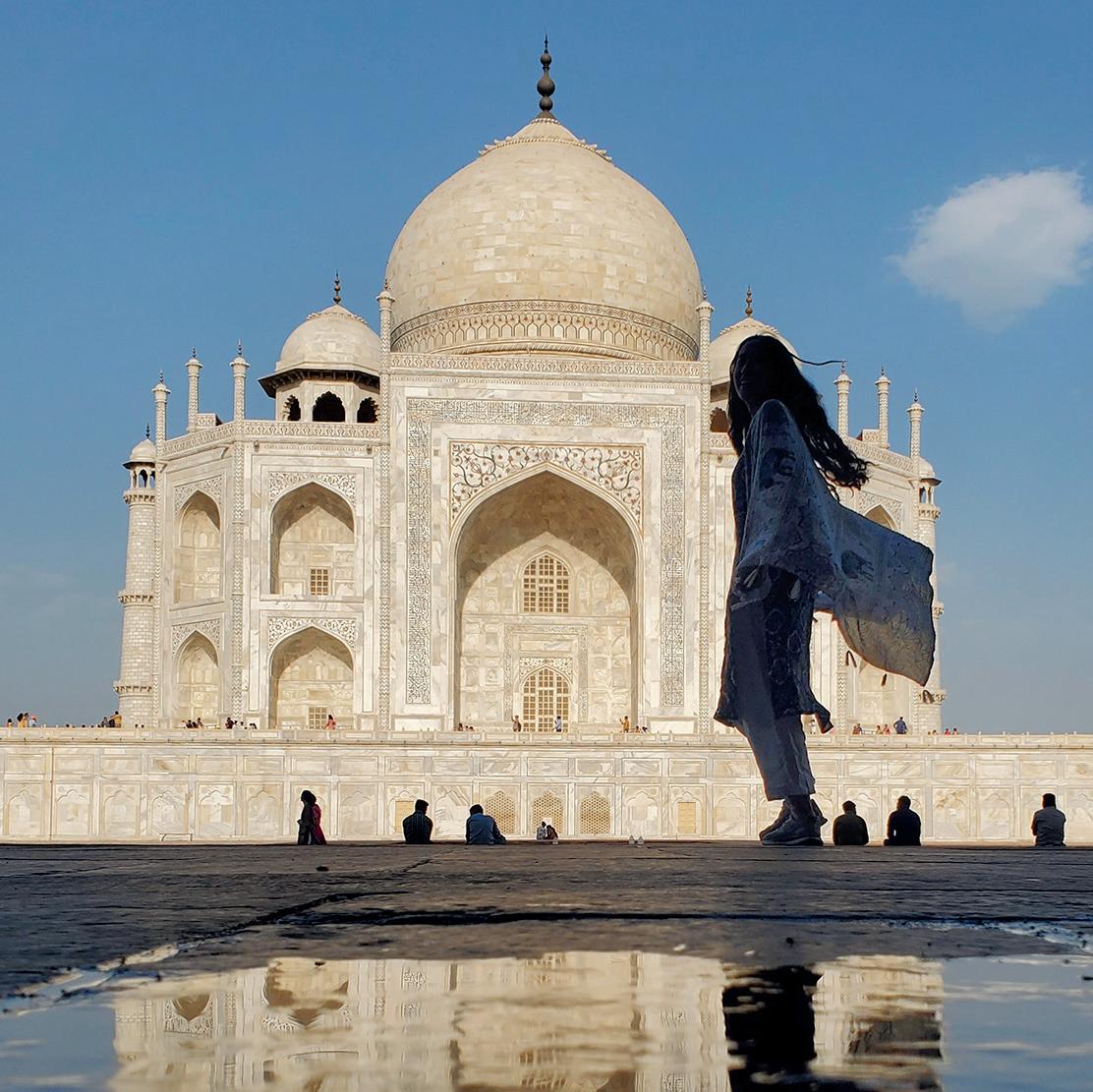
Annual Giving provided vital start-up funds to launch a “bridge year” program, establishing tuition-free, global service-learning opportunities for incoming Princeton firstyear students. Endowed in 2019 by Mike Novogratz ’87 and Sukey Novogratz ’89, the Novogratz Bridge Year Program has supported more than 370 Princeton undergraduates in nine-month programs based in countries such as Bolivia, Cambodia, Costa Rica, India, Indonesia and Senegal. Participants study the local language, live with carefully selected homestay families and take part in a variety of cultural enrichment activities, while learning with and from community partners.
FORWARD to advance a new era of diversity and inclusion
The Venture Forward campaign has evolved the lexicon of named buildings and programs on campus,
reflecting the breadth of the
Princeton community.
“Names matter,” said President Christopher L. Eisgruber ’83 during the dedication of José E. Feliciano Hall in 2023. “They tell stories. They recall history, celebrate the present and point to the future. The names on our buildings tell us who we are, and who we hope to be.”
Three new residential colleges — Yeh College, New College West and Hobson College — helped the University fulfill one of its highest strategic objectives: the growth of the undergraduate population by 10%.
Centers of inquiry across campus were established through the campaign, weaving a broad representation of names and cultural studies into Princeton’s academic fabric.
These names are now permanent fixtures in the Princeton campus vocabulary. Together, the names of new buildings and centers reflect Princeton’s emphasis on the excellence that diverse perspectives make possible.
Mellody Hobson ‘91, a Princeton trustee from 2002 to 2006, was the first member of her family to graduate from college.
The M.S. CHADHA CENTER FOR GLOBAL INDIA was established by a gift from Sumir Chadha ’93 and named for his grandfather, a distinguished physician in India. Gifts from six other Princeton alumni, including Sanjay Swani ’87, strengthened the center’s ability to study India and its increasing impact on the world.
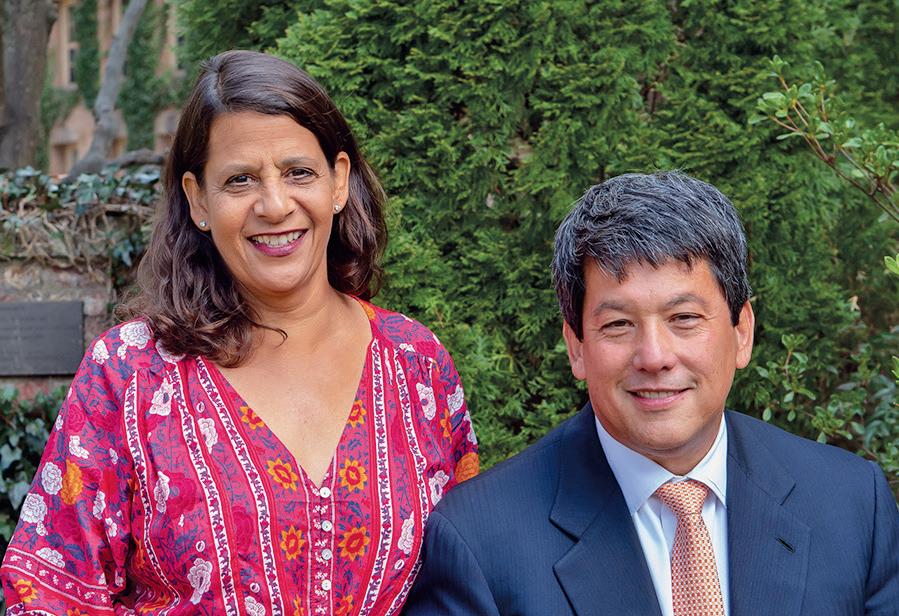
New College West and YEH COLLEGE , named for a gift from Jaimie and James Yeh ’87, opened in 2022 near Poe Field, housing more than 1,000 students and featuring several named residence halls and community spaces. Aliya Kanji ’97 made a gift to name KANJI HALL in New College West, the first Princeton building named for an Ismaili Muslim. The couple Kwanza Jones ’93 and José E. Feliciano ’94 made gifts to name KWANZA JONES HALL and JOSÉ E. FELICIANO HALL in New College West, the first two Princeton buildings named after Black and Latino benefactors.
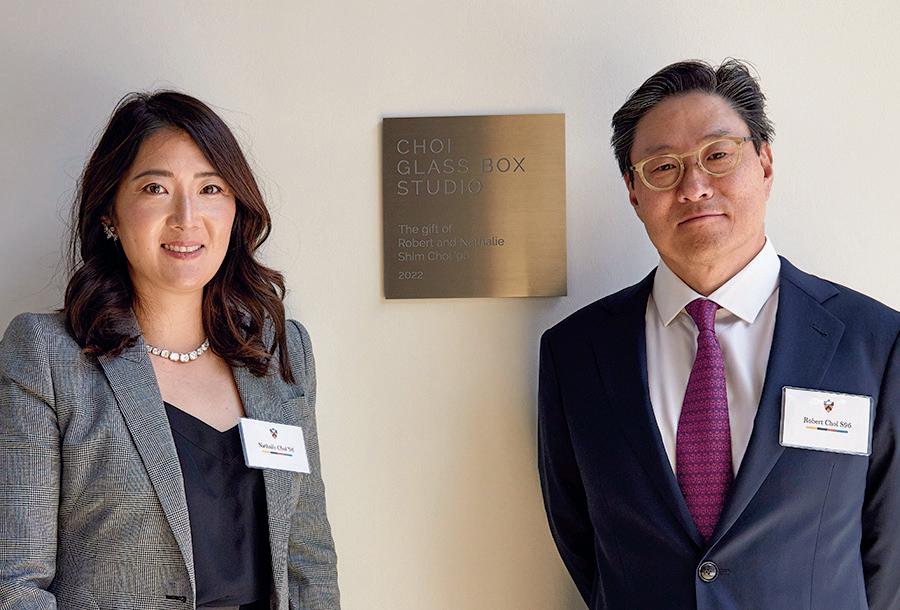
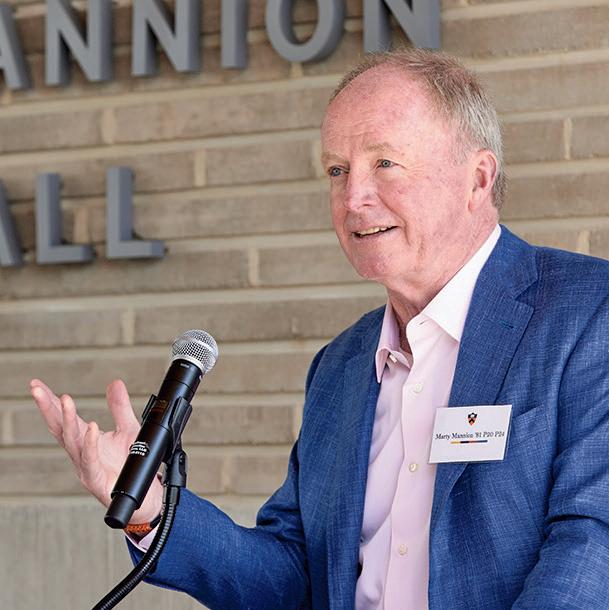
The CHOI DINING HALL serving both colleges and the CHOI GLASS BOX STUDIO in Yeh College were named for gifts from Robert Choi and Nathalie Shim Choi ’96; and Karen and David Mandelbaum ’57 made a gift to name the MANDELBAUM FAMILY DINING PAVILION in the Center for Jewish Life. MANNION HALL in Yeh College is named for a gift from Marty Mannion ’81, a first-generation college student and the son of a widowed Irish immigrant.
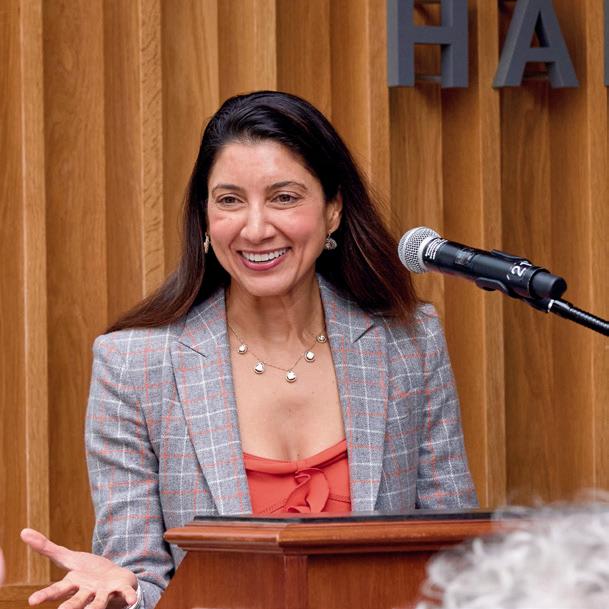
Mellody Hobson ’91 and the Hobson/Lucas Family Foundation made the lead gift to establish the first residential college at Princeton named for a Black woman. HOBSON COLLEGE , which will open in 2027, is under construction on the site of First College, formerly known as Wilson College. In addition, the University looks forward to announcing significant gifts for SWANI HALL and other anonymous donors in support of this project.
My hope is that my name will remind future generations of students — especially those who are Black and brown and the ‘firsts’ in their families — that they too belong.”
MELLODY HOBSON ’91 , who made a gift to build Hobson College in the
former footprint of Wilson College
Choi
Chadha and Swani
Mannion
Yeh
Kanji
Jones and Feliciano
FORWARD
to build alumni community on and beyond campus
In every corner of the world, the Venture Forward campaign brought Princetonians together to serve humanity, engage with the University and each other, and continue a lifetime of learning.
Princeton Reunions
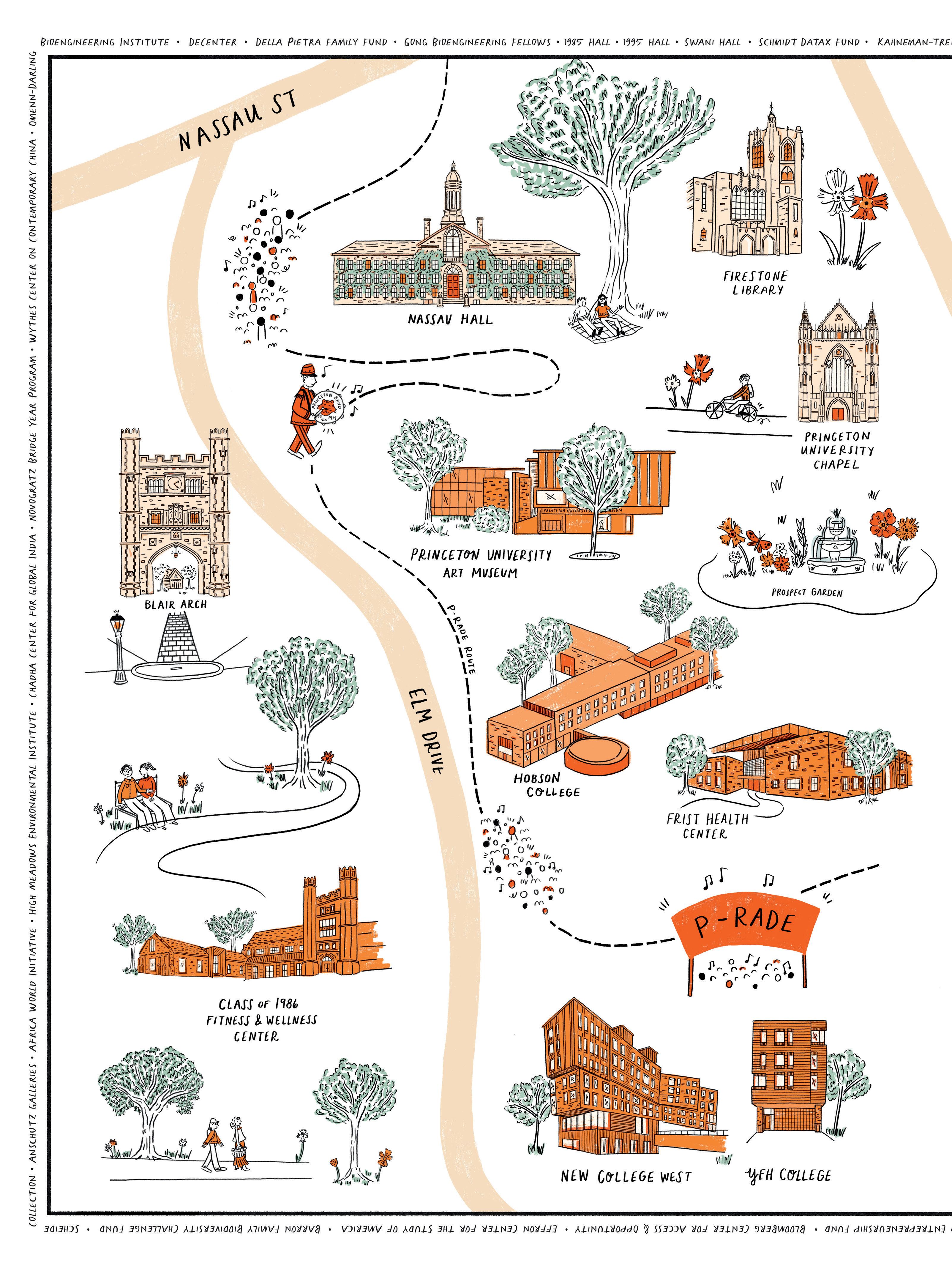
There is no college reunion like Princeton Reunions, an orange and black celebration of engagement, service and friendship. The annual May event, highlighted by the P-rade procession through campus, is a testimony to the bonds that are forged on campus, connections that are renewed each year and multiplied by each new graduating class.
SCAN ME to learn more about Stand Up for Princeton and Higher Education.
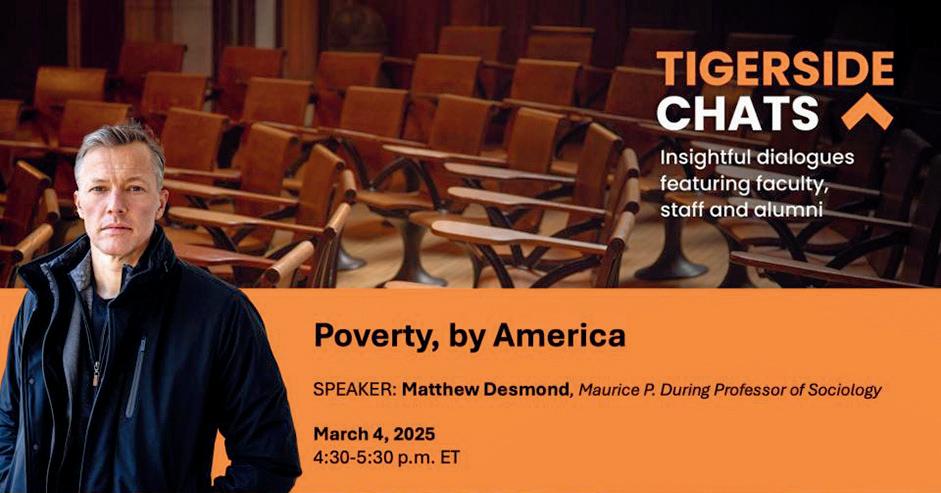
TIGERSIDE CHATS
In 2024, University Advancement launched a monthly series of virtual conversations that offer unique learning opportunities on a variety of timely topics. University thought-leaders, from Matthew Desmond to John Mack ’00, presented lectures and engaged with alumni in discussions.
ORANGE & BLACK DAY
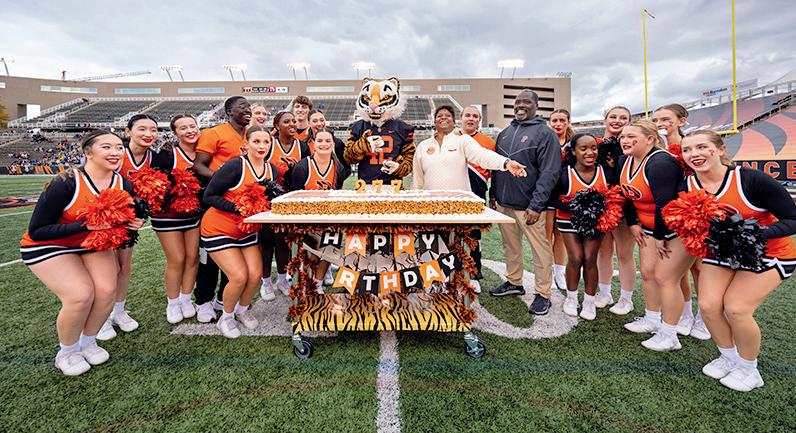
Orange & Black Day was launched during the pandemic on Charter Day, Oct. 22, 2021, as an online initiative to help celebrate the University’s 275th birthday. Since then, it’s become a signature event, providing alumni around the world with in-person and online opportunities to share their Princeton pride.
PRINCETON JOURNEYS
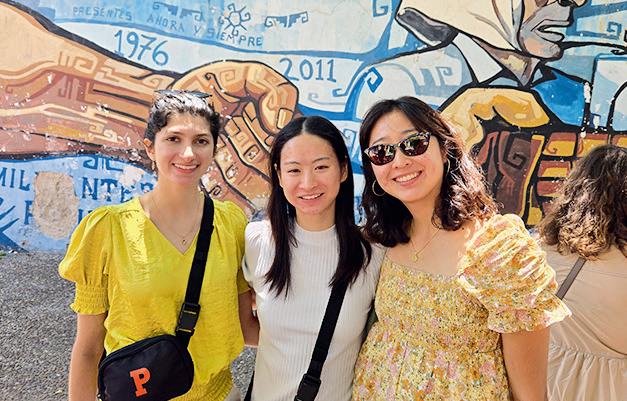
The University’s alumni travel program, which has toured every continent since it was launched in 2004, featured some new offerings in 2025. Author Jordan Salama ’19 led a trip to Buenos Aires that was designed especially for recent alumni and included access to local porteño culture that went far beyond typical tourism.
PRINCETON PRIZE IN RACE RELATIONS
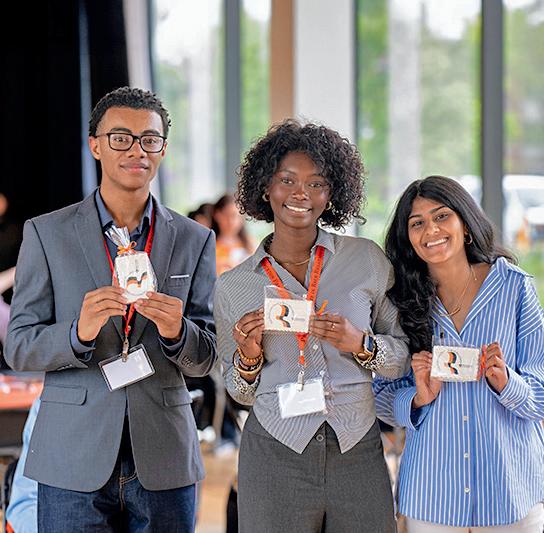
As part of the Princeton Prize in Race Relations (PPRR), alumni volunteers work together to identify outstanding high school students who are working to advance racial equity in their local communities and invite them to campus for the Princeton Prize Symposium on Race each spring.
Getting to know these students by their stories and their work really restores confidence that we live in a big and beautiful world, and one that will continue to get better.”
SELAH HAMPTON ’18, chair of the Princeton Prize in Race Relations
141,986
Number of Reunions attendees during the Venture Forward campaign
2,847
Number of participants in the inaugural year of TigerSide Chats
61
Number of countries Princeton Journeys has visited during Venture Forward
271
Number of “party packs” that were used by regional clubs to celebrate Orange & Black Day during Venture Forward
428
Number of alumni who have volunteered for PPRR during Venture Forward
6,956
Number of undergraduate and graduate alumni who interviewed prospective students for the Alumni Schools Committee in 2024-25
FORWARD to build alumni community beyond campus
Princeton University welcomed more than 600 alumni and guests to campus in September 2024 for “Every Voice: Honoring and Celebrating Princeton’s LGBTQ+ Alumni.” The gathering — the first alumni affinity conference since 2019 — featured more than 50 sessions that ranged from discussions on intergenerational dialogue to the importance of college access and opportunity for first-generation lower-income LGBTQ+ students.
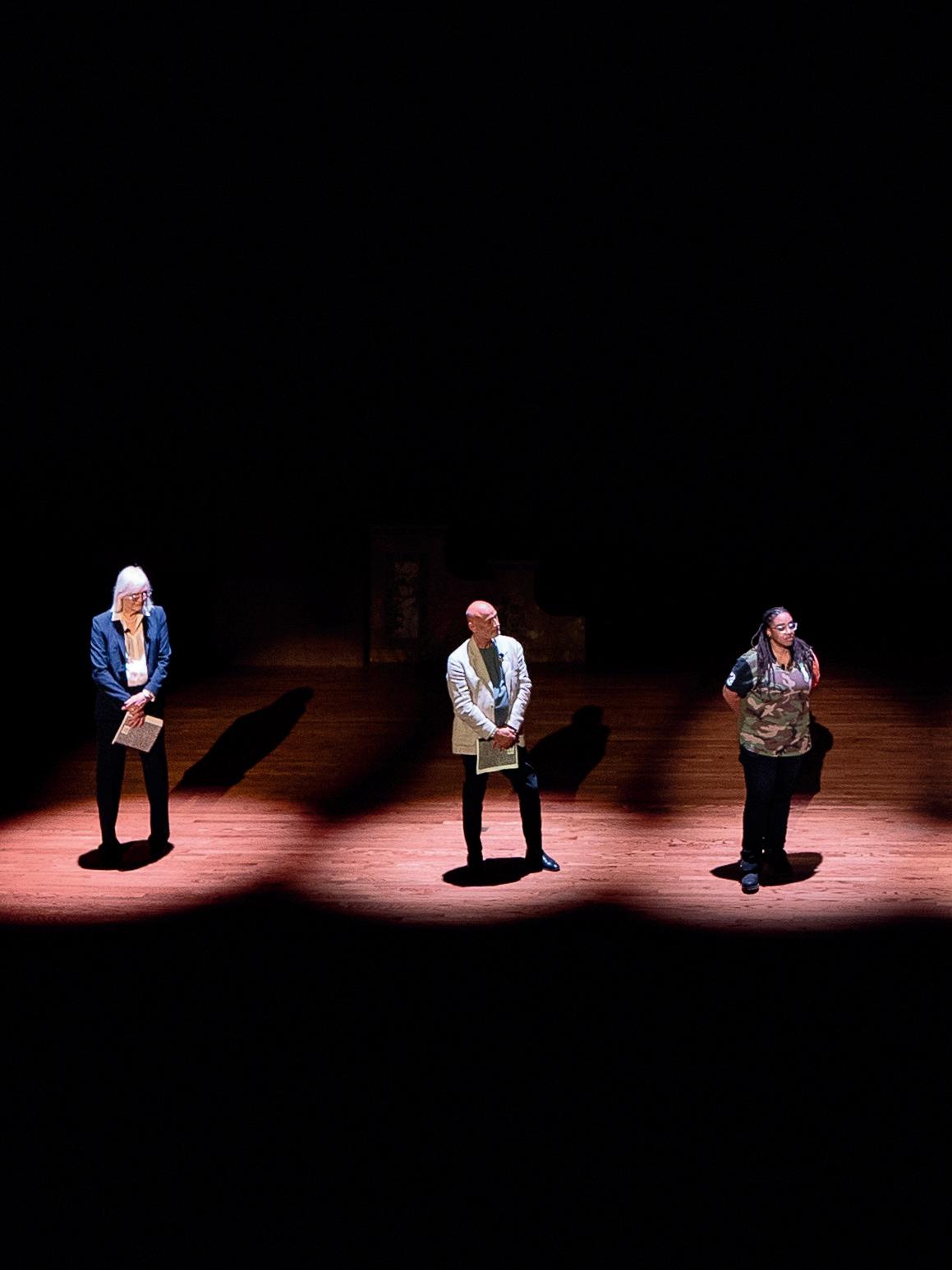
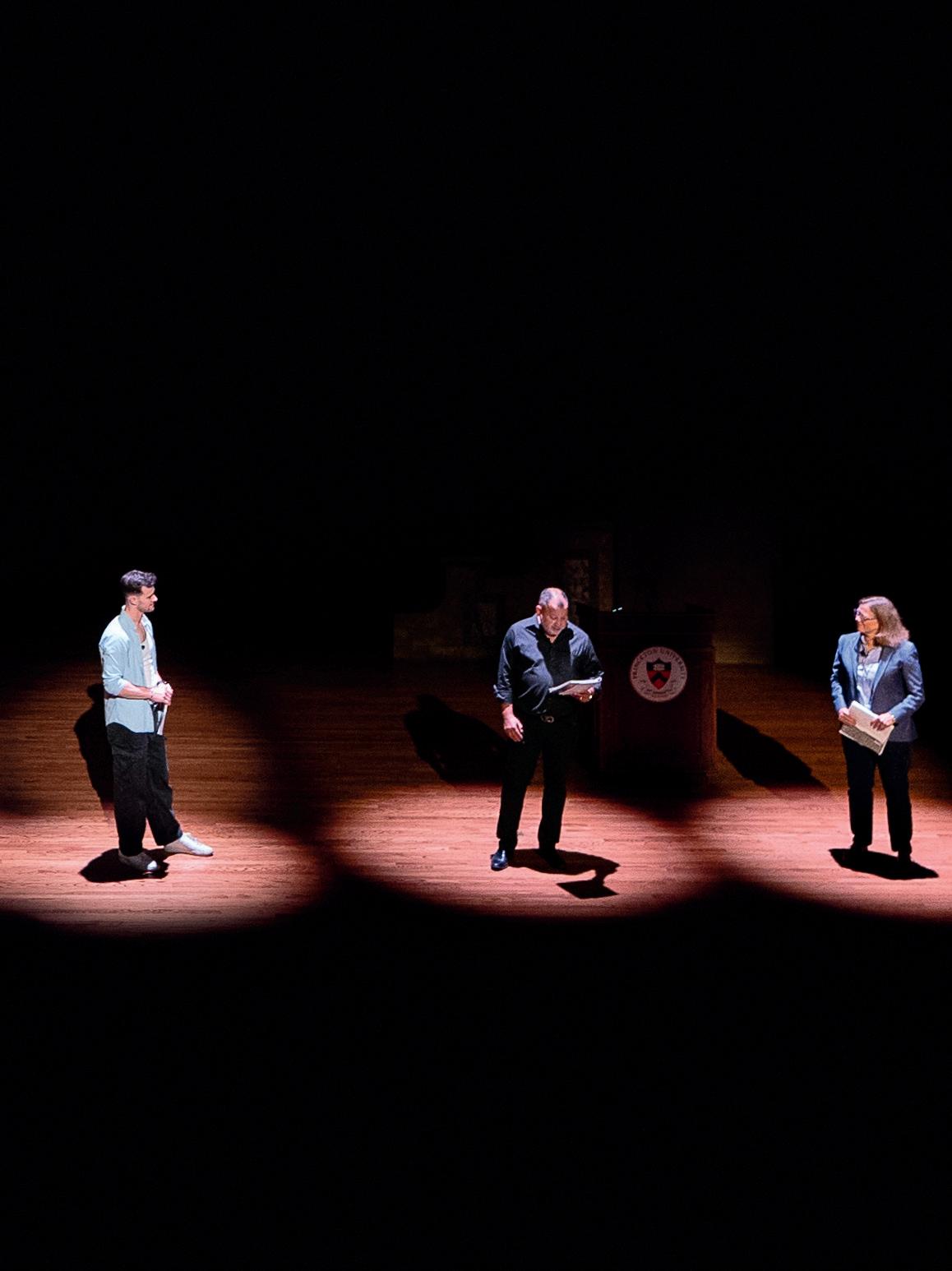
The tone for the conference was firmly established at the “Stepping into the Spotlight: Igniting Every Voice” event on the first night as six alums took the stage in Richardson Auditorium to share how their LGBTQ+ journeys weaved through their Princeton experiences. They read aloud vignettes drawing from five different decades and a broad representation of the LGBTQ+ community.
There was laughter, tears and the occasional irreverent remark. Each alum’s journey was unique, but courage bound their tales together.
“I’m curious about the anthology of these moments of ours as a shared story of this weekend,”
Kathryn Hamm ’91 (far right) said. “How will we be changed when we watch someone else being brave? What will we choose when someone else asks us to be brave? What will I choose? I hope I will choose courage and love.”
How will we be changed when we watch someone else being brave? What will we choose when someone else asks us to be brave? What will I choose? I hope I will choose courage and love.”
KATHRYN HAMM ’91
SCAN ME to see highlights from the “Every Voice” conference.
FORWARD to build alumni community beyond campus
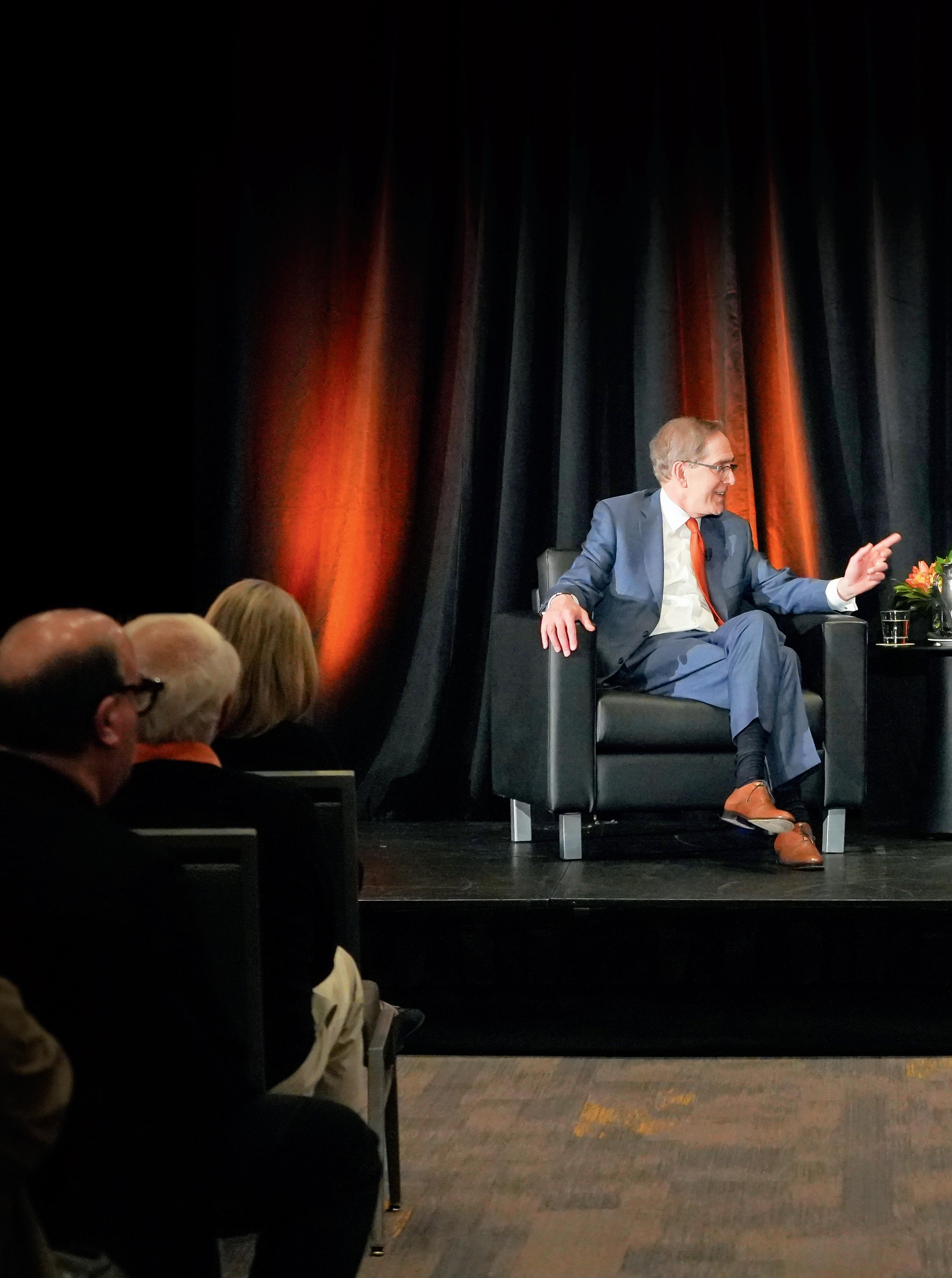
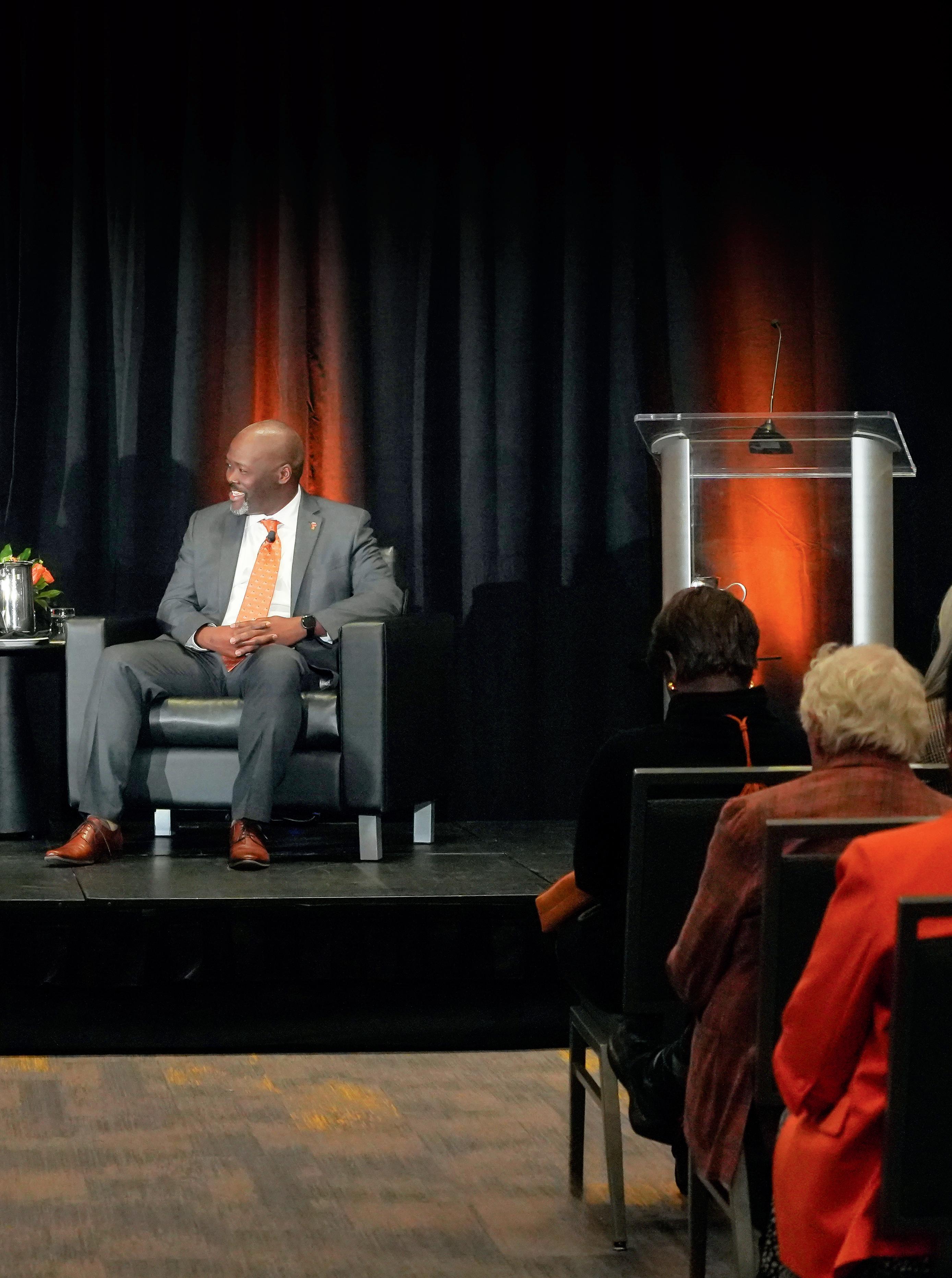
Strengthening alumni engagement was a key initiative of the Venture Forward campaign, and during four years of all-alumni events that took him from Philadelphia to London to Hong Kong, President Christopher L. Eisgruber ’83 shared how the University is making audacious bets on talent and making transformation possible through teaching and research excellence.
ON STANDING UP FOR HIGHER EDUCATION:
“We’re going to stand firm for the values of our University. And those values include free speech, academic freedom, and diversity and inclusion.”
ON ALUMNI ENGAGEMENT:
“We have the best alumni of any university in the world and that makes a difference when you’re going through tough times. It makes a difference to have a community that comes together like this, a community of people who are willing to literally wear their allegiance in bright orange and speak up for their university.”
President Eisgruber shared the University’s strategic priorities with alumni audiences in conversations like the one in Seattle with John Mack ’00, the Ford Family Director of Athletics.
ON
THE VENTURE FORWARD CAMPAIGN:
“The essence of this campaign is about making a difference in the world for the better through teaching and research of unsurpassed quality. The reason we talk about audacious bets as the theme for the Venture Forward campaign is [that] we believe in investing in talent for the long term.”
Venture Forward Gatherings:
• San Francisco
• New York
• London
• Boston
• Chicago
• Washington, D.C.
• Hong Kong
• Los Angeles
• Nairobi, Kenya
• West Palm Beach, Florida
• Naples, Florida
• Tokyo
• Philadelphia
• Austin, Texas
• Houston
• Seattle
ON THE HUMANITIES:
“We have to be willing to invest in the facilities that are necessary for great humanities departments, just as we invest in the facilities that provide the essential laboratories in other fields.”
FORWARD to examine fundamental questions and shared experiences
The
Venture Forward campaign helped
shape new
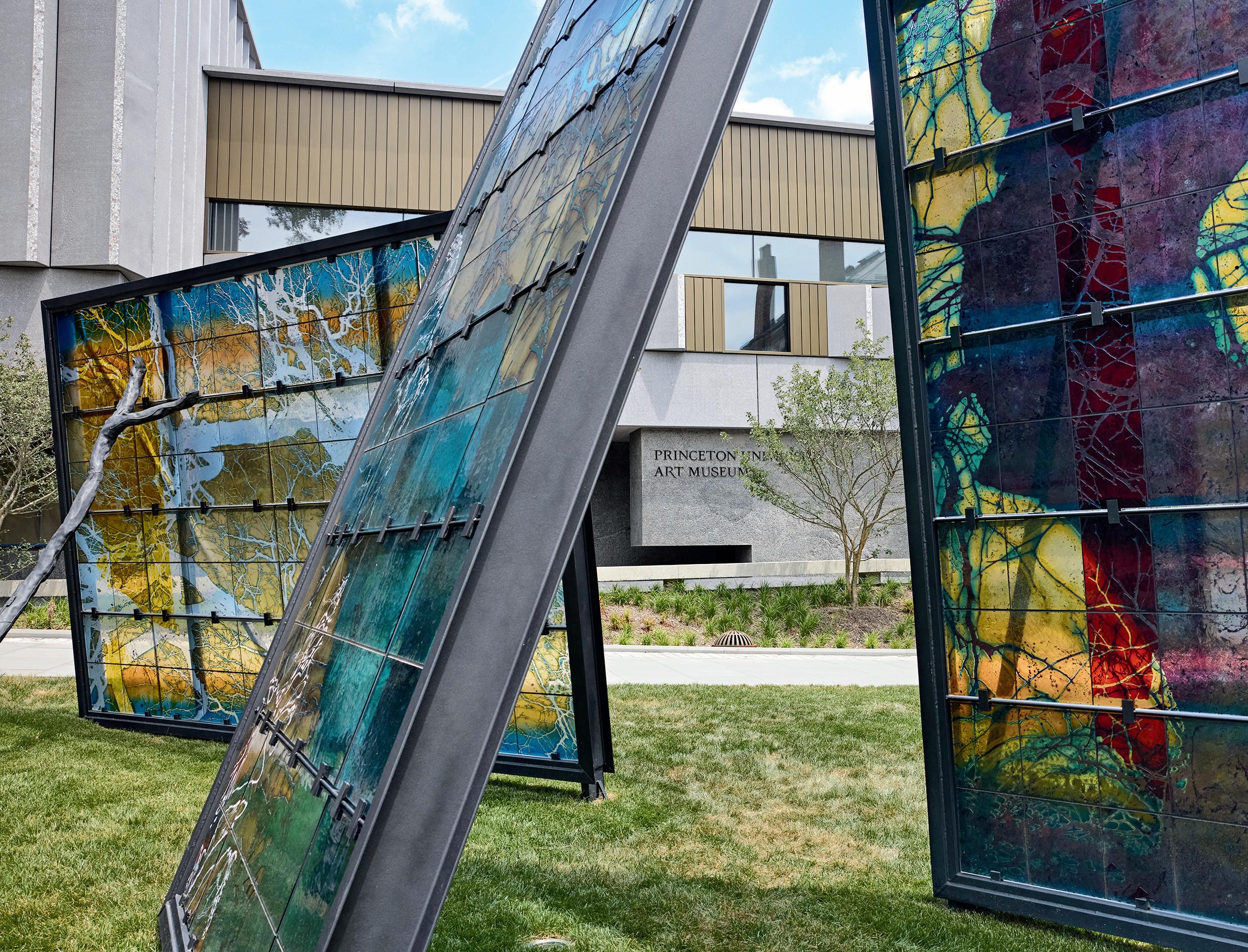
ways of experiencing art and the humanities by supporting the construction of the new Princeton University Art Museum, a spectacular space in the heart of campus.
The new Art Museum is a gateway to the University for visitors from around the world. Twice the size of its predecessor, the building is divided into nine interlocking pavilions and designed so pieces of its collection — 117,000 works of art spanning more than 5,000 years of history — are displayed in dialogue with one another on a single floor.
Serving also as the new home of the Department of Art and Archaeology, the Art Museum features expanded educational spaces that include creativity labs, seminar rooms, an auditorium and six object-study rooms, where students can hold and examine the art that would be hidden behind glass in more traditional settings.
“The symbolic value of having a museum of this magnitude and importance in the physical heart of our historic campus says a lot about, I think, what Princeton is and what it wants to be,” James Steward, the Nancy A. Nasher–David J. Haemisegger, Class of 1976, Director of the Art Museum, told the Princeton Alumni Weekly.
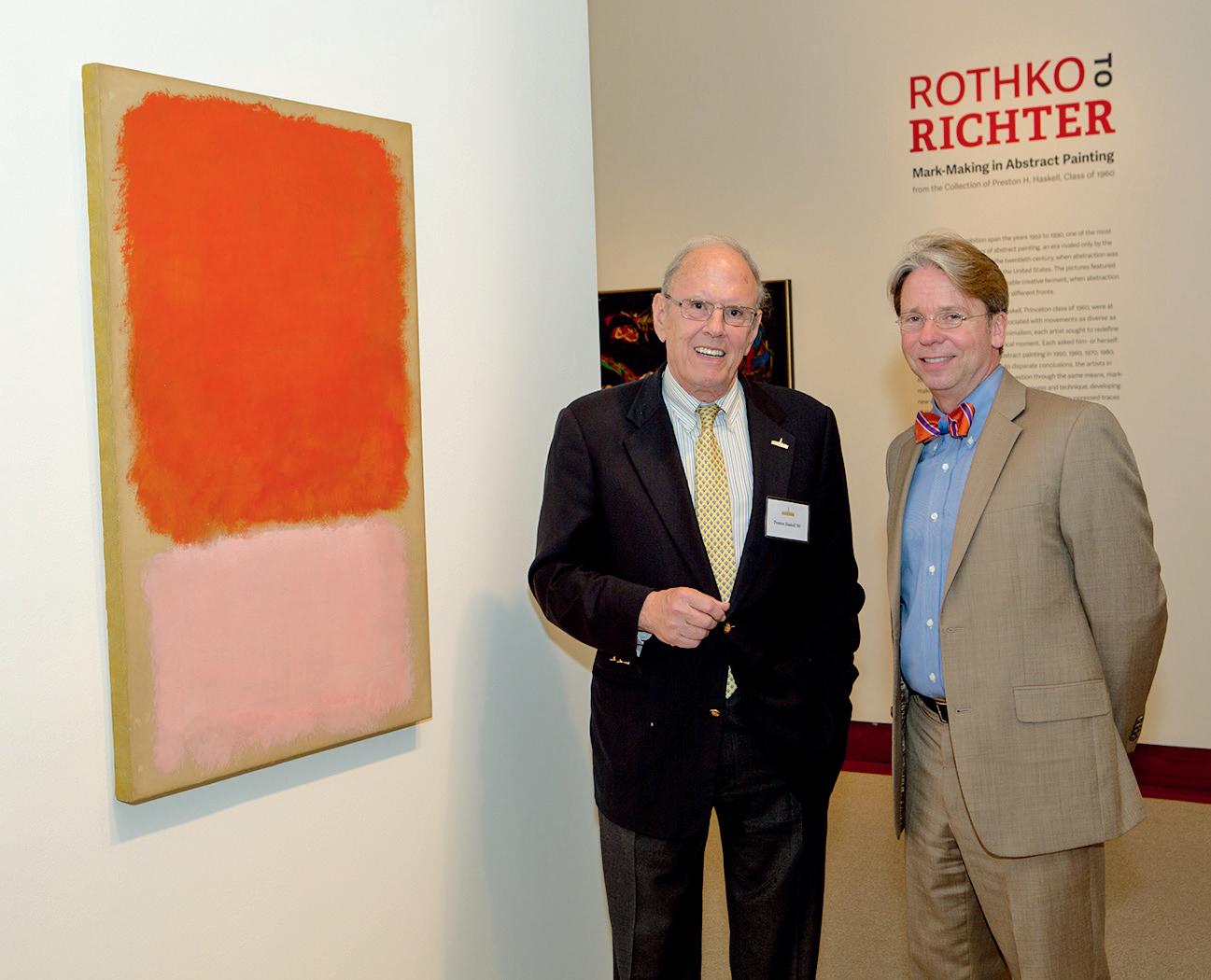
The collection of Preston H. Haskell III ‘60
SCAN ME to watch a TigerSide Chat about the new Art Museum with James Steward.
When the Art Museum reopens, it will be the new home of eight masterpieces from the collection of Preston H. Haskell III ’60, whose primary interests are abstract expressionism, minimalism and pop art from the mid- to late-20th century. His gifts and longtime volunteer leadership as a member of the Art Museum’s advisory council helped make the new building possible.
For an institution that dates back to the 1750s, it is symbolic that the first painting installed in the new building was Charles Willson Peale’s iconic portrait of George Washington at the Battle of Princeton, a painting commissioned by the trustees of the college in 1783. The portrait is joined by exciting new works commissioned for the new Art Museum by artists Diana Al-Hadid, Nick Cave, Jane Irish and Tuan Andrew Nguyen.
Inaugurating the space is also the exhibit “Princeton Collects,” featuring recently donated masterpieces, including paintings by Mark Rothko, Joan Mitchell and Gerhard Richter.
“As a teaching museum, we have a responsibility to not merely present works by monumental artists of our age or of any age, but to go deeper and grapple with how they arrived at the legacies for which we know them today,” Steward said.
Major gifts to the new Princeton University Art Museum include those to name:
• Nancy A. Nasher & David J. Haemisegger Family Hall & Grand Stair
FORWARD to examine fundamental questions and shared experiences
The Venture Forward campaign marked a key milestone with the establishment of the Effron Center for the Study of America, which expanded teaching and research on America from diverse interdisciplinary perspectives.
The creation of this center strengthens Princeton’s voice in the global dialogue on the complex and diverse meanings of what it means to be America, and American.”
AISHA M. BELISO-DE JESÚS , chair of the Effron Center for the Study of America and the Olden Street Professor of American Studies
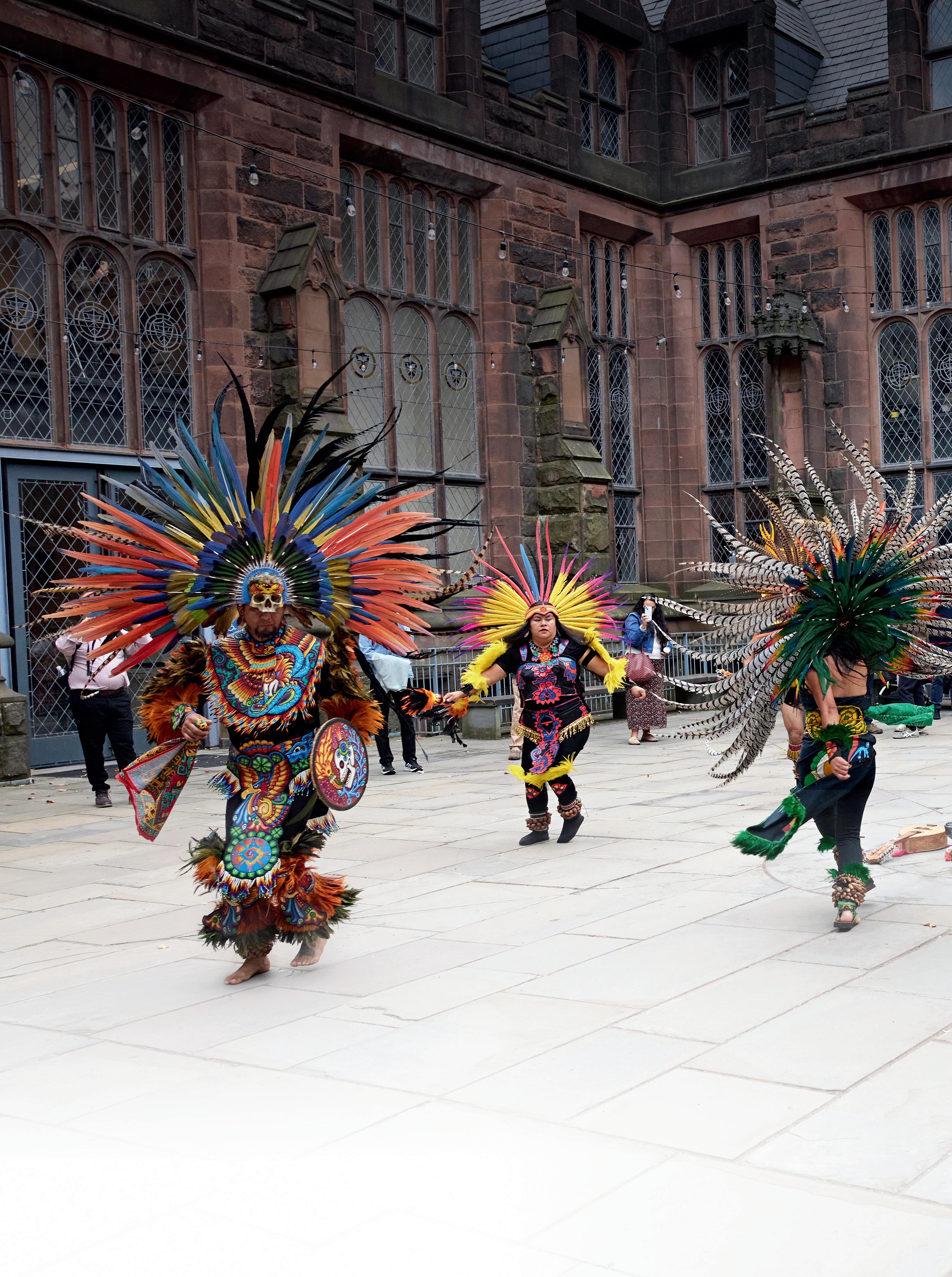
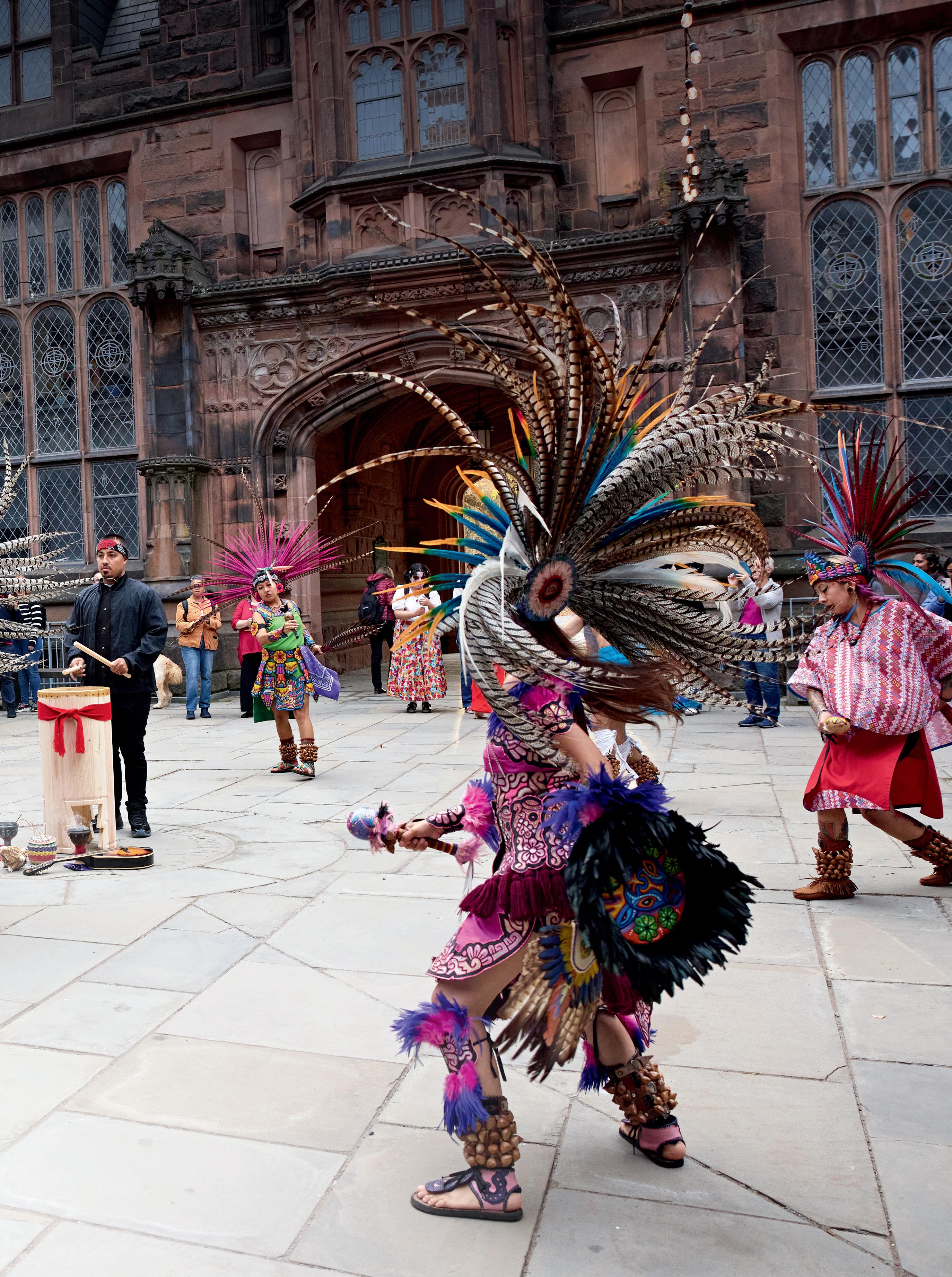
Established by a major gift from Blair Effron ‘84 and Cheryl Effron in 2021, the center co-sponsors events like a Día de los Muertos — Day of the Dead — celebration that featured members of the Atl Tlachinolli
performing in the
Aztec dance troupe
East Pyne courtyard.
FORWARD to examine fundamental questions and shared experiences
Princeton’s Africa World Initiative (AWI) is a one-of-a-kind hub that aims to connect the University’s research and teaching mission with the continent’s most creative thinkers.
Established in 2023 through a gift to the Venture Forward campaign, AWI is a platform for the University’s engagement with Africa and its stakeholders through the arts and humanities — and also across research partnerships in science, technology and innovation, entrepreneurship and public policy.
SCAN ME to watch the “Making Audacious Bets” video about Chika Okeke-Agulu and the Africa World Initiative.
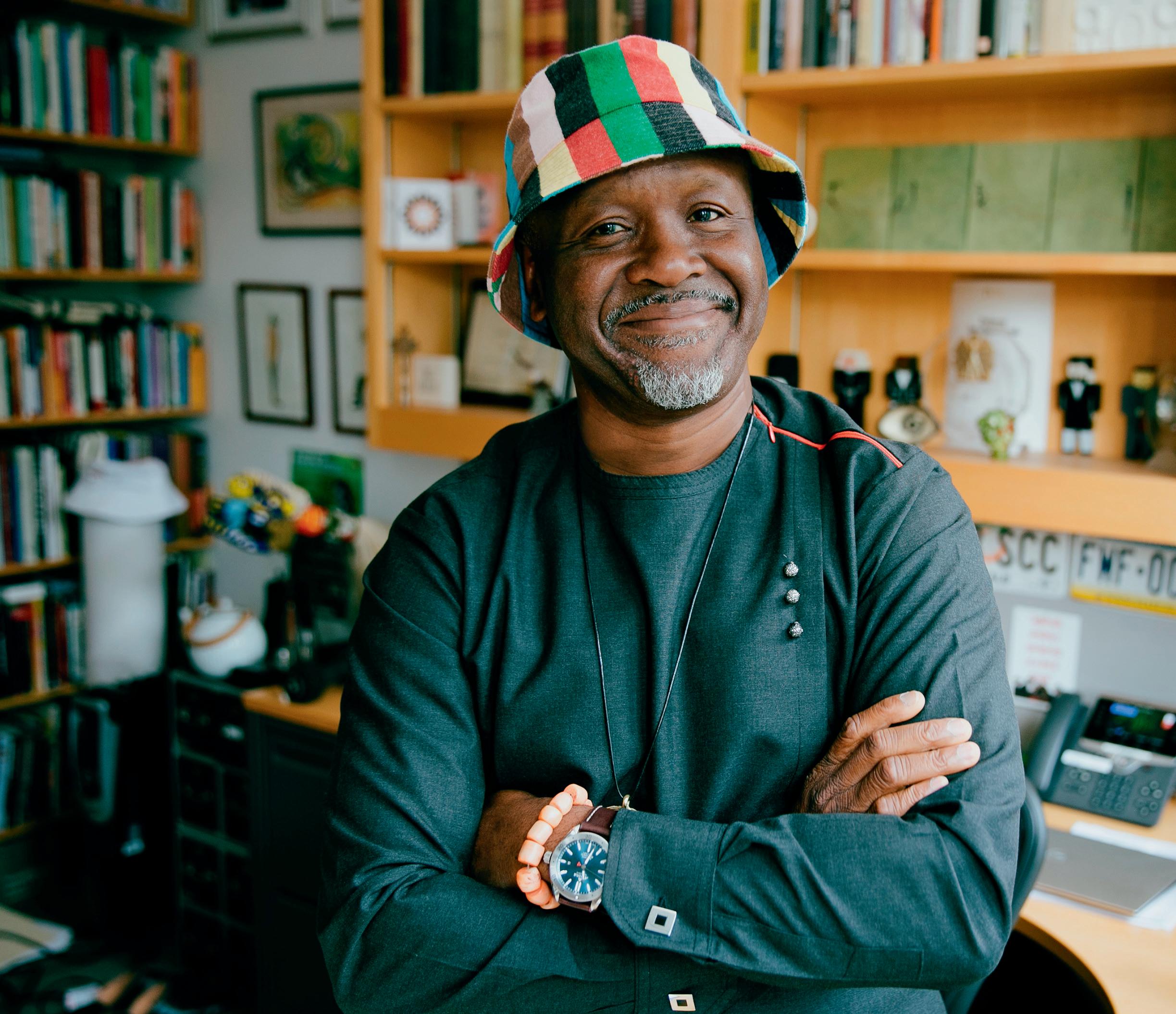
At the helm of AWI is Chika OkekeAgulu, the Robert Schirmer Professor of Art and Archaeology and African American Studies. When he came to Princeton in 2008, his reputation was already formidable. As a professor in Nigeria in the 1990s, he became one of a group of leading African artists and intellectuals that set out to remake the field of African art history by launching a new magazine to showcase artists whose work was neglected by existing art journals. “We understood the connection between knowledge production and the fate of art and artists,” Okeke-Agulu said. “If you don’t
How do you tap into what already exists in order to build something that does not exist but is urgently needed?”
CHIKA OKEKE-AGULU , director of Africa World Initiative
produce the knowledge yourself — because no one else is going to do it for you — then the artists will continue to languish on the art world’s roadside.”
The Nka Journal of Contemporary African Art helped artists like El Anatsui emerge on the global scene, and at Princeton, Okeke-Agulu is applying the same question that fueled Nka’s success to AWI: “How do you tap into what already exists in order to build something that does not exist but is urgently needed?”
Just two years after the launch of AWI, the initiative’s programs, partnerships and projects encompass
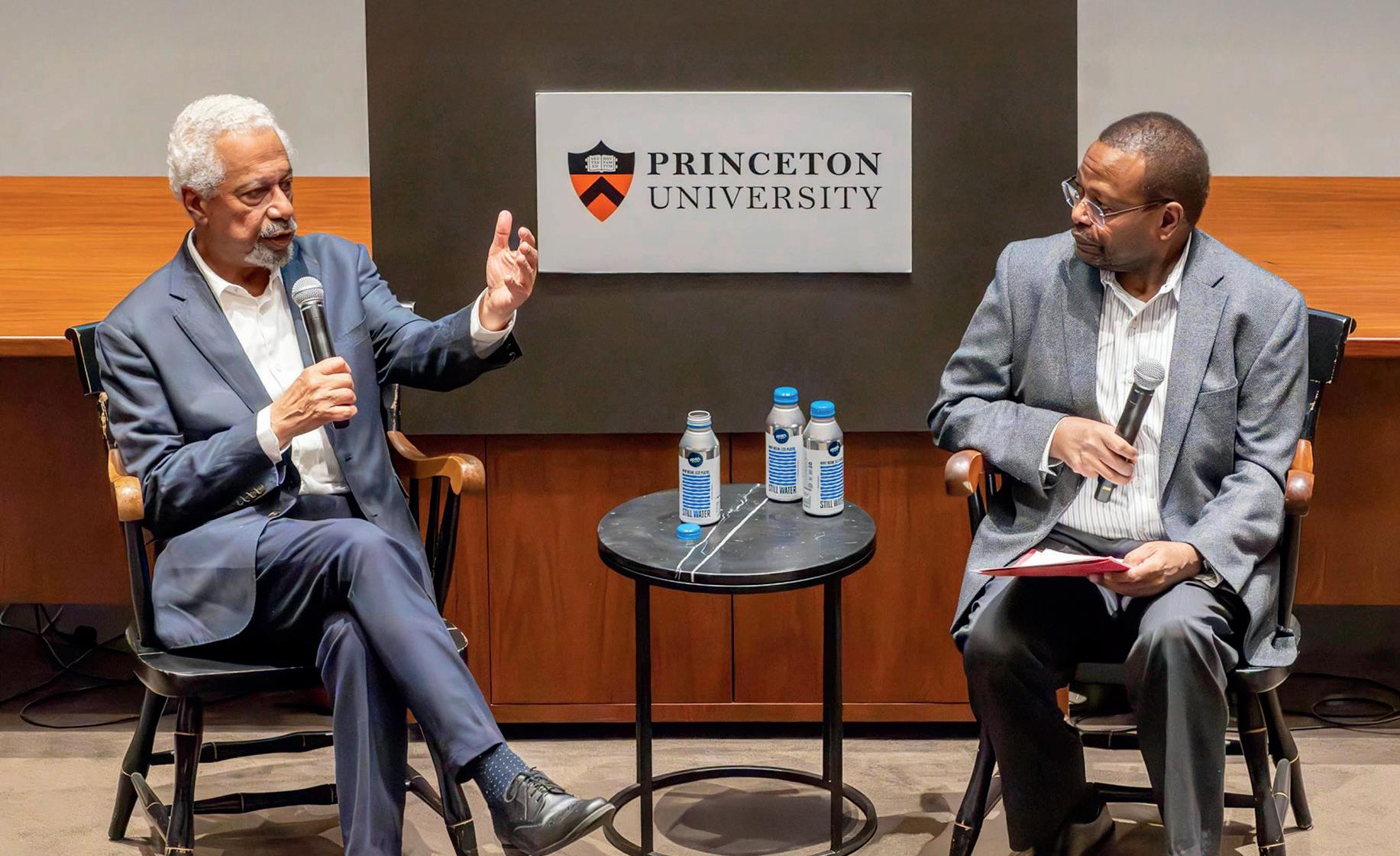
a range of research, policy and entrepreneurship. One of them is the Africa World Lectures series, a flagship program that brings African luminaries, like novelists Abdulrazak Gurnah and Chimamanda Ngozi Adichie, to campus to share their ideas and discuss current realities and visions for the future of Africa.
“[AWI] is something that I cannot say exists anywhere else among our peer institutions,” said OkekeAgulu. “This is why I’m so grateful to Nassau Hall for saying, ‘This is unusual, but we’re willing to see what you can do.’ There’s a lot of leap-of-faith in this.”
2021 Nobel laureate in literature Abdulrazak Gurnah (left) with Simon Gikandi, the Class of 1943 University Professor of English
FORWARD to support world-class teaching and research
Princeton’s faculty are the foundation of the University’s excellence, and endowed professorships are critical to recruiting and retaining the finest professors in the world. During the Venture Forward campaign, gifts were made to establish several new University Professorships.
Since 1962, only 73 members of the Princeton faculty have held the title of University Professor. Among them are seven recipients of the Nobel Prize, two Fields Medalists and a winner of the Pulitzer Prize. “University Professorships represent a unique opportunity for Princeton to recognize peerless educators who conduct world-class research and scholarship that can have a profound impact on the world,” said Gene Jarrett ’97, dean of the faculty and the William S. Tod Professor of English. “The professorships are a singular honor for Princeton faculty members who receive them. We are extremely grateful to the generous alumni and friends who have endowed them and for their commitment to Princeton’s academic excellence.”
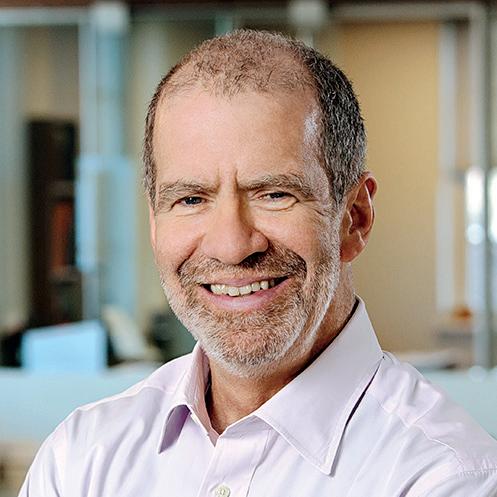
The William M. Addy ’82 University Professorship:
“Great professor-researcherteachers like the ones I had at the School of Engineering and Applied Science are rare, and that’s who Lydia and I hope Princeton honors with the William M. Addy ’82 University Professorship.”
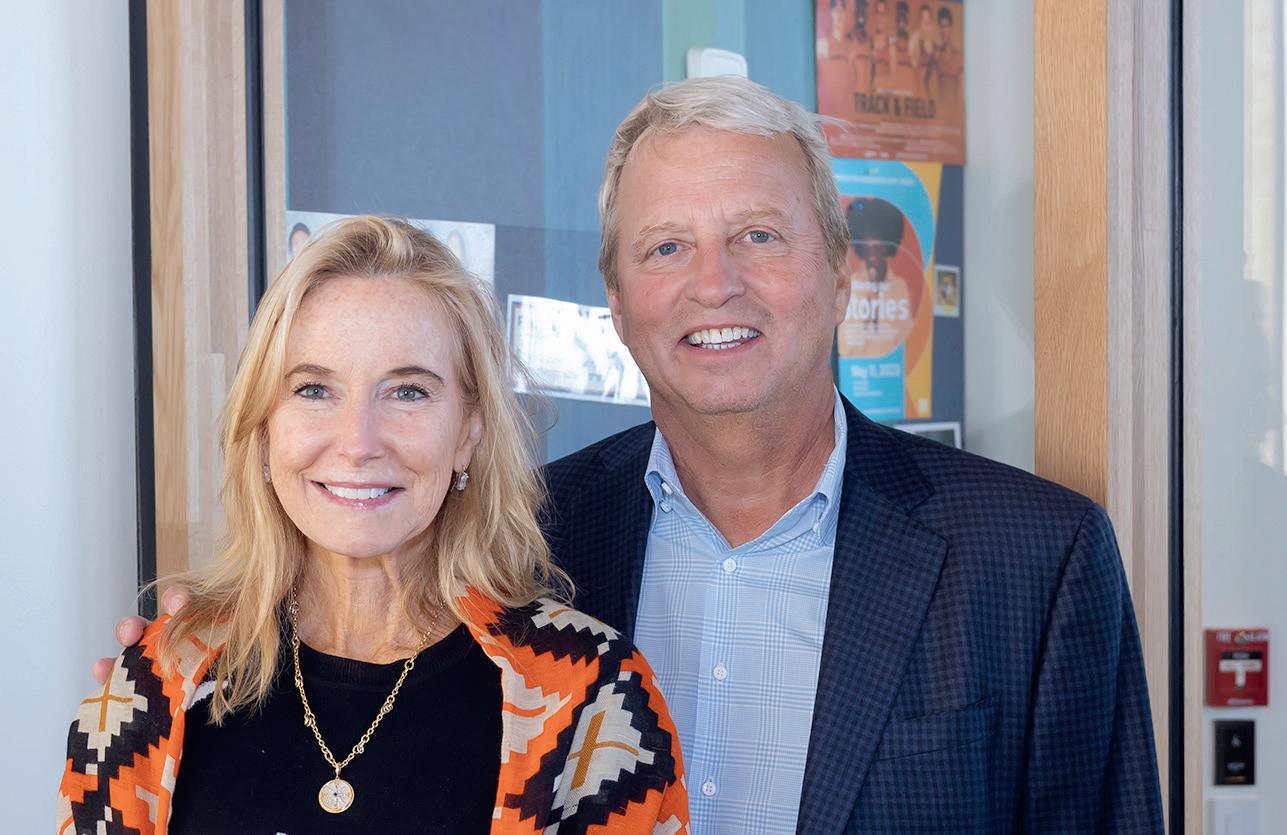
–WILLIAM M. ADDY ’82
A gift for an additional University Professorship has been committed by donors who wish their contribution to be confidential at this time.
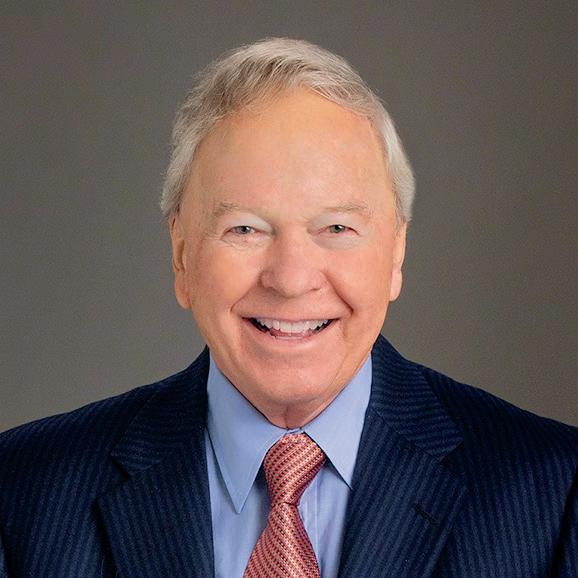
The Thor Johnson *02 University Professorship:
“When you can recruit a [world-class] person to a collaborative environment like Princeton, I think there is a virtuous cycle that attracts other top people, and I hope this University Professorship serves as a force multiplier in solving some of the world’s most significant problems.”
–THOR JOHNSON *02
The Andrew K. Golden University Professorship:
“The Andrew K. Golden University Professorship celebrates his role in the quintessential aspect of what the University is about — excellence in teaching and research — and we can’t imagine a more fitting honor for a man whose three decades of incredible work on behalf of the University has helped make that possible.”
–BOB PECK ’88, representing a group of contributors
The Bruce R. Lauritzen University Professorship:
“I’m the sixth generation in our family’s business, and there’s very much a passion for service to your community ingrained in our family and in our company. I think that just translated right into Princeton, and [my father] felt an obligation to give back, to pay it forward.”
–CLARK LAURITZEN ’99, whose extended family made the gift to honor their late father
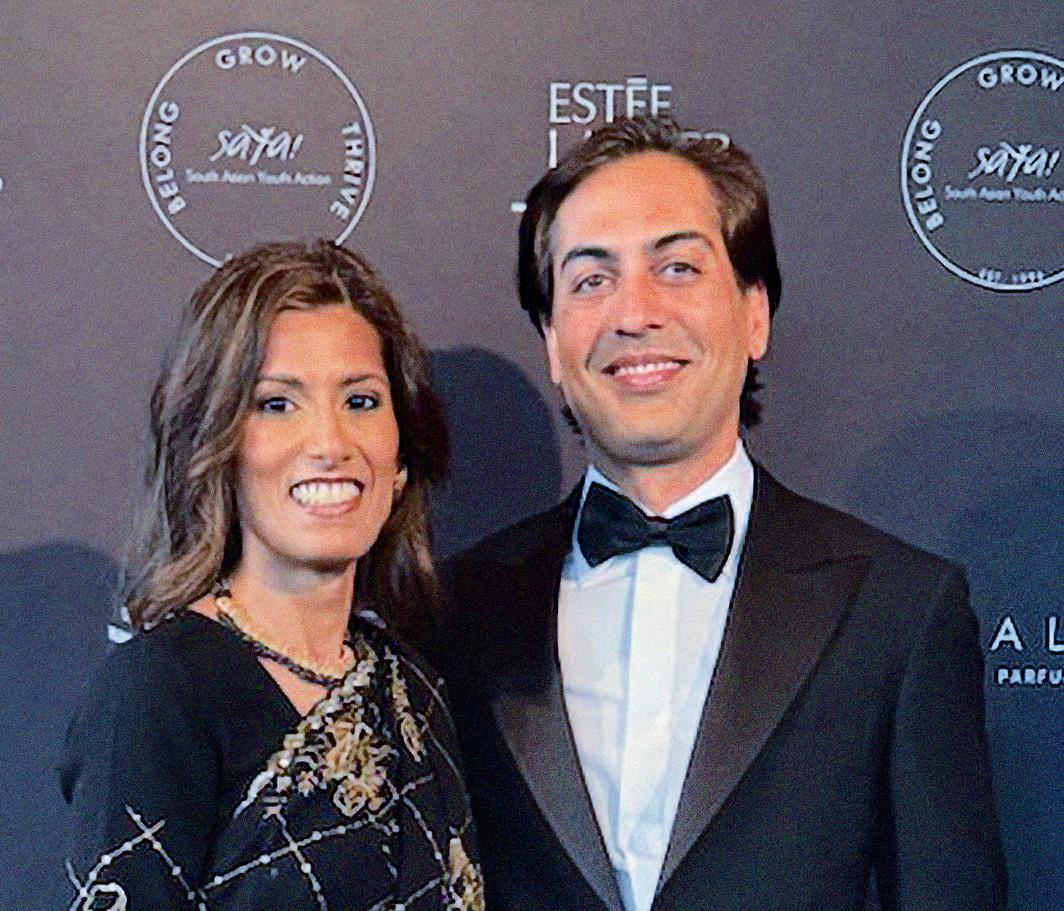
The Neil A. Omenn ’68 University Professorship: “Neil was a loyal donor to Princeton every year until he passed in 2023. We think he’d be extremely pleased to have his name now associated with the University in this manner. Princeton is a special place that binds the three of us together.”
–GIL OMENN ’61 AND MARTHA DARLING *70
The U. Krishna Veeraraghavan ’99 and Sejal Shah University Professorship: “By establishing this University Professorship, we hope Princeton will honor brilliant teachers who’ve not only produced world-class research — but who also have a capacity for even greater future growth.”
–KRISHNA VEERARAGHAVAN ’99
FORWARD to support world-class teaching and research
Venture Forward gifts established the following named professorships — and created named funds intended to support future professorships.
Eddie S. Glaude Jr., the James S. McDonnell
Distinguished University Professor of African American Studies
Andrew K. Golden University Professorship
Anthony H.P. Lee ’79 P11 P14 Professorship
Anthony H.P. Lee ’79 Professorship in Mathematics
Augustine Family Professorship in Engineering
Bruce R. Lauritzen University Professorship Fund
Charles and Rhonnie T. Goldstein Endowed Professorship Fund
Charles C. and Emily R. Gillispie Chair in the History of Science
Christopher and Anita Murray Professorship of Astrophysical Sciences Fund
Chung-Pao Wu P94 P97
Professorship of Physics
Class of 1983 Professorship Fund
Class of 1987 Professorship
Class of 1988 Professorship in Domestic Policy
Class of 1995 Professorships
Daniel Tsui Professorship in Engineering
David M. Siegel ’83 Professorship in Computer Science
David R. Coffin Professorship of Renaissance Architecture
Deaton Family Professorship
Donald Drew Egbert Professorship of Modern Architecture
DS Professorship Fund
Edward and Virginia Taylor
Professorship in Bioorganic Chemistry
Eric and Wendy Schmidt
Professorship of Indigenous Studies
Fernholz Professorship of Mathematics
Graduate Class of 1991 Professorship
Huo Professorships in Computational and Theoretical Neuroscience
J.N. Allison Professorship in Environmental Studies
James Holderbaum Professorship of Renaissance and Modern Sculpture
Jeremiah P. Ostriker Professorship
John H. Laporte, Jr. Class of 1967 Professorship in Public Policy and Finance
Karol and Marnie Marcin ’96 Professorship
Kenneth C. Glazier ’71 Professorship Fund
Kenneth J. Boudreaux ’65 Professorship in Economics
Korea Foundation and Tiger Baron Foundation Professorship of Korean Studies
Leonard L. Milberg ’53 Professorship of American Jewish Studies
Lewis Bernard Professorship of Natural Science
Liu Family Professorship in Computer Science Fund
Luisa and Robert Fernholz ’62 Professorship of Mathematics and Statistics
Maduraperuma/Khot Professorship
Margareta Engman Augustine Professorship in Engineering
Nancy Peretsman ’76 and Robert Scully ’72 Professorship
Neil A. Omenn ’68 University Professorship
Norman R. Augustine ’57 *59 Professorship in Engineering
Olden Street Professorship in American Studies
Paul and Ann Chen ’89
Professorship of Asian American Studies Fund
Paula Chow Professorship in International and Regional Studies
Philip Mayhew Professorship in English, European, and American or Comparative Literature
Professorship of Technology and Societal Change
Ralph H. and Freda I. Augustine Professorship in Engineering
Ritter Professorship
Sanjay Swani ’87 Professorship in India Studies
Sheila and David Manischewitz ’59 Professorship
Shirley M. Tilghman Professorship
Sin-I Cheng ( ) Professorship in Engineering Science
Smith Family Professorship of History
Stanley G. Ivins ’34 and Henrietta Bauer Ivins Professorship in Economics
Surinder Mohan Singh Chadha and Bharati Chadha Professorship in India Studies Fund
Thomas M. Siebel Professorship in the History of Science
Thor Johnson *02 University Professorship Fund
U. Krishna Veeraraghavan ’99 and Sejal Shah University Professorship Fund
Wang Family Professorship in Computer Science
Wilke Family Professorship in Bioengineering
Willard Thorp Professorship in American Studies
William D. Zabel ’58 Professorship of Human Rights
William M. Addy ’82 University Professorship
FORWARD to develop new technologies that reimagine the possible
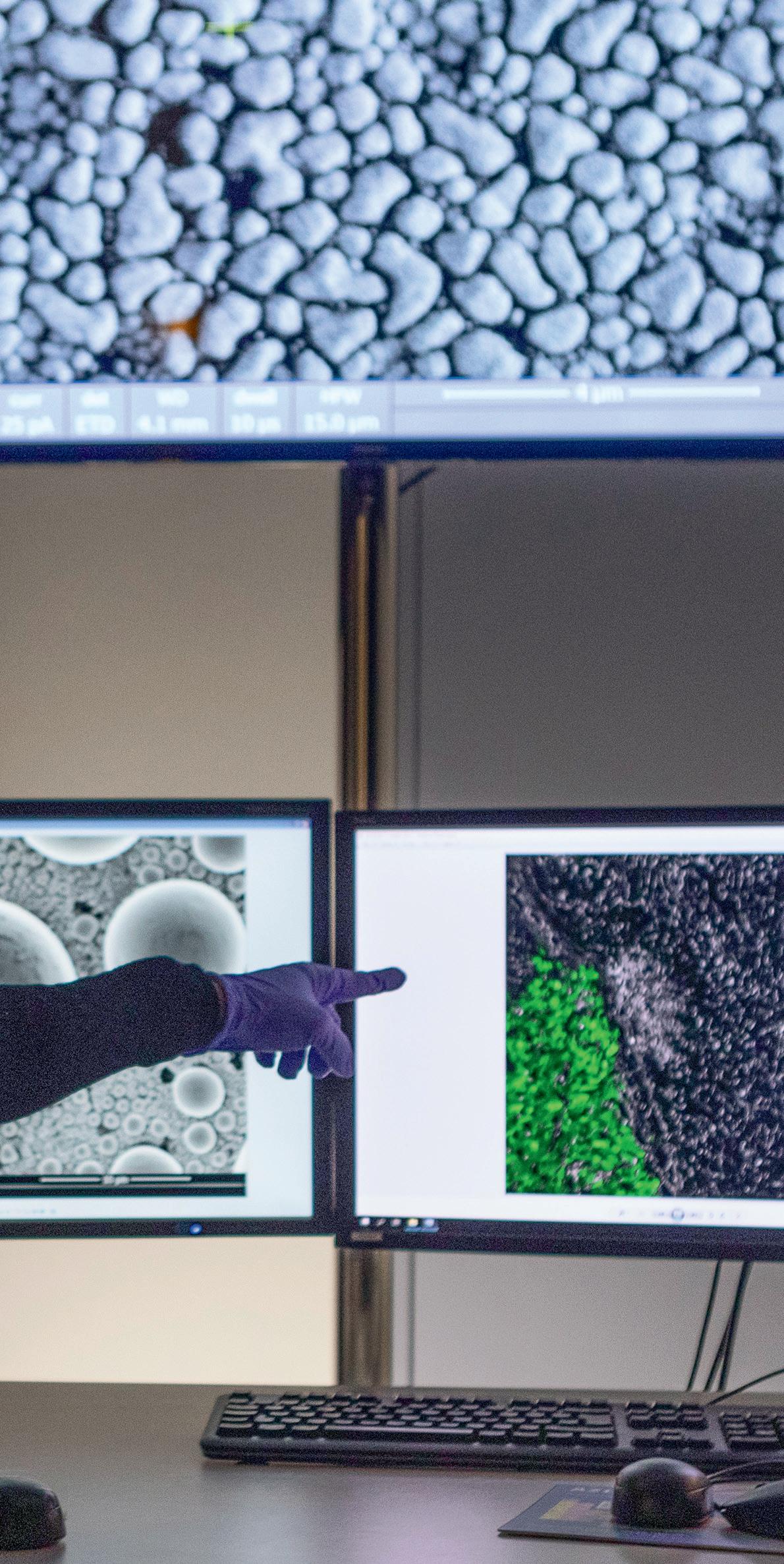
When Leslie Schoop *15 pitched her concept of using an unlikely chemistry lab technique to create materials with extraordinary electrical properties, Princeton made an audacious bet on her when everyone else told her no.
Support from the Princeton Catalysis Initiative got her research rolling, and five years later, her idea broke new ground in quantum materials science.
Schoop was fascinated by a new generation of atoms-thin materials that can superconduct electricity, inspiring futuristic dreams of ultra-efficient electric grids, flexible electronics printed on fabrics and skin, levitating trains and speedlimit-shattering quantum computers. Scientists were literally using sticky tape to peel atoms off of crystals to generate these materials, but Schoop imagined a better way to discover and make them. She believed the right chemical reaction, if her lab could find it, would do the job more effectively.
As director of her lab and the Princeton Center for Complex Materials, she views her role as a sort of lead detective, guiding teams hunting for quantum materials that may have extraordinary properties.
SCAN ME to watch the “Making Audacious Bets” video about Leslie Schoop.
“I think I keep the team inspired by always reminding them that, if you’re a good scientist, there’s never an experiment that’s a 100% failure,” Schoop said. “Even if your initial idea fails, the really good scientist will see what else is interesting there that shouldn’t be.”
After years of trial and error, her team struck a breakthrough: nanosheets that resembled a dark “ink.” Tests showed the printed ink expelled a magnetic field, and its electrical resistance dropped to zero at low temperatures — indicators it was a superconductor. Applications could include electronic devices that bend and stretch, energyefficient data storage and qubits that will profoundly boost computing power. Schoop’s team published their findings in 2023 as convention-busting, proofof-concept research that will contribute to new discoveries, quantum materials and game-changing products.
“There were review papers being published all the way up to 2022 saying it’s impossible,” Schoop said. “And I got a job [at Princeton] in 2017 saying I would do it!”
The quantum future
Researchers at the School of Engineering and Applied Science (SEAS) are opening new doors to understanding how the universe works. Andrew Houck ’00, dean of SEAS and the Anthony H.P. Lee ’79 P11 P14 Professor of Electrical and Computer Engineering, studies strange subatomic qubits that can theoretically drive quantum computers that are exponentially faster than current machines. “Quantum science has reshaped our understanding of the physical world,” said Houck. “Over the past few decades, we’ve gone from thought experiments to actually using quantum physics to build fundamentally new kinds of technology.” Among countless other applications, quantum computers could help design catalysts for chemical reactions and enable new levels of data security and secure communications. “Success will come when all this effort leads to new ways of thinking about the universe,” he said. “That’s not asking for much, is it?”
I never like it if somebody tells me I don’t need to do the experiment because they already know it’s not going to work. You need to do the experiment. Then you can tell me if it works or not.”
LESLIE SCHOOP *15, director of the Princeton Center for Complex Materials
FORWARD to develop new technologies that reimagine the possible
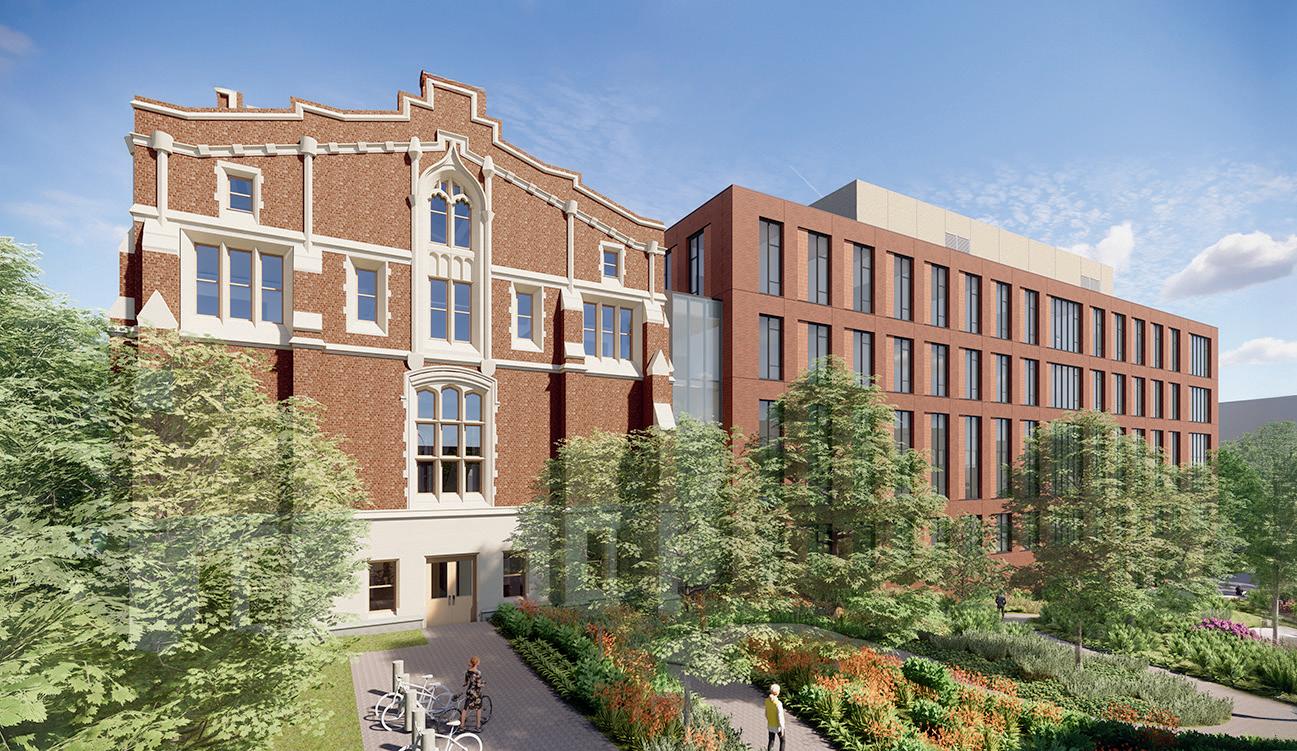
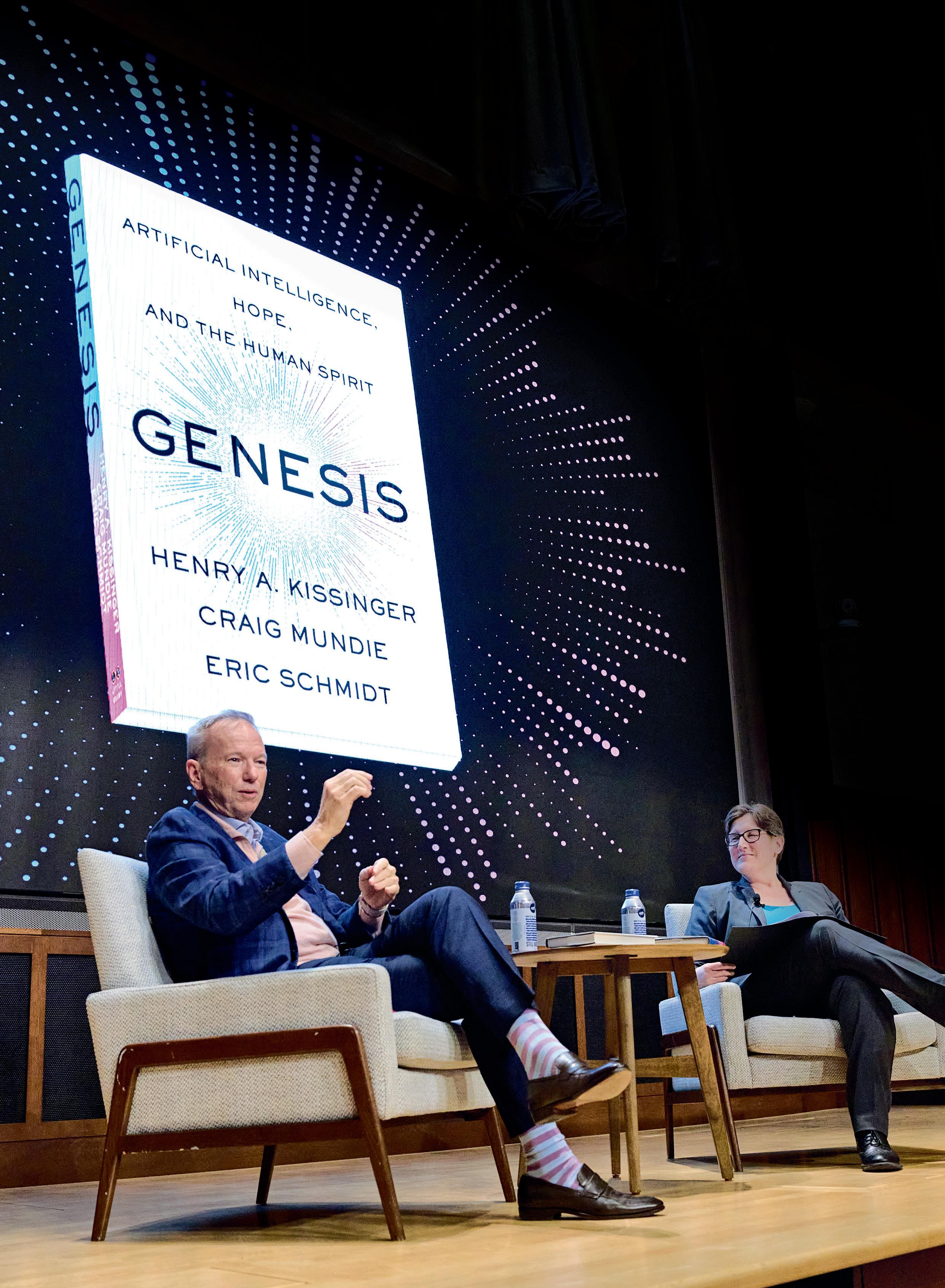
A major Venture Forward gift from Eric Schmidt ’76 and Wendy Schmidt made it possible to reimagine Guyot Hall as a new home for the Department of Computer Science.
Eric Schmidt, the former CEO of Google, studied electrical engineering at Princeton in the 1970s because a computer science department did not exist. Today, computer science is essential to nearly every other academic discipline — around 60% of undergraduates take COS126, the University’s introductory computer science course — and the number of students who major in the subject has grown by 82% in the last decade.
“The field offers tools for converting raw data into knowledge and better decisions, as well as a mode of thought for expressing creative ideas as algorithms for answering a wide range of questions,” said Jennifer Rexford ’91, provost and the Gordon Y.S. Wu Professor of Engineering.
“The central location of historic Guyot Hall places the computer science department at a focal point between all four divisions of the University, enabling closer collaboration and serendipitous encounters for faculty and students alike.”
Computer science has grown to become the largest undergraduate major at Princeton, and when Eric and Wendy Schmidt Hall opens in 2029 it will serve as a unified home for computer research and several related programs: the Department of Computer Science, the Center for Information Technology Policy, the Center for Statistics and Machine Learning, and the Princeton Institute for Computational Science and Engineering.
Eric and Wendy Schmidt Hall will consolidate into one purpose-built space facilities currently spread over nine different buildings.
“Data science has the potential to transform every discipline and find solutions to profound societal problems,” Schmidt said. “Wendy and I are excited to think about what will be possible when Princeton is able to gather students and faculty in one place, right at the center of campus, to discover now-unimaginable solutions for the future century.”
The world is full of extraordinarily gifted people, and we’re getting them connected.”
ERIC SCHMIDT ’76
FORWARD to accelerate artificial intelligence with human ethics
As the inaugural director of the Princeton Laboratory for Artificial Intelligence (AI Lab, for short), Tom Griffiths is helping to shape the future of AI research at Princeton.
Jointly appointed to the Departments of Computer Science and Psychology as the Henry R. Luce Professor of Information Technology, Consciousness, and Culture of Psychology and Computer Science, Griffiths is interested in understanding why humans are still better than AI at so many things — and how we can use that knowledge to both build better machines and help people make better decisions.
“In computer science, humans are the best example of what we want our computers to do, which is to act intelligently in the world,” Griffiths said. “In psychology, there’s been a view that humans are not particularly good at making decisions due to bias and irrationality.”
His dual perspective, seeing human cognition through the lens of computer science and computing through the lens of psychology, makes him an ideal director for the AI Lab. “We can take a question that comes from a discipline that’s maybe quite far away from computer science and then build a bridge that makes it possible to use some of these ideas,” he said.
SCAN ME to watch the “Making Audacious Bets” video about Tom Griffiths.
For Griffiths, the goal is discovering ways to change how we think about thinking itself. At a time when AI seems to advance daily, Griffiths’ work suggests that understanding human cognition — with all its constraints and quirks — might be key to developing smarter AI systems. The next AI breakthrough might come not from building bigger networks, but from better understanding how humans learn, collaborate and think.
“As we start to hit the limits of what’s possible by scaling data and compute, we’re going to need to develop other systems that learn quickly or think more efficiently,” he said. “And that’s something that we can get from thinking about people.”
In the long term, these questions offer insight into the nature of our own intelligence and how it might differ from the other kinds of systems that we interact with in the world. They can lead to a better understanding of what it means to be a human being.”
— TOM GRIFFITHS, director of the Princeton Laboratory for Artificial Intelligence
FORWARD to co-create game-changing treatments to combat cancer
The Venture Forward campaign helped Princeton establish a new cancer research hub by leveraging the University’s metabolic research with partner institutions’ strengths.
In 2021, Joshua Rabinowitz, a professor of chemistry and the Lewis-Sigler Institute for Integrative Genomics, became the founding director of the Ludwig Institute for Cancer Research’s Princeton Branch — joining an international community of scientists from Memorial Sloan Kettering, Johns Hopkins, Harvard, Oxford and other research institutions who are dedicated to preventing cancer. Each Ludwig branch has its focus, and Rabinowitz’s team at Princeton is the first one to study the metabolic processes that allow tumors to grow and identify strategies that might block tumor growth.
Metabolism is the process that converts nutrients from the food we eat into energy and the building blocks of new cells, and Rabinowitz wants to understand which foods promote or prevent tumor growth — in the same way that the medical community understands what type of diet minimizes heart disease. “The common dietary wisdom [for a cancer patient] may be totally wrong,” said Rabinowitz, who is conducting trials that measure the effectiveness of a ketogenic diet on pancreatic cancer. “It may not be simply eating healthy in the classic way — it may be zoning in on specific nutrients that are needed for the immune system to fight tumors, or specific dietary makeups
Yibin Kang, the WarnerLambert/Parke-Davis Professor of Molecular Biology, is a founding member of the Ludwig Princeton
SCAN ME to learn more about Princeton’s role in the new cancer research hub.
Branch.
that suppress the signals that drive cancer. That’s really what we’re looking to uncover.”
After Princeton joined with Weill Cornell Medicine and Rockefeller University to form the Weill Cancer Hub East in 2025, Rabinowitz and his team are exploring the potential to combine immunotherapy with diet to develop new methods of cancer prevention and treatment. “Diet is a primary biochemical input to our beings, and there is a relationship that connects our genes, diets and disease states,” Rabinowitz said. “Unlocking this code — this is one of the greatest opportunities to improve medical care.”
My aspiration is that in 10 or 15 years, we’re able to look back and say we can now give rational guidance to patients about what to eat or what not to eat when they have cancer.”
JOSHUA RABINOWITZ, director of the Ludwig Princeton Branch
Weill Cancer Hub East
In March 2025, Princeton joined Rockefeller University, Weill Cornell Medicine and the Ludwig Institute for Cancer Research in a new collaboration dedicated to making immunotherapy more effective for cancer patients. The initiative launched with a $50 million gift from the Weill Family Foundation and will be matched with philanthropic gifts from each partner institution that together will total more than $125 million.
Through the Weill Cancer Hub East, Princeton’s world-class scientists and engineers are combining forces with partner institutions’ cancer doctors and clinicians to advance the promise of immunology for cancer patients. Key research areas include studying how diet affects immunotherapy treatments, understanding the role of the gut microbiome in the success of those treatments, and learning how diet and exercise can improve outcomes.
FORWARD to address urgent challenges to health and the environment
The Venture Forward campaign amplified the University’s commitment to science and scholarship regarding the environment and climate change, one of humanity’s most pressing challenges.
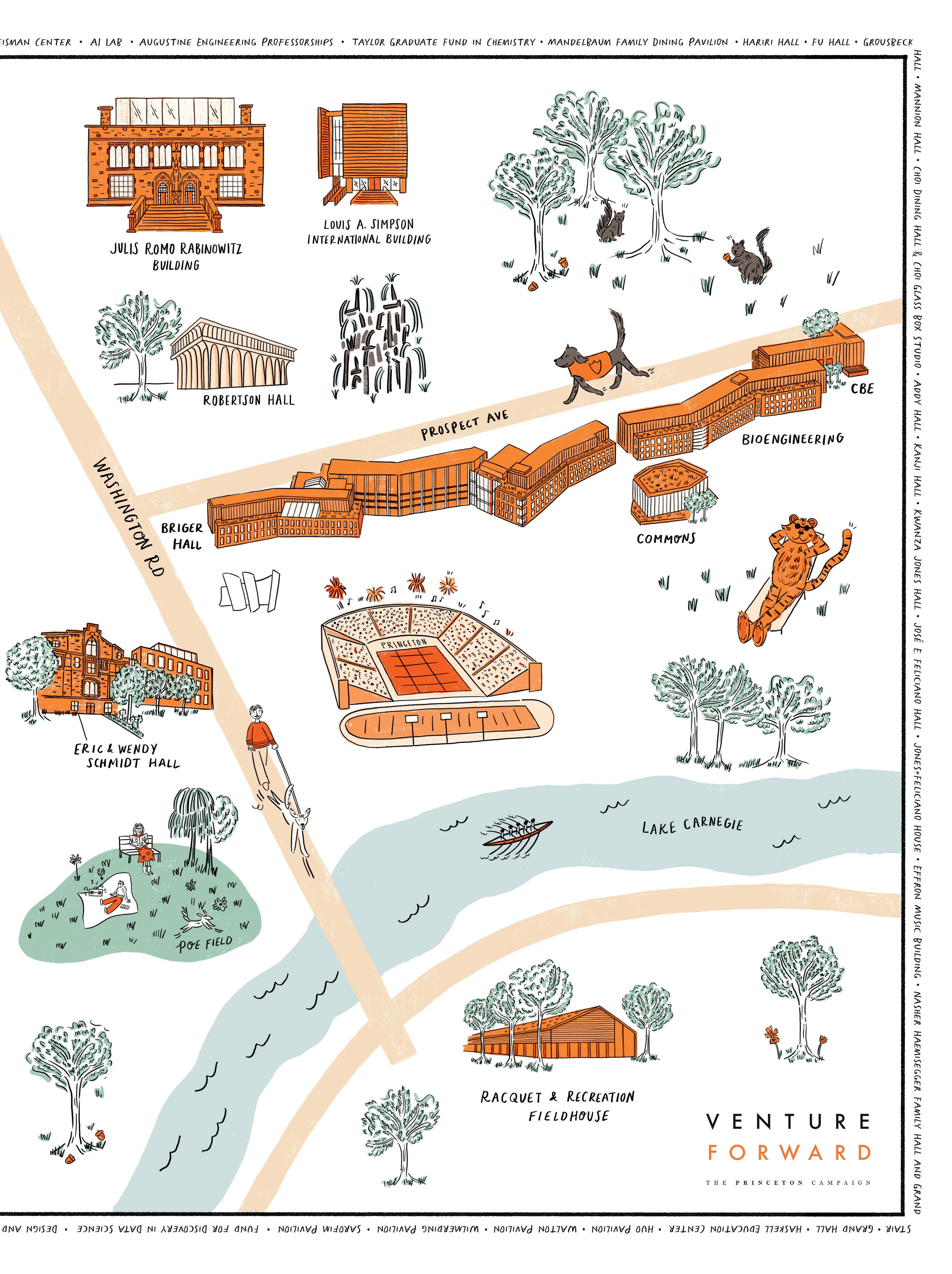
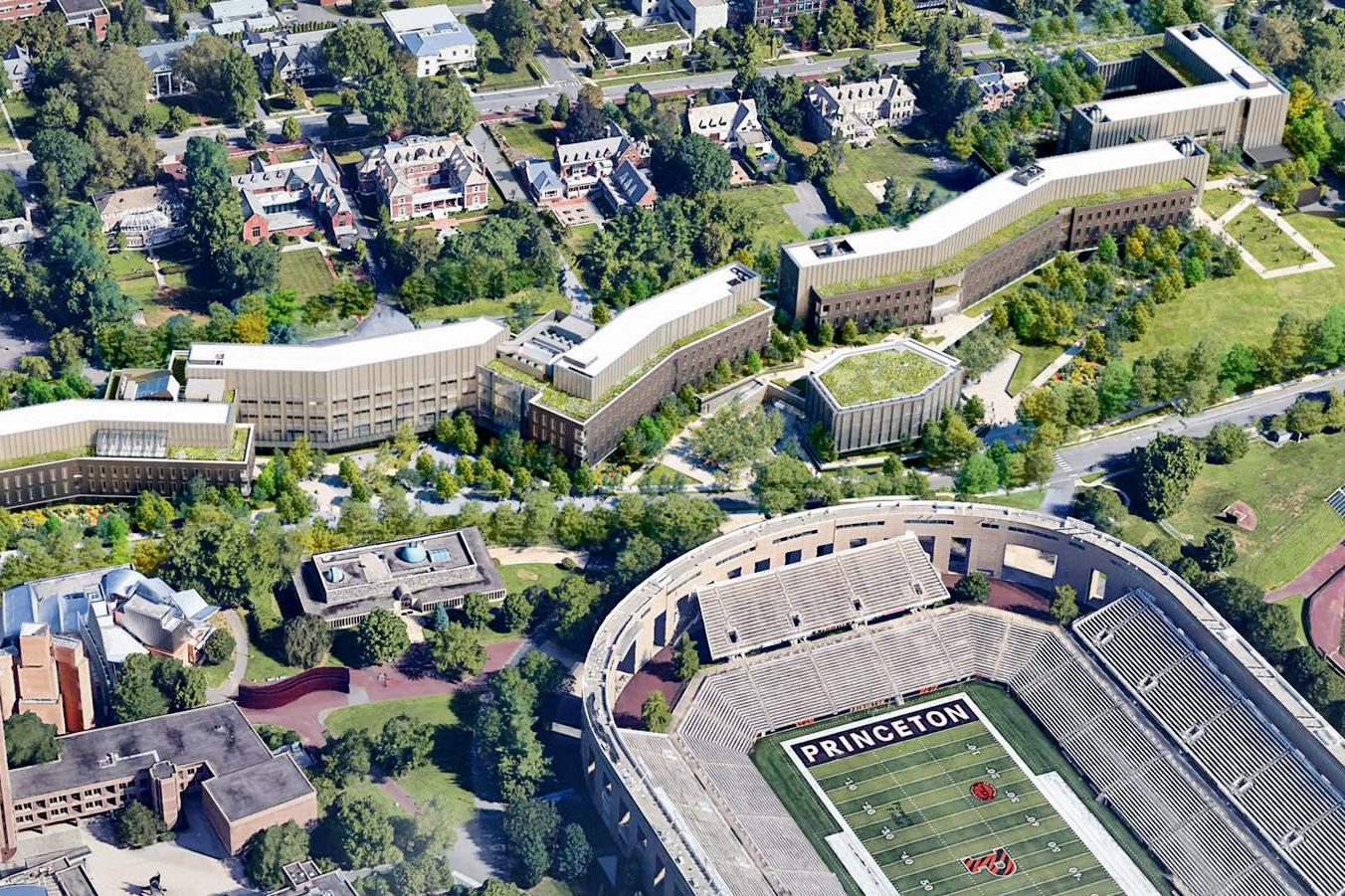
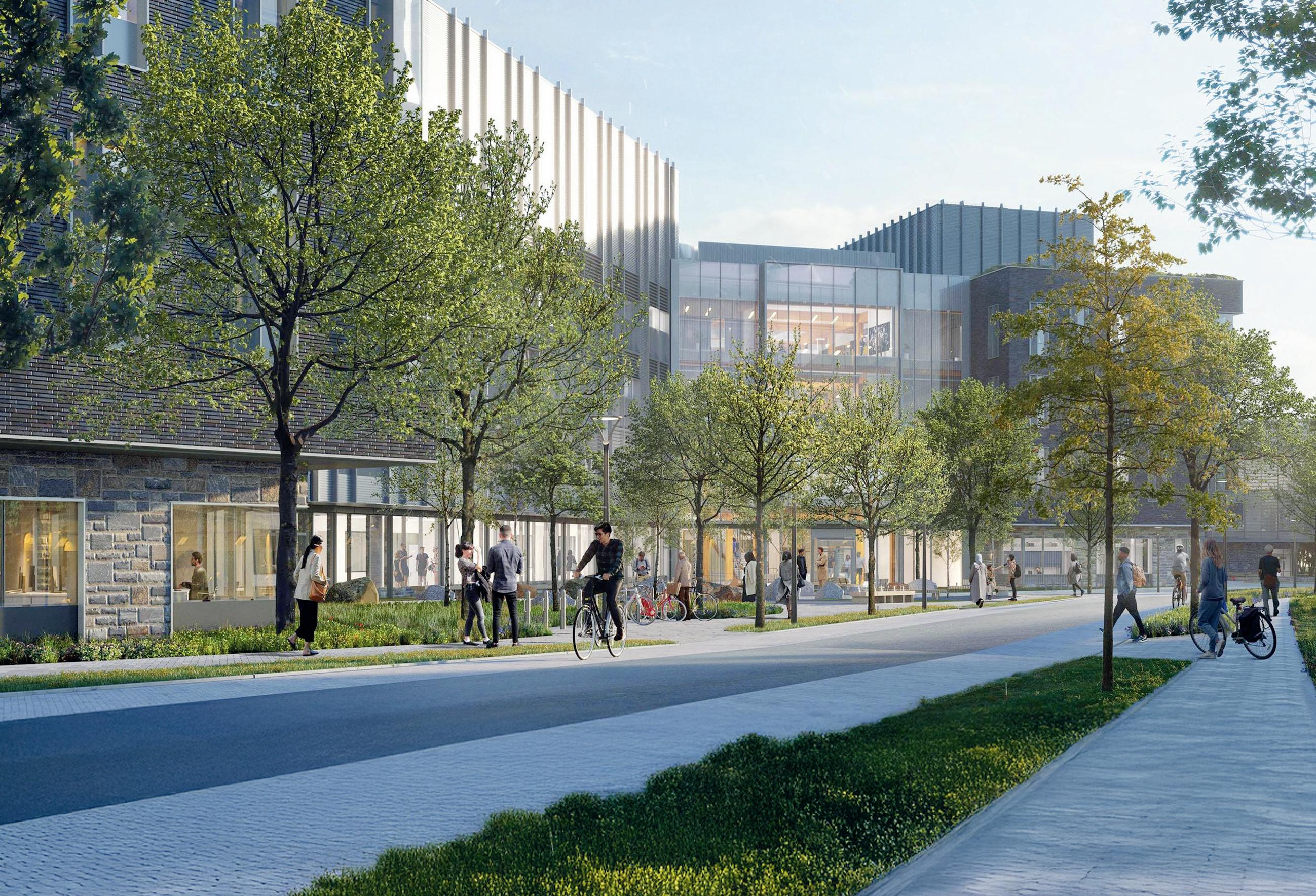
A new environmental studies building is named for a major Venture Forward gift by Pete Briger ’86 and his wife, Devon Briger. Briger Hall, which will strengthen and expand Princeton’s science and scholarship regarding some of humanity’s most pressing and interconnected challenges, including climate change, biodiversity, water resources, energy and infectious disease, is situated on the western portion of the new home for environmental studies and the School of Engineering and Applied Science (ES & SEAS). Its central location on Ivy Lane, across from Princeton Stadium, will facilitate research engagement among faculty, researchers and students in the sciences, engineering, humanities and public policy disciplines.
“This new building is an extraordinary investment in the future of humanity,” said Bryan Grenfell, the Kathryn Briger and Sarah Fenton Professor of Ecology and Evolutionary Biology and Public Affairs.
“The teaching and research excellence that will move forward in Briger Hall has implications far beyond its walls, for the very quality of our life on this planet.”
Briger Hall’s location and design encourage collaboration across physics, chemistry, biology, computer science, applied mathematics and other fields and will provide new spaces in which scholars can visualize data, conduct meetings and find opportunities for quiet reflection.
Other significant Venture Forward gifts include one to name the High Meadows Environmental Institute (HMEI), by
Ivy Lane
The new construction uses materials that establish strong connections to nature and promote the University’s sustainability ethos.
Adjacent to Briger Hall — the new home for environmental studies — three other buildings are being constructed on Ivy Lane for the Omenn-Darling Bioengineering Institute and the Department of Chemical and Biological Engineering. The four buildings are connected underground in one continuous sequence that will help develop a neighborhood that more closely connects its departments with the rest of the University’s campus, including Eric and Wendy Schmidt Hall. They will also share an adjacent Commons building featuring dining, library and conference facilities. The project reflects the importance of environmental studies and engineering in a 21st-century liberal arts university.
Judy and Carl Ferenbach III ’64, as well as the Thomas A. and Currie C. Barron Family Biodiversity Challenge Fund that supports innovative research projects. Briger Hall will be the new home for HMEI, the Department of Ecology and Evolutionary Biology, and the Department of Geosciences.
“Princeton professors, research faculty and students have long contributed critical research and scholarship focused on solving the world’s greatest challenges,” Devon and Pete Briger said. “Our hope is that this gift will allow for a hub and engine for the type of interdisciplinary, collaborative and actionable scholarship that the increasingly complex challenges of today’s world demand.”
The innovative design and features of Briger Hall will accelerate our ability, at HMEI and enterprise-wide, to tackle some of humanity’s most pressing challenges and to develop solutions to interconnected problems in a more collaborative and interdisciplinary manner.”
GABRIEL VECCHI, director of HMEI and the Knox Taylor Professor of Geosciences
Through the generous engagement and philanthropy of alumni and friends, the Venture Forward campaign enabled Princeton University to make audacious bets on talent, to accelerate the University’s ability to make a difference and to translate “in service of humanity” into real-world action.
Princeton’s tradition of curiosity-driven research, amplified by the support of a devoted alumni community, can create transformative solutions to a variety of global challenges. In this moment, scholars are pushing the boundaries of knowledge to develop new technologies and advance strategies that safeguard the environment, protect human health, address broad societal challenges and leverage artificial intelligence for the benefit of all.
The questions we ask — and the answers we find — will have an outsized impact on this century and beyond.
Through spirited engagement, volunteerism, directed and planned gifts, and Annual Giving, we have ventured forward together as a University community to meet the challenges of this pivotal moment, creating a better future in the service of humanity.
Thank you for your support during the Venture Forward campaign. Together, we will venture beyond — beyond imagination, beyond amazing — to meet new challenges.
With sincere thanks to the Venture Forward campaign executive steering committee co-chairs:
Katherine Brittain Bradley ’86
Blair Effron ’84
James Yeh ’87
Alabastro Photography
Denise Applewhite
Kevin Birch
Barron Bixler
Chris Fascenelli
Steven Freeman
Andrea Kane
Sameer Khan/Fotobuddy
Drew Levin Christopher Lilja
Phil McAuliffe
Matt Raspanti
Tory Repp/Fotobuddy
Sasaki
Smartypants/Brooklyn
Courtesy Mark Dawod ‘24
Courtesy the Lauritzen Family
Courtesy Thor Johnson *02
Courtesy Krishna Veeraraghavan ‘99
Courtesy Princeton Campus Recreation
Courtesy Princeton Journeys
Courtesy Princeton University Archives
Courtesy LENS Initiative, Princeton University
Courtesy Office of the University Architect, Princeton University
Rendering of Eric and Wendy Schmidt Hall courtesy Frederick Fisher & Partners, Shepley Bulfinch and Office of the University Architect