COMMENTARY: Harness your experience
Story and photo by
Col. Daniel Loveless 86th Healthcare Operations Squadron commander
My alarm went off around 3:45 a.m. My gear was ready, and I quickly put on my base layers and hut sandals. I carried my bag and gear and left them outside the dining room. It was breakfast time. To me, eating is absolutely essential to climbing and I overeat when I climb as you will almost assuredly burn more calories in a summit climb than you can eat in that day. The food was quite good for being in a hut at 10,695 feet, minus the coffee. It was instant, but regardless of taste, necessary.
Twenty two-man teams of climbers lined up by the door of the Hörnli Hut, which leads to the path up the Matterhorn. We put on the rest of our layers and gear necessary for the climb. As we exited the hut, everyone turned on their headlamps and started to walk to the first obstacle, a fixed rope that runs up a 20-foot section of sheer rock.
Traditionally, the Matterhorn takes eight to 12 hours to summit. Many climbers will turn around if they haven’t reached the Salvay Hut at 13,123 feet within three hours. Given the fast pace of the climb and the need to have equipment for rock climbing and walking on ice, the Matterhorn requires you to do more with less.
To do this I employed a number of strategies. These same strategies can help you when you are tasked with many items already on your plate.
The first step is to define your timeframe. How long do you realistically need to accomplish your tasks? For the Matterhorn, my guide set a goal of eight hours. If I did not think this was possible, it might be smart to rethink the climb. The same holds true for your work. Setting the time helps to keep you on track and is also important for changing your course if you fall behind schedule. In the case of mountaineering, that means turning around.
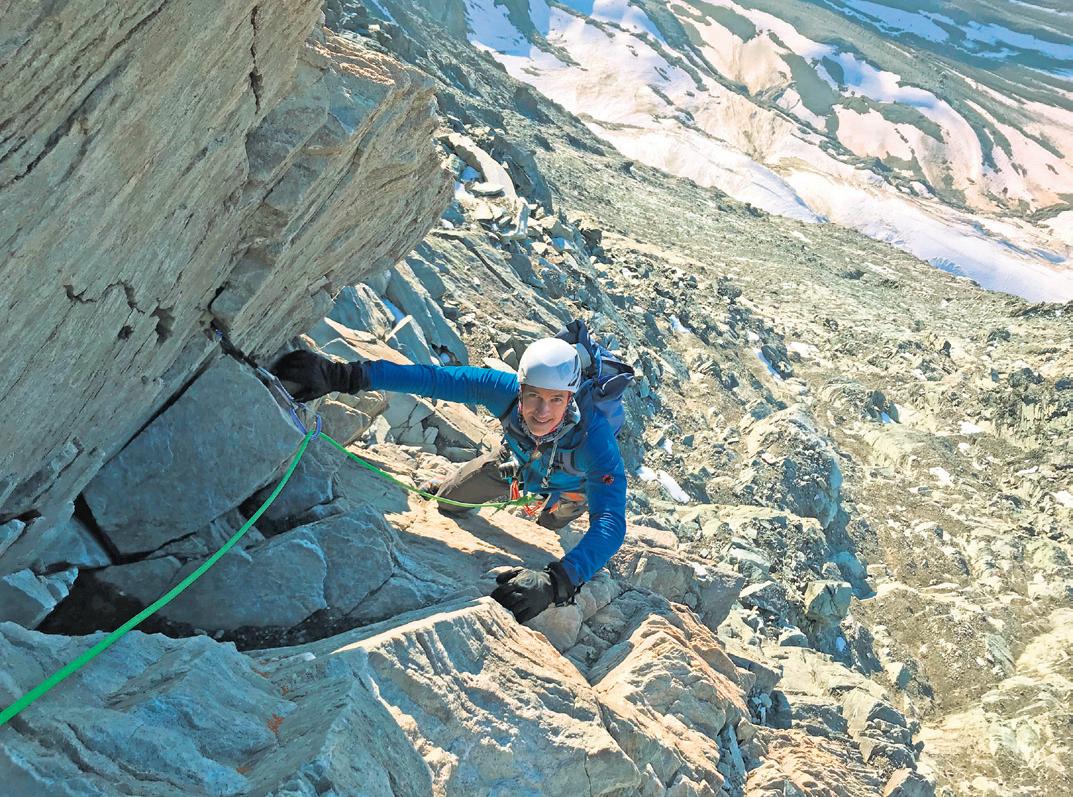
The next step is to harness your experience. This is something you need to do before taking on a complex challenge. Throughout your career, aim to take on new and difficult additional duties or assignments. These will build and prepare you for future challenges. The amazing part about building experience is that there is a bit of a gestalt benefit from this, in that the whole can be greater than the sum of the parts. This even applies to more than just groups of individuals. This principle can definitely apply to just an individual as well. For me this is probably the most important factor for climbing safely. Experience is key as human error plays a role in mountaineering fatalities more often than not. In preparation for this climb, I had climbed numerous mountains with more complex ice and rock climbing conditions. In addition, I had scaled a lower alti-
tude mountain with mixed rock and ice climbing in preparation. This gave me the experiences I needed to maximize safety and reduce my risk.
The only thing I could not prepare for was the overall duration of the rapid pace that is required to summit the Matterhorn.
When you have a lot on your plate, you have to make decisions about what you can and can’t do.
You only have so much time in a day, so you need to be able to ask yourself, is this really necessary? Can I do the duty or complete this mission safely and effectively if I don’t do this? All of this amounts to process improvement. By critical analysis, we can at times not only make things faster, we can potentially even make the endeavor safer, as unneeded steps increase complexity and therefore increase risk. For this climb, it came down to reducing redundant equipment. Generally
you will bring along a large parka and a sleeping bag in case of having to bivouac in extreme weather. Because the Salvay hut is equipped with beds and blankets and provides overall protection from the elements, you can safely leave a number of additional clothing layers and a sleeping bag behind. Luxury items, like a camera, come down to your fitness level and overall risk assessment. My overall pack weight was low and I was feeling good, so I did bring along my camera.
The final factor is to know when it is not safe to continue. There is always a limit to how much we can take on or are properly prepared to do. It is not only important to do a full assessment of the task at hand, but also to have the courage to say that you can’t do something safely or to stop when it becomes unsafe to continue. With some tasks, you may need to chart a new course.
Others may need additional support. Some will require you to try again from scratch. Getting to the top of a mountain is just 50 percent of the climb. With most accidents happening on the way down, it is essential to be ready to turn around if the weather conditions or climbing conditions impart unsatisfactory risk with continuing or your overall energy is not at a level that can support safe climbing both to the summit and down.
We arrived at the 14,692 foot summit of the Matterhorn in the early hours of the morning with great weather and a clear view of the Alps. I kept my focus on the task at hand until we arrived back at the Hörnli Hut after eight hours and 20 minutes of climbing. Although the Matterhorn was a difficult climb, I was able to celebrate in style by ordering a cold beer and a large and satisfying rösti.
PARTNERSHIP
from Page 1
ing procedures to safely manage airspace.
The Office of Defense Cooperation, along with U.S. Air Forces in Europe – Air Forces Africa A5I (international affairs), generated a concept of funding request for the familiarization tour, which was based on the Ukrainian armed forces’ objectives and desired outcomes for their newly acquired equipment.
“Air advisors take that CFR and start mission planning as soon as possible with the ODC and partner nations,” said Master Sgt. Michael Jaeger, 435th CRSS air traffic control air advisor. “We reach out to other squadrons around the globe to source the top subject matter experts that would best benefit the requesting country’s desires.”
Airmen from the 435th Air and Space Communications Group and 86th Operations Group discussed tactics, techniques and procedures, while showcasing tactical communications and air traffic control equipment. This assisted with familiarizing Ukrainian service members on NATO and U.S. Air Force standards.
“Air advisors build partnerships through familiarization opportunities like this one,” Jaeger said.
Ukrainian service members learned the capabilities combat communications provides and what it takes to get a tactical communications unit deployed. This asset can be essential for maintaining command and control during contingency operations.
“The fly-away communication kits the 1st Combat Communications Squadron displayed allow just that, and it gave the Ukrainian air force members a good benchmark for developing a mobile communications capability,” said Tech. Sgt. Kyle Koutsouros, 435th CRSS air advisor.
The Ukrainian team spent time with the 1st CBCS and 86th Operations Support Squadron Air Traffic Control Tower and Ground Controlled Approach components, as well as visited the 1st Communications Maintenance
Squadron at Kapaun Air Station.
The 1st CMXS performs advanced troubleshooting when called upon for communication outages and helps with projects which require new installations.
“Ukrainian air force members displayed interest in producing and initiating their own communication maintenance unit to help facilitate their armed forces at their main bases and during field operations,” Koutsouros said.
The 435th CRSS air advisors expand interoperability and deterrence initiatives through coordinating and hosting partner-nation visits. Members of the Ukrainian armed forces reviewed flexible, mobile and resilient communications capabilities and strategic airspace navigation and management – fundamental concepts which can enable them to host a variety of U.S. Air Force and NATO aircraft.
“We built a friendship first and foremost, exchanging stories and career experiences,” Jaeger said. “I have hopes we can assist Ukraine in getting their airfields to NATO standards.”
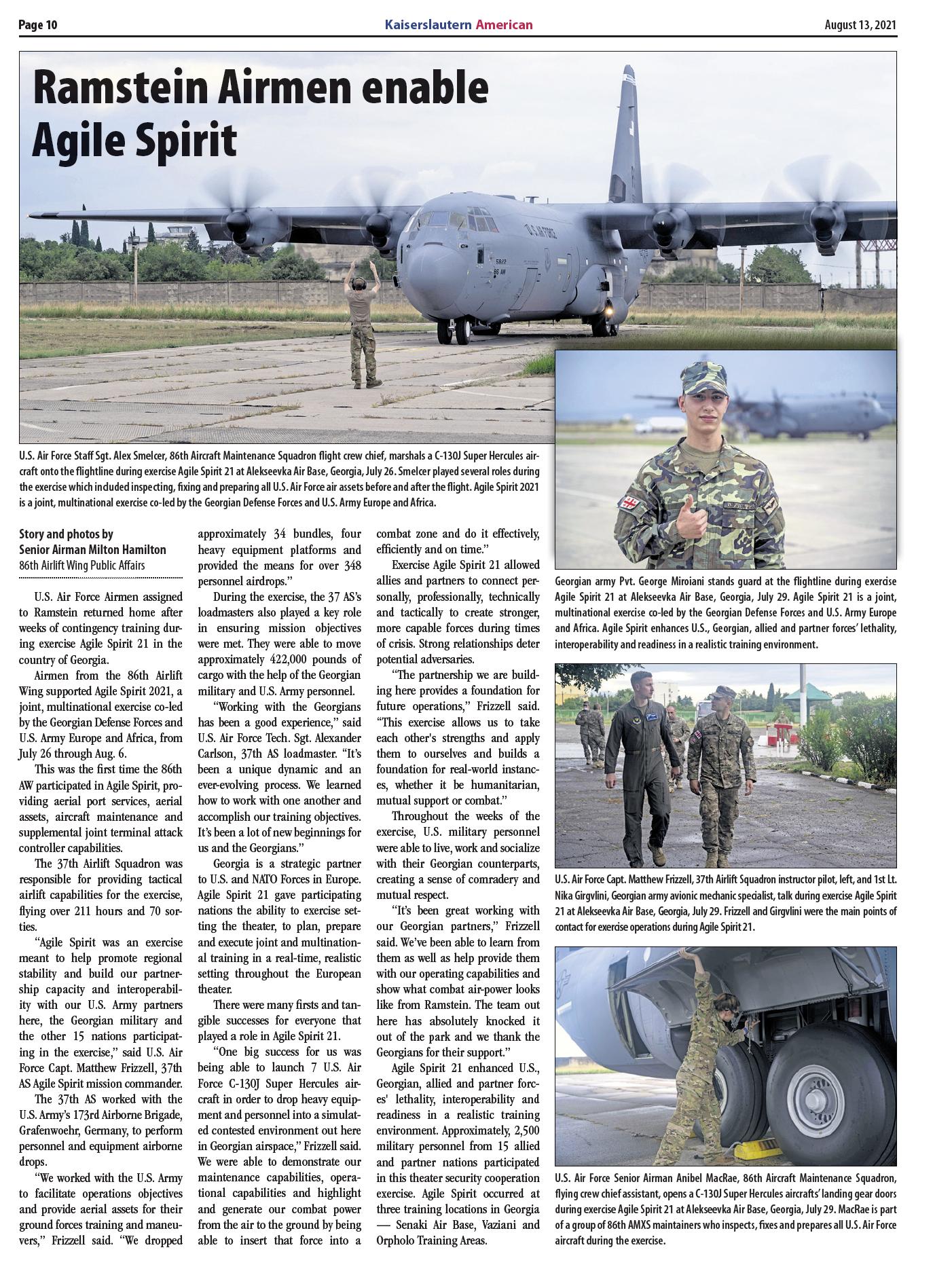
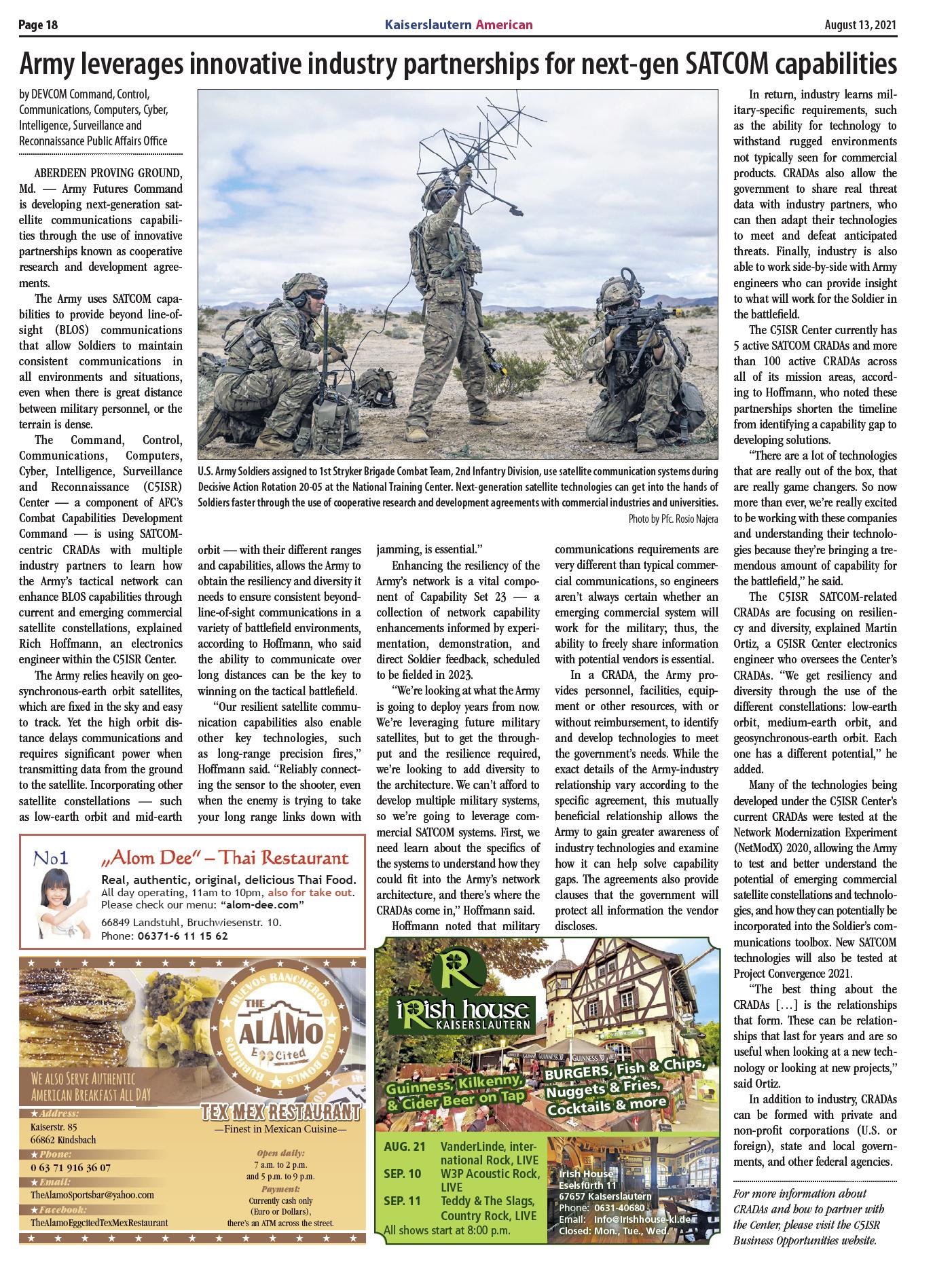
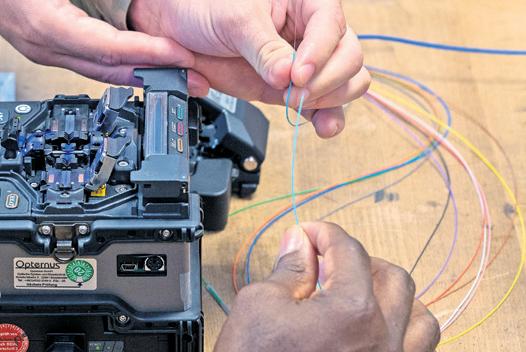
(Left) A team of technicians from the 1st Communications Maintenance Squadron demonstrate fiber cable splicing for members of the Ukrainian armed forces during their visit to Kapaun Air Station, Aug. 4. The Ukrainian service members also visited Ramstein Air Base for deployed communications equipment and air traffic control capabilities familiarization. They reviewed flexible, mobile and resilient communications techniques with subject matter experts during their visit.
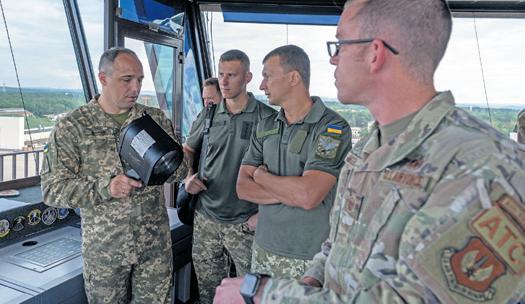
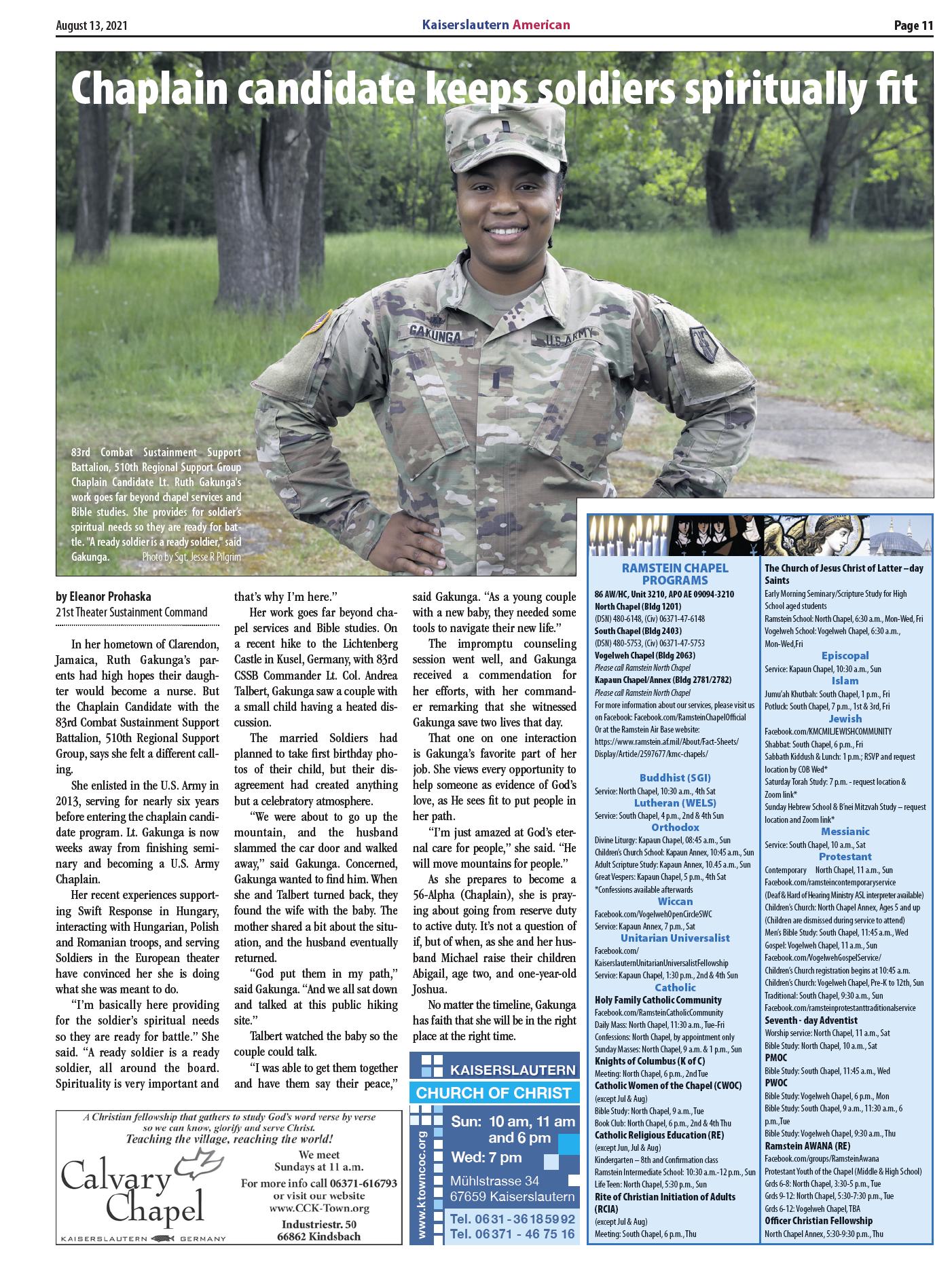
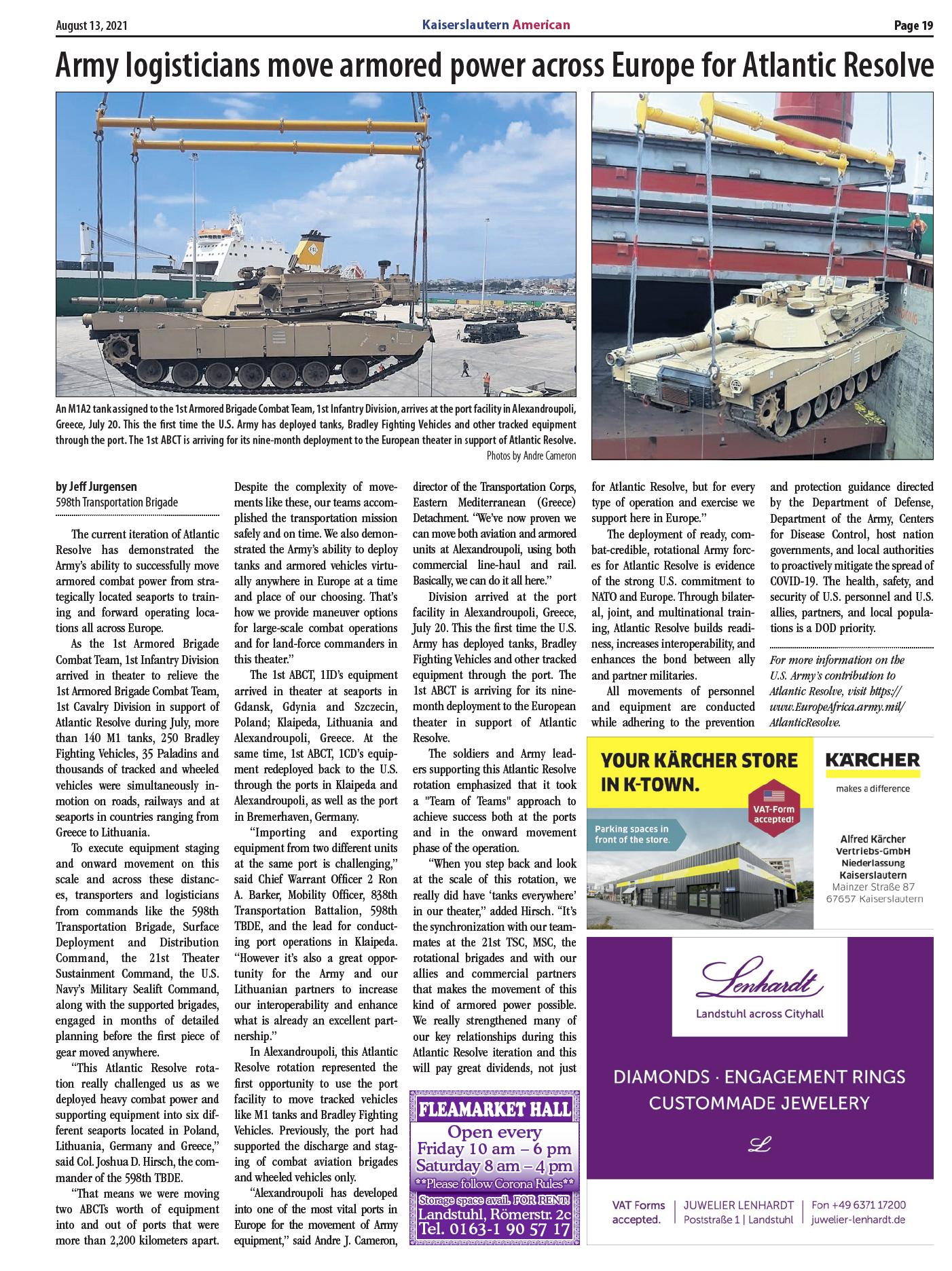
Members of the Ukrainian armed forces, left, inspect a light gun with U.S. Air Force Master Sgt. Michael Jaeger, 435th Contingency Response Support Squadron air traffic control air advisor, right, in the ATC tower during their visit to Ramstein Air Base, Aug. 5.
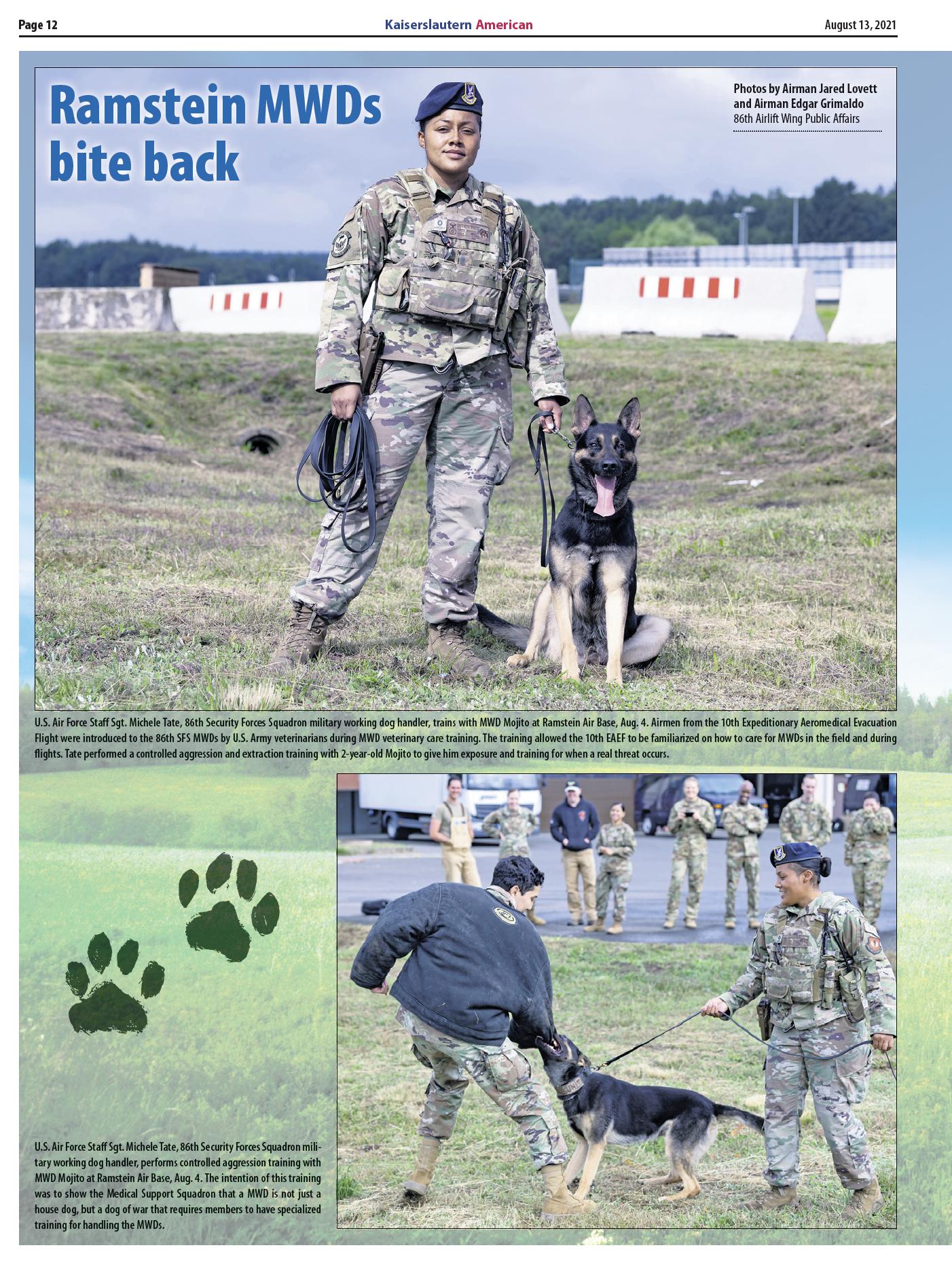
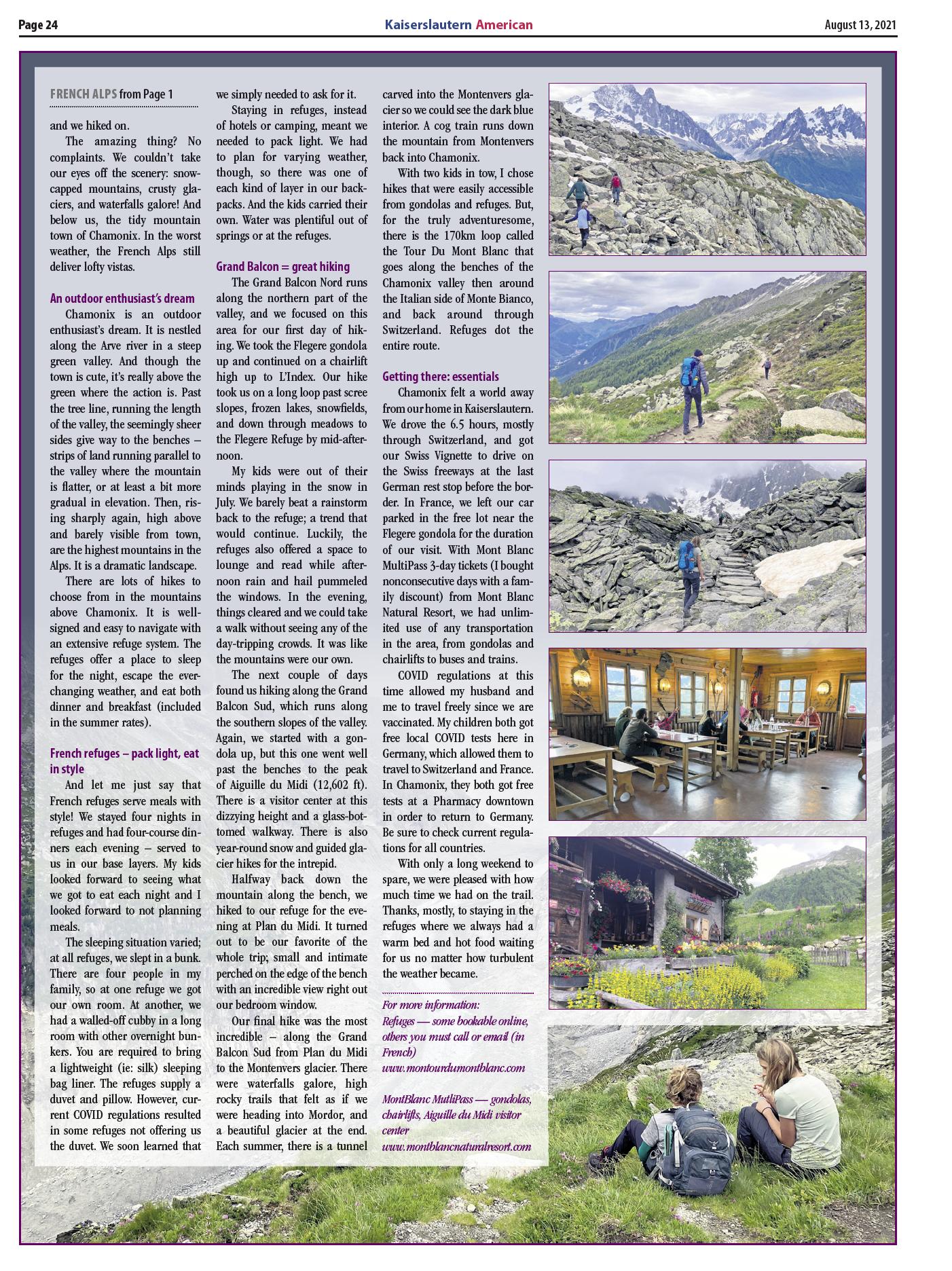
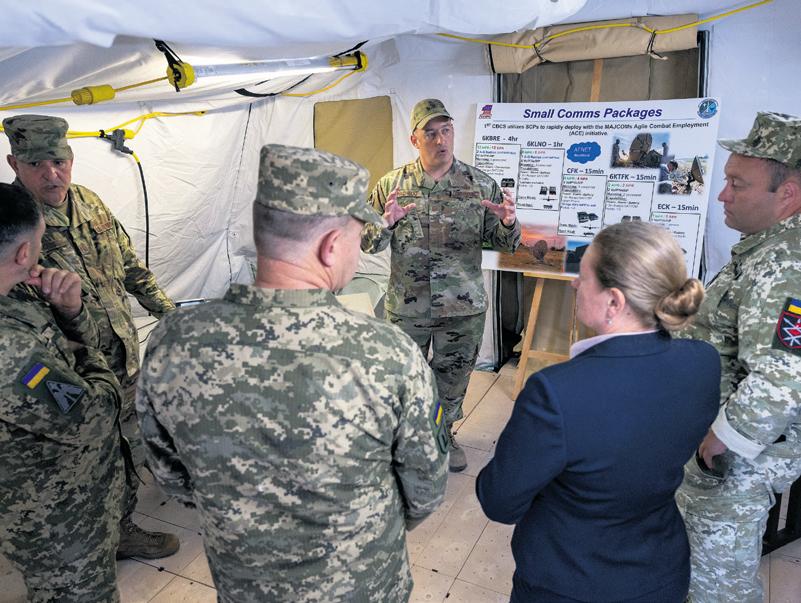
U.S. Air Force Master Sgt. Richard Pacheco, 1st Combat Communications Squadron air reserve component noncommissioned officer in charge, discusses deployed communications equipment and capabilities with members of the Ukrainian armed forces during their visit to Ramstein Air Base, Aug. 3. Ukrainian service members learned the capabilities combat communications provides, and what it takes to get a tactical communications unit deployed.
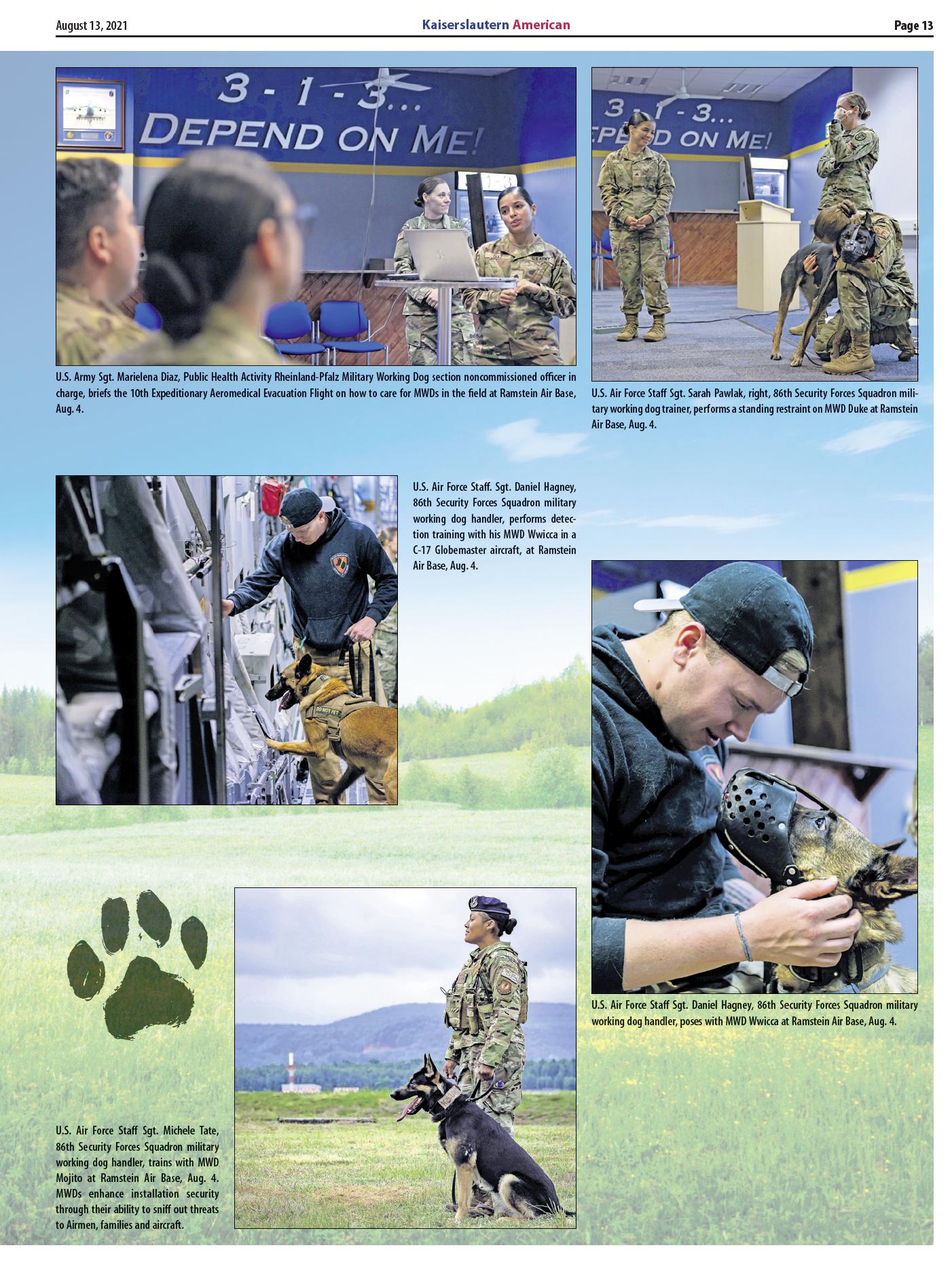
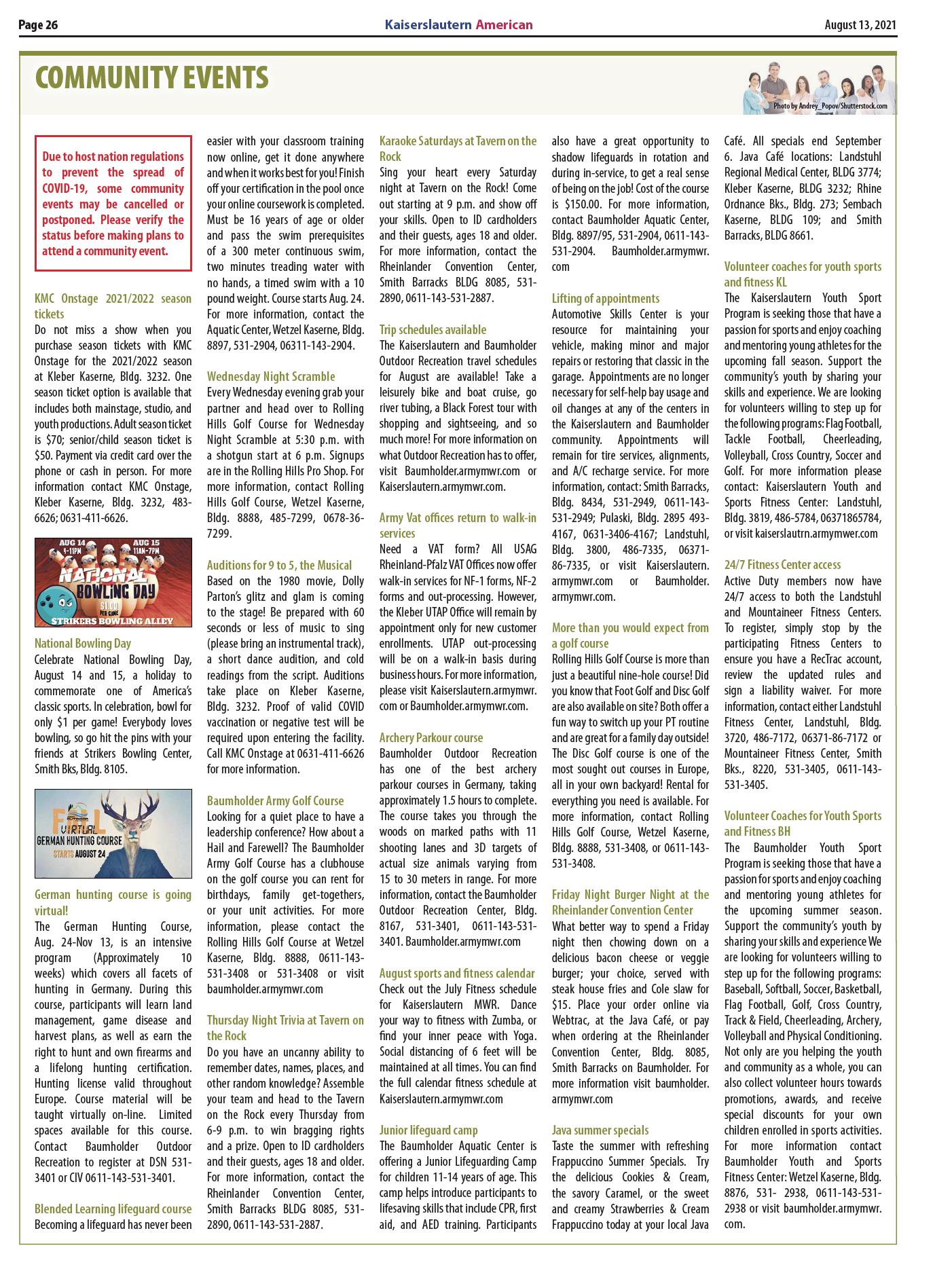
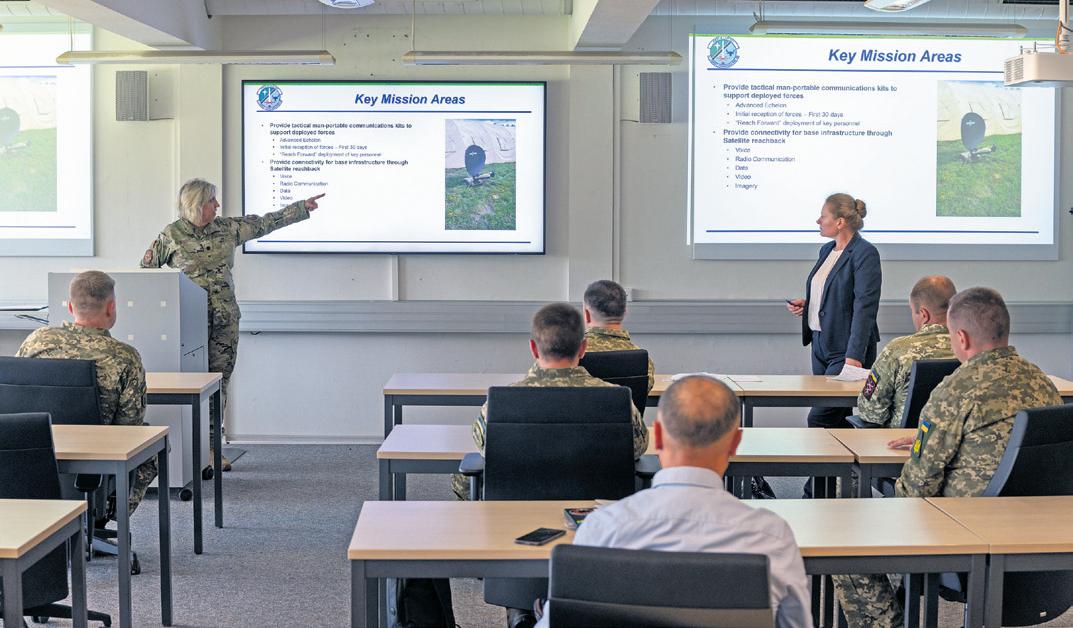
U.S. Air Force Lt. Col. Christine Wright, U.S. Air Forces in Europe – Air Forces Africa A6
European deterrence initiative air reserve component officer, briefs combat communications capabilities with members of the Ukrainian armed forces during their visit to Ramstein Air Base, Aug. 3. The visit focused on increasing partner capabilities by expanding the Ukrainian military’s capacity for fundamental air traffic control and combat communications concepts.


AOTW soars in Azores
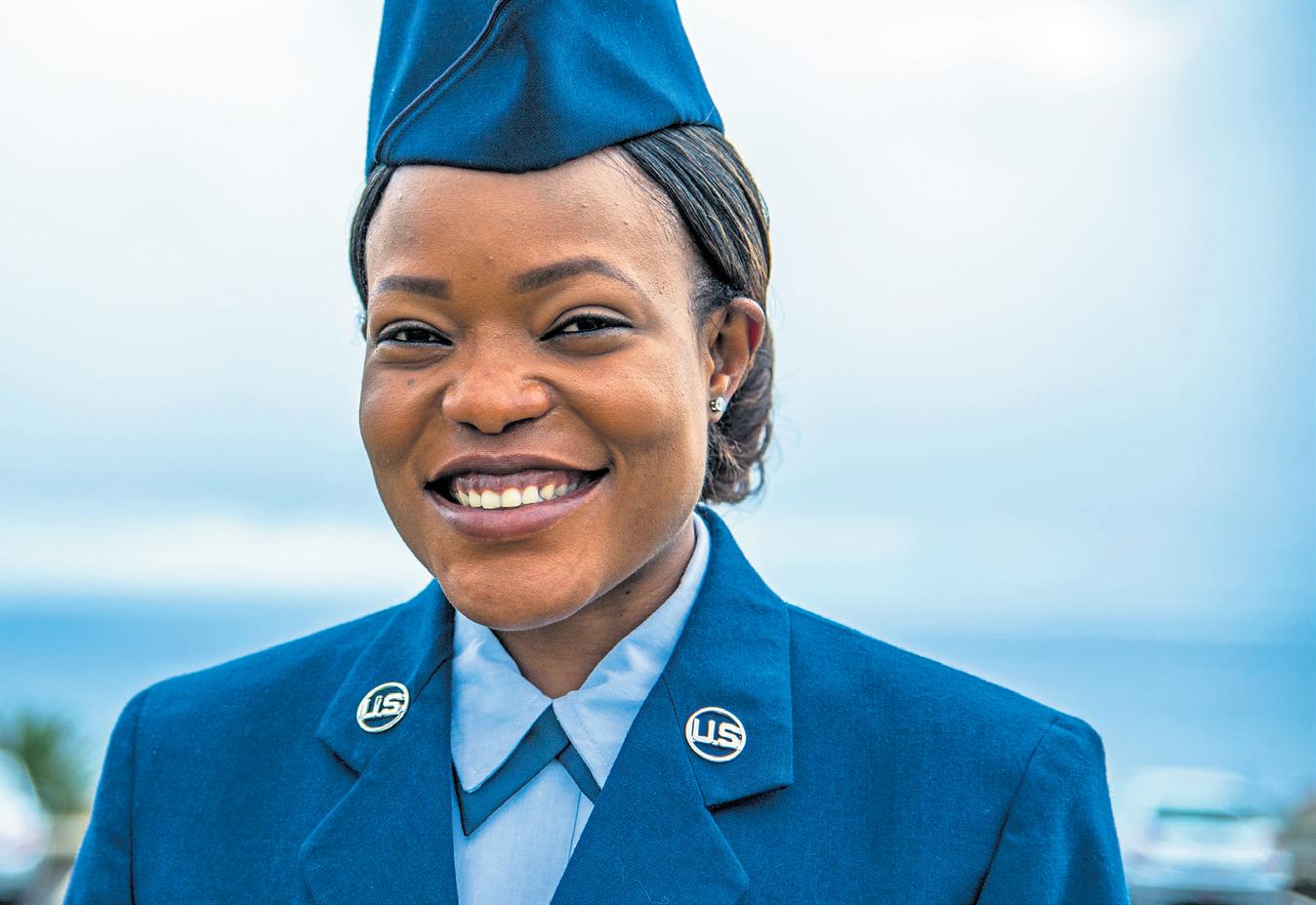
her life. Although it sounds cliché, I was compelled to join the Air Force when I saw a recruiting commercial, she said.
Airman 1st Class Yunia Nakimbugwe, 765th Air Base Squadron financial operations technician at Lajes Field, Azores, grew up in the village of Nyabitete, Uganda. Growing up looked different than what many experience, but was nothing like the negative stereotype many may associate with Uganda or Africa at large.
“I had a happy childhood and was fortunate enough to attend good schools, and even got to travel a bit,” Nakimbugwe said.
Although her village was small, with roughly 3,000 people, Nakimbugwe feels as though she grew up with a large family spread across the globe.
“Apart from my sisters and brothers, we grew up with our cousins, aunties and uncles,” she said. “We are all really close and love to laugh. We laugh at and with each other, so I laugh a lot. I have family in every corner of the world – from Costa Rica, to the U.S., to China, to Australia. Look at me now in the Azores.”
At 32, Nakimbugwe had a steady job and was happy with
“I saw a Go Army commercial and it really spoke to me,” she said. “I remember thinking ‘What am I doing starting over at 32?’ I left it all behind because I knew this is where I was supposed to be.”
Nakimbugwe is now serving at her first duty station in the Azores. She leverages military capabilities by ensuring pay and allowances are allocated properly. In turn, this aides the 765th ABS’s mission of providing strategic communication and power projection platforms to support global operations.
“Airman 1st Class Nakimbugwe is the face of finance at the 65th Air Base Group,” said Senior Airman Ariel Ciprian, 65th Comptroller Squadron financial services supervisor and Nakimbugwe’s trainer. “She ensures our Airmen receive their pay entitlements, which minimizes financial stressors and promotes peace of mind so our members can execute the mission.”
Nakimbugwe, recently named the 86th Airlift Wing’s Airlifter of the Week, helped lead the 65th Air Base Group’s Travel Pay sec -
tion as well as conducted resiliency training for local nationals and Airmen. She also embodies the wingman ethos by assisting Airmen with personal and professional growth opportunities.
“She is always willing to help a fellow Airman, and her positive
Air Force
the 86th Airlift
the wingman ethos by assisting Airmen with personal and professional growth opportunities.
attitude has improved morale in her unit and beyond,” Ciprian said. “Nakimbugwe has an impeccable work ethic and does not shy away from challenges.”
Excited about her next assignment to Ramstein Air Base, Nakimbugwe is grateful for all
the opportunities the Air Force has given her.
“I love my job and what I do. I love being a small part of something bigger to help people," Nakimbugwe said. "I am very excited to see where this takes me in life.”
Story and photos by Staff Sgt. Megan Munoz 86th Airlift Wing Public Affairs
U.S.
Airman 1st Class Yunia Nakimbugwe, 765th Air Base Squadron financial operations technician, poses for a photo at Lajes Field, Azores, July 27. Nakimbugwe was recently named
Wing’s Airlifter of the Week for leading the 65th Air Base Group’s Travel Pay section, conducting resiliency training for local nationals and Airmen and embodying
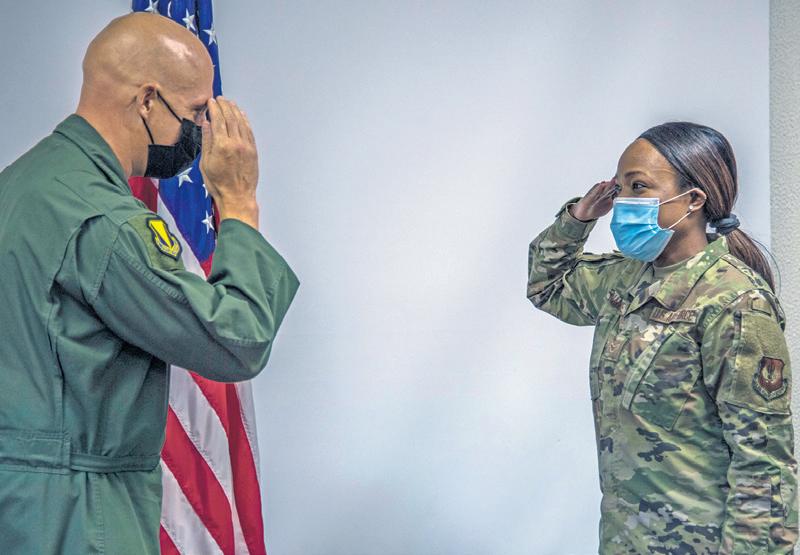
U.S. Air Force Brig. Gen. Josh Olsen, left, 86th Airlift Wing commander, returns a salute to Airman 1st Class Yunia Nakimbugwe, right, 765th Air Base Squadron financial operations technician, at Lajes Field, Azores, July 26. Nakimbugwe was recently named the 86th AW’s Airlifter of the Week for leading the 65th Air Base Group’s Travel Pay section, conducting resiliency training for local nationals and Airmen and embodying the wingman ethos by assisting Airmen with personal and professional growth opportunities.