



















In this issue of Landenberg Life, we will introduce you to a few of your neighbors who are making a difference close to home and also some who are sharing their talents with the world.
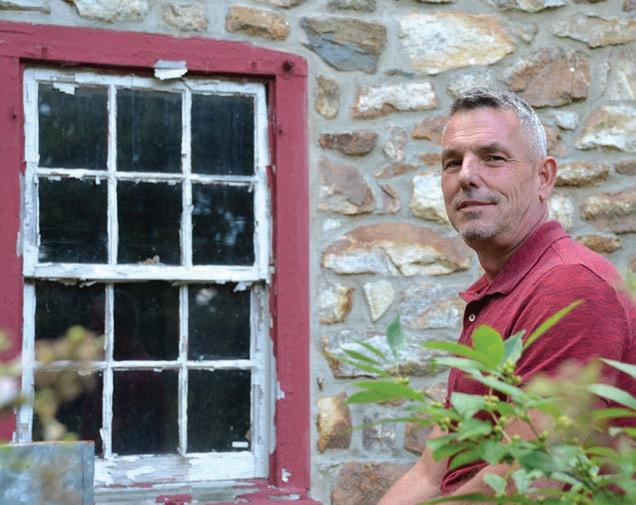
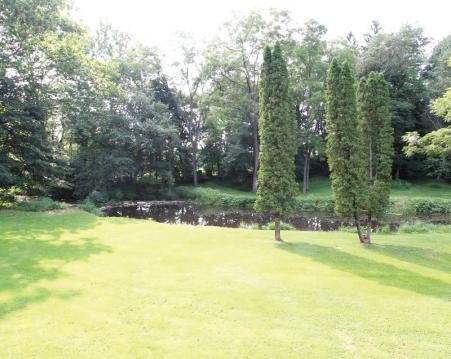
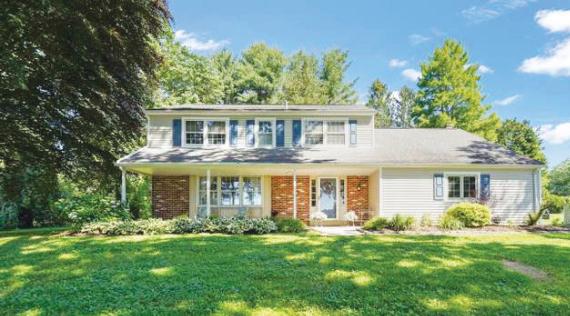
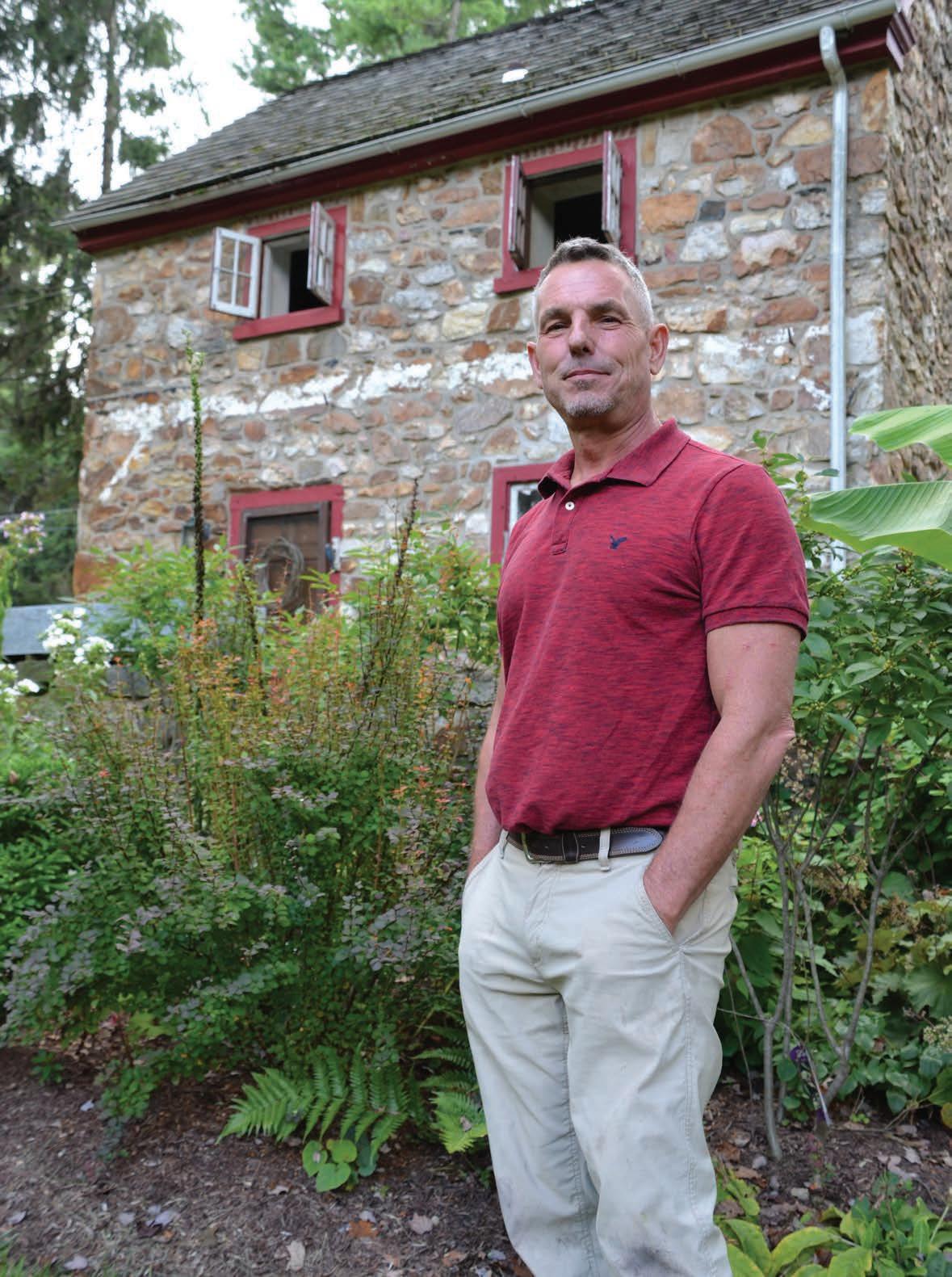
Staff Writer Richard L. Gaw profiles landscape architect and horticulturalist Scott Mastrangelo of Gardens Great and Small, who purchased the old Middleton property on the corner of Laurel Heights and Newark roads in 2018, and is renovating both the historic home and the surrounding gardens.
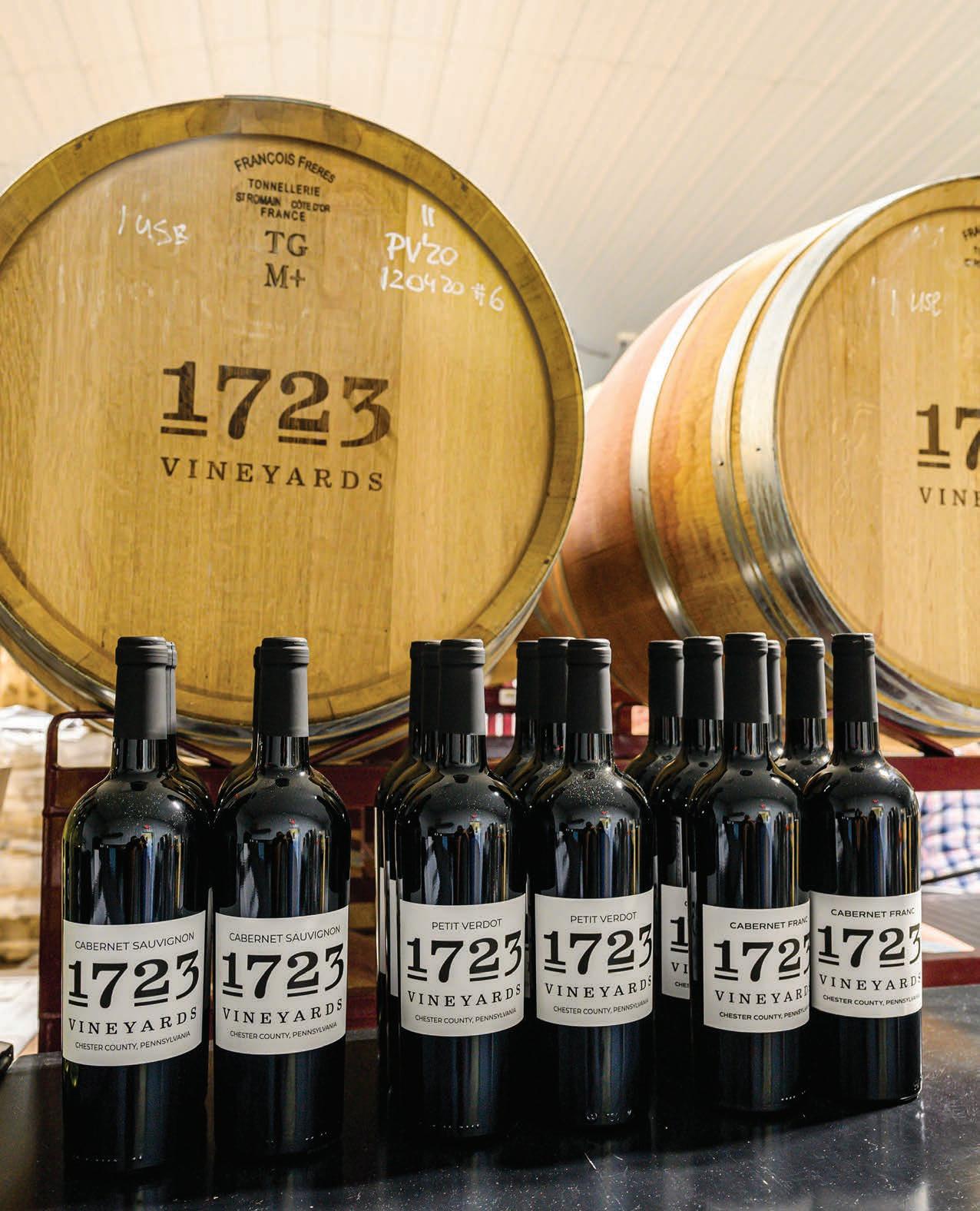
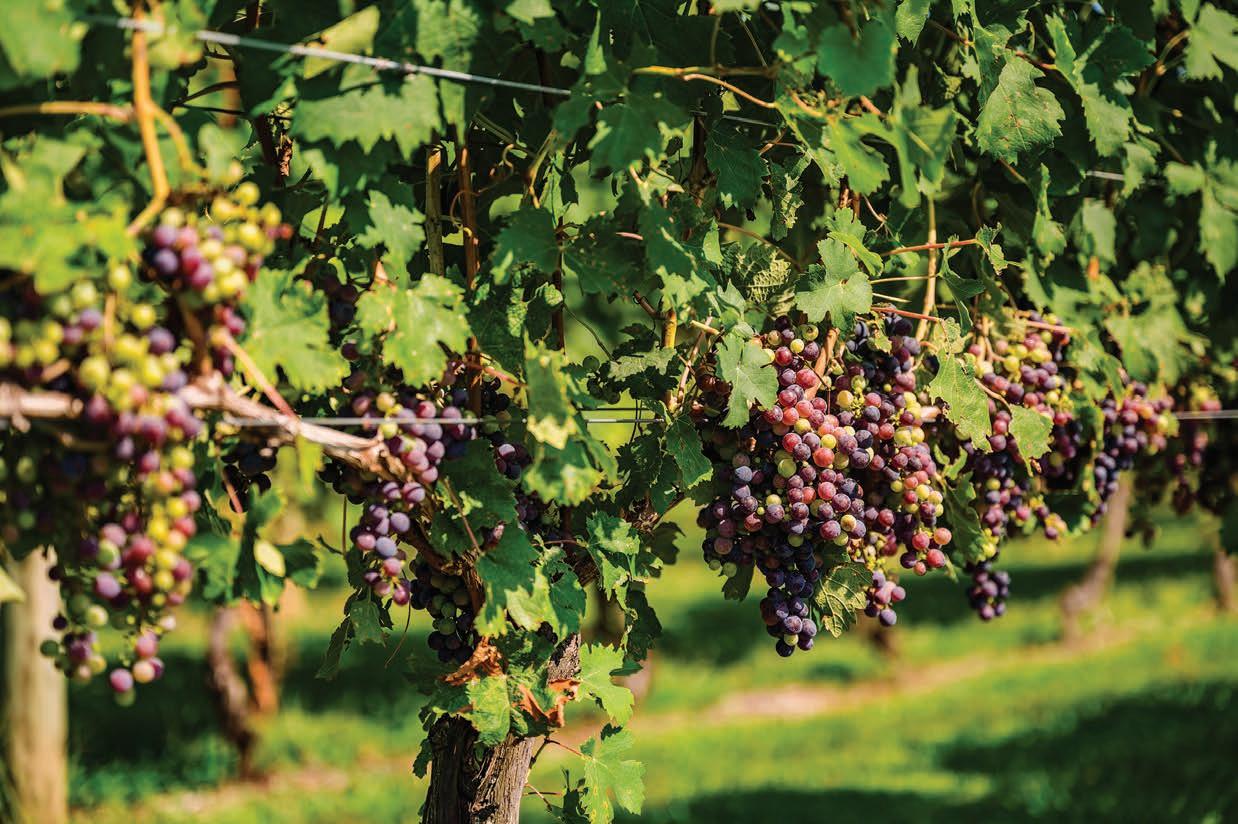
Through the lens of photographer Jim Coarse of Moonloop Photography, we take a stroll around the picturesque landscape of 1723 Vineyards, which has become one of southern Chester County’s most popular meeting places and where its wines have become a bounty of flavor for every taste.
We also take a walk around some of the 105 acres at the Loch Nairn Golf Course in nearby Avondale, which was recently purchased by New Garden Township and will be converted into a gorgeous walking space for Landenberg families for generations to come. Singer-songwriter Shane Palko has been inspired by the sounds from his Curry Farm in Landenberg and by travels to 28 countries. Writer Ken Mammarella talks to the musician about his latest album and the extensive touring that he does. No matter how far he travels, he takes the influences of Landenberg with him.
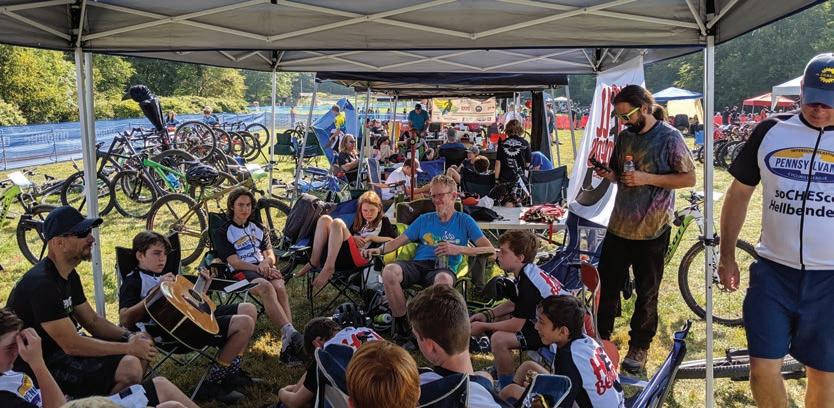
This issue also features a story about the SoChesCo Hellbenders, and how the group’s members use mountain biking as a means to improve themselves and their communities.
Writer Natalie Smith reports about how one local couple tapped into sweet success as Whiskey Hollow Maple syrup, which is made in Pennsylvania, is catching on here and throughout the region.
In his story, “Landenberg: A refreshing break from city life,” writer and historian Gene Pisasale explores the history of Landenberg, including the original inhabitants—the Lenni- Indians, who lived in eastern Pennsylvania, Delaware, New Jersey and southern New York for thousands of years.
We’re very pleased to be sharing the stories in this issue of Landenberg Life with you. As always, we welcome your comments and suggestions for future stories. We’re already hard at working planning the next issue of the magazine, which will arrive in the spring of 2022.
Sincerely,
610-869-5553 Steve Hoffman, Editor editor@chestercounty.com, 610-869-5553, Ext. 13
Cover Design: Tricia Hoadley
Cover photo: Moonloop Photography
SoChesCo Hellbenders use mountain biking as a means to improve themselves and their communities, and they have lots of fun doing both


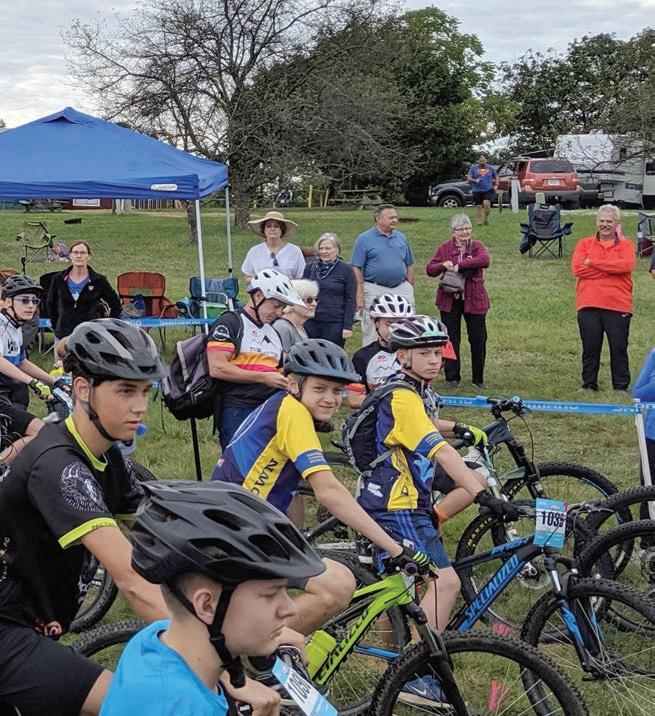

“We want to get kids reconnected to their bikes,” co-founder Greg Shriver said. “They can get you wherever you want to go.”
By Ken Mammarella Contributing Writer
Mountain biking brought the members of the SoChesCo Hellbenders together, and their desire for fun, exercise, an esprit de corps and well-kept trails keeps them together on the team.
Kate Claus, an Avon Grove Charter eighth-grader, was introduced to the sport by her father, Kevin. She enjoys riding with friends.
I’ve learned more skills from the Hellbenders,” she said. “I’m riding more smoothly. I’ve learned to ride over logs and be more balanced. And I’m building confidence.”
Dave Hoffman, a Tatnall School junior, was drawn first to mountain biking to stay in shape for his other sports, hockey and lacrosse. He’s learned that it’s “really cool,” he said. “Besides the physical activity, it’s a great social gathering. I’ve made a lot of friends in the Hellbendeers. And unlike other sports, where sometimes you’re on the bench, in mountain biking, everybody races, and everybody rides.”
Such beliefs are baked into the team by the Pennsylvania Interscholastic Cycling League. The league is the first state component of the National
Continued on Page

Continued from Page 9
Interscholastic Cycling Association to add volunteer hours into competition results, which can shake up end-ofseason rankings.
Their season starts July 1, with practices two or three times a week for about two months. It ends with five event weekends all over Pennsylvania, concluding in October.
“It’s a festival environment,” said co-founder Michael Morrell. “It’s racing, riding, camping, food trucks and adventuring. Our goal is to get more kids on bikes and get them more active.”
“There are opportunities for all levels of riders,” said co-founder Greg Shriver. “Events are competitive and adventure-oriented, with different on-the-bike activities that aren’t racing, like obstacle courses, long rides and team-building exercises at different stations to solve puzzles.
“A bike is one of the most simple and elegant machines,” he added. “We want to get kids reconnected to their bikes. They can get you wherever you want to go. They build independence, confidence and freedom.”
Morrell, the head coach and a Landenberg resident, and Shriver, the team director and a New London resident, recall biking on rugged trails in the late 1980s and early ’90s, “before there really were mountain bikes,” Shriver said.
The national interscholastic association was founded
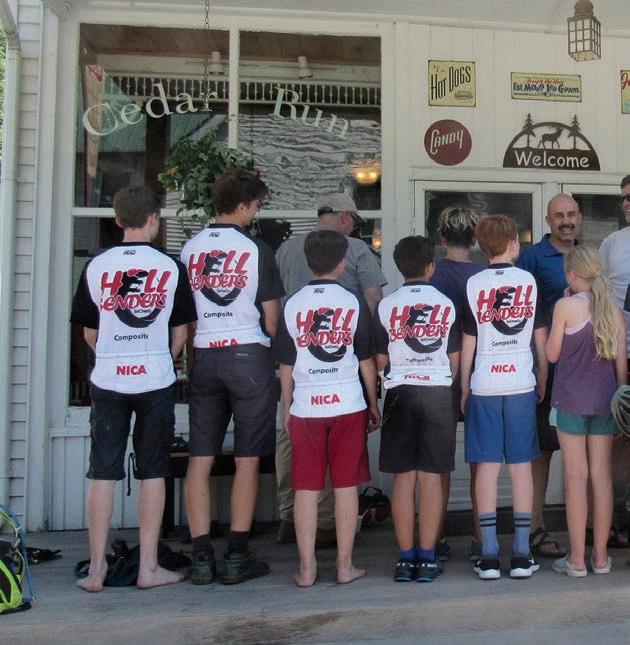
in 2009, the state league in 2015 and the Hellbenders in 2019. Membership is open to sixth- through 12th-graders.
The Hellbenders are named for Pennsylvania’s state amphibian, which earned that designation the same year. “It’s the largest amphibian in the western hemisphere,” said Shriver. “It loves large rivers, with clean, really fast waters, and the availability of those habitats have declined. Wouldn’t it be great if we could be responsible for [nurturing] areas for us, and areas next to that for them?”
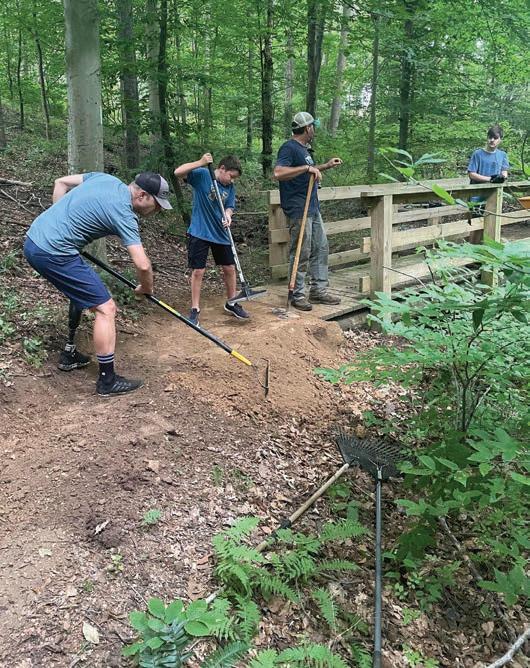
An important part of their stewardship has been at Elwood L. Crossan Park in Landenberg. Matt Thompson, a Hellbenders coach, designed almost four miles of trails and led their creation.
Continued on Page 12

Their season ends with five event weekends all over Pennsylvania.
The Hellbenders were founded in 2019.

Continued from Page 11
Volunteering on trails
“We did the grunt work during trail parties on weekends,” Shriver said, referring to clearing vegetation, adding gravel and other tasks at the park.
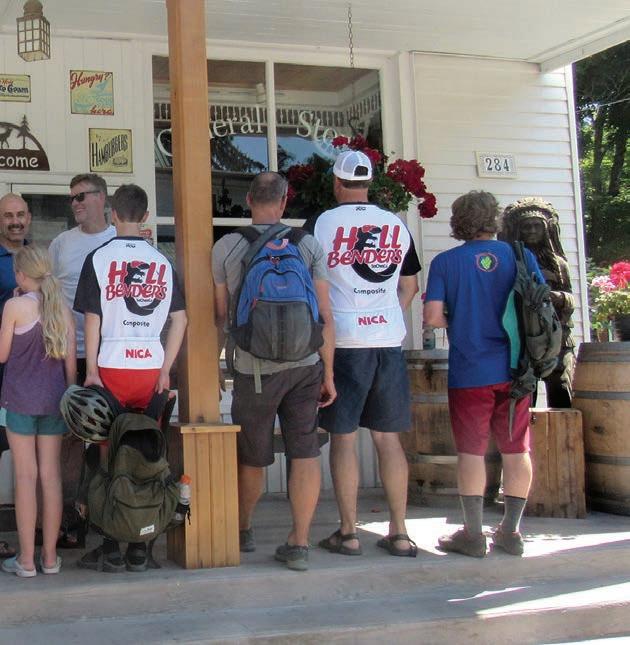
Similarly, team members have volunteered at trail days to repair and improve trails at another favorite biking destination, the Fair Hill Natural Resources Management Area in Maryland.
The national association designates such efforts as part of the Teen Trails Corps.
The Hellbenders started with eight riders and now has 30 – and a waiting list. That’s why Morrell and Shriver encourage interested families to set up their own team.
“We’ve grown too fast for our coaching staff,” Shriver said. “There’s a great opportunity to start other teams in Chester County.”
The Hellbenders’ territory covers the Avon Grove and Oxford school districts, but they have members from Kennett Square and Newark, Delaware, since riders can choose a team that’s more convenient for them.
Morrell and Shriver can be reached via e-mail at greg.shiver@gmail. com and levitribe@gmail.com. They said there’s plenty of time to deal with all the logistics in creating a team before July 1, when registration for the season closes.
Continued on Page 14

“Our goal is to get more kids on bikes and get them more active,” said Hellbenders co-founder Michael Morrell.



















Continued from Page 12
A good start is www.pamtb.org, the state league’s website. The “ride now” tab offers a pull-down menu with options for starting a team and joining a team, the latter leading to a map of existing teams.
Individual membership costs about $300, and riders need to have a short list of equipment: a safe bicycle, appropriate riding clothes, a helmet and a water bottle.
During an interview, Morrell highlighted the five values emphasized by the national association – fun, inclusivity, equity, respect and community – and noted how these values inspired a coaching style that emphasizes positivity and a national push to increase girls’ participation. That push is called Girls Riding Together, known as GRiT.
Shriver said his wife, Bonnie MacCulloch, and son, Henry Shriver, also enjoy mountain biking. And on the day before his interview, Morrell said his entire family –wife Debbie Delaney, son Levi Morrell, son Farren Morrell and daughter Chloe Morrell – were all out riding at Fair Hill.
Chloe, the youngest, is a seventh-grader at Avon Grove Charter, so the Shrivers and Morrells have several years before they age out of the Hellbenders, and Morrell said he is ready for that.
“Part of our journey and legacy is to create something that is here long after we are,” he said.


By Gene Pisasale Contributing Writer
The community of Landenberg, Pennsylvania sits near the intersection of New Garden, Franklin and London Britain townships, close to a famous line unofficially demarcating free and slave states.
Indians were in this area for centuries before agents of William Penn came and Quakers started settling tracts of land along streams in the region. Its proximity to the point where the states of Pennsylvania, Delaware and Maryland intersect make Landenberg an especially interesting place
to explore, not only for local residents, but for anyone wanting to learn about the rich history of the region.
To understand Landenberg, you must first start with its original inhabitants- the Lenni-Lenape Indians, who lived in eastern Pennsylvania, Delaware, New Jersey and southern New York for thousands of years. They thrived along the creeks around Landenberg and throughout the region, including the Delaware River, which they called “The River of Human Beings.” According to the Lenape Nation, several place names in southeastern Pennsylvania—including Manayunk, Conshohocken and Neshaminy—are derived
Continued on Page 18
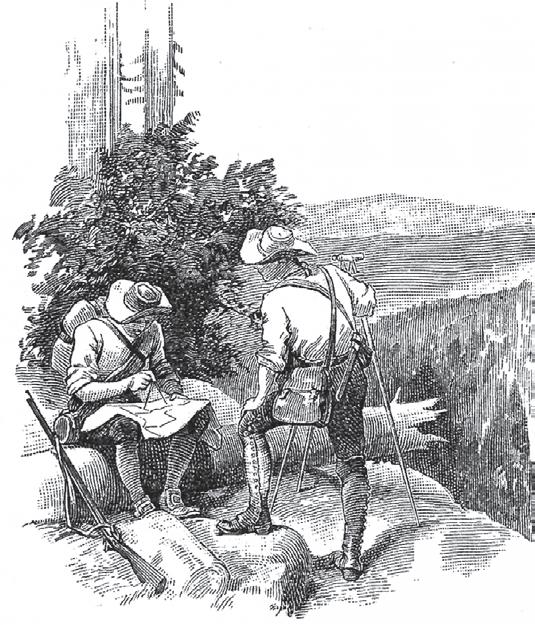
Mason and Dixon surveying the boundary line, illustrator unknown, in “The Leading Facts of American History” by D.H. Montgomery, 1910.




Continued from Page 16
from the Lenape language. The Lenape had to deal with the rapid influx of settlers beginning in the late 1600s, a trend which eventually led to encroachment on tribal lands, despite the Lenape being the first tribe to sign a treaty with the United States. Many Lenape subsequently re-settled out West and in other regions, but some descendants still live in the area today.
William Penn’s dominion of the colony of Pennsylvania would generate a border dispute with a man who’d been granted adjacent territory nearly 50 years earlier. In 1632, King Charles I of England gave Cecilius Calvert land that became the state of Maryland, but its northern extent was in question. Calvert and his descendants stated that the northern border of Maryland was along a line that included the city of Philadelphia; Penn’s descendants claimed territory down to a parallel line that ran along the northeastern edge of the Chesapeake Bay.
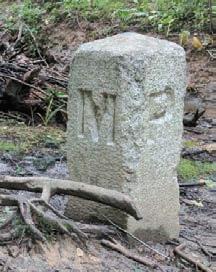
to America in 1763 to conduct a survey that this argument began to be resolved. In 1768, the state boundaries were delineated; the nowfamous Mason-Dixon Line runs just south of Landenberg. Along its extent stand stone markers identifying the Maryland and Pennsylvania sides of the boundary. Many of these markers can still be found, some not far from town. There’s one on the Tri-State Marker Trail where Maryland, Delaware and Pennsylvania intersect, another within the White Clay Creek State Park just over the border in Delaware. With numerous free-flowing streams in southeastern Chester County, it should not be surprising that the area attracted settlers. Landenberg lies within the drainage area of White Clay Creek. Its powerful currents prompted people to build mills at several locations. Water-powered mills revolutionized the manufacturing process for dozens of items used in industry, at work and home. White Clay Creek at one time supported several sawmills, grist mills, a woolen
It was not until Charles Mason and Jeremiah Dixon came
Continued on Page 20

TOP SPONSORS
Landhope Farms | Chadds Ford Complete Services
Sunbelt Rentals | AdPro Inc. | The Tri-M Group | Phyllis Recca Foundation | Hadley Fund | Tamburrino Family Trash Tech | Longwood RotaryClub | Mushroom Farmers of Pennsylvania | Atlantic Tractor

October 1, 2, & 3, 2021
101 east Street Rd, Kennett Square, PA
Embracing all of Southern Chester County
Beer & Wine Garden
Friday - 6:00 – 9:00pm, Saturday - 4:30 – 9:00pm
Late ambitions
Performing on the Main Stage Saturday 6:30 - 9:00pm
Food Trucks Throughout the Fair Haunted Tent Friday & Saturday - 6:30 – 9:00pm
Lower Scare Factor both days – 12:00 – 6:00pm
2nd annual car & truck Show with Antique, Classic Custom, Ratrod, Restomod vehicles Saturday 11:00am – 5:00pm
5K Run & Walk Saturday 8:30am
See STEM and Lego Robotics demonstration in the on Saturday and Sunday. Times to be posted. Tech Tent Local musical entertainment, kids activities, Craft Booths and much more!
For more info go to to see all activities, entertainment & times www.ucfair.org
$5.00 parking fee / per PERSON $10.00 parking fee / per car, per day -OR-
Continued from Page 18
mill and a cotton-processing factory. Mills became so dominant they helped name some towns. The area around present-day Landenberg was once named Chandlersville, due to a prosperous mill owned by Enock Chandler operating nearby.
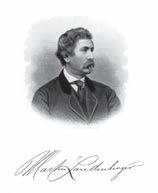
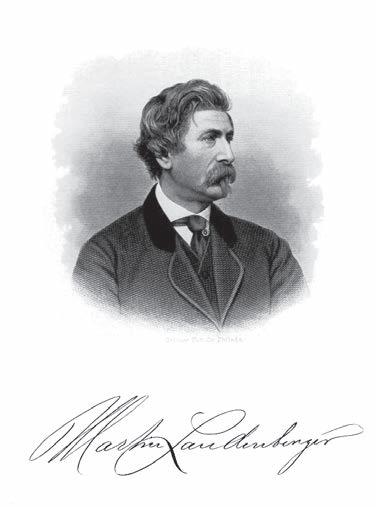
One person who took advantage of hydraulic power was Martin Landenberger, who emigrated from Germany in 1832, settling in Philadelphia. According to Dr. Peg Jones in “The Story of New Garden Township,” he subsequently purchased the existing Chandlersville and Laurel Mills around 1862. Landenberger was quite successful, employing roughly 1,000 persons at mill sites around the region. His influence was so prominent, he renamed the area Landenberg. Landenberg may seem “out in the
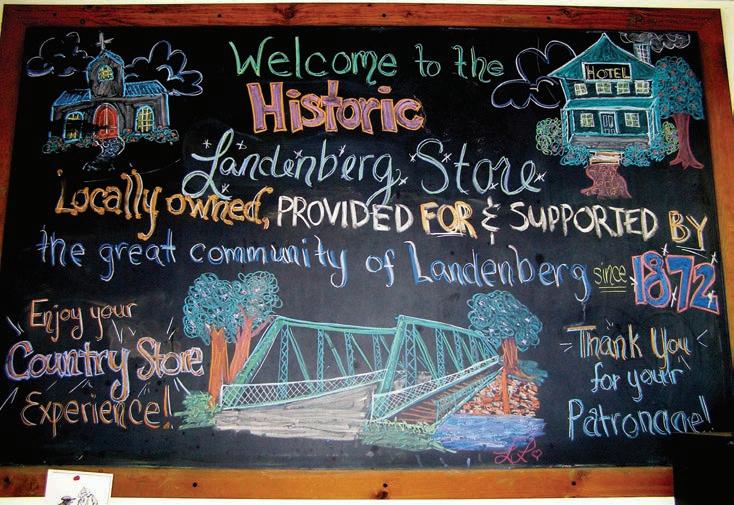

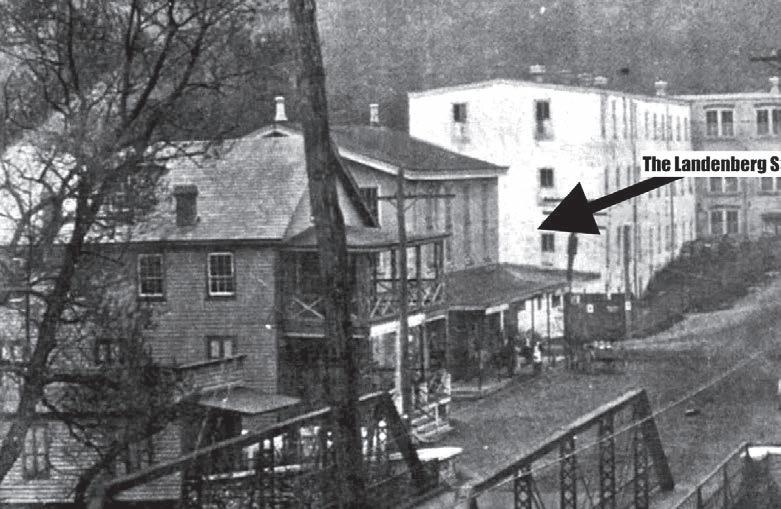
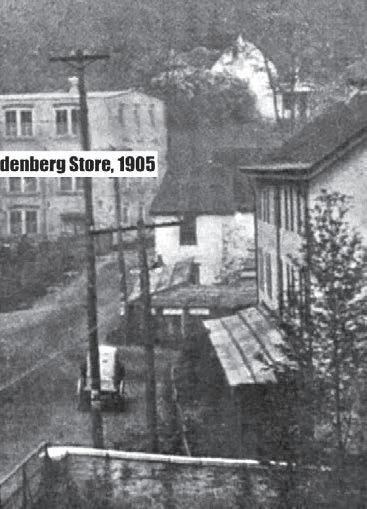
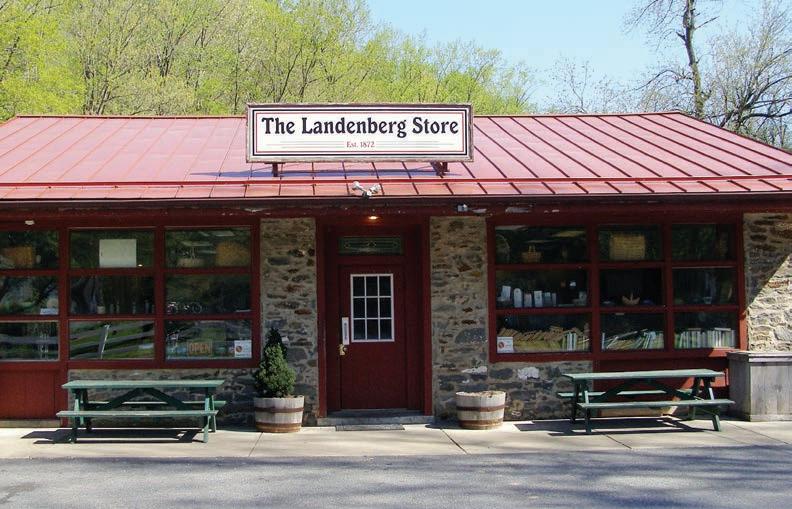
boondocks” for some, but it’s really a charming little community, with the historic Landenberg Store and Landenberg Hotel, as well as the Landenberg Bridge spanning White Clay Creek. The Landenberg Store dates back to 1872, when it became the unofficial town center—a place for people to shop, talk about current events and voice community concerns. Although its roots are in the late 19th century, its offerings are delightfully modern. A chalk board in the front of the store gives visitors
Continued on Page 22
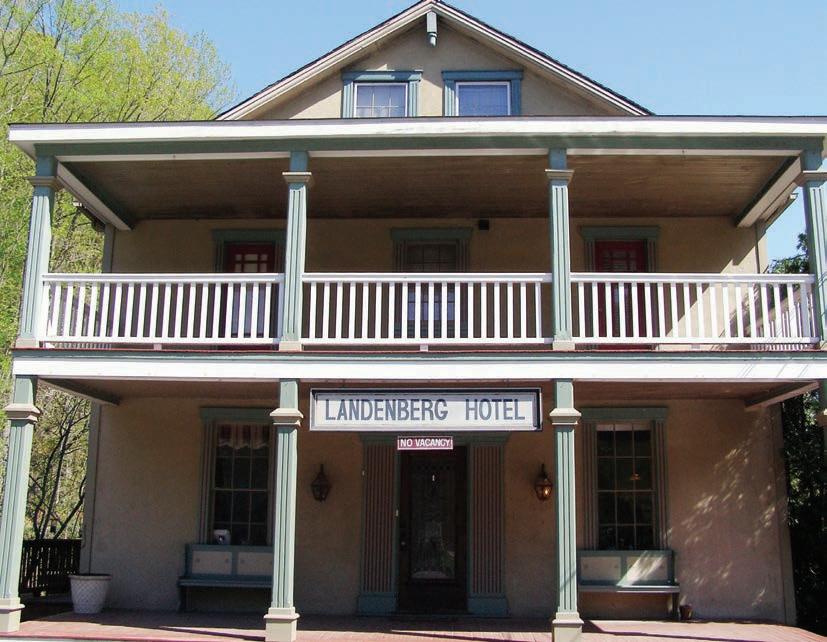
The Landenberg Hotel.


Continued from Page 21
several options offered for breakfast, gourmet lunch sandwiches, soups, fresh-baked breads and muffins, coffees and desserts, making it a great place to stop in the morning, at mid-day for a snack or on the way home from the office.
Right next door stands the Landenberg Hotel, built around the same time that the store was constructed. Its Victorianstyle wooden columns remind the viewer of a scene from yesteryear. Rumor has it that the hotel once operated as the town brothel. Today the building has offices for local businesses. Just up the street stands the Landenberg Bridge. Covered bridges were popular back in the 1800s—and White Clay Creek did have one then, later replaced by an arched iron structure. In 1898, a Pratt Pony Truss Bridge manufactured by the Phoenixville Iron Works was built over the creek. The new bridge had a cantilevered walkway and an 18-foot width, allowing for teams of horses to traverse the structure, along with enough room for a newfound contraption—the automobile. The bridge was placed on the National Register of Historic Places in 1988, but due to later engineering changes, the structure was de-listed in March 2010 by the Pennsylvania Historical and Museum Commission.


The beautiful countryside around Landenberg has attracted other pursuits in recent years. Three wineries, Paradocx, 1723 Vineyards and Patone Cellars, are nearby, offering several home-grown varietals and even summer concerts. The White Clay Creek Preserve, a 2,072-acre site donated by the Du Pont Company in 1984 is close to town. It provides hunting, fishing, hiking trails, cycling, horseback riding and cross-country skiing. Whether you’re enjoying a leisurely bike ride, driving through southern Chester County or simply want to take a break from the hustle and bustle of big city life, Landenberg is a nice stopping point which not only refreshes, but brings visitors in touch with its storied past.
Gene Pisasale is an historian, author and lecturer based in Kennett Square. He has written ten books and conducts an historical lecture series throughout the tri-state area. His latest book is “Forgotten Founding Fathers: Pennsylvania and Delaware in the American Revolution.” His books are available on Amazon.com and also on his website at www. GenePisasale.com. He can be reached via e-mail at Gene@ GenePisasale.com.






Shane Palko has been inspired by the sounds from his Curry Farm in Landenberg and by travels to 28 countries

“In 22 years of playing guitar, I have never owned a new one,” Shane Palko wrote in 2017 to describe this new guitar, from sponsor Godin Guitars, for a trip to Africa. “Never did I think that songs I wrote in my sadness and in my basement and recorded in my kitchen could take me across the world.”


By Ken Mammarella Contributing Writer
Singer-songwriter Shane Palko has listened a lot to the woods.
Some has been doing bioacoustics research abroad on how “the world is singing a song of change.”
Some has been absorbing the spirit of the woods outside his home, on Landenberg’s Appleton Road. “Here, it’s amazing,” Palko said. “How many birds, frogs even mammals can you hear? Nature is happiest and at its healthiest when it uses the full range of frequencies, a symphony of working together.”
That listening has informed his music, notably in “Slowing Into the Trees,” his 11th studio album, especially the haunting “Desacelerando en la Selva,” the Spanish translation of the album title. The track features the slowed-down sounds of Landenberg birds, making “the experience richer and fuller.”
Of course, Palko listens to people, too.
“I love listening to people and hearing their stories,” he
said. “I also love to use music to connect with people.”
Some connections have been in places others wouldn’t spot. Consider “Madison Drive,” his 2017 album, named for an area the Newark Post called one of the city’s rougher parts.
Palko lived there four years while studying at the University of Delaware.
“I think Madison Drive is a beautiful community, with all sorts of people, speaking different languages” he said. “Yet we all hear the same train going by. we gardened together, and we played music loud and late together.”
Now 32, Palko recalls writing seven songs when he was 6. After seeing a photo of buckets turned into drums, he made his own. It took the young musician a while to realize why people laughed at the BS label that he gave his bucket set.
After graduating from the Towle Institute in Newark, Palko began to study the piano at the University of
Continued on Page 26
Continued from Page 25
Delaware, but switched his focus to writing and human services. To this day, he refers to himself as a self-taught musician, specializing in international alternative folk music.
“I’ve seen him work and work to build his excellence, collaborating with musicians from all genres,” his brother Ian said. “Yes, he’s selftaught, but he also put himself in the position to learn from so many others.”
Music has opened up the world to Shane: “28 countries and counting,” he writes on his social


•Prepared Meats•All Natural Chicken
•Catering Specialties•Marinated Items
•Certified Angus Western Beef
•Boar’s Head Gourmet Deli Meats
•Honey Glazed Sliced Ham
•Homemade Sausage
•Homemade Prepared Salads
•Fresh Roasted Beef & Turkey

Shoppes of Hockessin

media. He was in Spain in March of 2020 when the world shut down. He returned to in-person shows this July, on an island in White Clay Creek, next to Ian’s Landenberg home. “It’s a place where lots of songs are sung, but rarely heard by humans,” Shane wrote on Facebook. “This seems like a good time to get together outside and share some music, some laughter, some drinks, and some friendship.”
Different views of the world
Palko has been productive while largely sheltering in place in Landenberg. He’s been “heavy on thought,” recording and writing more than ever, often at least one song a day, often focused on race.

“He’s a student of life who has learned so much from people, from culture and from travel. And he wants to share it,” said collaborator Mannie T’Chawi. “He’s a unique soul who wants to make and build relationships with people from all walks of life, even if you oppose his views.”
“He sees the world in a way that other people don’t, articulating in an interesting way. His lyrics cause me to think differently,” Ian said. “Everything is genuine. It
Continued on Page 28






Continued from Page 27
comes out of his heart.”
Shane also has been devoting time to his home, a farm he dates back to the Curry family in 1820. He acquired the property a few years ago and has been making it homey, useful and welcoming.
The homeyness comes first from just making overgrown and abandoned areas livable.
As a socioenvironmentalist, Palko is involved with sustainable farming on his property, cultivating honey, mushrooms and eggs, receiving weekly assistance from his parents and a large community of friends and family.
“After a decade of being a touring musician, I have a carbon footprint that contradicts my belief,” he wrote on his website, referring to a weekend in 2020 when he gave away several hundred trees to the public from his property. “I’m so happy to be partnering with local community on this celebratory project.”


The welcomeness comes from creating “a place where people are welcome to learn and make. Get dirty and get your minds clean.” It also comes from being open to all ethnicities, sexual orientations and spiritual orientations, he said.
He documents the evolution of the property on www. instagram.com/farmrestoration. He documents his music on his own website – www.shanepalko.com – and major social media platforms.
“Idha Obane (Come and See),” a duet with musician Maro Uganda, has 140,000 hits on You Tube, and his solo “Staring Out the Window” has 33,000. Both are intriguing for both their contemplative lyrics and evocative visuals.
Also highly recommended is the Facebook video titled “The Story of David Crowie the Chicken.” “People have most likely been singing with chickens for millennia,” Palko writes.
At UD, his honors thesis was on human displacement, and he studied applied community development at Future Generations University for his master’s degree.
So he is especially “thankful to have a place called home, and a relationship with its plants and animals.” And with people.


Whiskey Hollow Maple syrup (made in Pa.!) catching on throughout region, elsewhere
By Natalie Smith Contributing Writer
If it was suggested to Kyle and Sara Dewees that they may have maple syrup running through their veins, they’d probably laugh—and then say it wasn’t too far off the mark.
The couple have been tapping maple trees and transforming the sap into their all-natural syrup since 2016. But the flavor of some Whiskey Hollow Maple products makes them so much more than something to drizzle on a stack of pancakes.
“We take pure maple syrup and age it in whiskey barrels for a year,” explained Kyle. “It gets the whiskey and other flavors from the barrel.” Working in collaboration with Manatawny Still Works

A display of Whiskey Hollow Maple syrups for an Artisan Market at Winterthur. In addition to markets, events and brick-and-mortar shops, Kyle and Sara Dewees also sell their maple syrups, candy and other wares via their website, www.whiskeyhollowmaple.com.
in Pottstown, the Deweeses said it’s been a mutually beneficial exchange. “[Manatawny] takes a couple of the barrels back and they make maple whiskey,” Sara said.
The idea of aging maple syrup in whiskey barrels was inspired by Sara’s investigation.
“When we first started looking at doing maple and getting serious about it, I started delving into reading just about anything I could get my hands on to do with maple and just looking for something a little bit different. [We didn’t want] to go the way everyone else went; your standard plastic jug and just plain syrup. I kind of wanted to go a different direction.
“I stumbled upon an article about these two guys out in the Midwest,
Continued on Page 32
Continued from Page 31
they had owned a restaurant and they had tried this in their basement as an experiment. And as soon as I saw it, I couldn’t wait to tell [Kyle] and then you knew that was what we were going to do. We tried it, and it was great and just took off.
“So that’s not all of our syrup, but a big portion of our syrup is sold that way.”
The Deweeses first tried their hand at syrup making on Kyle’s family’s land in Bradford County. “My parents have property up in northern Pennsylvania,” Kyle said. “They had a cabin and maple trees and we kind of decided one year that we were going to try it. And it worked. We actually made syrup. And we enjoyed it.”

They initially tapped just over 80 trees, getting enough sap to convert it to about eight gallons of syrup, boiling it over an open fire. “It was enough for ourselves and our family


members,” Sara said. They later purchased their own 100-plus acre property in Warren Center, and Kyle said they’re hoping this season (which runs from about February through early spring) to tap about 5,000 trees.
“During the season, I live there pretty much for a couple months,” Kyle said, noting that the rest of the year they make the eight-hour round trip every other week or so.
“This time of year, it’s getting to be almost every week,” Sara said. “We have a [certified] kitchen up there. And that’s where we do all our bottling.”
The tapping process involves connecting tubing to the tap, and collecting the sap in a tank. Within the tank is a pump that sends the sap to a sugar house, which holds an evaporator that boils down the sap. The temperature is monitored,
Continued on Page 34

Continued from Page 32
because the sugar amount, called brix, has to be at 66 percent to be legally considered maple syrup. “It’s basically just boiling it as ferociously as you can, caramelizing it and bringing it to syrup,” Sara said. It takes about 50 gallons of sap to make one gallon of maple syrup.
The commitment to the maple sugaring business seemed a natural for the couple.
“We’re both very outdoorsy-type people, so it really fit into what we were looking to do in life,” said Sara, who also works as a civil engineer. “I grew up on a farm. Kyle did a lot on his parents’ land; his uncle and his grandfather had a farm and so we had that background. We knew it was something we wanted to return to, we just didn’t know how it was going to manifest.”
Kyle, who also does landscaping and small excavation work, said, “I do less of all [the landscaping] all the time because the maple syrup business has taken over. But the original plan was, I’d be able to do this in the wintertime, rather than plowing snow and Sara and I could do it together. Now it’s really turned into our main business.”
As word has spread about Whiskey Hollow and the business has grown, offerings in its larder include maple

syrups infused with cinnamon, vanilla, rum and hot pepper, in addition to plain. Maple candy, fruit preserves, mustards and honey are also among the goodies sold by the Deweeses.
Rooted, a New London gift shop featuring the work of small artisans, was the “first brick-and-mortar” shop to carry Whiskey Hollow Maple’s wares, Sara said. But they’ve found success selling at additional locations including the Station Taproom in Downingtown, Hank’s Place in Chadds Ford and worKS in Kennett Square. Farmer’s markets, such as the one in Bryn Mawr, are also good places to find Whiskey Hollow Maple goods.
“We got quite a few stores in the area, and also up toward the Allentown area, and out toward Lancaster. We just picked up a new one in Gettysburg. So we’re starting to grow out a little bit,” she said.
The Deweeses said there’s one thing they can count on at events where they are selling their products: “Pretty much every market, someone will ask us where in Vermont we source our syrup. They’re just flabbergasted that Pennsylvania can make syrup and that it’s good,” Sara said.
Pennsylvania actually produces quite a bit of syrup, Kyle



noted. Much of it is sold in large drums in New England. “They blend it together, and if they blend it with syrup from up there, they can call it Vermont or New Hampshire maple syrup.”
Despite having maple syrup so much a part of their lives, the Deweeses say they’re always finding new ways to use it.
“We cook with it an awful lot,” Kyle said. “You can put it on meats, you can put it on cooked vegetables, roasted vegetables, use it as a salad dressing. We put maple in coffee as a sweetener. We use maple as a sweetener in lemonade, too. And it’s good on ice cream.”
Sara added, “Kyle does a good one with maple and hot sauce for chicken wings. The sweet and the hot together, that’s really good. Once you learn how to cook with maple, it really starts to come together. You just cook low and slow and it caramelizes and just forms this nice glaze.
“We’re kind of on a mission to show people ways to use it, other than pancakes right now. We get a lot of people that come up and say, ‘oh, I don’t eat pancakes” and well, we don’t either, but we use syrup almost every day.”
During their maple syrup education of the public, the Deweeses want to emphasize that unlike some of the more
popular syrups on the market, at room temperature, real maple syrup has a thinner consistency. “Probably one of our biggest pet peeves is when people come up to our stand, and they turn the bottle upside down. They go, ‘oh, that’s not thick’,” Sara said. The popular syrups are thicker because they are made with corn syrup.
“So they always want to know the difference between real maple and [the popular syrups]. But it’s hard sometimes to get people converted from what we call the ‘fake’ syrup to real syrup.
“We do have a lot of success, though, mostly with our vanilla-infused syrup. It has that kind of vanilla-y, buttery kind of flavor that people are used to [with the popular syrups]. We can get them switched over on that. And then from there it’s easy to get them to switch to just regular, plain maple syrup.”
Another difference between real maple syrup and the popular syrups? “Once a week somebody asks if we have sugar-free syrup,” Sara said, laughing. “There’s no such thing as sugar-free maple syrup. That’s what it is: sugar.”
“People ask if we add sugar to it,” said Kyle.

Continued from Page 35
The Whiskey Hollow Maple project has become one the whole family is involved in. Son Wesley, 15, and daughter Adley, 12, are old enough to appreciate how much work their parents are putting into the business.
“Wes even tapped a few of his own trees this year,” Kyle said. “He put his own taps in and hauled his own sap. We paid him per gallon for the sap that he collected.”
As expected, as the weather starts to cool, business starts picking up for Whiskey Hollow Maple.

“As soon as it turns fall, all of a sudden everybody wants to buy maple syrup,” Kyle said. “This is our crazy time, from now until Christmas it’s all shows and festivals.”
Reflecting on their growing achievements, Sara said their zeal and perseverance helped fuel their accomplishments.

“I mean we didn’t expect it to take off like it did or to have the success that we have,” she said. “We’ve had the communities kind of welcome us with open arms and it’s just been a great, great experience. It’s been a great way for our kids to learn about being small business owners and what it takes to go into these businesses.
“You really have to love what you’re doing and really have a passion for it to put in the hours that you need to put in to be a small business. We’re doing it all ourselves with the kids’ help and no employees. It really takes a lot of dedication to do that.”
More information about Whiskey Hollow Maple is available at www.whiskeyhollowmaple.com
Natalie Smith my be contacted at natalie@DoubleSMedia. com.

Wed & Thurs | 2:00p-7:30p Fri, Sat & Sun | 11:00a-7:30p


Text by Richard L. Gaw
In the general pecking order of stunning visuals, there are very few views more majestic than the broad sweep of a vineyard stretching for acres – the breathtaking science of what happens when nature meets anticipation.
When Sarah and Ben Cody and their friends planted the first three acres of their 1723 Vineyards in the 36-acre McMaster Farm in 2015, it was not likely at the time that they could imagine that their dream would someday become one of those cherished vistas. Yet by the time the vineyard near the bend at Route 896 on the outskirts of Landenberg had grown to seven acres by 2018, what was happening there was the row by row perfection of a dream realized.
Continued on Page 40


Continued from Page 38
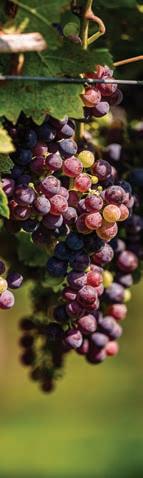
If there is another side of the beauty of 1723 Vineyards, it is found in the wine, passionately created under the supervision of winemaker Gabriel Pedro Rubilar. Thick-skinned, disease resistant and aged in premium oak barrels harvested from trees grown in Pennsylvania and in France, the vineyard’s red wines – Cabernet Franc, Petit Verdot and Chambourcin, Landot Noir, Nebbiolo, Merlot and Cabernet Sauvignon – have become favorites of the 1723 Vineyard’s wine club members, and their bottles can be seen on the crowded tables that overlook the vineyard during event weekends and lazy Sunday afternoons in the spring, summer and fall. Throughout the 600-square-foot tasting room, guests enjoy rosé sparkling wines or its many varietals of white wine that include the vineyard’s Sauvignon Blanc, its Albariño, Riesling and Traminette, or its blend of Chardonel and Viognier.
Continued on Page 42


Continued from Page 40
The renowned wine critic Robert M. Parker once wrote, “I believe that the responsibility of the winemaker is to take that fruit and get it into the bottle as the most natural and purest expression of that vineyard, of the grape varietal or blend, and of the vintage.”
For Ben Cody, Sarah Cody and Gabriel Pedro Rubilar, the goal has always been to create the finest wine possible, and from a ground of clay and silt loam soil, melded with rain and sun, 1723 Vineyards has emerged from the wild-eyes aspirations of a dream created six years ago, and made into the purest of expressions.
1723 Vineyards is located at 5 McMaster Blvd., Landenberg, Pa. 19350
To learn more, visit www.1723vineyards.com, call 888-330-0526 or email info@1723vineyards.com.


From the time they built the Loch Nairn Golf Course and its restaurants, the Smedley family has been among our area’s finest visionaries. This past June, working with New Garden Township, their latest vision will preserve 105 acres and have a lasting impact


By Richard L. Gaw Staff Writer
In the 1960s, Hank Smedley built the Radley Run Golf Course in West Chester and, later, Jamaica’s world-renowned Cinnamon Hill Golf Course.
In 1979, he fulfilled his dream of building a golf course in Avondale and called it the Loch Nairn Golf Course.
Together with his sons Christopher and Samuel, his wife Virginia and architect Howard Curtis, Smedley converted the property into one of the finest golf courses in the Mid-Atlantic region and its restaurants into breathtaking spaces of design and culinary achievement.

Photos by Richard L. Gaw
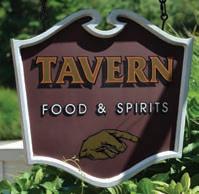
Visitors to Loch Nairn will not only be able to enjoy the natural resources and views along the preserved space, but continue to dine at The Farmhouse, The Greathouse and The Tavern after a brisk walk with friends and family.
Continued from Page 45
In the years since, Loch Nairn has become the destination point for those seeking a momentary slow down from a busy life; the bounty of a farm-to-table meal in The Greathouse or The Farmhouse or an impromptu summer lunch outdoors at The Tavern; the harmony of meticulously-placed antiques and area rugs and archways and gardens against the backdrop of wide open greens that seem to stretch for miles; the freshly-manicured and sweeping greens that make up its 18-hole golf course; and the crab cakes, those delicious, award-winning crab cakes.
Heralded by many as one of the crown jewels of southern Chester County, Loch Nairn has achieved the title of Legacy, and earlier this year, the Smedleys added one more layer.
At their June 7 online work session, the New Garden Board of Supervisors unanimously authorized the township to extend funds for the purchase of a 105-acre parcel of the Loch Nairn Golf Course, for the purpose of preserving it as open space. While golfing operations will cease after the 2022 season, all of the restaurants will remain under the ownership of the Smedley family.
Continued on Page 48


Soon after the agreement of sale was approved by the supervisors, board chairman Pat Little read a statement from the township and the Smedley family:
“For over the past 50 years, the Smedley family’s Loch Nairn Golf Course has been a staple in the southern Chester County community. The picturesque site has been the backdrop for weddings, holidays, date nights, family golf challenges -- you name it! And because the Smedley family cares so deeply for this community and the memories that this site holds to its residents, they have entrusted New Garden Township with their prized property to be preserved as a park and open space to be shared by all for decades to come.
“Avid golfers will continue to play on the course throughout the 2022 season after which operations will wind down. The restaurant will remain open in perpetuity and continue to serve the world’s best crab cakes!
“Because of the generosity of the Smedley family and the thoughtful care with which they maintained this pristine parcel of land, New Garden Township will continue on as guardian of this property in order to ensure its safety from
on Page 50


Continued from Page 48
future development. While the specifics of future park use for the property will be decided in time, this will absolutely continue to be a cornerstone of Chester County.
“It is our hope that the Smedley property will continue to be a place for new memories to be made, followed by dinner or lunch at their restaurants.”
The negotiations to acquire the property for the price of $1.425 million were conducted by the township’s Open Space Review Board (OSRB) in consultation with Natural Lands, a Media, Pa.-based non-profit organization that preserves open space in eastern Pennsylvania and southern New Jersey. Formed in 2005, the OSRB is made up of volunteers who assist landowners in the township in planning to preserve open space on their properties by discussing preservation options and creating conservation easements that protect the property from eventual development. To date, the OSRB has helped to preserve over 300 acres of township land and helped to extend the New Garden trail system.
The cost was defrayed by an $863,700 grant the township received from the Chester County Preservation Partnership
Program in May that awarded $4.217 million in grant funding to 18 municipalities, park authorities and environmental agencies that will assist in the preservation of 595 acres throughout the county.
‘Huge win for the township in terms of natural resources’
Because the golf course will remain open to golfers through the 2022 season, the township’s plans for the future of the open space are as of yet undetermined, but on June 21, the township’s supervisors heard the first broad brushstrokes that will define – and protect – its future. The presentation – given by Kate Raman of Natural Lands and a consultant to the OSRB -- provided data on how the property will fit in with the township’s priorities to conserving open space, provide trail access and enhance climate resilience.
Natural Lands’ preliminary restoration plan for the property will identify plant species that are not only suitable to the site but that will survive the projected increase in temperatures and precipitation that are forecasted for the future. In addition, the plan will also include methods to
Continued on Page 52





manage waterway tributaries to the White Clay Creek within the property; propose meadow planting areas; and come up with strategies to develop woodlands that will contribute to both weather resilience and water quality. While Raman said the cost of the site preparation, conversion, restoration and maintenance for the newly-acquired property is still not known, the project will be done in collaboration with the Stroud Water Research Center, who will also provide assistance in securing possible grant funding.
The chalkboard ideas shared by Natural Lands are proof positive that the agreement between the Smedley family and New Garden Township is not just about property, but preserving the environment, New Garden officials said.
“It’s a pristine piece of land that’s in the exceptional value watershed of the White Clay, and it would absolutely hurt the quality of water if it were ever developed,” said supervisor Steve Allaband.
“This is land that would have been prime real estate for a developer and a development, so this is a huge win for
the township in terms of natural resources,” supervisor Kristie Brodowski said at the presentation. “I think the Smedleys did an amazing thing for the community to preserve this beautiful piece of property.”
“This is very clearly a gift to the township,” said New Garden Township Manager Ramsey Reiner, who worked with Chris, Sam and family friend, realtor and preservationist Mark Willcox on the negotiations that led to the sale.
“That alone gives the impetus that we need to be reverential about this property because the Smedley family gave it to the township to protect and embrace it as a jewel. I envision this preserve to become a place where you can enjoy a nice walk with your friends and family and then go to one of the restaurants there for lunch or dinner.
“In some ways, this gift to the township will be like going over to the Smedley home, enjoying their beautiful property, and then heading in for dinner.”
To contact Staff Writer Richard L. Gaw, email rgaw@chestercounty.com.






Landenberg Life reader Margaret Brainard reached out to the magazine to share some thoughts about the small community of Landenberg. She wrote about life in a small town, the love of family, and the Lewis Legacy.
“We are a small community in Landenberg and as technology advances, the ART of perfection and details sometimes get lost,” she wrote.
She wrote about the work of her brother, Wayne, who really pays attention to the details in his craftsmanship.
“Wayne Lewis is the son of Carl C. and Texie M. Lewis,” she wrote. “I am the youngest of seven children. Our family came here more than 70 years ago and although mother and father are gone, the siblings have remained to honor their legacy. When they purchased this land, it was around 200-plus acres. There have been parts of this land sold off and there are now wonderful neighbors who live here.”
She wrote that Wayne Lewis learned the art of woodworking from their father, who was a farmer and a carpenter by trade, and the elder Lewis taught his son many tricks of the trade.
“Although modern mechanics and technology have moved forward, there is a certain element of perfection that has gotten lost,” she wrote. “I have seen my brother grow over the years with a love for his work. Whether he is working in wood or doing stone work, gardening or cutting trees, he does beautiful work. I am proud of my brother. He was determined to hold on to the legacy that our father instilled in us, and he continues to embrace the tradition today.”
She concluded, “I wanted people to know that, whether you are from a small town or a big city, detail and talent are important and should be valued.”


In 2018, landscape architect and
designer
Scott Mastrangelo saw an abandoned and historic home in Landenberg. It is now his home, and where his greatest dreams are taking shape
By Richard L. Gaw Staff Writer
The old Middleton property, where the downward slope of Laurel Heights Road meets Newark Road, is where a Landenberg jewel of history was for many years confined to the memory bank of a forgotten time.
All of that is over now.
The next time you drive by the three-and-ahalf-acre property – at the risk of being verbally assaulted by a road demon behind you who hugs your rear fender as if it is rightly his -- take a really good long look at the vibrant colors of its rebirth. The property’s resurrection from the doldrums of dust, decay and decline is the primary responsibility of the home’s new owner Scott Mastrangelo, who in 2018 against the better angels of logic fell in love with the idea of breathing life into the old bones of the 1834 home and property and purchased it.
Join the curious onlookers and the drive-by rubber-neckers who see that Mastrangelo has created splendor in the tall grasses that rim the farthest
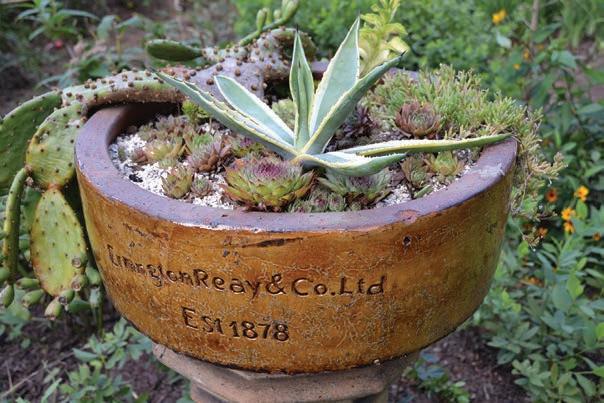
reaches of its borders, and infused the grounds with the rich palette of wildflowers and plantings that rise up in a splash of the largest order.
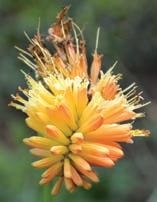
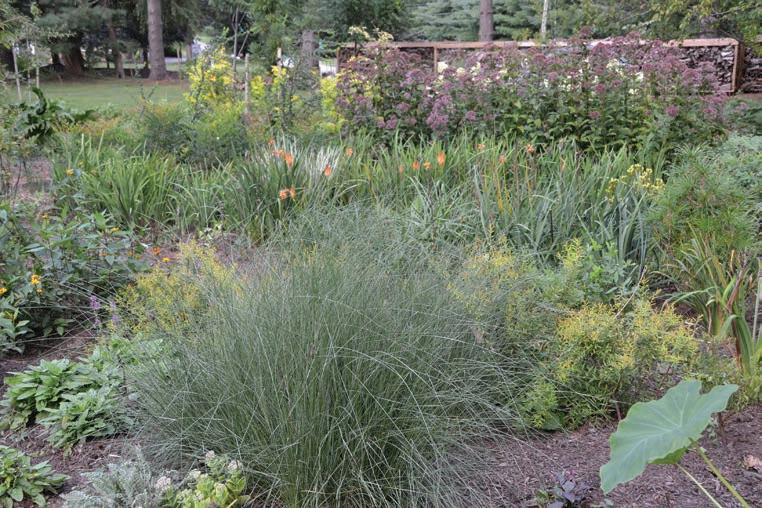
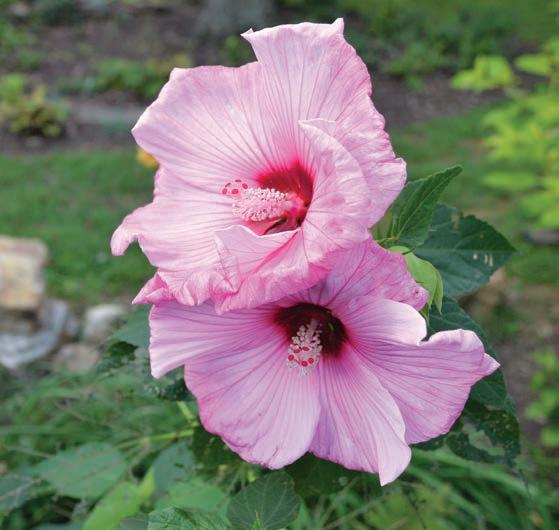
None of this beauty came by accident. Rather, it is the aftermath of proper selection and the talent and vision to place it just so in the ground, and all of it – every chosen and placed bonnet of nature –has found its way in the dirt as a result of Mastrangelo’s reverence for gardens and his more than 20 years in the field of horticulture.
The scent of coffee cans
To trace Mastrangelo’s journey of owning Gardens Great and Small -- his landscape design and contracting company – is to
Continued from Page 57
be strapped in for a navigated and narrated ride that points out opportunities and influences that began when he was a small boy living near Binghamton, N.Y., his birthplace.
Angelo and Kathleen Mastrangelo raised their children directly near the home of Ralph and Katie Arnold, Kathleen’s parents, who tended to a quarter-acre garden in a former cow pasture. For the young Mastrangelo, the garden was a child’s imaginary kingdom come to life, filled with bursting lilacs, roses and fruits and vegetables. Often during the summer months, he would accompany his grandfather on the task of picking blackberries.
“My grandfather would take a
Continued on Page 60



string, punch two holes in the coffee can and wrap it around his neck, pick black berries and plunk them into the coffee can,” Mastrangelo said. “To this day, I still can open up a can of Folger’s Coffee and remember my grandfather. The scent of coffee and an aluminum remains one of the most intense scent memories of my life.”
Soon, the admiration Mastrangelo had for his grandparents’ garden was matched by seeing his mother’s love of gardening, and with a head full of ideas, he set out to pursue a life as a creative.
After graduating from Russell Sage College with a degree in interior design, Mastrangelo took a job with a company in Glens Falls, N.Y., where he helped design everything from hotels to restaurants to lake houses. Due to the downslide of the economy in the late 1980s,




Continued from Page 60
however, Mastrangelo was forced to leave his position.
Losing his job, as it turned out, gave Mastrangelo complete license to explore his other passion: horticulture.
“I was honestly sick and tired of picking out wallpaper,” he said. “At the time, I lived in a carriage house in Warrensburg, N.Y., beside Jean Hastings, who was an oil painter and taught at Sandhills Community College in North Carolina. Around that time, I decided to dig my own pond on my property and landscaped an entire garden. Jean told me, ‘I know what you’re going to do for a living, and I know where you’re going to school.’”
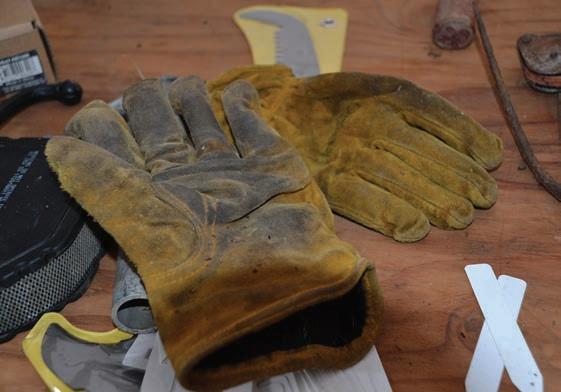
In addition to what he was learning in the room, Mastrangelo and his fellow students went on tours of some of the most established gardens in the Mid-Atlantic, including Longwood Gardens. When it came time to decide where he was going to spend his internship, the choice was simple.
“When I got to Longwood, I was like, ‘I don’t want to leave.’ Everything about Longwood was amazing to me,” he said.h
After a few sidetracks to other colleges, he received a degree in horticulture from Sandhills Community College.
Mastrangelo never left. After fulfilling the required time to complete his internship at Longwood, he continued working there for the remainder of the year, where he put his imprint on everything – the nursery, the parking lot, at brick
Continued on Page 64



Continued from Page 62
walkways and on stone walls, and when he wasn’t working, he went on every plant tour.
One day, Mastrangelo saw a newspaper calling for an assistant horticulturist to work alongside the esteemed horticulturist, landscape architect and author Bill Frederick, who along with his wife Nancy, operated Millcreek Nursery from 1952 to 1971, and was best known for the development of a 28-acre property known as Ashland Hollow on his property near Hockessin.
He got the job and stayed with Frederick for the next four years.
“To give an idea of how highly-regarded Bill was, an intern and I went to England to do some garden tours around the country,” Mastrangelo said. “We ended up in one garden, and the owner of the garden had a table full of students for a seminar. He asked me where I work and who I work with. I told him, ‘I work for Bill Frederick.’ Suddenly, everyone at the table lifted their heads.
“Bill taught me that in gardens, there should be a formal edge, but that each garden should be allowed to relax around that formal edge.”
After leaving Ashland Hollow, Mastrangelo spent the next two-and-a-half years as a stay-at-home father for his two children (now 22 and 24), and when they were old enough for school, he became the head horticulturist at Gibraltar Gardens in Wilmington, now Preservation Delaware’s Marian Coffin Gardens, and eventually began Gardens Great and Small in 2003.
For Mastrangelo, the segue to starting a new company was a nearly seamless one.
“The original concept behind Gardens Great and Small was that I would come into Delaware and do a tiny garden or a three-acre field,” he said. “I was fortunate, because as a horticulturist, I had that degree in interior design, so I knew how to draw. I knew how to create blueprints, and that’s a huge difference when you can put ideas down on paper.
“What I also brought to the company was in part from what I learned at Longwood and from Bill Frederick, which is that a garden should perform every single season. It should be interesting in the winter, spring, summer and fall.
“Gardens should be able to perform, year ‘round.”
The gardens Mastrangelo has created both in Landenberg and at his studio in nearby Yorklyn also serve as an initial walk-through showcase of ideas for his clients, which is normally followed by reduced-scale and rendered drawings that give his clients a visual reference for what the gardens will eventually look like. In almost every one of his projects,
Mastrangelo not only designs the garden, but installs them and maintains them.
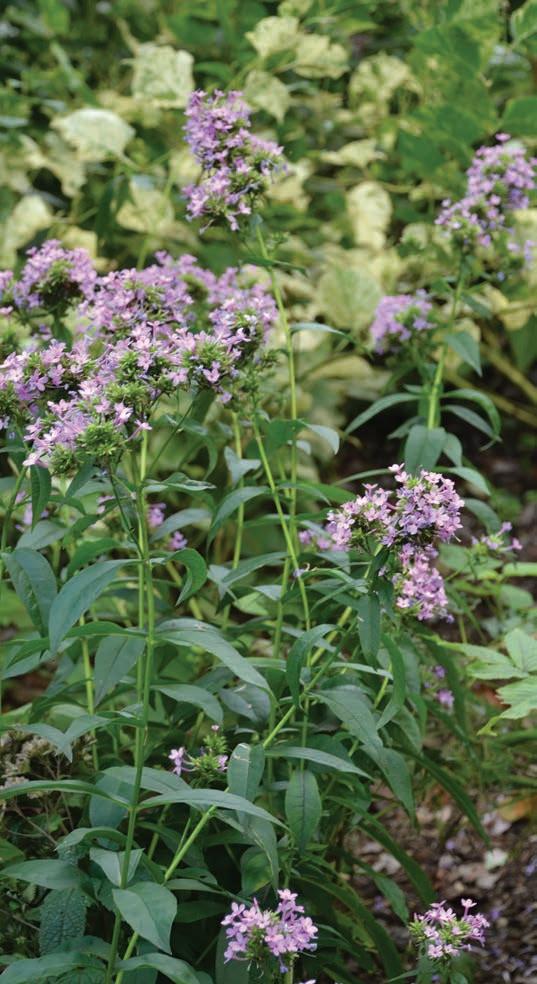
“When I first meet new clients, I ask them if they have any memories of plants as a kid that their parents or grandparents may have enjoyed,” Mastrangelo said. “Do they have a favorite color scheme? I have one client who is color blind, but his wife wanted blues and purples and lavenders. I have another client who only wants pinks and whites and lavender. It allows me to key in particular plants that bloom in
Continued on Page 67


Continued from Page 65
the spring, the summer and the fall.”
Education, experience and the tools of design notwithstanding, Mastrangelo said that the most valuable truth he has learned over his 30 years in horticulture and one he applies to his profession is that ultimately, he is not in charge.
“A garden tells me what to do and when to do it,” he said. “Wisteria gets pruned once a year, and it’s a tangled mess, but if you continue to prune it throughout the year, it will continue to grow but it won’t grow flowers. You have to prune it down to three buds and cut off the other 12, in order to allow it to set its buds for next spring and bloom.
“I keep telling people that they need to allow flowers to be ugly sometimes, because if they do, they are going to get flowers.”
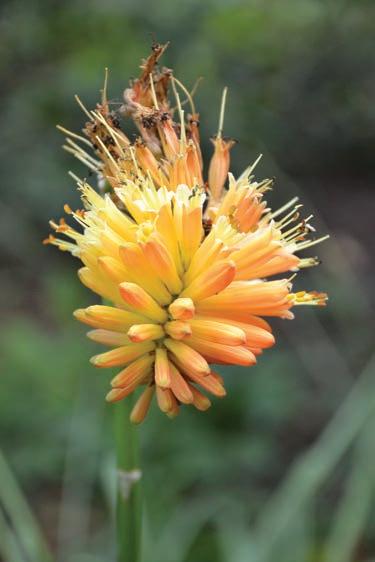
In the deal that would decide the proper order of what would come first in the renovation of the old Middleton property, the gardens would come first. Once their beauty and bounty took shape, Mastrangelo turned his attention to the small stone gray house with the red shutters. Side by side with contractors, he has removed old plaster on crumbling walls, taken apart and reassembled entire rooms and installed a new bathroom and furnishings – all in the dream of doubling the size of the 1,000-square-foot home and establishing it as his residence and his workspace.
The work – often the necessary evil of choosing to live in a historic home – does not preclude Mastrangelo
Continued on Page 68

from Page 67
from pruning and planting in his gardens. It is the place where and and his partner Lenny have chosen to live, and when the old home becomes livable again, Mastrangelo imagines fully transferring his business there. He sees more gardens. He sees the property becoming a place of learning for visitors who want to know more about horticulture.
For the past three years, Mastrangelo has been welcomed by Landenberg. They see him in his gardens on their way to someplace else.
“It has warmed my heart to hear people yell out the windows of their cars and tell me, ‘Thank you so much,’” he said. “It has meant the world to me. My grandmother used to tell me that you can’t make a silk purse out of a sow’s ear.
“Well, you can. If you have enough passion, you can make anything beautiful. You just have to have the drive to do it.”
To contact Staff Writer Richard L. Gaw, email rgaw@chestercounty.com.