
Levy

Levy
The processes of subjectivation and the aesthetic dimension of psychoanalysis
Ruggero Levy
Symbolization in psychoanalysis: the processes of subjectivation and the aesthetic dimension of psychoanalysis
© 2026 Ruggero Levy
Editora Edgard Blücher Ltda.
Publisher Edgard Blücher
Editor Eduardo Blücher
Editorial coordination Rafael Fulanetti
Production coordination Ana Cristina Garcia
Editorial production Lira Editorial
English technical revision Marcella de Melo Silva
Designer Lira Editorial
Proofreading Regiane da Silva Miyashiro
Cover Laércio Flenic
Cover image Istockphoto
Rua Pedroso Alvarenga, 1245, 4o andar
04531-934 – São Paulo – SP – Brasil
Tel.: 55 11 3078-5366 contato@blucher.com.br www.blucher.com.br
Total or partial reproduction by any means is forbidden without the written permission of the publisher.
All rights reserved by Editora Edgard Blücher Ltda.
International Cataloging in Publication Data Heytor Diniz Teixeira, CRB-8/10570
Levy, Ruggero
Symbolization in psychoanalysis : the processes of subjectivation and the aesthetic dimension of psychoanalysis/ Ruggero Levy. – São Paulo : Blucher, 2026.
304 p. : il.
Bibliography
ISBN 978-85-212-3092-2 (Printed)
ISBN 978-85-212-3090-8 (Electronic - Epub)
ISBN 978-85-212-2894-3 (Electronic - PDF)
Original title: A simbolização na psicanálise: os processos de subjetivação e a dimensão estética da psicanálise
1. Psychoanalysis. 2. Symbolization (Psychology). 3. Freud, Sigmund, 1856-1939. I. Title.
CDU 159.964.2
Index for the systematic catalog: 1. Psychoanalysis CDU 159.964.2
1. The symbol: general aspects
2. Symbolization: some points of contact between philosophy and psychoanalysis
3. Symbolization at the dawn of psychoanalysis
4. Towards a broader concept of symbol
5. The contemporaries: Bion, Meltzer, Winnicott, and later contributions
II Non-symbolizations and transformations in intimacy
6. Non-symbolizations: a metapsychological mapping of anti-symbols and “de-symbolizations”
7. The void and the prostheses-thoughts
8. The polyphony of contemporary psychoanalysis: creating scaffolding for thinking
9. Truth and the aesthetic dimension of psychoanalysis
10. The construction of the experience of intimacy in the analytical process through aesthetic experience: transformations in intimacy
11. An intuition of the aesthetic paradigm in Freud? Reflections on the aesthetic paradigm of psychoanalysis and on developments in metapsychology
12. Adolescence
13. Adolescence: symbolic reordering, the gaze, and narcissistic balance
Initially, it is necessary to make some conceptual definitions, since the subject of symbolism and symbolization transcends psychoanalysis and these terms often refer to different concepts. Even within psychoanalysis itself, there are differences in the use of this terminology. As we shall see, after the Kleinian contributions, the concept has acquired a much wider scope, sometimes at the cost of some imprecision.
Several authors (Jones, 1916/1925; Green, 1975/1994; Laplanche & Pontalis, 1982/1997) trace the term “symbol” back to the Greek definition of symbolon, which consisted of an object cut into two pieces carried by two people belonging to the same sect who were separated and, therefore, a sign of recognition when the bearers met again and were able to reunite the pieces. In other words, the symbolon denoted the link between those two subjects.
Another interesting origin of the term symbol is given by Jones (1916/1925). He states that in Greek, “to symbolize” meant to re-unite, to merge and that the root of the term in Sanskrit (gal) designated the meeting of several rivers, an estuary. This is extremely interesting because it is precisely what we find in various symbolizations: the meeting, the confluence of various meanings that flow into a particular symbol.
In The Language of Psychoanalysis, by Laplanche and Pontalis (1982/1997), we see that it is possible to use the concept of symbolism in psychoanalysis in its broad form or its strict form and that Freud generally used it in the strict form. So says the dictionary:
a) In a broad sense, a mode of direct and figurative representation of an idea, a conflict, an unconscious desire; in this sense we can consider any substitutive formation to be symbolic in psychoanalysis. b) In a strict sense, a mode of representation that is distinguished by the constancy of the relationship between symbol and unconscious symbolized; this constancy is found not only in the same individual and from one individual to another, but in the most diverse domains (myth, religion, folklore, language, etc.) and in the most distant cultural areas between them. (p. 41, my emphasis)
So we already have some definitions of what we call a symbol. In the non-psychoanalytic dictionary definition, the concept of symbol is limited to saying that it replaces something abstract or absent (Aurélio Digital, 2010). In the psychoanalytic definition of symbol, “absent” must include the notion of the unconscious: whether it is an unconscious idea or a repressed desire, which will be symbolized by something; or an unconscious elaboration of the absence of some object that can be replaced by a symbol.
However, as we will see throughout this chapter, even when it comes to the psychoanalytic concept of symbol, there is a great deal of variation in its conceptualization and, perhaps even greater regarding its creation; in other words, in the process of symbolization. For example, Freud and Jones understood the symbol in its restricted, supra-individual, collective sense, with constant meaning, while for Meltzer it is highly individual, personal, idiosyncratic.
Laplanche (1980/1988) criticizes Freud’s position, by saying that, based on the discussion about the meaning of circumcision, it is a pre-psychoanalytical conception of symbolization. He says that this theory of symbolization considers the symbol and what it symbolizes to be two terms in a two-way correspondence, that is, a theory of the
This chapter is not intended to provide an extensive review of philosophy’s contributions to the concept of symbolization. However, it is interesting to make a small incursion by reviewing at least two authors, Cassirer and Susanne Langer, for the richness of their contributions and the influence they have had on psychoanalytic thinking, especially that of Bion and Meltzer. Of course, a more consistent review of the contributions of philosophy should include at least Kant, since he was Freud’s interlocutor many times and for the influence of his thought on Bion; it should also include Heidegger, for the points of contact between his ideas and Winnicottian thought (Loparić, 1997). I will leave that for another paper, or for another colleague who is better qualified than me in this area.
Cassirer (1944/1997), in his book An Essay on Man, calls for unity in the search for something that explains the “real general character of human culture” (p. 43). To this end, he highlights the constant concern of philosophers to discover the nature of man and states that knowledge of oneself is the goal of philosophical inquiry.
Socrates inaugurated the anthropological vision of philosophy, seeking to define the nature of man. He tries to do this by describing man’s virtues (goodness, courage, justice etc.), because he believes that
man’s nature cannot be detected like that of physical things. What is really interesting is Cassirer’s statement that “man’s character can only be understood in his immediate relations with other human beings” (p. 16). Man’s truth ceases to be understood as something that can be grasped by the individual thinker and becomes tangible in confrontation, dialog, dialogical, or dialectical thinking. “It can only be obtained through the cooperation of subjects in mutual questioning and response” (p. 17). These ideas are noteworthy for their harmony with the appreciation of the intersubjective construction of meaning in psychoanalysis to discover the nature of the unconscious, ours and our patients’.
In the 19th century, Darwin, with his book on the evolution of species, established biology as the hegemonic science for understanding man’s insertion into nature (Cassirer, 1944/1997). The theory of the evolution of species places man in a continuous line of evolution of life, but the question regarding human culture remains to be resolved: how do we understand it? “Is the cultural world, like the organic world, made up of accidental changes?” (p. 38). From this, various philosophical systems developed in the 19th and 20th centuries (Nietzsche, Freud, Marx) to understand what sets our thought and will in motion, producing culture as a result. A central thought (metaphysical, theological, mathematical, biological) is lost and we fall into a complete diversity of thoughts, each area approaching the problem from its own point of view.
The point of view that Cassirer will develop – and which, because of its nature, is quoted so extensively in this chapter – is that the symbol is the key to understanding the nature of man. He will say that in man, in addition to the receptor and effector systems found in all animals, there is the symbolic system, which indicates a qualitative change in the evolution of the human species. This acquisition has transformed the whole of human life.
The question of symbolization and symbols in Freud’s work, in general, is quite rich, complex and full of ambiguities, like many other aspects he studied. Any attempt to simplify it, to find a general concept, would impoverish the subject to such an extent that it would be regrettable. So, with the help of some authors, I will try to clarify how the subject was developed by him at the dawn of psychoanalysis.
Freud, with his keen clinical vein and unique scientific spirit, discovered and described the existence of two distinct mental processes, with different rules and laws, namely the primary and secondary processes. He described exhaustively and with great precision the contents of the primary process: the unconscious thoughts, their displacements and condensations, their associative and substitutive pathways. However, for fear of being confused with those he was fighting, he chose not to give the name symbolizations to these relations of substitution of repressed elements with other elements. He described condensations and displacements with brilliance and richness, but he did not specify that they occurred precisely because of the possibility of establishing symbolic relationships.
In the Freudian paradigm, there is a vectorial tendency, ranging from the drive to verbalization, which forms correspondence relationships based on a succession of retranscriptions between the different parts of the mind. A series of relationships is created in which
one refers to the other. These relations are not only of opposition (censorship), “but of collaboration, since this is the way to move from one system to another, for example from a latent content to a manifest one” (Green, 1975/1994, p. 77). And although Freud did not call them that, Green believes that these are the internal relations of symbolization, which link the different elements of the same formation (dreams, unconscious fantasies, thoughts etc.) and ensure psychic continuity and discontinuity.
Although Freud studied the various forms of indirect representation of the unconscious – as he used to refer to them – in dreams, symptoms, and parapraxes, he did not refer to these indirect representations as symbols. In most of his work, he reserved the term “symbol” to be used in a very restricted way, within the definition I referred to earlier using the description by Laplanche and Pontalis (1982/1997). In various works (1900/1969, 1901/1969, 1915b/1969, 1916/1969), Freud described symbols as supra-individual elements, belonging to culture, which the individual would use to mask the repressed elements of the unconscious.
It seems to me that one way of understanding Freud’s ideas about symbols would be to study the area in which they would be most evident, namely his study of dreams. So, in his major work, The Interpretation of Dreams (1900/1969), although he described extremely rich processes of symbolic transformations in which repressed representations were replaced by others through displacement and condensation, once they met the conditions for representability, he would not call them symbolizations. He considered them to be mere substitution processes in which the unconscious used elements that were already ready to be used. He says this verbatim:
As I said earlier, it seems to me that, of the pioneers, Ferenczi was the one who ventured to broaden the concept of symbol and symbolization, becoming a “bridge” to Melanie Klein’s conceptualizations.
The work “Stages in the development of the sense of reality” (Ferenczi, 1913a/1992), considered a classic in the theory of the development of symbolization, is a reference for Freud and Klein. He is also regarded as a pioneer in the study of the development of the ego’s adaptive capacities. It also contains the embryos of what Winnicott would later describe, in a more detailed, rich way, about the illusion of omnipotence provided by parents to the young child and the passage from subjectivity to objectivity. He takes Freud’s “Formulations on the Two Principles of Mental Functioning” (1911/1969) as his starting point and constant reference. It is remarkable that this work, Freudian in its conceptualization, later became the point of departure and permanent reference for Isaacs (1943/1978) and Bion (1962/1991).
Ferenczi (1913a/1992) says that Freud, when describing the transition from the pleasure principle to the reality principle, did not specify whether this occurs immediately or gradually and, in the latter case, how it would happen. He then describes the various stages that the subject goes through as they lose their omnipotence, from birth to adulthood:
• Period of unconditional omnipotence: this is the intrauterine period, when the child’s desires and drive needs were met unconditionally, without frustration or the need for any action on the environment.
• Period of magical hallucinatory omnipotence: this is the period in which the newborn tries to re-establish the intrauterine experience, the good days when there was omnipotent gratification of all its desires. There is a hallucinatory reinvestment in the lost state of satisfaction. For the child, the only change that has occurred in this phase is that now, to obtain complete satisfaction of its desires, it needs to invest what it wants in a hallucinatory way; it does not need to act on the environment. The mere representation of its satisfaction is felt as an omnipotently powerful force. But even then, frustration sets in, for the environment is not always ready. The child begins to feel that it has to intervene in the environment in order to satisfy itself.
• Period of omnipotence by the help of magical gestures: the child begins to use a series of signals to change the environmental situation. At first, these are motor discharges as magical signals. Over time, the signals become more complex and specific. Then frustration sets in again, however, forcing the child’s ego to realize more clearly that the objective world differs from its subjective world and to differentiate between its desire and the external world’s resistance to them at times. This broadens the self/non-self differentiation.
• Animistic period: despite the greater differentiation between self and non-self, the child attributes the characteristics of his ego and drives to the world, “trying to find in each thing its own organs or functioning” (p. 47). It invests the world with its libido, taking an interest in objects that remind it of its autoerotic activities, or that lend themselves to being “identified”. These are “profound relationships, persistent throughout life, between the human body and the world of objects, which we call symbolic relationships” (p. 47). With this symbolic improvement, the child will be able to mark the desires that concern its body as those that concern the external world, now recognized as such. The remarkable thing is
Meltzer (1984) believes that Klein and Bion extended psychoanalytic metapsychology beyond the four initial metapsychological dimensions defined by Freud, namely: the dynamic, the genetic, the economic, and the topographical. Melanie, with her concepts of the internal world and the interior of the object, created a new metapsychological dimension, the geographical dimension of the mind, with all its implications: the notions of inside/outside the self and inside/ outside the object. Bion, in addition to developing the study of the geography of mental spaces and the communication between them and expanding the concept of projective identification created by Klein, created the epistemological dimension of the mind by characterizing the central importance of knowledge, the creation of thoughts and thinking in the structuring of the mental apparatus. We will see that these extensions will also affect our object of study, symbolization.
Bion (1957/1988, 1959a/1988, 1959b/1994, 1959c/1994, 1962a/ 1988, 1962b/1991), based on Freud and Klein, made brilliant contributions to the theme of symbolization. Throughout his work, he defined that what drives the process of symbol formation is not the libido (L – love), nor the death drive (H – hate), but the desire to know (K – knowledge), as long as L and H are subordinate to K. Here, the
desire to know is elevated to the status of a drive (Meltzer, 1988). He will define, as we will see next, that the ability to think is created not in the paranoid-schizoid position, nor in the depressive position, but in the permanent oscillation between them (Ps ⇔ D). He will also define that symbolic transformations depend not on the subject or the object, but on the link and the affect experienced between them, in other words, the relationship between container and contained.
Assuming you are all familiar with them, I will give you a quick summary of Bion’s main ideas that are relevant to the topic I am discussing.
Freud’s strong presence is noted when, in Learning from experience, Bion (1962b/1991) is interested in studying “the relationship that exists between the ‘pleasure principle’ and the ‘reality principle’ and the choice that a patient can make when faced with the possibility of modifying a frustration or evading it” (p. 22), in an explicit reference to “Formulations on the Two Principles of Mental Functioning” (1911/1969).
Klein’s concepts of splitting, projective identification, depressive position, paranoid-schizoid position, and envy are, on the other hand, fundamental to his conceptualization (Bion, 1959c/1994). I emphasize this because I have sometimes heard a discussion – sterile, from my point of view – about whether or not Bion is Kleinian. Klein is as central to Bion as Freud is. I think that Bion went beyond Klein and in this sense, he is not a classic Kleinian; but if we remove Klein from Bion, there is no Bion! Bion’s central concepts do not work without Klein’s concepts. So let’s finally get to his ideas.
Bion (1959c/1994), in “Dream-work-α”, describes a series of mental functions that he claims are already well known to psychoanalysis. His description is the origin of what he later calls the alpha function. The characteristics of alpha are: 1) it is continuous day and night; 2) it operates on stimuli received from inside and outside the mind and on the ideational counterpart of external facts. He claims
There have been significant changes in the way psychoanalysis has approached the question of the symbolic throughout its history. Firstly, there is a predominant concern with the study of symbolism; secondly, with symbolization, as I hope I have made clear in the previous chapters; and finally, with the losses in symbolic processes that end up creating situations of non-symbolization.
Contemporary psychoanalysis has been particularly concerned with studying limit situations in which symbolic processes have been damaged. André Green (2010) published a book, The Work of the Negative, in which he sets out to study the various forms of the negative, reviewing the contributions of psychoanalysis from this perspective. He studies everything from the best-known forms of the negative in psychoanalysis, repression itself, and the formation of the unconscious, to the less-studied forms, whether it is what cannot be symbolized or what has been symbolized but has been destroyed.
1 This chapter is based on and largely reproduces my article entitled: “From symbolizing to non-symbolizing within the scope of a link: from dreams to shouts of terror caused by an absent presence”. International Journal of Psychoanalysis, 93(4), 837- 862, 2012
In this chapter, I will focus on this form of negative: what could be called de-symbolization or de-representation. That which remains in the fourth sense of the negative described by Green (2010), that of nothingness. That which cannot exist in the mind, either as unrepresentable or de-represented. Something that does not appear in the mental in the form of symbolic material produced by the processes of transformation into alpha (Bion, 1962/1991). This negativity in the mental sphere is usually “positivized” in the territory of the body, conduct, or hallucination (Bion, 1962/1988, 1962/1991, 1965/2004).
I agree with Botella and Botella (2002) when they state that classical psychoanalysis has dedicated itself to the study of representations and their topography and that contemporary psychoanalysis has also studied non-representations and the unrepresentable, the negative in terms of representations. These experiences that remain in their negativity on the mental plane generate not only an impossibility of symbolization but also an impossibility of being “forgotten” (Alvarez, 1994), creating an apparent paradox. They remain present, in their raw state, creating a presentification of raw emotion that cannot be inserted into the unconscious mesch and worked through.
In this work, I will initially focus on the contributions of contemporary authors who have been more interested in the process of symbol production, symbolization, reaching its peak with the contributions of Bion (1957/1988, 1959/1988, 1959/1994, 1962/1988, 1962/1991, 1963/1988, 1965/2004). He studied the entire process of symbolic creation, from its first instants to the functioning of the thinking apparatus. Bion’s greatest contribution was to place this whole process of symbolic creation taking place – and only being able to take place – in the warmth of a link. This gave rise to an important transformation in the concept of the analytical relationship and gave substance to the concept of the analytical field (Baranger & Baranger, 1961/1969; Ferro, 1995, 1998, 2007) and that of intersubjectivity (Ogden, 1996). I then intend to dwell a little more on the study
I will provide a quick introduction to what I think about the socalled pathologies of emptiness, based on authors who are fundamental to me, and then I will dwell a little more on the concept of “prostheses-thoughts”, trying to articulate it with the aforementioned pathologies.
I believe that the pathologies of emptiness began to be studied more emphatically in psychoanalysis when authors became interested in the process of symbolization, of creating symbols, of developing the ability to think about them, and the interference of the death drive in this process. Right from the start, we must think that if, on the one hand, certain experiences are negated in the system of representations or in the symbolic fabric, creating symbolic voids, object voids, on the other hand, they are “positivized” somewhere else: either in the protomental system, or in the soma, or in the act (Levy, 2010, 2012, 2017).
Very early on in his work, Freud took an interest in the question of death in human life. As an example, as early as 1913, in Totem and Taboo (1913/1980), he claimed that man, in a certain point in its history, starts civilization with the creation of primitive laws, taboos and, prohibitions, in order to curb sexual and aggressive impulses which, if unrestrained, would become a threat to community life. This would have been the beginning of civilization: from the threat of sexuality and violence, individuals unite around laws and regulations that curb the individual’s drives, ultimately their violence. In 1930, in Civilization and its discontents (1930/1969), he returned to the theme of the repression
of aggression and the risk of war. In 1932, in his famous dialog with Einstein entitled “Why war?” (1932/1969), he again deals with the destructiveness of man. Of course, we could go on quoting several other passages from his work in which he deals with this theme.
More specifically in relation to the topic we are dealing with now –the representation or lack of representations of experiences within the sphere of the mind – I believe that, after describing the death drive in Beyond the Pleasure Principle (1920/1969), when introducing the second topic model in The Ego and the Id (1923/1969), Freud develops the idea that there is a quantum of unrepresented elements in the sphere of the self that may or may not be represented. In other words, he describes the id as an archaic, primitive unconscious, immersed in the soma and pre-representational. In this outstanding work, he makes clear his view that the id is a kind of huge unconscious, part of which is the repressed Ics, but the rest are records of some kind waiting to be inserted into the sphere of the self.
Although the theme of destructiveness and the symbolic inscription or not of experiences in the mind had already been studied by Freud, I believe that, especially since the contributions of Winnicott and Bion and, later, André Green (1994), a great impetus has been given to a more in-depth, detailed study of the work of the negative in the process of symbolization. Of course, this was followed by enormous contributions derived from these two currents, English psychoanalysis and French psychoanalysis. In addition, many contemporary authors, from other regions and also from Brazil and Latin America, have “drunk” from both sources and generated new contributions that are also original, such as Ogden, Ferro, Civitarese, Roussillon, Botella and Botella, Levine, Barros and Barros, Cassorla, Hartke, Marucco, just to name a few and not to continue doing an injustice by not mentioning the others.
Winnicott, both in his classic work “Transitional objects and transitional phenomena” (1951/1975) and in his no less important
Whenever I set out to study a topic relating to man’s symbolic processes, I remember Cassirer’s (1944/1997) brilliant assertion that man should not be called a rational animal, but rather a symbolic animal. Man’s mental functioning, as we all know, is not dominated by rationality, but by the symbolic system he creates and which irremediably mediates his relationship with the world. He formulates an interesting image to help us reflect on this: he observes that it would not come as a surprise to find a group of humans dancing around a tree to summon rain, but you would never see a pack of dogs doing so! To put it another way, what marks out human behavior is not its rationality, but its immersion in the world of symbolism, fantasy, thought, and language.
Naturally, when Cassirer (1944/1997) refers to the human symbolic system, he means thought, language, the fine arts and scientific theories, not to mention the contributions of psychoanalysis concerning the unconscious. For psychoanalysis, the construction of the symbol starts from unconscious activity. Depending on the theory used, its construction will be understood as either stemming from
1 This chapter is a slightly modified version of: The polyphony of contemporary psychoanalysis: the multiple languages of man. International Journal of Psychoanalysis, 100(4), 656-673, 2019
the re-transcriptions of unconscious desire in the psychic apparatus derived from pulsional activity (Freud, 1915/1969) or from the intersubjective encounter with the other, as developed by Bion (1962/1991, 1965/2004) and Winnicott (1951/1975) and will be constructed throughout the course of this chapter. Although the conception of what a symbol is differs between philosophy and psychoanalysis, I believe that some of the ideas from philosophy can be used to reflect on the theme of language and its development.
André Green (1990) argues that we should understand the psyche as an intermediate formation in the dialog between the body and the world, which according to the French author is brutal, as it confronts the tyrannical demands of the body with the restrictions imposed by the world of culture. This intermediate formation referred to by Green, the psyche, is in fact the human symbolic system, which constitutes the human essence as understood by psychoanalysis.
From a philosophical point of view, Walter Benjamin (1921/2013) considers that any manifestation of human mental life can be conceived as language. Thus, man lives immersed in countless languages: the language of the act, the language of dreams, the language of the visual arts, music, poetry, and the language of words articulated within a grammatical structure, the discursive language (Langer, 1941/1989) itself.
Susanne Langer (1941/1989), also from a philosophical perspective, has a different view. She believes that language is a special mode of expression, consisting of a specific vocabulary and syntax. Its elements, the words, have a fixed meaning to the extent that they can be translated into other languages. She understands that other symbolic forms that convey meaning – the visual forms (presentational symbolism, for example) – have other laws that govern them. Therefore, she believes that language in the strict sense would only be discursive language and that, although we refer to other means of non-verbal representation as language, this is loose terminology.
I begin this chapter by transcribing the notes I took at the end of a session with a patient years ago.
I ended the session with tears in my eyes because we had had such tense emotional experiences analyzing her relationship with her sister. Is the truth beautiful, as Meltzer says inspired by the English poets? She always presented an image of her sister as an arrogant, snobbish, vain person. But now another view of her was emerging: a suffering person, scarred by the early abandonment she had suffered from her parents, as she had been sent to be raised by another family for many years. And the two of us, my patient and I, were thrilled to see the new vision she had of her sister, a vision that emerged creatively through a dream she had brought me and through our work in the session. We shared the emotion of building a new, beautiful image of the sister. Beautiful because it seemed truer to us than the previous one. We were moved not only by the new image we had built of her sister but by the beauty of the analytical work capable of such fertility.
1 A substantial part of this text was published in: Revista de Psicanálise da Sociedade Psicanalítica de Porto Alegre, 26(1), 61-83, 2019
Where did that feeling of truth come from? What was the relationship between beauty and truth? What was “true” about it? So is the question of truth still important for psychoanalysis? What truth are we talking about?
At the 2016 Congress of French-Speaking Psychoanalysts, while listening to landscape architect and poet Paul Andreu (2016) talk about the relationship between light and materials in an architectural work, I was reminded of the analytical relationship (Levy, 2017). He said that there needs to be a “dansity” between these elements, a possibility for light and materials to dance with each other, to interact, to interpenetrate, so that something alive can come out of it. I also remembered the relationship with our patients when Andreu, talking about his creative process, emphasized the importance of the temporal dimension, of allowing oneself to be flooded, submerged and suddenly discover that something emerges; “that’s where the truth is”, he said. This is what happens in the analytic relationship. We need to have this “dansity” with our patients, to have a living interaction, to allow ourselves to be submerged in the emotional experience with them, in a mental state that is closer to the oneiric than to the secondary process, welcoming their communications, of all kinds, to make something emerge thanks to our analytic function, so that something living is born, a new understanding that differentiates the two participants in the analytic pair (Ithier & Levy, 2014).
The passage quoted belongs to my work on “Intimacy” (Levy, 2017), in which I make a correlation between our experience as psychoanalysts and the description of a creative experience, one of contact with “truth” in another area of human activity, namely architectural creation. In other words, there seems to be a type of experience of truth, common to various human domains, which unifies various elements of the human experience – cognition, emotion, language – and which provides a particular type of experience that we could call aesthetic experience.
Though all our knowledge begins with experience, it does not follow that it all arises out of experience.
Kant (1787/1999, p. 53)
One could say that this chapter and the previous one are two sides of the same coin, because intimacy and the construction of truth, in the aesthetic dimension of psychoanalysis, are totally intertwined. In the previous chapter, I used some clinical and personal experiences to illustrate the issue of constructing the possible truth about emotional life; in this one, I will use them to focus on the vertex of constructing the experience of intimacy in the analytical session.
Studying and writing about intimacy in psychoanalysis is perhaps the most human thing we can do, because ever since we emerge from our mother’s womb, the utmost experience of inhabiting and sharing another’s body, we seek the reassuring warmth of an intimate
1 Much of this text comes from the author’s main conference at the 50th International Congress of the IPA, held in Buenos Aires in July 2017, entitled “Intimacy: the Drama and Beauty of Encountering the Other”. The text was subsequently published in national and international journals.
link with another human being for the rest of our lives, a process described beautifully by Eizirik (2016). In other words, the search for –or flight from, in pathology – intimate links runs throughout human life, because, as Bion (1978-1980/1992) said, “the human being is an animal that depends on a partner” (p. 95).
Throughout this search, throughout the entire life cycle, the body undoubtedly plays a central role in experiences of intimacy. As well as inhabiting the mother’s body during pregnancy, at birth the human subject continues to share the intimacy of the mother’s body, feeding on it and in it. Furthermore, primitively, the mother helps the baby to get to know its own body and to build an image of it and of itself as a subject, that is to say, she helps it to begin an intimate contact with itself. In adolescence, familiarity and intimacy with one’s own body has to be rebuilt, just like in old age, when the body becomes fragile and inevitably deteriorates. With regard to sexuality, in adolescence and adulthood, the body once again takes on an essential role in the search for sexual intimacy between lovers, between couples, in the search for pleasure, warmth, and procreation. I think the cycle ends when the positions are reversed, and the children gratefully help their ageing parents, even with bodily care: they become their parents’ fathers and mothers.
The experience of intimacy is an emotional one. I think that writing about this fits in with the psychoanalytic approach that has set out to study human emotionality, understanding that emotion indicates the initial meaning of the experience with the object and that meaning is constructed through a long process of symbolization that involves containment and symbolic transformation, from the most primitive symbolic elements to the most abstract, including language.
Allow me to digress. The human mind is perhaps one of the most complex systems in the universe. In order to grasp it, psychoanalysis, during its 120 years of existence, has created various theoretical models in an attempt to deal with such complexity. Possibly none of them alone can encompass the universe of the human mind. Identifying
Freud (1919/2010), in his work “The Uncanny”, writes that aesthetics is the area of knowledge dedicated to studying “the theory of the qualities of feeling” (p. 329). He points out, nevertheless, that psychoanalysts work in other areas of psychic life and do not deal with “subdued emotional activities which, inhibited in their aims” (p. 329), which are the material of aesthetics. However, he makes a reservation, pointing out that the psychoanalyst may eventually become interested in an area of aesthetics, as would be the case with the analysis and the study of the “uncanny”. Again, Freud was concerned with characterizing psychoanalysis as an objective science, but, as we will see in more detail later, psychoanalysis, especially after Bion and Meltzer, has changed in this aspect. It is no longer just interested in the qualities of feeling but understood that feeling is one of the first ways of knowing the “truth” of experience, constituting what came to be called the aesthetic dimension of psychoanalysis (Levy, 2017) or the aesthetic model of psychoanalysis (Ungar, 2000).
Bion placed emotional experience, human emotionality, and its symbolization at the core of the expansion of the mind. As a consequence of this approach, despite the recognition that life and death drives and their derived unconscious fantasies remain in the background, attention in this psychoanalytic current has been focused on the emotions and sensations experienced in the encounter with the object and in the subject’s relationship with their own body and with the world. However, although he developed the drive model throughout his metapsychology, we will see that at many moments Freud was concerned with the “qualities of feeling”, proper to aesthetics, and not to psychoanalysis, according to himself. What is more, we will see that several of his brilliant works and insights stemmed from his aesthetic experiences.
Meltzer (1984/1987), in his book Dream Life, studies the developments in psychoanalytic metapsychology made by Klein and Bion. He states that in addition to the four classic metapsychological dimensions of psychoanalysis established by Freud – the genetic, the dynamic, the topographical, and the economic – Melanie Klein introduced the geographical dimension and Bion, the epistemological dimension. In other words, according to Meltzer, after the contributions of the two English authors, when analyzing a psychic event, in addition to the classic metapsychological dimensions already mentioned, we must understand the geography of the phenomenon, whether it is located in the subject’s inner world or whether it has been projected onto the object. And we should also understand it from the point of view of knowledge (K-link), whether it is at the service of knowing the psychic reality of the subject or the object or whether it has the function of obstructing this knowledge.
Adolescents can be understood and studied from multiple angles: psychological, cultural, sociological, biological, and many others that could be mentioned. The focus of this chapter will be on the psychological standpoint, basically using the psychoanalytic framework.
Although adolescence is a universal process, it takes on peculiarities according to the prevailing culture. In this sense, at the end, we will examine some of the repercussions of today’s culture, at the beginning of the 21st century, on youngsters, insofar as it alters their relationships with the environment.
The universal nature of adolescence can be illustrated by a text written in the 4th century BC by Aristotle (quoted in Blos, 1979/ 1981), in which he portrays the changeable, voluble, irritable, challenging character of the adult world, prone to noble acts. There are, therefore, some invariants that have been maintained over the centuries. Those invariants rest on the need for the new generation to challenge the adult world and its rules, in order to acquire its own identity, distinguished from its previous generation. This attitude is based on an inescapable feeling of self-sufficiency and greatness. If, on the one hand, this contestation generates a situation of conflict, on the other, it results in an indispensable cultural renewal.
1 This chapter was previously published in: C. L. Ezirik, & A. M. S. Bassols (2013). O ciclo da vida humana: uma perspectiva psicodinâmica. Artmed.
From the psychoanalytic point of view, the adolescent is a subject in process of transformation, immersed in a profound process of reviewing their internal world and their childhood legacies, with a view to adapting to the new body and the new drives resulting from puberty. To illustrate this, we will use an image created by a young adolescent in the midst of the pubertal process (Figure 12.1).
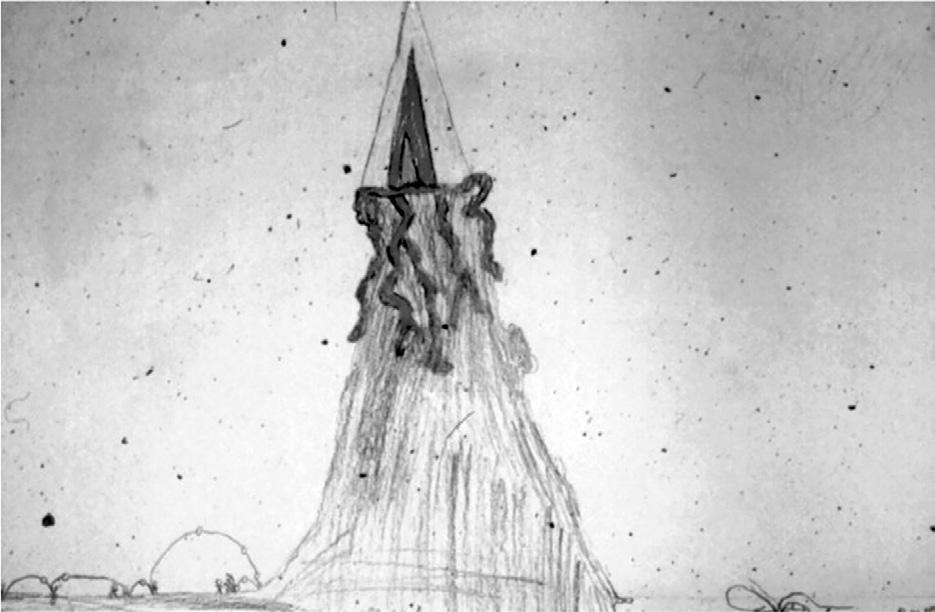
The volcano, in an obviously phallic shape, illustrates, on the one hand, the perplexity with the development of the genitals and their new secretions. On the other, it depicts how puberty is felt as an internal volcanic eruption of unknown, feared forces yet at the same time renewing. The curious thing about this drawing is what the almost 11-year-old patient said about what was happening at the base of the volcano: “The problem is that there were children playing ball near the volcano and they didn’t realize how much danger they were in”. It seems that our initial adolescent, with this comment, was expressing how much he felt that the eruption of puberty was casting him into adolescence and threatening his childhood. In other words, he was ceasing to be a child and sensed that he would lose, or leave behind, a series of characteristics and patterns of behavior and relationships typical of that phase. This shows the fractured, fissured nature of puberty.
Today, as we are at a time of great change in our culture, in which modernity is strongly shaken by post-modernity, we have felt an intense need to understand its impact on the adolescent process. Precisely because they are in direct contact with the cultural frontier and are a subject undergoing rapid change, we see cultural modifications expressed in them in an obvious way. We see that the adolescent process is being modified, pushed forward, prolonged, and intensified. In short, it is as if we are watching adolescence being stretched, twisted, and turned right before our eyes.
In turn, even if we only study adolescence from an intrapsychic point of view, we can do so from various angles: that of the process of separation and individuation; that of the reactivation of pre-genital drives and the emergence of genital drives, with the consequent re-edition of the Oedipus complex; that of the vicissitudes of narcissism, as mentioned in the previous chapter (Levy, 1994, 1996).
At this point, I would like to study the adolescent process from the point of view of narcissism, focusing on a particular phenomenon: the symbolic reordering that takes place at this point in life, with the anxieties arising from this process, its impact on the subject’s narcissistic structure and its points of contact with our culture. Going into
1 This chapter was originally published in a book on adolescence in Italy and, in Brazil, in: Revista de Psicanálise da Sociedade Psicanalítica de Porto Alegre, 13(2), 2006.
a little more detail, I want to postulate that there is a type of anxiety specific to this process of symbolic reordering, which is the anxiety of annihilation. As a complex phenomenon, adolescence and the whole process of subjectivation that it encompasses cannot be covered from a single point of view. There is no single theory or standpoint that can deal with an event of such complexity.
The human subject is a being that develops essentially in a symbolic world (Levy, 2000) and, for this reason, Cassirer (1944/1997) argues that man should not be called a rational animal, but a symbolic animal. According to Cassirer, the great divide between man and other animal species is the existence of a symbolic system, an intermediary between the stimulus-receiving system and the effector/motor system. Thought, as a symbolic system, mediates the immediate reaction, as Freud said in “Formulations on the Two Principles of Mental Functioning” (1911/1969).
The adolescent process is no different. It is constituted by the disconnection of previous systems of representation set up by the self (Cahn, 1999) throughout childhood and the creation of a new system of representations to deal with the new body, the self itself, objects and the world itself. Throughout this painful process of deconstructing and reconstructing a system of representations, we then witness the emergence of a new subjectivity in the subject’s symbolic universe, with all the vicissitudes of such an endeavor.
Why am I not simply referring to the construction of a new identity in adolescence? Precisely because I want to focus attention on what happens metapsychologically, in the subject’s phantasmatic world, and follow this major process of symbolization that is adolescence and a particular type of anxiety that emerges from it.
The new adolescent body emerging from puberty, with its new forms, new drives and new potentialities, imposes an unprecedented

Following in the footsteps of philosopher Ernst Cassirer, who described the human being as a symbolic animal, Levy takes readers on an extraordinary journey to the heart of contemporary psychoanalytic theory by examining the central role that symbolic processes – their vicissitudes, possibilities, and failures – play in psychic functioning, emotional development, the formation of the self, and the therapeutic action of the analytic process. Readers of all levels will emerge with a heightened sense of the applicability, power, and ongoing evolution of psychoanalytic theory and practice in the twenty-first century.
Howard B. Levine, MD, Editor-in-Chief
The Routledge W.R Bion Studies Series
PSYCHOANALYSIS

Ruggero Levy
Symbolization in psychoanalysis
Thtprocé$se.5oJsubfrctilvitiooand theaesrheric dmension ofpsychoona��'is
Blucher

Symbolizationin psychoanalysis
The processes of subjectivation and the aesthetic dimension ofpsychoanalysis
Ruggero Levy
ISBN 9788521230922
Páginas 304
Formato:14x 21 cm
Ano de Publicação:2026