DecentralizedFinance
a ,... b ,... c d e
abcde a b c d e
Abstract
DeFi,short,forDecentralizedFinancerepresentsasystemthatharnessesthepowerofblockchaintechnology.Iteliminatesthe involvementofintermediaries.Allowsforlending,borrowingandassettransfersontheblockchain.Thisstudycentersarounda DeFiplatformthatsimplifiescryptotokensstakingandborrowingprocesses.Usershavetheopportunitytojoinabankingsystem wheretheycanearninterestbylendingtheirassetsandloansusingcollateral.Toensurefairnessandautomatecalculationsthis platformutilizescontractsremovingtheinfluenceofauthorities.ItoperatesontheEthereumblockchainensuringassettransfers andfacilitatingpeertopeertransactions.InconclusionDeFirevolutionizeshowweaccessservicesbymakingthemtransparent, efficientandaccessible,toall.ThisresearchdelvesintoaDeFiplatformaimingtoenhancethesequalitiescontributingtothe evolutionofDeFislandscape.
Keywords
Blockchain,Smartcontract,Oracle,DecentralizedExchange,LiquidityPool
1.Introduction
Thefinanciallandscapewasrevolutionizedbytheintroduction oftechnologystartingwithBitcoinin2009[1].Blockchainis aledgerthatcannotbealteredandisvisible,toallnetwork participantswhilebeingtamperproof.Itoffersadvantages, includingsecurityduetotheextensivecomputationalresources requiredtomodifythechaintransparenttransactionhistories accessibletoeveryoneanduseranonymityprotectedbyprivate andpublickeys.Byoperatinginamannerblockchaineliminates theneed,foranauthorityandautomatesfinancialprocesses reducinghumaninvolvement.
Theissueliesinfinancesystemswherebanksandinstitutions exertcontrolandimposefeesontransactionserodingcontrol overassets.The2008financialcrisisdemonstratedthedangers ofthissystemasgreedandmismanagementcontributedtoan economicdownturn.Whilelargecorporationsthrivedordinary citizenssuffered,revealingtheunfairnessofthesystem.
Thisresearchaimstointroduceamodelofmanagingassetsusing automatedsystemsandcomputeralgorithms.Theobjectiveis toestablishafinanceplatformbasedonEthereumthatallows userstoearninterestbystakingassetsandborrowcurrency withcollateralfromanindependentliquiditypoolgovernedby smartcontracts.Thisprojectseekstoempowerindividualsby providingthemwithsecureandtransparentoptionsthataddress theshortcomingsofcentralizedfinance.
2.BackgroundandRelatedWorks
2.1 DecentralizedFinance
Decentralizedfinance[2]isarelativelynewtechnological advancementthathasgainedsignificantpopularityoverthepast decade.SeveralDeFiplatformshaveemergedovertheyears thathavebeenabletobringbillionsofdollarsworthofcapital intothedecentralizedmarket.Thetotalmarketcapitalization hasalreadycrossed90billiondollarsandisincreasingsteadily.
Amongmanyavailableplatformsoftransactions,morethanhalf ofthecapitalizationvalueisaccountedforbythetopfiveDeFi projects[3].TheseexistingDeFiprojectsarethemostvaluable literatureforustocompletethisproject.
2.2 RelatedWork
CurveFinance(2020)andCompound(2018)aretwoofthe biggestdecentralizedexchangeplatformsthatareinoperation atpresent.Bothofthesemoneymarketprotocolsarebased onEthereumandallowsuper-efficientstablecointrading.The liquidityinCurve[4]issplitacrossseven‘curvepools’where eachpoolmintsitsparticularERC-20tokentoliquidityproviders whichcanthenbeexchangedformanydifferentassets.Itis knownforallowinguserstotradewithverylittleslippageand lowfees.Compound[5],ontheotherhand,isfamousforallowing userstotakeoutovercollateralizedloans.Inthisplatform,users canborrowupto75percentoftheinitialcollateralamount.The intereststartstoaccrueimmediatelyandcontinuesthroughout theloanduration;thenthename‘Compound’.Theassetsinthis protocolarerepresentedintermsofC-tokens.
3.Methodology
3.1 BlockDiagram
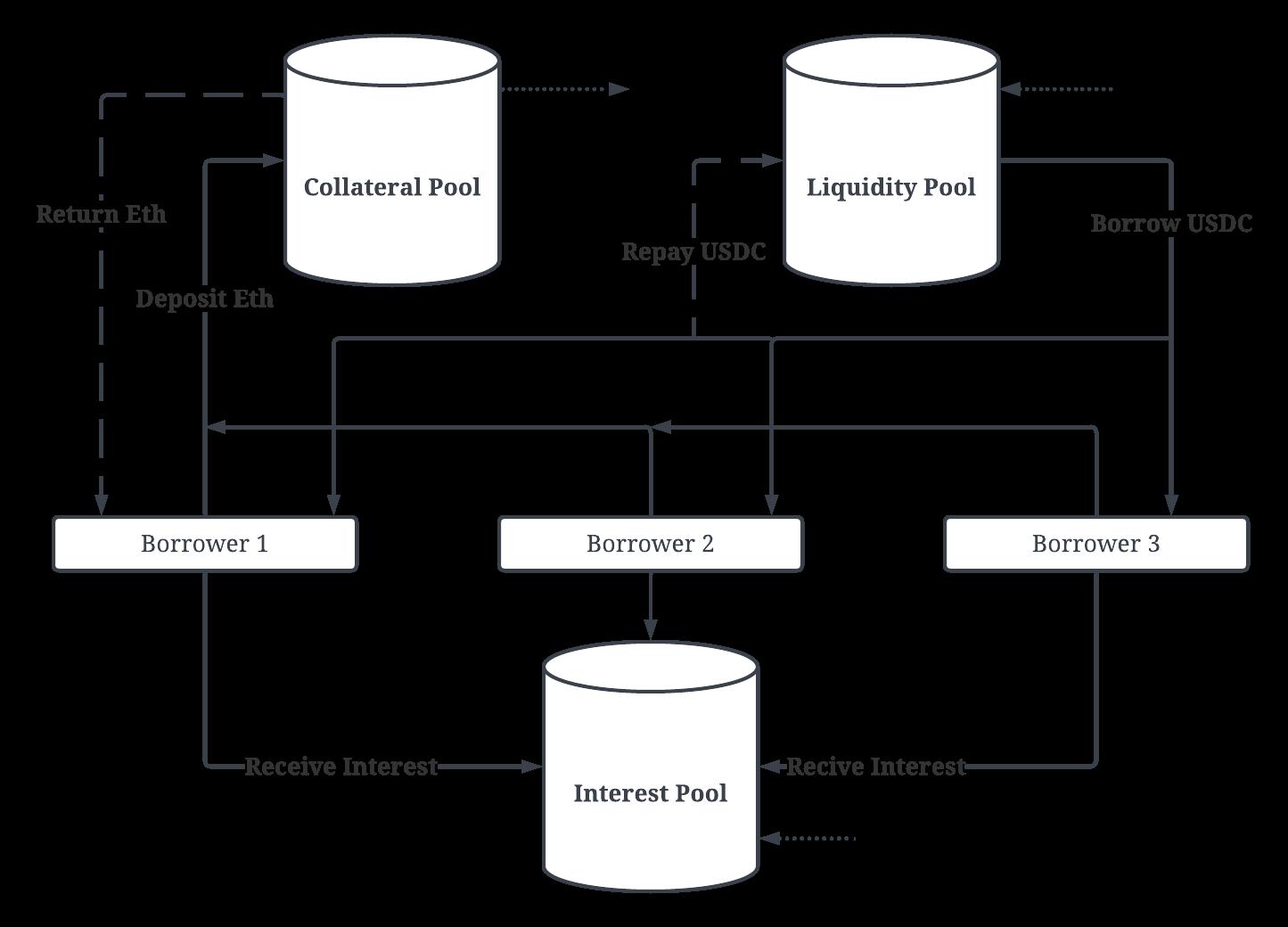
Lenderscontributetheirassetstoasharedpoolofliquidity whichhelpscreateconnections,betweenpeoplewhowantto depositmoneyandthosewhoneedtoborrowit.Lendersearn interestontheassetstheyprovideuntiltheychoosetowithdraw them.Borrowersonthehandoffertheircryptocurrencyassetsas collateral,whichdetermineshowmuchtheycanborrow—less thanthetotalvalueoftheircollateralinthemarket.Thesystems algorithmstakeintoaccountexchangeratestocalculatetheloan amountatthecurrentinterestrate.Borrowersareresponsiblefor payinginterest.Theratesareadjustedautomaticallytomaintain abalancebetweensupplyanddemand.TheDeFiprotocol overseesalltransactionsensuringautomatedlendingand

3.2 StakingFunction
Thestakingfeature,inaDeFiprotocolallowsuserstolend theirassetstoaliquiditypoolinexchangeforearninginterest. Theinterestratesvarydependingonthesupplyanddemand dynamics.Eachindividualwhoparticipatesinstakingisassigned anidentificationnumber.Hasaspecificwalletaddressassociated withthem.Thesedetailsincludetheamounttheyhavestakedand theinteresttheyhaveearnedfar.Whenuserslendtheirassetsit contributestothepool,whichisthenutilizedforprovidingloans. Interestisperiodicallyaddedtothepool.UnlikebanksDeFirates areflexible.Donotautomaticallycompoundduetoshortterm lendingarrangements.Toensureaccuracyincalculatinginterest redundancyisprevented.Usershavetheoptiontowithdraw theirassetseitherinjusttheaccruedinterest,withthewithdrawn assetsbeingsenttotheirdesignatedwalletaddress.Anyunused structuresrelatedtostakerscanbe.Cleanedduringsystem updates.

3.3 BorrowingFunction
TheborrowingfeatureoftheDeFiprotocolenablesusersto borrowUSDCfromtheliquiditypoolwithinterestrates comparedtowhatstakersreceive.Tobeeligible,forborrowing usersneedtoprovidecollateralinEthereumorETHassets.The maximumamountthatcanbeborroweddependsonthe”Rateof ETH”whichreflectsthevalueofEthereuminrelationtoUSDC intheexchangemarket.Weobtainreal-timeEthereumprice datafromtheChainlink[6]Oracle,ensuringaccurateand up-to-dateinformationforourDeFiprotocol.Thisensuresthat thereiscollateralthantheamountborrowed.Borrowersare assignedIDsorkeyssimilartostakerscontaininginformation liketheborrowedamount,timestamp,totalinterestdueand collateraldepositedforloansecurity.Incaseaborrowerdefaults ontheirloanoriftherearemarketfluctuationstheircollateral
canbeliquidated.Theborrowermayinitiatethisprocess.Itmay happenautomaticallyduetomarketconditions.Measuresarein placetopreventanyredundancyandensuretrackingof borrowinghistory.Loanscanberepaidtoreleasethecollateral. Ifaloanisconsideredbaditwilltriggertheliquidationprocess asexplainedfurtherinthereportwhichdiscussesits implications,forbothborrowersandtheprotocol.
3.4 UsecaseDiagram
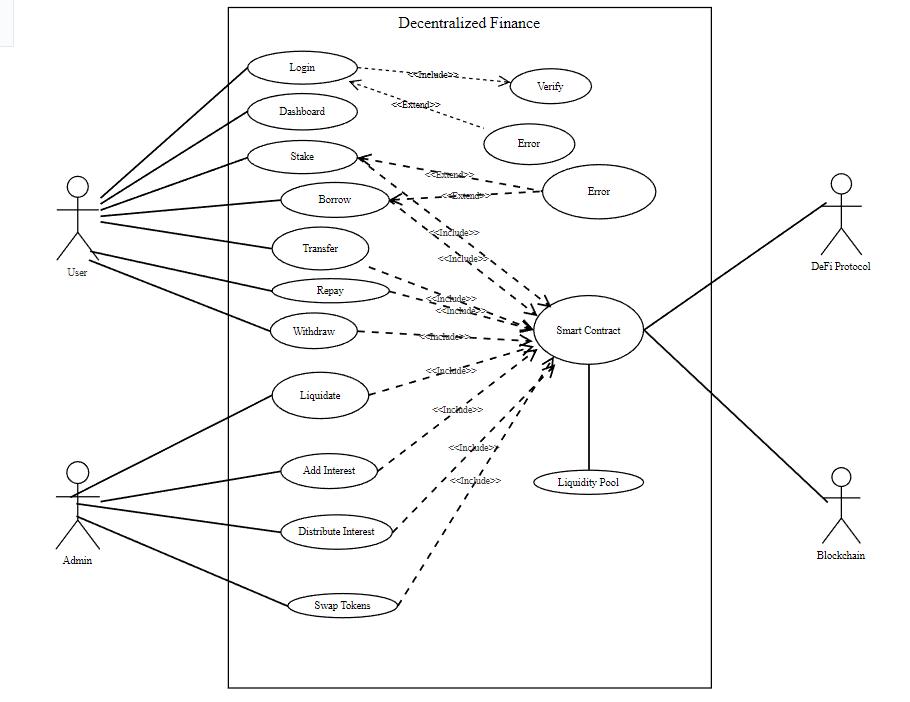
UseCasediagramshowstheusers,admin,theDeFiprotocol andtheblockchainasthevariousactorsthatcontributeinthe operationoftheoverallsystembypassingthefunctionalrequests andprocessingthemtoobtainthedesiredresults.
3.5 LiquidityPool
TheliquiditypoolactsastheelementoftheDeFiprotocol.It servesasarepository,forUSDCassets.Providesfundsfor lendingtoborrowers.Thinkofitasarepresentationoftheassets atanygiventime.ThepoolgrowswhenstakersdepositUSDC expandingthefundsandshrinkswhenborrowerswithdraw USDCinexchangeforEthereumcollateralreducingtheassets. Likewisewhenborrowersrepaytheirloanstheyreturnthe borrowedUSDCtothepoolincreasingthetokens.Stakershave theoptiontowithdrawtheirassetswhenevertheywantwhich decreasestheamountinthepool.It’simportanttonotethatthese fundmovementsdon’trequireactions.Borrowersarenot
obligatedtowithdrawloansafterstakingthem.Stakersdonot havetowaitforborrowerstorepaybeforewithdrawingtheir assets.Althoughstakersandborrowersimpacttheliquiditypool theiractionsarenotdependentoneachother;theycanmake choicesindependentlybasedontheirpreferences.Thepoolplays aroleinmaintainingabalance,betweenthesupplyanddemand ofUSDCtokenswithintheprotocol.Thisequilibriumhelps establishinterestratesandpreventssituationscausedby excessiveactivityfromeitherstakersorborrowers.

3.6 IntrestMechanism
Thefunctionalityrelatedtointerestplaysarole,intheoperation oftheliquiditypool.Borrowersareresponsibleforpaying interestintoasharedpool(interestpool)whilestakersreceive theirinterestfromthepool.Thisinterestpoolhelpsmaintain balanceintheliquiditypool.Whenmoreborrowersjoinit increasestheinterestmakingstakingmoreattractive.Onthe handifthereisaninfluxofstakersitreducesindividualinterest earnings.Theinterestratesforbothstakersandborrowersare notfixedandcanvarybasedonmarketconditionschangesin supplyanddemandandotherfactors.Stakersinterestis determinedbytheratesofferedtoexistingstakers.Isdistributed atintervalsalignedwithblockchainblockcreation.Thismethod helpsstabilizefluctuationsininterestrates.Mayresultin patternswithoutanyintervention.Borrowersexperienceinterest ratesovertimeensuringconsistencyintheirloanpayments. Howeverstakersinterestearningsareproportionaltotheirshare ofassetsbeingstaked.Thisallowsfordistributionofearnings, amongallstakeholders.Helpsmaintainabalancedsupply demandratiowithintheprotocol.
3.7 Assetsliquidation
Liquidationisasafetymeasure,withintheDeFiprotocol.Itis triggeredunderconditions,oneofwhich’swhenaborrowerfails torepaytheirloanorinterestontime.Thishelpsprotectlenders andensuresthatthefundsarerecovered.Anothersituationthat mayleadtoliquidationisifthevalueoftheassetsfallsbelowthe
valueoftheborrowedassetsduetomarketchanges.Thishelps managerisks.Theprocessinvolvessomeautomation,where administratorsinitiateliquidation.Thesystemautomatically identifiesaccountsthatqualifyforitbasedonfactorslikeinterest. Duringliquidationthecollateralassetsaresoldatmarketprices throughUniswap[7].AnyobtainedUSDCisaddedbacktothe liquiditypooltorecoverlossesincurredbyborrowers.This proactiveapproachalongwithusingassetslikeEthereumand USDCenhancesstabilitywithintheprotocol.Reducesrisks associatedwithassetvaluefluctuations,inthedynamiccrypto market.
4.ExperimentsandResult
Thissectiondescribesthedetailedprocedureofdeployingand testingthesmartcontractandthewebapplicationdesignedfor transactionsofUSDCandGoreliETHusingMetamask.
4.1 SmartContractdeploymentandtesting
OnesmartcontractwasdevelopedontheEthereumtestnetand followingunittestswereconductedtoensureitsproper implementation.
4.1.1 ConnectiontotheWallet(MetaMask)
Thetestincludedestablishingasecureconnectionwiththe MetaMasknetworkbyencouragingtheuserstoinputtheir credentialsinordertomakeuseoftheservicesaccessible throughthewebapplication.
4.1.2 Transferoffunds
VariousformsoftransactioninvolvingtheGoreliETHandthe USDCassetswereverifiedtobeaccurateandsecure.These transactionsinvolvedtheusersandthesmartcontract’sliquidity poolsastheinteractingparties.
4.1.3 Calculations
Severalcalculationsthatneededtobeperformedbythesmart contractfortheproperfunctioningofthesystemwereevaluated andverifiedtobeconsistentwiththeexpectedresults.These testsverifiedtheaccuracyoftheinterestratecalculation,interest amountcalculations,andalsoevaluationsofconditionsthatwere subjecttotriggeringliquidationclauses.
4.2 BorrowingofUSDCassets
TheborrowingtransactioninvolvedthetransferofGoreliETH fromtheEthereumwalletoftheborrowertotheliquiditypoolof thesmartcontractandinreturntransferofUSDCassetsfrom theliquiditypooltotheEthereumwalletoftheborrowingparty. ThistransactionsuppliedthecollateralEthereumtothefinance protocolwhilealsogeneratingameansfortheusageofthe USDCassetsstakedbythelenders.


4.4 InterestRateCalculation
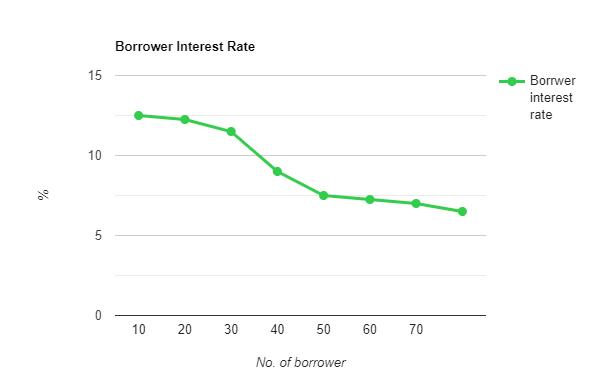
Thecalculationofinterestrateofferedtothestakingusersis dynamicallycalculatedusingreal-timeassetvaluationdata accessedfromtheinterestpool.Thesmartcontractperiodically performsthecalculationswiththeuseofthelatestdatafromthe interestpooltoupdatetheinterestratetobeusedtoperform transactionswithborrowersandstakers.
4.5 InterestAmountCalculation
Thecalculationoftheinterestamounthappensintwodistinct, yetinterrelatedportions:
• InterestAmountchargedfromtheborrowers
Thesmartcontractcalculatestheinterestamountto bechargedtoeachoftheborrowersusingthedynamic interestrateobtainedfromtheinterestpooldata.The interestamountthuspaidbytheborrowersisaddedtothe interestpool,alsomaintainedbythesamesmartcontract, whichthenbecomesthesourceofinterestamounttobe paidtothestakingusers.
4.3 StakingUSDCassets
Thestakingfunctionallowstheusersofthewebapplicationto lendtheirUSDCassetstotheliquiditypooltoearnacertain amountofinterestinreturnforthelentassets.Thisfeature allowstheprotocoltocollecttherequiredUSDCassetsto populatetheliquiditypoolandinitiatetransactionswiththe stakers.
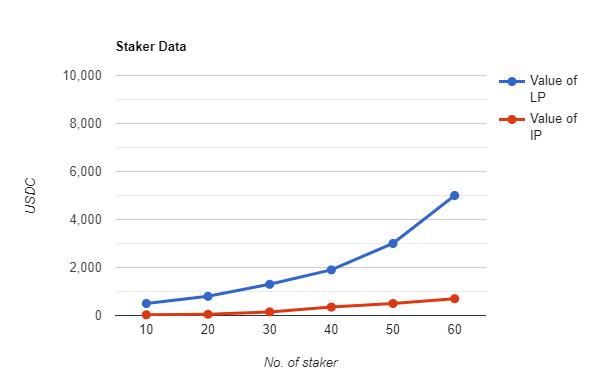
• InterestAmountpaidtothelenders
ThesmartcontractcalculatestheratioofUSDC assetsskatedbyeachstakingusertothetotalUSDC assetsstakedintheplatform.Then,thecalculationof interestearnedbyeachlenderisperformedusingtheratio sameratio.Thesmartcontractpaysoutthecalculated amountofinteresttothelendersusingtheassetscollected intheInterestPool.
4.6 Withdrawalofassets
Theusers,eitherlendersorborrowers,canwithdrawtheirassets fromtheliquiditypoolbyinitiatingvariouseventsintheprotocol. Thelenderscansimplychoosetowithdrawtheirdueinterestor thewholeprincipalsumatanytime.Theborrowers,ontheother hand,canwithdrawtheircollateralassetsbyrepayingthetotal sumofUSDCborrowedplusthedueinterestamount.
4.7 Liquidationofassets
Liquidationofassetsisamajorfeatureofthesmartcontractto ensurethefiscalsecurityofthelendersaswellasthestabilityof theplatformitself.Thesmartcontractisdesignedtoundertake
theliquidationfunctionsautomaticallybyperiodicallyevaluating theconditionsstipulatedinthesmartcontract.Thisliquidation canbeperformedontwoseparateoccasions:
• Iftheamountofoutstandingdueinterestforaspecific borrowerexceedsthethresholdpercentage(50)ofthe borrowedamount.
• Ifthenetvalueoftheborrowedassetdepreciatesinthe globalmarketcausingittoapproachathresholdlevel thatcouldcauselosstotheplatformevenuponitsfull repayment.
5.Conclusion
Aninteractivewebapplicationprovidesaplatformforcrypto ownerstoaccesstheservicesofthesmartcontractincluding transferoffunds,stakingandborrowingofcryptoassets.The deploymentofthesmartcontractandthewebapplication,theuse oftheMetaMaskwalletandtheimplementationofthecontract intheEthereumblockchainprovidedasecureplatformforusers totradetheirassetsovertheinternet.Afullytransparentand automatedsystemtodynamicallycalculatetheinterestratesand
thedistributionofinterestestablishedatrustworthysystemfor thecryptoownerstouseandearnfromtheirassets.Integrating awidervarietyofcryptoassetsintheplatformandenabling theirtransactionscanfurtherenhancethissystembyattracting moreusersandincreasingthetransactionvolumethroughthe application.
References
[1] CalebSilver.Over10yearslater,lessonsfromthefinancial crisis.
[2] AntierSolutions.Understandingthebusinessscopefordefi, Dec2020.
[3] MilkoTrajcevski.Top5defiprojectsbymarket capitalization,Mar2021.
[4] PYMNTS.com.Pymntsdefiseries:Whatarethetopdefi platforms?,Dec2021.
[5] RobertLeshnerandGeoffreyHayes.Compound:Themoney marketprotocol,Feb2019.
[6] Chainlink.Howchainlinkpricefeedssecurethedefi ecosystem,April2022.
[7] HaydenAdams,NoahZinsmeister,andDanRobinson. Uniswapv2core,Mar2020.