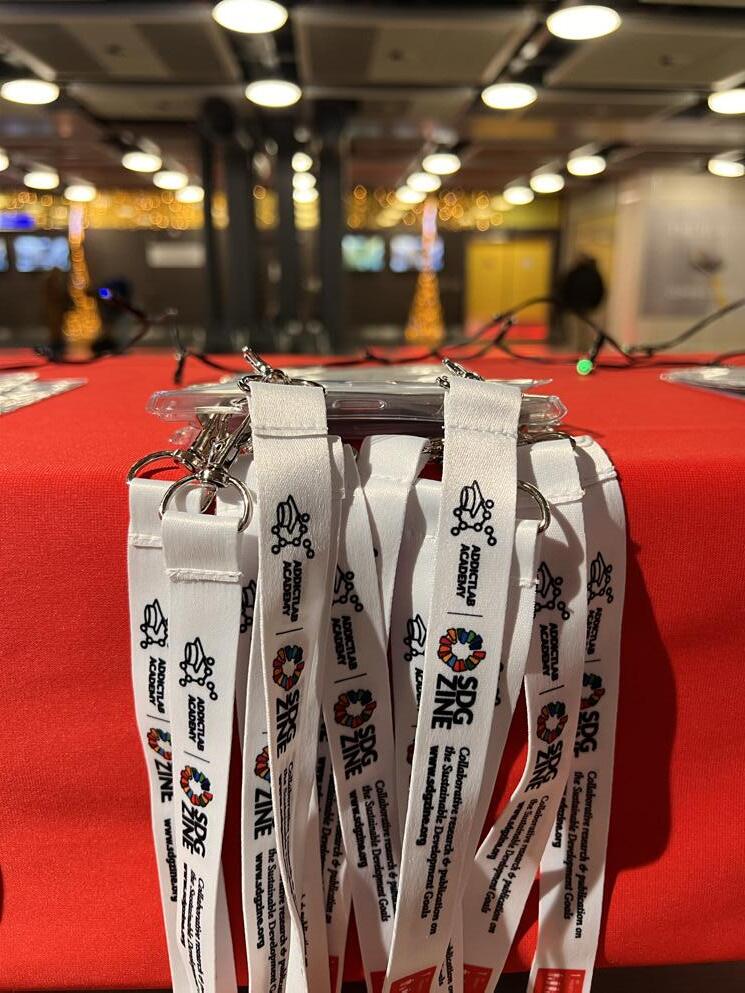
This magazine is created during & after the camp. It’s a living process, with new pdfs uploaded as content is added. Dec 14 - deadline contributions Jan 15
SDGZINE.ORG is an initiative from Jan Van Mol, the ADDICTLAB ACADEMY and partners contributing to the sustainable development goals of the United Nations.
Editorial board
This magazine is created with the help of students from the Future Sustainability Innovators Camp. They participated in writing, taking pictures, selecting art work.
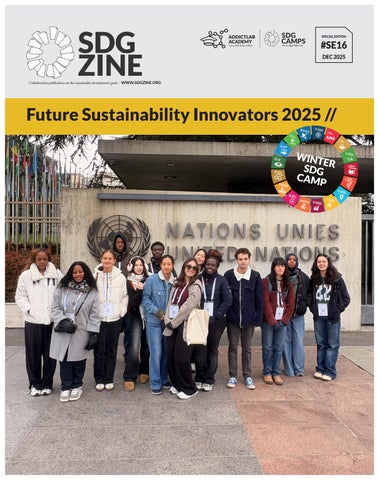
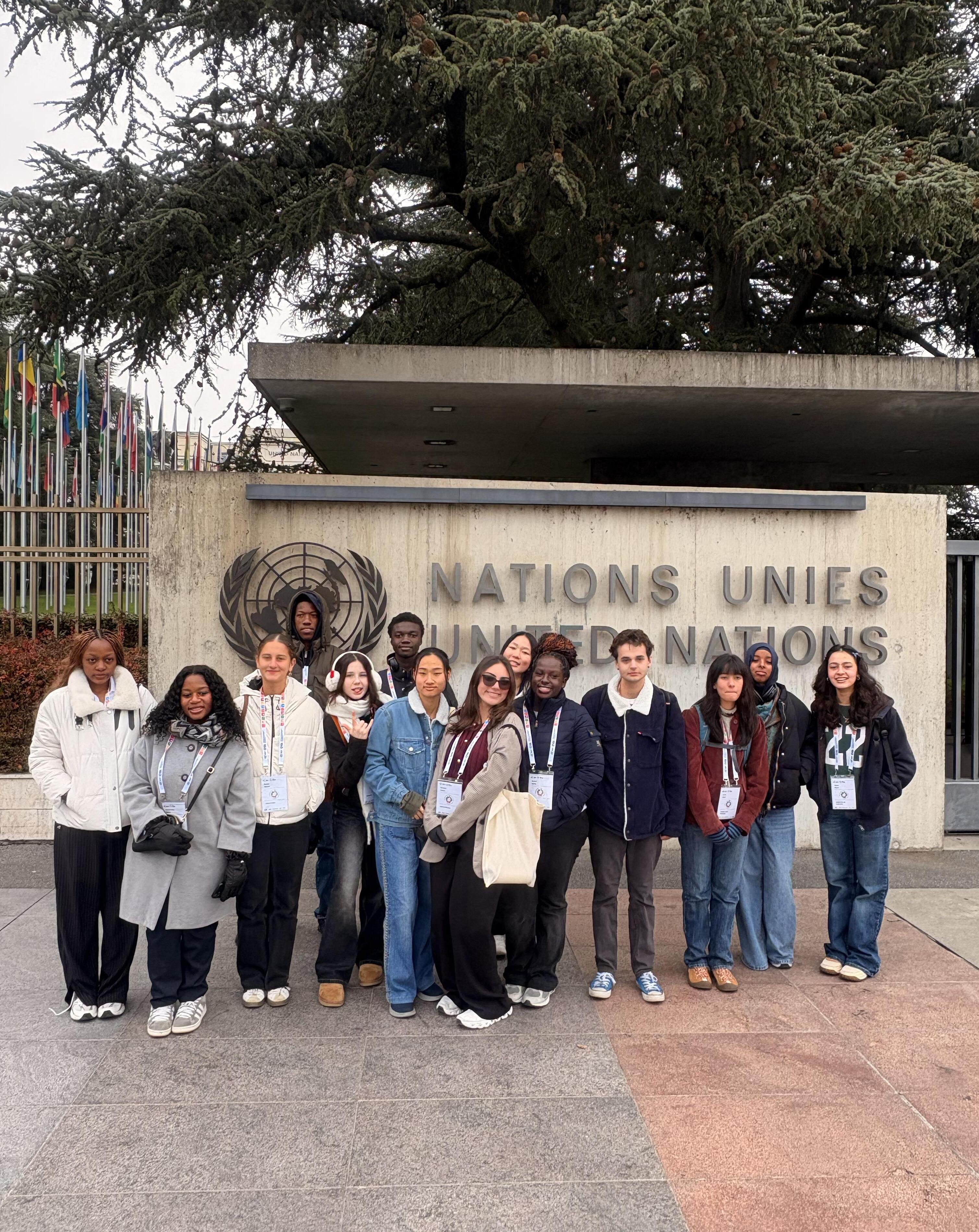
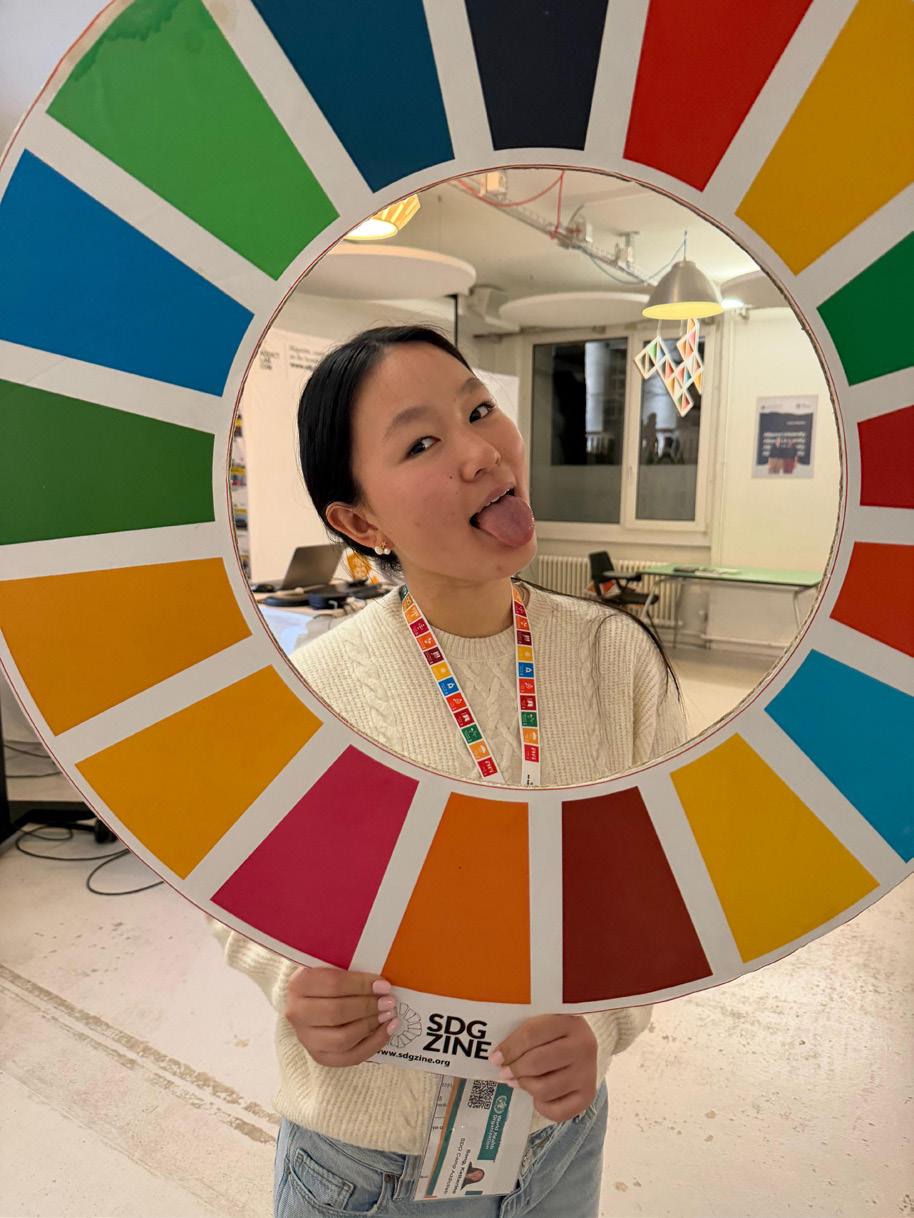
Cover picture by Jane Lim
publisher Jan Van Mol
editorial team Jane Lim / Jan Van Mol
About FUSIon and more.
by Jane Lim & Jan Van Mol
What an extraordinary week it has been. As you now are browsing this SDGzine, we are reminded of the intensity, curiosity, and creativity that defined every day of our FUSI Winter Camp.
What began as a gathering of students from around the world quickly became a shared journey of exploration and discovery—not just of ideas on sustainable development, but of your capacity to question, create, and act. This magazine captures that journey, moving beyond documentation into testimony: proof that young people can not only understand the Sustainable Development Goals but can imagine and build solutions for them.
Over the course of the week, you engaged deeply with the heart of International Geneva, from global institutions to cutting-edge science at CERN. You saw sustainability through the lens of diplomacy, health, science, and human rights—and in doing so, you connected theory with real-world challenges.
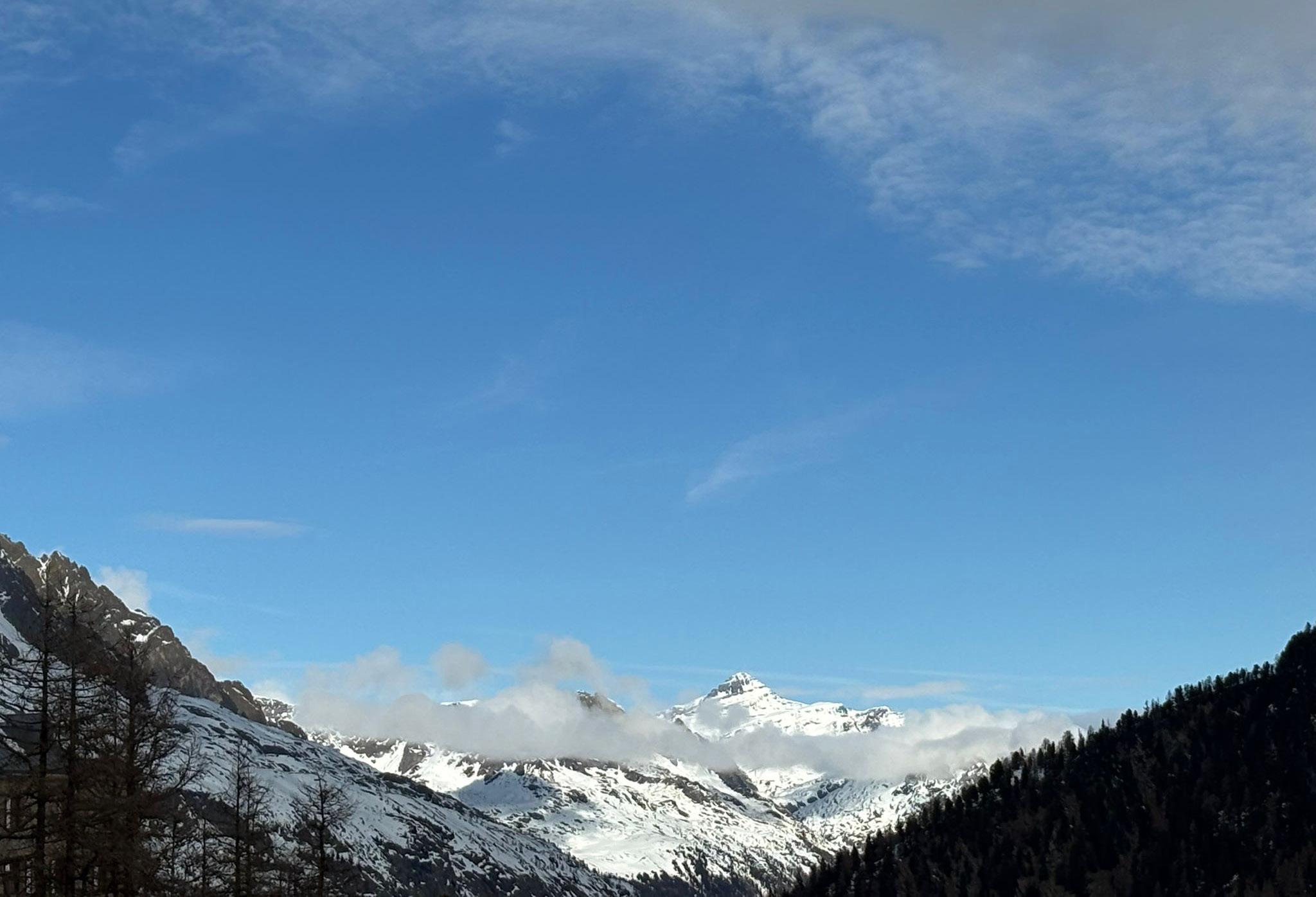
Our day in the Alps, exploring glaciers and alpine ecosystems, brought home the urgency of climate action. These were not just field trips; they were immersive lessons that made global challenges personal and tangible.
At the SDG Solution Space, with mentors and peers from different backgrounds, you built ideas, refined perspectives, and began to prototype solutions. Then came the hackathon—a space where your impressions, insights, and passion turned into concrete concepts: campaigns, products, narratives, and designs that reflect not only your creativity but your understanding of complexity.
This magazine is the outcome of that collective effort. Each page is a piece of your story—your questions, your reflections, your prototypes, and your voices. This is not just reporting. This is a manifesto of possibility: that young people are essential agents of change in shaping the future we want.
We are immensely proud of how you connected across borders, challenged assumptions, co-created ideas, and supported one another with empathy and ambition. May the spirit of FUSI Winter continue to grow beyond Geneva—through your communities, continued collaborations, and renewed belief that the SDGs are not just global goals but personal commitments.
We extend our heartfelt gratitude to Learn with Leaders for partnering with us and to our team whose dedication made this possible: Irini, Luca, Jiya and Annette. Without all of you, this experience—and this SDGzine—would not exist.
Jane & Jan
contact info@sdgzine.org
Future Sustainability Innovators Program Geneva WINTER CAMP 2025
Arrival Day
time subject description
7 - 20h Welcome day arrivals & pick ups at Geneva Airport
15h CHECK-In Hotel before: SDG Solution Space / University of Geneva
17h30 OFFICIAL CAMP START
17h 30 TEAM introduction Camp & Geneva briefing
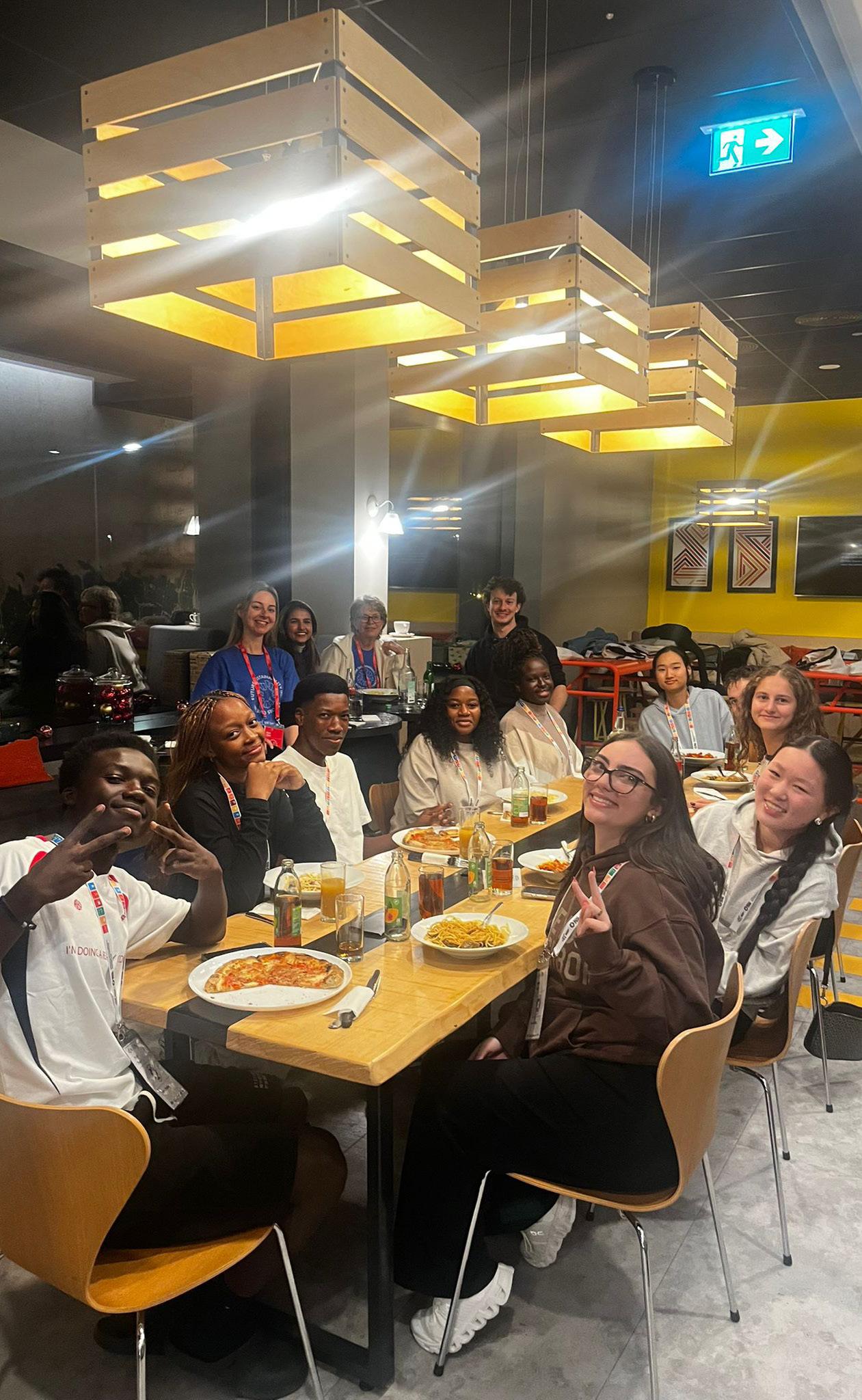
18h30 Dinner Hotel
20h Participants introduction & group activity SDGquiz/SDGzine
18h00 Dinner at SDG & intro hackathon Gemuse Kebab
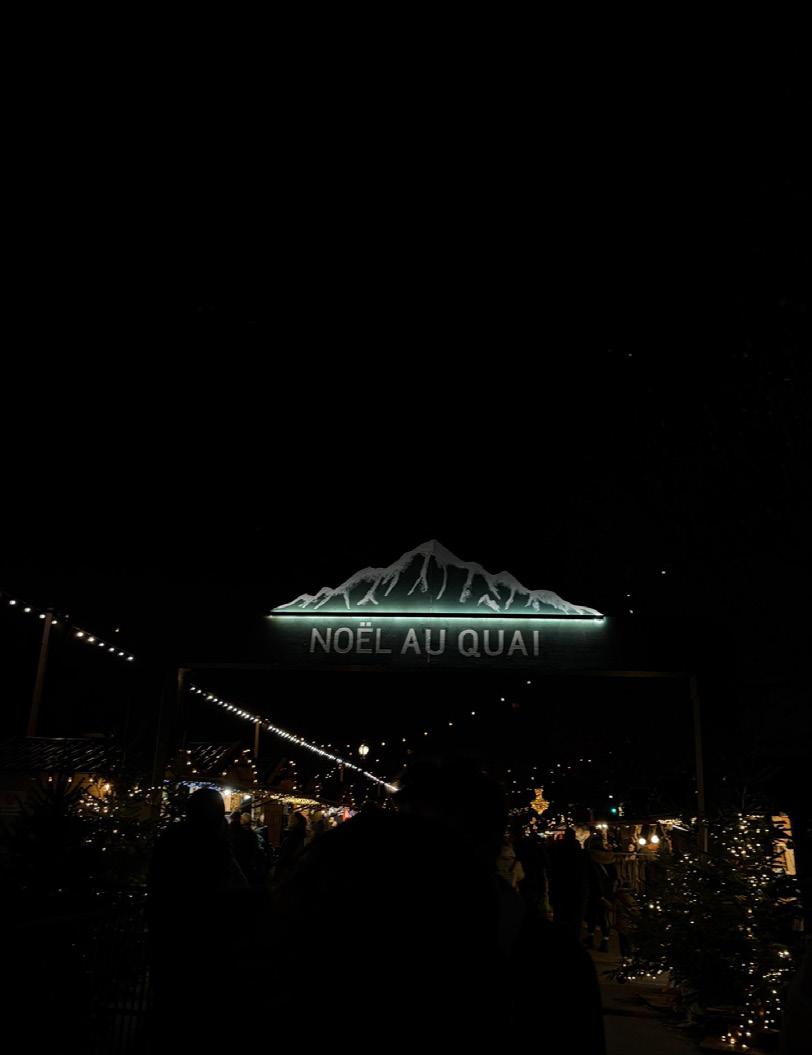
20h Visit Christmas Market Weather Permitting
21h30 Daily reflection & Hackathon choices Ibis
22h00 Lights Out
Wednesday Dec 17
Visit Glacier & Snow day
time subject description
8h - 8h30 Breakfast
8h30 Leave for the Alps Weather permitting
11h00 Train to glacier & lunch Bar des Glaciers
17h Chamonix Chamonix & Shopping
17h30 Dinner Rose du Pont
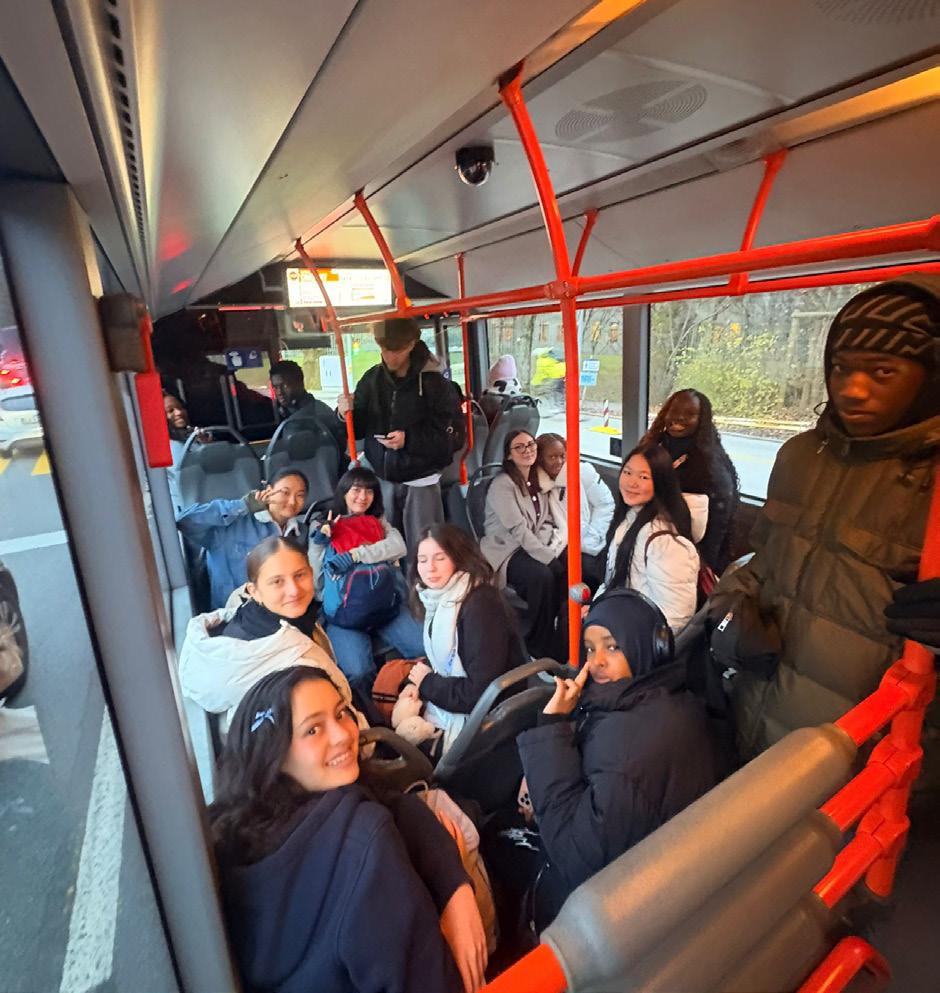
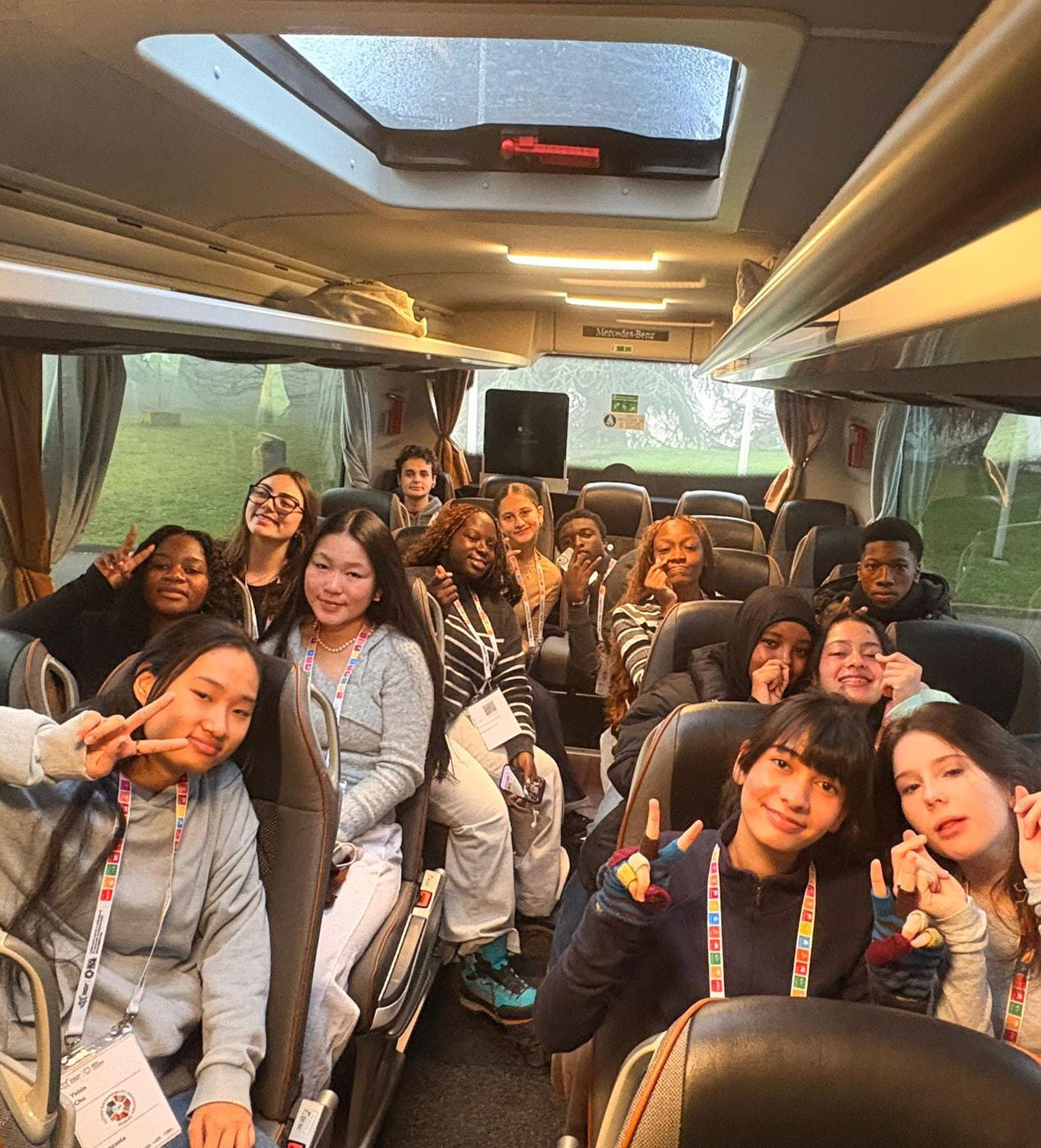
19h00 Transfer back to hotel Daily reflection on Bus
22h30 Lights Out
Thursday Dec 18
WHO & Meeting International Geneva & WTO
time subject description
8h - 8h30 Breakfast
9h00 - 11h00 Visit WHO
World Health Organisation
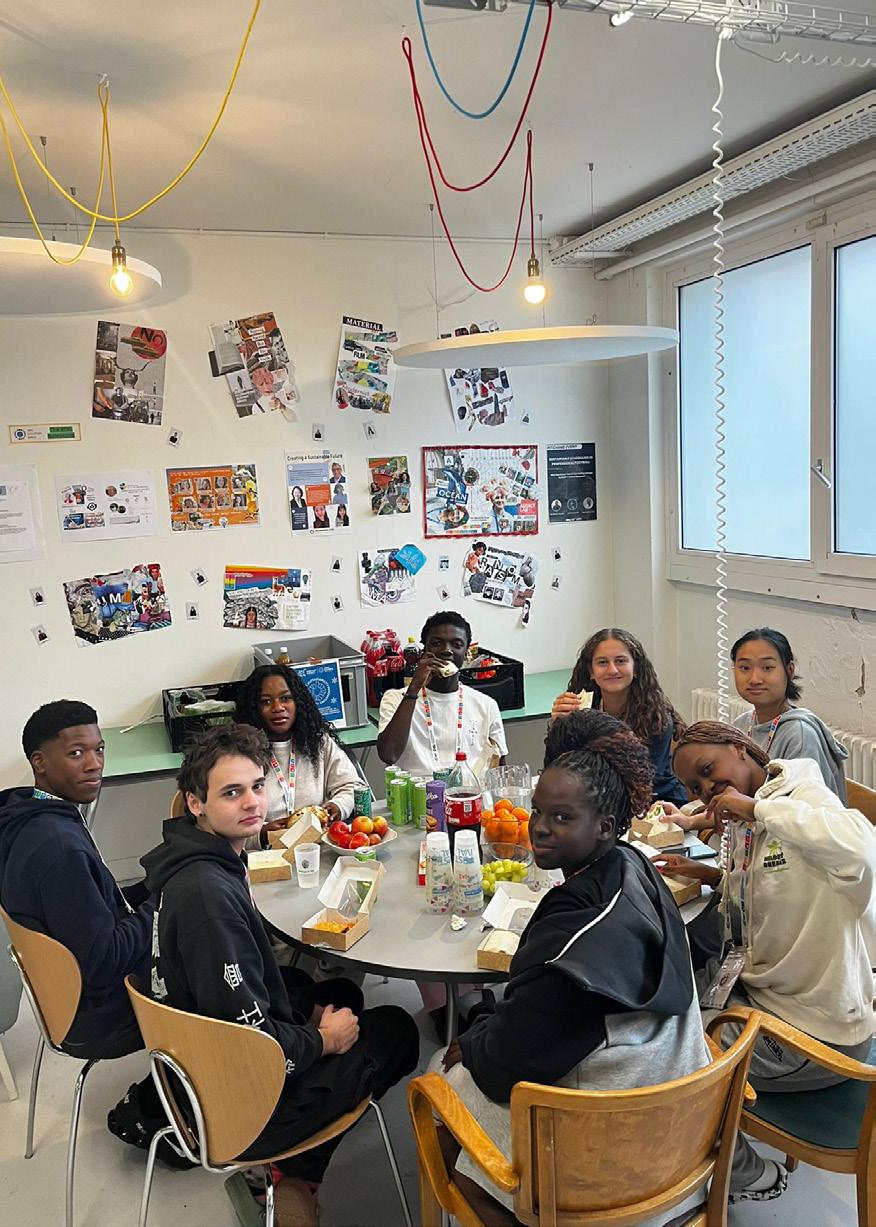
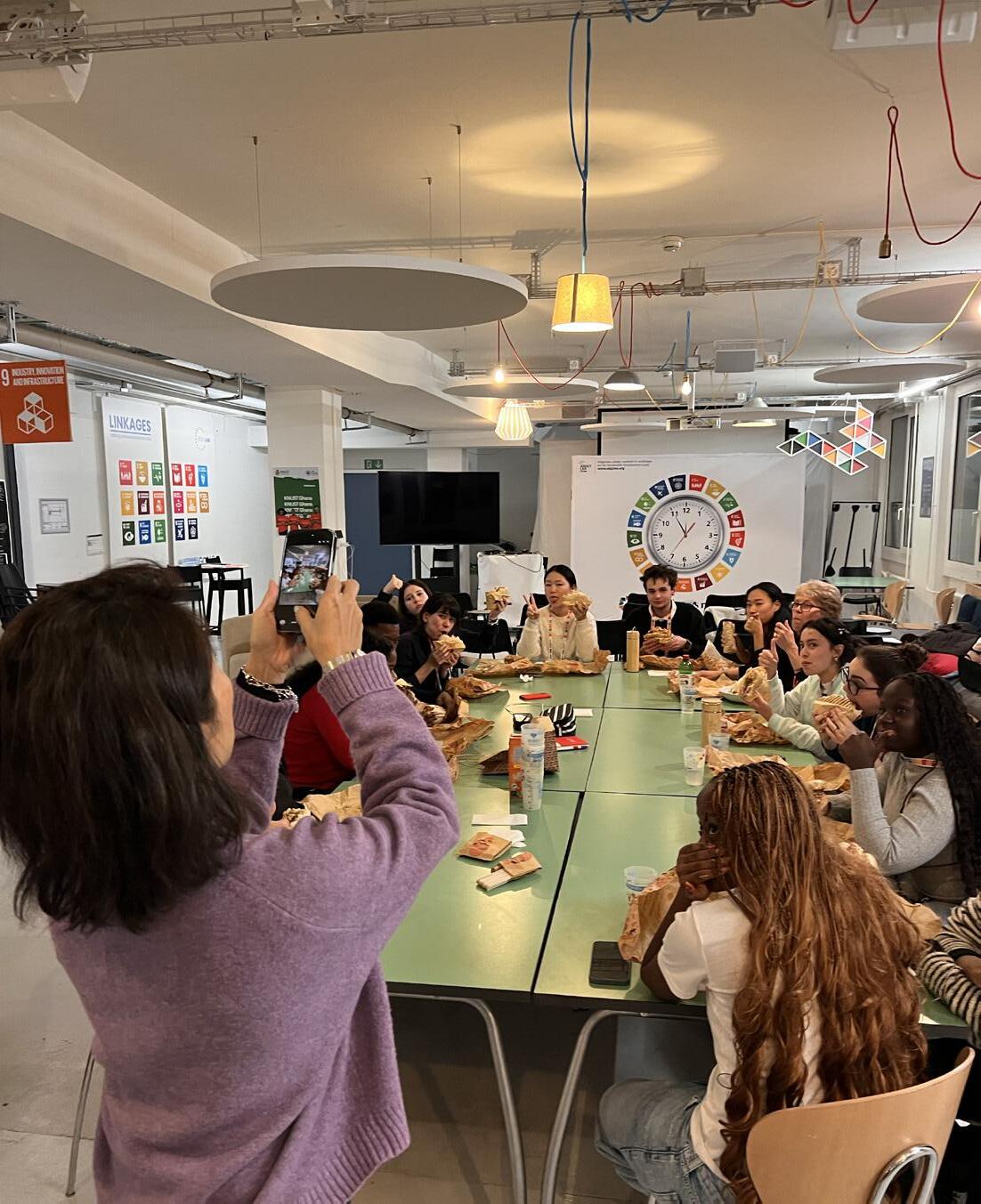
12h30 Lunch SDG Solution Space brown bag lunch with people from International Geneva / Bagels
15h-16h00 Visit WTO
World Trade Organisation
17h - 19h Old Town Tour & Shopping
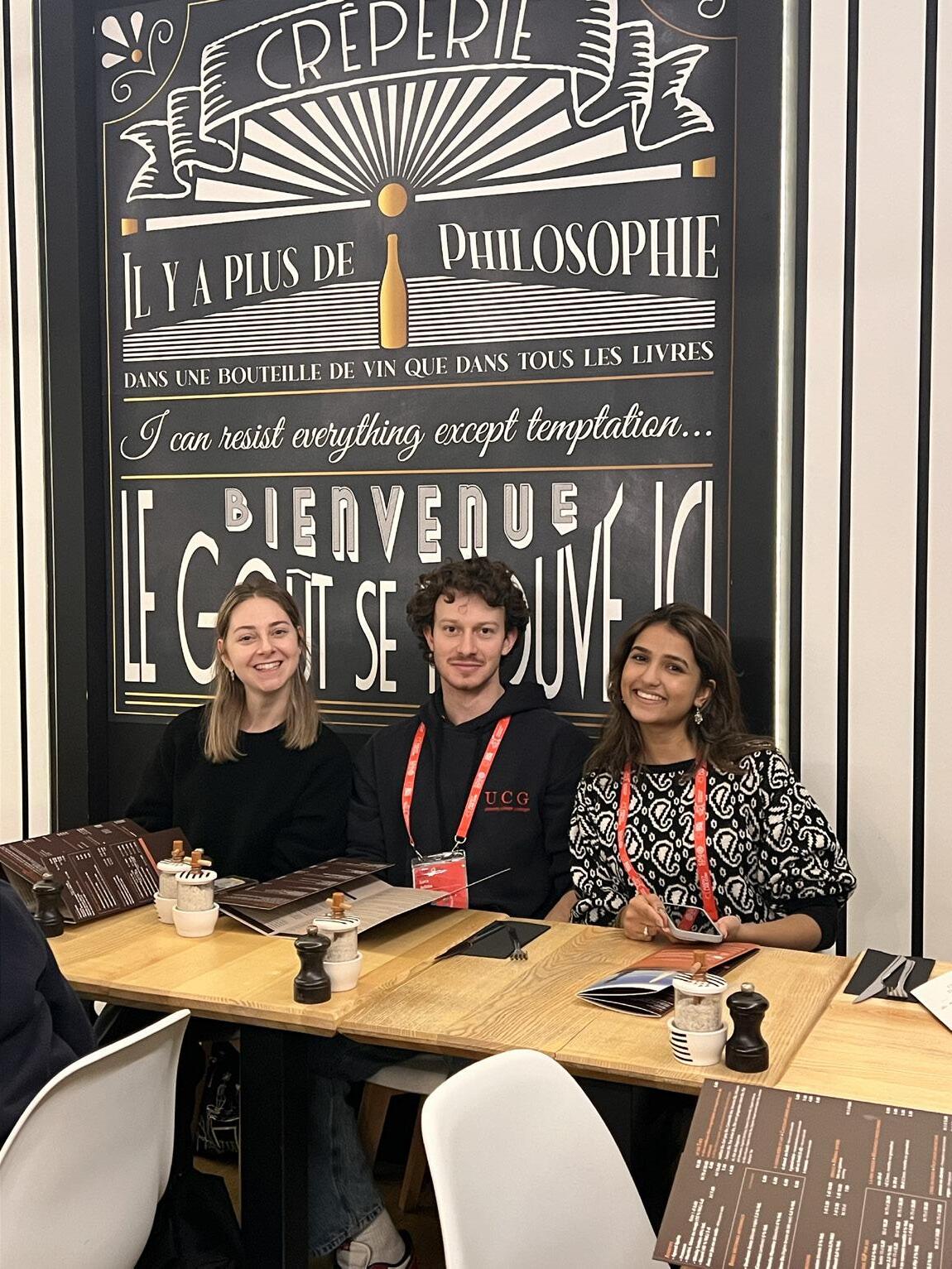
19h00 Dinner Crêperie du Molard
22h00 Daily Reflectiona Ibis
22h30 Lights Out
Friday Dec 19
Hackathon & Pitch your idea
time subject description
8h - 8h30 breakfast
8h30 - 9h15 transfer to SDG Solution Space
9h15 - 12h Hackathon briefing and 1st session Full day of Hackathon & Ideation
12h30 Lunch Burgers
13h30 Hackathon 2nd Session
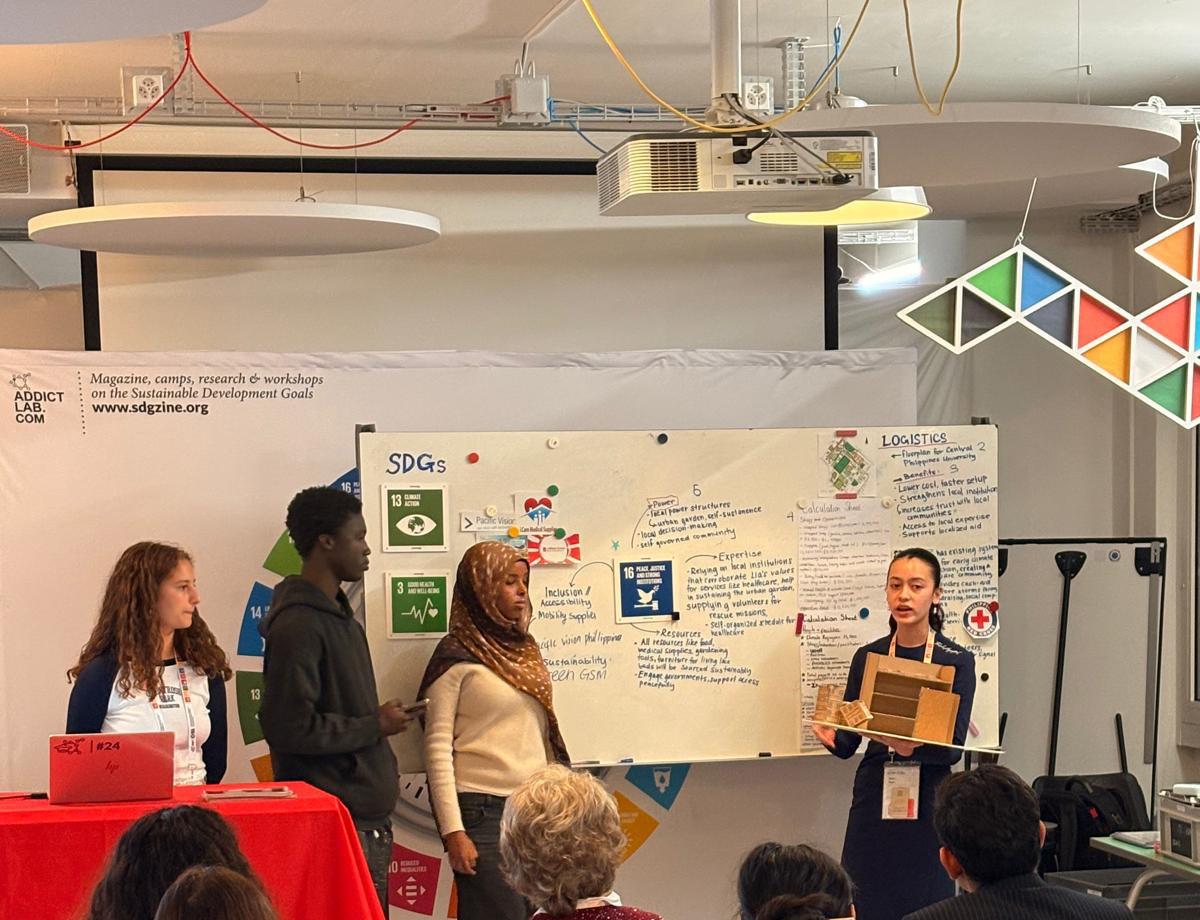
17h - 18h00 Presentation Pitches
18h30 Awards & Judging
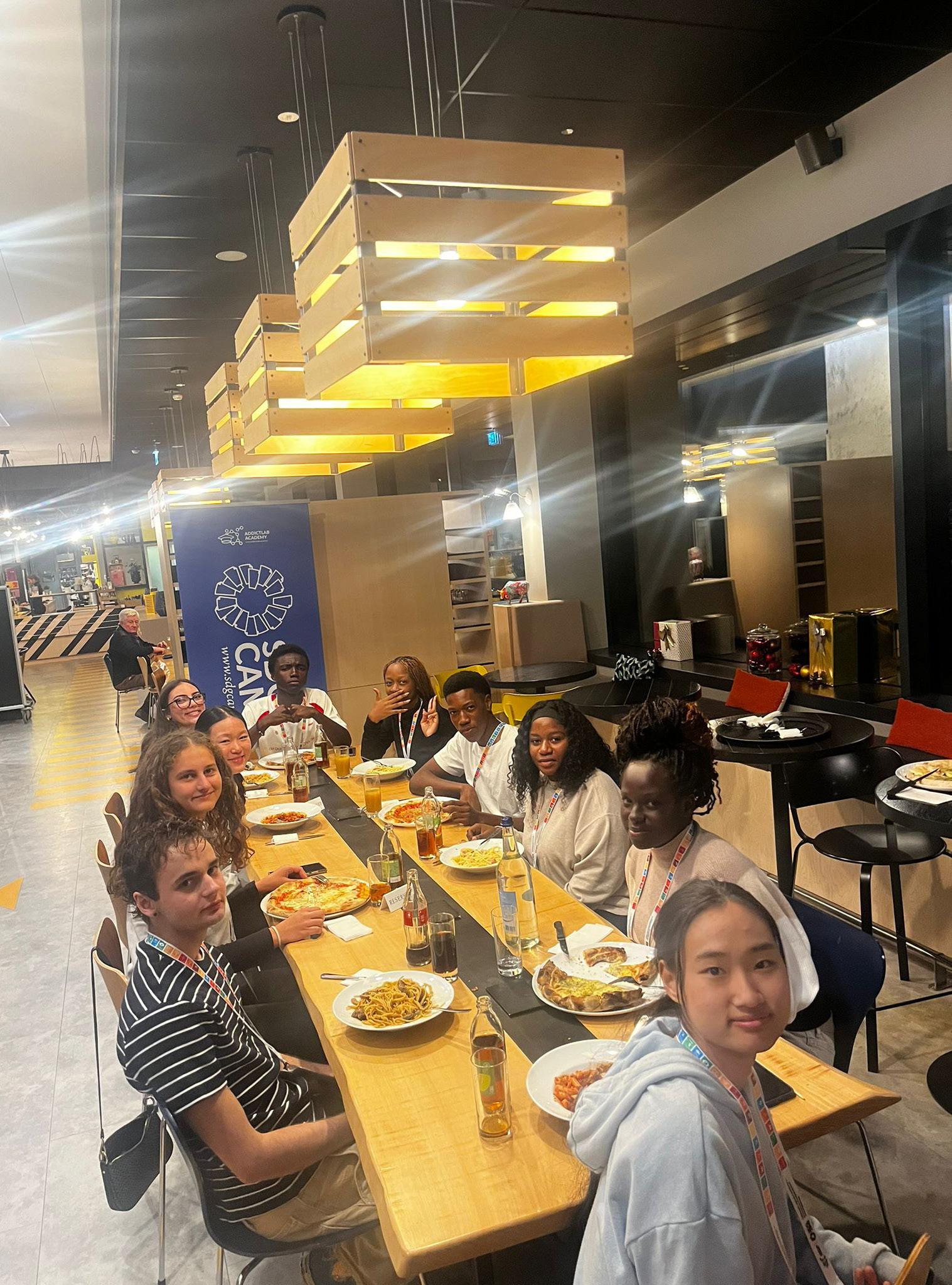
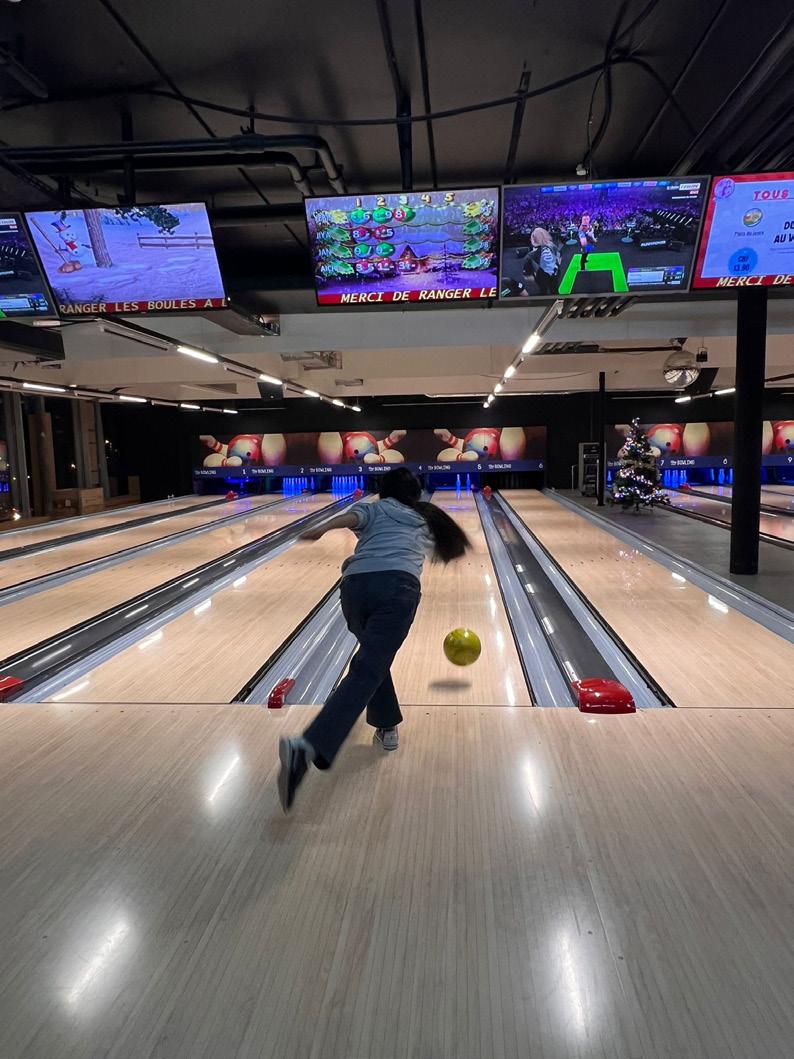
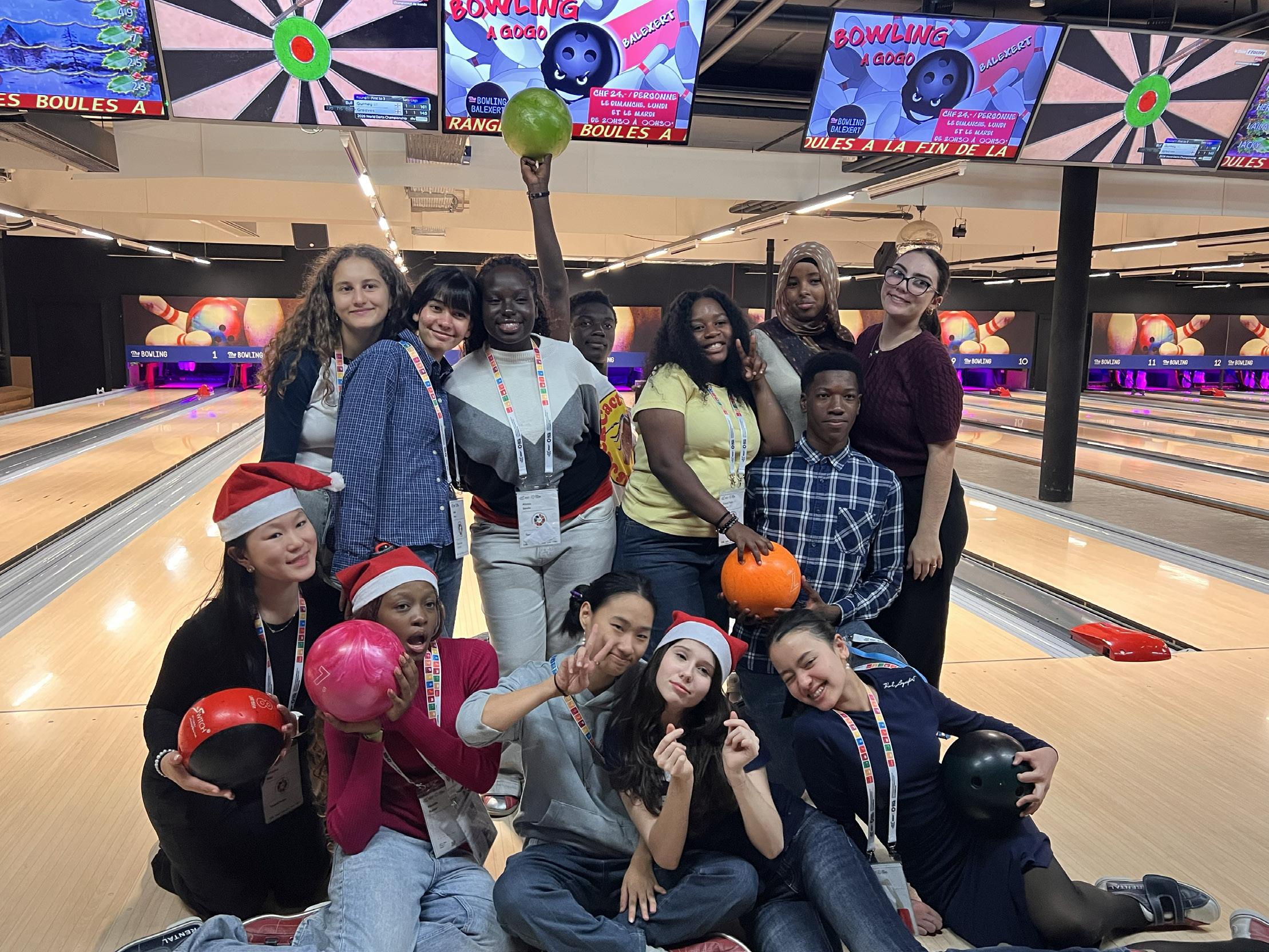
20h Dinner Bowling & Pizza night
00h00 Lights Out
Saturday dec 20
Departure Day
time subject description 8h - 8h30 Breakfast
5h First Check outs / DEPARTURES TO AIRPORT
Months of preparation... leading up to Arrival Day
by Jane Lim
Long before the first students set foot on winter ground, the FuSI Winter Camp was already taking shape. What unfolds over the course of the camp is the result of months of thoughtful preparation, careful coordination, and a deep commitment to creating a learning experience that is both inspiring and human.
Designing the Journey
Preparation begins with designing the learning journey itself. Each day is carefully planned to balance hands-on activities, collaborative problem-solving, reflection, and rest. Activities are aligned with the Sustainable Development Goals (SDGs) and shaped into experiences that feel relevant, engaging, and grounded in real-world challenges. From creative workshops to teambased hackathons, every session is designed to encourage curiosity, collaboration, and critical thinking.
A key focus of the program is the inclusion of real-life hackathon challenges. These challenges are sourced months in advance and inspired by authentic global and local issues. They are refined to be accessible yet meaningful, allowing students to engage with complexity while developing practical and creative solutions.
People at the Heart of the Camp
Equally important is the sourcing of quality mentors. Mentors are selected not only for their professional expertise, but for their ability to connect with students, guide without directing, and share real-life experience. Each mentor is briefed to ensure alignment with the FuSI spirit—supporting students as collaborators and empowering them to explore ideas with confidence.
Logistics That Enable Learning
Daily schedules are coordinated down to the smallest details, from activity transitions to lunch and dinner planning. Meals are thoughtfully arranged to support energy levels and provide moments for informal connection, often where some of the most meaningful conversations happen. Transportation planning is equally essential. Airport arrivals, transfers, and daily movements are coordinated to ensure students feel supported from the very first moment. Arrival Day, in particular, is designed to be calm, welcoming, and reassuring—setting the tone for the days ahead.
Creating Comfort in Winter
The choice of hotel plays a central role in both logistics and wellbeing. In winter, comfort is not a luxury, it is a necessity. After long journeys and full days of intense thinking and collaboration, students need a warm, safe, and welcoming place to recharge. The hotel is selected not only for its location and accessibility, but for its ability to support the rhythm of camp life: smooth daily transitions, shared spaces for informal exchanges, and quiet areas for rest.
This sense of comfort allows students to focus fully on learning, creativity, and connection, no matter how far they have travelled.
Arrival Day: When It All Comes Together
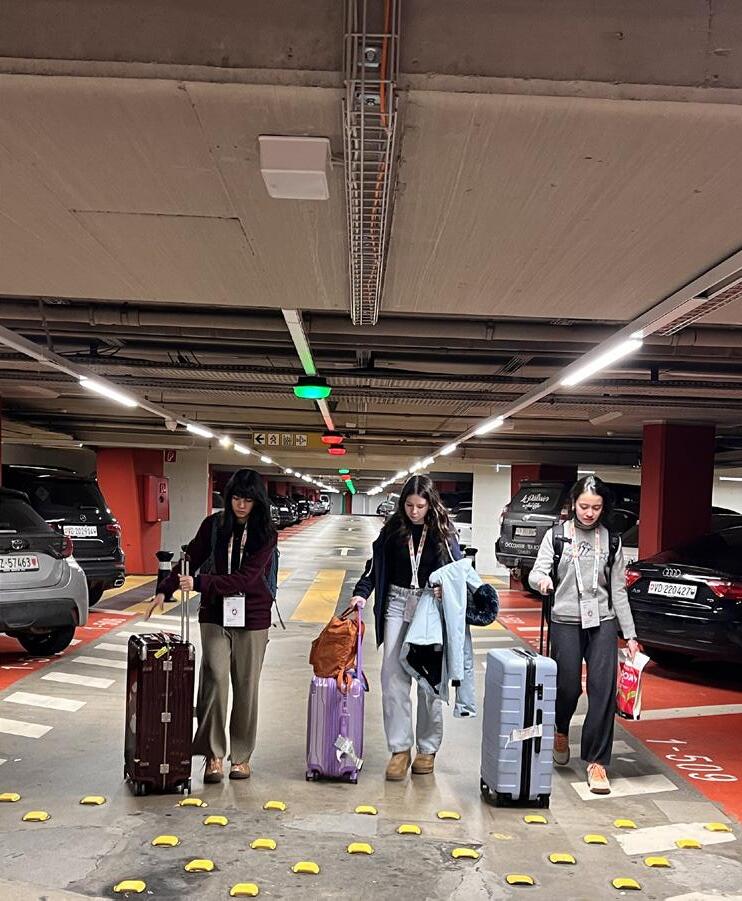
Of course, we were delighted to welcome all our FuSI Winter Camp participants, who arrived from different countries, time zones, and cultures. Some met their teammates for the very first time in the arrival hall, others came from a same school. There were tired eyes after long journeys, excited conversations over rolling suitcases, and that familiar mix of nerves and anticipation that marks the beginning of something meaningful. From the first greetings at the airport to the warm welcome at the hotel, every detail worked quietly in the background to help students feel safe, supported, and instantly part of the FuSI community.
More Than Preparation
What may appear effortless during the camp is the result of months of planning, coordination, and care. The FuSI Winter Camp is more than a program, it is an ecosystem built on preparation, people, and purpose. From the earliest planning stages to the first shared meal on Arrival Day, every decision is guided by one goal: to create a space where young people can learn deeply, collaborate across borders, and feel empowered to shape a better future.
Arrival, Check-In, and First Evening
by Jane Lim
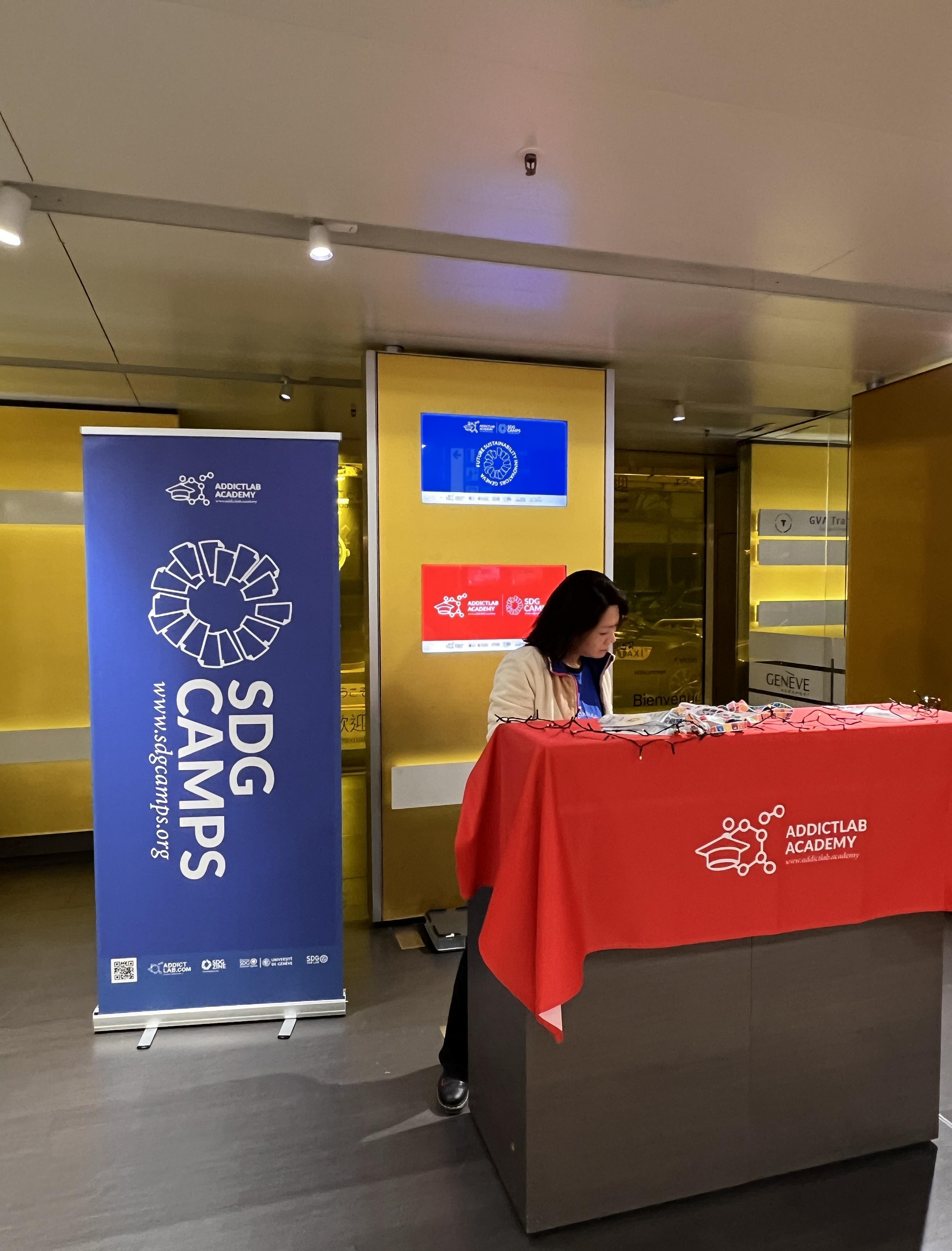
Arrival took place throughout Sunday, with students arriving at different times depending on their flights. To accommodate this, hotel check-in was organized in several batches across the day.
Each arrival group was met and transferred to the hotel. Check-in was handled efficiently so students could get to their rooms, unpack, and rest after travel. Our team were present throughout the day to support arrivals, answer questions, and ensure everyone was properly accounted for.
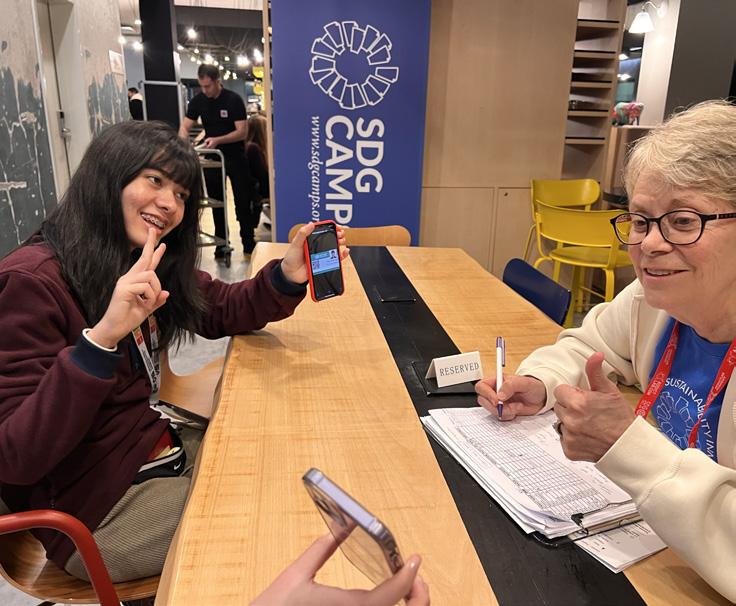
After check-in, the team carried out registration checks with each student. This included confirming registrations for the different international organization tours, as well as reviewing food allergies, dietary requirements, and any medications that needed to be documented. These checks were done on arrival to ensure student safety and to finalize logistical planning before the full program began.
Students who arrived earlier had time to rest or spend time in shared spaces, while later arrivals were integrated as they came in. The staggered arrival schedule allowed the day to remain calm and manageable despite multiple flight times.
First Dinner and Evening Briefing
Once all participants had arrived and registration checks were complete, the group came together for the first hotel dinner. This was the first time the full cohort was together in one place. Dinner was kept simple and relaxed, giving students space to eat, talk, and recover from travel.
After dinner, an evening briefing officially opened the camp. The program structure, daily schedule, expectations, and practical information were presented, and students were introduced to the camp team and mentors. This ensured that everyone, regardless of arrival time, began the week with the same information and a clear understanding of what to expect.
By the end of the evening, all participants were settled in, informed, and ready to begin the program the following morning.
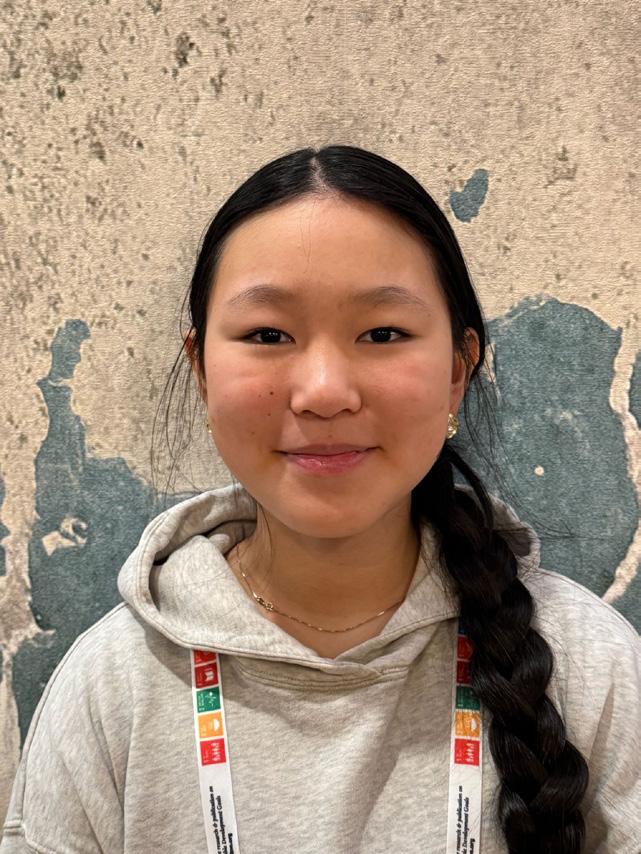
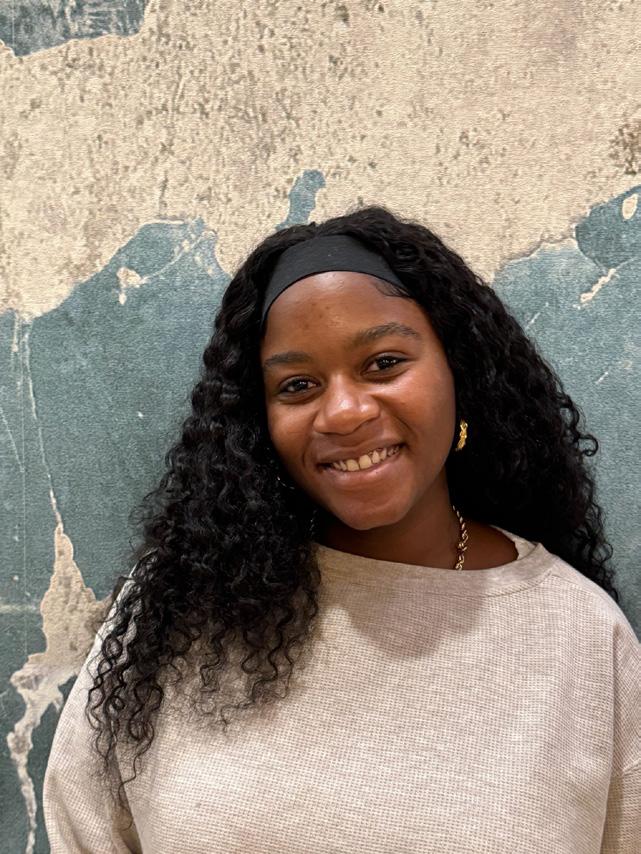
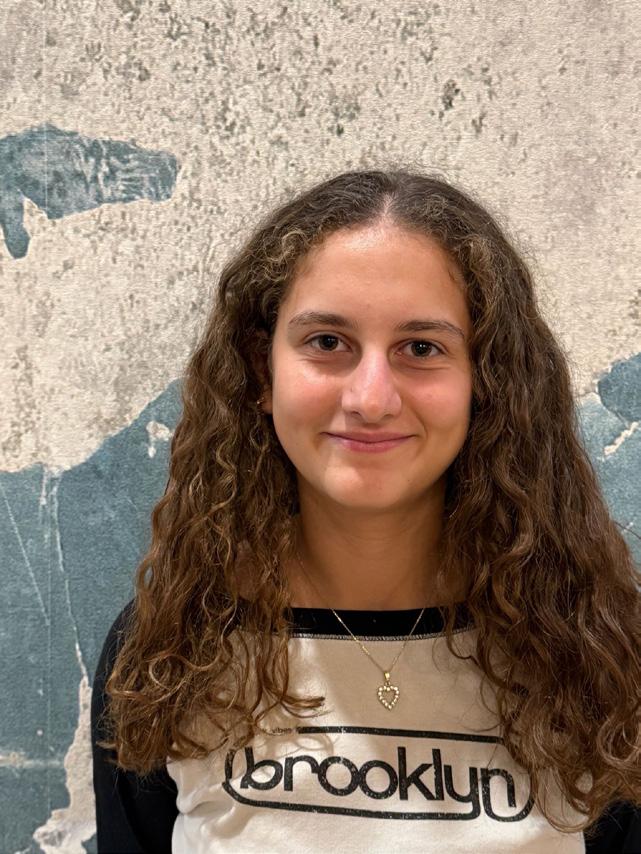
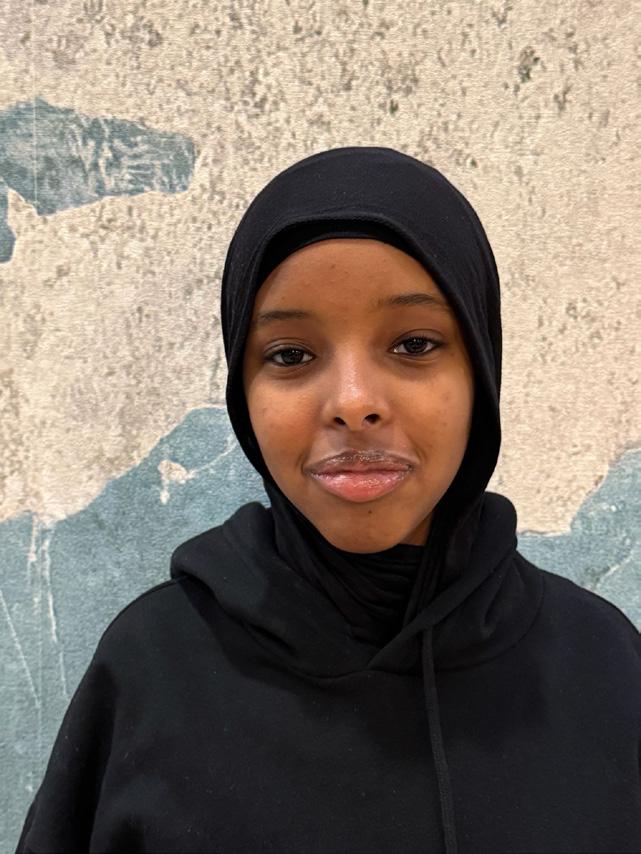
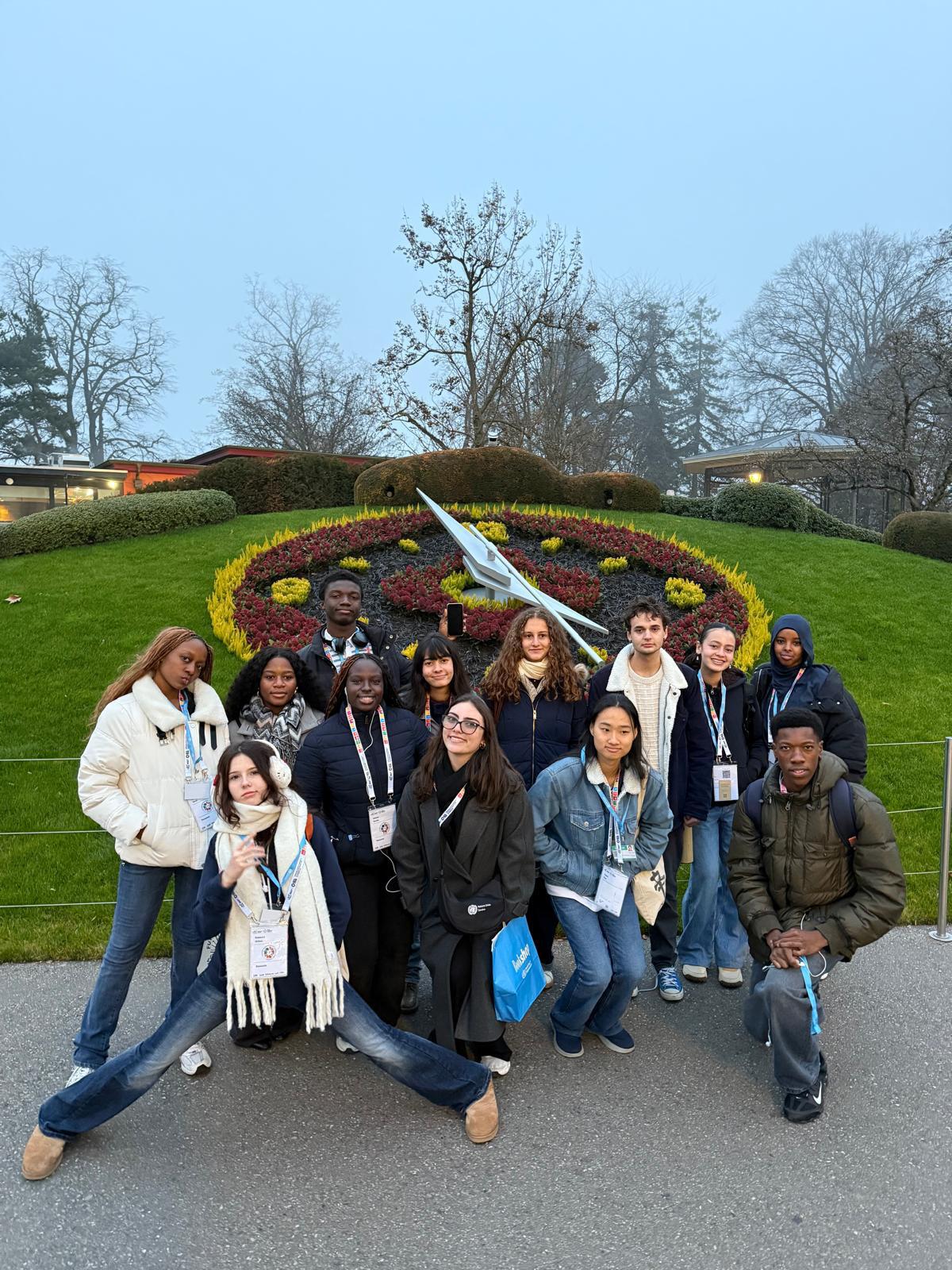
FUSI Winter 2025 Participants
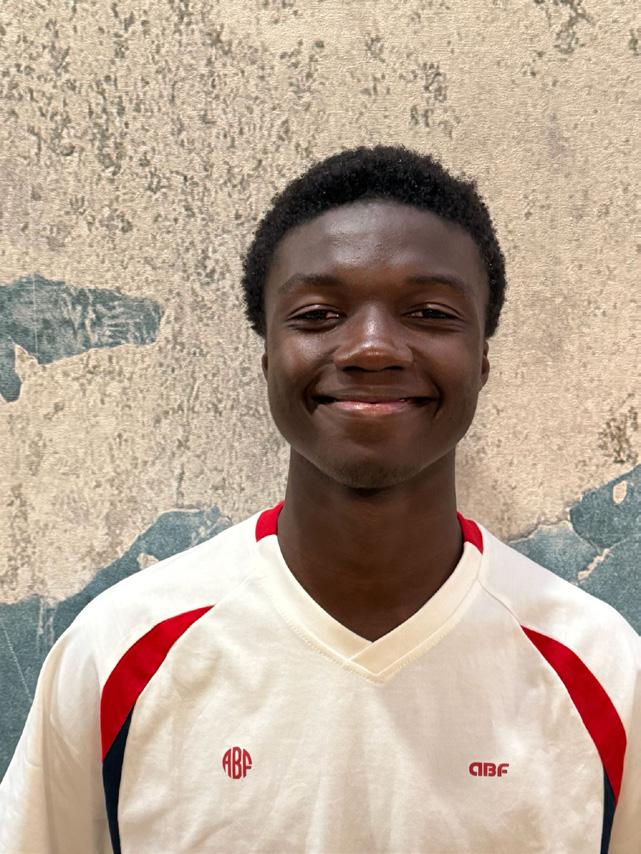
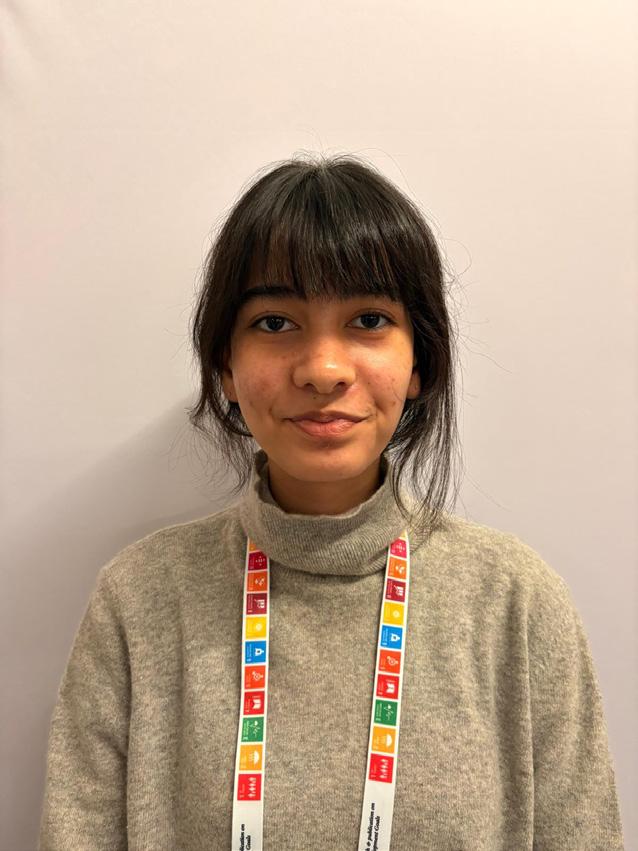
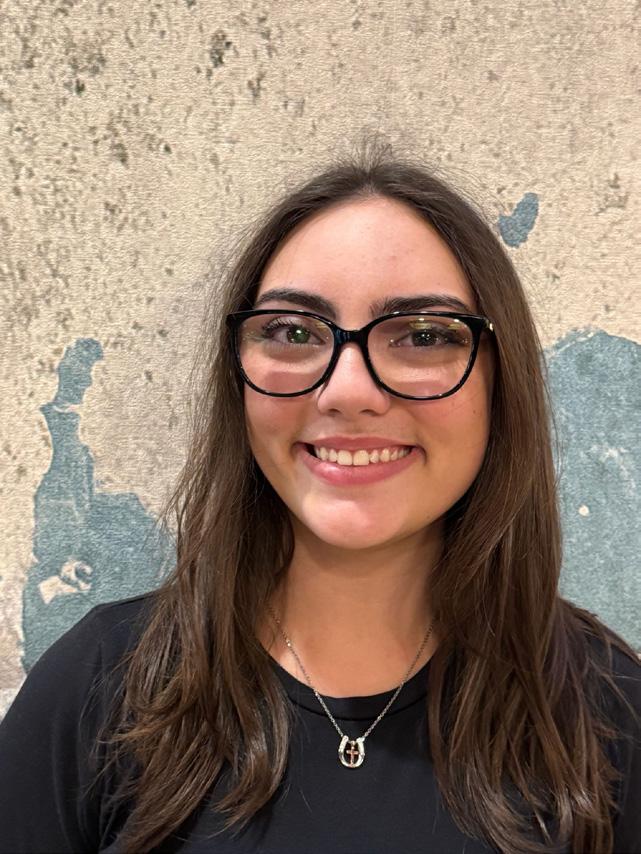
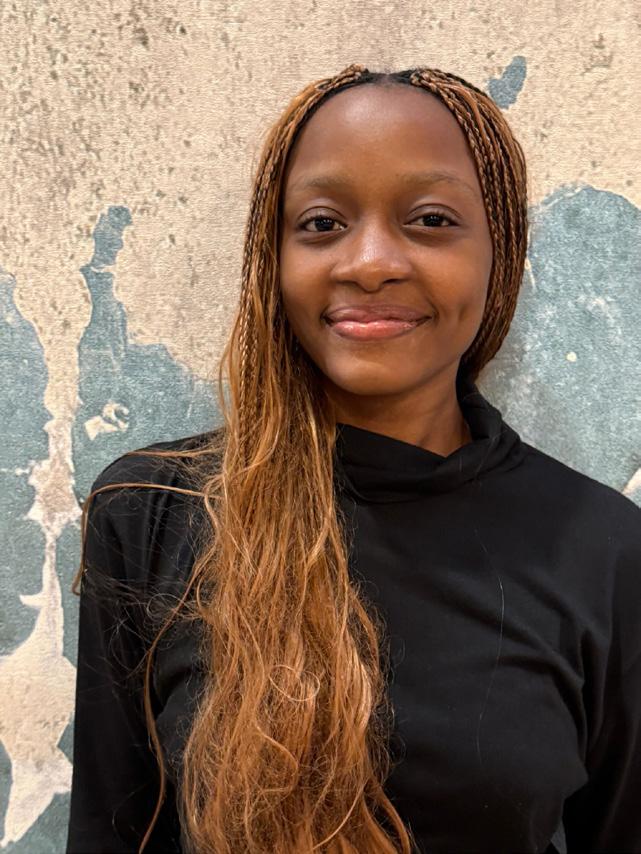
Yebin Patrick Rebecca Dylan Layla
Maddie
Laura Katherine
Alyssa Aichi Zahra
Grace Ersilia Billan
What brains are in the room?
profiling & ice breakers
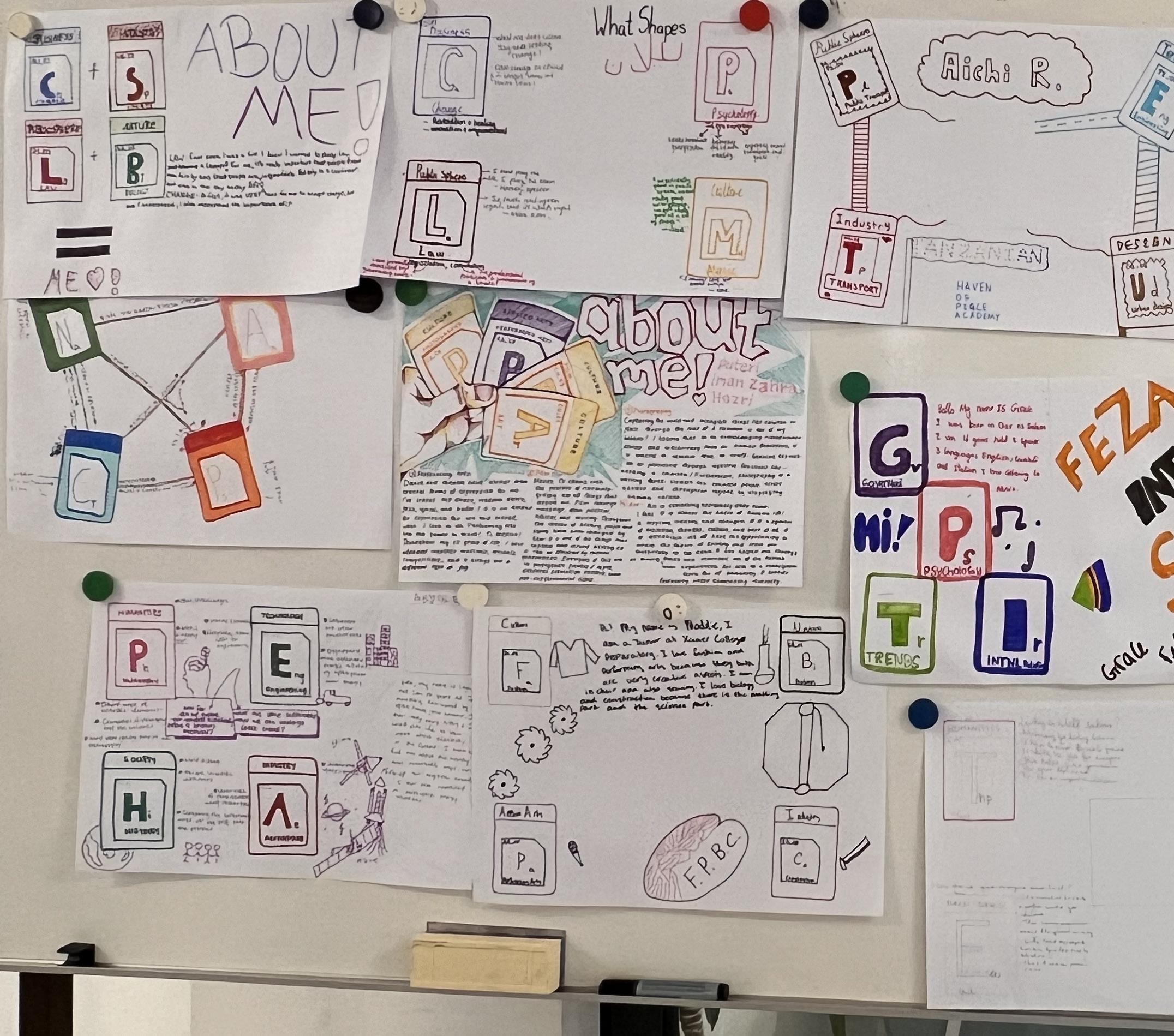
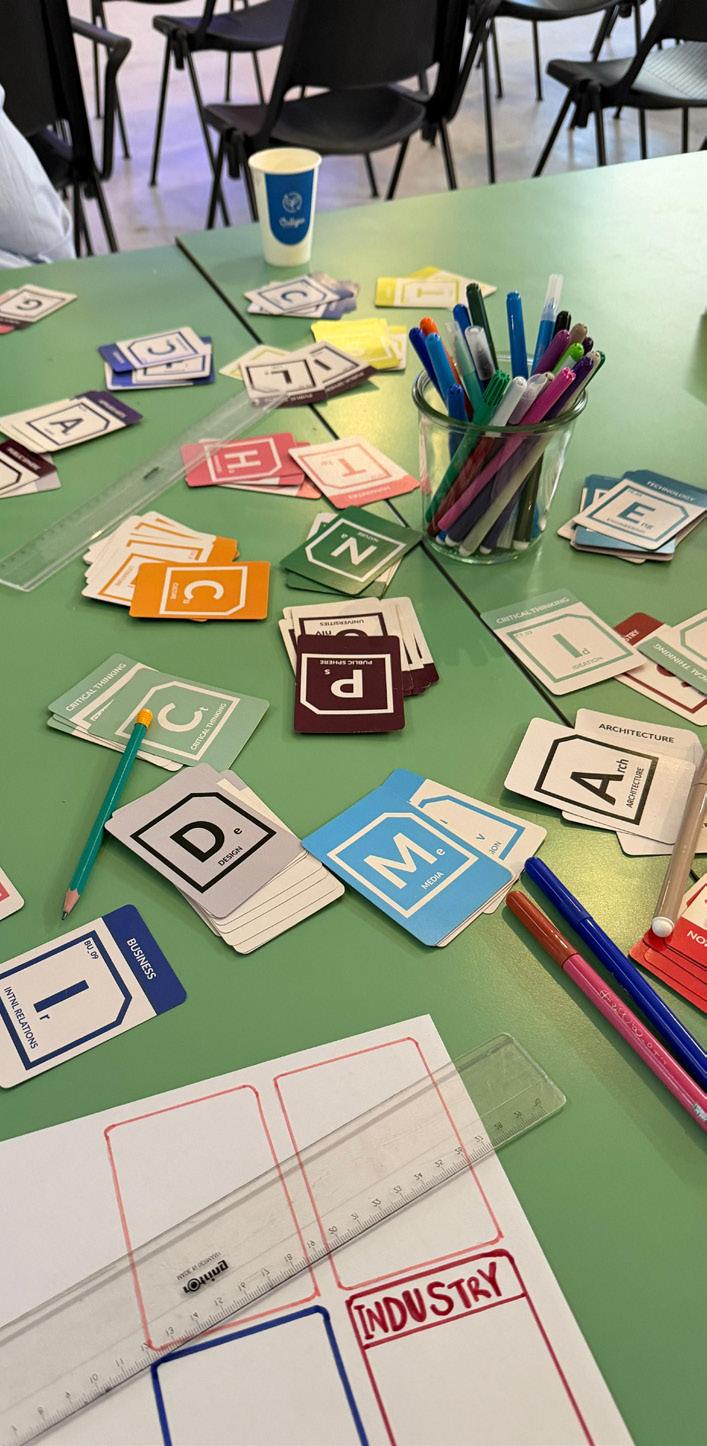
The Creative Chemistry Table was created 29 years ago by Jan Van Mol when he founded Ad!dict Creative Lab. The aim is to merge creative disciplines, to be inspired by other fields and cultures, and obtain more depth in the creation process.
Through the years leading up til now, Ad!dict Creative Lab or short addictlab, has conduct-
ed a large amount of brainstorming sessions, published over 35 books or magazines, and set up ideation processes for companies and organisations from Thalys trains, Lexus, Diesel, the chocolate and design industries, to governments and cities as well as institutions such as the University of Geneva.
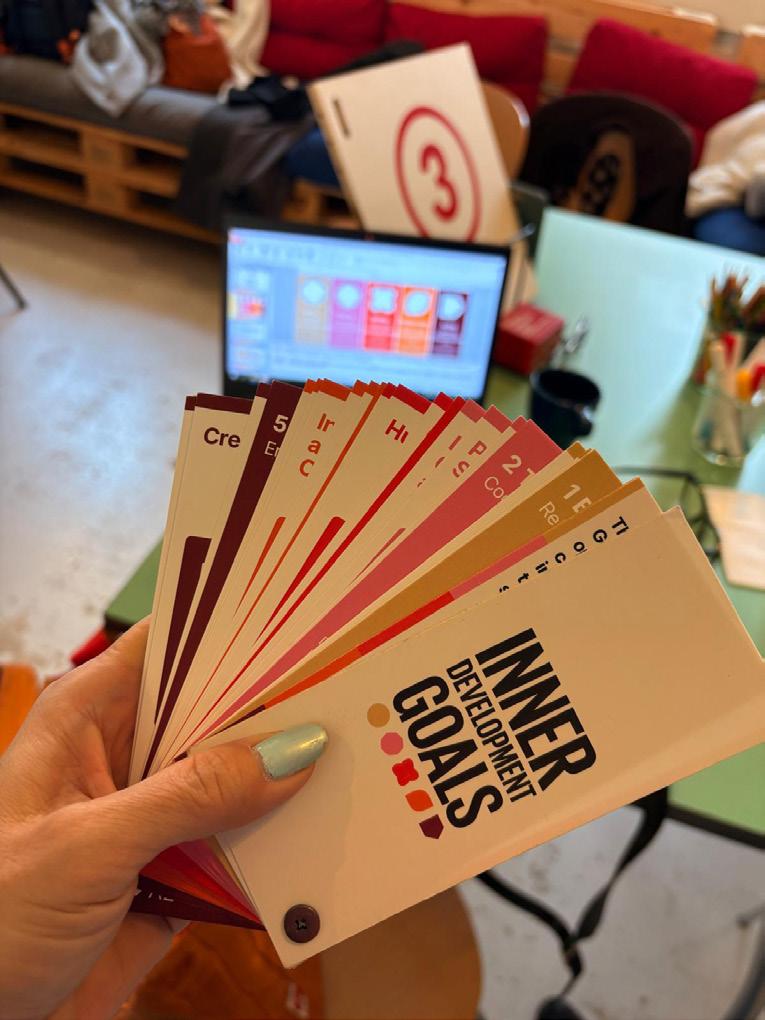
Today, the Creative Chemistry table consists of 145 disciplines or human ‘capabilities’, 76 character cards, the 17 sustainable development goals, gender cards, senses and emotion cards.
This card set is a concrete package from a proven methodology to allow groups of people and individuals to think out of the box. It’s a unique tool for collective intelligence.
All students of the SDGCamps use these cards to profile themselves.
This way, the staff and the students get to know eachother.
What do they like?
How do they see their future? What is important to them personally?
First Day at SDG Solution Space
by Jane Lim
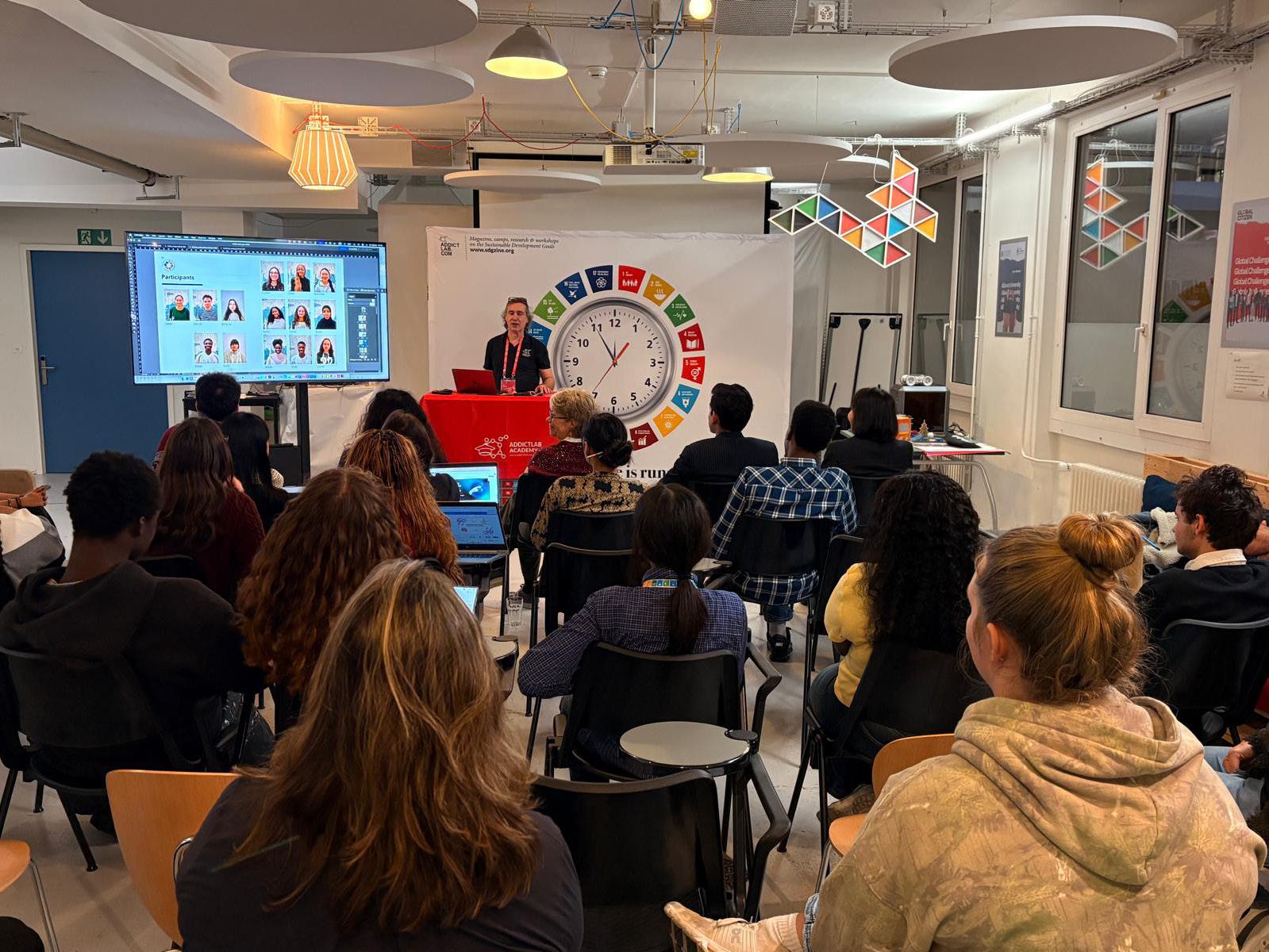
The FuSI Winter Camp officially kicked off at the SDG Solution Space with students introducing themselves and sharing why they joined the camp. From different countries and backgrounds, each participant brought unique perspectives and passions, setting the tone for a week of collaboration and creativity.
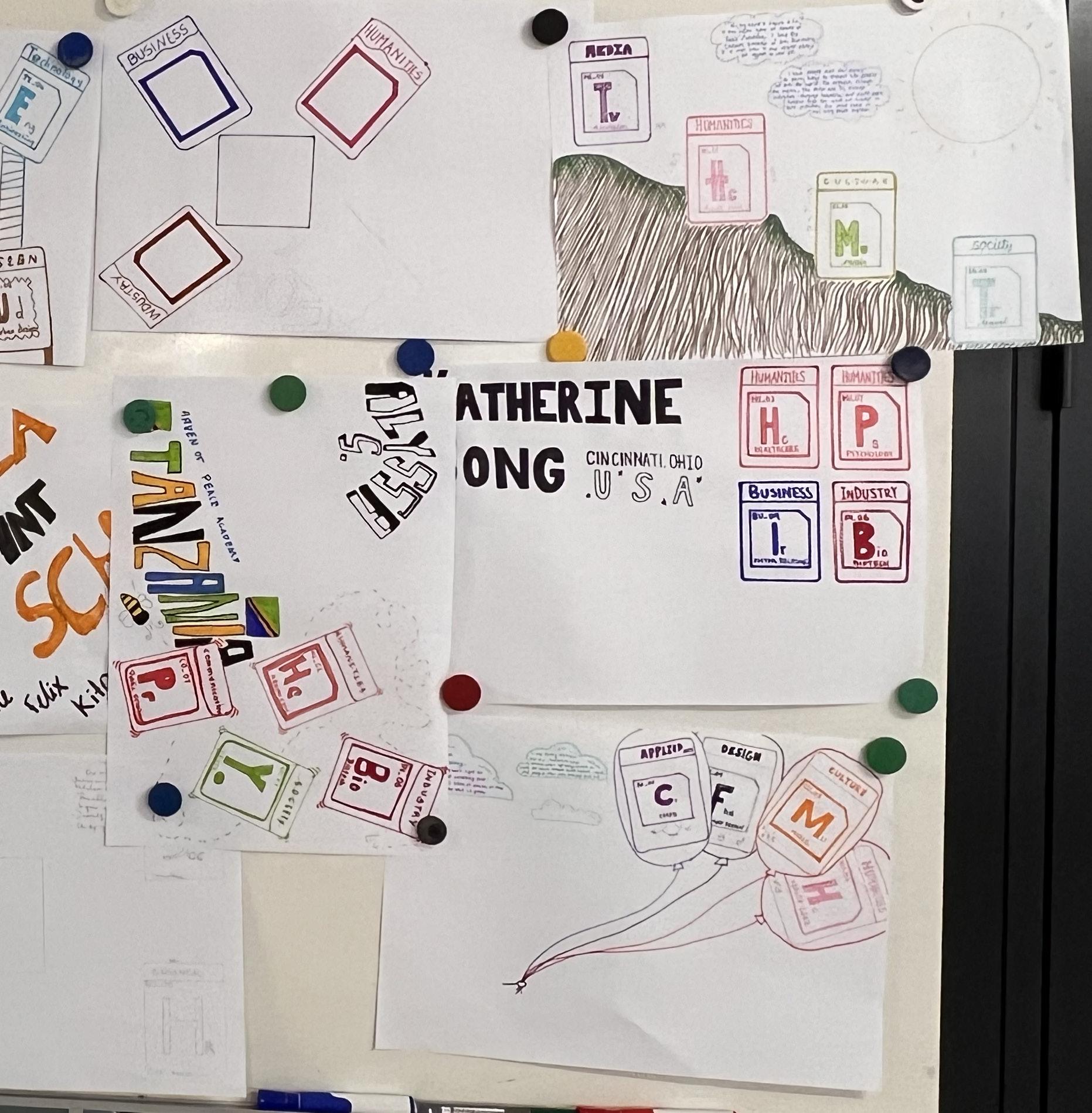
Next, students profiled themselves and drew their own chemistry cards using symbols, colors, and personal touches to represent their skills, interests, and ideas. This creative exercise helped participants express themselves visually, discover connections with others, and warm up for teamwork.
The morning continued with a fast-paced SDG challenge, where small groups tackled tasks inspired by real-world global issues. It served as both an icebreaker and a chance to learn about the Sustainable Development Goals while practicing communication, problem-solving, and collaboration.
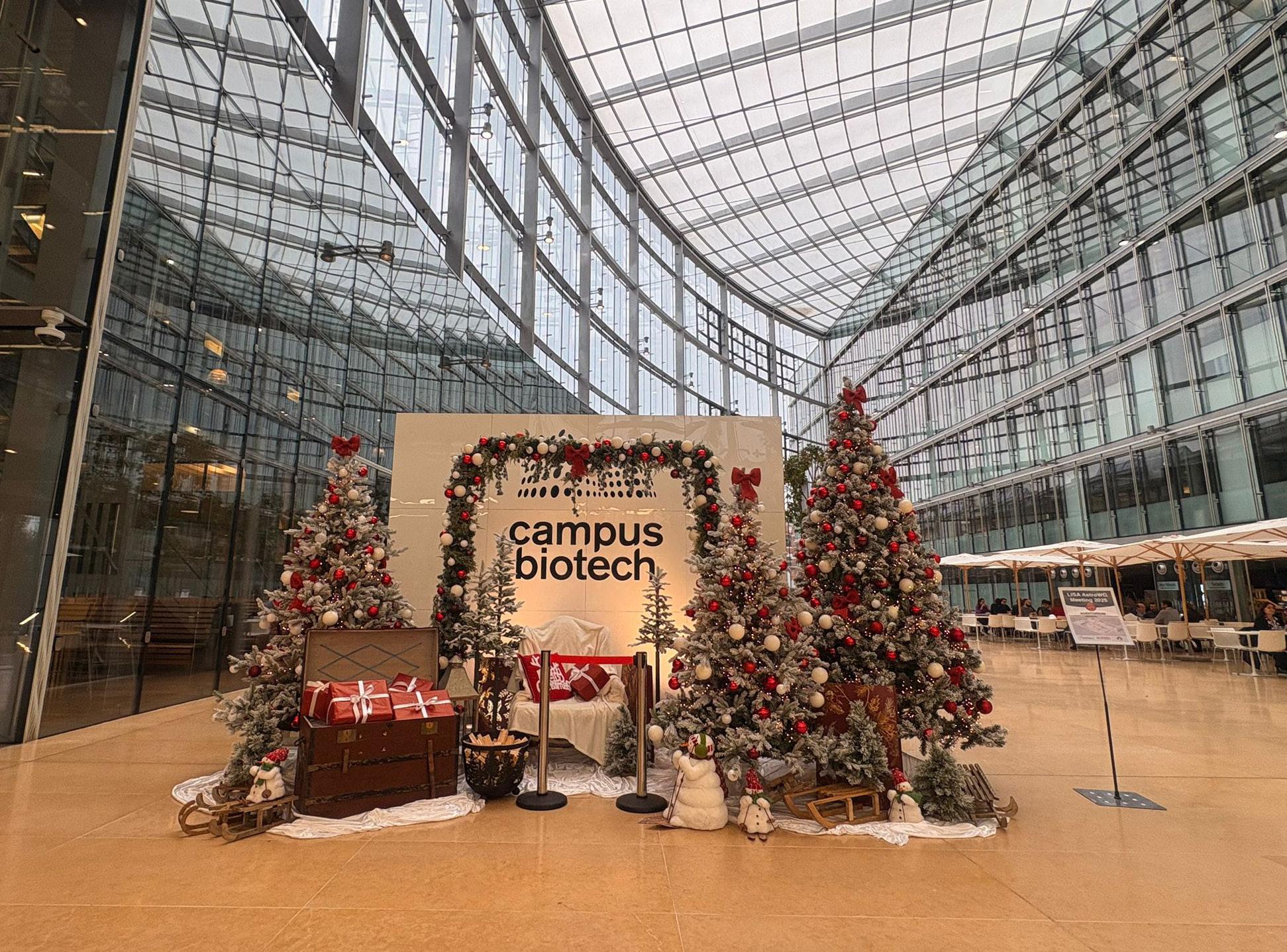
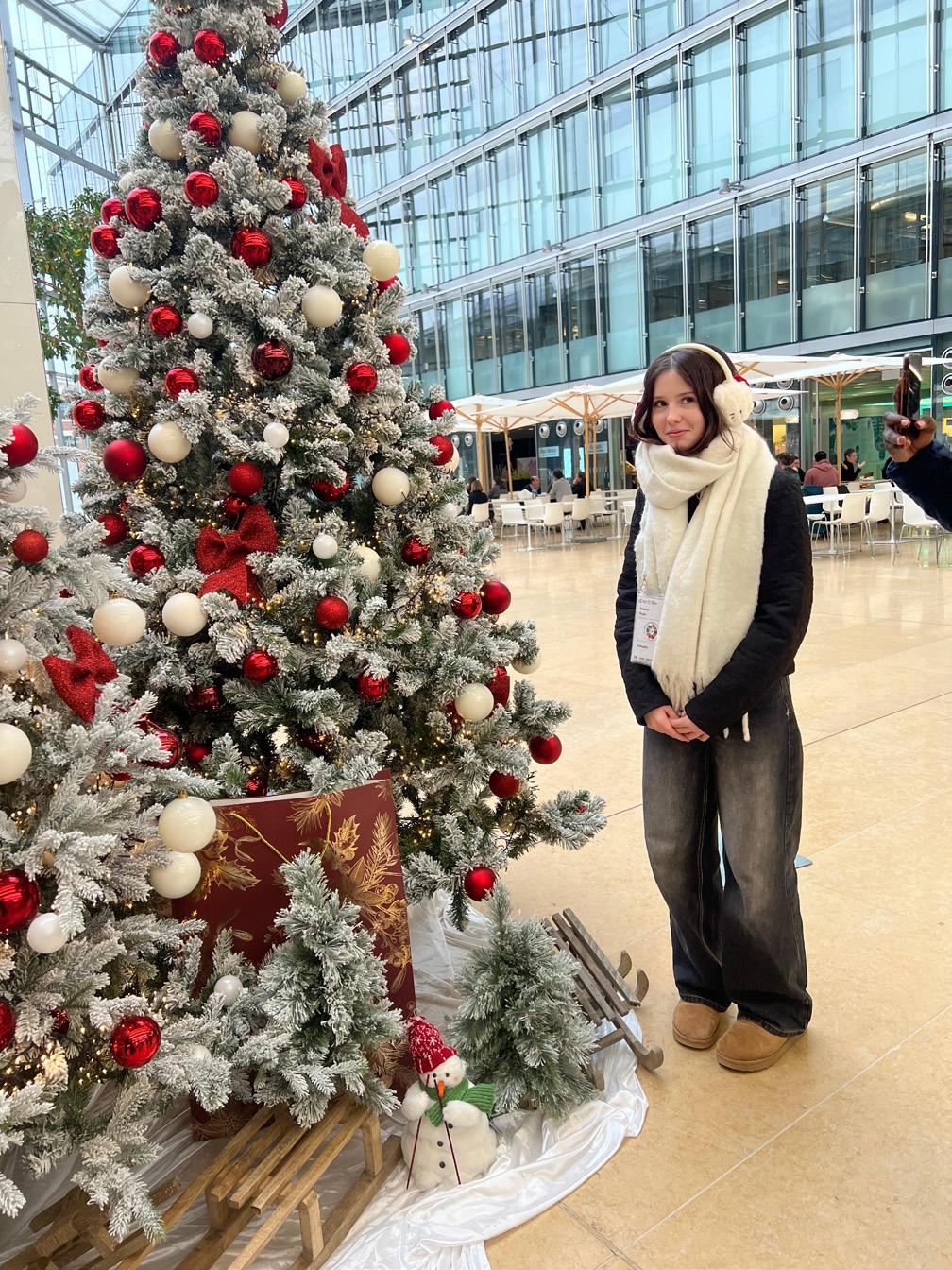
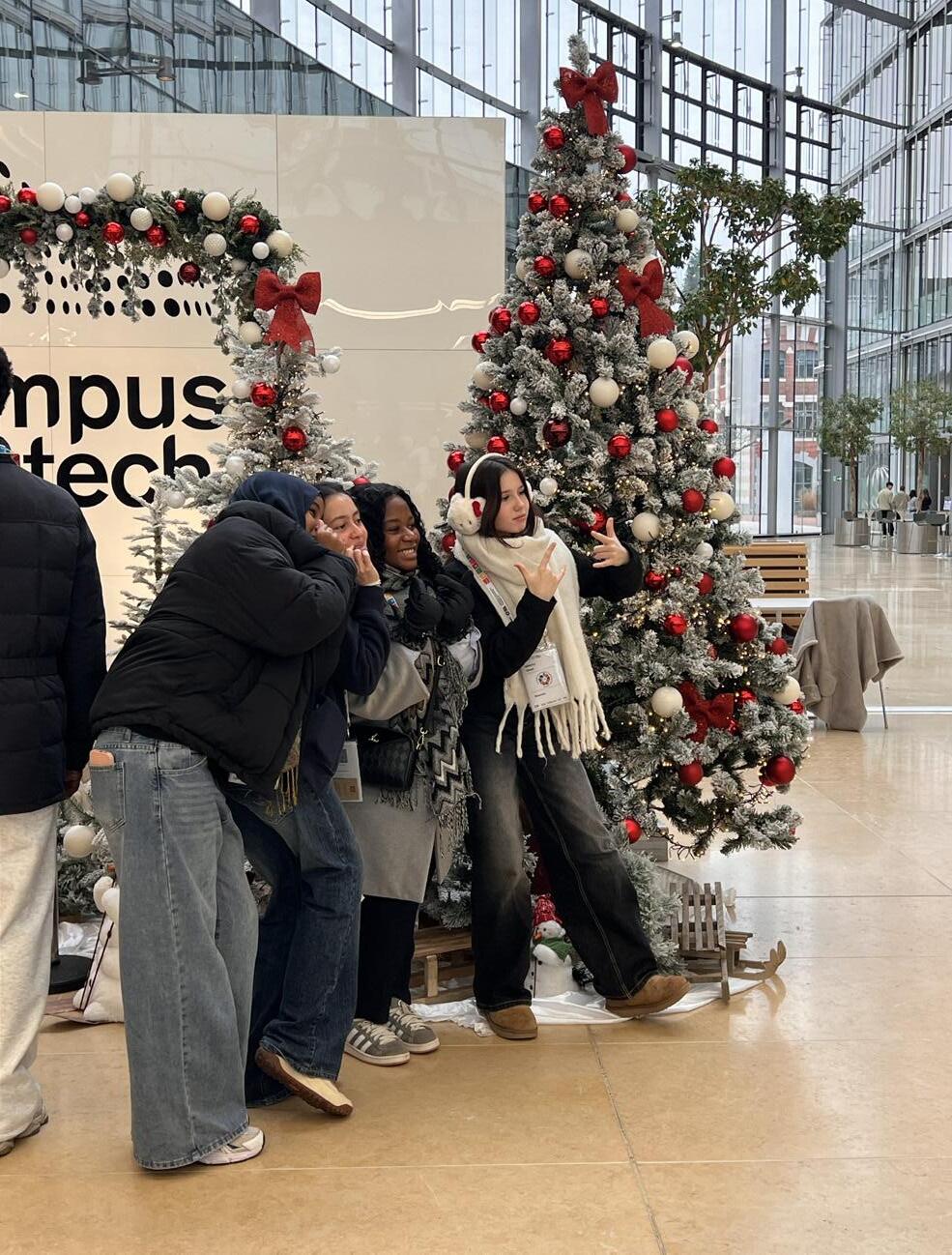
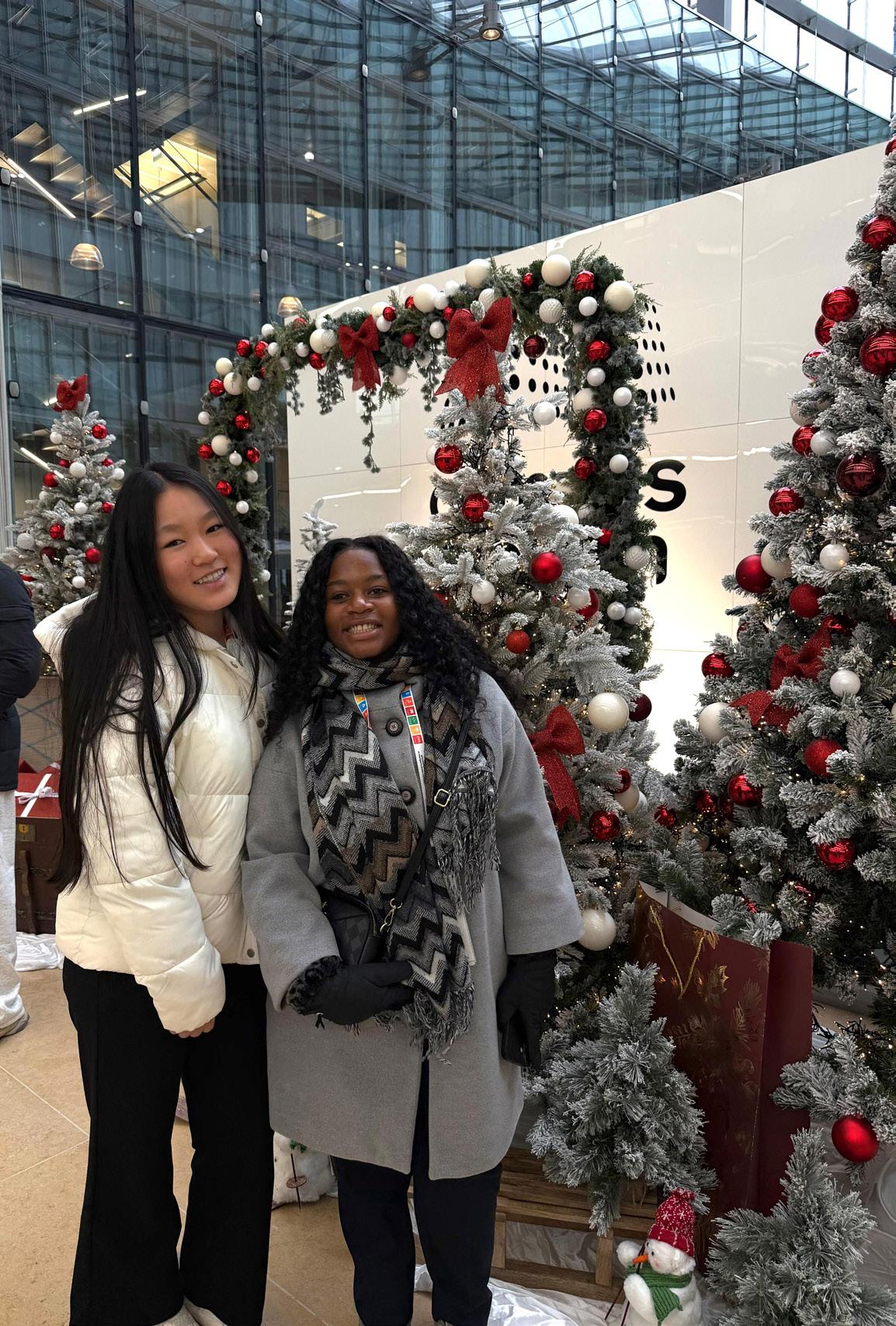
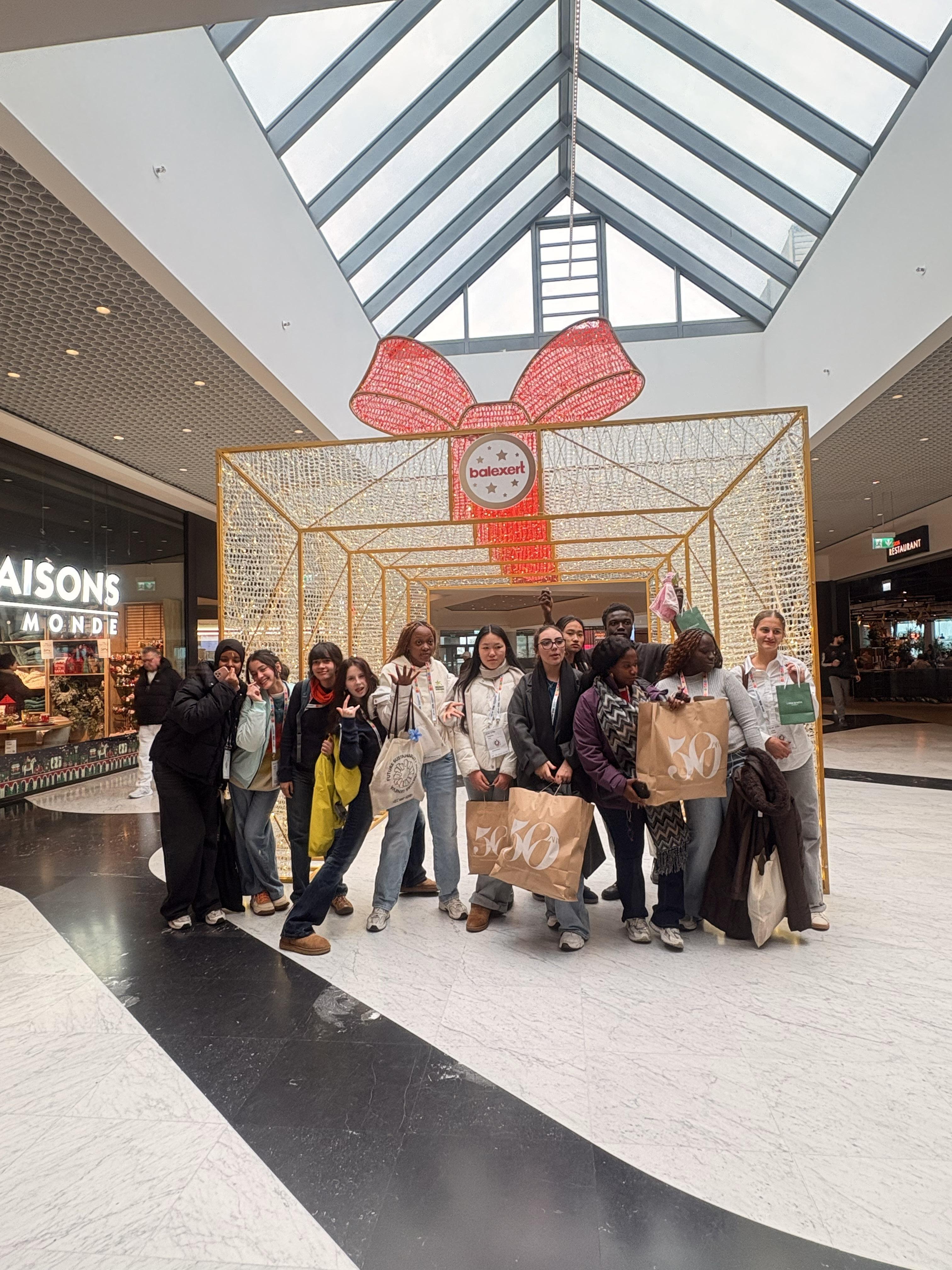
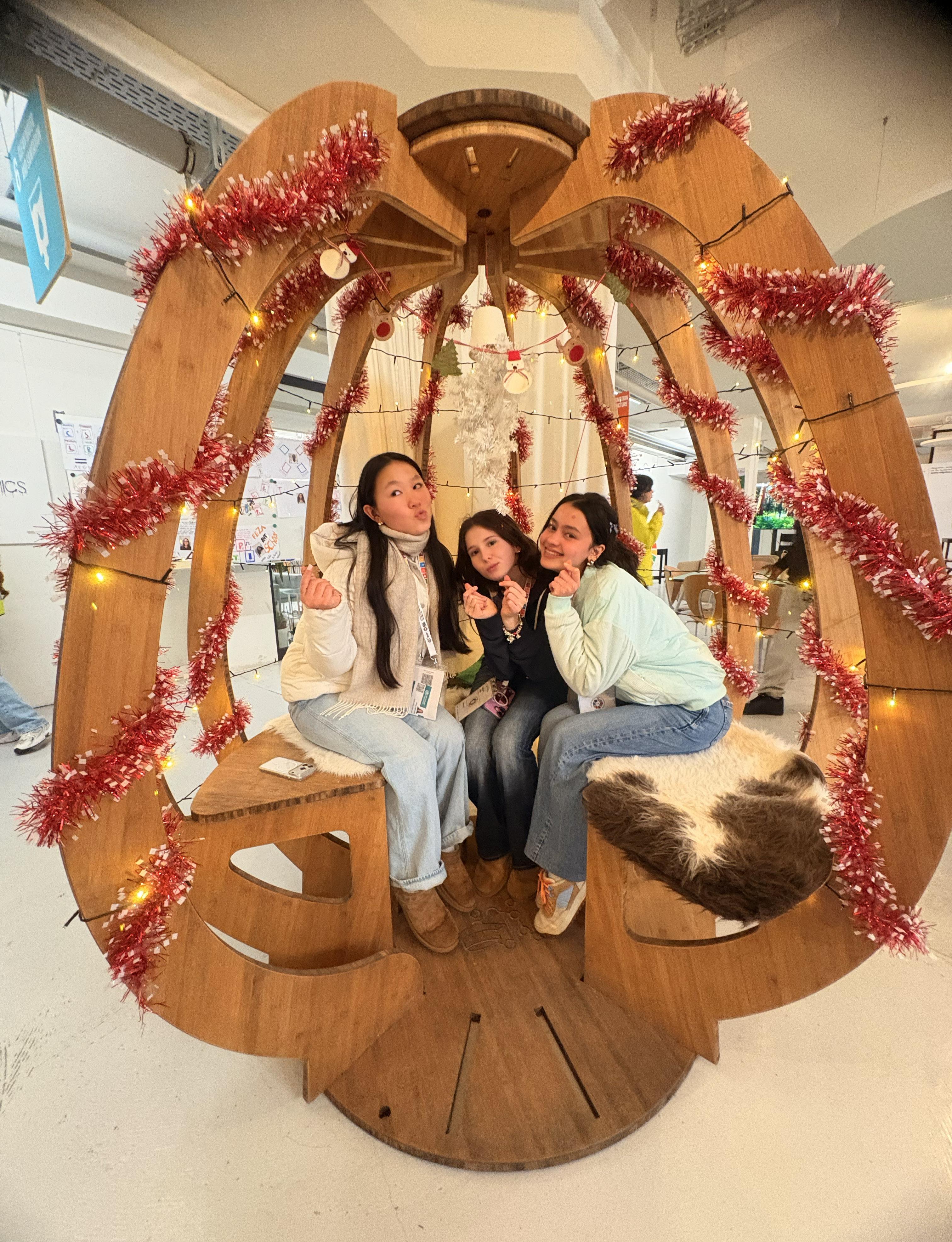
Lunch at Campus Biotech followed, offering a festive break amid beautiful Christmas decorations. Students relaxed, shared stories, and captured moments together, enjoying a cheerful pause before afternoon activities.
By the end of the first day, students had expressed themselves creatively, formed new bonds, and experienced the SDGs in action. The combination of self-introduction, creativity, and teamwork set a lively, collaborative tone for the rest of the camp.
SDG Mini Challenges
by FUSI student Yebin Cho
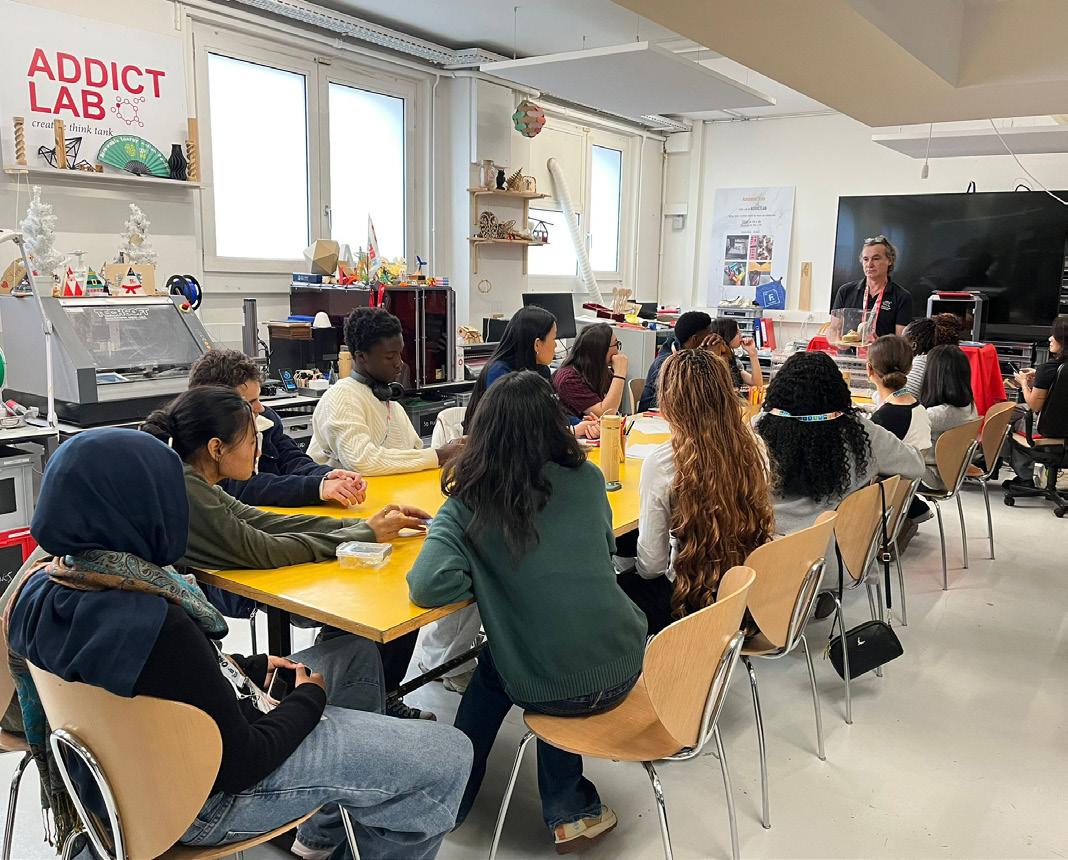
On the cold Monday morning of December 15th, we made our way to Addictlab at the SDG Solution Space.
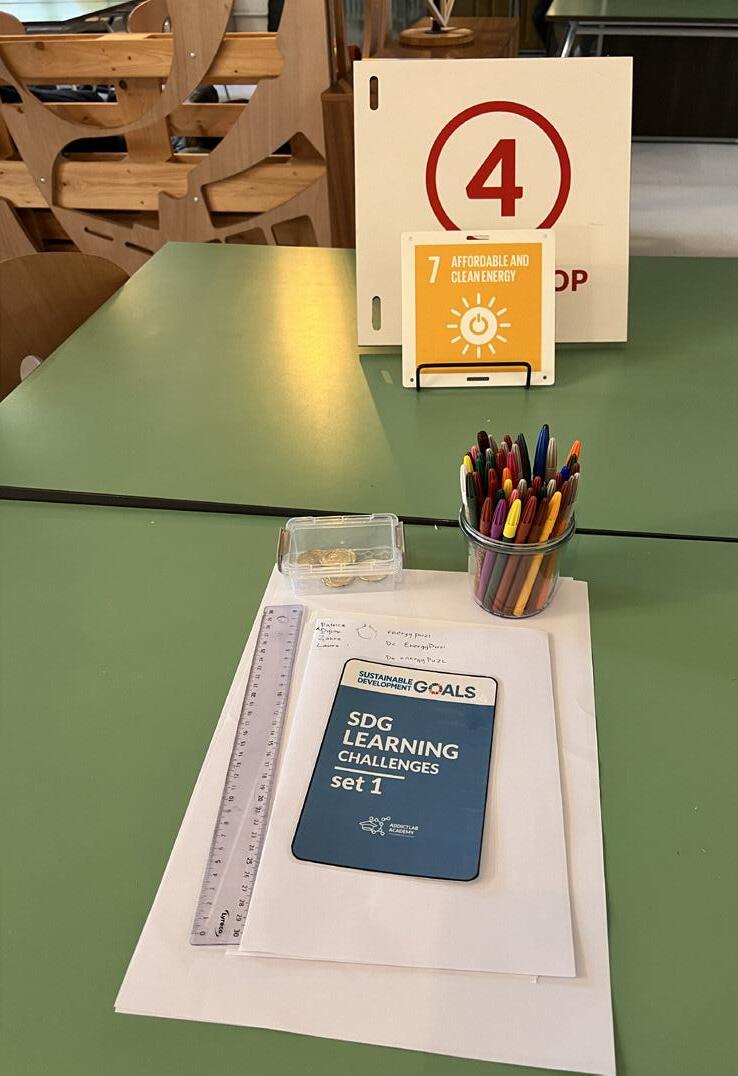
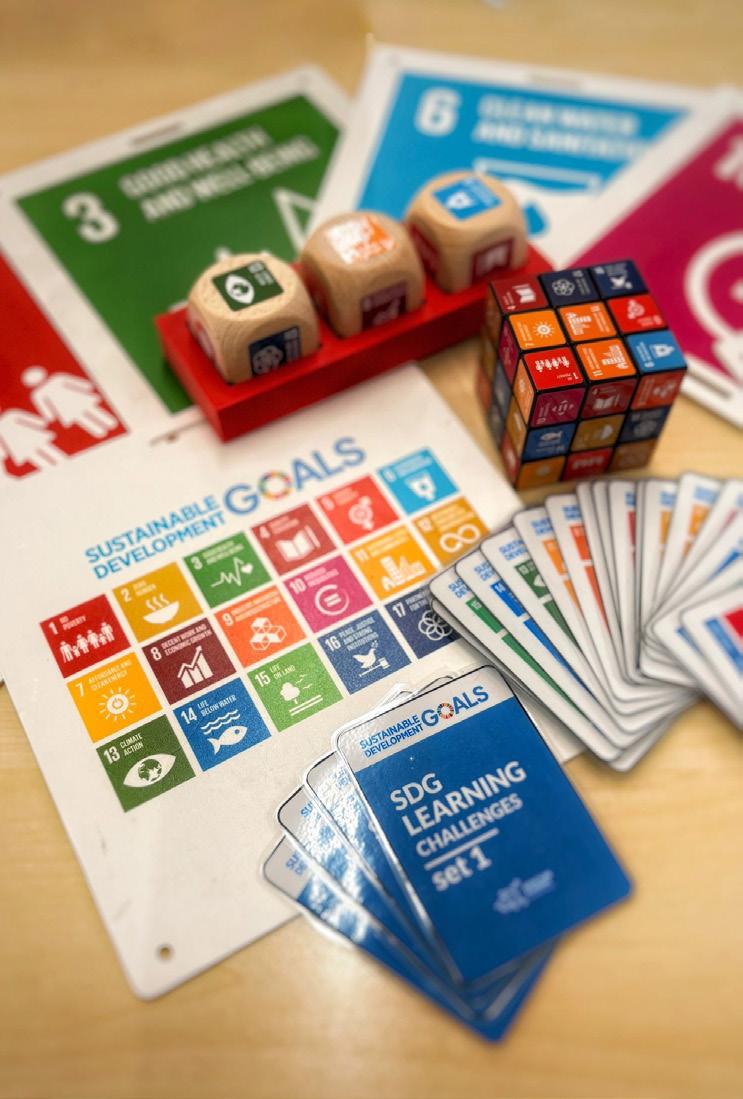
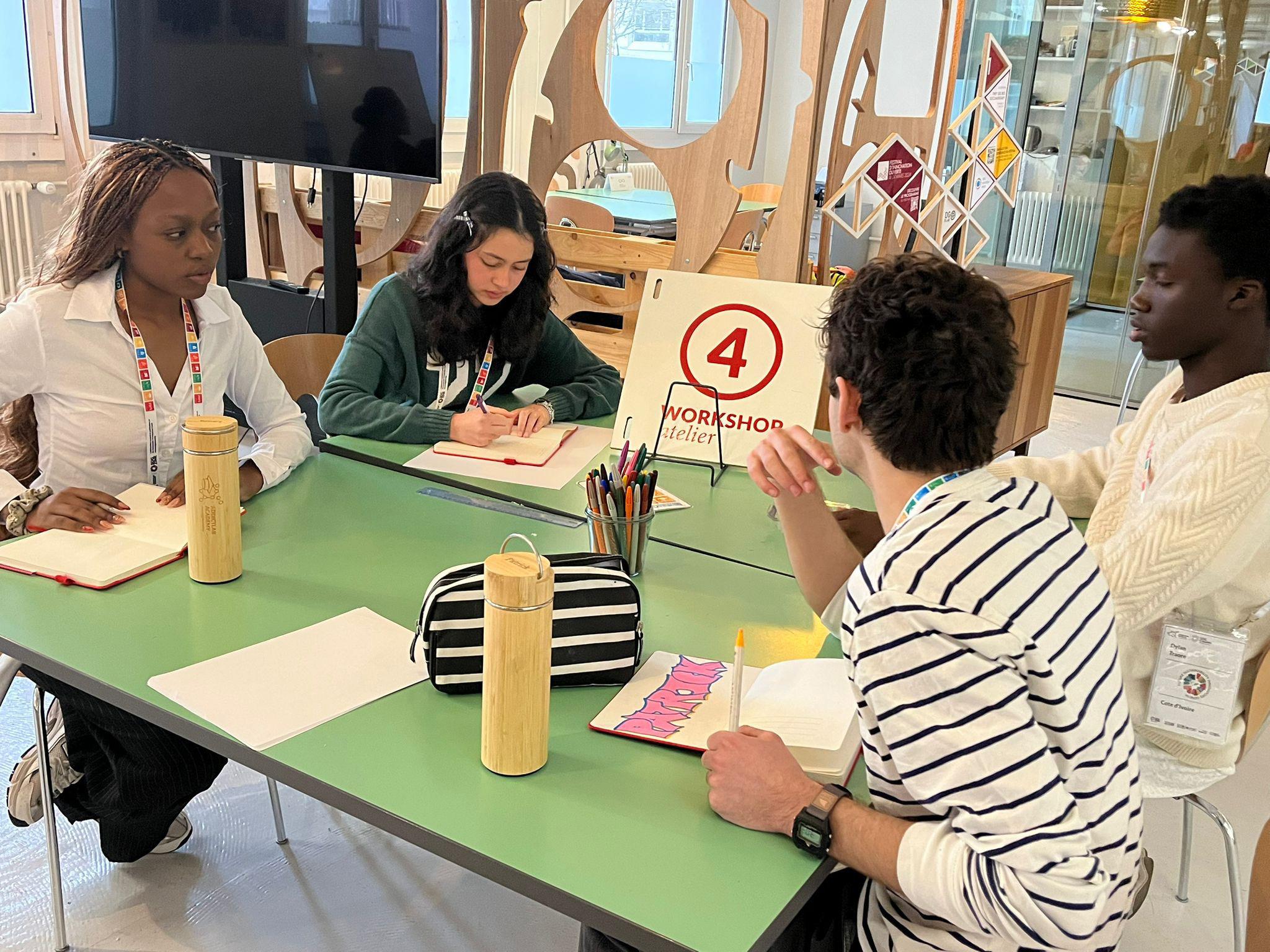
We were divided into four groups, and each group had to pick randomly a SDG challenge. We were given the option to do a skit, create a poster, use any equipment in the room, or come up with a unique idea to present. We also had coins, which you could use: if you don’t like or find the SDG problem a bit difficult you exchange the coins with another new challenge. From the beginning, everyone showed strong teamwork, sharing ideas and supporting one another throughout the activity, each working together with focus and enthusiasm.
Then we took a short break. After the break, we still had a few minutes left, which allowed everyone to improve their work and think more deeply about their ideas. During this extra time, each group worked on adding the final touches to their project. Some also had time to do a quick practice run. Everyone was motivated, making sure their work was clear, creative, and complete.
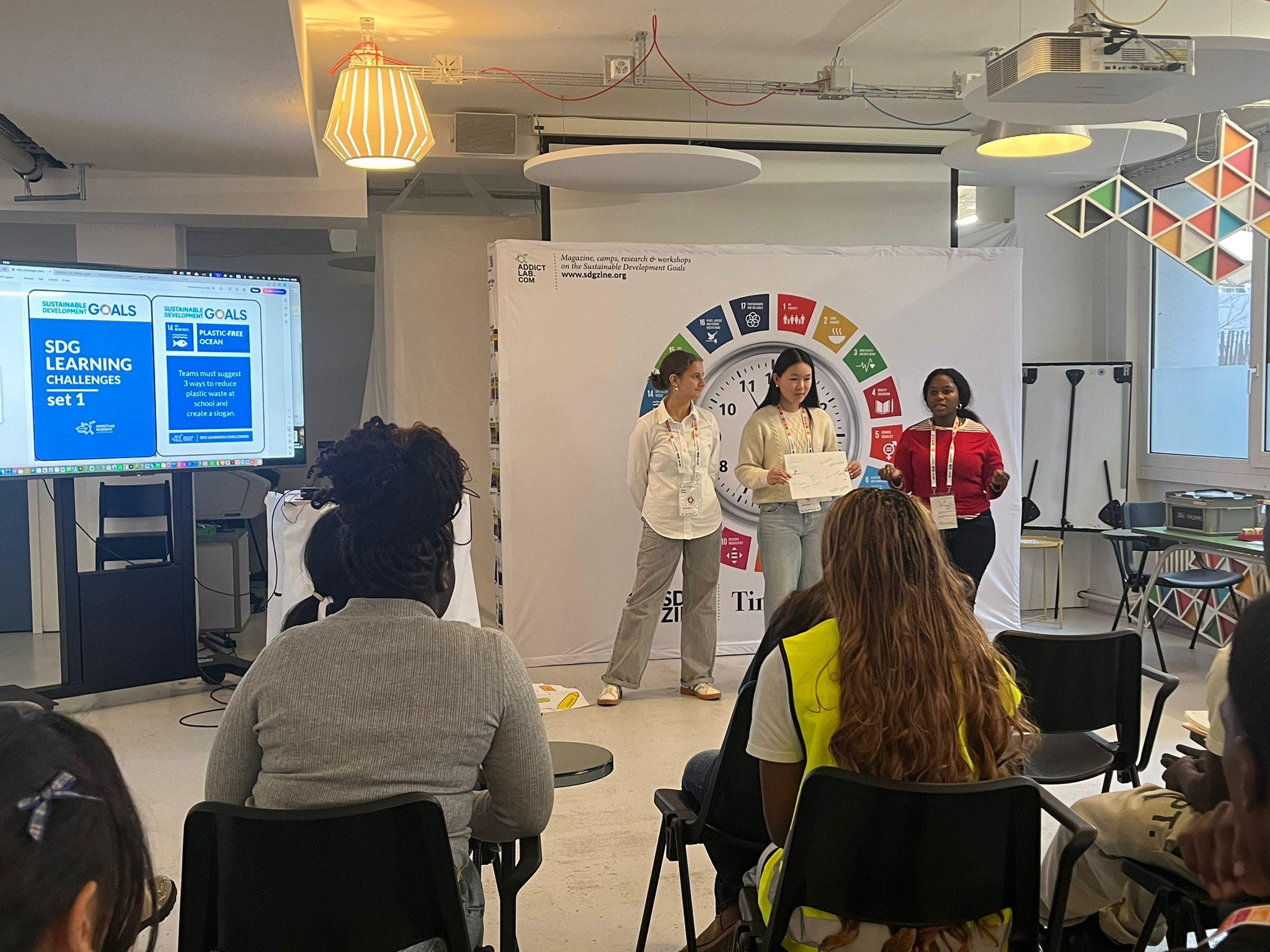
After finishing the final details, everyone came back together and each group went up to present their work. All presentations were well-organized and showed the effort each team had put into the challenge. What stood out most was that everyone in each group spoke during the presentation. This showed
confidence, cooperation, and respect for one another. Each person took responsibility for their part, which made the presentations more balanced and engaging.
One of the highlights of the session was the creativity shown by all the groups. The ideas presented were unique and thoughtful, with each group approaching the challenge in a different way. Some groups used interesting examples, while others focused on inno-
vative solutions or creative visuals. It was clear that students were not afraid to think outside the box and express their ideas in original ways.
The atmosphere during the presentations was positive and encouraging. Everyone listened carefully, showed interest in one another’s work, and appreciated the effort put into each project. At the end of the presentation everyone said something they liked about the presentation which created a supportive learning environment where everyone felt comfortable.
Overall, the activity was engaging and fun. Dividing the group into smaller groups helped everyone to collaborate effectively, having extra time allowed them to improve the quality of their work, and getting to know one another. The presentations demonstrated strong teamwork, communication skills, and creativity.
Addictlab’s SDG Challenges game, a concept by Jane Lim.
Walk to the United Nations
by Jane Lim
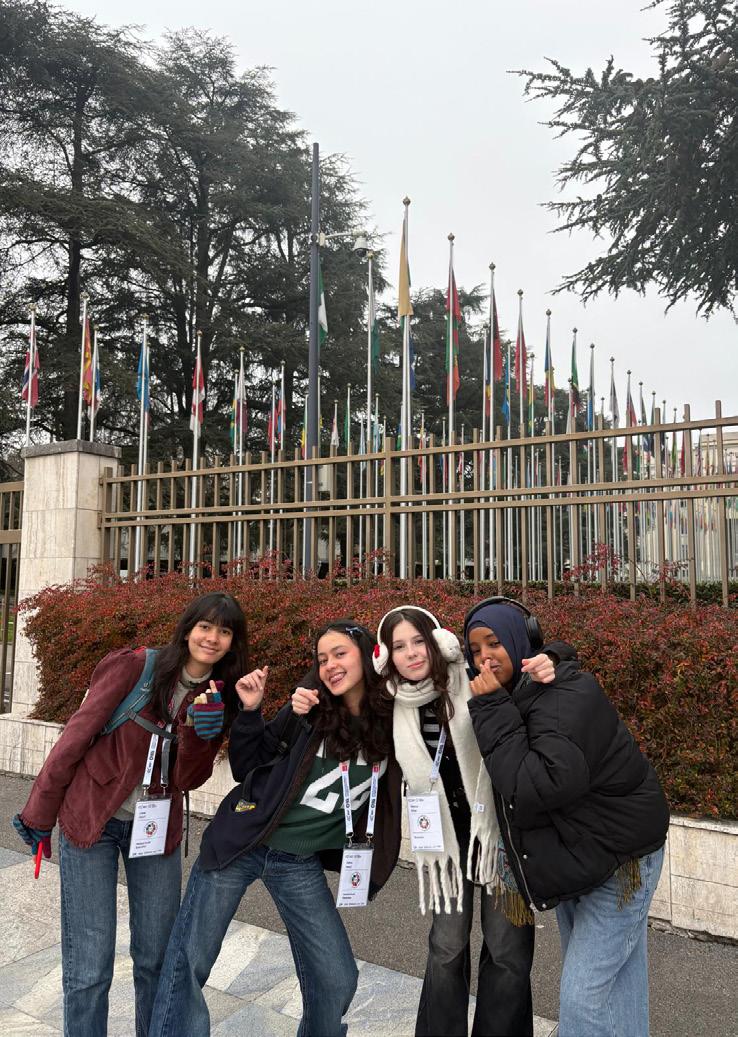
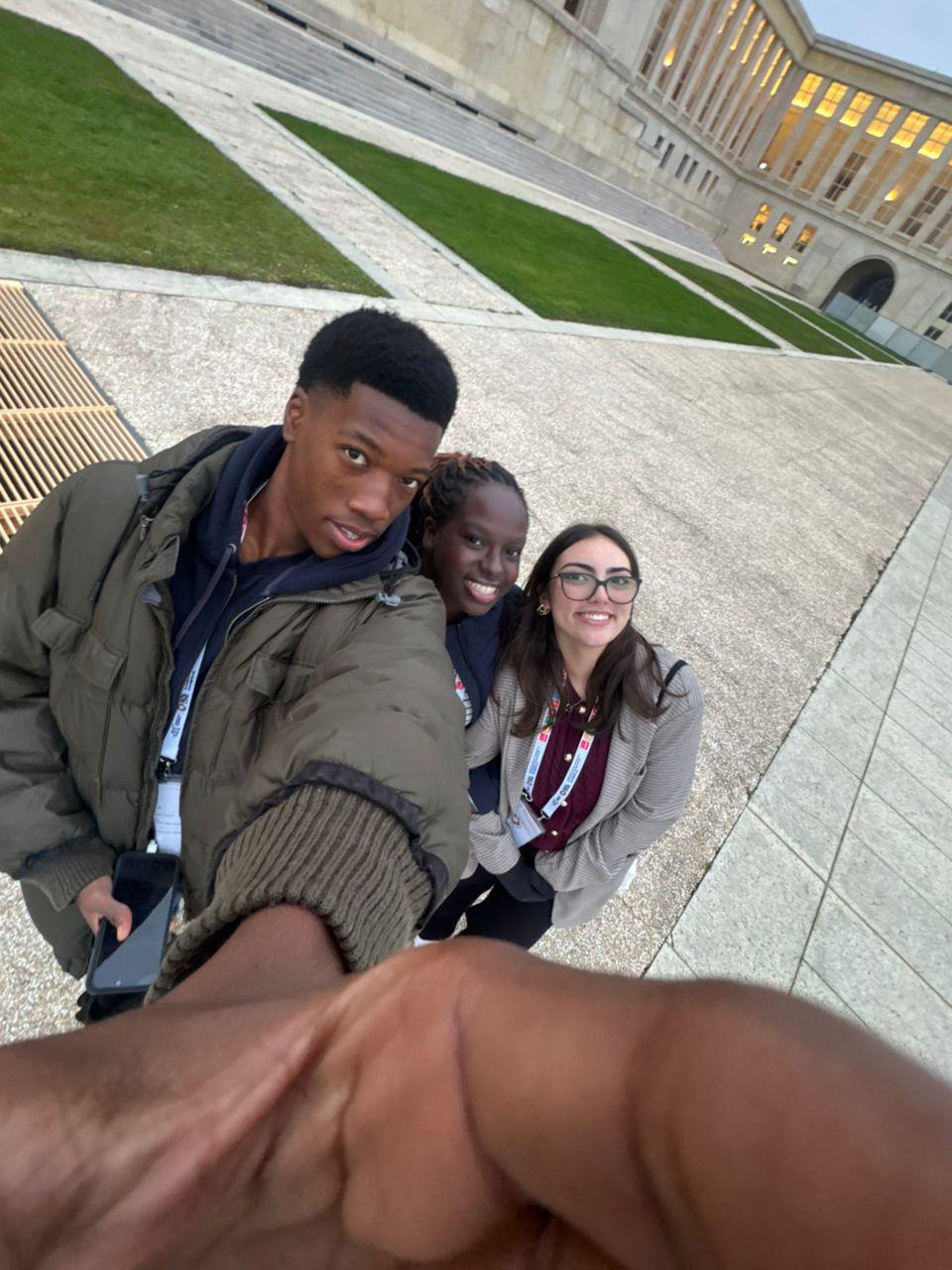
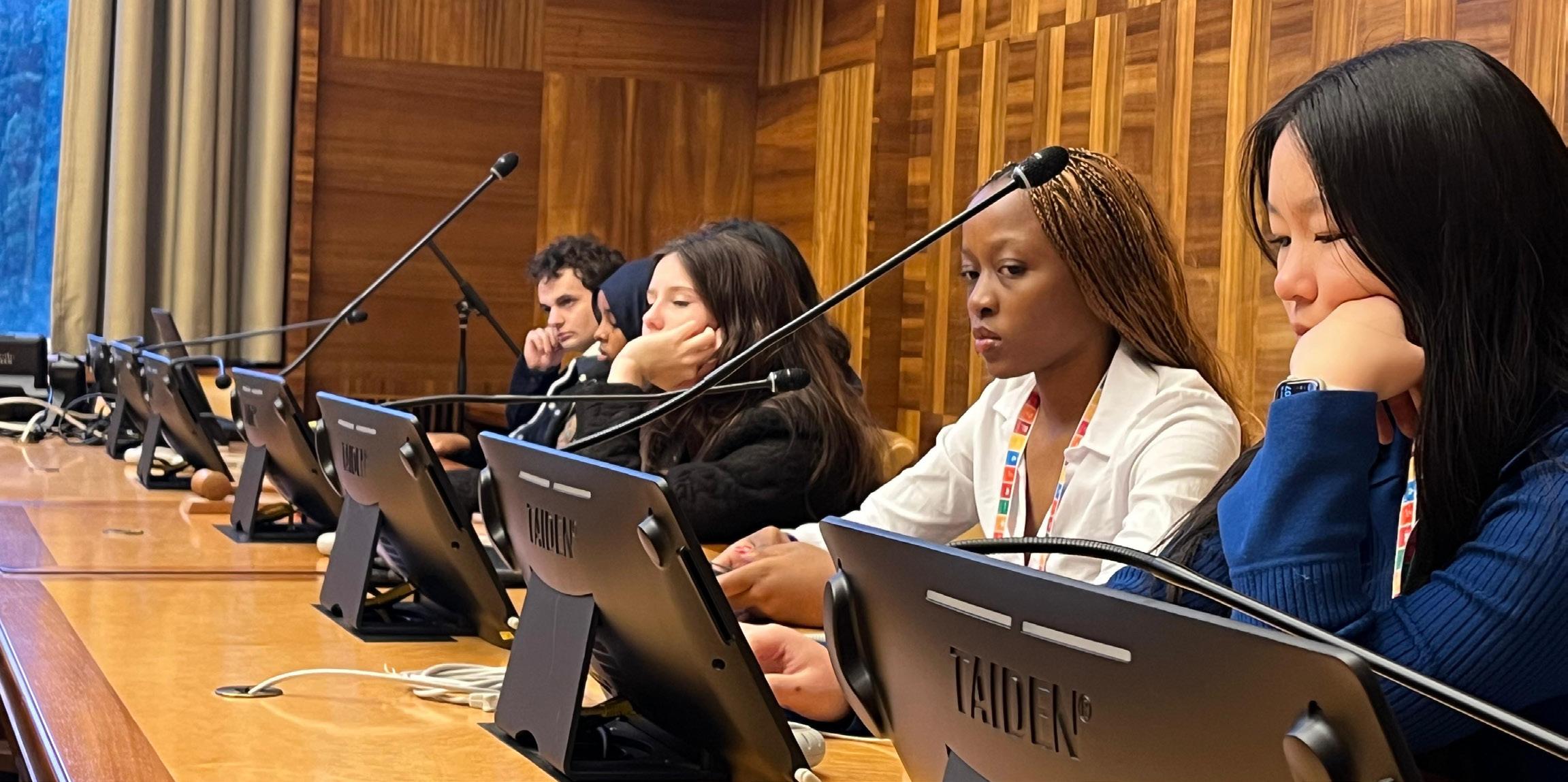
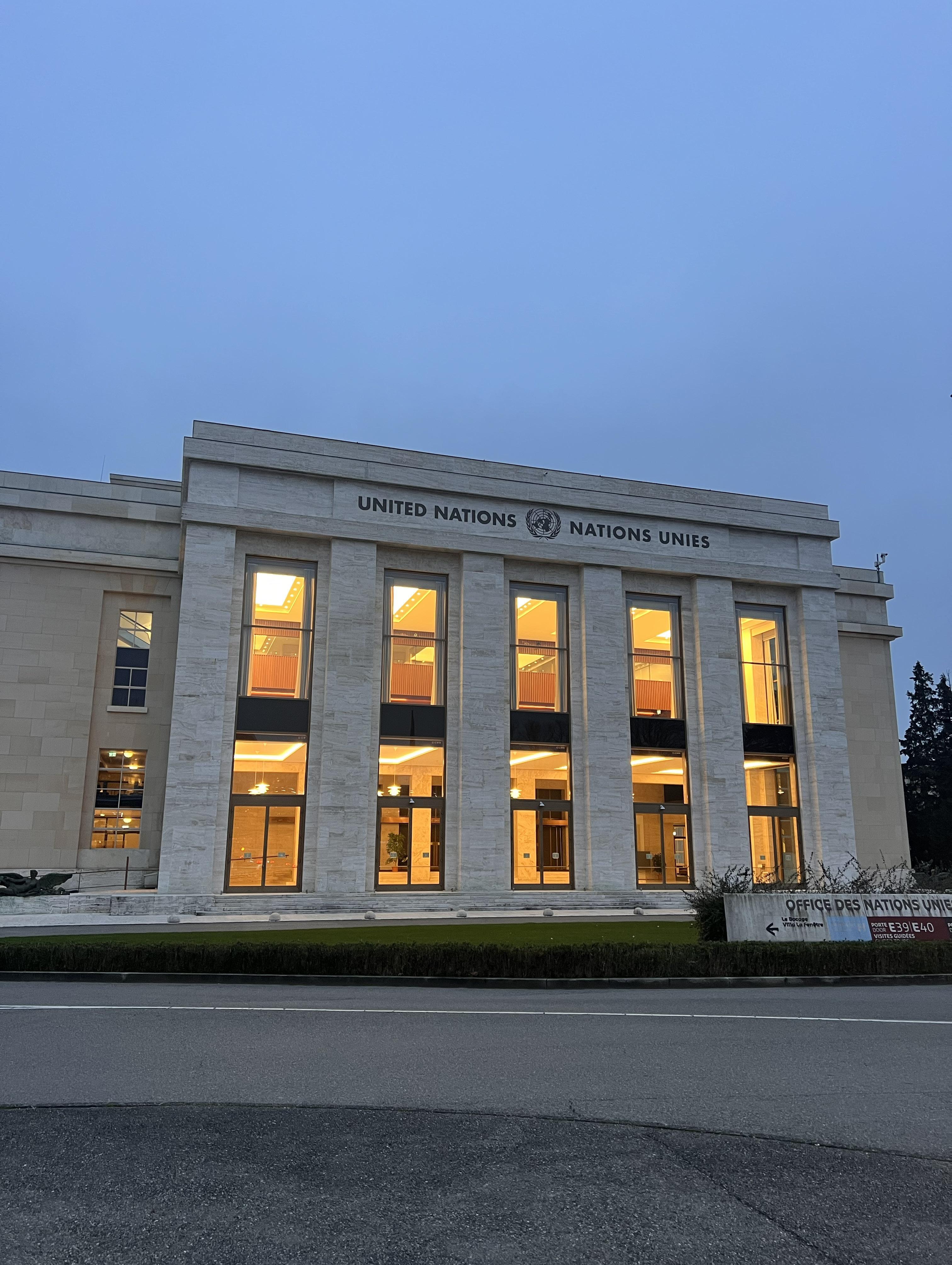
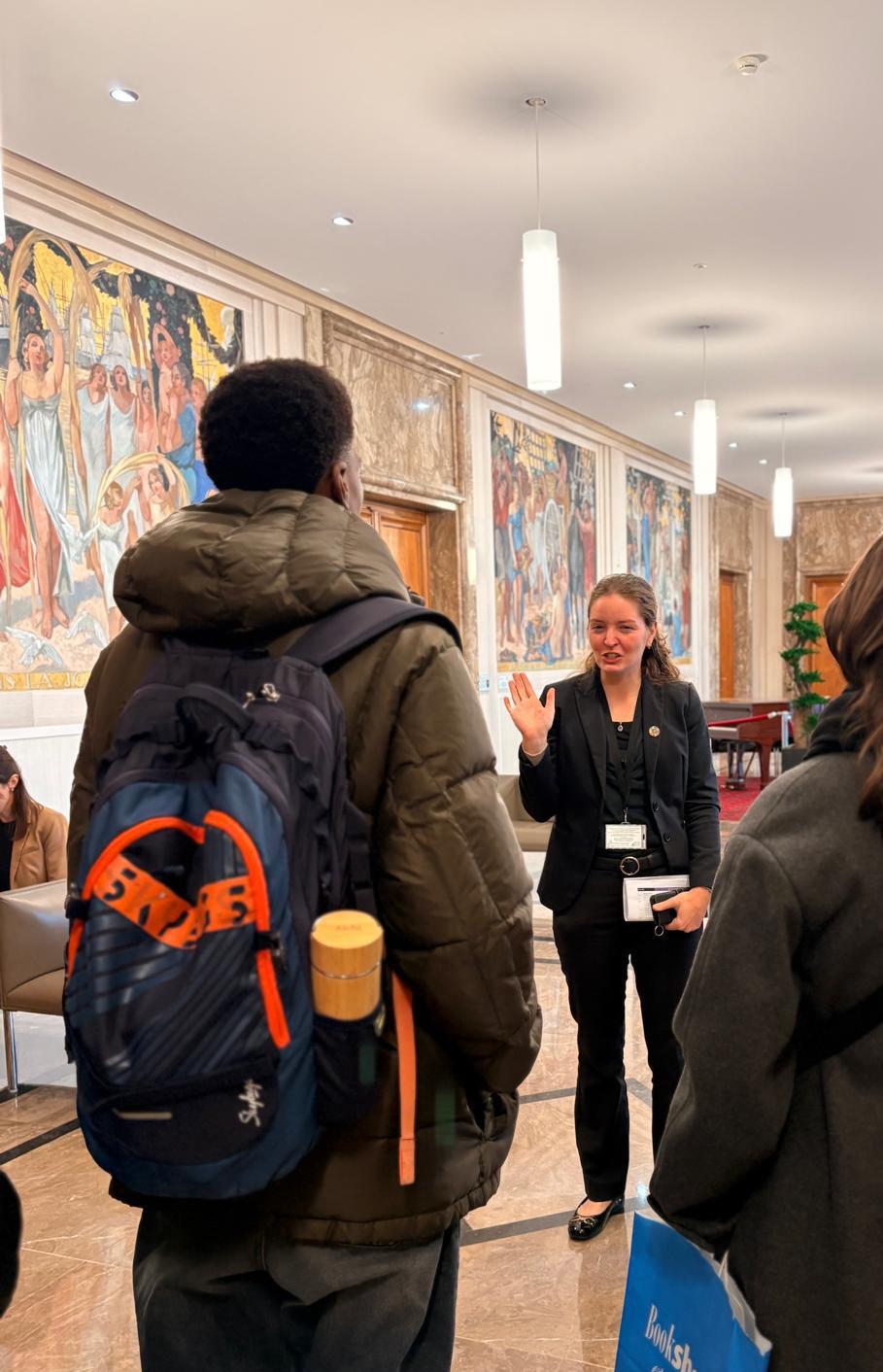
On Monday, Addictlab had the students begin the week by walking from the SDG Solution Space to the United Nations, as part of their introduction to Geneva as an international city. It is a way to connect learning spaces with the institutions working on global challenges.
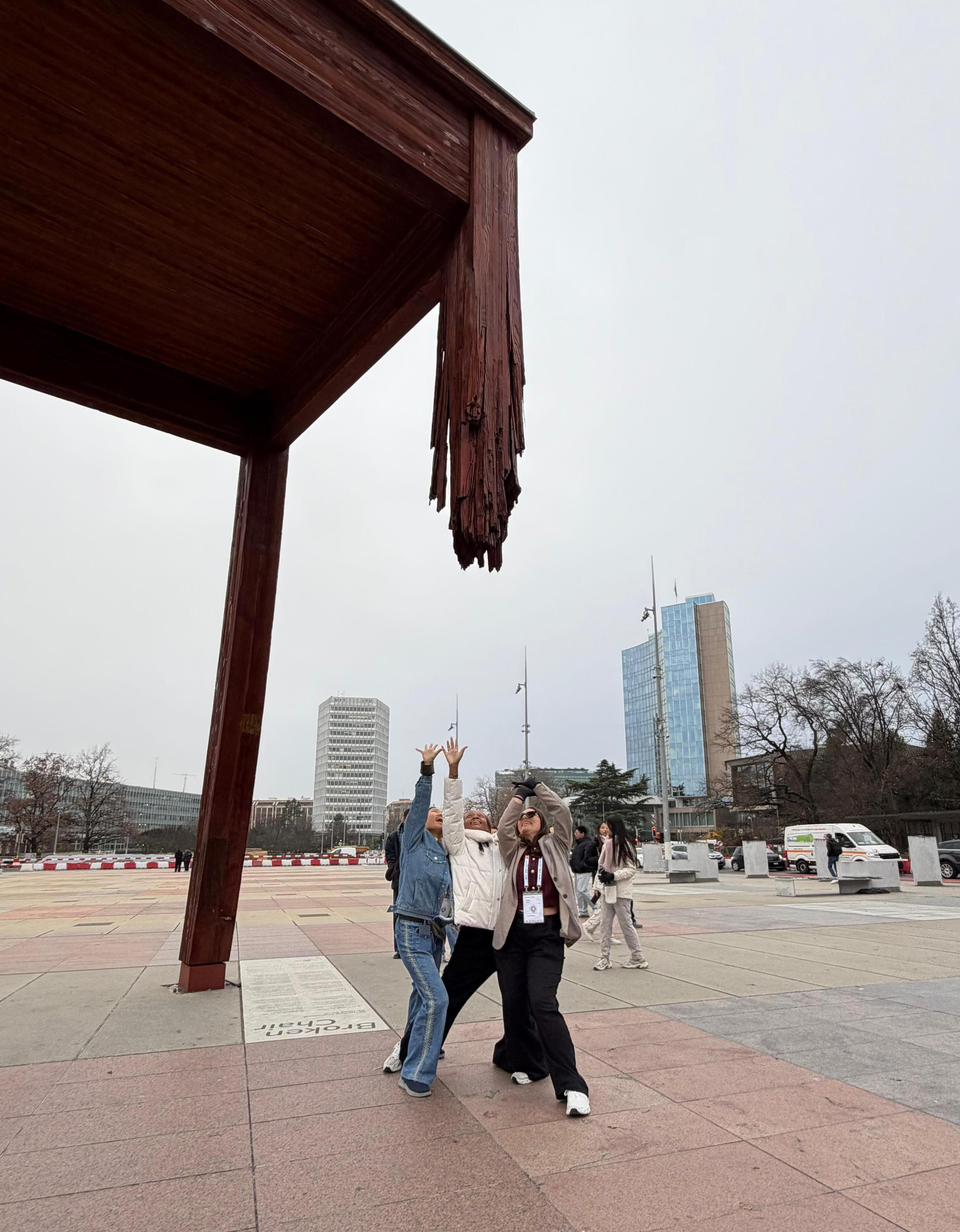
Along the route, the group passed the Broken Chair, a landmark symbolizing the impact of landmines and the importance of peace and humanitarian action. This stop provided context for discussions around human rights, conflict, and international responsibility.
Arriving at the UN on foot helped students better understand the physical and symbolic links between the SDG Solution Space and international organizations. The walk also allowed time for observation, informal discussion, and questions before the visit.
The day helped set the context for the week by linking the Sustainable Development Goals with the places where international cooperation takes place, and by easing students into the programme through a shared, guided experience.
Understanding the United Nations
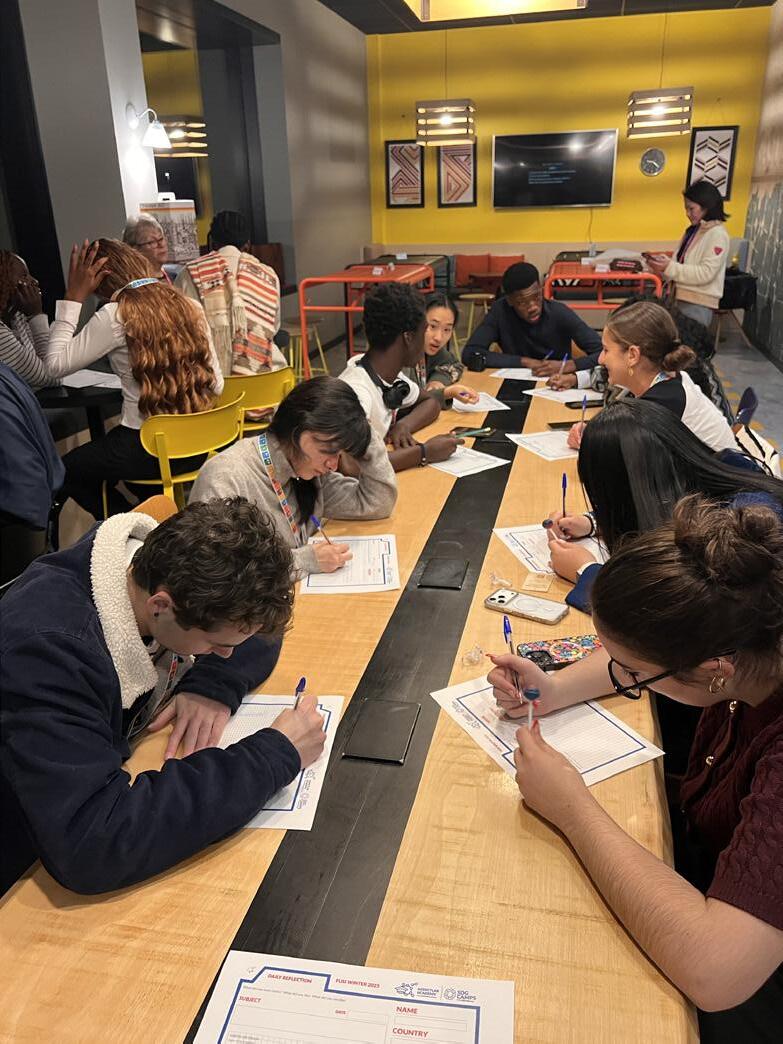
From FUSI student Aichi Rimoy’s reflection sheet.
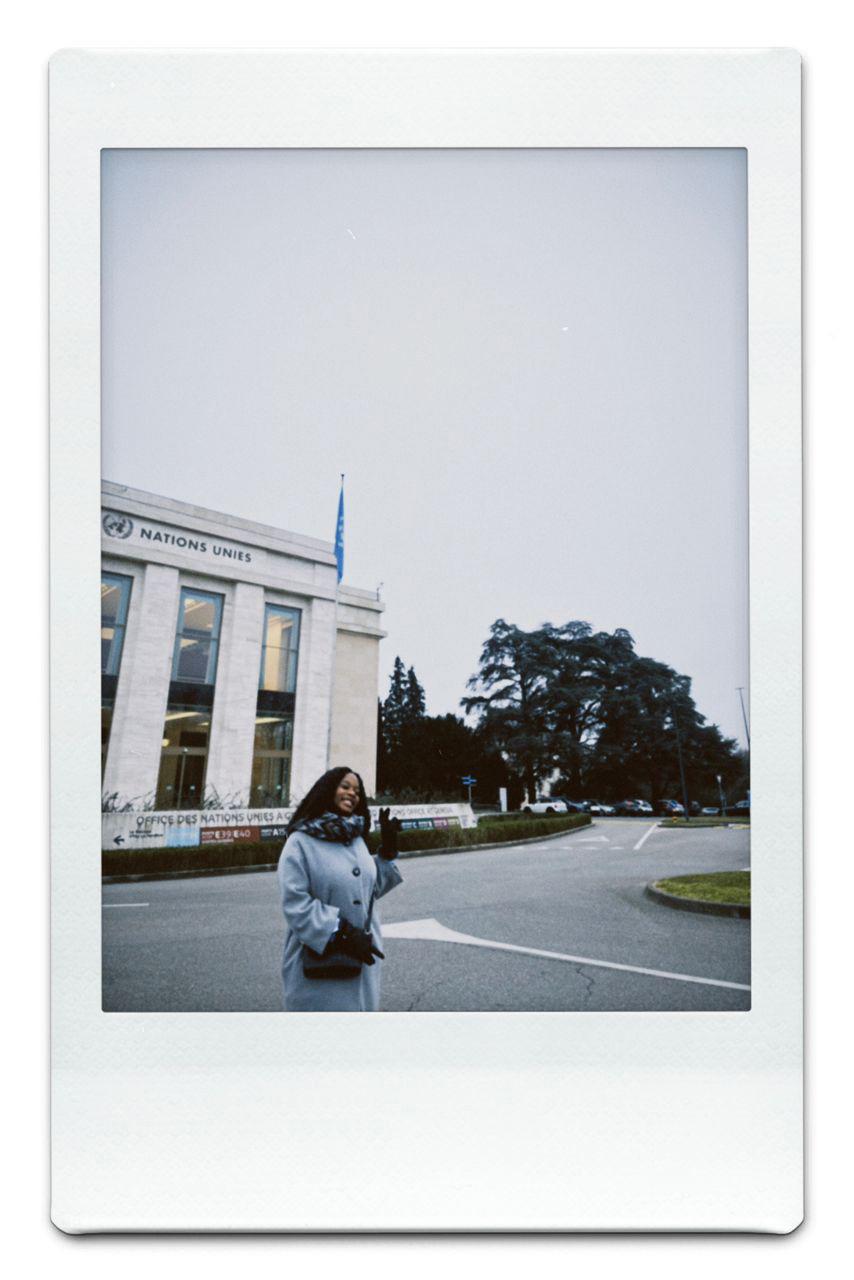
“Today, I had the experience to go to the United Nations – Geneva.
I learned that the purpose the United Nations was formed was to assist nations to collaborate in different problems.
Before the United Nations was called the League of Nations in 1915 to stop the chance of a WWII breaking out. Today, it is formed of 195 nations but 2 of these states (Vatican and Palestine) don’t have a vote like the other nations.
Some interesting things were that the order of flags are chosen randomly from picking letters from a hat and that there are conference interpreters.”
From FUSI student Ersilla Girard’s reflection sheet.
“I really liked the visit to the United Nations, because this helps us to learn how institutions work. I also liked the architecture of the UN’s building.”
From FUSI student Patrick Athanasoilas’ reflection sheet.
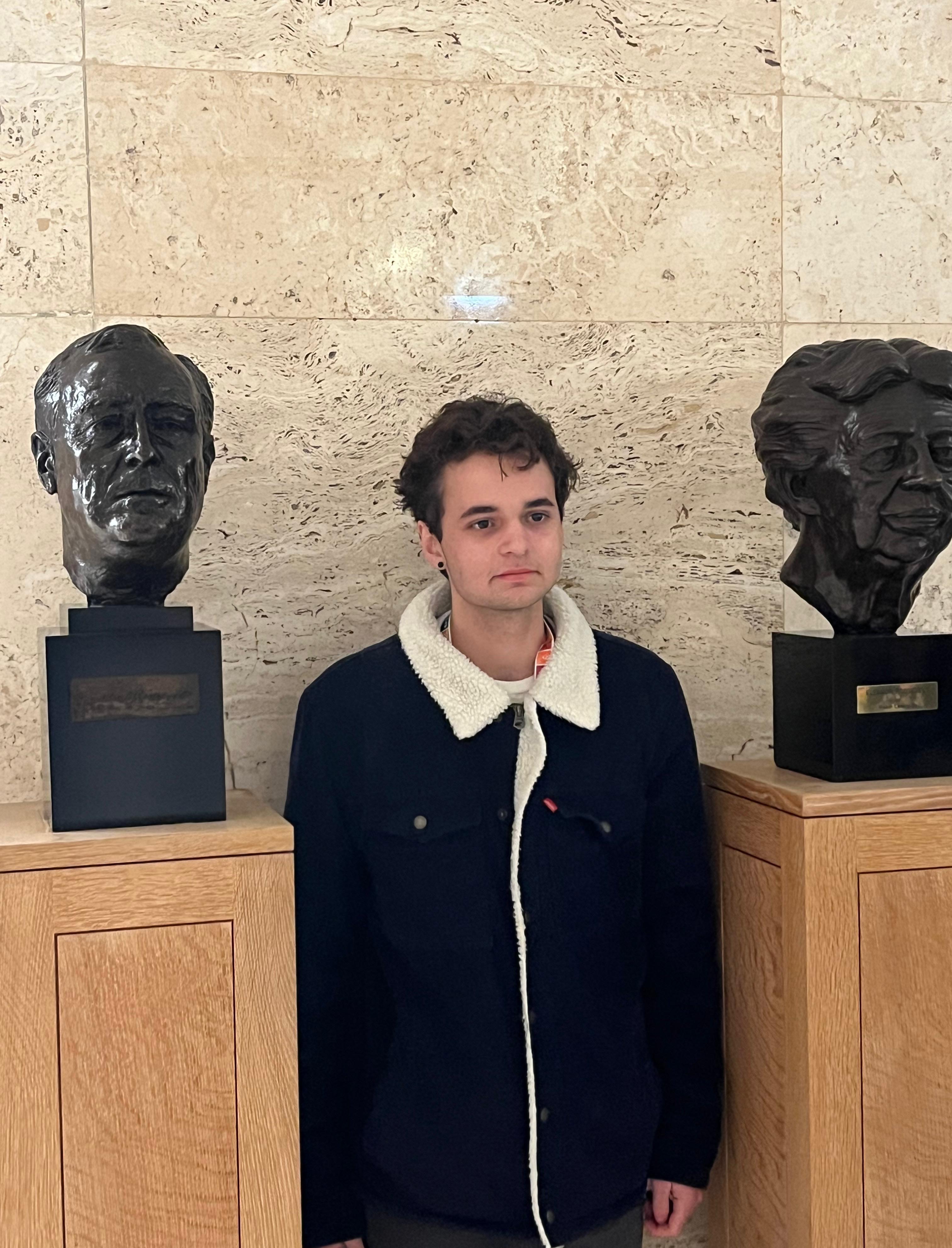
“I learned about the architecture and artwork inside the UN. I thought the bronze was pretty , and I liked how countries donated materials they are known for, to build certain rooms.
Bamboo @the UN! I do not approve of invasive species being displayed at the UN when one of the SDGs is Life on Land”
From FUSI student Laura Swai’s reflection sheet.
“Visiting the UN was a very fun experience. It was my first time visiting any UN headquarters and it was amazing to learn about it. I had only learned about the League of Nations during my history classes, so being able to further my knowledge to the modern state of the League of Nations was a true gift!”
From FUSI student Alyssa Sando’s reflection sheet.
“The United Nations made me fall in love with international relations. It showed me how important it is to build communities to make the world a better place.”
‘Ainsi périrent les ennemis de la
la république’
“The History of Geneva Saved By Stew”
by FUSI Student Maddie Kaiser
The history of Geneva was declared by one night, December 12, 1602. Inside the city, people slept soundly as they did not realize that their city was going to be taken over. Behind the walls of Geneva waiting patiently, were soldiers from the Catholic Duchy of Savoy. The soldiers were planning to invade Geneva before sunrise came.
At this time in history, Geneva was a symbol. During the Protestant Reformation, Geneva was a place that the Protestants could retreat to. The Duke of Savoy, Charles Emmanuel I, was determined to take control of the city. He ordered his troops to attack while all of Geneva was asleep. He decided this time because he knew all of their defenses would be weak and this would be the perfect time to strike.
In doing as the soldiers were told, they lifted their ladders and climbed over the wall. In a nearby house there was a woman, Catherine Cheynel, also known as Mère Royaume, she was preparing stew during the night for her fourteen children and her husband in a huge cauldron. Suddenly there was a noise, she put her head out the window to find the soldiers of Savoy climbing the walls. She did not know what to do, there was no one to call out to so she thought quickly and poured the hot vegetable soup over the window. As a result of this the soldiers were burned by the stew and this caused loud chaos that woke up the whole town. By her pouring the stew, it delayed soldiers and gave the Swiss time to get ready for battle. The narrow streets and secret passageways helped the Swiss to win the battle just as dawn began.
The Swiss celebrate this victory every year on the same date. They named this event L’Escalade. This means “scaling of the city walls”. This is a crucial story not only highlighting the military aspect but also the courage of the village. On this day every year,
there is a huge festival stationed in Central Geneva, everyone goes to celebrate this grand victory that happened many years ago. There is a procession of historical reenactments with locals dressed in period clothing, a massive steaming cauldron of soup to be served to all, church bells ringing and an extremely large bonfire which everyone dances around.
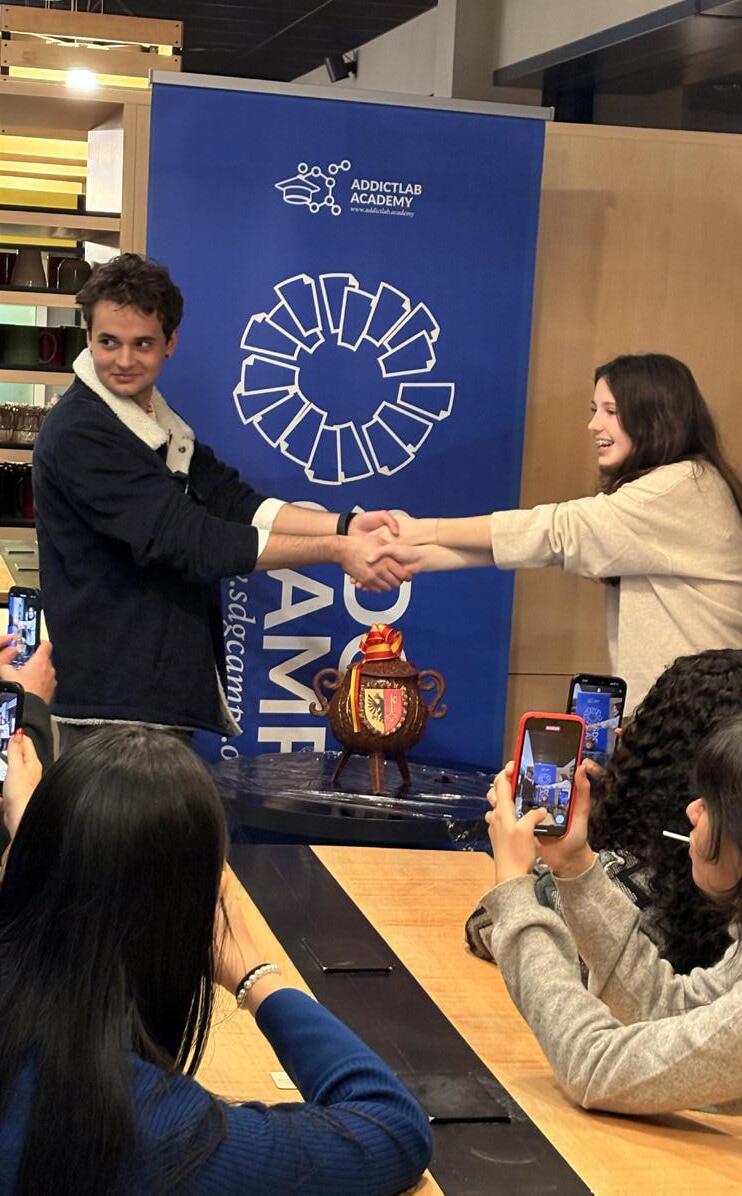
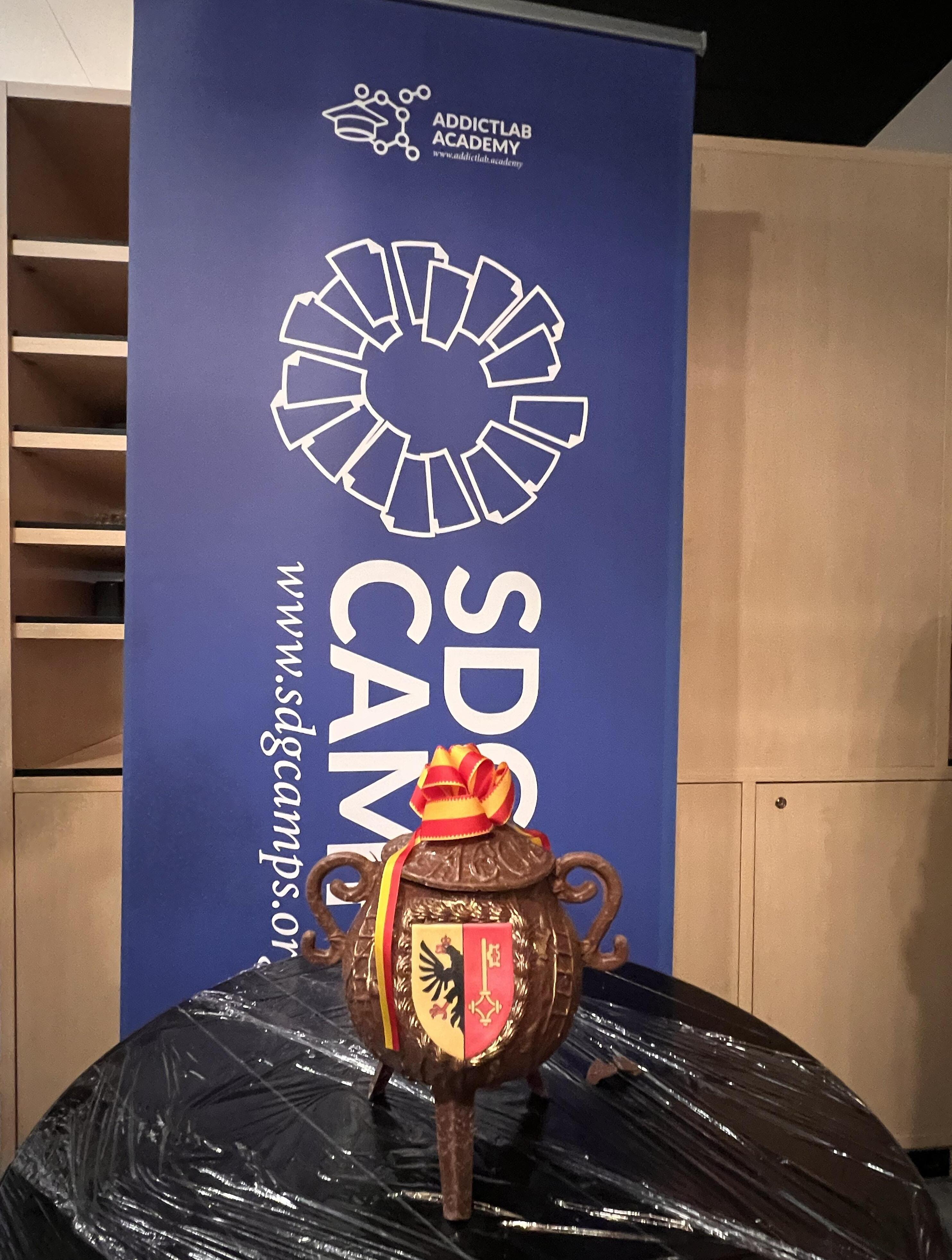
The most important part of the tradition is not held in the streets but in the homes of loved ones and schools. Every year all of the chocolate shops in Geneva sell chocolate cauldrons called “marmite”. Families and teachers go out and get this just for this day. The main part of the tradition is that the oldest person and the youngest person, of the family or school classmates, join
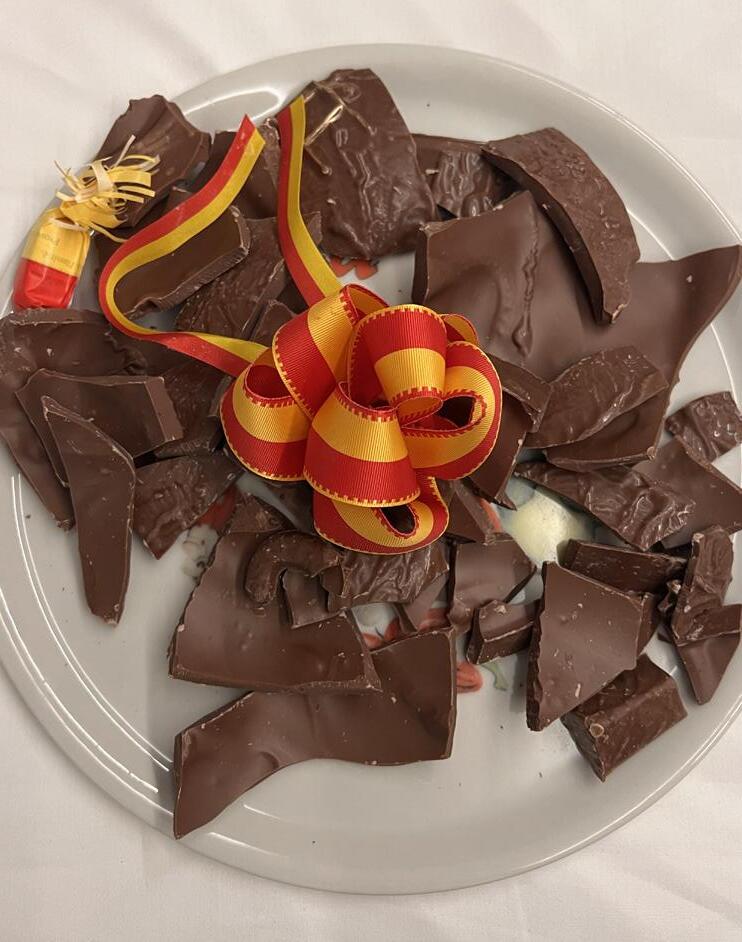
hands and say the phrase, “Ainsi périrent les ennemis de la République!”. This means “Thus perished the enemies of the Republic”. They say this together and then they break the cauldron. The chocolate cauldron or marmite represents the pot of hot stew poured over the window by Mère Royaume. Inside the chocolate cauldron is usually filled with sweets and mixed marzipan vegetables, symbolizing the vegetables used in the stew.
Still to this day, this tradition is passed on from generation to generation. This story is a key part of Swiss culture and how Geneva is remains a city. What was then a terrifying moment in 1602 became a wonderful celebration full of fun, laughter, and joy for many to share. This is Geneva.
Daily Reflections
by Jan Van Mol
At the Future Sustainability Innovators Camp in Geneva, learning does not end when the day’s sessions conclude. Each evening, students at our SDGCamps are invited into a dedicated space for reflection—an intentional pause designed to help them process, question, and internalize what they have experienced throughout the day.
This daily reflection is a core pillar of the camp’s educational philosophy. Rather than moving rapidly from one activity to the next, students are encouraged to slow down and think critically about the places they visited and the ideas, challenges, and perspectives they encountered.
Whether the day focused on climate action, social equity, responsible innovation, or global partnerships, reflection allows learning to transform from information into insight.
Importantly, these moments also give students space to express emotions—excitement, concern, hope, or even frustration. Over the course of the camp, daily reflection reveals growth. Students begin to ask more nuanced questions, make stronger connections between systems, and articulate their ideas with greater confidence.
What may start as abstract concepts gradually become personal commitments. Many students discover that sustainability is not only about global policy or scientific innovation, but also about everyday choices, collaboration, and leadership.
By the end of the Future Sustainability Innovators Camp in Geneva, reflection has helped students move beyond passive learning. It empowers them to see themselves as active contributors to a more sustainable future. These daily moments of thought and dialogue ensure that the lessons of SDG Camp do not remain in Geneva—but travel home with each student, ready to inspire meaningful action wherever they go.
Sustainable You
by Annette Ebbinghaus
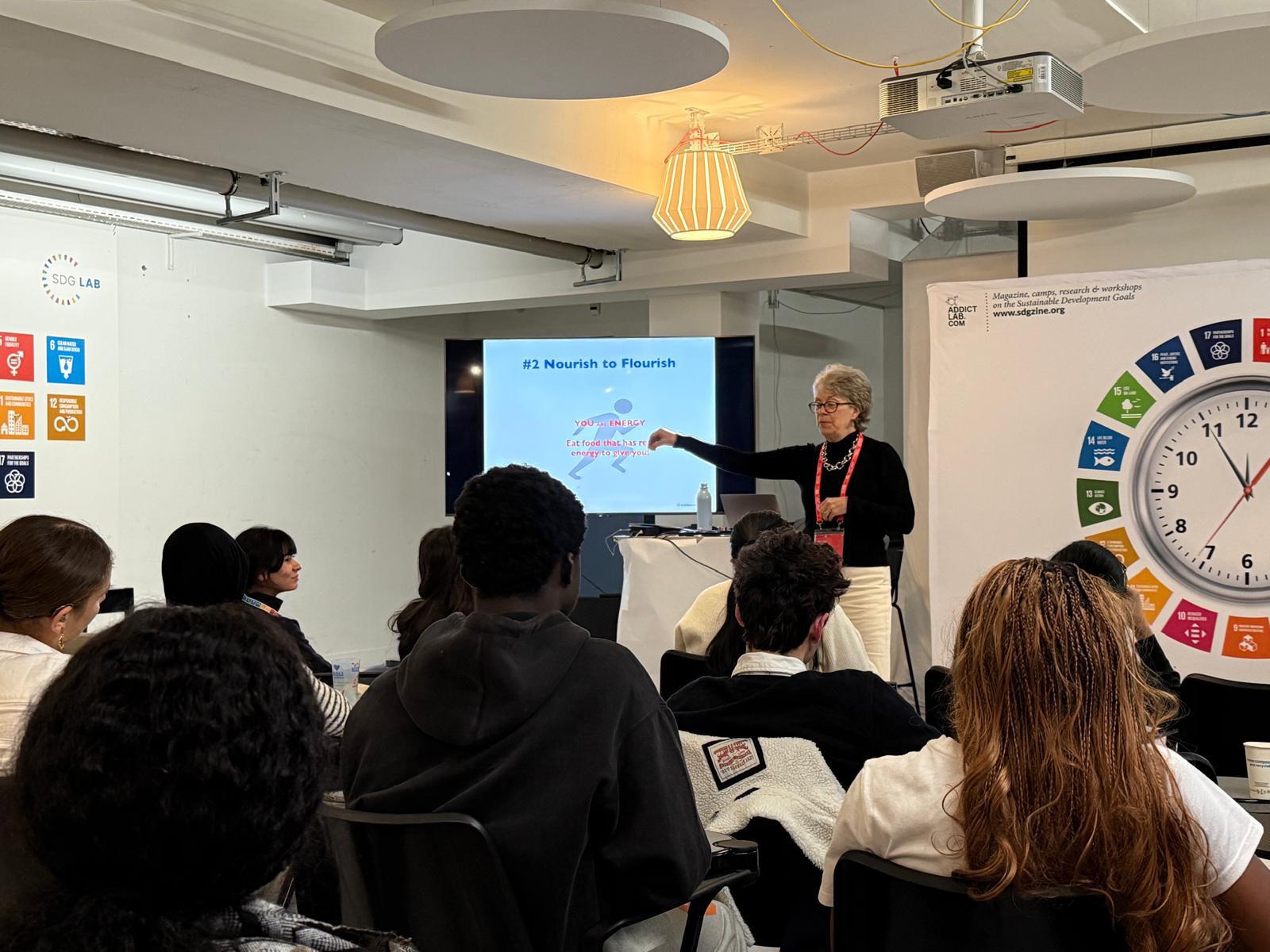
Working toward a sustainable future is about more than protecting natural resources, it also means daily habits that sustain us. Each of us has a ‘personal planet’. Just as we have one earth, we have one body, and it’s up to us to treat it with respect and care.
I introduced students to the Six Sustainable Habits, designed to keep mind, body and spirit in balance. Whether life feels easy or stressful, these habits build resilience which is something we all need because challenges are part of life.
To make them easy to remember, each habit comes with a simple phrase:
#1 Sip Smart, Think Sharp
#2 Nourish to Flourish – eat FRESH (Fiber, Real food, Energy- complex carbs, Smart fats, Hydration)
#3 Breathe Deep, Stay Strong
#4 Move your Body, Clear your Mind
#5 Sleep Deep, Dream Big
#6 Live your Values, Lead your Life
Remember that all your habits are formed in your subconscious mind and its primary goal is to keep you safe and alive. It will not like that you are changing your habits. It likes what it knows. It takes persistence to change habits, whatever they might be. Dare to be sustainable, your mind and body will thank you later!
At the end of the program, each student received a trulyBalance USB stick with the full presentation to remind them of these
six habits. On it, I also included two guided breathing techniques that I often teach to help students feel calmer, more confident and better able to concentrate.
I encourage you to take a few minutes to try them out. Practiced regularly, these simple tools can improve emotional regulation, support physical and mental health and strengthen decision-making. A sustainable world begins with self-sustainability.
CERN visit
by FUSI student Layla Hazri
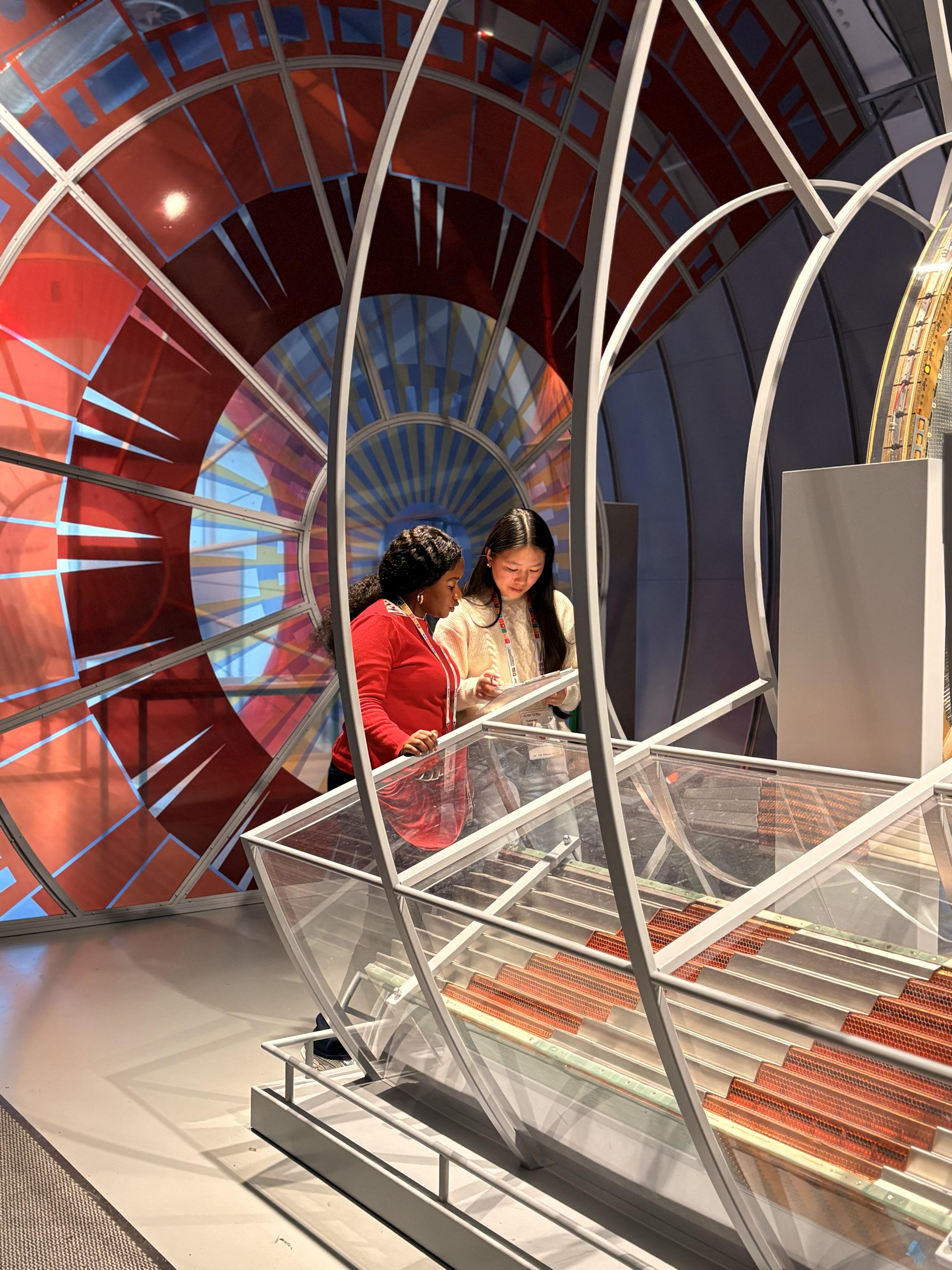
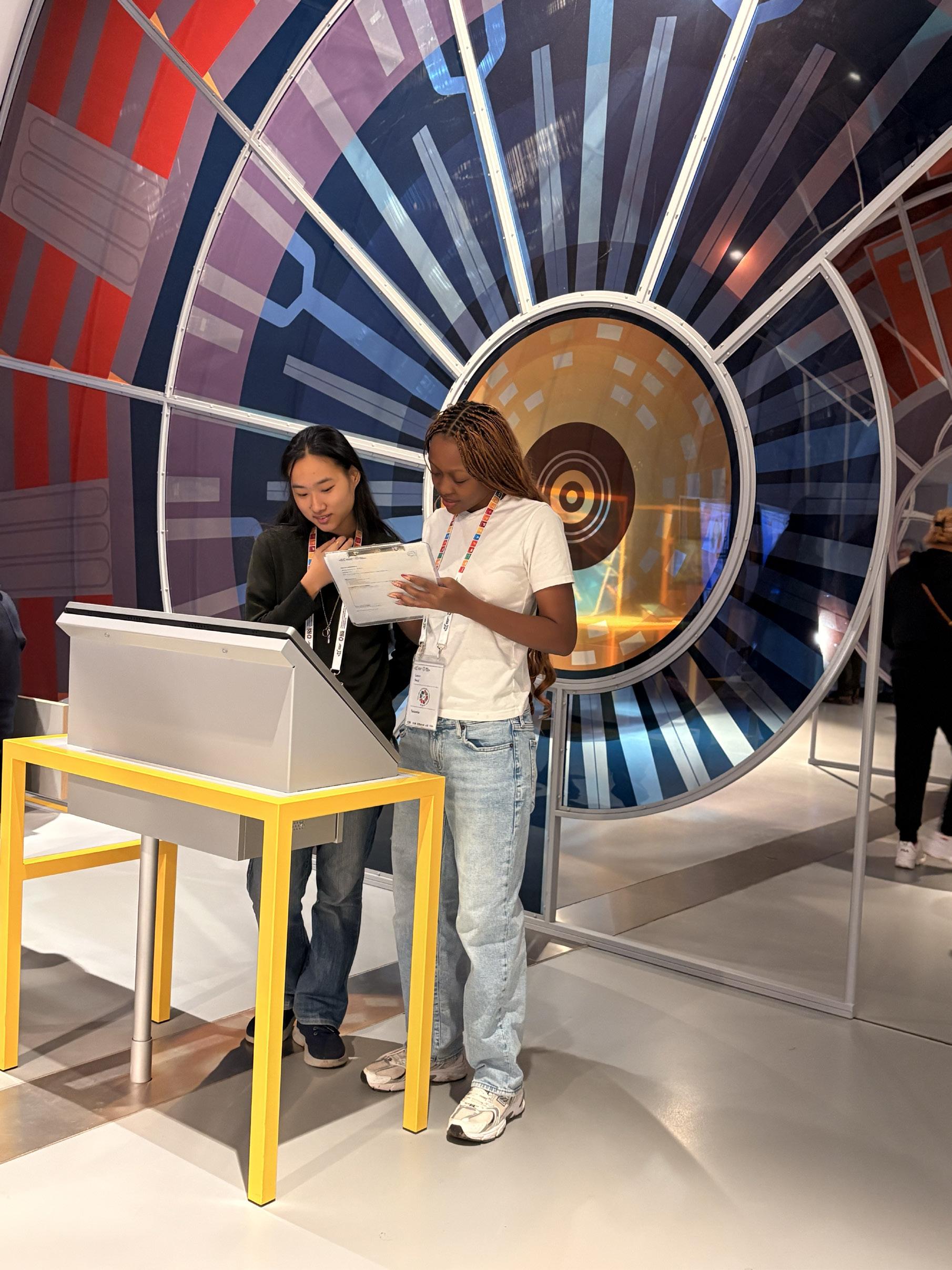
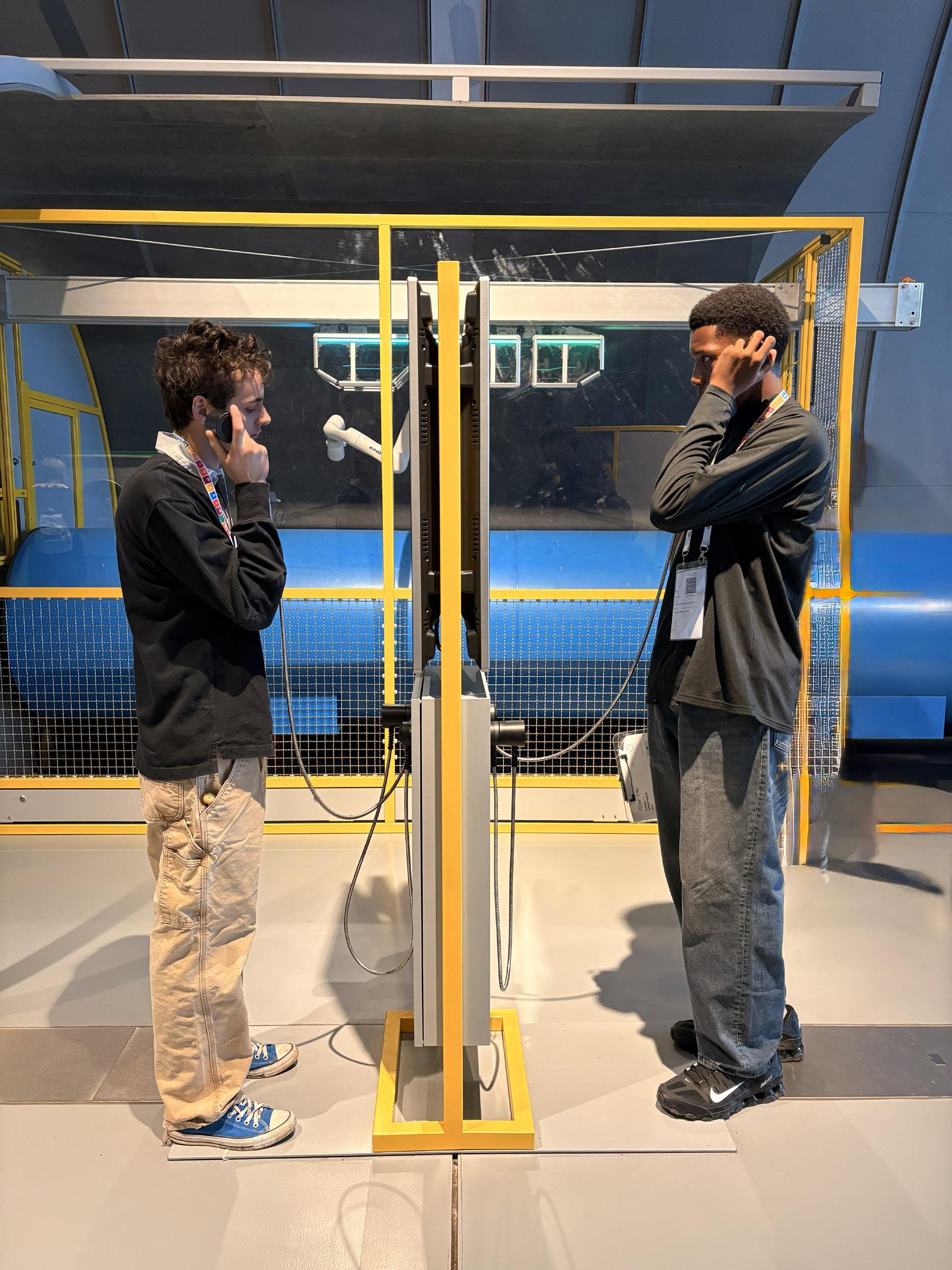
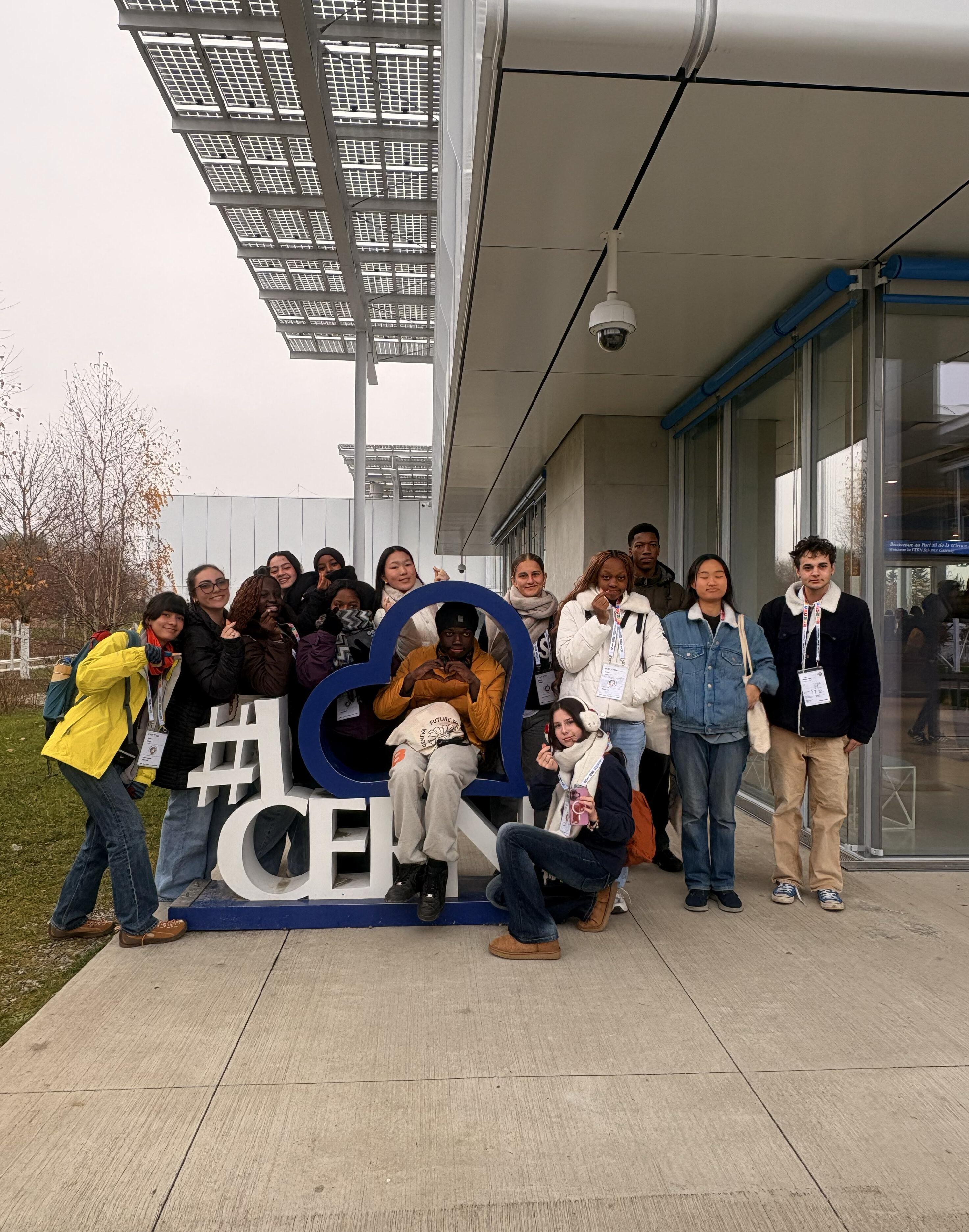
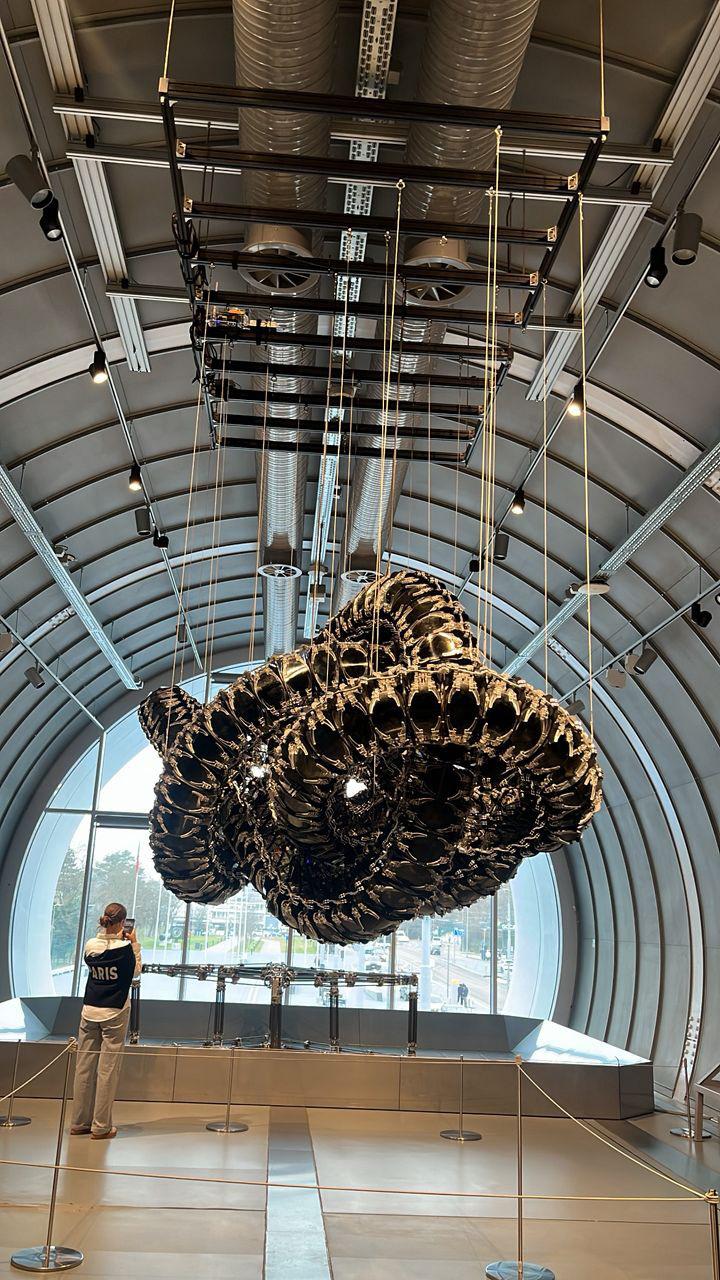
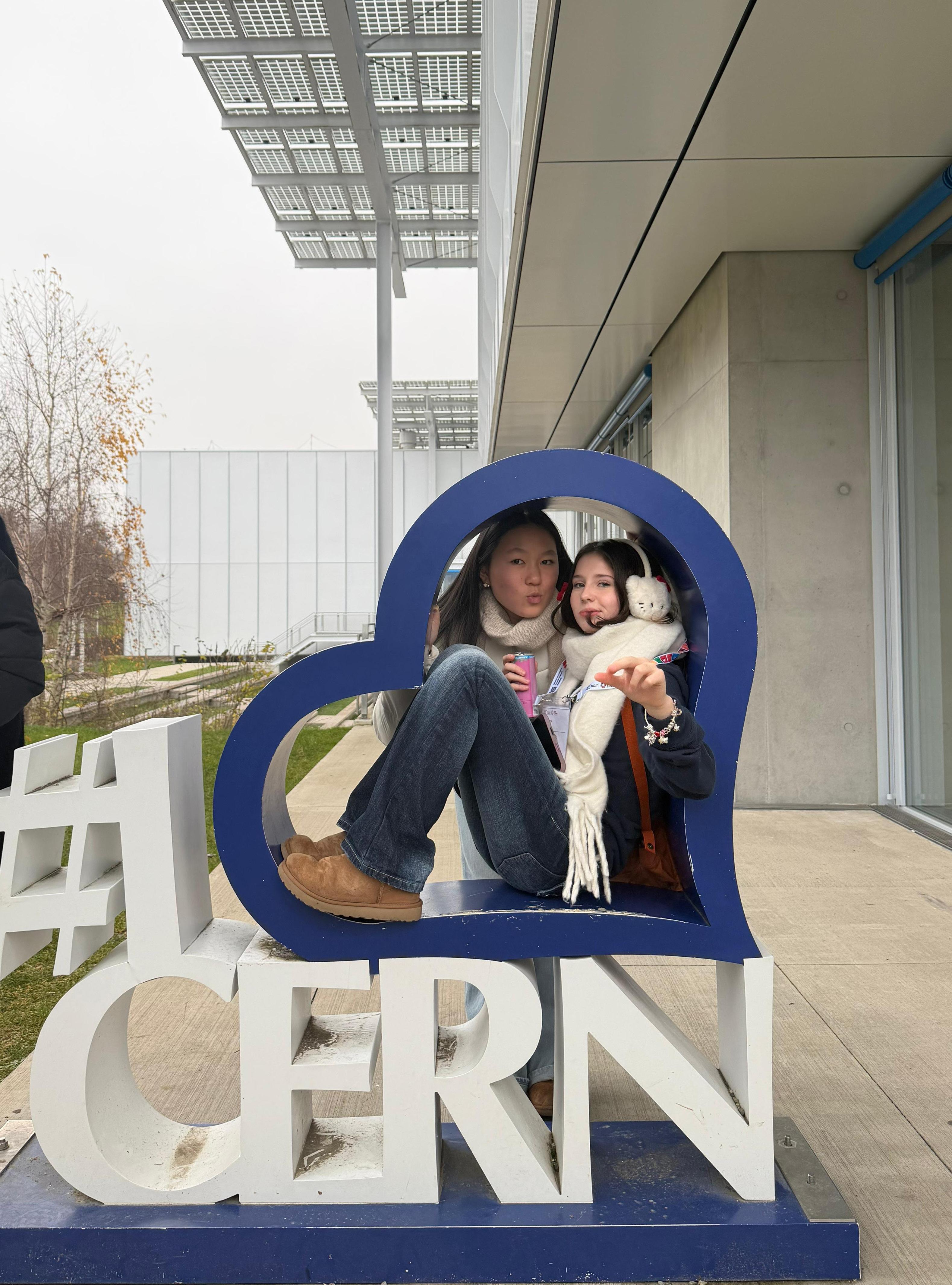
The European Organization for Nuclear Research, also known as CERN, is an organization that operates the largest particle physics laboratory in the world. On December 16th, the future sustainable innovators made a visit to this wonderful institution. Before we started our voyage across the fascinating science behind particle physics and the universe, each student had to partner up and receive a piece of paper with different questions written on it.
My partner, Rebecca, and I decided to head into the museum and write down as many notes as would help us answer the questions. During our time there, we discovered the incredible world of the Large Hadron Collider (LHC).
But what exactly is it? The LHC is the world’s largest and most powerful particle accelerator. A colossal machine designed to probe the deepest mysteries of the universe. Stretching an astonishing 27 kilometers beneath the surface, it smashes particles together at near-light speeds to reveal the fundamental building blocks of matter.
To power this scientific giant, the LHC contains around 7,600 kilometers of electrical cables carrying currents of up to 12,000 amperes. So why does it have to be so enormous, you may ask? The answer lies in its powerful magnets, which bend and steer particles around the circular tunnel. Achieving tighter curves at such extreme energies requires massive, ultra-strong magnets. Hence, the fascinating scale of the LHC.
After that interesting lesson on the LHC, we moved on to another remarkable section of CERN, one dedicated to computers, the World Wide Web (WWW), and its history. It was here that the World Wide Web was invented by British scientist Tim Berners-Lee. He first proposed the idea in 1989 before launching the world’s very first website in 1990–1991. Rebecca and I even took a look at the computer that ran the first-ever web server. Here’s the crazy part, though: the first-ever image uploaded on the WWW in 1992 by Tim Berners-Lee featured Les Horribles Cernettes, a parody band of female CERN employees.
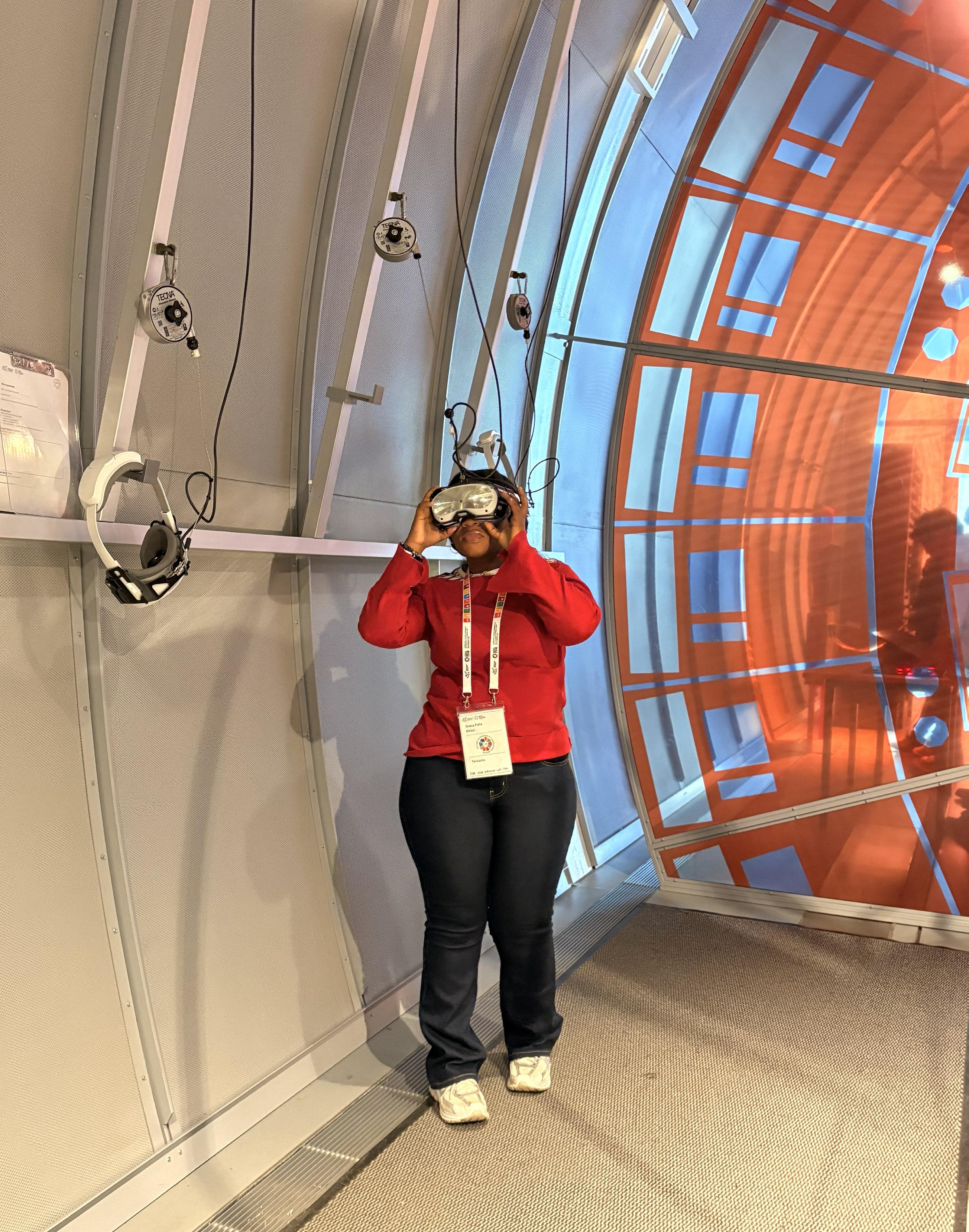
By that time, Rebecca and I had already answered most of the questions on our assignment, so we decided to roam around and see what else the center had to present. While walking through CERN with my friend, we passed through one of the famous cylindrical corridors in the main building. With cars moving beneath us and large windows at each end, it felt like walking through a giant pair of binoculars suspended in midair. We waved at the cars passing beneath us, and to our surprise, the passengers waved back. It was a small but unforgettable moment that captured the friendliness we experienced throughout our winter camp.
At the end of the corridor, we came across another museum featuring our universe and how it started. Curious, Rebecca and I walked in. The room was dark and filled with the most fascinating models of our solar system and complex machines used to study it. One of them was a simplified demo of a
radio-frequency accelerating cavity, also known as an RF cavity. It’s used to recreate conditions similar to those just after the Big Bang.
We also came across a giant map of the cosmic microwave background (CMB) radiation. It’s often called the “baby picture of the universe” because it shows what the universe looked like just 380,000 years after the Big Bang. Pretty cool, huh?
We also took down some notes and learned about other interesting facts, such as dark matter. Dark matter causes space to curve, distorting images of it. It also doesn’t reflect or even emit light. Eighty-five percent of matter in the universe is unknown, and we call it dark matter. I also learned that about 15 minutes after the Big Bang, the universe contained hydrogen nuclei (one proton) and helium nuclei (two protons and two neutrons). It was only about 380,000 years later that these nuclei captured electrons, forming our first-ever atoms.
We got a little carried away... by the time we realized it, everyone else was already downstairs enjoying lunch. Rebecca and I dashed to the canteen, grabbed a table, and happily devoured our sandwiches. By 1 pm, it was sadly time to leave CERN. I’ll miss wandering through those incredible buildings and exploring the amazing museums, but what I’ll miss most is the laughter, the shared discoveries, and the unforgettable fun I had with Rebecca during our visit.
pictures in this article by Jane Lim
Discovering Geneva
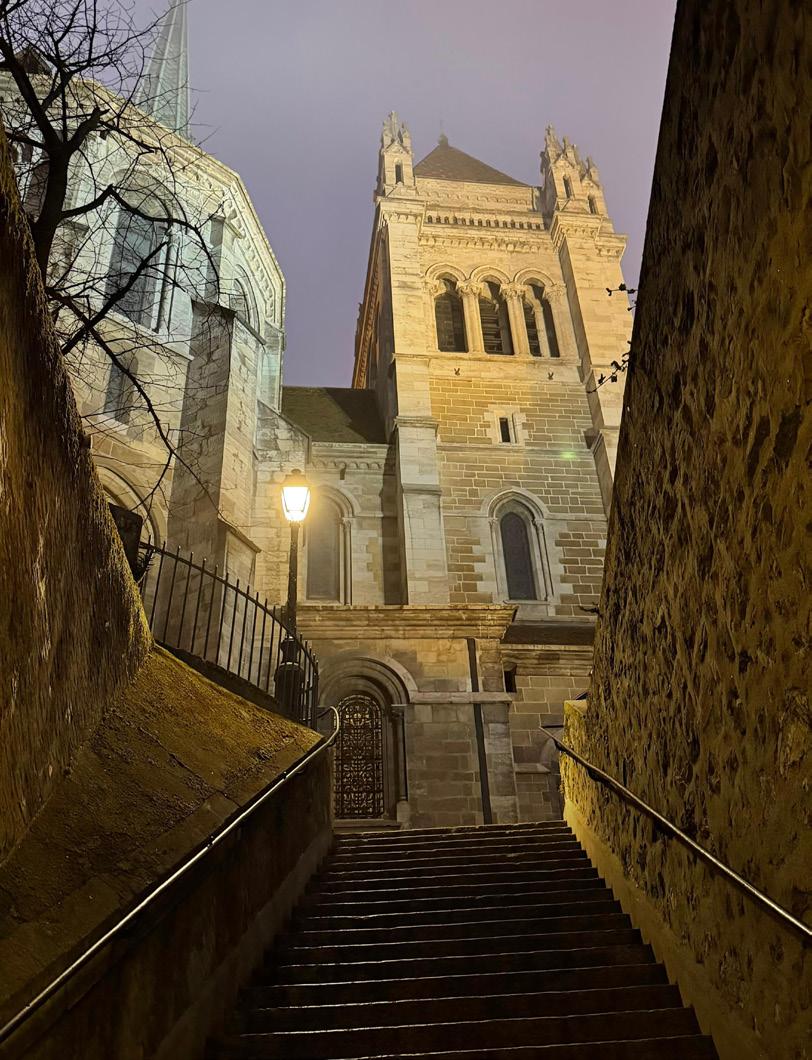
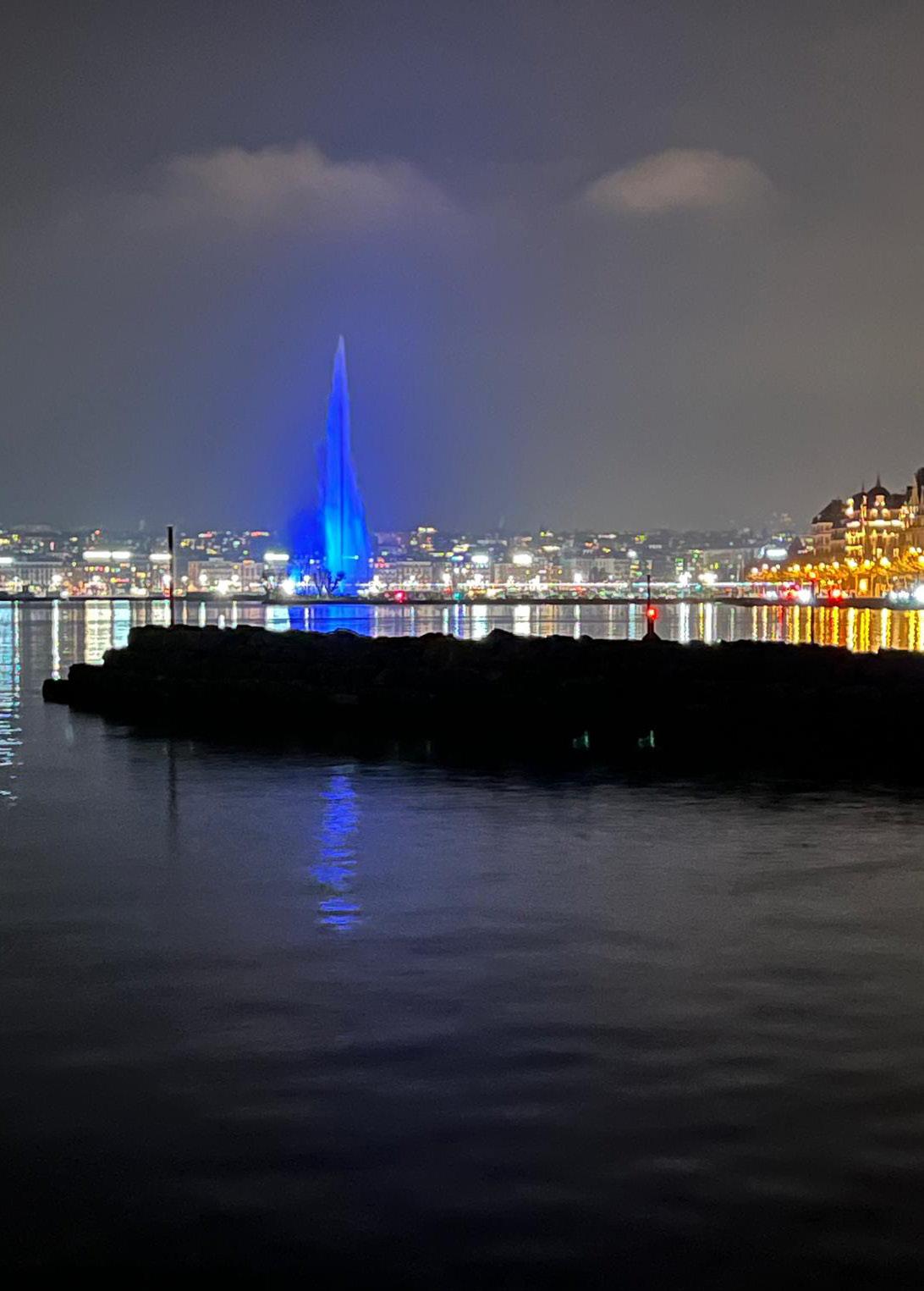
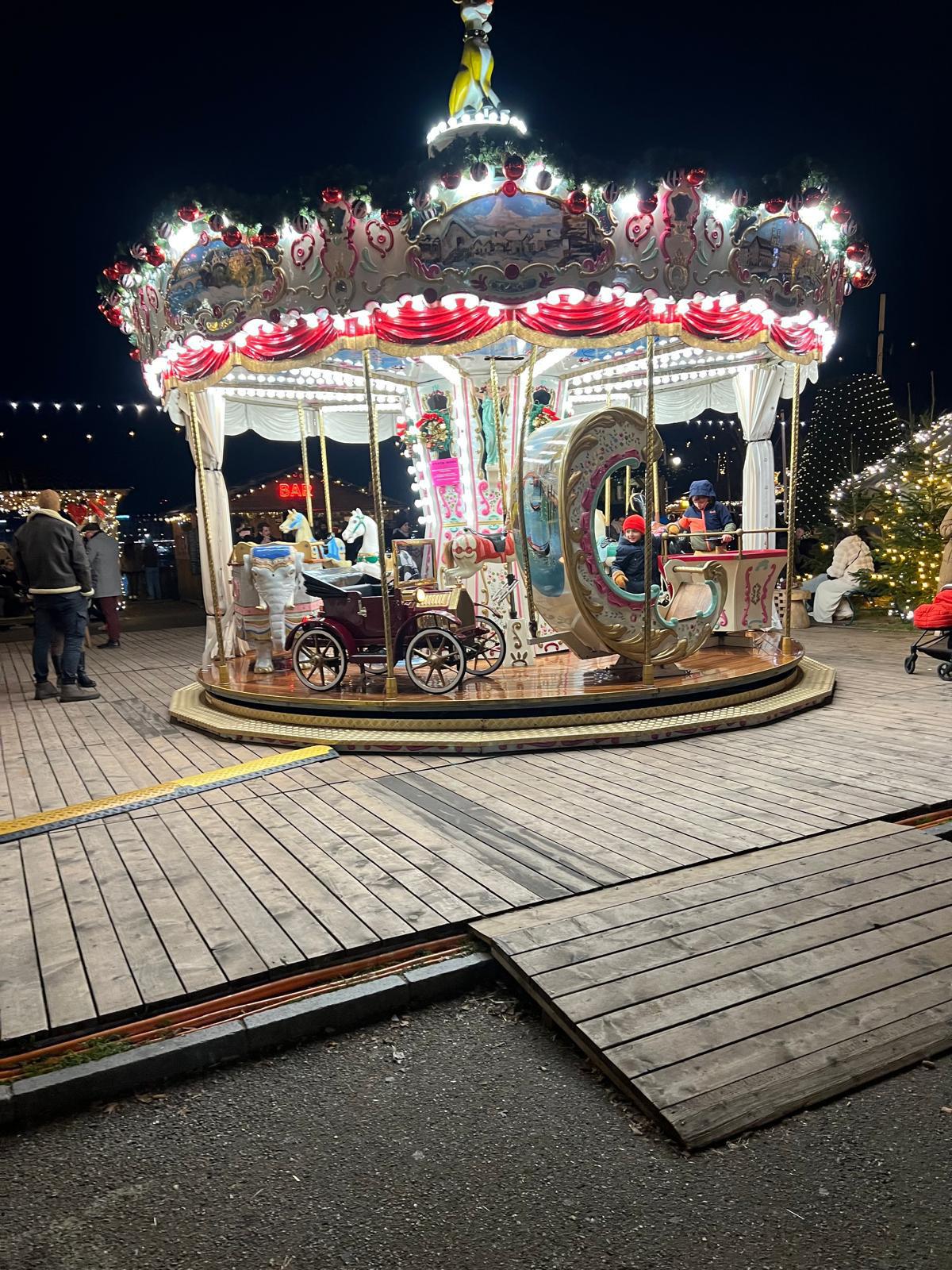
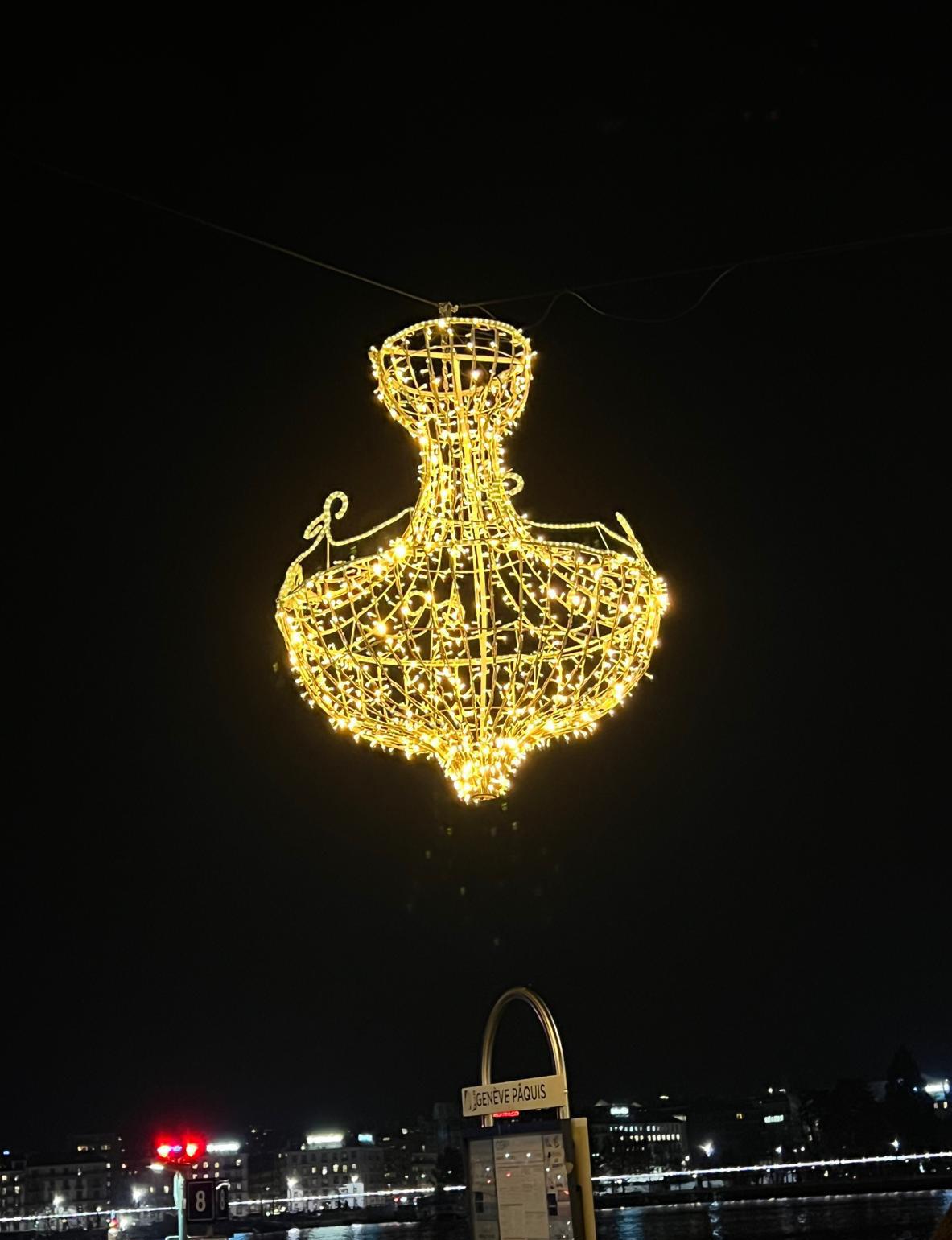
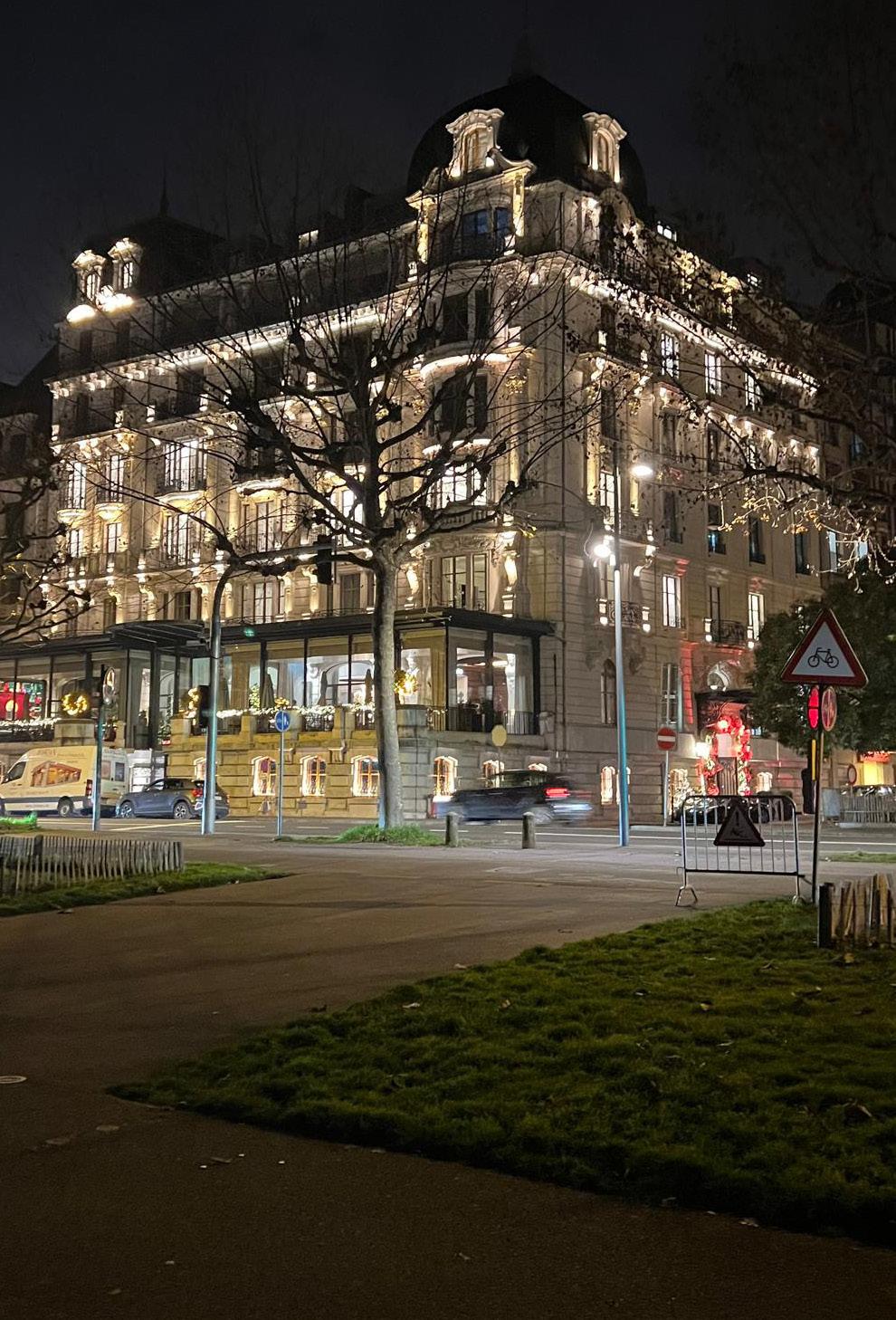
Ersilia’s Night Life Photography
Trip to Chamonix
by FUSI student Katherine Song
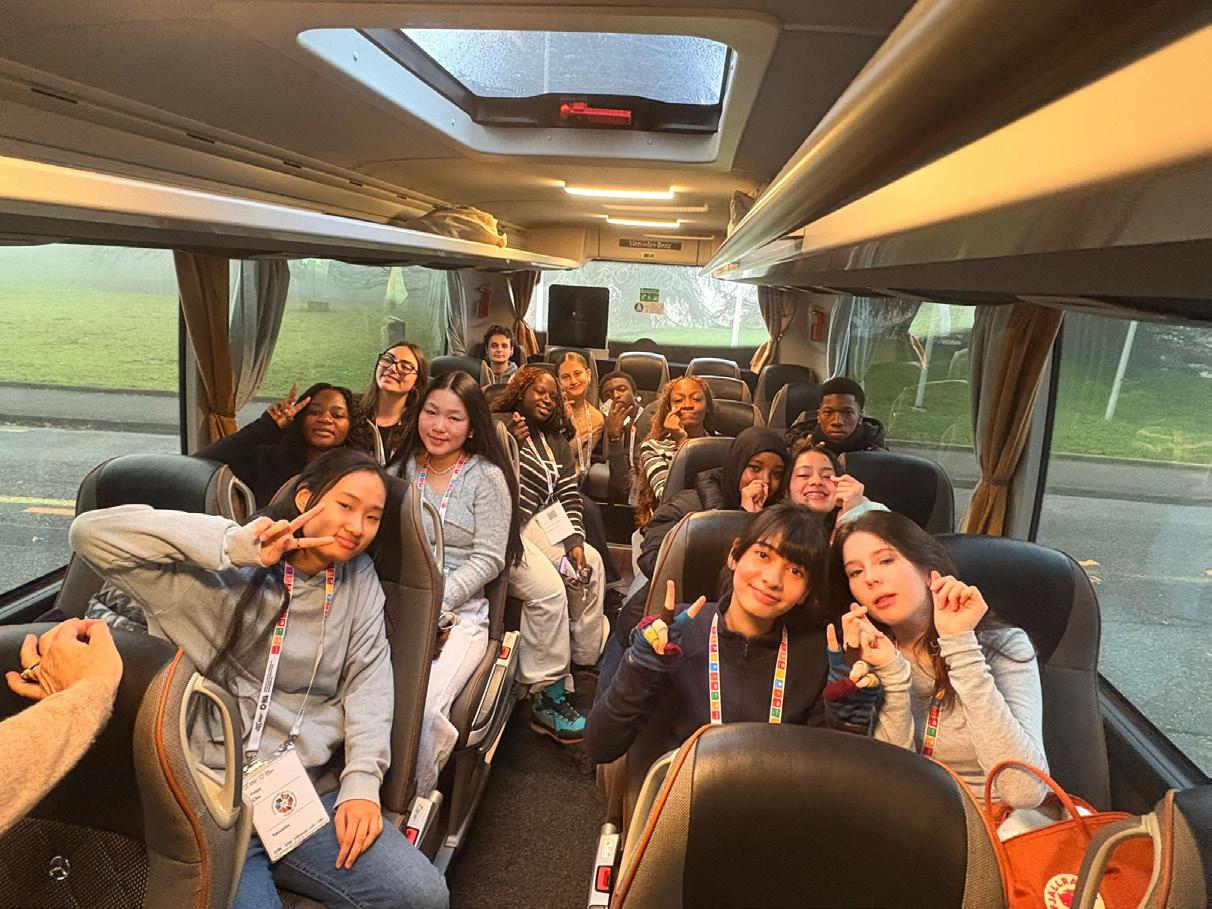
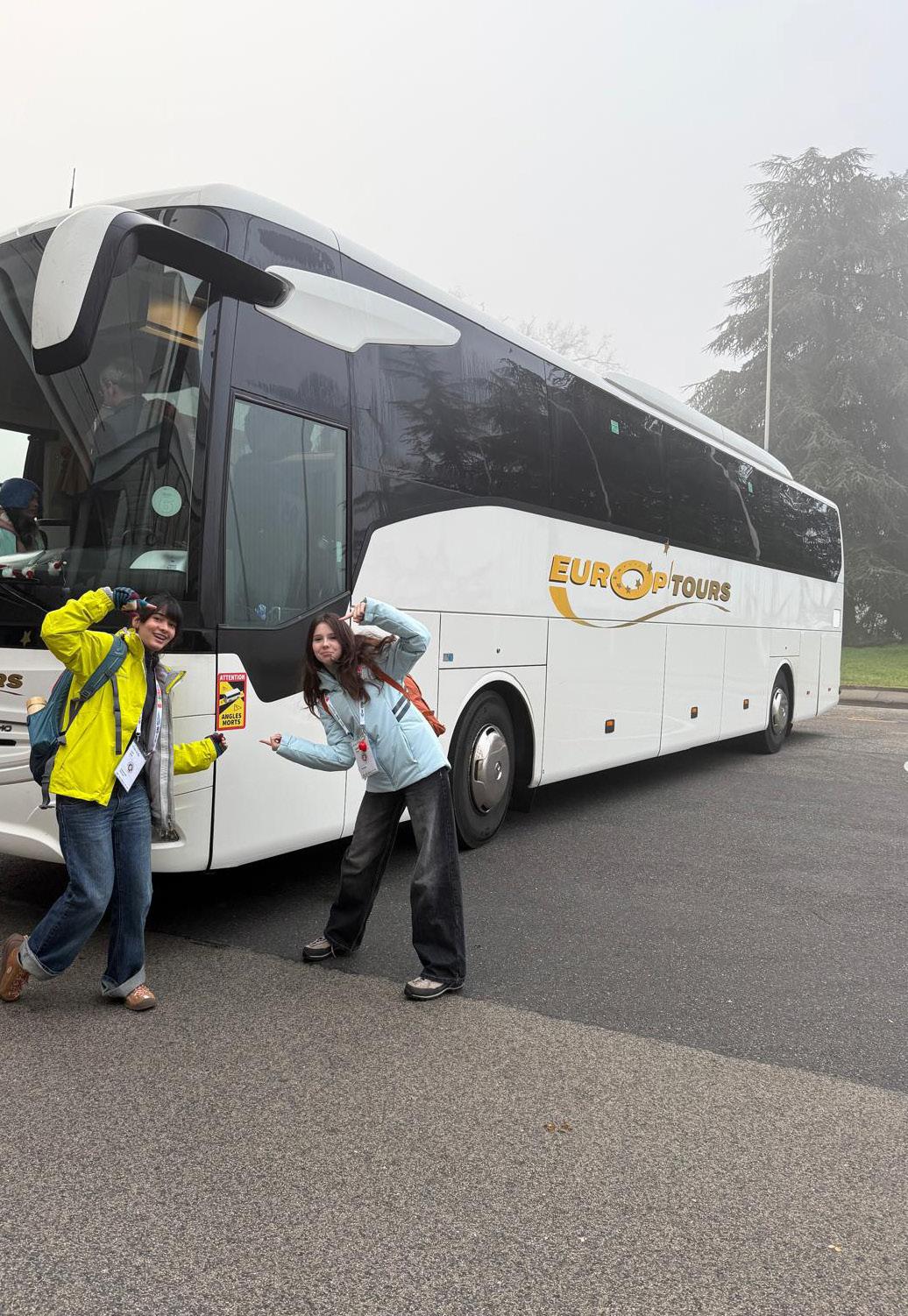
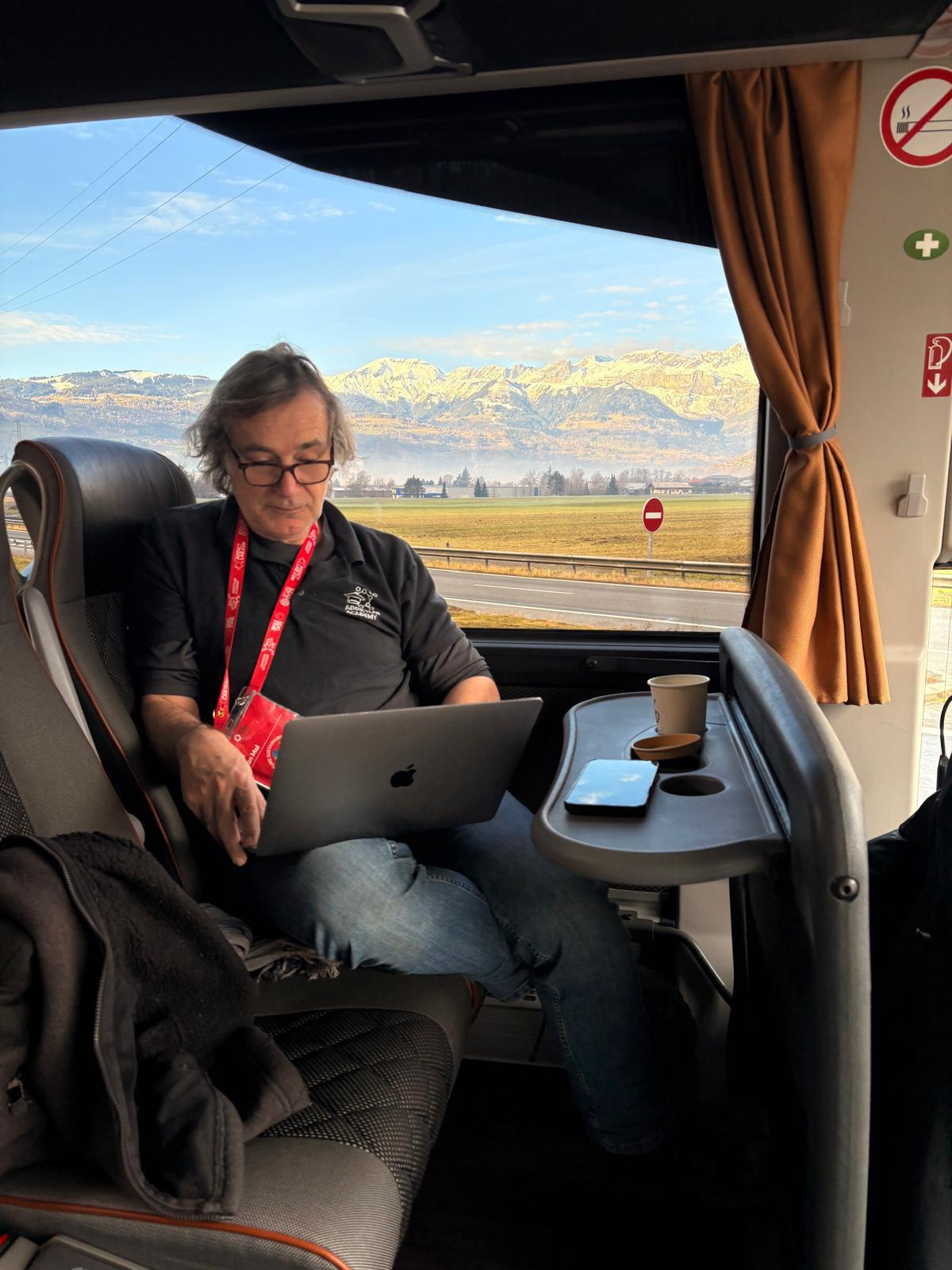
We started the day early, boarding a bus bound for Chamonix. The 1.5-hour drive took us through a region of the Alps, which made the ride spectacular and scenic. As we drove up winding roads, we passed little villages, where locals farmed their own crops and raised their own animals. It was awesome to see, because many people from our group are surrounded by more city-like regions back in our hometowns.
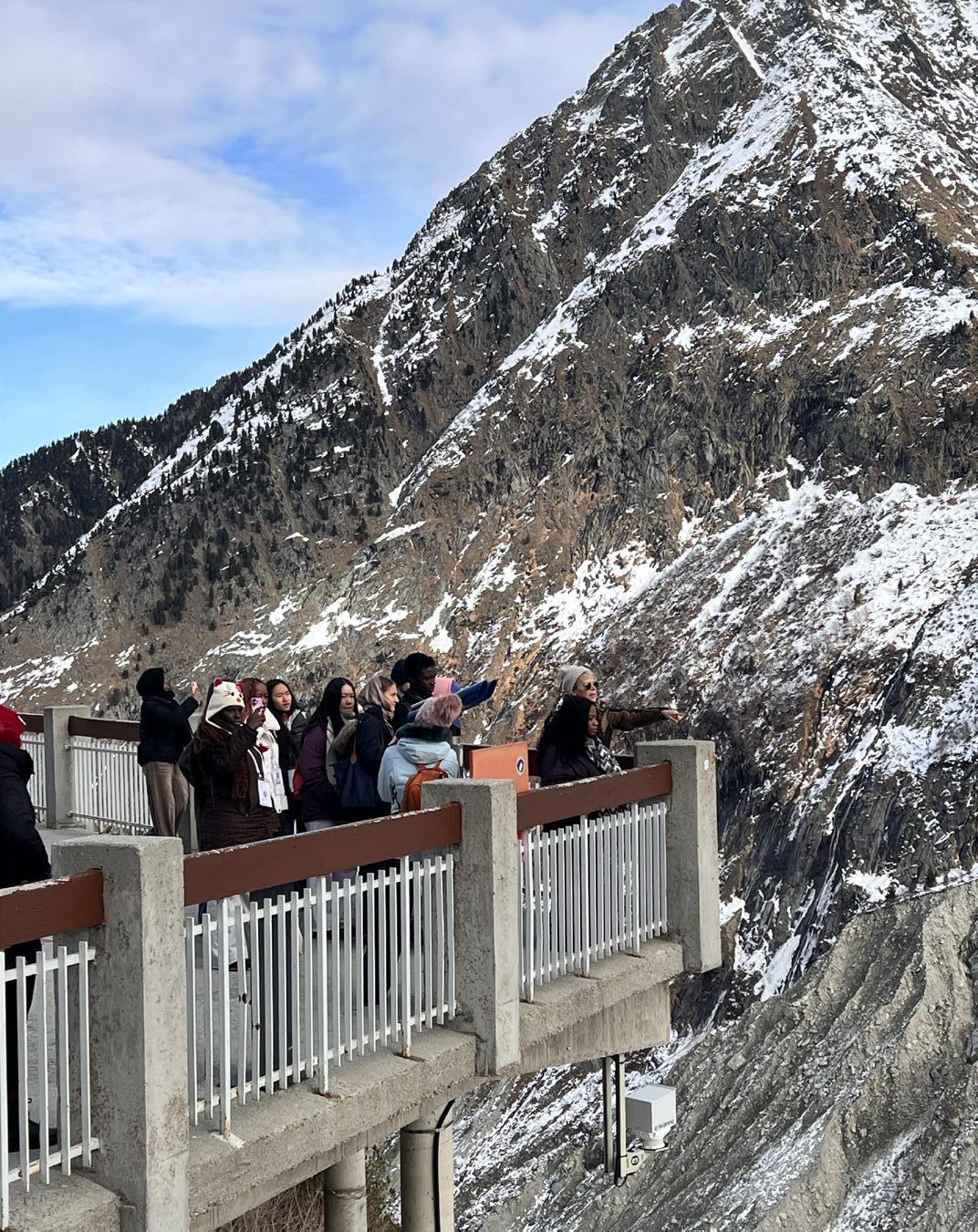
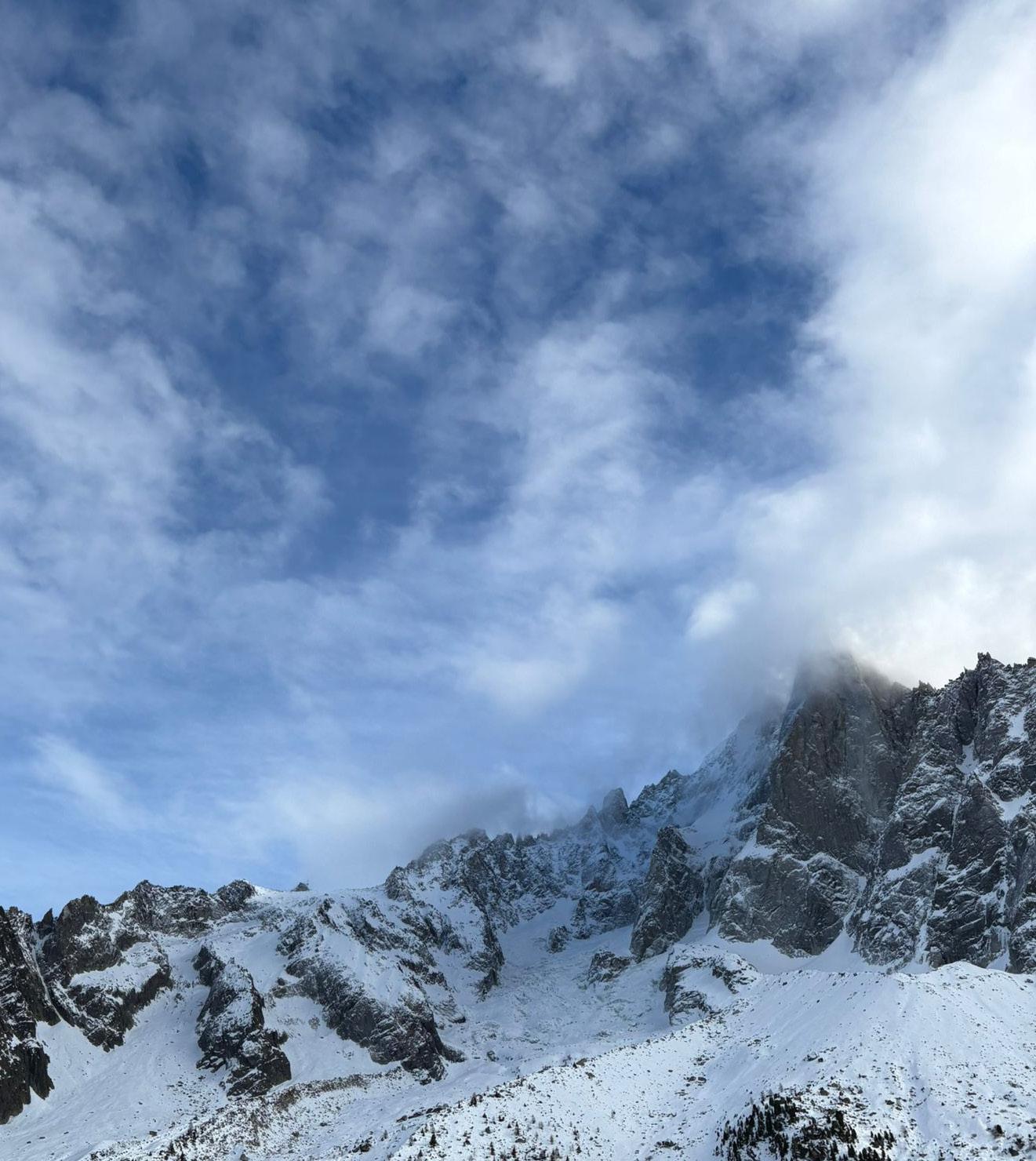
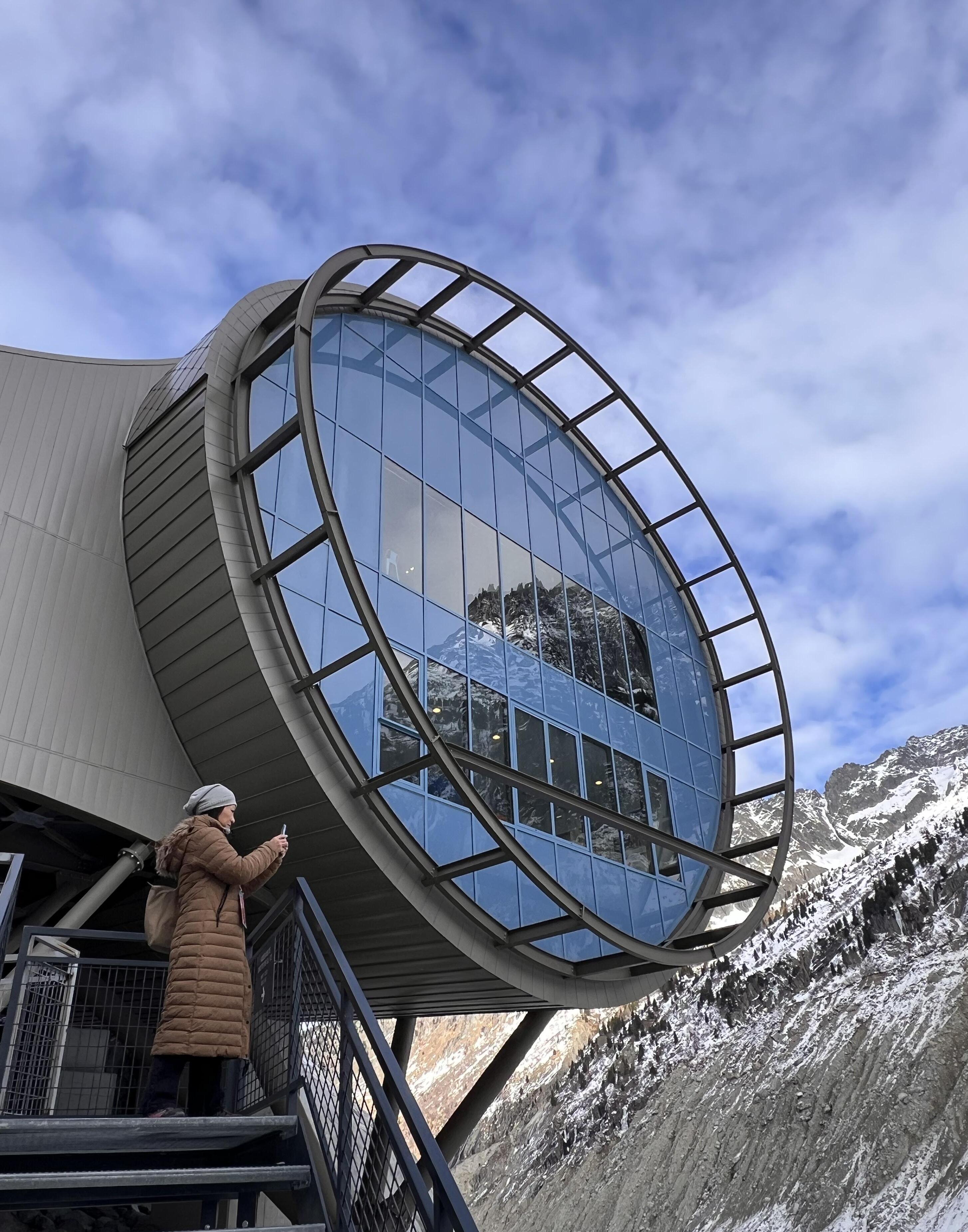
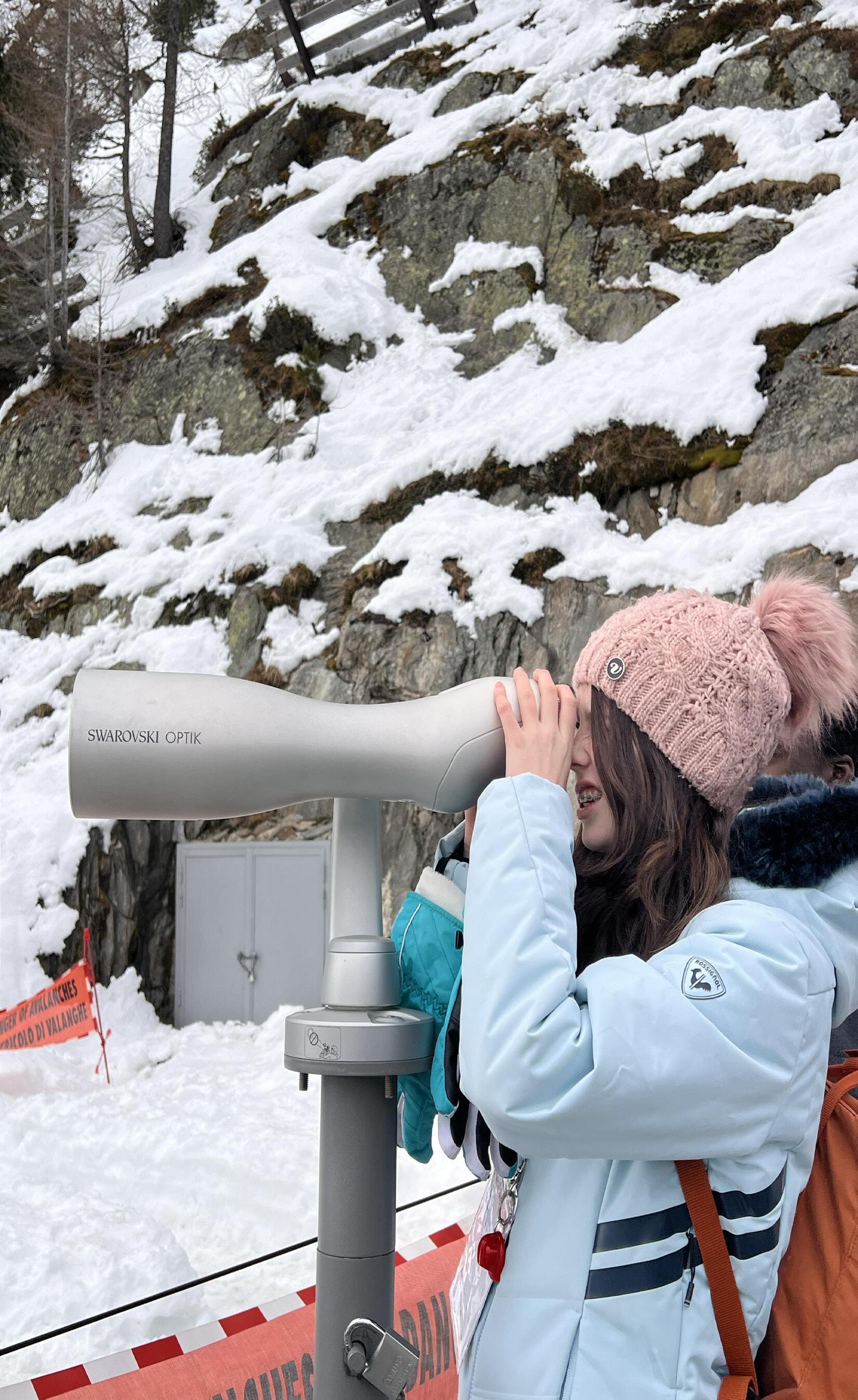
Upon arrival, we climbed aboard a small red train that carried us up the mountainside to an accessible viewpoint overlooking the Mer de Glace, a vast and breathtaking glacier in the Mont-Blanc region of the French Alps. It was amazing to see because it was so grand. Annette educated us about the valley’s striations from where the glacier once was, teaching us that they are left there after the glacier has completely melted away from that area. As we peeked over the edge, we could see the marks the glacier had formed through the thousands of years it has existed.
projecting onto 3D models of the glacier, we were able to see the changes of the glacier.
By midday, it was time for lunch, and we made our way back along the trail to the main tourist building. A variety of sandwich-
receded was shocking and deeply impactful.
This was honestly a highlight of the adventure we’d gone on this day, particularly because we were able to see and put into perspective just how much the glacier was diminishing. It allowed our group to look at the levels right in front of us, which was majorly important to our understanding of climate change impacts on glaciers.
es were available, all of them delicious, but the real highlight was the view. Through the windows, we were treated to jaw-dropping sights of the glacier and its valley below.
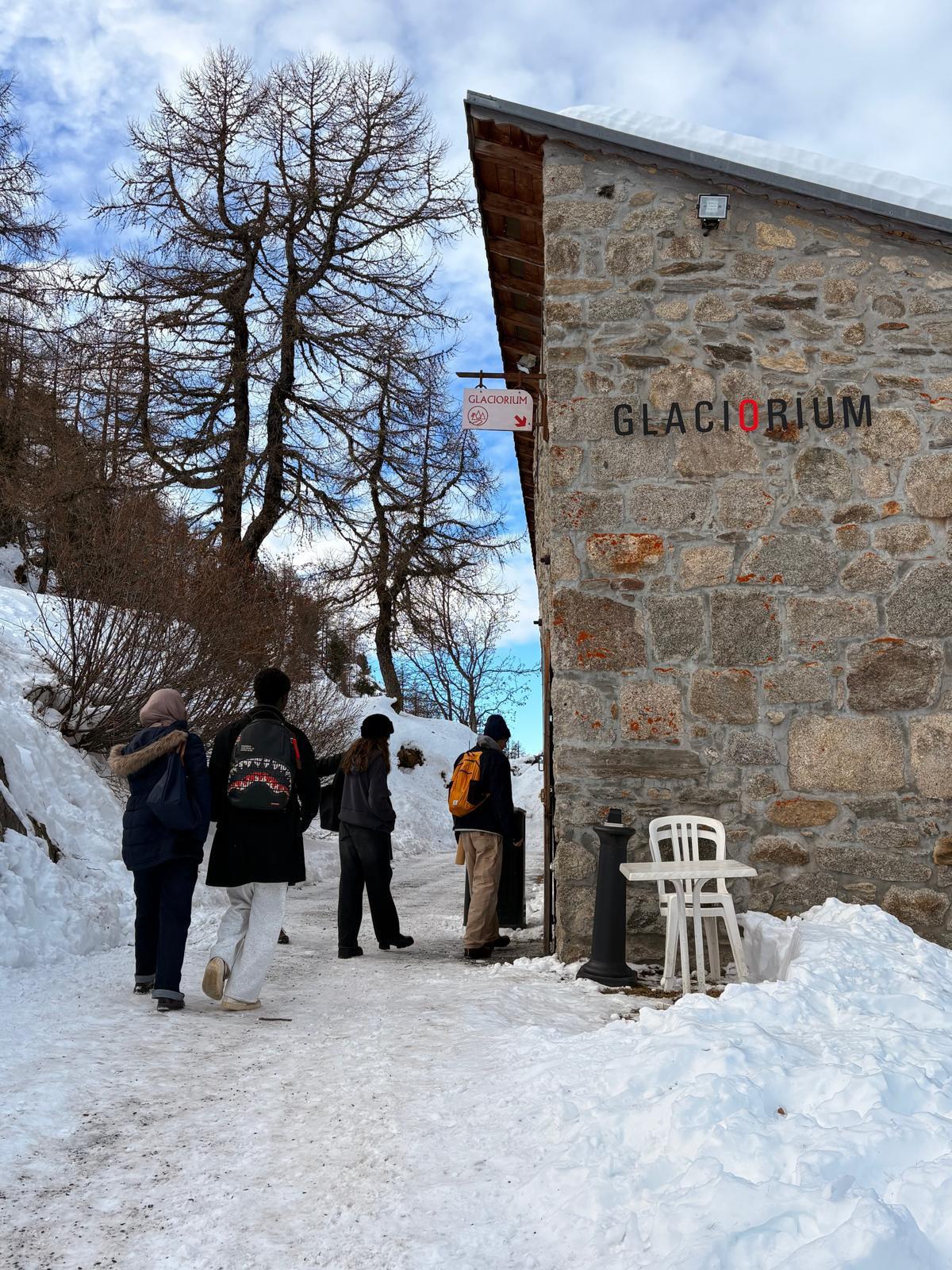
From the viewpoint, we took a short hike to the Glaciorium, an educational center dedicated to the glacier. Inside, we learned about the Mer de Glace’s formation, history, and projected future, as well as its current state. The exhibits highlighted the rapid pace at which the glacier is melting. Overall, this experience was fascinating in many ways. Through the immersive exhibits and light
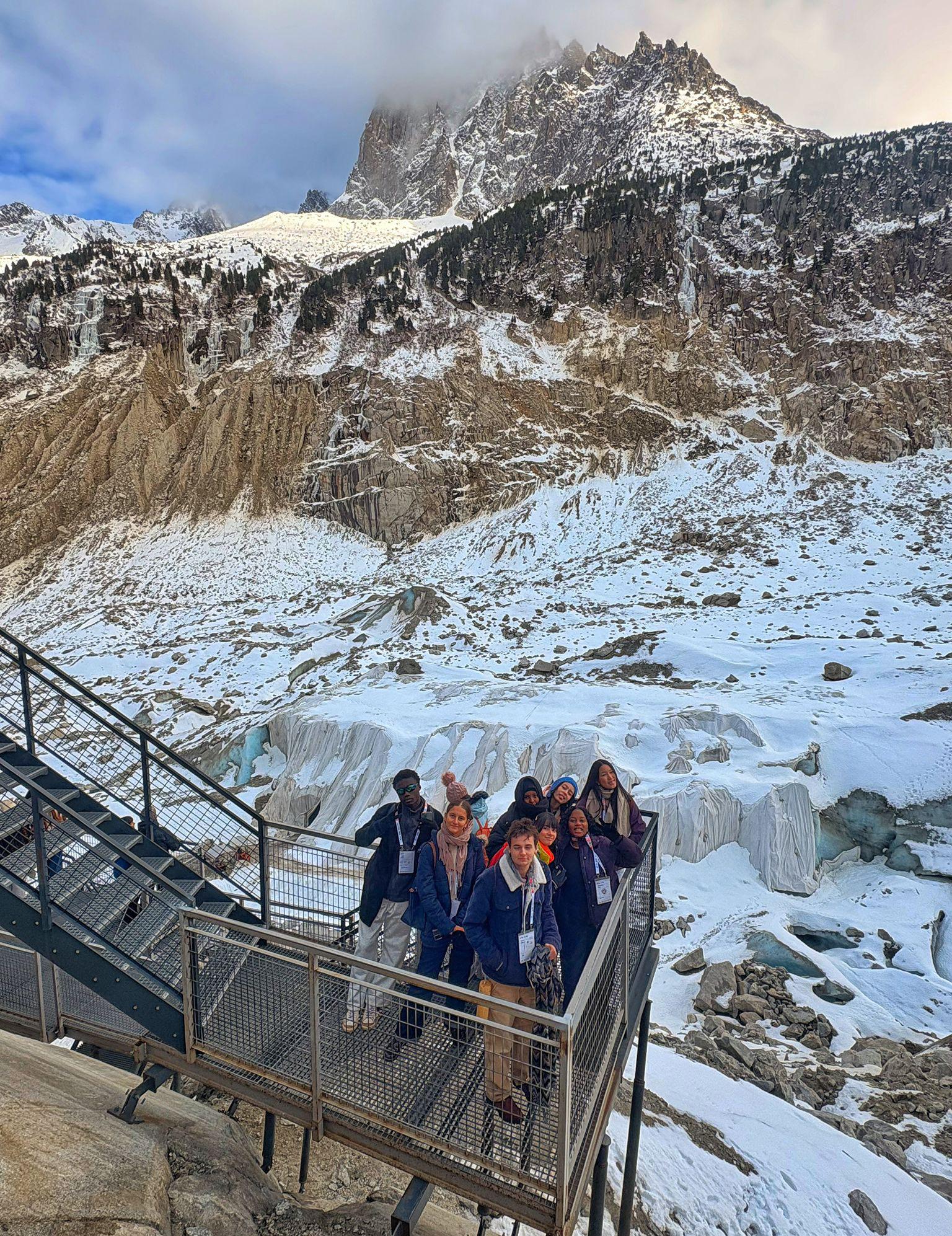
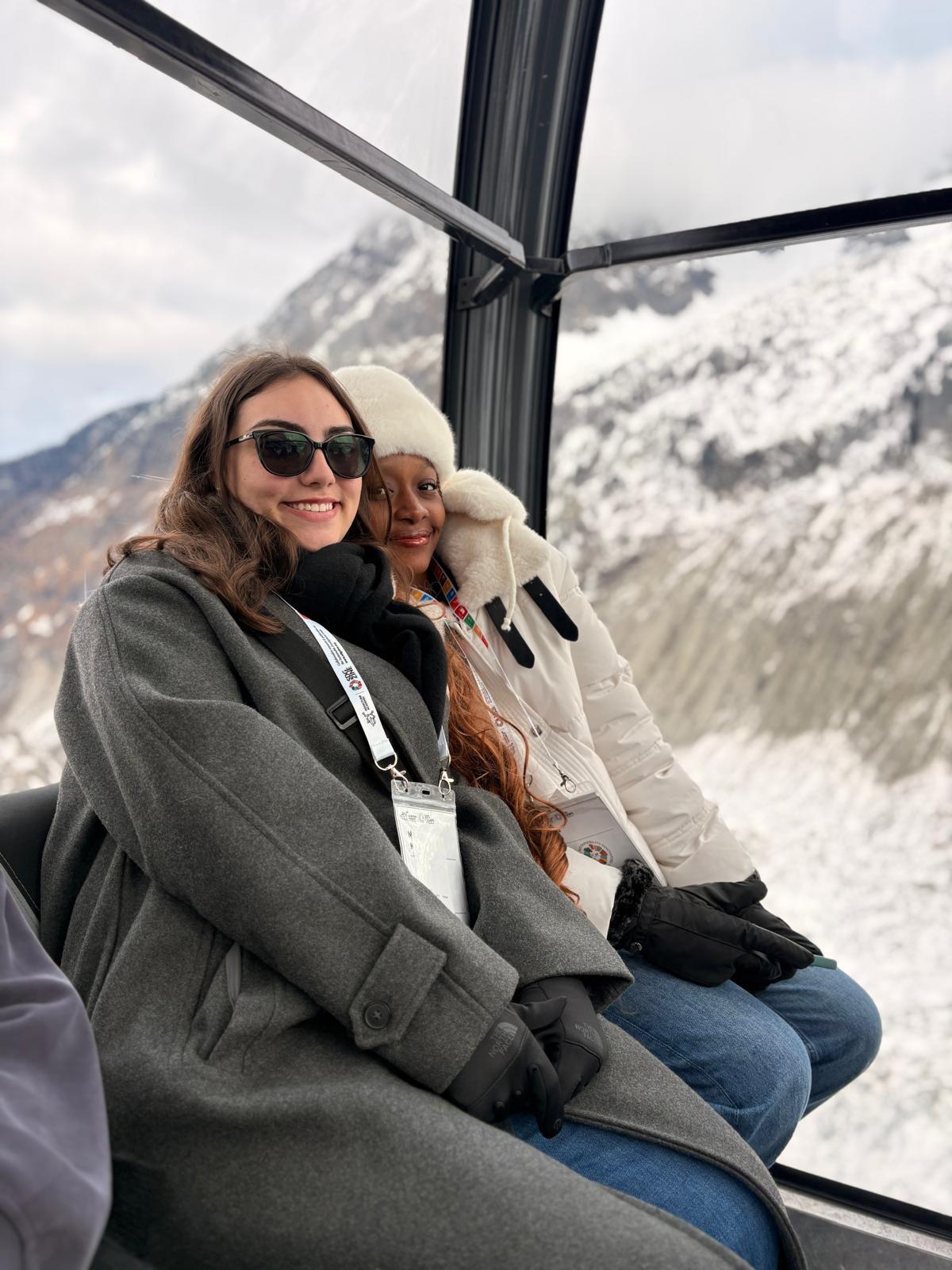
After lunch, we descended via a short gondola ride to the valley floor, which provides access to a cave carved by the glacier itself. Although maintenance work kept the cave closed to visitors, we were still able to walk down hundreds of steps that marked the glacier’s decreasing ice levels over the past decade. Seeing how dramatically the ice had
In the afternoon, we rode the gondola back up and spent time in the gift shop (a dangerous temptation for many of us) browsing souvenirs and locally handcrafted items made by Chamonix artisans.
To conclude our visit, we boarded the little red train once again, descending the mountain and bringing our unforgettable glacier experience to a close.
Visiting Mer de Glace
by FUSI student Ersilia Girard
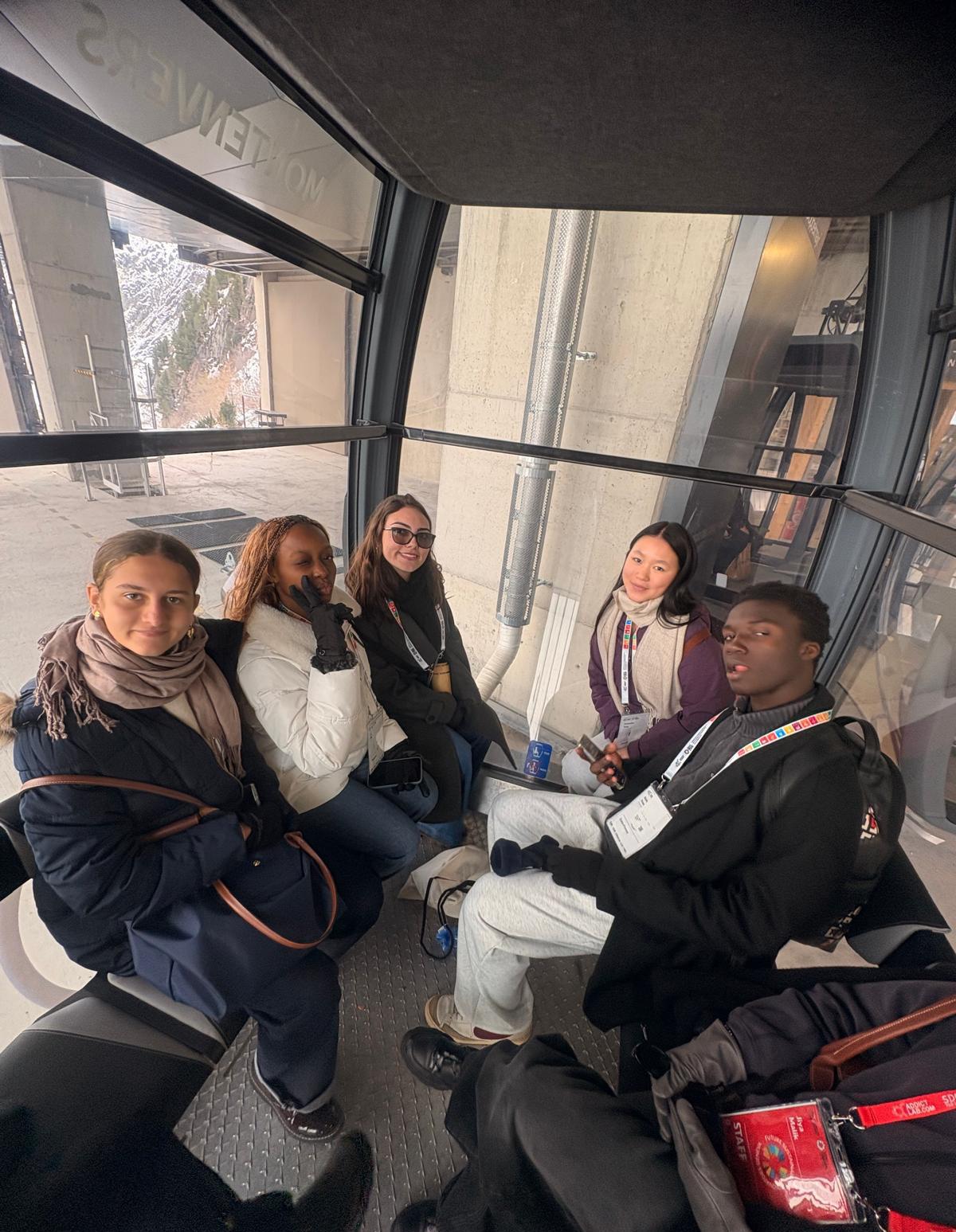
On Wednesday, December 17th, 2025, we went to Chamonix, France, to see the glaciers and mountains. To get close to the glaciers, we took the Montenvers cogwheel train, which brought us to the Mer de Glace site.
Once we arrived, Annette gave us a lot of information about glaciers and their evolution due to global warming. Among the data she shared, she explained that, worldwide, glaciers have lost about 5% of their ice since 2000, with significant annual losses and an accelerated melting in recent years.
We saw the Mer de Glace, and then we entered an exhibition hall dedicated to glaciers called the Glaciorium, which explained how glaciers are formed and the changes they undergo.
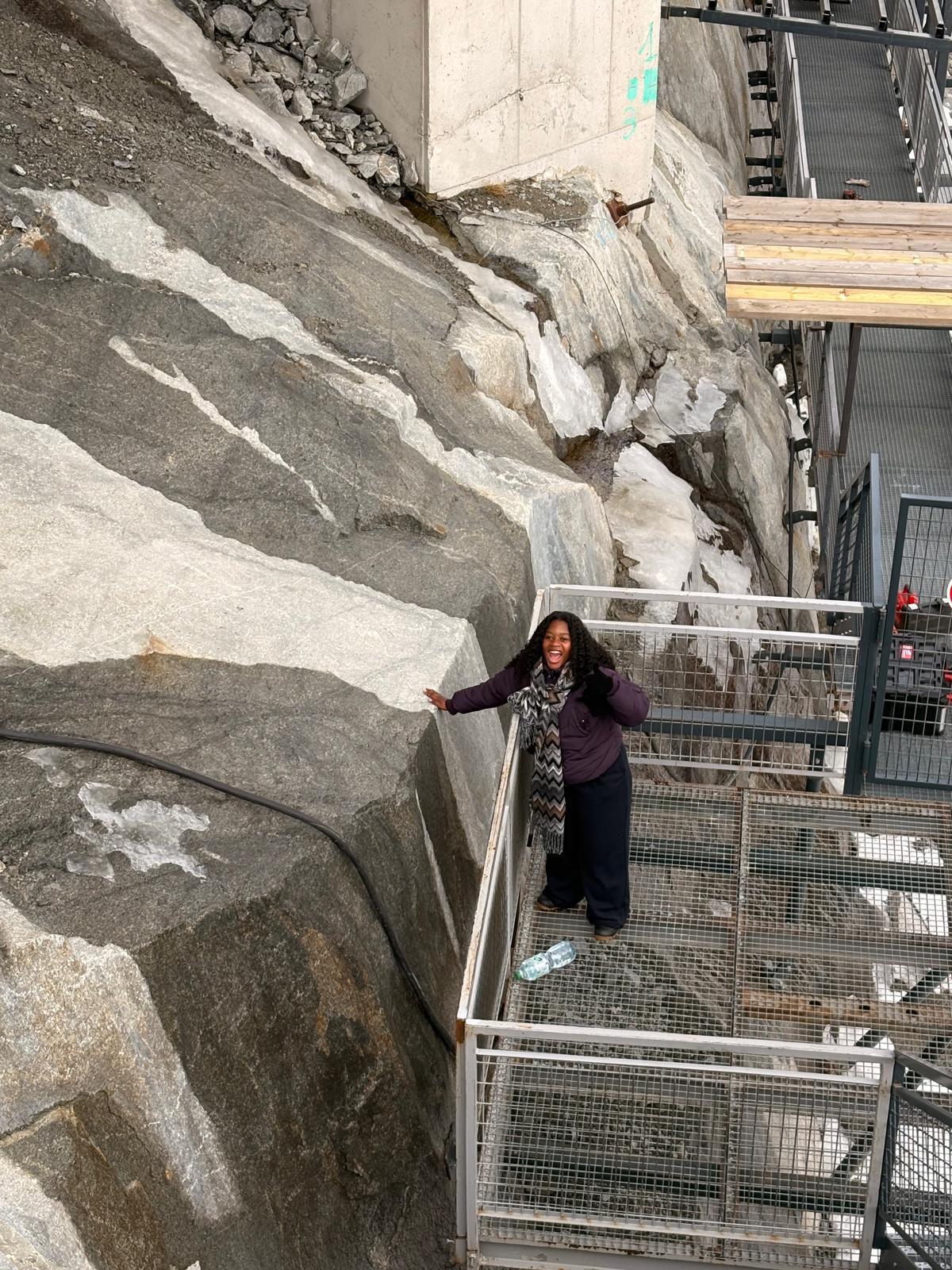
Next, we took the cable car that led us to the heart of the glaciers. There, we went up some stairs that really struck us, as they were well below the level the ice used to reach, notably in 2018 and 2022, which clearly shows how much the glacier has receded.
We then took the cable car back in a group. One group was able to see a chamois, an animal typical of the Chamonix region, which Patrick showed us.
Afterward, we went into town to do some shopping.
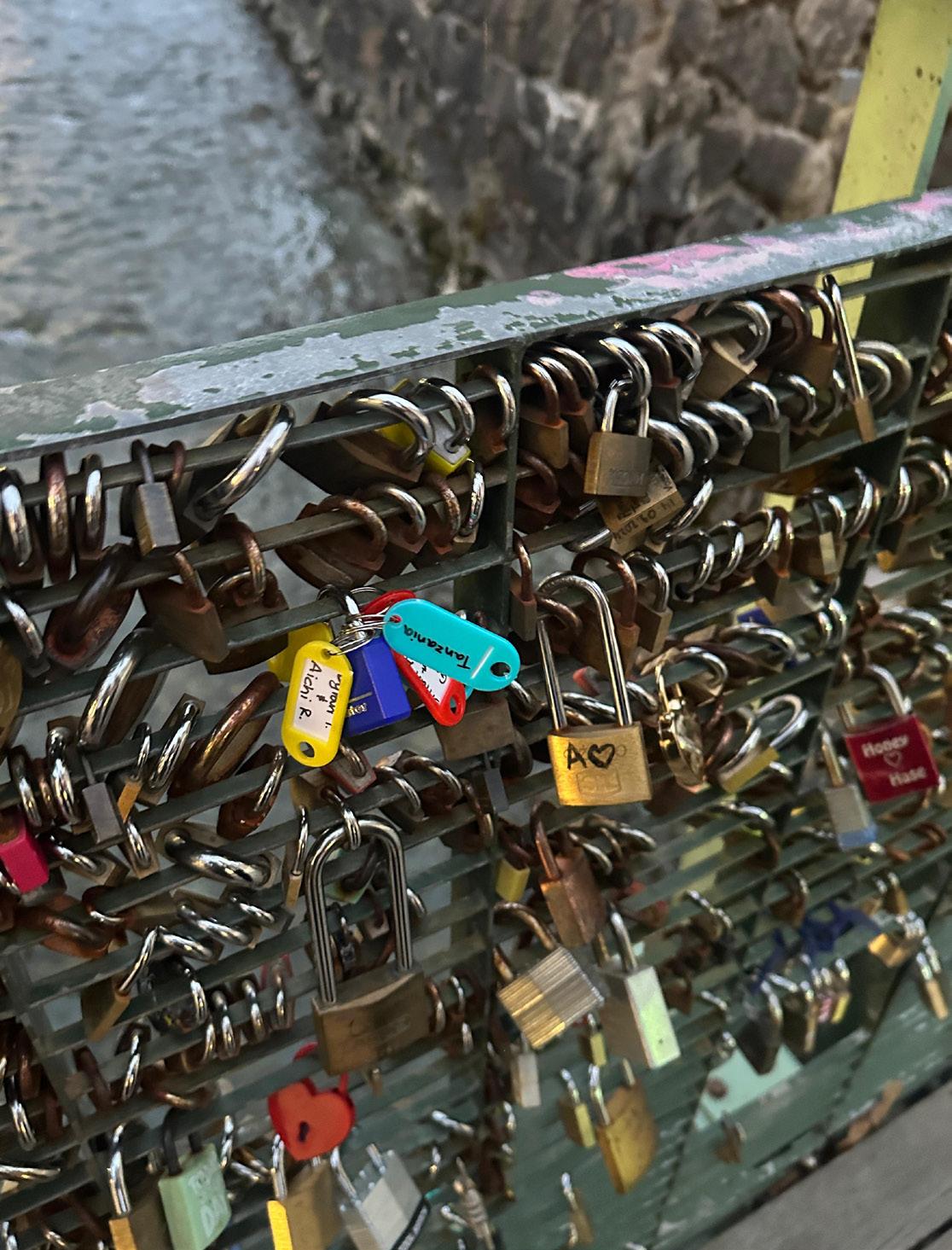
We also took the opportunity to attach a lock to a bridge, with our names on it. This gesture symbolized the friendship that had been created among the participants during this winter camp.
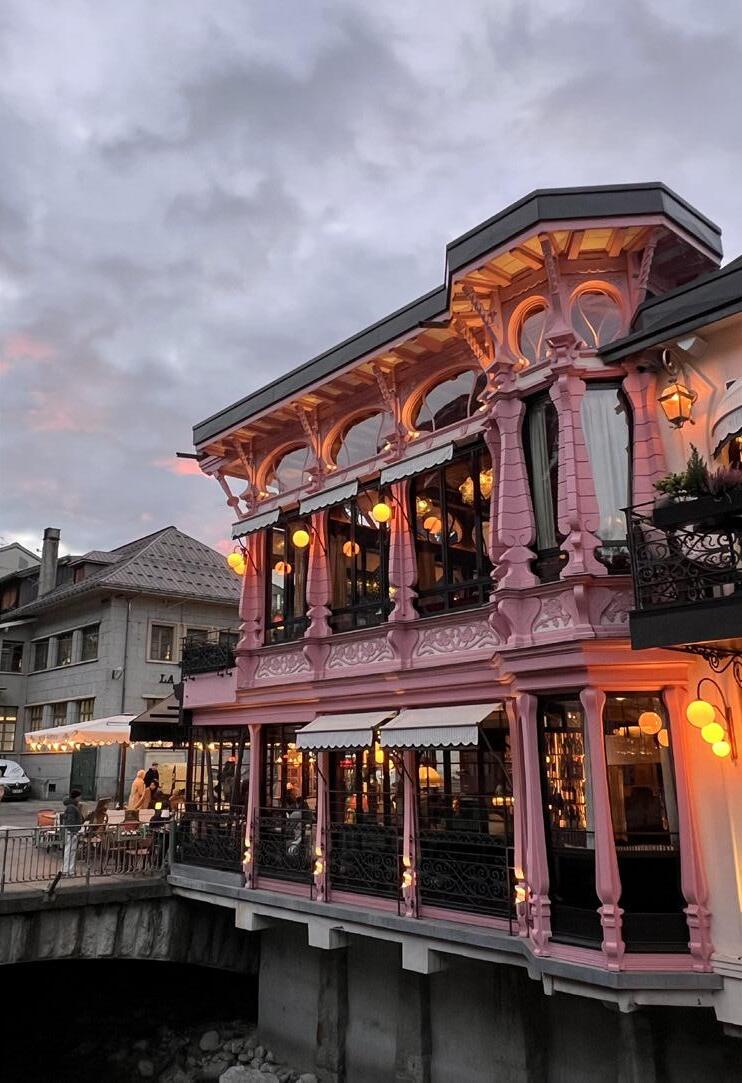
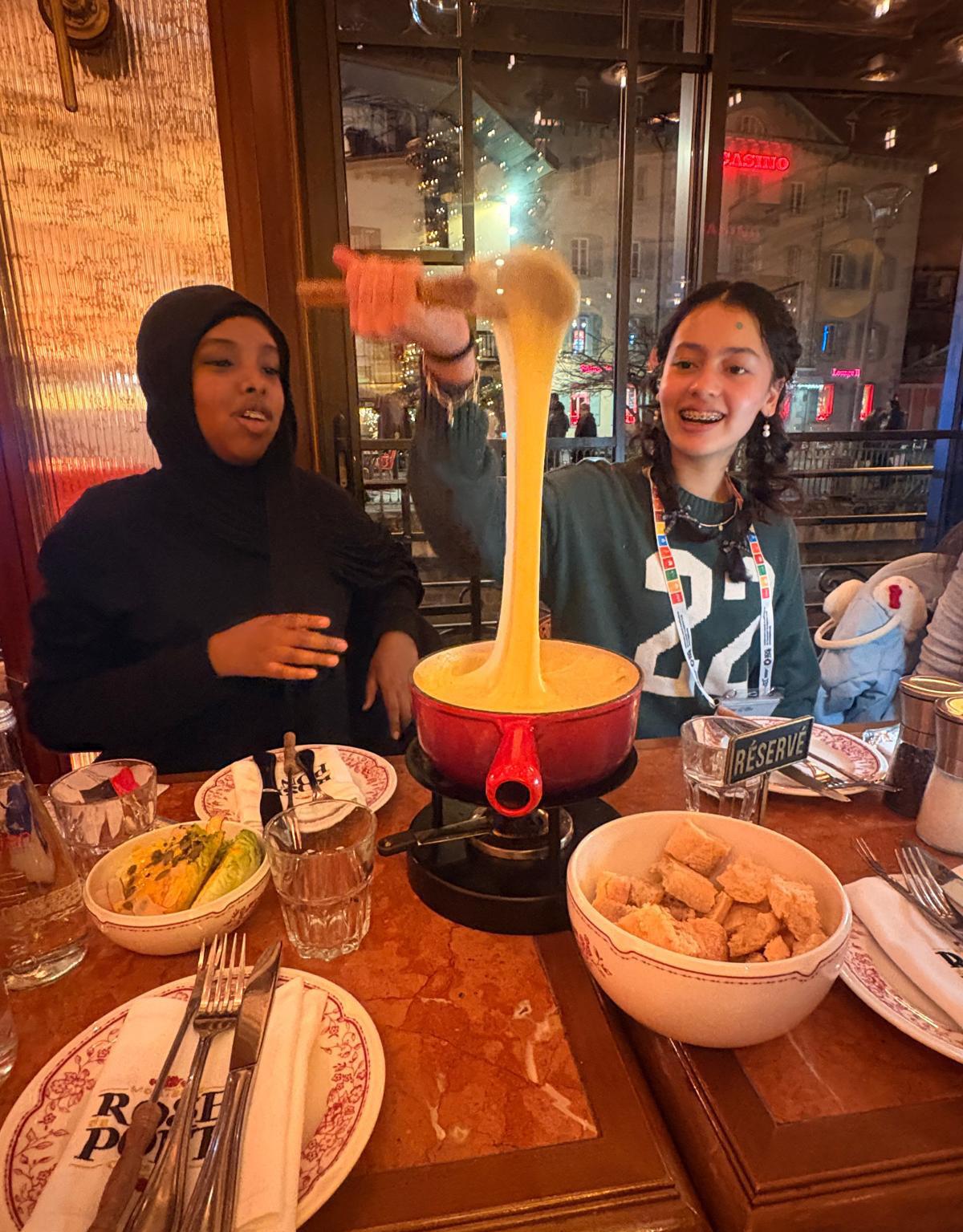
To end the day, we dined at the restaurant La Rose du Pont, a beautiful restaurant with a stunning décor, where we enjoyed a fondue.
Wednesday: Climate Action Field Trip
by Jane Lim
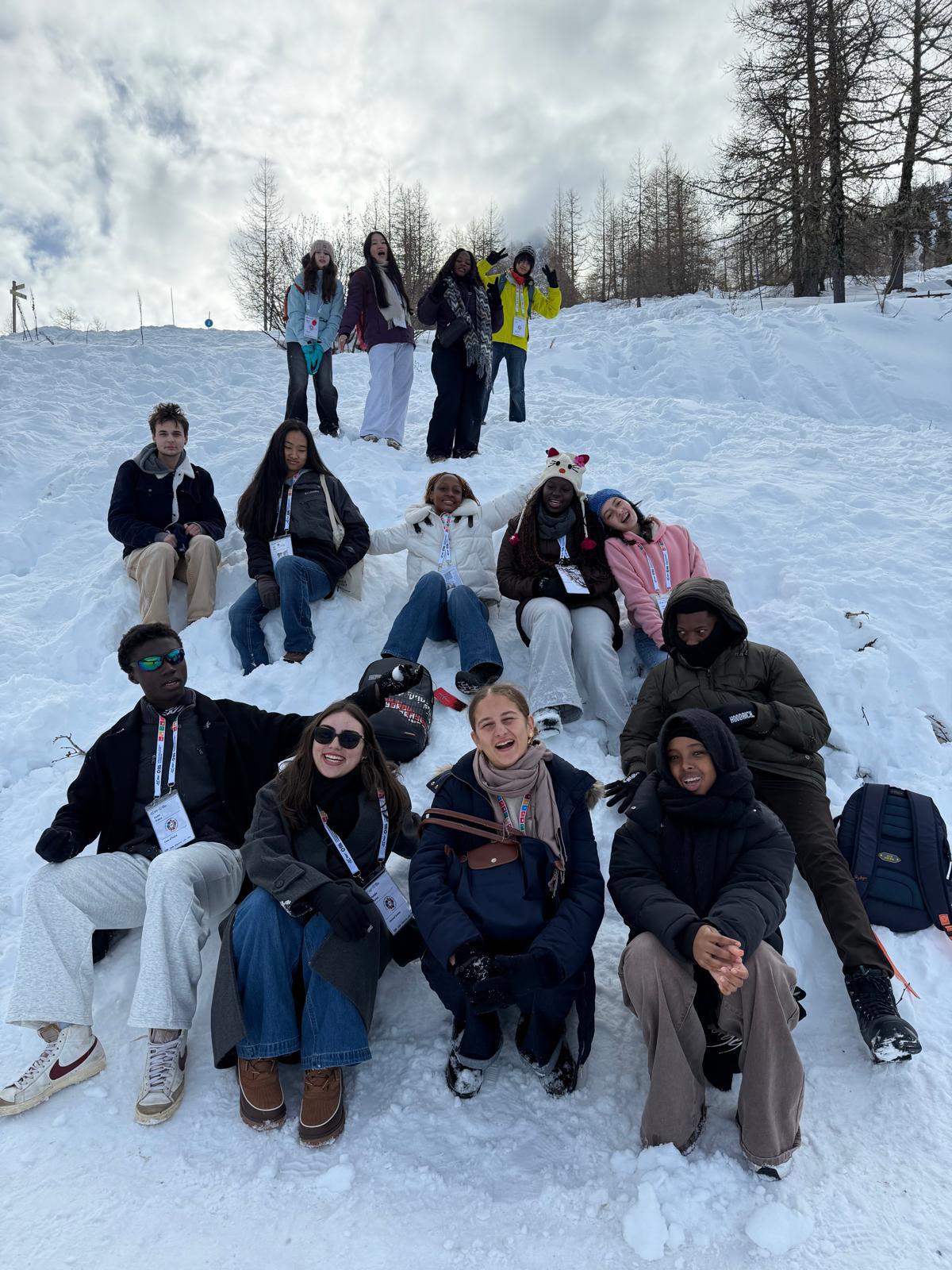
Wednesday was the nature excursion day, focused on understanding Climate Action in a real setting. We travelled to Chamonix to observe the effects of climate change in a mountain environment and to see a glacier that is rapidly retreating. Students were visibly excited, especially about the snow which we had promised. For several participants, this was their first time experiencing snow, making the trip particularly meaningful. We discussed the importance of winter ecosystems, why winters are changing, and how this connects to our
broader work on climate awareness and responsibility.
The ice cave was unfortunately closed due to maintenance, but the group visited the Glaciorium instead. There, students learned how glaciers are formed, how they are monitored, and how scientists track their disappearance over time. This provided concrete context to the Climate Action discussions happening throughout the camp. Afterwards, we went down to Chamonix town, where students had some personal time for shopping and exploration.
Dinner was held locally and featured Alps-style fondue, which was a first-time experience for many students and very well received. After dinner, the group returned by bus to the hotel.
Addictlab at the SDG Solution Space
Visit to the World Health Organisation
by Jane Lim
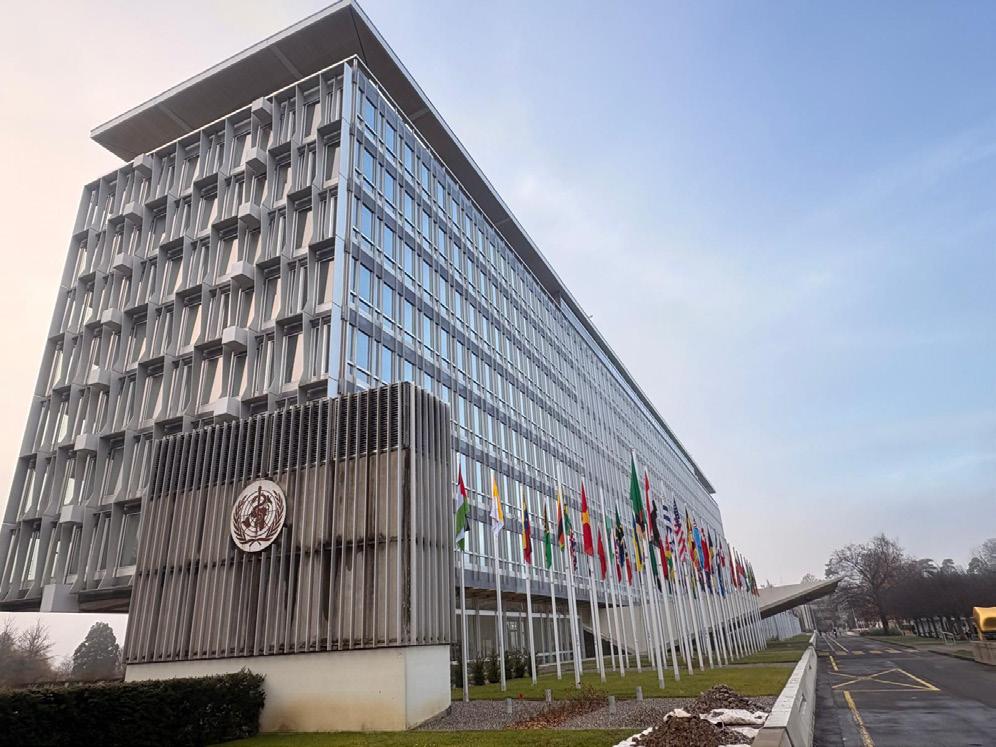
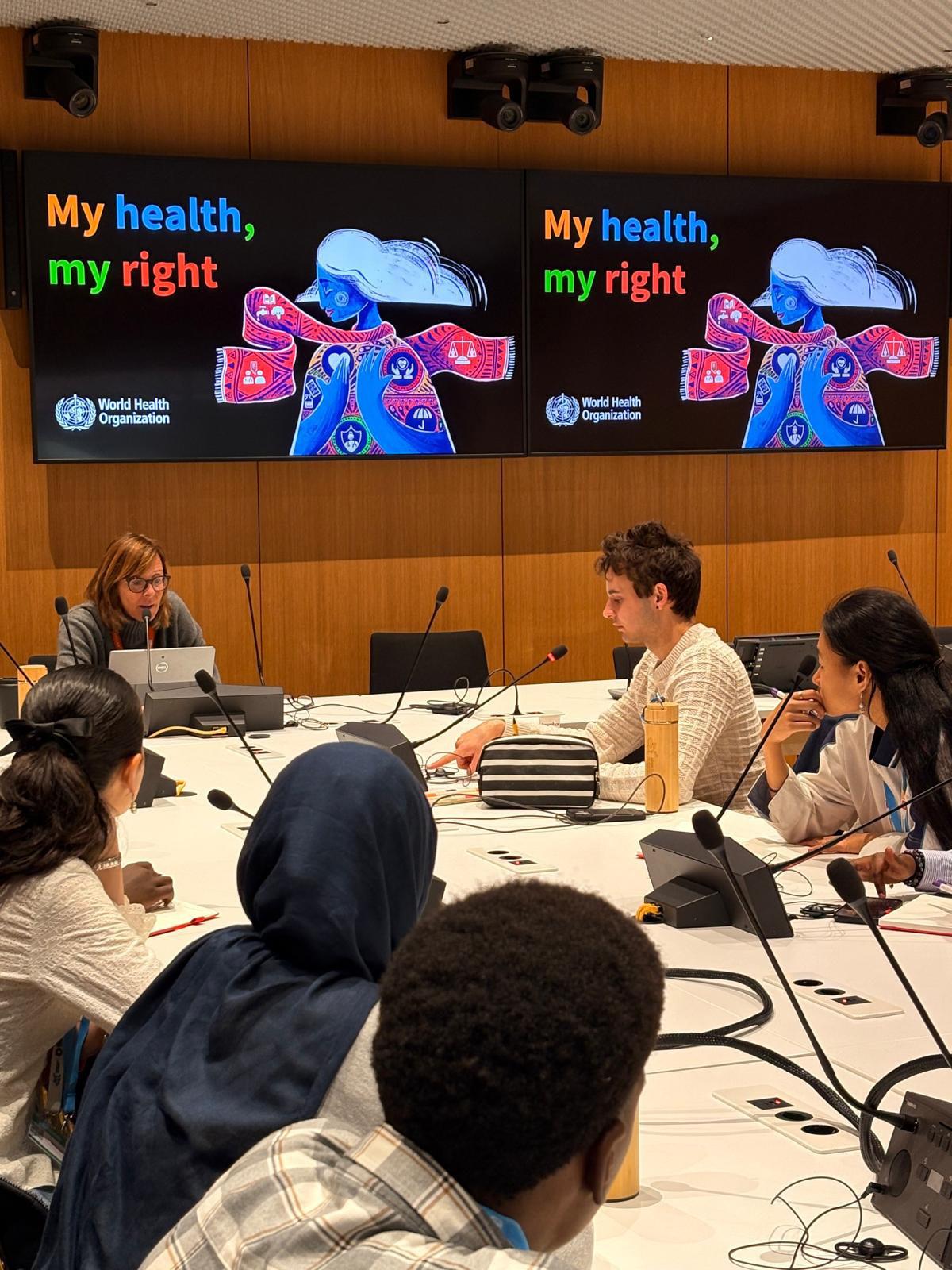
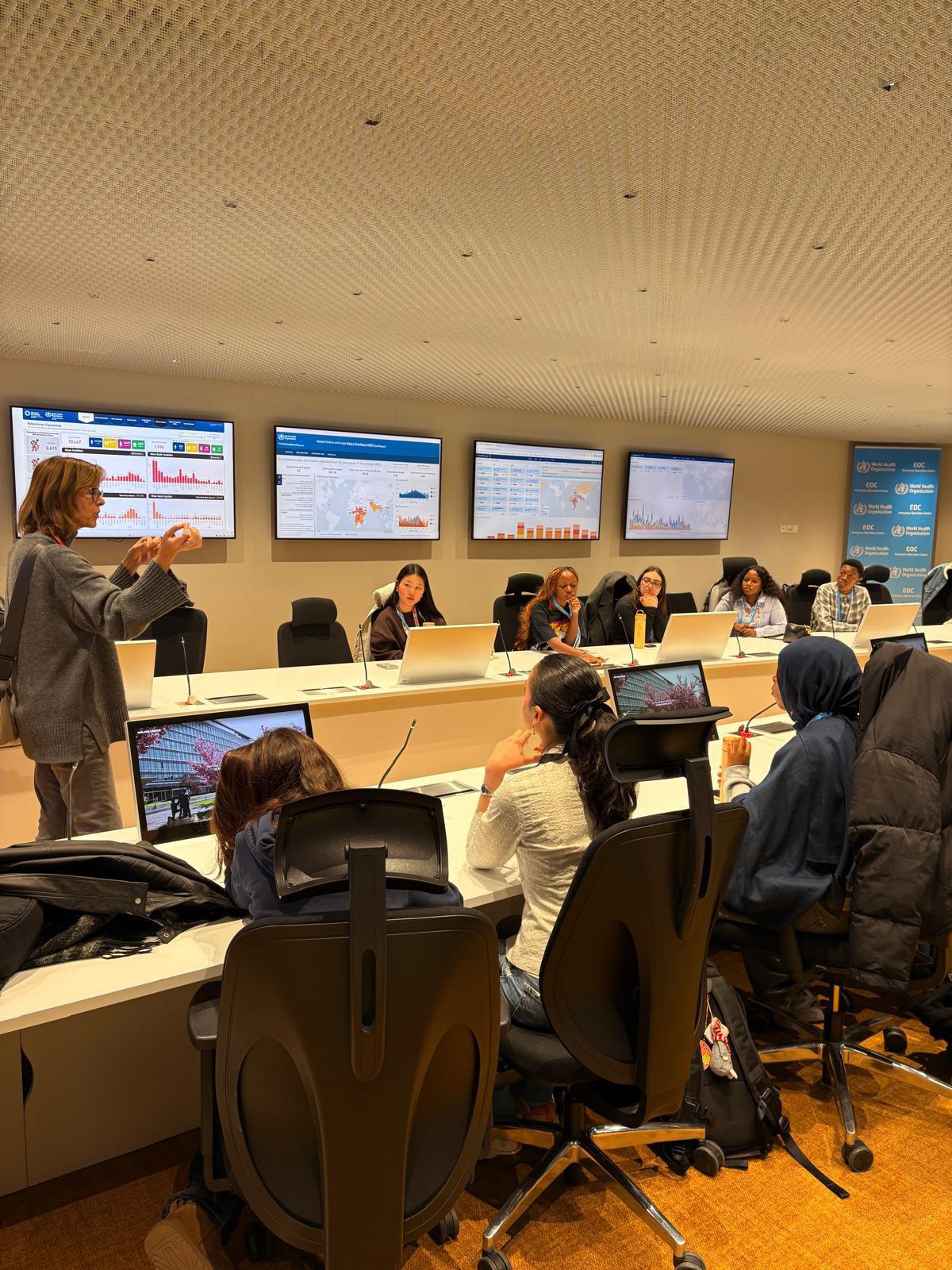
On Thursday morning, students visited the World Health Organization (WHO). The visit was presented by Dorine van der Val, who introduced the role of WHO and its work in global health.
During the visit, students learned how WHO responds to international health challenges and coordinates action across countries.
Dorine explained how information is gathered, decisions are made, and responses are organized at a global level.
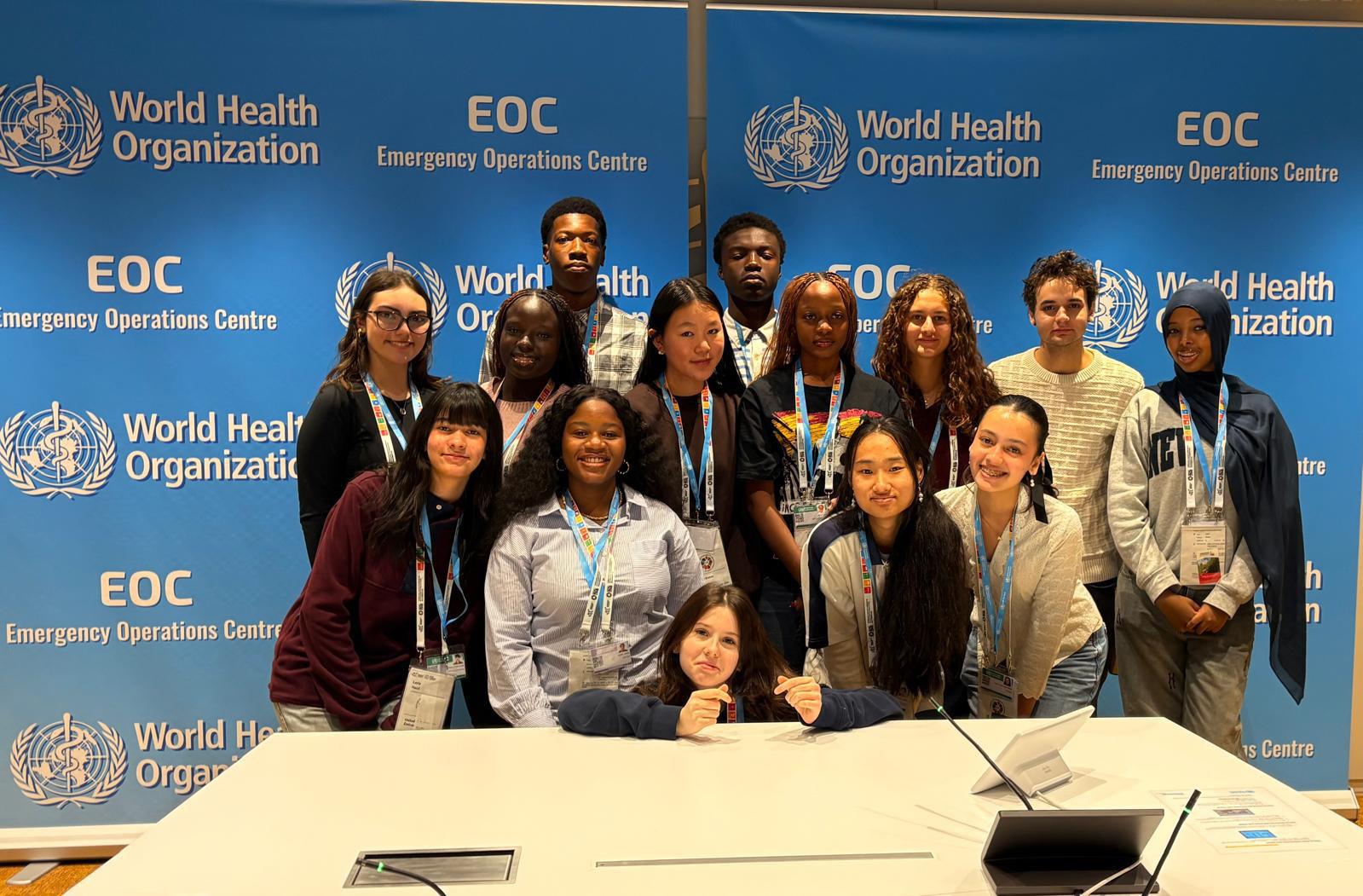
The group also visited the WHO Emergency Operations Centre. Dorine described what happens when a state of emergency is declared, explaining how teams monitor situations, assess risks, and coordinate responses in real time.
From FUSI student Puteri Layla’s reflection sheet.
“Our visit to the World Health Organisation was incredibly interesting. We got to speak and share our opinions on important topics such as mental health, smoking and sensitive health topics. The statistics of famine and other diseases wher also shown in the Emergency Room we sat in. “
From FUSI student Alyssa Sando’s reflection sheet.
“We went to WHO. It has been my dream to work there since I was in 6th grade. We could see how they deal with real life health situations and take into consideration all aspects. “
This gave students a concrete understanding of how global health emergencies are managed beyond what is seen in the news.
We would like to sincerely thank Dorine van der Val for taking the time to welcome and guide the students, especially as she did so while on leave. Her willingness to share her expertise made the visit particularly meaningful and informative for the group.
From FUSI student Puteri Zahra’s reflection sheet.
“The WHO visit provided much insight into health issues and mitigation of pandemics such as COVID-19. The instructor talked about the ways in which the WHO advises nations to reach a consensus.
There are many forms of diplomacy to ensure nations collaborate and implement actions in times of crises. We discussed an increasingly relevant issue, being mental health and the stigma around it, as well as breast cancer, abortions, drug abuse and more”
From Tariffs to Tapistries: the World Trade Organisation
The World Trade Organisation (WTO) is the only international organisation responsible for setting the rules of trade between nations. These rules aim to make global trade more seamless and predictable, with the broader goal of enhancing living standards, creating better job opportunities, and promoting sustainable development worldwide.
The WTO is headquartered in the beautiful Centre William Rappard (CWR) in Geneva—a building rich in both history and symbolism. Constructed in 1923, the Centre first opened its doors in 1926 as the headquarters of the International Labour Organisation (ILO), making it the first building in Geneva to host an international organisation. As the ILO continued to grow, the building expanded alongside it. Eventually, however, the organisation outgrew the space and decided to move to a new home.
Despite the ILO’s departure, the Centre William Rappard did not remain empty for long. In 1975, the General Agreement on Tariffs and Trade (GATT) moved into the building. Twenty years later, in 1995, GATT evolved into the organisation we know today as the World Trade Organisation.
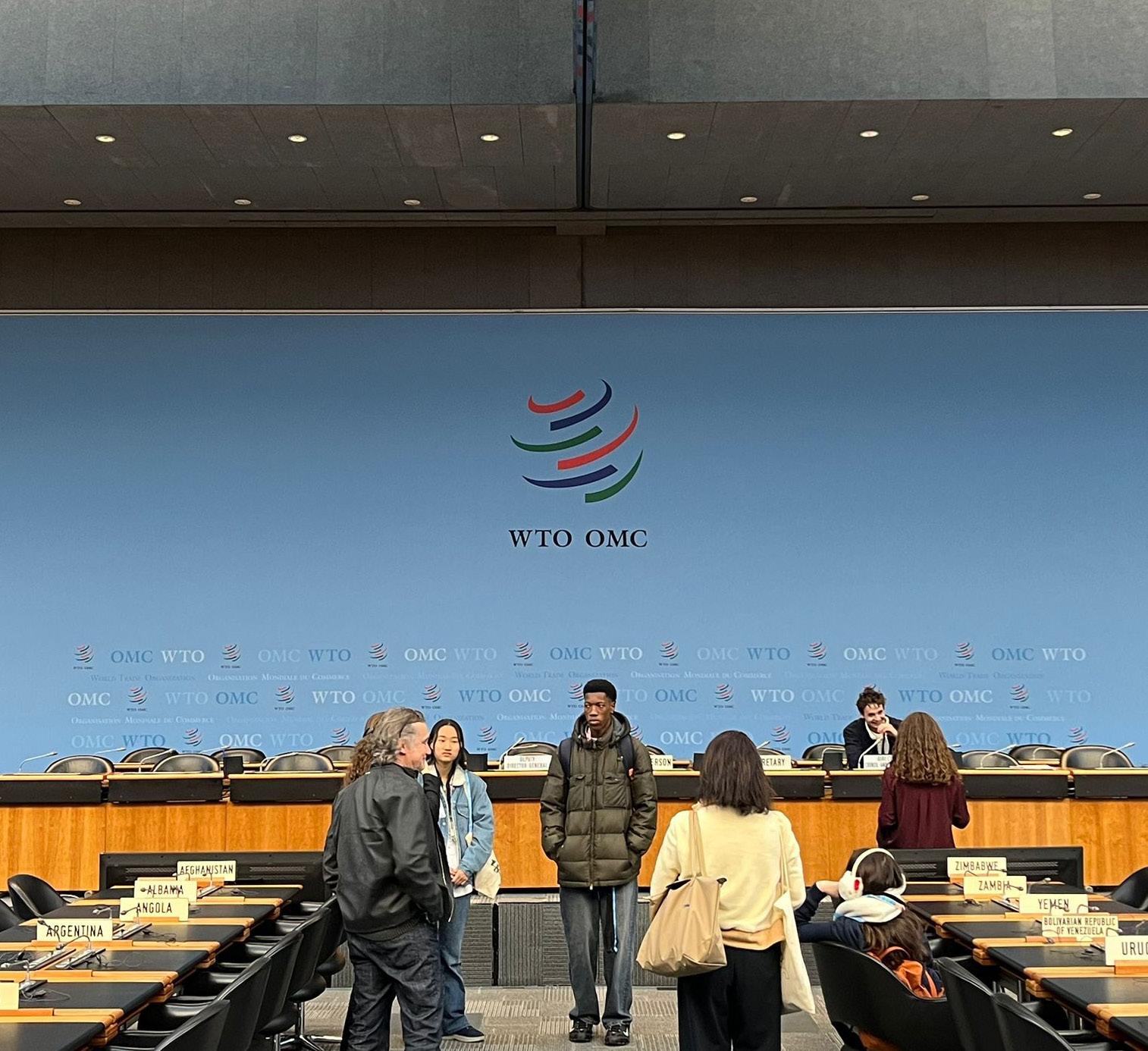
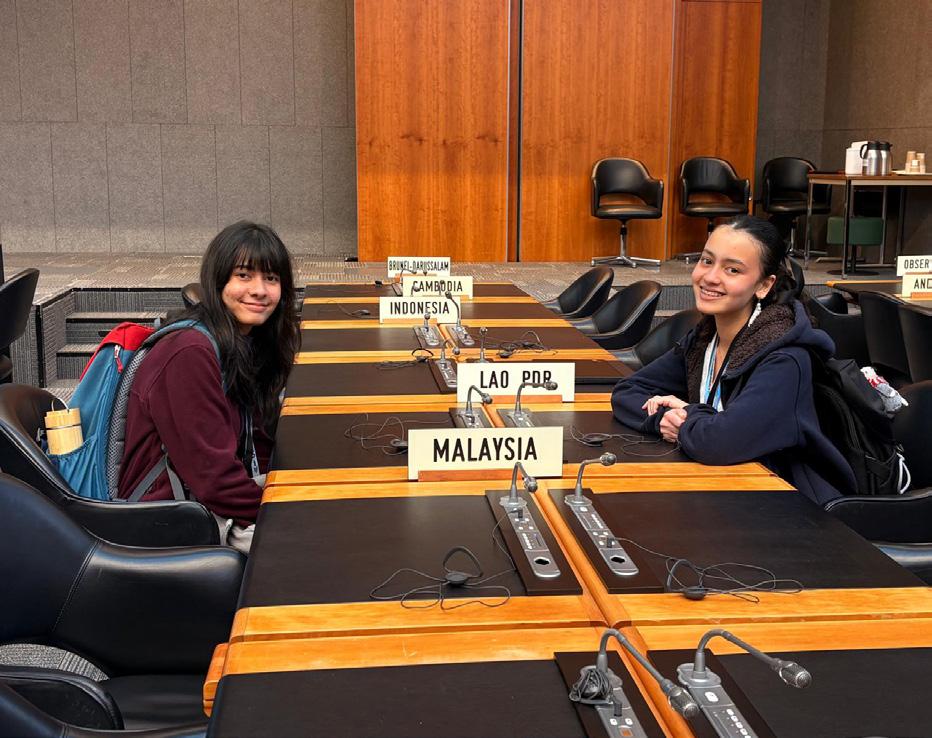
On our fourth day in Geneva, we had the opportunity to visit the WTO headquarters. One of the most significant moments of the tour was entering the Council Room, where General Council meetings are held with representatives from the WTO’s 166 member states. When meetings are open to the pub-
lic, observer seats are also made available to economies that are in the process of seeking membership. Sitting in that room, it was fascinating to learn how each nation’s influence differs, often reflecting the size and strength of its economy.
More importantly, this experience reshaped my understanding of global trade within the WTO. I used to understand trade as a series of deals made by nations primarily for their own benefit. However, being in the Council Room made me realise my blindness to the field and revealed the reality: a collective effort by diverse economies to establish longterm, sustainable rules that support global development rather than short-term gain.
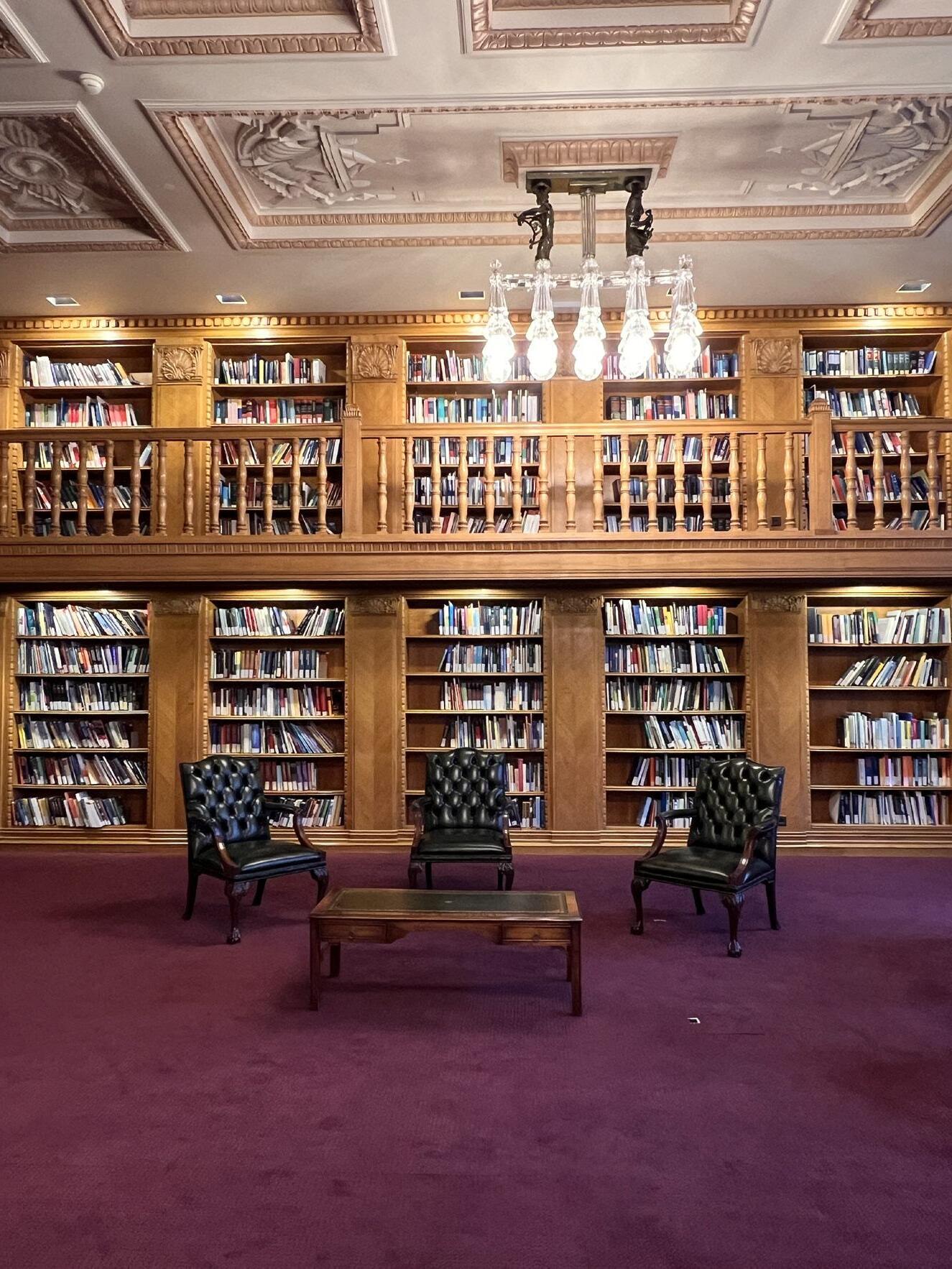
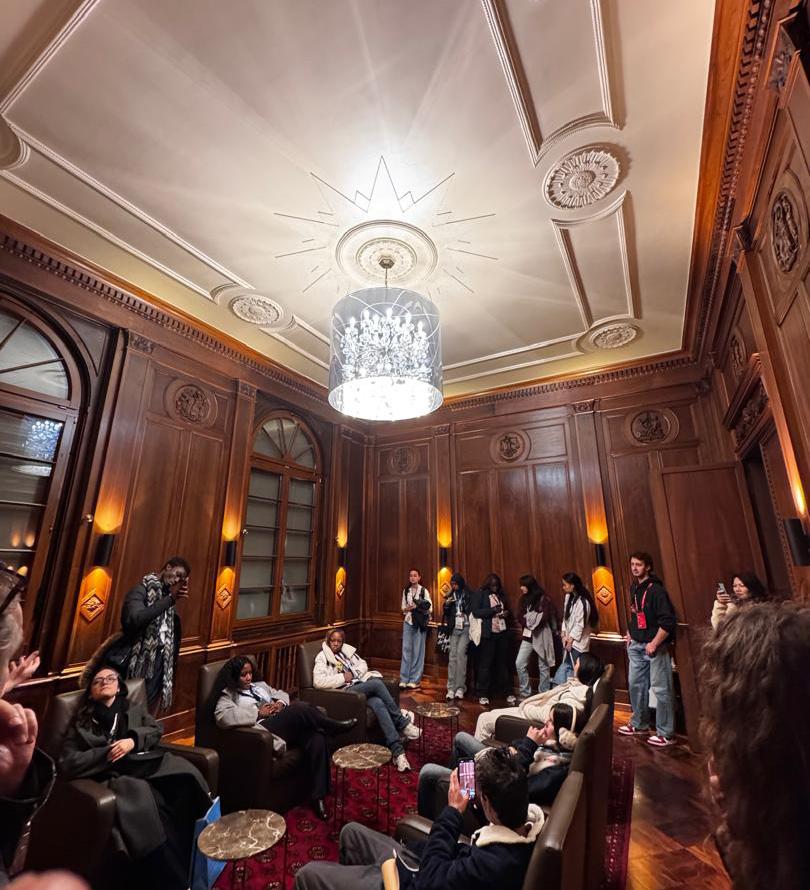
As we continued exploring the main building, bits of the ILO’s past became even more visible. The Centre opened itself up as a living museum, showcasing phenomenal Art Deco details, intricate medallions, and artworks lining the walls and ceilings. Each piece conveyed a story of human labour from different cultural perspectives. Alongside these historical elements, the WTO has added its own touch to make the space truly their home—through meaningful gifts from member nations and a wonderfully designed library, filled with shelves of books that reflect the depth and breadth of global trade knowledge.
Today, the WTO’s 166 members account for 98% of global trade, with around 20 more economies seeking to join. While it
has fewer members than organisations such as the United Nations or the World Health Organisation, its impact on the global economy is undeniable. And who knows—if more members continue knocking on the door, the Centre William Rappard might just need to expand its walls once again.
Sources: https://www.wto.org/english/thewto_e/ whatis_e/whatis_e.htm (WTO Official Website)
by FUSI student Aichi Rimoy
Brown Bag Lunch connects FUSI students with International Geneva
by Jan Van Mol
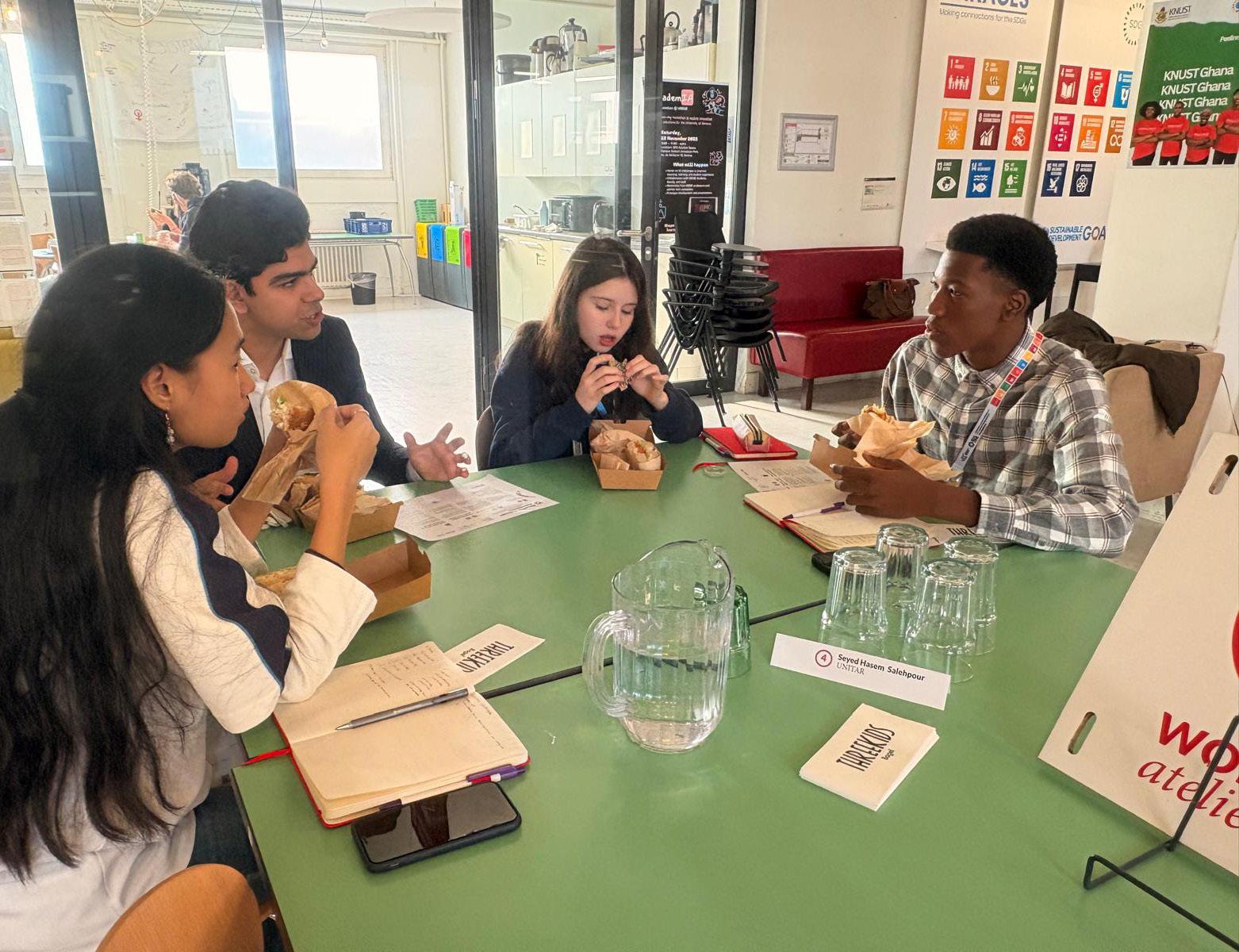
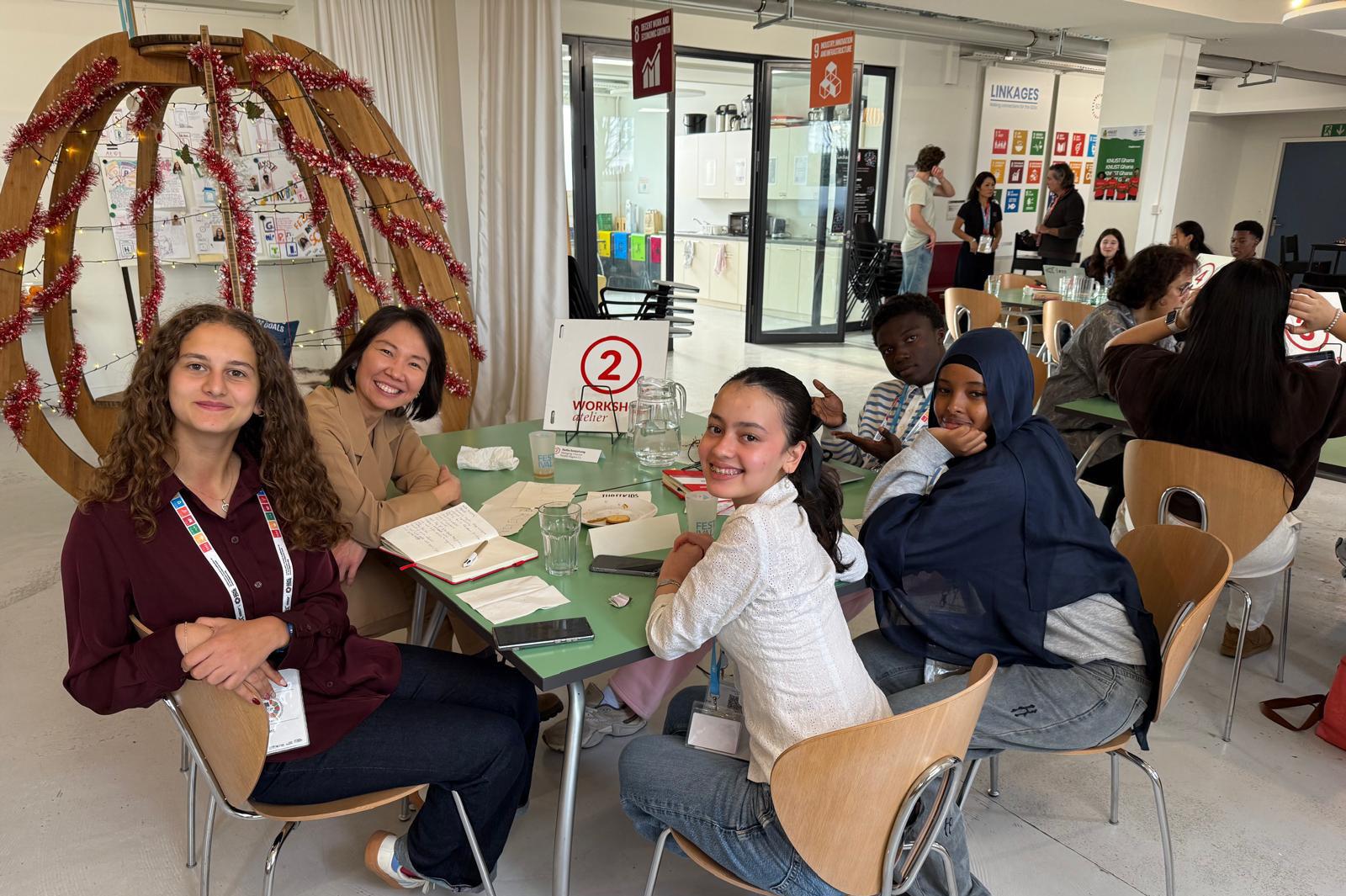
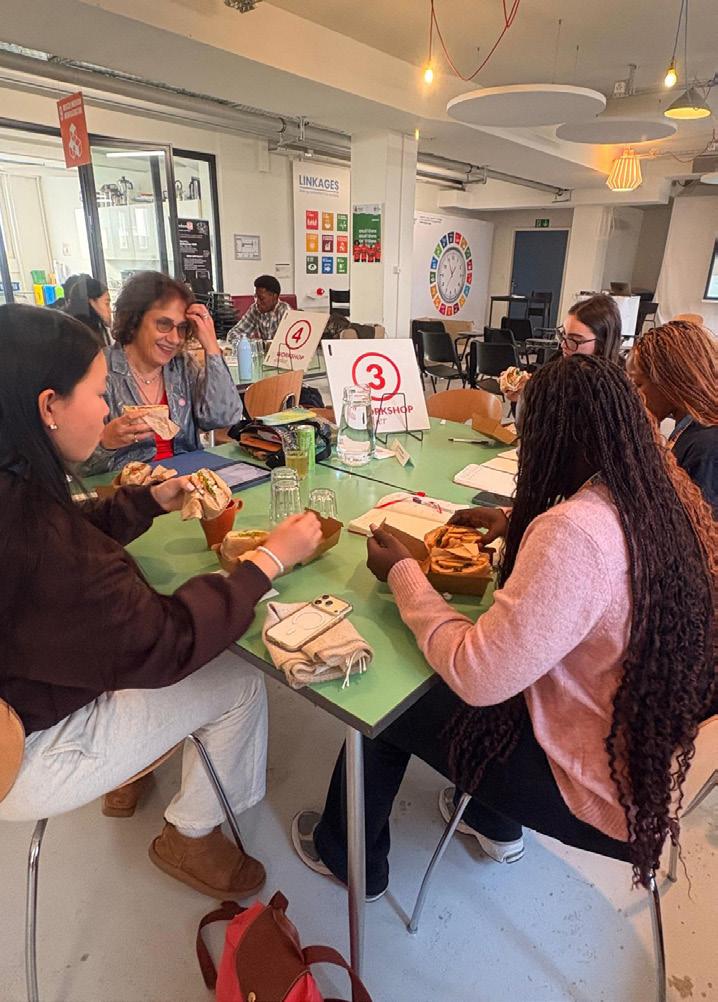
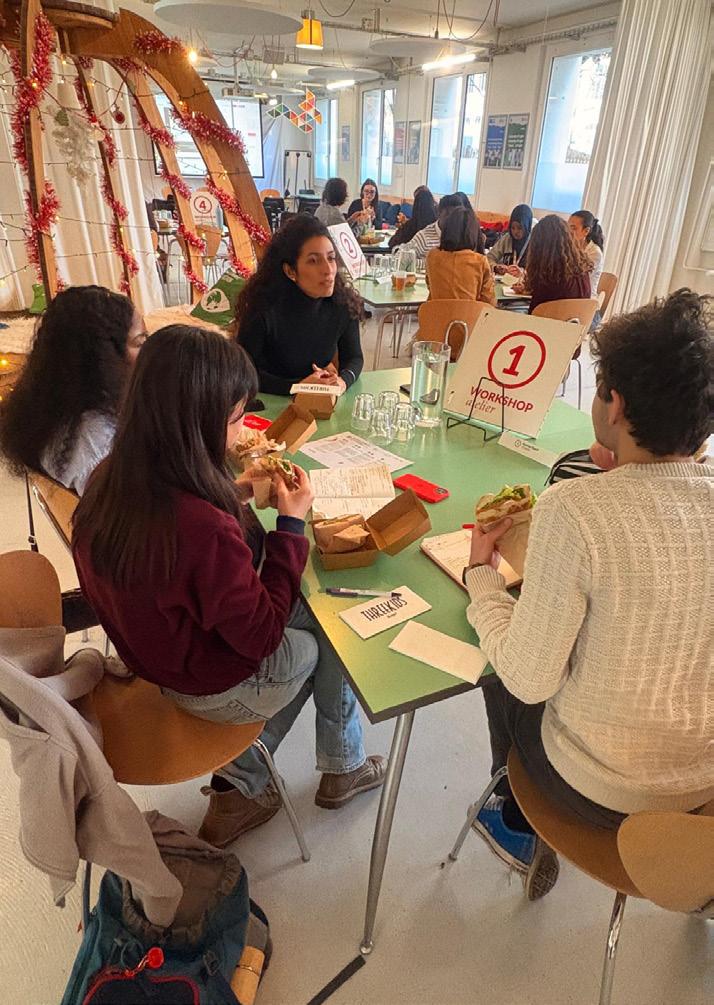
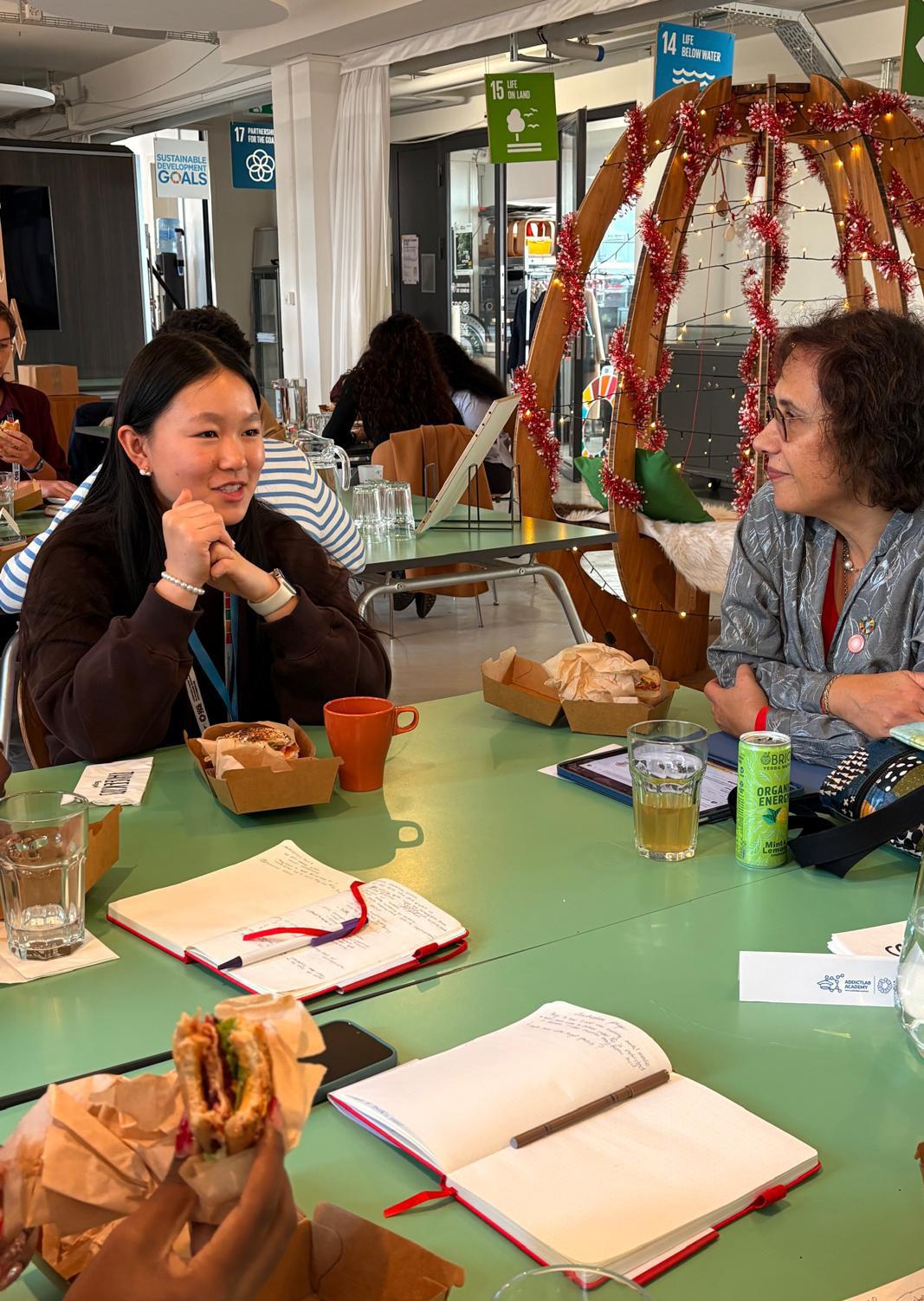
As part of the FUSI SDGCamps experience, Addictlab organizes a Brown Bag Lunch designed to create informal, meaningful connections between small groups of FUSI students and professionals working across International Geneva.
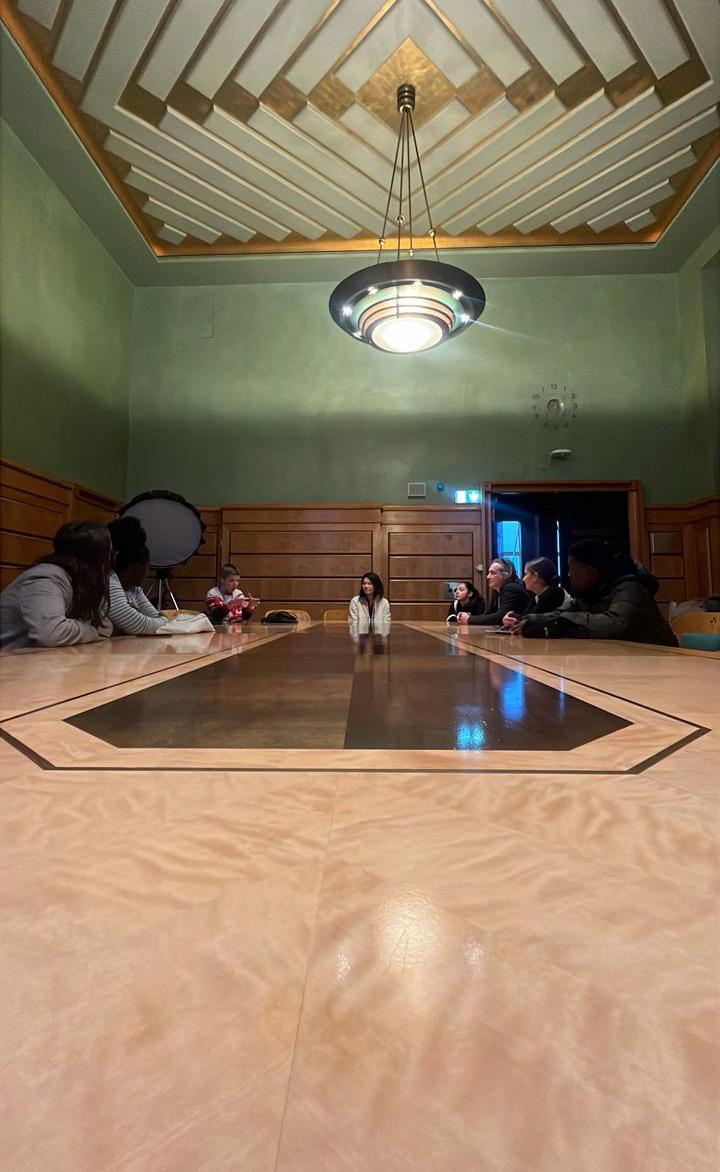
Held in a relaxed lunchtime setting at the SDG Solution Space, this session allowed our students to share a meal while engaging in open conversations with experienced mentors and judges, carefully selected and invited by Jane.
The International Geneva group included Karima Cherif (UNRISD), Seyed Hesam S. (UNITAR), Nadene Canning and Sarah Santacroce (InnerDevelopment@Work), Natha Somjaivong, Britt Sloan.
The informal format encourages honest dialogue around career pathways, international organizations, Geneva, innovation for the SDGs, and personal leadership journeys.
Students gained firsthand insights into working within the UN system, academia, and global impact organizations, while mentors shared lessons learned from their own professional experiences.
By creating space for conversation beyond formal panels and hackathon pitches, Addictlab helps students build confidence, curiosity, and a deeper understanding of how global cooperation works in practice.
Friday Hackathon Day
by FUSI student Puteri Iman Zahra Hazri
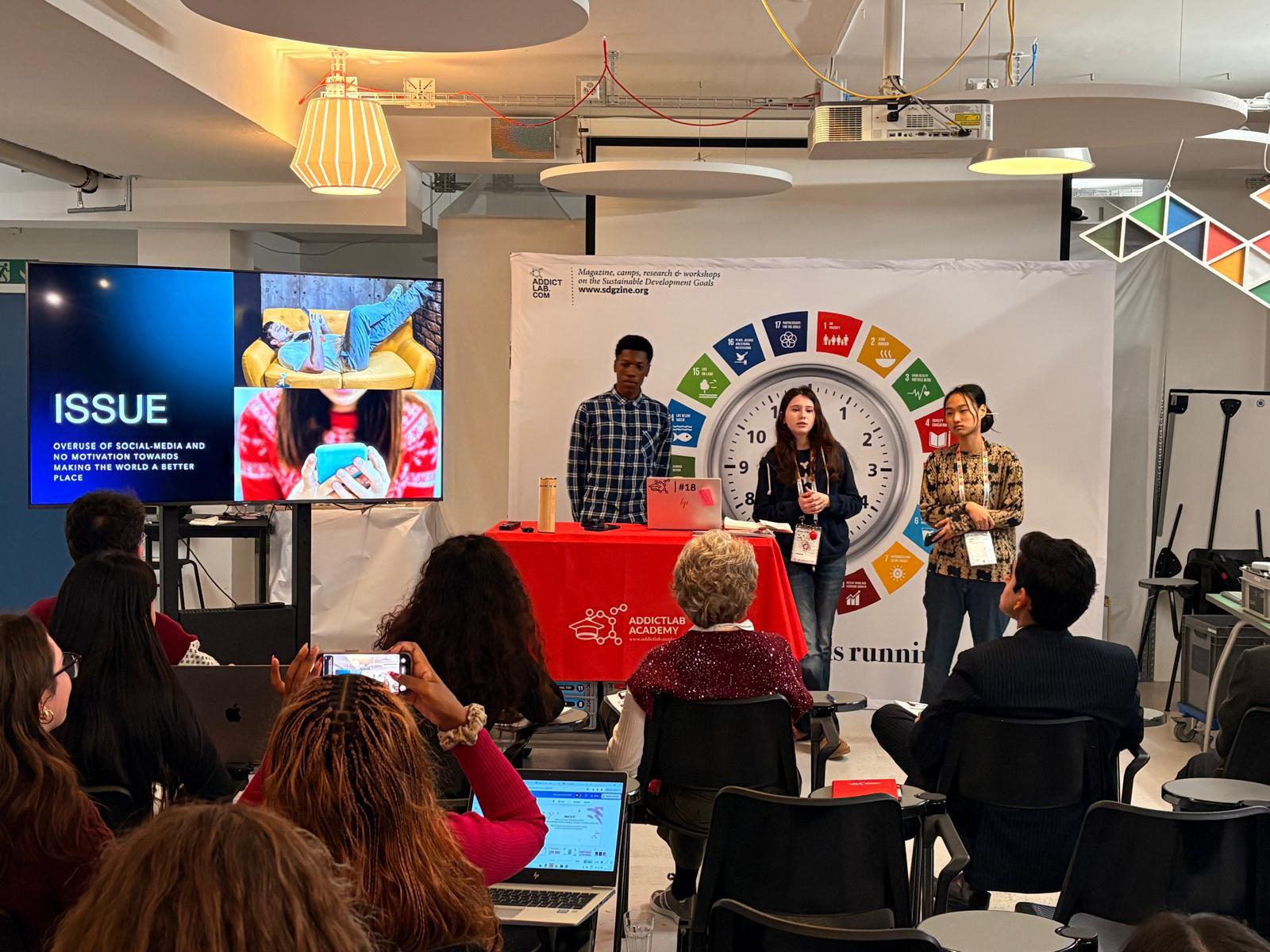
The hackathon challenge marked the end of our eventful 5 days at the Future Sustainability Innovators Camp. In preparation for this challenge, we were categorized into groups, each tasked with a recent global issue and a related SDG value to assist in finding a solution. We were able to discuss who we would like to work with and the challenges that piqued our interests in order to sort ourselves into the four groups.
We had already developed our ideas and collaborated with our respective groupmates in a productive brainstorming session with our mentors over a lunch meeting the day prior. This meeting was crucial in developing the early stages of our solution, with the mentors providing guidance and affirming the reality aspect of our project.
On the day of the hackathon, Jan and Jane conducted a presentation entailing advice for successful products of the hackathon, including to keep the idea and product plausible, ensuring good teamwork within our groups, and they reminded us of ground rules like keeping our work areas clean at all times.
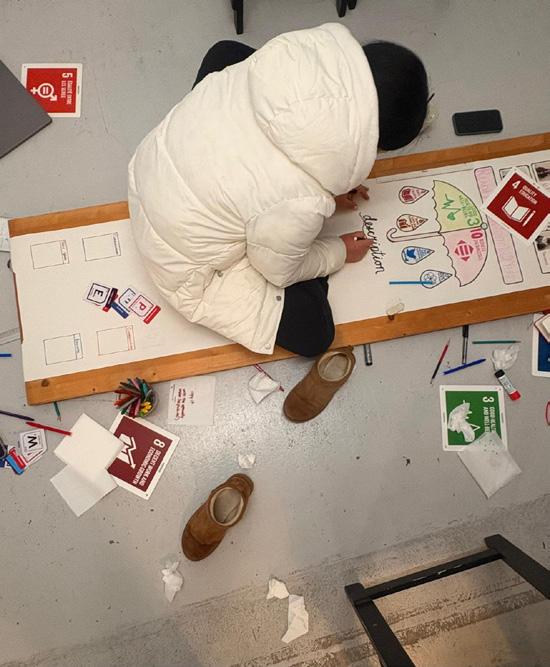
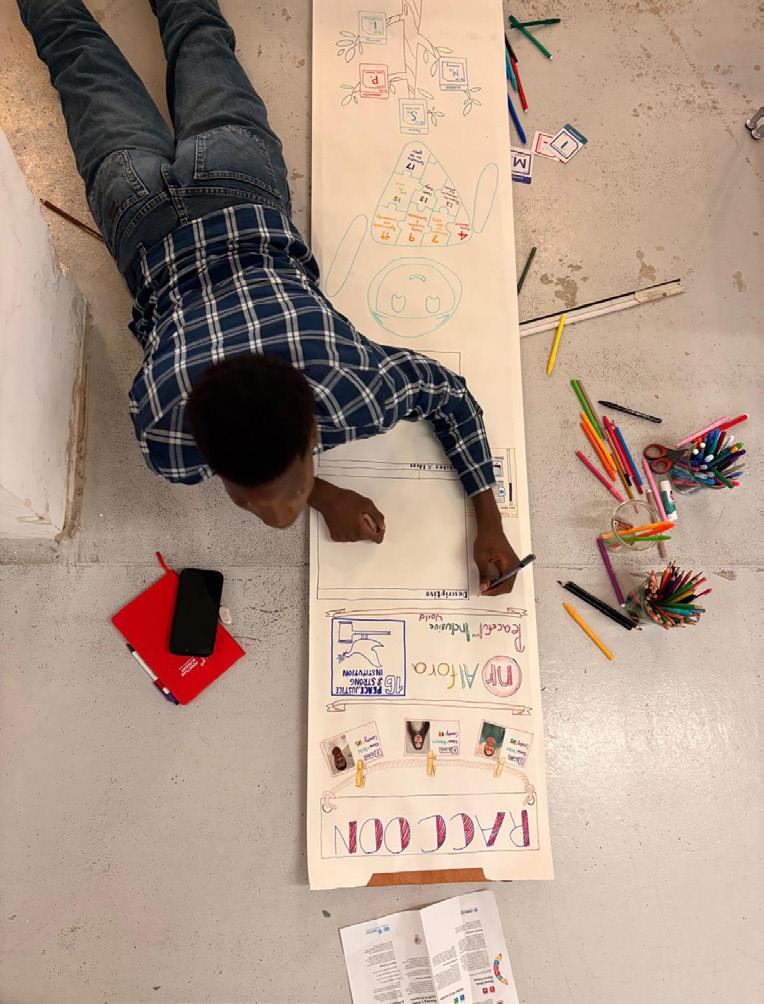
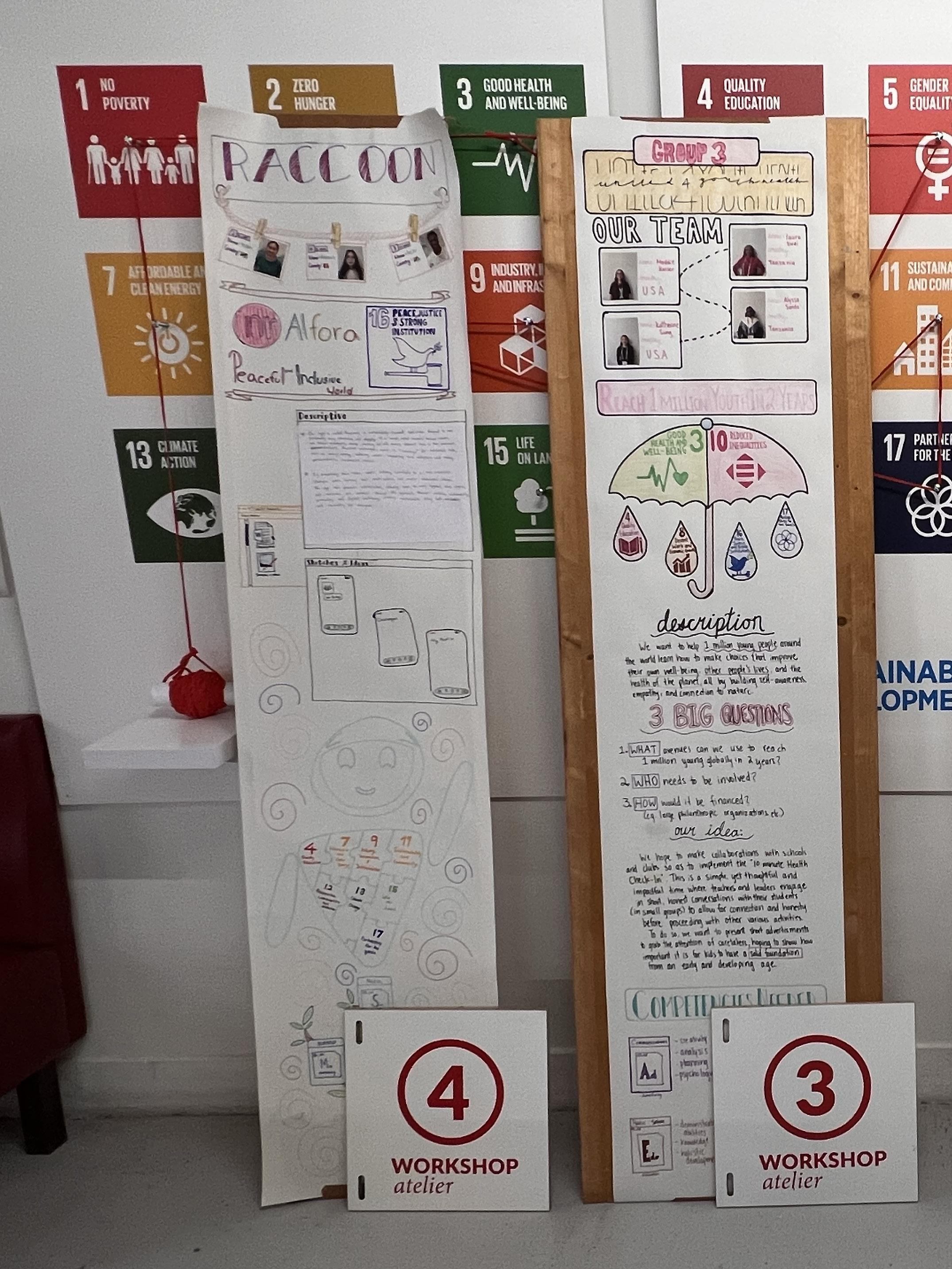
Following that, they introduced us to a component of our presentation: posters in which we would introduce our project, relating SDGs, our final idea, and jot down our thought processes throughout completing the project with sketches and preliminary ideas. Finally, the time began for us to start working on our hackathon presentations.
Despite the excitement, the hackathon presented us with many real challenges. With only six hours to go from an idea to a presented solution, we had to prioritize under pressure, refine our thinking quickly, and stay focused even when time felt too short, and despite many obstacles.
Working with teammates allowed us to appreciate different perspectives and communication styles when we were in the stage of deciding what solution to pursue. Knowing when to compromise and learning how to reach a consensus in every decision was challenging but crucial for our team’s productivity. Despite this, great ideas are only half the battle. Important components of our project required time to build, to get our idea across to the judges with tangible products along with other components to visually aid our idea.
The hackathon not only presented mental obstacles, and pressure under which we had to work, but our workmanship in creating tangible representations of our ideas.
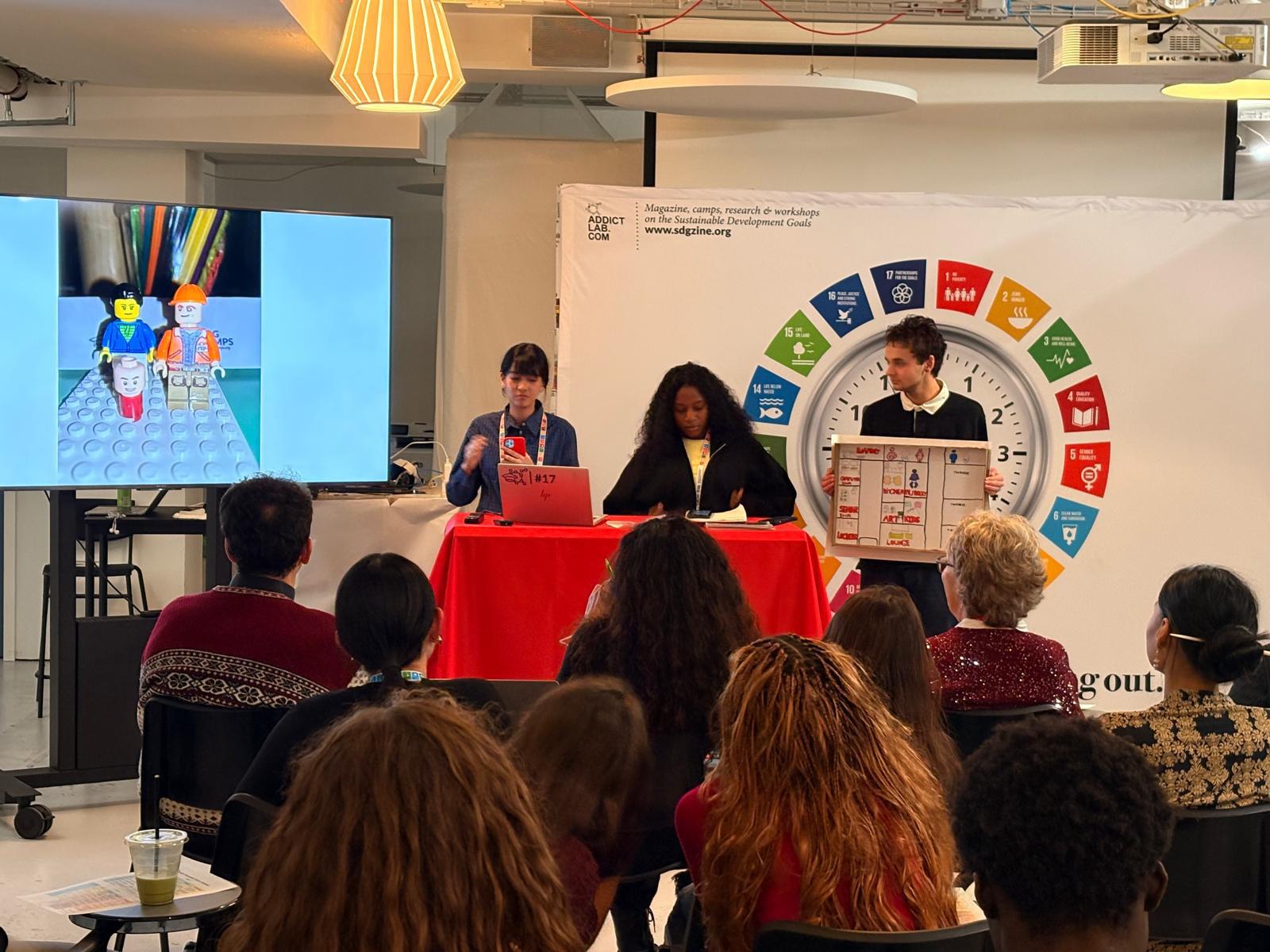
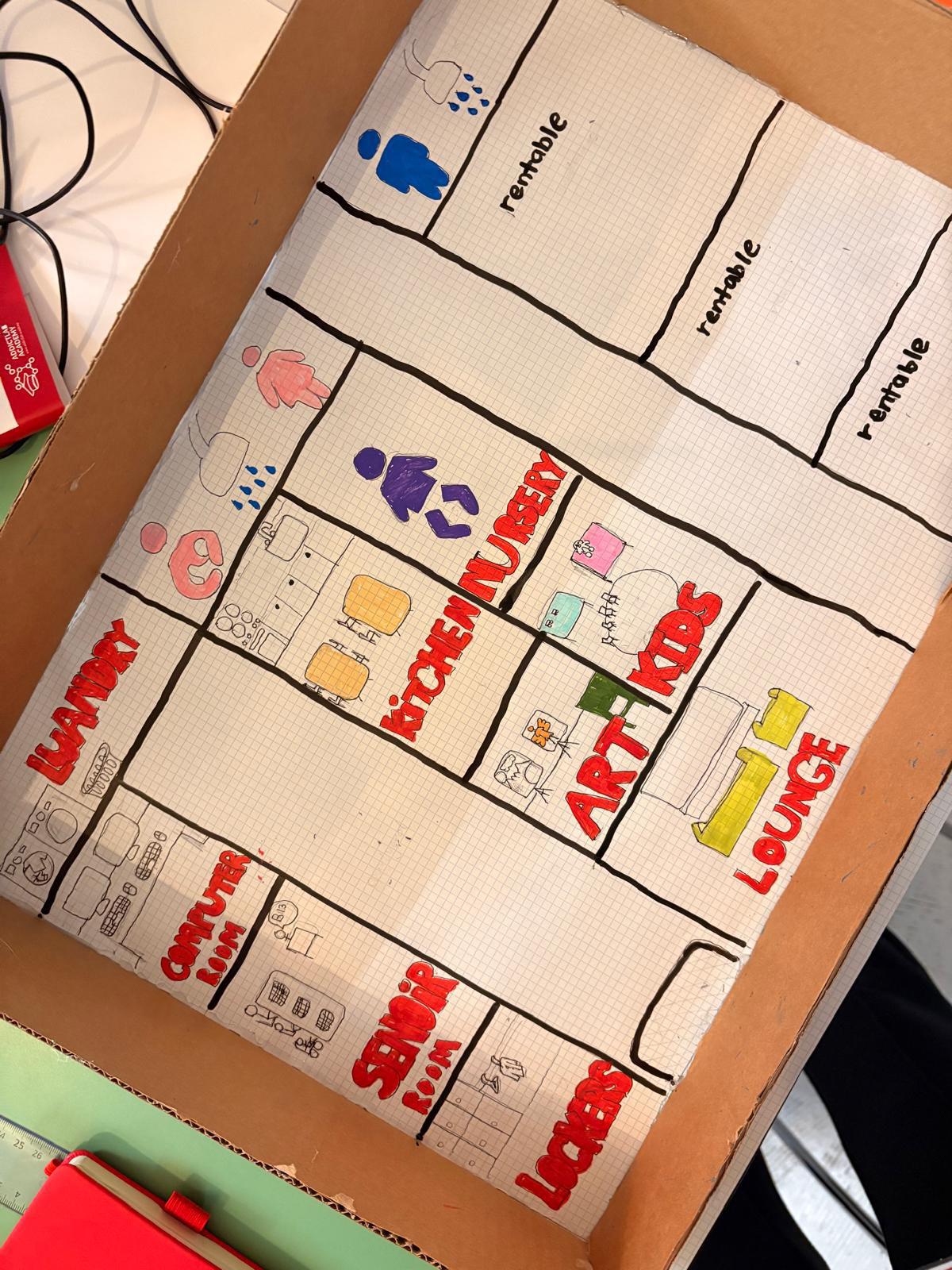
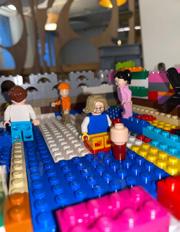
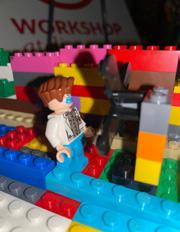
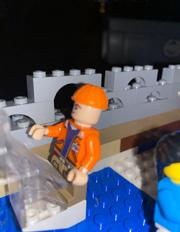
Some examples of this, as shown by my group and others, are floorplans, microbit-powered cars, models of buildings, and a storyboard. Throughout this intense process, we also learned the importance of grounding our solution in reality, and making sure it truly addressed the SDG challenge we chose. At the end of the day, the experience taught us resilience, teamwork, and the value of creative problem-solving when tackling the world’s most pressing issues.
hackathon challenges
Shared Work, Shared Future
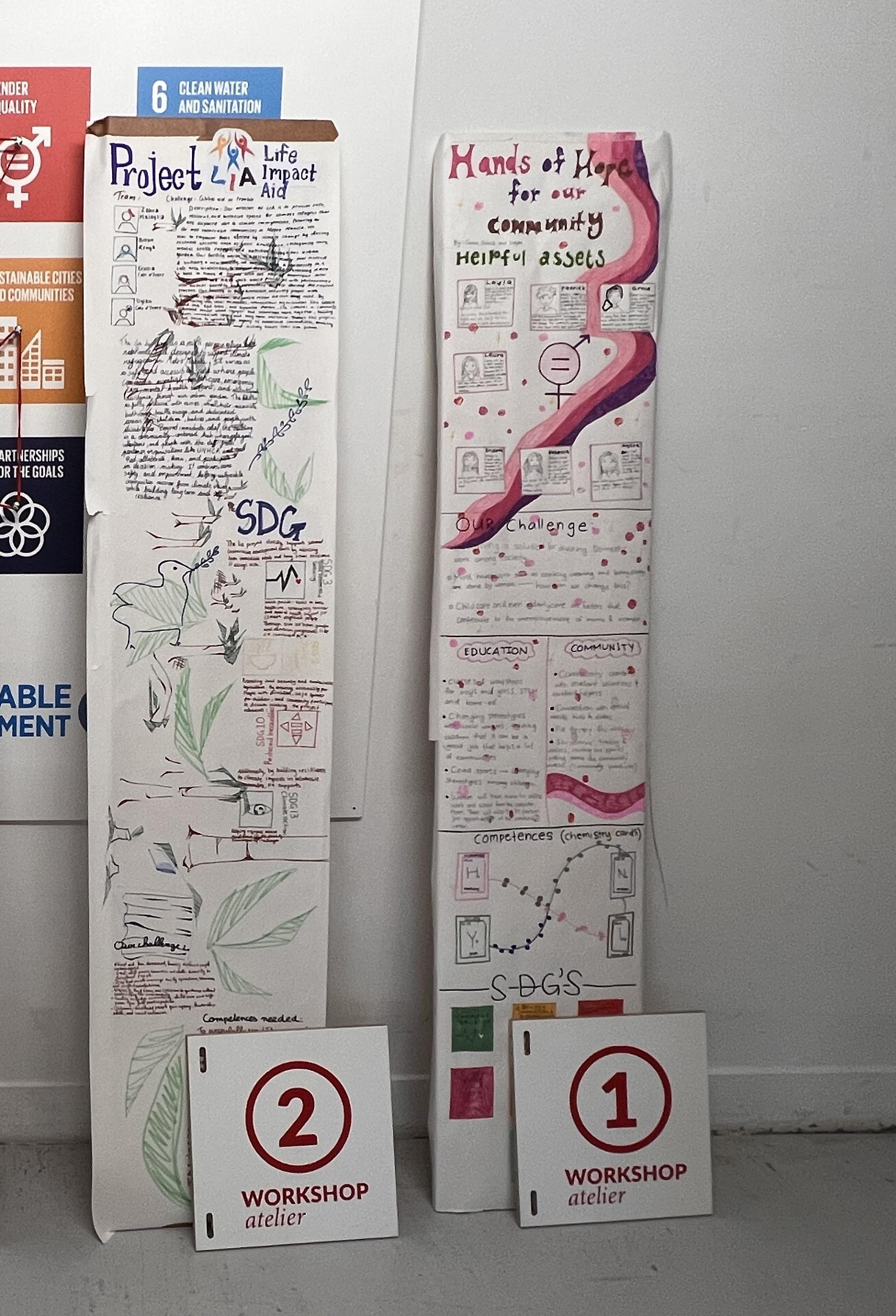
Caring Fairly: Innovating for Shared Domestic Work
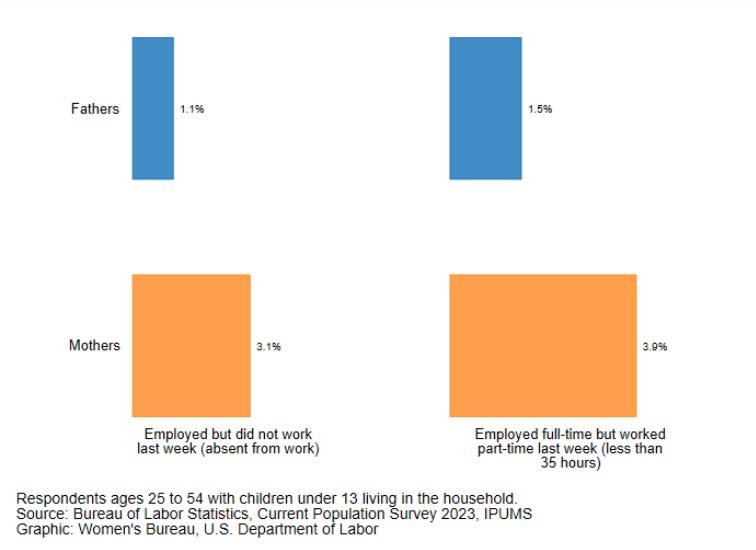
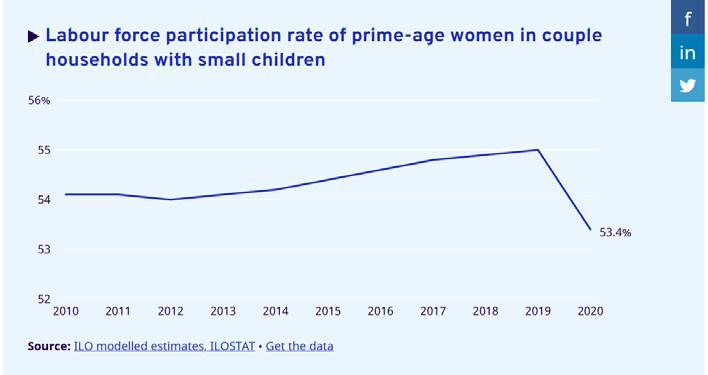
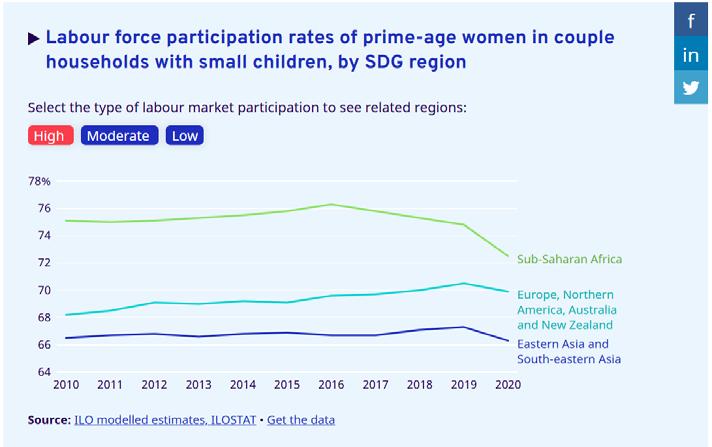
A lot of the cooking, cleaning, and caregiving that keeps families and communities going is invisible and undervalued— and it’s mostly done by women and girls. When mothers work outside the home, girls are often expected to take on even more responsibilities than boys. But care work is essential, and sharing it fairly creates stronger, healthier communities.
Schools, cities, and governments can help by investing in services like childcare, after-school programs, elder-care centers, safe transport, and community support. Making care work visible—and making it everyone’s responsibility—opens more opportunities for women and girls and benefits society as a whole.
Hackathon Challenge:
How might we design solutions that help schools, communities, or governments support families in sharing domestic and care work more fairly?
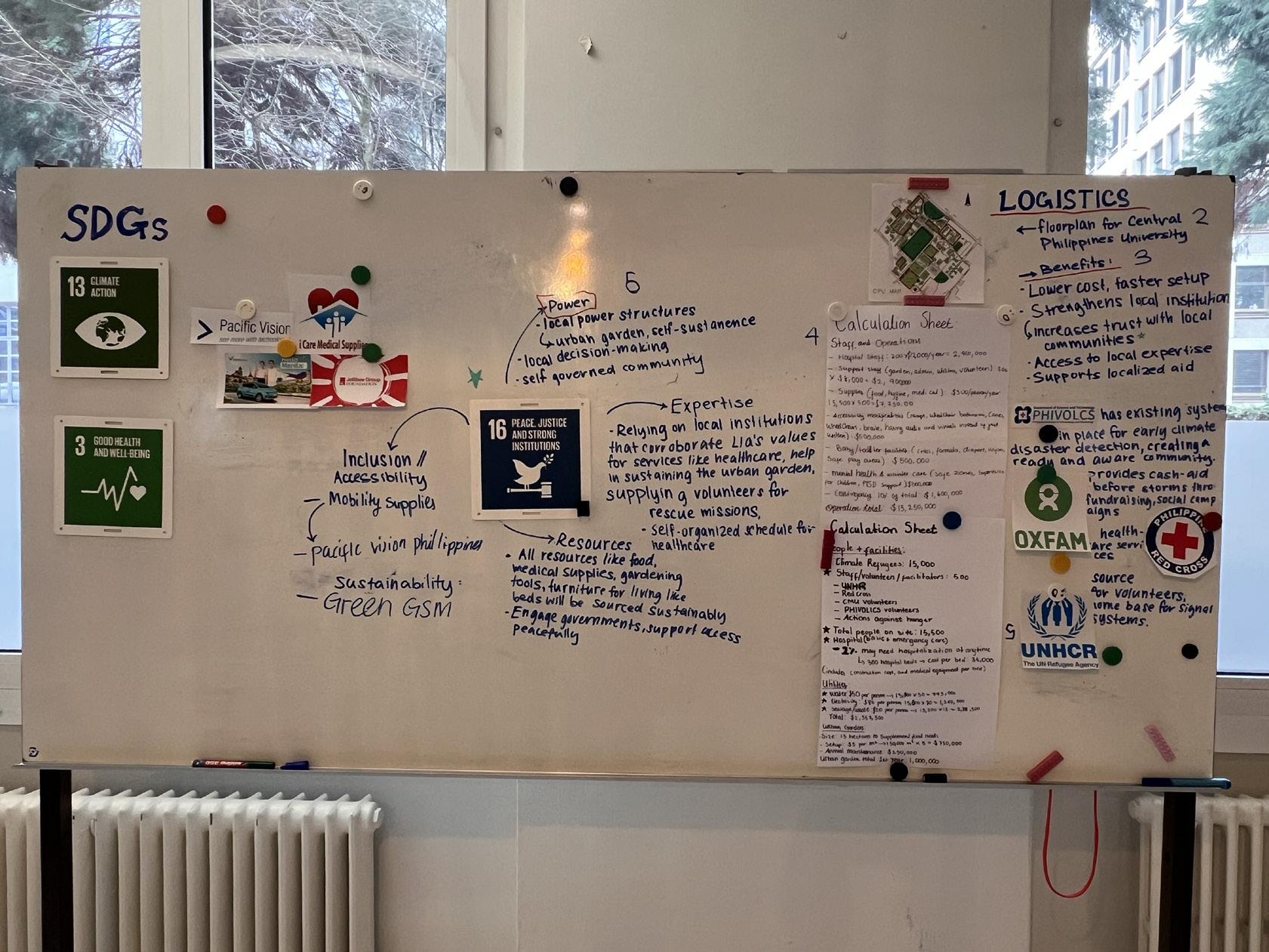
Global Aid in trouble
Over the past year, global aid spending has drastically reduced. Peace and governance programs have been among the hardest hit. Donors and international organizations are increasingly exploring how to localize aid, investing more directly in local communities to improve the efficiency of aid and to uphold the agency of vulnerable communities.
Hackathon Challenge:
What approaches would you propose to increasingly shift power, resources, and technical expertise directly to vulnerable communities in a way that enables them to achieve their peace and governance goals?
Students of the Future Sustainability Innovators Camp will work on one of the following subjects for the Ideation and Hackathon. Real life issues, with experts coming in to help and guide. The deliverable is an idea database that can be handed over to the Hackathon lead. The projects will be documented in the SDGzine.
Hackathon day: Friday 19 December / 09h00
Pitch presentations : Friday 19 December/ 17h00
Pitch time: 5 min
Judging: Friday 19 December 17h00 - 18h00
Documentation: SDGzine Special edition
SDGCAMPS Hackathon team: Jane Lim / Jan Van Mol
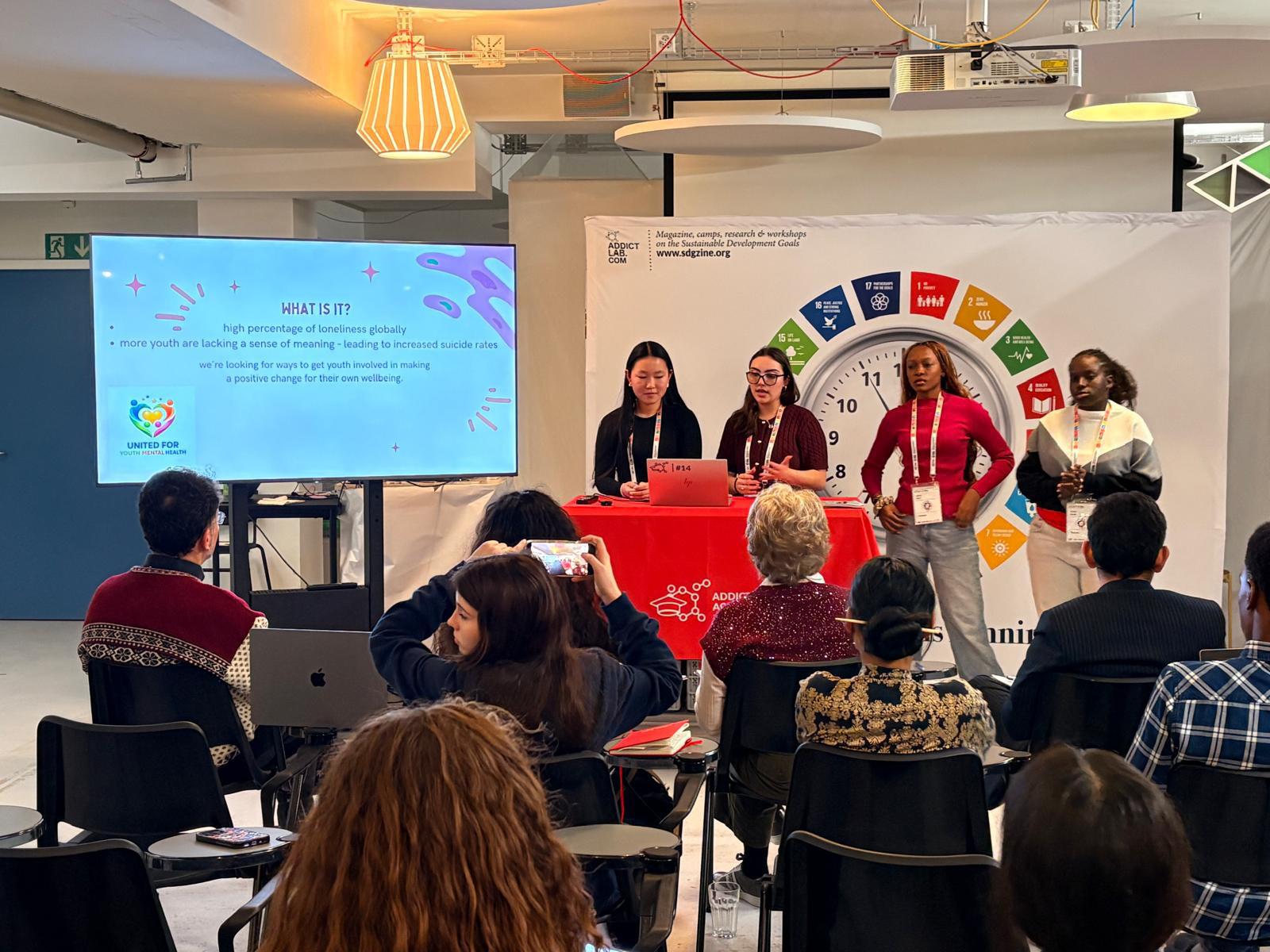
Reaching 1 million youth in 24 months
We want to help 1 million young people around the world learn how to make choices that improve their own wellbeing, other people’s lives, and the health of the planet, all by building self-awareness, empathy, and connection to nature.
Hackathon Challenge:
To make this happen in 24 months, we need to answer three big questions: WHAT, WHO, and HOW.
WHAT avenues can we use to reach 1 million young globally in 24month? WHO needs to be involved? HOW would it be financed? (e.g. large philanthropic organizations etc)
AI for a Peaceful, Safe & Inclusive World
(Aligned with UN SDG 16 & SDG 9)
The challenge is to design and build an AI-powered prototype that contributes to a more peaceful, safe, or inclusive world.
Participants may choose any real-world problem related to one of the following themes:
Peace & Kindness (SDG 16)
Online Safety & Trust (SDG 16)
Accessible Technology (SDG 9)
Smart & Sustainable Cities (SDG 9)
Hackathon Challenge:
The solution can be any form of prototype, a coded project, a simple AI model, a no-code app, a chatbot, a game, or a conceptual demo, as long as it incorporates AI and addresses one of the themes above.
The focus is on identifying who the solution helps, how AI plays a meaningful role, and demonstrating creativity, empathy, and innovative thinking.
hackathon challenge
Shared Work, Shared Future
Caring Fairly: Innovating for Shared Domestic Work
A lot of the cooking, cleaning, and caregiving that keeps families and communities going is invisible and undervalued—and it’s mostly done by women and girls. When mothers work outside the home, girls are often expected to take on even more responsibilities than boys. But care work is essential, and sharing it fairly creates stronger, healthier communities.
Schools, cities, and governments can help by investing in services like childcare, after-school programs, elder-care centers, safe transport, and community support. Making care work visible—and making it everyone’s responsibility—opens more opportunities for women and girls and benefits society as a whole.
Hackathon Challenge: How might we design solutions that help schools, communities, or governments support families in sharing domestic and care work more fairly?
Layla Patrick Grace
Shared work, shared future
hackathon challenge
Global Aid in trouble
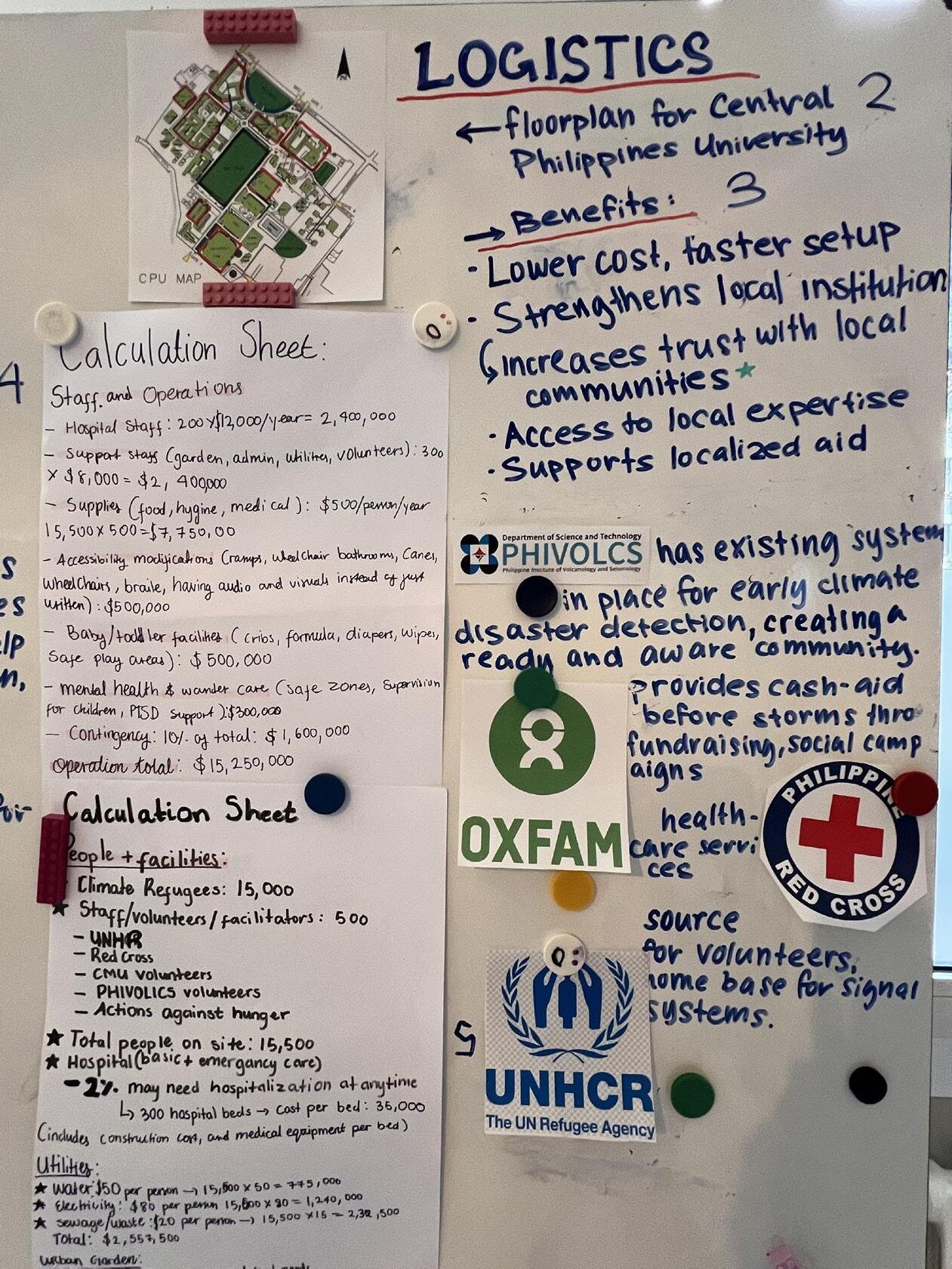
Over the past year, global aid spending has drastically reduced. Peace and governance programs have been among the hardest hit. Donors and international organizations are increasingly exploring how to localize aid, investing more directly in local communities to improve the efficiency of aid and to uphold the agency of vulnerable communities.
Hackathon Challenge: What approaches would you propose to increasingly shift power, resources, and technical expertise directly to vulnerable communities in a way that enables them to achieve their peace and governance goals?
Billan Zahra Dylan Ersilia
Im p a ct Aid
hackathon challenge
Reaching 1 million youth in 24 months
We want to help 1 million young people around the world learn how to make choices that improve their own wellbeing, other people’s lives, and the health of the planet, all by building self-awareness, empathy, and connection to nature.
Hackathon Challenge:
To make this happen in 24 months, we need to answer three big questions: WHAT, WHO, and HOW.
WHAT avenues can we use to reach 1 million young globally in 24month? WHO needs to be involved? HOW would it be financed? (e.g. large philanthropic organizations etc)
Alyssa Maddie
Laura Katherine
hackathon challenge
AI for a Peaceful, Safe & Inclusive World
(Aligned with UN SDG 16 & SDG 9)
The challenge is to design and build an AI-powered prototype that contributes to a more peaceful, safe, or inclusive world.
Participants may choose any real-world problem related to one of the following themes:
Peace & Kindness (SDG 16)
Online Safety & Trust (SDG 16)
Accessible Technology (SDG 9)
Smart & Sustainable Cities (SDG 9)
Hackathon Challenge:
The solution can be any form of prototype, a coded project, a simple AI model, a no-code app, a chatbot, a game, or a conceptual demo, as long as it incorporates AI and addresses one of the themes above.
The focus is on identifying who the solution helps, how AI plays a meaningful role, and demonstrating creativity, empathy, and innovative thinking.
BY REBECCA AICHI & YEBIN
And the winner is ...
Global Experts Judge FUSI Winter SDGCamps Hackathon
The FUSI Winter SDGCamps Hackathon brought together young innovators committed to advancing the Sustainable Development Goals (SDGs), guided and evaluated by a distinguished international panel of judges from United Nations institutions, academia, and global development networks.
The judging panel included Karima Cherif (UNRISD), Seyed Hesam S. (UNITAR), Jane Lim (Addictlab) , Annette Ebbinghaus (Truly Balance), Natha Somjaivong and François Grey (University of Geneva).
Together, they assessed projects through a holistic lens, examining not only technical innovation, but also social impact, inclusivity, creativity and use of fab lab.
Winning Project: Life Impact Aid
The winning project, Life Impact Aid, stood out for its clear humanitarian focus and strong alignment with the SDGs. Judges highlighted the project’s ability to translate empathy into action by addressing urgent social needs through a practical, scalable approach.
The judges were amazed by the level of research conducted by the team in such a short notice.
Its strength lay in combining impact-driven design with feasibility, demonstrating how innovation can deliver tangible benefits to communities while remaining adaptable to diverse contexts.
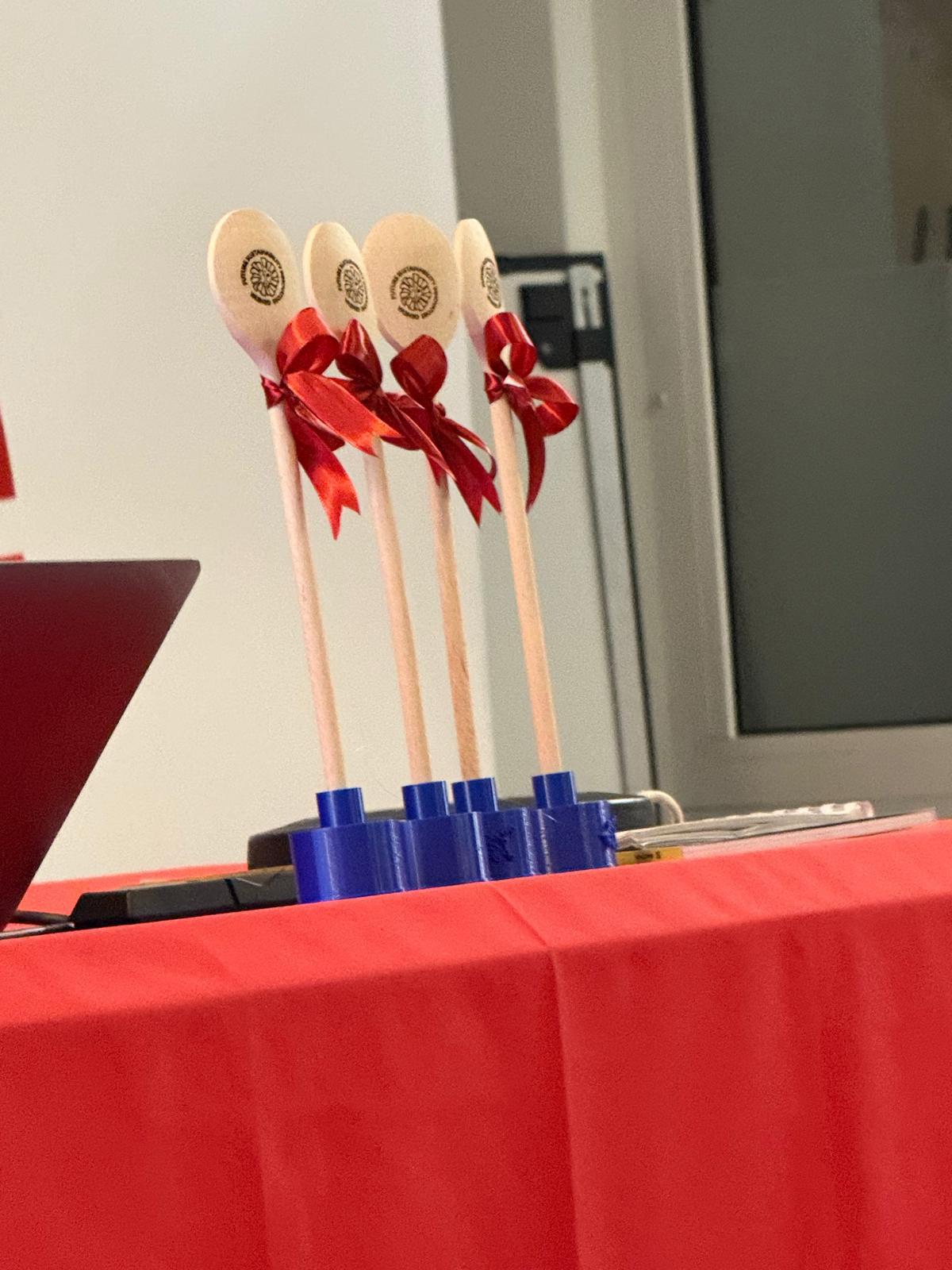
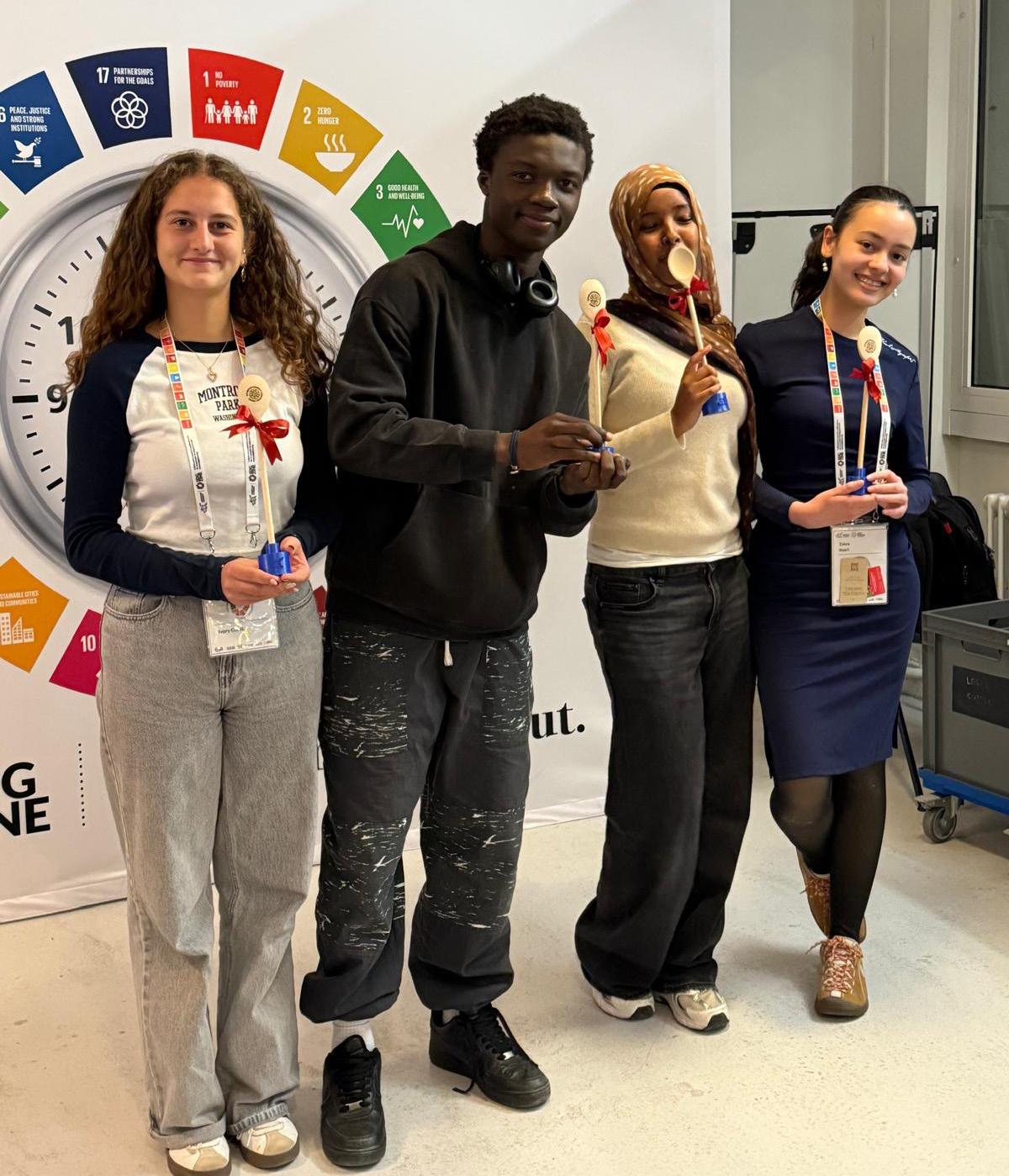
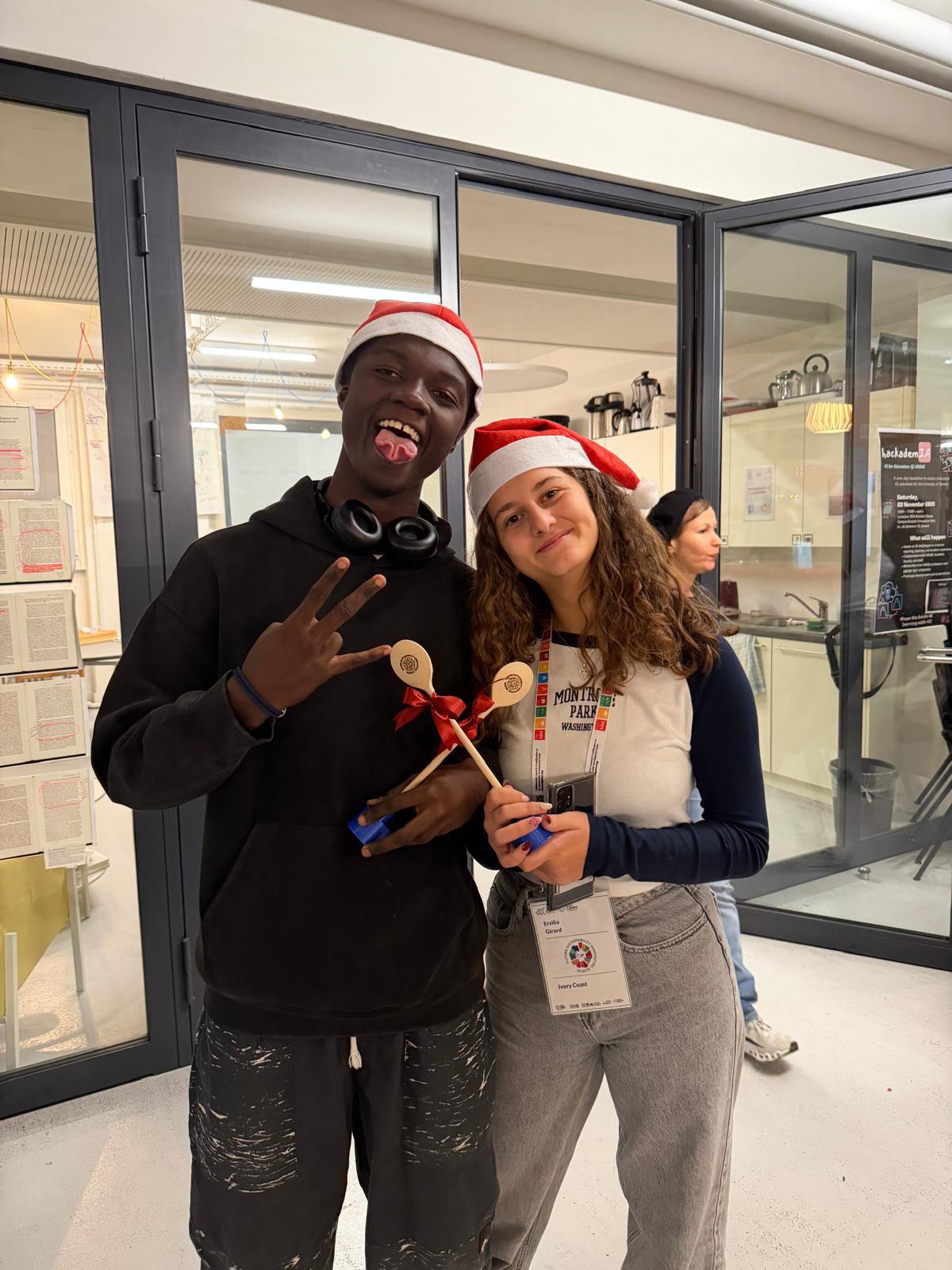
The awards.... were, well, Addictlab’s tongue in cheek humour... wooden spoons, a reminder of the Fondue night, engraved with the camps logo and in a 3D printed foot all made in the SDGFablab.
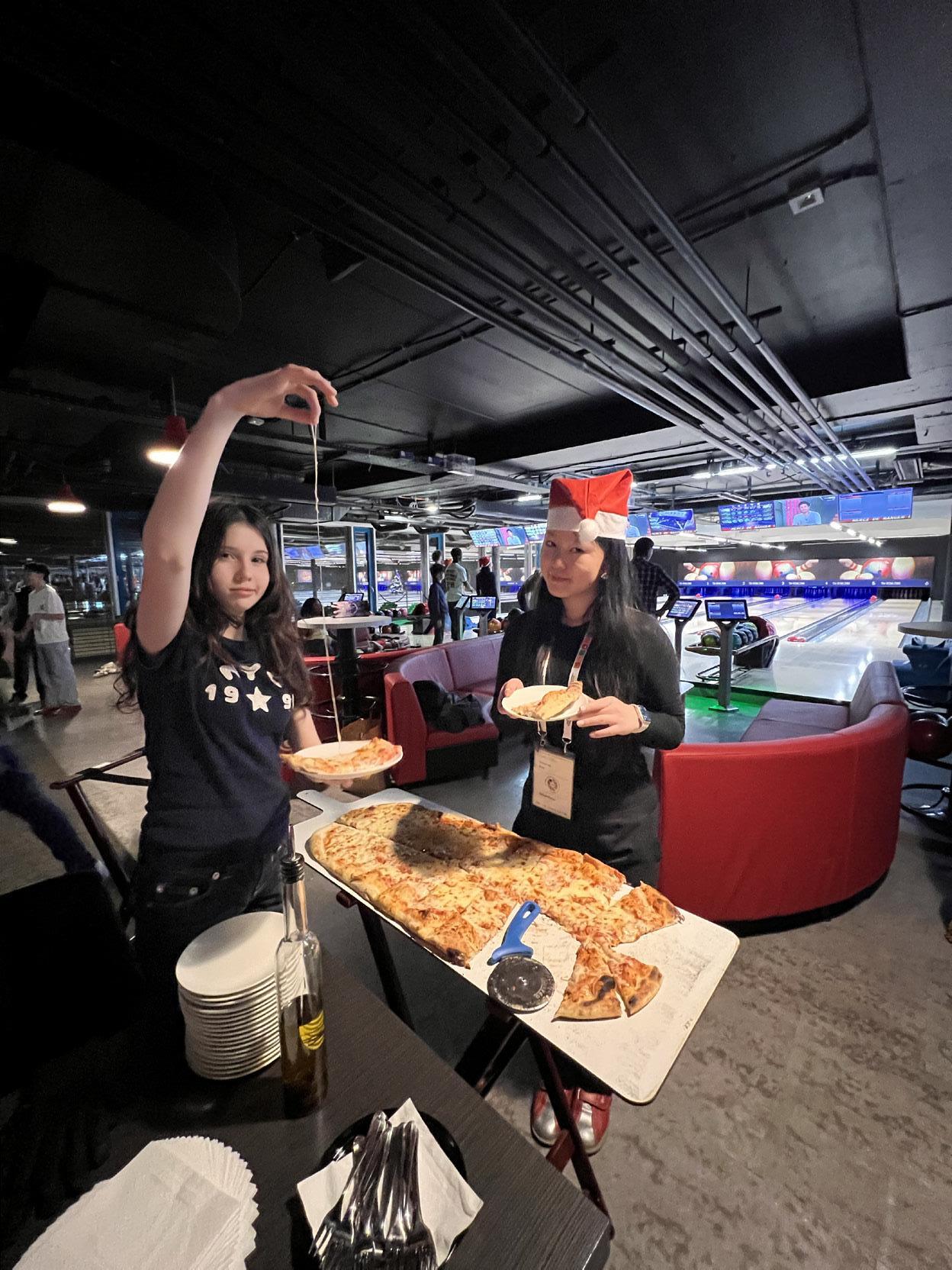
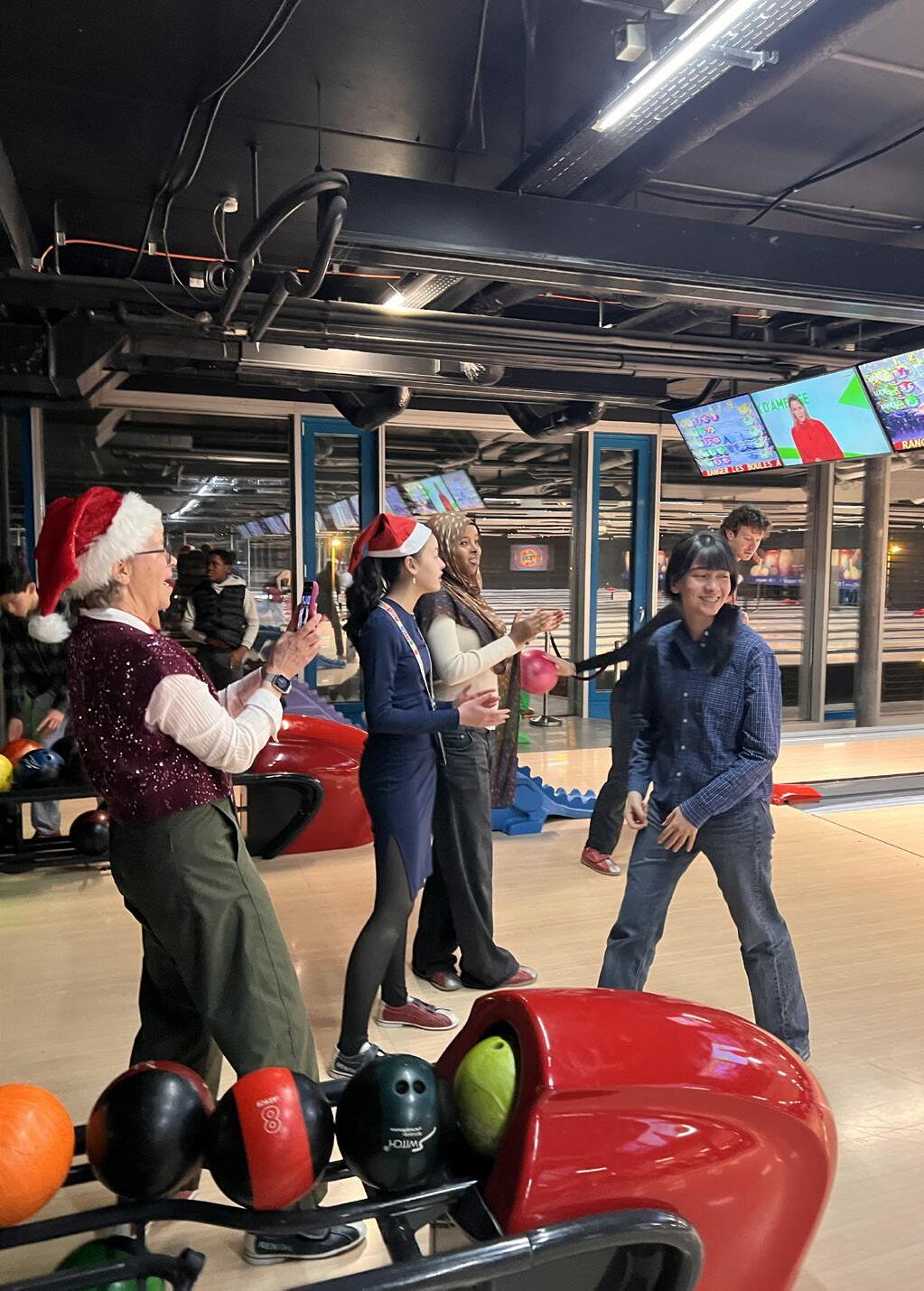
And finally... bowling Night
An excellent Winter Camp wrapped up.
LinkedIn post by Jane Lim, co-directrice SDG Camps
This camp represented months of thoughtful planning, deep preparation, and careful sourcing of real-life hackathon challenges, inspired by the work of international organisations and real-world needs.
One honest reflection from this process: despite frequent public claims around youth empowerment and engaging the next generation, many large organisations and influential players are still reluctant to engage with smaller, independent initiatives like ours. The gap between intention and action remains very real.
That said, what truly made this camp exceptional was the presence of like-minded people, professionals and mentors who generously gave their time, trusted our vision, and believed in what they could meaningfully offer young people. Their support reminded us that impact is not driven by size or branding, but by values and commitment.
Most importantly, the camp changed the youth mindset.
They grew in confidence, collaboration, problem-solving, and their belief that their ideas matter. Watching that transformation is exactly why we do this work.
Grateful for our community in Geneva, our partners, and the young people shaping the future, and more motivated than ever to keep building spaces where youth are truly empowered.
Huge thanks to Jan Van Mol for the trust and opportunity to help curate this Addictlab Winter Camp , it meant a lot. And an equally big shout-out to our incredible collaborators Dorine van der Wal (World Health Organization), Gráinne M. Pyke (United Nations) , Kathryn Lundquist (World Trade Organization) and all the International Organizations and mentors/judges Karima Cherif (UNRISD) Seyed Hesam S. (United Nations Institute for Training and Research (UNITAR), Nadene Canning, Sarah Santacroce (InnerDevelopment@Work), Natha Somjaivong, Britt Sloan, Francois Grey (University of Geneva) !
Your energy, generosity, and belief in young people brought this camp to life and created an experience our participants will carry forward with them. This impact would not have been possible without you.
#WinterCamp
#YouthEmpowerment
#FutureSkills
#EducationInnovation
#STEAMEducation
#Hackathon
I am writing to sincerely thank you for the wonderful week I spent learning about the United Nations Sustainable Development Goals through your camp. The passion and dedication of the AddictLab and Learn with Leaders teachers truly inspired me and deepened my understanding of sustainability.
In addition to the excellent teaching, I was grateful for the chance to meet and work with such an amazing group of students. The friendships I made and the experiences we shared— through workshops, discussions, and group projects—were incredibly meaningful. This program has given me both knowledge and motivation to make a positive difference.
Thank you for creating such a welcoming environment and for the important work you do in promoting these goals for a better future.