SDG Summer School 2022

Open Source Health Solutions Collaborative publication on the sustainable development goals - WWW.SDGZINE.ORG SPECIAL EDITION #SE6 NOV 2022
This SDGZINE issue is a special school edition with content generated by students of the 2022 SDG Summer school at the University of Geneva.


SDGZINE.ORG is an initiative from the ADDICTLAB ACADEMY and partners contributing to the sustainable development goals of the United Nations.




university contact info@sdgsolutionspace.org
editorial team François Grey - Saray Quirant Gautham Varada Narayan - Jan Van Mol
Table of Content Introduction Challenge 1 – The Truth Challenge 2 - KYX Challenge 3 – HotspoTB Challenge 4 - ARTtach Challenge 5 - OOPt-IT Challenge 6 – All Ears Challenge 7 - Hear-0 Datasets Next Steps
Sponsor Global Sponsor Corporate Sponsor GENE VA for the Sustainable Development Goals TSINGHUA INITIATIVE Institutions & Associated Labs
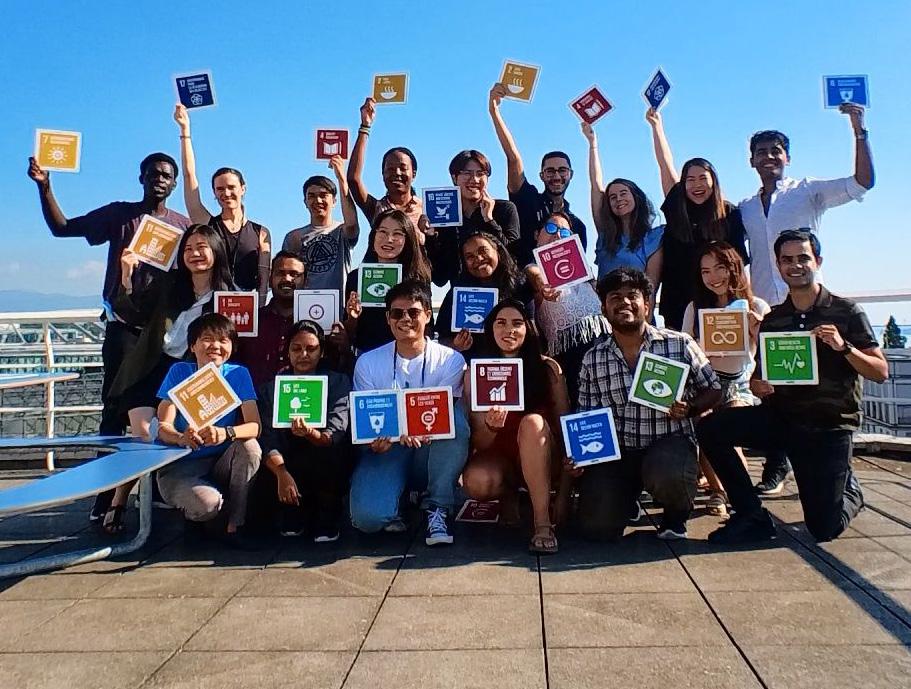
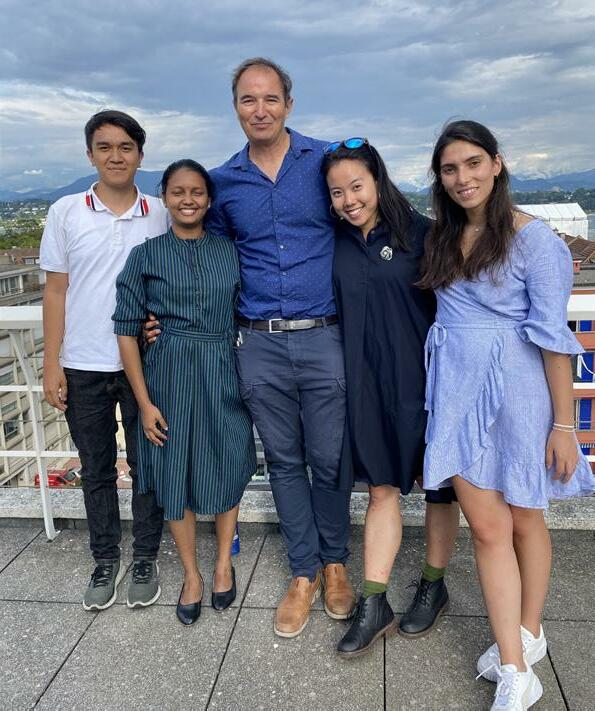
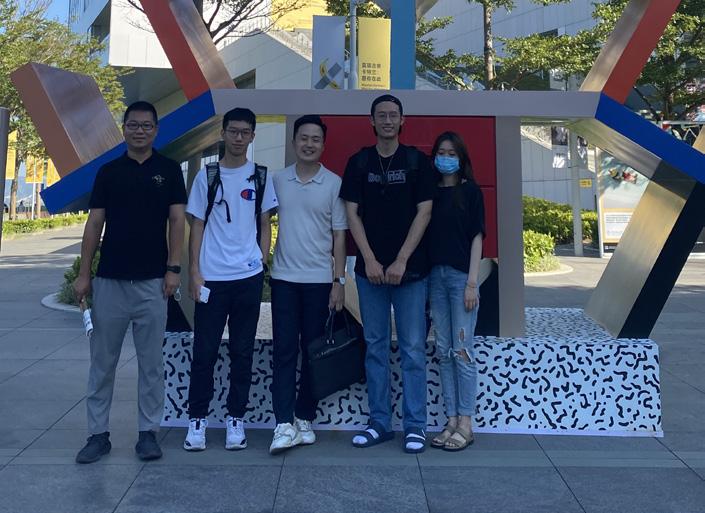
©cover image Students on the rooftop of the SDG Solution Space, Campus Biotech Innovation Park, Geneva Academic
SDG Summer School 2022
Introduction

The SDG Summer School is a one-month intensive team-based innovation program, inspired by the 17 Sustainable Development Goals or SDGs, that were launched by the UN in 2015. To achieve these goals, we need to enable today’s youth to play an active and meaningful role in tackling them. That’s what the SDG Summer School is all about.
The motivation of the SDG Summer School is for teams of university students, in close collaboration with International Organizations in Geneva, to conceive ways to use open data, crowdsourcing technologies, and low-cost open source solutions to achieve concrete steps towards achieving the SDGs, at a local, regional or global level. The SDG Summer School is based on team-based problem solving and hands-on prototype development, going from a conception phase to producing practical demos. All accepted participants receive intensive mentoring and coaching to help transform their ideas into impactful projects and become part of a global community of civic innovators.
Since 2020, the SDG Summer School has expanded from Geneva, where it was launched in 2016, to several other partner sites, which host their own versions of the Summer School. And since 2021, the SDG Summer School has focused on one theme: Open Source Health Solutions, in collaboration with the Institute of Global Health at the University of Geneva.
In 2022, there were SDG Summer School teams in Paris, at the Learning Planet Institute of the Université Paris Cité, and in Shenzhen at the x.factory of Seeed Studio, an open source hardware manufacturer. In Geneva, the event was hosted at the SDG Solution Space of the University of Geneva, and co-sponsored by the Geneva Tsinghua Initiative, a comprehensive education program for the SDGs.
The coordination between the teams at all sites, as well as support for PhD coaches in Geneva and Shenzhen, was generously supported by the Global Fund for the Fight Against AIDS, Malaria, and Tuberculosis, which is based in Geneva. The Global Fund also provided mentors who helped shape the challenges and actively coached the teams. The Global Fund and Partisia Blockchain, a corporate sponsor, also generously supported stipends to cover costs for students coming from the Global South.
In Geneva, the SDG Summer School includes study tours and brown bag lunches with experts from UN Agencies, International Organizations, NGOs, and academic partners.
The 2022 edition of the SDG Summer School focused on team-based problem solving and hands-on prototype development in order the help young innovators use crowdsourcing and open data, combined with emerging digital technologies like AI and blockchain, to maximize the impact of open source solutions for health applications.
Every week, student teams had to pitch the latest version of their project to a jury of experts. With each week, they had to make big improvements, and sometimes pivot completely their solution, in the light of the expert feedback.
After the summer school, some of the most promising projects were invited to apply for further funding, through the SDG Accelerator, another program of the Geneva Tsinghua Initiative. That is a long journey. But it is an essential one. Both the Global Fund and Partisia Blockchain continue to mentor some of the teams and encourage them to continue from innovation to real-world impact if programs like the SDG Summer School are to contribute to achieving the SDGs.
This SDGZine will cover the projects developed in Geneva and Shenzhen, with support of The Global Fund.

contact info@sdgzine.org publisher
Jan Van Mol
©LAB.002 sarl, 2021, 2022. All rights reserved
LAB.002 sàrl
SDG Solution Space Campus Biotech Innovation Park Avenue de Secheron 15 1202 Geneva Switzerland

SDG Summer school 2022 program
Week 1 Week 2 Week 3 Week 4
International Geneva Walking Tour Introduction to Entrepreneurship
Introduction to SDG Accelerator
Brown-bag lunch series: Sandra MamiHome & Alan Bridges to Development
Visit to Confucius Institute Brown bag lunch series: 4SD
Brown bag lunch series: Francesco Pisano UN & Africa@home
FabLab Workshop Visit to ICRC Museum Introduction to Knowing Your Users and Social Entrepreneurship
UN Tour
Final team activities
Weekly Pitch Movie Night Beach and Fondue Night Final pitch
4
Picnic Weekly Pitch Weekly Pitch Apero
SANTIAGO 2021 Liceo RAAC
5 SDG Summer school locations GENEVA 2021 2022 SDG Solution Space PARIS 2021 2022 Learning Planet Institute SEOUL 2021 Design Factory Korea SHENZHEN 2021 2022 Chaihuo x.Factory SINGAPORE 2021 Global Green Connect
Challenge 1 – The Truth
Mr. Gokul Rajendran, Kerala University of Health Science, India
Ms. Soudaphone Sisaykeo (AEM AEM), National University of Laos, Laos
Mr. Abiye Kalaiwo, PhD Candidate, Institute of Global Health, University of Geneva, Switzerland
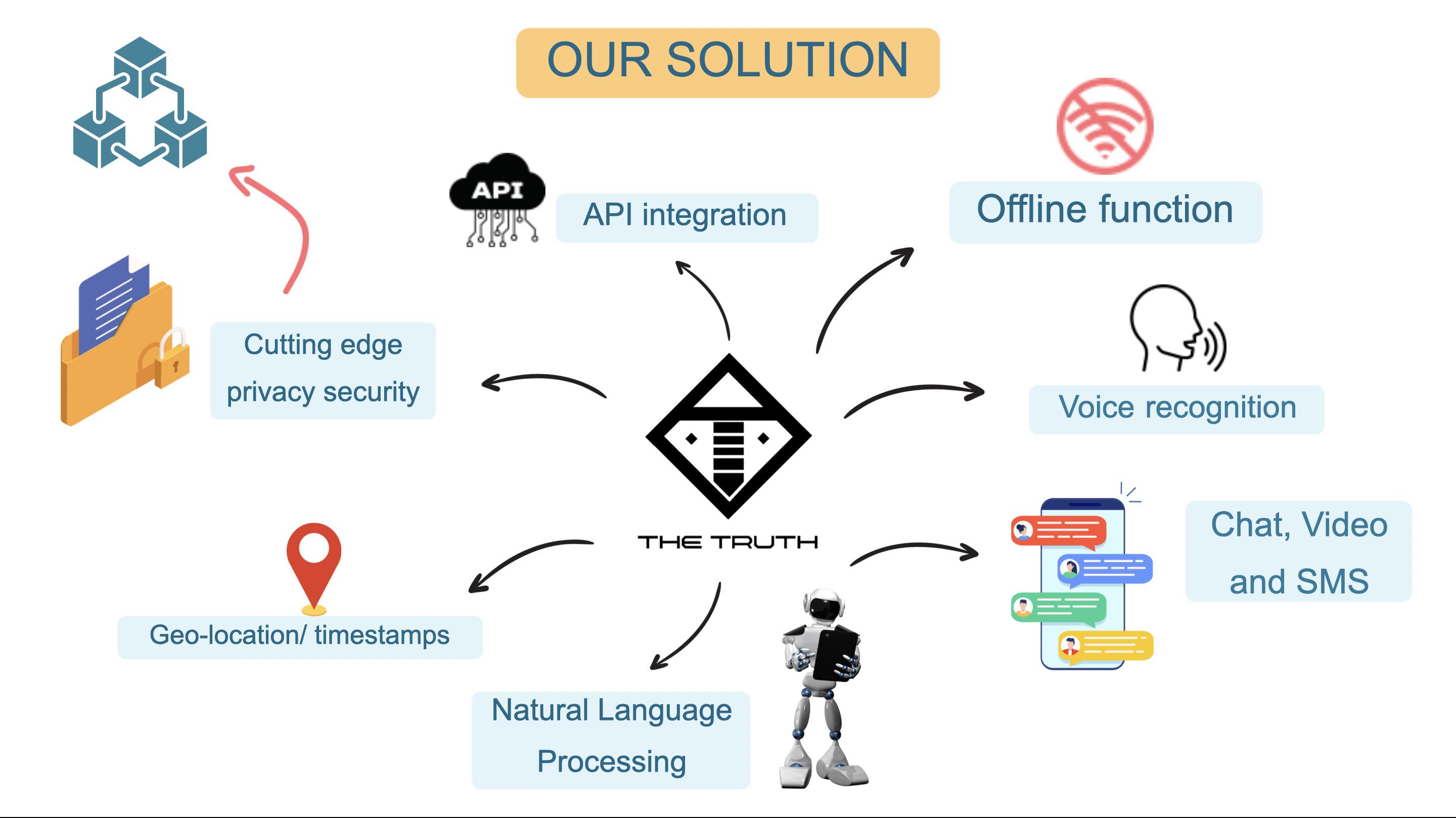
The Truth is a mobile app that tracks virtual public health services provided by field workers of implementing partners and recipients of donor agencies. These services include data regarding HIV and tuberculosis and occur through collecting information on the virtual interactions between field workers and clients/patients. This is made possible by either tracking single virtual services as part of a package or a package of virtual assistance. The proposed solution aims to adopt the use of current technology in developing apps that will track, transcribe, analyze, transmit, and provide visualization for stakeholders. The solution includes mobile and desktop apps that feed into a blockchain-backed cloud system from where analysis and visualization will be made to different stakeholders.
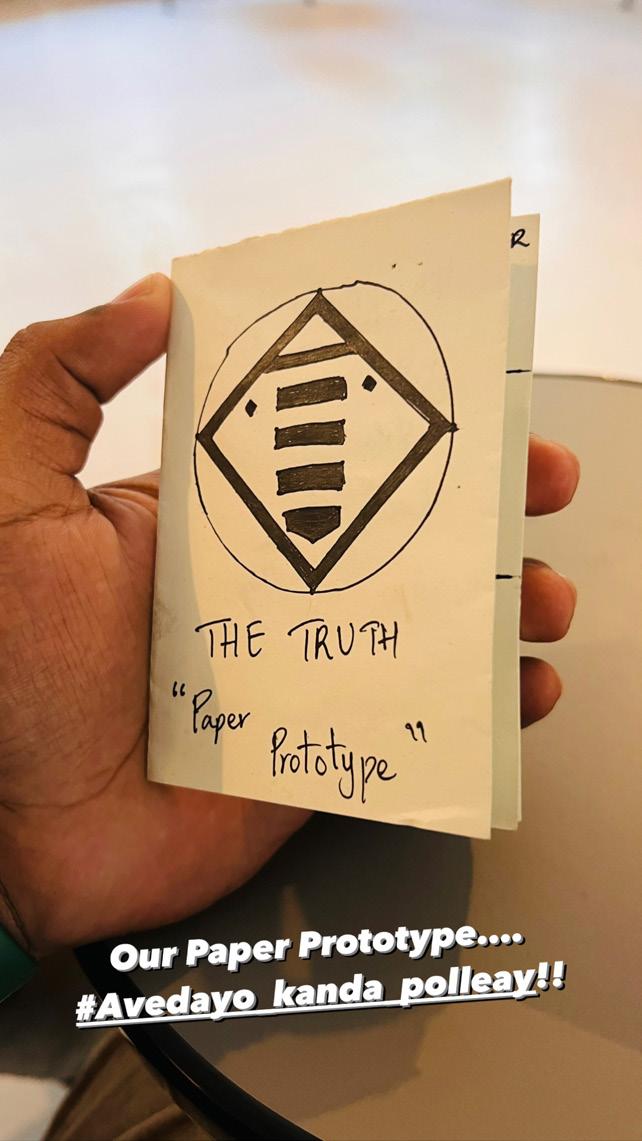
We have talked with several key players in the field, such as the NGO Youth Building the Future Global, as well as other organizations, such as Goodwall. We have also made a prototype, which is an Android App that takes screenshots and feeds them into image-to-text machine learning (ML) and produces text out of it.
Problem
The issue that we are attempting to tackle is the lack of tools required to efficiently track the activity of implementing organizations that are working around the world on different programs, such as HIV awareness and HIV support. We wish to ensure that the money that is received by them gets utilized efficiently and is not used for fraudulent activities. We are committed to tracking virtual and online services which are delivered as a package, as part of a package, or as a single service, in order to generate data for the funding organizations that are verified and trustworthy, meanwhile, keeping the privacy and security of the client intact.
Solution
The proposed solution is a mobile app that aims to track all virtual/ online services, analyze the contents, and determine if they are adequate based on minimum service delivery standards through artificial intelligence.
Description of Prototype
The prototype we produced is an Android App called “The Truth,” which we want to be installed on those people who implement the service on the ground. We use programming to record screenshots and screen recordings of SMS, chats (WhatsApp, Facebook, Twitter...), voice (voice calls and voice messages), and video calls. From this, the images produced are fed into an image-to-text ML which produces text, which is in turn put into a natural language processing ML, which selects the keywords and produces a result. These results are processed to find out whether the task was achieved or not. The App helps to get the user to track their activity status and reports this data accordingly.
Value proposition
The value of the solution that we propose will positively impact multiple stakeholders and users. However, we want to start by tackling the most critical user. The implementing organizations shall use it to track the daily activity happening in the field.
From our research, we have identified that our target user group considers it a priority to have a device that can help to track the provision of virtual services. Therefore, our solution will ensure that they can deliver their services virtually while also adding a partial physical interaction. The mobile/desktop apps will be deployed to field-level workers who directly provide these virtual/online services. This core functionality demonstrates the feasibility of deploying an app able to assess the quality of the online services without involving any change on the health worker delivering the service (i.e., the health worker could continue delivering the services as before installing the monitoring app proposed in this work).
Conclusion
The Truth is trying to solve the issue of funding with regards to implementing organizations. We want to go ahead with prototyping the ML algorithm and making a better Natural Language Recognizing ML for our App, which can work offline, store results offline, and send them to the cloud when it has access to the Internet. We will continue working fervently to continue developing and testing our prototype.
6
of virtual/online service delivery outputs
part
to inform performance-based funding)
Verification
as
of results reporting (including
Figure 1: The Truth mobile app design

Figure
Figures 3 and 4: Different types of prototypes created
7
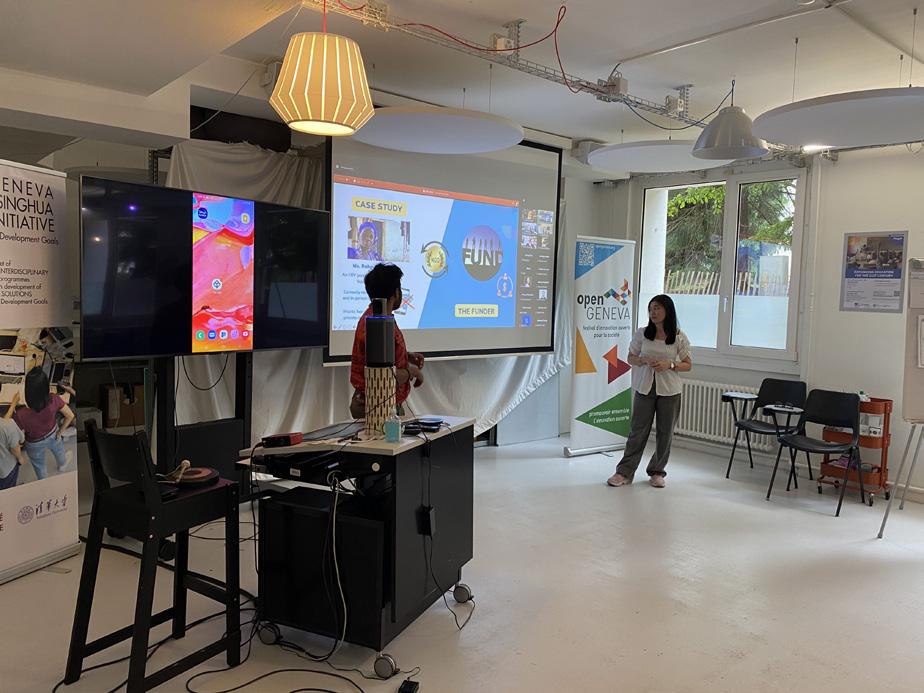
2: The team presenting the prototype in the SDG Solution Space
Challenge 2 – KYX
Mr. Khalid Azalmad, University of Lausanne, Switzerland
Ms. Yukun Zhang, University of Leeds, UK
Ms. Xin Yik Choo, EHL Hospitality Business School, Singapore
Mr. Akkarapon Chaiyana, PhD Candidate, Asian Institute of Technology, Thailand
Problem
As per our challenge’s background provided by the Global Fund, donors and organizations do not get systematic and community-led feedback on the quality of the services they invest in. As a result, some of the funds are not necessarily optimized. The process’ challenges include remaining anonymous and gaining enough quality feedback to implement practical approaches without consequences for the beneficiaries, especially in community centers.
Thus, researchers and scientists who work for the Global Fund cannot get the needed data to develop a supportive model for improvement. Users impacted by the problem are, in fact, the entire population of our planet, particularly those living in complex or unstable socio-economic contexts. Non-governmental organizations (NGOs) like the Global Fund focus on insurance mechanisms to ensure that funds used and means implemented reach the people in need. Current problems come from a top-down working pattern with no systematic data and a lack of mechanisms to hold health services accountable. At the same time, other potential problems emerge from it, such as a lack of empowerment of the communities, the lengthy amount of time to bring feedback up, overcoming privacy, and fear of speaking and illiteracy concerns. In Sub-Saharan Africa, 34.7% of the population above 15 years are illiterate (Statista, 2020).
It is highly important to develop a sustainable solution to this challenge because the voices of the people who receive care services are vital.
Solution
With the adaptation of a microphone on our feedback device, illiterate respondents no longer need to fill out extensive feedback forms. Instead, the process is simplified, with users only having to press a button to initiate their feedback recording. After which, the device processes their recording and transcribes each to text with no record of the respondents’ voices, ensuring anonymity and eliminating the possibility of repercussions. After recording feedback, the system automatically registers it onto our publicly accessible website, reducing corruption opportunities. Allowance for classification of data from positive to negative feedback and keyword recognition assists with feedback organization. For recordings with unclear or lesser-known accents or dialects, the public can volunteer to transcribe and have their transcriptions voted in as the official transcription.
By gathering feedback in a simplified vocal form with anonymous responses, beneficiaries are more inclined to provide their opinions. Eliminating the obstacles to effective response encourages the transi-
tion from a top-down to a bottom-up approach. With the implementation of classification, NGOs can systematically organize data according to their beneficiaries’ satisfaction and focus on specific concerns. Responses are not vetted by intermediaries, allowing for accountability, and supporting empowerment by giving power to their service recipients.
Description of Prototype
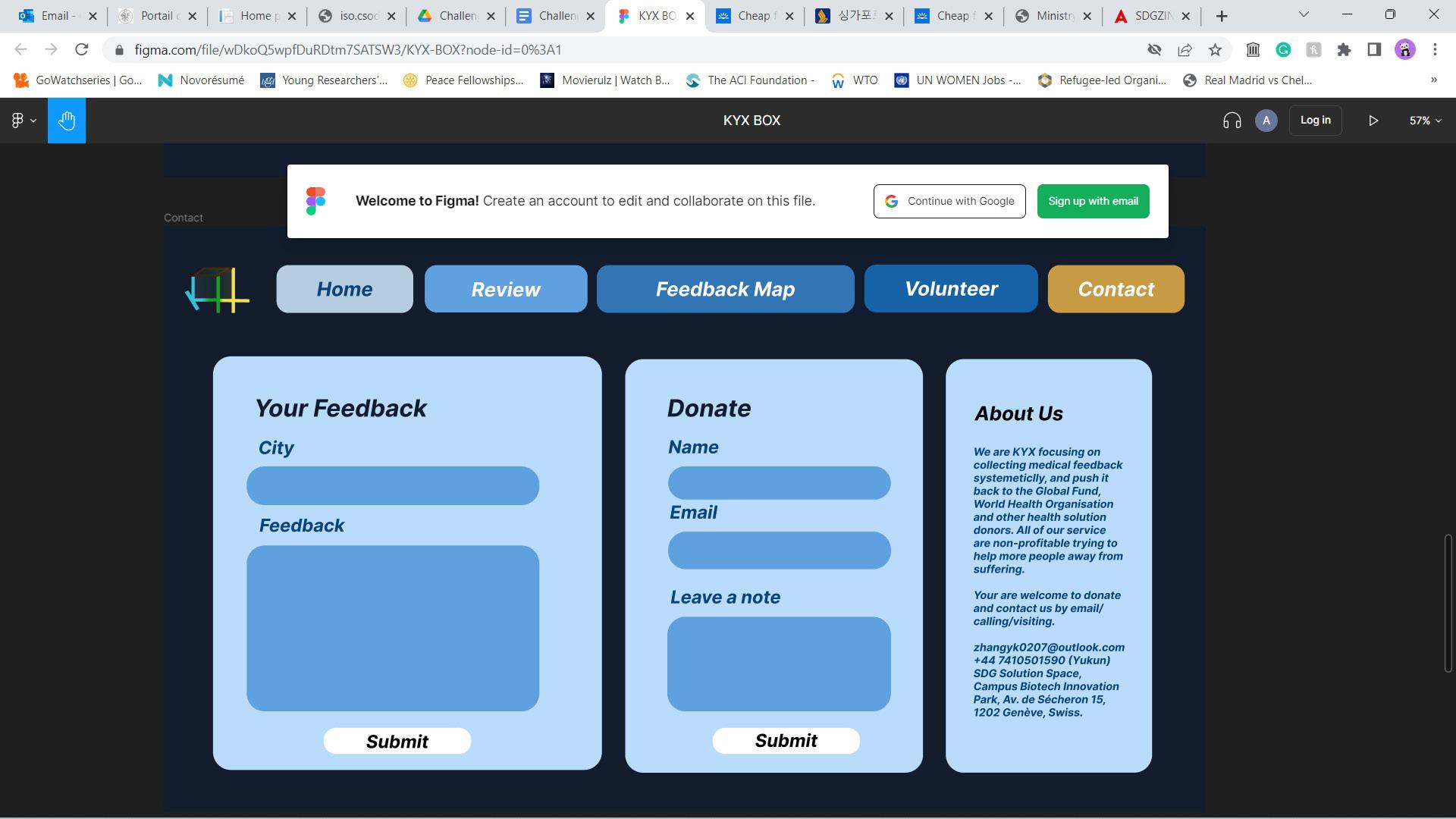
The central element is the web platform which allows several functionalities. Respondents can write or record spontaneous feedback about a received care service. Afterwards, respondents have access to all feedback on an interactive world map on the website. The website promotes a community-led initiative by doubling as a voluntary platform where citizens from all over the world can help to transcribe the audio recordings of lesser-known languages or dialects that the transcribing service is unable to process.
In the field, all health institutions will install boxes including a simple microphone in the form of a telephone, a Global Positioning System (GPS), and a screen, allowing intermediaries to receive feedback from their beneficiaries, concerning opinions of the services received. A hard disk will temporarily enable storing of audio recordings for areas without Internet. The audios are automatically transcribed and uploaded to the website.
Value proposition
The basics of other feedback mechanisms have always worked; we are not reinventing the wheel. However, we are making the wheel available to everyone in a more accessible way. The core component of this solution is the ability to convey information and opinion through a voice medium. Conventionally, most feedback systems are based on a written approach. By adopting a verbal form, we cover the illiterate who cannot write down their proposal. At the same time, we also cover the entire population for whom speaking instead of writing is more efficient for transmitting their opinion quickly. Another critical element is allowing feedback collection at any time and not relying on institutions (top-down approach) to provide feedback.
NGOs can better predict an improvement on a local scale through a deeper understanding of the recipients’ desires that could be listened to. The long-term effect is combined with the empowerment of the population and better integration into the community to finally achieve a global health improvement.
Conclusion
Organizations like the Global Fund need regular reviews of the struc-
8
Support community-led monitoring, enabling beneficiaries to provide feedback on the accessibility and quality of service received
ture with which healthcare services are delivered and constant focus on the primary stakeholders, their beneficiaries. To focus on and better understand them, more effort must be made to streamline this process. Traditional forms of gathering and processing feedback are typically slow, overly complicated, and disorganized. By implementing verbal feedback to be the main input in the feedback system, we enable everyone to have a voice in their own healthcare. This solution allows the use of state-of-the-art technologies such as Natural Language Processing (NLP) and international community solutions in a crowdsourcing format to enable the transcription of all audio recordings. After this, the transcriptions are made public to raise awareness among stakeholders and leaders while empowering local populations. This allows the NGOs to gather feedback swiftly, systematically, and without external influence or bias. Moving forward, they can improve their provided health services and effectively optimize their investments for long-term sustainability, allowing them to help more individuals.
References
https://www.statista.com/statistics/262886/illiteracy-rates-by-world-re- gions/
Prototype
https://www.figma.com/file/wDkoQ5wpfDuRDtm7SATSW3/KYXBOX- ?node-id=0%3A1

9
Figure 1: A simple mockup of the application
Figure 2: The team developing their prototype
Challenge 3 – HotspoTB
Mr. Yoonus Imran, University of Sri Jayewardenepura, Sri Lanka
Ms. Winnie Wu, Cornell University, USA
Ms. Sheryl Tan Le Min, EHL Hospitality Business School, Singapore
Mr. Raphael Atwood Nernst, PhD Candidate, Institute of Global Health, University of Geneva, Switzerland
Problem
The missing cases of TB cause a high burden in households and societies which show 31 million tuberculosis-related deaths between 20202050, resulting in economic losses of $17 trillion. These economic losses are staggering, and only represent the tip of the iceberg when it comes to failing to reach global tuberculosis targets. The fight against tuberculosis is entering a new era, moving from one of control to one of attempting to end the tuberculosis epidemic. The health-supporting organizations target 90–95% reductions in incidence and mortality by 2035, relative to 2015 (Cox and Furin., 2021).
Annually, an estimated 4.1 million individuals with tuberculosis are “missed” by health systems. These missing individuals take up twofifths of the total number of annual tuberculosis infections, contributing significantly to tuberculosis prevalence. These individuals are usually from disadvantaged and marginalized backgrounds. Hence, the solution of using data analytics to predict tuberculosis hotspots where said individuals are most frequent. It is urgent to address the issue as we seek to rectify the recent reversal in global progress while achieving the target set by the United Nations Sustainable Development Goals - a drop in tuberculosis deaths by 80%.
An increasing number of studies are using databases and artificial intelligence for tuberculosis (TB) research. However, there are limitations to using such databases for identifying patients with TB when using out-patient records, which is likely to lead to incorrect estimates of case numbers and non-specific hotspots. Underreporting TB cases should be of high concern for both the global community and national government agencies responsible for TB control and care.
Solution
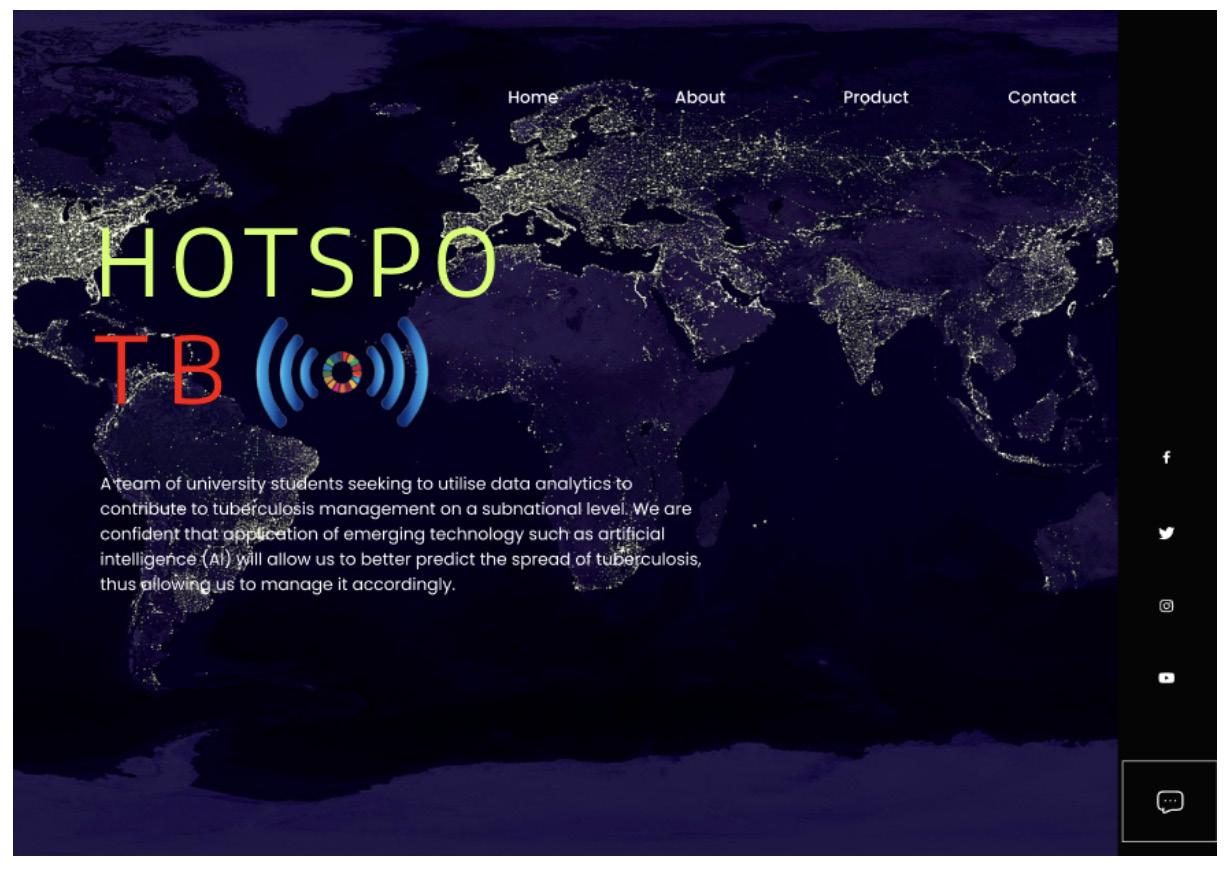
The objective of the endeavor was to identify and predict TB hotspots by utilizing risk factors and databases of tuberculosis cases to eradicate tuberculosis. The team HotspoTB, therefore, proposes a digital prototype to identify disease hotspots of tuberculosis using machine learning algorithms to combine GIS and non-conventional data sources including social media, and other conventional sources of risk factors (socioeconomics, environmental, health, and real-time diagnostic data). Our model of mapping in high-burden communities can serve as a detector to identify TB Hotspots which will help reduce TB incidence by initiating diagnosis and treatment in the region.
Description of Prototype
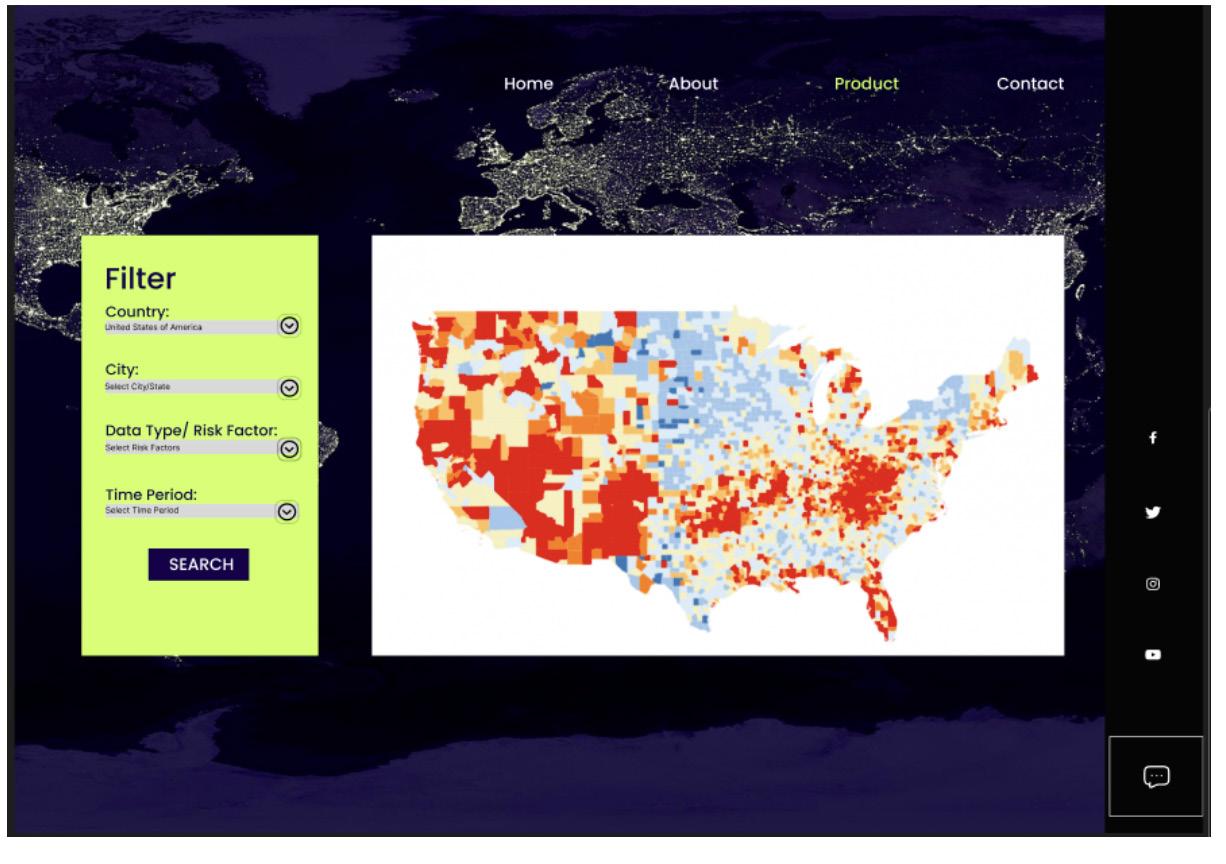
For our project, we developed a prototype using Figma. Illustrated by our prototype, we want to create a final product with different functions such as a risk factors indicators filtering tool, data visualizations and citations, and resources. Our risk factors indicators filtering tool provides functions to filter specific searches required by customers such as data type, geographical areas, and time period. Data types can include different risk factors by specific code such as 1.1 rural and sparsely located area, 1.2 urban and crowded area, 1.3 clean resources, etc. Geographical areas and time periods enable customers to select specific geographic locations to retrieve regional-specific data within a specific time range. Our data visualization section pinpoints data to geospatial maps and shaded areas with high TB burden with darker red color to distinguish from other moderate areas.
Value proposition
The value of our product is to provide a cost-effective screening to pinpoint missing high burden TB communities. To perfectly address the goal, our product has the uniqueness of integrating geographical mapping of high burden households and multiple regression analysis of local risk factors. Additionally, our product also detailed statistical data with exact location and real time data monitoring. Customers can update the latest TB data outbreaks and other inputs.
Conclusion
Tuberculosis is the second leading cause of death by an infectious disease. With the consecutive emergence of novel and endemic diseases in many parts of the world, tuberculosis may very well be the next on the list. Hence, we should strive to bring about the end of tuberculosis, especially with the advantages of existing and novel cures. To reduce the spread and deaths of tuberculosis, we will require: 1) comprehensive data collection pertaining to risk factors, 2) sophisticated models for data analysis, 3) data integration of public and private health facilities, and 4) training of personnel involved in active case finding. Together with the Global Fund and varying organizations we seek to partner with, we seek to execute and implement our project accordingly.
10
The use of data analytics to predict TB hotspots/high burden households
11
Figures 1 and 2: A prototype of the virtual interface
Challenge 4 – ARTtach
Ms. Ana Rita Teixeira, University of Lisbon, Portugal
Mr. Pathana Hoymoune, National University of Laos, Laos
Ms. Syn Hwee Sheriann Heng, EHL Hospitality Business School, Singapore
Ms. Sharaniya Vijitharan, PhD Candidate, Asian Institute of Technology, Thailand
Problem
Human Immunodeficiency Virus (HIV) is one of the most significant health threats to the public and is a challenge in achieving the sustainable development goals (SDGs). The World Health Organization (WHO) 2022 reported that there were around 37.7 million HIV-positive individuals worldwide in 2020, with around 4,000 new infections being transmitted each day. According to estimates, 0.7 percent [0.60.9 %] of adults in the world between the ages of 15 and 49 have HIV, while the epidemic’s toll continues to differ between different nations and areas. Nearly one in every twenty-five people (3.6%) in the WHO African area are still infected with HIV, making up more than twothirds of all HIV-positive people globally.
With a rapidly increasing global population, the assurance of health concerns is increasing with emerging technologies to reduce mortality and transmissions and improve the health status of HIV patients. To reduce the rate of mortality and enhance the well-being of HIV patients, antiretroviral therapy (ART) is the lifelong backbone support for people who are HIV positive. The correct adherence to ART decreases the number of HIV in the blood of infected individuals, thus reducing the transmission of HIV. This therapy consists of intaking a combination of HIV medicines in a single pill daily and it is the revolution that transformed a previously 100% lethal disease into a chronic disease. Although this therapy cannot cure HIV, it provides HIV patients with an almost normal life expectancy and quality of life. At the international and national levels, many non-profit organizations are supporting ART.
Noticeably, past studies on the ART programs and HIV cohorts found that a considerably high number of patients were lost-to-follow-up (LTFU) during the treatment. LTFU is a common issue in low-income nations where many barriers occurred in health facilities and patients’ care (Zurcher et al., 2017). This may happen when patients pass away, stop their medication voluntarily, and transfer from one facility to another.
At the various stages of the HIV cascade, the LTFU of HIV patients can increase the rate of HIV transmission, mortality, and morbidity, hindering the effects to control of HIV (Transer et al., 2013). Methods or platforms that are cost-effective and customer/user-friendly interfaces are important to track patients’ movements. These interventions can decrease transmission levels and double counting of patients. Moreover, it increases the accuracy of cost allocation for medications and the precision of patients’ records.
1 Mathieu Quet (2022:14, translated from French)
Solution
ARTtach is a practical, user-friendly, and user-centered platform that will track the movement of HIV patients. This platform has multiple functionalities and can be used both online and offline in locations where resources such as access to the internet are not constantly available, by use of asynchronous synchronization.
Objectives:
• To anonymously track patients and secure data privacy.
• To establish a centralized hub for synchronization where it can work offline to exchange the data.
• To facilitate patients’ follow-up sessions by providing reminders through short message service (SMS) messages, using the simplest mobile network.
• To find the suitable region of interest (ROI) for piloting the developed platform and test its effectiveness and optimize it according to the feedback from the users.
• To find the funding bodies to bring this prototype implementation into reality in a scalable way.
Description of prototype
The aim of ARTtach is to synchronize the data of HIV patients from different healthcare centers. The location of the centers determines the method to access the data. For instance, most centers will use fingerprints to verify patients while in locations where fingerprint technology is not available, such as refugee populations, we will gather other patient identification methods, such as vain identification or QR code tags in the future. As HIV is still heavily stigmatized in certain parts of Africa, limited information about the patients will be shown in ARTtach. This aims to protect the identity of the patient while remaining sufficient to identify and track them.
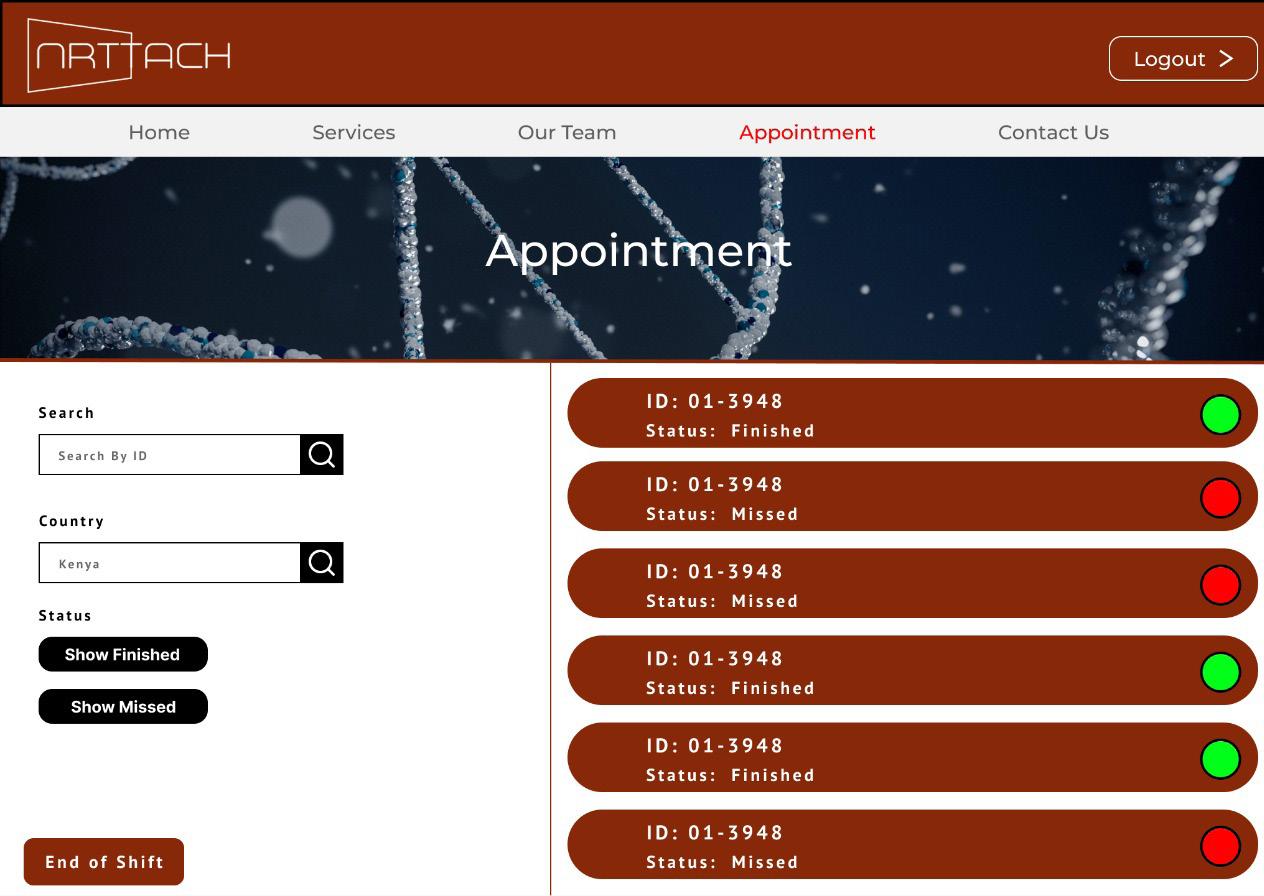
At the end of every shift, the system can send an automated short message service (SMS) to patients as a reminder for those who have missed their appointment. SMS prompts users to update their centers if they have decided to change their healthcare center. Moreover, there will be details regarding family members for centers to follow up on the whereabouts of the individuals, in case they are not reachable, for example in the case of death.
Limitations in Internet Access
Only 30% of people living in Sub-Saharan Africa have internet access (The World Bank, 2020). To combat this issue, data exchange will hap-
12
Leveraging mobile phone networks to track patient movements (including loss-to-follow-up)
pen asynchronously using a central synchronization server. A mini router can be attached to a vehicle, such as a drug distributor, that travels to all healthcare centers in an area. The router synchronizes the data of all centers automatically to the data cloud and makes use of the centers that have a constant internet connection to synchronize it with the centers in other locations.
Currently, many communities in Africa have liaison personnel that connect patients within their community to a healthcare center. This individual receives medication on behalf of a group of patients and distributes it to them. This system is in place due to the stigmatization of visiting hospitals or other reasons where patients are unable to make regular trips to the centers. ARTtach can be downloaded onto devices, making it a mobile platform, that will be provided for these individuals and the data can be synchronized when they make their trips to the healthcare center.
Value proposition
South Africa implemented a 3-tier approach in 2010: TIER.net. Recent literature has shown that the system has a relatively high rate of misclassification and errors in estimation (Etoori et al., 2020). Furthermore, TIER.net does not document patients’ transfers accurately. These challenges and limitations can be efficiently overcome with ARTtach, leading to better management of the underlying issues. The modern synchronization approach allows data to be updated effectively without internet access. This allows patients from remote areas to be accurately tracked and enables precise identification of areas with high HIV transmission. Thereafter, these areas can implement/intervene in more relevant policies and campaigns. In addition, reducing the double count of patients leads to better forecasts of the cost of ART.
Conclusion
WHO aims to reduce HIV infections to 335,000 by 2030. This goal can only be achieved through effectively tracking patients and ensuring that ART is being diligently administered. ARTtach is a real-time practical solution for the world to achieve this goal. This system leads to the accurate identification of HIV hotspots where precise interventions could be further implemented to continue the reduction of HIV transmissions.
References
World Health Organization. (2022). The global health observatory. Retrieved on 25.07.2022. https://www.who.int/data/gho/data/themes/hiv- aids#cms
Brennan, A.T., Maskew, M., Sanne, I., & Fox, M.P. (2010). The importance of clinic attendance in the first six months on antiretroviral treatment: a retrospective analysis at a large public sector HIV clinic in South Africa. Journal of the International AIDS Society, 13, 49.
Etoori, D., Wringe, A., Kabudula, C. W., Renju, J., Rice, B., Gomez-Olive, F. X., & Reniers, G. (2020). Misreporting of Patient Outcomes in the South African National HIV Treatment Database: Consequences for Program Planning, Monitoring, and Evaluation. Frontiers in public health, 8, 100. https://doi.org/10.3389/fpubh.2020.00100
Tanser, F., Bärnighausen, T., Grapsa, E., Zaidi, J., & Newell, M-L-L. (2013). High coverage of ART associated with decline in risk of HIV acquisition in rural KwaZulu-Natal, South Africa. Science, 339:966–71.
The World Bank. (2022). https://data.worldbank.org/indicator/IT.NET. USER.ZS?locations=ZG
Zürcher, K., Mooser, A., Anderegg, N., et al. (2017). Outcomes of HIV-positive patients lost to follow-up in African treatment programs, 22:375–87.
13
Figure 2: A prototype of the platform
Figure 1: The team
Challenge 5 – OOPt-IT
Mr. Udai Nanda, Punjab University, India
Mr. Dennis Kemboi, Multimedia University of Kenta, Kenya
Ms. Jodi Tan Yun Yi, EHL Hospitality Business School, Singapore
Ms. Kailing Marcus, PhD Candidate, Institute of Global Health, University of Geneva, Switzerland
Problem
The Global Fund invests around US$4.2 billion a year in more than 100 low and middle-income countries to fight Human Immunodeficiency Virus (HIV), Tuberculosis (TB), and Malaria (Results Report 2021, n.d.). This significant amount contributes to combating these diseases, but there are still many individuals unable to seek appropriate healthcare, due to being overburdened by out-of-pocket (OOP) payments. As defined by the World Health Organization (WHO), OOP expenses are the individuals’ direct payments to healthcare providers at the time of service use. OOPs include purely private transactions (payments made by individuals to doctors and pharmacies), official patient cost-sharing (user fees/copayments) within defined public or private benefit packages, and informal payments (payments beyond the prescriptions entitled as benefits, both in cash and in-kind). It is important for organizations such as the Global Fund to compute OOPs, for a comprehensive understanding of the situation at the ground level in order to augment its resources accordingly. The current modes of collecting such data are usually household surveys and personal interviews. However, these data collection methods may be time-consuming and limited in coverage and suffer from the problem of personal bias.
Solution
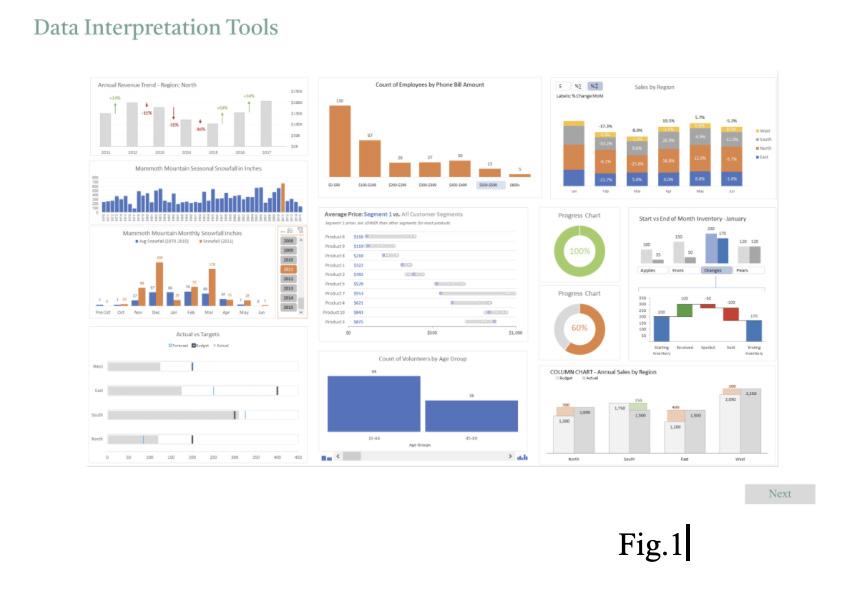
We propose to develop a mobile solution, the “OOPt-IT” App, using optical character recognition (OCR) to convert information directly from the medical records of patients into a data bank for easy access to information. Once in the system, the data would be categorized based on age, gender, insurance plans, etc., and compute the OOP expenditures based on the collected data from the platform. As shown in Fig. 1, this information would further be organized using data interpretation tools for easier analysis, such as pie charts and bar graphs.
Target audience & partners
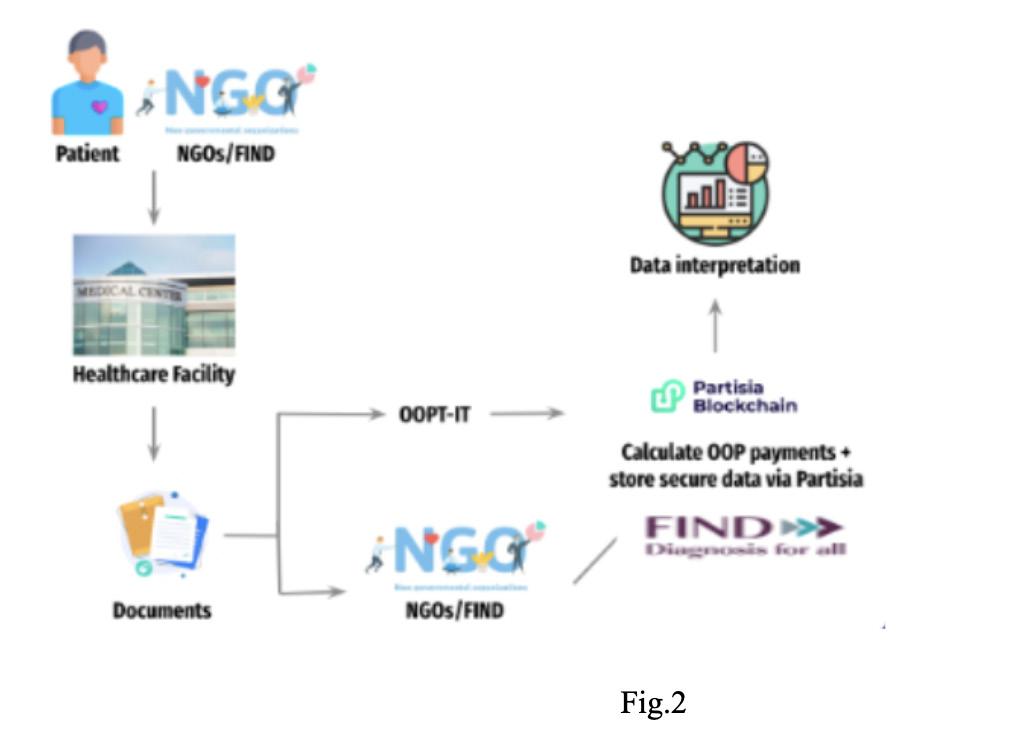
India is a strategic partner of the Global Fund, both as an implementer and a donor and has ambitious goals for HIV, TB, and Malaria, including ending TB by 2025 – five years ahead of the Sustainable Development Goals (World Health Organization (n.d.). In pursuance of the same, our initial focus would be Uttar Pradesh, an Indian state with the country’s highest TB contributor, targeting people ages 20-35 suffering from TB to test our platform. This would be eventually scaled out, widening the consumer base to other regions across various age groups and other ailments. For this, we aim to collaborate with The Global Fund and its partner organizations such as FIND. Organizations such as FIND are already
Figure 1: Data interpretation tools
working in Uttar Pradesh in India with a strong network of TB patients. Along with patients’ medical reports, they may either assist patients to upload pictures of their medical reports or help patients upload their medical reports by themselves directly to our OOPt-IT application.
We also wish to work with Tata Trusts which launched the India Health Fund as the first platform to aggregate and invest philanthropic capi-
Figure 2: A stakeholder network
tal to accelerate the elimination of TB and malaria in India. We would also be using an open-source OCR tool, Tesseract, to utilize this tech-
14
Data collection tools to better measure out-of-pocket payments
nology along with an integral collaboration with Partisia Blockchain, a leading provider of data security solutions as elaborated in Fig.2 below.
Data privacy
Collecting such sensitive information comes with great responsibility. To manage this, we would be taking assistance from Partisia Blockchain, a platform that addresses the blockchain trilemma of security, scalability, and decentralization. It tackles scalability issues with a sharding solution and is enabled using ZK computations, also known as “Zero-Knowledge Succinct Non-Interactive Argument of Knowledge.” An AK-SNARK is a cryptographic proof that allows one party to prove it possesses certain information without revealing that information. To further enhance data security, we would anonymize the data and use a one-time password feature to ensure there is a twofold authentication process when the patient chooses to log into the dashboard.
Unique value proposition
Indian citizens currently have no platform to record or track their medical reports. The documents are only available in a hard copy. Therefore, these documents need to be carried from pillar to post by hand each time an Indian chooses to visit a healthcare facility. Not only is there a constant threat of these documents being lost or damaged, but there is also stigma attached to the act of carrying the medical records and coming under the scrutiny of society. Our solution will serve a dual function in this regard. It would help patients record their medical history safely and securely while providing organizations such as the Global Fund pivotal information related to OOPs accurately and credibly, directly from the primary source.
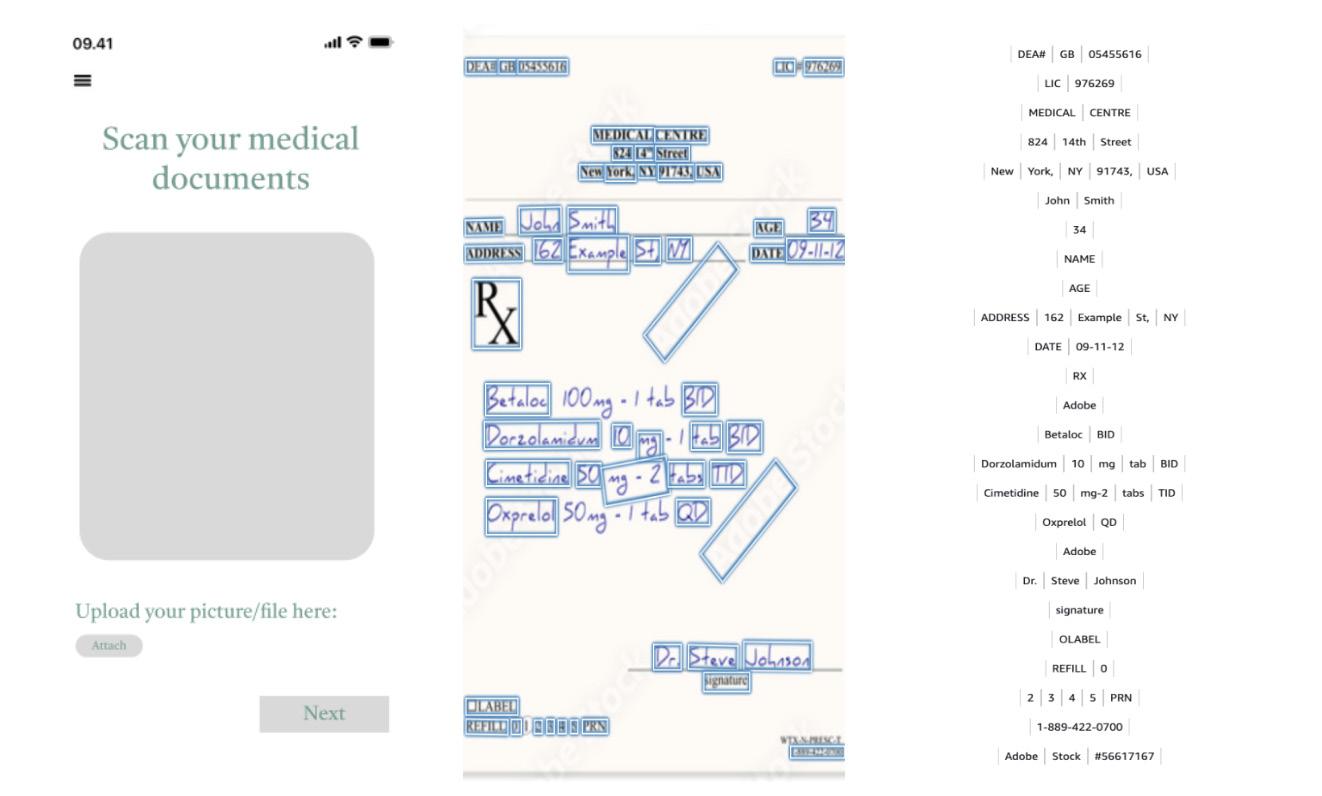
Business Development
The first stage is the incubation period, which is expected to take around six months and cost around USD $50,000. The expected outcome of this stage would be to develop a usable platform/application, to ensure strong collaborations with organizations and create a participation pool for the second stage, the pilot phase. The pilot phase
shall take about 1-3 months, which would cost around USD$ 20,000. The main aim here would be to rework the platform and make it more user-friendly. The third stage would be the implementation phase, which would take a year and amount to approximately USD$ 20,000. The expected results of this phase would be to receive constant constructive feedback and continue further improvements on the platform. The last leg would be the review phase; this would be used to assess the platform holistically to iron out the creases. This stage would be a constant one as our aim would be to relentlessly improve the platform to serve the patients and international organizations tracking OOPs better.
Conclusion
In conclusion, being healthy is essential to life and the right to life is a necessity, as mandated in Article 3 of the Universal Declaration of Human Rights, which includes the right to health. Through the development and implementation of the OOPt-IT mobile solution, we will make positive strides towards alleviating confusion related to OOP expenses, furthering efforts to bolster access to healthcare for all.
References
Global Fund grants US$37 million to FIND. (2021, August 13). The Global Fund. Retrieved August 9, 2022, from https://www.theglobalfund.org/en/news/2021-08-13- global-fundgrants-usd37-million-to-find-to-advance-tuberculosis-pre-vention-and-control-in-india/
India Health Fund. (n.d.). Global Fund. Retrieved August 9, 2022, from https://www.theglobalfund.org/en/private-ngo-partners/resource-mobili-zation/india-health-fund/
India | The Global Fund. (n.d.). The Global Fund. Retrieved August 9, 2022, from https:// www.theglobalfund.org/media/8395/publication_indi- aimpact_report_en.pdf
Results Report 2021. (n.d.). The Global Fund. Retrieved August 6, 2022, from https://www. theglobalfund.org/en/results/ World Health Organization. (n.d.). States and UTS accelerate action to end TB by 2025. World Health Organization. Retrieved August 10, 2022, from https://www.who.int/india/ news/detail/09-11-2021-states-and-uts-accel-erate-action-to-end-tb-by-2025#:~:text=In%202018%2C%20Prime%20 Minister%20of,(SDG)%20target%20of%202030.
15
Figure 3: A simple prototype
Challenge 6 – All Ears
Social Listening Approach to measure impact of Global Fund Awareness-Raising Initiatives
Ms. Neha Verma, University of Toronto Scarborough, Canada
Ms. Elisabeth Mukendi, Senghor University at Alexandria, Egypt
Ms. Vatthana (Banky) Inthalacksa, National University of Laos, Laos
Ms. Yung-Hsin Lin, PhD Candidate, Asian Institute of Technology, Thailand
Problem
In the sphere of public health, numerous decisions are made every day to identify, design, and implement interventions for certain issues. Decision-making driven by proven evidence is crucial to ensure that resources are utilized in the most efficient way to tackle the urgent and serious issues of our times.
This is particularly true for a global funding organization like the Global Fund (GF). To better inform its decision-making, GF has been collecting relevant data and assessing the impact of its interventions. However, GF has experienced a challenge in data collection and impact assessment of its awareness-raising campaigns. While raising awareness is key to encouraging service demand, it is often found difficult to measure the impact of these “soft” activities. This is primarily because awareness raising and behavioral change are not necessarily relatable, and public awareness of stigmatized AIDS, TB, and malaria is hardly backed up by quantitative data, as it requires delicate data collection methods to capture people’s sentiments without the intrusion of privacy. As a result, we defined our problem statement as the lack of a systematic, scalable, and sustainable approach for data collection and monitoring of awareness-raising campaigns.
Solution
To better understand the problem stated, we started with a desktop review of grey literature and research papers, followed by a series of stakeholder interviews, including GF and other non-profit organizations in Geneva.
We soon realized the advantages of social listening compared to traditional methods of data collection, such as surveys or focus groups. Social listening encompasses any source of information that provides relevant and timely information on public perceptions about the subject matter (Gavi et al. 2021). We consider social listening as a promising approach to offset some shortcomings of traditional data collection methods, such as significant resources required for any large-scale survey, and potentially biased design of questions. Meanwhile, we also recognize that digital sources of data for social listening have their limitations, especially relating to the exclusion of vulnerable and disadvantaged populations. Therefore, other non-digital sources of data have also been considered and studied.
Finally, we learned from the interviewed stakeholders, also our potential beneficiaries, that a platform which pools relevant data from various sources would be appreciated for the sake of time and resource
saving.
Therefore, we decided to create such a platform and visualize the collected data in a dashboard. The goal of our solution is to enhance the availability and accessibility of data relevant to the awareness-raising campaigns for AIDS, TB, and malaria in the countries where GF operates, such that GF, or even other non-profit organizations and researchers, can conduct any impact assessment and eventually enhance decision making.
Description of Prototype:
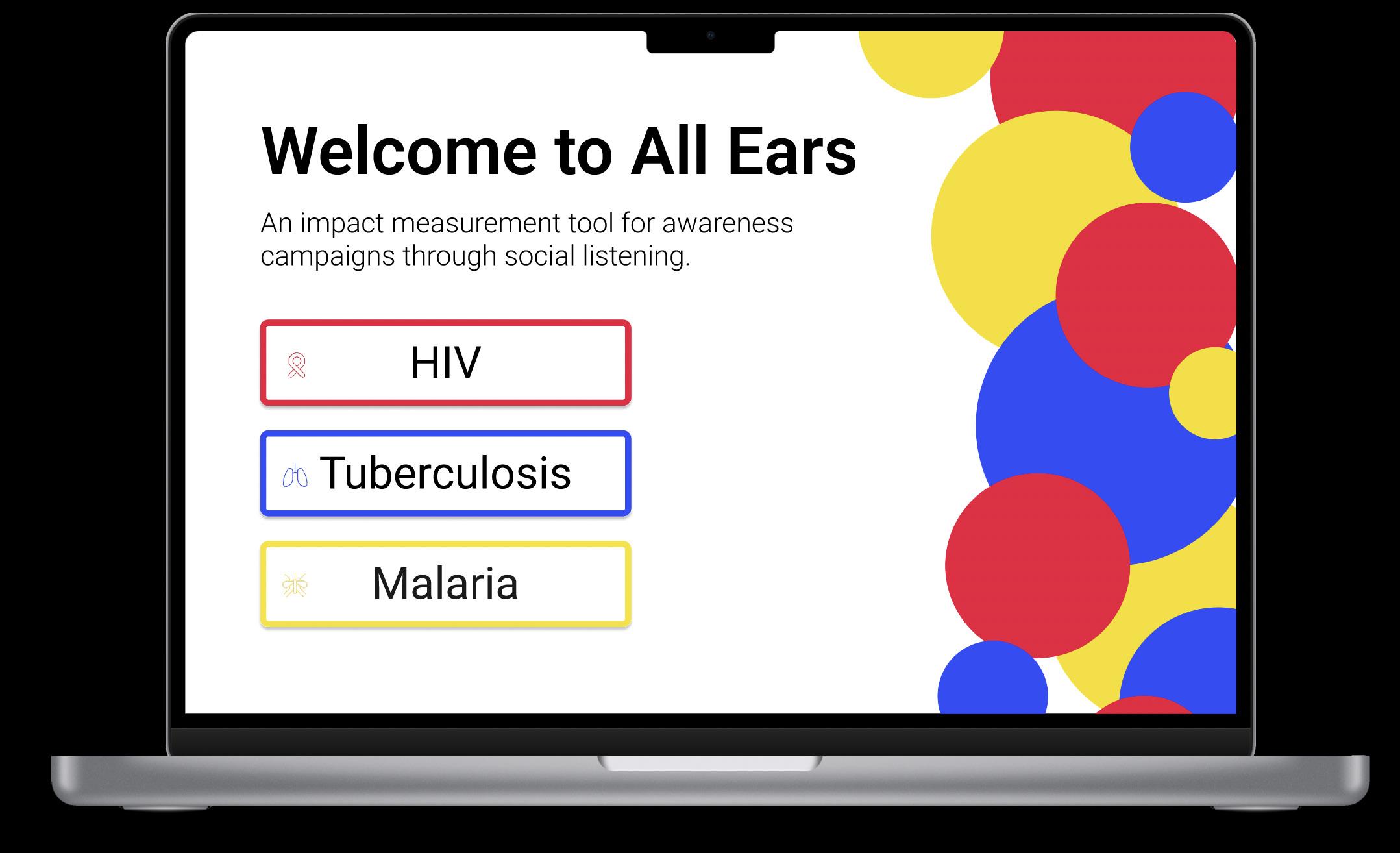
The solution we prototyped is presented on a dashboard that displays the pooled data relevant to awareness raising campaigns in the pilot case of AIDS in Botswana. It is selected based on several factors, such as the prevalence of diseases, access to the internet and social media, level of stigmatization, and importance to GF’s total portfolio.
To identify suitable data sources and techniques, we carried out trials and eventually concluded the most promising options, including keyword search from web pages powered by Microsoft Bing API, data crawling from Twitter followed by a sentimental analysis, and audio-to-text transcriptions combined with word cloud analysis. These methods can be deployed at a low cost while generating the metrics that can inform immediate outputs from awareness-raising campaigns, including the number of keywords mentioned in the monitored public sources (i.e., web pages, Twitter, radio programs) at different points in time, the sentiments that people expressed in their posts/ tweets/speeches, the concepts, objects, or feelings to which people would relate when it comes to the concerned diseases. Furthermore, by pooling data from different sources, users would be able to compare any evolutionary trends of the metrics against the implementation timeline of a given campaign.
The dashboard is designed in a way that allows users to easily navigate and consult the data, metrics, and trends that they are looking for. See below the images which show each section of the dashboard.
Value proposition
Our proposed solution is an ecosystem that makes available data pooled from a variety of social sources and reported in one platform, via one click. An enabling environment for a data-driven impact assessment of awareness raising campaigns is highly desirable, and our solution is exactly designed to create such an environment. Indeed, building this ecosystem would involve an upfront cost of capital for IT development, recurring expenses for maintenance, as well as social costs potentially induced by increased competitiveness
16
among local partners, and the opportunity cost of electricity, internet, and fund consumption that could have been diverted towards other productive activities. Developing this platform requires costs for human capital, and miscellaneous platform costs are projected to be low. However, this ecosystem could also bring about immense social benefits such as added transparency and accountability along with the time and resources saved from data collection activities, as well as better-informed decisions to optimize resource planning and improve program design for the greater good of concerned communities. It would be unrealistic to quantify the return on investment of our solution, given its primitive status. However, as explained above, our solution could potentially yield a net economic benefit, with all the financial and non-financial factors considered.
Conclusion
Improving data accessibility to enable impact assessment of awareness-raising campaigns in a systematic, scalable, and sustainable manner would be the key contribution of our solution. To realize it, further exploration of data sources and metrics would be required. User trials would be crucial for feedback collection and further refinement of the solution. Once a pilot case is successfully established, it can then be replicated in countries with similar cultures, languages, or social norms. While scaling up takes time, it is definitely feasible since diseases and locations can simply be added to the existing framework. Building strategic partnerships with existing solution providers in the market may be helpful to accelerate the process.
Figure
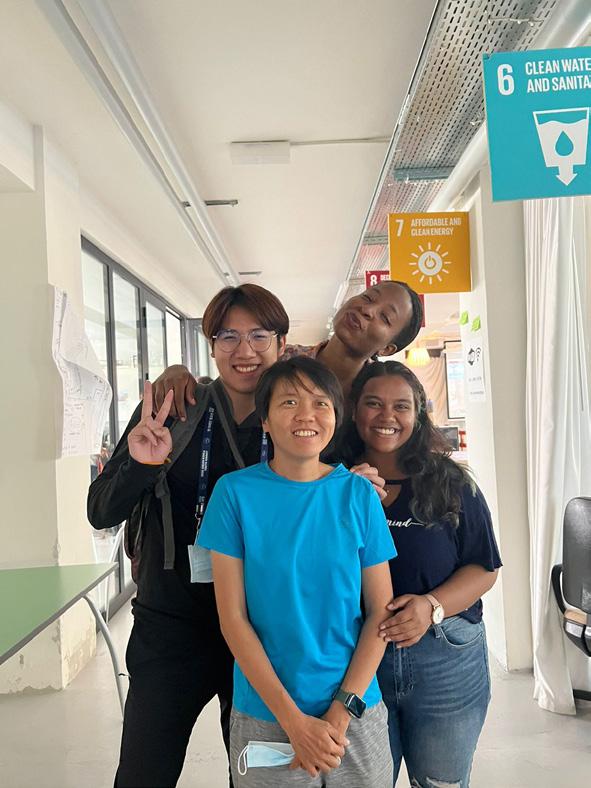
Figure 1: The team
17
2: A prototypevof the digital interface
Challenge 7 – Hear-0 Datasets
Social Listening Approach to measure impact of Global Fund Awareness-Raising Initiatives
Mr. Quentin (Chen Chun), Tsinghua-Berkeley Shenzhen Institute, China
Mr. Jiaxi Zhang, Jiangsu Tianyi High School, China
Mr. Mike Hyungmin Lee, Tsinghua University Shenzhen, China
Ms. Shirleen Syuan Ying, Tsinghua-Shenzhen International Graduate School, China
Mr. Xiaolei Ren, PhD Candidate, University of Texas at Arlington, USA
0. Analysis of the Challenge
Our team broke down the issue into three parts to get a clear understanding:
1)
Social listening approaches
The idea of “social listening” is frequently used by big data solution providers and digital marketing firms. It describes the method of finding and examining social media conversations around the business and brand. Identifying and counting pertinent terms delivers marketing intelligence or detects risk.
2) The impact of the Global Fund’s (GF) activities
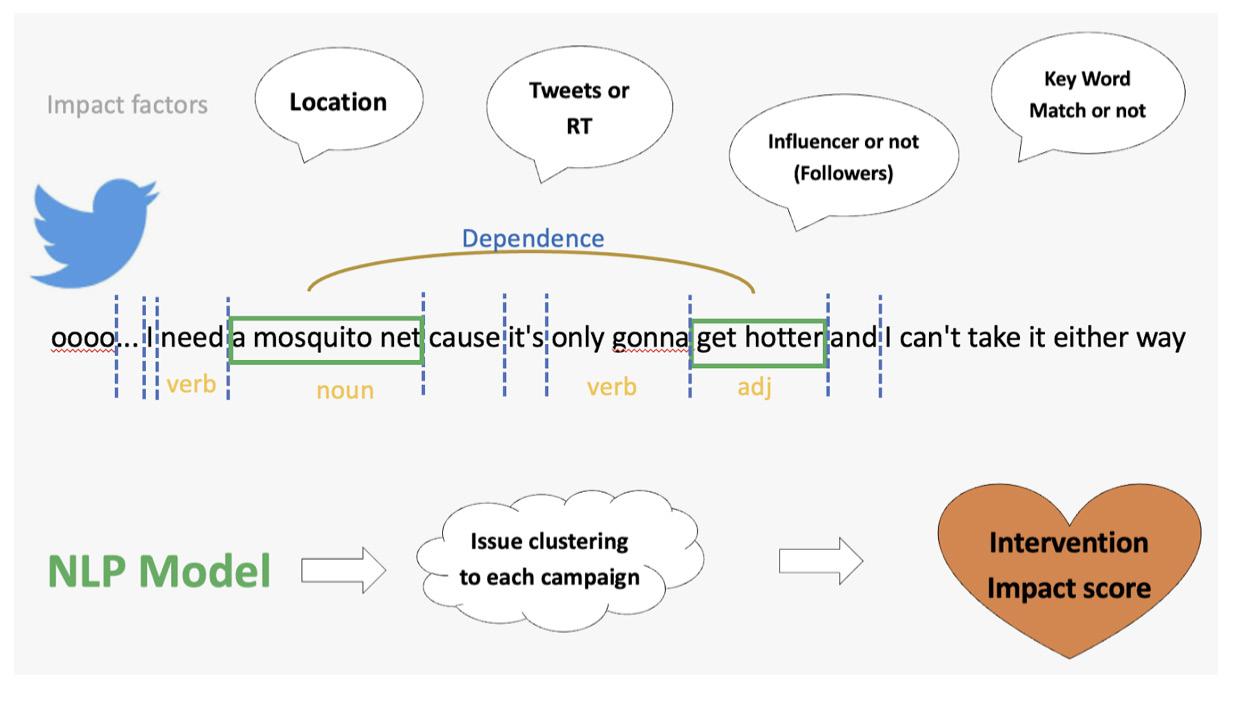
Our understanding of impact comprises the following: A) Capturing public content by beneficiaries, influencers, and the media around social issues; B) Tracking whether this content is generated because of a specific set of awareness-raising interventions; and C) Generating insight in real-time for decision-making linked with programmatic action.
To translate these points into rough technical requirements in the “social listening” concept, A) is sourcing text language data from public posts; B) defines entities (keywords to identify) from the GF interventions and scores how relevant the post is to it; and C) refers to issue clustering in the form of a word cloud and defines entities to detect certain event or risk.
3) Raising awareness efforts around HIV, TB, and Malaria
Since many accessible social big data analytics on the internet were made as digital marketing tools for commercial brands, their language model focused on general domains such as what keywords appear the most in general, whether the post is positive or negative, etc. The GF confirmed this technical requirement and emphasized that we need a customized model focused on HIV, TB, and malaria to make the analysis relevant to them.
1. Problem
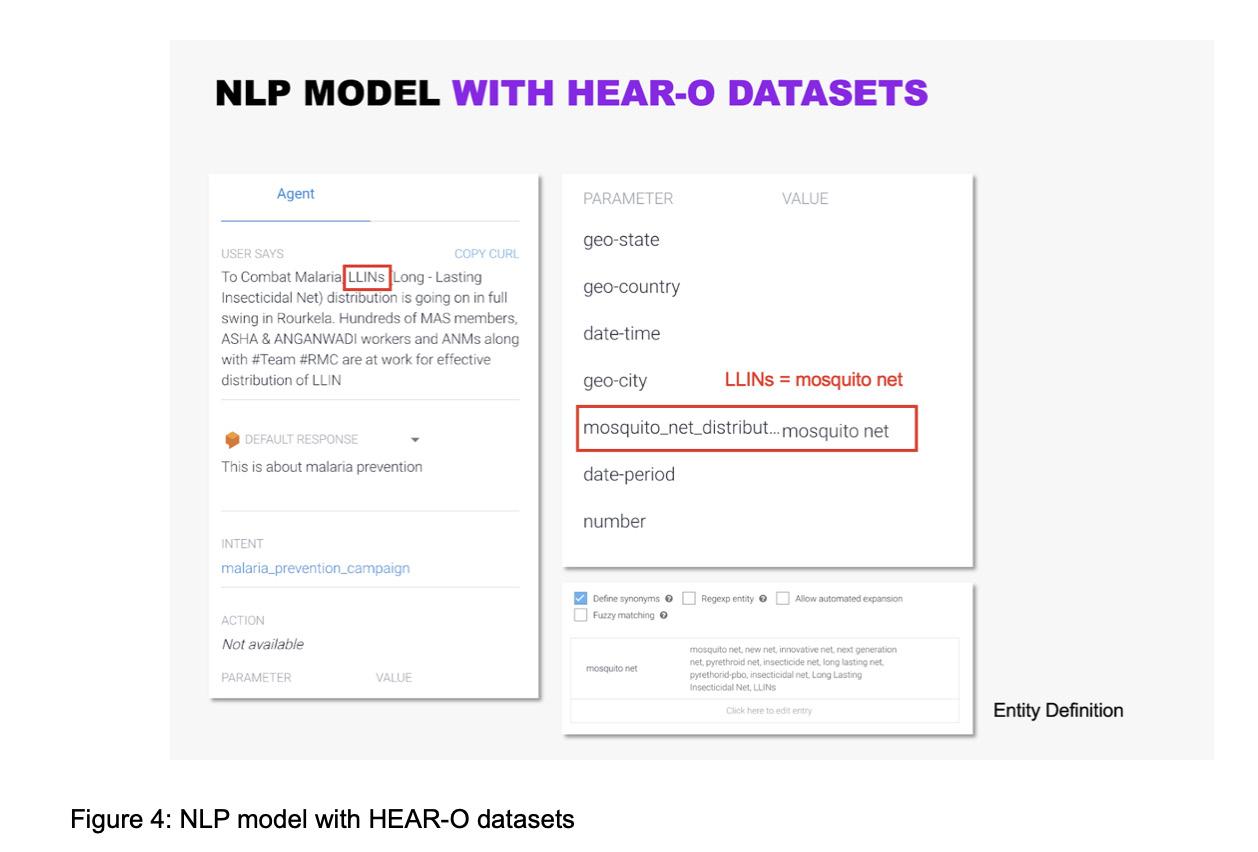
Social big data analysis follows three steps: data sourcing, data processing, and utilization. However, the GF expectations weighed on the utilization step. Considering the maturity of the market, defining what data source and how to process was much more critical at that stage. Defining the entities that matter for the GF results in different outcomes. In this example above, Figure 1 is the result of Google NLP model analysis without custom datasets. They recognized LLINs as the Organization and Insecticidal Net as Other, while both contain the same meaning of mosquito net for repelling the malaria campaign.
Figure 1: Result of Google NLP model analysis without custom datasets

In our second interview, we found that it is an early stage for the GF to work on big social data analysis. Because there have been no prior trials of the entire process of the analysis, it was particularly important to make a consensus by addressing the methodology with examples that fit GF.
2. Solution
Based on our study, we developed HEAR-O, a set of unique datasets with a technique intended to jump-start the Global Fund’s social media analysis. Our team did its best to deliver this achievable innovation
Figure 3: Data Analysis Process
18
Figure 4: NLP model with HEAR-O datasets
within 4 weeks.
2.1. Process
Data Sourcing
To identify the keywords that matter to the GF, we picked the intervention topics as accessible HIV testing, continuous TB treatment, and Malaria prevention with mosquito nets. These were the topics with the highest number values on the statistics in The Data Explorer [1],[2],[3], and the GF’s data platform. We made an entity list with synonyms, to capture the relevant post with the same topics. Then, we sourced the relevant posts from Twitter to get rid of stopwords for data processing.
Data Processing
When using the Tweepy API [4] for Twitter, from the posts, we can get location data, the main text message, whether these are tweets or retweets, or whether the tweeting is an influencer or not. With this, we narrowed the range down to Nigeria for the samples, which has high internet and mobile phone penetration rate, and sharing on social media is popular and widely used in English. Then we got rid of stopwords and retweets and used its clean main message as a corpus to train the NLP model. With the iterations of the process above, we built an entity list and corpus. Now when we put the post as input, the language model can process it and gives a result of what entities the post has and what the topic is about. Then the post-processing model to score the relevance between the three topics and the main message of the posts is necessary after this step. It can widely vary, but the basic logic is to set up the standards to
make judgements with scores. For example, we suppose that the original posts contain many entities of the GF mosquito net distribution campaign topic. In that case, we can score it by the frequency of the appearance of the relevant entities and make a judgment that it has high relevancy if the score is over 80 by the algorithm.
3. Prototype description
Above is the demo page showing how our model produces analysis results with the Twitter post input. With the trained NLP model, it recognized the post is about malaria prevention and identified entities like LLINs as a mosquito net. The way to detect event/risk entities works the same but shows colorfully when it goes to the dashboard. Plus, if we describe the frequencies of each topic mentioned visually with Word Cloud, it became the insight panel on social big data analytics to show users which topic is trendy.
4. Value Proposition
As this language model contains information on the relevancy of the different keywords that matter to the GF, it can be used for improving in-company search engine results, using the same entity and corpus to train chatbots to understand request with human language and even connects it with BI(Business Intelligence) to ask the data table to pop up instead of clicking complex filters and RPA (Robotic Process Automation) to trigger certain app doing the repetitive work for the employee.
We can reuse the language model by changing the entities inside, for example, changing the ‘mosquito net’ distribution topic to ‘COVID self-test kits’ distribution, the GF can sell out the language model to other NGOs as whole datasets or lease the model with SaaS and help them make changes as the GF does.
5. Conclusion and Future work
With our data analysis approach and prototype, we can get some important results such as the why and what of custom datasets, how to use real examples related to the GF for social big data analysis, and data roadmaps.
Although our prototype proved its capabilities in ‘listening’ social data, there are still limitations. First, language is a symbolic tool for communication. Although the post-processing model can narrow the ambiguity, the analysis output built on that abstractness could be abstract at a certain level too. Therefore, we recommended using it for understanding topics on certain issues in a visual way and detecting the important event or risky keywords to act instantly. Second, the people who create social data cannot represent the whole. It is often limited to internet users, which we take for granted, but situations can be different when it comes to different developing countries. We hope that our team’s 4-week effort will move the field forward. This project is to encourage future work in this field to consider aspects of social media’s impact on raising awareness efforts around Global Health as well.
References
[1] HIV, https://data.theglobalfund.org/results?locations=NGA&components=HIV
[2] TB, https://data.theglobalfund.org/results?locations=NGA&components=Tuberculosis,TB
[3] Malaria, https://data.theglobalfund.org/results?locations=NGA&components=Malaria
[4] https://docs.tweepy.org/en/stable/api.html
Figure 1: The team
19
Next Steps
The SDG Summer School provided students from around the world the opportunity to come together and conceive ways to use open data, crowdsourcing technologies, and low-cost open source solutions to achieve the SDGs. Through learning about innovation, crowdsourcing, and open source tools, students were tasked with working together in teams and pitching their ideas to a panel of experts, each week making iterations to their design in order to produce the best possible solution.
Overall, the feedback received from the students was extremely positive. The experience enabled the students to combine and capitalize on their own expertise during the intensive design sprint. As detailed in this magazine, each project progressed significantly, with the help of the comprehensive mentorship and guidance received throughout the program. Thus, the students were able to transform their ideas into prototypes to be presented to the Global Fund. Each project developed is a positive step to accelerate the achievement of the SDGs.
Despite the fact that the summer school only lasted for four weeks and that the projects created are very much in the early stages, the necessary foundations have been laid to continue developing the projects to take them to the next level. Each of the teams developed their next steps regarding what they envision to do to take their project further.
The Challenge 1 Team indicated that the most important step for them to continue their project would be to finalize the current prototype through developing and incorporating different machine learning algorithms. Through this, they stress that they will be able to present their prototype to a wide variety of stakeholders, followed by piloting and data collection. Through the data collected, the algorithms developed will be retrained, which will lead to the final implementation of the project.
The Challenge 2 Team outlined a three-step procedure in order to implement their project: creating the prototype, building the system, and testing the experiment. Each stage must ensure that the system structure is properly designed and that an emphasis is placed on attracting users and consumers. Through proper design and user interaction, the product will be tested to ensure the sustainability and accuracy of the system.
The Challenge 3 Team put forth that in order to continue developing their solution, significant work will be needed in order to properly grasp the necessary skills in order to build the application. This will be accompanied by an assessment of associated TB treatment outcomes and accessibility to TB healthcare based on the methodology proposed in the project.
The Challenge 4 Team divided their next steps into three phases: prototype creation, pilot study, and implementation. Prototype creation would need to consider technical aspects in terms of data privacy, synchronization, and protection of users. In order to choose an appropriate location for the pilot study, a cost analysis must be done from the perspective of customers and users. These two stages would help optimize the implementation of the solution in the real world, which would also require a number of resources to be gathered.
20
The Challenge 5 Team proposed to continue reaching out to new partners, helping to overcome barriers regarding the socioeconomic profile of their projected user base. Working closely with data encryption experts, the team identified four concrete steps to further their project: incubation, pilot testing, implementation, and reviewing. Identifying gaps, gathering feedback, and using this data to make further improvements will be at the heart of implementing the project successfully.
In addition, this team has already contacted and been interviewed by the Head of the SDG Accelerator, which will also be financially supporting some of the pilot projects in the initial stages, to gather preliminary data about the impact that the above-mentioned projects could have if they were fully developed. This will help the students produce a much more comprehensive prototype to present to potential funders to continue developing and implementing the solutions proposed.
The Challenge 6 Team asserted the need to identify relevant and suitable data sources and data points to develop a scalable and reputable solution. Through the implementation of awareness raising campaigns, using a variety of data sources and engaging with local partners to share data and information, the pilot testing phase of the solution will be initiated.
The Challenge 7 Team identified several limitations that need to be overcome in order to effectively assess the impact of awareness raising in their project. They recommended using the post-processing model developed in order to understand topics on certain issues in a visual way, in order to detect important events or risky keywords. Through continuing to develop the project, the team hopes to help further the field of social media data gathering for impact assessment.
It is a mark of success of the SDG Summer School that the teams made such significant progress during this short period of time, and that the next steps of each of the teams have already progressed beyond the beginning stages of prototype design.
21


22 SDGzine / normal issues collaborative publications & research SDGZINE #01 OUT / PRINT & ONLINE SDGZINE #02 OUT / PRINT & ONLINE Collaborative publication on the sustainable development goals WWW.SDGZINE.ORG #01 JANUARY 2021 The Education Issue SDGZINE #03 IN PREPARATION / SEP 2022 CALLING FOR COLLABORATION & CONTENT #03 20€ 25CHF MAGAZINE IN PROGRESS SDGZINE #04 NEXT ISSUE // CALLING FOR PROJECTS & PARTNERS next issue SDGzine research & outreach project SDGZINE #04 CALLING FOR COLLABORATION & CONTENT Research Research projects and prototyping from the SDG Fab Lab in Geneva SDGs & education Programs for schools to add SDGs to the curriculum International Geneva Best practices from organisations in Geneva




INTERNATIONAL SCHOOL OF GENEVA PRINTED & ONLINE GENEVA TSINGHUA INITIATIVE PRINTED & ONLINE schools & organisations: Run your SDG project and create your own SDGzine. Contact us for SDG challenges, lectures and workshops for your organization or school & let’s create your own SDGzine together. info@sdgzine.org GENEVA TSINGHUA INITIATIVE In production SDGzine /special editions one partner projects and documentation SPECIAL SCHOOL #1/ your own SDGzine. Contact us for challenges your logo INTERNATIONAL SCHOOL OF GENEVA Printed and online SE4 SDG challenges: thinking out of the box International School of Geneva / Years 7-8-9 / 2021 UNIVERSITY OF GENEVA this issue
& Fab Labs Linking makerspaces and fablabs to the SDGs SDGs & art & design Thought-provoking concepts from artists, designers and other creative thinkers SDGs & Business Helping companies and organizations innovate while aligning with the SDGS You? All questions and support via www.sdgzine.org
SDGs