
Common Questions About CT Simulation
Answered by Experts
What Is CT Simulation?
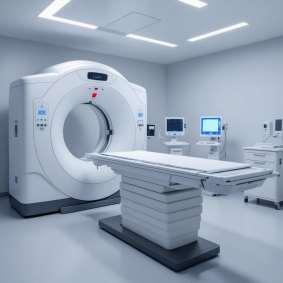
• A specialized CT scan used to plan precise Radiation Oncology treatments.
• Captures detailed 3D images of the treatment area while you’re positioned as you will be for therapy.
• Provides the anatomical map for creating your individualized radiation plan.
Why Do I Need CT Simulation Before Treatment?
• Ensures accurate targeting of the tumor while protecting healthy organs.
• Helps your team design beam angles, doses, and safety margins specific to you.
• Improves treatment effectiveness and reduces side effects.
What Happens During the Appointment?
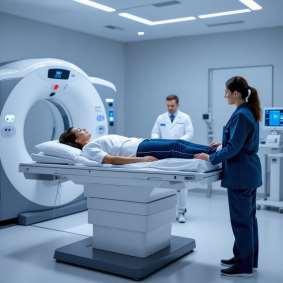
• Check-in, brief interview, and consent with the Radiation Oncology care team.
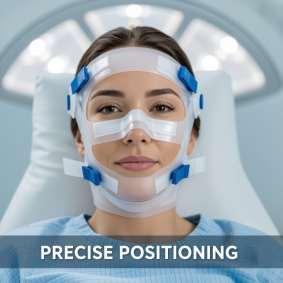
• Positioning on the CT table with immobilization devices for comfort and stability.
• Skin marks or tiny tattoos may be placed to guide daily setup.
• CT images are acquired; contrast may be used if clinically indicated.
How Do We Ensure Accuracy and Safety?
• Customized immobilization to reproduce your position every day.
• Advanced imaging (4D-CT, contrast) to visualize tumors and organs at risk.
• Physicist quality assurance checks before the first treatment.
• Daily image guidance to verify alignment prior to delivering radiation.
How Long Does It Take and How Should
I Prepare?
• Plan for 45–90 minutes depending on the site and whether contrast or 4D-CT is used.
• Wear comfortable clothing; remove metal items (jewelry, belts, underwire) before scanning.
• You may be asked to fast or hydrate as directed by Radiation Oncology staff.
Breathing and Motion Management
• For chest/upper abdomen, techniques like 4D-CT track tumor motion with breathing.
• Methods include deep-inspiration breath hold (DIBH) and respiratory gating.
• Your plan selects the safest approach to minimize dose to healthy tissue.

What Happens After CT Simulation?
• Doctors contour the tumor and nearby organs on your CT images.
• Dosimetrists and physicists design and verify your radiation plan.
• A start date is scheduled; your first session includes on-table imaging to confirm setup.

Tips, Myths, and When to Call
• Myth: CT simulation delivers treatment—Fact: It only acquires images for planning.
• Tell us about implants, prior surgeries, or claustrophobia—we can help.
• Contact Action Cancer Hospital if you develop new allergies, have contrast concerns, or need schedule adjustments.