AMERICAN CUISINE REGIONAL




MARCH/APRIL 2021

Through my time in the industry, from taking the Certified Master Chef Exam to practicing daily for over three years on Culinary Team USA leading up to IKA, I have always needed the support of custom equipment solutions. Now on the other side of those and many other industry endeavors, I am proud to provide my personal support to you as we design and build the cooking suite of your dreams.



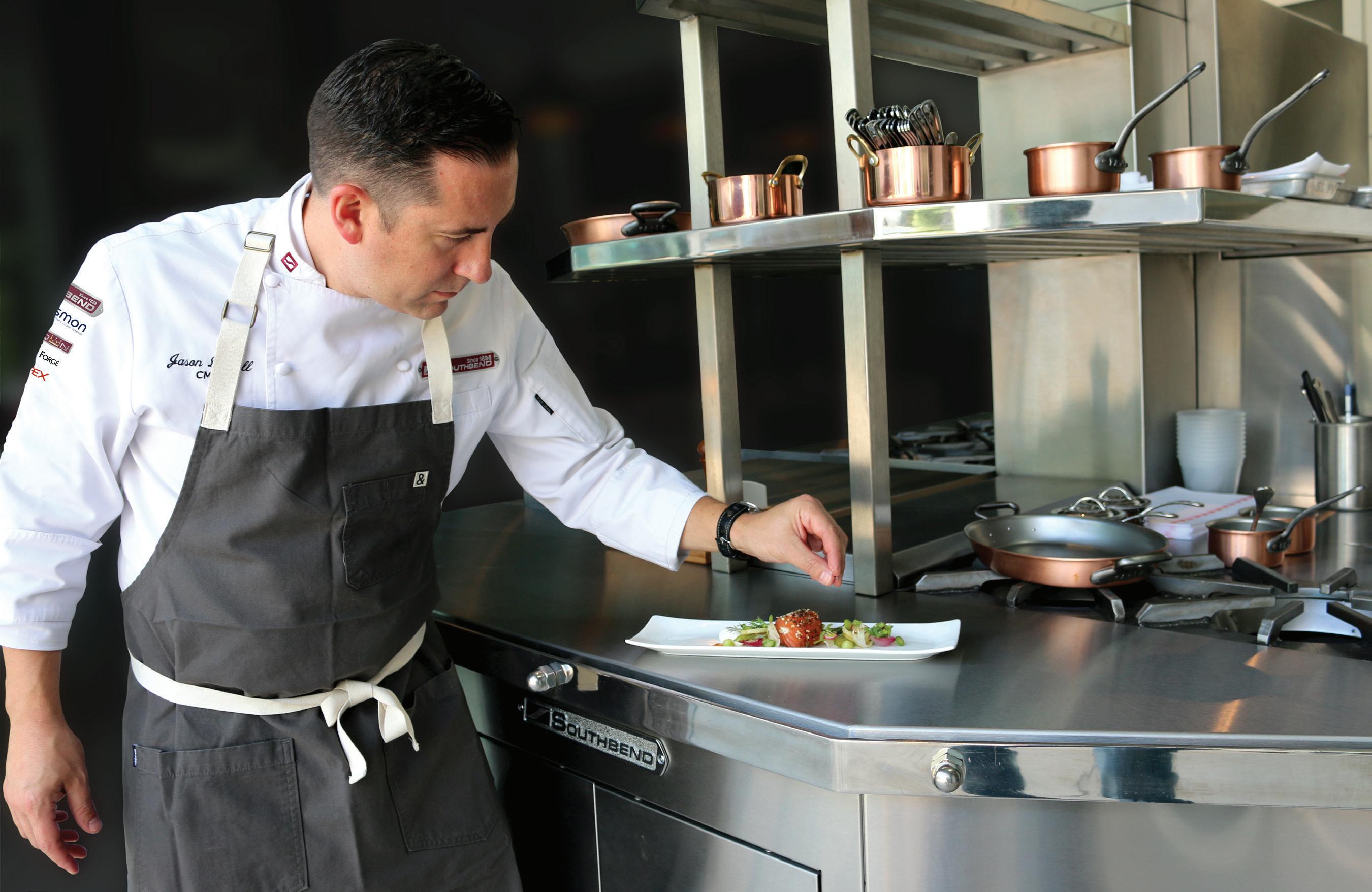
Contact me, Jason D. Hall, CMC Vice President of Research and Culinary Development at Southbend to have a consultation of your vision and how we can achieve your goals together.








28
Regional American Cuisine
From the Wild West to the Deep South, we explore the foods of Arizona and Colorado and learn the differences between Creole and Cajun cooking.
36
Pandemic Pop-Ups
Pop-up restaurants and menus are making a comeback as chefs find new ways to experiment.
DEPARTMENTS
10 Management
Leveraging new technologies — from software programs to kitchen equipment — enhances efficiencies during challenging times and beyond.
16
20
22
26
Main Course
A look at lesser-known, lower-cost cuts of meat and ways to prepare them for maximum flavor.
On the Side
Try these game meats on for size, courtesy of an Indigenous chef and ACF member.
Pastry
Biscuits feature just a few simple ingredients, but variations abound by region and daypart.
Classical vs. Modern
A study of classic manicotti and a modern, plant-based version.
44 Health
Chefs offer tips on how to stress less and prioritize self-care.
46 Segment Spotlight
Chefs in the hotels and resorts segment talk about the changes they’ve made in the past year, many of which have become permanent.
Editor-in-Chief
Amelia Levin
Creative Services Manager
David Ristau
Graphic Designer
Armando Mitra
Advertising and Event Sales
Eric Gershowitz
Jeff Rhodes
Director of Marketing and Communications

Alan Sterling
American Culinary Federation, Inc.
180 Center Place Way • St. Augustine, FL 32095 (800) 624-9458 (904) 824-4468 Fax: (904) 940-0741
ncr@acfchefs.net ACFSales@mci-group.com www.acfchefs.org
Board of Directors
President
Thomas Macrina, CEC®, CCA®, AAC®
National Secretary
Mark Wright, CEC, AAC
National Treasurer
James Taylor, CEC, AAC, MBA
American Academy of Chefs Chair
Americo “Rico” DiFronzo, CEC, CCA, AAC

Vice President Central Region
Steven Jilleba, CMC®, CCE®, AAC
Vice President Northeast Region
Barry R. Young, CEC, CCE, AAC
Vice President Southeast Region
Kimberly Brock Brown, CEPC®, CCA, AAC
Vice President Western Region
Robert W. Phillips, CEC, CCA, AAC
Executive Director
Heidi Cramb
2021, Volume 45, Number 2, is owned by the American Culinary Federation, Inc. (ACF) and is produced 6 times a year by ACF, located at 180 Center Place Way, St. Augustine, FL 32095. A digital subscription to the National Culinary Review® is included with ACF membership dues; print subscriptions are available to ACF members for $25 per year, domestic; nonmember subscriptions are $40. Material from the National Culinary Review®, in whole or in part, may not be reproduced without written permission. All views and opinions expressed in the National Culinary Review® are those of the author and do not necessarily reflect the views and opinions of the officers or members of ACF. Changes of mailing address should be sent to ACF’s national office: 180 Center Place Way, St. Augustine, FL 32095; (800) 624-9458; Fax (904) 940-0741.
The National Culinary Review® is mailed and periodical postage is paid at St. Augustine, Fla., and additional post offices.
POSTMASTER: Send address changes to the National Culinary Review®, 180 Center Place Way, St. Augustine, FL 32095.

As I write this, there is still snow on the ground, so I’m looking forward to spring. This year, I’m even more eager for spring and summer to come, and perhaps you are as well. The past year has been tough, but the future looks bright. I say this as we are deep in the process of planning our annual convention in Orlando, Florida, in August, which we hope will “Ignite Your Passion.”
After spending so much time apart, we’re designing this year’s convention to be all about bringing the ACF family back together, reuniting with old friends and connections, and hopefully making new ones. Of course, education is at the core of what we do, so we can’t wait to share with you the final lineup of presenters and all the topics to be covered. The other core part of our convention is competitions. The structure of competitions — and other programming — might look slightly little different this year as we take the necessary precautions to ensure the safety of all of our competing chefs and attendees. But they will still be as exciting and enlightening as ever.
First and foremost, I want to thank you, our ACF community, for your unyielding support. It is your loyalty and commitment to our organization, as well as the camaraderie you share with your fellow chefs, that keep us moving forward, growing stronger, and able to give back to each other and our communities at large. Also, thank you to the attendees of the first President’s Town Hall meeting. We will be hosting four more this month, featuring candidates running for National Office, so be sure to tune in! We greatly value your feedback, comments and ideas.
I would also like to give a shout out to all of our allied partners, vendors and suppliers who support the ACF and our chef-members throughout the year. We wouldn’t be able to plan a superior event without you, and we are so grateful.
Also, I am happy to report that since the start of the year, more chapters have been getting together with their own members and with other chapters — both safely in person as well as in engaging virtual meetings, the latter of which is thanks to the success of our online forum, Chef’s Table. Our new webinar series supports these efforts to keep you connected, engaged and informed. And, stay tuned for continued programming through our Online Learning Center.
In closing, I want to remind you that we at ACF here for your needs. Our 90-day trial membership for new members and flexible payment plan have been working very well. We encourage you to take advantage of those options, should you need them, and feel free to share this information with potential ACF members. We’re also working on developing other exclusive benefits and opportunities for our members.
Happy spring, and I can’t wait to see you all again!
Thomas “Tom” Macrina, CEC, CCA, AAC National President American Culinary Federation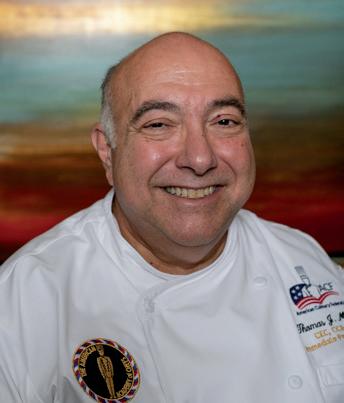
Mientras escribo esto, todavía hay nieve en el suelo, así que estoy deseando que llegue la primavera. Este año, estoy aún más ansioso por la llegada de la primavera y el verano, y quizás ustedes también lo estén. El año pasado fue difícil, pero el futuro es prometedor. Digo esto ya que estamos inmersos en el proceso de planificación de nuestra convención anual en Orlando, Florida para el mes de agosto, la cual esperamos “encienda su pasión”. Después de pasar tanto tiempo separados, estamos diseñando la convención de este año para volver a reunir a la familia de ACF, para reencontrarnos con viejos amigos y contactos y, con suerte, hacer algunos nuevos. Por supuesto, la educación está en el centro de lo que hacemos, y es por eso que estamos ansiosos por compartir con ustedes la lista final de disertantes y todos los temas que se tratarán. La otra parte fundamental de nuestra convención son las competencias. La estructura de las competencias, y otros eventos de la programación, puede verse ligeramente diferente este año, ya que tomamos las precauciones necesarias para garantizar la seguridad de todos nuestros chefs y asistentes. Pero seguirán siendo tan emocionantes e instructivas como siempre.
En primer lugar, quiero agradecerles a ustedes, nuestra comunidad de ACF, por su apoyo inquebrantable. Su lealtad y compromiso con nuestra organización, así como la camaradería que comparten con sus colegas, es lo que nos mantiene avanzando, fortaleciéndonos y capaces de retribuir la generosidad que recibimos entre nosotros y a nuestras comunidades en general. También quiero agradecer a todos aquellos que asistieron a la primera reunión del Ayuntamiento del Presidente. Este año organizaremos cuatro reuniones más, con candidatos que se postulan para la presidencia a nivel nacional, ¡así que no olviden sintonizarnos! Valoramos mucho sus comentarios, sugerencias e ideas.
También me gustaría agradecer especialmente a todos nuestros socios y proveedores aliados que apoyan a ACF y a nuestros chefs durante todo el año. Sin ustedes no podríamos organizar un evento de tan alto nivel, y estamos muy agradecidos.
Asimismo me complace informar que desde el comienzo del año, más delegaciones se han estado reuniendo entre sí y con sus propios miembros, tanto de forma segura presencialmente como en reuniones virtuales participativas, esto último gracias al éxito de nuestro foro en línea, Chef's Table. Nuestra nueva serie de seminarios web respalda estos esfuerzos para mantenerlos conectado, comprometidos e informados. Y no olviden estar atentos a la programación continua a través de nuestro Centro de aprendizaje en línea.
Para terminar, quiero recordarles que en ACF estamos aquí para ayudarlos. Nuestra membresía de prueba de 90 días para miembros nuevos y nuestro plan de pago flexible han funcionado muy bien. Los invitamos a aprovechar estas alternativas en caso de necesitarlas, y no dude en compartir esta información con posibles miembros de ACF. También estamos trabajando en el desarrollo de otras oportunidades y beneficios exclusivos para nuestros miembros.
¡Feliz primavera y no puedo esperar a verlos a todos de nuevo!
Thomas “Tom” Macrina, CEC, CCA, AAC Presidente Nacional American Culinary FederationVisit WeAreChefs.com, the official content hub for the American Culinary Federation, to read online exclusive articles, including industry trends, interviews, COVID-19 coverage, recipes and more.
Dissecting the Dish
In this ongoing series, we take a deep dive into the back stories and preparation methods of prized dishes from different chefs. Recent stories feature a catfish and crab stew developed by Chef Kevin Mitchell, CEC, and inspired by the historic cuisine of the Carolinas, as well as a goat cheese-crusted rack of lamb by Chef Eric Gillish, just in time for the spring.
Holiday Meal Planning
We’ve got some ideas to help you plan menus for Easter, Mother’s Day, Memorial Day and other upcoming holidays. Plus, catch up on a tutorial by Pastry Chef Will Racin, CEPC, who shared techniques for making molded chocolate truffles with all-natural, add-on flavors for Valentine’s Day.
Mini Chef Profiles
NCR’s ACF Chef Profile column regularly features member success stories, but there are so many more to share outside of the magazine’s bi-monthly issues. Visit WeAreChefs.com to read more about your fellow members and their work and careers.
Ongoing COVID-19 Coverage
Even though we’re so over this pandemic, our editorial team will continue to bring you the most up-to-date guidance, information and ideas to help you navigate this challenging time, including how to manage indoor dining restrictions, enhance safety measures and more.
The Culinary Insider, the ACF’s bi-weekly newsletter, offers timely information about events, certification, member discounts, the newest blog posts, competitions, contests and much more. Sign up at acfchefs.org/tci.
Follow the ACF on your favorite social media platforms:



@acfchefs
@acfchefs
@acf_chefs
@acfchefs American Culinary Federation
What is your favorite spring vegetable to work with?
Tweet us your answer using the hashtag #ACFasks and we’ll retweet our favorites.
A digital subscription to NCR is included with ACF membership, but members can now get a one-year print subscription for just $25! Visit acfchefs.org/ncr to get yours today.
Sure, digital is environmentally friendly... but paper smells better.
and webinars, and in our online learning center. Visit acfchefs.org/Events to apply to be a part of this exclusive group and give back.
We are so excited to welcome members back to the ACF 2021 National Convention, held Aug. 2-5, 2021, at the Orlando World Center Marriott in Orlando, Florida. Dates were moved forward by three weeks to allow more time for the COVID-19 vaccine to be distributed nationwide and travel restrictions to be lifted. Expect an exciting lineup of presentations, cooking demos, competitions and more. Save the date for the Board of Governors and American Academy of Chefs Dinner on Aug. 1. Register at www.acfchefs.org/Events
Join us for Town Hall meetings with the ACF candidates for National Office. The Town Hall will include statements from the candidates, followed by a question-and-answer session. Look for the registration link in the upcoming issues of The Culinary Insider. Dates and details include:
• Thursday, March 4, 7:00 p.m. EST: All Vice Presidents
• Thursday, March 11, 7:00 p.m. EST: Secretary
• Thursday, March 18, 7:00 p.m. EST: Treasurer
• Thursday, March 25, 7:00 p.m. EST: President
Share your expertise! The ACF strives to enrich the culinary community through cutting-edge seminars and demonstrations that highlight the latest cooking trends and topics at ACF events
Through support from the American Academy of Chefs, the American Culinary Federation Education Foundation (ACFEF) is pleased to offer a limited number of scholarships each year to students. The next scholarship deadline is April 30. Apply at acfchefs.org/Scholarships
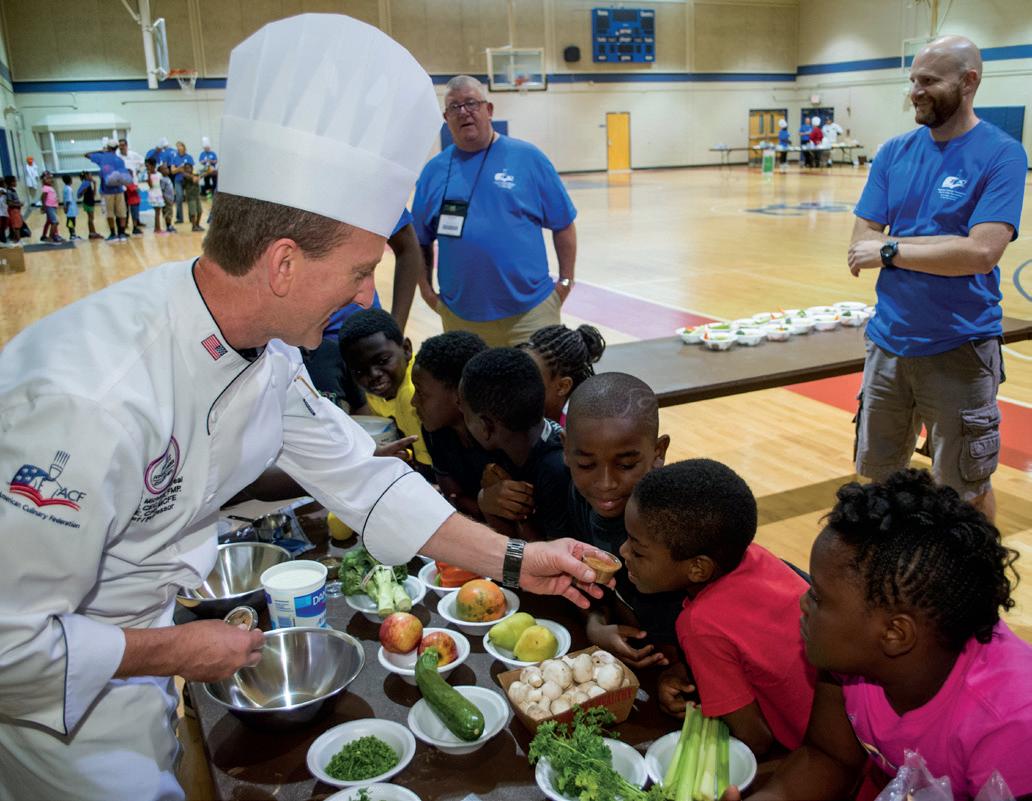
Under the Chef & Child Initiative, ACFEF is offering ACF chefs and chapters grant funding to support nutrition outreach activities in their communities. Grant deadlines are March 1 and Aug. 31. For more information and to apply, visit acfchefs.org/Partnerships
Show your ACF pride! Visit our new online store to check out items such as shirts, caps, cutting boards, skillets and more, all with the ACF logo proudly displayed. Visit acfchefs.org for more information and to shop.

We’re committed to helping our new members get off to a great start. Our newly launched New Member Orientation Webinar helps members take full and immediate advantage of the benefits available to them. The webinar can also be enjoyed by existing members as a refresher. Stay tuned for day and time details on the acfchefs.org homepage.
Individuals who have never been a member can now join ACF for a complimentary 90-day membership to enjoy all of the benefits of current members. When the 90-day period ends, new members are invited to continue their ACF membership using the FlexPay option, which allows members to pay their yearly membership over the course of the year. Visit acfchefs.org for a link to the membership offer.
More than 150 members have enrolled in Mentor Match, ACF’s new mentorship program.
Enroll now and gain access to the Mentor Match Directory, where you can find the Mentee who is best suited for you. Your experience in the culinary profession is invaluable, and getting involved is the perfect way to “pay it forward” in appreciation for and recognition of those who have helped you along the way. Visit chefs-table.acfchefs.org/home to enroll, or call Joe Syrowik at (904) 484-0210
ACF has collaborated with StarChapter to provide access to a variety of resources intended to help chapter leaders save
time, increase member participation and grow membership. These tools include turnkey chapter websites, platforms for event registration and e-commerce, email communication/ management tips, membership and board management resources, and more. ACF Chicago, ACF Columbus (Ohio) and ACF St. Louis are long-term users of the platform, and others are considering the switch. StarChapter is offering a 20% discount on its one-time set-up fee for chapters with more than 50 members. To learn more, visit starchapter.com.
ACF Chapters now can use Chef’s Table to promote upcoming Chapter Meetings. Benefits of doing so include securing higher attendance; connecting with other ACF members throughout the region or country; and exposing potential sponsors and vendors to a larger audience. Email chapter meeting details to Joe Syrowik, jsyrowik@acfchefs.net, to post on the forum.
The ACF Chapter of Cincinnati — led by board member Chef Nick Forrest, a lamb producer and a former 4-H advisor — called upon fellow chapter members to purchase hogs from FFA/4-H members showing at the Butler County (Ohio) Fair, after pandemic shutdowns prevented the children from completing the quality assurance program required to sell the hogs. Chef Forrest and ACF chefs not only purchased the hogs; they bought them at double the price per pound — and then partnered with a processor who donated their processing fee to the 4H program. The carcasses were given to local culinary schools and culinary arts programs, including Butler Tech, Scarlet Oaks, Diamond Oaks and Live Oaks, where ACF chefs and students broke down the meat and donated more than 3,800 pounds of fresh pork to the FreeStore Foodbanks and La Soupe, a food-rescue nonprofit.

The American Academy of Chefs (AAC), otherwise known as ACF’s honor society, represents the highest standards of professionalism in our organization and industry. The Academy’s primary mission is to promote the education of all culinarians through mentorship, student scholarships and grants for professional chefs looking to further their career. We are proud to present our 2021 tentative AAC and Honorary AAC candidates for induction. If there is any reason why you would not agree with these lists, please contact Americo S. DiFronzo, CEC, CCA, AAC, academy chair, difronzoa@aol.com or Karen Stamper, AAC administrator, kstamper@acfchefs.net.
Edward Adel, CEC
ACF Greater Kansas City Chefs Association
Sponsored by: Louis Perrotte, CEC, AAC, HOF and James M. Tinkham, CEC, CCA, AAC
Martin A. Gilligan, CEC, CEPC
ACF Chefs de Cuisine Association of California
Sponsored by: Eric D. Ernest, CEC, CCA, AAC and Eloise Fernandez, CEC, CCE, AAC
David A. Marcelli, CCE, CEC, PCC
ACF Honolulu Chapter
Sponsored by: Stafford T. DeCambra, CEC, CCE, CCA, AAC and Jacqueline Hamilton, CEC, AAC
Vanessa N. Marquis, CEC
ACF Tampa Bay Culinary Association
Sponsored by: Steven Jilleba, CMC, CCE, AAC and Thomas J. Macrina, CEC, CCA, AAC
Michael J. Moench, CEC
ACF Sarasota Bay Chefs Association
Sponsored by: Michael S. Baldwin, CEC, AAC and Brian D. Knecht, CEC, CCA, AAC
Jeffrey A. Quasha, CEC, CCA
ACF Chefs of the Low Country
Sponsored by: Christopher F. Donato, CEC, AAC and Jeffrey Kraft, CEC, CCA, AAC
Michael R. Thrash, CEC, CCA
ACF Tampa Bay Culinary Association
Sponsored by: Stephen M. Afflixio, CEC, AAC and Reimund D. Pitz, CEC, CCE, AAC, HOF
2021 Honorary American Academy of Chefs Tentative Inductees:
Christopher Blanchard, CEC
Sponsored by: James V. DiMarzio, CEC, AAC
Daniel J. Blanchard, CEC
Sponsored by: Denise S. Graffeo, CEC, AAC, HOF
Bertrand O. DeBoutray
Sponsored by: Reimund D. Pitz, CEC, CCE, AAC, HOF
Thomas P. Ryan, CEC, CCA
Sponsored by: Elizabeth A. Bergin, HAAC
J. Scott Youngman, CEC
Sponsored by: John J. Hudak, CEC, AAC
Imagine a ghost kitchen hub of 16 independent operators, each with their own menus, working from separate kitchens under one roof. A family calls in a single order for dishes from several of the operations. Each outfit prepares its dish, places it on a conveyor belt that runs down the center of the facility, and — despite the varying cook times — all arrive at the end of the belt at the same time, ready for bundling and delivery.
This would have been impossible a few years ago, but it’s the reality for Crave Hospitality Group’s Boise, Idaho-based Crave Collective, largely because of its smart backend management program.

And it sounds high-tech, but you don’t have to be a “techie” to grasp the value of advanced back-of-house equipment and software automation technology: They can make operations faster and smarter. Plus, many of these new systems offer improved accuracy and consistency with an added layer of monitoring, adjustment and general oversight.
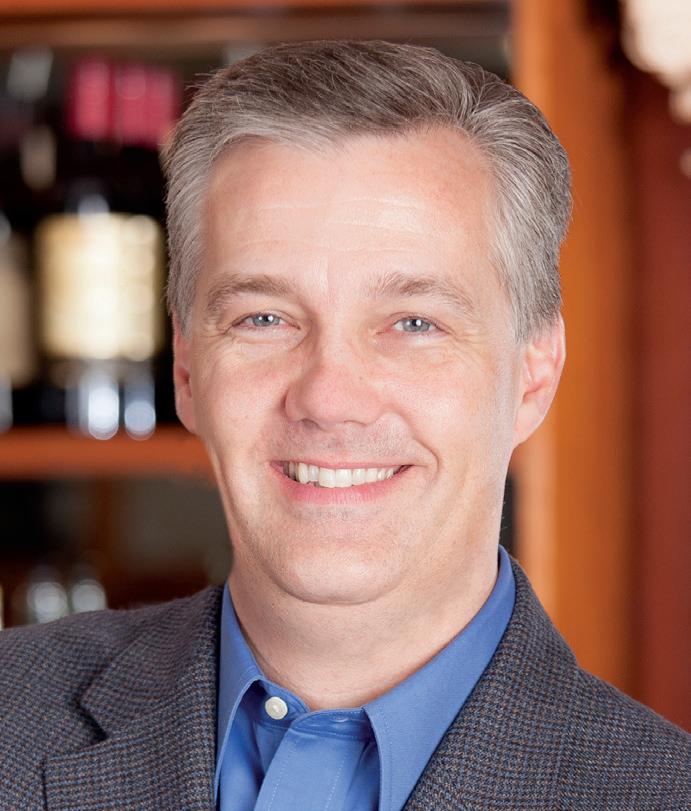
BOH automation options are endless. But if you could invest in only one automation upgrade, Jay Bandy (pictured right) — president of Goliath Consulting Group, Atlanta — suggests purchasing a system that ties in food preparation projections with labeling and food safety. “There are several systems out there that incorporate these three components,” he says.
A good system indicates how much of any item to prep based on expected volume and product mix. After the food
is prepped, the same system can print labels indicating who prepped it and when, as well as the expected shelf life. Labeling automation ensures the label is legible and eliminates human miscalculations, enhancing food safety. This type of platform sometimes includes Bluetooth cooler and freezer monitoring, reporting, and alerting, which also remove human error and boost food safety.
“QSRs have been using this technology for some time; now it’s starting to become available to independent operators,” Bandy says. “That’s where tech has gone in 10 years — from the big guys to the smaller guys.”
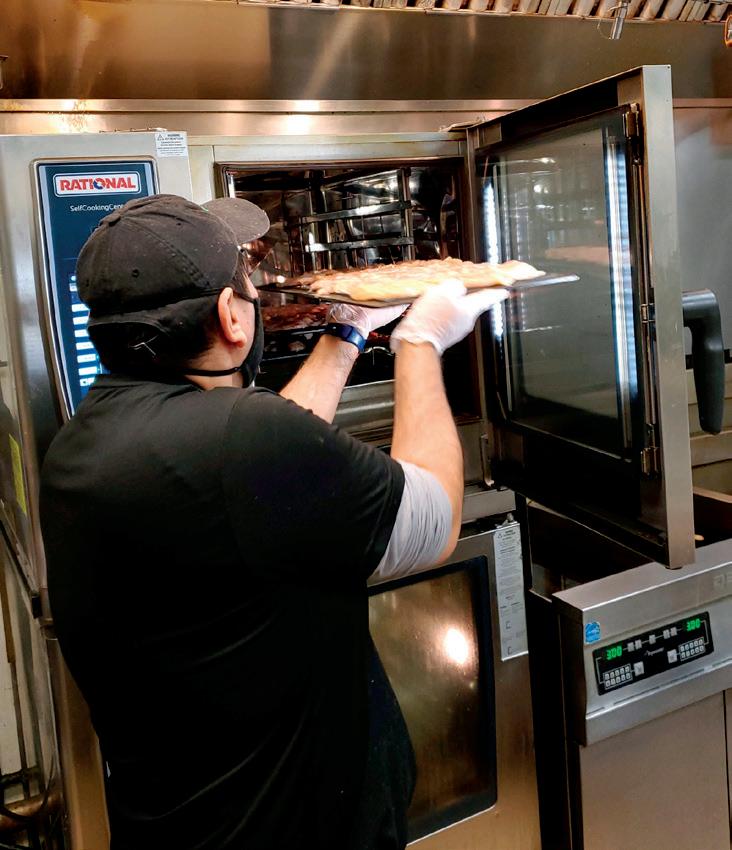
For their flexibility as well as their monitoring and one-touch cooking capabilities, combi ovens are the BOH automation upgrade Mark Moeller (above) suggests. He is owner of The Recipe of Success, a national food and restaurant consultancy based in Westport, Connecticut. With one type of combi, “you can put multiple items in the chamber at the same time, and when you open and close the door, it adjusts the cook time and temperature,” he says. Each shelf operates with its own temperature and humidity controls, allowing any
number and variations of items to cook at the same time, saving time while eliminating the need for other equipment.
One of Moeller’s clients, Super Sandwich in Shelton, Connecticut, opened 10 years ago with fryers, a flat-top grill, a two-burner stove, a charbroiler and a convection oven. Since it added two combi ovens, the sandwich, soup and salad concept has eliminated the convection oven, flat-top grill and charbroiler. Because of the oven’s temperature flexibility, the combi oven does everything — it can make grilled chicken, hardboiled eggs and cookies as well as toast sandwiches and make soup stocks. “And they are looking to add ribs and pizza to the menu,” he says. The oven has allowed about a one-third reduction in kitchen labor, freeing up existing staff to handle other tasks.
Bandy believes grill station automation will continue to grow in popularity. Case in point: QSR White Castle announced plans in a press release last fall to test Flippy, a grilling-andfrying robotic kitchen assistant from Miso Robotics.
Artificial intelligence (AI) will take fryer and grill automation a long
way. For example, Bandy points out a falafel-making machine may have output capacity for 300 pieces an hour, but if outfitted with AI capabilities, it can adjust output based on customer counts and orders coming in, and thus only make the actual number needed.
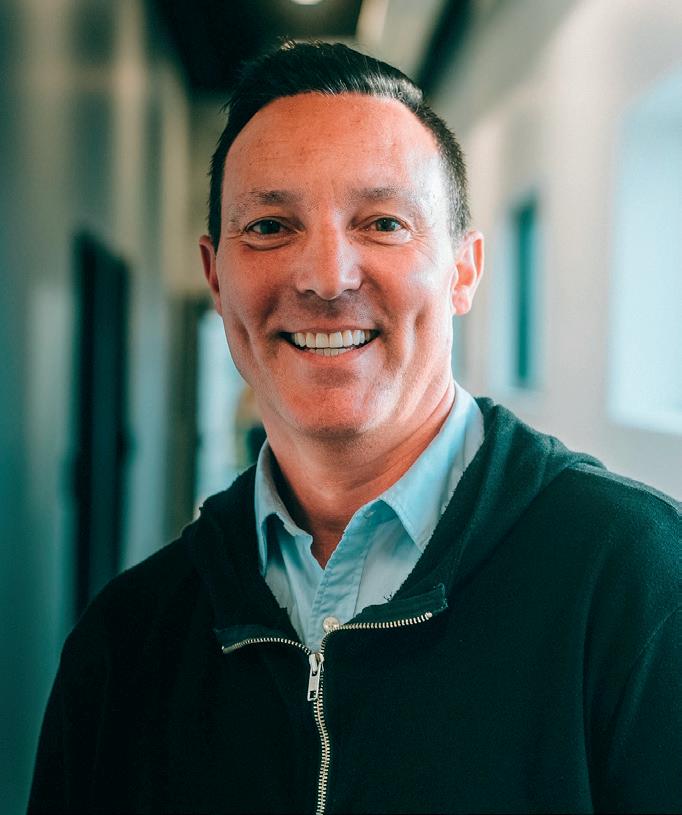
AI and machine learning, another form of robotic processing, which allows AI systems to continuously “learn” without being explicitly programmed, are largely behind the automation system used at Crave Collective’s ghost kitchen operation. Co-founder and CEO Devin Wade (above left) and his team developed a proprietary software platform to run and collate BOH operations for each of the 16 concepts housed in separate kitchen suites within the 15,000-square-foot facility.
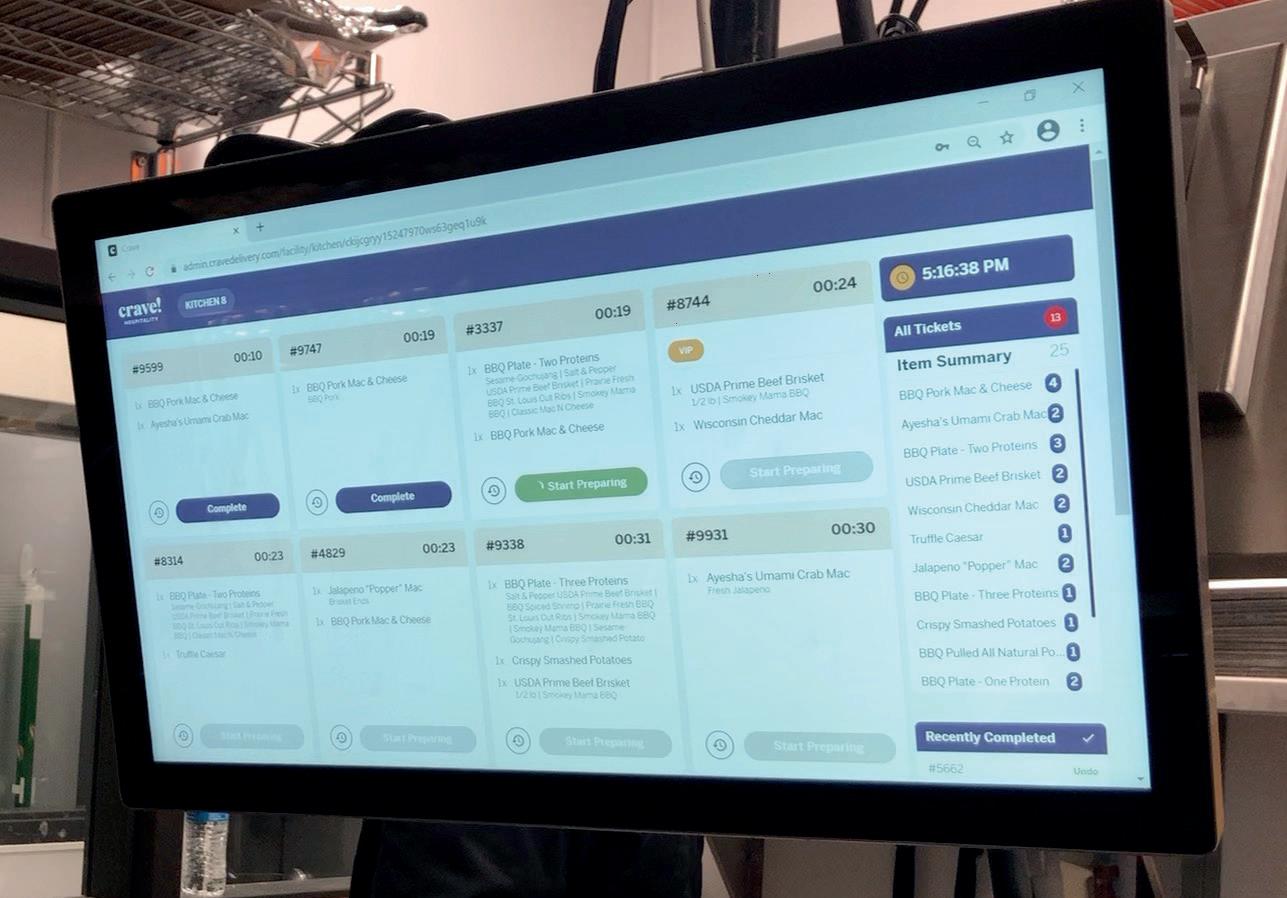
Each kitchen runs off a kitchen display system or screen that, for starters, forecasts supply and volume needs based on orders, Wade says. While the system is capable of outputting a whole set of analytics to help managers, what makes the platform unique during service is how the current work order flow ties in with the other restaurant units.
Cook times for each menu item for each unit are input into the system. Likely time-fluctuation factors are taken
into account based on such variables as daypart, order velocity or day of the week, for example. The system adjusts the expected cook time accordingly. When a customer orders items from various menus, the system computes cook times for each item and projects when the complete order will be ready for delivery or pickup.
At the kitchen level, workers see the order on the screen, but don’t start the preparation until a green button lights up. They push the button as they begin the prep, then push the “complete” button when the item is done, thus allowing the machine to keep track of actual cook times. The software metes out the start times for each ordered item from each restaurant operation based on cook times in concert with other ticket items ordered.
The first Crave Collective opened in Boise in October 2020, with 11 more planned to open this year. “All our expectations have exceeded our goals for attracting higher ticket averages and order frequency,” Wade says.
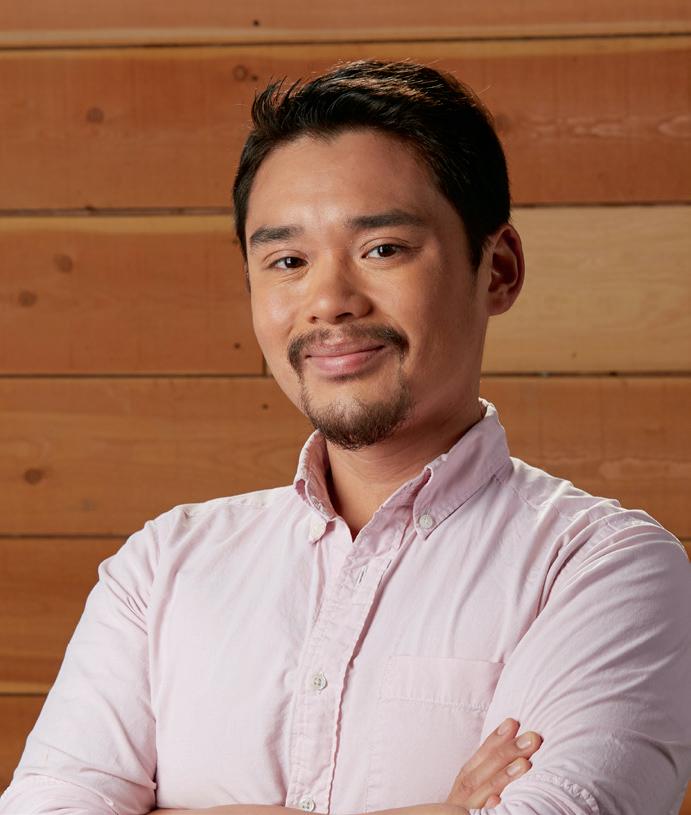
Smart kitchen management software will be a pillar of the automated kitchen of the future. “You want it to track as much data as possible [to] compile sales data, track inventory, store recipes and schedule labor, for example,” says Chef Kevin Villanueva (above right), R&D chef for San Francisco-based consultancy The Culinary Edge and the firm’s quick-serve concept, Starbird Chicken. The software he works with performs all of these tasks, and also helps track ingredient costs per dish. It also evaluates anomalies if the dishes fail to match the expected cost, tracking down culprit issues, which may be tied to inventory tracking, mix analysis and more.
Chef Villanueva admits that much of the current restaurant automation is focused on front-of-house, “but for BOH, software is getting better and better,” he says, especially for online training programs that help cooks learn faster and more efficiently, without language barriers.
In the end, Crave Collective’s Wade says their BOH automation isn’t designed to replace kitchen workers, but instead to make workers more efficient through space layout and organization combined with software, in a way that hasn’t been done before. Investing in these systems can not only reduce inefficiencies; it also can lower costs over the long term.
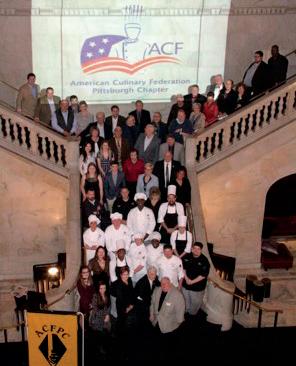
Members of this historical chapter led the creation of the ACF’s first-ever apprenticeship program and ACF Culinary Team USA
The ACF Pittsburgh Chapter has a long and storied history dating back to the 1940s and a robust list of alumni, including the former ACF national and Pittsburgh chapter presidents Chefs Paul Laesecke, AAC , and Ferdinand Metz, CMC , among other ACF leaders.
The chapter’s story began in April 1944, when 12 Pittsburgh chefs — hoping to recruit young chefs and expand skilled staff in the city’s professional kitchens — met at Chef Laesecke’s home to discuss ways to grow local interest in the culinary arts. In addition to Chef Laesecke, the group included Chefs Abel Bomberault, Lucien Chene, Albert Gasnier, Albert Guilloteau, Peter Massot, Dino Nardi, Edourd Panchard, Otto Spielbichler, William Wagner, Joseph Winkelman and Gaston Zimmerman . On June 24, 1944, the group held its second meeting at the Schenley Hotel, with interim president Chef Laesecke leading the event, which was attended by 40 people. By the next Chefs’ Association of Pittsburgh (CAP) meeting, held at the H.J. Heinz Company in July that year, there were more than 100 professionals in attendance.
In 1947, the CAP officially joined the ACF, primarily to establish an apprentice training program. In 1949, the chapter introduced its first training classes at a public trade school in a joint effort with the Western Pennsylvania Restaurant Association. The CAP was also at the forefront of planning the ACF’s first national convention, held in 1950 in New York, which helped reunite the ACF and its national affiliate chapters for the first time since 1941.
At that convention, Chef Laesecke was elected president of the ACF, and later helped to renew efforts to establish an honor society for chefs — an idea that had been debated for years. During the 1955 ACF National Convention, hosted in Pittsburgh, the ACF established the American Academy of Chefs, the membership of which would eventually include many chapter members.
Throughout the 1950s, Chef Laesecke participated in many culinary competitions, which led to the formation of the first American team to participate in the 1956 International Culinary Olympics in Frankfurt, Germany. CAP Chefs Laesecke and Spielbichler were chosen to compete as part of the team of four. Each team member came home with a gold medal, and the team was presented with the highest award for preparation of hot
foods. Four years later, Chef Laesecke managed the American team that captured all of the competition's top honors. CAP chefs went on to compete in multiple domestic and international competitions in the late 1960s, earning top prizes each time. Also during this time, Chefs Spielbichler and Metz both earned the coveted ACF Chef of the Year title.
Chef Metz — along with Chefs Jack Braun; L. Edwin Brown , chairman of the American Culinary Federation Educational Institute; Chef Jerry Lawrence, apprenticeship chairman; and Daniel Przybylek , dean of continuing education — formed a partnership with the Community College of Allegheny County and Dean James Evanko to develop the first chef’s apprenticeship program recognized by the U.S. Department of Labor. It served as the model for subsequent programs throughout the country.
This program took shape as a 6,000-hour, three-year, on-the-job training program, augmented by 1,000 hours of classroom activity that could help students earn both an Associate of Science in the Culinary Arts degree and Bureau of Apprenticeship and Training journeyman’s papers. Chef Arthur (Art) Inzinga, CCE, CCE, AAC — an award-winning ACF Chef; active board member; chairman and former treasurer; chapter president; and frequent competition coach — was one of the first graduates. He was named Apprentice of the Year under the tutelage of former ACF President Richard Bosnjak, CEC, AAC , executive chef at the Oakmont Country Club (Plum, Pennsylvania). Chef Inzinga recently returned to the Community College of Allegheny County as associate professor and culinary program coordinator and was named the first-ever L. Edwin Brown Chef Educator of the Year in 2019.
The nationally recognized apprenticeship program attracted 218 applicants to its fall 1977 program and graduated many accomplished chefs over the years. These include (among others) Chef Frank Ruta , Pittsburgh apprenticeship graduate of ‘78, who was the White House chef for the Carter, Reagan and Bush, Sr. administrations; Chef Steve Fernald , another Pittsburgh apprenticeship graduate, who later became the ACF national apprenticeship director; and Chef Russell Scott, CMC, CHE , who went on to serve as a team member for the ACF Culinary Team USA.
In the last 30 years, the organization — now called the ACF Pittsburgh Chapter (ACFPC) — has grown its membership, at one point topping out at 800 members. While chapter membership has waxed and waned over the years, the chapter retains a respectable roster, including many newcomers, thanks to the apprenticeship program and strong relationships with student-chefs and up-and-coming chefs.
ACFPC has also grown its list of National ACF Chefs of the Year: Chefs Scott, Braun and Bosnjak, as well as Chefs Roland Schaeffer, Tim Ryan and Baron Galand , some of whom served as chapter president at one point, and all of whom have participated in the ACF National and Regional Culinary Olympic teams as either team members or coaches.
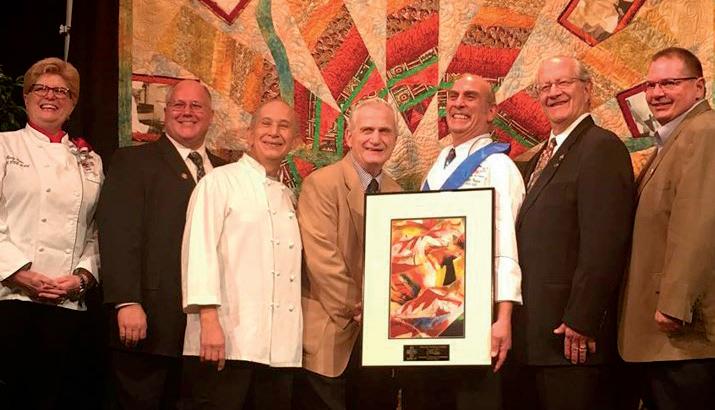
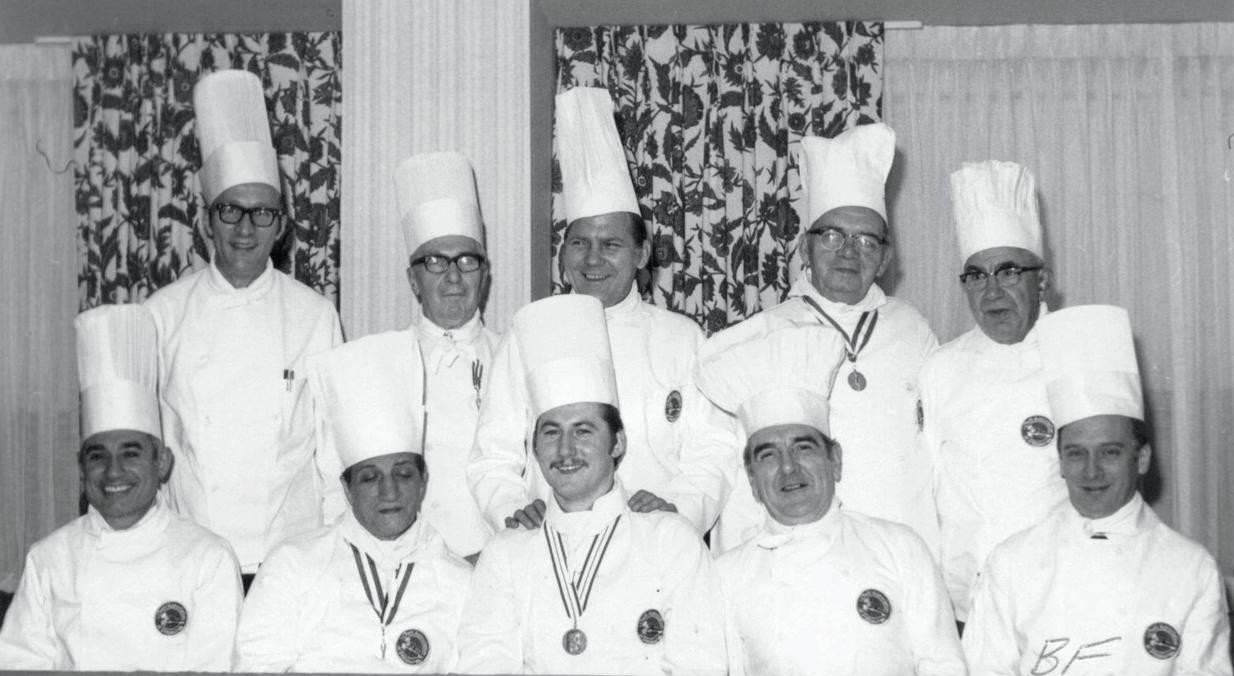
ACFPC Regional ACF Chefs of the Year have included Chefs Keith Coughenour, CEC, AAC and William Racin, CEPC Chefs Byron Bardy and Scott are Certified Master Chefs. Many Pittsburgh chapter members have also served as ACF Culinary Team coaches and captains, including Chef Coughenour, executive chef at the premier Duquesne Club in Pittsburgh. He was named captain of the 1992 and 1996 U.S. teams, which collectively won three gold and three silver medals in Frankfurt and Berlin, Germany. Chef Coughenour also served as coach for Team USA until 2003 and was involved in selecting members of the 2000 and 2004 U.S. Culinary Olympic teams.
Prior to COVID-19, ACFPC hosted regular educational and networking events with a focus on demonstrations and professional development. “We have an ongoing focus on keeping everyone within their certification points,” says Chef Brian Buskey, current chapter president, and a culinary educator with the nonprofit Bidwell Training Center in Pittsburgh.
By partnering with other ACF chapters in Philadelphia and Ohio via ACF’s Chef’s Table forum, Chef Buskey was able to continue meetings virtually last year on Zoom. “We didn’t miss any meetings this way, and at one point, had 260 members in a meeting,” he says. Most recently, the chapter hosted a chocolate demonstration by Chef Racin, followed by
a Valentine’s Day pastry presentation by Culinary Olympian Chef Susan Notter, CEPC . Other educational meetings included a virtual event with the Culinary Vegetable Institute at the Chef’s Garden in Huron, Ohio; a presentation from Chef Edward Leonard, CMC , executive chef of The Polo Club of Boca Raton (Florida), about maintaining a healthy brigade system; and some tips from an executive search firm about how to prepare resumes, portfolios, and personal websites for executive positions and career growth.
Through the years, ACFPC has also remained dedicated to raising funds for scholarships and those in need. Last year, the chapter recruited personal funds to put toward the Ferdinand Metz/ACF Relief Fund for displaced hospitality workers in need. The chapter also partnered with a local food pantry last fall to donate meals to the community. When tornadoes ransacked Nashville, Tennessee, in 2019, ACFPC chefs raised funds for the American Culinary Federation Education Foundation (ACFEF) Disaster Relief Fund Assistance. Annual galas held in the spring during the last several years before the pandemic have raised money for the William Foust Education Scholarship.
Looking forward, Chef Buskey says the chapter remains committed to recruiting and training budding chefs. “For us, it’s all about education and bringing up our young chefs,” he says. “They are the future of our organization, and our industry.”
Chef Buskey also hopes, like many ACF Chefs, to be able to send members to the ACF National Convention in Orlando, Florida, this summer. He also hopes to bring back the chapter’s annual — and always-anticipated — picnic, which functions as both a social outlet and a recruiting element for potential new members. There were about 150 people in attendance in 2019.
“While many of our members are club and healthcare chefs who still have work, so many culinarians in our industry are hurting,” Chef Buskey says. “We have lost a lot of restaurants, and, as an industry, we are trying to rebuild. We’re hoping, as a chapter, to be part of those rebuilding efforts and put in whatever hands and hours we can to make that happen.”
Meat has a reputation for being expensive, but it doesn’t have to be that way. In fact, some chefs believe the more economical cuts are the best ones. They can be just as tasty and tender, and some can be prepared in advance, just like other, more expensive cuts of meat. On top of that, says Chef Keith Sarasin — author of the upcoming “Meat: The Ultimate Cookbook,” and founder of The Farmers Dinner in Milford, New Hampshire, which hosts dinners in farm fields — using them helps the farmer move less-popular product and honors the animal. He often asks farmers which cuts they can’t sell, then plans meals around that.
Chef Adam Moore , corporate chef for True Aussie Beef & Lamb, advises having quarterly catchups with your
supplier: “That can lead you to what you might be able to use, because you can find out what has high supply and low demand.”
Here are some economical cuts of meat for building budget-friendly yet beautiful dishes.
“Jowl is the most flavorful part of a pig by far, but it hasn’t caught on yet,” says Chef Sarasin, who likes to braise it. Both cheek and jowl, he says, are “packed with flavor, which [comes from the] muscle and fat. The muscles are long and thin [there], and when you take the time to braise, those muscles get tender and then shred.”
He also likes to sous vide beef jowl “to get a beautiful [result] that resembles
shredded beef.” He uses it in variations of carnitas, and likes making tacos with braised pork cheek.
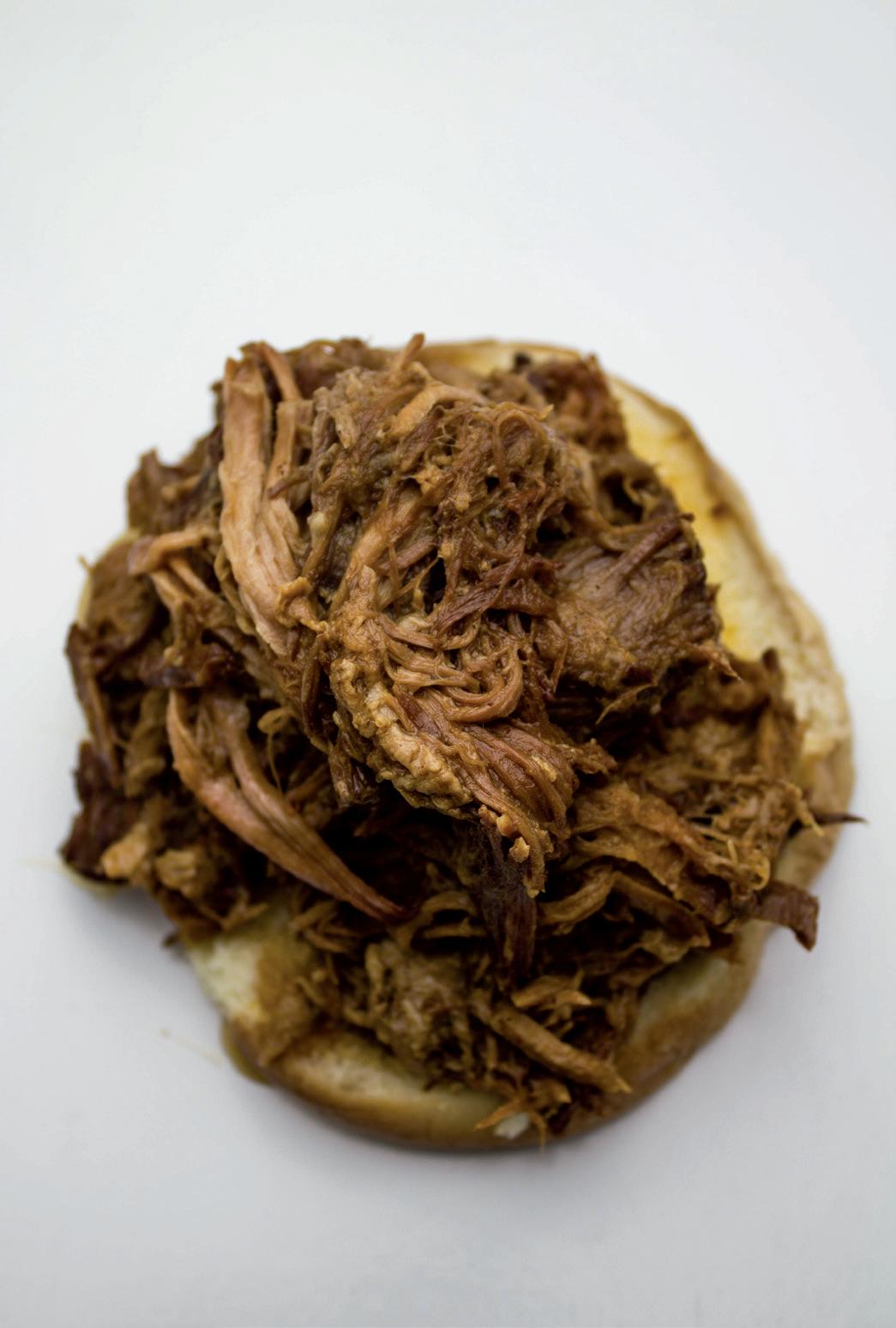
In addition, Chef Sarasin likes to use pork jowl to make guanciale. “It sounds fancy, but it’s one of the easiest things to do,” he says. He cures the jowl in a 2% brine with some fennel for a couple of weeks, hangs it for two more, then finely dices it and uses it like pancetta.
Lamb neck has many vertebrae and bones, but also lot of marrow, so it cooks beautifully, according to Chef Sarasin.
To cook it, he sautés mirepoix, then deglazes the pan with red wine and herbs. He adds the lamb neck and enough water to just cover it, and cooks it low and slow for about three and a half hours. During this time, the meat’s fibers tear and become tender, so this
meat works well for pasta dishes, such as a braised lamb neck and shoulder ragú with pappardelle and shaved parmesan, he says.
Chef Sarasin likes to cook lamb neck in advance, he says, because when it cools, it reabsorbs the liquids it loses during cooking. If he cooks lamb neck in advance, he sears it just before serving.
Chef Moore likes to use chuck and chuck eye roll. These come off the front of the animal, where the ribeye begins, and have good marbling, which “provides wonderful, beefy flavor,” he says. These cuts work well for braising or sous vide cooking, he says, “which allows the natural collagen and muscle structure to become very tender and absorb the flavors of your braising liquid.”
He also likes chuck tender, calling it “an economical cut that resembles a luxury cut.” His favorite method is to sous vide it
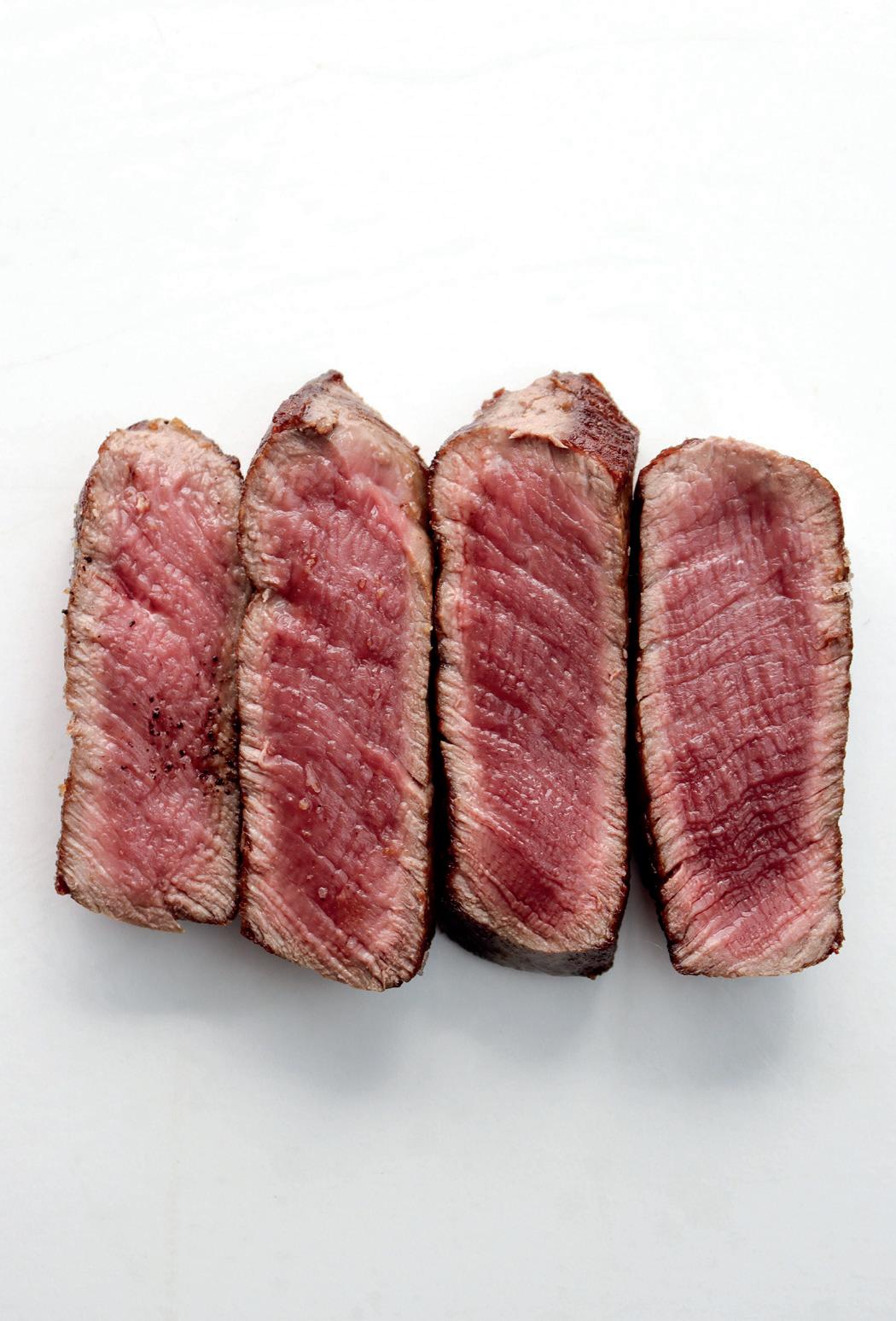
for 48 to 72 hours and finish it on the grill. He often serves this over a grain salad.
Beef sirloin cap, also referred to as the “Coulotte,” is a great cut for roasting, Chef Moore says. Because it’s a larger cut at 1.5 to 2 pounds, it roasts in about 45 minutes, and, left whole, can be nice for family-style presentations. “There’s typically a decent fat cap, which inherently bastes the cut while it cooks,” he points out.
He’ll also grill it, which is how it’s typically prepared in Brazilian steakhouses. The cooked meat is then cut into smaller medallions and seasoned simply with salt and pepper. Sometimes, Chef Moore slices it really thinly, so
diners get some fat and some meat. It’s nice this way on sandwiches, he adds.
Chef Moore doesn’t marinate this cut, “as the beef is already very juicy and tender on its own from wet aging. I also find marinades can really affect the natural structure and texture of meat when used improperly. Thus, I’d only recommend marinades on poor-quality meat, not necessarily ‘economical cuts.’” However, he adds, rubs or post-cook sauces can add visual appeal and flavor. “[Even] just a quick hit of citrus is nice to cut through the fatty richness of steak,” he says.
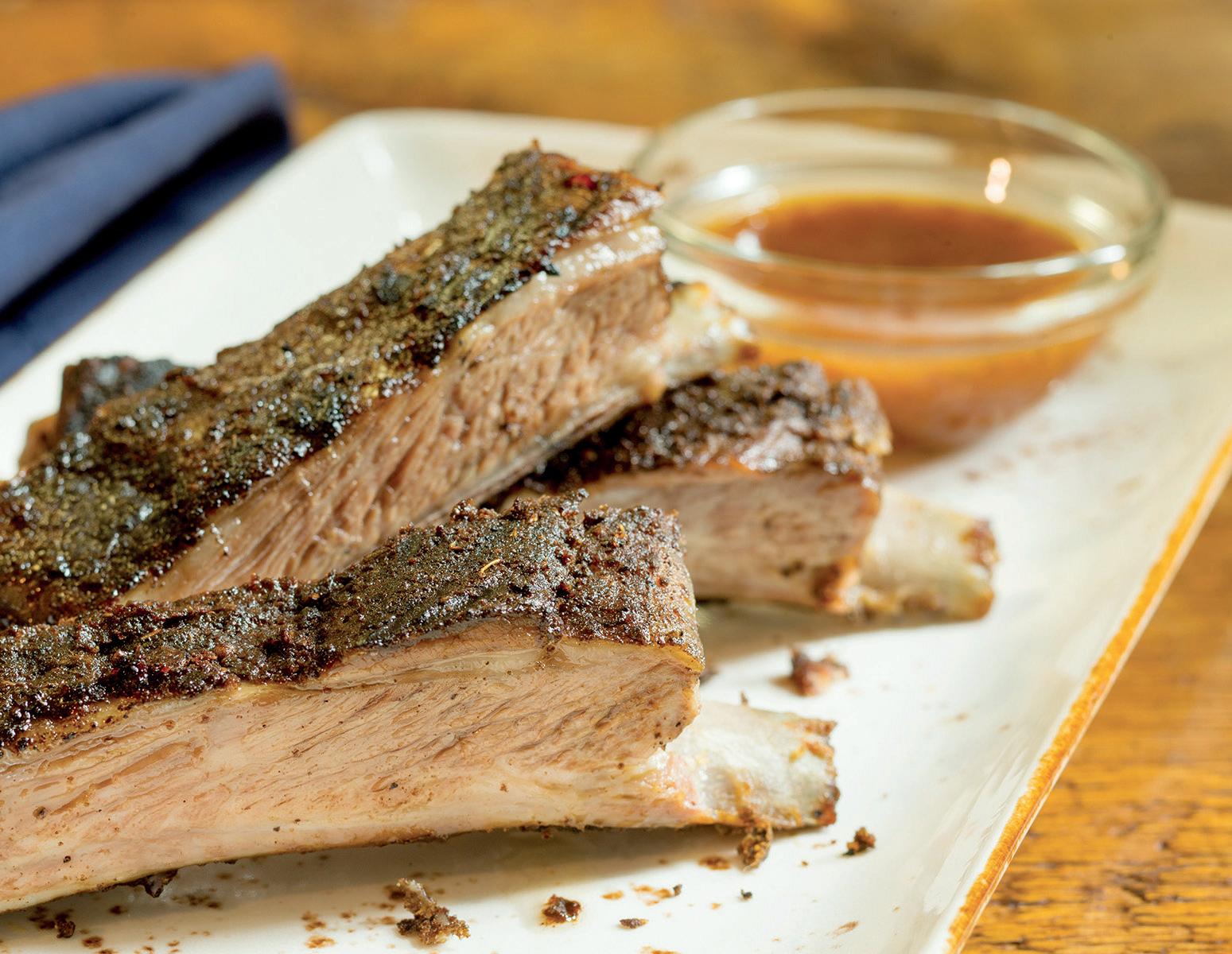
Lamb shoulder works well for braising and stewing because it often contains the bone, and the lean-to-
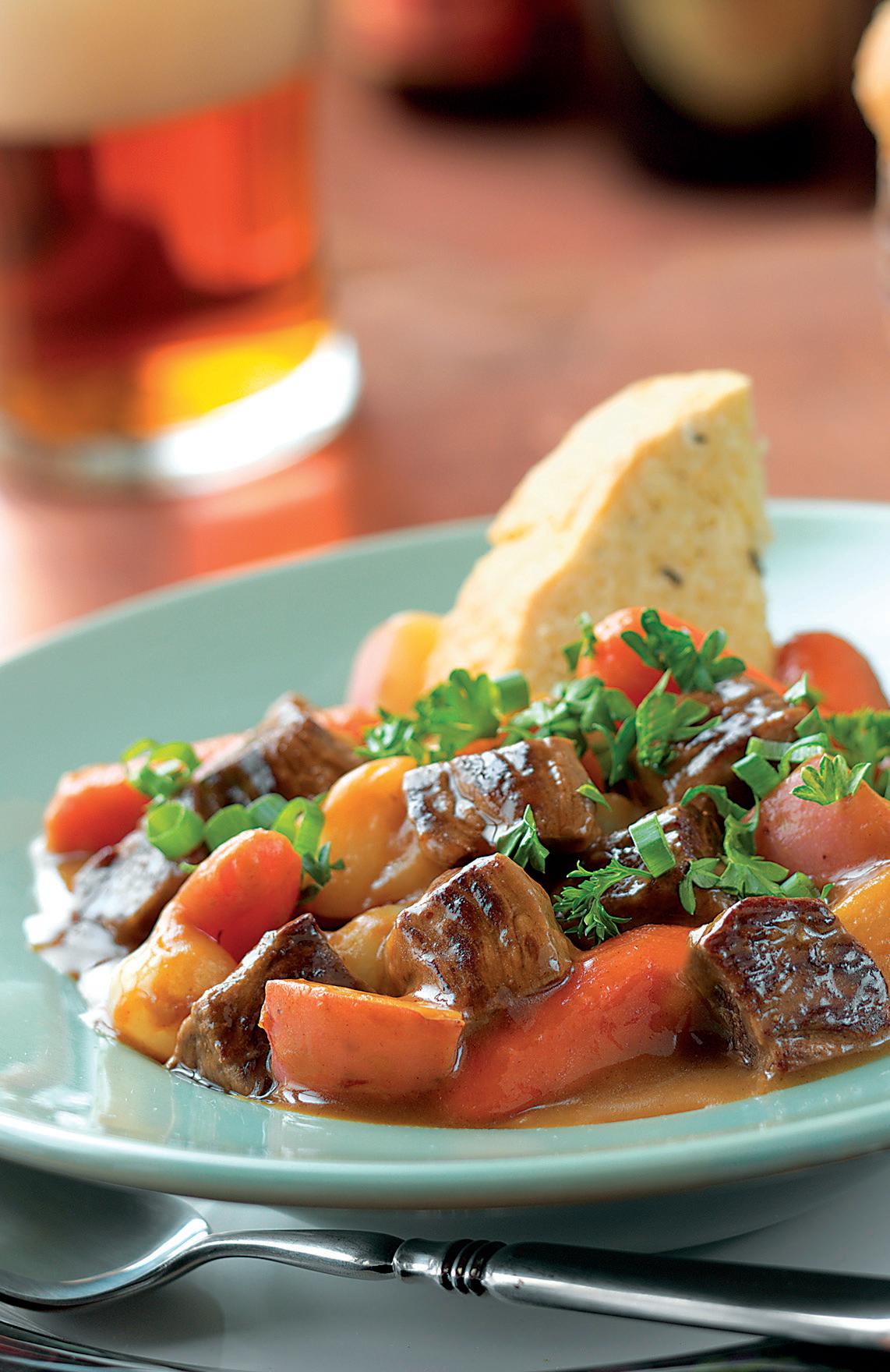
fat ratio is about 75/25, says Chef Mark DeNittis, president of DeNCO Enterprises Special Operations Group and culinary education consultant for the American Lamb Board.
Also, it has a lot of collagen, which gelatinizes during cooking, then reabsorbs the liquids and flavors when it’s reheated, “so these dishes are always better the next day,” he says. The collagen also gives the stew a lovely “textural mouthfeel,” he adds.
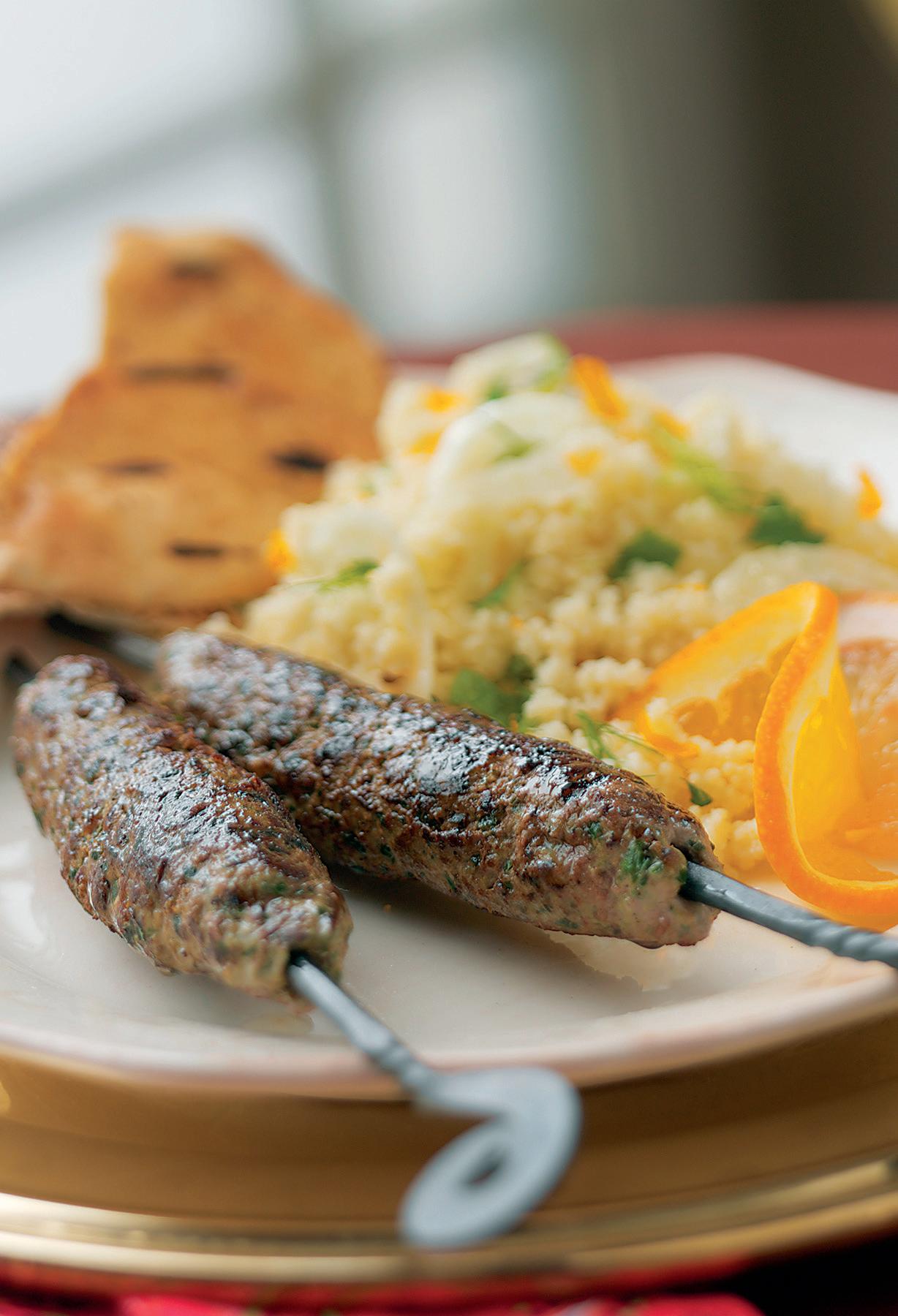
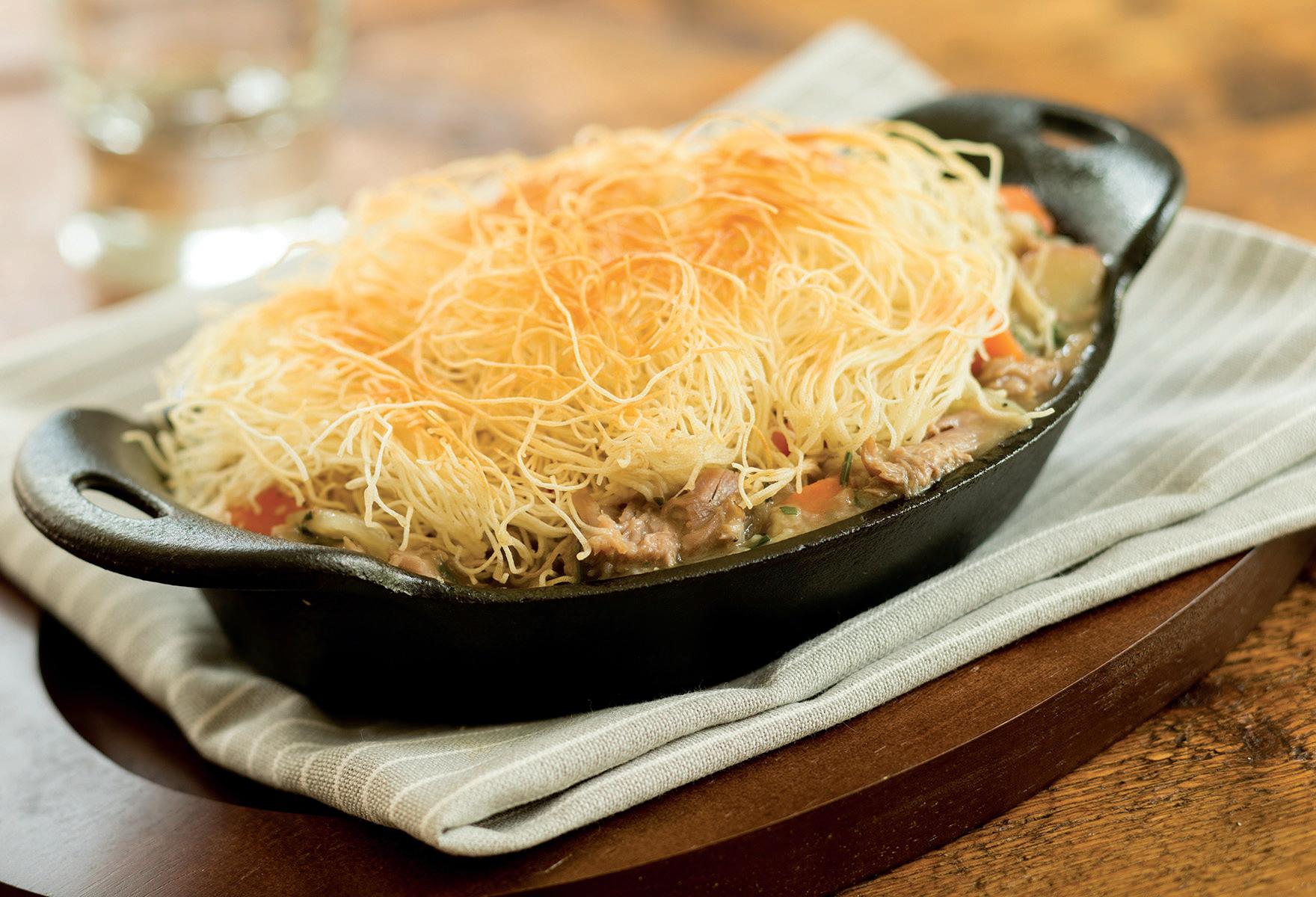
Typically, he simply scores the top fat layer of the shoulder, seasons the shoulder, and roasts it at 450 to 500 degrees F for 20 minutes. He finishes it at a lower temperature for a couple of hours, then finishes it again with high heat to crisp the softened outer layers of meat. The fat, having been rendered away, “leaves an extraordinary crispy and flavorful dining experience.”
Chef Brian Polcyn, CEC , professor of charcuterie at Schoolcraft College in Michigan and author of “Charcuterie: The Craft of Salting, Smoking and Curing,” is a fan of the economical shoulder clod sub primal of beef, which includes the shoulder center, the teres major, and the top blade (and within this, the flatiron steak). “This cut is tasty because of the intra-muscular fat — the marbling — and it’s a little-known fact that it is the secondmost tender cut on the animal, after the tenderloin,” he says.
And preparing it is easy, Chef Polycn says — cook it like any steak: grill, roast or pan fry. Serve it with caramelized onions and mushrooms and a red wine demi-glace. But it’s also extremely versatile, he adds, and can be stir-fried or pan roasted, and it takes marinades exceptionally well. For recipes using these cuts, visit WeAreChefs.com
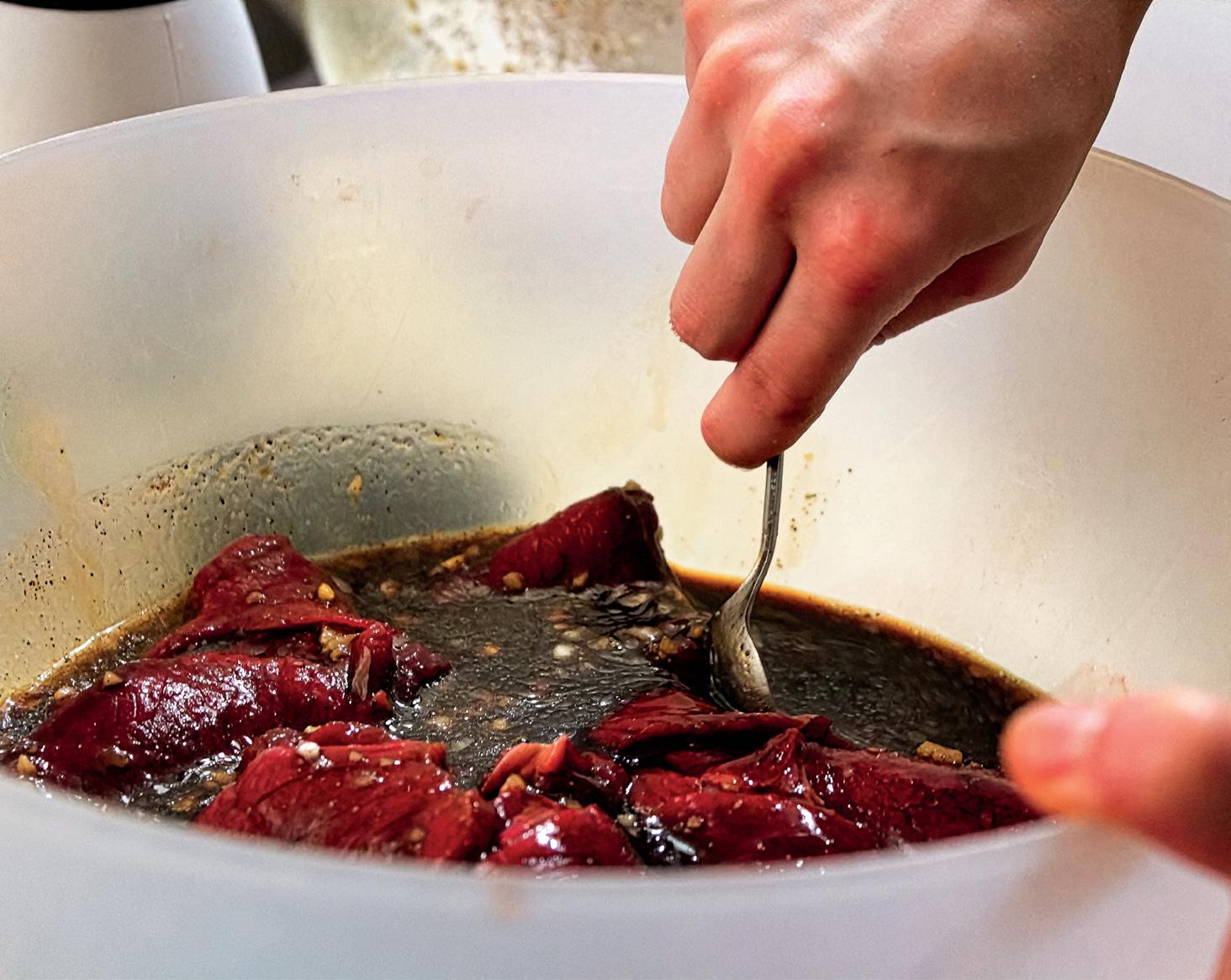
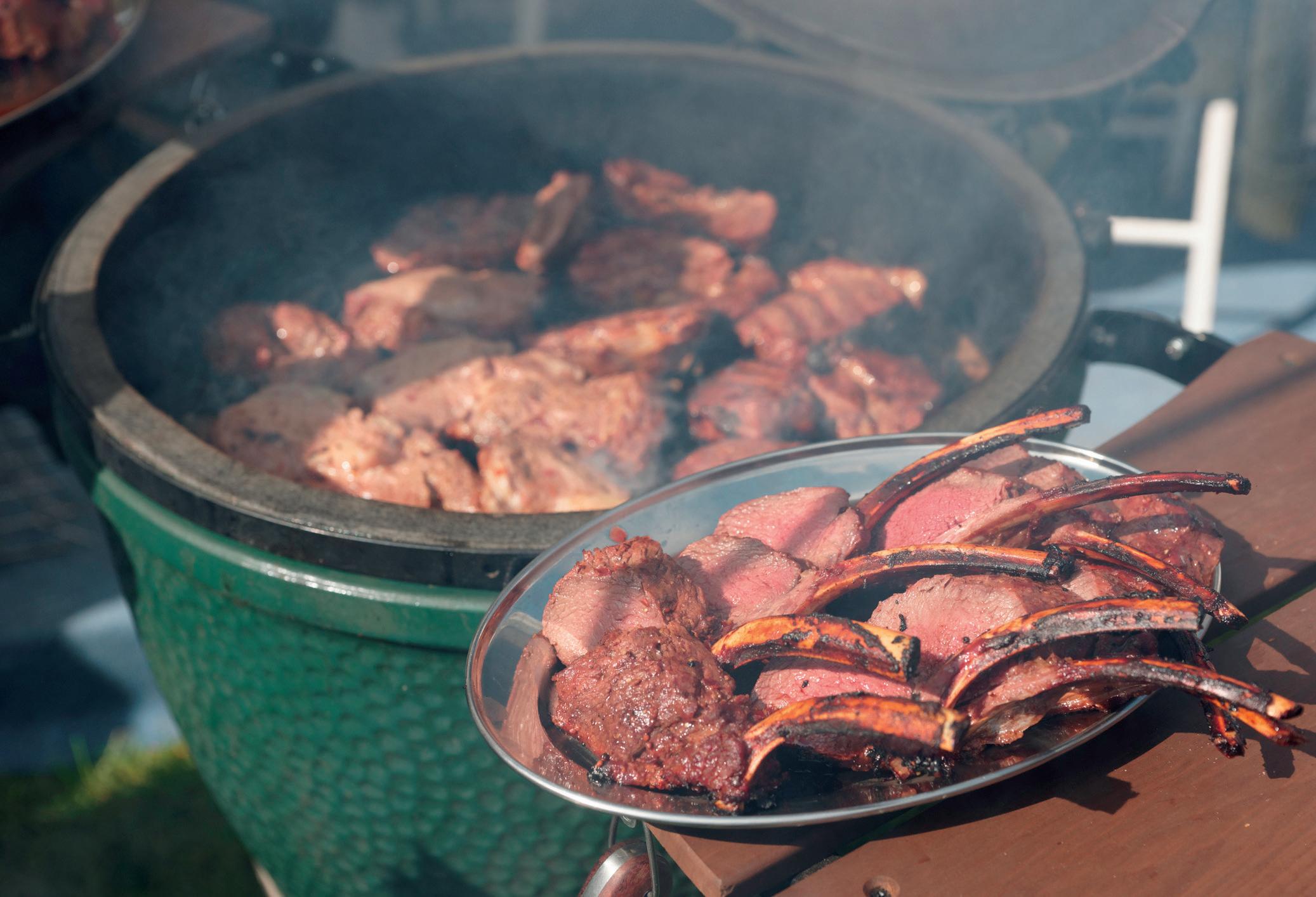
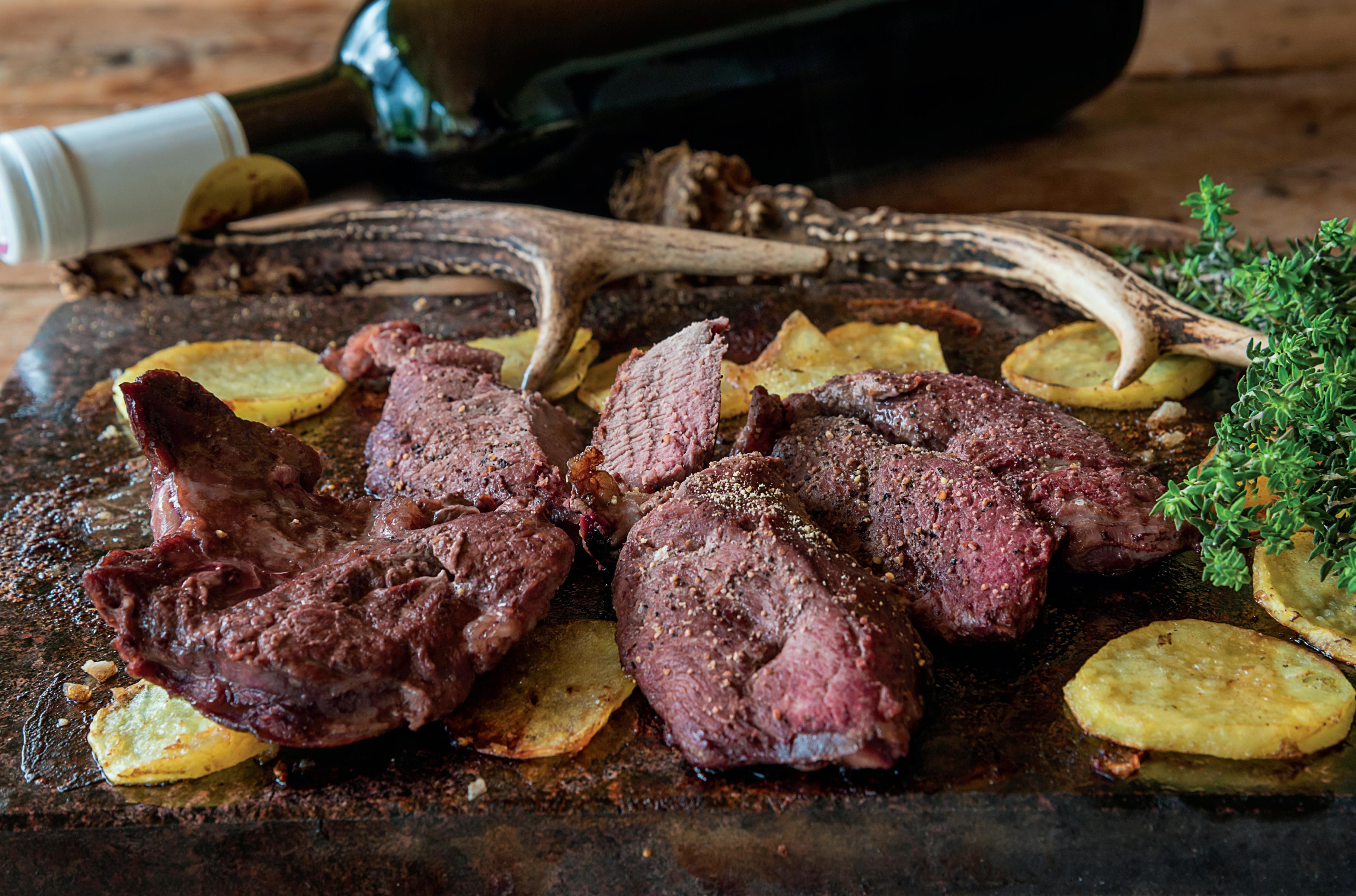
Chef Victoria Wells is a Native American chef based in Manistee, Michigan, and an ACF member who is planning to launch her own catering business. She’s a big fan of venison, she says; it’s a lot cheaper than beef, and has less saturated fat. The parts that tend to get ignored are the rump roast and sirloin, because they can be tough, she says, but she grinds them up and uses them for anything that would traditionally feature ground beef.
She also likes to inject the meat with maple and molasses, which tenderizes it and minimizes the "gamey” taste, especially if she smokes it. For smoking wood, her preference is cherry or maple, but oak also works well — pretty much anything that comes from the area the animal lived in, she says. She smokes the meat for six to eight hours.
Chef Wells also likes to grill venison, especially the neck and rump. She preps it overnight, marinating the outside and injecting the meat with marinade, too. “This leaves it flavorful on the inside with a slight crust on the outside that cuts back the gamey flavor,” she says. She likes a marinade with plenty of acidity to break down the flavor and the toughness, and grills only to medium to prevent the meat from becoming tough.
Chef Wells thinly slices grilled venison and serves it with a wild riceand-berry dish, or with mashed sweet or red potatoes. “The trick to venison is serving it with both a sweet and savory side. This allows the true flavor of the meat to shine,” she says. She makes wildgame tacos with any leftovers of the thinsliced venison. -Amanda
 Baltazar
Whether mass produced for chain restaurants or lovingly made by hand at a diner or bakery-café, biscuits are a perennial favorite at breakfast, lunch or dinner. And while they feature ingredients from just five categories — salt, flour, leavening, fat and dairy — variations in those ingredient categories vary widely from region to region.
Consider, for example, cathead biscuits, which are growing in popularity, according to a recent report from market research firm Datassential. Named because of their large size (“as big as a cat’s head”) and common in many parts of the South — particularly in Louisiana and Arkansas — die-hard fans of these biscuits swear by White Lily-brand flour (a low-protein flour). And instead of being rolled and cut, handfuls of the dough are simply dropped into a cast iron skillet and then popped into the oven.
In other parts of the country — where specific strains of wheat and other grains are locally available and milled nearby — bakers are going hyperlocal by using those flours, leading to heartier and healthier results. Devoted to using heritage grains where possible, baker Roxana Jullapat , author of “Mother Grains: Recipes for the Grain Revolution,” and owner of Friends and
Family, a bakery café in Los Angeles, says, “I am not a traditionalist when it comes to biscuit making.” She’s a wholegrain enthusiast, so using self-rising flour is anathema to her. “As a refined and manufactured product, self-rising flour has been stripped of all fiber and nutritional value,” she says. “It has been rendered flavor neutral — [it’s] a perfect canvas for butter, lard, or buttermilk, [but it] contributes no flavor itself.”
Diverging from the traditional American style of biscuits, which calls for soft flours, Jullapat sneaks about 10% fine white cornmeal into the mix. “To me, using a bit of fine corn flour adds character and texture to the biscuit, making them wholesome without compromising their quintessential lightness,” she says. “Also, I’m committed to using butter as my fat of choice, but the buttermilk is also key. Our biscuits are topped with shredded white cheddar and fresh thyme and served on their own, and are almost a meal themselves, without a need to turn them into sandwiches. Whole-grain biscuits may feel a degree denser than white-flour counterparts, but they’re packed with flavor, texture and nutrition.”
Beyond such savory applications, the simple addition of sugar transforms biscuits into a vehicle for a host of
desserts featuring seasonal fruit. Year round, biscuits can be a homespun and relatively easy-to-execute entry on dessert menus everywhere; think berry shortcake enhanced with sweetened crème fraîche whipped cream in spring, or topped with stone fruit in the summer.
Fat, the all-important component of the recipe, can be anything from lard to shortening or butter, or even a combination. The dairy used in biscuit making varies widely, too; bakers can choose from milk, buttermilk or heavy cream, as well as sour cream, yogurt, crème fraîche, or a combination of any of these to achieve richness, a pleasingly tart edge or a tenderness of crumb.
When ACF member and pastry Chef Stephanie Charns (now R&D Chef for Bimbo Bakers USA, a multinational baking and snacks company) was executive pastry chef at the Virginia
Governor’s Mansion, she chose a blend of lard and butter for her biscuits. ”I liked to draw on local products, including Virginia ham, butter and honey, to serve with cheddar biscuits,” she says. “Biscuits are versatile vessels that can feature many amazing flavors, whether in the biscuit itself or as its accompaniments. At the Mansion, we made a sundried tomato biscuit, which straddled breakfast and lunch.”
She also likes to play with different types of dairy in her biscuit recipes, including “goat cheese, which lends a tang to the final product.” Savory add-ins like these abound when it comes to biscuits. “Biscuits don’t have to be sweet; they can incorporate sweet,
"BISCUITS ARE VERSATILE VESSELS THAT CAN FEATURE MANY AMAZING FLAVORS, WHETHER IN THE BISCUIT ITSELF OR AS ITS ACCOMPANIMENTS."
- PASTRY CHEF STEPHANIE CHARNS
sour and salty in one delicious morsel,” says Chef Charns, who notes one of the most popular versions on her former restaurant’s menu paired the flavor profile of a cinnamon roll (cinnamon and sugar) with sundried tomato spread for a sweet and salty accompaniment to poached eggs and ham.
The right way to make a biscuit is also a matter of opinion. Some swear by chilling the fat and cutting it into the dry ingredients. Others grate the butter and then freeze it, lightly mixing it into the dry ingredients to ensure a flaky product. And then there’s the question of whether the butter should be reduced to pea-sized bits or left as larger flakes.
Once the dough is gently put together, some wonder: Should it be folded upon itself at least three times to build layers and strengthen the gluten, so the biscuit holds its shape? Some bakers go a different route altogether and flatten the dough into a rectangle, then roll it up, jelly roll-style, to create a spiral layering that offers enhanced texture and Instagram-worthy visual aesthetics in the finished product. Biscuit dough can also be shaped into dumplings and plopped into chicken broth as just one of many non-baked, savory applications.
Emily Elyse Miller, author of “Breakfast: The Cookbook,” includes in her book two basic but iconic biscuit-preparation methods. One uses buttermilk, and is mixed like a pie dough and cut using a round cookie cutter. The other relies on full-fat milk and is soft enough to drop onto a sheet pan, leading to a craggy exterior — perfect for cradling lots of butter and honey.
Biscuits symbolize comfort and tradition and appear in some form at
breakfast tables in many parts of the U.S. and around the world. Oftentimes, they are served as a simple accompaniment to bacon and eggs, with just a pat of butter and a touch of honey. In other cases, they are smothered in a gravy made from bacon drippings, flour and milk.
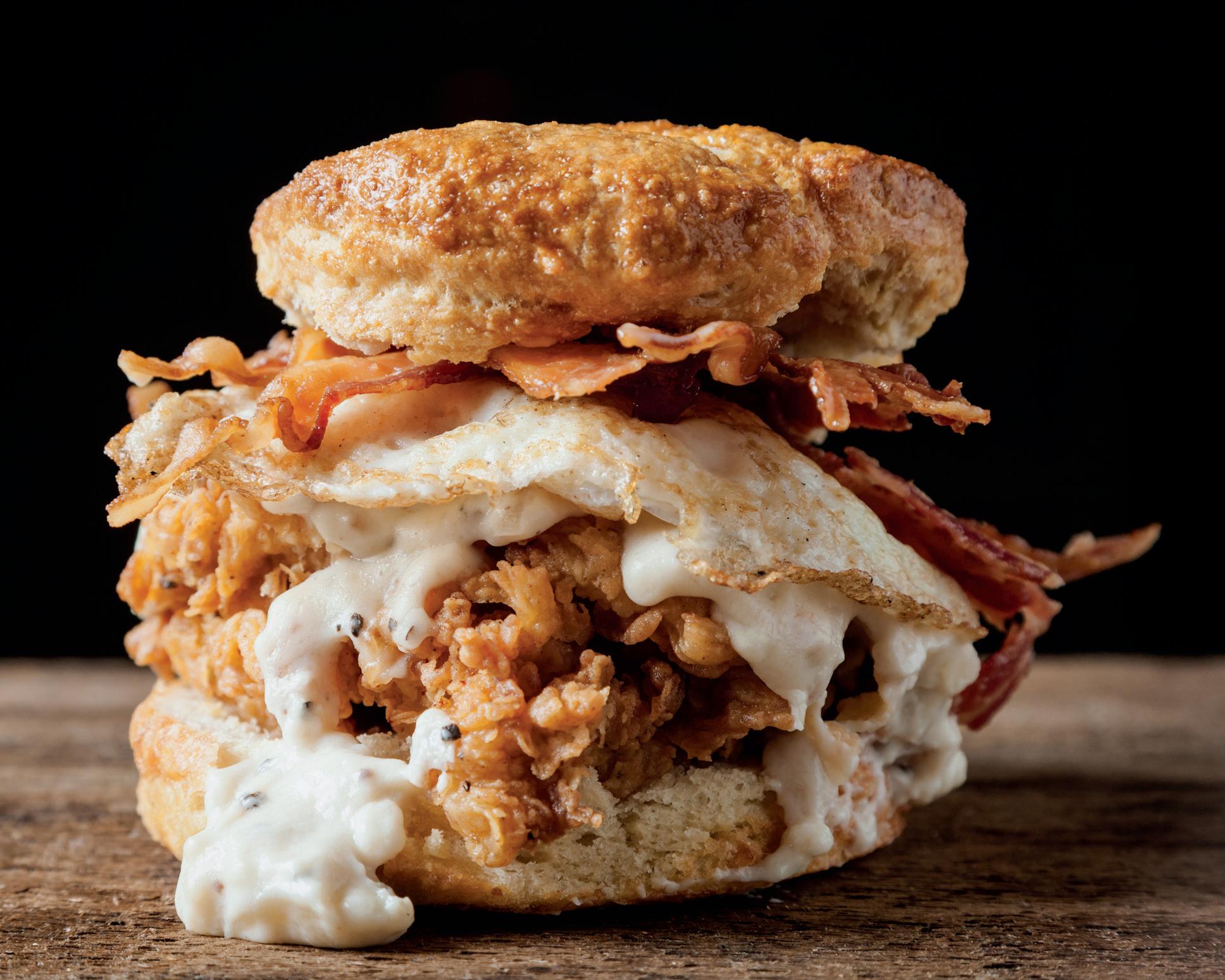
And then there are the endless applications of the biscuit as a sandwich base. From egg-and-meat (sausage, bacon or ham) breakfast sandwiches, to pulled pork and fried chicken sandwiches, these portable meals have been a popular menu item nationally in the fast-food business for years. Now, independent restaurants are jumping on the bandwagon. While the popularity of biscuit sandwiches peaked in 2016 and waned slightly after that, Datassential research shows they have maintained steady growth in menu proliferation: about 1% each year, for a total of just under a 6% increase over the last four years. In foodservice operations where staff is limited and baking prowess might be in short supply, offering a personalized, homemade biscuit item on the menu can become a draw for an operation that prides itself on homestyle foods.
Whether you’re serving them to-go or for dine-in at your place of operation, biscuits offer not just a comforting option for diners, thanks to their flaky, buttery, melt-in-your mouth appeal; as a timeless staple ripe for reinvention, they also offer a blank canvas for creativity, no matter the time of day.
(Reprinted with permission from “Mother Grains: Recipes for the Grain Revolution." Copyright © 2021 by Roxana Jullapat. Photography copyright © 2021 by Kristin Teig. Published by W. W. Norton & Company. All rights reserved.)
Makes 8 to 10 biscuits
2 cups (280 g) all-purpose flour
2 cups (320 g) fine white cornmeal
2 tablespoons sugar
1 tablespoon baking powder
1½ teaspoons baking soda
2 teaspoons kosher salt
1 cup (2 sticks/225 g) cold unsalted butter, cut into ½-inch cubes
1½ cups (360 ml) buttermilk
4 ounces (115 g) white cheddar, grated
2 tablespoons thyme leaves
Method:
1. Place an oven rack in the middle position and preheat the oven to 350ºF.
2. Line a baking sheet with parchment paper.
3. Sift the flour, cornmeal, sugar, baking powder, baking soda, and salt into a mixing bowl. Toss the cold butter cubes into the dry ingredients. Quickly cut the cold butter cubes into the dry ingredients by progressively pinching them with your fingertips until the mixture resembles a coarse meal with hazelnut-size crumbs.
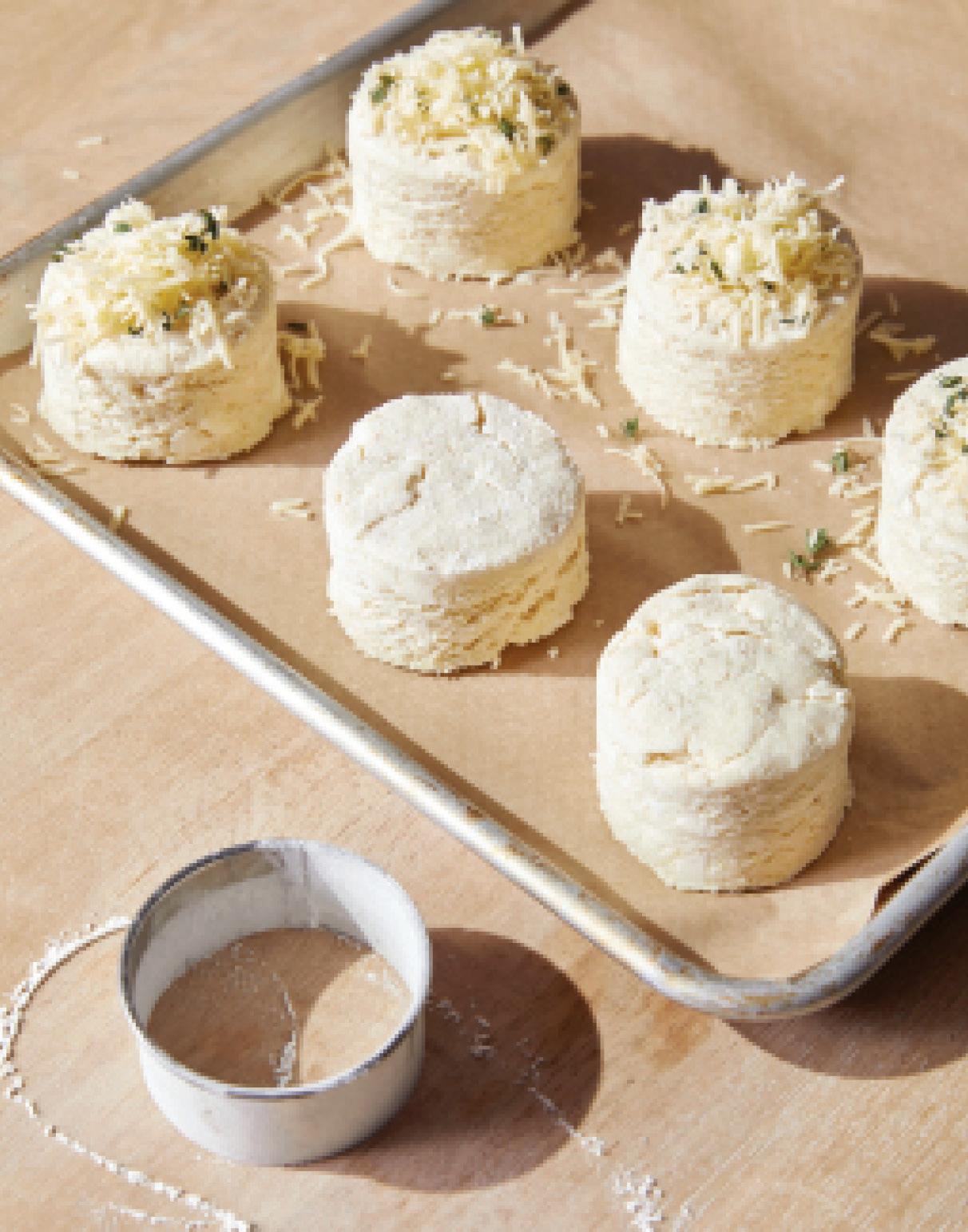
4. Make a well in the center with your hands. Pour the buttermilk into the well in the dry ingredients. Toss gently with both hands (as if tossing a salad) until a shaggy dough forms. Transfer to a floured surface and shape by hand into a 10-by-5-inch rectangle about 1 inch thick. Fold the dough onto itself as if you were closing a book (this step helps create layers) and flatten by hand or with a rolling pin until the rectangle is 1 inch thick. Cut with a 2½-inch plain biscuit cutter.
5. Gather scraps to cut a few additional biscuits. Discard anything left afterward; the dough is overworked and will yield tough biscuits. Transfer the biscuits to the prepared baking sheet. Top each biscuit with white cheddar and a sprinkle of thyme.
6. Bake for 10 minutes. Rotate the baking sheet and bake for another 10 to 15 minutes, until the biscuits are golden. Rotating the sheet halfway through the baking process will ensure that the biscuits bake evenly. The biscuits are delicious 20 to 30 minutes after coming out of the oven, but they will reheat very well the next day. Store leftovers in an airtight container and reheat at 350ºF for 6 to 8 minutes.
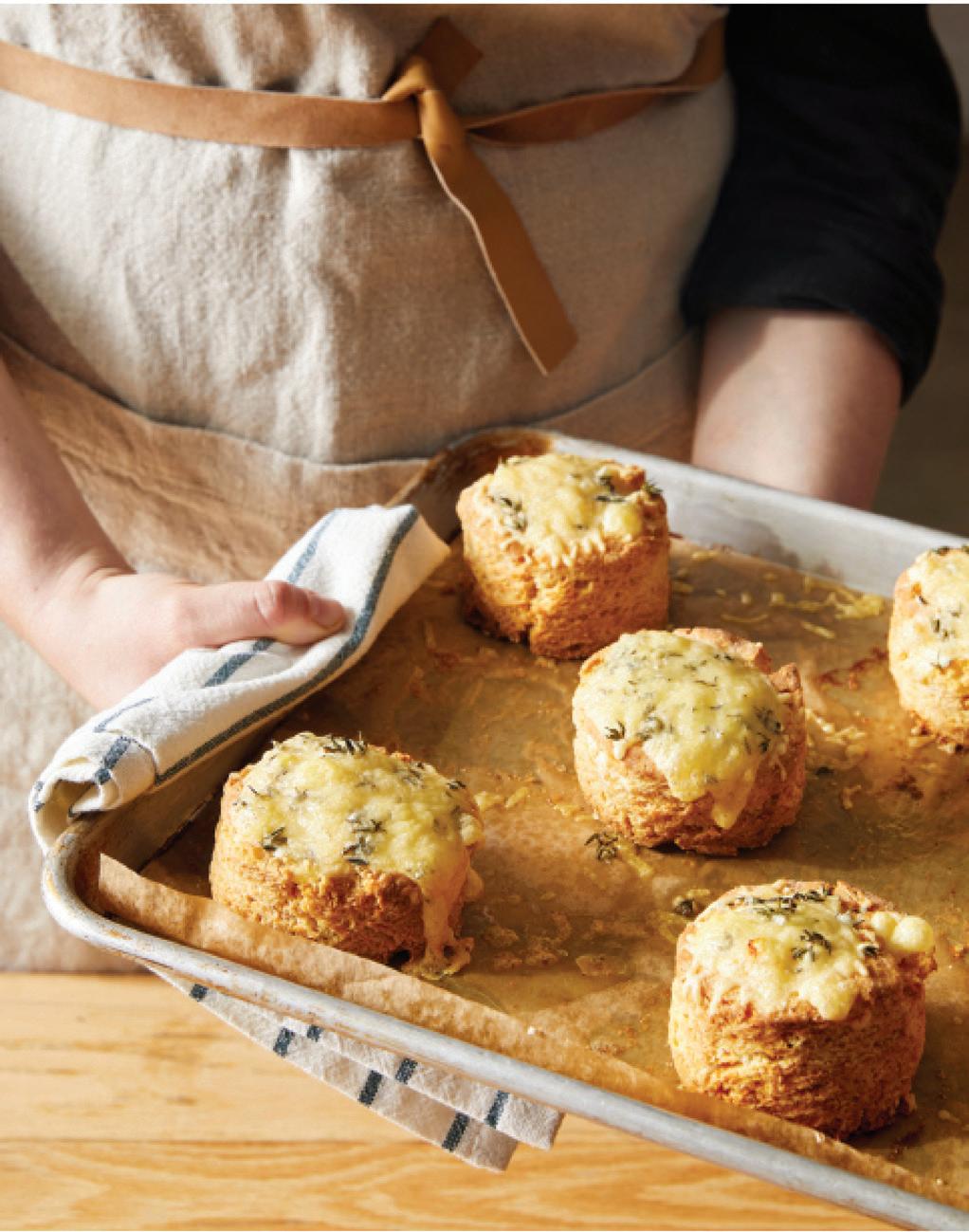
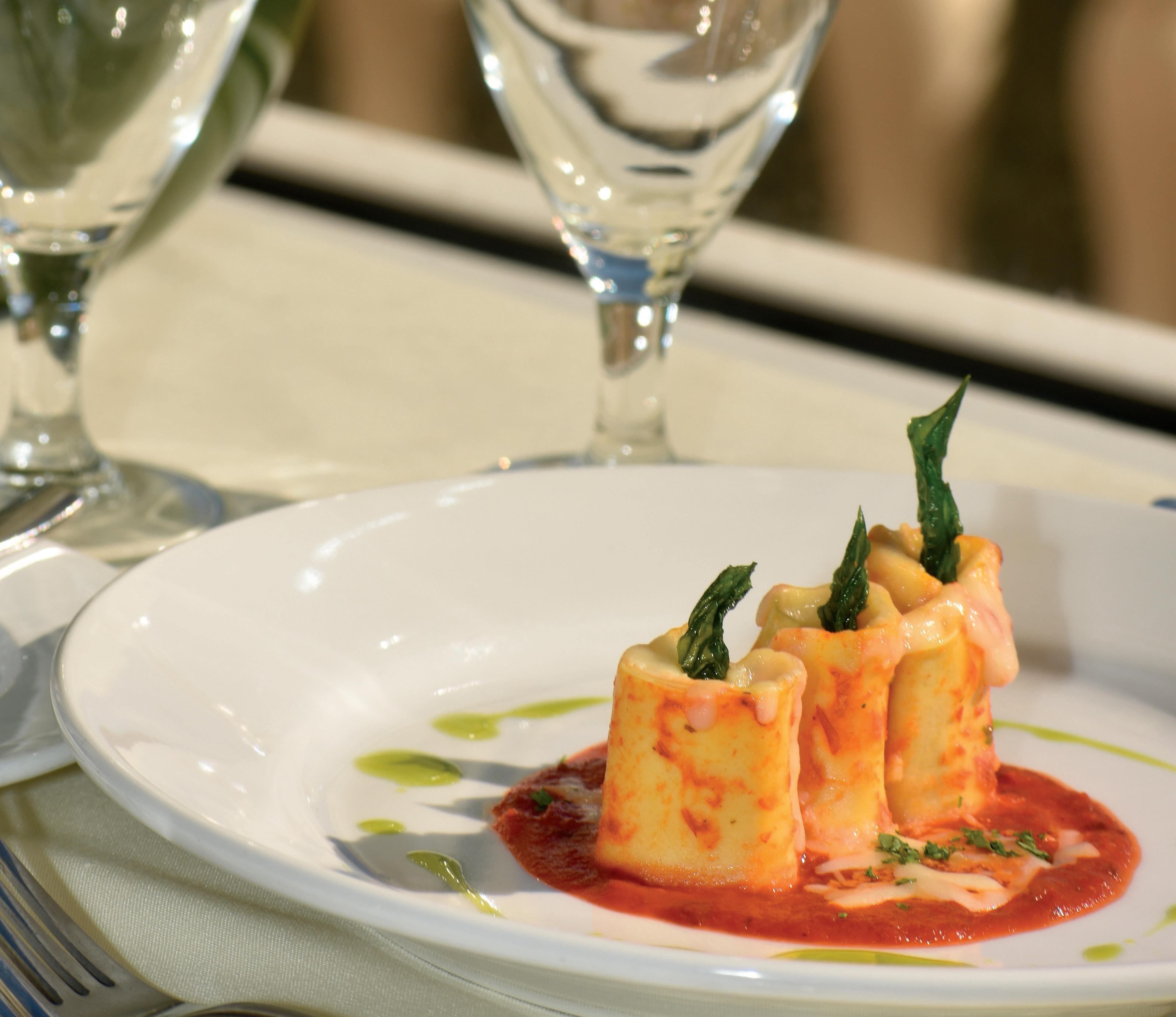
Chef Lance Cook, CEC, CCA — executive chef at Hammock Dunes Club in Palm Coast, Florida — and Chef Kirk Kief, CEC, CCA, CPC — executive chef and culinary instructor at Reality House in Daytona Beach, Florida, founding president of the ACF Mid Florida East Coast Chapter — partnered up for a study of the Italian-American comfort food manicotti (“little sleeve,” in Italian), with photos by Chef Kief. For the classical version, Chef Cook starts by making an easy pasta dough based on a recipe from Chef Thomas Keller’s acclaimed restaurant The French Laundry in Napa Valley, California. After gently kneading the dough for about 15 minutes to develop elasticity, Chef Cook passes the dough through a pasta machine and then cuts it into 5-inch-by-4-inch pieces. The “little sleeves” are then stuffed with a whole-milk ricotta, Parmesan, and herb filling; rolled up; and layered with tomato sauce in a baking dish. Topped with shredded mozzarella and Parmesan cheese, the dish is baked for about 25 minutes covered, and then finished, uncovered, for about five minutes, or until the cheese is bubbling — so simple, yet so comforting during these crazy times. The slow-simmered tomato sauce used in the recipe combines carrot and just a hint of sugar for a little extra sweetness against the salty Parmesan.
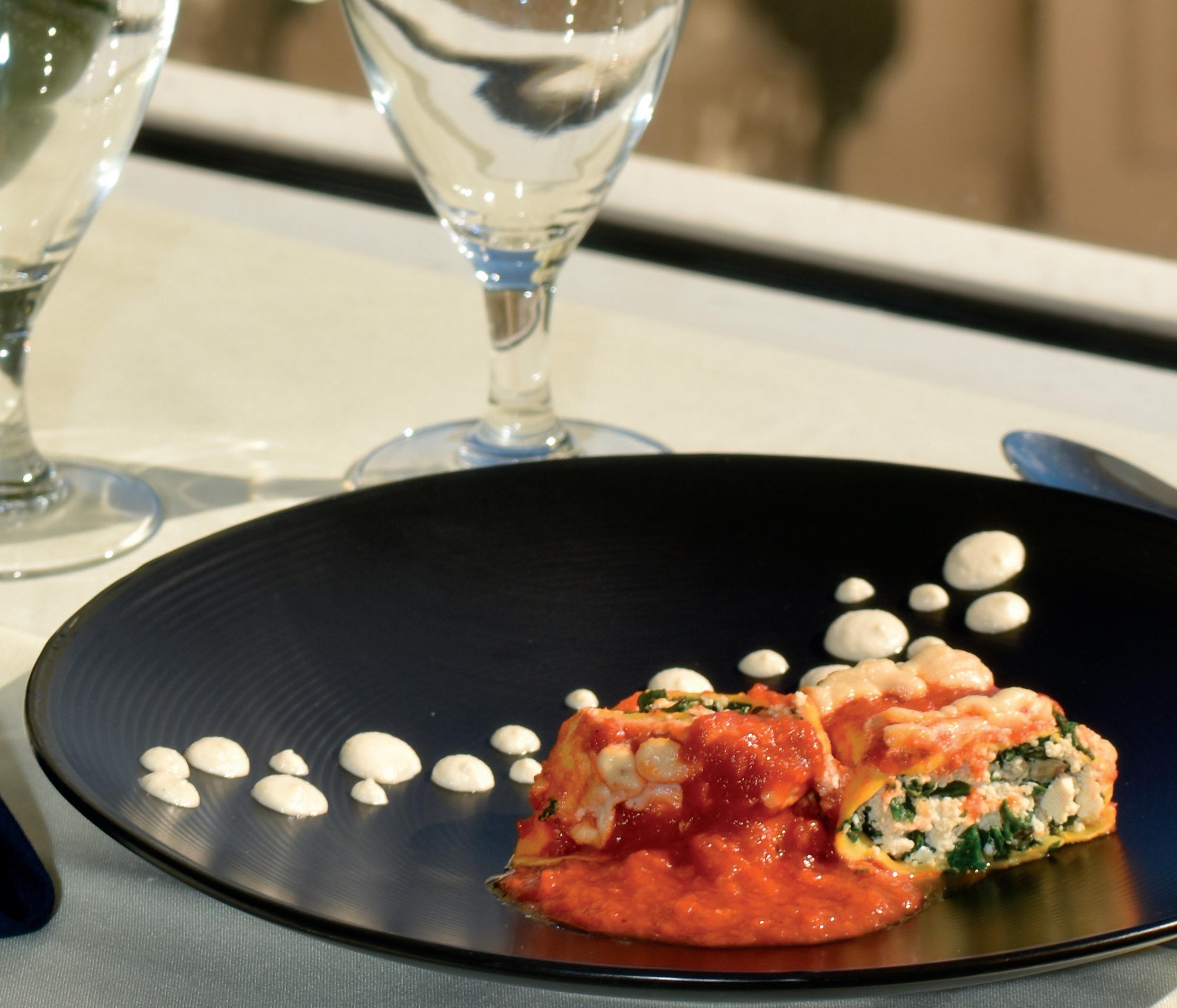
To make the dough for a plant-based, modern manicotti that is dairy- and egg-free, Chef Kief reaches for silken tofu and a little turmeric, adding red bell pepper powder or spinach-and-leek powder to make the dough more colorful as well as vitamin-enhanced. To make the vegan-friendly cheese topping, he soaks raw cashews for a few hours or overnight, then blends the softened nuts with nutritional yeast and plant milk to recreate the umami flavor of cheese. For the plant-rich “ricotta” filling, he uses tahini, nutritional yeast, firm tofu, fresh spinach and basil. A simple tomato sauce, spiked with a pinch of red pepper flakes, rounds out the dish. “I love Italian cuisine, and this is one of those Italian comfort foods that is easy to adapt, easy to prepare and very cost-effective, and still packs in all the flavors that we love,” Chef Kief says. “I recently converted to a whole-food, plant-based diet, primarily for health reasons. I have lost weight, dropped my cholesterol by 50 points, and feel better and more energetic than I have in years. There are several restaurants that I no longer visit due to a lack of choices like these. Restaurants that do not offer plant-based alternatives are needlessly losing business, when it is so easy and cost-effective to keep those dining dollars in their cash registers. There is no dairy or egg used in this [modern manicotti] dish, but it is still packed with flavor.”
See the classical and modern recipes, as well as more photos, at wearechefs.com



As ACF chefs and educators, our culinary fundamentals stem from classical French instruction, from knife cuts to soup- and sauce-making. What’s more exciting to see, though, is how these fundamentals intersect with, and are transformed by, America’s culinary traditions, native ingredients and diverse methods of cookery — from region to region, city to city, town to town, person to person.
This year, the ACF is looking inward, taking a deep dive into our past, our present and our future. We’re returning to our roots, and really examining what makes regional American cuisines so special — because by learning about others’ culinary traditions, practices and prized ingredients, we can become better cooks ourselves. So expect to see more stories throughout the year about cooking in different parts of the country.
As a start, we go from the West, where we explore the cuisines of Arizona and Colorado, to the South, where we learn about the differences between Creole and Cajun cuisine. Read on, and enjoy.

If you ask someone to name the top culinary cities in the U.S., the responses are predictable: New York City (obviously), Chicago (naturally) and New Orleans (of course), to name a few. Culinarians will likely pick out additional smaller but thriving destinations: Charleston, South Carolina; Austin, Texas; or Savannah, Georgia.
However, you’re unlikely to find a city in Arizona in the rankings — yet, in 2015, the southern metropolis of Tucson, with its population of around 550,000, was the first American city to be named a “City of Gastronomy” by UNESCO. The criteria to earn this designation require an abundance of local ingredients used in traditional cooking; a vibrant gastronomy community with numerous traditional restaurants and/or chefs; and local know-how of traditional culinary practices and methods of cooking that have survived technological advancement, among other benchmarks.
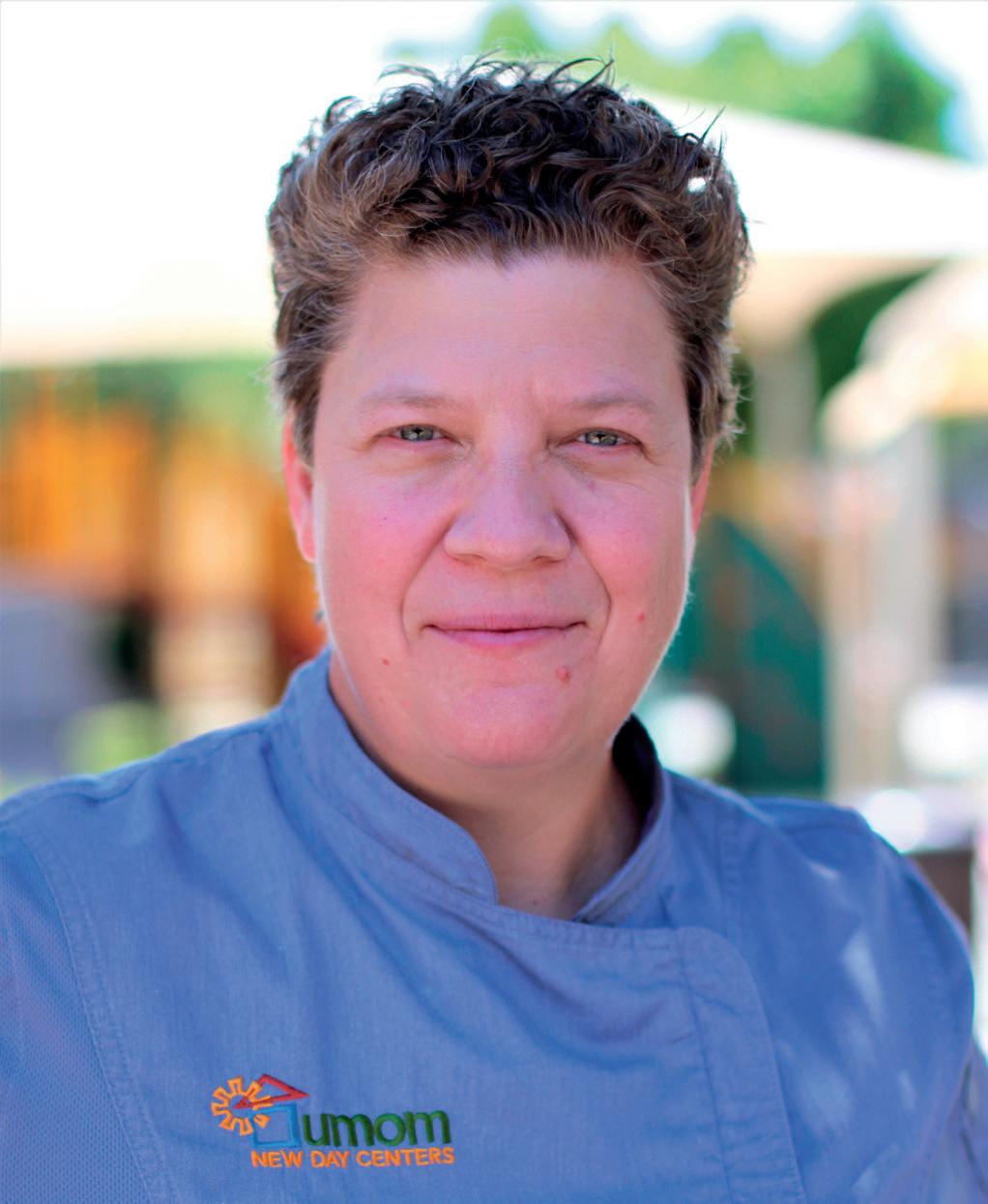
Arizona’s cuisine — often termed “Sonoran” after the desert that covers one-third of the state, including Tucson — doesn’t have the national renown of California’s coastal fare to the west or Tex-Mex cuisine to the east. However, “there is a unique intersection of food culture in Arizona that highlights Native American, Mexican and American cuisines,” notes Chef Dina Altieri, CEC, CCE, CHE (above), director of culinary enterprises for UMOM New Day Centers in Phoenix and president of ACF Chefs Association of Arizona.
The state’s rich culinary culture has been built up, piece by piece, over thousands of years of history. Its foundation rests on the ingredients that thrive in the dry, hot desert and the traditions of the Native American tribes who have lived — and still live — there. Sonoran cuisine has also collected impressions of those who came later, such as the Spanish, who arrived with Marcos de Niza in the mid-1500s. It’s influenced by Mexico, thanks not only to its close proximity to the country, but also because the land was part of Mexico in the early 1800s. A half-century later, ranching took off, cementing beef and
cowboy cuisine as part of the culinary landscape. (Students in Arizona are still taught “the five Cs” of Arizona’s economy; cattle is one of them.)
Indeed, Arizona’s culinary traditions were firmly established by the time it became the last contiguous state to be admitted to the Union on Feb. 14, 1912. More than a century later, modernday chefs are still deriving inspiration from that alimentary history to build a culinary scene, both in Tucson and in other parts of the state, that is worthy of international attention.
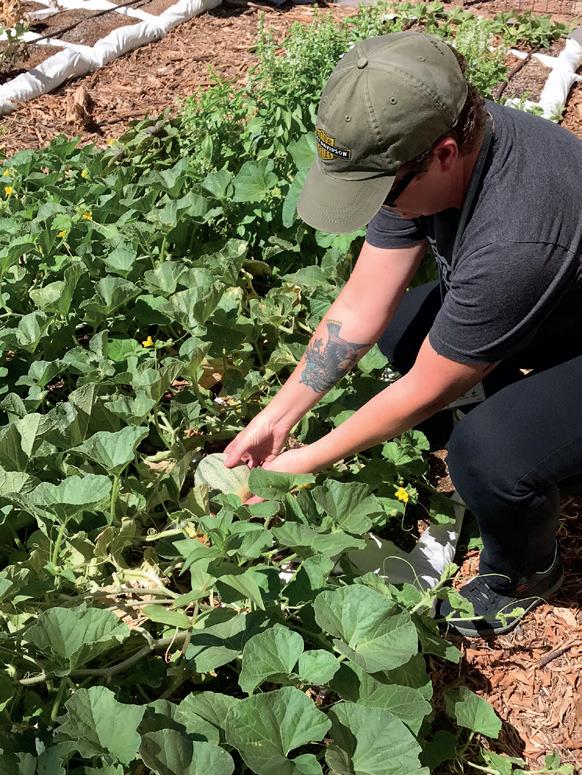
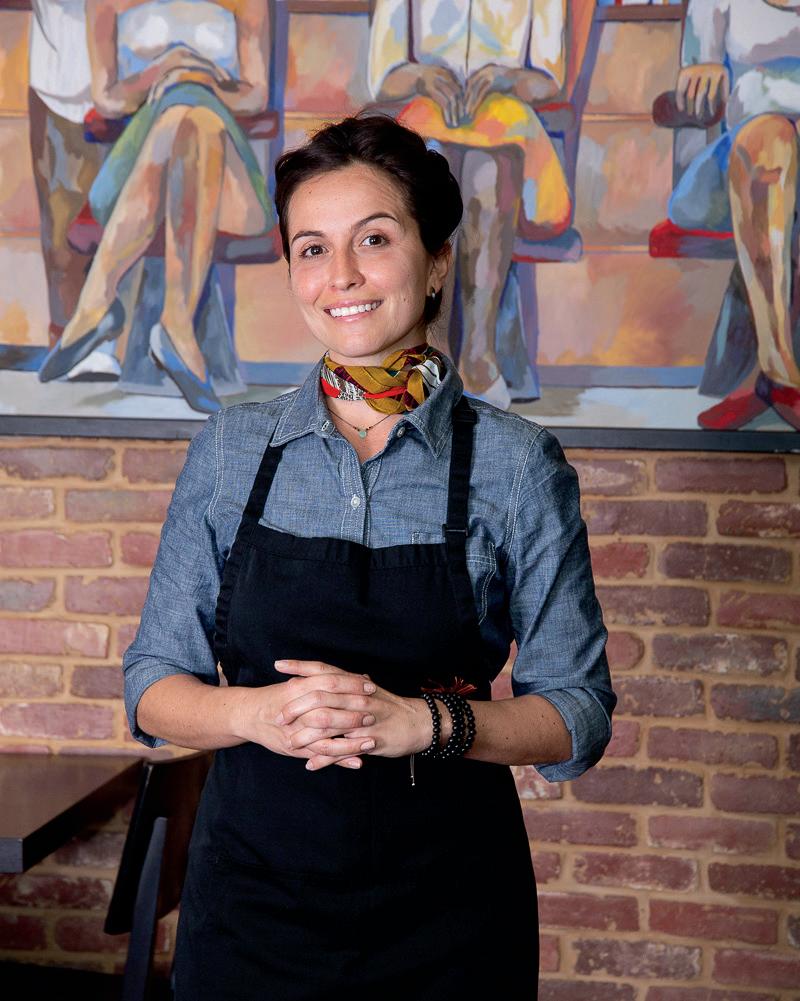
Spanish, Mexicans and 19th century ranchers may have influenced Arizona’s cuisine, but if you want to get to its heart, you must focus on the land. “True Southwestern cuisine, to me, is looking at these foods that the desert has provided ... the food that people have been enjoying here for hundreds of years,” says Chef Danielle Leoni (opposite), executive chef of
The Breadfruit & Rum Bar in Phoenix. She focuses on three ingredients: corn, beans and squash, which are collectively known as “the Three Sisters” and have been a staple of the state’s agriculture as far back as 7000 BCE. While modern chefs may utilize an assortment of corns, including the sweet yellow and white varieties, the type traditionally grown by Native Americans is higher in protein, a bit nutty and — most notably — blue in color.
Those three ingredients, although staples, aren’t the only foods that the desert proffers a chef. “There is so much to learn about indigenous ingredients in Arizona such as cactus, wild herbs, seeds, chiles, mesquite and blue corn,” Chef Altieri says. “The foods that are growing wild here are truly unique and amazing.”
Chef Altieri’s favorite type of chile — a predominant ingredient in Southwestern dishes — is
the chiltepin, which is native to Arizona and Mexico. A member of her kitchen staff brought it in and, using a hand-carved chiltepin grinder, Chef Altieri crushed the peppers and added the powder to menudo. “What a special little chile!” Altieri commented.
When a chef focuses solely on classic, traditional dishes and ingredients, there’s always a risk of developing a stale menu. Chef Altieri encourages chefs to showcase their creativity by modernizing those classics.

“Focus on one or two distinctive ingredients and build the flavor profile from there,” she advises. “For example, consider creating a dish with tepary beans and pickled green chiltepins. Additionally, Mexican specialties, such as tacos, tamales and pozole, are celebrated on menus in the region, but switching up the classic garnishes, highlighting hyper-local ingredients, or bringing in new flavors can modernize these traditional dishes.”
These days, Arizona’s cuisine is continually affected by those who have migrated to the state over the past century. According to data from the U.S. Census Bureau’s 2017 American Community Survey, only 23% of adults 25 years and older currently living in Arizona were born in the state. Additional data from the Cencus Bureau released in 2018 showed that Arizona has taken in 2.2 million new residents from other states since 2010, while losing 1.7 million to other states during that time.
“I don’t think that we as Americans take enough time to understand the culture that we reside in,” Chef Leoni says. “In Arizona, most of us are transplants. If I wasn’t a chef, I probably wouldn’t know anything about Southwestern cuisine.”
Chef Leoni moved to Arizona when she was a teenager, but at Breadfruit & Rum, she takes her passion for Southwestern cuisine and intersects it with her passion for Jamaican food. She has all sorts of ideas swirling around in her head for potential Jamaican-Southwestern culinary marriages, starting with a version of Jamaican rice and peas that uses a native Southwestern bean, such as tepary. Then, “in Jamaica, spice is king, and anyone who thinks about Southwestern food is going to think about chiles,” she muses. “We’re going to give that chile experience, sourced from local farmers. It [might not be] just a hatch chile; it could be a red serrano.”
Or, perhaps, she’ll braise a beef brisket from a local rancher in northern Arizona with spicy chiles. “It’s what you might think of as cowboy food, but it [will have] this Jamaican overtone to it by adding Jamaican allspice,” Chef Leoni says. “We really like to put a lot of vegetables in [our food] — zucchini or summer squash, or acorn or butternut squash,”
maybe roasted or even smoked to give them a charred flavor.
No matter what the final dish looks like, Chef Leoni, who always has sustainability top of mind, is committed to cooking with local and seasonal ingredients as well as respecting the traditions of the Arizonans who came before her. “I take a step back and take the time to think about and read about the people who were here way before us,” she says. “Those were the people who enabled us to be here today, and enabled this Southwestern culture to exist.”
Despite its dry climate and brief summer season, Colorado’s culinary prowess shines. Whether it’s the Palisade peaches that grow on the Western Slope; the wild turkeys, which were domesticated by the ancestral Puebloans; or the melons of Rocky Ford, the state’s food history — and its bold, local flavors — run deep.
While these ingredients are native to the state, immigrants added to Colorado’s food history. From the late 1880s to the early 1900s, German-Russian farm laborers brought their sugar beet expertise to the fields of Colorado. Japanese immigrants followed suit; the Bromley/Koizuma Hishinuma Farm in Brighton — listed on the National Register of Historic Places — stands as a reminder of their role in the onceflourishing beet industry.
Naturally, agriculture didn’t stop there. Colorado’s sun-drenched San Luis Valley in the south-central part of the state remains one of the most significant potato-growing regions in the U.S., the result of land grants offered in what was then northern Mexico. Love mushrooms? Between 2,000 and 3,000 varieties are grown in the state; the forests near Telluride are stippled with varieties from porcinis to chanterelles. The list, as they say, goes on and on.
Long before “farm to table” became a buzzword, local Native Americans foraged the land for survival. It’s that spear-to-fire approach that laid the groundwork for one of Colorado’s most beloved pastimes: hunting. Though it was born from necessity, the time-honored sport is more popular than ever. In 2019, Colorado Parks and Wildlife saw a 20% increase in hunting and fishing license revenue, due to a change that simplified the process of procuring big-game licenses.
Not surprisingly, game is featured prominently on fine-dining tables statewide. That includes at Denver’s oldest surviving eatery: the taxidermy-trimmed Buckhorn Exchange, which dates back to 1893. In addition to the ubiquitous Rocky Mountain oysters (which, of course, aren’t oysters at all), you’ll find smoked bison sausage atop a bed of red chile polenta and boneless rattlesnake marinated in red chile and lime. It’s served atop a chipotle queso dip, with tortilla chips.
Fare from the “Centennial State” takes its cues from surrounding states like New Mexico, California
and Texas. “If I were to choose five words that embody Colorado’s culinary [influences], they’d be [green] chile, smoke, innovative, ranch, and local,” says Chef Matthew Richardson, CEC , executive chef of Cheyenne Mountain Country Club in Colorado Springs. “Mountain air, epic views and wildlife inform my cuisine.”
His farm-to-table menu is a showcase of the state’s fresh, local ingredients.
“As for flavoring and seasonings, Colorado — not surprisingly — goes in on big flavors,” he notes. “So you can expect a lot of spice rubs and smoked meat.”
Chef Richardson said while it’s hard to distill Colorado cuisine into a single dish, he considers elk the state’s quintessential ingredient, noting its rich gaminess pairs perfectly with fruit — berries in particular. At Cheyenne Mountain Country Club, Chef Richardson’s elk chops are graced with blackberry-Cabernet sauce, and served alongside brioche bread pudding dotted with walnuts, dried cherries and green chile.
Needless to say, Chef Richardson is in good company with his love for elk. Whether it’s the blackberry elk filet with local Jumpin’ Good goat cheese-farro risotto at Hearthstone
Restaurant in Breckenridge; Breckenridge’s Briar Rose
Chophouse & Saloon, where elk medallions are offset by mushroom demiglace; or The Fort Restaurant in Morrison, which serves a duo of four-ounce, grilled, bone-in elk chops with wild huckleberry preserves, there is a common theme: Big game reigns, and inky berries provide a vibrant, silky foil that pairs exceptionally well with it.
Of course, it’s not only the fine-dining establishments that are in the know. Chef and “Colorado sausage czar”
Jim Pittenger of Biker Jim’s Gourmet Dogs left an indelible mark on the Denver street-food scene with his elk-jalapeno-cheddar sausage, which was embellished with cream cheese and crowned with sodasweated onions — so much so that the dish earned him many food TV appearances, including on Chef Anthony Bourdain’s show, “No Reservations.”
From four-star affairs to street eats, from the fields and orchards, it’s impossible to deny that sense of place plays a big role in Colorado cooking. “It’s that rustic, sort of upscale, Rocky-Mountain-cabin cuisine that we’re known for,” Chef Richardson concludes.
who is long been drawn to regional cuisine. She recently returned from an epic, food-filled adventure through Colorado, Utah and Arizona.
A visit to New Orleans is never complete without a sampling of its unforgettable cuisine. Walk into any restaurant in the Big Easy, and you can choose from a wide array of entrees that originated in the area: turtle soup, boudin, gumbo, blackened shrimp. But if your goal is to figure out which dishes are “authentically” Cajun or “authentically” Creole, it may be a long night.
While it’s true that Cajun cuisine will almost always feature the “holy trinity” of white onion, green pepper and celery, and a final
topping of green onions and parsley, nowadays — because of the blending of cultures and cuisines — you can’t always use those markers to definitively identify a Cajun dish. Plus, Creole cuisine also uses the “holy trinity” in many of its dishes. Confused yet?
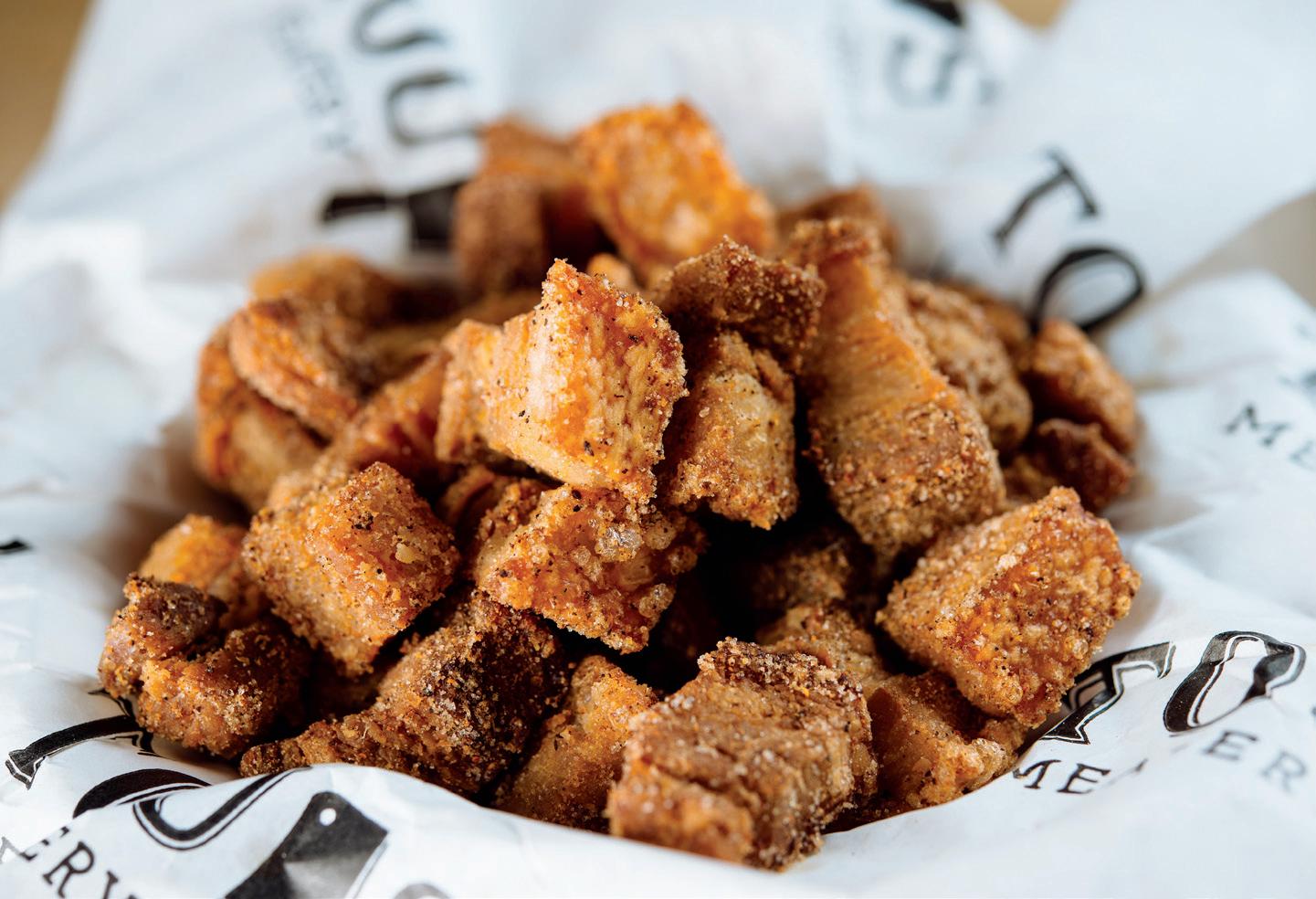
The days of “proper Cajun” and “proper Creole” are waning, according to Chef Isaac Toups, owner of Toups’ Meatery in New Orleans. While he does prepare straight Cajun dishes, such as boudin, cracklins, jambalaya, dirty rice and Cajun (versus Creole) gumbo, Chef Toups also integrates other cuisines into his dishes. “There’s more crossover nowadays,” he says. “I don’t follow a lot of rules in my restaurant. I also use some Spanish, Mexican and Vietnamese techniques. I’m always branching out.”
While many people associate Cajun cuisine with spiciness, history tells us that the Cajuns (or Acadians, when they first arrived in Louisiana — more on that later) ate simple food that used minimal ingredients. Today, Cajuns still prefer to use simple ingredients and a limited number of spices, allowing the proteins in their dishes to flavor the entrees. It’s within Creole dishes that you’ll find longer, more sophisticated lists of ingredients, with a stronger focus on herbs.
Toups suggests rather than focusing on what’s “proper,” look at the ingredients you have on hand and be open-minded. “Feel free to throw in some ingredients
from your own background,” he says. “Cajun food is very forgiving. If you don’t have bell peppers, use poblanos; if you don’t have onions, use leeks. Experiment and go bold with your flavors, and you’ll be all right.”
Today, Chef John Folse, CEC, AAC , chef and author of “The Encyclopedia of Cajun & Creole Cuisine,” believes Cajun food may be more sought-after than Creole because of the amount of publicity surrounding it. And, while many may believe you can separate Cajun and Creole by looking to see if there are tomatoes in the dish, Chef Folse says that’s largely a myth. “Instead, look at opulence versus simplicity,” he says. “Creole tends to be a classier cuisine, using more tomato cookery and more of the world’s spices to enhance the final dish, while Cajun cuisine is simpler.”
In the late 1700s, French settlers (known as Acadians) arrived in Louisiana after being exiled from Nova Scotia by the British, settling in the swamplands of Louisiana. The Acadian culture gradually transitioned into the Cajun culture after the French-Canadian settlers were introduced to a plethora of new ingredients from not only Louisiana, but also the Gulf of Mexico and the Mississippi River. “The cuisine of the Acadians, which was traditionally very simple and seafood-based, grew in flavor tremendously when they started to co-mingle with others who had settled in the area,” Chef Folse says. “The swamp floor was the Acadians’ pantry; they cooked one-pot, family-style, stick-toyour-ribs stews with wild game and rice.” Instead of being spicy, Chef Folse says, the cuisine in those early days was flavored naturally with smoke and common herbs, such as bay leaves.
Most people living in New Orleans in the 1700s were referred to as “Creole,” a term that encompassed anyone from the descendants of the French colonists who founded the city in 1718 to the children of the first Africans in Louisiana. Because Creoles were a blend of so many backgrounds — including French, Spanish, Italian, African and Native American — each
culture introduced exciting new spices to the area that soon became available in the local markets. Chef Folse says that when the various Creoles combined their collective knowledge of cooking and spices, they ended up with much more sophisticated recipes; dishes such as Oysters Rockefeller, Creole chicken fricassee and shrimp Creole all come to mind. “Once Cajuns got into the city, we started to see more spices show up in Cajun pots,” he says, noting that Creoles primarily lived in the city and Cajuns in the outskirts, but “both influenced the cuisine of our city tremendously.”
Starting in the 1980s, Cajun and Creole cuisine both arrived in the culinary spotlight when chefs such as Paul Prudhomme, Emeril Lagasse and Susan Spicer entered the picture. Dozens of world-renowned chefs now call New Orleans home, and the city remains a bucket-list culinary destination for thousands of hungry travelers looking to experience a taste of these famous cuisines.
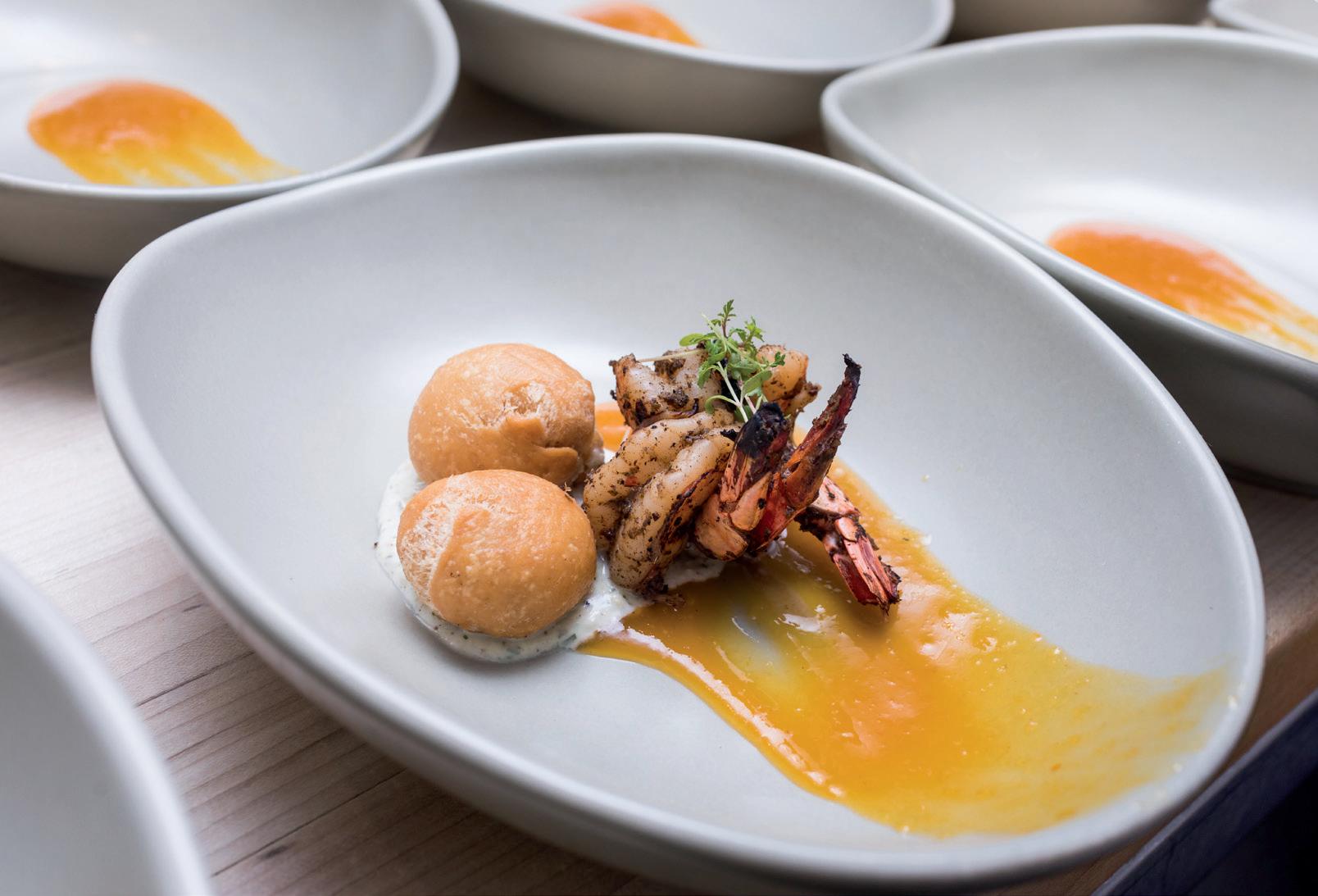
Chefs are trying new concept- and menutesting tricks to make ends meet during a challenging time
// By Samantha LandePop-ups are a great way to road test possible new concepts or menus. While making any pivot can feel daunting, pop-ups during a pandemic are an even heavier lift. Yet — faced with never-before-seen challenges — many chefs are throwing out a lifesaver for their business by trying a new concept or revamping a current one to meet state guidelines for COVID-19. We spoke with a few chefs who have been down this road to learn their suggestions for popping up new concepts.
Chef Yia Vang is no stranger to pop-ups. He successfully hosted his pop-up restaurant, Union Hmong Kitchen, for the past few years at different locations in Minnesota before preparing to open his first brick-and-mortar concept, Vinai, this year.
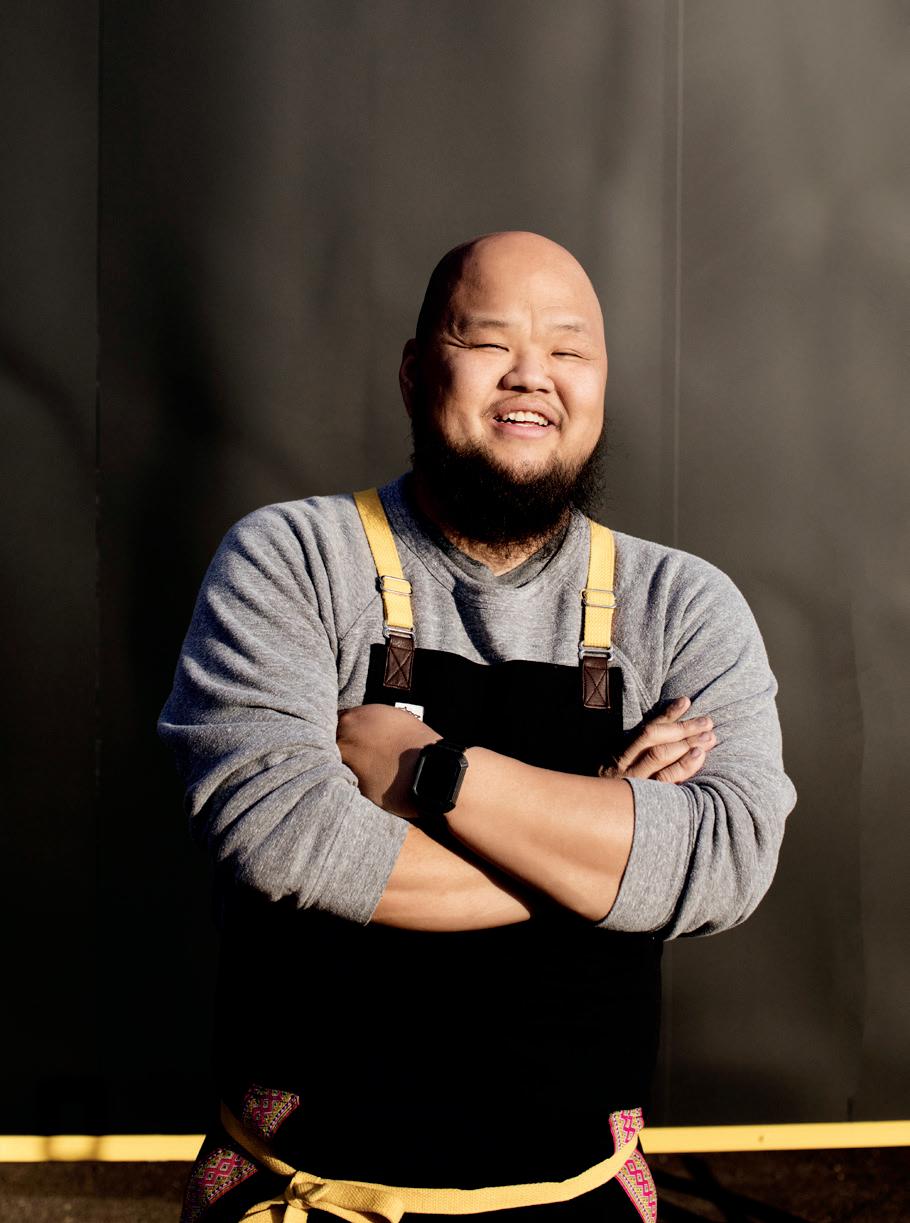
“The funny thing is, we were often looked at as the little guys [because we didn’t have] a brick-and-mortar [location], and now we are looked to for our expertise [with pop-ups],” says Vang, who named Vinai after the refugee camp he grew up in — located in present-day Laos — after his family fled the Vietnam War and violence against the Hmong people.
At one point, Chef Vang’s pop-up took shape as a food trailer parked at Sociable Cider Werks, a cider brewery in Minneapolis. During the COVID-19 pandemic, when indoor dining closed and it came time to shift entirely to carryout, Chef Vang knew he needed to remain true to the cuisine of
his home country of Laos and his Hmong background, and took the time to truly evaluate the meaning of his food. “I could have pivoted to burgers and tater tots, but I knew that wasn’t who I was as a chef,” he says. He encourages chefs to look inward when popping up another concept: “Is the food you make about a certain space and ambiance? How can we translate all of that into the food that we are having people come to pick up?”
That means thinking about every detail of the meal, not just the food: the packaging, the plating, how well it travels or reheats, and more. Chef Vang took a “deeper dive into his own culture” and decided that family meals most closely reflected the Hmong-Laotian ideology. “Our people will take care of each other, no matter what happens,” he says, thinking about how, while they were living in Laos, his mom would always have more than enough food on the table for guests to take for what often was a half-day walk home. The four elements that were always on the table — protein, rice, vegetables and hot sauce — are the backbone of his family meals at Union Hmong kitchen. Of course, “doggy bags” will be provided for any leftovers.
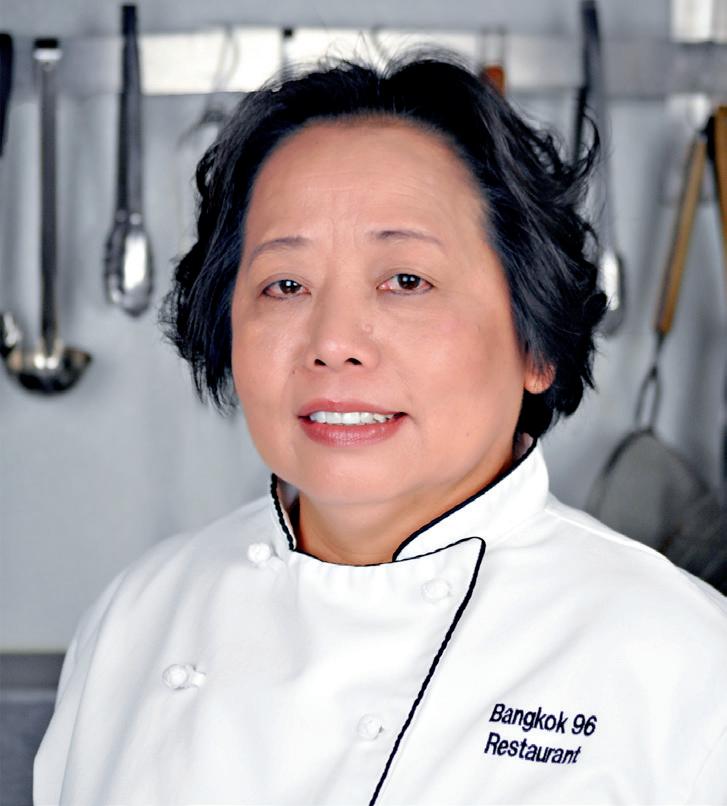
When Chef Genevieve Vang (no relation to Chef Yia Vang) was forced to shut down her restaurant Bangkok 96 — located in the suburbs of Detroit — it was an easy pivot to takeout, which they had always done. But her newer location, Bangkok 96 Street Food, was housed in a popular new food hall, Detroit Shipping Company, in an area that was very much destination dining in the heart of downtown. With forced shut-downs by the state, Chef Vang decided to turn her food hall stall into a ghost kitchen. She “put the panic and worry aside,” and started intense research on how to open and operate a ghost kitchen. “I had to take a different approach — [considering] what packaging would keep my food fresh for 45 minutes or more, [for example] — and I had to really refine my menu without losing the soul of my food,” she says.
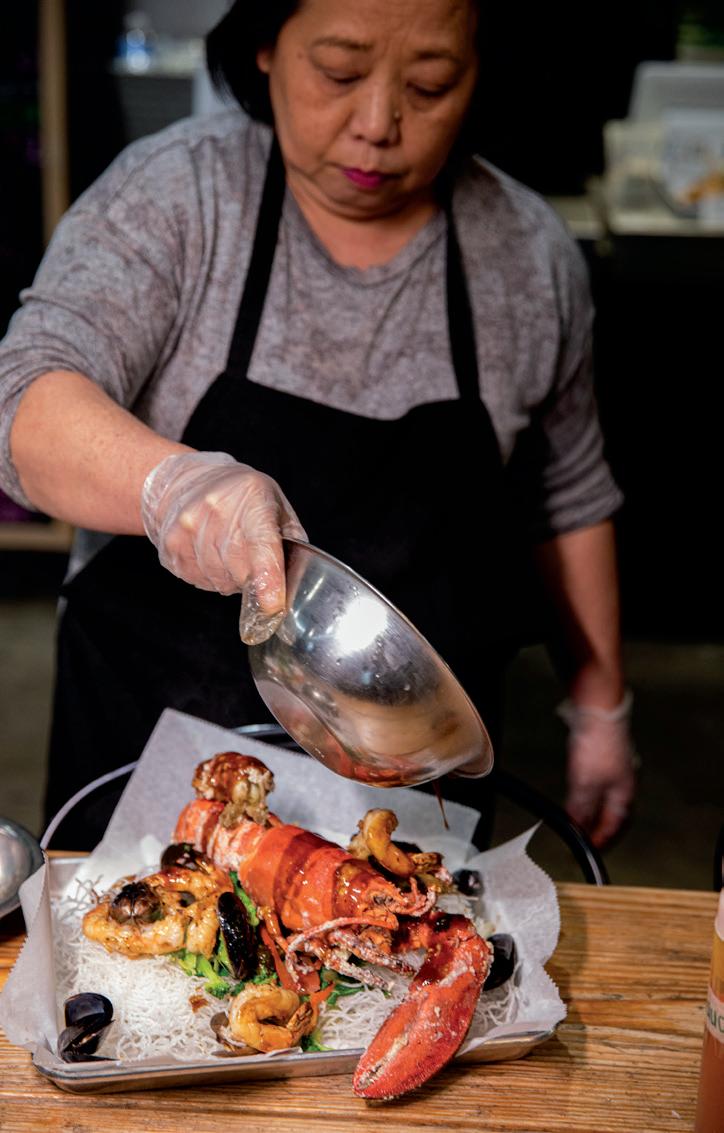
With all of the new things to worry about, she found it was essential to change in other ways, especially with a 75% decrease in her staffing. Chef Vang asked herself, “What can we do to simplify cooking in this small kitchen, and how can we make things more efficient, even if it means we pay a little more to stress less?” For Chef Vang, that meant investing in pre-chopped vegetables, or trying to use a smaller ingredient list across all dishes, for example.
If the ghost kitchen proves successful, she may eventually open another one and rent out the space to other vendors, or keep running both the ghost kitchen and food stall simultaneously. “The future is challenging; it’s important to keep thinking outside the box,” she says.
Many chefs right now are left with large, empty spaces that can’t be used for their intended purpose, as is the case with Chef Mark Woinoski, CEC, CCA , executive chef at the West Point Club, located on the U.S. Military Academy campus in West Point, New York.
His day-to-day usually consisted of catering or lavish events at the club, which all came to a halt in March 2020, resulting in a loss of $5 million in revenues for the club. “I really missed fine dining,” says Chef Woinoski, who decided to temporarily turn the
unused ballroom into a fine-dining restaurant to give the military officers and students the opportunity to experience something different. “The closest fine-dining restaurant is over an hour away,” he says. “This gives people a chance to have ‘date night’ and experience something other than takeout pizza.” Takeout menus have included everything from fried oysters to bleu cheese-crusted filet and wine to go.
Chef Stephanie Izard , chef/proprietor of Girl & The Goat, Little Goat, and Duck Duck Goat in Chicago, has always had packed dining rooms in the past, but with the city’s restrictions due to the pandemic, she started to rethink her spaces. Inside her Little Goat Diner, which is currently only open for to-go orders, she popped up a new bakery concept called Sugargoat, where people can grab pastries with innovative flavors, including one that tastes like French fries dipped in milkshakes.
“This past spring, I baked more than I have in years. It’s such a comforting form of cooking,” Chef Izard says. “Faith [Taheny, Little Goat’s sous chef] and I started to think of all of our favorite childhood flavor combinations.”
Sugargoat offerings include cakes, cupcakes, cookies, pies and ice cream.


And with a robust catering team already in place, it was a no-brainer for her to also shift into creating meal kits
like pork shank or goat tacos to ship nationally, so people across the country could cook her food at home.
With many restaurants across the country shifting to takeout and small businesses clamoring for support, it’s critical to stay focused. “It’s really important our to-go hits the mark. We can’t be lazy about that,” says Chef Yia Vang, emphasizing customers can truly see a difference. “Taking care of our customers is still key — and takeout right now is the only way we can still communicate with people.”


On that note, at a time when restaurant workers are often feeling defeated or afraid for their health, Chef Vang also thinks it’s key to communicate with his staff often.
“It’s important to keep iterating that we will take care of each other and our guests,” he says. “We have to keep moving forward.”
Samantha Lande is a freelance writer based in Chicago. Her work has appeared in Food Network, AllRecipes, Real Simple, and other local and national publications.

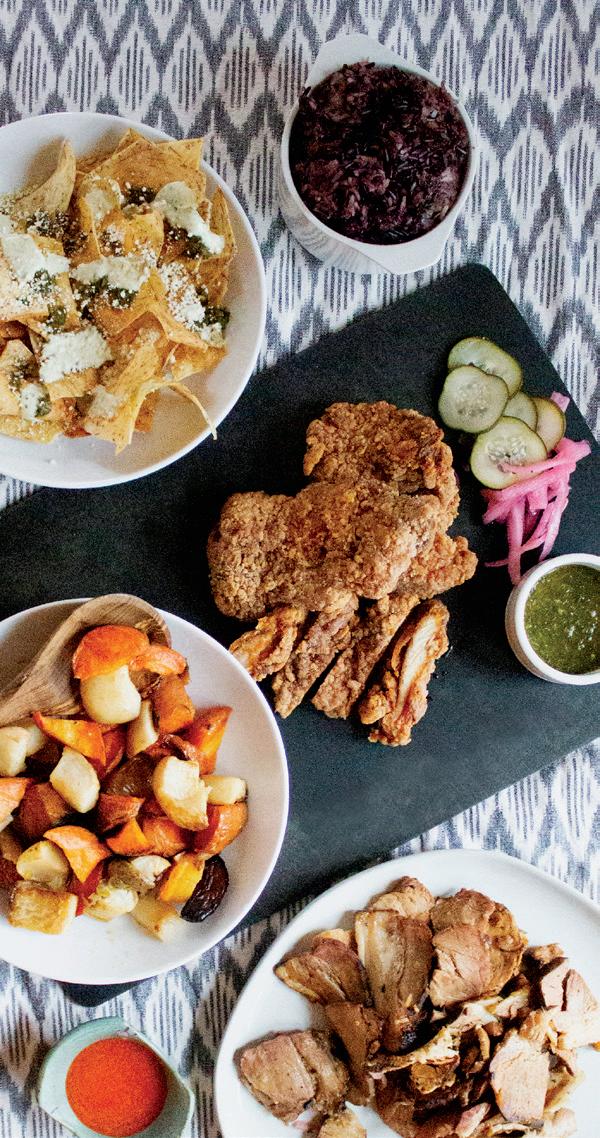
Pop-up veteran Chef Yia Vang — founder of Hmong Union Kitchen, which began as a series of pop-up dinners throughout Minnesota — offers his tips on how to leverage new or temporary concepts to set yourself up for future success. Keep your menu small. “Don’t try to impress people and overextend yourself. Keep it delicious, simple and small.”
Content, content, content. “Social media is your only way to communicate with people right now, so make sure your dishes have soul and a story to them,” and post about that story on social media. “Anyone and everyone is making tacos; what is the reason you are? I recommend finding a rhythm for posting. We will usually do one post mid-week, and then one the day of [the pop-up] to remind people.”
Labor is key. “It’s exciting to have a big team, but at the end of the day, you need
to make money. When considering your team, it’s better to look to a smaller, more efficient crew.”
Put your ego aside. “These are strange times, and now is not the time to be above the food you make. I don’t like that we have to do take-home meal kits, but the Thanksgiving, Christmas and New Year’s Eve kits are actually what is keeping us in business.”
Throw everything you know out the window. “Let’s not pretend we know what projections are going to look like. Be honest: This is a weird time where we don’t know what’s happening.”
As the premier certifying body for cooks and chefs in America, The American Culinary Federation remains committed to providing you with the tools to achieve your professional goals. We are pleased to announce the launch of a new way to communicate the ACF credentials you have earned in the ever-expanding online marketplace — at no cost to you!
Chef Eva Barrios, CEC , is the embodiment of an ACF success story. She came to the U.S. at age 18 from Venezuela, not knowing the language and on track to become an engineer. Now, at just 37 years old, she has garnered numerous competition medals, completed an apprenticeship, and risen through the culinary ranks to become executive chef of the Royal Oaks Country Club, a country club and subdivision in Houston.
Then, last March — just two days into her shiny new job — she faced an unexpected challenge: the pandemic. Perhaps because residents can’t or don’t want to venture into the world as the pandemic lingers, they’ve been relying on Royal Oak’s foodservice amenities more than in the past.
“From what I was told, it was busy before the pandemic, but now, we’ve been very busy every day, and we’re busier in different ways than in the past,” she says.
A year ago, when the pandemic caused a complete shutdown of indoor dining in Houston from March through September, Chef Barrios didn’t have the luxury to ease into her new role and “observe how things are done,” as she says her mentors had encouraged. Rather, she had to spring into immediate action, redeveloping her menus into takeout family meals and expanding the selection of a la carte items that would travel well.
Chef Barrios was “lucky” in that she didn’t have to let any staff members go, but that didn’t mean she got a break; determined to serve her membership and keep things interesting for them, she jumped in to do a lot of the cooking in addition to managing her team and coming up with new menu items each week. Even the staff meals had to be handled differently; because of safety precautions, Chef Barrios ensured the meals were wrapped individually and tasted great to keep bellies fed and morale high.
Working under such pressure and urgency with limited resources, Chef Barrios and her team had to come together — fast. Chef Barrios worked hard to send a message of togetherness and create a positive work environment, but she has also made it her mission to keep the lines of communication open.
“Everyone knows they can call or text me or email me if they need anything; I always make myself available,” she says. “I encourage everyone to not hesitate to ask questions in the kitchen or let me know if they need help. We are all working really hard, but I have a great team of sous chefs and everyone seems happy, and our membership seems happy. Overall, we’re running a very good operation. We have a good family, and I’m very proud of that.”
Growing up, Chef Barrios says she enjoyed watching her mom cook homemade desserts and savory Venezuelan meals (and then, of course, eating them). She was on track to become an engineer, having taken a semester of classes in Venezuela before moving to the U.S. with plans to continue on that track. To learn English, she took
a job at the Sea Island Resort in Sea Island, Georgia — but was not initially planning on going the culinary route. “I never even thought about cooking on a more professional level, but my chef at the time — Sous Chef Linda Mortensen from Denmark — was the one who made me really appreciate cooking as a craft, and the creativity and artistic expression the career [offered],” she says. “I started to take the idea of becoming a chef very seriously.”
Around that time, when she began planning to move to Houston to go to culinary school, Executive Chef Todd Rogers at Sea Island Resort suggested reaching out to Chef Fritz Gitschner, CMC , for a job at the Houston Country Club. “[Chef Gitschner] offered me the chance to participate in the ACF apprenticeship program at Houston Country Club” instead of having to attend culinary school, she says.
“I am very grateful for the apprenticeship program because you are not only learning constantly and gaining new skills each day; you are also working,” Chef Barrios says. “By the time you have completed the program, you are a wellrounded chef with years of experience. It’s also an honor to learn from some of the best chefs in the industry.”
Not only did the four-year apprenticeship program offer Chef Barrios a deep dive into culinary fundamentals; it also gave her the chance to participate in both regional and national cooking competitions. Coached
by Chef Gitschner as well as Chef Alex Darvishi , current executive chef at Houston Country Club, she competed in ACF-sanctioned competitions nearly every year from 2004 to 2014 while working at the club, first as an apprentice and later as sous chef. Her first ACF competition was at the student level in 2006 with her team from the Houston Country Club; she won first place in both categories K1 and F2.
That year, she also took home a silver medal in the A2 category during an ACF cold-food competition at the Ben E. Keith Food Show in Conroe, Texas. In 2007, still at the student level, Chef Barrios again won first place in the K1 and F2 categories. As captain of the 2008 ACF Student Team under the tutelage of Chefs Gitschner and Darvishi, she led the team to several gold medals as well as the Student Team Championship title at the 2008 ACF National Convention in Las Vegas.
At the Ben E. Keith Food Show in 2012, she competed on a professional level and earned a Category D gold medal. In 2014, she competed in an ACF competition during the Texas Chefs Association Convention in Waco, Texas, winning first place in Category W: onepot cooking.
In 2014, she landed a job as executive sous chef at Austin Country Club under Chef Robert Burns, CEC, AAC . “The next six years were my best in terms of my culinary growth; Chef Burns shaped me into the chef that I am now,” Chef Barrios says. “He taught me how to care for people — not only in the kitchen, but outside it as well — and to manage by [finding] what motivates your team. He also taught me how to talk to club members, and that I need to be in the dining room communicating with members. He’s also a great cook; he’s very passionate about what he does, and he always cooked with us in the kitchen.”
Chef Barrios says she has carried his guidance into her new role, turning to it during the challenges of last year. She communicated with and kept members engaged by hosting bingo nights on Zoom and offering special holiday packages on Mother’s Day, Easter and Thanksgiving. She also regularly changed the menus. To dream up new menu items and put a modern spin on classic dishes, Chef Barrios looks at her past notes and dishes, brainstorms with her staff, and does research using books and the web. One of the more popular menu items has been the African adobo salmon, cooked with soy sauce, white vinegar, and fresh basil and mint, served over avocado-fried rice. And now that the Royal Oaks Club has reopened for indoor dining, Chef Barrios can again connect with members in person as well as online.
Outside the kitchen, Chef Barrios has remained committed to the growth of apprenticeship programs, serving as certification and apprenticeship chair for the ACF Professional Chefs Association of Houston from 2011 to 2013. From 2013 to 2014, Chef Barrios served as vice president for the ACF Professional Chefs Association of Houston, and as director of the Texas Chefs Association, Austin Chapter, from 2015 to 2018. In 2015, she served as a Le Cordon Bleu culinary advisor committee member, and from 2017 to 2019, she was certification chair of the Texas Chefs Association at the state level. An active ACF member, she is also an ACF Certified Evaluator, an ACF Site Evaluator, and an ACF National Apprenticeship committee member.
When Chef Barrios isn’t at work, she enjoys spending time with her partner, Matt Qualls; her 14-year-old son, Ethan; and her two fur babies, Bonnie and Clyde. But she also plans to continue her certification work and involvement with ACF, she says: “My goal is to continue to grow professionally and personally. I would also like to inspire others and have the opportunity to coach and motivate young chefs. I hope young culinarians find the time to network with other chefs and create a strong relationship from the early stages of their careers. Being connected is very important.”
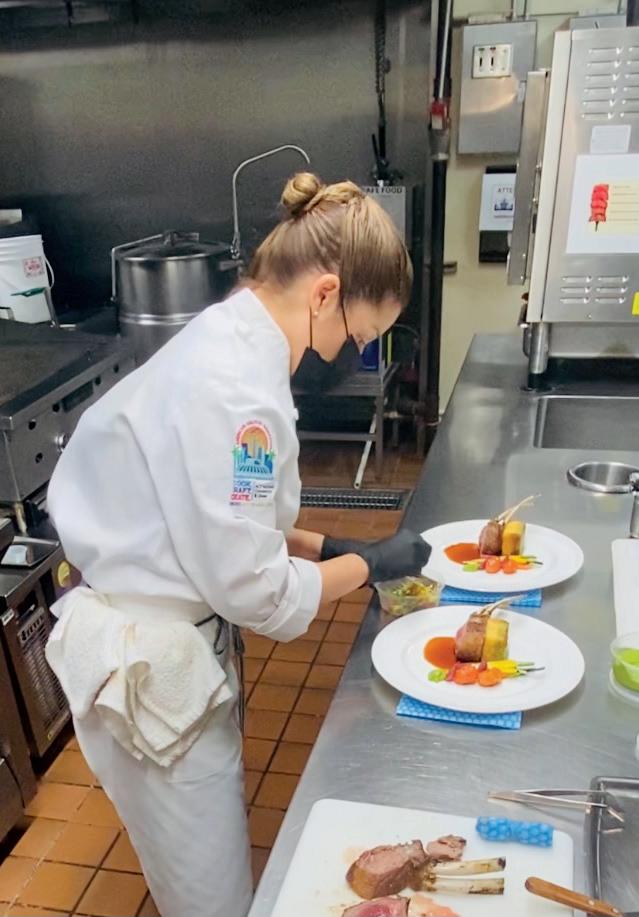
kits. Instead, we wanted to put high-quality, culinary-driven products in the hands of home cooks as they learned or continued to learn to cook for themselves, while also offering guidance along the way. Our company, Skokie Provisions, produces a line of spice blends, cocktail shrubs, hand-packed pickles, jams and preserves, and cooking sauces — all designed to encourage celebratory cooking, help home cooks create global flavors, and enhance simple yet elegant applications like charcuterie boards.
One year ago this month, when the coronavirus pandemic hit, everyone — including me — had to quickly shift gears.
After working as a chef-consultant for the last 10-plus years, however, I was in the perfect position to not only help others in the industry, but also support myself and my business. I realized the only way to help others, including my clients, was to care for myself and my company first. So how do you take care of a company teetering on a 75%-plus decline in sales, with only one type of revenue source, and the path back to normalcy projected to be a long one?
I did what some others have done: I opened a second business, as risky as that sounds (and is). However, it was a clear and conscious decision based on an understanding of the needs of the marketplace: Even if more consumers are cooking at home now, they still want the flavors and experience of the professional chef.
Our rapid pivot was to create a product line that just didn’t put a single, one-time solution on the table through meal
Without having a commercial kitchen to work in, and needing to manage extended shelf life for “grocery items,” we took a deep dive into what we could accomplish within our home under “cottage food” laws. Depending on your local health department, these laws allow you to make certain products in your home for direct sale to a consumer (at farmers markets, for example), once you have the appropriate certification and registration documents. It does not allow online sales or the option to sell at another retail location.
By late September 2020, using our cottage food registration, we started selling at two late-season markets, which would take us into early December. But we knew we were going to need to also sell products outside a five- or six-hour window under a canopy in a parking lot. To be able to sell online, we had to move into a commercial kitchen and get a retail food license. We quickly leased space that gets inspected by an approved health department. This allowed us to sell directly to consumers, including via online sales. However, most health departments will require several other components, including having one certified food safety manager on hand per shift, as well as documented Hazard Analysis Critical Control Point (HAACP) Plans.
I had to go back to school to become HACCP-certified as well as to become a Preventive Controls Qualified Individual (PCQI). I had to learn the difference between U.S. Department of Agriculture (USDA) and U.S. Food and Drug Administration (FDA) food safety requirements, and there are a lot more rules than you would think to be able to manufacture wholesale products.
If you’re looking to try to create new revenue streams by producing packaged goods, there is a lot to consider. Before you venture into this realm, let me offer some important steps to take.
Form a corporation. Our lawyer helped us form an LLC and register our logo and business name for future investors and product protection. As an LLC, we are a private company, which limits the number of members (versus shareholders, as would be the case for an S or C corporation).
Get the right insurance. Having specific liability insurance for the sale of products is crucial, and this insurance is different from restaurant liability insurance. Your insurance needs to protect you against others’ actions, not just your own, as you are supplying an ingredient, not just a ready-toeat or finished product.
Find the right packaging solution. There are plenty of packaging solutions from restaurant suppliers, but we had to focus on items that are both FDA- and USDA-approved, and that allowed us to best present the quality of the product. Because our products are considered “grocery” items, they must be proven to be food safe and be validated under a USDA Food Safety or HACCP Plan.
Understand your local health department regulations. For example, if you’re planning on selling your products at a farmers market, you must comply with local, county and/ or state food safety guidelines, and in many cases, these guidelines are not identical. As a result, you might need to apply for separate or additional licenses, certifications and/ or registrations, such as Cottage Food Law registration, Temporary/Seasonal Food License, and Food Product Sampling Certification. The applications may ask for written HACCP plans that identify the health risks of producing specific products.
Create your own reliable supply chain. For most of the latter half of 2020, we were competing for glass and plastic packaging due to production issues and greater demand. We had to buy in bulk from multiple sources and invest in
inventory before we even started producing our goods. I strongly recommend finding reliable suppliers for your needs well in advance of preparing your first product.
Invest in solid product development. We tested every recipe four to five times before finalizing them. Production steps, textural quality, consistency and — above all — taste are all key. Good manufactured food must be replicable and match the expectations you may have already established in your other businesses or want to set for a new venture.
Get your products officially tested. All of our cooked products, pickles, and preserved items had to be tested by a qualified lab for validation of FDA requirements for pH and water activity. We researched both FDA resources and university extension programs to find qualified labs.
Logo design and branding is key. Your brand is everything, so instead of just creating branding we thought looked good, we hired local graphic designers who understood how our customers make purchasing decisions. Apart from your name and logo, your labels must include some required information, including detailed ingredients; allergen declarations; production and use-by dates; lot coding; production and contact location; and nutritional information as defined by FDA/USDA labeling requirements.
If you’re considering farmers markets, don’t forget about transportation and booth design. Farmers markets are similar to setting up action stations at an off-premise event. Our biggest challenge was figuring out how much room we had in our car for all of our needs. Then, when you go to set up the booth, you need to consider lighting, weather protection, and the best merchandising design for your products. We focused on informative signage and the use of natural light to showcase the beauty of the products. We also invested in touchless solutions and technology for credit cards, and learned how to sell products on our phones using mobile apps.
All of the above will be a part of start-up costs; as with any successful venture, you need to invest early without cutting corners. The right financing, time and due diligence will ensure the most reward while reducing risks.
Over the past year, those working in the restaurant industry have persevered through layoffs, transitions of business models, dining room closures, stricter health guidelines, risks to their health, and — for some — business losses or even permanent closures caused by the novel coronavirus pandemic. After surveying 6,000 restaurant owners, the National Restaurant Association Research Group estimated as of Dec. 2, 2020, roughly 110,000 eating and drinking establishments were completely closed, either temporarily or permanently.
For many chefs and hospitality workers, stress begins the moment they open their eyes in the morning. In an industry that prides itself on taking care of others, those on the front lines often forget to take care of themselves. “Chefs have a tendency to feel lost when they aren’t pleasing someone,” says The Running Nutritionist Lisa Dorfman , a licensed mental health counselor, educator, author and chef. “Chefs need the satisfaction that comes from feeding others.”
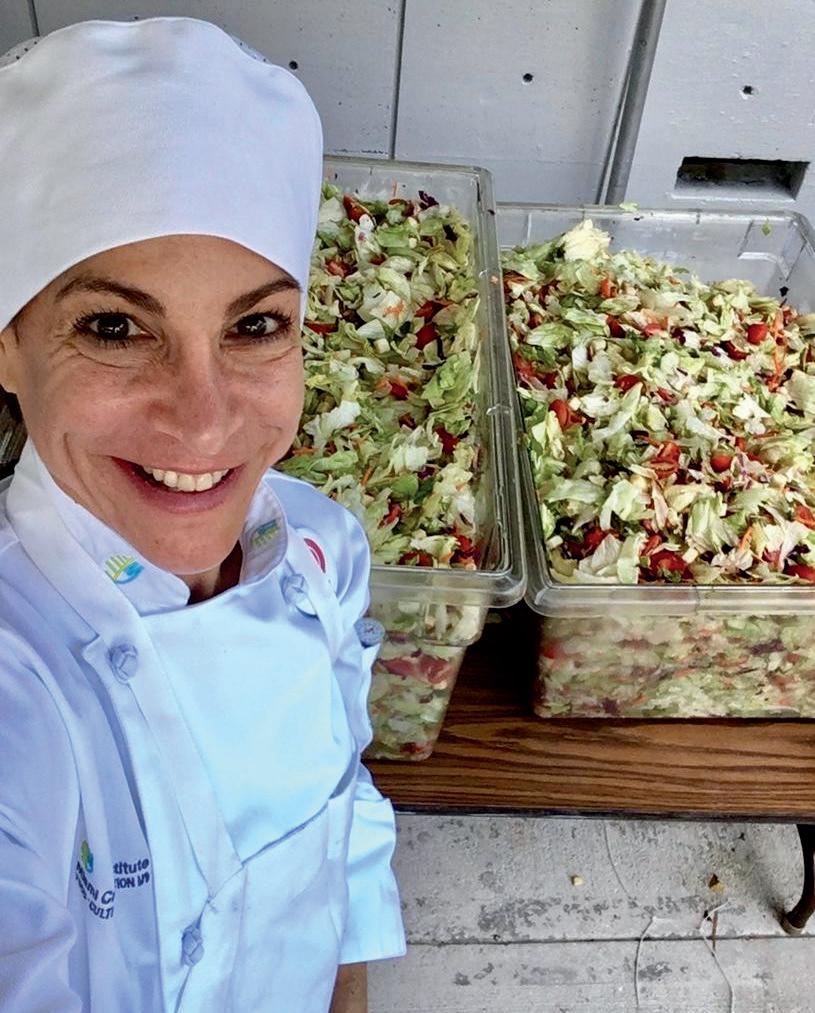
The pandemic has exacerbated anxiety, leading to the formation of hospitality-specific help groups such as “I Got Your Back” and “Restaurant After Hours.” Both projects are aimed at helping chefs, servers and others in the hospitality industry who may be struggling during the pandemic.
Beyond collaborating with peers, creating a routine for sleep, mindful breathing, nutrition, movement and meditation is more important than ever. Read on for simple ways to alleviate the compounding stresses of life in the kitchen.
According to a study conducted by the Centers for Disease Control and Prevention, those who sleep less than seven hours per night reported higher incidences of 10 chronic health conditions, including
depression, diabetes and arthritis. Short sleepers were also more prone to obesity, habitual smoking and getting less activity.
Getting more sleep may seem impossible at first for those working long or odd hours, but you can take small steps toward your goal. Start by winding down before bed, and avoid caffeine, large meals and electronics prior to bedtime. Create a comfortable sleep environment with soft bedding and a sleep sound machine. Slowly train yourself to go to bed 15 minutes earlier each night. Before you know it, you’ll be sleeping more and feeling better.
One of the easiest ways to immediately reduce the feeling of stress in your body is to notice — and correct — how you’re breathing. According to Ayurvedic Chef Nalini Mehta , our brain registers short bursts of breath as anger and frustration, and long, deep inhalations as relaxation. “Think of how you feel when you’re in a beautiful place,” Chef Mehta says. “You take a deep breath and breathe it in.” She says the human respiratory system is the only system in the body that is both involuntary and voluntary — meaning, unlike the heart, we can control respiration. Next time you notice that you are feeling frustrated or stressed, or are taking short breaths, stop and take a few deep breaths, breathing in through your nose and out through your mouth
(you should feel your stomach rising and falling, not your chest). Imagine you’re on a beach and breathing in the ocean air. Chef Mehta says you can also try alternate- nostril breathing, where you breath in one nostril and out the other.
Chefs love to feed people. However, when it comes to feeding themselves, many chefs grab unhealthy snacks throughout the day while working, eat just one “family meal” with the staff, or skip meals altogether.
Studies have shown our brain is directly affected by the food we put in our belly. Those who follow a traditional Mediterranean diet, which replaces highly processed foods with healthy fruits, vegetables, whole grains and fish, reportedly have 25% to 35% less risk of developing depression. Dorfman says it’s important to slow down and eat mindfully. “Get consistent meals and snacks, drink more water, and introduce more colors to your plate,” she says.
Chef Art Ledda , a Food Fanatic chef for US Foods, says, “Eating foods that are high in protein and have healthy fats, nutrients, vitamins and minerals is key to maintaining the level of energy that one needs throughout their day in the kitchen.”
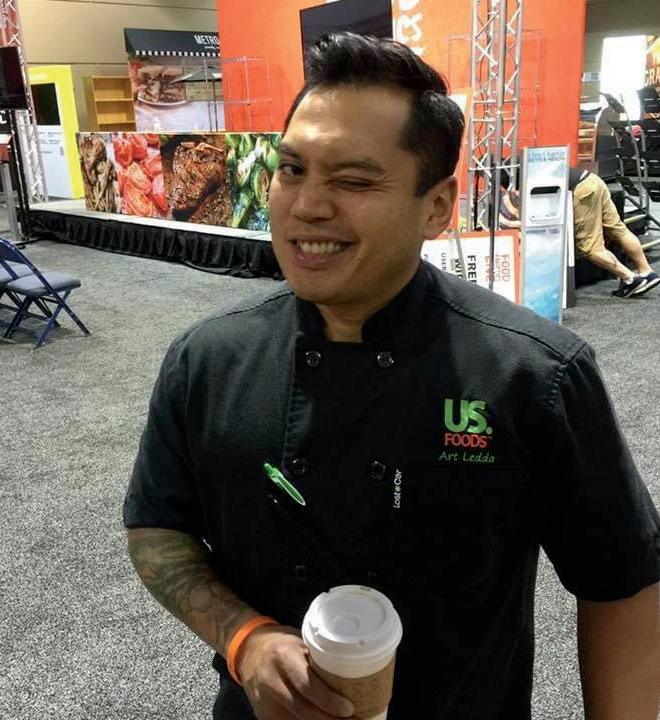
According to Chef Mehta, it takes discipline to eat right, but once you begin to feel more energized from the foods that nourish you, you can be better equipped to nourish others. “It’s about the ritual of cooking, eating and taking care of yourself,” she says.
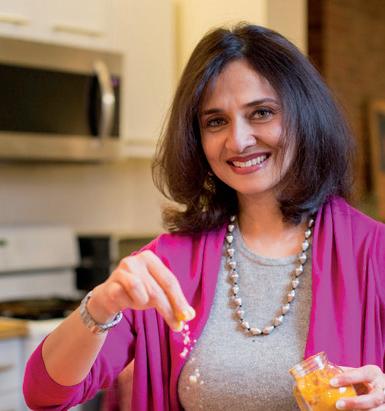
When it seems there’s never enough time in the day, exercise may be the last thing on your mind. But just 15 to 20 minutes of regular activity has been shown to improve anxiety
and stress. Whether you choose to walk around the block or sweep the front sidewalk, the benefits of moving your body and distracting your mind from work remain the same.
Chef Ledda says he works out in the morning to help set the tone for the day, create focus, get the blood flowing and establish a positive mindset for the rest of the day. “Exercise provides an outlet, [a method] to de-stress and a way to disconnect from the issues of the day, and helps inspire a healthier lifestyle,” Chef Ledda says. “Taking time out of the day is key, whether it's for an hour-long workout or a 20-minute walk.”
If you’ve never meditated before, it can feel awkward the first time you try it. However, if you’re the type that has a million things racing through your mind, meditation is a useful tool for finally calming those thoughts.
You can start slowly, with one or two minutes as you’re falling asleep or right when you wake up. Just close your eyes and pay attention to your breathing. The more you’re able to focus on your breathing instead of random thoughts, the calmer you’ll become. Once you get the hang of it, you can use meditation as a daily tool, or whenever you become overly stressed. “We must take control of our mental hygiene in the same way we take care of our dental hygiene,” says Chef Mehta, who recently began an online program to help chefs meditate called "The Happy Chef Project."
The bottom line: You can control the levels of your stress and anxiety to some degree, using the tools you already have at your disposal. And, at the end of the day, Chef Ledda says, “It’s OK to not be OK. Chefs should not be afraid of ‘the mental health monster,’ but rather recognize it, welcome it and address it, with a therapist, if needed.”
Avoid placing unnecessary stigmas on mental health, and let someone know if you’re in distress. “We have to have more dialogue, support and understanding that mental health is a real concern for our industry and our world as a whole,” he adds. “Seek the help. We are in this together.”
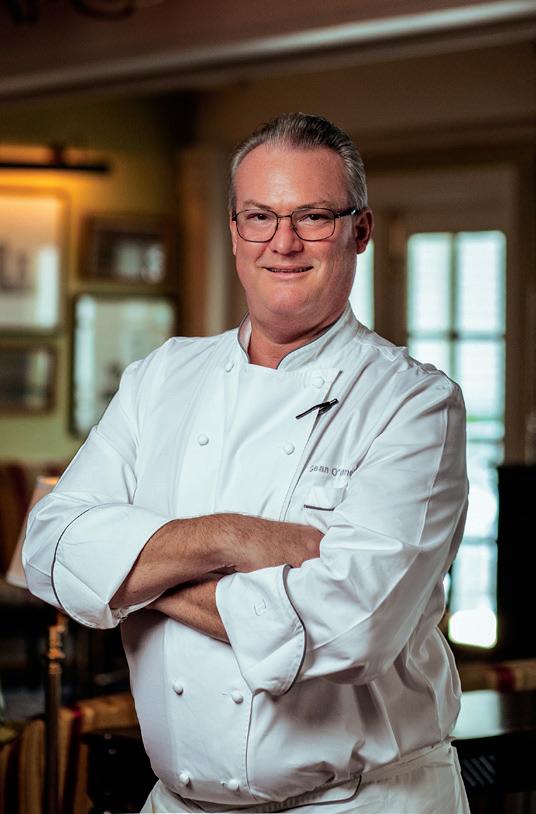
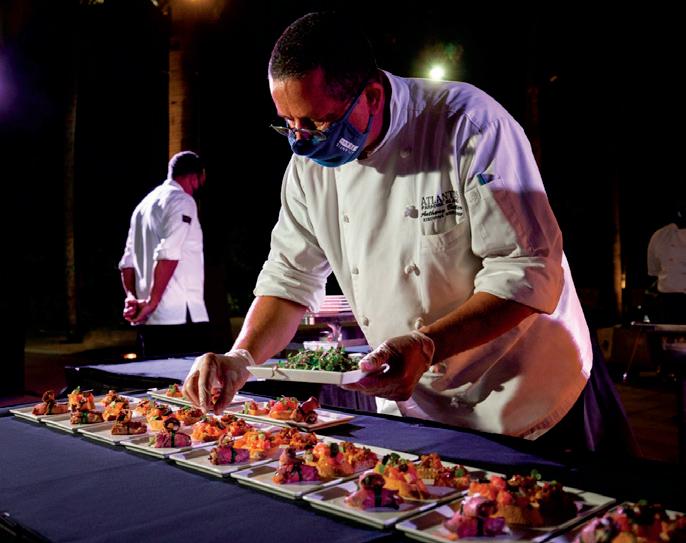 Michael Costa
Since last March, the pandemic’s impact on foodservice has been devastating. While freestanding restaurants were arguably hit the hardest by shutdowns and dining restrictions, lodging is another segment dealing with unprecedented loss of business — especially due to canceled meetings and events. Market research firm Datassential estimated that by mid-2020, the hotel industry experienced a 44% decrease in business, taking in approximately $23.4 billion less than during the same time period in 2019.
The lodging industry relies on “heads in beds” to keep revenues flowing, and without guests booking rooms during the pandemic, the food and beverage operations suffer, leading to mass layoffs and chefs being forced to redefine what it means to be a leader in the kitchen.
We spoke with three hotel chefs impacted by coronavirus to find out what areas of their operations have been altered by the pandemic, and what culinary goals they’ve set for 2021 amid continuing uncertainty about when business will fully return.
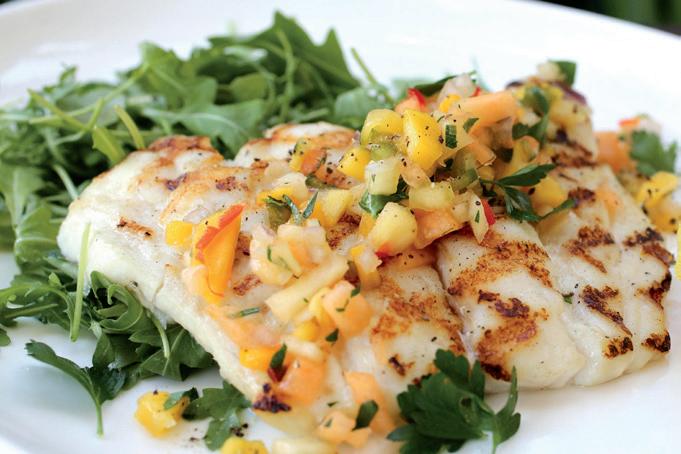
Furloughs and layoffs for hotel employees were inevitable when business dropped in 2020. Some lodging operations stayed open with reduced capacity and numerous pandemic precautions in their restaurants and room service options, while others were closed completely for months.
The chefs we talked to predict staffing levels likely won’t return to pre-pandemic numbers in 2021, meaning many employees will need to know how to work in the kitchen, behind the bar and as waitstaff, depending on business demand during a given shift.
“Before COVID-19, I had a staff of 15 people; today, my current staff is me, my sous chef, two bartenders and one server, and they alternate positions so they can do each other’s jobs,” says Chef James Pate, executive chef of SpringHill Suites by Marriott Las Vegas Convention Center, and the 2020 Las Vegas ACF Chef of the Year. In normal times, Pate adds, 90% of his hotel’s business comes from the convention center across the street, which closed for large events for most of 2020 and is gradually reopening in 2021.
Executive Chef Jeff Simms at The Breakers Palm Beach in Palm Beach Gardens, Florida, says his resort’s business “shifts from week to week, day to day, and hour by hour, so we have to be able to mobilize our resources. If it rains on the pool deck and guests move into an interior dining venue, we must send cooks where they’re needed, and they must be trained in advance.”
At Atlantis Paradise Island in the Bahamas, Executive Chef Sean O’Connell oversees 44 F&B venues spread across five towers totaling more than 3,800 rooms. The entire resort was closed for nine months in 2020, with a limited, phased reopening beginning in December. In Q1 of 2021, only two towers and six restaurants are operating at Atlantis.
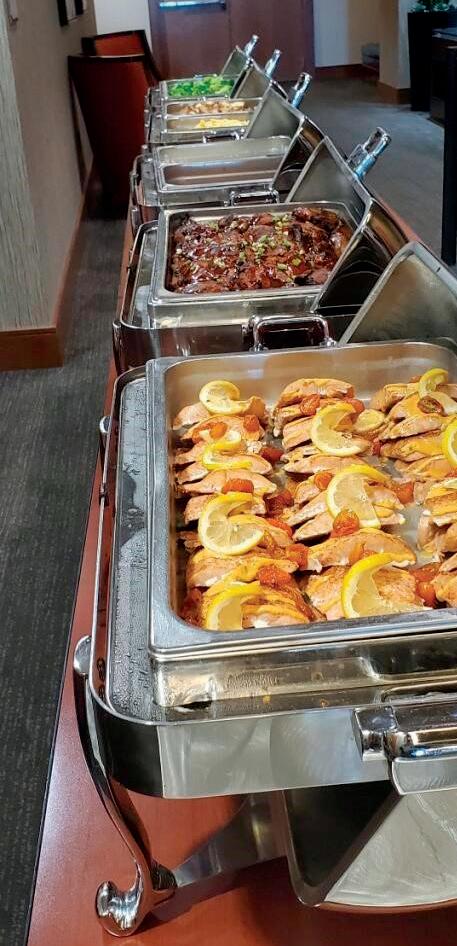
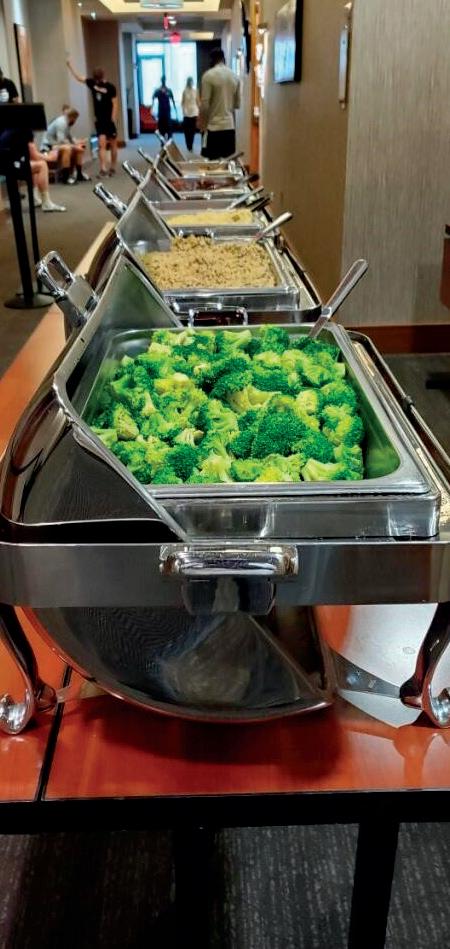
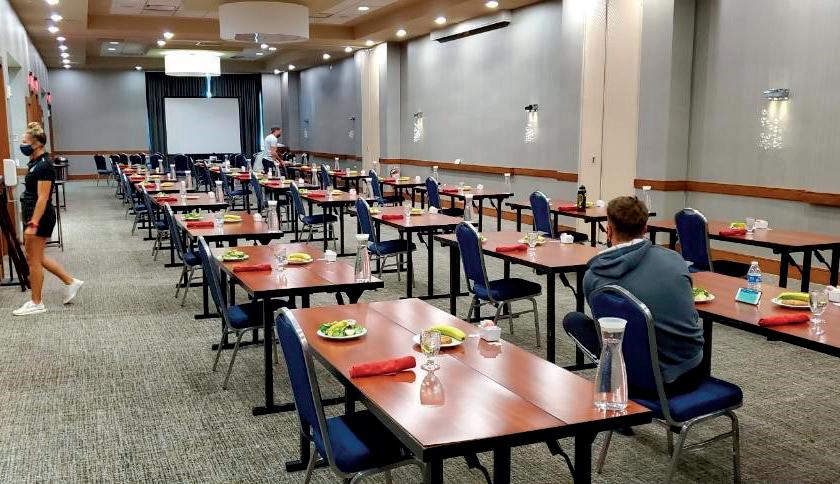
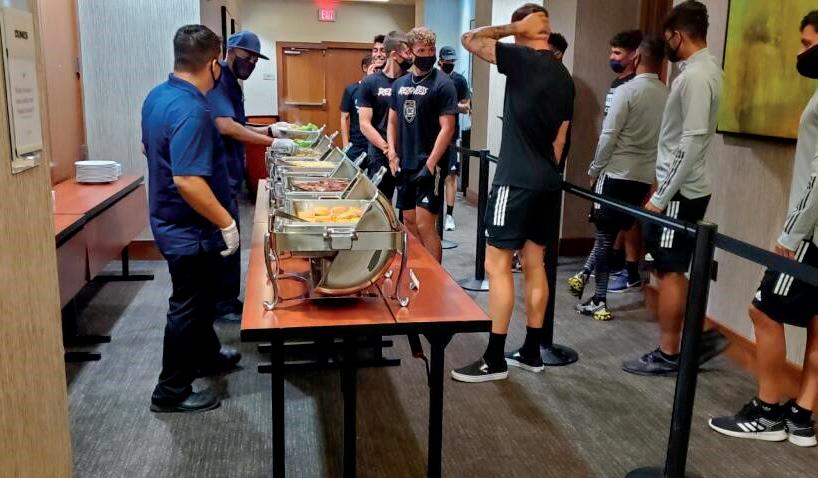
“We’re looking at how we staff our kitchens differently this year,” says Chef O’Connell. “We’re re-mapping our kitchens and figuring out how many stations we actually need, which dictates how many cooks we have. We had a lot of luxury positions before, like a cake artist and an ice carver. Today, we’re asking ourselves if we really need a dedicated ice carver, or if we can have a garde manger chef handle it. We’re all wearing multiple hats now, and I don’t think that’ll change anytime soon.”
“ TODAY, WE’RE ASKING OURSELVES IF WE REALLY NEED A DEDICATED ICE CARVER, OR IF WE CAN HAVE A GARDE MANGER CHEF HANDLE IT. WE’RE ALL WEARING MULTIPLE HATS NOW, AND I DON’T THINK THAT’LL CHANGE ANYTIME SOON.”
-CHEF SEAN O'CONNELLLeft: After the hotel reopened in June, guests at SpringHill Suites by Marriott Las Vegas Convention Center were served buffet style, with chef-attendants at every station to plate food in a safe manner. Right: Chef James Pate.
All three chefs also oversee catering operations for in-house groups. Last year, Chef Pate’s property was the host hotel for the visiting opponents of the Las Vegas Lights FC professional soccer team. The hotel was closed from March to June, and after it reopened, self-serve buffets were no longer an option. The teams were fed buffet style, but with chef-attendants at every station plating food for the players in a socially distanced setting.
Across much of the hotel industry, self-serve buffets and receptions for groups have disappeared due to the pandemic, replaced by the chef-attendant model used at Chef Pate’s property, or with grab-and-go appetizers and dishes in singleserve containers. One-course plated events are also an option, with pandemic precautions in place for service.
It's safe to say some or all of the annual culinary capital expenditure (CapEx) budgets at many hotels went unused in 2020 due to drastically lower business levels, or because the start of the 2020 fiscal year coincided with shutdowns.
“We created a budget for 2021 that is actually quarterly now instead of for the whole year, as we’ve traditionally done, and we’re monitoring everything on a daily basis now,” Chef Pate says.
At Atlantis, Chef O’Connell says CapEx budgeting is done in September, approved by December and released to F&B in February, “so our 2020 CapEx was released to us just as the pandemic hit and we shut down. We didn’t actually spend that money, so it rolled over into 2021.”
The combination of low business levels and fewer cooks in the kitchen has led many hotel chefs to reframe every item on their menus through the lenses of profitability, inventory usage and labor utilization. “We reduced the size of our menus by 30%,” Chef O’Connell explains. “We used to have items that enhanced menu variety, but sales were low, or people [only] periodically asked for them. Those dishes are gone now. If it’s not selling, it’s gone.”
Chef Pate adds he’s been through four core menu changes since reopening, all based entirely on guest data and feedback. “Now it’s basically appetizers, sandwiches and four entrées, and many of our guests are opting for contactless in-room dining.”
All three chefs say their goals for 2021 include a dedicated focus on their employees’ health, and an improved guest experience, even during a pandemic. An accurate revenue forecast is a moonshot.
“What’s a realistic revenue target now? We’re probably at 40% of our projected revenue in 2020, and [that’s continuing] into 2021 due to coronavirus, so one of our goals is to incrementally improve and focus on the guest experience, making it viable for them to come here and enjoy themselves,” Chef O’Connell says.
Chef Simms advises other hotel chefs to “make the safety and well-being of your team your top priority in 2021. Your success depends on your people, so be sure to listen to their needs, ideas and suggestions, and more importantly, challenge them to do more.”
Michael Costa is the former editorial director of Hotel F&B magazine and a regular contributor to NCR.












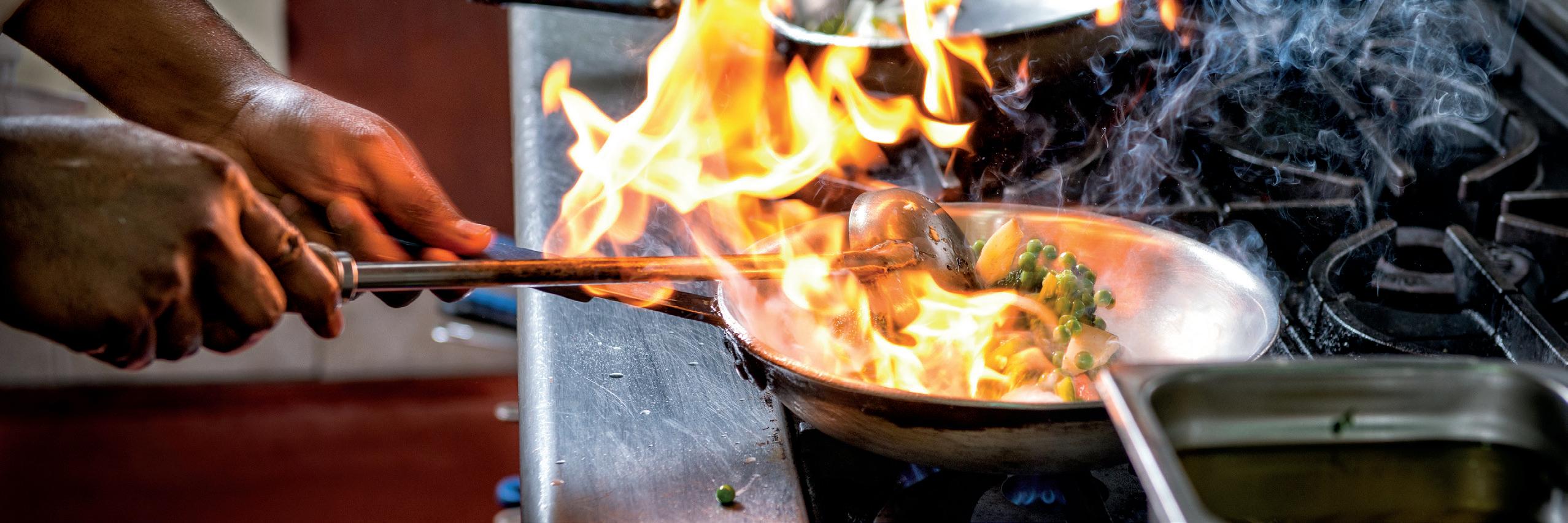 NORTHEAST
PROMOTION INITIATIVE
NORTHEAST
PROMOTION INITIATIVE
Which of the following is NOT an economical cut of meat?
a. Pork jowl
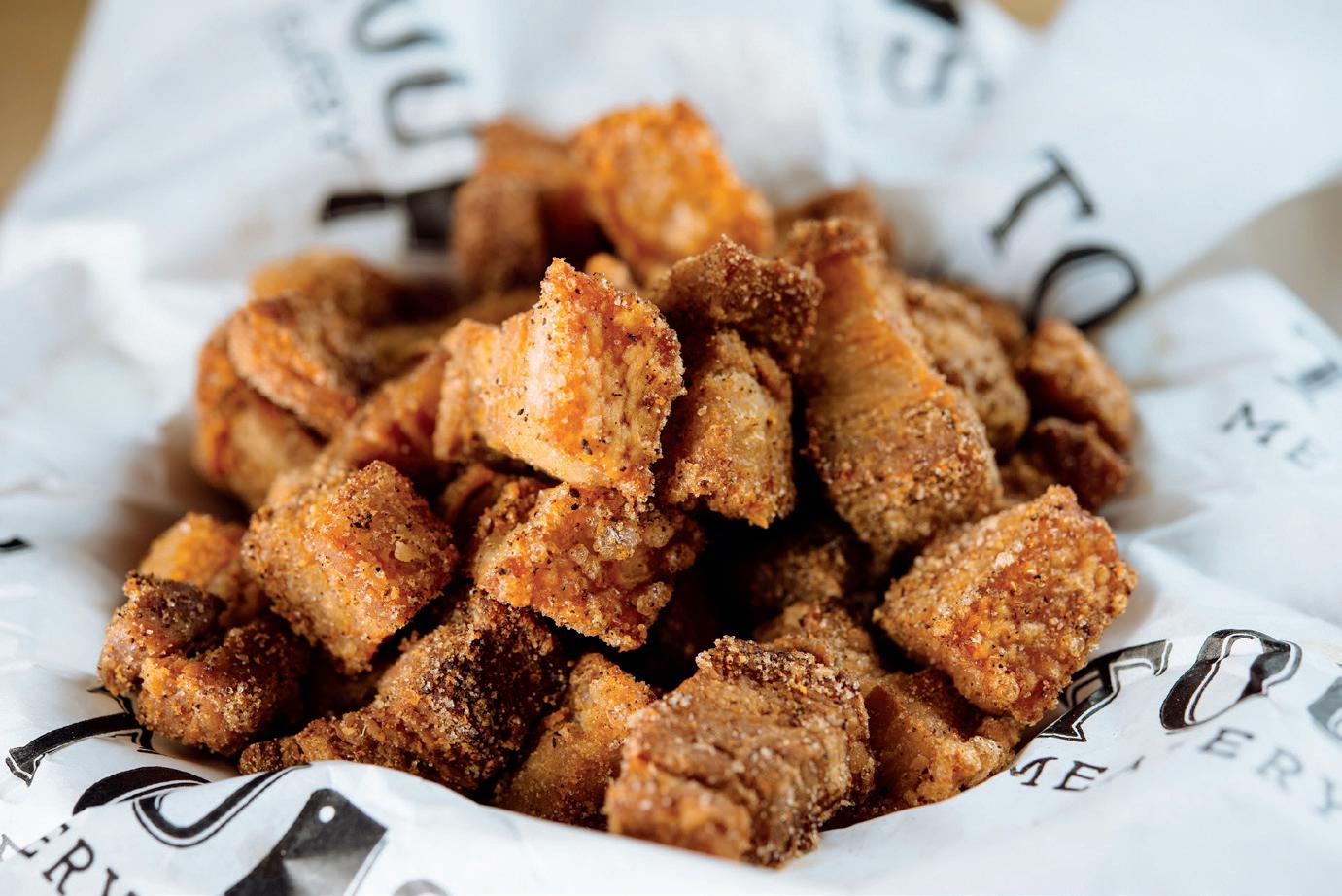
b. Beef chuck
c. Beef tenderloin
d. Lamb shoulder
Beef sirloin cap is also referred to as .
a. Coulotte
b. Basses-côtes
c. Rumsteak
d. Flank steak
Brazilian steakhouses typically use which method to prepare beef sirloin cap?
a. Pan-searing
b. Grilling
c. Stewing
d. Roasting
Traditional American style of biscuits call for .
e. Cornmeal/corn flour
f. Soft flour
g. Whole-wheat flour
h. Oatmeal
Where was the ACF’s first National Convention held?
a. Florida
b. New York
c. Minnesota
d. Pennsylvania
What can be a benefit of implementing new software automation technology in the kitchen?
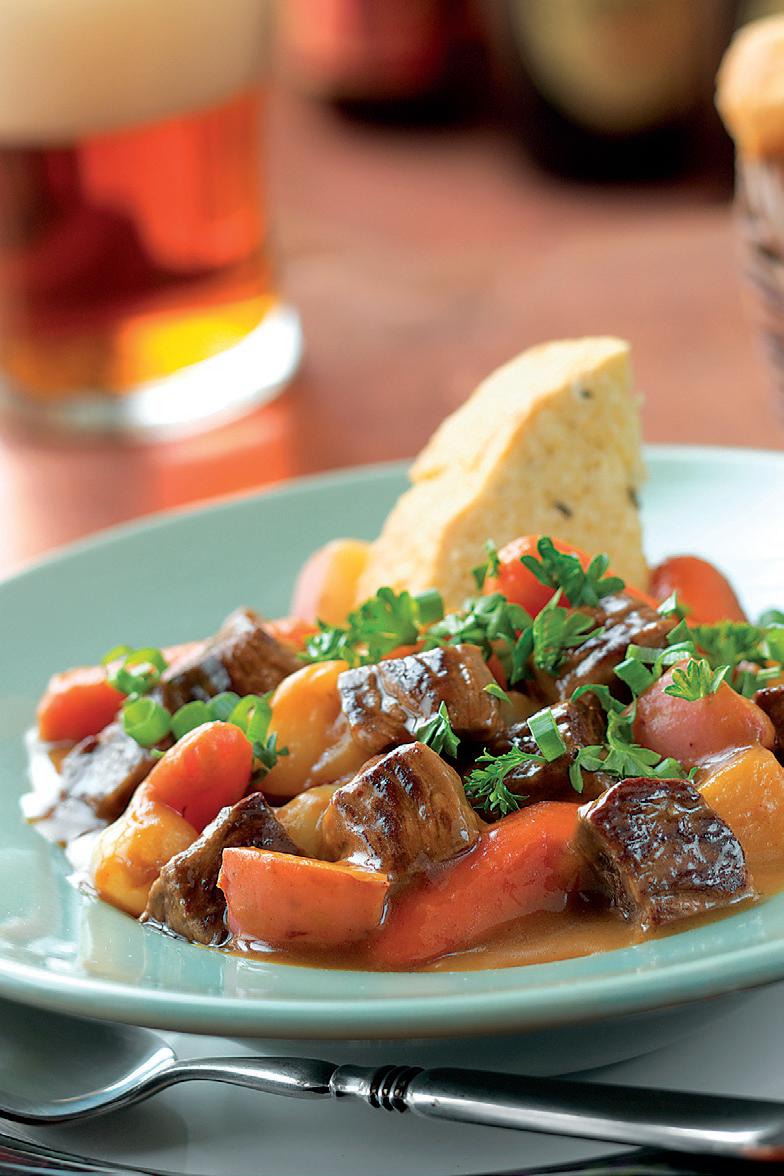
a. Improved accuracy
b. Improved consistency
c. Improved efficiency
d. All of the above
A combi oven can .
a. Adjust the cook time and temperature when you open and close the door
b. Lead to a reduction in kitchen labor
c. Allow any number and variations of items to cook at the same time
d. All of the above
According to the Centers for Disease Control and Prevention, those who sleep less than seven hours per night reported higher incidences of depression, diabetes and arthritis.
a. True
b. False
Those who follow a traditional Mediterranean diet reportedly have less risk of developing depression.
a. 15% - 20%
b. 20% - 25%
c. 25% - 35%
d. 35% - 40%
When did the ACF Pittsburgh Chapter join the ACF?
a. 1929
b. 1944
c. 1947
d. 1964