
Bruny Island, Tasmania, Australia
Lara Maeseele
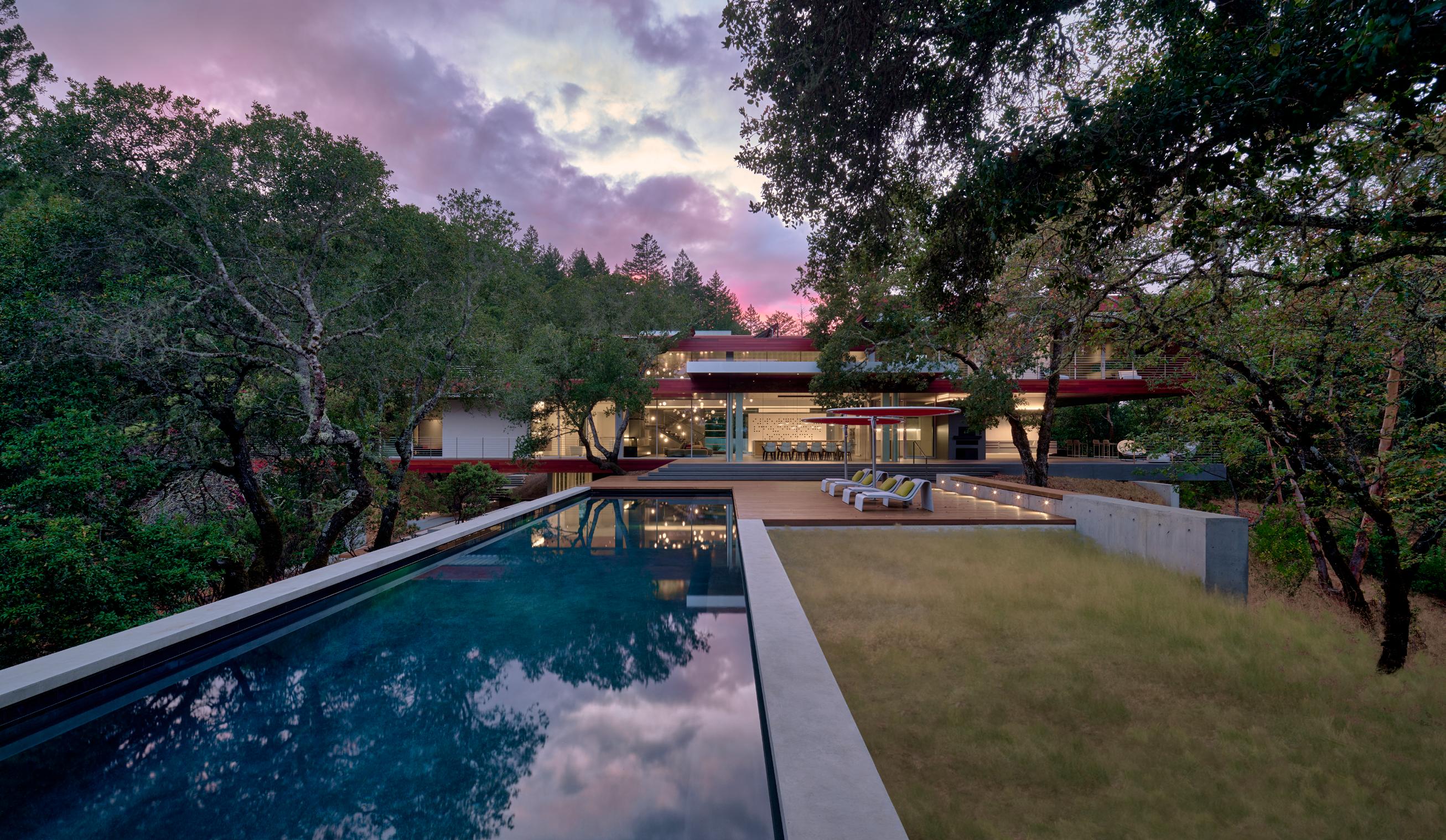
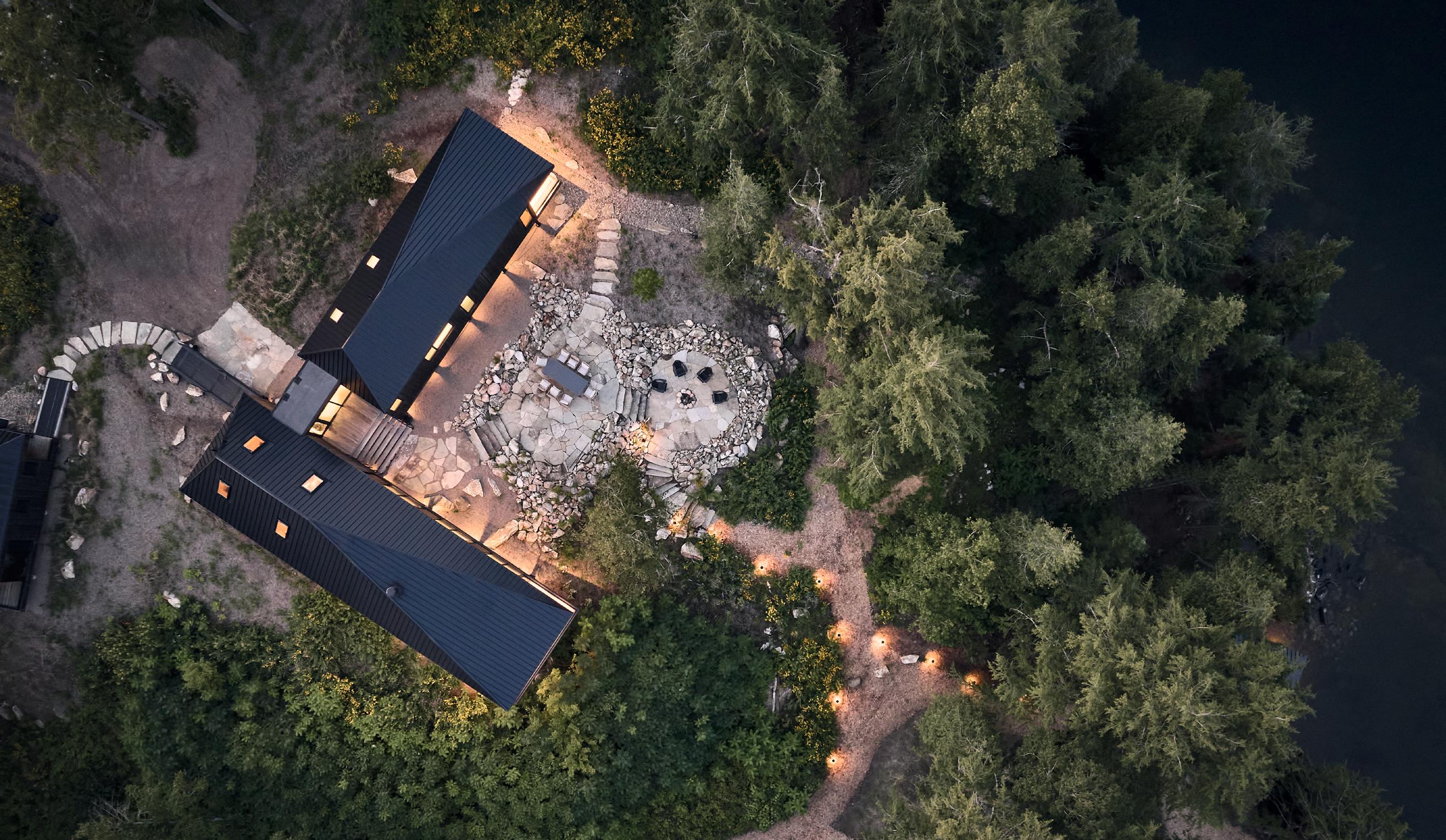
Located in the north of Bruny Island, just off the coast of Tasmania, Killora Bay is the vacation home of architect Lara Maeseele and her family. They fell in love with the densely forested site. “It felt so wild and untouched,” says Lara, of the Tasmanian white gums and stands of grass trees.
Her vision for the family—to spend time outdoors as much as possible and to develop a deep connection with nature—was heavily influenced by their experience camping in a makeshift shed on the site. Lara wanted the house to immerse them within the setting and to frame and highlight the surrounding beauty.
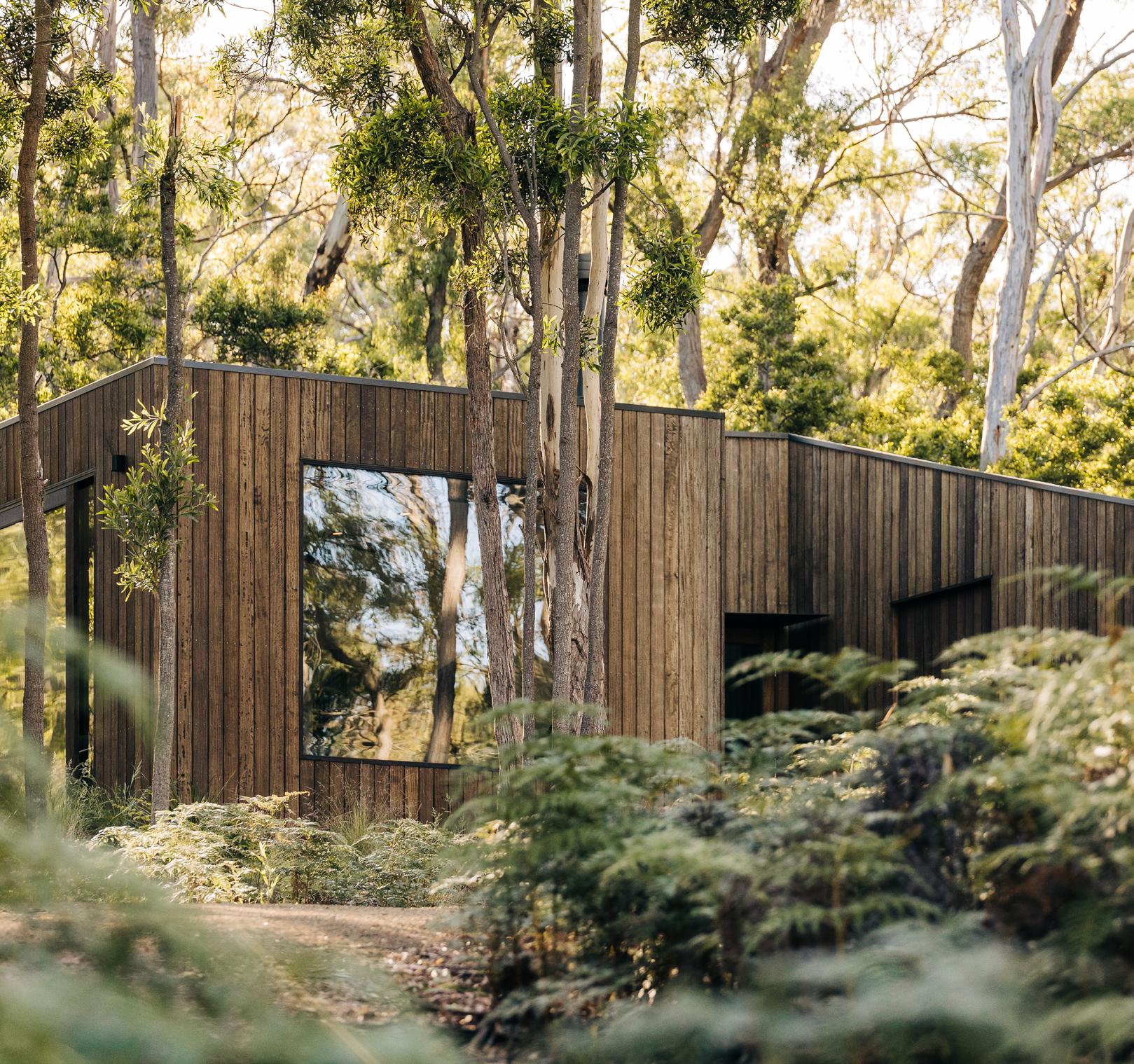
The location is a protected sanctuary for the forty-spotted pardalote, one of Australia’s rarest birds. This limited the building envelope to an existing clearing on the southern corner of the site. The dark-stained Silvertop Ash cladding—locally sourced and bushfire resistant— silhouettes the house in the forest, while the glazing reflects the dense vegetation and undergrowth. The floor levels follow the natural slope of the site and small concrete footings lift the lightweight structure just off the ground, creating a subtle gap between the terrain and the cladding. “This allowed us to avoid major disturbance to the landscape and enhances the sense of the house being elevated within the site, rather than imposed upon it,” says Lara. “It quietly recedes, allowing the surroundings to take center stage.”
The house is designed to accommodate multiple families at once, and to support various modes of inhabiting spaces—from social get-togethers to peaceful time alone. The entrance is via a generous foyer that doubles as a covered play space, and for storing coats, shoes, and surfboards. The dark-stained exterior cladding continues into this entry area, which partitions the home into two zones: the living space, kitchen, main bedroom, and bathroom to one side and the kids’ bedroom, playroom, and bathroom to the other.
Orcas Island, Washington, United States
Heliotrope Architects
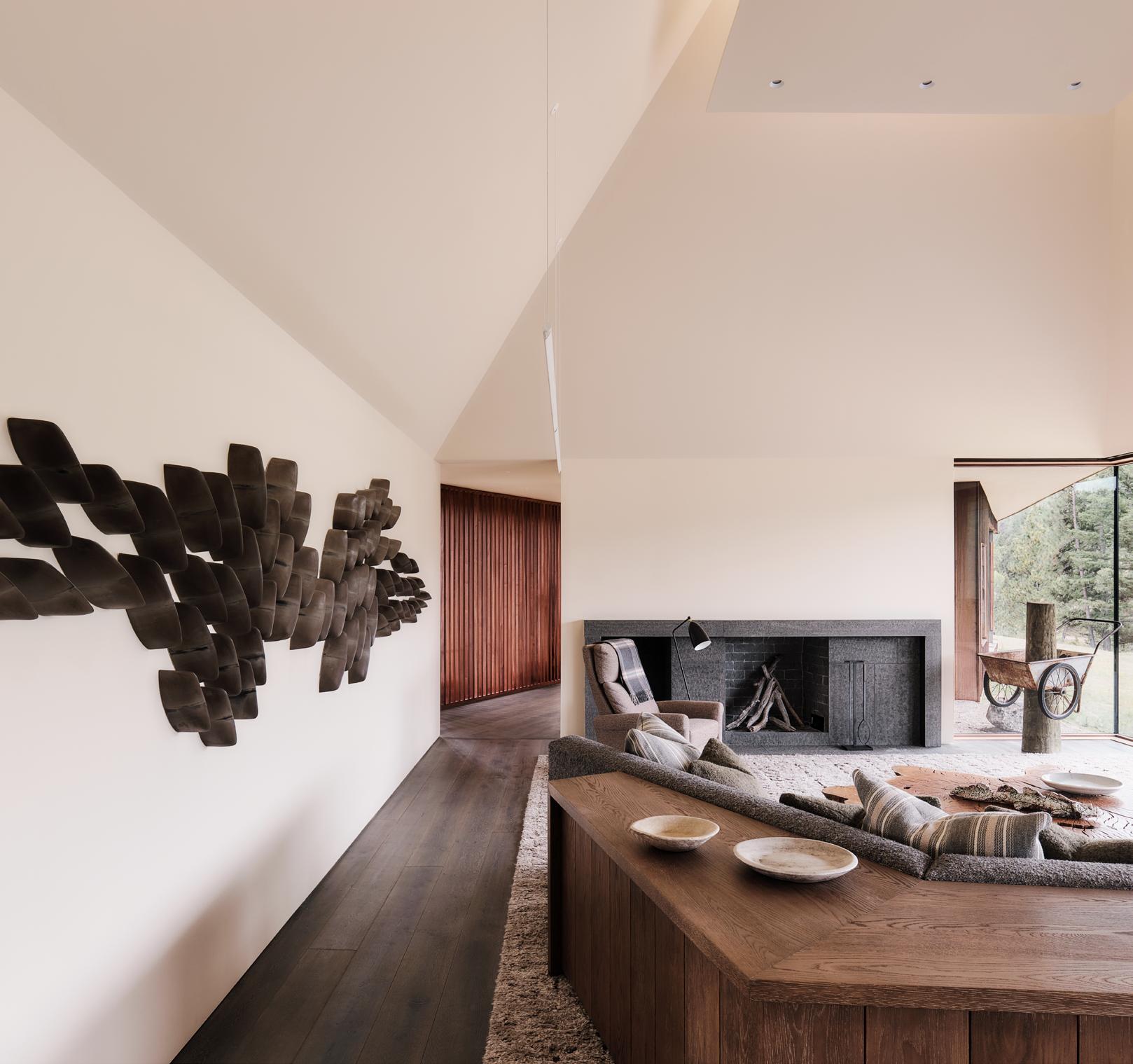
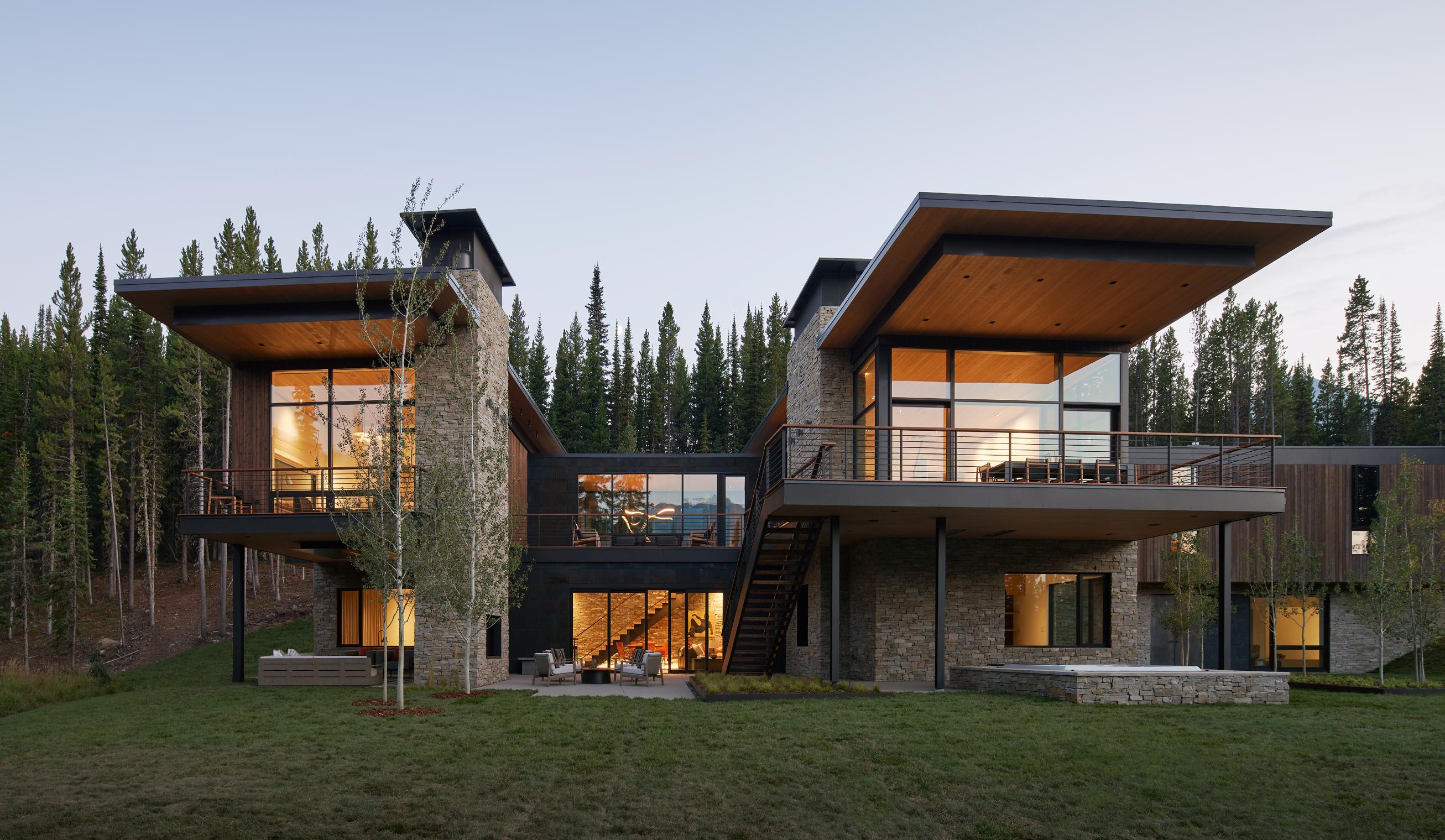
Summer days are long on the San Juan Islands, a forested, rocky archipelago in the Salish Sea, which separates Washington state from Vancouver Island. Wanting to build a summer home on the San Juans, the owners of the Buck Mountain residence initially approached Heliotrope Architects to assist them with selecting a site, and then engaged them to design the house. “We encouraged our clients to focus on the natural features that make the San Juan Islands so unique, such as the grassy basalt-rock outcroppings set within a forest of Douglas fir and Pacific madrone,” says architect Joe Herrin, principal at Heliotrope. “They eventually found that perfect spot, and we nestled the house carefully into it.”
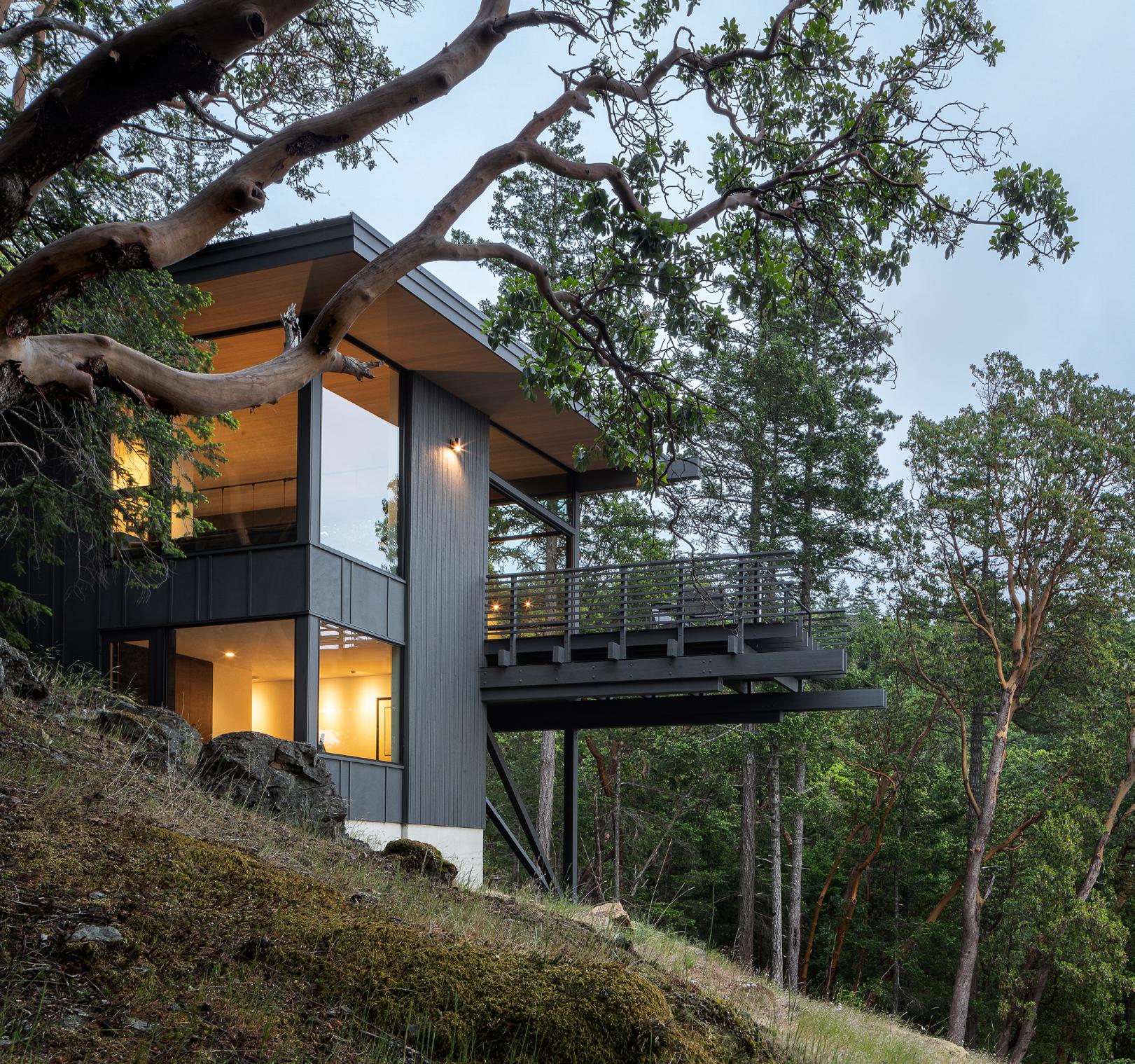
The perfect spot is on Buck Mountain on Orcas Island, the largest in the San Juans. While the wooded hillside has a breathtaking view, it also presented challenges in the form of a steep grade and a narrow clearing created by a rocky outcropping. Rather than remove trees to open up the view, Heliotrope embraced the existing conditions to enrich the atmosphere of each space through its relationship to the landscape. “The compression created by the natural opening heightens the water view in the main living spaces, while giving bedrooms and bathrooms a sense of being deep in the forest,” Joe explains.
The two-story home is anchored to a basalt outcrop, while the upper level sits amid the tree canopy, evoking the feeling of being in a treehouse. A gravel path leads down the site to a timber entry deck from which a central, open space extends through the house to a terrace that cantilevers over the sedum- and moss-covered hillside. “This linear space accentuates the view and elevates your awareness of the narrow clearing, as if the house is being squeezed by madrone and fir on either side,” says Joe.
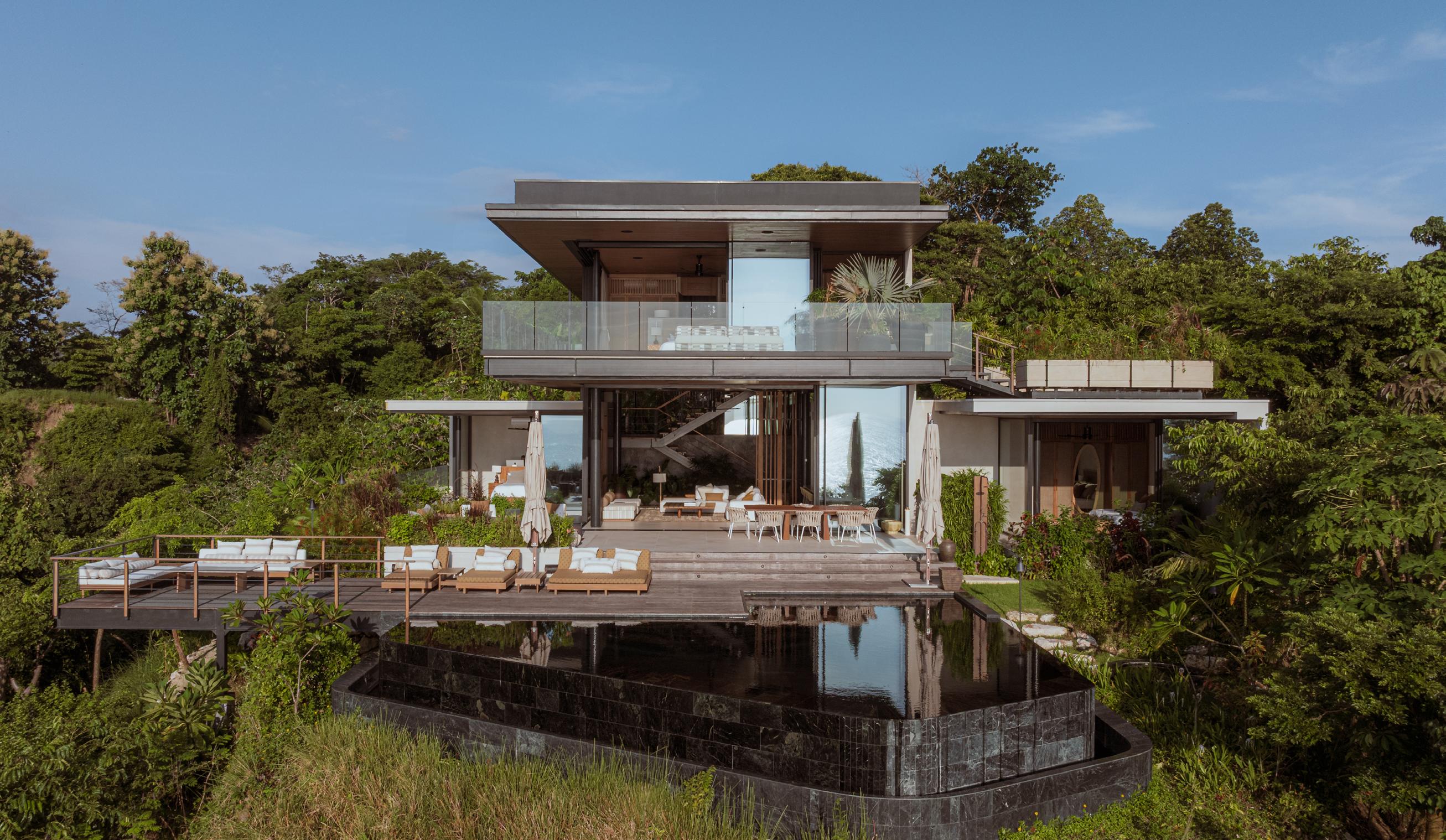
“The design needed to be intimate and versatile, centered around a lifestyle of connection, privacy, and natural beauty.”
Boulder, Utah, United States
Locus Studio
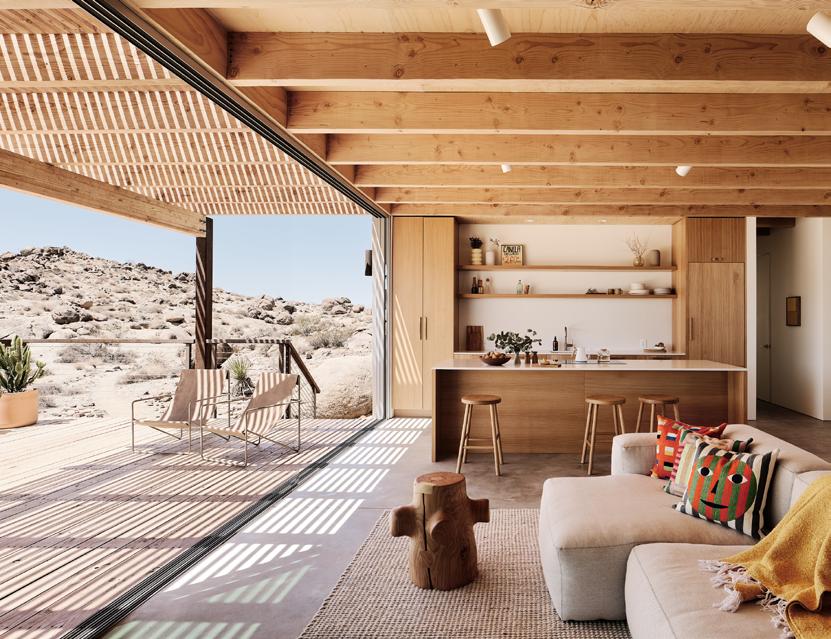
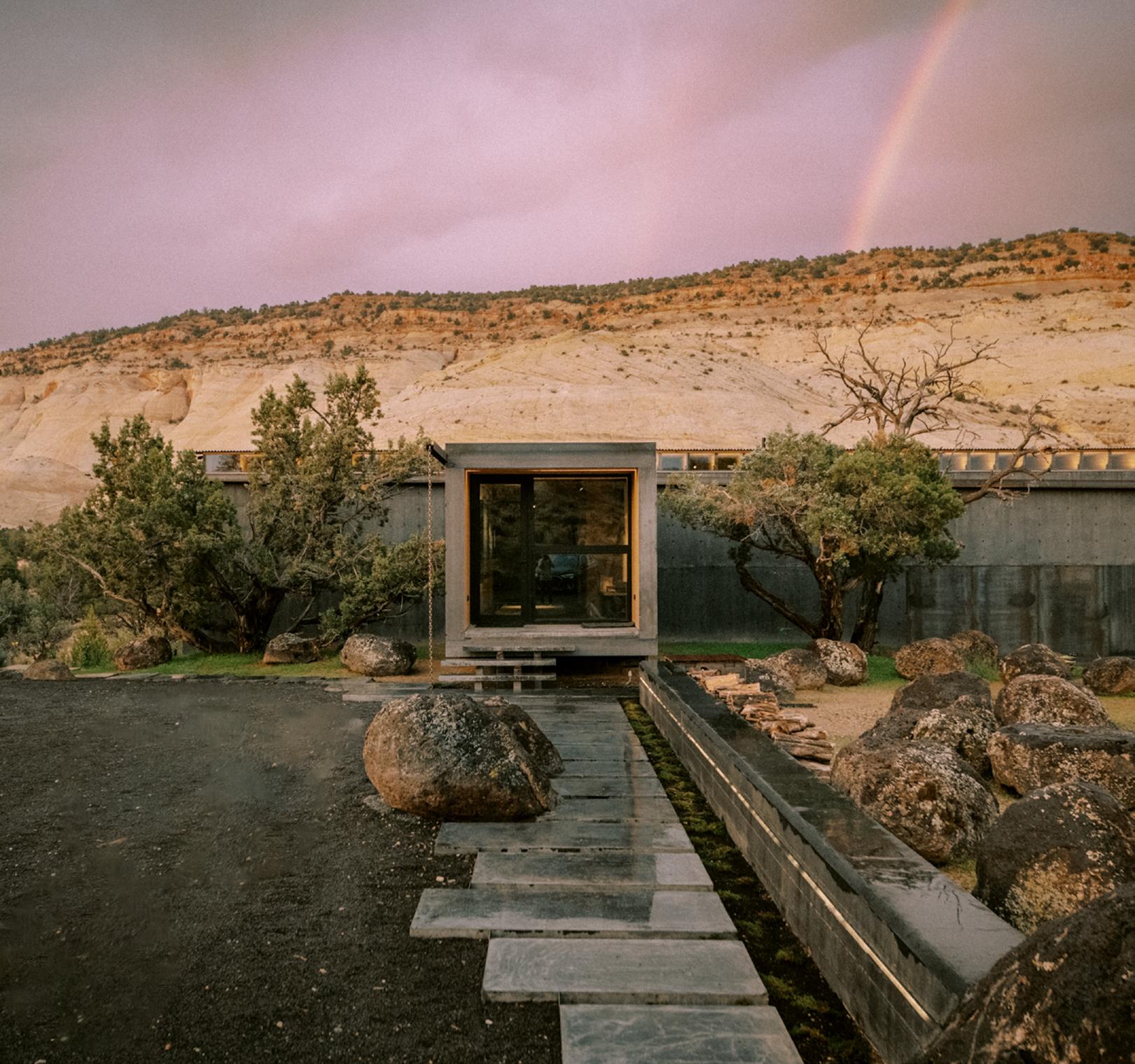
The American West is famed for its vast, monumental landscapes. They have long been the subject of film, photography, and art, as visitors and artists capture and interpret their epic, ephemeral beauty through their own artistic lens. For Anson Fogel, architecture is the lens he used to capture the transience of the desert landscape at The Periphery.
Anson and his partner, conceptual artist Alexandra Fuller, created The Periphery as a personal retreat and a home to share. Anson, who leads Locus Studio, designed and built the house alongside Alexandra and a team of craftspeople. In addition to being an architectural designer, his background in cinematography and lighting helped inform the atmosphere.
The Periphery sits quietly and unobtrusively in Utah’s remote high desert, adjacent to Grand Staircase-Escalante National Monument. Nestled among weathered juniper and pinyon, the building hovers above slickrock and wetlands, elevated on concrete plinths to preserve the desert ecology. At face view, the house presents a robust, protective concrete wall from which extends a long entry tunnel. Like a telephoto lens, it draws you in to experience a more intimate composition of the desert landscape.
The home is organized around axial views and mo100ments that evoke stillness in contrast to the vast surrounds. “As a cinematographer, I shape emotion through light, space, and movement—not through spectacle, but through subtle control. That way of seeing carried directly into the design of this house. Every window, threshold, and axis was composed with intention to capture the grand views and the quieter moments: the curve of a juniper branch, the edge of a sandstone bowl, the ridgeline that turns pink just before the sun drops,” Anson describes. “This house was designed for paying attention.”
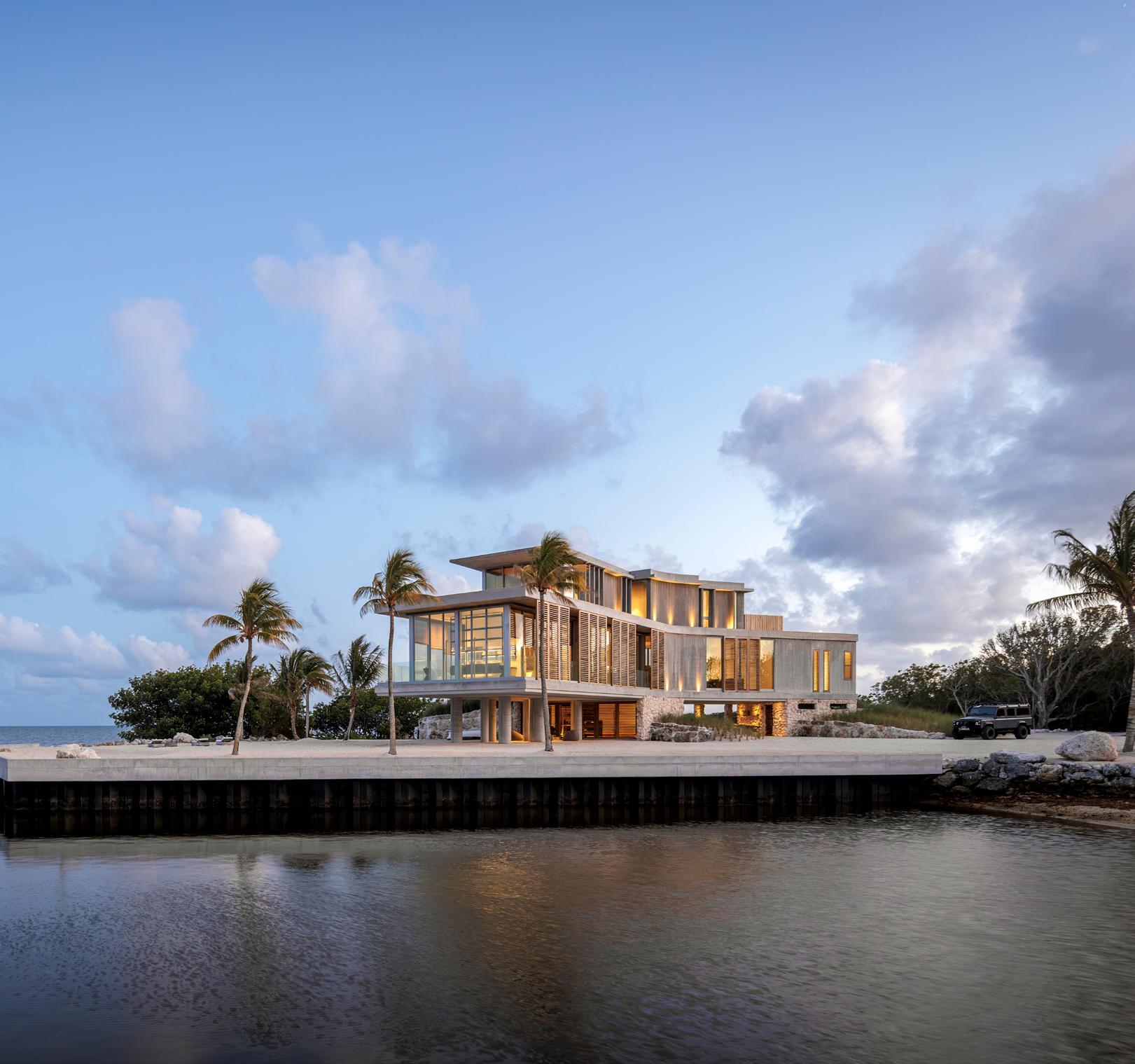
The Upper Florida Keys is a unique blend of low-lying islands, marine ecosystems, and coastal tropical scenery. While this landscape is pristine, the weather can be unpredictably wild, and the region is increasingly vulnerable to the impacts of climate change, including sea level rise, storm surges, tidal flooding, and more-intense hurricanes.
Van der Vlugt Residence sits on a desolate and relatively untouched stretch of coastline in the Upper Florida Keys. “It’s a unique and natural site that offers a relaxed counterpoint to the visual intensity of nearby Miami,” says architect Max Strang, principal of STRANG. The owners engaged him to design a light-filled, timeless, and modern home that would be resilient to the changing environmental conditions.
The secluded 2-acre site is surrounded on three sides by beach and tropical forest, with the Atlantic Ocean shimmering along the fourth side. Responding to the site and views, STRANG designed the long, narrow house with a gentle curvature that mimics the waterfront boundary. Cylindrical concrete columns elevate the house 10 feet (3 meters) above the sand, creating pathways for storm surges and preventing damage from future sea level rise and powerful hurricanes. A base of coral rock anchors the center and one end of the house. An open space in between offers a shaded outdoor living area.
Next to the living area, the entry staircase, finished seamlessly in microcement, spirals up through the core of the house. On the first level, the staircase divides the living room from the kitchen and dining area. The primary suite is at the northern end, where it’s encased with sliding glass doors and boasts panoramic views of the Atlantic Ocean. There are two children’s bedrooms on the top level, and an office with a covered terrace. “The elevation of the house creates the sense of being a ‘floating volume,’ providing panoramic, unobstructed views of the low-lying landscape and the ocean,” says Max.