Contents
1.
A. Lange & Söhne
2.
3.
4.
5.
Lange 1
Royal Oak
Audemars Piguet
Fifty Fathoms
Blancpain
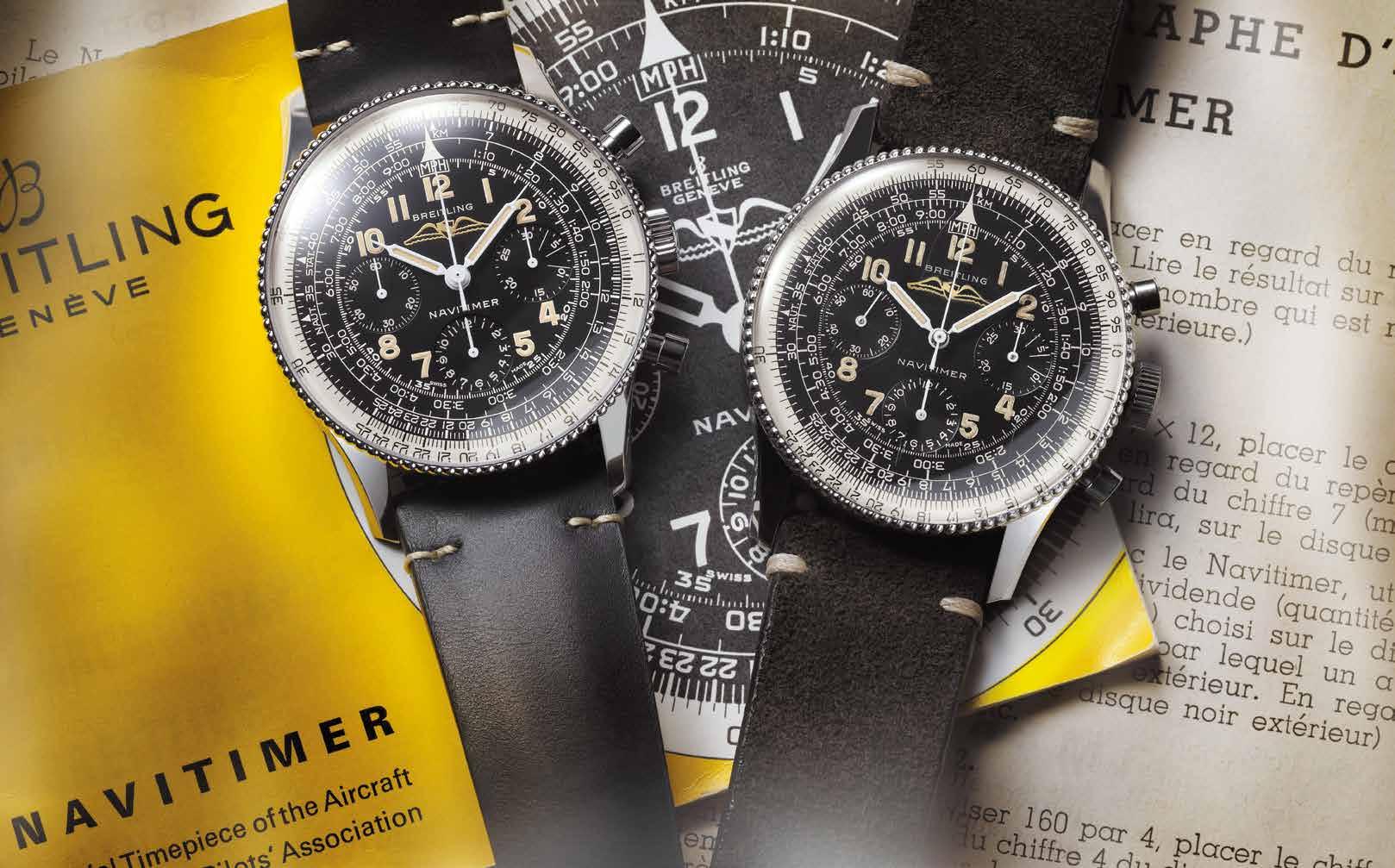
Navitimer Breitling
Octo Finissimo Bulgari
6. Pasha Cartier
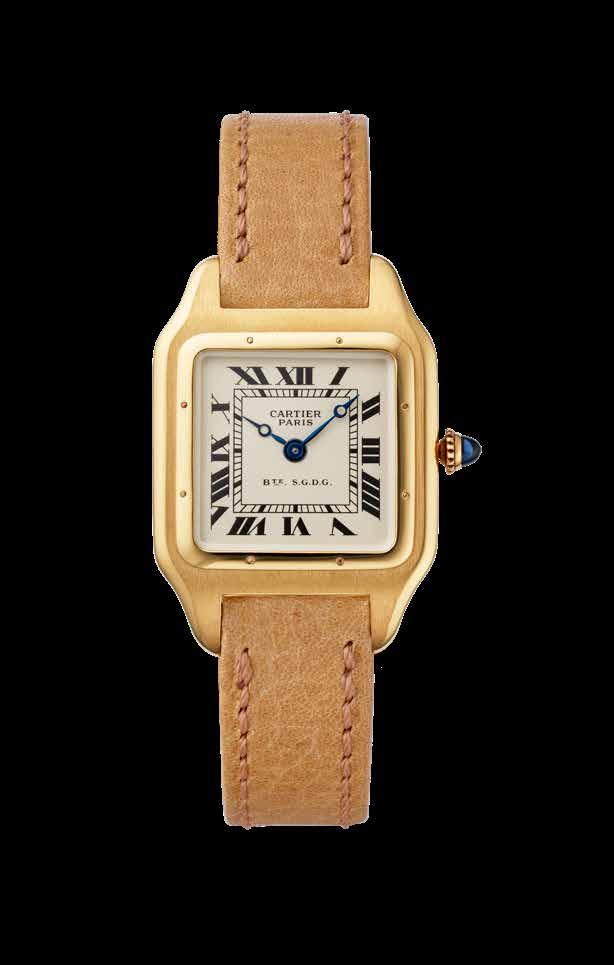
7. Santos Cartier
8. Tank Cartier
9. Pilot’s Watch
IWC
10. Portugieser
IWC
Introduction
There have been so many wristwatches produced from the early 20th century to the present day. Some more than others made a mark in the collective imagination and enjoyed success that has traversed the eras, with original, iconic designs and frequently revolutionary technical features and movements. The book you are reading, Watches: The Essentials, presents a selection of them. These are watches animated by mechanical or quartz movements that, in various ways and at different times, have become industry symbols, recognizable and sought after, but with often unknown origins and histories. As well as telling a story of ingenuity and innovation, each model also reflects the culture, the art and the fashions of its time. Some have been worn by famous figures, others have appeared in what have become cult films, and still others are the fruit of collaborations with wellknown artists or designers.
This, then, is how the great classics of fine watchmaking came into being and evolved, including models such as the Santos, the Tank, the Calatrava, the Day-Date, the Datejust, the Pasha, the Reverso and the Portugieser. Alongside these are the sports models, timepieces designed for specific activities that have proved perfect for everyday wear. This is the case with the Submariner, Fifty Fathoms, Seamaster and Luminor diving watches, and the aviators’ models, such as the GMT-Master (I and II), the Pilot’s Watch, the Navitimer and the Lindbergh Hour Angle. There are also the motoring watches, such as the Daytona, the Carrera and the Monaco, and the adventurers’ favorites, such as the Explorer. And then there is the Speedmaster, a chronograph belonging to the sports category that equipped the crew that first landed on the moon in 1969, rightfully earning a place in legend.
2. Audemars Piguet Royal Oak
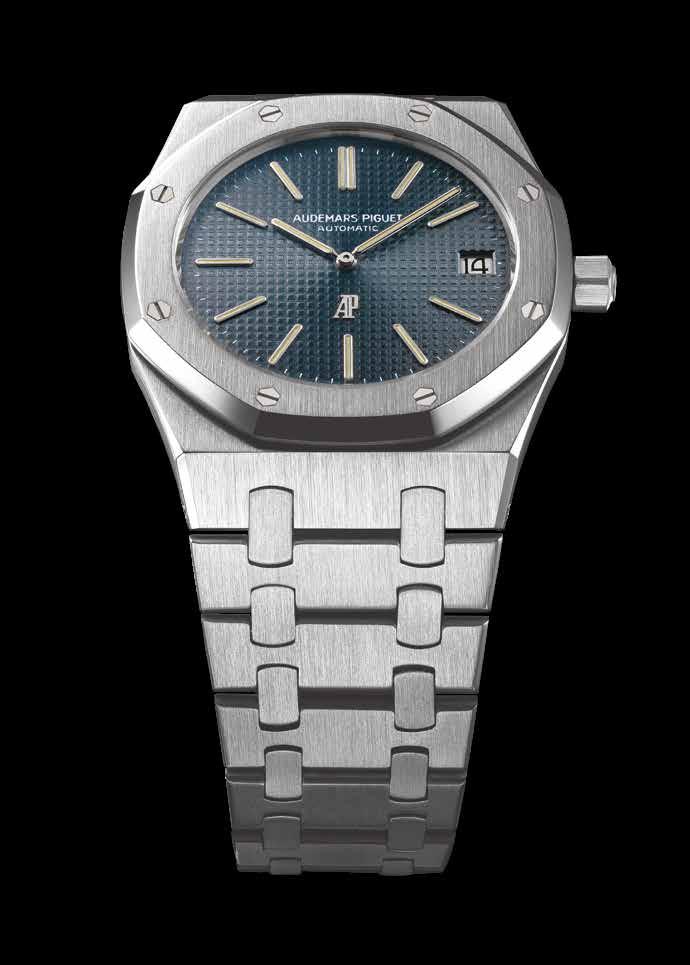
In the beginning, there were the elegant watches and the sports watches. Then, in 1972, came the Royal Oak. A model in steel with a unique design capable of interpreting both roles and featuring an octagonal bezel fixed to the case with eight exposed screws and an integrated metal bracelet. It all began on April 10, 1970, on the eve of the opening of the major specialist trade fair at Basel, when Georges Golay, managing director of Audemars Piguet, met with a group of distributors who laid out what their clients were looking for: they wanted a modern watch, in steel, to wear on every occasion, one that would, in short, be both elegant and sporting. Golay immediately called the
watch designer Gérald Genta, asking him to create, over the course of a single night, a watch like no other ever seen and that could be presented the following morning. Genta set to work. The idea of the bezel attached to the case with hexagonal exposed screws derived from a childhood memory of seeing a deep-sea diver with a helmet attached with bolts and a rubber gasket. He then designed a highly innovative and complex bracelet integrated with the case. Regarding the octagonal shape, what is certain is that Genta wanted eight screws on the bezel. The following day, April 11, Golay presented the designer’s sketches to the distributors: they were bowled over and the project was up and running.
DETAILS
Royal Oak Ref. 5402
+ 39 mm steel case
+ Automatic mechanical movement
+ Date window
+ Waterproof to 325 feet
+ Integrated steel bracelet
Santos 7. Cartier
In the early 20th century, the Brazilian Alberto Santos-Dumont was a celebrity of two worlds. Extremely well-to-do thanks to his family’s coffee business, his place in history was assured by his legendary feats as a pioneer aviator and his contribution to the design of airplanes and dirigibles. There is, however, more to the story. Having moved to Paris at the end of the 19th century, he soon became one of the most prominent high society figures. This led him to meet and befriend Louis Cartier, whom he asked, in 1904, to create a watch for him that would be easy to read even in flight, when his hands were otherwise occupied, something that was very difficult with the traditional pocket watches. Rather than simply adapting a pocket watch, Cartier created a model specifically conceived to be worn on the wrist:
the first in timepiece history. The watch designed for Santos-Dumont had a square case with rounded corners, a screwed-in bezel with exposed screws, integrated lugs and a leather strap: practical and elegant. It is said that the aviator was so pleased with the result that he wore the watch on November 12, 1906, when he took off in the aircraft 14-bis he had built himself and by flying for 720 feet set the first distance record in the history of aviation. This event greatly impressed the elite of the day, who, seeing the aviator as a kind of influencer ante litteram, began to ask Cartier for the same watch. The first examples were delivered in 1911, when the maison launched series production; the abbreviated name, Santos, appeared that same year.
DETAILS
Santos, 1915
+ 34.9 x 24.7 mm yellow gold case
+ Manually wound LeCoultre caliber 126 movement
+ Crown embellished with a sapphire cabochon
+ Leather strap
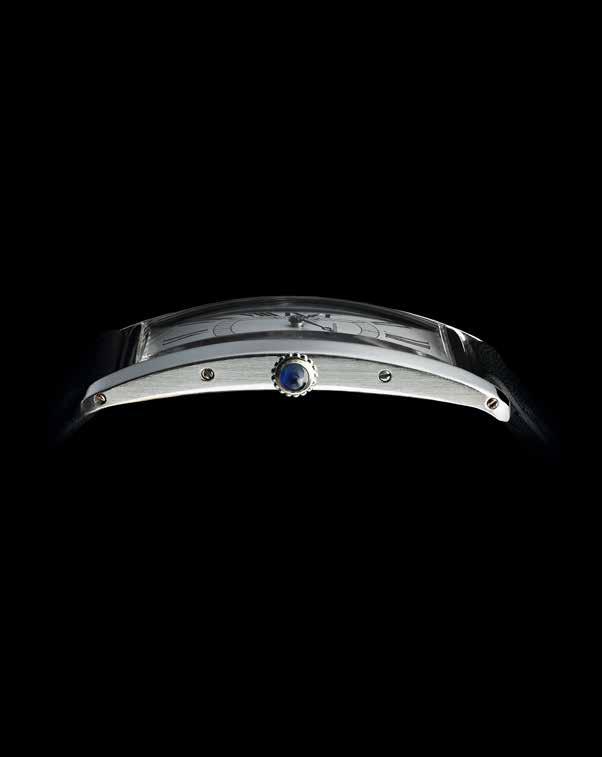
Detail of the Cartier Tank Cintrée model from 1924.
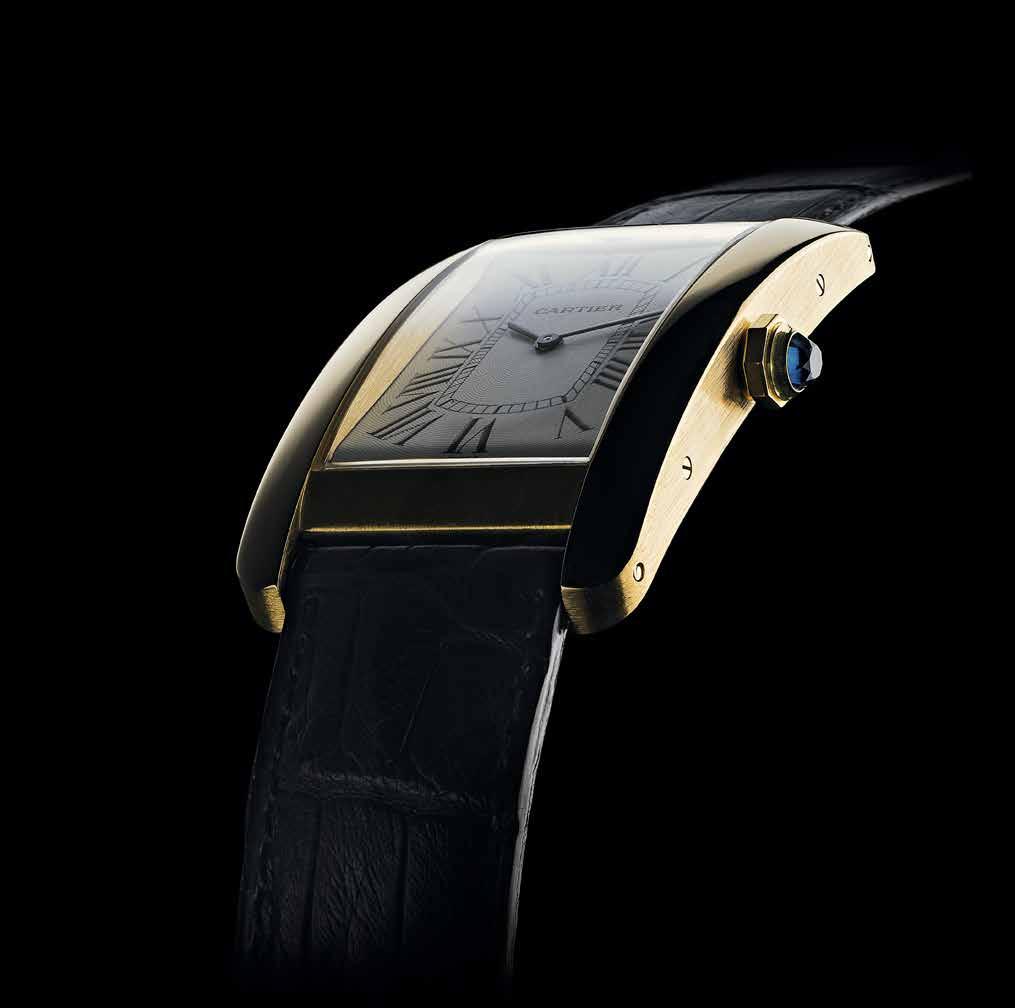
Detail of the Cartier Tank Américaine model from 1993.
10. IWC
Portugieser
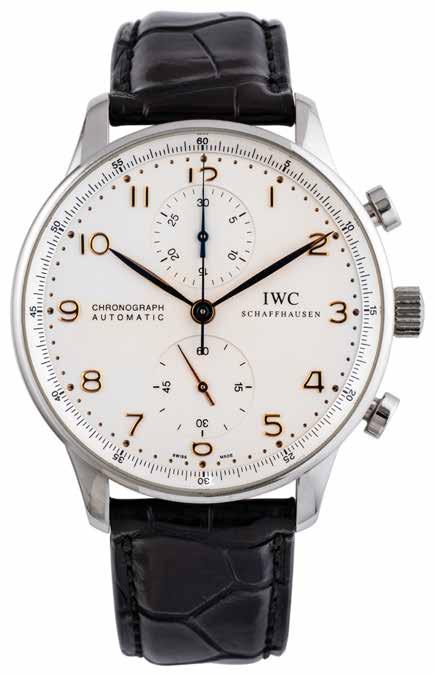
The story behind the creation of one of the world’s most famous watches, the Portugieser by IWC, launched in 1939 and named as such in 1993, began with an unusual commission placed with the company by two Portuguese importers, Rodriguez and Teixeira, in response to requests received from several captains and officers of the Portuguese merchant fleet. The objective was to create a wristwatch with a steel case that would be much larger than standards of the time (averaging between 34 and 36 mm) and with performance that would match that of marine chronometers used for navigation.
In other words, a watch that would be extremely accurate. IWC therefore decided to equip the Ref. 325 with a three-part case measuring 41.5 mm in diameter but just 9.5 mm thick, as well as the most accurate movement available, the hand-wound caliber 74, which was used in several pocket watch models. The dial featured a small seconds indicator at 6 o’clock, slender sword-shaped hands, Arabic numerals and a “chemin de fer” minute track, so called because of its resemblance to a train track. Thus was born the first of what was to become a long series of Portugieser watches.
DETAILS
Portugieser
Chronograph
+ 41 mm steel case
+ Automatic mechanical movement
+ Dial with chronographic and small seconds subdials
+ Leather strap
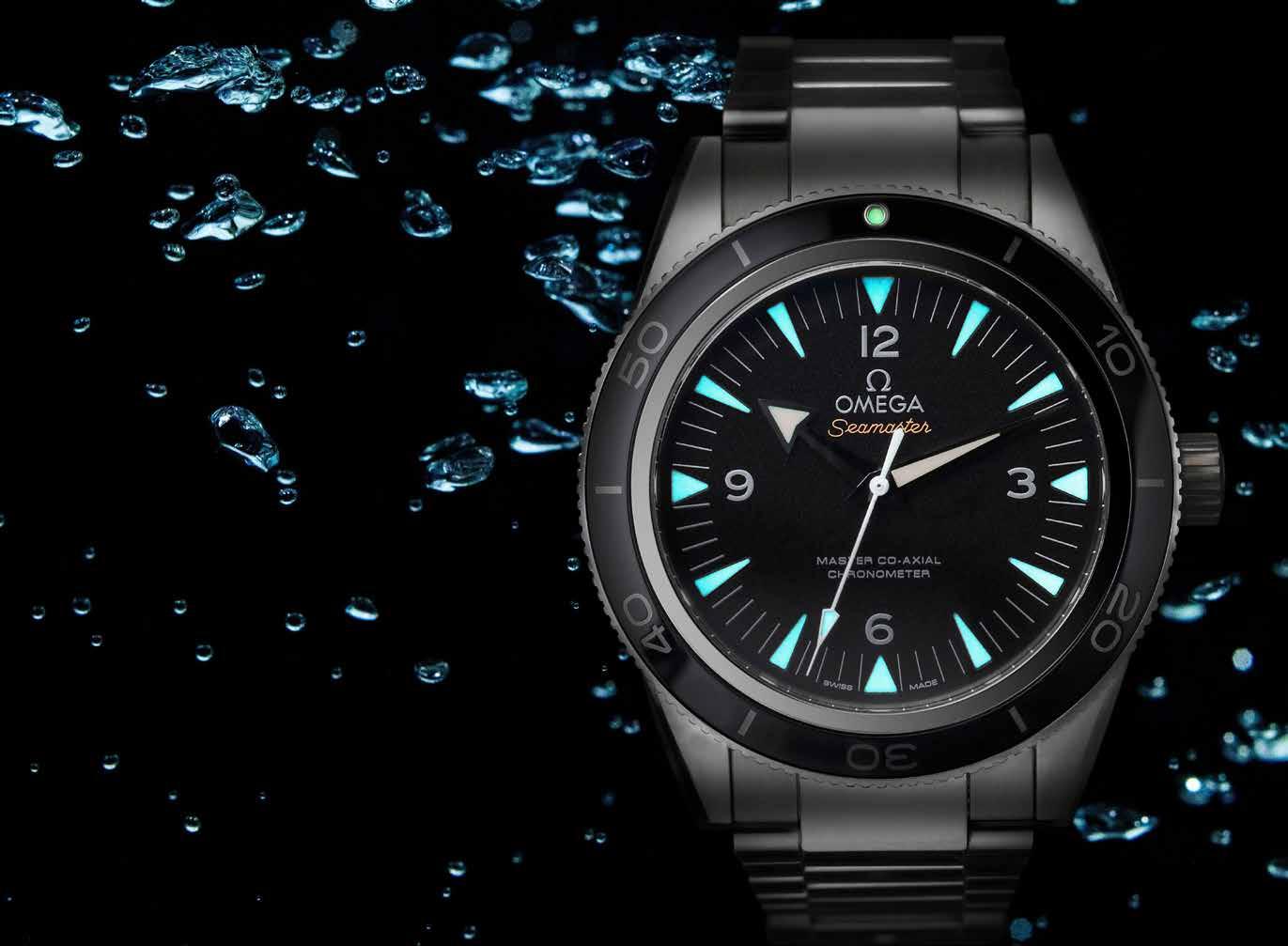
Close-up of an Omega Seamaster 300 Co-Axial model.
20. Rolex Cosmograph
Daytona
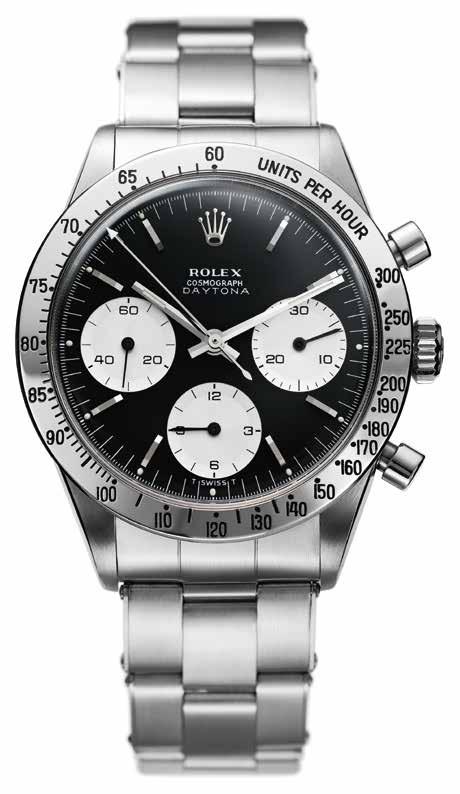
Motorsports and watchmaking are a winning combination. The watch that best represents this relationship is the Rolex Cosmograph Daytona, the most famous chronograph ever. Launched in 1963 with the name Cosmograph and Ref. 6239 (with this reference being produced through to 1968), it was a model aimed at professional racing drivers. It had the 37 mm Oyster case, a manually wound movement and, above all, a dial with contrasting chronographic indicators (white if the dial was black and vice versa). The tachymetric scale was carried on a wide metal bezel, rather than positioned within the dial.
In 1965, the Cosmograph began to evolve with Ref. 6240: screw-in buttons and
crown, dial with the “Oyster” script (a way of announcing its improved water resistance) and a bezel with a black Plexiglas insert with the white tachymetric markings. That year, the Daytona name also came into play, used for the first time in advertisements destined for the United States. At the request of the US Rolex distributor, it was then given to certain models reserved for that market, paying tribute to the legendary Daytona 24 Hours endurance race, held from 1966 on the Daytona International Speedway tri-oval at Daytona Beach, Florida.
Rolex was a partner at the time, and in 1992 it became the title sponsor: the winner of the race is still presented with this watch.
DETAILS
Daytona
+ 37 mm steel case
+ Manually wound mechanical movement
+ Bezel with tachymeter markings
+ Chronograph
+ Steel bracelet
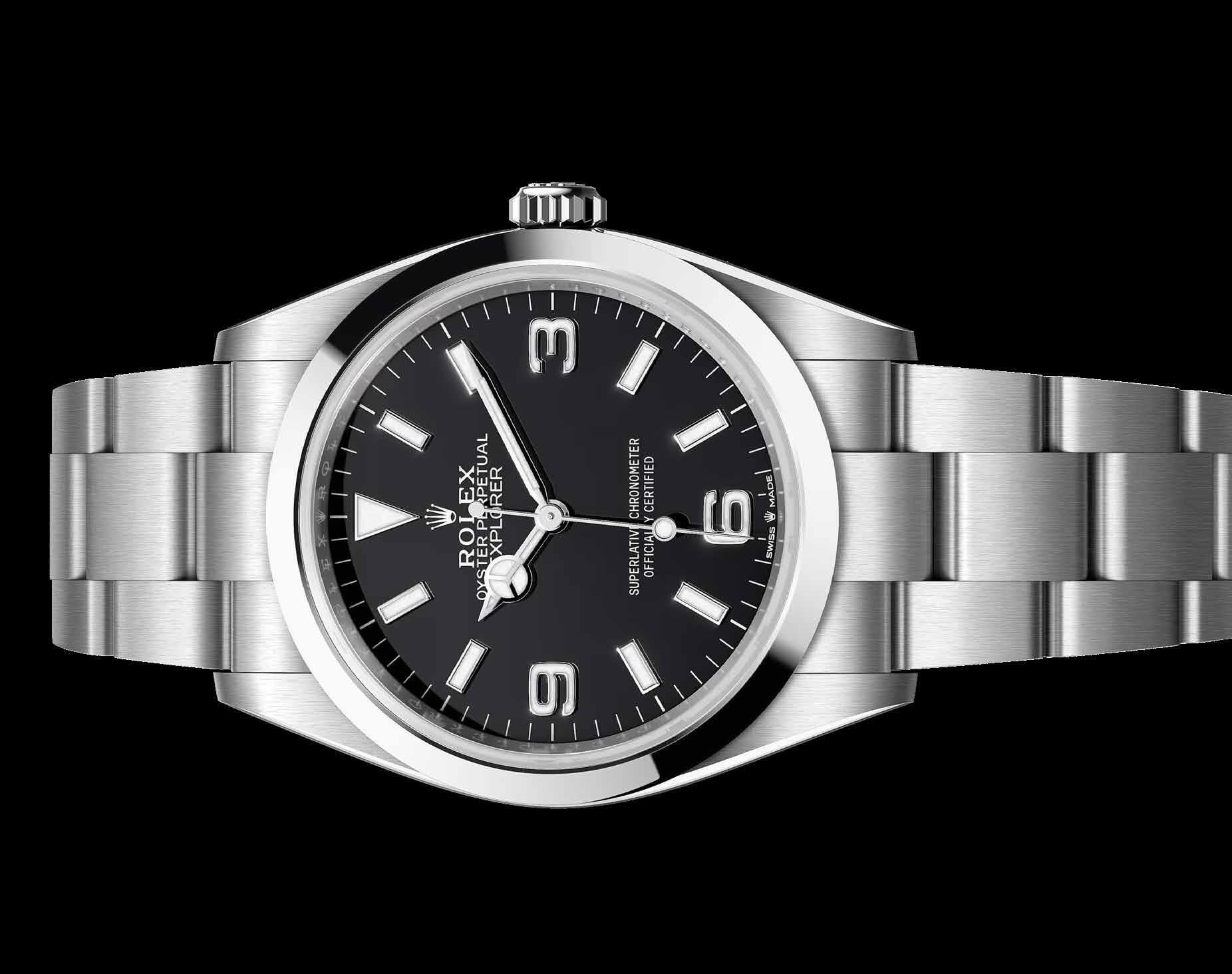
A Rolex Explorer 36 wristwatch.
PACO GUARNACCIA
Paco Guarnaccia, a professional journalist, is the watch editor for the 24 Ore Group, for which he covers the watchmaking world in general for Il Sole 24 Ore (printed and web), the specialist periodical 24 Hours and HTSI Italia. He has previously worked for Class Editori, focusing in particular on the watchmaking sector for the group’s media outlets (MF Milano Finanza, Class CNBC and the periodicals Gentleman, Class and Capital). He has also written about watches for Esquire Italia.