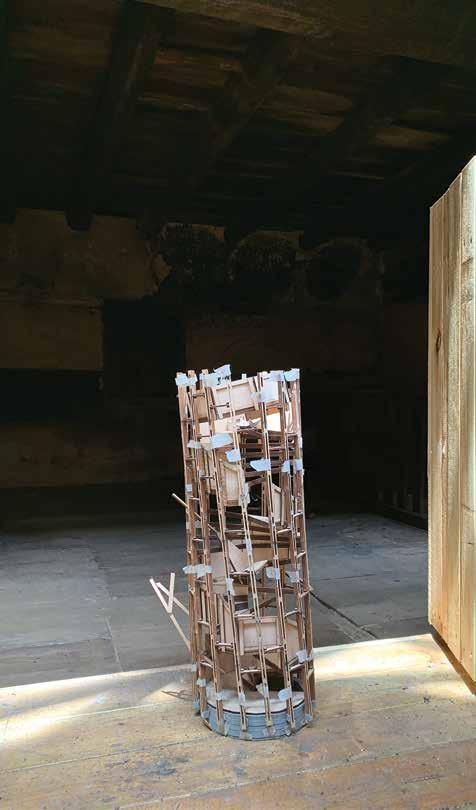
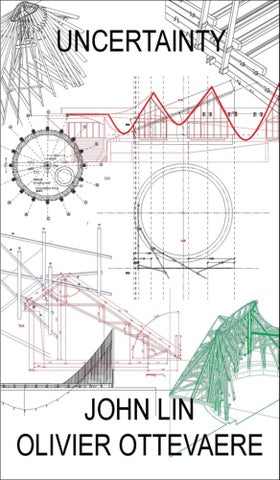
This is how we typically build. We build with materials, with the help of drawn instructions, and a pre-defined work process, to assemble an architectural product that we expect to have a certain permanence and soundness. These are the standard and expected conditions by which architecture is generally made. Yet, when it comes to bamboo construction, these four presumptions are radically challenged in the way that each of these aspects—material, drawing, working process and permanency—can both inform and challenge one another to potentially reroute the design process in unexpected ways and redefine a building hierarchy that defies the norm.
Contextually, there is much to learn about the way bamboo is used in Hong Kong. The city remains one of the last urban centers globally to maintain its longstanding tradition of building with the plant. It is still used today in temporary structures such as scaffoldings for erecting skyscrapers or seasonally assembled and disassembled Cantonese opera theaters, demonstrating both the expediency and versatility of working directly in-situ with this original construction material. However, the seemingly ad hoc and informal nature of bamboo construction belies the skill and knowhow required to assemble it.
Material
Unlike steel or even timber—which are more standard and industrial, yet also more consuming and demanding to work with—bamboo harvests the very best of a natural, cheap, fast-growing, sustainable, and highly available material. If considered as an individual pole, yes, it is irregular in section, crooked in length, and can bend or fatigue easily over time
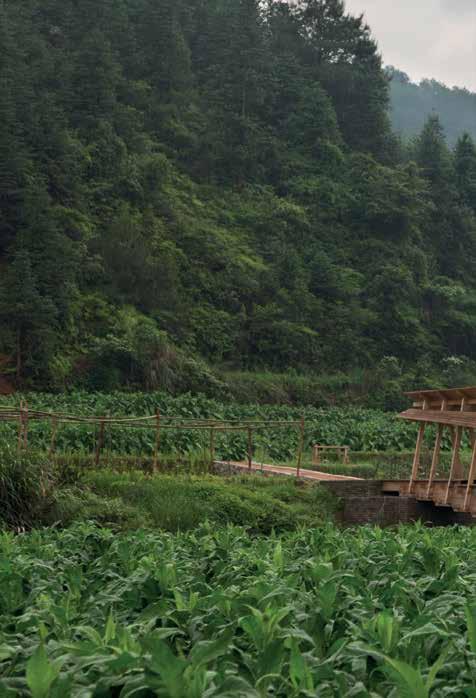
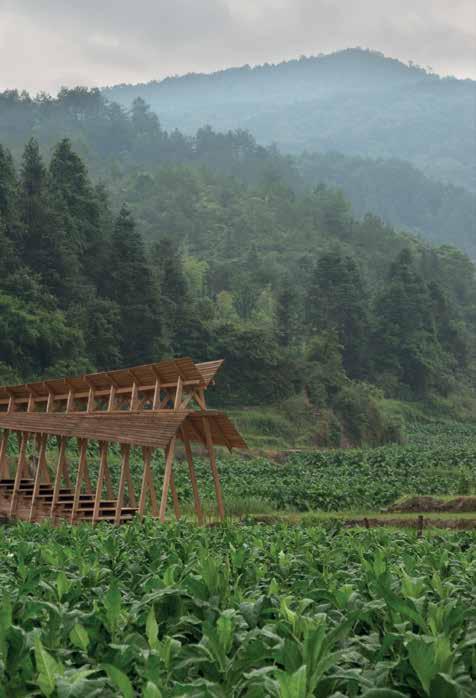
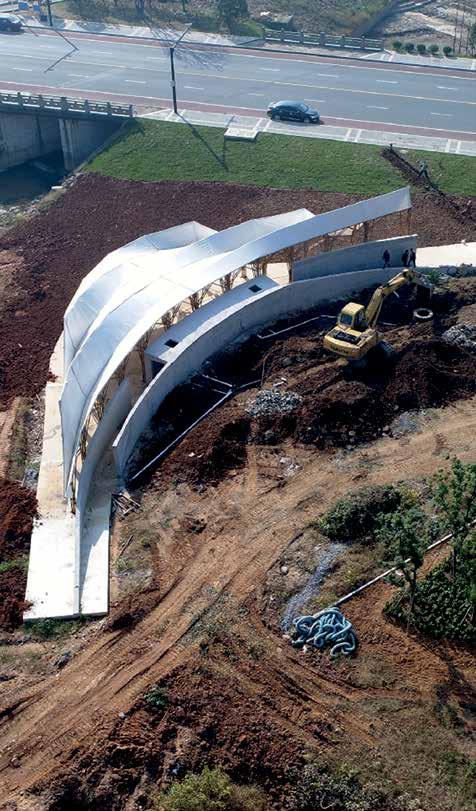
Right: Earth work and landscaping of the Crest project after construction
1 2 3
Longitudinal bays including all 01 columns (see plan: from A01 to M01); Roof trusses are made of singles layers; Columns are bundles of four bamboo poles;
1
2
4
Longitudinal bays including all 02 columns (see plan: from B02 to L02—“trusses” A and M only have one column);
5
Longitudinal bays including all 03 columns (see plan: from B02 to L02);
4
5
1
No bridge exists to island only site access via small floating pathway—prefabrication of large building element not possible, all work will be in situ; Abandon incremental construction strategy, instead construct individual trusses on ground and “tilt up.” This is better use of resources—students can mark and drill locations for joint while craftspeople can cut and assemble —both can help to stand trusses on their steel feet —brace together temporarily until guide ring and steel edge are delivered by fabricator;

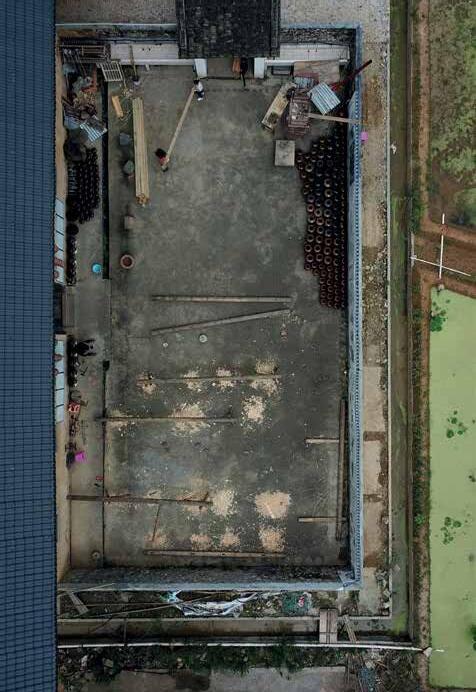
The main trusses of the structure have been laid out and assembled on the ground of the outer courtyard of the tulou
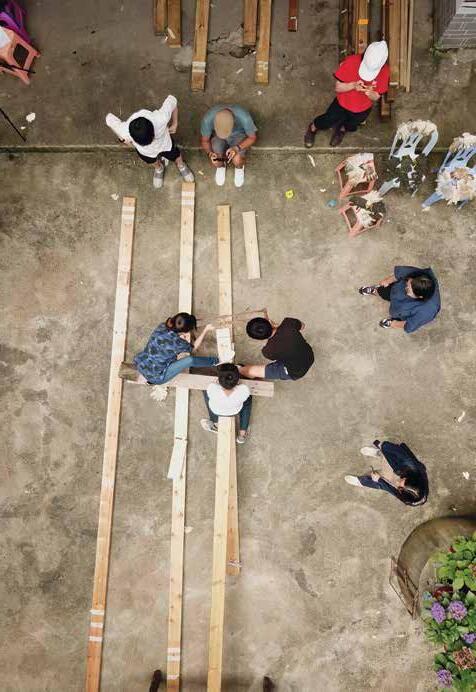
Students measuring and marking the beams according to the construction drawings.
1
2
3
Wooden bridges—MOST DELICATE PART! Need to consider how to sit on structure; load needs to be transferred back to the tower; if there is any existing overhanging roof at each floor, need to remove tiles and cut through it; Let’s clad the decking on the inside—show structure on the outside; Indicative length of wooden beams for bridges’ structure— for sure it will need to be adapted to existing condition;
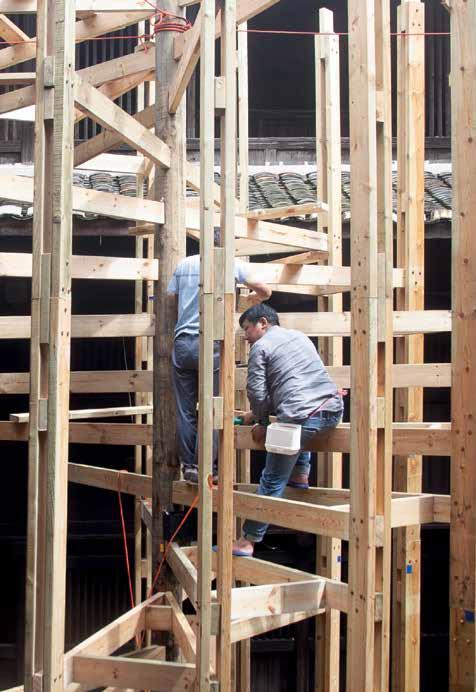
The beams of the stairs go through the central beam spanning from opposite outer columns.
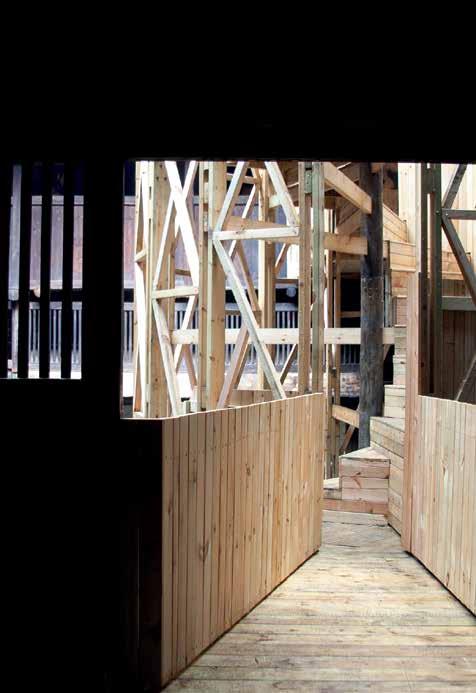
The three bridges are the only points of contact between the tower and the tulou. They rest on the vernacular structure without transferring any load to it.
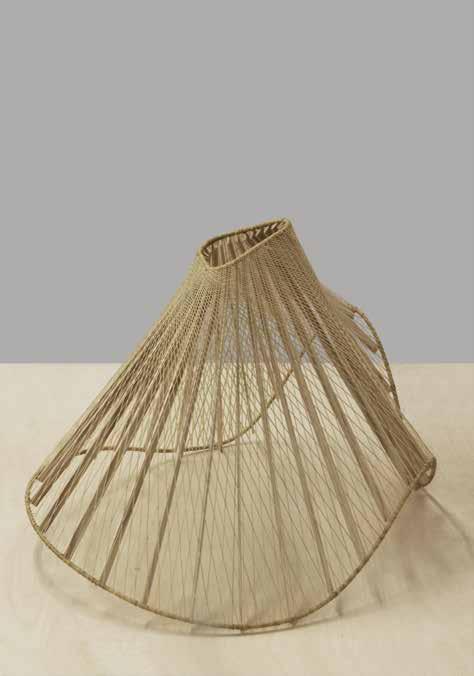
A model to be used on site that demonstrates the weaving strategy. The pattern map is informed by the bending radius and torsional limits of the bamboo cane.
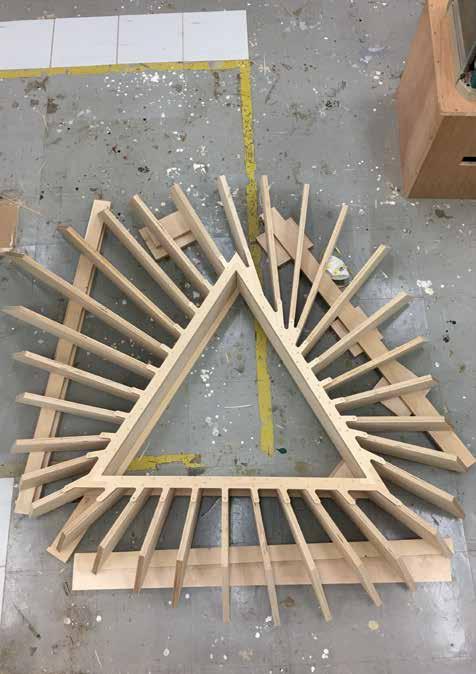
The center of the Sun Room—a tool and a building component, prefabricated at the University of Hong Kong, which allows for the accurate positioning of the radial structural elements.
1
The retaining wall condition is approximated on drawings— I bet it’s rough and not properly levelled. Let’s make sure contractor surveys it before we arrive on site;


1
3


2
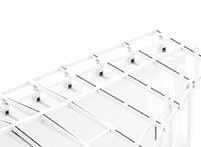
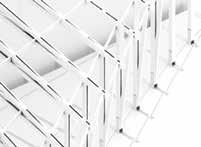

Local government is taking care of the concrete foundation: Did we send them the construction drawings yet?


3 For the timber trusses’ concrete foundation we can use a steel-shoe connector—we need to consider some tolerance for finetuning of trusses’ positions on site;
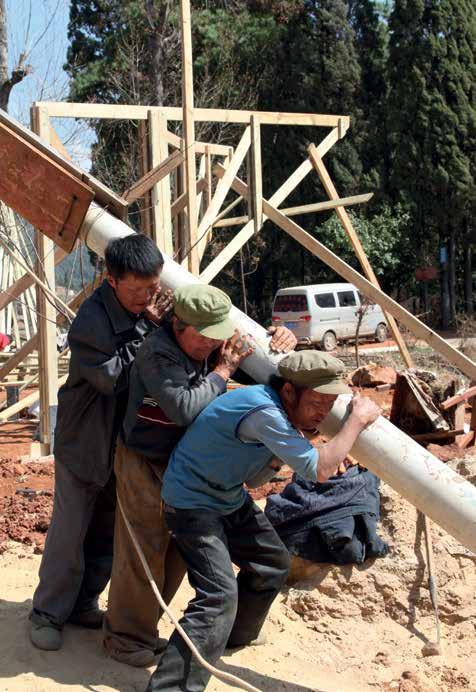
Site cleaning with local villagers.
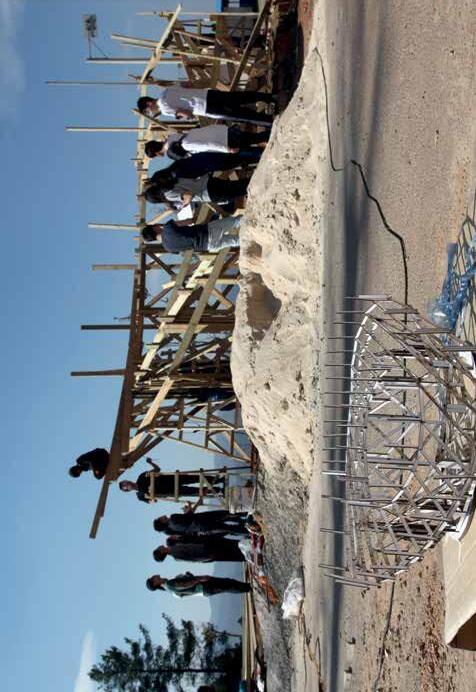
Scaled model is used as a tool for communication between students and local builders.
三十公分厚水泥挡土墙 ( 請確保墙上面的水泥表面平整) 30cm
三十公分厚水泥挡土墙 ( 請確保墙上面的水泥表面平整)
施工第二阶段的木柱结构将会安装在水泥基墙上面, 因此请确保阶梯边缘的水泥表面要平整
Wood columns will be installed on the edge of the steps.
Please ensure edge of the concrete surface is smooth and level.
二十公分厚水泥基墙
20cm thick Concrete Foundation Wall
-0.90
山谷 Valley
请务必留意:
1。阶梯由二十公分厚水泥基墙及水泥地台板 組成,基墙支撐上面的木柱结构,必须先做。
2。请确保阶梯水平高度一定要准确,所有水 平高度由(0,0)开始量度。
3. 阶梯边缘水泥表面要平整,否则会影响第 二阶段木柱结构组装。
剖面图 1-1 @ A3
Plan Drawing 1-1 @ A3
水泥阶梯基墙结构
Concrete steppings foundation walls
年2月8日
施工第二阶段的木柱结构将会安装在水泥阶梯边缘上, 因此请确保阶梯边缘的水泥表面要平整
Wood columns will be installed on the edge of the steps.
Please ensure edge of the concrete surface is smooth and level.
二十公分厚水泥基墙
20cm thick Concrete Foundation Wall
剖面图 2-2 @ A3
Plan Drawing 2-2 @ A3
Concrete steppings foundation walls -1.15
水泥阶梯基墙结构