




deinonychus
deinonychus

guanlong
guanlong

dilophosaurus
dilophosaurus


carnotaurus
carnotaurus

microraptor
microraptor



citipati
citipati

giganotosaurus velociraptor
giganotosaurus

oviraptor
oviraptor

The history of life on Earth is characterized by periods in which both animals and plants flourished, and those when the various forms of life experienced sudden changes in the environments they had conquered, often due to catastrophic phenomena, causing them to eventually disappear.

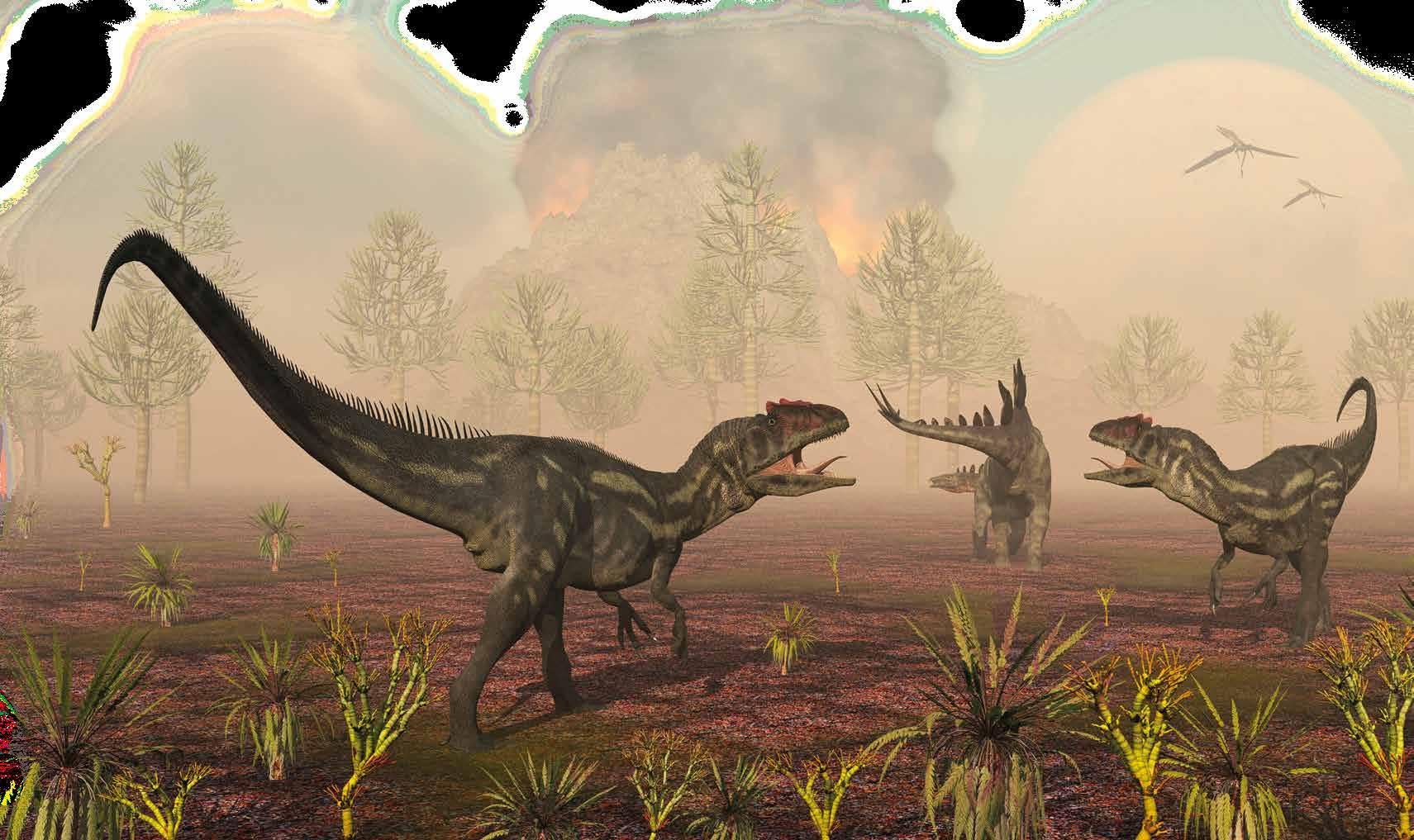
Indeed, 252 m illion years ago, life was almost erased from the Earth, and the living creatures that managed to survive found themselves in an almost empty world, with new environments to spread into and to develop in.
T his was the beginning of the era that paleontologists called the Mesozoic. This name means “middle life”, and was chosen because the life forms that inhabited Earth
at that time, were different from both those of the past and those which exist today. T he Mesozoic is often referred to as the “Age of Reptiles.” It was in fact the reptiles that had the greatest advantages when it came to filling the void left in the world, and they conquered all three environments: land, water, and air.




The circle represents the weight of the dinosaur compared to an adult man who weighs about 176 lbs (80 kg)

maximum 2 tons
The green line represents the length of the dinosaur, and is compared to the size of an adult man and a child
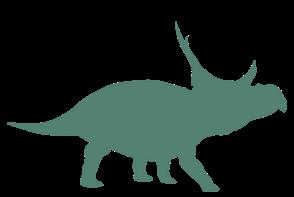
16.5-19.5 ft (5-6 m) long
Fossil bones are like an incomplete photograph of the dinosaur they belonged to.
Fossilized footprints, on the other hand, are like a movie: they tell us how the dinosaur moved, at what speed, what its gait was like, and whether it lived alone or in a group. For example, footprints have made it possible to learn that dinosaurs did not rest their tails on the ground while walking.
Asingle footprint on its own doesn’t provide a lot of data, but a trail of three or more footprints in a row, left by the same animal, provides a treasure trove of information, and helps to solve certain mysteries. For example, footprint trails make it possible to determine the speed of the animal that left them: footprints that are close together tell us that it was walking, whereas if they are far
apart, we can assume the dinosaur was running. Was it chasing prey, or fleeing danger?
It is not usually possible to identify the dinosaur that left the footprints, as they are almost never found near the remains of its skeleton. The fossilization process for bones is in fact different from the one that preserves footprints. However, in some cases it is possible to hypothesize which
animal left them: the shape and size of the footprints are compared with those of the limbs of all the species of dinosaurs discovered in the same area, helping to find possible candidates for the footprints. This is why different types of footprints are given their own name, and not that of the animal that left them. Fossilized footprints are trace fossils, together with – for example – coprolites and eggs.

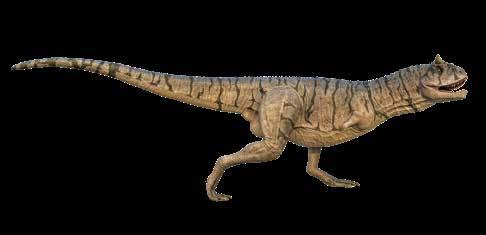
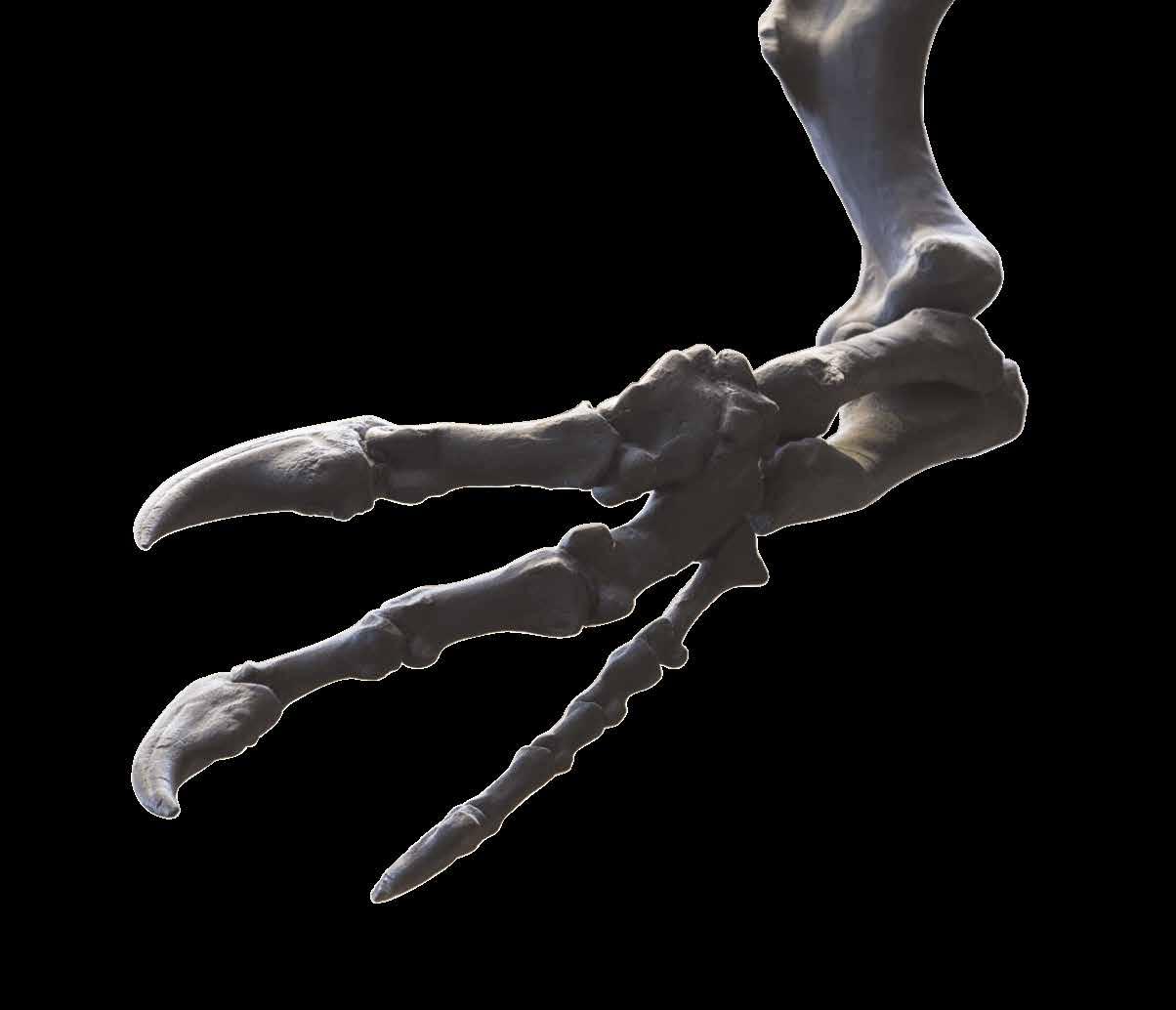
Carnivores h ad 4 toes on their feet, although most of the time only three touched the ground.
M any different types of dinosaur footprints have been found, all with elongated toes and claws. Those known as “ Eubrontes ” are large and have massive toes. “ Grallator ” footprints are medium to small, and are characterized by a very elongated middle toe.
“ Dromaeopodus ” footprints, on the other hand, only show two toes, and were a mystery for a long time: none of the dinosaurs had only two toes on their feet. However, today paleontologists think these footprints were left by dinosaurs similar to Velociraptor , which held its large-clawed toe off the ground when it walked, and therefore isn’t visible in their footprint. Tyrannosauripus footprints are enormous, over 27 in (70 cm) long, and often show the print of the toe that was usually held off the ground.

An egg thief?
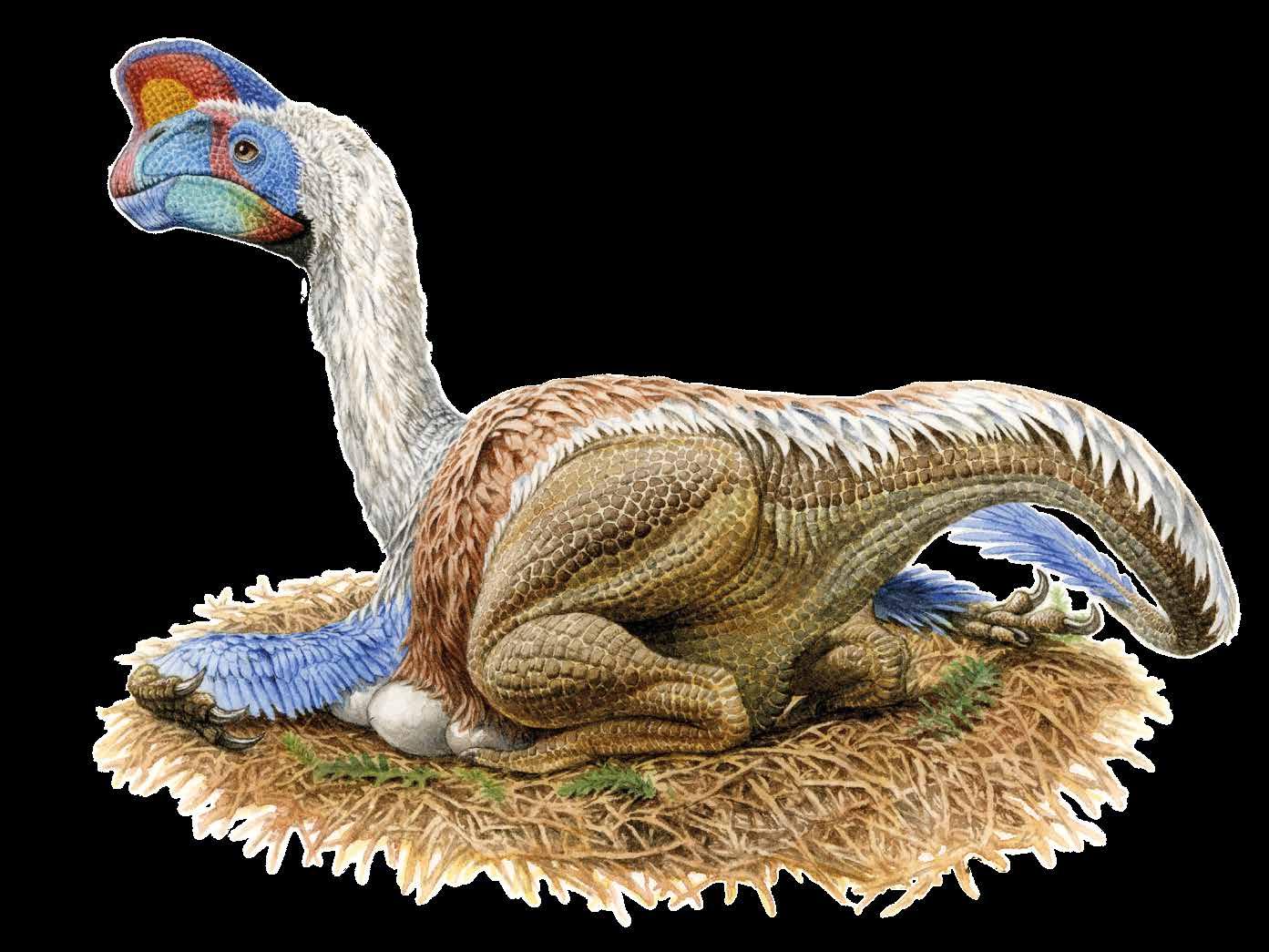
This dinosaur’s name was chosen in 1924, because the first specimen of Oviraptor was found on a cluster of eggs that were thought to be those of a Protoceratops , a small herbivorous dinosaur related to the much larger Triceratops. So, what was the Oviraptor doing there?

The paleontologists’ answer was very simple, although perhaps not quite correct: it was stealing eggs for its lunch! It actually turned out that this was not the case. So, what was the evidence that cleared the poor Oviraptor ’s name? In 1993, a chick was found inside an egg that was thought to be that of a Protoceratops , and… surprise! The chick was an Oviraptor ! Also, over the next few years, several specimens of a dinosaur very similar to Oviraptor were found in brooding positions over a cluster of eggs. Oviraptor was therefore definitively exonerated: it wasn’t stealing eggs from another dinosaur, but hatching its own, just like almost all the dinosaurs belonging to its group.






Modern paleontological techniques, which make use of increasingly advanced instruments, have made it possible to obtain information that was once impossible to know.
Oviraptorid eggs were found to contain two substances, potoporphyrin and biliverdin , which are present in some eggshells of today’s birds and are responsible for their coloring. This discovery has made it possible for scholars to say with certainty that the eggs of this group of dinosaurs were a greenish-blue color.
Distinctive features: two crests that protected its eyes
Ceratosaurus fossils are quite rare, but they are immediately recognizable because this large carnivorous dinosaur had a distinctive nasal horn , with two other horny bumps over both eyes. Unlike most carnivorous dinosaurs, it had a row of small bony plates along its back, called “ osteoderms ”, which acted as protective armor.
This dinosaur had strong jaws with very long, blade-like teeth. Its arms were decidedly short, but they could still be used to grab and hold down prey.

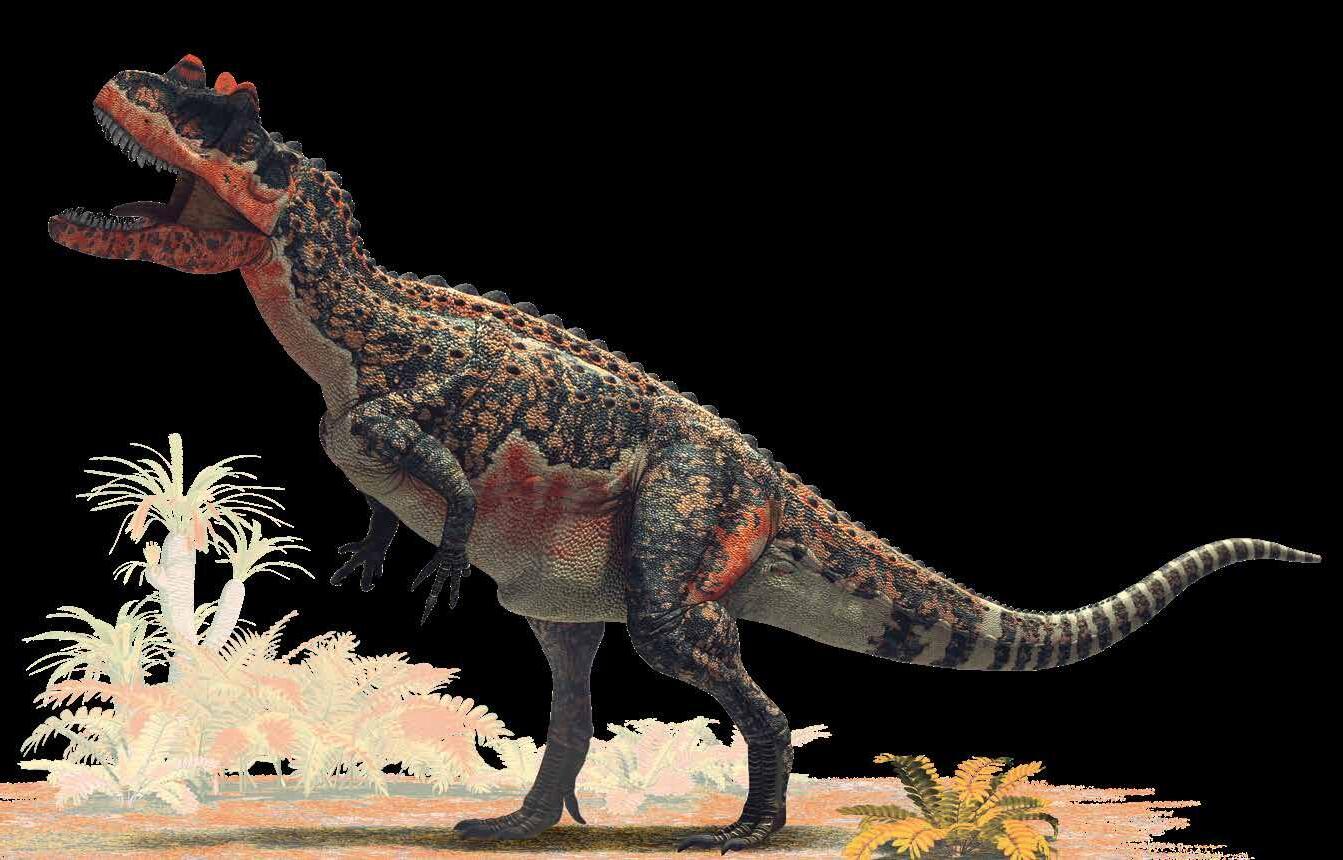
Ceratosaurus fossils are often found together with those of other large carnivores, including the famous Allosaurus Paleontologists wonder how two large predators could coexist in the same environment, and whether or not they competed with each other for food. Obviously, there is no way to know for certain, so only hypotheses can be made. Perhaps they had different hunting strategies: Ceratosaurus was more adept at hunting aquatic prey, such as fish, crocodiles and turtles, while Allosaurus preferred large herbivorous dinosaurs.
WIts name means: horned lizard
When it lived: Its size: 16.5-23 ft (5-7 m) long Its weight:
1100 lbs (500 kg)
153-148 million years ago

The nasal horn is certainly one of Ceratosaurus’s most well-known features, but what was it used for?
Initially, it was thought to have been used as a weapon for both attacking and defending itself, but it is now believed that this was unlikely. Instead, the horn might have been used during combat with rival male Ceratosauruses over access to females. There are even some scholars who think that the horn was just an ornament used in mating displays, like a peacock’s tail fan. If this was the case, it may also have been very colorful.
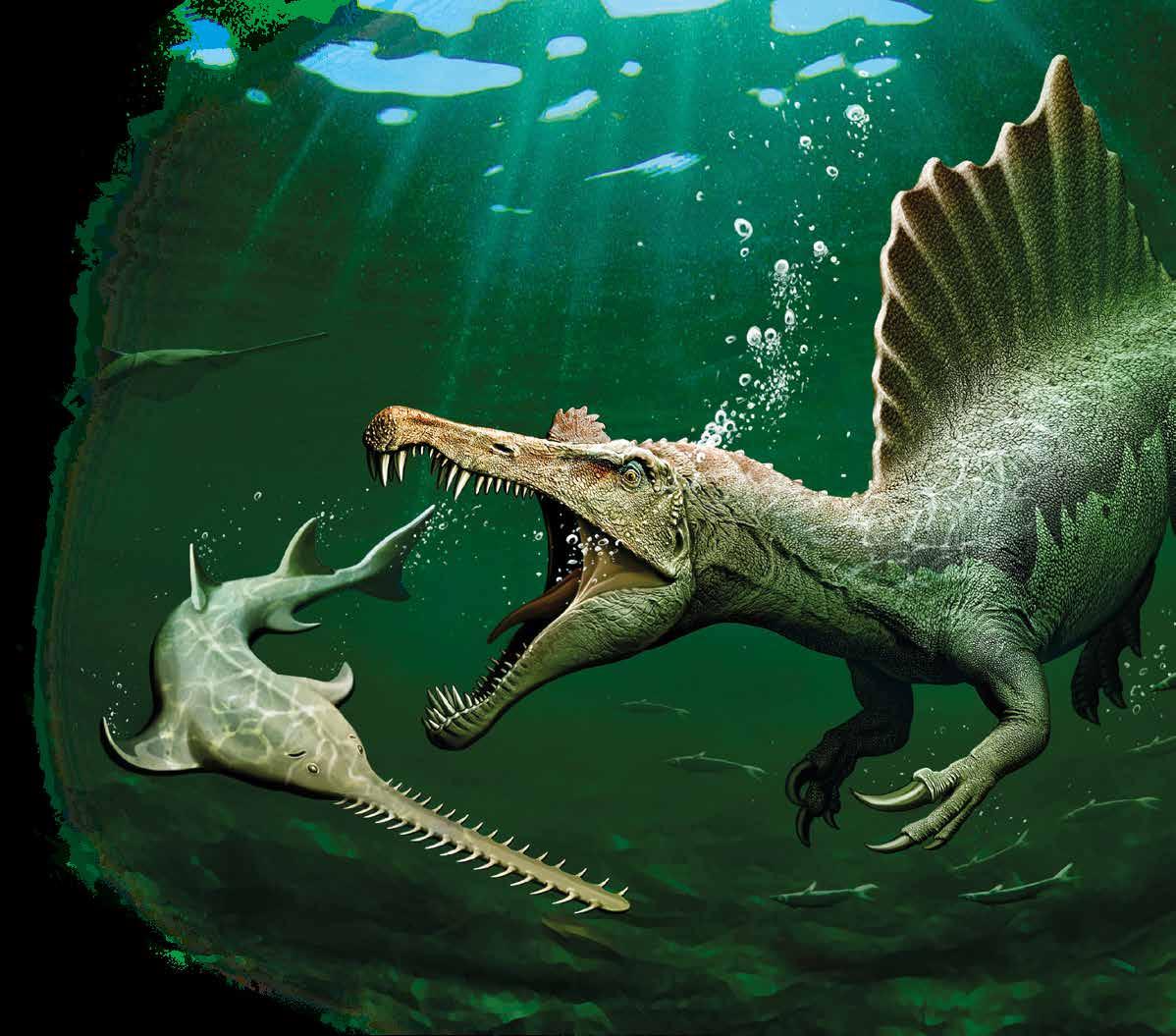
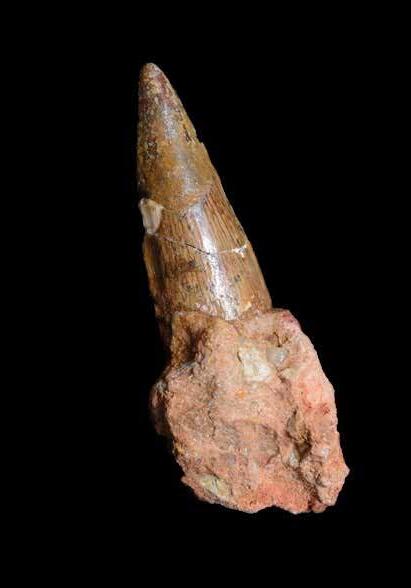
This new information made it possible to solve a problem known as “ Stromer’s Riddle ”: usually, there were more herbivores than carnivores, but it seemed to have been the opposite in the North African desert, and furthermore, the presence of two large predators like Spinosaurus and Carcharodontosaurus (a carnivore as large as a T.rex ) was really hard to explain. However, if Spinosaurus was mainly an aquatic hunter, and Carcharodontosaurus a land hunter, it all made sense: neither of them would have invaded the territory of the other, or eaten its prey.
Spinosaurus’s most amazing feature is, without a doubt, its tail. The vertebrae are completely different from those of any other dinosaur tail found so far: they each have a spine on top, about 24 in (60 cm) long, making the tail very similar to the fin-like tail of a crested newt, except over 3 ft (1 m) high. Spinosaurus was the first dinosaur to have a real fin, perfect for swimming in the waters of the vast fluvial system that occupied much of North Africa in the Cretaceous.
Spinosaurus had the largest sail of all the spinosaurids, growing to a maximum height of over 6.5 ft (2 m). Paleontologists have been studying its function since it was discovered, hypothesizing that it could have been used to help regulate the dinosaur’s body temperature, or even for storing fat. Recent studies have confirmed that it was a thin sail, but at the same time have ruled out that it was used for thermoregulation. Today, Spinosaurus’s sail is thought to have been used for species recognition, mating displays, or to appear larger in order to intimidate those invading its fishing territory.
Alamosaurus i s part of the group of large sauropods , which are quadrupedal dinosaurs with a long neck. A skull of this dinosaur has never been found, but it is thought that it was small compared to the size of the body. However, a few pencil-shaped teeth have been unearthed: these were used like a rake to tear the leaves off trees, but not for chewing. Polished stones have been found in the ribcages of several Alamosaurus skeletons, which, after being swallowed, helped grind up food inside the stomach.
A lamosaurus was on Earth up to 66 million years ago, and therefore existed until the end of the Mesozoic Era. This makes it the last sauropod, and one of the last dinosaurs, to live in North America before the great mass extinction.
Distinctive features: long legs


Its name means: Ojo Alamo lizard
All the large North American sauropods died out about 105 million years ago, but then, 35-40 million years later, Alamosaurus seemed to appear out of nowhere. Its fossils were found in New Mexico 1922, and then later in Utah, Wyoming, and Texas. Some paleontologists believe that Alamosaurus migrated to North America from South America when the two continents were joined by the Isthmus of Panama. This hypothesis is supported by the fact that Alamosaurus belongs to the family of Titanosaurian sauropods, which were extremely common in South America during the Cretaceous period.
Tft (30 m) long Its weight: 70-66 million years ago
size:

In 1999, some giant dinosaur bones were found protruding from a hillside in Big Bend National Park (Texas). Upon careful excavation, this hillside yielded partial pelvic bones and ten cervical vertebrae of an adult Alamosaurus. This specimen appears to have been huge, measuring just over 100 ft (30 m). Due to their huge size and the remote location of the site, removal of these bones by hand was impossible, so the Park issued a special permit to the excavation team to remove them by helicopter.
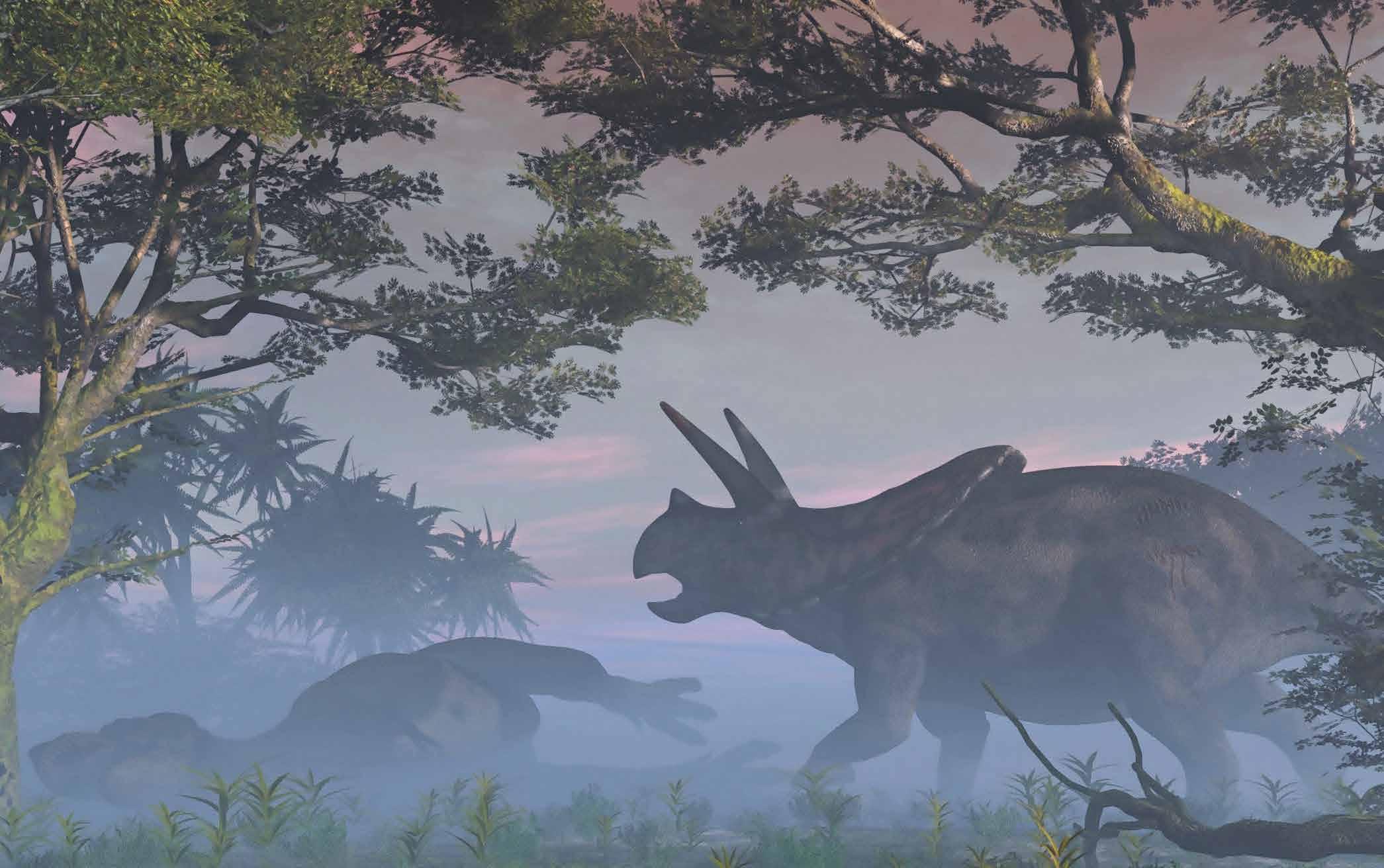
Even a predator like Tyrannosaurus can succumb to the defensive weapons of its prey.