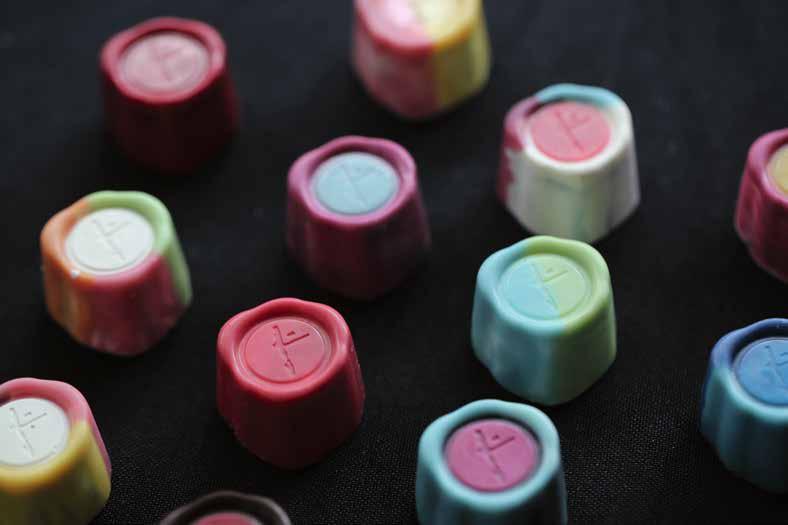
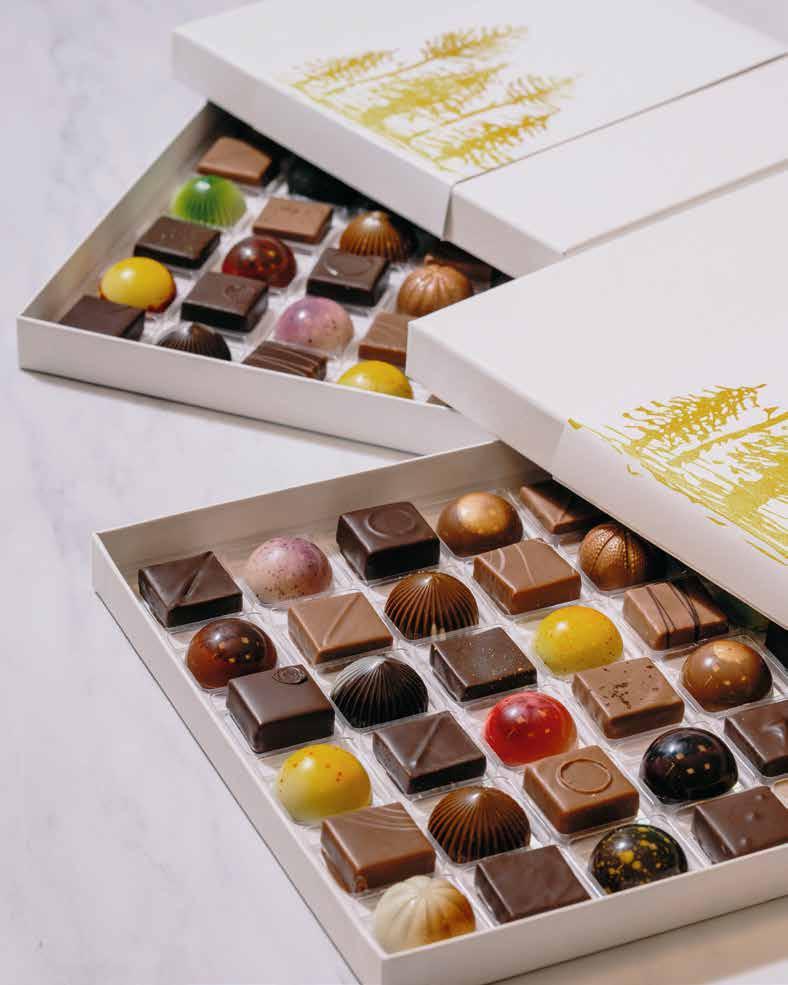
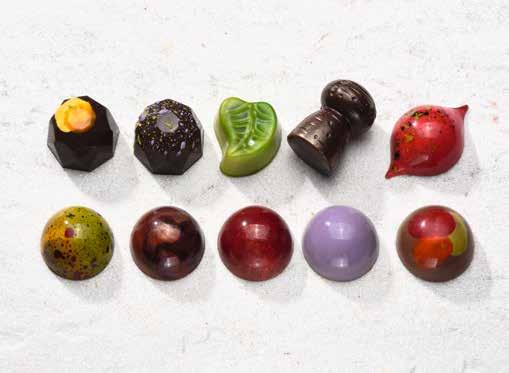
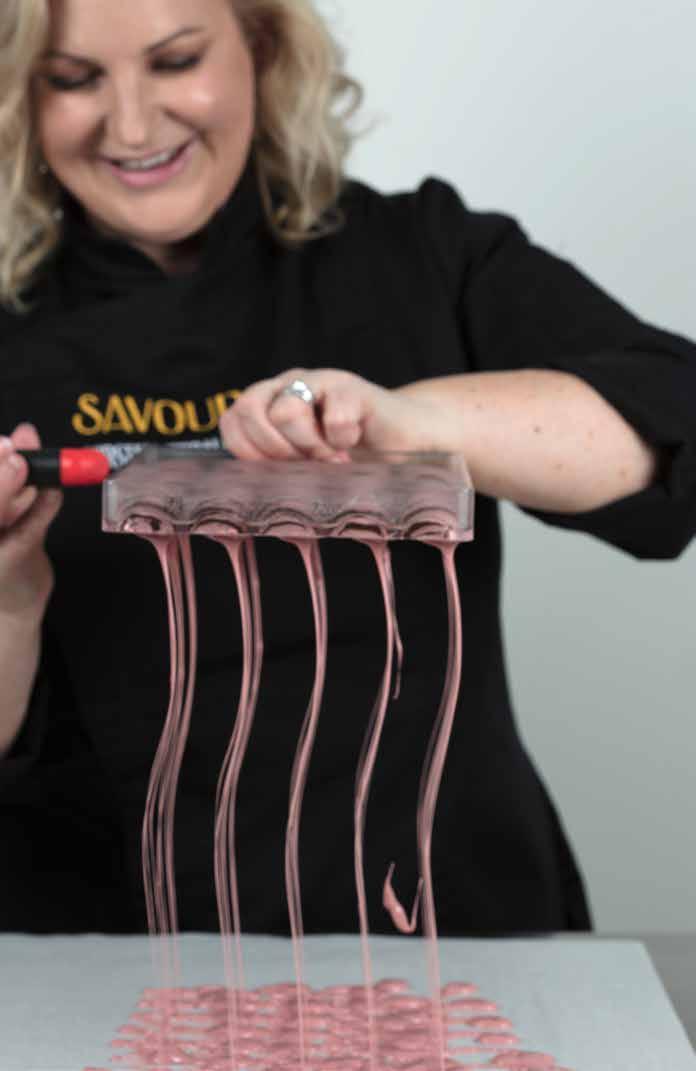
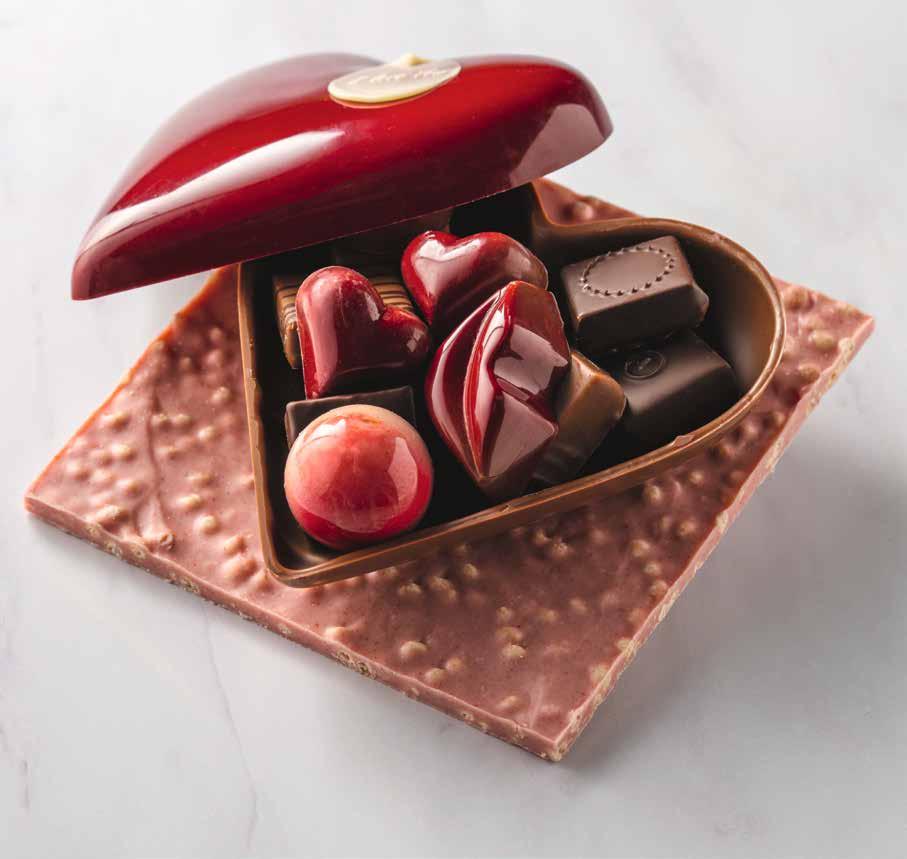
“Signature Series” bonbons by Janice Wong, crafted with unique moulds designed by Janice herself
FOR THIS BOOK, we interviewed many chocolatiers from around the world. When we asked them why they started their business and how they started it, the answers often led to similar experiences: ”I discovered that chocolate is my passion. After acquiring the skills, I just started. First in a small garage. As I grew, I built my own production kitchen”. Throughout their journey, many chocolatiers acquired better skills and better insights about their customers’ needs and adapted their offerings accordingly.
If you’re starting your chocolate journey today though, odds are that the marketplace is more crowded than 20 years ago. Starting today is quite different, so it will require a different approach. To lower your risks and increase your chances of success, you need to be well-armed and prepared to find your unique spot in the market.
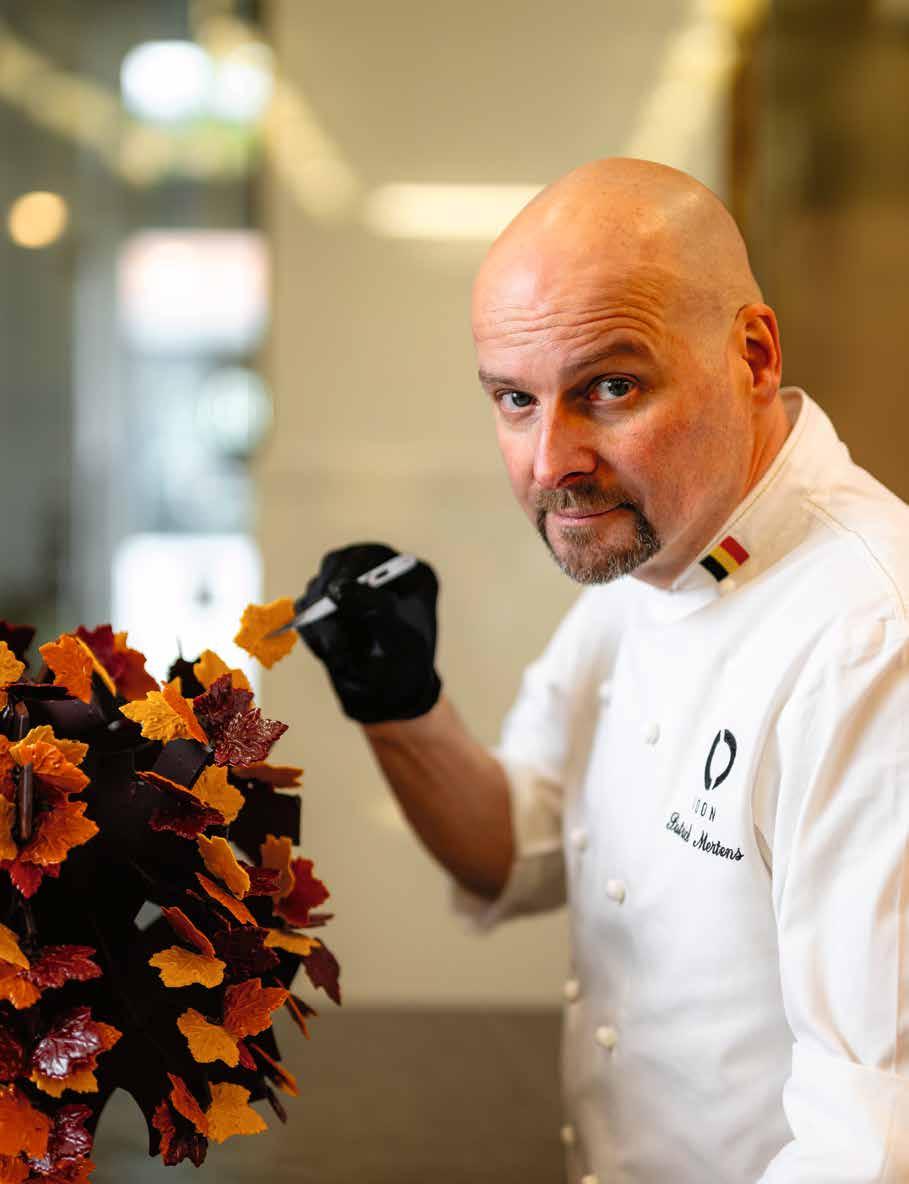
“If you’re going to do this to get rich, do something else. The first 10 years, we would definitely have been better off with our previous jobs. If that’s your motivation, maybe don’t start. You have to put a lot into it and not expect big luxuries, certainly not the first few years.”
PATRICK MERTENS & INGE LIJNEN —
CHOCOLADEHUIS BOON
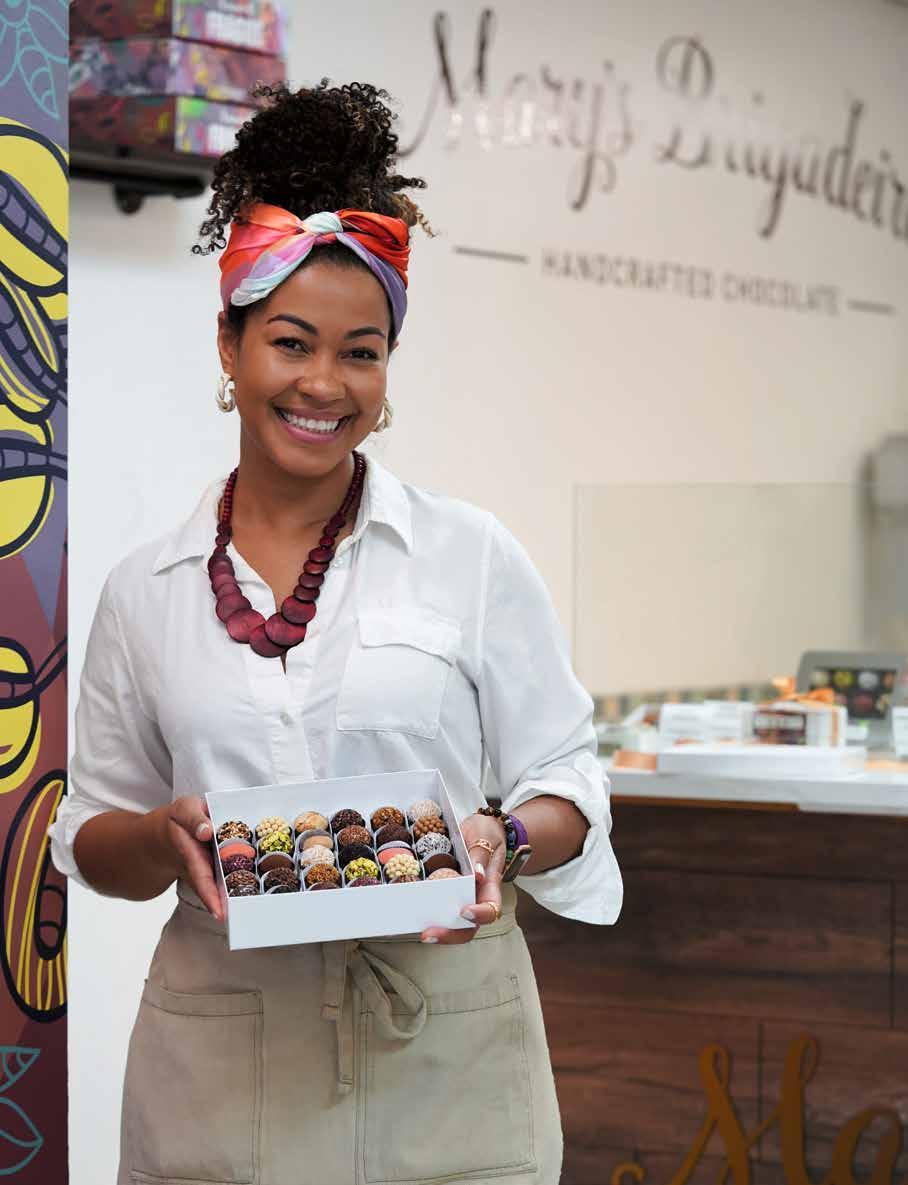
Mary’s Brigadeiros
by Mariane Oliveira
As a starting chocolatier and entrepreneur, it’s important to understand the “why” behind your business: your purpose. Why do you get up every morning? What is the driving force behind your hard work? Sure, making money is a pre-condition. But your “why” is way more relevant for customers to understand what they can find in your business or gain from your brand.
Knowing the reason behind the existence of your business will also guide you throughout the process of running this business. It will help you develop the right products that answer to your “why” and bring them to market in a unique way.
“The brand stands for quality and freshness that evolve with trends — a culinary chocolate shop focused on progressive, culinary taste experiments. But we don’t follow all trends because sometimes it’s not feasible. And, anything we don’t make ourselves; we don’t offer. In the long run, I think that gives back more.”
OLIVIER WILLEMS – OLIVIER WILLEMS
Olivier Willems offers big gift boxes of up to 48 signature pralines, featuring culinary taste combinations
YOUR OFFER WHAT WILL YOU CREATE, PRODUCE, AND SELL?
Once you know why you’re setting up your business and what makes it unique, it’s time to approach your “what”: your chocolate production as a piece of your brand puzzle. This part of the process is about what you will be selling. Not only about the product or products themselves, but about what these stand for. Let’s see what this looks like in reality.
Remember Ryan Foote? His chocolate designs are created either using modern sculpting techniques, 3D technology or custom-designed moulds. But “what” his brand offers is more than nice-looking chocolates, it’s customised chocolate gifts with a wowing artistic appeal, completely tailored to his clients’ needs. Chocolates By Ryan L Foote doesn’t sell chocolates. It sells memorability. By exploiting your differentiating element and building your product portfolio (Chapter 10) around it, you are not only impacting your chocolate creations, but giving a higher meaning to your business. Below, you can find an overview* of the typical products in a chocolate shop portfolio and some of their pros and cons.
Although the products mentioned above are the most often found in artisan chocolate businesses, don’t be afraid to use your creative brainpower. You might come up with your own chocolate formats or hybrid shapes to make your offer unique. Think about Martin Diez’ volcano. Martin invented a new type of bonbon that was featured thousands of times on Instagram. The volcano inspired chocolatiers to make their own versions and find ways to produce it in an efficient way that worked for them. Now, take the time to think back to your purpose and uniqueness. Both can inspire you to create confectionery products that help you stand out from the crowd.
Besides confectionery creations, many chocolatiers also expand their offer with products that serve as bridges between seasons. Think of ice cream or gelato during hot seasons, periods when confectionery sales tend to drop. Or think of a menu of hot chocolates for take-out, to boost your sales during the colder seasons.
Product category Pros Cons
Truffles
Chocolate bars
Enrobed bonbons
Moulded bonbons
Open bonbons
Chocolate mignardises
Chocolate dragées
Popularity, variety, versatility
Popularity, variety, convenience
Versatility, aesthetics, packaging, quality, production convenience
*You will find a detailed version of this table in Chapter 10 of this book, under the “Typical chocolate products” subtitle.
Risks
Starting a new business from the ground up or taking over one. Both involve risks that need to be considered, the main one being that there is never a guarantee that your first attempt at either will be a success. KIRSTEN TIBBALLS shared the story of one of her students, a woman in her mid-thirties who understood the risks implicated in owning her own business, and who decided to grow slowly during her spare time:
“I met a woman who was very high up in the corporate world and had worked for a credit card company for 20 years. But her passion was actually patisserie and chocolate. She didn’t know a great deal about it, so she trained with us. At any opportunity she had, she would volunteer with me and travel wherever I went. She took leave for all of this, and learned as much as she physically could. Then she took a package from her former employer and opened a business. During COVID, she moved the business to 100% online. Within three months she had to source a factory five times the size of the shop she was working out of (she was also very good at social media and at marketing herself). But I would say one of the biggest traits that has benefited her is that she was creating products that people actually wanted to eat.”
While starting your own business can take some time, taking over an existing one might save you steps compared to the process of putting together a new brand. You might even acquire the location and stick to the business’ range of products. This also means you will most likely have access to ledgers and previous sales and marketing data. All of it, valuable information.
But taking over a business comes with challenges you might not encounter when you start your own. An existing business already has a determined identity that cannot be discarded or modified in the blink of an eye.
When building COCO Chocolatier, owner CALUM HAGGERTY realised the pros and cons of taking over a business that wasn’t performing, and of changing multiple aspects of it to create the vision he had in mind:
“The company was busted when I took over. What was very evident to me was the seasonality of a business that is just based in one region of Edinburgh. You were just standing there waiting for someone to walk by, and products didn’t even have a label at the front which told you the flavour, so a third party couldn’t sell it.
So I started changing a couple of things: the brand, the aesthetic and also the business model. Thanks to the latter, we’ve had this kind of success, due to us being B2B, not B2C. I spent a couple of years completely redesigning all of the products to focus on that market. Today, we are six or seven times bigger than we were then, and the vast majority of that is by going to B2B trade shows. That’s how we did it. Staff changes came with this too. People explaining that what had been done wasn’t financially viable.
I was basically scrapping everything but the name. And even the name got changed at the end.”
Calum’s experience is the perfect example to show that when you take over an existing business, you inherit more than the brand and its qualities. You also inherit its benefits and struggles. If you’re torn between starting your business or taking over one, considering all risks involved is a crucial starting step.
Goals
“Without a vision you’re not going anywhere. Technique can be learned, knowledge can be acquired, but the real secret is the ability to have a dream and strive to realize it.”
Just like Marco Infante, who manages the Casa Infante family business in Naples, it’s crucial to understand that besides the market and your own financial position, you should consider your goals as a chocolate shop owner too. Because a successful business will always need passion and drive to succeed. Your vision and creativity will be fundamental to creating a unique and compelling story or continuing a legacy. Either way, you will need a genuine love for artisan chocolate to win your clients and keep them loyal.
“When you focus on what you do well and are consistent, you’re sending a clear message to the market. You’re making sure people remember you for it. This is what creates a long-term bond with your customers.”
BERNARD PROOT – DELREY
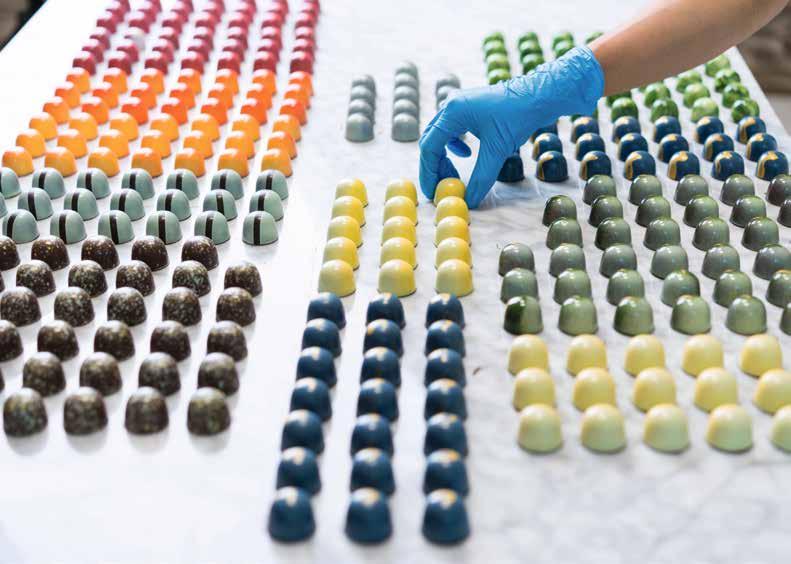
This bonbon assortment by Fidée shows consistency in shape and a specific colour palette, reflecting the land, sky, flowers and trees
Although in time all brand elements can potentially undergo changes and improvements, these don’t happen overnight. All upgrades and modifications have to be slowly introduced to avoid missed expectations and brand inconsistencies, whether you’re the one buying into an existing business or selling your own.
Just as with any decision, along with challenges comes a series of positive aspects when taking over an already-established chocolate shop. These are some main ones to consider.
Anticipate being profitable sooner
When building a business from the ground up, it takes time to become profitable. Receiving the right permits and approvals, testing out the market and getting clients. It all takes time. Although it varies for each business, there’s an initial period in which your shop won’t be making money.
In contrast to this scenario, if you acquire an already successful chocolate business, the profits might come almost straight away.
Reduce start-up-specific risks
One of the greatest advantages of acquiring an existing business is that the brand has been market proofed. When you’re starting from scratch, after you’ve done your research and created your brand, it will take time to see how buyers respond to the idea you’ve created (and to adapt to their response).
If you buy an existing chocolate shop, you’ll lower this initial risk and be able to fast-forward to the improvement phase of your chocolate shop.
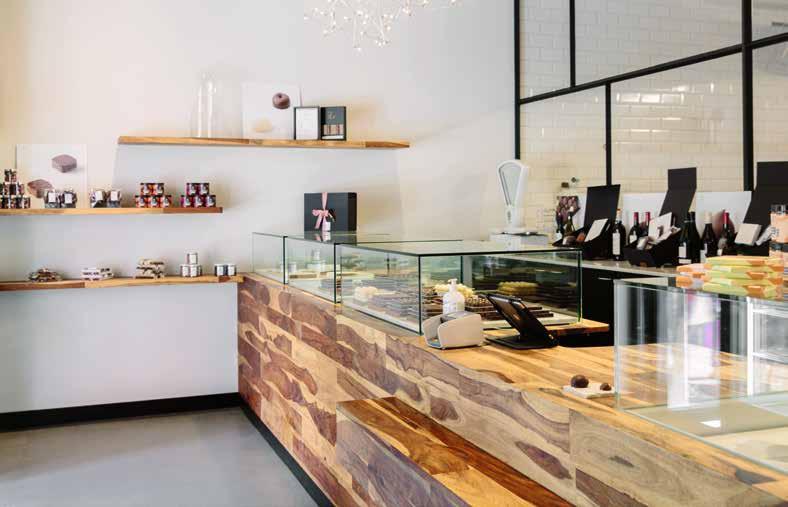
At Jitsk Chocolates, short shelf life creations take pole position in the counter, while longer life products are placed as serve-yourself, impulse products on shelves
CONTINUING AN EXISTING (FAMILY) BUSINESS
In the artisan chocolate world, legacy or family businesses are common. Although they have a personal brand name, it is also common to sell or acquire them while keeping the name and the main range of products they offer.
Acquiring or inheriting a family business can offer similar benefits and challenges as acquiring any other business. However, there are still particularities that you’ll encounter only when it comes to family-owned brands.
Become part of a legacy
Family businesses can hold added value when compared to more generic brands or franchises. Brands that foster a family name usually have a story behind them, which strengthens the brand identity and creates a particular kind of loyalty among clients.
This is clearly seen in the Bassam Ghrawi Confectionery business. What started as a local shop of hand-made traditional sweets became an international company in the decades that followed:
“By the time the third generation of manufacturers stepped in, the Al-Ghrawi family has not only increased their consumer base, but has also managed to create over 500 different sweets, each with a distinctive taste. This served to establish the company as a leader in the industry. Improving our retail shops branding by word of mouth and social media led to strengthening our brand name too.”
When you buy or inherit a family business of any scale, you become part of its legacy. While getting the benefits from the existing business and client pool, you also become responsible for meeting their expectations and upholding the reputation the brand name carries with it.
The owners of the Mallorca family business were met with challenges that came from trying to uphold the reputation of the company while looking to adapt to the new needs and behaviours of their consumers today:
“For some things, we just had to look back and see what our family was doing 40 years ago. We’d take that as an inspiration and then come up with things to fit the current market.”
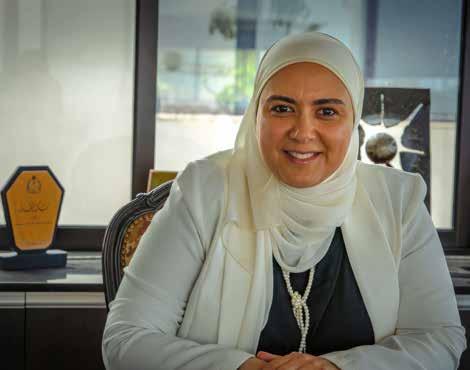
Meet Lama Bassam El-Ghrawi, general manager of the Al-Ghrawi international family business
“Although we remain accessible, we are on the higher end with our products and prices. We know our clientele is open to it since they consume more expensive coffee. ”
JITSK HEYNINCK – JITSK CHOCOLATES
So, this is where you tell them the background story and the real value it has. If you don’t, then you’re selling nothing. And, it gave us so much richness to discover how to make the client know these things, because people are very interested in where things come from nowadays.”
You might be like Mallorca, a business of a bigger scale. Or you might be a one-shop chocolate business owner looking to create or optimise your offer according to your relevant market. Regardless of your size, there are different (paid and free) ways to deep-dive into your market by using different kinds of tools. For example, as Savour School became more successful, KIRSTEN TIBBALLS saw the need to learn more about her clients, and made a conscious choice to invest in it:
“I think it’s essential for any business to understand their client base, so we do surveys. We try to do one every 18 months, and it’s quite in-depth. We offer quite a good prize to encourage people to participate, and we do one for our general customer base and then one for our online subscribers. In our last survey, we had a 20% response, which gives us a really good grasp of what our customers look like: male or female, demographics, whether they’re professional chefs or home cooks, etc.”
As you can see from the previous examples, there is no need to survey thousands of people or set a huge budget to better understand your target audience; nor to outline target groups at the very beginning. You can get started simply by talking to family members and friends, by reaching out to people who you think would be your ideal customer and asking relevant questions.
You’ve got the theory in place, are you ready to put it into practice? Then here’s how you can begin studying your local market today:
As founder
and chef
of her now multi-shop business, Mariane Oliveira still makes the time to meet and greet clients
1 Online and offline, delimit the geographical reach of your local market and start to look up information about it. Try to identify the needs and preferences of your potential customers by first looking into their characteristics (age, job, financial situation, places they frequent, how much they are willing to spend). Look to have one-on-one or small group discussions with people who represent that target audience, this may also help you to understand their expectations.
2 Make a list of which other businesses could be your competition and place these businesses on a map to see where they operate. Study your competitors’ products or services, selling prices and marketing strategies. These elements can help you identify gaps in your market (and spot opportunities for your business), get an idea of how much similar companies charge for their products and differentiate your business from the rest.
3 Create customer personas. Based on your market research and target audience, create customer personas. To build a target persona, highlight demographic information such as age, gender, income, and education level, as well as psychographic information such as interests, values, and lifestyle. Many businesses have multiple personas within their target audience.
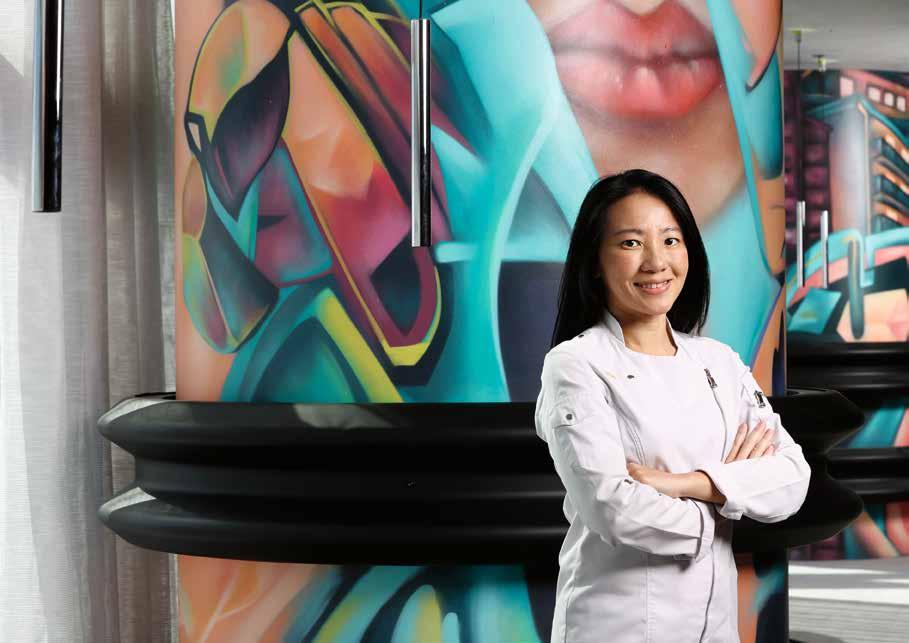
“The idea was an open B2C concept. We found a store that was on a second level, so you had to climb up to enter the space. It’s an open concept for clients who want full transparency on what we do and how we make things. Open kitchen concepts were not done in Singapore at the time, there were only a few places doing that.”
JANICE
WONG – JANICE WONG PURE IMAGINATION | 2AM: DESSERTBAR | SOFTHAUS
MARIANE is well aware of the changes in product profit when selling in her own shop compared to selling through retailers. However, she keeps her routes to market diverse:
“Some buy the products from us at a lower price, a price where we are able to make a profit. Then, they sell the products in their coffee shops or specialty stores. It’s important to have this wholesale as part of the business because it also helps you increase production.”
Strategies to get the attention and loyalty of your target audience will vary according to the characteristics of this audience.
Despite what your audience looks like and how your products reach it, the B2C concept remains the same: offering your products directly to the consumer. An interesting way to analyse the B2B market is doing it from a B2C approach, and this is a mindset KIRSTEN TIBBALLS openly talks about:
“Branding your product under another company’s label is a common strategy. Whenever possible, aim for co-branding to ensure your own label is also promoted. There are also many opportunities to sell your product B2B, where another company will brand it as their own.”
If, like Kirsten suggests, you’re talking to consumers without intermediaries, your business will take one of the following formats: brick-and-mortar shop, online store or thirdparty retailer. These formats can be set up independently, but they work better when they are used simultaneously to leverage each other’s strengths.
One of the important aspects to always look out for, particularly when working with third parties, is to ensure they follow certain procedures to care for your brand as much as you would.
A good example of this is ENRIC ROVIRA . When he started his chocolate business, Enric was forced to sell his chocolates in different retailers around Barcelona. As he sought for retailers, he learned to look out for specific traits these third-parties should have to properly represent his brand:
“I didn’t have a shop of my own, so the only way to market my products was through third-party retailers. We started offering the product in historical buildings with tourist traffic and in what were known as gourmet shops. The negative part we had to take into account was that the old buildings didn’t use to have air conditioning, so the environment wasn’t always the right one for chocolate.”
“When customers come to my shop, there are a lot of bonbon flavours. They come to the shelf and say ‘oh, my God, this is so beautiful. What is that? What is that?’ And that’s when we get to explain everything. This is why I’m not gonna put my products all over the market. Because there will not be a person to explain all that we offer, the bonbons especially. I prefer to sell everything in the shop and in small-size markets that have the same concept that we have for ourselves: artisanal. We also do some corporate sales here and there, and I think these market routes are enough.”
RENATA ARASSIRO – RENATA ARASSIRO CHOCOLATES
Renata Arassiro’s bonbons often feature local Brazilian ingredients at their heart, brought to life in a colourful presentation
LEARN AS YOU GO
With a well-crafted business foundation, your research done and your business plan in place, all that’s left is putting all this theory into practice with a start-up mindset: building the plane as you fly it.
RYAN FOOTE is an exemplary display of learning from unexpected challenges that the artisan world has had to face in the last years. Ryan was able to adapt to the radical shifts in the market, sought out a way for his business to thrive and until today, remains a flexible and creative business owner:
“Before the pandemic, there were nine months of protests in Hong Kong. That pretty much just took out every single bit of tourism out of the city. Suddenly, all B2B business we had for hotels was gone. Our business was already in a challenging situation before COVID, and then obviously when COVID hit, that amplified everything. I’ve had to rework the business model several times and I think that has been one of the most important things: constantly looking at how we can adapt. For example, when the tourism that we were supplying dried up, we started creating new chocolate shapes, collaborating with brands like Hennessy and doing whiskey-based chocolates, offering them in bars and events with the local community that were still able to happen, because instead of being able to travel, people stayed in Hong Kong.”
When a hard period of trials seemed to be passing, Ryan and his business were hit by unexpected circumstances yet again:
“As soon as we shifted our business model, from October to March, Hong Kong went into a lockdown and all bars were closed during that time. And for us, that was the busy season.”
As you can see, a flexible business model and an open mind helped Ryan overcome a series of unfortunate events. After adjusting his offer, his way of innovating new recipes and making sure to adapt to a rapidly changing market, his business was able to overcome it all.
Although planning for things always helps a company, nothing can be completely contemplated, so there is one last element that is crucial as a chocolatier and business owner. As STEPHEN TRIGG would put it, his business wouldn’t have succeeded without this crucial element for a chocolatier’s journey:
“I had all of the skills, but I was missing a couple of particular skills that beat every other skill hands down: determination and drive. You can be intelligent, you can have creativity, you can have great risk management skills and a lot of things, but ‘I’m gonna get up and do this ’ — that, for me, was one of the biggest things I had to learn.”
All these real-life experiences from all over the world prove that as much as having the right theory helps, the one way to make your business work in the real world is to get out there and start doing.
Your brand will encounter challenges that not all your planning will prepare you for. So remember that your ability to adapt to the changes ahead will define the future of your freshly baked brand.
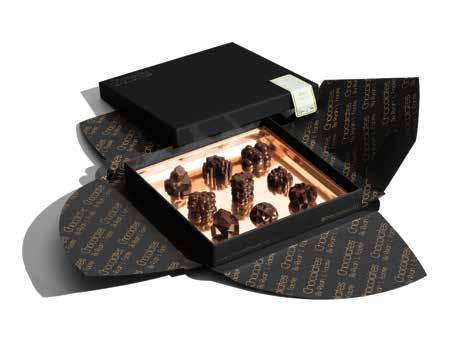
Each chocolate by Ryan L. Foote is a small 3D-printed work of art, and the packaging’s complex design reflects this idea
“We
knew what we wanted pretty clearly. Do you then know what’s going to happen? No; but a business plan in itself can help a bit. It’s not something we regularly refer back to, nor something that we look at weekly at all, but it is important to do it. It can help you understand where the business pitfalls might be.”
PATRICK MERTENS & INGE LIJNEN – CHOCOLADEHUIS BOON
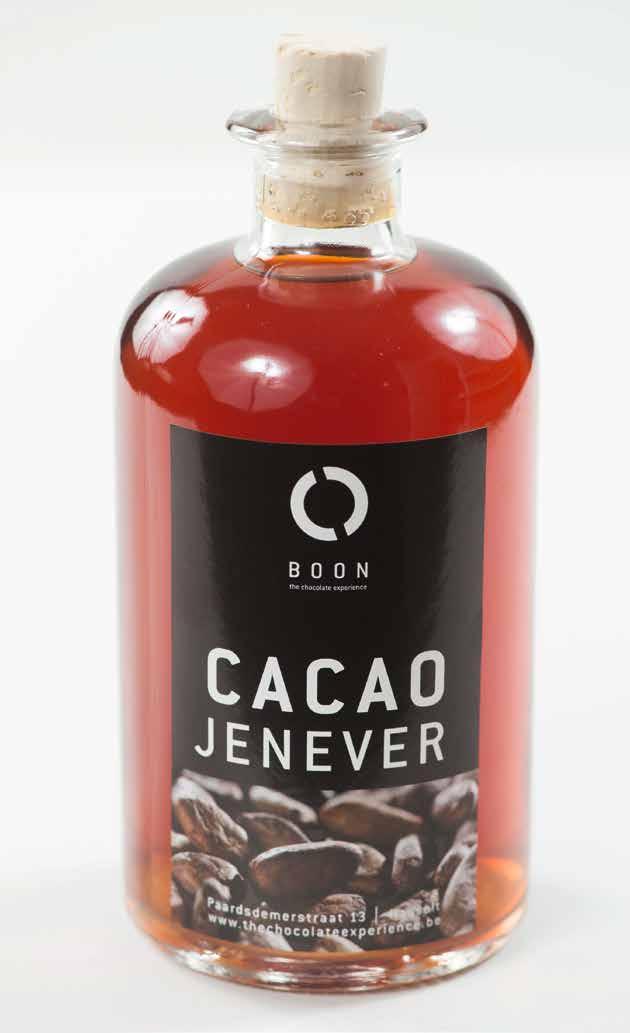
This secondary product by Chocoladehuis BOON uses cacao to create a traditional Belgian liquor
Your brand is not only
THE FOUNDATION
for your business’ success. It’s the red thread that keeps it together, from new product ideas and social media strategies, to opening a new store. Regardless of whether it operates in a B2B or B2C market, building a strong brand is crucial for any business.
A brand is more than just a logo or a catchy slogan; it encompasses the entire experience that customers have with your business. Just like a weak branding can bring down your success, a strong brand can help you differentiate your business from competitors, build trust with customers and ultimately drive sales.
IN A B2C CONTEXT, building a strong brand can be especially important, as consumers are often looking for products and services that they can identify with on a personal level. A strong brand can help you build an emotional connection with customers and create loyalty over time.
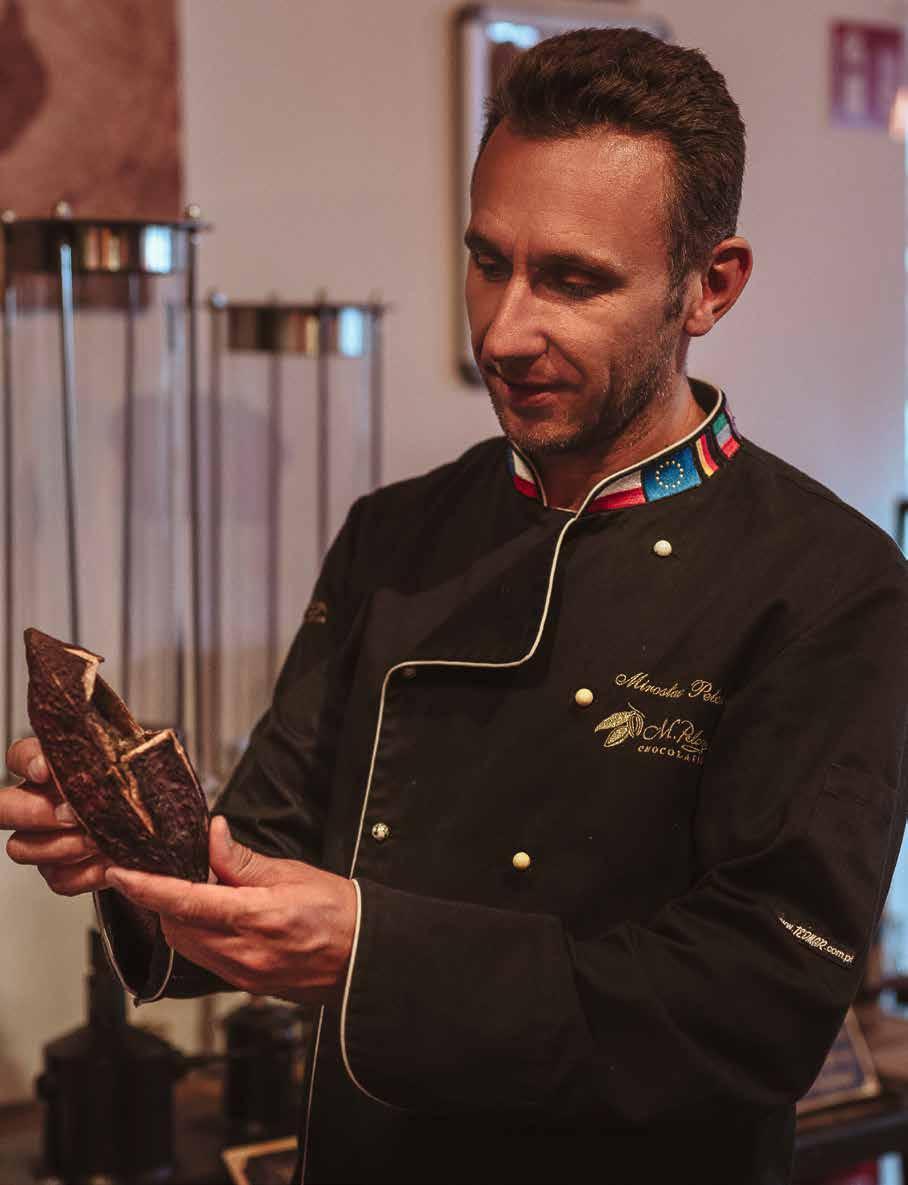
“We made the decision to go for a premium brand positioning. Premium meant not only the chocolates and assortment, but also the packaging, display settings and so on.”
MIROSLAW PELCZAR – M. PELCZAR CHOCOLATIER
IN A B2B CONTEXT, a strong brand can be equally important, as businesses are often looking for partners they can trust, to consistently deliver high-quality products or services. A strong brand can help you establish the credibility and trust you need in the eyes of potential partners.
In both contexts or routes to market, a strong brand can also help you command higher prices for your products or services, as customers are often willing to pay more for products or services that they perceive as high-quality or prestigious. Overall, building a strong brand should be a top priority for any business, whether it operates in a B2B or B2C market.
To make sure your brand withstands the passing of time and the rapid and unexpected changes of our fast-paced world, the first step is to create a solid brand identity.
EXPAND YOUR BRAND IDENTITY TO BRAND EXPERIENCE
Brand identity and brand experience are closely related, but they are not the same thing. While we’ve seen the components of a brand’s identity, and how it refers to the visual and verbal elements that make up that brand; brand experience refers to the feelings and thoughts that customers have when interacting with a brand, including the experience when discovering, choosing and ordering your story and products. A brand experience doesn’t stop there, but it extends from customer service to the unboxing of your products.
One of the greatest examples of brand experience is Apple. From the minute you come across an Apple iPhone’s publicity, to ordering it, receiving the product and unboxing it: they’re all building up a customer journey meant to satisfy an experience that’s unique to this brand.
Let’s take this example and transport it to the food and beverage industry now: think of Starbucks. You’re not just buying a cup of coffee, where you pay for the costs of sourcing, roasting, grinding beans and making the pour. You’re tapping into the Starbucks environment experience, for which you’re prepared to pay for a higher margin.
If you want to go from brand identity to brand experience too, it’s important to ensure that all aspects of your business are aligned with your values and messaging. This includes every aspect of your business, from product development and customer service to marketing and sales.
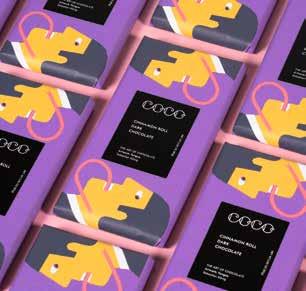
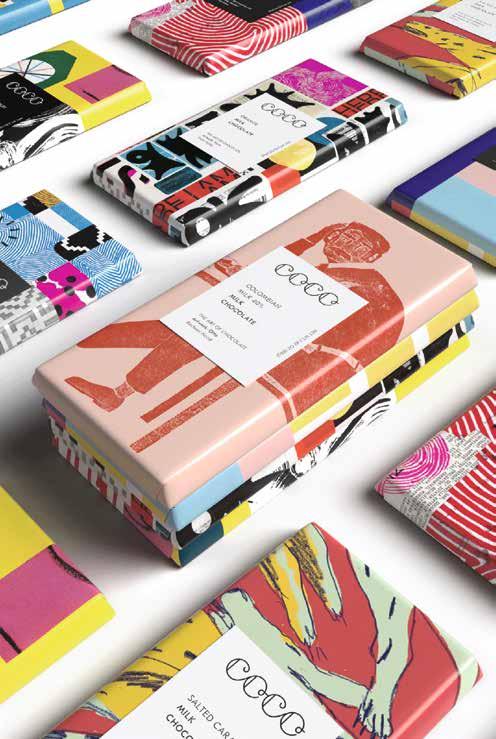
COCO Chocolatier tablet wrappers are created by local or international designers and artists, elevating the bars into sought-after gifts
Can’t wait to take your brand identity and turn it into your brand experience? In the next chapter, we will be deep-diving into how you can create your own brand experience as we break down the following steps:
Define your brand values
Now, since brand experience is such a crucial domain in the entrepreneurial world, we’ll dedicate the following chapter solely to it. With the combined knowledge from this chapter and Chapter 5, you will not only have a solid brand identity. You will also be ensuring that it is aligned with your brand experience so that every customer interaction successfully reflects who your brand is and its reason for existing. 1 2 3 4 5 6 7
Understand your audience
Create a customer journey map
Develop a brand strategy
Make use of your visual identity
Implement your brand strategy
Monitoring and improvement
Just like these businesses, you can encourage customers to share their experiences on social media or leave reviews. Companies leveraging the power of being online can create a sense of community among clients and drive potential new interest to their brand. Increasing the digital buzz around a business often results in increased online or foot traffic that translates into more sales, even if the prices are slightly higher than the competition.
A chocolatier that has used the power of social media and word of mouth to her advantage is NIKKI THAKKER , who turned her opening day into an exclusive event where people with a strong online standing could spread awareness about éntisi and what the brand stands for:
“We had about a two-day event where we had people visiting us. They were coming in every day to the boutique, and we would make them taste everything and gave them a little gift to take back home to share it with their family.”
This is the moment of truth for your brand experience — the minute a customer encounters it. This interaction is part of the customer experience and the way it goes about should never be an accident. Customer experiences should be shaped with strategic goals in mind.
Because of the ever-changing behaviour of consumers, customer experience is subject to change, which means it’s something to always keep an eye out for. The well-loved Spanish bakery, Mallorca, is a pastry shop that has been successful in the national and international market for decades. Despite years of success, the owners keep investing in learning and developing new ways to enhance their customer experience each year.
JACOBO AND PABLO MORENO manage this family legacy, and they told us how one of their experience marketing efforts was all about packaging:
“80% of people buy chocolate as a gift. So, you have to offer an amazing experience from the moment they see the box, to the way they open it, and even to the explanations they find inside. This means you have to work around it a lot.
We’ve been investing a lot of money and research to actually engineer our own packaging with magnets. We want to create a package that opens smoothly, that you don’t have to pull apart or struggle with. We usually work a lot in all parts of the customer experience journey, especially the part when the product is bought and leaves your control. Our goal is to make the packaging not complicated, but playful for people to enjoy.”
Whether it’s an event, the way you welcome consumers into your store or the shape of the boxes that carry your products, the customer experience you create is almost as important as the products you serve.
Now, regardless of where you focus your brand experience efforts, and whether you go for a traditional or ground-breaking one. The key is to craft an experience that carries the essence your business’ identity.
But, customer experience is not only the foundation of your brand’s reputation. Did you know it will impact your selling prices as well? Your product margins could be increased according to the type and quality of experiences you create for your target audience — are you ready to create one?
“Look at an artisan chocolatier and at the people who are going to invest in their product. They see it as a special treat. And it’s either a treat for someone else, because it’s a gift, or a special treat you buy for yourself that you want to indulge in. So, for me, an artisan has a responsibility to produce something that is a beautiful experience.”
KIRSTEN TIBBALLS – SAVOUR SCHOOL
“I feel that sometimes I’m getting more involved with the projects in the city, maybe because of the recognition received. You come across as more credible and are sometimes even called upon for certain things to promote the city. I don’t appear on television or anything for that matter, but those are certain things that are good to get your business going.
For all of this, social media is especially important. Everyone walks around with their phones. We used to make an effort to get extra customers to the shop. But once thanks to a city cooking event, we were able to achieve much more than sitting here in the shop waiting for a customer. So, you do need that advertising, you do need that support from tourism. And that evolved quickly among foodies: people find us faster.”
OLIVIER WILLEMS – OLIVIER WILLEMS
Olivier Willems knows that eye-catching images of his creations boost sales on his digital platforms and in-store
Keeping track of your digital data
Followers, likes, views and link clicks — all these insights are available for free when you create a social media business account. Use them to study your content performance and compare it to your sales during specific periods.
But why? Tracking your social media content performance helps you keep track of how your audience reacts to what you share online. Did they like a specific trend? Did a certain post outperform the rest? Do people like photos or videos the most?
Look at the numbers, find out what kind of content your clients prefer, what gets you new followers and which posts are the ones that create sales or direct your followers to your website or in-person shop.
Remember to stay social on social media! Don’t be afraid to engage with your audience online as you would offline. Ask them how they got to know you and what they’d like to see in the future. Polls, surveys, open questions, comment spaces and even direct messages — there are multiple tools social media platforms offer to create this kind of engagement.
Once your social platforms are ready for you to start posting, you can use them to update your marketing goals and upgrade your strategy, as the elements you discover through your online presence can become topics or goals that feed into your digital strategy in the future.
“I started with social media and it went well. One sponsor led me to another, and to great contacts around the world. Sooner or later, they get you into some kind of business. That’s pretty much how I scaled from standing in a small pastry shop every morning. Nowadays I’m a full-time employee at a large company with hotels and everything, but I’m at that point where I can ask for some kind of freedom.
Now, what many people forget is that you might have a beautiful website, but we still need people to get there. And the investment linked to getting people on your online shop, finding you, making the order, paying and so on, that’s the difficult part. It’s as difficult as opening up a shop in the street and getting people in. Odds are that, in a busy street, you might have more people dropping in out of curiosity compared to an online shop.”
SEBASTIAN
makes sure to set aside a budget for professional photography of his confections
David Maenhout
One of the critical aspects of running a successful business, regardless of its scale, IS HANDLING
YOUR FINANCES
EFFECTIVELY . To do so, there are two essential tools that will provide your company the foundation for financial clarity, and eventually, market success. Detailed financial planning is not only used to keep track of your capital, it also represents an important aspect of your business plan (Chapter 3).
“You can always start with a burner, a table and a cooler. But it all depends on the level and scale and quality you want to achieve. We always update our machinery based on our needs. Our machines constantly change as we grow our business.”
LAMA BASSAM AL-GHRAWI – BASSAM GHRAWI CONFECTIONERY
These tools will also help you understand and control your business’ inflow of revenue and outflow of costs, and incoming and outgoing cash. By knowing how your finances work, you will be able to monitor your profitability, make informed decisions, learn from them and adapt. Combined, these tools are unmissable during the first months of setting up your business, and after, as you grow.
In this chapter, we will talk about two such tools: budgeting and cash flow planning. We’ll explore what these are, why they should be in place and how you can make them work for your business and maintain its financial health.
Whether you’re just getting started or continuing an existing artisanal chocolate business, strengthening the foundation of your financial knowledge will be critical in the short and longer term. So, let’s dive in!
Your staff will not only help you with the operations of your shop. Just like you, they will be
ADVOCATES FOR YOUR BRAND IDENTITY
and story. And your relationship with your staff will determine their relationship with your clients. The team you build will help you grow and represent your brand and will have a direct impact on your business’ success.
JACOBO AND PABLO MORENO live by this philosophy. With their family legacy as a business that keeps growing through the decades, Mallorca’s administration is run by family members:
“Besides our shops in Madrid, we also have shops in Mexico and Japan. We separate the business into three branches: shops, production, and administration. There are two directors in each of the branches, and they’re all part of the family — we are brothers, and the rest are our cousins.
That’s part of the differentiation element. We look at it as if each of the areas of the company are separate companies in a way. And then we just work together to merge everything, to have one way of looking at things.”
“The biggest advantage of more employees is that we can produce more. But if you’re a beginner and you want to start alone, you can! Focus on the flavours and quality of your chocolate, and on selling locally instead of internationally or around the country.”
JAP JOY – FIDÉE
Family or not, the idea behind this business approach is that your team members should be people you can trust. Trust, even if you are a solo entrepreneur, is not to be taken for granted when putting together a team. Travelling the world to give demonstrations and consult in other chocolate, SEBASTIAN PETTERSSON knows the importance of teamwork. A team has been trained by him to run the production operations autonomously while he is focusing on other aspects of the business. This is the one thing that allows his ideas to come to life, even when Seb’s away:
“My team knows exactly what they’re supposed to do. I have people that I rely on, so I can be wherever I want as long as they keep in contact with me.“
If you’re growing your business or are taking over an existing one, it’s probable that you already have a group of people who are part of that business. The question to recurrently ask yourself is how those people are accurately representing the spirit of your brand, and how you can help them do so.
However, if you’re starting from scratch, there’s another a key question to be answered — do you believe you need help to start selling?
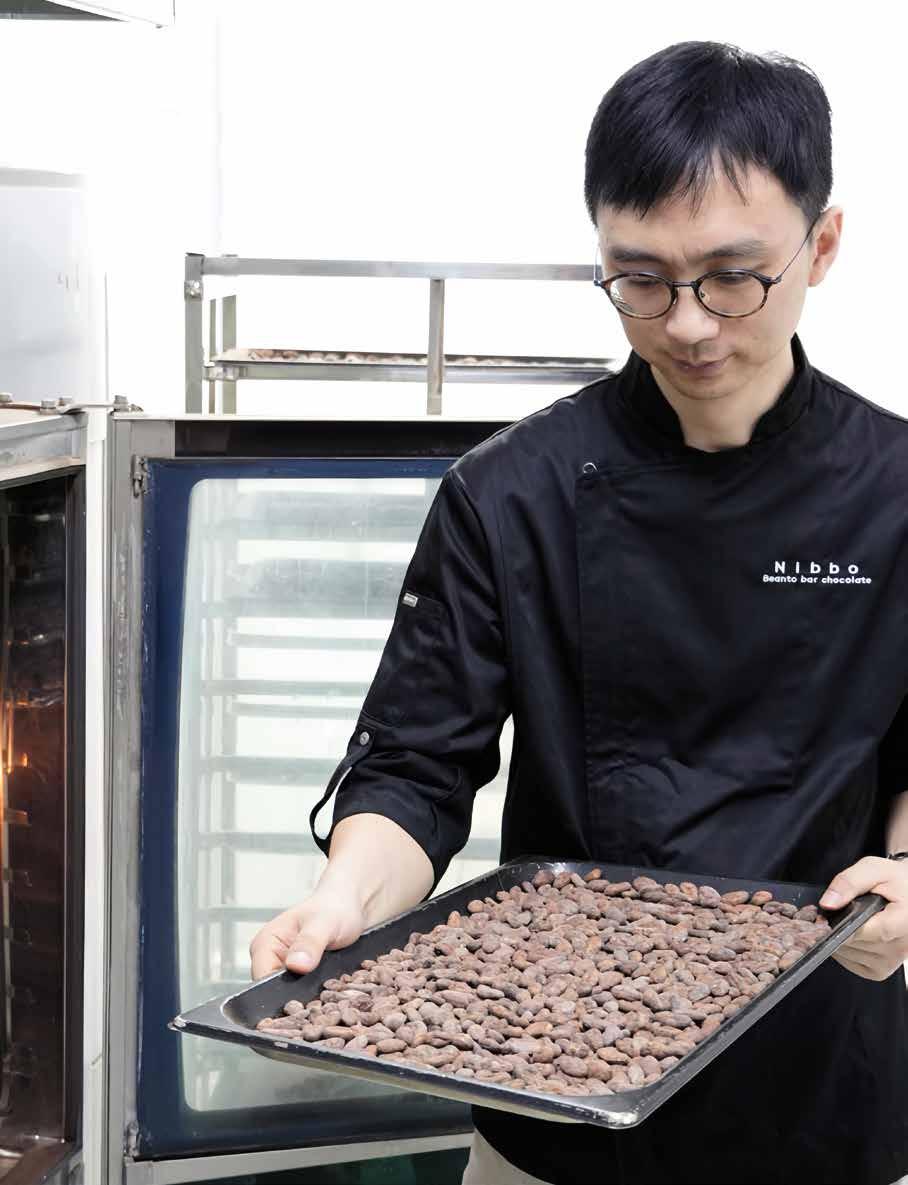
Because Nibbo is a bean-to-bar concept brand, beans are hand-picked by the team and roasted on-site
BY YOURSELF, OR AS A TEAM ?
Starting on your own or do you have a team that has your back? There’s no wrong or right answer. The answer, however, will impact your revenue and costs, production line schedules, the volume you can produce and the reach of your operations. And last but not least, by relying on a (small) team you will get the support you need during busy or difficult times (like illness or unexpected life events).
Most chocolatiers who’ve talked to us expressed their preference to work with someone who supports them. In a lot of cases, the first team member wasn’t a hire, it was their partner.
This is the story of STEPHEN and SUN TRIGG . Although their roles shifted as Lauden Chocolate grew, they found the team they needed in their significant other:
“We’ve worked so well as a business. My wife and I, we’re like a yin and yang, we complement each other. She’s this whirlwind of energy and goes 100 miles an hour, whereas I’m sort of the opposite. I will pull back to keep it grounded and keep that risk management structure in place.
My wife is now just R&D, so she doesn’t do any daily production. She does R&D while I run the company day-to-day.”
This was also the case of MIROSLAW PELCZAR . When he began his journey to create M. Pelczar Chocolatier, his wife who is a pastry chef, was with him every step of the way to create something new for the Polish market:
“Exactly 12 years ago, together with my wife who is a pastry chef, we decided we wanted to do something different than classic pastry chef work in a classic pastry shop. We wanted to produce handmade chocolates which are high quality and different from all industrial ones available in Poland.”
With these examples, you might see how working by yourself will place more responsibility on your hands. However, there are multiple owners of successful chocolate businesses who started their journey on their own. JAP JOY has had a similar experience. He created chocolates at home and eventually asked his sister to help with the production as the demand grew:
“At the beginning, I did everything myself. The gelatos, the chocolates, even some cakes and pastries. I started at home, not even in a studio or a shop, just at home. Then I asked my sister to help. We created the packaging, packed the chocolates and delivered them all over China.”
“I think nowadays it’s probably better to be a team, to delegate different aspects and maybe do what you do really well and bring that to the table, bring that to the business.”
JULIAN ROSE – JULIAN ROSE CONSULTING
DelRey’s
founder Bernard Proot advises against rushing into equipment purchases — he recommends making gradual high-quality investments that pay off in the long term