has become a beautiful city once more, a place where a har mony between heaven and ear th has been rekindled Spanning across the Perfume River, the Eiffel-built Trang Tien Br idge stretched fully repaired, the banks of the r iver are again lined with newly painted monuments. On the nor th bank, the Imper ial Citadel unabashedly displays what’s left of its exquisite str uctures. On the south bank, some of the Nguyen tombs are showing off their immensely under-rated landscape architecture, now that they have again been retur ned to their for mer function, being palaces of afterlife for the Nguyen Emperor s.
From being a piece of Cham ter r itor y annexed into ancient Vietnam in 1307, not only had Hue proven to be a city remarkable in its str ive for g reatness and beauty, it has now become a city of festivals, when, ever y two year s since 2000, the entire city immer ses itself in a g rand celebration of Nguyen lifestyle, the latest being in 2010
Alter nating between the festivals, Hue traditional handicrafts are showcased ever y other year, when the finest traditional Nguyen ar ts are put on display and their techniques of production explained
According to official statistics, over seven million foreign visitor s came to Hue since 1993 Most of them left with awe and wonder at the lavish architecture and the r ichness of Nguyen ar ts, other s with a feeling of slight dissatisf action that Nguyen ar ts were not much different from their Chinese counter par ts and not as g rand Classical ar ts under the Nguyen, indeed, have a Chinese appearance at fir st glance, however, they have distinctive Vietnamese features that evolved with time to include new elements, some by the inventiveness of local ar tists, other s impor ted from Europe and elsewhere What inspired different Nguyen emperor s to make Hue and their ar ts so uniquely Vietnamese? Let us fir st take you on a jour ney back in time, star ting on the last event of the Nguyen Dynasty, and then, together, we travel for th to discover a moder n Hue, a royal her itage restored and re-invented
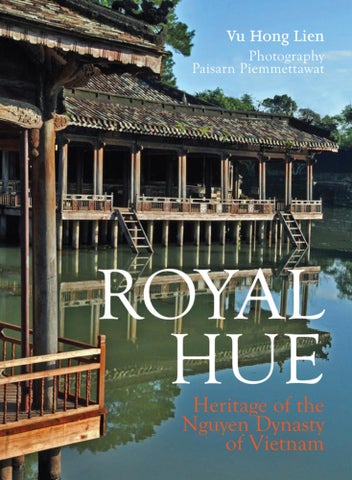
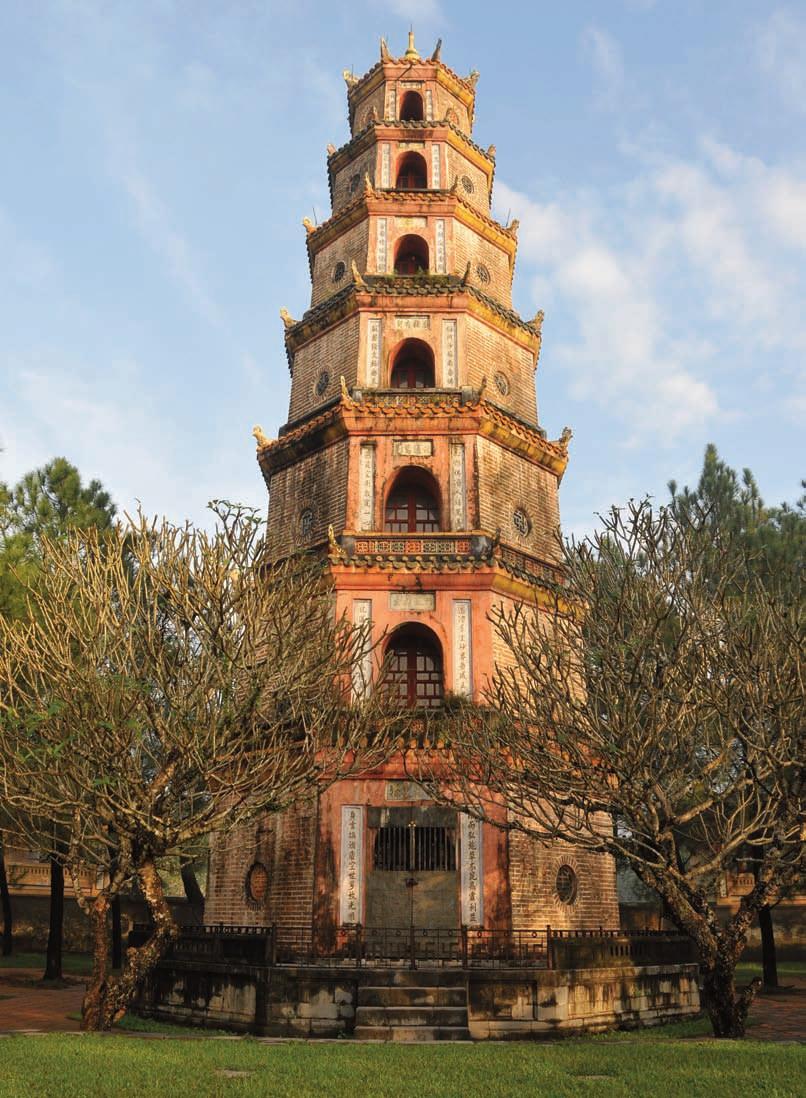
Thien Mu Pagoda
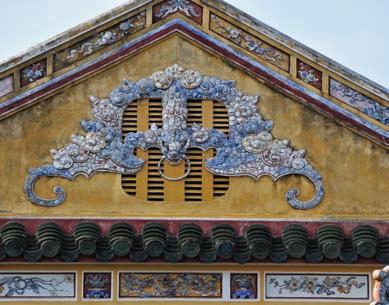
Bat motif – Imperial Citadel
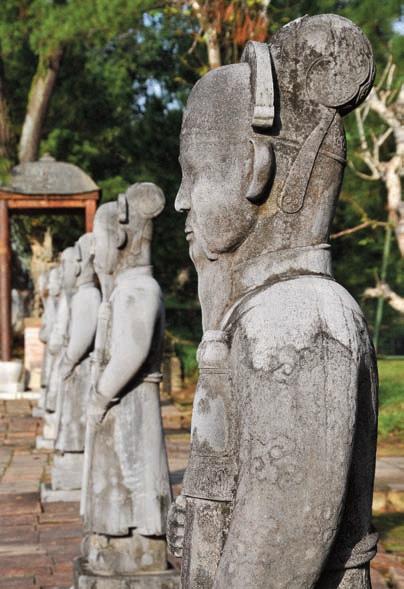
Court of Stone at Minh Mang’s tomb
Intro duc tion
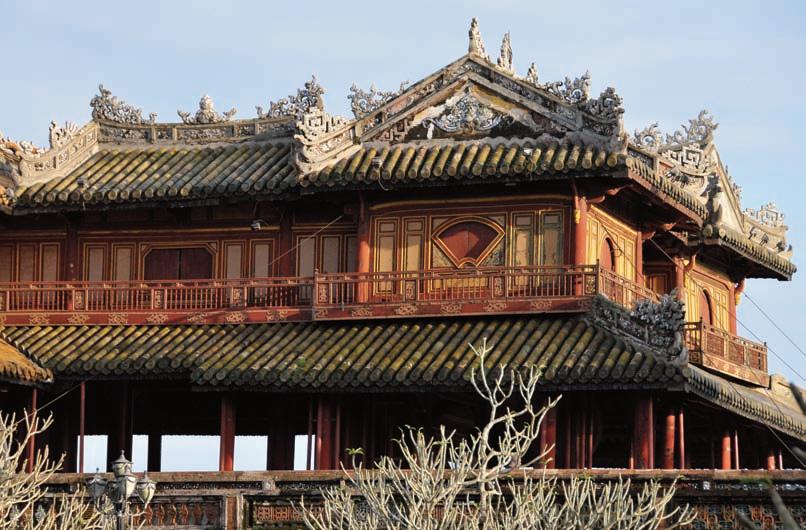
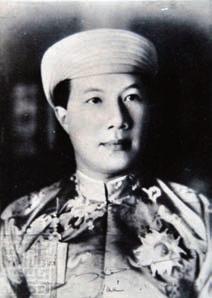
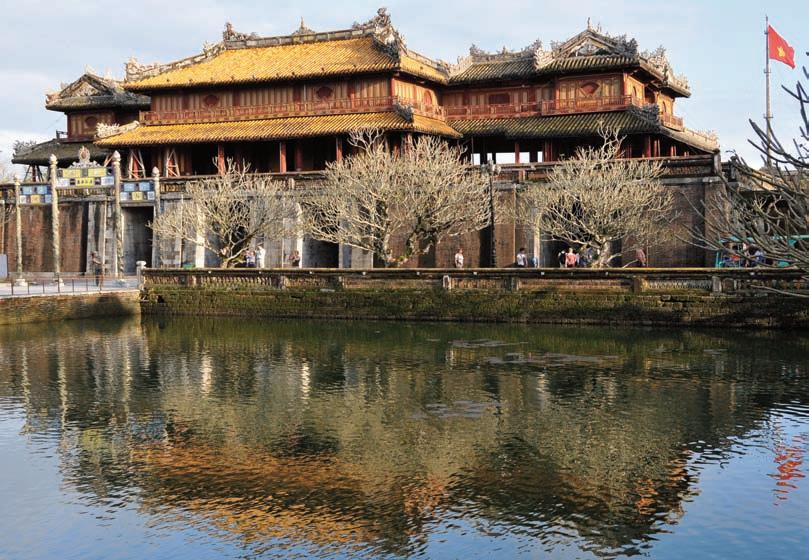
On the 30th of August 1945, standing on the Ngu Phung ter race of Ngo Mon, the royal gateway into the Imper ial Citadel of Hue, the last emperor of Vietnam, Bao Dai, for mally announced his decision to abdicate to a bemused crowd of thousands who had been impatiently waiting under the glar ing after noon sun
‘With sad reminiscence of the four hundred-year-struggle that our glor ious ancestors went through to expand our nation from Thuan Hoa to Ha Tien, with some regrets for the twenty years of our reign, dur ing whic h, we faced the impossibility of providing an appreciable ser vice to our countr y, we have decided to abdicate ’
The sur pr isingly shor t statement, dated 25th of August 1945, was issued at the request of the newly for med Democratic Republic Gover nment of Ho Chi Minh’s Anti-French Alliance, the Viet-Minh It was a dramatic and ultimate act of the last Nguyen Emperor, after days of confusion at cour t, when Bao Dai suddenly found himself abandoned by all ‘On the mor ning of the 21st of August, emptiness was all around me, no pr ime-minister Tran Trong Kim, no minister at all appear ing at the Palace’, Bao Dai recalled in his Memoir, published in 1980
Right Corner of Ngu Phung Terrace
Previous page: Emperor Khai Dinh’s An Dinh Palace
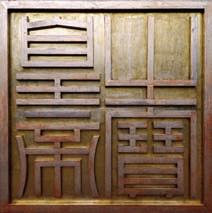
Image of the Nguyen Emperor’s seal
Being alone was a bewilder ing exper ience for Bao Dai who had been protected from unpleasantness throughout his life and reign by his own f amily, his mandar ins, the French protectorate author ity and the Japanese occupying force Those days in August 1945 were a shocking reality for Bao Dai who remembered them as a time that ‘the citizens of Hue seemed to be seized by a high fever’, while demonstrations occur red daily His own earlier effor t to proclaim independence and appeal for national unity was ignored both in Vietnam and elsewhere His letter s to President Tr uman, King George VI, General Chiang Kai-shek and General De Gaulle went unanswered
With his abdication, Bao Dai closed the last chapter in the histor y of the Nguyen Dynasty, a turbulent r ule of 143 year s that, at times, saw Vietnam engag ing in intense diplomatic discour se with successive French author ities, allied with and then fighting against the Thai and the French, only to succumb to French domination in the later half of the 19th centur y In his Memoir, Bao Dai recalled: ‘the announcement of my abdication met with a profound silence’, ‘ a look of naked astonishment passed through the f aces of those lining up on the fir st rows ’ ‘Men and women
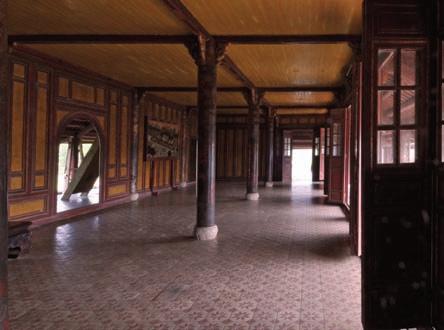
Inside Ngu Phung Terrace
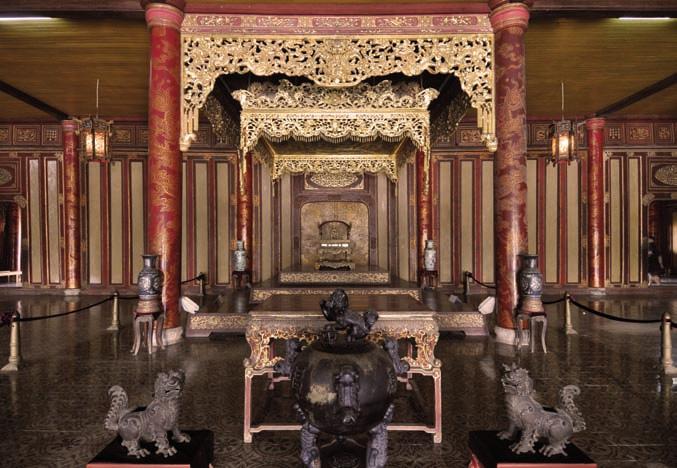
The Throne room in Thai Hoa Palace
seemed to have gone deaf’ ‘My announcement appeared as a thunderbolt render ing ever ybody petr ified’ His own pr ivate secretar y, Pham Khac Hoe, who was present at the ceremony, on the other hand, remembered it as a time that ever ybody clapped and cheered and that Bao Dai had read his statement in an emotional voice that wavered at times.
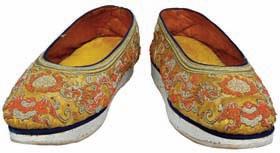
In this atmosphere of general confusion in that f ateful after noon, Bao Dai quickly perfor med the required ceremony of handing over his symbols of royal author ity - his Gold Seal (Kim An) and his Sword of Mandate - to representatives of Ho Chi Minh; Tran Huy Lieu, Nguyen Luong Bang and Cu Huy Can. The process of the abdication ceremony had been discussed and ag reed between the cour t and representatives of the new gover nment only the day before, as soon as the delegation from Hanoi ar r ived in Hue. According to Pham Khac Hoe, Bao Dai ‘dressed for the last time in his royal golden robes, a golden cloth headdress for crown, and embroidered shoes on his feet’.
In the negotiation over the process of the ceremony, one of the requests that Bao Dai asked and was accepted was that his royal flag would be raised once more Dur ing the ceremony, the royal yellow flag was raised and then lowered following his statement of abdication, to be replaced by the Red and Yellow flag of the new revolutionar y gover nment The ceremony ended with 21 ceremonial shots of canon to announce that the exchange of power had been completed
The abdication ceremony over, Bao Dai left quickly and quietly, some said with tear s in his eyes, to assume his new mantle of being
Emperor Bao Dai – photo courtesy of Phan Thuan An
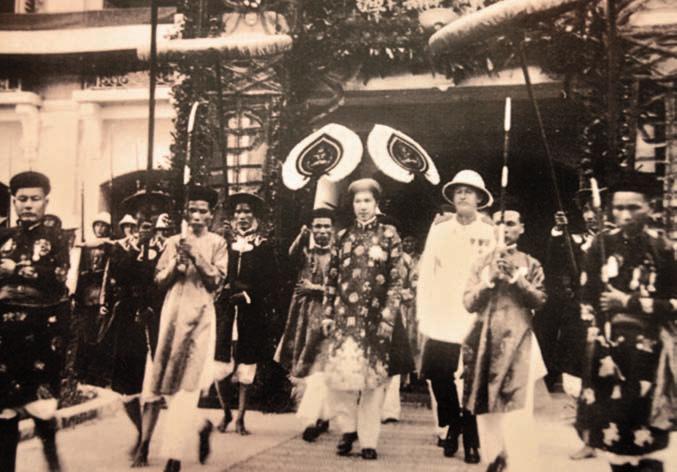
Emperor Bao Dai at his coronation
Ngo Mon – view from inside the Citadel
Emperor Bao Dai’s shoes
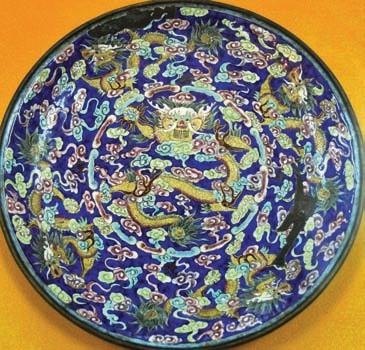
Phap Lam plate
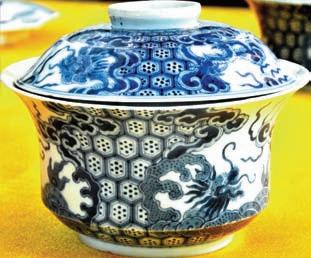
Blue and White Ceramic steam bowl