King charles and archaeology
The discovery of Pompeii is linked to the discovery of Herculaneum several years earlier, and to the interest of Charles, King of Naples, in archaeological excavation. Ultimately, these two serendipitous findings, combined with government intervention, profoundly changed our knowledge of the ancient world. The Bourbon prince Charles (a son Philip V of Spain), who had already acquired the Farnese dukedom by marriage, won the Neapolitan crown by conquest during the War of the Austrian Succession. It was formally awarded to him as a kingdom in the 1734 peace settlement. Charles established a new dynasty and attempted to give it a distinctive character that would set it apart from the others of that era. Work for the organizational and economic development of the new kingdom targeted both agricultural and industrial activities, without overlooking social provisions for the weaker classes of the population. Charles was assisted by Bernardo Tanucci, a shrewd and trusted advisor. In particular, an energetic construction program was established to give the king and his court symbolic buildings that would also embody the power the new dynasty hoped to achieve. As part of this specific activity, plans were drawn up to build a royal palace in Portici, just east of Naples. Close to the spot chosen for the palace, two ancient statues had been discovered in the early 18th century during work to dig a well. The statues, together with other artifacts found with them, were exported by Prince d’Elboeuf, general of the Austrian army, which was occupying the Kingdom of Naples at that time. Therefore, some of these items were sent to Austria and others went to France. When another well was dug in 1738, more artifacts were discovered and the news reached Charles, who thus decided to conduct research on a broader scale. As a result, several dozen feet below the modest houses that formed the town of Resina, Herculaneum started to come to light. This was one of the ancient cities buried by the terrible
eruption of Mount Vesuvius in AD 79 as recounted – in all its drama and consequences – by the two letters that Pliny the Younger (ca. AD 61 – ca. 112) wrote to the historian Tacitus (ca. AD 56 – ca. 118).
The new excavations progressed slowly and with great difficulty, and they were conducted by digging tunnels through the tufaceous material. As opposed to the other cities around Vesuvius, Herculaneum was not buried under lapilli (little stones of congealed ash) and overcome by noxious gas, but was devastated by boiling mud, mixed with volcanic debris, that cooled to form a compact mass many feet thick. During this research, for which even convicts were employed, colored marble artifacts and furnishings were removed, and the wall frescoes that were deemed to be of interest were detached from the walls. Together with the valuable treasures that were found, they were collected in an area of the Portici palace, which was gradually turned into a museum. The corps of military engineers, led by Colonel Rocco De Alcubierre, directed the excavation work. Discipline was extremely strict, and workers were even searched at the end of their shifts to ensure that no artifacts had been stolen from the king’s collection. The excavation site – and anything found there – was considered the property of the crown and only the members of the newly established Accademia Ercolanese – the Academy of Herculaneum – were allowed to study them and disclose the discoveries that were made.
The news that an entire city had been discovered immediately spread far and wide, arousing the antiquarian interest of all the most cultured circles in Europe. This further stimulated Charles’ overall political strategy, as he also wanted to break away from papal influence. The antiquities of Rome were the age-old pride of that city and of the power – temporal and spiritual – of the popes installed there. Since the King of Naples now had equally important remains, this put him on par with pontiffs. Added to this was the news that frescoes with a wide
24-25
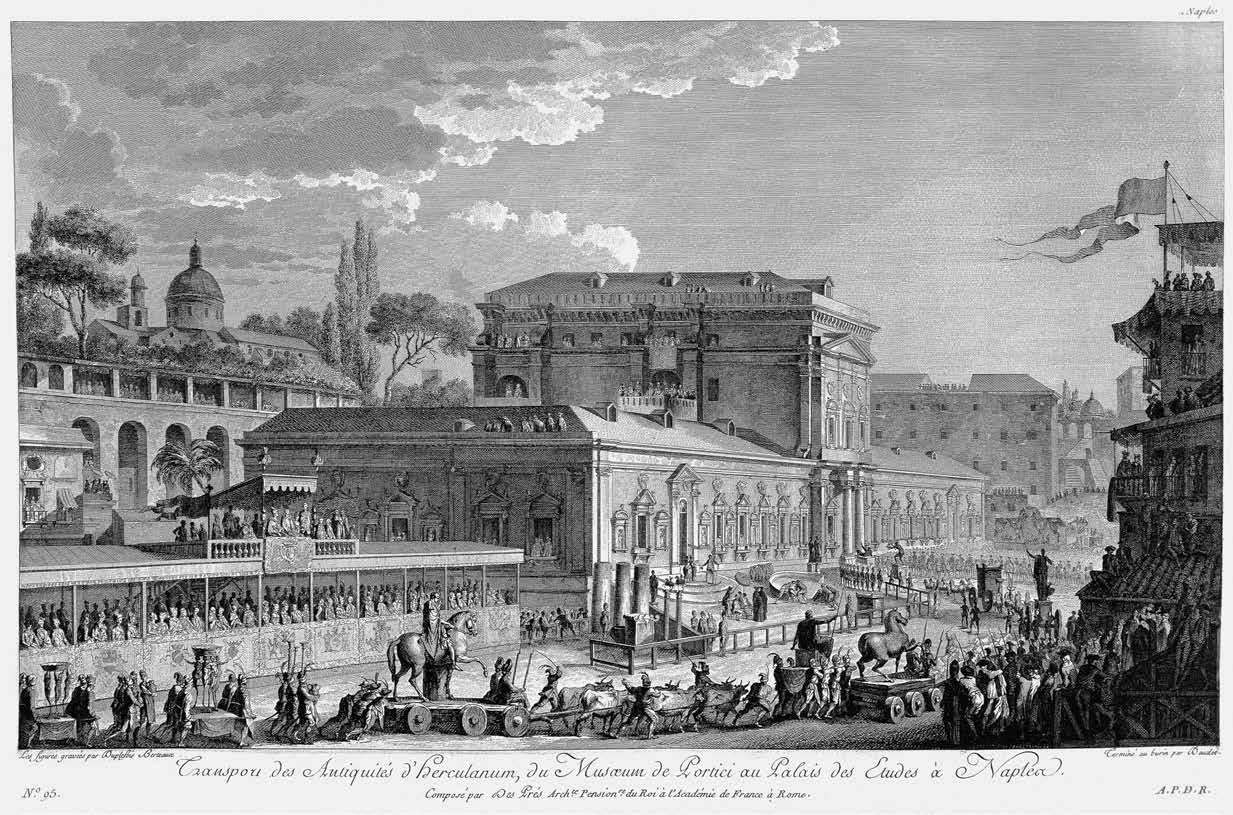
Pomp and honor accompany the transportation of Herculaneum artwork from the Portici Museum to Palazzo degli Studi in Naples at the beginning of the 19th century, as shown in this period engraving.

25
King Charles is portrayed standing with a dog next to him (anonymous painting dated 1759, Museum of Capodimonte).
variety of subjects were constantly being uncovered in Herculaneum. It was widely known (based on the literary sources) that painting was probably the most highly esteemed art among the ancients – who had handed down the names of famous painters like Apelles, Parrhasius, Zeuxis and others – and yet very few paintings had been found in Rome. The most sensational finding, toward the end of the 15th century, was Nero’s Domus Aurea (the Golden House) on the Oppian Hill (mistakenly identified as the Baths of Titus and, moreover, closed to the public). With its imaginative decorative motifs, the Domus Aurea influenced the Renaissance “grotesques” that were
liberally reproduced in aristocratic palazzos and in the Vatican Loggias. The other significant figured painting was found in the 17th century: the fresco, known as the “Aldobrandini Wedding,” was an exceptional case, despite its poor state of conservation. The wealth of paintings unearthed at Herculaneum thus kindled excited hopes of finally learning about this aspect of antiquity as well. This was the main reason that the German aesthete and classicist Johann Joachim Winckelmann (1717-68) went to Naples twice, overcoming all the difficulties, reservations and obstacles that the members of the Accademia Ercolanese posed toward his requests and studies.
34 top
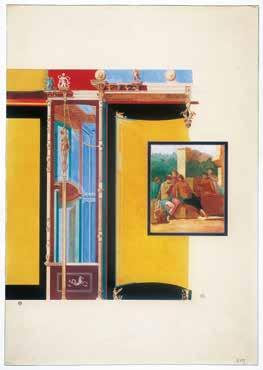
The inset, part of a watercolor copy by an anonymous artist, reproduces a frescoed panel from the House of the Tragic Poet.
34 bottom
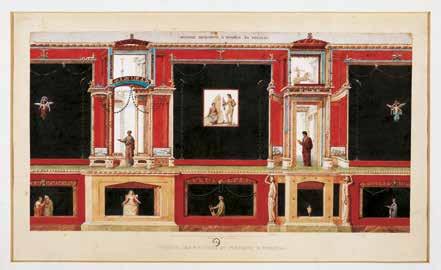
Red and black are the predominant notes in this watercolor by J. B. Lesueur, depicting the fresco he attributed to the hypothetic “Pantheon.”
34-35
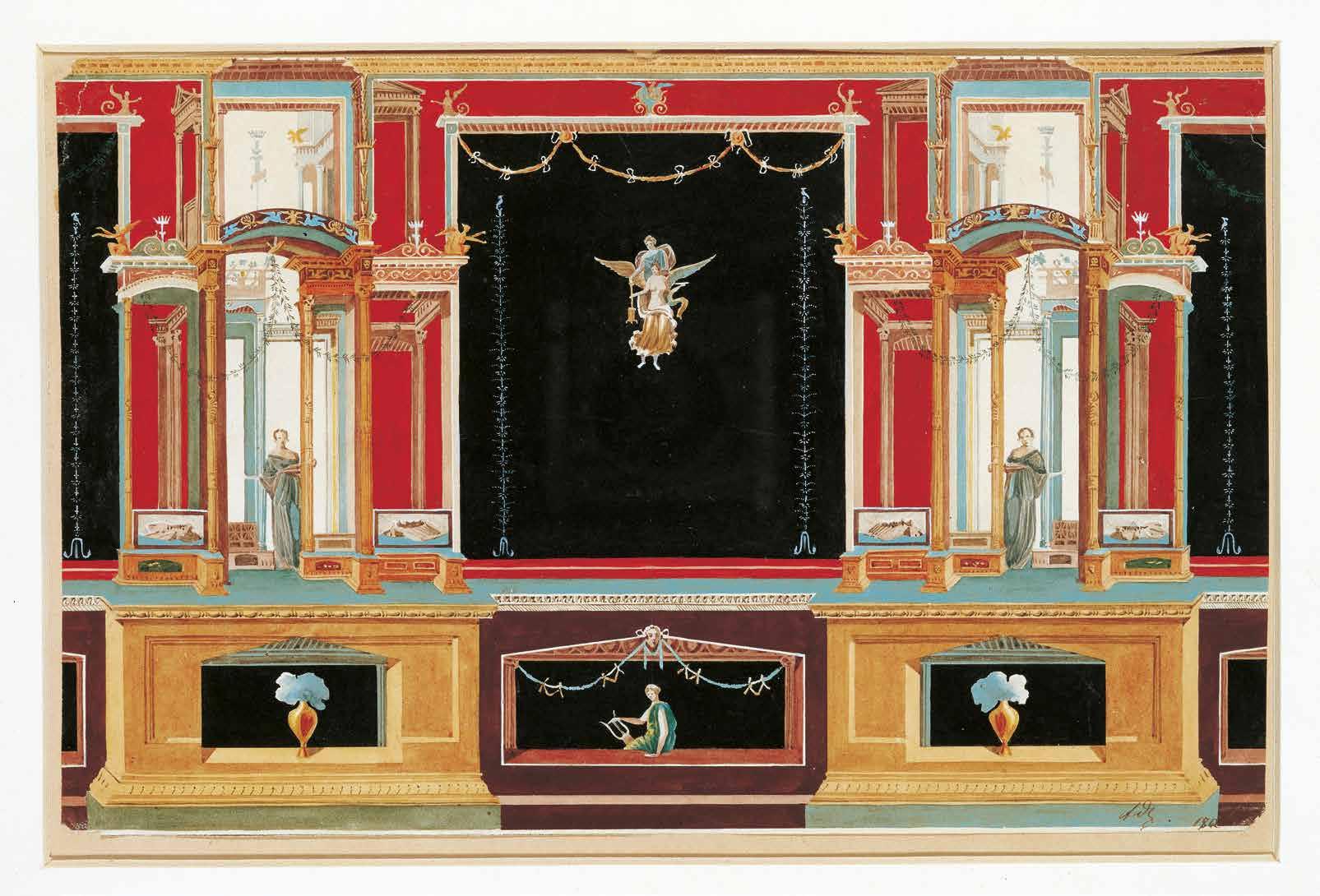
The elegance of the wall decorations of Pompeii’s buildings is preserved in this reconstruction showing the subjects, colors, frames, panels and niches of a Pompeian domus (Ecole Nationale Supérieure des Beaux-Arts, Paris).
78-79
This mosaic by Dioskourides of Samos, from what is commonly referred to as the Villa of Cicero, portrays a group of street musicians (Naples, man).
80 center
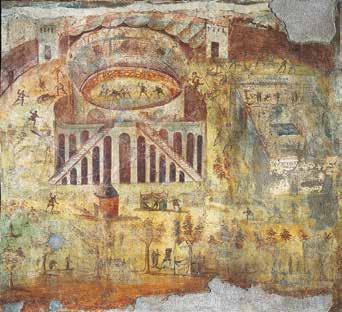
The brawl between the Pompeians and the Nucerians, recounted by Tacitus, is depicted in this fresco from a Pompeian house (Naples, man).
80-81
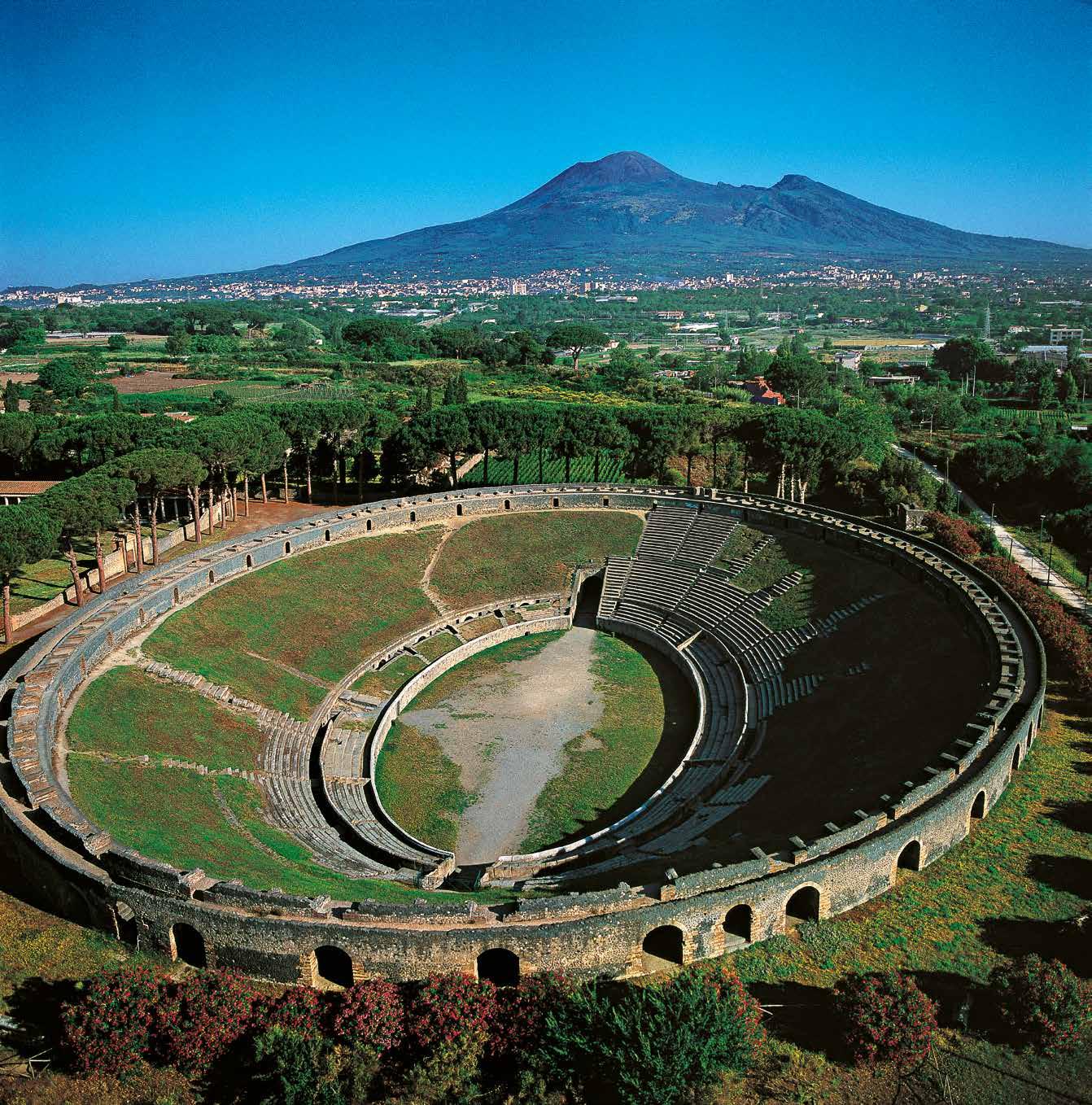
This aerial view, with Mount Vesuvius standing out in the background, reveals the amphitheater’s full grandeur.
The gladiators were even more popular, as demonstrated by the numbers of graffiti written by their fans, particularly women, who apparently appreciated their sexual prowess. Nonetheless, they were below actors in the social hierarchy, due to the fact that they were usually slaves or freedmen and only rarely freeborn citizens. Their shows were staged at the Amphitheater, which was built in the early years of the Sullan colony. The Amphitheater could probably seat about 20,000 people (according to an interesting theory, it marked the conciliation and amalgamation of the two populations). It is the oldest example of this type of building, created before the specific denomination even existed, as an “area for spectators around the arena.” It was built in the southeast part of the city next to the walls, in an area without any houses. Its location away from the center of Pompeii made it easily accessible for spectators arriving from nearby towns. The shows held at the Amphitheater were known as munera (“gifts”), since the magistrates offered them to the people. (It is noteworthy that not only did the city magistrates receive no recompense for their term of office, but they were even required to pay part if not all the expenses for the games they offered out of their own pockets.) These shows were mainly gladiator fights, which originated in connection with funerals as a re-
placement for the original custom of human sacrifice, and they became quite popular, particularly in Campania. The battles envisaged various roles, with the corresponding offensive weapons and forms of protection. At the same time, venationes – the “hunts” of wild animals – were held, and these were also extremely popular.
Unique evidence of the shows held at Pompeii’s Amphitheater come from the edicta munerum, the painted announcements (about 75 have been preserved) of the shows on schedule. These announcements resembled modern-day theater playbills. They followed a standard form even in their graphic presentation: first came the name of the editor muneris (the person organizing and “producing” the games) in big letters, followed by the term gladiatorium paria (the pairs of gladiators) who would be playing, generally twenty. The announcement would also list the place and date, as well as an indication if the venatio would take place, or the presence of the vela, i.e. the cloth covering for the amphitheater to provide shade.
The gladiator fights stirred great enthusiasm among the spectators, who would express themselves in forms quite similar to our own cheering for modern football teams or other sports. And like today, this zeal could also lead to scuffles and riots.
As opposed to the cult of Isis, that of Cybele is not well documented in Pompeii. Aside from the painted procession of Via dell’Abbondanza, evidence may also come from an enigmatic block of black lava stone found in a niche in Regio I, next to a thermopolium, as it may evoke the non-human form of the cult of the Pessinus goddess. Sabbatius is deity from the same area. Connected with nature, he ensured regeneration and fertility, particularly of grains. However, as a result of the religious syncretism that often occurred during the Greek and Roman eras, the god may also have incorporated Dionysus, thus taking on some of the latter’s attributes.
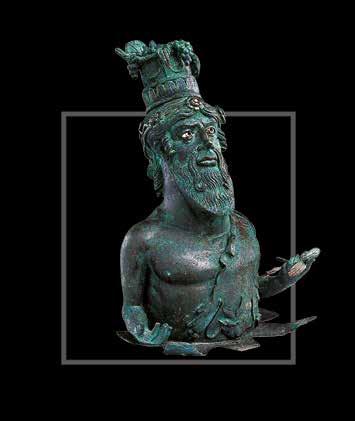
Pompeii has given us highly intriguing documentation in which the intersection of this god’s religious aspects is expressed as a collection of attributes, creating a picturesque symbiosis. A bust portrays him with a long beard and hair decorated with a trail of ivy, with a tall kalathos (a fruit basket with shape of a lily, often used as a symbol of fertility) and bunches of grapes, figs, plums, ears of wheat and a loaf of bread coming from it. In his left hand, he is holding poppy leaves and flowers, the attributes of Dionysus
118 left and 119
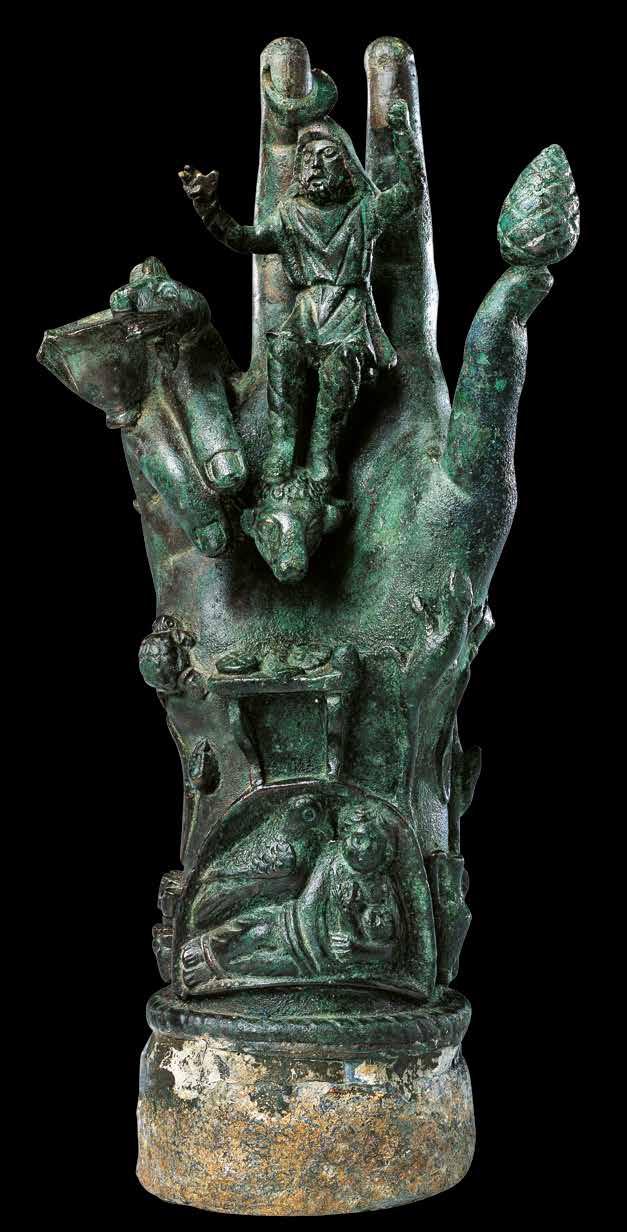
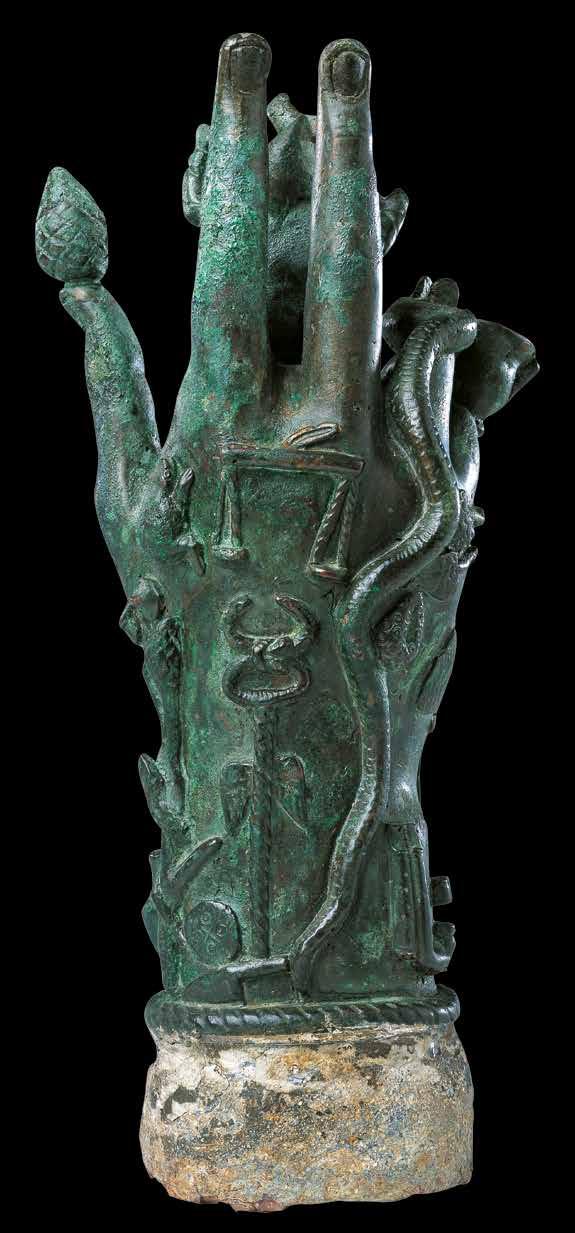
A tangle of symbols tied to childbirth can be noted on the back and palm of this “magic hand” found in a Pompeian house (Naples, man).
118 bottom right
The bronze bust with angular features is associated with Sabbatius, the god of nature from Phrygian mythology connected with orgiastic rites and assimilated with Dionysus in the Greco-Roman world (Naples, man).
and Demeter that add to this god’s supremacy in every field of agriculture. Sabbatius was also considered the protector of childbirth, however, and this function is alluded to by a group of “magic hands” made of bronze that were discovered between Pompeii and Herculaneum. Two of these items have been found in only one house in Pompeii (II 1,12): the Eastern god is portrayed seated in the palm of the hand, with his ring finger and smallest finger bent in the sign of the Latin blessing. Among the different attributes that cover the hand – a scale, a caduceus, a knife and a snake climbing to drink from a small amphora resting on the smallest finger, a pine cone and so on – the figure that stands out is a mother with a child at her breast, lying in a grotto loading a table with offerings. She may represent Persephone, the mother of Sabbatius. It has been theorized that gladiators were regulars at this house, given its proximity to the amphitheater and the fact that many of them were of Phrygian and Thracian origin (Thrax is the term used to define a common type of gladiator and it comes from the name of the armor). As far as nascent Christianity in Pompeii is concerned, research has not provided any interesting clues so far. The time was not yet ripe, or perhaps its few followers had not officially come forward.
224
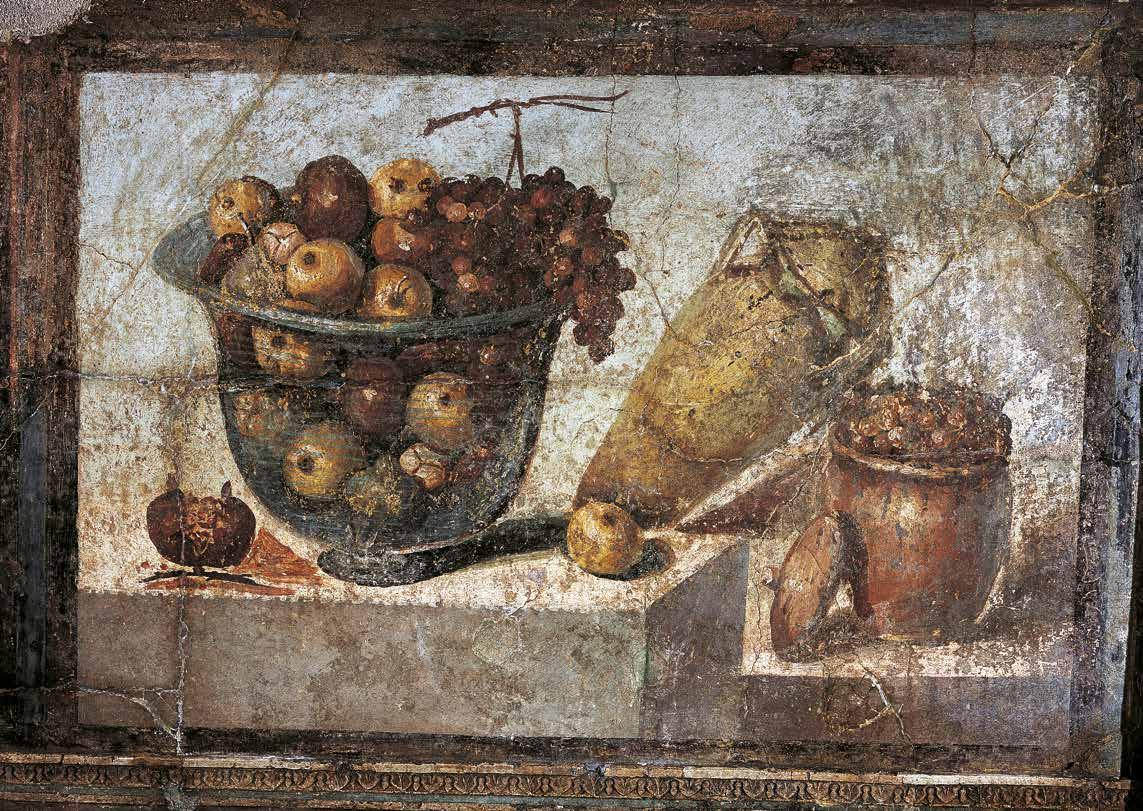
The frescoed picture shows a lovely glass vase filled with fruit, an amphora and a jar full of olives; a halved pomegranate stands out on the counter (Naples, man).
225
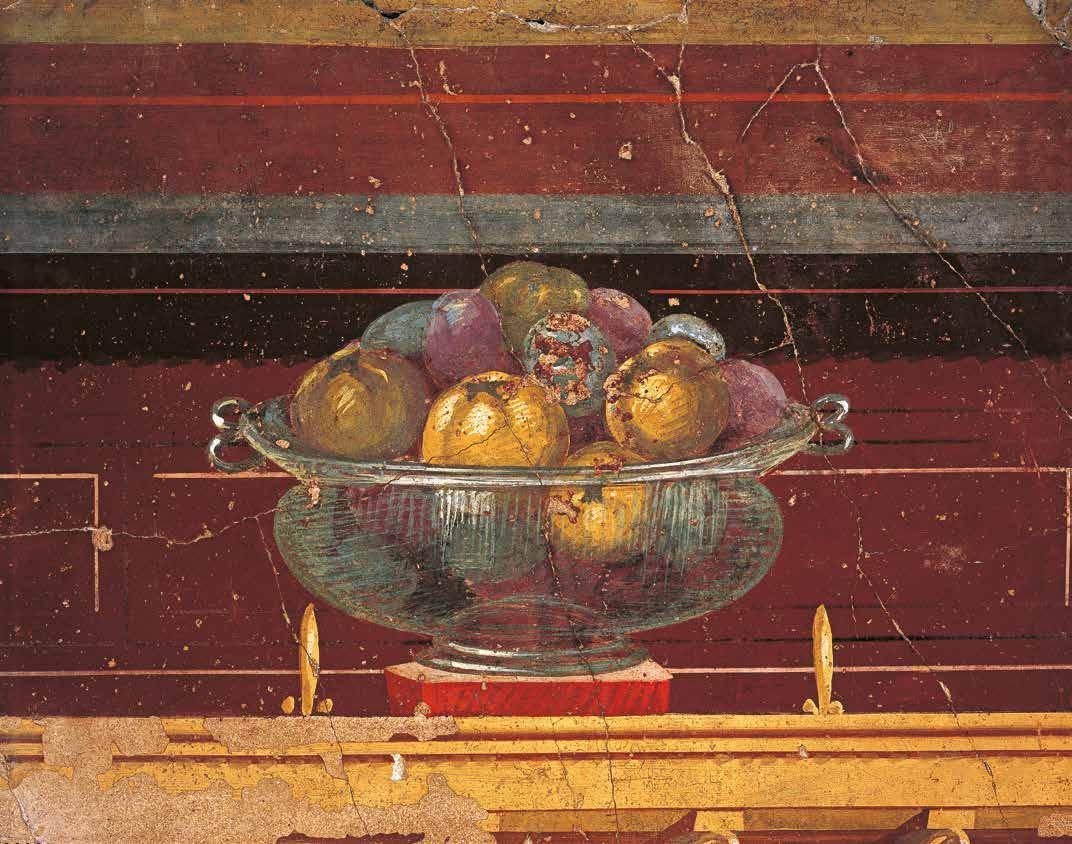
The glass cup, painted in one of the rooms in Poppaea’s Villa at Oplontis, holds pomegranates and reveals the decorators’ excellent artistic level.
Shellfish farming was first started in this area by Lucius Sergius Orata. Using clay tiles, he set up an oyster farm at his villa in Baiae toward the end of the 1st century BC, conducting this business in private pools or lakes and earning enormous amounts of money. In fact, the name of the nearby Lake Lucrino comes from lucrum or profit. The banquets held by Lucullus and the ones described sardonically in Petronius’ Satyricon were famous, and we can easily image these kinds of banquets being held in Pompeii. Nevertheless, many Latin writers have left us
interesting information about the meals that were enjoyed on different occasions. Seneca, the Stoic philosopher who was surrounded by luxury, maintained that bread, figs and cheese sufficed (Epistulae ad Lucilium, XI, 87,3). Pliny the Younger (Epistulae ad familiares, I, 15) went a little further, at least in his preparations, to entertain his friend Septimius Clarus: three snails and two eggs with salad (appetizer), boiled barley or a similar grain (first course), wine sweetened with honey and cooled with snow, served with olives, onions and other tidbits as the last course.
Perhaps – at least in writing – one would stress his own moderation and portray the excesses of others. De re coquinaria nevertheless remains the most important Roman cookbook. It is attributed to M. Gavius Apicius, who lived during the reign of Tiberius and is known from later editions. Several suggestions, reinterpreted appropriately, are still acceptable for that crossover of tastes proposed by today’s famous gourmets. Naturally, we wouldn’t eat rotten fruit and garum as the Pompeians did, but dishes like chicken with olives or suckling pig cooked with different herbs
would certainly be welcome on modern tables. In the early morning hours of the city’s last day, people were thinking about food as usual. During the pauses between quakes, one person had set a ladder against a tree in the garden to pick some fruit (House of Julius Polybius), another one had filled a big pot with water and placed a lid over it (Asellina’s caupona), and someone else had put chicken bones on the fire. A plate of beans and onions was found in a brothel (VII 12, 18): it was left on the table, untouched, when the person fled suddenly to meet a fate we’ll never learn.
plants and animals in town
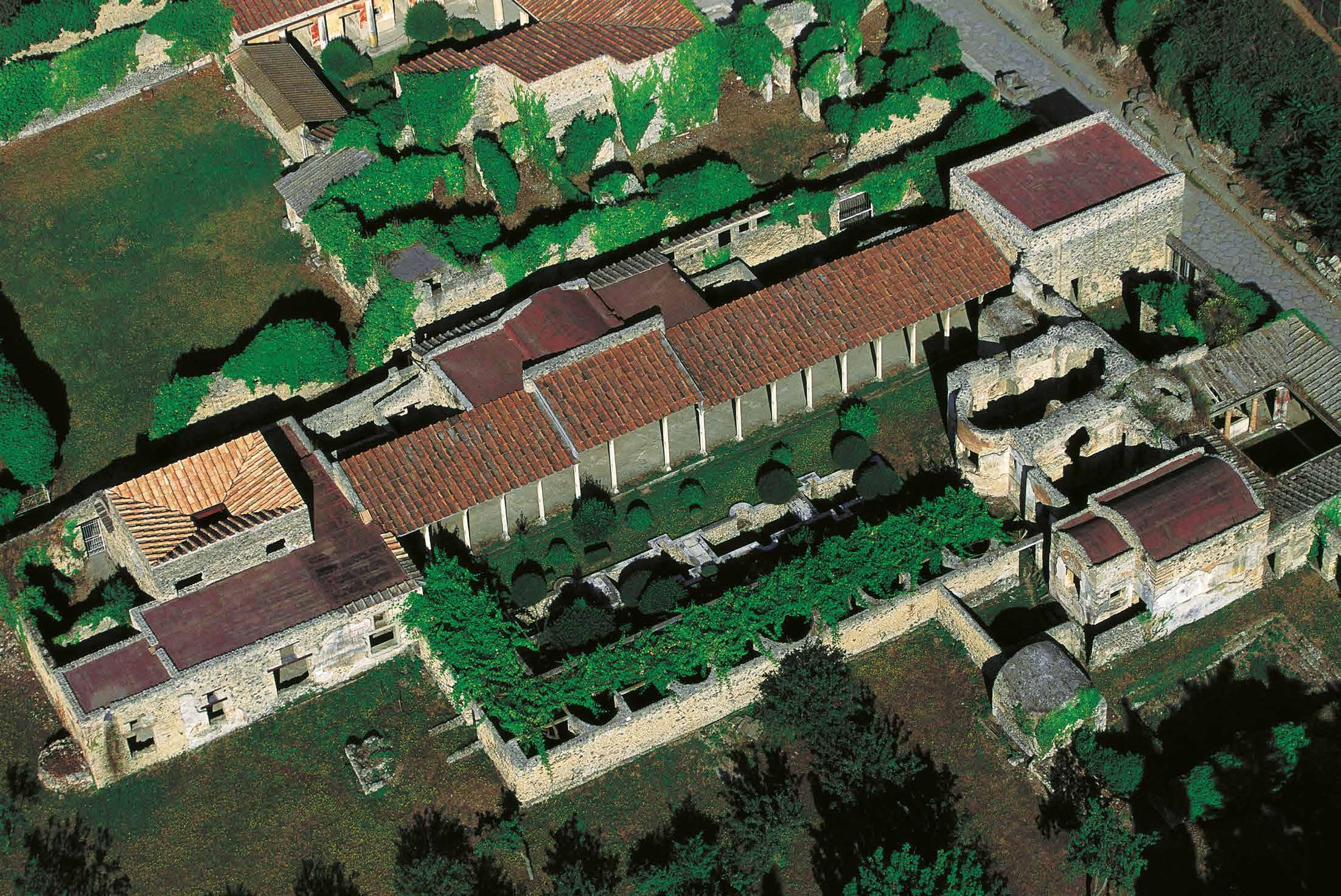
Ancient Pompeii had a number of gardens, and their location was revealed by the treetops that stood out over the high walls encircling them. They were spread throughout Pompeii, much like what we find in modern urban areas.
As in a modern city, in fact, the gardens in the old center, which were mainly ornamental, were quite small, with the exception of the richest houses such as the House of the Vettii or the House of the Faun. The largest park areas were located on the outskirts of town, and while some were cultivated for commercial purposes (for example, the Perfumer’s Garden), others were used as depots (the Garum Workshop), and still others were purchased by well-to-do people who preferred to live surrounded by full-fledged parks, complete with fountains and water channels (euripi). On the outskirts of town near the Amphitheater, there were vegetable gardens, orchards and vineyards, some of which were quite large.
The viridaria (pleasure gardens), which were usually located in the oldest part of the city, were quite small, generally no more than 1000 square feet in size, and they were located in the very center of the house. They combined the desire for a pleasant area for enjoyment with the need to collect rainwater to convey it to underground cisterns. The construction of the aqueduct subsequently filled this need, making it possible to
create much larger gardens that were decorated with spectacular water displays.
Species we can define as ornamental were grown in the viridaria, but during this era these gardens also represented a sort of “home pharmacy”: wormwood, juniper, roses and the “coronary” or garland plants – which were used to make wreaths to offer to the gods – were also used as medicinal plants. Flowerbeds, marked off by a narrow channel and sometimes by reed trellises or small wooden planks, were often divided by dirt paths.
Sometimes, the gardens were also the homes of small pets. In addition to the ever-present field mice, there were often turtles, which must have been quite common in the surrounding countryside. There were also dovecots for breeding pigeons and, in some cases, also special clay containers used to fatten dormice or purge snails. In the vegetable gardens, vineyards and orchards, located mainly in the quarters around the Amphitheater, people grew vegetables (garlic, onions, lettuce and cabbage, to name some of the most common) and fruit trees (hazel, peach and fig trees). The family ate the produce or sold it at the city market. However, people also planted gardens for production purposes and for handicrafts, such as nurseries and gardens with perfume essences.
310 and 311
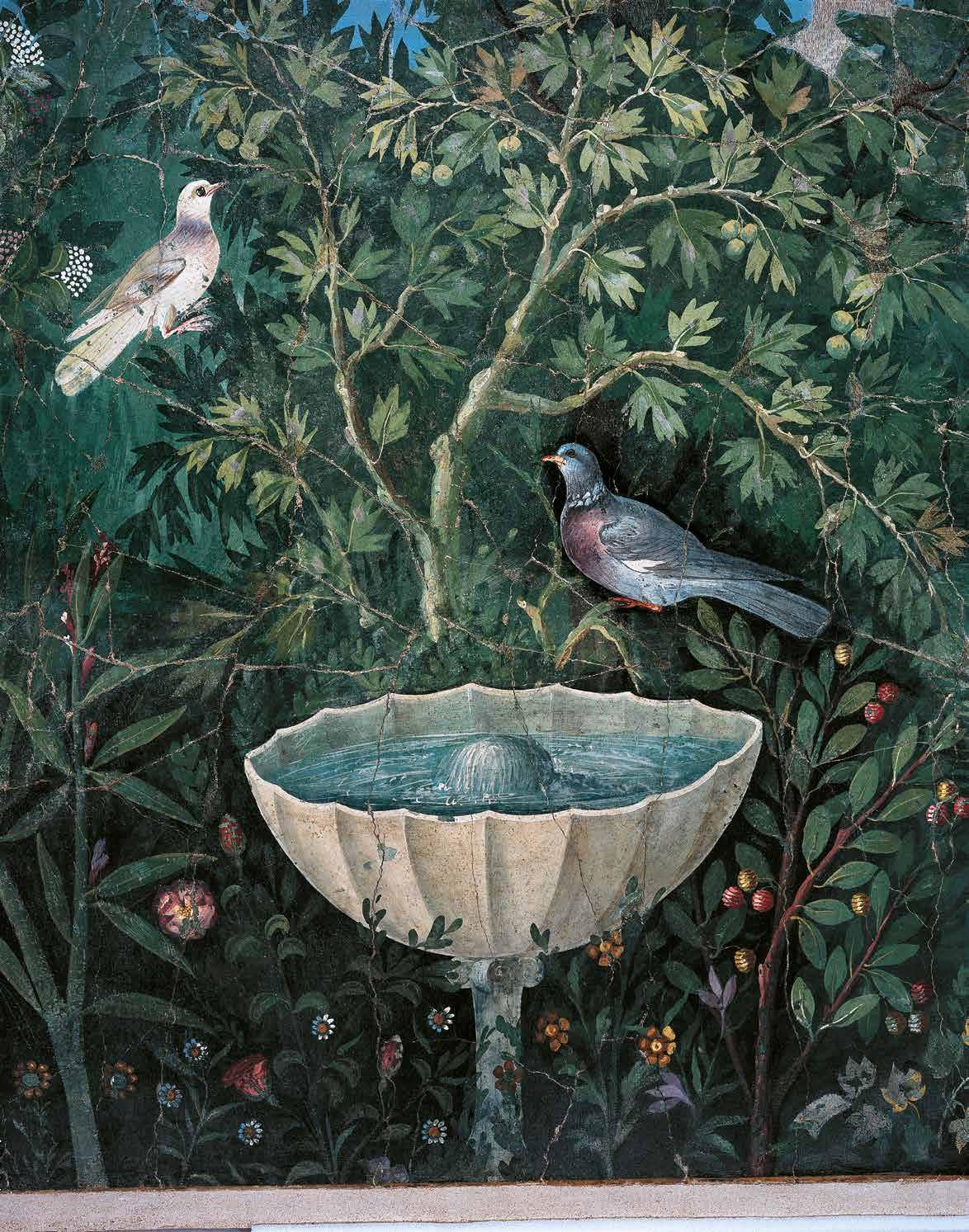
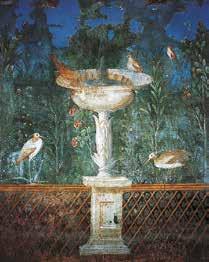
The theme of birds drinking from a fountain is commonly found in the frescoes of Pompeian triclinia. The one on the left decorates a wall of the House of Venus on the Shell, and the one of the right is from the House of the Golden Bracelet (Archaeological Superintendence of Pompeii).