
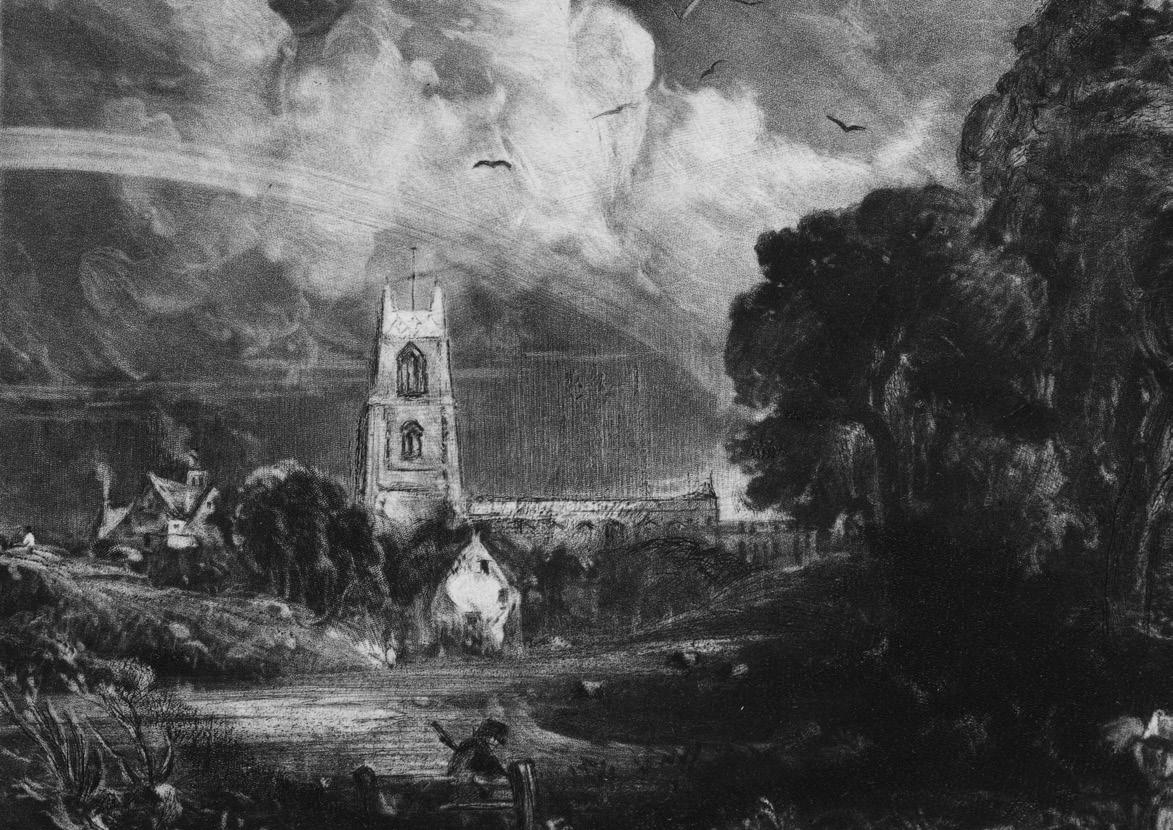
table of contents introduction
1: spring
2: autumnal sun set
3: noon
4: river stour, suffolk
5: summer morning
6: summer evening
7: a dell , helmingham park, suffolk
8: a heath
9: yarmouth, norfolk
10: a seabeach
11: mill stream
12: a lock on the stour, suffolk
13: old sarum
14: a summerland
15: stoke by neyland, suffolk
16: a mill
17: weymouth bay, dorsetshire
18: summer afternoon – after a shower
19: the glebe farm
20: hadleigh castle near the nore
21: hampstead heath, middlesex
introduction
Rura mihi, et rigui placeant in vallibus amnes, Flumina amem, sylvasque, inglorius. – Virgil.*
The author rests in the belief that the present collection of prints of rural landscape may not be found wholly unworthy of attention. It originated in no mercenary views, but merely as a pleasing professional occupation, and was continued with a hope of imparting pleasure and instruction to others. He had imagined to himself certain objects in art, and has always pursued them. Much of the landscape, forming the subject of these plates, going far to embody his ideas (owing perhaps to the rich and feeling manner in which they are engraved) he has been tempted to publish them, and ofers them as the result of his own experience, founded as he conceives it to be in a just observation of natural scenery in its various aspects. From the almost universal esteem in which the arts are now held, the author is encouraged to hope that this work may not be found unacceptable, since perhaps no branch of the art ofers a more inviting feld of study than landscape.
Soul-soothing Art! whom morning, noon-tide, even, Do serve with all their ftful pageantry.*
Te immediate aim of the author in this publication is to increase
the interest for, and promote the study of, the rural scenery of England, with all its endearing associations, its amenities, and even its most simple localities; abounding as it does in grandeur, and every description of pastoral beauty: England, with her climate of more than vernal freshness, and in whose summer skies, and rich autumnal clouds, ‘with thousand liveries dight,’* the student of Nature may daily watch her endless varieties of efect, for by him it is, that these changes are particularly observed: “Multa vident Pictores in imminentia et in umbris quae nos non videmus.” – Cicero.
It is therefore perhaps in its professional character that this work may be most considered, so far as it respects the ART; its aim being to direct attention to the source of one of its most efcient principles, the ‘CHIAR’OSCURO OF NATURE,’ to mark the infuence of light and shadow upon landscape, not only in its general efect on the ‘whole’, and as a means of rendering a proper emphasis on the ‘parts’, in painting, but also to show its use and power as a medium of expression, so as to note ‘the day, the hour, the sunshine, and the shade.’ In some of these subjects of landscape an attempt has been made to arrest the more abrupt and transient appearances of the CHIAR’OSCURO IN NATURE; to show its efect in the most
* Georgics II, lines 485–6. ‘Let my delight be the country, and the running streams amid the dells – may I love the waters and the woods, though I be unknown to fame’ (trans H. Rushton Fairclough).
striking manner, to give ‘to one brief moment caught from feeting time,’* a lasting and sober existence, and to render permanent many of those splendid but evanescent exhibitions, which are ever occurring in the changes of external Nature.
In the selection of these subjects, a partiality has perhaps been given to those of a particular neighbourhood: some of them, however, may be more generally interesting, as the scenes of many of the marked historical events of our middle ages. Te most of these subjects, chiefy consisting of home scenery, are from the pictures exhibited by the author at the Royal Academy during the last few years; they are taken from real places, and are meant particularly to characterize the scenery of England; the efects of light and shadow being transcripts only of such as occurred at the time of being taken.
In art as in literature, however, there are two modes by which men endeavour to attain the same end, and seek distinction. In the one, the artist, intent only on the study of departed excellence, or on what others have accomplished, becomes an imitator of their works, as he selects and combines their various beauties; in the other he seeks perfection at its PRIMITIVE SOURCE, NATURE. Te one, forms a style upon the study of pictures, or the art alone; and produces,
either ‘imitative’, ‘scholastic’, or that which has been termed the ‘Eclectic Art. Te other, by study equally legitimately founded in art, but further pursued in such a far more expansive feld, soon fnds for himself innumerable sources of study, hitherto unexplored, fertile in beauty, and by attempting to display them for the frst time, forms a style which is original; thus adding to the art, qualities of Nature unknown to it before. Te results of the one mode, as they merely repeat what has been done by others, and by having the appearance of that with which the eye is already familiar, can be easily comprehended, soon estimated, and are at once received. Tus the rise of an artist in a sphere of his own must almost certainly be delayed; it is to time generally that the justness of his claims to a lasting reputation will be left; so few appreciate any deviation from a beaten track, can trace the indications of talent in immaturity, or are qualifed to judge of productions bearing an original cast of mind, of genuine study, and of consequent novelty of style in their mode of execution.
J. C.
35, Charlotte Street, Fitzroy Square, May, 1833.
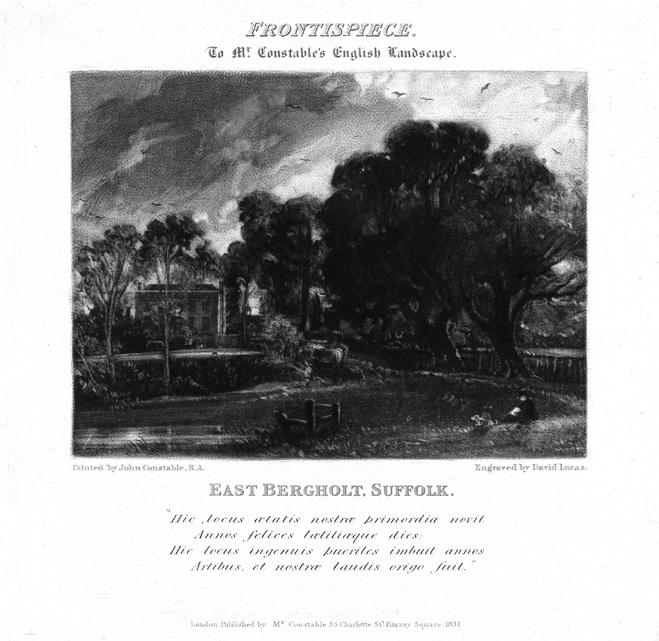
frontispiece : east bergholt, suffolk
House of the late Golding Constable, Esq., and birthplace of the artist
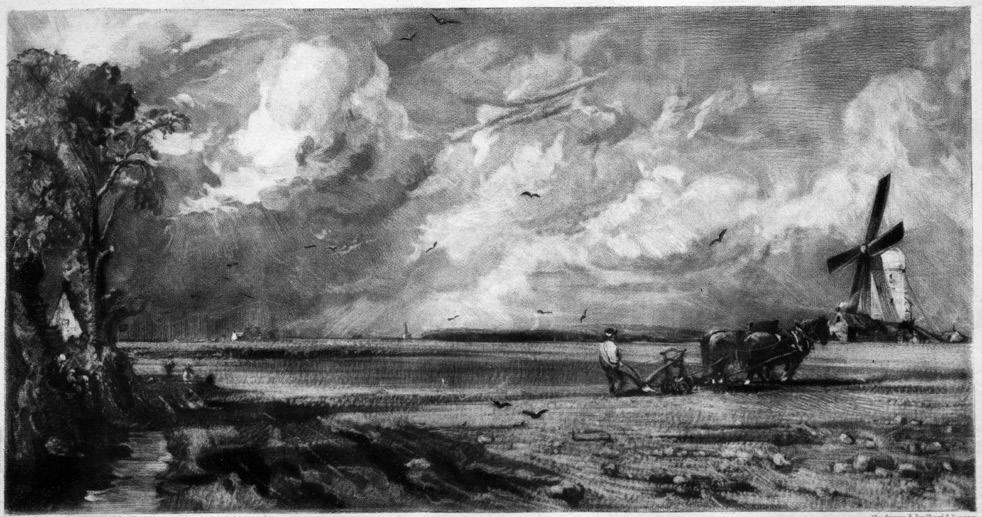
1: spring East Bergholt Common
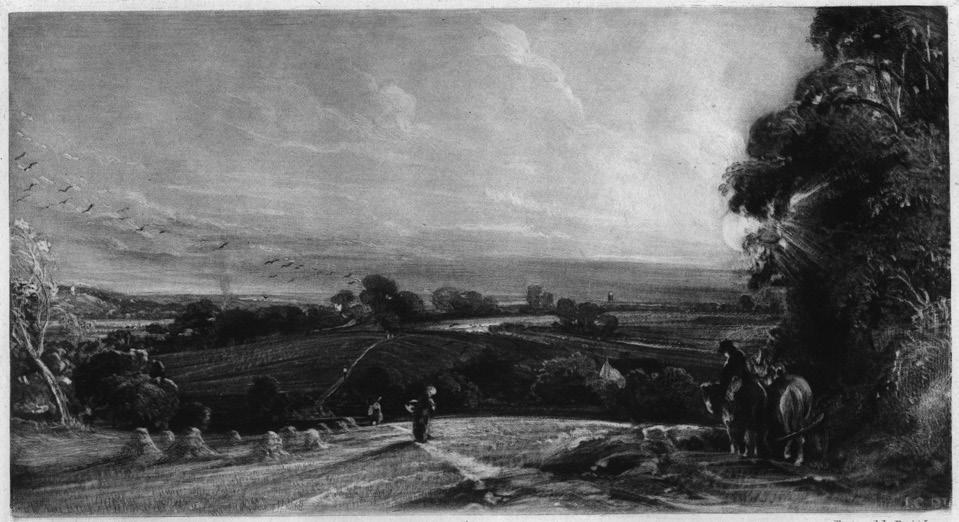
3: noon West End Fields, Hampstead