5 Continents Editions
Editor-in-Chief
Aldo Carioli
Art Direction and Layout
Oliver Barstow
Editor Lucia Moretti
Proofreading Charles Gute
Pre-press
Maurizio Brivio, Milan, Italy
All rights reserved – Chanakya International Pvt. Ltd. For the present edition © 2026 - 5 Continents Editions S.r.l.
No part of this book may be reproduced or used in any form or by any means, electronic or mechanical, including photocopying, recording, or any information storage and retrieval system, without permission in writing from the publisher.
Printed and bound in Italy in December 2025 by Tecnostampa – Pigini Group Printing Division Loreto – Trevi, Italy for 5 Continents Editions, Milan
www.fivecontinentseditions.com
ISBN 979-12-5460-097-9
Distributed by ACC Art Books throughout the world, excluding Italy and France. Distributed in France by BELLES LETTRES / Diffusion L’entreLivres.
Distributed in Italy and Canton Ticino (Switzerland) by Messaggerie Libri S.p.A.
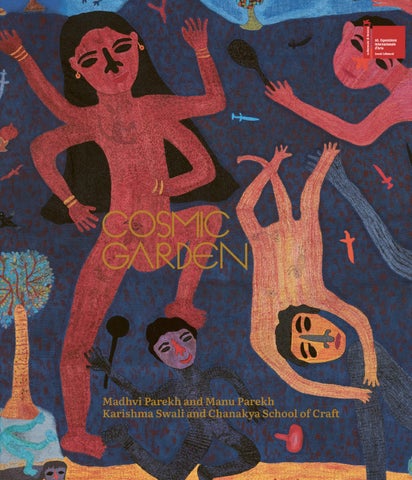
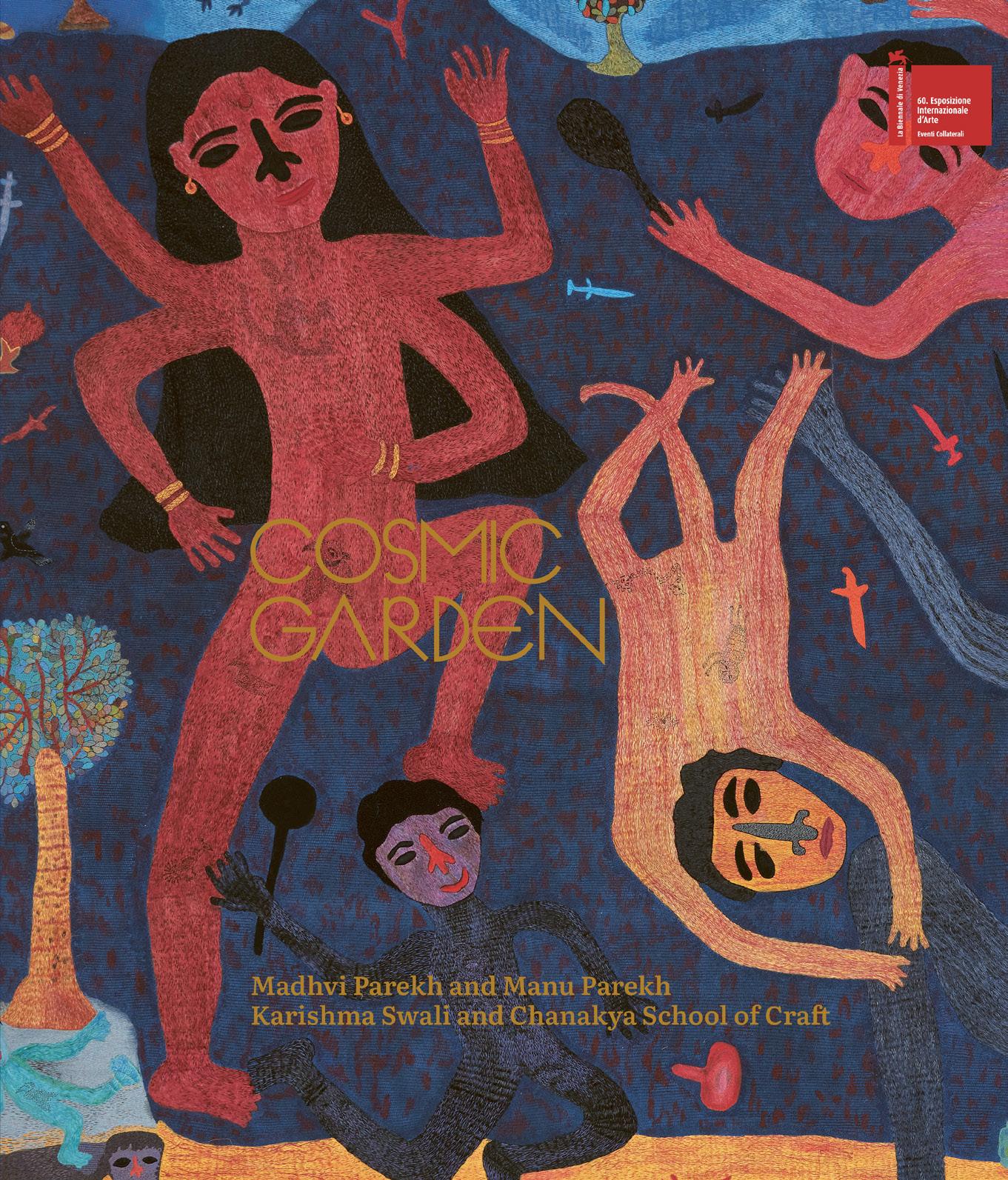
Cover: Madhvi Parekh, Karishma Swali, and the Chanakya School of Craft, Devi and Asura, 2023 (detail)
Photo by Ryan Martis. Courtesy of the Chanakya Foundation
Preface
18 Introduction
Building Bridges through Craft and Art
22 Embroidery as Empowerment
Maria Alicata and Paola Ugolini
50 A Future Foretold: The Past, Present, and Unfolding Future of Embroidery
Dr. Ritu Sethi
76 Is Collaboration the Fragrance of the Cosmic Garden? Sumesh Sharma
94 Cosmic Garden, Installation Views
114 Crafted Sculptures by Madhvi Parekh, Karishma Swali, and the Chanakya School of Craft
124 Biographies
128 Notes
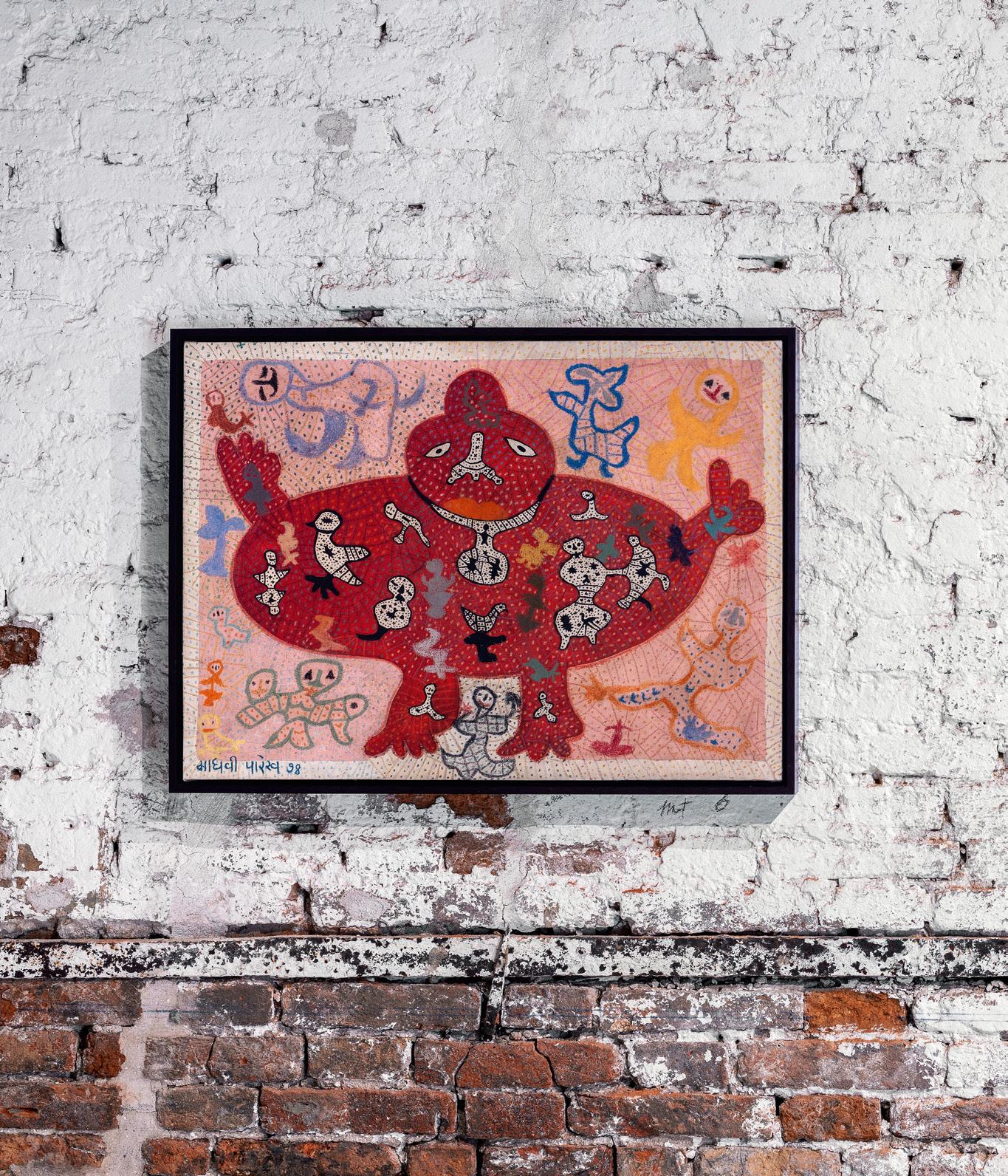
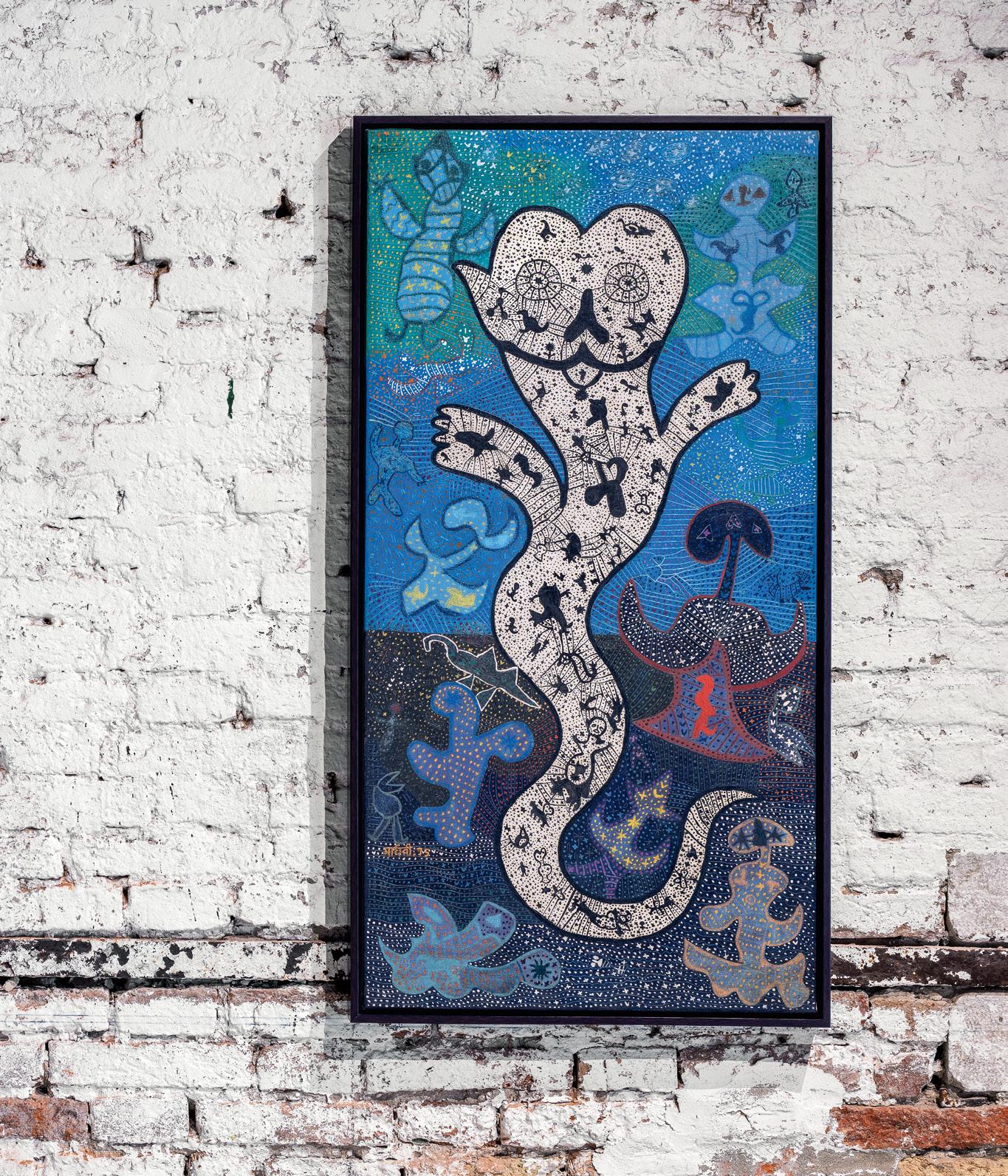
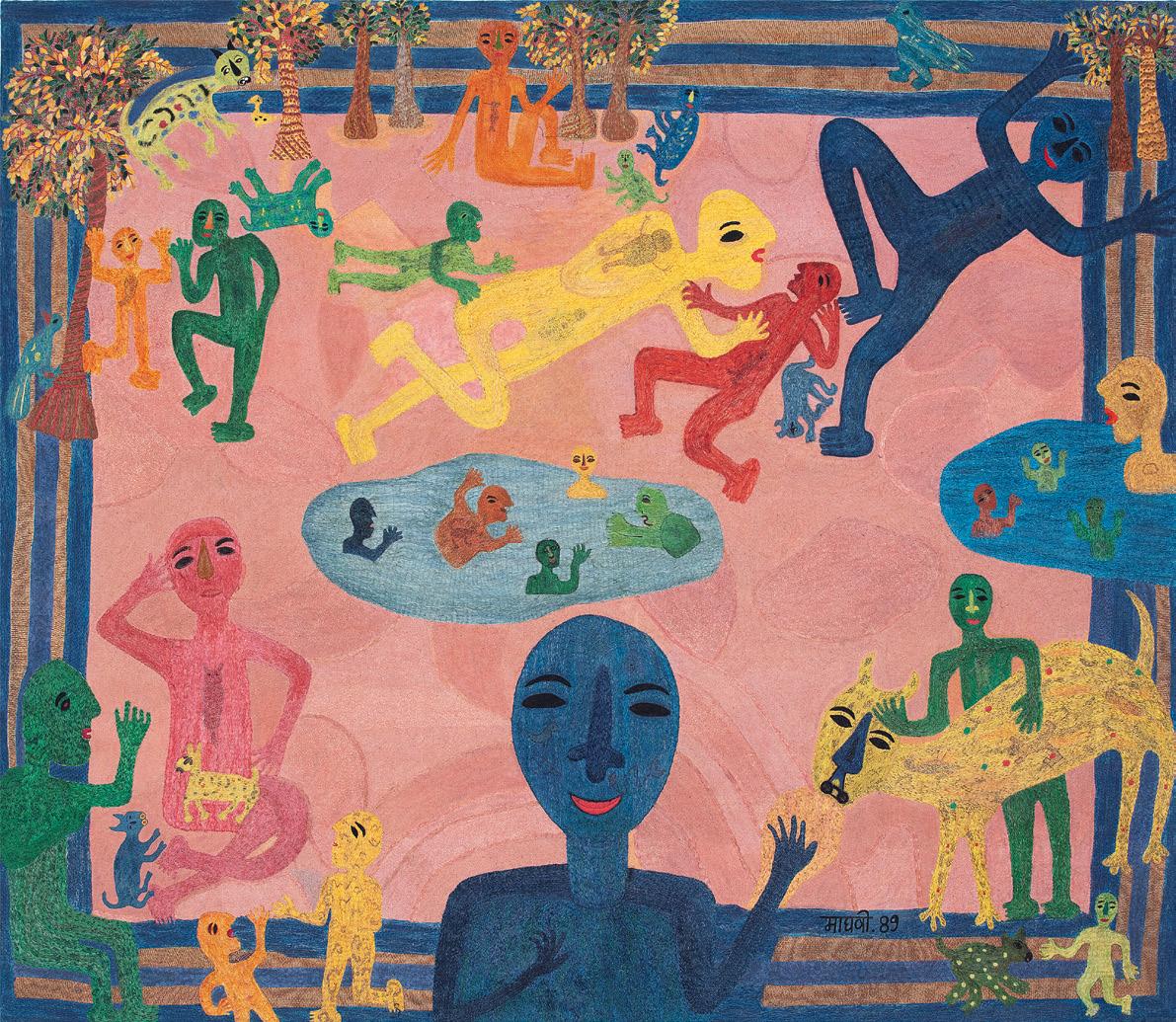
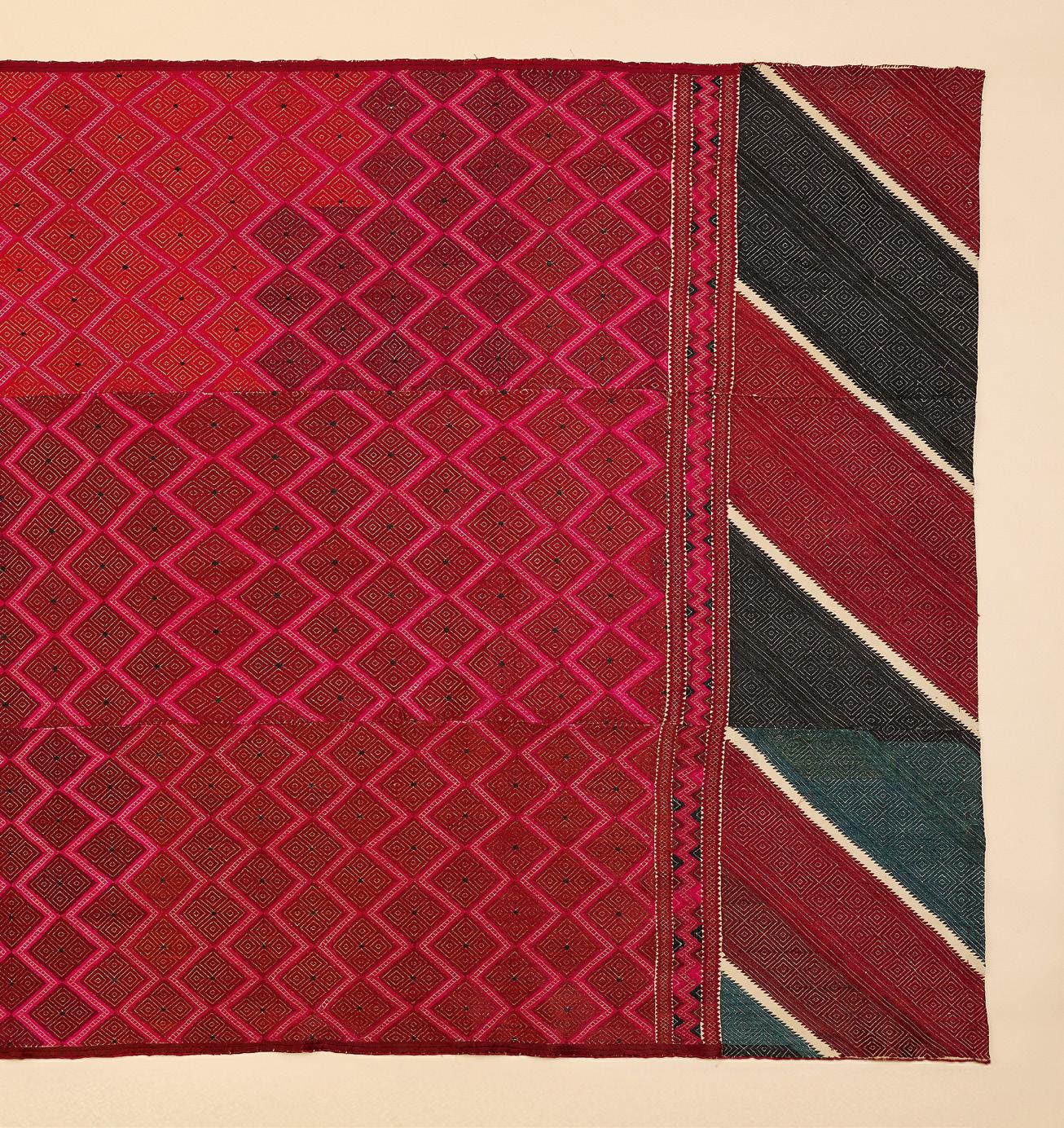
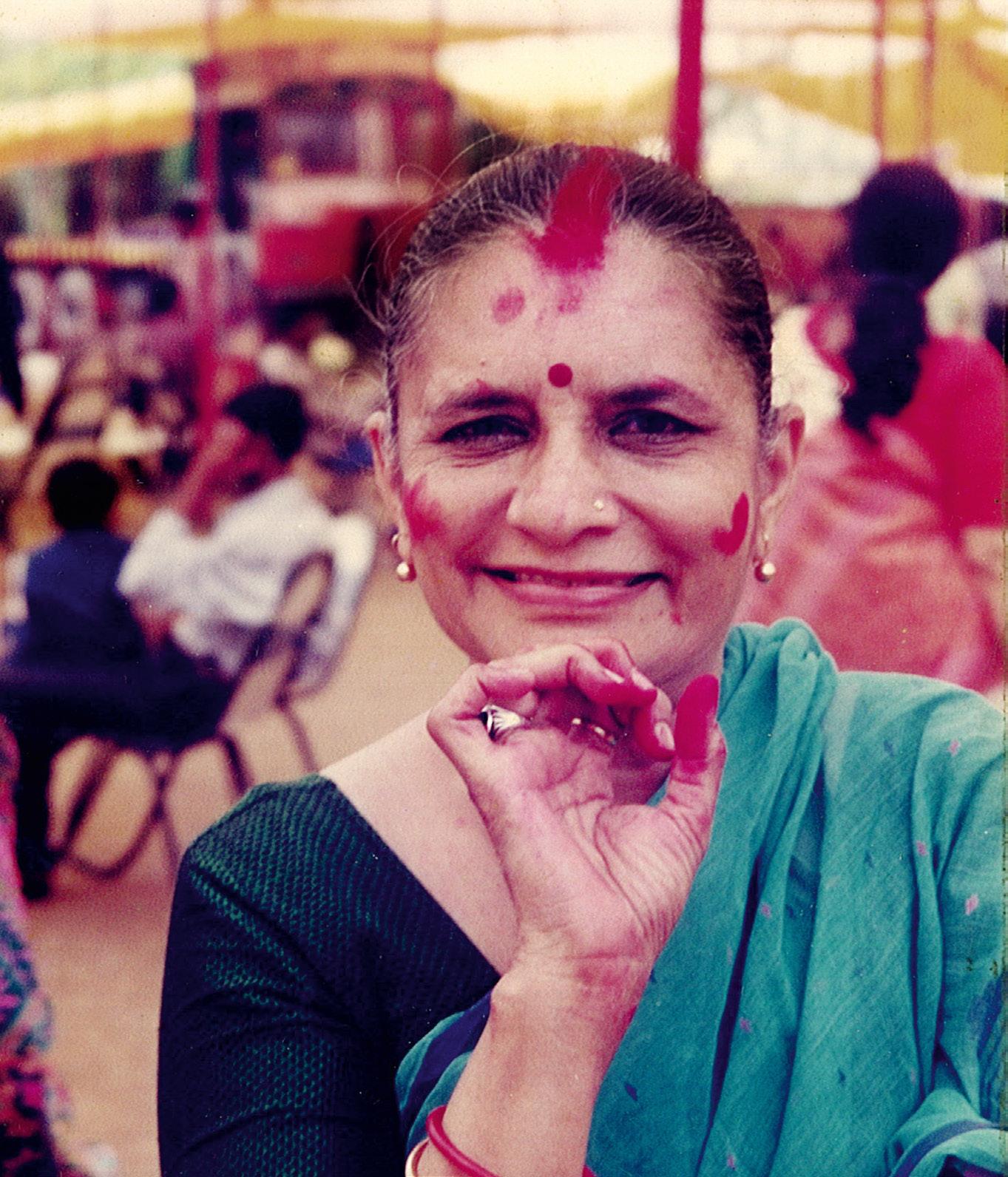
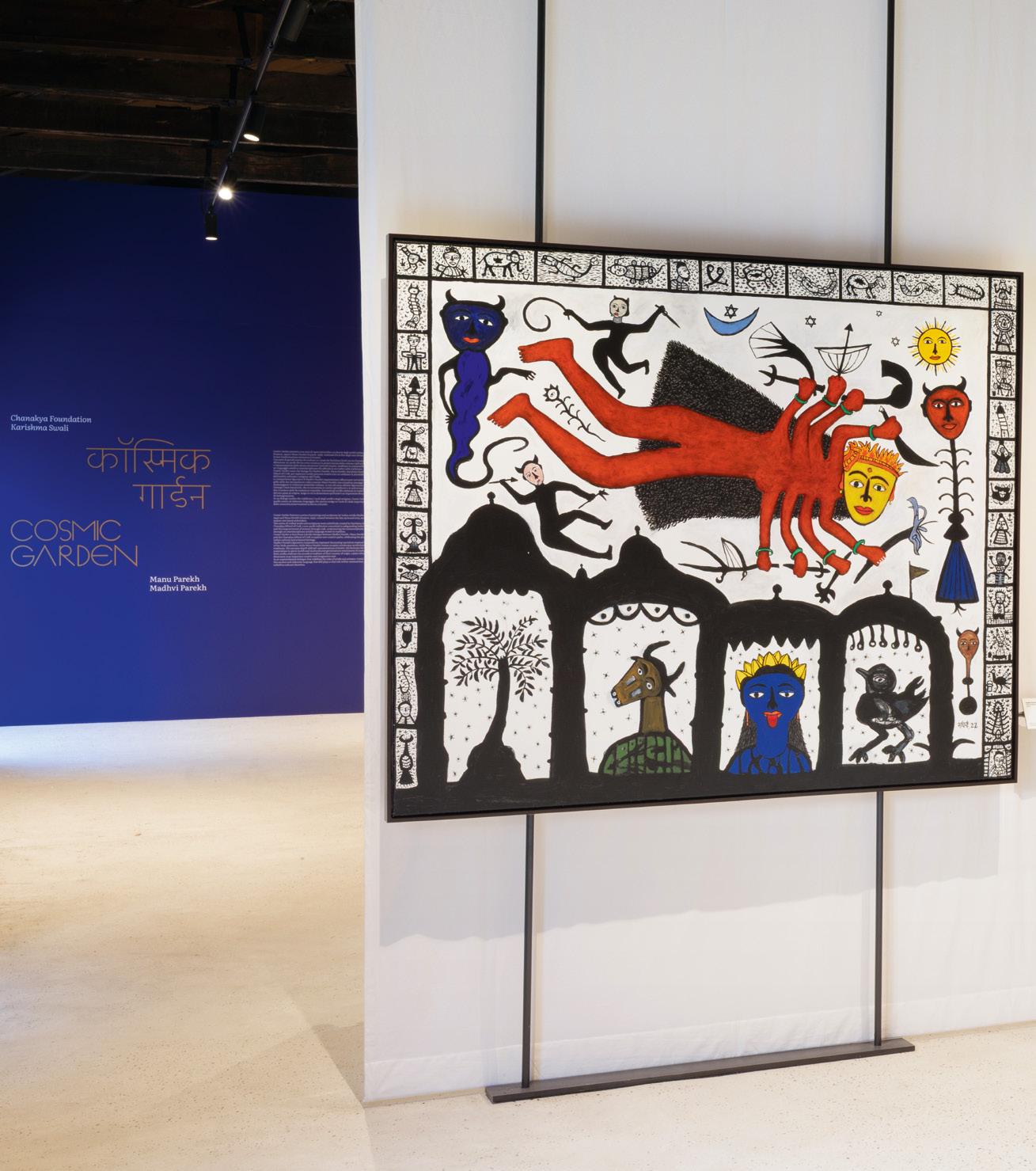
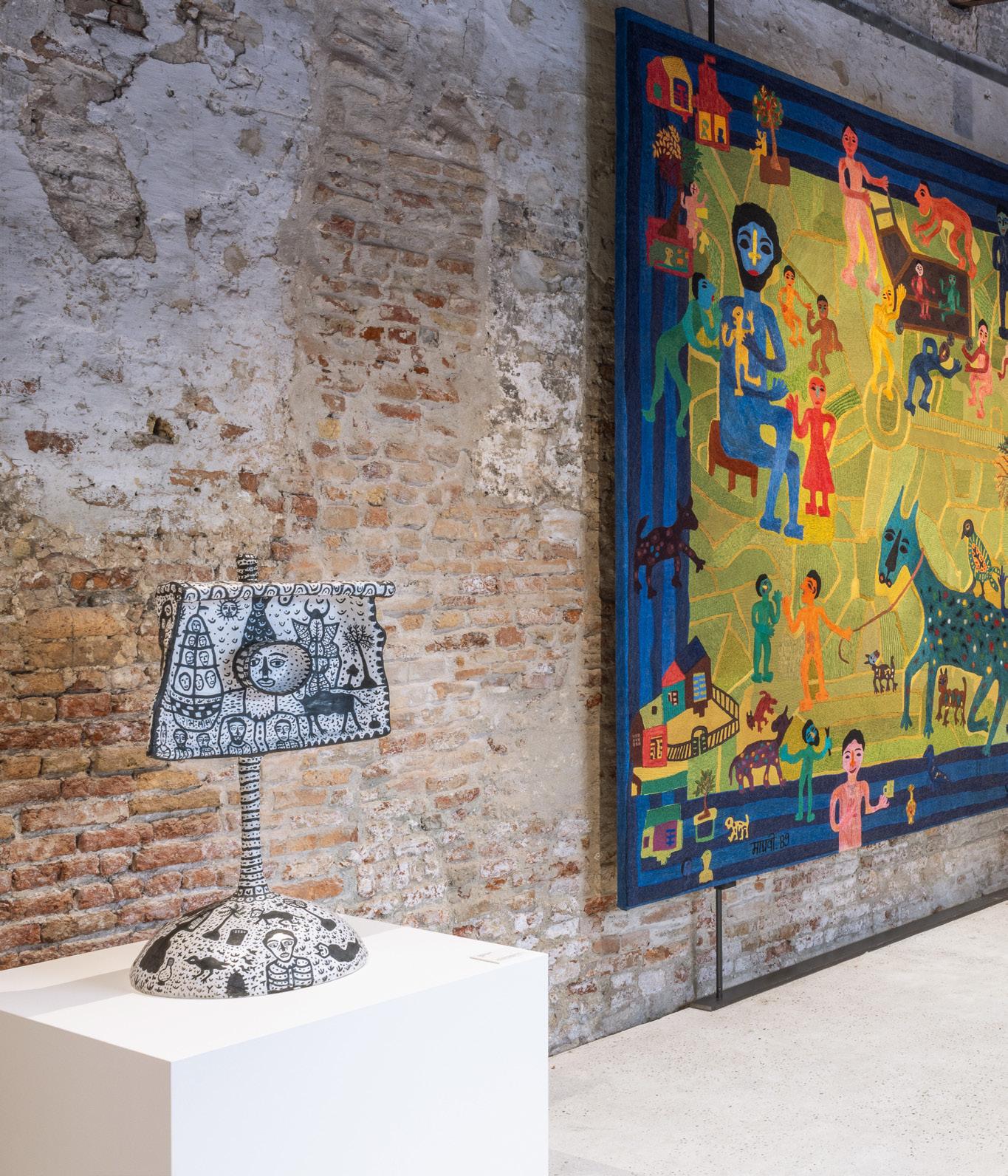
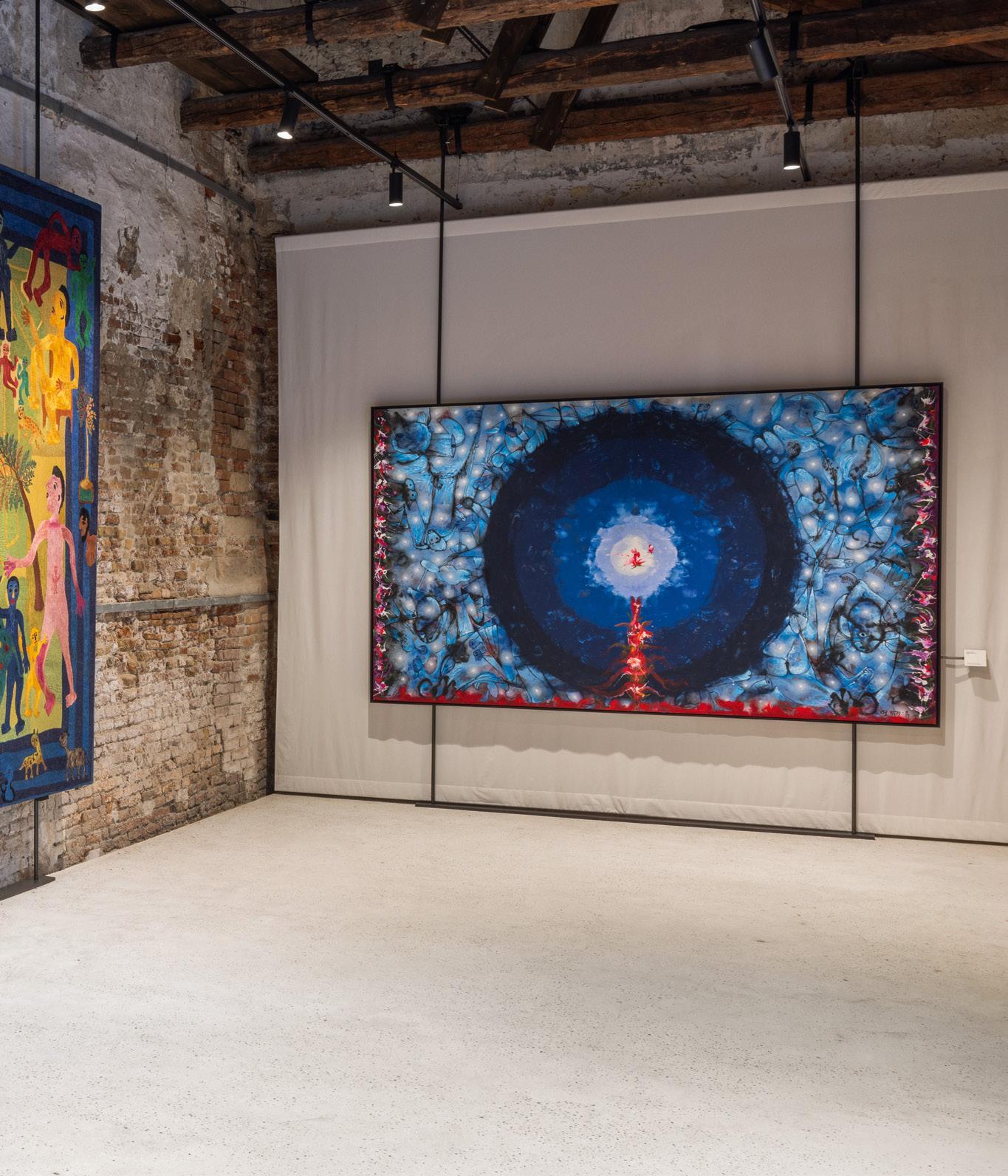
shrines that were rudimentary and decorated by bright contrasting colours: vermillion, turmeric and multani brown. Similarly, there are the animals who pose as wayfarers in our lives. In a time where we are desperately seeking an equilibrium with other life in our universe, elevating animals to hold an equal place reveals a deep philosophical approach to life. This perspective underpins a deep animist respect, where all life is essential and in rhythm with our own, as Madhvi conveys in her art. The icon-isation of the primal Mother Goddess is a mirror of the vision she holds for a world degraded by shrewdness, loss of innocence, and impure ailments. The expressionist forms of the goddess in Madhvi Parekh’s depiction appear to be a relentless quest for the mysteries, as noted by Campbell, of the sustenance and retaining of the values that charge her brushes.
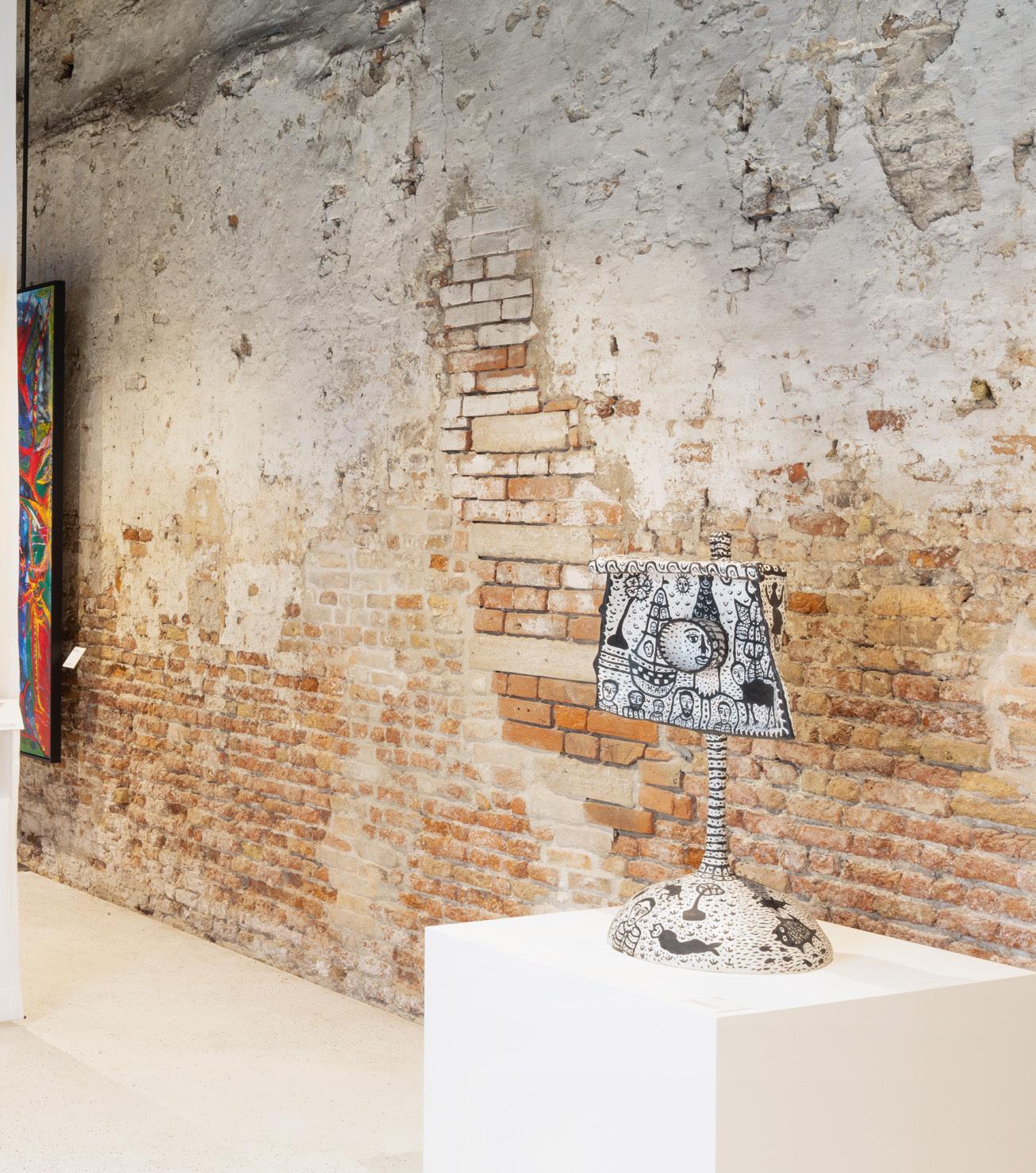
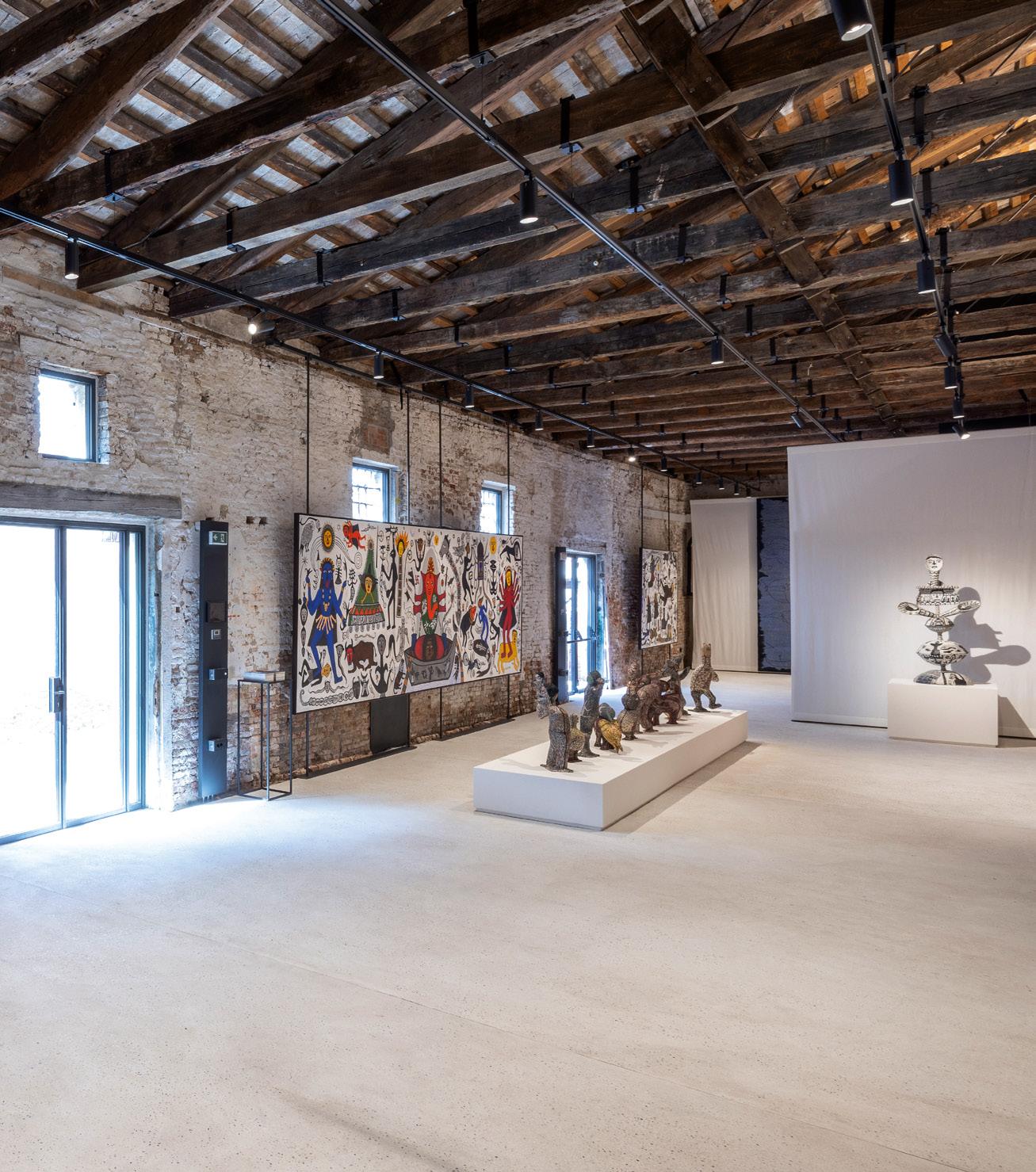
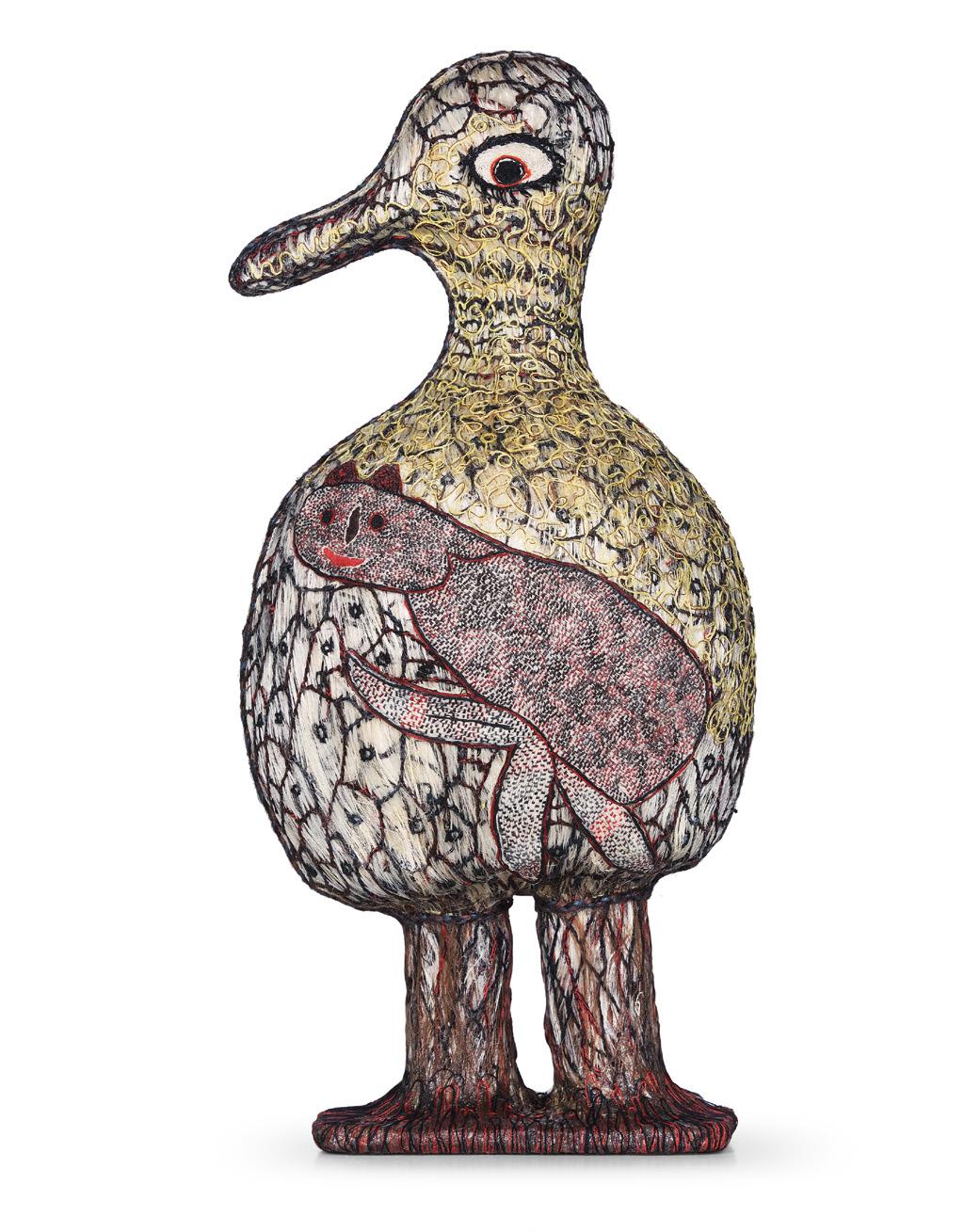
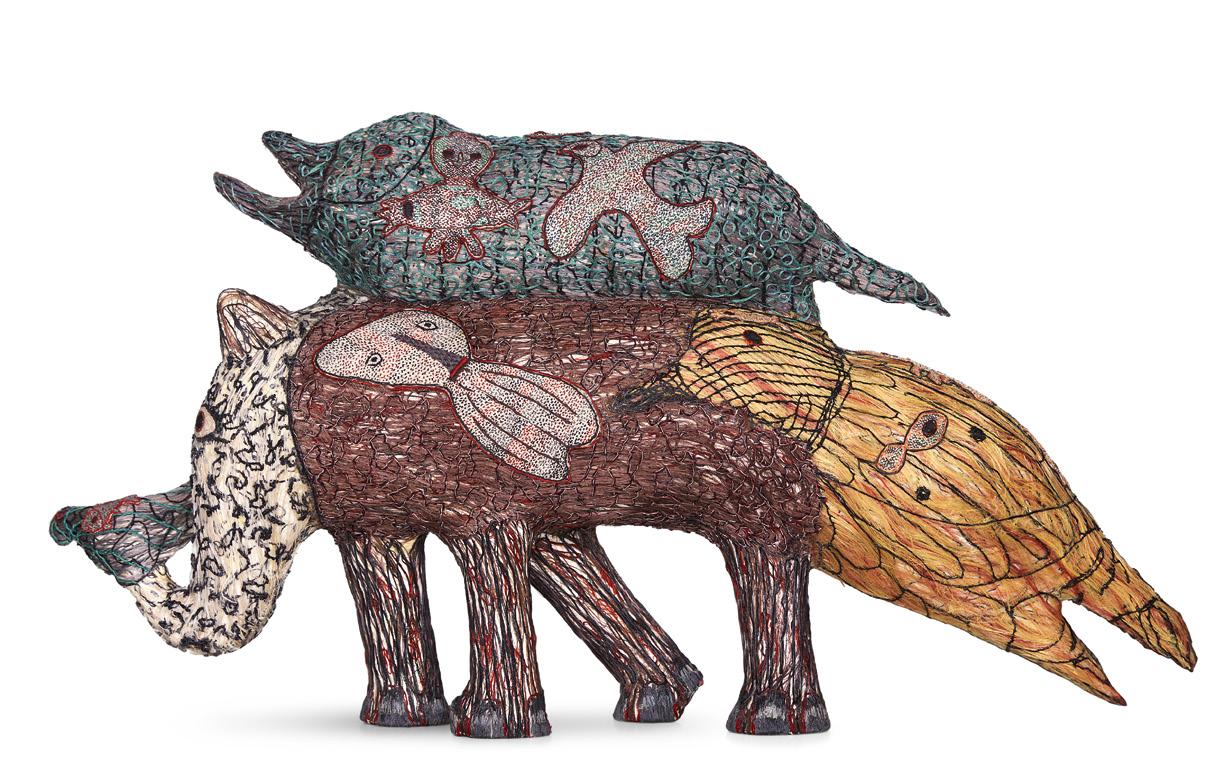
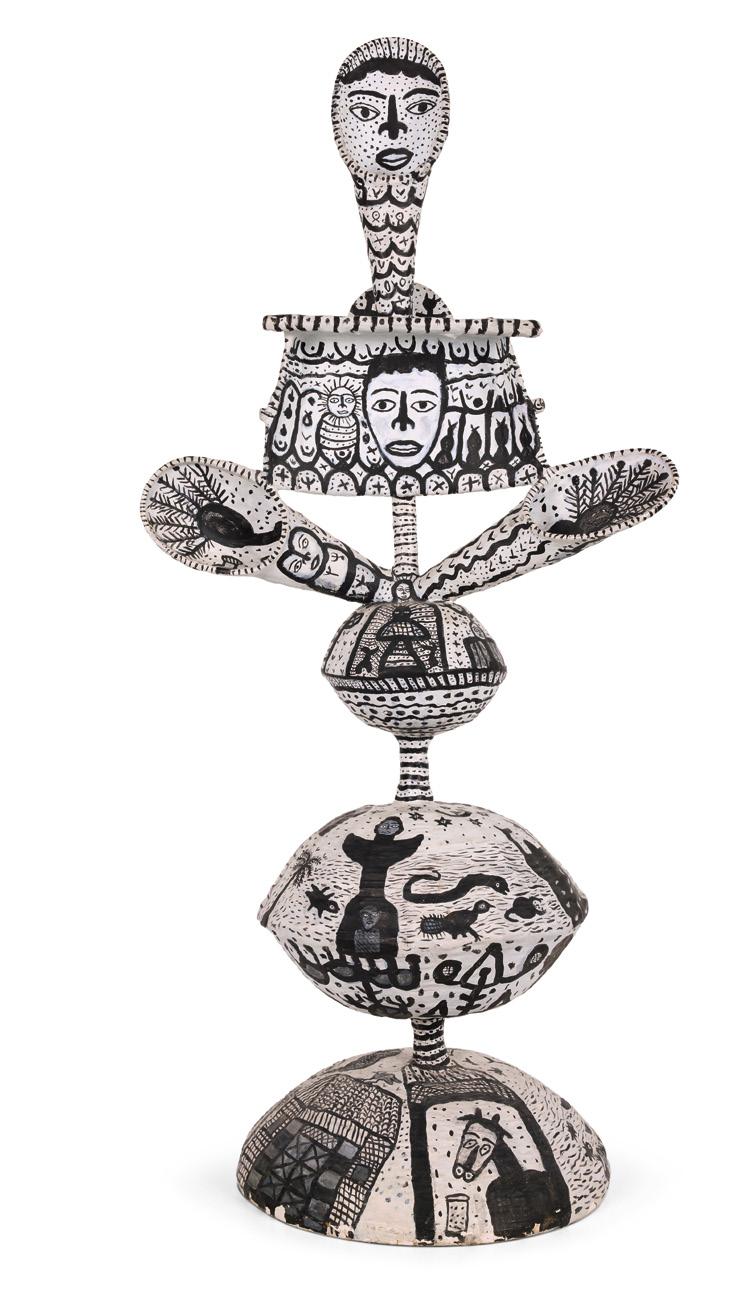
In Cosmic Garden, paper-mache is used to translate Madhvi Parekh’s painted animal forms into sculptural presence — an act that echoes earlier traditions of material and collaborative innovation. Introduced to Indian craft practice in the 1970s by Pupul Jayakar as an accessible medium, paper-mache here becomes a vehicle for formal transformation. The sculptures, realised by Karishma Swali and the artisans of Chanakya, are composed of natural fibres such as raw linen, jute, silk, and cotton — materials that lend both texture and integrity to the works. This shift from two to three dimensions reflects a deliberate formal inquiry, one that requires not only technical finesse but also a deeper engagement with Madhvi’s personal cosmology. Her sculptural language thus becomes a site of introspection — revisiting past associations with craft while creating them through the lens of lived experience and belief.
Re-Embroidering the Tapestry of Indian Crafts: Patronage and Artists
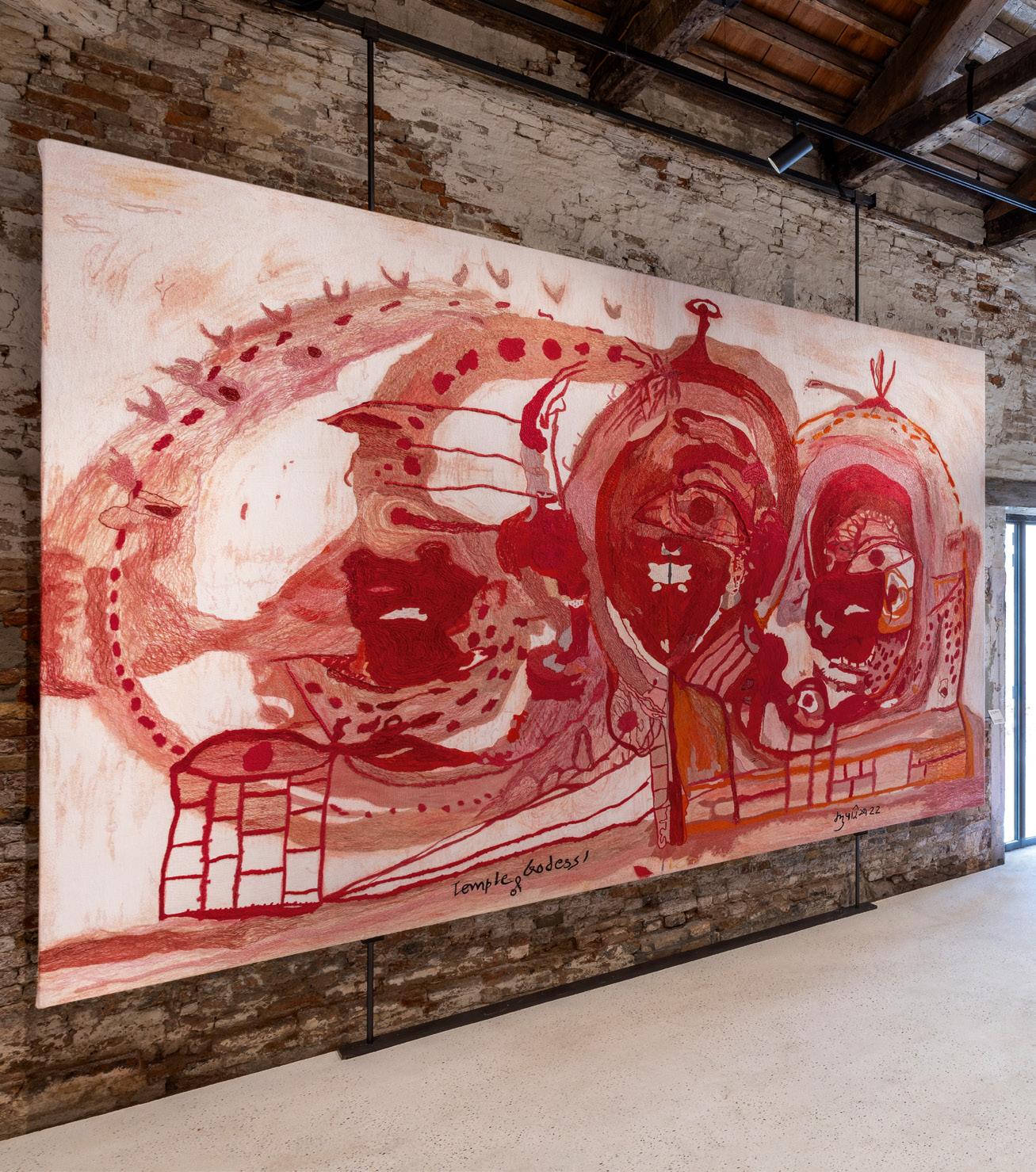
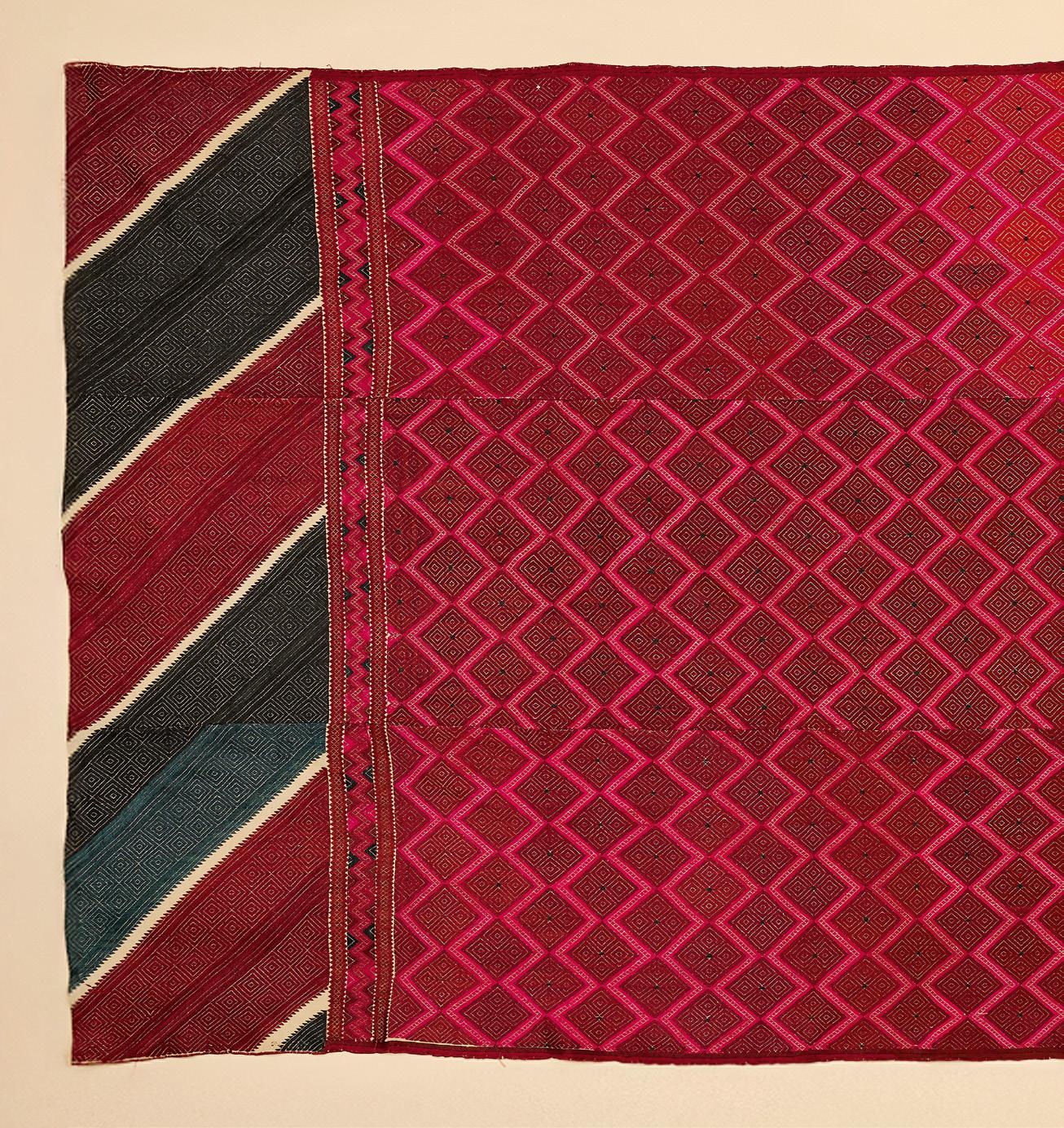
Originally established by Karishma Swali’s father, Mr. Vinod Shah, in the early 1980s, Chanakya International, a textile and embroidery house, expanded under her leadership, fostering collaborations with luxury fashion brands like Dior, Gucci, Prada, and Valentino as well as other non-profit organisations to preserve and perpetuate India’s diverse textile traditions. In 2016, recognising the imperative to formalise craft education and foster female autonomy, Karishma Swali established the Chanakya School of Craft. As a non-profit institution, the School is committed to sustaining cultural heritage while advancing new possibilities for women in the field. It offers training in regionally specific embroidery traditions — including kantha from Bengal, ari from Gujarat, and chikankari from Lucknow, among others — positioning these forms not merely as inherited techniques but as evolving artistic vocabularies.
Karishma Swali, the Creative Director of Chanakya International and the Chanakya School of Craft, has pioneered a holistic educational model that merges heritage craft with contemporary design. The school’s pedagogical program focuses on training young women from the underserved communities of Mumbai in over 300 embroidery techniques. Through an 18-month curriculum, these artisans refine their skills before being integrated into professional ateliers, ensuring both economic empowerment and the continuity of traditional craftsmanship. Educational initiatives like the Chanakya School of Craft are