
‘Fashion fades, only style remains.’
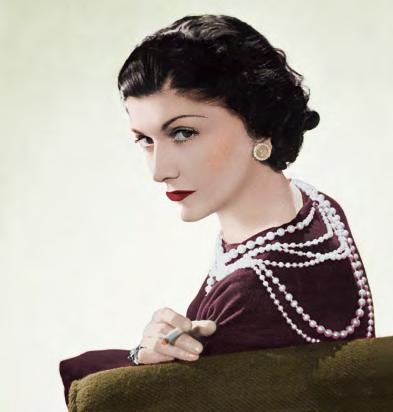
Gabrielle ‘Coco’ Chanel
When it is said that Chanel forever changed fashion, the reference is to her capacity for innovation. She was the first to introduce trousers designed for women’s bodies; she revolutionised clothing in the 1920s with the little black dress and she created a welldefined and modern aesthetic with her signature women’s suit in the 1950s. Moreover, she was the first designer to lend her name to a fragrance and
to combine costume jewellery and high fashion. Coco Chanel was more than a style icon; she was a driver of modernity. Her legacy is still felt today: in fashion, culture and the way in which women think about themselves. In a world where fashion constantly evolves, Chanel is a cornerstone of style. The path that offered her such incredible success, not once but twice and in two different eras, was forged by her iron-clad will, ambition, determination and innate good taste.
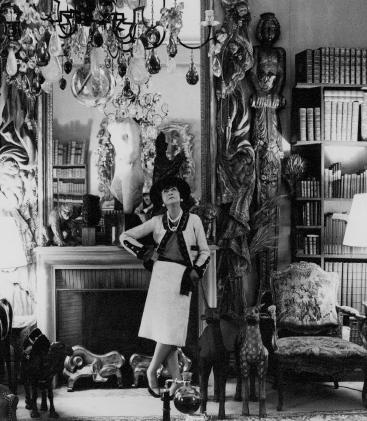
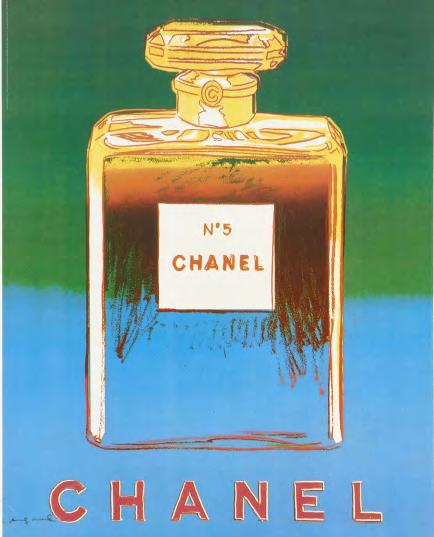
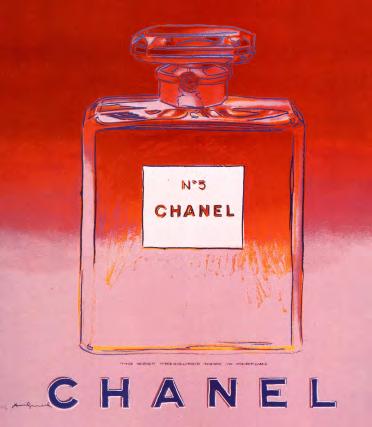
This page: Andy Warhol's interpretation of the iconic perfume bottle. Opposite page: A Chanel advertisement in an English magazine, 1990s.
On 12 February 1947, Dior revealed his creations, the look that would become the style of economic recovery, rich in fabric, constructed, with ample, voluminous skirts, fitted bodices and jackets with a tapered waist. The collection was well received.
Carmel Snow, editor-in-chief of the US magazine Harper’s Bazaar, dubbed it the ‘New Look’. After the austerity of wartime fashion, the New Look, a celebration of luxury, symbolised expectations for a richer, more peaceful future.
Chanel watched Parisian fashion from afar, harshly criticising this new style, calling it a regression that once again forced women into a ‘cage made of fabric’. To her, the only solution was to start creating once again. Chanel’s return to haute couture was supported by the Wertheimers and Parfums Chanel, which financed 50% of the collection, firmly believing that it would boost perfume sales too.
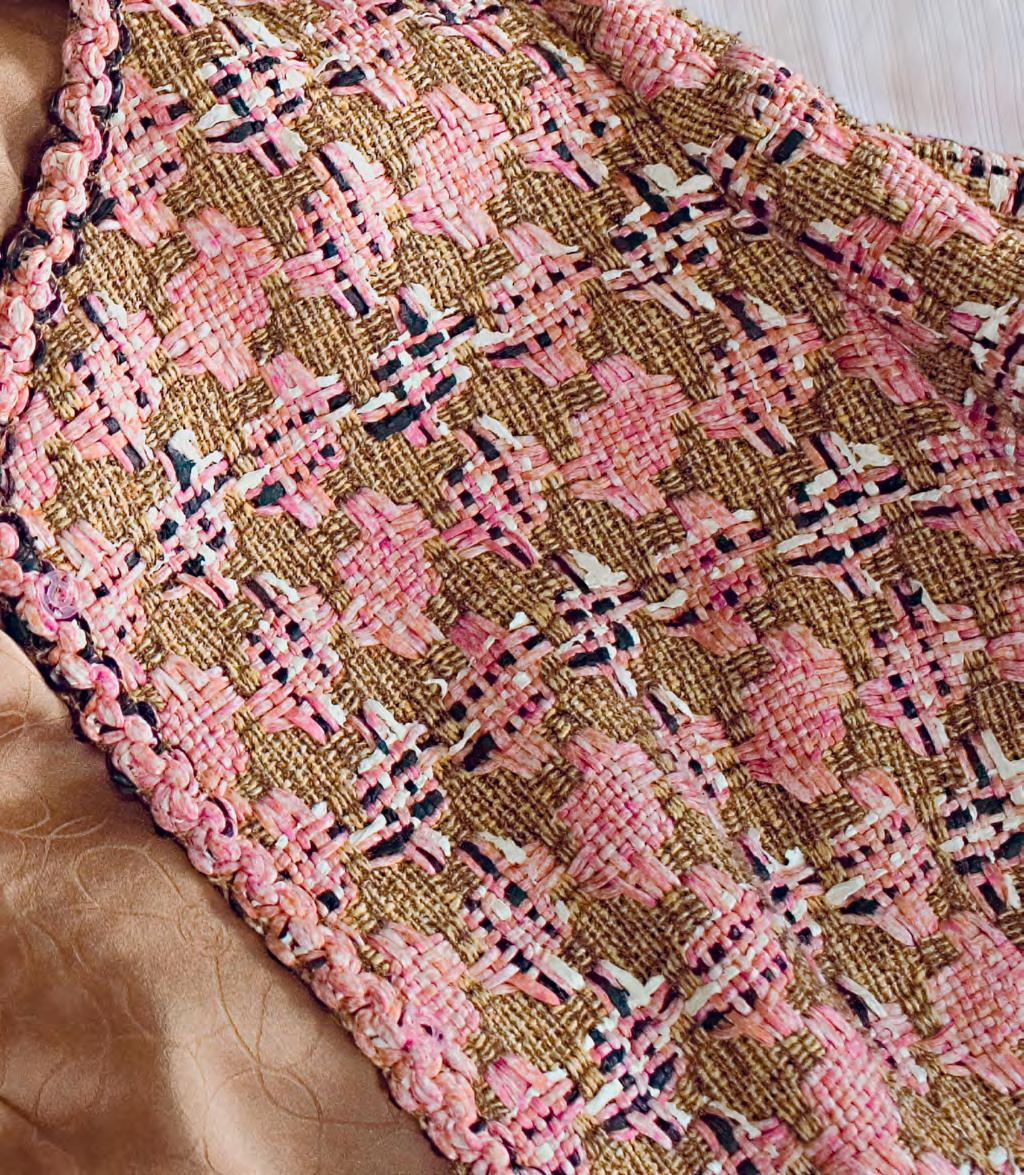
In February 1954, at the age of 71, Coco Chanel reopened her couture atelier at 31 Rue Cambon with the presentation of her new fashion collection. One of the symbolic garments in it was the tweed suit with a collarless jacket, contrast edging and golden buttons. The reaction of the French press was harsh and sceptical: journalists accused Chanel of bringing back motifs that were too traditional, not very innovative and out of step with the times. By contrast, the US press welcomed the collection enthusiastically. Bettina Ballard, fashion editor at American Vogue, was one of her biggest supporters. In Chanel’s new collection, she saw a forward-looking philosophy made of simplicity, elegance and comfort. Magazines like Vogue and Life promoted the new approach, helping to popularise the tweed suit as a comfortable yet elegant outfit. It would become a fashion classic.
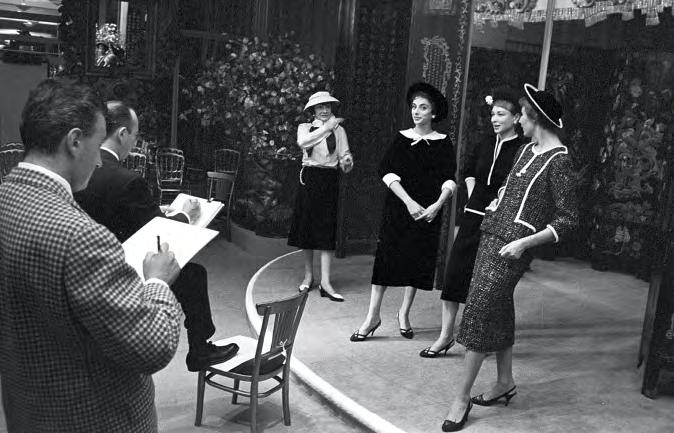
Coco Chanel presenting her new collection in 1957. At this time some designers wanted to be copied. Here, illustrators are busy drawing the dresses worn by the models on stage.

into a beach, supermarket or space station. With his impressive runway shows, references to contemporary culture, collaborations and bold visual communication, Lagerfeld made Chanel desirable once again for many generations of women. Under his direction, new successful pieces were launched: the Boy bag and the Gabrielle, but also Lait de Coco, the Lego Bag and the Parfume Bottle. Lagerfeld even dared to give Chanel fashion a joyful and contemporary reimagining, playing with the classics and inventing new ways of wearing garments, layering infinite necklaces, sautoirs, bracelets and earrings.
He can also be credited with hiring iconic models, such as Claudia Schiffer, Kate Moss, Cara Delevingne, Gisele Bündchen and, in particular, Inès de la Fressange, who embodied the Chanel spirit in the 1980s.
When Lagerfeld died in 2019, creative direction went to Virginie Viard, his close collaborator for over 30 years. With her, the Chanel fashion house chose a more sophisticated, feminine and minimalist line, in part returning to the original sobriety dear to Mademoiselle.
With Viard, the elements and symbols so dear to Mademoiselle were emphasised in infinite combinations: double C’s, camellias, ribbons, pearls and chains interwoven with strips of leather. Slender, refined and bold, they were a tip of the hat to the theme of every collection. Lastly, her willingness to overlap these elements implies interpretations and juxtapositions, reviving the style lesson of Coco Chanel. But not only that: the designer once again brought bib necklaces back to
the fore, covering the exposed neckline with deep V silhouettes, along with bold Byzantine crosses and jewel-like belts resting on hips or at times marking the waistline, even worn with jeans or bikinis.
In 2025, Matthieu Blazy was appointed creative director: in charge of haute couture, prêt-à-porter and accessories, he reports directly to Bruno Pavlovsky, the president of fashion at Chanel.
The fashion house is one of the few in the industry which isn’t part of a larger group. Today it’s owned by Alain and Gérard Wertheimer; the former is the president, while the latter oversees the timepiece division. Both are grandchildren of Pierre Wertheimer who, along with his brother Paul, struck a deal with Coco in 1924 to found the Société des Parfums Chanel and then bought the company from Coco herself in 1954.
In 2018, for the first time ever, Chanel published its balance sheet: revenue of over US$11 billion demonstrated the solidity and centrality of the brand in the global luxury industry. In 2024, its revenue was US$18.7 billion. The company’s growth reflects the success of one of the world’s most popular and beloved brands, which, with over 300 boutiques around the globe, continues to dominate the fashion, leather goods, perfume and cosmetics sectors. Chanel N°5 is still a timeless emblem. In 2008, it was named the ‘most iconic fragrance’ of all time, and it is estimated that one bottle is sold globally every 55 seconds.
The message of Chanel’s aesthetic and mental freedom is as relevant as ever: ‘In order to be irreplaceable, one must always be different.’
2022–23.
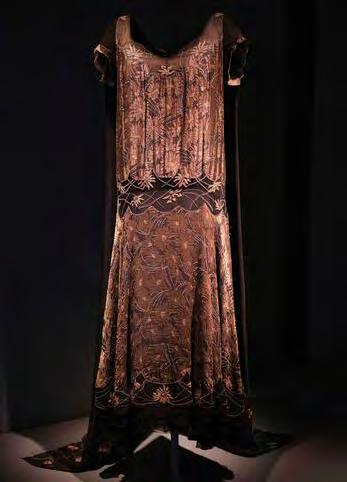
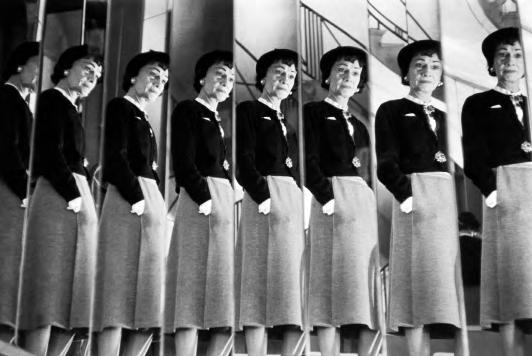
Upon her post-war return from voluntary exile from the fashion world, Chanel rebuilt her company from the ground up, once again turning it into an incredibly successful enterprise.
When she decided to start working again in 1953, her ‘greatest hits’ were fashion history, the headquarters in Rue Cambon had been closed for 14 years and, for the younger generation, the Chanel name was nothing more than a brand on a perfume bottle.
Never to be tamed, she decided at the age of 70 to return to the playing field in direct opposition to the new stars of high fashion, almost all of them men. But that was simply another reason for Chanel to start laying down the laws of fashion once again: ‘Dressing women is not a man’s job. They dress them badly because they scorn them.’4
At the time, the fashion field was dominated by Christian Dior and his ‘New Look’, launched in 1947, which imposed an ultrafeminine silhouette thanks to fitted corsets, accentuated waistlines and ample skirts. Chanel, on the other hand, saw this silhouette as antiquated and restrictive for the female body. So, she decided to offer an alternative vision: a modern, free and independent woman who wanted to move, work and live without restraint.
The 1950s were thus crucial for Chanel: the decade marked not just her return, but also a stylistic revolution. The collections presented by the house at that time were essential, modern and also radical, making a clean break with the dominant fashions and establishing a lexicon which would deeply influence the rest of the century.
Chanel’s comeback elicited a wave of interest among the fashion press. In November and December of 1953, Le Figaro, Elle, ParisMatch and France-Soir published ‘exclusive’ interviews with her. The New York Herald Tribune did the same in the US and British Vogue told her story in February of the following year.
Mademoiselle, taken from a scene in the documentary Coco Chanel: Unbuttoned, directed by Hannah Berryman in 2023.
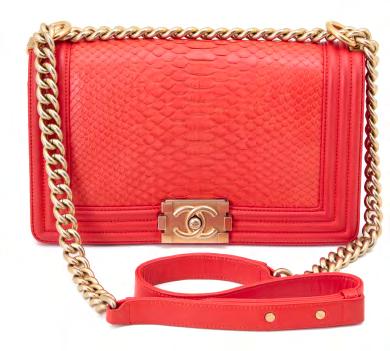
This page: Boy bag in orange python with gold-tone hardware. Single internal compartment in leather. Chanel, France, 2017–18.
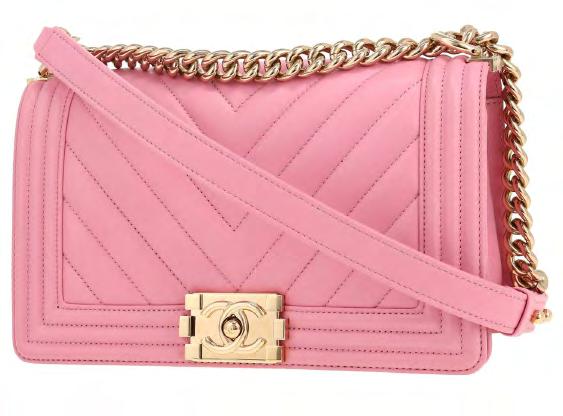
Opposite page: Boy bag in pink leather with chevron quilting, Chanel 2020.
One such example is the Boy bag designed by Lagerfeld and presented in the Autumn/Winter 2011–2012 collection, which took its place as a symbol of modernity, rebellion and also staying true to tradition. Its name is no accident: it refers to Boy Capel, the Englishman who Coco Chanel loved intensely in her youth, someone who was essential to the founding of the fashion house. As an entrepreneur, Capel didn’t just support her financially; he inspired her with his elegant masculine style. Gabrielle Chanel often appropriated details from menswear to revolutionise women’s wardrobes.
The Boy bag itself embodies this androgynous
spirit, becoming a bridge between feminine and masculine, between tradition and innovation. The Boy bag stands out for its decisive square structure, which is different to the more soft and classic lines of the 2.55 or the Flap Bag.
The result is a bag that unites rigour and refinement, with a more youthful and rebellious attitude compared to other Chanel styles. It was
an instant hit and celebrities like Blake Lively, Kristen Stewart and Cara Delevingne have turned it into a contemporary icon.
Today, it’s one of the most sought-after bags in the world, able to bring a bold and youthful twist to traditional Chanel design.
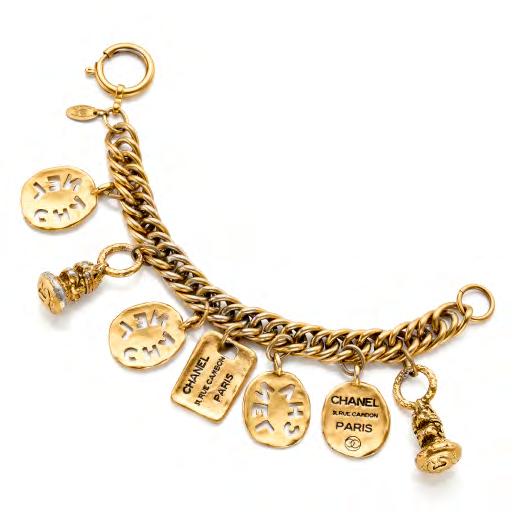
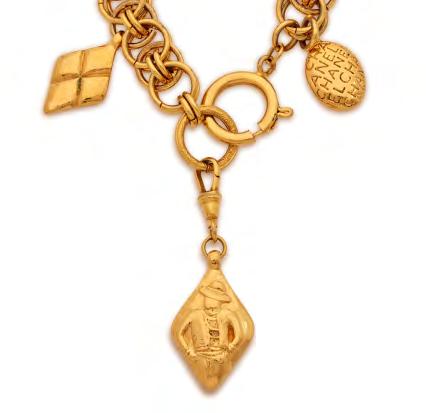
Top: A detail of a chain bracelet in goldplated metal with multiple charms.
echo the
In 2009, Patrice Leguéreau was appointed head of Studio de Création Joaillerie de Chanel and asked to make two collections of haute jewellery per year, in addition to the lines of jewellery, precious items and customised creations.7 His work stands out not only for the quality of the designs, but also for his experimentation with different materials.
In 2015, the Coco Crush collection made its debut, characterised by minimalist elegance. The jewellery, in gold with clean lines and rounded silhouettes, echoed the matelassé motif seen on iconic Chanel bags. Beige gold was also introduced
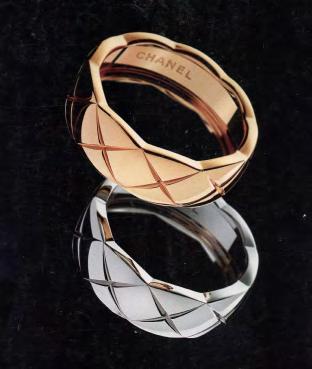
at this time, a hue of 18-carat gold which was a tribute to Gabrielle’s love of warm tones.
The 2022 Ultra collection, on the other hand, was made in ceramics, with contrasting colours, a demonstration of the brand’s constant exploration of innovative forms of expression.
On the fine jewellery front, Chanel presented Le Paris Russe in 2019. The collection, composed of 69 pieces, was an ode to Gabrielle Chanel’s love for the Grand Duke Dmitri Pavlovich and the costumes worn by the Ballets Russes.
The Tweed de Chanel collection, introduced in 2020, transformed tweed into luxury jewellery.
‘Tweed is a complex and fascinating material to transpose into high jewellery. It’s a very geometric perpendicular weave, which I applied to jewels,’ explained Patrice Leguéreau in a note to the international press. ‘What’s so surprising is that tweed lends itself to every variation imaginable. From the same weave, I’ve created fringed, frayed and embroidered versions, dense and airy effects, and colourways that are tonal or contrasting. What I wanted to express was the richness of this material. And its femininity too, just as Gabrielle Chanel sought to do when she brought tweed into the feminine wardrobe in the 1920s. From that moment on, she constantly reinvented it.’
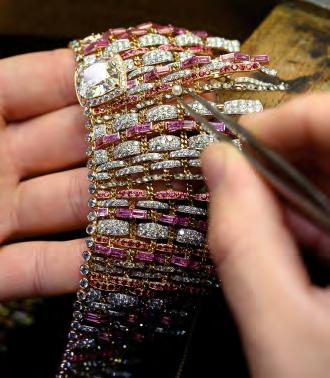
Opposite page: The making of the new high jewellery collection from Chanel: Tweed de Chanel, in the workshop in Place Vendôme, Paris. The jeweller sets small pearls into the rosegold chain of the Tweed de Chanel necklace, 7 January 2020.
‘Fashion
fades, only style remains’
– Gabrielle ‘Coco’ Chanel
Gabrielle ‘Coco’ Chanel forever changed the way women dress, move and perceive themselves.
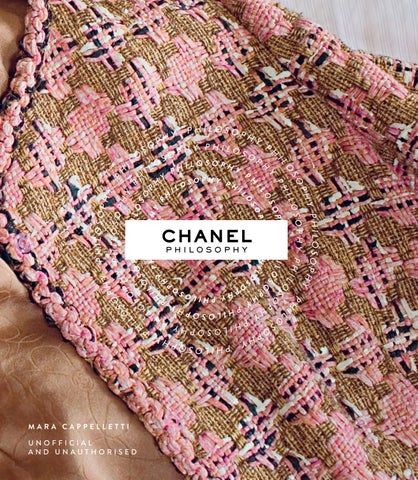
Stylish and richly illustrated throughout, C H A N E L P H I L O S O P H Y is a visual exploration of Chanel’s impact on womenswear, as well as the designer’s innovative vision of accessories, perfume and jewellery.
Complemented by expert interviews, historical documents and archival photographs, Mara Cappelletti’s fascinating history unveils the secrets of a luxury that is not only about exclusivity but also a practical and timeless elegance.
Mara Cappelletti is the author of several publications on jewellery, watches and fashion. Chanel Philosophy follows her successful Hermès Philosophy and Rolex Philosophy in the Luxury Philosophy series.