An artist’s subjective, intimate portrait. A vision generated by the finest mind. An authentic forge of ideas.
A life in harmony with his native country and his origins, as the essence of mankind itself.
Stencil art can be summarized as an experience that goes beyond mere artistic creation: driven by an insatiable curiosity and moved by a wild passion, it aims at digging deeply into the soul to discover moments of intensity, which culminate in a blaze of color.
Stencil art recalls a journey around the world, like the one made by Ulysses; and C215 is indeed tormented by an artistic fever that haunts him in his research into what it means to truly be oneself.
His adventure is permeated by a veil of melancholy for his native country, for his roots and for the loss of those dear to him.
But he also makes us aware that we are somehow part of a universal message, that we need to live art as a duty and a responsibility to construct a better world. All of this is art, according to C215.
The French artist seduces us as if he were looking through a kaleidoscope, where often a minimal movement of the eye changes the perspective.
“Art is a mysterious and enigmatic form of expression. In the
end, nobody knows exactly where the inspiration came from, how it comes alive, how it forms and evolves; we can never generalize,” he says.
When gazing at his art, each slight change of perspective reveals something new and unexpected.
His art is not simply a visual means aimed at provoking a political and social critique – which it does, often involuntarily. Instead it speaks directly to the heart.
The French artist’s creations accompany us on a journey of discovery: the beauty of an encounter, of a face, of a soul, be it human or animal, the glimpse of a fleeting existence that leaves a permanent mark…
C215 is considered one of the most important street artists of the contemporary era. His work has traveled from the street to art galleries and famous museums.
According to many critics, C215 is ‘France’s answer to Banksy’; however, he doesn’t like comparisons, as he strives to maintain his identity as an independent artist.
His art is unique and radically different, because it proposes a new genre that explores the boundaries of aesthetics, with particular emphasis on introspection and profundity.
Thanks to their craftsmanship and sophisticated touch, C215’s artworks recall those of a great Renaissance painter.
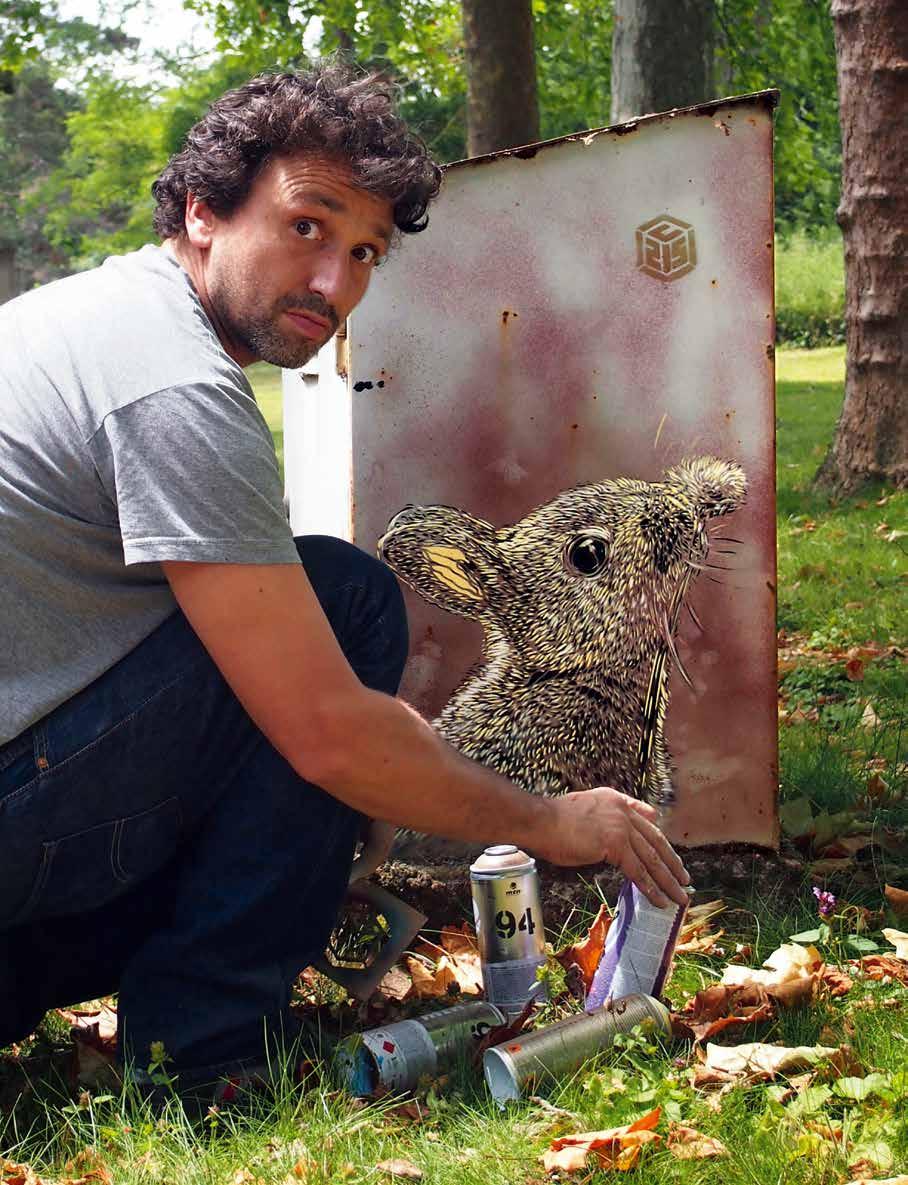
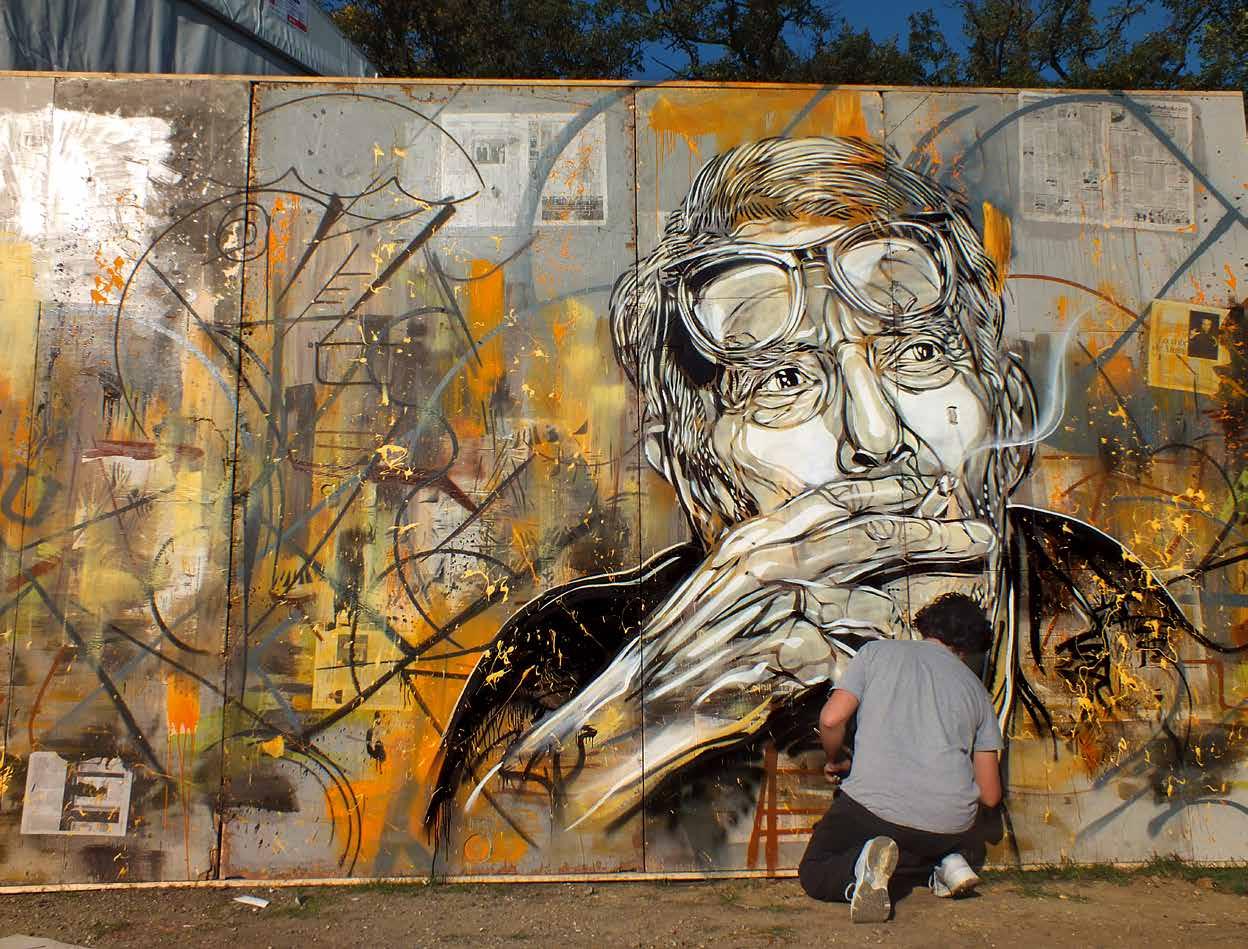
11 • C215 at work in Saclay, France (2014).
“I’ve never created my street art with money in mind, because I believe that art in the streets can really change the world. And I love the fact that not all my paintings are gigantic, which is the trend nowadays. In my opinion, gigantic works can be overwhelming and can shadow the surrounding environment in an almost aggressive way.
“I prefer my portraits, my characters and my stencils to be discovered casually around a corner in a street, on a door, on a trash bin or on a postbox. In my philosophy, even the most common objects – a pair of shoes, a bag or a book – can become art.
“I don’t feel attracted to pop culture and famous icons, unless they are persons who deeply inspired me or deeply irritated me to the point of provoking my reaction.
“I follow the subversive ideal whereby even common people can become icons and acquire a romantic aura. I don’t participate in political and social protest. I’d rather concentrate my attention on an anonymous face that I’ve bumped into at a bus stop, or on a homeless person crouching on a pavement, on a cat exchanging a look with me, a butterfly zigzagging in the sky, a couple kissing in an alley – things that make us dream rather than feel threatened. In general, I try to instill positive reactions…”
Although he rose to worldwide fame when Banksy asked him to collaborate on some projects in 2008, C215 prefers to work on the street, rather than exclusively for galleries, collectors and museums.
“A museum is there to preserve. A road on the other hand is meant to devour, transform, and destroy. If we think about it, compared to a museum, a road is much more similar to real life, and that’s why I’m particularly attracted to it.
“I don’t remember exactly when I started to paint, probably when I was a child; I have very vague, blurred memories. My mother gave birth to me when she was only twelve and committed suicide when she was eighteen. I was raised by my grandmother, whom I shared a strong bond with since the beginning. Sometimes, she would treat me like an adult. I’ve always been a shy child; I was embarrassed to show my art even to my friends and that’s why I would tend to paint in the street.
“For example, taking a picture of my work and publishing it on the Web was the most suitable way of expression considering my temperament at that time.
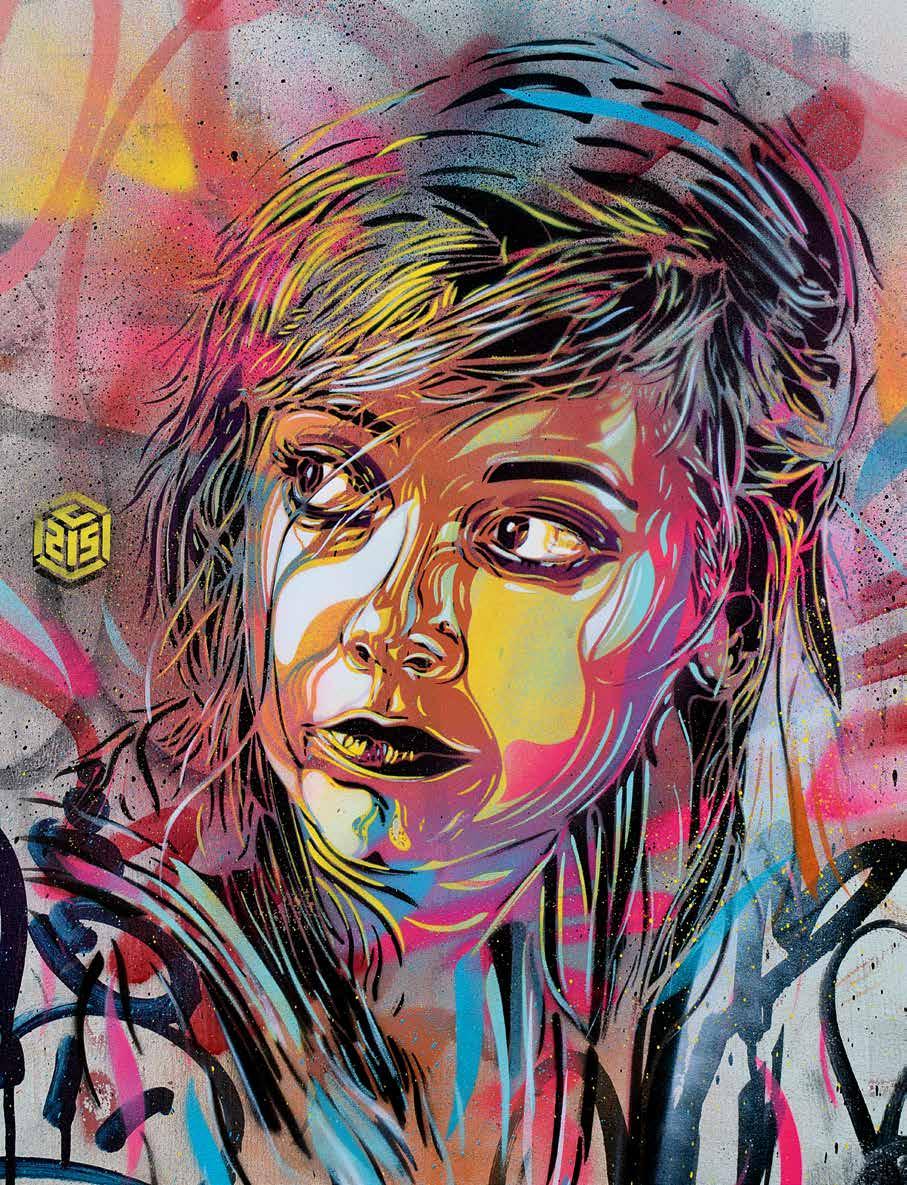
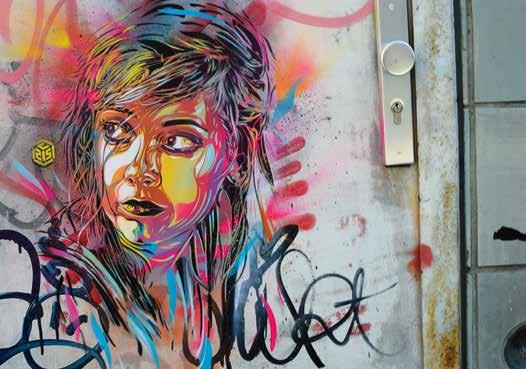
C215 says this while trying to analyze where his love for street art began. At that time it was not yet fashionable and nobody talked about it, but for him it had become a necessity.
C215 is a master of dwelling on and capturing details with unique sensitivity, revealing the souls of his subjects and of himself, disclosing feelings and emotions at the exact moment they are rendered. All this actually happens involuntarily.
“When I start painting or creating a stencil, I always envision the whole thing, everything, the final result, the overall perspective, the composition of the colors and their integration with one another, according to the context.
“I never think of the details, but in the chaos of creating an artwork the details develop inside me, as if they were necessary, generated by the contradictory overlapping of strata, which are rational yet completely anarchic at the same time. The conflict that arises requires details, but I never quite know in advance how this will happen.”
Thus, for some time now C215 has been famous and appreciated not only for his street art, but for his entire artistic production, which can be seen in exhibitions as well as in the private collections and museums of Paris and the rest of the world. With his chameleonic ability, C215 has learned to adapt his art to the surface or object on which he paints, or which inspires him. His biggest creations as well as his smallest ones generate emotion. Naturally, the loss of a mother during childhood is something that leaves a lasting scar, like a wound that doesn’t want to heal, like a mark on the soul. The sense of loss and abandonment is hard to forget. “I became an orphan when I was a child, so I was raised by my grandparents and my uncle. They owned several bars and nightclubs, where I used to spend a lot of time, even at night. I became accustomed to nightlife very early in my life and I could make contact with unusual people from all walks of life: eccentric artists and bohemians, alcoholics, drug addicts, musicians, adventurers.
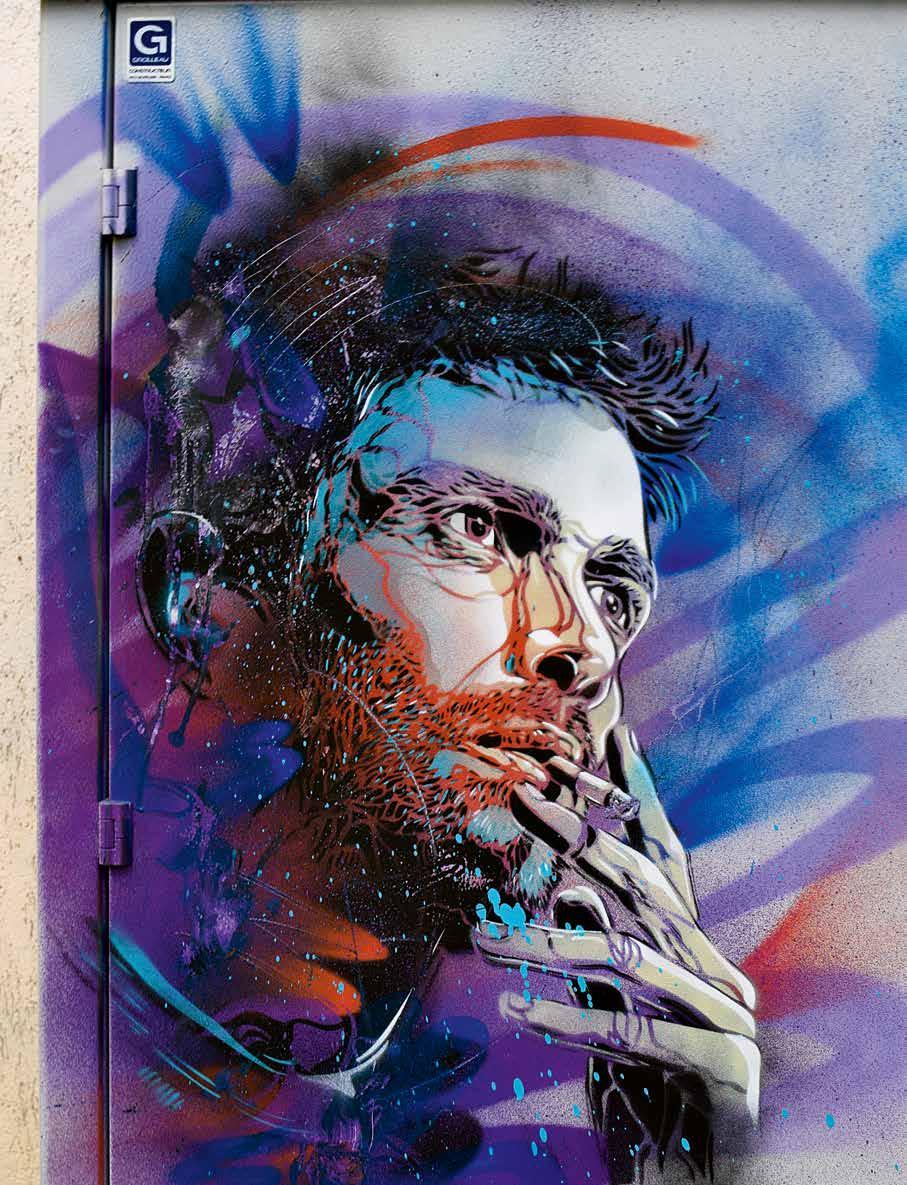
30-31 • L’âge d’Or , Paris, 2019.
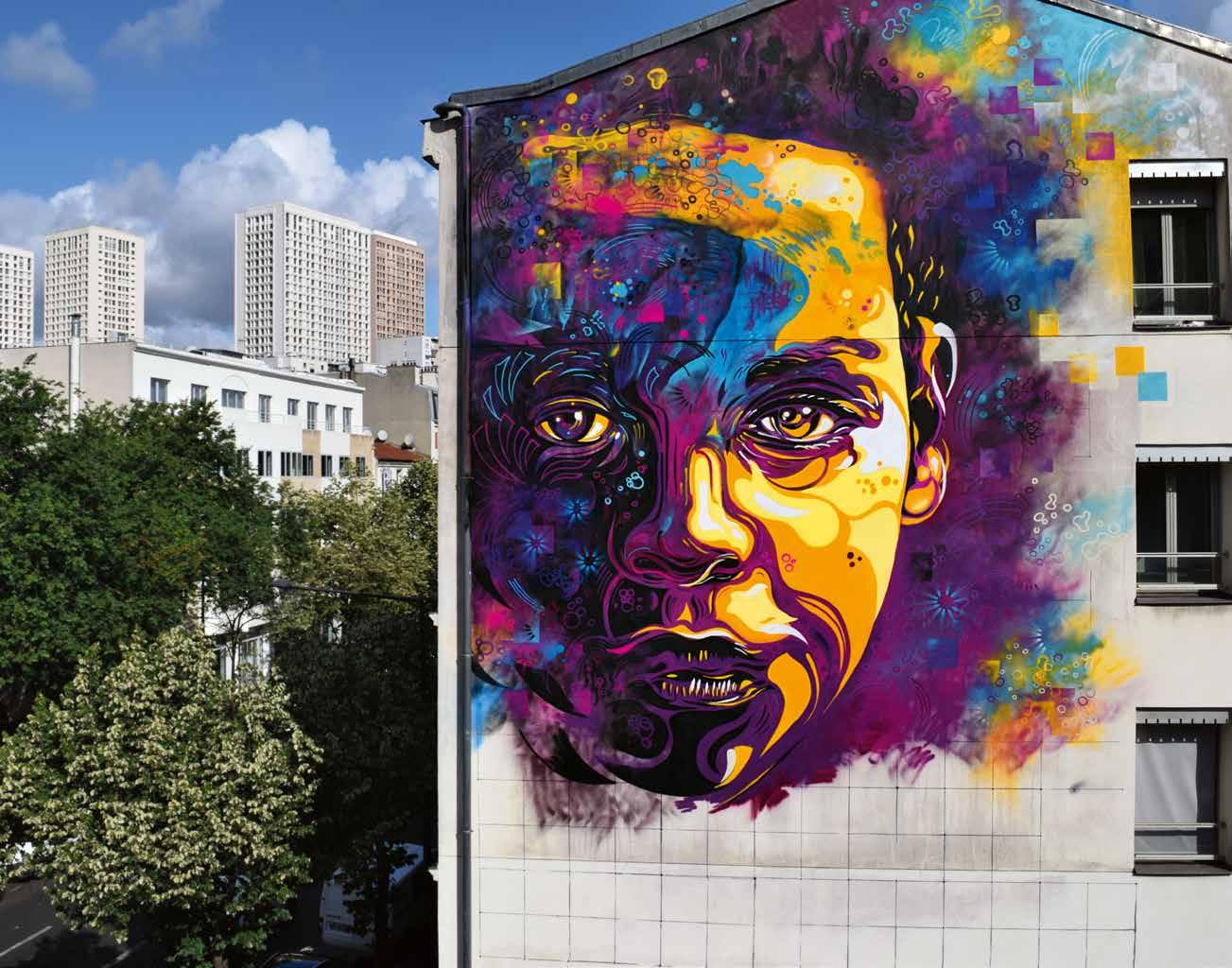
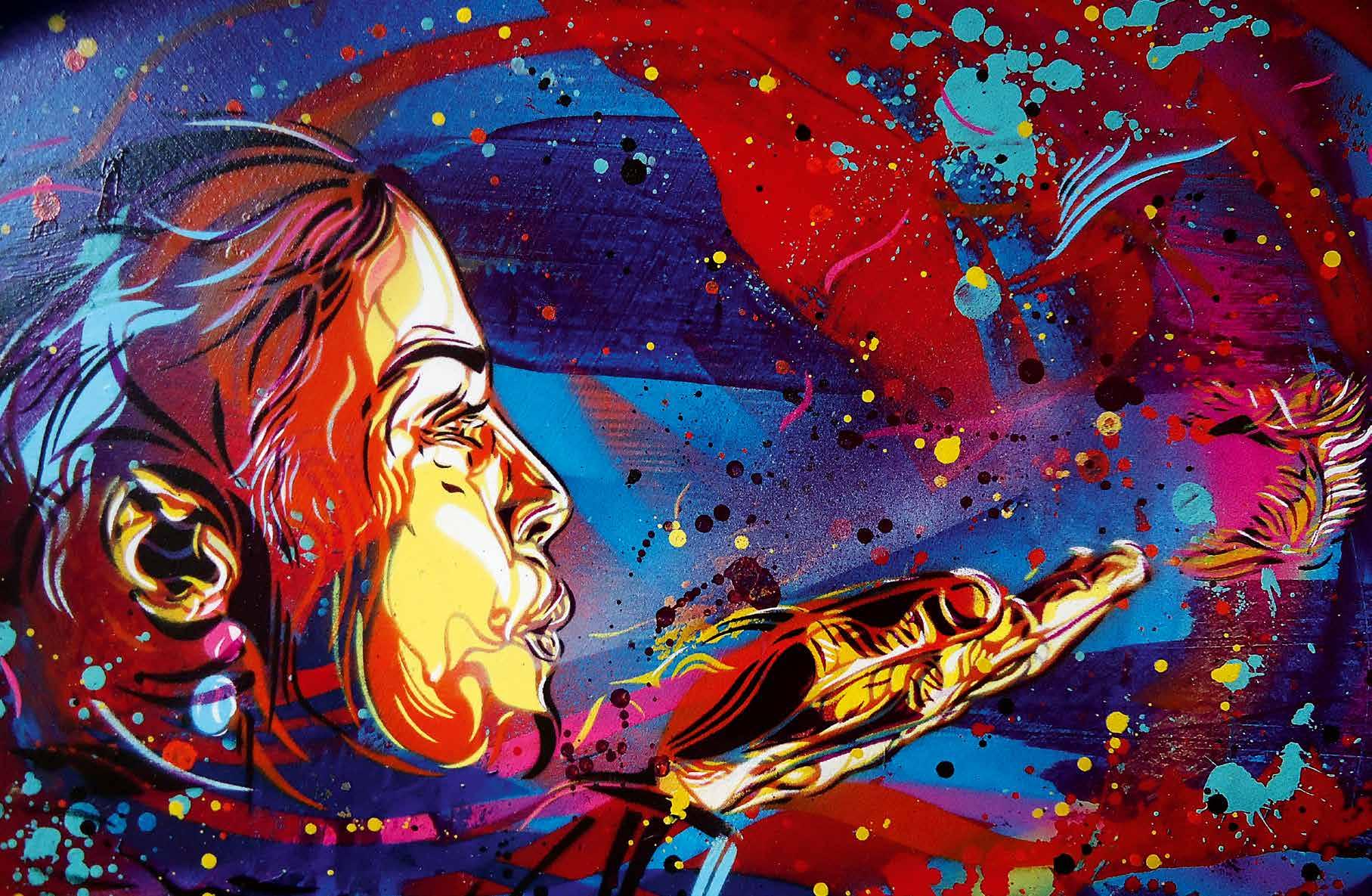
“I grew up with the portrait of my dead mother on the wall; that’s probably why I’ve always attached the greatest importance to family portraits since I was a child. I portrayed Nina, my daughter, many times when she was a little girl and I have also accepted commissions to make portraits of children.
“And with the same passion, I like spotting them and portraying them in the streets during my many trips around the world. They remind me of my childhood, of my family and of my dearest friends. If I think about my childhood, I’d have to say that I don’t remember anything up until I was 5 years old, when my mother died.”
The inspiration for C215’s portraits stems from those who live on the fringes of society: vagabonds, the homeless, migrants, the elderly – the so-called invisible members of society. These characters generate particular feelings in C215, exactly as in the case of lovers kissing passionately. He comments, “Every day I discover a new source of inspiration, a new need… For me portraits are a universal message that goes beyond a painted face. One can express everything in a portrait, any idea or emotion, without a single word.”
He then adds: “The subjects of my portraits often reflect my emotional state in that particular moment of my life. My emotions create the subjects in my mind, even before I paint them. For instance, I portrayed several homeless people when
I felt like one of them, then I painted my daughter Nina when she was still a child, lovers and cats when I lived in Rome, and historical figures when I started spending most of my time in France. Most of the images in my street art are anonymous, so to speak, and can be connected to and identified with my emotions. However, I prefer not to classify them. I’d rather leave their interpretation to the viewer.”
Certain aspects of the many homeless figures – with disturbing and mysterious features – have been inspired by the artist’s personal experiences and losses, such as the loss of his mother.
“I made my first work on a homeless person when my grandmother, Micheline, died in 2007. At that time my daughter Nina was only 3 and I felt immediately lost. I was broken psychologically, sad and desperate. I felt that I had lost forever the only place where I had ever felt truly safe in my whole life. She had actually been a mother to me and now I didn’t have her anymore. I felt as though I was evanescent, almost invisible. In such a moment of emotional crisis I painted my first homeless person, because I felt really close to him, to his condition and to his total loneliness.”
Other portraits came after that one, all of them linked by the dark and desperate feelings in their eyes, as a testimony to their suffering and tormented souls.
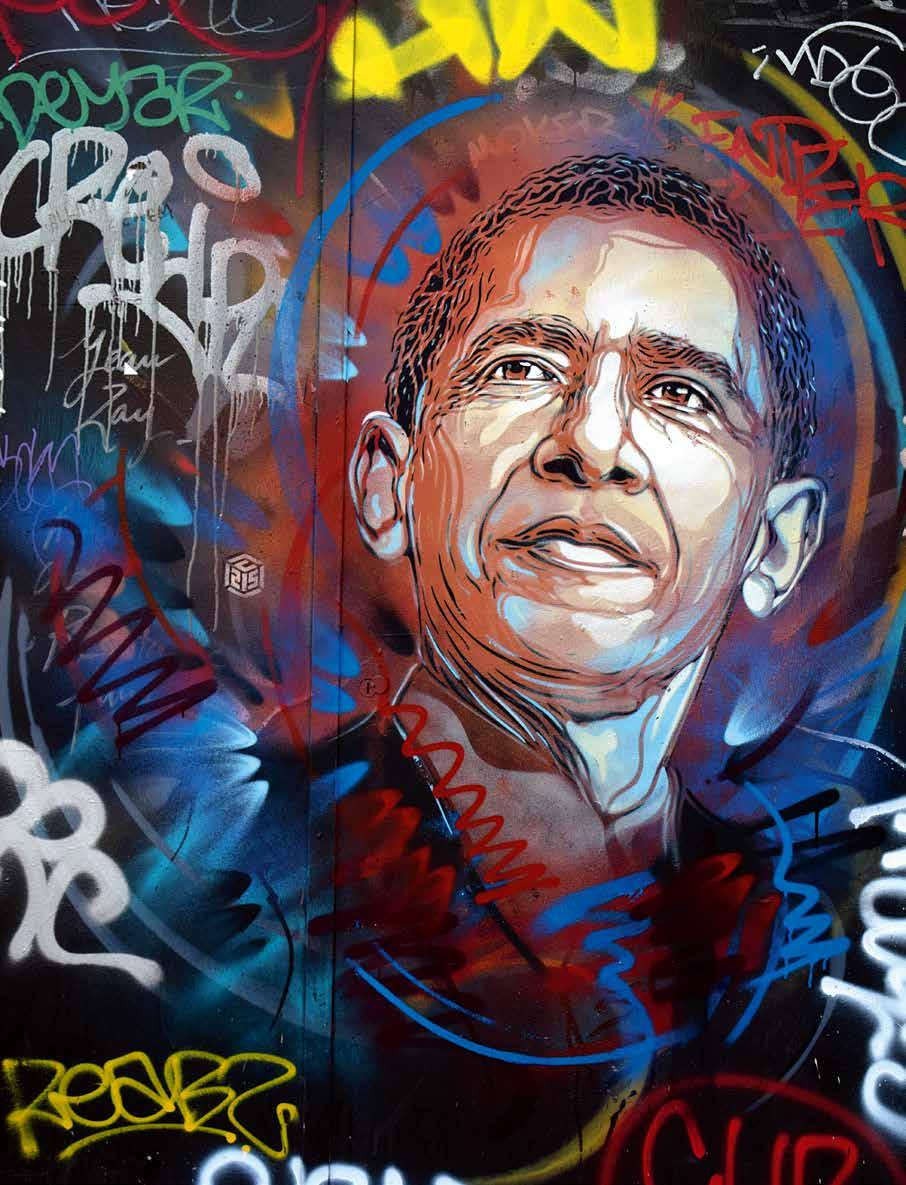
66-67 • A portrait of President Obama in Paris (2017).
In contrast to this dark moment comes the period of portraits of clowns. C215 doesn’t want to identify his existential ups and downs as necessarily related to any particular project.
“I don’t plan my projects in advance, they simply generate from the most diverse emotions and moods. Even when I portray a sad subject, there is an ironic and funny side to me that wants to entertain the observer. This way I stimulate my positive attitude towards life.
“And again, clowns have a certain dramatic side to them, behind their mask. During their performance, clowns have to entertain and amuse the audience and make it forget about the burdens of everyday life. Clowns possess the typical melancholy of childhood, something that has followed me like a shadow my whole life. Like all my other works, these clowns are therefore a part of me, of my personal and artistic journey, of my evolution as a human being.”
The French artist reveals his eclectic and conflicting philosophy, which runs through his all artistic production: “My art arises as a form of expression of my moods. This is what art is, in my opinion – something invisible that becomes visible.”
His portraits of famous characters are often connected to
his thoughts; they are intellectual provocations, such as when he painted a portrait of Donald Trump on burned American banknotes. Among the famous characters are actors, celebrities, athletes and artists who have inspired and moved him. Other times the portrayed characters are simply C215’s friends, or women he’s loved.
Then there are animals.
“I love animals. My grandparents were dog breeders, among other things; many of those dogs lived with us… even in the bathroom. I used to complain at that time, but now I’ve returned to my origins even in this respect,” he says with a smile, thinking of his French bulldog Lilli.
“Thanks to my constant contact with animals, I think I’ve developed a certain ability to be on the same wavelength as the animal universe and especially with their emotions,” he reveals.
His dog – a female with a strong personality – is often with him, so much so that they seem to be ‘one soul’. They are a funny, inseparable couple. They look like they have a lot of fun together, judging by the pictures on Instagram: exploring Paris on a bike, having a bathe in the swimming pool and in many other everyday activities and moments.
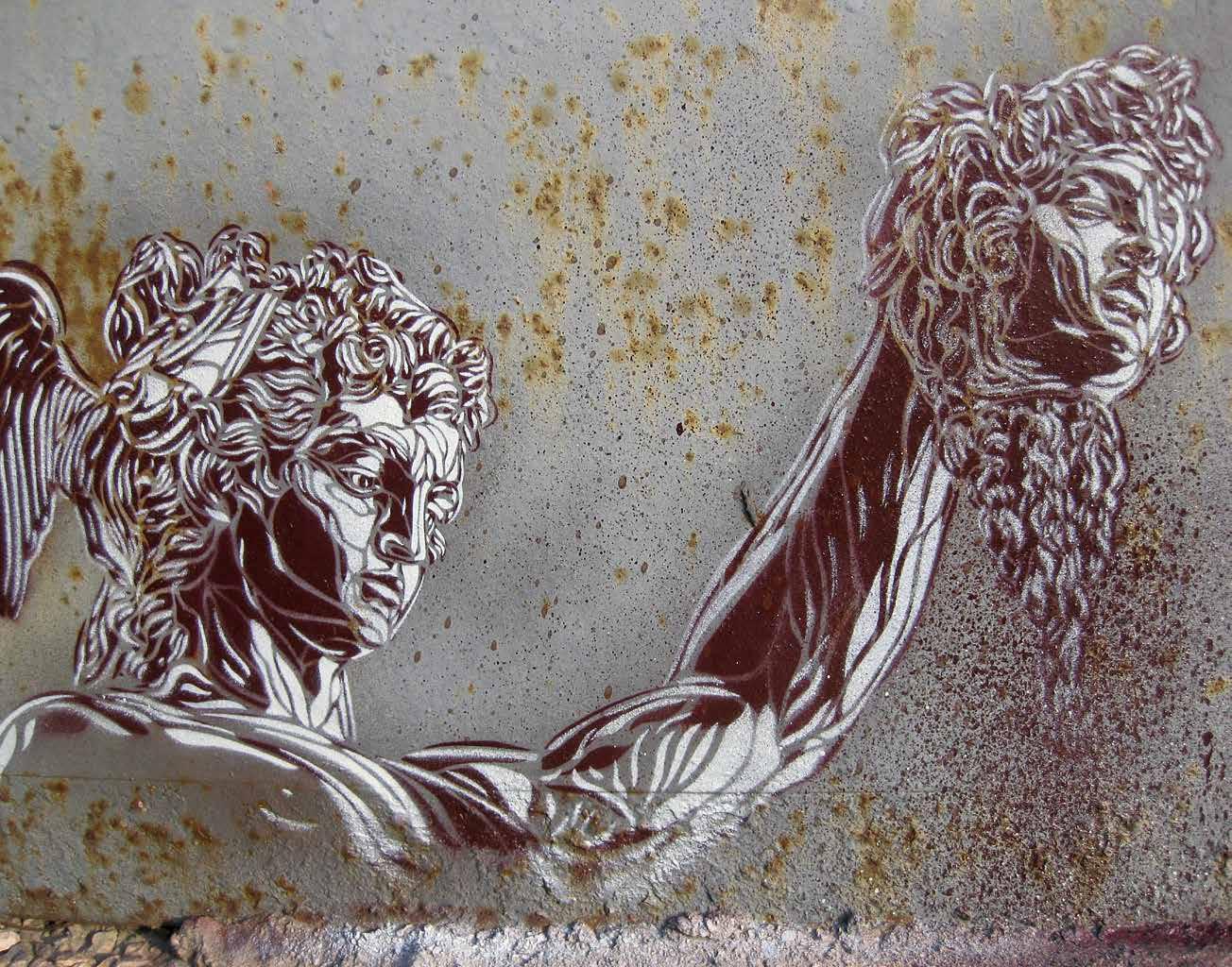
C215 went to Athens in 2009 to meet a very good friend, another multimedia stencil artist, Logan Hicks from Brooklyn, and his sponsor Sabotaz, a manufacturer of spray paint bottles.
“I will always remember the many vandalized ATMs with the letter ‘A’ for ‘Anarchy’ painted on them,” he recalls.
140-141 • Persée , Athens (2009).