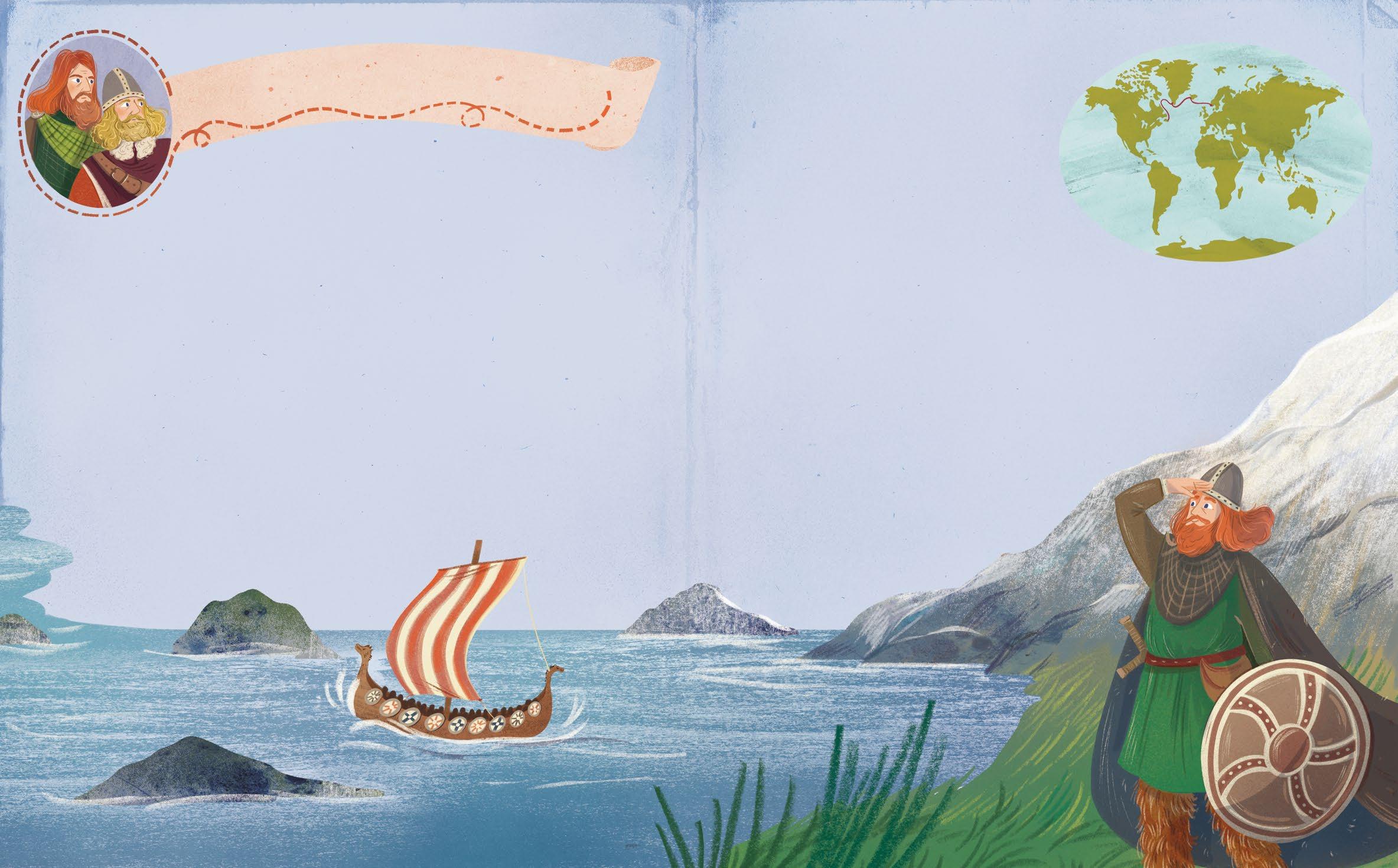
In 960, at the age of ten, Erik the Red moved with his family from Norway to the distant Iceland, which his great-great-uncle had actually discovered many years earlier. When he grew up, he settled down, but Iceland started to suffocate him. What lands lay in wait for him beyond the sea? Erik gathered their things and they set sail to explore the seas. A few weeks later they reached dry land and christened that place Greenland. They built a large camp because Erik had decided to put down roots, but not everyone wanted to stay.
One of Erik’s sons was called Leif, and he loved the sea too. Leif had heard a story he couldn’t get out of his head: before reaching camp, very strong winds had pushed a ship beyond Greenland. On the horizon they had clearly made out a new and unexplored land. What was there beyond those waves? Leif took a fast boat, and like his father had done before him (and his great-great-uncle even earlier!), explored the cold Arctic waters until he found what he was looking for. He called that land Vinland, which we now call Canada!
We don’t know why Erik was called “the red”: perhaps he had red hair, or maybe he had… a fiery temperament! In fact, he was banished from Iceland for several years, having been accused of killing a neighbor after a terrible fight.
I will take my boat and find that land.
Leif didn’t really know what lay in store, but his curiosity was so great that it gave him courage and helped him push beyond his limits.
In 1519, the King of Spain financed Ferdinand Magellan so that he could find a route that led to the current Maluku Islands. The well-known voyage passed the Cape of Good Hope, the southernmost point of Africa, but those seas were controlled by the Portuguese.
Magellan was certain there was an alternative route, perhaps close to South America. The idea was intriguing, but it would be a very long journey, the longest they had ever undertaken, and if they wanted to arrive safely, everything had to be carefully planned.
They started off from Seville and sailed to Brazil. They went along the coast until they found a long strait which, once crossed, finally brought them to the Pacific Ocean!
However, in the Philippines, Magellan died in a clash with some indigenous people. His objective had been so close! Juan Sebastián Elcano, one of the captains, took command, and thanks to Magellano’s meticulous planning, he didn’t just reach the Maluku Islands, but even further! He continued west until they reached Spain, thereby becoming the first expedition to circumnavigate the Earth.
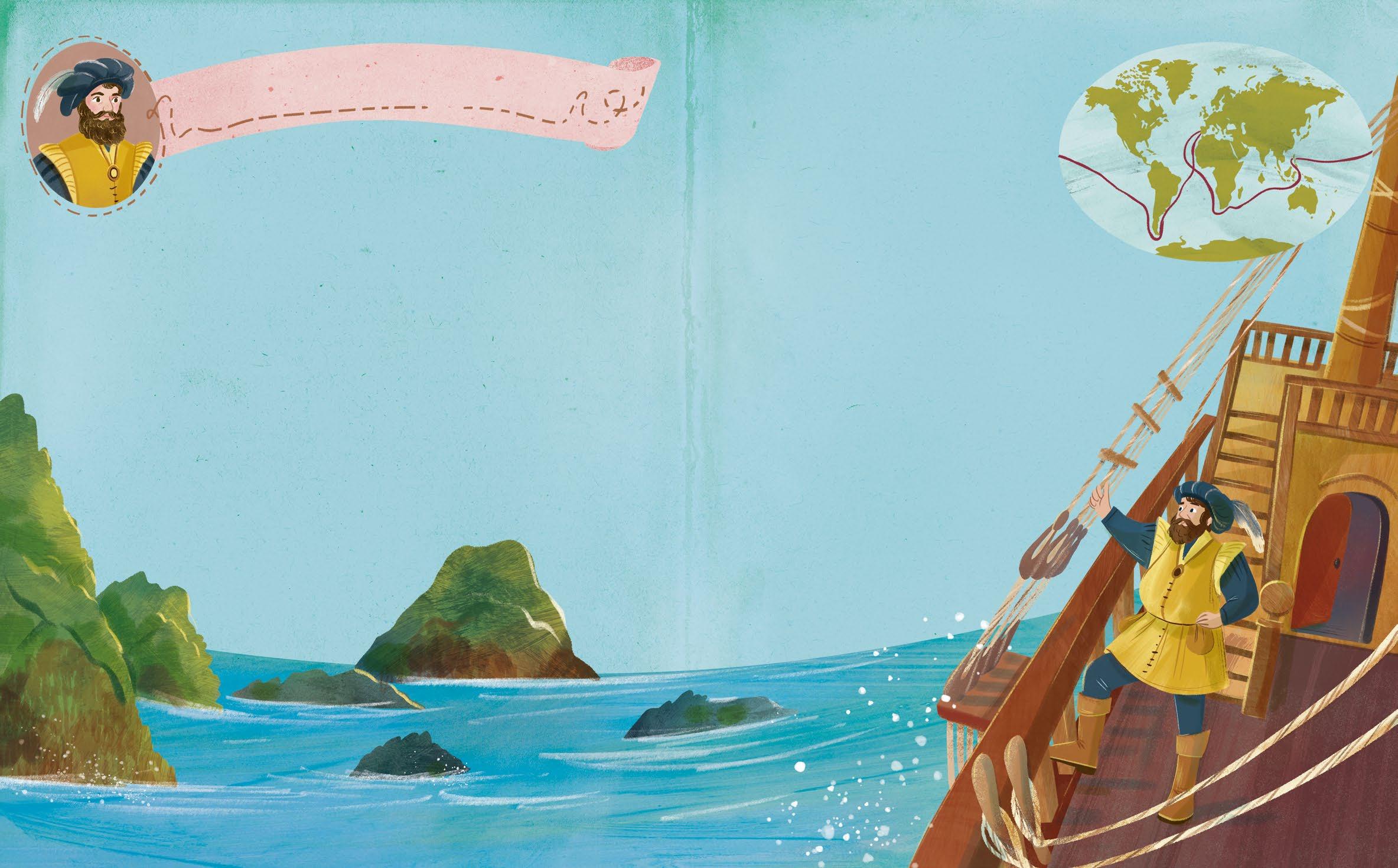
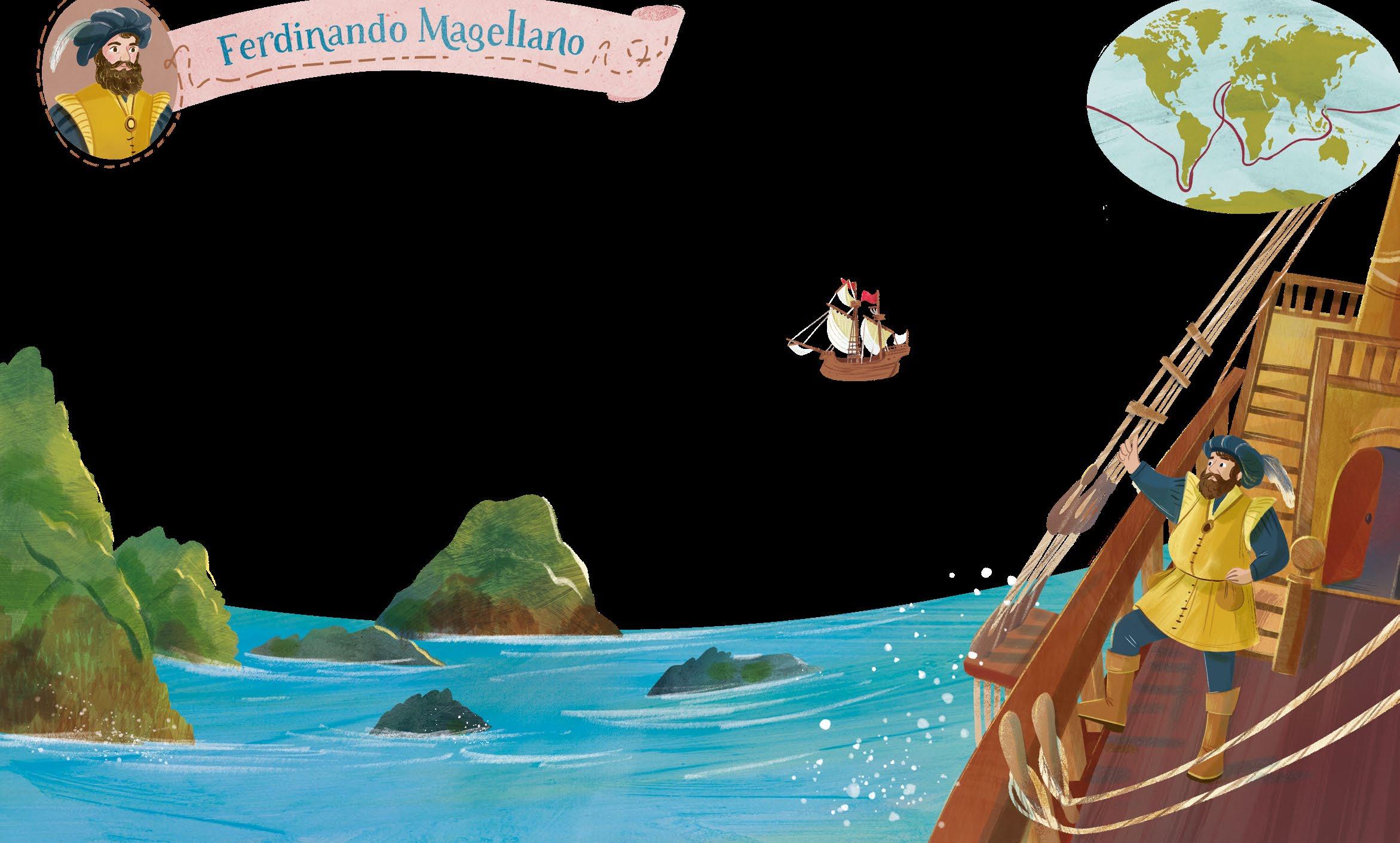
On board there was also someone who spoke the language of their destination: Enrique, a young man from those parts, was brought along by Magellan so that he could negotiate the best prices with the spice merchants. He had really thought of everything!
The sea is perilous and storms terrible, but these obstacles have never been enough to leave me stranded.
Life is full of unexpected events, but if you are well prepared, you don’t have to fear any obstacle.
If we’ve still not talked about the female explorers it’s because in certain countries, like France, it was illegal for them to take part in an expedition! Obviously, that didn’t sit right with the naturalist Jeanne Baret, so in 1766 she disguised herself as a man and joined an expedition. She boarded the Étoile just before they weighed anchor, and before you knew it they were sailing out to sea. In Rio de Janeiro, she collected a plant with beautiful red flowers, which she named bougainvillea, and then minerals in Patagonia, shells, flowers… she collected more than 6000 natural specimens on her own! Her disguise was so good that for several months no one realized the truth. However, after disembarking in Tahiti, a group of indigenous people knew that Jeanne was a woman and revealed this to the rest of the crew. When they stopped off in Mauritius, the captain set off again and left her on land. No matter, though, because Jeanne continued her research in Madagascar and on the Reunion Island.
When she finally set foot in Paris, she was the first woman to have circumnavigated the Earth!
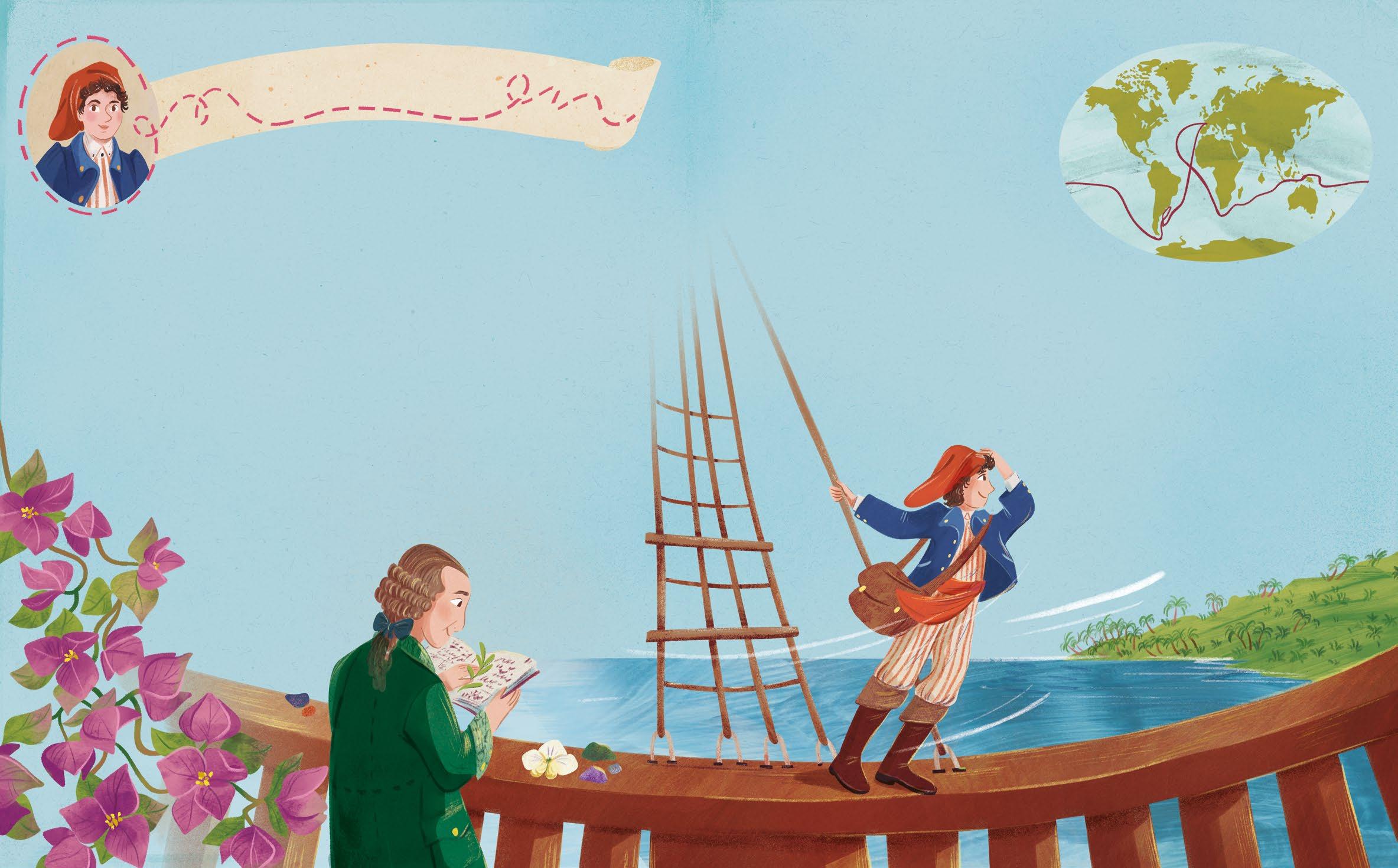

In 1785, the French navy guaranteed Jeanne a pension. Many years had passed since the Étoile set sail, but the courage and determination behind her feat were finally rewarded.
A plant she discovered in Madagascar was named Baretia bonafidia in her honor, but soon it turned out it had already been discovered. But in 2012, she was finally honored with a new plant named after her: Solanum baretiae.
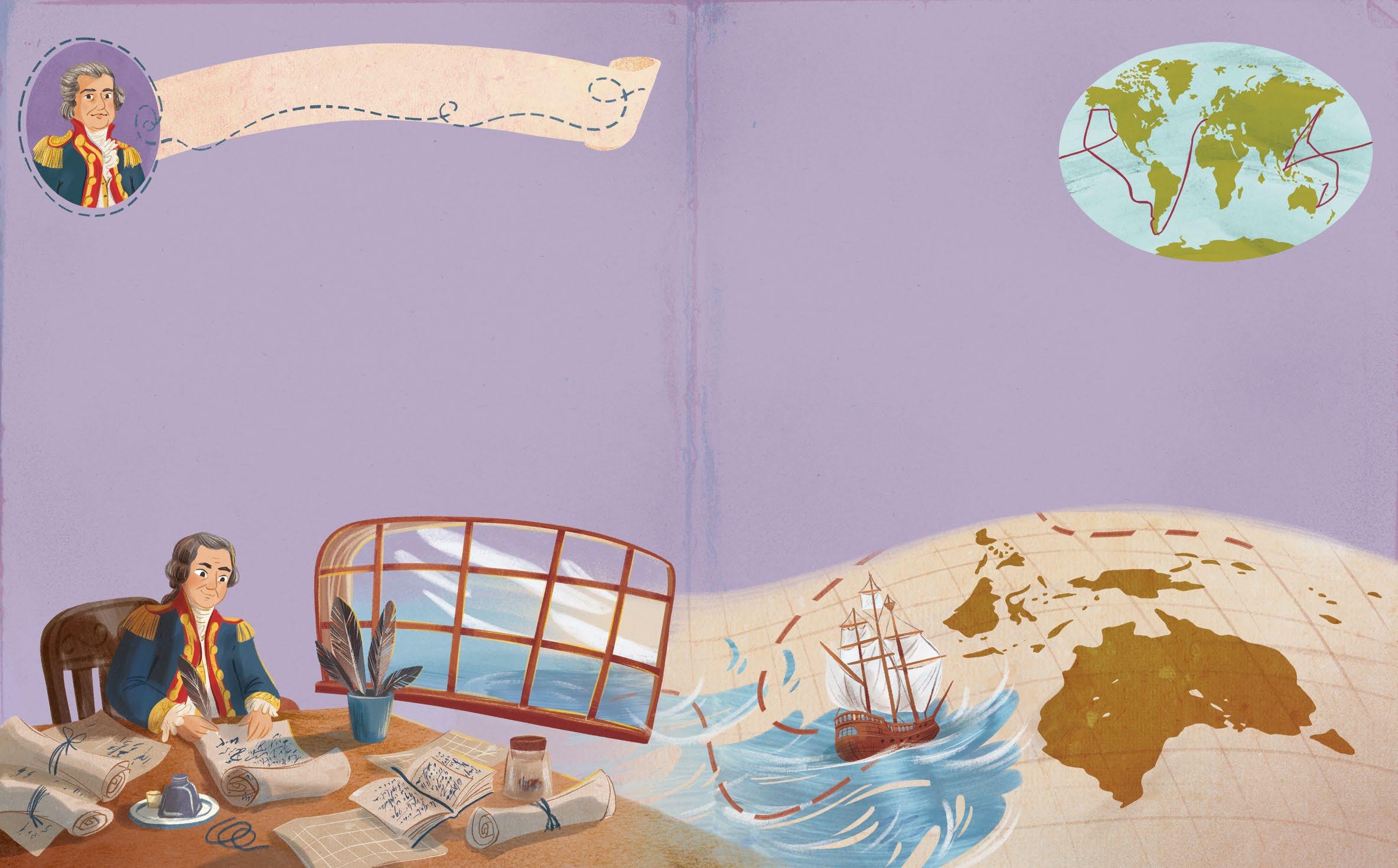
In 1785, the King of France charged Jean-François de La Pérouse with exploring the most remote areas of the Pacific.
Jean-François did not take the assignment lightly. He brought with him two sturdy ships, the Boussole and the Astrolabe, and a crew capable of studying everything they found: plants, animals, peoples, coasts…
He sailed the most perilous oceans for three years. He sailed along the coast of Alaska and California, he reached Hawaii, the Philippines, China, Japan, and Russia. He drew extremely detailed maps and sent his reports to France.
In 1788 he arrived in Sydney, in Australia. He sent a letter with the route, then… no more news. What happened to Jean-François de La Pérouse? For a long time no one knew, but forty years later some explorers found the remains of his ships near the island of Vanikoro, in the archipelago of the Solomon islands: they had run into rocks in a severe storm and sank.
Jean-François never returned home, but his maps and diaries arrived in France and helped generations of explorers.
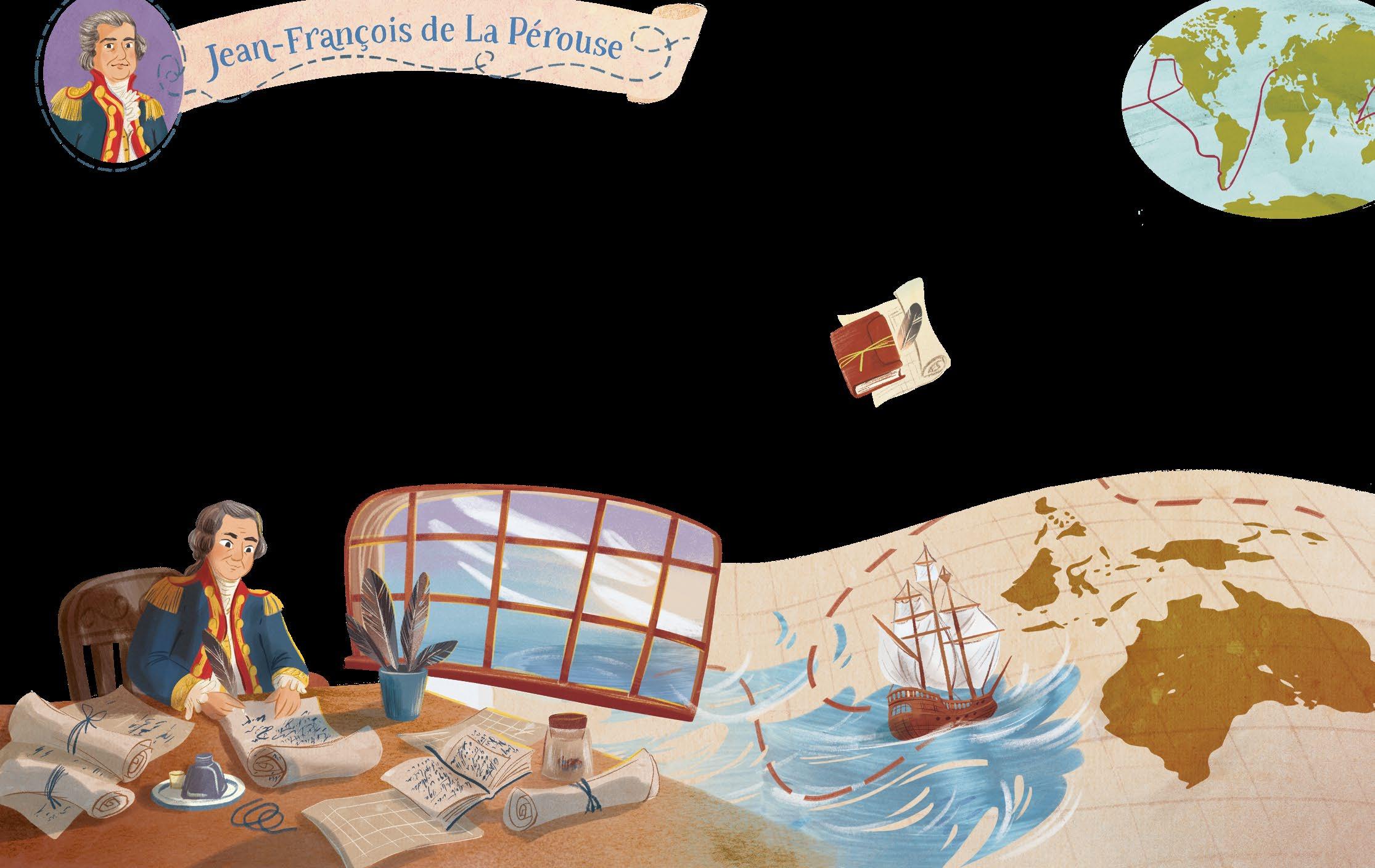
In California, Jean-François openly criticized the Spanish missions that treated the native Americans like slaves. He believed in the values of the French Enlightenment, and that every person deserved dignity and rights.
An enemy conquered should have nothing to fear; he then becomes a friend.
After capturing a British fort in Hudson Bay, Jean-François left them enough supplies to survive the impending winter cold. He was a firm believer that after a conflict, we should always try to forge peace.
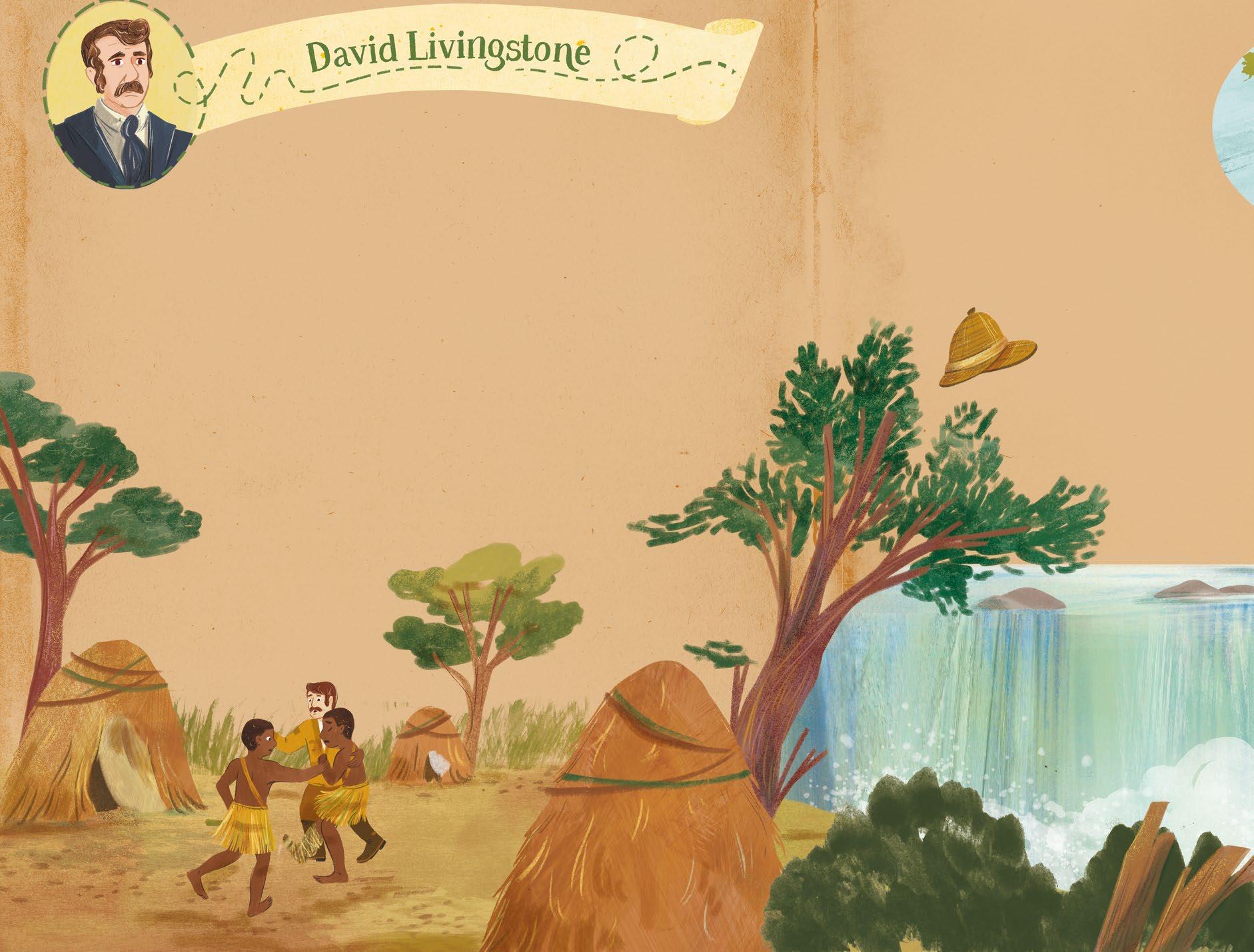
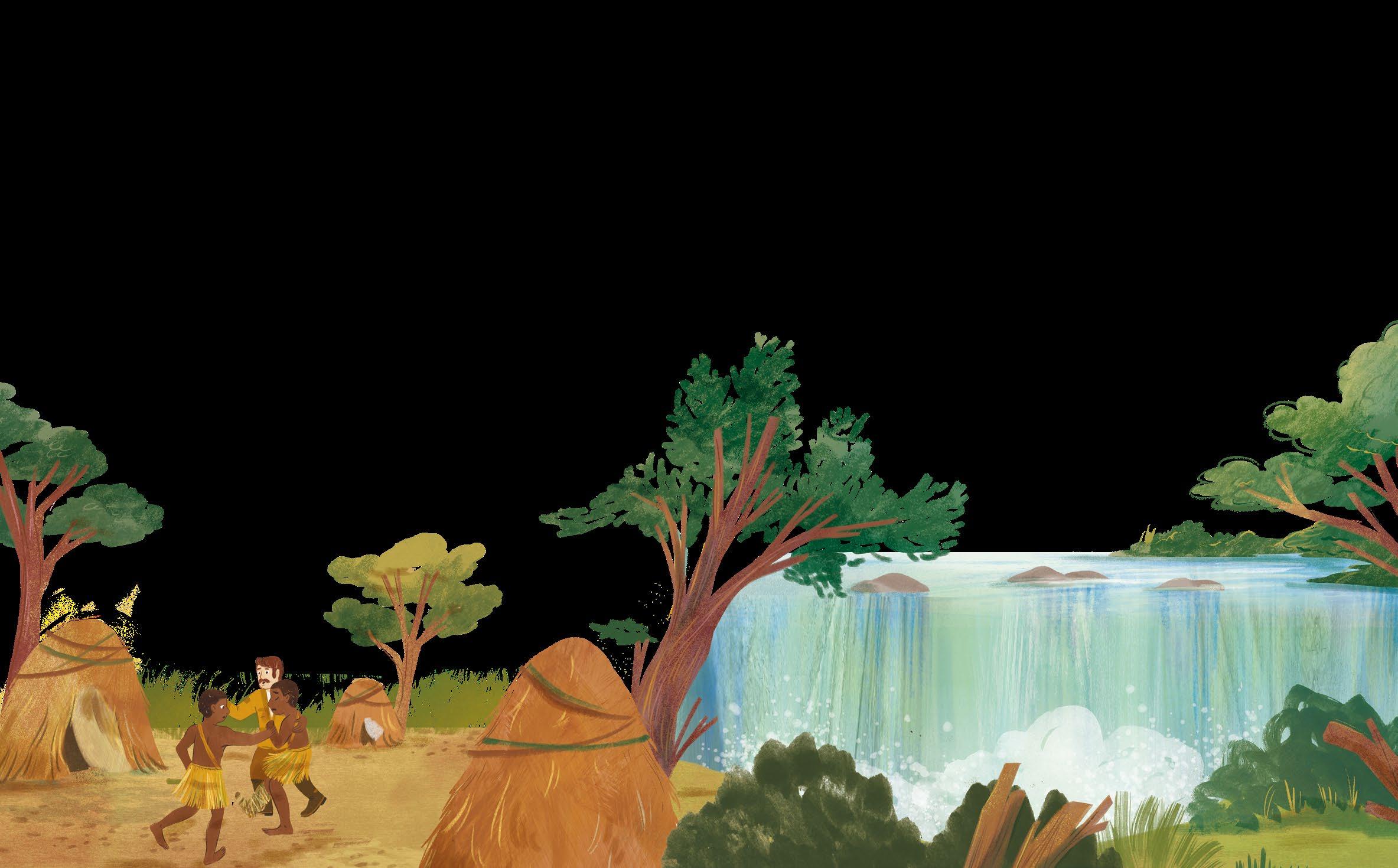
David Livingstone was a young Scotsman with a big dream: to become a doctor and help people. To make it happen, he worked in a factory by day and spent his evenings studying. In 1841, he left for Africa as a missionary and became fascinated with exploring unknown lands. He learned the local languages and made friends with African tribes. With his bag of medicines, he crossed deserts and forests. He discovered rivers, lakes, and spectacular waterfalls. He decided to name the most impressive one Victoria Falls in honor of Queen Victoria. However, the mission closest to his heart was helping people who were sold as slaves. Then, all traces of him were lost…
In 1871, when an English journalist finally managed to catch up with him, he found him debilitated by malaria. He begged him to return home to heal, but it was useless: Livingstone was only going to leave Africa when his mission was complete.
Upon his death, two years later, his heart was buried at the foot of a baobab, so that he could always stay in the continent he loved so much.
In 1844, Livingstone tried to drive away a lion by firing his gun, but he only enraged the lion even more! The image of the attack was published in a travel book, and Livingstone, embarrassed, was hoping that no one saw it: but unluckily for him, the book sold 70,000 copies!
The more time he spent in Africa, the more he became aware of the suffering caused by slavery. The books he wrote on this topic changed many people’s opinions!
May Heaven’s rich blessing come down on everyone who will help heal slavery, an open sore of the world.
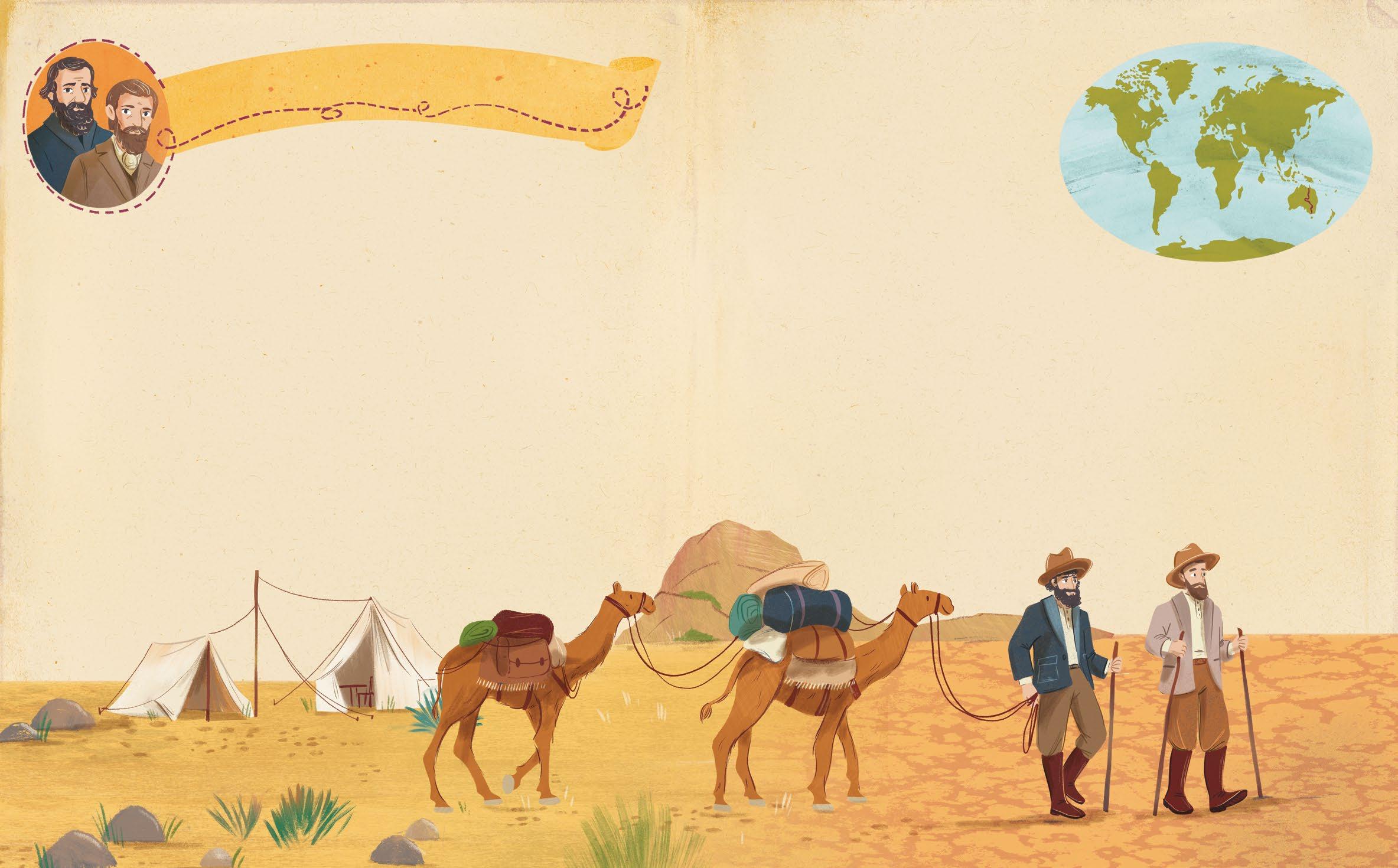
In 1860, still no one had crossed Australia: Robert O’Hara Burke and William John Wills set their minds on being the first!
Burke was a brave but impatient police officer. Wills was an intelligent and meticulous young scientist. Together they headed up an expedition of nineteen men, twenty-six camels, and horses laden with supplies.
They left Melbourne in the dead of winter, reaching Cooper Creek in the summer, more or less the halfway point. They should have waited until autumn to set off again, but Burke was impatient, so him, Wills, and a few others continued northwards: they crossed scorching deserts where it never rained and endless red earth plains.
In the summer of 1861, they finally reached the Gulf of Carpentaria! They’d done it! But the return journey was terrible. Food was in short supply and the monsoons slowed them down. When they arrived at base camp, it was empty: their companions had set off again just a few hours earlier.
When the rescue mission reached them, for Burke and Wills it was already too late.

The only member of the expedition to be saved was an assistant who asked the Yandruwandha, the Aboriginal people, for help. The Aborigines had lived in those places for centuries, and if Burke and Wills had relied more on the knowledge of the local peoples, they would probably have been saved.
At the end of the journey, there was little food, so Burke and Wills often ate a plant called nardoo. The Aborigines ate it too, but only after cooking it: when eaten raw, it actually prevents the absorption of vitamin B1, and this was one of the causes of their death.
When he was a young boy, Roald Amundsen read the stories of explorer John Franklin and his extremely courageous Arctic expeditions. That’s when he decided that, when he grew up, he’d explore the coldest regions on Earth!
In his first major feat in 1903, he sailed through the Northwest Passage, navigating the sea ice of Canada from the Pacific to the Atlantic. It took three years, but Amundsen was patient and prepared.
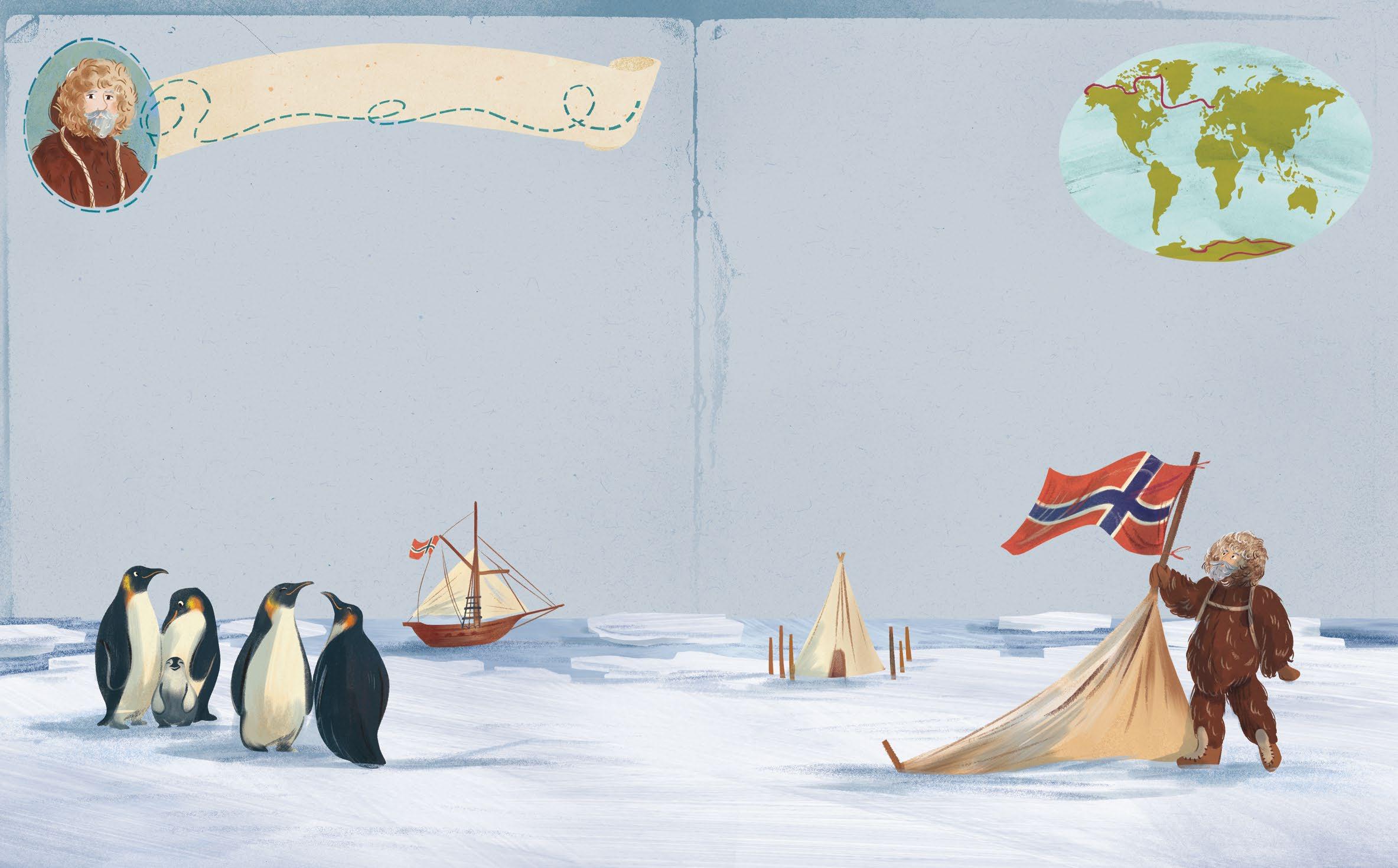
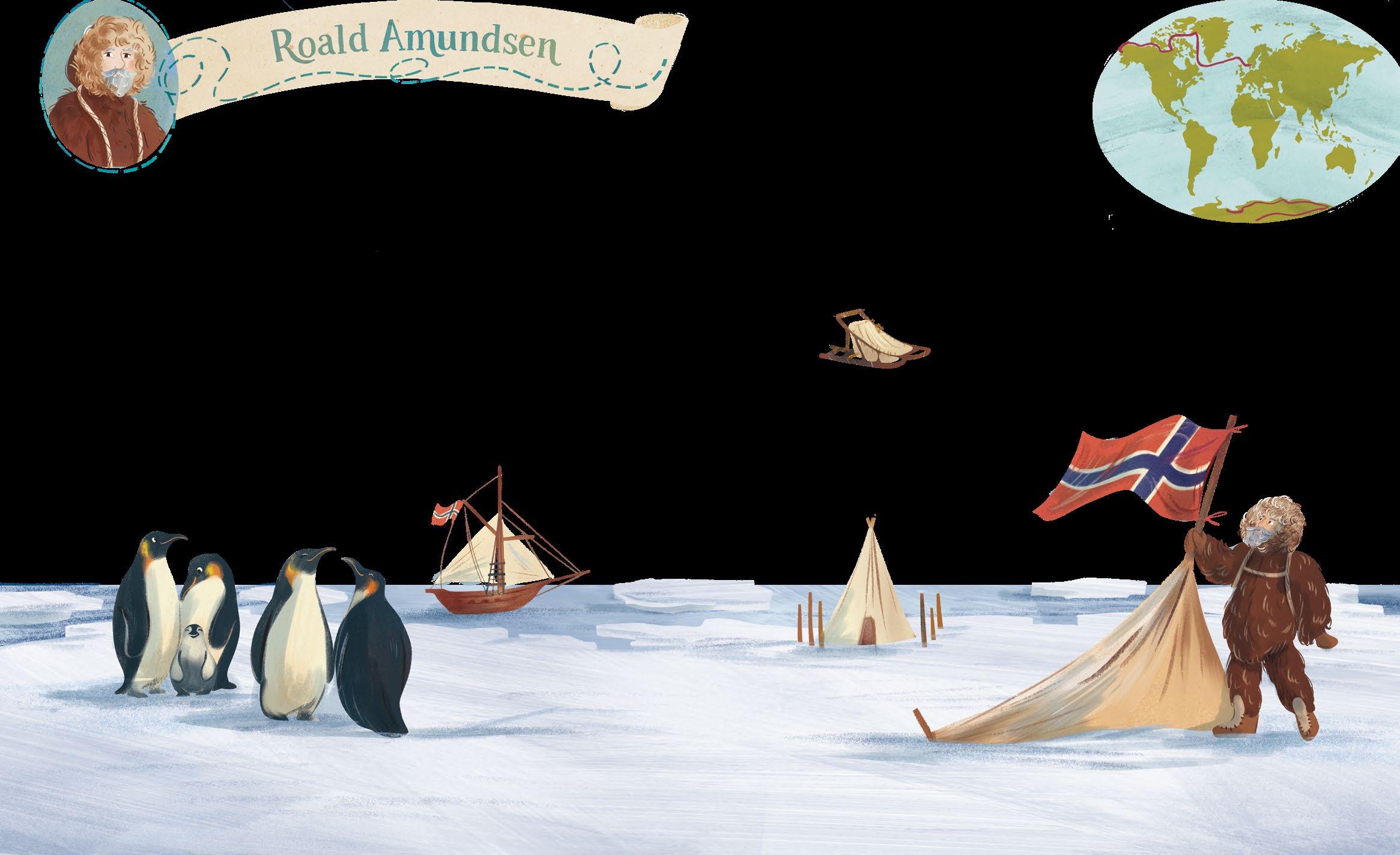
His ultimate ambition, however, was to reach the South Pole, the southernmost point on Earth, where no one had ever set foot! In 1911 he reached the Bay of Whales, on the coast of Antarctica. They were a party of four, and had sledges pulled by dogs and supplies for weeks. Every day, they slipped on the snow for hours and hours, with temperatures of minus forty degrees Fahrenheit (minus forty degrees Celsius)!
The journey was extremely tough: deep crevices, blinding snowstorms, a cold that froze your breath. Danger was always just round the corner, but on December 14, 1911 Roald planted the Norwegian flag on the South Pole. He was first there!
Even as a child, Roald knew that to be an explorer you needed to be in good shape. After school, he would explore the woods and the mountains to build up his muscles, and in winter he slept with the windows open wide to get used to the cold winds in the Poles. He had clear ideas!
One of the reasons his expedition to the South Pole was a success was that Roald had planned everything in meticulous detail and was prepared for the unexpected. Some people call it luck, he called it being prepared! Victory awaits him who has everything in order, luck, people call it.
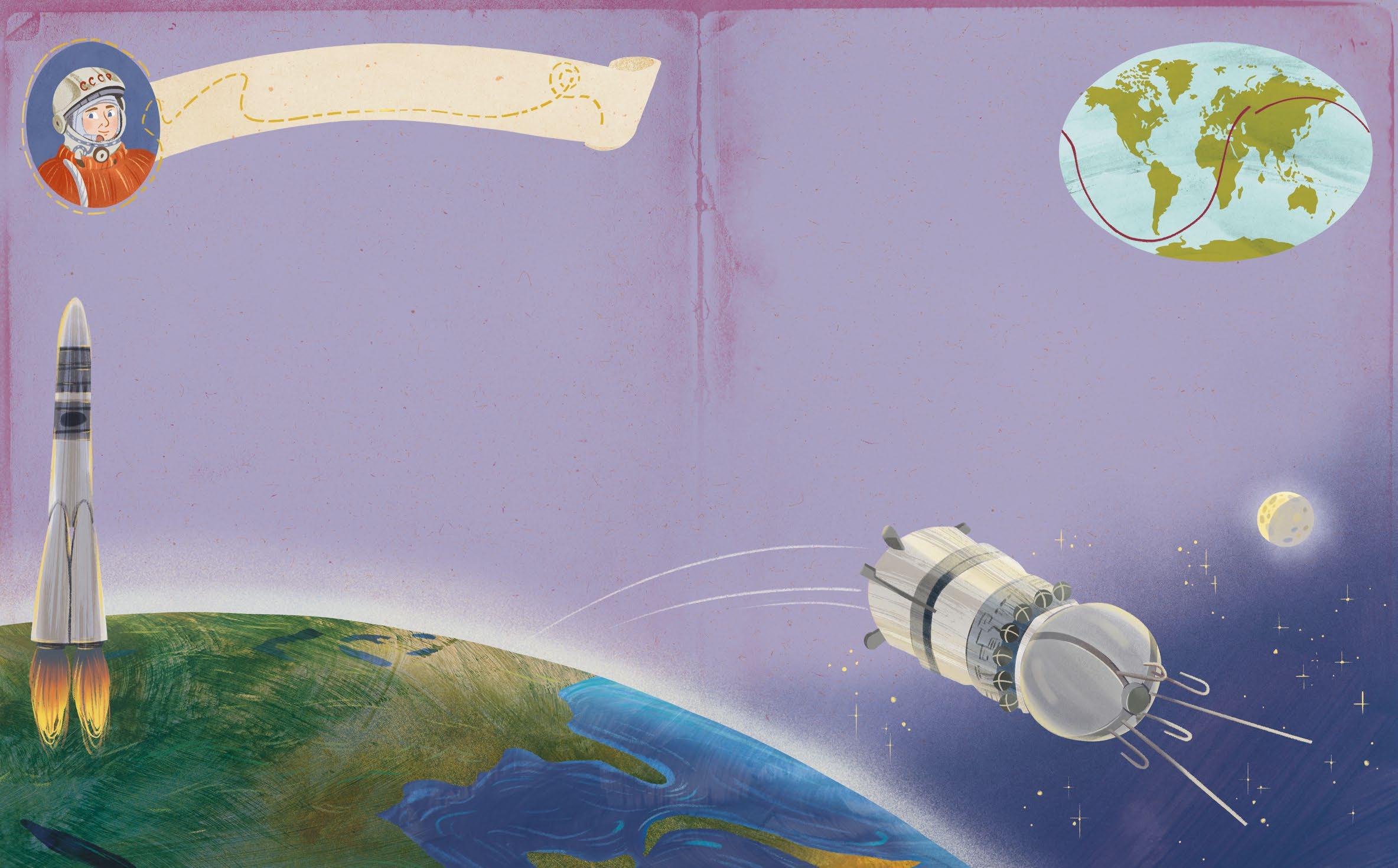
Yuri Gagarin was a Russian pilot who was chosen from thousands to become a cosmonaut. He trained hard for several months: he had to get used to living in extremely confined spaces, dealing with rapid acceleration and zero gravity.
The big day arrived on April 12, 1961. Gagarin boarded Vostok 1, a small space shuttle that resembled a metallic sphere. When the engines fired up, the rocket started to tremble and it took off with a deafening thunder. Yuri was squashed against the chair by the tremendous force of acceleration, but his training had prepared him for this!
It took just a few minutes for Vostok 1 to leave Earth’s atmosphere. Yuri peered out the small window, observing a spectacle that no human being had ever seen before: the Earth from space! A blue and white planet floating in the infinite darkness.
Yuri orbited the Earth for 108 minutes, then re-entered the atmosphere with a cloud of flames surrounding the space shuttle. He landed safe and sound in a field in Russia. He had become the first space explorer and forged a new frontier for mankind!
In 1942, Yuri’s village was occupied by Nazi soldiers. He was a young boy, but that didn’t mean he did nothing to slow them: when the soldiers were distracted, he stuffed the mufflers of their trucks with potatoes, so the lorries couldn’t start up again.
I saw how beautiful our planet is. Let’s preserve this beauty, and not destroy it!
Those who have had the fortune of gazing upon the Earth from space are struck by the beauty and the fragility of our planet. It’s easy to forget, but this is our home and it’s our duty to protect it.
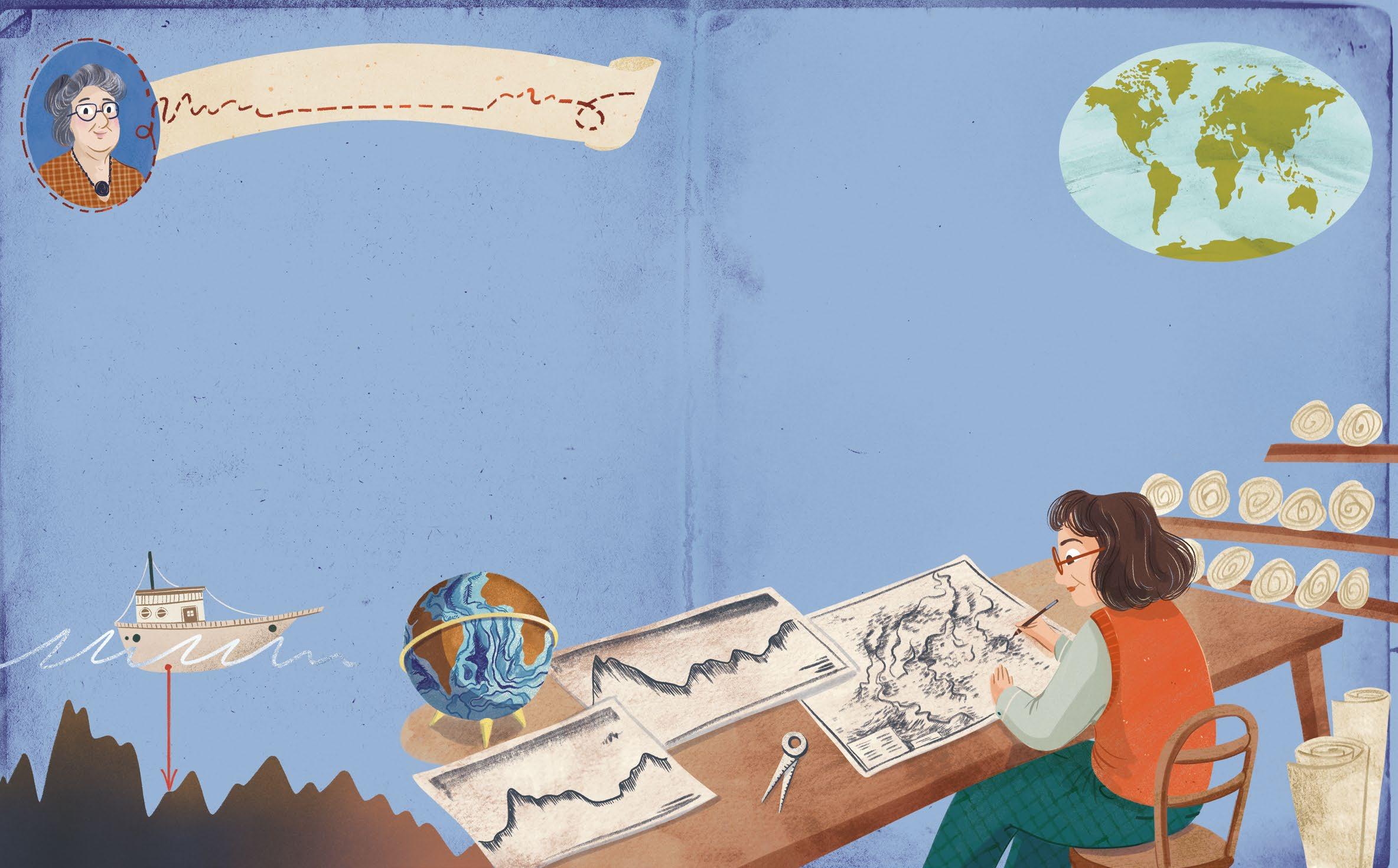
Marie Tharp was a young American fascinated by geography, but in the 1940s women weren’t allowed to board research ships!
In 1948, she started to work with geologist Bruce Heezen. He sailed the ocean collecting data using sonar, an instrument for measuring sea depth. Marie instead remained on land and turned those numbers into maps. It was a laborious task, but little by little Marie discovered something extraordinary: there was an enormous submerged mountain chain in the middle of the Atlantic Ocean, the Mid-Atlantic Ridge!
Marie continued her work for several decades. She drew maps of all the world’s oceans: Atlantic, Pacific, Indian. Her drawings showed high underwater mountains and extremely deep canyons, volcanoes, and plateaus concealed by the sea.
Her maps revolutionized science and were proof that the continents move. Marie had explored seventy percent of the Planet, which had always remained hidden to human beings, and all this without ever getting on board a ship!
a gEnuinE aLL-round E xpErt
Marie had loads of interests! At university she studied geography and cartography, as well as German, physics, history, mathematics, Latin, zoology, philosophy, paleobotany, art, chemistry, biology, and geology. If she could have, she would have majored in… everything!
One day Marie was dismissed by the laboratory she worked for, but her only concern was finishing the map. Focused on the project, she started to work from home, and in no time her research was financed by the US Navy.
We had work to do and we pressed ahead.