Pont du Garigliano Hôpital Européen Georges Pompidou
Pont de Sèvres
Montreuil Porchefontaine Meudon
Sèvres Rive Gauche
Chaville Rive Gauche
Versailles Chantiers
Viroflay Rive Gauche
Petit Jouy Les Loges
Bellevue
Meudon Val Fleury Chaville Vélizy
Bièvres Vauboyen Jouyen-Josas
Bures sur-Yvette
La Hacquinière
Courcelle sur-Yvette Gif sur-Yvette
Dourdan-la-Forêt
Orsay Ville
Javel
Issy Val de Seine Clamart La Barre Ormesson
St-Denis
de France
St-Denis
St-Lazare Gare du Nord
Auber
Invalides
Pont de l’Alma
Gare Montparnasse
de Mars Tour Eiffel
Porte de Versailles
Vanves Malakoff
Châtillon Montrouge
Jardin Parisien
Robinson La Croix de Berny
Antony
Massy Palaiseau
Palaiseau Le Guichet
Palaiseau Villebon
Lozère
Sceaux
St-Martin d’Étampes
Orléans
Châteaudun Chartres Évreux
Rouen
Granville
Angerville
Monnerville Guillerval
Igny
Issy
Fontaine Michalon
Les Baconn
Fontenay aux-Roses
Chama Étréchy Égly
Porte de Clichy
Sarcelles
Stade
Poissy
Villennes sur-Seine
Vernon Giverny
Gare
Bruyères sur-Oise
san
Beaumont
Belloy Martin Viarmes
Moisselles
ville
rice
etaneuse niversité
Creil
Senlis GChantilly ouvieux
Orry-la-Ville Coye-la-Forêt
La Borne Blanche
Survilliers Fosses
Luzarches Seugy
Les Noues Louvres
Goussainville
Villiers-le-Bel Gonesse – Arnouville
Garges – Sarcelles
Pierrefitte – Stains
Marché de St-Denis
St-Denis Porte de Paris
Aéroport
Charles de Gaulle 1 (Terminal 1)
Parc PR Roissypole Parc PX
Aéroport
Charles de Gaulle 1 (Terminal 3)
Aéroport Charles de Gaulle
Parc des Expositions
Villepinte
Parc départemental de la Courneuve Georges Valbon
La Courneuve Aubervilliers
La Plaine Stade de France
Gare de l’Est
Châtelet Les Halles
St-Michel Notre-Dame
Port Royal Luxembourg
Denfert Rochereau
Cité Universitaire
Gentilly
Laplace
Arcueil Cachan
Rosa Parks Pantin Ouverture fin 2025
Bagneux
Gare de Lyon
Parc de la Villette
laSeine
Bibliothèque F Mitterrand
Bourg-la-Reine eaux Parc de Sceaux
Rungis La Fraternelle
taine ichalon onnets
Chemin d’Antony
Crépy-en-Valois
Ormoy-Villers
Nanteuil le-Haudouin
Le Plessis Belleville
La Ferté Milon
Aéroport
Charles de Gaulle 2 TGV (Terminal 2)
Villeparisis Mitry-le-Neuf
Vert Galant
Sevran Beaudottes Sevran Livry
Le Bourget Bondy
Le Blanc Mesnil Drancy
Aulnay sous-Bois
Noisy-le-Sec
Gagny
Chelles Gournay
Rosny Bois-Perrier
Rosny-sous-Bois
Val de Fontenay
Vincennes Nation
Porte de Vincennes
Fontenay sous-Bois
Bois de Vincennes
Nogent sur-Marne
Joinville le-Pont
Porte de Choisy
Mairie de Vitry-sur-Seine
Villejuif Louis Aragon
Pont de Rungis
Aéroport d’Orly Orly Ville
Aéroport d’Orly
Dammartin Juilly – St-Mard
Thieux Nantouillet
Compans
Mitry-Claye
Isles Armentières Congis
Crouy sur-Ourcq
Lizy sur-Ourcq
La Ferté sous Jouarre
Mareuil sur Ourcq
Château Thierry
Chézy sur Marne
Vitry sur-Seine
Les Ardoines
Choisy le-Roi Villeneuve Triage
Maisons Alfort Alfortville
Neuilly Plaisance
Bry sur Marne
Noisy le-Grand Mont d’Est
Nogent – Le Perreux Les Boullereaux Champigny
St-Maur Créteil
Athis-Mons
Porte de l’Essonne Orly – Gaston Viens
Villeneuve St-Georges
Les Saules
Athis Mons
Juvisy
Viry-Châtillon
Aéroport d’Orly Savigny-sur-Orge
La Norville
St-Germain lès-Arpajon Arpajon
Épinay-sur-Orge Ste-Geneviève des-Bois
Marolles-en Hurepoix Bouray Lardy
Chamarande
e n r a M a l e n r a M a l
Changis St-Jean
Trilport
Meaux
Hôpital de Montfermeil
Nanteuil Saâcy
Nogent l’Artaud Charly
Esbly
Vaires Torcy Lagny Thorigny
Marne-la-Vallée Chessy Parcs Disneyland
Disneyland Paris
Noisiel
Noisy Champs
Villiers-sur-Marne
Les Yvris Noisy-le-Grand
Émerainville Pontault-Combault
Roissy-en-Brie
laMarne
Le Vert de Maisons
Créteil Pompadour
Montgeron Crosne Yerres Brunoy
Vigneux sur-Seine
Ablon Villeneuve le-Roi
Ivry sur-Seine Tzen
St-Michel sur-Orge Brétigny
Combs-la-Ville - Quincy
Le Parc de St-Maur
Champigny
La Varenne Chennevières
Sucy Bonneuil
Boissy St-Léger
Lieusaint Moissy
Tzen 1
Boussy St-Antoine Savigny le-Temple Nandy
Ris Orangis Grand Bourg
Orangis Bois de l’Épine Grigny Centre Le Bras de Fer
Évry Courcouronnes
La Treille
Tzen 4
La Ferté Alais Boutigny Maisse Buno Gironville Boigneville
Corbeil Essonnes
Tzen 1
Tzen 4
Essonnes Robinson Villabé
Mennecy Ballancourt
Melun
Cesson Le Mée sur-Seine
Moulin Galant
Le Plessis Chenet
Ozoir-la-Ferrière
Gretz Armainvilliers
Longueville Verneuil l’Étang Mormant Nangis
Lognes Torcy
Couilly St-Germain Quincy
Montry Condé Villiers Montbarbin
Crécy la-Chapelle
Val d’Europe Bussy St-Georges
Coulommiers
Le Plessis-Trévise Mouroux Faremoutiers Pommeuse
Guérard La Celle sur-Morin
Tournan
Mortcerf Marles en-Brie
Ste-Colombe Septveilles Champbenoist Poigny
Fontaine le-Port
Chartrettes Héricy
Livry sur-Seine
Vosves
Boissise-le-Roi
Provins
Champagne sur-Seine Vernou sur-Seine
Vulaines sur-Seine Samoreau
La Grande Paroisse
Troyes
Bourron-Marlotte – Grez Nemours – St-Pierre Bois le-Roi Thomery
Ponthierry – Pringy
St-Fargeau
Le Coudray Montceaux
Forêt de Fontainebleau
Montereau
Montigny-sur-Loing
Bagneaux-sur-Loing
Souppes Château Landon
Dordives Ferrières Fontenay
Montargis Malesherbes
Laroche Migennes Nevers
Le Raincy Villemomble Montfermeil
Le Chénay Gagny
Moret Veneux les-Sablons Fontainebleau Avon Saint Mammès
L’Isle-Adam
L’Isle-Adam
Boran sur-Oise
Boran sur-Oise
Précy sur-Oise
Précy sur-Oise
St-Leu d’Esserent
Amiens
Amiens
St-Leu d’Esserent
Senlis
Senlis
GChantilly ouvieux
Orry-la-Ville
Orry-la-Ville
Coye-la-Forêt
Coye-la-Forêt
Parmain
Parmain almondois
Champagne sur-Oise
Champagne sur-Oise
Mériel
Nointel – Mours
Nointel – Mours
Presles - Courcelles
Presles - Courcelles
Bruyères sur-Oise
Bruyères sur-Oise
l’Oise
Persan – Beaumont
Persan – Beaumont
Seugy ériel
Montsoult – Maffliers
Montsoult – Maffliers
nt
Ermont Halte er
Champ de Courses d’Enghien
Champ de Courses d’Enghien
St-Gratien
Enghien les-Bains
St-Gratien
ay nt
Villaines
Belloy St-Martin Viarmes
Belloy St-Martin Viarmes
Bouffémont – Moisselles
Bouffémont – Moisselles
Enghien les-Bains
La Barre Ormesson
La Barre Ormesson
Épinay sur-Seine
Épinay sur-Seine
Seine
es e Routes
olombes
olombes
es sur-Seine Clichy vallois
Asnières sur-Seine
Clichy Levallois
Pont rdinet
GChantilly ouvieux Luzarches
La Borne Creil
La Borne Blanche Creil
Survilliers Fosses
Survillie Fosses
Luzarches
Seugy
Louvres
Louvres
Les Noues
Les Noues
Goussainville
Goussainville
Villiers-le-Bel
Gonesse – Arnouville
Villiers-le-Bel Gonesse – Arnouville
Écouen – Ézanville
Groslay Domont
Écouen – Ézanville
Sarcelles – St-Brice
Sarcelles – St-Brice
Groslay Domont
Villetaneuse Université
Deuil Montmagny
Villetaneuse Université
Deuil Montmagny
Épinay Villetaneuse
Épinay Villetaneuse
St-Denis
St-Denis
Gennevilliers
Gennevilliers
Les Grésillons
Les Grésillons
Stade de France St-Denis
St-Ouen
St-Ouen
Porte de Clichy Tribunal de Paris
Garges – Sarcelles
Garges – Sarcelles
Pierrefitte – Stains
Pierrefitte – Stains
Marché de St-Denis
Marché de St-Denis
St-Denis Porte de Paris
St-Denis Porte de Paris
Stade de France St-Denis
Porte de Clichy Tribunal de Paris
Parc départemental de la Courneuve Georges Valbon
Parc départemental de la Courneuve
La Courneuve Aubervilliers
La Courneuve Aubervilliers
Parc de la Villette outes
Pont Cardinet
Gare St-Lazare Gare du Nord
Gare St-Lazare Gare du Nord
La Plaine Stade de France
La Plaine Stade de France
Rosa Parks
Rosa Parks Pantin
Parc de la Villette
Pereire Levallois
re allois
Neuilly
Porte Maillot
Charles de Gaulle Étoile
Charles de Gaulle Étoile
Gare de l’Est
Gare de l’Est
Auber Haussmann Saint-Lazare
euilly ot Musée d’Orsay
enue du
ennedy
Invalides Auber Haussmann Saint-Lazare
Invalides
Musée d’Orsay
Pont de l’Alma
Pont de l’Alma
Champ de Mars
Champ de Mars
Tour Eiffel
Tour Eiffel
Châtelet Les Halles
Châtelet
Gare de Lyon Gare
Gare de Lyon
St-Michel Notre-Dame
Port Royal Luxembourg
Gare d’Austerlitz
Porte de Vincennes
Pantin
Georges Valbon Port Royal Luxembourg
Le Bourge N
Porte de Vincennes
Le Bou
Vincennes Nation
de Vincennes
Villaines F sous-Bois sur-
Bois
lanche
urvilliers
Aéroport
Aéroport
Charles de Gaulle 1 (Terminal 1)
Charles de Gaulle 1 (Terminal 1)
Parc PR Roissypole Parc PX
Parc PR Roissypole Parc PX
Aéroport
Aéroport
Charles de Gaulle 1 (Terminal 3)
Charles de Gaulle 1 (Terminal 3)
Aéroport
Aéroport
Charles de Gaulle
Charles de Gaulle
Aéroport
Aéroport
Charles de Gaulle 2 TGV (Terminal 2)
Charles de Gaulle 2 TGV (Terminal 2)
Parc des Expositions
Parc des Expositions
Villeparisis Mitry-le-Neuf
Villeparisis Mitry-le-Neuf
Villepinte
Villepinte
Vert Galant
Vert Galant
Sevran Beaudottes
Sevran Beaudottes
Sevran Livry
Sevran Livry
Bourget
Le Blanc Mesnil Drancy
Le Blanc Mesnil Drancy
Crépy-en-Valois
Crépy-en-Valois
Ormoy-Villers
Ormoy-Villers
Nanteuil le-Haudouin
Nanteuil le-Haudouin
Le Plessis Belleville
Le Plessis Belleville
Dammartin
Dammartin
Juilly – St-Mard
Juilly – St-Mard
Thieux Nantouillet
Thieux Nantouillet
Compans
Compans
Crouy sur-Ourcq
Crouy sur-Ourcq
Isles Armentières Congis
Noisy-le-Sec
Noisy-le-Sec
Aulnay sous-Bois
Aulnay sous-Bois et Bondy
Bondy
Le Raincy Villemomble Montfermeil
Chelles Gournay
Le Raincy Villemomble Montfermeil
Val de Fontenay
Val de Fontenay
incennes
Fontenay sous-Bois
de ennes
Bois de Vincennes
Le Chénay Gagny Gagny
Le Chénay Gagny Gagny
Rosny Bois-Perrier
Rosny Bois-Perrier
Rosny-sous-Bois
Chelles Gournay
Isles Armentières Congis
Hôpital de Montfermeil
Lizy sur-Ourcq
La Ferté Milon Mareuil sur Ourcq
La Ferté Milon Mareuil sur Ourcq
Château Thierry
Château Thierry
Lizy sur-Ourcq
La Ferté sous Jouarre
La Ferté sous Jouarre
Changis St-Jean
Meaux Trilport
Hôpital de Montfermeil
Changis St-Jean
Nanteuil Saâcy
Meaux Trilport
Esbly
Vaires Torcy Lagny Thorigny
Marne-la-Vallée Chessy Parcs Disneyland
Chézy sur Marne
Chézy sur Marne
Nanteuil Saâcy
Nogent l’Artaud Charly
Nogent l’Artaud Charly
La branche du Transilien entre Crécy-la-Chapelle et Esbly deviendra la ligne de tramway à partir du 22 mars 2025
Esbly
Vaires Torcy Lagny Thorigny
Marne-la-Vallée Chessy Parcs Disneyland
Disneyland Paris ennes
Neuilly Plaisance
Noisy le-Grand Mont d’Est Rosny-sous-Bois
Neuilly Plaisance
Bry sur Marne
Bry sur Marne Noisy le-Grand Mont d’Est
Noisiel
Nogent – Le Perreux
Nogent – Le Perreux
Les Boullereaux Champigny
Les Boullereaux Champigny
Noisy Champs Mitry-Claye
Noisy Champs Mitry-Claye
Disneyland Paris
Noisiel
La branche du Transilien entre Crécy-la-Chapelle et Esbly deviendra la ligne de tramway à partir du 22 mars 2025
Quincy Montry Condé Villiers Montbarbin
Couilly St-Germain
Couilly St-Germain
Quincy Montry Condé Villiers Montbarbin
Crécy la-Chapelle
Crécy la-Chapelle
Val d’Europe
Val d’Europe
Bussy St-Georges
Torcy
Lognes
Bussy St-Georges
Torcy
Lognes
Villiers-sur-Marne Le Plessis-Trévise ontenay sous-Bois
Nogent sur-Marne
Nogent sur-Marne
Villiers-sur-Marne Le Plessis-Trévise
Les Yvris
Les Yvris
Coulommiers
St-Lazare
Cardinet
Pereire Levallois
Neuilly
Porte Maillot
Charles de Gaulle Étoile
Charles de Gaulle Étoile
St-Lazare Gare du Nord
Gare du Nord
Auber Haussmann Saint-Lazare
Auber Haussmann Saint-Lazare
euilly ot Musée d’Orsay
Gare de l’Est
Gare de l’Est
Châtelet
Les Halles
Châtelet Les Halles
Gare de Lyon
Gare de Lyon
St-Michel Notre-Dame
St-Michel Notre-Dame
enue du ennedy
Javel
ont arigliano opéen ompidou
Issy
Alma Invalides
Invalides
Musée d’Orsay
Pont de l’Alma
Champ de Mars
Champ de Mars
Tour Eiffel
Javel
Gare Montparnasse
Tour Eiffel
Porte de Versailles
Gare Montparnasse
Luxembourg
Luxembourg
Gare d’Austerlitz
Port Royal
Gare d’Austerlitz
Port Royal
Bibliothèque F. Mitterrand
Porte de Vincennes
Porte de Vincennes
F sous-Bois sur-
Porte de Versailles
Vanves Malakoff
Vanves Malakoff
Issy
Val de Seine Clamart
Issy
Val de Seine Clamart
Jardin
Jardin
Parisien
Parisien
Châtillon Montrouge
Châtillon Montrouge
Denfert Rochereau
Denfert Rochereau
Cité Universitaire
Cité Universitaire
Gentilly
Gentilly
Laplace
Laplace
Arcueil Cachan
Arcueil Cachan
Bibliothèque F. Mitterrand Ivry sur-Seine
Porte de Choisy
Porte de Choisy
Ivry sur-Seine
Mairie de Vitry-sur-Seine
Ouverture fin 2025
Bagneux
Bagneux eudon
Robinson La Croix de Berny
Robinson La Croix de Berny
Fontenay aux-Roses
Fontenay aux-Roses
Bourg-la-Reine
Sceaux
Sceaux
Mairie de Vitry-sur-Seine
Vitry sur-Seine
Vitry sur-Seine
Bourg-la-Reine
Parc de Sceaux
Parc de Sceaux
Rungis La Fraternelle Antony
Massy Palaiseau
vres
Villejuif Louis Aragon
Pont de Rungis
Rungis La Fraternelle Antony
Massy Palaiseau
Fontaine Michalon
Fontaine Michalon
Chemin d’Antony
Chemin d’Antony
Villejuif Louis Aragon
Ouverture fin 2025 Pont de Rungis Aéroport d’Orly Orly Ville
Choisy le-Roi
Choisy le-Roi
Les Ardoines
Orly – Gaston Viens
Aéroport d’Orly Orly Ville
Orly – Gaston Viens
Ablon
Athis-Mons
Athis-Mons
Athis Mons
Villeneuve Triage
Igny
Palaiseau
Palaiseau Villebon
Palaiseau Villebon
Palaiseau uichet
Lozère
Lozère
Les Baconnets
Les Baconnets
Massy Verrières
Massy Verrières
Orly 1-2-3
Aéroport d’Orly
Aéroport d’Orly
Porte de l’Essonne
Porte de l’Essonne
Juvisy
Les Ardoines
Villeneu Triage
Villeneuve St-Georges
Les Saules
Les Saules
Athis Mons
Villeneu St-Georges
Orly 1-2-3
t-Chéron
Sermaise St-Chéron
Breuillet Village
Breuillet Village
Breuillet Bruyères le-Châtel
Monnerville Guillerval
onnerville Guillerval
St-Martin d’Étampes
St-Martin d’Étampes
Étampes
Breuillet Bruyères le-Châtel Étampes
Étréchy
Égly
Étréchy
Viry-Châtillon
Vigneux sur-Seine
Villeneuve le-Roi
V sur-Seine
Ablon Villeneu le-Roi
Combs-la
Igny M Al Al
Juvisy
Viry-Châtillon
Aéroport d’Orly Savigny-sur-Orge
Aéroport d’Orly Savigny-sur-Orge
Épinay-sur-Orge
Ris Orangis
Ris Orangis
Orangis
La Norville St-Germain lès-Arpajon Arpajon Égly
La Norville St-Germain lès-Arpajon Arpajon
Ste-Geneviève des-Bois
Épinay-sur-Orge Ste-Geneviève des-Bois
St-Michel sur-Orge
Marolles-en Hurepoix Bouray Lardy Chamarande
Marolles-en Hurepoix
Bouray Lardy
Chamarande
Brétigny
St-Michel sur-Orge Brétigny
Buno Gironville Boigneville
Malesherbes
La Treille
Maisse Buno Gironville Boigneville
Bois de l’Épine Grigny Centre
Grigny Centre
La Treille
Cou
Courcou
Boutig Maisse
Malesherbes
Boutigny
Bois de Vincennes
Tzen 4
Vincennes Nation
Val de Fontenay
Le
Le Raincy Villemomble Montfermeil Le Chénay Gagny
Rosny Bois-Perrier
Rosny Bois-Perrier
Rosny-sous-Bois
Rosny-sous-Bois
Thorigny
Thorigny
Marne-la-Vallée Chessy Parcs Disneyland
Marne-la-Vallée Chessy
Parcs Disneyland
Disneyland Paris
St-Germain
Quincy
St-Germain
Quincy
Villiers
Villiers
Montbarbin
Montbarbin
Crécy la-Chapelle
Val d’Europe
Bussy
Val d’Europe
Bussy
St-Georges
St-Georges
Torcy
Torcy
incennes
ennes
ontenay sous-Bois
de ennes
Fontenay sous-Bois
Bois de Vincennes
Nogent sur-Marne
Nogent sur-Marne
Joinville le-Pont
Joinville le-Pont
Maisons
Alfort Alfortville
Maisons Alfort Alfortville
Le Vert de Maisons
Le Vert de Maisons
Créteil Pompadour
illeneuve riage
illeneuve ges
Créteil Pompadour
Montgeron Crosne Yerres
Montgeron
Crosne Yerres
Brunoy
illeneuve oi
Neuilly Plaisance
Neuilly Plaisance
Bry sur Marne Noisy le-Grand Mont d’Est
Nogent – Le Perreux
Nogent – Le Perreux
Les Boullereaux Champigny
Les Boullereaux Champigny
Noisiel
Noisy Champs
Noisy Champs
Lognes
Lognes
Villiers-sur-Marne Le Plessis-Trévise
Villiers-sur-Marne Le Plessis-Trévise
Les Yvris
Noisy-le-Grand
Les Yvris Noisy-le-Grand
Émerainville Pontault-Combault
Champigny St-Maur Créteil
St-Maur Créteil
Le Parc de St-Maur
Brunoy
igneux sur-Seine Grand Bourg
Tzen 1
Combs-la-Ville - Quincy
Champigny
La Varenne Chennevières
La Varenne Chennevières
Sucy Bonneuil
Lieusaint
Tzen
Orangis Bois de l’Épine Le Bras de Fer Évry
Sucy Bonneuil
Boissy St-Léger
Lieusaint Moissy
Boussy St-Antoine Savigny le-Temple Nandy Cesson Le Mée sur-Seine
Tzen 4
Corbeil Essonnes
Roissy-en-Brie
Roissy-en-Brie
Ozoir-la-Ferrière
Le Parc de St-Maur
Boussy St-Antoine Savigny le-Temple Nandy
Cesson
Vigneux sur-Seine is angis Grand Bourg Moulin Galant
Chartrettes
Évry ourcouronnes
Corbeil Essonnes
Tzen 1
Tzen 4
Tzen 1
La Ferté
Alais Boutigny
La Ferté Alais
Val de Fontenay Dordives Ferrières Fontenay
Coulommiers
Émerainville Pontault-Combault
Mouroux Faremoutiers Pommeuse
Mouroux Faremoutiers Pommeuse
Ozoir-la-Ferrière
Gretz Armainvilliers
Gretz Armainvilliers
Tournan
Guérard La Celle sur-Morin
Guérard La Celle sur-Morin
Verneuil l’Étang
Verneuil l’Étang
Mormant
Mormant
Nangis
Nangis
Longueville
Longueville
Mortcerf Marles en-Brie
Mortcerf Marles en-Brie
Ste-Colombe Septveilles Champbenoist Poigny
Ste-Colombe Septveilles Champbenoist Poigny
Provins
Troyes
Chartrettes
Héricy Fontaine le-Port
Livry sur-Seine
Melun
Fontaine le-Port
Livry sur-Seine
Champagne sur-Seine
Champagne sur-Seine Vernou sur-Seine
Héricy
Vulaines sur-Seine
Vulaines sur-Seine
Samoreau
Bois le-Roi Thomery
Le Mée sur-Seine
Moulin Galant
Essonnes Robinson Villabé
Essonnes Robinson Villabé
Mennecy Ballancourt
Le Plessis Chenet
Mennecy Ballancourt
Samoreau
Bois le-Roi Thomery
Vosves
Vernou sur-Seine
La Grande Paroisse
La Grande Paroisse
Laroche
Migennes
Fontainebleau Avon Saint Mammès
Vosves
Boissise-le-Roi
Moret Veneux les-Sablons
Boissise-le-Roi
St-Fargeau Ponthierry – Pringy
Le Plessis Chenet
Montereau
Montigny-sur-Loing
Montigny-sur-Loing
Bourron-Marlotte – Grez
Bourron-Marlotte – Grez
St-Fargeau Ponthierry – Pringy
Nemours – St-Pierre
Nemours – St-Pierre
Forêt de Fontainebleau
Forêt de Fontainebleau
Bagneaux-sur-Loing
Bagneaux-sur-Loing
Souppes Château
Souppes Château
Le Coudray Montceaux
Le Coudray Montceaux
Landon
Landon
Dordives Ferrières Fontenay
Montargis
Nevers
Gargenville
Gargenville
Vernon Giverny
Vernon Giverny
Bonnières
Rosnysur-Seine
Issou Porcheville Limay
Rosnysur-Seine
Issou
Porcheville Limay
Mantes Station
Mantes Station
Bonnières Épône Mézières
Mantes la-Jolie
Mantes la-Jolie
Bréval
sur-Seine
Vernouillet Verneuil
Vernouillet
Verneuil
Les Clairières Verneuil
Les Clairières Verneuil
Forêt domaniale de St-Germainen-Laye
Houilles Carrières sur-Seine Sartrouville
Forêt domaniale de St-Germainen-Laye
Les Mureaux
Les Mureaux
Aubergenville Élisabethville
Épône
Mézières
Nézel – Aulnay
Bréval
Nézel – Aulnay
Maule
Maule
Mareil-sur-Mauldre
Mareil-sur-Mauldre
Beynes
Beynes
Villiers – Neauphle Pontchartrain
Villiers – Neauphle Pontchartrain
Garancières
La Queue
Garancières La Queue
Dreux
Dreux
Granville
Montfort-l’Amaury Méré Rambouillet
Carrières sur-Seine Sartrouville
Nanterre Université
Nanterre Université
Houilles
Nanterre Préfecture
La Dé Grande
Nanterre Préfecture
St-Germain en-Laye
St-Germain en-Laye
Nanterre Ville
Nanterre Ville
Aubergenville Élisabethville
Le Vésinet Centre
Le Vésinet Centre
Le Vésinet Le Pecq
Le Vésinet Le Pecq
Marly-le-Roi
Marly-le-Roi
L’Étang la-Ville
L’Étang la-Ville
Nanterre La Folie
Nanterre La Folie
Rueil Malmaison Chatou Croissy
Rueil Malmaison Chatou Croissy
Suresnes
Suresnes
Mont
Valérien
Pu
Louveciennes
Louveciennes
Bougival
Bougival
St-Nom la-Bretèche Forêt de Marly
Le Val d’Or
Le Val d’Or
Plaisir Grignon
Plaisir Grignon
St-Nom la-Bretèche Forêt de Marly
Vaucresson
Plaisir Les Clayes
Plaisir Les Clayes
Orgerus – Béhoust
Tacoignières Richebourg Houdan
Marchezais Broué
Marchezais Broué
Orgerus – Béhoust
Tacoignières Richebourg Houdan
Villepreux Les Clayes
Villepreux Les Clayes
Fontenay-le-Fleury
Forêt Domaniale de Rambouillet
Forêt Domaniale de Rambouillet
Trappes
Trappes
La Celle-St-Cloud Garches – Marnes la-Coquette
Vaucresson La Celle-St-Cloud
Saint-Cloud
Garches – Marnes la-Coquette
Versailles Rive Droite Rive Gauche
Versailles
Château
Versailles Château
Versailles Rive Droite Rive Gauche
Viroflay Rive Droite
Saint-Cloud
Sèvres
Sèvres
Ville d’Avray
Ville d’Av
Viroflay Rive Droite
Montreuil
Montreuil
Chaville Rive Droite
Chaville Rive Droite
Fontenay-le-Fleury
Porchefontaine
Porchefontaine
Saint-Cyr
Saint-Cyr
Versailles Chantiers La Verrière
Gazeran
Gazeran
Montfort-l’Amaury Méré Rambouillet
Versailles Chantiers La Verrière
St-Quentin en-Yvelines
St-Quentin en-Yvelines
Coignières
Coignières
Les Essarts-le-Roi Le Perray
Les Essarts-le-Roi Le Perray
St-Rémy lès-Chevreuse
St-Rémy lès-Chevreuse
Petit Jouy Les Loges
Chaville Rive Gauche
Viroflay Rive Gauche
Petit Jouy Les Loges
Sèvres Rive Gauche
S Rive
Chaville Rive Gauche
Viroflay Rive Gauche
Chaville
Vélizy
Chaville Vélizy
Jouyen-Josas
Vaub Jouyen-Josas
Bures sur-Yvette
Bures sur-Yvette
La Hacquinière
La Hacquinière
Courcelle sur-Yvette Gif sur-Yvette Dourdan
Courcelle sur-Yvette Gif sur-Yvette Dou
Dourdan-la-Forêt
Dourdan-la-Forêt
Châteaudun
dan
Cardinet
Pereire Levallois
Pereire Levallois
St-Lazare
St-Lazare
Gare du Nord
Gare du Nord
La Défense
Grande Arche
éfense ande Arche
Porte Dauphine
uteaux
Puteaux
Avenue Foch
Neuilly Porte Maillot
Avenue Foch
Avenue
Henri Martin
Avenue Henri Martin
Neuilly Porte Maillot
Charles de Gaulle Étoile
Charles de Gaulle Étoile
Auber Haussmann Saint-Lazare
Auber Haussmann Saint-Lazare
Châtelet
Gare de l’Est
Gare de l’Est
Châtelet
Les Halles
Les Halles
Gare de Lyon
Gare de Lyon
St-Michel Notre-Dame
St-Michel Notre-Dame
Nation
Nation
Boulainvilliers
Boulainvilliers
e
Avenue du Pdt Kennedy
Avenue du Pdt Kennedy
Bois de Boulogne
Bois de Boulogne
Pont du Garigliano Hôpital Européen
Pont du Garigliano
Hôpital Européen
Georges Pompidou
Georges Pompidou
Pont de Sèvres
ray e
es auche
Porte Dauphine de V
Pont de Sèvres
Issy
Sèvres e Gauche
Meudon
Bellevue
ville élizy
Meudon
Val Fleury
Invalides
Invalides
Musée d’Orsay
Musée d’Orsay
Pont de l’Alma
Pont de l’Alma
Champ de Mars Tour Eiffel
Champ de Mars Tour Eiffel
Gare Montparnasse
Gare Montparnasse
Luxembourg
Luxembourg
Gare d’Austerlitz
Port Royal
Gare d’Austerlitz
Port Royal
Bibliothèque F. Mitterrand
de Vincennes
Javel
Porte de Versailles
Porte de Versailles
Denfert Rochereau
Denfert Rochereau
Cité Universitaire
Cité Universitaire
Porte de Choisy
Porte de Choisy
Ivry sur-Seine Javel
Vanves Malakoff
Issy Val de Seine Clamart
Issy
Vanves Malakoff
Issy Val de Seine Clamart
Jardin Parisien
Jardin Parisien
Châtillon Montrouge
Châtillon Montrouge
Fontenay aux-Roses
Gentilly
Gentilly
Laplace
Laplace
Arcueil Cachan
Arcueil Cachan
Bibliothèque F. Mitterrand sur-Seine
Mairie de Vitry-sur-Seine
Ouverture fin 2025
Mairie de Vitry-sur-Seine
Ouverture fin 2025
Bagneux
Bagneux Meudon
Bellevue
Meudon Val Fleury
Igny
Bièvres auboyen
Bièvres Vauboyen
Orsay Ville
Orsay Ville
Le Guichet
Le Guichet
Robinson La Croix de Berny
Robinson La Croix de Berny
Fontenay aux-Roses
Bourg-la-Reine
Bourg-la-Reine
Sceaux
Sceaux
Parc de Sceaux
Parc de Sceaux
Rungis La Fraternelle Antony
Massy Palaiseau
Igny
Villejuif Louis Aragon
Pont de Rungis
Rungis
La Fraternelle Antony
Massy Palaiseau
Palaiseau
Palaiseau Villebon
Lozère
Sermaise St-Chéron
ourdan
Palaiseau
Palaiseau Villebon
Lozère
Sermaise St-Chéron
Breuillet Village
Breuillet Village
Monnerville Guillerval
Monnerville Guillerval
Angerville
Angerville
Orléans
Orléans
St-Martin d’Étampes
St-Martin d’Étampes
Fontaine Michalon
Fontaine Michalon
Les Baconnets
Massy Verrières
Breuillet Bruyères le-Châtel Étampes
Chemin d’Antony
Les Baconnets
Massy Verrières
Breuillet Bruyères le-Châtel Étampes
Égly
Chemin d’Antony
Étréchy
Étréchy
Aéroport d’Orly
Pont de Rungis
Vitry sur-Seine
Villejuif Louis Aragon
sur-Seine
Choi le-
Orly – G Viens
Orly – Gaston Viens
Aéroport d’Orly Orly Ville
Aéroport d’Orly Orly Ville
Ablon
Athis
Aéroport d’Orly
Athis-Mons Porte de l’Essonne
Athis-Mons
Porte de l’Essonne
Mons
Juvi
Viry-Châtillon
Viry-Ch
Buno Gironville Boigneville Orly 1-2-3
Aéroport d’Orly Savigny-sur-Orge
Épinay-sur-Orge
La Norville St-Germain lès-Arpajon Arpajon
Aéroport d’Orly Savigny-sur-
La Norville St-Germain lès-Arpajon Arpajon Égly
Ste-Geneviève des-Bois
Marolles-en Hurepoix
Bouray Lardy
Chamarande
Chamarande
Épinay-sur-Orge
Ste-Geneviève des-Bois
Marolles-en Hurepoix
Bouray Lardy
5 6 7
St-Michel sur-Orge Brétigny
Buno Gironville Boigneville Orly 1-2-3
StsurBrétign
Malesherbes
Serqueux
Gisors
A
Trie Château
Gisors
Trie Château
Liancourt St-Pierre
Chaumont en-Vexin
Liancourt St-Pierre Chaumont en-Vexin
La Villetertre
La Villetertre
Chars
Chars
Us Santeuil – Le Perchay
Santeuil – Le Perchay
Us
Cergy Le-Haut
Cergy Le-Haut
Auvers-sur-Oise
Auvers-sur-O
Chaponval
Chaponval
Montgeroult – Courcelles
Montgeroult – Courcelles
l’Oise
l’Oise
Boissy – l’Aillerie
Boissy – l’Aillerie
Osny
Pontoise
Osny
Pontoise
B
Cergy - St-Christophe
Cergy - St-Christophe
Cergy - Préfecture
Cergy - Préfecture
Neuville - Université
Neuville - Université
Maurecourt
Maurecourt
Conflans Fin d’Oise
C
Andrésy
Conflans Fin d’Oise Andrésy
Chanteloup les Vignes
Chanteloup les Vignes
Triel-sur-Seine
Triel-sur-Seine
Vaux-sur-Seine
Vaux-sur-Seine
Achères Ville
e n i e S a l
Bessancourt
Pont Petit Épluches
St-Ouen l’Aumône
St-Ouen l’Aumône Liesse Pont Petit Épluches
St-Ouen l’Aumône
St-Ouen l’Aumône Liesse
St-Ouen l’Aumône Quartier de l’Église
Éragny – Neuville
Taverny
Frépillon
Bessancourt
Frépillon
Vaucelles Taverny
St-L
la-Fo Vaucelles
Montigny Beauchamp
Montigny
Beauchamp
Pierrelaye
St-Ouen l’Aumône Quartier de l’Église
Éragny – Neuville
Conflans Sainte Honorine Herblay
Conflans Sainte Honorine Herblay
Achères Ville
Pierrelaye
Cormeilles en-Parisis
Cormeilles en-Parisis
Val d’Argenteuil
Val d’Argenteuil
Fr L
Francon Le Plessis Boucha
Arge Sannois La Frette Montigny
Pont de Bezons
Sannois La Frette Montigny
Le Stade
Le Stade
Colombes
Colombes
Thun-le-Paradis
Thun-le-Paradis
Meulan Hardricourt
Meulan Hardricourt
Juziers Gargenville
Juziers Gargenville
Poissy
Poissy
Achères Grand Cormier
Villennes sur-Seine
Achères Grand Cormier
Villennes sur-Seine
Maisons Laffitte
Maisons Laffitte
Vernouillet Verneuil
Vernouillet Verneuil
e n i e S a l
Les Vallées
Les Vallées
Rouen
Vernon Giverny
Vernon Giverny
Bonnières
Issou Porcheville
Issou Porcheville
Bonnières
Rosnysur-Seine
Rosnysur-Seine
Évreux
D E F G
Limay
Limay
Mantes Station
Mantes la-Jolie
Bréval
Les Clairières Verneuil
Les Clairières Verneuil
Les Mureaux
Houilles Carrières sur-Seine Sartrouville
Forêt domaniale de St-Germainen-Laye
Les Mureaux
Forêt domaniale de St-Germainen-Laye
Carrières sur-Seine Sartrouville
Houilles
Nanterre Université
St-Germain en-Laye
St-Germain en-Laye
Nanterre Ville
Épône Mézières Mantes Station
Aubergenville Élisabethville
Aubergenville Élisabethville
Mantes la-Jolie
Épône Mézières
Nézel – Aulnay
Nézel – Aulnay
Bréval
Maule
Maule
Mareil-sur-Mauldre
Mareil-sur-Mauldre
Beynes
Beynes
Le Vésinet Centre
Le Vésinet Le Pecq
Le Vésinet Le Pecq
Marly-le-Roi
L’Étang la-Ville
Pont de Bezons L’Étang la-Ville
St-Nom
Le Vésinet Centre
Marly-le-Roi
Nanterre Université
Nanterre Préfecture
Nanterre Ville
La Garenne Colombes
Bé les-
Bécon les-Bruy
La Garenne Colombes
Courb
La Dé Grande
Nanterre Préfecture
Nanterre La Folie
Nanterre La Folie
Rueil Malmaison Chatou Croissy
Rueil
Malmaison Chatou Croissy
Suresnes Mont Valérien
Suresnes
Mont
Valérien
Pu
Louveciennes
Louveciennes
Bougival
Bougival
Le Val d’Or
Le Val d’Or
Boran sur-Oise
Boran sur-Oise
Précy sur-Oise
Précy sur-Oise
St-Leu d’Esserent
St-Leu d’Esserent
Oise
L’Isle-Adam
L’Isle-Adam
Champagne sur-Oise
Champagne sur-Oise
Parmain Valmondois Bruyères sur-Oise
Parmain Valmondois Bruyères sur-Oise
l’Oise
Creil
Persan – Beaumont
Persan – Beaumont
Méry sur-Oise
eu orêt épillon
Méry sur-Oise
St-Leu la-Forêt épillon
Mériel
Mériel
Nointel – Mours
Nointel – Mours
Presles - Courcelles
Presles - Courcelles
Montsoult – Maffliers
Montsoult – Maffliers
Villaines
Villaines
Belloy St-Martin Viarmes
Belloy St-Martin Viarmes
Seugy
Luzarches
Seugy
Goussai L
Gros Noyer
St-Prix
Gros Noyer St-Prix
Bouffémont – Moisselles
Bouffémont – Moisselles
Villiers-le-Bel
nville lessis
Le Plessis
Ermont Halte
Ermont Halte
Bouchard Cernay
annois ranconville
Bouchard Cernay
Ermont Eaubonne
Ermont Eaubonne
Épinay Orgemont
genteuil
Champ de Courses d’Enghien
Champ de Courses d’Enghien
Enghien les-Bains
St-Gratien
St-Gratien
Épinay Orgemont
tade Argenteuil
olombes
la Seine
La Barre Ormesson
Épinay sur-Seine
Épinay sur-Seine
la Seine
Asnières Quatre Routes
Asnières Quatre Routes
Bois-Colombes
Bécon les-Bruyères
Bois-Colombes
Asnières sur-Seine
Clichy Levallois yères
Asnières sur-Seine
Clichy Levallois
enne
olombes
ourbevoie
Courbevoie
Pont Cardinet
Pont Cardinet
Pereire Levallois
La Défense Grande Arche
éfense ande Arche
Porte Dauphine
uteaux
Porte Dauphine
Puteaux
Avenue Foch
Avenue Foch
Avenue
Avenue
Henri Martin
Henri Martin
Boulainvilliers
e
Enghien les-Bains
La Barre Ormesson
Pereire Levallois
Neuilly Porte Maillot
Boulainvilliers
Avenue du Pdt Kennedy
Avenue du Pdt Kennedy
Groslay Domont
Écouen – Ézanville
Écouen – Ézanville
Sarcelles – St-Brice
Groslay Domont
Deuil Montmagny
Gennevilliers
Villetaneuse Université
Deuil Montmagny
Épinay Villetaneuse
Épinay Villetaneuse
Sarcelles – St-Brice St-Denis
Villetaneuse
Université
St-Denis
Gennevilliers
Les Grésillons
Les Grésillons
Stade de France St-Denis
St-Ouen
St-Ouen
Porte de Clichy Tribunal de Paris
Porte de Clichy Tribunal de Paris
Gare
Charles de Gaulle Étoile
Charles de Gaulle Étoile
Stade de France St-Denis
Gare du Nord
Auber Haussmann
Saint-Lazare
Auber Haussmann Saint-Lazare
Neuilly Porte Maillot Musée d’Orsay
Invalides
Invalides
Pont de l’Alma
Pont de l’Alma
Champ de Mars
Champ de Mars
Tour Eiffel
Tour Eiffel
Villie Gonesse
Gonesse –
Garges – S
Garges – Sarcelles
Pierrefitte – Stains
Pierrefitte – Stains
Marché de St-Denis
Marché de St-Denis
St-Denis Porte de Paris
St-Denis Porte de Paris
Musée d’Orsay
Châtelet Les Halles
Châtelet
St-Michel Notre-Dame
La Courneuve Aubervilliers
La Courneu Aubervillie
La Plaine Stade de France
La Plaine Stade de France
Rosa Parks
Rosa Parks
Gare de l’Est
Gare de l’Est
Gare de Lyon Gare
Luxembourg
Gare d’Austerlitz
Port Royal
Gare d’Austerlitz
Nation
de Vincennes
Parc de la Villett
Parc dépar de la Geor
Senlis
Annabel Simms
An Hour from Paris
Twenty secret daytrips by train
PALLAS ATHENE
Contents
Map showing journey times from Paris 1
Map of the Île-de-France 2–3
Rail map of the Île-de-France 4–13
Preface 25
Preface to the Fourth Edition 31
The Île-de-France: past and present 35
How to use this guide 55
nord
1. Montmorency, 14 minutes by train and 12 minutes’ bus ride 59
Bus from station to centre of old hilltop town, market, restaurants. Short downhill walk to 17C museum/house of JeanJacques Rousseau. View of western Paris and Seine valley from former ramparts and 16C church, en route to bus stop for return.
2. Ecouen, 21 minutes by train 68 1¾ km walk from station through forest to 16C hilltop châteaumuseum of the Renaissance containing national collection of Renaissance treasures, with sweeping views of the Plaine de France. Good café at station.
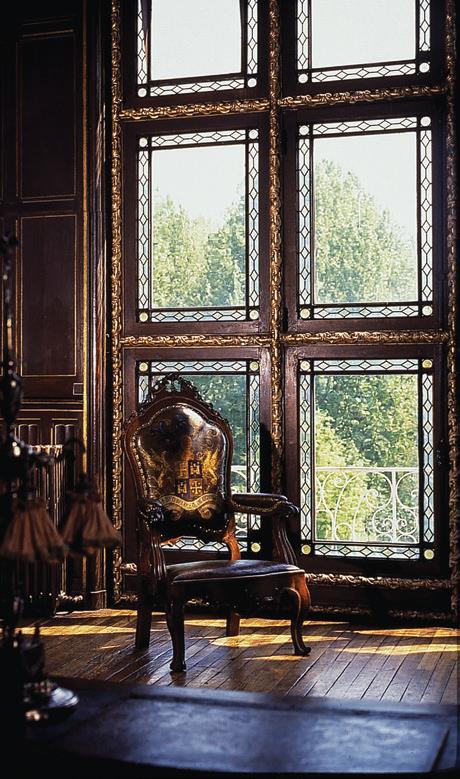
Opposite: Emile Zola’s study at Médan (Poissy)
gare du nord (continued)
3. Chantilly, 25 minutes by train
2½ km walk through woodland to 16C château/museum of Chantilly, overlooking lake in 17C park designed by Le Nôtre. Eclectic collection of 14–19C artefacts and paintings, some by renowned artists. Optional visit to horse museum next to racecourse for dressage demonstrations. Restaurants/café within the grounds. Return via quiet canalside walk and town centre.
4. Auvers-sur-Oise, 39 minutes by train
73
81
2 km walk from station through village of Méry-sur-Oise and across bridge to 12C church at Auvers made famous by Van Gogh. Atmospheric 1½ km country walk past cemetery where he is buried and through fields he painted to Auberge Ravoux where he died. Covered market, restaurants. Return from Auvers-surOise station or optional 2½ km continuation of walk to museum/ house of Dr Gachet, his doctor and friend, and along river to Chaponval station. Optional 3½ km continuation of riverside walk to station at Pontoise, cradle of Impressionism. Alternative 3½ km riverside walk in the other direction from Auvers to Mériel station.
5. Royaumont, 45 minutes by train
4 km country walk through village of Seugy to well-preserved 13C Cistercian abbey in beautiful setting, now a venue for concerts. Tea-room overlooking moat. Return by shuttle bus to Luzarches station.
6. Luzarches, 48 minutes by train
91
97
Old market town with 12C church and fortified gateway, former home of Erik Satie. Market, cafés. Optional 3 km country walk to village of Seugy, café and station.
7. Senlis, 64 minutes by train and bus
103
Picturesque historic town favoured by the first French kings with impressive 12C cathedral, former abbey, three medieval churches, Roman arena and rampart walk. Circular walk of around 4 km. Three small museums, good restaurant.
gare de l’est
8. Crécy-la-Chapelle, 51 minutes by train
115
Attractive old market town surrounded by three moats, with bridges, lavoirs and medieval towers, one used by Corot as a studio. Market, cafés, restaurant, kayaking. Circular walk of around 4 km. Optional 1½ km country walk to exceptional 13C church at La Chapelle. Optional 5 km continuation of walk to picturesque village of Serbonne, returning across country to Crécy.
9. La Ferté-Milon, 64 minutes by train
124
Historic town on the River Ourcq, birthplace of Jean Racine, dominated by magnificent façade of 14C hilltop castle. 15C church, footbridge designed by Eiffel at old river port, museumhouse of Jean Racine, 12C church. Option of boat cruise. 3 km circular walk or 2 km and optional 7 km continuation along winding Canal de l’Ourcq to station at Mareuil.
10. Provins, 83 minutes by train
133
UNESCO-listed medieval capital of Champagne. Circular walk of around 5 km. Lower town has two streams, two old churches and a priory, encircled by canal. Upper town is surrounded by astonishingly well-preserved ramparts with two gateways, enclosing 12C fortress and church, museum, tithe barn. Hangman’s house outside the walls. Several restaurants and cafés. Staged medieval tournaments, visitor’s train and visits to underground passages in summer.
gare
de lyon
11. Moret-sur-Loing, 49 minutes by train
147
Picturesque medieval border town on the River Loing on the Compostella pilgrim route; home of Alfred Sisley. 1½ km walk into town through 11C tower gateway facing opposing tower spanning bridge across the river. Market, impressive 12C church and castle keep, mill-houses in mid-stream, one housing a museum. Cafés and restaurants. Optional 2 km walk along the Loing to its confluence with the Seine at the river port of St Mammès.
Moret-sur-Loing (continued)
Marina, 12C church, cafés. Return either by 1¼ km walk to station at St Mammès or across footbridge for 1½ km country walk to Moret station.
gare de montparnasse
12. Rambouillet, 32 minutes by train 158
1 km walk through old town of Rambouillet to former royal and presidential château set in 17C park crossed by canals, with semi-wild ‘Jardin Anglais’. Château visit includes the 14C tower, Napoleon’s bathroom and the dairy built for Marie-Antoinette in the park. Optional circular walk around park from château of 4½ km. Boats, electric buggies and bicycles for hire in park in summer, cafés and restaurants near château.
13. Montfort-l’Amaury, 38 minutes by train 165
3½ km walk along Roman road to picturesque town with unusual cemetery resembling a cloister. Town square, café-restaurant, impressive Renaissance church, ruined 11C towers in hill-top park with sweeping views en route to museum/house of Maurice Ravel. Rampart walk back to town. Circular walk of around 2½ km or 2 km if opting for alternative return to station, via 5½ km country walk past château de Groussay and village of Méré with remarkable lavoir.
14. Poissy, 20 minutes by train 176
2¼ km walk along the Seine past ruined medieval bridge and Monet’s house to 12C church where St Louis was baptised, then past Toy Museum housed in remains of 14C abbey to the Villa Savoye built by Le Corbusier in 1929. Return via landscaped park on site of former priory garden to river and station. Optional 3½ km continuation along river past open-air swimming pool and beer garden to Villennes, 11C church, restaurant and station.
Optional 2 km continuation along river and by road to Médan, past 15C château visited by Ronsard and painted by Cézanne, to the 19C museum/country house of Emile Zola. Return to Villennes station.
15. Conflans-Sainte Honorine, 30 minutes by train 192 River-port at the confluence of the Seine and the Oise. 2½ km circular walk from station to riverside market and cafés, up steps past 11C tower and church to inland waterways museum set in park with spectacular views of the Seine, returning to station through park. Optional 2 km continuation of river walk past floating chapel to station at confluence of Seine and Oise.
Optional 2½ km continuation, past free ferry service to island park in summer, and through village of Andrésy to exceptional island restaurant accessed by speedboat, and station. Optional 4½ km continuation of riverside walk from restaurant to Poissy station, with optional 2 km detour to explore the secluded Ile de la Dérivation.
st michel-notre dame rer
16. Sceaux, 13 minutes by train
203
Quiet 1 km walk from Bourg-la-Reine station to stately 17C park designed by Le Nôtre for Colbert. 3 km walk around park, château-museum, waterfall and canals, returning via Le Petit Château house-museum to attractive village of Sceaux and cafés. 1 km walk to Sceaux station. Optional 3½ km walk west of park to visit Chateaubriand’s 18C house-museum with tearoom in grounds at Châtenay-Malabry, with possible detour to Arboretum opposite, and 1 km walk to station at Robinson.
châtelet-les halles rer
17. Champigny-sur-Marne, 22 minutes by train
215 1 km walk from station along the Marne, past the Guinguette FMR bistro-café and Musée de la Résistance Nationale to
Champigny-sur-Marne (continued) the island Guinguette de l’Ile du Martin Pêcheur. Return to Champigny or optional 4½ km continuation of riverside walk to St Maur-Créteil station, past the 14C Tour Rabelais and remains of 7C abbey in park at Vieux St Maur, 12C church containing statute of miracle-working Madonna. Quiet pizza restaurant within riding school next to park, overlooking ponies in riding ring. Optional continuation of 2½ km along the Marne from St Maur to explore the secluded Ile Fanac, returning from station at Joinville-le-Pont. Optional 1.8 km continuation from Ile Fanac via the little-known Canal de Polangis to Chez Gégène, the oldest guinguette on the Marne. Possible return via ferry and ½ km walk to Joinville-le-Pont station.
18. The islands of Créteil, 20 minutes by métro
230 1½ km walk from station to four rural islands linked by footbridges where Victor Hugo stayed, past little park, market and Merovingian necropolis. 3 km walk along the islands, past little island park and riverside restaurant. Option of 2 km continuation via island and along the Marne to station at St Maur-Créteil or 1 km by road.
19. Champs-sur-Marne, 27 minutes by train
239 18C château once tenanted by Madame de Pompadour, next to park containing 19C Menier chocolate factory built on an island in the Marne. 10-minute bus ride or 1¾ km walk from station to château by road or 3½ km via park, former Menier chocolate factory and riverside walk. Optional 1½ km detour to model village built to house Menier workers. 17C church and café next to château and bus stop for return to station.
20. Saint Germain-en-Laye, 28 minutes by train
249 ¾ km walk through old town past 17C house-museum of Claude Debussy to 17C house-museum and garden of Maurice Denis and collection of Symbolist paintings. Optional ¾ km detour to visit thriving market. Optional 2 km detour on return walk to see view of western Paris and the Seine valley from grounds of former royal château, now the National Archaeological Museum.
On the Tourist Trail: Versailles, Giverny, Fontainebleau 256
Getting around the Île-de-France
The cultural context 260 (getting into the local rhythm, the pleasures of provincial life, the love of numbers, the French attitude to information)
Best days to visit 274 (markets, museums and châteaux, other attractions)
Glossary 276
Train traveller’s glossary 278
Chronology of French rulers 279
Acknowledgements 280
Picture credits 281
Index 282
Preface
Several years ago I found myself in the middle of a wood, as completely lost as if I were in Africa, rather than 19 kilometres from Paris. Three paths lay in front of me with no indication of where they might lead and there was not a soul in sight. It suddenly occurred to me that no one knew where I was and that I would never dream of venturing out alone like this near London.
On impulse I took the left path, which soon brought me to houses at the edge of the wood and knocked on the door of the nearest one. Five minutes later, following the owner’s directions through the same wood, I saw the rooftops of an elegant château emerging through the trees and came out onto a sweeping lawn leading straight up to it. Feeling as if I had stepped into a fairytale, I skirted the château, which looked as if it might vanish as unexpectedly as it had appeared, and peeked over a stone balustrade to the left.
Sunny rolling countryside lay below me, stretching into the distance as far as I could see, crossed by the moving shadows of the clouds overhead. A few planes purred in the distance and I realised I was under the flight path to Charles de Gaulle airport. Otherwise, I could have believed myself back in the 16th century, when the château behind me had been built.
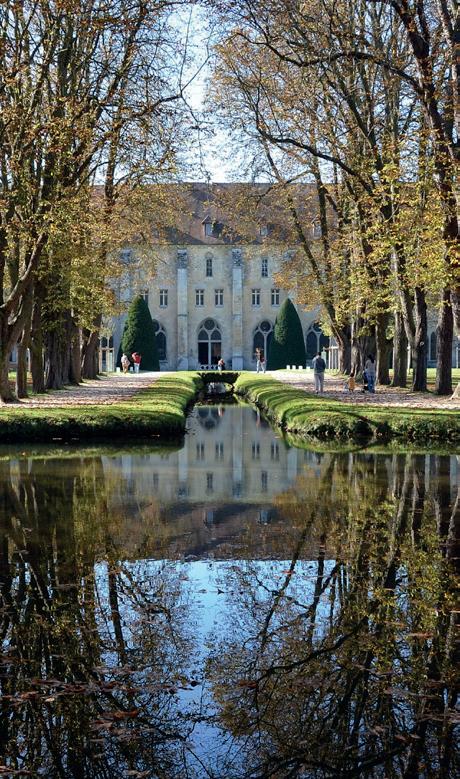
This particular château houses the Museum of the Renaissance at Ecouen, 21 minutes from Paris by train. I had rung the Museum and been told that it was ‘about five kilometres’ on foot from the station. In fact it is just over one kilometre and the woodland paths are now signposted. But it was this early experience that first made me aware of just how interesting and accessible the countryside around Paris is, and how little-known to the French themselves, as well as to foreigners.
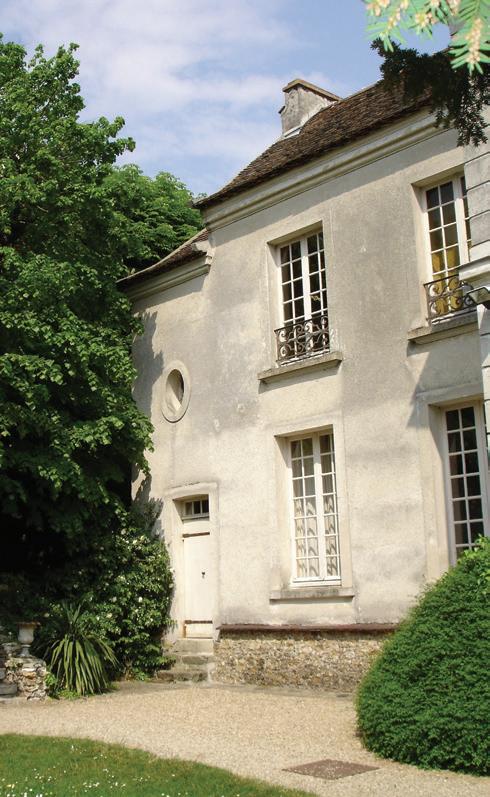
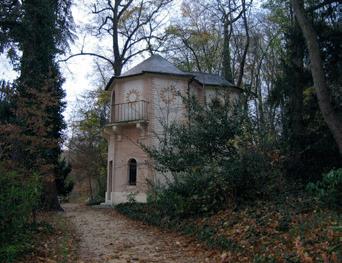
Opposite: Rousseau’s house, Montmorency
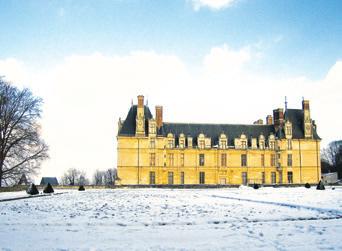
Château d’Ecouen
As I began to explore further afield the phrase ‘Île-deFrance’ gradually began to take on colour and meaning. The rolling countryside I had seen from the château at Ecouen is part of the old Pays de France, the fertile plain surrounded by rivers to the north of Paris that first made the city prosperous. Its rulers slowly extended their dominion over the rest of the country, which became known simply as ‘France’. The Île-deFrance contains the key to the history of the whole country. Paradoxically, it is also one of the least-visited parts of France, overlooked by foreign visitors with their sights set on Paris, while modern transport now whisks Parisians themselves off to ever more remote and exotic destinations.
As a result, large parts of the Île-de-France, although easily accessible from Paris, have escaped the effects of mass tourism. I began to appreciate the incongruity of using efficient commuter trains, uncrowded at weekends, to arrive less than an hour later at some quiet, unassuming place so remote from Paris as to feel like another world. I would be charmed by the back streets of a tiny medieval town, by the French families spending hours over Sunday lunch in a country restaurant
or by the discovery of a riverside footpath leading to another village and railway station. Arriving by train makes a difference. Where there are cars, there will be people, so you are actually more likely to have the countryside to yourself, especially on a Sunday, if you arrive by train. I have found that apparently remote parts of the forests in the Île-de-France, easily accessible only from a car-park, are far more crowded than the parts of the same forest which are close to a station. And if you are in a car, your perception of a place is unconsciously coloured by where you have come from and where you can get to next. Your time-scale is the one you carry with you, not the one imposed by the place itself, and you are less likely to notice the fascinating details that would strike someone arriving on foot.
I had spent some years discovering the region in this way, using the hit or miss approach of combining the green Michelin guide with the railway map, before I realised that I had the makings of a book which could offer something unique to its readers: a guide entirely conceived with the needs of the foreign visitor arriving by train in mind. Not only would it have clear,
Ile Sainte Catherine, Créteil
Fromager, St Germain-en-Laye
detailed directions and usable local maps which showed the station, it would, where possible, include interesting walks from one station to another, rather than the circular route imposed by having to return to a car.
As the book took shape, so did my picture of the kind of reader I had in mind. It was no longer simply someone who did not have a car. More importantly, it was someone who was essentially curious about everything, rather than with a specialist interest in walking, architecture, gastronomy or botany, someone who was interested in the present as well as the past, who loved the countryside and enjoyed walking, but who also liked stopping at cafés and appreciated the humbler type of restaurant where they would probably be the only stranger. Above all, it was someone who avoided crowds and pre-packaged experience wherever possible and was happiest when exploring off the beaten track.
This kind of reader would probably not want to use a
guide at all, but I felt that it would be worth their while to buy my book for two reasons. They could easily adapt the techniques I had spent years perfecting to find authentic places for themselves, and they could of course use my book to visit some of the little places I describe, without the hard work. Not only would they be the very people most likely to appreciate these, their presence in greater numbers might also help to halt the process of decline and/or creeping standardisation which is gradually taking hold. After all, Giverny now has a shuttle bus service from the station because a few Americans first started the fashion of going there.
With this rather unusual reader in mind, my criteria for selecting places to visit were interest, accessibility, lack of crowds and added value, in that order. The interest is usually historical, literary or artistic, but not exclusively so. A boat trip through the countryside or a visit to a guinguette (a riverside restaurant where people go to dance) also qualify as offering experiences not usually available to visitors staying in Paris.
Accessibility means that the places described are all within an 80-kilometre radius of Paris and generally an hour or less away by train. I have taken particular care to check that any walking is by the pleasantest route, avoiding hills and main roads as far as possible, an approach which has sometimes required several return visits to test out all the options for myself. I have learned to distrust official directions.
My personal preference is for places which do not attract crowds, but I have tried to strike a balance by including some better-known places which do. In these cases I have given alternative routes or times so that the visit can be enjoyed in the company of rather fewer other visitors than you would normally expect.
By added value I mean that a visit should justify the journey, whether by train or car, in more than one respect. A starting point might be a château or museum, but all of the visits offer at least one other attraction, such as a good local restaurant, a concert or an interesting walk. Several, such as Champigny or Poissy, offer far more than this, but the focus is
always on what can be pleasurably accomplished on foot. Again, I have tried to strike a balance by giving alternatives, so that if a five-kilometre walk seems excessive it can be skipped without missing the point of the visit.
Whether you are a first-time visitor, an old hand or, like me, another expatriate living in Paris, I hope that you will enjoy discovering Paris’s best-kept secret: the unspoilt countryside rich in historical associations which lies just a stone’s throw from the capital.
Jardin Anglais, château de Rambouillet
Preface to the fourth edition
Not surprisingly, the Île-de-France has changed considerably since the first edition of this book in 2002. It is a tidier, cleaner, more managed place than it was, but also blander, reflecting the changes that are taking place everywhere else. There are more supermarkets, vending machines and fast food outlets, but fewer traditional shops, cafés and restaurants. The raft to the Île du Martin-Pêcheur has been replaced by a bridge and the boat trip at Saint-Mammès has been discontinued, because of new health and safety regulations. New boardwalks have taken the danger but also some of the fun out of exploring slippery riverside footpaths. The availability of GPS on smartphones has diminished the likelihood but also the unexpected pleasures of getting lost.
Since the third edition of this book in 2019 these changes have accelerated, partly as a result of Covid. There are more people in some formerly quiet parts of the Île-de-France, leading to increasing urbanisation as new houses are built. Vegetarians are better catered for than they used to be but the traditional threecourse fixed-price menu is disappearing in favour of burgers and snacks, in some places at almost-Paris prices. There is an increasing reliance on machines rather than on people to supply the public with information and many local tourist offices have been replaced by a centrally-managed website. The few remaining traditional guinguettes are disappearing as their owners retire. Fortunately, some of these changes have been for the better. A planche de charcuterie/fromage (charcuterie or cheese platter) now available almost everywhere and often enough for two, is a cheaper, faster and sometimes better alternative to a three-course menu. But by far the biggest change affecting the readers of this book is the progressive improvement in the Paris public transport network, already one of the best in the world. The frequency of trains and buses has vastly improved and the network is rapidly
Guinguette FMR, Champigny
being extended as part of the Grand Paris policy of making the entire region easily accessible by public transport. The introduction of a single flat-rate fare of 2.50€ in 2025 to cover any métro or train within the 12,000 square kilometres of the Île-de-France has made Paris an even more attractive destination if you want to venture out and explore its little-known authentic countryside. The trains themselves have been replaced by sleek new versions incorporating constantly updated electronic information. There is more detailed information on train and bus timetables available online than ever before – if you know where and how to look.
Better still, some changes have led to heartening new discoveries. The closure of one of my favourite guinguettes at Villeneuve Triage and a change in ownership of the one on the Île du Martin-Pêcheur at Champigny imposed a complete rethink of two chapters in the book. I finally incorporated my discoveries of new places along the Marne into a longer chapter called Champigny. I replaced the Villeneuve Triage chapter with my favourite little-known walks around the ever-popular Auvers-sur-Oise.
Revisiting my old haunts with new walking companions also led to a fresh look at the other walks, with subsequent cuts,
additions or improvements. The disappointing urbanisation of the walk from Conflans-Sainte Honorine to Herblay led to the rewarding re-discovery of the Île de la Dérivation in the other direction. Increased traffic on the road to Montfort-l’Amaury led to the inclusion of the old village of Méré as an alternative walk. The new footbridge at Saint-Mammès inspired the addition of an alternative walk to Moret-sur-Loing from where there is a more frequent train service.
The surprising thing about the Île-de-France is not the changes linked to modernisation, which are happening everywhere, but the continuity. There are still astonishing pockets of greenery and silence to be found close to Paris, such as the Île Fanac at Joinville or the Île de la Dérivation near Andrésy. I continue to be delighted by the beauty and variety of the landscape, the sightings of wildlife and wild flowers which I rarely see in England, the unexpected discovery of a 12th-century church in the middle of the densely populated suburb of Champigny or the revival of the river ferry at Joinville, discontinued decades ago.
But what I appreciate most of all is the leisurely pace of life outside Paris and the atmosphere of quiet conviviality in local cafés such as the Bar–hotel La Station at Ecouen, run by a North African, or the neo-guinguette FMR at Champigny. These are modest places where you will be welcomed when you show that you are in tune with your surroundings. They are part of the continuity of a way of life which incorporates the French gift of joie de vivre, the ability to savour the moment and take pleasure in little things, such as sitting in the sun at a terrasse over a glass of rosé and exchanging smiles of enjoyment with your neighbours.
This edition is dedicated to my sister Kate Turner and her husband John for their unfailing love and support over the many years that I have been writing and rewriting this book.
I hope that you will find a great deal of pleasure in using it. Paris, Spring 2026
The Île-de-France: past and present
Place-names in bold are described in the text
A foreigner’s first impressions
When I first came to live in Paris I was puzzled by the phrase ‘Île-de-France’ (the island of France). I gradually realised that it referred to the area around Paris for a radius of about 80 kilometres (I was vague about this) and that les Franciliens, ‘the islanders of France’, meant the inhabitants of this region. Rather like Greater London, except that no one talks about Greater Londoners. I did not realise that the Île-de-France is almost eight times the size of Greater London, with a much better train service.
Beyond noticing that it seemed to contain a lot of famous places, which I felt slightly guilty about not wanting to visit (Versailles, Fontainebleau, Barbizon), I had no clear idea of it as a region, nor did I feel the need for one. When I thought of the French countryside, I thought of the south of France, the Auvergne, the Loire, Burgundy, Brittany and, at a pinch, Normandy, which really seemed too close to England to count. I also began to think of the area around Paris as the banlieue (a much more negative word than ‘suburb’) with an authentically Parisian shudder of fear, pity or contempt. My Paris, real Paris, did not extend beyond zone one of the Carte Orange, the monthly métro and bus pass covering up to five zones around Paris, now replaced by the passe Navigo. The limits of zone one were still those of the old city boundary, traceable by the circle of métro stations beginning with the word Porte, indicating that the entrance to the city was once guarded by gates. I assumed that these gates had disappeared in the Middle Ages
Open 10 am–noon and 2–5.30 pm on Tuesday, Thursday and weekends and 2–5.30 pm on Wednesday and Friday. Closed on Mondays and 1 January, 1 May and 25 December. Admission 5€, 3€ for students, teachers and if under 26, 2€ if under 18, Je Sers, floating chapel for bargees, www.bateaujesers.org.
Boat trips
Les croisières-promenades du dimanche, organised by the tourist office at Conflans. Three 1½ hour cruises on different themes with commentary, leaving from the jetty (embarcadère) opposite the tourist office between 3.30 pm and 5 pm on Sundays from late June to mid-September. Adults 17€, children under 12, 11€. Tickets are sold at the tourist office and can also be booked on www.terres-de-seine.fr/ decouvrir/bords-seine/croisierescommentees-seine.
Public ferry
The free ferry to the park on the Île Nancy at Andrésy leaves from the jetty facing the Hotel de Ville between noon and 7 pm from Wednesday to Sunday, between May and September and makes the trip whenever there are passengers waiting at the jetty. Maximum 12 passengers. Information from the Mairie on 01 39 27 11 00.
Restaurants
Conflans
There is a selection of cafés and restaurants near the place Fouillère and also further along the river past the tourist office .
Andrésy
Auberge la Goèlette, Île du Devant, BP 7, 78570 Andrésy, tel. 01 39 74 70 35, https://la-goelette. oxatis.com. Telephone first to find out if this restaurant is still functioning.
La Table Marocaine, 64 Boulevard Noël Marc, Andrésy, tel. 01 39 70 90 66, https://latable-marocaine.eatbu.com. Open daily for lunch, closed on Sunday and Monday evening. Couscous and tajine dishes around 24€, wine from 24€ a bottle.
16. Sceaux
Majestic and serene, Sceaux is the most classical of French parks, and the one which is closest to Paris
Only ten kilometres from Notre Dame, the much sought-after residential suburb of Sceaux (pronounced ‘SO’) has developed around the park designed for Colbert in the 1670s. It is a favourite with Parisians and residents alike but is little-known to foreign visitors, who are more likely to head for Versailles to experience le Grand Siècle of Louis XIV.
In fact, le Grand Siècle was created as much by his hardworking and able minister as it was by the princely extravagance of the Sun King, and modern France probably owes as much of its identity to Colbert as it does to Louis XIV. Their different but complementary personalities are reflected in the parks surrounding their favourite residences, both designed by Le Nôtre. Although it is on a far smaller scale than Versailles, the sweeping perspectives at Sceaux leave a lasting impression of classical grandeur and sober elegance, very much in the spirit of the age that Colbert did so much to bring into being.
Jean-Baptiste Colbert (1619–1683) bought the château at Sceaux in 1670 and had the 16th-century building enlarged and re-designed by the best workmen of the period. Le Brun decorated the ceiling of the chapel and the Pavillon de l’Aurore (Temple of the Dawn) and Le Nôtre was commissioned to design the park, which was filled with classical statues. He made clever use of the sloping terrain to create a play of perspectives, culminating in the famous Grandes Cascades, a staircase of nine waterfalls and fountains leading to an octagonal pond and prolonged by another green vista.
In July 1677 Colbert invited Louis XIV to Sceaux, having first cannily made sure of a warm welcome for him from the villagers by halving their taxes. The royal visitors were impressed
by the ‘marvellous cleanliness’ of the apartments, unusual for the period, the banquet, the music and the fireworks, followed by a performance of Racine’s Phèdre in the Orangerie. As he emerged, the king was acclaimed by all the villagers dancing under the illuminated trees of the park. Enchanted, he remarked that he had never been more agreeably entertained.
The good taste and clever management which marked the king’s visit continued to be shown in Colbert’s expansion and embellishment of his favourite residence. His son added the Grand Canal and the present Orangerie. In 1699 the château was sold to the Duc du Maine, the legitimised son of Louis XIV and Madame de Montespan. The Duchesse du Maine, who had inherited the stylish tastes of her grandfather, the ‘Grand Condé’ (see the chapter on Chantilly), made Sceaux famous for its elegant parties at the beginning of the 18th century. They became known as the ‘Nuits de Sceaux’, at which Voltaire and other distinguished writers were frequent guests.
After the Revolution, Sceaux was declared a bien national (national property) and sold off. The château was demolished and the park turned into farmland before reverting to semiwilderness. Some readers of Le Grand Meaulnes by AlainFournier (1886–1914) think that the park was the mysterious domain described in his celebrated novel, published in 1913. He
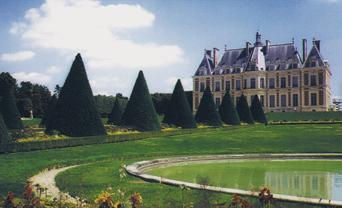
Château de Sceaux
was a pupil at the nearby Lycée Lakanal from 1903 to 1906, at a time when the park was in a state of romantic neglect. It was rescued from dismemberment in 1923 when it was acquired by the Département de la Seine and most of it restored. The present château, built in 1856 by the Duc de Trévise, now houses the Musée du Domaine de Sceaux.
As with so many of Le Nôtre’s parks (the worst, from this point of view, being Chantilly) Sceaux was designed to offer majestic vistas to impress the eye rather than to be easy on the feet. Relentlessly straight paths lead to the Grand Canal, which must be tiresomely circumnavigated, as there is only one bridge across. For this reason the suggested route covers only the most visually dramatic parts of the park and offers contrasting walks on the way there and back. There are surprisingly untamed wooded bits, covered with violets in spring, if you branch off the paths, and even without leaving the path you might be lucky enough to see a red squirrel, as I did on one of my visits. You could leave by either of the other two RER stations shown on the map but the walk back via the old part of Sceaux is by far the most interesting.
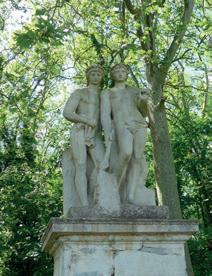
Castor and Pollux, south of the Octogone
Suggested visit to Sceaux
Take the ‘Sortie André Theuriet’ from the station at Bourgla-Reine, which faces a big Monoprix. Follow the railway line by taking the little rue André Theuriet on the right which rises slightly uphill, passing a statue of André Theuriet. Follow it as it becomes the rue Laurin and cross the railway tracks into the avenue du Lycée Lakanal. Turn left to follow this road slightly uphill until it comes out into the main road, avenue Victor Hugo. Turn right uphill, opposite the grounds of the Lycée Lakanal. Continue until you come to the roundabout and turn left to cross the road towards the Lycée opposite. Cross the avenue Claude Perrault and take the first gate into the park opposite. Continue a little way and then turn left to reach the Pavillon d’Aurore, an elegant little building crowned by an unmistakeably 17th-century cupola. Attributed to Claude Perrault, brother of Charles, the writer of fairy-tales, it takes its name from Le Brun’s painting of the Char de l’Aurore (Chariot of the Dawn) which decorates the ceiling of the dome, and has recently been restored and opened to the public. The Dawn can also be read as a metaphor for Colbert awaiting the rising of the Sun (Louis XIV). It is the only building commissioned by Colbert to have survived.
From the entrance to the Pavillon d’Aurore go straight on, then turn left to pass the 18th-century brick Pavillon de l’Intendance, which houses the administrative offices of the park. Keep going until you come to the entrée d’honneur, the imposing principal entrance to the park designed for Colbert. The long, tree-lined allée d’honneur is impressive to look at or to ride but monotonous to walk. It leads straight to the château, but if you want to see the stately Orangerie built by Mansart in 1686 keep straight on, with the château on your right. Racine and Lully wrote the Idylle de Sceaux to be performed here for Louis XIV and Madame de Maintenon, and later Voltaire’s comedies were put on here by the Duchesse du Maine. The sanitaires (toilettes) are next to the Orangerie, to the right.
Leave the Orangerie behind you to visit the château. The Musée du Domaine départemental de Sceaux is on the ground
GRANDE VOIE DES VIGNES
buvette
boat hire
buvette
and upper floors, from where there is an excellent view of the sweeping entrance to the park, the perspective of which is majestically prolonged on the other side. The story of the château and its owners is presented in rooms full of furnishings and objets d’art of the corresponding period.
There is a little buvette next to the château where you can order crêpes before strolling right to admire the view in front of the château extending downhill almost as far as the eye can see. Its peculiarly French formality is accentuated by the clipped cone-shaped trees on either side, set off by gay flowerbeds and ornamental ponds. It invariably has a calming effect on the nerves.
Turn left from the buvette, with your back to the château, down the shady allée de la Duchesse. It eventually divides into two flights of steps on either side of a dramatic staircase of waterfalls, the Grandes Cascades. Take the steps on the left, past the puffed-out cheeks of the stone masks sculpted by Rodin and recently restored, through whose lips the water is ejected when the fountains are playing. The sound of rushing water continuously spilling downhill accompanies the descent, a triumph of hydraulic engineering. The waterfalls end in a large octagonal pond, in the middle of which a jet of water spurts up to ten metres into the air. Classical statues surround the Octogone, a restful place which is popular with fishermen and children who are fascinated by the ducks. The monumental 19th-century statues of two stags flank the continuation of the perspective to the south, which is, however, a fairly tedious walk. Instead, turn right at the bottom of the steps, following the pond as it joins a little canal which links it to the Grand Canal. You cannot but be impressed by this magnificent stretch of water which extends for more than a kilometre, almost the full length of the park. The great storm of December 1999 felled some of the poplars which line both banks, but with the statesponsored efficiency of which Colbert would have been justly proud they were re-planted at record speed.
See below for an alternative return to Paris via a visit to Chateaubriand’s house at Châtenay-Malabry. Otherwise, turn right to follow the canal back to the château, and cross in front
of it, past the horizontal perspective stretching downhill. Follow the map to the Petit Canal, the size of a very long swimming pool. This green-tinted stretch of water was once a carp reservoir for the Petit Château and has only recently been restored. It is a tranquil, mysterious place, almost hidden from view, with only a few people quietly sunning themselves around its grassy verges, overhung with roses. If you look for a gap in the trees roughly halfway along its length you will have a last view of the Grand Canal stretching in an unbroken line into the distance. There is a pretty little garden above the canal, which has been restored to its 17th-century design.
Turn right at the end of the Petit Canal for the entrance to the Petit Château next to it, which was built in 1661 and acquired by Colbert to become part of the park. Later it was the nursery for the children of the Duchesse du Maine before it was separated from the park again and eventually became the public library for the growing town of Sceaux. It now houses the Musée du Grand Siècle (free) which contains paintings, sculptures and furniture from the 17th to the 20th centuries.
Leave by the museum’s 17th-century gateway into the little rue du Dr Berger and turn right, past some fascinating little side streets, slightly uphill to the Eglise St Jean-Baptiste on the right. The 16th-century church is not particularly remarkable but seems to be always open, and this part of Sceaux, around the place opposite the church with its lively cafés, has an unexpectedly village-like atmosphere which is very attractive.
Opposite the Café de la Paix is the entrance to a small park, the Jardin de la Ménagerie, so called because the Duchesse du Maine buried her pets here. The two stately stone columns mark the tombs of her canaries. Go past the small and helpful tourist office on the left and cross the park diagonally to the left, emerging at a busy cross-roads. Take the second road on the right, the avenue de Verdun, which leads downhill, following the signs marked ‘Gare’ to the left for the pretty little RER station at Sceaux (see p. 49).
3½ km (2-mile) walk to Chateaubriand’s house in ChâtenayMalabry
Here are brief directions for a visit to Chateaubriand’s house. It is an interesting and little-known alternative to returning straight to Paris after your visit to Sceaux, but perhaps best done as a separate trip, which you could combine with a visit to the Arboretum in the Parc de la Vallée aux Loups opposite the house. It is a kilometre away from the RER station at Robinson and, apart from its historical interest, there is the pleasing prospect of tea in the beautiful garden, surrounded by parkland. Allow 2–3 hours for the walk from the Parc de Sceaux, the visit to the house, tea in the garden and the walk to the station. François-René de Chateaubriand (1768–1848), the great Romantic poet and statesman, managed to get on the wrong side of both Napoleon and the Bourbons. Fans of the French Romantic movement will be fascinated by the stately little house and park, which he bought in 1807 when he was forced to leave Paris after criticising Napoleon. He spent ten happy years there in exile, transforming it into a Romantic haven and producing some of his most famous work, notably Les Mémoires d’OutreTombe, from the tower he had built at the bottom of the park. Leave the park by the Pavillon de Hanovre gate, west of the Grand Canal. Cross the avenue Sully Prudhomme and take the Grande Voie des Vignes straight ahead of you. Follow the road to the end, cross the main road and continue straight ahead along the little rue Sainte Catherine to the church of St Germain l’Auxerrois, one of the oldest in the Île-de-France and well worth a visit. The little door to the right of the main entrance is always open. The oldest part is the corner to the left of the altar, where the medieval stone-masons who built the church sculpted themselves as modest little figures at the top of the pillars, carrying the tools of their trade. There is a friendly café–tabac in the rue de l’Eglise to the left of the church, contributing to the timeless village-like charm of the place de l’Eglise in front of you. Continue along the rue de l’Eglise, past the café’s main entrance on place Voltaire (Voltaire’s parents had a house in Châtenay), cross the place and turn left into the rue du Dr Le
The café at the Maison de
Savoureux. After a few minutes take the first right, a continuation of the same road. From this point you will see occasional brown signs for the Maison de Chateaubriand along the route. Cross the main road, avenue Roger Salengro, to the right and then continue along rue du Dr Le Savoureux, slightly uphill on your left, until it joins the rue Chateaubriand. Follow the rue Chateaubriand all the way as it winds downhill to the gates of the Parc aux Vallée des Loups.
You will see an entrance to the Arboretum on your right, a botanical park à l’anglaise, complete with a grotto and waterfall, containing some remarkable shrubs and trees. Follow the left-hand path uphill to the Maison de Chateaubriand, past the main entrance to the Arboretum. The entrance to the salon de thé in the Orangerie is just before the entrance to the house, with tables outside overlooking the park. Sipping tea here and appreciating the tranquil view, you will understand just why Chateaubriand enjoyed his exile so much.
He redesigned parts of the house, originally a gardener’s cottage, adding a portico with caryatids and pillars at the back. It has been carefully restored with furnishings of the period and is well worth a visit. It overlooks the charming small park à l’anglaise which Chateaubriand planted with exotic trees to remind him of his travels. Some of these are still standing and breathe the pure spirit of Romanticism, as does the Tour
Chateaubriand
Velleda, an isolated tower at the back of the park which served as his study. Its stone floor and fireplace are strongly reminiscent of Rousseau’s ‘Donjon’ at Montmorency, although the original façade, romantically crumbling when I first saw it, has been rather too enthusiastically restored. Continue past the Tour to the Glacière (ice-house), eventually turning left to go right round the park and back to the salon de thé, past some remarkable trees and a little stream on your right. I have seen bluebells, Solomon’s Seal and cowslips growing here in spring.
On leaving, turn left from the park gates to continue down the rue Chateaubriand. The no. 14 Chateaubriand bus stop immediately left of the gate is for buses going to the station at La Croix de Berny and there is a stop for the station at Robinson on the other side of the road further along, but unless a bus is in sight it is probably quicker to walk to Robinson. To reach it continue straight on over the cross-roads, take the rue Anatole France to the right and follow it until it joins the main road, avenue des Quatre Chemins. Turn left uphill and the RER station at Robinson is a little further along, on the right-hand side.
Châteaubriand’s Tour Velleda
Distance from Paris: 10 km (6 miles)
Depart: St Michel-Notre Dame
Arrive: Bourg-la-Reine
Journey time: 13 minutes
Length of visit: Half or full day
Alternative return from: Sceaux or Parc de Sceaux or La Croix de Berny or Robinson
Distance from Bourg la Reine station to Parc de Sceaux: 1.2 km (¾ mile)
Distance from Parc de Sceaux to Sceaux station: 1 km (½ mile)
From Parc de Sceaux to Maison de Chateaubriand: 3½ km (2 miles)
From Maison de Chateaubriand to Robinson station: 1 km (½ mile)
Pop.: 20,359
Getting there
All southbound RER B trains from central Paris (destination Robinson or St Rémy-lesChevreuse) stop at Bourg-laReine and run at three to sevenminute intervals, seven days a week. Stops after Bourg-la-Reine are served every 15 minutes and there are trains back to Paris until after midnight.
Car: RD920 or A86, exit for Sceaux.
When to go
The park is visually rewarding at any time of the year, even in winter. It is busiest on Sunday, but is never uncomfortably crowded. If possible, choose a Wednesday, a weekend or a public holiday, when the fountains of the Grande Cascade are in action and the Musée du Domaine de Sceaux and Chateaubriand’s house are open.
Useful information
Domaine de Sceaux, tel. 01 41 87 29 50, www.domaine-de-sceaux. hauts-de-seine.fr. The park is open daily until around sunset, varying from 5 pm in winter to 8.30 pm in summer. There are practically no restrictions to walking or lying on the grass.
Musée du Domaine départemental de Sceaux, same contact details as the Domaine de Sceaux. In summer open Tuesday–Sunday, 2–6.30 pm, 1–5 pm in winter. Closed on Mondays, 1 January, 1 May and 25 December. Admission 4€, free to those aged under 26, journalists and teachers and to everyone on the first Sunday of the month. The ticket includes admission to the Pavillon d’Aurore and the Orangerie.
The Pavillon de l’Aurore is open at weekends at the same times as the Musée du Domaine de Sceaux.
Le Petit Château housing Le Musée du Grand Siècle, 9 rue du Dr Berger, 92330 Sceaux, tel. 07
64 33 15 89, https://museedugrand siecle.hauts-de-seine.fr. Open Wednesday–Sunday 2–6.30 pm, 1–5 pm in winter. Closed 1 January, 1 May and 25 December. Admission free.
Maison du Tourisme, Pavillon du Jardin de la Ménagerie, 70 Rue Houdan, tel. 01 46 61 19 03, http://tourisme.sceaux.fr. Open Tuesday–Saturday 2–6 pm and also 10 am–1 pm Wednesday and Saturday.
Maison de Chateaubriand, 87 Rue Chateaubriand, 92290 Châtenay-Malabry, tel. 01 55 52 13 00, https://vallee-aux-loups. hauts-de-seine.fr/infos-pratiques/ /horaires-tarifs. Open Tuesday–Sunday 1–6.30 pm, 1–5 pm in winter and 10 am–6.30 pm at weekends in summer. Closed 12–1 pm, on Mondays and 25 December. Admission 4€. Free to teachers,
journalists, and those under 26 and to everyone on the first Sunday of the month. The last visit is 45 minutes before closing. Admission to the park is free.
The salon de thé is open from Wednesday to Sunday from 11 am to 6.30 pm, 4.30 pm in winter, tel. 01 46 15 21 49.
The Arboretum is open to 7 pm in summer, admission free. https://vallee-aux-loups.hauts-deseine.fr/l-arboretum/histoire-etbotanique.
Restaurants and cafés
There are several cafés near the church at Sceaux, open on Sunday, and two buvettes in the park. The one near the château sells crêpes.
17. Champigny-sur-Marne
A timeless walk along the Marne and the world of the guinguettes with some surprising detours
For over a hundred years the bucolic stretch of the River Marne between Champigny and Nogent-sur-Marne has been a traditional playground for Parisians as well as for locals at weekends but is little-known to foreign visitors. Boating clubs, bathing establishments and guinguettes (modest open-air restaurants where people danced to popular songs set to accordion music) sprang up along its banks in the 19th century, as well as the cinema studios at Joinville where several landmark French films were made in the 1930s and 40s. The coming of the railway made it easily accessible from Paris and it continues to be a prized residential area, with some impressive 19th-century villas dotted along its banks.
Today the medieval villages have become densely-populated suburbs, the bathing establishments and cinema studios have disappeared and the heyday of the guinguettes has become a nostalgic memory but the tradition of relaxing by the river here at weekends is as strong as ever. The river banks are being made more accessible with boardwalks and information panels to enable people to stroll as close to the water as possible and identify the wildlife in this semi-rural stretch of the river, there are boats for hire, the Marne is being cleaned up so that people can swim in it again, and some restaurants are evolving into what could best be described as neo-guinguettes, appealing to a younger generation. On Sunday afternoons the small road beside the Marne is closed to traffic so that French families can continue their traditional pastimes of strolling, boating, eating, drinking and dancing by the river. The area is well served by trains, meaning that you can shorten or lengthen your walk at whim as you
Getting around the Île-de-France
THE CULTURAL CONTEXT
Getting into the local rhythm
Exploring the Île-de-France is an excellent education in itself about what makes France tick – literally. The timing of your trip should be in tune with the rhythm of French provincial life, particularly at lunchtimes, weekends and during holiday periods.
Opening hours: Local tourist offices and the smaller châteaux and museums tend to have extremely complicated schedules, varying according to the day of the week and the season, and are often closed for lunch. The golden rule is always to phone before leaving to check that the place you want to visit will be open. Phone, rather than check online as websites and Google listings are not always up to date. If there is no answer from a château or museum try ringing the local Mairie – outside lunchtime, of course.
Restaurant opening hours outside Paris may be charmingly unpredictable, depending on the number of customers and the mood of the patron, as they are often family-run. They may be closed during school holidays, have changed owners and opening hours, or have closed down, so if
you are planning to visit a particular restaurant, always phone first to check that it will be open.
Generally, restaurants are open at lunchtime from around 11.30 am to 3 pm, but it is risky to place your order after 1.30 pm. The best dishes, or worse still, the chef may have gone by then. Things are more relaxed on Sundays, when you might get away with turning up at 2 pm or even later. Evening opening times are from around 7.30 to 9.30 pm.
Traditional French restaurants tend to be closed after about 3 pm on Sunday and at least one other day in the week, usually Monday.
You can generally get an omelette or a sandwich in a café at any time of the day during the week. On Sundays they tend to be foodless and may close distressingly early, at around 2 pm. In such cases it is quite acceptable to buy a sandwich or a slice of quiche at the local boulangerie and take it with you to eat in the café, ordering a drink to go with it. However, it is polite to ask if the café is selling sandwiches before heading to the baker, usually not far away.
Vegetarians are catered for better than they used to be, but if the menu contains nothing of interest to a vegetarian, ask if they
can give you une assiette de légumes. It is usually good value.
Restaurant terms: Menu means a fixed price menu, usually three courses. Wine and coffee are rarely included. A formule is a two-course fixed price menu, usually a choice of a first and a main course (entrée et plat) or a main course and dessert (plat et dessert), sometimes including a glass of wine, beer or mineral water. The plat du jour is the dish of the day, usually part of the menu, and often a bargain in terms of quality and price. A pichet of wine is the house wine, served in 25cl or 50cl jugs (ask for un quart or un demi), varying greatly in quality depending on the restaurant. A pichet of a well-chosen vin de pays (local wine from a particular region) may be better value than an expensive but mediocre bottle. The French tend to go for Côtes du Rhône as a safe bet. A restaurant is legally obliged to serve you a jug of tap water free, if you ask for une carafe d’eau, s’il vous plait. If you say De l’eau, s’il vous plaît, you are likely to get a bottle of expensive mineral water.
Weekends: Small towns in the Île-de-France tend to be very lively on Sunday mornings, when everyone is shopping for Sunday lunch until about 1 pm. In some villages this may also be the only time in the week when the church is open. Saturdays are also busy, but after about 3 pm on Sunday many of these places can seem deserted and you will probably be glad you are staying in Paris.
The pleasures of provincial life
Once you have adjusted to the local rhythm, you will start to appreciate the ways in which life is different, not only from other countries but from Paris as well.
People: People are generally much friendlier than in Paris and it is usual to greet the strangers you pass on a country walk, as well as the people you have commercial transactions with. The formula is ‘Bonjour, m’sieur/ madame’, rather than just ‘Bonjour’, which is too abrupt. Occasionally, you may come across someone who treats you with provincial suspicion. Don’t take it personally. Remember that you are not just a stranger (bad) but a foreigner (worse), and that even if you were French, it wouldn’t make much difference. On the whole, people are extra helpful when they realise you are a foreigner because any visitor in some of these places is unusual and a foreign visitor is positively exotic.
Prices: Another pleasant difference is that café and restaurant prices tend to be as low as if you were in a province 300 km rather than just 30 km away from Paris. I always look for the cost of an ordinary cup of black coffee (café express) taken at the table (salle) as a fairly reliable indicator of the local prices. The Paris average is 2.80€ or more, so anything less than this is an encouraging sign.
Food: Not only are restaurant
prices generally lower, the quality and quantity of the food is usually superior to Paris fare. A kir (apéritif) will be made with a decent wine rather than the cheapest plonk and the ingredients of the dishes are likely to be fresh and properly cooked, rather than frozen and microwaved. This is what French cooking is all about and you should take advantage of the generally non-commercial approach to order traditional dishes you don’t often see on Paris menus.
The love of numbers
It may surprise you to know that the royal road to a successful career as a senior civil servant in France is an aptitude for mathematics, and state planning reflects this bias.
Administrative divisions: The entire country is divided into 22 régions, subdivided into 100 administrative départements which are known by numbers as well as by names. For example, the Île-de-France région consists of eight départements: Paris (75), Seine-et-Marne (77), Yvelines (78), Essonne (91), Hauts-deSeine (92), Seine-St-Denis (93), Val-de-Marne (94) and Val-d’Oise (95). Every French schoolchild knows the département numbers, which always feature as the postcode in the address. For example, 75004 PARIS means the fourth arrondissement of the département of Paris. These divisions are
deep in the national mindset. If you need to phone directory enquiries or ask about train timetables, the first question is likely to be ‘In what department?’ and it helps if you can rattle off the number, or at least the name. It is also helpful to keep administrative divisions in mind when reading tourist office maps and literature, which usually organise information on this principle. Likewise, stations outside the Île-de-France region are not shown on the Île-de-France railway map, so it is a good idea to take a Michelin or IGN map with you. The names of the stations, by the way, may consist of two place names, as in ‘Moret – VeneuxLes-Sablons’. This means that they serve two communes (districts) and will usually be located in the middle, about two kilometres away from each of them.
The French attitude to information
French education, with its emphasis on the formal and abstract, has bred a horror of appearing to patronise people by over-simplifying or stating the obvious. This means that information is often not concrete or detailed enough to satisfy Anglophone tastes. Knowledge is also power, more than in most other countries, so it is rare to find an under-paid bureaucrat pressing more information on you than you have asked for.
As local tourist offices are of-
ten staffed by volunteers or employees of the Mairie, you should bear in mind that tourism is, understandably, usually fairly low on the local council’s list of priorities and proceed accordingly. The secret is to know which
PRACTICAL DETAILS
Public transport in the Îlede-France
Paris is the hub of the Île-deFrance train network, with suburban lines radiating in every direction for up to 80 kilometres. The region is divided into five concentric zones, with Paris itself in zones one and two, a radius of about 8 km from Notre Dame.
The RATP (Régie autonome des transports parisiens) is responsible for the métro, buses and trams within and often beyond this central zone and for the most heavily-used suburban express trains, RER (Réseau express régional) lines A1, A2, A4 and B2 and B4, which cross central Paris, terminating up to 21 km away. The state-owned railway company, the SNCF (Société nationale des chemins de fer français) is responsible for the rest of the RER network and for all the suburban trains.
SNCF trains run on the left, as trains were first developed in Britain, and so do RER trains as they have inherited the SNCF suburban network, whereas métro
questions to ask. If you can establish a rapport with the person you are dealing with, so much the better. Beginning with ‘Bonjour, Madame/M’sieur’ rather than ‘Je veux savoir…’ is a good start.
trains run on the right. Métro lines are usually referred to by numbers, such as ‘Métro Line Seven’, although people might also refer to them by destination eg ‘Villejuif’ or ‘Mairie d’Ivry’ to indicate which branch they are referring to. But the RER is always referred to as RER A, RER B or even RER B4. These letters reflect the order in which each line was constructed, so RER E is the latest one. The SNCF has now started referring to the various suburban train lines by the letters H, J, K, L, N, P, R and U, which helps to locate them quickly on departure boards. T1 to T13 refers to tram lines, known as ‘le tramway’ in French.
The best large map of the system is the RATP Plan de réseau Île-de-France (no.1), available free from métro stations. Or download it from www.ratp.fr/ plan-transilien.
Types of ticket
From January 2025 the streamlining of public transport in Paris