Thousands urge Minnesota lawmakers to reject disability funding cuts
By Joey Carlson
Thousands, including people with disabilities, direct service providers (DSPs), and advocates gathered Tuesday, March 24 in the Minnesota State Capitol rotunda to deliver a clear message to legislators: “Cuts have costs.”
The Minnesota Organization for Habilitation and Rehabilitation (MOHR) and ARRM co-hosted the event that kicked off with a high-energy rally. The rally featured speakers from advocacy organizations, people with disabilities, and legislators.
A few highlights from the event include:
• Rep. Kim Hicks called the event her favorite day of the year and then led the crowd in a chant of, “Nothing about us, without us.”
• Lydia Dawley, who has a disability, discussed her personal need for care and recent struggles. She also highlighted a bill she helped create to make PCA easier to access for others.
• Rep. Dawn Gillman shared optimism for a bill to restructure compensation for residential direct support professionals.
• Sen. Jeremy Miller led the crowd in chanting, “No more cuts!” and “We want more!”
• Alma Silver, who has a disability, shared the stage with Sen. Jim Abeler. They discussed how state and federal fraud investigations threaten the independence of people like Silver.
2026 Legislative Priorities
After the rally, attendees met with House and Senate lawmakers. Their primary goal was to encourage legislators to reject Gov. Tim Walz’s proposed budget cuts.
During the last session, the Legislature approved $1 billion in reductions to disability waiver funding. Walz has proposed an additional $400 million in cuts for the current session. The combined reductions total $1.4 billion.
Advocates carried their core message into individual meetings. They argued that cutting disability services simply shifts the financial burden elsewhere. ARRM representatives warned that short-term cuts create longterm expenses. These expenses include higher costs for emergency and institutional
care, increased hospitalizations and lower workforce participation for both caregivers and people with disabilities.
The advocates asked lawmakers to reject the additional cuts and invest in sustainable, community-based support.
The argument is simple: Minnesota’s
Podcast returns Page 3
Oz escalates Medicaid fraud claims against states Page 4
Look back at 2026 Paralympics Page 5
Don't Miss the INclusive Career Fair Page 11
Minnesota student with service dog forces nationwide rideshare changes
By Frank Murphy
Thanks to Minnesota college student Tori Andres, rideshare passengers nationwide will see changes in how drivers treat service animals.
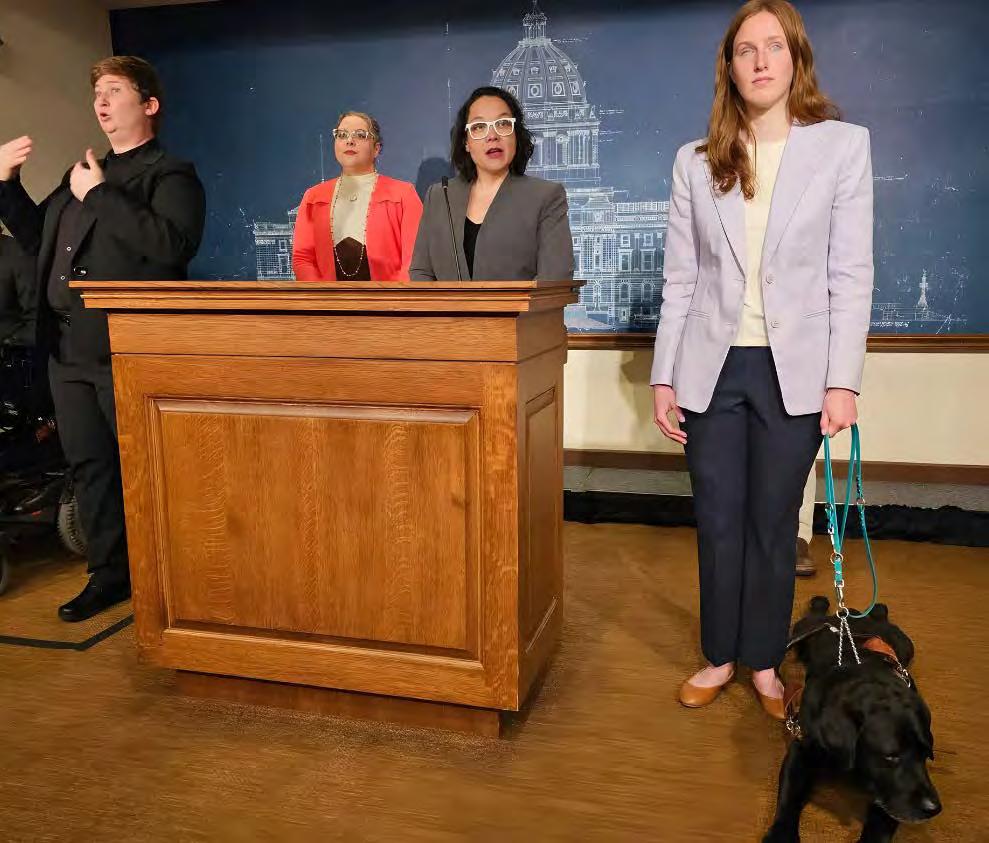
Andres was often frustrated when she couldn't get a ride with her much-needed service dog, Alfred.
“He is my eyes. He is my freedom, and he is why I am able to live independently,” she said of her black Labrador retriever.
Like many others with disabilities who rely on service animals, she was frequently denied rides because the drivers did not want a dog in their car. She finally reached her limit when Lyft drivers denied her a ride for the seventh time. She decided her best option was to file a complaint with the Minnesota Department of Human Rights.
On March 11, Human Rights Commissioner Rebecca Lucero announced she had reviewed the case and agreed on a settlement. She confirmed that a state investigation found Lyft in violation of the Minnesota Human Rights Act. The state agreed to settle the matter without resorting to a lawsuit, provided Lyft agreed to pursue a number of changes to its business model, app, and driver training.
“Access to rideshares like Lyft is not a convenience. It is, in fact, a civil right,” Lucero said during a press conference at the Minnesota State Capitol.
What the settlement means Tori started the changes in Minnesota, but Lyft will have to make its changes throughout the country. According to the settlement, Lyft will have to do the following:
• App updates: Lyft will update its app to allow users to proactively notify their driver of any disability needs, including the presence of a service animal. This will be an optional field that riders can update only if they want to.
• Driver warnings: If a driver attempts to cancel or refuse a ride after a passenger discloses their service animal, they will immediately receive a pop-up warning in the app. It will remind them that it is against the law to refuse service animals and explicitly warn them that they risk losing their ability to drive for Lyft.
Permanent deactivation: Lyft drivers who violate the policy by denying rides to individuals with service animals or mobility devices will be permanently deactivated.
• State oversight: To ensure the company follows through, the MDHR will monitor Lyft’s compliance for three years. Lyft is required to track and report every denied ride to the department so the state can track why denials happen and what accommodations are being made.
Financial compensation: Andres will personally receive $63,000 for the discrimination she endured.
Corporate accountability and the road ahead
In response to the settlement, Lyft released a statement framing the agreement as a reaffirmation of rules it already had on the books. The company officially denied violating the Minnesota Human Rights Act, blaming independent contractors who chose to break company policy.
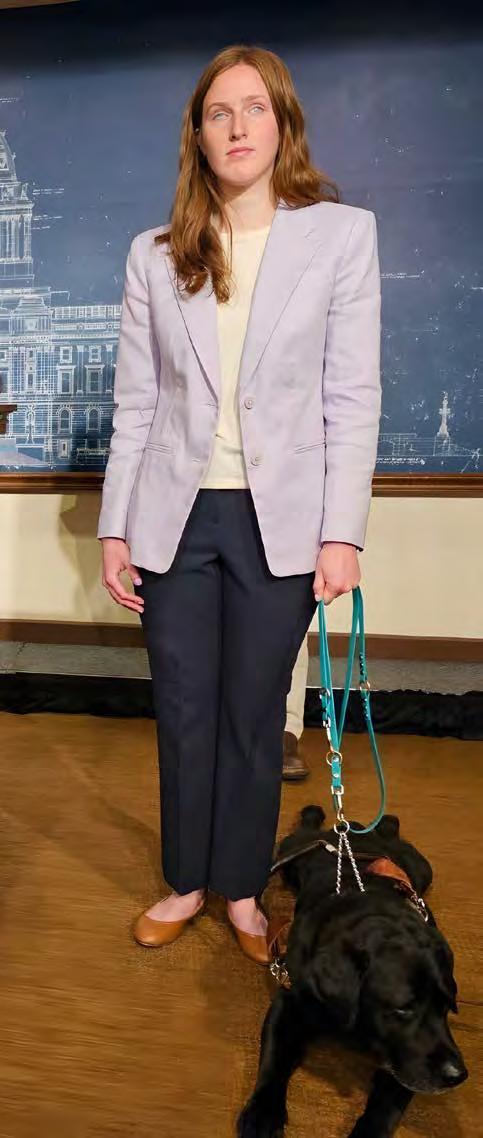
Andres and her service dog, Alfred.
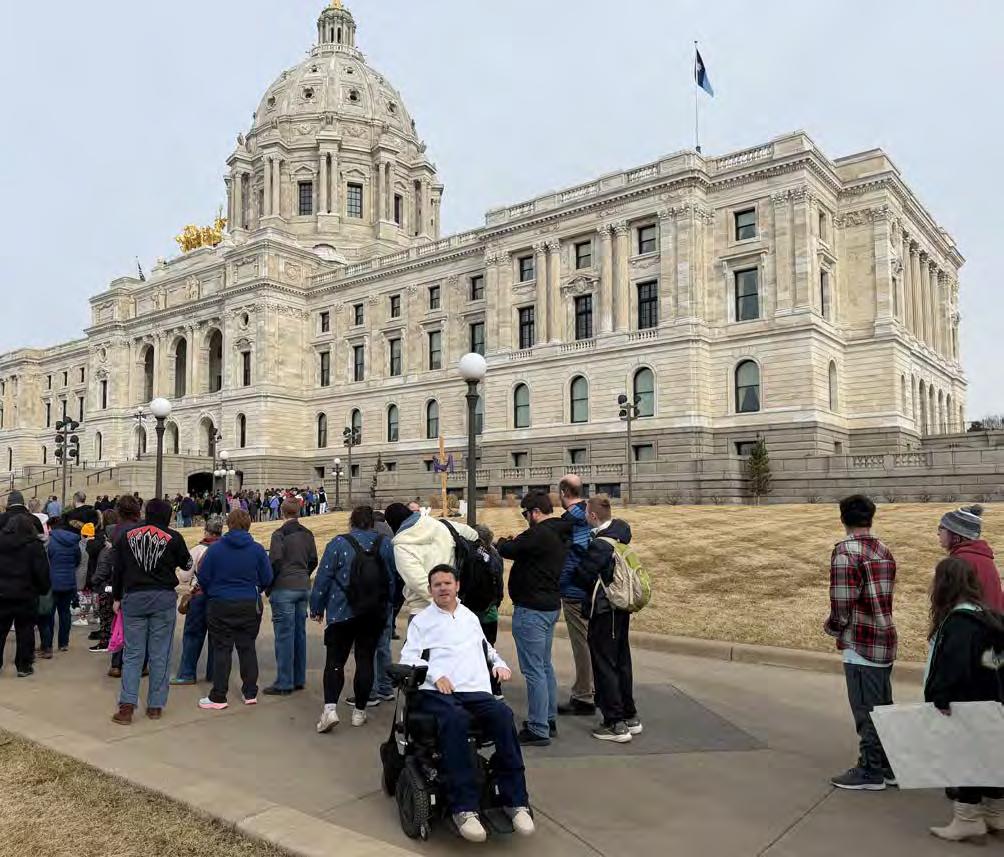
The Minnesota State Capitol was overflowing with people and energy for Disability Services Day.
OPINION
1 in 4: Why the disability community must build a united front
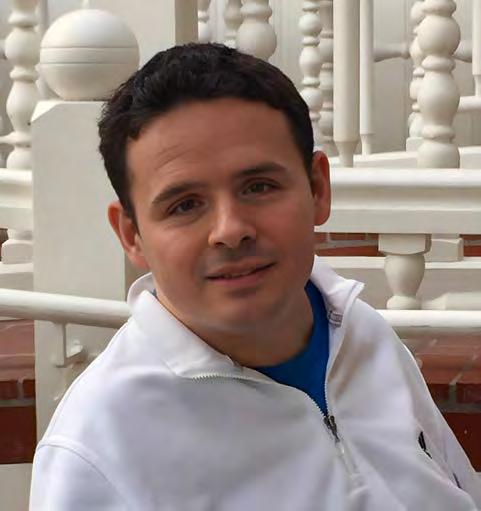
By Joey Carlson, Managing Editor, Access Press
It seems like people with disabilities are under fire from a different angle every day. We hear about slashes to Medicaid, the
federal government holding back millions of dollars to our state, and seemingly wellintended fraud mitigation efforts making services much more difficult to receive.
This is why I believe it is vital for the disability community to come together and speak with one unified voice. We are an incredibly diverse population of people with all sorts of needs. But many of those needs overlap, and we must make sure they are not lost on legislators’ desks.
Our individual stories are part of our power, but our sheer numbers are another. Statistically, 1 in 4 people has a disability. Together, we are a massive constituency that can make a real difference.
So, instead of operating in our silos, we must find ways to shout in unison. Here are some ideas on how to do this:
Join established multi-disability groups like the Minnesota Consortium for Citizens with Disabilities (MNCCD) and the Minnesota Council on Disability (MCD). They host events and drive really important legislative agendas.
The urgent need for rural transit funding
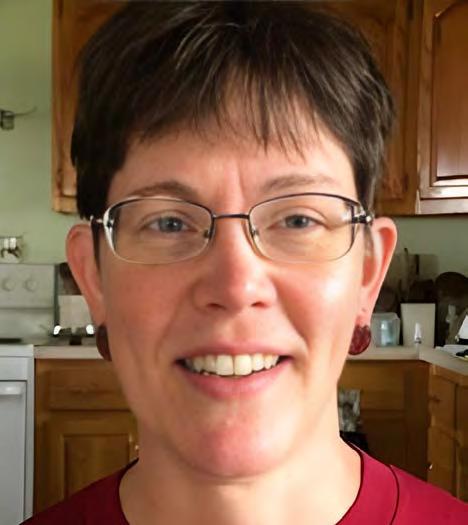
By Lisa A.S. Black
“Lisa, hier musst du nur auf Englisch sprechen, sonst verstehen sie dich gar nicht.”
In December 1992—exactly three months after returning from a year of study in Germany—I was in a serious car accident. I suffered numerous broken bones and a traumatic brain injury that left me in a coma for five and a half weeks. When I finally awoke, I was speaking the language of my host country. My family had to gently tell me: Lisa, you have to speak only English here; otherwise, no one will be able to understand you. I have no memory of coming home that August. Three important months of my life were completely lost. My father tells me that about a month into my hospital stay, doctors advised him to look for a nursing home. They believed that even if I woke up, I would never be self-sufficient. By God’s grace, broken bones heal, and I have learned many memory aids to help me navigate daily life.
However, one of the ongoing difficulties I continue to manage is safe driving. This is largely due to double vision and trouble with depth perception. Nerves that control the movement in my left eye were damaged in the accident, meaning the visual messages are no longer translated correctly in my brain. Because of the double vision, I cannot drive at night. Furthermore, my brain injury slightly delays my decision-making, making it unsafe for me to drive in heavy traffic.
I n 1991 and 1992, while studying in Germany—a country comparable in size to Minnesota—I depended entirely on public transportation and was able to travel the country extensively. Later, as a student at the University of Minnesota in Minneapolis, I rode the transit buses often. Today, there is a park-and-ride service where I can drive to a Twin Cities suburb to connect to the broader transit system; however, these lines
Our individual stories are part of our power, but our sheer numbers are another.
• Show up for issues that might not affect your specific daily life but deeply impact others in the community. When advocates for physical accessibility, neurodivergence, and sensory accommodations stand with each other on a topic, lawmakers take notice.
• Use our voting power at the polls. Being 1 in 4 means we are a formidable voting constituency. We can work with REV UP! Minnesota to make sure our voices are heard and our political power is felt.
• Use Access Press as a vehicle to communicate and debate issues affecting people with disabilities. Simply email me at editor@accesspress.org.
Our unified front shouldn't be just
Transportation systems that allow people with disabilities to conduct day-to-day activities rely entirely on adequate funding from federal, state, and local sources.
run only on weekdays. As a result, I cannot get to weekend events in the metro area. Furthermore, basic information like transit times and connecting bus numbers needs to
be much easier to find.
The financial barriers are just as steep. In 2018, when I traveled to the State Capitol using my county’s volunteer driver service,
Co-Founder/Publisher Wm. A. Smith, Jr. (1990-96) Co-Founder/Publisher/ Editor-in-Chief Charles F. Smith (1990-2001) Editor-in-Chief/Executive Director Tim Benjamin (2001-2020)
the 1 in 4. It should also be part of the 3 in 4 majority, because everyone is likely to know and love someone with a disability. We need to invite these allies to stand with us as we face threats like Medicaid cuts and administrative hurdles to home- and community-based services. We don't need to let this challenging time be defined by sadness and grief. We can make it a time when we rise together and become more powerful than ever before. We are not a fringe group. We are 1 in 4, and we have every right to fully participate in society.
Lisa Black
Trailblazer Transit, it cost me $180 round trip. That service is no longer available. Today, I would need to use the SMART Ride service of the Sibley McLeod Auxiliary Regional Transit. At $2.50 a loaded mile, it would cost me $525 round trip just to get to the Capitol.
C ounty transit systems urgently need funding for capital and operations within Sibley and surrounding counties. We must also allow these systems to seamlessly cross county lines. Rural transit is severely lacking in Minnesota, and it desperately needs greater investment.
Transportation systems that allow people with disabilities to navigate their communities and conduct day-to-day activities rely entirely on adequate funding from federal, state, and local sources. These systems must accommodate diverse, geographic-specific needs.
What will you do to improve transit across Minnesota, including the metro and, especially, Greater Minnesota?
EDITORIAL: Editorial submissions and news releases on topics of interest to persons with disabilities, or persons serving those with disabilities, are welcomed. We reserve the right to edit all submissions. Editorial material and advertising do not necessarily reflect the view of the editor/ publisher of Access Press.
DEADLINE: 15th of each month.
CIRCULATION/DISTRIBUTION: Distributed the 1st of each month through more than 200 locations statewide. Approximately 1,400 copies are mailed to individuals, including political, business, institutional and civic leaders.
SUBSCRIPTION: Free and accessible to anyone in MInnesota, visit www.accesspress.org/subscribe ABOUT ACCESS PRESS: A monthly newspaper published for persons with disabilities by Access Press, Ltd.
POSTMASTER: Send address changes to Access Press, PO Box 40006, Industrial Station, St. Paul, MN 551048006
INQUIRIES AND ADDRESS CHANGES should be directed to: Access Press, PO Box 40006, Industrial Station, St. Paul, MN 55104-8006; 651-644-2133; email: access@accesspress.org Website: accesspress.org
Joey Carlson
Hit podcast ‘Boldly Challenging Ableism’ returns for season two
By Janet Stewart
A second season of the Institute on Community Integration’s Boldly Challenging Ableism radio show and podcast is underway, with the first two episodes drawing strong listenership.
Host Katrina Simons talks with Haley Brunelle about the daily hurdles of navigating healthcare systems with her 8-year-old son, Felix, who uses augmentative and alternative communication devices. She also talks with Rob Wudlick, an industrial engineer and spinal cord research advocate, about battling an airline after his custom wheelchair was destroyed during a flight.
“The momentum for this show feels stronger than ever after Season 1 blew past our expectations,” said Chad Larson, president of AM950 KTNF. “People are genuinely hungry for honest conversations about ableism and disability.”
The series airs Sundays at 2 p.m. on AM950. Listeners can tune in live by visiting the AM950 website. It is also available on demand by searching for the show on YouTube, Spotify, and other major podcast platforms.
The show aims to expose ableism and dismantle myths that marginalize people with disabilities, with Simons using her lifelong disability and advocacy experiences to interview a diverse mix of guests about what real inclusion means in employment, justice, housing, education, and culture.
Her low-key approach draws in even listeners who might not otherwise be accustomed to beating a loud protest drum.
“The point of the show is not to say my issues
are more important than yours, but to just say, ‘Jump on board, and we’ll get there together,’” Simons said.
That’s not to say she’s shying away from difficult topics. In an upcoming episode, she said she hopes to tackle proposed limits to a variety of physical and other therapies. Those limits are in response to cuts put in place due to fraud investigations in Minnesota, which advocates say are unfairly punishing people with disabilities.
DISABILITY DAY
From page 1
disability service system is already under strain. Advocates warn that further reductions will deepen inequities and harm vulnerable people–without, in the end,
reducing the state’s overall budget.
For the thousands of passionate individuals at the Capitol it really came down to those three words: Cuts have costs.
A Note on Accessibility
The disability community found this event
“Katrina is the heart of the show. She builds genuine connections with the audience and has a talent for bringing out the best in every guest she interviews,” Larson said. “We're proud to be the platform for it.”
In another upcoming show, Linda Wolford will talk about creating enhanced pay rates for direct support professionals who support people with disabilities who have higher care needs, a critical issue amidst the crisis in staffing levels.
“I really wanted to see how [the show]
could improve in Season 2, and we had many people who wanted to come on and talk about something important,” Simons said about the factors behind committing to a second season.
“I’m really glad people still want to listen, and I hope we can delve into the most current issues Minnesotans with disabilities are facing today, because this is something I’ve not seen before in my lifetime.”
Boldly was envisioned as a cross-disability series for a broad audience. The show name is a nod to the ADAPT community’s rallying cry, “To boldly go where everyone has gone before.” The phrase refers to the disability community’s frustration with continually having to advocate for its legally protected right to access public places, job opportunities, quality health care, and other aspects of community life.
Last season, Simons spoke with Joe Carr, organizer of Joe & Bill’s Lemonade Stand for Gillette Children’s, an annual event that has raised more than $70,000 in the last decade for specialty pediatric care. Carr, who has cerebral palsy, is a Gillette patient, but his advocacy goes beyond fundraising. Earlier this month, he testified before the Minnesota Senate Commerce and Consumer Protection Committee, advocating for health insurance coverage for augmentative and alternative communications (AAC) devices, which he uses to communicate.
“Don’t make assumptions about me, just ask,” Carr said via such a device on the Boldly podcast last season, sharing with Simons his guidelines for engaging with him. “I’m not an inspiration just for existing; I’m just living my life. Let’s have a real conversation – just talk to me.”
to be so important that they overwhelmed the entrance to the Minnesota State Capitol. People using wheelchairs, scooters, walkers, and escorted by DSPs formed a long line outside the Capitol. Unfortunately, the line was so long that many did not make it to the formal portion of the rally. Luckily, the
weather wasn't too poor outside, just a little chilly.
In the future, it will be nice if the staff at the Capitol can think of ways to accommodate people with disabilities so they are able to screen them more quickly.
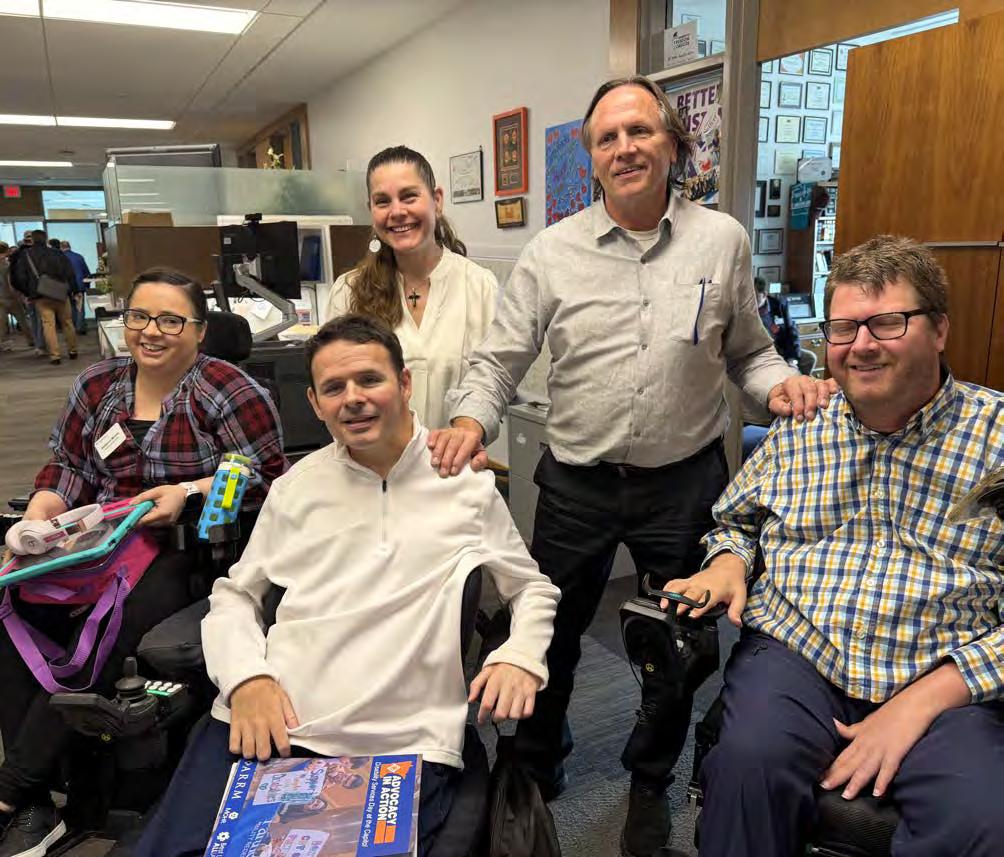
Joey Carlson (Access Press), Rob Wudlick (Minnesota Council on Disability [MCD]), and Addyson Carpenter (MCD), met with Sen. Jim Abeler and his legislative assistant, Jessica Johnson after the rally.
A long line formed outside the Capitol, causing many to miss the formal portion of the rally.
Oz escalates Medicaid fraud claims against states after focus on Minnesota
By Bram Sable-Smith
The Trump administration has signaled a willingness to halt billions of dollars in federal health payments to multiple states, mirroring moves they made against Minnesota.
The specific target is Medicaid, the public health insurance program that pairs state and federal money. Federal officials have announced unprecedented actions in Minnesota this year, declaring they could withhold over $2 billion in payments slated for the state and claw back nearly $260 million from last year.
The actions in Minnesota came as part of the administration’s declared crackdown on fraud, but critics have likened them to using a bludgeon instead of a scalpel, probably harming patients who rely on Medicaid for care but are not responsible for fraud in the program.
“It’s going to hurt a lot of people if they end up going through with this,” said Sumukha Terakanambi, a 27-year-old who has Duchenne muscular dystrophy and works as a public policy consultant with the Minnesota Council on Disability.
“Of course we support going after fraud,” Terakanambi said, but “this overly aggressive action is missing the point. It’s not punishing fraudsters. It’s punishing the people.”
Longtime Medicaid observers also doubt the federal actions will achieve their purported objective.
Jocelyn Guyer, a senior managing director with the consulting firm Manatt, recently told reporters that actions of this magnitude by the federal government are unprecedented, partly because punitive measures against states have “really never been an effective way to address fraud.”
Meanwhile, fraud prosecutions have stalled in Minnesota as the U.S. attorney’s office there grapples with the exodus of nearly half its attorneys and a surge in cases from the Trump administration’s immigration crackdown.
Despite these concerns, Centers for Medicare & Medicaid Services head Mehmet Oz said the techniques the federal government is using in Minnesota could be applied to other states, and he has launched social media campaigns alleging high-dollar public benefit fraud in California, Florida, Maine, and New York. And a February release of incomplete Medicaid data by the Trump administration’s Department of Government Efficiency appears to be part of a campaign to paint the program as riddled by fraud, Guyer said.
Andy Schneider, a research professor at Georgetown University’s Center for Children and Families, said that campaign by the administration seems particularly focused on services designed to keep people with disabilities out of institutions, and he described withholding $2 billion from Minnesota’s Medicaid program as “the nuclear option.”
A ‘Political Football’
Scrutiny of Minnesota’s public benefit programs began early in the Biden administration, years before the most recent investigations. The spotlight on the state’s Medicaid system grew after FBI raids targeting two autism treatment providers in December 2024.
The following May, an investigation by a Minneapolis TV station into Medicaid housing stabilization services in Minnesota prompted further scrutiny from federal prosecutors, and from Gov. Tim Walz.
Under the Democratic governor, the state launched investigations into 85 autism providers, ordered a third-party audit of 14 types of Medicaid services deemed to be “high-risk” for fraud, and delayed payments for those services for up to 90 days. Many of the services are ones people with disabilities receive at home, making them more difficult to monitor.
Terakanambi worried the state’s “heavyhanded approach” would destabilize the entire home care system. While his own care was not disrupted — his parents provide the 10 hours of daily personal care he qualifies for through Medicaid — other Minnesotans with disabilities have said they experienced interruptions and have criticized the delayed payments.
In December, one man was found dead after losing his in-home care services amid the crackdown.
“We’re losing sight of the people that have done nothing wrong, that rely on these supports and services to live in the community,” said Sue Schettle, chief executive of ARRM, a Minnesota nonprofit that represents organizations supporting people with disabilities. “It becomes a political football.”
Schettle said she took her concerns about the crackdown to state officials, who have since met routinely with her and other advocates. The subsequent federal actions, however, have left her “shell-shocked,” she said.
The ‘Nuclear Option’
In December, a video posted by a conservative YouTuber, with help from state Republicans, supercharged the issue in Minnesota, alleging widespread fraud in child care centers owned by members of the Somali community. A follow-up state investigation of the child care centers that were featured in the video determined that all were “operating as expected.”
On Jan. 6, CMS’ Oz sent Walz a letter alleging Minnesota’s Medicaid program was out of compliance with federal rules on fraud, waste, and abuse, setting the stage for the Trump administration’s move to withhold over $2 billion in federal Medicaid funds to Minnesota this year, about 18% of what the state received the year before.
Minnesota is appealing.
The Republican-aligned Paragon Health Institute, a think tank that recently published a policy brief calling for similar enforcement actions across the country, applauded the federal moves.
“That will spur states to take necessary action, thus ensuring that Medicaid funds go to those who are truly eligible,” said Chris Medrano, a legal research analyst who coauthored the brief.
Georgetown’s Schneider questioned the necessity and effectiveness of withholding the money.
“I don’t see any relationship between that and actually reducing fraud against the Minnesota Medicaid program, given the state has already taken a lot of action,” he said.
In late February, Oz went further, announcing that on top of withholding $2 billion in future payments to Minnesota, the administration was also “deferring” about $260 million in federal Medicaid payments to the state.
“We have notified the state that we will give them the money, but we are going to hold it and only release it after they propose and act on a comprehensive corrective action plan to solve the problem,” Oz said at a Feb. 25 news conference with Vice President JD Vance. Minnesota is challenging the deferment in court.
“We’re waiting for feedback from CMS on our corrective action plan, which is why we were surprised and confused when Dr. Oz said in a news conference with the vice president last week that we needed to provide one,” Minnesota Medicaid director John Connolly said at a March 3 news briefing.
‘Another Minnesota’ Oz and Vance both said during the February news conference that they are not specifically targeting Democratic-led states. Oz noted Florida has a “big fraud problem” and in mid-March sent a letter to state officials with a list of questions about their Medicaid program. Until then, the letters and most of Oz’s social media videos had been limited to California, Maine, and New York, all led by Democrats.
“We might have another Minnesota on our hands,” Oz said in a video posted the same day as a letter sent to Maine Gov. Janet Mills,
Similar audits in Indiana, Wisconsin, and Colorado had comparable findings.
In a statement, Mills called Oz’s letter a “pretense to send ICE and other weaponized federal agents into states led by Democrats.” CMS spokesperson Chris Krepich said the agency does not take funding actions lightly. “The focus is on strengthening oversight, improving accountability, and ensuring that vulnerable patients receive the services they are entitled to,” Krepich said.
But Terakanambi said it’s not difficult to see how federal actions like those in Minnesota could put services in jeopardy. The amount of money Minnesota could lose from the CMS actions announced this year is already equivalent to about two-thirds of the state’s rainy-day fund.
Many states are looking to reduce or even eliminate funding for home care services over much smaller budget shortfalls.
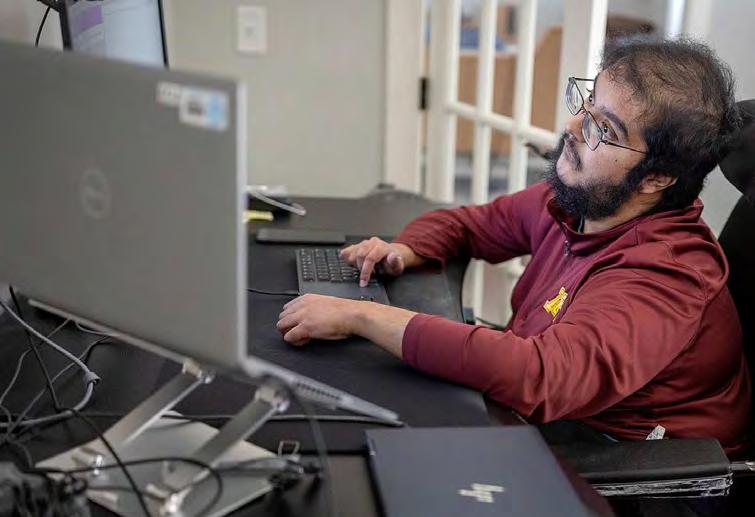
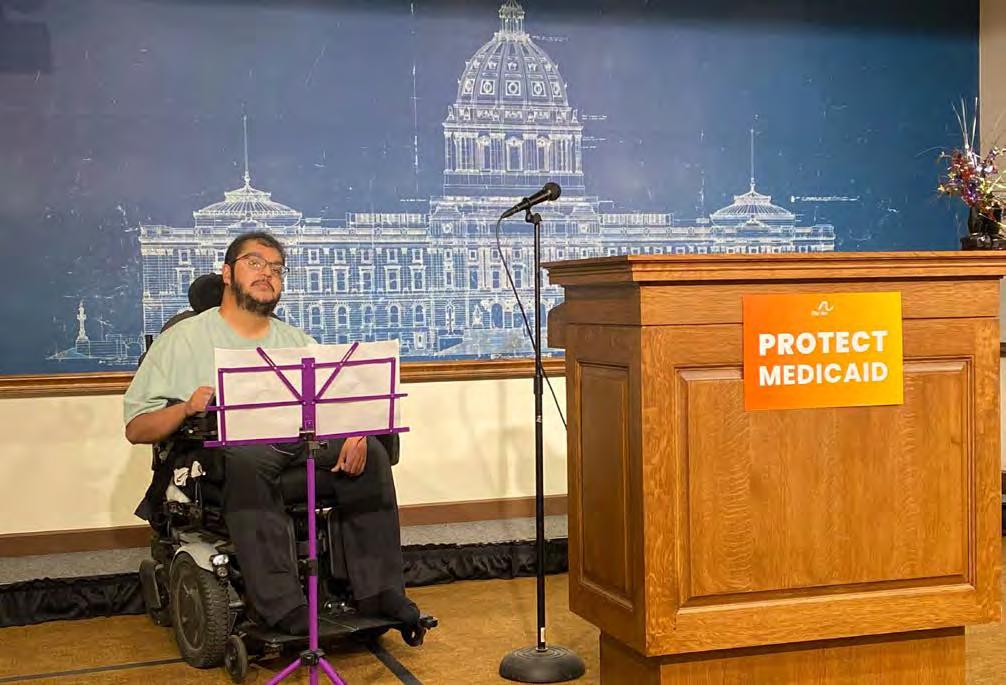
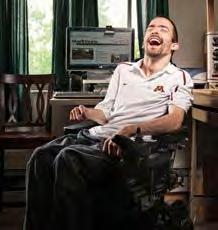
Sumukha Terakanambi works from his home in Lakeville, Minnesota. Terakanambi. He has Duchenne muscular dystrophy, and is a public policy consultant for the Minnesota Council on Disability.
Terakanambi at an event in St. Paul, Minnesota, in support of protecting Medicaid funding.
Team USA Caps off the 2026 Paralympic Games with a historic sled hockey win
By Access Press Staff
The United States once again proved that it has the best Paralympic sled hockey team in the world. They beat their rival, Canada, by a score of 6-2 in the championship and took home gold for the fifth consecutive Paralympic Games.
Defenseman Jack Wallace led the charge with a phenomenal hat trick and an assist. Tournament MVP Declan Farmer added a crucial shorthanded goal, while Illinois native Brody Roybal sealed the deal with a final empty-netter. In the net, Griffin LaMarre made 13 saves in just his third-ever Paralympic start to hold off a relentless Canadian offense.
"I really liked our compete level tonight, this team was so determined," said Team USA Head Coach David Hoff, who hails from Bottineau, North Dakota. "We set a very good pace tonight and played that way for three periods to accomplish our ultimate goal."
The victory not only extended Team USA's dominance in adaptive sports but also made the U.S. the first country in history to sweep the men's, women's, and Paralympic ice hockey tournaments at a single Olympic and Paralympic Winter Games. Making the feat even sweeter, the sled hockey team won on the exact same ice in Milan where both the U.S. Olympic Men's and Women's teams defeated Canada just weeks prior. It's a testament to the strong grassroots adaptive sports programs across the upper Midwest and beyond that continue to build this national dynasty.
More than hockey
In total, 68 athletes from the United States competed in the Paralympic Games. The group included 48 men and 20 women. Of those competing, 44 were veterans of the Paralympic Games and 24 were experiencing it for the
first time. The team raked in the second-most medals of any team in the world, right behind China.
Behind those numbers were some truly historic individual performances. Oksana Masters dominated Para Nordic skiing, taking home five medals—including four golds—to cement her legacy as the most decorated U.S. Winter Paralympian in history. Jake Adicoff had a perfect Games, racing to four gold medals in visually impaired cross-country skiing alongside his guides. On the slopes, breakout star Kate Delson and veteran Brenna Huckaby helped Team USA rack up the hardware in snowboarding.
Medal counts for the top ten countries
Minnesota’s 11 Paralympians: Milano Cortina
2026
Minnesota sent 11 athletes to the 2026 Winter Paralympics—the nation’s largest state delegation. Here is how our friends and neighbors proudly represented us to the world:
The Medalists
Sydney Peterson (Lake Elmo)
Cross-Country / Biathlon
The Story: A St. Lawrence University skier who developed dystonia; now a neuroscience Ph.D. student.
The Story: The team’s youngest player (18) began sled hockey at age seven.
•Results: Gold medal following a 6-2 victory over Canada.
Landon Uthke (Albert Lea)
Para Ice Hockey
The Story: A late roster addition who joined the team in January; lifelong friend of Liam Cunningham.
Results: Gold medal with Team USA. Mike Schultz (St. Cloud)
Snowboarding
The Story: Known as "Monster Mike," he founded BioDapt and engineers the prosthetics used by most of his competitors.
Results: Bronze in Banked Slalom; 6th in Snowboard Cross. He is now retiring to focus on engineering.
The Competitors
Oyuna Uranchimeg (Burnsville)
Wheelchair Curling
The Story: Paralyzed in a 2000 car accident, she began curling at 43.
Results: Led the U.S. to a 9-1 opening victory over Italy.
Meg Gustafson (Edina)
Para Alpine Skiing
The Story: A 16-year-old with tunnel vision who follows her brother/guide, Spenser Gustafson, via Bluetooth.
Results: 6th place in Downhill (Visually Impaired).
Max Nelson (Grant)
Cross-Country Skiing
The Story: Returned to elite form for his second Games less than a year after emergency brain surgery. Guided by Gus Schatzlein
Results: Competed in Visually Impaired Sprint Classic.
Aaron Pike (Park Rapids)
Cross-Country / Biathlon
The Story: An eight-time Summer and Winter Paralympian engaged to paralympic legend Oksana Masters.
Results: Competed in multiple Sitting classification events.
Blake Eaton (Duluth)
Para Alpine Skiing
The Story: A former six-time state wheelchair track champion born with spina bifida.
Results: 20th in Men's Sitting Downhill.
ACCESS PRESS DIRECTORY
HISTORY NOTE
Then as now, seeking state bonding was a complicated process
By Jane McClure
2026 is a bonding year for the Minnesota Legislature, with a focus on what are called “brick-and-mortar” projects. Hundreds of project proponents have thrown their hats into the ring in hopes of obtaining funding.
Brick-and-mortar projects were a focus for state officials in 1956—not because it was a bonding year. The current state bonding and budget cycle was adopted in the 1960s.
Ground was broken in 1956 for state facilities that had been approved in prior years. Gov. Orville Freeman started the 1955 legislative session with a request for $32.5 million for new facilities.
Consider that today, $32.5 million wouldn’t even cover one project.
One project celebrated at its groundbreaking 70 years ago was a state hospital in Brainerd. The hospital was sought for years by community leaders, winning legislative approval in 1953. The initial vision was for a
hospital that could house as many as 1,000 children with intellectual and developmental disabilities. Newspapers at the time referred to the children as “mentally retarded” or “mentally deficient.” Those are phrases we would not use today, but they reflect the cruel attitudes of the times.
It’s shocking now to think of children and youth basically being warehoused, away from loved ones. The history Parallels in Time tells us that during the post-World War II boom in America, having a child with a disability was seen as a burden to families. Doctors continued to urge parents to institutionalize their children regardless of the conditions resulting from overcrowding and understaffing. The admissions were not just among poor families.
Minnesota families were among those clamoring for space for their children. But the idea for a facility in Brainerd languished until January 1955. Newspapers, including
the Brainerd Daily Dispatch, reported that Freeman included the hospital in a list of proposed statewide projects.
By then, about 800 beds were eyed for the hospital at a cost of $10.5 million. As the project went through a round of state spending approvals at the Capitol, the number of beds was reduced to 500. The project list was also winnowed down.
As the 1955 session drew to a close in late April, the Brainerd project got just $1.675 million, enough for an administrative building and 150 beds. The local paper reported that civic leaders still had a vision of a very large facility of 2,000 beds.
The media coverage of the state hospital was interesting, to say the least. News articles across Minnesota referred to the “state’s unfortunate children” and how they would benefit from such a facility. But civic leaders who sought state investment weren’t entirely altruistic. Large institutions would
bring construction jobs, as well as ongoing new jobs, to Brainerd.
But getting to a late 1956 groundbreaking wasn’t easy. Construction of underground utilities was disputed, and construction bids were rejected for being too high.
Operations began in 1958, with more construction through the years. At its peak in the early 1960s, the hospital housed more than 1,300 people.
As care changed, so too did state hospitals, and the original hospital closed in the shift toward smaller facilities. Records from the old state hospital days up until 2007 are housed at the Minnesota Historical Society.
The History Note is a monthly column produced in cooperation with the Minnesota Governor’s Council on Developmental Disabilities.
Past History Notes and other disability history may be found at https://mn.gov/mnddc
Disability programs see mixed fates in Walz’s $907M bonding proposal
By Jane McClure
State lawmakers have less than two months to complete their work this session, with a May 18 adjournment deadline. One big issue to be resolved is whether a bonding bill can be passed.
Minnesota State Academies for the Deaf and Blind are still in the hunt for funding for three of four project requests. Gov. Tim Walz in January announced his bonding recommendations in January including asks for a student center, therapy pool and asset preservation.
Walz pared down requests lists from state agencies and local units of government throughout Minnesota. Capital budget requests from state agencies were at more than $3.8 billion. Local units of government had asks totaling about $2.7 billion.
The governor’s proposal totals $907 million.
Walz’s budget commissioner Erin Campbell, said, “This capital budget makes critical investments across the state, ensuring state facilities are well-maintained and communities thrive while maintaining fiscal responsibility.”
Walz’s proposal would be funded with $700 million in general obligation bonds and $207 million in other funding sources.
Disability-focused requests met mixed fates in Walz’s proposal. Direct Care and Treatment (DCT) programs had two requests recommended and others set aside. DCT is the state-operated behavioral health care system, which serves more than 12,000 patients and clients each year that other health care systems cannot or will not serve. Services are delivered at about 150 sites statewide.
Walz recommended an ongoing allocation of $32.7 million per year for asset preservation and $18.8 million for water and sewer replacement at the St. Peter campus. Requests for other facilities aren’t recommended to move ahead.
Department of Human Services requests were shut out of Walz’s proposal. This includes ongoing allocations for behavioral health capacity-building for tribal nations and urban Indian organizations; additional behavioral health facility funds and additional capacity-building to address issues of homelessness.
State academies make four requests
The most high-profile disability-focused bonding requests come from the Minnesota State Academies in Faribault. The academies oversee two schools - Minnesota State Academy for the Blind (MSAB) and Minnesota State Academy for the Deaf (MSAD).
The academies went into the 2026 session with three of four state bonding requests supported by Walz.
The top-ranked 2026 request is for $500,000 to hire architects to complete a predesign for the MSAD student center. The goal is to replace up to five aging and inefficient buildings into a single accessible building that matches current students' academic, physical and transition needs.
The center would incorporate athletic/ physical education facilities; cafeteria; career/technical education; storage; and
other needs on the campus. Buildings eyed for replacement include the Mott Hall vocational instructional building; Lauritsen Gym athletic facilities; Rodman Hall cafeteria and related spaces; Rodman Hall storage for the physical plant and the old laundry building. The laundry building is considered unsafe and isn’t used. Other facilities are outdated and need replacement.
Walz has recommended the $500,000 request. A new student center has been discussed for some time.
The governor also supports the academies’ second-ranked request, for $450,000 for predesign work for the MSAB therapy pool. The current therapy pool/therapeutic hot tub is more than 50 years old and is considered to be minimally accessible.
Predesign work would center on facilities’ replacement and related campus/building improvements. Proposed is an addition to the MSAB instructional building to house a new pool/hot tub, designed appropriately for students' physical therapy needs.
Once the pool/hot tub relocated, MSAB would be able to expand its academic/ transition/performing arts courses space.
The third request is for $3 million for asset preservation, to complete projects and facility renovations to ensure compliance with the federal Americans with Disabilities Act (ADA), address safety and security issues, and accommodate access issues for students on both campuses.
The request states that, “Asset preservation appropriations, along with operating funds, are the only source of money the academies have for maintaining their historic and varied facilities.” Projects could include replacement of deteriorated walks and drives, safety upgrades to doors and windows, tuck-pointing, wheelchair lift programs, restroom upgrades, HVAC improvements and accessibility updates to the campuses’ older buildings. Another big need is for safety and security improvements.
The fourth request, not recommended by Walz, is for $6 million to renovate the MSAB Library. The building was vacated last year after the Minnesota Department of Education moved out. It was used for the Minnesota Talking Book and Braille Library
until that facility moved to Minneapolis. Renovation and upgrading the space would include building a connection between the library and the main instructional building for safety/security reasons.
In its request, MSAB leadership stated, “We need to ensure that the building is safe and designed appropriately for our students to use. We want to preserve the building and move classes, services, and other functions from another aging building so that our needs are better served. By connecting the library building to the main instructional building, we will enhance the safety/ security of all students, staff and visitors to our campus. This is especially critical as we are located adjacent to the Faribault Correctional Facility, and we want to ensure that our students and staff are safe.”
Get ready for two days of innovation, inspiration, and hands-on fun at the Handi Abilities Showcase!
Discover the latest in mobility equipment and daily living solutions, explore interactive exhibits, and connect with healthcare experts, industry leaders, and local organizations— all under one roof. Don’t miss the Discover Abilities Zone by Courage Kenny Rehabilitation Institute, where adaptive sports and recreation come to life right before your eyes.
Come experience what’s new, make meaningful connections, and celebrate what’s possible! Register HERE! We can’t wait to see you there!
Lawmakers use bonding bills to borrow money for large infrastructure projects.
Punishment or fraud prevention? $259M withheld, lawsuit filed as Minnesota Medicaid dispute escalates
By Frank Murphy
A recent congressional hearing on Medicaid oversight has sharpened a growing conflict between federal enforcement and state compliance, as Minnesota fights the withholding of more than $259 million in federal Medicaid funding—while people with disabilities and their families face uncertainty about care.
At the center of the March 17 hearing of the U.S. House Energy & Commerce Committee’s Subcommittee on Oversight and Investigations was Kimberly Brandt, Deputy Administrator representing the Centers for Medicare & Medicaid Services (CMS), who defended the agency’s actions as a necessary safeguard against fraud.
But Minnesota officials—and some members of Congress—argue the federal response has crossed a line.
The Numbers: From Allegations to Withholds
CMS confirmed it has deferred approximately $259.5 million in quarterly Medicaid payments to Minnesota, citing “unsupported or potentially fraudulent claims.” The scale is significant—not just as a one-time action, but because federal officials have indicated such deferrals could recur quarterly if concerns are not resolved. For Minnesota’s disability services system, which relies heavily on Medicaid funding, even temporary delays can destabilize care delivery.
Brandt defended the timing and structure of the withholds, emphasizing that CMS is acting within long-standing authority. “When there are credible allegations of fraud, we have a responsibility to act,” she told lawmakers. “Payment suspension prevents further loss while we complete our review.”
Minnesota officials say they have fully complied with CMS directives, including submitting a detailed corrective action plan and responding to all federal requests for documentation. Yet despite that cooperation, the funds remain frozen.
On March 2, Minnesota escalated the dispute by filing a federal lawsuit against CMS and the U.S. Department of Health
and Human Services, seeking to block the withholding of approximately $243 million. The state is also requesting a temporary restraining order to immediately restore funding while the case proceeds.
In the filing, officials argue the federal government acted prematurely moving forward with payment deferrals before completing required administrative review processes.
State Officials: “Punishing Minnesotans”
Minnesota Attorney General Keith Ellison was blunt in his assessment. “The administration’s M.O. is to cut first…and ask questions later,” Ellison said in announcing the lawsuit. “These cuts punish Minnesotans.” Ellison emphasized that Minnesota has a track record of prosecuting fraud, citing hundreds of convictions and tens of millions recovered, while warning that broad funding freezes risk harming legitimate recipients. Similarly, state Medicaid leadership pushed back on the federal approach. “The decision… ignores the massive effort… we are already directing to identifying and addressing fraud,”
said John Connolly, Medicaid director of the Minnesota Department of Human Services. He warned the funding disruption could have “drastic and devastating impacts” on residents who rely on Medicaid.
During the March 17 hearing, U.S. Rep. Frank Pallone (D-New Jersey) said Minnesota’s cooperation has not slowed federal enforcement. He questioned whether the process reflects standard oversight—or something more aggressive.
“When a state complies and still faces escalating penalties,” he said, “we need to ask whether this is about fraud—or something else.”
What Happens Next?
Under federal rules, the withheld funds are not permanently lost yet. CMS will review Minnesota’s submissions and determine whether the expenditures are allowable. If approved, funds are released. If denied, the federal government can formally disallow the claims. Minnesota can then appeal through administrative channels and, if necessary, in federal court—a process that can take months or longer. In the meantime, the financial pressure remains.
The Disability Impact For Minnesotans with disabilities, the dispute is already tangible.
Medicaid funds the services that make independent living possible—personal care assistants, home-based supports, therapies. When payments are delayed, providers struggle to meet payroll, and staffing gaps emerge. Small nonprofits don’t have the cash reserves to operate for multiple months without payments due to new state delays or increased scrutiny of claims.
Even temporary service disruptions can lead to missed care, increased hospitalizations, or institutional placement. Advocates say that while fraud prevention is essential, broad financial actions risk destabilizing the very system they are meant to protect.
At the State Capitol, legislators are also tackling the fraud issue. Multiple bills have been introduced targeting “prevention and accountability." Disability organizations, like the Minnesota Council on Disability, are fighting to ensure that disability service system “stability” gets an equal amount of attention. They are urging a “people-centered” approach that protects beneficiaries during investigations, reduces payment disruptions to providers, and target bad actors rather than entire classes of service providers. Much debate remains on these topics before the scheduled May 18 adjournment.
The Bigger Question
The congressional hearing made clear that both sides agree on one point: fraud must be addressed. But the disagreement lies in how and when. CMS argues that acting early prevents further losses. Minnesota officials and advocates argue that acting too early before investigations are complete – can function as punishment, regardless of intent.
With $259 million on hold, a lawsuit underway, and no clear timeline for resolution, the consequences are already unfolding. For families who rely on Medicaid, the debate in Washington comes down to a simple reality: When funding stops, care needs don’t wait.
Metformin and UDCA show no significant impact on Long COVID recovery, study finds
By Jane McClure
People who were disabled by Long COVID, or who had their disabilities worsened by the condition, had a flicker of hope with news that the diabetes medication metformin could possibly reduce symptoms of the condition.
Additional research has shown that metformin doesn’t reduce the symptoms Long COVID sufferers face. metformin has been found to reduce long COVID risk and that appears to still be the case. But those who already struggle with Long COVID must continue to hope for solutions. The Annals of Internal Medicine recently report on Long COVID and metformin, as well as results of studies with ursodeoxycholic acid as a Long COVID treatment. Ursodeoxycholic acid is also known as UDCA or ursodiol. It is typically used to treat liver disease and gallstones. One reason that metformin drew interest from the medical research community is that it is a low-cost drug with a high safety profile. It’s compatible with other antiviral therapies, such as Paxlovid. That initially made a strong case for considering the drug
as part of outpatient management aimed at preventing Long COVID.
There are no proven treatments for Long COVID, which has affected millions of people since the pandemic began six years ago.
The study states that about 8 percent of adults in the United States have experienced Long COVID. It is also known as post-acute sequelae of SARS-CoV-2 infection or PASC.
Long COVID is associated with a wide range of symptoms. Those symptoms can vary person to person and can include socalled “brain fog.” They can also include extreme tiredness and exhaustion, a chronic and persistent cough, and other issues. Symptoms for some people never go away. Some people have had their disabilities worsened or have become disabled due to Long COVID.
The studies reported on by CIDRAP and the Annals of Internal Medicine center on what is called a double-blind, placebo controlled randomized clinic trial that took place from July 2024 to April 2025.
A double-blind study is a rigorous clinical trial design where neither the participants nor the researchers know who is receiving
a specific treatment and who is receiving a placebo drug. A placebo is sometimes called a “sugar pill” or even a “sham procedure.”
A placebo is an inactive substance often used in research to compare against active treatments. It can produces a "placebo effect," where patients experience real, subjective improvement due to their belief in the treatment.
There were almost 400 people involved in the studies, which were conducted at two South Korean hospitals from July 2024 to April 2025. Researchers at the University of Ulsan College of Medicine in Seoul led the work.
Their patients were randomly assigned to take metformin, UDCA or a placebo for 14 days. The primary outcome was PASC recovery at eight weeks.
Results showed that about 67 percent of study participants reported recovery after eight weeks. But the report states that there was no statistically significant difference in recovery rates among patients who received medication and those given a placebo.
In people whose symptoms improved over eight weeks, blood tests showed decreases in key immune system proteins
called cytokines. Cytokines are often tied to inflammation. That finding is seen as something that could be explored further. Read more about the full study at https://www.acpjournals.org/doi/10.7326/ ANNALS-25-04883.
The Center for Infectious Disease Research and Policy (CIDRAP) is a global leader in addressing public health preparedness and emerging infectious disease response. Founded in 2001, CIDRAP is part of the Research and Innovation Office at the University of Minnesota.
CIDRAP works to prevent illness and death from targeted infectious disease threats through research and the translation of scientific information into real-world, practical applications, policies, and solutions. Access Press provides coverage of COVID issues with support from the Metropolitan Center for Independent Living (MCIL). Learn more about MCIL at https://mcil-mn.org/ This activity is made possible by a grant from the Long COVID Program of the Minnesota Department of Health.
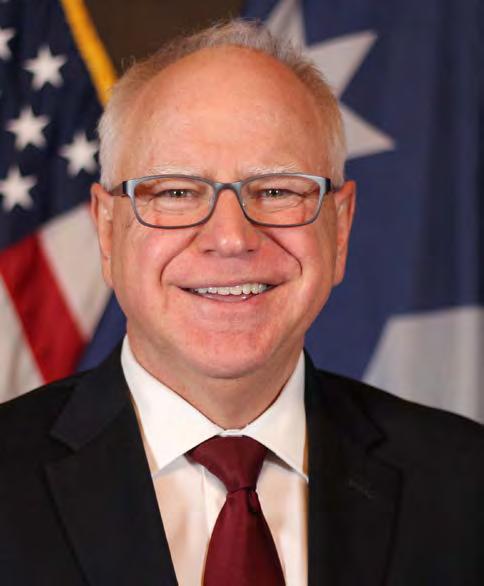
Minnesota Governor, Tim Walz
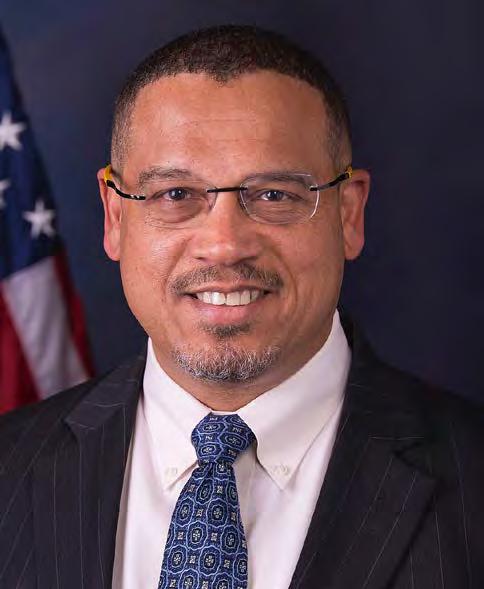
Minnesota Attorney General, Keith Ellison
U of MN TeleOutreach connects rural families to care
By Janet Stewart
Rural families concerned about their children's developmental milestones often wait years for access to behavioral specialists and developmental pediatricians. Maintaining relationships with specialists is also difficult, particularly for militaryconnected youth and their families, who are often highly mobile.
Pediatric specialists from the University of Minnesota’s TeleOutreach Hub are helping fill the gap by providing free training modules geared toward providers, caregivers, and educators working with children and families with mental, emotional, developmental, and behavioral health needs. The self-paced modules, Provider Training to Support Families of Children with Behavioral and Mental Health Needs , cover topics including autism, obsessive-compulsive disorder (OCD), anxiety, medical issues in behavioral health, ADHD, and supporting youth who exhibit challenging behaviors.
Dr. Gail A. Bernstein, a child and adolescent psychiatrist at MIDB and a professor at the University of Minnesota Medical School, leads the module on OCD. It covers risk factors, common co-occurring conditions, assessment measures, cognitivebehavior therapy, and medication options. The content includes a downloadable summary and supplemental tips for parents and other caregivers.
On March 19, she will lead a group viewing of a presentation, Pharmacotherapy for OCD & Tic Disorders , followed by a listening session at a Masonic Institute for the Developing Brain satellite site in Grand Rapids, Minnesota. The presentation, also available online , is geared to social workers, health care providers, school nurses, educators, and mental health practitioners. The listening session will include a group discussion about local challenges in accessing care in rural northern Minnesota, and networking among subject-matter experts from MIDB and local professionals.
“We’ll be discussing the first-line medication choices for OCD and tic disorders and the research studies behind them, then covering dosing and monitoring, along with potential side effects,” Bernstein said.
“We’ll also look at when medication alone is recommended and when it is used in combination with behavioral interventions.”
For non-clinical professionals, questions on when to refer a child for possible medication for OCD, along with the risks, will be discussed.
“Understanding both the benefits and
Join the Access Press community for happy hour!
Join us for a fun and relaxed Happy Hour on April 23 from 5:00-7:00 PM at King Coil Spirits in St. Paul. It’s going to be a great chance for Access Press readers, advertisers, staff, and board members to come together and catch up in person, away from screens (and even papers!).
The only agenda for the event is to have a good time and connect with each other. We like meeting new folks and getting caught up with old friends. Beyond mingling and chatting, it’s also a chance to discuss the many challenges facing the disability community in Minnesota.
SCAN QR CODE
LEARN MORE ON FACEBOOK
Just like other Minnesota nonprofits in the post-pandemic years, we’ve found that casual get-togethers are a really great way to share information, tips, and resources. While we’re hoping to continue our annual November tradition of the Access Press (“Charlie”) Awards, we also want to have the chance to come together throughout the year in a more relaxed setting.
The venue is a bar, but don’t worry, there are plenty of great non-alcoholic options available. And guess what? One of our sponsors, Accessible Space Inc., has even offered to provide PIZZA!
So come on over to this accessible space near University Ave & 280. Maybe bring a few friends or colleagues along.
Our Access Press team will be there, and we’d love to hear how Access Press can better keep you informed. You can talk with our new managing editor Joey Carlson, executive director Heidi Holste, administrator Mary Graba, and all of the board members.
See you on Thursday, April 23, 5-7 PM at King Coil Spirits, 550 Vandalia St, Suite 140, St Paul, MN 55114. P.S. If your organization would like to be a sponsor for this event, just contact admin@ accesspress.org
potential risks is really important to know and share with families, in order to facilitate appropriate referrals,” Bernstein said.
The self-paced modules and the live events are part of a larger training effort known as the Military Child & Family Collaboratory, formerly the Department of Defense Child Collaboration Study. The TeleOutreach Hub, itself a collaboration between the University’s Masonic Institute for the Developing Brain (MIDB) and the Institute on Community Integration, is among 125 teams working on the project
to increase access to behavioral health and developmental resources for families and providers. The team’s live events include a series in rural Minnesota and in North and South Dakota called Project Echo®: Telehealth to Support Families of Children with Behavioral Health and Mental Health Needs.
For rural professionals working in child welfare, case management, education, and similar roles, the project is already making a difference, participants said.
Mindy Kuhl, who works in children’s mental health case management for St. Louis County, has attended a few live and self-paced training events. Being able to talk directly with University of Minnesota specialists about specific medication issues she has encountered among the youth she works with has been particularly helpful, she said.
Building community connections is another critical outcome of the work, participants said.
“Any resources and tools that can make navigation easier for families is welcome,” said Leah Wilson, children’s disability services program manager for the Minnesota Department of Children, Youth, and Families . “I participated so I could meet some case managers and others providing services in rural parts of our state to learn the landscape and the problem areas so I can be a connector.”
Led by ICI’s Jessica Simacek, principal investigator, the work aims to bring earlier intervention to families with waitlisted children with autism and related developmental disabilities.
“These self-paced modules and community events will improve provider capacity in rural Minnesota and beyond,” Simacek said. “Combining clinical and academic expertise with cultural and practical experience among professionals working directly with children and families will speed access to interventions that are sorely needed now.”
When: April 23, 2026 Time: 5:00 PM - 7:00 PM
When: April 23 2026 rd Where: King Coil Spirits Time: 5:00PM - 7:00PM 550 Vandalia St. Saint Paul, MN 55114
Four grade-school age children laying on a blanket and smiling.
Ready to launch your career? Don't miss the INclusive Career Fair
By Joey Carlson Disability:IN
Minnesota is hosting its annual INclusive Career Fair on April 24. If you are looking for a job, it is a chance to explore open positions, gain interviewing confidence, and connect directly with companies ready to hire.
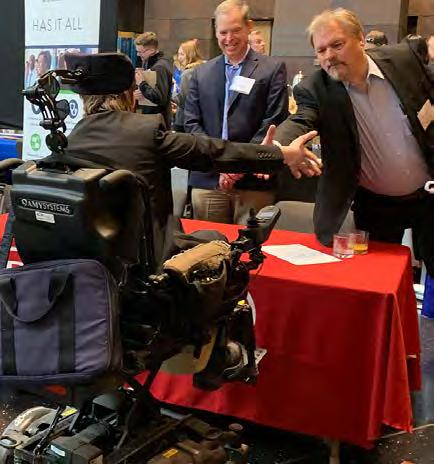
An event like this can even kickstart a career, like it did for me.
When I was 17 years old, I was in a car accident, broke my neck, and incurred a cervical spinal cord injury. My doctors told me that I would need to use a power wheelchair for mobility for the rest of my life and that I would be dependent on others for most tasks of daily living.
I worked hard and tried to be as independent as possible. I graduated from high school with my class and four years later graduated with a bachelor's degree in marketing from Augsburg College. When I finished school and started interviewing for full-time positions, I was nervous about what potential employers would think of my disability.
Luckily, about the same time I was graduating, a group was putting together the initial makings of what would become Disability:IN Minnesota—then known as the Minnesota Business Leadership Network (MNBLN). I eagerly joined the group and soon volunteered to help put on their first annual career fair in 2005.
By leveraging connections I made through the career fair and other avenues, I secured a full-time job with Medtronic in marketing communications. I have been actively working ever since, and today, I am the managing editor at Access Press
My journey is just one example of how connecting inclusive employers with untapped talent can launch a lasting career. What to Expect at the INclusive Career Fair
The INclusive Career Fair is free for job seekers and disability advocates. It targets a wide range of candidates with disabilities, including college students, recent graduates, veterans, and any adult actively seeking employment.
The event is 3 hours long and runs from 1-4 PM. Below is the schedule of events for the day.
• 2:00 – 3:45 PM: Virtual employer booths featuring live networking chats, one-on-one informational interviews, and live resume reviews.
• 3:45 – 4:00 PM: Wrap-up and an overview of the JobsAbility resource platform.
By participating, employers can actively recruit for mentorships, internships, and full-time employment opportunities.
Live captioning is provided, and specific accommodations can be requested during the registration process.
(Note: Registration is required to attend.
The deadline to register is April 17, 2026, for employers and April 22, 2026, for job seekers.)
For more information or to register for the event, visit di-mn.org/inclusive-career-fair.
Access Press is growing: We’re
The mission of Access Press is to inform, amplify the voices of, and unite Minnesotans with disabilities. To continue to meet this mission, we are hiring an assistant editor.
About the Role
This part-time, remote position is designed for someone who is passionate about storytelling and is digitally savvy. As a key member of our team, the assistant editor will work with the managing editor to develop content for both the monthly print newspaper and our growing digital platforms. Responsibilities include:
• Editorial & Content Creation: You will research, interview, and write news stories and features, while also copy-editing submissions to ensure they meet AP style
RIDESHARE
From page 1
“The commitments reflected in this agreement reaffirm the robust practices Lyft has already had in place to help ensure that riders who rely on service animals are treated with the respect they deserve,” a Lyft spokesperson said. However, for disability advocates, written policies are only as good as their enforcement. The rideshare industry as a whole has long struggled with accessibility. Uber, Lyft's primary competitor, is currently facing a federal lawsuit filed by the U.S. Justice Department for routinely denying rides to passengers with service dogs and stowable wheelchairs, and for improperly charging cancellation fees to those they unlawfully stranded.
Because the Minnesota Human Rights Act binds all rideshare companies operating in the state, this settlement serves as a reminder to the entire gig economy that antidiscrimination laws are non-negotiable. Andres’ win shows all of us the importance of self-advocacy and the impact you can make when you see something is wrong. Her refusal to accept being treated poorly has paved a more equitable road for others with disabilities.
Note to riders: If you experience discrimination or are denied a ride by a rideshare service due to your disability or service animal, you are encouraged to report the incident immediately through the company's app and file a complaint with the Minnesota Department of Human Rights.
hiring an assistant editor!
standards.
• Digital Management: A major part of this role involves maintaining the Access Press website, updating event calendars, and ensuring all our digital content remains accessible to our community.
• Social Media & Engagement: We are looking for someone to manage and grow our presence on social media, creating engaging posts that highlight community news and advocacy efforts.
• Project Management: You will help track the progress of our content through the editing pipeline to ensure everything is published on time.
What We Are Looking For
The ideal candidate should have a bachelor's degree in journalism,
communications, or a related field—though relevant experience will also be considered. While not required, we would love to meet candidates who have:
• Familiarity with the Minnesota disability community and legislative issues.
• Technical skills with WordPress or other Content Management Systems.
• Graphic design experience with tools like Canva or Adobe Creative Suite.
How to Apply
If you are a skilled writer with a keen eye for detail and a commitment to disability community news, we want to hear from you.
To apply, please submit your resume and two writing samples—specifically one journalistic article and one example of a social media post—to careers@accesspress.org.
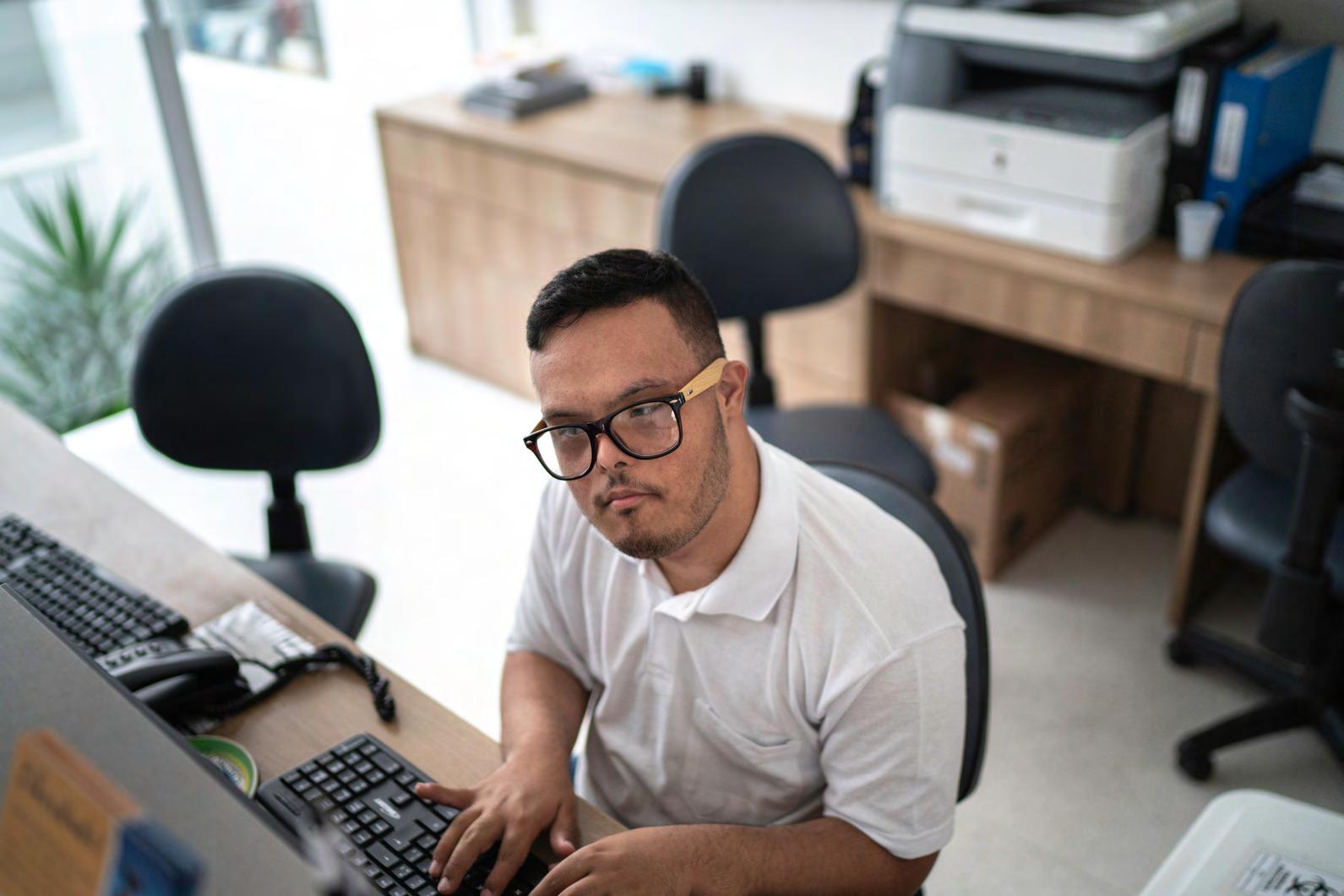
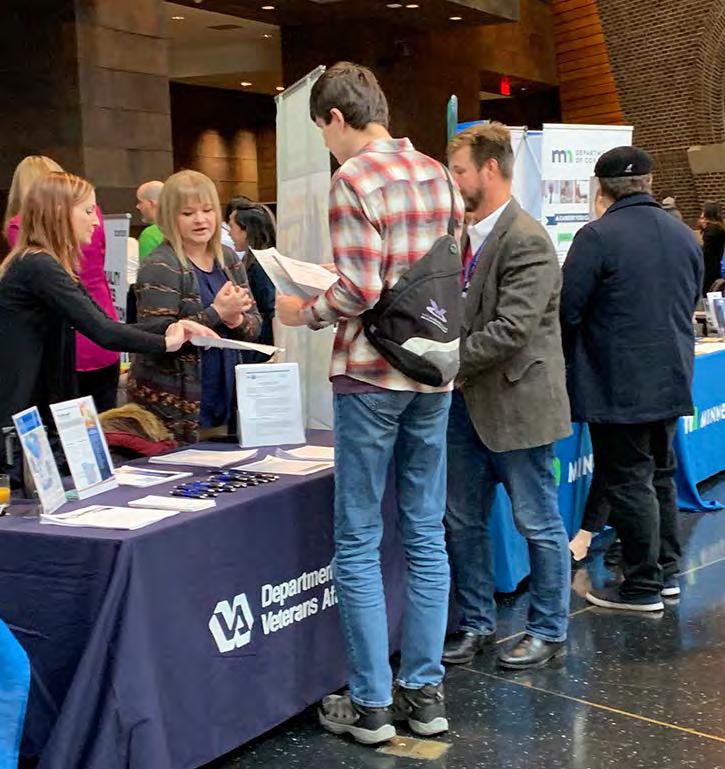
Job seeker at past in-person Disability:IN career fair.
Tori Andres and her service dog, Alfred.
Affordable Senior Apartments
For
Immediate
Affordable Senior Apartments
For qualifying senior households age 62 or better.