


Published by Accelerate Learning Inc., 5177 Richmond Ave, Suite 800, Houston, TX 77056. Copyright © 2025, by Accelerate Learning Inc. All rights reserved. No part of this publication may be reproduced or distributed in any form or by any means, or stored in a database or retrieval system, without prior written consent of Accelerate Learning Inc., including, but not limited to, in any network or other electronic storage or transmission, or broadcast for distance learning.
To learn more, visit us at www.stemscopes.com.
Student Expectations
The student is expected to demonstrate an understanding of how sexual reproduction results in offpsring with genetic variation while asexual reproduction results in offspring with identical genetic information.
Why do siblings from the same parents often look different from each other, while plants grown from cuttings of the same plant look exactly alike?
Key Concepts
• Traits of organisms are a direct result of two factors: the genetic material present in previous generations and the type of reproduction, sexual or asexual. Organisms that reproduce asexually produce uniform offspring. Organisms that reproduce sexually produce diverse offspring.
• In asexual reproduction, prokaryotic cells divide by binary fission, replicating DNA from the parent and producing uniform offspring. Organisms composed of eukaryotic cells can also reproduce asexually by forming spores, by budding, or by vegetative propagation.
• In sexual reproduction of eukaryotic organisms, the offspring receives some DNA from both parents, resulting in unique combinations of dominant and recessive traits for each offspring.
• Eukaryotic cells reproduce by mitosis. The stages of mitosis are prophase, metaphase, anaphase, telophase, and cytokinesis.
• In higher organisms, meiosis produces gametes (sex cells), which contain half the number of chromosomes of the original parent cell (i.e., haploid cells).
• Crossing-over during meiosis allows for the reshuffling of genetic combinations between individual homologous chromosomes to produce unique offspring. Sexual reproduction creates variety in the gene pool because DNA is inherited from both parents, resulting in new combinations of alleles.
This unit develops conceptual clarity about how reproduction drives inheritance. Through collaborative discourse, modeling, microscopy, and diagram analysis, students contrast asexual and sexual reproduction, linking processes (mitosis, meiosis, fertilization) to genetic outcomes. Learners model chromosomes, genes, and DNA to explain identical offspring in asexual reproduction and variation in sexual reproduction, examine first- and second-generation patterns, and reconcile common misconceptions. Evidence-based writing and synthesis tasks solidify how chromosome behavior produces either genetic uniformity or diversity.
The terms below and their definitions can be found in Picture Vocabulary and are embedded in context throughout the scope.
Allele
A version of a gene
Asexual Reproduction
The reproductive process that involves one parent and produces offspring identical to the parent
Binary Fission
A type of asexual reproduction in which one cell divides to form two identical cells
Budding
A type of asexual reproduction in which an offspring grows out of the parent organism
Chromosome
A single, highly organized and structured piece of DNA
Dominant
The inherited characteristic that is always expressed when present
Fungi
Heterotrophic eukaryotes that reproduce through asexual spores, break down dead materials, and can spread disease
Genetic Variation
The variety of gene combinations that exist within a population
Meiosis
A type of sexual reproduction in which a cell divides to form gametes (sex cells) with half the number of chromosomes as the parent cell
Mitosis
A type of asexual reproduction in which a cell splits, forming two identical daughter cells, which each have the same number of chromosomes as the parent cell
Offspring
Product of reproduction; a new organism produced by one or more parents
Recessive
The inherited characteristic that is expressed only when no dominant allele is present
Sexual Reproduction
The reproductive process involving two parents whose genetic material is combined to produce a new organism different from themselves
Vegetative Propagation
A type of asexual reproduction by which one plant produces new plants that are genetically identical to the parent plant
Students collaboratively surface prior knowledge and refine understandings about asexual and sexual reproduction through structured peer discussion and note-taking.
• Individually record initial responses in four topic boxes, leaving the center space blank.
• Rotate through new groups to discuss each topic (asexual and sexual reproduction, plus two additional prompts), adding collective ideas and questions to the center and margins.
• Synthesize insights after multiple rotations to compare common understandings and misconceptions.
• Conclude with a whole-class debrief to solidify definitions, examine real-world examples, and resolve specific misconceptions (e.g., chicken eggs, yeast budding).
Activity - Modeling Offspring
Students explore how asexual and sexual reproduction influence inherited traits and genetic variation through hands-on modeling and analysis.
• Build model offspring from trait sets to compare identical vs varied traits, including second-generation outcomes.
• Construct chromosome models with pipe cleaners and beads to represent genes from two parents; model an asexual offspring and generate all possible sexual combinations.
• Create labeled drawings of offspring and compare results across reproduction types.
• Summarize learning by charting pros/cons of each method and explaining how genes, DNA, and chromosomes relate to trait inheritance.
Scientific Investigation - One Yeast, Two Yeast, Three Yeast, Four, How Many More? Observing Mitosis
Students explore how mitosis leads to asexual reproduction and genetically identical offspring using yeast as a model.
• Mix active dry yeast with warm sugar solution, make initial observations, then observe again after incubation in the dark.
• Use a stereoscope to note evidence of cell division and connect observations to mitosis producing identical offspring.
• Create a sequential diagram of mitosis stages to model chromosome replication and separation.
• Write a concise CER and discuss how specific mitotic stages ensure two identical daughter cells.
Activity - Meiosis: Reducing, Dividing, and Delivering Genetic Information
Students explore meiosis and sexual reproduction by analyzing diagrams, discussing observations, and connecting processes to inheritance.
• Observe diagrams of meiosis and record evidence-based observations about chromosome changes.
• Analyze parent-offspring traits using a dog example to compare similarities and differences.
• Rotate through partner shares to discuss guiding questions and complete a response table.
• Synthesize how chromosome reduction and fertilization transfer genetic information to offspring.
Estimated 15 min - 30 min
Students participate in a table-talk activity in which they write down what they believe the answers for the four boxes should be and collaborate with their peers to determine common understandings and misconceptions of the topics in the boxes.
Materials
Printed
● 1 Reproduction Table Talk (per student)
SEP Connection
Asking Questions and Defining Problems
Developing and Using Models
Planning and Carrying Out Investigations
Analyzing and Interpreting Data
Preparation
1. Print one Reproduction Table Talk document for each student.
2. Set up the room to accommodate table groups of four.
3. Divide the class into groups of four.
4. Determine a plan for students to rotate from group to group for a total of four rotations.
Using Mathematics and Computational Thinking
Constructing Explanations and Designing Solutions
Engaging in Argument from Evidence
Obtaining, Evaluating, and Communicating Information
During this activity, students will engage in asking questions and defining problems by observing the phenomenon of why siblings from the same parents often look different from each other, while plants grown from cuttings of the same plant look exactly alike. They will develop and use models to describe and predict these phenomena, clarifying the relationships between variables involved in sexual and asexual reproduction. Through collaborative discussions and rotations, students will refine their understanding and construct explanations supported by empirical evidence, enhancing their ability to communicate scientific information effectively.
Notes
Patterns
Cause and effect: Mechanism and explanation
During this activity, students will identify and analyze patterns in the differences between siblings and plants grown from cuttings, recognizing that these macroscopic patterns are related to the microscopic and atomic-level structures involved in sexual and asexual reproduction. They will use these patterns to explore cause and effect relationships, understanding that while siblings may look different due to genetic variation from two parents, plants from cuttings are identical due to asexual reproduction. This will help students classify relationships as causal or correlational and predict phenomena in natural systems.
1. Hand out the table-talk activity.
2. Instruct the students to fill out the questions in each box to the best of their ability but to leave the center circle empty.
3. Direct students to stand up and move to a new table, sitting with a new group of students.
4. With their new group, students should discuss the topic of asexual reproduction and make notes of the new ideas and question in the center circle and the blank spaces on the paper.
5. After a time, direct students to stand up and move to a new table, sitting with a new group of students.
6. Students should now repeat the discussion and writing process for sexual reproduction.
7. Repeat the procedure for the remaining two topics.
8. Have students return to their seats and discuss the following:
a. Asexual reproduction is . . . Reproduction using only one parent that results in an offspring that is identical to the parent. What are some examples? Yeast, bacteria, viruses
b. Sexual reproduction is . . . Reproduction using two parents that produces offspring who are similar but not identical to the parent. What are some examples? Human reproduction, plant production
c. Is a chicken egg an example of sexual or asexual reproduction? Chicken eggs are an example of sexual reproduction, although any eggs that are laid that have not been fertilized by a rooster will not become baby chickens; they are just eggs. The ability to be fertilized is sexual reproduction.
d. New yeast cells grow as an outcropping on an existing yeast cell, then break off when they are ready. Is this sexual or asexual reproduction? This is asexual reproduction because the outcropping is just a copy of the original organism without variation.
How do the processes of asexual and sexual reproduction explain why siblings from the same parents often look different from each other, while plants grown from cuttings of the same plant look exactly alike?
5. In what ways does sexual reproduction contribute to genetic diversity among siblings from the same parents?
6. How does asexual reproduction result in offspring that are genetically identical to the parent plant?
7. What are the advantages and disadvantages of genetic variation in sexual reproduction compared to the genetic uniformity in asexual reproduction?
Monitor discussions and praise appropriate use of scientific terms as the students discuss the questions.
Estimated 1 hr -2 hrs
Part I
Students create model offspring using sexual and asexual genetic instructions that they will use to describe how methods of reproduction result in offspring that either show genetic variation or exhibit identical traits to the parent.
Students design models of chromosome strands from two parents and use the models to create offspring strands to model offspring from both asexual reproduction and sexual reproduction. Students demonstrate how genes, DNA, and chromosomes are connected to the transfer of traits in offspring.
Materials
● 1 Student Journal (per student)
● 2 Guess Who Cards and Class Pictures Set (per class)
● 1 From DNA, Chromosomes, and Genes to Organisms (per student)
Reusable
Part I
● 16 letter-size envelopes (per class)
● 2 colored pencil sets (per group)
● 1 roll of masking tape (per class)
● 1 pair of scissors (per class)
Part II
● 9 pipe cleaners (per group)
● 12 blue beads (per group)
● 12 purple beads (per group)
● 12 green beads (per group)
● 12 yellow beads (per group)
Consumable
● 3 sheets of paper, white, 8.5" x 11" (per student)
1. Print one Student Journal for each student.
2. Print four Guess Who Cards and Class Pictures Set. Cut out and laminate the Guess Who Cards for repeated use.
3. Set up the envelopes for the class with laminated Guess Who cards in the correct envelopes for parents A1, A2, B1, and B2:
○ Using four envelopes, label one envelope A1 Leaves, one A1 Limbs, one A1 Trunk, and one A1 Roots. Place the A1 cards: Leaves, Limbs, Trunk, Roots in the appropriate envelope.
○ Using four envelopes, label one envelope B1 Head and Ears, one B1 Eyes, one B1 Snout, and one B1 Color. Place the B1 cards: Head and Ears, Eyes, Snout, Color in the appropriate envelope. Both B1M and B1F cards for each category are placed in the same envelope.
○ Using four envelopes, label one envelope A2 Leaves, one A2 Limbs, one A2 Trunk, and one A1 Roots. Place the A2 cards: Leaves, Limbs, Trunk, Roots in the appropriate envelope.
○ Using four envelopes, label one envelope B2 Head and Ears, one B2 Eyes, one B2 Snout, and one B2 Color. Place the B2 cards: Head and Ears, Eyes, Snout, Color in the appropriate envelope. Both B2M and B2F for each category are placed in the same envelope.
4. Use four copies of the card set so that each envelope has eight cards in case all eight groups want to do the same parent. Example: A1: Leaves will have enough cards for all groups to grab one card should all groups decide to do parent A1.
5. Determine where the parent pictures will be posted.
6. To conserve paper, cut each sheet in half. Students will need three half sheets of paper to complete the activity.
1. Print one From DNA, Chromosomes, and Genes to Organisms for each student.
2. Create the sets of beads and pipe cleaners for each group prior to lab (this will save students time for the lab activity).
3. Create a sample set for students to refer to as needed.
Asking Questions and Defining Problems, and Developing and Using Models, and Planning and Carrying Out Investigations, and Analyzing and Interpreting Data, and Using Mathematics and Computational Thinking, and Constructing Explanations and Designing Solutions, and Engaging in Argument from Evidence, and Obtaining, Evaluating, and Communicating Information
During this activity, students will engage in asking questions and defining problems by observing the phenomenon of genetic variation in siblings versus identical traits in plants grown from cuttings. They will develop and use models to describe and predict how sexual and asexual reproduction affect genetic diversity. By planning and carrying out investigations, students will create models of chromosome strands to simulate offspring from both types of reproduction, analyzing and interpreting data to understand the mechanisms of inheritance. Through constructing explanations and designing solutions, students will articulate the relationship between genes, DNA, chromosomes, and inherited traits, using empirical evidence to support their conclusions.
Cause and effect: Mechanism and explanation
Procedure and Facilitation
Part
1. Explain instructions to students for Part I: Guess Who.
2. Instruct students to follow instructions to create offspring for both parts of the Guess Who activity.
3. Remind each group that they should choose a set of traits only from either A1 or A2.
4. Remind groups that each member will draw the offspring that results from step 1 and step 2 as well as the second generation offspring.
1. Hand out the reference sheets for students to use with modeling offspring activity and emphasize the use of that resource when completing the questions for both parts.
2. Instruct students to create two parent strands by placing the correct beads in order on the pipe cleaner. Bend the ends of the pipe cleaner into knobs so the beads will not slide off.
During this activity, students will explore the phenomenon of why siblings from the same parents often look different from each other, while plants grown from cuttings of the same plant look exactly alike. They will use models to identify patterns in genetic variation and inheritance, recognizing that macroscopic patterns in offspring are related to the microscopic structures of genes, DNA, and chromosomes. Through modeling both sexual and asexual reproduction, students will classify relationships as causal or correlational, using cause and effect to predict how genetic material is transferred and how this leads to either variation or identical traits in offspring. This understanding will be reinforced by creating diagrams and charts to compare and contrast the advantages and disadvantages of different reproductive methods, thereby identifying patterns and relationships in genetic data. Notes
Provide students a time limit on creating their offspring. Project the timer so students can stay on track and get their offspring completed.
As students are completing the activity, help students find information on the reference sheet to help with the steps of the activity.
Parent 1: 1 blue, 1 purple, 1 green, 1 yellow
Parent 2: 2 blue, 1 green, 1 yellow
3. Instruct the students to create one offspring if the reproduction is asexual (decide which parent to use) using the same process. If students need prompting, refer to the asexual reproduction example of the trees from Part I. Ask the student how many parents contribute genetic material to create the offspring? (one) How should a model of the genes of the offspring compare to a model of the genes of the parent? (they should be identical)
4. Instruct students to create as many possible variations of offspring that can occur in sexual reproduction. Remind them that blue and purple can go only with blue or purple and green and yellow can go only with green or yellow. Each strand offspring should have only four beads. If students need prompting, tell them the two beads in a set represent one gene (bead) given by one parent and one gene (bead) given by the other parent. Which genes/beads in the set are passed on to the offspring is random. How many different combinations from the two parents can be made for each set without mixing between sets?
5. Instruct the students to create drawings of their offspring for both asexual and sexual reproduction in the table on the journal.
FACILITATION TIP
Students can work as a group or independently as they complete the table. If you notice students are struggling, you can pull the class together and complete it as a class.
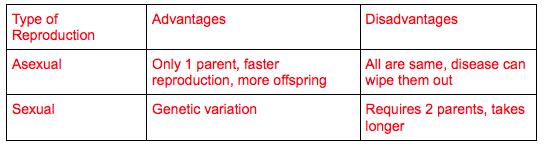
6. Instruct students to create a diagram or chart that compares and contrasts the advantages and disadvantages of asexual reproduction and sexual reproduction.
Sample Chart: Compare and Contrast Chart with discussion questions
7. Instruct the students to answer and discuss the questions on the Student Journal page 2:
○ What are the advantages and disadvantages of asexual reproduction? Advantages of asexual reproduction include only one parent, faster reproduction, and more offspring. Disadvantages would be identical offspring and that same traits mean that one disease or other problem affects all of them.
○ What are the advantages and disadvantages of sexual reproduction? One advantage of sexual reproduction is that offspring are not identical to parents and have variation in traits—variation makes some offspring more likely to survive than other offspring with different or weaker traits. Disadvantages of sexual reproduction include the requirement of two parents and a slow reproduction rate. An isolated organism with no available mate is not able to reproduce. A slow reproduction rate results in a slow recovery from large decreases in the population of an organism.
○ How did the activity represent the relationship between genes, DNA, chromosomes, and the transfer of traits to offspring? The pipe cleaner represented the chromosomes (DNA strands), and the beads represented the genes. The different combinations of offspring show how the structures of DNA and genes transfer traits from parents to offspring.
○ Why was the offspring of the asexual reproduction identical to the parent? The offspring were identical because the only DNA and gene combination they could receive was exactly the same as the one parent.
8. Use data and information from Part I and Part II to write a scientific explanation to compare the relationship of genes, chromosomes, and DNA to the inherited characteristics of an organism.
Think, Draw, Explain
After students have a chance to explore through the investigation, give them an opportunity to show their understanding. Write the following question on the board:
A student was absent and missed the lesson on reproduction. She asks you for a quick summary of reproduction. How would you explain this to the student?
● First, ask your students to think.
● Then, ask them to draw their responses on paper.
● After they are finished with the drawing, ask them to explain their answers.
● Provide them with the following sentence stems:
○ Reproduction is ____________________________ .
○ The instructions for an organism’s inherited traits can be found in
○ All organisms get their inherited traits from ____________________________ .
Phenomenon Connection
How do different methods of reproduction affect the genetic variation observed in offspring?
Class Discussion Questions:
1. How does the process of sexual reproduction contribute to genetic diversity among siblings, and why might this result in siblings looking different from each other?
2. In what ways does asexual reproduction result in offspring that are genetically identical to the parent, and how does this relate to plants grown from cuttings?
3. What are the implications of genetic variation for the survival and adaptation of a species in changing environments?
FACILITATION TIP
Remind students that the claim should be supported by evidence and they should be able to explain their reasoning based on the evidence.
Estimated 1 hr - 2 hrs
Explore 2: Scientific Investigation - One Yeast, Two Yeast, Three Yeast, Four, How Many More?
Students conduct an investigation that results in asexual reproduction through the process of mitosis using active dry yeast and a sugar-water solution. Students use their observations to explain how mitosis results in an offspring identical to its parent. Students then finish by creating a descriptive diagram of the mitosis process.
Materials
Printed
● 1 Student Journal (per student)
● 1 Mitosis and Asexual Reproduction (per student)
● 1 CER Rubric (per student)
Reusable
● 1 petri dish (per group)
● 1 teaspoon set/small measuring (medicine) cups (per group)
● 1 small cup for sugar-water solution (per group)
● 1 stereoscope (per group)
Consumable
● 1.2 mL (¼ teaspoon) active dry yeast (per group)
● 10 mL warm sugar water solution (per group)
1. Prepare a warm water and sugar solution prior to the lab investigation using 500 mL of warm water mixed with 100 mL of sugar. (You can increase this amount to 150 mL if the results do not yield good samples.)
2. Test the experiment prior to students and take pictures of the samples so you have references to use in assisting students as they make observations.
● 1 dark piece of cloth or paper to cover Petri dish (per group) Notes
Asking Questions and Defining Problems
Developing and Using Models
Planning and Carrying Out Investigations
Analyzing and Interpreting Data
Using Mathematics and Computational Thinking
Constructing Explanations and Designing Solutions
Engaging in Argument from Evidence
Obtaining, Evaluating, and Communicating Information
During this activity, students will engage in asking questions and defining problems by observing the phenomenon of asexual reproduction through mitosis in yeast. They will develop and use models to describe how mitosis results in offspring identical to the parent, contrasting this with the genetic variation seen in siblings from the same parents. By planning and carrying out investigations, students will collect data on yeast reproduction, analyze and interpret this data to construct explanations, and engage in argument from evidence to understand the mechanisms behind genetic consistency in asexual reproduction. This handson investigation will help clarify the relationships between variables in biological processes and enhance students’ understanding of genetic inheritance and variation.
Cause and effect: Mechanism and explanation
During this activity, students will explore the phenomenon of why siblings from the same parents often look different from each other, while plants grown from cuttings of the same plant look exactly alike. They will recognize patterns in the process of mitosis, which results in offspring identical to the parent, and use these patterns to identify cause and effect relationships. By conducting an investigation with yeast and sugar-water solution, students will classify relationships as causal, understanding that the identical nature of offspring in asexual reproduction is due to the exact replication of genetic material. This will help them predict phenomena in natural systems and understand that while some systems, like sexual reproduction, involve genetic variation, asexual reproduction through mitosis results in identical offspring.
1. Instruct the students to mix the warm sugar solution and the active dry yeast in thepetri dish. Instruct students to make some brief observations.
2. Instruct students to cover the petri dish with dark cloth or paper and set aside for 20 minutes.
3. Instruct students to write down observations after the 20-minute period has passed.
4. Instruct students to complete the mitosis diagram using the Mitosis and Asexual Reproduction.
Drawing should be similar. Nuclear material (chromosomes are replicating).
Drawing should be similar. Original chromosomes and their replicated chromosomes connect at centromeres and start to move toward center of the cell.
Drawing should be similar. All the chromosomes with their attached replications are completely lined up in the center of the cell.
Drawing should be similar. Microtubules (small, tubelike structures at each end of the cell) begin to pull on the chromosomes. The original chromosomes pull to one side of the cell while the centromere breaks and the replicated chromosomes pull to the other side of the cell.
Drawing should be similar. The two sets of chromosomes are now on opposite sides of the cell, and membranes are forming around them. The cytoplasm in the cell begins to pinch off in the center of the cell, forming two identical cells. FACILITATION
Help students with terms to describe how the yeast appears after the 20 minutes.
FACILITATION
Students may not have a base vocabulary for the steps of mitosis. Students should connect terms using descriptions that help them remember what they are seeing in the diagrams.
Explore 2: Scientific Investigation - One Yeast, Two Yeast, Three Yeast, Four, How Many More? Observing Mitosis
Drawing should be similar. The two daughter cells are the end result of mitosis. Both are identical; one contains the original set of chromosomes, and the other contains the replicated chromosomes.
5. Explain CER and instruct students to complete it using the reference sheet as well as any additional research they may want to do to back up their reasoning section.
6. Instruct students to complete discussion questions:
○ How does the process of mitosis ensure that the offspring cell is identical to the parent cell? The only DNA transferred is the exact copy from the parent; thus, the offspring will have exactly the same traits.
○ Why is metaphase so important in the production of two cells that are identical? The lining up of chromosomes and copies in the center ensure that each copy will move directly opposite its original chromosome to create two cells that each have the same correctly placed sets of chromosomes and that no mix-ups occur.
○ What happens to the cytoplasm in telophase? Cytoplasm begins to pinch off in the center, allowing for the formation of two visible cells.
○ How does the process of mitosis explain what occurred in the yeast activity at the beginning of the Explore? The yeast cells, due to rapid temperature and food increase, begin to replicate their DNA in mitosis and split to form identical copies.
Many new terms are used in this activity. It may be helpful for students to independently create a graphic organizer listing the phases of mitosis, as well as an illustration. This could serve as an exit ticket, which would be a quick assessment to determine if the students fully understand the various stages and let you know if any reteaching strategies are necessary. Learn more strategies to help students learn new vocabulary in the Intervention Toolbox.
Magnificent Quad Game
After students have completed the Explore activity, give them an opportunity to show their understanding by playing the Magnificent Quad Game.
The Magnificent Quad Technique:
● Place students in groups of four.
● Give each group four index cards.
● Assign each group one of the following terms: telophase, prophase, anaphase, metaphase.
● Each member of the group should complete one index card (A, B, C, or D) as follows:
○ Student A decorates the word to be defined on the first index card.
○ Student B illustrates the word to be defined on the second index card.
○ Student C writes the definition in bold type on the third index card.
○ Student D writes an antonym of the word on the fourth index card.
● Have the group choose a small symbol to place on the back upper-right corner of all four index cards.
● Pick up the cards, mix them up, and redistribute the cards to all of the students.
● Direct students to find their matches for each group of cards. Students may use the symbols on the backs of the cards, if necessary, to find their matches.
● Have the new student groups of four then discuss the new word, the illustration, the definition, and the antonym, and have them prepare to present their word to the class.
● Facilitate this process by asking each group to report the strategies they used to find their matches.
Why do siblings from the same parents often look different from each other, while plants grown from cuttings of the same plant look exactly alike?
1. How does mitosis contribute to the identical appearance of offspring in asexual reproduction, as seen in the yeast activity?
2. In what ways does sexual reproduction lead to genetic variation among siblings, unlike the identical offspring produced through mitosis?
3. How might environmental factors influence the appearance of plants grown from cuttings, despite their genetic identicality?
Estimated 1 hr - 2 hrs
Students use diagrams and evidence of the process of meiosis and sexual reproduction to make observations, answer discussion questions, and pair share responses with peers.
Materials
Printed
● 1 Student Journal (per student)
● 1 Meiosis and Sexual Reproduction (per student)
Preparation
1. Print out materials for students.
2. Set up a rotation process that enables students to rotate to different partners to complete the student share and response sections of the table.
Asking Questions and Defining Problems, and Developing and Using Models, and Planning and Carrying Out Investigations, and Analyzing and Interpreting Data, and Using Mathematics and Computational Thinking, and Constructing Explanations and Designing Solutions, and Engaging in Argument from Evidence, and Obtaining, Evaluating, and Communicating Information During this activity, students will engage in asking questions and defining problems by observing diagrams and evidence of meiosis and sexual reproduction to clarify how genetic information is transferred and why siblings from the same parents often look different. They will develop and use models to describe and predict the phenomenon of genetic variation in offspring, and analyze and interpret data from their observations to construct explanations for the differences between siblings and the similarities in plants grown from cuttings. Through pair-sharing and discussion, students will refine their understanding and communicate their findings, integrating scientific principles to explain the mechanisms of genetic inheritance and variation.
Notes
Patterns
Cause and effect: Mechanism and explanation
During this activity, students will use diagrams and evidence of meiosis and sexual reproduction to identify patterns in genetic inheritance and cause and effect relationships in the variation of traits among siblings. By observing and discussing these processes, students will recognize that macroscopic patterns in offspring traits are related to the microscopic and atomic-level structures of chromosomes. They will classify the relationships between genetic variation and inheritance as causal, understanding that the combination of chromosomes during meiosis leads to the diversity observed in siblings, unlike the identical nature of plants grown from cuttings.
1. Direct students to observe the diagrams and write observations in the space provided.
● Scenario 1
Meiosis is the part of the cell cycle that produces sex cells. Sex cells have only half the chromosomes so that fertilization can occur to produce a complete cell. This process occurs in organisms that produce offspring through sexual reproduction. Observation Questions
1. Does replication occur after anaphase? (Do you see any new chromosomes in the cells?)
1. How many chromosomes are in the ending daughter cells to the right? Is it as much as or less than when the cell first started to divide?
● Scenario 2
The two larger dogs are the parents, and the smaller dog is their offspring. Make some observations about the similarities and differences in the three dogs in the space below:
Observation Questions
1. Is the puppy identical to either parent?
2. What are some traits the puppy got from each of the parents?
3. Use the Meiosis and Sexual Reproduction and your observations to complete the table below.
4. Move about the classroom as directed by your teacher to work with five different classmates to complete the paired responses. Instruct students to rotate and pair share with a new partner for each question within the pair share column on the table.
2. Instruct students to rotate and pair share with a new partner for each question within the pair share column on the table.
a. Why is meiosis called the reduction division process? Meiosis results in a second cell division that results in four cells, but all the cells have only half the number of chromosomes.
b. Why do cells going through meiosis have only half the number of chromosomes at the end? Only sex cells go through meiosis and end up with half the chromosomes. This allows the cell to obtain a full set of chromosomes during the fertilization process.
FACILITATION
Remind students that a complete cell has the same number of chromosomes as the parent cell. For example, humans have 46 chromosomes.
FACILITATION
If you can not have students move easily, you can create an inner circle and outer circle and have one of the circles rotate so students can interact with 5 others.
Explore 3: Activity - Meiosis: Reducing, Dividing, and Delivering Genetic Information
c. What has to happen for the new cells to become complete cells with a full set of chromosomes? Sex cells have to be fertilized to receive the other half of the chromosomes to make a complete cell with a full set of chromosomes.
d. Why is the puppy different from its parents? The puppy got half of its chromosomes from its dad and half of its chromosomes from the mom, which means it cannot be identical to either parent.
e. How is the first picture related to the second picture? The diagram of meiosis shows how each of the parent dogs has a different set of chromosomes and traits that are combined when the two reproduce. The puppy shows similarities to each parent, but the puppy is not identical to either parent.
3. Explain how genetic information is transferred during meiosis.
English Language Proficiency
Quick Write
● After students have completed the activity, have them complete a quick write over meiosis.
● Ask students to include the following terms in their quick write:
○ Chromosomes
○ Daughter cells
○ Sex cells
● Make sure to have students discuss what they wrote in pairs or as a class at some point.
Phenomenon Connection
How does the process of meiosis and sexual reproduction contribute to genetic diversity among siblings, while asexual reproduction in plants results in identical offspring?
1. How does meiosis ensure genetic variation among offspring from the same parents?
2. In what ways does the process of fertilization contribute to the differences observed in siblings?
3. Why do plants grown from cuttings of the same plant appear identical, and how does this differ from sexual reproduction in animals?
Notes
STEMscopedia
Reference materials that includes parent connections, career connections, technology, and science news.
Linking Literacy
Strategies to help students comprehend difficult informational text.
Picture Vocabulary
A slide presentation of important vocabulary terms along with a picture and definition.
Content Connections Video
A video-based activity where students watch a video clip that relates to the scope’s content and answer questions.
Career Connections - Microbiologist
STEM careers come to life with these leveled career exploration videos and student guides designed to take the learning further.
Math Connections
A practice that uses grade-level appropriate math activities to address the concept.
Reading Science - Reproduction
A reading passage about the concept, which includes five to eight comprehension questions.
Notes
Claim-Evidence-Reasoning
An assessment in which students write a scientific explanation to show their understanding of the concept in a way that uses evidence.
Multiple Choice Assessment
A standards-based assessment designed to gauge students’ understanding of the science concept using their selections of the best possible answers from a list of choices
Open-Ended Response Assessment
A short-answer and essay assessment to evaluate student mastery of the concept.
Guided Practice
A guide that shows the teacher how to administer a smallgroup lesson to students who need intervention on the topic.
Independent Practice
A fill in the blank sheet that helps students master the vocabulary of this scope.
Extensions
A set of ideas and activities that can help further elaborate on the concept.
Use this template to decide how to assess your students for concept mastery. Depending on the format of the assessment, you can identify prompts and intended responses that would measure student mastery of the expectation. See the beginning of this scope to identify standards and grade-level expectations.
Student Learning Objectives
Traits of organisms are a direct result of two factors: the genetic material present in previous generations and the type of reproduction, sexual or asexual. Organisms that reproduce asexually produce uniform offspring. Organisms that reproduce sexually produce diverse offspring.
In asexual reproduction, prokaryotic cells divide by binary fission, replicating DNA from the parent and producing uniform offspring. Organisms composed of eukaryotic cells can also reproduce asexually by forming spores, by budding, or by vegetative propagation.
In sexual reproduction of eukaryotic organisms, the offspring receives some DNA from both parents, resulting in unique combinations of dominant and recessive traits for each offspring.
Eukaryotic cells reproduce by mitosis. The stages of mitosis are prophase, metaphase, anaphase, telophase, and cytokinesis.
In higher organisms, meiosis produces gametes (sex cells), which contain half the number of chromosomes of the original parent cell (i.e., haploid cells).
Crossing-over during meiosis allows for the reshuffling of genetic combinations between individual homologous chromosomes to produce unique offspring. Sexual reproduction creates variety in the gene pool because DNA is inherited from both parents, resulting in new combinations of alleles.

The student is expected to demonstrate an understanding of the differences in inherited and acquired characteristics and how environmental factors (natural selection) and the use of technologies (selective breeding, genetic engineering) influence the transfer of genetic information.
Student Wondering of Phenomenon
How can a tiny seed grow into a tree with unique traits, and how do humans and nature decide which traits are passed on or changed over time?
Key Concepts
• Traits of an individual organism result from a hereditary process that passes genetic material from one generation to the next.
• Heredity is the process by which characteristics are transmitted from parents to their offspring in sexual reproduction.
• The two copies of each inherited gene, called alleles, represent the variations for a specific trait and are abbreviated as a two-letter genotype. Capital letters represent a dominant or strong trait, while lowercase letters represent a recessive or weak trait.
• If an organism has two different alleles for a trait, it is classified as heterozygous for that trait. If an organism has the same alleles for a trait, it is classified as either homozygous dominant or homozygous recessive for that trait.
• Punnett squares (genotype possibility tables) and pedigree analyses (phenotype diagrams) are tools used to infer and predict patterns of heredity.
• In selective breeding, bred animals are known as breeds, while bred plants are known as varieties, cultigens, or cultivars. In animals the result is called a crossbreed, and crossbred plants are called hybrids.
• Genetic engineering or genetic modification is the process of adding new DNA to an organism.
This unit builds conceptual understanding of heredity and selection by connecting Mendelian principles to real-world decision-making. Students distinguish inherited versus acquired traits; analyze how natural selection shapes populations; and compare technological influences on traits through selective breeding and genetic engineering. Through modeling, research, data analysis, and argumentation, learners apply Punnett squares, evaluate plant survival in varying environments, and weigh ethical and societal implications. The sequence develops evidence-based reasoning about how genetics and environmental pressures interact to influence trait expression across generations.
The terms below and their definitions can be found in Picture Vocabulary and are embedded in context throughout the scope.
Favorable Trait
A trait that is beneficial to an organism and will likely be chosen by natural selection
Gene
The basic physical and functional unit of heredity made up of DNA
Genetic Engineering
The direct manipulation of genetic material to alter the hereditary traits of a cell, organism, or population
Genotype
The exact genetic information carried by an individual
Inherited Trait
A characteristic that is passed from parent to offspring
Natural Selection
Process by which organisms with favorable traits produce more successful offspring than organisms with less-favorable traits, causing the favorable traits to become more common in the population
Pedigree
A diagram that shows how traits are passed through multiple generations
Phenotype
The physical expression of a gene or set of genes; the appearance of an organism
Punnett Square
A tool used to analyze the possible allele combinations of the offspring between two individuals
Selective Breeding
A form of artificial selection where humans deliberately breed plants and animals for desired traits
Trait
A characteristic of an organism; can be genetic or acquired
Students apply concepts of natural and artificial selection by creating and analyzing a “super fruit.”
• Choose two fruits to combine and design a new hybrid, then draw and describe its key characteristics.
• Complete prompts that connect the design to selective breeding versus genetic engineering and their impacts.
• Engage in a class discussion to differentiate natural selection from artificial selection and share examples.
Activity - Growing a Park
Students investigate how plant genetics and environmental conditions inform a park planting plan.
• Review genetic vs. environmental factors; access support materials as needed.
• Individually research plants for a selected area, completing a chart on traits, conditions, and predicted survival/adaptations.
• Create a CER-based proposal (with rebuttal) for a chosen plant, then collaborate to produce a final group plan.
• Discuss key survival traits, common environmental stressors, adaptation impacts, and effects on native animals.
Activity
Students investigate Mendelian genetics through research, creative explanation, and application of Punnett squares.
• Research Mendel’s experiments and principles of heredity using multiple sources, then translate one principle into a cartoon supported by evidence.
• Share and review peers’ cartoons in a gallery walk, adding new insights to notes.
• Apply understanding by completing and analyzing Punnett squares, then synthesize learning by answering questions about dominance, segregation, independent assortment, and trait outcomes.
Activity - Artificial Selection vs. Natural Selection
Students differentiate selection mechanisms and practice evidence-based argumentation while evaluating ethical and societal implications.
• Sort scenarios into natural vs. artificial selection and create a concept map, with artificial selection branching to selective breeding and genetic engineering.
• Draw a scenario, split into prosecution/defense pairs, research, and prepare claim-evidence-reasoning arguments with rebuttals.
• Conduct timed debates before a class “jury,” vote on positions, and debrief with questions on differences, benefits, ethics, and societal impacts.

Estimated 15 min - 30 min
Students complete an activity in which they are designing a super fruit that they must draw and describe.
Materials
Printed
● 1 Super Fruit Mash-Up (per student)
Reusable
● 1 set colored pencils (per group)
● Print one Super Fruit Mash-Up document for each student.
Asking Questions and Defining Problems, and Developing and Using Models, and Planning and Carrying Out Investigations, and Analyzing and Interpreting Data, and Using Mathematics and Computational Thinking, and Constructing Explanations and Designing Solutions, and Engaging in Argument from Evidence, and Obtaining, Evaluating, and Communicating Information
During this activity, students will engage in asking questions and defining problems by exploring how a tiny seed can grow into a tree with unique traits and how humans and nature influence which traits are passed on or changed over time. They will develop and use models by designing a super fruit, drawing and describing its characteristics, and discussing the mechanisms of natural and artificial selection. This process will help them understand the relationships between variables, refine their models, and apply scientific reasoning to explain the phenomenon of trait inheritance and variation.
Notes
Patterns
Systems and system models
During this activity, students will identify patterns in the traits of their designed super fruit, relating these macroscopic patterns to the microscopic processes of natural and artificial selection. They will use models to represent the system of trait inheritance and selection, understanding the interactions and limitations of these systems in both natural and human-designed contexts.
1. Briefly review the terms natural selection and artificial selection prior to the activity.
2. Hand out the activity and give the students some brief examples of types of cross-pollination.
3. Instruct students to pick two fruits they would combine to develop a super fruit.
4. Instruct students to draw and describe the characteristics of the fruit.
5. Instruct students to complete the discussion questions.
6. Lead the students in a class discussion of the discussion questions.
○ What is natural selection? Provide some examples not used in the anticipation guide. Natural selection occurs when organisms in a population have adaptations that allow them to survive and reproduce in an environment where other organisms without those adaptations either struggle or die off.
○ What are some examples of artificial selection? Selective breeding and genetic engineering are examples of artificial selection.
○ What are some of the positive impacts of artificial selection? New species; species able to survive or reproduce more, or both; more variation
○ Was the super fruit you developed an example of selective breeding or genetic engineering? Selective breeding. Cross-pollination does not involve changing a gene; it involves a whole organism being fertilized by another whole organism.
○ How is genetic engineering different from selective breeding? Selective breeding is done at the whole organism level, while genetic engineering is done at the cellular level.
How do the processes of natural and artificial selection influence the traits of organisms over time, and how do these processes compare to the way a tiny seed grows into a tree with unique traits?
1. In what ways does the design of your super fruit demonstrate the principles of artificial selection, and how might similar processes occur in nature through natural selection?
2. How do the traits you selected for your super fruit compare to the traits that might be naturally selected in a wild fruit species over time?
3. How might human intervention, through artificial selection, impact the biodiversity of fruit species compared to natural selection processes?
Natural selection is often referred to as survival of the fittest where organisms with the most advantageous traits survive, while artificial selection is human-driven producing specific desired traits.
FACILITATION
A common example of cross-pollination is apples. The number of different apple types in the produce section is an example of cross-pollination.
Estimated 1 hr - 2 hrs
Students conduct research of plants for an area to create a proposal for plant life in a park based on plant genetics and environmental factors.
Materials
Printed
● 1 Student Journal (per student)
● 1 Environmental and Genetic Factors in Organism Growth and Survival (per student) (optional)
● 1 CER Student Rubric (per student)
Reusable
Preparation
1. Print one Student Journal for each student.
2. Check and set up computer/smart devices for each student.
Asking Questions and Defining Problems
Developing and Using Models
Planning and Carrying Out Investigations
Analyzing and Interpreting Data
Using Mathematics and Computational Thinking
Constructing Explanations and Designing Solutions
Engaging in Argument from Evidence
Obtaining, Evaluating, and Communicating Information
During this activity, students will engage in asking questions and defining problems by observing the phenomenon of how a tiny seed grows into a tree with unique traits and how humans and nature influence trait inheritance over time.
They will develop and use models to describe and predict the interactions between genetic and environmental factors in plant growth, and plan and carry out investigations to gather evidence for their proposals. Students will analyze and interpret data to construct explanations and design solutions for plant life in a park, using mathematical and computational thinking to support their claims. They will engage in argument from evidence to evaluate and refine their proposals, and communicate their findings effectively.
● Computers or other smart devices for research (per student) Notes
Patterns
Systems and system models
During this activity, students will identify and analyze patterns in plant genetics and environmental factors to understand how these patterns influence the growth and survival of plants. They will use system models to represent the interactions between genetic traits and environmental conditions, examining how these systems interact and change over time, thereby gaining insights into the phenomenon of how a tiny seed grows into a tree with unique traits and how traits are passed on or altered by natural and human influences.
1. Lead a class discussion to review genetic factors and environmental factors. Provide the Environmental and Genetic Factors in Organism Growth and Survival for students who need additional support with the concept.
2. Hand out Student Journal sheets and assign each group the task of picking one of the areas listed at the bottom of the page.
3. Instruct each student to pick and research plants that he or she wants to propose for the park plant life plan.
4. Direct students to use the chart as they research and complete each part.
Before groups begin their independent proposals, model how to complete one row of the chart using the sample (switchgrass).
Sample for Gulfport: switchgrass Its blade structure can be in moist (fresh or brackish) or dry conditions: can fix carbon dioxide
Anywhere from Canada and southward into U.S. –moist and dry environments
Drought, loss of soil due to coastal erosion, flooding Will use its ability to fix carbon dioxide when water is not present to survive and protect its leaves and roots
Notes
5. Instruct students to create their proposal using the CER format in the Student Journal.
○ Sample Claim: The switchgrass plant is the grass choice for the park plant.
○ Sample Evidence: The switchgrass plant has long leaves with the ability to fix carbon dioxide easily and can survive through periods without water.
○ Sample Reasoning: Gulfport is located on the Gulf of Mexico, which has many different weather conditions that impact the environment, especially events such as hurricanes.
○ Sample Rebuttal: Would Bermuda grass be better since it is an aggressive and fast-growing grass despite most climates?
6. Instruct student groups to consider the proposals of each group member to develop a final group proposal plant life plan for their park.
7. Lead students in a discussion to answer the questions below:
○ What are some important genetic factors in a plant’s ability to survive and grow in an area? Type of leaf (waxy, big, needlelike), root type, ability to fix a gas out of the air or other soil parts
○ What environmental conditions are most likely going to occur in most places regardless of location? Drought and flooding occur everywhere in the United States.
○ How do plant adaptations impact plant growth when an environmental change occurs? Adaptations allow the plant to remain stable and reproduce using resources it does not have to compete for.
○ Which group member had the best proposal and why? Answers will vary. Sample answer: The group member who has a majority of plants that truly fit the situation could be the best pick for the proposal.
○ How will your park affect the native animals of the area? The vegetation could have positive impacts by providing an additional food source or even cover for hiding in predatory situations. It could negatively impact animals if parts of the plant are toxic and can harm an animal that eats it.
○ How do genetic and environmental factors influence the growth of organisms? Genetic factors such as root size or leaf shape can determine a plant’s ability to survive during a change in an environment such as a drought or flooding (droughts and flooding can be considered environmental factors). Some plants thrive with added water, and some die off.
After the research part of the activity is complete, students should select a partner with whom to share and discuss their responses. How these partners are determined is up to you, but the determination should be structured in some way and not left to free choice. The same action should occur following the completion of the CER section of the activity, but with a different partner. Methods for selecting partners can be pairing students who have the closest birthdays, pairing those who are of similar heights, or simply pairing students alphabetically.
Phenomenon Connection
How do genetic and environmental factors influence which traits are passed on or changed over time in plants, and how can these factors be used to determine the best plant life for a specific area?
1. How do genetic traits in plants, such as leaf type or root structure, contribute to their survival and growth in different environmental conditions?
2. In what ways can environmental changes, like drought or flooding, impact the traits that are favored in plant populations over time?
3. How can understanding the interaction between genetic and environmental factors help us make informed decisions about which plants to introduce into a new park environment?
Estimated 1 hr - 2 hrs
Students complete two parts in this Explore activity. In Part I students research the historical work of Gregor Mendel to write information on the principles of heredity and create a cartoon that explains one of the principles of heredity. In Part II students use the Punnett square to determine the possible genetic outcomes when two parents are crossed for a trait.
Materials
Printed
● 1 Student Journal (per student)
● 1 Gregor Mendel (per student)
Reusable
● 1 set of color pencils (per group)
● 1 computer or smart device (per student)
Consumable
● 1 strip of masking tape, 4 cm (per student)
● 1 sheet of paper, white, 8.5” x 11” (per student)
● Print one Student Journal for each student.
● Determine where students will post their cartoon strips.
Asking Questions and Defining Problems, and Developing and Using Models, and Planning and Carrying Out Investigations, and Analyzing and Interpreting Data, and Using Mathematics and Computational Thinking, and Constructing Explanations and Designing Solutions, and Engaging in Argument from Evidence, and Obtaining, Evaluating, and Communicating Information
During this activity, students will engage in asking questions and defining problems by exploring the principles of heredity through Gregor Mendel’s work. They will develop and use models, such as Punnett squares, to predict genetic outcomes and describe the phenomenon of how traits are passed on or changed over time. By constructing explanations and designing solutions, students will use evidence from their research to create a cartoon strip that communicates Mendel’s principles, thereby enhancing their understanding of the mechanisms behind trait inheritance and variation.
Notes
Patterns
Systems and system models
During this activity, students will explore the principles of heredity and use models like Punnett squares to identify patterns in genetic outcomes, which relate to the phenomenon of how a tiny seed grows into a tree with unique traits. By examining the work of Gregor Mendel, students will recognize patterns in the inheritance of traits and understand how these patterns are influenced by both natural and human-designed systems. They will use these patterns to identify cause and effect relationships in heredity and apply systems thinking to understand how traits are passed on or changed over time.
Part I
1. Instruct students to conduct scientific research to discover what Gregor Mendel did to establish the basic principles of heredity and to find evidence to support his theory.
2. Have students use at least two different sources for research.
3. Instruct students to write down research points in the section provided in the Student Journal.
4. Have students use that research to construct a cartoon strip that explains one of the basic principles of heredity. The explanation must include evidence to support Mendel’s theories.
5. Instruct students to post the cartoon strips according to your directions.
6. Facilitate a gallery walk after the students have completed Part I so that all students can preview their peers’ cartoons.
7. Direct students to add any new information learned from the gallery walk.
Part II
1. Have students read the introductory information and the descriptors and answer the questions for each section.
2. Instruct students to complete the practice Punnett squares on the following pages and the questions that correspond to each Punnett square.
3. Have students answer and discuss the following questions:
○ What were three main principles of heredity? Give an example of each principle.
■ Law of dominance: Round peas were dominant over the wrinkled peas. Anytime the gene for round peas was present, the peas were round.
■ Law of independent assortment: The pea flower color did not affect the type of pea that occurred. Purple-flowered pea plants had some round peas and some wrinkled peas.
■ Law of segregation: Each parent contributes its chromosomes. An organism cannot get all of its chromosomes from just one of the parents. The parent pea plants had both purple and white flowers, some of the offspring had purple flowers, and some had white flowers.
○ What characteristics of the plants did Gregor Mendel use to explain the principles of heredity? Round and wrinkled peas and color of flowers
○ What information does a Punnett square provide? Possible genetic outcomes when two parents are crossed for a trait
○ Why is there a reduced possibility of seeing a recessive gene expressed when a dominant gene is present in the gene pair? Dominant genes hide the expression of recessive genes anytime they are present in the gene pair.
Before students begin, model note-taking. Model how to pull out key points from a source (e.g., “Mendel grew thousands of pea plants and noticed dominant and recessive traits”).
During the gallery walk, give students a structured way to engage with their peers’ cartoon strips. For example, provide sticky notes or a “Two Stars and a Question” template (two things they learned + one question they still have).
Use colored counters, beads, or cards labeled with capital and lowercase letters so students can physically “cross” the alleles from each parent and build Punnett squares before writing them down.
Provide a word bank (dominant, recessive, homozygous, heterozygous, allele, genotype, phenotype) and encourage students to use these terms in their answers.
Some students may need extra practice with tasks that could be confusing for them to comprehend. This activity involves completing Punnett squares, which students may have a difficult time fully understanding and completing independently. As a front loading exercise, work one-on-one with students to show them how to fill in a Punnett square while explaining how and why it works. This extra practice and pre-teaching strategy will aid students in successfully completing the Punnett squares and then answering questions about the crosses. Find more strategies to help students who process information slowly in the Intervention Toolbox.
Fill in the Blank
Have students work independently or in groups to answer the questions about the activity. Encourage complete sentences and proper structure.
Provide the following sentence stems:
● Genes are ______________ (the same/different) because ____________________.
● We researched Gregor Mendel because ____________________.
● This activity helped me understand the inheritance of traits because
How do the principles of heredity discovered by Gregor Mendel help us understand the process by which a tiny seed grows into a tree with unique traits, and what role do humans and nature play in deciding which traits are passed on or changed over time?
1. How do Mendel’s principles of heredity explain the variation in traits observed in trees grown from seeds?
2. In what ways can humans influence the traits that are passed on in plants, and how does this compare to natural processes?
3. How can the use of a Punnett square help predict the traits of offspring in both plants and animals, and what limitations might this tool have in predicting real-world outcomes?
Estimated 2 hrs - 3 hrs
In Part I, students identify and sort scenario cards into categories based on artificial selection and natural selection. Students then debate their stance on the issue of artificial selection in terms of whether or not it is ethical and how it impacts society.
Materials
Printed
● 1 Student Journal (per student)
● 1 Which Is Which Cards (per student)
● 1 Debate Cards (per class)
● 1 CER Rubric (per student)
Reusable
● 1 computer or smart device (per pair)
● 1 envelope (per class)
SEP Connection
1. Print one Student Journal and one Which Is Which Cards sets for each student.
2. Print one set of Debate Cards. Cut the cards and place in an envelope.
3. Set up groups for debate format with the class. There should be two sections for the debate. Section 1 consists of two tables at the front for the prosecution and the defense. Section 2 is the class desks or tables. (All students not in section 1 are considered the jury.)
Asking Questions and Defining Problems, and Developing and Using Models, and Planning and Carrying Out Investigations, and Analyzing and Interpreting Data, and Using Mathematics and Computational Thinking, and Constructing Explanations and Designing Solutions, and Engaging in Argument from Evidence, and Obtaining, Evaluating, and Communicating Information
During this activity, students will engage in asking questions and defining problems by sorting scenario cards into categories of artificial and natural selection, which will help them clarify arguments and identify relationships between variables. They will also develop and use models by creating a concept map to represent systems and interactions in artificial selection, including selective breeding and genetic engineering. Through debate, students will construct explanations and engage in argument from evidence, using empirical data to support or refute claims about the ethical and societal impacts of artificial selection, thereby deepening their understanding of how a tiny seed can grow into a tree with unique traits and how humans and nature influence trait inheritance and change over time.
Notes
CCC Connection
Patterns
Systems and system models
During this activity, students will identify and analyze patterns in artificial and natural selection to understand how traits are passed on or changed over time, relating macroscopic patterns to microscopic and atomic-level structures. They will use systems and system models to explore interactions within and between systems, such as selective breeding and genetic engineering, to evaluate ethical and societal impacts, thereby connecting cause and effect relationships through data analysis and debate.
1. Hand out Student Journals and Which Is Which and Debate Cards sets.
2. Instruct students to sort the cards into two groups: artificial selection and natural selection.
3. Have students use the card sort to create a concept map on the Student Journal to show the results. Artificial selection should branch off into two subcategories: selective breeding and genetic engineering.
4. Check answers and discuss with the class after the activity is complete.
● Instruct each group to draw a scenario from the class envelope.
● Ask each group to divide into pairs: one pair will represent the prosecution for the scenario, and one pair will represent the defense for the scenario.
● Discuss with students the terms ethical and societal impact. Explain that despite their personal views, it is important to be able to look at the research and facts on both sides of an issue. Discuss with students that there are many opinions about scientific research. It is okay to have an opinion, but opinions should not be used in place of facts. Remind students that respect and courtesy are very important in a debate setup so that the issue can be argued logically and without harm to others.
● Direct students to prepare for a debate according to the card they chose. Explain that they will have the class period to research and prepare an argument with a claim statement, three pieces of evidence that back up their claim, and the reasoning for the argument (this is the closing statement). A set of rebuttal statements for any questions the opposing side might ask should be done during each side’s presentation.
● Give each group a chance to present their scenario to the jury (the rest of the class). Instruct the jury to show which side they agree with by a show of hands at the end.
● Rotation time is important. Each case should last no more than six to eight minutes. Three to four groups should be able to present within one class period.
● Complete and discuss the questions at the end of the activity. Discussion Questions:
○ What is the difference between an organism that results from selective breeding and an organism that results from genetic engineering?
○ What are some positive results of selective breeding?
○ What are some ethical concerns over genetically modified organisms?
○ How can selective breeding or genetic engineering impact society?
○ Is cross-pollination always a result of selective breeding? Explain your answer.
Notes
Prompt with guiding questions while monitoring:
“What makes this example artificial instead of natural?”
“Does this process require human involvement or not?”
Before groups begin, review with students what respectful debate looks like (e.g., listen actively, disagree with ideas, not people, use “I claim / I support because…”).
Use a visible timer so students can track their speaking time and stay within the 6–8 minute window. Remind them that clear, focused arguments are stronger than long, unfocused ones.
English Language Proficiency
Summary
After completing the CER portion of the activity, have students summarize artificial selection and its ability to be beneficial or harmful. Encourage students to use vocabulary terms from the lesson. Either have students share summaries with a partner or discuss summaries as a class.
How do artificial and natural selection influence the traits of organisms over time, and what role do humans play in deciding which traits are passed on or altered?
1. How does the process of artificial selection differ from natural selection in shaping the traits of organisms?
2. In what ways can selective breeding and genetic engineering lead to both positive and negative impacts on society?
3. What ethical considerations should be taken into account when humans intervene in the natural selection process through genetic engineering?
Notes
STEMscopedia
Reference materials that includes parent connections, career connections, technology, and science news.
Linking Literacy
Strategies to help students comprehend difficult informational text.
Picture Vocabulary
A slide presentation of important vocabulary terms along with a picture and definition.
Content Connections Video
A video-based activity where students watch a video clip that relates to the scope’s content and answer questions.
Career Connections - Zoologist
STEM careers come to life with these leveled career exploration videos and student guides designed to take the learning further.
Math Connections
A practice that uses grade-level appropriate math activities to address the concept.
Reading Science - Pioneer of Plants
A reading passage about the concept, which includes five to eight comprehension questions.
Notes
Claim-Evidence-Reasoning
An assessment in which students write a scientific explanation to show their understanding of the concept in a way that uses evidence.
Multiple Choice Assessment
A standards-based assessment designed to gauge students’ understanding of the science concept using their selections of the best possible answers from a list of choices
Open-Ended Response Assessment
A short-answer and essay assessment to evaluate student mastery of the concept.
Guided Practice
A guide that shows the teacher how to administer a smallgroup lesson to students who need intervention on the topic.
Independent Practice
A fill in the blank sheet that helps students master the vocabulary of this scope.
Extensions
A set of ideas and activities that can help further elaborate on the concept.
Use this template to decide how to assess your students for concept mastery. Depending on the format of the assessment, you can identify prompts and intended responses that would measure student mastery of the expectation. See the beginning of this scope to identify standards and grade-level expectations.
Student Learning Objectives
Traits of an individual organism result from a hereditary process that passes genetic material from one generation to the next.
Heredity is the process by which characteristics are transmitted from parents to their offspring in sexual reproduction.
The two copies of each inherited gene, called alleles, represent the variations for a specific trait and are abbreviated as a two-letter genotype. Capital letters represent a dominant or strong trait, while lowercase letters represent a recessive or weak trait.
If an organism has two different alleles for a trait, it is classified as heterozygous for that trait. If an organism has the same alleles for a trait, it is classified as either homozygous dominant or homozygous recessive for that trait.
Punnett squares (genotype possibility tables) and pedigree analyses (phenotype diagrams) are tools used to infer and predict patterns of heredity.
In selective breeding, bred animals are known as breeds, while bred plants are known as varieties, cultigens, or cultivars. In animals the result is called a crossbreed, and crossbred plants are called hybrids.
Genetic engineering or genetic modification is the process of adding new DNA to an organism.
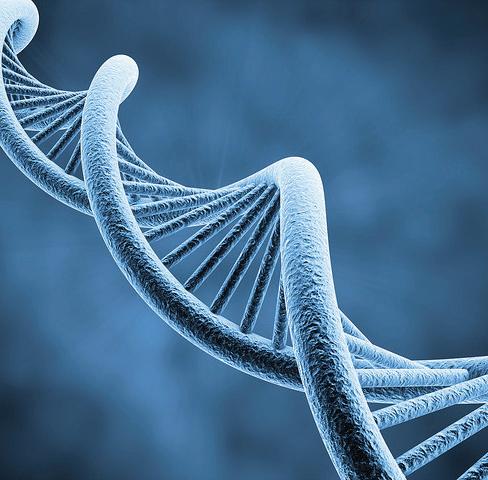
The student is expected to demonstrate an understanding that chromosomes contain many distinct genes and that each gene holds instructions for the production of a specific protein, which in turn affects the traits of an individual.
How do tiny structures inside our cells determine everything from our eye color to our ability to digest food?
Key Concepts
• The units of inheritance are genes and are stored within the chromosomes in the nucleus of a cell.
• Genes control the production of a specific protein, which affects the traits of the individual. Any change to these genes results in changes to the proteins, which can affect the structure and functions of the organism.
• Mutations are changes in genes that occur within a single individual. They are the raw materials for evolutionary change because natural selection favors beneficial mutations, increasing their frequencies, and eliminates harmful ones. The vast majority of mutations are either neutral, with no effect on fitness, or deleterious (harmful).
Students progress from observing variation in human traits to explaining those differences through chromosomes, genes, and proteins. They collect and analyze class data on traits, then model chromosome pairing to connect DNA sequences to genes and the proteins they encode. Through guided simulations, students test how different mutations can be harmful, beneficial, or neutral by comparing performance outcomes and synthesizing class datasets. Throughout, they develop evidencebased explanations that genes on chromosomes direct protein production, and that protein function underlies individual traits.
The terms below and their definitions can be found in Picture Vocabulary and are embedded in context throughout the scope.
Chromosome
A single, highly organized and structured piece of DNA
Evolutionary History
The sequence of heritable changes that occurred among species since the origin of life on Earth
Gene
The basic physical and functional unit of heredity made up of DNA
Gene Pool
All the genes in any population
Mutation
A change or damage in the DNA that permanently alters the genetic message that the gene carries
Natural Selection
Process by which organisms with favorable traits produce more successful offspring than organisms with less-favorable traits, causing the favorable traits to become more common in the population
Variation
The occurrence of an organism, trait, or gene in more than one form Scope
Notes
Students assess prior knowledge and investigate variation in human traits through data collection and discussion.
• Complete an anticipation guide on genes and traits individually, then share responses.
• Conduct a gallery walk to identify and tally specific traits (e.g., widow’s peak, attached earlobes) and contribute to a class dataset.
• Analyze class results to discuss trait variation, categorization challenges, and the concepts of genes and gene mutations, including proposing which trait might result from a mutation and why.
Activity - Chromosomes, Genes, and Proteins
Students investigate chromosome pairing and gene-protein relationships by modeling karyotypes and analyzing matches.
• Read the journal introduction, then use Ladder Match Cards to find chromosome matches.
• In matched pairs, construct a karyotype and create corresponding diagrams in the journal.
• Participate in a gallery walk to compare karyotypes and record observations from other pairs.
• Engage in a class discussion addressing DNA pairing rules, atypical matches, how genes code for traits and functions, and gene density on chromosomes.
Activity - Modeling Mutations
Students investigate how genetic mutations can be harmful, beneficial, or neutral by modeling mutations and testing their impact on food collection.
• Use letter cards to simulate gene changes, observing that guided rearrangements fail to produce a functional outcome.
• Roll a die to receive a mutation, then conduct multiple bean-collection trials under that constraint, recording individual and group data.
• Combine group results into a class dataset to compare food collection across mutation types.
• Construct CER-based arguments and discuss how each mutation affected feeding success.
Notes
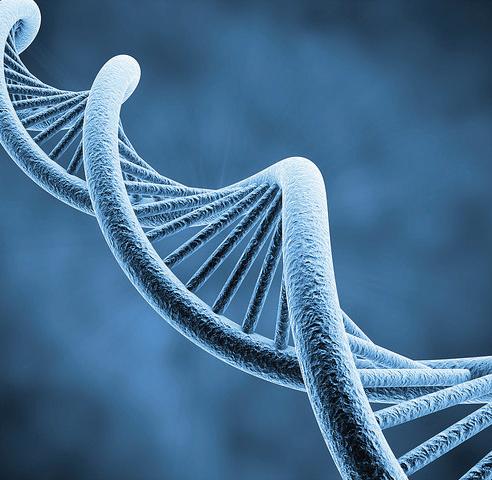
Estimated 15 min - 30 min
Students answer questions about genes to determine background knowledge of genes, then the students perform a gallery walk to observe how many of their peers have certain traits.
Materials
Printed
● 1 Genes and Traits (per student)
● Print one Genes and Traits document for each group.
● Prepare demonstration to show how to ask students to display the traits of widow’s peak (v-shape when student lifts bangs to reveal forehead) and attached earlobes (bottom of earlobe runs into face, no crevice between). Set up a method for collecting data for the class. You can instruct each table to assign a trait collection job, then have each group member come up to give the class data for that trait for that group. This will give you another talking point if some of the groups do not come up with the same number of students for each trait.
Asking Questions and Defining Problems, and Developing and Using Models, and Planning and Carrying Out Investigations, and Analyzing and Interpreting Data, and Using Mathematics and Computational Thinking, and Constructing Explanations and Designing Solutions, and Engaging in Argument from Evidence, and Obtaining, Evaluating, and Communicating Information
During this activity, students will engage in asking questions and defining problems by observing the phenomenon of genetic traits and variations among their peers. They will develop and use models to describe how tiny structures inside our cells, such as genes, determine traits like eye color and the ability to digest food. By planning and carrying out investigations through a gallery walk, students will collect and analyze data to understand the relationships between genetic traits and variations. This hands-on experience will allow them to construct explanations and engage in argument from evidence, enhancing their understanding of genetic phenomena.
Patterns and Cause and Effect: Mechanism and Explanation
During this activity, students will recognize patterns in genetic traits and use these patterns to identify cause and effect relationships related to the microscopic structures within our cells that determine traits such as eye color and the ability to digest food. By analyzing the data collected from their peers, students will classify relationships as causal or correlational, enhancing their understanding of how genetic variations and mutations can lead to observable differences in traits.
1. Distribute the Genes and Traits documents, and instruct students to complete both columns on the anticipation guide.
2. Discuss with students the answers given to each of the statements.
3. Explain the process of the gallery walk to collect data, and give students five to ten minutes to walk around and count how many of each trait is in the class.
4. Discuss questions and answers at the end of the activity:
● Did all the students have the same traits?
● Were some students harder to categorize based on the exact traits in the table? Why?
● What are some reasons for the variation in traits?
● What is a gene?
● What is a gene mutation?
● If one of the traits could be the result of a gene mutation, which one would you choose and why?
How do the tiny structures inside our cells, such as genes, influence the traits we observe in ourselves and our classmates, and how might these traits vary due to genetic mutations?
1. Based on your observations during the gallery walk, how do you think genes contribute to the differences in traits among classmates, such as widow’s peaks or attached earlobes?
2. If a gene mutation were responsible for a trait variation, how might this mutation affect the trait’s expression in the next generation?
3. Considering the variation in traits observed, how might these genetic differences impact an individual’s ability to adapt to their environment or perform certain biological functions, like digestion?
Notes
Before the gallery walk, model with 1–2 students how to identify the traits (e.g., showing what an attached vs. detached earlobe looks like). Emphasize that some traits may not be perfectly clear-cut.
Estimated 30 min - 45 min
Materials
Printed
● 1 Student Journal: Chromosomes, Genes, and Proteins (per student)
● 1 or 2 sets of Ladder Match Cards (1 set for 1–16 students, 2 sets for 17–32 students)
● 1 Karyotype Construction Packet (per pair of students)
Reusable
● 1 set of colored pencils (per pair)
● 1 pair of scissors (per student)
● 1 glue stick (per pair)
Consumable
● 1 masking tape, 6 cm (per pair)
Preparation
● Print one Student Journal for each student.
● Print Ladder Match Cards sets, cut, and shuffle so that they are mixed up before class begins.
● Print Karyotype Construction Packets for each pair of students.
● Determine where students will post their diagrams for a gallery walk.
Connections
Asking Questions and Defining Problems, and Developing and Using Models, and Planning and Carrying Out Investigations, and Analyzing and Interpreting Data, and Using Mathematics and Computational Thinking, and Constructing Explanations and Designing Solutions, and Engaging in Argument from Evidence, and Obtaining, Evaluating, and Communicating Information
During this activity, students will engage in asking questions and defining problems by observing how tiny structures inside our cells, such as chromosomes and genes, determine traits like eye color and digestion ability. They will develop and use models by constructing karyotypes to describe these genetic phenomena and predict how variations in these structures can lead to different traits. By planning and carrying out investigations, students will collect and analyze data on chromosome matches, using this information to construct explanations about the relationship between genes and traits. Through engaging in argument from evidence, they will discuss and critique their findings, enhancing their understanding of the genetic mechanisms underlying observable traits.
Patterns and Cause and Effect: Mechanism and Explanation
During this activity, students will identify patterns in the structure and function of chromosomes, genes, and proteins to understand how these tiny cellular structures determine traits such as eye color and the ability to digest food. By constructing karyotypes and analyzing data, students will explore cause and effect relationships, recognizing that specific genetic combinations lead to particular traits and functions. They will also discuss how some genetic patterns may have multiple causes and how probability can describe certain cause and effect relationships in genetic systems.
1. Hand out Student Journals, and review introductory paragraphs with students after reading to check for any misunderstandings or clarifications.
2. Instruct students to draw a card and find their chromosome match based on the guidelines from the Student Journal.
3. Explain that matched student pairs should work together to complete the actual constructed karyotype and draw the diagrams in their Student Journal.
4. Instruct students to do a brief gallery walk to view how the other matches turned out for the activity. If there are 17–32 students, encourage pairs of students to find the other pairs that had the same card matches. They can compare the drawings to determine if all the information was understood correctly.
5. Have students record data on other karyotypes in the data table on their Student Journals.
6. Instruct students to complete the Discussion Questions.
7. Lead the class in a discussion of the questions.
○ Why is it important for each part of a DNA structure and gene segments to match up with specific other sections? Traits or functions can occur only if they have the right recipe or instructions to do so. Each part must match up to give a complete correct set of instructions.
○ What was different about the chromosome matches with only three rungs? What are some possible reasons for this difference? There was not a three-to-three match for the boy and girl cards, but they still went together. Traits that were listed were specific to females.
○ Why were all the cards similar in certain aspects but different in others? How does this represent genes and proteins that code for traits? Genes are all made of the same material, but how they are shaped and organized depends on the traits that occur.
○ Do genes and proteins code only for physical traits? What are some other examples that are not considered physical traits? Genes code not only for functions that we need every day but also for abilities, such as to see or not see color (color blindness) or to taste certain bitter agents or not.
○ Humans have only 23 pairs of chromosomes but have hundreds of traits and functions. What does this tell us about chromosomes and genes? Chromosomes contain many genes instead of just one or two.
Notes
Before students begin, demonstrate how to use the chromosome card guidelines to find a correct match. Walk through one example aloud.
As students view other karyotypes, prompt them to ask questions like:
“What made you decide those chromosomes matched?”
Four Square Vocabulary
Students create a set of index cards for the following words:
● Chromosome
● Gene
● Karyotype
● Trait
● DNA
Give each student five index cards. Instruct students to draw four equal sections on the card.
The four sections will represent a vocabulary term, the definition, the word used in a sentence, and an illustration
Students should have a chance to switch cards or discuss with a partner after they have completed the assignment.
How do the specific arrangements and interactions of chromosomes, genes, and proteins within our cells determine our unique traits and abilities, such as eye color or the ability to digest certain foods?
1. How does the matching of chromosome pairs in our activity relate to the way genetic information is organized and expressed in our cells?
2. In what ways do the similarities and differences in chromosome matches reflect the diversity of traits and functions in humans?
3. Considering that humans have only 23 pairs of chromosomes but exhibit a wide range of traits, how might the organization and interaction of genes within these chromosomes contribute to this complexity?
Estimated 1 hr - 2 hrs
Students conduct a series of trials to demonstrate the effect of a mutation on food collection to determine whether mutations are harmful, beneficial, or neutral.
Materials
Printed
● 1 Student Journal (per student)
● 1 Set of Letters (per student or group)
● 1 Mutations Chart (per group or per class)
● 1 Student CER Rubric (per student)
Reusable
● 1 die (per group)
● 1 bag (about 2 cups) of dried beans (per group)
Consumable
● 1 roll of clear tape (per group)
SEP Connection
Preparation
● Print one Student Journal for each student.
● Print one Set of Letters for every two students. (Each sheet has two letter card sets.) Cut the sets apart to distribute to each student.
● Print one Mutation Chart for each group or one for class display.
● Set out tape rolls prior to the beginning of class.
Asking Questions and Defining Problems, and Developing and Using Models, and Planning and Carrying Out Investigations, and Analyzing and Interpreting Data, and Using Mathematics and Computational Thinking, and Constructing Explanations and Designing Solutions, and Engaging in Argument from Evidence, and Obtaining, Evaluating, and Communicating Information
During this activity, students will engage in asking questions and defining problems by observing the phenomenon of how tiny structures inside our cells, such as genes, determine traits like eye color and the ability to digest food. They will develop and use models to simulate the effects of mutations on food collection, allowing them to predict and describe the impact of genetic changes on an organism’s ability to survive. By planning and carrying out investigations, students will collect and analyze data to determine whether mutations are harmful, beneficial, or neutral. This process will involve using mathematics and computational thinking to interpret data and construct explanations based on evidence. Finally, students will engage in argument from evidence by constructing scientific arguments to explain their findings and communicate their conclusions through discussion and written reports.
CCC Connection
Patterns and Cause and Effect: Mechanism and Explanation
During this activity, students will identify and analyze patterns in the effects of mutations on food collection, recognizing that these macroscopic patterns are related to microscopic genetic changes. They will use cause and effect relationships to predict how different mutations can impact an organism’s ability to gather food, understanding that these phenomena may have multiple causes and that some relationships can only be described using probability.
1. Hand out Student Journals and letter sheets, and instruct students to cut out letters.
2. Instruct students to follow the guidelines for making the sentence and then rearranging it to demonstrate how mutations occur.
3. Direct students to answer questions as they complete each guided letter change or rearrangement.
○ None of the letter changes will result in a sentence that makes sense.
○ The correct protein will not be made by any of the rearrangements.
4. Instruct students to place letters in the envelope provided for the next class.
1. Ask each student to roll a die to determine which mutation he or she will use during the lab. Each student within a group is to run multiple trials for a single mutation. Each group member should have a different mutation.
2. Instruct students to follow the procedures on food collection for each trial and record their data. Students may need to assist others in their group and take turns conducting the trials depending upon the limitations of a mutation.
3. Direct the mutation populations to collaborate to determine total food collection data and the impacts of the mutation.
4. Have students share group data with you so the whole class data chart can be completed.
5. Instruct students to construct scientific arguments to answer the question and provide evidence and reasoning for their arguments.
6. Have students complete the Discussion Questions.
7. Lead a class discussion of the questions.
● What was the effect of having a beneficial mutation? Some had the ability to obtain food without the other fingers getting in the way.
● What was the effect of having a neutral mutation? Neutral mutations were present but did not keep the organism from eating less or more of the food.
● What was the effect of having a harmful mutation? The harmful mutation prevented the organism from eating.
● How do mutations occur? Mutations are a change on the gene segment coding for traits. Due to various factors, small changes, just one in the gene code, can cause a mutation as the new change becomes part of the normal sequence of events.
If cutting out letters is a challenge, you may need to cut them out ahead of time for students to use. These can also be laminated for longer use.
Before beginning the bean activity, briefly explain how the taped fingers represent mutations in DNA that affect protein function, which can impact an organism’s ability to survive and gather resources.
After compiling class data, facilitate a wrap-up by sorting mutations into harmful, neutral, or beneficial as a class. Post the categories on the board and invite students to place sticky notes with their mutation results under each one.
In this activity, students arrange printouts of letters to form a sentence and then replace a letter in the words, which can be very confusing for students who have trouble spelling and reading words. Place students who have difficulty spelling and reading with a partner who has strong spelling and reading skills to assist those who may need extra help with this activity. Find more strategies for assisting students who have difficulty spelling in the Intervention Toolbox.
Lab Write-Up
Write a lab report detailing the investigation. Give an outline to those who need it.
● Paragraph 1: Introduction
● Paragraph 2: Procedure
● Paragraph 3: Results
● Paragraph 4: Implications and Conclusion
Then have students trade and read each other’s conclusions and give feedback.
How do mutations in our genetic code influence the traits we observe, such as eye color or our ability to digest food?
1. How might a beneficial mutation in our cells affect our ability to digest certain types of food?
2. In what ways could a neutral mutation impact the traits we inherit without affecting our overall health or abilities?
3. How can harmful mutations in our genetic code lead to observable changes in our physical characteristics or bodily functions?
Notes
STEMscopedia
Reference materials that includes parent connections, career connections, technology, and science news.
Linking Literacy
Strategies to help students comprehend difficult informational text.
Picture Vocabulary
A slide presentation of important vocabulary terms along with a picture and definition.
Content Connections Video
A video-based activity where students watch a video clip that relates to the scope’s content and answer questions.
Career Connections - Hematopathologist
STEM careers come to life with these leveled career exploration videos and student guides designed to take the learning further.
Math Connections
A practice that uses grade-level appropriate math activities to address the concept.
Reading Science - Chromosomes, Genes, and Proteins
A reading passage about the concept, which includes five to eight comprehension questions.
Data Literacy
Student analyze data sets and interpret information related to the scope’s content.
Claim-Evidence-Reasoning
An assessment in which students write a scientific explanation to show their understanding of the concept in a way that uses evidence.
Multiple Choice Assessment
A standards-based assessment designed to gauge students’ understanding of the science concept using their selections of the best possible answers from a list of choices
Open-Ended Response Assessment
A short-answer and essay assessment to evaluate student mastery of the concept.
Guided Practice
A guide that shows the teacher how to administer a smallgroup lesson to students who need intervention on the topic.
Independent Practice
A fill in the blank sheet that helps students master the vocabulary of this scope.
Extensions
A set of ideas and activities that can help further elaborate on the concept.
Use this template to decide how to assess your students for concept mastery. Depending on the format of the assessment, you can identify prompts and intended responses that would measure student mastery of the expectation. See the beginning of this scope to identify standards and grade-level expectations.
Student Learning Objectives
The units of inheritance are genes and are stored within the chromosomes in the nucleus of a cell.
Genes control the production of a specific protein, which affects the traits of the individual. Any change to these genes results in changes to the proteins, which can affect the structure and functions of the organism.
Mutations are changes in genes that occur within a single individual. They are the raw materials for evolutionary change because natural selection favors beneficial mutations, increasing their frequencies, and eliminates harmful ones. The vast majority of mutations are either neutral, with no effect on fitness, or deleterious (harmful).
The student is expected to demonstrate an understanding of the process of natural selection, in which variations in a population increase some individuals’ likelihood of surviving and reproducing in a changing environment.
Why do some animals survive and thrive in changing environments while others don’t?
Key Concepts
• Natural selection is one of the mechanisms of evolution. It is based on Darwin’s theory that organisms that are best suited for a particular environment are most likely to reproduce and therefore pass on their genetic material to the next generation.
• Changes in an organism’s habitat are sometimes beneficial to it and sometimes harmful. For any particular environment, some kinds of organisms survive well, some survive less well, and some cannot survive at all.
• Natural selection does not occur within individuals; it occurs within and among populations.
• Biological fitness is the ability to survive and reproduce.
Scope Overview
This unit immerses students in hands-on investigations to build evidence-based understanding of natural selection. Through analyzing trait–function relationships, modeling inheritance and environmental pressures across generations, and synthesizing data from comparative studies (including Darwin’s observations), students examine how variation affects survival and reproduction. Learners collect and analyze data, evaluate competitive advantages, and track population changes to connect genetic variation, resource limits, and habitat conditions to differential reproductive success. Emphasis is on constructing explanations from evidence that link trait variation to adaptation in changing environments.
The terms below and their definitions can be found in Picture Vocabulary and are embedded in context throughout the scope.
Favorable Trait
A trait that is beneficial to an organism and will likely be chosen by natural selection
Natural Selection
Process by which organisms with favorable traits produce more successful offspring than organisms with less-favorable traits, causing the favorable traits to become more common in the population
Population
A group of interacting individuals of the same species located in the same area
Theory of Evolution
An explanation for how living things change over time
Variation
The occurrence of an organism, trait, or gene in more than one form
Notes
Students rotate through observation stations to analyze how physical traits influence survival and connect observations to natural selection and adaptation.
• Rotate through six stations, examine organism information, and predict survival outcomes based on avoiding predation and obtaining food.
• Compare organisms within the same or similar groups to evaluate competitive advantages tied to specific traits (e.g., camouflage).
• Complete reflection questions and a class discussion to synthesize factors driving natural selection, including limiting resources, genetic variation, and reproductive success.
Research - Charles Darwin and the Galapagos Islands
Students investigate evidence for natural selection by rotating through hands-on stations and synthesizing findings about Darwin’s work on the Galápagos.
• Use tool analogs of finch beaks to collect different “foods,” compare feeding success across structures, and record data and observations.
• Model tortoise shell shapes with foil, test grasping ability, and connect morphology to function and environment.
• Test and compare seed buoyancy and wind dispersal to analyze how traits influence survival and distribution.
• View a short media source on Darwin and the Galápagos, summarize key ideas with citation, then synthesize learning through a brief creative piece and discussion.
Activity - Cactus Beetle Simulation
Students model how genetic and environmental factors influence trait inheritance and natural selection across beetle generations.
• Simulate trait variation and inheritance by generating offspring traits from parent beetles, using a die to introduce measurable variation.
• Assign offspring to island environments with specific conditions, select the fittest male and female to become the next generation’s parents, and discard non-survivors.
• Exchange offspring between groups to represent population movement and selection pressures across habitats.
• Record data across multiple generations, analyze patterns, and construct a CER explaining how genetic and environmental factors drive natural selection.
Notes
Estimated 30 min - 45 min
Students rotate through a series of six observation stations to determine the chance of survival for each of the organisms based on physical characteristics.
Materials
Printed
● 1 Natural Selection Observation Stations (per student)
Reusable
● 1 Natural Selection Gallery Walk (per class)
● Print one Natural Selection Observation Stations document for each student.
● Print one Natural Selection Gallery Walk.
● Set up each observation station by placing each observation page on a desk or post on a wall.
● Explain rotation process for observation stations so that no more than five students are at a station at a time.
SEP Connection
Asking Questions and Defining Problems, and Developing and Using Models, and Planning and Carrying Out Investigations, and Analyzing and Interpreting Data, and Using Mathematics and Computational Thinking, and Constructing Explanations and Designing Solutions, and Engaging in Argument from Evidence, and Obtaining, Evaluating, and Communicating Information
During this activity, students will engage in asking questions and defining problems by observing the phenomenon of why some animals survive and thrive in changing environments while others don’t. They will develop and use models to describe and predict the impact of physical characteristics on survival, analyze and interpret data from the observation stations to identify relationships between traits and survival, and construct explanations based on evidence gathered. This process will enhance their understanding of natural selection and adaptation, reinforcing the concept that genetic variation and environmental factors contribute to the survival and reproduction of organisms.
Notes
CCC Connection
Patterns
Cause and effect: Mechanism and explanation
During this activity, students will identify and analyze patterns in the physical characteristics of organisms to understand their survival and thriving in changing environments. They will explore cause and effect relationships by determining how specific traits, such as camouflage, contribute to an organism’s ability to avoid predators and secure food, thereby reinforcing the concept of natural selection. Through this process, students will recognize that these macroscopic patterns are linked to the microscopic and genetic variations within species, which influence their adaptability and survival.
1. Instruct students to rotate through stations, read information, and determine how each organism will survive based on its ability to avoid being consumed and its ability to find and consume food versus another animal that is in either the same species or a similar group.
2. Instruct students to complete and discuss the questions at the end of the activity. Discuss natural selection factors with students, and check for understanding of concepts such as natural selection and adaptation before beginning the stations.
○ What trait was most significant in all six stations? How does this trait connect to natural selection?
Camouflage is a common trait in all of the pages. Organisms can hide better and are better able to survive.
○ How does an organism’s ability to survive reinforce the concept of natural selection?
The surviving organism should be able to reproduce and increase populations. Another factor to support this is that the diversity of food options will increase the organism's possibility to survive and reproduce over other organisms.
○ What are some major contributing factors to natural selection?
Major contributing factors to natural selection are variation in populations with defined limiting factors such as food, water, and space.
○ Does genetic variation increase natural selection? How?
Genetic variation increases natural selection by allowing some organisms within a species to adapt and survive while others die off. Yet the entire population does not die off. The remaining organisms will pass down stronger traits for survival to future generations.
How do physical characteristics and adaptations influence an organism’s ability to survive and thrive in changing environments?
1. Based on your observations at the stations, which physical characteristic was most crucial for an organism’s survival, and why do you think it was so important in the context of natural selection?
2. How might the ability of an organism to camouflage itself affect its chances of survival and reproduction in a changing environment?
3. In what ways do genetic variations within a species contribute to the survival of some organisms over others when environmental conditions change?
To help with spiraling for natural selection, remind students that humans do not directly cause this type of genetic evolution.
Estimated 1 hr - 2 hrs
Students rotate through a series of journey stops to collect research and data that they use to analyze the historical findings of Charles Darwin that support the process of natural selection.
Materials
Printed
● 1 Student Journal (per student)
● 2 sets of Journey Stop Stations (per class)
Reusable
Journey Stop 1
● 2 sets of four seeds (two sunflower seeds in shell, two larger seeds in shell—almonds or pistachios) (per group)
● 2 small clothespins or blunt-nose tweezers (per group)
● 2 normal size clothespins or blunt-nose tweezers (per group)
Journey Stop 2
● 2 pairs of long-nose pointed tweezers (warbler finch) (per group)
● 2 sets of chopsticks (cactus finch) (per group)
● 2 sets of regular size forceps or tweezers (tree finch) (per group)
● 2 sets of toilet paper roll half-tubes (one tube provides two tubes) (per group)
● 2 small sheets of tissue paper (folded and put in tubes) (per group)
● 2 sets of small plastic stars or spiny beads or objects (four per set) (per group)
● 2 sets of small pieces of spaghetti or small plastic straw pieces (per group)
● 2 sets of small to medium macaroni pieces (per group)
● 2 petri dishes, one for each of the stations (per group)
● 2 plastic containers (trees for macaroni and foam pieces) (per group)
● 2 sets of four foam pieces with adhesive or tape (per group)
Journey Stop 3
● 2 rolls of foil (one for each station) (per group)
● 2 small bowls (tortoise shell mold) (per group)
● 2 rulers (per group)
● 2 rolls of masking tape (per group)
Journey Stop 4
● 2 plastic trays for water (per group)
● 2 wind sources: either small hand fan or blow dryer (per group)
Journey Stop 5
● Computer or smart device (per group)
Consumable Materials
Journey Stop 4
● 8 sets of each type of seed (per class)
● Print one Student Journal for each student.
● Print two sets of the Journey Stop Stations.
● Set up each set of stations with Journey Stop Stations and activity materials.
Asking Questions and Defining Problems, and Developing and Using Models, and Planning and Carrying Out Investigations, and Analyzing and Interpreting Data, and Using Mathematics and Computational Thinking, and Constructing Explanations and Designing Solutions, and Engaging in Argument from Evidence, and Obtaining, Evaluating, and Communicating Information
During this activity, students will engage in asking questions and defining problems by observing the phenomenon of why some animals survive and thrive in changing environments while others don’t. They will develop and use models to describe and predict the process of natural selection, as demonstrated by Charles Darwin’s historical findings. Students will plan and carry out investigations at various journey stops, collecting and analyzing data to construct explanations and design solutions. Through this process, they will engage in argument from evidence and communicate their findings, enhancing their understanding of the mechanisms behind natural selection and adaptation.
Patterns
Cause and effect: Mechanism and explanation
During this activity, students will explore the phenomenon of why some animals survive and thrive in changing environments while others don’t by identifying patterns in the data collected at various journey stops. They will recognize that these macroscopic patterns are related to the nature of microscopic and atomic-level structures, such as the variation in finch beaks and tortoise shell shapes. By analyzing these patterns, students will classify relationships as causal or correlational, using cause and effect to predict which traits are advantageous for survival in specific environments, thereby deepening their understanding of natural selection.
Procedure and Facilitation
Facilitation
1. Discuss the term natural selection and explain what it means.
2. Explain the process of rotating through the stations and completing sections on the Student Journal.
Procedures
Journey Stop 1
1. Direct students to read the introduction.
2. Instruct students to use the beak tools to complete the seed pickup task and record the data in the Student Journal.
3. Ask students to complete any observations or questions for the station before rotating to the next station.
Before students rotate through all journey stops, walk through Journey Stop 1. Demonstrate using the tools (clothespins/ tweezers as beaks) and recording observations.
FACILITATION TIP
Ask students the follow-up question: “How might competition between finches with similar beaks affect survival?”
Journey Stop 2
1. Direct students to read the introduction and write down observations.
2. Instruct students to use each beak type at its designated feeding structure.
3. Ask students to record observations and complete any questions before rotating to the next station.
Journey Stop 3
1. Direct students to read the introduction and record any observations about the information.
2. Have students to use the foil and bowl to make a tortoise shell.
3. Instruct students to use one arm of a group member to demonstrate the ability to grasp things using each shell type.
4. Ask students to write down observations and complete any questions before rotating to the next station.
Journey Stop 4
1. Direct students to read the introduction and write down any observations made from the research.
2. Instruct students to complete the sink or float task with each type of seed and record the observation of the results in the table.
3. Have students complete the fly task with each type of seed and record the observation of results in the table.
4. Ask students to write down observations and complete any questions before rotating to the next station.
Journey Stop 5
1. Direct students to use a computer or other smart device to view a podcast or video on information related to natural selection on the Galapagos Islands and Charles Darwin.
FACILITATION TIP
Ask students the follow-up question: “How might volcanic activity or salt spray affect which seeds survive?”
2. Instruct students to write a brief summary of what they viewed.
3. Ask students to record the citation for their source in the source box.
Journey
1. Have students pick another organism on the Galapagos Islands not covered in any of the stations.
2. Instruct students to use that organism to write a short story, poem, or song that analyzes the historical findings of Charles Darwin that support the process of natural selection.
3. Lead students in completing the Discussion Questions.
○ What did Charles Darwin use as his supporting evidence for natural selection on the Galapagos Islands? He used the variation in finch beaks and the variation in tortoise shell shape versus the food sources available in each area.
○ Which finch beaks were probably the beginning species of finches? Why? Small ground finches were probably the first due to the fact that the seeds of the first plants were grass and ferns, which are small.
○ Does natural selection involve immediate change in an organism’s physical structure? Explain. No, natural selection requires first a change in the environment, some organisms with adaptations within a population of organisms that can survive the condition and reproduce, a decline in those that cannot survive the condition, and offspring that show the adaptations that did well.
○ What factors make the Galapagos Islands one of the best locations to observe natural selection in progress? The isolation of an island environment, the position near the equator, and the types of cold water currents that contribute to both tropical and temperate climates make it one of the best locations to observe natural selection in progress.
Natural Selection Interview
During the investigation, provide students with an opportunity to interview another student in their class using the following format:
○ Partner A: When would cacti survive just as well with or without thorns?
○ Partner B: A cacti with or without thorns would survive just as well when ____________.
● Model the interview with students before allowing them to interview each other.
● Practice reading the question out loud with Partner A and the sentence stem out loud with Partner B.
● After Partner B has successfully answered the question, have partners switch roles so everyone gets a chance to be interviewed. Repeat the process using these questions:
● What is natural selection?
● What conditions must be present for natural selection to occur?
● How does nature define fitness?
Phenomenon Connection
How do the adaptations of certain animals allow them to survive and thrive in changing environments, while others do not?
1. Based on your observations from the activity, what specific adaptations did the finches and tortoises have that allowed them to survive in their respective environments on the Galapagos Islands?
2. How might the process of natural selection lead to the development of new species over time in a changing environment?
3. Considering the factors that make the Galapagos Islands ideal for observing natural selection, how might similar processes occur in other isolated environments around the world?
Estimated 1 hr - 2 hrs
Students participate in an activity in which they demonstrate the transfer of traits in beetles from one generation to the next based on parent factors and environmental factors. The students use the activity to construct an explanation on the impact of environmental factors and genetic factors on the process of natural selection in the cactus beetle.
Materials
Printed
• 1 Student Journal (per student)
• 1 Variation in Offspring (per group)
• 2 Parent Beetles (per class)
• 4–5 Beetle Offspring Sheets (per group)
• 2 Islands sheets (per class)
• 1 CER Rubric (per student)
Reusable
• 1 die (per student)
• 1 pair of scissors (per student)
• 1 set of markers (per group)
• Print Student Journal sheets.
• Print one Variation in Offspring (two copies on each sheet; cut sheet in half to provide each group with a copy of the offspring).
• Print one Student Reference Sheet: Parent Beetles per group.
• Print two Islands sheets per class. There are a total of six islands. Cut apart and laminate for repeated use.
• Set up all tables or desk groups with supplies.
Asking Questions and Defining Problems, and Developing and Using Models, and Planning and Carrying Out Investigations, and Analyzing and Interpreting Data, and Using Mathematics and Computational Thinking, and Constructing Explanations and Designing Solutions, and Engaging in Argument from Evidence, and Obtaining, Evaluating, and Communicating Information
During this activity, students will engage in asking questions and defining problems by observing the phenomenon of why some animals, like cactus beetles, survive and thrive in changing environments while others don’t. They will construct explanations based on the transfer of traits influenced by genetic and environmental factors, using models to predict which traits enhance survival. By planning and carrying out investigations, students will analyze and interpret data to understand the relationship between traits and environmental conditions, using mathematics and computational thinking to support their conclusions. This process will involve engaging in argument from evidence and obtaining, evaluating, and communicating information to explain the mechanisms of natural selection.
Patterns
Cause and effect: Mechanism and explanation
During this activity, students will identify and analyze patterns in the inheritance of traits and the impact of environmental factors on the survival of beetles. They will use these patterns to understand cause and effect relationships in natural selection, recognizing that both genetic and environmental factors contribute to the survival and thriving of some animals in changing environments, while others do not. Students will classify these relationships as causal or correlational, using data to predict which traits enhance survival in specific environmental conditions.
1. Hand out Student Journals, and ask students to read introduction and procedures.
2. Discuss the term natural selection, and ask for examples to assess prior understanding.
3. Instruct students to use the base problem on the Student Journal to construct an explanation for which traits will have a greater chance at expression in offspring as adaptations resulting from environmental and genetic factors.
4. Hand out the Parent Beetles sheets, Beetle Offspring sheets, and Variation in Offspring sheets.
5. Instruct each group to pick one island from the class set.
6. Direct students to follow instructions on cutting the Beetle Offspring sheet apart to make 10 small sheets.
7. Have students follow instructions on filling out Generation Information on the smaller offspring sheets.
8. Direct students to follow instructions on filling out the data table for the six characteristics (body length, body width, mouthpart, spots, flight speed, and click range). Have students fill in these lines on all 10 offspring by doing the following: If you are filling in a male, start with the male. If you are filling in a female, start with a female.
9. Instruct students on rolling the die with a practice example, then have them follow the instructions. Remind them that whatever number they roll is the number for variation they use on the Offspring Variation Chart.
10. Explain how to take the data for the number (measurement) from the Generation 1 parent and perform the operation under that die roll on the Variation in Offspring sheet. Remind students to write the new number on the appropriate line of the Generation 2 beetle.
11. Instruct students on how to distribute offspring that are now ready to go out into the world and how to receive from other groups.
12. Direct students to follow instructions about the conditions on their island and to decide as a group how the fittest beetles will be selected (pick the best trait for survival).
Notes
Model the first die roll and variation calculation with the whole class before groups begin independently. Use a projected example beetle to show how the variation changes a trait measurement, then update the offspring sheet in real time so students clearly see how to apply the math to the genetics.
13. Have them choose one male and one female from among the offspring sent to them by another group. Explain that these two beetles will be the Generation 2 parents on their island. Remind them to record their traits on the chart on the Student Journal.
14. Inform students that the remaining eight offspring are not fit enough to survive and reproduce on the island. The offspring die and can be discarded.
15. After walking the students through the process for the initial round, instruct them to follow and repeat steps 6–10 above (steps 1–10 on the Student Journal instruction list) for Generations 3–6, changing only step 7 to reflect the current generation and having step 10 take away from the previous generation instead of going back to the first generation each time.
Encourage students to look for patterns across generations by highlighting repeated traits (e.g., faster flight speed appearing consistently).
16. Have students create a statement for the data analysis section and construct a graph if needed.
17. Instruct students to complete a CER after the data analysis.
18. Ask students to complete the following conclusion questions:
• What were some of the physical characteristics of the parent beetles that were carried down through several generations? Flight speed and click range
• How does such a trait show that genetic factors are involved in successful natural selection? Greater ability to avoid predation; greater range of food
• What were some of the island conditions that were beneficial to the offspring beetles? More foliage and insects; slower flying species of birds
• How did the environmental factors contribute to the natural selection process of the beetles? More food availability; more places to blend and hide; more chance of escaping predators
In this activity, students use parent and offspring cards to plan an investigation. The images and text may be difficult to see for students who have trouble with their vision. Double the size of the cards and increase the contrast using a photocopier. You may also want to provide large-sized foam dice. Find more strategies to assist students who have difficulty processing visual information in the Intervention Toolbox.
Notes
Card Sort
• Create a set of cards that shows examples of several different types of plant and animal adaptations (i.e., thorns, beaks, appendages, etc.).
• Make enough copies of the set that students can work in groups.
• Separate students into groups and give each group one set of cards.
• Have groups place the adaptation cards into one of the following two categories: those best suited for the organism’s survival and those not helpful to the organism’s survival.
• Have each group present to the class and explain their choices.
Phenomenon Connection
How do the traits of beetles change over generations in response to environmental conditions, and what does this tell us about survival in changing environments?
1. How do the traits that beetles inherit from their parents affect their ability to survive in different island environments?
2. In what ways do environmental factors on the islands influence which beetle traits become more common over generations?
3. How can the process of natural selection in beetles help us understand why some animals thrive in changing environments while others do not?
STEMscopedia
Reference materials that includes parent connections, career connections, technology, and science news.
Linking Literacy
Strategies to help students comprehend difficult informational text.
Picture Vocabulary
A slide presentation of important vocabulary terms along with a picture and definition.
Content Connections Video
A video-based activity where students watch a video clip that relates to the scope’s content and answer questions.
Career Connections - Anthropologist
STEM careers come to life with these leveled career exploration videos and student guides designed to take the learning further.
Math Connections
A practice that uses grade-level appropriate math activities to address the concept.
Reading Science - Finches and Seeds
A reading passage about the concept, which includes five to eight comprehension questions.
Data Literacy
Student analyze data sets and interpret information related to the scope’s content.
Claim-Evidence-Reasoning
An assessment in which students write a scientific explanation to show their understanding of the concept in a way that uses evidence.
Multiple Choice Assessment
A standards-based assessment designed to gauge students’ understanding of the science concept using their selections of the best possible answers from a list of choices
Open-Ended Response Assessment
A short-answer and essay assessment to evaluate student mastery of the concept.
Guided Practice
A guide that shows the teacher how to administer a smallgroup lesson to students who need intervention on the topic.
Independent Practice
A fill in the blank sheet that helps students master the vocabulary of this scope.
Extensions
A set of ideas and activities that can help further elaborate on the concept.
Use this template to decide how to assess your students for concept mastery. Depending on the format of the assessment, you can identify prompts and intended responses that would measure student mastery of the expectation. See the beginning of this scope to identify standards and grade-level expectations.
Student Learning Objectives
Natural selection is one of the mechanisms of evolution. It is based on Darwin’s theory that organisms that are best suited for a particular environment are most likely to reproduce and therefore pass on their genetic material to the next generation.
Changes in an organism’s habitat are sometimes beneficial to it and sometimes harmful. For any particular environment, some kinds of organisms survive well, some survive less well, and some cannot survive at all.
Natural selection does not occur within individuals; it occurs within and among populations.
Biological fitness is the ability to survive and reproduce.
The student is expected to demonstrate an understanding of how similarities and differences among living and extinct species provide evidence that changes have occurred in organisms over time and that similarity of characteristics provides evidence of common ancestry.
How can we explain the surprising similarities between the skeleton of a whale and that of a bat, despite their vastly different environments and lifestyles?
Key Concepts
• Adaptation by natural selection acting over generations is one important process by which species change over time in response to changes in environmental conditions.
• Traits that support successful survival and reproduction in the new environment become more common; those that do not become less common. Thus, the distribution of traits in a population changes.
• Speciation occurs when the gene pools of populations diverge to the point where individuals from different populations can no longer produce viable, fertile offspring together; their gene pools then become permanently isolated.
• The embryonic similarities show that some organisms are related by having common ancestors; that they started out the same, gradually evolving different traits; but that the basic plan for an organism’s beginning remains the same.
Across hands-on investigations and simulations, students analyze patterns in structures and functions, model natural selection under environmental pressures, and experience reproductive isolation to understand speciation. They compare homologous and embryological evidence, organize developmental sequences, and map potential evolutionary pathways. Through data collection, population modeling, and collaborative synthesis, students construct and critique explanations connecting similarities and differences among organisms—living and extinct—as evidence of change over time and common ancestry. Emphasis is on recognizing trait advantages, interpreting evidence, and communicating claims with reasoning.
The terms below and their definitions can be found in Picture Vocabulary and are embedded in context throughout the scope.
Adaptation
A process by which a population becomes better suited to its environment by increasing the frequencies of alleles that provide benefits to survival and reproduction
Common Ancestry
When organisms are descended from a single ancestor
Generation
Organisms of the same species that are at the same level of descent from a common ancestor; a parent is a member of one generation, and its offspring are members of the next generation
Natural Selection
Process by which organisms with favorable traits produce more successful offspring than organisms with less-favorable traits, causing the favorable traits to become more common in the population
Population
A group of interacting individuals of the same species located in the same area
Notes
Students collaboratively compare animal structures and functions through a walk-around to identify patterns and shared functions.
• Select five animals, record choices, and rotate with music to partner with peers who chose the same animal to complete comparison columns.
• Repeat with new partners to note structural similarities (e.g., flippers, fins, webbed feet) linked to common functions like swimming.
• Synthesize findings in a class discussion to explain shared structures and consider connections to extinct organisms.
Activity - Surviving with Hops and Ears
Students model how genetic traits affect prey population changes under varying predator and climate pressures.
• Work in groups to simulate desert ecosystems by distributing prey cards and introducing predator and climate cards within a defined area.
• Run multiple rounds in which predator/climate interactions determine survival based on trait advantages, then update populations by removing deaths and adding offspring.
• Record population counts each round to observe trends and the impact of traits on survival and reproduction over time.
• Analyze data and construct explanations (CER), then compare claims and evidence with another group.
Activity - Finding Our Peeps
Students simulate how reproductive isolation can lead to speciation and analyze their experience through writing and discussion.
• - Use dance signals and color cues to find matching “species,” modeling mate selection and isolation.
- Write the definition of speciation and summarize how the simulation demonstrates it.
- Develop a story explaining speciation using their role-play experience and a reference sheet.
- Peer evaluate stories for scientific accuracy and engage in a class discussion on mechanisms and real-world examples.
Activity - Homologous Structures and Common Ancestry
Students investigate embryological and homologous structures to infer evolutionary relationships among organisms.
• Observe dry and soaked beans, document external and internal structures (including stereoscope images), and compare findings using a Venn diagram.
• Analyze animal skeleton images by grouping by species, organizing by developmental sequence, and mapping potential evolutionary pathways based on homologous parts.
• Synthesize observations to explain similarities and differences and articulate evolutionary connections across species.
Notes
Estimated 30 min - 45 min
Students participate in a walk-around activity to observe the similarities and differences in animal structures and functions and collaborate with their peers.
Materials
Printed
● 1 Animal Similarities and Differences (per student)
● 1 Animals Reference Sheet (per group)
Reusable
● 1 music source (per class)
● Print one Animal Similarities and Differences document for each student.
● Print one Animals Reference Sheet for each group.
● A bell can be used instead of music if desired.
Asking Questions and Defining Problems, and Developing and Using Models, and Planning and Carrying Out Investigations, and Analyzing and Interpreting Data, and Using Mathematics and Computational Thinking, and Constructing Explanations and Designing Solutions, and Engaging in Argument from Evidence, and Obtaining, Evaluating, and Communicating Information
During this activity, students will engage in asking questions and defining problems by observing the phenomenon of surprising similarities between the skeletons of whales and bats. They will develop and use models to describe and predict these similarities, and analyze and interpret data to provide evidence for the phenomenon. By collaborating and comparing animal structures, students will construct explanations and engage in argument from evidence to understand how these similarities can be explained by evolutionary relationships and adaptations to different environments.
Notes
Cause and effect: Mechanism and explanation Structure and function
During this activity, students will explore cause and effect relationships by observing and classifying the similarities and differences in animal structures and functions. They will use these observations to predict phenomena, such as the surprising similarities between the skeleton of a whale and that of a bat, despite their vastly different environments and lifestyles. Students will also model and analyze the structure and function of these animals to understand how their shapes and compositions contribute to their functions, drawing connections to both current and extinct species.
1. Pass out Animal Similarities and Differences documents and Animals Reference Sheets to each group.
2. Allow students to select five animals that they want to use and record them in their table.
3. Instruct students on how to move when the music occurs, and have them pick one partner with one of the same animals in the table.
4. Explain to students how to collaborate with that peer to complete the columns to the right.
5. Direct students to move to a new student with another of the same pictures when the music starts, and repeat the process. Have them do this each time the music starts, then stops. Remind them that they can use a student only once; no students can be repeated.
6. As a class, discuss the following:
○ What reasons were used to select the five animals in the chart? All the animals could swim.
○ Did the other students have similar structure ideas for each of the animals during the collaboration periods? Yes, animals chosen were swimmers and had either flippers or webbed feet.
○ Was there one structure that was commonly used? Why was this structure so common in all of the animals? Structure used for swimming (flipper or fin, wing)
○ What is one explanation for similarities in the structures? All of the animals used it for a similar function: to move in water.
○ How could the similarities in the animals in this activity be used to show connections to animals that once lived but are now extinct? Other animals from the past that had fin- or flipper-like structures can be compared to animals today with those traits. Samples of animal tissue can also be compared for similarities.
How can we explain the surprising similarities between the skeleton of a whale and that of a bat, despite their vastly different environments and lifestyles? Could these similarities suggest a common ancestry or evolutionary adaptation?
1. What structural similarities did you observe between the animals in the activity, and how might these relate to the similarities between a whale’s and a bat’s skeleton?
2. In what ways do the environments and lifestyles of whales and bats differ, and how might these differences influence their skeletal structures?
3. How can the concept of homologous structures help us understand the evolutionary relationships between seemingly different animals like whales and bats?
FACILITATION TIP
Model your expectations for student movement while the music is playing.
FACILITATION TIP
You can model this by partnering with a student and filling in the first row.
FACILITATION TIP
Students may need prompting as to where the animals can be found.
Estimated 1 hr - 2 hrs
Student groups of four participate in an activity in which three types of desert prey are exposed to two types of predators and climate conditions to determine if genetic traits within the three prey will cause an increase or decrease in the population over time.
Materials
● 1 Student Journal (per student)
● 1–2 sets of Prey//Predator/Climate Cards (per group)
Reusable
● Scissors (per teacher)
● Brown paper bag, lunch size (per group)
● 4 plastic bags, sandwich-sized (per group)
● 1 marker, black (per teacher)
Consumable
● 1 roll of masking tape (per group)
SEP Connection
Asking Questions and Defining Problems
Developing and Using Models
Planning and Carrying Out Investigations
Analyzing and Interpreting Data
● Print one Student Journal for each student.
● Print one set of Prey/Predator/Climate Cards for each group. Cut the cards apart, and put in bags for each group.
● Climate cards need to be drawn at random. Place in a brown paper bag. Label the bag "Climate Cards."
● Place the predator cards in a plastic sandwich bag. These are not drawn randomly.
● Place each type of prey in its own plastic bag so that the wrong one does not get tossed out during the lab.
Using Mathematics and Computational Thinking
Constructing Explanations and Designing Solutions
Engaging in Argument from Evidence
Obtaining, Evaluating, and Communicating Information
During this activity, students will ask questions and define problems by observing the interactions between prey, predators, and climate conditions to clarify the relationships between genetic traits and population changes. They will develop and use models to describe and predict the effects of environmental factors on prey populations, similar to how scientists might model the evolutionary adaptations seen in the skeletons of whales and bats. Students will plan and carry out investigations to collect data on prey survival and reproduction, analyze and interpret this data to identify patterns and causal relationships, and use mathematical and computational thinking to support their conclusions. By engaging in argument from evidence, students will construct explanations for the observed phenomena, drawing parallels to the evolutionary similarities between whales and bats, and communicate their findings effectively.
CCC Connection
Cause and effect: Mechanism and explanation
Structure and function
During this activity, students will use cause and effect relationships to predict changes in prey populations based on genetic traits and environmental conditions, helping them understand how similar structures in different species, like the skeletons of whales and bats, can arise due to different evolutionary pressures. They will also model how the structure and function of prey traits influence survival, drawing parallels to the structural similarities between whales and bats despite their different environments.
Discuss with students genetic variation in traits and check for understanding. Explain that population growth normally occurs with both prey and predator changes but that this lesson focuses only on the prey population changes.
1. Use tape to set up a square perimeter of 100 cm by 100 cm.
2. Have students randomly spread out 10 of each of the prey cards inside the perimeter. Do not overlap the cards.
3. Direct students to begin Round 1 by throwing in two of each predator card and two climate cards.
○ A predator card completely covering a prey card is a capture.
○ A predator card only partially covering a prey card is an encounter. If the prey has characteristics to avoid capture, it lives. Jerboas have to be completely covered by predator cards to be captured. If the prey does not have characteristics to avoid capture, it dies.
○ When a climate card lands on a prey (no matter how much it covers the prey), if the prey does not have the characteristics to survive the climate card, it dies.
○ If a climate card lands on the same card as a predator card, the climate card can remain or be tossed again.
4. Instruct students to remove the dead cards and add one offspring for every two of each type of prey that lived. (Round odd numbers up. Example: Nine surviving long-eared jerboa would result in 4.5 offspring, which would round to five offspring.) Record the total populations for each in Round 1.
5. Have students repeat steps 3–4 for Rounds 2 through 4. Remember to record the new population counts for each prey before starting the next round.
6. Direct students to complete the data analysis/CER section.
7. Allow each group to pair with another group to share explanations of the claim and write notes on similarities and differences in the explanations.
8. Complete and discuss the following questions:
○ How did the population of desert mice do in comparison to the other two prey? It increased but at a much smaller rate and did have a decrease in Round 4.
○ Why did the long-eared jerboa have more of a chance of survival over the other two prey? Its ears helped it distribute heat and avoid predators.
○ What happened to the populations of the jerboas after Round 1? Both increased.
○ What would eventually happen to the desert mouse if the rounds were continued for 10 more years? Why? The population would continue to fluctuate at a slow increase rate and a more rapid decrease rate.
Before students begin, demonstrate how to set up the perimeter, place rodents, and drop predator/climate cards.
As students record population changes, circulate and ask guiding questions such as: “What traits are helping jerboas survive more often than mice?”
After groups graph their results, pair groups to compare findings. Prompt them with this question: “What similarities and differences do you see between your populations?”
Graphic Organizer
After the activity, have students create a graphic organizer to keep as a study aid.
● Each student takes one sheet of paper and folds it hot dog style.
● With the crease at the top, have students make two cuts on the front flap. This should give them three equal flaps.
● The students should write a vocabulary word on the front of each flap: genetic variation, favorable trait, population, specific environment.
● Students may work with a partner or as a class to come up with a good definition of each word.
● Have students write the correct definition under the flap of each word.
● Students may include a drawing to further aid them.
How do genetic traits and environmental factors influence the survival and evolution of species, and what can this tell us about the similarities between the skeletons of whales and bats?
1. How do genetic variations within prey populations affect their ability to survive in changing environments, and how might this relate to the evolutionary adaptations seen in whales and bats?
2. In what ways do environmental pressures, such as predators and climate, drive evolutionary changes in species, and how might similar pressures have led to the development of analogous structures in whales and bats?
3. Considering the role of natural selection in the activity, how might similar processes have contributed to the development of similar skeletal structures in organisms with vastly different lifestyles and habitats, like whales and bats?
Estimated 1 hr - 2 hr
Students participate in an activity in which they must either perform a specific dance to find a member of their species or be the member of the species looking for the correct dance to demonstrate how speciation can occur in isolation. Students take the experience of the dance and develop a story around it to describe and explain how speciation occurs.
● 1 Student Journal (per student)
● 1 Dance Cards (per class)
● 1 Lineage and Speciation (per student)
Reusable
● 12 green feathers (per class)
● 12 blue feathers (per class)
● 12 yellow feathers (per class)
● Print Student Journals.
● Print Dance Cards and cut them out (lamination will prevent damage).
● Set out feather sets. (if feathers are not available you can use strips of paper to represent the feathers.)
● Set up room so dance activity can occur safely (desks should be moved to the perimeter of the room to provide center space).
● Set up designated color areas for groups to go to after species matchup.
Asking Questions and Defining Problems, and Developing and Using Models, and Planning and Carrying Out Investigations, and Analyzing and Interpreting Data, and Using Mathematics and Computational Thinking, and Constructing Explanations and Designing Solutions, and Engaging in Argument from Evidence, and Obtaining, Evaluating, and Communicating Information
During this activity, students will engage in a simulation to explore the concept of speciation, which will allow them to ask questions and define problems related to the surprising similarities between the skeleton of a whale and that of a bat. By developing and using models, students will describe and predict how speciation can occur in isolation, and analyze data to understand the relationships and mechanisms behind these evolutionary processes. Through constructing explanations and engaging in argument from evidence, students will deepen their understanding of how different species can evolve similar traits despite different environments and lifestyles.
Notes
CCC Connection
Cause and effect: Mechanism and explanation Structure and function
During this activity, students will explore the concept of speciation through a dance simulation, allowing them to classify relationships as causal or correlational. They will use cause and effect relationships to predict phenomena, such as how isolation and specific traits lead to speciation. Additionally, students will model the structure and function of species interactions, visualizing how the function of mating behaviors depends on the shapes, composition, and relationships among its parts, similar to analyzing the surprising similarities between the skeleton of a whale and that of a bat.
1. Discuss with students previous topics concerning Charles Darwin and the process of some traits becoming more favorable over other traits.
2. Discuss lineage and check for understanding before beginning the activity.
3. Remind students that there will be a common open space for the activity to take place and that only the activity in the instructions must be done to make sure it is done safely.
4. Express the importance of respecting each other during the activity so that all participants can complete the activity correctly.
1. Instruct students to move to the side of the room you have designated.
2. Have each student pick a card. Tell students not to show the card to anyone or speak to anyone.
3. Have each dancer collect the colored object indicated on his or her card (feathers); possible matching birds wait for the dances to begin without talking.
4. When you say, "Move," have each dancer go to a person not holding a colored object and begin the dance. If the dance fits, the other bird shows his or her card, and they go to the area with their designated color. Remind students not to reveal the card unless it matches the dance!
5. Continue the dance until all dancers have found a bird in their species. A bird can choose only a dancer that makes the exact correct movements with the correct color feather.
6. Instruct students to write a summary of the activity and how it might be an example of the word speciation. Have them write the definition for the term speciation before their summaries as a guideline.
7. Direct students to use their dance experience and the Student Reference Sheet to create a story about the bird in their dance and how speciation occurred. Instruct students to read the guidelines for developing the story in a way that it shows a full understanding of the factors that cause speciation to occur.
8. Ask students to swap stories with another student and complete the evaluation table to determine if the scientific information in the story is a good explanation of speciation.
Notes
Clarify rules with a quick demonstration. Before students begin, act out one example with a volunteer—show how a “bird” dances, how the “mate” checks for both the dance pattern and the feather color, and how they move to the designated area if they match.
To help reinforce the link to speciation, while students are dancing and forming pairs, circulate and ask questions such as: “What happens if two birds are close but their dances don’t match?”
9. Lead students in completing the Discussion Questions:
○ How does speciation occur? Speciation occurs when a factor combined with, say, a physical barrier causes one variation not to mate with any other than those organisms with the same traits.
○ Can a physical barrier alone such as a mountain or river cause speciation to occur? Why or why not? Physical barriers alone will not work; there has to be a factor that blocks the mating process, which is a gene-flow block of other genes leading to variation.
○ How did the dance activity represent how speciation occurs? The bird behavior coupled with the location for specific color led to only that bird matchup; no other birds could match up.
○ What is one real-world example of speciation? The iguanas that stowed away on fallen trees from Hurricane Helen to the Caribbean in 1995 developed a specific mating call that is different than any of the other mating calls of other iguanas.
Think, Pair, Share
After the students explore the investigation, allow them to meet with a partner. Assign questions to each group. Give them time to think about their questions, answer them in their journals, and then discuss their answers. Possible questions include the following:
● Level 1 Knowledge Question: What is differential reproductive success?
● Level 2 Comprehension Question: How does natural selection work?
● Level 3 Application Question: What would result if a population produced more offspring than can survive?
● Level 4 Analysis Question: What is the relationship between resources and the size of a population?
● Level 5 Synthesis Question: How could a species be affected if a new allele is introduced into a gene pool?
● Level 6 Evaluation Question: What judgment would you make about the effect on a species if its population is divided and then isolated for a long period of time?
How can the process of speciation, as demonstrated through our dance activity, help us understand the evolutionary relationship between seemingly different species like whales and bats?
1. What factors in the dance activity led to the formation of distinct groups, and how does this relate to the concept of speciation in nature?
2. In what ways might the evolutionary paths of whales and bats have been influenced by environmental factors, similar to the barriers in our activity?
3. How can understanding the process of speciation help explain the anatomical similarities between species that live in different environments, such as whales and bats?
Estimated 1 hr - 2 hrs
Students participate in two activities to observe similarities and differences in embryological and homologous structures. The first activity involves various bean samples in which students conduct exterior and interior observations of the embryological structures. The second activity requires students to make observations of examples of skeletons of multiple animal species to compare and contrast homologous structures by grouping and organizing by evolutionary development. Students use the information gained in both activities to determine and describe evolutionary connections between animals.
Materials
Printed
● 1 Student Journal (per student)
● 1 Bones (per group)
● 1 Bones Key (per class)
Reusable
● 1 smart device or digital camera (per student or group)
● 1 stereoscope (per group)
● 1 pair of scissors (per group)
● 2 folders, manila (per class)
● 2 petri dishes (per group)
Consumable
● 2 lima beans (per group)
● 2 pinto beans (per group)
● 2 kidney beans (per group)
● 2 black beans (per group)
1. Print Student Journals and Bones handouts.
2. Print Bones Key. Place the skeleton keys in one folder. Label the folder as Key 1—Skeletons. Place the evolution keys in the other folder. Label the folder as Key 2—Evolution. Place the folders near your desk.
3. Soak enough of each bean to provide a soaked version of each type per group. Soak the beans the day before so that they are soft enough to split in half.
4. Set aside enough of each bean to provide one dry version of each type per group.
Asking Questions and Defining Problems, and Developing and Using Models, and Planning and Carrying Out Investigations, and Analyzing and Interpreting Data, and Using Mathematics and Computational Thinking, and Constructing Explanations and Designing Solutions, and Engaging in Argument from Evidence, and Obtaining, Evaluating, and Communicating Information
During this activity, students will engage in asking questions and defining problems by observing and comparing embryological and homologous structures to clarify evidence and refine models of evolutionary connections. They will develop and use models to describe and predict the phenomenon of surprising similarities between the skeletons of whales and bats, despite their different environments and lifestyles. By planning and carrying out investigations, students will gather data to analyze and interpret, using mathematical and computational thinking to construct explanations and design solutions. They will engage in argument from evidence to support or refute explanations and communicate their findings effectively.
CCC Connection
Cause and effect: Mechanism and explanation
Structure and function
During this activity, students will explore the phenomenon of the surprising similarities between the skeleton of a whale and that of a bat by analyzing homologous structures. They will classify relationships as causal or correlational, recognizing that correlation does not necessarily imply causation, and use cause and effect relationships to predict phenomena in natural systems. Additionally, students will model and visualize how the function of complex structures, such as skeletons, depends on the shapes, composition, and relationships among their parts, thereby understanding evolutionary connections between animals.
1. Discuss with students terms such as embryological and homologous to check for understanding.
2. Discuss the term evolution to check for understanding of its meaning and connection to the activity.
3. Remind students that scientific observations are very important in determining relationships in plant and animal structures across multiple species.
Part I
Due the to nature of this section, it cannot be digitized for the students to complete online.
Instruct students to do the following:
1. Collect four dry beans—1 lima bean, 1 pinto bean, 1 kidney bean, and 1 black bean—and place in a petri dish.
2. Use a digital device or camera to photograph each of the beans for the data analysis table.
3. Write down observations of physical characteristics of each bean in the data analysis table.
4. Collect four of the same beans from the soaking trays and place them in the second petri dish.
5. Collect one stereoscope per group of four.
6. Carefully split each bean in half using your fingers or one blade of a pair of scissors. (The bean is soft and should split in half right in the center where the white section or dip in bean is located.)
7. Photograph the inside of the beans for the data analysis table.
8. Place each bean (both halves inside up) under the stereoscope and observe.
9. Write observations of the inside of each bean in the data analysis table.
10. Print out small versions of each of the pictures of the beans, and place them in the correct space on the data analysis table.
11. After completing the data table, construct a Venn diagram to compare and contrast the structure of each bean.
When students begin splitting and photographing beans, model how to record specific details rather than vague descriptions (e.g., “white oval embryo with visible ridge” instead of “looks the same”).
Part II
Instruct students to do the following:
As groups compare skeletons, circulate and ask students: “Which bone looks similar across species?”
During the final discussion, provide students with sentence starters to help them articulate complex ideas:
“One homologous structure we observed was _______, which is similar because _.”
“This structure shows evolution because _______.”
“The bean embryos and skeletons both demonstrate homology by _______.”
1. Collect a set of random skeleton pictures and cut them out.
2. Group the pictures by whether they are a dog skeleton or a horse skeleton.
3. Check the results against the first key, which has only the skeleton groups without labels.
4. Collaborate with your group and try to organize each horse skeleton and each dog skeleton by age and name.
5. Check the results against the second key, which has the completed charts, and reorganize your pieces if needed.
6. Explain the similarities of the earliest dog skeleton (oldest) and the earliest horse skeleton.
7. Below the explanation create a map of how the two animals could have started as similar species and evolved to their current-day structures. Focus on parts of the skeleton, not the whole structure, when creating the map. You can sketch out the map of the evolutionary relationships with drawings or written boxed descriptions.
8. Compare and contrast the homologous structures shown in the diagram. The information can be both physical and function based. Create the design to compare and contrast the information.
9. Complete the Discussion Questions:
○ How were the embryos of the beans similar? They all had white centerpieces and the inside structures.
○ If the beans in the activity were planted and sprouted, would they still have similar features? Explain. Leaves of most young sprouts look similar but not always identical. So there will still be similar parts, especially with roots.
○ How does the term homologous structure apply to the bean embryos in Part I of the lesson and the skeletons in Part II of the lesson? Homologous means similar, and the embryos of the beans were almost identical. The bones in Part II all had joints angled at the same direction, and some of the arm and leg bones had the same shape and number of bones.
○ What were the most common homologies (similarities) in the animal structures? The lower arm and handlike structures with jointed finger structures
○ How did the movement of those structures contrast or compare to each other? Although the arm/leg structures were jointed the same way for the horse, human, and cat, the movements of the horse and the cat were opposite to the human.
Notes
Students with behavioral concerns can be extremely impulsive and may exhibit risky behaviors by mishandling materials in this activity. Groups will receive a cup full of beans, and students could be tempted to play with the beans in an inappropriate manner (flicking them around the classroom, throwing them at classmates, etc.). Clearly state the classroom expectations and remind students of science safety rules prior to giving out the materials. Have an alternative assignment or plan if the beans are misused. Monitor students closely, watch for emotional triggers, and possibly prearrange the groups to prevent students from feeding off one another and acting out instead of completing the task and learning about survival of the fittest. Find more strategies for impulsive behavior in the Intervention Toolbox.
Lab Conclusion
Have students write a conclusion for the activity. In their conclusion, students should summarize what was done in the lab procedure in one or two sentences. They should also answer the questions provided below.
Guiding Questions:
● What is the purpose of the experiment in your own words?
● What new vocabulary did you learn during the lab?
● What was the outcome of the experiment?
● What were specific data and observations?
● What trends or patterns in the data led to your conclusion?
● What was learned from doing the lab?
Phenomenon Connection
How can the study of embryological and homologous structures in different species help us understand the evolutionary connections between seemingly unrelated animals, such as whales and bats?
1. What similarities did you observe in the embryological structures of different species, and how might these similarities provide evidence for common ancestry?
2. How do homologous structures in the skeletons of different animals, like those of whales and bats, support the theory of evolution?
3. In what ways can the study of homologous structures in animals help us predict the evolutionary paths and adaptations of species living in different environments?
● What would you do differently next time? Notes
STEMscopedia
Reference materials that includes parent connections, career connections, technology, and science news.
Linking Literacy
Strategies to help students comprehend difficult informational text.
Picture Vocabulary
A slide presentation of important vocabulary terms along with a picture and definition.
Content Connections Video
A video-based activity where students watch a video clip that relates to the scope’s content and answer questions.
Career Connections - Archaeologist
STEM careers come to life with these leveled career exploration videos and student guides designed to take the learning further.
Math Connections
A practice that uses grade-level appropriate math activities to address the concept.
Reading Science - Common Ancestry
A reading passage about the concept, which includes five to eight comprehension questions.
Notes
Claim-Evidence-Reasoning
An assessment in which students write a scientific explanation to show their understanding of the concept in a way that uses evidence.
Multiple Choice Assessment
A standards-based assessment designed to gauge students’ understanding of the science concept using their selections of the best possible answers from a list of choices
Open-Ended Response Assessment
A short-answer and essay assessment to evaluate student mastery of the concept.
Guided Practice
A guide that shows the teacher how to administer a smallgroup lesson to students who need intervention on the topic.
Independent Practice
A fill in the blank sheet that helps students master the vocabulary of this scope.
Extensions
A set of ideas and activities that can help further elaborate on the concept.
Use this template to decide how to assess your students for concept mastery. Depending on the format of the assessment, you can identify prompts and intended responses that would measure student mastery of the expectation. See the beginning of this scope to identify standards and grade-level expectations.
Student Learning Objectives
Adaptation by natural selection acting over generations is one important process by which species change over time in response to changes in environmental conditions.
Traits that support successful survival and reproduction in the new environment become more common; those that do not become less common. Thus, the distribution of traits in a population changes.
Speciation occurs when the gene pools of populations diverge to the point where individuals from different populations can no longer produce viable, fertile offspring together; their gene pools then become permanently isolated.
The embryonic similarities show that some organisms are related by having common ancestors; that they started out the same, gradually evolving different traits; but that the basic plan for an organism’s beginning remains the same.

Student Expectations
The student is expected to demonstrate an understanding of the properties, behaviors, and application of waves, including sound and light waves, through investigation and research.
How can the same waves that allow us to hear music also enable us to see the colors of a rainbow?
• Visible light is the small part of the electromagnetic spectrum we can see. Colors exist at different wavelengths from lowest energy to highest energy: red, orange, yellow, green, blue, indigo, and violet.
• Light can be reflected, transmitted, or absorbed. Reflection is when a wave hits a boundary and changes direction without changing its speed. Refraction is when a wave crosses from one medium to another and changes speed and direction in the process. Absorption of a wave occurs when the energy from the wave is transferred to the medium it is traveling through.
• The amplitude is the maximum distance that the particles of a wave’s medium vibrate from their rest positions. It is half the vertical distance between the crest and the trough. In sound waves, amplitude indicates the loudness of the sound.
• Frequency of a wave refers to the medium or the number of waves produced by a source each second or that pass a certain point each seconad.
• Wavelength can be measured as the distance from one crest to the next, or from one trough to the next, on transverse waves.
• Wave speed or velocity is the product of frequency and wavelength.
• Light waves, radio waves, microwaves, and infrared waves are applied to communications systems, many of which use digitized signals (i.e., sent as wave pulses) as a more reliable way to convey information.
This unit immerses students in investigating wave properties, behaviors, and applications. Through hands-on, collaborative inquiries, they generate and analyze longitudinal and transverse mechanical waves, compare them with electromagnetic waves, and examine how light and sound interact with matter (reflection, refraction, transmission, absorption). Students measure frequency, amplitude, pitch, and resonance to build evidence-based claims, then research technologies that convert waves and electrical signals, evaluate societal impacts, and trace historical developments—culminating in a synthesized understanding that meets the expectation to demonstrate wave concepts through investigation and research.
The terms below and their definitions can be found in Picture Vocabulary and are embedded in context throughout the scope.
Amplitude
The height of a wave from the origin to the crest
Crest
The highest part of a wave
Digitized Signals
Signals represented by a series of numbers
Electromagnetic Spectrum
A continuum of all electromagnetic waves arranged according to frequency and wavelength, from radio waves to gamma radiation
Infrared Waves
Electromagnetic waves with wavelengths longer than visible light but shorter than microwaves
Light Waves
Waves of energy that provide us with the visible light spectrum (the colors we see)
Loudness
A quality determined by the amplitude of the sound wave; the higher the amplitude, the louder the sound
Microwaves
Electromagnetic waves with wavelengths longer than infrared but shorter than radio waves
Radio Waves
Electromagnetic waves with the longest wavelengths, lowest frequencies, and lowest energy
Sound Waves
Waves of energy made by vibrations; require a medium (air, water, or solids) to travel
Trough
The lowest part of a wave
Wave
A rhythmic disturbance that moves through a medium or vacuum
Wave Speed
The distance a wave travels in a specified time
Wavelength
The distance between any two corresponding points on a wave, such as from crest to crest Scope Overview Scope Vocabulary
Students collaboratively explore types of waves and their real-world applications.
• Brainstorm and record examples of waves, then identify technologies that use them.
• Analyze and categorize items (e.g., by type, whether they require matter or can travel through space).
• Share and compare lists across groups to build a classwide set of ideas, followed by discussion prompts connecting patterns, motion, and vibration.
Students investigate mechanical waves using a spring and compare them to light and sound through media examples.
• Work in groups to generate and time longitudinal (push-pull) and transverse (side-to-side) waves on a spring, recording average travel times.
• Sketch each wave type and explore how sending waves faster or slower changes what they observe.
• Use online videos to contrast how light and sound behave, especially in space, identifying which waves require a medium.
• Synthesize findings by answering questions and reflecting on the differences between mechanical and electromagnetic waves.
Students investigate how visible light interacts with different materials using white and colored light.
• Plan and conduct tests to observe reflection, transmission, absorption, and blocking using a flashlight, filters, and varied materials.
• Explore refraction with a lens and prism and compare reflective behavior with a mirror and foil.
• Compare how colored light interacts with colored and neutral surfaces to explain observed color.
• Record observations, create interaction diagrams, and write a conclusion/scientific explanation using evidence.
Students collaboratively plan and conduct controlled investigations to understand sound as a wave phenomenon and generate evidence-based claims.
• Explore frequency versus pitch by twirling sound tubes and observing how spin speed changes the note.
• Measure amplitude, volume, and frequency with an oscilloscope app, including harmonizing to compare waveform amplitude and loudness.
• Investigate resonance and standing waves using PVC pipes and rubber-band “sound boxes,” relating pipe length and band thickness/tension to tone.
• Design fair tests at each station, identify variables, collect and analyze data, and synthesize claims supported by evidence.
Students investigate real-world applications of electromagnetic waves and how waves are converted to and from electrical signals, highlighting historical development and impact.
• Work in pairs to select a technology, gather promotional materials and other sources, and evaluate claims for scientific accuracy and social/economic implications.
• Create a poster or digital presentation identifying the wave type, how signals are produced/received, origin of the technology, major improvements, and advantages over earlier methods.
• Engage in a gallery walk to compare findings, complete data tables, and co-construct a class timeline of key milestones beginning with the telegraph.
Estimated 15 min - 30 min
Students brainstorm to make a list of types of waves and technology that uses waves.
Materials
Printed
● 1 Brainstorming Waves (per group or student)
Consumable
• Print one Brainstorming Waves document for each group.
Asking Questions and Defining Problems, and Developing and Using Models, and Planning and Carrying Out Investigations, and Analyzing and Interpreting Data, and Using Mathematics and Computational Thinking, and Constructing Explanations and Designing Solutions, and Engaging in Argument from Evidence, and Obtaining, Evaluating, and Communicating Information
During this activity, students will engage in asking questions and defining problems by observing and analyzing different types of waves and the technologies that utilize them. This will help them clarify relationships between variables, such as how waves can travel through different mediums or through empty space, and refine their understanding of wave phenomena. By brainstorming and sharing their findings, students will develop and use models to describe and predict how waves function in various systems, ultimately connecting the phenomenon of how waves enable both hearing music and seeing the colors of a rainbow.
● 1 lab journal (per student, optional) Notes
Patterns
Cause and effect: Mechanism and explanation Energy and matter: Flows, cycles, and conservation
During this activity, students will identify and analyze patterns in the types of waves and the technologies that use them, recognizing that these macroscopic patterns are related to the microscopic and atomic-level structures of waves. By classifying the relationships between waves and their applications as causal or correlational, students will explore how the same waves that allow us to hear music also enable us to see the colors of a rainbow. They will understand that the transfer of energy through waves can drive the motion and cycling of matter, and that energy can take different forms, such as sound and light, which are integral to both natural and human-designed systems.
Before you begin the Engage activity, share the Pre-Activity Discussion questions with your students.
1. Ask students to brainstorm a list of waves within their groups. Once they have created their list, have them analyze their list for types of waves and technology that uses their waves.
2. Once their analysis is complete, ask one group at a time to share an item from its list. Other groups either check the item off their lists or add the item to their Brainstorming Waves document.
3. Continue until all ideas have been shared. Take time to add any interesting information that you or your students can add.
4. Alternately, ask a group to share a list item and ask if other groups have the same response. Look for original ideas.
After the activity is complete, go through the Post-Activity Discussion questions with your students.
Pre-Activity Discussion
1. What do you know about waves and patterns? Waves are regular patterns of motion.
2. When waves appear on the surface of disturbed water, they go up and down. Do they go up and down in place, or do they move in the direction of the wave?
They go up and down in place, as would a bobbing cork, or a duck, except when the water meets the beach.
3. Vibrating matter can make sound, as when striking a drum. Can sound make matter vibrate?
Yes; for example, loud music can cause things around us to vibrate, and we can feel it. Some very loud noises can even cause glass to shatter.
Post-Activity Discussion
1. What kind of waves from the list can be thought of as “matter waves,” meaning that they require matter, as solid, liquid, or gas, to travel through? Answers will depend on the list of waves generated. For each type of wave suggested, discuss the state of matter through which the wave type can travel. For example, some students may infer that seismic waves travel through solid Earth materials; sound waves can travel through solids, liquids, and gases; and water waves through liquids.
2. What kind of waves from the list have the ability to travel through empty space?
Some students may infer that light waves can travel through empty space as they do when generated by the Sun. Explain that light waves, as well as other electromagnetic radiation that might appear on their lists, will be investigated in later lessons.
3. What sort of technologies use waves? Were any of them a surprise? Answers will vary but can include cell phones, microwaves, WiFi, musical instruments, radar speed guns, etc.
Before students start brainstorming, show a few quick visuals (e.g., ripples in water, sound vibrations on a speaker, light from the Sun). Ask “What do these all have in common?”
During sharing, highlight any wave examples or technologies that don’t appear on multiple lists. Ask the contributing group to briefly explain their thinking: “What makes this example different?”
Students may struggle to brainstorm abstract ideas about types of waves and technology that uses waves if they have no concrete information on this topic. Students may have no prior knowledge or may not remember anything they have previously learned about waves. Create cue cards with guiding questions to help trigger what they may know or provide key bits of condensed information about types of waves and technology that uses waves to enable students to meet the expectation. This activity also sets students up for the rest of the activities in this scope, so it is crucial for students to actively participate in the group as well as learn from peers. Learn more strategies for students with difficulties understanding abstract concepts in the Intervention Toolbox.
Connection Statement with Posing Question: How do the same waves that allow us to hear music also enable us to see the colors of a rainbow?
Class Discussion Questions:
1. How do different types of waves interact with matter to produce sound and light?
2. What characteristics of waves determine whether they can travel through a vacuum or require a medium?
3. How do technologies utilize different types of waves to perform various functions, such as communication or imaging?
Notes
Estimated 45 min - 1 hr
In this activity, students create waves with springs and then compare the properties of light.
Materials
Printed
● 1 Student Journal (per student)
Reusable
● 1 toy spring, such as a Slinky (per group)
● 1 meterstick or metric ruler (per group)
● 1 timer (per group)
● 1 computer, tablet, or smartphone with Internet access (per group)
Consumable
● 1 piece of masking tape, 15 cm (per group)
SEP Connection
Asking Questions and Defining Problems
Developing and Using Models
Planning and Carrying Out Investigations
Analyzing and Interpreting Data
• Print one Student Journal per student. Gather supplies. Cut pieces of masking tape to size.
Using Mathematics and Computational Thinking
Constructing Explanations and Designing Solutions
Engaging in Argument from Evidence
Obtaining, Evaluating, and Communicating Information
During this activity, students will engage in asking questions and defining problems by observing the phenomenon of wave behavior through hands-on experimentation with springs. They will develop and use models to describe and predict the behavior of longitudinal and transverse waves, drawing parallels to light and sound waves. By planning and carrying out investigations, students will collect data on wave travel times, analyze and interpret this data to understand wave properties, and use mathematical and computational thinking to calculate averages and identify patterns. This process will help them construct explanations and engage in argument from evidence about how waves enable us to hear music and see the colors of a rainbow, ultimately obtaining, evaluating, and communicating information about wave phenomena.
Patterns
Cause and effect: Mechanism and explanation
Energy and matter: Flows, cycles, and conservation
During this activity, students will explore the phenomenon of how the same waves that allow us to hear music also enable us to see the colors of a rainbow by creating and analyzing waves with springs. They will identify patterns in the behavior of longitudinal and transverse waves, recognizing that macroscopic patterns are related to the microscopic and atomic-level structure of waves. Through this exploration, students will classify relationships as causal or correlational, using cause and effect to predict phenomena in natural systems. Additionally, they will understand the transfer of energy in waves and how it drives the motion and cycling of matter, tracking energy flow through both natural and designed systems.
1. Before the lab has begun, remind students that materials are to be used only as instructed and that they may not be used for any other purpose. Instruct students to do the following:Decide which two partners will hold the spring toy and which partner will be the timer.
2. Place a piece of tape to mark where the first partner will stand.
3. From that piece of tape, measure 2 meters and place another piece of tape. This is where the second partner will stand.
4. Stretch the spring toy between the two partners.
5. Have one partner start by pulling the spring toy toward himself/herself and then pushing it away toward the other partner. This motion creates a wave that should travel down to the other partner and back to the first.
6. Practice Step 5 a few times until you feel comfortable with the movement.
7. Begin your three timed trials. The timer should time how long the wave takes to travel from the first partner to the second partner and back.
8. Record the time for each trial, and calculate an average time in the table labeled Push and Pull (Longitudinal) Waves in Part I of your Student Journal.
9. Sketch the movement of the longitudinal wave in Part I of your Student Journal.
10. Try to send multiple longitudinal waves down the spring toy as fast as you can.
11. Repeat the step above, but this time try and send multiple longitudinal waves as slow as you can.
12. Stretch the spring toy between the two partners again.
13. Have the first partner shake the end of the spring toy he or she is holding back and forth. This motion creates a wave that should travel down to the other partner and back to the first.
14. Practice the step above a few times until you feel comfortable with the movement.
15. Begin your three timed trials. The timer should time how long the wave takes to travel from the first partner to the second partner and back.
16. Record the time for each trial, and calculate an average time in the table labeled Side to Side (Transverse) Waves in Part I of your Student Journal.
17. Sketch the movement of the transverse wave in Part I of your Student Journal.
18. Try to send multiple transverse waves down the spring toy as fast as you can.
19. Repeat the step above, but this time try to send multiple transverse waves as slow as you can.
20. Answer the questions in Part I of your Student Journal.
FACILITATION TIP
Before students begin, demonstrate how to safely stretch and release the spring toy (no snapping, tangling, or wrapping).
FACILITATION TIP
Encourage timers to use consistent start/ stop cues. Have partners practice before trials. Monitor and check that groups are averaging correctly and sketching clear diagrams.
You may need to help students search for the videos. You may want to show the videos on a television or projector for the entire class. If it is difficult to find the specific videos in question, find any video that demonstrates the inability of sound to be transmitted in space.
Instruct students to do the following:
1. Using an Internet browser and a search engine, search for “Kelvin Hull Damage.
2. Look for a video of a battle between spaceships from a popular science fiction movie. The video should be the first link.
After viewing the space videos, prompt students to connect the lab and video by asking:
“Why can we still see light waves in space but not hear sound waves?”
“How does this relate to what you observed with the spring toy?”
3. Watch the video. Note the behavior of the two main types of waves demonstrated in the video: light waves and sound waves.
4. The light waves are the laser weapons, while the sound waves are being produced by the explosion and the crew members.
5. Answer the question in Part II of your Student Journal.
6. Then search for “2001 explosive bolts" using a search engine.
7. Look for a video of an astronaut performing an emergency escape in space. The video should be the first link.
8. Finish answering the questions in Part II and in the Reflections and Conclusions section of your Student Journal.
● Each student should write a question or observation he or she had from the activity on a piece of paper.
● Have students crumple the paper into a loose “snowball.”
● When you say “go,” students participate in a snowball fight.
● When you call time, each student should pick up the snowball closest to him or her and either answer the question or comment on the observation. Students can either state their answer out loud or write their answer on the paper.
● Hold a class discussion about some of the questions, allowing students to either answer the questions or discuss the concept on the paper snowball.
Connection Statement with Posing Question: How do the properties of waves allow us to experience both sound and light, such as hearing music and seeing the colors of a rainbow?
Class Discussion Questions:
1. How do the properties of longitudinal waves, like those created with the spring toy, compare to the properties of sound waves that allow us to hear music?
2. In what ways do transverse waves, like those you created with the spring toy, relate to the light waves that enable us to see colors?
3. Considering the videos you watched, why can light waves travel through space while sound waves cannot, and how does this relate to the phenomenon of seeing a rainbow?
Estimated 1 hr - 2 hrs
Students investigate interactions of visible electromagnetic waves with various materials, such as reflection, absorption, refraction, and transmission, using both white light and various colors of light.
Materials
Printed
● 1 Student Journal (per student, group, or class)
Reusable
● 1 flashlight, full spectrum (per group)
● 3 color filters, red, green, and blue (per group)
● 1 poster board, black, 30 cm x 30 cm (per group)
● 1 sheet protector, clear (per group)
● 4 pieces of felt, black, red, green, blue, 30 cm x 30 cm (per group)
● 1 sheet of plain white paper (per group)
● 1 meterstick (per group)
● 1 sheet of white paper (per group)
● 1 mirror, plane (per group)
● 1 lens, either converging or diverging (per group)
● 1 prism (per group)
Consumable
● 1 sheet of aluminum foil, 30 cm x 30 cm (per group)
● 1 piece of wax paper, 30 cm x 30 cm (per group)
● Butcher paper, black, to cover windows (per class)
● 1 roll of masking tape (per class)
● 1 lab journal (per student)
1. Student Journals can be printed individually for student use, printed as a reusable class set, or assigned online.
2. Review the CER Key prior to conducting the CER with students.
3. Place fresh batteries in each flashlight. Cut the materials to supply each group with a sample of each type of material. The exact size is not important; the materials need to be large enough for students to hold and shine the entire light beam on the material.
4. Place materials for easy access by students.
5. Darken the room. This activity works best if the room is as dark as possible. Cover all windows with black paper, heavy-gauge black garbage bags, or black poster board.
Asking Questions and Defining Problems, and Developing and Using Models, and Planning and Carrying Out Investigations, and Analyzing and Interpreting Data, and Using Mathematics and Computational Thinking, and Constructing Explanations and Designing Solutions, and Engaging in Argument from Evidence, and Obtaining, Evaluating, and Communicating Information
During this activity, students will ask questions and define problems related to the phenomenon of how electromagnetic waves enable us to perceive both sound and color. They will investigate the interactions of visible electromagnetic waves with various materials, such as reflection, absorption, refraction, and transmission, using both white light and various colors of light. By developing and using models, students will describe and predict these interactions, providing a mechanistic account of how light behaves when encountering different materials. This will help them understand the relationships between variables, such as the type of material and the behavior of light, and refine their models and explanations based on empirical evidence gathered during the investigation.
Lead the class in the Pre-Investigation Discussion.
Pre-Investigation Discussion
1. What is light? A wave that travels across distance
Cause and effect: Mechanism and explanation
Energy and matter: Flows, cycles, and conservation
During this activity, students will explore the phenomenon of how electromagnetic waves enable us to perceive both sound and color by investigating the interactions of visible light with various materials. They will identify patterns in how light is reflected, absorbed, refracted, and transmitted, linking these macroscopic patterns to the microscopic structure of materials. By analyzing these interactions, students will use cause and effect relationships to predict how different materials affect light behavior, enhancing their understanding of energy transfer and matter conservation within natural and designed systems.
2. Where does an object’s color come from? The color we see is due to the object absorbing some colors of light and reflecting others.
3. What happens when a ray of light strikes a mirror? It reflects off the mirror.
4. What happens when a ray of light strikes a lens? It refracts or bends.
5. Does light stop when it strikes water? No, it passes through.
6. This is called transmitting. Does light interact the same way with all materials? Accept all ideas.
7. How could you test your ideas? Accept all ideas. Tell the students their challenge is to test how a beam of light interacts with different materials.
Ask students to give examples of light interactions they’ve experienced (e.g., sunglasses absorbing light, mirrors in cars, tinted windows, prisms in decorations).
For guided inquiry you can demonstrate one material (like foil) in front of the whole class, showing how to check for transmission, reflection, and absorption. Narrate your thinking: “I see a patch of light moving as I move the foil—that’s reflection.”
A set of suggested procedures is given in the Student Journal. These procedures are to be used as an example. You may choose to guide the students in planning their own investigation by going through each of the suggested 10 steps before distributing the Student Journal, or have the students plan their investigations using the Student Journal as a guide.
1. Darken the room.
2. Select a material, such as foil. Have one person hold the sheet of foil while the person holding the flashlight stands 1 meter from the foil.
3. To test transmission, have a third person hold a sheet of white copy paper approximately 15 cm on the opposite side of the foil from the light source to see if any light shines on the paper.
4. To test for reflection, have a fourth person look for patches of light on the same side of the foil as the light source. To confirm the light is from the tested material, move the material to observe if the patch of light also moves.
5. To test for absorption, shine the light on the black, red, green, and blue felt. Analyze the amount of reflected and transmitted light. As the amount of reflected light decreases, the material will absorb more light. Compare the behavior of light when shined on white paper.
6. Shine a ray of light on the plane mirror.
7. Instruct students to observe how the light interacts with the mirror and record in their data tables. They should indicate the level of interaction using terms like none, a lot, a little, all.
8. Repeat step 7 with the lens and prism until all have been tested, including different colors of light.
9. Once you have turned on the lights, have students draw a diagram of the interaction between the ray of light and each material. They should include arrows and terms to describe the interactions.
Lead the class in the Post-Investigation Discussion.
Post-Investigation Discussion
For future content reference, have students record their answers in complete sentences in their lab journals throughout the discussion.
1. Did the ray of light interact the same way with each material? No, the foil reflected, the sheet protector transmitted, and the poster board blocked.
2. Did all of the materials reflect light? Yes, we can see all of the materials; therefore, all of the materials reflect light. Some of the materials reflect more light than others, such as the foil.
3. What happens to the light ray when a material blocks the light? Most of the light blocked by the foil was reflected, but the light was blocked by the black poster board, and the black felt was absorbed into the material. Change the data table column from blocked to absorbs.
4. What behaviors did the lens and prism exhibit? They both refracted, or bent the light, changing its direction of travel. The lens tended to focus the light on one point, while the prism bent the light but did not focus the waves.
5. What material behaved the most similar to the mirror, and how is it similar? The foil behaved most like the mirror because it reflected the light just like a mirror.
6. Why was the red light visible only on the white paper and red felt, not the green, blue, or black felt? The red light was reflected by the white paper and red felt, but was absorbed by the green, blue, and black felt.
7. What statement can we make about how light interacts with different materials? Light interacts differently with different materials. All visible materials reflect light, but different materials transmit, absorb, and reflect light in varying amounts.
8. How could this knowledge of the interactions of light and materials be used in choosing materials for the outside of a building? The type of materials could be chosen depending on the purpose of the walls of the building. If the walls are to assist in lighting the interior, materials that transmit should be chosen. If the walls are meant to keep light out, such as in a movie theater, then you would choose a material that reflects or absorbs the light.
To complete step 10, students write a conclusion and a scientific explanation on how light interacts to produce observed color using absorption, transmission, and reflection with different materials.
Think, Write, Share, and Pass
● After the students complete the activity, place them into groups.
● Hand each group a big index card with a discussion question written on it.
● Have the first student read the question, think about his or her answer, and write a response.
● Next, the student should read the response to the group. Sharing responses ensures no one in the group can copy another student’s answer.
● The student then passes the card to the next member of his or her group.
● Repeat until each student has had a chance to respond on the index card.
How can the same waves that allow us to hear music also enable us to see the colors of a rainbow?
1. How does the behavior of light when interacting with different materials help us understand the properties of electromagnetic waves?
2. In what ways do the concepts of reflection, absorption, and refraction apply to both sound waves and light waves?
3. How can understanding the interaction of light with materials inform our understanding of how we perceive colors and sounds in our environment?
Circulate while students are recording data and remind them to avoid vague words like “shiny” or “dim.” Instead, prompt them to use scientific terms like transmit, reflect, refract, absorb.
Estimated 1 hr - 2 hrs
Students work in groups to design and conduct a series of investigations examining the properties of sound waves, including amplitude versus energy, frequency versus pitch, and standing waves and resonance. This inquiry investigation set is designed to align to the science and engineering practice associated with this PE:
“Planning and Carrying Out Investigations—Plan and conduct an investigation collaboratively to produce data to serve as the basis for evidence, using fair tests in which variables are controlled and the number of trials considered.”
An inquiry-based investigation is one that students must build around a concept. This extended exercise promotes genuine thinking.
The purpose of the Inquiry Investigation is to foster students to use scientific processes to plan and conduct controlled investigations. This activity allows students to further explore a concept in-depth and helps the students organize their thinking in order to carry out investigations to make conclusions about sound as a wave phenomenon. This investigation targets the science process skills involved in planning and conducting investigations. Encourage students to think back to past investigations to help them plan and conduct a controlled investigation.
Materials
Printed
● 1 Student Journal (per student)
Reusable
● 3 PVC pipes, 2 in. diameter, cut into 0.5, 1, and 1.5 m sections (per group)
● 1 flip-flop (per group)
● 1 sound tube (aka sound pipe) (per group)
● 1 smartphone or tablet with oscilloscope app (per group)
● 1 ruler (per group)
● 1 tuning fork (optional) (per group)
● 1 shoe box (per group)
● 1 tissue box (per group)
● 5 or 6 rubber bands (per group)
Consumable
● 1 sheet of graph paper (per group)
● Sound tubes are corrugated plastic tubes with a bell-shaped end. They are also called sound pipes and are available from many science equipment suppliers.
● Cut the PVC pipe into 0.5, 1, and 1.5 m sections. Try to make the cuts as clean, straight, and perpendicular to the walls as possible.
● You may want to also cut a 2 m and a 2.5 m section of PVC to use as demos for this activity.
● Students need to download an oscilloscope app onto their phones. Any version of the app that produces a continuous waveform of audio input is suitable. Apps that allow students to pause the display for measurement are best.
● Note that even though sound waves are longitudinal waves, most oscilloscopes will display the wave as a transverse wave. This may cause students some confusion, so be prepared to deal with this.
● You may want to build the sound boxes ahead of time.
● This activity may function better as a station activity with each part at a different region of the room. This will reduce the amount of materials required.
Asking Questions and Defining Problems, and Developing and Using Models, and Planning and Carrying Out Investigations, and Analyzing and Interpreting Data, and Using Mathematics and Computational Thinking, and Constructing Explanations and Designing Solutions, and Engaging in Argument from Evidence, and Obtaining, Evaluating, and Communicating Information
During this activity, students will engage in planning and carrying out investigations to explore the phenomenon of how waves enable us to hear music and see colors. By designing and conducting experiments on sound waves, students will ask questions to clarify the relationships between variables such as frequency, pitch, amplitude, and resonance. They will develop and use models to describe and predict the behavior of sound waves, and analyze data to provide evidence for their claims. This hands-on investigation will help students understand the connections between sound and light waves, fostering a deeper comprehension of wave phenomena.
Cause and effect: Mechanism and explanation
Energy and matter: Flows, cycles, and conservation
During this activity, students will explore the phenomenon of how the same waves that allow us to hear music also enable us to see the colors of a rainbow by identifying patterns in the properties of sound waves, such as amplitude, frequency, and resonance. They will recognize that these macroscopic patterns are related to the microscopic and atomic-level structures of waves. By classifying relationships as causal or correlational, students will use cause and effect to predict how changes in wave properties affect sound perception. Additionally, they will understand that the transfer of energy in waves drives the motion and cycling of matter, allowing them to track how energy flows through natural systems, such as sound waves in air and on strings.
Procedure and Facilitation
Plan It!
1. Demonstrate what each of the parts, or stations, is modeling, and have students write down thoughts or ideas for planning investigations in their Student Journals.
○ At station 1, they investigate the relationship between frequency and pitch using the sound tube. You may need to remind them that the pitch is the tone or note of the wave, while frequency is how many waves are in a certain period of time. Show students how they will use the sound tube to generate tones, and tell them the objective of this station: planning and performing a controlled investigation to answer the question, What is the relationship between frequency and pitch for sound?
○ At station 2, they investigate the relationship between amplitude, volume, and frequency of a sound wave. You may need to remind them that the amplitude is the height of the wave, while frequency is how many waves are in a certain period of time. Have students download oscilloscope apps on their phones, and then show them how a constant tone generates a sound wave. Tell them the objective of this station: planning and performing a controlled investigation to answer the question, What is the relationship between amplitude, volume, and frequency of sound?
○ At station 3, they investigate the relationship between sound and resonance. You may need to remind them that resonance is when sound waves build on each other, creating louder notes. Demonstrate to them the sound generated by striking the open end of the PVC pipe with the flip-flop and the sound generated by stretching a rubber band across the box. Tell them the objective of this station: planning and performing a controlled investigation to answer the question, What is the relationship between resonance and tone of a sound in air and on a string?
2. As a group, have students share all of the ideas for investigations they wrote down during the demonstration phase.
3. Direct student groups to choose one investigation plan and write it on their Student Journal page.
4. Encourage students to develop investigations that have a control and are easily testable within the classroom environment.
5. Instruct students to brainstorm how they will run their investigation, identify the variables and control, and identify what materials they will need. Students must choose how they will do the following:
○ Measure and collect data.
○ Analyze and share their conclusions.
6. Make sure students understand that after they complete the first investigation, they will rotate to the next station. They will have 45 minutes to an hour at each station for their investigation.
Do It!
1. In this part of the process, either have students conduct each of the investigations they planned as a group or have the class choose one investigation for each station that everyone will perform.
2. As students complete each investigation, direct them to record what they are doing as well as their data and observations on their Student Journal page.
Give students options for recording observations (tables, graphs, sketches, or oscilloscope screenshots). Provide an example data table for one trial so students see how to organize repeated measures.
3. Help the students decide how they will record their data:
○ Tables
○ Charts
○ Graphs
○ Drawings
○ Journaling
4. Spend time with each group to ensure they are conducting fair tests. Encourage students to think about conducting multiple trials to gather enough data to generate a claim.
5. After they have completed their work at a station, have the group rotate to the next station.
Wrap It Up!
1. Once students have completed their investigations, ask them to generate three claims, one for each station, that answer the objective questions based on the results of their investigations.
2. Have students use the data they recorded as evidence to support their claims.
3. Debrief as a class, sharing results, evidence, and reasoning from each group. This can include discussing the questions provided as a part of their Student Journals, though these questions are optional and can be omitted at your discretion.
Procedure
Lead the class in the Pre-Investigation Discussion.
Pre-Investigation Discussion
1. Are all waves the same energy/intensity? No, waves have different amounts of energy.
2. How do you know a sound wave has a lot of energy? Answers will vary, but the louder a sound is, the more energy it contains.
3. Do all sounds have the same pitch? You may have to discuss with students the meaning of the word pitch, but the answer is no, sounds have unique pitches.
4. What happens when a sound changes its pitch? Answers will vary, but sounds changing their pitch change their frequency or note.
5. What makes a musical instrument work? Accept all answers at this time.
6. In a scientific experiment, what is the point of a control? To make sure that only one variable is changing at a time in an experiment
Give the students between 30 and 45 minutes at each station to plan their investigation, implement the investigation, record their data, and analyze their results. Have them rotate to the next station once they are done with their current station. This may take place over more than one class period. There are questions at the end of the Student Journal. They do not have to be assigned but can be used to help reinforce learning or as a debrief activity.
Example procedures are given below:
Part I: Frequency vs. Pitch
Instruct students to do the following:
1. Take the sound tube and hold one end in your hand. Move so you will not hit any people or objects.
2. Slowly twirl the sound tube, just fast enough to produce a tone.
3. Then double the speed at which you twirl it. What happens to the tone?
During the Wrap It Up, use a whole-class claims board (chart paper or whiteboard) with three columns: Frequency & Pitch | Amplitude & Volume | Resonance.
Part II: Amplitude and Frequency of a Sound Wave
Instruct students to do the following:
1. Make sure at least one person in your group has the oscilloscope app on their phone.
2. Your teacher may have provided a tuning fork. If your teacher did, strike the tuning fork. Then try to replicate the tone of the fork with your voice.
3. Measure this sound with the oscilloscope.
4. Using the ruler, determine the height, or amplitude, of the wave from the midline/origin.
5. Repeat this experiment, but this time, have two students harmonize, both producing the same tone at the same time.
6. Measure the amplitude of this wave on the oscilloscope with the ruler. Repeat this experiment again, but have three students harmonize the same tone.
Part III: Resonance in Instruments
Instruct students to do the following:
1. Lay the 1 m PVC pipe sideways on the table.
2. Have one student hold the pipe in place so it does not move. Have another student sit so his or her head is roughly level with one end of the PVC pipe. Have the third student strike the other open end of the PVC pipe with the flip-flop.
3. Experiment with hitting the end harder and softer.
4. Record your observations in your Student Journal. Switch to the 0.5 m PVC pipe and repeat. Record your observations in your Student Journal.
5. Finally, repeat the procedure with the 1.5 m PVC pipe.
6. Take two or three rubber bands of different thicknesses and stretch them across the tissue box so that the rubber band stretches over the opening.
7. Make sure the rubber bands are taut.
8. Pluck each rubber band, and take notes on the notes each rubber band produces.
9. Repeat this process with the shoebox.
Debrief as a class, and lead the class in the Post-Investigation Discussion.
Post-Investigation Discussion
Debrief as a class. Part of that debrief should address the following questions:
1. What happened to the note as you increased the speed at which you spun the sound tube? The note that was produced changed based on the speed it was spun. Faster spinning led to higher-pitched notes.
2. What happened to the wave’s amplitude when you and your classmates harmonized? The amplitude increased.
3. When you harmonized, did the sound become louder or quieter? The sound became louder.
4. What was the relationship between the length of the pipe and the sound produced? The longer the pipe, the lower the note that was produced.
5. What statement can we make about how sounds are produced by vibrating strings/rubber bands?Answers will vary.
Flash Cards
● Break students into groups of three.
● Assign each student three of the following terms:
○ Wavelength
○ Resonance
○ Medium
○ Radiation
○ Amplitude
○ Volume
○ Frequency
○ Pitch
○ Sound waves
● Have students come up with a picture and a description for each of their assigned terms. Flash cards should have a term on one side and the picture/ definition on the other side.
● Have students discuss with the group why they chose their pictures and descriptions.
● Instruct each student to then make three more flash cards, choosing the three terms he or she found hardest to understand. Students should base their descriptions and pictures on those provided by their group members.
Phenomenon Connection
How can understanding the behavior of sound waves help us comprehend how light waves enable us to see colors?
1. How does the frequency of a sound wave compare to the frequency of light waves that allow us to see different colors?
2. In what ways do amplitude and energy in sound waves relate to the intensity and brightness of colors in light waves?
3. How can the concept of resonance in sound waves help us understand the interaction of light waves that create the colors of a rainbow?
Estimated 1 hr - 2 hrs
In this activity, students work in pairs or groups to conduct research, compile information, and communicate their findings about a real-life application of waves and converting waves into electrical signals. They use promotional materials from various sources, such as various Internet sites or magazine ads. Students must research how the technology has changed over time.
Materials
Printed
● 1 Student Journal (per student)
● 1 Telegraph and Radio (per student)
Reusable
● 1 computer with Internet access (per pair)
● 1 computer with presentation software (per pair)
● 1 set of colored markers (per pair, optional)
● 1 pair of scissors (per pair)
Consumable
● 1 poster board (per pair, optional)
● 1 glue stick/tape (per pair)
● 10 sticky notes, 4” x 6” (per pair)
● Student Journals can be printed individually for student use, printed as a reusable class set, or assigned online.
● Gather a variety of promotional materials, including brochures, magazines, journals, newspapers, and any advertisements or other information from the web.
● Give the students a specific list of topics to pick from: radio (AM/FM), TV (VHF, UHF, and satellite), cell phones (2G, 3G, and 4G), optical media (CD, DVD, BluRay), Wi-Fi, Bluetooth, GPS, and fiber optics. Allow students to pick the topic, or assign the topics to groups.
● Plan to give students additional time, perhaps an overnight homework assignment, to research and choose at least a couple of possible applications to investigate. (They should have more than one option in case other students choose the same application. Alternatively, assign an application or have students randomly pick one.)
● Divide the class into small groups to research and create a presentation.
● Be prepared to review the process for using different search engine tools and the procedure for verifying sources of online information. Remind students to follow your instructions in searching for websites that provide them with the information they are seeking. You can also set up a web page with links for the assignment to allow for quick updates.
● Plan to allow enough time for class questions after each presentation.
● Create a time line around the classroom for students to post the historical advances in wave technology. Begin the time line with the provided information for telegraphs and radio telegraphs.
Notes
Asking Questions and Defining Problems, and Developing and Using Models, and Planning and Carrying Out Investigations, and Analyzing and Interpreting Data, and Using Mathematics and Computational Thinking, and Constructing Explanations and Designing Solutions, and Engaging in Argument from Evidence, and Obtaining, Evaluating, and Communicating Information
During this activity, students will ask questions and define problems related to the phenomenon of how waves enable both hearing music and seeing colors, by researching and analyzing real-life applications of wave technology. They will develop and use models to describe and predict the interactions of waves with matter, and how these interactions convert waves into electrical signals. By planning and carrying out investigations, students will collect and analyze data to construct explanations and design solutions, ultimately engaging in argument from evidence to evaluate the scientific validity and impact of wave technologies.
Cause and effect: Mechanism and explanation
Energy and matter: Flows, cycles, and conservation
During this activity, students will explore the phenomenon of how the same waves that allow us to hear music also enable us to see the colors of a rainbow by identifying patterns in wave technology applications and their historical advancements. They will recognize macroscopic patterns related to microscopic structures and use patterns to identify cause and effect relationships in the conversion of waves into electrical signals. Students will classify these relationships as causal or correlational, understanding that energy transfer drives the motion and cycling of matter within these systems. Through research and presentations, students will track the flow of energy and matter in natural and designed systems, using graphs and charts to identify patterns in data.
Multiple technologies using waves and their interactions with matter are part of everyday experiences in the modern world (e.g., medical imaging, communications, and scanners) and in scientific research. They are essential tools for producing, capturing, encoding, and transmitting signals and for storing and interpreting the information contained in them.
Instruct students to do the following:
1. Research the wave application assigned to your group or choose from the following applications of waves in technology: radio (AM/FM), TV (VHF, UHF, and satellite), cell phones (2G, 3G, and 4G), optical media (CD, DVD, BluRay), Wi-Fi, X-rays, radiation therapy, Bluetooth, GPS, and fiber optics, or student choice with teacher approval.
2. Identify the wave application featured and the claims of the promoter. Critique the data, audience, scientific validity, and economic or social impact.
3. Use the information to develop a promotional poster display or digital presentation.
4. Use the rubric in the Student Journal to help guide the research for your poster. (Teacher, review the rubric with students so they understand how their grade will be determined.)
5. The item should include an advertisement of wave usage.
6. After all the posters or presentations have been made, you will perform a gallery walk. Fill in the data table in your Student Journal as you perform your gallery walk.
7. Debrief as a class after the gallery walk.
Model a quick example of how to identify claims, evidence, and the intended audience in an advertisement to find credible sources.
FACILITATION TIP
Encourage students to post sticky notes with questions or observations about technological impacts.
8. As a class, use information about each technology to create a historical time line of significant advances in wave technology, beginning with the telegraph. Post when advances in wave technology occurred by placing a sticky note with the name and date of invention of a technology along the time line.
Students should fill in the data table as the presentations are performed. Add the telegraph, radio telegraph, and any other applications you deem important to the table once all the presentations are complete.
Questions students answer in their poster displays or presentations:
● What application of waves am I studying?
● What type of electromagnetic wave is used in this application (gamma, micro, UV, etc.)?
● How are waves turned into electrical signals, or how are waves created from electrical signals in this technology?
● When and how was this technology first created or invented?
● What improvements have been made in this technology over time?
● What was the latest technological advance in this application of waves? When was the advance developed?
● What advantages does this application of waves have over the previous technology? Explain why.
● Who will benefit most from this application of waves? Explain.
● How scientifically accurate were the claims in promotional materials about this use of waves? How do I know?
● How could this application of waves be used in other ways?
Pre-Discussion Questions
Before students begin the research, use the following questions to prime the pump for learning.
1. What are ways someone may use the electromagnetic spectrum in everyday life? Answers may include watching TV, warming food, seeing, or detecting broken bones
2. Describe the benefits of the various wavelengths on the electromagnetic spectrum. Answers may include communication with cell phones and radio, GPS, remote controls, or scanners in the medical field
Post-Discussion Questions
Debrief as a class. Use the following questions as a guide.
1. Describe the type of wave you investigated and the various applications of the wave. Answers will vary.
Use comparative questions to help students process why advances in technology use waves (e.g., “How does the telegraph compare to 4G in terms of speed and reach?”).
2. Referring to your investigation, how has the application of this wave affected the world? Answers will vary.
3. What were the most important advances in wave technology that paved the way for the current uses of waves for encoding and transmitting information? Answers will vary but should include the telegraph and radio telegraph as the beginning of wave technology.
4. Compare and contrast how information was encoded and transmitted with a telegraph and how information is encoded and transmitted with a cell phone. Both technologies transmit information from one location to another. Both technologies involve encoding information, telegraph from written information to Morse code and cell phone from spoken words to a digital format. Both require a medium for the data (sound wave) to move from place to place. Telegraphs required the sound wave to travel through a wire. Cell phones transmit and receive data (sound waves) through air. Telegraphs were limited in reach to where wires were in place. Cell phones are limited in reach by where cell towers are located or by the location of satellites.
Presentation Strategies
● Give students time to practice their presentation in front of a smaller group before presenting to the whole class.
● Give students specific ideas to speak on ahead of time.
● Allow students to refer to note cards outlining major talking points.
● During the presentations, students should write down feedback and questions to ask the presenting group.
● After the presentation is complete, allow time for students to give feedback or ask the group a question.
Phenomenon Connection
How do waves, which allow us to hear music, also enable us to see the colors of a rainbow, and what role does technology play in converting these waves into electrical signals?
1. How do different types of waves in the electromagnetic spectrum contribute to the technologies we use every day, such as radios and cell phones?
2. In what ways have advancements in wave technology, like the transition from telegraphs to cell phones, changed how we communicate and perceive the world?
3. How can understanding the conversion of waves into electrical signals help us innovate and improve current technologies for future applications?
STEMscopedia
Reference materials that includes parent connections, career connections, technology, and science news.
Linking Literacy
Strategies to help students comprehend difficult informational text.
Picture Vocabulary
A slide presentation of important vocabulary terms along with a picture and definition.
Content Connections Video
A video-based activity where students watch a video clip that relates to the scope’s content and answer questions.
Career Connections - Audio Engineer
STEM careers come to life with these leveled career exploration videos and student guides designed to take the learning further.
Math Connections
A practice that uses grade-level appropriate math activities to address the concept.
Reading Science - The Electromagnetic Spectrum
A reading passage about the concept, which includes five to eight comprehension questions.
PhET: Simulation Practice
Student activities using the PhET Interactive Simulations from the University of Colorado Boulder.
Claim-Evidence-Reasoning
An assessment in which students write a scientific explanation to show their understanding of the concept in a way that uses evidence.
Multiple Choice Assessment
A standards-based assessment designed to gauge students’ understanding of the science concept using their selections of the best possible answers from a list of choices
Open-Ended Response Assessment
A short-answer and essay assessment to evaluate student mastery of the concept.
Guided Practice
A guide that shows the teacher how to administer a smallgroup lesson to students who need intervention on the topic.
Independent Practice
A fill in the blank sheet that helps students master the vocabulary of this scope.
Extensions
A set of ideas and activities that can help further elaborate on the concept.
PhET: Simulation Practice
Student activities using the PhET Interactive Simulations from the University of Colorado Boulder.
Use this template to decide how to assess your students for concept mastery. Depending on the format of the assessment, you can identify prompts and intended responses that would measure student mastery of the expectation. See the beginning of this scope to identify standards and grade-level expectations.
Student Learning Objectives
Visible light is the small part of the electromagnetic spectrum we can see. Colors exist at different wavelengths from lowest energy to highest energy: red, orange, yellow, green, blue, indigo, and violet.
Light can be reflected, transmitted, or absorbed. Reflection is when a wave hits a boundary and changes direction without changing its speed. Refraction is when a wave crosses from one medium to another and changes speed and direction in the process. Absorption of a wave occurs when the energy from the wave is transferred to the medium it is traveling through.
The amplitude is the maximum distance that the particles of a wave’s medium vibrate from their rest positions. It is half the vertical distance between the crest and the trough. In sound waves, amplitude indicates the loudness of the sound.
Frequency of a wave refers to the medium or the number of waves produced by a source each second or that pass a certain point each second.
Wavelength can be measured as the distance from one crest to the next, or from one trough to the next, on transverse waves.
Wave speed or velocity is the product of frequency and wavelength.
Light waves, radio waves, microwaves, and infrared waves are applied to communications systems, many of which use digitized signals (i.e., sent as wave pulses) as a more reliable way to convey information.
Student Expectations
The student is expected to demonstrate an understanding of the geological evidence to analyze patterns in Earth’s major events, processes, and evolution in history.
How can the layers of rock beneath our feet reveal the story of Earth’s ancient past and the events that shaped its surface?
Key Concepts
• Erosion and uplift of Earth’s surface reveal ancient rock layers (strata) and fossils that are clues to Earth’s major geologic events.
• The fossil record shows that simple organisms have changed over time. In rocks more than one billion years old, we find only single-celled organisms. Fossils of simple multicellular animals can be found at 550 million years and so on. As rocks come closer to recent time, the fossils look more and more like the animals that are living today.
• Fossils of the simplest organisms are found in the oldest sedimentary rocks, and fossils of more complex organisms in the newest rocks. This supports the theory of evolution, which states that simple life-forms gradually evolved into more complex ones.
• Changes in anatomical structures of organisms are found in fossils, the preserved parts or traces of animals or plants that lived in the past.
• The chronological order of fossils can be used to interpret past events and environments. The fossil record reveals similarity between species, sequential change over time, and linked groups.
• Biogeography shows that separated, isolated species evolve over time.
This unit engages students in using geological evidence to analyze Earth’s major events, processes, and evolutionary history. Through mapping fossil distributions, correlating rock layers, and identifying index fossils, learners infer past environments and global patterns. Modeling the rock cycle clarifies how sedimentary processes preserve fossils while metamorphism and igneous activity alter or destroy them. Students construct and interpret timelines, integrate stratigraphic and radiometric data, and examine mass extinctions to detect biodiversity trends. Collaborative research and synthesis connect fossil evidence to evolutionary relationships and long-term change.
The terms below and their definitions can be found in Picture Vocabulary and are embedded in context throughout the scope.
Absolute Geologic Dating
The process of determining an approximate computed age in archaeology and geology
Earth’s Evolution
The process that formed and changed Earth from its beginning to the present
Fossil Evidence
Any remains, impression, or trace of a living thing of a former geologic age
Fossil Record
The mineralized remains of organisms and the rock layers in which they are found, showing when and where long-dead organisms lived and how their bodies were structured
Fossils
The mineralized remains of organisms, showing how long-dead organisms lived and how their bodies were structured
Geological Record
All the layers of rock deposits laid down, including all their fossil content and the information they contain about the history of Earth
Geological Time Scale
System of chronological measurement that relates stratigraphy (study of rock layers) to time
Rock Strata
Beds or layers of sedimentary rock having approximately the same composition throughout
Notes
Students explore how fossil distribution reveals past environments and helps correlate rock layers.
• Identify trilobites as index fossils and plot specified global fossil locations on a map
• Analyze spatial patterns to infer distribution, habitats, and potential movement between regions
• Apply rock-layer clues (e.g., Devonian shale/limestone) to predict where similar fossils could be found elsewhere
• Discuss how matching strata across regions and trilobite traits explain their widespread fossil abundance
Activity - Prehistory and Fossils
Students investigate the fossil record to model Earth’s history, mass extinctions, and evolutionary relationships.
• Sequence information on color-coded blocks to model rock layers, build a chronological timeline (scaled in MYA), and place organisms like dinosaurs in context.
• Analyze charts, images, and “Five Mass Extinctions” references to identify when extinctions occurred and how they appear in the fossil record.
• Construct and interpret a timeline graph to detect patterns, compare findings, and discuss biodiversity changes over time.
• Match fossil and modern organism cards to infer common ancestry and write evidence-based explanations connecting past and present life.
Activity - Fossils and the Rock Cycle
Students model how rocks transform and how fossils relate to these processes to build understanding of the rock cycle and the fossil record.
• Construct a hands-on model of sedimentary, metamorphic, and igneous rock using crayon “sediments,” simulating weathering/ erosion, compaction/cementation, heat/pressure, and melting/cooling.
• Observe how fossils can be incorporated into sedimentary layers and are altered or destroyed during metamorphic and igneous transformations; compare models to real rock samples.
• Analyze regional stratigraphy and radiometric data to create and refine species timelines, then write a scientific explanation connecting the fossil record to the rock cycle.
Research - Gradual vs. Catastrophic Evolution
Students investigate evolutionary history through collaborative research, presentation, and synthesis.
• Work in small groups to research assigned evolution topics using online sources and create cited slide presentations.
• Present findings to the class while peers record key information in their journals.
• Synthesize class data to answer conceptual questions and write a 1–2 page report on how gradual processes and mass extinctions shape evolution.
• Participate in class discussions to connect research to broader patterns of evolutionary change and extinction.

Estimated 15 min - 30 min
In this activity, students map the locations of trilobite fossils from Cambrian time and then draw conclusions from the distribution of the fossils.
Materials
Printed
● 1 Trilobite Mystery (per student)
Reusable
● 1 globe or world map (per class, optional)
● 1 fossil, trilobite (or more) (per class, optional)
Print out a copy of the Trilobite Mystery document for each student. Have a globe and/or classroom map of the world available for student use.
Asking Questions and Defining Problems, and Developing and Using Models, and Planning and Carrying Out Investigations, and Analyzing and Interpreting Data, and Using Mathematics and Computational Thinking, and Constructing Explanations and Designing Solutions, and Engaging in Argument from Evidence, and Obtaining, Evaluating, and Communicating Information
During this activity, students will engage in asking questions and defining problems by examining the distribution of trilobite fossils to clarify evidence and relationships between geological layers and ancient environments. They will develop and use models to represent the distribution and movement of trilobites across different regions, providing insights into Earth’s ancient past. Through planning and carrying out investigations, students will map fossil locations and analyze data to draw conclusions about the historical geology and environmental conditions that shaped Earth’s surface.
Notes
Patterns, and Cause and Effect: Mechanism and Explanation, and Scale, Proportion, and Quantity
During this activity, students will use patterns to identify cause and effect relationships in the distribution of trilobite fossils, revealing insights into Earth’s ancient past and the events that shaped its surface. By mapping the locations of trilobite fossils, students will recognize patterns in the fossil distribution that relate to the nature of Earth’s geological history. They will classify relationships as causal or correlational, understanding that the widespread presence of trilobite fossils in similar rock layers across different regions indicates simultaneous deposition events. Additionally, students will observe how the scale of fossil distribution provides information about the magnitude of geological processes and the changes in Earth’s surface over time.
Pre-Activity Discussion
1. Ask the class if anyone knows what a trilobite is.
Explain that it is a well-known index fossil from the Paleozoic era. Show students a trilobite fossil if one is available.
2. What is an index fossil?
An index fossil is a fossil that is widespread, that is of an organism that lived over a relatively short period of time, and that can be used to correlate rock strata.
3. What information could mapping the location of trilobites tell us about ancient times?
Accept all answers.
Have students follow the instructions and answer the questions on the Trilobite Mystery document.
1. Use the provided map to find the locations of trilobite fossils listed below. Mark each location on your map with a T.
Trilobite Fossil Locations:
Northern Australia
Western United States
The Arctic
Eastern Siberia
Southeast China
Morocco
Oklahoma
2. Answer the following questions:
● How widespread are the trilobite fossils?
● Trilobites lived in shallow, coastal waters or lakes. Do you think the trilobites could have traveled from one location to another?
● The first trilobites found in China were discovered in a layer of rock called the Devonian Shale and were later also found in Devonian Limestone. If you were hunting for trilobites in Canada, what sort of rocks would you look for?
Review student responses and lead a class discussion, using the following questions.
Notes
Relate trilobites to modern-day animals (e.g., horseshoe crabs) to make the concept more concrete.
Monitor and ask guiding questions such as:
“Why do you think trilobites appear in both China and Morocco?”
“What does that suggest about the ancient oceans?”
Encourage students to make inferences from patterns, not just record locations.
1. Why would trilobites be found in similar layers of rock located in different regions?
The layers of rock were laid down at the same time, fossilizing the trilobites in different locations.
By connecting fossil distribution to paleoenvironment and preservation, encourage students to draw conclusions about the Earth’s past from the data they mapped.
2. What can you infer about trilobites given that their fossils are so plentiful compared to those of all the other plants and animals that were alive during the Paleozoic era?
Accept all ideas. Trilobites had hard exoskeletons that were easily preserved. They lived in shallow waters, where fine sand and mud would have gently covered their remains. They were highly mobile.
How does mapping the locations of trilobite fossils reveal information about the Earth’s history and the changes in its surface over time?
1. What does the widespread distribution of trilobite fossils tell us about the Earth’s surface during the Cambrian period?
2. How might the movement of tectonic plates have influenced the locations where trilobite fossils are found today?
3. In what ways can the study of index fossils like trilobites help scientists reconstruct ancient environments and climates?
Estimated 1 hr - 2 hrs
Students use blocks to model how fossils are deposited over time, reflect on the five mass extinctions, and identify patterns in data by analyzing charts and images and constructing a timeline graph. Students analyze and interpret data to determine similarities and differences in their findings.
Materials
Printed
● 1 Student Journal (per student)
● 1 The Five Mass Extinctions (per group)
● 1 Block Information Sheet (per group)
● 1 Extinction Cards (per group)
● 1 Evolution Cards (per group)
Reusable
● 18 wooden blocks, stackable (per group)
● 1 plastic zip-top bag, gallon-size (per group)
● 1 metric ruler (per student)
● 1 paper clip (per group)
● 1 roll of tape, clear (per class)
● 1 pair of scissors (per class)
● 1 small dinosaur toy (per group)
Consumable
● None
● Student Journals can be printed individually for student use, printed as a reusable class set, or assigned online.
● Materials listed will support instruction for nine groups of 4. Purchase three sets of stackable wood blocks (such as JengaTM), which equals nine group sets with 18 blocks each.
● Print one Block Information Sheet in color for each group in your class. Cut the color-coded table apart in rows. Take one row and cut it apart, then tape the pieces to four sides of a block (the top and bottom of each block will be blank). Repeat such that a complete set of 18 blocks is prepared. Place the completed set of 18 blocks and one dinosaur toy into a plastic bag for each group.
● Print one set of Extinction Cards per group. Cut apart the three cards and laminate each one, if desired. Secure each set with a paper clip.
● Print one The Five Mass Extinctions per group.
● Print a set of Evolution Cards for each group of students. Cut apart and place a set in an envelope or bag for each group of students.
Notes
Asking Questions and Defining Problems, and Developing and Using Models, and Planning and Carrying Out Investigations, and Analyzing and Interpreting Data, and Using Mathematics and Computational Thinking, and Constructing Explanations and Designing Solutions, and Engaging in Argument from Evidence, and Obtaining, Evaluating, and Communicating Information
During this activity, students will engage in asking questions and defining problems by observing the phenomenon of how rock layers reveal Earth’s ancient past. They will develop and use models by constructing a timeline with blocks to represent the sequence of geological events and mass extinctions. Students will plan and carry out investigations by analyzing data from fossil records to determine patterns and relationships. They will analyze and interpret data to compare findings and use mathematical and computational thinking to create a timeline graph. Through constructing explanations and designing solutions, students will articulate how fossil evidence supports the understanding of biodiversity and evolutionary relationships. Engaging in argument from evidence, they will construct scientific explanations for the diversity of life and communicate their findings effectively.
Patterns, and Cause and Effect: Mechanism and Explanation, and Scale, Proportion, and Quantity
During this activity, students will identify patterns in the fossil record to understand the cause and effect relationships that reveal Earth’s ancient past. By analyzing the layers of rock and the sequence of mass extinctions, students will recognize how macroscopic patterns are related to microscopic and atomic-level structures. They will use models to observe phenomena at various scales, understanding that changes in scale can affect the function of natural systems. Through constructing and interpreting timelines, students will classify relationships as causal or correlational, using these insights to predict phenomena in Earth’s geological history.
Put students into groups of four. When students are preparing their linear time lines, remind them to use their rulers, decide on a measured scale, and include their key in a corner of their timeline page. After students have finished their time lines, distribute The Five Mass Extinctions and one set of Fossil Cards to each group. Each student or pair of students gets one of the cards. Students should use all three reference sources to come up with a scientific explanation.
Instruct students to do the following:
1. Your group will receive a set of 18 color-coded blocks and one dinosaur toy. The blocks have information on them based on the fossil record. Each block represents a certain rock layer, time period in terms of Millions of Years Ago (MYA), and some of the types of plants and animals that first emerged during that time period.
2. Analyze the information provided on each block. Build a time line by placing the blocks in chronological order from oldest to most recent.
3. Using the sequence of data, fill in the information for rock layer, plants, and animals in your timeline table.
4. Review the timeline table, and discuss where in the time line the dinosaur should be correctly placed, estimating when dinosaurs first emerged on Earth and when they went extinct.
Encourage students to discuss and justify the placement of each block rather than simply stacking them. Ask guiding questions like:
“Why does this block go before that one?”
“How do you know which period is older?”
This promotes critical thinking and understanding of chronological order.
Monitor groups as they match the evolution cards and encourage reasoning aloud. Ask students to explain why they paired certain organisms, helping them connect fossil evidence to evolutionary relationships. Provide scaffolding questions for groups that struggle with tracing common ancestors.
5. Use your table data to draw a line as a different format for representing the time line. Decide on what unit of measurement on the ruler will represent 1 million years, and then apply that to the time line when marking off the MYA points.
6. Review your Fossil Card. This card describes an organism that went extinct during a particular mass extinction event. Use your Student Reference Sheet and your time line to analyze how that organism’s extinction fits into the time line of events.
After students have finished the mass extinction, give each group an envelope of Evolution Cards. Working in groups, students match the cards in correct pairs to show the evolution of modern animals. When matches are complete, have students construct a scientific explanation that explains how fossil evidence proves the diversity of life on Earth and how relationships exist between past and present organisms.
Instruct students to do the following:
1. With your group, match the cards in correct pairs to show the evolution of modern animals.
2. You have a skeleton and an animal card in each pair.
3. Next, take your card pairs and match them to show their common ancestor. At this point, you have four cards in each group.
4. Once you have finished pairing your cards, raise your hand, and your teacher will come and check to make sure they are correct.
5. Transfer the information from your cards to your Student Journal. You do not need to draw the pictures; simply write the names of the organisms.
6. Make sure that you include your evidence/reasoning for matching them like you did.
7. Complete the questions on your Student Journal, and clean up as instructed by your teacher.
Pre-Activity Discussion
● What does the fossil record show us to help us understand life on Earth? It shows us what kinds of plants and animals have lived on Earth over time, which can help us understand how different types of organisms and certain species have emerged and then evolved or went extinct.
Activate prior knowledge by asking students to give examples of fossils they’ve seen or learned about. Use visuals or short videos of fossil digs or reconstructed organisms to make the discussion concrete and engaging.
● How can the fossil record give us clues about how the climate and habitats have changed? We know today that certain plants and animals are adapted to certain climates and habitats. Therefore, we can conclude this holds true for all organisms in Earth’s past. The location where fossils are found can help us figure out what kind of environment existed there when those organisms were alive. For example, an organism that could have lived only in the ocean means that an ocean environment used to exist in or near the location where that fossil was found. Also, if the conditions become such that a group of organisms no longer exist, then they will vanish from the fossil record.
Post-Activity Discussion
● What does the time line mean? This time line shows the order of emergence of organisms since the beginning of history. The Millions of Years Ago shows how long ago these events happened.
● Did any patterns emerge? Answers will vary. Example answer: new organisms were more complex.
● Where were the oldest rocks found? Where were the youngest rocks found? Oldest rocks were at the bottom of the stack, while youngest rocks were at the top of the stack.
● What does the layering of the rock tell you about their relative ages? Rock layers build up in order, oldest to youngest.
● Write a statement about the biodiversity of life over Earth’s history. Biodiversity is the wide range of existing life-forms that have adapted to the variety of conditions on Earth. Biodiversity includes genetic variation within species, in addition to species variation in different habitats and ecosystem types. Global changes can significantly affect biodiversity, since major shifts can cause some groups of organisms to become extinct. Such mass extinctions can then influence how surviving organisms evolve and thrive.
Supporting Students
● Have handouts translated for ELP students, or give definitions of challenging vocabulary on a separate sheet.
● Ensure students work with partners who can support their learning (in this activity, for the benefit of ELP students, it is not suggested that students freely select a partner).
● Additionally, provide beginner or intermediate ELP students with the Preand Post-Activity Discussion questions in writing to facilitate answering. You may want to put them on separate sheets so the Post-Activity Discussion questions do not give any hints about other answers in the activity.
Connection Statement with Posing Question: How do the layers of rock beneath our feet reveal the story of Earth’s ancient past and the events that shaped its surface, and what can they tell us about the history of life on Earth?
Class Discussion Questions:
1. How does the fossil record help us understand the sequence of events that have shaped Earth’s surface over time?
2. In what ways do mass extinction events, as represented in the rock layers, influence the evolution and diversity of life on Earth?
3. How can we use the information from rock layers and fossils to predict future changes in Earth’s environment and biodiversity?
Notes
Estimated 2 hrs - 3 hrs
Students construct a model of the processes that occur during the rock cycle and how fossils are a part of this cycle. Students also describe processes and forces that control rates of change in large-scale systems such as those that occur during the formation of igneous, metamorphic, and sedimentary rock. Finally, students model stratigraphy as a consequence of the rock cycle to explain the fossil record.
Materials
Printed
● 1 Student Journal (per student or group)
● 1 Determining Fossil Ages (per group)
● 1 Region Analysis Cards (per group)
Reusable
● 1 pair of safety goggles (per student)
● 1 hot plate (per group)
● 1 set of tongs (per group)
● 1 safety mitt (per group)
● 1 clear glass beaker, 500 mL (per group)
● 1 rock, igneous (per group)
● 1 hand lens (per student)
● 1 rock, sedimentary (per group)
● 1 rock, metamorphic (per group)
● 1 plastic knife, serrated (per student)
● 1 pencil sharpener, handheld (per student)
● 1 spray bottle (per class)
● 1 Styrofoam cup, 8 oz. (per group)
● 1 timing device (per group)
● 1 thermometer (per group)
● 1 book, hardback, large (per group)
● 1 permanent marker, black (per class)
● 1 washable marker, dark color (per group)
● 1 aluminum pan, disposable, 9 in. (per group)
● 1 hole punch (per teacher)
Consumable
● Black paper, hole punched to make confetti (per group)
● Water, 45°C, 20 mL (per group)
● Ice, 500 mL per group
● 1 wax crayon, red (per group)
● 1 wax crayon, blue (per group)
● 1 wax crayon, yellow (per group)
● 1 wax crayon, white (per group)
● 1 zip-top plastic freezer bag, quart size (per group)
● 1 aluminum pan, disposable, 3 in. (per group)
● 3 paper towels (per group)
● 1 paper plate (per group)
● 1 sheet of paper (per student)
● 1 colored pencil, blue (per student)
● 1 colored pencil, brown (per student)
● 1 colored pencil, orange (per student)
● 1 colored pencil, green (per student)
● 1 colored pencil, red (per student)
● 1 colored pencil, purple (per student)
● 1 paper clip (per group)
● 1 lab journal (per student)
Notes
● Student Journals can be printed or assigned per student or as a class set.
● When ordering metamorphic samples from scientific supply, look for foliated schist specimens.
● When ordering sedimentary samples from scientific supply, look for banded sandstone specimens.
● The specific crayon colors listed on the Material List are not required; however, every group of four students needs four crayons of four different colors. Do not use CrayolaTM brand crayons.
● Use a marker to divide a paper plate into thirds for each group in your class.
● Write the words Igneous Rock, Sedimentary Rock, and Metamorphic Rock on the board.
● Prepare sets of sample rocks to compare during the investigations.
● Measure the temperature of the hot tap water. The activity requires water to be near 45°C, but the water does not have to be the exact temperature. Supply heated water in a thermos if hot tap water is not available.
● Fill spray bottle with water.
● Use a hole punch and a sheet of black construction paper to make confetti pieces.
● Alert the students of any adjustments made to the procedures.
● Review safety procedures for handling hot plates with students.
● Place all materials where students can easily access them.
Asking Questions and Defining Problems, and Developing and Using Models, and Planning and Carrying Out Investigations, and Analyzing and Interpreting Data, and Using Mathematics and Computational Thinking, and Constructing Explanations and Designing Solutions, and Engaging in Argument from Evidence, and Obtaining, Evaluating, and Communicating Information
During this activity, students will construct and modify models of the rock cycle to describe and predict the processes that form igneous, metamorphic, and sedimentary rocks, and how these processes relate to the fossil record. By engaging in this modeling, students will ask questions and define problems related to the stratigraphy and fossil dating, evaluate the limitations of their models, and use empirical evidence to clarify the relationships between the rock cycle and Earth’s ancient past. This handson exploration will help students understand how the layers of rock beneath our feet reveal the story of Earth’s ancient past and the events that shaped its surface.
Notes
Patterns, and Cause and Effect: Mechanism and Explanation, and Scale, Proportion, and Quantity
During this activity, students will construct models of the rock cycle and stratigraphy to explore how the layers of rock beneath our feet reveal Earth’s ancient past and the events that shaped its surface. They will identify patterns in the formation and transformation of rocks and fossils, recognizing macroscopic patterns related to microscopic structures. By classifying relationships as causal or correlational, students will use cause and effect to predict phenomena within the rock cycle. Observing these processes at various scales, they will understand how changes in scale affect the function of natural systems, using proportional relationships to gather information about geological processes.
1. Have students work in groups of four to complete this task. Direct them to first complete Part I, creating sedimentary rock and then having it metamorphose into metamorphic rock and then melt to form igneous rock.
2. Once students have completed Part I, distribute the Determining Fossil Ages and give students about five minutes or so to review them before beginning Part II. Once everyone is done reading, distribute the Region Analysis Cards to teams so that a team has either the Region 1 Card or the Region 2 Card. To complete the scientific explanation and the Post-Activity Discussion, allow students to use Determining Fossil Ages and Region Analysis Cards.
3. Explain that there are many types of rocks, but all rocks can be divided into three categories: igneous, sedimentary and metamorphic. The students' challenge is to make a model of the rock cycle, using wax crayons, to show how Earth materials and rocks cycle through Earth.
4. Discuss the appropriate safety rules for using hot plates, knives, tongs, and safety mitts. Pass out the paper plates, and ask each group to label the plate with their group number or names and the title “Rock Samples.”
5. Read the instructions with students. Point out specific safety instructions and locations for obtaining materials prior to beginning the activity. Alternately, have the students take turns reading the instructions aloud in groups.
6. When spritzing the “sediments” with one quick squirt, hold the nozzle of the bottle close to the crayon bits so that the water sprays on the bits and not just on the sides of the bag.
7. Instruct students to collect the hot tap water right before they need to use it in the metamorphic portion.
8. Depending on the size of the pans and hot plates, two groups may be able to share a hot plate. Tea light candles may be used instead of a hot plate. If tea light candles are used, warn students about safety issues with open flames, and review the use of a fire blanket and extinguisher. Students should use tongs to hold the pan over the flame.
9. It is worth noting that fossils are not found in actual metamorphic or igneous rock. Due to the extreme heat and pressures involved, the delicate fossils are usually altered beyond recognition. This can serve as a discussion point as the modeling activity progresses.
Pre-Activity Discussion
1. Do new rocks ever form, or are all the rocks on Earth the same as when Earth was formed? New rocks are constantly being formed.
2. How do new rocks form? Accept all ideas.
3. The rock cycle is the process of formation that all rocks go through. Are all rocks the same? No
4. How many different types of rocks are there? Accept all ideas.
Procdure
Instruct students to do the following:
Step 1: Rocks on the surface: forming sediments by weathering
1. Put on your goggles.
2. Place a sheet of paper in front of you.
3. Have each group member take a wax crayon of a different color, remove the wrapper, and dispose of the trash appropriately.
4. Use a pencil sharpener to weather your crayon to form a pile of crayon chips and flakes on the sheet of paper. Use a plastic knife to chop the last bit of crayon as needed. Clean bits of crayon from the sharpener with a straightened paper clip as needed.
5. Use a knife to carefully chop the shavings into small bits. Your group will have accumulated four piles of different colored sediments.
Step 2: Eroding and depositing the sediments
1. Have a group member hold a plastic bag open.
2. Take turns eroding and depositing your color of sediments into the bag. Do this by gently pouring your color of shavings into the bag so that layers of colors form in the bag. If the crayon shavings stick to the paper or to the sides of the bag, use a knife to push the crayon bits into the bag.
3. In your sediment layers, embed a few small, confetti-sized pieces of black paper. This represents the body of an ancient animal or plant that will become a fossil.
4. Add a cementing solution by asking your teacher to spray one spritz of water into your bag.
5. Try not to disturb your layers of deposited sediments as you gently press the air out of the bag while sealing it.
Step 3: Forming the sedimentary rock
1. Complete the process of sedimentation by placing a hardback book on your chair, then place the bag of layered sediments on top of the book so that the layers remain one on top of the other. Sit on the bag and book to model compaction and cementation of the sediments.
2. After sitting on the bag for 10 minutes, retrieve and open the bag to observe the “sedimentary rock.”
3. Break the rock in half and observe the edges. Draw a diagram of the “sedimentary rock.”
4. Carefully attempt to locate your “fossils” and record their location.
5. Compare your “rock” with a sample of a sedimentary rock. Record your comparison.
6. Place a 3 cm (approximate) piece of the rock on the group paper plate labeled “Rock Samples” and label the section “Sedimentary.” Place the rest of the rock into the plastic bag.
Step 4: Forming the metamorphic rock
1. Take the plastic bag with your sedimentary rock and fossils, then reseal the bag while pushing out all excess air.
2. Apply extreme heat to your rock by dunking the bag into a cup of 45°C tap water for 2 minutes. Hold the bag under the water using a knife. Wrap the wet bag with a paper towel.
Emphasize safety and proper technique when using sharp tools. Model how to shave the crayons efficiently and explain that these shavings represent naturally weathered sediments. Encourage students to observe differences in size and texture among their crayon “sediments,” linking this to how real rocks break down in nature.
Encourage students to pour slowly and deliberately to maintain visible layers. Ask them to predict how these layers might affect fossil preservation, making a connection between sediment deposition and fossil formation.
Use the compaction and cementation process to reinforce how pressure over time forms solid rock. Have students make predictions about what their “rock” will look like before breaking it open, and encourage them to record observations carefully.
3. Next, set the paper towel–wrapped bag on the floor. Place a large, heavy book on top of the bag and take turns standing on the book for 30 seconds to apply extreme pressure to your rock.
4. Remove the book, open the bag, and observe the “metamorphic rock.”
5. Break the rock in half and observe the edges. Draw a diagram of your model "metamorphic rock."
6. Because of the extreme heat and pressure normally involved in this phase of the rock cycle, delicate fossils are destroyed or changed beyond recognition. If you see your fossil, note if has been damaged, torn, or destroyed.
FACILITATION TIP
Ask students to compare the sedimentary and metamorphic models to observe changes in texture and fossil preservation.
FACILITATION TIP
Model how to transfer information from raw data to a visual timeline. Encourage students to highlight or underline key numbers and species names to avoid mistakes.
7. Compare your “rock” with a sample of a metamorphic rock. Record your comparison.
8. Place a 3 cm (approximate) piece of the rock on the group paper plate labeled “Rock Samples” and label the section “Metamorphic.” Place the rest of the rock in the small aluminum pan.
Step 5: Forming the igneous rock
1. Put on your goggles.
2. Turn the hot plate to low heat.
3. Place the small aluminum pan with the metamorphic rock on the hot plate to melt the rock and turn it into magma.
4. While waiting, get a 500 mL glass beaker with ice. Pour the ice into the larger aluminum pan.
5. When the rock completely melts into magma, turn off the hot plate. Use either the tongs or a safety mitt to remove the hot pan, and place the pan on top of the ice so the wax can cool and solidify. Once solid, take your “igneous rock” out of the pan and observe. Draw a diagram of your “igneous” rock.
6. Because of the extreme heat normally involved in this phase of the rock cycle, delicate fossils are destroyed beyond recognition. If you see your fossils in the rock, ignore them. In reality, they would no longer be there.
7. Compare your “rock” with a sample of an igneous rock. Record your comparison.
8. Place your “rock” on the group paper plate labeled “Rock Samples.” Label the section “Igneous.”
Pre-Activity Discussion
1. How does the stratigraphy method work for dating fossils? Fossils can be dated relative to each other based on the layers of material. Based on what we know about geologic processes, the assumption is that deeper layers are generally older than the layers above them. So fossils in deeper layers are older than fossils in layers laid down more recently.
2. How does the rock cycle relate to the fossil record? Accept all ideas.
Procedure
Instruct students to do the following:
1. Use the final timeline chart in your journal to record your information.
2. You will receive a Region Analysis Card. This card shows the stratigraphy of a particular region with the fossils found in them. It also includes a table that lists radiometric dating results for some of those strata. Using that information, work with your partner to sketch an estimated time line on a separate sheet of paper. You may wish to start with the known absolute times for certain layers and then use that to fill in the relative presence of the different species. When you have completed your sketch, another team with information from another region will join you. Combine your findings to better correlate when the different species existed. Adjust your timeline sketches based on your conclusions.
3. Transfer your sketch to the final timeline chart. Use the colored pencils to draw in the ranges of species' existence, similar to the model shown on the left side on page 1 of the Student Reference Sheet. Include a color-coded legend to show which color bars represent which species.
4. Lastly, use your timeline chart, along with the Student Reference Sheet and Region Analysis Cards, to write a scientific explanation to answer the following question: How does the fossil record relate to the rock cycle?
Post-Activity Discussion
● Does the rock cycle have one beginning point and one ending point? The rock cycle does not have one set beginning or ending point. Any rock can undergo changes to become another type of rock, so the cycle can begin or end at any point within the cycle.
● Is the rock cycle a fast process or a slow process? The rock cycle is typically a slow process, but the process can be very quick, like with volcanic eruptions.
● How could a metamorphic rock become a sedimentary rock? A metamorphic rock can become a sedimentary rock if the metamorphic rock is weathered into small bits that are deposited, compacted, and cemented into a sedimentary rock.
● How could a sedimentary rock become an igneous rock? A sedimentary rock can become an igneous rock if the sedimentary rock is completely melted back into magma, which later nears the surface and cools to form an igneous rock.
● How could an igneous rock become a metamorphic rock? An igneous rock can become a metamorphic rock if the igneous rock is put under great pressure and heat to slightly melt and mash the rock into a metamorphic rock.
● How would you describe the entire system of rocks on Earth in terms of stability and change? The rocks on Earth are constantly undergoing changes, but the changes take a very long time, so the system seems stable.
● How are fossils incorporated into the rock cycle? As the material that makes up the sedimentary rock is laid down, animals become embedded in the rock, turning into fossils.
● What is the only type of rock that fossils can safely exist in? Only sedimentary rock can have fossils; the processes that form metamorphic and igneous rock will destroy any delicate fossils.
● How does the formation of sedimentary rock lead to stratigraphy? Sedimentary rock builds up in layers, meaning that the oldest layer of rocks will be on the bottom, while each successive layer will be younger than the layer below.
Remind students to start with the known absolute dates first and then fill in relative positions for other species. Suggest using light pencil lines first to make adjustments easier when collaborating with another team.
Hot Plate
This is an electrical device. Ensure that it is working properly and that the cord is in good condition. Never reach over a hot plate that is on or leave it unattended. Use caution when heating materials and wear protective gear, such as safety goggles and heat-resistant gloves.
Heat-Resistant Mitts
Wear hand protection when working with hot materials.
Safety Goggles
When using any form of small particles, it is safest for students to protect their eyes by wearing goggles.
Students may find the materials in this investigation tempting to use inappropriately. Create a nonverbal signal with the students to let them know when they are not behaving appropriately. Strategically create groups that will limit distraction and include a positive peer model. Provide positive reinforcement when they are working correctly. Find more strategies for impulsive behavior in the Intervention Toolbox.
Journal Entry
After the activity, have students make a journal entry with graphic representations of what they observed and discussed. Encourage them to be creative and discuss what they draw. You may also choose to have students make posters to display their illustrations.
How can the transformation of rocks through the rock cycle reveal the sequence of events that have shaped Earth’s surface over time?
1. In what ways do the different types of rocks (igneous, sedimentary, metamorphic) provide clues about the environmental conditions and events that occurred in Earth’s past?
2. How does the presence of fossils in sedimentary rock layers help us determine the relative ages of these layers and the history of life on Earth?
3. What role does the rock cycle play in the continuous reshaping and reformation of Earth’s surface, and how does this impact our understanding of geological time and ancient environments?
Estimated 2 hrs- 3 hrs
Students research various aspects of evolutionary history and present their information to the class. The class records the information and writes reports using the collected data.
Materials
Printed
● 1 Student Journal (per student, group, or class)
Reusable
● 1 computer with Internet access (per group)
Consumable
● None
● Student Journals can be printed individually for student use, printed as a reusable class set, or assigned online.
● Make sure computers are available.
● Break class up into seven groups of three or four students each.
Asking Questions and Defining Problems, and Developing and Using Models, and Planning and Carrying Out Investigations, and Analyzing and Interpreting Data, and Using Mathematics and Computational Thinking, and Constructing Explanations and Designing Solutions, and Engaging in Argument from Evidence, and Obtaining, Evaluating, and Communicating Information
During this activity, students will engage in asking questions and defining problems by researching evolutionary history to understand how the layers of rock beneath our feet reveal Earth’s ancient past and the events that shaped its surface. They will develop and use models to describe and predict phenomena related to extinction and evolution, analyze and interpret data from their research to construct explanations, and communicate their findings through presentations and reports. This process will help them explore the relationships between variables in evolutionary events and the evidence supporting these scientific concepts.
Notes
Patterns, and Cause and Effect: Mechanism and Explanation, and Scale, Proportion, and Quantity
During this activity, students will identify patterns in the layers of rock beneath our feet to reveal the story of Earth’s ancient past and the events that shaped its surface. They will use these patterns to understand cause and effect relationships in evolutionary history, recognizing that correlation does not necessarily imply causation. By examining the scale, proportion, and quantity of geological and evolutionary changes, students will gain insights into how life on Earth has evolved over time, influenced by both gradual processes and mass extinctions.
1. Students work in groups of three or four to complete this task.
2. You can allow students to choose their topic or choose the topic for them.
3. You may want to review the process for using different search engine tools and the procedure for verifying sources of online information.
4. You can also set up a web page with links for the assignment to allow for quick updates.
5. You may consider using either flash drives or an online file submission system for students to turn in assignments.
Pre-Activity Discussion
Lead the class in a discussion before beginning the research activity.
1. What is extinction? Extinction is all members of a species dying and no new members being born.
2. Did our ancestors look like us? No, their appearance was different because their environment was not the same as ours.
3. When a species evolves, does it evolve slowly or quickly? Accept all answers at this point.
Procedure
1. Assign each group one of the research topics below.
2. Instruct students to research the topic and prepare a presentation using a slide show software program. The slide show must begin with a title slide and end with a bibliography slide that properly cites all resources used. Several informational slides must be included. Each informational slide must contain data from at least one properly referenced source.
3. Have students present the information to the class as a group.
4. Instruct students to record information on each topic in their lab journals as they watch the presentations.
Research Topics
● What happened to the woolly mammoths and saber-toothed cats?
● How did volcanoes cause the largest extinction ever at the end of the Permian era?
● What caused the dinosaurs to die?
● Are birds considered living dinosaurs?
● Do whales and dogs have a common ancestor?
● What happened on the Galapagos Islands to create the diversity found there?
● What does the fossil “Lucy” tell us about human ancestry?
FACILITATION TIP
Provide examples of high-quality sources versus unreliable ones. You can also partner with the librarian to access school provided databases.
FACILITATION TIP
Engage students by asking them to share examples from everyday life that illustrate evolution or extinction (e.g., domesticated dogs, invasive species).
Encourage active note-taking by giving students a structured template for recording key facts, evidence, and questions.
When the presentations are finished, have students answer the following questions:
1. What do all life-forms have in common?
2. Why does Earth contain such diverse life-forms?
3. How does evolution change life gradually?
4. Does evolution follow a pattern?
5. How does mass extinction affect the evolution of life?
6. Use your notes to write a one-to-two-page report supporting the idea that all evolution has been shaped by both gradual processes and mass extinctions.
Debrief as a class using the following questions as a guideline. Students can write questions and answers in their lab journals for future reference.
1. How does life on Earth change over time? Life on Earth changes due to changes in the environment and climate. It has gotten more complex as there are more and more different species.
2. Do organisms share a common ancestor? If so, what was it? Yes, they do. The first form of life was a simple prokaryotic cell.
3. Is evolution occurring now? Yes, evolution is always occurring.
4. How do you know? The patterns observed of homologous structures show how organisms have a common ancestor. Each has evolved over time into different organisms.
5. When climate changes (becomes either hotter or colder), what effect does the change have on species survival? Some species will go extinct, while others will survive.
6. How do volcanoes cause mass extinctions? Volcanic eruptions launch large amounts of sulfur dioxide and ash into the atmosphere, causing climate change and killing off large numbers of organisms.
7. When the dinosaurs were driven to extinction by the meteor impact, what animals evolved to fill the gaps left behind by the dinosaurs? Mammals and birds evolved to fill the niches left open by the extinction of dinosaurs and other reptiles.
Before participating in the activity, have students write in their journal for 5–10 minutes everything they already know about evolution. Encourage students to write for the entire time, even if they write, “I do not know any more” or use their native language. They may include nonlinguistic representations as well.
You may allow students the opportunity to share with a partner before moving on.
How do the layers of rock beneath our feet reveal the story of Earth’s ancient past and the events that shaped its surface? Considering the evolutionary history and mass extinctions, how can we interpret these layers to understand the changes in life forms over time?
1. How can the fossil record within rock layers help us understand the timeline of evolutionary events and mass extinctions?
2. In what ways do volcanic rock layers provide evidence of past volcanic activity and its impact on life on Earth?
3. How can we use rock layers to predict future changes in Earth’s surface and the potential impact on current life forms?
STEMscopedia
Reference materials that includes parent connections, career connections, technology, and science news.
Linking Literacy
Strategies to help students comprehend difficult informational text.
Picture Vocabulary
A slide presentation of important vocabulary terms along with a picture and definition.
Content Connections Video
A video-based activity where students watch a video clip that relates to the scope’s content and answer questions.
Career Connections - Geologist
STEM careers come to life with these leveled career exploration videos and student guides designed to take the learning further.
Math Connections
A practice that uses grade-level appropriate math activities to address the concept.
Reading Science - Can You Date a Rock?
A reading passage about the concept, which includes five to eight comprehension questions.
Notes
Claim-Evidence-Reasoning
An assessment in which students write a scientific explanation to show their understanding of the concept in a way that uses evidence.
Multiple Choice Assessment
A standards-based assessment designed to gauge students’ understanding of the science concept using their selections of the best possible answers from a list of choices
Open-Ended Response Assessment
A short-answer and essay assessment to evaluate student mastery of the concept.
Guided Practice
A guide that shows the teacher how to administer a smallgroup lesson to students who need intervention on the topic.
Independent Practice
A fill in the blank sheet that helps students master the vocabulary of this scope.
Extensions
A set of ideas and activities that can help further elaborate on the concept.
Use this template to decide how to assess your students for concept mastery. Depending on the format of the assessment, you can identify prompts and intended responses that would measure student mastery of the expectation. See the beginning of this scope to identify standards and grade-level expectations.
Student Learning Objectives
Erosion and uplift of Earth’s surface reveal ancient rock layers (strata) and fossils that are clues to Earth’s major geologic events.
The fossil record shows that simple organisms have changed over time. In rocks more than one billion years old, we find only single-celled organisms. Fossils of simple multicellular animals can be found at 550 million years and so on. As rocks come closer to recent time, the fossils look more and more like the animals that are living today.
Fossils of the simplest organisms are found in the oldest sedimentary rocks, and fossils of more complex organisms in the newest rocks. This supports the theory of evolution, which states that simple life-forms gradually evolved into more complex ones.
Changes in anatomical structures of organisms are found in fossils, the preserved parts or traces of animals or plants that lived in the past.
The chronological order of fossils can be used to interpret past events and environments. The fossil record reveals similarity between species, sequential change over time, and linked groups.
Biogeography shows that separated, isolated species evolve over time.
Student Expectations
The student is expected to demonstrate an understanding that physical processes and major geological events (e.g., plate movement, volcanic activity, mountain building, weathering, erosion) are all powered by the Sun and Earth’s internal heat and have occurred over millions of years.
Student Wondering of Phenomenon
How do the invisible forces beneath our feet and the energy from the Sun shape the Earth’s surface over millions of years?
Key Concepts
• Plate tectonics provide the driving force for changes on Earth’s surface, Earth’s layers, and the rock cycle. The lithosphere is broken into separate rigid plates that contain dense oceanic crust and less dense continental crust. The plates float and move slowly on Earth’s soft, underlying asthenosphere, driven by convective currents.
• Plate tectonics create mountains, ocean basins, and other landforms.
The motion of tectonic plates results in significant and often dramatic interactions along the plate boundaries. Evidence of plate movement includes volcanic eruptions, mountain chains, earthquakes, blocks of sinking crustal material, oceanic trenches, and the formation of new crustal rock along spreading ridges.
Different motions at plate boundaries result in many Earth features. A divergent boundary occurs when two plates move away from each other, creating rift valleys in continental material and ridges in ocean basins. A convergent boundary occurs when two plates collide, forming volcanoes, mountains, and ocean trenches. A transform boundary occurs as two plates move past each other, causing faulting as well as earthquake activity.
• Weathering is the process that breaks down Earth’s rocks into smaller and smaller pieces over time, forming soil. Soils differ in their observable properties, which can be sorted based on particle size, texture, color, and capacity to retain water.
• Groundwater is water found underground in porous rock layers called aquifers. Surface water flows into small gullies and streams, which in turn flow into larger bodies of water such as rivers, lakes, and oceans.
Students build an evidence-based understanding of how Earth’s surface changes over millions of years, linking energy from Earth’s interior and the Sun to physical processes and major geological events. Through modeling, mapping, and analysis of soils, rocks, fossils, and hydrologic systems, students investigate plate boundaries and mantle convection; weathering, erosion, deposition, and volcanism; and groundwater–surface water interactions. Emphasis is on constructing and evaluating models, interpreting data across geologic time, and communicating claims with evidence to explain how these processes create and modify Earth’s features.
Scope Vocabulary
The terms below and their definitions can be found in Picture Vocabulary and are embedded in context throughout the scope.
Asthenosphere
The solid layer with plasticity in the upper mantle that is located just below the lithosphere; lithospheric plates “float” and move on this layer
Convergent Boundary
A place where two tectonic plates move toward each other and collide
Convergent Boundary with Mountain Building
A major geological process; occurs when continental plates of equal density converge, creating mountains
Convergent Boundary with Subduction
The boundary between two tectonic plates moving toward each other, resulting in volcanic activity when a denser oceanic plate subducts, or moves below, a continental plate or another oceanic plate
Divergent Boundary
A place where two tectonic plates move away from each other
Geoscience Process
Any natural process that happens to Earth’s surface, such as weathering, erosion, or plate tectonics Lithosphere
The cool, rigid, outermost layer of Earth that consists of the crust and the uppermost part of the mantle; broken into pieces or segments called plates
Notes
Students investigate how plate movements create major geological features through observation and hands-on modeling.
• Examine slideshow images of mountain ranges, fault lines, and rift valleys and brainstorm possible causes.
• In small groups, model convergent, divergent, and transform plate motions using clay, taking turns to demonstrate each movement.
• Predict outcomes, compare to observed features, and record responses in the provided student document.
Students trace the development of plate tectonic theory and investigate the mechanism driving plate movement.
• Read a historical text, answer prompts, and debate how evidence, technology, and interdisciplinary work shaped the theory.
• Construct a convection model by heating water with foil pieces and observe plate-analog movement.
• Record observations and create labeled diagrams connecting model behavior to mantle convection and plate motion.
• Debrief to synthesize how empirical data and technologies (e.g., seismic imaging, magnetometers) led to theory acceptance.
Students explore plate tectonics through hands-on modeling, mapping over geologic time, and evidence-based reasoning.
• Model transform, divergent, and convergent boundaries using a physical analog, record observations, and diagram each scenario.
• Use rock strata and fossil evidence to assemble continental plates for different time periods, compare maps across groups, and communicate findings in a brief report.
• Analyze rocks, minerals, and landforms to infer the most likely plate boundary processes, citing evidence and reasoning in student journals.
Students investigate how soil forms by analyzing a local sample and modeling key geoscience processes.
• Separate a soil sample into component parts, examine them, and research their probable origins.
• Research constructive and destructive Earth processes (e.g., weathering, erosion, deposition, decomposition, volcanism) linked to soil formation.
• Design and conduct a student-led investigation modeling one process, collect and analyze data, and develop evidence-based claims.
• Present findings, evaluate peers’ credibility and methods, and debate which process most influences formation and maintenance of the sample.
Students explore how surface water and groundwater connect and affect water quality.
• Read a reference sheet to build background on groundwater and surface water.
• Use maps to locate major Mississippi watersheds, identify the local watershed, and examine state aquifers and flow directions.
• Construct a tabletop model (sand, clay, gravel, felt, straw well) to observe groundwater flow, surface runoff, and interactions between the two.
• Simulate pollution and rainfall, track contaminant movement, pump “well” water to test impacts, and document findings with photos and a brief presentation.
Estimated 30 min - 45 min
In this activity, students are introduced to plate movement—converge (move together), diverge (move apart), and transform (sliding)—by demonstrations with blocks of clay.
Materials
Printed
● 1 Clay Tectonics (per student)
● 1 Slideshow (per class)
Reusable
● 2 smaller blocks of modeling dough or air drying clay (per group)
● 2 larger blocks of modeling dough or air drying clay (per teacher)
Asking Questions and Defining Problems
Developing and Using Models
Planning and Carrying Out Investigations
Analyzing and Interpreting Data
Using Mathematics and Computational Thinking
Constructing Explanations and Designing Solutions
Engaging in Argument from Evidence
Obtaining, Evaluating, and Communicating Information
During this activity, students will engage in asking questions and defining problems by observing the phenomenon of plate movement and its effects on Earth’s surface. They will develop and use models with clay to represent convergent, divergent, and transform boundaries, allowing them to describe and predict the geological features formed by these movements. Through planning and carrying out investigations, students will manipulate variables such as the type of plate boundary to observe different outcomes. They will analyze and interpret data from their clay models to understand the relationships between plate movements and surface features, using mathematical and computational thinking to support their conclusions. By constructing explanations and engaging in argument from evidence, students will communicate their findings and refine their understanding of how invisible forces beneath our feet and energy from the Sun shape the Earth’s surface over millions of years.
Cause and effect: Mechanism and explanation
Scale, proportion, and quantity
Systems and system models
During this activity, students will explore the phenomenon of how the invisible forces beneath our feet and the energy from the Sun shape the Earth’s surface over millions of years by using models of plate movement to understand cause and effect relationships. They will classify these relationships as causal or correlational and use them to predict geological phenomena. Additionally, students will observe the effects of plate tectonics at various scales, recognizing that some processes may not be observable at all scales, and use proportional relationships to understand the magnitude of these processes. Through modeling, they will represent the interactions within and between systems, acknowledging the limitations of models in representing complex systems.
● The modeling dough should be any modeling compound that exhibits some elasticity when stretched. Modeling clay can be used in a pinch, but it will not exhibit the necessary elasticity for this activity.
● Show the Slideshow, one image after another, to the students. Explain that the same geologic process caused all three features: mountain ranges, fault lines, and rift valleys.
● Let the students brainstorm ideas on what could cause the different features in the images. Accept all answers.
● Before handing out the blocks of modeling compound, explain how the groups will take turns demonstrating the movement of dough, and ask them to predict what they think will happen when they converge, diverge, and transform the dough. Divide students into groups of two and three. Give each student two blocks of modeling compound and copies of the Clay Tectonics document. As they work, have students answer questions in their Clay Tectonics document. Project the picture of the mountain range on the screen to allow students to finish answering their questions.
Phenomenon Connection
Connection Statement with Posing Question: How do the movements of tectonic plates beneath our feet, driven by Earth’s internal forces and solar energy, shape the planet’s surface over millions of years?
Class Discussion Questions:
1. Based on your observations with the clay models, how do the different types of plate movements (converge, diverge, transform) contribute to the formation of Earth’s surface features like mountains, valleys, and fault lines?
2. If the tectonic plates continue to move in the same patterns, what changes might we expect to see on Earth’s surface in the future?
3. How does the energy from the Sun indirectly influence the movement of tectonic plates and the resulting geological features?
Notes
FACILITATION TIP
Demonstrate proper use of modeling dough and workspace. Remind students to keep the desk clean and avoid excessive force that might cause the dough to stick or tear unintentionally.
Encourage students to observe and describe the changes in the dough, both at the collision point and farther away. Ask guiding questions such as:
“Why does the dough pile up in the center?”
“What do you notice about the sides of the blocks?”
Students explore the history of plate tectonic theory by reading a text and debating the roles of evidence, technology, and various fields of science and engineering in developing the theory of plate tectonics. Students then use models to investigate how convection currents cause the movement of plates on Earth’s surface.
Printed
● 1 Student Journal (per student, group, or class)
● 1 Plate Tectonic History (per student, group or class)
Reusable
● 1 hot plate (per group)
● 1 pair of scissors (per group)
● 1 pair of safety goggles, splash (per group)
● 1 glass beaker, 500 mL (per group)
● 1 pair of insulated gloves (per group)
● 1 computer, tablet, or smartphone with Internet access (per student, optional)
Consumable
● 1 sheet of foil, 15 cm x 15 cm (per group)
● Water, 300 mL (per group)
● Student Journals and Plate Tectonic History can be printed individually for student use, printed as a reusable class set, or assigned online.
● Cut one 15 cm x 15 cm sheet of foil for each group (exact size is not important).
● Be prepared to review lab safety rules regarding using a heat source and glassware. The students boil water as part of the model.
1. What is a scientific theory? A scientific theory is a well-researched idea supported by evidence of how a natural phenomenon works.
4. What is the mechanism that moves tectonic plates? Accept all ideas. Estimated 1 hr - 2 hrs
2. How do scientific theories become accepted? After being proposed to the scientific community, scientific argumentation occurs with scientists either supporting or refuting the new idea. As part of this process, scientists try to replicate the data by performing the same research or try to disprove the idea by testing their own theory. Once enough evidence is presented to answer all questions about the theory (such as the driving mechanism of plate movement for plate tectonic theory), it is accepted by the scientific community.
3. Is the development of a scientific theory the work of scientists in only one branch of science? Accept all ideas.
Asking Questions and Defining Problems, and Developing and Using Models, and Planning and Carrying Out Investigations, and Analyzing and Interpreting Data, and Using Mathematics and Computational Thinking, and Constructing Explanations and Designing Solutions, and Engaging in Argument from Evidence, and Obtaining, Evaluating, and Communicating Information
During this activity, students will ask questions and define problems by exploring the history of plate tectonic theory, evaluating the roles of evidence, technology, and various scientific fields in its development. They will develop and use models to investigate how convection currents cause the movement of tectonic plates, thereby gaining insights into the invisible forces beneath our feet and the energy from the Sun that shape the Earth’s surface over millions of years. Through planning and carrying out investigations, analyzing and interpreting data, and engaging in argument from evidence, students will deepen their understanding of the mechanisms driving plate tectonics and the broader phenomenon of Earth’s dynamic surface.
CCC Connection
Cause and effect: Mechanism and explanation Scale, proportion, and quantity Systems and system models
During this activity, students will explore the cause and effect relationships between convection currents and the movement of tectonic plates, using models to predict how these forces shape Earth’s surface over millions of years. They will classify these relationships as causal, understanding that the movement of plates is driven by energy from Earth’s core, and recognize that multiple factors contribute to this phenomenon. Additionally, students will observe these processes at different scales, using proportional relationships to understand the magnitude of these geological changes. Through modeling, they will represent the interactions within Earth’s systems, acknowledging the limitations of models in depicting complex natural processes.
Students work as individuals to complete the first portion of the task and then come together to debate their findings.
Instruct students to do the following:
1. Read the article “The History of Plate Tectonic Theory.”
2. Answer the questions in your Student Journal.
3. Discuss and debate your findings with other people in your group.
4. Record your observations and findings from the debate in your Student Journal.
Instruct students to complete steps 1–11:
1. Get a hot plate and a 500 mL glass beaker.
2. Use the base of the beaker to trace a circle on a piece of aluminum foil.
3. Fill the beaker with 300 mL of water. Place the beaker of water on the hot plate.
4. Cut out the circle of foil, and cut the circle into multiple pieces (5 to 8) no smaller than 1 cm square. Keep the pieces as flat as possible.
5. Float the pieces of foil on the top of the water.
6. Try not to overlap the pieces as much as possible.
7. Turn the hot plate on high to boil the water, and start to record.
8. Observe the foil as the water begins to heat. Note the movement of the foil.
9. Turn off the hot plate, and allow the beaker to cool before removing from the hot plate.
10. Record your observations of the model, and draw a series of labeled and captioned diagrams describing what occurred.
11. Once the beaker is cool, remove the foil pieces and place in a recycle bin. The next lab group can reuse the water. Lead the class in a Post-Activity Discussion.
Post-Activity Discussion
1. Was the evidence to support the theory of plate tectonics provided by one group of scientists working together? Explain. Multiple groups of scientists from different fields worked to develop the theory of plate tectonics beginning with Wegener, a meteorologist, to geologists Holmes and Hess, and geophysicist Vacquier. Each researched a different aspect of the theory and provided empirical evidence to support the idea.
2. Would the theory have been accepted without the technology developed by engineers? Explain. No, the theory would probably not have been accepted without the development of seismic imaging technology and magnetometers as they provided the means to gather evidence to support convection currents in the mantle as the driving mechanism of plate movement. The seismic data also provided evidence of the lithospheric plates. Without evidence to support a mechanism for movement, the scientific community probably would have continued to reject the theory.
To model scientific argumentation, guide students to respectfully challenge and question each other’s conclusions. Ask them to record both their initial thoughts and how their understanding changed after discussion.
Emphasize safety when using hot plates and boiling water. Demonstrate how to carefully place foil pieces and observe without touching the water.
3. What events spurred the development of the technology needed to gather evidence? Why? The technologies were developed for use in aspects of three wars: the unexploded bomb-locating sonar from WWI was used to map the ocean floor; magnetometers used to search for submarines during WWII were used to collect evidence of changes in the magnetic polarity of ocean crust; and the seismic array for monitoring nuclear testing during the Cold War allowed the discovery of plate boundaries and the locations of trenches and ridges. Governments are typically willing to spend great amounts of money for the research and development of tools to help in winning a war.
4. Before the 1950s, scientists did not understand the mechanisms behind earthquakes and volcanic eruptions. Why? Prior to the 1950s, scientists did not have the technology available to gather the data needed to understand the driving mechanism behind earthquakes and volcanic eruptions.
5. What caused the pieces of foil to move? Convection currents of thermal energy transfer caused the foil to move.
6. If the purpose of the model is to show the mechanism that moves tectonic plates, what does the foil represent? What does the water represent? The foil represents the tectonic plates, and the water represents the mantle.
Encourage students to articulate the relationship between Earth’s internal energy, mantle convection, and plate motion in their own words.
7. How does this model demonstrate the movement of Earth’s internal energy? The energy source is Earth’s core, which in this case is the hot plate. The mantle is heated by the core, rising up toward the surface, which is represented by the movement of the water. The mantle’s motion pushes around the crust, which is represented by the movement of the foil across the surface.
Hot Plate
This is an electrical device. Ensure that it is working properly and that the cord is in good condition. Never reach over a hot plate that is on or leave it unattended. Use caution when heating materials and wear protective gear, such as safety goggles and heat-resistant gloves.
Heat-Resistant Mitts
Wear hand protection when working with hot materials.
Safety Goggles
When using any form of chemicals, it is safest for students to protect their eyes by wearing goggles.
Acting Out Words
After the students have explored during their activity, have them collect their thoughts to take part in the following activity. Students should work collaboratively in groups of four to dramatize key terms for this scope.
● Choose four of the following terms to use as headings on small, folded pieces of paper in a container:
○ Tectonic plates
○ Density of plates
○ Crustal rock material
○ Plate boundary
○ Convergent boundaries
○ Subduction
○ Volcanic eruptions
○ Mountain building
○ Divergent boundaries
○ Spreading ridges
○ Ocean basins
○ Transform boundaries
○ Earthquakes
● Divide students into groups of four.
● Within each group, have each student select a word listed under his or her respective heading to act out individually.
● Give the groups 5–10 minutes to prepare their skit. Groups need to work out when each individual will be acting out his or her word. (Groups should not use “sounds like,” as in charades.)
● As groups prepare skits, place numbers on small, folded pieces of paper.
● Have each group pick a paper out of the container to randomly assign the order of skit presentations.
● Warn each group to allow one minute of think time after each skit presentation concludes. (Do not call out answers, as in charades.)
● After the think time, have each group guess the definition of each of the acted-out words.
● Have each skit group record each of the other groups’ guesses in a T-chart indicating whether the guess is related to the word or not. The groups should keep guessing until they correctly define the word.
Phenomenon Connection
How do the invisible forces beneath our feet, such as convection currents, and the energy from the Sun shape the Earth’s surface over millions of years?
1. How do convection currents in the Earth’s mantle contribute to the movement of tectonic plates, and what evidence supports this process?
2. In what ways have advancements in technology and collaboration across scientific disciplines been crucial in developing and accepting the theory of plate tectonics?
3. How can the model of boiling water and floating foil pieces help us understand the larger-scale processes that shape the Earth’s surface over geological time?
Estimated 2 hrs - 3 hrs
Students model the basic mechanisms of plate tectonics. They then map the location of tectonic plates throughout time using rock strata and fossil locations to gain evidence for the processes of plate tectonics in geologic timescales.
Materials
Printed
● 1 Student Journal (per student, group, or class)
● 1 Rock, Mineral, or Landform (per group)
● 1 Tectonic Plates (per group)
Reusable
● 1 knife (per teacher)
● 1 pair of scissors (per student or group)
● 1 set of colored pencils (per student)
Consumable
● 1 graham cracker, full sheet (per student)
● 1 paper plate, small (per student)
● Marshmallow fluff, 1 heaping spoonful (per student)
● 1 plastic spoon (per student)
● 1 lab journal (per student)
● Student Journals can be printed individually for student use, printed as a reusable class set, or assigned online.
● Expect 26 cracker sheets in a box of graham crackers.
● For each student, use the knife to score each full cracker sheet as shown below (highlighted in yellow):
● After scoring, break apart on the lines so each student receives one large piece and two small pieces placed on a paper plate. Complete this prep in advance, not during the lesson.
● Either cut out the pieces of crust plate for Part II, or have students cut out pieces.
● Students work as individuals to complete Part I but in groups in Part II. Divide the class into six groups, two sets of three. Allow students to discuss concepts with their group if appropriate.
1. What are the various types of tectonic boundaries? Convergent, divergent, and transform
2. What geologic features form at these boundaries?
○ Convergent
■ Mountain ranges
■ Volcanoes
■ Trenches
■ Earthquakes (small to very large)
○ Divergent
■ Rift valleys
■ Seamounts
■ Earthquakes (small to medium)
■ Ridges
○ Transform
■ Earthquakes (small to large)
3. Have the continents always been in their current locations? Accept all ideas.
Asking Questions and Defining Problems
Developing and Using Models
Planning and Carrying Out Investigations
Analyzing and Interpreting Data
Using Mathematics and Computational Thinking
Constructing Explanations and Designing Solutions
Engaging in Argument from Evidence
Obtaining, Evaluating, and Communicating Information
During this activity, students will engage in modeling the basic mechanisms of plate tectonics to explore how the invisible forces beneath our feet and the energy from the Sun shape the Earth’s surface over millions of years. They will ask questions arising from observations of these models to clarify and seek additional information about tectonic processes. Students will develop and use models to describe and predict phenomena related to tectonic plate movements and their impact on Earth’s surface. They will plan and carry out investigations to gather evidence supporting explanations of these processes, analyze and interpret data to identify relationships, and use mathematical and computational thinking to support their conclusions. Through constructing explanations and engaging in argument from evidence, students will communicate their findings and refine their understanding of the dynamic Earth system.
Procedure and Facilitation
Cause and effect: Mechanism and explanation
Scale, proportion, and quantity
Systems and system models
During this activity, students will explore the phenomenon of how invisible forces beneath our feet and the energy from the Sun shape the Earth’s surface over millions of years by modeling plate tectonics. They will use cause and effect relationships to predict geological phenomena, recognizing that these phenomena may have multiple causes and that some relationships can only be described using probability. By observing the movement of tectonic plates at various scales, students will understand how changes in scale can affect the function of natural systems. They will use models to represent the interactions within these systems, acknowledging the limitations of models in representing complex systems.
Part I
The movement of tectonic plates is responsible for the formation of most of the continental and ocean-floor features on Earth. Each plate consists of a piece of crust lying on top of the upper portion of the mantle. This combination of portions of two layers of Earth is referred to as the lithosphere. The part of the mantle directly below the lithosphere is the asthenosphere, a solid with the property of plasticity, meaning it can flow like putty.
Instruct students to do the following:
1. Spread a heaping tablespoon of marshmallow fluff on the large cracker piece.
2. Cover the fluff with the two smaller cracker pieces.
3. The two small cracker pieces represent crustal plates of Earth. The marshmallow fluff represents the mantle of Earth. Draw a diagram of your model in your Student Journal.
4. Slide the two pieces of plate side to side, causing the edges to rub against each other in a transform boundary.
5. Record your observations and ideas about modeled movement in your transform boundary.
6. Re-center the two smaller crackers.
Model proper assembly of the “crust” and “mantle” layers. Emphasize gentle handling to prevent crushing the fluff.
Emphasize observation of compression and uplift where the plates meet. Ask students to describe what happens to the “mantle” (marshmallow fluff) and how the “crust” (crackers) deforms. Connect this to real-world mountain formation, such as the Himalayas. Encourage clear diagrams with labels.
Highlight the stretching and creation of space between the plates as they move apart. Ask students to predict what happens in nature when plates move apart (e.g., formation of rift valleys or mid-ocean ridges).
7. Model plate movement at a convergent boundary by moving the two small graham crackers toward each other such that they form a small upsidedown V on top of the marshmallow fluff. What features may be formed by this plate movement?
8. Draw a diagram of your model in your Student Journal, and record your observations and ideas about modeled movement in your convergent boundary.
9. Re-center the two smaller crackers.
10. Model plate movement of divergent plates by moving the two small crackers away from each other so that they are slightly separated on the marshmallow fluff. What features may be formed by this plate movement?
11. Draw a diagram of your model in your Student Journal, and record your observations and ideas about modeled movement in your divergent boundary.
12. Re-center the two smaller crackers.
13. Model plate movement of converging plates once again by moving your two small graham crackers toward each other. This time, push one graham cracker a little under the other graham cracker when they meet so that one slightly overlaps the other. The prior model of converging plate movement modeled the meeting of two plates of continental crust; this model shows the collision of either continental crust and oceanic crust, or two plates of oceanic crust. What features may be formed by this plate movement?
14. Draw a diagram of your model in your Student Journal, and record your observations and ideas about modeled movement in your convergent boundary of continental crust and oceanic crust. Label the diagram as Oceanic Subduction. Subduction is another term to describe what occurs when oceanic crust moves beneath continental crust at convergent plate boundaries.
15. Go back to your first diagram of a convergent boundary. Label the two landmasses as continental and add notation to indicate the model is of meeting of two plates of continental crust in continental subduction.
Tectonic plates are in motion, even though in most cases it takes millions of years for results to become apparent. Mountains, volcanoes, new crust material, and earthquakes are some of the geologic events that occur on and change Earth’s surface as a result of plate movement. Landmasses are still moving today, as they are carried by the lithospheric plates. In March 2011, parts of the coast of Japan were moved by as much as eight feet by an earthquake that occurred along the subduction zone along the Japan Trench.
Provide students with pieces of continental plates at a certain specific event in history. Instruct students to do the following:
1. Working in your group, use the rock and fossil evidence to arrange your plates together into one or several continents.
2. Record your group’s time period.
3. Once your group has decided on the locations of your plates, draw your arranged continents, being sure to note the locations of oceans, rock formations, and fossil remains.
4. With two other groups with maps from different time periods, compare the continental maps generated by your groups.
5. Create a newspaper article describing either the past movement of the continents in your map or the future movement. Be sure to include any evidence available, including rocks and fossil locations. You will share your newspaper article with the class as a report.
6. Answer the questions in your Student Journal. You can post student newspaper articles around the room, or have students read their articles to the class. After Part II is complete, lead the class in a Post-Activity Discussion.
Rocks, minerals, and landforms all owe their existence and distribution to plate tectonics. Many of Earth’s features are specifically due to plate boundaries and the changes that happen due to plate movements. Each plate boundary type generates different conditions, leading to diverse outcomes for rocks and landforms.
1. Provide students with a list of rocks, minerals, and land formations. This list includes a description of either their formations or properties.
2. In the Student Journal is a list of plate boundaries and changes the plate boundaries cause to rocks in the crust. Instruct students to identify the most likely plate boundary to be responsible for each rock, mineral, or land formation using the information provided.
3. Instruct students to record the plate boundary for each item in their Student Journals and then list their evidence and reasoning for each of their choices.
Post-Activity Discussion
1. How does the model of a transform boundary show the relationship between the parts of the system? What is not demonstrated? The model of a transform boundary shows how two lithospheric plates slide past each other on top of the asthenosphere and demonstrates the pressure and resistance created by the friction of the two plates rubbing against each other, which could result in earthquakes. The model does not demonstrate the resulting earthquakes unless the actual movement is considered the earthquake.
2. How does the model of a divergent boundary show the relationship between the parts of the system? What is not demonstrated? The model of a divergent boundary shows how two lithospheric plates move apart from one another by sliding on the asthenosphere. It also demonstrates the upwelling of magma into the rift that forms between the two plates. This models the formation of new crustal material. The model does not show the formation of seamounts or ridges along the divergent boundary.
3. How do the models of convergent boundaries show the relationship between the parts of each system? What is not demonstrated? The model of the convergence of two plates of continental crust shows how the lithospheric plates slide toward each other over the asthenosphere and how the crustal material piles up together to form mountains. The model of the convergence of either one plate of oceanic crust and one plate of continental crust or two plates of oceanic crust shows how the two plates slide toward each other over the asthenosphere, and how one plate moves underneath the other plate forming trenches and subducting back into the mantle. The model also demonstrates how magma is brought into the crust from the mantle. The model does not show the magma forming volcanoes, nor does the model indicate the denser oceanic crust will always sink below the less-dense continental crust.
Encourage students to use deductive reasoning to connect specific geologic features to plate boundary types. Ask guiding questions such as:
“What kind of stress or movement would create this rock or landform?”
“Which boundary is most consistent with this mineral’s formation?”
Prompt students to clearly explain their reasoning in their journals.
4. Are the changes observed in Part II reversible or irreversible? Explain. The changes are irreversible as the movement of the plates causes changes in the landmasses such as mountain ranges on the continents and trenches and new ocean basins in the ocean.
5. Maps are a type of model. Describe how this series of models addresses change and rates of change over Earth’s history. The series of maps show how the relative positions and shapes of the landmasses and oceans changed over very long periods of time as each map represents a different geologic time period with a total range of 650 million years. The maps can also be used to show how the landmasses moved at different rates by measuring the distance each landmass moved from one time period to another.
6. How were fossils used to prove continent location? Answers will vary but should discuss how fossils on one continent were aligned with fossils present on another continent.
7. How were rock strata used to prove continent location? Answers will vary but should discuss how rock strata on one continent were aligned with rock strata present on another continent.
8. Were continent shapes useful in determining the positions of continents? Why or why not? Answers will vary, but some continents do fit very well together (South America and Africa) while others do not, so it is not reliable for all continents all the time.
Do Not Eat or Drink Materials
Students should be reminded not to eat or drink any materials unless directed to do so.
Student may find the materials in this investigation tempting to use inappropriately. Create a nonverbal signal with the students to let them know when they are not behaving appropriately. Strategically create groups that will limit distraction and include a positive peer model. Provide positive reinforcement when they are working correctly. Find more strategies for impulsive behavior in the Intervention Toolbox.
Gallery Walk
● Before completing this activity, have students work in groups to create a gallery walk of terms related to tectonic plates.
● Divide the class into groups of two to three students.
● Assign each group one of the following terms:
○ Tectonic plates
○ Density of plates
○ Crustal rock material
○ Plate boundary
○ Convergent boundaries
○ Subduction
○ Volcanic eruptions
○ Mountain building
○ Divergent boundaries
○ Spreading ridges
○ Ocean basins
○ Transform boundaries
○ Earthquakes
● Each group will then create a poster that has the word written in English, a good definition, and a graphical representation. Students may include the word in their native language if necessary.
● Display the posters around the room for the duration of the lesson for students to refer to.
● It is also an option to create some questions over each poster, then have students walk around and use the posters to answer the questions.
Connection Statement with Posing Question: How do the invisible forces beneath our feet and the energy from the Sun shape the Earth’s surface over millions of years? How can the movement of tectonic plates, modeled in our activity, illustrate the long-term changes in Earth’s surface?
Class Discussion Questions:
1. How does the movement of tectonic plates at different boundaries (convergent, divergent, transform) contribute to the formation of Earth’s surface features over millions of years?
2. In what ways does the model activity help us understand the processes of plate tectonics and their impact on Earth’s geology, and what limitations does it have in representing real-world phenomena?
3. How can the evidence from rock strata and fossil locations be used to support the theory of plate tectonics and the historical movement of continents?
Notes
Estimated 2 hrs - 3 hrs
Students examine a sample of soil, determining the component parts. They research the origins of these parts and create a student-led investigation to show the chemical and physical processes that led to the soil component formation. Finally, they present the research and the results of their investigation, which leads to a class discussion or debate about which process is the most significant to the formation of the original sample of soil.
Materials
Printed
● 1 Student Journal (per student, group, or class)
● 1 Assessing the Credibility, Accuracy, and Possible Bias of Sources (per group)
Reusable
● 1 Computer, tablet, or smartphone with Internet access (per student, optional)
● 3–5 Containers, can be any material (per group)
● Sieve set or different-sized strainers (per class)
● Spoons, slotted spoons, funnels, tweezers, etc. (per class)1 bowl (per group)
● 1 Tray (per group)1 hand lens ( per student)
● Any reusable materials students deem necessary for their specific investigation
Consumable
● 1 Sample of local soil (per group)
● Any consumable materials students deem necessary for their specific investigation
● Student Journals can be printed individually for student use, printed as a reusable class set, or assigned online.
● Obtain a sample of soil from near your school. Try to ensure the soil has several major components (sand, clay, organic material, etc.).
● Student needs for Part III of the investigation will vary widely, so be prepared to provide many different types of equipment (rocks, hammers, water, trays, containers, etc.)
Pre-Activity Discussion
1. What is soil? Accept all answers at this time.
2. What makes up soil? Accept all answers at this time.
3. How would you make soil from scratch? Accept all ideas.
4. Give a definition of erosion. Accept all answers at this time.
Asking Questions and Defining Problems
Developing and Using Models
Planning and Carrying Out Investigations
Analyzing and Interpreting Data
Using Mathematics and Computational Thinking
Constructing Explanations and Designing Solutions
Engaging in Argument from Evidence
Obtaining, Evaluating, and Communicating Information
During this activity, students will engage in asking questions and defining problems by observing the phenomenon of soil formation and the invisible forces beneath our feet, such as weathering and erosion, to clarify relationships between variables. They will develop and use models to describe and predict the processes that shape the Earth’s surface over millions of years. By planning and carrying out investigations, students will collect and analyze data to support explanations of these geoscience processes. They will use mathematics and computational thinking to interpret data, construct explanations, and engage in argument from evidence to communicate their findings and evaluate the significance of different geological mechanisms in shaping the Earth’s surface.
Part I: What Is in Soil?
Cause and effect: Mechanism and explanation
Scale, proportion, and quantity
Systems and system models
During this activity, students will explore the phenomenon of how invisible forces beneath our feet and energy from the Sun shape the Earth’s surface over millions of years by investigating the chemical and physical processes involved in soil formation. They will use cause and effect relationships to predict and understand these processes, recognizing that phenomena may have multiple causes. By observing and modeling these processes at various scales, students will gain insights into how different geologic mechanisms contribute to soil formation and maintenance, and how these systems interact within larger complex systems.
Students work in small groups to separate the components of soil by size and then research the origin of their soil. Instruct students to do the following:
1. Observe your soil sample. Note that it is made up of a number of components of differing sizes and makeups.
2. Use the provided tools to separate the soil into its components. Each component should be in a different bowl.
3. Examine the materials in each container using tweezers, magnifying glasses, or any other tools necessary for manipulation.
4. Record observations in your Student Journal.
5. Using the Internet, research and identify the major components of soil and their probable origins. As an example, organic material comes from the decay of leaves, branches, and other remains of living organisms.
Encourage careful observation and accurate recording in Student Journals, including sketches and notes.
Part II: How Did It Get Here?
Guide students in connecting geologic processes (weathering, erosion, deposition, volcanism, decomposition) to soil formation. Encourage students to create visuals or concept maps showing the relationships between processes.
Students work in small groups to research various constructive and destructive processes that lead to changes on the surface of Earth and in soil formation. You can choose the topics or have students create their own topics. Make sure topics (a.) through (e.) are being researched.
1. The goal is to research geologic processes that change the surface of Earth and generate soil. The information gained in Part II will be used in Parts III and IV.
2. Either assign a research topic or let students choose their topics from the list below:
a. Weathering: breaks rock; can be ice driven, wind driven, or water driven
b. Decomposition: changes chemistry of the material; can be organic (decaying of leaves) or inorganic (chemical weathering of rocks)
c. Erosion: takes rock away; can be wind driven or water driven.
d. Deposition: makes new land with weathered rock.
e. Volcanism: makes new land with lava and pumice.
f. Any other mechanisms from research done in Part I.
3. Instruct students to research their mechanisms using a computer with Internet access. Have them answer the questions in their Student Journals as part of the research process.
Students work in groups and use their research to design and conduct an investigation about the chemical and physical processes involved in the formation of soils. Their investigation should recreate the process that they researched, acting as a model, and allow further analysis.
This inquiry investigation is designed to align to the science and engineering practice associated with this PE:
“Design and conduct investigation to evaluate the chemical and physical processes involved in the formation of soils.”
An inquiry-based investigation is one that students must build around a concept. This extended exercise promotes genuine thinking.
The purpose of the Inquiry Investigation is to foster students formulating their own investigation to evaluate the effect of the tested processes on a phenomenon. This activity allows students to further explore a concept in-depth and helps the students organize their thinking to carry out an investigation to support their evaluation.
1. With their partners, students create an investigation that models and explores the specific geologic process they researched in Part II.
2. Student groups should choose one question that they are interested in testing and write it in their Student Journals. The question should address how the researched process is involved in the formation of soils.
3. Encourage students to choose questions that are easily testable within the classroom environment.
4. Students develop their hypotheses and identify the variables to be tested.
5. Students brainstorm how they will run their investigation and identify what materials they will need. Students could choose to do the following:
○ Make an observation.
○ Make a model.
○ Take a survey.
○ Measure and collect data.
○ Design an experiment.
6. Gather the materials your students need to complete their investigations. Do It!
1. In this part of the process, students conduct the investigation they planned as a group.
2. As students complete their investigation, they should record what they are doing as well as their data and observations on their Student Journal page.
3. Help the students decide how they will record their data:
○ Tables
○ Charts
○ Graphs
○ Drawings
○ Journaling
4. Spend time with each group to ensure they are conducting fair tests. Encourage students to think about conducting multiple trials to gather enough data to generate a claim.
Wrap It Up!
1. Have students generate a claim that answers their original question based on the results of their investigation.
2. Students should use the data they recorded as evidence to support their claim and provide reasoning that connects their results to scientific content.
3. Once students have completed their investigation, they present their findings to the class.
Students present the results of their research and investigation to the class. The class then assesses the credibility and effectiveness of the students' research and investigation. Finally, the class debates which geological mechanism is the most important (if any) to the formation and maintenance of soil.
1. With their partners, students present their results to the class. This presentation includes their research, sources, investigative procedure, and the results of their investigation.
2. As groups present, students write down an analysis of each group’s presentation, focusing on the credibility of their work and the effectiveness of their investigation.
3. Once all groups have presented their findings, each group gets a chance to debate why their geological mechanism is the most important to soil formation and maintenance.
4. The debate time includes other groups asking questions about the presented reasoning and evidence.
5. Lead the class in a debrief, discussing how the results of various groups are interconnected.
Encourage students to provide constructive feedback and ask thoughtful questions during presentations.
Have students work together to research and write a one-page report on how a particular type of dirt found outside the classroom came to be here. The report should use scientific language and explain how geoscience processes created the soil over time.
How do the various geologic processes shape the soil we observe today?
1. Based on your investigation, which geologic process do you think has the most significant impact on soil formation, and why?
2. How do the processes of weathering, erosion, and deposition work together to change the Earth’s surface and contribute to soil formation?
3. In what ways do human activities influence these natural processes, and how might that affect soil composition and health over time?
Estimated 2 hrs - 3 hrs
In this activity, students investigate the interaction between surface water and groundwater. In Part I, students read about groundwater and surface water. In Part II, students use a map to locate major Mississippi watersheds and identify their local watershed. In Part III, students create a model that demonstrates groundwater and movement of water in gravel and sand. They also use the model to demonstrate the interaction between surface water and groundwater.
Materials
Printed
● 1 Student Journal (per student)1 Maps (per group)
● 1 Ground and Surface Water (per group)
Reusable
● 1 Permanent marker, fine point (per group)
● 1 Spray bottle (per group)
● 1 Stereoscope (per group)
● 1 Hand lens (per group)
● 1 Metric ruler (per group)
● 1 Beaker, 250 mL (per group)
● 1 Clear container, shoebox size (per group)
● 1 Lime-sized ball of clay (per group)
● Sand, 1000 mL (per group)
● Gravel, aquarium, light colored, 8 cups (per group)
● 1 Pair of scissors (per group)
● 1 Miniature square plastic house (per group)
● 1 Bottle, 2 L, empty (per group)
● 1 Digital camera (per group)
● 1 Computer with presentation software (per group)
● 1 Timing device (per group)
● 1 Zip-top bag (per group)
Consumable
● Water, 2 L (per group)
● 2 Paper towels, for spills and cleanup (per group)
● 1 Clear drinking straw, 12 cm in length (per group)
● 2 Metric rulers (per group)
● 1 Piece of felt, green, 20 cm x 20 cm (per group)
● 1 Packet of powdered drink mix, .14 oz. (per group)
● 1 Dropper bottle of food coloring (per group)
● 1 Pipette, 10 cm (or longer), thin enough to fit into the straw (per group)
● 1 Roll of clear tape (per class)
● Print one Maps in color and two-sided for each group. Laminate for repeated use.
● Print one Ground and Surface Water in black and white for each group. Laminate for repeated use.
● For Part II, gather the supplies for each group.
● Fill spray bottles with water.
● Fill the empty 2 liter bottles with water.
● Students take pictures of their model throughout the investigation. At the end, they put pictures into a slide show.
Asking Questions and Defining Problems
Developing and Using Models
Planning and Carrying Out Investigations
Analyzing and Interpreting Data
Using Mathematics and Computational Thinking
Constructing Explanations and Designing Solutions
Engaging in Argument from Evidence
Obtaining, Evaluating, and Communicating Information
During this activity, students will ask questions and define problems related to the interaction between surface water and groundwater, using models to describe and predict the phenomena of how invisible forces beneath our feet and energy from the Sun shape the Earth’s surface over millions of years. They will plan and carry out investigations to collect data, analyze and interpret this data to provide evidence for the phenomena, and use mathematical and computational thinking to support their explanations. Through constructing explanations and designing solutions, students will engage in argument from evidence and communicate their findings effectively.
Cause and effect: Mechanism and explanation
Scale, proportion, and quantity
Systems and system models
During this activity, students will explore the cause and effect relationships between surface water and groundwater systems to understand how these interactions shape the Earth’s surface over time. By building and observing models, students will classify relationships as causal or correlational and use these insights to predict phenomena in natural systems. They will also examine how scale, proportion, and quantity influence these interactions, recognizing that phenomena observed at one scale may not be observable at another. Through modeling, students will understand the complexity of systems and system models, including the interactions and limitations of these models in representing real-world systems.
Part I
1. Have students review the Student Reference Sheet: Ground and Surface Water.
2. Instruct students to answer the questions in their Student Journals. Part II
1. Distribute Watersheds to each group.
2. Use the Watersheds to discuss the characteristics of your local watershed. Only the major river systems are shown on the River Basin Map. A closer inspection of any region will reveal more waterway details. Also included are maps of major and minor aquifers for the state. Use these maps to learn about water resources in your community.
3. Instruct students to use the maps to discuss the following with their group:
a. Find your general location on the River Basin Map.
b. What is the major watershed in your community? This is your home basin.
c. What are the major and minor aquifers in your community?
d. What is the flow direction in Mississippi, and what major body of water receives the drainage? Hint: Use the angle where the tributaries join the trunk stream to determine the direction of flow.
4. Have students answer the questions in their Student Journal about watershed characteristics.
Use real-world examples (a local river vs. a well) to illustrate aquifers and surface water bodies.
Encourage students to trace river flow directions to understand elevation changes and drainage patterns.
Part III
Students now construct a model surface water-groundwater system and use this model to explore how the two systems interact. Instruct students to do the following:
1. Use the scissors to cut the straw to be 12 cm in length.
2. Position the straw 2 cm from the corner on the long side of the clear plastic container and 2 cm from the bottom of the container and tape it in place. The straw represents your water well. The straw must not be flush to the bottom of the tank because water needs to be able to be drawn up using a dropper pipette in the final stages of the model.
3. Pour 1000 mL of sand into the container. Use your hand to spread the sand evenly across the bottom of the container to form a layer 2–3 cm thick. The sand represents your aquifer layer.
4. To dampen the sand, pour water into the beaker (approximately 250 mL) and gently drizzle the water into the sand. Pour only enough water to get all of the sand wet but not enough to have water covering or standing on top of the sand. Gently shake the container to evenly distribute sand.
5. Use a hand lens to observe the interaction between the water and the sand. Take a picture of your model. Complete the Sand and Water Observations section in your Student Journal.
6. Flatten the clay into a square slab that will cover half of the container. Place the clay over the sand on the half of the container with the straw. Use your fingers to press the clay around the straw and along three sides of the container to form a seal.
7. Use the spray bottle on the mist setting to spray three squirts of water over your model.
Ask guiding questions like: “How does the water move through the sand compared to the clay?” or “What differences do you notice between water interacting with gravel versus felt?”
8. Different sprayers release varying amounts; adjust the number of squirts as is appropriate for your sprayers.
9. Use a hand lens to observe how the clay and water interact. Take a picture of your model. Complete the Clay and Water Observations section in your Student Journal.
Notes
10. Gently pour rocks/gravel into the container to form a 2–3 cm layer across the entire container, covering both the sand and the clay. Then add more rocks/gravel to form a hill so that the edge of the container furthest from the straw has a 2–3 cm layer of rock/gravel and the edge closest to the straw has the rock/gravel layer come within 2 cm of the top of the container. Build up the hill to have a flat hilltop that extends 10 cm from the short side of the container nearest the straw and touches the three sides of the container (see diagram for step 8).
11. Form a hilltop or a plateau with the rocks/gravel.
12. Gently pour water along the top of the hill until the water level in the container is 3 cm from the top of the hill (see diagram for steps 9–11).
13. Observe how the rocks/gravel interacts with the water. Take a picture of your model. Complete the Rocks/Gravel and Water Observations section in your Student Journal.
14. Measure and cut your green felt to fit over the top of the hill with the felt touching three sides of the tank, including the side with the straw. Place the felt over the top of the hill.
15. It may be necessary to tack the felt to the side of the tank with either tape or clay to hold it in place.
16. Place a pencil under the tank to prop up the lake end (end furthest from the straw). Observe your model from the side and discuss with your group which way the groundwater would be flowing in a real setting. Draw an arrow on the model diagram in your Student Journal to indicate the flow direction of the water (see diagram for step 12).
17. Place a house on one side of the felt to represent an urban area (you may need to tape or use clay to keep it in place). The felt in this area represents lawns, parks and golf courses. The other half of the felt represents rural areas including crops, pastures, and open and forested land. Sprinkle the powdered drink mix over both the urban and rural felt. The drink mix represents urban and rural pollutants such as lawn chemicals or crop fertilizers. Take a picture of your model.
18. Place six drops of food coloring just off the edge of the felt and into the water in one single location (one drop on top of the other). The food coloring represents the wastewater from a local manufacturing plant.
19. Watch the movement of the food coloring for 30 minutes, then take a picture of your model. Complete the Pollution Observations section in your Student Journal.
Use the rain simulation and food coloring/ well pumping to discuss concepts like pollution transport, watershed management, and confined aquifers, and to make predictions about long-term effects of contamination.
20. Now make it rain over the hill by using the spray bottle. Spray 30 squirts of mist onto the hill. Observe what happens to the powdered drink mix. Take a picture of your model. Complete the Rain Observations section in your Student Journal.
21. Again, the number of squirts may need to be adjusted. You want the drink mix to either dissolve in the runoff and go into the lake or to dissolve and soak into the groundwater through the felt. Squirt enough water for one or both to occur.
22. Use the dropper pipette to pump some water out of the well (the straw). Place the pipette into the straw until the tip of the pipette is underwater. Squeeze the bulb of the pipette to pump out some water. Place the water into a beaker or clear plastic cup. Pump enough water so that you can observe the color of the water. Take a picture of your model. Complete the Pumped Water Observations section in your Student Journal.
23. Since the aquifer is a confined aquifer, the drink mix contamination should not have tainted the students’ aquifers. However, the food dye could have. If the food dye has not spread to taint the aquifer at the end of their observation time, ask students to predict what may happen if additional pollutants are added over time.
Pumping water out of the well into the beaker or cup
24. Use your pictures to make a slide show presentation about the interaction between surface water and groundwater.
25. Complete the Reflections and Conclusion section in your Student Journal.
Placemat
● Take a piece of paper and draw a large circle in the middle. Divide the space outside the circle into roughly four equal sections using a pen or pencil. This is the "placemat."
● After the students have had the opportunity to explore the investigation, give them an opportunity to express their understanding of the Sun.
● Begin by grouping them into groups of four students. Have students create a duplicate placemat using yours as a model.
● Inside the center circle of the placemat, write the sentence stem the students will use. (Please see below for examples of sentence stems you could use.)
● Then, have each student pick one of the four areas, complete the sentence stem, and draw a picture that relates to the sentence he or she just completed.
● After all four students have written their sentence stem and drawn their picture, allow them to share their placemat with the whole class. Possible sentence stems include the following:
● Level 1 Knowledge
○ Stem: A watershed is ____________________.
● Level 2 Comprehension
○ Stem: Excessive pumping of groundwater from aquifers can cause
● Level 3 Application
○ Stem: I would show my understanding of the flow of water through a watershed by _________________________.
● Level 4 Analysis
○ Stem: I would classify the water as surface water because
Ask students to relate what they observe in the model to actual groundwater and surface water interactions, including aquifers, wells, runoff, and contamination. For example: “If fertilizer (the drink mix) moves into runoff, what does this mean for rivers or wells in a real setting?”
● Level 5 Synthesis
○ Stem: A distinction between point source and nonpoint source contamination is _________________________.
● Level 6 Evaluation
○ Stem: My opinion of the negative effects that human activities can have on ground water is __________________________.
You can have the placemat drawn on butcher paper to make it fun for the students.
Connection Statement: How do the interactions between surface water and groundwater in our local environment demonstrate the invisible forces that shape the Earth’s surface over millions of years?
Posing Question: How do the interactions between surface water and groundwater contribute to the shaping of the Earth’s surface?
Class Discussion Questions:
1. Based on your observations, how does the movement of water through different materials in your model relate to the natural processes that shape landscapes over time?
2. How might changes in groundwater levels impact the surface features of an area over long periods?
3. In what ways do human activities, such as urban development and agriculture, influence the interaction between surface water and groundwater, and how might this affect the Earth’s surface in the future?
Notes
STEMscopedia
Reference materials that includes parent connections, career connections, technology, and science news.
Linking Literacy
Strategies to help students comprehend difficult informational text.
Picture Vocabulary
A slide presentation of important vocabulary terms along with a picture and definition.
Content Connections Video
A video-based activity where students watch a video clip that relates to the scope’s content and answer questions.
Career Connections - Oceanographer
STEM careers come to life with these leveled career exploration videos and student guides designed to take the learning further.
Math Connections
A practice that uses grade-level appropriate math activities to address the concept.
Reading Science - The Himalayan Mountains and Weather
A reading passage about the concept, which includes five to eight comprehension questions.
Notes
Claim-Evidence-Reasoning
An assessment in which students write a scientific explanation to show their understanding of the concept in a way that uses evidence.
Multiple Choice Assessment
A standards-based assessment designed to gauge students’ understanding of the science concept using their selections of the best possible answers from a list of choices
Open-Ended Response Assessment
A short-answer and essay assessment to evaluate student mastery of the concept.
Guided Practice
A guide that shows the teacher how to administer a smallgroup lesson to students who need intervention on the topic.
Independent Practice
A fill in the blank sheet that helps students master the vocabulary of this scope.
Extensions
A set of ideas and activities that can help further elaborate on the concept.
Use this template to decide how to assess your students for concept mastery. Depending on the format of the assessment, you can identify prompts and intended responses that would measure student mastery of the expectation. See the beginning of this scope to identify standards and grade-level expectations.
Student Learning Objectives
Plate tectonics provide the driving force for changes on Earth’s surface, Earth’s layers, and the rock cycle. The lithosphere is broken into separate rigid plates that contain dense oceanic crust and less dense continental crust. The plates float and move slowly on Earth’s soft, underlying asthenosphere, driven by convective currents.
Plate tectonics create mountains, ocean basins, and other landforms.
The motion of tectonic plates results in significant and often dramatic interactions along the plate boundaries. Evidence of plate movement includes volcanic eruptions, mountain chains, earthquakes, blocks of sinking crustal material, oceanic trenches, and the formation of new crustal rock along spreading ridges.
Different motions at plate boundaries result in many Earth features. A divergent boundary occurs when two plates move away from each other, creating rift valleys in continental material and ridges in ocean basins. A convergent boundary occurs when two plates collide, forming volcanoes, mountains, and ocean trenches. A transform boundary occurs as two plates move past each other, causing faulting as well as earthquake activity.
Weathering is the process that breaks down Earth’s rocks into smaller and smaller pieces over time, forming soil. Soils differ in their observable properties, which can be sorted based on particle size, texture, color, and capacity to retain water.
Groundwater is water found underground in porous rock layers called aquifers. Surface water flows into small gullies and streams, which in turn flow into larger bodies of water such as rivers, lakes, and oceans.
Scope Overview
This unit develops students’ understanding of natural hazards by connecting data-driven analysis to real-world decision-making. Students examine how ocean–atmosphere conditions influence severe storms, research and compare hazards and their local impacts, and evaluate the strengths and limitations of prediction technologies. Through collaborative investigation and communication, they construct explanations for why some hazards are more predictable than others. Using the engineering design process, students synthesize findings into prioritized, evidence-based risk-reduction plans and refine solutions through peer feedback.
The student is expected to demonstrate an understanding of natural hazards (volcanic eruptions, severe weather, earthquakes) and construct explanations for why some hazards are predictable and others are not.
Why can scientists predict some natural disasters like hurricanes with great accuracy, but struggle to predict others like earthquakes?
Key Concepts
• Natural hazards are weather or geologic events that can cause sudden or gradual changes to Earth’s systems.
• Severe weather, hurricanes, flooding, and drought are all influenced by physical factors in Earth’s geosphere, hydrosphere, and atmosphere.
• Through observations and research, predicting natural hazards will contribute to lessening their impact on Earth’s systems and human history.
• Humans can design technical solutions that can reduce the impact of natural hazards.
Scope Vocabulary
The terms below and their definitions can be found in Picture Vocabulary and are embedded in context throughout the scope.
Atmosphere
The layer of gas surrounding a planet that is held in place by gravity
Earthquake
Major geological event that occurs when plates shift suddenly and release stored energy; a frequent occurrence along all types of plate boundaries
Geological Event
Disturbance caused by processes occurring within Earth’s crust
Geosphere
Portion of the system of Earth that includes Earth’s interior, rocks and minerals, landforms, and the processes that shape Earth’s surface
Hazardous Weather
Severe or dangerous weather phenomena that threaten life and property
Hydrosphere
All the water on Earth’s surface; includes all water sources above and below the surface
Natural Hazard
Event in nature that may have a negative effect
Volcanic Eruption
Event in which molten rock spews out from the mantle to the surface of Earth as ash, lava, and gases
Notes
Students analyze a short NASA video on the 2005 hurricane season to explore how sea surface temperatures and atmospheric patterns influence hurricane development and tracks.
• Watch the video and individually record key facts on a provided document.
• Pair up to compare notes, add accurate details, and remove misconceptions.
• Share findings to build a class-wide fact list.
• Discuss targeted questions about sea surface temperature trends, thresholds for storm formation, storm paths, and steering mechanisms.
Research - Types of Natural Hazards
Students investigate severe weather hazards and communicate findings to build understanding of local risks and impacts.
• Work in small groups to research an assigned natural hazard using curated books and websites.
• Create a print or digital PSA that includes a description, impacts on humans, a map of sources/locations, and an evidence-based likelihood for Mississippi, including past effects.
• Share PSAs through a gallery walk or presentations while peers record data in their journals, followed by class discussion comparing hazards.
Activity - Predicting Natural Hazards
Students evaluate technologies for predicting natural hazards through video analysis and collaborative discussion.
• Watch short videos on prediction technologies for hazards (e.g., volcanoes, wildfires, tsunamis, earthquakes, floods, thunderstorms, tornadoes, hurricanes).
• Record key observations and evidence in Student Journals.
• Discuss merits and drawbacks of each technology in small groups, comparing effectiveness.
• Present group conclusions and participate in a whole-class decision on the most effective prediction technologies.
Engineering Solution - Natural Hazard Risk Reduction
Students collaboratively apply the Engineering Design Process to develop and communicate a data-informed action plan that reduces risk from a selected natural hazard.
• Research past impacts and future risks for a chosen hazard region, then define the problem and criteria.
• Brainstorm and design a priority action plan considering cost, safety, reliability, aesthetics, and social, cultural, and environmental impacts.
• Create a 5–10 minute multimedia presentation with supporting data (e.g., graphs/charts) and present findings.
• Peer evaluate another team’s plan against stated priorities and constraints, provide feedback, and refine solutions.
Estimated 15 min - 30 min
In this activity, students view the video “27 Storms: Arlene to Zeta” about the record-breaking 2005 hurricane season in order to complete a Think-Pair-Share analysis of information presented in the video.
Materials
Printed
● 1 Hurricane Prediction (per student)
Reusable
● 1 computer with Internet access (per teacher)
● 1 projector (per teacher)
● 1 set of audio speakers (per teacher)
● 1 marker (per teacher)
Consumable
● 1 chart paper (per class)
SEP Connection
Asking Questions and Defining Problems
Developing and Using Models
Planning and Carrying Out Investigations
Analyzing and Interpreting Data
Search for the video titled, “27 Storms: Arlene to Zeta,” on a browser. Be sure to preview the video to ensure the correct video is located. Set up the projector, computer, and speakers. You will also need the chart paper and marker for the class list.
Using Mathematics and Computational Thinking
Constructing Explanations and Designing Solutions
Engaging in Argument from Evidence
Obtaining, Evaluating, and Communicating Information
During this activity, students will engage in asking questions and defining problems by observing the phenomenon of hurricane prediction accuracy. They will analyze the video “27 Storms: Arlene to Zeta” to identify relationships between sea surface temperatures and hurricane paths. Through the Think-Pair-Share process, students will develop and use models to describe and predict hurricane phenomena, refining their understanding of the variables that influence hurricane formation and movement. This activity will also involve planning and carrying out investigations by collecting and analyzing data from the video to support explanations about why hurricanes can be predicted with greater accuracy compared to other natural disasters like earthquakes.
CCC Connection
Cause and effect: Mechanism and explanation
Stability and change
During this activity, students will use cause and effect relationships to predict phenomena in natural systems, such as hurricanes, by analyzing how local climate factors influence hurricane paths. They will also explore stability and change by examining how sea surface temperatures and atmospheric conditions contribute to the formation and trajectory of hurricanes, allowing them to understand why some natural disasters can be predicted with greater accuracy than others.
1. Ask students if anyone in their family was affected by Hurricane Katrina. Allow students to share what they know about the event. Tell students that Hurricane Katrina was one of the many hurricanes to form in the recordbreaking hurricane season of 2005. Tell students they will watch a video from NASA, “27 Storms: Arlene to Zeta,” about that record-breaking season. They will complete a Think-Pair-Share activity, so as they watch, they should list facts on their Hurricane Prediction document. Their goal is to analyze the information presented in the video about how hurricanes' paths are determined by local climate.
2. Once students have completed the Think-Pair-Share portion of the activity, debrief as a class by discussing students’ answers to the analysis questions.
1. Think: View the short video about hurricanes that formed in 2005. Have students create a list of facts from the video. Since the video is so short, you may wish to show it once and allow students to just watch the video without writing down facts. Then, show the video a second time, giving students an opportunity to list facts from the video on their Engage Hurricane Prediction document.
2. Pair: Have students get with a partner to compare the information they gathered from the video. As they compare, direct students to list accurate ideas their partner wrote down that they did not already have on their list. Have them erase any ideas that are not accurate. Give students time to pair up and share ideas.
3. Share: Tell students to take turns sharing the ideas from their and their partner’s list to the class. Have the class listen as each person shares and add any missing information to their list. Make a class list on the chart paper as each pair contributes facts. Have the chart paper available to create a class list as each pair shares their ideas. Give students time to discuss facts that they find interesting.
When students watch the video for the first time, encourage them to focus on observation rather than note-taking. During the second viewing, provide sentence starters or a graphic organizer for fact collection to help them organize key points.
During pairing, monitor accuracy, correct misconceptions, and prompt students to add new ideas from their partner’s list.
4. Discuss the following questions:
○ As you watched the video, what did you notice about the sea surface temperatures as the summer (June–August) progressed?
○ What did you notice about the sea surface temperatures as the winter progressed?
○ What does the temperature of the water need to be for favorable conditions for hurricane development?
○ What did you notice about the various hurricanes in the video?
○ What direction or path did the storms typically take? What steered the storms or caused this typical path?
How do the conditions and patterns observed in the 2005 hurricane season help scientists predict hurricanes with accuracy, and why is it more challenging to predict other natural disasters like earthquakes?
1. Based on the video, what specific factors contribute to the accurate prediction of hurricanes, and how do these factors differ from those involved in predicting earthquakes?
2. How do changes in sea surface temperatures influence the formation and path of hurricanes, and why might similar predictive factors be less applicable to earthquakes?
3. What technological and observational tools are used in predicting hurricanes, and what limitations exist in applying similar tools to earthquake prediction?
Estimated 2 hrs - 3 hrs
In this activity, students work with a partner to create a public service announcement (PSA) about a severe weather condition or natural disaster. Each team also maps the locations of their natural hazard and gives an estimation of the likelihood of the threat the natural hazard poses.
Materials
Printed
● 2 Card Sort (per class)
● 1 Student Journal (per student)
Reusable
● 1 set of markers (per group)
● 1 computer with Internet access (per group)
● Library books about various weather events and natural disasters.
Consumable
● 1 sheet of paper, large manila or white (per group for those who choose printed PSAs)
SEP Connection
Asking Questions and Defining Problems
Developing and Using Models
Planning and Carrying Out Investigations
Analyzing and Interpreting Data
● Locate library books and websites on various types of extreme weather and natural disasters for student use.
● Print one Student Journal for each student.
● Print, cut, and laminate two sets of the Card Sort.
Pre-Activity Discussion
1. What natural disasters are commonly found in Mississippi? Thunderstorms, flooding, tornadoes, forest fires, hurricanes, and hailstorms are common in Mississippi.
2. Why is flooding a concern of Mississippians? Mississippi receives rainfall in large bursts that overwhelm drainage systems. The water builds up, flooding streets, homes, and businesses. This damages or destroys possessions and can kill individuals.
Connections
Using Mathematics and Computational Thinking
Constructing Explanations and Designing Solutions
Engaging in Argument from Evidence
Obtaining, Evaluating, and Communicating Information
During this activity, students will engage in asking questions and defining problems by observing the phenomenon of why scientists can predict some natural disasters like hurricanes with great accuracy but struggle with others like earthquakes. They will develop and use models to describe and predict these phenomena by creating a public service announcement (PSA) about a severe weather condition or natural disaster. Through this process, students will analyze and interpret data about the likelihood and impact of these events, using mathematical and computational thinking to support their findings. By engaging in argument from evidence, students will construct explanations and design solutions to communicate their understanding of the natural hazards and their predictions.
Cause and effect: Mechanism and explanation
Stability and change
During this activity, students will explore cause and effect relationships to understand why scientists can predict some natural disasters like hurricanes with great accuracy, but struggle to predict others like earthquakes. By creating a public service announcement and mapping natural hazards, students will classify relationships as causal or correlational and recognize that correlation does not necessarily imply causation. They will use these relationships to predict phenomena in natural systems and understand that some cause and effect relationships can only be described using probability. Additionally, students will examine stability and change in natural systems by considering how changes in one part of a system might cause large changes in another, and how stability might be disturbed by sudden events or gradual changes over time. Activity Preparation
1. Put students into small groups (or let them choose their groups).
2. Ask one student from each group to get a natural event card from you. Randomly hand out a card to each student.
3. Tell groups to research the event on the card using the websites and/or books provided by you.
4. Ask each group to create a public service announcement (print or digital) to display its findings. Each group’s poster must include the following:
○ Name of hazard
○ Description of hazard
○ Picture of hazard
○ How the hazard can impact humans
○ Map of hazard sources or locations
○ How likely the event is to affect Mississippi
○ How the event has affected Mississippi in the past
5. After giving each group time to research and create PSAs, have students locate the chart in the Student Journal so they can gather data during a gallery tour or presentation.
6. While students are completing the gallery tour or presentations, be sure to make corrections and/or clarifications to the information given during the PSAs.
1. Compare hurricanes and tornadoes. Both hurricanes and tornadoes are violent weather events that have strong winds and intense low pressure. Both tend to rotate counterclockwise in the Northern Hemisphere and clockwise in the Southern Hemisphere. Hurricanes, however, are much bigger and can be anywhere from 60–1,300 miles in diameter. Hurricanes can last for days, and most of the damage comes from flooding. Hurricanes form over warm ocean water. Tornadoes are much smaller in diameter, ranging from 30 feet to 2.5 miles. Tornadoes last only a few minutes and usually form over land as a result of a parent thunderstorm. Most tornado damage comes from wind.
2. Would it be better if your house were hit by a hurricane or a tornado? Defend your answer. Answers will vary.
Notes
Provide a list of approved websites, books, or databases for students to find accurate information quickly.
During the gallery tour, monitor and ask guiding questions, clarify misconceptions, and prompt students to make connections between hazards (e.g., differences between tornadoes and hurricanes).
Partner Presentations
Divide up the gallery walk into two events.
● Each partner takes a turn presenting and collecting information (individual Student Journal pages will be turned in).
● For the first half of the gallery walk, one partner stays with the poster and explains the information on the poster to students as they pass by, while the other partner completes his or her Student Journal paper by completing the gallery walk.
After an adequate amount of time, the partners switch roles, so the other has a chance to see all of the posters and the other has an opportunity to do some of the presentation.
● Before this starts, explain that you will be watching to see who interacts well with the other students by answering questions, using correct science vocabulary, and acting like a public information officer presenting the PSA information to the general public (who are on a gallery walk).
● Include this component in the grading rubric for the assignment.
● Remind students that while there may be duplications of some types of disasters, it is up to them to visit all posters and determine the best information being presented.
● They should also be encouraged to ask questions, though not the questions on the Student Journal pages.
For students who struggle with completing assignments on time, use a timer or alarm to assist students in keeping track of time. This helps students complete the assigned task more efficiently and focus on the learning expectation without getting caught up in the details. Learn more strategies to help students better manage time in the Intervention Toolbox.
Why can scientists predict some natural disasters like hurricanes with great accuracy, but struggle to predict others like earthquakes?
1. Based on your research, what factors make hurricanes more predictable than earthquakes?
2. How does the ability to predict a natural disaster impact the effectiveness of a public service announcement?
3. In what ways can understanding the predictability of a natural disaster influence emergency preparedness and response strategies?
Estimated 1 hr - 2 hrs
Students watch a series of videos about technologies that are used to predict natural hazards. As they watch the films, students record observations about the technologies and use provided time to debate each technology’s merits and drawbacks. Finally students, as a class, decide which technologies are the most effective at predicting natural hazards.
Materials
Printed
● 1 Student Journal (per student)
Reusable
● 1 computer with Internet access (per class)
● 1 projector connected to computer (optional, per class)
● Student Journals can be printed individually for student use or as a reusable class set, or they can be assigned online.
● Divide the class into groups of three or four.
● The videos can be shown to the entire class, or have individual groups use their own devices to watch the videos. Adjust the lesson based on the needs of your classroom.
● Locate and preview the necessary videos in advance of showing them to the class. Potential videos are listed below. Other videos can be used as well; just make sure they are appropriate to show students.
○ "Predicting Volcanic Eruptions" / "Predicting volcanoes" / "Iceland: How to predict volcano eruptions"
○ "How We Can Predict Wildfires"
○ "Tsunami Science: 10 Years since Sumatra" / "Computer Models Help Predict Tsunami Risk"
○ "Predicting Earthquakes: How Japan Is Learning From The Past" / "Earthquake prediction: a science on shaky ground"
○ "ScienceCasts: Predicting Floods" / "The Challenge of Flood Prediction" / "Predicting Where it Will Flood"
○ "Lightning prediction system" / "How is thunderstorm intensity predicted?"/ "Thunderstorm forecast technology"
○ "The Find-Predicting Tornadoes" / "Why Tornadoes Are So Hard To Predict | TIME" / "Tornado Predicting Drones Could Save Lives" / "Tornado Prediction—Science Nation"
○ "Predicting Hurricanes" / "Predicting Hurricanes in High Definition" / "How Do We Know When Hurricanes Are Coming?" / "Predicting Hurricanes with Supercomputers"
● Videos should cover the prediction of volcanoes, wildfires, tsunamis, earthquakes, flooding, thunderstorms, tornadoes, and hurricanes.
● Please be aware that some online videos may require an update to your computer’s software and so may require additional preparation time. You may want to test the playback of the videos on various devices before the lesson, as well as ask technical support personnel for video downloading options to avoid any possible Internet access issues.
Asking Questions and Defining Problems
Developing and Using Models
Planning and Carrying Out Investigations
Analyzing and Interpreting Data
Using Mathematics and Computational Thinking
Constructing Explanations and Designing Solutions
Engaging in Argument from Evidence
Obtaining, Evaluating, and Communicating Information
During this activity, students will engage in asking questions and defining problems by observing videos on technologies used to predict natural hazards. They will clarify and seek additional information about the technologies’ effectiveness and limitations. Students will develop and use models by evaluating the technologies’ capabilities to predict phenomena, such as hurricanes and earthquakes, and will analyze and interpret data from their observations to determine which technologies are most effective. Through group discussions, they will construct explanations and engage in argument from evidence to support their conclusions about the technologies’ predictive capabilities, addressing the phenomenon of why some natural disasters can be predicted with greater accuracy than others.
Cause and effect: Mechanism and explanation
Stability and change
During this activity, students will explore the cause and effect relationships in natural systems by examining the technologies used to predict natural hazards. They will classify these relationships as causal or correlational, understanding that correlation does not imply causation. Through this exploration, students will recognize that some natural disasters, like hurricanes, can be predicted with greater accuracy due to well-understood causal relationships, while others, like earthquakes, remain challenging to predict due to complex and less understood factors. This activity will also help students understand that stability and change in natural systems can be influenced by forces at different scales, and that some cause and effect relationships can only be described using probability.
● Use the Pre-Activity Discussion questions to introduce the topic of hazard prediction.
● Inform students that they will be watching a series of short video clips discussing technology that attempts to predict when and where natural hazards will occur
● Have students write down important facts they observe in the video and then discuss their observations with their team.
● As a class, have students decide which technology was the most effective at hazard prediction.
Pre-Activity Discussion
Hold a Pre-Activity Discussion for students to prepare for the activity.
1. What are some natural hazards or dangers that our community has experienced? Answers will vary depending upon the area. Examples include hurricanes, flooding, and tornadoes.
2. Would it be helpful to predict these hazards before they happen? Yes, it would enable people to prepare for the hazard or evacuate to avoid the hazard.
3. How much prediction do you think happens currently? Accept all answers at this time.
FACILITATION TIP
Use local news clips or images to illustrate hazards in the community to make abstract concepts concrete.
FACILITATION TIP
Provide a structured observation sheet in the Student Journal with columns for Technology Name, Purpose, How it Works, and Observations/Notes. This helps students focus on key details rather than getting distracted by video content.
FACILITATION TIP
After each video, give students time to discuss in groups. Encourage them to compare notes and clarify any misunderstandings.
Model how to ask questions like: “How does this technology work?” “What are its strengths and weaknesses?”
Record all of your steps and observations in your Student Journal.
1. Have the class watch a series of videos about various technologies that predict natural hazards and disasters.
2. Tell students what technology this particular video covers, such as wildfire prediction or lightning prediction. Students should record this in their Student Journals.
3. Instruct students to watch the video, recording observations about the technology in their Student Journals.
4. Once the video is over, give students a few minutes to discuss with their groups what they observed about the technology. Have them share their observations with their group, recording other members’ thoughts or facts.
5. This process is repeated several times, each time with a new type of technology. Repeat steps 1–4 above for each new technology.
6. Once the videos are done, have students spend a few minutes reviewing their writing. Have them choose one specific technology they think is the most effective at predicting and write a few thoughts to back up their claim.
7. Within their groups, have each individual share their thoughts on the most effective technology. Groups discuss the presented options and decide on which technology the group deems the most effective.
8. As a class, each group shares their choice for the most effective technology, giving their reasoning and evidence.
9. The class discusses the presented options and decides the most effective technology out of the choices given.
10. Debrief as a class, using the Post-Activity Discussion questions.
Post-Activity Discussion
Hold a Post-Activity Discussion for students to evaluate their solution and make notes for improvement.
FACILITATION TIP
Help students distinguish between relevant and irrelevant technologies for their local area.
1. Were all the technologies presented in the videos relevant to you? No, because there are no volcanoes or tsunamis in Mississippi, so technologies designed to address those hazards are irrelevant to us.
2. Was any technology particularly ineffective? Answers will vary, but the following is given as an example: Earthquake prediction seemed the least effective. There are only a few minutes of warning before an earthquake starts, and if you are close to the epicenter, there is no warning at all. The current technology can tell you only that an earthquake is happening and where, but it will not tell you when it will happen in the future.
3. Are all natural hazards able to be predicted? Explain your ideas. Earthquakes cannot truly be predicted at this time. The current warning system alerts only that a quake is occurring. While thunderstorms, tornadoes, and volcanic events can be predicted, the exact location or timing of storms or tornadoes and the exact date or time of an eruption cannot be predicted.
Notes
Acting Out Natural Hazards
● Tell the students that they will have the chance to become actors for a day.
● Ask students to find their 1:00 partner.
● Discuss the natural hazards from the last couple Explores and sounds that students associate with those events.
● Have them come up with body movements that represent the natural events.
● Allow them 15–20 minutes to come up with their body movements.
● Have each group act out their body movements in front of the class to see whether the students can identify the natural hazards they are acting out.
How do the technologies used to predict natural hazards help scientists accurately forecast some disasters while others remain unpredictable?
1. Based on the technologies you observed, why do you think some natural disasters, like hurricanes, can be predicted with greater accuracy than others, such as earthquakes?
2. How do the limitations of current prediction technologies affect the ability to prepare for different types of natural disasters?
3. In what ways could advancements in technology improve the prediction of currently unpredictable natural disasters, and what challenges might scientists face in developing these technologies?
Notes
Student teams follow the Engineering Design Process to create a priority action plan to address local hazards and disaster prevention. These focus on increasing community resilience and implementing safeguards to mitigate disaster risk.
Materials
Printed
● 1 Student Journal (per student, group, or class)
Reusable
● 1 computer with Internet access (per group)
Consumable
● Materials as requested by students for their presentations
● Student Journals can be printed individually for student use or as a reusable class set, or they can be assigned online.
● Locate and preview the introduction video by searching “Reducing Disaster Risk in a Changing Climate Video.” Select "Reducing disaster risk in a changing climate—PreventionWeb." Once on the site, choose the Part 1 video, “Part 1—Reducing Disaster Risk in a Changing Climate.”
● Please be aware that some online videos may require an update to your computer software and so may require additional preparation time. You may want to test the playback of the videos on various devices before the lesson, as well as ask technical support personnel for video downloading options to avoid any possible Internet access issues.
Asking Questions and Defining Problems
Developing and Using Models
Planning and Carrying Out Investigations
Analyzing and Interpreting Data
Using Mathematics and Computational Thinking
Constructing Explanations and Designing Solutions
Engaging in Argument from Evidence
Obtaining, Evaluating, and Communicating Information
During this activity, students will engage in the Engineering Design Process to create a priority action plan addressing local hazards and disaster prevention, which will help them ask questions and define problems related to why scientists can predict some natural disasters like hurricanes with great accuracy but struggle with others like earthquakes. By developing and using models, students will describe and predict phenomena, evaluate limitations, and refine their designs to improve community resilience. Through planning and carrying out investigations, they will collect and analyze data to support their solutions, using mathematics and computational thinking to identify patterns and trends. Finally, students will construct explanations and design solutions, engaging in argument from evidence to communicate their findings and evaluate the effectiveness of their plans in mitigating disaster risks.
Cause and effect: Mechanism and explanation
Stability and change
During this activity, students will classify relationships as causal or correlational to understand why scientists can predict some natural disasters like hurricanes with great accuracy but struggle with others like earthquakes. They will use cause and effect relationships to predict phenomena in natural systems, recognizing that some relationships can only be described using probability. Additionally, students will examine stability and change in natural systems by considering changes over time and forces at different scales, understanding that stability might be disturbed by sudden events or gradual changes that accumulate over time.
● Show the class the video “Reducing Disaster Risk in a Changing Climate,” from the United Nations Office for Disaster Risk Reduction, to introduce students to global initiatives for disaster reduction.
● Review the Engineering Design Process with students who have not practiced this skill before.
● Divide the class into teams of two for this process.
● Allow students to choose a natural hazard region, or assign them to students. Possible hazard regions can include the following:
○ Areas prone to flooding/flood zones
○ Earthquake-prone areas
○ Coastal areas in hurricane regions
○ Wildfire-prone areas
○ Regions with a high frequency of tornadoes
○ Tsunami-prone regions
○ Areas near active volcanoes
○ Areas with some combination of the above (Japan or California, for example)
● Direct students to list their steps in their Student Journals.
● Have students present their designs to the class.
● For part G, have students evaluate another group’s work. They can choose the group, or you can assign groups for evaluation purposes.
● Grade the model according to the EDP rubric.
Pre-Engineering Discussion
Hold a Pre-Engineering Discussion for students to prepare for the engineering process.
1. What are some natural hazards or dangers that our community has experienced? Answers will vary depending upon the area. Examples include hurricanes, flooding, and tornadoes.
2. What are some steps your family takes when presented with one of those natural hazards? Answers will vary depending upon the hazard. Examples include taking shelter, evacuating, and stocking up on supplies.
3. Why do you think your family takes these steps? Answers will vary depending upon steps. Examples include to avoid flying debris, to get out of the area to avoid injury or flooding, and to gather enough water and food to survive until the store reopens.
Encourage students to make connections between their family preparedness steps and potential engineering solutions. This helps them see the relevance of the upcoming engineering activity and frames the challenge in a real-world context.
A. What is the problem? (State the problem in your own words.)
● Introduce the design challenge.
● Discuss the criteria for the design challenge.
● Have students evaluate their design as needed.
● Have students collect and analyze data mathematically, as appropriate.
FACILITATION TIP
Providing a template or graphic organizer to use white researching is helpful for students who may struggle with focusing on the main ideas.
B. Explore and research the problem. List what you know and what you need to know.
● Have students explain how their assigned hazard has affected humans in the past and problems they predict for the future.
● Review the UNISDR website for additional information about each priority.
● Remind students that engineers usually work in groups or teams so they can generate and combine many different ideas to come up with one great idea.
● Divide the class into teams.
● Give each group a copy of the design challenge along with the rubric.
● Allow sufficient in-class time for the groups to complete their research.
C. Brainstorm and design a solution to the problem.
● Instruct students to summarize how previous problems they have explored will be helpful in solving the design challenge.
○ What information will students need for their solutions?
● Instruct students to describe step-by-step the procedures they will use and number each step.
● Encourage students to consider the cost, safety, reliability, and aesthetic impacts a solution may have on the community.
Notes
● Direct students to consider possible social, cultural, and environmental impacts a solution may have.
○ Give students time to brainstorm and design.
○ Make sure students have a plan established before they proceed.
○ Assist students as needed.
D. Build, test, and analyze your solution.
● Have students create a multimedia presentation to present to the local government of their affected area. The presentation should be at least 5 to 10 minutes in length and must include the following:
○ The previous disaster information they researched to create their action plan, such as human and monetary impacts
○ Priority action plan, including all five priorities
○ At least one graph and/or chart to illustrate impacts of a previous disaster
● Monitor as the students complete the design process.
● Ask questions and redirect thinking as necessary.
E. Improve or redesign and retest the solution.
● Are the procedures easy to follow so that others could follow the priority action plan?
● Does the plan meet the criteria and constraints?
● How does the plan affect the community? What are the cost, safety, reliability, and aesthetic impacts?
● What are possible social, cultural, and environmental impacts of the solution?
● Does the presentation clearly communicate the plan to the community?
○ Give the groups time to analyze their criteria on the design process.
○ Assist the students in redesign and evaluation of design as needed.
F. Present and share your solution.
● Allow students to decide how they will share their solution with you or the class.
● Have groups discuss who will talk about what they discovered.
● Conclude with a class discussion.
○ Allow time for each group to present its solution.
○ Let other groups ask questions. Discuss as desired.
G. Either select one solution to evaluate, or one solution will be assigned to your team.
● Does the solution address the priorities of UNISDR?
● What trade-offs will the community have to accept with this solution?
○ What are the costs associated with the solution?
○ Does the solution affect the safety of the community?
○ Is it reliable?
○ Does it affect the aesthetics of the area?
● What are possible social, cultural, and environmental impacts of the solution?
● Have students share their ideas with the authors of the solution they evaluated.
FACILITATION TIP
Encourage groups to share what pros and cons they see in other plans and how the plans can be used to help improve the overall community response to natural hazards.
○ Either give student teams another group to evaluate, or let them choose.
○ Make sure students are aware of their assigned evaluation group before presentations begin.
○ Allow students time to share with the evaluated group.
○ Encourage discussion to address any misconceptions or omissions.
Notes
Hold a Post-Engineering Discussion for students to evaluate their solution and make notes for improvement.
1. Each priority action plan is designed to save lives. Which plans will be adopted easily (have fewer or lower “costs” to society), and which plans will be more difficult to implement? Answers will vary depending upon the plans presented.
2. Why are such plans not routinely in place throughout the world today? The costs to society in terms of financial costs, environmental costs, and social costs make such plans difficult to implement in all areas. Natural hazards often occur in areas where people like to live, either for availability of food and commerce or for aesthetics.
How do the engineering design processes used in creating disaster prevention plans help us understand the challenges scientists face in predicting natural disasters like earthquakes compared to hurricanes?
1. How does the variability in data and environmental factors affect the accuracy of predictions for different types of natural disasters?
2. In what ways can community-based disaster prevention plans improve resilience against unpredictable events like earthquakes?
3. What are the limitations of current technology and data collection methods in predicting natural disasters, and how might these be addressed in future engineering solutions?
After students complete their engineering process, have each student write a short paragraph on which natural hazard he or she thinks is the most difficult to mitigate. Ask students to trade their response paper with a partner. Partners should write comments at the bottom of the paragraph that challenge the claims. Students then retrieve their response papers and write a rebuttal to their partner’s comments using the text or evidence. Notes
STEMscopedia
Reference materials that includes parent connections, career connections, technology, and science news.
Linking Literacy
Strategies to help students comprehend difficult informational text.
Picture Vocabulary
A slide presentation of important vocabulary terms along with a picture and definition.
Content Connections Video
A video-based activity where students watch a video clip that relates to the scope’s content and answer questions.
Career Connections - Meteorologist
STEM careers come to life with these leveled career exploration videos and student guides designed to take the learning further.
Math Connections
A practice that uses grade-level appropriate math activities to address the concept.
Reading Science - Katrina and Rita
A reading passage about the concept, which includes five to eight comprehension questions.
Data Literacy
Student analyze data sets and interpret information related to the scope’s content.
Claim-Evidence-Reasoning
An assessment in which students write a scientific explanation to show their understanding of the concept in a way that uses evidence.
Multiple Choice Assessment
A standards-based assessment designed to gauge students’ understanding of the science concept using their selections of the best possible answers from a list of choices
Open-Ended Response Assessment
A short-answer and essay assessment to evaluate student mastery of the concept.
Guided Practice
A guide that shows the teacher how to administer a smallgroup lesson to students who need intervention on the topic.
Independent Practice
A fill in the blank sheet that helps students master the vocabulary of this scope.
Extensions
A set of ideas and activities that can help further elaborate on the concept.
Use this template to decide how to assess your students for concept mastery. Depending on the format of the assessment, you can identify prompts and intended responses that would measure student mastery of the expectation. See the beginning of this scope to identify standards and grade-level expectations.
Student Learning Objectives
Natural hazards are weather or geologic events that can cause sudden or gradual changes to Earth’s systems.
Severe weather, hurricanes, flooding, and drought are all influenced by physical factors in Earth’s geosphere, hydrosphere, and atmosphere.
Through observations and research, predicting natural hazards will contribute to lessening their impact on Earth’s systems and human history.
Humans can design technical solutions that can reduce the impact of natural hazards.
Does Student Mastery Look Like?
Scope Overview
This unit builds understanding of how growing human populations strain natural resources and why conservation is essential. Students collect and analyze real-world data on waste, investigate environmental and economic impacts of human activities, and evaluate energy options with attention to community and global implications. Through civic decision-making, argumentation, and engineering design, they develop, test, and justify solutions that reduce resource use and environmental impact. Emphasis is placed on evidence-based reasoning, iterative improvement, and actionable policies that promote sustainable resource conservation.
The student is expected to demonstrate an understanding that a decrease in natural resources is directly related to the increase in human population on Earth and must be conserved.
• Humans can drastically change the environment as they consume resources. We can reduce the human footprint, which is the sum of all of the resources a human consumes and all of the waste created and left behind.
• Nonrenewable resources include coal, oil, and natural gas, which cannot be replaced within a lifetime because they were formed by geologic processes long ago when plant and animal remains were buried under heat and pressure and are limited. Minerals and groundwater are considered nonrenewable.
• Renewable resources include air, plants, water, and animals, which are generally replaceable within a lifetime.
• There are environmental costs and benefits of using both renewable and nonrenewable resources.
Scope Vocabulary
The terms below and their definitions can be found in Picture Vocabulary and are embedded in context throughout the scope.
Conservation
Efforts to wisely use, distribute, and protect valuable resources
Environment
All the living and nonliving factors in an area
Human Activity
Things that humans do
Natural Resources
Resources that exist in the environment without human intervention
Nonrenewable
Not replaceable by natural means within a short period of time
Organic Material
Material from the remains of dead organisms and their waste products in the environment
Pollution
The presence of harmful or unwanted levels of material in the environment
Recycling
Proper disposal of used resources so they can be reprocessed into new products
Renewable
Replaceable by natural means in a short period of time
Waste
Unwanted materials that are disposed of or recycled
Notes
Students analyze their classroom waste over a week to understand how much is produced, where it goes, and how it can be reduced.
• Engage in a class discussion to surface prior ideas about trash, recycling, and resource conservation, and make predictions about weekly waste.
• Examine the collected classroom garbage (and recycling), using a recording sheet to observe, sort, and answer questions about types and amounts.
• Debrief findings to identify items that could be reused or recycled, propose a class action to reduce waste, and connect disposal to the local landfill.
Activity
Students evaluate and advocate for renewable energy solutions through a civic decision-making simulation.
• Assume stakeholder roles to select a renewable energy source (solar, wind, biomass, or hydroelectric) and research its benefits using multiple sources.
• Collaboratively develop and deliver a persuasive presentation, with each member contributing and responding to questions and rebuttals.
• Compare advancements in renewable and nonrenewable technologies and discuss impacts on community well-being and energy dependence at local, national, and global scales.
Activity
Students investigate human impacts on the environment and develop evidence-based policy solutions.
• Rotate through research stations to examine environmental and financial impacts of human activities, recording findings in Student Journals.
• Select a community environmental issue and design a policy or law with a monitoring plan to address it.
• Present proposals to the class, respond to peer questions and critiques, and document defenses in Journals.
• Complete analysis and conclusions to reflect on learning and refine proposed solutions.
Engineering Solution - Build a Solar Heater
Students engage in an engineering design challenge to create and optimize a solar-powered device that heats water efficiently.
• Brainstorm, prioritize criteria/constraints, and plan by selecting and testing materials, safety measures, and procedures.
• Build and iteratively test prototypes against target temperature/time goals, using thermometers and recorded data to guide revisions.
• Create scaled diagrams showing system design and energy capture/transfer, then present results and justify design choices with evidence.
Estimated 15 min - 30 min
Students investigate the amount of garbage produced in their classroom, how it is disposed of, and how it could be reduced.
Materials
Printed
● 1 How Much Garbage Do We Make? (per student)
Consumable
● Garbage, dry, collected from the classroom over one week (per class)
● Recycling, collected from the classroom over one week, if available (per class)
● Collect dry garbage from the classroom for one week. Collect the recycling from the classroom for the same time period, if there is a recycling bin in the room. Keep the garbage and recycling in separate bags or boxes and out of sight of the students until it is time to bring them out.
● Identify a place where you can spread out the garbage (and recycling) during class so it can be examined by students.
● Learn the location of your local landfill so this can be shared with students.
Asking Questions and Defining Problems, and Developing and Using Models, and Planning and Carrying Out Investigations, and Analyzing and Interpreting Data, and Using Mathematics and Computational Thinking, and Constructing Explanations and Designing Solutions, and Engaging in Argument from Evidence, and Obtaining, Evaluating, and Communicating Information During this activity, students will engage in asking questions and defining problems related to the phenomenon of how the rapid growth of the human population impacts the availability of natural resources. By investigating the amount of garbage produced in their classroom, students will develop and use models to describe and predict the effects of waste on resource availability. They will plan and carry out investigations to gather data on waste production and recycling, analyze and interpret this data to identify patterns and relationships, and use mathematical and computational thinking to support their conclusions. Through constructing explanations and designing solutions, students will explore ways to reduce waste and preserve resources for future generations. Engaging in argument from evidence, they will communicate their findings and propose actionable solutions to minimize waste and conserve resources.
CCC Connection
Cause and effect: Mechanism and explanation Stability and change
During this activity, students will explore cause and effect relationships by examining how the amount of garbage produced in their classroom impacts the availability of natural resources. They will classify these relationships as causal or correlational, recognizing that correlation does not necessarily imply causation. Through this investigation, students will predict the broader phenomenon of resource depletion due to human population growth and consider actions to preserve resources for future generations. Additionally, they will analyze stability and change in waste management systems, understanding that changes in waste production can lead to significant shifts in resource availability and environmental stability over time.
1. Before you bring out the collected garbage, discuss the Pre-Activity Discussion questions as a class.
2. Once you have discussed the Pre-Activity Discussion questions, bring out the collected garbage so the students can see.
3. Have students use the How Much Garbage Do We Make? document and examine the garbage, answering questions either in their Student Journal or on the How Much Garbage Do We Make? document.
4. Once the activity has been completed, dispose of the garbage appropriately. This would be a good time to have a recycling bin available for disposal of recyclables.
Pre-Activity Discussion
1. What happens to the trash we throw away? Accept all answers.
2. Why do we recycle? Answers will vary but should discuss reducing garbage production, conserving resources, etc.
3. Why do we want to conserve resources? Accept all answers.
4. How much garbage do you think our classroom produces in a week? Accept all guesses. You may need to guide students in how to quantify their guesses (garbage bags, classroom wastebaskets, etc.).
5. How much recycling do you think our classroom produces (or would produce, if collection bins were available) in a week? Accept all guesses.
6. What do you think our class throws away the most? Accept all guesses.
Post- Activity Discussion
1. Were you surprised at the amount of garbage and/or recycling our classroom generates in a week? Why or why not? Accept all observations.
2. Did you find anything that could be recycled, or reused, that is not? Accept all observations.
Have students create a chart or graph to track the types and amounts of garbage collected. Color-coding items by material (paper, plastic, food waste, etc.) helps students visualize patterns and reinforces data literacy skills.
Encourage students to compare their classroom waste to school-wide, city, or national statistics. Ask: “How does our classroom compare to the average household or school?”
3. Besides recycling and reuse, how else can the amount of garbage be reduced? Do not produce it in the first place.
4. What one action can our class take to reduce the amount of garbage in our classroom? Accept all suggestions. If appropriate, lead the students to choose one of the suggestions and implement it.
5. Are there any actions you might be able to take at home to reduce the amount of waste produced in the household? Accept all answers.
6. Where does the garbage from our community go? If students are unfamiliar with your local landfill, let them know where it is and anything you may know about it.
7. If nothing is done to reduce garbage production, what do you predict will happen? We will need more and more landfills and have fewer and fewer resources available for making new items.
Gloves:
How does the amount of waste we produce in our classroom reflect the broader impact of human population growth on natural resource availability, and what steps can we take to mitigate this impact?
1. Considering the amount of garbage our classroom produces, how does this reflect the larger issue of waste management on a global scale as the human population grows?
2. What are some ways we can reduce waste in our classroom that could also be applied on a larger scale to help preserve natural resources?
3. How can recycling and reducing waste in our classroom contribute to the sustainability of natural resources for future generations?
When working with chemicals, students should wear gloves to protect their skin. Notes
Estimated 1 hr - 2 hrs
Activity Preparation
Students take on the role of a citizen stakeholder group in a city proposal for a new power plant that will require the student to propose a renewable energy source and argue its importance in improving the community and decreasing dependency on nonrenewable energy at local, national, and global levels.
Printed
● 1 Student Journal (per student)
● 1 Renewable Resource Advancements (per student)
● 1 Student Rubric (per student)
Reusable
● Computers with Internet access
● Print one Student Journal for each student.
● Set up the room for groups of four with a front presentation section for the proposals.
● Discuss types of renewable and nonrenewable energy sources with the class prior to the start of the activity. Explain how citizens become involved in community decisions due to the fact that they have a stake in the impact those decisions will have on them personally.
● Explain that they are then called stakeholders.
● Discuss how cities plan and involve citizens during city hall meetings.
● Explain the procedures for proposing something as a citizen (these are also reinforced in the student instructions of the persuasive presentation).
● Explain that there will be eight groups. Each group will present to the class, with each member taking on at least one part of the presentation.
● Explain that part of the grade is taking notes on the Student Journal during each presentation, so attentiveness is important and a courteous way to respond to others.
Asking Questions and Defining Problems, and Developing and Using Models, and Planning and Carrying Out Investigations, and Analyzing and Interpreting Data, and Using Mathematics and Computational Thinking, and Constructing Explanations and Designing Solutions, and Engaging in Argument from Evidence, and Obtaining, Evaluating, and Communicating Information
During this activity, students will engage in asking questions and defining problems by exploring the impact of human population growth on natural resources and proposing renewable energy solutions. They will develop and use models to describe and predict the effects of these solutions on reducing dependency on nonrenewable energy. Students will plan and carry out investigations by researching renewable energy advancements, analyze and interpret data to support their proposals, and use mathematical and computational thinking to identify patterns and trends in energy data. They will construct explanations and design solutions by presenting their findings and engaging in argument from evidence to advocate for their proposed energy source, while obtaining, evaluating, and communicating information effectively to their peers.
Cause and effect: Mechanism and explanation
Stability and change
During this activity, students will classify relationships as causal or correlational by examining how the rapid growth of the human population impacts the availability of natural resources. They will use cause and effect relationships to predict the outcomes of implementing renewable energy sources in their community proposals. Additionally, students will explore stability and change by considering how advancements in renewable and nonrenewable energy can lead to dynamic equilibrium in resource management, ensuring these resources are preserved for future generations.
1. Instruct student groups of four to read the beginning section of the journal and decide on a renewable energy source: solar, wind, biomass, or hydroelectric.
2. Instruct students to collect data for the presentation by reading multiple online sources for their type of energy.
3. Instruct students to use the persuasive points for their presentation to guide their research.
4. Guide each group on how to set up to present and assist with group responses to promote efficiency in rotation.
5. Instruct students to take notes so that they may have a rebuttal for any questions posed during their presentation or another group’s presentation.
6. Instruct students to complete the discussion questions:
○ What are some advancements in renewable energy that could help decrease dependency on nonrenewable resources? Solar and wind energy products are more efficient and produce more energy over longer periods during a day. Storage devices of renewable energy sources have improved to counteract times when solar or wind energy drops (nights, inclimate weather)
○ What are some advancements in nonrenewable resources? Efficient ways to burn fuels without air pollution, recycled petroleum products used for other things, and extra energy production from other processes such as water filtration during refinement produces electricity
○ How can advancements in nonrenewable energy help on a national and global scale? Decrease harm to environment, decrease cost of production and use
○ Why is it important to develop advancements in both renewable and nonrenewable resources instead of just eliminating the use of nonrenewable resources? Nonrenewable energy will always be needed, so it is important to improve both to conserve energy resources and improve the impact both have on the environment.
FACILITATION TIP
Discuss how to distinguish credible sources from biased or promotional content, especially for energy companies or advocacy groups.
FACILITATION
Suggest that students create diagrams, infographics, or simple physical models of their chosen energy source. Visuals help the class understand complex processes like solar panels converting sunlight or hydroelectric dams generating electricity.
FACILITATION
Emphasize preparing rebuttals for questions from other groups. Teach students how to respectfully challenge ideas with evidence, promoting scientific argumentation skills.
As enrichment, ask students to write a short reflection on which energy source they would advocate for and why, based on efficiency, sustainability, and environmental impact.
Storytelling
After completing the activity, have students work with partners to discuss and share ideas of how to preserve natural resources (such as food) and reduce the negative impact humans have on Earth. Students can jot down their ideas and then create a story compiling their ideas and convincing the readers on how to reduce the human impact on Earth. Have students present their stories to the class.
How can the development and implementation of renewable energy sources help mitigate the impact of rapid human population growth on the availability of natural resources?
1. How does the choice of renewable energy sources in your proposal contribute to the sustainability of natural resources in the face of population growth?
2. In what ways can community involvement in energy decisions influence the preservation of natural resources for future generations?
3. What are the potential challenges and benefits of transitioning from nonrenewable to renewable energy sources at local, national, and global levels?
Estimated 2 hrs - 3 hrs
Students research and write about several environmental topics. Students rotate through stations to identify and explore the many environmental and financial impacts caused by humans. They then pick a specific environmental issue and explore how to create a policy or law and a monitoring plan to improve that environmental issue.
Materials
Printed
● 1 Student Journal (per person)
● 1 Station Cards (per class)
Reusable
● Computers set up for stations
Consumable
● Materials as requested by students
● Student Journals can be printed individually for student use, printed as a reusable class set, or assigned online.
● Set up stations for each of the station cards, including paper, pencils, computers, and one of the station cards. Make sure there are enough stations for each team to have its own.
Asking Questions and Defining Problems
Developing and Using Models
Planning and Carrying Out Investigations
Analyzing and Interpreting Data
Using Mathematics and Computational Thinking
Constructing Explanations and Designing Solutions
Engaging in Argument from Evidence
Obtaining, Evaluating, and Communicating Information
During this activity, students will engage in asking questions and defining problems related to the rapid growth of the human population and its impact on natural resources. They will develop and use models to describe and predict the effects of human activities on the environment. By planning and carrying out investigations at various stations, students will collect and analyze data to construct explanations and design solutions for environmental issues. They will engage in argument from evidence by presenting their policy proposals and defending them against critiques, while obtaining, evaluating, and communicating information to ensure their solutions are well-supported and feasible.
Cause and effect: Mechanism and explanation Stability and change
During this activity, students will explore cause and effect relationships by examining how the rapid growth of the human population impacts the availability of natural resources. They will classify these relationships as causal or correlational and use this understanding to predict changes in natural systems. Additionally, students will analyze stability and change by considering how human-induced changes can disrupt the balance of natural systems over time. Through this process, they will develop policies or laws aimed at preserving resources for future generations, taking into account the complex interactions and feedback mechanisms within these systems.
1. Have students form teams of two.
2. Hand out the Student Journal, one per student. Assign each team a starting station.
3. Direct students to read the information at the station to which they were assigned and then start answering questions in their Journals.
4. If no station is open when students finish a station, have them return to their desks and wait until a station becomes available. Students should complete all of the stations before moving on to Part II.
5. Ask each student to reflect on what he or she learned at the seven stations, pick one issue in his or her community, and complete Part II in their Student Journals.
6. Have students present their policy or law to the class.
7. Encourage the rest of the class to ask questions or point out issues with the plan. Teams must be prepared to defend their product and must address each issue raised by the class.
8. Instruct teams to record issues raised and their responses/defenses in their Journals.
9. Once they have completed their defense, have students complete the Analysis and Conclusion section in their Student Journals.
● After the students have a chance to explore through the investigation, place them in a circle in an open area.
● Explain to them that you will say some sentences about the investigation out loud.
● If they agree with the statement, they should walk into the inside of the circle and stand facing someone who does not agree with the statement.
● Then, they can discuss why they agree or disagree with the statement.
● Be sure to model the game before beginning.
How can the rapid growth of the human population affect the availability of natural resources, and what strategies can we implement to ensure these resources are preserved for future generations?
1. Based on your research and comparison with classmates, what are some effective strategies to reduce the environmental impact of human population growth?
2. If we implement policies to conserve natural resources, how can we measure their effectiveness over time?
3. How can we ensure that the policies or laws we create are adaptable to future changes in population growth and resource availability?
Use a timer (e.g., 5–7 minutes per station) so groups rotate smoothly and everyone has equal time at each station. This prevents bottlenecks and keeps the activity on track.
Assign students to become “experts” on one of the stations they visited. During class discussion, they can summarize key takeaways, reinforcing peer-to-peer learning.
Estimated 2 hrs - 3 hrs
Students apply scientific ideas to design, construct, and test a device to heat a cup of water using solar energy. They prioritize criteria, make trade-offs, test, revise, and retest to optimize the performance of the device’s ability to heat the cup of water quickly.
Printed
● 1 Student Journal (per student, group, or class)
The following materials are suggested per group. Other materials may be utilized in this Engineering Solution as available.
Reusable, suggested
● 1 computer with Internet access (per group)
● 1 thermometer (per group)
● 3 pairs of scissors (per group)
● 1 cup or other heatproof container (per group)
● 1 paintbrush (per group)
Consumable, suggested
● Water (per group)
● 1 sheet of cardboard OR 1 cardboard box (per group)
● 1 roll of foil (per group)
● 1 can of black paint (per group)
● Plastic tubing (per group)
● Tape (per group)
● Student Journals can be printed individually for student use, printed as a reusable class set, or assigned online.
● Students will request materials to create their models. Select and display materials that are readily available.
● The deliverable for this design challenge includes the results of testing materials to be used in the design, a diagram showing the capture and transfer of energy through the designed system, and a detailed diagram of a prototype with information as to the instructions to build a solar heater that can heat water. Students must test various selected materials, so you need to be prepared to provide the materials students request or set additional constraints based on the available materials. Students may also complete the Individual Review and Assessment Rubric.
Technology Suggestion
You may want to review the process for using different search engine tools and the procedure for verifying sources of online information if students will be using computers for research. You can also set up a web page with links for the assignment.
Notes
Asking Questions and Defining Problems
Developing and Using Models
Planning and Carrying Out Investigations
Analyzing and Interpreting Data
Using Mathematics and Computational Thinking
Constructing Explanations and Designing Solutions
Engaging in Argument from Evidence
Obtaining, Evaluating, and Communicating Information
During this activity, students will engage in asking questions and defining problems related to the rapid growth of the human population and its impact on natural resources. They will develop and use models to design, construct, and test a solar heater, applying scientific principles to optimize its performance. By planning and carrying out investigations, students will collect and analyze data to evaluate the effectiveness of their designs, using mathematics and computational thinking to support their conclusions. This process will help them construct explanations and design solutions that address the phenomenon of resource preservation for future generations.
Cause and effect: Mechanism and explanation
Stability and change
During this activity, students will explore cause and effect relationships by designing, constructing, and testing a solar heater to understand how renewable energy can reduce the human impact on natural resources. They will examine how changes in energy consumption can lead to stability and change in environmental systems, thereby addressing the phenomenon of human population growth and resource availability.
1. Discuss as a class how water is heated for showers.
○ Where does the energy come from to make this possible?
○ What could we do to minimize our consumption of this energy?
○ Branch out into a discussion of alternate energy and renewable energy sources. Share with students that all of the heat that makes Earth comfortable for life comes from the Sun. Is it possible to collect this energy and use it to heat water directly?
2. Review the Engineering Design Process with students who have not practiced this skill before.
3. Review how to make diagrams to scale with students who have not practiced this skill before.
4. Instruct students to actually test the materials to be used to build the solar heater.
5. Set specific temperature and time objectives.
○ How hot will the water need to be heated?
○ How fast will the water need to be heated?
6. Have students list their steps in their Student Journals.
7. Ask students to present their designs to the class.
A. Introduce the challenge and define the problem.
● Introduce the design challenge.
● Discuss the criteria for the design challenge.
Begin with examples of how solar water heating is already used in homes and industries (e.g., rooftop solar water heaters). This gives students a sense of relevance and possibility.
E.8.10
● The design solution must include all needed materials, safety precautions, and procedures used so that anyone can replicate the investigation.
● Have students test designs as needed.
● Encourage students to have a method of determining that all criteria and constraints have been met.
B. Research and explore the problem.
● Remind students that engineers usually work in groups or teams so that they can generate and combine many different ideas to come up with one great idea. Divide the class into groups.
● Give each group a copy of the design challenge, along with a copy of the rubric.
● Make sure the materials needed to complete the project are in a central location that groups can access as needed.
C. Brainstorm and design a solution to the problem.
● Give students time to brainstorm and design.
● Make sure students have created a materials list, safety precautions list, and a procedure before they proceed.
● Assist students as needed.
D. Build, test, and analyze your solution.
● Monitor as the students complete the design process.
● Ask questions and redirect thinking as necessary.
FACILITATION TIP
Provide thermometers, timers, and graph paper (or digital tools) so students can record temperature changes over time and later create a heating curve graph.
● Allow sufficient in-class time for groups to complete their projects.
E. Improve or redesign and retest your solution.
● Give the groups time to analyze their criteria on the design process.
● Assist the students in redesigning and retesting the solution as needed.
● Ensure students have adequately diagrammed out their prototype. They should have a list of construction materials, instructions, and diagrams of heat flow.
Notes
F. Present and share your solution.
● Give students in-class time to build their solar oven prototype in class.
● Allow students time to test and verify that the solar oven works, gather data, and generate a report of their results.
● Allow time for each group to present its results to the class.
● Let other groups ask questions. Discuss as desired.
● Complete the group rubric for each group.
● Discuss with students.
● Hold a Post-Activity Discussion that includes the post-activity discussion questions for students to evaluate their solutions and make notes for improvement.
Post-Activity Discussion
1. How effective was your design at capturing thermal energy and maximizing its transfer? Answers will vary. Student answers should include actual numeric data from testing.
2. What could you have done to make your design more effective at maximizing thermal energy transfer? Answers will vary. Student answers should include a scientifically based reason to support their idea.
3. What scientific principles did you apply when designing your solution? The scientific principles of reflection of light, the forms of thermal energy transfer of conduction and radiation, and the effect of types and volumes of matter on thermal energy transfer were all used.
4. How did you determine what materials to use in your design? Answers will vary. Example answer: We used a model of the container and tested different possible materials to use as the shapes and reflectivity of the model.
Notes
As groups present, ask: “What trade-offs did you make between speed of heating and maximum temperature?” This mirrors real-world engineering, where no design is perfect.
5. What modifications did you make based on testing? Answers will vary. Example answer: We had planned on coating the outside of the solar heater with foil, but we discovered during testing that a foil cover reflects the radiant energy from the Sun rather than absorbs the energy.
6. How did you evaluate the effectiveness of your design? We tested the effectiveness of the design by placing a cup of water in a model and then measuring how quickly it reached the target temperature. A successful solution heated the water quickly.
7. What criteria did you prioritize when designing your solution? Did you have to make any trade-offs as a result of testing? Answers will vary. Example answer: We prioritized the criteria to heat the water as quickly as possible, but this meant we had a hard time reaching the target temperature.
8. After listening to each presentation, which design do you think was the most original solution to the problem? Explain. Answers will vary. Example answer: The use of a pizza box, with the outside painted black and the inside coated in foil, worked the best to heat the cup of water. It was the least complicated solution but still hit all of the target goals easily.
9. Could ideas from two or more of the presented solutions be combined to create a better solution? Explain. Answers will vary. Example answer: Using curved cardboard to act as a focusing mirror from team 1 combined with the black painted outside of group 2’s pizza box would produce a very effective solar heater. The curved shape would direct many more rays of light into the cup of water, while the black painted exterior would transfer more heat via radiation to the cup of water.
10. How could the design make renewable energy more readily available? Solar energy could be used to provide the hot water needs for a home.
11. How could the design result in a decrease in human impact on the environment? Using solar energy to heat water in a home could reduce human use of fossil fuels as fuel to generate electricity or for burning to heat the water.
Notes
Show and Tell
Have students find different articles or images of how humans have reduced consumption of resources in the past or present. For example, students could bring in an article about installing green roofs on office buildings. Allow students to share and explain their articles.
Students may need to talk through this design project with a teacher one-on-one in order to brainstorm ideas. Make sure students fully grasp what is expected when it comes to designing a device. Give students the option to discuss their ideas in a one-on-one setting and guide them as needed if they are struggling to come up with a design. Ask simple “what” and “why” questions to guide their thinking. Learn more strategies to help students with disorganized thoughts in the Intervention Toolbox.
Phenomenon Connection
How can the design and optimization of solar energy devices help mitigate the impact of rapid human population growth on natural resource availability?
1. How does the use of solar energy devices, like the one you designed, contribute to the preservation of natural resources for future generations?
2. In what ways can the principles of solar energy capture and transfer be applied to larger-scale solutions for reducing human reliance on nonrenewable resources?
3. What are some potential challenges in implementing solar energy solutions on a global scale, and how might these challenges be addressed to ensure sustainable resource management?
STEMscopedia
Reference materials that includes parent connections, career connections, technology, and science news.
Linking Literacy
Strategies to help students comprehend difficult informational text.
Picture Vocabulary
A slide presentation of important vocabulary terms along with a picture and definition.
Content Connections Video
A video-based activity where students watch a video clip that relates to the scope’s content and answer questions.
Career Connections
STEM careers come to life with these leveled career exploration videos and student guides designed to take the learning further.
Math Connections
A practice that uses grade-level appropriate math activities to address the concept.
Reading Science - Urban Heat Islands
A reading passage about the concept, which includes five to eight comprehension questions.
Data Literacy
Student analyze data sets and interpret information related to the scope’s content.
Claim-Evidence-Reasoning
An assessment in which students write a scientific explanation to show their understanding of the concept in a way that uses evidence.
Multiple Choice Assessment
A standards-based assessment designed to gauge students’ understanding of the science concept using their selections of the best possible answers from a list of choices
Open-Ended Response Assessment
A short-answer and essay assessment to evaluate student mastery of the concept.
Guided Practice
A guide that shows the teacher how to administer a smallgroup lesson to students who need intervention on the topic.
Independent Practice
A fill in the blank sheet that helps students master the vocabulary of this scope.
Extensions
A set of ideas and activities that can help further elaborate on the concept.
Use this template to decide how to assess your students for concept mastery. Depending on the format of the assessment, you can identify prompts and intended responses that would measure student mastery of the expectation. See the beginning of this scope to identify standards and grade-level expectations.
Student Learning Objectives
Humans can drastically change the environment as they consume resources. We can reduce the human footprint, which is the sum of all of the resources a human consumes and all of the waste created and left behind.
Nonrenewable resources include coal, oil, and natural gas, which cannot be replaced within a lifetime because they were formed by geologic processes long ago when plant and animal remains were buried under heat and pressure and are limited. Minerals and groundwater are considered nonrenewable.
Renewable resources include air, plants, water, and animals, which are generally replaceable within a lifetime.
There are environmental costs and benefits of using both renewable and nonrenewable resources.