

MISSISSIPPI

Published by Accelerate Learning Inc., 5177 Richmond Ave, Suite 800, Houston, TX 77056. Copyright © 2025, by Accelerate Learning Inc. All rights reserved. No part of this publication may be reproduced or distributed in any form or by any means, or stored in a database or retrieval system, without prior written consent of Accelerate Learning Inc., including, but not limited to, in any network or other electronic storage or transmission, or broadcast for distance learning.
To learn more, visit us at www.stemscopes.com.
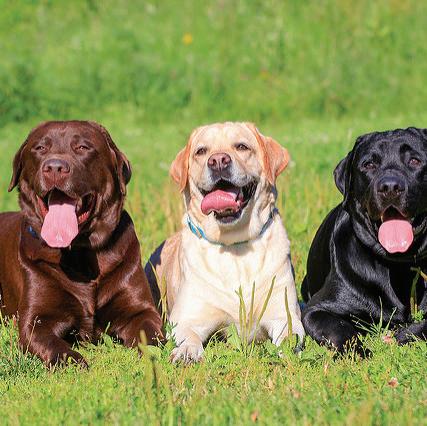
The student is expected to demonstrate an understanding of the classification of animals based on physical characteristics, including classes of vertebrates. Student Expectations
This unit builds students’ understanding of animal classification through observation, sorting, and argumentation. Learners distinguish vertebrates from invertebrates, then classify vertebrates into mammals, birds, reptiles, amphibians, and fish using observable physical traits. Through collaborative analysis of animal images, students generate and refine criteria, address atypical cases, and defend decisions with evidence. Oral explanations, flowcharts, and concise written justifications develop scientific reasoning and vocabulary, aligning to the expectation that students classify animals based on physical characteristics, including major vertebrate classes.
• Animals can be classified into groups based on their physical characteristics.
• Animals can be classified into major groups based on their behaviors.
• Some characteristics used to classify animals into major groups include whether they have a backbone, what type of outer covering they have, whether they give birth or lay eggs, and where they live.
The terms below and their definitions can be found in Picture Vocabulary and are embedded in context throughout the scope.
Amphibian
Cold-blooded animal that spends part of its life in the water and part of its life on land
Animal
A living thing that can move on its own and Bird
Warm-blooded animal that lays eggs and that has wings, two legs, feathers, and a beak.
Characteristic
A feature that helps identify something
Classify
To group similar things together
Compare
To see what is the same and what is different
Invertebrate
An organism that does not have a backbone
Mammal
Warm-blooded animal that feeds milk to its young and that usually has hair or fur covering most of its skin
Physical Characteristic
A feature or trait that can be seen
Reptile
Cold-blooded animal that has leathery skin or is covered in scales
Notes
Students engage in classifying animals by examining characteristics and justifying their reasoning in small groups.
• Brainstorm ways to classify animals, drawing on examples from different ecosystems.
• Work in pairs or trios to examine picture cards of local animals.
• Sort the animals into groups based on observed characteristics and prior knowledge.
• Share groupings and explain the rationale behind their classifications to the class.
Activity - Classification of Organisms
Students categorize animals using observable traits to build understanding of major animal groups.
• Sort a set of animal cards into two categories: vertebrates and invertebrates, defending their reasoning.
• Further classify vertebrates into mammals, birds, reptiles, amphibians, and fish, and record group names on a flowchart.
• Identify and note key physical characteristics of each vertebrate group, then reflect on classification choices in writing.
Activity - Classification Debate
Students classify vertebrates using evidence-based reasoning, including cases with atypical traits.
• Collaboratively generate and record typical characteristics for mammals, birds, reptiles, and amphibians.
• Sort animal images into categories using the class chart, then justify placements orally with specific traits.
• Complete an individual Classification Debate sheet to construct written arguments supported by observed characteristics.
Notes
Estimated 15 min - 30 min
In this activity, students sort animals into groups and then explain their reasoning.
Materials
Printed Materials
● 1 set of picture cards (per group)
Print and cut out a set of picture cards for each group. The picture cards show various local animals:
● Mammals: eastern fox squirrel, eastern red bat
● Reptiles: alligator, sea turtle
● Amphibians: spotted salamander, bullfrog
● Fish: goldentail moray eel, bull shark
● Birds: great blue heron, American flamingo
SEP Connection
Constructing Explanations
Engaging in Argument from Evidence
Analyzing and Interpreting Data
During this activity, students will engage in constructing explanations and designing solutions by making observations of animal characteristics to construct evidencebased accounts of why some animals have backbones while others do not, and how this adaptation helps them live in their environments. They will also engage in argument from evidence by justifying their classification of animals into groups, distinguishing between explanations that account for all gathered evidence and those that do not. Additionally, students will analyze and interpret data by recording their observations and using them to describe patterns and relationships in the natural world, thereby answering the scientific question of how backbones contribute to an animal’s survival in its habitat.
Notes
CCC Connection
Patterns
Structure & Function
During this activity, students will observe and identify patterns in the characteristics of animals, such as the presence or absence of backbones, to describe and explain the phenomenon of why some animals have backbones while others do not. This will help them understand how these structural features relate to the animals’ functions and their ability to thrive in different environments.
1. Ask students how we might classify or sort different animals into groups. Be sure to give students various examples of ecosystems (e.g., ocean, pond, grassland) to help them brainstorm.
2. Place students into small groups of two to three students each, and provide them with pictures of various animals. Give students two minutes to examine their cards.
3. Ask students to sort the pictures into groups based on what they know about the animals. Students should be able to justify their groupings.
4. Ask each group to share and explain their observations and how they sorted and classified their cards.
How do the physical characteristics of animals, such as having a backbone or not, influence their ability to survive and thrive in their specific ecosystems?
1. Based on your observations, what are some advantages that animals with backbones might have over those without in certain environments?
2. How might the absence of a backbone benefit certain animals in their habitats, and what adaptations do they have to compensate for this?
3. Considering the ecosystems discussed, how do the physical structures of animals, including the presence or absence of a backbone, affect their interactions with other species and their overall role in the ecosystem?
FACILITATION TIP
Engage students with a discussion of your current climate/ecosystem.Help students generate the list of ecosystems and post it.
FACILITATION TIP
Preview a few of the cards with students before distributing them to the small groups. Provide students guiding questions to help them look for clues to justify their groupings: What do you notice in the background? What physical attributes does the animal have? Encourage students to read the names of the animals aloud in their small groups.
FACILITATION TIP
Accept all reasonable card sorts; specific classifications can be addressed later.
Estimated 30 min - 45 min
In this activity, students classify a set of animals into two groups: vertebrates and invertebrates. They then classify the vertebrates into five groups: mammals, fish, amphibians, birds, and reptiles.
Materials
Printed Material
● 1 Classification of Organisms (per student)
● 1 set of animal cards (per group)
Reusable Materials
● 1 pair of scissors (per teacher)
● 1 resealable plastic bag (per group)
SEP Connection
Constructing Explanations
Engaging in Argument from Evidence
Analyzing and Interpreting Data
Print out copies of the Student Journal and animal cards. Laminate and cut apart the animal cards, and place pieces into resealable plastic bags.
During this activity, students will make observations and use evidence to construct explanations for the phenomenon of why some animals have backbones while others do not. By classifying animals into vertebrates and invertebrates, and further categorizing vertebrates into mammals, fish, amphibians, birds, and reptiles, students will engage in argument from evidence to support their classifications. They will analyze and interpret data by recording observations and identifying patterns in animal characteristics, which will help them understand how these traits aid animals in adapting to their environments.
Notes
Patterns
Structure & Function
During this activity, students will observe and classify animals into groups based on the presence or absence of backbones, recognizing patterns in the natural world. This process will help them understand how the structure of an animal’s body relates to its function and role in its environment, providing evidence to explain why some animals have backbones while others do not.
1. Pass out a Classification of Organisms to each student.
2. Have students work in groups of four to five students. Give each group an animal cards bag.
3. Ask the students to sort the cards into only two groups. Tell them every card has to fit in one of the two groups, with no cards left over.
4. Call on different groups to share their reasoning.
How did they sort the cards? Why?
What is the difference between the two groups?
What are these groups called?
They should have sorted the animals by vertebrates (animals with backbones) and invertebrates (animals without backbones).
5. Instruct students to fill in these two terms on the first row of the flowchart in their Student Journal.
6. Ask the students to set the invertebrate cards to the side and focus on the vertebrate cards. Instruct them to sort the vertebrate cards into different groups.
7. Call on different groups to share their reasoning.
How did they sort the cards? Why?
What is the difference between the groups?
What are these groups called?
They should have sorted the vertebrates into groups of mammals, reptiles, amphibians, fish, and birds.
8. Have students add the names of their groups to the second row of the flowchart in their Classification of Organisms.
9. Discuss the characteristics of each vertebrate group.
Students should recognize the following:
Birds have feathers, beaks, and two feet.
Reptiles have scales, dry skin, and four feet or no feet.
Fish have scales and fins.
Mammals have body hair/fur, four feet, or two feet.
Amphibians have smooth, wet skin and four feet.
10. Have students add physical characteristics of each group below the heading in the third row of the flowchart in their Classification of Organisms.
11. Have students complete the Reflection questions below the flowchart in their Classification of Organisms.
Notes
FACILITATION TIP
Depending on students’ prior knowledge, fill out the Classification of Organisms together before students begin sorting the animal cards.
FACILITATION TIP
Preview all of the vocabulary for the flowchart before filling in terms: vertebrates, invertebrates, fish, amphibians, reptiles, birds, and mammals. Use the Visual Glossary.
FACILITATION TIP
Distribute the animal cards after the chart has been completed and students have some understanding of the names of the groups.
FACILITATION TIP
List these characteristics on chart paper for students to refer to as they sort the cards.
FACILITATION TIP
Support students while they complete the Reflection Questions. Some students may need sentence frames, others may need to respond verbally, and a few may need responses created for them to copy. Consider providing lined paper.
Magnificent Quad Game
After the students have completed the Explore activities, give them an opportunity to show their understanding by playing the “magnificent quad game.”
The Magnificent Quad Game Technique
● Divide the class into groups of four.
● Give each group four index cards and some colored pencils.
● Assign each group one of the following terms: organism, invertebrate, vertebrate, amphibian, reptile, mammal, bird.
● Have each member of the group complete one index card (A, B, C, or D).
○ Student A decorates the word to be defined on the first index card.
○ Student B illustrates the word to be defined on the second index card.
○ Student C writes the definition in bold type on the third index card.
○ Student D uses the word in a sentence on the fourth index card.
● Have the group choose a small symbol to place on the back right upper corner of all four index cards.
● Pick up the cards, mix them up, and redistribute the cards to all the students.
● Instruct students to find their matches for each group of cards. (Students may use the symbols on the backs of the cards, if necessary, to find their matches.)
● Have the new student groups of four discuss the new word, illustration, definition, and antonym and prepare to present their word to the class.
● Facilitate this process by asking each group to report the strategies they used to find their matches.
When classifying animals, how does having a backbone or not influence their ability to survive and thrive in their specific environments?
1. How do the physical characteristics of vertebrates, such as having a backbone, help them adapt to their habitats compared to invertebrates?
2. In what ways do the environments of vertebrates and invertebrates differ, and how might these differences influence their evolutionary paths?
3. How might the presence or absence of a backbone affect an animal’s ability to find food, escape predators, or reproduce in its natural habitat?
Notes
Estimated 30 min - 45 min
In this activity, students construct a scientific argument for classifying vertebrates that have unusual characteristics.
Materials
Printed Material
● 1 Classification Debate (per student)
● 1 set of picture cards (per class)
Reusable Materials
● 4 dry-erase markers (different colors) (per teacher)
● 1 pair of scissors (per teacher)
SEP Connection
Constructing Explanations
Engaging in Argument from Evidence
Analyzing and Interpreting Data
Preparation
Draw a four-column chart on the whiteboard. Using the different colors, title the columns as follows: Mammals, Birds, Reptiles, Amphibians.
Print out the Classification Debate and Student Reference Sheet. Laminate and cut apart the Student Reference Sheet.
During this activity, students will engage in constructing explanations and designing solutions by making observations and using evidence to classify vertebrates with unusual characteristics. They will construct evidence-based accounts for the phenomenon of why some animals have backbones while others don’t, and how this helps them live in their environments. By analyzing and interpreting data, students will record and share observations, describe patterns, and construct arguments with evidence to support their claims about the classification of these animals.
Notes
CCC Connection
Patterns
Structure & Function
During this activity, students will observe and identify patterns in the characteristics of vertebrates, using these patterns as evidence to classify animals and understand the phenomenon of why some animals have backbones while others don’t. They will also explore how the structure and function of these vertebrates relate to their ability to live in their specific environments.
1. Explain to the students that, as a class, they are to come up with characteristics of the different types of vertebrates.
2. Ask students to share known characteristics of the different types of vertebrates and write them on the chart under the appropriate column.
Make sure to explain to the students that these are characteristics typically found in these vertebrates but that not all organisms classified as such display them.
The chart should include typical characteristics such as these:
Mammals: fur/body hair, milk for young, external ears, teeth, four feet or two feet
Birds: feathers, beak, two feet
Reptiles: scales, four feet or no feet, dry skin
Amphibians: scaleless, smooth skin; wet skin; four feet
3. Show students the pictures from the Student Reference Sheet.
4. Call for volunteers to come up to the board to place the animal pictures in the correct column based on the characteristics listed.
Mammals: bat, prairie dog, dolphin
Birds: cardinal, penguin
Reptiles: snake, iguana
Amphibians: frog, salamander
5. Have students explain their reasoning for placing the pictures in the chosen columns. For example:
I placed the prairie dog in the mammal column because a prairie dog has fur, provides milk to its young, and has teeth and four feet.
I placed the penguin in the bird column because a penguin has two feet, feathers, and a beak.
I placed the bat in the mammal column because it has live births even though it has wings and can fly.
6. Pass out a Classification Debate to each student.
7. You may want to leave the chart on the board so the students may use it for reference purposes while completing their Classification Debate.
Notes
FACILITATION TIP
Engage students by reviewing the different pronunciations of vertebrates and invertebrates. Use choral, partner, and individual responses. Check for comprehension of both terms before moving on.
FACILITATION TIP
Provide and project a bank of known characteristics to facilitate this discussion.
FACILITATION TIP
Post sentence frames to support student reasoning. For example, I put the ... in the ... column because it has...
FACILITATION TIP
Students may have very limited experience with making a claim and providing evidence. Creating and evaluating CERs is a critical STEM skill students will later be required to demonstrate. Take time to provide students with examples and non-examples. Model writing this platypus claim and evidence.
In this activity, students may have trouble waiting their turn to classify animals. Assist students in developing a strategy to remind them not to shout out the answer, such as crossing their arms or counting silently to five. If students are still struggling, ask them to assist you in creating the anchor chart or leading a discussion. Read more strategies in the Interventions Toolbox.
Exit Ticket
Considering the activity today, respond to the following:
● Explain three things you learned today that you did not already know.
● Being specific, list two things you would like to research to learn more about.
● Write a question you have about something in the activity.
How do the unique characteristics of vertebrates help them adapt to their environments, and why do some animals have backbones while others don’t?
1. How do the characteristics of vertebrates, such as having a backbone, provide advantages in their specific habitats?
2. In what ways might the absence of a backbone be beneficial for certain animals in their environments?
3. How do the characteristics we use to classify vertebrates relate to their survival and reproductive success in different ecosystems?
STEMscopedia
Reference materials that includes parent connections, career connections, technology, and science news.
Linking Literacy
Strategies to help students comprehend difficult informational text.
Picture Vocabulary
A slide presentation of important vocabulary terms along with a picture and definition.
Content Connections Video
A video-based activity where students watch a video clip that relates to the scope’s content and answer questions.
Math Connections
A practice that uses grade-level appropriate math activities to address the concept.
Reading Science - Animal Classifications
A reading passage about the concept, which includes five to eight comprehension questions.
Notes
Claim-Evidence-Reasoning
An assessment in which students write a scientific explanation to show their understanding of the concept in a way that uses evidence.
Multiple Choice Assessment
A standards-based assessment designed to gauge students’ understanding of the science concept using their selections of the best possible answers from a list of choices
Open-Ended Response Assessment
A short-answer and essay assessment to evaluate student mastery of the concept.
Independent Practice
A fill in the blank sheet that helps students master the vocabulary of this scope.
Guided Practice
A guide that shows the teacher how to administer a smallgroup lesson to students who need intervention on the topic.
Extensions
A set of ideas and activities that can help further elaborate on the concept.
Use this template to decide how to assess your students for concept mastery. Depending on the format of the assessment, you can identify prompts and intended responses that would measure student mastery of the expectation. See the beginning of this scope to identify standards and grade-level expectations.
Student Learning Objectives
Animals can be classified into groups based on their physical characteristics.
Animals can be classified into major groups based on their behaviors.
Some characteristics used to classify animals into major groups include whether they have a backbone, what type of outer covering they have, whether they give birth or lay eggs, and where they live.
The student is expected to demonstrate an understanding of how trees and amphibians change in form as they go through stages of their life cycles. Student Expectations
• Plants and animals change throughout their life cycles.
• Trees, such as pines or oaks, change during their life cycle stages, which include germination, growth, reproduction, and seed dispersal.
• Amphibians such as frogs change during their life cycle stages, which include birth, growth, reproduction, and death.
Scope Overview
This unit builds students’ understanding that organisms have life cycles, focusing on trees and amphibians. Through collaborative exploration, multimedia observation, and hands-on sequencing, students identify, order, and compare the stages of an oak tree and a frog, recognizing metamorphosis and plant developmental patterns. Learners analyze similarities and differences across life cycles, use evidence from visuals and models to justify stage sequences, and synthesize patterns of change over time to meet the expectation of explaining how trees and amphibians change form across their life stages.
Scope Vocabulary
The terms below and their definitions can be found in Picture Vocabulary and are embedded in context throughout the scope.
Amphibian
Cold-blooded animal that spends part of its life in the water and part of its life on land
Communication
How living things give information to each other
Compare
To see what is the same and what is different
Describe
To tell about something
Form
The shape or nature of something
Grow To increase in size
Life Cycle
The way that living things continuously grow, make new living things, and die
Living
Requires energy, grows, can produce offspring, and dies
Observe
To use the senses to examine or inspect
Reproduce
To make a new living thing
Notes
Students collaboratively explore which organisms have life cycles and how they change over time, including recognizing metamorphosis and plant life cycles.
• Brainstorm in pairs to quickly list organisms with life cycles.
• Compile a class list and discuss common traits of listed organisms.
• Identify examples that undergo metamorphosis and expand the list to include plants.
Students investigate and compare plant and amphibian life cycles through multimedia and hands-on sequencing.
• Watch time-lapse and educational videos to identify and chart key life cycle stages for an oak and a frog.
• In groups, sequence mixed life cycle card sets for selected plants and amphibians, confirming accuracy before recording.
• Compare and contrast the two life cycles selected, documenting similarities/differences in student journals.
• Conclude by answering reflection questions to synthesize understanding of life cycle patterns.
Notes
Estimated 15 min - 30 min
In this activity, students identify organisms that undergo changes throughout their lifetime.
Materials
Reusable Materials
● 1 marker/dry-erase marker (per teacher)
● 1 whiteboard (optional) (per class)
Consumable Materials
● 1 piece of chart paper (optional) (per class)
SEP Connection
Constructing Explanations
Planning and Carrying Out Investigations
● Students need their science notebooks for this activity.
● Hang chart paper (if applicable) in the front of the room.
During this activity, students will make observations and construct evidence-based accounts of natural phenomena by identifying organisms that undergo changes throughout their lifetime. They will collaboratively generate and compare multiple solutions to the question of which organisms experience life cycles, including metamorphosis. By discussing and listing organisms, students will plan and carry out investigations to understand how tiny seeds and eggs turn into big trees and hopping frogs, using their observations to support explanations of these natural processes.
Notes
CCC Connection
Cause & Effect
Stability & Change
During this activity, students will explore the concept of cause and effect by identifying organisms that undergo changes throughout their lifetime, gathering evidence to support their understanding of life cycles. They will also observe stability and change by noting how some organisms maintain certain characteristics while undergoing transformations, helping them understand how tiny seeds and eggs turn into big trees and hopping frogs.
1. Put students into partner groups.
2. Explain to the students that they have two minutes to list as many organisms they know that have life cycles.
3. Once two minutes have elapsed, ask the students to tell you the organisms that they came up with. Make a class list on the whiteboard or chart paper.
4. Discuss the organisms listed.
○ What do all of these organisms have in common? They all go through some sort of change during their lifetime.
○ Do any organisms listed go through metamorphosis? Answers may vary but can include most amphibians, some insects, jellyfish, coral, starfish, and some mollusks.
○ Do only animals go through life cycles? No, plants go through changes too.
5. Have students make suggestions of plants that can be added to the class list.
Some students may feel stressed trying to list organisms in two minutes. Determine what can help reduce this stress by using visible timers, providing extra time, or allowing various forms of completion such as verbal response. Find more ways to assist students who do not complete assignments in the Interventions Toolbox.
Phenomenon Connection
Connection Statement with Posing Question: How do tiny seeds and eggs turn into big trees and hopping frogs, and what processes do they undergo during their life cycles?
Class Discussion Questions:
1. Based on your comparison with other classmates, what factors could influence the rate at which seeds grow into trees or eggs develop into frogs?
2. If you observed the entire life cycle of a frog, how would you describe the changes it undergoes from egg to adult?
3. How do the life cycles of plants and animals compare, and what are the similarities and differences in the changes they experience?
FACILITATION TIP
Use a think, pair, share model to generate the list of organisms. Have students list on individual white boards silently for 1 minute, then pair up with a partner, and finally share out to the whole class while the teacher creates a big list. Reassure students not to worry about correct spelling on their brainstorming lists.
FACILITATION TIP
Write the word organism. Have students practice saying it aloud and provide a definition. If needed, reference the Visual Glossary.
FACILITATION TIP
Keep this class list posted and continue to add to it throughout the weeks ahead.
Estimated 30 min - 45 min
In this activity, students investigate, observe, and compare the life cycles of amphibians.
Materials
Printed Material
● 1 Life Cycles (per student)
● 1 set of Life Cycle Cards (per group)
Reusable Materials
● 1 large manila envelope to hold Life Cycle Cards (per group)
● 1 computer with Internet access (per class)
● 1 projector (per class)
● 1 marker/dry-erase marker (per class)
● 1 whiteboard (optional) (per class)
Consumable Materials
● 2 pieces of chart paper (optional) (per class)
SEP Connection
Constructing Explanations
Planning and Carrying Out Investigations
1. Copy and pre-cut all the Life Cycle Cards and place them in appropriate envelopes. You may want to use card stock and laminate them for future use.
2. Mark the back of the cards with a matching symbol for each life cycle for easy formative assessment, if desired.
3. Mix up the cards and place in a large manila envelope (per group).
4. Hang chart paper (if applicable) in the front of the room.
5. Set up a computer and projector in the front of the room. Using a search engine, type in the words “Acorn to oak filmed over an 8-month-period time lapse.” Choose the video that is 3:03 long.
During this activity, students will make observations from media to construct evidence-based accounts of the natural phenomenon of how tiny seeds and eggs turn into big trees and hopping frogs. They will plan and conduct investigations collaboratively to produce data that serves as the basis for evidence, allowing them to evaluate and compare the life cycles of amphibians and plants. Through this process, students will generate and compare multiple solutions to understand the similarities and differences in life cycles, enhancing their ability to construct explanations and design solutions.
Cause & Effect
Stability & Change
During this activity, students will explore the cause and effect relationships in the life cycles of amphibians and trees, observing how specific stages lead to observable patterns of growth and development. They will also examine stability and change by identifying which aspects of the life cycles remain constant and which undergo rapid or gradual transformation.
1. Place the students into groups of three to four students.
2. Explain to the students that the class will first observe a time-lapse video of an acorn turning into a sapling and then a video about the life cycle of a frog.
3. Have the students watch the video.
4. Based on the video, ask students to identify the stages of an oak tree. Create a life cycle chart on the whiteboard or on chart paper.
○ Seed, seed with roots, seed with roots and beginning of stem, seed with roots and stem pushed through soil, sapling, adult tree
5. Using a search engine, type in the words “Frog life cycle video for kids— science for kids by.” Choose the video that is 1:59 long.
6. Have the students watch the video.
7. Based on the video, ask students to identify the stages of a frog. Create a life cycle chart on the whiteboard or on chart paper.
○ Egg, tadpole, tadpole with legs, froglet, adult frog
8. Pass out a manila envelope to each group.
9. Explain to the students that they will now work together to identify the correct order of the stages of various trees and amphibians.
10. Have the students choose one plant and one animal life cycle from the bag and put the life cycle cards in the correct order.
11. Once the students have finished, check their work before they add the information to their Student Journal.
12. Have the students talk with their group about how the two life cycles they chose are alike and how they are different. Have students record their answers in their Life Cycles page.
13. Have students repeat steps 9–11 for the next set of Life Cycle Cards.
14. Instruct students to answer the questions at the bottom of their Life Cycles page. Notes
If students are to choose one plant or one animal to order at a time, print the card sets on different colors of paper and distribute them one at a time. This may prevent confusion between the different images.
If time is limited, allow students to select one life cycle to draw on the Life Cycles page. Alternatively, provide cards for students to glue in a cycle and draw the arrows.
Think, Pair, Share
After the students have time to explore the activity, group them with partners to discuss possible answers to questions including the following:
● How do a lot of life cycles begin?
○ Sentence stem: Most life cycles begin with the ________ . Allow the students to think, pair, and share with each other.
Other Example Questions
● How do the life cycles of the frog and pine tree compare?
● Are all life cycles the same?
● What is an example of a life cycle?
Connection Statement with Posing Question: How do tiny seeds and eggs transform into large trees and hopping frogs, and what processes are involved in these life cycles?
Class Discussion Questions:
1. What similarities and differences do you notice between the life cycle stages of an oak tree and a frog?
2. How do environmental factors influence the growth and development of seeds into trees and eggs into frogs?
3. In what ways do the life cycles of plants and animals demonstrate the concept of transformation and growth over time?
STEMscopedia
Reference materials that includes parent connections, career connections, technology, and science news.
Linking Literacy
Strategies to help students comprehend difficult informational text.
Picture Vocabulary
A slide presentation of important vocabulary terms along with a picture and definition.
Content Connections Video
A video-based activity where students watch a video clip that relates to the scope’s content and answer questions.
Career Connections - Arborist
STEM careers come to life with these leveled career exploration videos and student guides designed to take the learning further.
Math Connections
A practice that uses grade-level appropriate math activities to address the concept.
Reading Science - The Life Cycle of a Frog
A reading passage about the concept, which includes five to eight comprehension questions.
Notes
Claim-Evidence-Reasoning
An assessment in which students write a scientific explanation to show their understanding of the concept in a way that uses evidence.
Multiple Choice Assessment
A standards-based assessment designed to gauge students’ understanding of the science concept using their selections of the best possible answers from a list of choices
Open-Ended Response Assessment
A short-answer and essay assessment to evaluate student mastery of the concept.
Guided Practice
A guide that shows the teacher how to administer a smallgroup lesson to students who need intervention on the topic.
Independent Practice
A fill in the blank sheet that helps students master the vocabulary of this scope.
Extensions
A set of ideas and activities that can help further elaborate on the concept.
Use this template to decide how to assess your students for concept mastery. Depending on the format of the assessment, you can identify prompts and intended responses that would measure student mastery of the expectation. See the beginning of this scope to identify standards and grade-level expectations.
Student Learning Objectives
Plants and animals change throughout their life cycles.
Trees, such as pines or oaks, change during their life cycle stages, which include germination, growth, reproduction, and seed dispersal.
Amphibians such as frogs change during their life cycle stages, which include birth, growth, reproduction, and death.
Does Student Mastery Look Like?
Student Expectations
The student is expected to demonstrate an understanding of the interdependence of living things and their environment by generating arguments to explain how animals change and respond to changes in their environment.
do animals know what to do when the seasons change?
Key Concepts
• Animals live in environments where their basic needs are met.
• Environments can change slowly or rapidly, causing animals to change or respond. If they are not able to adapt, they may not survive.
• Animals can make minor or major changes to their environment.
• Changes to the environment made by animals can affect other living things.
Scope Overview
This unit builds students’ capacity to argue from evidence about how animals both respond to and cause environmental change. Through observation, discussion, modeling, and research, students analyze natural and human-caused events (e.g., tides, fire, pollution, drought, cold) and predict impacts on survival, movement, and habitat. They examine organism traits and behaviors (such as migration, hibernation) to identify patterns of adaptation, then construct cause-and-effect explanations and written claims that connect animal actions to ecosystem changes, emphasizing interdependence in living systems.
Scope Vocabulary
The terms below and their definitions can be found in Picture Vocabulary and are embedded in context throughout the scope.
Animal
A living thing that can move on its own and Change To make or become different
Communication How living things give information to each other
Environment
Everything that is around a living thing
Interdependency
When the well-being of two or more things is linked together
Living
Requires energy, grows, can produce offspring, and dies
Notes
Students analyze images of environmental changes to discuss impacts on animals and their habitats.
• Observe and interpret event pictures, identifying what happened and predicting effects on local animals.
• Discuss specific scenarios (tides, pollution, fire, food shortage, drought) and how these changes alter survival, movement, and habitats.
• Share reasoning and perspectives about how animals might respond, including relocation, adaptation, or risk of harm.
Students investigate how environmental changes affect animals and the ways organisms respond to survive.
• Use Organism Research and Storyline Sentence Cards to craft sentences about animal responses and write brief justifications.
• Move to vocabulary stations (migrate, hibernate, thrive, perish) during scenario prompts (fire, pollution, tides, cold, drought) to model organism behavior, then justify choices.
• Complete a cause-and-effect flow map and discuss patterns in adaptations and the impacts of human-caused and natural changes.
Students investigate how different animals cause major and minor changes to their environments and support claims with evidence.
• Match organisms to their characteristics using research cards and verify correct pairings.
• Use card information to identify and record ways each organism alters its environment.
• Create and share posters illustrating assigned organisms’ environmental impacts, then complete written explanations to construct scientific arguments.
Estimated 15 min - 30 min
Students view pictures of environmental changes and discuss how changes could affect animals that live there.
Materials
Printed Materials
● 1 set of Event Pictures (per class)
Reusable Materials
● 1 projector (per class)
Print the Event Pictures and plan a way for the class to view them together. They can be shown using a projector or interactive whiteboard. Another alternative is to print a copy of the Event Pictures for each group so all students can make observations.
Obtaining, Evaluating, and Communicating Information
Engaging in Argument from Evidence
During this activity, students will obtain, evaluate, and communicate information by observing pictures of environmental changes and discussing their effects on animals, thereby identifying patterns and evidence about how animals respond to seasonal changes. They will engage in argument from evidence by constructing arguments supported by observations from the images, distinguishing between explanations that account for all gathered evidence and those that do not, and making claims about the effectiveness of animal responses to environmental changes.
Notes
Cause & Effect
Stability & Change
During this activity, students will explore the cause and effect relationships between environmental changes and animal behaviors, observing how these changes can lead to observable patterns in animal adaptation and survival. They will also examine the concepts of stability and change by identifying which aspects of the environment remain constant and which change rapidly or slowly, helping them understand how animals know what to do when the seasons change.
1. Project each event picture and ask students what they think happened and how it affected the animals in that environment.
2. Discuss the following:
○ Picture 1: Tides—High tides could be dangerous for animals who do not depend on tidal areas. Animals could get stuck in the mud created by high tides. Fish could be left out of the water when high tides recede.
○ Picture 2: Pollution—Animals could become sick from the pollution or need to move to a new location. Fish that live in the water probably will not survive.
○ Picture 3: Fire—Burning down trees in an area removes the habitats of many animals that live in the forest. It takes a long time for trees to grow big and tall again.
○ Picture 4: Food Shortage—Animals can die due to lack of food. They may have to move away from their habitats and find new places to live.
○ Picture 5: Drought—Animals may not be able to get enough water. They will need to attempt to survive on just a little water. Animals may have to move somewhere else that has water.
3. What would you do if you were a bird and had your nest on one of the trees where deforestation is taking place? It would make me sad that my home was destroyed. I would have to work very hard to find a new place to build another nest.
How do animals know what to do when the seasons change?
1. How might animals sense and respond to changes in their environment, such as tides or pollution, and what adaptations help them survive these changes?
2. In what ways do animals prepare for seasonal changes, such as food shortages or droughts, and how do these preparations ensure their survival?
3. How do animals communicate or signal to each other about environmental changes, like fires or deforestation, and what role does this communication play in their survival strategies?
FACILITATION TIP
Be aware that some students may recall this littered beach image from the Kindergarten scope: Reducing Human Impact.
FACILITATION TIP
Follow up the question about the bird and its nest with some open-ended questions about animal habitats. Ask students about local wildlife sightings, parks, or their experiences in nature where they were aware of an animal home.
Estimated 1 hr - 2 hrs
In this activity, students identify and describe how animals are affected by changes in their environment caused by fire, pollution, shifts in tide, and availability of food/water.
Materials
Printed Materials
● 1 Environmental Effects (per student)
● 1 set of Vocabulary Signs (per class)
● 1 set of Scenario Cards (per teacher)
● 1 set of Storyline Sentence Cards (per student)
● 1 set of Organism Research Cards (per student)
Reusable Materials
● Scissors (per student)
● Glue or tape (per student)
SEP Connection
● Copy and cut out the Storyline Sentence Cards and Organism Research Cards. Laminate the cards for future use.
● Copy one set each of Scenario Cards and Vocabulary Signs.
● Sample student answers can be printed if needed.
Obtaining, Evaluating, and Communicating Information
Engaging in Argument from Evidence
During this activity, students will obtain, evaluate, and communicate information about how animals respond to environmental changes, such as fire, pollution, and seasonal shifts, to determine patterns in animal behavior and survival strategies. They will engage in argument from evidence by constructing and justifying claims about how specific environmental factors affect different organisms, using evidence gathered from Organism Research Cards and Scenario Cards. This will help them understand the phenomenon of how animals know what to do when the seasons change.
CCC Connection
Cause & Effect
Stability & Change
During this activity, students will explore the phenomenon of how animals know what to do when the seasons change by examining cause and effect relationships. They will identify and describe how environmental changes, such as fire, pollution, and shifts in tide, affect animals, generating observable patterns. Through designing simple tests and scenarios, students will gather evidence to support or refute their ideas about how these changes cause animals to adapt, migrate, hibernate, thrive, or perish. Additionally, students will observe stability and change by noting which animal behaviors remain constant and which change rapidly or slowly in response to environmental shifts.
Notes
1. Have students think of how the environment around us can change. Be sure to include both natural and man-made changes. How might organisms deal with these changes?
2. Ask students to use their Organism Research Cards to help them arrange the Storyline Sentence Cards and to create four sentences about an animal responding to their changing environment.
3. Once they have created a sentence that makes sense, instruct students to write a clear explanation of why they created the sentence that they did.
4. There may be more than one correct answer, so be sure that students use supportive reasoning to show why their stories line up.
5. Have students examine why the environmental change will cause the animal to be affected in a certain way.
6. Discuss the following:
○ Why do organisms change when their environment changes? They need to adapt to their environment to be able to survive by finding new places to live or new areas that have food.
○ How do organisms deal with these changes? They can migrate to find food, hibernate because of a lack of food or fires and pollution, or adjust their behavior to help them survive in their environment. Sometimes, due to fires or pollution, organisms can perish.
Remind students that the environment is always changing, nature is adapting, and humans are learning about how to positively impact Earth. Reassure students with local examples of positive human effects; park cleanup groups, tree preservation, clean water efforts, and so on.
Use colored paper to help keep the Organism Research Cards sorted. Put each animal on a separate color.
The Storyline Sentence Cards can also be printed on three different colors. Make all of the beginnings of the sentences one color, the middle parts a different color, and the endings of the Storyline a third color. Students can then sort the beginnings, middles, and endings more successfully.
Part II: What Is Your Behavior?
In this activity, the students move around the room like an animal and justify their reasoning.
FACILITATION TIP
If space is limited, hold up or project the Vocabulary Signs one at a time, and have students vote rather than move to the signs.
FACILITATION TIP
Be prepared to project the Scenario Cards as you read them aloud. Direct students’ attention by having them follow along with a choral reading of each scenario as it is presented.
1. Have students select one Organism Research Card. Ask them to think of their organism as you call out the various scenarios.
2. Post the Vocabulary Signs around the room so the students can move to them as you call out the different environmental factor scenarios that could affect their organism.
3. Read out the scenarios, have students think about how their organism would be affected, and have the students move to the vocabulary sign that best describes their animal’s reaction.
○ A fire burns a forest. Rattlesnakes, squirrels, raccoons, alligators, and black bears would be affected. They would need to find a way to get away from the fire, or they would perish.
○ People vacationing in Mississippi dump their trash in the wetlands. Pelicans and alligators would be affected. They would need to find a way avoid pollution, or they would perish. Raccoons might be affected by eating “people” food, which could make them sick.
○ The ocean tide goes out, exposing organisms in a tide pool. Organisms living in the tide pools would be affected. They would need to find a way to escape from predators like pelicans, or they would perish.
○ The weather becomes very cold throughout winter. Snakes, pelicans, alligators, and black bears would be affected. They would need to find a way to find food or live without food throughout the winter, or they would perish.
○ It does not rain for a very long period of time. Snakes, squirrels, raccoons, alligators, and black bears would be affected. They would need a way to find water, or they would perish.
FACILITATION TIP
Post sentence frames to help facilitate student justifications. Reinforce that this way of communicating is similar to making a claim and providing evidence as shown in the Grade 2 Classifying Animals scope.
4. Once students have moved (or not moved), instruct them to justify to a partner in that station or to you why they did (or did not) move.
○ Migrate: Most organisms would migrate to find food or new shelters if necessary (the polar bear and pelican routinely migrate).
○ Hibernate: Snakes (in northern areas) and black bears hibernate to conserve energy.
○ Thrive: All organisms thrive in environments that provide food and shelter for them.
○ Perish: All organisms perish in environments that do not provide food and shelter for them.
5. After you have called all the environmental factors, have students complete the Cause and Effect Flow Map in Part II of their Environmental Effects page.
Notes
6. Discuss the following:
○ How was your animal affected by each of these environmental changes? Answers may vary, depending on the animal.
○ Do you think all animals are affected by changes in the environment? Answers may vary, but overall, organisms that have not adapted to environmental changes would be affected.
○ What can humans do to help prevent changes in the environment that are harmful to animals? Humans can stop polluting water with trash and other things that might harm a water supply. They can also be careful when using fire.
○ Can an animal do more than one thing if something happens to its environment? Yes. For example, if there is not enough water, then an animal can migrate, or it will perish
Think Time/Talk Time
After the students have gone over the Explore 1 lesson, allow them to form groups by numbering off.
Allow them “think time” to answer the questions in their journals. Then, give them “talk time” to discuss their answers with each other. When you call a number, the student with that number should report for his or her group.
Possible prompt:
How are animals affected by changes to their environment from a fire?
When environmental conditions change, how do animals instinctively know how to adapt to survive?
1. How do animals decide whether to migrate, hibernate, or adapt their behavior when faced with environmental changes?
2. What role does instinct play in an animal’s ability to respond to seasonal changes or environmental challenges?
3. How might human activities, such as pollution or deforestation, impact the natural instincts and survival strategies of animals?
Use open-ended questions about things animals can do if something happens to their environment. For example ask, “What are some things animals have done to adapt to their environments?”
Conclude this discussion by reassuring students that there are humans who are creating positive impacts on Earth. Reinforce this by sharing about local efforts to preserve or protect the environment.
Estimated 1 hr - 2 hrs
In this activity, students construct scientific arguments to explain how animals can make major and minor changes to their environments.
Materials
Printed Material
● 1 Animals Changing Their Environment (per student)
● 1 set of Organism Research Cards (per group)
Reusable Materials
● Markers or crayons (per group)
Consumable Materials
● Poster paper or other large piece of paper
SEP Connection
Preparation
Copy and cut out the Organism Research Cards. Laminate the cards for future use.
Place students into at least five different groups.
Connection
Obtaining, Evaluating, and Communicating Information Engaging in Argument from Evidence
During this activity, students will obtain, evaluate, and communicate information by using Organism Research Cards and other media to identify patterns in how animals adapt to seasonal changes. They will engage in argument from evidence by constructing scientific arguments to explain how animals make changes to their environments, distinguishing between explanations supported by evidence and those that are not. Students will communicate their findings through drawings and oral presentations, supporting their claims with relevant evidence gathered from the activity.
Notes
Cause & Effect Stability & Change
During this activity, students will explore the phenomenon of how animals know what to do when the seasons change by constructing scientific arguments. They will observe and identify cause and effect relationships as they match organisms to their characteristics and examine how these organisms make changes to their environments. Through this process, students will also observe stability and change, noting how some environmental changes occur rapidly while others happen slowly.
1. Give each group a set of Organism Research Cards.
2. Have student groups read the animal characteristics and examine the pictures to determine a match between the organism and its characteristics.
3. Once the match is made, check to make sure the matches are correct.
4. Using the information from the cards, have students complete Part I of their Animals Changing Their Environment.
1. Assign an organism to each group.
2. Instruct student groups to draw a picture on poster paper showing how their organism changes the environment, based on their answers in Part I of their Animals Changing Their Environment.
3. Allow groups to share their drawings.
4. Using the drawings, the information, and the Organism Research Cards, have students complete Part II of their Animals Changing Their Environment.
Students may be hesitant or have difficulty working with peers in this group activity. Strategically group students with those they feel are less threatening. This may mean reducing the group size until students are comfortable. Arrange student seating to optimize eye contact and collaboration. Find more strategies for students who do not interact well with peers in the Intervention Toolbox.
Notes
FACILITATION TIP
Be aware that this set of Organism Research Cards is different from the Organism Research Cards in this scope’s Explore 1: Environmental Changes and Effects.
FACILITATION TIP
Provide support for developing readers by reading the characteristic cards together before distributing. Thoughtfully pair students to create collaboration during the matching.
FACILITATION TIP
Part II: Animals Reshape Our World! can be used to demonstrate how scientists generate CERs. This template carefully scaffolds claim, evidence, and reasoning for students. Consider using these pages as teaching tools. In future grades, students will be expected to generate and evaluate CERs; take time to model.
Question the Builder
After the students have had time to construct their scientific arguments, give them some time to play a game called “Question the Builder.”
Combine students with partners from other groups so they can discuss the questions listed below. Remind them they need to give each other listening time.
● How can animals make major changes to their environments?
● What is an example of a minor change an animal makes to its environment?
When animals change their environment in response to seasonal changes, how do they know what actions to take to survive and thrive?
1. Based on your research and comparison with other groups, how do different animals adapt their behaviors or environments to prepare for seasonal changes?
2. If an animal’s environment changes drastically due to human activity, how might this affect its ability to respond to seasonal changes?
3. How do animals communicate or signal to each other about changes in the environment that might indicate a change in season?
STEMscopedia
Reference materials that includes parent connections, career connections, technology, and science news.
Linking Literacy
Strategies to help students comprehend difficult informational text.
Picture Vocabulary
A slide presentation of important vocabulary terms along with a picture and definition.
Content Connections Video
A video-based activity where students watch a video clip that relates to the scope’s content and answer questions.
Math Connections
A practice that uses grade-level appropriate math activities to address the concept.
Reading Science - Drought
A reading passage about the concept, which includes five to eight comprehension questions.
Notes
Claim-Evidence-Reasoning
An assessment in which students write a scientific explanation to show their understanding of the concept in a way that uses evidence.
Multiple Choice Assessment
A standards-based assessment designed to gauge students’ understanding of the science concept using their selections of the best possible answers from a list of choices
Open-Ended Response Assessment
A short-answer and essay assessment to evaluate student mastery of the concept.
Guided Practice
A guide that shows the teacher how to administer a smallgroup lesson to students who need intervention on the topic.
Independent Practice
A fill in the blank sheet that helps students master the vocabulary of this scope.
Extensions
A set of ideas and activities that can help further elaborate on the concept.
Use this template to decide how to assess your students for concept mastery. Depending on the format of the assessment, you can identify prompts and intended responses that would measure student mastery of the expectation. See the beginning of this scope to identify standards and grade-level expectations.
Student Learning Objectives What Prompts Will Be Used?
Animals live in environments where their basic needs are met.
Environments can change slowly or rapidly, causing animals to change or respond. If they are not able to adapt, they may not survive.
Animals can make minor or major changes to their environment.
Changes to the environment made by animals can affect other living things.
Does Student Mastery Look Like?
Scope Overview
This unit builds conceptual understanding of interdependence by engaging students in hands-on models of seed dispersal, feeding relationships, and predator–prey dynamics. Students investigate how dispersal reduces competition and supports plant survival; classify animals by diet to connect structures to function and energy flow; and simulate population changes driven by predation and competition between species. Across experiences, learners collect and analyze data, discuss cause-and-effect interactions, and explain how plants and animals compete, cooperate, and interact within ecosystems to support survival.
The student is expected to demonstrate an understanding of the interdependence of living things, including how plants and animals compete, cooperate, and interact in the environment.
Key Concepts
• All living things in an environment interact with each other.
• Animals need to eat food to gain energy so they can grow and live. Animals may be herbivores that eat plants, carnivores that eat other animals, or omnivores that eat both plants and animals.
• Plants and animals can compete or cooperate with other living things for food and space.
Scope Vocabulary
The terms below and their definitions can be found in Picture Vocabulary and are embedded in context throughout the scope.
Animal
A living thing that can move on its own and
Carnivore
An animal that eats animals
Communication
How living things give information to each other
Environment
Everything that is around a living thing
Food
What animals eat to get energy
Herbivore
An animal that eats plants
Interdependency
When the well-being of two or more things is linked together
Living
Requires energy, grows, can produce offspring, and dies
Omnivore
An animal that eats both plants and animals
Plant
A type of living thing that gets its energy from the Sun and is unable to move from place to place on its own
Predator
An animal that eats other animals
Prey
An animal that is eaten by another organism
Space
Area needed to survive
Notes
Students model seed dispersal to explore interdependence and how dispersal supports plant survival.
• In pairs positioned across the room, design and test a way to move a pinto bean using only paper (and optional tape) without approaching each other or throwing the seed alone.
• Develop and trial a plan within time and material constraints to transport the seed from one side of the room to the other.
• Discuss strategies used, connect them to real-world dispersal mechanisms (wind, animals), and explain why reaching new locations reduces competition and supports species survival.
Activity - Animal and Plant Dependence
Students explore how animals interact with other animals and plants by examining diet types and simple food chains.
• View a short video on herbivores, carnivores, and omnivores while completing a guided worksheet.
• Cut and paste organisms into categories based on whether they eat plants, meat, or both.
• Discuss definitions and examples of herbivores, carnivores, and omnivores, and how changes in plant availability affect them.
• Consider how physical traits (like teeth) relate to diet and why animals don’t switch between these feeding roles.
Scientific Investigation - Survival!
Students simulate predator–prey dynamics and competition between foxes and hawks to observe how interactions affect populations over time.
• In groups, use colored paper squares to represent mice (prey), foxes, and hawks (competing predators), “flinging” predator squares to capture prey within timed rounds.
• Follow capture and interaction rules, remove eliminated pieces, and record remaining organisms after each round.
• Model reproduction by doubling mice and adding one fox and one hawk each round, repeating for multiple rounds to generate data.
• Discuss ecosystem impacts and create line graphs to visualize predator and prey population trends.
Estimated 15 min - 30 min
Students demonstrate an understanding of the interdependence of living things.
Materials
Reusable Materials
● 1 pinto bean (per pair of students)
Consumable Materials
● 1 sheet of notebook paper (per student)
● 1 roll of masking tape (per class)
Divide the class into pairs. Assign one student to be Partner A, and assign the other student to be Partner B.
Obtaining, Evaluating, and Communicating Information
During this activity, students will obtain, evaluate, and communicate information about the interdependence of living things by using observations and texts to understand how plants and animals help each other survive in the wild. They will read grade-appropriate texts and use media to determine patterns in seed dispersal, supporting their understanding of the phenomenon. Students will describe how specific images, such as diagrams of seed dispersal mechanisms, support scientific ideas. They will obtain information using various texts and media to answer scientific questions about plant and animal interactions. Finally, students will communicate their findings and design ideas orally and in written forms, using models and drawings to provide detailed explanations of how seeds are dispersed and how this process supports plant survival and biodiversity.
Notes
Systems and System Models Cause and Effect
During this activity, students will explore systems and system models by understanding how the parts of a system, such as plants and animals, work together to support survival in the wild. They will also investigate cause and effect by designing and testing methods of seed dispersal, observing how different strategies can lead to successful or unsuccessful outcomes, thereby generating observable patterns related to the interdependence of living organisms. Activity Preparation
1. The goal is for students to use the paper to get their seed to their partner while standing across the room from each other.
2. Students may not move closer to their partners, and they may not throw the seed by itself.
3. They may use tape if necessary.
4. Partner A begins with the seed.
5. Students take two minutes to decide how they can get the seed to their partner.
6. After creating a plan, students test their idea to see if it delivers the seed to their partner.
7. Discuss the following:
○ How did you and your partner get the seed from one side of the room to the other? We wrapped the paper around our seed and threw it and acted like the wind was moving it. We created an airplane to act as a vehicle for moving our seed from one side to the other. We folded the paper around the seed and slid the seed from one side to the other.
○ What real-life examples can you think of for seed dispersal? Seeds stick to animals that walk by the adult plant. Seeds blow in the wind to a new location. Seeds are dropped by an animal in a new location.
○ Why is it important for a seed to go to a new location? Seeds go to new locations to help the species survive. A new location is essential so the new plant does not have to compete with the adult plant for its basic needs.
FACILITATION TIP
Remind students about safety rules with small seeds.
FACILITATION TIP
Prepare and post clear criteria and constraints for this activity. For example, students may not change position, but they may move their arms. Students can only use the one piece of paper and the one roll of masking tape provided. Provide time to answer clarifying questions before beginning the two minutes collaboration and the testing.
FACILITATION TIP
Allow students to collaborate close to each other before returning to their places across the room.
FACILITATION TIP
Set clear expectations for the testing time. Consider having one or two pairs test at a time while the rest of the class observes. Clarify the protocols for when the seed lands on the ground. Set a timer or limit the number of attempts.
This activity requires students to work together in pairs and move an object from partner to partner in a timed activity. This could cause students to become frustrated and overwhelmed. Partner students with a peer who models positive behavior and who also makes students comfortable. Avoid areas of potential conflict. If students still become angry, allow students to complete the activity without the time constraints. This should cut down on the amount of frustration that can occur when trying to complete an activity in a certain amount of time. Read more strategies in the Intervention Toolbox for students who are easily angered or upset.
How do plants and animals rely on each other to ensure their survival in the wild, and what role does seed dispersal play in this interdependence?
1. How does the method you used to move the seed in the activity relate to how seeds are dispersed in nature by animals or environmental factors?
2. In what ways do animals benefit from the dispersal of seeds, and how might this relationship impact their survival?
3. Can you think of other examples in nature where plants and animals work together to ensure each other’s survival, similar to how seeds are dispersed?
Notes
Estimated 1 hr - 2 hrs
Students describe and compare how animals interact with other animals and plants in the environment.
Materials
Printed Material
● 1 Animal And Plant Dependence
● 1 Student Reference Sheet: “Let’s Eat!”
Reusable Materials
● Scissors
● Computer and projector
● Internet connection
Consumable Materials
● Glue
Using your favorite Internet search engine, type in the words “Herbivore Mr. DeMaio” to locate a video about herbivores, carnivores, and omnivores that is approximately 10.5 minutes long. Preview the video.
SEP Connection
Obtaining, Evaluating, and Communicating Information
During this activity, students will obtain, evaluate, and communicate information by using observations and texts to explore how plants and animals interact to support each other’s survival in the wild. They will read grade-appropriate texts and use media, such as a video on food chains, to determine patterns and evidence about these interactions. Students will describe how specific images and diagrams support scientific ideas about herbivores, carnivores, and omnivores. They will obtain information using various texts and media to answer scientific questions and support claims about animal and plant dependence. Finally, students will communicate their findings and design ideas through models, drawings, and written forms to provide detailed explanations of these scientific concepts.
Notes
CCC Connection
During this activity, students will explore systems and system models by describing and comparing how animals and plants interact in the environment, understanding that these interactions are parts of a system that work together to support survival. They will also investigate cause and effect by observing how changes in one part of the system, such as the disappearance of plants, can lead to observable patterns and effects on herbivores and omnivores, thereby gathering evidence to support their understanding of these relationships.
1. As a class, watch the video on food chains. Make sure to stop the video at certain points and discuss to make sure students are understanding.
2. Have students fill in Part I of the Animal And Plant Dependence throughout the video and discussion.
1. Hand out the Student Reference Sheet: “Let’s Eat!”
2. Instruct students to cut and paste organisms in the correct circles in Part II of the Animal And Plant Dependence corresponding to whether they eat meat only, plants only, or both.
3. Discuss the following:
○ What makes an organism a herbivore? An organism that eats only plants is a herbivore.
○ What makes an organism a carnivore? An organism that eats only meat is a carnivore.
○ What makes an organism an omnivore? An organism that eats both plants and meat is an omnivore.
○ What types of organisms would be affected if all the plants in an area died? Herbivores would not have anything to eat, and omnivores would have to depend only on meat for their food.
○ Can a carnivore become a herbivore? Can a herbivore become a carnivore? Why or why not? No, an organism cannot change its diet. Herbivores’ teeth are not designed to bite into meat and chew it; carnivores’ teeth are not designed to help grind down and chew plants.
Notes
FACILITATION
Turn on closed captions for students and watch the video through fully one time before distributing Part I of Animal and Plant Dependence. Watch the video a second time, pausing and helping students complete the definitions and information about teeth.
FACILITATION TIP
Before distributing the Student Reference Sheet, provide some simple examples of Venn diagrams. Depending on students’ prior knowledge, this may be their first experience with this sorting tool. Take time to teach students about the two circles and the overlap in the middle.
FACILITATION TIP
To facilitate class discussions and make room for all of the cut-outs to fit on the Venn diagram, create a large class diagram. Guide students to tape or glue their organisms onto the diagram. Use the large display to reinforce the vocabulary throughout the scope.
After the students explore how animals interact with other animals and plants in the environment, do the following:
● Gather students into groups of four.
● Tell them they have 15 minutes to create a play to show how animals interact with other animals and plants in their environment.
○ The play must have a beginning, middle, and end to the story, and the transfer of energy must be included.
● Have students identify as different characters before beginning.
● Encourage students to present their play to the class.
Posing Question: In what ways do plants and animals rely on each other to maintain balance in their environment?
1. How would the disappearance of a specific plant species affect the food chain in a given ecosystem?
2. What role do herbivores play in supporting the survival of carnivores and omnivores?
3. How might changes in the population of a particular animal species impact the plant life in their habitat?
Estimated 1 hr - 2 hrs
Students conduct a simulation to show how foxes and hawks compete for food.
Materials
Printed Materials
● 1 Student Journal (per student)
Reusable Materials
● 100 gray paper squares, approximately 3 cm x 3 cm (per group)
● 6 red paper squares, approximately 3 cm x 3 cm (per group)
● 6 brown paper squares, approximately 3 cm x 3 cm (per group)
● Put the 100 gray paper squares, six brown paper squares, and six red paper squares in a baggie. Hand out a Student Journal to each student.
SEP Connection
During this activity, students will obtain, evaluate, and communicate information by conducting a simulation to explore how foxes and hawks compete for food, thereby demonstrating the interdependence of plants and animals for survival in the wild. By using grade-appropriate texts and media, students will determine patterns and evidence about the natural world, such as predator-prey relationships and ecosystem dynamics. They will describe how specific images, like diagrams of the simulation setup, support scientific ideas about competition and survival. Students will obtain information using various texts and media to answer scientific questions and support claims about the balance of ecosystems. Finally, they will communicate their findings and design ideas orally and in written forms, using models, drawings, and graphs to provide detailed insights into the scientific concepts explored during the simulation.
● Timer (per class) Notes
Connections
During this activity, students will explore systems and system models by observing how different parts of an ecosystem interact and depend on each other for survival. They will also investigate cause and effect by designing and conducting a simulation to gather evidence on how competition between predators affects the balance of prey populations, thereby understanding the interconnectedness of organisms in their natural environment.
The goal of this simulation is to show how animals compete for food.
1. Divide students into groups of four.
2. Have student groups spread 20 gray paper squares on the table. These squares represent mice in a field.
3. Have two students take two red squares, and have two students take two brown squares. Tell them that the red squares represent two foxes and that the brown squares represent two hawks.
4. Tell students they have 20 seconds to try and “fling” their red or brown squares onto gray squares. (Remind students they cannot hold their square directly above the gray squares.)
5. If a fox or hawk square lands on any part of a mouse square, the fox or hawk can capture the mouse. The fox or hawk can continue “hunting” (flinging the square) onto the table and capturing mice until the time is up.
○ If a fox or hawk square lands on two or more mouse squares, the student may capture all the mice squares that are touching the fox or hawk square.
6. If a fox square lands on at least half of a hawk square, the fox can capture the hawk. However, if a hawk square lands on a fox square, the hawk cannot capture the fox. (Hawks cannot eat adult foxes.)
7. If a red fox square or brown hawk square lands on the floor, it is out of the game.
8. After the first round, students should count and record in their Student Journal the number of organism squares left.
9. Since animals reproduce, have students double the number of mice and add one more hawk and one more fox. (For example, if 15 mice squares remain on the table after the first round, students should add 15 more mice squares, making 30 mice squares on the table. Assuming no fox or hawk squares fell on the floor or were captured, students now have 3 fox squares and 3 hawk squares.)
10. Continue playing four more rounds, and write the results in the Student Journal.
Notes
Before dividing students into groups, model the activity. Show students how to set up the 20 squares on the table. Provide cookie sheets or trays to contain the supplies. Model how to “fling” the red and brown squares. Clarify expectations by showing appropriate procedures.
Project these rules and criteria and preview them carefully with students when you model the activity. Students will need to reference the rules about who can capture who and when. Be prepared for students to be very competitive and animated during this engaging activity.
Students will need help determining “at least half” and may not always agree. Take time to demonstrate and address how to handle disagreements.
If possible, set up this activity in a large common area or outside and use large squares. Alternatively, play a tag game that simulates predator, prey, and ecosystem.
11. Discuss the following:
○ How did predators (hawk and fox) and prey (mice) depend on each other? The mice were food for the hawk and fox, which helped them survive. The hawk and fox helped keep the mice population lower.
○ What would happen if there were no predators? If there were no predators, the prey would continue to increase. Eventually, the prey would become overcrowded in one place, and their food source would be in danger of dying out.
○ How can competing predators affect the ecosystem? Too many predators could damage the balance of prey/predators. They could strip an area of all its food sources. As a result, the prey’s food source would grow. (Example: The hawk and fox could eat all the mice. The seeds and grasses that the mice would normally eat would take over the area.)
12. Instruct students to complete the questions in the Student Journal.
13. Using a Smart Board or graphing software on a computer, have students make a line graph showing what happened to the predators and prey throughout this simulation.
After the students get a chance to explore, give them a sheet with interview questions.
Make sure all students complete the simulation properly. Pair students so they can interview each other. Remind them to switch roles so they both have an opportunity to answer the questions.
Reporter Questions
● What happened when the fox and hawk competed for food?
● What do you think would happen if either the fox or hawk were not able to get the correct amount of food?
In the wild, how do the interactions between predators and prey, such as foxes, hawks, and mice, demonstrate the balance necessary for survival among plants and animals?
1. How do the roles of foxes and hawks as predators impact the population of mice, and what does this suggest about the balance of ecosystems in the wild?
2. If the population of mice were to drastically increase or decrease, how might that affect the survival of plants and other animals in the ecosystem?
3. In what ways do plants and animals rely on each other to maintain a balanced ecosystem, and how might changes in one population affect the others?
STEMscopedia
Reference materials that includes parent connections, career connections, technology, and science news.
Linking Literacy
Strategies to help students comprehend difficult informational text.
Picture Vocabulary
A slide presentation of important vocabulary terms along with a picture and definition.
Content Connections Video
A video-based activity where students watch a video clip that relates to the scope’s content and answer questions.
Career Connections - Zoologist
STEM careers come to life with these leveled career exploration videos and student guides designed to take the learning further.
Math Connections
A practice that uses grade-level appropriate math activities to address the concept.
Reading Science - A Fight for Life in the Tropical Rain Forest
A reading passage about the concept, which includes five to eight comprehension questions.
Notes
Claim-Evidence-Reasoning
An assessment in which students write a scientific explanation to show their understanding of the concept in a way that uses evidence.
Multiple Choice Assessment
A standards-based assessment designed to gauge students’ understanding of the science concept using their selections of the best possible answers from a list of choices
Open-Ended Response Assessment
A short-answer and essay assessment to evaluate student mastery of the concept.
Guided Practice
A guide that shows the teacher how to administer a smallgroup lesson to students who need intervention on the topic.
Independent Practice
A fill in the blank sheet that helps students master the vocabulary of this scope.
Extensions
A set of ideas and activities that can help further elaborate on the concept.
Use this template to decide how to assess your students for concept mastery. Depending on the format of the assessment, you can identify prompts and intended responses that would measure student mastery of the expectation. See the beginning of this scope to identify standards and grade-level expectations.
Student Learning Objectives What Prompts Will Be Used? What Does Student Mastery Look Like?
All living things in an environment interact with each other.
Animals need to eat food to gain energy so they can grow and live. Animals may be herbivores that eat plants, carnivores that eat other animals, or omnivores that eat both plants and animals.
Plants and animals can compete or cooperate with other living things for food and space.
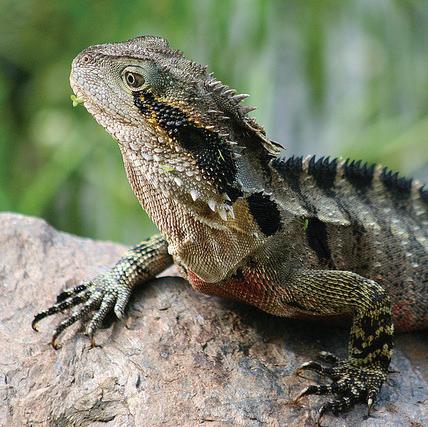
Scope Overview
This unit develops students’ conceptual understanding of adaptations and their role in survival across habitats while strengthening evidence-based reasoning. Learners analyze and debate claims about adaptation, investigate how specific structures and behaviors align with environmental demands, and defend conclusions with data. Building on this understanding, students apply biomimicry in an engineering challenge to design, test, and refine a solution that improves human performance, explicitly connecting animal or plant adaptations to design choices and explaining how evidence informs iterative improvements.
The student is expected to demonstrate an understanding of the ways plants and animals use adaptations to survive and to create a solution to a human problem by using one of these adaptations.
How do different animals and plants use their special features to survive in nature, and how can we use these ideas to solve problems we face in our world?
Key Concepts
• Different types of plants and animals live in different environments.
• Plants and animals have adaptations that allow them to grow and survive in their environment and climate, such as the webbed feet of ducks to swim, the claws of squirrels to climb trees, and the waxy coating and spines of cacti to grow in the desert.
• Humans can use plant and animal adaptations to solve problems, such as flippers that are like the feet of a duck.
Scope Vocabulary
The terms below and their definitions can be found in Picture Vocabulary and are embedded in context throughout the scope.
Adaptation
Any characteristic that helps a plant or animal survive
Animal
A living thing that can move on its own and
Behavior
What a plant or animal does
Beneficial
Something that is good for you and has a positive effect
Characteristic
A feature that helps identify something
Communication
How living things give information to each other
Environment
Everything that is around a living thing
Extinct
When a type of plant or animal no longer lives on Earth
Habitat
A place where an animal or plant lives
Organism
A single living thing
Plant
A type of living thing that gets its energy from the Sun and is unable to move from place to place on its own
Problem
A situation that needs to be changed or needs an answer
Survive
To stay alive
Notes
Students analyze and evaluate differing viewpoints on adaptation to build conceptual understanding and argumentation skills.
• Read a set of student statements about adaptation and select the one they agree with most.
• Justify their choice through whole-class discussion, citing reasoning and evidence.
• Optionally participate in a gallery-walk style vote by standing near the chosen statement, followed by a debrief on class trends.
Students analyze organism adaptations to determine which environments best support their survival.
• Examine images of organisms and environments, discuss key characteristics, and collaboratively match each organism to the most suitable habitat.
• Record selections in a data table by listing the organism, chosen environment, and evidence-based reasoning.
• Share and defend choices in a class discussion focused on how adaptations relate to survival needs across habitats.
Students engage in an engineering design challenge to create a device that increases swimming speed.
• Work in teams to plan, design, and build a waterproof mechanism within size constraints, documenting material choices and design steps.
• Test and refine prototypes in water, using evidence from trials to improve performance.
• Present designs, justify how the solution increases speed, and respond to peer questions using rubric-aligned criteria.
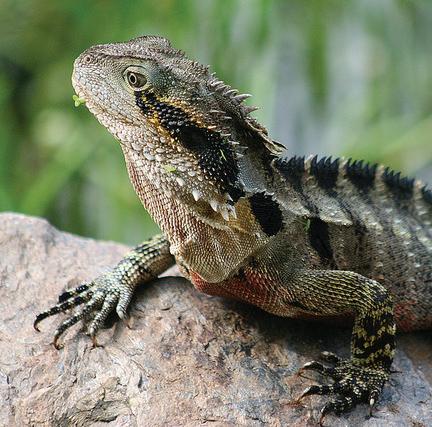
Estimated 15 min - 30 min
In this activity, students decide which student statement about adaptation they agree with the most.
Materials
Printed Materials
● 1 Adaptation document (per student or class)
Reusable Materials
● 1 computer and projector (optional) (per class)
You may choose to either print out the Adaptation document for each student or project it on the board.
Obtaining, Evaluating, and Communicating Information Constructing Explanations and Designing Solutions
During this activity, students will obtain, evaluate, and communicate information by reading and discussing statements about adaptation, allowing them to determine patterns and evidence about how different animals and plants use their special features to survive in nature. They will communicate their understanding and support their scientific ideas through class discussions, using evidence from the texts to justify their choices. Additionally, students will construct explanations by making observations and using evidence to support their understanding of natural phenomena related to adaptation.
Notes
Structure and Function Cause and Effect
During this activity, students will explore the concept of adaptation by examining how the structure and function of different animals and plants contribute to their survival. This will help them understand the phenomenon of how these special features can inspire solutions to human problems. By engaging in discussions and justifying their choices, students will also learn to identify cause and effect relationships, observing how specific adaptations lead to successful survival strategies in nature.
1. Instruct students to read each statement about adaptation.
2. Ask students to decide on the student statement they agree with the most.
3. Have a class discussion where students justify their choice.
Hang the statements around the room. After students read each statement about adaptation, have them stand next to the statement they agree with most. Discuss the statements and results.
How do the special features of animals and plants help them adapt to their environments, and how can these adaptations inspire solutions to human challenges?
1. How do the adaptations of animals and plants compare to the strategies we use to solve problems in our daily lives?
2. Can you think of a human-made invention that was inspired by an adaptation found in nature? How does it work?
3. In what ways could understanding animal and plant adaptations change the way we approach designing solutions for environmental issues?
Preteach the essential vocabulary in the student statements before reading them aloud with students: special characteristics, survive, and environment.
Consider that one of the statements includes the word “both,” but the other two do NOT include the word “only.” Students may decide that they can agree with all three statements. Allow for all responses.
Estimated 30 min - 45 min
Students match animals to the environment where they would most likely survive based on their adaptations.
Materials
Printed Material
● 1 Where Do I Live? (per student)
● 1 set of Environmental Cards (per group)
● 1 set of Living Things Cards (per group)
Consumable Materials
● 1 set of sticky notes (per group)
● 1 dispenser of Scotch tape (per group)
● 1 clear plastic bag (per group)
SEP Connection
1. Print, laminate, and cut apart Environmental Cards and Living Things Cards.
2. Place cards in a small bag to distribute to each group.
Obtaining, Evaluating, and Communicating Information
Constructing Explanations and Designing Solutions
During this activity, students will obtain, evaluate, and communicate information by using observations and texts to determine patterns about how different animals and plants use their special features to survive in nature. They will read grade-appropriate texts and use media to obtain scientific information, describe how specific images support scientific ideas, and communicate their findings using models and drawings. Additionally, students will construct explanations and design solutions by making observations to construct evidence-based accounts of natural phenomena, such as matching animals to environments based on their adaptations, and generate multiple solutions to the problem of determining the best habitat for each organism.
Notes
Structure and Function Cause and Effect
During this activity, students will explore the structure and function of different animals and plants by observing how their unique adaptations allow them to survive in specific environments. This understanding will help students recognize the cause and effect relationships between an organism’s features and its ability to thrive in its habitat, thereby generating observable patterns that can be applied to solve real-world problems.
1. Ask students what animals need to do to survive underwater.
○ Can every organism live underwater? No
○ Why not? Answers will vary.
2. Explain to students that plants and animals have characteristics that help them survive in certain habitats. Today, students are to look at different organisms and decide where they would most likely survive.
1. Pass out a Where Do I Live? to each student.
2. Have students spread out the Environmental Cards on their desk or table.
3. Tell students to observe each organism’s picture on the Living Things Cards and, as a group, discuss its characteristics.
4. Instruct students to choose the environment where the organism’s characteristics would be most useful.
5. Have students place the organism’s picture under the picture of the environment they chose.
6. Ask students to write the organism’s name, the environment they chose, and their reasons in the Where Do I Live? data table.
7. Discuss the following:
○ How did you decide where to put each organism? We looked at their characteristics to see how those helped them survive. Then we decided which environment had what the organism needed.
○ What are some other adaptations of one of the organisms (adaptations that are not listed on the cards)? Cactus = thorns, owl = wings, frog = moist skin
○ Which environment was best for organisms that can be camouflaged with the snow? The tundra
8. Allow students to discuss their reasons and work out disagreements on their own. If a group is stuck, ask guiding questions such as these without giving away the answer: What characteristics does this organism have? Where would those characteristics be useful? Notes
Begin Part I with some open-ended, engaging questions about organisms that live in and out of water. Consider generating a two-column list of animals and plants that survive underwater and those that cannot.
Before distributing Where Do I Live? to each student, post a list of habitats and their descriptions. Students can help you generate the list or you can reveal each habitat one at a time and provide details for each. Be sure to include essential vocabulary: pond, woodland forest, tropical rain forest, desert, ocean, and tundra.
Print each Environmental Card on a different color so you can more easily monitor the sorting as you rotate from group to group.
This discussion and sorting can be done with the whole class. Project each Environmental Card and support students while they discuss and choose the environment. On the Student Journal, consider allowing some students to select a limited number of organisms or columns to complete.
Students who become easily frustrated and angered may have difficulty with Part II of this activity. Prepare students by telling them they will need to come to an agreement with their group on how to place each organism. Offer frustrated students the option to take a break or go to a predesignated area to cool off and return to complete the activity later. Implementing this strategy will likely reduce stress and eliminate the triggers of an outburst or meltdown. Read more strategies in the Interventions Toolbox to assist students who are easily stressed or upset.
For beginner and intermediate ELPs, have the materials translated into their native language as a reference for them to use during the activity.
Prior to the students completing the activity on the adaptations, say the words and have the students repeat them.
After the Explore 1 activity and after students have had a chance to match the animals to the environment based on adaptations, have them pair up and share their experience and see if their answers match.
How do the unique adaptations of animals and plants help them survive in their specific environments, and how can we apply these adaptations to solve human challenges?
1. Based on your observations, how do the adaptations of animals in the activity compare to the features of plants that help them survive in their environments?
2. Can you think of a human problem that could be solved by mimicking an adaptation of an animal or plant? What adaptation would you use and how?
3. How might the environment influence the development of specific adaptations in animals and plants over time?
Estimated 1 hr - 2 hrs
Students design and construct a mechanism to help swimmers become faster.
Materials
Printed Material
● 1 Speed It Up (per student)
● 1 Student Rubric (per group)
Reusable Materials
● 1 large plastic bin (per class)
Consumable Materials
● Water
● Various building materials (per class)
Suggested Materials
● Cardboard pieces
● Wooden craft sticks
● Glue
● Construction paper
● Plastic wrap
● Yarn
● Straws
Gather possible materials for construction, and print out Speed It Up and Student Rubrics.
A student has been practicing with his or her swim team and wants to increase his or her speed. Design and construct a mechanism that will help the student become a faster swimmer.
The Challenge
Student groups design and construct a mechanism to help swimmers become faster.
Criteria and Constraints
The mechanism must be waterproof. It must be designed and constructed for the sole purpose of increasing a swimmer’s speed, and it must not exceed the size of a large tissue box. A short report must be written on why specific materials were chosen.
Obtaining, Evaluating, and Communicating Information
Constructing Explanations and Designing Solutions
During this activity, students will obtain, evaluate, and communicate information by reading texts and using media to gather scientific and technical information about how different animals and plants use their special features to survive. They will use this information to determine patterns and evidence about the natural world, which will inform their design of a mechanism to help swimmers become faster. Students will construct explanations and design solutions by making observations and using evidence to create an evidence-based account of the phenomenon. They will design and build a device that solves the problem of increasing a swimmer’s speed, using various materials and tools. Students will generate and compare multiple solutions, communicate their design ideas through models and drawings, and present their solutions, explaining how their design increases benefits and decreases risks.
Structure and Function Cause and Effect
During this activity, students will explore the structure and function of their designed mechanisms to understand how the shape and stability of their creations relate to their function in increasing swimming speed. They will also investigate cause and effect by designing tests to gather evidence on how different materials and designs impact the swimmer’s speed, thereby generating observable patterns that support or refute their ideas about the effectiveness of their designs. Through this process, students will connect the special features of their mechanisms to the survival strategies of animals and plants, applying these concepts to solve real-world problems.
1. Group students into groups of three or four.
2. Prompt students to list the steps of their plan and design for the challenge in their Speed It Up before beginning to build their design. Make sure students identify any scientific tools or other materials they need.
3. Provide a copy of the Student Rubric to the student groups.
4. Allow students time to build, test, and refine their product.
5. Have students should present their design.
6. Discuss the following:
○ Why did you choose that material? It was flexible, strong, hard, waterproof, etc. It was able to tread water efficiently.
○ Was there a material that you tested and decided not to use? Why? Answers may vary based on materials provided.
○ In what type of environment would this mechanism become handy? In a freshwater or saltwater environment in order to swim at a faster rate
Design
Students list the steps of their plan and design for the challenge. Make sure students identify any scientific tools or other materials they used.
Build, Test, and Refine
Monitor student groups to ensure that they are remaining within their design parameters. Once students have created their design, they should test their design and refine it as needed.
Share and Critique
Allow time for each group to present their solution to the design challenge. Students need to explain how their solution can solve the problem and increase the benefits and decrease risks for this challenge. Students must have sufficient evidence to back their design. Invite other students/groups to ask questions.
Notes
FACILITATION TIP
Use STEMcoach in Action > Engaging Students in Scientific & Engineering Practices > Developing Engineering Solutions, “Using Design Processes in the Classroom.”
FACILITATION TIP
This design challenge can be managed in different ways. The teacher may elect to manage one or two groups per day, or have the whole class complete it together in one day.
FACILITATION TIP
Post and project carefully-worded criteria and constraints for the challenge. Allow time for clarifying questions before beginning the design phase.
FACILITATION TIP
Provide time limits for each stage and set clear limits for testing. Consider having a pre-determined time and/or place for testing.
FACILITATION TIP
If time is limited, have groups pair up to share design solutions with each other rather than present to the whole group. Alternatively, take photos of solutions and project them to the whole class. Facilitate student explanations and critiques.
Graffiti Wall
A graffiti wall allows a teacher to check for understanding after instruction while giving students the opportunity for movement.
● Give each student a large sticky note. Make sure students have pencils and some crayons or colored pencils.
● Pose the following question: What are examples of adaptations that animals have that allow them to survive in their environments?
● Have students respond by writing a phrase or drawing a picture on the sticky note. Then have them post their responses on the graffiti wall.
● This activity can be done individually, with partners, or in a small group.
● Facilitate a class discussion of the responses given.
How can we apply the unique adaptations of animals and plants to design a mechanism that enhances human abilities, such as increasing a swimmer’s speed?
1. What features of animals or plants could inspire the design of a mechanism to help swimmers move faster in water?
2. How do the materials you chose for your design mimic the adaptations found in nature that allow animals or plants to thrive in their environments?
3. In what ways could the principles used in your swimming mechanism be applied to solve other real-world problems?
STEMscopedia
Reference materials that includes parent connections, career connections, technology, and science news.
Linking Literacy
Strategies to help students comprehend difficult informational text.
Picture Vocabulary
A slide presentation of important vocabulary terms along with a picture and definition.
Content Connections Video
A video-based activity where students watch a video clip that relates to the scope’s content and answer questions.
Math Connections
A practice that uses grade-level appropriate math activities to address the concept.
Reading Science - Plant Adaptations
A reading passage about the concept, which includes five to eight comprehension questions.
Notes
Claim-Evidence-Reasoning
An assessment in which students write a scientific explanation to show their understanding of the concept in a way that uses evidence.
Multiple Choice Assessment
A standards-based assessment designed to gauge students’ understanding of the science concept using their selections of the best possible answers from a list of choices
Open-Ended Response Assessment
A short-answer and essay assessment to evaluate student mastery of the concept.
Guided Practice
A guide that shows the teacher how to administer a smallgroup lesson to students who need intervention on the topic.
Independent Practice
A fill in the blank sheet that helps students master the vocabulary of this scope.
Extensions
A set of ideas and activities that can help further elaborate on the concept.
Use this template to decide how to assess your students for concept mastery. Depending on the format of the assessment, you can identify prompts and intended responses that would measure student mastery of the expectation. See the beginning of this scope to identify standards and grade-level expectations.
Student Learning Objectives What Prompts Will Be Used?
Different types of plants and animals live in different environments.
Plants and animals have adaptations that allow them to grow and survive in their environment and climate, such as the webbed feet of ducks to swim, the claws of squirrels to climb trees, and the waxy coating and spines of cacti to grow in the desert.
Humans can use plant and animal adaptations to solve problems, such as flippers that are like the feet of a duck.
Does Student Mastery Look Like?
Student Expectations
The student is expected to demonstrate an understanding of the properties of matter by classifying states of matter, describing materials, and constructing claims that changes to matter may or may not be reversible.
Student Wondering of Phenomenon
What happens to a popsicle if you leave it out in the sun, and can you turn it back into a popsicle again?
Key Concepts
• Matter exists in states, including solid, liquid, or gas, and can be classified based on its physical properties.
• Solids have a definite shape; liquids and gases do not.
• We can classify matter by using observation and measurement.
• Matter can change due to heating. Some changes can be reversed, such as melting, and some changes cannot, such as burning.
This unit develops students’ facility with physical properties and states of matter through observation, comparison, and measurement. Learners describe materials using precise vocabulary, gather and analyze data on length, mass, and volume, and use evidence to classify solids, liquids, and gases. They apply and remove heat to investigate physical changes, distinguishing reversible processes from those that are not. Across tasks, students justify classifications and construct claims grounded in collected data, building conceptual understanding of matter and its behaviors while reinforcing accurate, evidence-based reasoning.
Scope Vocabulary
The terms below and their definitions can be found in Picture Vocabulary and are embedded in context throughout the scope.
Classify
To group similar things together
Color
The shade you see
Data
Information that has been collected
Gas
A material that has no set shape but can expand to fill the entire container it is in
Heat
The type of energy that makes things warm
Liquid
A material that has no set shape and can flow and drip
Matter
Stuff that everything is made of
Property
A single part of the way something is
Size
How big or small something is
Solid
A material that has a set shape that does not change
Texture
How rough or smooth something is
Volume
Measurement of how much space matter takes up
Weight
How heavy or light something is
Notes
Students observe and compare common objects to identify and describe their physical properties.
• Examine a set of items with a hand lens and record descriptive words (e.g., color, shape, texture, size, flexibility, state) on a data table.
• Compare group items to teacher-modeled reference objects (bouncy ball, CD case, bottle of water) and justify choices based on shared properties.
• Share findings to build a class list of observed physical properties and connect descriptions to the concept of physical properties.
Scientific Investigation - Classifying Matter
Students investigate unknown substances in sealed balloons to practice identifying physical properties and states of matter.
• In small groups, feel each labeled balloon and record observed physical properties and a prediction of what’s inside.
• Repeat for all balloons, then sort them by inferred state of matter using evidence from observations.
• Discuss reasoning as a class, reveal each balloon’s contents, and record the actual object and state of matter.
Activity - Turn Up the Volume!
Students investigate measurement of length, mass, and volume to analyze how these properties relate for common objects.
• Measure object lengths with rulers and record data.
• Determine object mass using a pan balance and gram weights.
• Find object volume via water displacement in graduated cylinders (subtracting the initial 50 mL).
• Compare measurements to evaluate whether mass and volume show a direct relationship and explain conclusions.
Scientific Investigation - How Can Heat Cause Matter to Change?
Students explore how adding and removing heat affects different materials and whether those changes are reversible.
• Observe and record the initial properties of items (e.g., chocolate, marshmallows, gummies, water, ice) using a provided data sheet.
• Apply heat (sun/heat lamp/hot plate) to the items, then observe and document physical changes after a set time.
• Remove heat by placing items in a freezer/ice chest, then record the resulting changes and compare to the original state.
• Reflect on and discuss which changes are reversible (e.g., melting/freezing of water) and which are not (e.g., melted candy).
Notes
Estimated 15 min - 30 min
In this activity, students describe the physical properties of various objects and compare objects with similar properties.
Materials
Printed Materials
• 1 Classifying Matter (per student)
Reusable Materials
• 1 rubber eraser (per group)
• 1 pom-pom (per group)
• 1 plastic spoon (per group)
• 1 plastic bag of water (doublebagged) (per group)
• 1 hand lens (per group)
• 1 container (per group)
• 1 small rubber ball (per class)
• 1 large petri dish (per class)
• 1 clear plastic CD case (per class)
• 1 clear bottle containing water (per class)
Consumable Materials
• Chart paper (if not using other means of recording) (per class)
• Either print out the Classifying Matter page or set up the computer and projector and project it on the board.
• Place an eraser, a pom-pom, a plastic spoon, a bag of water (double-bagged to prevent leaks), and a hand lens in a container to be distributed to the groups.
• You will use the rubber bouncy ball, clear plastic CD case, and clear bottle of liquid to demonstrate.
Planning and Carrying Out Investigations
Analyzing and Interpreting Data
Using Mathematics and Computational Thinking
During this activity, students will plan and conduct investigations collaboratively to produce data that serves as evidence for understanding the phenomenon of what happens to a popsicle if left in the sun and whether it can be turned back into a popsicle again. They will make observations and measurements of various objects to describe their physical properties, which will help them evaluate different ways of observing and measuring the changes in state. By recording and analyzing data, students will compare their predictions to observable events, using mathematical and computational thinking to describe patterns and relationships in the natural world.
Structure and Function Patterns
During this activity, students will observe and describe the physical properties of various objects, recognizing that the shape and stability of these structures are related to their function. By comparing objects with similar properties, students will identify patterns in the natural and humandesigned world, using these observations to describe the phenomenon of what happens to a popsicle if left in the sun and whether it can be returned to its original state.
1. Pass out the Classifying Matter to each student and the container of materials to each group.
2. Ask students to observe the items and think of how they would describe them.
3. Have the students record the words describing the items in the data table on the Classifying Matter.
4. Hold up a ball for all students to see. Ask students: "What words can you use to describe this object?"
5. Record student answers on the board or on chart paper.
6. Have the groups choose an object from their container that is most like the bouncy ball. Tell them to record their answers and reasons on the Classifying Matter Student Handout. Ask students: "Which object did your group pick, and why?"
7. Have students repeat the procedure with the CD case and again with the clear bottle of water.
8. Explain: These words we are using to describe the objects are called physical properties. All objects have physical properties that we can observe such as their color, shape, size, texture, strength, flexibility, and state (if they are a solid or a liquid).
Phenomenon Connection
When a popsicle is left out in the sun, it changes from a solid to a liquid. How can we use our understanding of physical properties to explain this transformation and explore whether it can be reversed?
1. Based on your observations of the materials in the activity, what physical properties change when a popsicle melts, and how do these changes relate to the properties of the objects you examined?
2. If you were to refreeze the liquid from a melted popsicle, would it return to its original shape and size? Why or why not, based on your understanding of physical properties?
3. How might you apply the concept of physical properties to change the state of the melted popsicle into a gas, and what challenges might you encounter in doing so? Notes
Prior to distributing the materials, engage students’ prior knowledge with a quick demonstration; drink a glass of water with ice in it and then a clear mug of steaming water. Ask, “What do you notice about what I am drinking?” and keep prompting until they begin to use words to describe the physical properties.
Set clear expectations for the water. Consider using clear plastic sealed water bottles rather than double baggies to prevent spills, leaks, or popped bags.
Post the word list that describes physical properties. Take time to clarify the scientific definitions for terms: state, property, physical, and so on. Common misconceptions about the meaning of property and state should be cleared up before proceeding with the rest of the scope.
Estimated 30 min - 45 min
In this activity, students explore unknown objects and substances inside balloons to list their physical properties and determine their states of matter.
Materials
Printed Materials
● 1 Classifying Matter (per student)
Reusable Materials
● 6 balloons (per group)
● 5 marbles (per group)
● 10 beans (per group)
● 3 foam shapes (per group)
Consumable Materials
● Baby oil or mineral oil, 25 mL (per group)
● Liquid soap, 25 mL (per group)
● Water, 25 mL (per group)
Preparation
Prepare a set of mystery balloons for each group. The following would be one set:
● 1 balloon with 5 marbles (label it Balloon 1)
● 1 balloon with 25 mL of water (label it Balloon 2)
● 1 balloon with 3 foam shapes (label it Balloon 3)
● 1 balloon with 25 mL of baby oil (label it Balloon 4)
● 1 balloon with 10 beans (label it Balloon 5)
● 1 balloon with 25 mL of liquid soap (label it Balloon 6)
*Be sure to tie a knot on the end of each balloon once the substance is inside to prevent leaks and peeking. This will also allow the balloons to be reused in the future.
Planning and Carrying Out Investigations
Analyzing and Interpreting Data
Using Mathematics and Computational Thinking
During this activity, students will plan and conduct investigations collaboratively to explore the physical properties and states of matter of unknown substances inside balloons. By making observations and recording data, they will evaluate different ways of observing and measuring these properties to determine the state of matter, thus connecting to the phenomenon of what happens to a popsicle if left in the sun and whether it can be turned back into a popsicle again. Through this process, students will develop skills in analyzing and interpreting data, making predictions based on prior experiences, and using mathematical and computational thinking to describe patterns and relationships in the natural world.
Structure and Function Patterns
During this activity, students will explore the structure and function of different states of matter by observing and describing the physical properties of unknown substances inside balloons. This will help them understand how the shape and stability of structures are related to their function. Additionally, students will recognize patterns in the properties of solids and liquids, which can be used as evidence to describe the phenomenon of what happens to a popsicle if left in the sun and whether it can be turned back into a popsicle again.
1. Place your students into small groups. Guide them in a discussion to access prior knowledge before completing the activity.
○ What are physical properties? Ways in which we can describe objects
2. List possible physical properties on the board so students can be thinking about all types of physical properties during the activity, including size, shape, texture, color, hardness, flexibility, and state of matter.
3. Have students observe what is inside a balloon by feeling it. Ask them to record its physical properties in the data table next to the correct balloon number.
4. After students have recorded the physical properties for one balloon, have them predict what is inside and record predictions in the data table.
5. Tell students to repeat this process for each balloon until all six have been observed.
6. Once students have observed each balloon, have them group the balloons based on the state of matter within.
7. Discuss the following:
○ What were some of the physical properties you observed? Answers may vary but can include these ideas: It was smooth; it was rough; it was hard; it had small pieces; it felt slippery.
○ What do you think is in each balloon? Why? Answers may vary but can include these ideas: rocks because it had small hard pieces, water because it sloshed around
○ What helped you decide if there was a solid or a liquid inside the balloon? Answers may vary, but can include these ideas: I think it was a solid because it was hard and kept its shape. I think it was a liquid because it took the shape of the balloon and kept changing when I squished the balloon.
8. Reveal what is inside each balloon and its state of matter.
9. Tell students to record what is actually inside each balloon in the Actual Object column of the data table. If students did not list the state of matter as one of the physical properties, they should add this information during the discussion.
Students may struggle completing the journal section of this investigation if they have difficulty writing. Allow students to give their answers verbally by dictating to their partner. Students can also draw properties of the objects if they prefer. Read more strategies to help students who have difficulty writing in the Interventions Toolbox.
Notes
FACILITATION TIP
The teacher may elect to manage this activity with the whole class by passing around the mystery balloons during a class circle time, setting up a station to be visited by one small group at a time, or as described.
FACILITATION TIP
Use the list created during the previous Engage: Classifying Matter. In addition to Picture Vocabulary, reference the Visual Glossary for a States of Matter image.
FACILITATION TIP
Model how to carefully feel the balloons and discuss protocols for how to respond if a balloon pops. Clarify the procedure for leaked water, soap, baby oil, and so on.
FACILITATION TIP
If students are struggling to identify what is in each balloon using touch alone, consider gradually revealing the six types of matter to support a process of elimination.
Sentence Stems
For emerging language acquisition strategies, have the materials translated into their native language as a reference for them to use during the activity.
Students can complete these sentence stems in their journals as a review of the day’s activities or as an exit ticket at the end of the experiment.
Emerging:
● The thing(s) in Balloon 1 felt _____________. It is a _________(solid/liquid). I guessed it is ____________. (Repeat for all six balloons.)
Expanding/Bridging:
● The things in Balloons ____, _____, and _____ are alike because
● The things in Balloons ______ and ______ are different because
When a popsicle is left out in the sun, it melts from a solid to a liquid. How can we use our understanding of physical properties and states of matter to determine if we can reverse this process and turn it back into a popsicle?
1. Based on your observations of the balloons, how did you determine the state of matter of the substances inside? How does this relate to the melting of a popsicle in the sun?
2. If you were to refreeze the liquid from a melted popsicle, would it retain the same physical properties as the original popsicle? Why or why not?
3. What physical changes would need to occur to turn the melted popsicle back into a solid form, and how does this process compare to the changes you observed in the balloon activity?
Estimated 30 min - 45 min
In this activity, students measure the length and weight of solid objects and the volume of liquids.
Materials
Printed Materials
● 1 Turn Up the Volume! (per student)
Reusable Materials
Various small testing materials such as these: (per group)
● Metal washer
● Rock
● Small pencil
● Quarter
● Small plastic building block
● Small cork
● Small rubber stopper
● Small toy car
● Crayon
● Pink eraser
● Domino
● Dice
● 1 tray or bag (to put testing items in) (per group)
● 1 ruler (per group)
● 1 pan balance scale (per group)
● 6 graduated cylinders (per group)
● 1 pair of safety goggles (per student)
● Weights (grams) (per group)
● 1 waste tub
Consumable Materials
● Water (per group)
1. Gather all of the testing materials and put them on a tray or in a bag for each group.
2. Put 50mL of water into each graduated cylinder.
3. Print out the Turn Up the Volume!.
Notes
Planning and Carrying Out Investigations
Analyzing and Interpreting Data
Using Mathematics and Computational Thinking
During this activity, students will plan and conduct investigations to gather data on the physical properties of objects, such as length, weight, and volume, to understand the phenomenon of changes in state, like what happens to a popsicle left in the sun. By measuring and recording these properties, students will make observations and predictions, analyze data, and evaluate methods to determine if a melted popsicle can be returned to its original state, thus connecting their findings to real-world scientific questions and problem-solving.
Structure and Function Patterns
During this activity, students will explore the phenomenon of what happens to a popsicle if left in the sun and whether it can be turned back into a popsicle again by observing the structure and function of objects and recognizing patterns. By measuring the length, weight, and volume of various objects, students will understand how the shape and stability of structures relate to their function, and how patterns in the natural world can be used to describe and provide evidence for phenomena.
Procedure and Facilitation
1. Place the students into groups of three or four.
2. Pass out a Turn Up the Volume! to each student.
3. Have students use the ruler to measure the length of their objects. Tell them to record the lengths on the chart in their Turn Up the Volume!.
4. Have students use the pan balance and weights to measure the mass of their objects. Tell them to record the mass on the chart in their Turn Up the Volume!.
5. Instruct students to measure the volume of the materials and record the data on the chart in the Turn Up the Volume!.
6. To find the volume of the objects, have students subtract the original water level (50 mL) from the new level to get the volume of the object.
7. Ask students to repeat Step 6 with each object.
8. Have the students answer the question below the chart in the Turn Up the Volume!.
9. After the students have answered the final question in the Student Journal, discuss the following:
○ Did you notice a relationship between an object's mass and the recorded volume? Please explain your answer. Answers may vary based upon materials provided.
i. Students should recognize that there is no direct relationship between the mass of an object and the volume.
This Explore provides multiple opportunities for hands-on measuring with scientific tools and metric measurements. Consider cross-curricular planning with any correlating math lessons.
Assess students’ ruler skills. If needed, conduct a lesson on how to read the specific type of available ruler. Explain clear safety expectations for how to handle the rulers. Model how to read centimeters and millimeters as needed.
To help students recognize this relationship between mass and volume, close the Explore with a teacher demonstration to clarify.
English Language Proficiency
Exit Ticket
Considering the activity today, respond to the following:
● Explain three things you learned today that you did not already know.
● Being specific, list two things you would like to research to learn more about.
● Write a question you have about something in the activity.
How does measuring the mass and volume of objects help us understand the changes that occur when a popsicle melts in the sun?
1. Based on your measurements of solid objects and liquids, what do you think happens to the mass and volume of a popsicle as it melts in the sun?
2. If you were to refreeze the melted popsicle, would it have the same mass and volume as the original popsicle? Why or why not?
3. How can the concepts of mass and volume help us understand the process of turning the melted popsicle back into a solid form?
Estimated 30 min - 45 min
In this activity, students investigate how adding and removing heat can change matter.
Materials
Printed Material
● 1 How Can Heat Cause Matter to Change? (per student)
Reusable Materials
● 3 chocolate chip pieces (per group)
● 3 mini marshmallows (per group)
● 3 gummy candies (per group)
● 30mL of colored water (per group)
● 1 timer (per group)
● 1 hand lens (per group)
● 1 disposable aluminum muffin pan (per group)
● 1 ice chest or freezer (for cold box) (per class)
● 1 small piece of a glue stick (per group)
● A sunny location (hot plate or heat lamp as an alternative) (per group)
Consumable Materials
● 1 ice cube (per group)
● 1 white paper towel (per group)
1. Gather the items (chocolate chips, piece of glue stick, gummy candies, marshmallows, water, and ice) needed for Part I: Adding Heat ahead of time and place them into each muffin tin. You may use additional classroom materials. Place the bottle of colored water in the refrigerator or cold box over night. This should be done the night before. It should be cold, not frozen.
2. Remove all plastic or paper wrappers before heating.
3. This activity should be done on a sunny day. If you are doing the investigation on a day when the Sun is not out, have a couple of heat lamps or a hot plate available to use for the teacher demonstration.
Planning and Carrying Out Investigations
Analyzing and Interpreting Data
Using Mathematics and Computational Thinking
During this activity, students will plan and conduct investigations to explore the phenomenon of what happens to a popsicle when left in the sun and whether it can be turned back into a popsicle. They will collaboratively plan and carry out investigations to gather data on how adding and removing heat affects different materials, using observations and measurements to support explanations. Students will make predictions based on prior experiences, record and analyze data, and use mathematical thinking to describe patterns and relationships. Through this process, they will evaluate the reversibility of changes in matter, comparing their predictions to actual outcomes and discussing the implications of heat on different substances.
Structure and Function Patterns
During this activity, students will observe and analyze how the structure and function of various materials change when heat is added or removed, relating to the phenomenon of what happens to a popsicle if left in the sun and whether it can be turned back into a popsicle again. By recognizing patterns in the changes of natural and designed objects, students will use these observations as evidence to describe the phenomena of reversible and irreversible changes in matter.
1. Direct students to complete the first two columns in Part I of their How Can Heat Cause Matter to Change? as they observe their items.
2. Put the muffin pan with the different materials in the Sun, on the hot plate, or under the heat lamp for five minutes.
3. Allow students to observe and record the changes to each item in Part I of their How Can Heat Cause Matter to Change?.
1. Direct students to make predictions in Part II of their How Can Heat Cause Matter to Change? as they observe their items.
2. Place the muffin pans in the freezer or ice chest.
3. Emphasize adding and removing heat. We do not add cold; we remove heat.
4. Have students record the changes to the items after the items have been in the cooler for five minutes. Direct them to record the changes in the third column in Part II of the How Can Heat Cause Matter to Change?.
5. Have students reflect and compare the original state of the items to the cooled state of the items in the How Can Heat Cause Matter to Change?.
6. After students have finished, discuss the following:
○ Explain how some changes to matter result from being heated and can be reversed. When ice melts from heat being added to it, it can become ice again.
○ Explain how some changes to matter that result from being heated cannot be reversed. A gummy bear melting, a piece of paper burning
Notes
FACILITATION TIP
Engage students by asking about their experiences with melting a freezing. Ask, “When was a time when you tried to eat a melty candy?” “When was a time when you wanted to eat something but is was still frozen?”
FACILITATION TIP
Document the changes with video so you can play it back for students at different speeds.
FACILITATION
When students observe the changes to the items after heat was removed, consider what they may be able to see vs. touch. Consider using an infrared thermometer to show the temperature difference before and after.
FACILITATION TIP
Watch out for misconceptions about a physical change vs a chemical change. The shape of the gummy bear may change when it melts, but the chemistry does not change. Burning paper is a chemical change and cannot be reversed. This concept is a building block for later STEM lessons.
After the students have a chance to complete the activity, place them in a circle in an open area.
Explain to them that you will make a statement applying the results from the first activity. If they agree with the statement, they should walk to the inside of the circle and stand facing someone who does not agree with the statement. Then, they can discuss why they agree and/or disagree with the statement.
Be sure to model the game before beginning.
Examples:
● All of the materials that changed are reversible.
● None of the materials that changed are reversible.
● When you heat things up, they always melt.
When a popsicle melts in the sun, can we reverse the process to turn it back into a popsicle, and what does this tell us about the reversibility of changes in matter?
1. How does adding heat to different materials in the activity demonstrate the concept of reversible and irreversible changes in matter?
2. What factors influence whether a change in matter, like the melting of a popsicle, can be reversed or not?
3. In what ways can we manipulate the conditions (such as temperature) to reverse the changes observed in the activity, and how does this relate to the popsicle phenomenon?
STEMscopedia
Reference materials that includes parent connections, career connections, technology, and science news.
Linking Literacy
Strategies to help students comprehend difficult informational text.
Picture Vocabulary
A slide presentation of important vocabulary terms along with a picture and definition.
Content Connections Video
A video-based activity where students watch a video clip that relates to the scope’s content and answer questions.
Career Connections - Welder
STEM careers come to life with these leveled career exploration videos and student guides designed to take the learning further.
Math Connections
A practice that uses grade-level appropriate math activities to address the concept.
Reading Science - A Summer Experiment
A reading passage about the concept, which includes five to eight comprehension questions.
Notes
Claim-Evidence-Reasoning
An assessment in which students write a scientific explanation to show their understanding of the concept in a way that uses evidence.
Multiple Choice Assessment
A standards-based assessment designed to gauge students’ understanding of the science concept using their selections of the best possible answers from a list of choices
Open-Ended Response Assessment
A short-answer and essay assessment to evaluate student mastery of the concept.
Guided Practice
A guide that shows the teacher how to administer a smallgroup lesson to students who need intervention on the topic.
Independent Practice
A fill in the blank sheet that helps students master the vocabulary of this scope.
Extensions
A set of ideas and activities that can help further elaborate on the concept.
Use this template to decide how to assess your students for concept mastery. Depending on the format of the assessment, you can identify prompts and intended responses that would measure student mastery of the expectation. See the beginning of this scope to identify standards and grade-level expectations.
Student Learning Objectives What Prompts Will Be Used? What Does Student Mastery Look Like?
Matter exists in states, including solid, liquid, or gas, and can be classified based on its physical properties.
Solids have a definite shape; liquids and gases do not.
We can classify matter by using observation and measurement.
Matter can change due to heating. Some changes can be reversed, such as melting, and some changes cannot, such as burning.
Student Expectations
The student is expected to demonstrate an understanding of how the motion of objects is affected by pushes, pulls, and friction by investigating motion and to design a plan to change the force of friction in order to solve a problem.
Why do some things slide easily on the floor while others stop quickly or don’t move at all?
Key Concepts
• Pushing and pulling can cause an object to change position and move.
• The more force applied to an object, the greater the change in motion of the object.
• Friction is caused when objects rub against one another.
• Friction can change the motion of objects and can create heat.
Scope Overview
In this unit, students investigate how pushes, pulls, and friction change an object’s motion through observation, measurement, and data analysis. Learners identify real-world forces, test how strength and direction affect distance and changes in motion, and compare surfaces to see how friction influences stability, speed, and heat. Using collected evidence, they plan and iterate designs that modify friction to optimize performance, communicate findings with models and graphs, and build toward the expectation of explaining and intentionally changing friction to solve problems.
Scope Vocabulary
The terms below and their definitions can be found in Picture Vocabulary and are embedded in context throughout the scope.
Communication
How living things give information to each other
Data
Information that has been collected
Force
A push or pull that causes things to move or stop
Friction
A force that slows motion and releases heat when objects rub together
Heat
The type of energy that makes things warm
Measure
To determine the amount or size of something
Motion
How an object moves from one place to another
Objects
Things that can be touched and seen
Observe
To use the senses to examine or inspect
Problem
A situation that needs to be changed or needs an answer
Pull
To use force to move toward
Push
To use force to move away
Notes
Students explore how pushes, pulls, and friction affect motion through observation, classification, and simple measurement.
• Tour the school in pairs to identify real-world examples of pushes, pulls, and combined motions, recording each example on sticky notes.
• Sort examples into a class Venn diagram (push/pull/both) and discuss how each motion results in work (objects starting, stopping, or changing direction).
• Compare friction by discussing stability on different surfaces (e.g., carpet vs. ice) and predicting effects on motion.
• Roll a ball across multiple surfaces, measure distances, and build a sticky-note bar graph to conclude how surface roughness (friction) changes how far objects move.
Students investigate how the strength and direction of forces affect motion through hands-on stations, data collection, and analysis.
• Measure how pullback height changes the number of swings in a washer system and record repeated trials.
• Test how varying push strength on a rolling marble affects the distance a box moves down a ramp.
• Examine how pullback distance changes how far a toy car travels, and explore how pushes/pulls can change a Ping-Pong ball’s direction, with models and discussion of findings.
Students explore how friction affects motion and heat, then apply the engineering design process to optimize a toy car’s distance.
• Conduct hands-on investigations by rubbing common materials to observe wear, heat production, and physical changes due to friction, recording observations in journals.
• Form hypotheses about which surface will let a toy car roll farthest, then design and build ramp trials using varied surfaces (e.g., waxed paper, cardboard, carpet, sandpaper).
• Collect and analyze distance data to compare friction effects across surfaces, refine designs, and identify the smoothest, lowestfriction option.
• Communicate results through group presentations, models/diagrams of track designs, and evidence-based conclusions.
Estimated 30 min - 45 min
In this activity, students demonstrate an understanding of how the motion of objects is affected by pushes, pulls, and friction on an object.
Materials
Reusable Materials
● 1 whiteboard (per class)
● 1 dry-erase marker (per class)
● 1 meterstick (per class)
Consumable Materials
● 1 pad of sticky notes (per pair)
● Poster paper (optional)
• Plan a tour of the school that shows students push and pull motions and friction. Suggestions include the playground equipment, the equipment closet in the PE area, the music room and instruments, the cafeteria, the kitchen, and areas where the custodial staff are mopping or vacuuming.
• Plan on taking students to areas where there are different surfaces (e.g., tile, carpet, grass, concrete, wood, etc.).
• If there is no actual activity in the areas, direct students to think about what occurs in those areas.
Planning and Carrying Out Investigations
Analyzing and Interpreting Data
Constructing Explanations
During this activity, students will plan and conduct investigations collaboratively to explore the phenomenon of why some things slide easily on the floor while others stop quickly or don’t move at all. They will make observations and measurements to collect data on how different surfaces affect the motion of objects due to friction. By analyzing and interpreting this data, students will construct evidence-based explanations for the effects of pushes, pulls, and friction on the motion of objects, and use this understanding to make predictions and solve related problems.
Cause and Effect
Stability and Change
During this activity, students will explore the phenomenon of why some things slide easily on the floor while others stop quickly or don’t move at all by investigating the cause and effect relationship between surface texture and friction. They will observe and gather evidence on how different surfaces affect the motion of objects, leading to an understanding of stability and change as they see how friction causes objects to move differently across various surfaces.
1. Tell students that the class is going to take a school tour to look for work happening. Students should be in pairs looking for evidence or examples of push and pull motions that make something happen (work).
2. Have each group demonstrate a push or pull.
3. Give each pair of students a sticky pad to jot down evidence or examples of pushing, pulling, or both. Tell them to write only one example on each sticky note.
4. Take the tour. (Option: This activity can be done in the classroom. The students can draw the playground and other activities around the school on the board to use for ideas.)
5. Return to the room and have the pairs sit together.
6. On the whiteboard or poster paper, make a Venn diagram or three-way chart of push, pull, and push/pull activities.
7. Have pairs place their sticky notes in the appropriate areas of the diagram.
8. Lead students to understanding with the following questions:
○ Where did you see evidence or an example of a push? We saw evidence when the custodian was sweeping and when the boy threw the ball.
○ What work was being done as a result of the push? The object moved forward.
○ Where did you see evidence or an example of a pull? We saw evidence when the girl pulled the swing back and when the music teacher pulled on the string of her guitar.
○ What work was being done as a result of the pull? The object moved backward.
○ Where did you see a combined push/pull motion? We saw a combined push/pull motion when the teacher opened and closed the door and when the cafeteria worker turned the faucet on and off.
○ What work was being done as a result of the combined push/pull? The object went forward and backward.
○ Can you think of other push and pull motions that get work done? Other push and pull examples are any event that causes change, including doing a push-up, running, picking up a pencil, etc.
9. Ask students if it is easier to stand still on carpet or on ice. Lead students in a discussion of why it is easier. There is more friction between the carpet and feet because of the carpet's roughness than between ice and feet.
Notes
FACILITATION TIP
Clarify how students are to demonstrate a push and a pull. Consider having them pantomime the action rather than use items on their desks.
FACILITATION TIP
The sticky note may not be enough room for some students to record an example. Use note cards that can still be taped to the class chart later.
FACILITATION TIP
Use a slideshow of different examples around the school or neighborhood if a tour is not feasible. Include images of areas and surfaces noted in the Preparation notes.
FACILITATION TIP
If student experience with a Venn diagram is limited, use the three column chart. Consider that many of the observations will include both a push and a pull.
FACILITATION TIP
Help students make a connection to friction. Ask about a time they stood on ice or ice skates. Ask about a time they had to run in sand or gravel. Ask where they would rather run a race.
Take time to practice the rolling ball demonstration before taking students around the building. Some smooth surfaces around the school may allow the ball to continue rolling until it meets another outside force like a wall.
10. Roll a ball across three different surfaces (e.g., a carpeted area, a tiled [smooth] area, and grass). Have students measure the distance that the ball rolls on each surface from where it starts to where it stops. Create a bar graph using sticky notes as a unit of measurement (one sticky note = one foot). Lead students to the understanding that different surfaces cause the ball to roll different distances based on the roughness, or increased friction, or smoothness, or reduced friction, between the surface and the ball. Friction is a force that opposes motion. The amount of friction an object encounters is based on the roughness of the surface it comes in contact with. The greater the roughness, the greater the friction and the faster the object slows down or stops.
How does friction affect the movement of objects on different surfaces, and why do some objects slide easily while others stop quickly?
1. How did the different surfaces you observed during the school tour affect the motion of objects when pushed or pulled?
2. In what ways did the amount of friction between the surfaces and the objects influence the distance the objects traveled?
3. Can you think of a scenario where reducing friction would be beneficial, and another where increasing friction would be advantageous?
Estimated 1 hr - 2 hrs
In this activity, students conduct an investigation to collect, represent, and analyze data from observations and measurements to demonstrate the effects of pushes and pulls with different strengths and directions.
Materials
Printed Materials
● 1 Force Stations (per student)
● 1 set of Station Cards (per class)
Reusable Materials
Station 1:
● 1 60 cm string
● 1 large washer (per group)
● 1 large paper clip (unfolded into an S-shape) (per group)
Station 2:
● 1 marble
● 1 empty small box (or another small cardboard box such as a crayon box or pudding box) (per group)
● 1 set of ramp materials (cardboard, binders, books) (per group)
● 2 metric rulers or measuring tapes (per group)
Station 3:
● 1 pull-back car (per group)
● 2 metric rulers or measuring tapes (per group)
Station 4:
● 1 Ping-Pong ball (per student pair)
● Rulers
● Straws
● Rubber bands
● Plastic spoons
Consumable Materials
Stations 1 and 3:
● 1 roll of tape (per group)
• Gather materials and place them at the stations.
• Tape down Station Cards at each station.
• For Station 1, make the washer system:
1. Tape one end of a string to the side of a desk.
2. Tie one end of the string to the top of the S-shaped paper clip.
3. Hang one washer on the other end of the paper clip.
Planning and Carrying Out Investigations
Analyzing and Interpreting Data
Constructing Explanations
During this activity, students will plan and conduct investigations to answer questions about the phenomenon of why some things slide easily on the floor while others stop quickly or don’t move at all. They will collaborate with peers to produce data that serves as evidence, evaluate different ways of observing and measuring the effects of pushes and pulls, and make observations to collect data for comparisons. Students will also analyze and interpret data to describe patterns and relationships, construct explanations based on evidence, and design solutions to understand the effects of force on movement and direction.
Cause and Effect
Stability and Change
During this activity, students will explore the phenomenon of why some things slide easily on the floor while others stop quickly or don’t move at all by investigating the cause and effect relationship between the strength and direction of forces applied to objects. They will design simple tests to gather evidence, observing how different forces cause changes in motion, thereby identifying patterns in stability and change.
Procedure and Facilitation
Station 1: Swinging High
Plan and conduct an investigation that answers this question: How does the distance a washer system is pulled back affect the number of swings once released?
1. Position 1: Pull back the system until the string is halfway between the floor and the desk.
a. Let go of the washer, and count the number of times it swings before it stops.
b. Record the number of times it swings in your Force Stations.
c. Repeat two more times.
2. Position 2: Pull back the system until the string is level with the top of the desk.
a. Let go of the washer, and count the number of times it swings before it stops.
b. Record the number of times it swings in your Force Stations.
c. Repeat two more times.
3. Position 3: Pull back the system until the string is approximately eight inches above the desk.
a. Let go of the washer, and count the number of times it swings before it stops.
b. Record the number of times it swings in your Force Stations.
c. Repeat two more times.
Station 2: Make it Move
Plan and conduct an investigation that answers this question: How does the strength of the push force affect the distance the ball pushes the crayon box?
1. Set up a ramp using the materials provided.
2. Place the empty crayon box at the bottom of the ramp.
FACILITATION
This investigation includes four activities and can be managed in several different ways. The teacher may elect to manage one station per day with the whole class, two stations a day, three stations a day, or all four stations in one day.
FACILITATION TIP
To eliminate loose washers, tie the washer onto the string rather than hang it on a s-shaped paper clip.
FACILITATION TIP
Take time to demonstrate what “one swing” looks like with students. Also, cover the protocol for what students should do if the pendulum comes loose from the tape.
FACILITATION TIP
If possible, use a ramp with “bumpers” to avoid having the various spheres escaping off the edges. Pipe insulation tubes or pvc pipes can be cut into half pipes that work well with marbles.
3. No push: Choose a ball, and let it roll down from the top of the ramp toward the crayon box. Do not push the ball.
a. Measure in centimeters how far the ball pushed the crayon box, and record it in your Force Stations.
FACILITATION TIP
Students may struggle to manage the different levels of pushes. Model the gentle and greater push to clarify.
FACILITATION TIP
Provide a review of how to measure using a ruler and centimeters. Students will need direction on how to record partial centimeters and how to round to a whole centimeter.
FACILITATION TIP
Station 3: Go, Go, GO! lends itself well to a whole class demonstration. Line up meter sticks on the floor and have students sit along the track on both sides. If a pullback car is not available, use a ramp and adjust the height of release to show different distances that result.
FACILITATION TIP
If using a whole class demonstration for the Go, Go, GO! station, consider performing it on different surfaces to explore the results of friction.
FACILITATION TIP
Find an common area with open space and a smooth surface to conduct this activity. Post clear criteria and constraints before students begin experimenting. Create a protocol for loose ping pong balls.
FACILITATION TIP
Cover hygiene and safety rules for the straws, rubber bands and rulers in the Direction Magic Station.
b. Repeat two more times.
4. Gentle push: Place the crayon box back at the bottom of the ramp, and gently push the ball to start it rolling down the ramp.
a. Measure in centimeters how far the ball pushed the crayon box, and record it in your Force Stations.
b. Repeat two more times.
5. Greater push: Place the crayon box back at the bottom of the ramp, and push the ball with greater force to start it rolling down the ramp.
a. Measure in centimeters how far the ball pushed the crayon box, and record it in your Force Stations.
b. Repeat two more times.
Station 3: Go, Go, GO!
Plan and conduct an investigation that answers this question: How does the distance that a car is pulled back affect the distance the car travels once released?
1. Mark a place on the floor as the starting point for the car.
2. 3 cm: Place the car three centimeters in front of the marker, and pull the car back to the marker. Release the car.
a. Measure the distance the car travels, and record it in your Force Stations.
b. Repeat two more times.
3. 8 cm: Place the car eight centimeters in front of the marker, and pull the car back to the marker. Release the car.
a. Measure the distance the car travels, and record it in your Force Stations.
b. Repeat two more times.
4. 14 cm: Place the car 14 centimeters in front of the marker, and pull the car back to the marker. Release the car.
a. Measure the distance the car travels and record it in your Force Stations.
b. Repeat two more times.
Station 4: Direction Magic
Plan and conduct an investigation that answers this question: How can a push of an object change the direction of the object?
1. One student rolls the Ping-Pong ball to his or her partner. Using one of the materials, the other student will attempt to change the direction of the ball without touching it.
2. Both students draw and label a model of the system they used to change direction of the ball in their Force Stations. Students should identify whether they used a push, a pull, or both to change the direction of the object.
3. Students change roles and repeat the investigation.
Discuss the following:
● What are some conclusions you made at the stations? The higher the washer system is held, the more swings the system makes. The ball with the most push force makes the crayon box go farther. The farther back the car is pulled, the farther it rolls. An object can change direction when a force is applied to it.
● What examples of forces did you see? Pull of the washer system and car, push of the marble and ball, push or pull of the Ping-Pong ball
● What examples of strength of force did you see? The push of the marble from the height the washer system was dropped, the amount of force used to change the direction of the Ping-Pong ball
● What examples of changes of direction because of force did you see? Even though the car was pulled back, it rolled forward; the ball changed direction when pushed or pulled with an object.
Have students answer the question at the end of their Student Journal. When force is applied to an object, the object moves and sometimes changes direction. The strength of the force affects the movement of the object.
Students may have trouble sharing tasks during this hands-on activity. Assign jobs within groups so that everyone is involved and held accountable. Another option is to give each member a turn at leading a station. Find more strategies for group work in the Interventions Toolbox.
Sentence Stems
For emerging language acquisition strategies, have the materials translated into students' native language as a reference for them to use during the activity.
After completing the activity, the students can complete the following sentence stems in their journals for reference.
● The more the car was pulled back, the ___________ it went.
● If I pull the washer back farther, the ____________ it will swing.
How do different forces and their strengths affect the movement and direction of objects, and why do some objects slide easily while others stop quickly or don’t move at all?
1. How did the strength and direction of the forces applied at each station affect the movement of the objects?
2. In what ways did the materials used at each station influence the ease or difficulty with which objects moved or changed direction?
3. How can the observations from the activity help us understand why some objects slide easily on the floor while others stop quickly or don’t move at all?
Estimated 2 hrs - 3 hrs
Students observe and answer questions about the relationship between (1) friction and the motion of objects and (2) friction and the production of heat. They use the engineering design process to determine which surface has less friction causing a toy car to move farther.
Materials
Printed Materials
• 1 Student Journal (per student)
Reusable Materials
• 1 eraser (per student)
• 1 piece of carpet (per class)
• 2 pens (per group)
• 1 crayon (per student)
• 1 pencil (per student)
Consumable Materials
• 1 blank sheet of paper (per student)
• 1 small square of sandpaper (per student)
• 1 tongue depressor (per student)
SEP Connection
Planning and Carrying Out Investigations
Analyzing and Interpreting Data
Constructing Explanations
• Gather materials, and sort them for easy distribution.
During this activity, students will plan and conduct investigations collaboratively to explore the phenomenon of why some things slide easily on the floor while others stop quickly or don’t move at all. They will make observations and measurements to collect data on the relationship between friction and the motion of objects, as well as friction and the production of heat. By analyzing and interpreting this data, students will construct evidence-based explanations for the observed phenomena and design solutions to optimize the movement of a toy car on different surfaces.
CCC Connection
Cause and Effect
Stability and Change
During this activity, students will explore the phenomenon of why some things slide easily on the floor while others stop quickly or don’t move at all by investigating the cause and effect relationship between friction and motion. They will design simple tests to gather evidence on how different surfaces affect the distance a toy car travels, observing patterns and changes in motion. Through these observations, students will understand how friction causes changes in motion and heat production, and how smoother surfaces result in less friction, allowing objects to move more easily.
1. Distribute all materials to each student.
2. Have students determine what happens in each given situation and record their observations in their Student Journal.
○ Rub an eraser on a piece of paper for 10 seconds. Possible answers include eraser getting smaller, paper beginning to tear, eraser creating dust, eraser and paper getting warm.
○ Rub two pens together for 10 seconds. Possible answers include very little heat being produced, not much wear.
○ Rub your feet on the carpet for 10 seconds. Possible answers include carpet showing a little wear, some heat being produced.
○ Rub a piece of sandpaper on a tongue depressor for 10 seconds. Possible answers include heat being produced, sandpaper getting smoother, stick starting to wear away.
○ Rub a crayon on a piece of paper for 10 seconds. Possible answers include crayon getting smaller, paper wearing away.
○ Rub the point of a pencil on a piece of paper for 10 seconds. Possible answers include lead getting smaller, heat being produced, paper wearing away.
3. Ask students if there were any physical changes. If so, what? Yes, see above
4. Ask students if something was made. If so, what? Some situations resulted in heat being produced.
5. Discuss how some objects, when they were rubbed together, produced heat due to friction.
6. Have students answer the the questions in their Student Journal.
Notes
FACILITATION TIP
Distribute the materials as needed to students rather than all at once.
FACILITATION TIP
Engage students by having them predict what may happen before each situation. Direct each situation one at a time and have students share out observations before moving to the next one.
FACILITATION TIP
Allow students to respond verbally rather than fill out the observation chart. Project a large classroom chart and record observations as students share them out.
Project the questions in the Student Journal and use them to conduct a closing discussion. Address safety concerns about friction and heat. Students may have lots of questions about how and why heat is generated; list what they want to know and explore later.
Students test different surfaces to see which surface allows a toy car to roll farther.
Materials
Printed Materials
• 1 Student Journal (per student)
• 1 Student Rubric (per group)
Reusable Materials
• Toy car (per group)
• Large binder or books and a clipboard to create a ramp (per group)
• Waxed paper, approximately 15 cm x 40 cm (per group)
• Cardboard, approximately 15 cm x 40 cm (per group)
• Carpet, approximately 15 cm x 40 cm (per group)
• Sandpaper, approximately 15 cm x 40 cm (per group)
• Meterstick (per group)
• Gather materials for the experiment, and print out Student Journals and Student Rubrics.
The Problem
A toy company wants to create a track that allows its toy cars to go farther with fewer pushes.
The Challenge
Student groups design a track that allows a toy car to roll the farthest.
Procedures
1. Place students into groups of three or four.
2. Provide a copy of the Student Rubric to the student groups.
3. Have students hypothesize which surface they think will allow the car to roll farther and write it in their Student Journal.
4. Demonstrate how to construct a track using different surfaces and how to measure the distance the toy car rolls. Remind students to let the toy cars go at the top of the ramp rather than pushing them.
5. Allow students time to build and test their track with different surfaces and record the data.
6. Have students present their conclusions.
7. Discuss the following:
○ Which material allowed the toy car to move farthest? Waxed paper
○ Why do you think this material allowed the toy car to roll the farthest? It was smooth, and a smooth surface creates less friction.
○ What suggestions do you have for the toy company? They should make a track out of smooth material.
Design
Students draw and label a model of their track system.
Build, Test, and Refine
Monitor student groups to ensure their designs are workable. Once students have created their design, they should construct their ramp and refine it as needed.
Share and Critique
Allow time for each group to present their results. Invite other students/groups to ask questions.
FACILITATION TIP
Conduct Watch It Go! in a gym. Post a clear goal and provide specific constraints and criteria.
FACILITATION TIP
Use STEMcoach in action > Engaging Students in Scientific & Engineering Practices > Developing Engineering Solutions, Resources: “Using Design Processes in the Classroom” > Engineering Process (ES).
FACILITATION TIP
Set clear time limits for each stage in the process. Take photos or video to share back in the classroom.
Different Perspectives
Have students complete the engineering solution with their group, but before they begin to work on the Student Journal questions, have them select a partner from a different group (or you can assign one, depending on the needs of your class). They should discuss with their partner what observations they made and the data recorded on their data tables in their Student Journals before starting to answer the remaining questions.
How does the type of surface affect the movement of objects, and what role does friction play in this process?
1. Based on your observations, how does friction influence the distance a toy car travels on different surfaces?
2. What changes occur when two objects are rubbed together, and how does this relate to the concept of friction?
3. How can understanding friction help us design more efficient systems or products, such as a toy car track?
STEMscopedia
Reference materials that includes parent connections, career connections, technology, and science news.
Linking Literacy
Strategies to help students comprehend difficult informational text.
Picture Vocabulary
A slide presentation of important vocabulary terms along with a picture and definition.
Content Connections Video
A video-based activity where students watch a video clip that relates to the scope’s content and answer questions.
Career Connections - NASA Engineer
STEM careers come to life with these leveled career exploration videos and student guides designed to take the learning further.
Math Connections
A practice that uses grade-level appropriate math activities to address the concept.
Reading Science - The Camping Trip
A reading passage about the concept, which includes five to eight comprehension questions.
Notes
Multiple Choice Assessment
A standards-based assessment designed to gauge students’ understanding of the science concept using their selections of the best possible answers from a list of choices
Open-Ended Response Assessment
A short-answer and essay assessment to evaluate student mastery of the concept.
Claim-Evidence-Reasoning
An assessment in which students write a scientific explanation to show their understanding of the concept in a way that uses evidence.
Guided Practice
A guide that shows the teacher how to administer a smallgroup lesson to students who need intervention on the topic.
Independent Practice
A fill in the blank sheet that helps students master the vocabulary of this scope.
Extensions
A set of ideas and activities that can help further elaborate on the concept.
Use this template to decide how to assess your students for concept mastery. Depending on the format of the assessment, you can identify prompts and intended responses that would measure student mastery of the expectation. See the beginning of this scope to identify standards and grade-level expectations.
Pushing and pulling can cause an object to change position and move.
The more force applied to an object, the greater the change in motion of the object.
Friction is caused when objects rub against one another.
Friction can change the motion of objects and can create heat.

The student is expected to demonstrate an understanding of the appearance, movements, and patterns of the Sun, Moon, and stars through observation and modeling. Student Expectations
• There are many stars in the night sky, the closest of which is the Sun.
• The Sun rises and sets in a predictable pattern.
• The Moon’s appearance changes in the same pattern each month and is predictable.
• We can observe objects in the night sky with our naked eye, through telescopes, or by using data from space exploration.
Scope Overview
This unit develops students’ understanding of the appearance, movements, and patterns of the Sun, Moon, and stars through repeated observation and modeling. Learners investigate day and night, the Sun’s apparent daily motion, lunar phases, and differences among stars, using models to explain patterns and make predictions. They compare what can be seen with the unaided eye versus telescopes to recognize how tools enhance observation and, through brief historical context, connect key scientists and technologies to the evidence behind current space science ideas.
Scope Vocabulary
The terms below and their definitions can be found in Picture Vocabulary and are embedded in context throughout the scope.
Appearance
The way something looks
Earth
The planet we live on.
Eye
The part of the body that helps you see
Moon
An object that orbits Earth and appears as a pale disc in the night sky
Motion
How an object moves from one place to another
Observe
To use the senses to examine or inspect Pattern
Something that repeats
Season
A period of time that has a certain type of weather
Sky
The area above Earth
Space Exploration
The investigation of space, stars, and planets using satellites or spacecraft
Stars
Objects in the sky that make their own light and can be seen at night
Sun
The star that Earth moves around and that gives energy to Earth
Sunrise
When the Sun first appears above the horizon
Sunset
When the Sun first disappears below the horizon
Notes
Students explore observable objects and patterns in the sky and how Earth’s rotation causes day and night.
• Brainstorm and discuss objects seen in the sky during the day and at night, noting differences.
• Use a globe and flashlight to model day/night and the apparent movement of the Sun and other objects.
• Record observations by writing and drawing on a T-chart.
Students investigate differences among stars and how observation tools change our view of space.
• Compare star brightness and size, discussing why the Sun appears brightest and how distance affects apparent brightness.
• Create and compile star drawings to model the night sky, then conduct a gallery walk to notice patterns and variability.
• Examine images and discuss how naked-eye views, ground telescopes, and space telescopes differ in detail and clarity.
• Illustrate the Moon from three perspectives (naked eye, ground telescope, space telescope) to demonstrate how tools increase observable detail.
Students investigate patterns of the Sun and Moon through direct observation and modeling.
• Observe and record the sky morning, noon, afternoon, and night over four days, noting positions of the Sun, Moon, and other visible objects.
• Compare observations with local sunrise/sunset times to identify and discuss repeating daily and seasonal patterns.
• Watch a short video on lunar phases, then sequence Moon Phase Cards in order and draw each phase to model the lunar cycle.
• Make and refine predictions about future sunrises, sunsets, and Moon phases based on observed patterns.
Students explore how key scientists and technologies have advanced our understanding of space.
• Read and discuss trading cards highlighting scientists and space-related technologies.
• Build and play a bingo-style game board by listing names/terms multiple times, then cover matches as discoveries/events are called.
• Complete a match-up sheet and debrief on the common role of these people and tools in enabling space discoveries.
Engineering Solution - Sunrise, Sunset
Students construct and use a simple model to explore why the Sun appears to move across the sky and identify daily patterns.
• Build a paper-plate Sun and rotating Earth circle to model Earth’s spin.
• Rotate the Earth to observe and discuss sunrise, noon, sunset, and night from a fixed location.
• Conclude that Earth’s rotation causes the Sun’s apparent daily motion and consistent rise/set pattern, then consider refinements to improve the model.

Estimated 15 min - 30 min
In this activity, students reflect on objects and patterns they see in the sky during the day and night.
Materials
Printed Materials
● 1 Day and Night (per student)
Reusable Materials
● 1 globe (per class)
● 1 flashlight (per class)
Print one Day and Night per student.
SEP Connection
Developing and Using Models
Obtaining and Communicating Information
During this activity, students will develop and use models to represent and explain why the Sun, Moon, and stars seem to move across the sky in different ways each day and night. By using a globe and flashlight, students will distinguish between the model and the actual celestial events it represents, identifying common features and differences. They will obtain and communicate information through drawings and written descriptions, supporting their understanding of the patterns observed in the sky.
Notes
CCC Connection
Patterns
Systems Models
During this activity, students will observe and describe patterns in the movement of the Sun, Moon, and stars across the sky, using these patterns as evidence to understand the phenomenon of why these celestial objects seem to move differently each day and night. They will also explore how the Earth, as a system, has parts that work together to create the cycle of day and night.
1. Brainstorm objects that can be seen in the sky.
2. Use the globe and the flashlight to demonstrate day and night. Show that it is daytime on the lighted side of Earth and nighttime on the dark side of Earth.
3. Discuss the following:
○ What objects do you see in the sky during the day? Clouds, birds, Sun, Moon
○ What objects do you see in the sky at night? Stars, Moon
○ Do any of these objects move? The Sun rises and sets (this is a good time to discuss that it only appears to move, that we are actually moving). The clouds move. Birds fly.
Use Think-Pair-Share and allow students to brainstorm. Use individual white boards and encourage students to list as many possible items in the sky both day and night. Have them pair up with a partner and see how many they come up with together. Finally, list the class responses and see how many original (reasonable) responses they come up with.
Many schools have a 3D model of the solar system. Collaborate with staff to resource a model.
Connection Statement with Posing Question: How does the movement of Earth affect the way we perceive the movement of the Sun, Moon, and stars across the sky?
Class Discussion Questions:
1. How does the rotation of Earth explain the apparent movement of the Sun across the sky during the day?
2. In what ways does the movement of the Moon differ from the movement of the Sun and stars, and what causes these differences?
3. How can the use of a globe and flashlight help us understand why stars appear to move in the sky at night?
○ Have students record and draw their answers on their T-chart. Notes
Estimated 1 hr - 2 hrs
In this activity, students recognize that stars have different attributes, and they compare the perspectives of objects in space from the naked eye, telescopes, and data from space exploration.
Materials
Printed Material
● 1 Student Reference Sheet (per group)
● 1 What Can You See? (per student)
Reusable Materials
● Space Presentation (per class)
● Markers (per student)
● Computer and projector (per class)
Consumable Materials
● White crayons/colored pencils (per student)
● Black construction paper (approximately 5 inches by 8 inches) (per student)
● Butcher paper that is large enough to fit all of the students’ star drawings (per class)
SEP Connection
Developing and Using Models
Part I
Gather materials.
Part II
Use the key words “Hubble telescope” to preview video/images from the Hubble Space Telescope of the surface of the Moon.
Obtaining and Communicating Information
During this activity, students will develop and use models to represent and compare the perspectives of celestial objects as seen from Earth, telescopes, and space exploration, thereby gaining a deeper understanding of why the Sun, Moon, and stars seem to move across the sky in different ways each day and night. They will distinguish between models and the actual celestial events they represent, identify common features and differences among models, and communicate their observations and findings using drawings and discussions.
Notes
CCC Connection
Patterns
Systems Models
During this activity, students will observe and describe patterns in the movement and appearance of celestial objects, such as the Sun, Moon, and stars, to understand the phenomenon of their apparent motion across the sky. By comparing perspectives from the naked eye, telescopes, and space exploration data, students will recognize how systems and their parts interact in the natural world, enhancing their understanding of how these patterns serve as evidence for the phenomenon.
Part I: Star Light, Star Bright
1. Show students the first two slides of the Space Presentation. Discuss.
⸰ Slide 1: What do you see in the picture? Stars
⸰ Slide 2: How are the stars different? They are different in size and brightness.
2. Think/pair/share groups: Divide students into pairs. Have each pair discuss the stars on the Student Reference Sheet.
3. Discuss the following:
⸰ Which star appears to be brightest? Star A
⸰ Why does our Sun appear to be the brightest star in the sky? Because it is the closest star to Earth
⸰ What can you say about the connection between a star and how it appears to us on Earth? The closer a star is to Earth, the brighter it appears.
4. Instruct each student to draw a picture with stars as they appear from Earth on his or her black paper using a white crayon or colored pencil. Remind students to draw some stars bigger and brighter than others.
5. After all drawings are complete, tape or glue them together on the butcher paper.
6. Have student groups participate in a gallery walk to look at all the stars in the night sky.
7. Discuss the following:
○ What do you notice about these stars? Some are brighter and bigger than others.
○ How many stars do you see? A lot; too many to count
○ How do our night sky drawings compare to the real night sky? Not all stars are the same. Some are brighter and bigger than others. There are so many stars in the sky that they cannot be counted.
○ Is it possible there are stars that we cannot see? Why or why not? Yes, it is possible that there are stars we cannot see from Earth because they are too far away.
Notes
FACILITATION TIP
Preview key star vocabulary before the discussion: bright, dim, closest, farthest.
FACILITATION TIP
Clarify that closer stars do not always appear brighter. A very luminous star that is farther can appear brighter than a dim one that is closer.
FACILITATION TIP
Gather some white, gold, and silver markers to use on the black paper.
Part II: What Can You See?
1. Show students the next three slides of the Space Presentation. Discuss.
⸰ Slide 3: What is the difference between these two pictures? The stars on the slide on the left are not as big and bright as the stars on the right.
⸰ What would make the stars on the right picture look different? Some of the stars are bigger and closer to Earth.
⸰ Slide 4: This is a picture of a telescope. A telescope allows us to see faraway objects bigger and more clearly. Besides the stars, what other objects in the sky might a telescope help us to see more clearly? The Moon and the planets
⸰ Slide 5: Space exploration has given us even more information about the objects in the sky. In fact, we put a telescope in space! This is called the Hubble Space Telescope. How are the Hubble Space Telescope and a telescope on the ground alike? They both allow us to see objects bigger and more clearly. How are they different? The Hubble Space Telescope can give us more data because it is closer to space objects.
2. Use the key words “Hubble telescope” to see video/images from the Hubble Space Telescope of the surface of the Moon.
3. Show students the last three slides of the Space Presentation. Discuss.
⸰ What do you notice about the three different Moon pictures? The picture of the Moon as seen with the naked eye has less detail and looks like it is farther away. The picture of the Moon as seen from a ground telescope has more detail than the naked eye but less detail than the Hubble Space Telescope. The picture of the Moon as seen from the Hubble Space Telescope has the most detail because it is the closest telescope to the Moon.
FACILITATION TIP
Engage students by guiding them through a sketching lesson for the three perspectives. Demonstrate how scientists’ sketches are not about making pretty pictures but drawing what they actually see.
⸰ Which perspective gives us the most information about the objects in space? The Hubble Space Telescope (or a space telescope)
4. Direct students to draw the Moon from the perspective of the naked eye, from a ground telescope, and from the Hubble Space Telescope in their What Can You See? page.
Notes
Agreement Circles
After the students have had a chance to explore the hands-on activity, place them in a circle in an open area.
Explain to them that you are going to say some sentences about the objects in the sky out loud. (For example, you might say, “The Sun is far away.”)
If they agree with the statement, they should walk into the inside of the circle and stand facing someone who does not agree with the statement. Then, they can discuss why they agree or disagree with the statement. If all students agree, discuss why they agree with the statement.
Be sure to model the game before beginning.
Phenomenon Connection
Connection Statement with Posing Question: How do the different perspectives of observing celestial objects, such as stars and the Moon, help us understand why the Sun, Moon, and stars seem to move across the sky in different ways each day and night?
Class Discussion Questions:
1. How does the proximity of celestial objects, like the Sun and stars, affect how we perceive their movement across the sky?
2. In what ways do tools like telescopes enhance our understanding of the apparent movement of celestial bodies?
3. How might our understanding of the movement of the Sun, Moon, and stars change if we could observe them from space, like the Hubble Space Telescope does?
Notes
3 - 5 Estimated days
In this activity, students observe, describe, and predict sunrise and sunset and the phases of the Moon.
Materials
Printed Material
● 1 set of Moon Phase Cards (per group)
● 1 My Sky Observations and Predictions (per student)
Reusable Materials
● 1 zippered plastic bag (per group)
● 1 nickel (optional, if students need for tracing) (per group)
Part I
● Make accommodations to take your class outside three times a day (morning, lunchtime, and afternoon) for four consecutive days. You may choose to send a note home letting parents know that their child should observe the sky before bed for these four days as a homework assignment to extend observations made at school during the day. Also include a reminder to parents/guardians that children should never look directly at the Sun.
● Search the Internet for the sunrise and sunset times for your area. Use the key words “USA Locations for Sunrise Sunset Calendar.”
● Print Moon Phase Cards, cut them out, and place each set in a plastic bag.
● Search the Internet for a video that demonstrates the phases of the Moon. Use the key words “phases of the Moon for kids.”
SEP Connection
Developing and Using Models
Obtaining and Communicating Information
During this activity, students will develop and use models to represent and predict the movement patterns of the Sun, Moon, and stars across the sky. By observing and recording these celestial events, students will distinguish between their models and the actual phenomena, identify common features and differences, and communicate their findings using diagrams and drawings. This will help them understand the predictable patterns in the natural world and how these patterns can be used to make future predictions about sunrise, sunset, and the phases of the Moon.
CCC Connection
Patterns
Systems Models
During this activity, students will observe and describe patterns in the movement of the Sun, Moon, and stars, using these patterns as evidence to understand the phenomenon of why these celestial bodies appear to move differently across the sky each day and night. Through observing and predicting sunrise, sunset, and Moon phases, students will recognize patterns and use them to describe and predict natural phenomena, aligning with the CCC statement on Patterns. Additionally, by understanding the parts and interactions within the system of the sky, students will grasp how systems and system models work together in the natural world, as described in the CCC statement on Systems and System Models.
1. Explain to students that the class is to go outside to observe the sky at different times. They should record only what they actually see, not what they think they could see during the day. (For example, if there is no eclipse at the time, do not record an eclipse.) Also, remember that it is not safe to look at the Sun because it is so bright. They can know if the Sun is up without looking right at it.
2. Divide students into pairs.
3. Before going outside, ask students to predict what they will see in the sky with their partner.
4. Go outside, and have students record everything they see in the sky at that time of day and each object's location in the sky in their My Sky Observations and Predictions.
5. Repeat steps 2–4 every morning, noon, afternoon, and night for four days.
6. Discuss the following:
○ What did you notice about the sky each morning? The Sun was always lower in the sky.
○ What did you notice about the sky at noon each day? The Sun was always directly above us.
○ What did you notice about the sky each afternoon? The Sun was lower in the sky on the other side from this morning. Some days I saw clouds, and some days I did not.
○ What did you notice about the sky at night each day? I could see stars and the Moon, but no Sun.
7. Show students the sunrise/sunset calendar found on the Internet.
8. Discuss the following:
○ What patterns do you see? The days get longer (or shorter) slowly. It usually takes a couple days for sunrise to sunset to increase (or decrease) by a minute.
○ How can people predict future sunrises and sunsets? They follow a pattern that repeats year to year. Notes
Consider allowing students to take pictures for their Sky Observations. If possible, take pictures at the same location and same time every day. Reinforce the Sun safety rules mentioned in Part I.
If going outside every day will not produce impactful observations, use a video of local Sun/moon rises and sets. Clouds, trees, and buildings may obstruct the location of the Sun and moon for students.
FACILITATION TIP
Preview one or two of the Moon Phase Cards and clarify the meaning of the numbers. Direct their attention to the arrows.
FACILITATION TIP
If students are sitting at round tables or grouped desks, find a way for them to keep the arrows all pointed away from all students.
FACILITATION TIP
Use some follow up questions during the discussion. Ask, “What do you notice about the moon phases?” “How does the appearance of the moon change over two days/one week/one month?”
FACILITATION TIP
Be prepared to explain to students why we sometimes see the moon during the day.
Part II: Moon Phases
1. Ask students what they have noticed about the Moon. At times it looks like the Moon is bigger, and at times it looks like it is smaller. At times you cannot see the Moon at all.
2. Show students a video on Moon phases.
3. Divide students into groups of four or five.
4. Ask students to open their Moon phases bag and look over the Moon Phase Cards with their group.
5. Have students place the cards on the desk such that the arrows on all cards point away from them. This keeps the cards in the correct position as they are sorted.
6. Some cards are numbered; some are not. It is the students’ job to place them all in order.
7. When finished, check students’ Moon Phase Card placements, then have them draw each Moon phase in order in their My Sky Observations and Predictions.
8. Discuss the following:
○ Does the Moon change a lot or just a little at a time? A little at a time
○ Have you ever seen the Moon up during the day? Sometimes I can see it in the morning on my way to school even though the Sun is up. If students say the Moon cannot be up during the day, search the Internet to find a day when the Moon will be up in the morning, and take students outside to observe.
○ What happens when you get to the end of the cycle? The pattern starts over again. The phases just keep repeating in this pattern.
Students may have difficulty putting the Moon phases in the correct order. Recognizing patterns can be confusing for students of this age, and they may need repetitive practice. Reinforce that the Moon phases are in a pattern, and offer assistance in a one-on-one setting to check for understanding. Students can draw and label the Moon phases on index cards to create a set of flash cards for extra practice and review. Read more strategies to help students with sequencing in the Intervention Toolbox.
Notes
I Spy . . .
After the students have time to explore through the hands-on activity, play a game of “I Spy . . .” with them.
One option is to show students different Moon Phase Cards and have them tell what they spy.
I spy a picture of the sky in the ____________ (morning, lunchtime, afternoon, night).
Use several pictures so the students can see an example of how the sky changes during a day. It is recommended that you use the pictures the students drew so they can relate more to the information you are reviewing.
How do the movements of the Sun, Moon, and stars create observable patterns in the sky, and why do these patterns appear to change over time?
1. How do the positions of the Sun and Moon at different times of the day help us understand their movement across the sky?
2. What patterns did you observe in the phases of the Moon, and how do these patterns relate to the Moon’s movement?
3. How can understanding the predictable patterns of sunrise, sunset, and Moon phases help us make predictions about future sky observations?
Estimated 2 hrs - 3 hrs
In this activity, students learn about scientists and technology that have helped make important discoveries about objects in space.
Materials
Printed Material
● 1 set of Space Trading Cards (per student)
● 1 Space Stars Match Up (per student)
Reusable Materials
● Playing card markers (plastic chips, pieces of paper, etc.) (per student)
● Dry-erase marker (per student)
SEP Connection
Developing and Using Models
● Print a Student Handout: Space Trading Cards for each student. Cut the trading cards apart, and laminate the Space Stars Game Cards.
● Print the Space Stars Match Up.
Obtaining and Communicating Information
During this activity, students will develop and use models to represent and understand the movement of the Sun, Moon, and stars across the sky. By engaging with the Space Trading Cards and Space Stars game, students will distinguish between models and actual celestial events, compare models to identify common features and differences, and use models to represent patterns in the natural world. This hands-on approach will help students obtain, evaluate, and communicate information about the scientific discoveries and technologies that have enhanced our understanding of space phenomena.
Patterns Systems Models
During this activity, students will recognize and use patterns in the natural world, such as the movement of the Sun, Moon, and stars, to describe and provide evidence for the phenomenon of their apparent motion across the sky. Additionally, students will understand how systems and system models, like the contributions of scientists and technology, work together to enhance our knowledge of space and celestial movements.
1. Pass out the Space Stars Trading Cards to each student.
2. Read and discuss each card.
3. Tell students they are to play a game called Space Stars. When you call out an important space discovery or technology event, students will cover the name of the scientist or technology related to that discovery or event on their board. The goal is to get a full line straight across a row or straight down a column. When a student has a straight line, he or she will call out, “Space Star!” Then you will check to make sure the student has covered up the correct squares. If he or she has, he or she will win the game.
4. Pass out a Space Stars Game Card to each student. Using an erasable marker, have each student write the name of scientists and technology on the card the following number of times:
○ Galileo—Write two times.
○ Kepler—Write two times.
○ Hale—Write three times.
○ Tarter—Write two times.
○ Telescope—Write three times.
○ Detection—Write two times.
○ Computer—Write three times.
○ Exploration—Write three times.
5. Play the Space Stars game. After the game is finished, give students the Space Stars Match Up to complete.
6. Discuss the following:
○ What do all these scientists and the technology have in common? They have all developed something that has helped us learn more about space.
○ Why is it important to learn about these scientists and the technology? So we can understand what discoveries have been made to help us learn more about space
FACILITATION TIP
Read and discuss each card before distributing them to students. Project them one at a time and go over them with choral reading, individual volunteers, and/ or partner reading.
FACILITATION TIP
To save time, print out prepared Space Stars Game Cards with names already written in random order.
FACILITATION TIP
When you go over the rules for the Space Stars Game, clarify how they compare to a traditional BINGO game. Students may be listening for the letters SPACE when you call out the discoveries or events.
FACILITATION TIP
Consider previewing the Space Stars Match Up (without revealing the matches) with students before they play the Space Star Game. Knowing the facts to look for beforehand will help them focus during the game and be more successful on the Match Up.
● Each student should write a question or observation he or she made from the Explore activity on a piece of paper and crumple it up into a loose “snowball.”
● When you say “Go,” have students participate in a snowball fight.
● When you call “Time,” each student should pick up the snowball closest to him or her and answer the question or comment on the observation. You can have them do this out loud, or they can write their answers or comments on the papers.
● Make sure to have a class discussion about some of the questions.
How have scientific discoveries and technological advancements helped us understand the movement of celestial bodies like the Sun, Moon, and stars across the sky?
1. How do the contributions of scientists like Galileo and Kepler help us explain why the Sun, Moon, and stars appear to move differently in the sky?
2. In what ways has technology, such as telescopes and computers, enhanced our understanding of celestial movements?
3. How might future discoveries and technologies change our current understanding of the movement of objects in space?
Estimated 1 hr - 2 hrs
In this activity, students create a model that demonstrates the patterns of the Sun.
Materials
Printed Material
● 1 Sunrise, Sunset (per group)
Reusable Materials
● Crayons or markers (per group)
● 1 pair of scissors (optional) (per group)
Consumable Materials
● 1 paper plate (per group)
● 1 circle, 5 cm in diameter (per group)
● 1 brad (per group)
SEP Connection
Developing and Using Models
Preparation
● Gather materials.
● Print Sunrise, Sunset.
● Earth circles can be precut, or students can draw and cut their own circles.
● Holes can be premade on the edge of the paper plate and in the center of the Earth circle.
● Make the model to show students what it should look like.
● Divide students into groups of three or four.
Obtaining and Communicating Information
During this activity, students will develop and use models to represent the apparent movement of the Sun across the sky, distinguishing between the model and the actual celestial events it represents. By creating a model of the Earth and Sun, students will identify patterns and relationships in the natural world, using evidence to understand that the Earth’s rotation causes the Sun’s apparent movement. They will compare their models to real-world observations, communicate their findings, and refine their models to better represent the phenomenon.
Patterns
Systems Models
Connections
During this activity, students will create and use models to observe and describe patterns in the apparent movement of the Sun across the sky, using these patterns as evidence to understand the phenomenon of Earth’s rotation. This activity helps students recognize that the Sun’s apparent movement is a pattern that can be explained by the Earth’s rotation, and it allows them to describe the system of the Earth-Sun relationship in terms of its parts and how they work together.
Notes
1. Ask students what they have observed about the Sun. The Sun appears to move across the sky each day and is gone each night.
2. Tell students they are to create a model of the Sun and Earth to show how it is actually the spinning (rotating) Earth that makes the Sun look like it is moving across the sky.
Problem
Does the Sun actually move across the sky?
Challenge
Students create a model that shows why the Sun appears to move across the sky.
Criteria and Constraints
● Earth should be able to spin.
● The model should be finished within one class period.
● Only the inside of the paper plate should be colored.
Brainstorm and Research
Students show what they know about what the Sun looks like at different times of the day.
Design Plan
1. Color the center of the paper plate yellow to represent the Sun.
2. Color the Earth circle green and blue to represent Earth.
3. Put the brad through the center of the Earth circle.
4. Put an X on the edge of the Earth circle. Tell students this is where they are standing on Earth.
5. Place the Earth circle on the edge of the white part of the paper plate, and put the brad through the paper plate.
Notes
FACILITATION TIP
Use STEMcoach in Action: Engaging Students in Scientific & Engineering Practices > Developing Engineering Solutions > PDF Engineering Process (ES).
The edge of the white part of the paper plate models the Earth’s orbit around the Sun. Take time to point out that the Earth’s orbit is actually an ellipse (flattened circle).
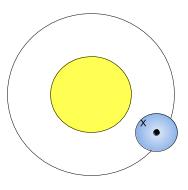
Build and Test
Discuss the following:
● Turn the Earth circle so that the X is on the left edge of the Sun plate. If you were standing on the X, where would the Sun appear to be? Lower in the sky
● Turn the Earth circle so that the X is directly facing the Sun plate. If you were standing on the X, where would the Sun appear to be? Directly overhead
● Turn the Earth circle so that the X is on the right edge of the Sun plate. If you were standing on the X, where would the Sun appear to be? Lower in the sky
● Turn the Earth circle so that the X is on the other side of the Sun plate. If you were standing on the X, where would the Sun appear to be? You would not be able to see the Sun because the Sun is on the other side of Earth.
● Did the Sun ever move? No, only Earth moved.
● What did this model show? It showed that it is Earth spinning that makes it look like the Sun is moving across the sky.
● Does the Sun show a pattern? Yes, the Sun rises and sets the same every day. It is gone every night.
Refine and Redesign
When discussing how this model could be improved, help students to consider that the Earth is not only rotating, but it is also revolving around the Sun. Ask, “How could this model show the revolution?”
Discuss the following:
● How could this model be improved? If the Sun and Earth were threedimensional, it would be more realistic. If the Sun was lit, it would better show how the light hits Earth. If hours were added on the Earth circle, we could see where the Sun appears in the sky at a particular time of the day.
Notes
Think, Pair, Share
After the students finish their model, partner them for a Think, Pair, Share event.
● Write the following question on the board:
○ Does the Sun move across the sky?
● They can then think and answer, using the following sentence stem:
○ Yes/No, the Sun does/does not actually move across the sky. I know this because ___________ .
● Pair the students by using craft sticks with their names on them. The craft stick they pull out of the container will have the name of their partner.
● Using the sentence stem, have partners share their answer with each other.
Connection Statement with Posing Question: How does the rotation of Earth create the illusion of the Sun, Moon, and stars moving across the sky each day and night?
Class Discussion Questions:
1. Based on your model, how does Earth’s rotation explain the daily movement of the Sun across the sky?
2. How might the movement of the Moon and stars differ from the Sun’s apparent movement, and what does this tell us about their positions relative to Earth?
3. What other factors, besides Earth’s rotation, could affect how we perceive the movement of celestial bodies in the sky?
STEMscopedia
Reference materials that includes parent connections, career connections, technology, and science news.
Linking Literacy
Strategies to help students comprehend difficult informational text.
Picture Vocabulary
A slide presentation of important vocabulary terms along with a picture and definition.
Content Connections Video
A video-based activity where students watch a video clip that relates to the scope’s content and answer questions.
Career Connections - Astronomer
STEM careers come to life with these leveled career exploration videos and student guides designed to take the learning further.
Math Connections
A practice that uses grade-level appropriate math activities to address the concept.
Reading Science - The Stars at Night
A reading passage about the concept, which includes five to eight comprehension questions.
Notes
Multiple Choice Assessment
A standards-based assessment designed to gauge students’ understanding of the science concept using their selections of the best possible answers from a list of choices
Open-Ended Response Assessment
A short-answer and essay assessment to evaluate student mastery of the concept.
Claim-Evidence-Reasoning
An assessment in which students write a scientific explanation to show their understanding of the concept in a way that uses evidence.
Guided Practice
A guide that shows the teacher how to administer a smallgroup lesson to students who need intervention on the topic.
Independent Practice
A fill in the blank sheet that helps students master the vocabulary of this scope.
Extensions
A set of ideas and activities that can help further elaborate on the concept.
Use this template to decide how to assess your students for concept mastery. Depending on the format of the assessment, you can identify prompts and intended responses that would measure student mastery of the expectation. See the beginning of this scope to identify standards and grade-level expectations.
Student Learning Objectives What Prompts Will Be Used?
There are many stars in the night sky, the closest of which is the Sun.
The Sun rises and sets in a predictable pattern.
The Moon’s appearance changes in the same pattern each month and is predictable.
We can observe objects in the night sky with our naked eye, through telescopes, or by using data from space exploration.
Does Student Mastery Look Like?
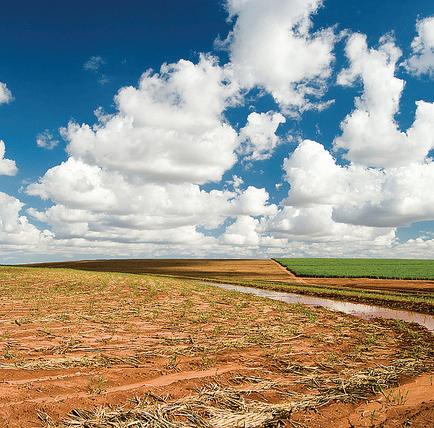
This unit builds foundational understanding of Earth’s resources and human reliance on them. Students observe natural materials, connect them to everyday products, and classify resources as renewable or nonrenewable while considering implications of depletion. Through hands-on models and evidence-based discussion, students explore how soil erosion occurs, where eroded material goes, and which surface coverings reduce erosion most, linking to real-world solutions. Instruction targets the expectation to explain human use of resources and the consequences of soil erosion.
The student is expected to demonstrate an understanding of how humans use Earth’s renewable and nonrenewable resources and an understanding of the consequences of soil erosion.
What happens to the land and the things we use when the wind and rain wash away the soil?
• Earth is made of materials that humans can use as resources, such as water to drink and wood to build homes.
• Renewable resources include air, plants, water, and animals, which are generally replaceable within a lifetime.
• Nonrenewable resources include coal, oil, and natural gas, which cannot be replaced within a lifetime.
• Soil erosion is the carrying away of soil caused by wind and water, and it can destroy land that humans use.
The terms below and their definitions can be found in Picture Vocabulary and are embedded in context throughout the scope.
Earth
The planet we live on.
Erosion
The movement of sediment from one place to another by wind, water, and other natural forces
Humans People
Materials
Equipment and supplies for doing or making things
Nonrenewable Resources
Materials from Earth that cannot be replaced by nature within a lifetime; for example, coal, oil, natural gas, rocks, and minerals
Objects
Things that can be touched and seen
Observe
To use the senses to examine or inspect
Property
A single part of the way something is
Resource
Something that we can use and is valuable
Rock
A solid piece of Earth’s surface
Sand
A part of soil made by the weathering of rocks into tiny grains; has rough, gritty texture
Soil
The stuff that covers the land and that plants grow in
Water
A liquid that all living things need to survive
Notes
Students investigate and synthesize observations to build understanding of Earth’s resources.
• Rotate through a gallery walk of images, discuss in groups, and record observations on chart paper using group-specific marker colors.
• Analyze the set of images to identify common features and patterns, documenting findings on an individual Earth’s Resources sheet.
• Participate in a class discussion to create an anchor chart highlighting shared elements (e.g., water, landforms, rocks/soil) across the images.
Activity - Earth’s Resources
Students investigate common natural resources on Earth’s surface and consider how humans use them.
• Take a nature walk to observe and collect examples of rocks, soil, sand, water/evidence of water, and living things.
• Sort and analyze findings in class, categorizing items and discussing relationships among resources.
• Examine examples of everyday objects to identify which natural resources were used to make them, responding to brief questions.
• Reflect on additional uses and why these resources are essential for human life.
Scientific Investigation - Which Is It?
Students explore Earth resources by identifying and classifying materials in everyday objects as renewable or nonrenewable.
• Define renewable vs. nonrenewable and sort picture cards into the two categories, recording examples.
• Discuss reasoning for classifications and implications if certain resources run out.
• Assemble everyday object picture puzzles, list component materials, and mark renewables/nonrenewables using color coding before sharing findings.
Scientific Investigation - Wash Away!
Students explore how soil erosion occurs and evaluate strategies to prevent and repair it.
• Observe a soil model, simulate rainfall with spray bottles, and record before-and-after observations of erosion and runoff.
• Discuss where eroded soil goes in real landscapes and brainstorm ways to reduce erosion.
• Test three models (moss/forest, twigs/farmland, gravel/riverbank) by applying water flow and wind, then record and compare which coverings reduce erosion most.
• Interpret how each material represents real-world solutions (living plants, windbreaks, rock barriers) and consider repair strategies like adding soil and protective cover.
Estimated 30 min - 45 min
In this activity, students demonstrate an understanding of Earth’s resources.
Materials
Printed Materials
● 1 Earth’s Resources document (per student)
● 1 set of Picture Cards (1 set per classroom and 1 set per group)
Reusable Materials
● 1 marker (different color per group)
Consumable Materials
● 1 piece of chart paper (per picture)
● Print Earth's Resources document for each student.
● Print Picture Cards for each group. Print one set to put around the room.
● Post a piece of chart paper next to each picture posted in the classroom.
Planning and Carrying Out Investigations
Constructing Explanations and Designing Solutions
During this activity, students will plan and conduct investigations collaboratively to produce data that serves as the basis for evidence, allowing them to evaluate different ways of observing the phenomenon of soil erosion by wind and rain. They will make observations and measurements to construct evidence-based accounts of how these natural processes affect the land and the things we use, and use this understanding to generate and compare multiple solutions to mitigate soil erosion.
Notes
Cause & Effect
Stability & Change
During this activity, students will explore the phenomenon of soil erosion by observing and discussing images of Earth’s resources. They will identify and record observable patterns related to the effects of wind and rain on land, thereby understanding the cause and effect relationships. Additionally, students will note which elements remain stable and which change, recognizing that some changes occur rapidly while others happen slowly.
1. Have students rotate around the room in groups, discussing and recording everything they notice in the pictures.
2. Ask each group to write what they observe on the chart paper with their own color of marker. Have groups stay about a minute at each picture before moving on.
3. Ask students to return to their desks and discuss as a group what the pictures all had in common. Challenge students to try to identify at least four things. Ask students to record on the Earth’s Resources document, circling those things that some or all of the pictures had in common.
4. Discuss and create an anchor chart:
○ What did all of the pictures have in common? They are all part of our Earth. They all had water in them. Some had mountains; some had sand; some had dirt/rocks.
How do wind and rain impact the land and resources we use, and what can we observe about these changes over time?
If time or space is limited, have students rotate the Picture Cards around to table groups or partners. Set a timer for discussing and recording time and then say, “pass” for students to pass the images.
Project a “same and different” T Chart to guide the discussion. Have students report things that were common across all of the photos, and list those under same. If students notice something unique, list it under different. Analyze the shared things to look for a pattern.
1. Based on your observations from the gallery walk, how do you think wind and rain contribute to the changes in the landscapes shown in the pictures?
2. What are some ways we can prevent or reduce the erosion of soil by wind and rain in the environments we observed?
3. How might the erosion of soil affect the availability and quality of Earth’s resources, such as water and vegetation, in the areas depicted in the pictures?
Meet with students in the class who need more processing time to view the pictures used in this activity. This ensures that students have previous knowledge of the content and can brainstorm with their groups. Learn more strategies to help students with slow information processing in the Intervention Toolbox. Notes
Estimated 1 hr - 2 hrs
In this activity, students take a nature walk and recognize that water, rocks, soil, sand, and living things are found on Earth’s surface and are used for the benefit of humans.
Materials
Printed Material
● 1 Earth’s Resources
● 1 Slideshow presentation (optional)
● 1 set of How Is It Used? Cards
Reusable Materials
● 1 brown paper bag or plastic bag (per student)
● 1 hand lens (per student)
Consumable Materials
● 1 sticky note pad (per group)
Collect materials and make copies of Earth’s Resources.
Teachers have the option to either print the Slideshow presentation or project it.
Planning and Carrying Out Investigations
Constructing Explanations and Designing Solutions
During this activity, students will plan and conduct an investigation collaboratively to produce data to serve as the basis for evidence about the phenomenon of soil erosion by wind and rain. By observing and collecting natural materials such as rocks, soil, and plants, students will evaluate different ways of observing and measuring the effects of erosion. They will make firsthand observations to construct evidence-based accounts of how natural resources are used and affected by environmental changes, and generate solutions to mitigate soil erosion, thereby connecting their findings to the broader understanding of Earth’s resources and their importance.
Cause & Effect
Stability & Change
During this activity, students will explore the cause and effect relationship by observing how natural elements like water and wind can lead to soil erosion, affecting the stability and change of the landscape. They will gather evidence through a nature walk to understand how these processes can cause observable patterns and changes in the environment, helping them to identify which materials remain stable and which undergo change, either slowly or rapidly.
1. Take students on a nature hunt outside. Have each student take a hand lens and a plastic or paper bag to collect outdoor treasures such as rocks, soil, leaves, grass, sand, small plants, etc. Water (e.g., puddle, dewdrops) or evidence of water (e.g., moist soil, green leaf) should be noted, as well as sounds of living things (e.g., bird singing, dog barking) for later discussion.
2. Give students time to explore trees, plants, grasses, bushes, etc. Call attention to the sounds of living things.
3. Inside the classroom, have student groups analyze the contents of their bags and sort the items into groups: living things (or evidence of), rocks, soil, sand, and water (or evidence of). For evidence of items not actually collected in bags, have students use sticky notes for recording.
4. Discuss the following:
○ Where did you find the materials? On the school ground
○ How did you group your materials? Into groups of rocks, soil, sand, water, and plants/living things
○ Do you think you would find most of these materials in other places besides the school? Why? Yes, because all of these materials are on our Earth
○ Are any of the materials related to each other? Yes, water helps the plants grow. Soil is made from rocks, sand, and plants, and it helps the plants to grow. Sand is small pieces of rock.
If access to a safe space to gather nature items is limited, provide a curated collection of items. Distribute them in an open space (gym or cafeteria) for students to hunt and gather. Alternatively, display them one at a time to the whole group for students to analyze together.
Set clear guidelines on what can be touched or gathered outside. Consider allowing students to take photos and create a Resource Hunt slideshow with a partner rather than gather living things, water, and other items.
FACILITATION TIP
Take time to preview the scientific terms: resource, renewable resource, nonrenewable resource, materials, and so on. Project the Content Connections video: Uses of Natural Resources.
FACILITATION TIP
When discussing the natural resources used to create the listed objects, be prepared for students to wonder about lumber or wood for some of the items.
Part II: Resource Uses
1. Show students the Slideshow presentation on how Earth’s materials are used.
2. Have students complete the Earth’s Resources questions as they watch the Slideshow presentation.
3. Divide students into groups (no more than six groups).
4. Hand out one How Is It Used? Card to each group. Allow a couple minutes for student groups to discuss which of Earth’s resources were used to make the object on the card. Have student groups present their conclusions.
5. For each card, discuss the following:
○ Which natural resources from Earth were used to make the object?
Log cabin: rocks, soil, water
Grass: soil, water
Window glass: sand
Pencil: soil, water, rock (graphite)
Paper: soil, water
Road: rocks, sand, water
○ Can you think of another use for one of these natural resources?
Log cabin: water for drinking
Grass: soil for earthworms to live in
Window glass: sand for recreation
Pencil: rocks for buildings or landscaping
FACILITATION TIP
Follow up this discussion by reviewing some of the concepts from prior grades (Explore 2 of the Kindergarten Reducing Human Impact scope). Students may remember learning about Reduce, Reuse, and Recycle.
Paper: soil and water used for organism homes (crawfish, beavers, etc.)
Road: water for traveling
6. Discuss the following: What would happen if there were no resources on Earth? People could not make anything for their use. They would not have food or water, which are necessary for life.
Notes
After students have had a chance to explore through the investigation, place them in a circle in an open area.
Explain to them that you will say some sentences about the soil investigation out loud. (For example, you might say, “Rocks are used by humans to build houses.”)
If they agree with the statement, they should walk into the inside of the circle and stand facing someone who does not agree with the statement. Then, they can discuss why they agree or disagree with the statement.
Be sure to model the game before beginning.
How does the erosion of soil by wind and rain impact the availability and use of natural resources?
1. How might the removal of soil by wind and rain affect the growth of plants and the availability of resources like food and water?
2. In what ways could the erosion of soil influence the construction and durability of structures like roads and buildings?
3. How can we mitigate the effects of soil erosion to ensure the sustainability of natural resources for future use?
Estimated 1 hr - 2 hrs
Students identify and classify everyday objects that are resources from Earth and classify the materials the objects are made from as renewable and nonrenewable resources.
Materials
Printed Material
● 1 Which Is It? (per student)
● 1 set of Renewable and Nonrenewable Cards (per group)
● 1 Everyday Objects Handout (per class)
Reusable Materials
● Blue and red colored pencils (per student or per group)
SEP Connection
Planning and Carrying Out Investigations
Part I
● Print, cut, and laminate Renewable and Nonrenewable Cards.
Part II
● Copy the Everyday Objects cards and cut them into pieces so that each student has a piece.
● Sample student answers can be printed if needed.
Constructing Explanations and Designing Solutions
During this activity, students will plan and conduct investigations collaboratively to produce data that serve as the basis for evidence, allowing them to evaluate different ways of observing and measuring the phenomenon of soil erosion by wind and rain. By identifying and classifying everyday objects as made from renewable or nonrenewable resources, students will make observations and construct evidence-based accounts of natural phenomena, such as the impact of resource depletion on the environment. This process will help them understand the importance of using renewable resources to mitigate the effects of soil erosion and preserve the land and its resources.
Notes
CCC Connection
Cause & Effect
Stability & Change
During this activity, students will explore the phenomenon of what happens to the land and the things we use when the wind and rain wash away the soil by identifying and classifying everyday objects as renewable or nonrenewable resources. This will help them understand the cause and effect relationship between resource use and environmental changes, as well as observe the stability and change in natural resources, recognizing that some resources can be replenished while others cannot.
1. Set the stage by showing students your driver’s license. Explain to them that it has an expiration date on it. When the expiration date approaches, it is necessary to renew the license. Have a conversation with students about what this means.
2. Lead students to understand that if something is renewable, it can be used again and again. On the other hand, allow students to define nonrenewable. What would happen if a driver’s license were nonrenewable? Students should write the definitions of renewable and nonrenewable in Which Is It?.
3. Give each group of students a set of Renewable and Nonrenewable Cards and the title cards.
4. Direct students to use their understanding of renewable and nonrenewable to place each picture under the title that they believe is correct.
5. Discuss the following:
○ Why did you label the items as renewable/nonrenewable? Items that can be used again were labeled renewable. If they would be gone after they were used and could not be replaced, they were labeled nonrenewable.
○ How might we be affected if this resource runs out? We would have no more of that resource. All the things that depend on that resource would be gone.
○ How do you know if a resource is renewable or nonrenewable? If a resource can be made again in a lifetime, it is renewable. When a resource is nonrenewable, once it is gone, it is gone forever; or it would take more than a lifetime to remake.
6. Have students list the renewable and nonrenewable resources in Which Is It?.
1. Review Earth’s resources from the Explore 1 activity. Water, soil, rock, and sand
2. Give each student a piece of one of the Everyday Objects cards.
3. Ask students to find other students who have a piece of their picture until the picture is complete.
4. Have these student groups write all the materials that are needed to make the objects in their pictures in Part II of their Which Is It?.
5. Instruct students to circle the materials that are renewable with a blue colored pencil and put an X through the materials that are nonrenewable with a red colored pencil.
6. Monitor for student understanding as they distinguish the renewable resources from the nonrenewable resources.
Notes
FACILITATION TIP
Use the Visual Glossary for definitions.
FACILITATION TIP
Take time to project each card and clarify the meaning of each resource and how the pictures relate. If time is limited, avoid setting up small groups and have students just vote which category they think each card goes in.
FACILITATION TIP
To save time, do not cut the Everyday Objects into pieces. Distribute a whole card to every student and have them pair up with someone who has a matching card.
FACILITATION TIP
Post a list of materials on the board for students to reference while they write what is needed to make their objects on Part II.
FACILITATION TIP
If time and supplies are limited, just have students circle and X the resources with regular pencils.
7. Allow student groups to share their findings with the rest of the class.
8. Discuss the following:
○ How can you tell if an object is renewable or nonrenewable? If the object contains materials that are from renewable resources, it can continue to be made. If an object contains nonrenewable resources, those resources would be gone after they are used.
○ Why is it important to use renewable resources to make everyday objects? When we use renewable resources, we can continue to make and use those objects.
Nonrenewable Resources Advertisement
After the students have had the opportunity to explore the game, allow them to reflect on it.
Partner the students so they can design a picture advertisement of an object that could not be made using a nonrenewable resource. After the students finish their advertisement, have them present it and tell the class about what nonrenewable resource they are conserving with their product.
Connection Statement with Posing Question: How do the choices we make in using renewable and nonrenewable resources affect the land and the things we use when wind and rain wash away the soil?
Class Discussion Questions:
1. How might the erosion of soil impact the availability of renewable and nonrenewable resources?
2. In what ways can using renewable resources help prevent or mitigate the effects of soil erosion?
3. What strategies can we implement to ensure that nonrenewable resources are used responsibly to minimize their impact on the environment?
Notes
In this activity, students investigate the process and consequences of soil erosion as well as different ways to prevent and repair soil erosion.
Materials
Printed Material
● 1 Wash Away! (per student)
Reusable Materials
● 6 paint trays (per class)
● 1 spray bottle (per class)
● 1 small tabletop fan (optional, per group)
● 1 craft stick (per group)
● 50 twigs (per teacher)
● 1 pair of goggles (per student)
Consumable Materials
● 1 bag of gravel (per class)
● 1 bag of potting soil (per class)
● 1 bag of moss (per class)
● Water
Part I
Fill the inclined part of the paint tray with potting soil.
Part II
Prepare the paint trays. Create two of each of the different models.
1. Forest: Fill the raised portion of the paint tray with packed soil. Cover the soil in moss, and slightly press the moss into the soil. Fill the bottom portion of the tray with water.
2. Farmland: Fill the raised portion of the paint tray with packed soil. Create a barrier for the soil by placing twigs closely together in a line across the start of the soil. Fill the bottom portion of the tray with water.
3. Riverbank: Fill the raised portion of the paint tray with packed soil. Cover the soil with gravel. Fill the bottom portion of the tray with water.
Rather than having groups investigate the different models on a rotation, you may create six of each model and lead the whole class through each investigation.
Planning and Carrying Out Investigations
Constructing Explanations and Designing Solutions
During this activity, students will plan and carry out investigations to explore the phenomenon of soil erosion caused by wind and rain. They will make observations and collect data to understand how different materials like moss, twigs, and gravel can prevent or reduce soil erosion. By conducting these investigations, students will construct evidence-based explanations for the natural phenomenon of soil erosion and evaluate different solutions to address and repair its effects.
Cause & Effect
Stability & Change
During this activity, students will explore the phenomenon of soil erosion by investigating how wind and rain can wash away soil, affecting the land and the things we use. They will engage with the concept of cause and effect by designing simple tests to observe how different protective coverings can prevent soil erosion, thereby generating observable patterns. Additionally, students will observe stability and change as they see how some methods maintain the soil’s position while others allow for rapid changes, helping them understand the dynamics of erosion and its prevention.
Part I: Wash Away!
1. Instruct the class to take their journals and gather around the paint tray.
2. Allow students to observe the tray.
3. Ask them to draw and label the soil in Wash Away!.
4. After students put their goggles on, have each student spray 10–15 sprays of water on the soil.
5. Ask students to observe the water that flowed to the bottom of the tray and to draw the post-experiment soil in their journals.
6. Discuss the following:
○ What did the spraying water represent? Rain
○ What changes did you notice in the water at the bottom of the tray? I noticed there is soil in the water.
○ Why do you think this happened? I think the water carried some of the soil with it as it moved.
○ In real life, the soil is not washed to the bottom of a tray. Can you think of where the soil is washed away on Earth? (Students might need help understanding this concept. Look at the drains around your school and at photographs to understand how runoff is washed first into drains, then into streams, lakes, and rivers.) Soil is washed into rivers and oceans.
○ Brainstorm with students what could be done to help prevent soil erosion. Sample student answer: The soil could be covered with rocks or plants.
Part II: Stop The Erosion!
Explain to students that each model represents a way that helps prevent soil erosion. Students determine which method works best.
1. Divide students into groups of four or five.
2. Instruct students to copy or complete the recording table in Part II of Wash Away!.
3. Tell students they must determine whether each method prevents soil erosion.
4. Demonstrate how to horizontally use the craft stick to gently move water onto the land.
5. Demonstrate how to use the craft stick or fan to gently blow on the land.
6. Explain that the models are set up with potential protective coverings, including moss, twigs, and gravel (rocks). The students do not change the environments manually. They are only exploring the effects of wind and water.
This demonstration could be completed with three large stream tables. Have the whole class gathered around, and have each student get at turn to participate by spraying, fanning, or using the craft stick.
Gather visual examples to share with students that illustrate erosion. Find local examples of efforts to prevent soil erosion in construction sites, swales, and parks.
7. Have students complete each of the three stations by gently moving water onto the land and blowing on the land with the fan or craft stick.
8. Discuss the following:
Prior to having students gently move the land with the fan and craft stick, carefully model your expectations.
FACILITATION TIP
If students need further clarification, read the STEMscopedia and use the Linking Literacy supports.
○ What was the purpose of the layer of rocks? The rocks helped prevent soil erosion.
○ What did the rocks represent? The rocks represented a dike made from cement, rocks, or sandbags.
○ What was the purpose of the twigs? The twigs helped prevent soil erosion.
○ What did the twigs represent? The twigs represented a windbreak made from trees or shrubs/bushes.
○ What was the purpose of the moss? The moss helped prevent soil erosion.
○ What did the moss represent? The moss represented a living shoreline made from plants.
○ Once soil erosion occurs, what are some ways it could be repaired? New soil can be brought in and covered with plants or rocks to prevent future erosion.
Goggles:
When using any form of very small particles or objects, it is safest for students to protect their eyes by wearing goggles.
After the students have explored the consequences of soil erosion and ways to prevent and repair it, the students can play a game that encourages them to put their heads together.
● Divide students into groups of equal numbers, and have them number off (1-2-3-4).
● Give out picture examples of soil erosion (eight or less).
● Have students in each group “put their heads together” to explain ways that soil erosion could have been prevented and ways to repair it. All students are responsible for knowing and explaining the information.
● Choose a number at random. A game spinner is recommended.
● Call on the number that the spinner indicates. For example, if the spinner lands on 2, all the students in the class who counted off “2” must explain the answer.
● Direct each group to help their selected group member get ready to explain how the soil erosion could have been prevented and how it can be repaired.
● Ask students with that number to raise their hands, and call on one of them to identify how each landform was created.
When wind and rain wash away soil, how can we prevent the loss of land and resources we rely on?
1. How do different materials like moss, twigs, and gravel help in preventing soil erosion, and which method do you think is most effective?
2. What are some real-world examples of soil erosion, and how do they impact the environment and human activities?
3. After observing the effects of wind and water on the different models, what strategies would you recommend for communities facing severe soil erosion?
STEMscopedia
Reference materials that includes parent connections, career connections, technology, and science news.
Linking Literacy
Strategies to help students comprehend difficult informational text.
Picture Vocabulary
A slide presentation of important vocabulary terms along with a picture and definition.
Content Connections Video
A video-based activity where students watch a video clip that relates to the scope’s content and answer questions.
Career Connections - Civil Engineer
STEM careers come to life with these leveled career exploration videos and student guides designed to take the learning further.
Math Connections
A practice that uses grade-level appropriate math activities to address the concept.
Reading Science - Save the Yard!
A reading passage about the concept, which includes five to eight comprehension questions.
Notes
Claim-Evidence-Reasoning
An assessment in which students write a scientific explanation to show their understanding of the concept in a way that uses evidence.
Multiple Choice Assessment
A standards-based assessment designed to gauge students’ understanding of the science concept using their selections of the best possible answers from a list of choices
Open-Ended Response Assessment
A short-answer and essay assessment to evaluate student mastery of the concept.
Guided Practice
A guide that shows the teacher how to administer a smallgroup lesson to students who need intervention on the topic.
Independent Practice
A fill in the blank sheet that helps students master the vocabulary of this scope.
Extensions
A set of ideas and activities that can help further elaborate on the concept.
Use this template to decide how to assess your students for concept mastery. Depending on the format of the assessment, you can identify prompts and intended responses that would measure student mastery of the expectation. See the beginning of this scope to identify standards and grade-level expectations.
Student Learning Objectives What Prompts Will Be Used? What Does Student Mastery Look Like?
Earth is made of materials that humans can use as resources, such as water to drink and wood to build homes.
Renewable resources include air, plants, water, and animals, which are generally replaceable within a lifetime.
Nonrenewable resources include coal, oil, and natural gas, which cannot be replaced within a lifetime.
Soil erosion is the carrying away of soil caused by wind and water, and it can destroy land that humans use.