GRADE 4

K-8 SCIENCE
Student Workbook
Grade 4
Published by Accelerate Learning Inc., 5177 Richmond Ave, Suite 800, Houston, TX 77056. Copyright © 2025, by Accelerate Learning Inc. All rights reserved. No part of this publication may be reproduced or distributed in any form or by any means, or stored in a database or retrieval system, without prior written consent of Accelerate Learning Inc., including, but not limited to, in any network or other electronic storage or transmission, or broadcast for distance learning.
To learn more, visit us at www.stemscopes.com.
This Student Notebook is designed to be used as a companion piece to our online curriculum.
The pages of this book are organized and follow the 5E model.
ENGAGE
A short activity to grab students’ interest
EXPLORE Student Journal
Hands-on tasks, including scientific investigations, engineering solutions, and problem-based learning (PBL)
Claim-Evidence-Reasoning (CER)
A formative assessment in which students write a scientific explanation to show their understanding
STEMscopedia
EXPLAIN
ELABORATE
A reference material that includes parent connections, technology, and science news
Reading Science
A reading passage about the concept that includes comprehension questions
EVALUATE
Claim-Evidence-Reasoning (CER)
A summative assessment in which students write a scientific explanation to show their understanding
Open-Ended Response (OER)
A short answer and essay assessment to evaluate mastery of the concept
Only student pages are included in this book and directions on how to use these pages are found in our online curriculum. Use the URL address and password provided to you by your district to access our full curriculum.
Human Body Systems


Student Handout
Using the diagram below, break the school building down into different systems, and sketch an example of each. As you break down the school into its systems, think of body systems that serve a similar function.
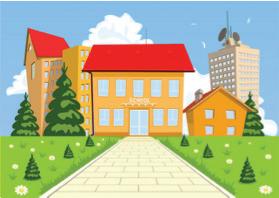
School Building
School System Main Function
Muscular System Main Function
School System Main Function
Circulatory System
Function
School System Main Function
Respiratory System
Function
School System Main Function
Digestive System
Function
School System
Reflection
1. What are examples of different systems in school interacting?
2. How is a school and its systems similar to a body and its systems?
3. Give two other examples of places or objects that work together as different systems.

Explore 1
Making Connections
Research three different systems, their functions, and how they compare to a human organ system. Include the information in your slides.
System:
Function:
Parts of system:
How does it compare to a human organ system?
Human Organ System:
Function:
Organs in system:
How does it compare to a nonhuman system?
Explore 1
System:
Function:
Parts of system:
How does it compare to a human organ system?
Human Organ System:
Function:
Organs in system:
How does it compare to a nonhuman system?
Explore 1
System:
Function:
Parts of system:
How does it compare to a human organ system?
Human Organ System:
Function:
Organs in system:
How does it compare to a nonhuman system?
Explore 1
Reflection
1. Why do you think engineers would use the body’s organ system as inspiration to design machine systems?
2. What were some key differences you found between the human organ systems and the other systems when comparing them?
3. If you could model a machine or other system after an organ system, which organ system would you use? How would you use it? Explain and draw your idea below.
Explore 2
Station 1: Cotton Toss
Systems at Work
Pair up with a student in your group. One student will toss a cotton ball, and the other will catch the cotton ball. The first round must be done with your eyes uncovered. The second round must be done with your eyes covered by a blindfold. Record your results in the table below. Place a check mark in the box if the cotton ball was caught, and mark an X if it was not.
1. Which round resulted in more catches? Why is this?
2. Name all the organ systems and the organs involved in catching the cotton ball successfully.
3. Explain the relationship between these organs in completing this task.
Explore 2
Station 2: Snacktion
For the first round, you will place a snack in your mouth and will soften it enough to swallow without chewing. For the second round, you will place a second snack in your mouth and chew it until it is ready to swallow. Record the time it took to accomplish each. Review.
1. Which round resulted in the shortest time? Why is this?
2. Name all the organ systems and their organs involved in accomplishing this task.
3. Explain the relationship between these organs in completing this task.
Snack 1
Snack 2
Explore 2
Station 3: Catch Your Breath
Pair up with a student in your group. Have your partner put one minute on the timer. Count the number of natural breaths you take in that one minute and record it in the table below. You will have one minute to do as many jumping jacks as possible. When you are finished, count your breaths again for one minute. Record this number in the table below.
Number of Breaths
Number of Breaths
Before Jumping Jacks
After Jumping Jacks
1. Which round resulted in a higher number of breaths in one minute? Why is this?
2. Name all the organ systems and the organs involved in doing jumping jacks.
3. Explain the relationship between these organs in completing this task.
Explore 2
Station 4: Guess Who
Each bag contains a mystery item. You will use your hands only to try to guess the item inside. Record your guess. Once all students have made a guess, you may open the bags and see what the actual items were.
1. Were your guesses mostly accurate? Why is this?
2. Name all the organ systems and the organs involved in successfully identifying objects in your surroundings.
3. Explain the relationship between these organs in completing this task.
Explore 2
Station 5: Draw This!
Pair up with a student in your group. Student A will pull a card from the bag (without showing the other partner), and Student B will wear a blindfold. Student A will read the card with a description of an object for Student B to draw. Student B will draw the object as described while blindfolded. Switch roles and answer the questions below.
Explore 2
1. What object were you supposed to draw?
2. Did you draw it exactly as described? Why is this?
3. Name all the organ systems and the organs involved in successfully drawing objects in your surroundings.
4. Explain the relationship between these organs in completing this task.
Explore 2
Part II: Model
1. Choose a task from the previous activities for your model to demonstrate.
2. Which body systems are necessary to complete this task successfully?
3. Draw and explain the individual organs and their unique functions during this task.
4. Draw and explain how the organs and their systems work together to accomplish the task.
Explore 3
Part I: Research
Your Health
Use informational texts as well as online resources.
Infectious Diseases
1. What are infectious diseases? Give three examples.
2. How are they transmitted?
3. How are they treated?
4. How do they affect the human body system?
5. Include any interesting or additional information you would like to include in your play below.
Explore 3
Noninfectious Diseases
1. What are noninfectious diseases? Give three examples.
2. How do people get them?
3. How are they controlled or managed?
4. How do they affect the human body system?
5. Include any interesting or additional information you would like to include in your play below.
Explore 3
Medical Research and Prevention
1. What are some things scientists and medical professionals are doing to help us understand disease?
2. What are three lifestyle changes you can make to maintain a healthy body?
3. How we can educate others on maintaining a healthy body and lifestyle? Why is this important?
4. Include any interesting or additional information you would like to include in your play below.
Explore 3
Part II: Play
Use the guide below to help produce your three-act play.
Act I: Set Up Story
Characters: Who are your characters?
Setting: Where does this take place?
Problem: Who has an infectious disease? Who has a noninfectious disease?
Explore 3
Act II: Confronting the Problem (Infectious/Noninfectious Diseases)
1. How does it affect their bodies? What changes occur?
2. Who is there to help them?
3. What do they learn?
Explore 3
Act III: Resolution
1. How do the characters deal with their disease?
2. What changes do they make in their lifestyles?
3. What advice do they give the audience?

STEMscopedia
Reflect
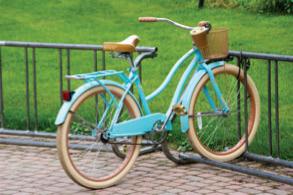
How is your body like a bike? The bike and your body have individual parts that work together as a system. Each part performs a certain job or function in order for the whole system to work. The bike has tires to roll forward, gears to make the wheels turn, pedals to turn the gears, brakes to stop, and a seat to hold the person. What would happen if your bike were missing parts like wheels or pedals? The system would not function, and the bike could not work.
The human body is also a system made of many parts working together to perform important life functions. What are those different parts? What roles do they play in your body, and how do they work together to maintain life?
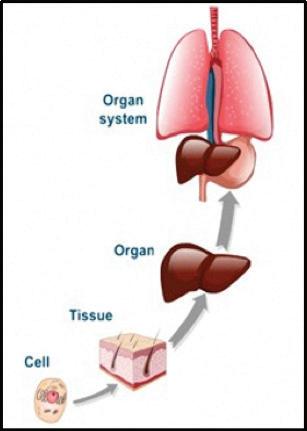
Organ Systems
Organization in the Human Body
The smallest part in the human body system is the unit of life called the cell. The human body is made up of trillions of cells. There are one million millions in just one trillion! Each cell performs certain functions the body needs to keep healthy.
Together, cells form tissues, which are groups of cells that perform a function. The human body is composed of muscle tissue, nervous tissue, and skin tissue. The different kinds of tissue group together to form an organ
The heart and brain are examples of organs. Finally, organs function together to form an organ system. Organ systems are groups of organs that work together to perform all the major functions the body needs to stay alive.
The duties of maintaining life are divided among the organ systems. Organ systems serve different functions. From moving blood around the body in order to deliver nutrients and remove wastes to providing support, protection, and movement, the systems of the body keep us alive. That is why it is important to keep the body systems healthy and strong. Let us look more closely at the systems and the important roles they play in a human body. The human body requires numerous systems to work together in order to function.
Reflect
STEMscopedia

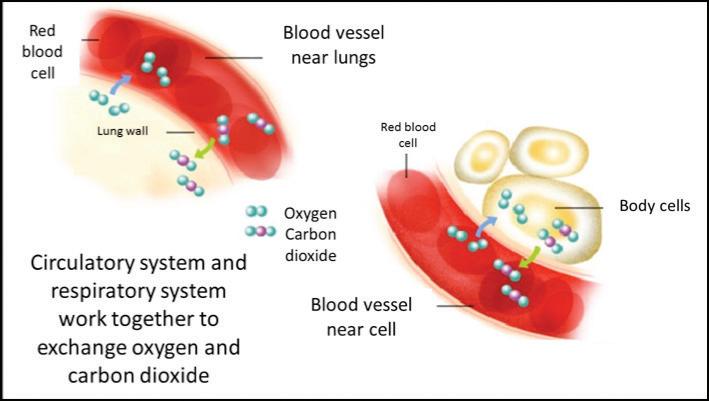
The circulatory system and the respiratory system work together for blood circulation and respiration.
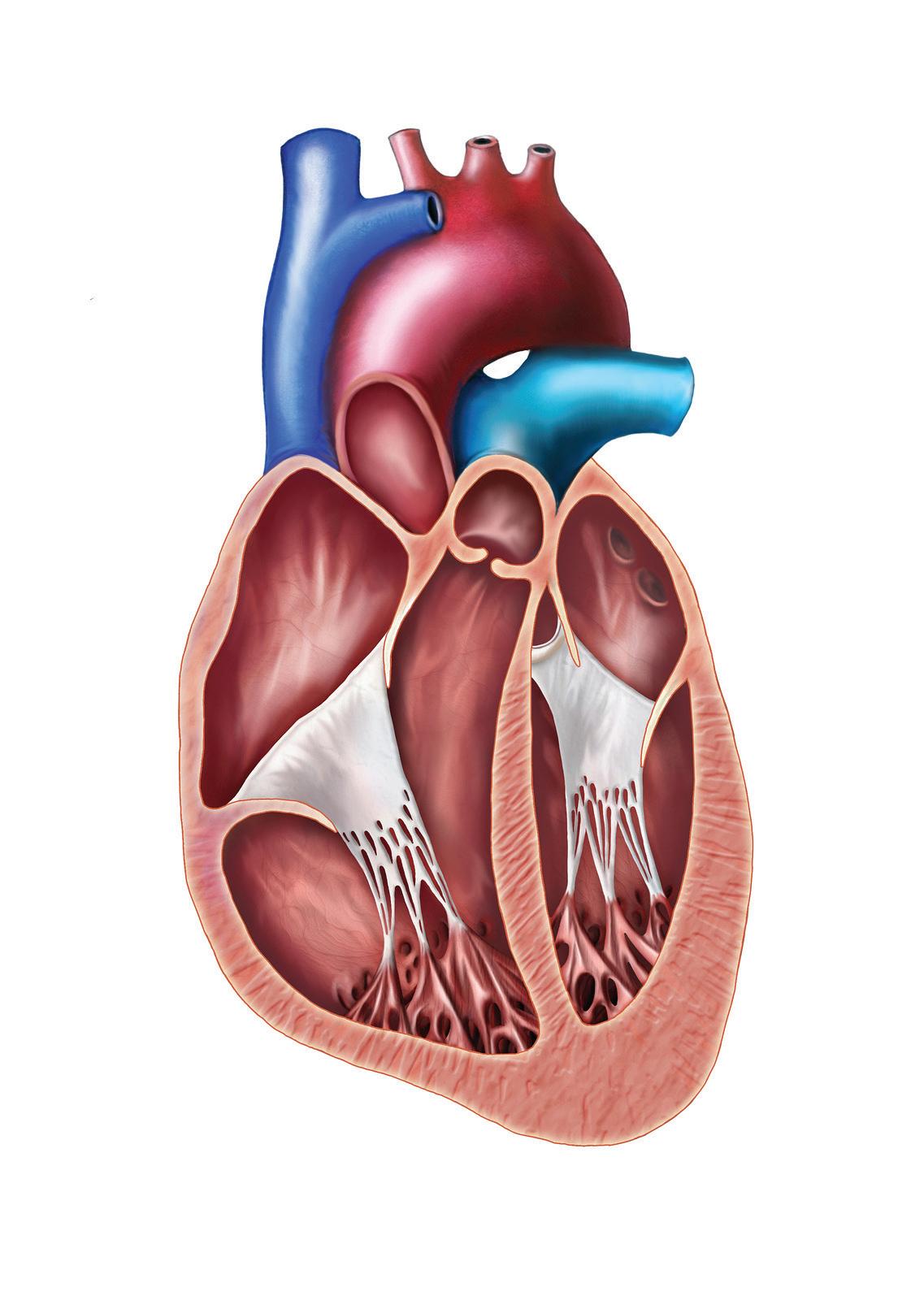
The circulatory system includes the heart, blood vessels, and blood. The heart is an organ made up of four chambers (left and right atria and ventricles) that work together to pump blood throughout the body. Blood circulates to all the parts of the body, delivering oxygen and important nutrients to cells. The circulatory system works with the respiratory system to pick up carbon dioxide from the cells and carry it to the lungs, where it is exhaled.

Oxygen is inhaled, and again, the circulatory system works with the respiratory system to pick up oxygen from the lungs for the red blood cells. Oxygen-rich blood (blood that carries oxygen molecules) leaves the heart through blood vessels called arteries. Oxygen is delivered to the body through vessels called capillaries, which are so thin that the oxygen molecules pass right through their walls and into cells. Oxygen-poor blood (blood that contains a lot of carbon dioxide waste) returns to the heart through veins. Blood also contains white blood cells that are important for fighting infections.
STEMscopedia
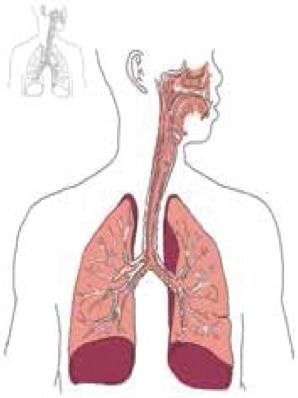
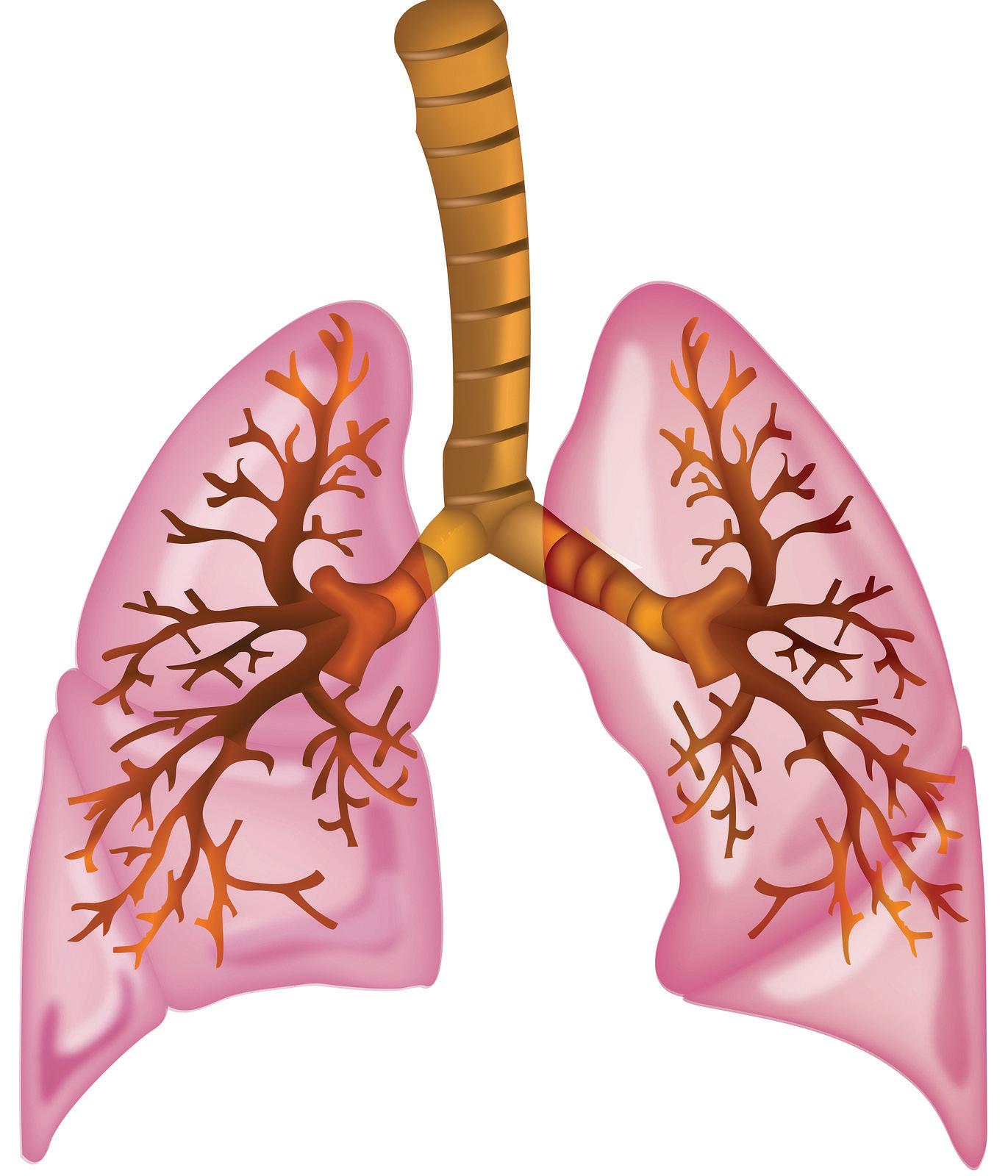
The respiratory system supplies oxygen for cells and gets rid of carbon dioxide. When blood returns to the heart from the cells, it is pumped to the lungs. The lungs are part of the respiratory system, which serves the main purpose of supplying the blood with oxygen. The lungs include two branches called bronchi, narrower tubes called bronchioles, and tiny air sacs called alveoli. The respiratory system also includes the nose, pharynx (throat), and trachea. When a person inhales, oxygen and other gases enter the mouth and nose and pass through the pharynx and trachea.
The gases then branch into both bronchi of the lungs. At the end of the bronchioles, oxygen moves across the membranes of the alveoli and into the capillaries to the body. The respiratory system also removes carbon dioxide from the body. Carbon dioxide is waste produced by cells. Carbon dioxide passes through the capillary walls of the body and back to the alveoli. It then moves out of the body through the nose and mouth when a person exhales.
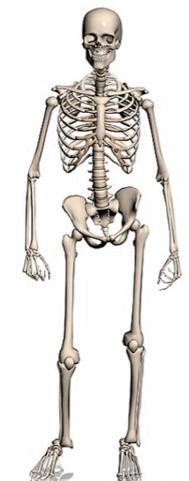
The skeletal and the muscular systems work together for movement. The skeletal system includes bones and joints. (A joint is where two or more bones make contact.) Bones provide the human body with structure and support. They also protect important organs. The skull is like a helmet that protects the brain. Ribs keep the heart and other nearby organs safe. Bones also store important minerals, such as calcium, and produce new blood cells. The muscular system attaches muscle to bones and bone to bones to help the body move.
The muscular system, as you might have guessed, includes muscles! It also includes tendons and ligaments. Tendons are tissues that attach muscles to bones. Ligaments are tissues that attach bones to other bones. Tendons and ligaments help the body move. There are three types of muscles in the muscular system: skeletal, smooth, and cardiac.
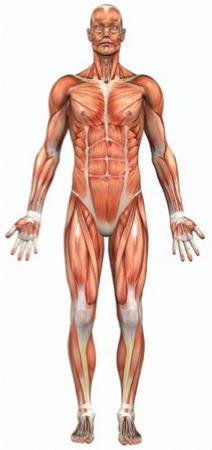
3. Cardiac muscle is also involuntary, is found in the walls of the heart, and helps the heart contract to pump blood. Reflect
1. Skeletal muscles are voluntary—people have the ability to consciously control them. Skeletal muscles work with bones to provide movement, such as walking, jumping, or even just letting you raise a hand to answer a question in class.
2. Smooth muscle is involuntary—it moves or contracts without conscious control—and lines the inside of many organs, such as the stomach and blood vessels. One important function of smooth muscle is to help move food through the body by contractions in various organs, such as the stomach. Smooth muscle also moves blood through veins.
STEMscopedia
Reflect
The digestive system gets nutrients to the body, while the excretory system gets rid of wastes.
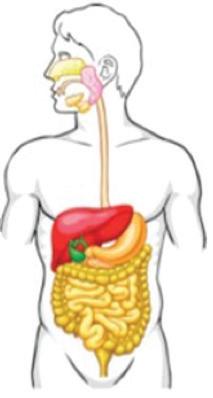
The digestive system breaks down food into small molecules, absorbs nutrients into blood, and removes food waste. Food must be broken down before it can be used. This system includes the mouth, the esophagus, the stomach, the intestines, and the anus. Digestion begins in the mouth, where teeth and saliva break food down into smaller pieces. Food then travels down the esophagus (tube) and enters the stomach, where further chemical digestion occurs. Strong chemicals and churning by stomach muscles break the smaller food particles down into molecules. The liver and pancreas are organs that add chemicals that help break down food. From the stomach, food moves into the small intestine, where nutrients are absorbed into the bloodstream. Materials that are not absorbed move to the large intestine, where any remaining water is absorbed. The rest of the material leaves the body as waste through the anus.
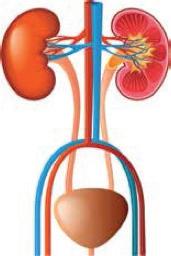
The excretory system removes waste from the body, which is important for maintaining health. The kidneys, bladder, and liver are the parts of the excretory system that collect and dispose of waste produced by cells. As already stated, the lungs remove carbon dioxide waste. The liver and kidneys filter the blood and remove toxins, excess water, and other waste. The waste is then stored in the bladder as urine until it is released from the body during urination.
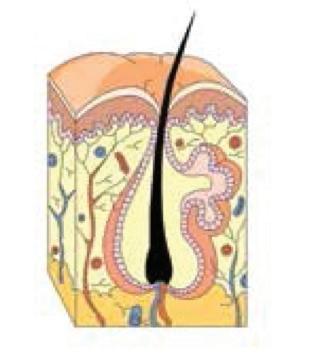
The integumentary system protects the body. The integumentary system contains the largest organ in the human body—the skin. Along with hair, nails, and glands, the skin protects the body’s internal organs from exposure to the outside environment. Skin is the body’s first line of defense against illness and injury. Skin protects inner organs from illness and injury, regulates body temperature, and detects stimuli from surroundings. This system also excretes waste through sweat, helps maintain body temperature, and produces vitamin D. The integumentary system plays an important role in the body’s interactions with its surroundings. Special nerves in the skin pick up stimuli from the environment and send messages to the brain. For example, when skin touches something cold, nerves in the skin send a message to the brain that the item is cold.
STEMscopedia
Reflect
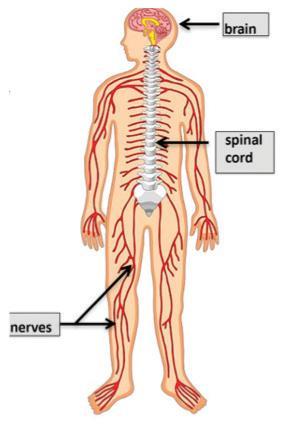
The nervous system coordinates all the other organ systems. All the organ systems are controlled by the nervous system because it contains the brain, spinal cord, and nerves. The brain and the spinal cord make up the central nervous system, while all the nerves in the body make up the peripheral nervous system. Stimuli from both outside and inside the body travel over the system of nerves to the brain as electrical impulses in fractions of a second.
The brain sends messages back to parts of the body just as quickly, directing the body parts to react. The lightning-fast communication system allows the nervous system to control all parts of the human body at once. Some parts of the nervous system, like heartbeats and digestion, function without your thinking about them. Other nerves put you in charge of walking, jumping, or throwing a football.
Look Out!
Staying healthy is a challenge. Keeping all your body systems functioning properly requires that you stay healthy. Do you have a healthy diet, exercise, get your vaccines, and keep mentally healthy? Your body depends on each of your body systems to function properly. Can you think of ways you could improve your health? Could you add 15 or more minutes of activity (running, walking, playing a sport) into your day? Could you substitute a healthy food item for an unhealthy one at each meal? These minor changes could have lasting effects.
When you get sick your body systems cannot function properly.
STEMscopedia
What Do You Think?
It is hard to avoid infectious diseases that people can catch from being around other sick people, like those who have a cold or the flu. Getting either of those illnesses disrupts your body systems. Diseases that are not contagious are called noninfectious, but they can still disrupt how your body functions. Examples of noninfectious diseases are diabetes and heart disease, both of which can be avoided with healthy lifestyles.
How can you avoid diabetes?
Children need to watch what they eat, especially the amount of sugar they consume. Diabetes is a dangerous disease that increases the risk of heart disease and stroke and is caused when the body does not process sugar. Carbohydrates—starches and fruits that become sugar—are part of the problem, too!
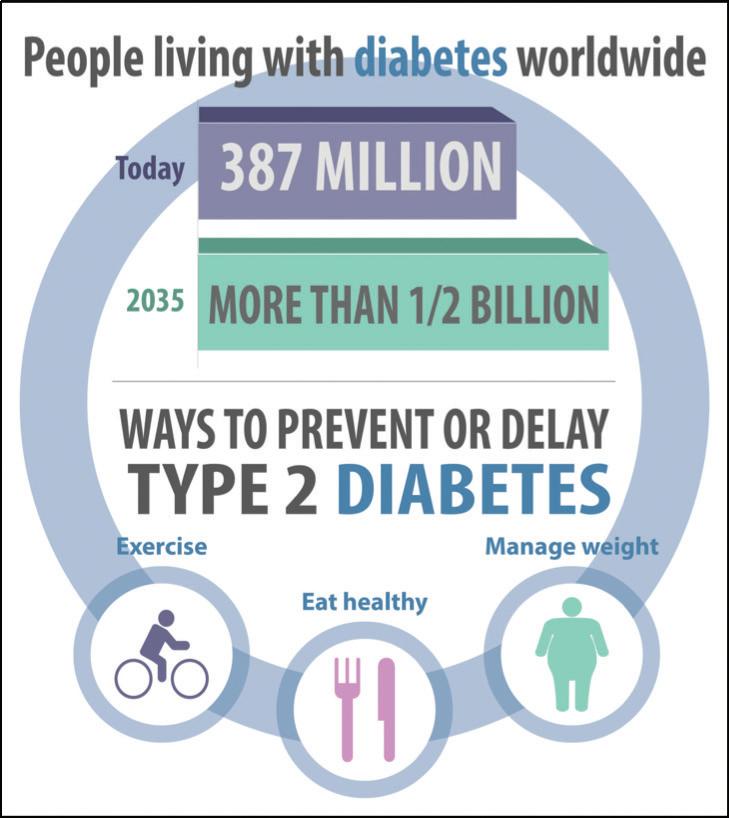
Your digestive system breaks food and drinks that have carbohydrates—like grains, fruits, and vegetables—down into sugar. Whole grains, some fruits, and high-fiber foods take longer to digest, which prevents the level of sugar in your blood from getting too high. But white starches like potatoes and foods high in added sugar are digested faster and are able to quickly get into the blood as sugar. If your blood sugar goes high often, you are more likely to develop diabetes People with diabetes have problems either using or making a hormone called insulin. Insulin helps your body turn sugar and other food into energy. If you do not have enough insulin, too much sugar builds up in your blood, which damages your heart and other body parts. Study the poster below from the International Diabetes Federation. How can you prevent diabetes? Use what you have learned about the human body systems to complete the chart below. Fill
STEMscopedia
Try Now
in either the missing name of the system, the main parts of the body (organs) that make up the system, or the system’s functions.
System
Circulatory
Main Parts of System Functions
Breaks down food into small molecules, absorbs nutrients into blood, removes food waste
Kidneys, bladder, liver
Nervous
Muscles, ligaments, tendons
Protects inner organs from illness and injury, regulates body temperature, detects stimuli from surroundings
Breathes in oxygen, breathes out waste such as carbon dioxide
Skeletal
STEMscopedia
Connecting With Your Child
Human Body Systems at Home
To help your child learn more about human body systems, perform a simple dissection at home. Buy a package of bone-in chicken wings from a grocery store and have your child analyze the different structures of the chicken that he or she can observe. Carefully use a knife to cut away the skin and then help your child identify the muscular system (meat), the skeletal system (bones), and the tendons that hold the bones and muscles together. The tendons look like thick, silvery bands at the ends of bones and are connected to the meat. Have your child shorten and lengthen the muscles to demonstrate how they move the bones. The bones should move up and down in response.
Encourage your child to look for structures from other body systems, including the circulatory system (blood vessels can often be found in raw meat) and the nervous system (nerves look yellow and stringy). Have your child analyze the skin and identify places where feathers were once attached. If a hand lens is available, have your child look at the structures more closely to observe more about the body system parts. Discuss how all the structures observed in the chicken wing are similar to structures in human body systems.
Once the dissection is complete, be sure your child washes his or her hands thoroughly. Raw chicken may contain food-borne illnesses such as salmonella. Encourage your child to describe which of his or her body systems are in action during the next meal. Have your child describe which structures are functioning and what tasks they perform. For example, after your child swallows a bite of food, he or she should explain that food has moved into the stomach. The stomach uses smooth muscle to churn the food. Chemicals from the liver and pancreas help break the food down into molecules. Soon, the small intestine will absorb the food’s nutrients into the bloodstream, in which the nutrients circulate to the cells.
Here are some questions to discuss with your child:
1. What were some similarities between the structures you observed in the chicken wings and those found in the different human body systems? What were some differences?
2. What are three main processes the body systems carry out to keep a human healthy?
3. What body system is working hard when you do your homework? Play sports? Lie out in the Sun?
4. Why is it necessary for body systems to work together?

Reading Science
The Skeletal System
1 Did you know that babies are born with a total of 350 bones? An adult only has about 206 of them! As they grow and age, babies’ bones fuse together. Bones must be made of living tissue in order to grow and change. The skeletal system is made of all the bones in the human body. A skeleton’s rock-like bones are no longer alive. All the bones in your body, however, are still alive. In fact, each bone is a living organ that is made of several different tissues. The cells in bones act in the same way as other body cells. They absorb nutrients and expend energy. Healthy bones are dense and strong.
2 The skeletal system has five major functions. First, bones act like the internal wooden structure of a house. Bones are the framework that supports your body. They also give your body its shape. Second, bones protect your delicate internal organs. For example, ribs surround the heart and lungs. The skull protects the brain. Third, major muscles attach to the bone and make them move. Fourth, blood cells are actually formed in the red marrow of some bones. Marrow is the soft tissue in the center of many bones. Both red and white blood cells are made there. We cannot live without them. Red blood cells take oxygen to all parts of the body. White blood cells fight off germs and diseases. Finally, calcium and phosphorus make bone hard. The skeleton is the place where calcium and phosphorus are stored for later use.
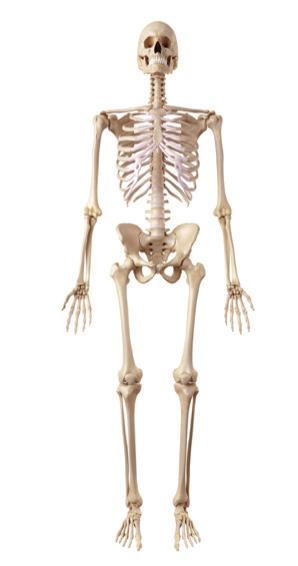
3 Bone is made of living tissue, which explains why a broken bone actually heals. To remain alive, the bone cells need blood. The bone is fed by blood, which also removes its waste. Deep inside a compact bone are the haversian systems, also known as circular structures. Did you know that you can actually see these systems in a cut bone? They look like the rings of a cut tree trunk. Also, bones are not as smooth as you might think. Instead, they are full of pits, rough spots, bumps, and edges. Without these spots, muscles would not be able to attach to the bone. There are also holes that allow blood vessels and nerve endings into the bone.
Reading Science
4 You can usually tell a bone’s function by its shape. Can you guess what the longest bone is in your body? It is the femur—the thigh bone. It is actually one-quarter of your height! Deep within the ear, you will find the smallest bone, the stirrup bone. It is usually about one-tenth of an inch long. Another interesting fact is that bones adapt to the functions they perform. Bone shapes are genetically controlled. They are, however, modified by the work done by the muscle.
5 There are over 230 movable and semi-movable joints in the body. A semi-movable joint allows little or no movement. These are seen with the bones of the skull. A movable joint makes a flexible connection between bones. The body needs joints with flexibility to allow the body to move back and forth. This is easily seen with the knee. The knee joints work like door hinges, allowing you to move your leg back and forth. Other joints allow twisting, such as in the neck, so you can turn your head. You also have shoulder joints, which allow the arm bone to move nearly full circle.
6 Cartilage is a thick, smooth layer of cushiony tissue. Cartilage is usually found at the ends of the bones. It does not contain blood vessels or minerals. As people age, cartilage sometimes wears out. This causes the common painful condition known as arthritis. Each time a person with arthritis moves, they feel intense pain.
7 Without the skeletal system, we would be like a human beanbag. We would flop around like one big puddle of skin and organs. Our flexible skeletal system allows us to stand and walk, bend and rotate, and work against the forces of gravity.
Reading Science
1 How do the red blood cells in bones help the body?
A They take in oxygen.
B They grow.
C They make things.
D They take stuff out.
2 What is the main topic of Paragraph 3?
A Red blood cells
B The skeletal system
C The structure of a bone
D Bones, cartilage, and blood vessels
3 In Paragraph 3, which word or words best describe haversian systems?
A Ligament
B Bone marrow
C Circular structures
D Cartilage
Reading Science
4 Which sentence would the author disagree with?
A Bones adapt to the functions they perform.
B A flexible skeletal system allows mobility for our body.
C Each bone is a nonliving organ that comprises several different tissues.
D Bone shapes are genetically controlled and routinely modified depending upon the work performed by the muscles.
5 The skeletal system has many functions. Which of the following body functions does the skeletal system not do?
A Remove germs from the blood
B Protect the internal organs
C Give shape and support to the body
D Produce red and white blood cells to prevent infection

Open-Ended Response

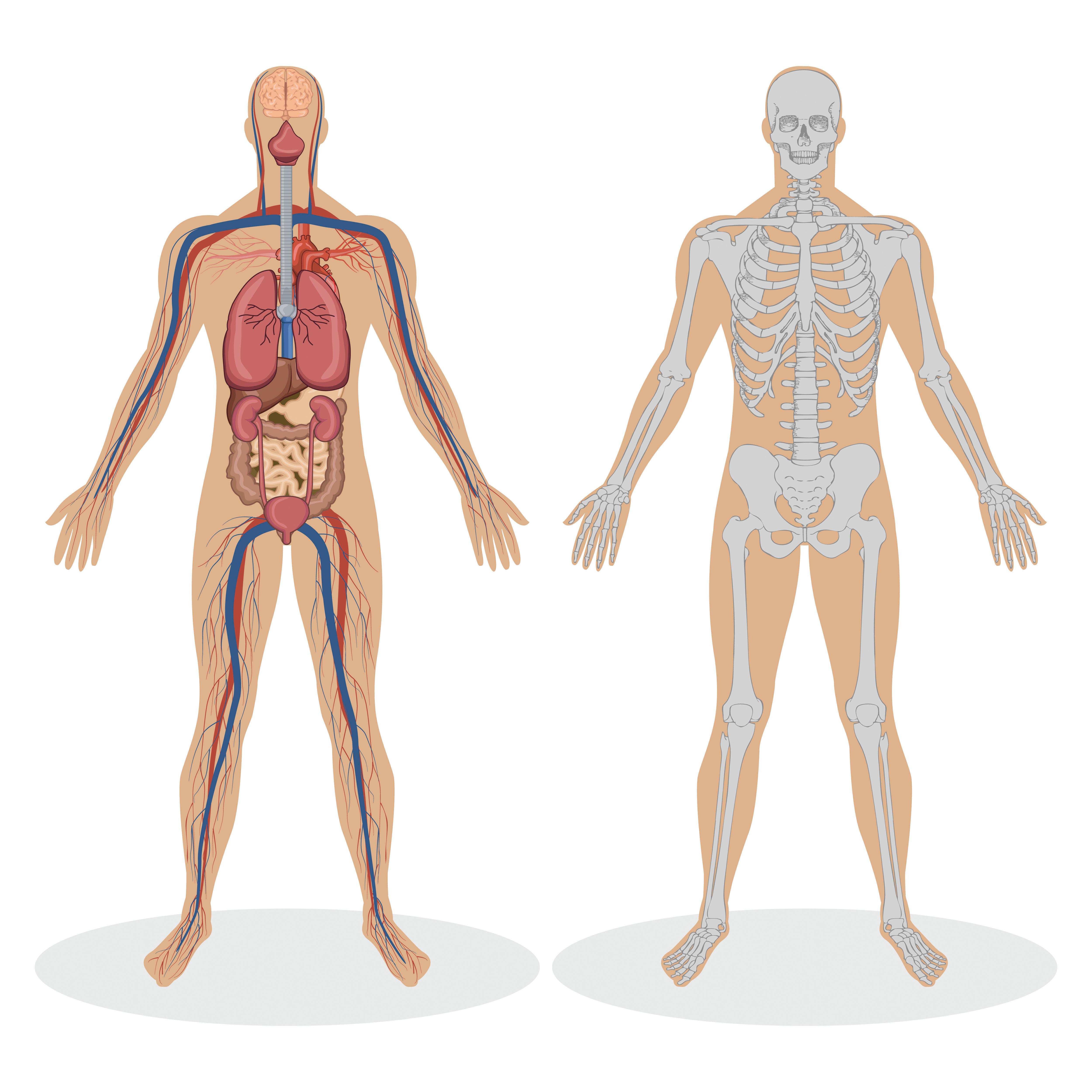
1. Compare a car to the human body. How is a system in a car is like a system in the human body? What parts of the car system work like organs in the human body system?
2. All organ systems are organized in the following manner:
cell → tissue → organ → organ system → organism
Choose an organ system from the human body and explain how it fits the pattern described above.
Open-Ended Response
3. Describe how the heart and lungs work together to distribute oxygen throughout the human body.
4. Choose at least two human body systems and describe ways these systems interact with each other to perform a complex function.

Human body systems work together to maintain the entire body. The table below shows data that was taken from a student before and after that student ran a mile.
External Data 2
Observations
Prompt 3
Write a scientific explanation that describes the circulatory system’s response to a student running a mile.
Claim:
Evidence:
Reasoning: Scenario 1
Cycles
Life Cycles
Examine the monarch butterfly life cycle. Read the student statements below. With which student do you agree, and why? Stand next to the number you agree with.
Student 1
The life cycle in figure A is correct because the adult animal lays the eggs, which allows the life cycle to continue.
Student 2
The life cycle in figure B is correct because the life cycle is over when the organism dies.
Student 3
Both figure A and B are correct because the individual animal dies at the end of the life cycle, but the species of animal continues.

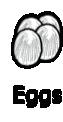

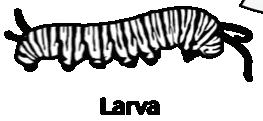
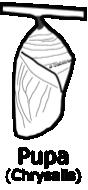
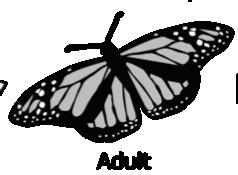
Figure A
Figure B
So Many Cycles!
Compare and contrast your organism’s life cycle with the life cycle of your partner’s organism. In the table below, write down how the stages in the life cycles are similar and different.
Explore 1
1. What do we call an organism’s pattern of birth, growth, reproduction, and death?
2. Describe an example of a full life cycle.
3. How was your organism’s life cycle the same as or different from those of other organisms?
4. How do many life cycles begin? How might they end?
5. Compare and contrast your own life cycle with your organism’s cycle.
Explore 2
The Problem
Coming to Life!
The local science museum is interested in adding a Life Cycles exhibit to its biology section. Your class has been hired to create three-dimensional models of a variety of life cycles to put on display in the new exhibit.
The Challenge
Construct a 3-D representation of a plant or animal life cycle in a shoebox. Choose an animal or plant, research that organism’s life cycle, and build a 3-D representation using the available materials.
Criteria and Constraints
• Students are only allowed to use materials provided by the teacher.
• Students must choose an organism from the list presented by the teacher.
• Students’ final projects must include accurate labels and descriptions, include arrows pointing to the next stage, and be in the correct order.
• The background in the shoebox should reflect the organism’s environment.
• Students should be able to discuss the birth, growth, reproduction, and death of the organism during the presentation.
Your Plan
What steps will you take to make your life cycle? What materials will you need?
Explore 2
3-D Life Cycles
Your Design: What will each stage of your life cycle look like?
STEMscopedia
Reflect
Manny is at his family reunion. First, he catches up with his grandparents. People always tell him how much he looks like his grandfather, but Manny does not agree. His grandfather is so much taller, and his face has lots of wrinkles. His grandfather has also lost most of his gray hair. Manny got a haircut last month, and his hair is already getting long again.
Next, Manny spends some time playing with his cousin Lucia. Lucia is only one year old, but she has tons of energy. She crawls everywhere, and when she tries to stand, she falls right back down. She does not seem hurt. She just laughs and tries again. Manny would love to know what Lucia is thinking, but she cannot talk yet.
Finally, Manny spots his uncle and his aunt. He is amazed by the size of his aunt’s belly. She is pregnant and going to have a baby soon.
Why are Manny’s relatives so different? How different will Manny be when he is his uncle’s or his grandfather’s age? What does all this have to do with life cycles?
What are the different stages of the life cycle of living things?
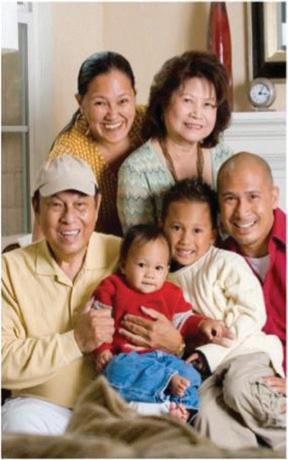
A life cycle includes all the stages of life, from birth to death. A stage is just one step in this process. Manny saw people in different stages of life at his family reunion. He has already lived through some of these stages. Let us learn more about this.

Everyday Life: Our Life Cycle
A baby is growing in Manny’s aunt’s tummy. Manny started his life in his mother’s tummy, too. When he was born, Manny was a baby. A year or so after that, he became a toddler, like Lucia. Manny is growing taller as he gets older. In less than 10 years, he will be a teenager. He will finish growing tall, and he will develop stronger bones and muscles as he becomes an adult.
STEMscopedia
Reflect
After many years, Manny will have wrinkles and gray hair, just like his grandfather. Eventually, he will die. These stages make up the life cycle of a human being. Although the changes Manny sees happen gradually over time, we notice the differences between the stages his family members are at.
The Life Cycle of Plants
All living creatures have life cycles. Plants, animals, and insects have life cycles. Plants start as seeds. When a seed is planted in good soil with water, it grows into a seedling. Over time, the seedling grows into a plant. Some plants produce flowers and fruits, which contain seeds. When the plant dies, the seeds can be planted to grow new plants.
The life cycle of all plants goes through the stages of birth, growth, reproduction, and death.
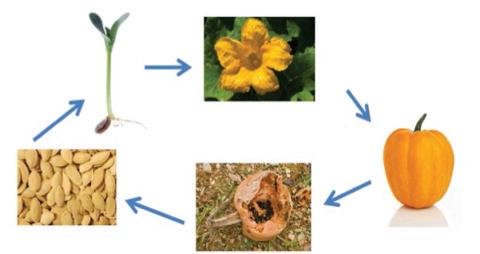
germinate: to sprout the first root
The seed stores food for the baby plant. When a plant seed starts to grow, it sprouts, or germinates. The first thing to grow is the main root, which is followed by the stem and the first leaves. The seed’s growing conditions usually need to be damp, warm, and dark, like springtime soil. A dry seed will not start growing until it soaks in some water. Then it will start to germinate.
Try Now
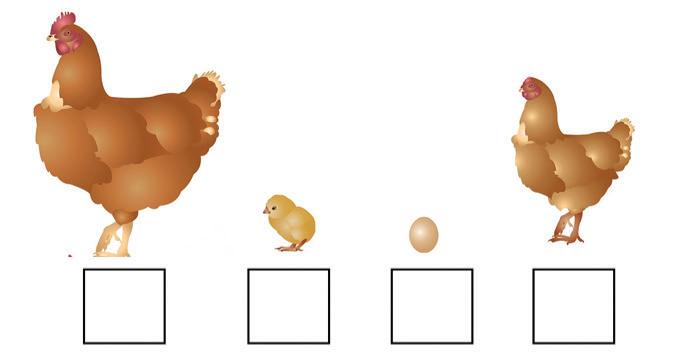
Number the pictures from 1 to 4 to show the correct order of the life cycle of a chicken.
from a seed
Seedling
Mature plant
Flower
Becomes pumpkin
Pumpkin dies
Seed
STEMscopedia
Look Out!
Take a look at the following photographs of a tomato plant’s life cycle. Can you name each stage?

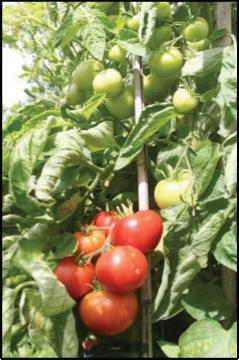
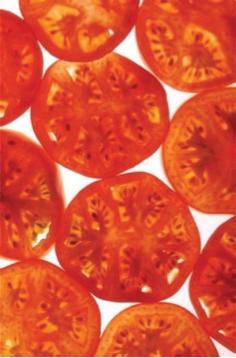
How can we learn about the life cycle of different plants and animals?
Scientists observe how plants and animals change over time. Each living thing has physical traits that make it unique. (A trait is a characteristic or property of something, such as height, weight, or color.) The same kinds of living things have similar traits.
For example, look at the tomato plants above. As a baby tomato plant starts to grow, it looks like a small version of an adult tomato plant. Even though the seedling on the left is small, its leaves, color, and shape are similar to those of the adult plant in the center. All tomato plants have traits such as these at each stage of their life cycle.
Many animals have babies that are just like small versions of themselves. How are the mothers and their babies alike in these photos? How are they different?
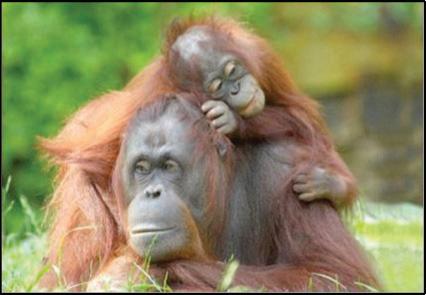
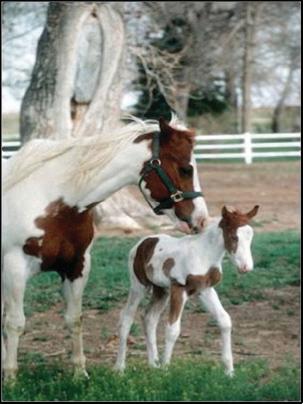
STEMscopedia
Look Out!
Not all animal babies look like their parents. Let us take a look at another animal life cycle. Frogs are examples of animals that change from birth to adulthood. Follow the pictures below, starting in the top left corner.
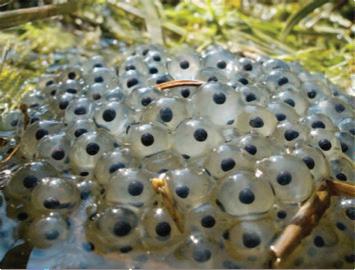


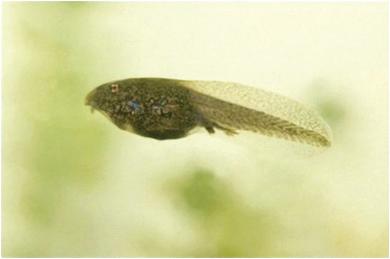
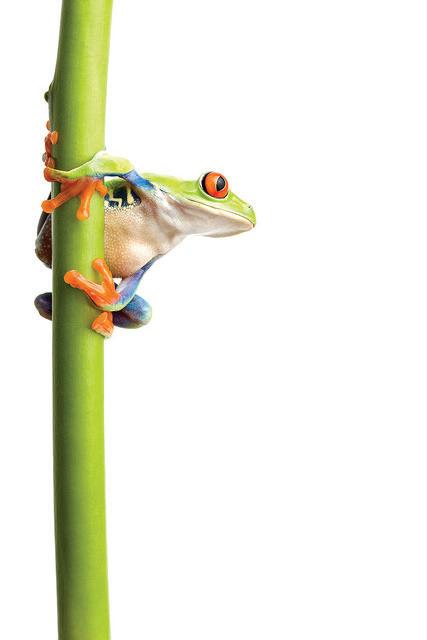
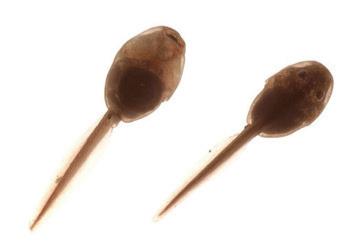
A mother frog lays eggs in wet places. Baby frogs, or tadpoles, hatch from those eggs. Like fish, tadpoles breathe through gills. They have long tails but no arms or legs.
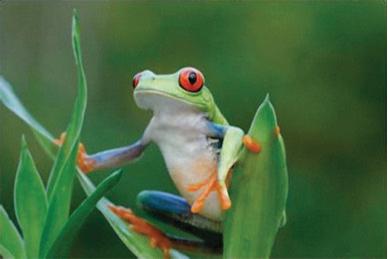
This adult frog now has lungs and breathes air. She cannot breathe underwater. She will find a wet place to lay eggs. Then her tadpoles can slide into water when they are born.


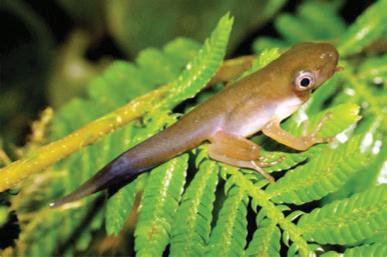
As the tadpole grows, skin covers its gills. Tiny legs and arms sprout. Its tail becomes shorter and eventually disappears. It is time for the frog to climb out of the water and breathe air. This is a froglet.
All animals, like plants, go through the stages of a life cycle: birth, growth, reproduction, and death.
STEMscopedia
Look Out!
Insects change during their life cycle. Most insects, such as butterflies, beetles, and bees, have four stages in their life cycle. Each stage is different. When you look at an insect, you can tell what stage it is in.
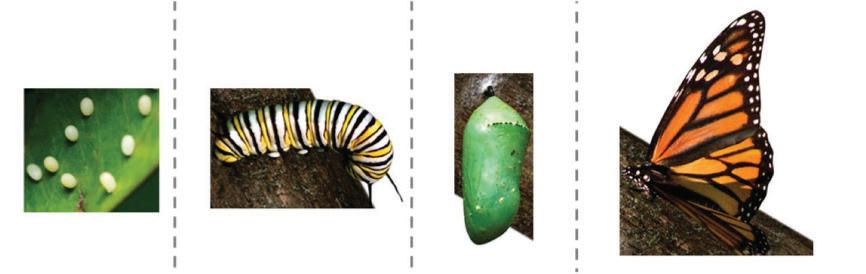
The first stage is the egg. Adult insects can lay hundreds of eggs. They are very tiny. Sometimes the eggs hatch right away. A mosquito egg hatches in two days! Other eggs survive all winter long before hatching in the spring.
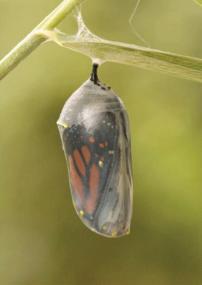
Look closely. You can see butterfly wings inside the chrysalis! The pupa is changing to an adult.
The next stage is the larva. A caterpillar is a larva, and so is a grub! A larva looks like a short, fat worm with legs. A larva eats a lot and begins shedding its skin when it grows. Then it grows new skin.
After the larva grows enough, the insect goes into the pupa stage. The larva wraps itself up in a hard shell called a cocoon or chrysalis. The insect does not come out for a while. It does not eat any food. It rests for a long time. But there are big changes happening! Inside the cocoon, the pupa slowly changes into an adult.
The insect comes out of its cocoon as an adult. An adult insect looks very different from the larva that entered the cocoon. For example, a wiggly caterpillar enters the pupa stage, but it flies out as a butterfly. Many adult insects fly away and lay eggs.
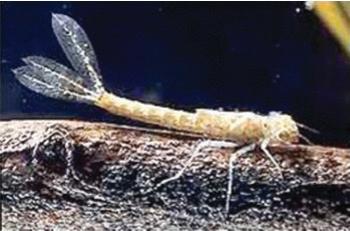
Some insects, such as damselflies, have only three life stages. When they hatch, they look like the adult, except they are smaller and do not have wings.
The Stages of a Butterfly
adult pupa
larva egg
STEMscopedia
Try Now
You can catch your own tadpoles and watch them grow.
1. Find a plastic tub or fish tank, a plastic cup or container, and a bucket.
2. Collect gravel or rocks for the bottom of your tub.
3. Place a large rock or two in the tub.
4. Visit a pond, small lake, or anywhere with standing water. Take an adult with you.
5. Look around the edges of the pond for tadpoles.
6. Scoop up some pond water in the bucket.
7. Scoop up the tadpoles with the cup and put them in the bucket. Try not to touch the tadpoles. The bacteria from your hands could harm them.
8. Fill the tub with about 3 inches of pond water. You can also use distilled or spring water. If you use tap water, let it sit about a day before putting in the tadpoles. This will allow the chlorine in the water to evaporate.
9. Make sure some of the rocks in the tub are above the water’s surface. The tadpoles will need a place to go once they become froglets.
10. Place a couple of plants in the tub. Include some moss and algae from the pond.
11. Let the habitat sit for a day or two. Allow everything to settle.
12. Gently scoop the tadpoles from the bucket.
13. Gently release them into the habitat.
14. Feed them a little lettuce every three days. You can tear the lettuce into little pieces. Freeze it overnight. Then allow it to thaw before placing a pinch of it inside the tadpole container.
15. Remove a third of the water every week and replace it with pond water or clean distilled water.
16. Watch the tadpoles turn into froglets.
17. Feed them meat as they start moving out of the water. You can feed them bloodworms or small crickets from a pet store.
18. Place a lid with vents on the tub when the frogs start coming out of the water. Otherwise, they will hop out of the tub!
STEMscopedia
Connecting With Your Child
Into the Wild
The next time you take your child to an area with wild animals—for example, a zoo, forest, butterfly house, or park—take that opportunity to focus on the life cycle of animals. Ask your child to identify or describe the life cycle stage for each animal, plant, or insect you see. Then ask your child to name the next life cycle stage for each of these living things. Point out the other people looking at the animals and ask your child about the life cycle stages of these people. Allow your child to come up with creative responses. Encourage your child to identify the stages based on prior knowledge and to support his or her ideas with logical evidence.
Make sure you take time to visit the nursery or the insect house if you are going to the zoo. Children love young animals, which are perfect examples of the beginning of a life cycle. This approach will give your child an opportunity to reinforce learning in a fun way.
Here are some questions to discuss with your child:
• How are the life stages you observed different from one another?
• Why do we name the different stages of a life cycle?
• Why do we compare life cycles of different animals, plants, and insects?
• How many stages of a life cycle can you identify in your family?
Reading Science
Monarch Magic
1 We see many monarch butterflies flying around in Mississippi. Do you know anything about monarch butterflies? Monarchs have a fascinating life cycle. Butterflies love flowers, but monarchs love milkweed plants the most.
2 The females lay their eggs on the underside of milkweed plant leaves. You can see a tiny egg on a leaf.
3 It takes about 3–12 days for the eggs to hatch. Then you will see tiny caterpillars. These caterpillars are called larvae.
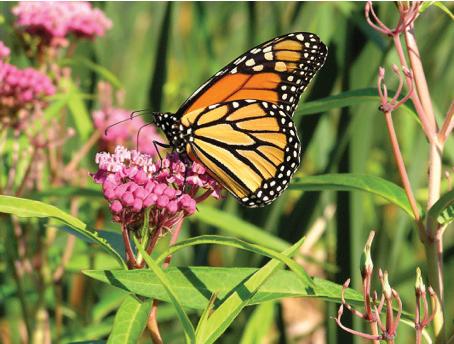
4 The larvae eat the leaves of the milkweed plant. They do this for about two weeks. The caterpillars then grow and grow! They grow to about two inches long.
5 The caterpillars then find a nice quiet place to attach themselves to. It might be the stem or leaf of a milkweed plant.
6 The caterpillar forms a shell where it will be safe. The shell is called the pupa or chrysalis. It starts out green and slowly begins to become transparent, or see-through.
7 The butterfly emerges, or comes out, of the chrysalis. At first, its wings are wet. It stretches them out to dry before it can take off.
8 Then the monarch butterfly begins this life cycle all over again!
9 Monarch butterflies lay their eggs on milkweed plants. Did you know that plants also go through life cycles?
10 A milkweed plant starts out life as a seed that looks a lot like a butterfly egg. Unlike a butterfly, which needs to eat to grow, a plant uses energy from the Sun in order to make its own food.
Reading Science
11 Although both of these organisms go through life cycles, they are both very different. The important thing to know is that all organisms have the same commonalities of birth, growth, reproduction, and death. So the next time you see a butterfly resting comfortably on the flower of a plant, you will know all about its life cycle!
Reading Science
1 The author chose to write this text–
A to entertain you with a story about a monarch butterfly and a milkweed plant.
B to ask you questions about monarch butterflies.
C to inform you about the life cycle of a monarch butterfly and a milkweed plant.
D to describe the causes of the changes that a butterfly goes through.
2 Why do you think the monarch butterfly lays eggs on a milkweed plant?
A Milkweed plants provide protection for the eggs.
B Milkweed plants are the easiest for the butterfly to find.
C Milkweed plants are soft and comfortable places for eggs to hatch.
D When the eggs hatch, the milkweed plant will provide food for the caterpillars.
3 What do we call the caterpillars that hatch out of the eggs?
A Eggs
B Larvae
C Pupae
D Adults
Reading Science
4 What does the word emerges mean in Paragraph 7?
A Butterfly
B Comes out
C Goes in
D Color
5 What does the word commonalities mean in Paragraph 11?
A Things in common
B Things that are different
C Nothing alike
D Color
Open-Ended Response
1. Sketch and describe the life cycles of a bird and a butterfly.
Bird Butterfly
Open-Ended Response
2. What are three similarities and three differences between the life cycle of a bird and the life cycle of a butterfly?
SIMILARITIES
DIFFERENCES
Open-Ended Response
3. Choose a favorite flowering plant. Draw the stages of its life cycle. Tell what is happening at each stage.
4. What are certain common parts of life that occur during the life cycles of all plants and animals?
Plants and animals go through life cycles. Biologists are scientists who study living things. Scientists often use models to help them understand information.
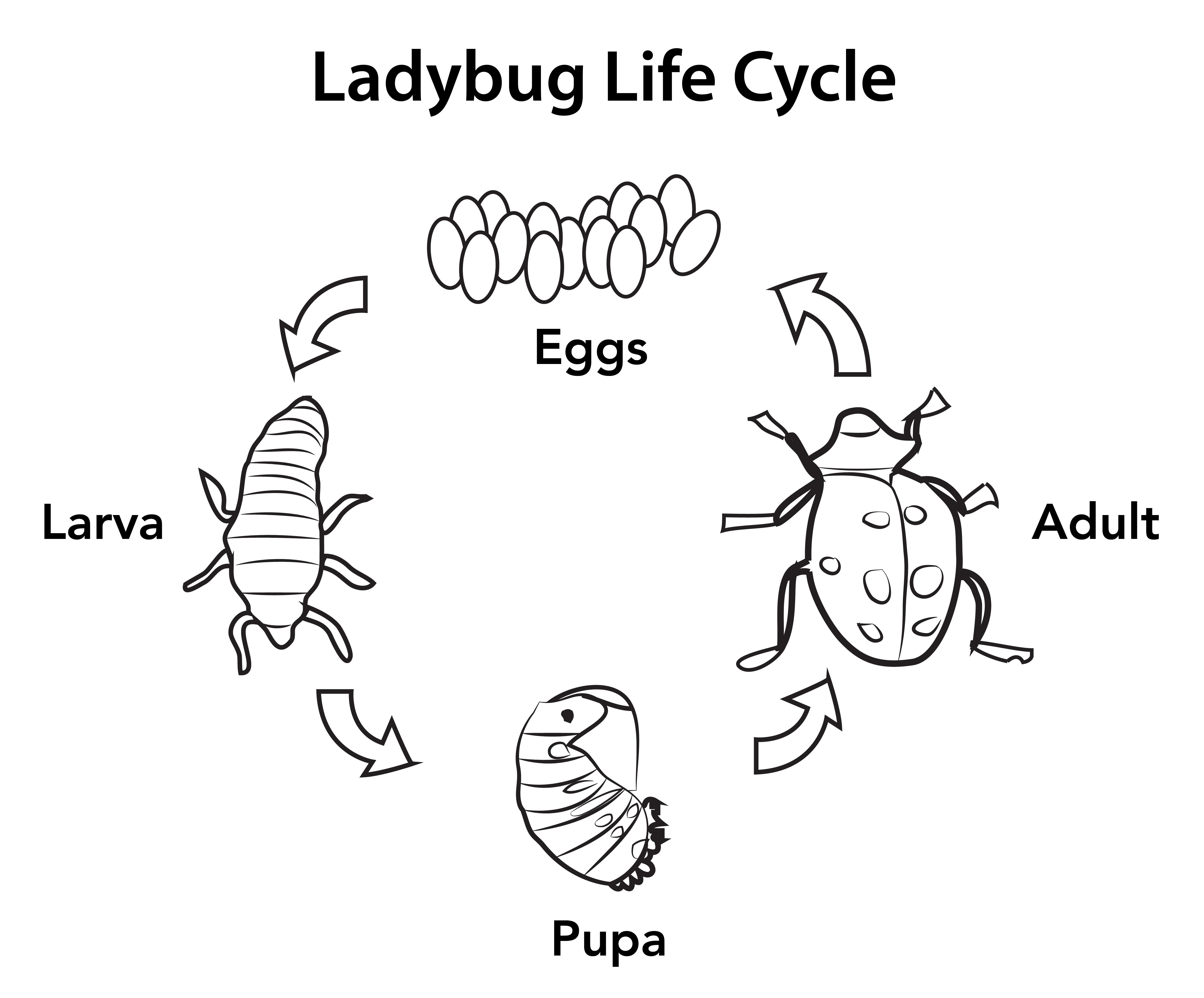
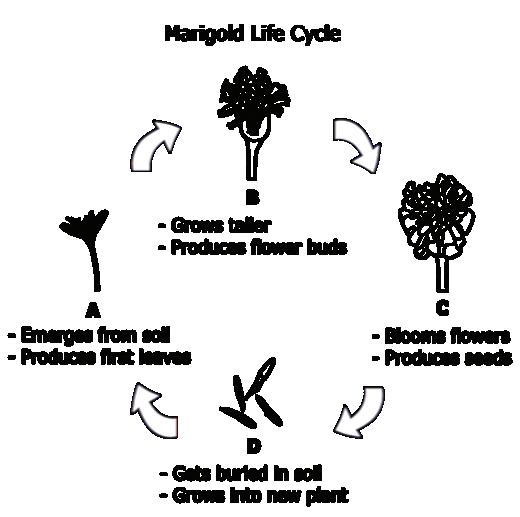
Write a scientific explanation about how the life cycles of a ladybug and a marigold are similar or different.


Explore 1
Friction Station
Sources of Heat
Record your results in the table below.
Trial 1 (Slow)
Trial 2 (Fast)
1. How did the temperature of the sandpaper change when you sanded the block?
2. How were Trial 1 and Trial 2 similar? How were they different?
3. What form of energy was used? How do you know?
4. What form of energy was produced? How do you know?
5. What other sources of heat are similar to the sandpaper sanding the wood?
Explore 1
Toaster Station
Record all data and observations in the table below.
Before During After Air above Toaster (temperature and observations) Coils inside the Toaster
1. At what point in this station was heat being produced? How do you know?
2. What was the highest temperature your group recorded above the toaster?
3. What form of energy was used to produce the heat? How do you know?
4. What other form of energy, besides heat, was released when the toaster was on?
5. What other sources of heat are similar to the toaster?
Explore 1
Lamp Station
Record your data in the table below.
(°C)
Use the template below to graph your data.
1. What happened to the temperature of the air around the lamp when it was turned on? What happened when the lamp was turned off?
2. When was heat being produced? How do you know?
3. What form of energy was being used? How do you know?
4. What other sources of heat are similar to the lamp?
Explore 2
Shine On!
Directions:
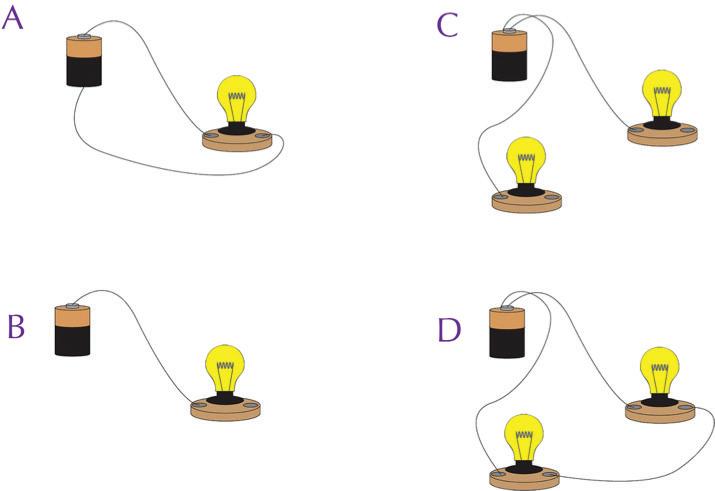
Test each circuit design and check whether the circuit is a complete circuit.
What did you have to do to make the light shine?
Is there more than one way to complete your circuit?
Complete Circuit?
To which form of energy was the electricity from the battery being converted?
Explore 2
Material
Metal paper clip
ball
Popsicle stick
Plastic bag
What did the conductors have in common?
Insulator or Conductor
What materials are insulators?
Why are the metal wires in electrical cords covered with plastic?
Cotton
Nail
Eraser
Explore 3
The Problem
Miniature House
A local construction company would like to sell unbuilt homes in its new development. The company needs a way for people to visualize how heat and electricity will complete tasks in their new homes.
The Challenge
As an architect for the company, design a miniature house that shows heat and electricity being transformed into other forms of energy.
Criteria and Constraints
• Work in groups to wire electricity for a house prototype. Use a shoebox.
• Electricity or heat should be used in at least three locations to complete tasks.
• Energy transformations must include motion, sound, heat, or light.
• Electrical circuits must have switches to control the flow of electricity.
• Create a poster or slideshow presentation. Include a prototype and a sketch.
• During the presentation, discuss the power source, switches, and all the energy transformations in your miniature house.
Brainstorm and Research
Write down any ideas you have about how you could master the challenge. If you need more information, write down what you need to know, and gain permission from your teacher to research the answer.
Explore 3
Design Plan
Use the ideas you wrote down while brainstorming to develop a final design plan. Draw your plan and label the parts. Be sure to list what each part is made of.
Build and Test
Build your design and test it. Does it meet all the criteria and constraints? Use the space below to list what problems you need to fix in your design.
Refine and Redesign
How could you solve the problems you found during testing? Use the space below to draw a new design that should solve the problems.
Explore 3
Retest and Finalize
Build and test your new design. Does it meet all the criteria and constraints? If not, repeat the Refine and Redesign process. If so, move on to planning your presentation.
Presentation Plan
Use the space below to plan how you will present your final product. Be sure to include who will speak and what you want to say. Your presentation should include the scientific ideas used to solve this design challenge.
Explore 4
Electrical Breakthroughs
Directions: Research a historical figure and take notes on important information.
My historical figure is
Important Information
This person has impacted my life today because:
Explore 4
STEMscopedia
Reflect
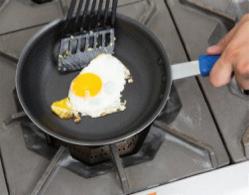
Do you see the egg cooking in the pan on the stove? How can that person touch the handle if the pan is hot? How did the heat move from the stove to the pan but not to the handle?
Do you see the kids using flashlights? How does a flashlight give off light? Energy moves through a wire from a battery to the light bulb. The energy causes the bulb to give off light. But how does energy move from one part of the flashlight to the other?
To answer those questions, we have to imagine that we can see what is happening to the particles in the pan and in the wire in the flashlight. Imagine zooming in to see what is really happening on a small scale.
What is a conductor?
Energy passes through some materials easily. Those materials are called conductors. Conducted energy can be in the form of heat or electricity. To understand how heat and electricity move, we must understand that all matter is made up of tiny bits called particles.
Metals are good conductors of heat.

matter: the stuff that everything is made of; it has mass and takes up space
Those particles are always moving. The faster the particles move, the more heat they produce. If the particles in an object move faster, the object feels hotter. Picture a pot that is put on a hot stove. The particles closest to the stove burner begin to move faster and faster. Faster particles bump into slower particles nearby and cause them to speed up. This is how heat spreads. We call this conduction. Materials that transfer energy easily through contact are also called conductors.
STEMscopedia
What Do You Think?
Which materials do you think are the best conductors of energy? Solids usually conduct or transfer heat better than liquids or gases do. This is because the particles in solids are closer together. The best conductors are metals. Silver, copper, gold, aluminum, and iron are some of the best conductors of heat. Silver and gold are very expensive. This is why most pots and pans are made of copper, aluminum, or iron. Metals are also good conductors of electricity. Lamps, toasters, TVs, and other electrical devices are connected to electrical cords.
Inside electrical cords are metal wires, usually made of copper. A cord plugs into a wall socket. Inside the wall are more wires connected to electric power lines. Power lines lead to power plants that may be hundreds of miles away. Electricity is conducted from the power plant to a lamp in your home in less than a second.
Reflect
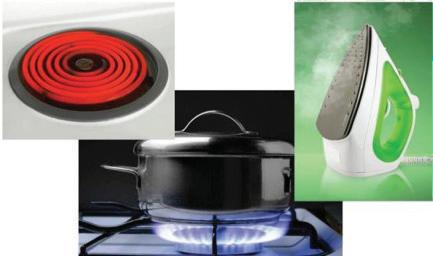
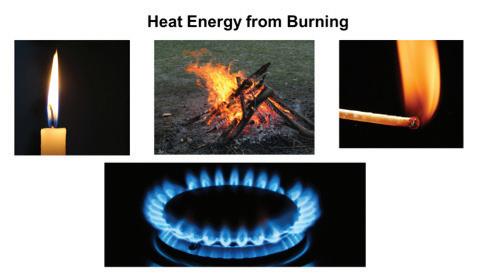
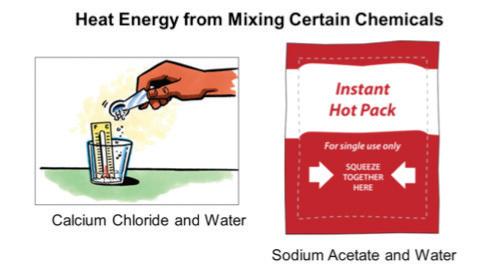
What are sources of heat? Some electrical appliances, such as stoves, irons, and dryers, can produce heat. How else is heat produced? Three common ways are friction (rubbing objects), combustion (burning objects), and chemical reactions (mixing substances).

STEMscopedia
Look Out!
What does heat flow mean? People used to think heat was an invisible material that flowed from hot things to cold things. That is incorrect. Heat does not flow like a river. Heat is energy, not matter. When something loses heat, it does not lose mass.
What is an insulator?
A material that is a poor conductor of energy is an insulator. Heat moves slowly through materials like Styrofoam, glass (fiberglass), wood, and rubber. These materials are used when we do not want heat to escape quickly. They are called heat insulators.
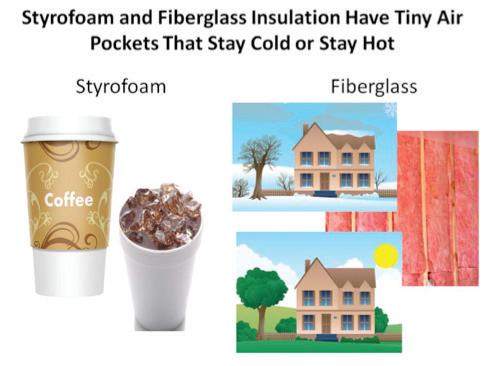
Heat also moves slowly through air and other gases. That is because the particles in these gases are far apart. Energy does not move easily from one particle to another. You might think this is not useful, but in fact heat insulators are very useful around the home! Many good insulators are filled with little pockets of air.
For example, the walls and ceilings of many homes are filled with fiberglass insulation. This material is made of tiny pieces of glass. The fibers form a tangled mat with many air spaces. Your house can stay a different temperature than the air temperature outside because of this insulation. Can you think of other places that use insulation?
Reflect
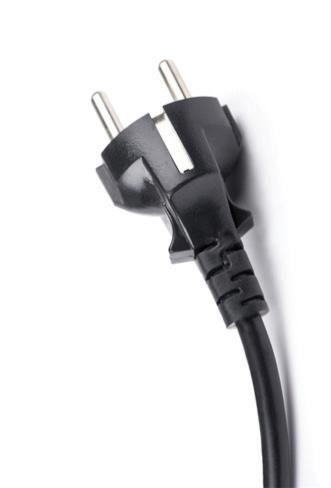
How many appliances have you used today that plugged into an electrical socket? Any item that has a plug like this runs on electric current. Electric current is a steady flow of energy particles with an electrical charge. When the flow of energy runs through a device, the electrical current makes the appliance work.
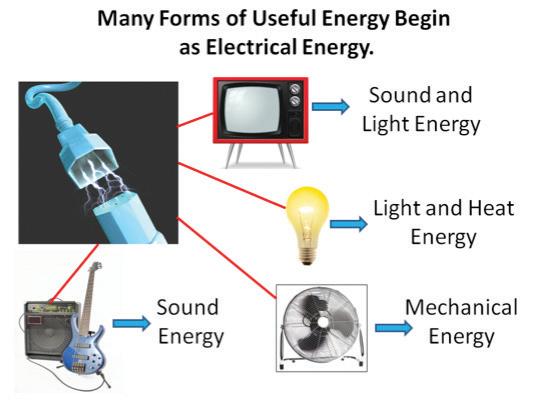
When an appliance is turned on, the electrical energy can be transformed into other forms of energy. What did your electrical devices do today? Was there light or sound? Did something move? Was heat produced?
STEMscopedia
Reflect
What Do You Think?
Energy can transfer from place to place and transform from one type to another. Light energy can travel through space from one place to another.
You observe this movement of energy when you grow plants in sunlight or when you lie in the grass and get warm on a sunny day. This is evidence that light and heat energy from the Sun are transferred to our planet through space.
What is happening to all the matter in the sky during a thunderstorm?
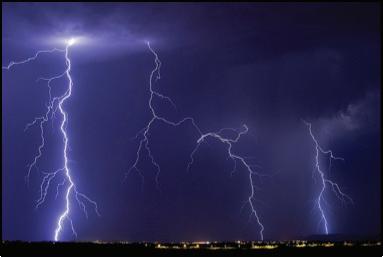
Lightning is a naturally occurring jolt of electricity that flows between the clouds and the ground. This flow of energy, in the form of electricity, creates light that we can see from miles away.
Some of the electrical energy in a lightning bolt is changed to heat energy, which can burn the ground where it strikes. When lightning bolts crackle through the sky, they push air out of the way. When the air comes back together, we hear thunder. The thunder you hear during a storm is caused by the lightning that is transferring energy to all the air around it.
Reflect
How can we use different energy forms?
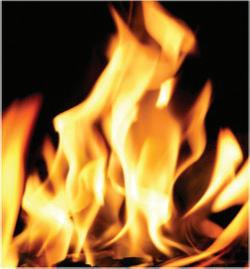
Thermal energy is the energy that can be felt as heat. Thermal energy is sometimes called heat energy. Using an oven to bake a cake and using fire to roast marshmallows are examples of using thermal energy. You can release thermal energy by rubbing your hands together very quickly or by burning something.
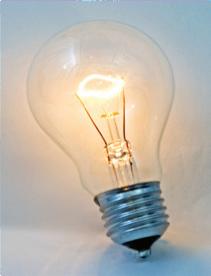
Light energy can travel through empty space, air, and even some objects, such as windows. People can see some forms of light energy. To sense or detect other forms of light energy, we need special tools.
Lightning bolts light up the sky during a thunderstorm.
STEMscopedia
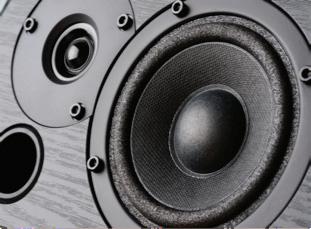
Sound energy travels through matter by vibrations. Sound energy cannot travel through empty space like light energy can. Sometimes we can hear sound energy. Think about a television. You can see the light energy from the screen and hear the sound energy from the speakers.
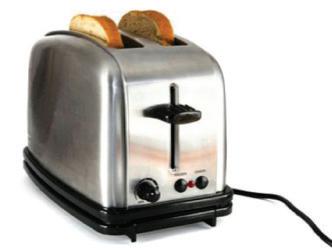
Reflect Electrical energy generates thermal energy to toast bread.
Many household appliances, such as washing machines, refrigerators, and dishwashers, need electrical energy in order to work. In machines and things powered by electrical energy, the electricity moves along a path called a circuit. Electrical energy is often used to generate other forms of energy. Look at the toaster. When you turn it on, what happens? The electrical energy moves through the wires and heats up the toaster to cook your food.
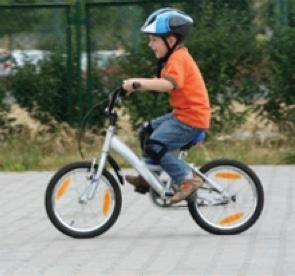
The energy of moving things can be very useful. Fans, cars, bicycles, and machines all use the mechanical energy of motion to do work.
What Do You Think?
What is a circuit?
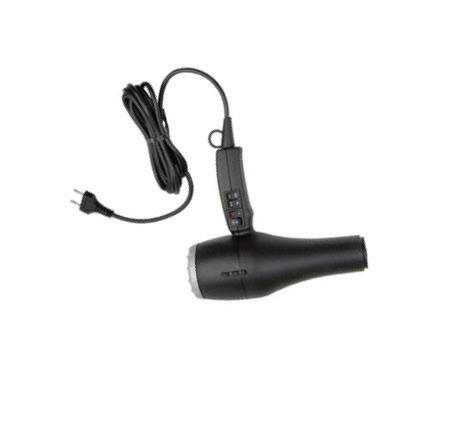
Take a look at the plug on the end of an electrical cord. Notice that it has at least two metal prongs. One prong is part of a wire that brings energy into the electrical device. The other prong is connected to a wire that carries energy out of the device.
The wire is metal because it easily carries the electrical current. The wire is wrapped in plastic or rubber so that the electricity does not leave the wire in the wrong place.
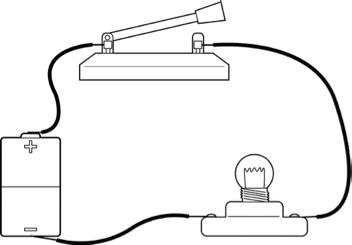
For electricity to be useful, it must always travel in a complete, unbroken circle. That circle is called an electrical circuit. A circuit has several basic parts.
It has a source of electrical power and something that uses the electrical power, called a load
STEMscopedia
What Do You Think?
It also has at least two wires to connect the source to the device. Most circuits also include a switch. The switch controls whether the circuit is open (off) or closed (on). Broken wires or bad connections can also cause an open circuit.
On-off switch
Simple Circuit
Energy source
The city power grid is a very large electrical circuit. The power source is usually an electrical power plant. Electrical energy does not flow in an open circuit.
If something goes wrong, the city power grid may become an open circuit. How might this circuit be opened? What would happen to the city and its residents if the circuit is open?
Try Now
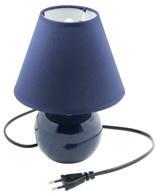
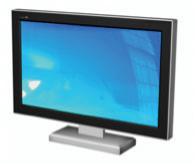
Part I: What happens to electrical energy when it enters a device?
Device to use the electrical energy
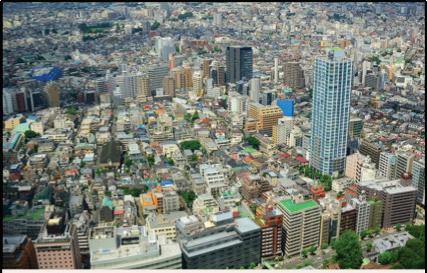
Each building in a city gets its electricity from the city’s power grid.
The devices pictured below transform electrical energy into what other types of energy: light, sound, heat, or motion? Write your answers below each picture. Each device may release more than one form of energy!

STEMscopedia
Try Now
Part II: Which bulbs are part of a complete circuit? The diagram on the right shows one or more complete circuits. It also shows one or more incomplete circuits. The diagram also includes four light bulbs. Circle the bulbs that will light up when electric current flows from the battery. Hint: Do you think rubber transfers electrical energy well?
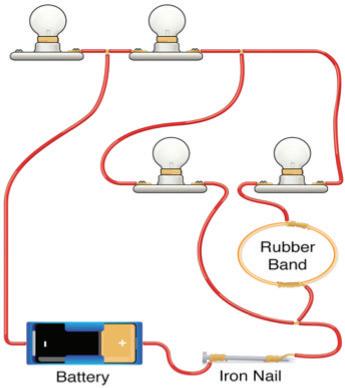
Part III: What did they do? Use the Internet or the library to match these scientists with discoveries that changed our world: Nikola Tesla, Alessandro Volta, Nick Holonyak, Jr., Thomas Edison, and Michael Faraday.
1. ______________________________invented the first battery. The term volt, a unit of electric power, is named for him.
2. ______________________________invented the first electric motor.
3. ______________________________invented alternating current, neon signs, and the radio.
4. ______________________________invented the incandescent electric light bulb (glows from a heated filament wire), the phonograph, and motion pictures.
5. ______________________________invented the LED (light-emitting diode). LEDs are small, energy-efficient bulbs that do not get hot like incandescent bulbs.
STEMscopedia
Connecting With Your Child
Using Energy
To help your child understand how energy is transformed into other forms of energy, take an energy field trip in your own home. Look for all the ways electricity is changed into other forms of energy.
Materials
• Paper and a pencil
• The electrical devices in your home
Procedure
1. Make a chart for each room: kitchen, bathroom, bedroom, your child’s choice.
2. In each room, list the name of each electrical device and how the electricity is transformed. For example, a mixer changes electrical energy into the motion of the beaters, sound, and heat.
Here are some questions to discuss with your child:
1. If a device uses batteries, is that the same as electrical energy?
2. Did you find any devices that do not use electric current? List them.
3. If the electricity were off, which device would you miss the most? Why?

Reading Science
Conductors and Insulators
1 We use electricity daily. Electricity is imperative, or important, for many of the things we do. It allows us to turn on a light, turn on a fan, watch TV, and even listen to the radio. Electricity is involved in most of the things we do. Let us look more closely at how it works.
2 Visualize that it is dark. Your mom requests that you turn on a light, so you reach over and budge the switch. Nothing happens. You repeat this step, but still nothing happens. What could be awry?
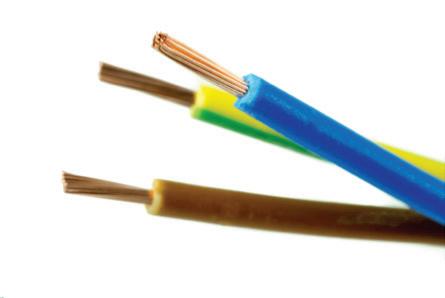
3 You look down and see the lamp is not plugged into the wall socket. Thinking this must be the problem, you plug in the cord and try again. Success!
4 Why is the lamp cord so significant? Electricity cannot move from the wall socket to the lamp on the table without help. It cannot move by itself because it needs a conductor, a material that lets electricity move from one place to another. Conductors are composed of metals such as copper, iron, and steel. All of these metals let energy flow. The cord must contain one of these metals.
5 Human bodies can also be conductors. This can be particularly problematic if the metal wires in the lamp cord, for example, are uncovered. If we do not follow safety procedures, we could get shocked! Luckily, most objects that are made to conduct electricity include insulators, which are materials that do not conduct electricity. Wood, plastic, rubber, and glass are all insulators. To be safe, we usually envelop metal wires in an insulator.
6 We must be careful around electricity because sometimes the insulator on an electrical cord becomes damaged or worn. If this occurs, the wires become visible. When the insulator is old and used and you can see the wires, the cord is not safe. If you see a cord like this, you need to let an adult know so they can throw it away.
Reading Science
7 You must be cautious when an electrical appliance is near water. Water and salt are good conductors of electricity. Since our bodies contain both salt and water, they too can be conductors of electricity.
8 While electricity is certainly remarkable, you must bear in mind that it can be treacherous! Knowing about conductors and insulators is one way to guarantee your protection around electricity.
Reading Science
1 Which of the following definitions of the word conductor best fits with the passage?
A One who controls
B One who leads a band
C A person who drives
D An object that carries or transmits
2 What is the main idea of Paragraph 4?
A How a light bulb works
B The design of an appliance
C The inside of an electrical cord
D An unsafe cord
3 The picture at the top of the page shows–
A how a light bulb works.
B the design of an appliance.
C the inside of an electrical cord.
D an unsafe cord.
Reading Science
4 Where would be the safest place to stand during a lightning storm?
A Under an aluminum roof
B In a pond
C In a plastic shed
D Next to a copper statue so you are touching it
5 If you were on the playground and saw an electrical cord that had fallen and was blowing in the wind, the responsible choice would be to–
A pour water on the cord.
B use a stick to get the cord.
C find an insulator to wrap the cord.
D tell an adult about the cord.

Open-Ended Response
1. Describe at least three situations where heat can be produced.
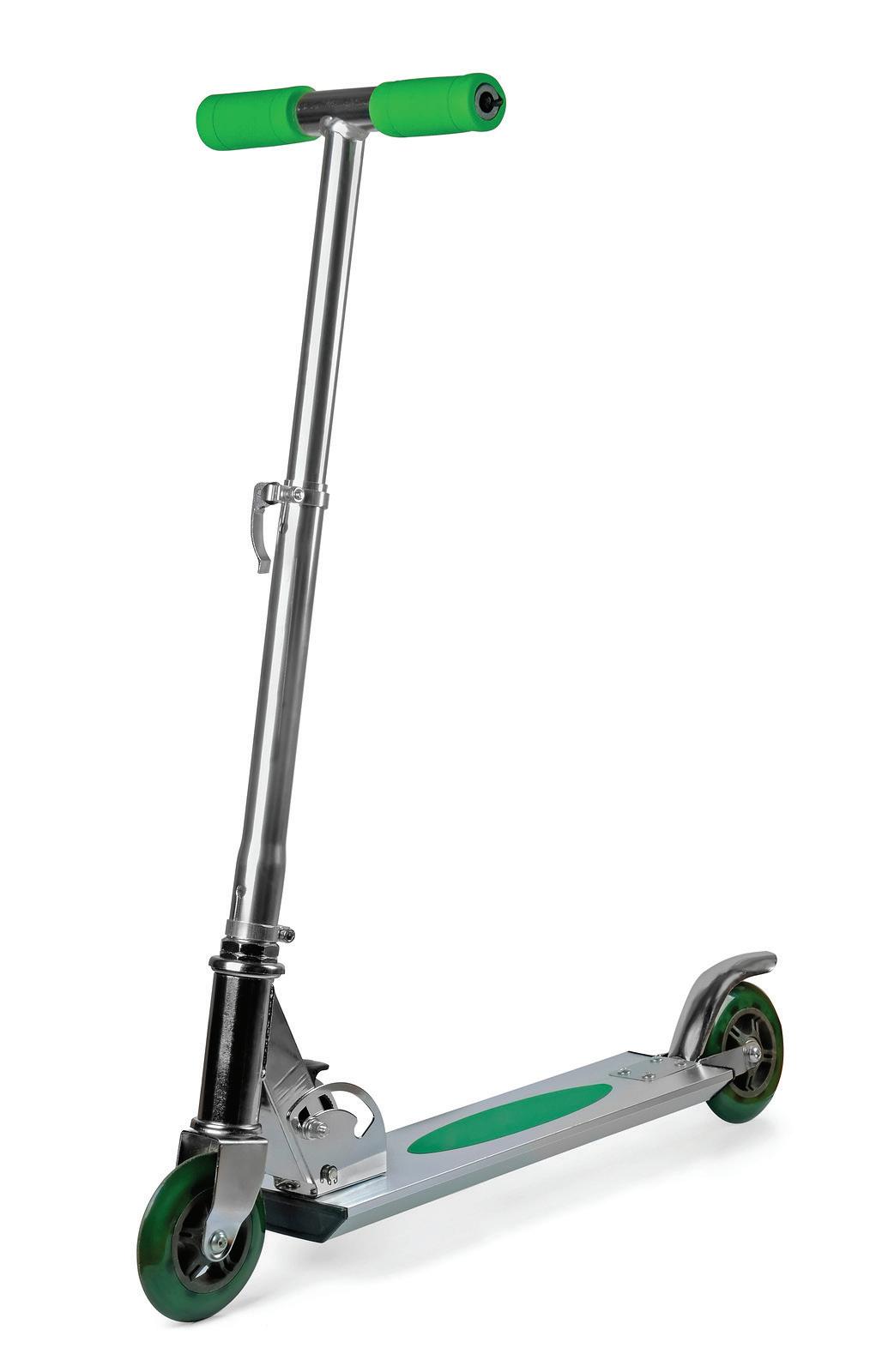
2. A student left his scooter out in the bright sunlight. When he went to ride it, he noticed that the metal parts of the scooter felt much hotter than the plastic handles and rubber tires. Why did the metal parts of the scooter feel hot? Why did the plastic and rubber parts of the scooter feel cooler than the metal parts?
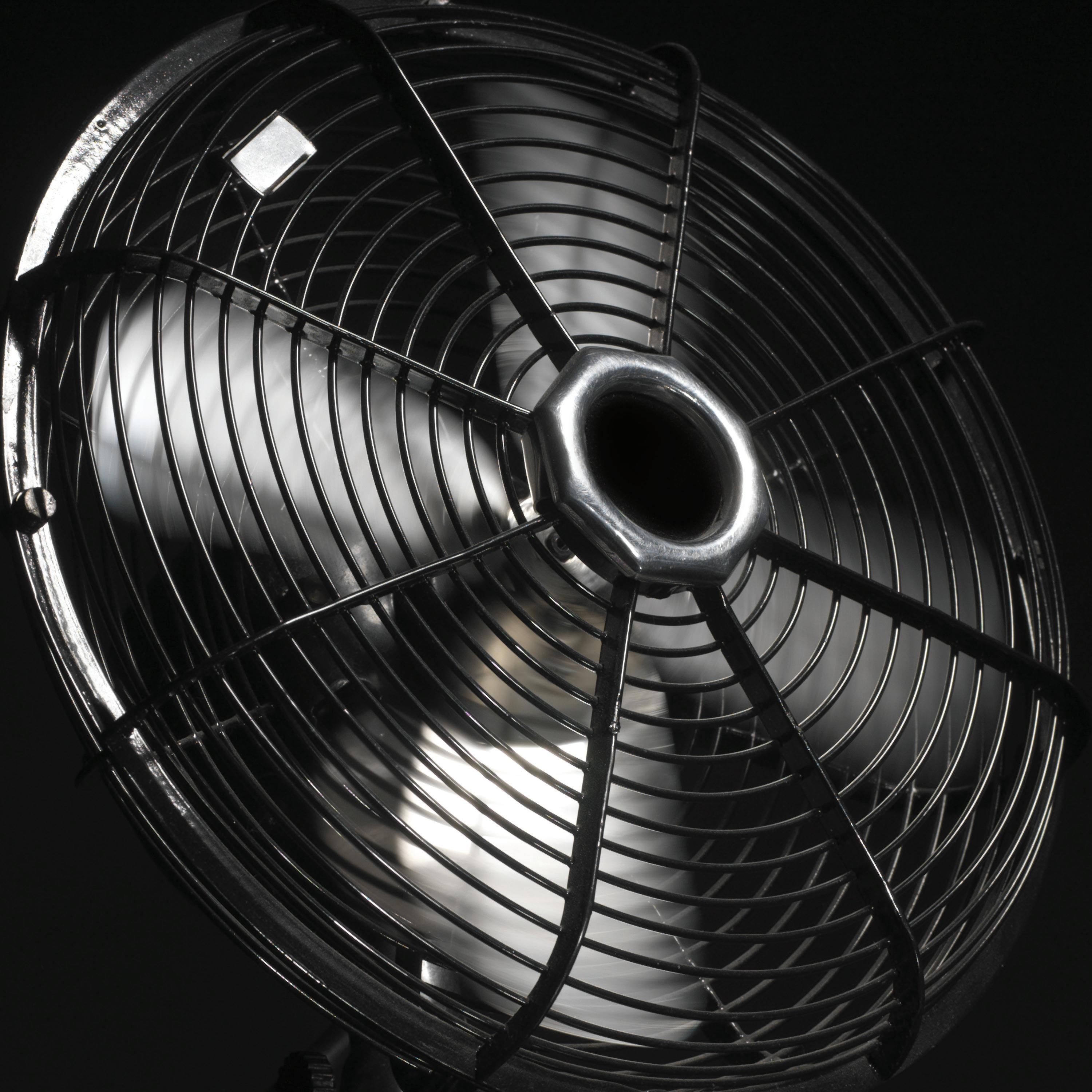
3. Observe the electric fan. Explain how energy moves within the fan when it is on.
Open-Ended Response

4. The illustration shows a complete circuit. What are the parts of a circuit? What is the function of each part?
5. Design a device that converts one form of energy to another. Under your design, explain how it works.

Scenario 1
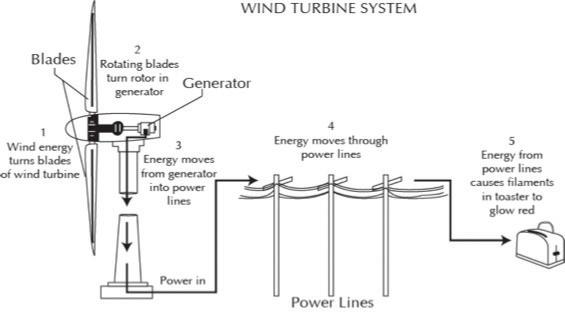
One morning before school, Lea decided to prepare some toast. Her toast popped up as the toaster made a “ding!” sound, and the glowing orange coils of the toaster caught her eye. As she buttered her toast, she wondered where the energy in her toaster came from. Her town’s main electrical source is a local wind turbine farm. The wind turbines turn, and the mechanical energy is converted to electricity, which is then sent to the town’s homes through power lines. Look at the diagram below to see how the energy travels from the wind turbines to an appliance.
External Data 2

Claim-Evidence-Reasoning
Prompt 3
Write a scientific explanation for how the energy travels from the wind turbines to the toaster.
Claim:
Evidence:
Reasoning:

How Does Light Travel? Student Handout
How do you think light travels from one place to another?
Flashlight
Draw and describe your prediction and observation of how the light moves. Prediction
Prediction Observation
LED Torch Light
Prediction
Observation
Conclusion
What can you conclude based on your observations? How does light travel? What evidence do you have of this?
Laser Pointer
Explore 1
Color Spectrum
Part I
1. Observe what happens to the beam of light when it enters the bowl.
Flashlight: Candlelight: Sunlight:
2. Draw the colors of the spectrum you see for each source of light.
3. Did the same color spectrum show for all sources of light? Why do you think this did/didn’t happen?
Explore 1
Part II
1. Observe what happens to the beam of light when it enters the prism.
Flashlight:
Candlelight:
Sunlight:
2. Draw the colors of the spectrum you see for each source of light. Flashlight
3. Did the same color spectrum show for all sources of light? Why do you think this did/didn’t happen?
Explore 1
Scenario
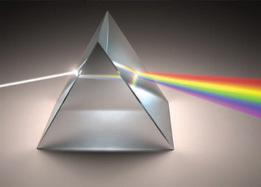
Juanito woke up one peaceful morning to the colors of the rainbow shining on his ceiling. He looked over to his bedroom window and noticed that the light was coming from his mom’s crystal wind chime. He remembered his science teacher, Mr. Stark, teaching them about the white light spectrum. He borrowed his mom’s crystal wind chime and tried to recreate the samecolored spectrum with different kinds of lights around his house. He noticed that his brother’s black light and his laser did not produce the rainbow spectrum the sunlight produced.
Prompt
Sir Isaac Newton discovered that certain light produces this spectrum. Use what you know about Newton’s findings to write a scientific explanation for why Juanito’s brother’s black light and his laser did not produce the same effect the sunlight did on the crystals. Make a claim and state your evidence.
Claim:
Evidence:
Reasoning:
Explore 2
Visibility and Light
Predict the visibility of the object for each of the bottles.
Draw and describe why you are able/unable to see the object. What is happening to the light?
Explore 2
Draw and describe why you are able/unable to see the object. What is happening to the light?
Draw and describe why you are able/unable to see the object. What is happening to the light?
Milk Powder
Coffee Crystals
Explore 2
Transparent
Cut and sort the picture cards into the correct category.
Explore 2
Translucent
Cut and sort the picture cards into the correct category.
Explore 2
Opaque
Cut and sort the picture cards into the correct category.
Explore 3
Answer the following questions after completing the activity.
1. How can you identify whether a material is transparent?
2. Explain how you can identify an opaque material.
3. Give an example of a translucent material.
4. If you wanted to sleep late during the day, would it be better to have transparent, translucent, or opaque curtains? Why?
5. If you are driving a car, is it better to have a transparent, translucent, or opaque windshield? Why?
6. If you are building a house and you want to let light in through the windows but not have everyone see you easily from outside, would you want transparent or translucent windows? Why?
Explore 3
Part II
Use the materials provided to make a “light maze” and complete the following challenges.
Challenge 1: Develop a maze that allows you to see your object through the opposite end without placing your bath tissue rolls in a straight line.
Draw your design and the path the light takes with arrows.
Explain how you used reflection, refraction, or absorption of light.
Explore 3
Challenge 2: Without blocking the object itself, develop a maze that blocks the image of your object.
Draw your design and the path the light takes with arrows.
Explain how you used reflection, refraction, or absorption of light.
Explore 3
Challenge 3: Design a maze that makes your object appear bigger than it actually is.
Draw your design and the path the light takes with arrows.
Explain how you used reflection, refraction, or absorption of light.
STEMscopedia
Reflect
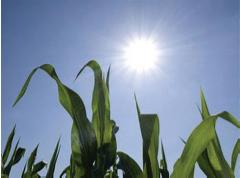
Life on Earth is highly dependent on light. Plants need light for the energy to perform photosynthesis, and animals need plants for oxygen and food. Animals need light to see their way around. Have you ever stopped to think about what light actually is? Where does it come from? How does it move from place to place?
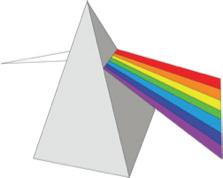
Light is made up of different colors or wavelengths. In 1672, an English scientist, Sir Isaac Newton, was experimenting with a glass prism. He was the first to discover that white light is made up of different colors! If you pass light through a glass prism, the light separates into a rainbow of colors called a spectrum. Actually, that spectrum is only a tiny part of a bigger spectrum called the electromagnetic spectrum. The light we see on Earth is a type of electromagnetic radiation. (Radiation is energy that moves as wave particles.)
Electromagnetic radiation is energy made of special light particles called photons. This energy travels faster than anything else known in the universe: approximately 300,000,000 meters per second. All the different wavelengths of electromagnetic radiation make up the electromagnetic spectrum. The electromagnetic spectrum includes radio waves, microwaves, infrared radiation, visible light, ultraviolet radiation, X-rays, and gamma rays.
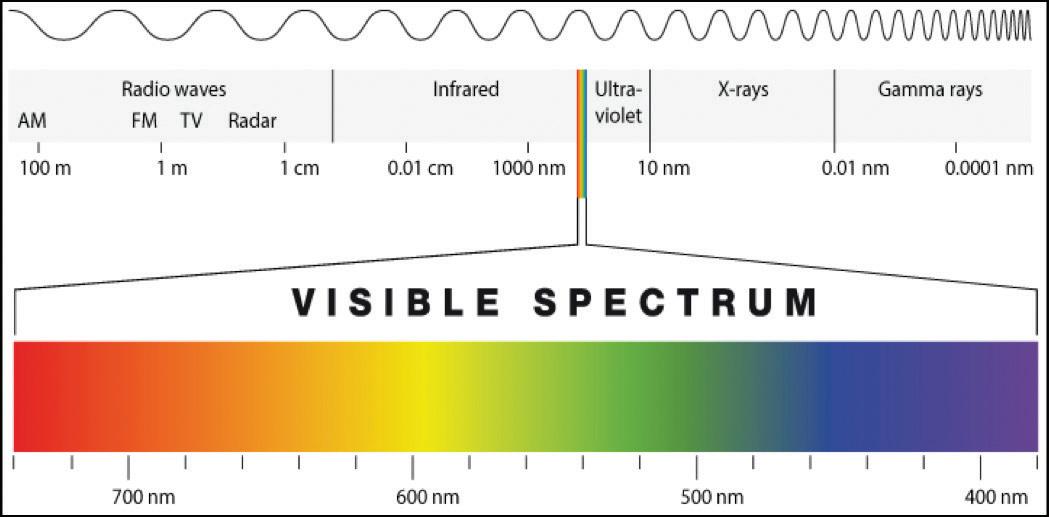
There are many types of electromagnetic radiation, both visible and invisible, but all types travel as waves. Scientists use wavelength to classify electromagnetic waves. Wavelength is a measurement of the length of a single wave of energy. Visible light makes up a tiny portion of the entire electromagnetic spectrum.
STEMscopedia
What Do You Think?
How do you see things?
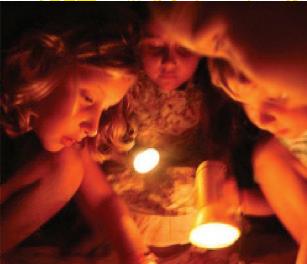
You know that if it is dark you cannot see things. These kids had to turn on their flashlights to see. How does that work?
They are able to see things because the light is hitting objects and reflecting, or bouncing, the light off the objects and into their eyes. Light can do more than just reflect. Light travels in straight lines from its source, and when it strikes an object, the light rays can reflect, refract, be absorbed, or pass straight through
Reflection and Absorption
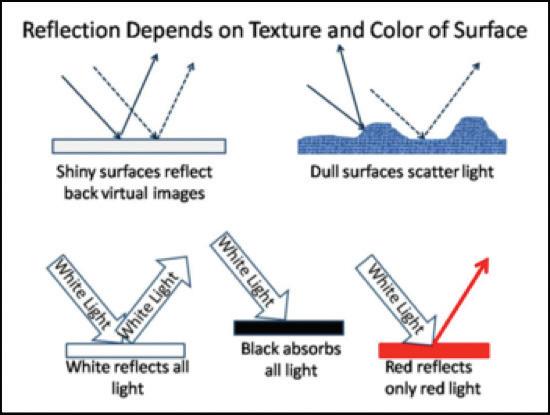
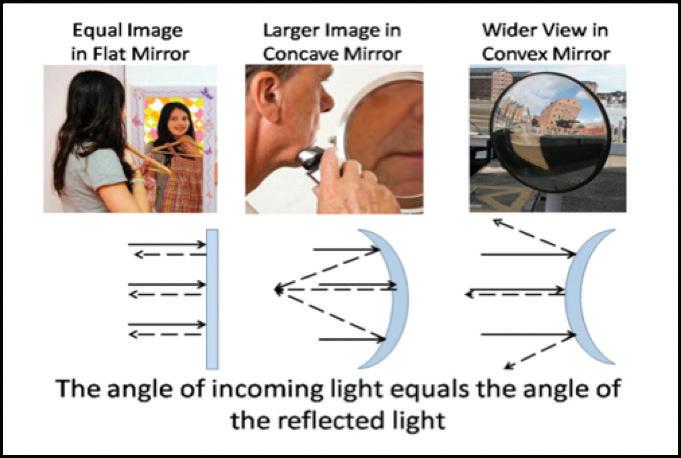
When light rays reflect, they bounce off an object back into your eye. Mirrors and shiny surfaces reflect the most. The image we see in a mirror reflection is a flipped image of the original. Rough textures and dull surfaces can scatter light. White surfaces reflect all of the light rays. Objects that are black absorb the light, and no color is reflected.
Notice the angle of incoming and reflected light rays in the images to the right.
Do you see a pattern?
Because light travels in straight lines, the angle of the incoming light on shiny surfaces like mirrors equals the angle of the outgoing reflected light.
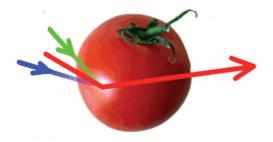
Objects such as this red tomato absorb all light rays except red, which is reflected to your eye.
STEMscopedia
Reflect
Refraction
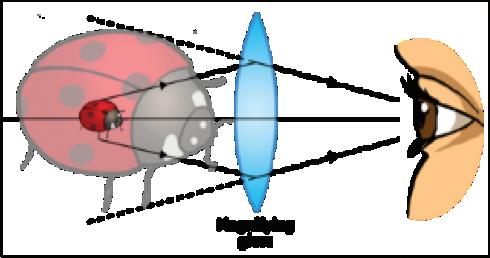
Refraction bends light. Do you see the two ladybugs under the magnifying lens? What would they look like without the lens? Why is using a magnifying lens helpful? Observing details up close in science can help you understand how living and nonliving things are put together. For example, the ladybug is not a bug, which is a name for insects.
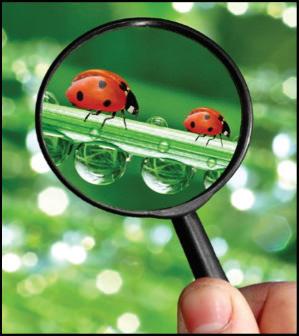
A magnifying glass can show you that the ladybug has a hard covering and special chewing jaws; both structures belong to beetles, not bugs. Using a magnifying lens helps you understand why a ladybug should really be called a lady beetle.
Lenses refract light.
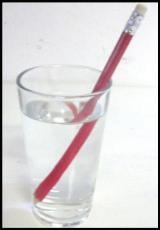
When light passes from one kind of material (called a medium) to another, the light changes speed slightly and bends or refracts. If you put a pencil in water, the light refracts as it passes from air, through the glass, and into the water, causing the pencil to appear bent.
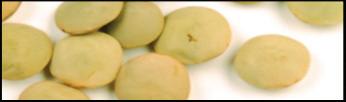
Lens makers take advantage of this property of light. They create curved lenses to change the path of light rays. The word lens comes from the Latin name for a flat bean with a similar shape; that bean is called a lentil
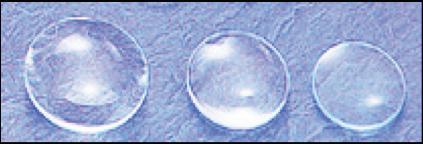
If lens makers wanted to magnify or make a small object appear larger or a distant object appear closer, they would curve glass to make the lens thicker in the middle. This shape, called a converging or convex lens, makes the light rays come to a point (called a focus). The convex lens in the magnifying glass makes the ladybug appear larger.
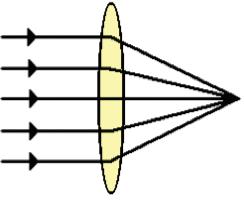
These flat beans are lentils.
Convex Lens
STEMscopedia
Reflect
If light is not reflected, refracted, or absorbed, it can pass through objects that are transparent or translucent.
Look at this picture of a window. Can you see the green trees, white posts, and fence through the glass? Because glass allows light to pass through, we call it transparent
Look at the sheer shade that is pulled down over part of the window. The trees and sky look blurry through the shade. Because the shade allows only part of the light to pass through, we call that material translucent.

The heavy green drapes are different because they block all the light from outside. Materials that do not allow light to pass through are opaque
transparent: allows light to pass through easily translucent: allows some light to pass through opaque: does not allow light to pass through; reflects or absorbs light instead
Transparent Objects
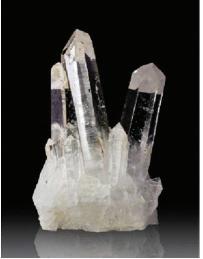
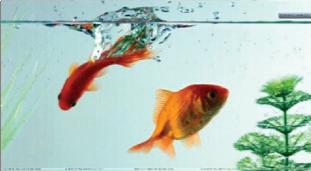
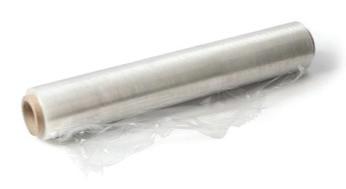
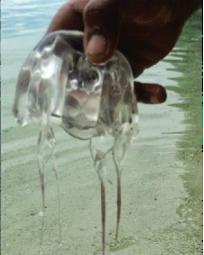
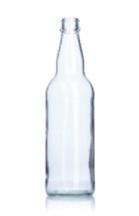
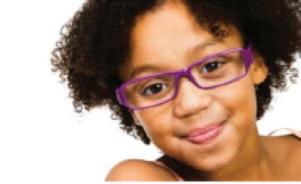
A transparent object allows light to pass through and does not scatter the light rays. This means that almost all the light passes through a transparent object, so you can see through it. Transparent materials are clear. Air and clear glass are transparent if they do not reflect too much light.
Other objects that are transparent include plastic or glass bottles, laboratory beakers, plastic wrap, lenses in glasses, and windows. Some natural objects are also transparent, such as water, ice, clear quartz crystals, and some jellyfish.
STEMscopedia
Reflect
Translucent Objects
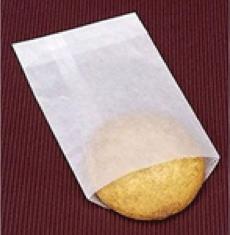
A translucent object allows some light to pass through, but it scatters other light rays. This means that whatever is on the other side of the object looks blurry. Glass that has been frosted is an example of a translucent material. Frosted glass is often placed in bathrooms or office windows for privacy.
The thickness of the material also affects translucency. Some pieces of paper are so thin they are translucent, while thick paper does not let any light pass through. Temperature also affects translucency. For example, you can see through candle wax when it is melted. Butter also becomes clear when it is heated, yet no light passes through when butter is cold.
Other examples of translucent materials are thin fabrics like sheer curtains, art tissue paper, wax paper, some lamp shades, and tracing paper.
Opaque Objects
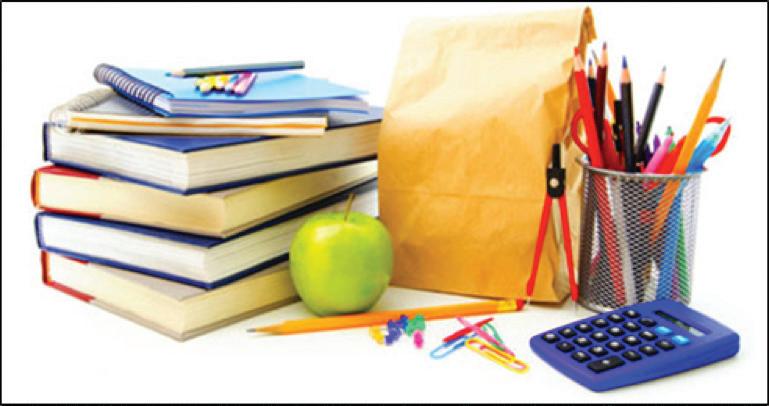
Materials that do not allow light to pass through are called opaque. The material absorbs some of the light and reflects some. Most metals, wood, and animals are made of opaque material. Most objects are opaque and block light. You are opaque. Your books, pencils, desk, chair, playground equipment, and school building all block light and are opaque.
STEMscopedia
Try Now
Light is shining on three objects below. Write down which one is transparent, which one is translucent, and which one is opaque. What evidence led you to that conclusion?
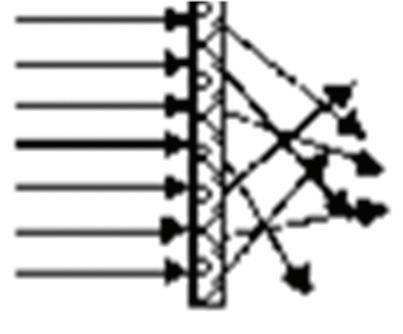
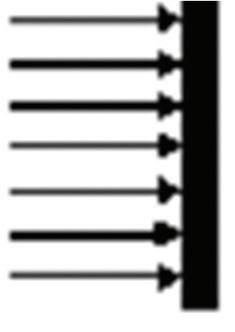
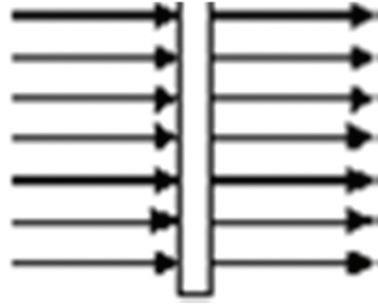
Evidence for my conclusion:
Evidence for my conclusion:
Evidence for my conclusion:
STEMscopedia
Connecting With Your Child
Exploring Light
To explore more about reflecting and refracting light with your child, have your child conduct a fun experiment at home to describe the difference between reflection and refraction.
You need these items:
• A plastic tub
• One or two handheld mirrors (that can get wet)
• Water
Procedure
Place the mirrors in the plastic tub.
Reflection through One Medium (Air)
1. Have your child look into the mirrors and describe what he or she sees.
2. Is what your child sees in the mirror (his or her face) what other people see? Or is it a flipped image?
Reflection through Two Media (Air and Water) with Refraction
1. Now fill the tub with water, completely covering the mirrors.
2. Have your child look at the mirror through the water and describe what is reflected.
3. How is what your child sees in the mirror through the water different from what he or she saw without the water?
4. Have your child gently shake the bucket while looking into the mirror through the water and describe what he or she sees.
5. How does what he or she sees change as the water moves?
Here are some questions to discuss with your child:
1. Why do you think that what you saw changed after you added water to the tub and then looked into the mirrors?
2. Describe refraction, reflection, and absorption in your own words, and list examples of each.
Reading Science
Rainbows
1 Rainbows are beautiful, and we can see them after a storm. Kids see rainbows and get excited. Adults get excited, too. Kids may point at them and adults stare at them. Poets feel inspired and write about them. In other words, everyone feels hope when they see a rainbow.
2 Scientists get excited when they see rainbows, too. However, to them, a rainbow tells something about the characteristics of light— refraction and reflection.
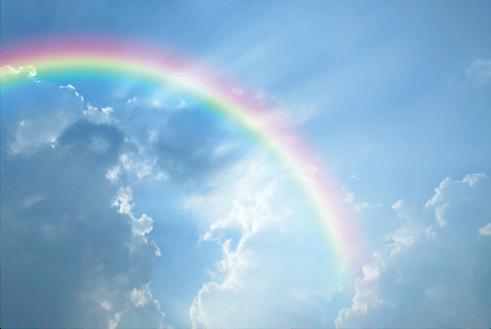
3 Rainbows are made of some simple and common ingredients. These ingredients include sunlight and water droplets. A rainbow will form only if these ingredients are arranged correctly. Water droplets are nearly perfect spheres. Sunlight must hit the water droplet at a proper angle. When this happens, light passes into the droplet. As this occurs, light changes speed and bends, or refracts.
4 Refraction makes the light separate into colors. The colors always separate in the same way. The order does not change. This order is: red, orange, yellow, green, blue, indigo, and violet. Violet, or purple, is always on the inside curve of the primary rainbow. When we see light, it looks white. However, light is made up of all the colors of the rainbow. We can see these colors when refraction takes place.
5 Sunlight hits the water droplet, bends, and then reaches the back of the droplet. The back of a water droplet is like a mirror. This part of the droplet reflects the colors of the rainbow. Sunlight that is refracted inside the water droplet is reflected off the back of the droplet to us. This is how we can see colors of a rainbow.
6 Two rainbows in the sky are something special, a rare sight. The inner arch is the primary rainbow and is brighter. The secondary rainbow is on the outer side. It is a mirror image of the primary rainbow. The colors of the secondary rainbow are flipped, or reversed. Also, this rainbow is dimmer than the primary rainbow.
Reading Science
7 You can see the properties of a rainbow in your own yard. Turn on the water and make a fine spray through a hose. Make sure the Sun is behind you. Sunlight will reflect off the back of the water droplets. You will be able to see a mini rainbow.
8 I know what you are thinking! Reflection of light helps to make a rainbow! Some people assume that reflection takes place when light is bounced off of a mirror—this is also true! But reflection can also happen in materials other than a mirror.
9 We all enjoy rainbows and we can learn a great deal about light from rainbows. When refraction and reflection happen in the sky, it makes a sight more splendid than what an artist can make with a paintbrush.
10 Light can also be absorbed, but when that happens, you do not get something pretty like a rainbow. When light is absorbed, the light is taken in by the material that the light strikes. This can create a shadow in the Sun, which is completely different than a rainbow.
11 The next time you are outside, look around and see if you can find other examples of reflection, refraction, and absorption.
Reading Science
1 How do scientists think differently than most people about rainbows?
A Scientists are not excited when they see rainbows.
B Scientists think it is silly to try to learn anything from rainbows.
C Scientists can learn a large amount of information about light from rainbows.
D Scientists wish they could write poems about rainbows.
2 The back of a water droplet acts as a mirror. When light hits the water droplet, it bounces back to our eyes. This is called–
A refraction.
B evaporation.
C conduction.
D reflection.
3 The word inspired in this passage means–
A influence.
B read.
C see.
D understand.
Reading Science
4 When light is absorbed, it creates–
A color.
B rainbows.
C shadows.
D nothing.
5 When light hits the water droplet and creates a rainbow, this is because the light–
A bends.
B breaks.
C stops.
D goes around.
Open-Ended Response
1. What did Sir Isaac Newton discover about white light by using prisms?
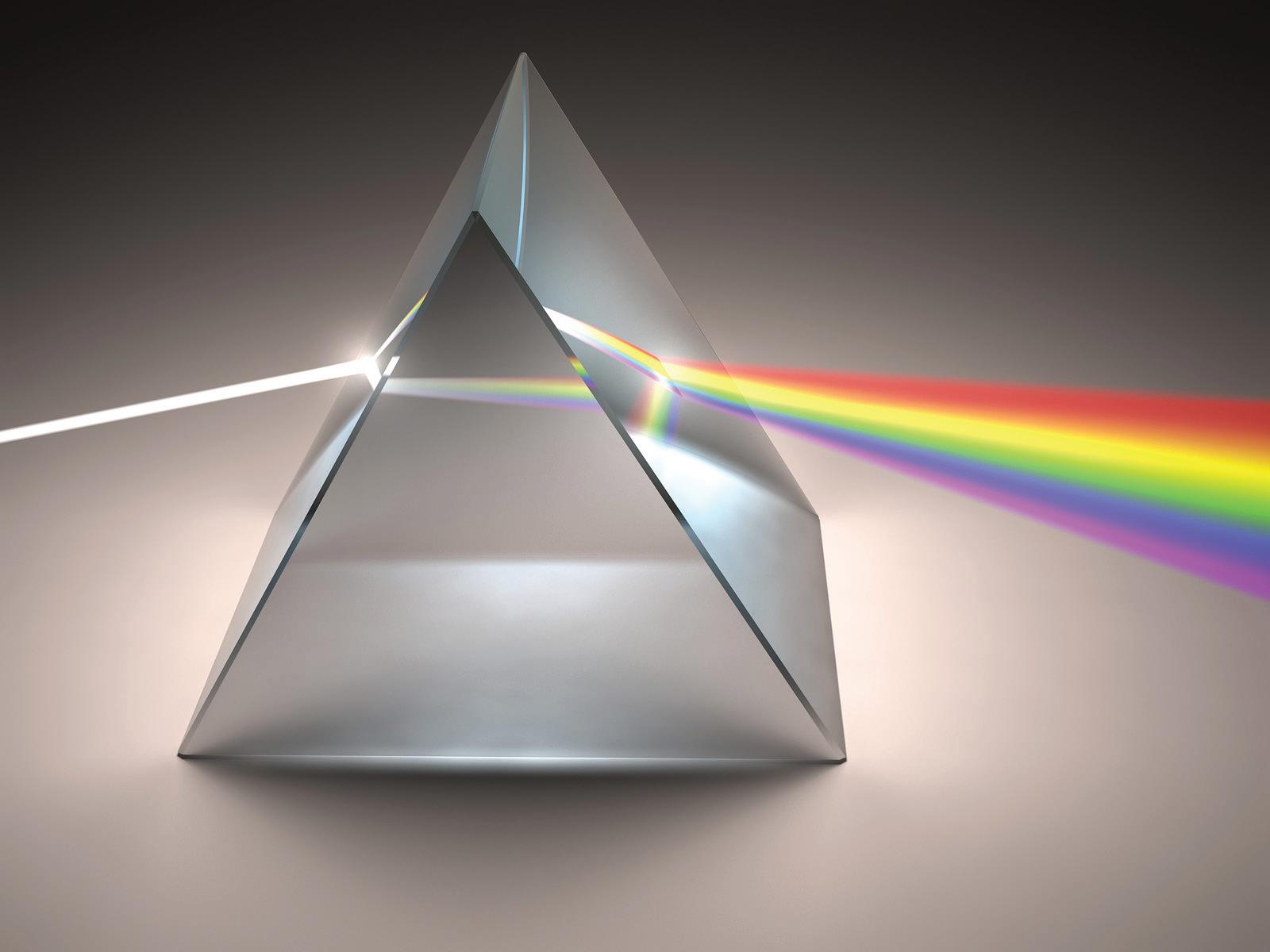
2. Imagine being in your room at night when the lights are out. Describe what your room looks like. Next describe what it looks like when you turn the lights on. Why does your room look different in the dark and in the light?
3. Explain why the straw in the water looks broken.
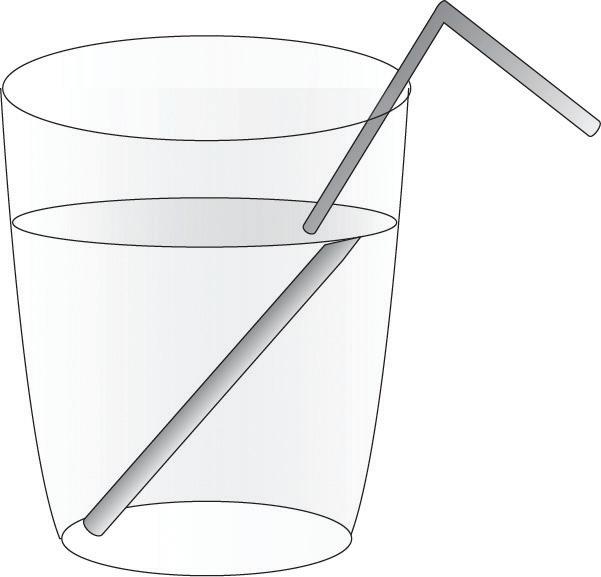
Open-Ended Response
4. A boy was riding in a car and saw a small spot of light moving around on the ceiling of the car. He looked around and noticed the Sun was shining on his watch. Provide an explanation of why he saw the spot on the ceiling. Do you think he would see this spot every day? Why or why not?
5. Explain how light interacts with different types of objects: transparent, translucent, and opaque.
Type of Object Interaction (How
Write a scientific explanation describing why the toothbrush appears to bend in the water. Claim: Evidence: Reasoning: Scenario 1
Shelby is getting ready for school. She looks in a mirror and sees her reflection. She knows that light travels in a straight path, bounces off the mirror glass, and reflects her image. She is cleaning her toothbrush and puts it into a glass of water. She notices the toothbrush appears to be bent in the water. When she takes the toothbrush out of the water, it is still in its normal state and is not bent. Why does the toothbrush look bent in the water?
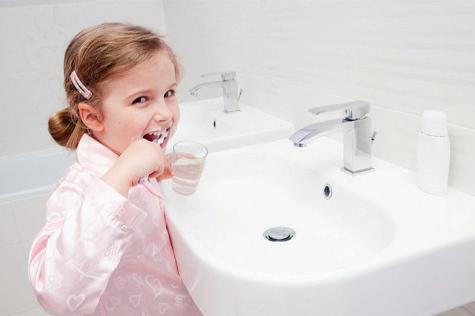
P.4.6C Sound
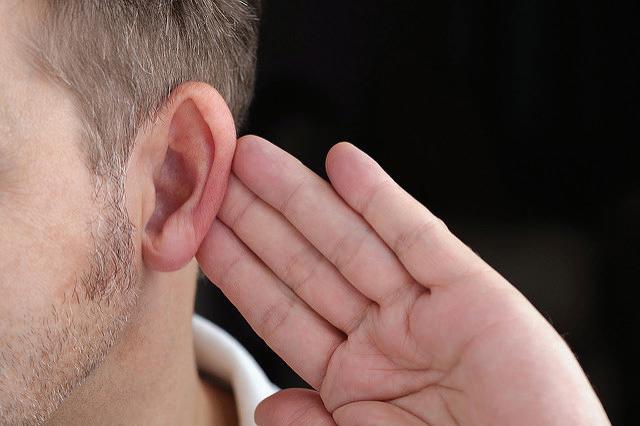
Sound Energy
Write down your observations, and sketch what you see.
Water in Cup
High Pitch with Soft Volume
Low Pitch with Soft Volume
High Pitch with Loud Volume
Low Pitch with Loud Volume
Write down your observations, and sketch what you see.
Ping Pong Ball
High Pitch with Soft Volume
Low Pitch with Soft Volume
High Pitch with Loud Volume
Low Pitch with Loud Volume
Explore 1
Sound Energy
Write down your observations during the activity.
Kind of Paper over Drum
Plastic Wrap
Construction Paper
Card Stock
Foil
Tissue
Explore 1
Reflection
1. Which paper allowed sound energy to travel the easiest? How do you know?

2. How did the pitch and volume affect how the glitter vibrated on top of your drums?
3. What do you think would happen if the paper became wet? Would the vibrations become stronger or weaker?
Explore 2
Scientists of Sound
Explore 2
Who Is Your Sound Pioneer?
On this page, you will inform your audience who your sound pioneer is—for example, where he or she was born, where he or she lived, and where he or she studied.
Explore 2
Contributions to the Science of Sound
On this page, you will inform your audience about the discoveries and/or inventions of your sound pioneer.
Explore 2
Today
On this page, you will inform your audience how your sound pioneer has influenced today’s world. How did his or her contributions change the world? Do we still use his or her discovery/ inventions today?
STEMscopedia
Reflect
Sound is a form of energy. Sound comes from the energy of vibrating objects. Vibrating objects move back and forth rapidly. The vibrations move the air particles near the object and make sound waves. Those air particles transfer the sound wave to the next air particles, and so on. We hear those vibrations as sounds.
sound: waves of energy we hear from vibrating objects
Waves have a crest (top) and a trough (bottom). Wavelength is measured from one crest to the next or from one trough to the next.
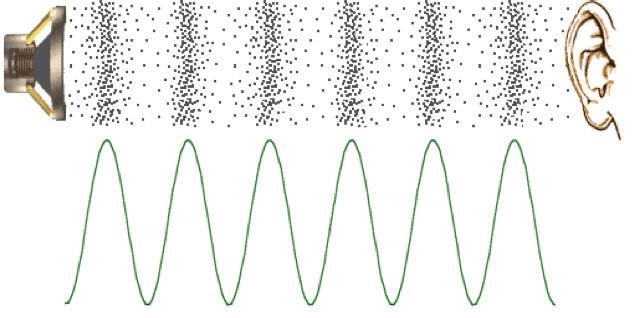

Sound is produced by nature or by objects that people have made. You can hear animals making sounds, the ocean pounding the shore, the wind blowing through the trees, and more. Sound is also produced by objects that vibrate, such as musical instruments, radios, sirens, and so on.
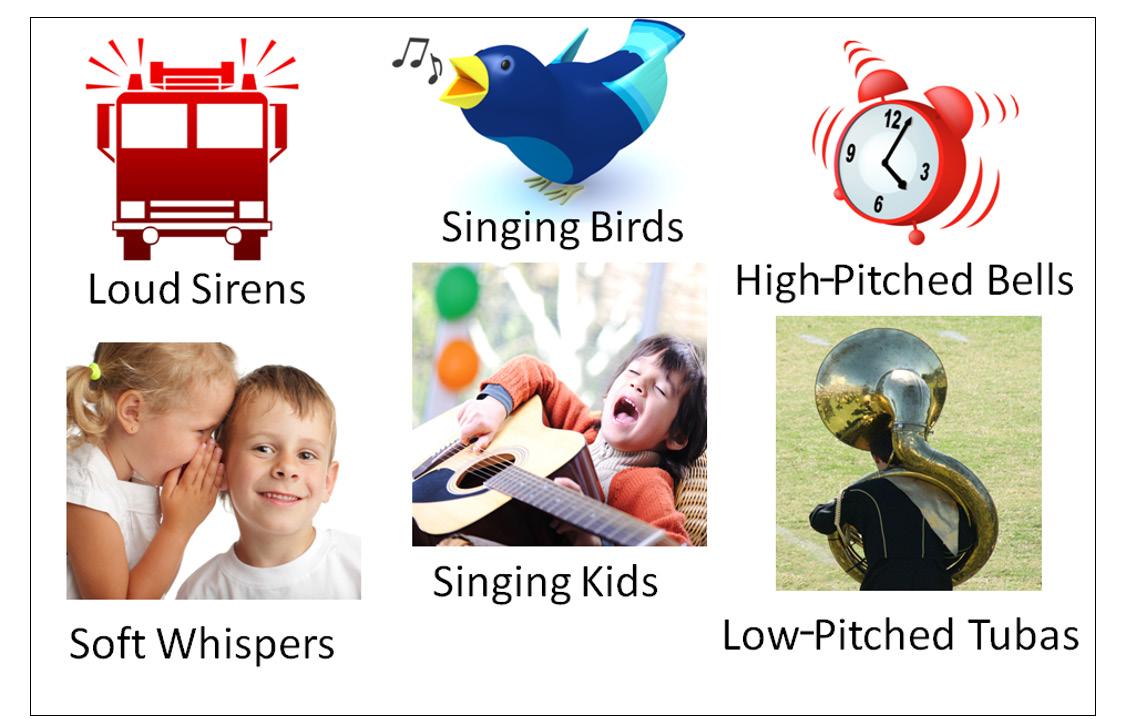
Wavelength
Vibrating objects make sounds we can hear.
STEMscopedia
What Do You Think?
What do you think makes high or low sounds? Sound vibrations are produced in many ways. Tapping a glass containing a short column of air makes a high-pitched sound. Tapping a glass with a long column of air produces a low-pitched sound.
The size of an object also affects the sound. On a xylophone, tapping the bigger pieces of metal makes low-pitched sounds, while tapping the smaller pieces of metal makes high-pitched sounds.
High-pitched sound wave
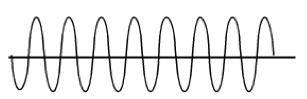
High-pitched sounds have many waves in a certain amount of time.
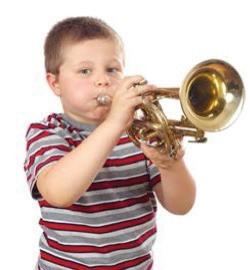
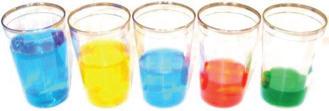

Low-pitched sound wave
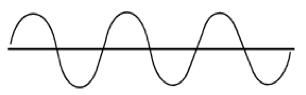
Low-pitched sounds have fewer waves in a certain amount of time.
Now you try! Look at the musical instruments. Use the words drum, horn, and harp to answer the following questions.
1. Which instrument do we blow in to make sounds?
2. Which instrument do we pound on to make sounds?
3. Which instrument do we pluck to make sounds?
STEMscopedia
Reflect
Our ears detect sounds. If you are in hearing range of vibrating objects, sound waves can enter your ear. They travel down the ear canal and vibrate the eardrum. The eardrum passes on the vibrations to tiny bones that in turn pass them on to a fluid-filled chamber. The chamber finally sends the signals along nerves that go to your brain. You hear this as sound. In other words, you hear vibrations as sounds. Sometimes sounds are too loud. Those loud sounds can hurt your ear. Some people have trouble hearing because parts of their ear do not function properly.
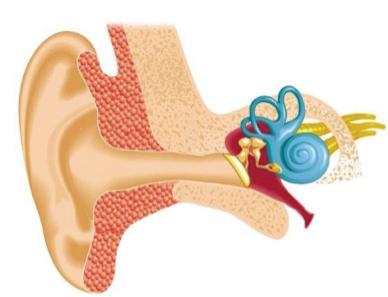
Our “voice box” also makes sounds. Although sound is detected by the ear, you can feel the sound vibrations from talking when you touch your throat. The voice box in your throat vibrates when you talk, yell, hum, or sing. The vocal cords in your voice box vibrate to produce those sounds.
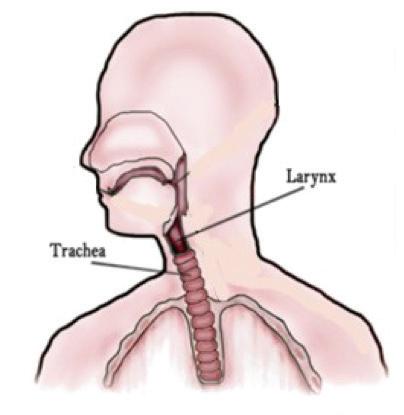
The voice box (called the larynx) is not really a box, but it is made of two cords of tissue at the top of your windpipe. The cords vibrate when air from your lungs passes over them.
Your mouth, your tongue, and the openings in your nose help change these vibrations into talking sounds.
Larynx
Windpipe
Tiny bones
Eardrum
Ear canal
To the brain
Fluid filled chamber
STEMscopedia
Look Out!
Sounds can be loud or soft. How much energy a sound wave has determines its volume. The volume of a sound is called its amplitude. Sound waves that produce loud sounds have tall waves, while soft sounds have short waves.
amplitude: how loud or soft a sound is
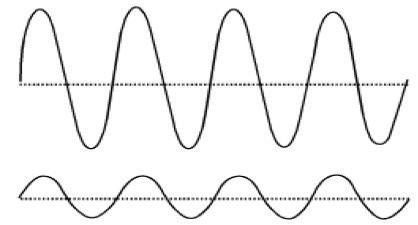
To make a louder sound, you have to increase the amplitude of the sound. You can do that by striking a drum harder, plucking a guitar string strongly, or yelling to make the amplitude increase.
Try Now
Think about whether a sound is loud or soft or high or low pitched. Match the following pictures with the best sound category. Write the number in the correct column.

1. Chirping
2. Yelling
3. Playing a tuba 4. Whispering
Loud Soft High Pitch Low Pitch
Loud sound wave Soft sound wave
STEMscopedia
Reflect
Several scientists did pioneering work in the science of sound, and their discoveries changed the world.
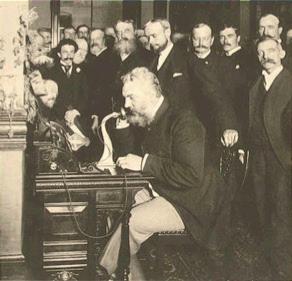
Alexander Graham Bell, a Scottish inventor, made the first telephone in 1876. He created the Bell Telephone Company, which later became the American Telephone and Telegraph Company (AT&T).
Robert Boyle, an Irish scientist, in 1660 was the first to prove that sound must travel in a medium and cannot travel in a vacuum. He rang a bell inside a glass ball. Then, as he pumped air out of the glass, the sound became fainter and stopped.
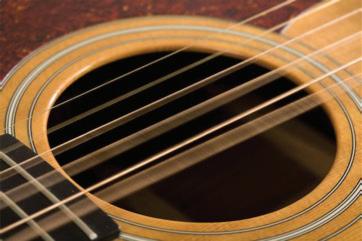
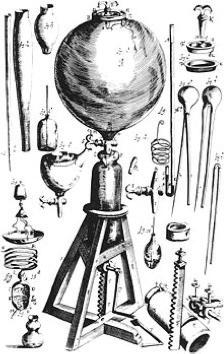
Daniel Bernoulli, a Swiss mathematician and physicist, discovered in 1753 that strings vibrate at many different frequencies (harmonics).
Guglielmo Marconi, an Italian inventor, is credited with the first patent on the radio. In 1910 he sent the first overseas radio telegraph transmission.
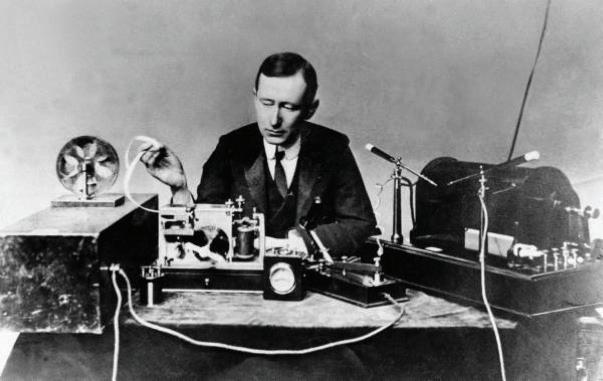
STEMscopedia
Connecting With Your Child
Sounds from a Vibrating
String
All sounds originate from something that is vibrating. In this activity, you and your child use a stretched rubber band as a vibrating string. Begin by brainstorming about different types of sounds.
• Pitch—Pitch refers to whether a sound is high or low. Higher-pitched sounds come from rapidly vibrating objects. Both the tension and the length of the plucked string affect pitch.
• Amplitude—We refer to the loudness and softness of sounds as amplitude (or how much energy a sound has). Amplitude is a measure of how far the object vibrates back and forth. In a stringed instrument, amplitude is controlled by how far back the center of the string is pulled when plucked.
For this activity, you need a hammer; three nails; a short, wide board; and a large, strong rubber band. Help your child complete the following procedure:
1. Pound the nails into the board to form a triangle with unequal sides. The triangle should stretch the rubber band out completely.
2. Stretch the rubber band over the nails, with equal tension on each side.
3. Pluck each side of the rubber band and observe the differences in pitch.
4. Pull hard on one side of the rubber band to increase the tension on the other two sides. Observe the change in pitch of the two sides with increased tension.
5. Use a finger to hold the middle of the longest side of the rubber band to the board. This will create two new, shorter sections of rubber band, one on either side of your finger. Pluck each new section and observe its pitch.
6. When plucking, vary the distance you pull back on one of the sides of the rubber band. Observe the differences in loudness.
Here are some questions to discuss with your child:
1. Were you able to see differences in how the rubber band moved?
2. When were the sounds high? When were they low?
3. Did it make a difference how far the rubber band moved?
4. What do you think affected how loud the sound was? Try plucking hard and then softly to find out.
Reading Science
Guitar Lesson
1 Jose grabbed his electric guitar and lesson book. Carrying the odd-shaped case was like carrying a large cement block, but even larger. Jose could not contain his excitement for his guitar lesson. He had just started last week and could feel butterflies floating in his stomach. He could also feel his stomach starting to churn. He knew he was ready for his lesson but he did not want to mess up. Jose had practiced many times in preparation for his lesson.
2 Upon arriving at his lesson, Jose quickly unpacked his blue guitar and set his lesson book in his lap. When Mr. Maxwell, his teacher, opened the door, Jose grinned widely. He had a bounce to his step as he walked into Mr. Maxwell’s office. He was excited to show Mr. Maxwell his progress.

3 Jose plugged his electric guitar into the amplifier. A loud screech bounced through the air. Jose crouched down and covered his ears.
4 “Oh sorry, Jose. I forgot to turn it down from the last lesson. Let me turn it down,” said Mr. Maxwell.
5 Mr. Maxwell turned down the amplifier and Jose sat down in his chair. His feet were touching the floor and he sat up nice and straight. Jose had a burning question he could not wait to ask Mr. Maxwell. He had been wondering about this since he began his guitar lessons.
6 “Mr. Maxwell,” began Jose. “I am curious about something and I want to see if you could help me answer it.”
Reading Science
7 Mr. Maxwell looked at Jose with a smile on his face. He was used to students’ curiosity. “Go for it, Jose. I will do my best to answer. What is your question?”
8 “I want to know why I can hear sound when I plug in the amplifier or when I pluck a string on my guitar. I know it has something to do with my ears, but I do not know exactly what.”
9 Mr. Maxwell loved Jose’s inquisitive nature. He knew today’s lesson plan was going to change. “Well, Jose, that is an excellent question. Play a few notes, and then we will talk about it. Please try this page that was your assignment.”
10 Jose placed his fingers delicately on the strings. He pushed on the strings with his left hand. No sound came out. Jose put more force into pushing down on the string. He strummed the notes, and this time he heard the sound. Each string he touched made a different sound.
11 “Jose, what enables you to hear the sound are your ears. Sound is made up of vibrations. Sound waves create the vibration that then travels until it runs out of energy. If the volume of the noise is loud, that means the sound has a lot of energy, and when it is soft, there is not a lot of energy. When you plugged your guitar in, the amplifier created a lot of energy and produced sound with a lot of volume.”
12 With a large glint of excitement in his eyes, Jose could not get his mind to stop. “Wow,” exclaimed Jose. “I only thought it had something to do with my ears, but it is really the change of the air into waves. That is pretty cool. I did not know air could make waves. I thought those were only in the water I swim in at the beach.”
13 Jose placed his small fingers on the third fret and plucked the largest string. A low hum came out of his guitar. Jose looked at Mr. Maxwell.
14 “That is a cool low sound, huh?” responded Mr. Maxwell. “Sounds can also change pitch. For example, a low sound is created when the sound wave does not move very fast. The large string takes longer to move back and forth because it is heavier.”
15 “So if I pluck a small string, will it make a high pitch?” asked Jose.
16 “Good connection, Jose! You are so right! A high pitch will come when the sound waves are moving fast and continue to move fast until they run out of energy. They move fast until they hit your ear. Try it on your guitar.”
Reading Science
17 Jose stretched his small fingers up to the top of the neck of his guitar. He took his thumb and pointer finger and plucked a small string when, all of a sudden, out came a higherpitched sound.
18 “Well, now that you learned some more about sound, including pitch and volume, it is time to play the guitar!” said Mr. Maxwell.
Reading Science
1 What is Jose’s main problem in the story?
A Jose does not know how to play the guitar.
B Jose’s guitar case is too large for him.
C Jose does not know about sound.
D Jose is not prepared for his lesson.
2 Which element of the selection helps you know it is a story?
A There are real people.
B It has a beginning and an end.
C The character has a problem he is trying to solve.
D The character learns a lesson.
3 Authors often have to do research to write. They write from observing, asking questions, or even looking through books. Which evidence from the selection helps you know the author conducted research for this selection?
A “Carrying the odd-shaped case was like carrying a large cement block, but even larger.”
B “I know it has something to do with my ears, but I do not know exactly what.”
C “He took his thumb and pointer finger and plucked a small string when, all of a sudden, out came a higher-pitched sound.”
D “For example, a low sound is created when the sound wave does not move very fast.”
Reading Science
4 The reader can tell that an amplifier is–
A an electronic device that makes volume loud.
B an electronic device that makes high-pitched sounds.
C something that mutes sound.
D something that is needed to play all guitars.
5 What causes sound to change pitches?
A The speed of the sound waves
B The length of the sound waves
C The size of the sound waves
D A person’s eardrum
Open-Ended Response
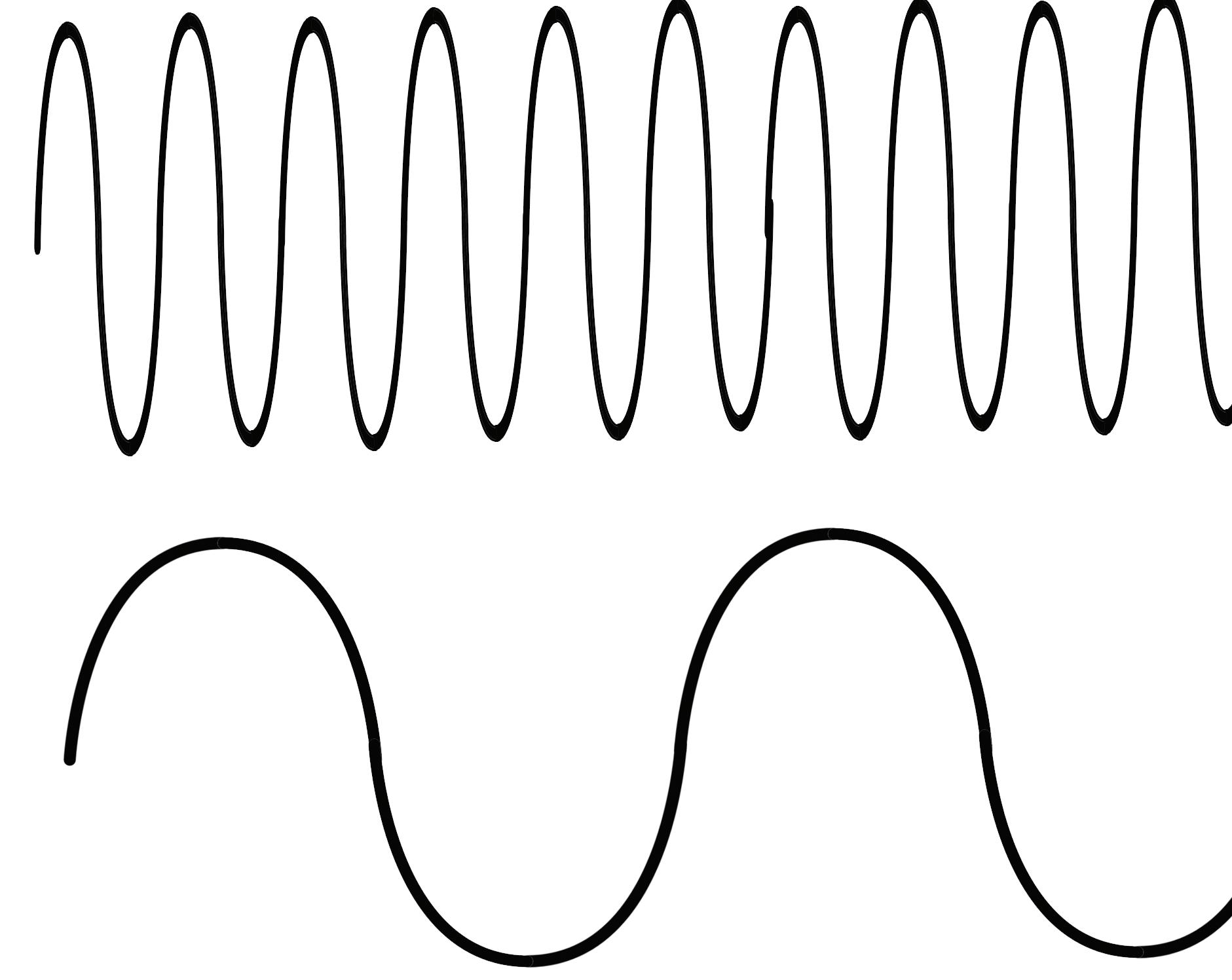
1. Which of the two sound waves has a higher pitch? How can you tell?
2. If something is made to vibrate more, what will happen to the sound created by the vibrations?

Open-Ended Response
3. A sound increases in volume when sound waves gain more energy. Give an example of how you could increase the volume of a sound.
4. Choose one of the following scientists: Alexander Graham Bell, Robert Boyle, Daniel Bernoulli, or Guglielmo Marconi. Explain how his work and discoveries in the science of sound changed the world.
Claim-Evidence-Reasoning
Sound is a form of energy. There are many different types of sounds. Sounds can be loud, quiet, high pitched, or low pitched. There are even long and short sounds. Different musical instruments can make many different sounds. Drums can make loud, short sounds. A violin can make a long, high sound. Although your ear detects sound, you can also feel sound. Sounds from instruments can change when they are played differently. Scenario
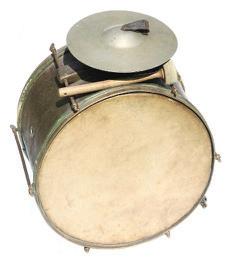
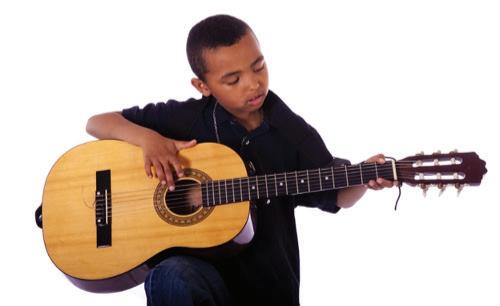
Claim-Evidence-Reasoning
Prompt 3
Write a scientific explanation describing how musical instruments make sounds.
Claim:
Evidence:
Reasoning:

Explore 1
The Water Cycle: Who’s in Charge?
Part I: Water Cycle Model
1. Draw a picture of your group’s water cycle model. Label the parts of your model that represent evaporation, condensation, precipitation, transpiration, runoff, and groundwater.
2. How do you know that evaporation is happening?
3. What is the role of the Sun in the water cycle?
Explore 1
Part II: Water Cycle Diagram
1. Draw the water cycle and label where evaporation, condensation, precipitation, transpiration, runoff, and groundwater occur.
2. Draw arrows to show how water moves through the water cycle.
3. Explain in detail what happens to water at each stage of the water cycle.
STEMscopedia
You can find water in many places. It comes out of faucets in your house. It is also in lakes and rivers. The oceans are full of water. Rain is water that falls from the sky. Snow is frozen rain. Even clouds are made of water. All of the water on Earth is recycled. That means that it gets used over and over again. How do you think this water is recycled? Where does this recycling start? How does recycling water cause rain and snow?
Water moves through a cycle. A cycle is like a circle. It has no end and no beginning. The water cycle is how water moves around the world. The water cycle has six steps that start with the Sun heating Earth’s water: evaporation of water into the air, condensation of water into clouds, water falling as precipitation from the sky, water going downhill as runoff, water seeping into the ground as groundwater, and water being released by leaves into the air during transpiration.
The water cycle begins with the Sun!
The Sun begins the water cycle. Remember that all the steps in the water cycle are happening at the same time in different places on Earth. Remember that a cycle has no beginning and no end.
Evaporation—The Sun heats water on Earth. The Sun provides the energy that evaporates water on Earth. Have you ever seen a puddle dry up after it rains?
Sunlight heats the water in the puddle. When the water gets warm enough, it moves into the air. This is called evaporation. You cannot see water in the air. It is invisible. Reflect

STEMscopedia
What Do You Think?
Where do you think water evaporates? Evaporation also happens in oceans, lakes, and rivers. The surface water is heated by the Sun and evaporates or moves into the air. There is a lot of water in oceans, lakes, and rivers. The Sun can dry up a whole puddle, but it does not dry up the whole ocean. Only some of the ocean water evaporates. A lake or river can dry up if there is no rain and it is very hot.
There used to be a river here before the Sun’s heat dried it up.
Look Out!
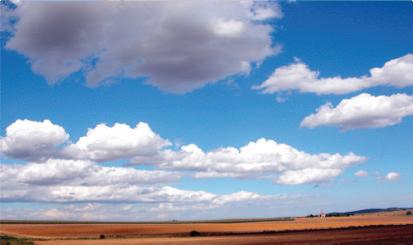
Condensation—The water gets colder as it rises through the air. When it gets cold enough, it forms clouds. This is called condensation. The water is not invisible anymore. Clouds might look like puffy cotton, but they are really made of very tiny drops of water. You cannot sit on a cloud. You would fall right through and get quite wet!
Precipitation—As clouds fill up with water, they become heavy. Then the water drops in the clouds begin to fall back to the ground. We call this falling water precipitation. Water can fall as rain. Sometimes it is very cold when rain falls. Water can turn into freezing rain (sleet) as it falls to the ground. Hail falls as a small sphere of layers of ice. Snowflakes are crystals of ice.
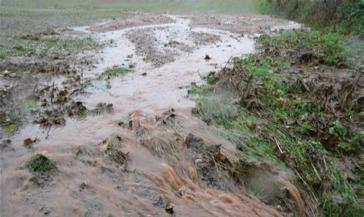
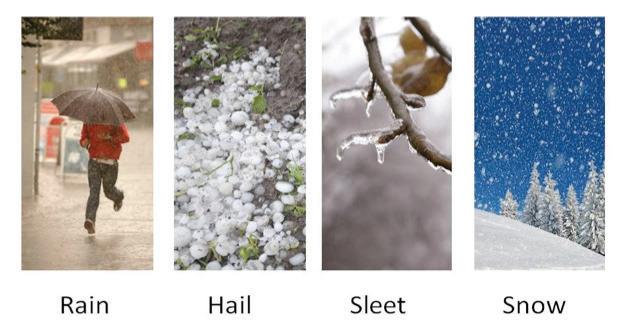
Runoff and groundwater—When precipitation lands on Earth, gravity continues to pull it downward as surface runoff. The runoff collects in bodies of water like ponds, rivers, lakes, and oceans. Other water seeps down below the surface and flows underground between soil particles and rock layers. This water is called groundwater.
Transpiration—Plants absorb water and release excess moisture as water vapor through openings in their leaves. This process is called transpiration. This is similar to perspiration, when you sweat drops of water through pores in your skin.
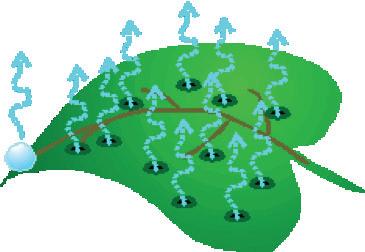
Try Now
STEMscopedia
Part 1: Use the words below to complete the sentences about the steps of the water cycle.
Sun Runoff
Rivers
Evaporation
Groundwater
Transpiration Circle
Precipitation Condensation
Water falls from clouds when it rains. This is called ____________________. The water then flows across Earth’s surface as ____________ into oceans,_______________, and lakes. Some water seeps below the surface between soil particles and rock layers and is called __________ _____________________. The ____________ heats water and it goes into the air in a process called ________________________. Water also goes into the air from leaves in a process called __________________________. The water vapor in the air cools and forms water droplets in clouds. This is called ______________________________. The water cycle keeps moving in a
Part 2: Model the water cycle with five friends. Each person plays a different part of the water cycle.
1. Give each person a part. One person is an ocean. The other people are the Sun, the sky, a cloud, or the ground.
2. Stand in a circle. The Sun person stands outside the circle.
3. Make sure you are in the same order that water moves through the cycle.
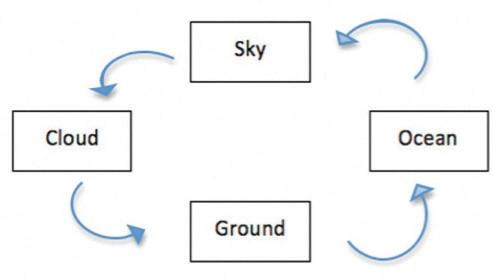
• The Sun heats the water between the ocean and the sky. Let the Sun move its arms back and forth to simulate the rays of the Sun.
• Each person should hold a large, empty cup.
• The ocean person starts with a cup filled with water.
• Pass the water around the circle by pouring it into each person’s cup.
• Continue moving the water through the cycle.
STEMscopedia
Connecting With Your Child
Modeling Parts of the Water Cycle
To help your child better understand the role of the Sun in the water cycle, take a moment to model how the water cycle works. When the Sun’s energy interacts with ocean water, evaporation takes place. For this activity, you will need the following materials:
• Plastic bowl, clear or colored, but not white
• Salt, 8 grams
• Water, 250 milliliters
• Plastic spoon
1. Mix the water and the salt in the bowl. Set the bowl in a warm, sunny place.
2. Check the bowl after several hours or the next day. The warmer the area is, the less time you will need.
Here are some questions to discuss with your child:
1. What happened to the water in the bowl?
2. What happened to the salt in the bowl?
3. How does this experiment model what happens in the oceans?
4. Is the water from your bowl part of the water cycle? Where is it now?
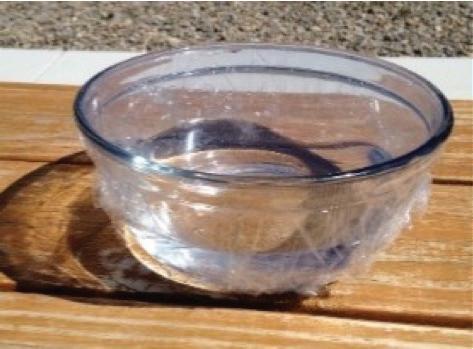

Reading Science
Water Cycle
1 What is a cycle? A cycle is an event that is repeated over time. As soon as it ends, it begins again.
2 The water cycle is an important cycle to all of us who live on Earth. Let us see why.
3 Water covers a large part of Earth. Water can be in oceans, lakes, rivers, and streams. In order to keep these water sources from drying up, we need the water cycle.
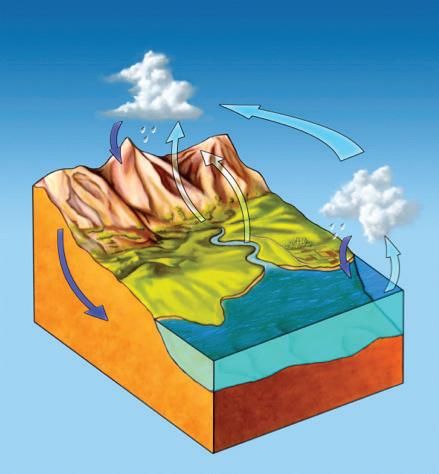
4 The Sun heats up the water from the oceans, lakes, streams, and rivers. Can you guess what happens to the water? Think about when you heat water in a kettle for a cup of tea. The water begins to boil when it gets hot. Just like the water in the kettle, the Sun heats the water on Earth. It changes into water vapor, or steam. The vapor leaves the water source and rises into the air. This process is called evaporation. What do you suppose happens to the vapor once it rises into the air?
5 Once the vapor reaches the air, it begins to cool down. It changes back into water, and then something happens. The water soon becomes white clouds!
6 This process is called condensation. Think of when you pour a glass of cold water on a hot day. What do you think happens to the glass? Water droplets start to form on the outside of the glass because the water vapor in the warm air turns into liquid when it touches the cold glass. The same process happens in the sky to form clouds.
7 Some people think that the water on the grass in the mornings, or dew, is also called condensation. It looks a lot like condensation but it is not! It is called transpiration, which is when plants give off water that evaporates because of the Sun’s heat.
Reading Science
8 What do you think happens to the clouds in the air as they begin to fill up with water vapor? The clouds get heavy and they cannot hold the water anymore. The water falls from the clouds. This is called precipitation. Precipitation can be rain, hail, or snow. The precipitation falls back down to the ground. When water falls to the ground, it flows into rivers, lakes, or oceans. This is called runoff. Oceans are where most evaporation happens.
9 Sometimes there is water that is underground, or groundwater, which also goes through the water cycle.
10 Then the water cycle starts all over again. The water cycle is a very important process for us. The water cycle gives our bodies water to drink. It makes puddles for us to play in. It gives us rain that waters our plants.
Reading Science
1 Which sentence from the text best shows the main idea?
A A cycle is an event that is repeated over time.
B The water cycle is an important cycle to all of us who live on Earth.
C Water can be in oceans, lakes, rivers, and streams.
D The vapor leaves the water source and rises into the air.
2 Precipitation is–
A water vapor that cools and forms clouds.
B water that turns into a rising gas.
C water in a lake.
D water that falls from the sky in any form.
3 Which of these is an example of condensation?
A Water vapor that becomes clouds
B Steam that rises from a lake
C Rain that falls from the sky
D A stream that flows into the ocean
Reading Science
4 When water evaporates, it becomes–
A condensation.
B clouds.
C rain.
D water vapor.
5 What does the word transpiration mean in Paragraph 7?
A Water that comes from the sky
B Little droplets of water on the grass in the mornings
C Water from a jet
D Water on your car

Open-Ended Response
1. Draw and label the water cycle. Be sure to include the following processes:
• evaporation
• condensation
• precipitation
• transpiration
• runoff
• groundwater
Open-Ended Response
2. Why do the oceans play such a large part in the water cycle when they are only one of the many different bodies of water on Earth?
3. The illustration shows a model of the water cycle put together by some fifth-grade students. Use their model to explain the processes that occur in the water cycle. Be sure to tell what natural object or process each part of the model represents.


Dylan lives in Alaska and is planning a trip to Biloxi, Mississippi, to visit his grandparents during fall break in November. He looks at pictures of Alaska and Mississippi in a travel book to see the differences between life in Alaska and life in Mississippi.
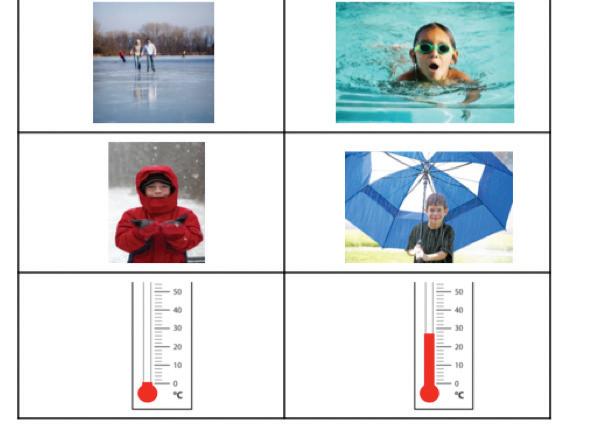


Student Handout
Predict what will happen when the cardboard is removed.
Draw your observations of what actually happens.
Explain what happened and why.
Explore 1
Part I: Weather Maps
Weather Patterns
For each city listed, tell whether the temperature will rise, fall, or stay the same
City
Oxford Jackson Hattiesburg Biloxi
Greenville Natchez
Tupelo
From Day 1 to Day 2
From Day 2 to Day 3
1. According to your map key, what does each color on the map represent?
2. In what general direction are both fronts moving on the map?
3. What kind of weather could the cold front cause in Jackson?
4. Using the data shown on your map key, predict how you think the weather in Biloxi will change by Day 4?
Explore 1
Part II: Weather Data Chart
Keep track of the outdoor temperature, precipitation, wind direction, and weather conditions for five days.
Day 1 Day 2
Day 3 Day 4
Day 5
Date
Time
Daily Conditions
Wind Direction
Wind Speed
Precipitation
Temperature °C / °F
Barometric
Pressure
Prediction for Tomorrow
Describe the type of precipitation over the five days (rain, snow, sleet, hail).
Explore 1
Part III: Precipitation Skit
1. Give a detailed description of your assigned cloud type.
2. Based on the classroom skits, describe each of the following:
Cumulus
Cirrus Stratus
Nimbus
Explore 2
Conditions in US Cities
You have just gotten a job working at the National Weather Service. As a climatologist, you have been tasked with organizing the data and describing the weather and climate for cities across the country.
Procedure
1. Using the Seasonal Data for US Cities Maps, graph the average seasonal temperatures for the selected cities in the United States. It might be helpful to use different colors when graphing the data. Boston and Minneapolis have already been done for you on the graph.
2. Using the Seasonal Data for US Cities Maps, graph the average seasonal precipitation for the selected cities in the United States. Boston and Minneapolis have already been done for you on the graph.
3. After completing your graphs, use them to answer questions 1–8.
Questions
1. How would you compare the conditions in Boston to the conditions in Chicago? Circle the best answer:
Very much the same
Kind of the same Kind of different Very different
2. How would you compare the conditions in El Paso to the conditions in Miami? Circle the best answer:
Very much the same
Kind of the same Kind of different Very different
Explore 2
3. Write a couple of sentences comparing/contrasting the conditions in the cities of Las Vegas and Kansas City.
4. Write a couple of sentences comparing/contrasting the conditions in the cities of Washington, D.C. and Atlanta.
5. Which two cities do you think might have about the same weather and climate as Chicago? Why do you think that?
6. Write a couple of sentences describing the climate in Seattle. Why do you think Seattle has this climate?
7. With your teacher’s help, try to locate either your city or a nearby town on the maps. Describe the yearly climate in a few sentences below.
8. Which of the ten cities you graphed has a climate most similar to your city from question 7? Why do you think this?
Explore 2
Average Seasonal Temperatures
Explore 2
Average Seasonal Temperatures
Explore 3
Engineering Design Process
Rain Gauge
Step 1: Identify the Problem What are the challenges? What are the limits?
Step 2: Explore Imagine solutions, research what others have done, brainstorm ideas, and choose the best one.
Explore 3
Step 3: Design
Make a plan for one of your ideas. Draw a model of your weather instrument.
Step 4: Create!
Use your design plan and materials to build your idea.
Step 5: Test
Try out your weather instrument. Write down your observations. Did it work how you intended?
Step 5: Make It Better
Think about your design. What needs to be changed to improve the way it works? Change your design and test again!
Explore 3
Engineering Design Process
Anemometer
Step 1: Identify the Problem
What are the challenges? What are the limits?
Step 2: Explore
Imagine solutions, research what others have done, brainstorm ideas, and choose the best one.
Explore 3
Step 3: Design
Make a plan for one of your ideas. Draw a model of your weather instrument.
Step 4: Create!
Use your design plan and materials to build your idea.
Step 5: Test
Try out your weather instrument. Write down your observations. Did it work how you intended?
Step 5: Make It Better
Think about your design. What needs to be changed to improve the way it works? Change your design and test again!
Explore 3
Engineering Design Process
Barometer
Step 1: Identify the Problem
What are the challenges? What are the limits?
Step 2: Explore
Imagine solutions, research what others have done, brainstorm ideas, and choose the best one.
Explore 3
Step 3: Design
Make a plan for one of your ideas. Draw a model of your weather instrument.
Step 4: Create!
Use your design plan and materials to build your idea.
Step 5: Test
Try out your weather instrument. Write down your observations. Did it work how you intended?
Step 5: Make It Better
Think about your design. What needs to be changed to improve the way it works? Change your design and test again!
Explore 3
Engineering Design Process
Wind Vane
Step 1: Identify the Problem
What are the challenges? What are the limits?
Step 2: Explore
Imagine solutions, research what others have done, brainstorm ideas, and choose the best one.
Explore 3
Step 3: Design
Make a plan for one of your ideas. Draw a model of your weather instrument.
Step 4: Create!
Use your design plan and materials to build your idea.
Step 5: Test
Try out your weather instrument. Write down your observations. Did it work how you intended?
Step 5: Make It Better
Think about your design. What needs to be changed to improve the way it works? Change your design and test again!
Explore 3
Engineering Design Process
Thermometer
Step 1: Identify the Problem
What are the challenges? What are the limits?
Step 2: Explore
Imagine solutions, research what others have done, brainstorm ideas, and choose the best one.
Explore 3
Step 3: Design
Make a plan for one of your ideas. Draw a model of your weather instrument.
Step 4: Create!
Use your design plan and materials to build your idea.
Step 5: Test
Try out your weather instrument. Write down your observations. Did it work how you intended?
Step 5: Make It Better
Think about your design. What needs to be changed to improve the way it works? Change your design and test again!
STEMscopedia
Reflect
Amy got up early this morning. She was excited to wear her new summer clothes to school. She put on her yellow shorts with the pink flowers. She pulled on the matching T-shirt. Slipping her feet into bright pink flip-flops, she ran to the door.
As she flung open the door, she heard a crack of thunder. Drops of rain splashed on her toes. It was pouring outside! A cold breeze made her shiver. How could this happen? It was warm and sunny yesterday!
Poor Amy had to change out of her new clothes. She was happy to use her red umbrella, though.
Amy did not see the clouds the night before or feel when the wind started to blow. Clouds and wind are both signs of changing weather.
What is weather?
Weather can change from day to day. Climate is what the weather is usually like over many years.
Weather is the current condition of the atmosphere in a place. Weather changes constantly as temperature, wind, precipitation, and air pressure change.
What is climate?
Climate is the record of temperature, wind, and precipitation for an area over many years.
Look at this photo of a beach in southern Mississippi. How can we describe the weather and the climate at the beach? By looking at the photo, we can tell the weather is sunny with clear skies that day. However, the weather the next day might be cloudy and rainy. The weather can change from day to day. The climate of this beach on the Mississippi coast typically consists of long, warm, humid summers and short winters.
Think about where you live. What is the weather like today? What was it like yesterday? Compare that to the climate of your area. What is the climate of your area like over an extended period?
Look Out!
STEMscopedia
Weather and climate are not the same.
Weather is constantly changing. Scientists who predict, or forecast, the weather cannot usually make forecasts beyond 10 days. Even weather reports cannot guarantee that the forecasts will be accurate. However, climate in a particular area is consistent. Climate is the type of weather in an area averaged over a long period, such as 30 years or more. Climate is the average weather for a region after data are collected for many years.
For example, when most people think of Hawaii they picture sunshine, high temperatures, and warm rainfall. Hawaii has a tropical climate. The weather there is usually warm and humid with cool breezes, and it has been that way for many years. But that does not mean that Hawaii does not have days with cold temperatures and storms. The climate of an area describes its average temperature, precipitation, humidity, wind, cloud cover, and other weather conditions over long periods.
An area’s climate is affected by several factors.
Factors affecting climate may include how far the area is from water (like oceans or lakes), its latitude, and its elevation above sea level. There are several climate zones in the world.
Tropical climate zones are found closest to the equator. The climate in a tropical zone is hot and humid, with lots of rain. Rain forests are found mostly in tropical climates. Farther away from the equator is the temperate climate zone. Most of the United States has a temperate, or subtropical, climate. The temperatures are neither very high nor very low, and there are moderate amounts of precipitation. Temperate climates usually have different weather for each of the four seasons. Beyond the temperate climate zones are the polar zones. They are found close to the north and south poles. These zones are well known for their extremely cold temperatures and snow. However, polar climate zones are also quite dry, with little precipitation during the year.
Look Out!
STEMscopedia
Climates around the World
Many factors help determine climates of regions around the world. Climate is influenced by landforms, elevation, nearness to the ocean, and distance from the equator.
Landforms such as mountains can cause one side to receive tremendous amounts of rain, while the other side receives very little. This is called the rain shadow effect. The Andes Mountains cause this effect in Chile.
Elevation affects certain factors of climate, such as temperature. For every 1,000-foot rise above sea level, temperature drops 3.5°F. At Pikes Peak in Colorado Springs, Colorado, the temperature at the base of the mountain is almost 30°F warmer than it is at the peak!
Distance from the equator influences how warm and humid a place will be. The equator passes through Kenya, Africa. The average yearly temperature there is about 78°F, and the air is humid. In contrast, Siberia, an area of Russia, is much farther north (near the Arctic Circle) and has dry air and an average annual temperature of 23°F, which is below freezing.
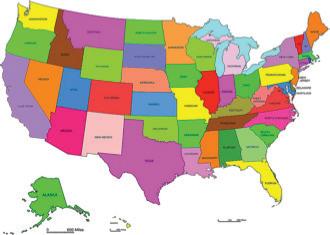
Distance from the ocean affects temperature. If a place is close to the ocean, its temperature does not change dramatically. Portland, Oregon, and Minneapolis, Minnesota, are the same distance from the equator, but Portland is close to the ocean. Portland’s average temperature is 77°F in summer and 48°F in winter—only a 29° difference. Minneapolis averages 26°F in winter and 81°F in summer—a 55° difference!
On the basis of that information, answer the following:
• Where would you find a climate that does not get extremely hot or cold?
• Would it be warmer on top of a mountain or at the base of a mountain?
• Where would you find a humid region?
• Is it more likely to snow near the equator or near the north pole?
• Pick a region where you would enjoy the climate and explain why.
Look Out!
STEMscopedia
Why are weather and climate important?
The weather affects how we get to school. It may affect the machines that workers use to build a house or clean a yard. It determines our activities, such as when we can play outside or when inside activities are a smarter choice. Weather may affect our safety—during strong storms, we stay inside to protect ourselves.

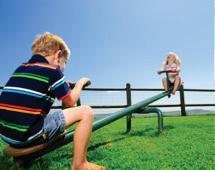
Predicting the weather can be tricky. We cannot always tell the weather by looking outdoors or by studying a photo. It can be pouring rain yet feel hotter than before the rain started. We may go for a hike on a bright sunny day, only to walk right into a chilly wind. If our eyes cannot tell us everything about the weather, how else can we tell what the weather will be like?
Scientists use tools to collect weather and climate data around the world. A scientist who studies the weather is called a meteorologist. We can also use the same tools to figure out the weather in our area. The tools used to observe and predict the weather can help us further describe weather or climate patterns in a particular area.
What tools can we use to gather weather information?
There are many tools we can use to measure factors that affect the weather. We use thermometers, anemometers, wind socks, wind vanes, barometers, hygrometers, and rain gauges to gather information about temperature, wind, air pressure, relative humidity, and precipitation. All of these factors are important. Just because it is sunny does not mean it is warm. Precipitation does not mean it has to be cold. To get a complete picture about weather, we need to look at many factors together.
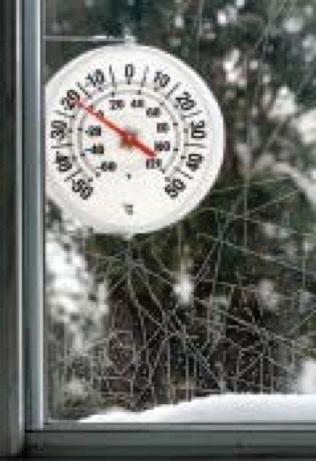
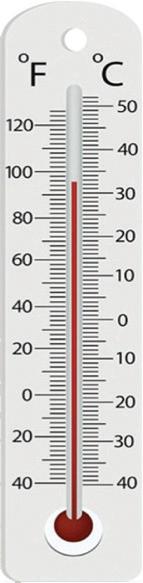
Temperature
Temperature tells us how much energy something has. Something with a large amount of energy is usually hot. Something with a small amount of energy is usually cold. A tool to measure temperature is a thermometer
You can use a thermometer to measure the temperature outside. Some thermometers have a round dial with a red arrow to show the temperature. Other thermometers show a red liquid that rises or falls in a tube. Scientists use the Celsius scale (C), where 0°C represents the freezing point of water and 100°C represents its boiling point.
STEMscopedia
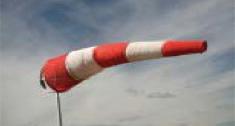
Wind
Air that moves from one area to another is called wind. Wind moves clouds around the planet. Wind helps change the weather. Both speed and direction are important factors of wind. A wind sock shows relative wind speed and direction. The angle of the wind sock gives an idea of the wind speed. When the wind sock is not moving very much, there is little or no wind. A strong wind blows the wind sock straight out. A wind vane points to the direction the wind is coming from. If it is blowing from east to west, the arrow on the wind vane will point to the east.
A more accurate way to measure the speed of the wind is to use an anemometer. The wind blows the little sideways cups around. This motion turns gears, which record wind speed in miles per hour. Usually anemometers are part of a weather station that has other instruments that also record weather data.
Air Pressure
Air is made up of tiny gas particles that you cannot see. The gas particles can press down on large areas, such as our city or state. This force is called air pressure. Knowing the air pressure and how it changes can help us predict rain or snow. It can even tell us to watch out for a hurricane or tornado. A barometer is a tool that measures air pressure. When the air pressure falls, a low-pressure system is moving into the area. A low-pressure system usually causes rain or other storms. If the air pressure rises, a high-pressure system has arrived, bringing clear skies. On the barometer on the left, the gold needle shows normal air pressure at that location, while the black needle shows current air pressure. Some barometers have a scale in inches of mercury, while others show millibars of pressure.
Relative Humidity
Relative humidity is the measure of the amount of moisture (water vapor) in the air compared to the total amount it could hold. Hygrometers measure relative humidity. Some use a metal coil or human hair that is sensitive to moisture. Others compare a thermometer wrapped in a moist cloth to a dry thermometer. Relative humidity on a hot, rainy day can be 90 to 100%, while on a hot, dry day it might be 65%.
Precipitation is snow, hail, sleet, rain, or any kind of moisture that falls from clouds. A rain gauge is an instrument that measures how much precipitation falls from the sky in a certain area during a certain period. Reflect
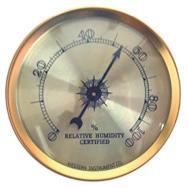
Precipitation
Barometer
Reflect
STEMscopedia
Cloud Formation
Water vapor forms when liquid water evaporates to a gas. Water droplets, however, are liquid. Clouds are made of water droplets that come together and condense from cooled water vapor on nuclei of dust or salt.
Types of Clouds
Three main types of cloud form in the sky:
• Cirrus—high, thin, wispy, fair-weather clouds
• Cumulus—large, fluffy clouds that look like cotton balls
• Stratus—low, layered, smooth, bad-weather clouds
These clouds appear at high (cirro), mid (alto), or low (strato) altitudes and can be in combination. For example, rain clouds (nimbus) are dark and thick. So cumulonimbus are cumulus clouds that have become dark and heavy rain clouds.

Try Now
STEMscopedia
You can tell how much precipitation has fallen using a rain gauge. You can make your own rain gauge and use it to tell how much rain, hail, or snow falls at your home.
1. Collect these items: a 2-liter plastic bottle, a pair of scissors, modeling clay, two rubber bands, two paper clips, and a ruler.
2. Ask an adult to cut off the top of the bottle about 3 inches down from the spout.
3. Press clay into the bottom of the bottle to make a flat base.
4. Place the spout end upside-down inside the other half of the container and attach it with the two paper clips.
5. Place the two rubber bands around the lower and upper parts of the bottle.
6. Slide a ruler underneath both rubber bands. The rubber bands will hold the ruler in place.
7. Line up the bottom of the ruler with the surface of the modeling clay.
8. Put the rain gauge in an open area outside, not close to trees or buildings.
9. Record the rainfall at the same time in the same spot every day for a week.
10. Empty the rain gauge after you record your measurement every day.
11. Enter the measurements in a data table like the one on the right.
12. Transfer the data from your data table to a bar graph like the one below.
13. Find the total precipitation for the week.
14. Do you notice any patterns in precipitation? If not, what other information might you need in order to start finding patterns? Why?
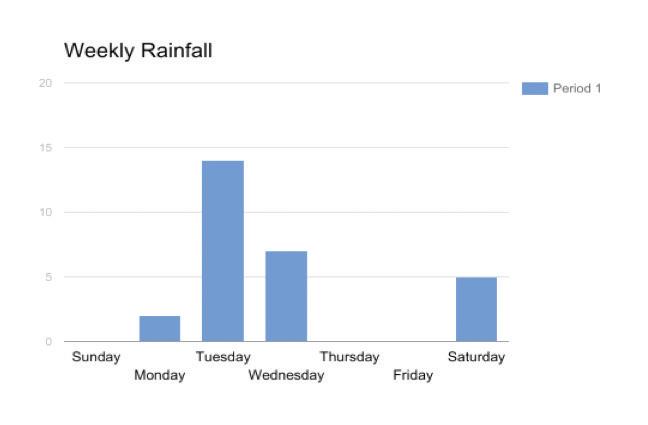
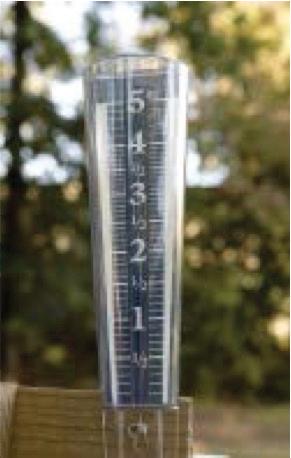
STEMscopedia
Connecting With Your Child
A Weather Routine
To help your child learn more about weather, make collecting data a part of the morning routine. Station a thermometer just outside one of your windows and ask your child to record the temperature every morning. You can also hang a barometer on the wall and have your child record air pressure.
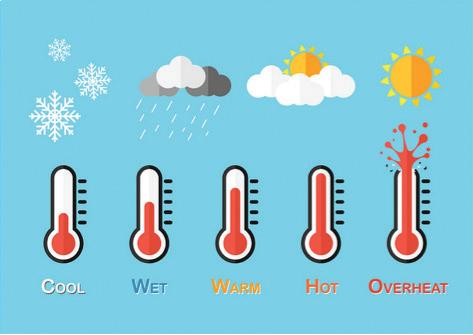
It is possible to build every part of a home weather station as a fun weekend activity. Your child can make a barometer, a wind sock, a wind vane, and a rain gauge. If your child gets in the habit of keeping a daily science journal and recording weather data, he or she can easily use this information for science fair projects or for school assignments. Better yet, your child will gain a hands-on understanding of local weather patterns.
After your child has collected data over several weeks, encourage him or her to make colorful graphs of the data and give a home weather report, just like television forecasters do. Ask your child to make a three-day forecast—that is, a prediction of the weather over the next three days.
Here are some questions to discuss with your child:
• What conditions lead to sunny days?
• What leads to rain and snow?
• How does your recorded information help you predict the weather
• Why do meteorologists have trouble predicting the weather sometimes?
Sample Daily Weather Data Table
Reading Science
Dan the Meteorologist
1 Hi! My name is Dan. I am a meteorologist for Channel 12 News. When I say that, some people think that I study meteors, but what I really study is the weather. It is an interesting job because the weather is always changing. One thing I love about it is that I get to use the latest tools to collect data about the weather.
2 One tool I use is a rain gauge. A rain gauge measures how much rain has fallen in a given time period. You might even have one of these in your school science lab. If you do, you could place it outside to measure the amount of rain that falls at your school. That would give you one piece of data. But that is not enough information to report on rainfall across the entire city. Sometimes when it is raining in one part of the city, it is dry in another part. That is why I have rain gauges in many different locations. Then I can tell people exactly what is going on in their neighborhood.
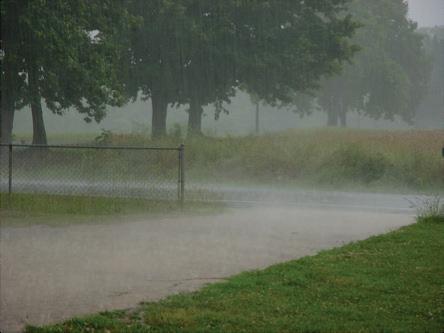
3 Another tool I use is a thermometer. Thermometers help me measure the temperature. I place them all over the city as well. I also use wind socks. Wind socks tell me which way the wind is coming from. Other instruments measure the speed of the wind and the air pressure.
4 There are even newer instruments that go up into the sky. For instance, there are some satellites that circle Earth. They take pictures from above and then send them back to us. These pictures are helpful because they show storms out in the ocean. They can even help us predict when and where these storms will make landfall.
5 We also have computers that take the data from satellites and do calculations, or math problems, with the data. These calculations would take a human being a long time to do, but a computer can do them in just a few seconds. They help us predict how storms, cold air, and wind will travel. In all, these new tools allow us to be much more accurate about predicting the weather than we were before satellites and computers.
Reading Science
6 Accuracy, or getting the right answers, is important to a meteorologist. That is because many weather events are dangerous for humans and animals. If I make good predictions, then I can warn people to get ready. For example, during Hurricane Ike, I was able to predict when and where the storm would reach land. Also, I was able to tell people living close to the sea to move inland. I told people further from the shore to stay in their homes. Although they would not have to deal with the waves, they might still have to deal with high winds and a lot of rain. Many people were safe because they listened to my advice and prepared their homes and families for the storm.
7 I feel great about my job when I get to help people. The new tools and computers are really fun, but what I enjoy most is that I am able to make accurate weather predictions that help people in their daily lives.
Reading Science
1 Meteorology is the study of weather. The root “zoo–” means animals. What do you think the study of animals is called?
A Zooistry
B Zoophobe
C Zoology
D Zoolog
2 Where do you think would be a good place to put a rain gauge?
A Under a tree
B In your classroom
C In a car
D Out on the playground
3 Why do you think Dan wrote this passage?
A He wanted to tell people about why he needs more satellites and computers.
B He wanted to inform others about what a meteorologist does.
C He wanted to persuade more people to watch Channel 12 News.
D He is looking for another job.
Reading Science
4 Dan says accuracy is important in his job (Paragraph 6). When is another time that accuracy is important?
A When you are doing math problems
B When you are watching TV
C When you are waiting for school to start
D When you are listening to music
5 What is something that Dan would probably say about his job?
A “Weather is boring.”
B “My favorite part of my job is cool computers and tools.”
C “It’s OK if I am wrong sometimes.”
D “The best part of my job is helping people.”
Open-Ended Response
1. How is knowing about cloud types helpful in our everyday lives? What kind of weather does a nimbus cloud bring? How does this affect daily activities? Sketch a nimbus cloud.
2. What are some of the factors that influence the climate of a particular region?
Open-Ended Response
3. Based upon the data in the chart, what can you conclude about the temperatures in Mississippi throughout the seasons?
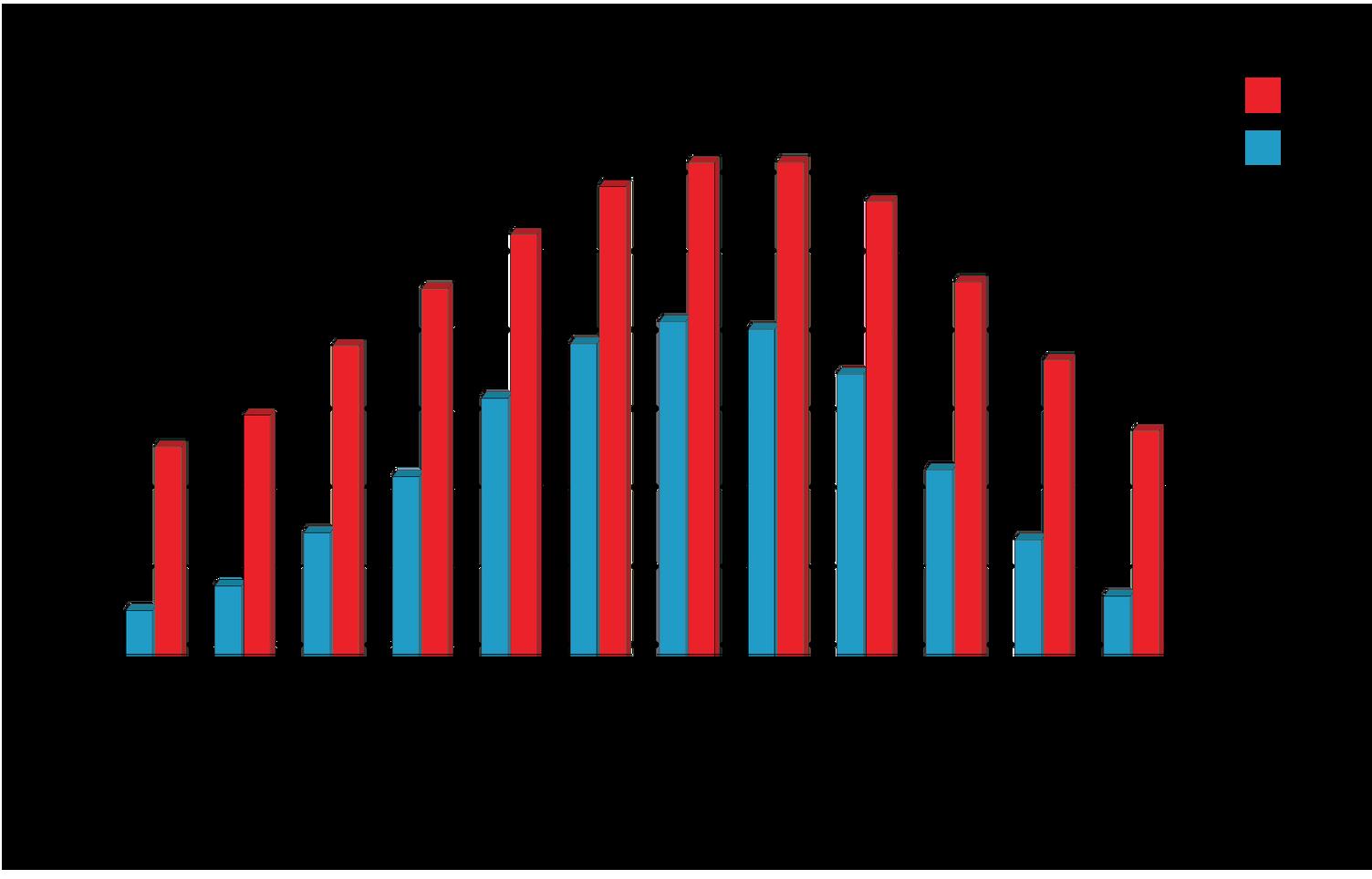
Claim-Evidence-Reasoning
Meteorologists constantly collect weather data in order to make predictions about future weather conditions. However, each season has its typical weather patterns depending on the area’s location on Earth.
2
External Data
Claim-Evidence-Reasoning
Prompt 3
Claim: Based on the data in the table, write a scientific explanation that explains what season it is.
Evidence:
Reasoning:
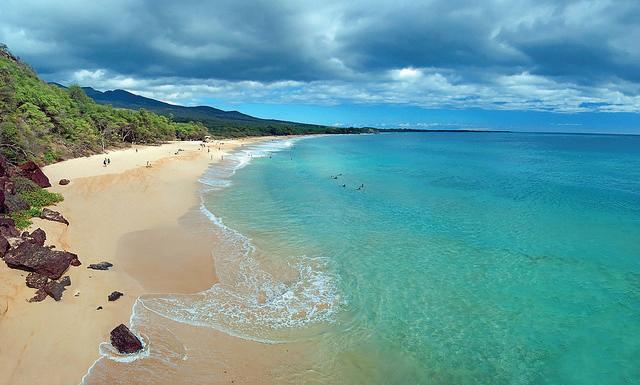
Explore 1
Part I
Natural Processes Change Earth
Analyze and interpret the picture below. Describe how natural processes may have caused this result. Justify your answer.

Explore 1
Part II
Definition:
Interesting Facts:
Impacts:
Steps to Reduce Impact:
Explore 1
Part III
Weather Phenomenon:
Definition: Steps to Reduce Impact:
Weather Phenomenon:
Definition: Steps to Reduce Impact:
Weather Phenomenon:
Definition: Steps to Reduce Impact:
Explore 2
Landforms, What Are They Good For?
Draw a picture of your model BEFORE water is added. Label the following features on your drawing: estuary, bay, beach, and barrier island.
What do you think will happen to the features when water is added to the model? Why? Record your prediction below.
Draw a picture of your model AFTER water was added. Label the following features on your drawing: estuary, bay, beach, and barrier island.
1. What happened to the features in your model? Why?
2. How could you change the model to minimize weathering and erosion?
Explore 2
Label each picture with the correct term: A. Bay B. Barrier Island C. Beach D. Estuary

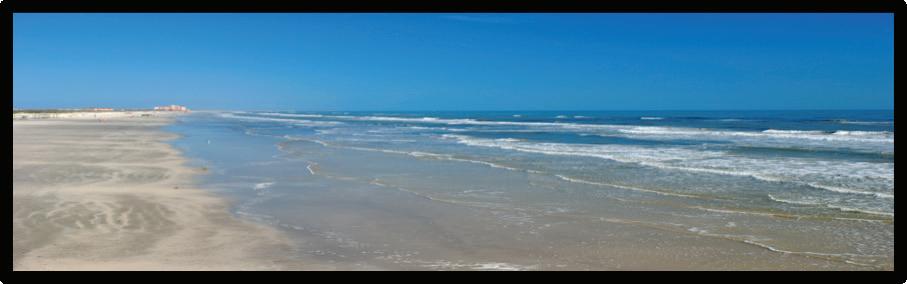
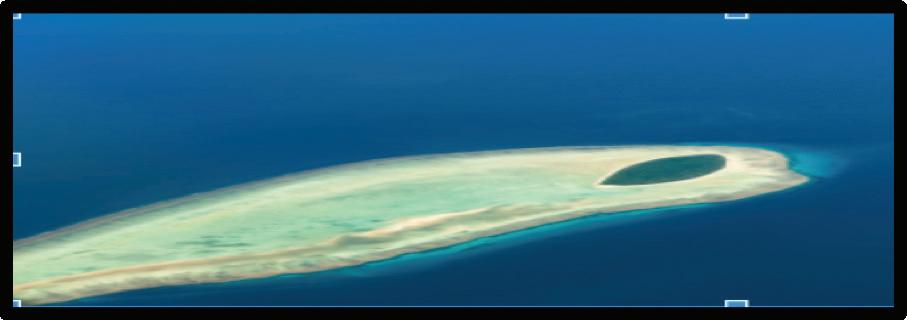
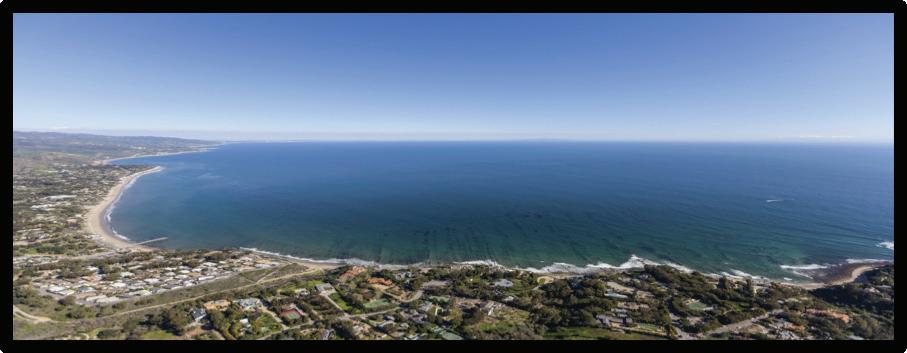
Explore 3
Water Filtration
Part I
Draw your filtration system. Label the filtering agents used in your design.
How much filtered water did you collect from the 200 mL dirty water sample?
What letter grade did your filtered water earn for clarity?
How many points did your filtered water sample earn?
Explain how your points were calculated.
If you were to repeat this activity, what would you differently and why?
Why is it important to not waste the clean water on our planet?
Explore 3
Part II
Prompt
Based on the results of your experience from the water filtration activity, write a claim to support how conserving clean water or not polluting our clean water affects the land, oceans, and atmosphere of Earth.
Claim:
Evidence:
Reasoning:
Parts of the Biosphere
Research and record your findings below.
Explore 4
One way the _____________________________________________ supports the _____________________________________________is by:
One way the _____________________________________________ supports the ____________________________________________ is by:
STEMscopedia
Have you ever seen a sculpture that has been outside for many years? If the sculpture is of a person, the nose and mouth might be worn down. The face might have cracks in some places. The way the sculpture looks now is not how it looked when it was made.
Think of the Sphinx in Egypt. Scientists think this sculpture was made around 4,500 years ago. After thousands of years, some parts of the Sphinx have worn away.
Reflect landforms: features, such as mountains, on Earth’s surface
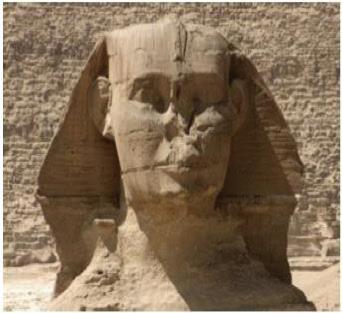
Earth’s landforms change over time, too. Mountains are high, with steep slopes. They have sharp, jagged peaks. Over time, the slopes become less sharp. The peaks become rounded and smooth, just like the face of the Sphinx. What forces in nature cause slow changes? How do you think those changes happen?
How does weathering make changes happen?
One way that landforms change over time is from weathering. Weathering happens when rocks break into smaller pieces. Think of the tiny grains of sand on a beach. Those grains of sand used to be parts of larger rocks or shells. Over time, pieces of the larger rocks or shells broke off. The pieces became smaller and smaller. Now they are just tiny grains. Weathering has several causes:
• Wind can cause weathering. Wind wears away and picks up tiny pieces of soil and rock called sediment. As the wind blows against a mountain, the sediment grinds down the rock. This action breaks off pieces of the mountain.
• Water can also cause weathering. Rivers carry sediment that grinds the rock along the riverbanks. Heavy rains also wear down rock. Over time, large formations, such as canyons, remain.
• Ice is water that expands when it freezes. If water gets into cracks in rocks and then freezes, the ice pushes against the cracks. The cracks get wider. After melting and refreezing many times, the ice splits the rock into pieces.
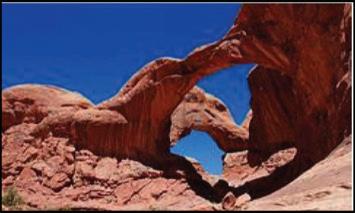
Weathering created these natural arches in Utah. Over many years, parts of the rock were worn away, leaving empty spaces.
STEMscopedia
What Do You Think?

Reflect
Most rocks at the edge of a waterfall are rounded and smooth. Discuss these questions with a partner:
• Why do you think the rocks are this way?
• What caused the weathering?
• Where else might you see how weathering has changed land?
Changes to land happen at different speeds. A volcano or an earthquake can change landforms in minutes! Wind, water, and ice take much longer to change the land. They cause small changes over time. It may take many years to notice those changes are happening! Look at the tall, skinny towers of rock in the picture below. They formed from rock that is 40–60 million years old. The rock is still changing today. Scientists predict that in another few million years, the rock towers will look very different.
These rock formations, called hoodoos, were formed by short, intense rainfalls that weathered and eroded the area.
What causes erosion?
Weathering is not the only way landforms change. When a rock breaks down into smaller pieces, those pieces are often moved. The movement of rock pieces to a new place is called erosion Erosion is caused by wind, water, and other natural agents.
Erosion and weathering are a little different. During weathering, rock surfaces are broken down by wind, water, and ice. During erosion, the pieces that were broken down are moved to a new location.
Weathering and erosion work together to change Earth’s surface. Things that cause weathering can also cause erosion. Wind causes erosion by carrying away loose sediment from landforms such as cliffs or sand dunes. In fact, sand dunes are constantly moving because of wind erosion. In the same way, flowing water carries away loose rocks and sand from a riverbed. Weathering breaks rock down into smaller pieces of sediment, while erosion carries sediment away. The Grand Canyon in Arizona is an example of weathering and erosion on a huge scale.
Look Out!
STEMscopedia
The Ganges Delta in India is the largest delta in the world.
What Do You Think?
Deposition creates new landforms, too. Eventually, wind, water, and ice let down the sediment they are carrying. This is called deposition. Over time, the sediment builds up. It may build new beaches and sand dunes. Rivers can carry sediment to a new body of water.
Once the river water slows down, the sediment gets placed in a new location. The sediment creates new land at the mouth of a river, called a delta.
Landslides change Earth’s surface.
The movement of rocks under the surface of Earth causes earthquakes and volcanoes. Other changes to Earth’s surface are easier to spot. Landslides happen when land moves over the surface of Earth.

How do volcanoes change Earth’s surface?
Powerful forces, such as volcanoes, act on the land. They can bring quick changes to Earth’s surface. In 1980, Mount St. Helens erupted in Washington State. The volcano’s blast was powerful. It created a big crater that was 2 miles wide. The top of the volcano was lost in the eruption. Look at the before and after pictures. What differences do you see?
Volcanoes allow melted underground rock to reach the surface. Under Earth’s surface, this liquid rock is called magma. When magma reaches the surface, it is called lava. When lava erupts quickly, it can change large areas of land. Over time, the lava cools and forms new rock and soil.
Look Out!
STEMscopedia
How do earthquakes change Earth’s surface?
Earthquakes are another powerful force. Big chunks of Earth’s surface move past each other. Sometimes they get stuck. After a while, they snap. This sudden movement can cause the ground to shake. We call these sudden movements earthquakes.
Earthquakes can cause a great amount of damage. In 1906, a large earthquake hit San Francisco, California. The earthquake lasted only about a minute, but it caused large cracks to appear in the ground. Many buildings were destroyed.
Reflect


Flooding happens when large amounts of water move into an area where it cannot drain well. This flooding can be caused by heavy rain from storms or by snow melting quickly. Rivers can rise and overflow their banks when too much water flows through. Large amounts of water can cover streets or enter buildings and homes. Floods can injure people and destroy homes and businesses.
Lightning can start fires when it strikes dry wood, such as trees or roofs. It can cause power outages. Lightning can also hurt people. In a thunderstorm, positive and negative electrical charges can cause lightning. Lightning happens quickly, and we cannot predict exactly where or when it will strike.
Hail forms within the clouds of very strong thunderstorms. The clouds are so high up that the water inside them freezes into balls of ice. When the balls get too heavy, they fall to the ground as hail. Hail pieces can be smaller than a marble or as large as a baseball! Hail damages property. It can dent cars, break windows, and damage roofs. Hailstorms can be very costly. Hail can also injure plants, animals, and people who get caught in the hailstorm.
Reflect
STEMscopedia
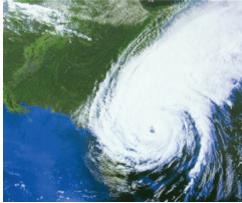
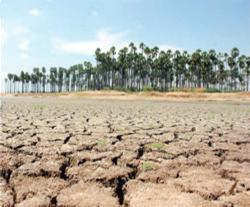
A tornado occurs when warm, moist air meets cold, dry air and a dangerous rotation forms. Tornadoes can have severely damaging winds moving at up to 300 miles per hour! Places in Tornado Alley (in the Great Plains) often face dangerous conditions and tremendous damage to property. People’s lives are at risk during a tornado.
Hurricanes form when warm, moist air over a warm ocean rises and forms thunderclouds. As the air warms up even more, it starts to rotate. Winds then create a large, powerful storm called a hurricane. The average width of a hurricane is 350 miles! High winds can damage property and land or cause tornadoes. Storm surges and high waves can flood and destroy property. People in a hurricane’s path who do not evacuate risk injury and death from these powerful storms.
Drought occurs when there is a lack of rain or snow for an extended period. Changes in weather patterns or unusual weather conditions can cause a drought. When this happens, many plants cannot get enough water and die as a result. Animals are affected by drought, too. Some animals can survive by moving to new areas. It can take years of rain for an area to recover from a drought.
How can we protect ourselves?
Humans cannot prevent natural hazards, but we can take steps to reduce their impact and lower the risk of damage.
Reducing the Impact of Floods
Advanced computer modeling allows scientists to predict where flooding is likely to happen and how severe it will be. The most common protection from flooding is a flood barrier
A floodgate is a specific type of barrier that controls the amount of water that is allowed through so that flooding is not as drastic.

This type of floodgate is designed to prevent flooding in the protected area behind the barrier.
Reflect
STEMscopedia
Lightning rods divert the path of lightning, saving lives and preventing damage to buildings.
Reducing the Impact of Lightning
Lightning is a bright flash of powerful electricity produced by a thunderstorm. All thunderstorms produce lightning, which can be very dangerous. The lightning rod was invented to save people’s lives and property. Lightning rods catch lightning bolts and carry the electric current safely to the ground. Lightning rods keep electricity from passing through the building, where it could electrocute someone or start a fire.
Reducing the Impact of Hurricanes
Seawalls are constructed to protect cities from high storm surges. Houses built in places threatened by hurricanes are built with wind- and water-resistant materials. These materials help limit the damage from the storm. Many of these homes are also built on stilts to avoid damage from storm surges and flooding.
Reflect
Hurricanes can bring a large rush of water to the shore. A seawall helps keep the water from entering the city.
Earth is our home. It has the right conditions for life. Besides sunlight, Earth has air, water, and land that work together to support life. In turn, life on Earth interacts with air, water, and land. Imagine for a moment that Earth were different.
• What would Earth be like if it were not a rocky planet?
• What if Earth had no land?
• What if Earth did not possess an atmosphere?
• What if there were no water on Earth?
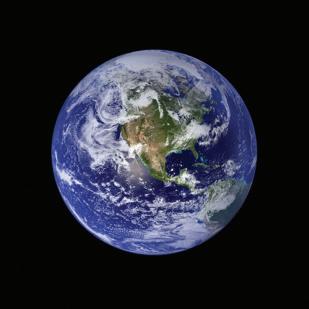
Earth systems and materials: atmosphere (air), hydrosphere (water and ice), geosphere (solid and molten rock, soil, and sediment), and biosphere (living things, including humans)
STEMscopedia

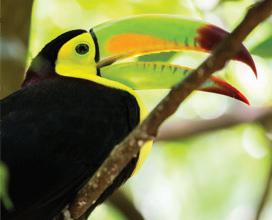
The landforms you have studied are part of the geosphere. You have seen how the water in the hydrosphere and the atmosphere interact through weathering, erosion, and deposition to change the geosphere. The ecosystems in which living things (biosphere) have found a home depend on all other systems for survival. Life on Earth is connected through all these systems. A change in one system affects the other systems.
What Do You Think?

The hydrosphere affects coastal landforms and ecosystems. The Mississippi Delta region is an example. About 40% of the coastal wetlands in the United States are located in the Mississippi Delta. This area of wetlands was formed over thousands of years by Mississippi River floodwaters that deposited huge amounts of sediment at the delta. Today, these coastal areas cover an enormous variety of ecosystems. The movement of waves, tides, and currents weathers, erodes, and moves sediment.
The coastal landforms are also affected by human activity. Ecosystems are changed by the construction of levees, channels, canals, and dams that regulate water flow or help ships to pass. Some wetlands are being drained for farming and housing development.
STEMscopedia
What Do You Think?
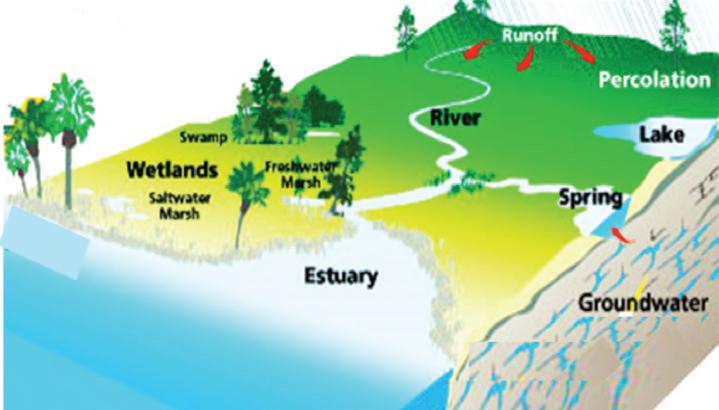
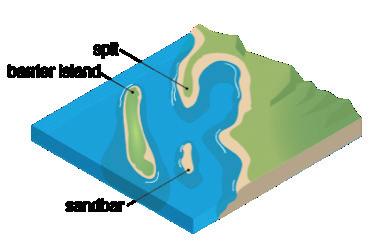
• Beach—A sandy area between land and the sea. The sand is made of various minerals. Wind, waves, and tides move the sand. The same agents can erode beaches and destroy coastal land. Wind and waves can build up and flatten sand dunes. The beach protects nearby land from the action of the waves.
• Barrier island—A long strip of dune or sediment parallel to the coastline. Barrier islands often occur in chains along the Gulf and Atlantic coasts.
• Estuary—A sheltered area where river wetlands meet ocean water. The water is brackish, which means it is a mixture of fresh and salt water. Estuaries have an enormous diversity of marine wildlife.
• Marsh—A coastal wetland area of salt water and fresh water that have soft-stemmed vegetation.
• Swamp—A coastal wetland area of fresh water or salt water that has woody trees, such as mangroves or cypress trees.
• Lagoon—A narrow stretch of water separated from the ocean by a sand dune or reef.
• Inlet—A narrow indentation of the shoreline; a small bay.
Try Now
STEMscopedia
With all you have learned about Earth’s interacting systems, can you guess which organism in the biosphere causes the most change in the hydrosphere, the atmosphere, the geosphere, and even the biosphere? If you said “humans,” you are right. Find a partner and take a moment to brainstorm all the ways that humans interact with each of Earth’s systems.
Atmosphere Hydrosphere Geosphere Biosphere
After you are finished, get together with another set of partners and share your lists. Discuss whether human interactions are mostly helpful or mostly harmful and why.
Find a small group and play a card game to review Earth’s systems. For materials, you need four note cards of one color.
Instructions
• On each of the four note cards, write one of the following categories: hydrosphere, atmosphere, geosphere, or biosphere.
• Mix up the cards and place them face down on a desk or table. Do this again between each turn.
• Take turns. When it is your turn, draw two cards. Then explain out loud how those two Earth systems interact. Be specific!
• Make sure you listen attentively to each person. The more you listen, the more you learn!

STEMscopedia
Connecting With Your Child
Changes Close to Home
To help your child learn more about changes to landforms, go on a hike to a nearby park. If possible, choose a park with a variety of landforms and natural features, such as rivers, waterfalls, hills, and boulders. Ask your child to identify as many landforms as possible.
Once the landforms have been identified, ask your child to hypothesize, or guess, how these landforms might have changed or caused change over time. (Your child has learned that wind, water, and ice cause changes to land.) Help your child write down these hypotheses in a small notebook.
Next, have your child safely explore the landforms more closely to look for evidence of change. Your child has learned about three types of change to rock:
• Weathering (the breaking down of rock into smaller particles)
• Erosion (the movement of rock particles)
• Deposition (the settling of rock particles)
Your child might note that the stones along a streambed are rounded and smooth. This is the result of water carrying small particles that grind down the rocks and make them smoother. Your child should also note whether his or her observations support or contradict the hypotheses about the landforms.
When you return home, research online the different landforms you observed in the park. In particular, look for how the landforms have changed or caused changes over time. Have your child compare his or her observations with the information found in the research.
Here are some questions to discuss with your child:
1. How have wind, water, and ice affected landforms in the park?
2. Did you see any signs of weathering, erosion, or deposition? If so, what kinds?
3. What are some human activities that might change the landforms in the park? How would these changes affect the plants and animals that live in the area?
Reading Science
A Changing Earth
1 Our Earth is constantly changing. Many factors contribute to the changes that Earth undergoes. Some of these factors are constructive. A constructive process improves Earth. Think of building a house. A construction worker builds the house. When Earth is being a construction worker, it is building itself up. Constructive processes create new landforms on Earth. The forming of new islands is a constructive process.
2 The opposite of a constructive process is a destructive process. Destructive processes destroy the landforms of Earth. Some islands wear away and disappear. This is a destructive process. Let us take a deeper look at some of the processes that shape Earth’s surface.
Deposition
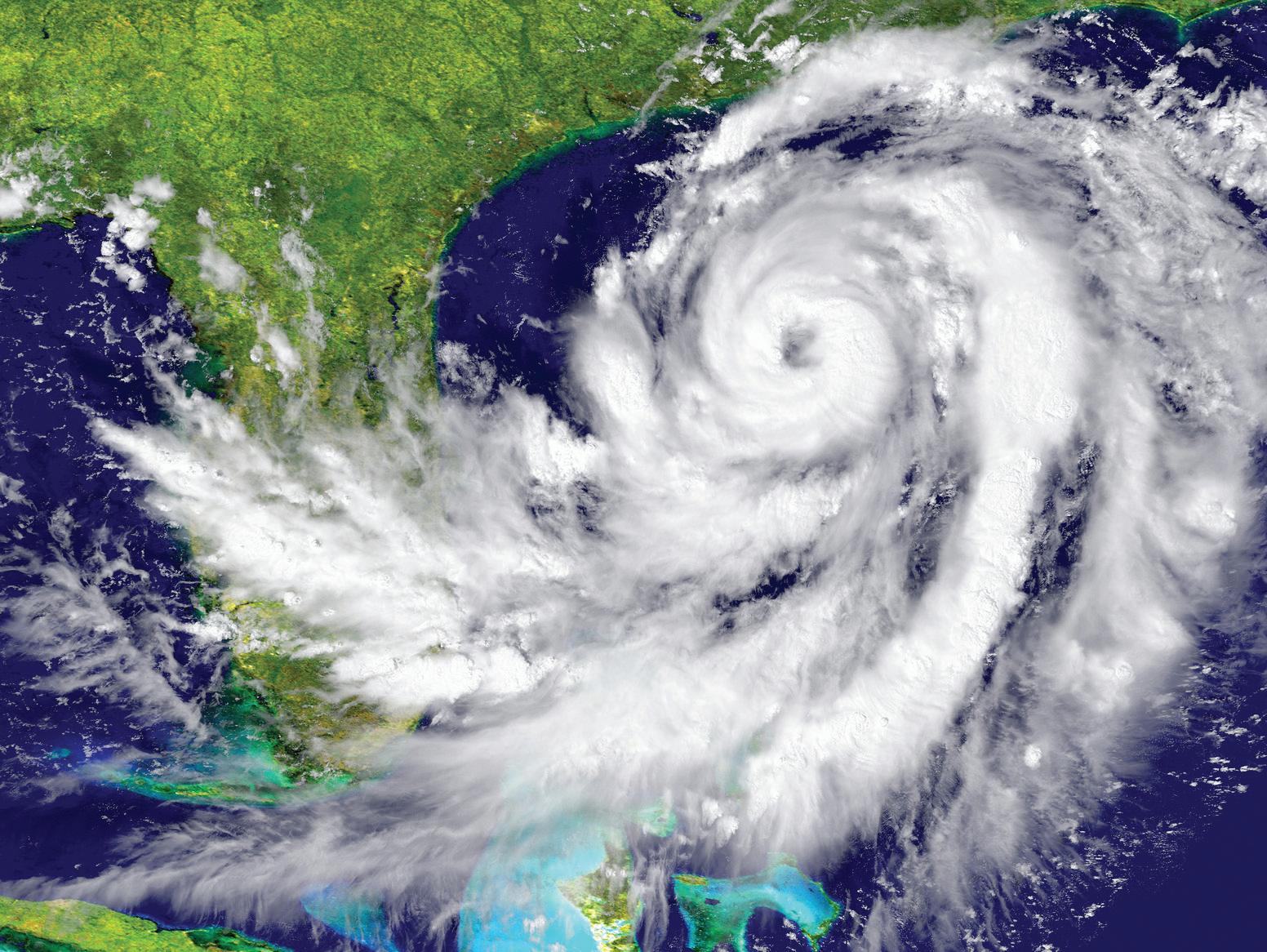
3 Deposition is the dropping of sediment by water, wind, or ice. Deposition builds up new land on Earth’s Surface. A delta, which is located at the end of a river, is built up by the sediment that is carried down the river. It builds up before the river water flows into a larger body of water. A sand dune can also be built up in the desert by the collection of sand due to the wind.
4 If you take a walk along the beach, you may see a collection of seashells in the sand. The seashells are deposited from the waves that bring water to the beach. The shells are left behind.
Reading Science
Earthquakes
5 Earthquakes are vibrations on Earth’s surface that are felt from Earth’s plates moving. Underneath its surface, Earth is like a large jigsaw puzzle. The pieces are called tectonic plates. They are floating on magma beneath them. As the magma moves, so do the tectonic plates. Sometimes the plates crash into each other, sometimes they move apart, and sometimes they slide next to each other. There are cracks, or faults, that move between the plates and cause Earth to shake. This is both a constructive and deconstructive process. It is constructive because when the tectonic plates move, they can create mountains or continents.
6 On the other hand, earthquakes can be very destructive. They can cause damage to landforms and to communities. Earthquakes can also cause landslides, which are mass movements of land. If an earthquake happens under the ocean, it causes a tsunami, which is a huge wave of water. Tsunamis cause great damage if they reach the shore.
7 Earthquakes and tsunamis are both examples of natural processes that affect Earth’s surface. Other examples include hurricanes and storms that cause weathering and erosion.
Weathering
8 Weathering is the breaking down of Earth’s surface and the wearing away of Earth’s landforms. Rocks, soil, and sediment can be broken away. Wind and rain cause weathering.
Erosion
9 Erosion is a destructive process that changes Earth’s surface. Sediments and soil move via wind, water, ice, and gravity. Erosion usually happens slowly, but it can happen quickly when floods occur. The force of this water quickly erodes Earth’s surface. Soil and sediments are quickly moved away. When the flood recedes, new sediment is left and can build up rich soil deposits.
Reading Science
1 The author probably wrote this selection to explain–
A how earthquakes and volcanoes can be both destructive and constructive processes.
B how destructive and constructive processes change Earth.
C the differences between constructive and destructive processes.
D that the constructive process leads to a destructive process.
2 Which best replaces the word recedes in paragraph 9?
A Becomes more distant
B Slopes backward
C Draw back a conclusion
D Goes away
3 The author wrote this mostly to–
A compare constructive processes.
B inform readers about constructive and destructive processes.
C entertain readers with a fun story about Earth’s surface features.
D describe what the water cycle is.
Reading Science
4 From the reading, what can readers conclude about destructive processes?
A Destructive processes can build up certain parts of Earth.
B Constructive processes are not harmful to Earth.
C Erosion can cause the breaking away of plant roots.
D Bodies of water are formed from deposition.
5 What is an earthquake?
A Vibrations in the ground
B Lava coming out of the ground
C Nothing
D A loud noise
Open-Ended Response
1. Have you ever seen a beach form? Why can’t a beach form right before your eyes?
2. Look at the picture of the beach. Describe how the beach would look like after a hurricane. Is this a fast or slow change to Earth’s surface?
3. What are some kinds of damage a hurricane can cause as it strikes land? Describe two ways people can reduce the impact of hurricanes.
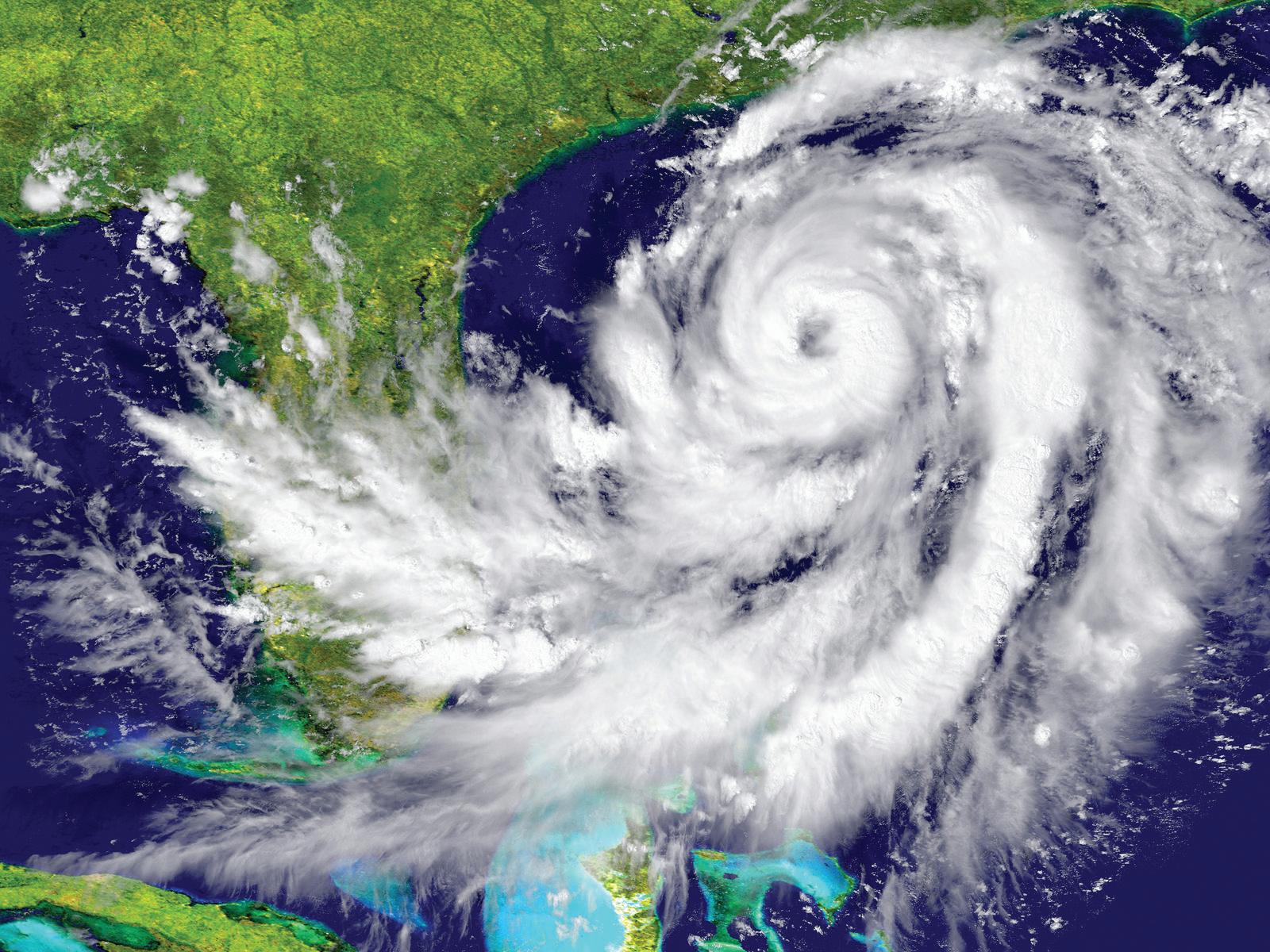
Open-Ended Response
4. What effects do landfills have on the environment?

5. Look at the picture and identify the Earth systems. How are the different systems interacting? How do these interactions support life in the biosphere?

Claim-Evidence-Reasoning
Natural processes such as weathering, erosion, deposition, earthquakes, tsunamis, hurricanes, or storms greatly affect Earth’s surface. People often use plants to help prevent erosion caused by wind and water. Look at the maps of a park near a river and use the key to see where different types of plants, trees, and rocks are located.
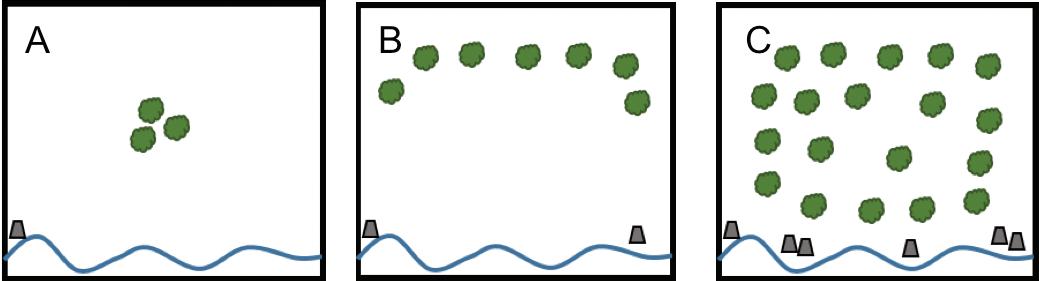
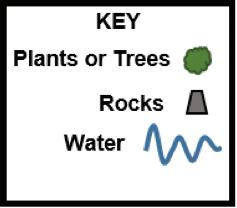
Claim-Evidence-Reasoning
Prompt 3
Which of these maps of plants, trees, and rocks in a park will best prevent erosion to Earth’s surface?
Claim:
Evidence:
Reasoning:

Explore 1
Nonrenewable Resources
Organize the resource cards by activity and nonrenewable resource. Record the energy output and pollution output for each activity in the table below. Add the total energy and pollution outputs for each resource.
Explore 1
Create a bar graph to compare the total energy output and pollution output for each nonrenewable resource.
Energy Output
Wood Coal Oil Resource
Explore 1
Pollution Output
Wood Coal Oil Resource
Explore 1
1. Which activity requires the greatest amount of energy output? Why?
2. Which activity requires the least amount of energy?
3. What do you notice about the energy output of the three energy sources?
4. What type of pollution is produced by the three energy sources? Why is this pollution produced?
5. Compare the energy outputs with the pollution outputs of the fuels. What can you conclude from the data? Why do you think this happens?
6. Which activities were most likely from the 1800s, 1900s, and 2000s? What type of fuel was used most during those time periods?
7. What can you observe about the time needed to perform the activities in the different time periods?
Explore 2
The Problem
Alternative Energy for McCally
McCally is a town with a problem. Its residents would like to find a different energy source so they can get away from burning fossil fuels. The area is very dry except for one big river, and there are lots of open areas. There are many birds and animals that migrate through the area twice a year. The major industry in town is oil and gas drilling, and 80% of the residents are employed in this industry. It is also a major manufacturer of video games.
The Challenge
Find an alternative energy source for the town of McCally.
Criteria and Constraints
• Groups will have 10 minutes to brainstorm and discuss which energy source they want to use.
• Groups may not change their energy sources after the 10 minutes are up.
• Draw a map of the area, including the site of the energy source, the town, and the river.
• Groups must list the positive and negative environmental effects of their plan.
• How will your energy source change the workforce in the town of McCally (types of jobs available and types of jobs lost)?
Expert Roles
Write the names of the people in your group taking on the following expert roles:
Design Team Expert
Material Engineer
Architectural Engineer
Mechanical Engineer
Explore 2
Design Plan Map:
STEMscopedia
You use Earth’s resources every day. When you eat cereal with milk for breakfast, you use resources from plants and from animals. When you ride the bus to school, you use fuel resources.
A resource is anything on Earth that humans use. What might happen if the resources run out? How can we keep them from running out?
What are renewable resources?
Renewable resources are resources that can be replaced within a lifetime. Some renewable resources, such as plants and animals, provide wood for burning or food for humans. Other renewable resources, such as sunlight and wind, provide energy.
• Solar—Sunlight is a renewable resource. The Sun will continue to shine for millions of years. We can use energy from the Sun in many important ways. Solar panels capture sunlight and turn it into electricity. Humans use this electricity to power homes and businesses.
• Wind—Wind can be used to create electricity. Large windmills, called turbines, spin in fastmoving wind. The movement of the turbine blades creates electricity.
• Water (hydro)—Humans cannot survive without fresh water. The fresh water we use is replaced in the water cycle. Water is also a source of energy. Dams along rivers use moving water to create electricity. The movement of water during tides can also provide energy.
• Plants and animals (bioenergy)—Plants provide food, energy, and useful products for humans. For example, trees provide wood that can be turned into paper or lumber or burned to heat a home. Plants, like corn, strawberries, and carrots, provide food for many animals, including humans. Animals such as fish and cows also provide food.
• Geothermal—Underground water is sometimes located near hot spots, so it heats up. Drilling down into this hot water provides steam for buildings or for turning generators.
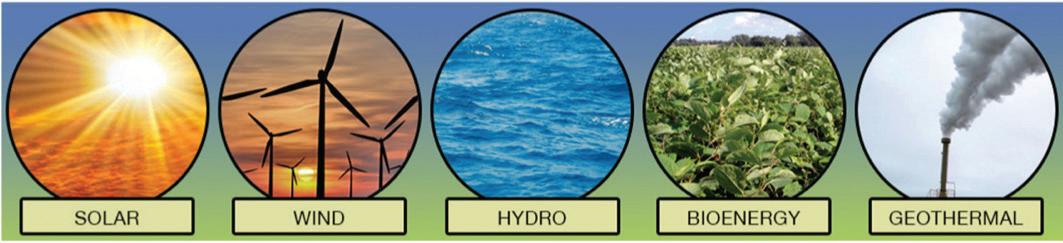
STEMscopedia
What Do You Think?
What are nonrenewable resources?
Nonrenewable resources exist on Earth in limited supply, and natural processes cannot replace them in a human’s lifetime; instead, it takes millions of years. Soil and minerals (like aluminum and iron) take more than a lifetime to form. Coal, oil, and natural gas are fossil fuels that are nonrenewable. They are called fossil fuels because they form from organisms that died long ago. Another type of nonrenewable resource is nuclear energy.
• Coal—Coal comes from moss and ferns that died millions of years ago in swamps. Thick layers of rocks and soil covered the dead plants. The pressure of the rocks and soil turned the plants into a solid called coal. Humans dig coal out of the ground to burn for energy to produce electricity.
• Oil—Oil is a liquid fuel that comes from tiny animals that died in the ocean and were covered by sediment that pressed down on them for millions of years and turned them into a liquid, called oil. Oil can be changed into gasoline and other kinds of fuel. Oil is also called petroleum and is used to make many products, such as plastics, DVDs, paints and dyes, fabrics, and tires.
• Natural gas—Natural gas is formed in the same manner as oil. Over millions of years, tiny dead animals are pressed down by layers of rocks under the oceans. The pressure forms tiny bubbles of gas. Natural gas is used to heat homes and cook food.
• Nuclear energy—Uranium is the fuel used in nuclear power plants. A nuclear reactor splits uranium apart. This process releases energy, which is used to produce electricity.
• Soil—Soil is formed from the weathering and erosion of rock particles. This process takes longer than a lifetime.

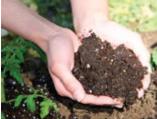
• Minerals—Minerals are metals and nonmetals buried in Earth and dug up as resources. Minerals take more than a lifetime to form. Gold, silver, and copper are examples.


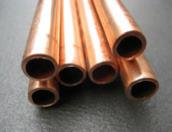
Fossil Fuels
NATURAL GAS
OIL COAL
Look Out!
STEMscopedia
Look at the two photographs below. Are these examples of renewable or nonrenewable resources? Explain your answer.


How can we conserve renewable and nonrenewable resources?
Nonrenewable resources cannot be replaced in our lifetime. If we use all the coal, oil, and natural gas on Earth, there will be none left. It will take millions of years to replace those resources. How can we conserve, or save, nonrenewable resources? One solution to this problem is to use less coal, oil, or natural gas. Because these are nonrenewable resources, we cannot replace or make more of them. Here are some ways we can use less: we can take public transportation instead of driving a car; we can turn the lights off when we leave a room; and we can use fabric bags instead of plastic bags at the grocery store.
Renewable resources must be conserved as well. For example, trees can be used to make fuel, paper, and lumber. But what happens if we cut down all the trees in a forest? It might take many years for all of the trees to grow back. We can use some but not all of the renewable resources in an area. We should replace the resources we use as quickly as possible. For example, we should plant new trees to replace trees that are cut down.
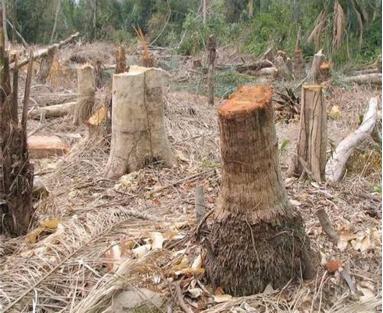
Some renewable and nonrenewable resources can hurt the environment. Oil spills in the ocean can hurt or kill the animals living there. Burning coal releases gases and smoke into the atmosphere that can harm living things. Animal farms can create waste that drains into rivers and pollutes them. One way to stop hurting the environment is to use fewer of these resources. We can find other ways to get energy. We can also use renewable resources such as sunlight and wind power. Those sources of energy create less pollution.
Look Out!
STEMscopedia
Some products such as gasoline or plastics are made in special factories. You might think that these resources are human-made and do not come from Earth. But all resources can be traced back to some natural material that came from Earth. Gasoline and plastic are made from oil. Oil is a nonrenewable resource that comes from Earth.
Looking to the Future: Overfishing

Fish are an example of a renewable resource. Humans eat fish for food. The human population is very big. Better technology and bigger boats allow fishermen to catch more fish than they did hundreds of years ago. But we might be catching too many fish. Overfishing happens when humans catch too many fish in an area. The fish population cannot survive. We have seen evidence of this in the North Atlantic Ocean. In the 1990s, humans caught too many cod. Cod is a type of fish in the Atlantic Ocean. The population of cod got so small that this fish almost went extinct. Scientists noticed the problem and recommended limits on the amount of cod that fishermen could catch. This allowed more adult cod to stay in the ocean and lay eggs. The population of cod began to grow again. Limiting the amount of fish that can be caught helps to keep fish populations healthy.
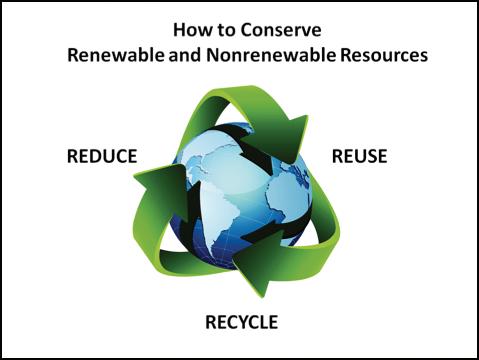
Conservation Efforts
With the coming of the Industrial Age and the huge demand for large quantities of fossil fuels for production, humans began polluting nature faster than nature could cleanse itself. In addition, overconsumption of natural resources was not prevented. Today, three conservation words empower us to protect and manage nonrenewable and renewable resources: reduce, reuse, and recycle.
We can conserve nonrenewable fossil fuels by using carpools, fuel-efficient vehicles, hybrid or electric cars, high-efficiency appliances, and compact fluorescent light bulbs, for example. Or we can switch to alternative energy sources, such as solar energy.
Conserving renewable resources, such as water, is the reason behind lawn-watering ordinances, recycling and purifying wastewater, improving water pollution laws, and developing efficient irrigation methods. To conserve air, we could use more efficient filters on polluting factories, reduce our car emissions, and create better laws to preserve clean air. To conserve plants, we could create laws that protect Earth’s rain forests; encourage tree planting at home, schools, and businesses; and reduce and recycle paper products.
Try Now
STEMscopedia
Sunlight is an example of a renewable resource. Solar panels can convert sunlight into electrical energy. For this to work well, solar panels need to collect as much sunlight as possible. Try this short activity to learn more about solar panel design. You need water, two foil pie tins, black construction paper, and two thermometers.
1. Cut a piece of black construction paper to fit into one of the pie tins. Place the construction paper at the bottom of the pie tin. Leave the other pie tin as it is.
2. Pour the same amount of water into each pie tin.
3. Record the temperature of the water in each pie tin.
4. Put both pie tins in direct sunlight. Leave them in the sunlight for 20 minutes.
5. After 20 minutes, record the temperature of the water in each pie tin.
Here are some questions to ask yourself:
• In which pie tin did the temperature rise the most?
• What does this tell you about how sunlight reacts with dark colors?
• If you were designing a solar panel, what color would you make it?
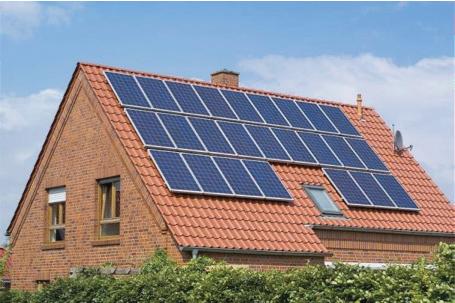
This house gets some of its energy from solar panels on the roof. The panels convert sunlight into electricity.
Try Now
STEMscopedia
What Do You Know?
Use what you know about renewable and nonrenewable resources to fill out the table below. First, decide whether you agree or disagree with the statement in the left column. Then explain why you agree or disagree in the right column.
Agree/Disagree?
Renewable resources cannot be replaced in our lifetime.
Agree
Disagree
Solar power, natural gas, and wood are all nonrenewable energy sources.
Agree
Disagree
Both renewable and nonrenewable resources should be conserved.
Agree
Disagree
Explanation
STEMscopedia
Connecting With Your Child
Conducting a Survey
People use resources from Earth every day. Nonrenewable and renewable resources provide you with the energy, food, and products you need to live. Work with your child to create a survey that asks the people around you how they use Earth’s resources. Here are some sample questions:
1. Describe how you heat your home. Do you use natural gas, oil, or another resource?
2. Where does the electricity in your home come from? Does it come from nuclear power, coal power, solar power, wind power, or another source?
3. Do you or your family members eat plant or animal products?
4. Are there any products in your home that come from nonrenewable or renewable resources? These products might include plastics, DVDs and CDs, computers, cellophane tape, air mattresses, baby oil, disposable diapers, latex gloves, petroleum jelly, firewood, paper, and toothpaste.
5. How do you or your family try to conserve resources?
Try to construct questions that ask about both renewable and nonrenewable resources. Conduct the survey with your neighbors, family members, or your child’s classmates.
After the survey is complete, review the results with your child and make a poster or pamphlet that describes the results.
Here are some questions to discuss with your child:
1. How are people using nonrenewable and renewable resources in their daily lives?
2. Which resources are used most often?
3. How are people conserving resources in their daily lives?
Reading Science
A Wind Farm in Texas
1 Roberto was excited. His dad had promised to take him hiking during spring break. On their way, they drove through the empty deserts of West Texas. As they were traveling toward the mountains, Roberto was in for a surprise. He thought he saw rows of giant white flowers standing in the sunlight.
2 “What is that?” asked Roberto, pointing.
3 “That is a wind farm!” said Roberto’s dad.
4 Roberto looked puzzled. “Wind farm? How do they grow wind?”
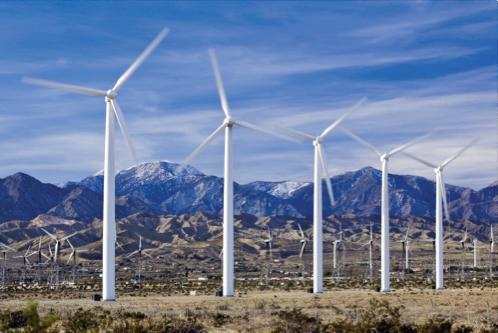
5 Roberto’s dad smiled. “You are right. Farms usually grow things. Wind farms do not grow anything. Wind has energy. In a wind farm, turbines are able to make electricity from wind energy. Texas has a lot of wind. That is why wind farms are found all over the state. If you did not know already, wind is called a renewable resource.”
6 Roberto looked out the window again. He looked closely and knew that those were not flowers. He was looking at giant white pinwheels that were turning slowly.
7 “So, how do those things make electricity?” he asked his dad.
8 “Those machines are called wind turbines,” said his dad. “They are very tall, about 260 feet or so. They are like giant windmills. The blades catch the wind, and as they turn, they generate electricity.”
9 “My teacher said that we get electricity from coal and oil,” said Roberto.
Reading Science
10 “We do, but there is a big difference. Coal and oil are not renewable energy sources. We need to find ways in which we do not use up our coal and oil resources. We also need to be able to make cleaner energy. That is why we should use resources like wind and solar power. They do not cause pollution like coal and oil, which are fossil fuels. Alternative energy sources are the way to go these days.”
11 Roberto looked out the window. “Those are really cool,” he said.
12 His dad smiled. “They are. There is another cool thing about them. They have weather stations on top that keep track of the speed and direction of the wind. The weather stations send information to the computers. Then, the computers help turn the blades toward the wind to catch it and rotate.”
13 “Alternative energy sounds like a pretty smart idea,” said Roberto. “It is neat that somebody figured out how to get electricity from the wind.”
14 “I think so, too,” said his dad. “People are very creative and are finding different ways to create energy. We can create energy from the Sun, wind, and water. In fact, some really smart scientists have used recycled cooking oil from fryers in restaurants to create fuel. It is called biodiesel.”
15 “Gross!” said Roberto.
16 “It might be gross,” said Roberto’s dad, “but you have to admit, it is also pretty innovative.”
17 Dad and Roberto continued to drive past the wind farm, and as they did, Roberto stared out the window and was amazed at all the electricity that was being produced right in front of his eyes.
Reading Science
1 The author’s main purpose in writing this passage is to–
A tell a story about Roberto’s hiking trip.
B explain the purpose of wind farms.
C describe how we get energy from grease.
D persuade readers to use wind power.
2 Why does Roberto think the wind farm “grows wind” at the beginning of the story?
A Roberto is silly.
B Roberto does not know what wind is.
C Roberto knows that farms usually grow things.
D Roberto’s dad is confusing.
3 Alternative energy is–
A energy from coal or oil.
B energy that comes only from wind farms.
C energy that comes from sources that do not pollute or use fossil fuels.
D energy that is not renewable.
Reading Science
4 Why do you think the wind turbines were placed in the desert of West Texas?
A There is a lot of wind there.
B It is very sunny there.
C There are many people in West Texas.
D You can hike in West Texas.
5 Which of these is a correct description of a wind farm?
A A farm where coal and oil are burned
B A place where wind is turned into electricity
C A place where farmers grow things
D A place where wind turbines can be recycled
Open-Ended Response
1. One of the problems with using certain resources for energy is pollution. One type of pollution is carbon dioxide (CO2) emissions. Look at the bar graph below and explain which nonrenewable resource would be the best choice for energy use based on its output of carbon dioxide.
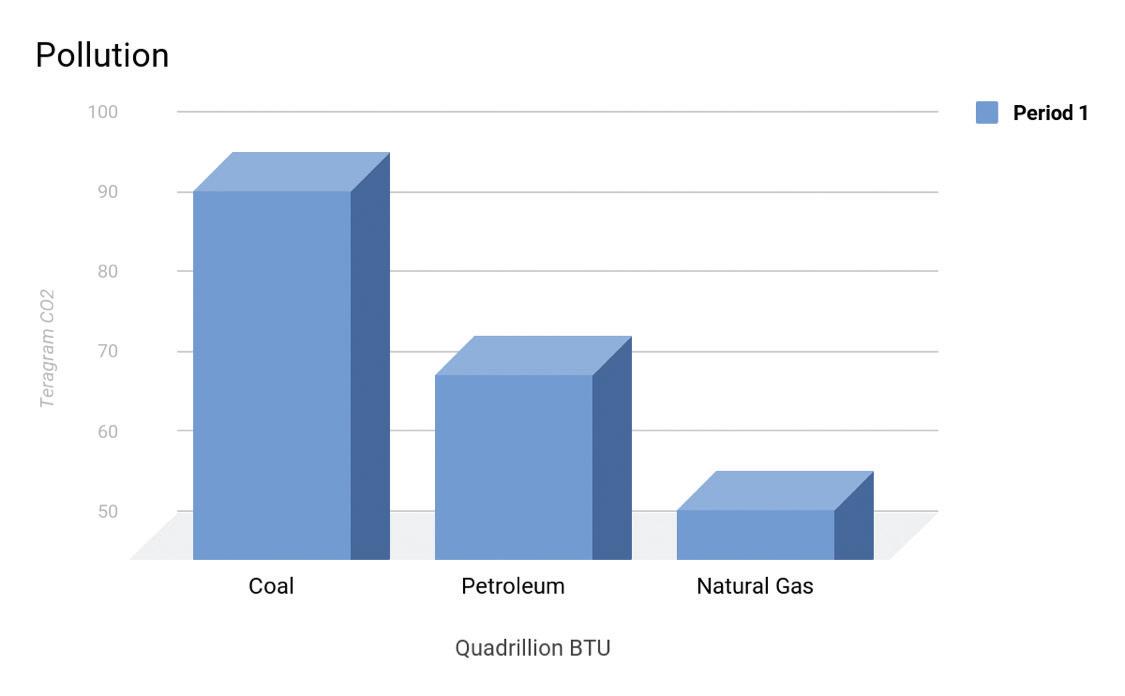
Open-Ended Response
2. What is clean energy? Choose three forms of clean energy generation. Tell advantages and disadvantages of each.
Form of Clean Energy Advantages Disadvantages
3. What is the best form of clean energy generation for Mississippi? Explain your reasoning.
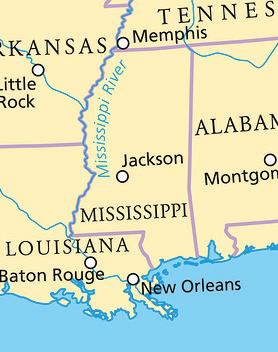
Open-Ended Response
4. Should people conserve both renewable and nonrenewable energy resources? Why or why not?
Mark’s energy bill is outrageous and costing him a fortune. To help lower his bill, he is researching various alternative energy sources and is considering getting solar panels installed on his house. Write a scientific explanation that describes the benefits of using
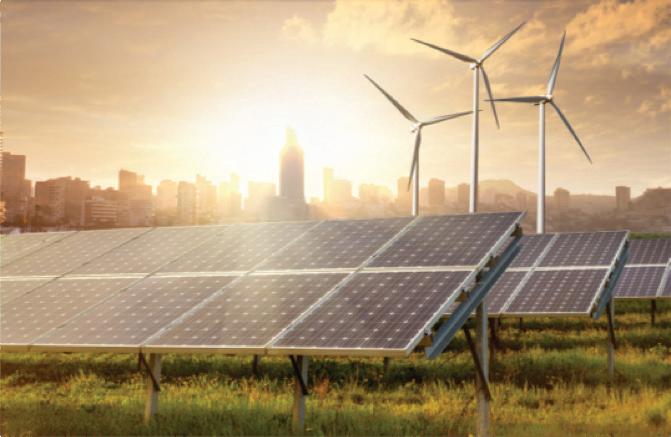
GLOSSARY
absorption compare
absorption – when a part or the whole amount of light is lost inside
amphibian – any of various cold-blooded, usually smooth-skinned vertebrates, characteristically hatching as an aquatic larva with gills and then transforming into an adult with air-breathing lungs
anemometer – a tool for measuring wind speed
animal – a living thing that can move on its own and that gets its energy from food
atmosphere – the layer of gas surrounding planet Earth, held in place by gravity and composed of a limited number of elements, primarily nitrogen and oxygen
barometer – a tool for measuring atmospheric pressure
biosphere – The sum of all living matter made of a limited number of elements including oxygen, carbon, hydrogen, nitrogen, calcium, and phosphorus
circuit – the pathway through which electricity flows
circulatory system – moves the blood throughout the body, transporting oxygen, nutrients, signals, and waste
climate – average weather conditions for a region year after year
coal – a solid fossil fuel that is formed from the concentrated remains of plants over very long periods of time
compare – to consider the similarities and differences among things
GLOSSARY
condensation erosion
condensation – water changing from gas to liquid
conductor – material that allows heat or electrical energy to easily flow through it
conversion – a change in nature, form, or units
deposition – the buildup of land by the settlement of sediment and soil in a new location
diet – what an organism eats
digestive system – the group of organs that work together to break down food by physical and chemical processes into nutrients that the body can use
diversity – the quality or state of having many different forms, types, ideas, etc.
earthquake – a sudden release of energy under Earth’s surface that makes the ground shake or crack
Earth’s surface – the part of Earth we can see
electrical energy – energy produced by electric charges
electric circuit – the pathway through which electrical current flows
electricity – energy created by the movement of electrons
energy transfer – the transfer of energy from one object or material to another or from one form to another
energy – what is needed to do work or cause change
erosion – the gradual wearing down of something by wind, water, and other natural forces
GLOSSARY
evaporation interactions
evaporation – the changing of water from a liquid to a gas
exercise – activity requiring energy and physical motion
explain – to make someone understand
flowering plants – plants that rely on pollination for reproduction
friction – a force that slows or stops motion when objects rub together
function – what something does
geosphere – Earth’s system that includes Earth’s interior, rocks and minerals, landforms, and the processes that shape Earth’s surface
growth – increase in size, abundance, or complexity
heat energy – energy that causes a change in temperature between materials
hurricane – a large, tropical weather system in the northeastern Pacific Ocean or northern Atlantic Ocean consisting of an extreme low-pressure air mass with heavy rains and wind speeds of at least 119 km/h
hydrosphere – all of the water in the air, oceans, rivers, lakes, ice caps, soil, rocks, and organisms of Earth
impact – direct effect or change
insulator – material through which heat or electricity does not easily flow
interactions – actions by one thing that have an effect on a different or separate thing
GLOSSARY
interpret muscular system
interpret – to explain the meaning of
landform – a feature on the surface of Earth that is not covered by water
life cycles – the stages or sequence of events through which organisms grow, reproduce, and die
light energy – energy that can be sensed by the eye
map – a drawing or picture that shows important features in an area
marsh/swamp – an area of low-lying land that is usually saturated with water and is dominated by herbaceous rather than woody plants
material – the matter from which a thing is or can be made
measurements – the size, length, or amount of something, as established by measuring
measure – to find out the temperature, dimensions, or capacity of mechanical – energy produced by moving
model – a limited representation of something that can help us understand its structure or how it works
motion – describes change in an object’s position with respect to time and in comparison to other objects
movement – a change in position or location
muscular system – a group of organs that work together to produce movement and balance
GLOSSARY
natural processes predict
natural processes – series or groups of events that occur naturally
needs – requirements for the well-being of an organism
nervous system – a group of organs that sense, transmit, and process information
nonrenewable resource –
materials from Earth that cannot be replaced within a reasonable amount of time; for example, oil, coal, and natural gas
object – something that can be touched and seen
observe – to use the senses to examine or inspect an object
opaque – a material that does not allow any light to pass through it
organism – a single living thing
organs – large masses of similar tissue that make up a part of an organism and perform a specific function
pitch – the property of sound that varies with how fast or slow the vibration is; slow vibrations produce low sounds and fast vibrations produce high sounds
plant – a type of living thing that gets its energy from the Sun and is unable to move from place to place on its own
precipitation – rain, snow, sleet, or hail that falls from clouds in the sky
predict – to tell about in advance, especially on the basis of special knowledge
GLOSSARY
rain gauge sound
rain gauge – tool that measures the amount of rain at a location
reflection – energy waves bouncing off the surface of an object (mirrors or echoes return energy back to the source)
refraction – the bending or redirection of energy waves as they pass from one substance to another
regional – affecting a particular region
reproduction – when one or more organisms bring new organisms of the same type into existence
reptile – any of various usually cold-blooded, egglaying vertebrates having dry skin covered with scales or horny plates and breathing by means of lungs
respiration – a process by which animals use oxygen and food to make energy and carbon dioxide
respiratory system – a group of organs that allow oxygen and carbon dioxide exchange between the body and the environment
runoff – the movement of water on a surface to areas of lower elevation
solar energy – energy that comes from the Sun
sound energy – energy that travels as waves through the air or water and vibrates the eardrum upon contact
sound – energy that travels through the air and can be heard by the ear
GLOSSARY
Sun wind vane
Sun – the star at the center of the solar system that provides heat and light to Earth
temperature – how hot or cold something is
translucent – partially allowing light to pass through
transparent – completely allowing light to pass through
tsunami – a great sea wave produced especially by an earthquake or volcano eruption under the sea
vibrations – a series of small, fast movements back and forth or from side to side
water cycle – the constant movement of water through the land, air, oceans, and living things
weathering – the breakdown of solid materials into very small particles by water, air, and natural events
weather instruments –tools used for recording various aspects of the weather
weather patterns – different phases of weather such as cold, hot, storms, rain, and snow
wind vane – a tool that shows wind direction