Top Expat CEOs in Hungary 2026 is a special publication of the Budapest Business Journal • EDITOR-IN-CHIEF: Robin Marshall • CONTRIBUTORS: Annamária Bálint , B ence Gaál , Robin Marshall, Bernadette Oláh, Erika Törsök • NEWS AND PRESS RELEASES: Should be submitted in English to news@bbj.hu • LAYOUT: Zsolt Pataki • PUBLISHER: Tamás Botka, Business Publishing Services Kft. • ADVERTISING: AMS Services Kft. • CEO: Balázs Román • SALES: sales@bbj.hu • CIRCULATION AND SUBSCRIPTIONS: circulation@bbj.hu • Address: Madách Trade Center, 1075 Budapest, Madách Imre út 13-14. • Telephone +36 (1) 398-0344, www.budapestbusinessjournal.com • ISSN 2631-0937
Foreword
It just doesn’t get any easier, does it? When we were conducting the CEO interviews for the second half of this publication, many pointed to the uncertainties caused by geopolitics today; no one mentioned a war against Iran as a direct and imminent threat. And yet, here we are. Perhaps we should have expected this, though. U.S. President Donald Trump had, afterall, amassed a huge “armada” in the seas around the Middle East, featuring two aircraft carrier groups. It is said to have been the largest U.S. military buildup in the region since the eve of the 2003 Iraq War.
That did not necessarily mean conflict was inevitable, especially if you factor in Washington’s apparent liking for the so-called “madman theory” that is usually attributed to Richard Nixon’s foreign policy. While that sought to influence foreign policy reactions by making improbable steps seem probable, the second Trump administration appears rather to favor discombobulation, continually throwing its opponents (which we now know include its allies) off guard. But one thing is certain: you cannot assemble all that military capability and simply leave it to sit there. Eventually, and generally sooner rather than later, you either pull back or you go in. That is exactly what happened in Ukraine in February 2022, and, albeit to a lesser degree, in Georgia in August 2008.
The rights and the wrongs of the war against Iran really don’t matter if you are the CEO of a business based in Hungary; it is the reality of the space you have to operate in. Four years into the Russo-Ukraine conflict, the wider
world seems to have finally found a map and realized that Budapest is not in a war zone, though it is certainly adjacent to one. The fighting in Iran is further away, but, ironically, may have a more direct economic impact than the one across the border, especially if the Strait of Hormuz is closed. According to the Encyclopedia Britannica, more than 20% of global oil and liquefied natural gas exports pass through the strait. Even if, like Hungary, you source your oil from Russia, pinch off the supply at Hormoz, and global prices will rise sharply again.
It is just the latest example of business leaders having to navigate a path through international events over which they have no control: Inflation; the energy crisis; the war in Ukraine; supply chain bottlenecks; COVID; and back beyond that to the Black Monday global stock market crash, the Great Recession and the global financial crisis. It is once you read that list that you realize what a state of near-permacrisis the past decade and more has been.
One of the reasons we introduced this publication was to introduce the personalities behind the profiles, showcasing a more human aspect to our leaders of commerce. Today, more than ever, we need to remember the human behind the business. Good luck to all of us!
Robin Marshall Editor-in-chief Budapest Business Journal
Wallis Group Founder Tibor Veres Wins EY Entrepreneur of the Year Award
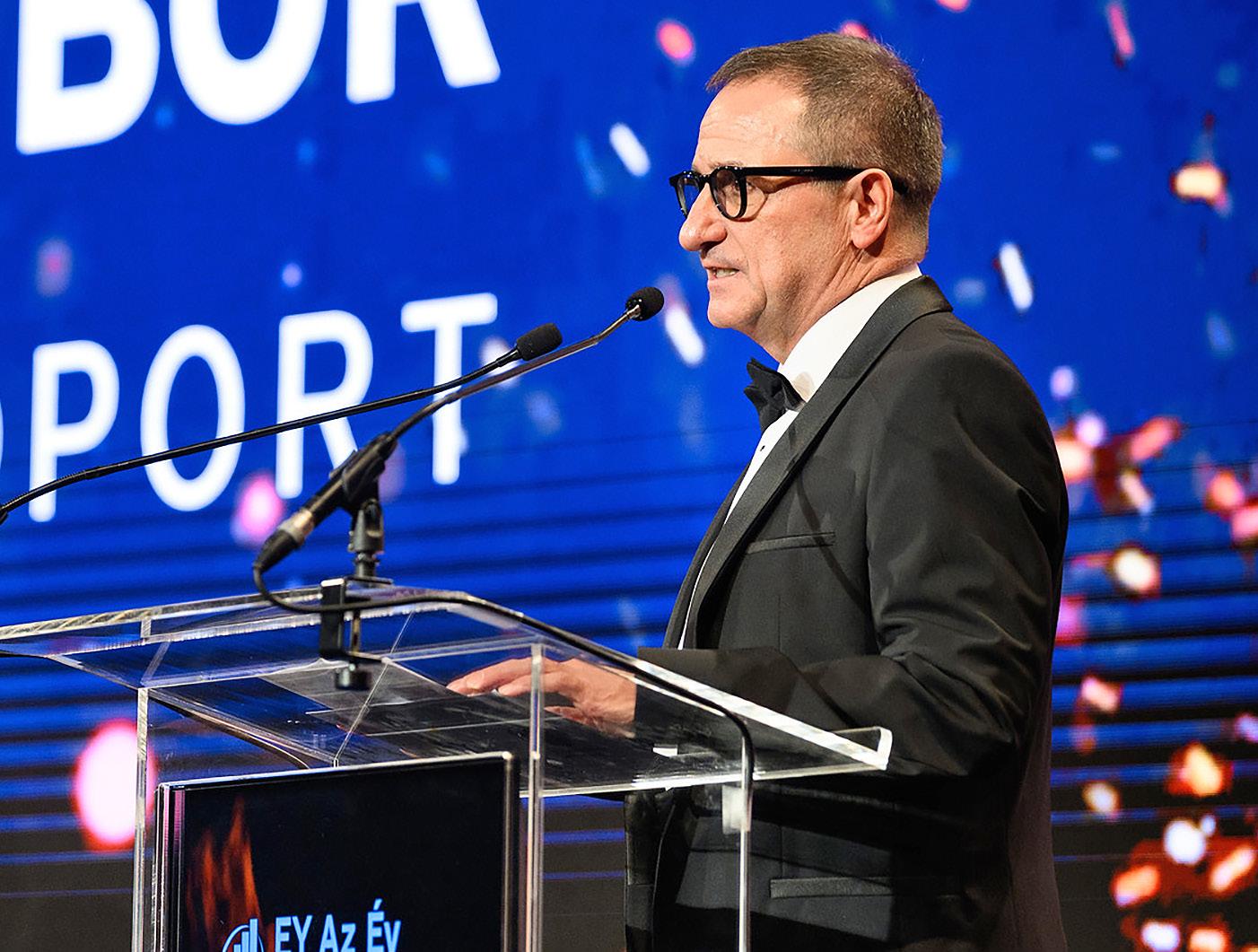
Tibor Veres, founder and chairman of Wallis Group, took home the main prize at the EY Entrepreneur of the Year Hungary gala. The founder-owner and head of the investment group, which has expanded successfully into international markets, will represent Hungary at the global finals of the competition.
By Bence Gaál
For more than two decades, the EY Entrepreneur of the Year Award in Hungary has recognized business leaders who demonstrate exceptional performance and contribute to shaping the future of the economy through leadership, innovation and distinctive business strategies. In addition to the overall award, the independent jury also presented special prizes in six categories, drawn from more than 40 nominations.
This year, Tibor Veres was selected as the overall winner. He will represent Hungary at the EY World Entrepreneur of the Year, competing against national winners from more than 60 countries at the global competition in Monaco in May 2026. Veres founded Wallis more than 35 years ago and has since developed it into an investment group of international standing. Today, the business operates in 18 countries and owns and manages leading companies across several industries, a number of which are listed on capital markets.
Wing Group is an active real estate developer and investor in Central Europe with significant international project experience. AutoWallis, listed in the Premium category of the Budapest Stock Exchange, is an integrated automotive retail and mobility service provider present in 17 countries. Praktiker operates a nationwide DIY retail network with 23 stores. Graboplast, with a history spanning more than a century, manufactures specialist flooring products and
Tibor Veres, founder and chairman of Wallis Group, makes his acceptance speech at the EY Entrepreneur of the Year Hungary gala.
Tamás Vékási: Efficiency Becoming the new Growth Engine
Business leaders today face persistent geopolitical uncertainty, mounting pressures and an increasingly complex regulatory environment. Yet, despite these headwinds, global CEOs remain confident in their ability to steer growth, largely by turning to AI, talent and operational efficiency. EY Hungary country managing partner Tamás Vékási zeroes in on the defining themes emerging from the firm’s latest global CEO survey of 1,200 respondents.
By Bence Gaál
The EY CEO Outlook 2026 survey shows that sustained transformation is no longer optional: it is the defining marker separating tomorrow’s winners from those left behind. The research confirms our experience on the ground: CEOs identify three strategic priorities to navigate today’s fractured global environment and accelerate organizational growth: investing in AI and digital technologies, navigating a tight labor market and diversifying supply chains.
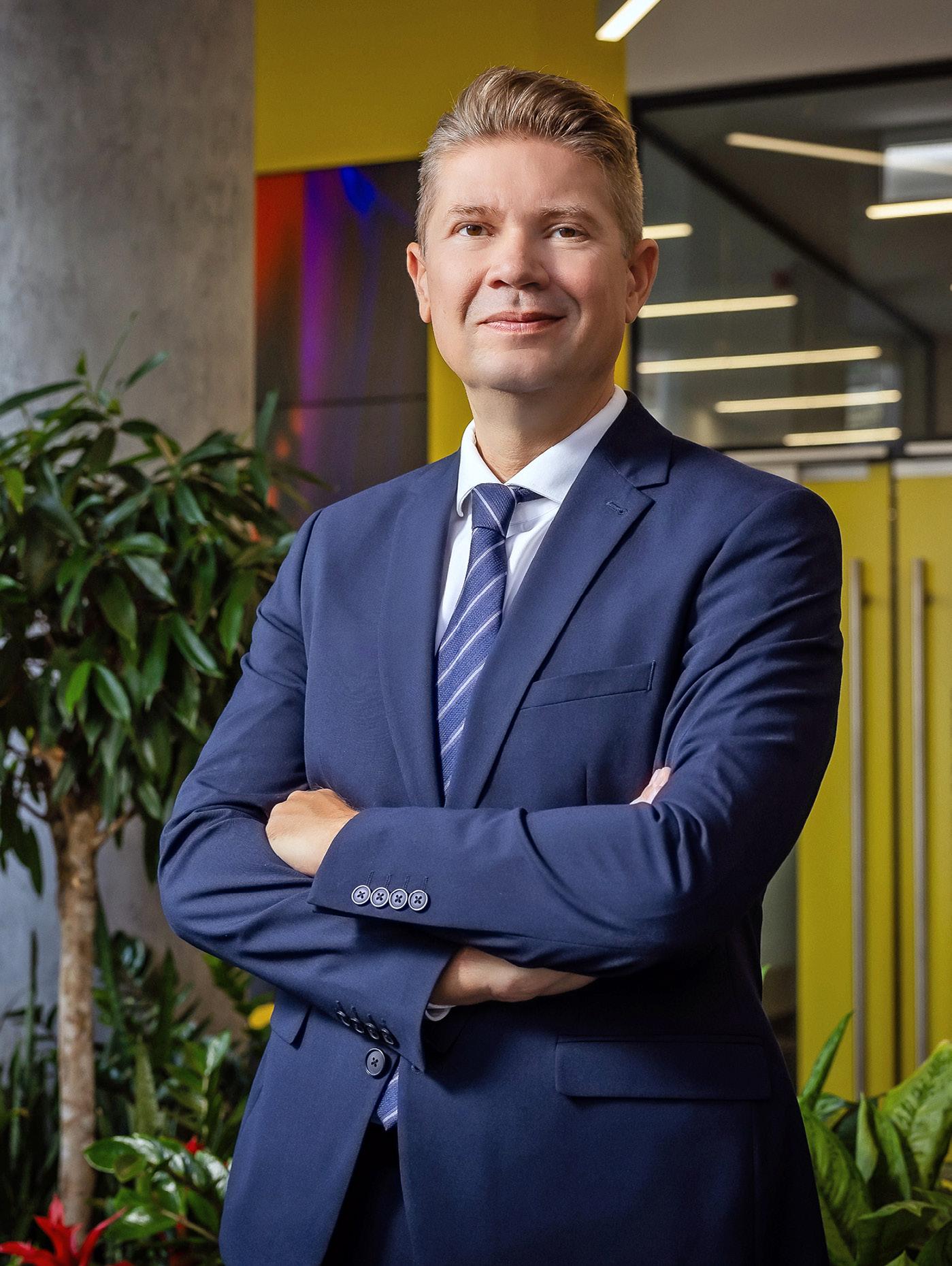
Tamás Vékási, country managing partner at EY Hungary, and head of the tax and law services central business unit for Europe Central.
PwC: Tech Transformation Main Imperative for Hungarian CEOs
Hungarian CEOs are facing growing short-term threats and the ongoing pressure of technological transformation, requiring a long-term, strategic focus, according to PwC’s 15th Hungarian CEO Survey. While they remain optimistic about the global economic outlook, they are increasingly uncertain about Hungary’s economic growth prospects.
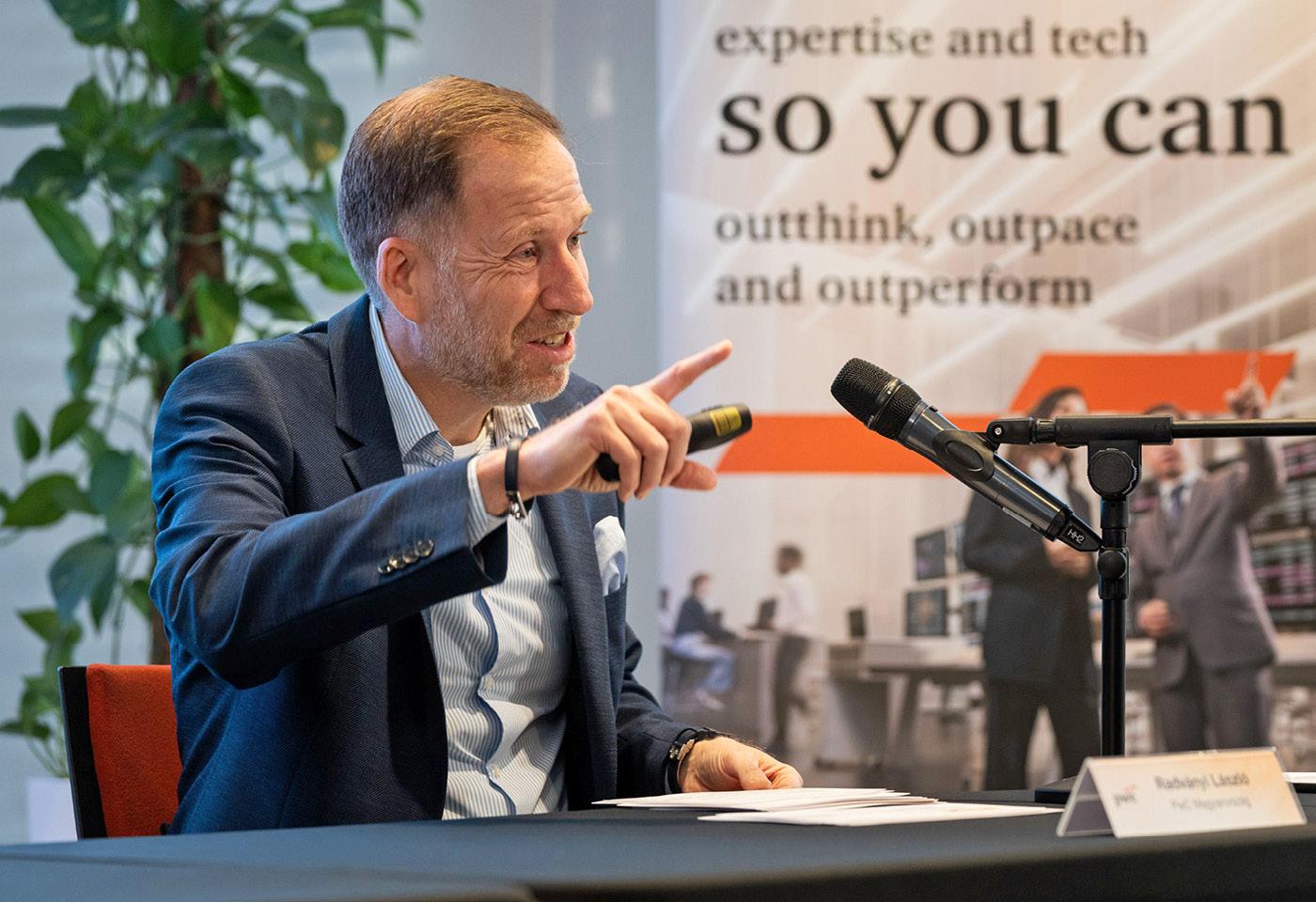
László Radványi
far more optimistic than their global counterparts about the prospects for the global economy: 71% are confident of global economic growth, compared to 61% globally, and only 5% expect a slowdown from the previous year. That said, the outlook for the Hungarian economy is now more nuanced. Only just over half (53%) expect growth to accelerate this year, down from 60% last year.
By BBJ Staff
The Big Four consultancy found that Hungarian CEOs spend 60% of their time on issues with a time horizon of less than one year, significantly more than their global counterparts. This leaves less time for business viability, innovation, and AI adoption,
long-term strategic issues that are becoming more prominent. The survey was conducted in the fall and published on March 4. Among the key findings, Hungarian CEO’s confidence in their companies’ revenue growth has reached a 15-year low; only 31% expect growth over the next 12 months. They are, however,
Companies’ revenue expectations are also more pessimistic than previously. Just 31% of Hungarian CEOs anticipate revenue growth over the next 12 months, the lowest figure in the survey’s 15-year history. The three-year revenue growth outlook is more optimistic, however, with 48% of Hungarian CEOs and 49% of global CEOs expressing greater confidence. Hungarian CEOs’ macroeconomic expectations reflect moderate confidence: they predict an annual average exchange rate of 397 forints to the euro, 4.6% inflation, and 1.5% GDP growth for 2026.
For the first time since 2023, CEOs’ risk perception has increased significantly. This year, the Hungarian regulatory environment topped the list
Tokaj’s New Face: The Tokaj Art Wine Concept
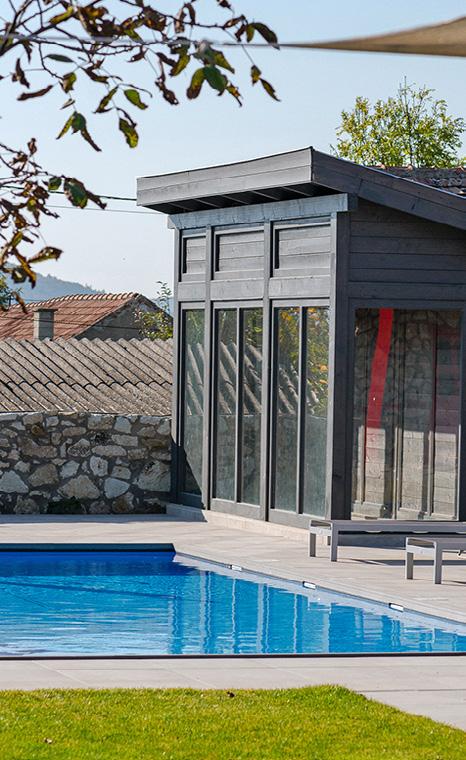
It all started in Tállya, one of the most distinctive villages in Tokaj-Hegyalja. In recent years, Tállya has become the center of a new cultural and gastronomic initiative. Here, the Tokaj Art Wine (TAW) concept was born, connecting winemaking, contemporary art, hospitality, and shared experiences.
TAW begins with the simple idea that Tokaj is not only a wine region but also a cultural landscape. A place where a glass of wine, a work of art, a dinner, or a conversation are but different layers of the same experience.
Today, Tokaj Art Wine has grown into an expanding cultural and gastronomic network, centered in Tállya, while also having a presence in Budapest through the TAW Gallery.
WINE AS AN EXPERIENCE
Tokaj Art Wine’s wines are made from the region’s iconic grape varieties: Furmint, Hárslevelű, and Yellow Muscat. The philosophy behind the concept is that wine is more than a drink: it is a story, a meeting, and a source of inspiration. A glass of wine often sparks conversation, brings people together, and provides space for new ideas. Tokaj is special in this regard: wine has always been part of community life, hospitality, and culture.
BARKA GALLERY HOTEL: ART AND HOSPITALITY
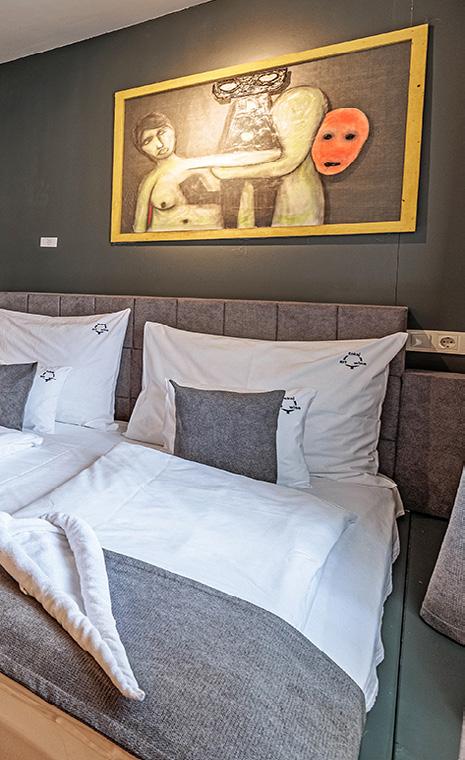
A central location of the TAW concept is the Barka Gallery Hotel, located in the more than 400-yearold Szirmay Manor in the heart of Tállya. The 13-room hotel is unique as Hungary’s first contemporary art-themed hotel. Each room reflects the world of a contemporary Hungarian artist, allowing guests not just to stay, but to become part of an artistic experience.
Artists featured include Nóra Soós, Patrik Murakami, Ágnes Verebics, Dániel Labrosse, László feLugossy, Péter Weiler, Luca Katalin Simon, Albert-László Barabási, Béla drMáriás, and the Emezek art group. The artworks in the rooms are also available for purchase, allowing guests to take the experience home as an art object.
ART GAINS FLAVOR AT BARKA RESTAURANT
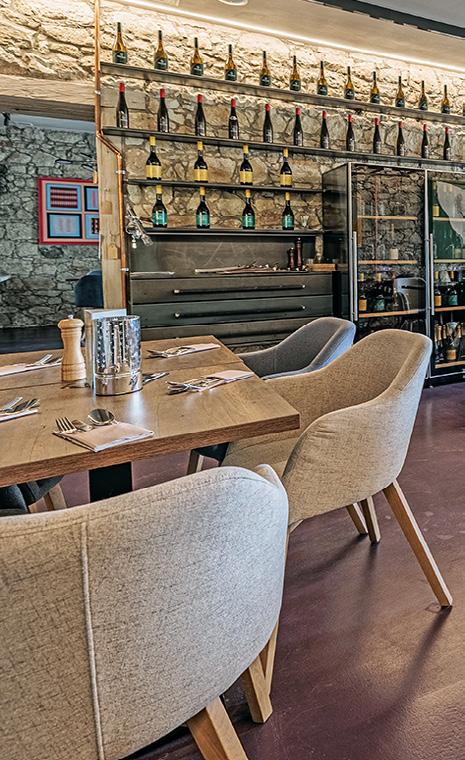
Barka Restaurant is the gastronomic center of the TAW concept. Szilárd Vanyó, who approaches traditional Hungarian cuisine with a contemporary perspective, heads the kitchen. Dishes focus on local ingredients, seasonal availability, and sustainability.
The restaurant’s interior is also distinctive, featuring hand-painted custom furniture and visual design by Boglárka G. Horváth. The space continuously showcases TAW’s contemporary art collection, allowing guests to enjoy both culinary and artistic experiences simultaneously.
Barka regularly hosts wine dinners, tastings, music evenings, and art programs, turning dining into a truly cultural experience.
Leading Players Recognized After Record Year in Investment Promotion
Hungary recorded an outstanding year in investment promotion in 2025, delivering results that surpassed the combined performance of its Visegrád peers: the Czech Republic, Poland, and Slovakia. These achievements were made possible by committed domestic and international investors who continue to place their trust in Hungary’s long-term development, István Joó, Government Commissioner and CEO of the HIPA Hungarian Investment Promotion Agency, said at the Investor of the Year 2025 Award Gala held in Budapest on Feb. 26, 2026.
By Bence Gaál
In his welcome speech at the gala, held at the Museum of Fine Arts, Joó underlined that Hungary remains one of Europe’s safest and most investor-friendly countries. Despite a challenging global economic environment, the year marked a record period for investment promotion in several respects. HIPA supported 108 investment projects in 2025 with a total value of approximately EUR 7 billion. The projects are expected to create more than 18,200 new jobs across the country.
Beyond the headline figures, Joó highlighted the success of measures aimed at upgrading the structure of the Hungarian economy. A record number of research and development projects were launched during the year, reflecting the country’s increasing focus on high valueadded activities. More than 20% of the newly created jobs were linked to research and development activities as well as business service centers, indicating a gradual shift toward more knowledge-intensive sectors. The growing emphasis on advanced activities is also reflected in HIPA’s current investment pipeline. The agency says it is negotiating an additional 39 R&D and service center projects, which could result in approximately 4,000 new jobs in the coming years.
Joó also noted that HIPA will support its first-ever investment in video game development,
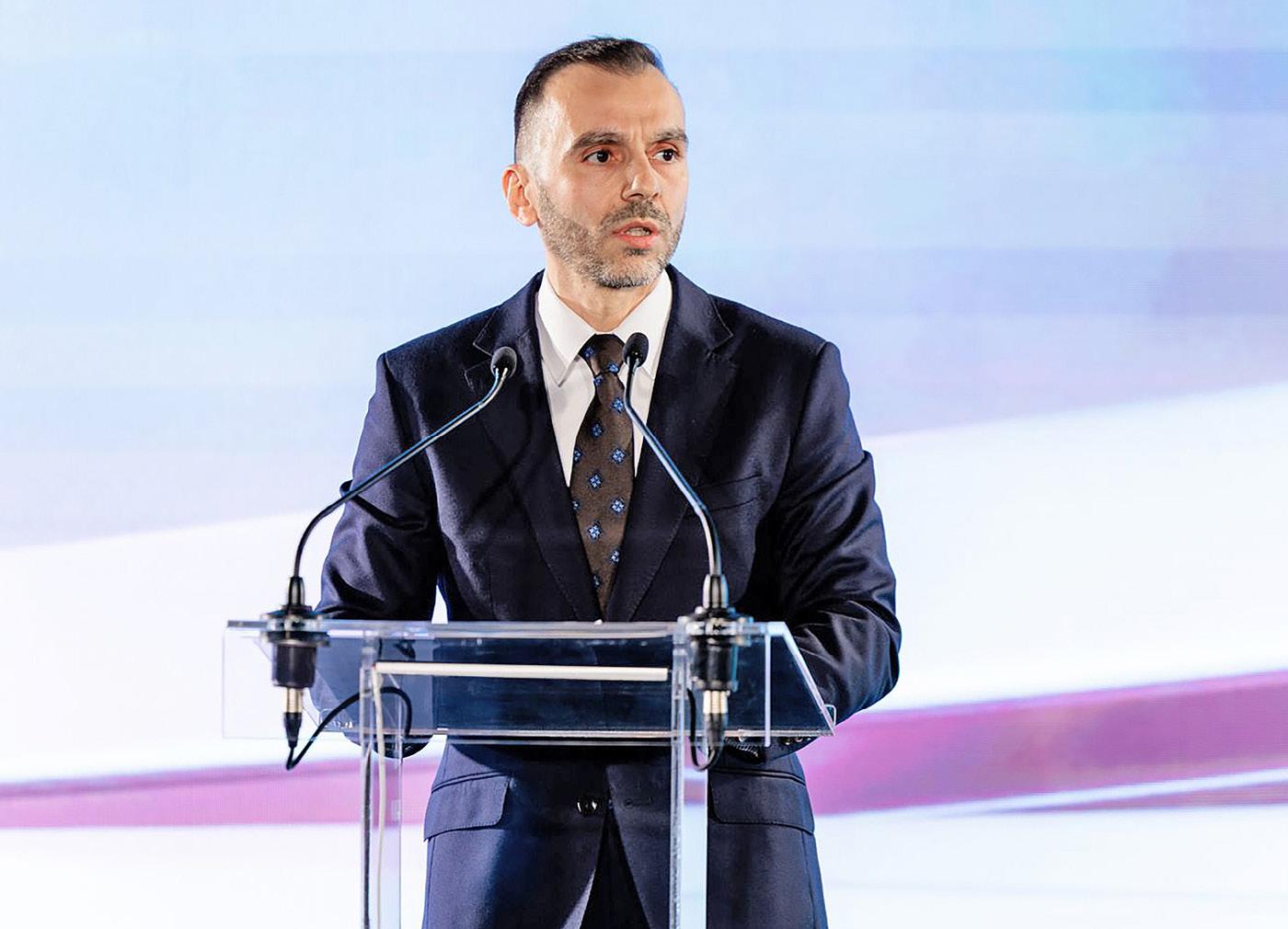
István Joó, Government Commissioner and CEO of the HIPA Hungarian Investment Promotion Agency.
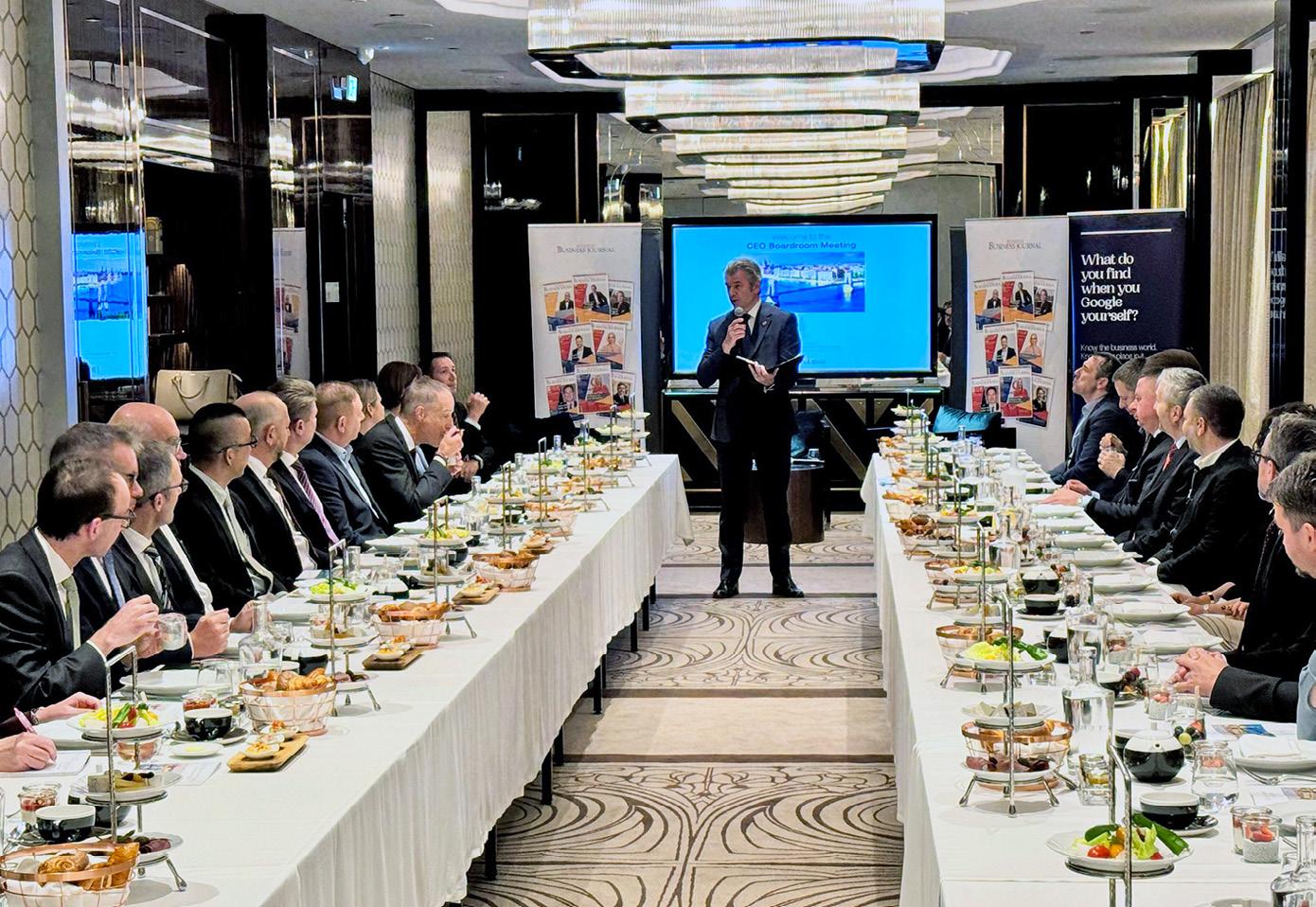
CEO Boardroom Roundtable: Growth, Investment, Elections and Financial Stability
These are edited excerpts from a CEO Boardroom Meeting roundtable discussion held on Nov. 11, 2025, and featuring Károly Radnai, managing partner of Andersen in Hungary, and Veronika Spanarova, then the country head of Citi in Hungary. She has since become chief financial officer for low-cost carrier Wizz Air. While she no longer speaks for Citi, the analysis she provided remains valid and valuable, and we are happy to reproduce it here. The views and statements expressed during the discussion reflect the Hungarian macroeconomic and geopolitical context as it stood in fall 2025 and, therefore, do not reflect developments that have occurred since then.
Robin Marshall: What are your predictions for GDP growth in the year ahead?
Veronika Spanarova: Several factors influence GDP growth at any point in time: industrial output and manufacturing, services, consumption, retail, and, in Hungary’s case as a very open economy, the export function and the performance of our main trading partners. During COVID and later the energy crisis, we saw manufacturing and the industry holding up well while consumption lagged as households became cautious. Now, over the past couple of quarters, GDP is driven by domestic consumption and services.