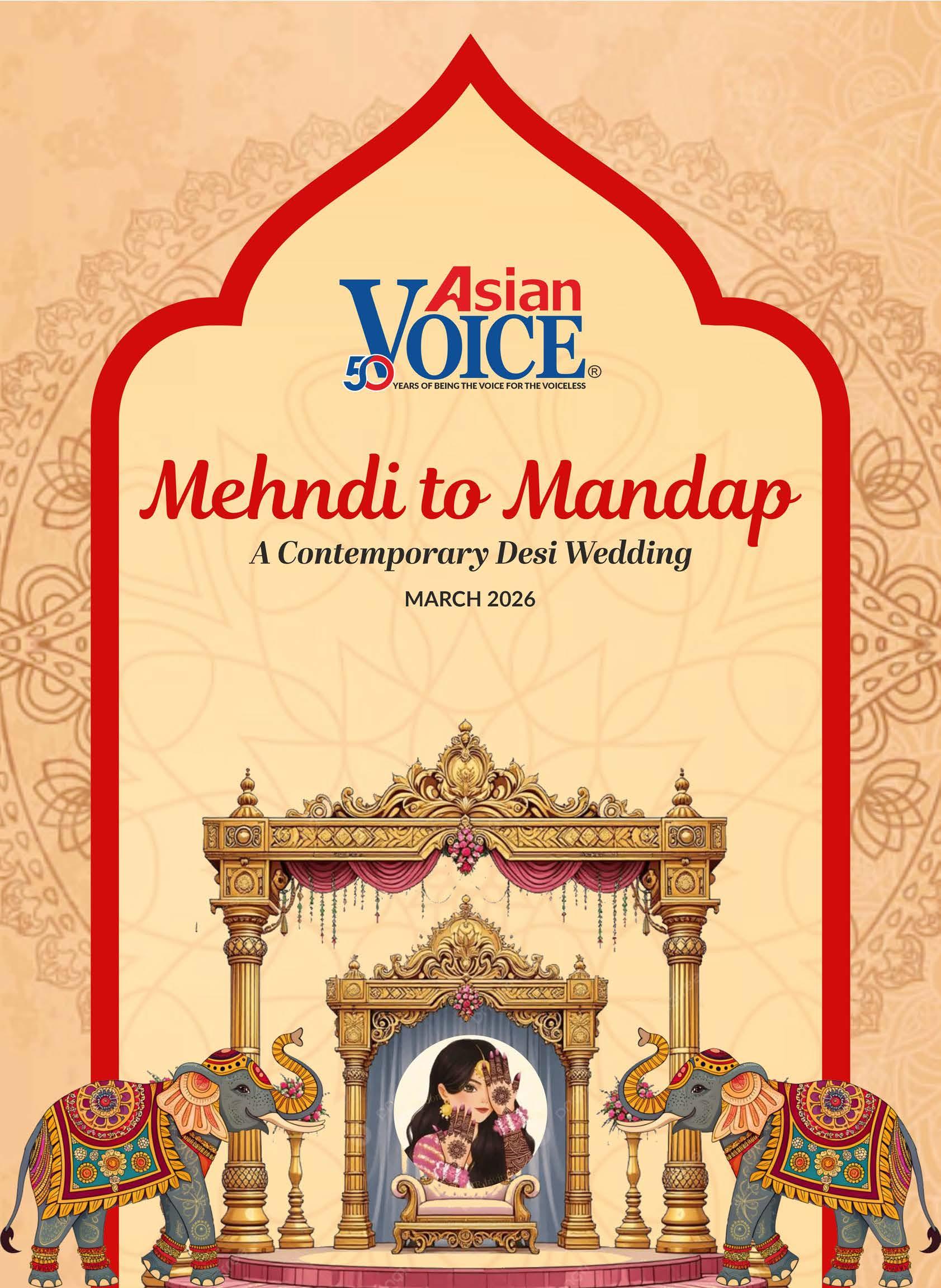


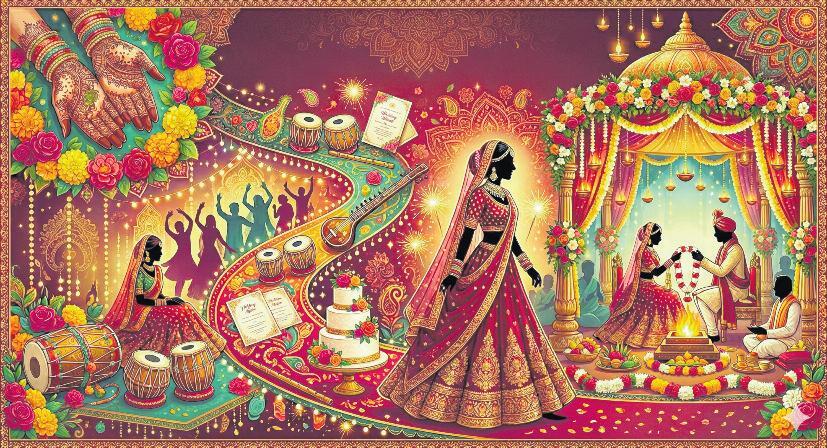
South Asian weddings have always been vibrant, multiday celebrations where tradition meets festivity, and the ceremonial journey from mehndi to mandap is a spectacle in itself.
In recent years, these weddings have evolved dramatically, blending time-honoured customs with contemporary trends, giving modern couples the opportunity to celebrate their culture in ways that reflect their personalities, tastes, and global influences. Our feature, ‘Mehndi to Mandap’, explores this fascinating transformation, from bridal style to décor, rituals to entertainment, and every detail in between.
The first event in the wedding journey, the mehndi ceremony, has seen a remarkable evolution. Once a simple affair with floral décor and traditional designs, mehndi now embraces creativity and personalisation. Intricate, Instagram-worthy henna patterns, often inspired by architecture, nature, and even pop culture, are complemented by themed décor, mood lighting, and
customised bridal attire. Designers are blending traditional motifs with modern twists, ensuring the bride’s individuality shines while still paying homage to her heritage.
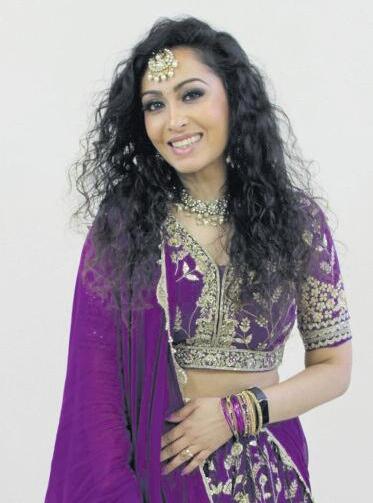
Bridal fashion itself has experienced a modern renaissance. While lehengas and sarees remain timeless staples, today’s brides are experimenting with colours, textures, and silhouettes, creating a balance between tradition and contemporary aesthetics. Celebrity weddings often set trends that trickle down to mainstream celebrations, influencing everything from pre-wedding events to reception looks.
Alongside couture, brides are increasingly mindful of comfort and versatility, choosing ensembles that allow them to enjoy their celebrations without sacrificing elegance.
Safety and security have become essential considerations, particularly for the safeguarding of gold, jewellery, and other valuables. Expert advice now focuses on discreet storage, professional
security services, and insurance to ensure peace of mind amid large-scale gatherings. This practical aspect reflects the modern bride and groom’s approach: celebrating opulence responsibly while prioritising safety.
Beyond attire and accessories, weddings today have become immersive experiences. Wedding stationery, for instance, has transformed into a reflection of the couple’s personality — from lasercut invites and calligraphy to personalised emojis and digital RSVP systems.
Décor, too, has moved from purely traditional to thematic and experiential, with floral installations, bespoke lighting, and curated spaces creating an unforgettable ambience. Destination weddings have surged in popularity, offering not only picturesque backdrops but also a chance to craft multi-day cultural experiences in exotic locales, from sun-kissed beaches to historic palaces. Entertainment remains a crucial part of the celebrations. From choreographed dance
performances to live bands and DJs, couples are blending contemporary music with classical Indian rhythms, ensuring guests are enthralled at every stage. Cakes, once a modest afterthought, have now become showpieces of design and flavour, often customised to tie in with the wedding theme. Every element, from mehndi to mandap, is an opportunity to celebrate love, heritage, and creativity.
Mehndi to Mandap captures this dynamic fusion of tradition and modernity, showcasing
how South Asian weddings have transformed into multi-sensory, meticulously curated experiences. Through articles on evolving design trends, bridal fashion, celebrity-inspired styles, décor innovations, security considerations, destination weddings, music, and culinary artistry, this feature provides both inspiration and guidance for couples planning their perfect celebration.
In a world where culture, style, and personal expression converge, South Asian weddings continue to evolve while staying deeply rooted in tradition. From the intricate mehndi patterns on a bride’s hands to the beautifully decorated mandap under which vows are exchanged, every detail tells a story of love, family, and the enduring joy of celebration.
Our 'Mehndi to Mandap' feature invites readers to explore this rich tapestry, offering a glimpse into the past, the present, and the exciting possibilities of the weddings of tomorrow.
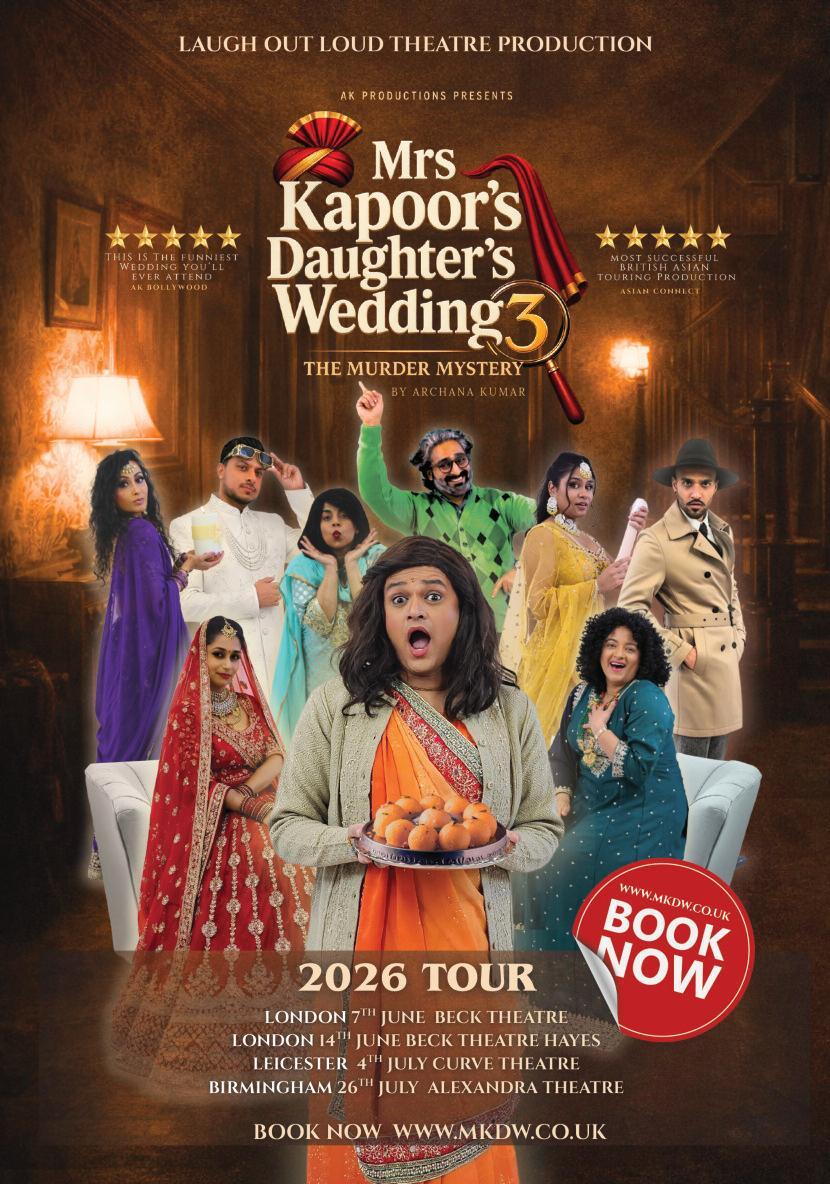
Archana Kumar, Director & CEO, Mrs Kapoor’s Daughter’s Wedding South Asian weddings are a spectacle like no other. Vibrant, emotional, highenergy and unapologetically grand. Alongside the beauty of the big fat Asian Wedding also comes the drama.
As a writer, director and choreographer, I’ve spent years bringing these stories to life,

from choreographing real weddings to creating immersive theatre experiences.
Over the past eight years, our
productions have been seen by over 100,000 audience members, including one of the UK’s biggest immersive South Asian wedding shows in the West End.
That journey has led to Mrs Kapoor’s Daughter’s Wedding, a theatre experience that places audiences right in the heart of a big fat Asian wedding. With live singing, high-energy dance, humour and interactive moments, it’s not just a show you watch, it’s a celebration you become part of.
Now, we return with the third daughter’s wedding, and this time, there’s a twist. Behind the laughter, the music and the traditions, something unexpected unfolds.
Secrets surface, tensions rise and suddenly… everyone becomes a suspect.
It’s everything you love about a South Asian wedding. The chaos, the characters, the emotion, but taken to a whole new level.
Because when the Kapoors throw a wedding, anything can happen!
Discover more at Mrs Kapoor's Daughter's Wedding: www.mkdw.co.uk
Cakes have bec om e an e ssen tial part of li fe’s c elebrati on s, addin g sweetn ess a nd sy mbolis m to every speci al oc casi on
From birthdays and weddings to anniversaries and milestones, a cake often serves as the centrepiece that brings people together. More than just a dessert, it represents joy, love and shared memories, marking moments that matter most. Over time, cakes have evolved in both design and flavour, reflecting personal tastes and cultural trends, and continue to make every celebration feel complete and memorable.
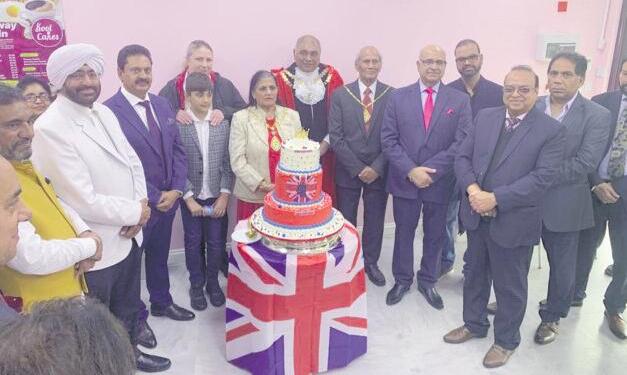
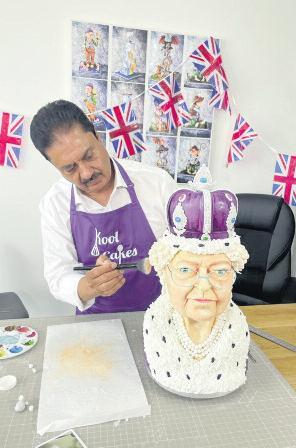
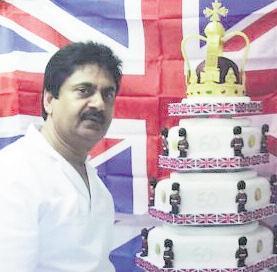
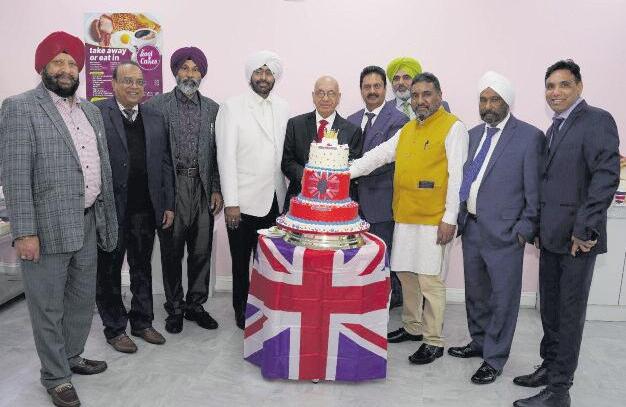
Among those who have turned this tradition into a remarkable success story is Kulwi nder Kumar, widely known as Mr Paul, a highly respected British entrepreneur and owner of the renowned bakery brand Kool Cakes (formerly Paul’s Bakers). His journey has been shaped by a strong partnership with his wife, Salinder Kaur, and a deep commitment to his family, including their three daughters, Jennyfer, Kiran and Priya. A devoted family man and influential figure, he is widely respected among religious and political leaders in the UK.
A true all-rounder, his bakery has won several accolades, including a place in the Guinn ess Book of World R ecords for the largest c ake s culpture in 2014 Kool Cakes was chosen to provide a 5-f oottall c ake for Celebri ty Bi g B rother for one of the tasks.
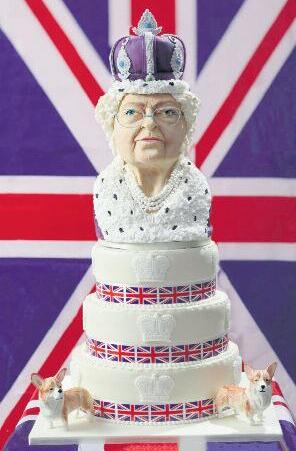
Kool Cak es als o had the honour to m ake an d gift a 'Royal' c ake to the Queen at Buck ingham
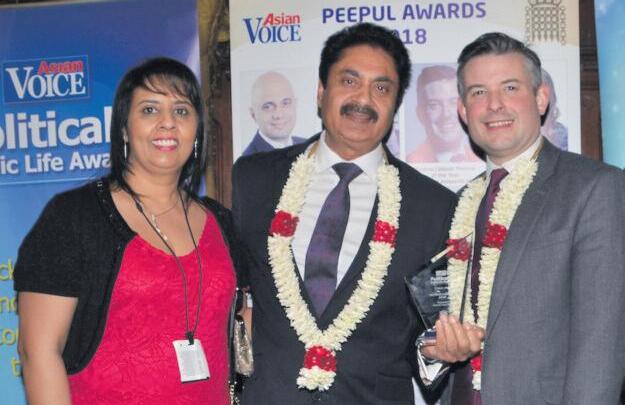
Beyond his business achievements, he is also a mentor, offering free cakedecorating training at his Heston shop, and a philanthropist dedicated to supporting the development of his ancestral village in India. In recogniti on of his contrib uti on s, he rec eived the Asi an B us ines s Publi cations Ltd (AB PL) Politi cal & Public Life Award for I nnovation in Busi ness at the U K Parliame nt in 2 018
“B akin g bec ame m y c alling”
Reflecting on his journey to the UK, Kulwinder Kumar shared, “I arrived in 1983 and took on various jobs, including working in a hospital. In 1989, I joined Air India at Heathrow Airport as a cargo agent, while also working part-time in a bakery. That’s where I developed a strong interest in the cake business. By 1990, I decided to pursue it seriously and enrolled in a private college to learn professionally. I later
went to the United States, where I earned a diploma and a master’s degree in cake-making, covering everything from fresh cream and buttercream to novelty and wedding cakes. After returning, I opened my first shop in 1993, then called Paul Baker, which I ran for 12 years before expanding to four outlets.”
Speaking about
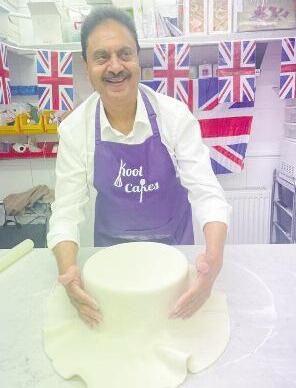
his innovation in eggless cakes, he explained, “At the time, what people called ‘vegetarian’ cakes in the UK still contained eggs. I wanted to create something truly egg-free, so I kept experimenting. After many attempts, I finally perfected an eggless sponge recipe in 1994.”
Rec ord-break ing ri se to royal rec ogn ition
Speaking about his royal connections and recordbreaking achievements, he said, “I ’ ve created c akes for the Hous es of Pa rli amen t and e ven for the B ig B rother s how , one of them meas ured 40 in ches by 40 in ches and s tood 5 feet tall
In 2012, during the Queen’s Diamond Jubilee, I approached Buckingham Palace because I wanted to present something that reflected what I had achieved since coming to this country. The process took three to four months, including detailed security checks and interviews. Eventually, I was approved by the Queen’s head chef, Mark Flanagan, and had the honour of presenting a cake to the Queen on behalf of the Asian community.”
“In 2014, I collaborated wi th Fairy Li quid to b reak the Gui nnes s World Rec ord for the largest cake Many believed it wasn’t possible, but w e crea te d a 10-m etre by 12 -m etre ca ke in under s even hours a t We stfield Shoppi ng Cen tre, serving around 12,000 slices for the Make-A-Wish charity. Later, in 2022, I returned to Buckingham


Palace for the Platinum Jubilee.
We also organised a large street celebration in Southall, complete with samosas, tea and Indian music. Additionally, I personally contributed £27,000 to host a community event attended by MPs and religious leaders to mark the Queen’s 70year reign,” he added.
B akin g succ ess with a heart f or charity
Highlighting his longstanding philanthropic work, Kulwinder said, “In my village, Johal in District Jalandhar, I’ve been involved in charity for the past 35 to 40 years. I helped
donated it to the temple.”
Speaking about evolving trends in the cake industry, he noted, “The industry has grown immensely, no birthday or wedding feels complete without a cake now. Tiered cakes are especially popular. Many couples want grand fiveor six-tier designs but also want to manage costs, so we use dummy tiers. Only a small section is real cake for the cutting ceremony, while the rest is a decorative display that is later taken back.”
Offering advice to aspiring entrepreneurs, Kulwinder added, “I always say, start by
install a sewerage system, streetlights, and about 25 years ago, I built 10 toilets for women so they wouldn’t have to go out into the fields, especially during the rain. More recently, there was a piece of land next to a temple needed for a langar hall. The owners were asking for three times the market price, so I bought the land and
developing a skill or hobby, whether it’s art, design, plumbing or building. Once you’ve mastered your craft, take the step to start your own business. Begin small. It’s not easy and requires hard work, but it’s far better than spending your life just working for others without growth.”
Shipping all over England 9, Central Parade, New Heston Road, Heston, Hounslow - TW5 0LQ


India’s wedding landscape shifts as couples mix traditions into bold, immersive celebrations.
From the backwaters of Kerala to the bustling streets of Chandigarh, couples are cherry-picking the most emotive and energetic rituals from every corner of the subcontinent to create a truly pan-Indian celebration. This shift, heavily influenced by cinematic aesthetics and social media, has turned private family rites into grand, inclusive festivals.
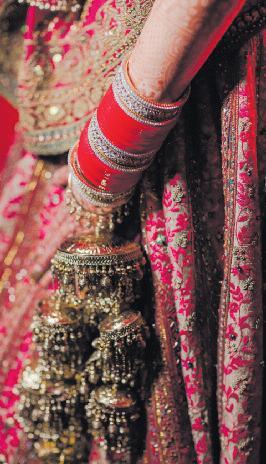
The visual hallmarks of a Punjabi bride, specifically the Chooda and Kalire, have now become essential fashion statements for brides in all of India alike. These crimson bangles and tinkling golden ornaments, once exclusive markers of Sikh heritage, are now embraced by
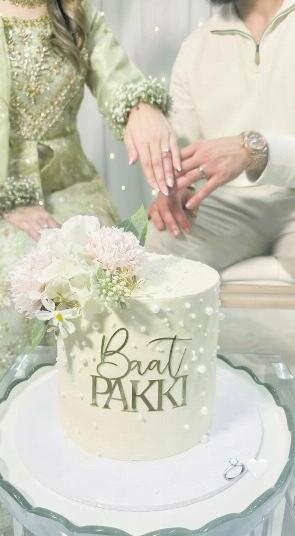
women of all backgrounds.
Similarly, the Baraat, the North Indian groom’s boisterous musical procession has marched its way into the traditionally quiet ceremonies of South India and Bengal. Today, a groom in Chennai is just as likely to arrive in a vintage convertible accompanied by a thumping dhol troupe as he is to follow ancient Vedic protocols.
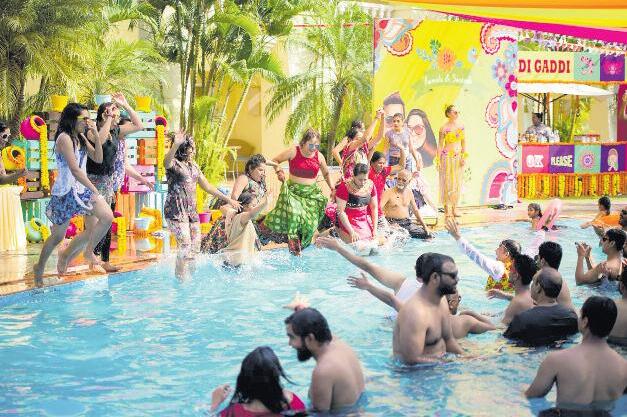
Pre-wedding festivities have also seen a high-octane upgrade. The Mehndi night, once a modest gathering, has been reimagined nationwide as a professional soirée featuring intricate henna artistry, temple-inspired décor, dance numbers, games and so much more. Even the once-sacred Haldi ceremony is undergoing a striking transformation. Inspired by the Bengali Gaye Holud, it has been reimagined as a vibrant “Yellow Holi” carnival, where tradition meets spectacle. What was once an intimate, ritualistic affair is now a riot of colour and celebration, with flower petal showers, water guns, poolside parties, and even Holi-style revelry with abeer and gulaal. The line between ceremony and celebration is blurring, as couples seek moments that are as joyful
and immersive as they are visually captivating or traditionally momentous.
This shift extends beyond Haldi. Welcome dinners and pre-wedding carnivals have emerged as grand curtain-raisers to the main festivities, setting the tone with themed décor, live entertainment, curated food experiences, and high-energy celebrations. These events are no longer mere introductions, but statement occasions in their own right, designed to bring guests together while offering a preview of the wedding’s scale, style, and personality.
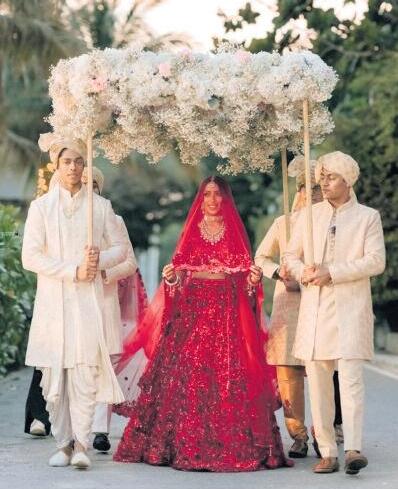
Intriguingly, the cultural exchange is a two-way street. The Kashi Yatra, a humorous Tamil Brahmin ritual where the groom playfully pretends to flee to the Himalayas to become a monk, is now being staged by North Indian families looking to inject a bit of theatrical comedy into their proceedings. This fusion extends beyond national borders as well, with “White Wedding” aesthetics, such as ivory lehengas and cathedral-length veils merging seamlessly with traditional firecircling rites. The Western tradition of the "Reception Toast" and the cutting of a cake, acts as the grand finale. These speeches offer a rare moment of individual storytelling within the largerthan-life family framework. By blending the emotional weight of a Western aisle walk under a Phoolon ki Chaadar with the high energy of a Punjabi Sangeet, the modern Indian wedding has become a beautiful, borderless symphony of joy.
For many South A sian fam ilies, g old represents m ore th an w e al th , i t e
history, h eritage, and em otional legacy
Passed down through generations or gifted during weddings and festivals, gold bangles, necklaces, and heirlooms often sit at the heart of the home. Yet this cherished tradition has increasingly made certain households a target for burglars, particularly those of Indian, Pakistani, Bangladeshi, and other South Asian backgrounds.
Stolen items are not merely financial losses; they often carry deep sentimental value.
M odern security th reats
Burglaries are no longer limited to opportunistic thieves. Even affluent or gated communities can be vulnerable. Experienced criminals use sophisticated techniques such as tailgating behind residents with electronic passes, posing as
Celebratio ns th at draw attentio n
South Asian homes are vibrant and welcoming, with torans, flower garlands, rangoli patterns, and elaborate decorations for weddings and festivals such as Diwali or Eid. While these traditions are beautiful and meaningful, they can also make homes more noticeable to criminals. Celebratory displays and social media posts showing guests, gifts, or jewellery can inadvertently signal the presence of valuables, increasing the risk of targeted theft.
utility workers or delivery personnel, and exploiting weak passwords or unprotected smart devices. Ring cameras and video doorbells provide some protection, but they are only effective if properly secured and regularly updated.
Adv ice fro m th e po lice
UK police forces, including the Metropolitan Police, consistently stress practical measures to reduce risk.
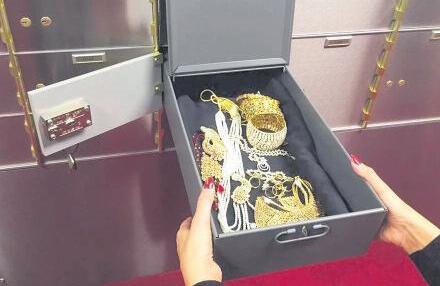
Families are encouraged to keep high-value gold in bank safety deposit boxes whenever possible, rather than at home. Investing in a high-quality, fire-resistant safe that is securely bolted
and discreetly placed can protect valuables. Strengthening doors and windows with approved locks, using monitored alarms and security lighting, and remaining cautious of strangers at the door are all critical. Keeping detailed photographs and records of jewellery can make recovery easier in the event of theft.
Balancing tradition and security Maintaining cultural traditions and celebrating with loved ones remains central to South Asian life, but awareness is key. Limiting public exposure of valuable items, practicing discretion in conversation and on social media, and taking proactive security measures can significantly reduce risk. Theft prevention begins long before a burglar appears, with offsite storage, reinforced home security, and vigilance against modern burglary tactics.
By combining cultural pride with smart, careful precautions, families can continue to enjoy their heritage while safeguarding the treasures and memories that define it.
For many Asian families across the UK, gold jewellery is far more than decoration. It represents sacrifice, celebration, security, and the quiet wealth built across generations.
Wedding sets given with love, bangles preserved through decades of family milestones, and carefully accumulated savings in gold carry emotional meaning far beyond their monetary value.
Yet increasing reports of targeted jewellery theft are unsettling that sense of safety.
Families describe homes being deliberately searched for gold collections, often after periods of observation. What is taken is rarely recovered. Beyond the financial loss lies something deeper — anxiety, emotional distress, and the painful realisation that cherished
heirlooms were never truly secure inside the home.
In response, a quiet but meaningful shift is taking place.
Rather than reacting after loss, many households are choosing to move jewellery and valuables into professional vault environments designed specifically to withstand organised criminal activity.
While visible security measures can appear similar across facilities, true protection is defined by the strength and certification of the vault itself, the part clients never see yet ultimately depend upon.
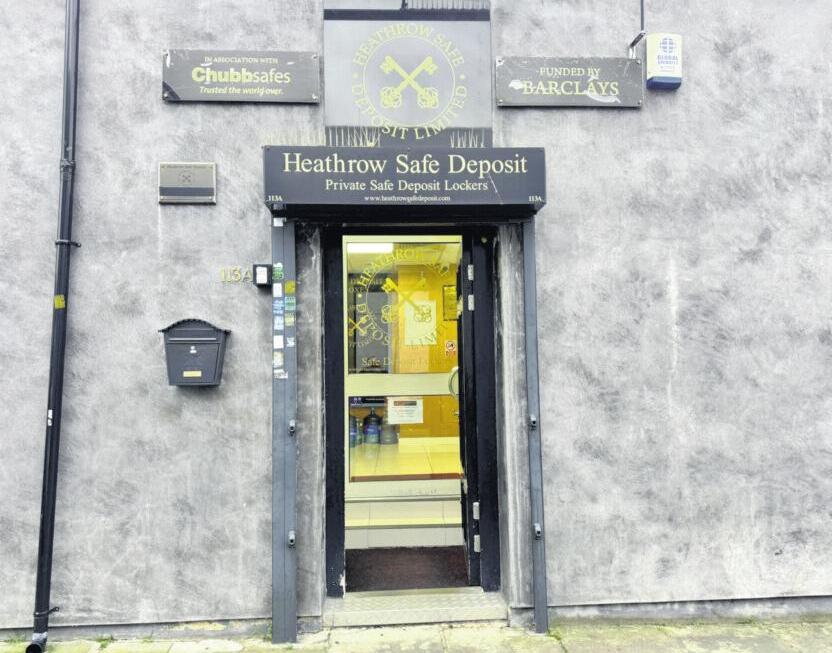
Heathrow Safe Deposit operates from a Grade 10 certified vault, representing one of the highest levels of independently tested burglary resistance available. This standard reflects exceptional structural integrity and a depth of protection designed to endure even the most
demanding circumstances.
For clients, the significance is not technical but emotional. The certification provides quiet reassurance that their valuables are protected within an environment engineered for exceptional strength, discretion, and reliability.
It is this unseen strength that transforms security into genuine peace of mind, allowing families to step away from worry and trust that their most meaningful possessions are safeguarded at the highest level.


Alarms, cameras, and home safes offer reassurance, but they cannot fully remove risk — particularly when criminals intentionally target properties believed to hold wedding jewellery or high-
purity gold.
Burglary is often patient, calculated, and deeply intrusive. Even well-secured homes can become vulnerable when valuables remain inside the very space criminals expect to find them. Families are increasingly recognising a simple truth: if some thi ng c annot be replaced, its protection s hould never rely s olely on residenti al s ecurity
Serving families across London and the wider UK, Heath row Saf e D ep osit, located on Southall Broadway behind Pawan Jewellers with its discreet entrance on Oswald Road, has quietly become a place of reassurance for those seeking protection beyond what domestic storage can provide.
Established in 2013, the facility has built trust through discretion, consistency, and a clear commitment to safeguarding clients’ most meaningful possessions.
This understanding is why more families are no longer viewing vault storage as a luxury, but as thoughtful and responsible protection. Rather than simply hoping valuables remain safe at home, families are choosing to place jewellery that represents years of sacrifice and celebration into environments designed specifically for its preservation.
Clients often describe a quiet sense of relief once their valuables are secured — the ability to enjoy special pieces when needed, without the constant background worry of keeping them at home. More than security alone, the decision reflects care for what has been entrusted by previous generations and a desire to protect it for those yet to come.
At the centre of this protection lies one of th e h ig hest r esistance-gr aded v au lt enviro nm ents certified in t he UK, purpose-built to provide defence far beyond conventional storage.
Each locker operates on a du al -key system, with keys held solely by the client. No spare or master keys exist, ensuring complete privacy and personal control.
Vault access is secured through a m odern biometric entry system com bining tap card auth ent icat io n wit h f acial
r ecog nition, delivering both convenience and robust layered protection. New clients also benefit from £ 10,000 com pliment ary insurance f or the f irst year (terms apply), offering immediate reassurance when valuables are moved out of the home.
For many families, the greatest benefit is emotional; the quiet comfort of knowing jewellery and heirlooms are protected in an environment specifically created for their preservation.
Heathrow Safe Deposit is located on Southall Broadway behind Pawan Jewellers.
The secure client entrance is on Oswald Road, not directly on the Broadway. If visiting for the first time, simply come to Pawan Jewellers on Southall Broadway, and you will be guided to the private vault entrance on Oswald Road.
If you are unsure when arriving, please call us and we will happily assist you. Google Maps tip: search “Heathrow Safe Deposit Southall” or “Pawan Jewellers Southall Broadway” to reach the correct location.
Protecting jewellery is ultimately about protecting legacy, ensuring that what one generation safeguarded can safely reach the next.
For many families, securing their valuables within a professional vault is not driven by fear, but by foresight, responsibility, and the desire to live without constant concern.
Many who have already secured their jewellery share the same reflection: they wish they had acted sooner.
As gold values rise, jewellery collections become increasingly attractive to criminals. The longer valuables remain inside the home, the longer families remain exposed to unnecessary risk. Across the community, the shift is clear — peace of mind is now being prioritised over convenience.
Heathrow Safe Deposit operates strictly by appointment from its secure facility on Southall Broadway behind Pawan Jewellers, with the private entrance located on Oswald Road, ensuring discretion, controlled access, and personalised
assistance.
Opening hours: 11:30 AM – 6:15 PM (by appointment only)
Availability can be limited during wedding seasons and periods of heightened security awareness, making early booking advisable.
113 The Broadway Southall UB1 1LN - B/h. Pawan Jewellers Secure entrance on Oswald Road Established 2013 Trusted by families across London and beyond.
TO ARRANGE A PRIVATE APPOINTMENT
If you need directions when arriving, please call
In a wedding, every aspect matters; the rituals, the celebrations, and of course, the food T he culinary experience is not just about feeding guests; it is about creating moments of joy, conversation, and connection
From carefully selected ingredients to beautifully presented dishes, every meal becomes a celebration in itself, reflecting the richness of the occasion and the love poured into it. Shayona Caterers understands this perfectly, providing exquisite catering that matches the grandeur and joy of the wedding, making the dining experience as unforgettable and special as the ceremony itself.
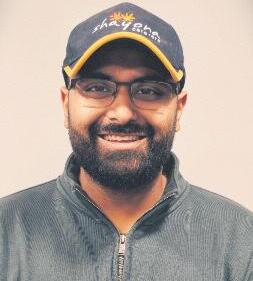
Darshan Patel, Director of S hayo na Caterers, said, “Shayona has been around for about 35 years, if not longer. The main goal was to provide sattvic food. At that time, there were very few options for clean, pure sattvic catering. The idea behind starting this catering service was to offer wholesome, sattvic meals for religious and ceremonial functions, whether it’s a wedding, a housewarming, or any other special occasion.”
He added, “What began as a volunteer-based initiative eventually evolved into a professional setup. Over the years, we’ve updated our menu and presentation to
align with contemporary tastes, appealing to the preferences of newer generations while staying true to our roots.”
On the philosophy guiding their approach to hospitality and food, Darshan explained, “For us, it’s about creating an emotional connection with guests and supporting our clients throughout the entire event. Weddings, for instance, often include multiple preevents, and we ensure our presence and support across all of them. At the same time, we honour tradition. Typically, pure food served during wedding ceremonies is prepared without onion and garlic. Even guests who normally consume these ingredients often choose dishes that are culturally appropriate for Hindu ceremonies. That balance between tradition and thoughtful hospitality is central to our approach.”
On the availability of sattvic food in the UK, Darshan noted, “In the early days, sourcing pure ingredients was very challenging. Even today, we grind and prepare our own masalas to ensure nothing non-sattvic enters our food. Everything on-site is strictly onion- and garlic-free, and these ingredients are never handled in our facilities. While ingredient availability has
improved over time, we continue to make our own garam and chaat masalas inhouse to preserve the authentic flavours we aim for.”
“Every menu reflects the couple’s personality”
Darshan emphasised the significant role food plays in shaping the overall wedding experience. “It’s often the one thing guests remember from a function, the quality of the food and the service leave the lasting impression,” he said.
Discussing the balance between tradition and innovation, he noted, “Wedding menus have evolved into more ‘fun food’ over recent years. Items like paneer, which were uncommon 30 years ago, are now standard. We also add Western twists, dishes like ‘mock’ curries, cauliflower kababs, vegetable fritters and harabhara kababs have become very popular, while ensuring that authentic masalas and flavours are maintained
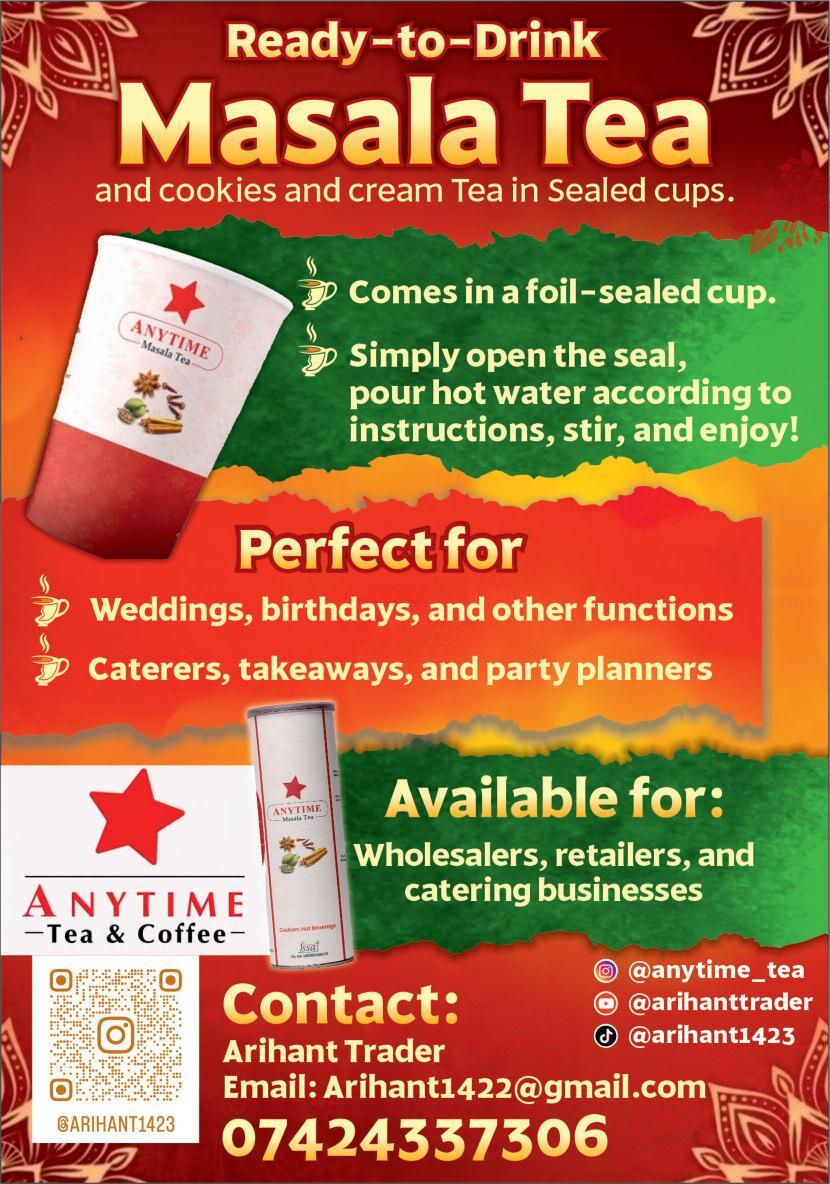
within these contemporary formats. We have over time also innovated matho/shrikhand flavours such as Rajbhog, Cookies and cream bringing 21st centuries flavours into traditional dishes.”
He elaborated on the challenges of cooking without onion and garlic: “Onion and garlic are powerful flavours that dominate a dish. Those unfamiliar with cooking without them often struggle to bring out the other flavours. For instance, with chhole, we sometimes use a cashewbased gravy to add richness and creaminess. Cashew nuts have a natural, creamy texture, which allows the dish to retain depth of flavour without missing onion or garlic, empowering the other spices to shine.”
On collaborating with couples to create wedding menus, Darshan said, “We focus on bespoke, ‘fun’ menus that reflect each couple’s personality. Drinks may be named after the bride or groom, or favourite fruits may become the base for a signature mocktail. Likewise, if a guest loves potatoes, we incorporate them thoughtfully into their menu. We don’t provide set menus; every menu is crafted in consultation with the couple, offering suggestions and options so they can cus-

tomise a menu unique to their celebration.”
He also highlighted emerging trends in modern weddings: “There’s a growing emphasis on healthy food. Instead of a basic salad, couples now opt for quinoa or protein-rich salads. Meat alternatives like tofu or soya-based curries are also becoming increasingly popular, reflecting contemporary tastes while maintaining high-quality, flavourful options for all guests.”
Behind the scenes o f a p erfect wedding
Discussing the preparation process behind weddings, Darshan said, “It varies from wedding to wedding. Every event is unique, with different menus, setups, and on-site facilities. Over the years, we’ve refined a streamlined process so that what guests see front-of-house is seamless and well-organised. Behind the scenes, we have dedicated leads for each segment; crockery, cooking, logistics, and service, ensuring every
aspect is expertly managed. For a large wedding, a guest may interact with just one front-of-house coordinator, while five other leads handle the event quietly behind the scenes.”
“We also offer packages to clients where we host events of up to 100 people in our Shayona Lounge serviced by the Shayona Restaurant team, becoming a one stop service providing and removing the hassle and stress of having to juggle multiple clients.”
Comparing destination weddings to local events, he noted, “Destination weddings are more challenging, especially when maintaining authentic Gujarati Flavors in Europe. We often bring our own ingredients or import them from India. For instance, at a wedding in Santorini last year, most ingredients and our blended masalas were transported from the UK and India to ensure guests enjoyed the same quality experience as they would in London, just in a stunning setting.”
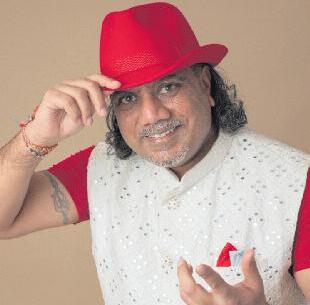
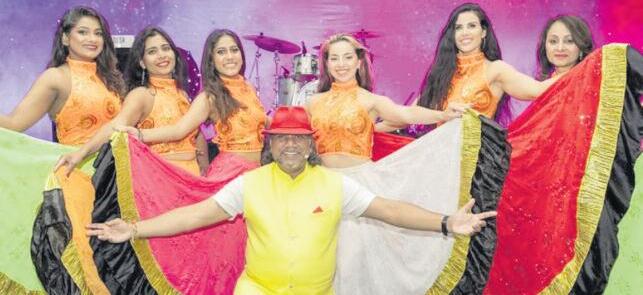
Jay Kumar is a choreograp her and dance entertainer known for his engaging and interactive style that encourages audiences of all ages to participate Using a headmic and a strong stage p resence, he ensures dances are easy to follow and inclusive
He leads a talented team of Bollywood dancers, DanceAsia, who perform vibrant medleys alongside his interactive sessions. With over 25 years of experience, Jay Kumar and his team have consistently created fun and memorable experiences for diverse audiences. He spoke to Asian Voice about his services provided for weddings, awards and much more.
1What specific services do you provide for weddings?
My interactive dance sessions create vibrant energy and joyful smiles, making them a perfect fit for informal pre-wedding celebrations like sangeet, mehndi and haldi functions. At inter-racial weddings, my sessions help break down barriers, as many nonIndians enjoy learning a few dance moves and are often the first to join in. Along with my DanceAsia team, I bring a touch of Bollywood magic to wedding receptions and pre-wedding events through lively performances.
I also specialise in choreography for family and group dances, as well as the bride and groom’s first dance. One memorable experience was working on an episode of BBC’s ‘Don’t Tell The Bride’, where I taught the groom and his groomsmen a fun Bollywood
group dance for a surprise wedding at Brighton Pavilion. In addition, I work as a stage host and MC, helping to smoothly manage different parts of the celebration so families can relax and enjoy the event.
Alongside entertainment, I offer colourful décor for pre-wedding functions and provide Bollywood-themed hen party experiences, including dance sessions and costumes for a final performance. I also collaborate with DJs, dhol drummers and other entertainers, allowing me to deliver a complete, one-stop solution for wedding entertainment.
2What makes your international wedding services unique?
I have been fortunate to be able to provide my dance services globally at many Destination Weddings including Monaco, USA, Thailand, Dubai and India (Jaipur, Mumbai, Delhi).
For some Destination Weddings, I have taught Group dances in the UK to a core set of performers, then added final touches at the Wedding destination once others have joined. This
approach helps build confidence across the entire group. With the injection of energy from my Interactive dance sessions at the events makes it even better value and worthwhile.
3What awards or accolades have you earned throughout your career?
I have been privileged and honoured to receive recognition through numerous awards over the years including the following three prestigious accolades:
Humanitarian Services. Over 15 years, I have supported numerous Lions Events with my dance teams, in particular at the Annual Senior Citizens Party for over 800 Seniors and the Annual Christmas Party for disadvantaged Children.
4Where else do you provide your entertainment services?
I provide entertainment services across a wide range of events, including corporate functions and team-building days, golf club events, Bollywood-themed
British Empire Medal (BEM) for Services to Dance in the Community in Greater Londonan Honour from the Late Queen Elizabeth II in June 2022 in her last Birthday Honours List Pioneer Award at the UK Bhangra Awards 2025 - recognition of being a pioneer in introducing interactive Bhangra and Bollywood Dance as Entertainment for Events over 20 years ago, awarded in December 2025.
Melvin Jones Fellow Awardpresented by Lions Clubs International Foundation in January 2024 for Dedicated
parties such as charity fundraisers and birthdays, as well as school Bollywood nights. I am also regularly involved in cultural celebrations like Diwali, Holi and community events.
I have also hosted Bollywood Nights for over 20 years, including my long-running events at Venue 5 in Eastcote, North West London, and more recently, Disco Deewane Bollywood boat parties
since 2023. In addition, I conduct workshops for schools, corporate groups and community organisations. I also perform at festivals and melas, including the London Mela for 15 years and as a headline act at the Ipswich Mela for several years.
5Can you share some standout moments or highlights from your journey?
Some of my most memorable highlights include being the Associate Choreographer for Nutkhut’s “Indian Wedding” section at The Queen’s Platinum Jubilee Parade in June 2022, where I trained 70 community dancers to perform as wedding guests along the Central London route, including The Mall and in front of Buckingham Palace.
In January 2023, I trained 25 community dancers for the New Year’s Day Parade, performing alongside dhol drummers through central London.
Earlier in my career, I appeared on The Paul O’Grady Show on Channel 4 in 2007 with my team DanceAsia, performing a dandiya routine and teaching Paul O’Grady and his guest some dance steps. That same year, DanceAsia also performed at the Rome International Film Festival, introducing interactive Bollywood dance to Italian audiences.
S croll throu gh yo ur social media feed and you’ll feel it instantly, the quiet era of muted tones and ‘ sad beige’ minimalism is fading into the backgrou nd
In its place comes a surge of unapologetic colour, cinematic drama, and high-impact styling. The Indian wedding scene in 2026 isn’t just evolving; it’s staging a full-scale renaissance. After years of restraint, the ‘Big Fat Indian Wedding’ is reclaiming its throne, louder, richer, and more expressive than ever.
This is not just fashion; it’s theatre. It’s heritage reimagined with couture precision, where every outfit, every jewel, every detail tells a story designed to be seen, remembered, and felt.
The return of the radiant bride
Soft pastels may have had their moment, but the spotlight now belongs firmly to bold colours— red, rust orange, green and even purple— not timid, diluted tones, but powerful, commanding hues. Brides are embracing deep, intoxicating, fierce and unapologetic shades that demand attention the moment they enter a room.
The silhouette has transformed into something almost mythic. Think goddess-core: structured corset cholis replacing traditional blouses, sculpting the body with sharp, architectural precision. These pieces merge modern tailoring with age-old craftsmanship, adorned with
intricate zardozi, mirror work, and hand embroidery that glimmers with every movement.
The dou ble dupatta drama
For the modern bride, one dupatta simply doesn’t suffice. The double dupatta has evolved from a styling choice into a statement of grandeur and a layered narrative of texture, weight, and movement.
A richly embellished dupatta is
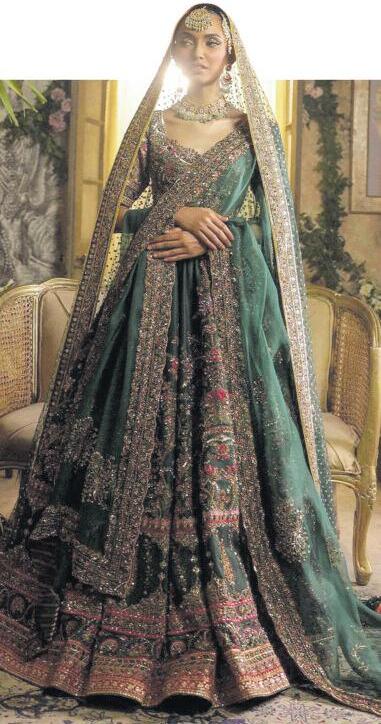
draped across the body, showcasing meticulous karigari, while a second, lighter veil floats effortlessly over the head. Crafted in sheer net or tissue, it creates a cinematic trail, framing the bride in motion like a scene from an epic period film.
Maximalist jewellery on the rise
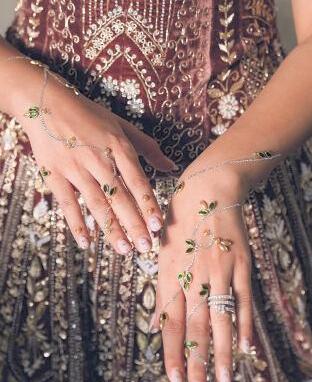
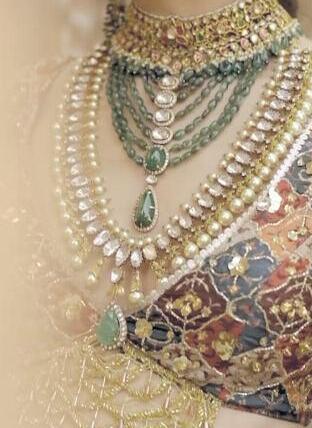
If last year celebrated the necklace, this year belongs to the wrist. The shift is bold and deliberate, from stacks of delicate bangles to singular, statement-making cuffs that anchor the entire look.
These aren’t accessories; they’re centrepieces. Wide, textured cuffs studded with rubies, emeralds, and diamonds now carry the visual weight of the ensemble. Necklaces follow a new rule: more is more, but with intention. Heavy Polki chokers meet cascading Rani Haars, layered with precision rather than

clutter.
Meanwhile, the Matha Patti has returned with renewed drama: wider, bolder, often multi-layered, framing the face with striking intensity. Paired with oversized chandbalis or jhumkas, the effect is theatrical, commanding, unforgettable.
Modular co uture and storytelling henna
Today’s bride is as strategic as she is stylish. Modular couture has
emerged as a quiet revolution, allowing outfits to transform seamlessly across ceremonies. Detachable capes, dramatic trails, and layered overskirts create moments of reveal — shifting from regal ceremony wear to sleek, dance-ready silhouettes in seconds.
Even henna has become a canvas for storytelling. Bio-henna
designs now weave deeply personal narratives into intricate patterns, from city skylines to beloved pets hidden within the artwork and even flexible sticker with Swarovski crystals.
The maximalist haldi
No longer a subdued pre-wedding ritual, for Haldi styling, florals take centre stage but not in their simplest form. Brides are adorned in elaborate flower jewellery that borders on wearable art: cascading necklaces, oversized earrings, and statement headpieces crafted entirely from blooms. Layered into this is a distinct bohemian edge: shell jewellery, cowrie accents, and beach-inspired textures are making a striking entry, blending earthy, free-spirited aesthetics with traditional yellow palettes.
A new era for the groom
The modern groom is stepping into the spotlight with quiet confidence, reinterpreting the grandeur of the Maharaja through a refined, contemporary lens. Clean, tailored sherwanis become the canvas for statement jewellery, layered pearls, emerald beads, and striking Polki brooches that add depth without excess.
While daylight ceremonies still favour soft, neo-neutral tones like mint and sage, evening looks are embracing moodier, richer palettes. Jewel tones and plush velvet bandh galas introduce texture and drama, ensuring the groom stands not in the background, but firmly beside the bride in presence and style.
Scent has a qu iet magic that no o ther sense can rival
One familiar note can unlock a memory in an instant, the sweetness of childhood treats, the salt of a distant shoreline, the warmth of a moment you thought you’d forgotten. It’s this deep emotional pull that has given rise to scentscaping, a growing wedding trend that transforms fragrance into memory’s most powerful storyteller.
By weaving a signature scent through your celebration, you don’t just decorate a space, you create a feeling that lingers long after the day is over. And its beauty isn’t yours alone. A carefully chosen fragrance becomes part of the atmosphere your guests step into, shaping how they experience each moment. A soft floral whisper during the ceremony, a richer, warmer note at the reception, these subtle layers elevate the mood, turning your wedding into something immersive and unforgettable.
Imagine, years later, catching a fleeting scent in the air and suddenly you’re back there. The vows. The music. The laughter. The joy. That’s the power of scentscaping: it doesn’t just define your wedding day, it preserves it.
Ways to infu se fragrance into your wedding
Scented invitations
Offer a delicate preview of your celebration by lightly fragrancing your invitations. It’s a refined, sensory hint of what’s to come; just enough to intrigue, never overwhelm. Diffusers and roo m sprays
Much like luxury hotels and boutiques, you can craft a signature ambience with discreet diffusers placed at entrances, lounges, or restrooms. A gentle room spray in the bridal suite adds a personal, calming touch before the
festivities begin.
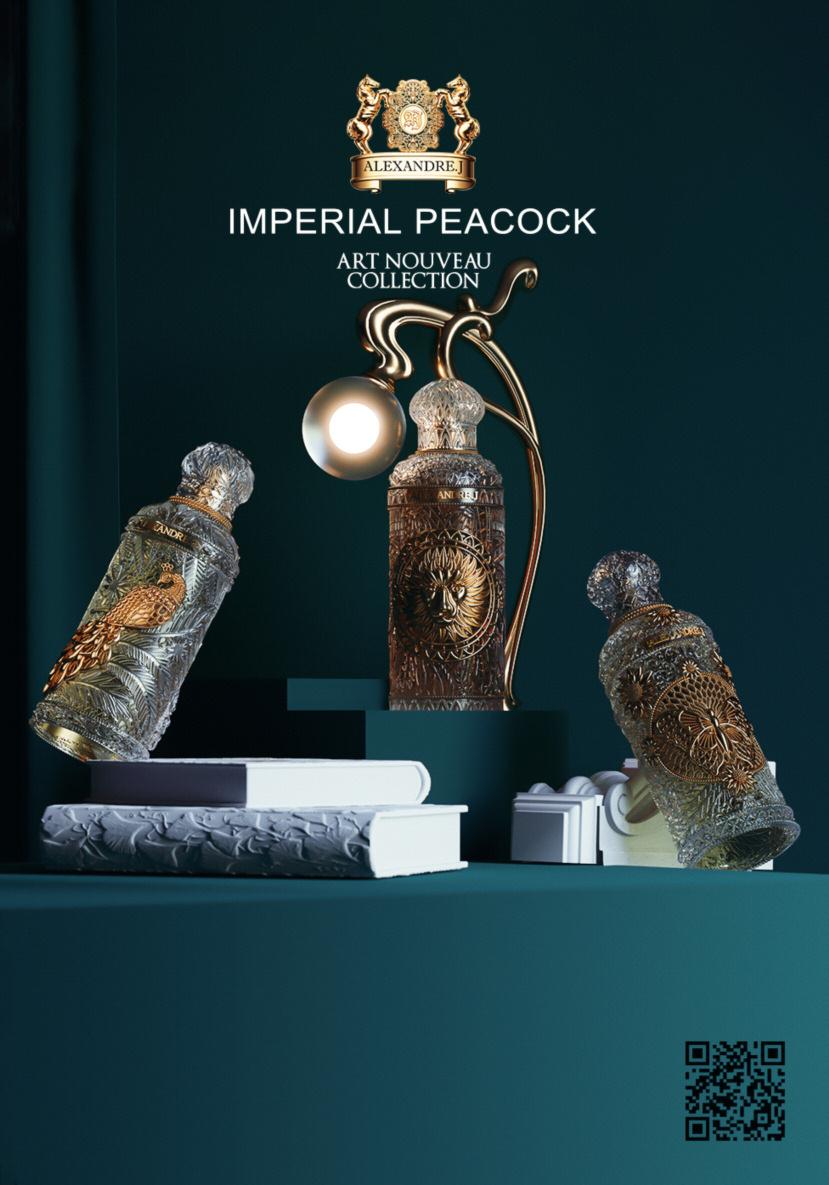
A fragrance bar with aromatic keepsakes Turn scent into an experience. A fragrance bar allows guests to blend their own custom perfumes—a playful, memorable alternative to traditional wedding favours that feels both personal and indulgent. Send your guests home with that lingering memory; they’re moments bottled, ready to be relived with every use.
A Signatu re Scent to
Remember Forever
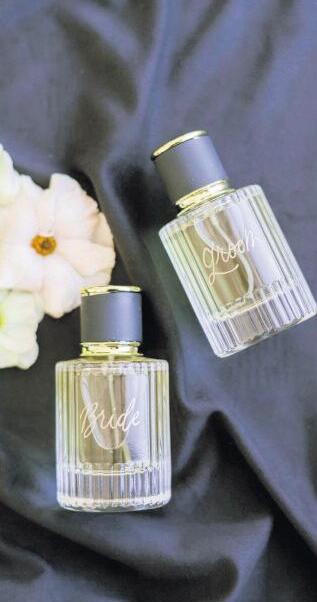
Perhaps the most meaningful touch of all is choosing a signature fragrance for your wedding, a scent that captures your day beyond what the eye can see. Imagine the quiet thrill of wearing a brand-new perfume on your wedding morning, thoughtfully chosen to reflect your story. Many couples now even create bespoke blends, crafting something truly their own. Long after the celebrations end, that same fragrance can be worn on anniversaries and date nights, instantly bringing those memories back to life. Paired with a beautifully personalised bottle, engraved with your initials and wedding date, it becomes not just a scent, but a timeless keepsake.
KoruMar Ephesus Beach & S pa Resort in Kusadasi/T ürkiye has becom e a to p d estination for w ed ding for Indian couples, especially those liv ing in th e U K
Everyone knows traditional Indian weddings feature vibrant rituals over a few days and nights, including Mehndi, Sangeet, Baraat, the main ceremony and more, and KoruMar Ephesus Resort can fit in all.
With its long sandy beach, big pools, lush gardens, breathtaking sea views, luxurious facilities, spacious event areas, delicious Indian food and professional team, the 5-star resort can perfectly host vibrant, multi-day Indian celebrations, blending Aegean Vibe with the joy of Hindu traditions. The resort’s beachfront is ideal for Dhol performances.
The hotel has welcomed several highprofile events, including epic ceremonies, highlighting different traditions and colourful rituals. Guests can enjoy customised Indian menus (often vegetarian/vegan-

friendly), ultra all-inclusive comfort. The resort’s all-inclusive perks— professional and experienced management and proximity to Ephesus Ancient City—makes it memorable for all guests.
Whether grand or intimate, KoruMar Ephesus can transform your big fat Indian wedding into an unforgettable seaside story, through unforgettable romance, profession and hospitality.
V isit www korum arep hesu s com tr to plan your
ding!
N earl y a quarter o f co upl es married l ast year w ere Ge n Z , w h o ar e rede finin g w edding trends , ac cording to Hitch ed’s Real W edding S tudy
They are 38% more likely to host engagement parties and 33% more likely to have prewedding photoshoots than older generations.Gen Z also values heritage, with 16% incorporating traditions and cultural elements, and they are driving the modern minimalist trend, with 24% choosing this style. Countryside venues are increasingly popular, with barns and farms leading at 20%, followed by hotels (17%) and country houses/manors (17%).
Over a third (36%) of couples embrace DIY projects to add personal touches, while 20% receive support from family, either financially or with preparations.
Couples spend an average of 15 months planning their wedding, with 57% taking a year or more. Wedding websites lead as the top resource (66%), followed by social media (60%), word of mouth (39%), and wedding fairs (36%). Guest experience is the top priority (76%), followed by personalisation (73%) and food and drinks (63%). Honeymoons average £4,422, with a third spending over £5,000. Europe is the most popular destination (56%), the UK (14%), with beach holidays (43%), city breaks (34%), and luxury escapes (36%) in demand. The minimoon trend is rising, with 43% choosing a shorter break.
“The wedding industry remains resilient,” said Chloe Lansdowne, Head of Consumer Marketing (UK) at Hitched.co.uk. “Couples are combining creativity and innovation to design celebrations that reflect their values and style.”
Wedd ing s in South A sian culture are grand, vibrant, and d eeply roo ted in trad ition, often reflecting centuries-old customs, family values, and cultural richness
From multi-day celebrations that include ceremonies like mehendi, sangeet, haldi, and the wedding itself, to elaborate décor, traditional attire, music, and large guest lists, every detail is thoughtfully curated to create a memorable and meaningful experience. These weddings are not just about the couple, but about bringing families and communities together in celebration.
Today, couples are increasingly blending tradition with travel, opting for breathtaking destinations across the globe that can seamlessly accommodate both cultural rituals and modern luxury.
India
India remains one of the most soughtafter destinations for weddings, especially for South Asians looking to celebrate their traditions in an authentic and culturally rich setting. With its diverse landscapes, heritage architecture, and world-class hospitality, the country offers a wide range of options, from regal palaces to serene beaches and vibrant cultural hubs.
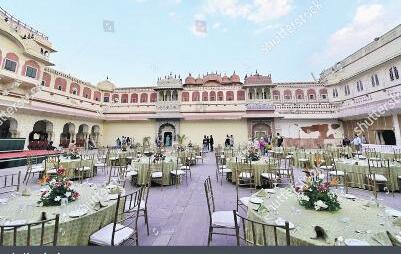
Cities like Udaipur and Jaipur are synonymous with royal weddings. Udaipur’s lakeside palaces and luxury heritage hotels provide a dreamy, opulent backdrop, while Jaipur’s grand forts and historic venues add a majestic charm to traditional ceremonies. Goa, on the other hand, is perfect for couples seeking a more relaxed and contemporary beach wedding, complete with sunset pheras.
Gujarat is also emerging as a unique wedding destination. Cities like Ahmedabad and Vadodara offer luxurious venues, heritage properties, and excellent catering
UAE
The United Arab Emirates, especially Dubai and Abu Dhabi, has become a hotspot for South Asian weddings. With world-class hotels, easy visa access, and expertise in hosting large-scale Indian weddings, the UAE offers opulence without compromising on cultural needs; be it mandaps, halal catering, or Bollywood-style celebrations.
T hailand
Thailand is a favourite among South Asian couples for its affordability and scenic beauty. Destinations like Phuket and Krabi offer stunning beaches and luxury resorts that are well-versed in Indian wedding customs.
Bali
Bali has emerged as a popular destination for intimate yet luxurious weddings. Known for its serene temples, lush greenery, and private villas, Bali provides a peaceful and picturesque setting. Italy
Italy is gaining popularity among South Asian couples for its romantic landscapes. Locations like Lake Como and Tuscany offer dreamy backdrops for intimate weddings. While guest lists may be smaller, the experience is unmatched in beauty and exclusivity.

Every bride dream of looking radiant on her wedding day, bu t true beauty goes beyond makeup and outfits; it comes from within
Achieving that natural, healthy glow requires thoughtful preparation, consistency, and selfcare well before the big day. A balanced approach that focuses on skincare, nutrition, fitness, and mental well-being can make all the difference.
Start with a skincare routine
A consistent skincare routine is key to achieving clear and glowing skin. Begin at least 3–6 months before the wedding to allow your skin time to respond. Cleansing, exfoliating, and moisturising should be part of your daily regimen.
Regular facials can help maintain skin health, but avoid trying new treatments too close to the wedding to prevent unexpected reactions. Always use sunscreen to protect your skin and maintain an even tone.
Nou rish your body from within
Healthy skin reflects a healthy body. Incorporate a balanced diet rich in fruits, vegetables, nuts, and whole grains. Foods high in antioxidants and vitamins; like berries, spinach, and almonds—help improve skin texture and radiance.
Staying hydrated is equally important; drinking plenty of water

helps flush out toxins and keeps your skin looking fresh and plump.
Stay active and fit
Regular exercise not only helps you stay in shape but also improves blood circulation, giving your skin a natural glow. Activities like yoga, walking, or light workouts can reduce stress and enhance overall well-being. Yoga and meditation, in particular, are beneficial for calming the mind and maintaining emotional balance during the often-hectic wedding preparations.
Prioritise hair care
Your hair is an essential part of your bridal look. Regular oiling, conditioning, and minimal use of heat styling tools can keep your hair healthy and shiny. Consider natural treatments or professional spa sessions to strengthen your hair and prevent damage. Like skincare, start
early to see noticeable results.
Get you r beauty sleep
Sleep is one of the most underrated beauty tools. Aim for 7-8 hours of restful sleep each night to allow your body to repair and rejuvenate. Proper sleep reduces dark circles, improves skin texture, and boosts overall energy levels, ensuring you look fresh and well-rested.
Focus on mental wellness
Wedding planning can be overwhelming, so it’s important to take time for yourself. Adequate sleep, mindfulness practices, and short breaks from planning can help reduce stress and keep you feeling refreshed. A calm and happy mind reflects in your overall appearance, adding to your natural glow.
Plan your bridal trials
Schedule makeup and hair trials well in advance to finalise your wedding-day look. This helps avoid last-minute confusion and ensures that your look complements your outfit, jewellery, and personal style. It also gives you time to make adjustments if needed. Avoid last-minute exp eriments
While it may be tempting to try new beauty treatments or products, it’s best to stick to what works for you. Last-minute changes can lead to skin irritation or breakouts.

South Asian wed ding s are vibrant ce lebrations filled with colour, tradition, and elaborate fashion
One of the most important elements of the bridal and bridesmaid look is the hairstyle, which not only complements the outfit but also enhances overall elegance. Here’s a guide to popular and trendy hairstyles for brides and bridesmaids during South Asian weddings.
1 Classic bun with flora l accessories
A sleek, low or high bun remains timeless for South Asian brides. Adorn it with fresh flowers, like jasmine or roses, or traditional hair jewellery such as maang tikka or passa. This style keeps the hair secure through long ceremonies while offering a regal look that pairs beautifully with sarees or lehengas.
2 Braided styles
Braids are versatile and can range from traditional to modern. A fishtail braid or a voluminous side braid can be adorned with flowers, beads, or delicate hair chains. Braided buns are also popular for bridesmaids, giving a polished yet playful appearance suitable for multiple wedding events.
3 Ha lf-up, half-down For brides who want to show off their long hair while keeping it manageable, a half-up, half-down style is perfect. This style can include curls, twists, or braids on the top portion, while the rest of the hair cascades down in soft waves. It’s ideal for mehndi or sangeet ceremonies where the vibe is festive but not overly formal.
4 Loose waves and curls Soft, flowing waves or curls exude romance and elegance, perfect for bridesmaids or younger brides. Adding delicate hairpins, crystals, or floral clips can elevate this look. Loose curls work well with dupattas and heavy jewellery, ensuring the hair doesn’t compete with the outfit.
5 Tra ditional South Asian braid ed bun (Jooda ) Many brides opt for a traditional jooda, a braided bun decorated with gold or pearl accessories. This hairstyle complements heavier wedding attire, like lehengas or shararas, and is especially suited for the main wedding ceremony. It combines cultural authenticity with timeless beauty.

Wedding gifting is an integral
and tradition T oday, couples a
D ec o r, w h o c reat
iq u e, h andcrafted pieces by working d irectly w ith artisans
Mina said the idea for her business came during a trip to India amid the Covid lockdown. “I had time to observe things… and the more I spoke to artisans, the more I realised they had no way to earn,” she shared. Motivated to help, she added, “I thought, if I don’t do it now, when will I?” By cutting out middlemen, “agents were taking up to 60%” and paying artisans upfront, she built a model focused on quality and fair pay, leading to the creation of Chamak.
On wedding products, Mina said, “we have everything… an A-Z of wedding items,” from traditional dabbas and puja kits to modern trays and jewellery boxes. Many clients come with a priest’s list and prefer sourcing everything in one place.
She emphasised quality and practicality: “people want quality… they don’t want something that has to be

Mina Thakkar
replaced,” offering both premium and budget options. Mina also guides customers on presentation, adding, “if they bring their outfits, we can try different trays and see what works best.”
Sharing advice for couples, Mina stressed the need for realistic budgeting and practicality. “You need to set a proper budget for gifting,” she said, noting that many underestimate costs and end up skipping gifts. “It’s a small gesture, so be practical,” she added, encouraging a balance between quality and affordability.
She also highlighted a shift away from traditional gifting. “People want something useful and contemporary,” she explained, pointing to items like handmade mobile stands. Mina further suggested thinking beyond convention, adding, “why not choose healthier or personalised options instead of traditional sweets?”
Wed d ing s h av e always been ab out u nion, not j ust of two people, bu t of families, h istories, and memories Yet for many cou ples, these jo yous occas i o ns a re al so m ar ked by a qu i et absence: a parent, grandparent, sibling, or d ear friend who should have been there
However, a deeply moving shift is taking place across weddings, as couples find meaningful, creative ways to include loved ones who are no longer physically present. Rather than allowing absence to linger unspoken, modern weddings are choosing remembrance; weaving memory into the ceremony itself with gestures that are both intimate and profoundly emotional.
Walking do wn the aisle, togeth er
One of the most powerful moments of any wedding is the walk down the aisle. Increasingly, brides and grooms are choosing to share this moment symbolically with those they have lost. Some attach small portraits or engrave names to their veils, sherwanis and kaleeras. Others walk while holding a parent’s picture close to their heart, creating a quiet yet deeply visible tribute. It is a simple gesture, but one that transforms the aisle into a space of both love and remembrance.
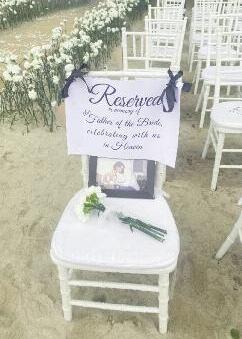
adorned with flowers, a framed photograph, or a handwritten note, becomes a powerful symbol of absence and inclusion at once.
Some couples take this further by creating dedicated memory corners: thoughtfully designed spaces displaying portraits, heirlooms, or personal items that tell the story of those they are honouring. These corners often become quiet pauses within the celebration, where guests gather, reflect, and remember. Rather than casting a shadow over the day, these gestures add depth, reminding everyone present that love does not end, it simply changes form.
Th e rise of memory art
Reserv ed seats, eternal presence
Another touching tradition gaining popularity is the idea of reserving a seat for a loved one who is no longer there. A chair in the front row, often
Perhaps the most emotionally resonant trend is the growing popularity of memorial artwork. Couples are increasingly being gifted, or commissioning, wedding portraits that
include loved ones who have passed away. These artworks seamlessly blend past and present, imagining moments that could never physically happen, yet feel entirely real.
From digitally composed photographs to hand-painted canvases, these pieces often depict a late parent standing beside the couple, a grandparent blessing the union, or a cherished family member included in group portraits. The effect is striking: not surreal, but comforting.
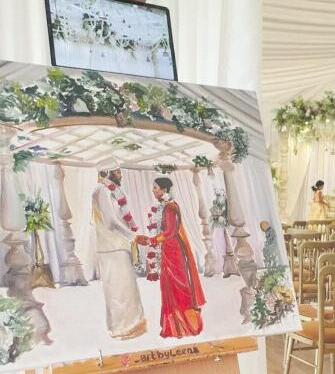
Live wedding painting has also taken on a new dimension. Artists present at the ceremony are being asked to incorporate departed loved ones into the scene in real time, subtly placing them within the mandap or beside the couple. Watching the painting come to life becomes an emotional experience in itself, often bringing both tears and solace.
A celebration th at holds ev erything
What makes these gestures so powerful is their honesty. Weddings are no longer expected to be purely joyful or picture-perfect. Instead, they are becoming spaces that hold the full spectrum of human emotion: love, nostalgia, grief, and gratitude, all existing together.
By including those who are no longer physically present, couples are reclaiming the narrative of what a wedding can be. It is no longer just about who is in the room, but about everyone who shaped the journey to that moment.
In remembering them, couples aren’t dwelling on loss, they are celebrating a love that continues, quietly and enduringly, in every step they take forward together.
Have yo u n ot ic ed so m eth i ng d if fer ent about your recent wedding invites? Is there a QR code that seems to know your d ietary requirements before you've even selected yo ur s tart er? A re yo u su d d enl y bei ng followed on Instag ram by a wedding bot asking if you ’ ve booked your hotel room yet?
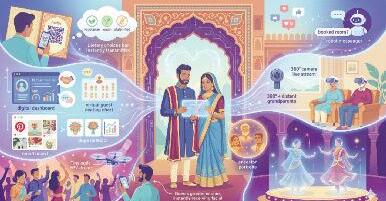
Don’t panic, you haven’t entered a sci-fi movie. It’s 2026, and the traditional big fat Indian wedding has officially gone hightech. For decades, the standard wedding checklist involved a manic army of aunties, a chaotic colour-coded spreadsheet, and a prayer that the Dhol players arrived on time. But today, the most essential member of the bridal party isn’t a human, it’s AI.
This digital revolution isn’t just about gimmicks, it is fundamentally reshaping how couples plan, experience, and preserve the memories of their big day. From the first RSVP to the final slice of digital cake, technology is the invisible planner managing the chaos with a calmness no human could muster. If you are still relying on a binder of paper contracts, you are officially so 2024.
The algorithmic wedding p lanner
The stress of the seating chart is officially a relic of the past. AI-powered software now acts as a social matchmaker, analysing guest data, such as professional backgrounds, mutual interests, and age to suggest seating arrangements where the
conversation is guaranteed to sparkle.
Some platforms even use a built-in Budget Optimiser and dupe detector. Upload your dream Pinterest board, and the AI will scan for local, sustainable alternatives to expensive, out-of-season flowers or décor, keeping your aesthetic high and your costs manageable.
Augmented Reality and remote joy
Why guess how your Mandap will look when you can virtually walk through it?
Augmented Reality (AR) ‘try-before-youbuy’ walkthroughs allow couples to virtually layer their chosen floral arrangements and lighting schemes onto a 3D scan of their actual venue months in advance.
Tech is also solving the heartbreak of faraway relatives. While standard Zoom calls are out, Virtual Reality (VR) Avatar Lounges are in. Grandparents who cannot travel can don a headset and sit at a physical table via a 360-degree camera, interacting with guests in real-time as if they were actually in the room.
Lig hts, camera and AI action
The entertainment landscape has been completely digitised. Standard drones have been replaced by agile FPV (First-Person View) drones, which can glide through entrance arches and between dancing guests to create a single, continuous moviestyle shot that is Reel-ready instantly.
Facial recognition technology has also solved the post-wedding photo wait. AI tools scan every professional photograph and instantly send personalised links to guests featuring only the photos they are in, often before the reception is even over.
For a truly sci-fi touch, Holographic Tributes allow couples to feature 3D digital performances of traditional dance troupes or even include life-sized digital honours for ancestors who are present only in spirit.

It starts with a s croll A glimpse of a veil trailing endlessly behind a bride, a flash of i vory ins tead of red, a pair of sne akers peeking beneath c outure And j ust like that, y our wed di n g m ood bo ar d b eg i ns t o unravel, inspired by your favourite stars
Celebrity weddings have never been just moments, but cultural resets. They don’t merely inspire Indian weddings; they dictate them. Each look, each ritual, each detail is dissected, replicated, and reimagined across thousands of ceremonies that follow.
The modern Indian wedding is no longer built in isolation. It is shaped in real time by the choices of women and men in the spotlight t,urning private celebrations into public blueprints. What we are witnessing is not just influence, but a fullscale aesthetic takeover.
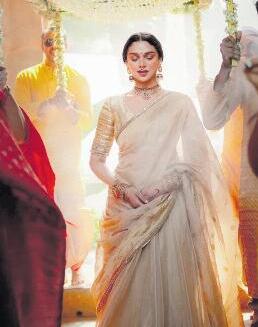
for organza and tissue sarees has come to define the “old money” bridal aesthetic, where restraint becomes the ultimate luxury.
Samantha Ruth Prabhu further cemented this movement with her understated yet powerful bridal look, a handwoven saree paired with minimal mehendi and a statement diamond ring, striking a perfect balance between tradition and modernity.
The Cathedral Vei l
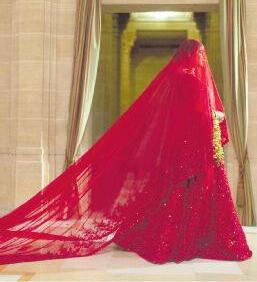
No single moment redefined bridal drama quite like Priyanka Chopra’s veils in both her Christian ceremony and Indian ceremony. Especially her red veil, it wasn’t just an accessory, it was a spectacle that reintroduced grandeur into Indian bridal fashion.
Ivory and Soft Glamour
Years before the pastel bride became a movement, Anushka Sharma quietly planted the seed. Her soft, blush-toned wedding look hinted at a gentler, more romantic palette. In the years that followed, trends changed and bridal fashion surged back to its comfort zone of bold, commanding reds.
And then came Alia Bhatt. With a single ivory Sabyasachi saree, she didn’t just revisit the pastel conversation, she transformed it. What was once subtle became definitive. Overnight, bridal codes shifted, ushering in an era of “minimalist royalty,” where whisper-soft hues, intricate craftsmanship, and quiet elegance spoke far louder than colour ever could.
That softness extended to beauty. Rakul Preet Singh leaned into the ‘aura makeup’ trend, championing luminous, freckled skin over heavy coverage, while Parineeti Chopra rejected the structured bridal bun for loose, romantic hair, a shift that has since defined the “main character bride.”
Dramatic maxi malism
If minimalism found its muse, maximalism found its icons.
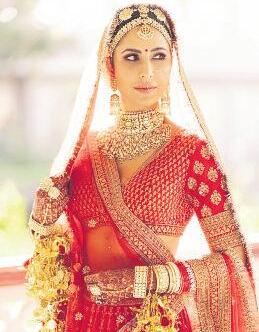
Katrina Kaif delivered a masterclass in layered bridal storytelling, with each function embracing rich textiles and bold Punjabi silhouettes. Meanwhile, Sobhita Dhulipala has emerged as the face of “temple-core” maximalism — reviving antique gold, heritage jewellery, and deeply rooted cultural textures.
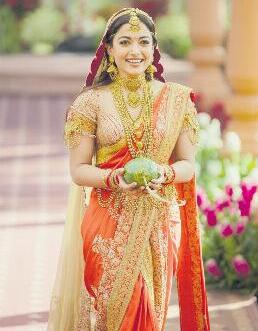
Rashmika Mandanna added her own chapter, embracing a rust-hued saree with temple motifs, proving that bold colour and heritage symbolism can coexist with modern styling.
Southern mi nimalism and quiet luxury
At the other end of the spectrum lies a quieter, deeply rooted elegance, one shaped by icons like Aditi Rao Hydari. Her affinity
That legacy has only grown. Parineeti Chopra transformed her veil into a storytelling piece, embroidered with her husband’s name, while Radhika Merchant elevated it into art, using hand-painted motifs to reflect her family’s heritage.
The veil is no longer ornamental; it is narrative.
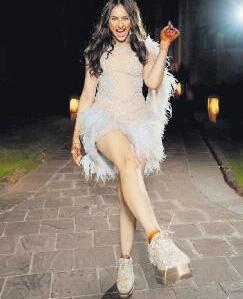
The sneaker bride Comfort entered the conversation when Deepika Padukone casually swapped heels for white trainers at her reception, a moment that quietly dismantled years of bridal rigidity. Rakul Preet Singh, Hansika Motwani and various other Bollywood brides took it further, commissioning embroidered sneakers that blend seamlessly into couture looks. What was once rebellion is now trend.
Men, jewellery, and the modern maharaja
The celebrity effect is just as powerful on the groom’s side.
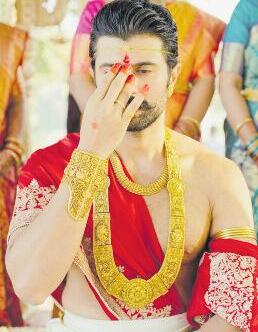
Vicky Kaushal has redefined groom styling by layering pearls and emeralds over muted sherwanis, while Vijay Deverakonda leaned fully into regal Hyderabad aesthetics, embracing temple jewellery and traditional adornments with unapologetic flair.
And then there is Ranveer Singh, who continues to push boundaries, championing gender-fluid luxury and proving that jewellery is no longer confined to the bride. Reimagining ritu als
Perhaps the most meaningful influence celebrities have had is not in what weddings look like, but in what they mean.
Katrina Kaif quietly challenged tradition by having her sisters carry the phoolon ki chaadar, while Dia Mirza redefined the ceremony itself, opting for a female priest and a consciously sustainable wedding.
These are not just aesthetic choices. They are signals of a deeper shift, where weddings become reflections of personal values rather than inherited rules.