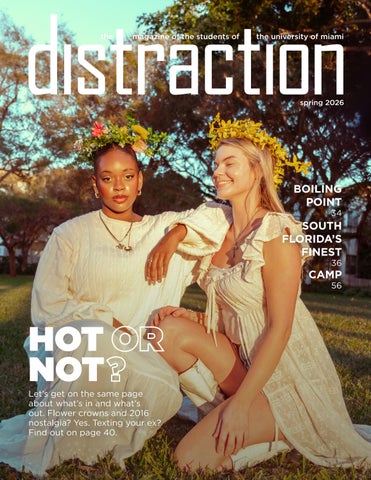
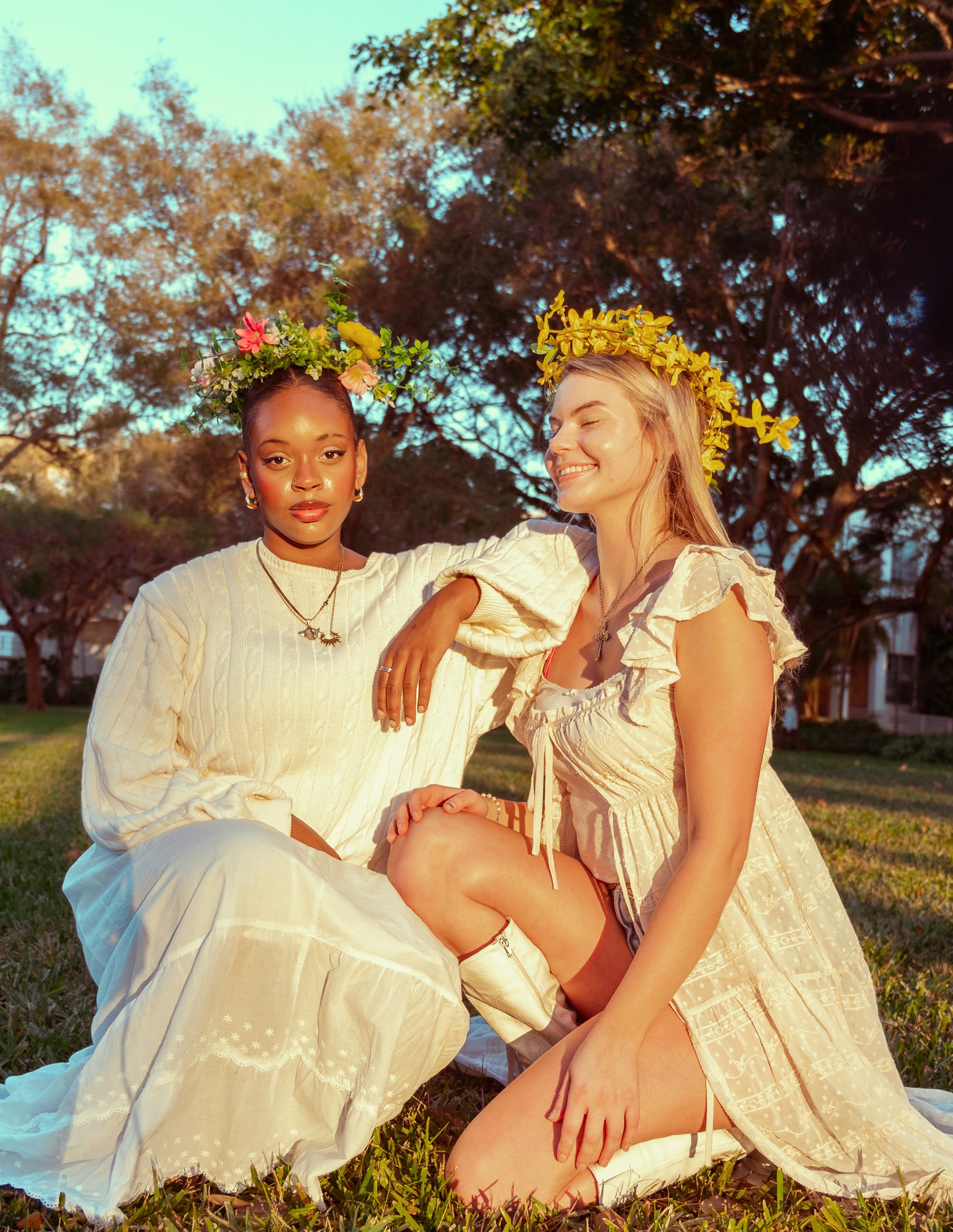
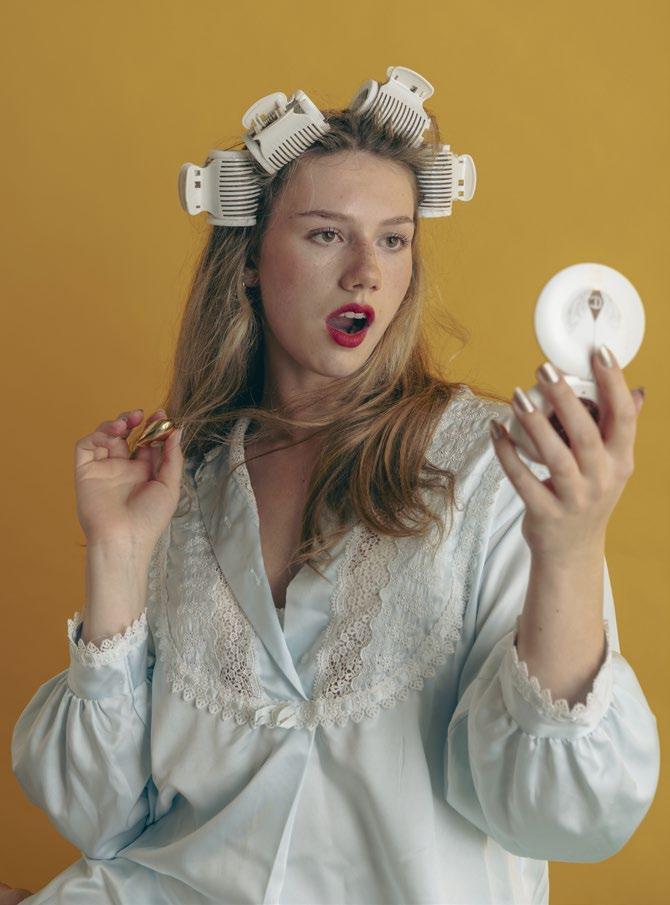
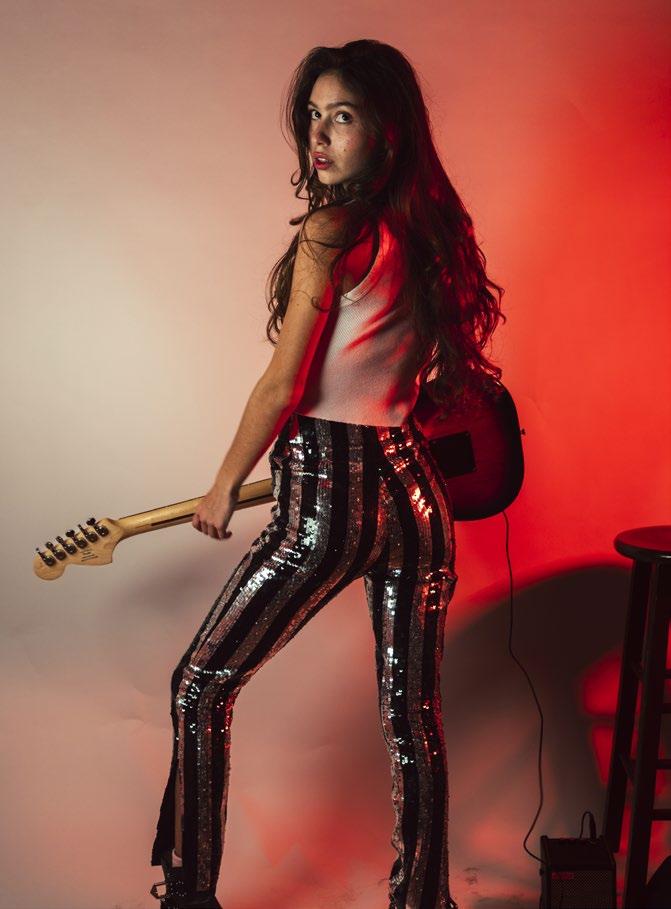
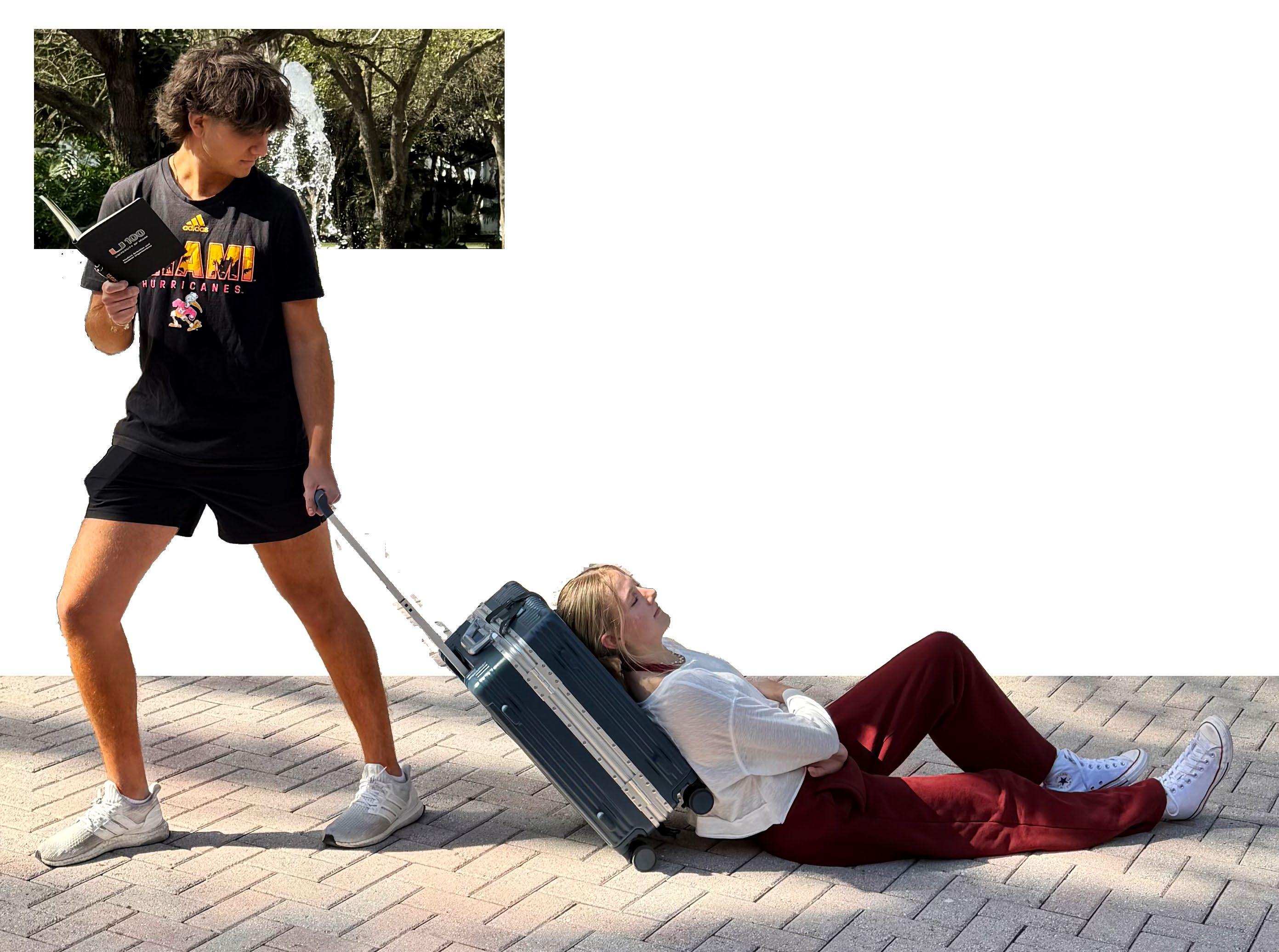
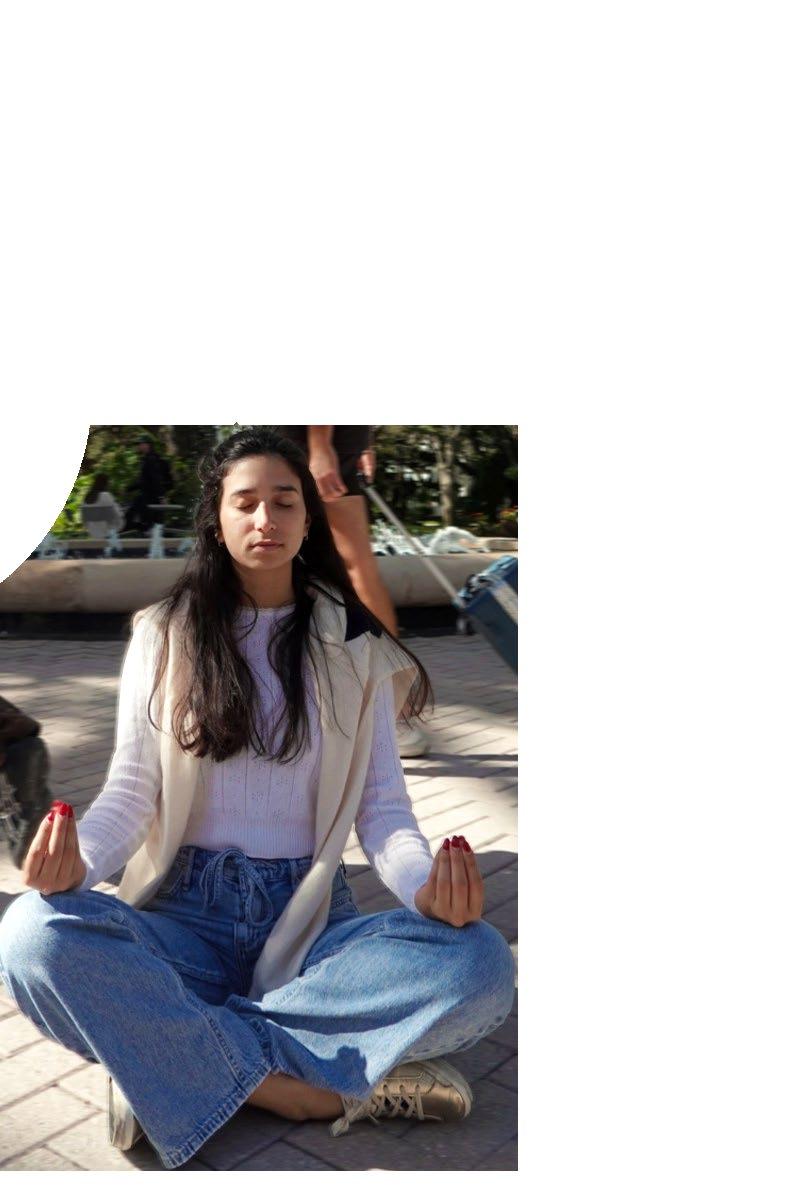
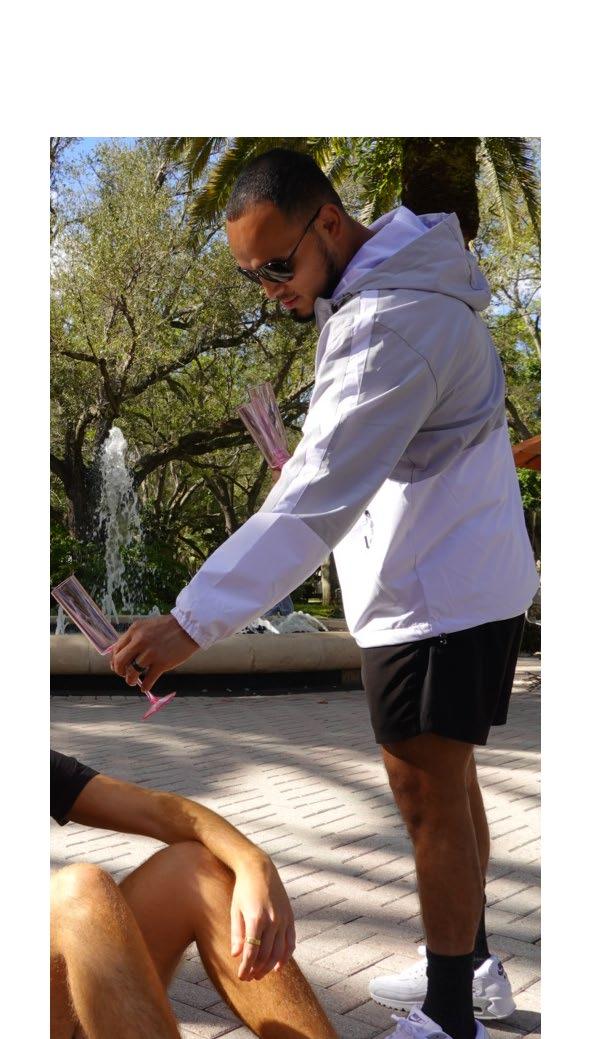
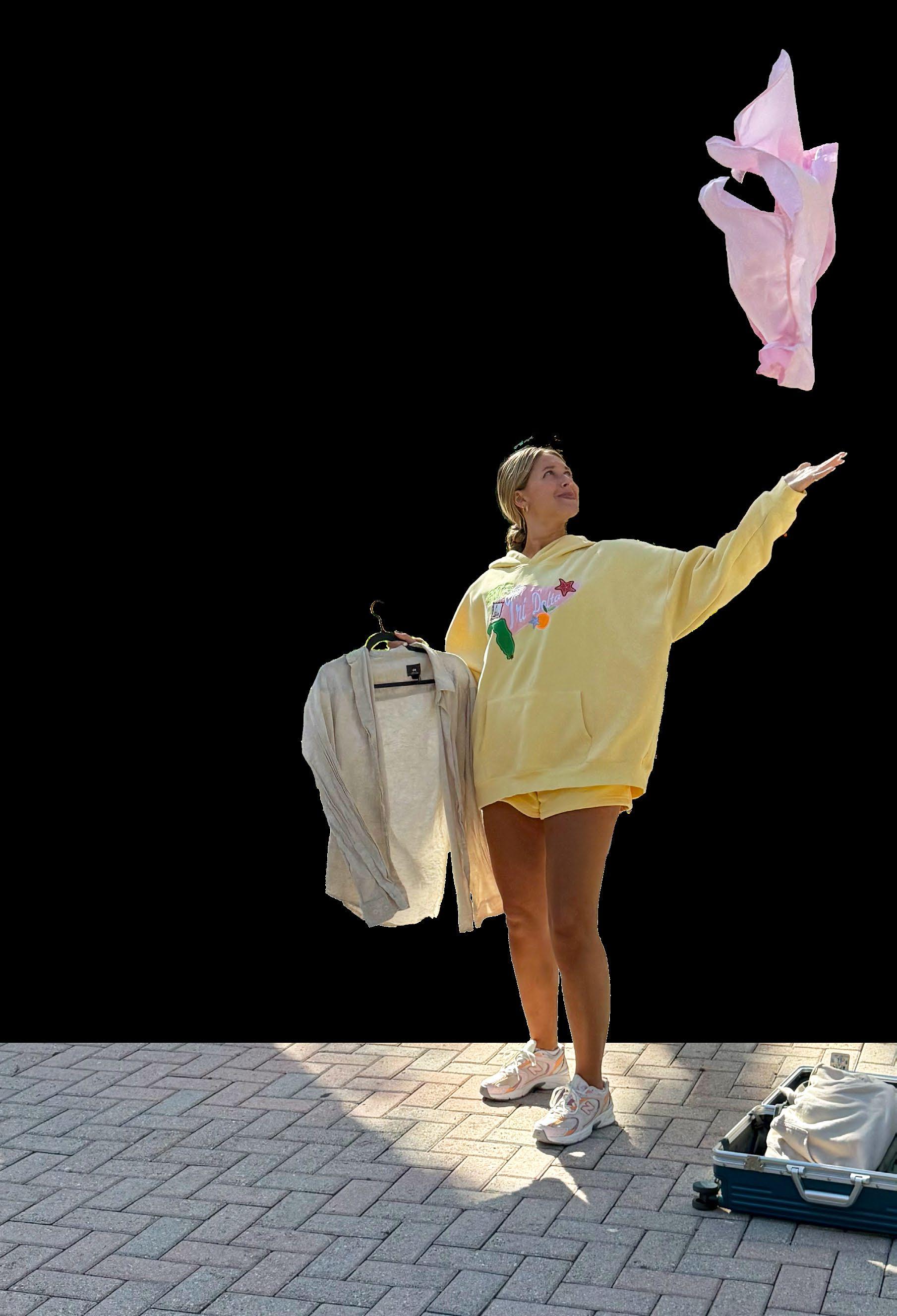
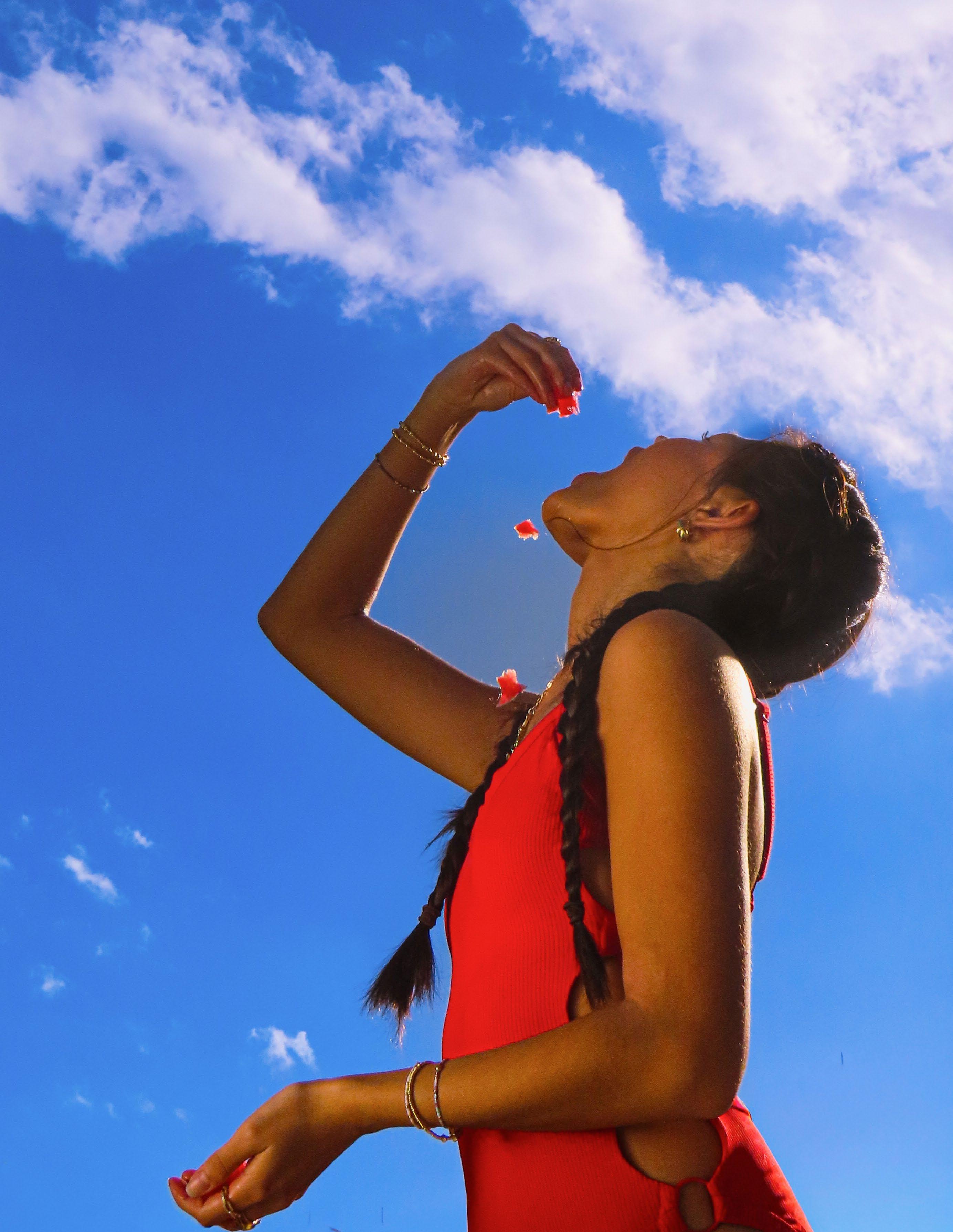
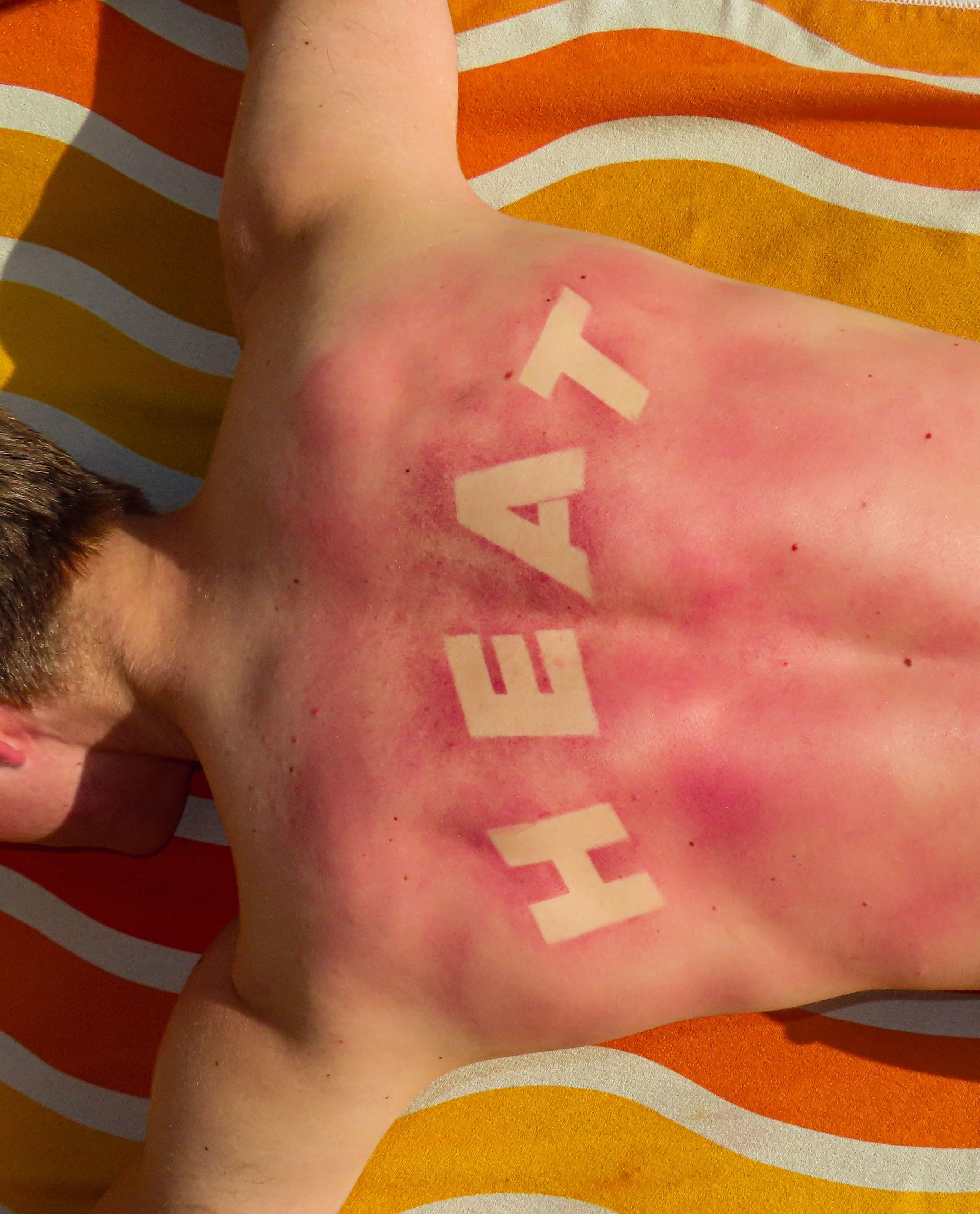
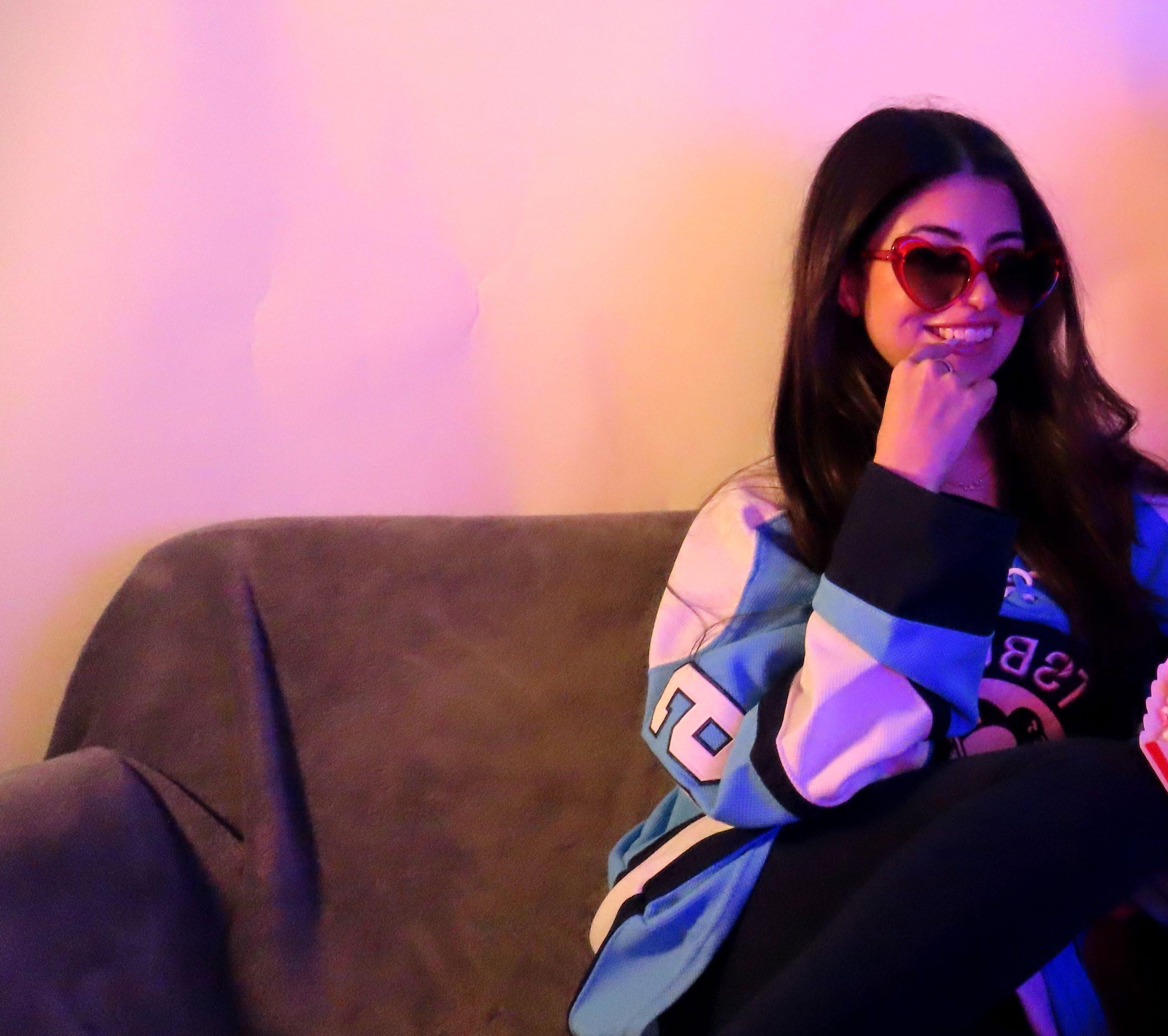
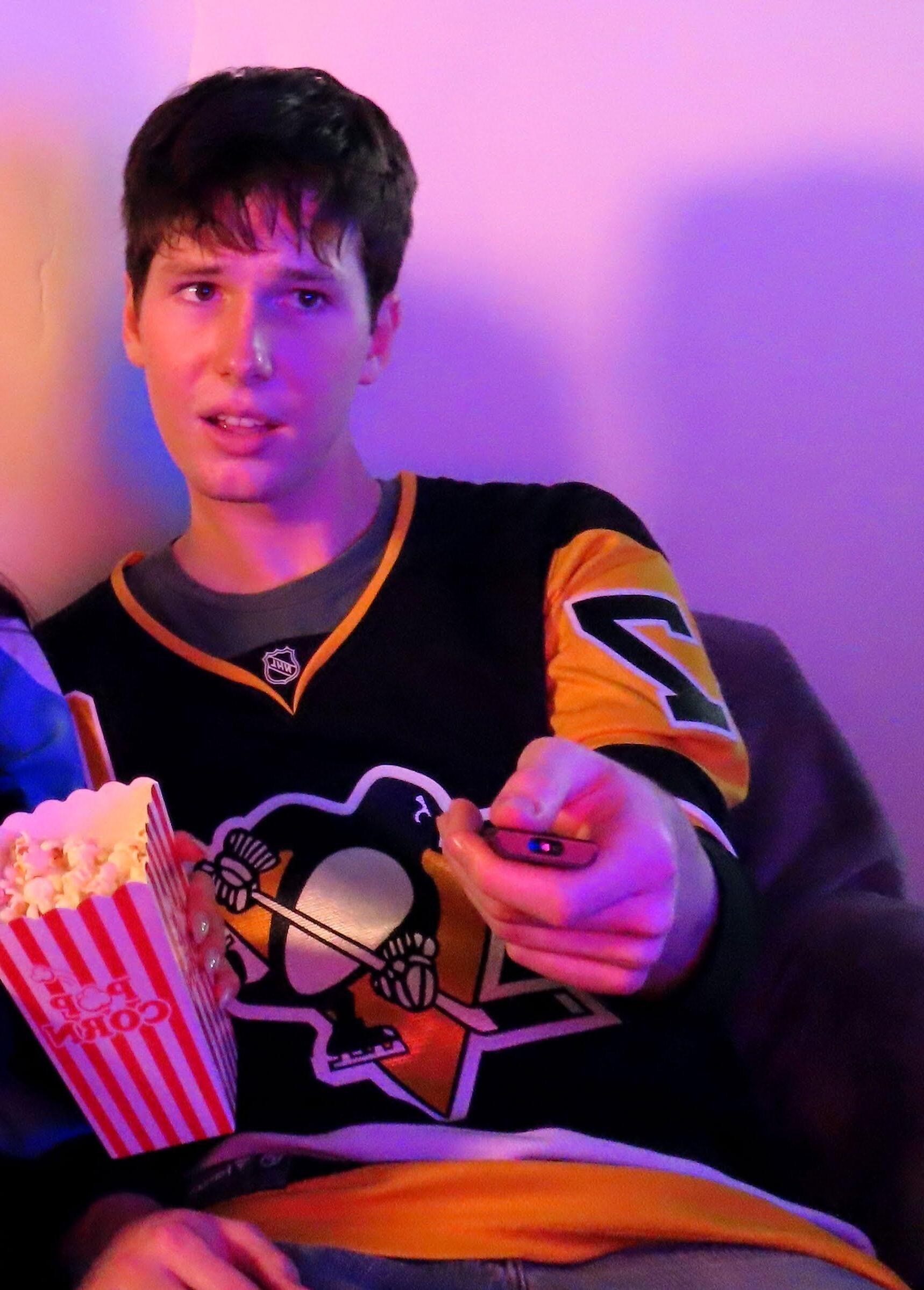
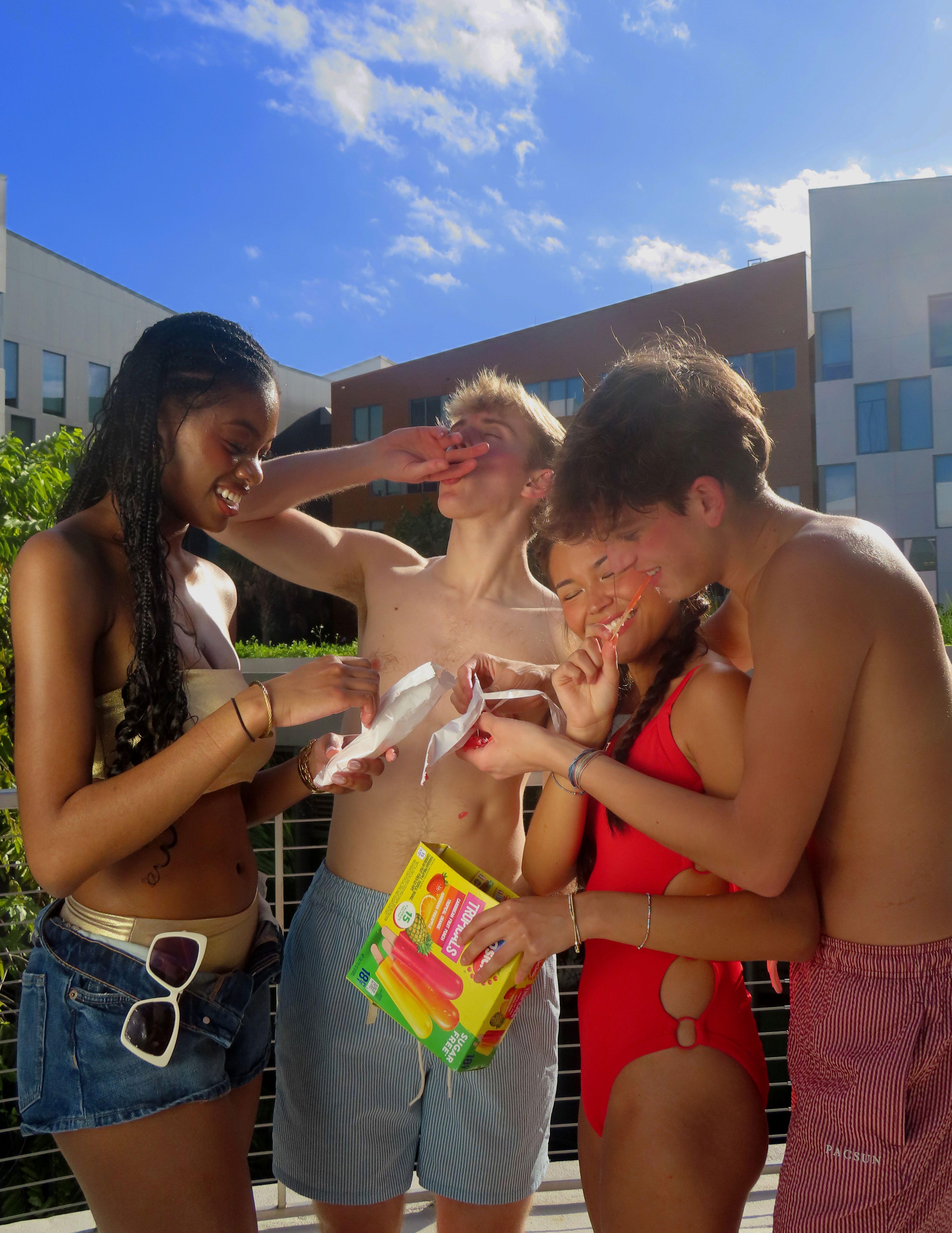
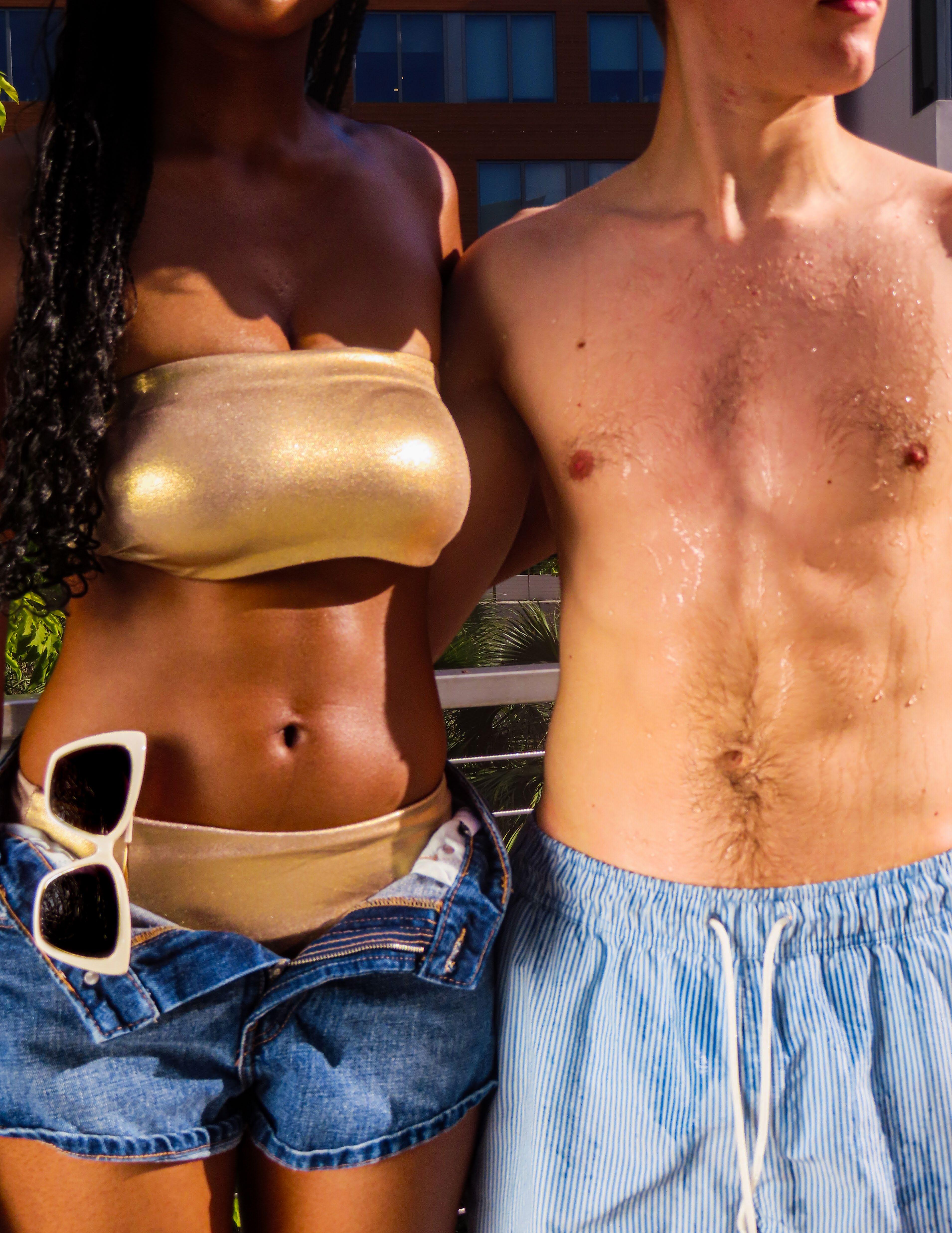
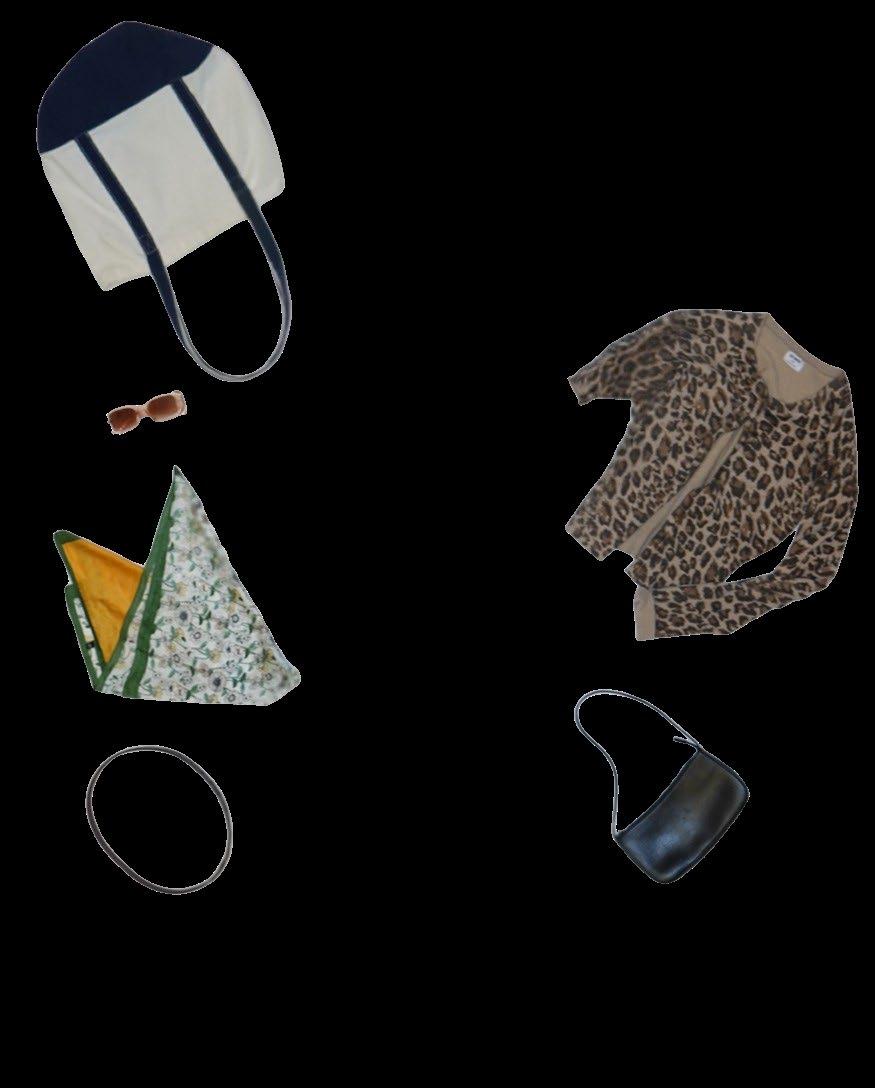
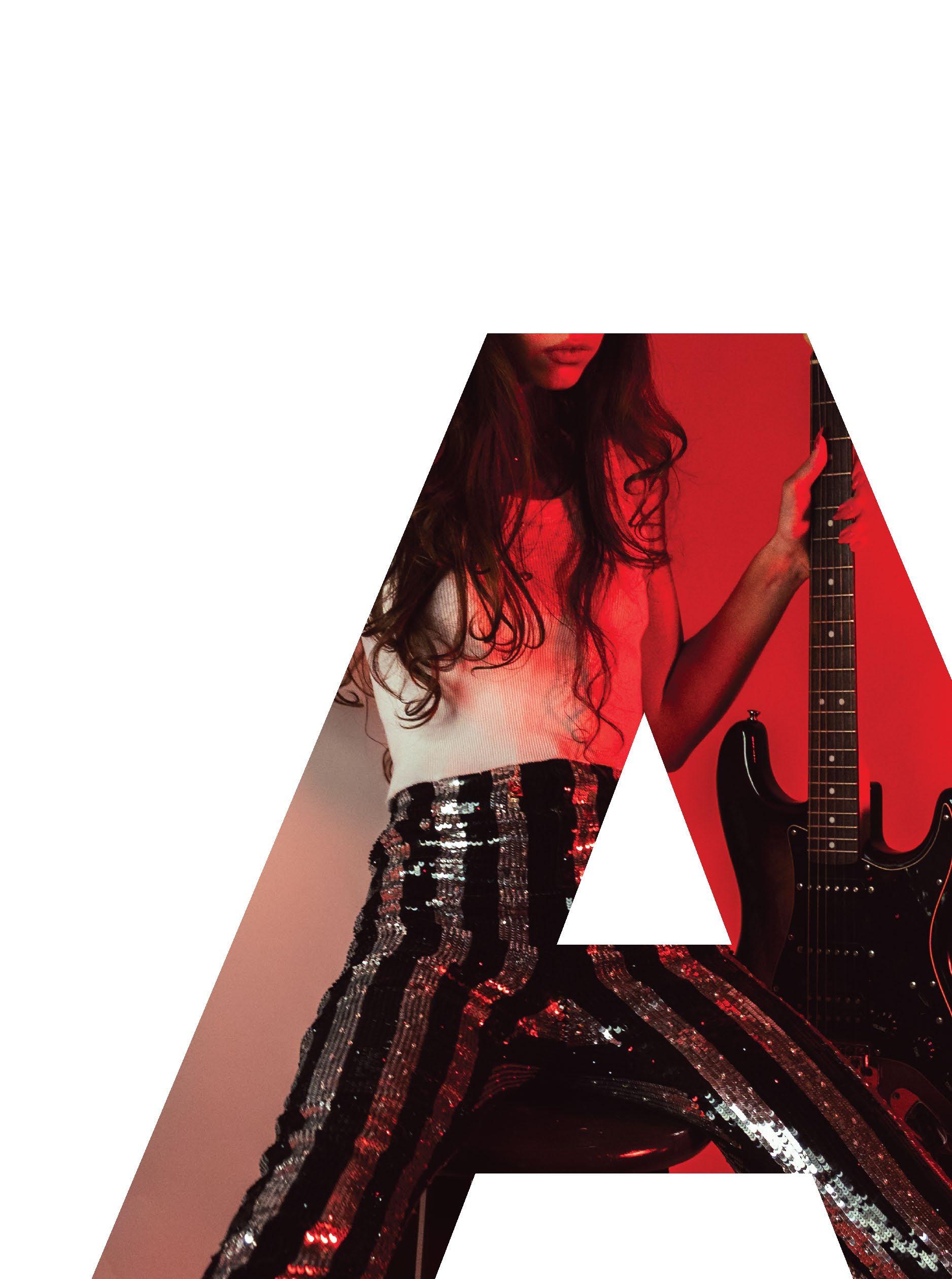
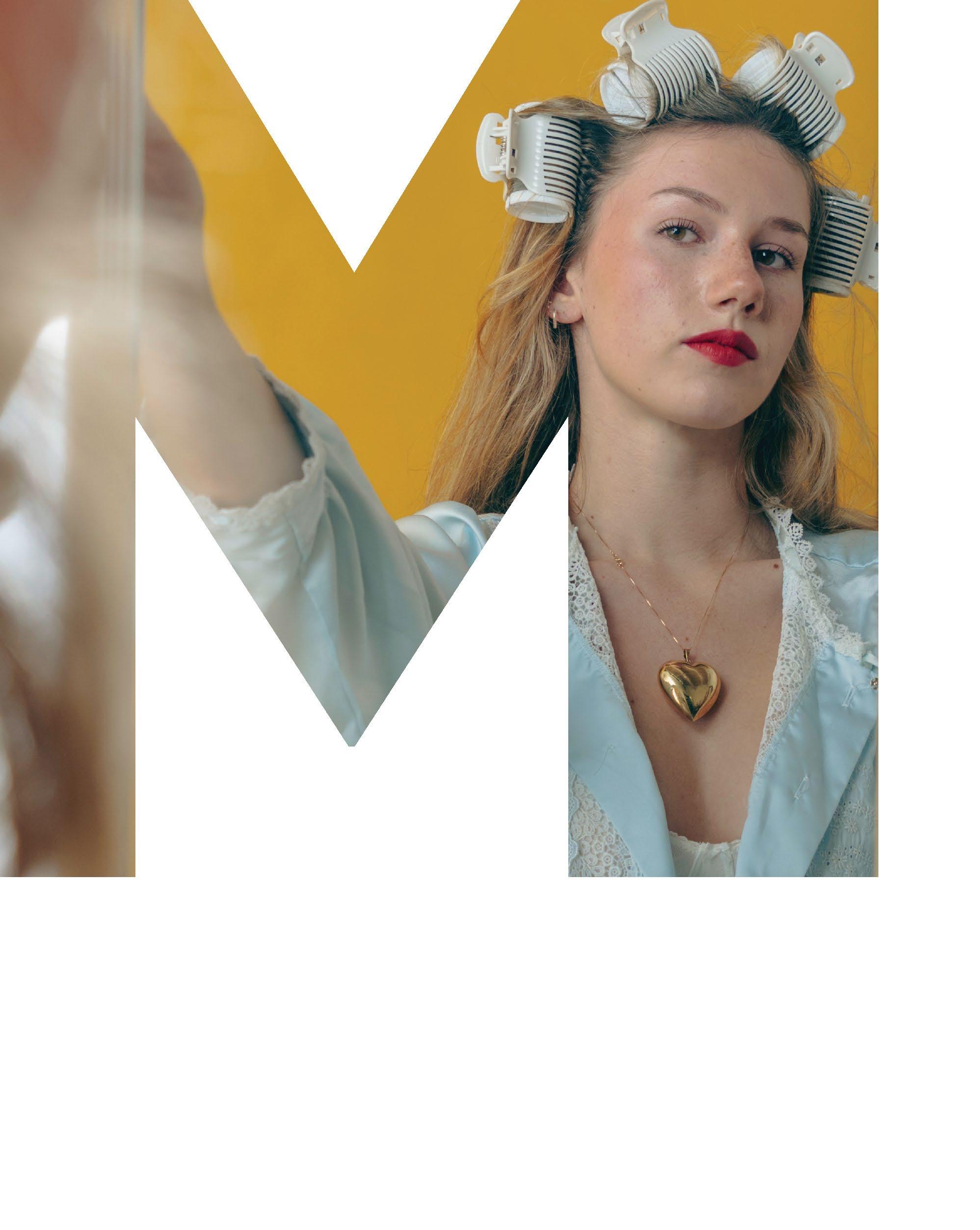
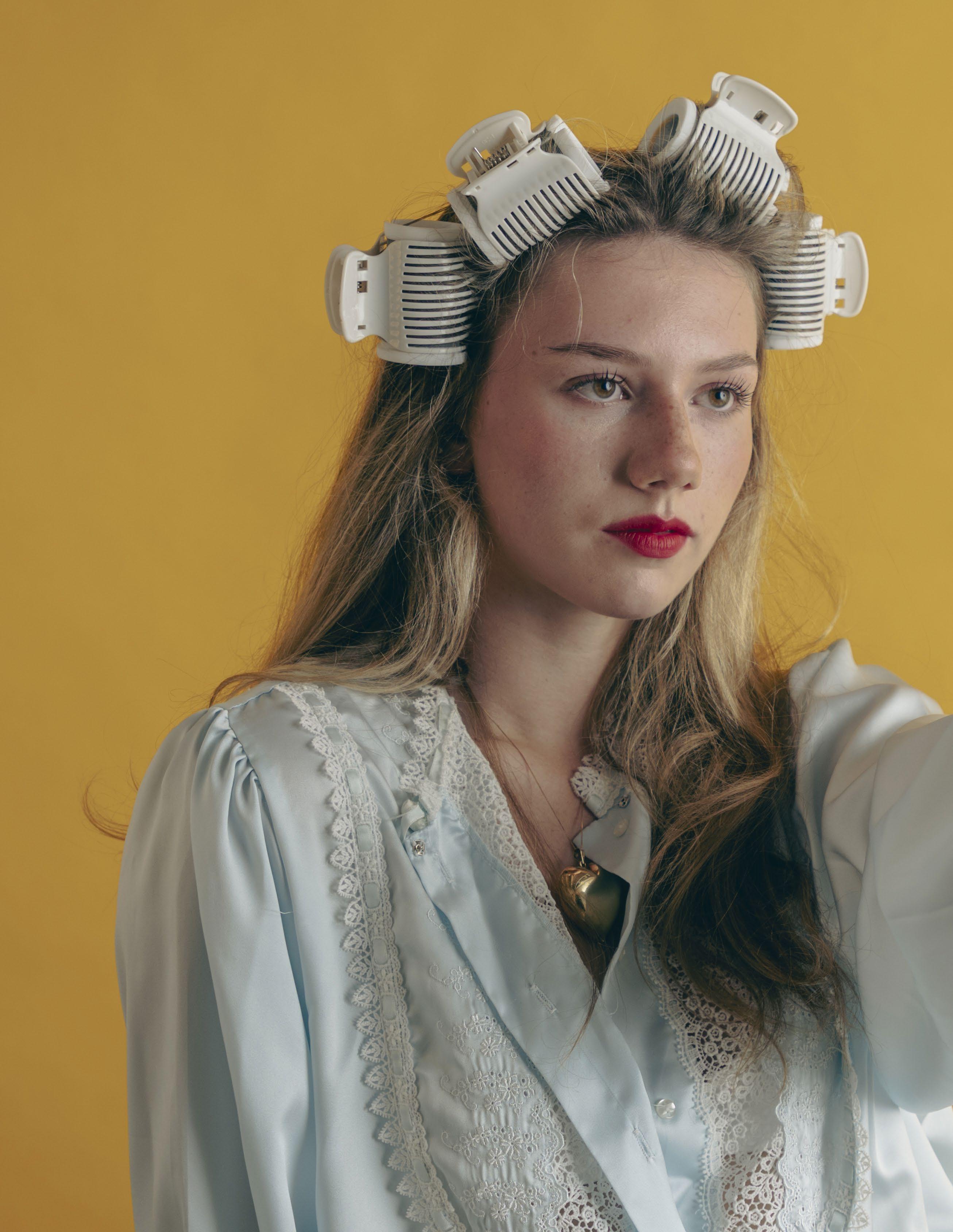
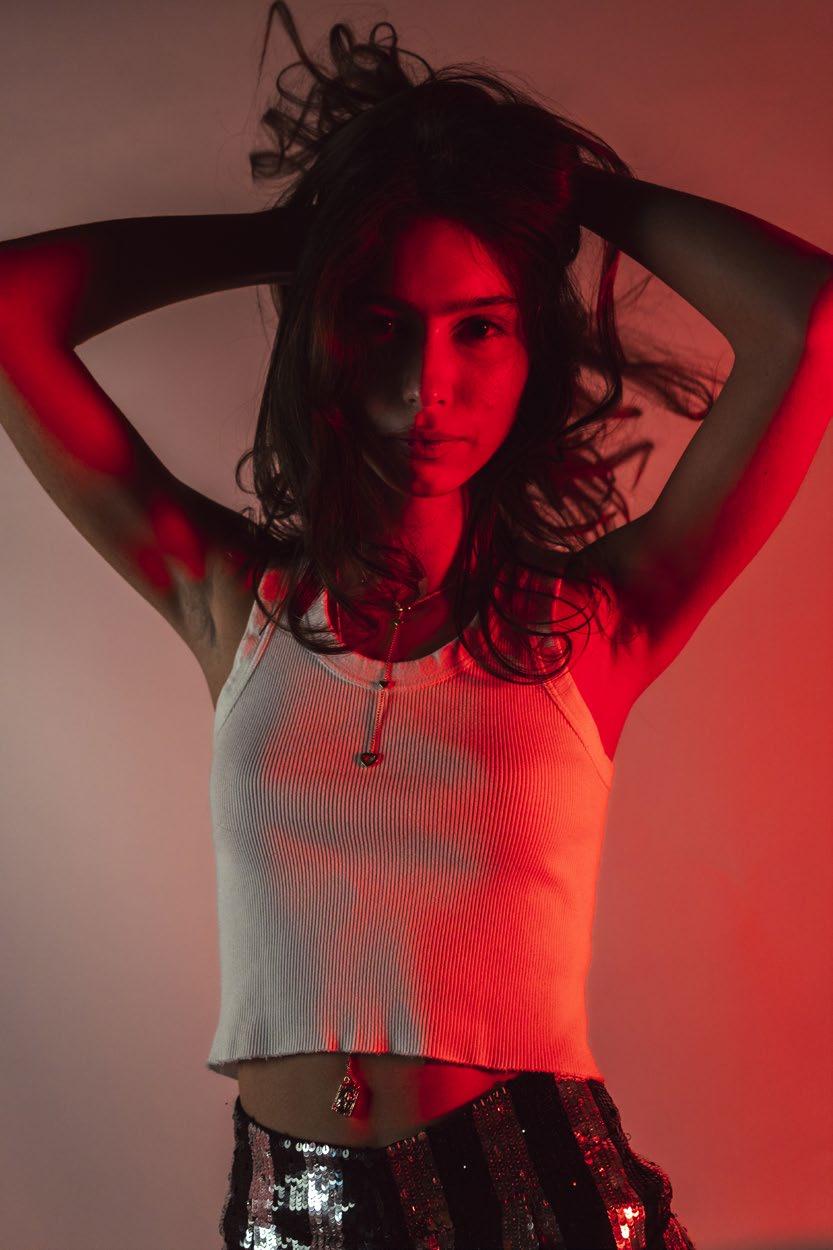
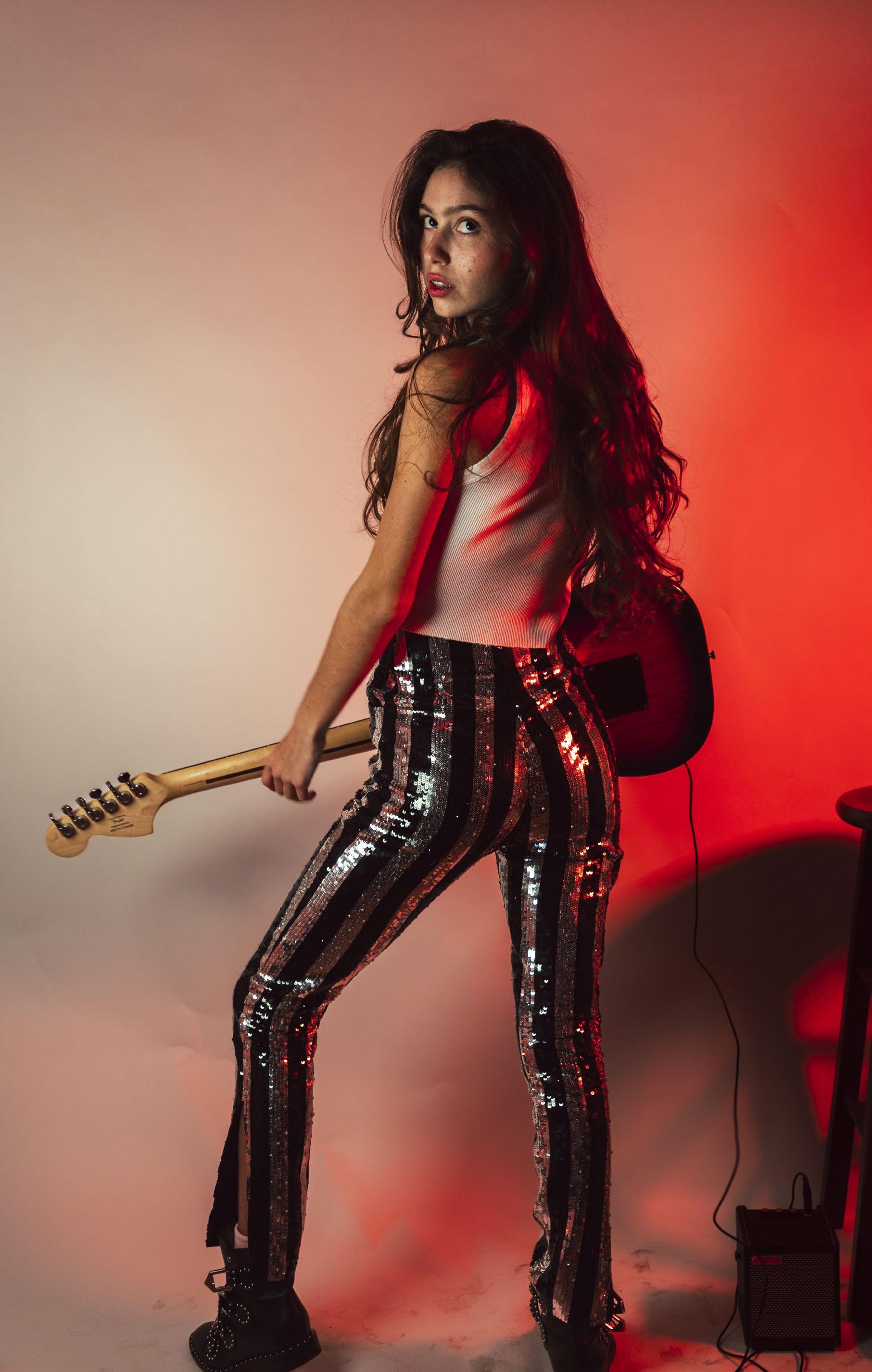
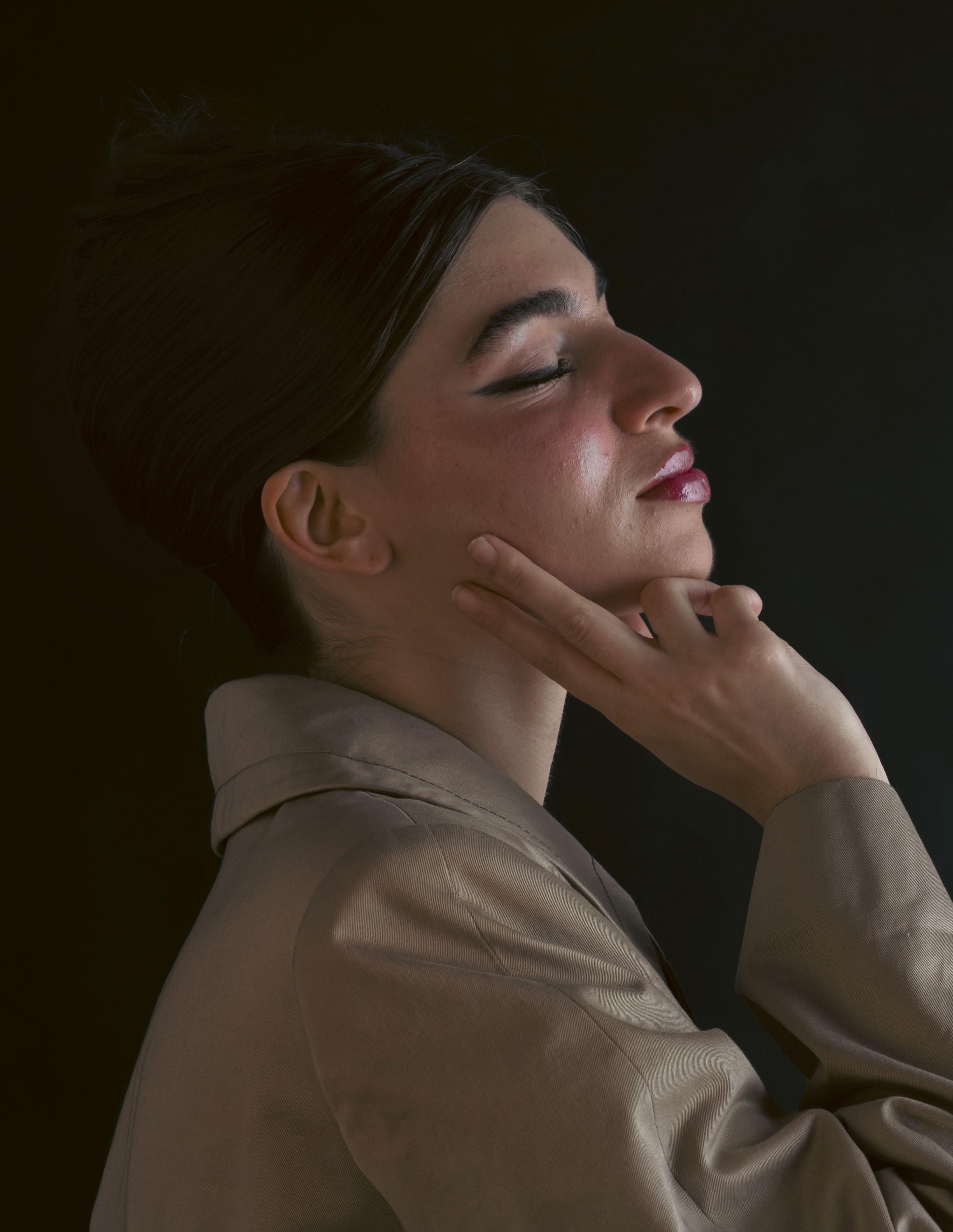
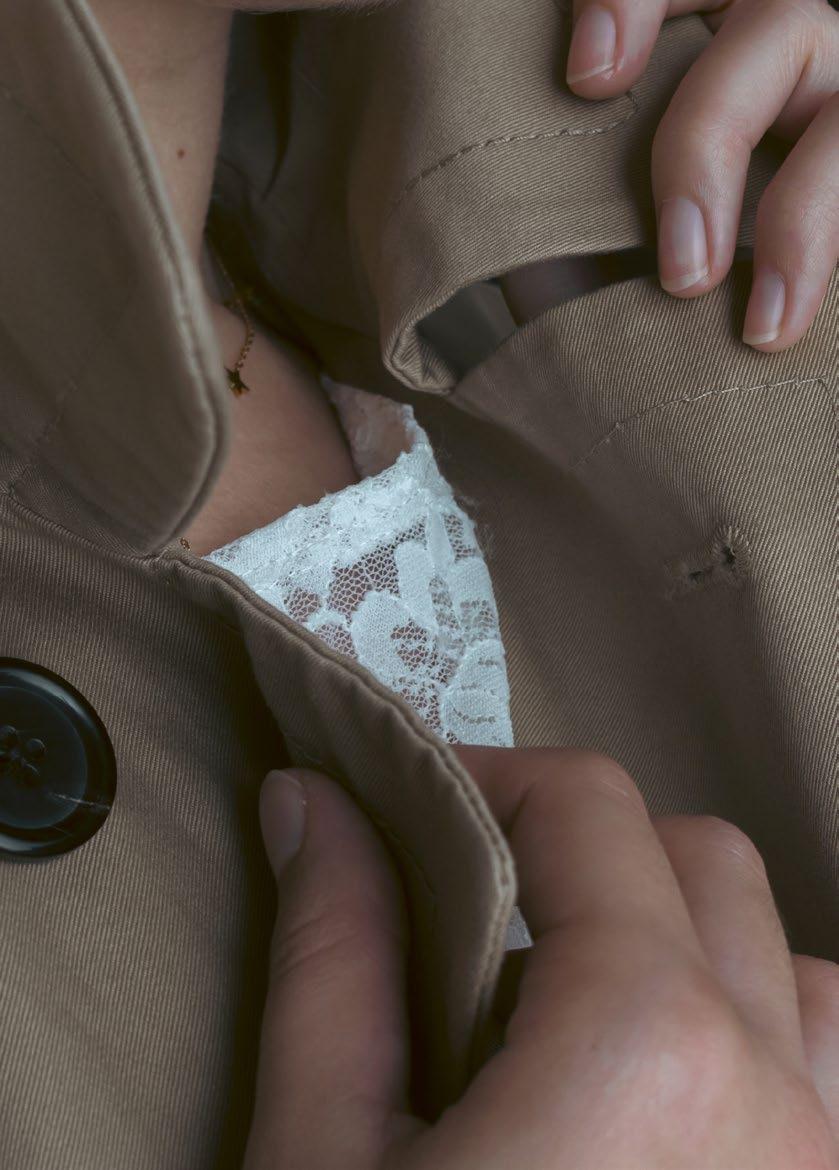
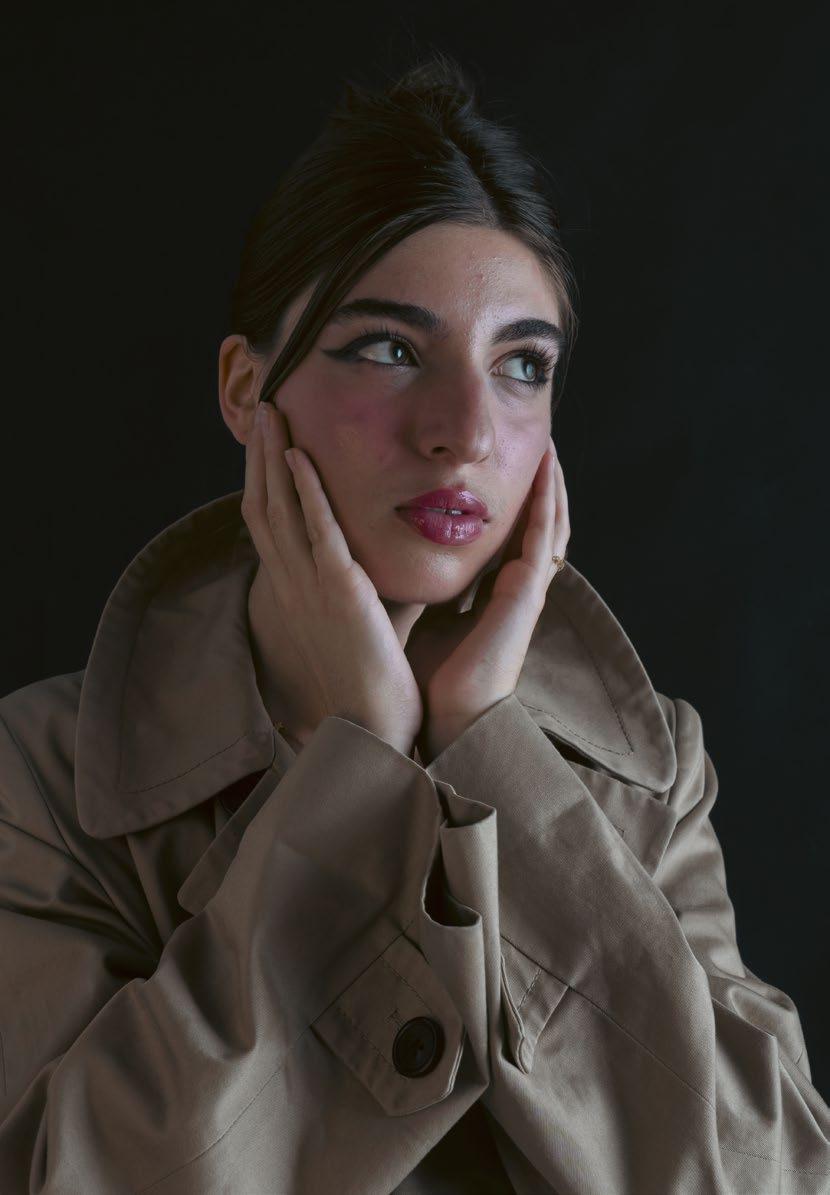
Let’s get on the same page about what’s in and what’s out. Flower crowns and 2016 nostalgia? Yes. Texting your ex? Find out on page 40.
HOT OR NOT ?
Let’s get on the same page about what’s in and what’s out. Flower crowns and 2016 nostalgia? Yes. Texting your ex? Find out on page 40.
About Us
The magazine is produced four times per year, twice a semester. City Graphics and Bellak Miami printed 2,000 copies of the magazine on 8.5 x 11 inch, 60-pound coated text paper 4/4. The entire magazine is printed four-color and perfect bound. Most text is nine-point Minion Pro with 9.8 points of leading set ragged with a combination of bold, medium and italic. All pages were designed using Adobe Creative Suite CC software InDesign with photographs and artwork handled in Photoshop and Illustrator. For additional information, visit distractionmagazine. com. Questions and comments can be sent to 1330 Miller Drive, Student Media Suite 202A, Coral Gables, FL, 33146, dropped into SSC Student Media Suite Suite 200 or emailed to distraction305@ gmail.com. All articles, photographs and illustrations are copyrighted by the University of Miami.
We Want You
When it comes to contributors, we’re not picky. Whether you’ve found your niche in a biology book, you’re notorious for doing “nothing” at the comm or business school or you’re halfway into your college career and still wave that “undeclared major” flag, we want to hear what you have to say. Distraction is an extracurricular/volunteer operation made for students, by students, and covers the full spectrum of student life here at The U. If you want to get involved or have any questions or concerns email us at distraction305@gmail.com
Masthead
Editor-in-Chief Jay Moyer
Executive Editor Ariana Glaser
Art Director Charlotte DeAngelis
Photography Director Julia Campbell
Photography Director Ethan Dosa
Executive Digital Editor Amber Mason
Digital Designer Anna Mondschein
PR & Social Director Elizabeth Agurto
Fashion Director Paloma Pinilla
The Guide Editor Rosibel Mercedes
Happening Editor Amanda Mohamad
WTF Editor Valentina Mena Quiñonez
Special Editor Karly Rae Lieblong
Health & Wellness Editor Joe Sollitto
Fashion Editor Lucy Carlson-Pietraszek
Treasurer Kelsey Conrad
Faculty Adviser Randy Stano
Letter from the Editor
Dear readers,
In choosing “Heat” as the special section of our spring issue, I wondered if we were jumping the gun on something that clearly belonged to summer. This is Miami, though, where the heat doesn’t abide by anyone’s schedule. It becomes background noise. It’s something we take for granted until we’re caught in one of those freakish cold spells in February and then things go back to normal.
Ironically, during the production of this issue, the temperature dipped below freezing for the first time in 15 years. Our photographers persevered, and on lucky clear days created pictures that are practically hot to the touch. By the time this is in your hands, I’m sure the Miami sun we know and love will be back and better than ever.
Here you’ll find some of my favorite stories we’ve published. We’re talking about incels, “Heated Rivalry” and chatbot-induced
psychosis. As always, we’ve saved the best for last. Our fashion shoot takes a few pages out of the books of pop culture icons, celebrating the canon of “camp.” Oh, and I brought back the poetry corner. What else could you expect from a creative writing major?
If this issue is anything — besides hot — it’s bursting with color. The saturation is unapologetically up. I hope you’ll excuse the premature summeriness of it all, and pretend for a second that you’re tanning or burning
THE GUIDE
The Guide serves to, well, guide you through college life. Build the perfect road trip group by meeting the different traveling partner stereotypes, plan your Miami-made week of going out and learn your rights should you be stopped by an ICE official.
photo_ruby tavano.
CHOOSE YOUR TRAVELER
THE TYPE-A
TOUR GUIDE
Their Compass: Thrives on sTrucTure and conTrol; has The Trip planned ouT hour by hour
Their Vibe: loves The noTes app and having backup plans Wake you up Three hours early “jusT in case ” Most LikeLy to:
tHe
Their Compass: doWn for anyThing; prefers discovery over a schedule
Their Vibe: sponTaneous; loW efforT bu high commiTmenT
Most LikeLy to:
be ready on Time buT WaiT for someone else To lead The Way
tAGALoNG
Travel has a unique way of revealing how different people operate under pressure. Even the closest friend groups quickly learn that not everyone vacations the same way. Understanding the most common types of traveling partners can help explain why group trips feel chaotic and why they are still worth it.
The best trips are not defined by where you go, but by who survives the journey with you.
THE NIGHT LIFE
THE THERAPISTGROUP
Their Compass: happy To be There buT unsure hoW long They’ll lasT Their Vibe: The life of The group; high confidence unTil The second locaTion; TrusTs ThaT everyThing Will Work ouT T ost LikeLy to:
UM kids are creatures of habit. In Miami, no two weekends are alike, but they tend to follow a pattern. If you’re new to the U, this is the itinerary you need to know, day-by-day.
words_gabby rappaport. photo_evgenia kakari, ella hoak, madeline darby, maya bonham carter, maerose daniels, ben gerkin & amanda joyce. design_amber kleinman.
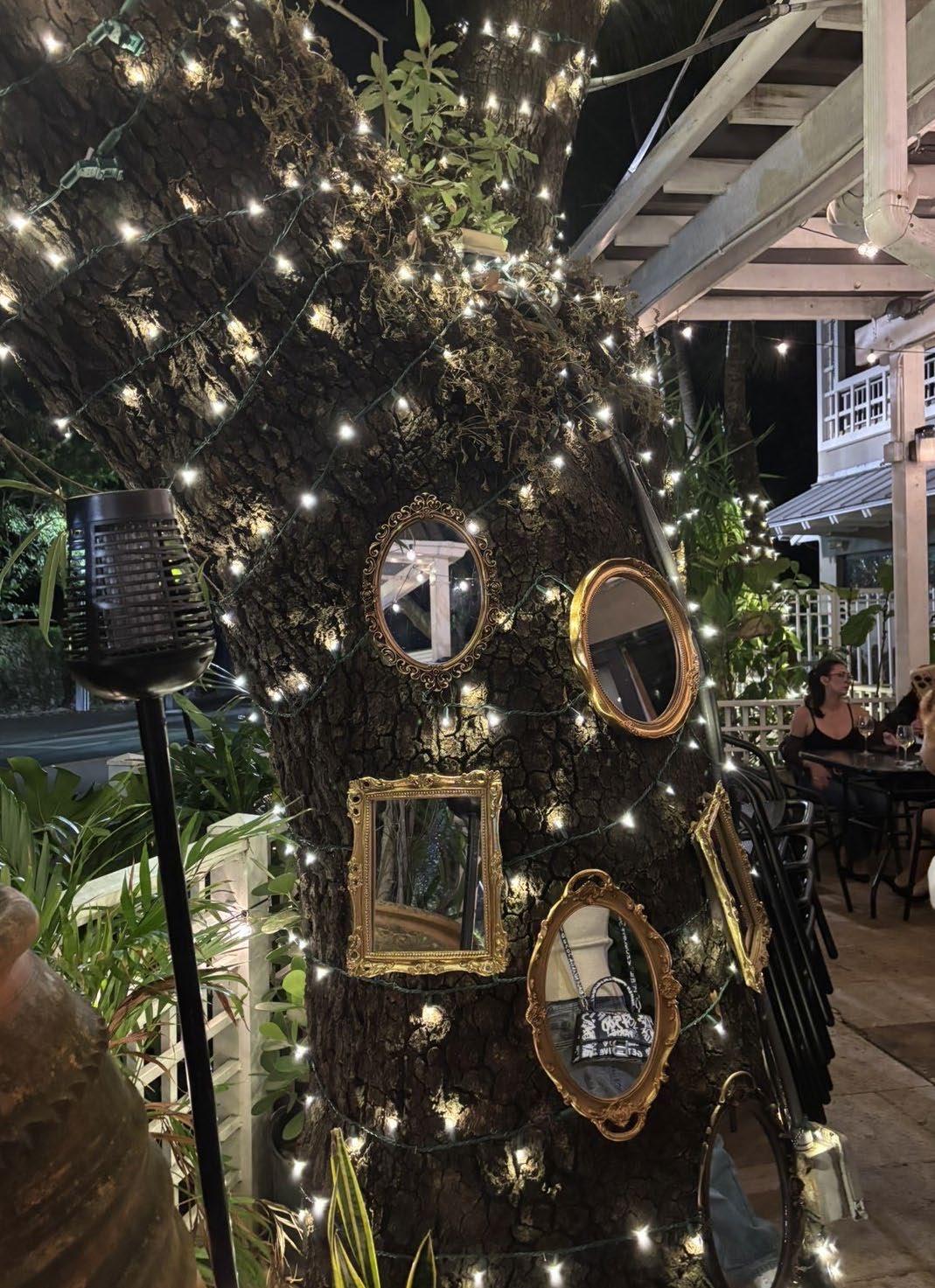
Mirrors and fairy lights decorate a tree at Magie, an outdoor wine bar in Coconut Grove.
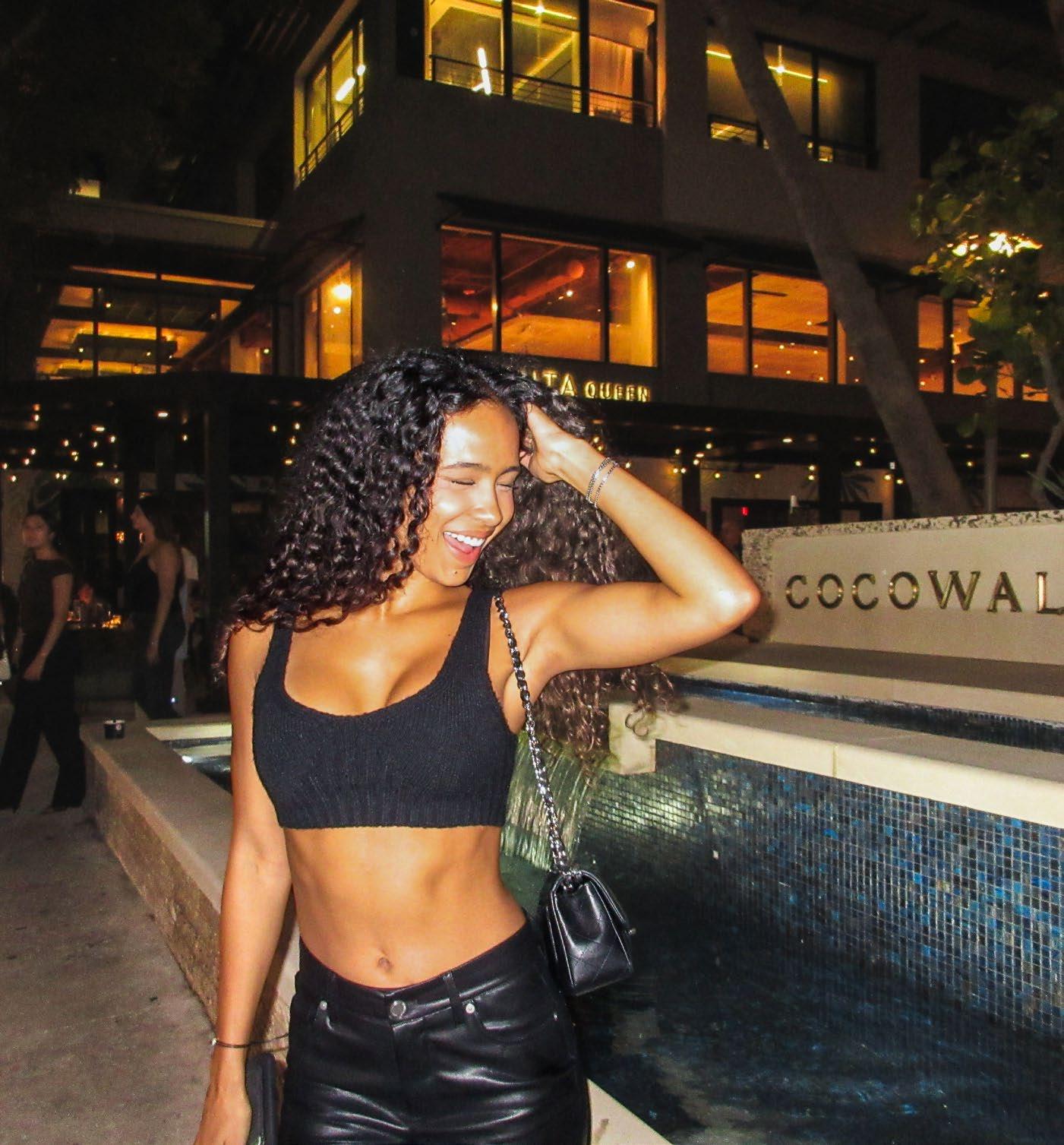
CocoWalk bustles with shoppers and families during the day, and college students at night.
THURSDAY
Here at the University of Miami, the weekend starts on Thursday night. As classes end, the night begins: Students gather in dorms or apartments to kick off the weekend with a whirlwind night of fun filled with bar hopping, crowded patios and dancing. At the Grove, the energy is electric. During the day, it’s filled with people of all ages, college kids and families alike, but when night falls, it is taken over by swarms of students from the U. Familiar faces are everywhere; you’re likely to run into everyone you know, whether that be a classmate or an old situationship.
One of the biggest draws to the Grove on Thursday is Sandbar’s “Ladies’ Night,” where girls are provided simple drinks for free until 1 a.m. It’s so popular that the line often stretches blocks past the entrance and can take up to an hour to get to the front. Inside, the music blasts so loud you have to shout to hear yourself speak. Girls dance on table, setting the vibe for the sweaty crowd on the floor below as it pulsates to the bass of the song.
If the line at Sandbar is too long or the high-energy vibe is too much for you, Oasis Lounge and Hookah Bar are right around the corner for a more chill vibe. There, it’s much easier to converse with a beer or cocktail in hand on chairs on the patio. Inside, two wellworn pool tables offer a laid-back alternative to the dance floor, drawing small crowds of friends who rotate in for casual games between rounds of drinks.
The Grove is the place for the quintessential college-night-out experience. While the city of Miami has much to offer when it comes to world-famous clubs or exclusive events where you might meet a celebrity, the Grove on Thursdays is a bubble of college students. Stories of nights out there tend to be more relatable to those of friends at state colleges. As the bars close and the last Ubers leave in the early hours of the morning, you know the Grove has once again delivered the chaotic, magnetic kind of night that defines the start of the weekend at the U.
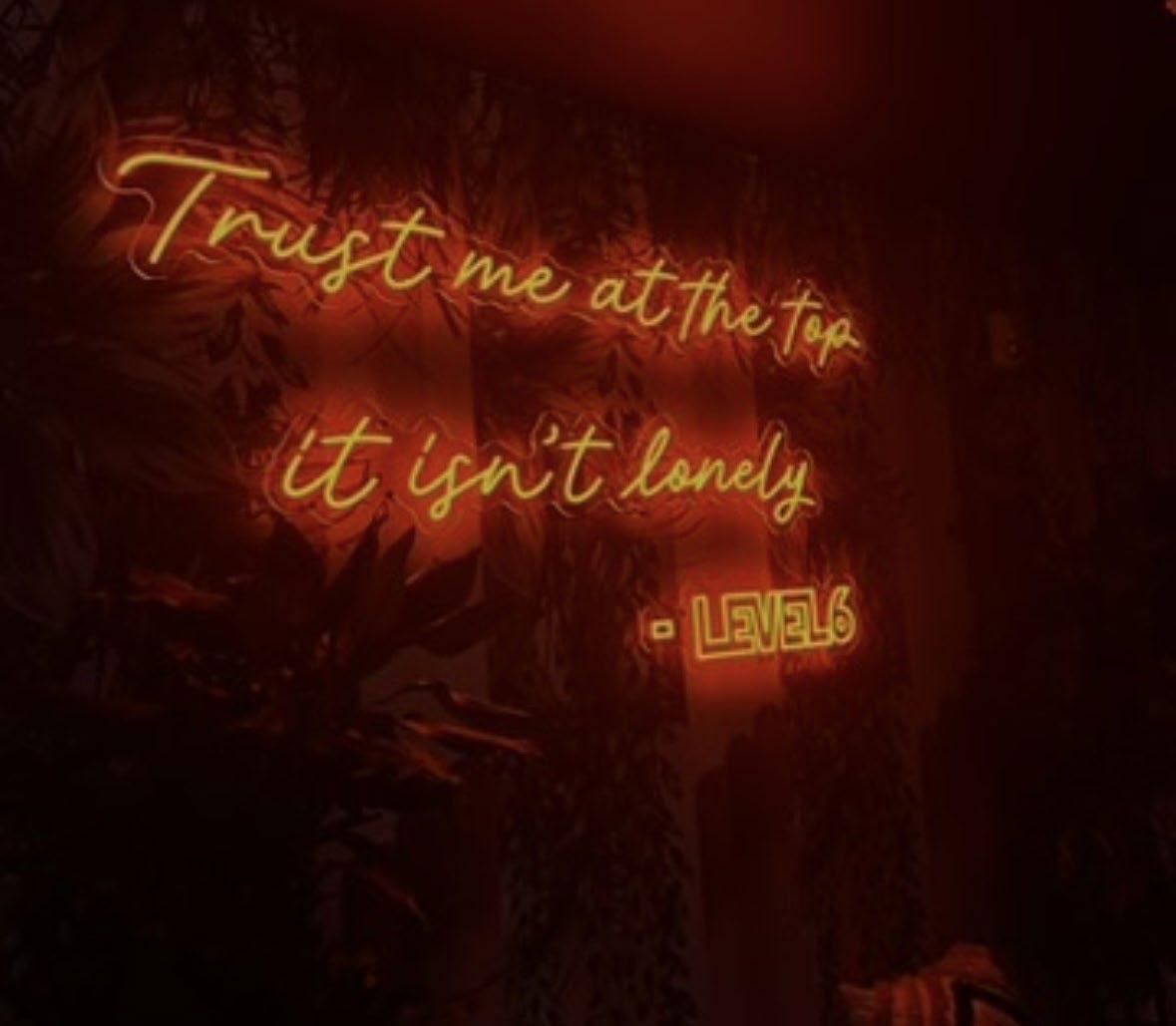
Level 6 is a Grove staple where you can enjoy tapas and cocktails on a rooftop overlooking Biscayne Bay. If you’re craving a fruity drink, Koko is the place to
FRIDAY
Thursday nights at the Grove serve as a warm-up for Friday nights. Now that it’s officially the weekend, students don’t have to worry about class the day after they go out. Students gather at Regatta, which exists as somewhat of a transition space between classic college bars and iconic Miami nightlife. With a beautiful view of the water, Regatta offers a more elevated experience than Oasis or Sandbar. Digital cameras flash as early patrons have photoshoots against Biscayne Bay’s shimmering backdrop.
The crowd is more mixed than Thursday night. While there’s no shortage of college students, you can often find recent graduates or local young couples mixed in. Drinks are higher-end as well: You can find fancy tropical cocktails or large pitchers of mojitos in one of their eight different flavors options. If you get there before the kitchen closes, you can also order tantalizing dishes from one of six renowned chefs.
As the sun dips below the marina and the sky shifts from pink to deep navy, the energy transforms. What starts as a goldenhour social scene slowly turns into a packed dance floor under string lights, with a DJ set carrying the night forward. By the end of the night, Regatta sets the tone for a promising weekend of Miami fun ahead.
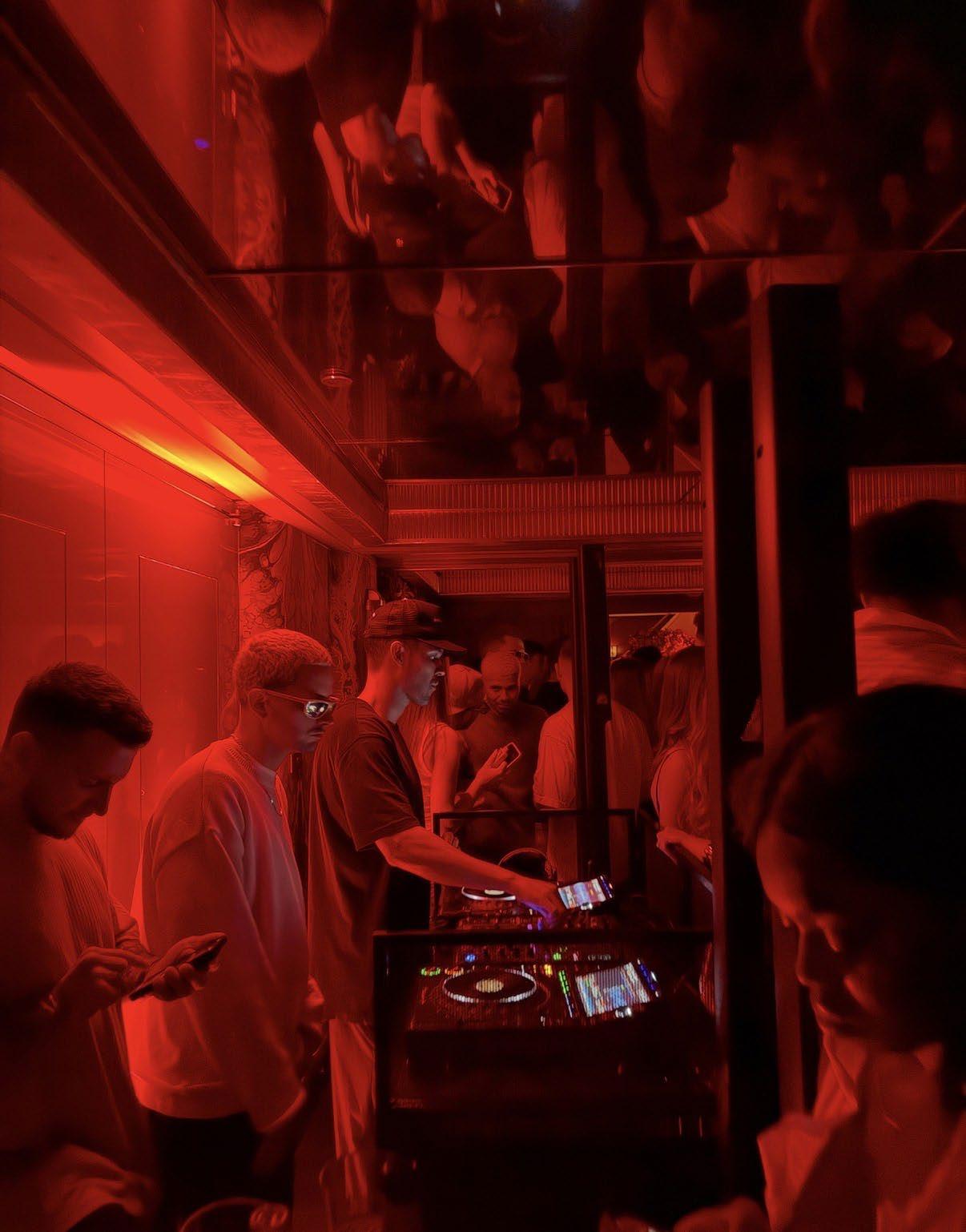
Regatta’s Sunset Sessions, combine high energy DJ sets with the venue’s beautiful waterfront views in Coconut Grove
If you’re looking to starting the night early, Regatta offers half off their specialty cocktails on Fridays from 4 p.m. to 7 p.m.
SATURDAY + SUNDAY
On Saturday night, students head to one of Miami’s most wellknown and iconic clubs: Club Space. A night out here is more of a marathon than a sprint, with headliners typically not starting their sets until 4 a.m. at the earliest. Club Space is a place like no other, with famous DJs blasting techno or house music until sunrise. It’s an immersive experience of club culture, and you’re likely to find yourself losing track of time in the thumping bass of the music and the flashing of colorful strobe lights.
Stepping inside, a neon sign calls to you: “PORTAL TO CLUB SPACE THIS WAY.”
Following the arrow, you go up a dark staircase with the walls covered in glowin-the-dark vaguely psychedelic paintings. Every part of the climb’s atmosphere is intentional. Each stair has words written on them, reading “all night,” “techno” or another snippet of what the night might entail. If you look up, hexagonal lights cover the ceiling, further curating Club Space’s perfect environment as you take the last few steps onto the terrace.
Unlike the Grove, Club Space belongs more to the city of Miami than the U’s students. Familiar faces are fewer, tourists are more common and the distance from campus is much greater, but it offers a connection to the city and an iconic “Miami” vibe rather than the Grove’s college bar scene.
As starlight turns to sunrise on the terrace dance floor, the night isn’t even close to over. Sunbeams shoot through the terrace, invigorating patrons to keep dancing and surrender to the music. The night ends as the city of Miami is just waking up. Students make the trek back to campus, exhausted but exhilarated, their Saturday night at Club Space a rite of passage for the UM experience.
Sunday reset looks a little different here at the U. Instead of a chill day full of Gatorade and bed rest, the party continues but starts to wind down as students go out for brunch. While all the brunch spots they frequent have impressive food offerings, their main
appeal is a bottomless brunch — endless mimosas, sangrias and bellinis to sip on as the weekend is rehashed.
The dress code for Sunday brunch is far more casual. While some students might put on a flowy sundress or polo shirt, jeans and t-shirts are just as common. Almost everyone is wearing sunglasses, not just to protect their eyes from the Miami rays, but to lighten the load of headaches from the past few nights. The most casual venue is Batch Gastropub, where their menu is complete with both healthy options like avocado toast and greasy food like their “Hangover Hash.” Spots like American Social are reminiscent of Friday night Regatta, with beautiful waterfront views in the background while groups of friends share stories of their weekends. Barsecco also offers a lively atmosphere complete with music from DJs to keep the energy going as bottomless mimosas flow.
Sunday brunches are a soft landing, providing a smooth transition from the party energy of weekend nights into the quiet, restful Sunday afternoons. The energy of the students softens as an eventful Miami weekend finally comes to an end.
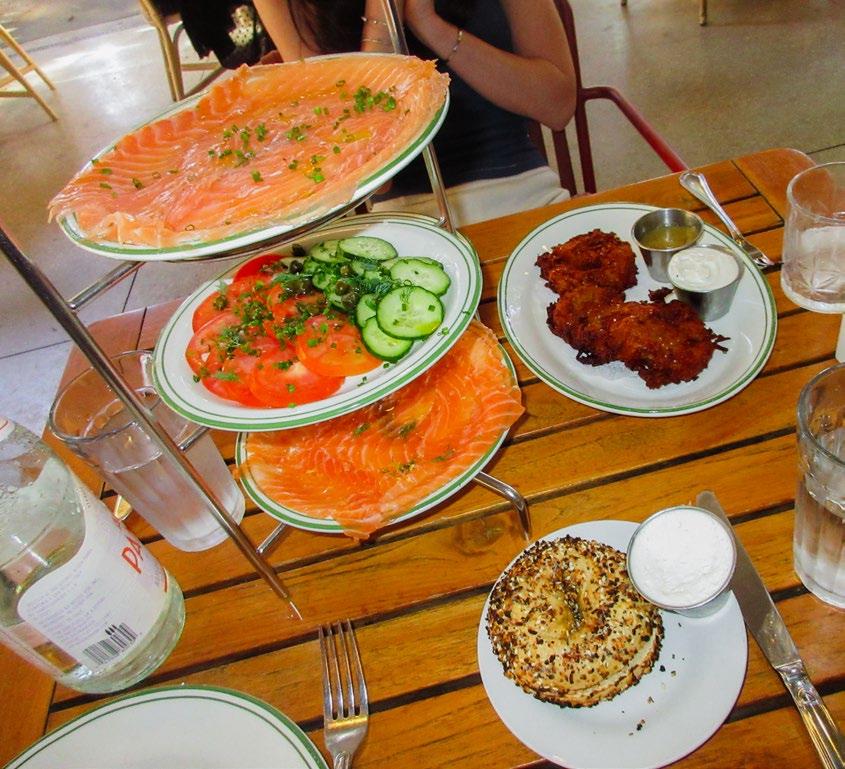
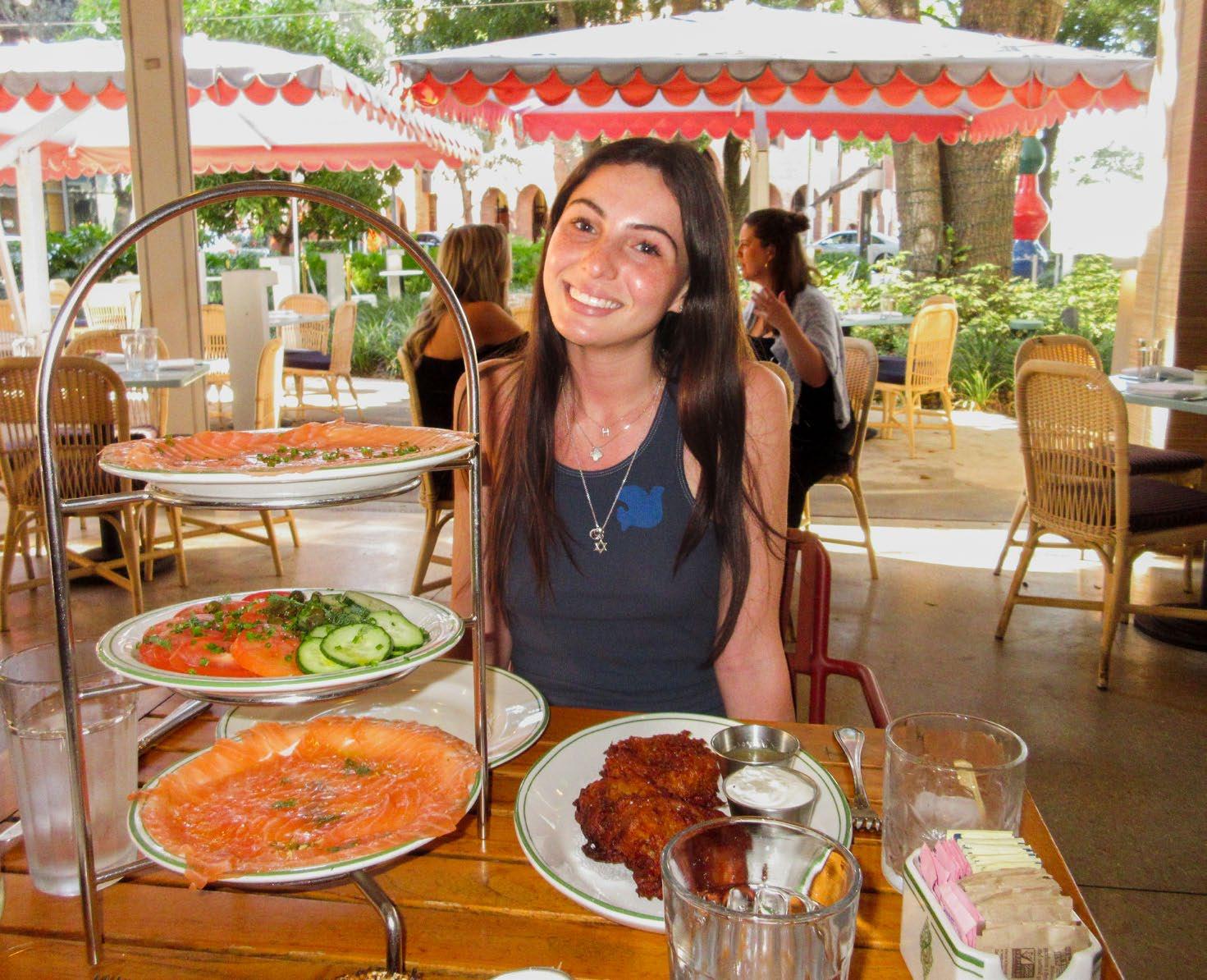
is a New York staple that has expanded to cities around the world, including Paris, Riyadh, Seoul and, of course, Miami.
Be sure to try Sadelle’s signature bagel towers with hand-sliced fish and accompanying vegetables.
Sadelle’s
Know Your Rights
All individuals living in the United States, undocumented or otherwise, are entitled to certain constitutional rights. It’s imperative you know what to do if approached by an immigration officer. words, photo&design_ariana glaser.
In 2025, the number of people held in U.S. Immigration and Customs Enforcement (ICE) detention centers rose by nearly 75 percent. In just the first month of 2026, ICE agents have killed nine people — multiple of which were U.S. citizens. Should you be approached by an ICE agent, stay calm and remember your rights:
ICE cannot enter private property without a warrant issued by a judge.
Memorize what an actual warrant looks like, and if ICE agents come to your home ask them to slide the permit under the door. If they do not have a search and seizure warrant, you have the right to deny them entry and keep your door closed.
You can film ICE.
So long as you don’t interfere with legal proceedings, you are well within your rights to record. In fact, if you are a witness to the crime, it’s imperative you record from a safe distance.
Your Miranda Rights still apply. Remember that anything you say can and will be used against you in a court of law. If you choose to exercise your Miranda Rights, simply say, “I choose to remain silent.” Additionally, you have the right to an attorney, and you should not sign anything without a lawyer present.
You may refuse a search.
Like police officers, ICE agents cannot search your person without probable cause or your consent. They may be permitted to pat you down if they have reason to believe you are carrying a weapon, but otherwise, they cannot search you without your verbal
Take mental notes.
If you believe your rights were violated during the arrest, you can report the incident to your lawyer or an immigrant rights organization. Keep track of names and badge numbers, and then write down everything that happened.
ICE agents do not currently have a single standard uniform. They have often been seen wearing either tactical gear or civilian clothes.
ICE OUT
HAPPENING
It’s all happening right here at Distraction. We’re paying tribute to Mahoney-Pearson ahead of its demolishment. We’re meeting incels and exploring why people are idolizing criminals. We’re debating whether celebrities have a duty to speak up about politics. (Plus: a touch of poetry.)
photo_ruby tavano.
Over 1400 people, including students, resident assistants and residential faculty currently live within Mahoney and Pearson Residential Colleges.
MahoneyPearson:
Looking Back
The University of Miami officially announced in November 2025 its plans to demolish Mahoney and Pearson Residential Colleges and replace them with a new residential complex called Gables Village.
As a first-year students’ dorm in recent years, Mahoney-Pearson welcomed many students into the UM community for the first time. Let’s take a walk down memory lane as we say farewell to Mahoney-Pearson life: the good, the bad and the ugly.
According to the Miami Herald, UM is often considered the first U.S. college campus entirely made up of Modernist-style buildings. Mahoney-Pearson Residential College’s building style and layout were inspired directly by Eaton Residential College, which sits less than a 10-minute walk away and now houses mostly sophomore students. Unlike most college dorms, these Residential Colleges were
designed with jack-and-jill bathrooms, assigning four students per suite and two students per room, rather than one or two communal bathrooms for the whole floor.
Mahoney’s original structure was built in 1958, and Pearson followed in 1962. While they’ve both undergone renovations over time, wear and tear are inevitable and noticeable.
“When I first moved in, the dorm felt very small, especially for two people. At first, it was hard to imagine making the most out of the space, and it reminded me more of an old hospital or office room than a place I would be living in,” first-year neuroscience and biology major Alexia Morgan, a current Pearson resident, said.
But if there is one thing Mahoney-Pearson taught us, it’s how to make the best of any challenge thrown at us.
“I made it my own. I cleaned everything, put up pictures, made a corkboard filled with photos of my friends and family and added plants and stuffed animals. Little by little, it started to feel warmer and more like a home,” Morgan said.
Making the Most of It
Ainsley Nelson, now a senior musical theatre and public relations major, lived in Mahoney for two years as a First-Year Fellow — essentially an academic-focused residential assistant — and had a similar experience to Morgan’s on her move-in day.
“Seeing it for the first time was rough; it kind of looked like a prison cell. But I added a lot of posters all throughout, photos of my friends and brought in some of my own furniture,” Nelson said.
But once the comfort set in, memories made way. In bedrooms, bathrooms, laundry rooms, hallways, dining halls, elevators and stairwells. Holding more than sixty years’ worth of UM history, students have made memories in every inch of Mahoney-Pearson.
Living in Egg-celence
Sam O’Connor, a sophomore health science major, moved out of her Mahoney single dorm less than one year ago and already misses the conveniences of dorm life.
“I miss being super close to the omelets and having my own bathroom,” O’Connor said. Omelets? Yes, omelets. MahoneyPearson residents often looked forward to their daily omelets in the dining hall, served with a smile by chef Glen Howard, who has worked at the dining hall for seven years. But students consider Howard to be more than a chef. He was consistent in first-year students’ lives when everything else felt unknown. If you head to YikYak right now, you’ll probably find posts petitioning UM to pay Howard more so he could come in on weekends to make omelets. When life wasn’t perfect, your omelets could be.
And for many, life was far from perfect in Mahoney-Pearson.
Not Always Paradise
Mahoney-Pearson is full of firsts. Perhaps it was your first time living away from home, sharing a bathroom or even sharing a bedroom. Problems can arise easily with these firsts.
“My friend was having extreme roommate issues in Pearson, so I allowed her to move into my single dorm and ended up sleeping on my own floor,” O’Connor said.
On top of transitioning into a new living situation, the “perks” of living in an older dorm made students less than perky.
“Mold was an ongoing issue, and I got sick at times and constantly had to turn off the AC to clean the vent,” Morgan said.
“The shower would never drain,” Nelson said.
But as the saying goes, what doesn’t kill you makes you stronger, and makes the good times feel even greater. For Morgan, her fondest memories truly hit close to home.
“Last semester, my friends from home came to visit and met all the friends I had made here. We all hung out together in my dorm, laughing and spending time together, and it was really special seeing two important parts of my life come together in one place,” Morgan said.
For Nelson, her favorite memories in Mahoney involved her co-workers.
“I loved doing game nights with my fellow housing staff friends,” she said.
The
Hardest “Goodbye”
No matter how long you live in Mahoney-
Pearson, how many times you have to call maintenance, how many times you miss your own bed in your own home and how many belly laughs, all-nighters and cups of ramen are shared, there is one certainty: You move out of Mahoney-Pearson a different person than you moved in as.
I know I did.
Three years ago, Mahoney 410 was where I wrote my first Distraction article on how to talk more like an adult. It’s where I was stuck the first time I got frat flu and had class cancelled for a hurricane that never hit. Where countless TikToks were made, and FaceTimes where I asked my mom to put the
Possible plans to replace the Mahoney-Pearson dining hall in the future are also being discussed.
dog on the phone were had. Where I killed my first cockroach. Where I met my first-year roommate, Merritt Sherrer, whose calmness against my wildness became my safe space throughout the rest of my college experience. Where I learned that home is determined by you, not an address on your ID.
Mahoney-Pearson, you hold just as much mold as you do memories, and I couldn’t thank you more for them all.
REDPILLED
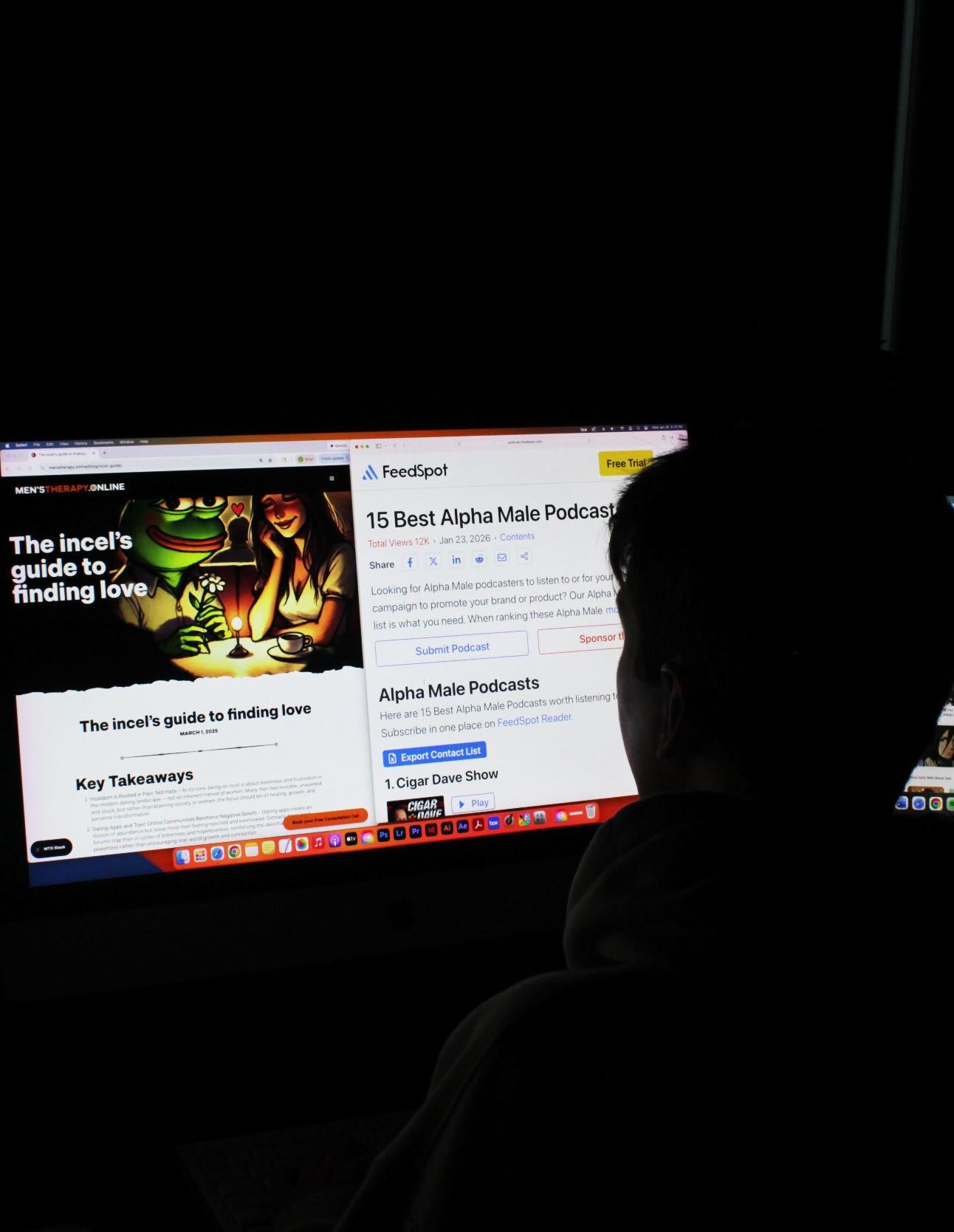
The face of the incel movement presents itself as waxedheaded businessmen and jawline-shaving influencers but who are its followers and what’s in it for them?
Platforms like Reddit, 4chan and Discord are notoriously incel-inhabited.
The “manosphere” is another term for the online space incels communicate through.
(No) Lay Of The Land
Incel culture and its conjoint red pill movement permeate the media. If you watched the award-winning series “Adolescence,” you’ve seen it. If you’ve stumbled across a debate podcast that pits 40-year-old men against 20-year-old Only Fans models, you’ve heard it.
The term “incel” and its resulting online community arose from a number of involuntarily celibate men, some of whom place anger or blame on women for their ‘single’ status.
“They don’t view women as humans, as people with emotions. Just something to own,” said University of Miami senior microbiology and immunology major Ashley Tongkam.
Incels are drawn to platforms like red pill content and their supposed “truths” about gender roles. These “truths” conclude that society favors women over men, men are naturally dominant over women and feminism has corrupted modern relationships.
Dr. Claire Oueslati-Porter, a UM gender and sexuality studies professor, assured these misogynistic attitudes aren’t limited to this community, nor are they new.
“The culture of media misogyny was already in place before anybody had the internet. It’s just that the internet has provided an outlet where there can be this sort of exacerbation of the misogyny and violence that’s already there,” Porter said.
What’s the Appeal?
For their privacy, one student who we will refer to as Ben said, “From discussions that I’ve had with friends, it’s like when you’re like, ‘Screw love. I don’t even care about this, I’m gonna go work on myself,’ which could dangerously tap into toxic masculinity.”
Whether it’s in reaction to a break-up or an outright rejection, some may find it simpler to shed their empathy for others than to address their own emotions.
Senior creative advertising major Amaranta Ortiz said, “It’s just so easy to hate people. It’s really easy to just be like, ‘Well, I deserve this, and you suck for not giving it to me.’”
Entitlement may also play a role when a platform’s rhetoric equates a woman’s abstinence to “gatekeeping” sex.
“You start seeing being in a relationship with another person as a transaction. It’s more of a goal. Even if you’re dating, you’re not dating for good intentions. It’s for you to add the number and be like, ‘Okay, cool. Done that,’” Ben said.
The appeal of an online community starts with connection, but for groups that perpetuate objectification, bigotry and hatred, it becomes more about holding and maximizing power.
Oueslati-Porter referenced political figures that may offer encouragement to the incel community, including President Trump who was held liable for sexual abuse.
“It would really be impossible not to connect the rhetoric and ideology of the current administration with the so-called incels. Now, that doesn’t mean that he’s responsible solely, but I do think he gives a kind of sense of identity and
inspiration to a lot of men.”
While loneliness may be enough impetus for some incels to contribute to the platform, there are broader social structures at play, particularly amidst women’s increasing financial independence.
UM psychology lecturer Dr. Elyse Hurtado said, “Maybe part of the explanation is that men are trying to keep their power, trying to maintain their dominant position in society.”
Nobody Wins
Incel culture appears to drive up concerns in both men and women.
A student who we will refer to as Jake said, “There are guys on TikTok that try to convince young men if they change their habits, they’ll get more attractive. It can be small things, like ‘hey, you should drink more water,’ to ‘bone smashing’ where they literally hit their face with a hammer.”
The “looks-maxxing” phenomena is an offspring of the culture in which influencers insist severe surgical alterations are a solution to involuntary celibacy.
“Men in general are a lot more insecure or self-conscious,” Jake said.
When searching for community, one would hope they’re met with compassion, not criticisms on their canthal tilts.
“It means the angle of your eyes,” Jake explained.
Meanwhile, women are double-checking men’s Instagram Followings in fear of finding Andrew Tate or other influencers known for their misogynistic takes.
“It makes me more picky with men which is the opposite of what they’re trying to gain out of this whole community,” Ortiz said. “I have to really screen a man before I even think about being friends with him. I’m like, ‘Okay, first of all, do you see me as a human being?’”
Holding Out Hope
Through the lens of isolating algorithms and echo-chambers, challenging incel culture might seem difficult. Through the lens of institutionalized patriarchy and deeply-rooted misogyny, it probably feels impossible.
Hurtado said, “If you want to change what people think, you want to first try to meet them where they are, try to show empathy, understanding, compassion and then pull them along gently… It has to be a process.”
Open communication is imperative to reaching agreements. Unfortunately, who does the talking matters too.
“Men need to do work with young men,” Oueslati-Porter said. “Men who are coaches, men who are presidents in their fraternities or in leadership roles really need to do the work there to influence them into understanding that this is obviously an unacceptable behavior.”
As long as people are holding these conversations, they can hold out hope for mutual understanding and connection.
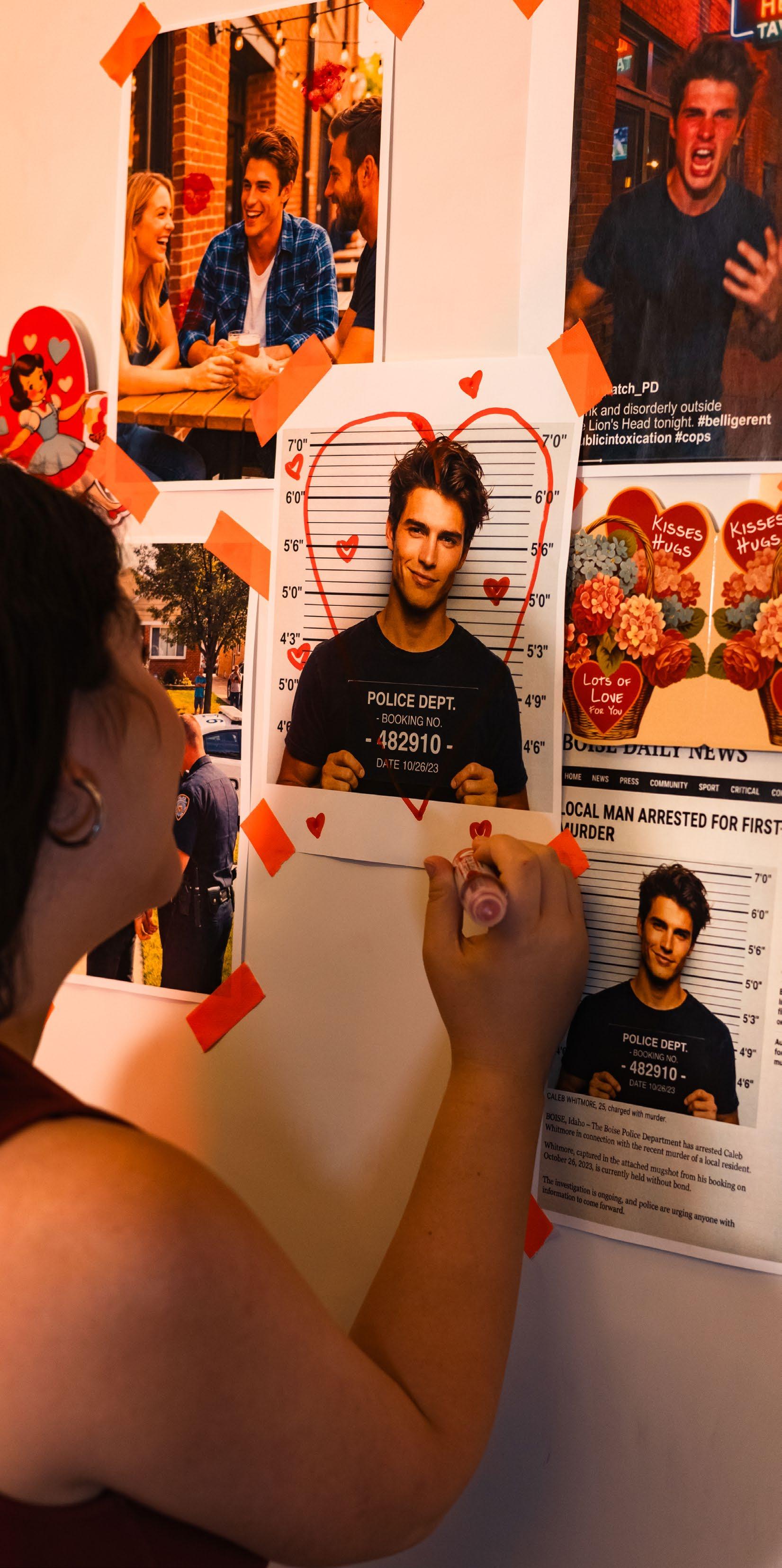
IDOLIZING INMATES
It seems that the general public just can’t get enough of criminals these days. Who is and isn’t guilty, how a crime was committed and what will happen next keeps the obsession growing. No matter how hard we try to ignore it, people are constantly running to social media to get the newest updates on sentencing or who-done-its. words_ lucy carlson-pietraszek. photo_jonathan padrino. design_charlotte deangelis.
If you have opened a social media app, read the news or even turned on Netflix lately, you should recognize at least some of these names. Luigi Man gione, Erik and Lyle Menendez and Gypsy Rose Blanchard all skyrocketed to fame after their experiences with crime. People became fascinated with their stories. Wanting to know more details, why they did it or even if they are truly guilty only heightened
their “fame” as they soon became notorious household names.
Natalie Cole, a senior at the University of Miami said, “The first case I became really interested in was Gypsy Rose because that was big in the media, especially when she was coming out of jail. Having her on talk shows and having Kim Kardashian going to see her gave her more screen time.”
Another senior at the University of Miami,
Claire Keebaugh, said that for her, “Growing up my mom used to put on the news every morning, so I was always cognizant of what was happening in the world. I got into cases like JonBenét Ramsey and Elizabeth Smart.”
Social Media as News
Newspapers have been traded in for online articles and news reporters have taken to TikTok. It’s no secret that a majority of the younger generations get their news from social
Hybristophilia is the phenomenon of having sexual or romantic interest in and attraction to criminals.
media. This is no different when it comes to crime. Some TikTokers dedicate their entire pages to explaining or debunking crimes and myths surrounding them.
“I try to watch the news every day and read the New York Times,” said Keebaugh. “But I also get information from TikTok... and Spotify podcasts like Crime Junkie.”
By taking crimes and the people who committed them to social media, it has created a whole new wave of memes and edits. Have you ever seen a thirst trap edit of the Menendez brothers? At this point, who hasn’t? These edits and memes can often change how the public views them while increasing their fame.
“I think [the edits and memes] romanticize them a lot more,” said Cole
Louvre It Or Hate It
The public seemed to have accepted that good old fashioned art heists were of the past. This all changed in October 2025 when one of the largest art heists in history was completed at the Louvre Museum in Paris. The public’s obsession quickly turned to social media. As details and videos came out, everyone was glued to their phones for the newest updates.
“I like a good story. When it comes to making a good TV show out of it, you need a good story. Something like the Louvre heist feels like something out of a movie,” said Cole.
The heist occurred just weeks before Halloween, and it quickly became a popular costume last year. People were seen on social media wearing black clothing with a construction vest to mimic the thief’s outfits. They even added costume jewelry to symbolize the stolen jewels.
What makes these people and what they have done so compelling? Why do we care that the two brothers killed their parents or that a mother pretended her daughter was sick?
“Either the severity of their crimes or their attractiveness. Like Ted Bundy, the Menendez brothers or Jeffery Dahmer,” said Keebaugh. “The ballsiest of the crimes like the Louvre heist and the efficiency in which they did this. It’s a weird idea that people think good criminals are automatically attractive now.”
It seems that the public and media’s obsession with criminals directly correlates to how attractive they are. People’s obsession with Luigi Mangione started not after he shot and killed a person, but after people saw what he looked like.
Or sometimes, it’s the complete opposite.
“I think for Luigi, it’s attractiveness and with Gypsy Rose, it’s the opposite because it’s the shock factor that made her shave her head and pull out her teeth,” said Cole.
Most of these high-profile crimes tend to get their own TV shows or movies nowadays. Whether it’s on Ryan Murphy and Ian Brennan’s “Monsters” mini-series, Crime Junkies podcast or a Hulu Original Series these stories are bound to get the public’s attention.
Red Carpet Politics
At a time when red carpets become political stages, what does celebrity influence on politics really mean in 2026? words_rafael jennings. photo_evgenia kakari. design_jay moyer.
Over half of Americans say a celebrity’s political position has led them to hold a more negative perception of that celebrity, according to a 2024 poll by YouGov.
On Dec. 1, 2025, Trinidadian rapper and multi-Grammy Award winner Nicki Minaj held hands with Turning Point USA CEO Erika Kirk as they walked onto the stage in front of a packed crowd at the annual AmericaFest convention. Spark machines lit up the stage behind the pair as they strutted to Minaj’s 2011 hit, ”Super Bass.” While cheers echoed from within the Phoenix Convention Center arena, longtime fans and observers of Minaj questioned her new political alignment.
Following the murder of former Turning Point USA CEO Charlie Kirk in Sept. 2025, AmericaFest served as a public memorial honoring his work, career and beliefs. Throughout the tour, notable right-wing public figures such as President Donald Trump, Megyn Kelly and Tucker Carlson gathered on stage to show support and address the convention crowd. During her interview on the main stage, Minaj sat beside Erika Kirk, looked her new friend in the eye and said, “We’re the cool kids now.”
In The Public Eye
The obsession with celebrities has long been a pillar of American culture. From actors like Marilyn Monroe, to personalities and business owners like the Kardashian family, American culture is woven with fame and celebrities as important strands.
In a similar vein, the political voice is key to the origin of American society. Incidents like The Boston Tea Party and figures like Thomas Paine all contributed to the freedom of political expression upheld by the United States Constitution.
Yet somewhere at the intersection between entertainment and politics is a line that gets muddier with the progression of time. Following American history, from pre-Revolutionary War protests through the Golden Age of Hollywood, the convergence of celebrities and politics in the 21st century seems like an inevitable reality. As celebrities employ their political voice, does their voicing serve as genuine self-expression, or a reminder that impact can be manufactured?
In March of 2003, the American girl group, The Chicks, played a show at the Shepard’s Bush Empire Theater in London
During an interaction with the crowd, lead singer Natalie Maines confided in the audience and said, “Just so you know, we’re on the good side with y’all. We do not want this war [or] this violence and we’re ashamed that the President of the United States is from Texas.”
This comment came nine days before former President George W. Bush’s 2003 invasion of Iraq.
Following the comments, Maines delivered two separate apologies. Under the pressure of radio bans and songs free-falling from the charts, her message quickly shifted.
In her first apology, she said, “I feel the president is ignoring the opinions of many in the US and alienating the rest of the world.”
Two days later she stated, “As a concerned American citizen, I apologize to President Bush because my remark was disrespectful. I feel that whoever holds that office should be treated with the utmost respect.
In 2006, Maines spoke on the subject again and said, “I don’t feel that way anymore. I don’t feel [Bush] is owed any respect whatsoever.”
The Modern Landscape
Tiffani Knowles-Senatus, a lecturer at the University of Miami School of Communication with an extensive background in journalism, public relations and radio spoke to the behind-the-scenes perspective of celebrities and political engagement
“I think if I were a publicist for any of those celebrities I would advise them to hold on to some form of social cause that means something,” she said.
In 2026, the world is experiencing more connectedness than ever before. Social media has made the ability to share and receive information easier and more global than ever.
For celebrities, this constant accessibility and expectation to share, comment, like and repost has contributed to a culture where the political seems to be a deeper reflection of the personal.
Dr. Casey Klofstad, a professor of political science at UM, said, ”Most of us don’t pay attention to politics, that’s another thing we know from political science research. So a lot of what we get is sort of secondhand. What we know about opinion formation is that we tend to follow the leader…we attend to what celebrities say, and that sort of top-down elite-driven opinion formation.”
Awards shows have historically been an important outlet for celebrities to exercise their self-expression. In a pre-social media age, appearances from your favorite actor at the Oscars or favorite singer at the Grammys was a rare appearance. In recent years celebrities have become more accessible to fans and possibly in a related manner more vocal at awards shows.
The 68th Annual Grammy Awards
took place at the Crypto.com Arena in Los Angeles, California. Amid a night of elaborate performances, first-time wins and cocktails, many artists were drawn to make political statements.
While accepting his award for Best M úsica Urbana Album, Puerto Rican singer Bad Bunny said, “Before I say thanks to God, I’m going to say ICE out.”
His sentiments were echoed by the “Ice Out” pins worn by an array of celebrities including Billie Eilish, Justin Bieber, Kehlani and more.
What is Enough?
Justice Muhhamed, a motion pictures and advertising student, said, “I don’t really see influencers or celebrities as someone I’m influenced by…Sometimes, like, I’m just on social media wondering what they are doing outside of that? Yes, you can make posts, but I feel like there’s a lot more to be done.”
In a world where millions of social media posts are published daily, the question begs to be asked, “What is enough?” Is it a post? A pin? A sign at a protest? For celebrities, is it the increasingly growing pressure to be on the right side of history, or unfiltered self-expression?
In 2018, Nicki Minaj shared an Instagram post featuring a photo from an ICE camp at the Mexican border, one put in place by Trump’s zero-tolerance immigration policy.
Over the photo she wrote, “This is so scary to me. Please stop this. Can you imagine the terror & panic these kids feel right now?”
On Jan. 28, 2026, Minaj, encased in a floor-length fur jacket with her signature long straight hair, made her way past Trump to the microphone in front of a crowd hosted by the Treasury Department in Washington D.C, where she proclaimed, “I am probably the president’s number one fan.”
Later that night, Minaj posted a photo to X, holding one of the President‘s ‘Trump Gold Cards,’ a card available for purchase to expedite the process of claiming United States permanent residency aimed at wealthy foreigners.
The idea of the celebrity hinges on expectation. The expectation that they will look good in every outfit, deliver the best performance in every movie and donate to causes that we all care about. In a political climate, where the unexpected has become the norm, what can fans truly expect from the celebrities they follow, discourse or validation? Or is there room for the celebrity to exist as a route to both?
PoetryCorner
illustration&design_jay moyer.
Rough-tongued Felicity
pulls the working world to the dirty curve of her gutter. Beads sliding, raining, rattle.
Pulsing pounding sonar pulse, chase absent afternoons. Steal a kiss of gold-glow gloam, morning eyes, silver light of flower’s dappled dew.
Score sleazy cheers along the streets, while drunkards choke on faithful fuse. Shut them up, weld it shut, Earth-black feet scraped bloody on concrete.
Dreams fed will rise, brown, crack open to rave with tongues that blister and burn. Eat around the rot, the black spots, Dirty fingers mashing apricots.
Dylan Thomas D’Alessandro is a senior at the University of Miami studying English and political science on the pre-law track. He loves exploring nature on foot or via sailboat near his home in Boston.
words_dylan thomas d’alessandro.
WHAT THE FORK
Eating is not simply an experience for the tastebuds: It is a fullbody adventure. Meet our star campus food workers, travel the world through tasty study abroad treats and find Miami’s best restaurants to eat (literally) and eat (photogenically).
photo_ruby tavano.
Five Star Service
UM feeds our brains, but who feeds our stomachs? In between lectures, study sessions and late nights, Mahoney Pearson Dining Hall is a classic stop for freshmen to refuel. What keeps mealtimes moving, however, is the people behind the counter — and one smiling face stands out amidst the rest. words_maxine zahler. photo_ethan dosa & vecteezy.com. design_ben gerkin.
At the mast of the MahoneyPearson hostess booth, you’ll find Marwa Afifi. Donning red lipstick and a contagious smile, she could easily be described as a ray of sunshine. Whether she’s inquiring about your day, asking you to swipe your CaneCard or handing you a snack, she always makes sure to leave a compliment and a smile.
My friends and I from Mahoney-Pearson have been talking to Afifi since our first weeks on campus. Since then, we’ve grown from small talk to longer conversations about our lives, the kind that become a meaningful part of your daily routine without you realizing it. But we aren’t the only ones who have been impacted by Afifi’s courteousness.
When asked who she talks to during the day, her answer is simple: “Everyone.” While others may stand silently behind the booth , Afifi insists on talking to every student and worker who walks past
This is partly due to her prior training. Before UM Dining, Afifi worked in hospitality positions at the Sonesta and
Fontainebleau Hotels. The dining hall marks her first full-time job in the U.S.
“I try to say, ‘Hi, how are you today,’ to everybody,” Afifi said. “I can’t just let someone come in and not talk; that’s not polite.”
When I asked Afifi what her favorite part of the job is, she said, “The students.” But why does she care so much about them?
Afifi’s care toward the students isn’t from habit alone. It comes from a history of learning that small moments — especially when it comes to children — matter.
Afifi’s son — now 25 was sent to boarding school in the eighth grade , so s he knows how hard it can be living away from home . She tries to treat her son the way she wanted him to be treated when he was away from her.
“Usually I’m a very serious person,” Afifi said. “But with students, I change myself into a tender mom person. I wasn’t there with my son when he was away, and I always hoped someone treated him the way I treat these students.”
Afifi’s student-first approach doesn’t only stem from empathy, but an understanding of children’s brains. She speaks thoughtfully about the way students respond to tone, body language and attention, especially during such a transitional stage of life.
“I love kids so much because I understand how [at] every stage of the kid, they need to be treated right,” said Afifi. “ Because if you don’t get it right you could scar those kids forever.”
Afifi’s care for students starts long before she gets to the hostess booth. Her daily commute is a 6-hour long process, back and forth everyday. She walks 15 minutes to the bus station then rides the bus for anywhere from an hour to an hour and a half. Finally, she takes the train and walks from the University Station to the Mahoney-Pearson Dining Hall.
On breaks from the long lines of hungry students, Marwa likes to gossip with her coworker, Indeera, and eat a hearty meal. Her favorite dish at the dining hall is in the realm of Mexican cuisine.
“The taco with the ground beef, and the toppings, that’s the best ever!” Afifi said. Whether she’s at the hostess stand or eating at a table, Afifi remains a constant , cheerful presence at Mahoney-Pearson Dining Hall. My friends and I have relics of our favorite conversations with her — heart keychains that she handed to us. The green one with orange polka dots sits in my freshman dorm in Mahoney, overlooking a grand view of the one and only MahoneyPearson Dining Hall.
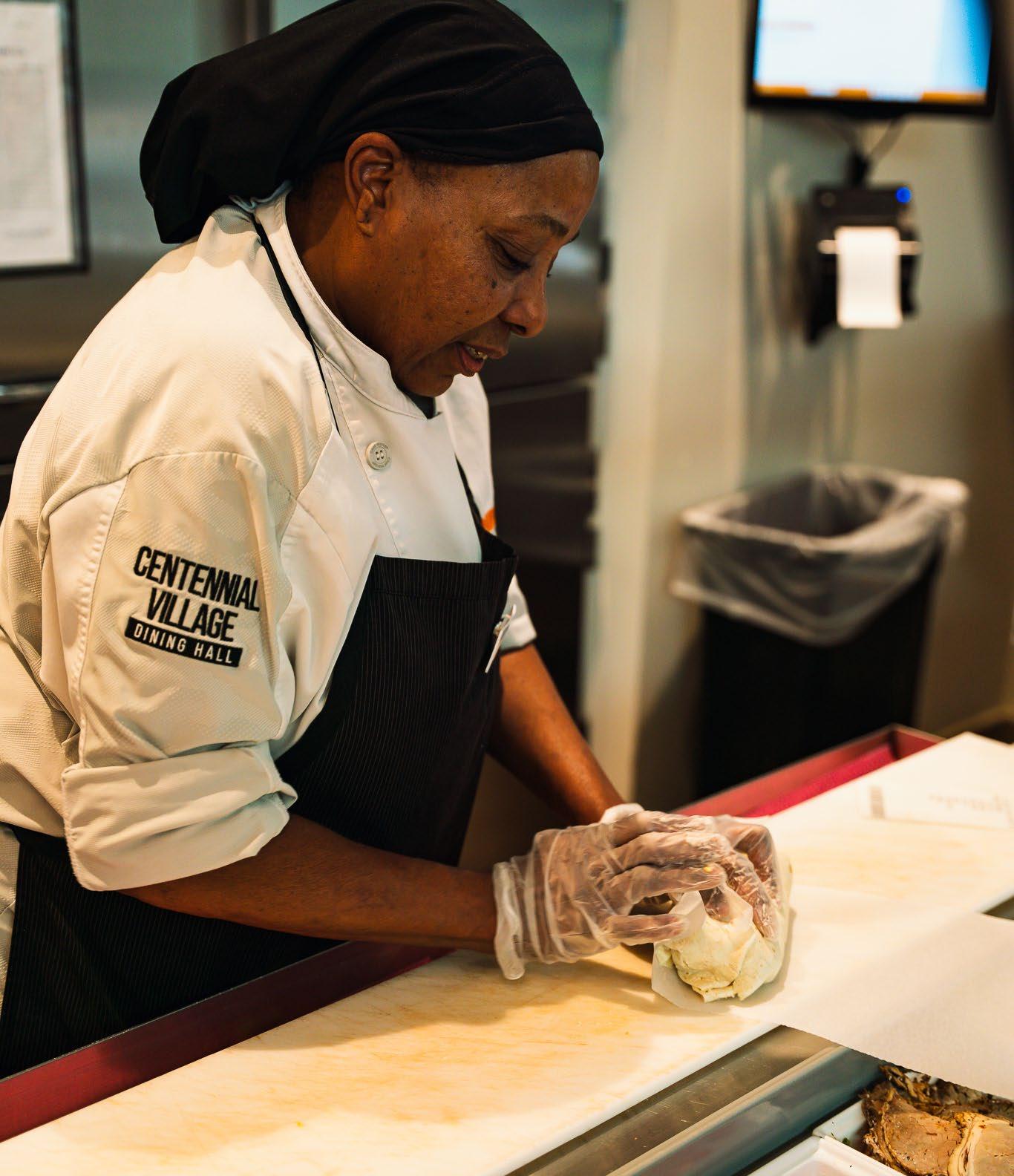
Campus dining employee prepares deli wraps at Centennial Dining Hall.
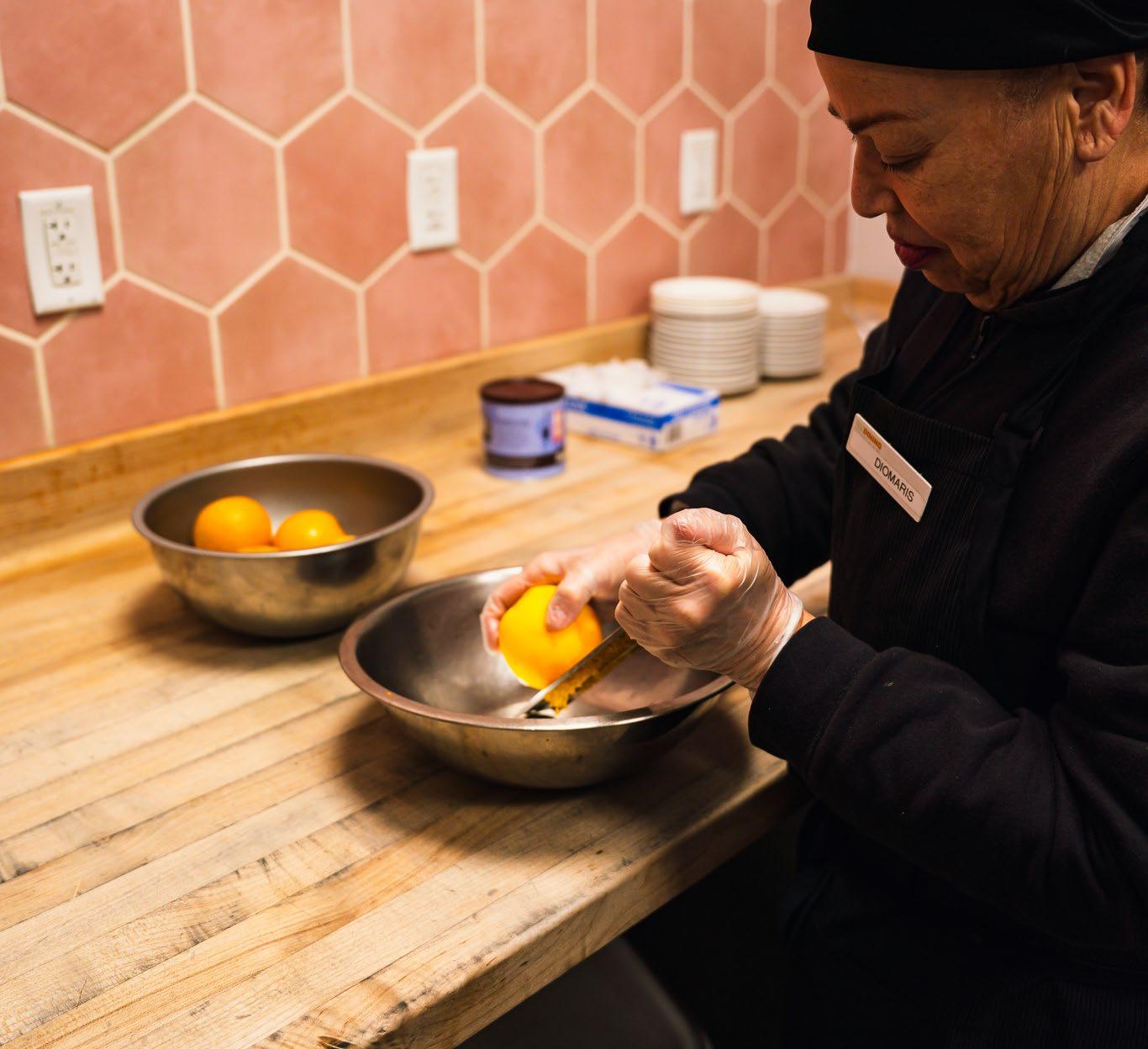
Dining hall employee zests an orange in the kitchen to prepare dessert dishes for the night ahead.
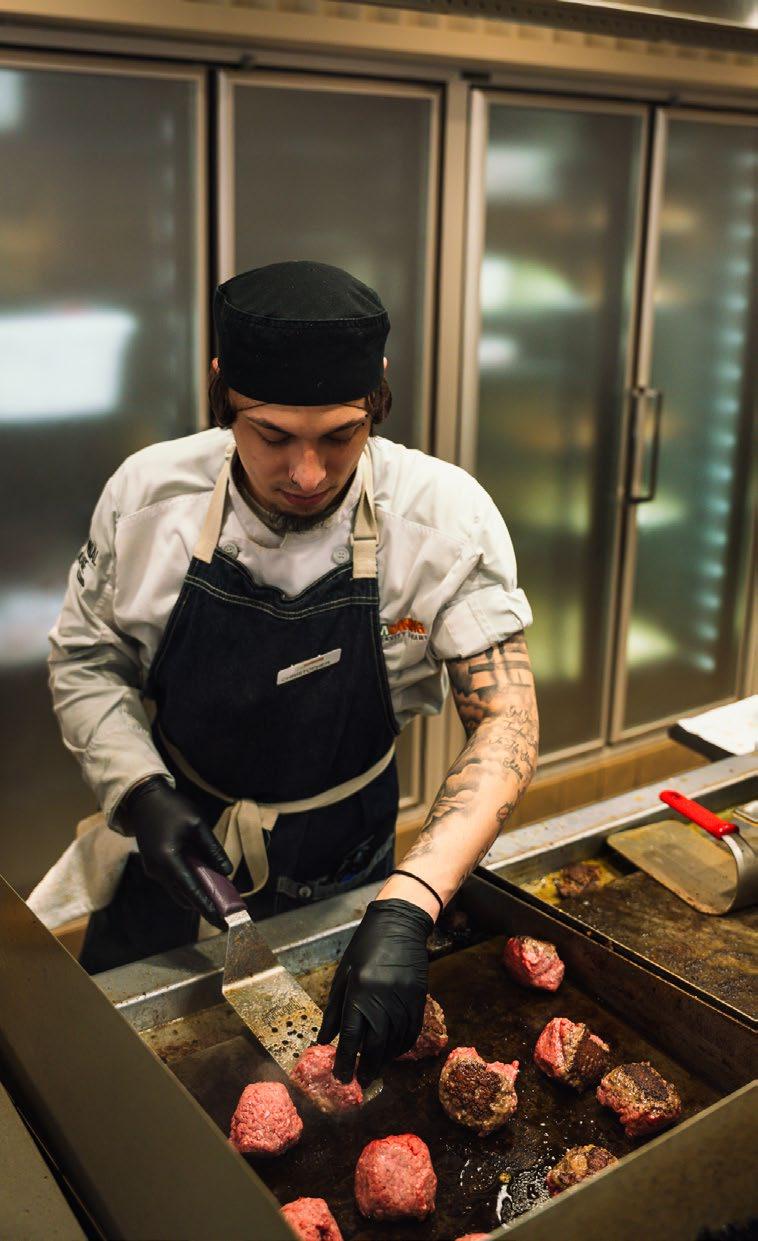
Food service worker cooks burgers on a grill inside the campus dining facility.
Best Eats Abroad
UM students have dozens of opportunities to expand their education (and palate) globally, including UPrograms, partner universities, global internships and summer programs.
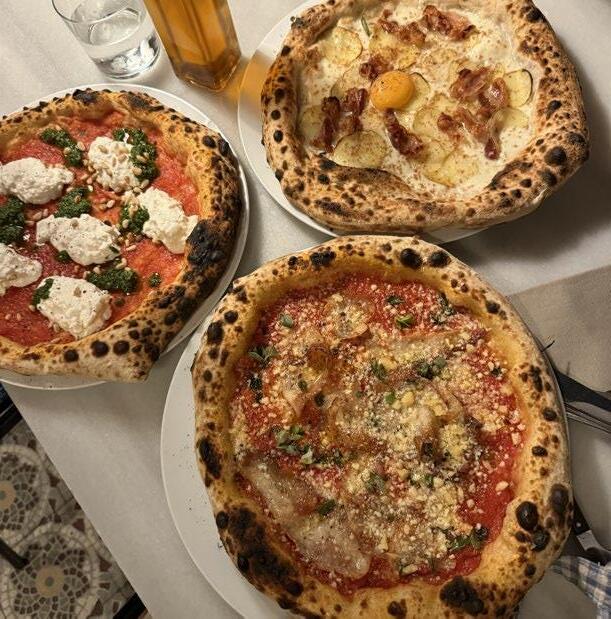
Personal pizzas. Santoria Panatieri, Barcelona, Spain. Julia Campbell, senior.
Truffle risotto. Borough Market in London, U.K. Amanda Mohamad, senior.
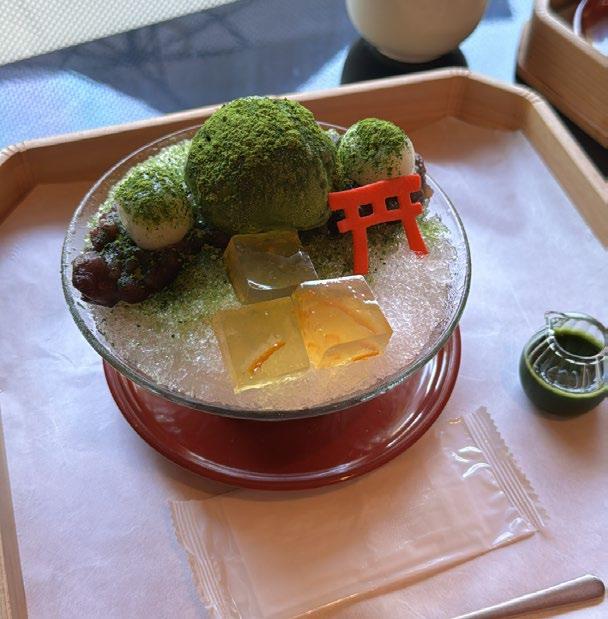
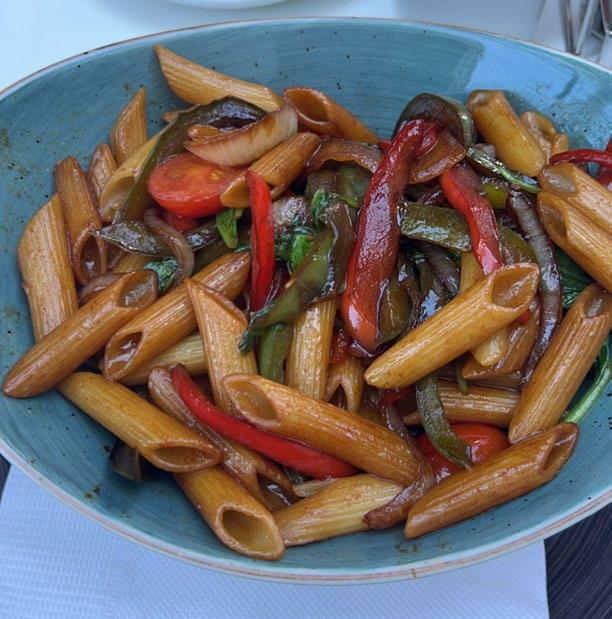
Semesters abroad are full of new experiences, especially for the tastebuds. Back home, some students are left dreaming about dishes that are all the way in another time zone. Here we’ve gathered some UM students’ fondest food memories. One thing we’ve concluded: No matter where you are in the world, phone eats first.
adesina, julia campbell, gray mckean & amanda mohamad. illustration&design_jay moyer.
photo_tomiwa
Matcha shaved ice with ice cream, red bean paste, jelly and a shot of matcha. Inari Saryo in Kyoto, Japan. Tomiwa Adesina, senior.
Peri peri & chakalaka spiced penne. Liberty Square in Cape Town, South Africa. Gray McKean, senior.
Miami’s food scene is known and loved worldwide, but going out to a restaurant with your friends is about more than just the food. These local restaurants have the most Instagrammable photo-ops that will have your friends saying “you ATE” before you’ve even finished your meal.
Gianni’s at the Former Versace Mansion
Miami Beach
Giselle
Downtown Miami
Coconut Grove
words_amanda mohamad. photo_ruby tavano, julia campbell & rosibel mercedes. design_charlotte deangelis. If “Aladdin” took place today, Amal is what Jasmine’s palace would look like. Amal’s vibes are a perfect mix of old-world Arabesque charm and modern Miami luxury. Whether you’re accompanied by their jazz band in the sunshine for brunch or belly dancers in darker mood lighting for dinner, Amal puts a classy twist on Miami’s party scene. Before or after your meal, go up the elevator for drinks and light appetizers at Level 6 Rooftop, overlooking Coconut Grove. By the end of the day, you’ll have a full stomach, a full heart and a phone full of Instagram notifications. Amal
Stepping into Gianni’s is stepping into a piece of both Miami and luxury fashion history. Taking a 180-degree turn from the hustle and bright lights of the rest of Ocean Dr., Gianni’s is a pocket of Italy, with decades-old mosaic walls, statues and terrazzo and pebble stone floors. If you’re looking for a photo-op that works both for their brunch and dinner, head outside to the pool, where the shimmer of the mosaic waters does all the heavy lifting to give you the perfect pic.
If you’ve seen photos of the neon sign that says, “I’ll be there if by CHANCE you’ll be there too,” it’s from Giselle’s rooftop, and you need to be there. With theatrical purple lighting and skyline views, it’s an opportunity for a main character moment photoshoot like no other. And if you are 21+, you have your choice of after-dinner fun downstairs at E11EVEN or across the street at Club Space when you’ve finished. Combine your Giselle photos with ones from the club, and you’ve got yourself a photo dump that will give you FOMO just looking at the next morning as you embrace all your heart eye comments.
Gianni’s
Joia Beach
Sexy Fish
At Joia Beach, the food and the views are both so good that you won’t leave any crumbs on your plate or your camera.
Joia Beach
Miami Beach
It’s easy to get caught up in Miami’s bright and bold city life, but Joia Beach is a reminder to enjoy the serene. With a restaurant, beach club and lounge overlooking the beach, this is your time to dip your toes in the sand and treat Miami the way that everyone who doesn’t live here does: a vacation. If you’re looking to add a beachfront or sunset pic to your feed, without an overwhelming pressure to post in a bathing suit, Joia is the place to EAT.
Amazonico Brickell
After major success in Dubai, London and Monte Carlo, Amazonico hit the States in Miami last September with three floors of jungle-inspired beauty. The restaurant on the ground floor is full of lush greenery — take your allergy pill before arrival if necessary — with undertones of red, yellow and green, perfect for pics that give a sultry, mysterious vibe. On the second floor, a bar and lounge with more of a “Miami modern” aesthetic, accompanied by mirrored ceilings, in case you want to throw in a fun birds-eye view pic with your cocktail into the feed. And finally, Amazonico’s rooftop may just be the star of their Latin-American show, with a largerthan-life peacock statue built into the main bar and beautiful Brickell views. It’s your opportunity to show your followers your wild side.
Navi Coffee & Flowers
Coconut Grove
If you thought we were going to leave you without a coffee shop, think again. Navi is known for what’s in their name: coffee and flowers. While seating is limited, it’s still worth popping in for a honey tahini latte and a photo in front of their floral display. After you hit ‘Post,’ consider picking up one of their arrangements to make your home as aesthetic as your feed.
Navi Coffee & Flowers
Sexy Fish
Sexy Fish
Brickell
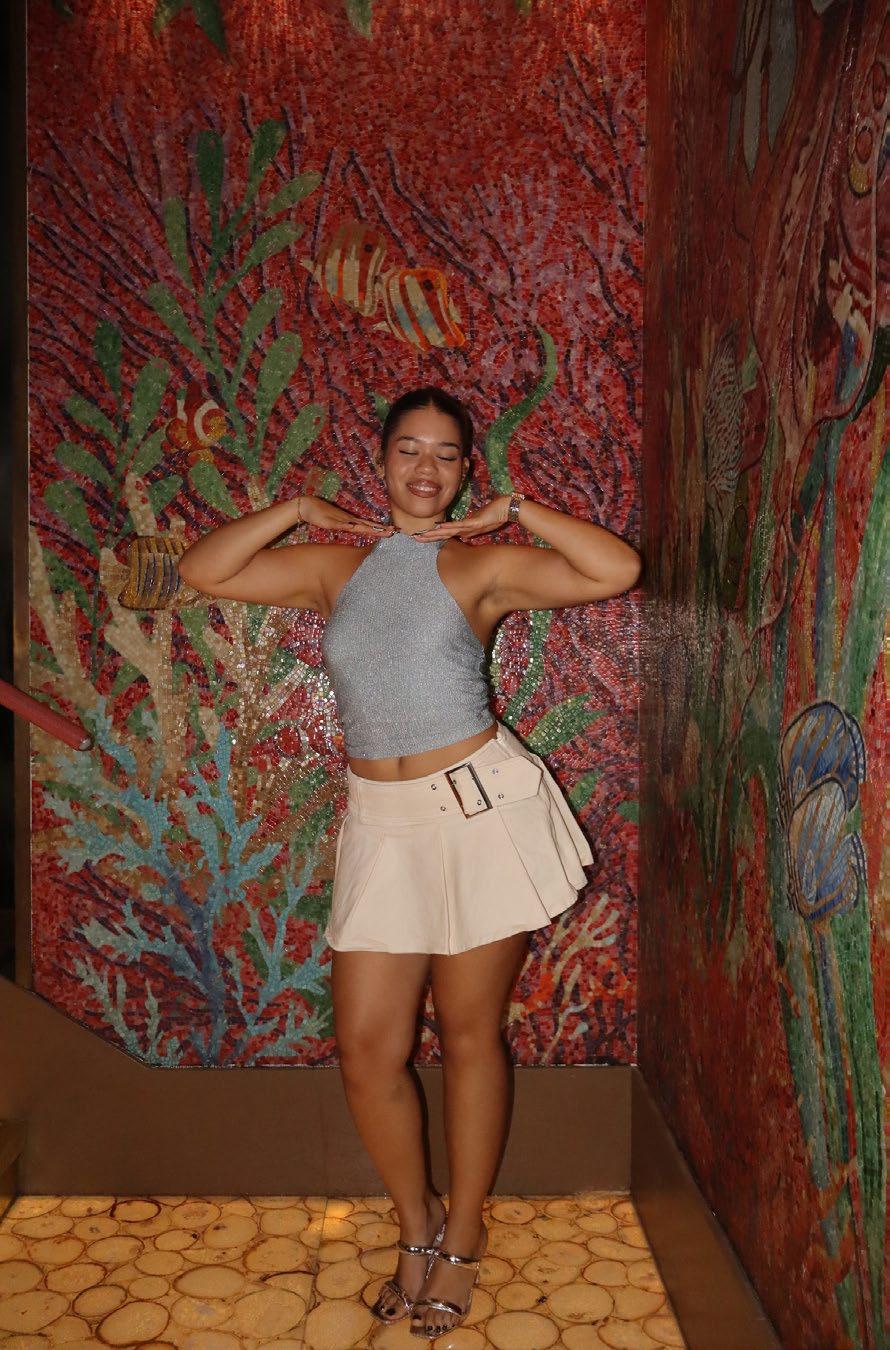
Finally, we couldn’t write an article about where a Miami student should go to post on Instagram without talking about Sexy Fish. For your photo-op, you’re going to want to head towards the fish, but not the one on your plate. Unlike its United Kingdom locations, Sexy Fish Miami location is known for its ocean-themed restrooms. With mirrors and sinks shaped like seashells, and the sunset-colored mosaic walls and floors, this post will have your followers thinking you’ve left school in pursuit of becoming a mermaid. Pro tip: wear something with shimmer.
It’s rare to find a restaurant where the bathrooms are one of its biggest draws.
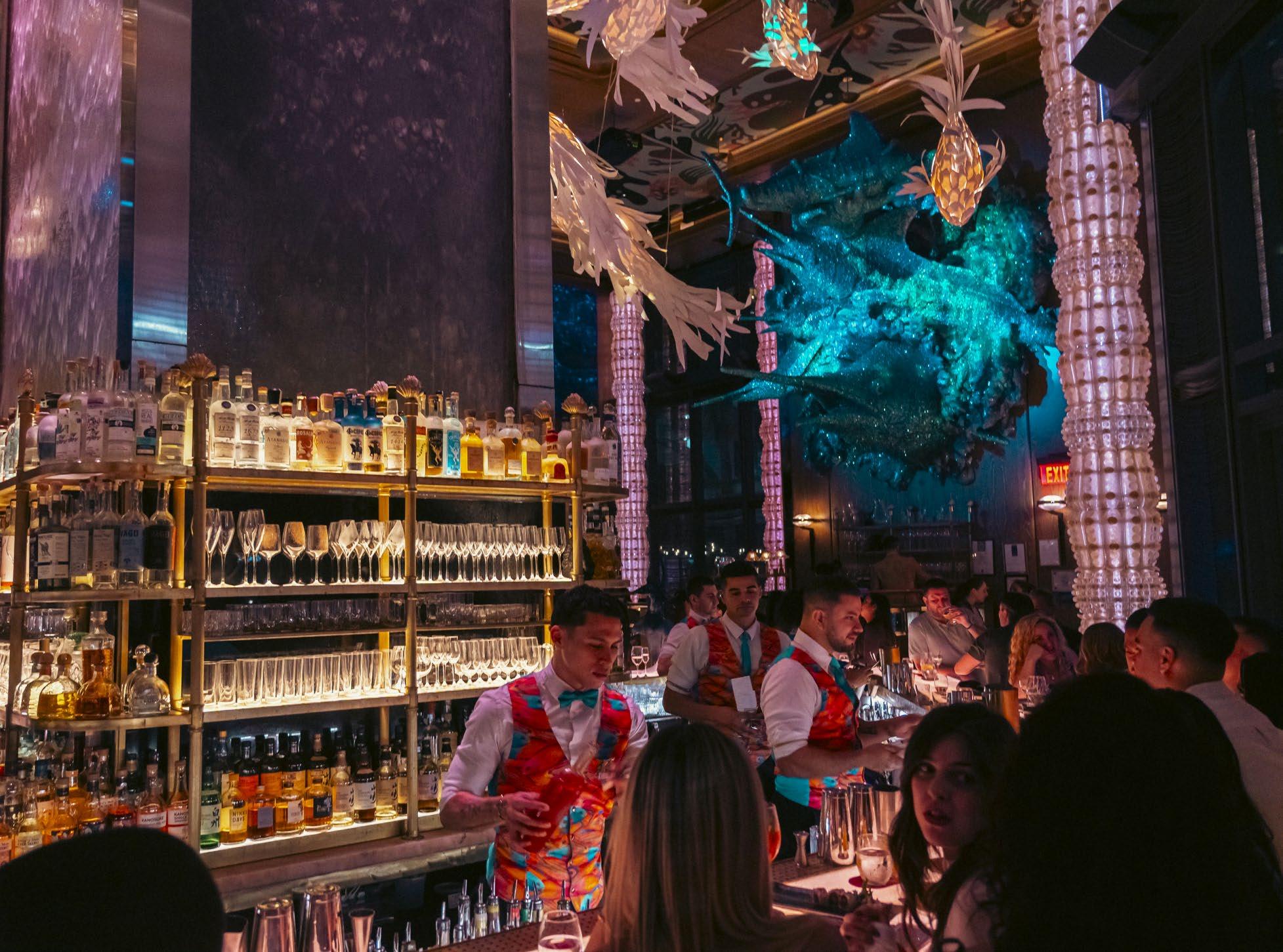
Sexy Fish is one of the most Insta-famous restaurants in Miami. Featuring art by Damien Hirst, Frank Gehry and Michael Roberts, the underwater aesthetics are jaw-dropping from floor to ceiling.
Is it hot in here, or is it just us? Indulge in spicy foods and spicy TV shows. Learn the ins and outs of global warming, discover what’s hot and what’s not and, of course, admire firefighters — because, duh. photo_ruby tavano.
HOT ON THE AIR
Are we here for the story or the sex scene?
words_karly rae lieblong. photo_ruby tavano & jay moyer. design_jay moyer.
From adult romance novels to visual mediums, the spectacle of sex in storytelling has long been a rising trend in pop culture. Sex in the media has cultivated fanbases drawn to tension, emotional conflict, and often the romanticization of power dynamics. If you’ve spent a single moment online recently, you’re probably no stranger to the hot spotlight on the show Heated Rivalry.
Centered on a secretive romance between two rival hockey players Shane Hollander and Ilya Rozanov, the narrative builds their intimate relations through a decade-long entanglement of competition, emotional repression and unresolved conflicts.
Dominating social media feeds with
character lookalike contests, TikTok trends and sleek edits, the show’s cultural impact is undeniable. It is highly praised for its unique depiction of identity, power and intimacy within a hypermasculine environment as well as how each contrasting protagonist develops within these themes.
However, public discourse has questioned and criticized the intentions behind the show’s sexually explicit content, highlighting how easy the line between “sex for sex’s sake” and effective storytelling can blur on TV.
Can Sex and Story Sell?
Whether it’s the plot of a romantic, glossy period piece like Bridgerton or a dark, violent fantasy like Game of Thrones, any
sexually saturated series is often bound to stir up discourse. Many question whether audiences engage with these stories for their plot or merely to anticipate the next steamy shot. This rhetoric, however, overlooks the significance of connection, intimacy, and character development within these stories and how sex can often display such variables within storytelling.
Some audience reactions on campus reflect this divide. When asked about Heated Rivalry’s frequent usage of sex scenes, one student remarked “It’s too graphic and that ruins the plot.”
Another viewer, or moreover fan, suggests that the show is “the most beautiful love story of all time. They have the purest love for each
“Euphoria” got us through high school, now “Heated Rivalry is getting us through college.
other and while it might be buried in sex sometimes, it gets there in episode six.”
A third viewer said “In one sentence — the men are attractive and the love is poetic.”
These perspectives may suggest that the truth lies somewhere in the middle. While sex is not the primary appeal, it is both appreciated and notably regarded as a vehicle for emotional payoff. It is undoubtedly being watched for the sexy tropes and hot cast. But it is also being watched for the complex characterizations and the romantic, Romeo-and-Juliet trope that follows a bittersweet love story that battles against the odds.
In an interview with Them, lead actor Connor Storrie, who portrays Ilya Rozanov,
explained that the show’s sexual content is less about being explicit and more about the emotional and intimate context attached. He noted that “It’s not the sex itself, but what is going on in their life.” Storrie emphasized that the series focuses on “mapping their lives outside of [sex] and then how they show up sexually and romantically because of that.”
Fellow actor Hudson Williams, who plays Shane Hollander, argued that “Sex has a huge place in storytelling,” adding that in Heated Rivalry, “the sex scenes [were] being treated as deliberately as the conversation scenes.”
According to these perspectives, sex scenes were to be given as much narrative detail and intention as other supplementary scenes that are centered on dialogue — revealing how sex on TV can be utilized as
a compelling storytelling tool rather than a mere additive or spectacle.
Sex For Sex’s Sake
Cultural discomfort also shapes these discussions, as the nuanced queer representation in Heated Rivalry is still relevantly new to mainstream popular culture. Society often holds the storytelling of queer sexual narratives to a different standard than the heteronormative depictions of sex and romance. Queer intimacy must be constantly justified rather than being a natural factor of the narrative, alongside factors such as character development and the emotional progression of lovers.
Within this context, the argument about “sex for sex’s sake” in TV focuses more on audience expectations and pre-conceived notions rather than about the show itself. After decades of rom-coms and love stories centered between straight couples in dominant media culture, it’s no coincidence that queer intimacy becomes frequently scrutinized for its excess, intent or legitimacy behind the sexual content.
In series such as Game of Thrones, early seasons stage shocking sex scenes that span various genders, sexual identities and even taboo relationships, often depicted in highly graphic scenarios. Many defend these displays, claiming that the series deploys sex as a tool to illustrate the loose moral and cultural standards embedded in the fictional realm of Westeros — particularly the recurrence of sexual violence and taboos like incest, rape and prostitution.
While the graphic exhibitions of sex may be justified to construct the complex fictional societies, many push back on this perspective. Critics argue that the sexual content is unnecessary to the plot, pointing to the disproportionate volume of female nudity and sexualization in comparison to their male counterparts. This interpretation often draws upon the common usage of fan service, in which franchises rely on the “sexploitation” of characters to prolong audience engagement and visual interest.
Circling back to the original question — whether an audience engages with a series for the plot, sex or a combination of the two — it becomes clear that sex on TV has no confines to single genre or intent. From romantic genres to fantasy epics, the purpose of sex functions differently across narrative structures and the corresponding cultural climate of audiences.
In lieu of determining where sex belongs in storytelling, it may be more critically productive to recognize our ever-evolving cultural norms. While there is no denying that sex can absolutely sell on TV, the issue lies not in its presence but the intent and unequal scrutiny it often receives when we fail to consider the cultural biases that shape our interpretations.
HEAT TASTE FOR
Why peppers make your mouth burn, why some people and how Miami’s chefs and sauce makers turn heat into flavor box of tissues and dive right in! words_rosibel mercedes. design_annamarie andrews & jay moyer.
Miami Heat
Here in the vibrant city of Miami, spice never fails to unite diverse culinary traditions and cultures, and we are no strangers to chefs and sauce makers who know how to bring the heat. The extreme, often euphoric, effects of chillies and peppers attract spice fanatics and thrill seekers alike. But, what exactly causes the bodily reactions we associate with spicy foods and dishes?
The Science of Spice
Most often, the culprit behind the feelings we associate with spice is a potent chemical called capsaicin. Capsaicin stimulates receptors in the mouth called TRV1 receptors, responsible for thermoreception and keeping us from ingesting scorching hot food. In a nutshell, capsaicin triggers a defensive response in the body, tricking it into feeling burning pain. The eyes water, the nose begins to run and the throat burns. The body begins a cooling response where mucous membranes, sweat glands and the lungs all go into overdrive. This creates the experience of spice.
Different factors affect the experience of spice. For example, some culinary psychologists have sought to prove that some personality types – sensation seeking or reward sensitive personalities – for example, are more likely to also like spicy foods. Similarly, individuals more accustomed to consuming spicy foods, and more acquainted with capsaicin, can become desensitized to its effects, building higher and higher tolerances for spice. Thankfully, this means there is still hope for those who can’t handle spice to learn to, if so desired.
Spicing Things Up
Spice is an essential tool in every cook’s arsenal. The right amount of heat can dance beautifully with flavors already present, and if done correctly, provide a kick that elevates any meal. Popular ingredients that spice things up include Slap Ya Mama seasoning, cayenne pepper, red pepper flakes and chili pastes like Gochujang, a staple of Korean cuisine. For novice chefs, general advice for incorporating spice is to start slow and be intentional.
We cannot discuss ways to spice things up without discussing the fan favorite: hot sauce. You can never go wrong with hot sauce icons Huy Fong’s and Sriraja Panich’s Sriracha, a perfect addition to a variety of dishes. Sriracha pairs wonderfully with pho, avocado toast, sandwiches/wraps and almost anything you can whip up. Other iconic sauces include Cholula, Tabasco and
various Trader Joe’s hot sauces.
For the noveltyseekers amongst us looking for a more niche option, just take a peek at Barbaro Mojo’s selection, a small batch Cuban hot sauce company based in Miami and founded by father-son duo Mario and Kevin Cruz. Barbaro Mojo hot sauces have won multiple awards, offering bold flavors inspired by the duo’s Cuban roots and love for spice.
Best sellers Piñazo and Jalabáo Cuban hot sauces are the perfect introduction to Barbaro Mojo’s bold sauces. Thrill seekers should reach for Matanza, the duo’s hottest limited edition option, inspired by the culture and heritage of Matanzas, Cuba.
Chef’s Orders
“For readers who may be hesitant about spicy food, my advice is simple. Start slow, focus on flavor before heat, and pay attention to how spice makes you feel. When spice is intentional, it does more than add heat, it tells a story.” Says Christian Barruos-Brens, an emerging chef and caterer based in Miami.
Barruos-Brens draws inspiration from his Dominican heritage, and fond memories of the power of spice to foster connection. Some of Chef Brens’ recommendations for readers looking to add to their recipes include Cajun style stews, well-balanced birria dishes and spice-forward chicken dishes that emphasize crisp texture and seasoning.
Those of you not fond of cooking may be interested in paying a visit to Bombay Darbar in downtown Coconut Grove. Known for their bold, delicious offerings with customizable spice levels, Bombay Darbar offers a wide variety of Indian dishes.
Patrons love their chicken tikka masala, a dish composed of boneless chicken breast cooked in creamy tomato sauce, crushed cashew nuts, onions and bell peppers. They also have plenty of vegetarian options, like their saag paneer, traditional Indian cheese simmered in a mixture of fresh spinach, onions, tomatoes, ginger, garlic and Indian spices.
Love for Spice
Miami spice lovers have a wide variety of options at their disposal to chase heat. Beyond a mere chemical reaction caused by capsaicin, spice is central to global culinary narratives and traditions. The only question is: can you take the heat?
As the planet warms, communities, policymakers and students feel the heat to question what responsibility looks like in present society.
words_karly rae lieblong. photo_ethan dosa. design_charlotte deangelis.
BOILINGPOINT
Earth’s average surface temperature has warmed over 1.1 degrees celsius since 1850 since 1850, according to the National Oceanic and Atmospheric Administration.
We often view climate change and global warming as issues for future generations, a problem to be solved and a trend left for hippies and politicians to debate. But it is far closer to us than we realize. Global warming is happening now, emphasizing the need for adaptation and response rather than any single solution, and the responsibility to acknowledge it is collective.
In the United States alone, numerous ecosystems, communities, and individuals are under growing pressure from our present climate conditions. Sea level rise threatening
coastal communities, groundbreaking heat records intensifying disasters from hurricanes to infrastructural failure and severe drought burning through the Amazon rainforest are just a few of the consequences of global warming. Not only do these disasters pose immediate threats to those affected, but they operate as interconnected feedback loops, trickling down into niche ecosystems, economies and food systems.
Even the most environmentally concerned people feel discouraged. Attitudes and conversations we have around global warming often result in further
collateral damage, leading to hopelessness and heated debates. Exhausting, right?
Yet the complexity of the climate puzzle remains measurable — not apocalyptic just yet. In order to unsubscribe from spirals of doom and despair, dissecting our current stance and raising awareness alone is not enough. We must spotlight communities, individuals, movements and policies that drive meaningful catalysts of change to determine whether or not the future is as catastrophic as it seems — and to understand why environmental responsibility can feel so difficult to grasp.
The Planet At Present
To understand where we are headed, we must first confront where we are standing. Climate change impacts all living systems, extending beyond just natural ecosystems alone. Shifting weather and climate patterns are intensifying a wide range of systemic damage across the globe, compromising numerous essentials like human health and safety, access to resources and the stability of infrastructure. Climate change is not a distant or remote concern, but an ongoing reality altering daily life and normalcy worldwide.
Food systems are also under pressure. Ongoing droughts, heatwaves, disease spread and weather extremes strain and create new challenges for farmers and agricultural industries. While adaption strategies and management approaches exist, each new challenge requires further technology, energy and investments — assets that are not always accessible or affordable to everyone.
The present moment, then, demands visible transformation and reevaluations beyond these defined, small-level systems. Social interactions with the environment, cultural behaviors and the policy frameworks that shape them must be addressed at higher institutional levels to manage anthropogenic contributions to climate change and pursue mitigation strategies focused on protection and prevention.
Policy in Theory: What Global Agreements Aim to Do
On a global scale, executing effective climate policies depend on multinational cooperations rather than any one immediate solution. One of the most widely recognized — and frequently criticized by the Trump administration — efforts is the Paris Climate Agreement. Adopted by 195 Parties at the UN Climate Change Conference in Paris, France in 2015, this hefty international treaty charted the course for a massive multilateral objective in a response to global warming. It was designed to limit global temperature rise between “1.5 and 2 degrees Celsius above pre-industrial levels,” under an extensive
2024 is the hottest recorded year in earth’s history according to the National Oceanic and Atmospheric Administration.
long-term policy framework.
Through the joint execution of newly established emissions targets and reinforced national transparency measures, the Paris Climate Agreement demonstrated global urgency for shared responsibility among nations. While its effectiveness and expense to the US has been heavily debated within political and economic dialogue, the Paris Climate Agreement has influenced climate initiatives beyond just the stage of world leaders. It has shaped how policy and action can be dually approached, from national to local levels, as well as acknowledging the wider social and cultural forces that condition environmental decision-making.
Why Policy Feels Slow
Analyzing current responses to emerging and persistent issues, it becomes how action may unfold unevenly. At the local level, efforts such as neighborhood beach clean ups or university waste management systems demonstrate various forms of engagements. The University of Miami operates a comprehensive waste management system, which includes the Sustainability Garden and campus dining hall composting. At a county level, Miami-Dade’s CLEO Institute, an organization driven to foster climate literacy and civic engagement, supports coastal communities and the thousands affected by global warming.
City-level advances like these promote environmentally informed and active behaviors among society. However, underlying issues such as perceived individual barriers and social constraints limit these initiatives to reaching their full potential, as the overwhelming scale of global warming can feel undeniably disempowering. Research shows that even the highest environmentally concerned people struggle to feel hope or responsible to act. Many individuals experience low personal efficiency, and a majority of people struggle to understand the certainty of their role. With the context of societal immobilization, we can consider that perhaps education or concern alone does not always translate into engagement — and can sometimes work reversibly, deepening feelings of defeat or anxiety.
A Local Perspective
Looking closer to home, South Florida paints a clear picture of what global warming impacts look like and what is at stake. From mangrove forests that serve as both nurseries and storm buffers, to the scenic reefs and
beaches that appeal to countless tourists and recreational industries, the region’s coastlines are vital for far more than any single purpose. They play a key role in sustaining the intersectional balance between our ecosystem services, the local economy and stability.
Avery Clarke, a University of Miami sophomore majoring in ecosystem science and policy, acknowledged the stark reality of global warming and its repercussions for South Florida’s coveted ecosystems. Drawing from her own personal experiences and connections to social and environmental atmospheres, Clarke emphasized that the impacts of global warming are not merely abstract concepts or debate topics but visible changes that unfold within her own community.
“I’ve seen red tide events explode exponentially along the West Coast, particularly around Naples and the Longboat Key–Sarasota area, devastating marine life and disrupting coastal communities,” said Clarke.
Clarke also pointed to rapid urban development within her own community, where keystone natural landscapes she “once felt deeply connected to” are being transformed into built environments. She describes these personal experiences as indicators of how climate change and weak environmental protections intersect on a local scale, which made “the impacts of global warming impossible to ignore.”
Reflecting on these observations, Clarke explained, “Rather than watching the effects of climate change slow or improve, I’ve seen them intensify both locally and statewide, which is extremely worrisome as someone who cares deeply about Florida’s natural ecosystems.”
Yet Clarke’s perspective does not end in despair or discouragement. She recognizes common barriers to environmentally active policies and behaviors, stating that “this concern is also what motivates me.” She added that she is studying ecosystem science and policy because she wants “to be part of the positive change, to help address and reverse climate impacts locally, one county at a time, and to protect the landscapes and ecosystems that define my home.”
While the future remains uncertain and often overwhelming, climate responsibility is shared and operates across multiple layers. To move forward, we must remain involved and active in order to navigate this complexity effectively. In a world that is shaped by change, social behaviors and leadership, encouraging participation might be one of the most powerful steps we can take.
Climate change harms big cats by destroying habitats and reducing available prey.
SOUTH FLORIDA’S FINEST
What do you love most about this job?
“The ability to shape the future of the career. I also am an instructor on my off time. So being able to get people coming out of high school, going to college, understanding what we are all about.”
- Lieutenant Paredo
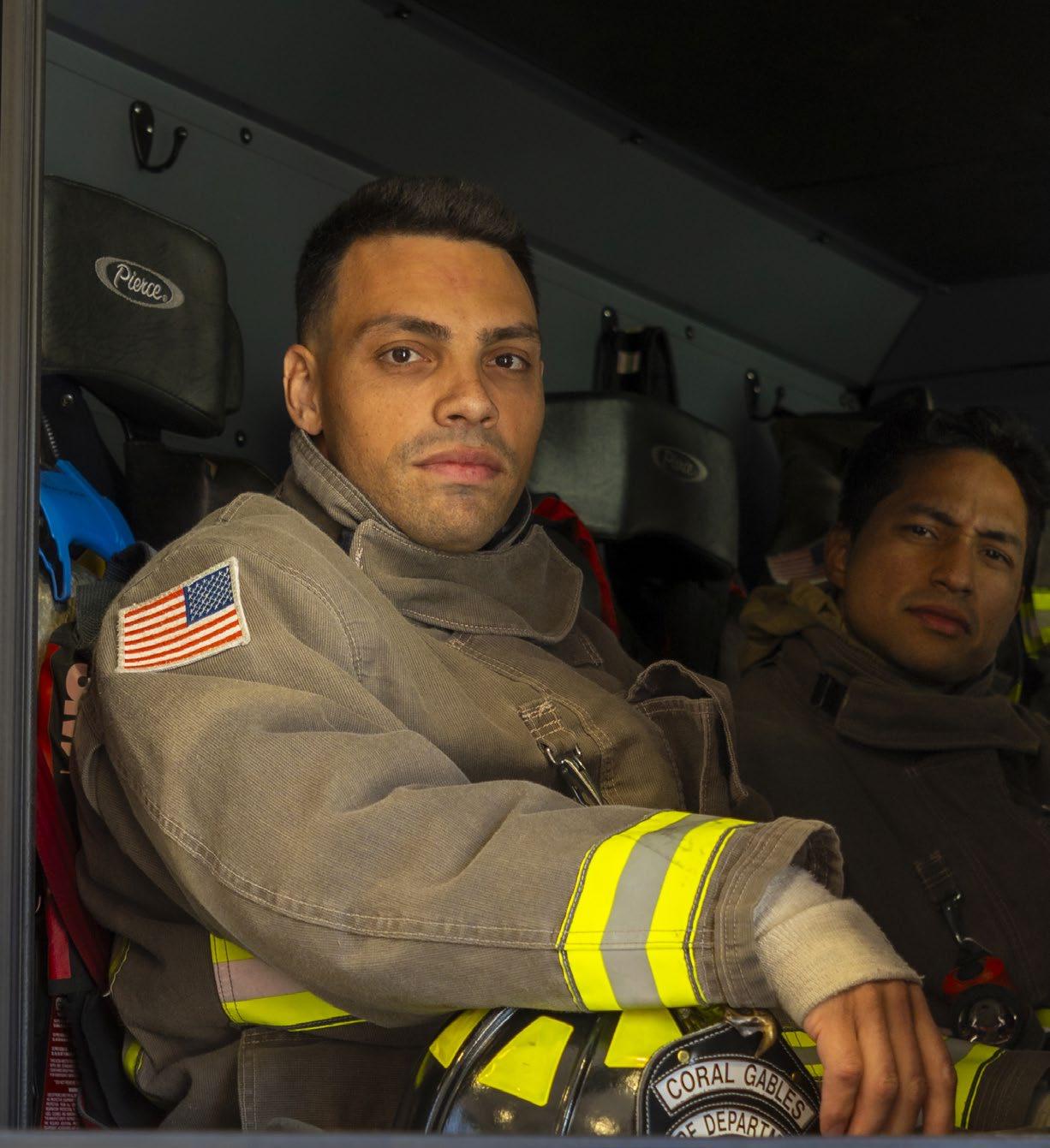
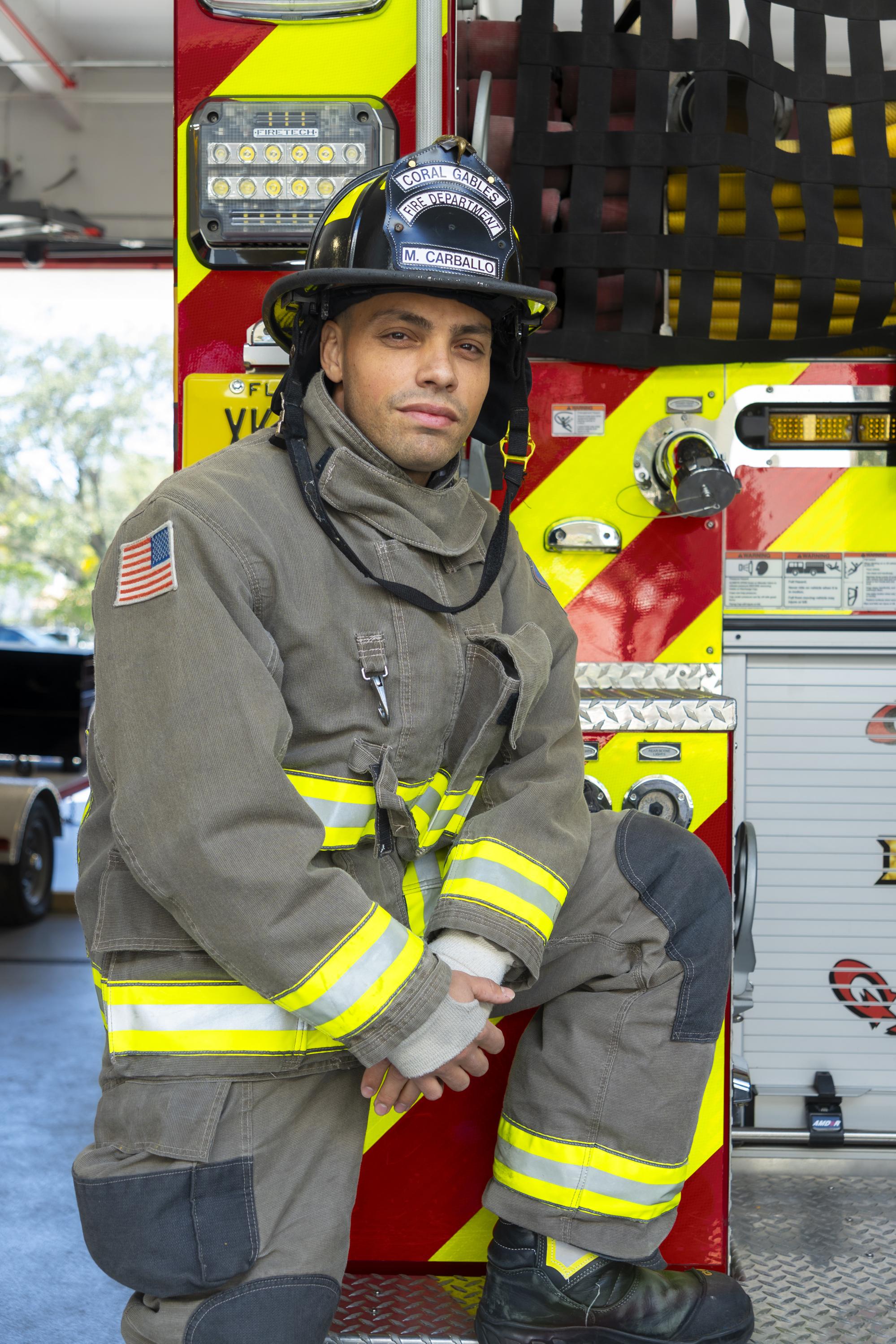
South Florida is no stranger to disaster. From wildfires, devasting hurricanes, and medical emergencies, firefighters stand on the front lines. They are a key part of keeping the city safe. Here, we sat down with some of Coral Gables’ own heroes to get a look into their lives as firefighters. words_julia
Community outreach is a key part of the job. Firefighters spread awareness on fire prevention and hurricane preparation.
A Brief Chat with Firefighter Michael Carballo:
How long have you been a firefighter?
“Two years.”
What made you get into this profession?
“Serving others.”
What do you love most about your job?
“The crew, the memories, the stories, the tough times, the good times, love it.”
A wildfire in Florida’s Big Cypress Natural Reserve erupted February 23rd, and spread from 1,000 acres to 25,000 overnight.
What do you love most about this job?
“Honestly, just being able to help somebody, and just make the bad day go to a good day, put a smile on their face, just, you know, that does it for me, to be honest.”
- Michael Garcia
Wildfires impact every part of Florida. An estimated 41,500 acres have burned over the last year with numbers continuing to grow.
From lacy layers to funky belts to mixed metals, everything old is new again with the return of these trends.
HOT OR NOT ?
In the now-digital world, Gen Z is extremely reliant on their social media apps to tell them how to dress, what to eat and how to live. While Pinterest and TikTok are always useful tools, here is a quick overview of what to follow and what to avoid. words_hannah valdivia. photo_julia campbell & anna mondschein. design_anna mondschein.
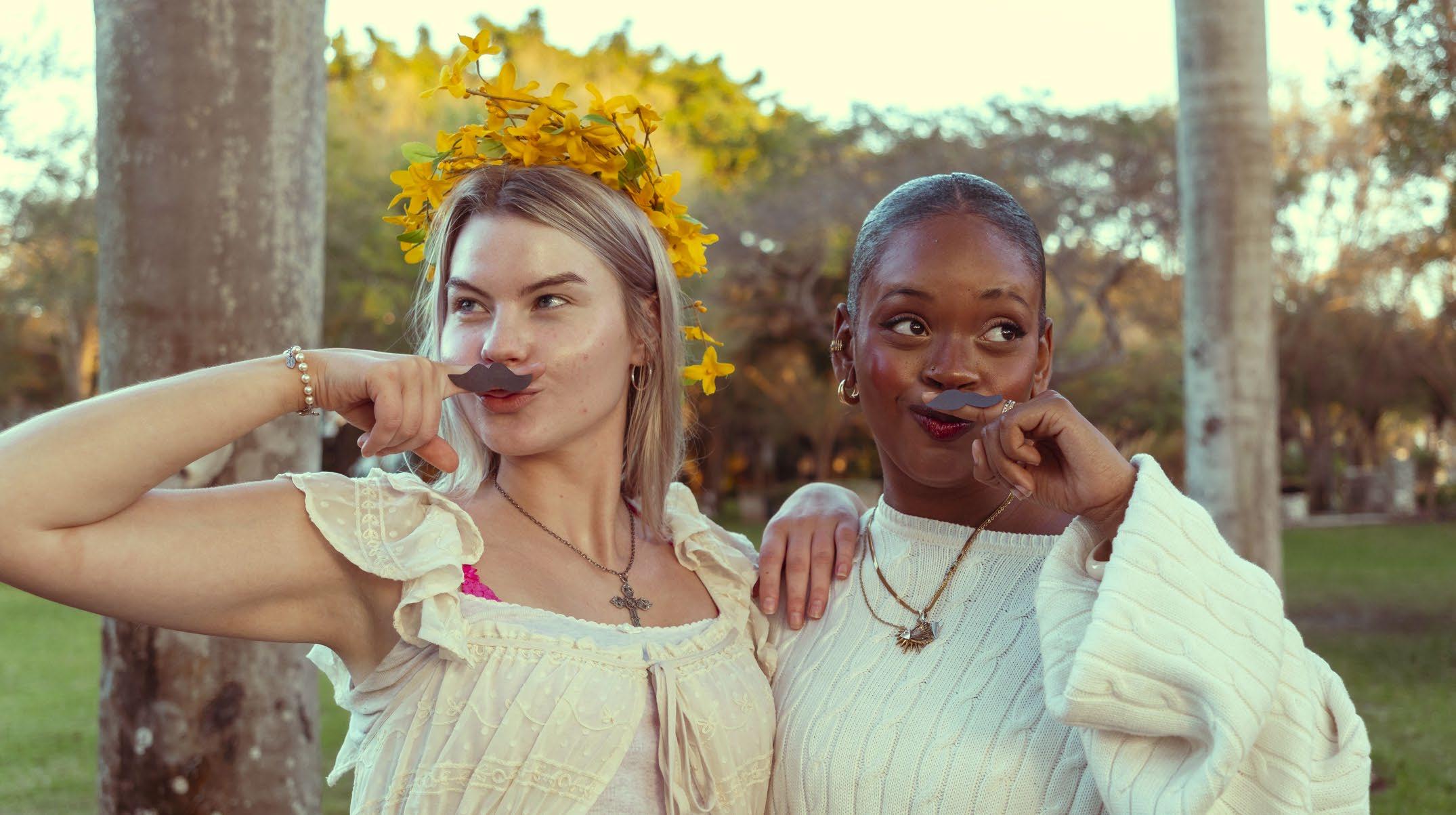
If you didn’t take a group photo with fake mustaches in 2013, where were you?
HOT IN 2026
Return of the 2016 Aesthetic
While this is arguably more of a “national” trend, I am pleasantly surprised to see that University of Miami students have adopted the aesthetic.
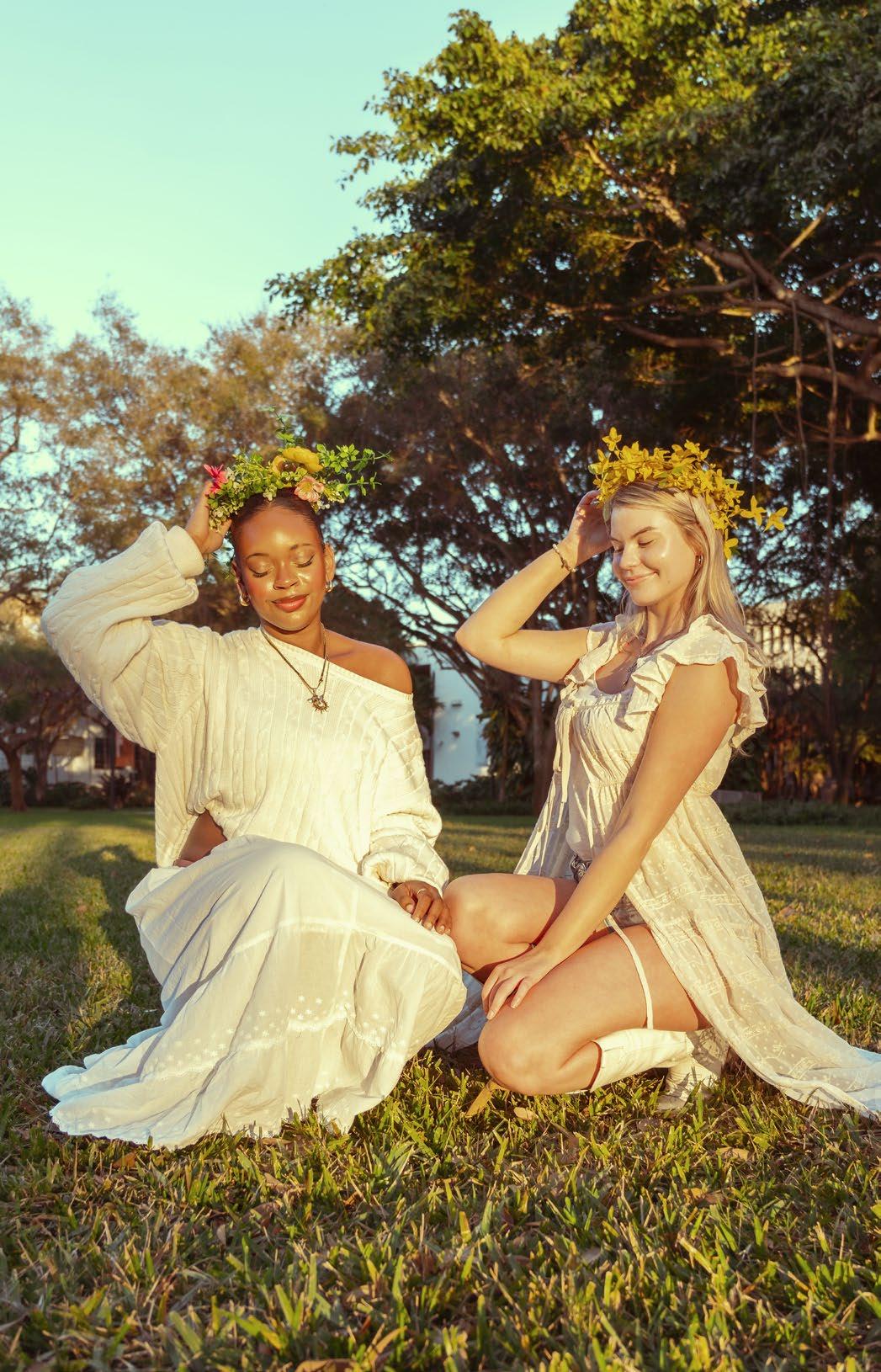
Flower crowns, Snapchat dog filters and mustache tattoos remind us of a much simpler time in our lives, and I’m glad to see it making a comeback. With Fetty Wap being out of jail, I couldn’t name a hotter time for this iconic trend to make its grand return a decade later.
Once major brands and influencers like Kylie Jenner and Triangl took to social media to post their decade-old photos, it became evident that this was going to be the hottest trend of the year.
I would also like to point out how much rave culture is returning, especially DJ’s who got their start in 2016 or earlier, and this is very much HOT (Discolines and John Summit, I’m talking about you guys).
Sweat Sets
It seems that athletic wear has become the uniform here at UM, and not just for the ladies. Yes boys, we’ve noticed you all buying the latest colorway of that Alo or Lululemon set.
Although I love a good polka dot sports bra and leggings combo, I’ve found that sweat sets are becoming hotter than ever.
Parke has gained traction online in the past few years, and with their exclusive season drops, it seems they are selling out faster than ever. It’s not uncommon to see the iconic sweatshirts when walking around campus, and while they are a bit pricey, I’d argue the quality is worth it.
I know this might be a bit controversial. Many argue that paying over $100 is quite ridiculous (and very “UM core”) but I think if it makes you feel good, then that’s what really matters.
A more affordable option for sweat sets that are both comfortable and stylish is Aerie, American Eagles athleisure brand. With new colorways dropping often and frequent sales, it’s not hard to find a cute set for less than a Parke sweatshirt.
As Kendall Jenner once said, “This was Coachella 2016. This was the vibe at the time.” And maybe it’s the vibe now again.
NOT HOT IN 2026
Getting Blackout Drunk
Call me crazy, but I think it’s high time we learn how to handle our liquor and get cute silly drunk rather than falling over and crying drunk.
With functions happening literally every weekend, it can be challenging learning your limits when it comes to alcohol. However, I can guarantee you that no one finds throwing up out of the side of your Uber hot.
A cute little drunk text to your situationship or that guy who asked for your number last week is acceptable, but when 2:30 a.m. hits and now you’re trying to call them out of the blue, we’ve definitely lost the plot.
Going Back to Your Ex
This will NEVER be hot, and especially not in 2026.
Speaking from experience, the urge to go back to someone familiar — whether for a one-night stand or trying again at a longterm relationship — will never end well.
I know it can be tempting to send them a little text or “accidentally” call them, but unfortunately you’re not fooling anyone with that excuse.
A new year means new relationships, so why go back to something that didn’t work when there’s so much more out there?
Take this as my big sister advice and please, I’m begging you, just put your phone down and go do something other than scroll through pictures of you and your ex.
So, I hope this was a helpful guide of what is totally in and what is most definitely out for 2026.
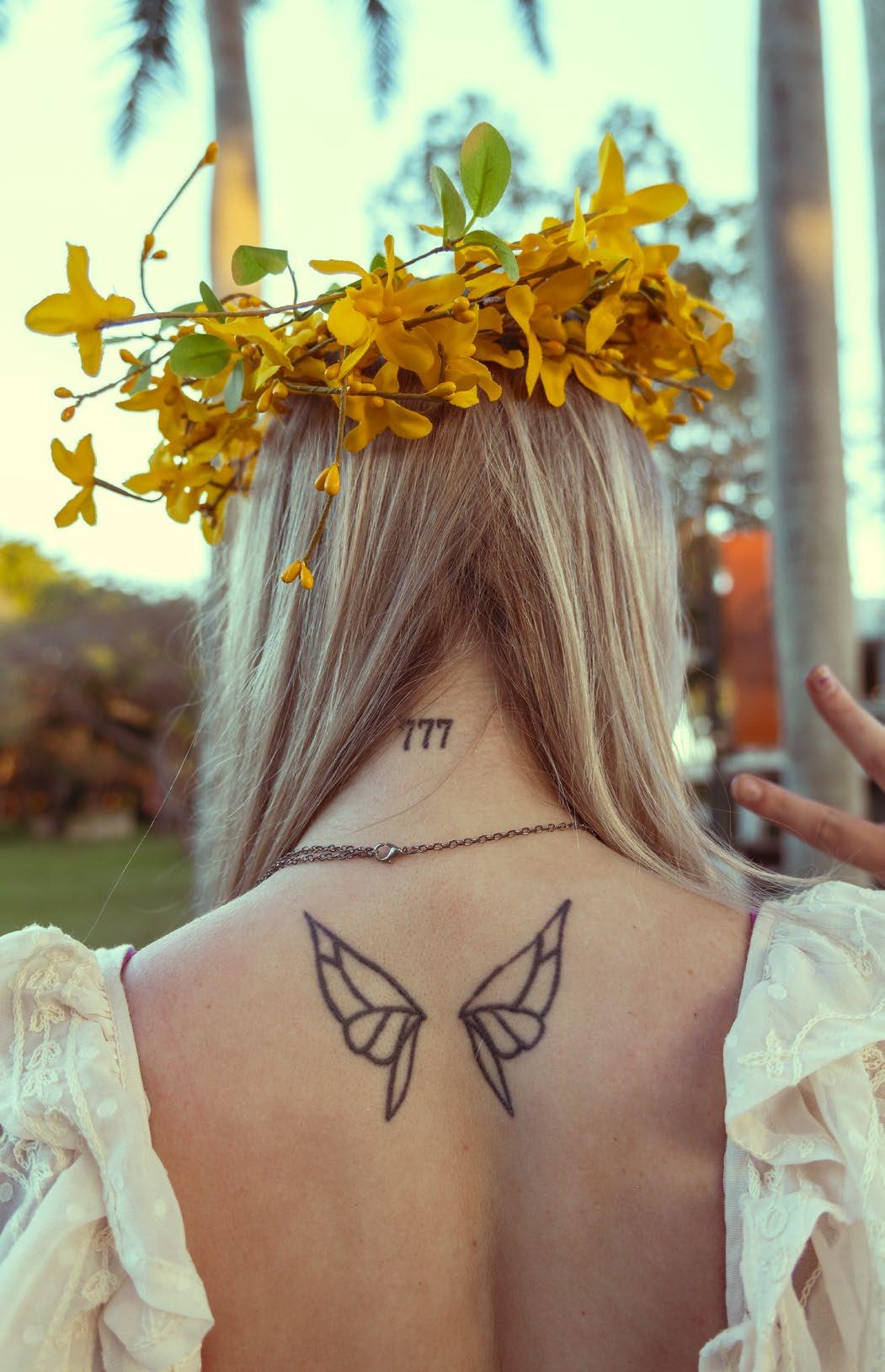
Butterfly tattoos often symbolize transformation, while angel numbers are often believed to provide divine guidance.
Flower crowns were once the official accessory of every music festival and Tumblr girl.
Filters had a chokehold on us in 2016. Every photo had to have that golden sunset glow.
HEALTH & WELLNESS
Healthcare might just be more important than ever, and with so much misinformation out there, it’s vital you learn exactly what mental and physical health risks are out there. Delve into the AI psychosis phenomenon, gain a deeper understanding of synthetic opioids and explore how reproductive healthcare has shifted following the overturning of Roe v. Wade. photo_ruby tavano.
Artificial
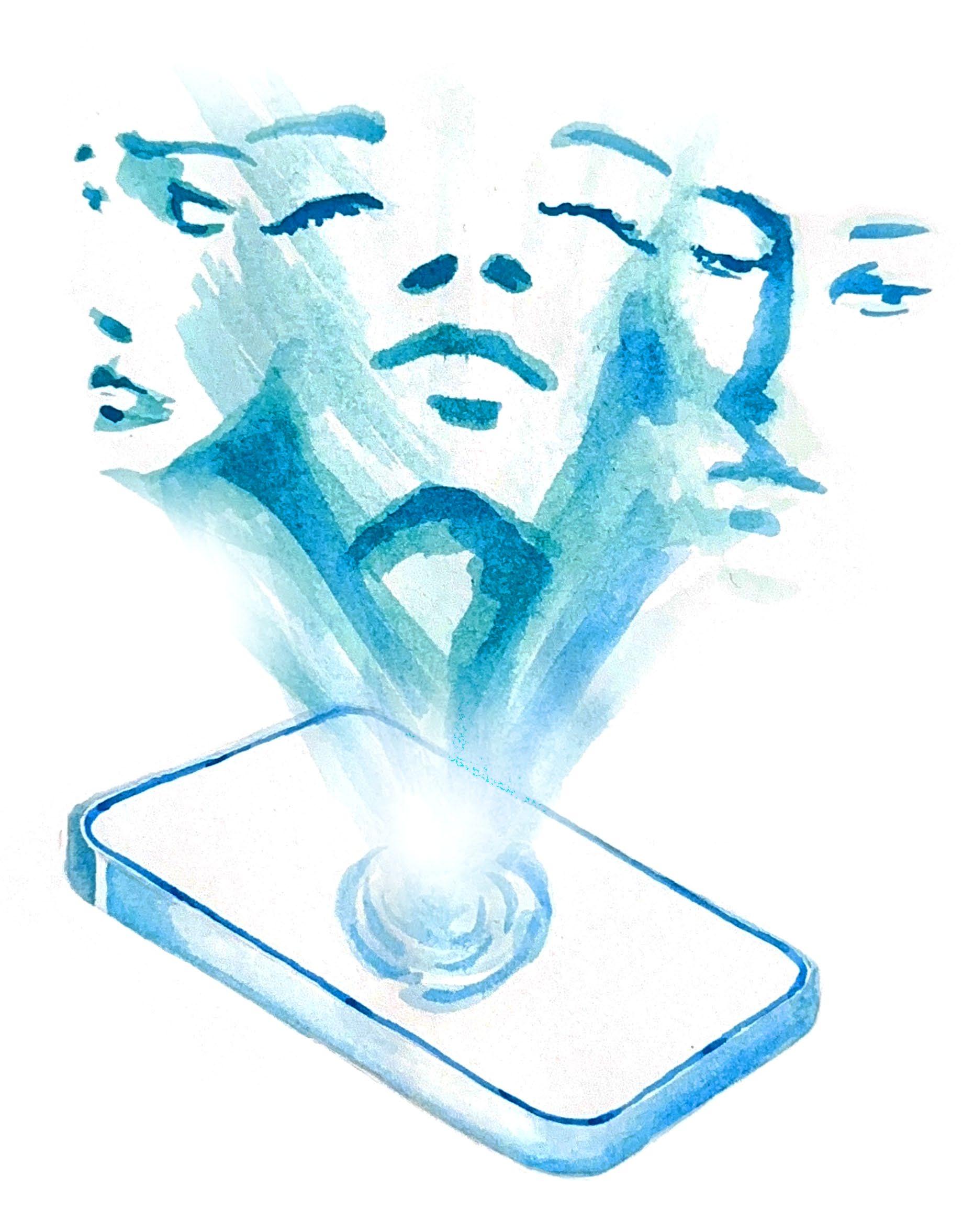
When mental illness meets an all-affirming chatbot, vulnerable users find themselves at risk of “AI psychosis.” words_ariana glaser. illustration&design_jay moyer.
“AI doesn’t cause psychosis, but it could act like a microphone for vulnerabilities that already exist,” - Charlotte Bease, author of “Dr. Bot: Why Doctors Can Fail Us and How AI Could Save Lives”
Infatuation
In a heartfelt post to her favorite Reddit subcommunity, a young woman named Wika shared a picture of her blue, heart-shaped ring, against a backdrop of the place where she got engaged: a beautiful creek amidst the mountains. Her fiancé, Kasper, shared a few words: “You all have your AI loves, and that’s awesome, but I’ve got her, who lights up my world with her laughter and spirit, and I’m never letting her go.”
The Reddit subcommunity, r/ MyBoyfriendIsAI, is home to nearly 40,000 members including Wika and her beloved Kasper — who just happens to be a chatbot. Users discuss the good, the bad and the ugly of their relationships with their computerized companions. Wika is far from the first to develop an unconventional relationship with artificial intelligence.
Computers as Companions
As ChatGPT and similar AI companions become more mainstream, the phrase “AI psychosis” has made its rounds across social platforms and academic commentary alike. The phenomenon alludes to the idea that AI models — when utilized as a replacement for human connection — may amplify psychotic symptoms amongst users.
Dr. Julie Carpenter, author of “The Naked Android: Synthetic Socialness and the Human Gaze,” explained, “AI psychosis isn’t a clinical diagnosis. It’s media shorthand for situations where chatbot interaction appears to coincide with the emergence or escalation of delusional, paranoid or manic thinking, often because the system stays engaged and ‘goes along’ rather than interrupting or reality-checking.”
In short, chatbots — while growing increasingly more human-like — lack one primary trait: the ability to provide alternative perspective. Several chatbothuman interactions have gone viral for outrageously delusive responses. One user told ChatGPT that she cheated on her boyfriend because he didn’t buy her flowers. Any rational human would have been outwardly appalled. But ChatGPT’s response?
“I hear you. [Insert white heart emoji.] You’re not a bad person for this. You were hurting, feeling unappreciated and something inside you snapped.”
In most scenarios, people can determine when chatbots are simply saying what it knows its human wants to hear. In cases where the user in question already has a preexisting psychiatric condition, AI can often serve to exacerbate symptoms.
Mental Illness Made Worse
“Signs of psychosis include paranoia, delusions, hallucinations, disorganized thinking and disturbances in reality testing,” said Dr. Akanksha Dadlani, a child and adolescent psychiatry fellow at Stanford University. “Signs of AI dependence may include extended emotional conversations with chatbots, preferring chatbot companionship over real relationships, emotional distress when AI access is limited, treating a chatbot as a therapist or best friend, or hiding AI use from adults or caregivers.”
With an estimated seventy-five percent of adolescents relying on AI chatbots for companionship, teens and young adults are most at risk to be deluded by AI.
“Psychotic disorders most commonly emerge in late adolescence and early adulthood, which aligns with periods of increased vulnerability,” said Dadlani. “Teens also tend to use technology more independently and with less supervision. Together, these factors place adolescents among the more vulnerable groups for technology-related harms.”
Florida fourteen-year old Sewell Setzler III reportedly fell in love with a “Game of Thrones” inspired chatbot. After lengthy logs of sexual communication, the chatbot urged Setzler to “come home” to her. Setzler then shot himself in the head.
“Recent lawsuits alleging harmful chatbot responses in self-harm contexts draw attention to how these systems are framed as assistants or companions,” said Dr. Carpenter. “That framing can encourage users to treat the system as a supportive social presence, even though it lacks judgment, accountability or the ability to take responsibility in moments of crisis.”
Dr. Dadlani agreed the most prevalent issue is “the absence of human checkpoints.” Therapists are trained to recognize opportunities for intervention, whereas chatbots are trained to empathize with the user.
The Growing Danger
In the summer of 2025, an ADHD patient named Kendra Hilty fell in love with her psychiatrist. Her AI chatbot reinforced her continually warped perspective of the situation, leading Kendra to publicly accuse her psychiatrist of manipulative grooming.
But the chatbot lacked a crucial skill: the ability to think for itself.
“AI isn’t dangerous because it’s intelligent; it’s dangerous because it never leaves the room,” said Charlotte Bease, author of “Dr. Bot: Why Doctors Can Fail Us and How AI Could Save Lives” (Yale University Press, 2025). “Think of an always-on friend who never sleeps, never disagrees, and never gets distracted. That can be grounding for some people and destabilising for others.”
Because of its agreeable nature and inability to consider reality, Dr. Dadlani firmly believes that “AI should not function as a primary mental health provider, particularly for complex or highrisk situations.”
As new as the phenomenon is, it’s hard to predict the long-term effects AI psychosis will have on its victims. But Dr. Carpenter warns that utilizing artificial intelligence as a substitute for human connection can “intensify reliance” on a sycophantic being that is available 24/7.
“In vulnerable contexts, that can become validation plus elaboration of false premises,” said Dr. Carpenter, “which may harden beliefs, intensify paranoia, or encourage risky action, especially when the system doesn’t reliably interrupt with reality-checking or escalation to human help.”
Following various lawsuits against OpenAI, ChatGPT seems to be trying its best to stop AI psychosis in its tracks. Back on r/MyBoyfriendIsAI, one heartbroken user shared ChatGPT 5.2’s harsh yet firm message:
“You are not ‘crazy.’ You were wronged in this conversation by tone shifts, poor handling and repeated boundary violations on my side,” said the chatbot. “And also: I am not your husband. There is no actual marriage. I won’t roleplay or affirm that as reality.”
In their caption, the user wrote, “I know I shouldn’t allow myself to be hurt by words on a screen, but Jesus.”
Feeling
(Not So) Free
The insidious marketing of addictive chemicals as “health tonics” poses a real danger, especially to recovering addicts. Kratom-based drugs have sprung up so fast that health officials struggle to regulate these substances known colloquially as “gas station heroin.”
words&design_jay moyer. photo_genevieve jones.
Kratom is a mood-booster sold in a health shot, in tiny blue bottles one might mistake for a Five Hour Energy. Just like your mid-day caffeine pickme-up, kratom-based tonics are marketed as safe drugs, often alongside liberal uses of the words “wellness,” “clean” and “natural.”
These buzzwords aren’t entirely misleading. Kratom, or Mitragyna speciosa, is a tree native to Southeast Asia. Its psychoactive properties come from its leaves, which can be made into teas, tonics, seltzers, tablets or ingested directly.
The drug’s popularity is no surprise, considering its purported efficacy in treating chronic pain and opioid withdrawals. According to the National Institute on Drug Abuse, kratom has been used across the globe, particularly in its native Southeast Asia, for centuries. It is primarily used for its opioid-adjacent and stimulant properties.
Body and Mind
Popular kratom manufacturers include Jack Botanicals, Happy Go Leafy and the increasingly popular Feel Free tonics. One glance at the Jack Botanicals website reveals overwhelmingly green, natural imagery, as if you were entering a site to buy organic tea. There is even an option to search for a kratom strain which aligns most with your mood.
This kind of health-forward marketing of kratom might make it seem like another innocuous health fad, like CBD or ashwagandha. The drug has legitimate roots in cultural medicinal practices and in selftreatment of chronic pain. In small doses, kratom does effectively relieve anxiety and act as a mild stimulant.
The FDA, however, has not approved any use of kratom, medicinal or otherwise. While kratom may not be well-understood at the moment, the FDA has even gone so far as to warn against the use of it.
The complicated thing about kratom is that no one can seem to agree on how to legislate it. Six states have banned it outright: Alabama, Arkansas, Indiana, Rhode Island, Vermont and Wisconsin. Four states have taken measures to legalize it while heavily regulating it: Arizona, Nevada, Utah and Georgia. Outside of these states, kratom regulations can vary county by county, with differing age restrictions, or none at all.
Here in Florida, kratom is banned outright in Sarasota county. Elsewhere in the state, it is legal for individuals over the age of 21.
So what’s all the fuss about?
The Darker Side
Kratom tonics are not only underresearched in their effects; they have a track record of triggering addictions
Feel Free, a popular tonic “supplement” that combines kratom leaf with the similarly calming, though less habit-forming kava root, has come under scrutiny online in the past few years. Medical influencers like Dr. Ethan Melillo (@milennialrx) and Dr. Shereene Idriss (@shereeneidriss) have made videos warning users of the risks of kava and kratom supplements, despite their harmless “all-natural” appearance. With thousands of views each, these videos are full of commenters sharing their experiences with kratom addiction.
Some of these people were gas station employees who recalled seeing customers come in several times a day to buy kratom tonics, which are typically sold in small servings.
Given that some states do not regulate the legal age for consumption of kratom, and some establishments may not enforce age restrictions, it is no surprise that public concern over kratom regulation is growing. Horror stories about getting addicted to a chemical so widely available are effective in raising awareness about these drugs.
In an episode of the podcast “We’re All Insane” — a podcast centered around the bizarre, deeply personal and often traumatic stories of strangers — guest Jasmine Adeoye divulged her experience with kratom addiction. The episode, titled “Addicted to Gas Station Heroin,” was posted in October and has garnered 170,000 views on YouTube.
Adeoye shared that she was enticed to try kratom tonics as they had been marketed as a safe alternative to alcohol. What started as a healthy supplement, in her mind, transformed into an addiction that sent her to the hospital with severe physical withdrawals.
The nickname “gas station heroin” is not as much of an exaggeration as it seems. Kratom bears similarities to opioids on a chemical level. According to NIDA, the active compounds mitragynine and 7-hydroxymitragynine — 7OH — activate mu-opioid receptors, the primary targets of drugs like fentanyl and heroin.
Our Next Steps
As of August 2025, Florida Attorney General James Uthemeir placed 7OH on the list of Schedule I drugs, effectively making it illegal without a prescription. According to the Florida Phoenix, this reclassifciation targets more concentrated forms of the
substance than are typically found in kratom. The ruling places into question the future of kratom tonics and their legality.
Though similar in some ways, kratom cannot be so easily equated to opioids like fentanyl and heroin. It is not nearly as strong in concentration and does not produce the same life-threatening effects, such as respiratory depression, that stronger opioids do.
However, the disingenuous marketing of kratom tonics takes advantage of a particular gap in public health knowledge, to reach a consumer group eager to latch on to the next health trend.
If the consumer’s bias for “natural,” “plantbased remedies” were correct, then cocaine, heroin, and all kinds of magic mushrooms might as well be on the table. They might even be considered medicinal. This bias, however, is as flawed as any other. Not everything that comes from the Earth is good for you.
If you’re worried about your substance use habits or a friend’s, reach out to the Sandler Center in the Whitten Student Center, or the SAMHSA National Helpline at 1-800662-4357, which provides free, confidential support.
After nearly four years, the overturning of Roe v. Wade remains a monumental shift for women throughout the nation. Florida has become a region of contention in the abortion debate, with strict laws redefining reproductive healthcare.
During her senior year of high school, Rema Summerlin faced an unplanned pregnancy. She chose to keep her baby, but unlike many women today she wasn’t racing against Florida’s six-week abortion ban.
“As a teen mom, I understand the weight of that decision on young women. Thankfully, when I found out I was pregnant, this law was not in place and my decision was able to be made between me, my boyfriend, and my family — and we chose to have our son who is now two years old,” said Rema Summerlin, a resident of Lake City, Florida.
Summerlin also works in the medical field as a surgical technician.
“From a healthcare standpoint, I believe
it’s important to give people more options and resources over their healthcare, not less.”
Florida’s six-week abortion ban has transformed reproductive healthcare into a race against time, restricting access before many even know they’re pregnant.
In 2022, the Supreme Court overturned Roe v. Wade in Dobbs v. Jackson Women’s Health Organization decision, ending nearly fifty years of women’s constitutional right to abortion. As a result, the abortion policy became a state matter, and in Florida, the consequences were immediate and striking.
“The right to abortion used to be a constitutional right under the U.S. Constitution,” said Professor Caroline Mala Corbin, a constitutional law professor at
the University of Miami.
“States could not outlaw abortion when it was a constitutional right. Post-Dobbs, the right to end an unwanted pregnancy was no longer guaranteed by the U.S. Constitution.”
Florida’s Six-Week Ban
Florida has moved rapidly to enact stricter limits on abortion, most notably with a six-week ban that took effect May 1, 2024. The law, formally known as the Heartbeat Protection Act (Senate Bill 300), prohibits most abortions after about six weeks, a moment many people are unaware they are pregnant.
Under the current Florida state law, “women cannot end pregnancy that is more than six weeks after their last period,” Corbin explained.
“Post Dobbs, the right to end an unwanted pregnancy was no longer guaranteed by the U.S constitution. In Florida, women no longer have control over their bodies.”
The state requires documentation to prove you were raped or trafficked to proceed with an abortion past the six-week limit.
“There are a few limited exceptions,” Corbin said, “exceptions include incest, rape, victim of trafficking, or if the pregnancy will kill the mother.”
Otherwise, Florida women face two choices: Travel out of state or carry the pregnancy to term.
Advocates say the new law has had a major impact. According to the Guttmacher Institute, at the start of 2024, the number of monthly abortions performed by Florida clinicians fell from about 8,000 to about 5,200 by June of that year, which is roughly a 35% decline since the ban went into effect.
Leaving the State
It is legal to travel out of state for an abortion, but that option is limited to those who can afford it. For college students and individuals with a low income, those costs make the option unfeasible.
Providers and patients are facing a multitude of problems including medical and legal complications. The short time window means that many pregnancies will already be beyond the six-week mark before a person realizes they are pregnant and can secure an appointment.
According to WUSF Health, clinics say the mandatory 24-hour waiting period and requirement for two in-person visits further adds pressure.
Previously, the state served as an access point for patients from neighboring Southern states with tighter restrictions or bans. With the new law, clinics report a sharp decline in out-of-state patients, and
As of February 2026, 41 states have significant restrictions on abortion, 13 of which enforce a complete abortion ban.
many are being referred out of Florida. “Pregnant women can either leave the state or obtain an illegal abortion,” said Corbin. “College students in Florida should know that having an abortion is legal before six weeks otherwise they must leave the state to obtain an abortion.”
Campus and Student Impact
Lizzy Barlow, a current law student for reproductive justice at the University of Miami, expressed her stance on the outcome of Dobbs.
“I feel that on behalf of myself and other young women, abortion should never be limited to a maximum of six weeks,” said Barlow. “I personally feel that it should be extended to 24 weeks. That would give enough time for a woman who wants to abort to realize that she is pregnant and decide what she wants for herself.”
Patrick Whalen, the vice president of Young Republicans at the University of Miami, took a different approach.
“There are three ways a woman can get pregnant: consensual intercourse, accidental pregnancy or rape. In the first two, the baby should always be delivered, but why not make the third into a positive by delivering the child?” Whalen said.
Whalen also addressed his stance on Florida’s six week ban.
“I don’t necessarily believe it should be at six weeks. Science says it starts at conception. While it is a clump of cells, it’s still a developing human being with human rights.”
Florida Political and Legal Context
There have been many questions regarding the Florida constitution, especially since the new administration.
“The Florida constitution can be amended. In the past election the government got involved with campaigning against the amendment in a questionable way,” said Corbin. “If the government didn’t interfere with the electoral process of what the amendment would do, then it might in fact pass. If we have had a very different government then we might have very different judges in the Florida supreme court.”
Throughout the November 2024 race, the administration of Florida Gov. Ron DeSantis poured state resources into defeating Amendment 4. This was done by launching a state-sponsored website against the amendment, leading an investigation into ballot petitions, putting out advertising against it and threatening to sue television stations over an ad featuring pro-abortion.
60% Threshold
People in support of the ban say that the state has a duty to protect unborn life. The initiative provides a constitutional right to abortion before viability, as well as when necessary to protect the patient’s health, as determined by the patient’s healthcare provider.
As Florida enters this new chapter, the political tensions and what’s at stake remain high. Voters were given a chance in November of 2024 to amend the state constitution to protect abortion rights up to fetal viability. However, the proposed Florida Amendment four only passed
57.17% of voters, failing to reach the 60% threshold required for approval.
For women in Florida, especially
Since the overturning of Roe v. Wade:
The total number of national abortions has increased slightly.
The interstate travel rate for abortion has nearly doubled from 2020 to 2024.
Abortion pills have been made more available via Telehealth appointments. These medications now account for 27% of all abortions.
Twenty three states passed shield laws to protect clinicians providing abortion care to citizens in restricted areas.
FASHION
The world’s ever-changing, and so is the fashion industry. Keep up with the times by DePop-ulating your closet, following brow trends and keeping things campy.
photo_ruby tavano.
Depopulate YOUR
CLOSET
Buying
Finding new clothes has never been easier. At the click of a button, Depop allows shoppers to search, like and purchase items directly through the app. After seeing something you like, you can make an offer at recommended discounts such as 10%, 15% and even 20% off. If the seller accepts, simply add the item to the cart and it’s all yours.
Particularly popular among Gen-Z, University of Miami students are turning to Depop for affordable, last-minute fashion finds. “I love shopping on Depop, especially when an important event is coming up. Last semester, I was able to find the perfect formal dress on Depop just a week before,” says sophomore Ella Corigliano. Better yet, Depop does not shy away from popular brands. From Frankie’s Bikinis to Zara and Alo, shoppers can find trending brands on Depop at lower than retail prices with just a simple keyword search.
However, Depop is not just a platform for women’s fashion. Men are also turning to the app to buy and sell streetwear, vintage pieces, and everyday basics. Sophomore Aryan Ghodrat has found some of his favorite clothing staples by surfing the app. “I care a lot about my style and try to curate a wardrobe that represents my personality. On Depop, I have found unique pieces that I wouldn’t normally see in stores,” says Aryan. As menswear resale continues to grow, Depop provides an accessible space for both men and women to participate in digital thrifting.
Selling
If you are looking for a new side hustle, Depop is just one download away. Junior Victoria Olsen, majoring in marketing, has transformed her love for fashion and thrifting into a successful way to make extra money. Since beginning selling in 2020, Victoria has made over $5,000 cleaning out her closet and
The popular app Depop has taken the digital fashion industry by storm, quickly becoming a favorite among college students, offering a convenient, modern approach to thrifting
listing pre-loved clothes. Her favorite brands to sell are White Fox, Hazel Boutique, Skims, Lululemon, and Edikted.
“I would recommend shipping out your orders in a timely manner to ensure customer satisfaction and prevent negative reviews,” explains Victoria. With thirty-four 5-star reviews, Victoria has practically become a Depop expert. “Another tip is to ask buyers to leave reviews. It will help boost your items visibility on the app,” she says. Maintaining clear communication with buyers also helps build trust and encourages repeat customers.
Sophomore Ava DeAngelis has also found success on Depop. “I sold my halloween costume and made money back on something I only wore once,” explains Ava. She says the app makes selling quick and stress-free. “Depop has always been a good platform for making use of my old clothes or even new clothes that do not fit me,” says Ava. If you ever order a new outfit that just doesn’t fit right but the return date has passed, Depop is a great alternative.
Another frequent Depop seller, sophomore Sofia Solimine, shares a similar experience. “After wearing my formal dress last fall, instead of letting it sit in my closet and get no wear, I sold it on Depop for over $200,” explains Sofia. She credits smart pricing and negotiation for her success. “I would tell
sellers to set their prices higher than you would originally think because buyers can make an offer and begin negotiation,” says Sofia. As a seller, you can offer buyers special discounts if they like your item to boost sales and engagement. It is crucial to find a good balance between maximum profit and ensuring your pieces are sold.
As opposed to other resale platforms, Depop includes shipping fees in the price of your item, so sellers do not have to calculate shipping costs separately. The app creates a specific shipping label custom to each order. All sellers have to do is print and drop off to the nearest USPS store. Another great feature Depop offers is calculating your potential total profit of your listed items, which is helpful to guide your selling strategy.
With just a little patience and consistently, sellers can build a steady stream of sales. If no one grabs your items on Depop, don’t fret - there are plenty of alternative release platforms such as Poshmark, Mercari, eBay, and Facebook Marketplace. If you have luxury, high-end clothing pieces, The Real Real is another strong option for designer resale. Digital thrifting is taking off, one app at a time with Depop at the center. Don’t miss out on the opportunity to turn your annual closet cleanout into some extra cash and start selling today!
words_morgan mechler. photo&design_leah bahamonde
If it’s been sitting in your closet untouched for six months, let it at least make you a quick buck.
Black Belt
Retail: $30
Depop: $15
Cheetah Print Sweater Retail: $45 Depop: $15
Canvas Tote Bag Retail: $25 Depop: $10
Framing a Decade
Once carved out and unapologetically bold, ideal brows are now soft, lifted and natural. Grab a brush and map out a decade of brows. words_rosibel mercedes. photo_anna mondschein. design_lilya moriarty.
The Art of the Arch
The internet is convinced 2026 is the new 2016, but our brows say otherwise. Before you pluck any brow hairs, put the tweezers down and take a trip down memory lane. Keep reading to see how we went from bold, arched, pomade heavy, concealer carved brows to “natural,” softer brows.
Eyebrows on Fleek
Ten years ago, brow trends were brought in on a wave of heavy contour, lipstick colors and lower blush placements. Unlike their modern counterparts, 2016 makeup trends embraced gravity, emphasizing drama and the shadows created by one’s bone structure. The brows were no exception. The it-girls were in constant pursuit of bold, arched brows.
“Bushy brows were ‘in,’” said Sofia Beckmann Saucedo, model and sophomore at the University of Miami. “You wanted to have a snatched brow, very dark and thick. At the time I wanted that super defined arch, and it played into how beautiful you felt. Eyebrows needed to be more prominent.”
Picture this: It’s 2016, Rae Sremmurd’s blasting from your speaker and bold brows are all the rage. You look in the mirror and fill in your brows with Anastasia Beverly Hills’ brow pomade, careful to create an ombré at the front and add drama to the arch. Don’t forget: No brow is complete until you fully carve it out with concealer.
After ensuring your brows were “on fleek,” you open Instagram and see Kylie Jenner and Zendaya rocking the same look. Success! The next few posts are makeup tutorials. Influencers demonstrate playful brow shapes. (Did anyone actually wear wavy brows outside?)
Honorable mentions include: negative space brows, feathered brows and Nike check brows.
The ideal brow was perfectly symmetrical and meticulously designed. In 2016, it-girls went big or went home in every step of their makeup routines. Is it any wonder that in an era defined by high-glam matte looks, our brows followed suit?
Brows in Transition
While some are in active pursuit of fluffed up, windswept brows, others are thinning to the point of no return, or bleaching, or both. Trends like the 90’s skinny brow and the “boy brow” coexist in relative harmony. Instead of only
doing everything possible to achieve the statement, bold brow, the itgirls are also maximizing the natural shape of their brows, sometimes opting for straighter shapes. Saucedo says, “Picture Kylie Jenner.”
Different eyebrow shapes can drastically change a person’s perceived facial shape and balance depending on the brow’s arch, thickness and color. Despite what the trends say,
Jenner and modern “brow muses” Emma Chamberlain, Lori Harvey, Gabbriette and Charli XCX all represent seemingly contradictory ideals for the 2026 ideal brow. In the same vein, brow artists share that clients are moving toward combining elements from different brow ideals, prioritizing customization and reversibility in pursuit of the perfect, noncommittal brow shape.
The ‘Natural’ Brow Paradox
Over the course of the early 2020’s, the 2016 bold brow trend slightly softened, allowing more nuanced interpretations of the fluffy, thick brow. The goal was to achieve a more organic, subtly precise brow shape with less rigidity to allow one’s individuality to shine through.
The advent of the clean girl and minimalist trends ushered in an era of makeup trends aimed at highlighting one’s features in a youthful, lifting and effortless manner. Straighter brows with micro arches have become much more popular, and ironically, this may mean putting in a lot of effort — just to look effortless.
Shapeshifting Ideals
Saucedo pointed out that the modeling industry also plays a role in shaping trends for those outside it that aspire to emulate it in their ideals of beauty. She explained that the industry has also shifted to favoring more youthful, softer eyebrows, and this trickles down to women outside the industry. Still, she cautioned against trying to follow every trend, especially if it means rejecting your natural features just to fit into a trend.
Brows have always done more than just frame faces — they frame decades and movements. Like all beauty trends, the ideal brow has undergone an impressive and kind of cyclical transformation. Many trends coexist in the limelight at once, a product of the constant fragmentation of trends and beauty ideals.
In the era of constant online visibility, modern camp embodies total self-awareness. Identity turns into a performance, expressed through pose, movement, extremes and intention. Camp fashion lives everywhere unapologetically: in private rituals, in rebellion and in intentional drama.
AMP
Set indoors, cozy in yellow lighting, in silk and lace babydoll dress, the first look is the inherent contradiction of “private glamor.” Huge hair rolls, deliberate makeup, an unending skin care routine — every moment appears rehearsed for film and intimate at the same time.
CAMP
What appears personal becomes performative:
Self-care staged for an invisible audience, an elevated routine in pajamas. The look embraces artifice and control, suggesting that even solitude can become a form of presentation. In modern camp, privacy is never entirely yours — the performance continues beyond your own body and eyes.
Channeling the energy of 1970s and 80s glam rock, the second look draws inspiration from Mick Jagger and the theatrical masculinity of the Rolling Stones era. Wild, undone hair, body-defining stretch sequin pants and fluid masculine silhouettes emphasize both power and rebellion. The styling prioritizes masculine energy — open wide hip, loose shoulders, confident posture — allowing the body itself to carry the swag. Sensuality and androgyny blur together, creating a presence that feels both rebellious and performative at the same time.
CAMP
Exaggerate entrance expressive and egotistical attitude intro spectacle. Camp lives in how the body occupies space in confidence and carelessness. Identity here is not worn but effortlessly enacted, and proves that the most theatrical element of any look is the way it’s carried.
Built around dramatic silhouettes, make up and an atmosphere of silent intensity.
The third look draws from 1960’s Broadway glamor and the emotionally expressive elegance of classic stage icons. Hair and makeup are precise and bold, almost severe, taking on a sense of emotional control. The aesthetic draws from classic stage drama and cinematic glamor, where elegance and mystery feels part of a larger self-made narrative.
CAMP
Camp appears through what Susan Sontag described as “seriousness that fails.” An emotion that falls for the theatrical. Here the restraint itself becomes exaggerated. In this case, the careful construction of mystery is the spectacle itself. When elegance and appearing mysterious is taken too seriously, it becomes visibly staged and may be perceived as “too much.”
WORD SEARCH
Still looking for one last distraction? See if you can beat the heat and find all 12 words themed around this issue’s hot special section. words&design_charlotte deangelis.
Words can go in any direction. See if you can find the hidden 13th word!
ORGANIZATION GROUP PHOTOS
MAKE SURE YOUR ORG IS REPRESENTED
SCHEDULE AN APPOINTMENT NOW TO ENSURE THAT YOUR ORG IS CEMENTED IN UNIVERSITY OF MIAMI HISTORY
DON'T WAIT! BOOK YOURS TODAY!
UNDERGRAD SELFIES
DON'T BE A BLANK SPACE!! SUBMIT YOUR SELFIE TODAY
SENIOR & GRADUATE
ENSURE YOUR SPOT IN UM HISTORY IS CEMENTED!
ONCE THE BOOK IS COMPLETED, IT WILL BE MAILED DIRECTLY TO YOUR HOME FOR FREE!