The Canaries in the Coal Mine
dangers of inadequate research oversight
In This Issue
4 The Canaries in the Coal Mine
Recent USDA regulations to cover birds in research are undermined by inspector shortages, toothless penalties, and ongoing flaws in animal welfare oversight.
By Eric Kleiman
7 Broken Promises and Our Fight for Birds
Getting birds covered under the Animal Welfare Act has required decades of tenacious advocacy by AAVS and others.
By Crystal Schaeffer
8 Inspecting the Numbers
Startling statistics show the inadequacies of government oversight of labs.
10 Be Sure You’re Buying Cruelty-Free with Leaping Bunny
Keep your shopping lists up to date with brands certified as not testing ingredients or products on animals.
By Kim Paschen
11 Celebrating 35 Years of Humane Science Education
Our Animalearn program has made great strides helping students, parents, and teachers reject dissection and embrace humane technology in the classroom.
By Nicole Green
12 New Grant Program Targets Childhood Cancer
A million-dollar donation to the Alternatives Research & Development Foundation has launched a grant program to fund innovative research that battles childhood cancers.
By Angela Hvitved and Sue A. Leary
13 Animals and the Arts
A new partnership between AAVS and the Culture & Animals Foundation will use the power of creativity to educate the world about animals.
DEPARTMENTS
1 A Note from Luke
2 News to Know
Better CARE for Animals Act; Animal Testing for Sunscreen; Macaques Still in Danger; GE Salmon Experiment Fails; AAVS Donates $100K to Chimp Sanctuary
14 Tributes
Special friends honored and remembered
16 Celebrating Sanctuaries
Chimp Haven
ALSO INSIDE Humane Science Allies
Our new pullout section for students K-12 includes fun activities and resources for humane science education.
Volume CXXXII ISSN 0274-7774
EXECUTIVE EDITOR
Luke Klein
MANAGING EDITOR & COPY EDITOR
Jill Howard Church
ART DIRECTOR & DESIGNER
Emily Charniga
STAFF CONTRIBUTORS
Alisa Brooks, Chris Derer, Nicole Green, Angela Hvitved, Eric Kleiman, Sue A. Leary, Kim Paschen, Crystal Schaeffer
A-V (USPS 002-660) is published by the American Anti-Vivisection Society for the benefit of its members and has been in continuous publication since 1892. Annual membership dues: $25
OFFICE OF PUBLICATION
801 Old York Road, Suite 204 Jenkintown, PA 19046-1611 215-887-0816 | editor@aavs.org | aavs.org
AAVS welcomes requests to reproduce articles that appear in A-V. In all cases, we will require that the credit be given to the author and to AAVS.
The individual views and claims expressed in A-V are not necessarily those of the organization.
A-V is printed with paper containing 30% postconsumer waste; Humane Science Allies is printed on paper made with 100% post-consumer waste. All inks are vegetable based, and all waste from the printing process is recycled.
Welcome to our new magazine!

Dear Friends,
I am delighted to welcome you to the launch of our redesigned magazine, A-V. This now-quarterly publication is created especially for you, our members, to share the progress of our work, the challenges we face, and the opportunities ahead. Producing this issue has been a true team effort, drawing on the dedication and creativity of staff across every AAVS department and our affiliates.
Our cover feature focuses on birds and the serious gaps that remain in the enforcement of animal welfare laws. This is an issue especially close to our hearts: For over two decades, AAVS has led the fight for the USDA to protect birds under the Animal Welfare Act, a campaign spearheaded by Sue Leary, who retired in April after an extraordinary 30 years as our President. Sue’s leadership leaves a lasting legacy, and her vision continues to inspire us.
In this issue, you will also find news and updates from across our programs. We celebrate 35 years of Animalearn’s innovative work in humane science education; we share updates on the continued growth of the Leaping Bunny cruelty-free certification program; and we announce an exciting new grant program from the Alternatives Research & Development Foundation. Our new Celebrating Sanctuaries page will feature a different facility in each issue, showing rescued animals thriving in their forever homes. And we introduce an exciting new collaboration that encourages the arts in our movement, broadening how we tell the stories of animals.
In a further effort to promote humane education, we are launching a new pullout section. Humane Science Allies is a resource to be shared with students who want to keep the life in life sciences.
Since 1883, AAVS has pursued one mission: to end the use of animals in science. Progress is real, and today scientific innovation is on our side more than ever. Still, there is much work ahead. Your support sustains us and makes every achievement possible. Thank you for standing with us.
For the Animals,
Luke Klein, President American Anti-Vivisection Society
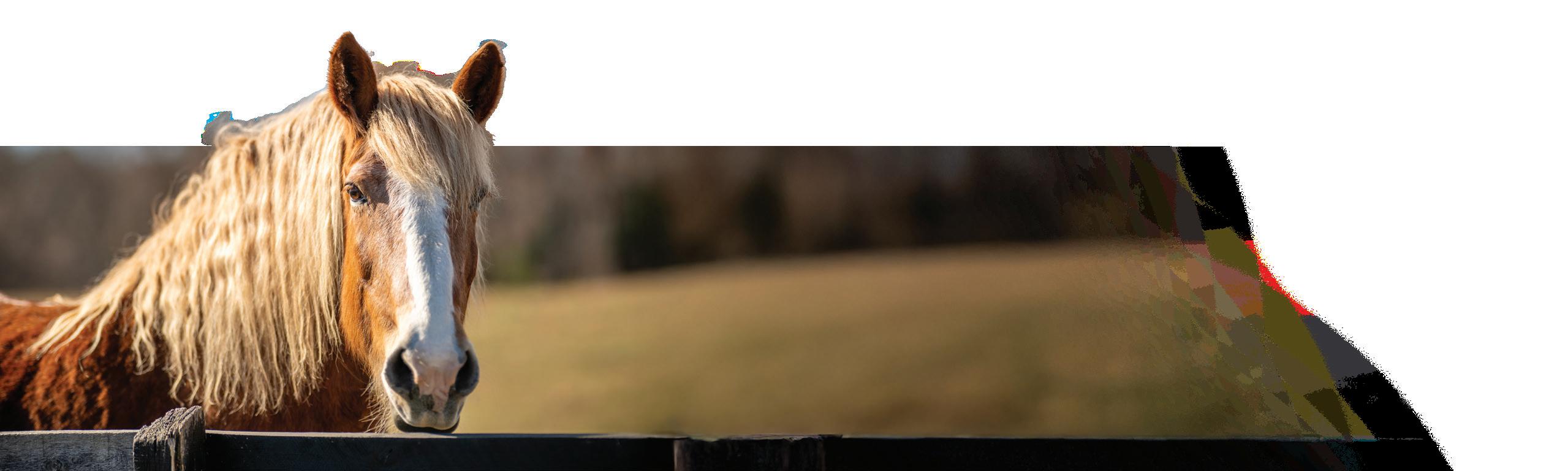
Sarah is the daughter of Mariclare, who was in foal with her when rescued by Equine Advocates. Mariclare was used to collect pregnant mares’ urine (PMU), an ingredient in certain hormone replacement drugs.
News to Know
By Crystal Schaeffer
Stronger Protection Needed
Tell Congress to Support the Better CARE for Animals Act
Millions of animals still suffer in labs, and although the U.S. Department of Agriculture (USDA) is tasked with enforcing the Animal Welfare Act (AWA), it has repeatedly failed to do so. However, the Better Collaboration, Accountability, and Regulatory Enforcement (CARE) for Animals Act will help strengthen enforcement.
The Act would give the U.S. Department of Justice (DOJ) the ability to collaborate more effectively with the USDA when regulated facilities fail to fulfill basic standards for humane care. It will help bring cases to the federal courts so that violators are penalized and deterrence is established.
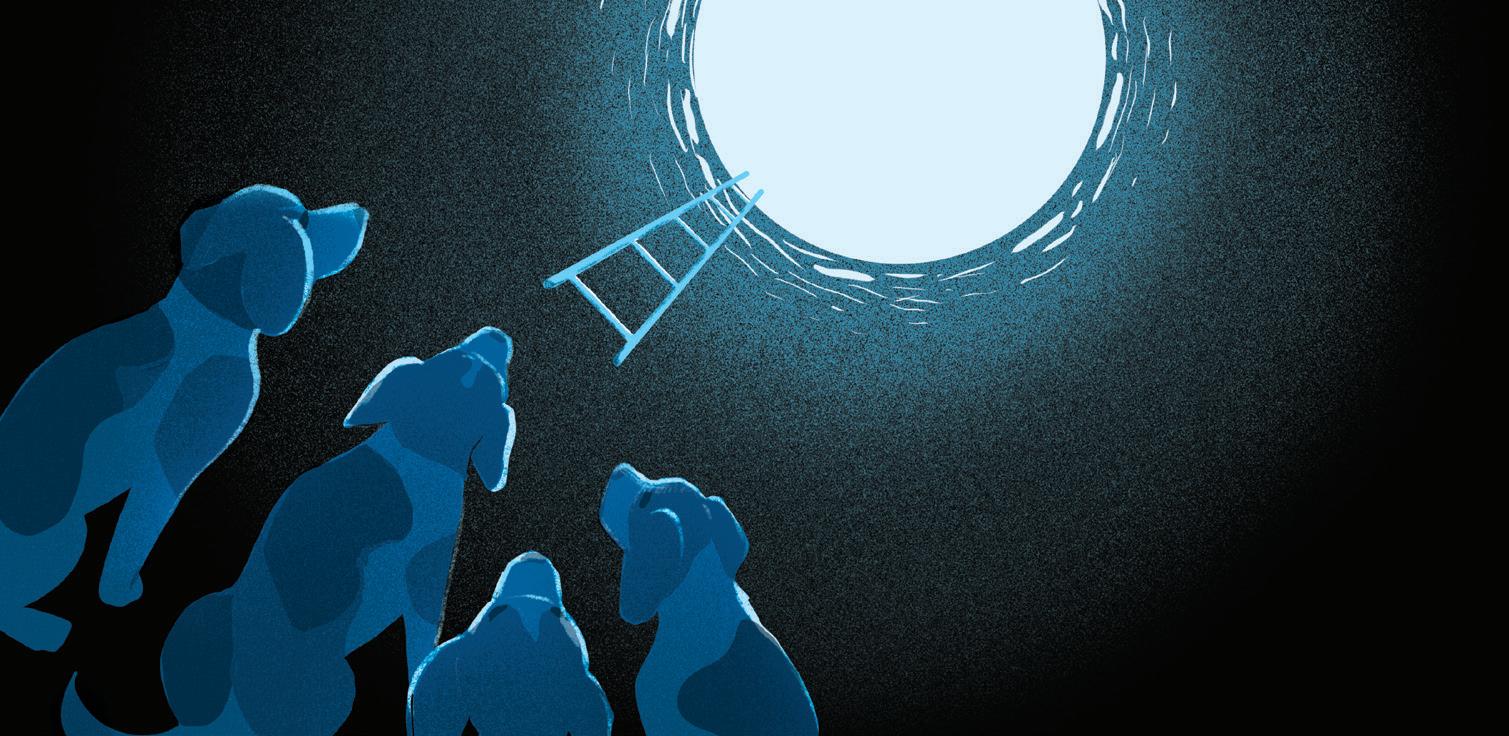
DOJ involvement in cases of severe violations can save animal lives. An example is Envigo, a notorious Virginia breeding facility where the USDA’s failure to act was so egregious that it prompted a federal grand jury investigation. The horrific violations included over 300 puppies for whom Envigo did not determine a cause
of death, with 173 so decomposed that a cause of death was impossible to ascertain, as well as dozens of puppies who died from exposure to the cold. Action by the DOJ and the Commonwealth of Virginia led to the surrender of 4,000 beagles, including the seizure of 445 dogs found in “acute distress,” who were all adopted into new homes. Envigo pleaded guilty to conspiring to violate the AWA and agreed to pay over $35 million in penalties, including $11 million under the AWA. That $11 million fine was 30 times the amount of all 24 stipulated penalties levied by the USDA against research facilities since April 2020 (see page 8)—another argument for passage of this important bill.
Please contact your federal legislators and urge them to support the Better CARE for Animals Act. Tell them that the AWA needs stronger enforcement and that this bill will make an important difference. Take action at aavs.org/BetterCARE
Animal Testing in Your Sunscreen?
There has been confusion about the Food and Drug Administration’s (FDA) requiring animal tests for sunscreen, but AAVS is here to shine a light on the facts! Unlike in Europe and elsewhere, the U.S. classifies sunscreens as over-the-counter drug products, which can require animal testing. The exception, however, is for mineral sunscreens that contain zinc oxide and titanium dioxide, which are classified as “generally recognized as safe and effective” (GRASE) by the FDA, so no animal testing is required. Mineral sunscreens create a barrier that reflects UV rays, protecting the skin, but because chemical sunscreen ingredients are absorbed into the skin to convert UV radiation into heat, the FDA requires them to be tested on animals.
The FDA has indicated that it will give more attention to the development and use of non-animal testing methods, so this is an opportunity for the agency to approve a system of alternative tests for establishing the safety of key ingredients. Such data, combined with existing data, is more applicable to human biology, so requiring new animal tests simply does not make sense and would result in unnecessary animal suffering.
Be confident that the sunscreen you use is cruelty-free by downloading the Leaping Bunny app—it’s FREE. Find it at aavs.org/LBapp.
Macaques Still in Danger
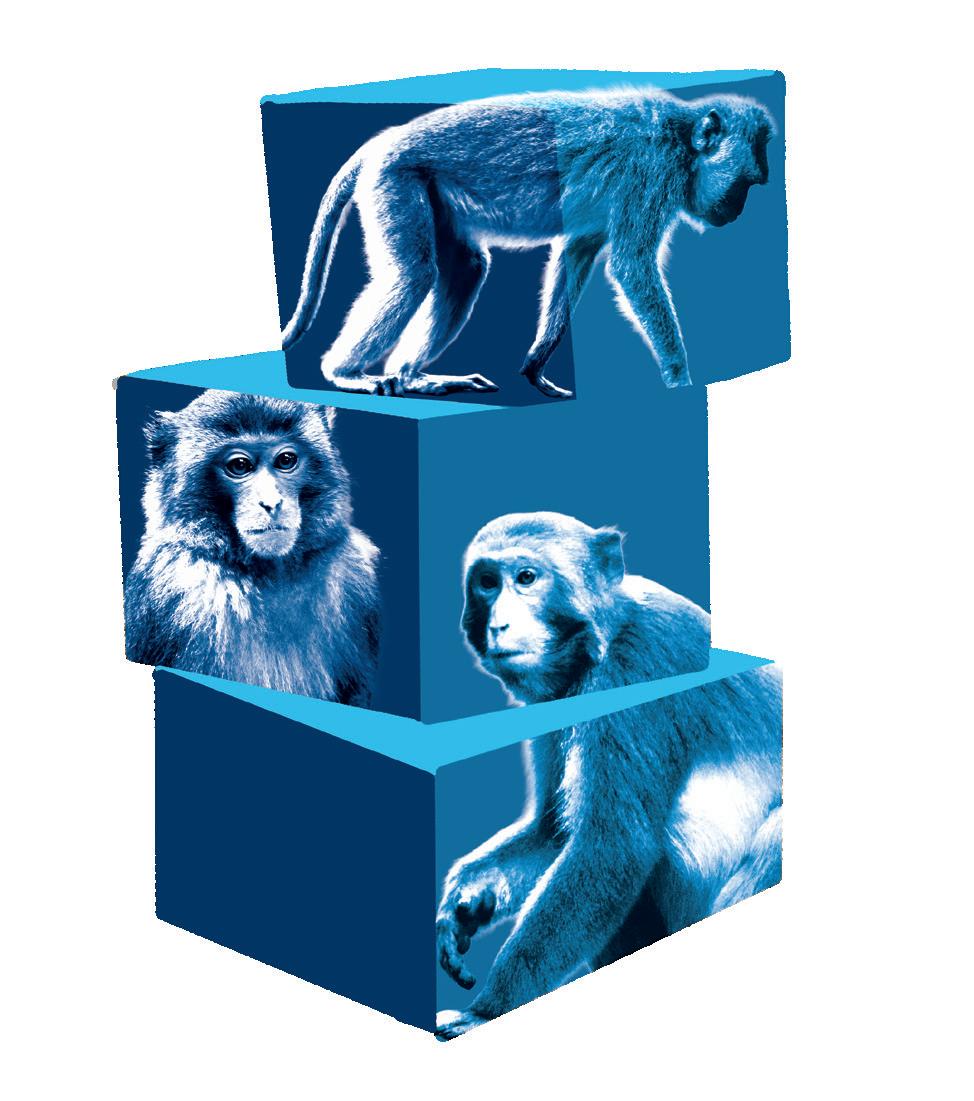
A proposed suspension of exporting long-tailed macaques from Cambodia was rejected by the Convention on International Trade in Endangered Species of Wild Fauna and Flora (CITES) on Feb. 4, pending further review in November. The decision has heightened concerns for wild populations of these monkeys, especially since the International Union for Conservation of Nature reported in 2022 that research demand “is threatening the species” and that “the research industry needs to become accountable.”
This short-sighted decision puts primate lives at risk. A report received in July by the Animal Alliance of Canada docu mented that in August 2024, a long-tailed macaque destined for Charles River Lab oratories was found dead after a two-day transport from Cambodia to Montreal, including a 27-hour delay due to lack of a proper permit. More incidents like this (or worse) are likely to occur if the trade of long-tailed macaques continues. AAVS will report CITES’s final decision in our next issue.
GE Salmon Experiment Fails
Ten years after the Food and Drug Administration (FDA) approved the sale of genetically engineered (GE) salmon as food, the AquaBounty company has ended its fish farming operations for GE salmon, which proved to be unmarketable. Using GE animals for food has been very controversial over the years, and rightly so. AquaBounty’s own data showed that the GE salmon were unhealthy and experienced high rates of abnormalities and mortality. The company also faced fierce opposition from the public, retailers, nonprofit groups (including AAVS), and Congress.

AAVS Donates $100,000 to Care for Chimps from Labs
Twenty-one chimpanzees who languished for decades at the Alamogordo Primate Facility in New Mexico have finally arrived at the Chimp Haven sanctuary in Louisiana. Previously used in experiments, these chimpanzees are elderly and have many of the same ailments that humans get as we age. But the caregivers at Chimp Haven have the expertise to meet their special needs.
The chimpanzees had been the subject of much controversy over the past few years because the National Institutes of Health (NIH) had refused to release them to Chimp Haven, despite being required by law to do so.
After learning that the NIH would finally be relinquishing the chimps, AAVS was quick to provide a $100,000 grant to help Chimp Haven expand its facilities to accommodate the new arrivals. The chim-
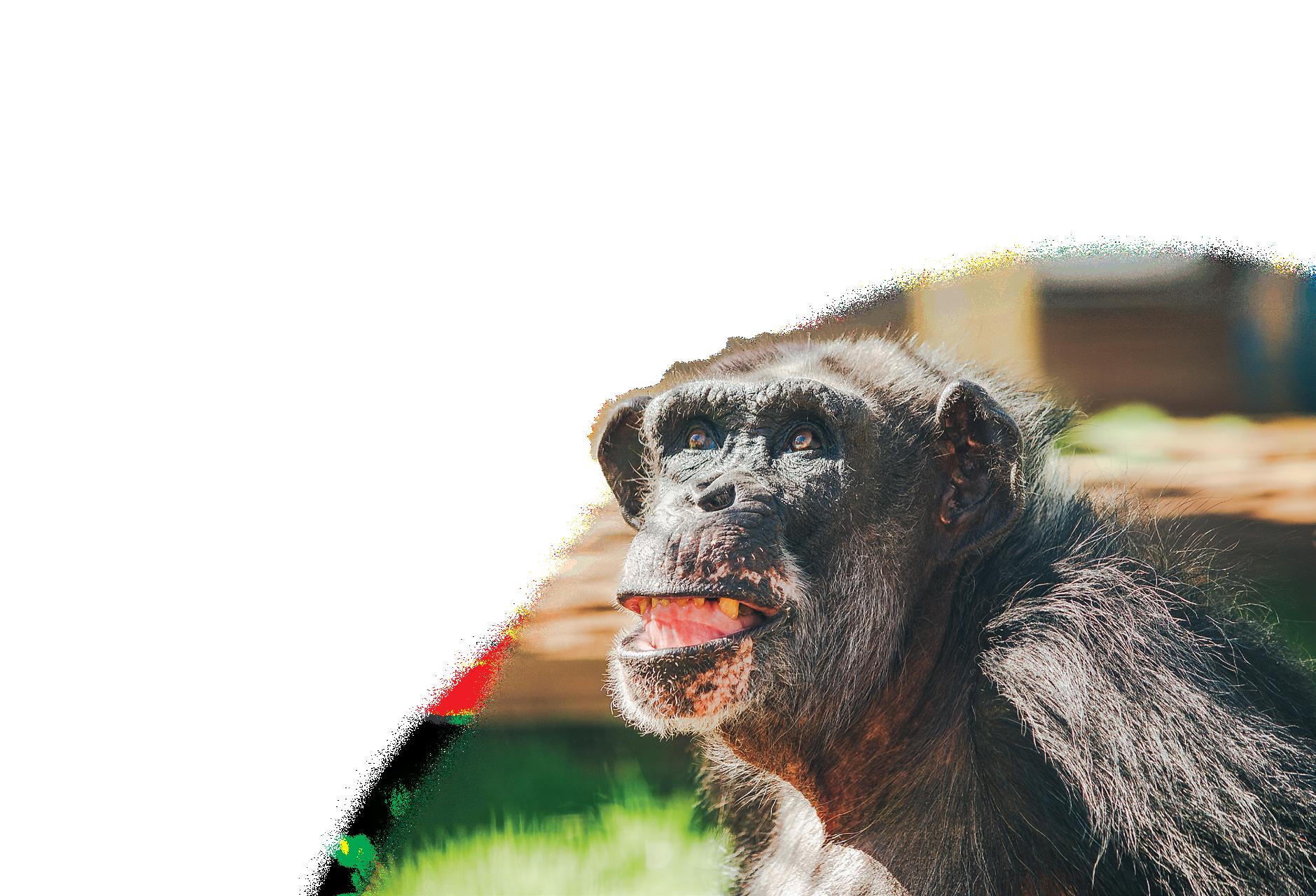
Al recently arrived at Chimp Haven from Alamogordo.
The Canaries in the Coal Mine
By Eric Kleiman
It has been two years since the U.S. Department of Agriculture (USDA) finally implemented regulations to govern birds used in research but not specifically bred for experimentation. These regulations, which address the care and treatment of birds used by industries operating under the Animal Welfare Act (AWA), are a direct result of a historic legal victory against the USDA by AAVS and the Avian Welfare Coalition (AWC). The U.S. District Court’s 2020 ruling ordered the USDA to “publish a final rule…that promulgates the Regulations” applying to birds. The department subsequently issued and implemented those regulations, stating that it now oversees more than 1,000 bird species. In June, the USDA released the first full year of annual research reports since the advent of the bird regulations, which showed that 63,396 birds not bred for research were held or used for experimentation. That is in addition to the 31,787 birds not covered under the AWA at the USDA’s Agricultural Research Service labs.
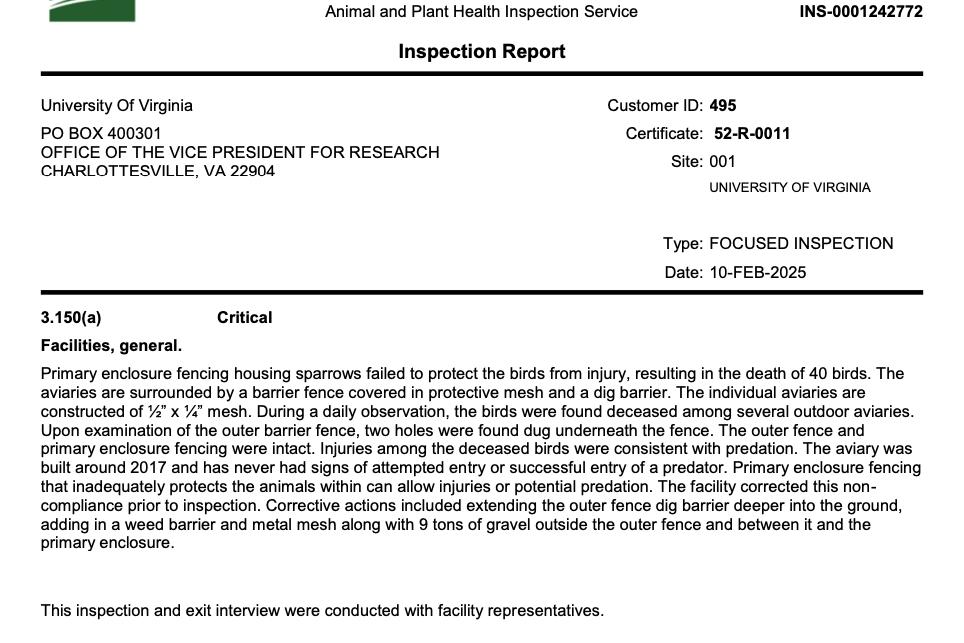
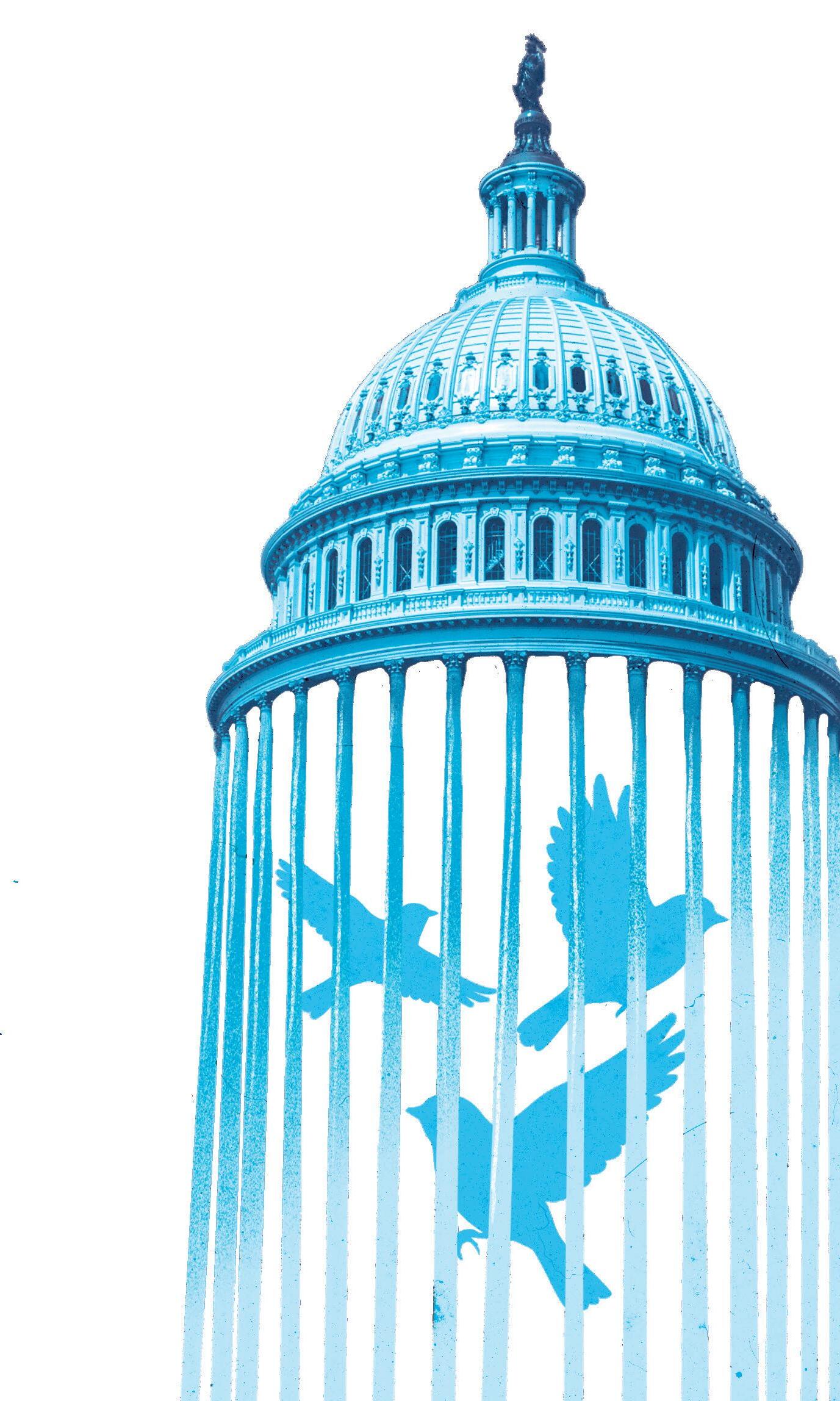
The new regulations have led to warning letters and enforcement actions, including those shown in Figures 1-3, which would not have been possible without AAVS’s successful lawsuit. Out of 421 USDA warnings from August 2023 to August 2025, more than one-fifth have cited noncompliances involving birds. However, the bird regulations have also helped to reveal a “perfect storm” of obstacles to meaningful AWA enforcement. These include far fewer USDA inspectors; a doubling of the number of AWA facilities; 4,976 inspections to date that now include birds; negligible fines against research institutions with combined assets of more than $252 billion; and government reliance on the failed concept of self-policing.
Experimentation on Birds Continues Unabated
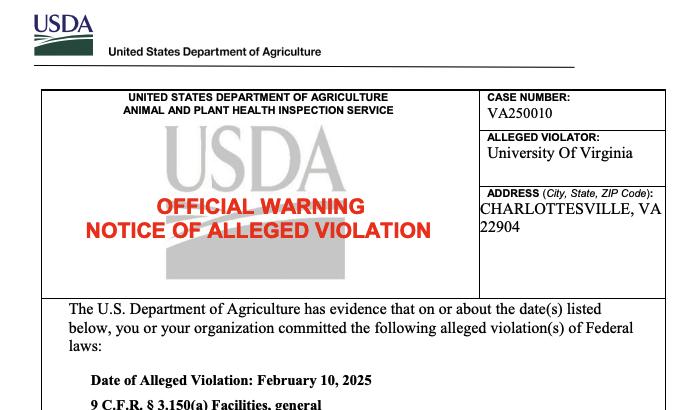
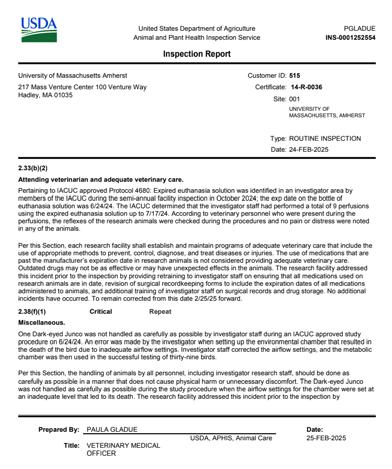
The National Institutes of Health (NIH) and the National Science Foun dation (NSF) currently fund dozens of grants involving invasive experiments on songbirds. The University of Mem phis (UofM), the University of Virginia (UVA), and the University of Massachu setts Amherst (UMass Amherst)—despite the significant USDA warnings and fine in Figures 1-3—have repeatedly conducted publicly funded, lethal experiments on birds. In May, shortly after the disturbing deaths of 40 sparrows at UVA (see Figure 1), researchers there published an invasive brain experiment on zebra finches funded by the NIH and the NSF that included implanting electrodes and recording auditory activity before killing the finches
and removing their brains. UVA currently has NIH and NSF grants for other experiments involving songbirds.
Also in May, researchers at UofM, funded by three NSF grants, published experiments in which they induced house finch eye disease. The researchers captured the finches in California and Alabama, then transported them back to Memphis. They later killed the birds and removed their livers. In its 2024 USDA annual report, UofM reported this type of experimentation as Category E, meaning that the birds received no pain relief, even though researchers had subjected them to pain or distress. UofM currently has multiple NSF grants involving songbirds and last year paid a $15,100 fine for dozens of animal deaths, including a
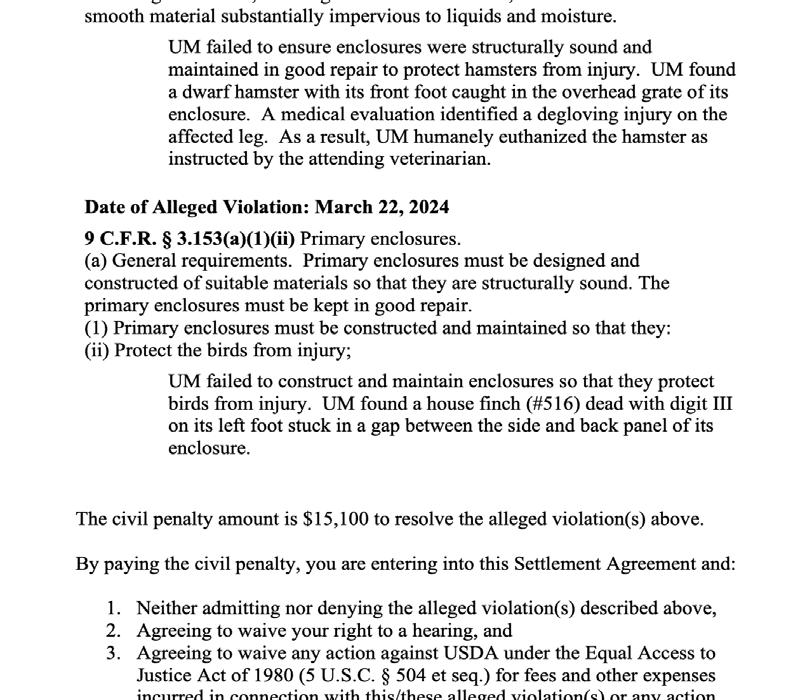
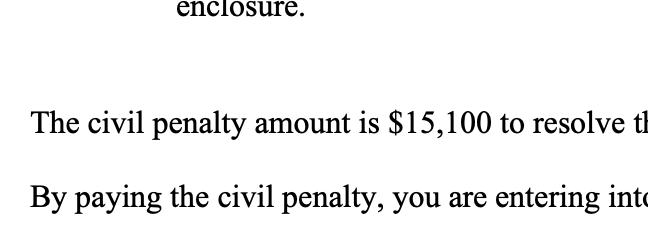
Fig. 2. UofM “failed to construct and maintain enclosures so that they protect birds from injury" and "found a house finch (#516) dead…stuck in a gap between the side and back panel of its enclosure.” In May 2024, UofM paid a $15,100 fine for the deaths of dozens of animals.
The April 2025 warning issued to UMass Amherst (see Figure 3) involved a darkeyed junco who died from inadequate airflow during an experimental procedure.
Fig. 1. This February 2025 inspection of UVA documented the 40 sparrow deaths that led to the April 2025 warning letter.
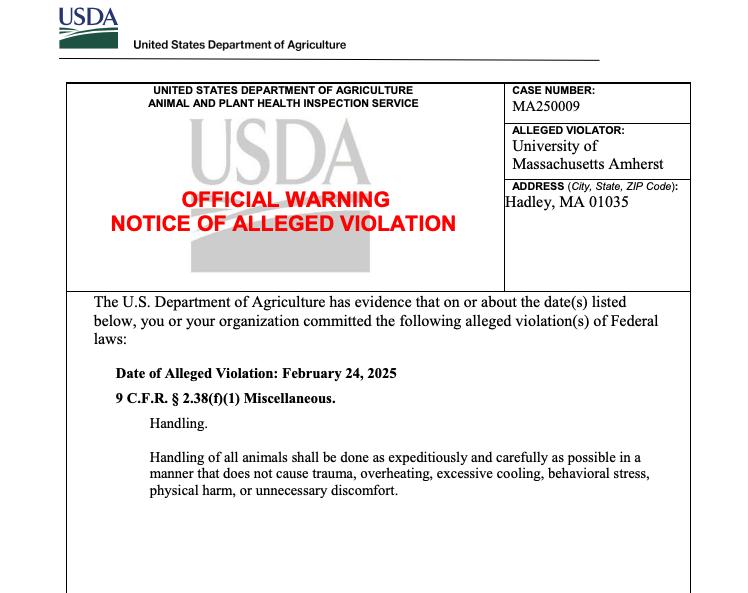
In one NSF-funded study, researchers used mist nets to capture dozens of white-throated sparrows “on the [UMass Amherst] campus” and later killed them using gas and cervical dislocation. In 2024, UMass Amherst used dozens of white-throated sparrows in Category E experiments. It has received millions of dollars from the NIH and the NSF for lethal research on birds.
The Illusion of Oversight
The Trump administration has decreased funding at multiple federal agencies, with those responsible for administering animal welfare regulations— which now include birds—significantly affected. Moreover, in July, the administration reappointed Bernadette Juarez, the former head of the Animal and Plant Health Inspection Service (APHIS) Animal Care department. During her initial tenure from 2016 to 2019, she oversaw a plunge in AWA inspection citations and enforcement; the removal of inspection reports and enforcement actions from the USDA website; the implementation of a pilot program to notify certain facilities prior to inspection; the disabling of various animal welfare policies, including Alternatives to Painful and Distressful Procedures; and the secret implementation of a policy that prevented full inspections at labs accredited by the Association for Assessment and Accreditation of Laboratory Animal Care, which is overwhelmingly funded by industry.
Given the seismic changes occurring, AAVS believes that discussions regarding the future of animal experimentation oversight should consider what the reality of animal welfare enforcement has long been—or, more accurately, has not been. The significant additional strain of regulating the care and treatment of birds— an entirely new biological class of animals under the AWA—highlights profound issues with the status quo, regardless of which political party is in power. Moreover, industry has long claimed onerous regulation and has routinely fought against enhanced oversight by states. Over the past 20 years, as illustrated on page 8, this has included Charles River Laboratories, the world’s largest supplier of animals for experimentation; Envigo, the second-largest supplier; and the National Association for Biomedical Research, the industry-funded, pro-animal experimentation organization.
As legal scholar Skye Walker wrote in a 2022 law review article criticizing the USDA’s enforcement of the AWA, “Passing a law is one thing; ensuring its effective implementation is another.”
More Facilities, Fewer Inspectors
Since 2018, the number of entities regulated by the USDA has doubled, while the number of inspectors has dropped precipitously, even as the agency was planning to regulate an entirely new— and numerous—class of animals (details on page 9). When the bird regulations went into effect, inspector numbers had been decreasing for years, even though APHIS’s animal welfare funding increased during the same timeframe.
A May report by the Congressional Research Service found that inspector reductions “may further affect APHIS’s ability to carry out its oversight functions,” given that inspections are “APHIS’s primary tool for overseeing and enforcing the AWA.” While USDA regulations require an adequate number of employees at facilities to ensure compliance, they are silent on what constitutes an adequate number of inspectors at the USDA.
The department’s failure to address this additional strain on the system is exemplified by the huge number of inspections involving birds. As illustrated on page 9, birds rank second, with 4,976 inspections to date. Only dog inspections, which include many puppy mills, were more numerous. In June 2025, stretched-thin veterinary inspectors traveled three times to a single Massachusetts dealer to inspect suffering parakeets and a macaw; this led to a warning letter in July.
A Pattern of Penalties Without Teeth
The USDA has a long history of failing to adequately enforce the AWA. Every presidential administration since 1992 has featured a damning audit by the USDA’s Office of Inspector General (OIG), criticizing the agency’s implementation of the AWA. The most recent, in February, found that 80 percent of dog-breeder inspections reviewed were deficient, and that APHIS’s failure to hold breeders accountable “poses a threat to the safety and well-being of the animals.”
This year marks the 20th anniversary of one such audit, in which the OIG found that research facilities considered the USDA’s meager penalties as merely a “normal cost of conducting business.” It recommended greatly increased fines, particularly for “research facilities with assets in the billions of dollars.” The OIG also found that the small penalty amounts did not prevent continued violations that adversely affected animal welfare. The OIG wrote that “enforcement should be used as a deterrent,” noting that, unlike breeder or dealer licenses, research registrations cannot be suspended or revoked.
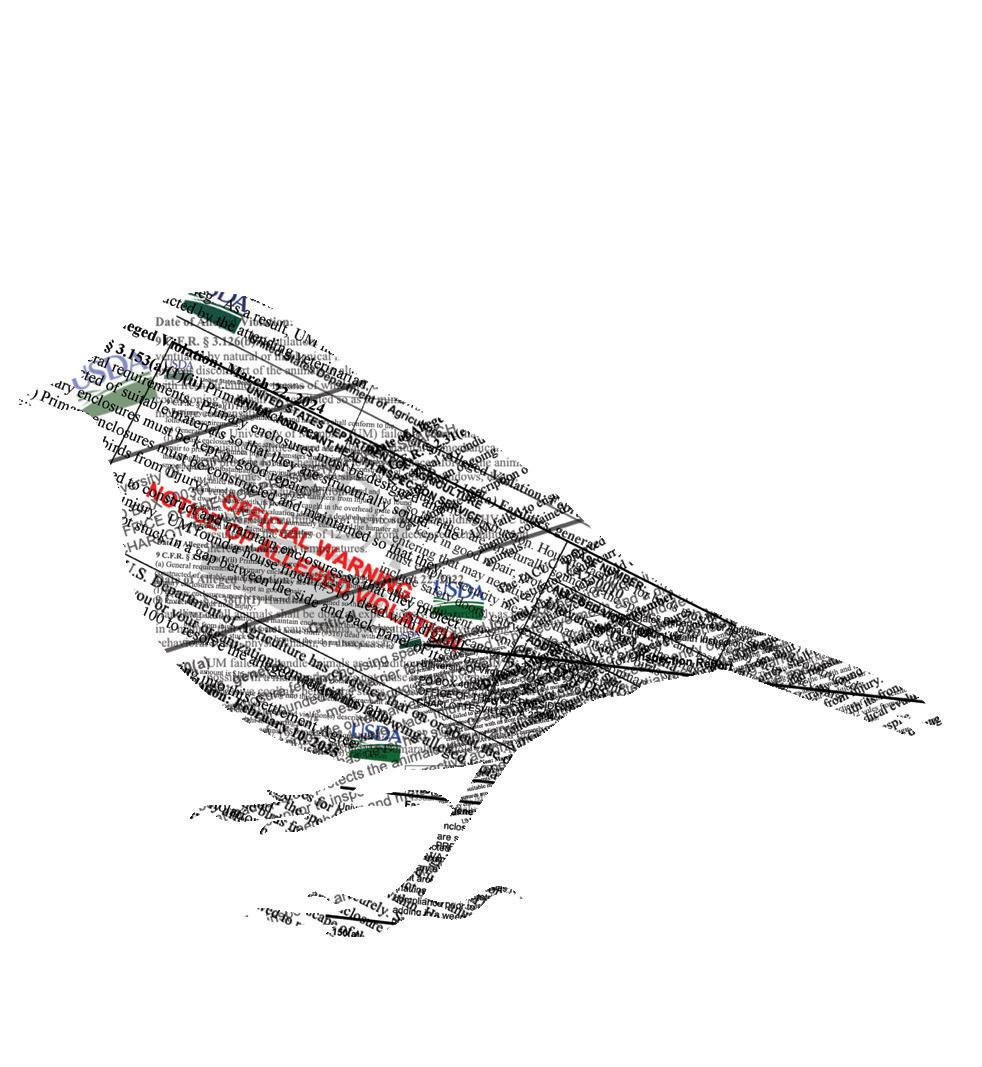
Fig. 3. The death of the dark-eyed junco from inadequate airflow documented in this February 2025 inspection of UMass Amherst led to the April 2025 warning letter.
In May, Vox reported that despite this damning 2005 audit, the USDA still did not consider the offending entity’s revenue when issuing stipulated penalties. The effects of this can be seen in the minuscule fine amounts assessed over the past five years. As noted on page 8, since April 2020, the 24 stipulated penalties issued to research facilities amounted to just 0.00014 percent of the more than $252 billion in assets these wealthy institutions collectively possess. This is precisely what the OIG warned about 20 years ago.
The USDA has not fined a research facility for alleged AWA violations since June 2024, when the U.S. Supreme Court issued its decision in SEC v. Jarkesy, which raised questions about the Securities and Exchange Commission’s levying of civil fines. Stipulated penalties had long been the USDA’s primary enforcement tool for research facilities. The agency told Vox that it was “still assessing the impact of the Jarkesy ruling” almost a year after the opinion was issued. Such delay is nothing new; in 2009, the U.S. Court of Appeals for the Eleventh Circuit criticized the USDA’s actions under the AWA as “virtually glacial.” This is exacerbated by the government’s reliance on labs to police themselves.
Self-Regulation and the Limits of Trust
This year is also the 40th anniversary of the establishment of Institutional Animal Care and Use Committees (IACUCs). Industry points to these internal review committees, whose members are appointed by the labs, as guarantors of animal welfare, but regu-
lators rely heavily on facilities to provide their own oversight. During debate on the 1985 AWA amendment that established IACUCs, Sen. Robert Dole stated that because inspectors cannot be “present on a daily basis…their enforcement capability can and should be enhanced” by IACUCs. After citing these comments, the USDA averred that the AWA “relies on the facility to monitor its own house.”
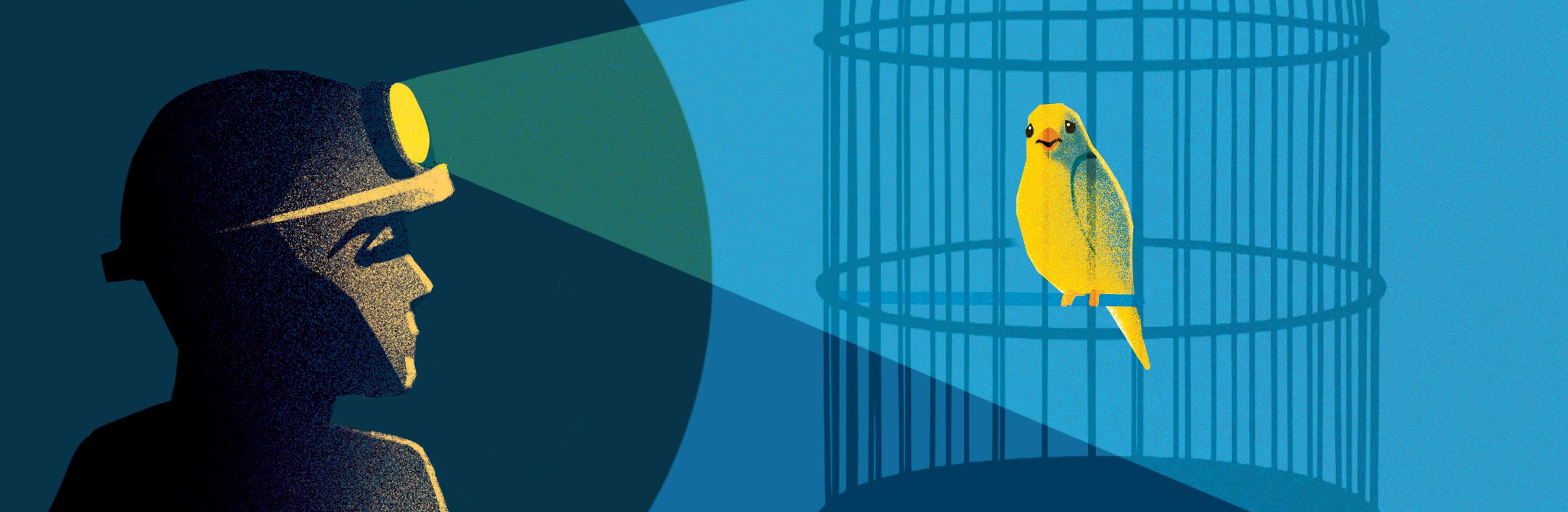
Birds in laboratories are now almost literally the canaries in the coal mine of animal experimentation oversight
Similarly, the NIH’s Office of Laboratory Animal Welfare (OLAW) relies on the oxymoronic concept of “enforced self-regulation” to administer the Public Health Service (PHS) Policy on the Humane Care and Use of Laboratory Animals, which conditions receipt of federal funds on compliance through an Animal Welfare Assurance—at least, theoretically. In fact, OLAW states that the Assurance is the “cornerstone of a trust relationship” between labs and the agency. OLAW avoids the term “enforce” regarding its own role, preferring instead to claim responsibility for “implementation and general administration” of the PHS Policy—and its staffing level may explain why. In February, OLAW listed only four staffers in its Division of Compliance Oversight, responsible for more than 1,400 labs in the U.S. and abroad.
The PHS Policy ostensibly covers birds, but what enforcement can there be given
OLAW’s woefully deficient staffing and its reliance on “trust” with the very labs it is supposed to be overseeing? Again, there is a huge difference between regulation and enforcement.
The Canaries in the Coal Mine
Given these fundamental deficiencies in animal welfare enforcement, legal experts have argued that the AWA is largely informational. AAVS agrees, and we believe that knowledge is power. Concerns about fundamental changes under the current administration should not obscure the USDA’s and the NIH’s history of profoundly deficient animal welfare enforcement, which AAVS and AWC’s successful lawsuit has helped illuminate.
Birds in laboratories are now almost literally the canaries in the coal mine of animal experimentation oversight—including the exploitation and death inherent in that phrase. In this time of uncertainty, we frankly don’t know what the answer is. But we do know what it’s not: the status quo at the USDA and the NIH. AAVS will continue to demand accountability as we fight to end animal experimentation and expose the reality of how animals suffer in labs.
Eric Kleiman is Senior Policy Advisor for AAVS.
Broken Promises and Our Fight for Birds
By Crystal Schaeffer
The exclusion of birds, rats, and mice from the protections afforded to other species under the federal Animal Welfare Act (AWA) has long outraged animal advocates. A 1970 amendment to the AWA was supposed to expand legal coverage to most classes of warm-blooded animals, but the U.S. Department of Agriculture (USDA) circumvented the law, enacting corresponding regulations that did not reflect this. In April 1998, AAVS launched its Project Animal Welfare Act, and our affiliate, the Alternatives Research & Development Foundation (ARDF), submitted a petition to the USDA urging protection for these omitted animals, who make up an estimated 90-95 percent of all animals used in research and testing.
The petition argued that “because [the] USDA has defined birds, rats, and mice as non-animals, there is no statutory or regulatory requirement that anyone consider alternatives to the use of these creatures.” By purposefully ignoring these animals, the USDA impeded sections of the AWA designed to promote the development and use of alternatives in research and testing, a key part of AAVS’s mission to end the use of animals in science.
In a big victory for animals, the USDA eventually settled a lawsuit filed in 2000 by ARDF and two other plaintiffs, whereby the agency agreed to create regulations for the care and treatment of birds, rats, and mice under the AWA.
Unfortunately, a 2002 amendment to the AWA permanently denied protection for birds, rats of the genus Rattus, and mice of the genus Mus who are bred for research. However, this also meant that those not bred for research are covered by the AWA, particularly birds used in exhibitions like zoos and those bred and sold for the pet trade, who may number in the millions.
Although the USDA agreed to regulate the use of rats and mice not bred for research under the AWA general standards, it said birds must have specific regulations because they are “highly diverse morphologically and behaviorally” and “require unique husbandry and care.”
In 2004, AAVS, ARDF, and 26 other organizations submitted joint comments to the USDA outlining comprehensive, species-specific standards of care for birds. What happened next was a string of broken promises, delays, and excuses over more than a decade, with the USDA failing to propose bird regulations, enabling an untold number of animals to suffer because of the agency’s indifference to their welfare.
By purposefully ignoring these animals, the USDA impeded sections of the AWA designed to promote the development and use of alternatives in research and testing
So, in December 2015, ARDF sued the USDA for breach of contract and failure to enact bird regulations, but the court decided not to compel the agency to act. Undeterred, two years later, AAVS was joined by the Avian Welfare Coalition in suing the USDA for unreasonable delay, winning on appeal in January 2020. Finally, on May 26, 2020, a federal court ordered the USDA to issue regulations to protect birds under the AWA, and those regulations took effect in August 2023.
Thanks to the success of these legal efforts, labs are now required to submit annual reports to the USDA concerning their use of AWA-protected birds.
According to an agency summary report published in July, labs held or used 63,396 birds in 2024. AAVS is analyzing this and other documentation to further assess the use of birds in U.S. research.
Having worked for over two decades to gain AWA protections for birds, AAVS was determined not to let the USDA walk away from its obligation to protect these animals. We understand the need for perseverance in achieving meaningful, lasting change, and we will never give up the fight.
Crystal Schaeffer, M.A. IPCR, M.A. Ed., is Outreach Director for AAVS.
INSPECTING THE NUMBERS
Research Lab Claims
CHARLES RIVER LABORATORIES, 2004
(fighting multiple counts of criminal animal cruelty regarding the deaths of chimps Rex and Ashley, and the near death of Topsy)
"complex web" of federal regulations "intense scrutiny"
criminal cruelty charges were "without merit"
ENVIGO, 2020
(op-ed fighting Virginia oversight bill; two years later, 445 beagles in "acute distress" seized, company later pleaded guilty to criminal conspiracy)
"[USDA inspects our sites] to stringent standards"
"Envigo is proud of the way it cares for the dogs"
"Animal welfare is a top priority"
NATIONAL
ASSOCIATION FOR BIOMEDICAL RESEARCH, 2025
(fighting oversight bill in Maryland legislature)
State regulation is "unnecessarily duplicative of oversight that is already required at the federal level"
$252,000,000,000 IN ASSETS Research Lab Realities
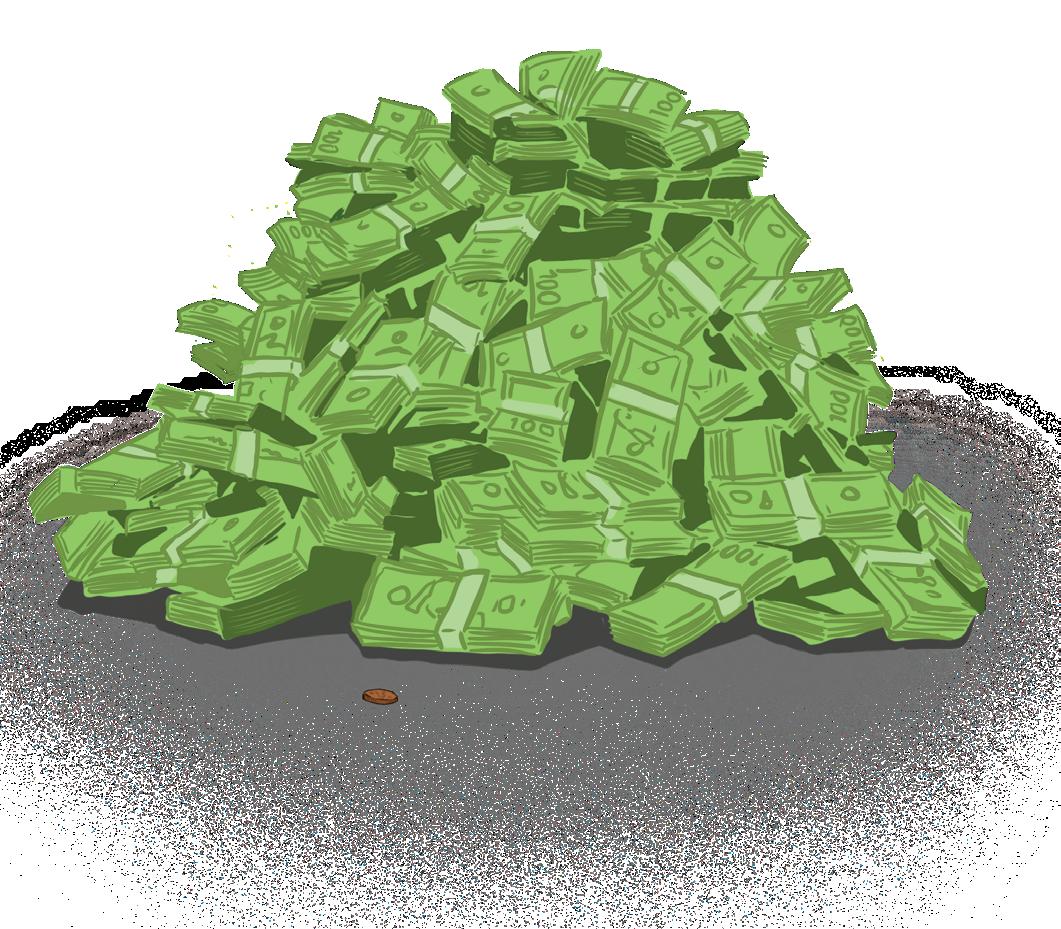
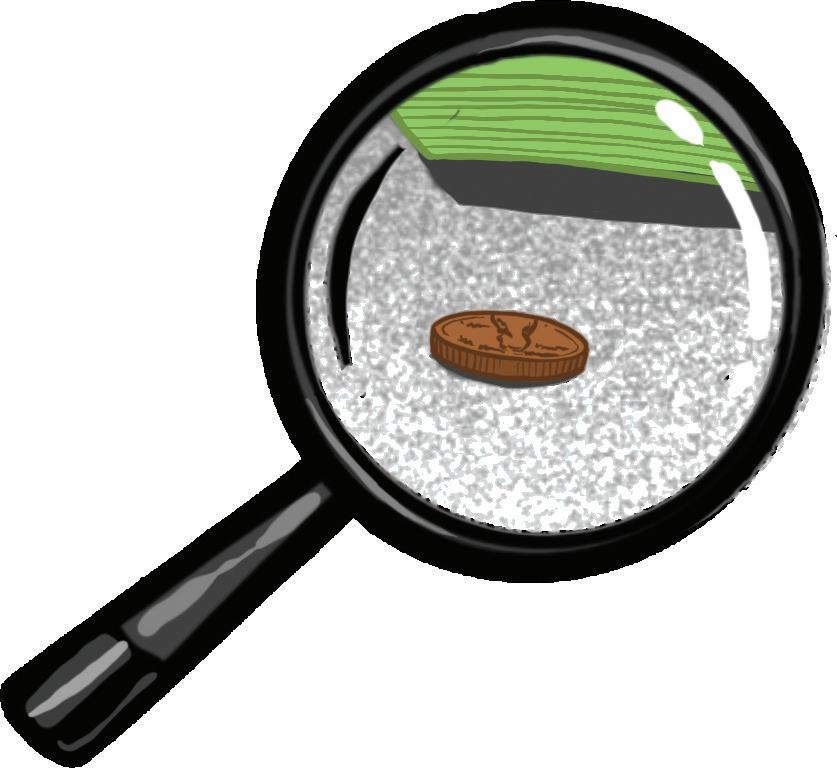
$364,325 IN STIPULATED PENALTIES (24 PAID SINCE APRIL 2020)
Timeline for AWA Bird Protection
AUGUST 24, 1966
Animal Welfare Act (AWA) becomes law
DEC 24, 1970
AWA expanded to include more warm-blooded animals
DEC 24, 1971
DEC 23, 1985
Although largely known for establishing IACUCs, this AWA amendment’s requirement for considering alternatives would play a key role in the bird lawsuit
JAN 8, 1992
USDA regulations for 1970 amendment exclude birds, rats, and mice 7
U.S. District Court calls exclusion of birds, rats, mice “arbitrary and capricious and [violation of] the Act"
MARCH 9, 1999
ARDF sues the U.S. Department of Agriculture (USDA) for inclusion of birds, rats, mice
OCT 3, 2000
USDA settles with ARDF, agreeing to initiate rulemaking for birds, rats, mice
USDA Inspectors per Number of AWA Facilities
2018-2025
4,976 new bird inspections to date*
"USDA employs more than 100 inspectors who inspect more than 8,000 facilities across the United States for compliance with the Animal Welfare Act."
-Bernadette Juarez, APHIS Deputy Administrator for Animal Care, 2018
122 INSPECTORS
11,785 FACILITIES
98 INSPECTORS
16,000 FACILITIES
77 INSPECTORS
~17,500 FACILITIES
*As of August 14, 2025, 4,976 bird inspections had been conducted after AWA regulations went into effect in August 2023.
Top Classes of Animals Listed in USDA Inspection Reports
AUGUST 21, 2023 - AUGUST 14, 2025
DOG INSPECTIONS
BIRD INSPECTIONS
PRIMATE INSPECTIONS
6,513
4,976
2,712
MAY 13, 2002
Farm bill amendment excludes birds, rats, and mice bred for research from AWA’s definition of “animal”
USDA states that bird regulations are a priority and that it intends to publish proposed regulations by September 2006 9 8
OCT 31, 2005
AUGUST 10, 2018
After years of broken promises, AAVS and the Avian Welfare Coalition (AWC) sue USDA for unreasonable delay and failure to enact bird regulations
JAN 10, 2020 Court rules in favor of AAVS and AWC and orders USDA to enact bird regulations
AUG 21, 2023
More than three years after the court’s order, USDA bird regulations go into effect
JULY 8, 2025
USDA releases annual report of animal usage statistics that includes the first full year of bird holding and use by research facilities
Be Sure You’re Buying Cruelty-Free with Leaping Bunny
By Kim Paschen
Do you support ending animal testing by buying cruelty-free products? If you rely solely on product labels, here’s a surprising fact: There is no federal legislation in the U.S. regulating the term cruelty-free. This means that companies may self-identify as such without having to back up the claim. What’s more, they are free to put their own bunny logo on their website, packaging, and messaging. This can lead to a lot of confusion!
The best way to know for sure that products are cruelty-free is through the Leaping Bunny Program, created in 1996. This program independently certifies that companies making cosmetics, personal care, and household products do not use animal testing at any stage of product development, including at the ingredient and formulation levels where most testing occurs. There is no cost for companies to get certified, and many choose to put the official Leaping Bunny logo on their products for easy recognition.
To remain in good standing, a company must be open to an independent audit and is required to renew the certification annually. With more than 2,300
approved brands today, it has never been easier to make cruelty-free choices. The complete list of certified brands is available at leapingbunny.org and in our free smartphone app, Cruelty-Free Shopping Guide, both updated daily.
The integrity of the Leaping Bunny certification standard is ensured by the Coalition for Consumer Information on Cosmetics, which is composed of leading nonprofit animal protection organizations in the U.S. and Canada. AAVS has been the chair of this program since 2007 and is responsible for daily operations and all certifications of companies located in the U.S. and Canada.
Be sure to follow Leaping Bunny on Facebook, Instagram, and TikTok, where we share the latest trends, post company and industry news, and host all kinds of giveaways from our certified brands!
Kim Paschen is Director of the Leaping Bunny Program. Learn more at leapingbunny.org.
Where to Shop for Leaping Bunny Certified Products
Shopping cruelty-free is easier than you think. All of these places can be your onestop shop for purchasing products from Leaping Bunny certified companies:
AMAZON
CVS
SEPHORA
TARGET
ULTA
WALGREENS
WALMART
WHOLE FOODS
Popular Leaping Bunny Certified Brands
Did you know these brands are all Leaping Bunny certified?
AMIKA
BADGER
BRIOGEO
BURT’S BEES
DR. BRONNER’S
DRUNK ELEPHANT
FARMACY
METHOD
MILANI
MILK MAKEUP
RARE BEAUTY
STILA
Celebrating 35 Years of Humane Science Education
By Nicole Green
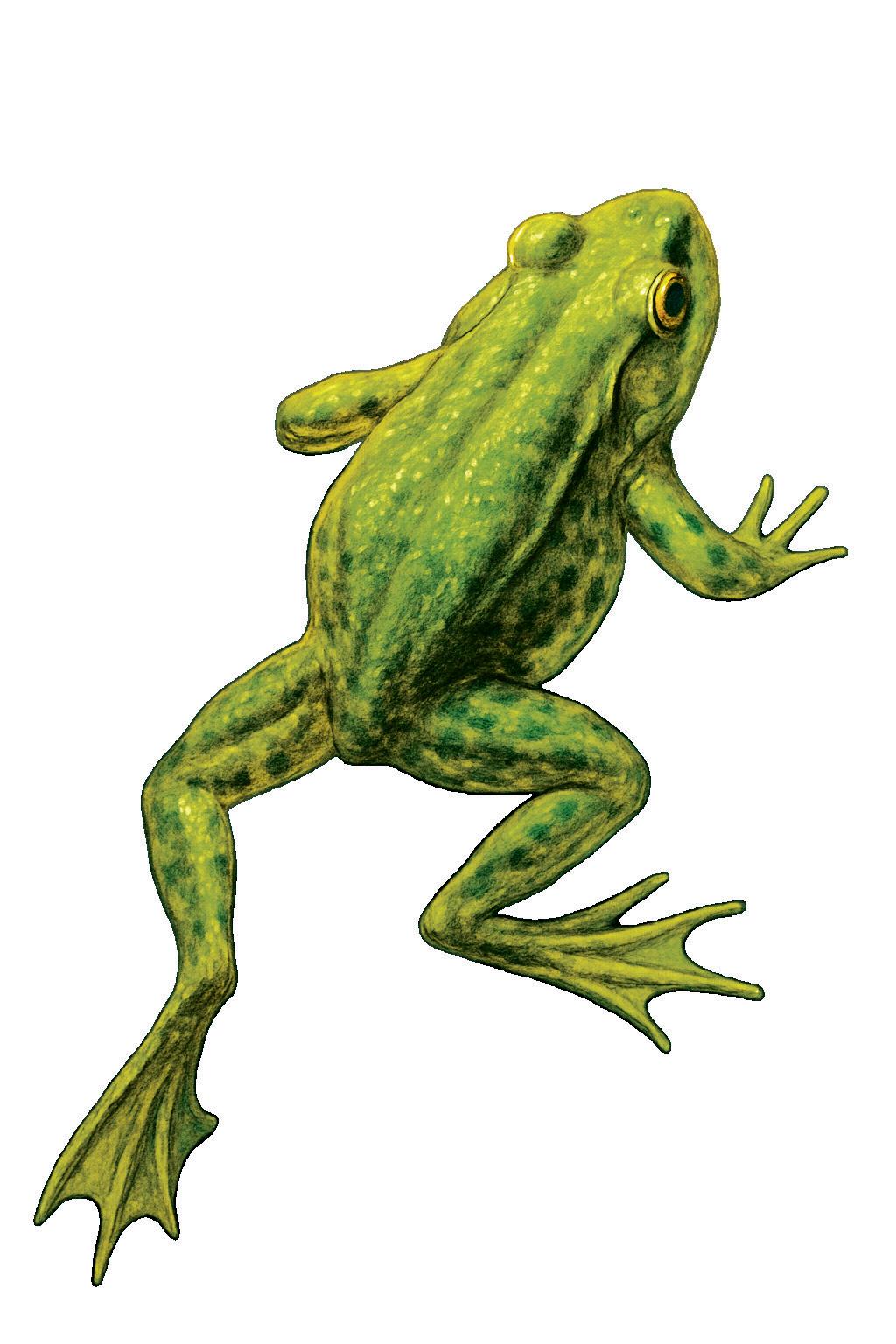
Animalearn turns 35 this year! Initially, AAVS’s humane science education program was created to provide general humane educational resources and outreach opportunities for educators and youth. Over the years, Animalearn evolved as a program focused on humane science education since both live and dead animals—including cats, frogs, farmed animals, and more—are still commonly used in U.S. classrooms. However, there have been significant positive changes over the years that have made science education kinder for students, animals, and the environment.
Dissection Choice
In the 1980s and 1990s, as animal activism was increasing, students began speaking out against inhumane animal labs at their schools. Thanks to their passionate advocacy, laws and policies were passed, giving students the legal protection to opt out of activities involving animals without being penalized.
When Animalearn began in 1990, only a handful of states gave students the legal right to opt out of dissection or live animal use in K-12 education. Today, 23 states and Washington, D.C., offer legal protections for students who are eager to learn without using animals.
Alternatives to Animal Labs
Since the ’90s, technology has flourished, revolutionizing the development of non-animal methods. With the abundance of realistic models, innovative technologies like virtual reality and augmented reality, mobile apps, and interactive anatomy tables and tablets, there is no need to harm animals in any level of education, including K-12, college or university, and even medical and veterinary schools. Animalearn has established partnerships with 26 companies that have developed innovative dissection alternatives.
Providing humane alternatives for animal use in the classroom has been a real game changer to help educators and students put the life back in life science. In 1996, we launched an initiative called The Science Bank, a free loan program that provides humane science resources to classrooms. Today, The Science Bank is the
only one of its kind in the U.S., and it has been used by thousands of educators, students, and parents. This program has remained an important solution for anyone seeking the most effective non-animal methods for teaching and studying science. For nearly 20 years, Animalearn has also given awards to humane educators and students who demonstrate a commitment to learning without harm.
Animals Still Need Us
As a humane science education program, Animalearn raises awareness about animal use in the classroom and helps to nurture respect for all creatures through outreach. Each year, the Animalearn team travels to national science education conferences to distribute information and offer resourc es to help encourage teachers to end the archaic practice of animal dissection. We also provide opportunities for hands-on experiences using non-animal methods. The goal is that teachers, with increased exposure to dissection alternatives, will feel empowered to utilize these methods instead of conducting animal labs.
Animalearn has played a key role in facilitating important changes over the last 35 years, and we will continue to advocate for ending the use of animals in science education through strategic partnerships with developers of non-animal methods and other animal protection groups, as well as through connections with humane educators and students. These compassionate allies are integral to making progress toward a future educational system that is not reliant on animal specimens but instead embraces animal-free teaching and learning tools to inspire a more ethical classroom culture.
Nicole Green, M.A., is Director of Animalearn. Learn more at animalearn.org and TheScienceBank.org.
New Grant Program Targets Childhood Cancer
By Angela Hvitved and Sue A. Leary
In 2023, AAVS received a call from a thoughtful, generous member who wanted to donate to a children’s disease research charity but also did not want to compromise on her opposition to animal experimentation. We provided information and advised that the charity she had in mind was conducting animal research and would probably be unable to accommodate her wishes. Many have been in a similar position of wanting to support research to stop a disease—often in memory of a loved one who has passed—but not wanting to contribute to animal suffering. Thanks to an extraordinary gift last year to the Alternatives Research & Development Foundation (ARDF), we are helping to satisfy both of these good intentions.
With a donation of $1.1 million, we recently launched ARDF’s biggest grant program to date, and the research it will fund could not be more urgent or important. The Alternatives in Research (AiR) Challenge: Focus on Childhood Cancer marks exciting firsts for the Foundation: our first grant program focused on a specific disease area with the largest grant amount we have ever offered, more than $200,000 per award.
This is a watershed moment for funding alternative methods and for AAVS members who have supported ARDF in its work over the past 30 years.
The Focus on Childhood Cancer program will fund research that uses innovative, non-animal methods to tackle important scientific questions that could contribute to lifesaving advances. Childhood cancers are very different from adult cancers, and developing safe and effective treatments remains a tremendous challenge.
The program as a unique dual mandate to improve the understanding or treatment of childhood cancers while demon-
strating the value of non-animal methods for advancing biomedical research. We are fortunate to have attracted a Scientific Advisory Committee consisting of experts from across the U.S. and Europe, who have provided invaluable insights on the development of the program. They will continue to advise ARDF throughout the grant cycle to help us select the most promising, scientifically sound projects for funding.
Cancer research has always been part of ARDF’s funding portfolio. In 1994, one of our first awards was to a project developing an in vitro system to test anti-cancer drugs. Since then, ARDF has supported nearly two dozen cancer-related research projects, including several that address childhood cancer. However, the size and scope of this new program is unprecedented. As far as we are aware, this is the first program of its kind, and it signals a milestone in the maturity of non-animal approaches in biomedical research.
ARDF has been making every effort to engage with the childhood cancer research community. ARDF announced the new grant program at the American Association for Cancer Research Annual Meeting in April. It was well received by the researchers we spoke with, who not-
ed the difficulties of finding funding focused specifically on childhood cancer.
It is clear that this new program is filling a critical need. We look forward to a tremendous response to this funding call and to sharing the progress of this groundbreaking program.
An affiliate of AAVS, the Alternatives Research & Development Foundation was established in 1993 with a mission to fund and promote the development, validation, and adoption of nonanimal methods in biomedical research, product testing, and education.
Angela N. Hvitved, Ph.D., is Director of ARDF. Sue A. Leary is President of ARDF.
Animals and the Arts
In seeking new ways to advance our mission of promoting greater awareness of the use of animals in science, AAVS has begun a collaboration with the nonprofit Culture & Animals Foundation. CAF was founded 40 years ago by philosophy professor Tom Regan, author of The Case for Animal Rights, and his wife, Nancy.
CAF provides annual grants to scholars and artists who use their intellect, creativity, and compassion to build a deeper understanding of human–animal relationships and a greater respect for animal rights. Starting in 2026, AAVS will underwrite select projects in CAF’s annual grant program for artists whose work focuses on animals, science, creativity, and social change.
CAF Executive Director Martin Rowe has provided the following selection of previous grantees whose work highlights the diversity of imaginative approaches to thinking about animals.
Kevin Augustine
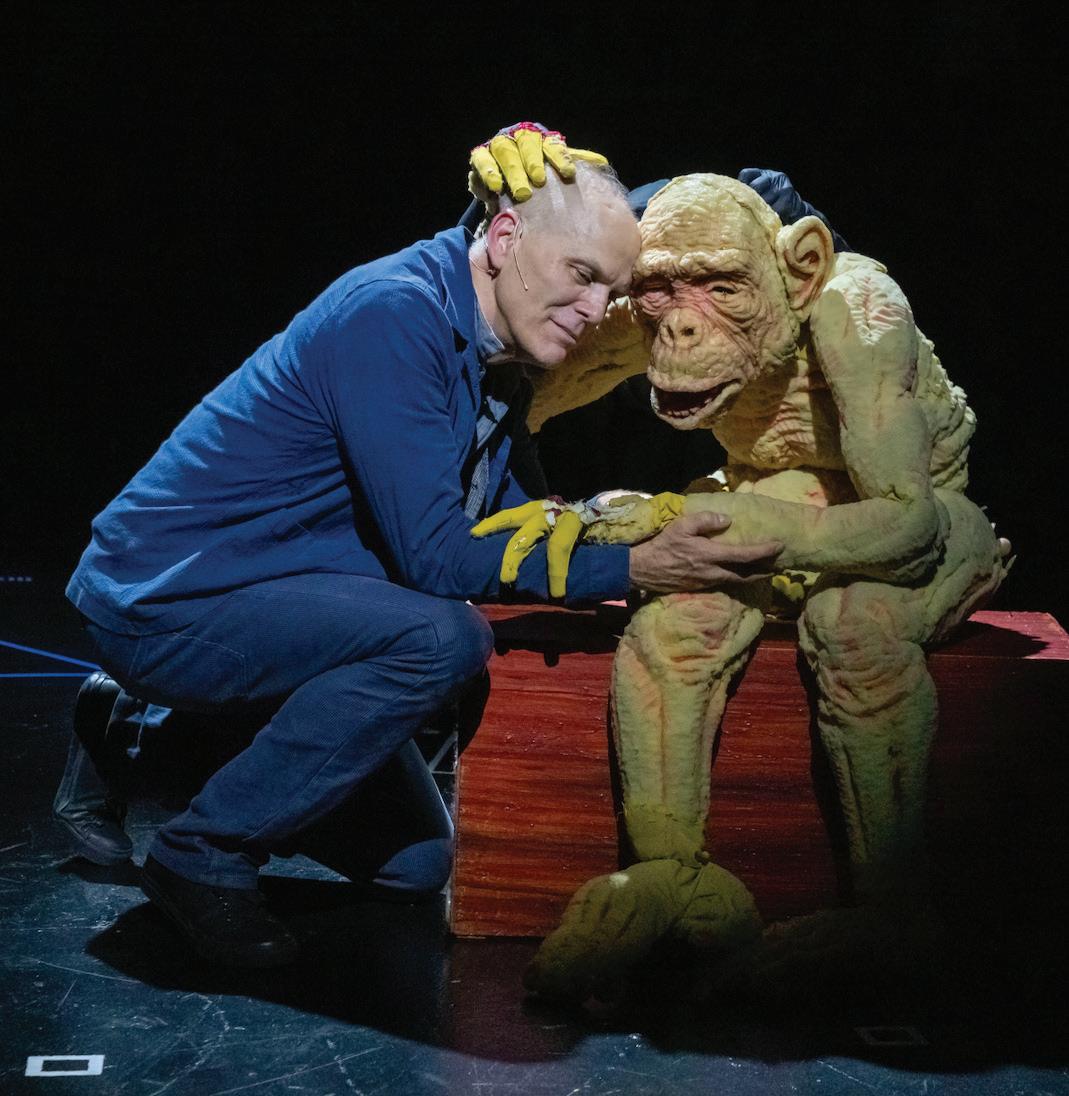
Kevin Augustine, puppeteer and co-founder of Lone Wolf Tribe, received a 2024 CAF grant for The People vs. Nature, a dramatic reenactment of a primate keeper’s tortured relationship with a chimpanzee in a research facility.
Gal Nissim
“Scienartist” Gal Nissim received a 2017 CAF grant to create with Jessica Scott-Dutcher the Synanthrope Preserve, an immersive sound and walking experience of animals in the human environment. Gal has since traced visual and color patterns in ant colonies and, with Leslie Ruckman, created an edible sculpture deconstructed by birds.
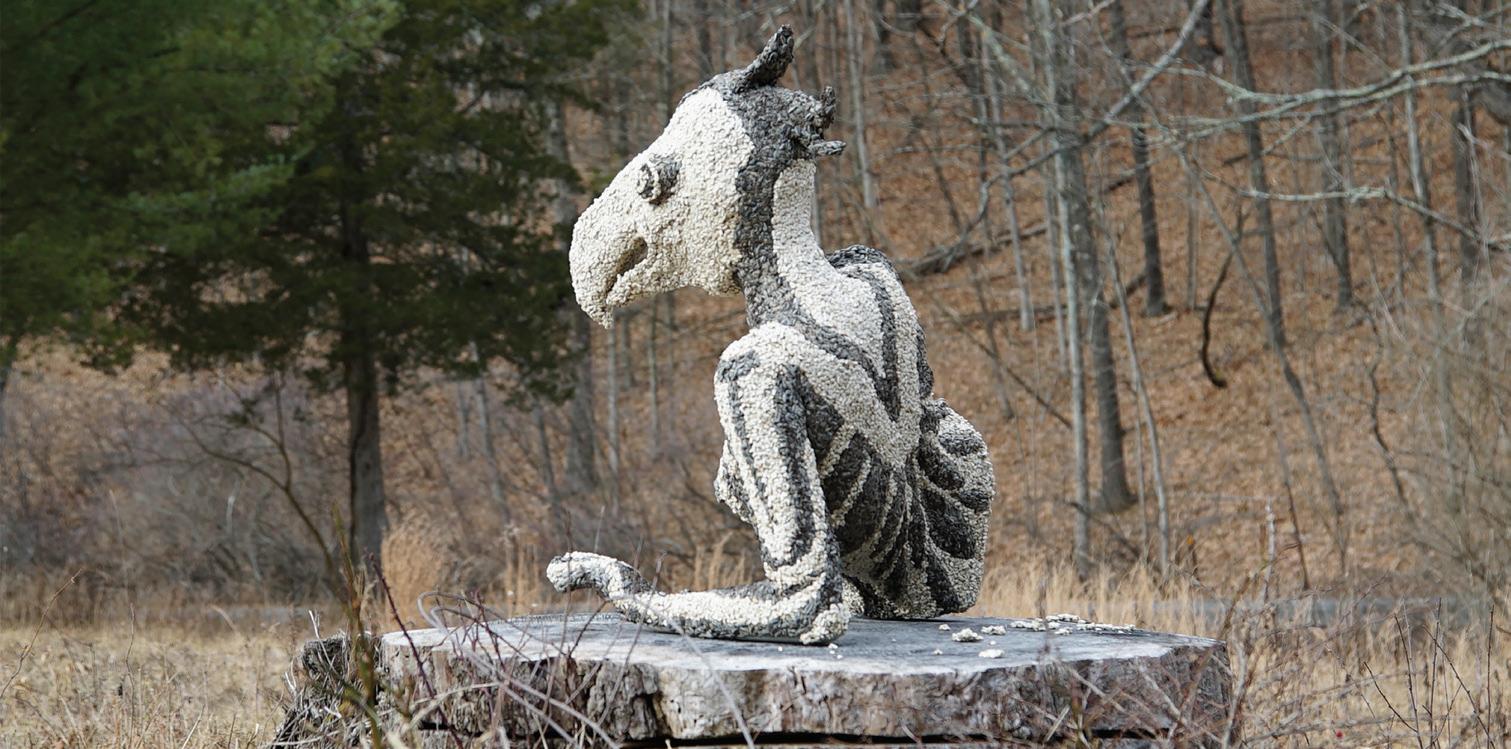
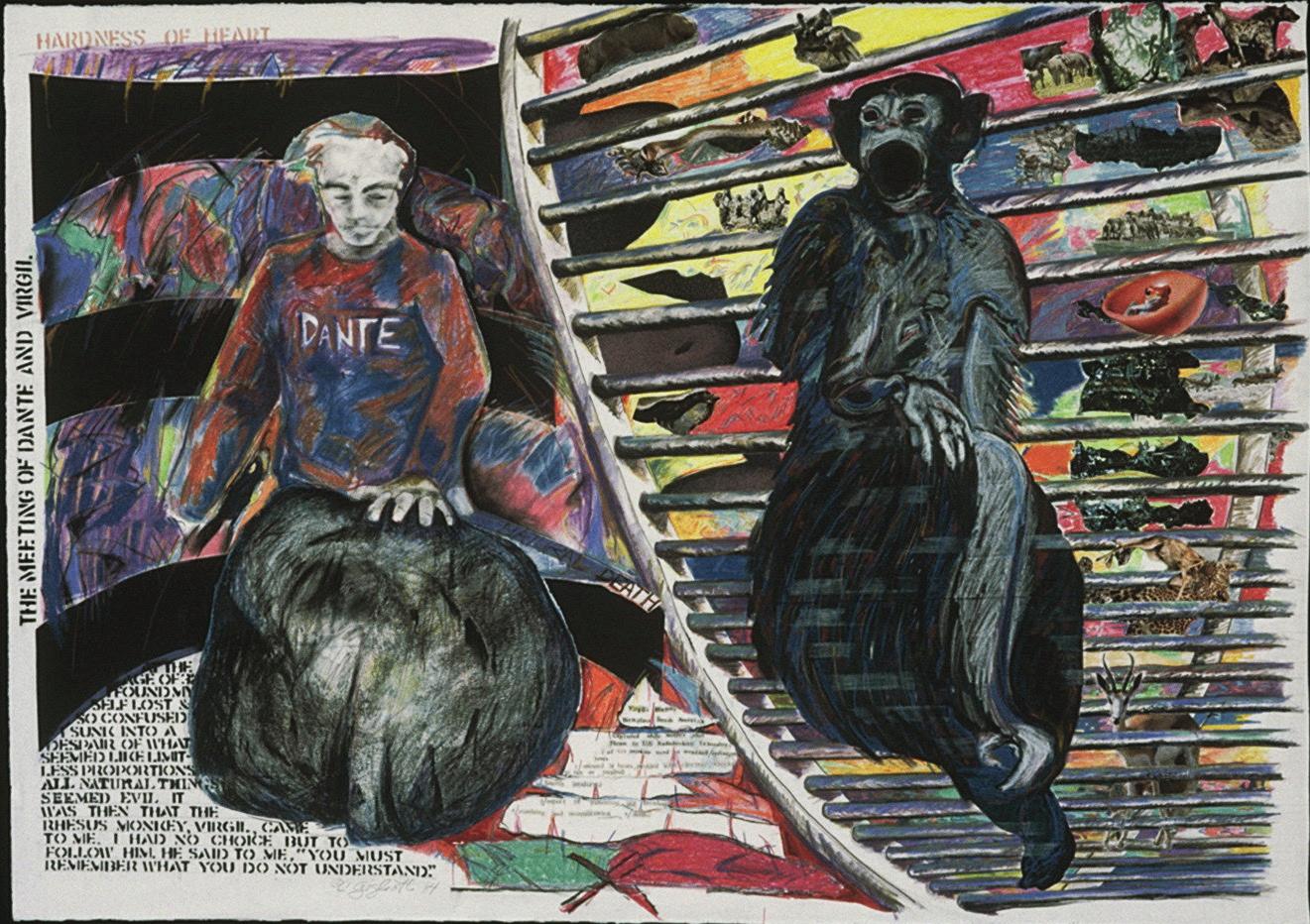

Back in 1988, artist Carol Gigliotti produced “The Dante Series,” paintings of the inferno for animals in laboratories. Thirty-four years later, she published The Creative Lives of Animals (out soon in paperback), which showcases the creativity and imagination of multiple species.

To learn more about CAF’s grant program and other activities, please visit cultureandanimals.org.
Carol Gigliotti
Tributes from AAVS Supporters
Francis “Frank” Krafchik served on the AAVS Board of Managers from 2014 until his passing in 2024. We thank him for his service and honor his memory.
In memory of Frank Krafchik. I knew Frank through Germantown Jewish Centre. He was our amazing and talented caterer, but more importantly, Frank was a gentle and caring person—a real mensch! I am one of many people who will miss his presence.
Dena Lake FLOURTOWN, PA
In memory of Frank Krafchik. It is sad to think that Frank will not be among us. But memories of Frank and his love for everyone and for his beloved animals are unending and fill us with joy.
Betty Ann Fellner PHILADELPHIA, PA
The Women of Germantown Jewish Centre remembers Frank Krafchik very fondly over many years and wishes to honor his memory by making a donation to a cause that was very important to him. He was a wonderful person and always very generous to our group. His memory will always be a blessing! Women of Germantown Jewish Centre PHILADELPHIA, PA
In loving memory of Frank Krafchik, a kind, generous, and sensitive friend.
Connie and Sam Katz Philadelphia, PA
In memory of Francis Edward Krafchik. The world lost a beautiful soul and staunch advocate for the protection of animals by ending the use of animals in scientific research and testing.
Jerry and Cathy Zeman WONDER LAKE, IL
In loving memory of Frank Krafchik. Elizabeth and Todd Allman CHADDS FORD, PA
In memory of Frank Krafchik.
Robert Love HAVERFORD, PA

In memory of Bones, Harry, Motor, Mini, Raphela, Gingin, Scot, Bebe, and Blacky. They made our life rich and loving. Always free to be themselves and claim their place in our heart and soul.
Maria Ferrandina MACUNGIE, PA
In memory of Frank Krafchik. Our deepest condolences to the Krafchik family. Rest in peace, Frank.
Daniel Breslin SALEM, MA
In memory of Frank Krafchik.
Maureen McGettigan UPPER DARBY, PA
In memory of Frank Krafchik. Frank brought joy, beauty, and compassion into the world. We remember his friendship with love and gratitude.
Sue Leary and Rob Cardillo AMBLER, PA
In memory of Akio. You gave us 17 years of cat beauty and love.
Glennis, Marjie, Thomas, Mark, and Cindy Gould EL CAJON, CA
In memory of Lucky LuLu Belle and Simon Winslow.
James Spates AUSTIN, TX
In honor of Onyx, my all-black cat who is alive and well, and filling in for all the animals I have lost, loved, and cherished. I think of them daily and the pleasure they brought to me.
DeLoris Osborn CAPITOLA, CA
In memory of Daniel Sherman, former attorney for AAVS.
Renee Sherman Strauss HAVERFORD, PA
In loving memory of all the pets I’ve had in my lifetime whom I loved and have been given back so much love from them.
Phyllis Casner MERTZTOWN, PA
In memory of Sparky (April 2013-Nov. 28, 2019), a loving, happy, 3-legged little spaniel –gone far too soon.
Kirk Kennedy BICKLETON, WA
In memory of classroom pet guinea pigs Merlin, Seamus, and Fudge and all others who need to be remembered for the joy they brought into our world.
Peggy Callahan CHICAGO, IL
In memory of Jennifer J. Gile. She loved all animals and deeply cared about curbing and eliminating animal abuse.
David Gile SAINT JOHNSBURY, VT
We want to give thanks for McKartney and Sadie. They were both rescues – gave us many smiles and their love. We miss them so much.
Jerry and Susan LaForge
VALLEY CENTER, KS
In memory of Crusoe and Pullo. Missed forever.
Barry Rebb
SCOTTSDALE, AZ
In memory of Tina Nelson. Continuing to help primates.
Charles Malinauskas CHALFONT, PA
Honor or memorialize a companion animal or animal lover by making a donation in their name. Gifts of any amount are greatly appreciated, and a tribute accompanied by a gift of $50 or more will be published in the A-V. At your request, we can also notify the family of the individual you have remembered. All donations are used to continue AAVS’s mission of ending the use of animals in biomedical research, product testing, and education.
In honor of the Board and Staff of AAVS, with deepest appreciation.
Sue Leary and Rob Cardillo AMBLER, PA
In memory of Traigo.
Samantha White CATAWISSA, PA
In memory of my dear friend, Steve Ross. He taught me so much about how to honor, love, and care for our beloved chimpanzees.
Cathy Willis Spraetz BRUNSWICK, GA
In memory of my brother, Wayne Bingaman, who was a caring person.
Patricia Schoening ERIE, PA
In memory of John Thomas Wojno. Ronald and Eileen Parlow FAIRFAX, VA
In memory of my parents Ernest and Ruth Espen, who made my support possible.
Marcia Lehrman BROWNSBURG, IN
In memory of Howard Wittels. Remembering you and continuing your legacy.
Beth Ryan WAYZATA, MN
In memory of my dearest daughter, Dawn.
Heide Farnham LAPORTE, CO
In memory of Cherylbeth Miedowski Martin, my beloved wife of 26 years, who passed away on 11-22-2022 from complications of primary progressive MS. She was an animal control officer and dispatcher until the end.
Allan Martin FAIR LAWN, NJ
In memory of Philip F. Norcross, Jr. I love you, Phil.
Mary Ferris MARBLEHEAD, MA
In memory of Cookie and Jasmine. Y’all’s time with us was much too short. We will love you both forever.
Lewis Herring FAYETTEVILLE, GA
In memory of Cloud. Always a good dog.
Pat and Lewis Bayers NEW PORT RICHEY, FL
In memory of Julie Doe. Sue and Bob Lukasiewicz BREWERTOWN, NY
In honor of Bruce Wagman. Bonnie Faigeles and Sean Hoyer SAN FRANCISCO, CA
In memory of McMuffin, who was born at a McDonald’s but rescued at 5 weeks old and was my dear companion for almost 23 years! What a blessing. I still miss her.
Marianne Bennett CONWAY, AR
In memory of my little dog, Choo Choo, a Shih Tzu mix who died on 12-30-2024 at 12½ years old. She was my best friend in the whole world. We went everywhere together. Will love her forever and ever. Love you Choo Choo!
Linda Leahy ASBURY PARK, NJ
In memory of Thomas S. Hector-Rosen. Susan Hector SAN DIEGO, CA
In memory of Ellen. Carl Peterson WETHERSFIELD, CT
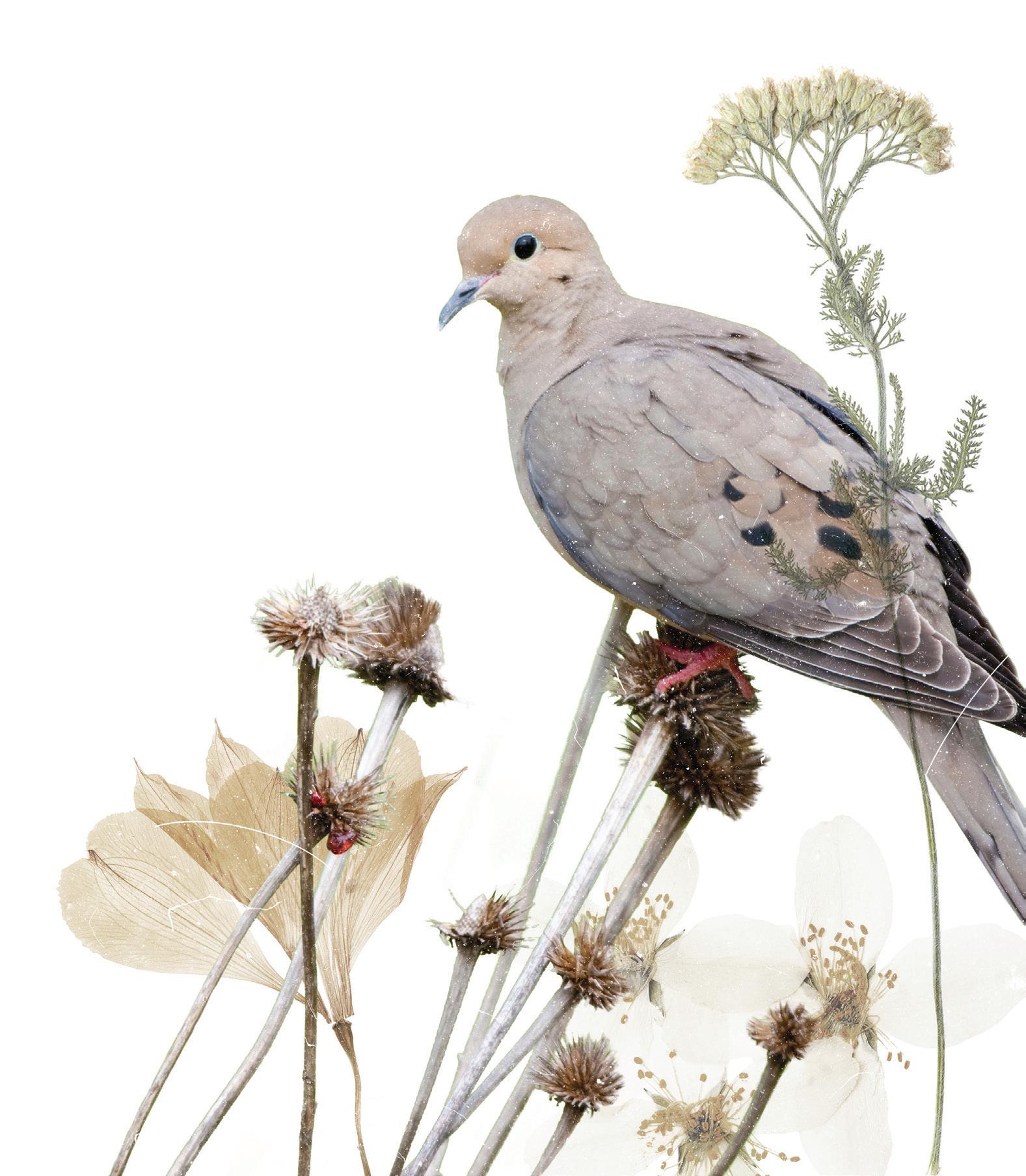
Celebrating Sanctuaries Chimp Haven
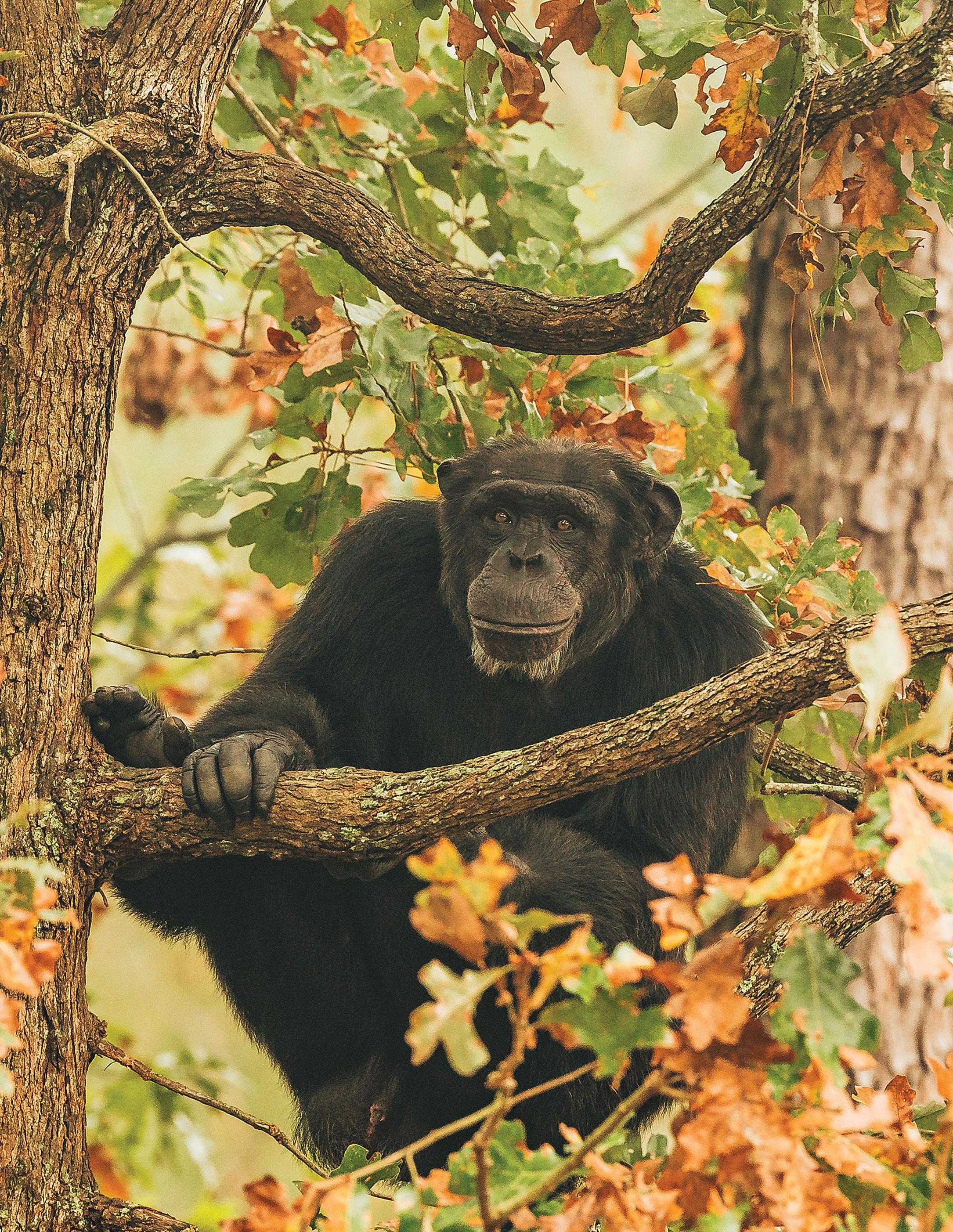

Photo by Kierstin Luckett © Chimp Haven
Support the Sanctuary Fund
More and more often, animals in labs are being given a second chance. AAVS offers our members the opportunity to direct special contributions to care for animals who were once used in laboratories or exploited in other ways.
Through the Sanctuary Fund, donors can support one of our most rewarding programs—providing grants to sanctuaries that help animals recover and live in peace.
100% of your donation will go toward helping animals!
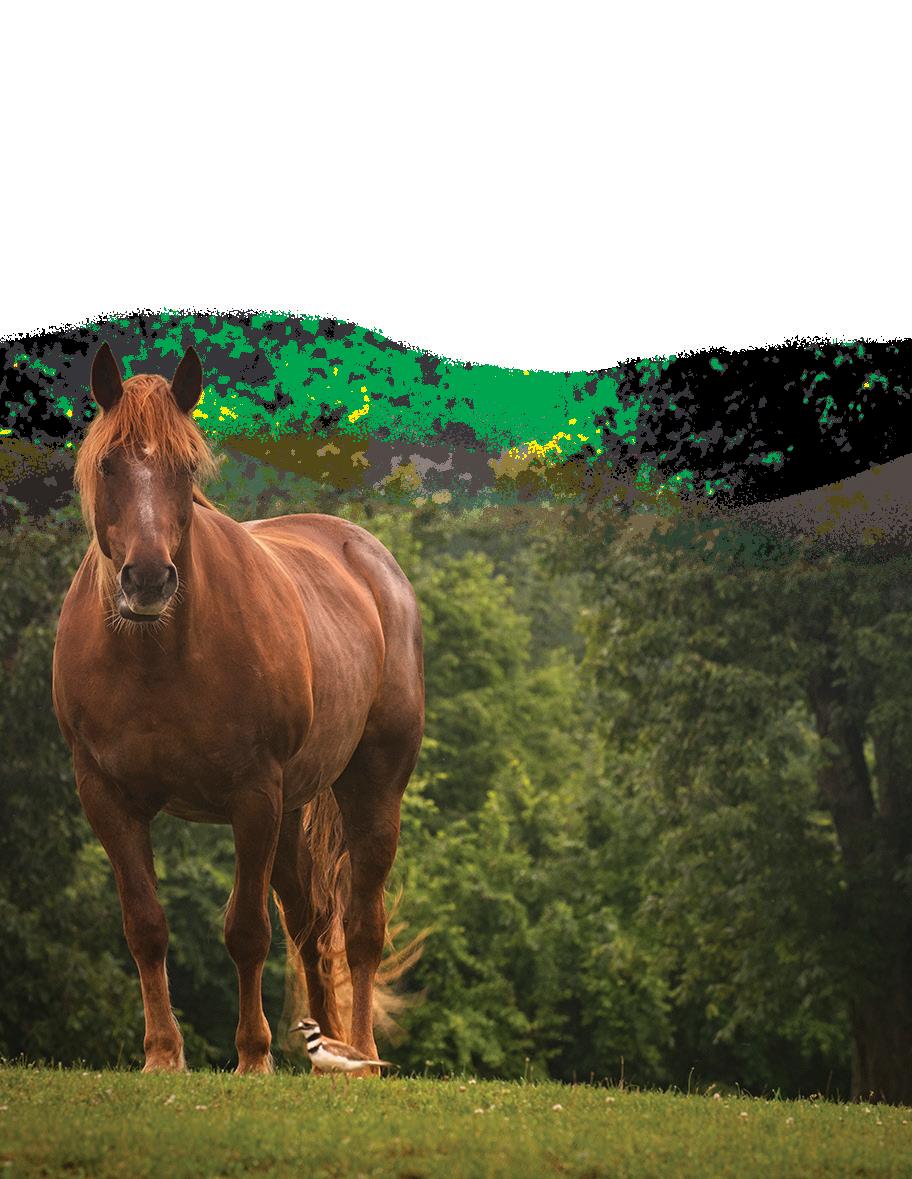
Born in 2004, Connor is the son of Annie, who was used to collect pregnant mares’ urine (PMU) for the pharmaceutical industry to manufacture certain hormone replacement therapies. She was rescued by Equine Advocates while pregnant with Connor. Today, Connor enjoys spending his days with his pal Jeffrey Mac in the Wise Guys pasture, while Annie and her friends are living their best days in the Field of Dreams.
Photo by Ellen Lynch © Equine Advocates