JOURNEYS INTO THE WILD

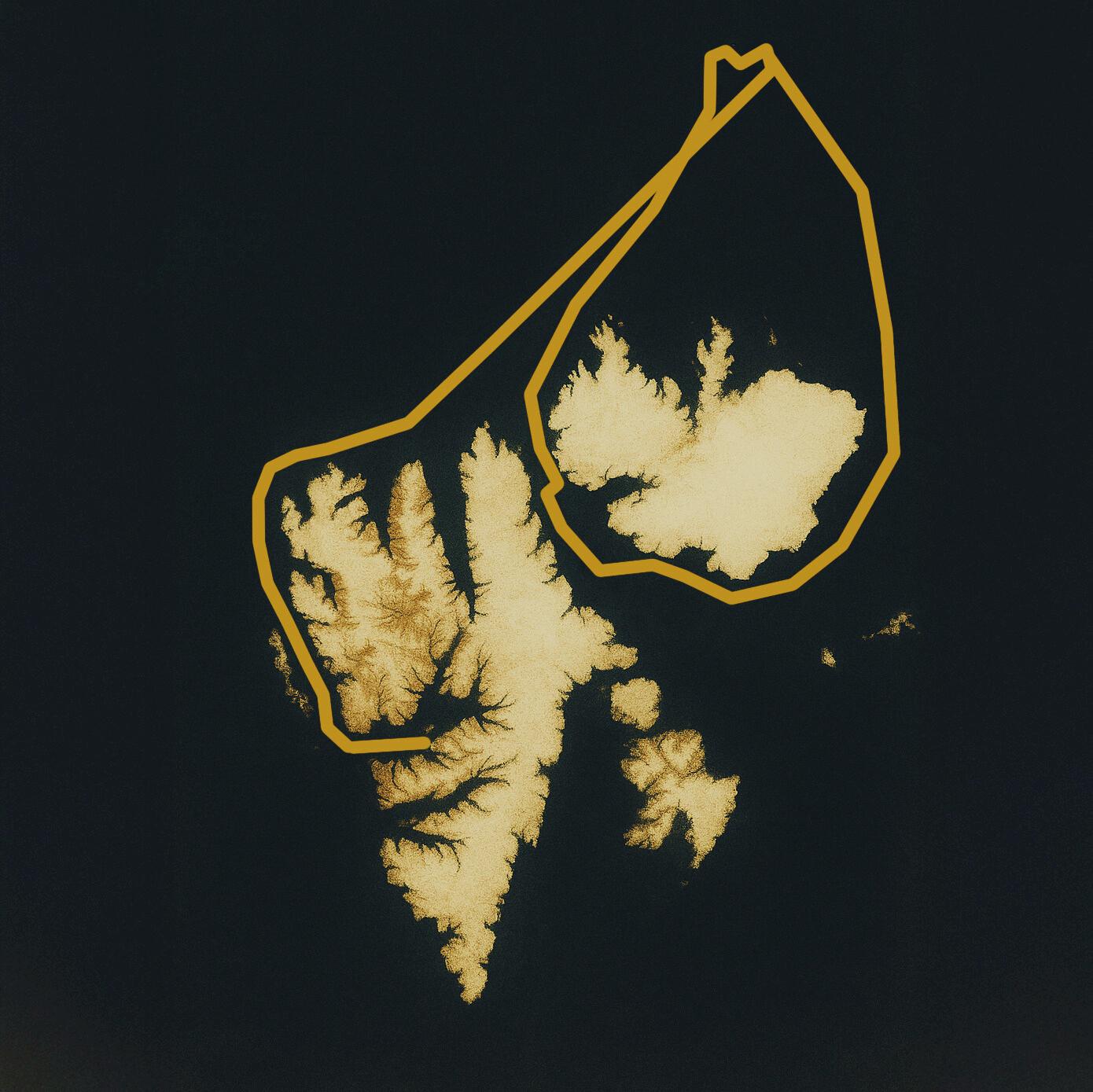
Join me aboard an icebreaker for my first June expedition to the high Arctic, in pursuit of one of the planet’s most iconic animals, the polar bear. This rare summer window brings a surge of wildlife, stunning blue glacial ice, and the chance for eye-level encounters on the pack ice. With new regulations keeping us at a distance on land, the stakes are high as we navigate international waters, unpredictable weather, and the challenge of finding cooperative bears. In this edition, I share the stories, strategies, and gear tips from a journey where preparation meets opportunity, and unforgettable images await.
PAGE 4
Longyearbyen
PAGE 9
Svalbard-TheIsland
Archipelago
PAGE 20
ThePackIce
PAGE 31
WrappingUp&What’sNext
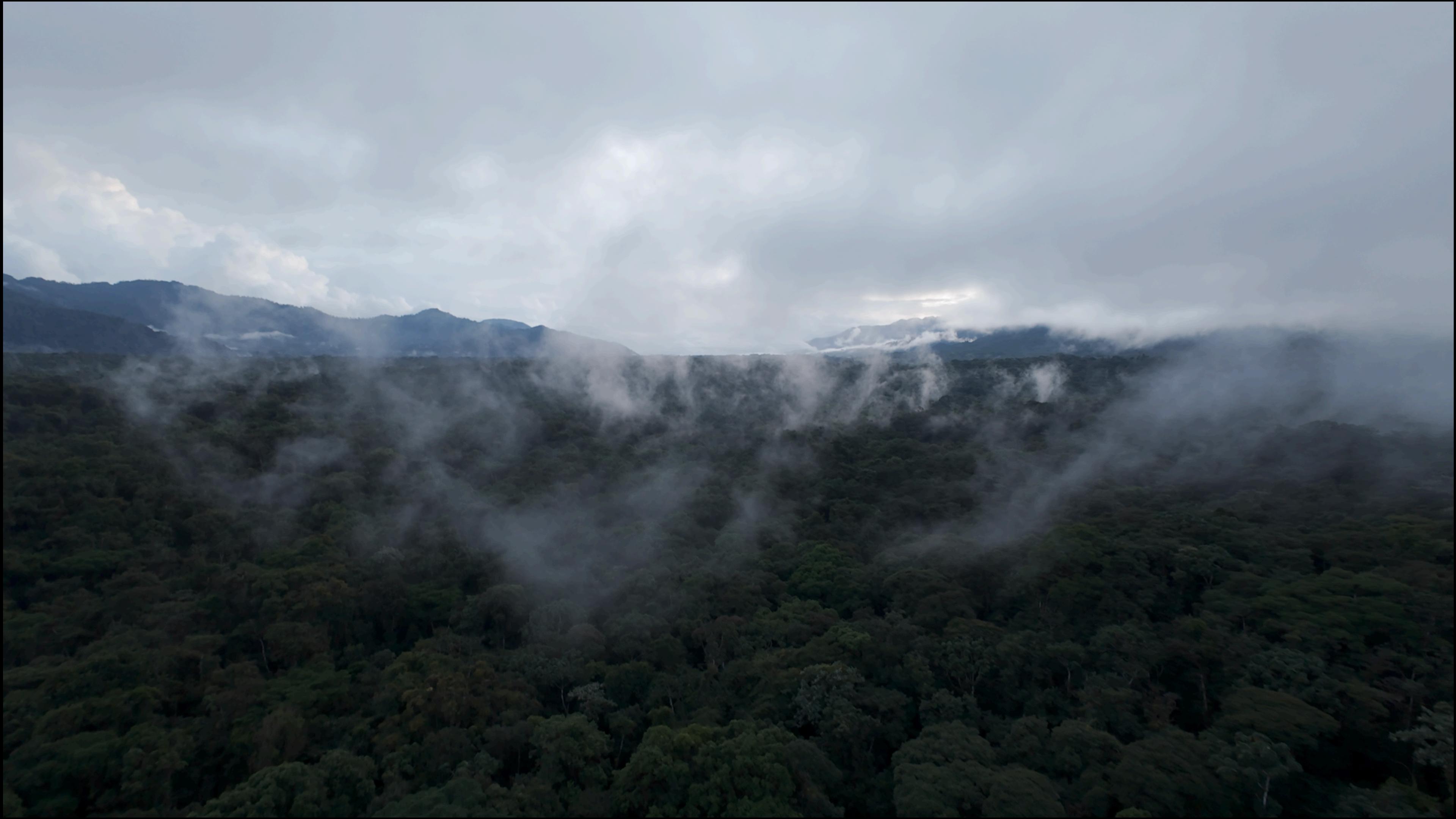
INTRODUCTION
In this edition, I take you to the high Arctic aboard an icebreaker in pursuit of one of Earth’s most iconic animals, the polar bear. This is my third expedition here, but my first in June, a month I’ve long wanted to experience. The short but spectacular Arctic summer brings a surge of life, thousands of birds and other wildlife migrating to breed, and the pack ice is further south, making it more accessible. The deep blue glacial ice is at its most plentiful, and the photographic possibilities are endless.
This time, I brought two groups of 11 clients each to the far north. Our goal: to find polar bears in pristine snow, close enough to do them justice in the frame. But new regulations threaten to keep us 500 meters from bears on the islands, too far for the kind of intimate photography we strive for . The pack ice, however, lies in international waters, where the rules don’t apply. Getting there, and finding cooperative bears, means reading the weather perfectly, hard work spotting, and balancing our time with other wildlife on the way up.
The stakes couldn’t be higher. Miss the opportunity, and I send home disappointed guests. That’s why I assembled our strongest team yet, a seasoned crew aboard one of the most capable icebreakers in the region, a captain with over 30 years’ Arctic experience, and one of the lowest hulls that promises eye level images. I’m pulling out every trick in the playbook, because if we can overcoming the challenges and turning them to our advantage it could be one of the trips you never forget.
In the pages ahead, you’ll find stories from the ice, tips to plan your own Arctic adventure, and plenty of gear insights and techniques. Let the journey begin.
LONG YEAR BYEN
JOURNEYS INTO THE WILD | SVALBARD POLAR
BEARS & ARCTIC WILDLIFE
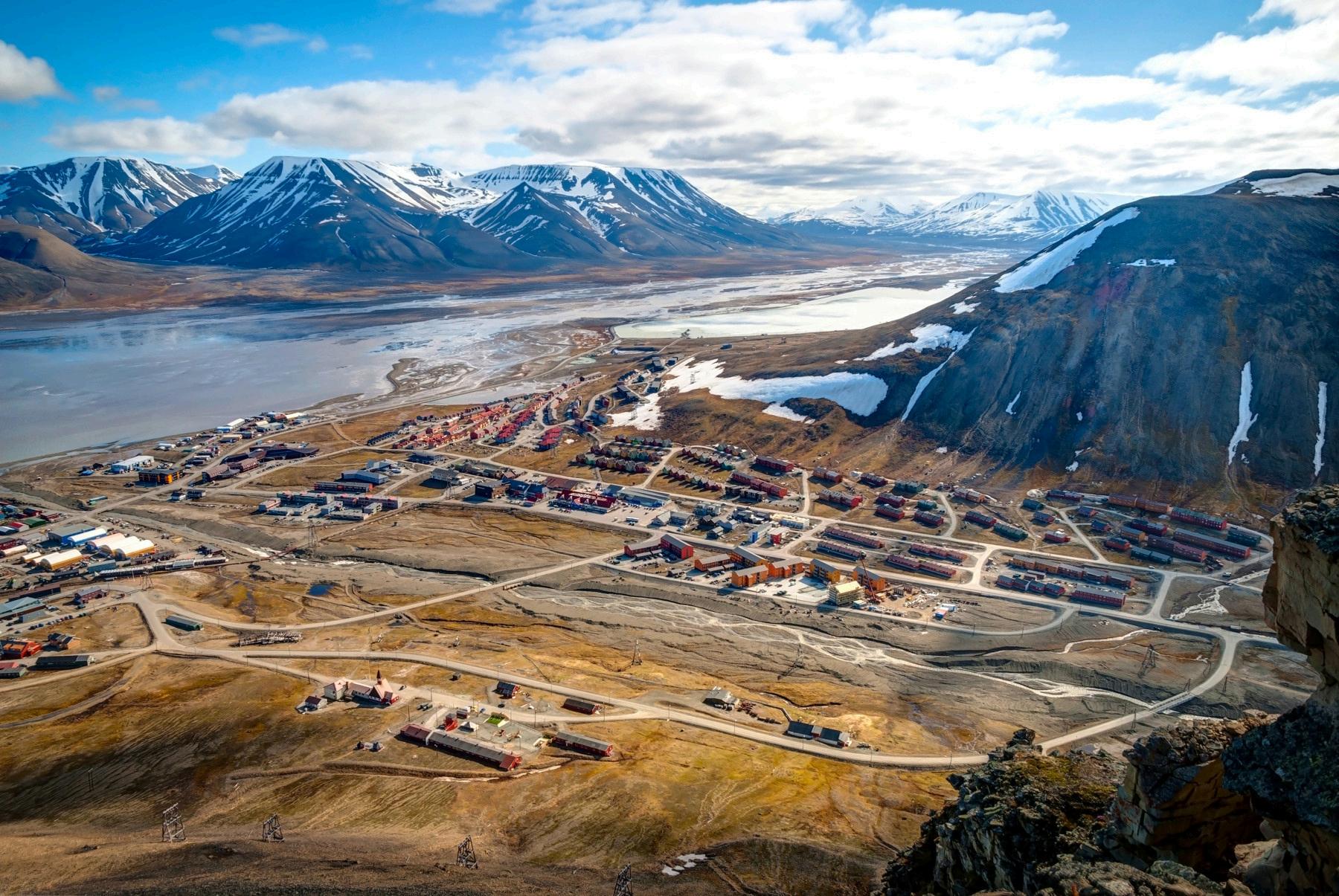
Arrival in Longyearbyen
The trip began with excitement as I landed in Longyearbyen after a short 3 hour flight from Oslo, Norway. The town is very unique and takes the throne for the farthest northern year round inhabited village on earth. Its always fun to visit the gear shops, eat at one of the many restaurants, and just just breathe in the clean Arctic air.
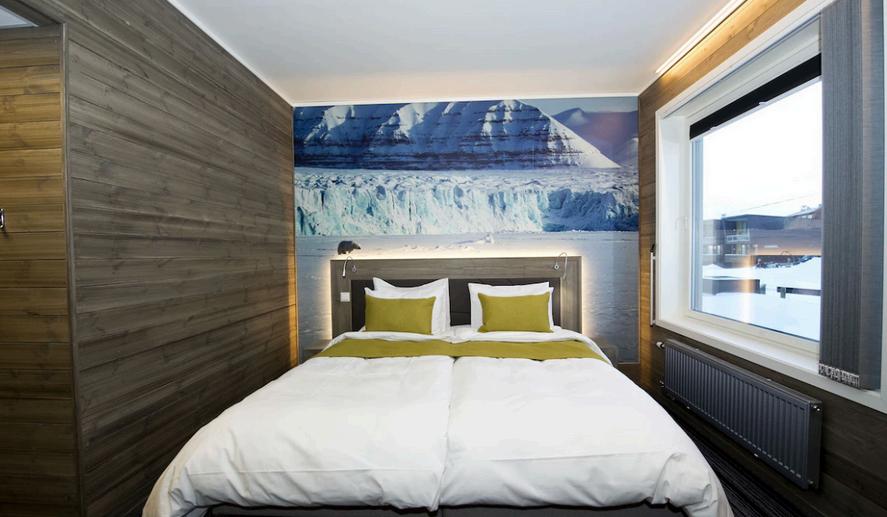
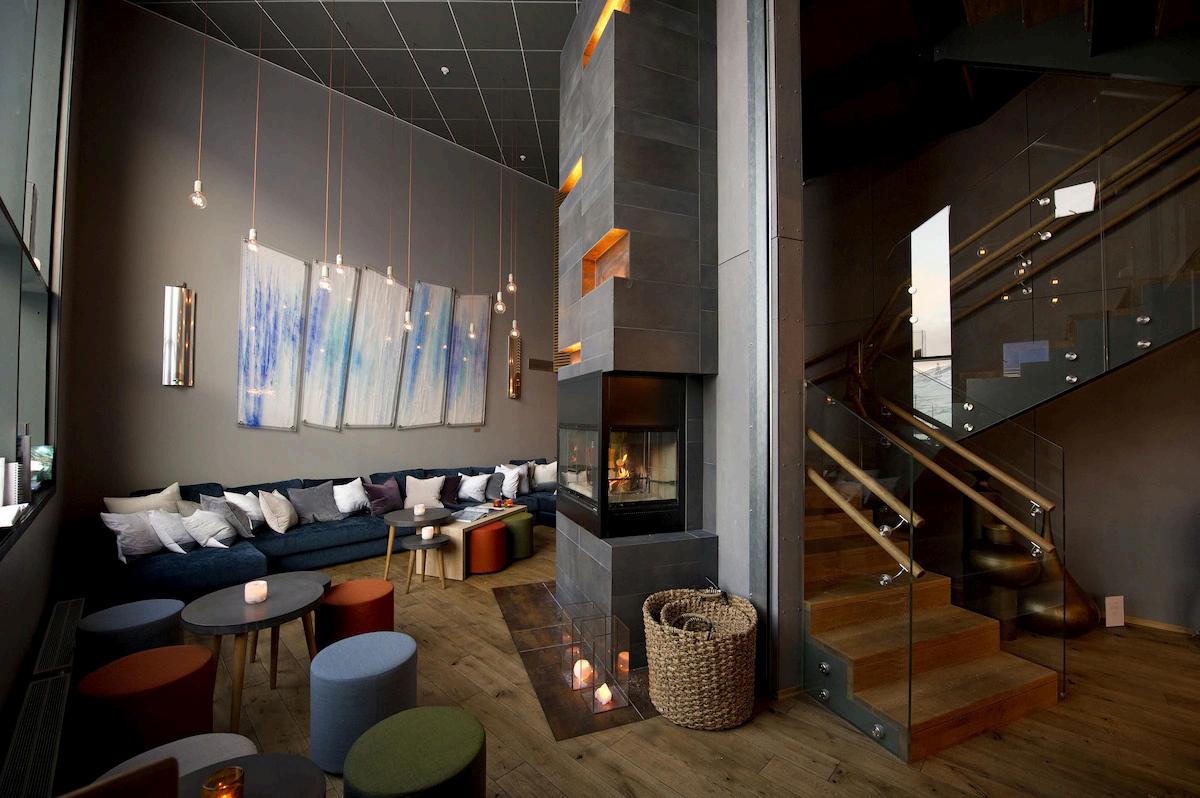
Accommodations: Svalbard Hotel, Polfareren
The Farthest North Village On Earth
A DAY FOR THE KINGS AND COMMONS
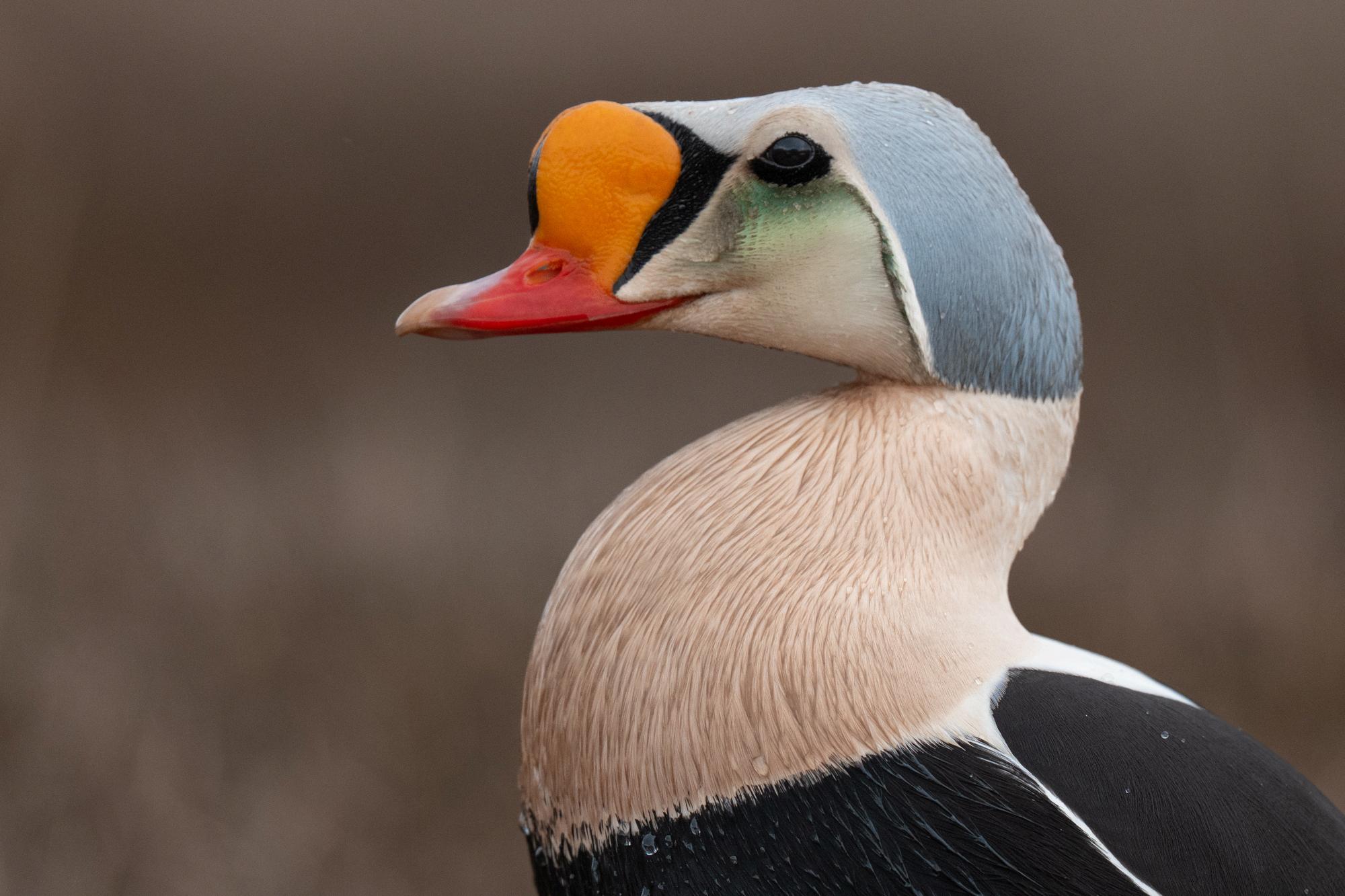
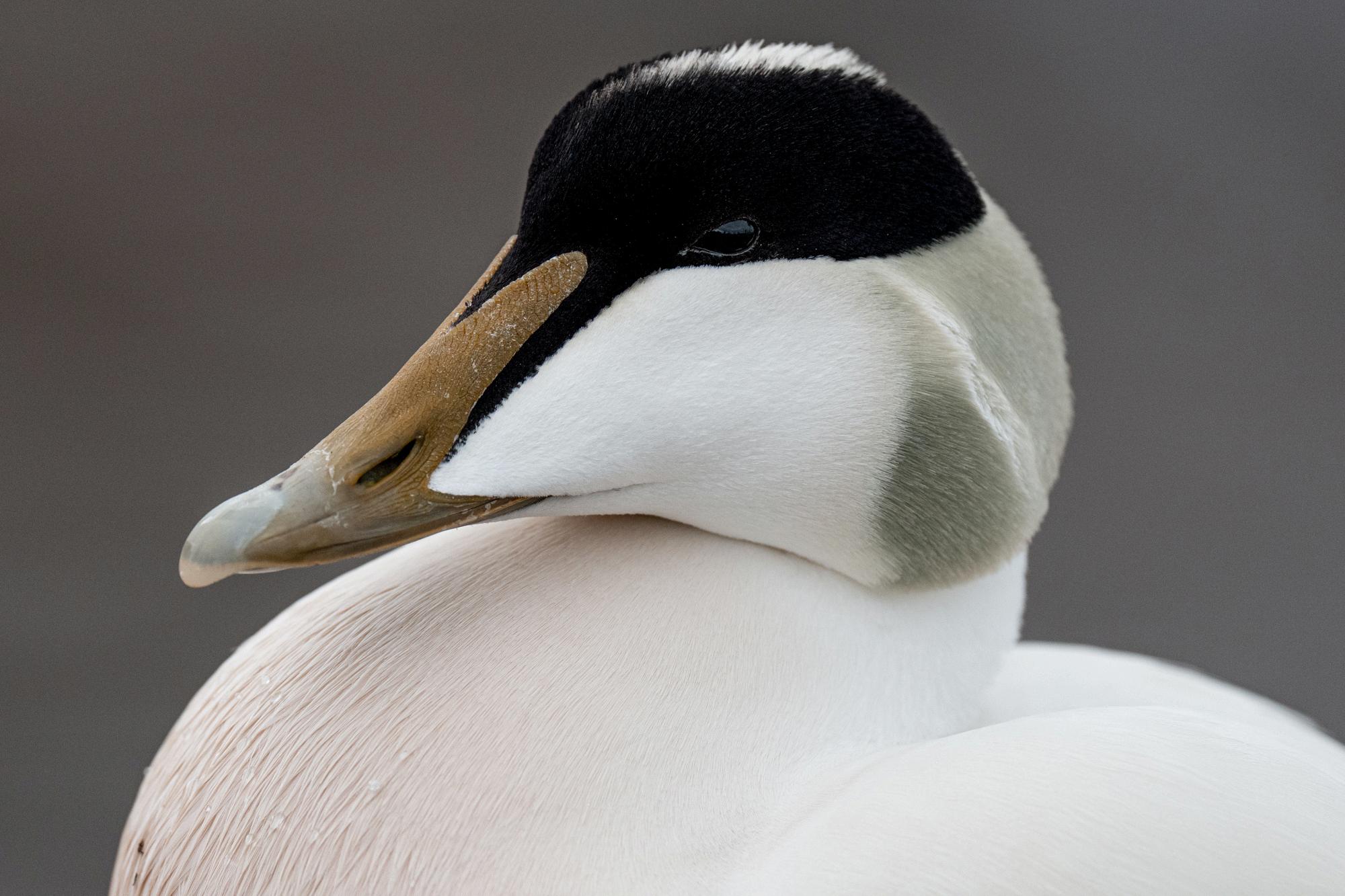
A few years back, I learned about a nesting colony of eiders on the island but never had the chance to visit. This year, I arrived a day ahead of the group to scout and prepare for the adventure ahead. At the nesting site, just as promised, dozens of female eiders sat on eggs, so close you could almost step on them if you weren’t careful. Males patrolled the colony or floated lazily on one of two ponds. After making a few headshots and scouting farther into the hills, several hours of searching finally paid off, we found a male King Eider courting a female on a quiet pond. Using our fieldcraft, we approached slowly and steadily until I was filling the frame with headshots. We carried a rifle for safety, polar bears occasionally wander into the area, and the rule here is you never venture outside of town without one. The key was moving low and slow, avoiding too much direct eye contact with the birds. Even though the light was flat, this “well-dressed” individual was worth a portrait. With headshots, it’s usually all about expression, but these birds didn’t give me much of that, so I focused on highlighting the rich color palettes and intricate feather details that make these impressive birds so striking.
COMMON EIDER KING EIDER
MY "FLIP LOW" TECHNIQUE
A Low-Angle Perspective Without Getting Muddy
CRAFTING THE SHOT
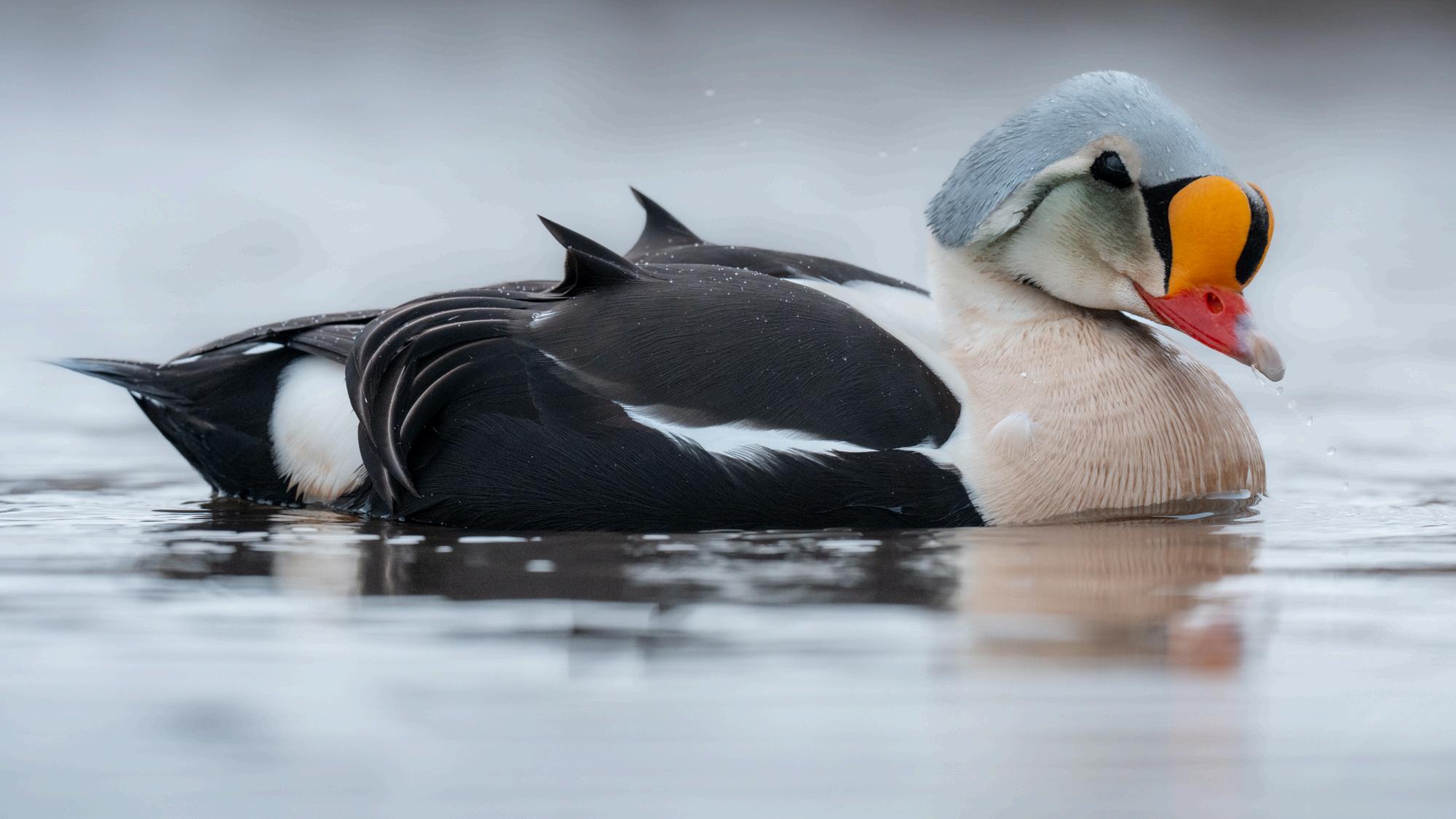
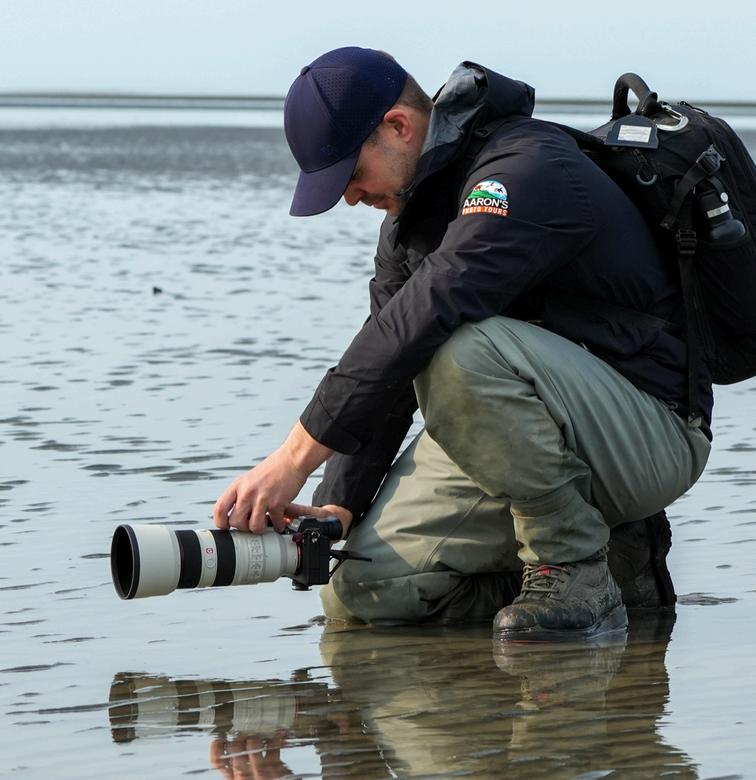
For those times you want that dramatic, eye-level or below eye-level look without lying in the mud, use my “flip low” shooting technique. Rotate your lens collar so the foot is on top, hold it with your left hand, flip out your LCD, and drop the camera all the way to the ground. This is how I captured this super low-angle image of the King Eider without lying in the mud and getting wet. The photo on the left shows the technique in action, notice my right arm is braced against my right knee for stabilization.
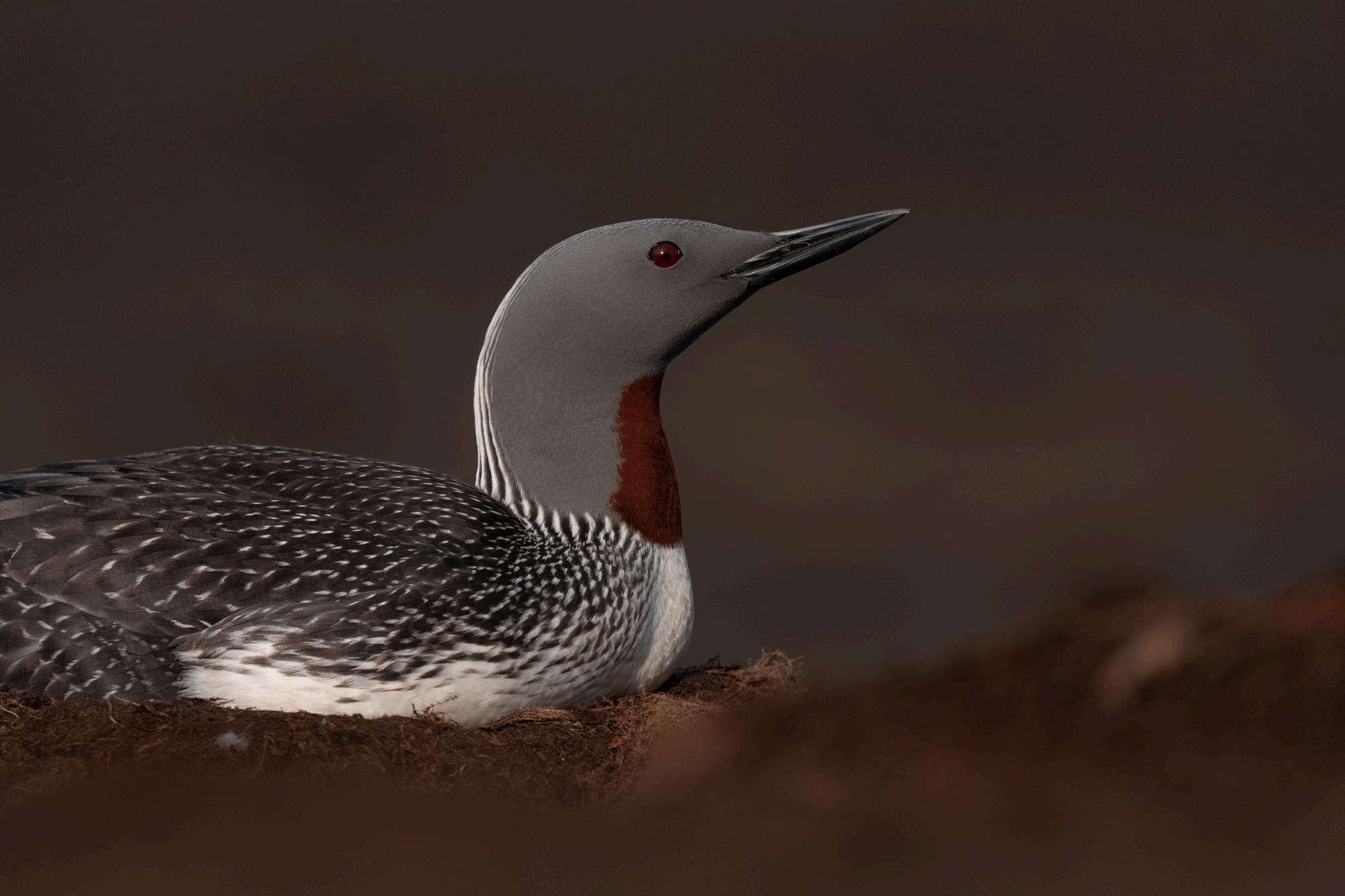
A RED THROATED DIVER (LOON) ON THE NEST
The Red-throated Diver, as the Red-throated Loon, is the smallest and most delicate of the loons. This individual was incubating on a low mound of peat just inches above the waterline, perfectly camouflaged against the tundra. Her crimson throat patch gaver her away in an otherwise muted landscape. We kept our distance and worked slowly, at a sloth pace, allowing her to remain undisturbed while we capturing the intricate detail of her breeding plumage with 600mm lenses.
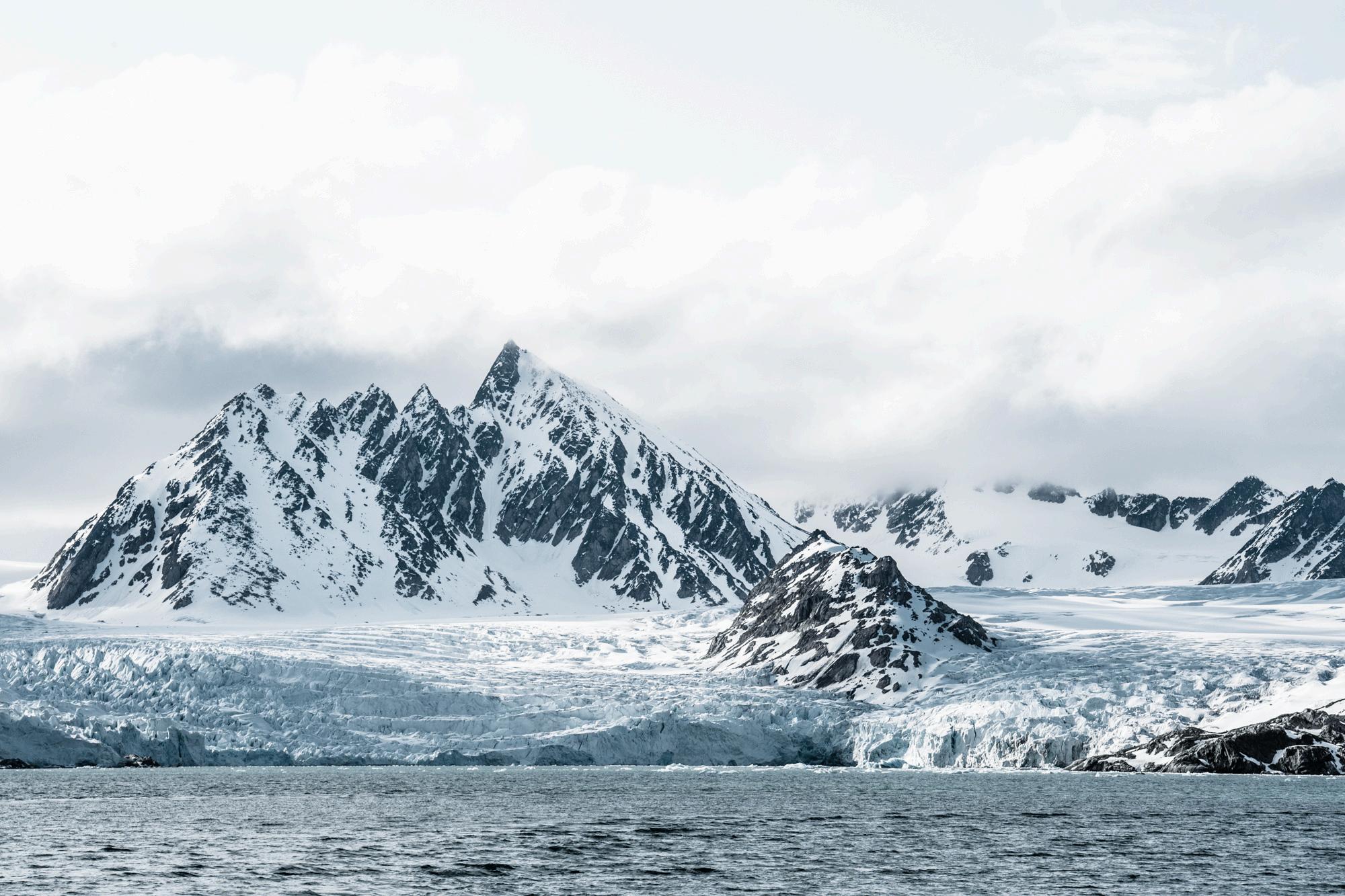
SVALBARD THE ISLAND ARCHIPELAGO
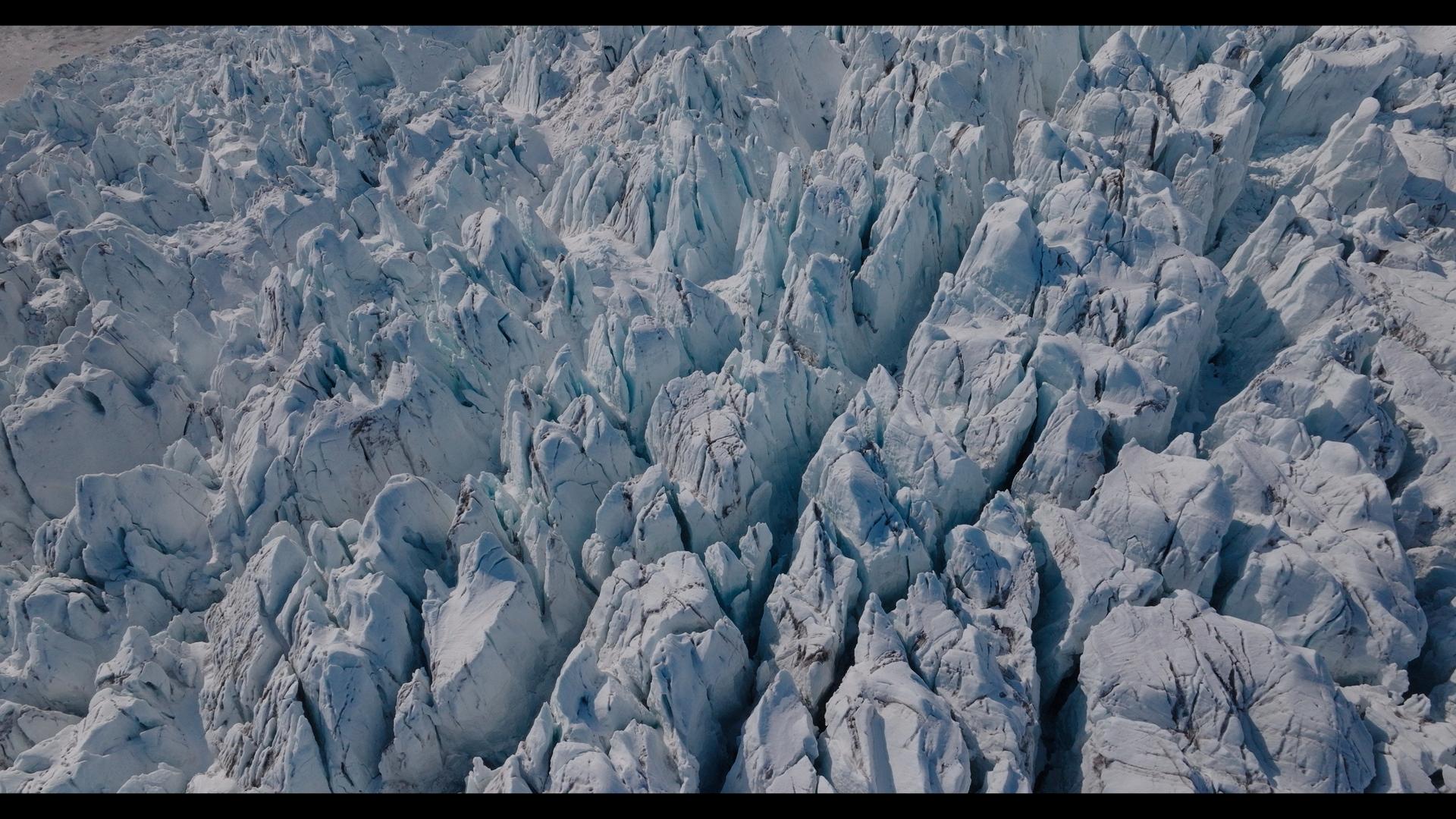
ABOVE THE ICE: A FLIGHT TO REMEMBER
CRAFTING THE SHOT
The island of Svalbard is stunning in a way photographs can only begin to convey. Almost everywhere you look, another jagged mountain rises from the sea, surrounded by glaciers stretching as far as the eye can see. Zodiacing into these remote coves, with no other boat in sight, you feel like a true explorer. It’s just you, the ice, and the crisp Arctic air that makes you feel alive.
New drone regulations have closed most glaciers to flights, but we made a stop just outside the national park where I couldn’t resist sending the Mavic Pro 3 Cine up. It turned out to be one of the most beautiful flights I’ve ever had.
For this one, I shot in D-Log, then applied a DJI LUT in DaVinci Resolve for grading. No elaborate color work was needed—the result is a short video that captures the feeling I had being there, something like being a kid again.
Simple Color Grading Workflow:
Drone & Settings: DJI Mavic Pro 3 Cine, shooting in D-Log for maximum dynamic range. Follow the 180 Degree Shutter Rule.
Post-Processing: Applied DJI’s official LUT from their site in DaVinci Resolve to quickly restore natural color before finetuning exposure and contrast.
Tip: In cold environments, keep batteries warm in an inner pocket before flight to maintain maximum performance.
VIDEO SHOT ON THE MAVIC PRO 3 CINE
My Go-To Arctic Boots: Muck Arctic Sport
II Tall Boots
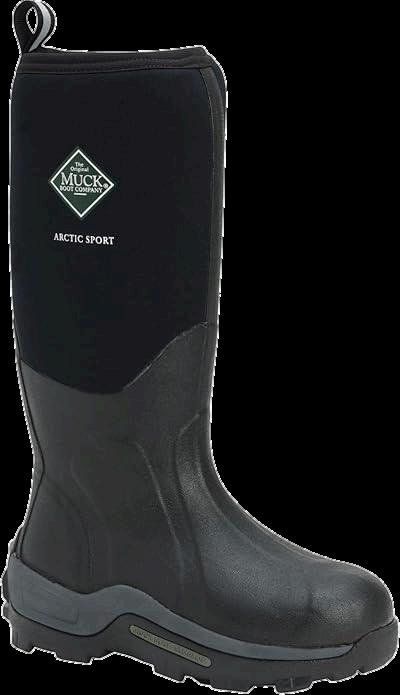

After four Svalbard expeditions, these boots have earned their place at the very top of my Arctic packing list. Built with 5 mm neoprene, they keep your feet bone-dry during wet zodiac landings, and with a -40 °C rating, they’ll hold warmth through long days of standing outside on deck, waiting for that one perfect polar bear moment.
Why They’re a Photographer’s Best Friend
Comfortable enough to walk several miles while carrying gear, yet warm enough for those long, frigid days when you’re waiting for wildlife to appear.
The Bottom Line
At $175–200, they’re not cheap, but cold or frostbitten toes will end an outing faster than any camera failure. They’re not winning beauty contests, but they’re pretty much bulletproof. Slip them on quickly, forget about your feet, and stay locked on the shot.
Rating: ★★★★★ – Essential Arctic Gear
ARCTIC-PROOF FOOTWEAR
SHOOTING FROM ZODIACS – ETIQUETTE &
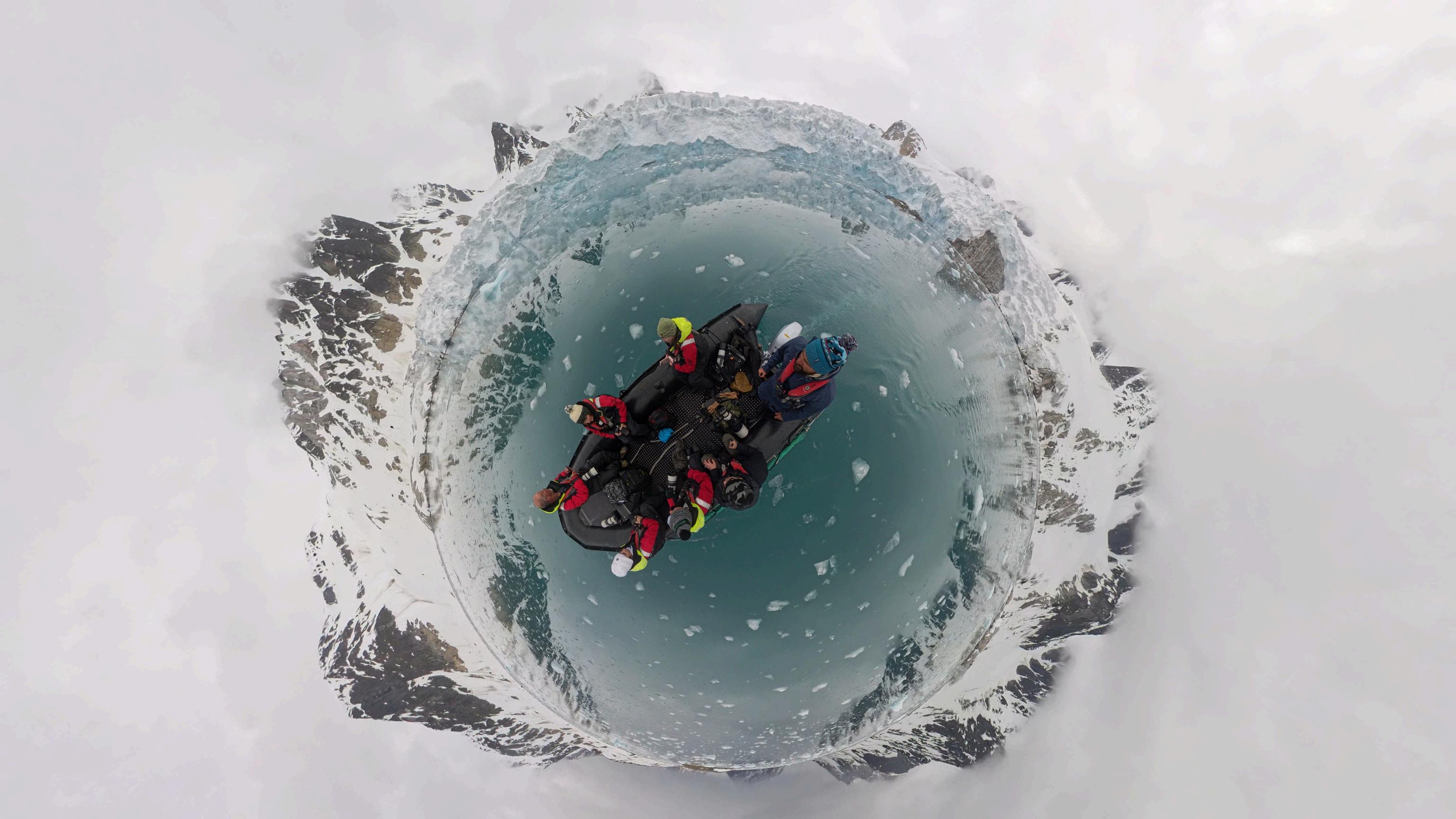
There’s nothing quite like photographing Arctic wildlife from a Zodiac. One moment you’re eyelevel with a puffin skimming the water, the next you’re drifting past a glacier’s towering face, or locking eyes with a walrus on the ice. These small, stable boats can take you places bigger vessels can’t, putting you right in the action. But in a boat full of photographers, getting great shots without getting in the way takes a little skill and a lot of cooperation. Over years of leading small-group expeditions, I’ve picked up a handful of simple etiquette and technique tips that make everyone’s experience, and images, better.
1. Accept That You’ll Get Blocked – And You’ll Block Others
On a Zodiac, there’s no such thing as a perfect, unobstructed position all the time. Sometimes you’ll lose a shot to someone else’s lens, and sometimes they’ll lose one to you. Patience is key—angles change, wildlife moves, and eventually everyone gets their turn.
2. Use the “Low/High” System
If you’re in the front, drop low so those behind you can shoot over your head. If you’re on the side, those closest to the subject go low, and those behind or inside stand higher. This simple habit keeps the line of sight open for everyone.
3. Limit Big Movements
Sudden shifts, standing up, or swinging your lens across someone’s view can jostle shots or cause missed moments. Move slowly and deliberately, and give a heads-up if you need to change position. Always ask before you stand.
4. Share the Moment
If you’ve nailed a great shot, offer to swap spots with someone who hasn’t had the same opportunity. This goodwill builds a cooperative boat culture and often comes back to you when you need it most.
5. Work with the Current, Not Against It
Zodiacs don’t anchor in these conditions, and currents make “holding position” unrealistic. Instead, we do gentle passes: approach, drift by, circle back, and repeat. This not only gives everyone multiple shooting opportunities but also presents wildlife from slightly different angles each time.
Do these things and you’ll get epic images from the Zodiac—and have a blast with everyone on the team while doing it.
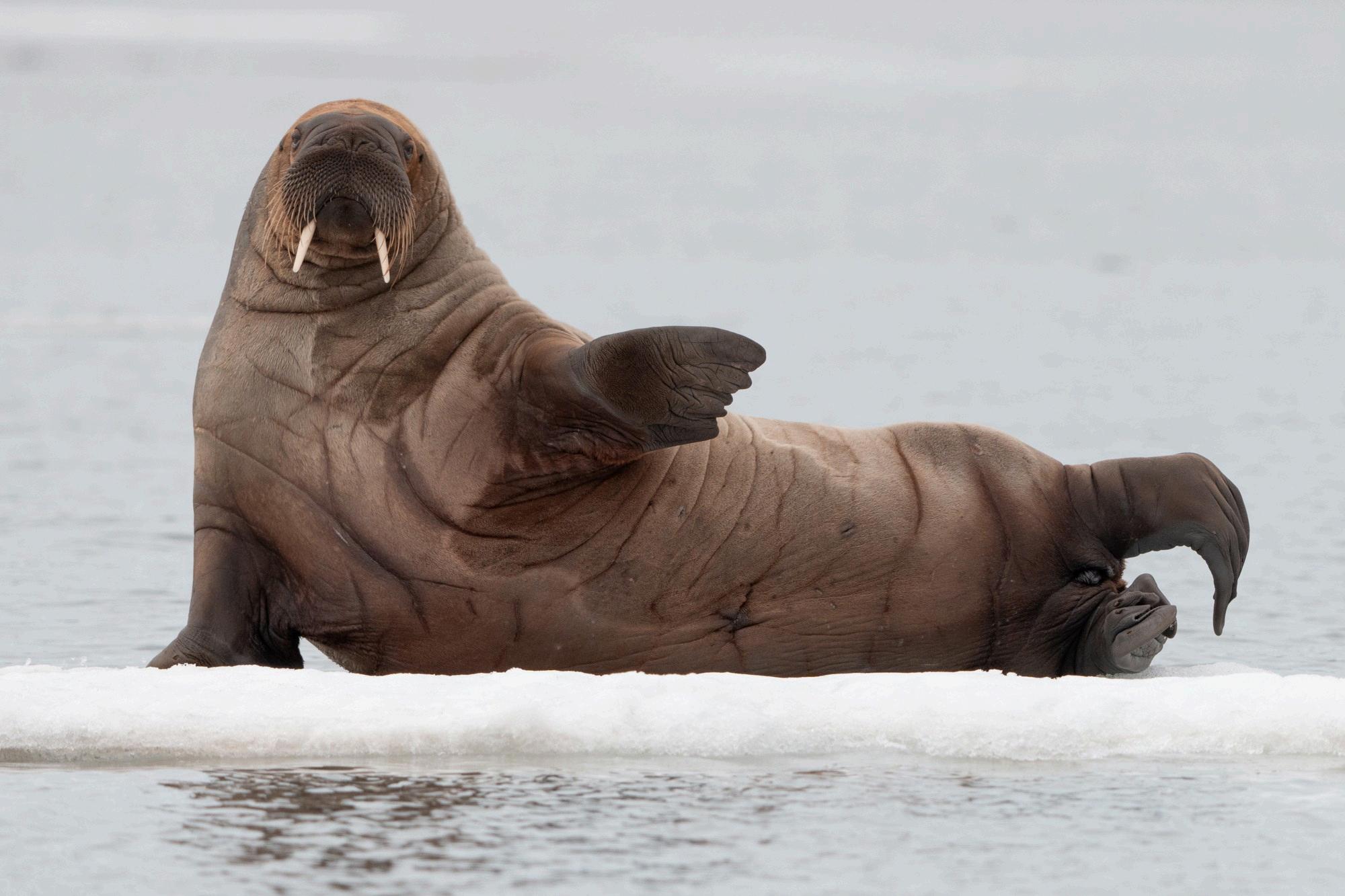
I can confirm that June is one of the best times to be in Svalbard for wildlife photography. While new regulations now require you to stay at least 500 meters from polar bears around the islands, the archipelago offers countless other species that can be approached closely, whether from a Zodiac or on short hikes.
This year, we focused on these other subjects as we made our way north toward the pack ice, a place where distance regulations don’t apply because it lies in international waters. That’s where we planned to photograph polar bears.
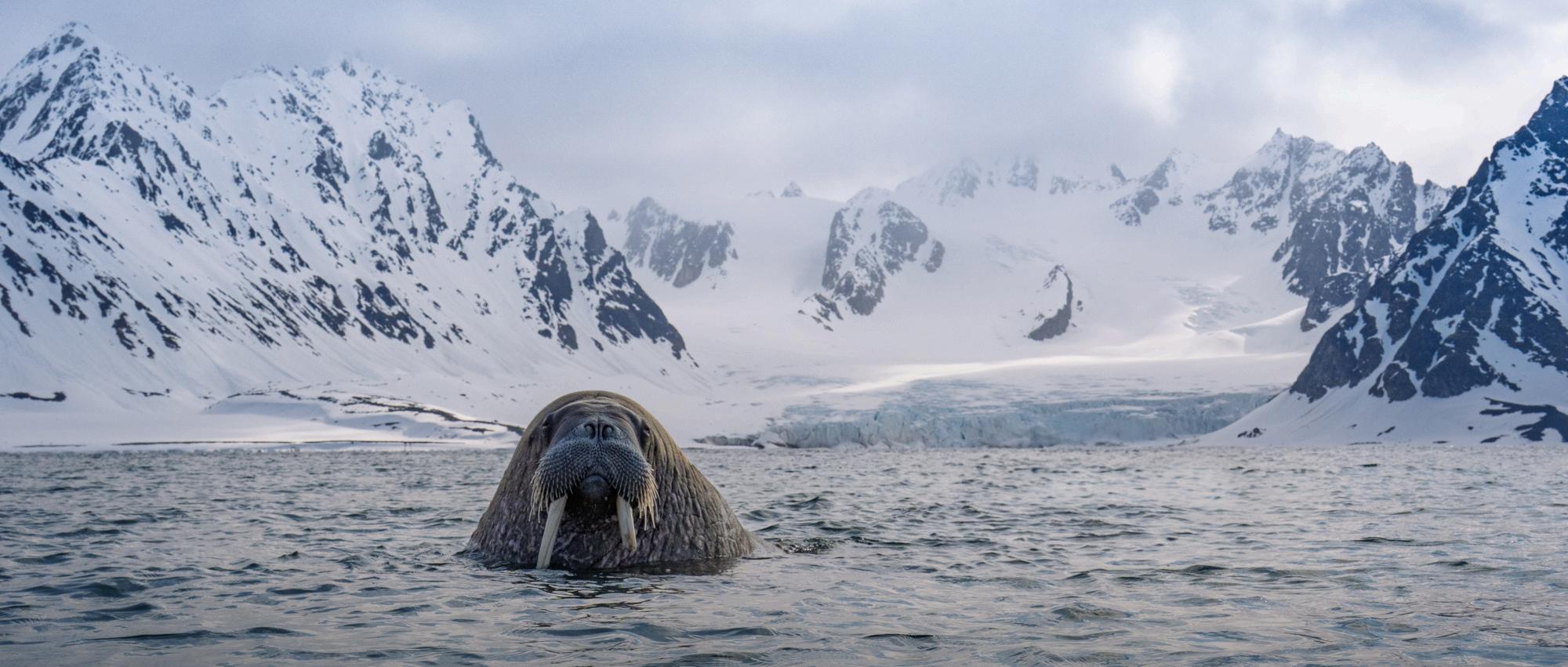
Pictured here is one of the dozens of walrus we encountered, massive, whiskered, and wonderfully photogenic. We saw them almost daily in the archipelago, hauling out on ice floes and rocky shores, before reaching the pack ice.
HARBOR SEAL
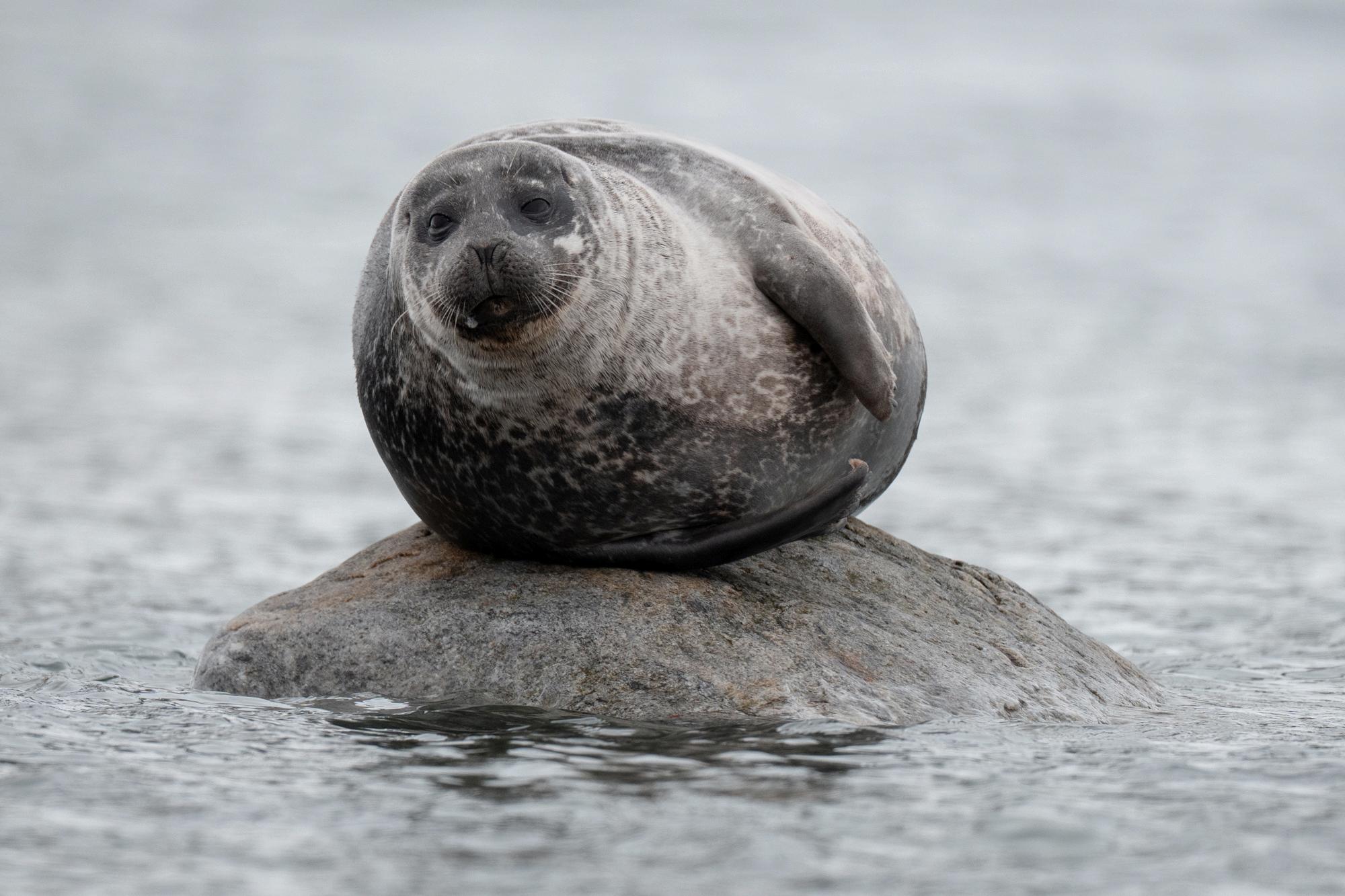
Harbor seals were another highlight on our two-day journey north toward the pack ice. On one Zodiac cruise, we found a few unmistakable characters lounging on the rocks like they owned the place. With the maneuverability of the Zodiac, we were able to slip in close, getting eye-level for portraits that captured every whisker.
JOURNEYS INTO THE WILD | SVALBARD POLAR
BEARS & ARCTIC WILDLIFE
ARCTIC TERNS
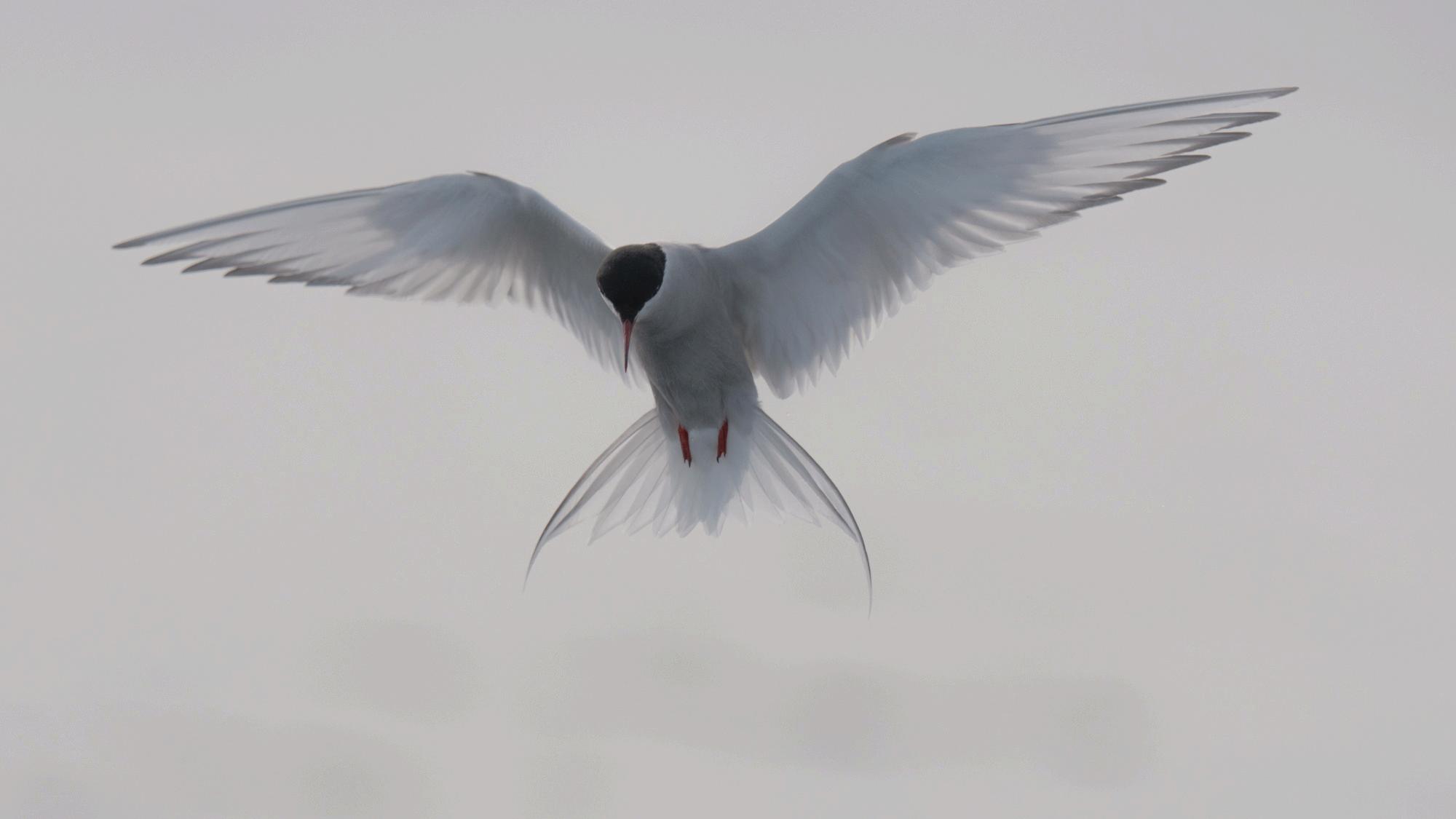
Few creatures embody wanderlust like the Arctic tern. Each year, they make the longest migration in the animal kingdom, up to 44,000 miles, from their Arctic breeding grounds to Antarctica and back, chasing two summers and endless daylight. We saw them almost daily, hovering and diving with effortless grace, each encounter was an irresistible challenge to capture that perfect wing pose mid-flight.
CRAFTING THE SHOT
When photographing wildlife, I often create panoramic scenes by stitching multiple images together. In this case, I first captured the walrus, then shifted my camera to the right, ensuring a 20–30% overlap between frames, careful not to include the animal in the second shot. Later, I stitched the images in Lightroom, which added more of the granderof the scene and completed the composition. It’s a technique I use frequently and one I highly recommend to elevate your wildlife photography.
LIGHT ON THE BEAK, ROOM FOR THE FISH
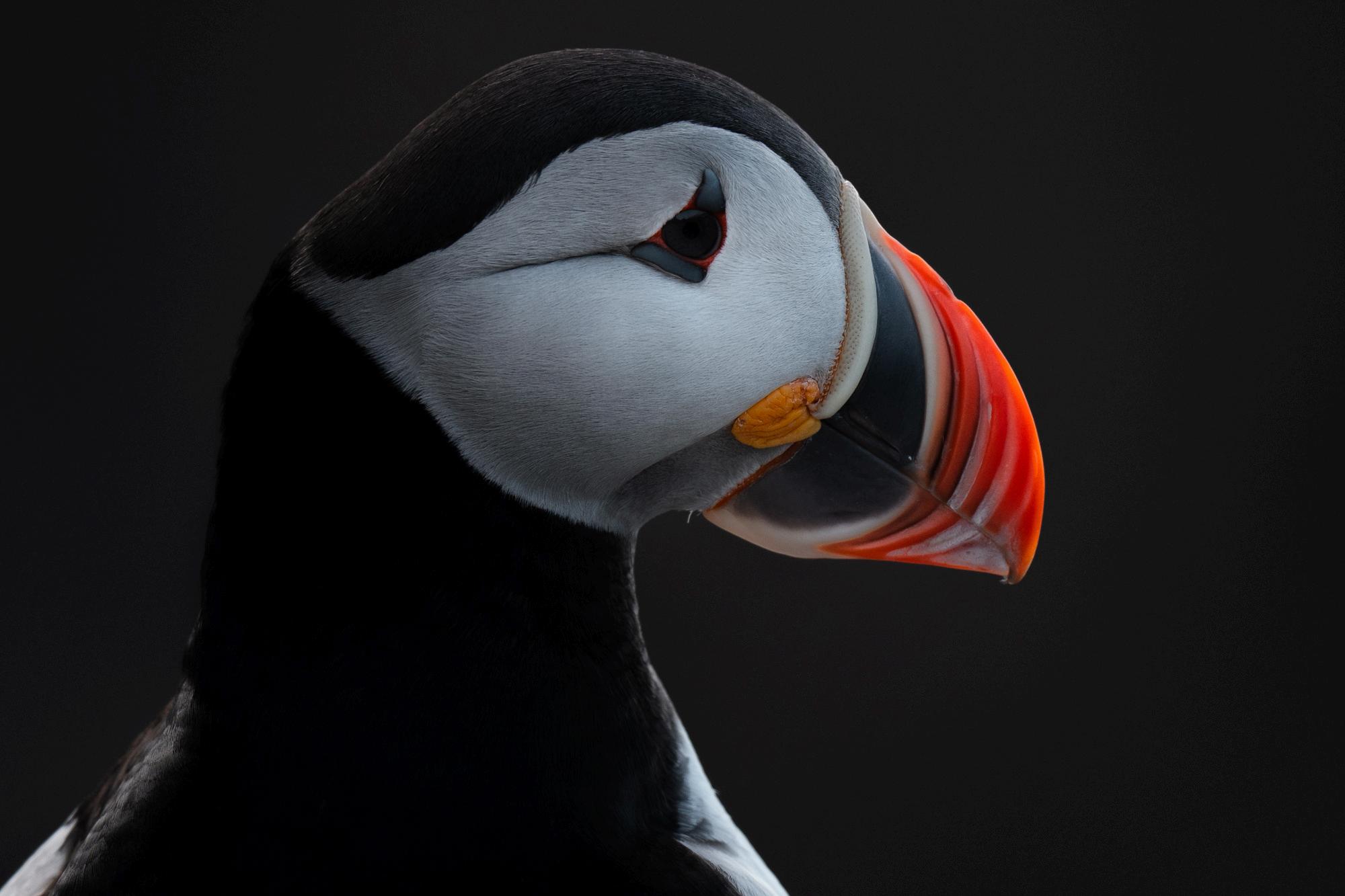
Along the way, we visited several puffin nesting colonies. For this headshot, my subject wasn’t offering much in the way of expression, no wing stretch, no beak full of fish, so I worked with what I had. A gentle kiss of backlight brought the bright orange beak to life against the darker tones, creating a simple but nice portrait.
It’s a good reminder that when the moment you want isn’t in your viewfinder, there’s often still an image worth making. My advice, focus on what nature gives you, sometimes its light, color, or texture. And build the shot around that. The “perfect” frame will keep you coming back until you get it, but in the meantime, you can still usually leave with something you’re proud of.
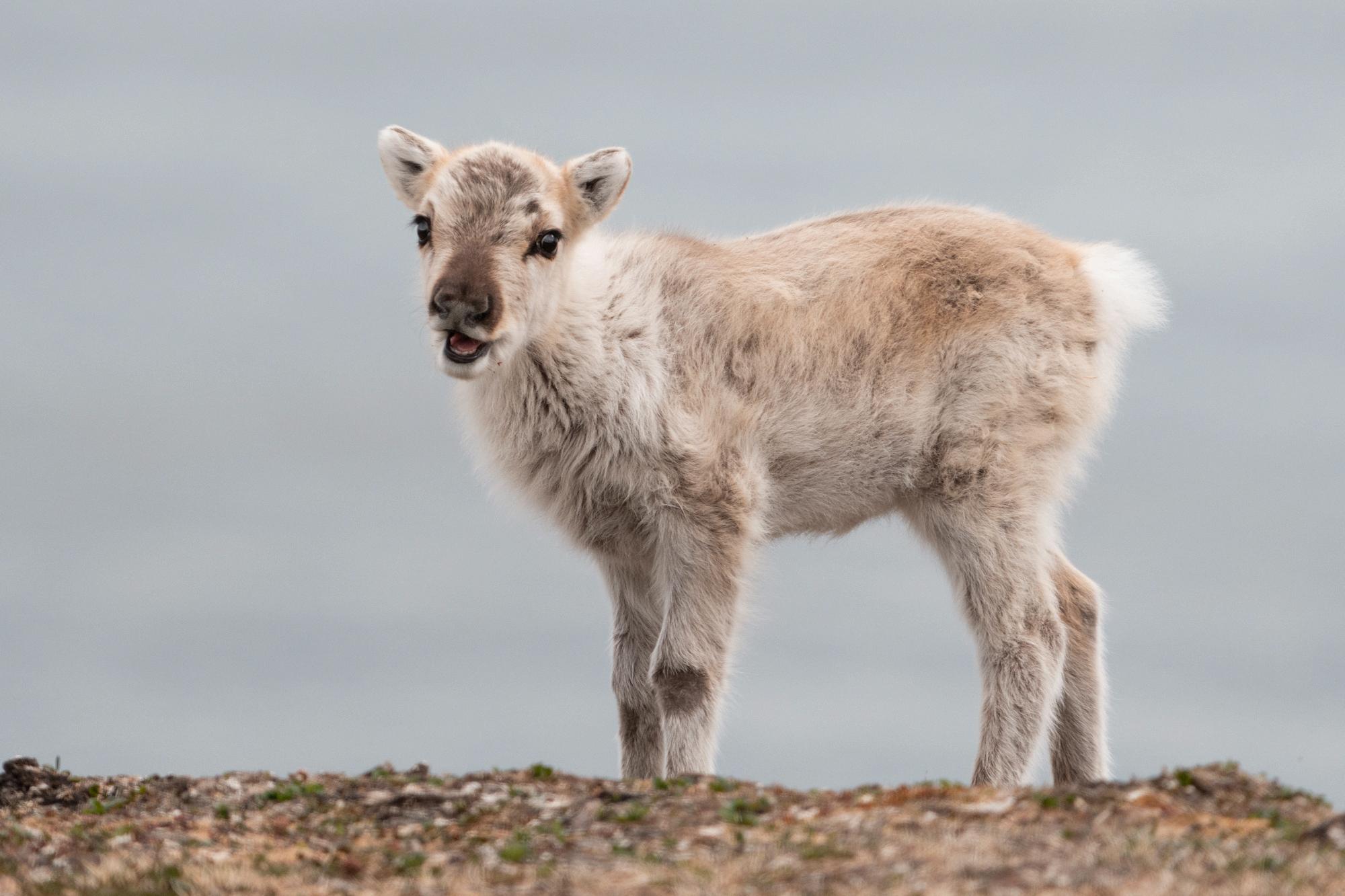
Later in the trip, I stumbled on some wonderful expressions to weave into my compositions. This young reindeer, spotted during a short hike to one of my favorite Arctic fox den sites, was irresistible...soft light, the ocean in the background, alert ears, and a playful gaze. Sometimes the best moments appear when youre looking for something else entirely, and this was one of them. Proof that in the Arctic, surprises can be the highlight of the day.
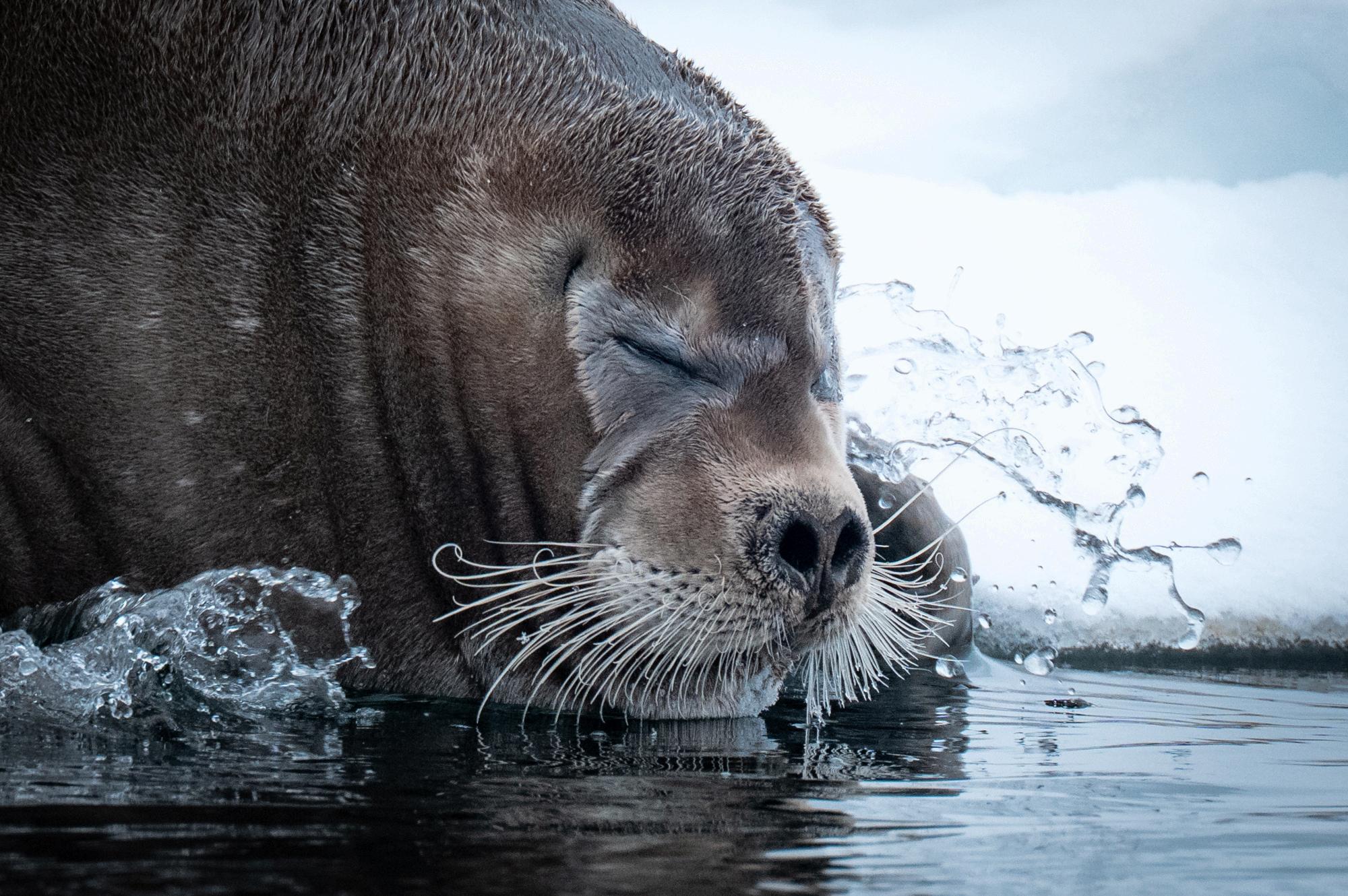
One of the most surprising, and delightful, subjects of the trip was the bearded seal. Finding one hauled out on the ice felt like a sign we were edging into prime polar bear territory as the are a polar bear’s favorite meal. With the Sony A1 II and a 600mm f/4, I captured its long whiskers and textured fur against the frozen backdrop. Another example of the Arctic’s supporting cast stealing the show.
THE PACK ICE
JOURNEYS INTO THE WILD | SVALBARD POLAR
BEARS & ARCTIC WILDLIFE
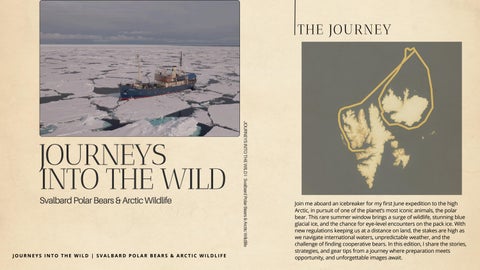
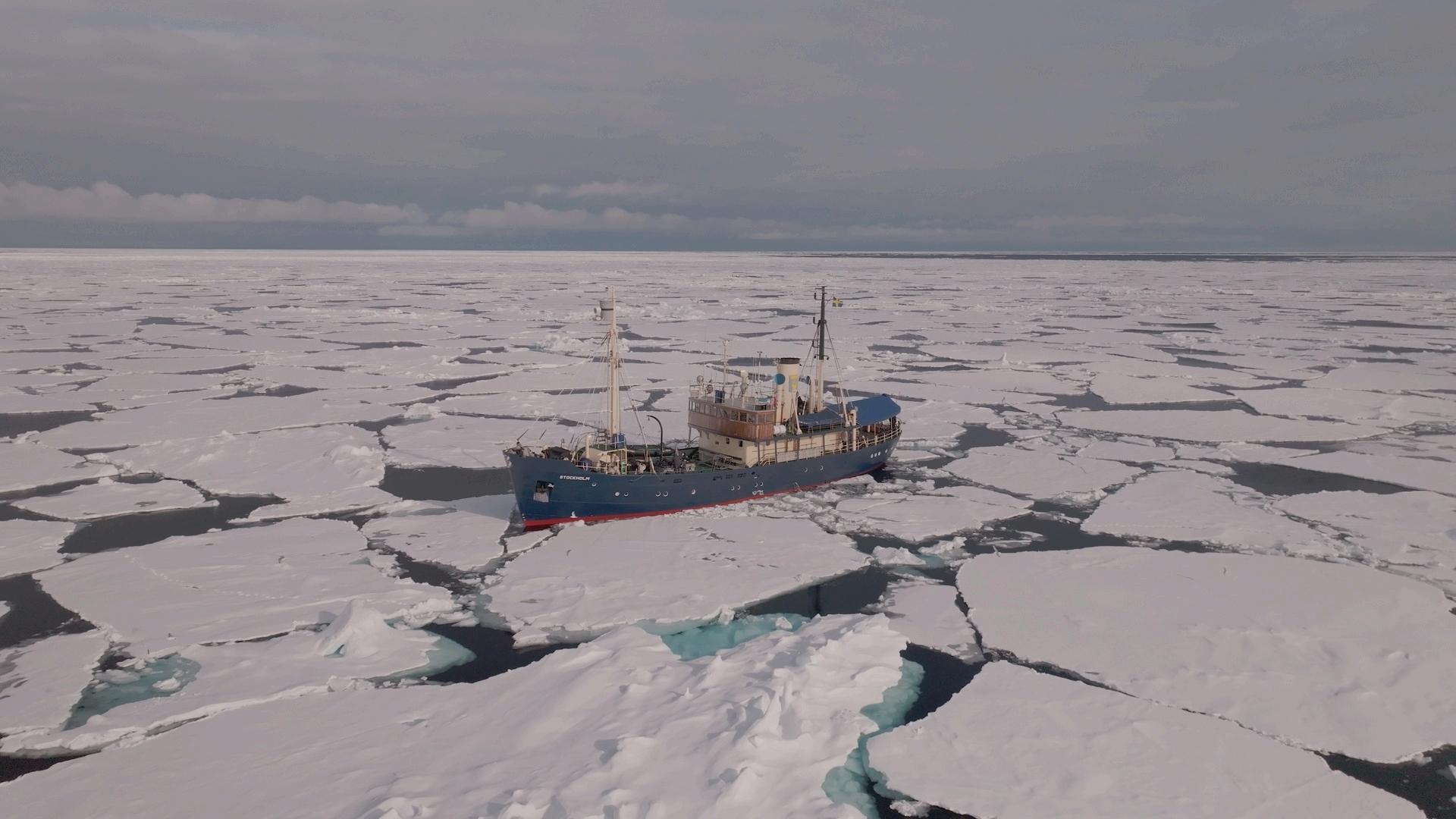
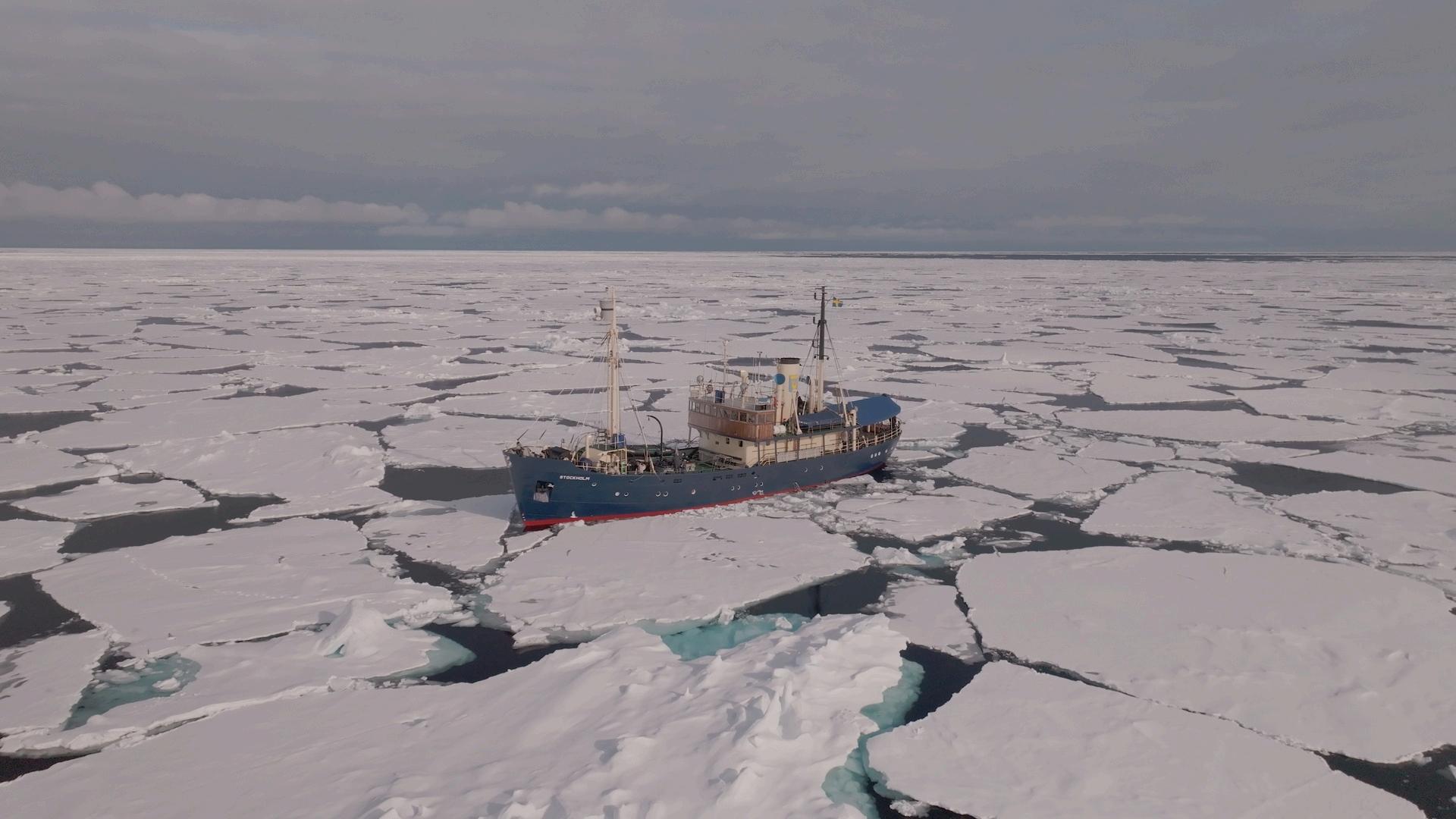
WHY I KEEP COMING BACK TO THE M/S STOCKHOLM
There are flashier ships in the Arctic, but the M/S Stockholm has my heart. Recommended by a friend who’s used her for photo trips for nearly 20 years, she’s not about luxury, she’s about soul and character. From the moment you step aboard you feel like you’re joining the great polar explorers on a true voyage north. And when she starts breaking through the ice, that feeling deepens.
Beneath the romance is serious capability. She’s one of the most effective icebreakers in her class, led by a captain with 30+ years in Svalbard who knows every walrus haul-out and hidden fjord where epic images wait to be discovered. For photographers, the magic is in the low bow and the cutout shooting holes that put you more in the world of wildlife. No more aiming strait down at all the wildlife on a 200 passenger cruise ship. On the Stockholm, you’re more eye to eye with your subjects.
Add in the kind of meals that make you forget how far you are from home and Stockholm goes from been a mode of transportation to as essential part of the experience.
A SHORT VIDEO OF STOCKHOLM CRUSHING THROUGH THE PACK ICE
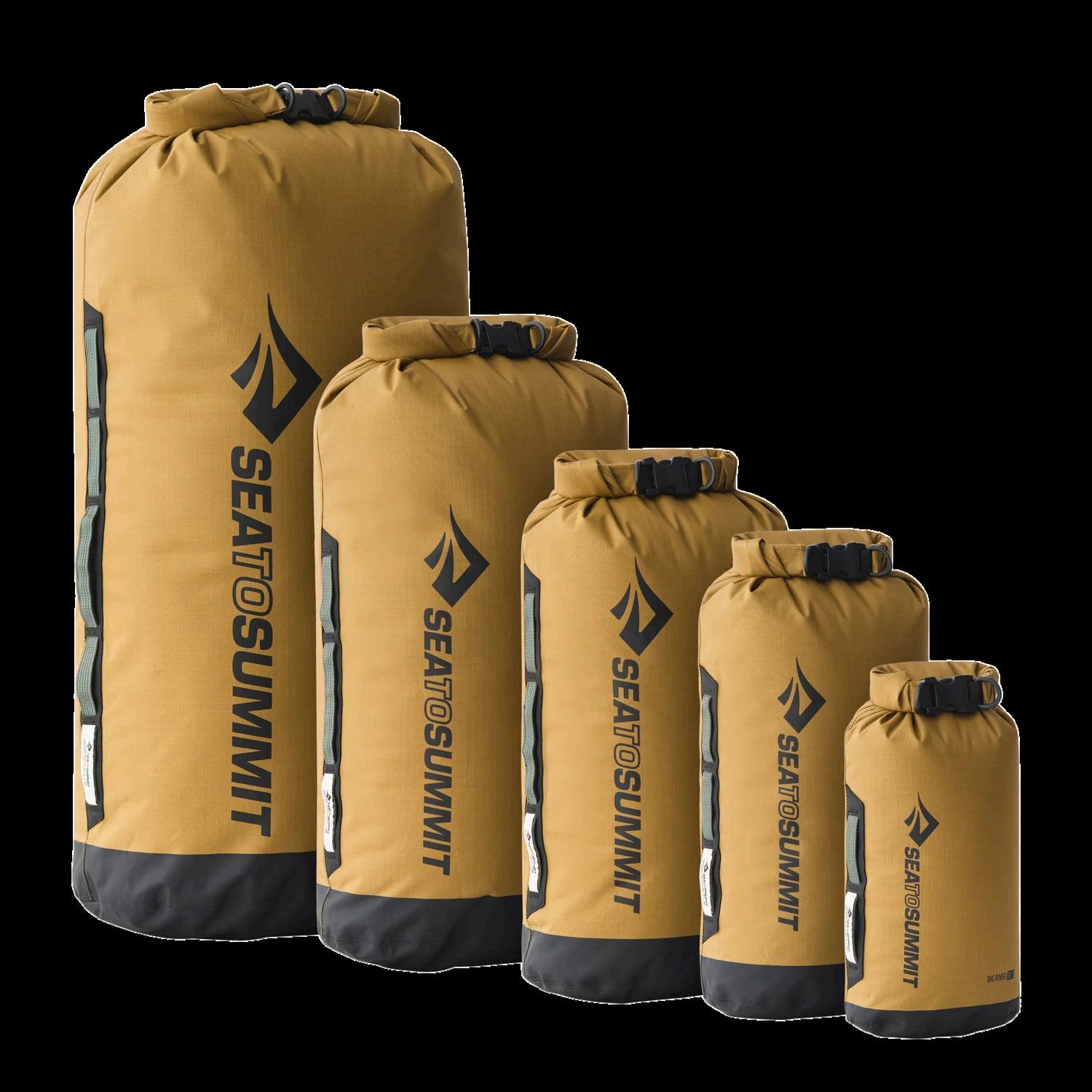
MEET THE BIG RIVER DRY BAG
PROTECT YOUR GEAR ON ARCTIC EXPEDITIONS
When you’re traveling in the Arctic, or anywhere for that matter, whether bouncing through waves in a zodiac or hauling gear is the rain forest, keeping your kit dry isn’t optional. After years of trying different solutions, from cheap roll-tops to overbuilt waterproof cases, I’ve settled on the Sea to Summit Big River Dry Bag as my go-to companion to my main camera bag.
It’s built from tough, abrasion-resistant material that protects from salt spray, and the occasional rough sea landing on a rocky beach. The roll-top closure is quick and reliable, sealing tight without fuss, and the streamlined shape fits easily into tight zodiac storage or the corner of a cabin. I keep my camera gear inside and know its safe.
The real beauty? They come in a range of sizes, so you can scale up for full kits or down for just a lens and a jacket. Simple, dependable, and bombproof, exactly what you want when your next shot means braving the elements. Pick one up and bring it on every trip.
BTS UPDATE - 11 HOURS SCANNING
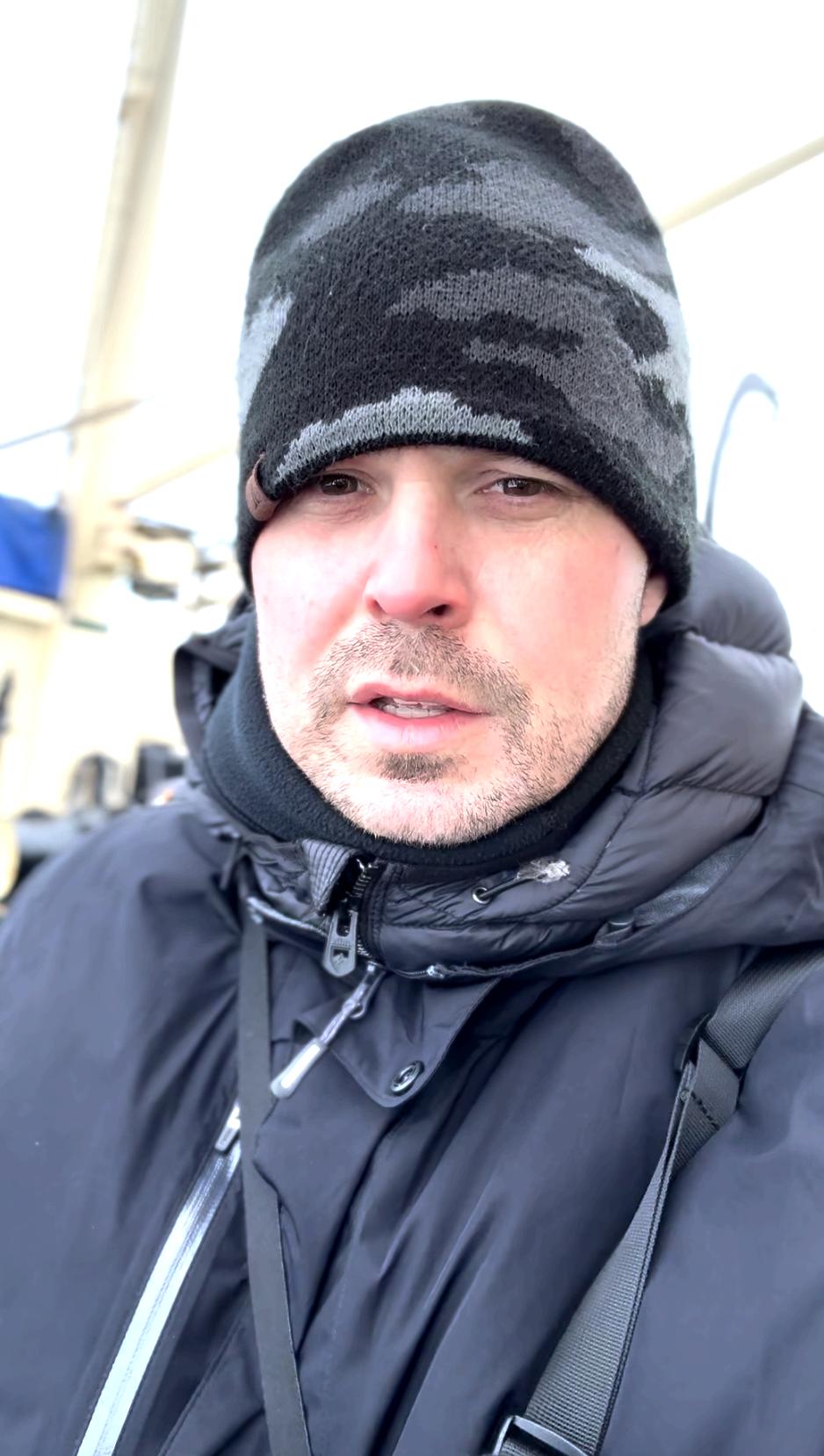
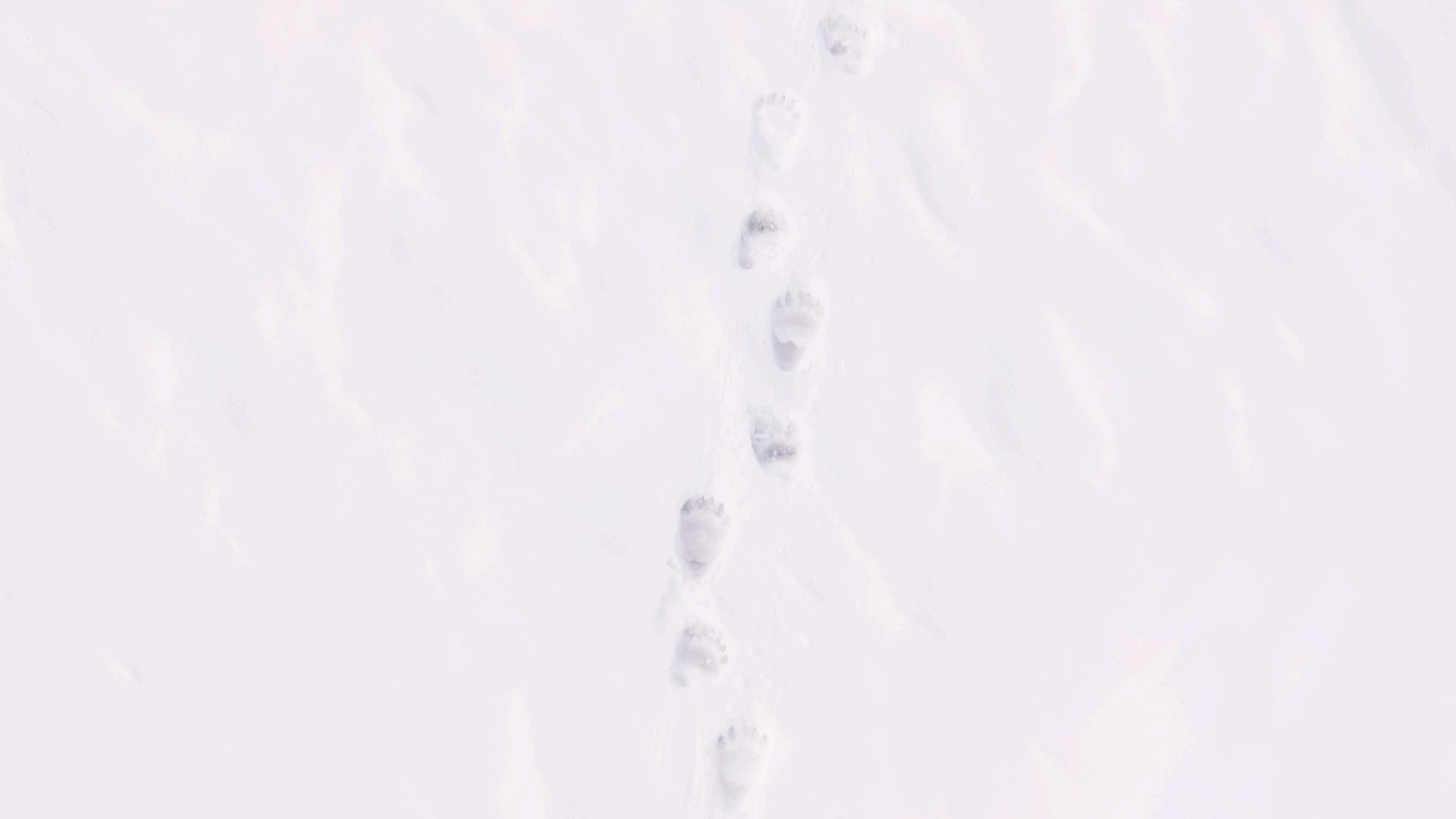
Our first day in the pack ice was pure excitement. The habitat is a dream to be in, and the promise of a polar bear had everyone glued to the deck, scanning the horizon. My team and I spent 11 hours scanning for any sign of a bear. By day’s end, all we found were fresh polar bear tracks, a promising sign, but I couldnt help feeling a little let down.
Of course, I know not every day in Svalbard is “game on.” In June the sun never sets there, so we decided to keep the watch going through the night, splitting into shifts to maximize our chances.
Oh, and Michelle, Katherine, and I pulled out all the stops, even attempting the “polar bear dance!”
Breaking Through for Bears
At midnight, just an hour after my head hit the pillow, there was a knock on my door: “Polar bear!” One of the night-shift crew had spotted a cream-colored bear on the distant horizon. It was over a mile away, so we had time to get everyone geared up again, though we were all running on fumes.
Then, not one but three polar bears came into view. Only one problem: they were at the back of an inlet, blocked by thick pack ice. I shook my head, so close, yet so far, and at that moment, I didn’t think we could get there.
But out of nowhere, Holkan, our captain, threw the Stockholm into reverse, then powered forward, ramming the ice. It barely budged. Again and again he hit it, and on the fifth strike the ice broke open. We had a path!
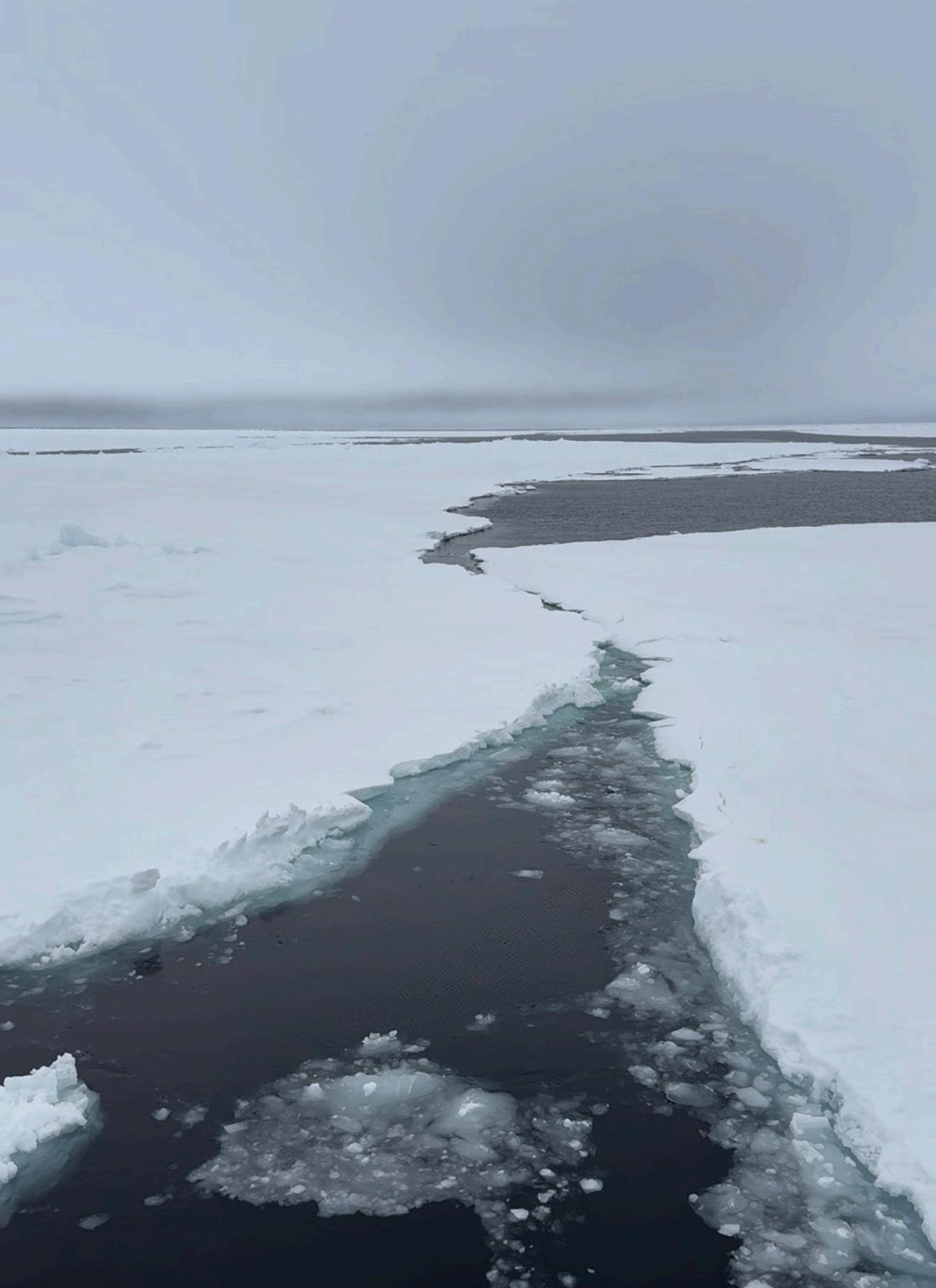
Where the bears are.
The iceflow blocking us.
Our First Big Encounter
THE SHOT
As we eased into the bay, two polar bears began walking straight toward the ship, giving us every pose in the book. Then the scene exploded running, chasing, sparring in the water. For nearly four hours we had up to five bears circling the boat in what became one of the most unforgettable encounters of my life.
In moments like this, when your heart is racing, composure is everything. I talk myself through settings and scenarios, ready to adapt as the action changes. In snow, I expose to the right of the histogram for maximum detail, using my A1 II’s 109+ lower-limit zebras to nail exposure. For portraits, I start at 1/500 sec; for walking bears, 1/1000; for action, 1/2000.
I begin shooting while the bear is still far away for that low, immersive perspective, once they’re close, you’ll be looking down on them. When they fill the frame, I switch to verticals to keep paws in the shot. All the while, I keep my head on a swivel, call out opportunities to the group, and stay ready with a wide-angle lens slung for the unexpected. Oh and don’t forget to breathe!
Gear & Settings: Sony A1 II + 600mm f/4, f/4 – 1/1000 sec, ISO 2500. Full-frame. I removed the lens hood to minimize the risk of heat distortion.
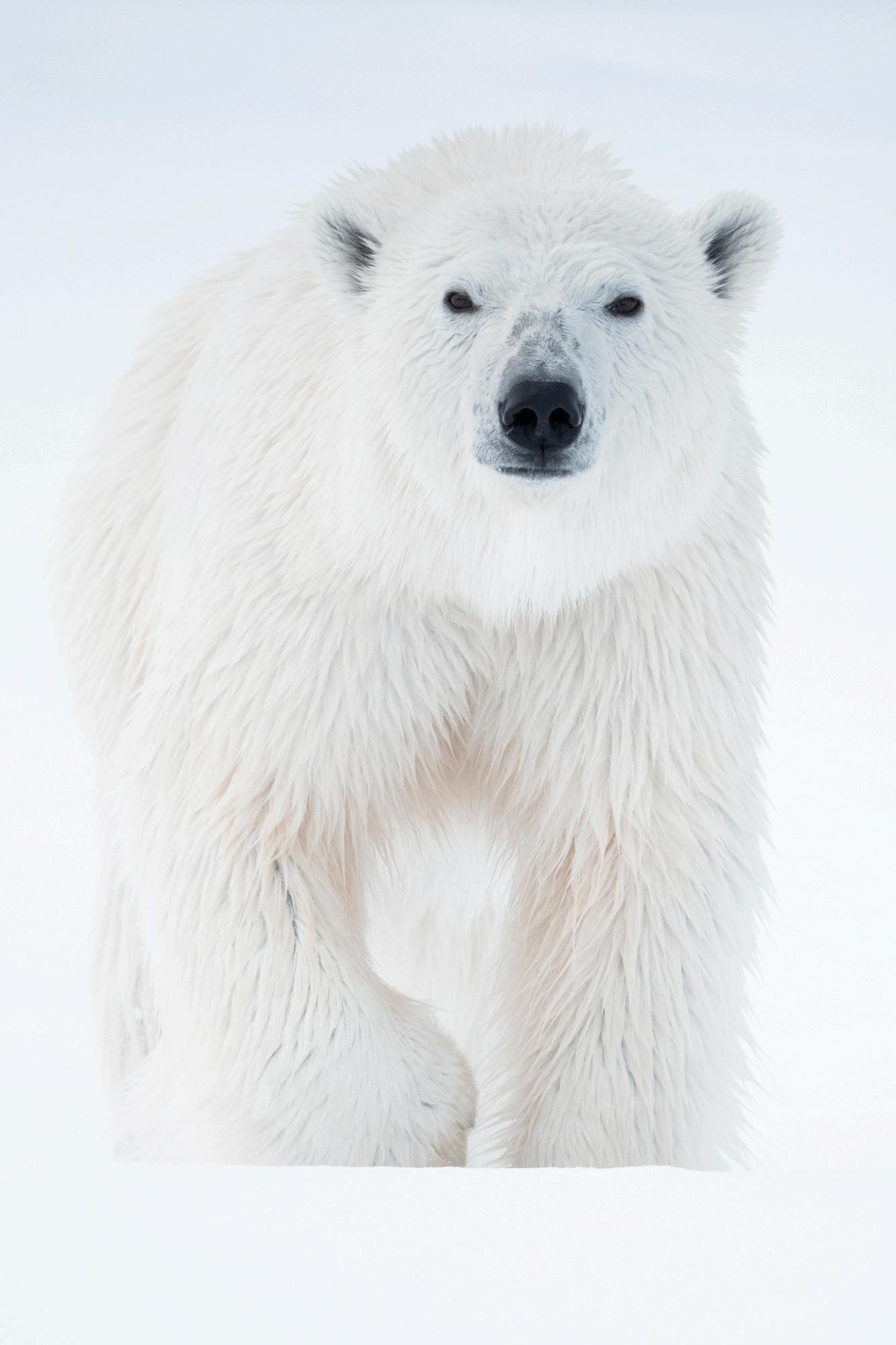
A DIFFERENT PERSPECTIVE
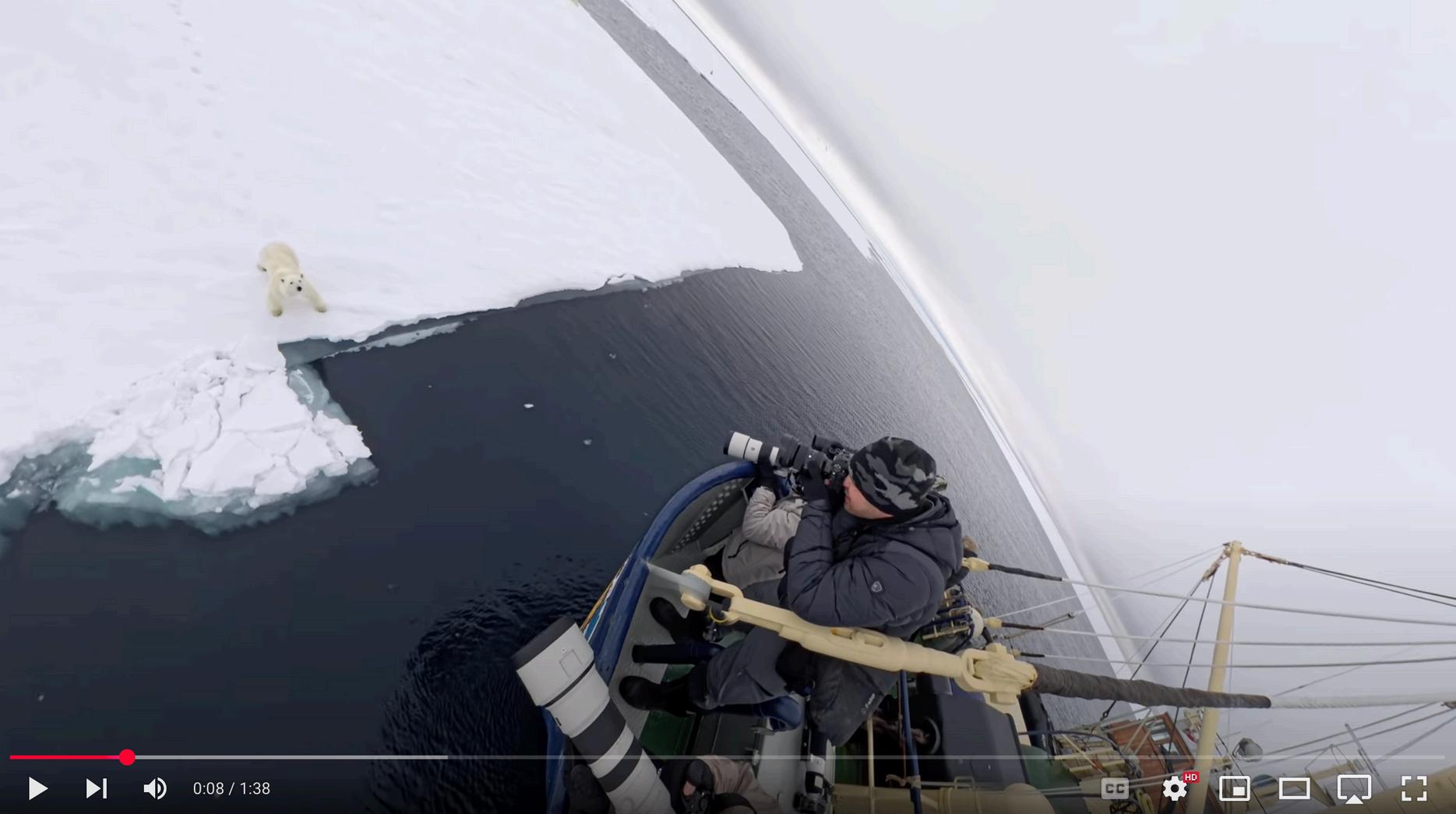
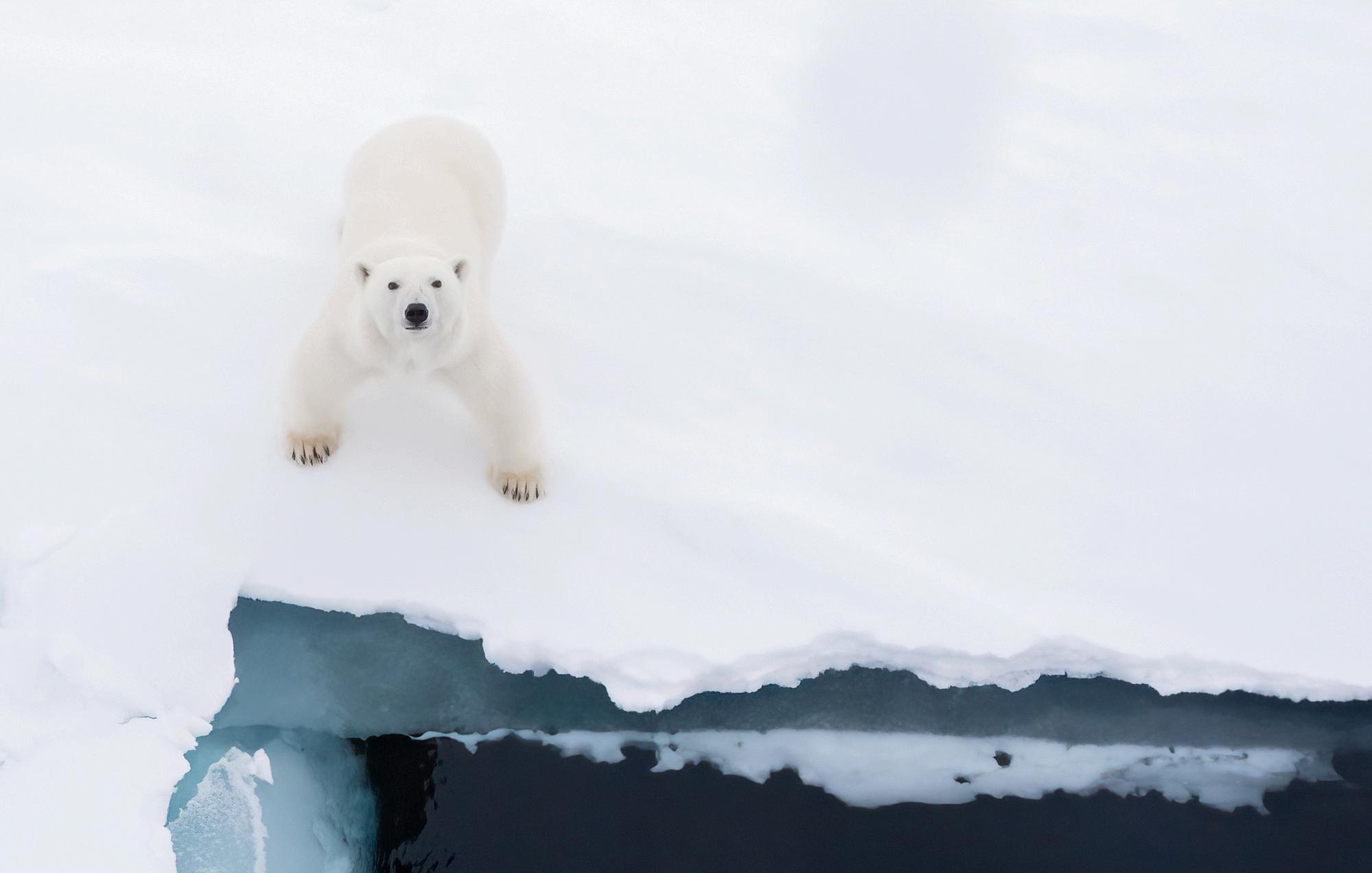
Two of the bears came right up to the bow, curious enough to sniff the front of the ship. I switched to my 24–70mm lens and waked to the higher bow to shoot down at one of them, creating a completely different perspective.
Looking down from above makes the viewer feel as though they’re standing right there at the edge, peering over into the bears world. close enough to feel the presence of the bear and the icy blue water below. The video above is a behind-the-scenes look at the incredible moment, filmed on my Insta360 X4.
Video - A Polar Bear 2 Inches From My Lens!
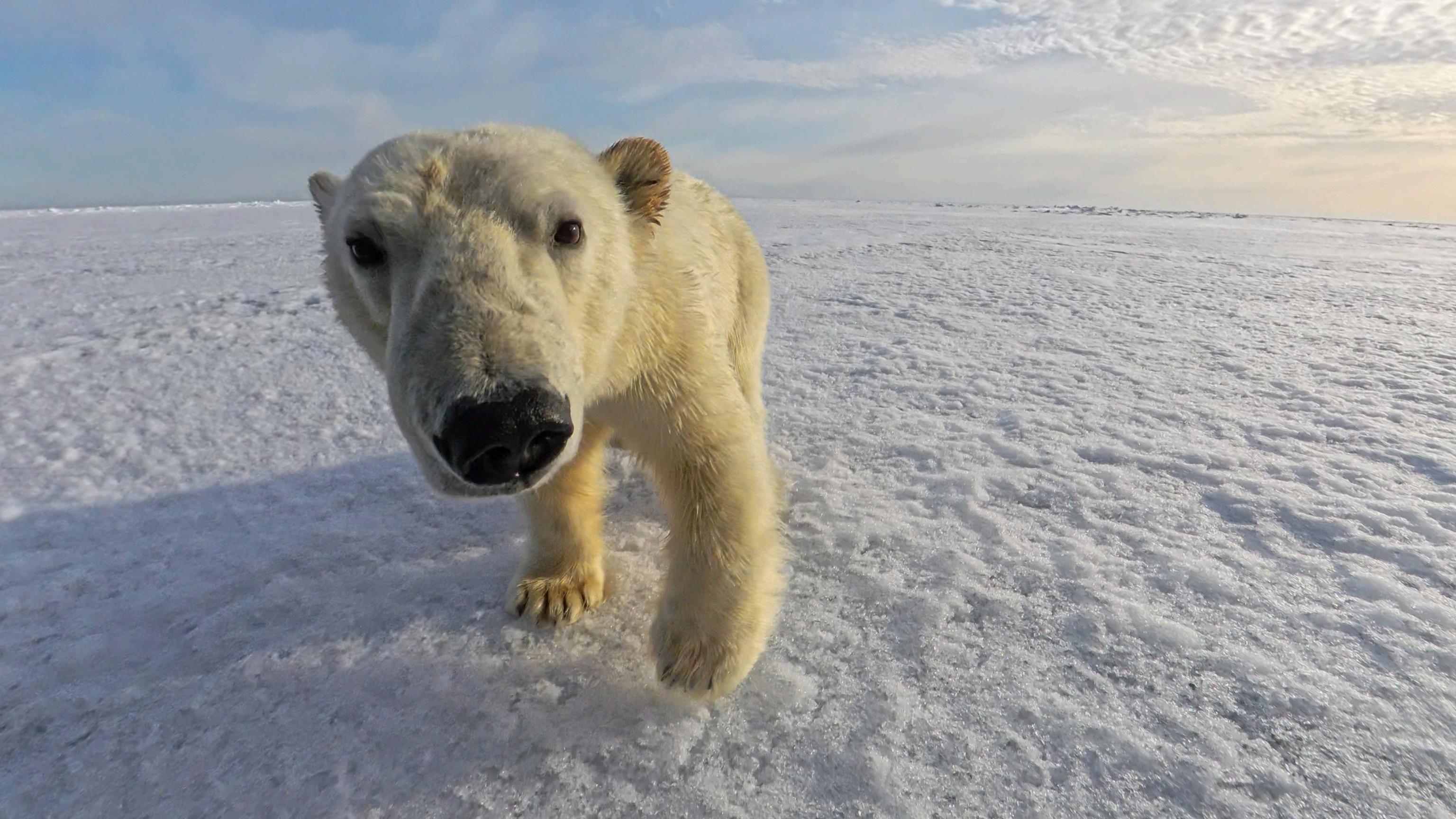
CRAFTING THE SHOT
Another way to achieve an eye-level view with wildlife is by using a camera trap or lowering a camera on a pole over the side of the ship. Since the first option wasn’t possible, I lowered my Insta360 in hopes of getting lucky. Sure enough, a polar bear came right up to investigate, sniffing the front element of the lens. The shift in perspective was dramatic, turning a familiar subject into something entirely fresh! It’s not the gear that makes the photographer, but the right tool can spark creative ideas, and this turned out to be one of my favorite pieces of content from the entire trip.
SHOT ON THE INSTA 360 X4 ON A POLE
THE POLAR BEARS DOMAIN
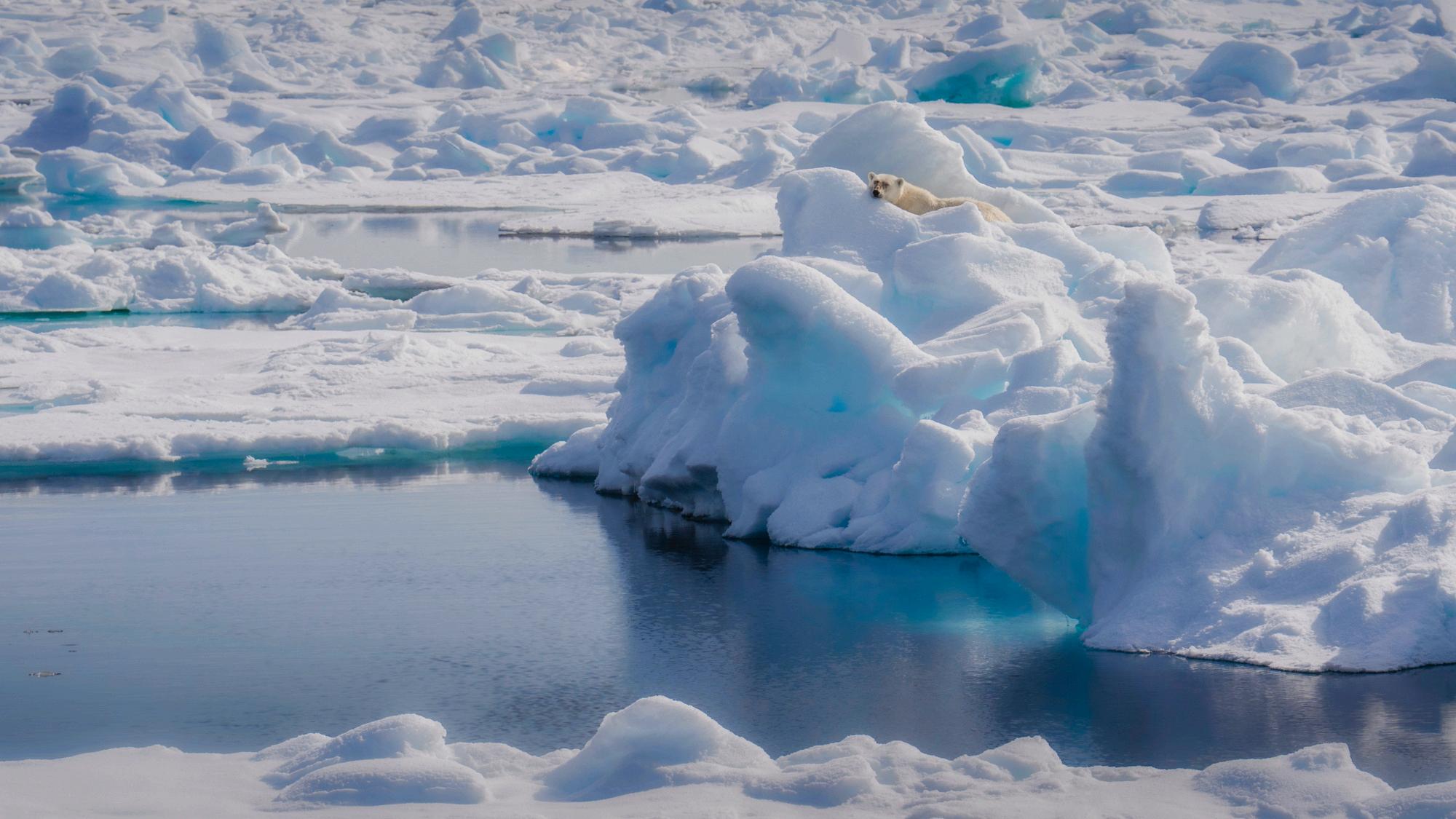
CRAFTING THE SHOT
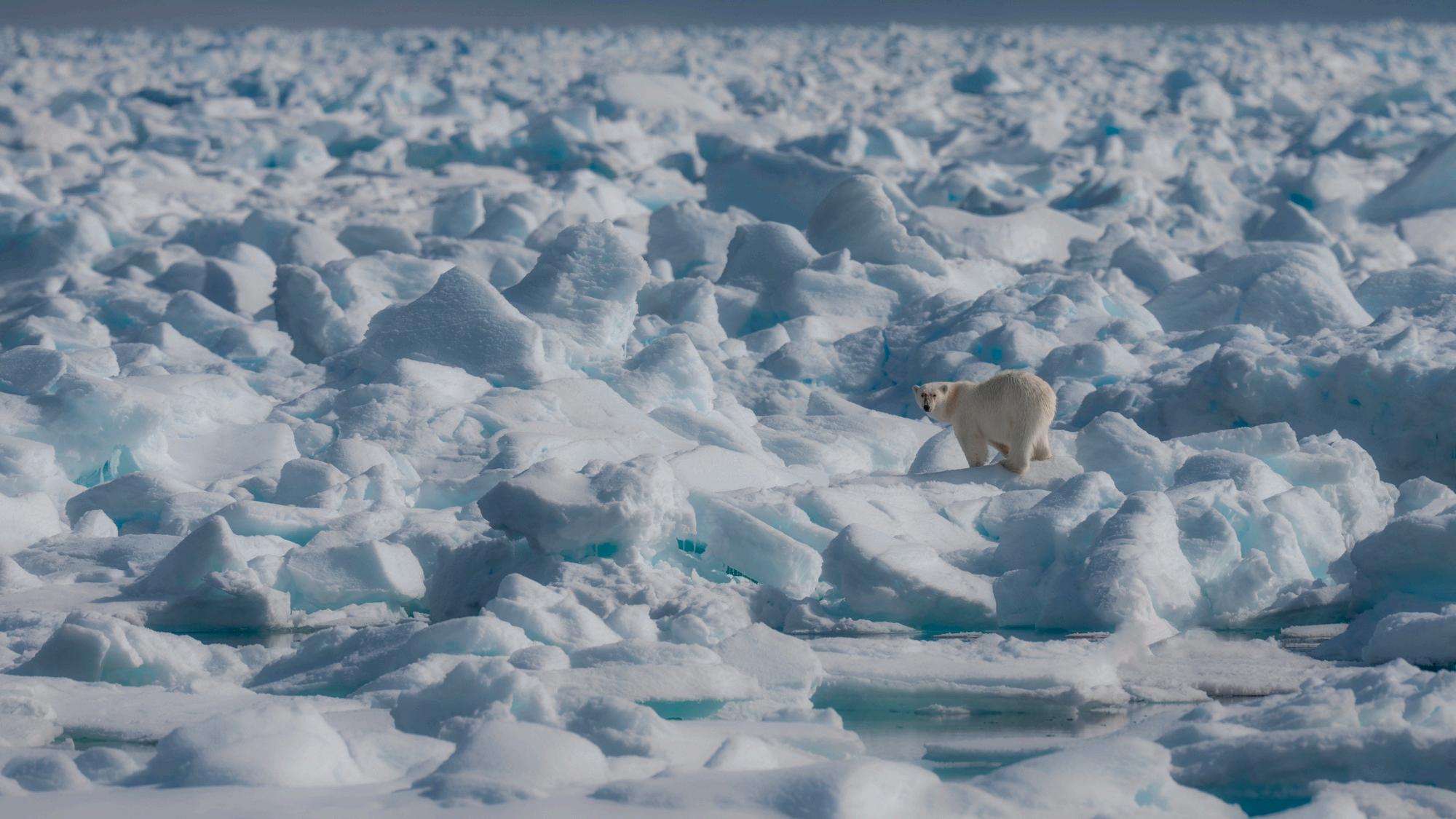
The Shot: A lone polar bear sitting on fractured glacier ice, shot wide to show the immensity of the Arctic landscape.
The Challenge: Your instinct is to reach for the longest lens possible. Fight the urge. Sometimes the best image is about the bear's environment, not just the bear.
Technical Approach:
Lens Choice: 70-200mm or 100-400mm instead of the 600mm Settings: f/11 for depth, ISO 400–800, 1/1000s shutter
Composition: Unless you have symmetry, place the bear off-center. Keep it big enough in the frame that the eye is drawn there first and you can recognize the animal, and feel free to photograph the landscape around the bear in sequence to make a wildlife panorama. The real secret to making these environmental images? Overcome tunnel vision by keeping your eye in and out of the viewfinder. I also keep a wide lens slung with settings ready on my left shoulder while my telephoto is on the right. When everyone else is tight on the bear, I'm looking for the big picture. That means the difference between walking away with this shot and a tight portrait after—or just the tight portrait.
Tip: Pre-visualize the image before the bear enters the scene. Find your favorite ice formation, your leading lines, your color palette. Dial your settings for that scene, then wait for the bear to enter. A lot of the best environmental portraits I have made aren’t by accident— they’re pre-visualized in my mind first.
JOURNEYS INTO THE WILD | SVALBARD POLAR
BEARS & ARCTIC WILDLIFE
IT’S NOT THE OBSTACLE, IT’S THE PATH
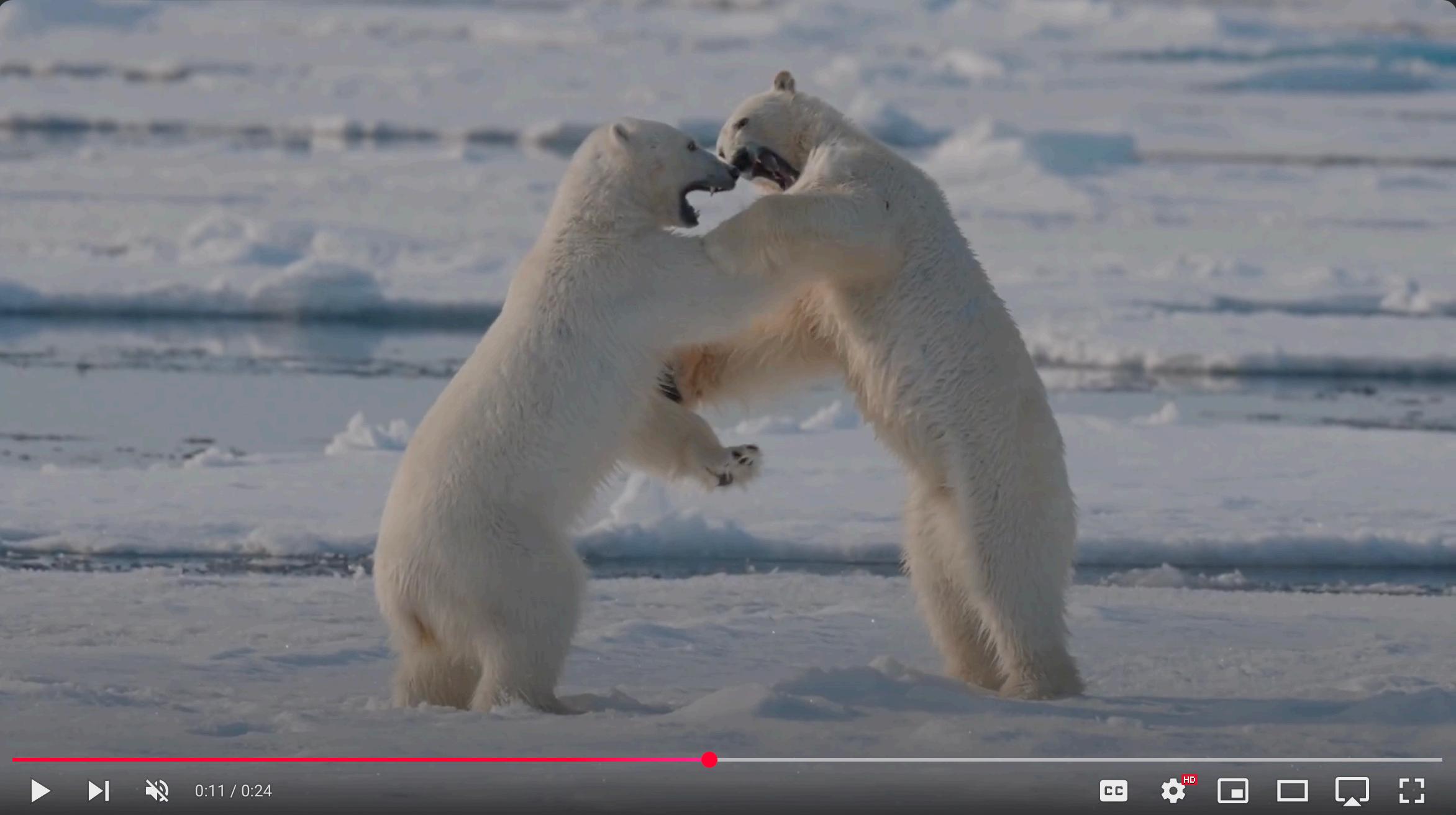
Our luck continued in the pack ice, and my second group was treated to an incredible lineup:
11 Polar Bears (5 of them perfect photo bears)
11 Arctic Foxes (including 7 playful kits)
Many Walrus
2 beautiful Bearded Seals
1 Harp Seal
Hundreds of Arctic Terns
King and Common Eiders
Atlantic Puffins
Reindeer
Belugas
The highlight of this second departure? Bears sparring on the ice, complete with glassy reflections and dramatic environmental portraits like the ones I showed you earlier.
Heres a slow-motion video of that unforgettable climax. It’s wild, I began the expedition with jitters, facing new challenges due to recent regulations. But instead of letting them derail us, we leaned in, adjusted our plans, and ended up with the most productive trip to Svalbard I’ve ever had. These trips were EPIC.
Remember, the best images tell a story, and the best stories often come from overcoming the biggest challenges. So next time something doesn’t go perfectly, lean in and listen, it’s not the obstacle, it’s the path.
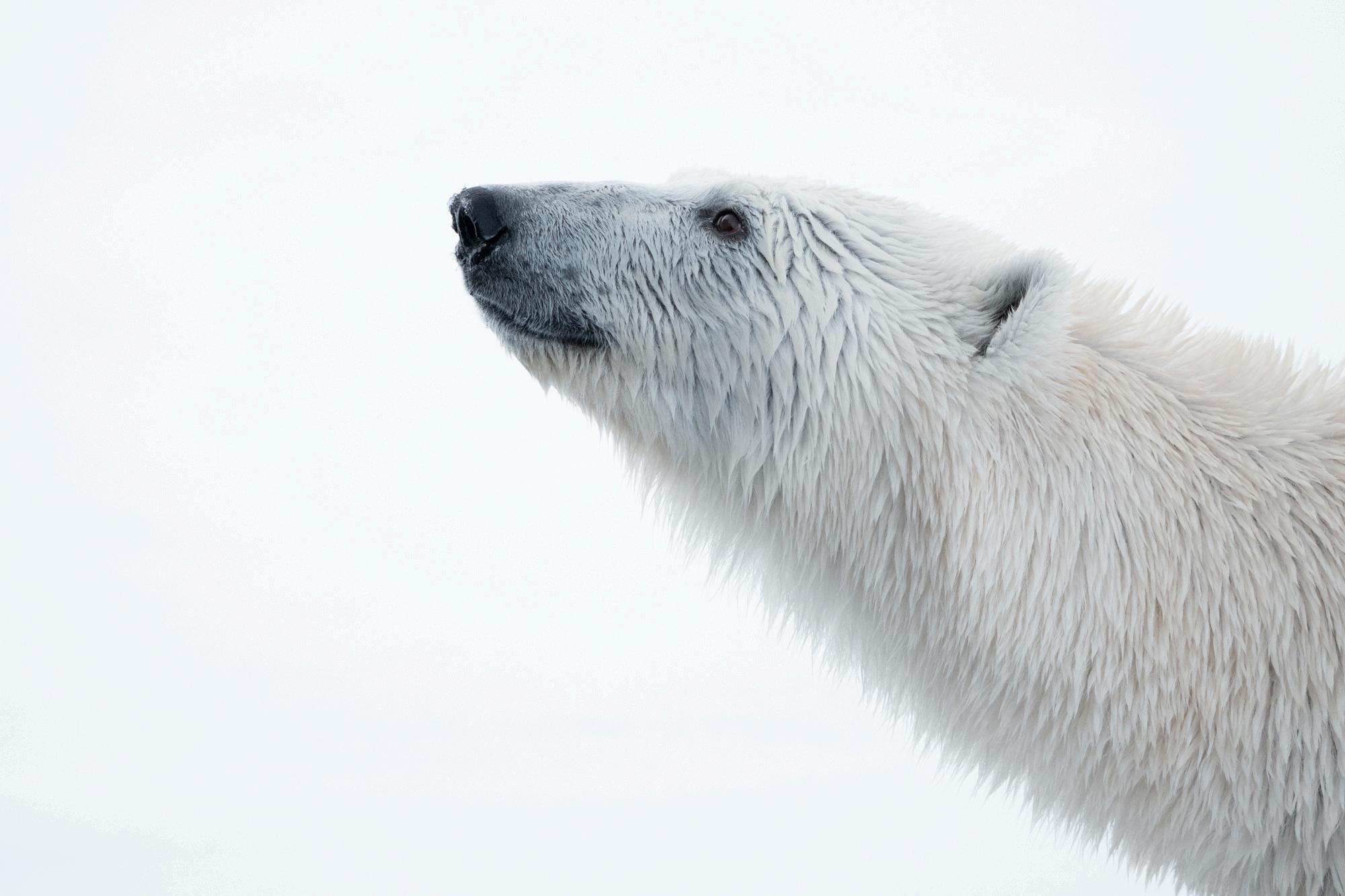
Wrapping Up & What’s Next
My, what an adventure this was, by far my most successful journey to Svalbard to date! And all in the face of the greatest adversity yet, with new regulations that actually scared a lot of photographers away. The lesson? Lean into the challenges, in life and in photography. Thats where the good stuff lives, and its what pushes you to grow. These new regs forced me to get serious about a new plan: hiring a strong team, shifting our expectations for bear photography in the archipelago, focusing on Arctic wildlife as a whole, and getting to the pack ice as quickly as possible, where the distance rules don’t apply.
It’s been a wild season for me, having led 15 photo tours in the first 7 months of the year. This has been one of the most productive years of my photography career, and for those of you who joined me, I cant wait to see all your images.
Next up for me is a much needed extended break at home to catch up, and to start planning the next Journeys Into the Wild, where I’ll take you into the world of hummingbirds. These flying jewels never cease to fascinate me. The more I learn, the more I fall in love. I’ll be teaching techniques on multi-flash, natural light, and behavioral observation that will make you a better photographer.
Thank you so much for being a Patron! If you’re currently at Tier 1, consider joining us at Tier 2 so you can take part in our monthly live training sessions. These events are where I share my full post processing workflows and indepth photo critiques you wont find anywhere else.
Our next session is tomorrow August 14th, and we’ll be diving deep into post-processing in Lightroom, covering the latest June updates and new tools to help your craft. Its interactive, inspiring, and designed to give you the skills to take your photography to the next level.