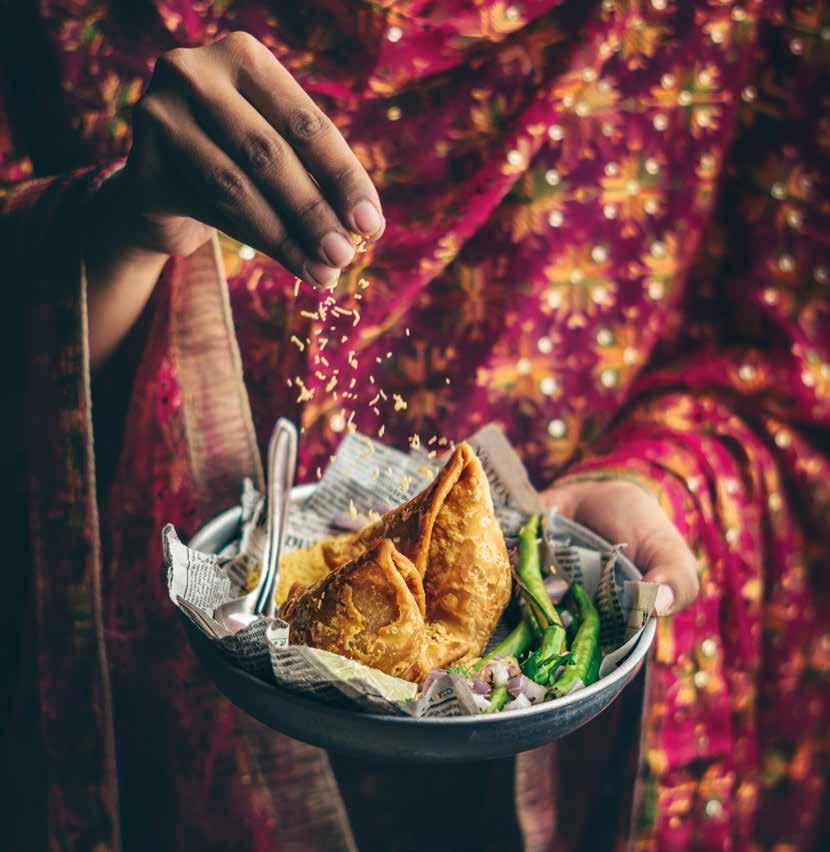
FROM REGIONAL SPECIALITIES TO STREET FOOD FUSION

FROM REGIONAL SPECIALITIES TO STREET FOOD FUSION
The market isn’t getting any easier, and neither is your job.
That’s why it’s important to us that Stir it up earns its place in your kitchen. Whether you’re in hospitality, education or the care sector, everything we produce should be practical, relevant and worth the time you take to read it.
Our 2026 Readers’ Survey gives us a clearer understanding of who you are, the pressures you’re under, and the kind of support, advice and inspiration that will genuinely make a difference in your day-to-day role. In a market that continues to challenge from every angle, that insight matters more than ever.
Your feedback doesn’t sit on a page, it drives real change. From cost-saving ideas and staff retention support to food trends and sustainability, your input has directly influenced the features we’ve introduced and the topics we prioritise within our magazine, trend and sector guides and across our website.
And it continues to shape what comes next. So, please spare a few minutes, we’d really value your feedback and opinions.
Help us to help you — and ensure what we deliver is genuinely useful, relevant and worth your time.
Simply scan the QR code or visit: https://www.surveymonkey.com/r/ Stiritup2026
• 80% OF YOU TOLD US WHAT YOU PURCHASE IS INFLUENCED BY THE MONTHLY STIR IT UP PROMOTIONS
• THE TOP FIVE TRENDS AS IDENTIFIED BY YOU FOR 2025/2026 WERE STREET FOOD, HEALTHY EATING, VEGAN CONCEPTS, PISTACHIO FLAVOURED EVERYTHING AND MORE OF A FOCUS ON SUSTAINABILITY
• YOU WANTED US TO BRING YOU ADVICE THAT FOCUSED UPON EVERYTHING FROM THE LATEST TRENDS, ALLERGEN LEGISLATION, MENU PLANNING FOR EDUCATION, BUDGET PLANNING AND SO MUCH MORE
• RECIPES. RECIPES. RECIPES. YOU WANT THE FULL DETAILS, SO WE’VE FOCUSED ON INCLUDING MORE FULL RECIPES WITHIN THE MAGAZINE AND SIGNPOSTING THEM CLEARLY AT THE FRONT
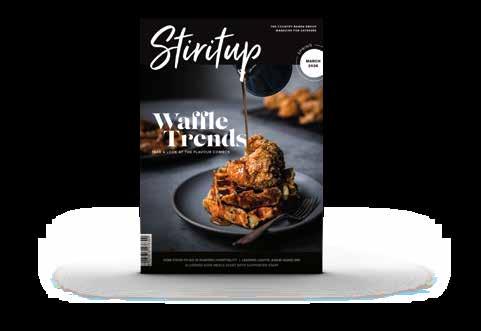



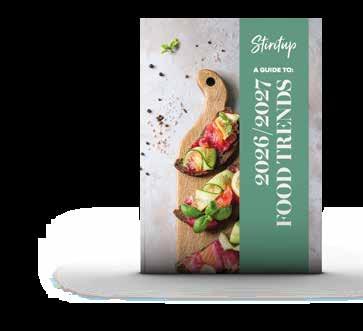


All completed surveys willbeenteredintoaprize drawtowinupto£300to Countryspendwithyourlocal Range wholesaler.Group
1st Prize
2nd Prize
3rd Prize
£300
£200
£100
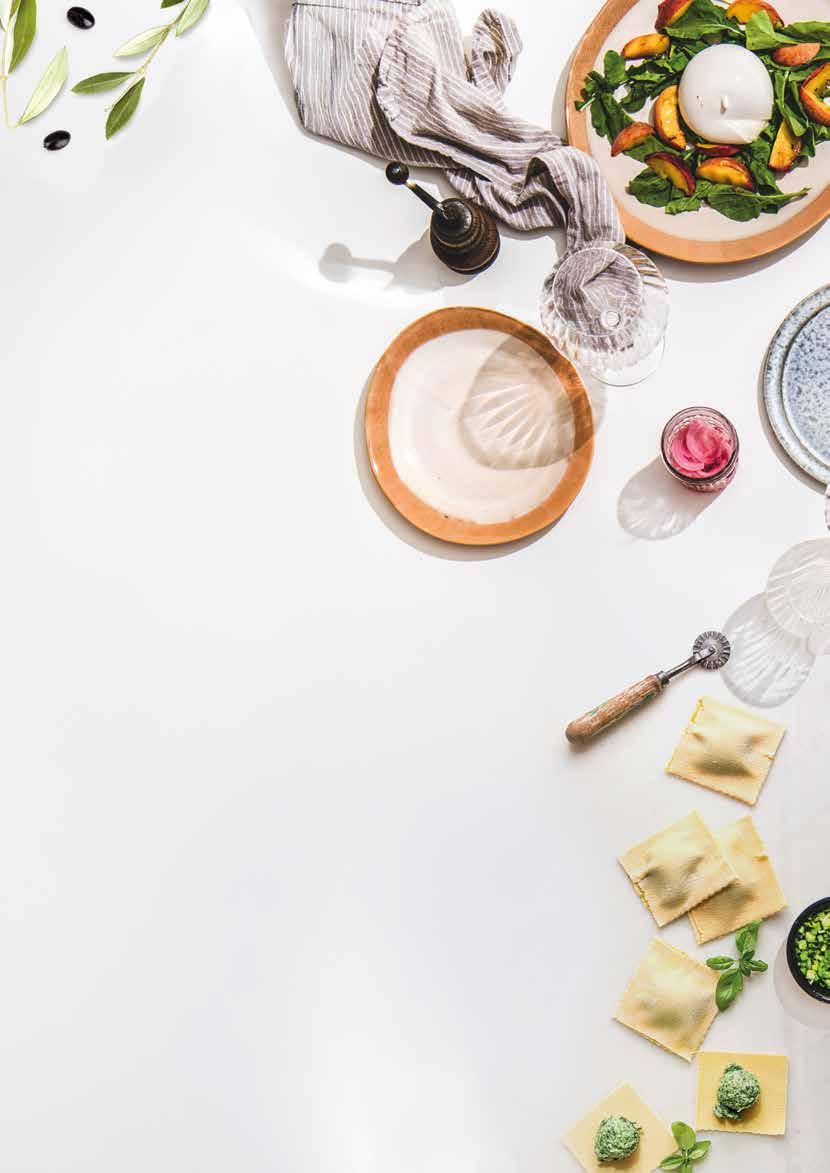
The summer months are approaching and with them comes the opportunity to refresh menus and introduce some new flavours or concepts.
To help inspire you we’re getting under the skin of what is driving the small plate trend on page 17, sharing a ‘Melting Pot’ of ideas all around Indian cuisine over on pages 33-35 as well as focusing on the drinks element of the foodservice offering with ‘A fresh take on cocktails’ from our expert Ahsoka Wallace. And don’t forget, we always try to keep things fresh, relevant and inspirational here at Stir it up, help us to help you by completing our 2026 Readers’ Survey over on the previous page.

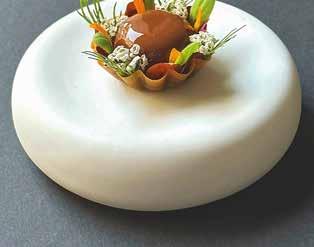
Fresh from the Kitchen Flexitarianism
What’s Driving the Small Plate Trend?
Global Appeal
Melting Pot
Culinary Trip to India




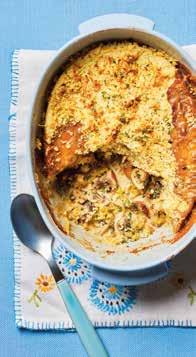
Miso Mushroom and Parmesan Crumble
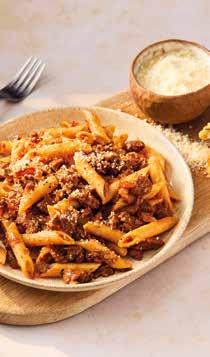
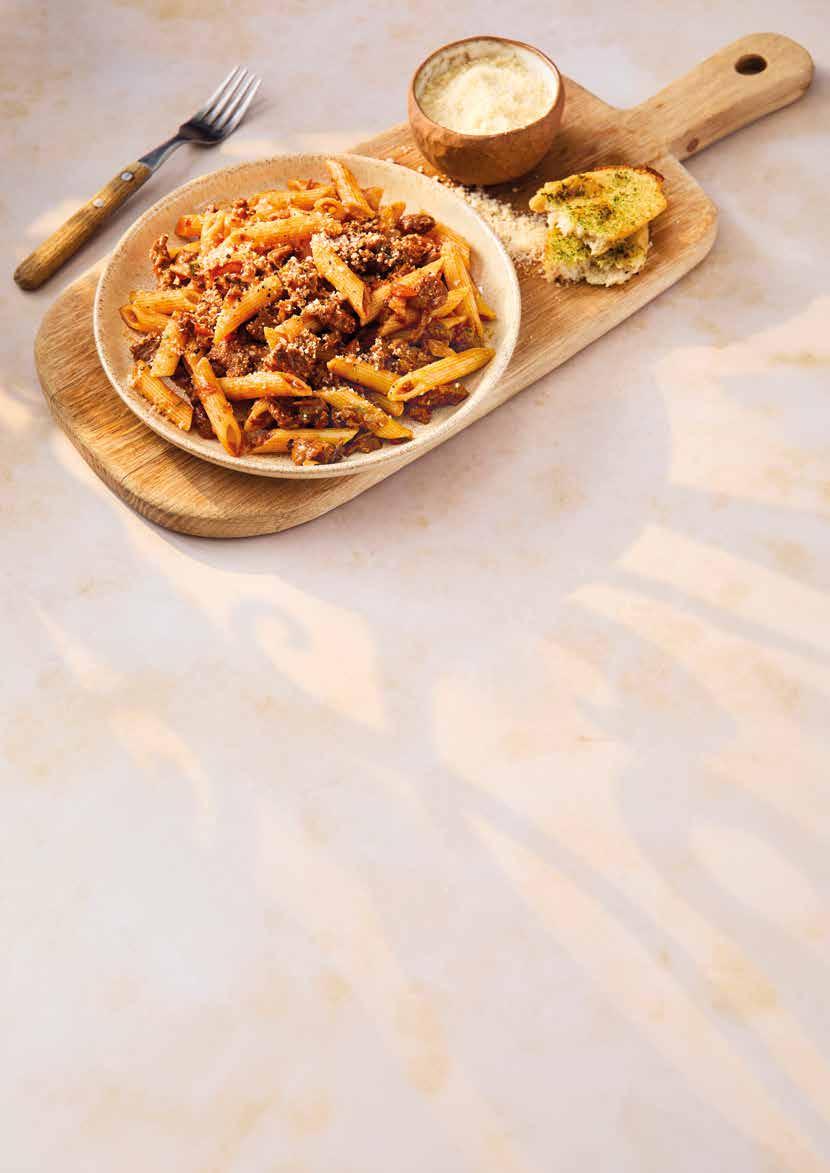
Beef Ragù
23
27
Eating habits are evolving and those who want to cut down on meat and processed foods are seeking more sustainable and long-lasting choices over short-term restrictions such as ‘veganuary’. Enter flexitarianism, which is a more fluid approach focusing on flavour and back-to-basics whole foods. We explore the latest plant-forward menu trends from thefoodpeople.
CARBS MEET PLANTS – Pasta, noodles and gnocchi get a plant-based makeover with roasted veggies, pulses, mushrooms, seeds and nuts taking centre stage. Some are even taking over the dish, such as parsnip made into gnocchi and cauliflower into ramen broth.
SOUPS, STEWS & CURRIES – Bowl food continues to be a go-to for comforting and substantial plant-forward cuisine, from light vegetable-packed broths to rich ragùs, chillies and curries packed with pulses. For a flexitarian option, the additional protein of choice is halloumi or chicken.
Saag Vada Pav
29 35 45 Green Tomato Jam
SUPER SALADS – Diners are adding up their plant points with nutrient-dense salads filled with leafy greens, roots, tubers and flowers, supplemented with grains, nuts, pulses and seeds. Fibremaxxers who are upping their fibre intake from 30g to 40g per day are looking to include a wide range of fibre-rich ingredients in their salads.
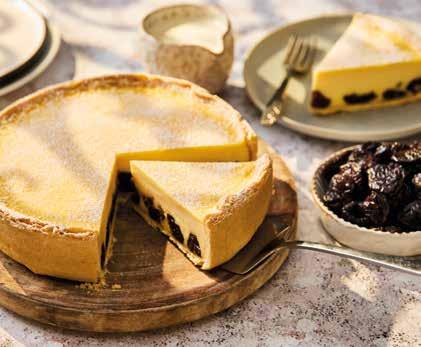
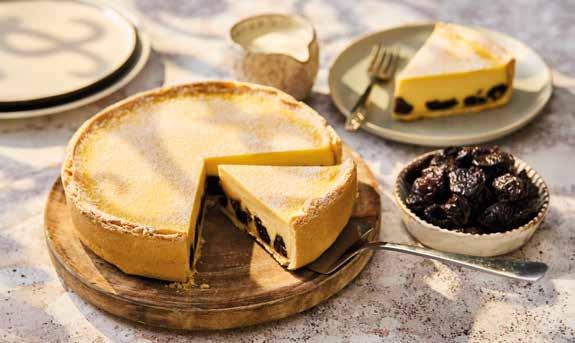
Prune and Armagnac Tart
DRESSED-UP DIPS – With small plates and all-day snacking becoming the norm, dips have a big part to play on menus –and there’s a whole world beyond hummus. Beans and pulses are paired with all manner of superfoods and spices to make some nutritious and delicious creations, from sweet potato and butterbean dip to smoked aubergine yoghurt with Baharat seed crunch.
SWEET TREATS – Plants are finding their way into the sweet indulgence category too, with foodies seeking better-for-you sweet options. Think chocolate hummus, black bean brownies and chickpea chocolate chip cookies.

Gluten free black bean, banana and chocolate brownies


2ND MAY – WORLD TUNA DAY
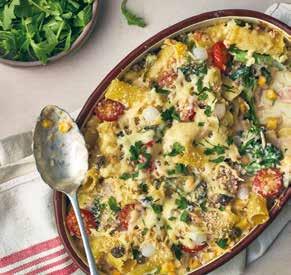
Mark World Tuna Day with a practical, profitfriendly Tuna Pasta Bake recipe from Opies. Designed for foodservice kitchens, it’s ideal for family dining, Fish Fridays or high-volume service and offers consistency, speed and comforting appeal with every plate.
20TH MAY – WORLD BEE DAY
Bring a little buzz to menus this World Bee Day with this fluffy honey pancakes recipe from Rowse. Sweetened with Rowse honey and finished with fresh fruit, these golden stacks deliver natural sweetness and feel-good appeal in every bite.


1ST JULY – INTERNATIONAL CHICKEN WING DAY
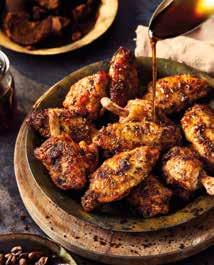
Try something different this International Chicken Wing Day with a fresh take on a familiar favourite. This coffee and maple syrup chicken wing recipe from Country Range offers a gentle balance of sweetness and savoury depth, creating a flavour profile that feels both comforting and distinctive.
16TH JULY – NATIONAL CHERRY DAY
Celebrate National Cherry Day with a refreshing dessert from Opies that’s light, playful and perfect for all menus. Made with Opies Black Cherries with Kirsch, this vibrant granita delivers bright cherry flavour with a subtle grown-up twist.
Thanks to Opies, Rowse, MAGGI® and Country Range.


6TH JUNE – NATIONAL FISH & CHIPS DAY
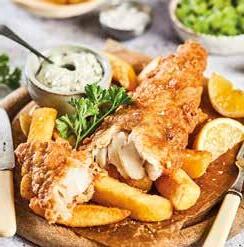
Turn National Fish & Chips Day into a celebration of crunch and consistency. With Country Range MSC Battered Haddock and Signature by Country Range Double Crunch Fries, chefs can serve up a pub classic that never misses the mark. Light, crispy batter, fluffy fish and fries with serious staying power.
21ST JUNE – FATHER’S DAY
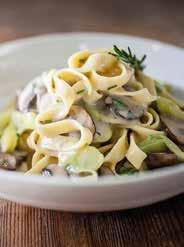
Try something deliciously comforting this Father’s Day with a creamy twist on a classic favourite with this creamy leek & mushroom tagliatelle recipe from MAGGI®. Perfect for Father’s Day menus, it’s a dish that feels indulgent without fuss, giving dads a plate of comforting flavours they’ll remember.


NAME: Max Migliorato
BORN AND RAISED: Born in Rome but raised in the US, Italy and the UK

JOB TITLE: I’m El Jefe - the boss of my own Mexican restaurant, together with my wife Vickie
PLACE OF WORK: Fiesta Mexicana, Fuerteventura
HOW LONG HAVE YOU WORKED IN THE CATERING INDUSTRY? Technically only a few years directly, but it has been a lifelong interest and passion.
WHAT IS THE MOST ENJOYABLE PART OF YOUR JOB?
It’s the interaction and chats with customers once they have eaten. Making their experience special. They leave you their hard-earned cash, the least you can do is try to make their experience memorable. This is why we bought ponchos and sombreros so that they can take pictures as a memento.
WHICH CHEF DO YOU RESPECT THE MOST AND WHY? Rick Bayless in Chicago, a master of Mexican cuisine, learned in Mexico, and Gordon Ramsay, because he really understands the business side of things.
WHAT IS YOUR MUST-HAVE KITCHEN GADGET?
For me it’s the tortilla press. Can’t make tortillas at pace without one. We average six tortillas a minute with one of them.
WHAT’S YOUR TIP TO CUT WASTAGE IN THE KITCHEN? Get an excel spreadsheet. Write all the dishes on the first row and all the ingredients on the first column. Then place ticks accordingly. If any fresh and perishable ingredient only goes into one of the dishes you are serving, scrap it. If you don’t sell enough in one week, your fresh ingredients go in the bin. Make sure all your prep and ingredients have more than one use.
WHAT IS YOUR TOP TIP FOR SOMEONE STARTING OUT IN THE CATERING INDUSTRY? Do your market research. Is there a market for what you want to do? Is it very competitive? What is your breaking point in daily sales and is it achievable. I see too many places starting with great ideas and turning to flipping burgers after 3 months. Location is fundamental. Some locations just don’t allow you to do what you want to do.
WHEN DID YOU KNOW YOU WERE GOING TO BE A COOK/CHEF? I always knew. I used to shadow my mum and grandma in the kitchen, stealing secrets with my eyes.
WHAT INGREDIENTS DO YOU MOST LOOK FORWARD TO WORKING WITH IN SPRING? I want to start again using Nopal in spring. That is the Cactus that generates prickly pears.













Pub Heroes Celebrate 43 Years at the Rose & Crown Public House

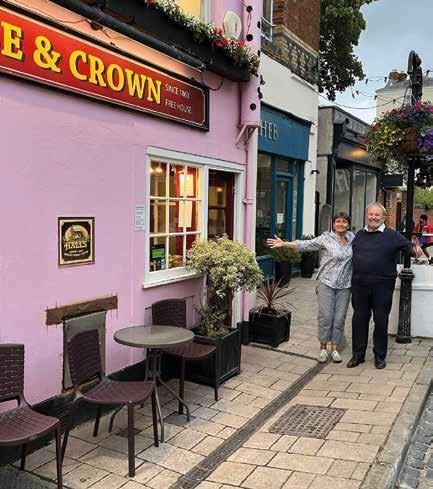
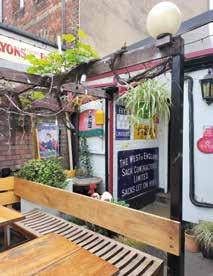
Celebrating 43 years at the Rose & Crown in Oxford earlier this year, Andrew and Deborah Hall’s passion for the pub trade hasn’t diminished even in the most challenging of times. Based on North Parade Avenue, one of the city’s most popular shopping streets, the Rose & Crown first began pulling pints back in 1863 with Andrew and Deborah taking over on the 21st February 1983.
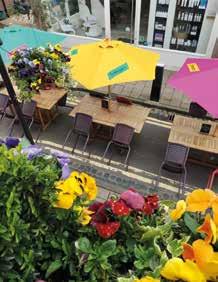
A beautiful, traditional English public house in the truest sense, the picturesque pub is small with seating for just 40 people but oozes warmth and charm. With pubs across the UK and Ireland beset on all sides by a tornado of challenges and desperate for a successful summer, Andrew and Deborah have been proactive by investing in a new glass roof for their courtyard seating area.
“People are definitely drinking and visiting the pub less, especially the younger generations,” says Deborah. “We used to be busy from 5pm until last orders but people seem to head home earlier. Lunchtime drinking is a thing of the past as well, so you have to adapt.”
“Being a small pub with just 40 seats, we have always been a bit restricted in what we could do. The courtyard has always been a great place to eat and drink but the English weather can make it difficult. The new glass roof cover is fully retractable but more importantly fully wind, rain and cold proof so guests can eat and drink outside in confidence and comfort.
We’re excited about what it can offer us this spring and summer.”
The menu is a small and simple yet sumptuous selection of British pub classics and Deborah has run the kitchen since the couple took over. “When we first took the pub on, we were definitely more wet-led but that has changed, especially over the last 20 years where food has become more important,” she notes.
“Our menu offers a concise selection of home cooked traditional pub grub. It includes a freshly made soup each day, a homemade fish pie and punters just looking for a snack
can enjoy a pint or a half of sausages. The Country Range brand is a regular in our pantry, especially the seasonings, bouillons and sauces.”
A proud family endeavour, the couple’s son Adam is also now a key part of business and is crucial in ensuring the pub moves with the times, while retaining its character. “Adam does a fantastic job running the accounting and buying side of things, which is good because eating and drinking habits have changed and he probably understands the younger generation and trends better. For example, we now have a great selection of non-alcoholic drinks, which is becoming increasingly important.”
While thankful of the Labour U-turn on business rates for pubs in January, Deborah feels more was needed and is far from convinced it will be enough for many pubs.
“The U-turn was just a sticking plaster. The industry has been on its knees since Covid and for many pubs, the support package announced by the Chancellor in January was just a stay of execution.”
https://roseand crownoxford.com/


Lettuce is a staple in the hospitality sector, valued for its freshness, versatility, and visual appeal. Although mainly eaten raw, you can cook with lettuce in more ways than you would expect – from stir-fries to braising, steamed and sautéed, chefs can choose from dozens of varieties, including crisphead, romaine, butterhead, and looseleaf, each offering distinct flavours, shapes, and textures.
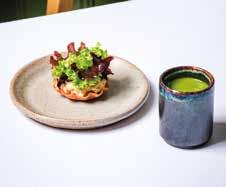
Use crisp outer leaves in salads and sandwiches, then sauté or braise tougher ones for soups and stir-fries. Chop stems into slaws or stocks for extra crunch and flavour. Blend wilted leaves into sauces or smoothies. Even scraps can flavour broth, helping you use every part and cut waste.
1 /
My lettuce tart features Lollo Rosso from Tarleton, lightly sprayed with beer vinegar, one day old Kirkham’s cheese curds, elderflower and Tarleton tomato relish, caramelised chicory, and a fresh lettuce gazpacho.
This dish is all about celebrating Lancashire produce at its best. The beer vinegar brings a gentle acidity that lifts the natural bitterness of the lettuce without overpowering it, while the creamy curds and sweet tomato elderflower relish balance everything beautifully. Credit: Sean Wrest, Head Chef, Aven Restaurant
2 /
At Omboo, we enjoy utilising seasonal ingredients within our South-East Asian-inspired dishes. One of these includes Gindara Saikyo Miso-yaki; a classic Kyoto dish of black cod marinated in sweet Saikyo miso and gently grilled until caramelised. This is a dish I love to cook because of its balance of richness and restraint. Grill slowly and serve with hajikami to refresh the palate, all served on top of a warmed bed of lettuce. Credit: Kasun Jayasooriya, Head Chef at Omboo, Sopwell House
3 /
Lettuce is underrated when fat and seasoning do the heavy lifting. I love quickly charring baby gem in a hot pan with olive oil and garlic, then finishing with lemon zest and sea salt for depth and balance. Credit: Kate Styles, Founder, Keto Kitchen Lytham
4 /
For my chicken supreme with charred baby gem, fried kale and tarragon jus, soak the baby gem lettuce for a few hours in cold water, before rinsing them through, making sure to open them to allow the water to go in. Allow to dry, then cut in halves length wise, season with extra virgin olive oil and Maldon salt, and place it into a charcoal grill for a few minutes both sides.
Credit: Marilena Ungureanu, Head Chef at The Brasserie, Sopwell House
5 /
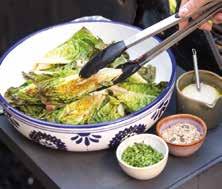
If you have never barbecued a gem lettuce before, then this is your sign! It’s time to elevate your BBQ game with a fresh, smoky twist and my char-grilled baby gem Caesar Salad is your new go-to side dish. With crisp lettuce charred to perfection, smothered in a tangy sunflower seed and hemp seed dressing with vibrant toppings, this salad is anything but ordinary.
Credit: Charlie Tomlinson, Founder, Wild Root






Archery, climbing, canoeing, orienteering, kayaking are just some of the activities on offer at children’s residential adventure camps throughout the country. Schools work with adventure camps to provide programmes to help children develop confidence, teamwork and practical skills. Catering at these camps requires a flexible menu of nutritious food to keep children active throughout the day, providing meals for high volumes while accommodating dietary needs and preferences.
PGL Beyond runs several adventure camps across the UK and recently won the School Travel Awards Best Residential Experience, which is voted for by teachers. Tracey McCormick, Head of Catering, PGL Beyond, says “We’re conscious that for many, this could be the first time staying away from home so it’s important to make sure everyone is comfortable with the food options.”
Their menus consist of children’s favourites such as home-made lasagne, but is supplemented at lunch and dinner with a 17-item self-serve salad bar combining basic salad items with a variety of options such as noodles, pasta, grains and cold meat dishes. Tracey says “It’s an opportunity for our catering teams to repurpose ingredients safely and reduce food wastage. It’s rewarding to see children trying something new and becoming more confident in their own food choices.”
Last year PGL Beyond achieved Coeliac UK’s Gluten Free Accreditation as recognition for its strict standards, staff training and safe gluten free food preparation. Tracey says “Catering for guests with dietary needs is a huge part of what we do. Party leaders complete dietary information forms

in advance of their visit, so we are well prepared. At the centres, allergen information is available via a matrix and on product labels at self-serve counters. ‘Ask About Allergens’ stickers are displayed on the glass of serving counters and matching badges are worn by catering staff during service which prompts students to ask about allergens every time they dine.”
The company offer a “Fussy Eater Guarantee” ensuring that no child ever goes hungry. Tracey explains “If the menu doesn’t suit some children, we provide alternatives. We often find children tend to try new things at PGL that they wouldn’t normally eat at home.”
During the peak season, Active Learning Centres cater for up to 600 people a day. Simon Caple, head of catering and facilities says; “A hot breakfast is a must, as well as healthy snacks in the afternoon such as flapjacks, trail mix or popcorn to keep everyone energised throughout the day.”
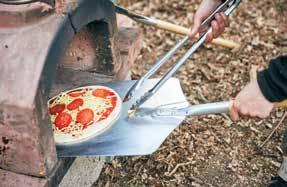
Wood-fired pizzas are the most popular item “because the students choose the topping and watch us cook it for them. We always encourage children to try new foods and often find they enjoy experiencing food they may not have tried before. Our go-to dish is old-fashioned cheese on pasta – it rarely fails to please.”
Visit https://adventureholidays.pgl.co.uk/ and https://activelearningcentres.co.uk/ for more information.

With a summer of sport on the horizon, it’s a prime opportunity to encourage diners to gather and share food whilst celebrating or commiserating! To help inspire your summer specials, we’re turning up the heat with a trendy new product and getting creative with crowd-pleasing pizzas.
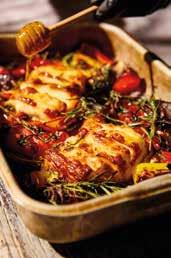
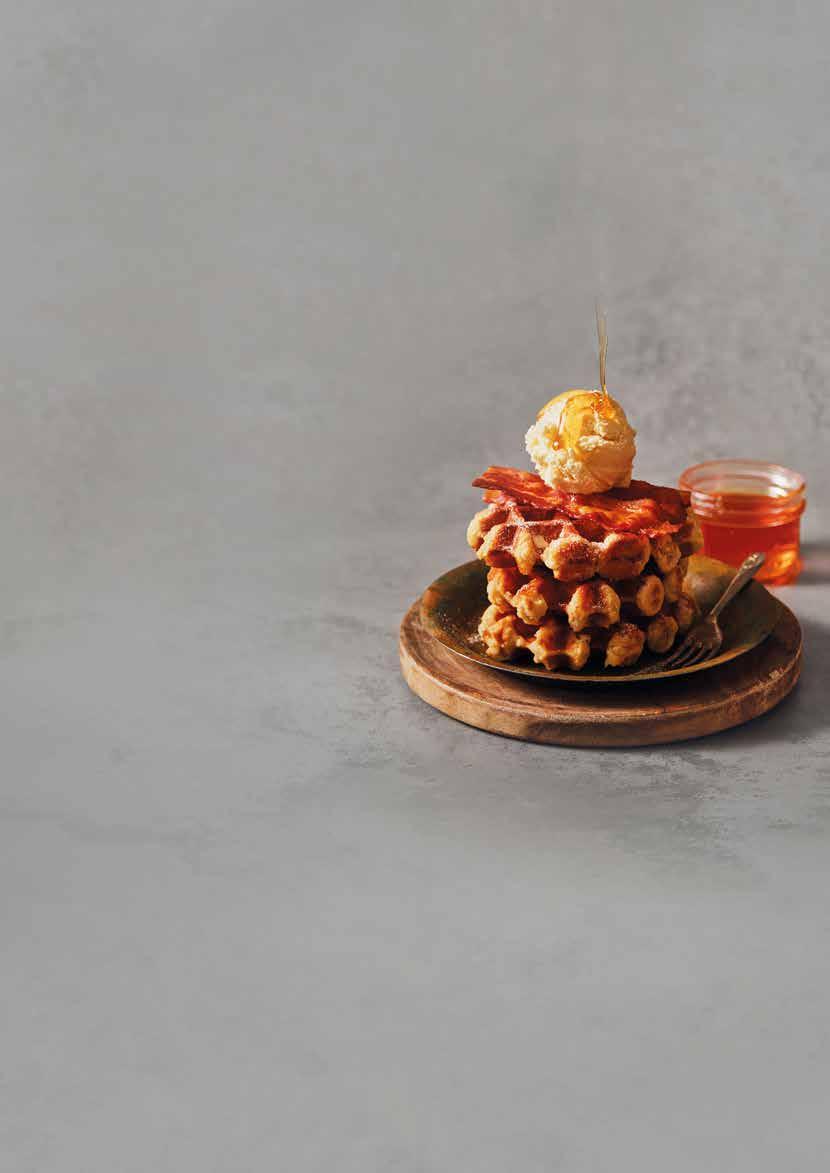
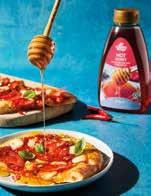
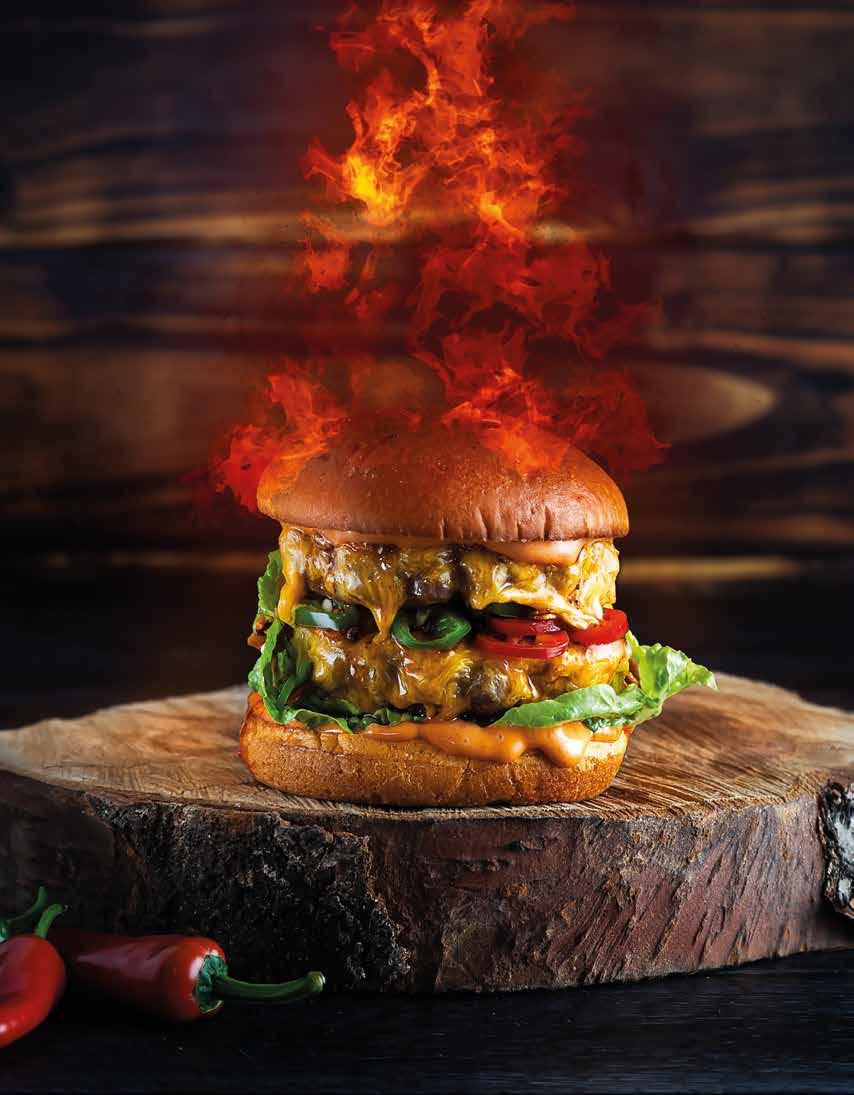
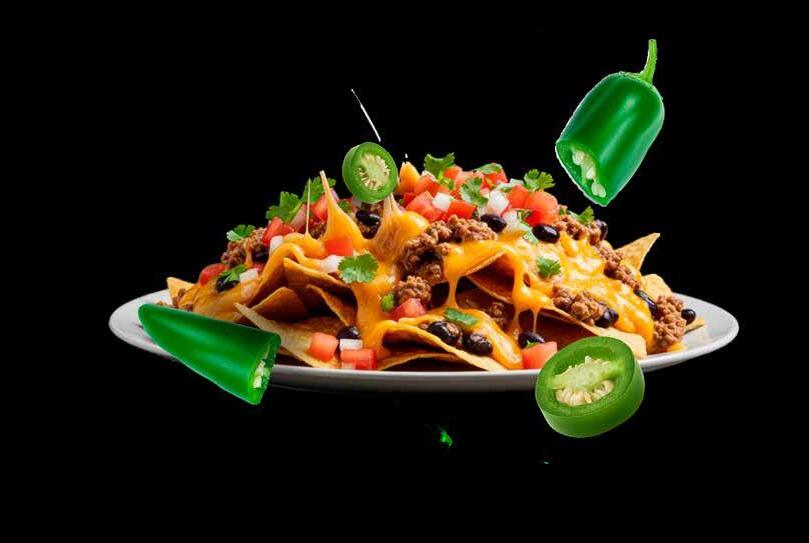
To spice things up this summer, we’ve launched our Country Range Hot Honey. A titanic trend right now, our new Hot Honey is a blend of sweet honey infused with fiery yet flavoursome chillies. With consumers of all ages enjoying a little spice and heat, whatever time of day, these spicy twists on brunch classics can set your menu on fire.
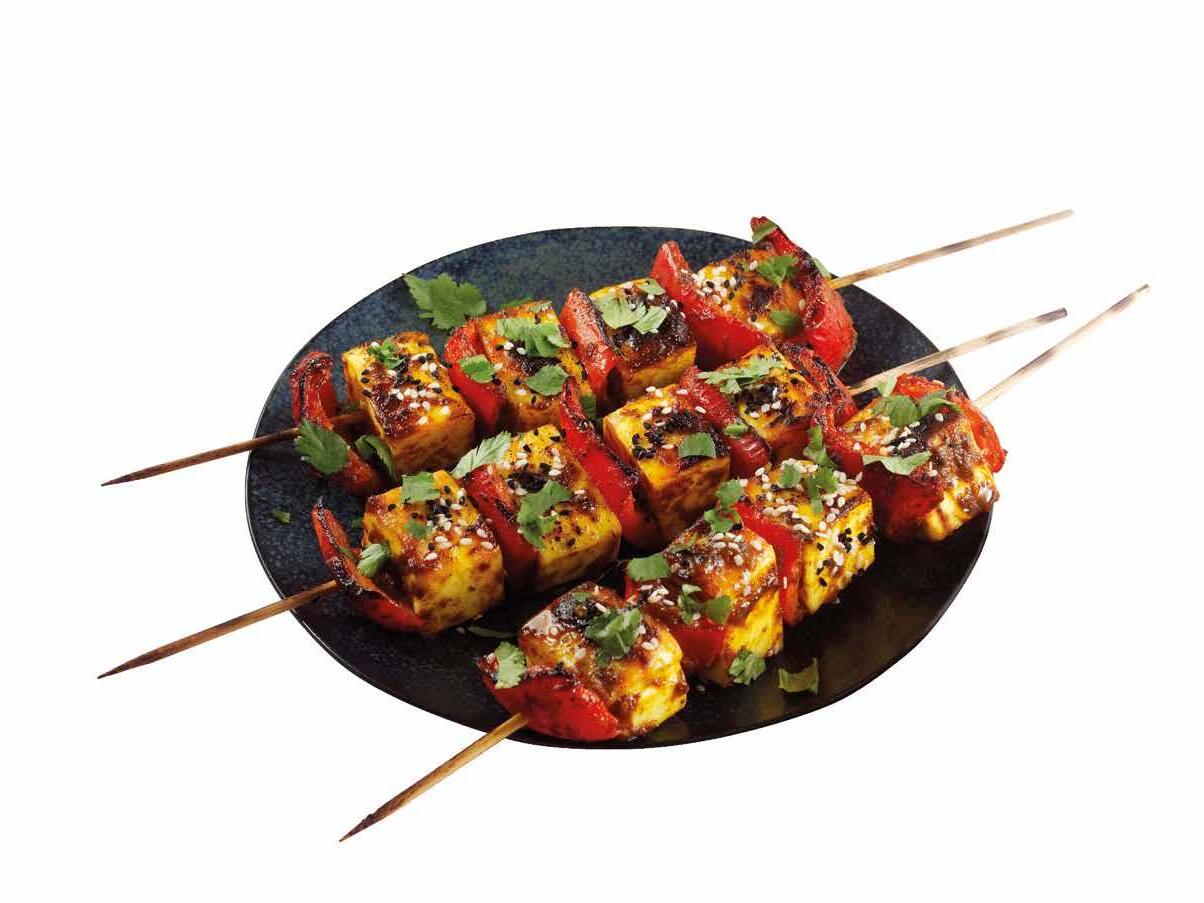
Hot Honey Halloumi and Roasted Vegetable Salad
NEW COUNTRY RANGE HOT HONEY PACK SIZE: 5 X 720G
Of course, hot honey drizzled over a hot, cheesy pizza is the ultimate in sweet, spicy and salty deliciousness. With the World Cup around the corner, why not take inspiration from the host countries and add some pizza specials to your menu. Perfect all day and night to keep customers fed and staying for the duration!

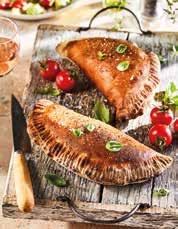
If you want to add some Mexican spice to your pizza menu, why not put a twist on the classic enchilada or burrito by wrapping everything up into a calzone? Try chilli con carne, fajita chicken or five bean chilli folded into freshly stretched dough served with side of guacamole and sour cream. Perfection!
Loaded Waffles with Bacon and Hot Honey

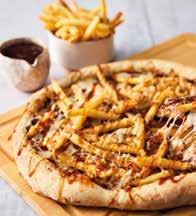
This Canadian classic translates perfectly for British and Irish customers – chips, cheese and gravy on a pizza - what’s not to like?


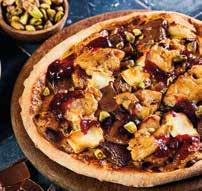
For sweet tooths and dessert sharers, this all American mash up combines cookie dough and pizza. Get creative with toppings or provide a pick ‘n’ mix selection on the table for diners to customise their own.
From the versatile Country Range Multi-Use Tomato Sauce to Signature by Country Range
Sourdough Style Doughballs and Neapolitan Style Pizza Bases we have everything you need to get creative with your menu this summer.

SCAN HERE
For more inspiration, download our Pizza and Doughballs Recipe Guide
The Signature by Country Range
Sourdough Style Doughballs are a cost effective way to provide a quality product while managing cost and efficiency in the kitchen – Care Home Chef
Every few months we’re speaking to the creators, tastemakers and quality controllers who ensure our portfolio remains unassailable when it comes to quality, choice and value. This month is the perfect time to catch up with Eddie Gill – the buyer who has added Country Range Hot Honey to our growing portfolio.


Name: Eddie Gill
Role: Category Buyer
Joined: September 2025
Day-to-day responsibilities: Working with suppliers on pricing and keeping a close eye on potential new products we could introduce to our own brand ranges, while also searching for new suppliers who could add value to Country Range Group member wholesalers and you, their customers.
Best part of your job: Having suppliers come and showcase products to the team.
How do you ensure the Country Range portfolio remains the best? Regularly tendering and product sampling my categories to ensure they are the most competitive and highest quality available in the own brand market.
Favourite Country Range product: The new Country Range Hot Honey, of course!
Favourite dish: Chilli con carne (spicier the better).
Favourite chef: Gordon Ramsay, loved the recent series on Netflix.
Signature dish: Toad in the hole.
Hobbies outside of work: Playing football, fitness and following Leeds United Football Club.
Most exciting food trend for 2026: Fricy, a mash up of fruity and spicy flavours.

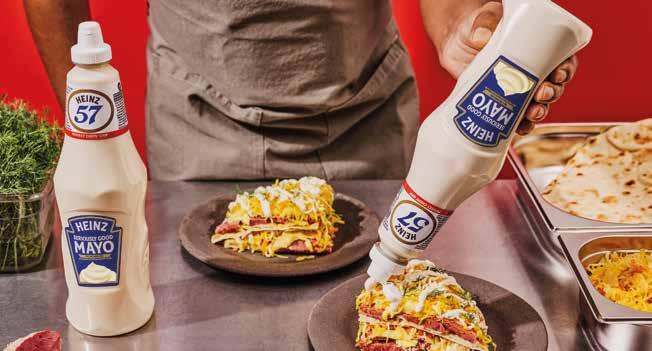
The nation's favorite mayonnaise*
Authentic rich & creamy mayonnaise loved by chefs and guests







• Superior performance
• Unmistakable, authentic taste
• The perfect consistency.



One of the key trends this year is smaller plates and snacking. There are many factors driving this trend - from convenience and time constraints to social media influences, cost management and a consumer desire to sample multiple dishes and flavours. However, a little-known influence is the increased number of people taking weight loss drugs.
Around 2.5 million people in the UK are using drugs such as Ozempic, Mounjaro and Wegovy, also known as GLP-1 medications. This not only means they eat considerably less when dining out, but it also affects their social behaviour. Research from KAM reveals that people using GLP-1 medications go out less frequently (32%) with 57% more likely to reserve dining out for special occasions.
Katie Jenkins, marketing director, KAM, says “For operators, the risks are clear - lower average food spend per head, decline in high-margin alcohol sales and shorter dwell times as customers leave earlier. But there are opportunities too - premiumisation of smaller portions and growth in low, no and mid-strength alcohol and functional drinks.”
The retail sector is already responding with M&S introducing a “Nutrient Dense” range and Asda launching four Protein Power Pot ready meals.
Capitalising on this burgeoning market, Heston Blumenthal’s restaurant The Fat Duck in Bray has already introduced a “Mindful Experience” which scales down their tasting menu. Otto’s in London has created a “small appetite” tasting menu, while Chipotle has introduced a new high protein menu including a “High Protein Cup” filled with pieces of steak or adobo chicken to meet demand.
Dr Sarah Schenker, registered dietitian and nutritionist, explains that GLP-1 medications not only drastically reduce appetites, but also slow digestion. “This has the effect of restaurant diners feeling full very quickly and unable to finish their plate.”
She suggests offering flexible portion sizes of half plates, tasting plates and lighter dishes made with easy to digest ingredients. “The focus should be on nutrient-dense ingredients such as lean proteins, vegetables
and whole grains to ensure diners receive good nourishment even from smaller servings,” she adds.
“Items such as kimchi, sauerkraut, pickled vegetables, miso, kefir dressings or lightly fermented slaws will add flavour without heaviness and can be served in small, manageable portions,” she says. “Miso-based broths, fermented vegetable garnishes or yoghurtbased dressings can complement a dish while keeping it digestible and portion-appropriate.”
The best option is to include smaller plates or lighter bites within the main menu rather than creating a separate one.
“With 3.3 million people expressing an interest in using weight loss drugs... the trend for smaller plates and high protein meals looks like it will continue for the foreseeable future.”

Pippa Mason from Book A Party says “If you create a separate menu for smaller portions, it can sometimes make people feel awkward whereas having those items already built in the main menu allows customers to order what suits them without overthinking it. Offering smaller plates also helps prevent food waste as customers can order the right portion for them rather than leaving half their meal uneaten.”
With 3.3 million people expressing an interest in using weight loss drugs, according to a UCL study, the trend for smaller plates and high protein meals looks like it will continue for the foreseeable future.
Make the most of this huge opportunity!’
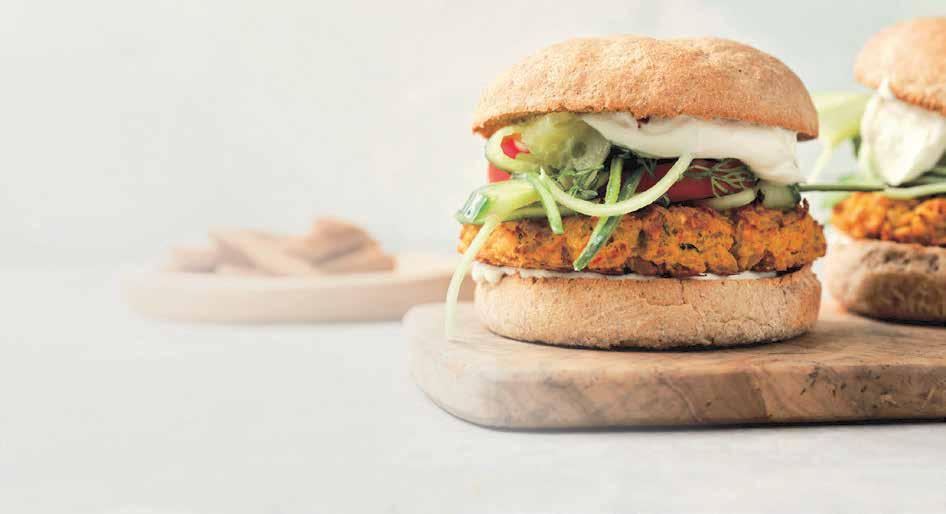
Add some ‘zing’ to your menu with our spicy bun. Vegetarian and Vegan Friendly | 4 inch | Sliced | 65g
Cliffs of Moher in the Burren Region, Ireland


HOW TO MAKE FOOD TOURISM WORK FOR YOUR BUSINESS
Food tourism is exactly what it sounds like: people travelling for something to eat or drink that feels rooted in the place they’re visiting. Sometimes that’s a reservation at a destination restaurant, or it can be a morning spent grazing through the neighbourhood with a guide to learn why a city cooks the way it does and meeting the people behind the produce.

“Flexible
For operators, it’s one of the most practical ways to grow without reinventing your business. Social media trends and a desire to build itineraries around “only here” experiences have pushed food and drink to the forefront of visitor activities, so whether you run a café, pub kitchen, bakery, or restaurant, the opportunity to put your business on the tourist-trail is yours for the taking.
Treat it like a trade relationship and agree on:
• A reliable time window and the ability to serve quickly
• A defined tasting that won’t change every day
• A price that works for both sides, with clear terms on commission or net rates
• A short, accurate story the guide can tell consistently
Make the tasting work for your kitchen with one or two items unique to you:
• Build the portion to be eaten standing or moving if needed
• Batch prep where possible, but don’t compromise quality
• Agree dietary and allergen processes in writing
• Decide how photos and social tags will be used because tours can be strong content engines
You become the destination - tourists choose you because your menu, setting, story, or signature dish feels inseparable from the place. You become part of an experience - tourists encounter you through a structured product like a food tour, a tasting trail, producer visit, or cookery class.
Both routes reward the same fundamentals: strong storytelling, smooth service at pace, and clear information for guests who don’t know the local food vocabulary yet.
Food tours solve a choice-overload problem for tourists. In an unfamiliar city, a guided route turns “Where do we even start?” into a paid plan with built-in local knowledge. For operators, they can be a steady midweek revenue stream, a way to reach travellers early in their trip, and promotion when a guide tells your story for you. Whether you’re one of the stops, or you’re building a tour in your own area, the “food + history + local character” format is what travellers book.
Flexible and adaptable, food tours are not just for cities. The Burren Food Trail in County Clare connects visitors with local food and the producers behind it. Ireland has promoted this concept nationally through Taste the Island,

which highlights food and drink experiences across the country and encourages operators to participate.
At Spirit and Spice in the Highlands, food and drink experiences are centred around the landscape and a sense of “off-thebeaten-track” adventure. It started with accommodation and evolved into cookery classes and hosted experiences in a home kitchen. The common thread is that visitors aren’t only buying lunch. They’re buying access, insight, and a feeling of place.
Whether you are looking to define your business as the destination, or want to create your own food tour, start with one clear promise such as “seafood and stories from the local harbour” rather than “a culinary journey” to give tourists something specific to be attracted to.
It is also important to design your service for visitors, not regulars. Visitors often want earlier dining times, clearer directions, and a sense of what’s local without feeling embarrassed to ask, so make sure you put the basics on your website and booking pages.
The next step is to design the experience from start to finish and practice it before you go-live. Think of producing a run-list, such as a welcome drink, followed by a story, then some food and some recommendations of where to visit. You can also partner with local producers to create a comprehensive package. “Build your cuisine around local knowledge, seasonality, and strong relationships with producers. Having these authentic connections will really shine through to your guests,” recommends Petar Bebek, Chef, Maslina Resort.
Dietary requirements and allergens must also be thought about. Tourists are more likely to ask “Can you do…” because they can’t risk being unwell away from home.
Once you have a concept ready, partner with tourism bodies. VisitBritain, VisitScotland, Fáilte Ireland and local destination management organisations actively promote food-led experiences, but they need ready-to-sell products or concepts.
Food tourism isn’t a new invention. Some worldwide destinations have been refining it for decades, building structured experiences around markets, street food, wine regions, and family kitchens, so there’s plenty to borrow and adapt.





In Italy, Bologna markets itself as La Grassa, the fat one. Visitors arrive expecting pasta, ragù, mortadella and Parmigiano Reggiano. The city leans into that identity with cookery schools that offer hands-on pasta making classes.
Focusing on what your region does best, often taps into the reason why tourists visit. “Our cuisine highlights seasonal island ingredients, such as fresh Adriatic fish and seafood caught by local fisheries, Hvar olive oil, aromatic herbs, and local vegetables,” says Peter. “We also have a 7,000 sqm Organic Garden where we grow a vast amount of our own produce and where our guests can partake in foraging and learn more about local ingredients”
Alternatively, in Napa Valley, wine tastings have been transformed into full-day, bookable experiences. Visitors don’t just drink wine, they meet winemakers, walk vineyards, and learn about terroir. Tastings are tiered, often paired with food, and priced accordingly.
Food tours don’t have to be about traditional cuisine, in Melbourne, the city positions itself as a multicultural food capital. Food tours explore Greek precincts, Vietnamese bakeries, Italian delis and speciality coffee roasters within a compact area.
Many cities already have strong multicultural food identities. Birmingham’s Balti Triangle, Bradford’s South Asian cuisine, or Liverpool’s historic links to global trade. These aren’t side notesthey can be framed as cultural narratives that attract visitors. We are fortunate to already have great raw ingredients, the opportunity lies in shaping them into experiences that travellers can recognise, book and remember.
• Name the place, not just the ingredient. “North Sea cod” sounds more inviting than “cod”. If you can be more local, do it, but only if it’s true and consistent.
• Use one-line provenance cues. A short note like “smoked in-house” or “made with Isle of Skye lamb” gives visitors a story without overdoing it.
• Curate a small selection of dishes that are recognisably local, photograph well, and explain themselves.
• Give staff a repeatable script. A 20-second story about a dish, a beer, or local producer is what visitors remember and repeat.




Ryan Riley founded Life Kitchen, a not-forprofit cookery school for people whose taste has been affected by cancer, cancer treatment or Covid, with fellow chef, Kimberley Duke, eight years ago. Ryan was his mother’s carer from the ages of 18 to 20 and saw how chemotherapy changed her sense of taste. After her death, Ryan wanted to honour his mother’s memory and use his cooking skills to help cancer patients find flavour and pleasure in food. He has written several cookbooks including Life Kitchen and Small Pleasures. Earlier this year he was awarded The British Empire Medal (BEM) by the King in the New Year’s Honours List.
When did you know your career would be in food?
Not until after my mum died. Kimberley and I moved to London with my casino win (I won £28,000 from a £1 bet). Every Sunday we’d cook a dish from Jamie Oliver’s cookbook. That’s when I knew I wanted to work in food.
How did you feel being presented with the British Empire Medal (BEM) by the King in the New Year’s Honours list?
It was wild. Last year was difficult as I was unwell and Life Kitchen was on hold. I was lucky with my incredible father and sister who kept me going, but by the end of last year, I felt beaten down. I received a letter saying the Prime Minister had put me forward for a British Empire Medal and would I like to accept it? Of course I would! It puts my family in the history books. If Mum was here today, she would be blown away by it!
How did Life Kitchen come about?
All from a tweet. I tweeted I wanted to do a cookery class for people living with cancer and could anyone help? It went viral and I ended up on BBC Radio 4 The Today Programme. I’m grateful to the BBC for that, as it changed the trajectory of my entire life. For eight years we’ve helped over 100,000 people worldwide with cookery classes and
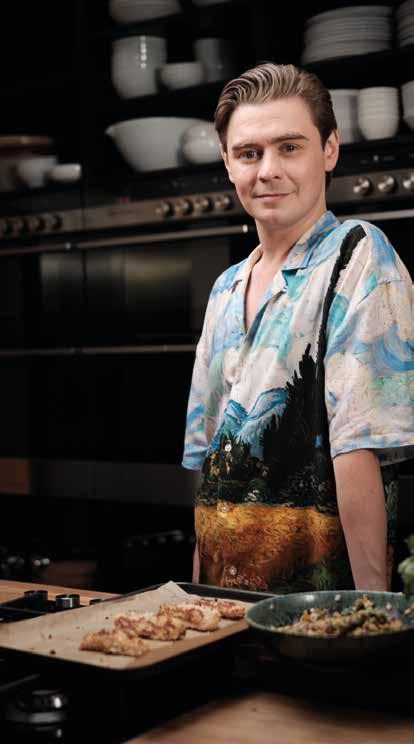
books. It has been a remarkable journey. It isn’t all about me – I have a great team including Professor Barry Smith, founder of the Centre of Study of the Senses who advises us on how flavour works scientifically and we translate this into delicious recipes.
Can you give some recipe examples? Pineapple Tacos – a slice of pineapple, folded and stuffed with prawns, chilli and lime. Or there’s Miso White Chocolate Sauce with frozen berries which combines sweet and savoury flavours. The whole idea of Life Kitchen recipes centres around the five tastes – sweet, sour, salty, bitter and umami. The key essential is umami, which is found in
“Ryan wanted to honour his mother’s memory and use his cooking skills to help cancer patients find flavour and pleasure in food.”


foods like soy sauce, mushrooms, miso, fish, seaweed and cheese. When you have more umami in a dish, it stimulates your other tastebuds to work harder. Miso is the one ingredient everyone should have in the store cupboard as it can improve virtually any dish where salt is required, you can add it to standard dishes such as spaghetti bolognese for example. You can also crush fennel seed into the béchamel sauce of a lasagne to make it more aromatic – 80% of our taste is smell. Even if someone can’t experience much taste, you want to give them a sensory experience.
What are your future plans?
We’re offering free Life Kitchen classes throughout the country. I’m writing a new cookbook. I’d like to do more TV. Although we do a lot of publicity, there’s still going to be some people who don’t know about us, so I want to reach them. Life isn’t a structured thing - you just have to run with it and see what happens. That’s where I’m at right now.
Visit https://lifekitchen.co.uk/ for more information.
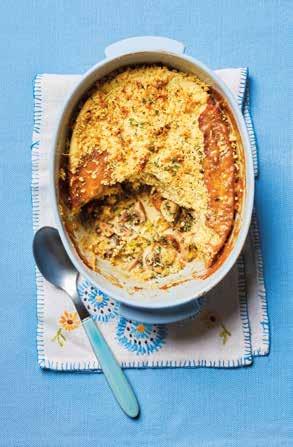
There’s so much more to a crumble than the sweet dessert after a Sunday roast (although that’s good, too) – in fact, a savoury crumble feels like pure indulgence. The miso, mushroom and parmesan ramp up the savoury flavours in this recipe, giving it a depth that outstrips its simplicity.
SERVES 2
INGREDIENTS
• 75g unsalted butter
• 1tsp miso paste
• 1 leek, sliced
• 100g chestnut mushrooms, chopped
• 4tbsp double cream
• Salt and ground black pepper
For the crumble
• 50g unsalted butter
• 100g plain flour
• 2–3 thyme sprigs, leaves picked
• 75g parmesan, grated
METHOD
1. Preheat the oven to 220°C/200°C fan.
2. Put the butter and miso in a pan over a medium heat. When the butter has melted, add the leeks and cook them for seven minutes, until they are soft but not coloured. Add the mushrooms, season with a good pinch of salt, and fry for seven minutes, until they are browned.
3. Season the mix with pepper and then transfer it to a small ovenproof dish and stir through the double cream. Set aside while you make the crumble.
4. In a bowl, rub 50g of butter into the flour until you have breadcrumb-like texture. Mix through the thyme leaves and parmesan.
5. Scatter the crumble evenly over the mushroom mixture and bake the crumble for 20 minutes, until the top is golden and the filling is bubbling up around the edges.
by


Packaging sits in the awkward space between food safety and food waste. Operators need it for deliveries, takeaways and foodto-go, but the sector’s footprint is hard to ignore. WRAP’s last full snapshot of hospitality and food service waste was 2.87 million tonnes a year, with 1.3 million tonnes of that classed as packaging.
How do you manage packaging and waste reduction within your business? Let us know at editor@stiritup magazine.co.uk
Parliament’s Environmental Audit Committee highlighted the scale of the situation back in 2017, citing 2.5 billion coffee cups used and thrown away each year in the UK, with extremely low recycling rates. A newer industry report referencing WRAP-linked research puts annual cup volumes higher, at around 3.2 billion, which shows how quickly “small” items add up.
The sharpest reduction of packaging waste can come from packaging that is not thrown away. Reuse systems for cups and containers are now moving beyond pilots into managed logistics, with track-and-trace and centralised washing operations.
Ireland is also pushing in a similar direction.
ReCircle Ireland, backed by VOICE, has been trialling reusable food containers to cut single-use packaging without compromising service speed.
Operators still need grease and moisture barriers, especially for burgers, curries, and sauces. Innovation is speeding up in plastic-free coatings and paperboard engineering so packs can go through mainstream recycling
or composting routes more reliably. Just Eat were early adopters in 2021, trialling seaweed-coated fibre boxes, expanding on an existing partnership with Notpla, who piloted the use of seaweed-based sauce sachets, preventing over 46,000 plastic sachets from entering our homes.
Deliveroo’s latest move, announced earlier this year, is also a good example of designled progress. It launched a new takeaway box created through its Sustainable Packaging Challenge in partnership with Sheffield Hallam University and BioPak. The winning design features a new locking mechanism to prevent spillages.
Some of the boldest moves come from independents who choose friction over waste. Boston Tea Party stopped serving takeaway hot drinks in single-use cups in 2018 and says the decision has saved over one million cups from landfill, pushing customers towards reusables and deposits. Customers can either bring in their own reusable cup, or borrow a loan cup for £2, which is refundable when it is returned.
England’s ban on certain single-use plastic items came into force in October 2023, and packaging choices now carry more compliance risk as well as reputational risk. The best operators are treating packaging as part of their overall offering, not an afterthought. They’re choosing designs that stack, seal, return or compost, and they’re building systems around it.
For operators, the direction of travel is clear: fewer materials, fewer components, and more packs designed for real-world sorting, or better still, designed to come back and be used again.
Fay



Fortified
Bulk
Portion

With over 35 years of experience as a chef, there have been many highs for Steve Lowe as he has worked across the public and hospitality catering sector. In fact, there are not many types of kitchens that he hasn’t worked in.
“I was always helping my parents out in the kitchen as a kid but my work experience placement really opened my eyes to the buzz, comradery and excitement of a professional kitchen,” says Steve.
“I was offered a job on completion of the placement, which I readily accepted, and food became my sole career focus.”
Joining Chetwynd House last year, Steve celebrated his first anniversary working in care recently. “The work at Chetwynd is very different to my previous roles and I have to say, I love it here.
At Chetwynd, the food is central to our offering, and I see it as a real honour to be able to interact and get feedback from our residents and guests. It’s a very personal service.”
“I’m very lucky to have Dionne and Julie who are not just incredibly talented cooks but hugely passionate about the job. Traditional dishes are the most popular, but our residents are always willing to try new dishes such as the moussaka or our slow-roasted belly pork which caused a stir recently.”
“We use Country Range across the board, and I have been massively impressed with the offering, quality and value this past year. Pasta, rice, seasonings, spices, sauces – you name it, it never lets us down.

With a couple of vegan residents, the Country Range Vegan Sausage Roll has been a huge hit recently but this recipe is something we’re really proud of that will be on the menu in May.”
• 800g Country Range Chopped Tomatoes
• 400ml Country Range Red Cooking Wine
• 500ml beef stock (made using Country Range Beef Bouillon)
• 2 Country Range Dried Bay Leaves
• 1kg diced beef
• 2 onions (diced)
• 3 carrots (diced)
• 1 stick of celery (diced)
• 1 clove of garlic (finely chopped)
• Sprig of rosemary
• Pinch of salt
1. In a large heavy bottomed pan, add a little olive oil. Heat the pan, then add the seasoned beef and brown all over. This will keep it moist as the juices have been sealed in. Drain the meat into a colander.
2. Add more oil to the pan and then add the diced onions, diced carrots, celery, bay leaves and garlic.
3. Add pinch of salt and cook for approx. 10 mins over a medium heat. Then add the tin of chopped tomatoes and cook for another 4/5 mins.
4. Next add the red wine, beef stock and rosemary. Bring to the boil and then add the drained beef into the sauce.
5. Cover and simmer. The sauce will reduce and build flavour. This will take approx. 2hrs or until the beef can easily be cut with a fork. This dish will taste better the day after when the flavour has married together.
6. Serve with garlic bread, ideally pappardelle pasta and grated Parmesan cheese.

There is still time to delight in your very own, homegrown tomatoes this summer, but you will have to move fast. To give you a helping hand, we caught up with master gardener and serial author Holly Farrell, whose latest book The Tomato Grower launched this spring.
There are so many reasons to grow our own – cut costs, reduce food miles, be more sustainable, re-connect with nature, for physical and mental health - the list goes on and on. For chefs though, the biggest benefit is flavour.
As soon as you pick a tomato or any other fruit or vegetable, the sugars inside will start converting into starch. Therefore, the shorter the distance between the plot and the plate, the sweeter and tastier the tomato or produce will be.
If you’re growing from seed, you want to start them off in seed trays or small pots in March before planting out after the risk of frost has passed in May. There is still time for this summer though, just skip the germination and buy some young plants from the garden centre this month. Get them in pots or the ground and you will be in tomato paradise by July.
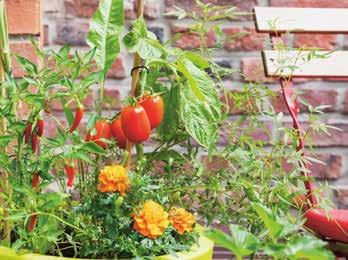
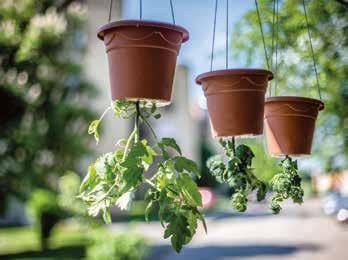
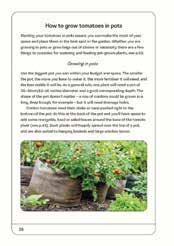
If you have space in some beds or even a vegetable patch, you will get bigger yields, but tomatoes grow well in pots, grow bags, hanging baskets and even on windowsills. Just make sure they’re in a sunny spot.
If they are in pots, you need to be even more vigilant, but the best strategy is to check each day. The soil shouldn’t be wet but moist. I stick my finger in the soil to test as sometimes it looks dry on top but is wet underneath and vice versa.
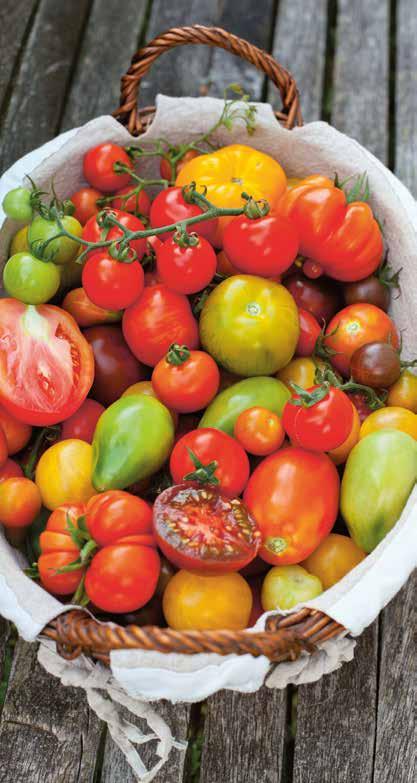
As well as the flavour, people underestimate the multi-sensory power of the tomato. For a start, a healthy tomato plant loaded with fruit is a thing of beauty. Then there is the smell of the tomato foliage, which brings on huge waves of nostalgia and bliss for so many.
Whether a pub, restaurant, school or care home, you could have mini tomato plants on tables that diners can pick and eat from. They could be trailing up walls and in the beds of your outdoor areas and garden. Or you could utilise them in hanging baskets with tomatoes cascading down.
“As well as the flavour, people underestimate the multi-sensory power of the tomato. ”

Some of my favourites for beginners would be:
Gardener’s Delight – an incredibly reliable variety providing a prolific amount of great tasting, sweet red cherry tomatoes.
Sungold Cherries – providing generous harvest throughout the season, these yellow cherry tomatoes are juicy and sweet.
Principe Borghese – these are my go-to tomatoes for drying and when making sundried tomatoes.
Britain’s Breakfast – a delicious red plum tomato with great texture and flavour. Similar to a San Marzano.
Marmande – an heirloom French beefsteak tomato variety with a large, bulbous shape, colour and glorious taste.
If we have a good summer, you could be harvesting tomatoes from June through to September or even October so there is plenty of time to be creative.
The Tomato Grower’s Handbook by Holly Farrell was published by Bloomsbury on the 26th February 2026.

Traditionally, green tomatoes would get made into chutney, jars of which still proudly line up for a rosette in the produce tent at village and country fairs – but you could make this golden jam instead. Lemons add zing to the indisputably ‘green’, herbaceous flavour of the tomatoes, making a fresh preserve ideal for brightening a winter slice of toast.
MAKES ABOUT 1.3KG/2LB 14OZ INGREDIENTS
• 1.2kg/2lb 10oz green tomatoes, washed and halved
• 5 unwaxed lemons
• 1kg/2lb 3oz granulated or caster sugar
1. Preheat the oven to 100°C/210ºF. Wash and dry your jars and lids thoroughly and put the jars into the oven to sterilise.
2. Use a teaspoon to scoop out the seedy innards of the tomato halves and put them into a jelly bag or piece of fine muslin. Finely chop the tomato flesh by hand or in a food processor and put into a large pan.
3. Zest the lemons into the pan, then squeeze the juice into a measuring jug. Add the squeezed-out lemon halves to the jelly bag, tie up the top and add it to the pan.
4. Top up the juice in the jug with water to give a total volume of 1.2 litres/2 pints and add the liquid to the pan. Bring to a simmer over a medium heat and cook gently, stirring regularly, for about 45 minutes, until the tomato flesh is soft.
5. Squeeze as much liquid as possible from the jelly bag back into the pan (wear clean rubber gloves to protect your hands), then discard the contents of the bag.
6. Add the sugar to the pan, stirring constantly until it is dissolved, then turn the heat to high and bring the jam to the boil. Boil rapidly until it reaches the setting point. Test this by putting a teaspoonful on a cold plate. If the jam is ready, once cool, the surface will wrinkle up when pushed gently.
7. Remove the pan from the heat and the jars from the oven. Scoop out and discard any scum that’s formed on the surface (this is just impurities in the sugar), then ladle the jam into the warm jars and screw on the lids.
8. Once cool, label and store in a cool, dark and dry place; it will keep for a year or more.

DIP IT DRIZZLE IT TOP IT

PERFECT FOR TEX-MEX FAVOURITES, STREET FOOD TWISTS OR FLAVOUR-PACKED SIDES.

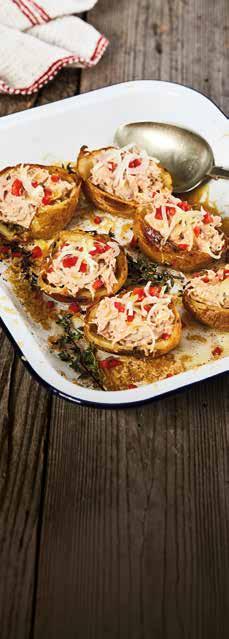
Observed on 2nd May each year, World Tuna Day celebrates this versatile fish and emphasises the importance of sustainable fishing practices. Paul Dickson takes this opportunity to hero the humble tinned tuna and its versatility in the kitchen. Tinned tuna can often be overlooked as a main ingredient on menus, but don’t underestimate its quiet popularity and don’t be afraid to hero it in new ways, not just on your classic sarnie
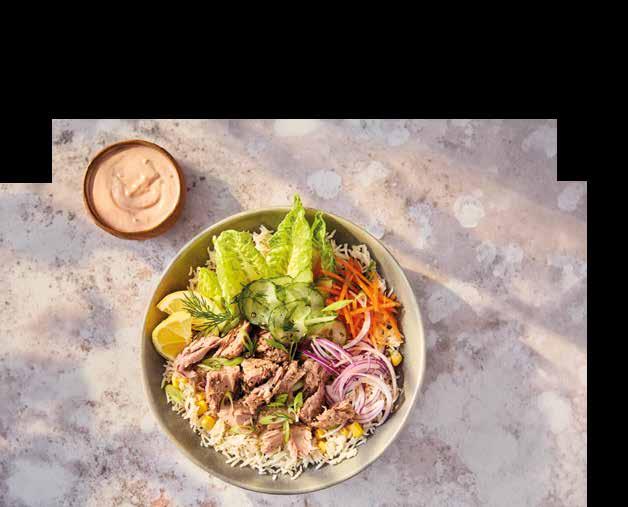

Tuna can take on some bold flavours so it works perfectly in a rice bowl with crunchy veggies and a good balance of spices. Think of it almost like a deconstructed sushi roll. You could make the bowls customisable which would work well in schools or colleges, encouraging students to make healthy choices whilst ensuring a good nutritional balance.

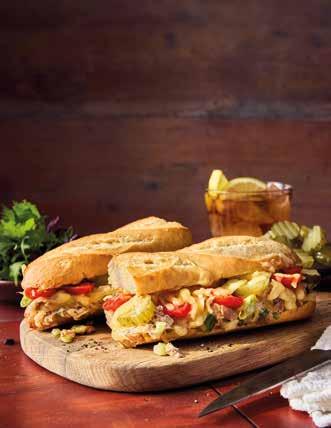
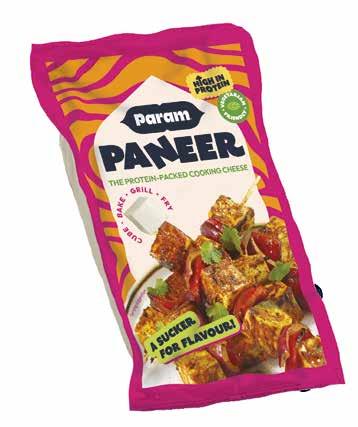
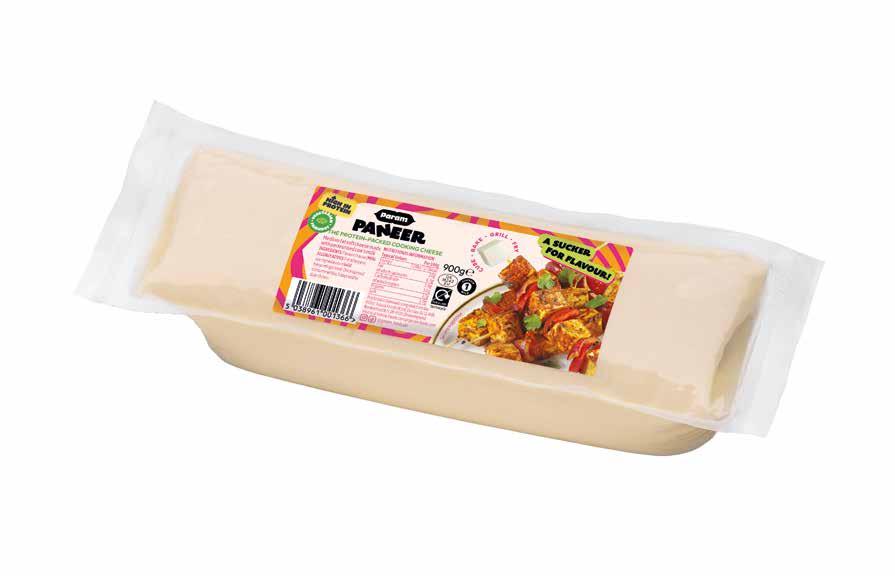
Ok, we all know the tuna sandwich is an absolute classic, so why not give it the American treatment and create a tuna hoagie? The name hoagie originates in Philadelphia and is the term for a huge customisable sandwich. My version is the ultimate tuna sarnie, a baguette stuffed with tuna, mayonnaise, chopped pickles, dill, tomatoes, lettuce and onions. Absolutely banging and could easily stand



ABHISHEK KUMAR
Executive Chef, Tanishq Restaurant & Bar
Our menu draws inspiration from regional Indian traditions, from the depth of Northern curries to the vibrancy of coastal and street food classics such as Calcutta Samosa Chaat. We adapt these influences by refining structure rather than altering flavour, using precise spice layering, controlled heat, and slow reduction to create balance and clarity within each dish. Authenticity comes from freshly roasted spices and disciplined technique. Our Delhi-6 Butter Chicken exemplifies this philosophy: corn-fed chicken in a silky tomato and butter sauce, elevated with elegant presentation and thoughtful texture, preserving heritage while delivering a sophisticated, modern fine-dining experience.

IZZY COHEN
Development Chef, Henley Bridge
Indian flavours can be woven into different fusion foods to create some really interesting street food dishes. I use Karamix’s brilliant product range to make Indian-inspired pizzas by spreading aubergine pickle onto naan bread then topping with cheese, red onion and Tandoori chicken or paneer. Garnish with fresh coriander and a drizzle of mango chutney. Alternatively, spice up your dessert menu with a cardamon biscuit-based cheesecake with a mango and white chocolate filling.

MICHELLE YOUNGER
Marketing Director, Aimia Foods for Professionals
Taking inspiration from the bustling streets of India, Tea India puts a twist on traditional chai, fusing this with other native ingredients, including vanilla, cardamom and ginger. This allows the brand to stay loyal to its roots whilst still delivering a truly unique selection of teas. It is not just ingredients and flavours that delivers an authentic experience. By fostering partnerships with charities, such as Rainforest Alliance, Action Village India and the Harris Freeman Foundation, Tea India strengthens this relationship and gives back to the country that inspired its delicious and warming range.

SANJAY AGGARWAL
Chief Spice Officer, Spice Kitchen and author
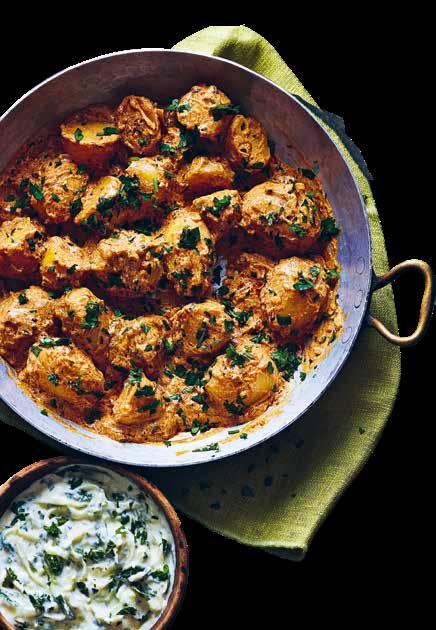
Bombay Aloo is one of those dishes that takes me straight back to my mum’s kitchen. She’s been vegetarian her whole life, so I grew up eating simple, flavour-packed dishes like this. It’s proof that humble ingredients can become something truly special.
Potatoes, a few spices, a spoonful of yoghurt, that’s it. I love that it’s naturally vegetarian and works for anyone trying to eat more meat-free meals. Using tinned potatoes makes it even easier and more affordable. And if you finish it with a little cream or butter? Suddenly it feels like a proper treat.

For the full recipe for Sanjay’s Bombay Aloo scan the QR code or visit www. stiritupmagazine.co.uk/
SHEZAD ASLAM
Managing Director, Aagrah Foods
Dishes from the Mughal dynasty inspire many of our products – rich flavours which together deliver a culinary experience, not just a meal. Indian street food is also a major influence; simple ingredients combined to create exciting flavours but always with customer convenience front of mind.
In Indian cookery, flavours can be adapted but techniques must remain the same; for example, the traditional tarka method which sees spices tempered on high heat before other ingredients are added, has passed down through generations. Fusion food is trending, but creating flavours using centuries-old techniques helps inspire innovation.
A recent twist on a classic is our Chicken & Spinach Hydrabadi Pasta Bake.

JOHANNA WITCHELL
Marketing Manager, Tilda
Indian street food has a history stretching back centuries, shaped by changing tastes and cultural influences. Rice sits at the centre of this story, folded into crisp dosas, tossed through tangy chaat, cooked into fragrant pulaos, or served steaming hot with chutneys, yoghurt, herbs, and crunch.
Sanjay ’sBombay Aloo
Some must-try rice-based street food favourites include Bhel Puri, a classic Mumbai snack made with puffed rice, potatoes, chutneys, and spices; Poha, a light yet comforting dish of flattened rice cooked with onions, peanuts, and lemon; Dosa, a thin, crispy pancake made from fermented rice and lentils; and Tawa Pulao, where rice and vegetables are cooked together on a large iron griddle with aromatic spices.
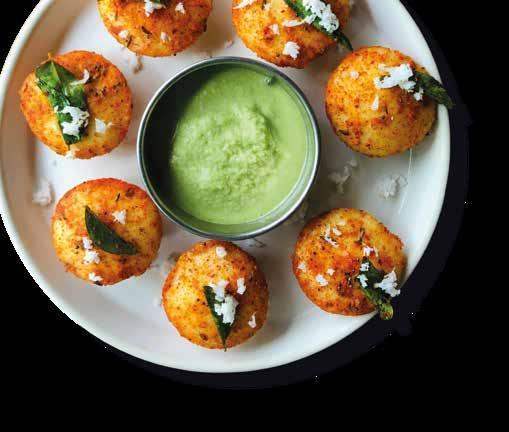

The regions that sing in a tandoor led London restaurant are Punjab, Hyderabad, Goa and Kerala. Punjabi classics like tandoori chicken and butter chicken give us that smoke, char and creamy depth our guests expect, while Hyderabadi lamb dum biryani brings perfumed rice and gentle heat.
We borrow the tang and crunch of chaat to balance tandoor rich plates. A tempered yoghurt, green chutney and a scatter of sev or puffed rice over charred cauliflower or chicken tikka brings lift without rewriting the dish.
For lunch, we run a simple kati roll format using tandoor grilled fillings, pickled onions and herb chutneys in a flaky paratha for portability. On specials, a vada pav inspired spiced potato bun sits alongside grills to offer that comfort hit with proper lasooni chutney. It keeps the menu lively but grounded in flavours people recognise.

PAUL HAWKINS
Development Chef, Nestlé Professional Regional Indian street food classics continue to inspire our innovation, with Mumbai favourites like Vada Pav guiding how we develop bold yet accessible flavours. We modernise these dishes by using plant forward ingredients and trusted seasonings like MAGGI Masala Magic to deliver authentic spice in formats that suit today’s diners. Street food trends — especially quick, flavour packed vegetarian snacks — heavily influence our approach. Essential techniques such as fresh spice tempering, vibrant chutneys, and finishing touches like MAGGI Hot & Sweet Sauce ensure true depth of flavour. A standout creation is our Saag Vada Pav, a fresh, plant based twist on a beloved classic.
made with MAGGI®
INGREDIENTS
For the vada
800g potatoes, peeled and diced
570g frozen spinach, defrosted
20ml vegetable oil
3g mustard seeds
For the batter
400g gram flour
2g ajwain seeds
• 2g turmeric powder
• 1g salt
For assembly
• 10 bread rolls
• 150ml MAGGI® Hot & Sweet Sauce
• 100g green chutney
METHOD
To make the vada
• 2g curry leaves
• 10g coriander, finely chopped
• 2g cumin seeds
• 6g garam masala
• MAGGI® Masala Magic, to taste
• 2g baking powder
• 10g ginger purée
• 10g garlic purée
• 200ml water
• 200g green chillies
• 50g garlic chutney
1. Boil the potatoes until just tender, drain thoroughly and mash lightly.
2. Heat oil over medium heat and add mustard seeds, curry leaves and cumin seeds. Allow to crackle then pour over the potatoes.
3. Add squeezed spinach, chopped coriander, and MAGGI® Masala Magic.
4. Mix gently until evenly combined then shape into 10 uniform patties.
For the batter
1. Combine gram flour, ajwain, turmeric, salt and baking powder, then add ginger and garlic.
2. Gradually whisk in water to form a batter.
For assembly
1. Dip each potato patty into batter, then fry for 3-4 minutes until golden and crisp. Drain any excess oil.
2. Dip chillies into remaining batter and fry until crispy.
3. Slice bread rolls. Spread green chutney on the base, place fried vada, drizzle MAGGI® Hot & Sweet Sauce and top with garlic chutney.
4. Skewer fried chilli on top for authentic presentation.
Credit: Nestlé Professional










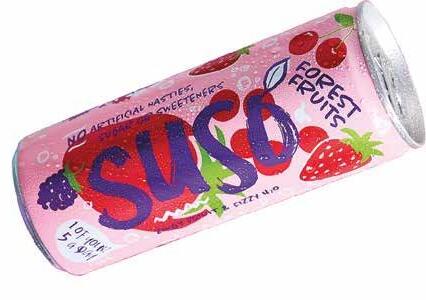






Having worked at some of London’s most renowned bars, Ahsoka Wallace has been in the industry for over 10 years. A passionate advocate for equality, diversity and inclusion within hospitality, they are currently working with the Drinks United Advisory Council to create a more inclusive and supportive industry.

WHAT TRENDS ARE YOU SEEING IN THE BEVERAGE SECTOR?
I am seeing a lot more tea-based infusions being used within cocktails. I find with more access to technology, there are more methods from cold to warm based techniques for bringing out more flavours with botanicals. I think the reason this is resonating with guests is because it’s a fun and creative way to add flavours to a cocktail that might inspire you to make your own cocktails at home.
WHAT ARE SOME SIMPLE BOTANICAL TWEAKS THAT CAN INSTANTLY MAKE A CLASSIC DRINK FEEL MORE PREMIUM?
Making prickly pear syrup is an easy way to add a more exotic and premium serve to your cocktail, maybe an allspice infusion in a coconut rum to create a rum punch. I think it depends on the classic serve and how much elevation you want to add.
WHAT ARE SOME OVERLOOKED UK BOTANICALS THAT DESERVE MORE ATTENTION ON COCKTAIL LISTS?
I would love to see more use around pine needles, birch sap and nettle. Forestry, earthy, herbaceous flavours would be really fun to see in cocktails. More experimenting is absolutely needed to see how cocktails will continue to grow and evolve over the next few years. I once made a nettle cordial for a nonalcoholic everleaf spritzer. I think there are some great foragers out there and local based producers who can help you get some amazing ingredients.
HOW CAN OPERATORS USE BOTANICALS TO REDUCE WASTE?
Firstly, using a season menu will help you focus on what is fresh at the time, what is in season, for example, more spices in winter and more fresh fruits like strawberries in the spring. Secondly, understanding what your local farmers markets offer - can you source ingredients from local suppliers who sometimes offer more sustainable, highquality products? Thirdly, be creative with
your products. Find ways to reuse ingredients and perishables within your bar. Make sure you’re not over-prepping and have an idea of how much stock you need to hold each week.
HOW MUCH STORYTELLING AROUND PROVENANCE AND FORAGING REALLY MATTERS TO THE GUEST?
There are so many bars out there, the menu offers a chance to educate your guests on why you’re the best venue to drink at. One of my favourite bars, Lab22 in Cardiff, often forages ingredients and works with local producers. This is reflected in the menu with artwork, info about the producer, and where and why they sourced it. They even detail the local area.
HOW CAN BARS MAXIMISE A PREMIUM EXPERIENCE?
Presenting the drink and spraying with an atomiser can elevate a serve because it gives you the opportunity to add a personal touch. I once used an absinthe that was locally made. It gave me an opportunity to give the guest a cocktail with a nice glass and as I handed them the cocktail, I sprayed the absinthe and told the story of where I got it from and the ways in which they could enjoy the drink.





How long have you been a chef?
I have been a chef for nearly 33 years, it feels like a long time, but it also feels like those 33 years have passed in the blink of an eye. I fell into cooking at a young age of 16 and am still going strong now at 49. I love every minute of it.
What is your current role and what does it involve?
My current role is that of chef-owner of both House of Tides & Solstice, and concept chef at Solaya in London. My main role is to guide, nurture, and develop my teams across all sites, with the help of my head chefs and restaurant managers. My job is to help drive standards, creativity, and the overall dining experience at each site by providing them with the support and tools to achieve this.
What was your first job in hospitality?
My first job in hospitality was working for my uncle at the age of 16 at his hotel in Gateshead as a kitchen porter.
As a 16-year-old, I wanted to become a bar manager, but I was too young to serve alcohol, so my uncle suggested I work for him in his kitchen, helping the chefs wash dishes and then moving on to carry out some kitchen duties. Not long after, I realised that I wanted cooking to be my vocation – and I also decided that if I was going to cook, then it would have to be to a high standard.
What’s been your worst cooking disaster?
My worst cooking disaster was as a young commis working at the Mandarin Oriental in Knightsbridge. The legendary chef Nico Ladenis was in for lunch, and the executive chef asked me to fetch the langoustine stock from the fridge so that he could make his signature langoustine risotto for him and his guests. I grabbed the wrong container and gave
the chef the container that had orange juice in it, which was for the chefs to drink during service rather than the langoustine stock. When I realised, I told the head chef, and he told me to keep quiet till after service. It was still a tasty risotto, but yeah, I got a good rollocking that day.
What do you like to eat?
I’m a huge fan of all types of shellfish; they are without doubt my favourite to cook and to eat as a diner, but my favourite are scallops, raw or cooked, I could eat them all day long.
How do you achieve a work/life balance?
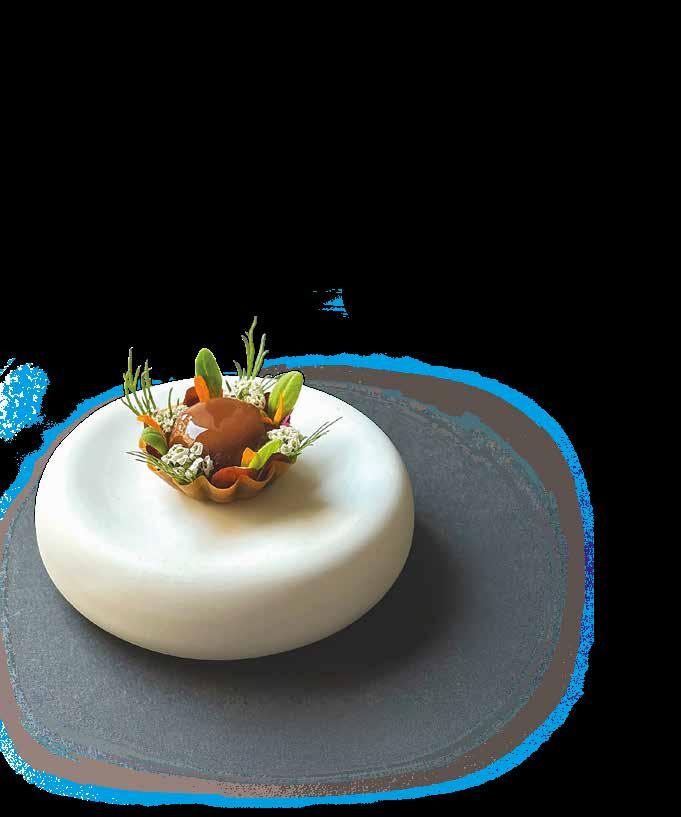
We decided to operate both restaurants over a 4-day week and close for the other 3 days of the week. This gives my team an extra 52 days off a year. I think this is important as we all work so hard and commit long hours to our craft that it’s important that the extra day off allows us to recharge, spend more time with our families or take up out-of-work hobbies.
“My job is to help drive standards, creativity, and the overall dining experience at each site”
If you were on a desert island, what five ingredients would you take with you?
Olives, salt and butter so I can catch and cook my own food, also wine & beer, probably more important than the food!
What’s the best dish and drink combo for after a shift?
Cheese and wine for sure. A nice sneaky glass of red along with any leftover cheese from the cheese board is the best combo ever, a proper chef's treat.
Do you have a favourite pub in the UK?
Tough one, there are so many pubs that I do really like, but the one that probably stands out for me the most has to be the Devonshire in Soho. It’s become a bit of an iconic pub in the UK now and a bit of a destination for chefs. When I go to London, it’s always the place to meet up with friends for a proper pint of Guinness.
What is your favourite cookbook?
Without doubt White Heat by Marco Pierre White. It was the first chef book that I bought; his approach to food really got me engrossed in the fine dining world.
What are your culinary ambitions for 2026 and beyond?
I have achieved so much already, from winning Chef of the Year at the National Restaurant Awards to being the first chef to achieve a Michelin star at two restaurants at the same time on the same street in Newcastle. I do have a few things in the pipeline but if truth be known, future ambitions include achieving a second Michelin star for Solstice, nurturing the next generation of chefs, ensuring the longevity and sustainability of existing restaurants, and continuing to innovate and evolve.
McVitie’s is thrilled to unveil its latest innovation – Club Layers Orange. Building on the heritage of one of McVitie’s most iconic brands, this new creation delivers the same satisfying chunkiness you know and love, now with layers of crunchy wafer, vibrant, orange-flavoured cream, and a smooth milk chocolate coating.
This isn’t just another chocolate bar – it’s a versatile, single-serve snack designed to boost sales and delight customers across multiple occasions:
• Grab & Go: Perfect for on-the-move snacking, offering convenience without compromising on taste.
• Work & Study: A sweet pickme-up for busy professionals or students – ideal between meetings, with lunch, or during study breaks.
• Social Moments: A modern upgrade to traditional treats, great with a hot drink, shared with friends, or savoured solo.
• Drive Footfall & Sales: Already a retail success, Club Layers Orange is gaining momentum in out-of-home channels, increasing


NESCAFÉ has introduced its Frothy Coffee range in convenient 1kg tins, making it easier than ever to enjoy a café-style latte or cappuccino at home or in the workplace. Made with expertly roasted Arabica and Robusta coffee beans and fresh milk sourced from British dairy farmers, the blends deliver a creamy taste topped with a thick, long-lasting velvety froth.

Simply add hot water to create a smooth, indulgent drink in seconds, offering the comforting experience of a coffee shop favourite whenever you need a pick-me-up. The NESCAFÉ Frothy range is known for its balanced flavour and texture, providing a consistently smooth and satisfying cup.
With no hydrogenated oil and no artificial flavours, it’s a coffee you can feel good about enjoying.




The new KNORR Professional Mushroom Bouillon Powder is expertly crafted for versatility, this plantbased bouillon enhances everything from soups and sauces to risottos, pastas, and seasonings— infusing each dish with consistent, savoury depth and authentic mushroom flavour.
✓ Suitable for vegans and vegetarians –plant-based and inclusive

✓ No allergens to declare* – safe for a wide range of dietary needs
✓ Meets PHE 2024 salt targets – supports healthconscious cooking
✓ Consistent depth of flavour – trusted by chefs for reliable results and

‘
’
Ingredients supplier Henley Bridge has expanded its range of syrups to include a 22-strong range of maple products.
The St Lawrence Gold selection includes four Grade-A maple syrups in different flavour profiles influenced by the time of harvest: First Tapped (lighter and more delicate); Pure Amber (rich taste, caramel tone perfect for baking or as a topping); Pure Dark (stronger caramel tone); and Late Harvest (rich flavour perfect for meat glazes or to add a sweet hit to vegetables or desserts). Completing the range are a pure maple spread (160g) and pure maple sugar (125g).

is increasingly being used in a variety of ways across sweet and savoury menus.”
St Lawrence Gold is the only UK brand approved by the Vegan Society and has won multiple Great Taste and Quality Food awards.
In addition, Henley Bridge is also offering three entry level maple syrups. The Maple Shack brand is available in 620g bottles in amber, dark and a blend of dark maple syrup (30%) and 70% liquid sugar syrup.















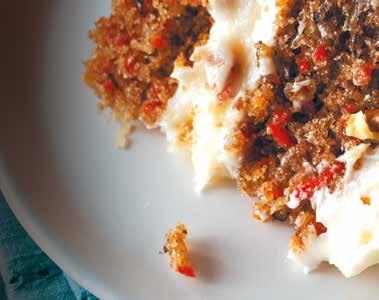

• 1:1 swap with dairy
• Rich buttery taste

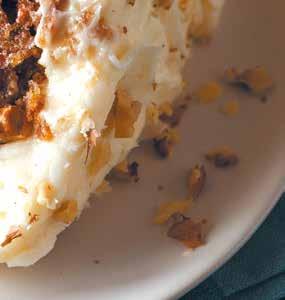



• No artificial colours or flavourings
• Suitable for freezing








Head Chef at the Old Stamp House in Ambleside, Cumbria, Will Bolsover had an interest in food since he was eight years old. Inspired by his father, he was thrown in at the deep end of hospitality at a young age and has been excited about cooking up a storm ever since.
What were the key steps in your development and career?
I began with working in a professional kitchen at age 17. It taught me the basics, and it taught me discipline, responsibility, among other key values. Whilst doing this, I was doing my Level 2 and 3 Diploma in Professional Cookery at Kendal College. This was key in strengthening those values even more and also having fun and meeting people. But the biggest step in my development was joining the Old Stamp House team. I feel like I’m in my element there, and Ryan has taught me a lot!
Who are your food heroes?
From a very young age, I was watching cooking programs on TV; Keith Floyd, Rick Stein, Hugh Fearnley-Whittingstall, Ramsay, and Bourdain. I was obsessed! So, these guys would be top of the list!
Who have been your key mentors?
Through college, Richard Axford was one of my tutors; he was very supportive and a great tutor!
But Ryan Blackburn has been the main one. I started my time with him when I was very young, and he’s taught me a lot, not just about food and cooking but also about business and how to run a successful restaurant.
What’s the best thing about the hospitality industry?
There are a lot of great things about our industry! I love making people happy; it brings me so much joy. So, to see customers smiling and enjoying the food is a great feeling.
You meet a lot of very interesting people; lifetime relationships are formed. Also, for me, the thrill of service, it's hard to explain, but it gives you a buzz, a little adrenaline hit in a busy service, the pride and satisfaction seeing everything you’ve worked towards leave the kitchen and go to the guest.
When you have a great team, it makes everything easy. Service becomes a rhythm, you almost get into a trance, you don’t have to speak, everyone knows what needs to be done.
What cuisines, flavours, ingredients or techniques are you loving right now?
I’m loving protein done simple: whole fish, whole birds, game, just cooked nicely and served with simple garnishes. I’ve been getting into preserving a bit more, too, smoking/salting/drying.
Tell us about your place and the philosophy behind the food?
The Old Stamphouse is a little
basement restaurant in the centre of Ambleside, which once served as an office to the poet William Wordsworth, where he worked as a distributor of stamps (hence the name).
Old flagstone floors, low-beamed ceilings, make dining here like stepping into local history. The philosophy behind the food is serving quality local Cumbrian produce. All of our food has a story behind it, a little bit of history and always links to Cumbria in one way or another. We keep flavours clear and balanced.
In a nutshell - local produce, traditional methods, modern precision, approachable.
https://www.oldstamphouse.com/




Poach some prunes in a light sherry syrup and allow to cool. This is the perfect topping for a rich chocolate mousse. Drizzle the syrup, add fresh raspberries and a small shortbread biscuit for extra texture.
For a quick prune and coconut chutney, soak desiccated coconut in water until it has been absorbed. Mix in diced prunes, sugar, a little tamarind, chopped apple, raisins, ginger and cider vinegar with mustard seeds and then season. Simmer lightly before storing in a jar after cooling.
Great for those colder days, try a classic cock-a-leekie soup, a light chicken broth with leeks and prunes.
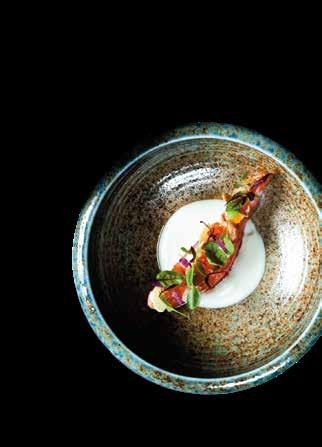
For a delicious twist, fill the prunes with chicken liver which has been cleaned, seasoned and seared lightly. Wrap with streaky bacon, skewer and grill on both sides finishing with a honey and mustard dressing.
I love making some energy bars or balls by mixing a selection of seeds, nuts, dried cranberries, goji berries, prunes, apricots and honey for a breakfast or snack boost.
Country Range
Prunes in Syrup
Pack Size: 2.7kg

This month our guest chef is a true legend of the industry. David Mulcahy has supported and shaped the careers of thousands of chefs through his work for the Craft Guild of Chefs and as organiser of the National Chef of the Year, Young National Chef of the Year and Chairman of Springboard FutureChef. Here’s David’s innovative five suggestions on how to incorporate prunes in your menu:
SERVINGS 12 COOKING TIME 30 MINUTES

PREP TIME 30 MINUTES PLUS ONE HOUR COOLING TIME
INGREDIENTS:
• 500g Country Range Short Crust Pastry
• 200g Country Range Prunes in Syrup or Pitted Prunes
• 6 beaten medium free-range eggs and 1 egg yolk
METHOD
• 225g caster sugar
• 150ml water
• 500ml double cream
• 100ml Armagnac
• 1 scraped vanilla pod or 1tsp vanilla essence
• 10g icing sugar
1. Pre-heat the oven to 170°c / 150°c fan.
2. Place 125g of caster sugar and water into a small pan and bring to the boil. Add the prunes and remove from the heat. Allow to cool for one hour.
3. Roll out the pastry to 3mm and line a 25cm tart ring. Line with tin foil and fill with rice. Bake blind for 20 minutes then remove the tin foil and rice. Brush the inside of the pastry with egg yolk and bake for a further five minutes.
4. Whisk the eggs and 100g of caster sugar in a bowl until smooth and creamy. Heat the cream, Armagnac and vanilla to a simmer then pour over the whisked eggs.
5. Place the marinated prunes in the pastry case and gently pour over the egg and cream mix. Bake in the oven for 15/20 minutes until it is just set and has a wobble. Dust with icing sugar and allow to cool.
In this issue’s Advice from the Experts feature we’ve heard all about premiumising the experience around drinks you serve. We’re giving one reader the chance to win a Flavour Blaster Pro2 Kit that does just that.
The Pro2 is built for professional use with minimal training required, producing both clear and aroma filled bubbles depending on your different menu requirements. The theatre added to the customers experience means you’re able to upgrade your menu, charge more per serve as well as letting your drinks do the marketing for you. Guests record it, photograph it, and share it — making fun, high-impact marketing effortless.
Less chasing content. More organic reach. A win for your guests and your brand.
The prize consists of 1 x Flavour Blaster Pro 2 (including standard Black Nozzle and Black Badges), 1x Micro USB-C Charging Cable, 1 x Slide Lid Aroma Tank, 4 x Citrus Aromas, 1 x Bubble X (180ml), 1 x Bubble X Bowl and an atomiser.
For your chance to win, enter online or send an email titled ‘Pro2’ along with your name, contact details and name of your Country Range Group wholesaler to competitions@stiritupmagazine.co.uk

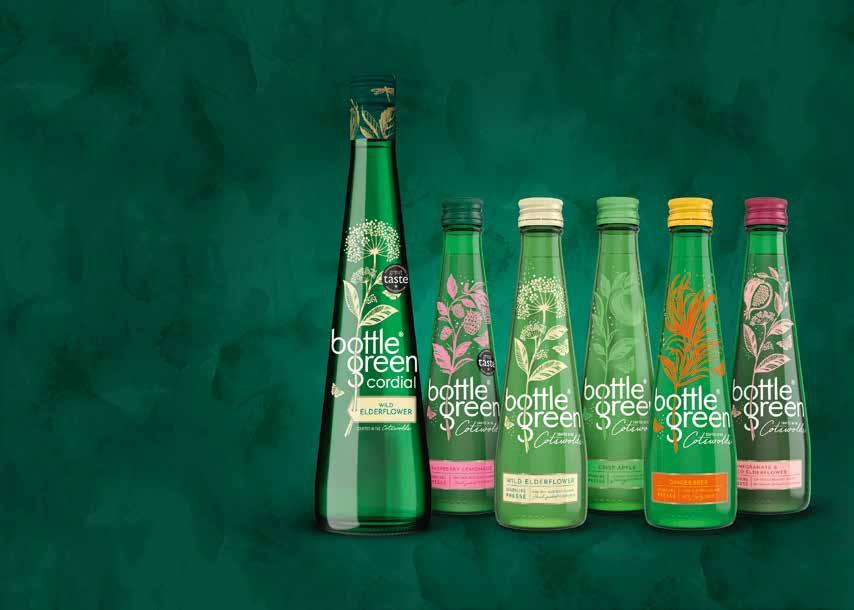
Cordial 6x500ml : wild elderflower
Sparkling pressé 12x275ml: wild elderflower, pomegranate & wild elderflower, crisp apple, ginger beer, raspberry lemonade
Sparkling pressé 6x750ml: wild elderflower, pomegranate & wild elderflower bottlegreen pressécans 12x330ml: elderflower, raspberry lemonade
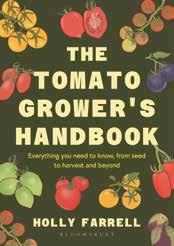
If our deep dive into all things tomato-growing in our Into the Wild feature isn’t quite enough for you, we’re giving three lucky readers the chance to win a copy of Holly Farrell’s ‘The Tomato Grower’s Handbook’.
The handbook covers everything you need to grow your own and enjoy your plants year on year, no matter what space you’re working with, including:
- Preparing the soil
- Sowing seeds
- Transplanting young plants
- Watering and feeding
- Pruning and propagating
- Tips and tricks to boost your harvest
- Troubleshooting advice for when things don’t go to plan
There is also information on different varieties to try, as well as simple recipes and ideas for preserving a glut, such as homemade passata, green tomato jam, a tomato salad that promises to maximise flavour and even a whole tomato pasta that makes use of the fruit, leaves and stems.
For your chance to win, enter online or send an email titled ‘Tomato’ along with your name, contact details and name of your Country Range Group wholesaler to competitions@stiritupmagazine.co.uk
You can now enter all of our competitions online. Simply scan this QR code or visit www.stiritupmagazine.co.uk
Closing date for the competition is 31st May 2026. All winners will be notified by 30th June 2026. Postal entries can be sent to: Country Range Group, 4 & 5 Jupiter House, Mercury Rise, Altham Business Park, Altham, Lancashire, BB5 5BY. Full terms and conditions can be found at: www.stiritupmagazine.co.uk/about