Food security for thousands of Mecklenburg county residents, and millions of Americans is on the line as debates over funding for the Supplemental Nutrition Assistance Program rage on in Washington.
The fate of the program is tied up in ongoing legal and legislative battles. On Oct. 24, the Trump administration said it would not continue to fund SNAP through the government shutdown. On Nov. 1, a federal judge directed the USDA to use emergency funds to pay for food aid in November following an Oct. 27 lawsuit from a 25-state Democratic coalition which argued cutting SNAP is illegal. The White House said it plans to pay partial benefits, despite President Trump’s Truth Social post threatening to withhold funding just hours earlier. However, a USDA official said
providing reduced benefits will take weeks to months.
Amidst this uncertainty are approximately 138,500 residents in Mecklenburg county who receive SNAP benefits. The county committed $740,000 to support residents, but that comes nowhere near the $24 million per month in benefits that normally come in from the program.
With the ongoing government shutdown, in addition to ongoing cuts to federal funding since Trump took office, local organizations say they saw the threat to SNAP coming. They are bracing for higher demand and increased need. Heidi Acker is the director of healthy initiatives and the food pantry at the Ada Jenkins Center in Davidson.
“We’re just wrapping up our numbers for October, but our first glance is that we served 830 people in the month of October,” Acker said. “That doesn’t equate to a number of families. I haven’t fig-
Surveys reveal declining trust in Honor Code, discomfort with free expression
Plus, a campus specific survey that looks at how students perceive academic integrity, free expression and campus climate.
New campus surveys were presented to students last week by the Institute for Public Good showcasing where Davidson students stand regarding free expression, political belonging and the Honor Code. The surveys found a significant decline in student trust in the Honor Code and major partisan differences in comfort expressing political views.
The results come from two major surveys: the National Survey of Student Engagement, which looks at Davidson students’ academic and social experiences in comparison to peer institutions, and the Personal and Social Responsibility Inventory
Both surveys help provide a look at where students stand regarding ideas about Davidson’s culture and how it could be improved.
“We can’t just govern on vibes,” said Chris Marsicano, director of the Institute for Public Good. “We can’t make lives better without knowing where the pain points are.”
One of the “pain points” is the growing discourse around what classroom dialogue should look like. While 82% of students said professors should be allowed to teach polarizing ideas in most circumstances, the data also displayed big gaps in student’s comfort speaking up themselves. Conservative
Safe Rides driver resigns, cites safety concerns
Safe Rides driver Scott Greenwalt resigned last month, alleging that the College limited his ability to do his job well and keep students safe.
Safe Rides is a shuttle service that provides free transportation for Davidson students from 9 p.m. to 2 a.m. on Friday and Saturday nights. It has been around since 2008 and Greenwalt began driving in 2018. Greenwalt found the job fulfilling, despite its unconventional hours.
“Nobody wanted to go over there at 10 o’clock at night and start driving and get off at two o’clock or 2:30 in the morning,” Greenwalt said. “That’s not necessarily the ideal job, but I enjoyed it, and I felt like it was a service for the students that was well deserved.”
ured that piece out yet. We’ve never been over 700 before.”
That number includes families across the Charlotte area, and Acker said about 15-20 families in Davidson. With SNAP’s instability hanging over the community, Acker expects numbers to continue rising.
“We’re watching it and tracking it over the next week,” Acker said. “Normally, our food pantry is open on Wednesdays and Thursdays. Next week it will also be open on Saturday.”
60 people, or around 20-25 households can visit the food pantry each day. In addition to donations, 60%70% of the food comes from Nourish Up, a Charlotte-area organization that supports a network of over 40 food pantries. At this point in time, Acker said, they are not concerned about running out of food.
“Not yet,” Acker said. “The dona-
CONTINUED ON PAGE 2
Over time, however, Greenwalt began to feel that he and fellow Safe Ride driver Rick Rudisill faced barriers to helping students. He cited past limitations on where he was allowed to drive, including New Korner Pub, a local dive bar.
“Two years ago, we were forbidden to drive up there,” Greenwalt said.
SGA got involved in the issue and Safe Rides was allowed to drive there. However, limitations continued. Occasionally, when Greenwalt would drive to and from campus, he said he would pass intoxicated students on the side of the road. Oftentimes he would stop and ask if they needed a ride, but he said the College’s Public Safety Department asked him to stop after receiving complaints about a white van pulling over to talk to people.
CONTINUED ON PAGE 2
In wake of memorial dedication, students call for continued action
When Clint Smith ’10 delivered the Reynolds Lecture on Oct. 22, he articulated his belief in symbols like monuments and memorials—but, crucially, only when they serve as a call to action for tangible, material change.
Some in the Davidson community worry that the College’s memorial “With These Hands,” meant to symbolize and commemorate the enslaved and exploited people that built and have sustained the institution since its founding, will remain just that: a symbol unaccompanied by direct action.
Lennox Goslin ’28 said the acknowledgement will only stand true when tangible impact is evident. “I
students, in particular, reported significantly lower levels of comfort when expressing their views in class compared to liberal students. Marsicano said this is not necessarily evidence of censorship but
of self-restraint. Students, he explained, are often afraid to speak up for fear of social backlash. “They are afraid to say something unpop-
do appreciate the power the monument invokes, but I can’t give it my full support until I actually see the real change delivered in front of everybody’s eyes, until I see money being moved outside of the College and into the community,” Goslin said.
Community members have proposed multiple ideas including the creation of a descendant scholarship, providing infrastructure loans to rebuild parts of the increasingly-gentrified North Mecklenburg County, supporting healthcare needs of Jim Crow-era employees and funding after-school and college counselling services for children of descendants and residents of West Davidson.
Anaya Patel ’25 created the historical campus tour with Lauren
CONTINUED
3 4 5 6 7
Musa Nisar ’29 on America250 DCI series
Aidan Marks ’27 on the library and Soren
Potthoff ’27 on AI
Katie Deacon ’27 on cross country
Stella Stewart ’28 on Davidson Film Club
Anna Morrow ’28 on Rocky Horror show
STELLA
DAVID ANDERSON MONTES LARA ’28 (HE/HIM)
SAIYA MEHTA ’27 (SHE/HER)
COLIN DECKER ’27 (HE/HIM)
Canned goods inside the Ada Jenkins food pantry. Photo by Ada Long ’29.
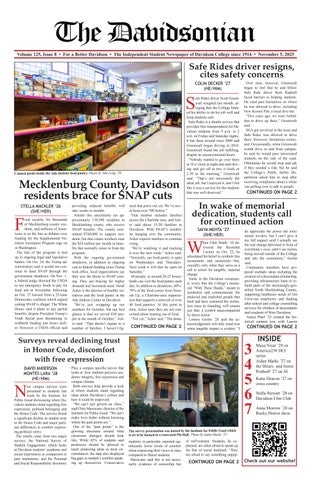
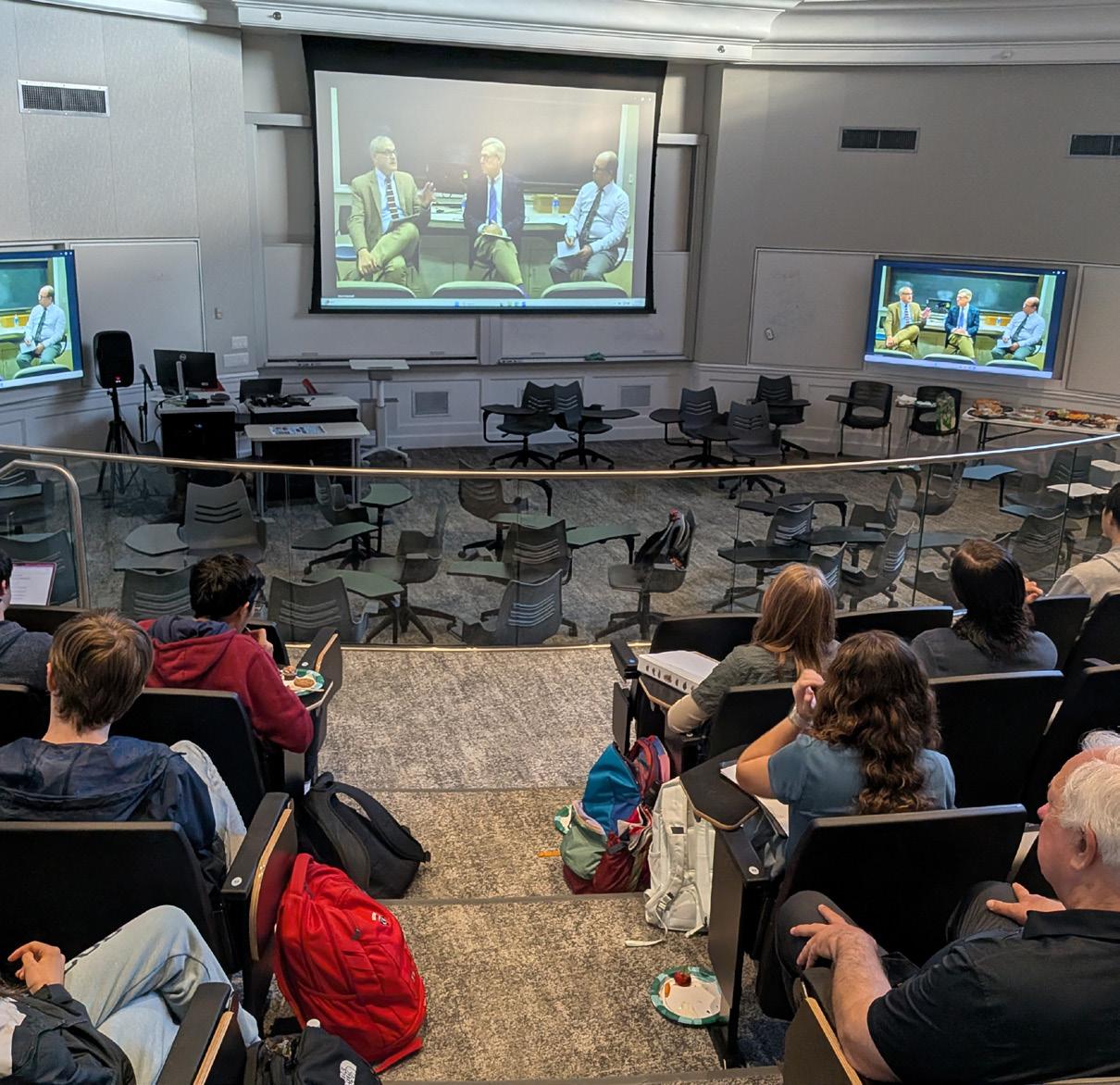
The survey presentation was hosted by the Institute for Public Good which is set to be housed in a renovated Phi Hall. Photo by Aidan Marks ’27.
Ada Jenkins plans to support community
the Black community and the Black church anticipates.”
tions help.”
Just down the street at Davidson Presbyterian Church, Pastor Ryan Atkinson helps run Bread of Life Ministries, a food assistance program for congregants and the wider community. They source food from local grocery stores that would otherwise be thrown out and deliver boxes of food to homes. On Sunday after services, the Church opens its doors for people to take whatever is left over.
“We do it for anyone that expresses a need, whether they are housed or unhoused,” Atkinson said. “If you can come and get it, great. If not, we’ll meet you somewhere and we’ll give it to you.”
Bread of Life primarily supports families in Davidson, Cornelius and Huntersville. Over the past few months, watching the instability of federal funds and sensing that cuts to SNAP were coming, Atkinson doubled down on his efforts to empower his congregation and protect those in the community who do receive SNAP benefits from the shock of the shutdown. He talked about it in his sermons, held educational sessions and trainings on how to reach out to representatives.
For as hard as he has worked, Atkinson said from his position as a leader of a majority Black congregation, he saw this coming.
“To be frank, the writing’s been on the wall for a number of years,” Atkinson said. “It’s something that
Although white people make up the largest share of SNAP recipients at 34.7%, Black Americans are overrepresented in the program. They comprise 26.1% of recipients despite making up only about 12% of the U.S. population. White people make up around 60% of the U.S. population.
Atkinson said he has heard fear from his congregants about how they will make it through the next few months. When he has not heard fear, he has seen it.
“Their body language does something,” Atkinson said. “It gives the truth of where they are. There’s the worry, there’s the angst, there’s a fear. ‘Do I get my medicine or do I get food?’”
Mecklenburg County’s $740,000 in support is something, but Atkinson thinks it reveals deeper issues with the county’s priorities.
“You can have a stadium downtown, have a concert venue, have all the transportation,” Atkinson said. “But if there are people still going hungry, if there are people that are still struggling and still trying to decide, ‘do I go and buy medicine, or do I put food on the table so my child can eat? Do I get asthma medication and or do I make sure my child can have at least something to eat, not necessarily nutritious, but something to eat?’ I think you have a huge problem.”
Atkinson and Acker see a role for the College during this time of
need. The Student Government Association hosted an emergency food drive for Ada Jenkins from Oct. 30–Nov. 4. They also facilitated some monetary donations.
“We consider ourselves close partners, and through our education programs and everything else we do here,” Ackers said. “Rght now for us, we’re letting people know that donations are the best way to support us.”
Bread of Life is also open for donations. However, Atkinson also advocated for a more systemic approach.
“I think with the institution and its
drive, the sky’s the limit,” Atkinson said. “[...] What can we do from a root level to start addressing this within Davidson town proper?”
In the meantime, Atkinson is buckling down to help his community weather a blow that feels all too familiar.
“With some of the more seasoned members who have seen a lot, it’s kind of like well, rinse, wash and repeat,” Atkinson said. “We’re going to do the same thing we’ve always done; that is pray, seek the goodness of God and band together to do what we’ve always done and help each other.”
Safe Rides down a driver following resignation
CONTINUED FROM PAGE 1
“There’s nothing on our van at that time that says Davidson College,” Greenwalt said.
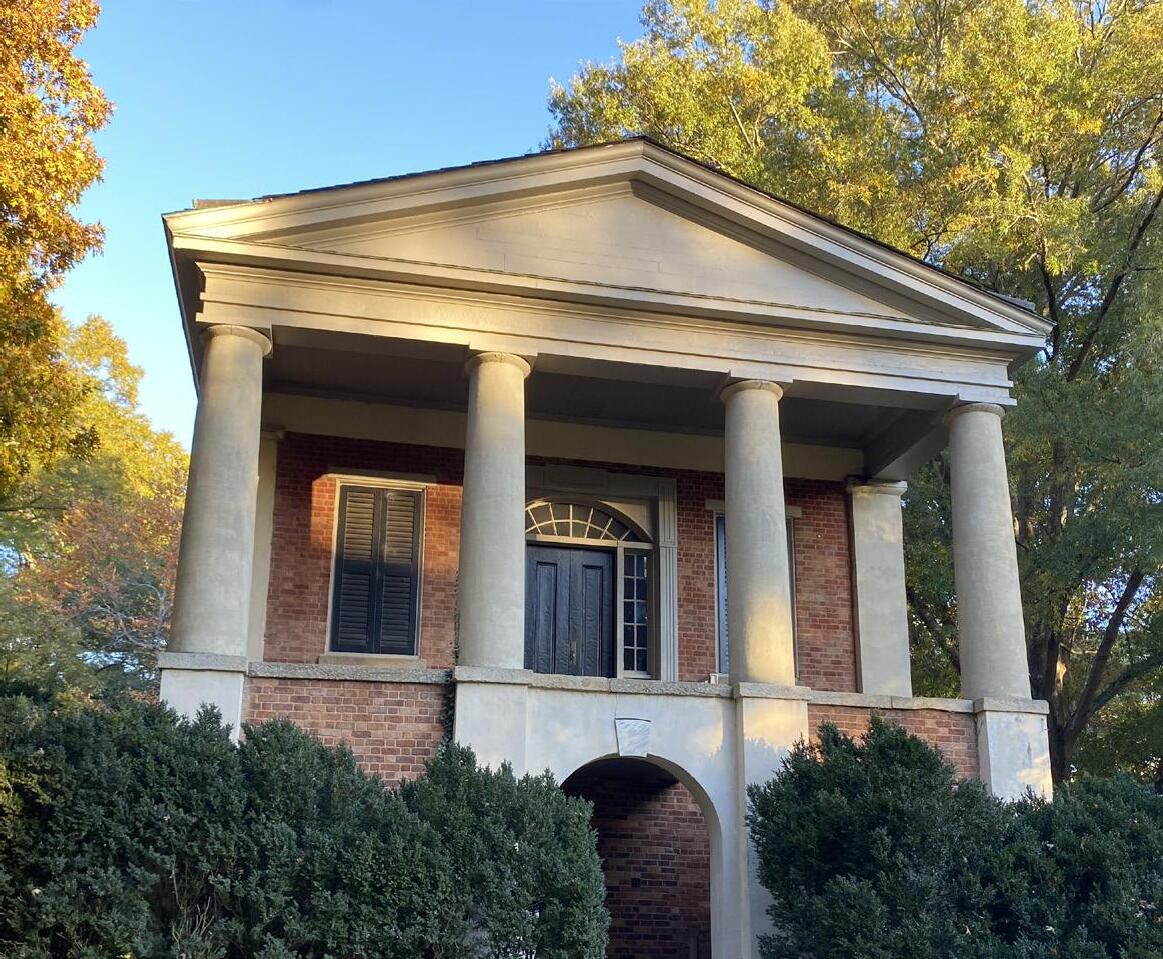
Last year, Greenwalt and Rudisill decided to put decals on the van with the Davidson logo and the words “Student Safe Rider” and the Safe Rides phone number. Come summer, they found that the decals had been removed.
Rudisill did not respond to a request for comment. Greenwalt alleges that the College did not want anything with a Davidson logo near a bar or restaurant where students could drink.
Andy Kraeger is a staff assistant in the college’s public safety department and oversees the Safe Rides program. He did not respond to a request for comment. Jay Pfeifer, director of media relations for the College, said in an email to The Davidsonian that safety is the college’s top priority. He did not specifically address the issue of the College logo.
“I want to underscore that the safety and well-being of Davidson College students, faculty and staff is the highest priority of Davidson College Campus Police,” Pfeifer wrote. “They are committed to the Safe Rides program and are looking to hire a driver as soon as possible.” Greenwalt’s resignation has led to staffing shortages and the elimination of Thursday night service.
Rudisill is now the only driver.
The Safe Rides program also shuttles students to the airport during school breaks. Now that they are down a driver, SGA is turning to students to fill the gap. In an email announcing the schedule for shuttles before Thanksgiving break, SGA Senator Mary Devine wrote, “We are looking for a student driver to help with Thanksgiving airport shuttles.”
While the College is looking to replace Greenwalt, SGA is offering students $25 an hour to do his airport route. According to Devine, Greenwalt quit in the middle of his airport service over fall break.
“He quit in the middle of fall break,” Devine said. “He had done the first rounds of airport shuttles going to the airport, but then he quit right before the ones coming back.” Devine often worked with Greenwalt through her role in SGA on the Accessibility Committee, which coordinates Safe Rides and the airport shuttles. Greenwalt’s resignation in the middle of break caught her off guard, but she was not entirely surprised.
“I sensed that he was wanting to quit at some point at the start of the year, and he kind of hinted at that at various times, saying things like, if he wasn’t given better treatment that he would leave,” Devine said. “I don’t know what ultimately caused him to quit.”
Issues surrounding the treatment
of Safe Rides drivers by the College is nothing new. The drivers have dealt with funding issues, limited bathroom access and administrative miscommunications.
Still, Greenwalt enjoyed the work and built lasting connections with students.
“I get a lot of calls from students that don’t want to talk to their parents about things. They call me, and I still get it today, students I had seven years ago,” Greenwalt said.
Filling Greenwalt’s position means filling a void of more than just a driver. Greenwalt became a member of the campus community, interacting with students weekly and help-
Survey finds falling trust in Honor Code
CONTINUED FROM PAGE 1
ular, regardless of whether they’re on the right or the left.”
Harry Carter ’28, Vice President of the Student Government Association, said the findings were both encouraging and concerning. “There was a lot of good data about the way students feel, especially compared to peers,” Carter said. “But that massive gap between liberals––around 70% comfortable speaking their mind––and conservatives––around 20%––is really worrying to me.”
Carter hopes the numbers will lead to more structured campus conversations through the Deliberative Citizenship Initiative and other forums that allow for disagreement without division. He also acknowledged that it is a difficult issue to solve through administrative action.
“I hope things like the Institute for Public Good and DCI initiatives stuff that kind of address this a little bit more administratively. It’s hard because [...] it’s a cultural thing and I don’t know how much they’re able to change that through policies, but I think it does open a lot of doors for people to interact more with the IPG, which I’m excited about,” Carter said. The surveys also looked into student trust toward Davidson’s Honor Code. A depletion in trust was found, with 67% of students agreeing that campus academic honesty policies effectively stop cheating in 2025, down from 86% in 2022.
Marsicano said that drop showcases a need for more campus dialogue about the Honor Code. “I am troubled by the reduction in belief in the Honor Code,” he said. “I look forward to further conversations with students of all stripes on how to bring those numbers back up to their pre-COVID highs.”
Associate Dean for Institutional Effectiveness Brent Maher said the surveys are still in the sharing phase. “At the moment, it’s at the point of sharing it so that it can inform decisions, but no decisions have been made yet from this data,” Maher said.
Maher’s office is circulating results among faculty, staff and students to raise awareness and spark discussion before policy responses are drafted.
ing them get home safely.
The communal impact of the drivers is evident. In 2023, Greenwalt and Rudisill received the Omicron Delta Kappa Community Award, along with a standing ovation. After they accepted their award, Greenwalt was approached by College management and asked what the standing ovation was for.
“My response was: we don’t judge [students], we don’t grade them, we just try to keep them safe,” Greenwalt said. “The question was a clear sign that they just don’t get it.”
Maher explained that there are plans to increase response rates for future surveys by investigating participation timing and incentives, in the hopes of gathering stronger data. “We were a little late in the year on the PSRI Plus, and so we’re hoping to do that earlier, maybe around February,” Maher said. For Carter, the challenge for these surveys lies in visibility; he hopes that efforts to showcase the data to students continue. “It’s a problem a lot of the time when [the administration] try to bring stuff to students,” Carter said. “They just don’t do it through the right avenues or the right times.” As Davidson continues its efforts through the Institute for Public Good and Deliberative Citizenship Initiative, the hope is that data like this will not just look at campus culture as it is but also help drive new ideas on how to build it.
“We now know which students feel unwelcome, and we can start working on bringing the college to them in new and meaningful ways,” Marsicano said.
Ada Jenkins is preparing for record demand. Photo by Ada Long ’29.
Greenwalt said decals he and Rudisill paid for to distinguish Safe Rides from an unmarked white van were removed over summer. Photo by Colin Decker ’27.
Features
Community says action still needed
CONTINUED FROM PAGE 1
Collver ’25 in 2023, with guidance from James B. Duke Professor of Africana Studies Hilary Green. Patel thinks that the memorial creates a false sense that exploitation and marginalization at the hands of the College has ended.
“I think that the emphasis on hands and the bricks displaces any present issues with racial violence and exploitation, and it sees slavery as something that is not present or [...] that the roots of slavery don’t still exist,” Patel said.
Patel worries that a monument of
such scale and financial investment placates demands and questions about resource allocation and wealth redistribution. “It makes it seem like Davidson is pouring all this money into everything that they can,” Patel said. Goslin expressed a similar sentiment. “I feel like this is essentially an easy way out for them to create a monument and be able to point to it every time people tell them they’re not doing enough,” Goslin said. Green’s archival work to recover the names and construct biographies of those commemorated by the monument has been central to the memo-
rial’s construction. Green said Davidson is involved in community work behind the scenes, with the College supporting housing needs of West Davidson community members, but does not advertise it. Green expressed some frustration at what she described as a lack of transparency. “I know people would give their money to something like that if they know it’s a possibility,” Green said. Goslin said the College has a responsibility to communicate its efforts to the wider community, emphasizing the specific significance to students. “[The student] experience is made
slightly more hollow when you try to have justice and you are unaware of what is being done to achieve justice. Communication about that matters just as much as the work itself,” Goslin said.
Zarar Karim ’28 took Green’s “Campus Race and History” course as a freshman. He acknowledged the importance of a physical memorial. However, he said the College’s efforts must extend to community education. “It is unacceptable if you go through four years of Davidson and have no understanding of our history or of how we got here,” Karim said.
Learning about Davidson’s history is key to building the College’s future. Changes to College policy, including raising staff pay to the minimum living wage, are the result of student advocacy, Karim said. “In order to have that, we really need to address the large gaps in education that students come into Davidson with, especially about historical wrongdoings,” Karim continued.
Patel, Goslin and Karim all highlighted some of the important work campus and wider community members are engaged in, including the Summer Promise Program spearheaded by Rev. Daniel Heath, the historical campus tour, and Green’s archival work. Even so, they feel wider and more sustained engagement is lacking. “There’s stuff that’s happening, but that’s being done by a select few people, in a select few groups,” Patel said.
Green echoed this sentiment, too. “I can continue to do the historical part because that’s [...] where my expertise is,” she said. “Those who are thinking
about the bigger things need to start stepping up and really think about, ‘Well, what do we do now?’”
Green called on the Institute for Public Good to play a role in rethinking what it means to “do good” at Davidson. “How are they taking this history to develop a plan for the public good that doesn’t just support white Davidsonians, but actually includes all of [our descendant communities]?”
Green said.
“I want it to be more than we did a report, we put up a monument, we put up a museum, and we have one or two dedicated professors, and we’re done, and I’m absolved from doing that work. I don’t want that to happen,” Green continued.
A common refrain across the memorial dedication and related lectures is that the sculpture is a conversation starter. Goslin said clarifying what that conversation entails—and who is involved—is a necessary step.
“When you just say something is ‘a conversation starter,’ you rob yourself of the need to actually secure a response,” Goslin said. “Who were you inviting? Who are we conversing with? [...] The intentional lack of clarity in these bold, broad words is a little jarring to me, because how am I supposed to know where to point my energy to help,” Goslin said.
Patel emphasized that conversations about what can be done ought not be limited by what has been done. “I think what is required of us is to think more expansively about what institutions could do and should do that are outside the bounds of what they’re already doing.”
Politics 3
DCI series celebrates 250 years of America
MUSA NISAR ’29
(HE/HIM)
In July 2026, the United States will turn 250 years old, leading to planned celebrations across the country. The Deliberate Citizenship Initiative has chosen a unique way to commemorate this anniversary. In collaboration with Duke University and the University of North Carolina (UNC) at Chapel Hill, the DCI has planned a set of four talks and corresponding deliberations across the academic year on American values, entitled “A Journey Together of Rediscovery, Reexamination, and Recommitment.”
According to Associate Professor of Political Science and Faculty Director of the DCI Graham Bullock, the idea was in the works for many years.
“We had discussed doing some kind of series related to the 250th anniversary of the Declaration of Independence, because it seemed like a good moment to discuss the American values from a historical perspective, and from the beginning we wanted it to be deliberate and engage with the complexities of those values,” Bullock said.
Last year, Bullock began working on a plan with Kevin Marinelli, a communication scholar and executive director for UNC’s program for public discourse, and Deondra Rose, professor of political science and history at Duke. Together, they decided to have four sessions on two foundational American values each.
“We generated a list of values that we
identified in both the Declaration of Independence and the Constitution, and thought about how they are both complex in their own right, and in their interactions with one another,” Bullock said.
This year, the DCI series deviates from its traditional format. Instead of having the Round Table and deliberative discussions on the same night, participants can attend the lecture one evening and engage in small group community conversations over the subsequent week. Bullock has some reasons for this change.
“We wanted to give the expert Round Table more time to really engage with each other, because inevitably, 50 minutes feels or felt insufficient for them to really engage. Also, the main purpose of these round tables is to catalyze and empower the community conversations to help the audience members gain confidence and a sense of engagement with the topic,” Bullock said.
To avoid long events difficult for people to attend, the DCI decided to adapt its D-Teams, recurring groups that convene at the same time and place over the semester, to the format of the Series on American Values. Deliberators can sign up for a semester-long D-Team that comes together after both Round Tables or participate in a one-off deliberation. Conversations occur both on campus and over Zoom.
The series has made a profound impact so far with its two sessions.
“You can’t have a political conversation without having these American
values that DCI has labeled as a key target. So far, we’ve talked about self governance and national stability, unity and equality, especially ideas such as immigration,” DCI Fellow Bolling Lewis ’28 said. “I think these are all key to building up to the idea that none of these things can be tackled without addressing the idea of the USA—the goal of having a more democratic society, having more inclusion and having people be more informed.”
Building on last week’s Round Table, DCI Fellows will facilitate community conversations this week, eliciting enthusiasm from these student employees. “The goal to achieve is to have more conversations. It’s very difficult today to have conversations, especially with people that you don’t see eye to eye with politically. Being able to gain more perspectives is one of the most invaluable things that DCI aims and strives for, and something they achieve quite well,” Lewis said.
Organizing the series has not been challenge-free. With the Lilly Gallery unavailable for use while it serves as a makeshift library space, large events like this have faced space constraints. “Our forums in the past had 80 to 100 plus people attend and participate in those round table discussions after the Expert Round Table. Our hope is that once the library is complete, we’ll be able to host these types of events at the top floor, where there’ll be a lot of space,” Bullock said. In the future, Davidson students look forward to more engaging dis-
cussions on similar topics. “I really want to see the key hot button issues that change year to year to be addressed. The more we have these difficult conversations, especially in these controlled environments where it’s okay to make mistakes, it makes everybody on the whole better off,” Lewis said.
The next Round Table will take place at Davidson on Feb. 11 focused on the following topic: “Balancing Liberty and Welfare.” The final session will be hosted at Duke on Mar. 24 on “Justice and the Rule of Law.”
In that time, the DCI will continue holding community conversations and fostering deliberative discourse on campus.
Bullock said the DCI’s programming is an opportunity for reflection. “Use this 250th anniversary to think about what American values are, how they connect to each other, and how they are reflected in our history and contemporary policy discussions. And finally, think about the next 250 years. What kind of country do we want to be in 250 years from now?”
Professors deliberate during the forum. Photo courtesy of Graham Bullock.
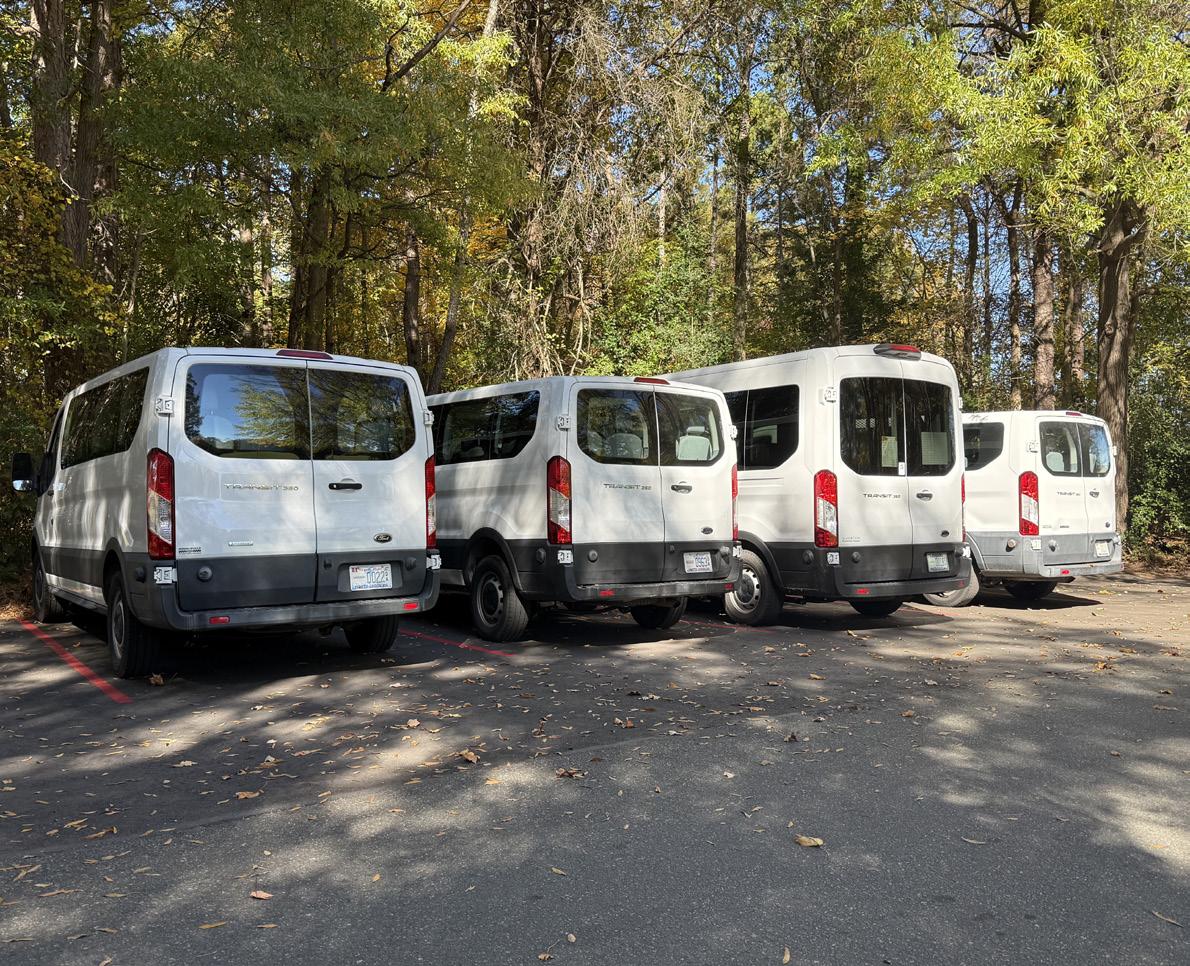
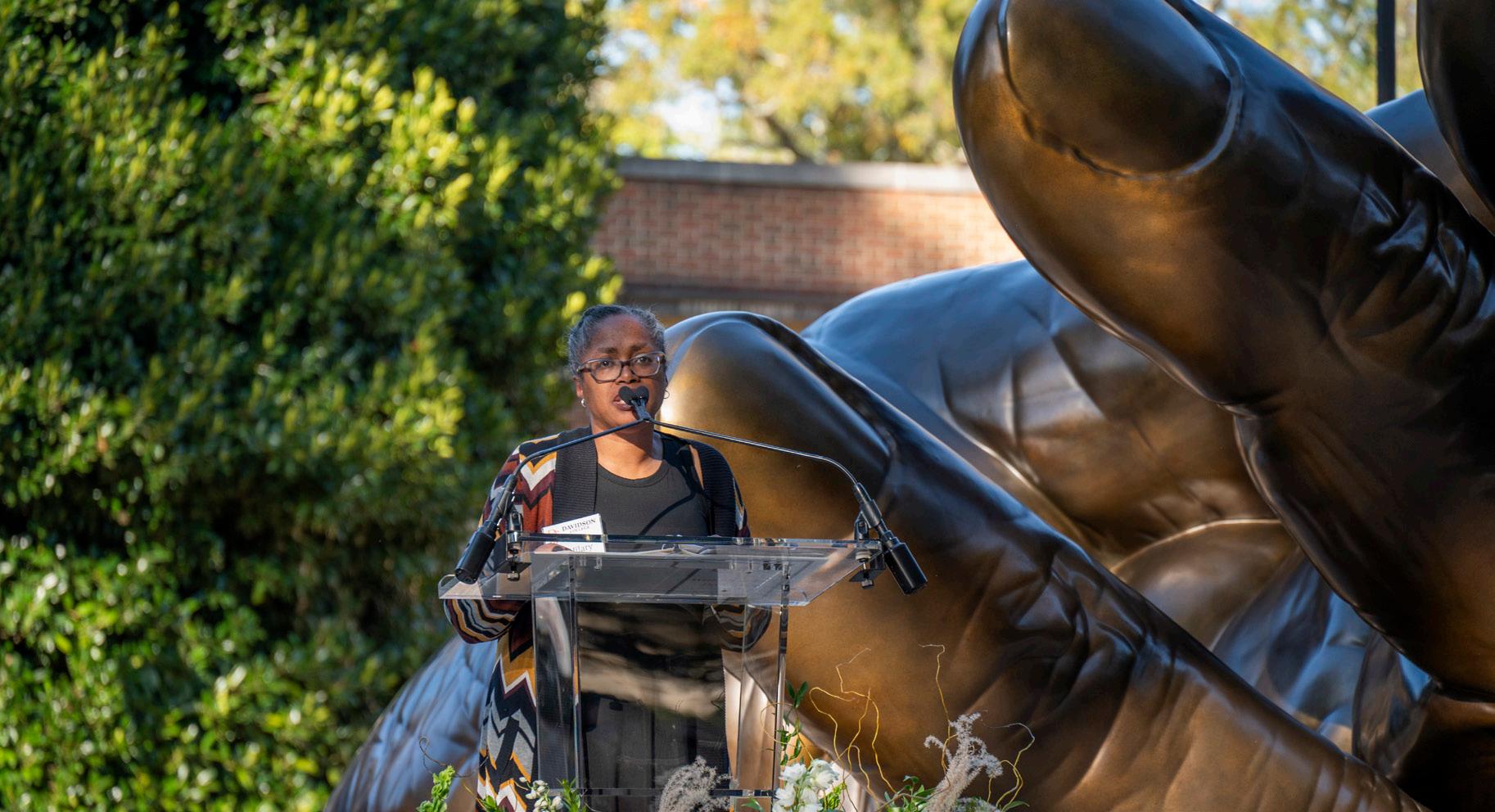
Professor Hilary Green delivered remarks at the dedication of “With These Hands.” Photo by Natalia Dascombe ’26.
Perspectives
What I miss most about the old library
selves of the ability to stumble across it. The Annex limits our ability to do just that.
Walking through buildings two and three of the Library Annex during an open house tour a few weeks ago, I was reminded of how much I miss books. Rows upon rows of books (about 290,000 in total) shined invitingly beneath fluorescent lights, painstakingly organized and meticulously tracked. About 110,000 will find a home in the new George Lawrence Abernathy Library. The remaining books, over 60% of the library’s collection, have been relegated to the Annex permanently.
These books, many archaic or obsolete, are the ones I miss most. Some are still categorized under the Dewey Decimal system, a testament to their disuse; books acquired or circulated over the last 16 years have been recategorized under the Library of Congress system. I miss wandering among towering stacks late at night as I toil away on an essay that does not want to write itself. I miss tangible reminders of the overwhelming quantity of knowledge that was produced before me. Most of all, though, I miss the hidden gems stumbled upon by chance and the joy that comes from finding a book that speaks to you—especially one you did not even know to listen for.
We are doomed to forget history and the knowledge that came before us if we rob our-
The Annex is located at 153 Dunmurry Road immediately north of campus. It abuts the far end of the College’s cross-country trails. Despite its geographic proximity, the building is largely inaccessible to students, faculty and community members. Physical browsing is not allowed. Tours and research visits must be scheduled in advance.
Tens of thousands of books and rows upon rows of archival materials, journals and government documents sit on shelves in a gated complex behind multiple layers of ID scanners and, for some books, a layered check-out process involving multiple QR codes. These security measures feel out of place for a College’s largest hub of knowledge—and for the next two years, its primary one. I would forgive a visitor for asking: Is the college keeping the books in or the community out?
Library staff said the system is working.
Twice a day, shuttles haul books back and forth from the Annex to the Lilly Gallery. 1,049 items are in circulation as of Oct. 28, and many more are accessed digitally. Especially for Davidson’s tech-native student body, finding books online may be more convenient than trying to figure out how to use the Library of Congress system. This, though perhaps true, paints an incomplete picture.
Digital libraries hide information from all except those who know what to look for. No
AI has no place in the Humanities
Artificial Intelligence has left higher ed scrambling. In a world that is increasingly hostile towards thought for thought’s sake, AI seems like the death knell for the project of the Liberal Arts College: after all, why learn to think when you can outsource all of life’s big questions to a machine that answers them succinctly and understandably?
The worst day of my summer was spent grappling with exactly these questions when an AI policy expert came to talk to my Davidson in Washington seminar. He was friendly, knowledgeable, and genuinely concerned about our futures in a world with a constantly changing labor market; indeed, the white collar desk jobs that many of our well-to-do parents enjoyed at cushy consulting firms are at tremendous risk due to this technology. McKinsey & Company, one of those nondescript “consulting firms” that Davidson students strangely seem to covet jobs at, recently celebrated that it was one of the “top global users” of ChatGPT. My friend, the presenter, was certainly correct: AI will have a seismic impact.
This man, whose insights were valuable and came from a good place, indicated that our future was one of management. Instead of being the engines of labor in any field, from consult-
ing to teaching (this notion seems especially sinister), we are to become overseers of this technology, which enthusiasts like Sam Altman are willing to say is already smarter than most of us. Our presenter seemed to concur with that notion.
What is really meant by those who think AI is or will be smarter than us is a very reductive version of intelligence. In fact, what is really being communicated by that sentiment is not that it is smarter than us, but rather that it is more efficient (and therefore more profitable) than us. By characterizing this soulless efficiency as “intelligence,” the (very few) people who will profit from extracting your wealth are manufacturing consent for that very event. By the time it comes around they hope that you will happily accept it, because they will have mainstreamed a rhetoric around your soul and your brain that essentially says this: you are a self-conscious computer, but you are, unfortunately, not as efficient as the supercomputers that we are destroying the environment to create and integrate into virtually every area of human life, right on down to the movies you watch and the books you read. Your humanity has no essential worth.
Our humanity does not have to be degraded like this, and our defense against that very degradation starts with how we are educated. At one point in the presentation, our presenter
amount of keyword search training or research guides can help those with no objective in mind. Books out of sight fade out of mind; physical inaccessibility becomes invisibility. Books might last longer in their climate-controlled tombs of corrugated metal, but why is longevity the main goal? What good is a crisp, barely-worn book on a topic we do not know to look for when it is hidden from view?
The decision to sequester books from sight was intentional. The intent, I am sure, was not to hide knowledge. Instead, hard choices were made about how to best use limited space in the new building. Redesigning Davidson’s “center of knowledge” is an ambitious project and I have tremendous respect for the individuals involved. In doing so, however, they seem to have overlooked a basic principle. Libraries are about two things: books and people—by definition and without exception. Functional access to books ought to be the centerpoint of any library. I worry the new building does not uphold this principle to the fullest extent.
It is reassuring to know that, according to current plans, almost 40% of Davidson’s books will find a home in the new library. It is also reassuring to know the remaining books are in good hands at the Annex. I have the utmost respect and appreciation for the library staff who work diligently to ensure these texts, which had for so long been left to collect dust in E. H. Little Library, are carefully preserved, catalogued and made accessible to community members.
asked how many of us were paying for a subscription to the premium version of a Large Language Model. When only three students raised their hands, he said that all of us should be. Needless to say, I do not share this vision. I recognize that in some fields it has tremendous worth and potential, but not in the study of the humanities, which have always been central to a Davidson education. Elite Liberal Arts Colleges will be under tremendous pressure from these tech giants and the labor market that they are creating to “integrate” AI into every facet of the learning experience, but I implore the College to do whatever it can to, at the very least, keep this noxious technology out of the humanities.
Speaking for the study of English, my major, there is nothing about AI that will make you any better at it. Using it to summarize a reading, proofread an essay, generate ideas for a paper, or to tell a story, all of these things do nothing other than make you worse at what your brain has always been capable of, things which you are put on earth to meaningfully struggle with. If the study of the humanities is, at its core, to be able to understand and communicate the raw experience of being human, then there is noth-
I am disheartened, however, to think the books that have been permanently relegated to the Annex will not be missed in the new building. Looking around the Lilly Gallery while I write, I see a collaborative work space. It feels hollow. It is painfully devoid of the most basic characteristic of a library: physically accessible knowledge.
As I reflect on the exciting possibilities presented by the new library, I worry that the $100 million project set to be under construction through fall 2027 will fall flat. I miss the old library. I miss its books. I am saddened, above all, by the decision to keep fewer books in the new building that will limit the ability of future students to replicate the experience that was central to my first two years at Davidson and that I already sorely miss heading into my last.
Aidan Marks is a PPE major and Editor in Chief of The Davidsonian from Minneapolis, Minnesota. He can be reached for comment at aimarks@davidson.edu.
ing that a robot can do to add to this experience other than to cheapen it, to implicitly characterize it as frivolous.
The inheritors of our bleak future will be luddites, while the permanent underclass will be made up of those who forgot how to read, write, and think because they accepted the manufactured inevitability of a technology that never had to dominate every area of our lives. I came to Davidson to learn how to think. I refuse to accept a future in which my brain will be reduced to an emergent arm of a soulless machine. The College, as it charts its path forward with regard to AI, must keep this in mind. It must continue to enshrine thought for its own rewarding sake, pushing back against the putrid ideas of the antihuman tech monopolists.
Sören Potthoff is an English major and a Perspectives editor for The Davidsonian from Chapel Hill, North Carolina. He can be reached for comment at sopotthoff@davidson.edu.
Cross country shows upward trajectory at A-10s
KATIE DEACON ’27 (SHE/HER)
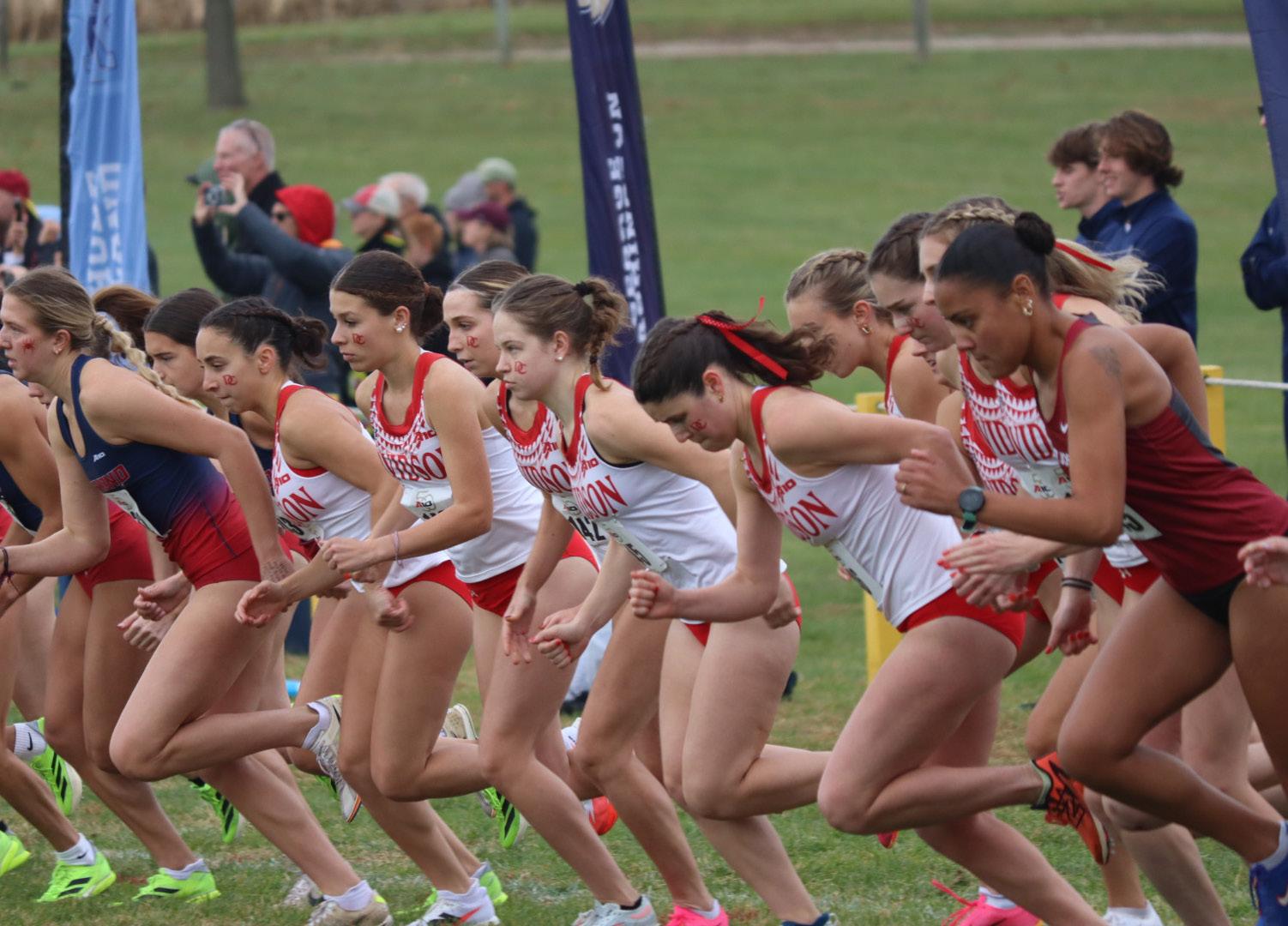
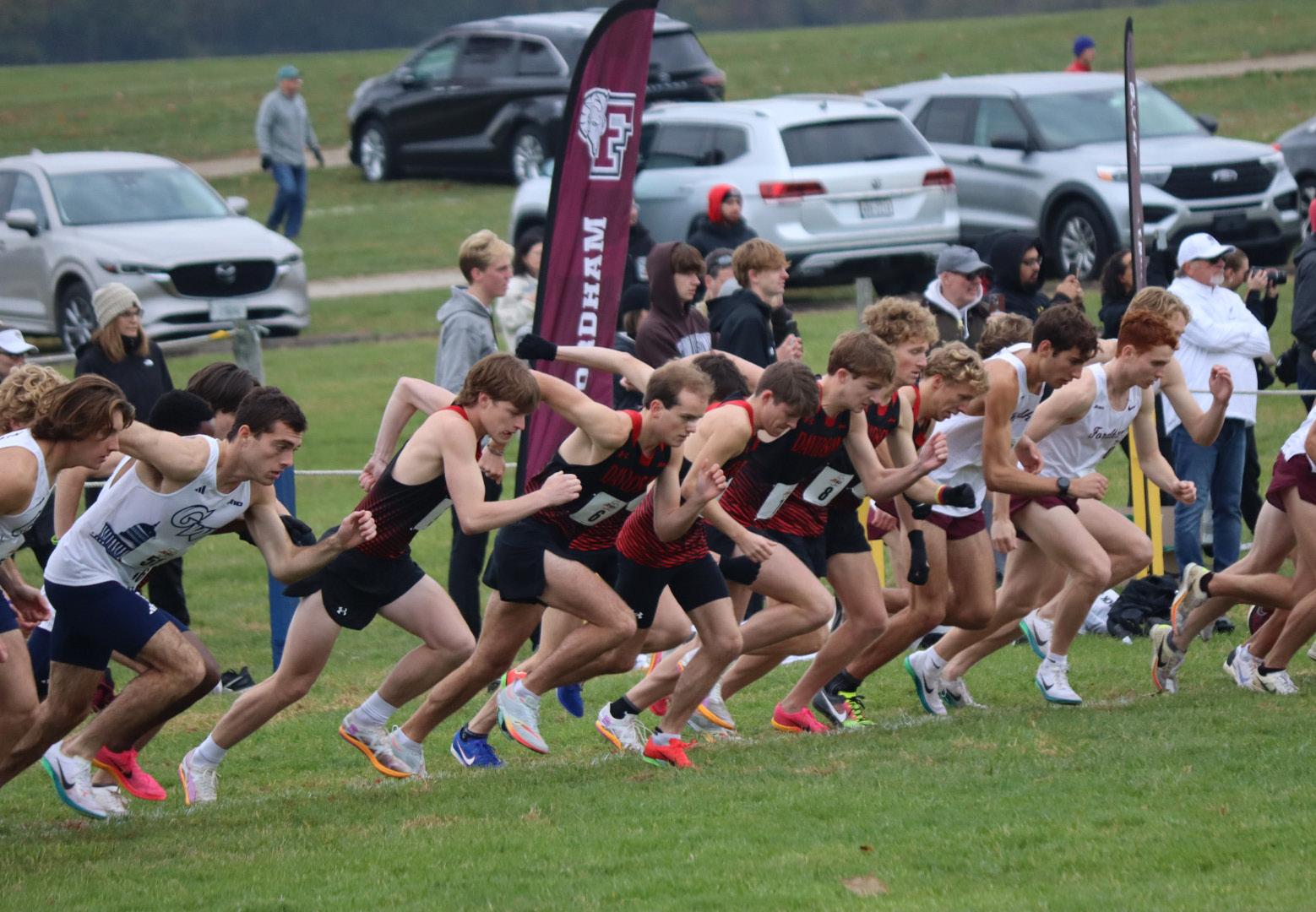
Davidson Cross Country (XC) competed at the Atlantic 10 (A-10) Cross Country Championships on Nov. 1 in Cedarville, Ohio. The women’s seventh place finish marks Davidson’s highest A-10 Championship position since placing third in 2017. The men also moved up the standings, placing 11th in 2025 after finishing 13th in 2024.
Women’s XC captain Molly Sullivan ’26 closed out her cross country conference career with an eighth place finish, marking her first appearance on the XC A-10 All-Conference first team.
Sullivan ran a 6K personal best of 21:22, over 17 seconds quicker than her previous mark set in the 2024
A-10 Championship. “I just wanted to be proud of something and improve upon my finish from the previous year,” Sullivan said. “I did that, which is all I can ask for.” When looking back on the conference meet, and the season in its entirety, Sullivan reflected on progress and poise. “We have grown so much. I feel like it’s because we’re such a young group. It’s really daunting for the freshmen towing the line for all of these races, because you’re racing against so many talented individuals. And so I think we just gained a lot more confidence as the season went on. People are able to race with each other.”
The growth and confidence Sullivan describes are embodied by Annie Norman ’29. She challenged the competition with an impressive 15th
place finish, making her the first freshman to cross the line from any team. She raced to a personal best of 21:35 through 6K.
Not only was Norman honored with a position on the A-10 All-Conference team, but she was named A-10 Cross Country Rookie of the Year. “I was going into races scared and not knowing I could accomplish a lot [...] I feel like now I go into races being like I can trust my training, I can trust my teammates, and I’m much more confident,” Norman said.
She reiterates advice women’s XC head coach Jen Straub has given her: “Trust yourself. If you’re not trusting yourself, you’re not going to let yourself accomplish what you can.”
Following Norman was Gilly Shumate ’29, who crossed the line in 22:05 for 37th place. Abby Smith ’28, Charlotte Moor ’29, Camryn Quinn ’29, Leah Horgan ’29, Mary Shoop ’26 and Justine Meta ’27 rounded out the ’Cats’ conference team.
Davidson’s men collected a series of A-10 honors over the weekend as well. John Cooper ’27 claimed a spot on the A-10 All-Conference first team, finishing 15th. He clocked in at 24:29 over 8K, just 4 seconds off of his personal best.
Cooper has found a healthy balance in his routine, and it’s sure paid off. “I’ve learned more about my body, being able to adapt my training to get the most out of it,” Cooper said. “I’m a lot better at not push-
ing myself too hard, because that’s something I’ve had issues with in the past.”
During the race, he knew he had to chase 15th place to acquire an All-Conference spot. “Going in, I was trying to be patient [...] I knew what spot I was in. I knew how many people I needed to pass,” Cooper said. “[In the last mile] I was moving up, pushing off people going backwards.”
Cooper is looking ahead to the NCAA Regional race with optimism and excitement while continuing to reflect on his rewarding performance. “I was really happy. I was almost too happy to smile.”
Men’s A-10 All-Freshman runner Quinn Swanton ’29 spoke about his growth through the season. “The most important thing is learning and experiencing [...] my first race
wasn’t perfect at all, and then I learned from there and got better.” He intends on maintaining this mindset heading into NCAA Regionals. “No pressure. Just have fun [...] I feel like so much of it is just experiencing,” Swanton said.
Aside from Cooper and Swanton, the ’Cats advanced with the help of Alex Thole ’28 who crossed the line at 25:04 for 46th place. Graham Boles ’29 took the fourth position for the Wildcats, running 26:22. Eli Roth ’28 finished out the ’Cats’ top five, followed by Ryan Harris ’26, Parker Bartlett ’28 and Seamus O’Driscoll ’29.
As the Wildcats turn their focus to regionals, their goals expand beyond just time and placement. Sullivan sums up this attitude nicely: “I just wanted to run happy.”
Men’s soccer heads to A-10s after six win stretch
MASON MAYNARD ’28
(HE/HIM)
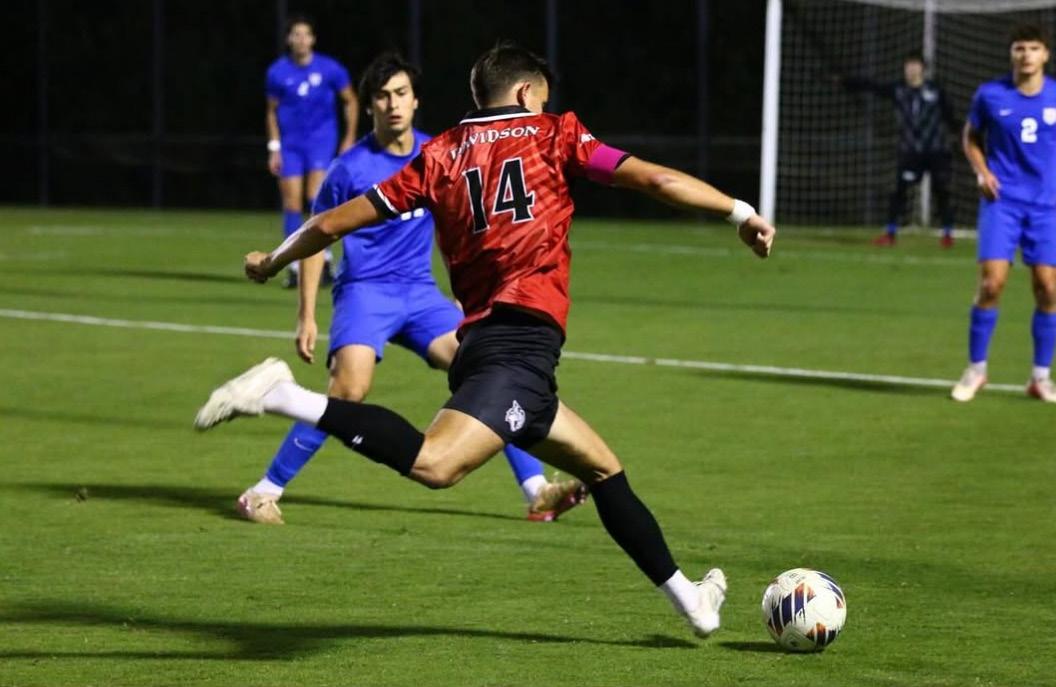
When Alonzo Clarke ’26 and Myles Culley ’27 entered the box with 15 seconds remaining, hope for a success against the nation’s eighth ranked team was at its lowest point. But as Culley got the ball with ten seconds left and placed it in the back of the net, the ’Cats knew that they had secured a tie against High Point University—going the entire month of October without a loss.
The tie against High Point capped off a seven game no-loss streak, including six wins. During this streak, the ’Cats clinched the fourth seed in the Atlantic 10 (A-10) tournament and a first-round playoff game at home. Culley claimed four of the team’s ten goals in the final stretch. Culley reflected on the moments after scoring the game-tying goal. “[The goal] didn’t really set in for a while after that, it was a black-out feeling,” Culley said.
Davidson’s seven-game streak did not come out of nowhere. Throughout September, the ’Cats went 0-4-2, facing teams including Furman University, ranked ninth in the nation at the time, and University of North Carolina at Greensboro, ranked 17th in the nation.
Forward Tobe Ibe ’28 commented on the team’s turnaround. “At the beginning of the season, we definitely struggled a little bit finding results,” Ibe said. “[Coming back]
was more of a mental issue—just really being strong, being able to come back from a deficit, and really just fighting and putting in the effort to win games.”
Evidence of the team’s development can be seen in the team’s freshmen. “Ever since October kicked off, they’ve all been finding their confidence, their form, their rhythm, and it’s helped the group gain confidence as a whole. Duquesne was a great example of that [development],” Associate Head Coach Jesse DiLuzio said.
In the 2-1 victory against Duquesne, Nicholas Zeballos ’29 secured a 1-0 lead early on. After Duquesne answered Zeballos’ goal, Zeballos and JP Mora ’29 shared an assist to Brady McGlone’s ’28 game winning goal.
Ibe said the team is anchored by seniors, including captains Clarke, Jack Brown ’26 and Baylen Young ’26. “It’s really nice having [the seniors] in the pitch and in the locker room. They always come with experience, but then they also come with the passion that our team really
needs, especially from Alonzo and Jack,” Ibe said.
On top of internal team development, the fans have seemingly made an impact on the ’Cats’ season. “The celebration at the end of the High Point game was such a cool thing to see. Students aren’t only going there to witness the game, but really enjoying and experiencing it. It’s been tremendous [...] it’s definitely influenced our results,” DiLuzio said.
“Home games have been such an advantage. I call the student section a 12th man,” Culley said. “When
I’m on the field, feeling that energy, it genuinely gives you this energy boost that you can’t get from anything else.”
The ’Cats lost their final regular season game 2-1 against Virginia Commonwealth University (VCU) on Nov. 1. Now, the team is looking ahead to their upcoming game against George Mason University on Nov. 8 to open the first round of the A-10 tournament.
Entering the tournament raises the stakes. “Playoff soccer is all about sticking to the things that make up your identity, that make you successful. Games get a little bit cagier, there’s a bit more tension,” DiLuzio said.
George Mason led the A-10 in goals scored. Davidson posted a tie against them during the regular season. “George Mason is a good team [...] We know their quality, but we have to make sure that we can just make them feel who we are as a team from the first five minutes,” DiLuzio said.
For Culley and the rest of the ’Cats, the A-10 tournament is their chance to display their desire to win. “We’re coming off of a tough loss to VCU, but I think that’s only going to fuel us forward,” Culley said.
“It just all comes down to our togetherness on the field. In fact, it’s rarely about who’s the better team. It’s usually about who wants it more.”
Men’s cross country places 11th at A-10s. Photo courtesy of Jack Fischer ’28.
Jack Brown ’26 crosses the ball. Photo courtesy of @etn photos on Instagram.
Women’s cross country places 7th at A-10s. Photo courtesy of Jack Fischer ’28.
Arts & Entertainment
Professors and students discuss good literature
WYATT GESSNER ’28 (HE/HIM)
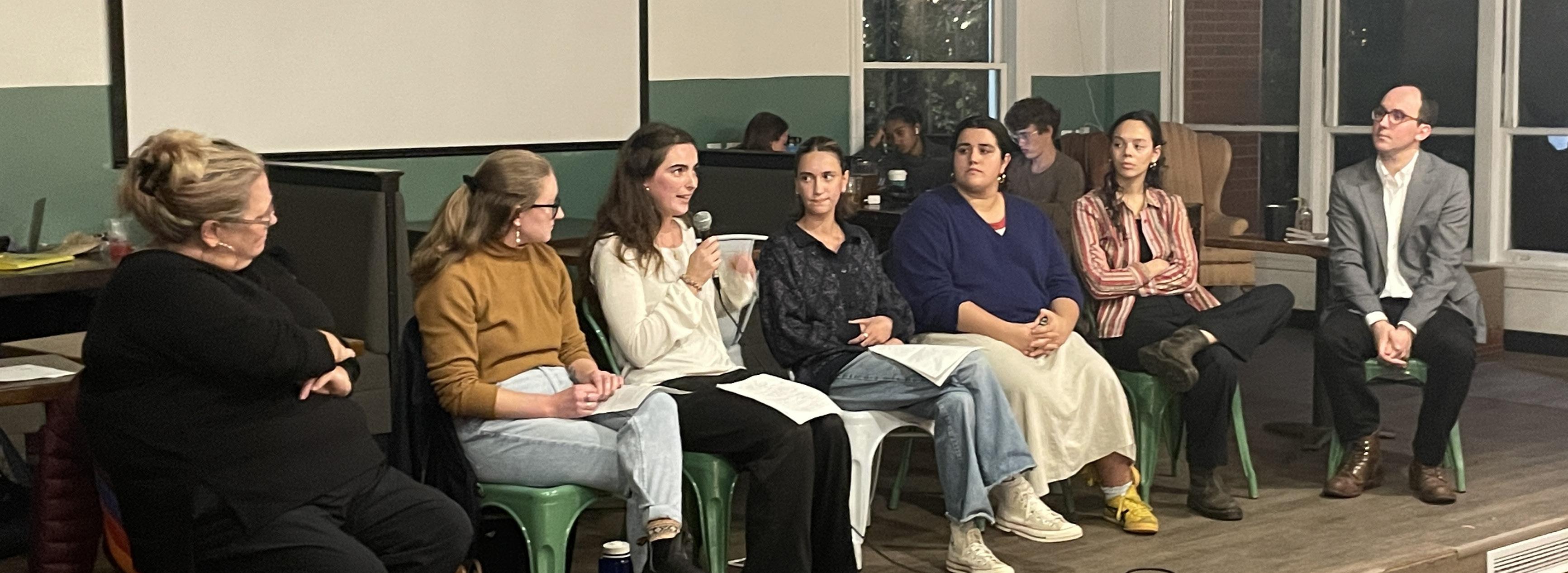
Davidson community members packed into Summit Coffee Outpost (Nummit) last Wednesday as professors and students held a panel discussion on “What Makes Good Literature?”
The panel consisted of three English department professors as well as the co-editors in chief of Libertas and Hobart Park literary magazines. They offered an array of perspectives on representation, the public service of art and much more.
Following the ancient Greek understanding of good, the participants promised a holistic determination of quality that considers not just the aesthetic beauty of a work but also its morality and ethics.
The bulk of the talk consisted of smaller individual statements from each of the professors and literary magazines.
The first to speak was Professor of English Ann Fox. A disabilities studies specialist, she spoke about representation in media and the importance of accuracy in doing so.
Fox also encouraged the audience to engage in all kinds of literature, even from people they do not consider ‘good.’ If people only consumed art from ‘good people,’ they would consume far too little. Once art is released, she argued, its meaning is out of the author’s hands. To truly experience all literature has to offer, one must “engage in the mess.”
Next were Hobart Park Co-Editors in Chief Abi Brissett ’26 and Sofia Cimballa ’26 who, like Fox, reject-
ed a rigid determination of quality. Instead, they explained their aim to blend the inherent imperfections of a student-run literary magazine with constructive criticism from editors that could still improve the works. Hobart Park also provides a public good in the form of record keeping. Started in December 1978, the extensive archives of past issues capture student expression—and often even the campus mood—over the years.
Assistant Professor of English Hudson Vincent took a different approach to the conversation, even admitting that he was somewhat dodging the question. He chose to emulate an argument from German philosopher Immanuel Kant’s “Critique of Judgement,” distinguishing aesthetic taste and moral judgement as “profoundly different yet indelibly connected.”
Kant asserts that moral sensibility is a necessary precondition for good aesthetic judgement. How then does one obtain moral sensibility? The answer, Kant says, is a liberal arts education. Morality comes from exposure to goodness in the arts, and a liberal arts education exposes its students to good art frequently.
For Kant, good art does not just teach good character, but good citizenship as well. And by informing people on how to be a good citizen, good art gives people freedom.
Like their peers in Hobart Park, Libertas Co-Editors in Chief Caroline Ewing ’26 and Cate Goodin ’26 embrace imperfection in literature. They view the publication as a means for improvement, and avoid cutting submissions in favor of encouraging the contributors to revise their work.
The final speaker for the night was Visiting Assistant Professor in English Anika Jensen. As an affect theorist, she focuses on the emotional impact of works and believes good art must affect her in some way beyond being enjoyable. That is not to say she only enjoys positive literature. In fact, she often finds that more ugly, “gnarled” works prompt a stronger reaction from her. She cited Katherine Mansfield’s “The Fly” and Edith Wharton’s “The House of Mirth” as texts that frequently spark negative reactions in her classes but force students to think critically about the world.
However, Jensen was also sure to emphasize that by the end of class, she and her students exit with a better outlook for the future. Despite the dreary content, such literature and their discussions of it encourage them to go out and fix the issues discussed.
The talk had been in the works since last semester, when students on the panel first started floating the idea. “We weren’t quite sure what form it was gonna take, but we signed up because we thought it would be good to have all the magazines together,” Goodin said.
The panel also signals a big shift in relations between Libertas and Hobart Park. “In the past there’s been animosity between the magazines [...] so I think this was a really good way for us to just come together,” Ewing said. Ultimately, both recognized the importance of this type of conversation. “A panel in this time is really important, because a lot of literature and art is being censored right now or not being given the value and weight maybe it deserves,” Brissett said. “It’s important for Davidson to discuss this.”
Former professor brings international films to local theatre
STELLA STEWART ’28 (SHE/HER)
Ten times a year, one of the town of Davidson’s closest communities meets. The Davidson Film Club began twelve years ago, when a group of film buffs decided that the Davidson area needed an official group to discuss cinema. Since then, the club has flourished into a nonprofit organization with 120 dedicated members run by unpaid volunteers, brought together by their love for film. Since its start in January of 2013, the club screens at least ten films a year on Saturdays at 7 p.m. Alan Singerman, president of the club and professor emeritus of French at Davidson, proposes a list of eight to ten international films to the board of directors, who then rank the films and decide which go into each series.
The club serves an older demographic, although students are encouraged to come. “The current group has been there for quite a few years now, and they really do a fantastic job. I feel totally supported in what I do,” Singerman said.
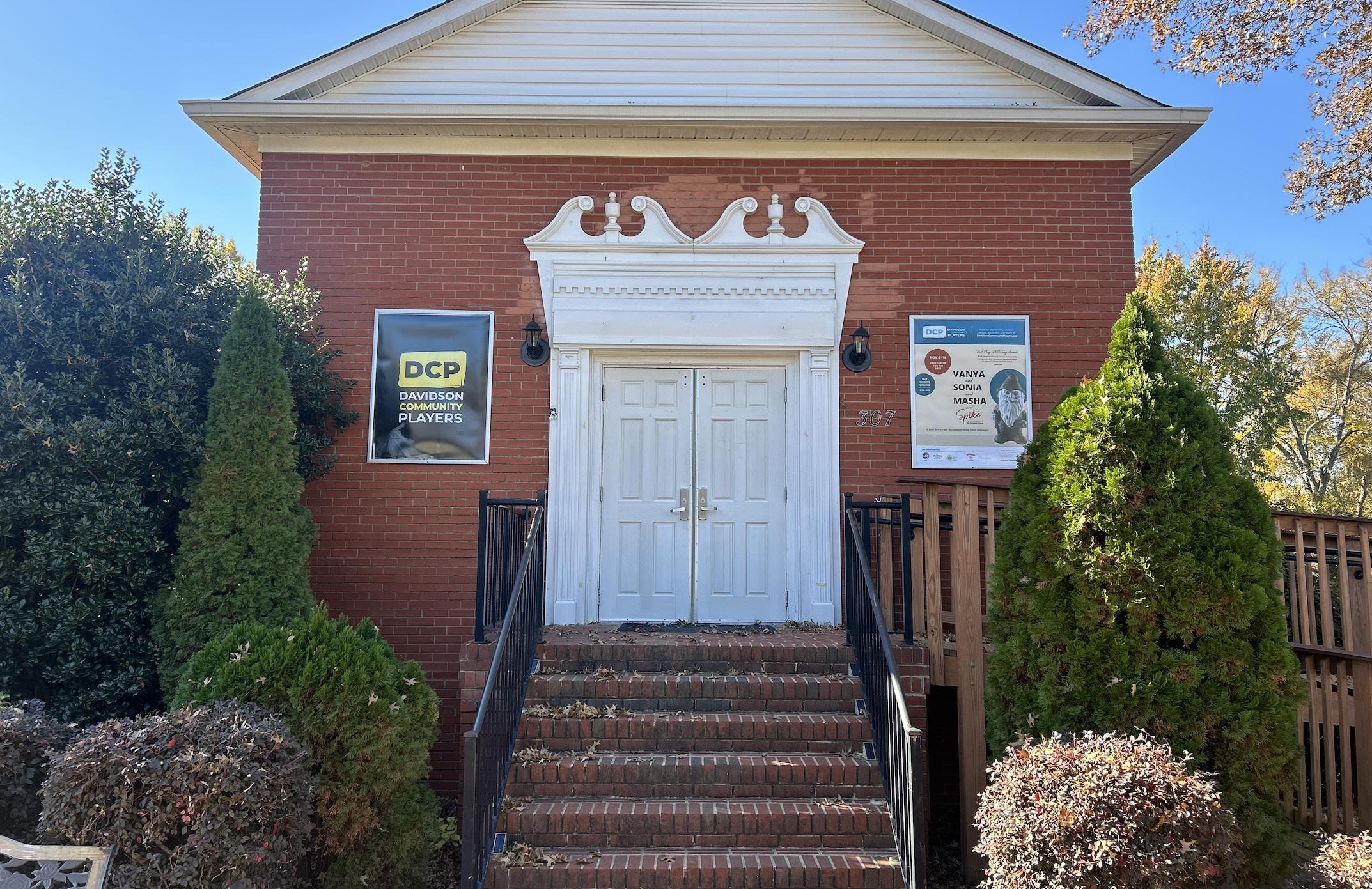
Bob Maier, a film enthusiast, had the idea to create the club after frequently lending out his cassette tapes to other film lovers. This group began to rent out the Armour Street Theatre, working around the schedule of the resident Davidson Community Players, a local group producing theatre that fosters community involvement. The club meetings are still held in the theatre today, which has up to 120 seats for
meeting attendees.
The club focuses on screening international films that are not shown on the main commercial screens and do not get screened elsewhere. Singerman chooses foreign films that have won a significant number of prizes in film festivals and received high praise.
Davidson College Chair and Professor of Arab Studies Rebecca Joubin is a dedicated member of the club.
“The films [Singerman] and his team choose are international and give the community a chance to learn about history, culture and politics of other countries through film,” she said.
One club member, Barbara Randolph, explained her appreciation for international films. “We get to experience foreign films where the language barrier means paying close attention to subtitles yet you need to pay attention to visual language and body language and how this can be different from one culture to another.”
After each film is shown, a discussion leader facilitates a conversation between the meeting’s participants. Singerman selects a discussion leader that has a connection to the film, whether it be by nationality, personal work experience or another relation to the film.
Before each meeting, Singerman meets with the leader to exchange ideas on what would be most beneficial to talk about, although the leader has full autonomy over the contents of the discussion.
“The films we show, there are always problems involved [...] on a personal level, on a social level, on a political-
level, whatever, so that people will make comments about the film that we respect,” Singerman said. “They have no complexes, the older demographic, they’re eager to talk,” he continued. “They’re not afraid to say what they want to say. Some discussions become very, very interesting.”
The club means more than just a monthly screening and discussion. It functions as a community within the town of Davidson, serving those interested in film and those seeking out a cultural intellectual experience. “It is a
nice way to come together with members of our community outside the college to discuss and learn together in an inclusive and warm atmosphere,” Joubin said.
The meetings are not only a discussion of film, but also an opportunity to speak with a community that has the same interest in international film and consume quality forms of entertainment, which Singerman expressed there seems to be a hunger for.
Singerman described his involvement in the film club as “a labor of love.”
“I was teaching here, and personally, for me, it’s just about giving back, you know, paying forward what I got from the community, trying to contribute something that enriches the life of the community itself,” Singerman said. Committed member Pam Dykstra shared her passion for the club. “Whether we stay to listen or simply take in the film, we leave enriched by a deeper appreciation for our shared human experiences––all in the cozy setting of a small hometown theater.”
Panelists offers perspectives on good literature. Photo by Wyatt Gessner ’28.
The Davidson Film Club meets at the Armour Street Theatre. Photo by David Anderson Montes Lara ’28.
Living Davidson
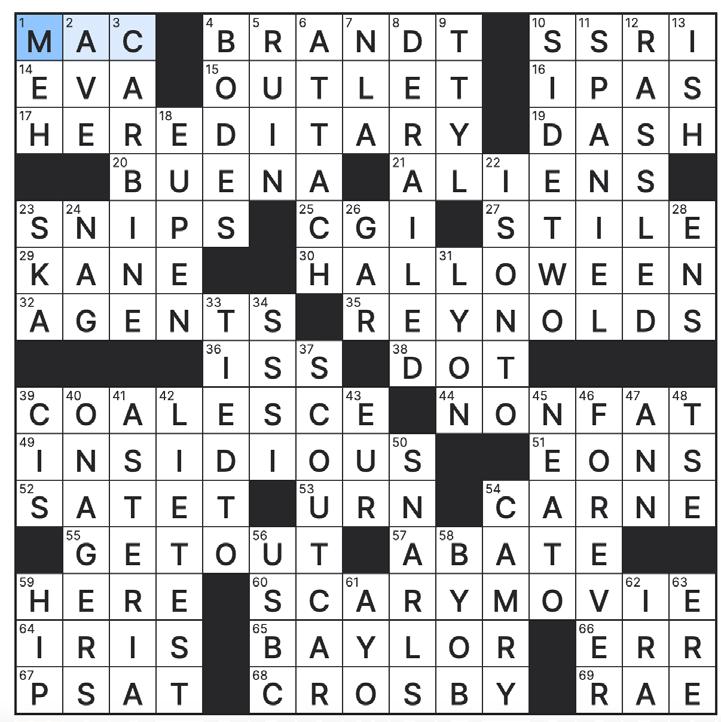
ACROSS
1. Grumble
5. “Go get it, Fido!”
10. Kites and dolls
14.Melville work
15.American statesman Root
16.Flapjack chain
17.“Schindler’s List” star Neeson
18.Remodel
19.Joint inflammation
20.Start of a quotation by Laurence
J. Peter
23.Marginal scribbles
24.Graham of dance
28.Sumac with a five-octave range
30.See 4-Down
32.Visited a restaurant, with “out”
35.“Dr. Zhivago” heroine
37.Steve of country music
38.Part 2 of the quotation
42.Actress Susan
43.Achievement
44.Retd. speedster
45. With “association,” legal group in Arkansas or Tennessee, for instance
47.Shell commodity
50.Have a cross ___
51.En ___ (as a group)
55.End of the quotation
60.Iris locale
63.Cheese farm
64.___ Sad (Serbian city)
65.Healthful mineral
66.Actress MacDowell
67.”Let’s get going!”
68.“Don’t worry about me”
69.Emits coherent light
70.___ d’oeuvres
DOWN
1.Former secretary of state Powell
2.Kind of acid in protein
3.Celebrity ribfest
4.With 30-Across, Roman political and military leader of the 1st century BCE
5.Accomplishment
6.“Allure” competitor
7.“La clemenza di ___” (Mozart opera)
8.Bake-off figure
9.1996 LeAnn Rimes song 10.Original Dixieland Jazz Band hit
11.“Well, whaddya know!”
12.“I kid ___ not”
13.Harbor city (abbr.)
21.Any doctrine
22.Uta of the stage
25.Hatcher and Garr 26.Ceases moving
27.Alamogordo event
29.Old TV alien
30.___ of fact (judge in a bench trial)
31.“___ Gun Will Travel”
32.“...and ___ of thousands!”
33.Lone Ranger’s companion
34.Abbr. on a business sign
36.Pierce portrayer on “M*A*S*H”
39.Briefcase alternative
40.___ a time (singly)
41.Chapel words
46.Kind of gown
48.Mischief-maker
49.Initiate
52.Sports playback format, briefly 53.Delight in the taste of 54.Gray and Moran
56.Superboy’s girlfriend Lang 57.Hats, informally
58.___ -dieu
59.Courtroom word (var.)
60.Commando weapon
61.Spirit
62.Brian of rock music
EXPENSIVE EXISTENCE
Davidson students perform Rocky Horror
ANNA MORROW ’28 (SHE/HER)
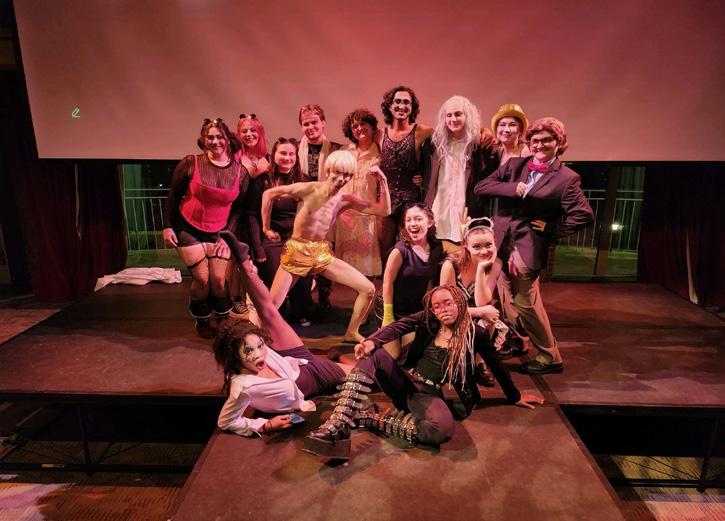
The Rocky Horror Picture Show was accompanied by a student performance of the film last Thursday during Union Board’s weekly Live Thursday event in coordination with Queer and Allies. Leading up to the performance students lined up outside the doors of the 900 Room with excitement and in costume. Throughout the show, Davidson references, including adornment of the latest copies of The Davidsonian to protect from the rain, added to the hilarity and enjoyment of Rocky Horror.
The two main characters, Brad and Janet who find themselves at the door of a very strange castle, were played by Brooke Lackey ’26 and Natalie Kenagy ’28. Lackey describes the show: “Rocky Horror is campy, unorthodox and the plot is all over the place—but that’s the point.”
Uday ’26 played Frank-N-Furter, the eclec-
tic and odd owner of the castle Brad and Janet seek help at. “This was my third consecutive year playing Frank-N-Furter, and I think this is the first time that I really ‘got’ the nuances of the character. It’s never easy being up on stage basically naked, but the energy from the crowd really helped me get over that hump,” Uday said.
Uday also played a more directorial role in the show. “Since I’m co-president of Queers and Allies and we were organizing it this year, a lot of my experience was also on the backend of the show (costumes, logistics, advertisement, making sure there was accessible seating) and that was a weird experience since I was performing on stage and then going back to production mode for the scenes I was not on,” Uday said.
Despite support from Rocky Horror playing on the screen behind the actors, the performers stood on their own. They are not speaking aloud, but their emotion-filled performance is enough to understand the absurdity of Rocky
Election day in Davidson
Horror. “The cast worked so hard leading up to the show to choreograph, plan costumes, and to just ensure it would be a fun night for everyone. It was very rewarding to show off what we had been working on. Also the audience participation makes it that much better,” Lackey said. Audience participation included shouting obscenities not fit for print in The Davidsonian after mention of the main characters, Brad and Janet.
“I think Rocky is a special show because of what it means to people. The degree of audience interaction and, honestly, just the oddness of the whole thing lets it temporarily replace your experience and open your mind to all these hedonistic ideas without consequences for about 2 hours,” Uday said.
Whether or not you are a fan of the performing arts at Davidson or Halloween in general, I highly suggest attending the yearly Rocky Horror performance for a true understanding of its true absurdity.
Crossword by Victor Fleming ‘73
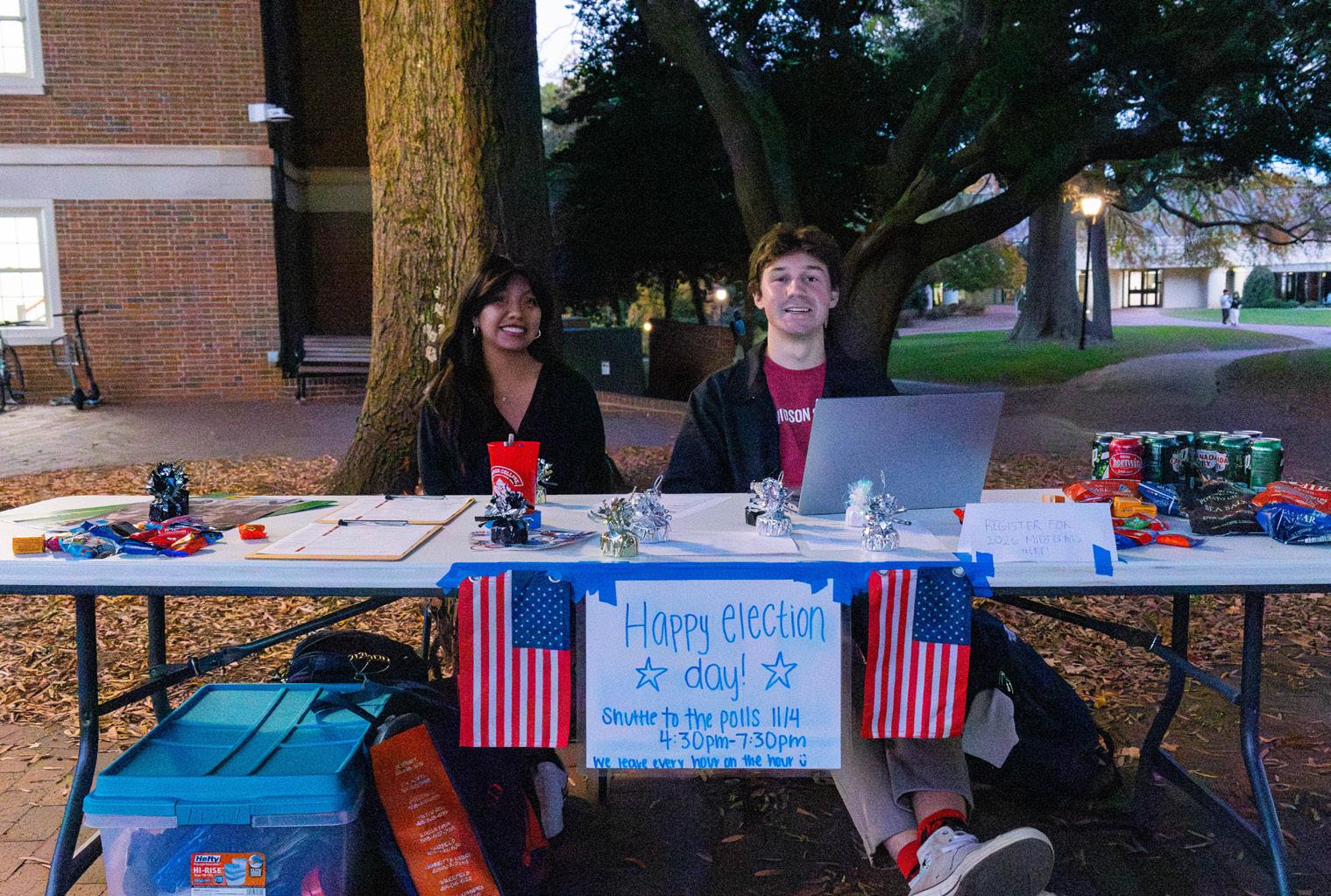
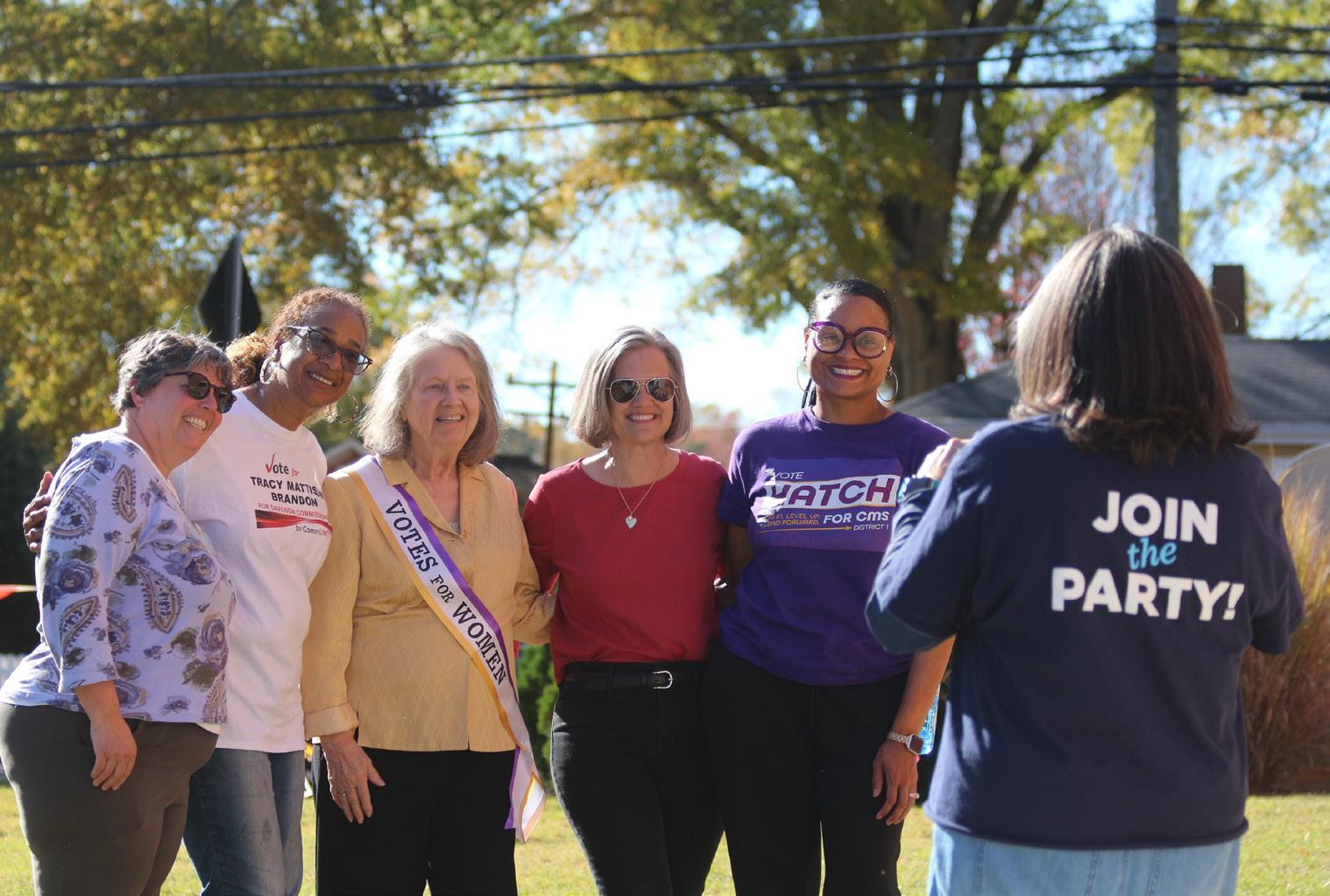
Photos by Ada Long ’29 (left) and Ali Santana ’28 (right).
Photo courtesy of Uday ’26.
Yowl The
Irreverent student journalism since Tomorrow. Castigat Ridendo Mores.
yowl.com/hellweek Sisyphus Issue
Yowl Font Size Mysteriously Grows Over Several Issues
Page Yowl Inflation
Parents Discover They Never Taught Their Child How To Feed Themself After Complaining On Facebook Page Commons Hack
November 5, 2025
DUF Party Attendee Shocked That One Bottle Of Wine Still Doesn’t Make DUF People Sufferable Page: DUF Hazing
Davidson College’s bisexuality pipeline: Turner was first, Rusk is next
As Davidson gets colder, the spirit of thrifted Carhartt jackets, baggy jeans, and wired headphones blasting Sweater Weather emerges on campus. I refer, of course, to the thriving female bisexual population of Davidson. Whether clutching chai lattes and playing with their rings at Nummit or sauntering to a GSS class with carabiners swinging from their belt loops, it seems that campus cannot escape the “bi-baddies.” While the “Turner gay, already did” pipeline was generally accepted about campus, it seems a trend of “once it’s dusk, kiss a girl in Rusk” has begun to take hold. The pipeline is mysterious, but there have been no complaints. After all, there’s nothing wrong with ethereal beauty, septum piercings, Adidas Sambas, and having a boyfriend. We simply want to know what’s next. Will we be hearing about “turn a corner, be bi at Warner”? The Yowl will be keeping an eye out.
Help! My Holistic Advisor won’t give me my WebTree pin until I ‘prove, my strength’ in an ‘oil-wrestling match’
Iam writing to The Yowl as a concerned freshman in need of advice. Things already seemed weird when my advisor, an older, tenured professor of classics, insisted upon meeting at the Baker Sports Complex to give me my WebTree pin. Upon my arrival, I found the professor wearing nothing but a doily, doing stretches, and rubbing olive oil (lifted from Commons) on himself. He grinned maniacally and asked, “How badly do you want that WebTree pin, kid?” I stared blankly at him and backed away slowly, but then reconsidered. I really need to knock out some of these Ways of Knowing credits, and I still need my WRI101 credit. It don don me: I must do this. So I sulkily equip my doily and apply my olive oil. Guess I really need that WebTree pin.
See Course Lisitngs for WRE 221: Theory in Oil Wrestling
ENG 105: Intro to White and Pretentious Studies
ECO 21: Methods in Shapes
Scariest Part Of Halloween Is Still That Terribly Embarassing Thing You Did When You Were Drunk Page Shame
Yowl Editor Keeps Saying Next Week Is Going To Be An Easy Week Page Gotta Love Being Wrong
Yowl self help with lifestyle editor, helping Hanz
Dear The Yowl, I (42F) struggle to connect with my daughter (17F). I work full-time, and her father (45M) works part-time. Any time we sit down for dinner, she’s always snappy and dismissive. It always ends in a screaming match. How can I get through to her? She won’t even listen to me!
From Girl Mom
Dear Girl Mom,
Managing a relationship between a mother and a daughter is a difficult undertaking. I would suggest harsher punishments. In my experience, one day blinding stew has been very effective.
From The Yowl
Dear The Yowl,
I (22M) have been on a diet for the past year and a half, and while I’ve dropped 40lbs, I want to lose 10 more pounds, but I just can’t shed the weight! Any advice?
From 40lbs Lighter
Dear 40lbs Lighter,
Weight loss is an incredibly dangerous practice, so I hope you’ve been guided by a professional throughout this process. Besides, diet culture is no longer supportive; it’s a cesspool of misinformation. To lose those final ‘lbs’, try one day blinding stew.
From The Yowl
Dear The Yowl,
My husband (34M) and I (32F) have been married for 4 years now. Every Saturday, my husband (34M) visits the office to get some work done, but his skanky secretary (62F) is always there whenever I (32F) stop by to visit him (sometimes I bring him lunch). Every Saturday, when he (34M) comes back from the office, he’s reserved and closed off for the following few days. I’m worried that I’m losing him (34M). What do I do to reinvigorate our relationship?
From Mommy Issues
Dear Mommy Issues, Sounds like you’re stressed! I’d suggest one day blinding stew.
From The Yowl
Incident of The Week
Teletuby seen making out with Abraham Lincoln behind F while a Minion watches. Tinky-Winky refuses to comment.
Quote of the Week
“I am going to write you guys an article”
-Someone who will never write us an article “This is going to be the year of the Yowl”
-A naive editor not relizing you have to do work in 3 seminar classes
Note: The Yowl is a satirical supplement to The Davidsonian Hence, nothing in it should be taken as truth. Unless you feel like it.