It’s that time of the year again. The warmer months have arrived and we must prepare ourselves for the summer. With the summer also comes sporting events and games, and the dangers.
One of the most important things we must do while enjoying the outdoors, is to practice good playing habits, and preparing and taking care of our bodies along the way. We must hydrate with the correct fluids...put the soft drinks away. Now is the time for some old fashioned water. Sport Drinks are good, but we must not consume too much of them. We must also eat properly, before we play and after.
In conclusion, please remember to get plenty of rest. Our bodies require a proper reset period in order to function from day to day. Drink well, eat properly, and get plenty of rest. These are key tools that we must utilize in order for us to have a pleasant and wonderful summer sporting season.
Editor’s Note - Terry L. Watson
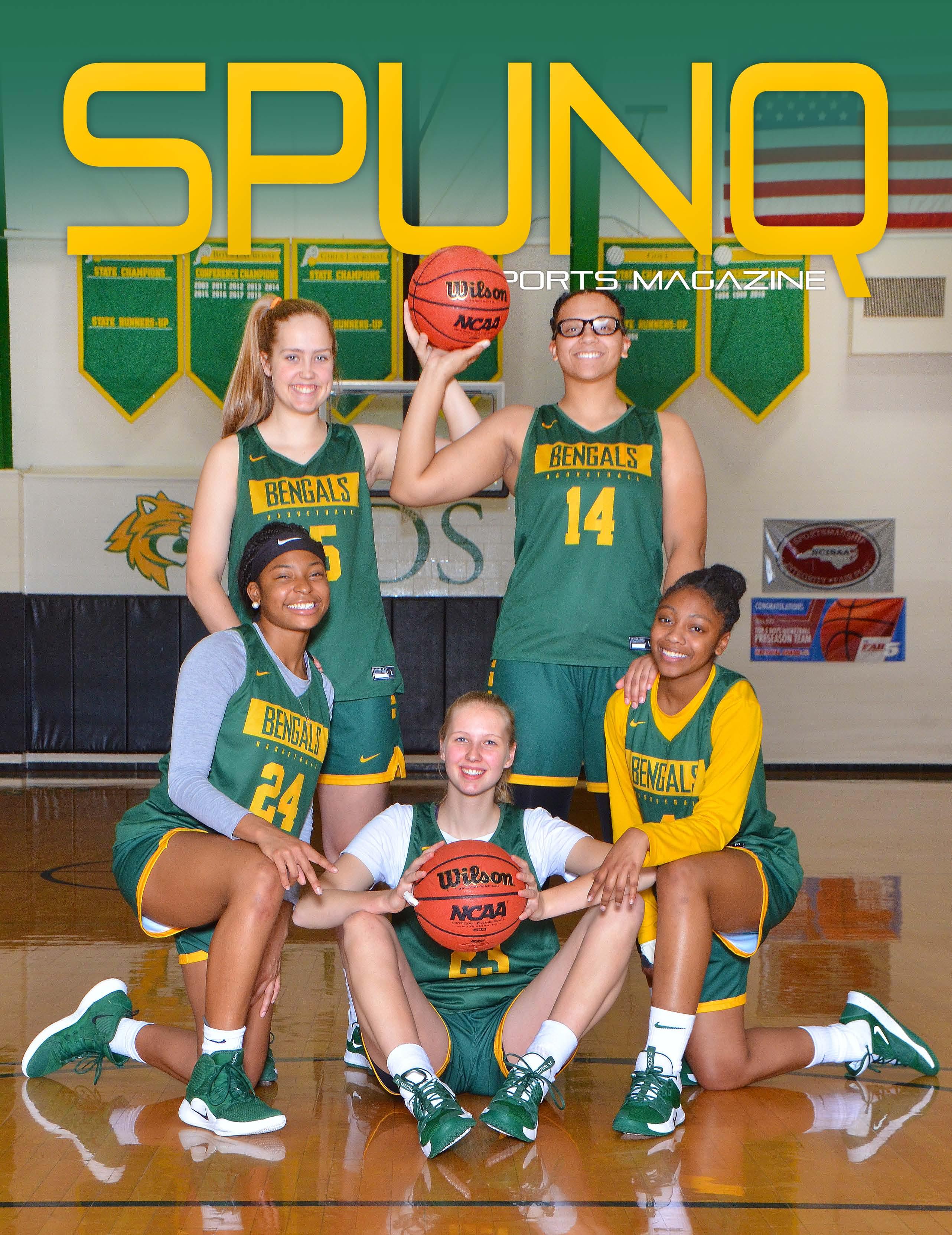
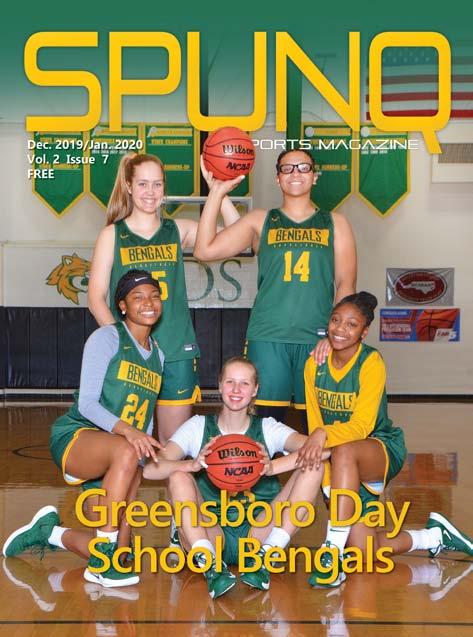
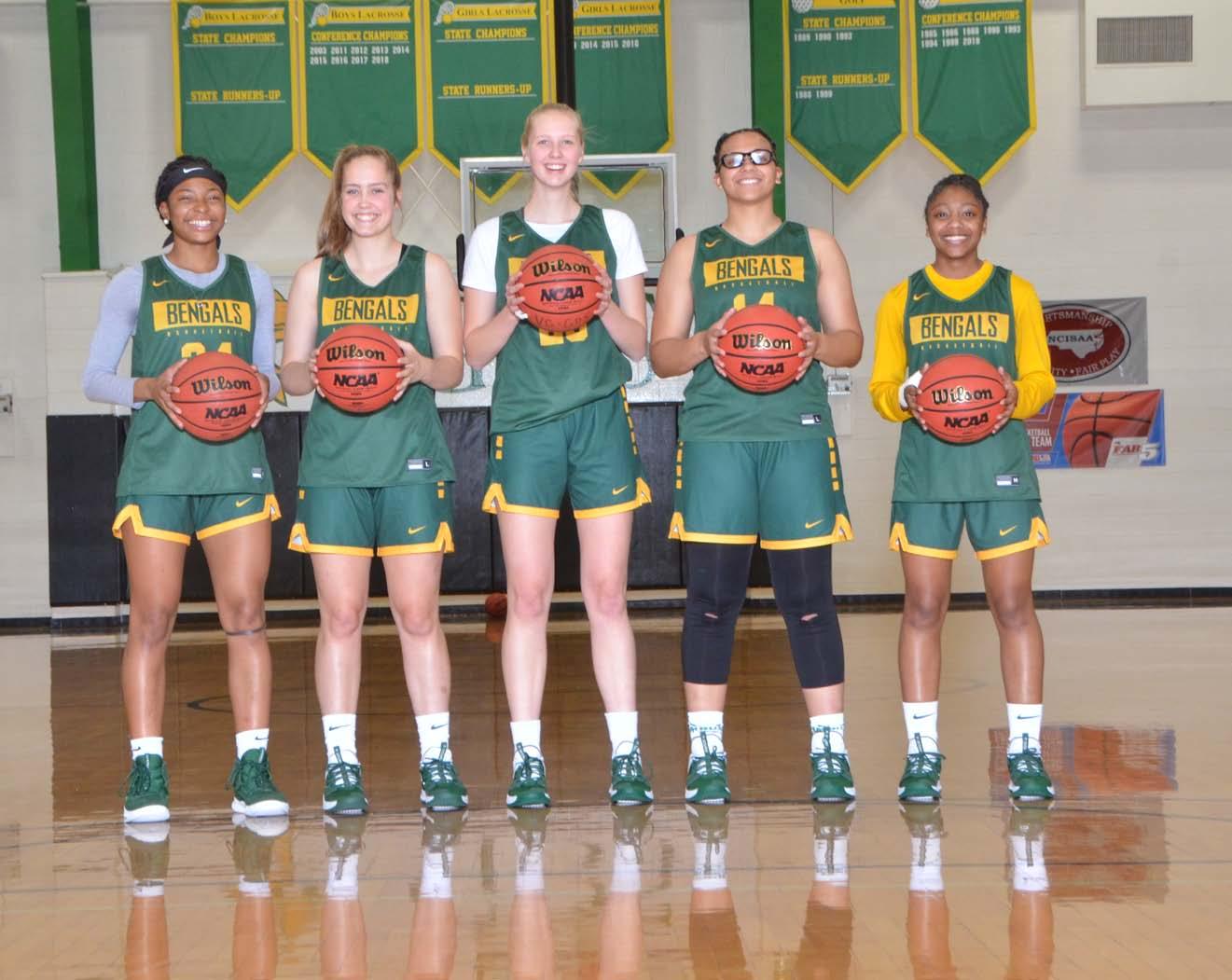
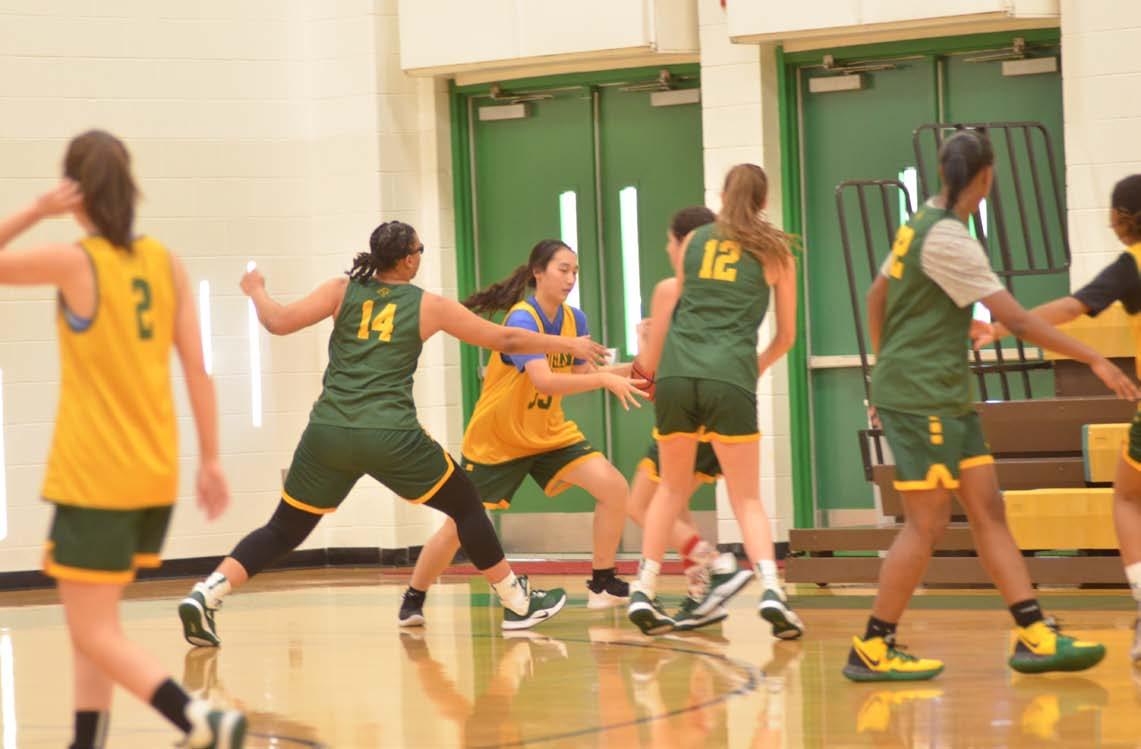
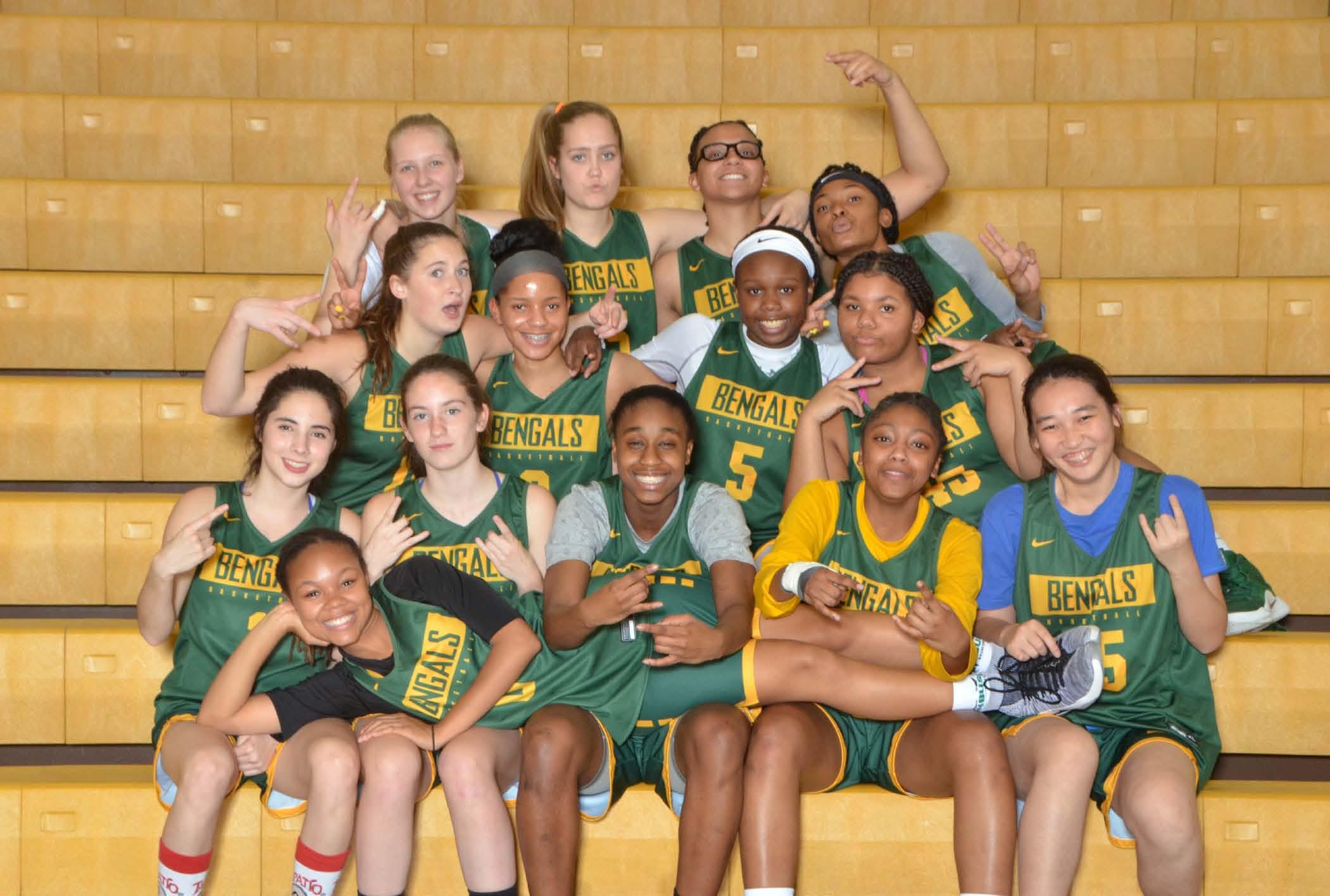
Greensboro Day School Bengals
By Junious Smith
by Howard Gaither
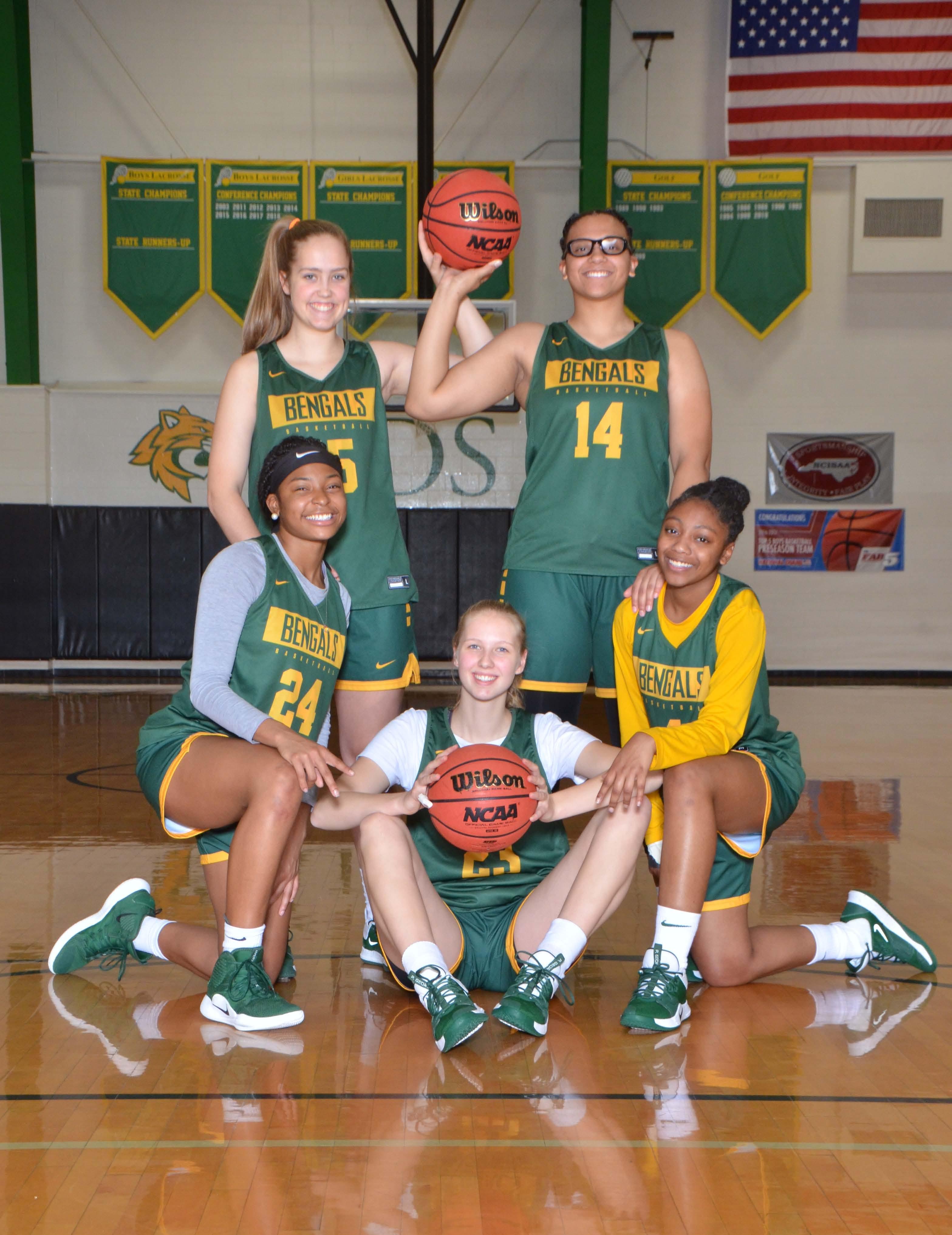
The best girls’ basketball team in the state of North Carolina resides in Greensboro.
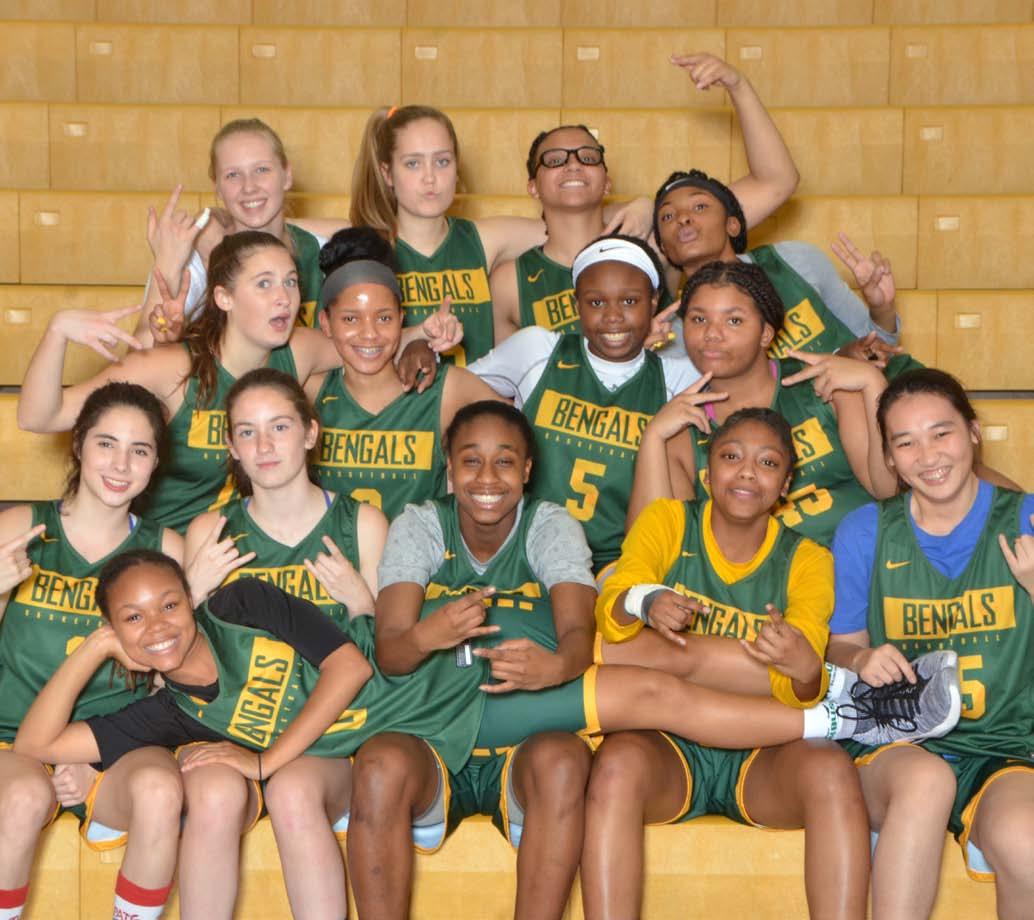
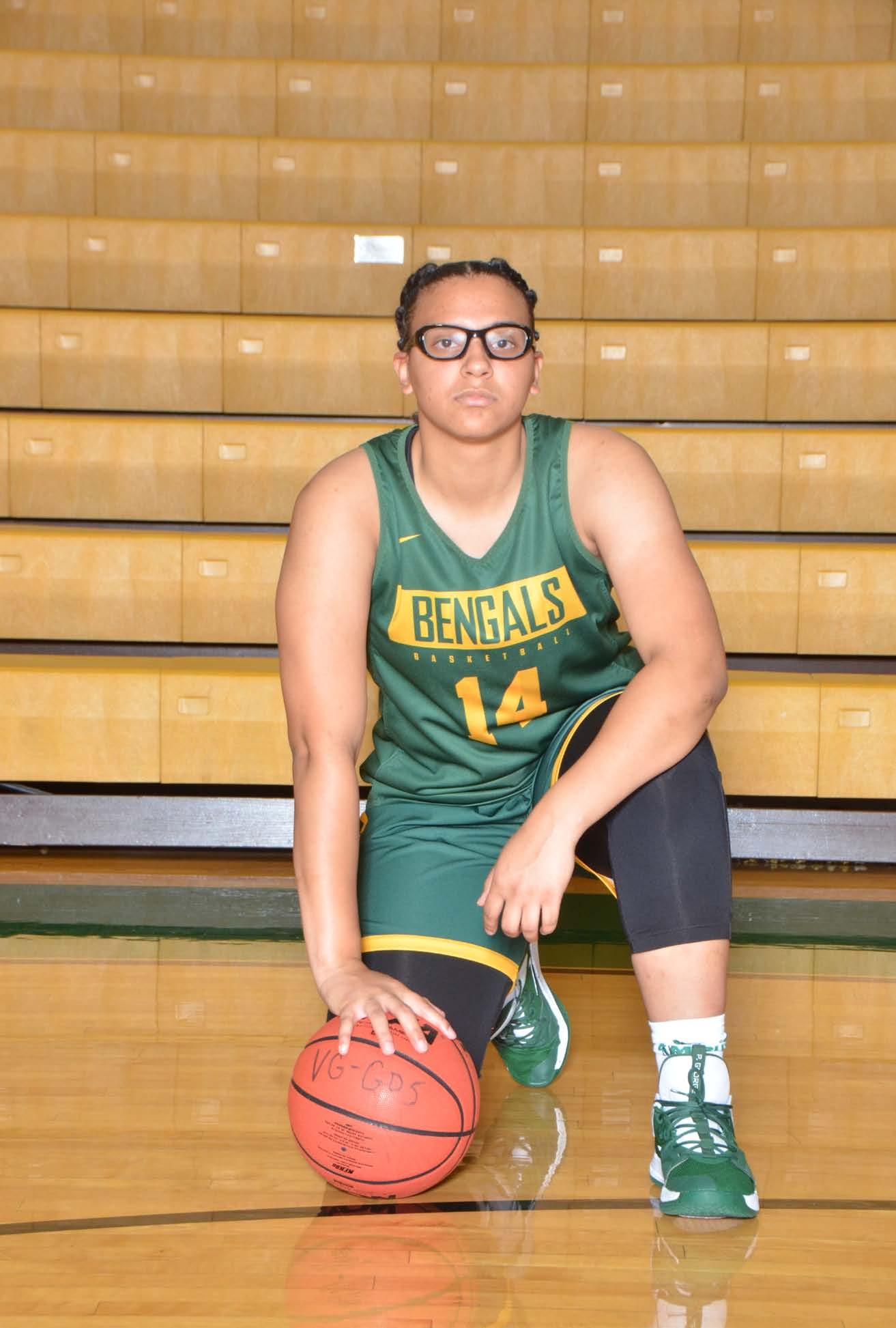
The Greensboro Day Bengals have been a tear to start the season, going 15-1 heading into the HAECO Invitational. The Bengals are the Number One team in North Carolina according to Maxpreps and have a top-100 national ranking in the process.
The scariest part about the Bengals? The team is devoid of seniors — the makeup of Greensboro Day is six freshmen, four sophomores and six juniors from a team that had only two 12th-graders last year. The Bengals went 20-8 and won a NCISAA 4A Triad Conference crown last season, along with an appearance in the state quarterfinals.
Last year was also the first under head coach Mara Montana, who has played a pivotal role in the revitalization of the Bengals. Greensboro Day won its first conference title since 2014 — the same year of the team’s last state championship game appearance. The Bengals had two losing seasons since, including a 12-19 campaign the year before Montana took over.
“The first major change was having a head coach who worked at the school full-time,” Montana said. “I see the girls all the time, we have lunch in my classroom and we connect outside of the basketball court. Building camaraderie has been big in creating this program and the ‘we over me’ culture. Before, I think the players were thinking ‘let me just get mine’ and now they’re buying into the idea of winning as a team and losing as a team.”
The seeds were planted before Montana received the head coaching job. Coming from the South Shore of Long Island, N.Y., Montana played varsity all four years in high school and became a 1,000-point scorer at Hartwick College in Oneonta, N.Y. Montana coached JV boys for two years in New York before moving to the Greensboro area after her husband received a job at Wake Forest. Montana has taught at Greensboro Day since the 2011-12 season and was an assistant coach for three years before taking over in 2018-19.
Photos
A conversation with the “Core 4” really helped move the team in a positive direction according to Montatna.
“Our juniors — Hailey Blackwell, Je’Bria Fullwood, Caroline Wyrick and Lesley Thomas — came in as freshmen and were really the foundation of this Greensboro Day team,” Montana said. “I was the assistant coach their freshmen year and I remember meeting with them specifically about what we need to do and they’ve been pushing over the last couple of years.”
One of the biggest staples for Greensboro Day is defense. Of the Bengals’ 16 games, only two opponents scored more than 50 points and eight have posted fewer than 30. “Defense wins games — it’s the most important and foundational piece in order to have a chance to compete,” Montana said. “The girls know if they’re dogging it on defense, they’ll sit on the bench and it doesn’t matter how much they score. We mainly play man-to-man with helpside defense, mixing in a few schemes here and there. The girls are sold on helping each other out and they’ve done a great job working to stop the other teams.
“I would love to have a shot clock here in North Carolina. I think if we have that, our team gets that much better — we have no problem playing great defense for a two-minute possession if we have to, but if there’s 30 seconds on the clock, our team will suffocate others and I feel we’re one of the few teams in the state with that ability.”
The Bengals haven’t shied away from top-notch competition either. According to Maxpreps, of the Top-25 teams in North Carolina, Greensboro Day’s strength of schedule is fourth-best and the team’s lone defeat came at the hands of Cardinal Newman, the 13th-ranked school in South Carolina, in the Crescom Invitational championship game in Myrtle Beach.
“Our most recent tournament was definitely the most challenging,” Montana said. “Not only did you have some of the best teams in North Carolina in it, but also from South Carolina, Tennessee and Florida. We only played one close game before the tournament, so it was an awesome opportunity to see what we were made of. The first game (a 69-62 win over Westwood of Blythewood, S.C.) was close all the way
and then we trailed by seven with two-and-a-half minutes to go against Westview (of Martin, Tenn. in the semifinals) before Hailey took over. She scored eight consecutive points, getting us to overtime and then scored the first two baskets to help us take an advantage.”
Montana said having the No. 1 ranking is great, but it never registered in the team’s goals this season. “It’s kind of shocking, but it’s very exciting,” Montana said. “We didn’t even know about it until someone pointed it out, but we’ve had three goals this season and being No. 1 on Maxpreps wasn’t one. We wanted to get along as a team — we have a core group, but new people. We want to win the HAECO championship because the girls have never received a banner, but the boys have about 10 championships. Finally, we want to win a state championship for the first time.
Championships aren’t won in November and December and I’m proud of the girls for getting the recognition they deserve. Still, we’re set on the HAECO and we’ll just go from there.”
Montana said she plans to stay at Greensboro Day for the long haul with hopes to turn the Lady Bengals into a powerhouse, similar to the boys. While the girls’ team has two championship game appearances — becoming state runners-up in 2012 and 2014 — the boys have won 11 state titles, including the past three.
“I will keep coaching as long as they’ll have me,” Montana said. “I would love to see the girls’ program grow like the men’s — Freddie Johnson has been great with his team and it would be awesome to reciprocate that on the girls’ side. This group set a precedent and has everyone talking about the team, not just because we’re winning but because the team’s fun to watch.”
The Presence of African American Head CoachesIn The NFL
Information Provided By www.saturdayblitz.com
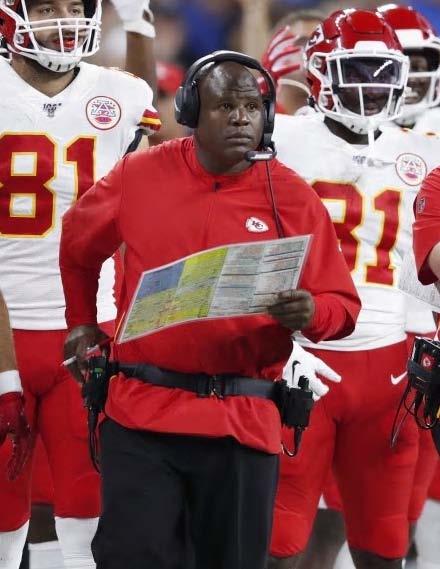
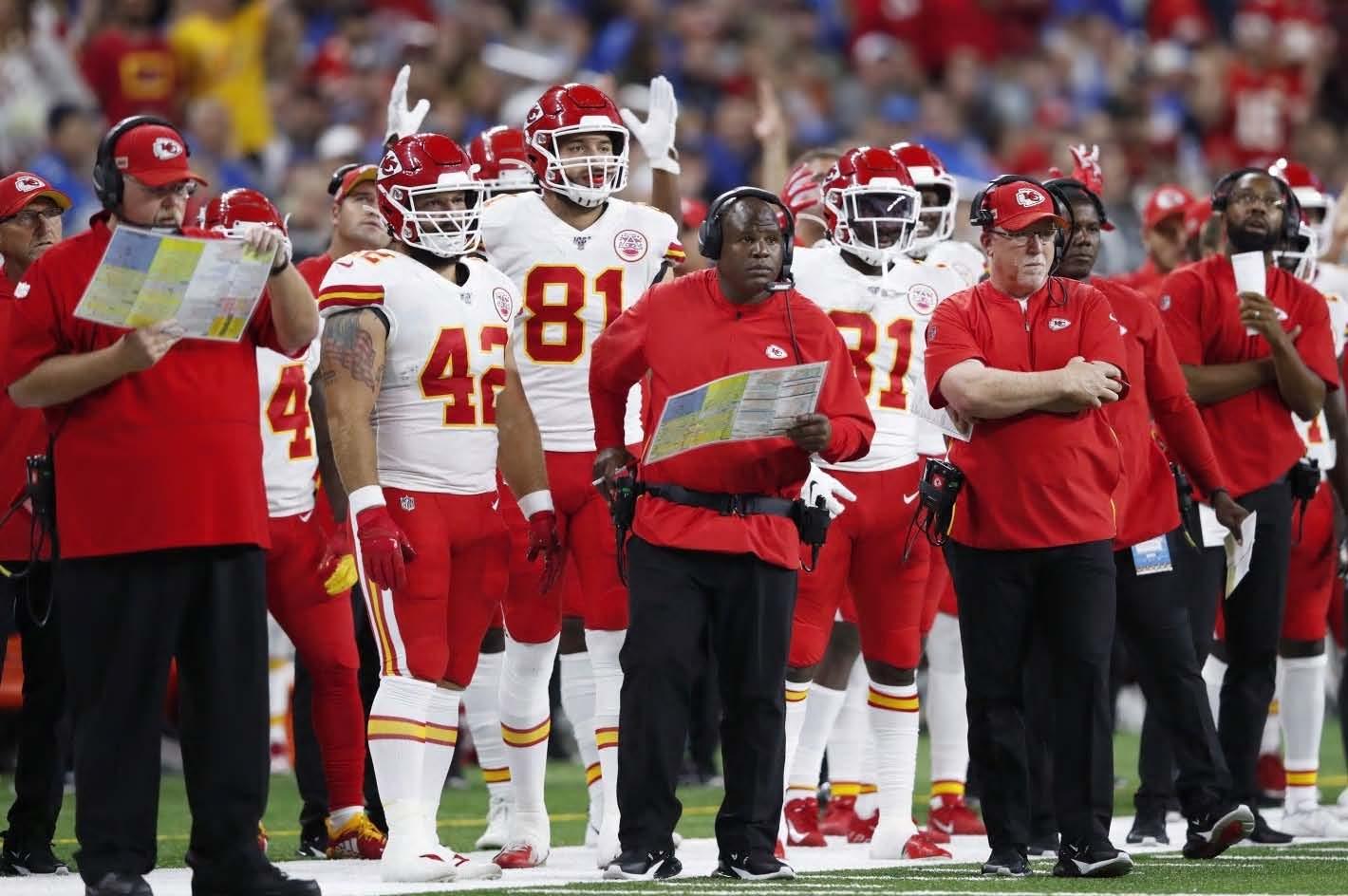
At the end of last season, four NFL teams interviewed Eric Bieniemy for their head coaching vacancies. He was, in many ways, a candidate of the moment. In a league crazed for points, Bieniemy had coordinated the third-highest-scoring offense in history. He apprenticed under Kansas City Chiefs Coach Andy Reid, who has produced a bounty of thriving head coaches. Franchises craved offense and trusted Reid’s mentorship. At the intersection sat Bieniemy.
Bieniemy received no offers, which represented another NFL trend. Last year, teams fired eight head coaches, including four minorities. They hired seven white coaches and one black coach as full-time replacements. As this year’s hiring cycle intensifies, the league again must confront the efficacy of its attempts to create equal opportunity for minority coaches.
The NFL, a league of 32 teams and roughly 70 percent black players, has three black full-time head coaches. It is both the same total as in 2003, when the league adopted the Rooney Rule to promote hiring diversity, and the same number employed by the eight-team XFL.
Said agent Brian Levy, who represents Bieniemy and a bevy of prominent black coaches, “In its 100th season, the NFL should be ashamed of itself.”
Within the NFL’s coaching diversity crisis exists an overlooked mini-crisis: It fails acutely at cultivating minority coaches on the offensive side of the ball. Only five black head coaches in NFL history — Art Shell, Dennis Green, Jim Caldwell, Hue Jackson and current Los Angeles Chargers Coach Anthony Lynn — came from an offensive background.
“That is truly amazing,” said Jimmy Raye III, an NFL consultant who served as an offensive assistant coach from 1977 to 2013. “Clearly there’s more qualified people than that. It’s denial of opportunity.”
As the NFL has skewed toward offense over the past two seasons, it revealed an alarming dearth of minority coaches in high-ranking offensive positions. The surest route to a head coach’s office in today’s NFL is the ability to develop quarterbacks, a task that falls to offensive coordinators and quarterbacks coaches. Of those 64 positions this season, minorities fill five. Bieniemy and Byron Leftwich, who calls plays for the Tampa Bay Buccaneers, are the only black offensive coordinators. Caldwell, who is on medical leave from the Miami Dolphins, and the Indianapolis Colts’ Marcus Brady are the only black quarterbacks coaches; the Denver Broncos’ T.C. McCartney is half-Samoan.
“When they’re hiring offensive coaches, and that seems to be the way the league wants to go, then you’ve got less candidates,” said NBC Sports analyst Tony Dungy, the first black head coach to win the Super Bowl. “There’s just not that many offensive coaches who have gone up the ranks.”
Troy Vincent, the NFL’s executive vice president of football operations, has worked with the Fritz Pollard Alliance, an organization dedicated to increasing diversity in the NFL, to circulate candidate lists for teams with coaching vacancies. He emphasized that the NFL cannot mandate hires. He has urged teams to consider minority offensive coaches and play-callers, even from the college ranks.
There are more than 200 minority assistant coaches in the NFL, but at the top of the profession, progress has lagged. The point is not diversity for diversity’s sake. Pushing for more equity, Vincent said, not only affords fairness but also fosters new ideas that lead to better football.
“At the end of the day, we’re looking for the best coach, the best player personnel, the best general manager and asking that all be considered,” Vincent said. “When all are considered, we’re better.”
And so Bieniemy’s primacy as a candidate arrives at a crucial time. A 50-year-old who played running back in the NFL for nine seasons, Bieniemy could become the sixth black head coach groomed on offense in league history.
“One thing I’ve learned in life: You don’t worry about the things you can’t control,” Bieniemy said. “I put one foot in front of the other, I work, I chop wood, and that’s all that matters. When it’s all said and done … something good is going to happen because of my work ethic.”
Those close to him believe Bieniemy, after 19 seasons as a running backs coach and coordinator in the NFL and college, has proved himself. Chiefs quarterback Patrick Mahomes extolled Bieniemy’s attention to detail. Wide receiver Sammy Watkins said Bieniemy built a standard essential to Kansas City’s culture.
“He has to be at the top of the list of teams who need a head coach,” said Rod Graves, executive director of the Fritz Pollard Alliance.
Vontae Davis retired at halftime of an NFL game. That’s just the beginning of his story. Reid has perhaps the most expansive coaching tree in modern NFL history. At the start of the 2019 season,
seven former assistants were head coaches. What would he tell an owner interested in Bieniemy?
“I’d say, ‘Hire him right now,’ ” Reid said. “If you’re asking me, ‘Is he ready to be a head coach?’ Yeah, he was ready last year. Nobody is in more control than what he is in this game. He’s a leader of men. He knows football. He knows this offense like the back of his hand.” Reid’s offensive coordinator job has been a springboard. The Eagles poached Doug Pederson in 2016, and he won the Super Bowl two seasons later. Matt Nagy replaced Pederson, and after landing the Chicago Bears’ job, he led an instant turnaround and won coach of the year honors. Reid calls Kansas City’s plays, as he did during Pederson’s tenure and most of Nagy’s.
Bieniemy’s credentials were just as impressive as his predecessors’ last year, when he interviewed with the Buccaneers, Dolphins, Cincinnati Bengals and New York Jets without success.
“I’m not surprised,” Dungy said, “because I’ve seen it before.”
In the early 1990s, Green Bay Packers Coach Mike Holmgren’s staff became a head-coaching factory. The San Francisco 49ers hired Steve Mariucci. Two years after Reid replaced him as quarterbacks coach, the Eagles hired Reid. Holmgren stumped for Sherman Lewis, who is black and was his offensive coordinator. When teams passed over Lewis, Dungy recalled, the explanation was that he didn’t call plays, even though Reid hadn’t, either.
“Kind of the same thing happened to Eric last year,” Dungy said. “It should be a natural progression. … It seems slower to happen for the African American guys.”
Lewis never became a head coach. Levy said he expects Bieniemy will be hired this offseason, and league insiders agreed. But Dungy believed Bieniemy was both ready last season and perfectly aligned with the NFL’s hiring trends, only to be turned down.
“You have to scratch your head and say, ‘Why not?’ ” Dungy said.
The dearth of African American offensive NFL head coaches is both systemic and deep-rooted, owing in parts to networking practices, the embers of retrograde stereotypes and the lasting effects of positional prejudices.
“That stigma attached to blacks lacking the leadership skills or the ability to play the position, I think some of that still exists as it pertains to coaching the position,” Raye said.
Unlike on defense, the path from offensive assistant to head coach typically leads through one position. Quarterbacks coaches are most likely to be promoted to coordinators. Black coaches have been given those positions in sparse numbers.
“When you look at running backs, when you look at wide receivers, that’s where those coaches have been,” Jackson said.
“Historically, blacks haven’t been allowed in that room, to coach the quarterback,” Raye said. “It was denial of opportunity.”
Colin Kaepernick had a quiet ally in Roger Goodell, but his NFL tryout still unraveled
The lack of high-profile black offensive coaches is, in part, an echo of the plight of African American quarterbacks from past generations. Teams awarded few black quarterbacks starting positions but even fewer backup jobs — the latter being an ideal position from which to launch a coaching career. “It has been a great incubator,” Dungy said.
Continued on page 19
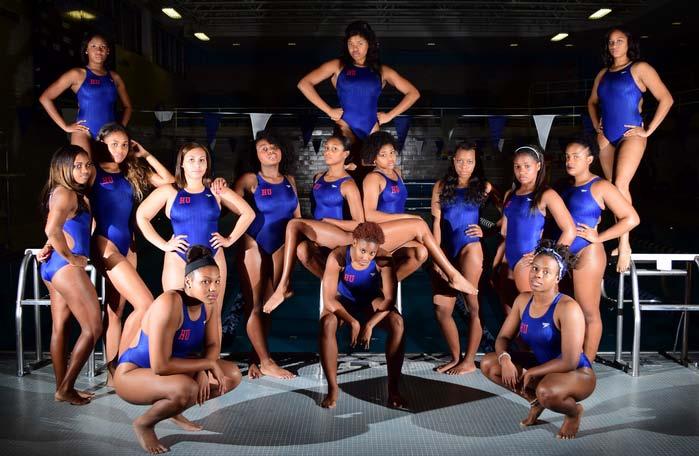
What is the Future of Swimming at HBCU’s
Information Provided By www.saturdayblitz.com
Last month, reporting from a drab hotel conference room in Washington, I witnessed something as bizarre as it was timely: Donald Trump, mired in a race-infused culture war of his own making, receiving repeated applause from a crowd of brown faces. He was heaping praise on the hundreds gathered there for his remarks at the National H.B.C.U. Week Conference.
“You have shaped American leaders, trained American legends, pioneered American innovations, empowered American workers, built American communities. And you’ve made all of America very proud of you,” he told the audience. His claim mid-speech that his team’s support for historically black colleges and universities has been “bigger and better and stronger than any previous administration, by far” was a characteristic exaggeration. But it is true that the White House has mildly increased investment in H.B.C.U. programming by 14.3 percent.
It surprised many that Mr. Trump had even shown up. The annual conference is hosted by the White House, but presidents usually don’t attend. Whether this was pandering ahead of an election year or not, much of the general praise Mr. Trump offered up was accurate: The legacy of H.B.C.U.s is in every thread of American life. The Rev. Dr. Martin Luther King Jr., the author Alice Walker and the “Black Panther” star Chadwick Boseman are just a few of their culturally impactful graduates. Although H.B.C.U.s make up only 3 percent of four-year colleges in the country, they have produced 80 percent of the nation’s black judges and 50 percent of its black doctors. Among black college graduates with a degree in STEM,27 percent are from historically black colleges. And remarkably, H.B.C.U.s have trained roughly 50 percent of black teachers.
They are also on the brink of disaster.
Rising college costs, the student loan crisis and federal budget cuts have broadly hamstrung higher education. But it’s killing H.B.C.U.s, where nearly three in five attendees are low-income, first-generation students and over 70 percent of students have
limited financial resources. Fifteen of them have closed since 1997. Public and private H.B.C.U. endowments taken together are now roughly 70 percent smaller than that of non-H.B.C.U.s. And private historically black colleges saw a 42 percent decline in federal funding between 2003 and 2015. H.B.C.U.s are awarding fewer doctorates now than they did in 1977, and a report found that the six-year graduation ratesat 20 H.B.C.U.s were 20 percent or lower in 2015.
While some marquee institutions with relatively large endowments, like Spelman College and Hampton University, face more common challenges, a large majority of H.B.C.U.s are facing existential threats and will need to be transformed, reinvigorated, to ensure their futures are as vibrant as their pasts.
Things have changed several times over since 1837, when the first historically black college, Cheyney University, opened in Pennsylvania. The schools were created to allow black students to enter higher education when white institutions — in the North, South and West — wouldn’t. A brilliant, brown intellectual ecosystem had emerged by the early 20th century: Ask alumni and they’ll tell you about the deep community, the lifelong friendships, the mentors who cared for them as if they were kin — all opportunities they believe they might not have had at predominantly white institutions. And so, even after federal integration, H.B.C.U.s thrived. As Walter Kimbrough, now president of Dillard University in New Orleans,explained in an interview with The Times in 2010, from 1984 to 1993 “historically black colleges and universities grew by 24.3 percent — 44 percent better than all of higher education.” But that growth has reversed in some ways. In 1976, 18 percent of black college students were enrolled at H.B.C.U.s, but in 2010 only 9 percent were — a number that has barely budged. In Atlanta, Morris Brown College, once a powerhouse, lost accreditation in 2002. It now offers just four bachelor’s degree majors. Paine College, also in Georgia, is currently in a fight with one of its accreditors and its fate hangs on pending court decisions. Howard University, perhaps the most well-known H.B.C.U., is under additional monitoring from the Department of Education for perceived mismanagement of funds.
Across the country, these schools are struggling in the competition for black students, particularly as predominantly white colleges are recognizing the power of diversity, offering larger financial aid packages and slicker facilities while atoning for their role in racist systems. In this time of precarity, some H.B.C.U.s are getting crafty to stay afloat, using a grab bag of transformative shifts to boost enrollment, finances and the attractiveness of their curriculums.
Some schools have turned to crowdfunding. Bennett College, an all-women’s H.B.C.U. in North Carolina, was on the brink of closing in December after losing accreditation because of its financial instability. So the college began a #StandWithBennett campaign. It raised $8.2 million by February and regained accreditation, for now. But crowdfunding campaigns are a Band-Aid for wounds that needs surgery.
In 2017, after almost shuttering, Paul Quinn College in Texas turned the campus football field into a farm and the school into a work college, the first H.B.C.U. of that kind. Work colleges require residential students to do graded work — think helping to build a new dorm or answering phones in the admissions office — to offset the cost of tuition. It has worked so well for Paul Quinn that
the school is looking to open a second site. Tennessee State University and Morgan State University in Baltimore have placed their bets on boosting their international student enrollment by the hundreds. For the past decade, most of their students from abroad have come from Saudi Arabia and Kuwait and pay full tuition plus room and board for the precious commodity of an American STEM or business degree. It has been so lucrative that Morgan State has even increased the number of engineering classes offered over the summer to meet the demand,
I don’t know whether ad hoc changes like these will be enough. There are hundreds of colleges that have low graduation rates and struggle financially, but the pain felt by H.B.C.U.s is concentrated within a specific minority community. And the H.B.C.U. cultural mission — enrolling and attempting to uplift students of color, including those of limited resources — is a noble but difficult business model.
Any school ultimately has three funding streams. Of those three, public sources (grants, and federal, state and local appropriations) for H.B.C.U.s have been slashed, private investment is low, and H.B.C.U.s’ ability to raise tuition and fees — without either violating their core mission or suppressing the number of students who will even apply — is limited.
In Maryland, home to four public H.B.C.U.s, many predominantly white institutions have better-funded versions of programs offered at these neighboring H.B.C.U.s. The four of them viewed these programs as so similar to theirs that they sued the state over its being a direct attack on their ability to enroll more students. In September, Gov. Larry Hogan granted a $200 million settlement. But to put that in context, the University of Maryland at College Park — just one of those public “P.W.I.s” — received a private $215 million gift in 2017.
For H.B.C.U.s, alumni enthusiasm is high, but out of the 46 H.B.C.U.s covered in a 2017 article by U.S. News & World Report, only 11 percent of alumni per school donated on average.
Several top Democratic presidential candidates have announced plans for billions more in H.B.C.U. investment. And the school’s continued track record in producing middle-class black families proves it would be a worthy one. For all of their struggles, two-thirds of low-income students at H.B.C.U.s end up in the middle class or better. But regardless of who is in office, the likelihood of any future Democratic Congress with an inevitably small majority passing expensive legislation catering to one minority group is slim.
H.B.C.U.s’ survival, then, hinges on more than digging deeper into the government’s pockets. The schools will need to further engage alumni beyond homecoming events and Greek life. It may also be helpful for them to create broader marketing campaigns — to lobby school counselors and state departments of education to better explain the richness of H.B.C.U.s — explicitly encouraging students of other races to apply as well.
Even after the next big recession hits the American economy, some marquee H.B.C.U.s will still find ways to thrive. But the harsh reality is that time may be running out for dozens of historically black colleges. If the federal government doesn’t issue a rescue mission in the coming decade, it’s a tragic extinction we should be prepared for
NC A&T State University Wins Another Celebration Bowl 2019 HBCU National Champs
Information Provided By www.saturdayblitz.com
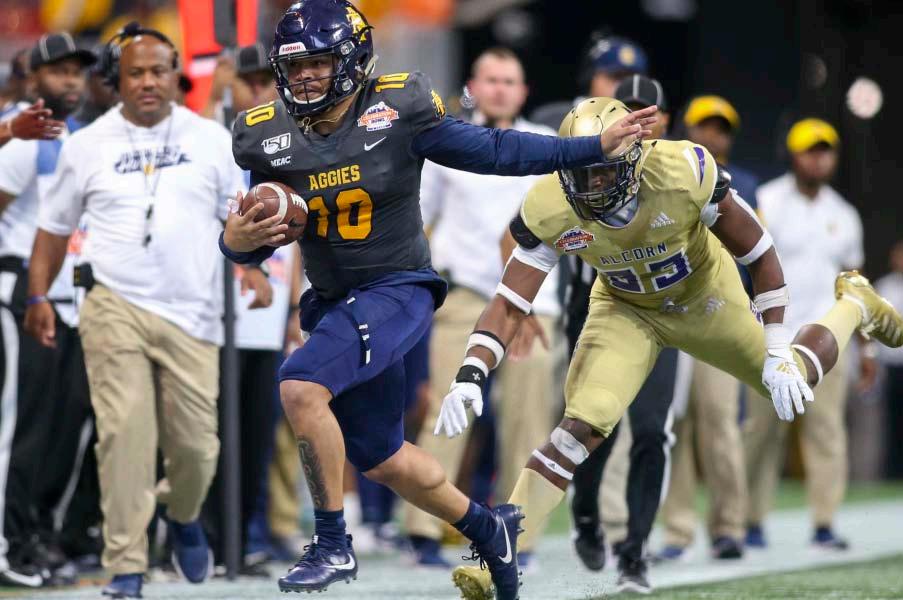
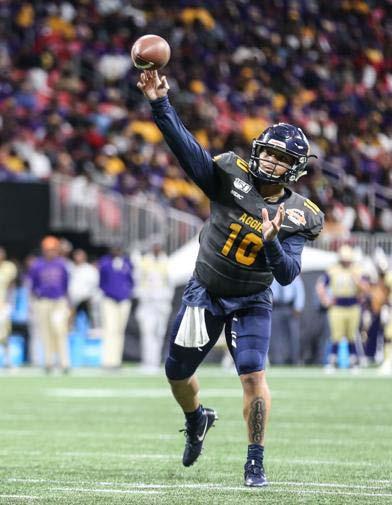
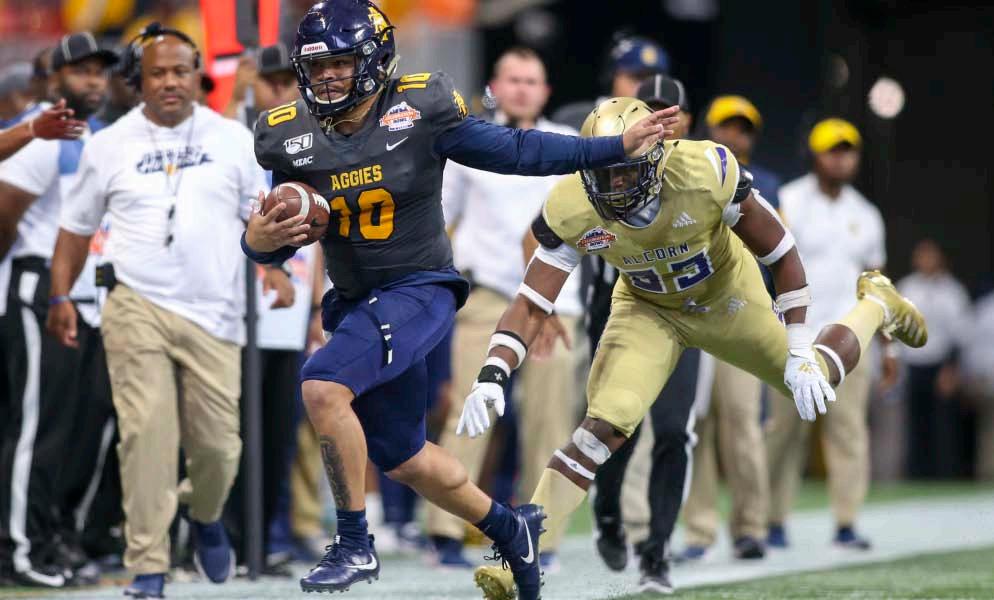
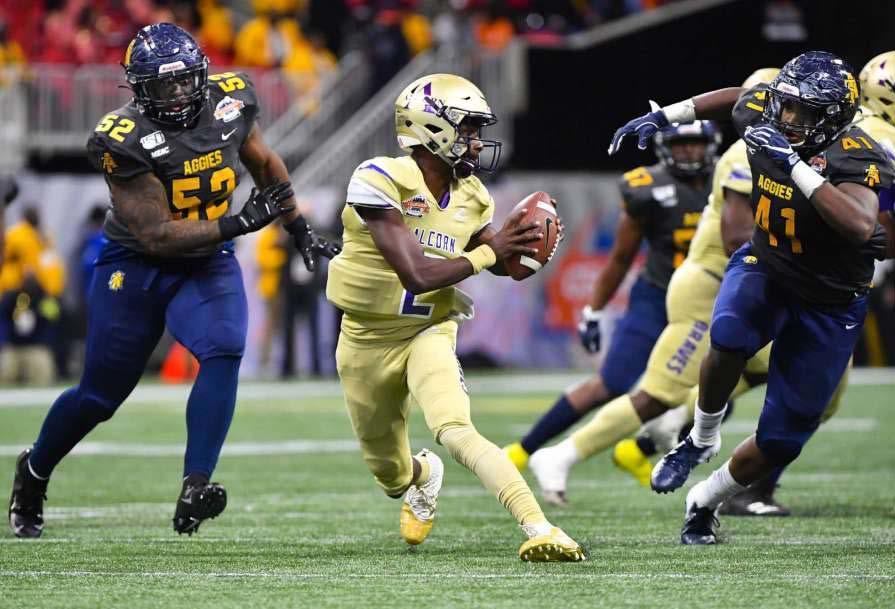
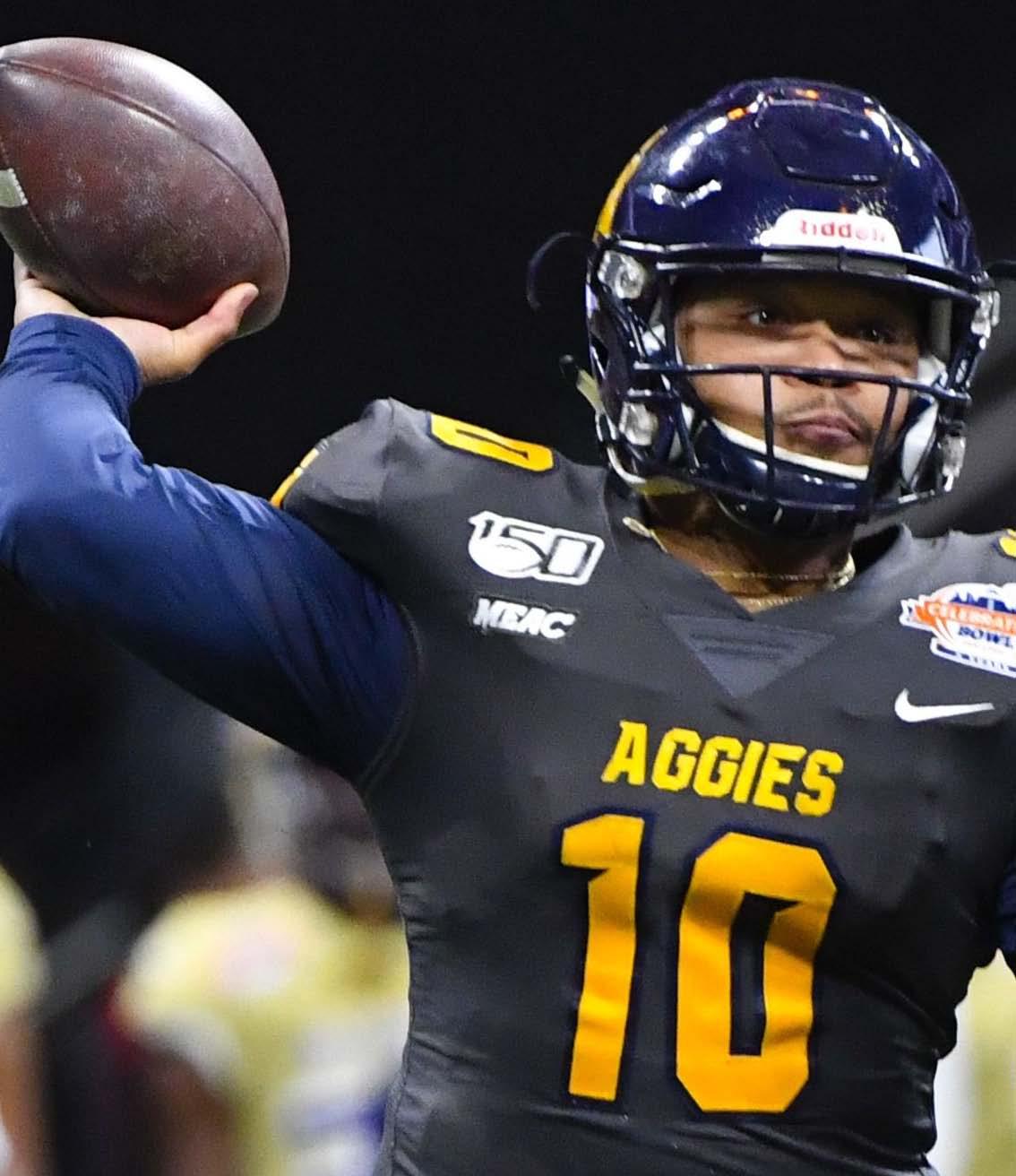
Kylil Carter came up big in his hometown, throwing for 364 yards and six touchdowns and rushing for 96 yards for MEAC champion NC A&T in a 64-44 Aggies victory over SWAC champion Alcorn State at the Celebration Bowl.
Since 2015, the Celebration Bowl in Atlanta has been a regular feature on the first day of bowl season. After playing the first two editions at the Georgia Dome in 2015 and 2016, the game has been a regular feature of the bowl schedule at Mercedes-Benz Stadium. For HBCU programs, this is the Holy Grail. Rather than competing in the FCS playoffs, the SWAC and MEAC champions play their one-off game that serves as the national championship between historically black colleges and universities.
Right from its inception, the game effectively became the exclusive domain of NC A&T. The Aggies missed the Celebration Bowl only once, when NC Central won their rivalry game in 2016 and took the MEAC crown. Otherwise, NC A&T has returned to Atlanta year after year to assert its dominance as the premier HBCU in the country.
Three times, Alcorn State has been their opponent. The Braves lost to the Aggies 41-34 in the inaugural 2015 game. Alcorn State then fell again to NC A&T last season, as the Aggies prevailed 24-22. This year, Fred McNair and the Braves hoped to finally clear that last hurdle and return to Mississippi victorious.
It was not to be, though, as this turned into the wildest Celebration Bowl yet. The two teams combined to produce more than 1000 yards and 100 points of offense as they went well past the over/under set at 52 points.
Alcorn State took an early lead as Corey McCullough put a 28-yard field goal through the uprights midway through the first quarter after the Braves got the ball back on a muffed punt. They retook a 10-7 lead five minutes into the second quarter on a 36-yard touchdown strike from Felix Harper to Chris Blair.
It was the last lead Alcorn State would hold on Saturday. Harper finished the game 25-of-42 for 341 passing yards, with five touchdowns and an interception, along with two rushing touchdowns. Even that wasn’t enough to will the Braves to victory.
NC A&T promptly scored 17 unanswered points before halftime to take a 24-10 lead into the locker room at the intermission. Coming out of the break, Jah-Maine Martin ran the first play from scrimmage 75 yards for a score to put the Aggies up by three touchdowns.
Alcorn State continued fighting gamely to the bitter end, but they were unable to bridge the deficit imposed by their MEAC counterpart. NC A&T blocked an extra point and returned it for a two-point conversion the other direction to make it 57-44 late in the fourth quarter. The Aggies added another touchdown to round out the final margin at 20 points in a 64-44 victory.
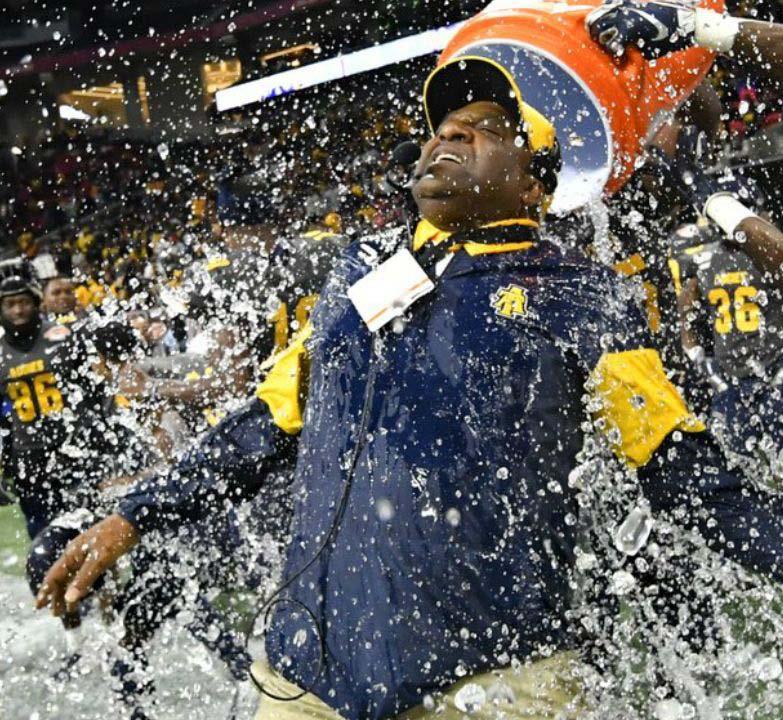
NC A&T has put together one of the most dominant runs in the HBCU ranks in recent seasons, and Sam Washington continued the tradition of excellence in Greensboro with his second Celebration Bowl win in two years at the helm.
What Are Your Weight Loss Goals In 2020?
Intermittent Fasting
Intermittent Fasting
The Promise
Why cut back every day if you could drop pounds by watching what you eat only a couple of days a week? That’s the logic behind intermittent fasting, a weight loss approach that’s become more popular over the past few years.
There are different versions, but the general idea for all of them is that you eat normally some days of the week and drastically reduce your calories on other days. Some plans encourage you to skip food entirely for up to 24 or 36 hours at a time. On others, such as the Every Other Day Diet and the 5:2 Fast Diet, you can have some food but only get about one fourth of your regular calories. Some research shows that intermittent fasting works - at least in the short term. In some studies, people who followed this diet did lose weight and also had a decrease in some of the markers that show inflammation.
The possible secret behind the diet’s health-boosting benefits: Fasting puts your cells under a mild stress. Scientists think that the process of responding to this stress, on your low-calorie days, strengthens cells’ ability to deal with stress and potentially fight off some diseases.
What You Can Eat and What You Can’t
You can eat mostly what you want on days when you don’t fast. But to lose weight and get the nutrients you need, you should stick to healthy foods and limit treats like dessert and processed foods.
On fasting days, you’ll eat very little food or none at all. For example, the Every Other Day Diet says to eat no more than 500 calories during each fast day.
Another program called the 5:2 Fast Diet involves eating 5 days a week and fasting for the other 2 days, when women can get no more than 500 calories and men no more than 600. That’s a quarter of the amount you likely eat on the days when you don’t fast. Whether you eat those calories in one sitting or spread them across micro-meals throughout the day is up to you.
Level of Effort: Hard
Limitations: It’s not easy to skip most of your calories a few days a week and rely mostly on water, coffee, and tea to keep you feeling full. You’ll need a balanced meal plan to eat in moderation on your so-called “feast” days, despite their name. You can indulge in a treat occasionally, but that’s about it if you want to see results.
Cooking and shopping: You can continue your regular cooking and shopping, as long as you stick to mostly healthy foods.
Packaged food and meals? No. In-person meetings: No.
Exercise: How much you exercise is up to you. But obviously, you’re not going to have a lot of energy for that on your fasting days. The creators of the Every Other Day diet studied people doing cardiovascular exercise (like biking) while on the alternate-day fasting plan and found that they were able to maintain muscle mass while fasting.
Does It Follow Restrictions/Preferences?
You choose what food you eat, so you can make it work with food restrictions -- whether you’re vegetarian or vegan, high- or low-carb, avoiding fat, etc. But it’s worth noting that you could have side effects like fatigue, weakness, and headaches.
What Else You Should Know
Cost: None beyond your shopping. In fact, because you will eat much less 2 to 4 days per week, your grocery costs should go down.
Support: There are several books and websites detailing variations on the basic idea of fasting a few days a week. So though there’s no single destination for support, there are plenty of resources once you’ve decided which version of the plan appeals most to you.
What Laura Martin, MD, Says
Most of the intermittent fasting diets recommend cutting back to 500-600 calories on fasting days. In general, for many people this would be medically safer and easier than not eating at all on those days.
Remember to drink enough on fasting days to prevent dehydration. And you’ll need to eat a healthy diet on days that you don’t fast.
Several studies looking at intermittent fasting diets do show at least short-term weight loss after following the diet for several weeks. Will the weight loss will last over a longer time? That’s not clear.
Is It Good for Certain Conditions?
Some research shows that this type of diet may curb symptoms of asthma. Also, some studies, but not all, show improvement in the body’s use of insulin. If you have medical conditions, talk with your doctor before you try intermittent fasting. This diet is not recommended for children, pregnant women, people with eating disorders, and some people with diabetes.
The Final Word
Following an intermittent fasting diet that recommends eating 500-600 calories on fasting days may work and be healthy for some people.
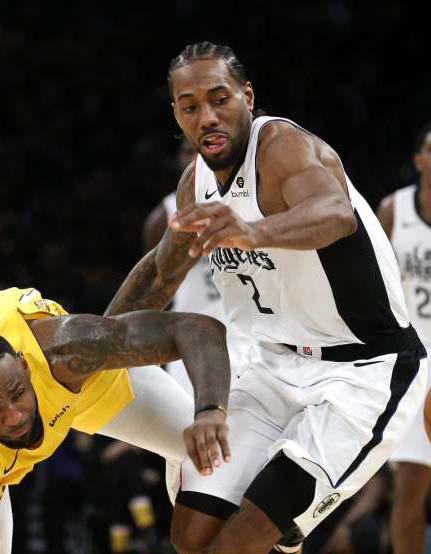
He was the Fun Guy. The board man who got paid. He overcame injury to reclaim his rightful place as one of the very best basketball players on the planet. He conquered the NBA world for a second time, bringing a championship to Canada. And then he joined the Los Angeles Clippers, ready to start anew.
“What it do, baby?”
For Kawhi Leonard in 2019, there finally is an answer to his infamous question: He did everything, without talking much.
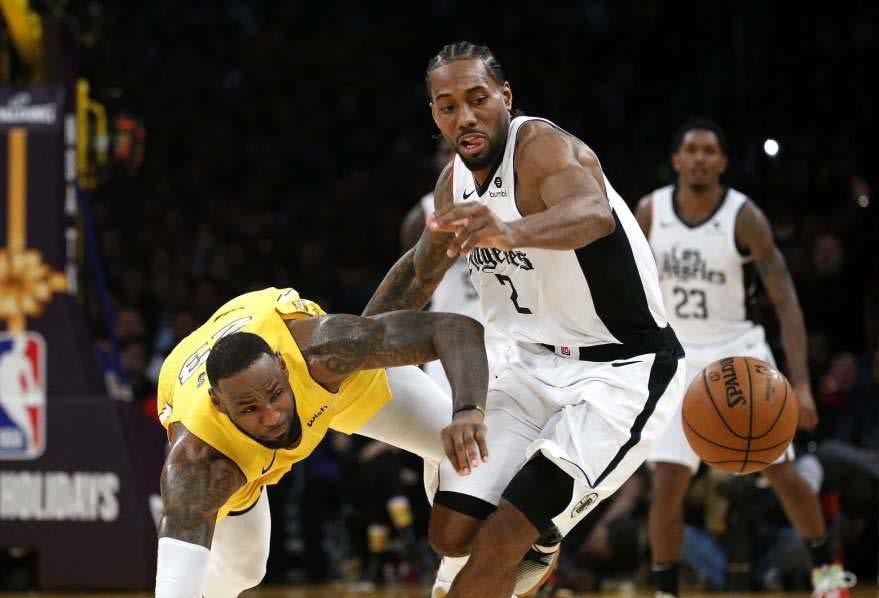
Leonard is The Associated Press’ male athlete of the year for 2019, comfortably winning a vote by AP member sports editors and AP beat writers. He becomes the fifth NBA player to win the award, joining Larry Bird (1986), three-time recipient Michael Jordan (1991 through 1993), three-time recipient LeBron James (2013, 2016, 2018) and Stephen Curry (2015). The award has been made annually since 1931, and Simone Biles was announced Thursday as the women’s recipient for 2019.
Leonard was the NBA Finals MVP for the second time, leading Toronto to its first championship — five years after he first smudged his fingerprints on both trophies with the San Antonio Spurs. He wound up leaving the Raptors in the summer for the Clippers, returning to his native Southern California and turning the historically woeful franchise into one of the top teams in the league.
“The ride was fun,” Leonard said earlier this month on his return trip to Toronto, summing up his year with the Raptors. “I had a great time.” By now, it’s no secret that Leonard is a man of few words.
He is not a man of few accomplishments. He received more than twice as many points in the balloting as any of the other 18 votegetters. Baltimore Ravens quarterback Lamar Jackson was second, followed by Kansas City Chiefs quarterback Patrick Mahomes, tennis star Rafael Nadal and reigning NBA MVP Giannis Antetokounmpo of the Milwaukee Bucks.
“Kawhi’s pretty steady,” said San Antonio coach Gregg Popovich, Leonard’s former coach with the Spurs. “He’s not a big talker. He doesn’t try to find the limelight or anything like that. He’s just a good guy who wanted to be good.” Somewhere along the way, he became great.
Leonard was the best player in last season’s playoffs, after a regular season where he missed 22 games mostly because of what has become
Male Athlete of 2019 Khwai Leonard
known as “load management” — the fancy term used on nights when he would sit out to rest. Leonard missed most of the 2017-18 season with the Spurs because of a complicated leg issue, and the NBA said last month that he is still dealing with “an ongoing injury to the patella tendon in his left knee.”
He was limping at times in the playoffs, but it didn’t matter. He averaged 30.5 points and 9.1 rebounds in the postseason, his 732 points in last year’s playoffs ranking as the third-most in any NBA playoff year. In the biggest times, he came up the biggest — 15 points in the fourth quarter to carry Toronto past Milwaukee in the series-turning Game 5 of the Eastern Conference finals, and 17 points in the fourth quarter of Game 4 of the NBA Finals against Golden State to put the Raptors on the cusp of the title.
And, of course, he made The Shot: the four-bounce-off-the-rim, atthe-buzzer jump shot from the corner to beat Philadelphia in Game 7 of the second round.
“Without a doubt,” Raptors coach Nick Nurse mused during the playoff run, “the best thing about this thing is that somehow I wound up on the sideline getting to watch this guy play up close.”
Leonard performed at that lofty level even while dealing with a major distraction. During the NBA Finals, it was revealed that Leonard filed a federal lawsuit against Nike and claimed the footwear and apparel giant was blocking him from using a logo that he believes he owns.
“There’s a lot of guys that are like, ‘Look, I’m going to find a way to win and in a seven-game series I’m going to get the best of you in the end,’” said Miami’s Jimmy Butler, who was with Philadelphia last season and saw up-close what makes Leonard tick. “But he’s definitely up there. Your respect just grows. Push, pull, whatever he’s got to do. ... He’s going to find a way.”
During the playoffs, Leonard’s “I’m a fun guy” quote that he offered on his arrival in Toronto became a meme and a marketing slogan. So did his “Board man gets paid” line. And after the Raptors won the title, Serge Ibaka’s video of Leonard went viral — they were in the back of a car, on the way to the parade, and Ibaka teed him up for the next unforgettable saying.
“Fun Guy, what’s up baby?” Ibaka asked.
The answer was classic Leonard. Short, sweet, to the point. “I’m playing to have fun and try to be the best player I can be,” Leonard said. “I’m happy with myself and what I have done in my career and I’m just going to keep on from there. It’s not about me being famous or want to have more fame than those guys. It’s about me playing basketball and having fun on the floor.”
Joshua Pitts, a sports economics professor at Kennesaw State, performed a study that showed black quarterbacks were more likely to switch positions from high school to college than any other subgroup. The data from his study is 10 years old, but Pitts believes it remains relevant in coaching.
“You’re seeing this historical discrimination against black athletes in leadership positions still having an effect,” Pitts said. “And it’s a really hard thing to get rid of. Even if you make efforts to eliminate it, it’s a really hard thing to overcome.”
Black coaches often feel typecast. Raye has mentored many, including Pep Hamilton, who entered the NFL as the Jets’ quarterbacks coach. Raye told him: “Make sure you stay in the quarterback room. Don’t fall for the banana-in-tailpipe deal: ‘We could really use you as a receiver coach or a running back coach.’ Stay with the quarterback.”
“I had a white coach tell me once, ‘If you go to the defensive side of the ball, you’ll be a head coach quick,’ ” Lynn told the Denver Post in 2017. “ ‘You have it, but you have to go to defense.’ So everybody knows.”
Lynn is the only current black head coach with an offensive coaching background; Miami’s Brian Flores and Pittsburgh’s Mike Tomlin are both former defensive coordinators.
The NFL’s lack of minority coaches traces back to the people hiring. Only one owner, Shad Khan of the Jacksonville Jaguars, is not white. Miami’s Chris Grier is the NFL’s lone black general manager. “Most of the time,” Dungy said, “you hire people you know.” The NFL’s networking circles — and nepotism — have worked against black offensive coaches. NFL teams employ two black offensive coordinators. Six NFL play-callers, all of them white, have fathers who coached in the league.
“Everybody talks about the pipeline,” Jackson said. “Well, how do you get them in the pipeline? What does that mean? … The pipeline has already been established. It’s just established the other way.”
The NFL’s search for the next Sean McVay has created a new role: Head Coach of the Defense
From 2014 to 2017 in Detroit, Caldwell posted three winning years, led the Lions to their first 11-win season since 1991 and twice made playoff appearances. In his first head coaching job, Caldwell took the Colts to the Super Bowl. “The fact that Jim is not a head coach today,” Graves said, “is really a travesty.” Caldwell is not even a coordinator. After Detroit fired him, Caldwell sat out the 2018 season. He returned this year as Miami’s assistant head coach and quarterbacks coach, working under Flores, the lone minority head coach hired in the previous cycle. Vincent said cases such as Caldwell’s should prompt questions of a double standard. “We’ve seen the black coach, the minority coach, go from head coach down to a position coach, where his counterpart goes from head coach to a coordinator,” Vincent said. “That should be a concern. The fall is so steep.”
Levy points out that only once in NFL history, when Dungy retired and handed the Colts’ reins to Caldwell, has a team replaced a minority head coach with another minority. The concentration of recently fired minority coaches last year, Levy believes, played a role in Bieniemy’s rejection.
“We just looked at the teams and said, ‘The probability of him getting a job where a minority just left is very low,’ ” Levy said. Jackson, who was fired by the Oakland Raiders in January 2012 after one season, received his second head coaching chance in 2016. He led the Cleveland Browns to a 1-31 record over two years before the franchise fired him midway through his third season. Jackson’s flop underscored an unfair burden. “There’s not very many of us as it is,” Jackson said. “And then you’re failing — which I was — at the highest level. That doesn’t say, ‘Go hire more guys.’ ”
Last summer, Vincent asked himself, “How do we close this door — or this perception, this excuse — that they don’t exist, that there’s no pipeline?” With help from Washington Redskins executive Doug Williams and others, he organized the NFL Quarterback Coaching Summit in Atlanta, where more than 30 minority offensive coaches, from the NFL and college ranks, gathered to share expertise and career advice. Ozzie Newsome, the former Baltimore Ravens GM who still consults for the franchise, told the room that the number of qualified candidates astonished him.
“All along, we’ve been hearing: ‘We can’t find anybody. We can’t find the numbers,’ ” Raye said. “But that summit uncovered the fact that there are a number of people that are highly successful at doing that job and coaching that position.”
Raye and Vincent noted that if Arizona Coach Kliff Kingsbury can be a viable NFL head coach because of his offensive wizardry at Texas Tech, where he posted a losing record, it should open the door for other college play-callers. Then-Alabama offensive coordinator and current Maryland head coach Michael Locksley and Clemson co-offensive coordinator Tony Elliott, both black, called plays against each other in last season’s College Football Playoff national championship game.
‘We got it done!’: The inside story of how Patrick Mahomes landed with the Chiefs
The number of qualified candidates is expanding in the NFL, too. Buccaneers Coach Bruce Arians built a staff with more than a dozen minority and female coaches, including all three coordinators. The Colts’ Brady, 40, is a former Canadian Football League quarterback and offensive coordinator starting his ascent.
“As you’re growing up and then you get into the coaching business, you’re aware of the limited opportunities that are there,” Brady said. “But I don’t let it stop who I am or what I do. … I do understand the position that I’m in. I do feel a bit of responsibility to others that I’ve been given an opportunity, that I need to produce.”
Dungy views the current quarterback landscape, in which black passers are dominating the MVP race and holding numerous backup jobs, as a promising sign for the near future.
“We as a sport have come a long way in accepting and celebrating African American quarterbacks,” Stanford Coach David Shaw said. “I’m a positive human being. I think that, over time, we’ll do the same thing looking at African American quarterback coaches and African American offensive coordinators and offensive head coaches.”
Bieniemy’s expected ascent would be significant and another step forward. Raye chuckled when he recalled his entry into coaching, which gave the NFL a third black assistant coach. Dungy counted 10 black assistant coaches in the league when he broke in. Bieniemy provides another chance at progress.
“It’s not about the percentage of participants or we want a ratio, [that] there should be this number of X, Y and Z,” Vincent said. “It just shouldn’t be the way it is today.”