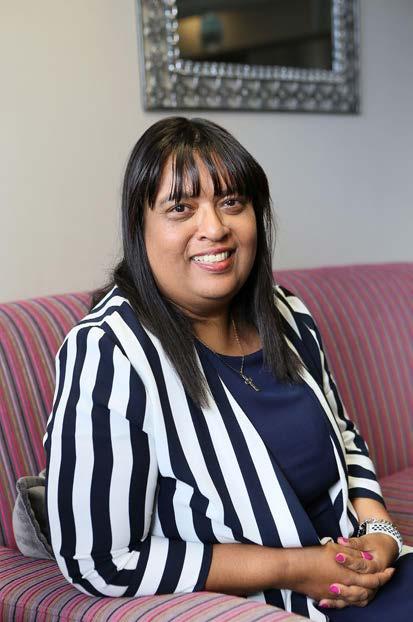
PROF JM FRANTZ - Deputy Vice - Chancellor: Research and Innovation
As the University of the Western Cape (UWC) approaches the conclusion of its Institutional Operating Plan (IOP) 2021–2025, this Annual Research Report reflects on a period of significant progress and transformation. Guided by the theme “Building Research Ecosystems for Global Collaboration,” UWC’s Research and Innovation
Portfolio has transitioned from strengthening individual systems to cultivating a dynamic, interconnected ecosystem of people, partnerships, and platforms that work collectively to generate meaningful societal impact. Over the past three years, UWC has consolidated its reputation as a leading engaged university, one that is both deeply rooted in local realities and globally connected in purpose.
At the centre of this transformation is the I3 Framework – Idea, Implementation, and Impact, which has shaped UWC’s approach to research leadership and development. The framework encourages the generation of bold ideas, supports their implementation through mentorship, infrastructure, and collaboration, and ensures that outcomes translate into tangible impact for communities, policy, and society. This approach has not only elevated UWC’s internal research culture but has also enhanced its visibility as a strategic contributor to the global knowledge landscape. Flagship programmes, such as IMPACT (Interdisciplinary Mentorship Programme for Advancing Collaborative Transformation) and REAL (Research Excellence for Advanced Leaders) have become defining examples of this framework in action. These initiatives have equipped scholars at all career stages to engage across disciplines, strengthen leadership capacity, and align their work with global priorities such as the Sustainable Development Goals (SDGs).
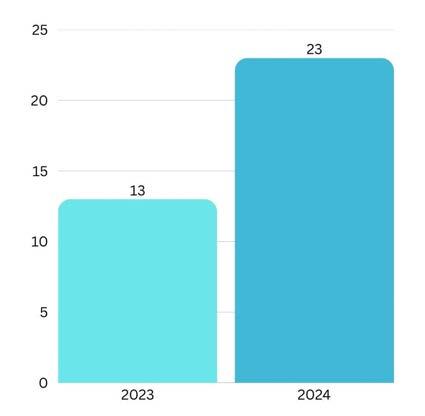
Human capital development remains the heartbeat of UWC’s research success. The Research Development and Postgraduate Support (RDPS) Directorate has continued to deliver mentorship, training, and writing retreats that empower emerging researchers to thrive. The postgraduate coaching programme expanded from thirteen coaches in 2023 to twenty-three in 2024, collectively supporting more than Five hundred fifty students across faculties. Through these interventions, UWC has strengthened supervision quality, improved postgraduate retention and throughput, and built a more sustainable research pipeline. The University has also advanced gender equity and inclusivity through programmes, such as the Women in Science Advancement Programme (WISAP) and the work of the Gender Equity Unit (GEU), which integrates feminist scholarship, advocacy, and community engagement. These initiatives have jointly shifted from a capacity building to capability empowerment where researchers are not only completing degrees and projects but also shaping the national and continental research agenda.
UWC’s research productivity continues to reflect both stability and diversification. The University consistently produces close to 700 accredited research output units annually (2022: 696.82; 2023: 690.36), maintaining competitiveness within South Africa’s higher education sector despite a growing academic and postgraduate base. The number of National Research Foundation (NRF)-rated researchers increased from 155 in 2022 to 167 in 2024, reflecting ongoing renewal and excellence in scholarly leadership. External research income reached R324.7 million in 2024, marking a 6% increase from the previous year, with funding sourced from the National Research Foundation (NRF), Department of Science and Innovation, and international partners such as the Bill & Melinda Gates Foundation and the International Development Research Centre (IDRC). These results demonstrate not only academic resilience but also the University’s ability to attract and manage complex, collaborative research grants.
The true measure of UWC’s success lies not only in quantitative outputs but in the impact and relevance of its research. Across faculties and centres, scholars have contributed to solving pressing societal challenges through research aligned with the Sustainable Development Goals (SDGs). In the health sciences faculty/department, projects have advanced public health, addiction recovery, and equitable healthcare systems. In biotechnology and environmental science, the BiodiverCities project has pioneered sustainable urban planning through nature-based solutions, while the MedChem2025 symposium, hosted with Belgian partners, has strengthened global research collaboration in medicinal chemistry and drug discovery for low- and middle-income contexts. Initiatives such as the Deaf Women and Gender-Based Violence (GBV) Policy Brief, developed through the Gender Equity Unit (GEU), have influenced local governance and policy. These and other examples illustrate how UWC’s research ecosystem transforms knowledge into social change.
Digital transformation has become another defining feature of this era. The establishment of a High-Performance Computing (HPC) facility and the migration to the YoDa open-source data repository mark a major step in UWC’s evolution toward a data-smart university. Through the eResearch unit, the University is enabling data-intensive collaboration across Africa and beyond, positioning itself as a continental leader in open science and artificial intelligence-driven innovation. Complementing this, the library’s digital curation and research visibility services have enhanced access to information and improved the global reach of UWC’s scholarship. These investments ensure that UWC’s researchers are equipped to lead in the emerging landscape of digital and computational science.
Internationalisation continues to be a hallmark of UWC’s strategy. The University’s partnerships now extend across more than forty countries, spanning Africa, Europe, North America, Asia, and Oceania. Collaborations with institutions, such as Vrije Universiteit Amsterdam, University of Missouri, CIRAD, and the DAAD-funded UKUDLA Centre of Excellence exemplify UWC’s commitment to cocreation and mutual capacity strengthening. Importantly, these are not extractive relationships but partnerships built on shared learning, equity, and respect; an approach that positions UWC as a leading voice from the Global South in shaping global research collaboration.
As UWC prepares to transition into its next strategic cycle, IOP 2026–2030, the foundation laid during this period provides strong momentum for the future. The next phase will focus on accelerating the research ecosystem thereby amplifying digital transformation, expanding collaborative partnerships, and deepening the translation of research into innovation and societal benefit. UWC’s journey over the past three years reveals a university that not only contributes to the generation of knowledge but also embodies the principle that knowledge must serve humanity.
Its researchers, students, and partners are collectively demonstrating that excellence, equity, and collaboration are not competing priorities but mutually reinforcing pillars of transformation.
UWC, through its people, its partnerships, and its purposeful engagement with the world, has established itself as a model of how an African university can thrive as a global collaborator and catalyst for change. As this IOP cycle concludes, UWC stands ready to advance into the next decade of discovery anchored in excellence, driven by impact, and inspired by the belief that when knowledge is shared, societies flourish.
Introduction: From Systems to Ecosystems
Guided by the I3 Framework – Idea, Implementation, Impact, this vision has defined UWC’s approach to research leadership and global engagement. More than a strategic tool, it represents our commitment to research that matters:
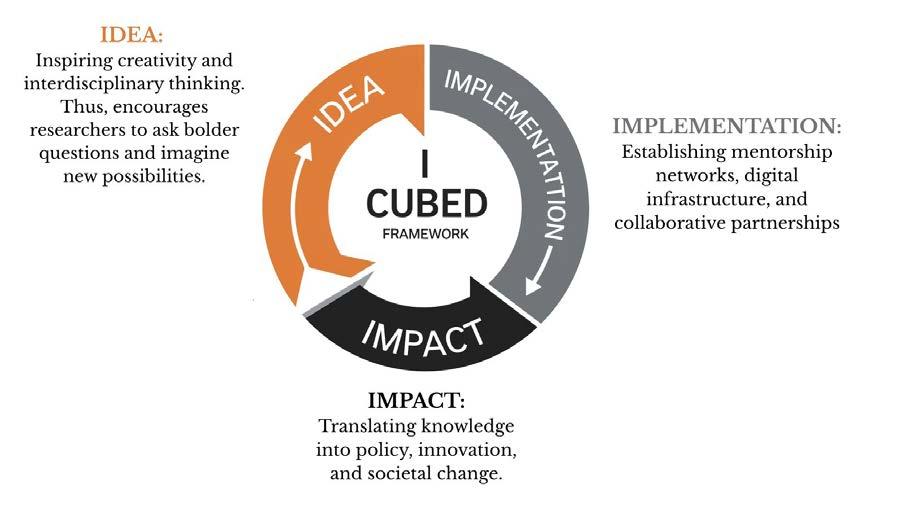
Through flagship programmes such as Interdisciplinary Mentorship Programme for Advancing Collaborative Transformation (IMPACT) and Research Excellence for Advanced Leaders (REAL), UWC continues to nurture a generation of researchers who combine local relevance with global reach scholars who understand that the wicked problems which face our society demand both deep roots and wide horizons (T-shaped).
“We are moving from conducting research in the world to collaborating with the world, expanding what knowledge can do when shared across disciplines and borders.”
PROF JOSÉ FRANTZ, DVC: RESEARCH AND INNOVATION
The University of the Western Cape’s research ecosystem is built on five interconnected pillars: People, Partnerships, Platforms, Policies, and Purpose that work together to drive innovation and impact. UWC realises that People are their biggest asset and it is through its people, that UWC cultivates academic scholars and leaders who advance knowledge through mentorship and support.
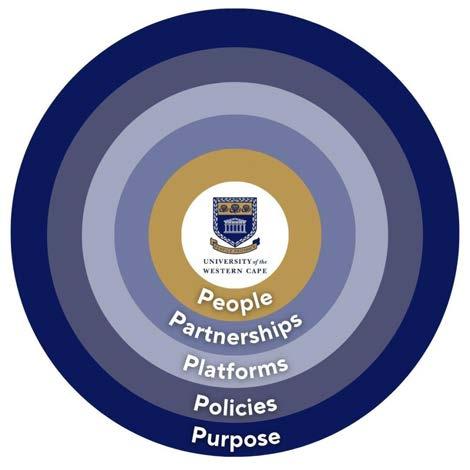
Partnerships is our reach multiplier. Through our South–South and North–South collaborations, we extend our influence and amplify our impact across continents, creating networks of shared purpose and mutual benefit.
Platforms, such as eResearch, HPC ( High-Performance Computing), and YoDa (Your Data) provide the digital foundation for data-driven research.
Policies remain our ethical compass. Robust frameworks ensure that research excellence walks hand-in-hand with integrity, inclusivity, and responsible governance, protecting both researchers and the communities they serve.
Purpose our unwavering orientation. Every research initiative aligns with the UN Sustainable Development Goals, Africa's Agenda 2063, and South Africa's National Development Plan 2030, ensuring our work contributes to transformative, sustainable development.
These pillars don't operate in isolation. They form a living ecosystem - adaptive, interconnected, and resilient where human capacity, technological capability, and global connectivity converge to keep UWC's research both locally anchored and globally influential.
At UWC, Ecosystem Health Indicators are key measures that reflect the strength and sustainability of the University’s research environment. They capture how well UWC’s people, partnerships, and platforms are growing and contributing to meaningful impact. Tracking these indicators helps the University identify growth areas and guide future investment.
Over the past two years, these indicators have shown steady improvement, particularly in the development of students and staff within research. This positive trend underscores UWC’s commitment to building a vibrant, inclusive, and globally engaged research community.
retention Although there is growth we were unable to reach postgraduate targets
“No single institution or discipline can address global challenges alone. Our strength lies in co-creation, where ideas and people converge for shared impact.”
— EXTRACT FROM THE 2024 RESEARCH WEEK PROCEEDINGS
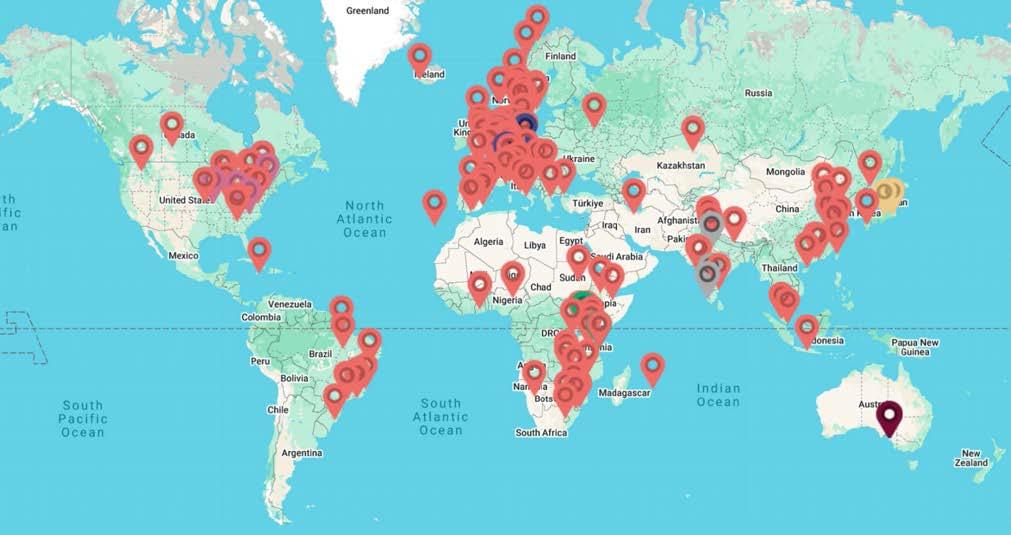
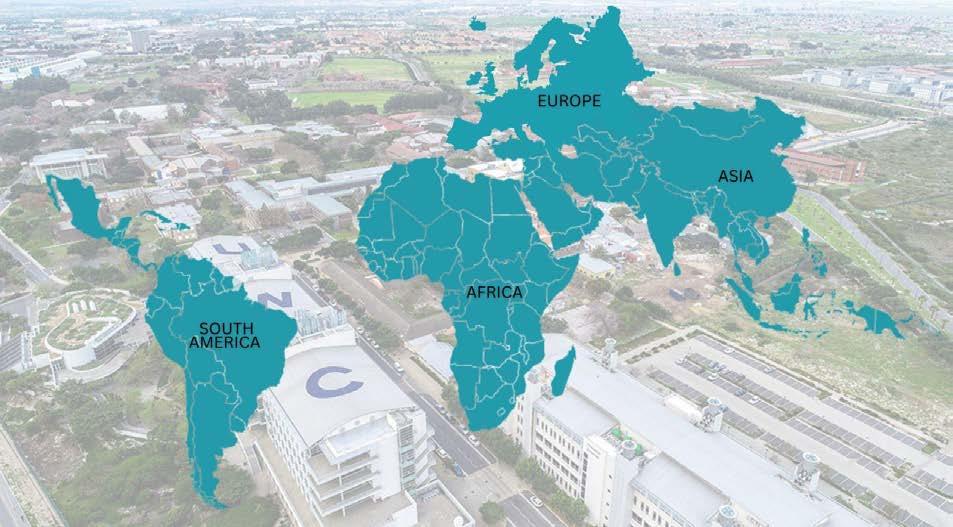
The University of the Western Cape has established a dynamic global footprint through extensive research, education, and mobility partnerships that now span over 40 countries worldwide. These collaborations position UWC as a Southern hub in a globally connected research ecosystem, advancing innovation, sustainability, and inclusive knowledge exchange across continents.
• Africa: Regional research capacity-building and food systems partnerships with Nigeria, Kenya, Ethiopia, and Malawi.
• Europe: SDG-aligned co-publications and DAAD-supported initiatives with Germany, the Netherlands, Belgium, and Norway.
• North America: Diversity, inclusion, and innovation collaborations with the University of Missouri (USA).
• Asia: Joint projects in AI, One Health, and higher education with partners in India, Malaysia, and Taiwan.
• Oceania: Joint PhD supervision and research exchanges with Australian institutions.

Scan the QR Code to read more about how UWC contributes to the Sustainable Development Goals
https://www.uwc.ac.za/news-and-announcements/news/uwc-remainscommitted-to-the-sustainable-development-goals
In the pages that follow, you'll discover the concrete realities behind these aspirations the data, stories, and evidence of how UWC's research ecosystem is maturing and delivering impact. You'll encounter:
• The health indicators that measure our ecosystem's vitality from 2022 to 2024
• The researchers, mentors, and leaders who breathe life into these programmes
• The partnerships that extend our influence and amplify our contributions
• The infrastructure enabling data-driven discovery at unprecedented scales
• The policies ensuring our work remains ethical, inclusive, and impactful
This is more than an annual report. It's a window into a research community in motion one that recognises that in an interconnected world, the greatest breakthroughs emerge not from individual brilliance alone, but from the synergy of shared purpose, the courage to collaborate across borders, and the commitment to knowledge that serves humanity.
Welcome to UWC's research ecosystem. Welcome to the future of collaborative scholarship









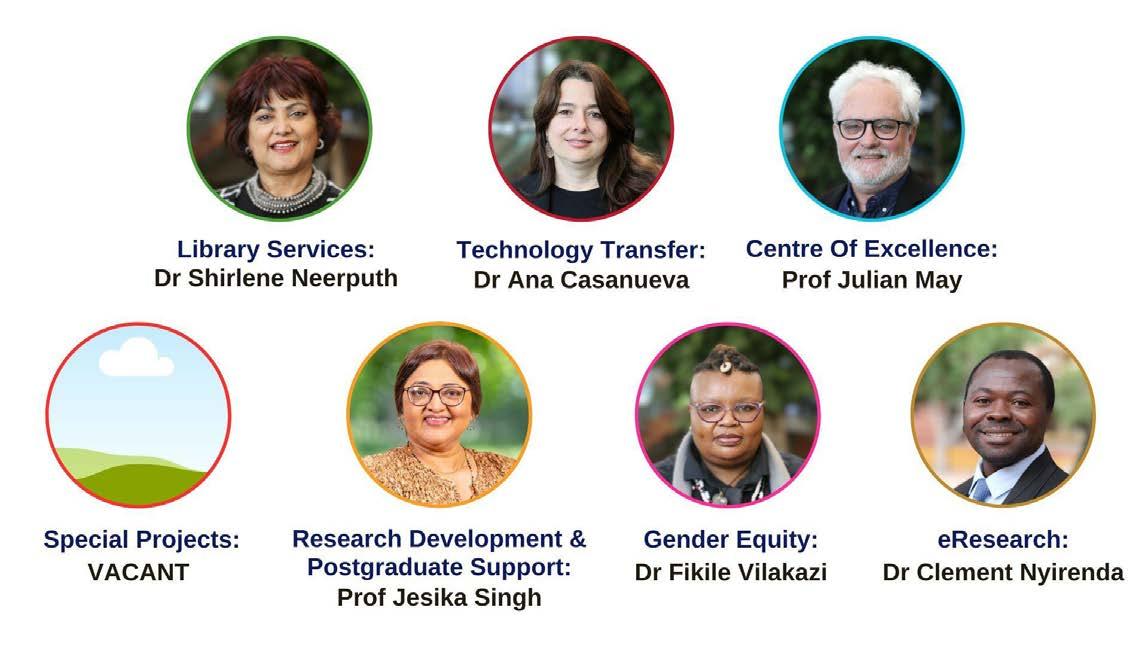
The Office of the Deputy Vice-Chancellor (DVC): Research & Innovation at the University of the Western Cape is committed to building dynamic research ecosystems that foster global collaboration and impact. Central to its mission is advancing UWC’s research excellence through innovation, strategic partnerships, and robust postgraduate support. The office works to cultivate an enabling environment for research and innovation by strengthening postgraduate education; nurturing a critical mass of active researchers; expanding international collaborations; and enhancing innovation capacity. Guided by a team of dedicated directors overseeing areas, such as postgraduate studies, special projects, technology transfer, eResearch, library services, food security, and gender equity, the DVC: Research & Innovation Office continues to shape a vibrant and globally connected research community at UWC.

People: Building Research Capacity and Empowering Scholars
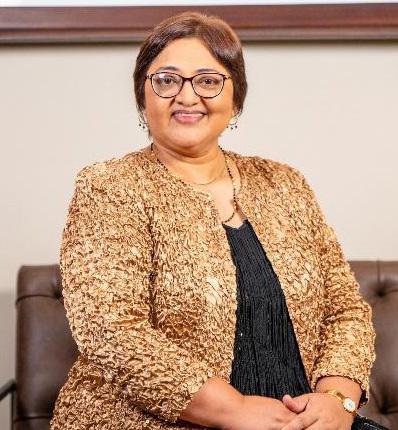
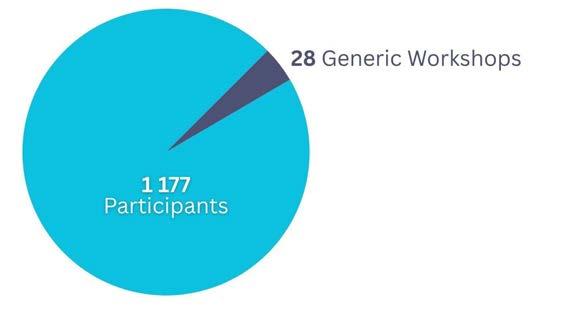
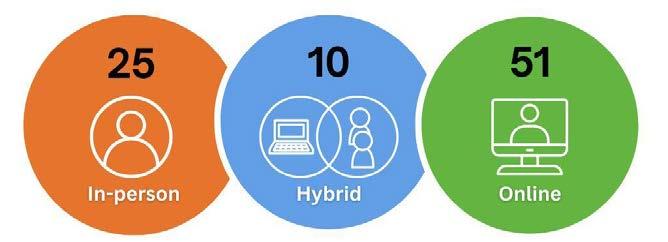
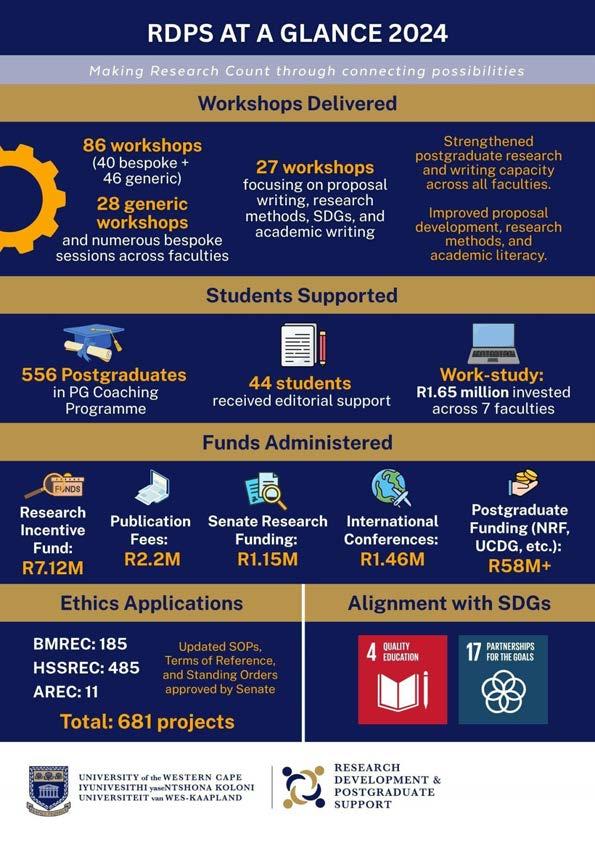
The Research Development and Postgraduate Support (RDPS) Directorate continues to lead UWC’s human capital development agenda through a dynamic portfolio of training, mentorship, and support programmes aimed at strengthening postgraduate and academic research capacity. Over the past year, RDPS hosted 28 generic workshops, reaching 1,177 participants, alongside a series of bespoke faculty-based training sessions designed to address discipline-specific needs and promote inclusivity. These workshops covered key research skills, such as proposal development, ethics, academic writing, and project management, were delivered in hybrid, online, and in-person formats to ensure equitable access for all scholars.
The University Capacity Development Grant (UCDG) remains a cornerstone of early- and mid-career researcher development. Through the Next Generation Researcher Programme, academics receive mentoring, writing support, and resources to advance doctoral completion and publication output. The Developing the Scholar (DTS) initiative builds on this by supporting recently qualified doctoral graduates to establish research trajectories, enhance writing capacity, and grow collaborative leadership skills.
A notable highlight in 2024 was the expansion of the postgraduate coaching and mentorship programme, from 13 coaches in 2023 to 23 in 2024, offering structured guidance to over 550 postgraduate students.
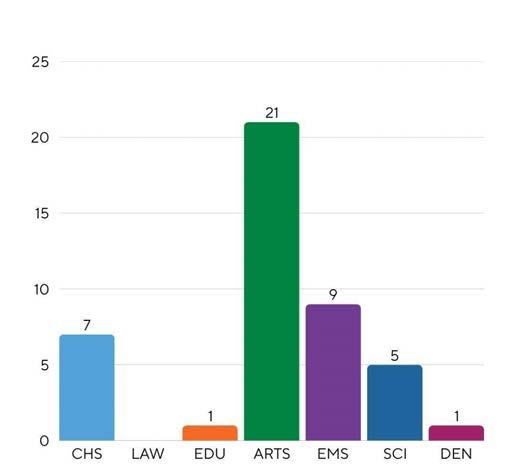
In addition, the Editorial Support Programme utilised a total expenditure of R320 000 to assist 44 postgraduate students across all seven faculties.
The success of RDPS is rooted in collaboration both within the University and with external partners. Through sustained engagement with the Department of Higher Education and Training (DHET), the National Research Foundation (NRF), and strategic donor organisations such as the Mandela Rhodes Foundation, Abe Bailey Trust, and Ada Bertie Levenstein Fund, where the Directorate has secured ongoing investment in postgraduate training and academic development.
The UCDG, NESP, and SYLFF programmes continue to provide crucial funding for bursaries, conference travel, and mentorship support, ensuring that financial constraints do not limit access to opportunity. RDPS also works closely with Deputy Deans of Research and Faculty Coordinators to co-design bespoke capacity-building models aligned with faculty research priorities.
In alignment with UWC’s broader digital transformation strategy, RDPS has embraced innovative platforms to enhance research learning and support. Most postgraduate training sessions are now hosted on hybrid and online platforms, enabling flexible participation and accommodating diverse student needs.
The Postgraduate Funding and Information Portal continues to streamline the management of scholarships, bursaries, and research support grants, improving transparency and turnaround times. Through this portal, RDPS administered over R320,000 in editorial support and facilitated multiple
donor-funded awards. The directorate’s digital systems now also provide online proposal-writing guides, ethics application resources, and postgraduate tracking tools enabling data-driven decisionmaking for improved student success.
Policies: Upholding Ethics, Standards, and Research Integrity
Upholding research integrity and ethical standards remains a core mandate of RDPS. In 2024, UWC’s three Research Ethics Committees the Animal Research Ethics Committee (AREC), Biomedical Research Ethics Committee (BMREC), and Human and Social Sciences Research Ethics Committee (HSSREC) collectively reviewed 681 research projects, ensuring compliance with national and international frameworks.
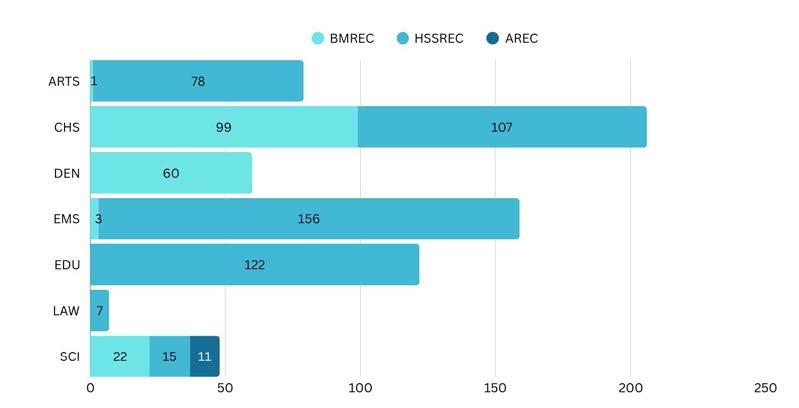
RDPS also facilitated ongoing ethics training for committee members, supervisors, and postgraduate students, embedding a culture of ethical literacy and accountability across the institution.
Training Session / Workshop Target Group
8th Annual Western Cape Ethics Committee Workshop (5 Sept 2024)
Ethics Training for REC Members (ongoing)
Research Ethics Committee (REC) members from all UWC RECs (AREC, BMREC, HSSREC), research assistants, and representatives from six faculties
Participation Notes
Workshop accredited for CPD points; all HSPCA-registered delegates received points; certificates issued to all participants (exact attendance not specified).
Members of UWC Research Ethics Committees Conducted by RDPS as part of committee administration and training responsibilities; includes orientation on updated Standard Operating Procedures (SOPs), Terms of Reference, and Standing Orders.
Table 1.1.1: Types of Ethics Training Conducted (2024) Contd.
Training Session / Workshop
Generic Ethics Workshops (Postgraduate Students)
Target Group
Honours, Master’s, and Doctoral students
Faculty-Based Ethics Training (Bespoke Sessions)
NRF Application Training – Ethics Emphasis
Postgraduate students and supervisors (faculty-specific)
Participation Notes
Part of 28 generic postgraduate workshops held in 2024; ethics training forms one of four main categories (Ethics, Funding, Project Management, Research Methods). Attendance integrated within the total 1,177 attendees recorded across generic workshops.
Conducted through academic coordinators; included in 40 bespoke workshops (2024), with ethics components embedded where relevant.
Postgraduate students applying for NRF scholarships
Highlighted importance of completing the ethics section of the NRF application and obtaining ethics clearance before research commencement.
All RDPS initiatives are closely aligned with UWC’s Institutional Operating Plan (2021–2025) and its commitment to being a leading research university that is locally responsive and globally relevant. By developing competent, confident, and socially engaged researchers, RDPS directly supports the University’s strategic goals of academic excellence, student success, and societal transformation.
Table 1.1.2: Alignment of RDPS Outputs with Institutional Goals and the UN SDGs
IOP Goal Area
Goal 1: The Student Experience
RDPS Contribution Aligned SDG
Enhances the postgraduate journey through coaching, mentorship, editorial and funding support, and writing retreats.
Goal 2: Learning and Teaching Builds capacity through research methods, ethics, and grant-writing workshops to improve academic quality and research output.
SDG 4 - Enhances postgraduate learning through coaching, mentorship, writing retreats, and editorial support, ensuring inclusive and high-quality research education.
SDG 4 - Builds academic and research capacity through workshops on research methods, ethics, and grant writing, promoting lifelong learning and excellence in teaching and supervision.
Goal 3: Research and Innovation Drives research productivity through funding schemes, international collaboration, and development of emerging researchers.
SDG 17 - Enhances global and national research collaboration, mobility, and knowledge exchange while supporting innovation and research-linked career development.
Table 1.1.2: Alignment of RDPS Outputs with Institutional Goals and the UN SDGs Contd.
IOP Goal Area RDPS Contribution Aligned SDG
Goal 4: Institutional Effectiveness Strengthens governance and compliance via updated ethics policies, committee training, and efficient research management systems.
SDG 17 - Strengthens governance, ethics, and accountability through Senate-approved SOPs, transparent research processes, and ethical review systems that uphold institutional integrity.
Its interventions enhance access, retention, and success for postgraduate students, empowering them to become change agents in academia, industry, and community sectors.
“Through UWC’s coaching and mentorship, I found my voice as a researcher and learned to lead with purpose.”
- POSTGRADUATE STUDENT, 2024 COHORT
Summary
The Research Development and Postgraduate Support Directorate (RDPS) continues to embody UWC’s vision of a people-centred, collaborative, and purpose-driven research ecosystem. Its integrated approach, combining mentorship, partnership, digital innovation, and ethical stewardship, has reinforced UWC’s role as a hub of postgraduate excellence and transformation.
As the University moves into its next strategic cycle (2026–2030), RDPS stands as a model of how empowered people, strategic partnerships, and principled governance can sustain a thriving, inclusive, and globally engaged research community.

At UWC, innovation begins with people. The Technology Transfer Office (TTO) cultivates a culture of curiosity and creativity by empowering researchers and students to transform their ideas into socially impactful innovations. Through awareness campaigns, training workshops, and targeted mentorship, the TTO continues to build the capacity of UWC’s academic community to identify and develop technologies aligned with the Sustainable Development Goals (SDGs).
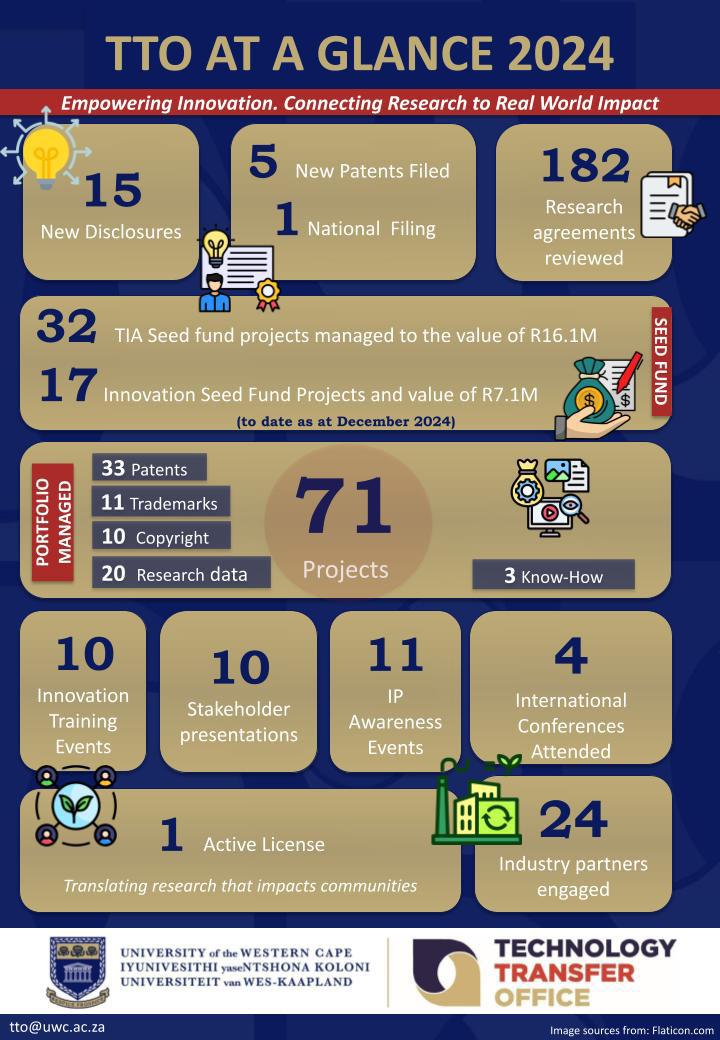
In 2024, the TTO hosted more than 30 innovation and intellectual property (IP) awareness sessions, engaging staff, postgraduate students, and external stakeholders to deepen their understanding of commercialisation and knowledge transfer. These activities have led to a rise in innovative disclosures. Thirteen new technology disclosures were submitted in 2024, reflecting a growing appetite for translating research into real-world solutions.
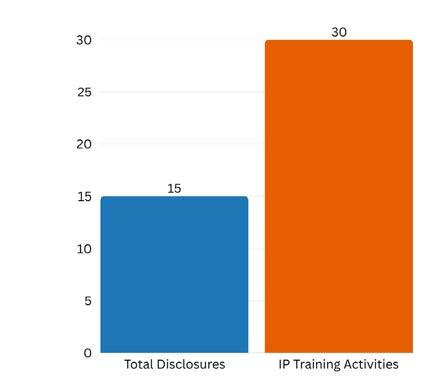
These engagements affirm the University’s commitment to inclusive innovation ensuring that researchers from all disciplines, including the Social Sciences, Humanities, and Arts for People and the Economy (SHAPE), are equipped to participate meaningfully in the innovation ecosystem.
Partnerships remain the cornerstone of UWC’s innovation success. The TTO collaborates with industry, government, and national agencies to facilitate technology transfer and research commercialisation. Through its partnership with the Technology Innovation Agency (TIA), the TTO has mobilised significant resources to accelerate the development of early-stage innovations.
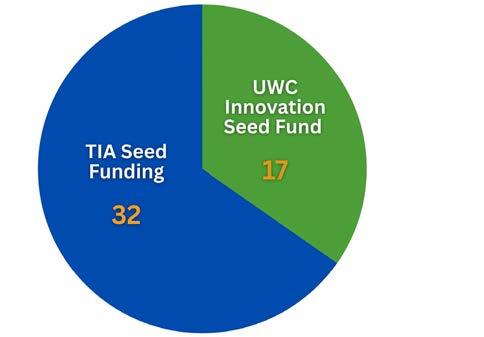
To date, 32 projects have received TIA Seed Funding to the value of R16 million, with an additional R5 million allocated for the 2025-2026 cycle. Meanwhile, the UWC Innovation Seed Fund supported 17 projects to a total value of R7.5 million, stimulating a diverse portfolio of innovations across health, biotechnology, and social impact domains.
The TTO also engaged 20 industry partners in the past year, facilitating over 165 research contracts that involved potential intellectual property. These collaborations are not transactional; they reflect UWC’s vision of equitable, impact-driven partnerships that link academic knowledge with industry application.
To strengthen the translation of research into practice, the TTO has developed multiple platforms that support innovators throughout the commercialisation journey. These include accessible digital resources, training modules, and multi-media campaigns designed to demystify technology transfer and make it more approachable to researchers across disciplines.
The TTO’s “Building the Innovation Ecosystem” initiative accessible through social media, video content, and online toolkits showcases pathways for UWC innovations to reach the market and society.

Know about Building the Innovation Ecosystem Campaign by watching the YouTube video by scanning the QR Code above or clicking on the link: https://youtu.be/1PnIMovKpqE?feature=shared
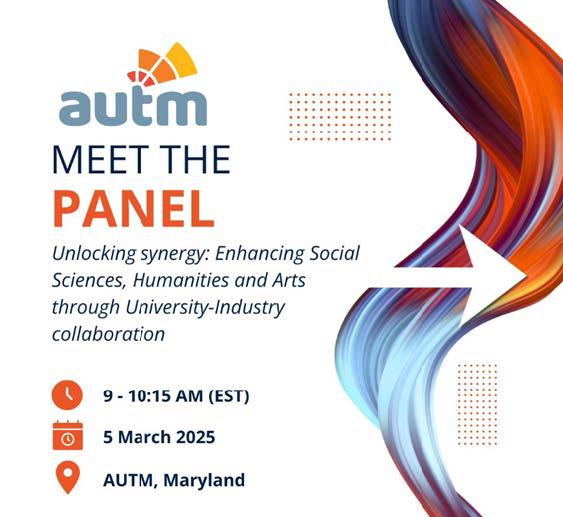
Further, the TTO contributed to international platforms, including a panel presentation at the Association of University Technology Managers (AUTM) Annual Meeting 2025 in Washington D.C., where UWC shared its pioneering work in the commercialisation of Social Sciences and Humanities research.
Effective innovation depends on sound governance. The TTO plays a pivotal role in protecting UWC’s intellectual property and ensuring compliance with national and institutional IP frameworks. In 2024, the office filed 5 new patent applications and advanced 1 patent families to national phase filings, strengthening the University’s IP portfolio.
The TTO’s approach to IP management emphasises balance by safeguarding researchers’ rights while facilitating responsible commercialisation. It also contributes to national policy development, including the creation of guidelines for South African TTOs and SHAPE researchers on commercialising Social Sciences, Humanities, and Arts research.
These governance efforts strengthen the institutional foundation for ethical and sustainable innovation, ensuring that UWC’s contributions are protected and effectively leveraged for social and economic benefit.
The ultimate purpose of the TTO is to ensure that innovations emerging from UWC contribute meaningfully to society and the economy. The office currently supports two active license agreements and two spin-out companies, reflecting growing success in moving research beyond the laboratory to real-world application.
In line with UWC’s mission of engaged scholarship, many of these innovations directly address societal needs from health and environmental sustainability to inclusive economic development. By focusing on the commercialisation of socially responsive innovations, the TTO aligns its strategy with UWC’s IOP priorities and the SDGs, particularly SDG 9 (Industry, Innovation, and Infrastructure) and SDG 17 (Partnerships for the Goals).
Through this purpose-driven approach, the TTO has established itself as a bridge between academia, industry, and society ensuring that UWC’s intellectual assets translate into innovations that improve lives and strengthen communities.
Summary
The Technology Transfer Office stands as a key driver of UWC’s innovation ecosystem, nurturing people, building partnerships, deploying platforms, ensuring policy alignment, and fulfilling a clear purpose: to make knowledge work for social and economic transformation. With new disclosures, active patents, increased seed funding, and a growing global footprint, the TTO continues to embody the spirit of a university committed to innovation with impact.0
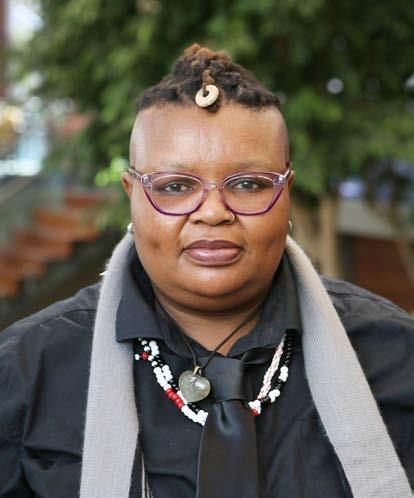
People: Building Inclusive Communities through Research and Advocacy
At the heart of the Gender Equity Unit’s (GEU) work is its commitment to advancing equity, inclusion, and social justice within higher education and society at large. In 2024, the Unit deepened its efforts to empower diverse voices across UWC and beyond, with a strong focus on gender transformation, disability inclusion, and intersectional advocacy.
Through participatory research and community-engaged programmes, the GEU continues to cultivate a culture of belonging; nurturing staff, students, and collaborators as agents of institutional and social change.
Purpose: Advancing Gender Justice and Institutional Transformation
The purpose of GEU’s is to position UWC as a leader in gender equity and transformation in higher education. By combining research, advocacy, and policy engagement, the Unit works to dismantle systemic barriers, promote inclusive environments, and strengthen institutional accountability.
Key projects such as The Gender Equity and University of Missouri Partnership and The GBV and Deaf Women Project exemplify this purpose translating scholarly inquiry into practical solutions that advance human rights and inclusion across social contexts.
Policies: Informing Institutional and Public Frameworks for Equity Deaf Women and Gender-Based Violence
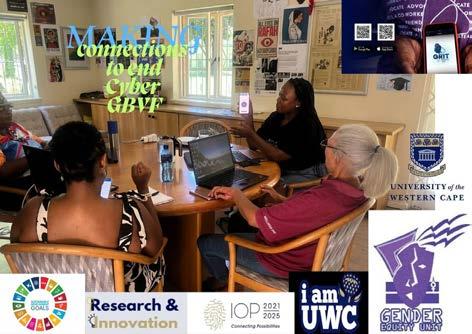
In 2024, the GEU, in collaboration with the Department of Social Work, published a landmark article in the African Journal of Disability titled “Hear Our Voices: The Perceptions and Experiences of Women Who Are Deaf on Gender-Based Violence.”
Following the publication, the Unit submitted a Policy Brief to the City of Cape Town, aligned with Provincial Strategic Goal 1: Safe and Cohesive Communities (Cross-Cutting Area 5: Reducing Gender-Based Violence).
The Policy Brief aims to:
• Strengthen municipal and institutional responses to the needs of deaf GBV survivors.
• Promote accessible trauma and medical support at hospitals, Thuthuzela Care Centres, and police stations.
• Support the City in developing sustainable, inclusive services that reduce vulnerability and improve justice access for deaf women.
This work highlights GEU’s role in shaping evidence-based policies that promote safety, inclusion, and equality.
The GEU provides multiple platforms for critical dialogue, advocacy, and training, enabling the university community and broader society to engage in transformative conversations about equity.
In 2024, staff development workshops and student training sessions focused on Gender and Sexuality Studies, the Draft Gender Equity Policy, and inclusive approaches to leadership and institutional transformation.
Public engagement activities, such as awareness campaigns and collaborative forums, amplified the voices of underrepresented groups and created safe spaces for reflection and activism.
The Gender Equity and University of Missouri Partnership
Project Title: A Comparative Analysis of Diversity and Inclusion in Higher Education Institutions in the United States and South Africa: A Case Study of the University of Missouri and the University of the Western Cape

In 2023, the GEU established a strategic partnership with the University of Missouri, grounded in a shared commitment to institutional equity and inclusion. Teams from both institutions codeveloped a research project examining how diversity and inclusion are realised within higher education contexts across the Global North and Global South.
After ethical approval was granted by both universities, the implementation phase commenced in July 2024. The University of Missouri team visited UWC to meet with executive members, heads of department, staff, and students. Discussions explored UWC’s transformation journey, equity frameworks, and lived experiences of inclusion within Southern African higher education.
The collaboration produced a manuscript titled “Solidarity and Advocacy at a South African Institution: Tracing Convivial Efforts for Institutional Equity,” submitted in December 2024 to the Journal of International & Intercultural Communication.
Looking ahead, a reciprocal visit by the GEU team to the University of Missouri to further comparative research and exchange insights on institutional equity practices across both contexts.
Through the DAAD-funded (German Academic Exchange Service) IWAAC-10 Project (Inequalities Within and Among Countries: Implementing a Research Based Social Work Curriculum on SDG 10.), the GEU collaborated with partner universities from Germany, India, Malaysia, and South Africa to co-develop a research-based curriculum addressing social inequalities and the SDGs.
The GEU-led component focused on the lived realities of girls in rural and farming communities, exploring educational access, gender norms, and empowerment. Findings were presented at UWC Research Week 2024 and are being finalised as a chapter for a forthcoming Springer publication.
Summary: Anchoring Equity through People, Purpose, Policies, Platforms, and Partnerships The Gender Equity Unit continues to embody UWC’s vision of transformation through evidencebased advocacy, inclusive policy development, and global collaboration. By advancing research, supporting marginalised communities, and fostering transnational solidarity, the GEU strengthens the university’s role as a thought leader in gender justice and institutional equity.
Anchored in its five strategic pillars People, Purpose, Policies, Platforms, and Partnerships the GEU remains a catalyst for advancing inclusive transformation and equity-driven innovation at UWC and beyond.

People: Empowering the Next Generation of Digital Researchers
At the heart of eResearch’s mission lies the development of digitally fluent, data-savvy researchers. Since its establishment in 2019, the Unit has cultivated a generation of students and academics who can harness advanced computational tools to drive discovery and innovation across disciplines. The Coding Summer School, co-hosted with the Centre for High Performance Computing (CHPC) and National Institute for Theoretical and Computational Sciences (NITheCS), remains a flagship training programme. The 2025 edition drew 35 postgraduate students, building competencies in data visualisation, simulation, and machine learning.
Beyond formal training, the Unit co-supervises Honours, Masters, and PhD students many of them women in AI and data science and supports student teams in national and international Cybersecurity, Data Science, and High Performance Computing (HPC) competitions. These activities demonstrate how eResearch contributes to UWC’s people-centred research ecosystem by equipping scholars with future-ready digital skills.
Partnerships are the foundation of eResearch’s impact. Collaboration with Information and Communication Services (ICS) and the Library integrates technological capacity with research support, while external alliances extend UWC’s global footprint. The Unit continues to engage with Utrecht University, Vrije Universiteit Amsterdam, University of Hohenheim, and Dubna State University, among others, creating opportunities for staff and students to access international supercomputing training and joint projects.
Locally, eResearch works with industry and research councils to apply artificial-intelligence solutions in agriculture, logistics, and public safety. Its projects in predictive maintenance and food supplychain optimisation illustrate UWC’s ability to connect academic excellence with national development priorities.
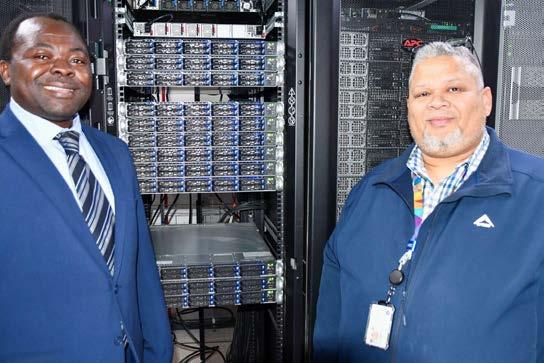
A defining achievement in 2024 was the commissioning of UWC’s new HPC facility, a joint initiative with ICS marking a milestone in the University’s digital transformation. This platform enables largescale simulations, advanced analytics, and AI research across disciplines.
Equally transformative was the transition from a commercial repository to the open-source Your Data (YoDa) platform, developed with Utrecht University. YoDa enhances research-data management, ensures compliance with FAIR principles, and fosters open-science collaboration.
To support responsible digital research, eResearch revised its eResearch Strategy (2024–2025) in collaboration with the Office of the Registrar. The strategy positions UWC to respond to the rise of AI and large-language models while ensuring ethical governance and sustainability.
Through policy alignment with national and international data-ethics frameworks, the Unit ensures that UWC’s digital infrastructure and data-sharing practices uphold confidentiality, inclusivity, and integrity.
The purpose of eResearch is to make digital excellence a catalyst for transformation. By integrating infrastructure, people, and partnerships, the Unit underpins UWC’s vision of building research ecosystems for global collaboration. Its projects in energy resilience, AI ethics, and urban analytics directly advance SDG 9 (Industry, Innovation and Infrastructure) and SDG 17 (Partnerships for the Goals)
Through strategic foresight and collaboration, eResearch is building the foundations of a connected, data-smart university; one that leads Africa’s digital research revolution.
Summary
The eResearch Unit continues to translate UWC’s commitment to innovation and collaboration into tangible digital capacity. With new infrastructure, expanded global networks, and an ethical datagovernance framework, its Unit ensures that UWC remains at the forefront of research excellence in the digital age.

People: Cultivating Digital and Information Literacy
The Library remains central to developing a digitally literate and research-ready academic community. Training initiatives such as Postgraduate Research Support Workshops equipped hundreds of students with skills in database searching, EndNote, Zotero, and systematicreview tools.
The timeline below provides an overview of all the training, workshops and conferences held for the year 2024.
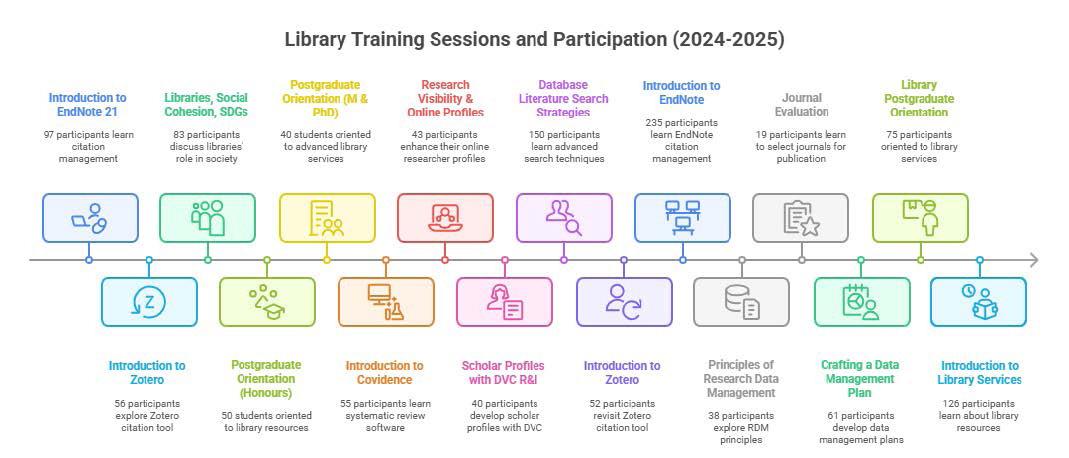
Image 1.5.1.: Library Training Sessions and Participation (2024)
The Prompt Engineering Workshop Series (Sept 2024) positioned UWC librarians as leaders in AI literacy, attracting 336 participants across five sessions.
Table 1.5.1: Attendance at Prompt Engineering Workshops (2024)
Session & Description
Session 1 – Information Session: Introduction to project, workshop services, logistics, and the learning journey ahead.
Session 2 – Introduction to Generative AI and Prompting Concepts: Introduce participants basic engineering concepts.
Session 3 – Designing Effective Prompts for AI Chatbots: Identify prompt components and different prompt types, tecnhniques and generate prompt templates.
Attendees
112
80
45
Table 1.5.1: Attendance at Prompt Engineering Workshops (2024) Contd.
Session & Description Attendees
Session 4 – Mastering Advanced Prompt Engineering Techniques: Generate prompts with an application of prompt components, prompt types and techniques.
Session 5 – Creating Custom Prompts for Library Operations: Hand-on practical adding prompts templates to a shared prompt library document for various library functions, including cataloguing, research support, and user services.
64
35
Through these and other initiatives, the Library empowers people to navigate the evolving information landscape with confidence and creativity.
Partnerships: Collaborating for Scholarship and Social Impact
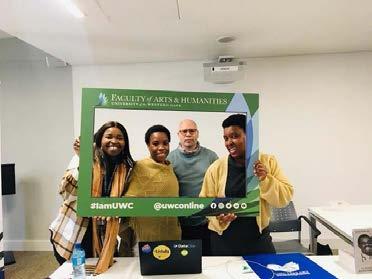
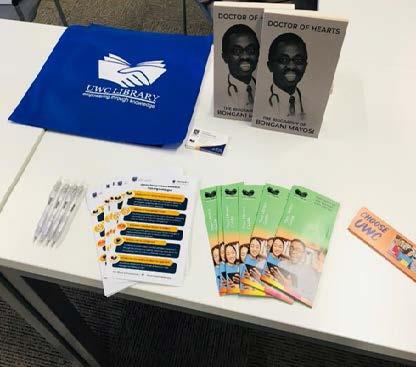
Collaboration underpins the Library’s approach to service and innovation. In 2024, participation in the Faculty of Arts and Humanities Postgraduate Open Day allowed librarians to engage directly with prospective researchers, highlighting resources and support for postgraduate study.
The Library also co-hosted the South African Library Week (SALW) 2024 under the theme “Libraries Foster Social Cohesion.” Activities included public dialogues, exhibitions, and an SDG Essay and Poster Competition, engaging students in discourse on sustainable development.
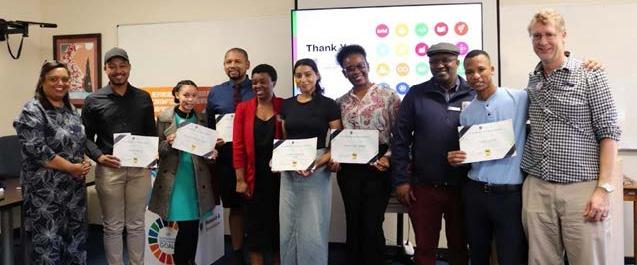
These partnerships within UWC and nationally through Library and Information Association of South Africa (LIASA), demonstrate how the Library bridges academic and community engagement.
Platforms: Innovating with Digital Tools and AI Resources
The Library has strengthened its digital infrastructure to support cutting-edge scholarship. The Scopus AI trial (May 2024) provided researchers with early access to AI-driven literature-analysis tools, attracting strong uptake.
Complementing this, the Generative AI Guide on ethical use of AI in learning and research recorded 2 536 views between Jan 2024 and Mar 2025.
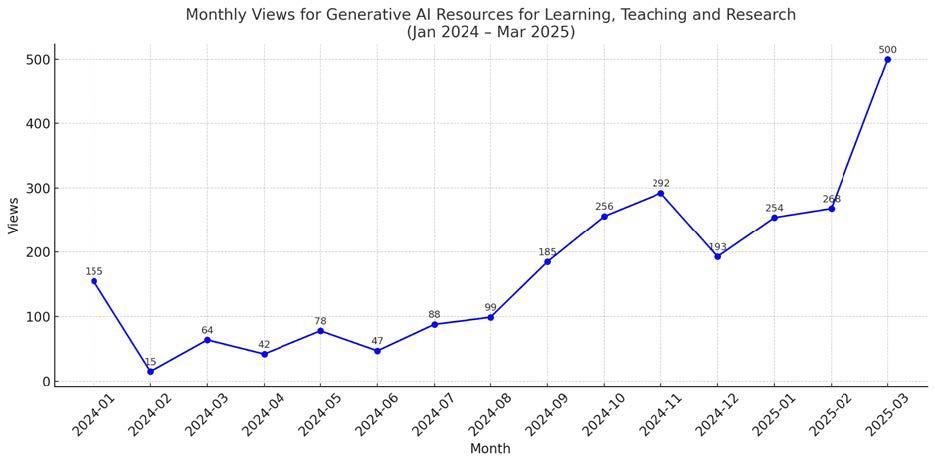
Together, these digital platforms ensure that UWC scholars have access to globally relevant, ethically curated information technologies.
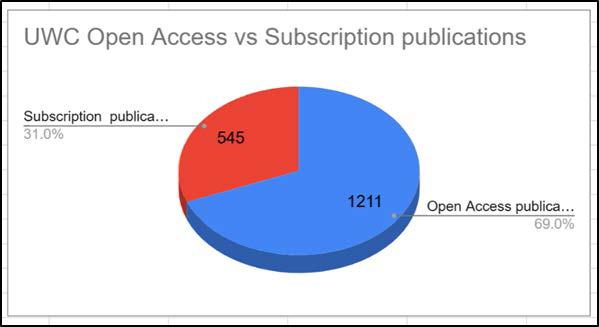
Through its Open Access and Scholarly Communication portfolio, the Library promotes transparency and integrity in research dissemination. Open Access publications now comprise 69 % of UWC’s output, supported by transformation agreements and journalselection guidance.
Librarians assist authors in selecting accredited, APC-free OA journals and complying with national policy requirements, reinforcing ethical and sustainable publication practices.
Beyond service provision, the Library fulfils a transformative role in UWC’s mission. Its work on Libraries, Social Cohesion and Sustainable Development Goals, including a webinar with LIASA (Mar 2024), positioned UWC as a national thought leader linking information access to social justice.
By connecting research support with civic engagement, the Library advances SDG 4 (Quality Education), SDG 10 (Reduced Inequalities), and SDG 16 (Peace, Justice and Strong Institutions)underscoring that access to information is foundational to inclusive, democratic societies.
Summary
The UWC Library stands at the nexus of digital innovation, partnership, and social impact. Through capacity-building, AI-driven services, open-access advocacy, and community engagement, it embodies UWC’s vision of a globally connected, ethically grounded research ecosystem.

People: Nurturing Scholars and Leaders in Food Systems
In 2024, the CoE-FS celebrated its 10th anniversary, marking a decade of excellence in research, policy engagement, and capacity building. Over the years, the Centre has developed a diverse, inclusive cohort of researchers driving transdisciplinary food systems innovation. A total of 105 postgraduate students were supported, including 42 NRF-funded, 31 leveragefunded, and 32 unfunded candidates 89% Black and 69% women demonstrating the Centre’s strong transformation agenda.
The CoE-FS recorded 46 postgraduate graduates in 2024, many of whom transitioned into leadership roles in government, academia, and civil society. These outcomes underscore the Centre’s commitment to building the next generation of African scholars who are shaping sustainable, inclusive food systems research.
Partnerships: Advancing Global Collaboration for Food Security Collaboration remains central to the CoE-FS model. In 2024, the Centre expanded partnerships across Africa, Europe, and the Global South through initiatives like the African-German Centre for Data Science for Food Systems Analysis (UKUDLA) and the UNESCO Chair in Science and Education for African Food Systems.
The Centre co-hosted the 10-Year Symposium at UWC (May 2024), attended by nearly 200 delegates from academia, government, and international agencies. These collaborations culminated in the drafting of a Theory of Change (ToC) framing food insecurity as a structural challenge requiring intersectional and transdisciplinary responses.
By working alongside municipalities, Early Childhood Development (ECD) centres, and community partners, the CoE-FS translated research into evidence-based interventions that strengthen local food governance and enhance resilience to climate and economic shocks.
The CoE-FS continues to deploy multiple platforms for research translation and public engagement. The Food Imbizo and African Food Systems Transformation Consortium (AFSTC) serve as dynamic spaces for policy dialogue, co-production of knowledge, and showcasing student-led innovations.
The Centre’s communication and engagement portfolio produced over 250 media activities, including a flagship documentary, “Harvesting a Valley of Resilience,” highlighting its Breede Valley project and the lived experiences of communities transforming food systems at grassroots level.
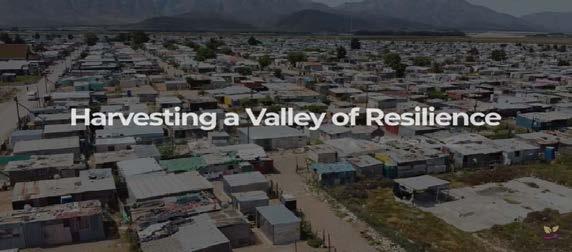

Know more about the “Harvesting a Valley of Resilience” documentary by scanning the QR Code above.
These platforms reinforce UWC’s role as a convener of ideas and as a connector between science, society, and policy.
The CoE-FS plays a leading role in shaping national and international policy on food and nutrition security. In 2024, its researchers contributed to revisions of the National Food and Nutrition Security Plan, and collaborated with the Breede Valley Municipality to pilot local nutrition policy planning, and supported ECD centres to access food subsidies.
Its work directly informs multiple SDGs , including SDG 2 (Zero Hunger), SDG 3 (Good Health and Well-being), SDG 6 (Clean Water and Sanitation), and SDG 12 (Responsible Consumption and Production).
Through its UNESCO Chair and UKUDLA projects, the CoE-FS has deepened policy dialogue across Africa, linking data-driven insights with governance models that address inequality, malnutrition, and climate vulnerability.
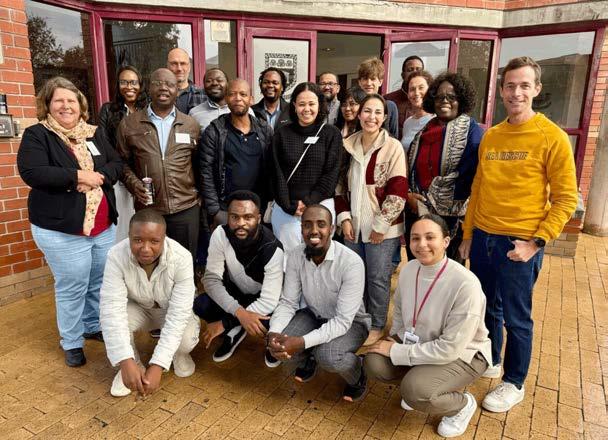
The purpose of the CoE-FS is to build resilient, inclusive food systems that ensure nourishment and dignity for all. Its research output 86 publications in 2024, includes 47 in high-impact journals reflecting a decade-long investment in transdisciplinary inquiry. Since 2014, the Centre has produced 697 research outputs and garnered over 11,000 citations, with 5,900 from UWC-affiliated work, affirming its global influence.
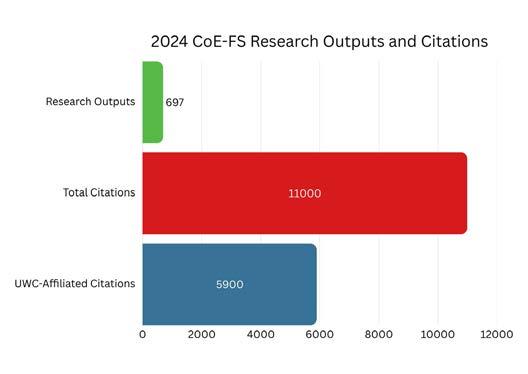
In 2024 alone, the Centre secured R71.2 million in leverage funding, complementing its core NRF grant (extended to 2028) and enabling expansion into new thematic areas, such as climate modelling, Bayesian forecasting, and indigenous food innovation.
Anchored in sustainability, inclusivity, and impact, the CoE-FS continues to translate scientific excellence into policy, practice, and public good thereby advancing SDG 13 (Climate Action) and SDG 17 (Partnerships for the Goals) through innovation and collaboration.
As the CoE-FS enters its second decade, it stands as a model of how research excellence can drive social and ecological transformation. Its work integrates people, partnerships, platforms, and policies into a coherent ecosystem that delivers purpose-driven impact from community empowerment to global policy influence.
The CoE-FS remains a flagship of UWC’s commitment to advancing Africa-led, globally connected solutions to food insecurity, climate change, and inequality.


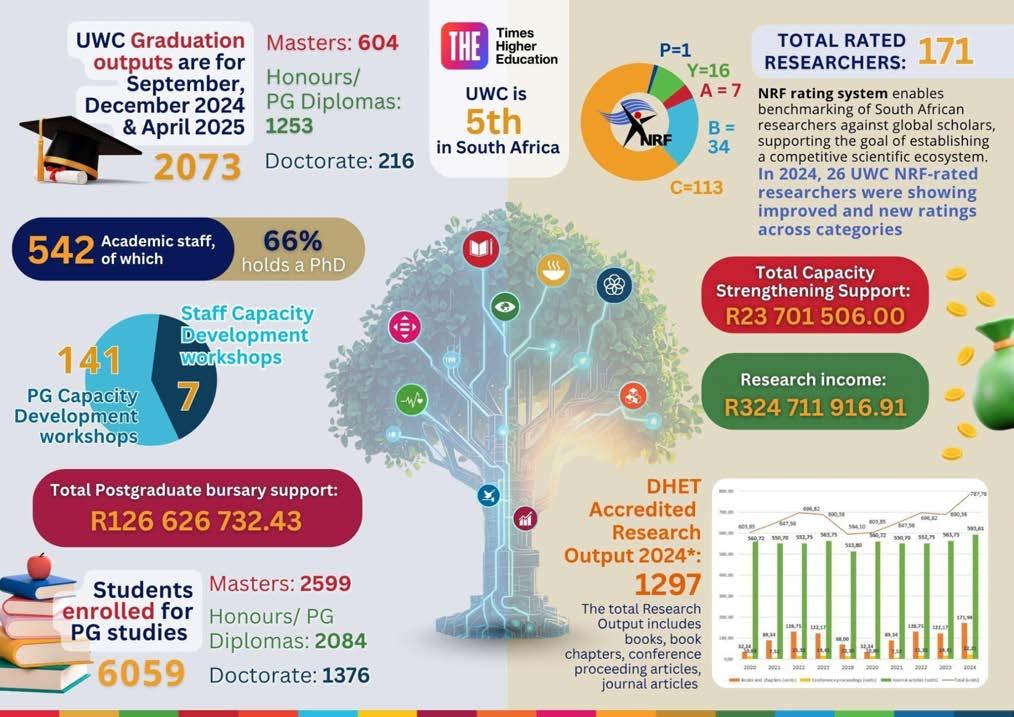
The University of the Western Cape (UWC) demonstrated remarkable growth and excellence in postgraduate education and research output during the 2024/2025 academic year. Across graduation ceremonies held in September and December 2024, and April 2025, the university conferred a total of 2,073 postgraduate qualifications, including 604 Masters degrees, 1,253 Honours and PG Diplomas, and 216 Doctorate degrees. This impressive output reflected the institution's commitment to advancing higher education in South Africa.
The university's academic strength was anchored by a robust faculty of 724 academic staff members, of whom 52% held PhD qualifications. This high level of academic qualification ensured that students received world-class supervision and mentorship throughout their postgraduate journey. To further enhance this capacity, UWC conducted 2,073 PG Capacity Development workshops and 7 Staff Capacity Development workshops, demonstrating a sustained investment in academic excellence and professional growth.
UWC's research prowess was particularly noteworthy. According to the Times Higher Education rankings, the university stood as the 5th best institution in South Africa, a testament to its competitive position in the national academic landscape. The institution boasted 171 National Research Foundation (NRF)-rated researchers across various categories, with the NRF rating system serving as a crucial benchmark against global scholars. Encouragingly, 26 UWC NRF-rated researchers showed improved and new ratings across categories in 2024, signalling an upward trajectory in research quality.
The financial investment in postgraduate education at UWC was substantial, with total postgraduate bursary support amounting to R126,626,732.43. Additionally, the university allocated R23,701,506.00 for total capacity strengthening support, ensuring that both students and staff had the resources necessary for success.

The Times Higher Education (THE) Impact Rankings provide a valuable measure of how universities contribute to a more sustainable and equitable world. Aligned with the United Nations (UN) Sustainable Development Goals(SDGs), these rankings assess how higher education institutions translate their teaching, research, and community engagement into meaningful global impact. They reflect the growing role of universities as catalysts for change, bridging knowledge, innovation, and collaboration across borders to address shared challenges, such as poverty, inequality, and climate resilience.
At the core of these rankings lies a strong emphasis on research. This focus recognises that progress toward the SDGs depends on the generation of new knowledge and the ability to connect that knowledge through networks of collaboration. It highlights how universities contribute not only through local initiatives, but also through partnerships that strengthen global capacity and understanding.
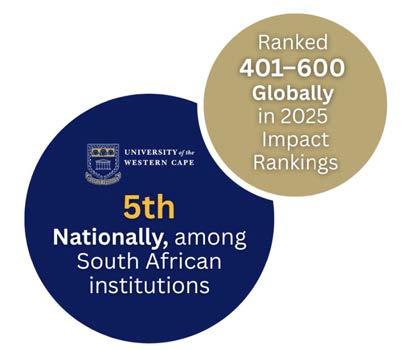
The institution achieved a global ranking in the 401–600 band and placed was 5th nationally among South African universities. This visual highlights UWC’s continued presence among leading institutions contributing to the UN SDGs and reflects its sustained growth in global recognition and national performance.
Building on this achievement, UWC’s performance demonstrates particular strength across several SDGs where its research, teaching, and community engagement have made a significant global impact. The accompanying table 2.2.1 highlights the university’s top seven SDGs, showcasing areas where UWC continues to lead in advancing social equity, fostering partnerships, promoting quality education, and driving sustainable change through innovation and collaboration.
Compared to the previous year, UWC’s performance in the 2025 THE Impact Rankings reveals both continuity and growth across its priority SDGs. The University maintained a leading position in SDG 17 (Partnerships for the Goals), with a higher research score (97.0% from 96.4%). SDG 1 (No Poverty) and SDG 10 (Reduced Inequalities) also remain among the top performers, showing


Ranking: Ranking:
institutions
Ranking: Ranking: 201-
out of 1267 institutions
Ranking: Ranking: 101200 out of 1261 institutions
Ranking: Ranking:
out of 1181 institutions
Ranking: Ranking:
Ranking: Ranking:
Ranking: Ranking:

At the University of the Western Cape, excellence in research is not only measured by individual achievement but by the collective strength of our scholarly ecosystem. Each year, UWC celebrates its leading researchers through two pathways of recognition: those who have achieved the highest cumulative publication units and those who have produced the greatest number of publications. Together, these rankings capture the dynamic balance between independent inquiry and collaborative scholarship, the twin pillars of a thriving research ecosystem.
Our publication subsidy system reflects this balance. It recognises both the depth of contribution and the spirit of collaboration that drive impactful research. A sole-authored publication earns one full unit, while a collaborative output; co-authored across institutions or continents, shares this value proportionally among contributors. Thus, a researcher’s total units may differ from their publication count, illustrating the diverse and interconnected ways in which knowledge is created and shared.
In celebrating our top researchers, we honour not just the outputs themselves, but the networks, partnerships, and collaborations that make them possible. These achievements exemplify UWC’s growing role in building research ecosystems that transcend institutional and national boundaries; ecosystems where ideas circulate freely, innovation is co-created, and knowledge serves a global good. Our researchers continue to strengthen these global connections, advancing both excellence and equity in research.
The follow 3 tables showcases the top researchers by DHET publication units and by total number of publications.
Table 1: Top Performers DHET Unit
Table 2: DHET Journal Article Unit
Table 3: Number of Article publications


























UWC’s Research Chairs represent the University’s strategic investment in building research ecosystems that link excellence with societal relevance. Each Chair not only advances disciplinary frontiers but also connects researchers, students, and international partners in addressing grand challenges, from democracy and digital inclusion to sustainable agriculture and health equity. Collectively, they embody UWC’s vision of research that transforms lives, informs policy, and contributes to the UN Sustainable Development Goals (SDGs).
The new research chairs demonstrate the University’s strategic strengths across three thematic pillars that align closely with its Institutional Operating Plan (IOP) and the United Nations Sustainable Development Goals (SDGs).
Thematic Pillar 1: Under the theme of Digital and Inclusive Futures, Prof Premesh Lalu, NRF/ British Academy SA–UK Bilateral Chair in Digital Humanities, together with Associate Prof Sisanda Nkoala and Prof Leo Van Audenhove, co-holders of the Chair in Media Inclusion and Diversity, are advancing research that bridges technology, culture, and communication to build more equitable digital societies. Their work promotes innovation, inclusion, and global collaboration contributing directly to SDG 4 (Quality Education), SDG 9 (Industry, Innovation and Infrastructure), SDG 10 (Reduced Inequalities), and SDG 17 (Partnerships for the Goals).
Thematic Pillar 2: In the area of Sustainability and Food Systems, Prof Marshall Keyster, Research Chair in Sustainable Agriculture, leads pioneering research in biotechnology and environmental science, exploring plant resilience, sustainable food production, and the use of artificial intelligence in agricultural systems advancing SDG 2 (Zero Hunger), SDG 3 (Good Health and Well-being), and SDG 13 (Climate Action)
Thematic Pillar 3: In the area of Democracy and Social Justice, UWC’s long-standing commitment to transformative governance, civic participation, and community engagement in strengthened. The University’s mission to cultivate socially responsive scholarship aligns with SDG 16 (Peace, Justice and Strong Institutions) and SDG 17 (Partnerships for the Goals)
Together, these Chairs illustrate UWC’s capacity to integrate digital innovation, sustainability, and social justice into a cohesive research ecosystem that addresses pressing globa land national challenges through locally grounded, globally connected scholarship.

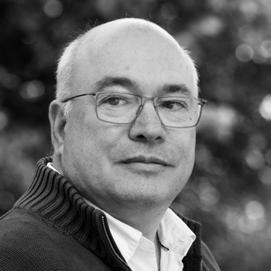
Associate Prof Sisanda Nkoala and Prof Leo Van Audenhove, co-holders of the UWC Chair in Media Inclusion and Diversity, lead transformative research that promotes inclusive media practices, representation, and access in the digital age. Their work addresses inequalities in storytelling and information-sharing, advancing a vision of media as a catalyst for equity and social change. Through media literacy initiatives, international collaborations, and impactful publications, they contribute to the UN SDGs on quality education, peace, and global partnerships. By fostering dialogue between academia, government, and civil society, Profs’ Nkoala and Van Audenhove are strengthening UWC’s role in building globally connected research networks that advance diversity, inclusion, and informed democratic participation.
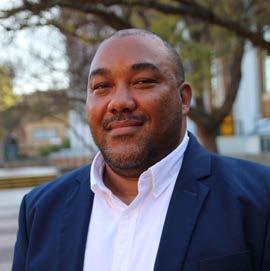
Prof Marshall Keyster, Research Chair of Sustainable Agriculture in the Department of Biotechnology at the University of the Western Cape, is pioneering research that strengthens global efforts toward sustainable food systems and environmental resilience. His work explores the intricate relationship between plants and human health, contributing to the UN SDGs on zero hunger and good health. Through collaborative research with local and international partners, Prof Keyster investigates plantmicrobe interactions and innovative solutions to help crops withstand environmental stress and pollution. His studies on natural compounds that enhance plant resilience, along with his integration of AI and robotics in plant science, exemplify UWC’s growing leadership in developing sustainable, knowledge-driven research ecosystems for a healthier planet.
4


In 2024, the Research and Innovation portfolio continued to advance its vision of Building Ecosystems for Global Collaboration, guided by the I3 Framework - Idea, Implementation, and Impact as articulated by Prof José Frantz, Deputy Vice-Chancellor: Research and Innovation. This framework provides a unifying blueprint for how UWC transforms ideas into tangible innovations, supports implementation through collaboration, and ensures that every research endeavour delivers measurable societal impact. It moves beyond isolated projects toward a holistic ecosystem approach that connects people, resources, and partnerships across local and global contexts. In doing so, it anchors UWC’s commitment to inclusive excellence, research leadership, and transformation.
The I3 Framework functions as both a developmental pathway and a catalyst for cultivating the next generation of research leaders. It creates an enabling environment where emerging scholars are mentored by experienced academics and where transdisciplinary research flourishes. Flagship programmes such as Interdisciplinary Mentorship Programme for Advancing Collaborative Transformation (IMPACT) and Research Excellence for Advanced Leaders (REAL) exemplify this vision in practice. IMPACT nurtures mid-career researchers to design solutions that cross disciplinary boundaries, while REAL supports established academics in expanding their leadership capacity, building high-performing teams, and aligning their research trajectories with global development agendas. Through these initiatives, UWC strengthens internal capacity while also contributing to a broader network of knowledge exchange and innovation across Africa and beyond.
This integrated approach to idea generation, implementation, and impact demonstrates how UWC is shaping a connected, collaborative, and globally engaged research ecosystem. It foregrounds human development through mentorship and leadership, while simultaneously investing in the systems, platforms, and partnerships that sustain research excellence. By aligning the I3 Framework with the SDGs and national priorities, such as the Department of Science and Innovation (DSI) Decadal Plan and Agenda 2063, UWC positions itself as a university not only in Africa but for Africa and the world. The framework embodies the University’s belief that true innovation emerges when people and ideas intersect when collaboration becomes the vehicle through which research transforms lives, informs policy and advances global public good.

The Interdisciplinary Mentorship Programme for Advancing Collaborative Transformation (IMPACT) builds on the success of UWC’s Purpose, Environment, Equip, People (PEEP) initiative to nurture the next generation of academic leaders. Designed for mid-career researchers, IMPACT strengthens research ecosystems by providing structured mentorship, strategic coaching, and interdisciplinary collaboration opportunities that drive innovation and institutional transformation.
Through continued guidance and engagement, the programme supports researchers in refining their academic identity, enhancing leadership capacity, and advancing high-impact, cross-disciplinary projects. By fostering inclusive excellence, strategic research growth, and sustained collaboration, IMPACT positions UWC scholars to contribute meaningfully to global research partnerships and knowledge exchange.
Reflecting the programme’s commitment to transformative scholarship and collective growth, three dynamic research groups emerged under IMPACT; each advancing a distinct yet interconnected project:
• BiodiverCities explores sustainable urban transformation through nature-based solutions;
• Decolonising Education through Indigenous Knowledge Systems reimagines learning for inclusivity and relevance; and
• Community Engagement for Sustainable Development strengthens partnerships between universities and communities for shared impact.
Group 1:
Project: BiodiverCities – Integrating Urban Green Infrastructure and Nature-Based Solutions
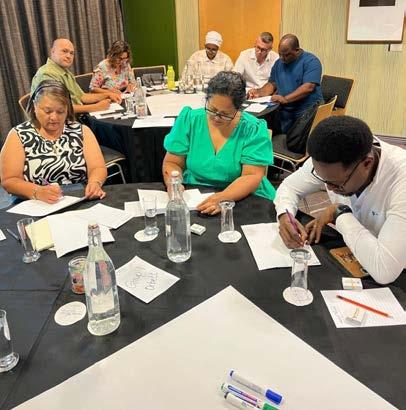
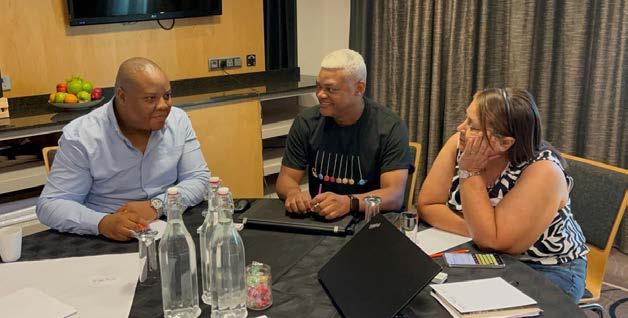
At the heart of the BiodiverCities project is a team of scholars whose expertise spans law, environmental science, engineering, and community development: Angela Van der Berg, Orbett Alexander, Francis Ntumba, Adriaan Engelbrecht, Glynnis Dykes, Meron Okbandrias, and Shernaaz Carelse. Together, they embody UWC’s vision of research that is people-centred, collaborative, and transformative. By mentoring postgraduate students and engaging community stakeholders, the team nurtures a new generation of researchers and practitioners who understand that sustainable cities require both scientific innovation and social inclusion. The project’s commitment to shared learning exemplifies how human capital development lies at the foundation of every sustainable research ecosystem.
Sustainability challenges cannot be addressed in isolation, and BiodiverCities thrives on partnership. The project brings together researchers, local government
officials, and community organisations to co-design nature-based solutions that respond to the realities of South African cities. Collaboration with municipal environmental units, civil society networks, and international research partners ensures that findings are both globally informed and locally grounded. These partnerships transform research into action creating channels through which scientific knowledge directly informs policy and urban practice.
Technological innovation forms the backbone of the BiodiverCities platform. The team has developed tools, such as nanotechnologybased water purification systems, real-time environmental monitoring mechanisms, and digital mapping platforms that integrate ecological data into urban planning. These technological platforms allow decision-makers to visualise biodiversity assets, monitor environmental change, and plan adaptive responses. By linking data, design, and decision-making, the project demonstrates how technology can bridge the gap between ecological science and urban sustainability.
BiodiverCities also contributes to policy transformation. The group’s research on the legal and governance dimensions of sustainable urban planning provides evidence-based recommendations for integrating Urban Green Infrastructure (UGI) and Nature-Based Solutions (NBS) into municipal frameworks. Their work supports policy coherence between environmental management, spatial planning, and public health, offering research-informed guidelines that municipalities can adopt to enhance ecological resilience and citizen wellbeing. This integration of science, law, and governance exemplifies how policy innovation sustains systemic change.
The overarching purpose of the BiodiverCities initiative is to reimagine urban spaces as living ecosystems places that are resilient, inclusive, and regenerative. By linking environmental sustainability with social wellbeing, the project contributes directly to SDG 11 (Sustainable Cities and Communities), SDG 13 (Climate Action), and SDG 15 (Life on Land).
Its work illustrates how research can simultaneously advance ecological restoration, public health, and community empowerment. Through this integrated model, BiodiverCities demonstrates UWC’s capacity to translate interdisciplinary research into transformative urban impact building not just sustainable cities, but sustainable futures.
Group 2: Education & Transformation Project: A Multifaceted Approach Towards Transforming the Education Landscape in the Global South in Response to the United Nations’ SDGs and the African Union’s Agenda 2063
– Reimagining Learning Through Inclusive Knowledge Systems
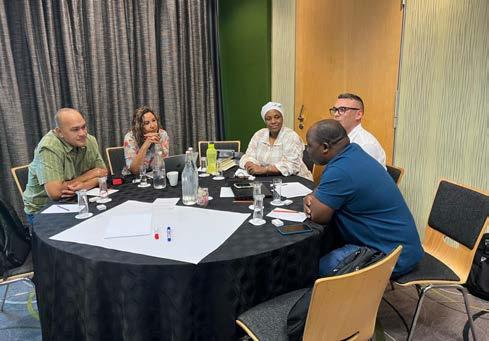
Deon Solomons, Windell Nortje, Sebolelo Mokapela, Brighton Mupangavanhu, Gerard Filies, and Ronel Maart embody UWC’s commitment to transformative education and inclusive scholarship. Their collective expertise spans law, education, health, and governance, reflecting a multidisciplinary approach to leadership in higher education transformation. By engaging postgraduate researchers and educators in participatory research, the group cultivates the next generation of scholars capable of critically reflecting on how knowledge is produced, validated, and transmitted within South African and within African contexts.
Partnerships – Bridging Academia, Policy, and Indigenous Communities
Central to this project is collaboration with educators, policymakers, and indigenous knowledge holders. Through strategic partnerships with community elders and local education departments, the group creates dialogue between academic and traditional knowledge systems. These partnerships extend beyond the university, linking Global South scholars with continental networks advancing the African Union’s Agenda 2063 and the UN SDGs, particularly SDG 4 (Quality Education) and SDG 10 (Reduced Inequalities).
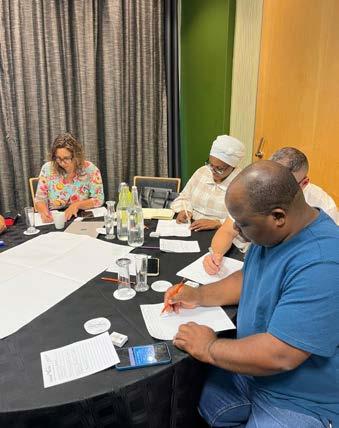
– Researching Transformation Through Participatory
The project employs a suite of qualitative and participatory platforms including interviews, focus groups, and ethnographic engagement to interrogate how higher education can become more inclusive and contextually relevant. These platforms foster critical exchange, enabling participants to co-create frameworks for embedding Indigenous Knowledge Systems (IKS) into curricula, assessment, and institutional practices. The result is a living, reflexive research process that turns engagement itself into a vehicle for transformation.
The team’s research has generated new frameworks and guidelines for integrating indigenous epistemologies into academic governance and teaching. By advocating for policy shifts that recognise indigenous methodologies as legitimate sources of knowledge, the project challenges Eurocentric biases and promotes epistemic justice. These outputs align with South Africa’s national education transformation agenda, offering tools for universities seeking to decolonise curricula and institutional culture.
At its core, this project reframes education as a catalyst for societal change. By grounding teaching and learning in multiple ways of knowing, it fosters innovation, equity, and social relevance—core tenets of the I3 Framework. It advances SDG 4 (Quality Education) and SDG 17 (Partnerships for the Goals) by modelling how collaborative, contextually grounded education can equip graduates to lead change in their communities and globally.
Project: Interdisciplinary Community Engagement for Sustainable Development at a Higher Education Institution in the Western Cape
Led by Kenechukwu Obikeze, Ntandoyenkosi Sibindi, Rubina Setlhare, Talitha Crowley, and Carolien van den Berg, this team epitomises engaged scholarship. Drawing on expertise in health sciences, social work, and community development, the group foregrounds participatory methodologies that place community members at the centre of research. Students and researchers collaborate directly with residents of the Fisantekraal community in the Western Cape, learning to translate academic insight into social innovation and empowerment.
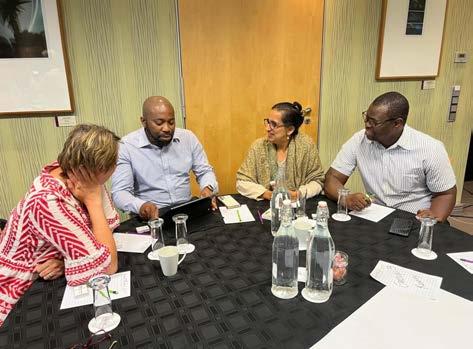
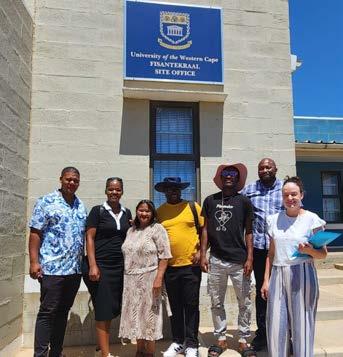
The group applies a Community-Based Participatory Action Research (CBPAR) model to build long-term partnerships between UWC and local communities. Engagement with municipal actors, NGOs, and community organisations ensures that interventions are co-designed, relevant, and sustainable. By aligning university research with local development plans, these partnerships turn UWC into an anchor institution, one that uses its research expertise to promote inclusive, community-driven development.
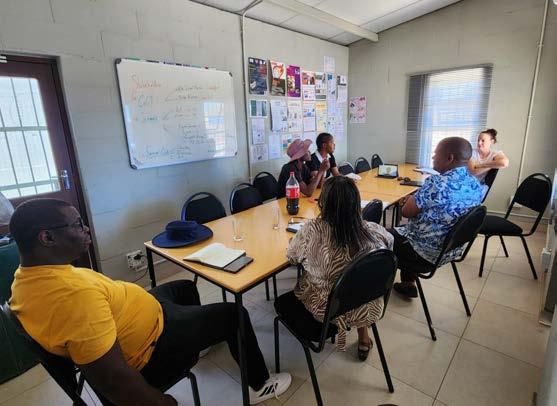
Using participatory mapping and digital data collection tools, the team conducted a comprehensive community needs analysis in Fisantekraal. This platform not only identifies local priorities but also captures the landscape of existing university-led initiatives, helping to coordinate efforts and avoid duplication. Through shared digital dashboards and collaborative forums, the group has created an accessible ecosystem for engagement that connects researchers, practitioners, and policymakers.
Findings from this work inform UWC’s broader community engagement strategy and contribute to national conversations about the social role of universities. The group’s evidence-based framework provides guidelines for aligning research, teaching, and engagement, ensuring that universities act as catalysts for sustainable community development. This model of embedded scholarship contributes to policy coherence within higher education and supports SDG 11 (Sustainable Cities and Communities) and SDG 16 (Peace, Justice and Strong Institutions).
The purpose of this initiative is to reposition higher education as a driver of collective well-being. By linking academic research to the lived realities of communities, the project exemplifies UWC’s vision of research that transforms society. It demonstrates that sustainability is not only environmental it is also social and institutional, grounded in trust, reciprocity, and shared accountability. Through this work, UWC models how engaged scholarship can contribute to a more just, inclusive, and resilient society.

The Research Excellence for Advanced Leaders (REAL) programme, led by the Office of the Deputy Vice-Chancellor: Research and Innovation, supports established, NRF-rated researchers in advancing interdisciplinary, high-impact research that addresses complex societal challenges aligned with the UN SDGs.
The REAL programme focuses on developing individual excellence as the foundation of institutional impact. It recognises that globally engaged research ecosystems are built not only through teams and structures, but through visionary scholars who expand the frontiers of knowledge, mentor others, and translate their expertise into transformative action. Through REAL, UWC invests in its most accomplished researchers, those who already demonstrate national and international influence and provides them with the tools, networks, and support to extend that impact even further.
People – Strengthening Academic Leadership and Influence
REAL identifies established, NRF-rated researchers who embody the University’s values of excellence, transformation, and innovation. Through mentorship, leadership coaching, and reflection, participants refine their academic identity, enhance their supervisory capacity, and amplify their leadership footprint within and beyond UWC. Each scholar in the inaugural cohort, Profs’ Mulugeta Dinbabo, Quentin Williams, Lisa Wegner, and Razia Adam represents a distinct domain of expertise but shares a common purpose: using scholarship as a vehicle for societal transformation.
• Prof Mulugeta Dinbabo (EMS, Institute for Social Development) investigates the nexus between climate change and migration in Africa, providing policy-relevant insights that guide governments and regional bodies in managing migration for sustainable development.
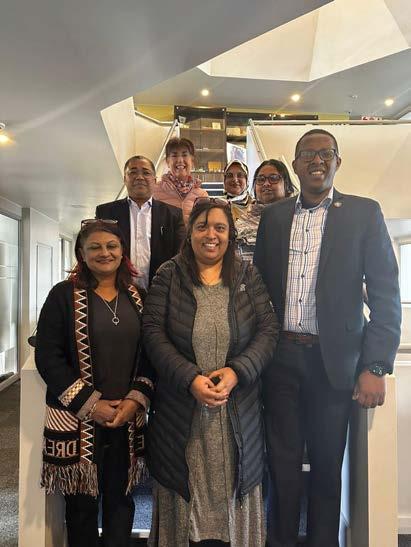
• Prof Quentin Williams (Arts and Humanities, Linguistics Department) leads pioneering work on the intellectualisation of Kaaps, advancing linguistic justice and inclusivity by transforming a historically marginalised language into a language of science and higher education.
• Prof Lisa Wegner (Community and Health Sciences, Department of Occupational Therapy) cocreates youth-led community programmes that empower vulnerable young people through participatory research, strengthening well-being and resilience.
• Prof Razia Adam (Department of Prosthodontics, Faculty of Dentistry) applies innovative approaches to oral health and public health integration, contributing to preventive care models and equitable healthcare access.
• Prof Benyam Mezmur (Dullah Omar Institute, Faculty of Law) is recognised globally for his leadership in child rights and international law, serving on the United Nations Committee on the Rights of the Child and translating research into global human-rights policy.
• Prof Christopher Arendse (Department of Physics, Faculty of Natural Sciences) advances renewable energy research and applied photonics, contributing to the national energy transition and training the next generation of scientists.
• Prof Sulochini Pather (Department of Educational Psychology) champions teacher professional development and inclusive education, focusing on pedagogies that empower educators and transform learning environments across diverse contexts.
Together, these seven scholars form a dynamic network of academic leaders who demonstrate that excellence is not an end in itself, but a catalyst for transformation. Each one mentors emerging researchers, fosters interdisciplinary collaboration, and extends UWC’s global reach through impactful partnerships and thought leadership. Through the REAL programme, their individual journeys converge into a collective movement, one that strengthens people as the foundation of UWC’s globally connected research ecosystem.
Partnerships – Expanding Global and Local Research Networks
REAL fosters connection between leaders and global research partners. Each participant builds on existing networks to establish collaborations that strengthen UWC’s position in regional and international research ecosystems. Partnerships with entities such as the African Union, UNESCO, and international universities across Europe and the Global South have resulted in policy dialogues, co-publications, and funded projects. These relationships extend UWC’s reach and demonstrate how individual researchers act as ambassadors for institutional collaboration.
Through seed funding, thought leadership forums, and writing retreats, REAL provides platforms for scholars to innovate, mentor, and communicate their research to broader audiences. These platforms not only enhance productivity and visibility but also serve as incubators for mentoring emerging academics linking REAL with the IMPACT pipeline. Each leader’s work creates a ripple effect: inspiring others to pursue high-quality, socially relevant research and strengthening the university’s knowledge ecosystem.
The work emerging from REAL informs UWC’s broader research governance and policy agenda. Insights from participants contribute to policy dialogues on language justice, youth empowerment, climate migration, and public health equity areas that intersect directly with national and continental priorities. Through participation in advisory panels and institutional committees, REAL scholars shape policy frameworks that embed transformation, inclusion, and ethical leadership into UWC’s academic fabric.
The overarching purpose of REAL is to transform individual excellence into collective advancement. By empowering leading researchers to operate as change agents, the programme ensures that UWC’s intellectual capital contributes to addressing humanity’s grand challenges. REAL advances SDG 4 (Quality Education), SDG 10 (Reduced Inequalities), SDG 13 (Climate Action), and SDG 17 (Partnerships for the Goals) by linking high-impact research with global collaboration and local relevance.
1. Prof Mulugeta Dinbabo – Faculty of Economic and Management Sciences (Institute for Social Development)
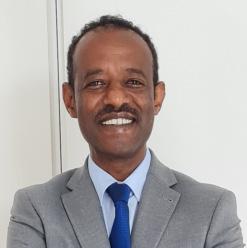
Prof Mulugeta Dinbabo’s research explores the intricate relationship between climate change and migration in Africa, examining how environmental shifts influence human mobility and development. His work, situated within the framework of the African Union’s Migration Policy Framework for Africa (MPFA), evaluates current research trends and policy gaps to support well-managed migration as a tool for sustainable development. This study contributes valuable insights to guide policymakers and regional stakeholders, advancing Africa’s collective response to climate-related migration and strengthening evidence-based decision-making.
2. Prof Quentin Williams – Faculty of Arts and Humanities (Director of the Centre for Multilingualism and Diversities Research (CMDR)
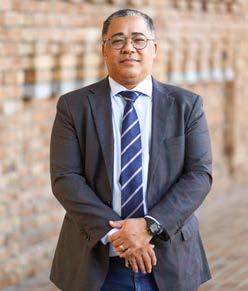
Prof Quentin Williams leads pioneering research on the intellectualisation of Kaaps, a historically marginalised language spoken by millions in South Africa. His project focuses on developing scientific terminology, digital resources, and bilingual educational materials for higher education, thereby positioning Kaaps as a language of scholarship and inclusion. By integrating Kaaps into university curricula and developing a terminology bank, his work advances equity, representation, and linguistic justice in academia, empowering communities and transforming the landscape of multilingual education.
3. Prof Lisa Wegner – Faculty of Community and Health Sciences (Department of Occupational Therapy)
Prof Lisa Wegner’s study focuses on empowering vulnerable youth in resource-constrained and rural South African communities through a community-based, participatory approach. Her research builds partnerships with young people and community organisations to cocreate youth-led programmes addressing social and developmental challenges. Using a combination of quantitative and qualitative methods, the project captures youth perspectives to inform responsive, inclusive solutions that strengthen well-being, participation, and social resilience. Her work exemplifies how collaborative research can drive real-world impact in community health and youth development.
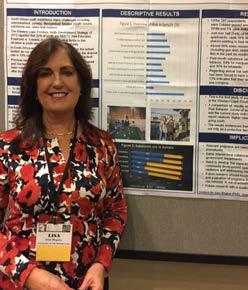
Prof Razia Adam’s research explores the internationalisation of dental education as a means of improving oral healthcare systems and global collaboration. Her work responds to the World Health Organisation’s Global Oral Health Agenda (2023–2030), investigating how postgraduate dental programmes can integrate international partnerships and emerging technologies, such as artificial intelligence, to enhance training and service delivery. By reimagining how dental education can address non-communicable diseases, Prof Adam’s study strengthens the capacity of oral health professionals and contributes to the global dialogue on equitable healthcare education.
Prof Sulochini Pather’s impactful work focuses on improving education systems across Southern Africa through the Care and Support for the Teaching and Learning (CSTL) framework. Her research advances the integration of care and support services into education systems, ensuring that teachers and learners thrive within supportive, inclusive environments.
As co-editor of a special issue of the International Journal of Inclusive Education titled, Care and Support for Teaching and Learning (CSTL) in Schools and Teacher Education in Sub-Saharan Africa, Prof Pather collaborates with leading academics to strengthen inclusive practices in the region. The CSTL framework, underpinned by the SADC Policy Framework, promotes multi-sectoral collaboration across education, healthcare, and social services, aligning with SDG 4 (Quality Education) and SDG 10 (Reduced Inequalities)
Prof Pather also leads the SADC CSTL Research Group, bringing together representatives from 16 member states and organisations such as Media in Education Trust (MIET) Africa, United Nations Educational, Scientific and Cultural Organisation (UNESCO), United Nations Children's Fund UNICEF), and the Swiss Agency for Development and Cooperation (SDC). Through this regional network, she champions cross-sector and cross-national partnerships that enhance the quality and inclusivity of education, contributing to SDG 17 (Partnerships for the Goals and SDG 3), (Good Health and Well-being). Her work exemplifies how collaboration and care can transform education systems and promote social justice across Africa.
6. Prof Christopher Arendse – Faculty of Natural Sciences (Department of Physics)
Prof Christopher Arendse’s innovative research targets one of today’s most urgent environmental issues, heavy metal contamination. His project develops low-cost, highsensitivity sensors using perovskite thin films and nanostructures to detect toxic metal ions in water and soil. This interdisciplinary work bridges materials science and environmental engineering, creating scalable, real-time monitoring solutions that improve environmental and public health. By enabling earlier detection of contaminants, Prof Arendse’s research contributes to cleaner ecosystems, safer communities, and more sustainable technological solutions.
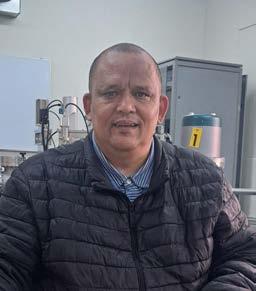
7. Prof Benyam Mezmur – Faculty of Law (Dullah Omar Institute)
Prof Benyam Mezmur’s research operates at the intersection of children’s rights, disabilities, and climate change in Africa. His work exposes how environmental crises disproportionately affect vulnerable children and argues for the integration of human rights-based approaches into climate policy. Drawing on international and regional frameworks, such as the Convention on the Rights of the Child, the African Charter on the Rights and Welfare of the Child, and the African Union’s Climate Change Strategy (2022–2032), his research strengthens policy frameworks to better protect children’s rights in the face of climate-induced challenges. Through this work, Prof Mezmur demonstrates how legal scholarship can inform more just, inclusive, and sustainable governance across the continent.
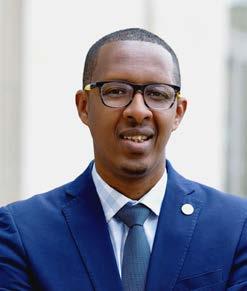
Together, these REAL researchers exemplify the university’s pursuit of research excellence, collaboration and impact, building bridges across disciplines and borders to generate knowledge that transforms societies and advances a sustainable global future.
UWC’s engagement achievements in 2024 reflect the University’s deep commitment to connecting research excellence with societal transformation. Through partnerships with communities, government, and industry, UWC continues to co-create knowledge that advances equity, sustainability, and innovation. These achievements illustrate how the University’s research ecosystem extends beyond the campus building bridges between local realities and global collaborations.
The New Frontiers in Research Fund (NFRF) project reflects a powerful example of how collaborative research can connect global expertise with local community realities. Led by Nelson Mandela University’s (NMU) Community Engagement Office, with the University of the Western Cape (UWC) as a key partner, the initiative brings together institutions from Canada, the UK, and Switzerland to address shared global challenges, particularly food and water security, climate change, and the preservation of Indigenous Knowledge Systems.
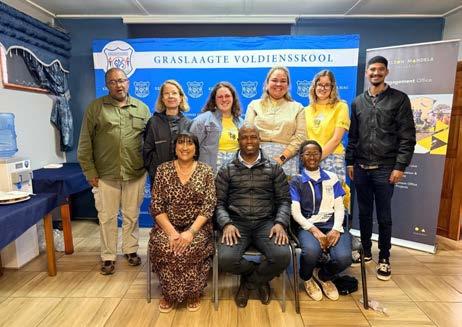
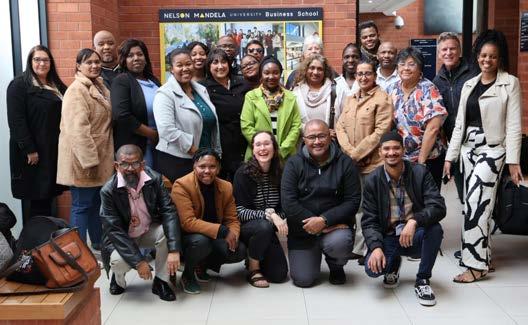
Grounded in the project concept “Nurturing Eco-Pedagogy: Developing Eco-Literacy in South African Primary Schools,” the collaboration aims to create meaningful, place-based learning experiences where children not only learn about the environment but through it, developing ecoliteracy and a deep understanding of the interconnectedness of people, land, and climate.
Dr Rubina Setlhare (UWC) leads the strand focused on amplifying youth voices and First Nations wisdom in Humansdorp, Eastern Cape. Through participatory frameworks such as the Action Learning Set (ALS) and Key Advisory Set (KAS), the project unites community members, educators, researchers, and indigenous leaders in co-creating sustainable, inclusive approaches to environmental education.
By linking local engagement to international collaboration, the NFRF project demonstrates how shared research ecosystems can foster innovative, community-driven solutions to some of the world’s most pressing ecological and social challenges.
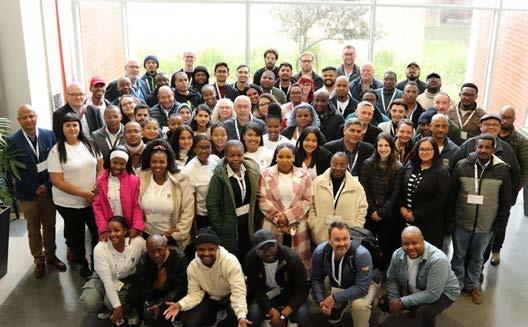
In 2025, UWC strengthened its global research partnerships through the MedChem2025 International Symposium, a collaborative initiative between UWC and Belgian research partners. The symposium served as a cornerstone event within the Research IMPACT programme.
This milestone event brought together distinguished experts from academia and industry to engage on the latest developments in bioinorganic and medicinal chemistry, with a particular focus on drug discovery and development. The symposium created an inclusive and dynamic space for knowledge exchange, student participation, and international collaboration, exemplifying UWC’s leadership in fostering accessible, high-impact research engagement.
A key feature of MedChem2025 was its commitment to incorporate or ensure capacity development, as part of the research Students were given the opportunity to present their research for the first time at an international academic platform through oral and poster presentations. The initiative also catalysed student and staff exchanges between UWC and Belgian institutions, deepening inter-laboratory collaboration and enabling shared access to resources and expertise.
This partnership has yielded tangible outcomes, including joint publications, ongoing projects in drug design targeting cancers prevalent in low- to middle-income countries, and the strengthening of research aligned with several SDGs notably SDG 3 (Good Health and Well-Being), SDG 4 (Quality Education), SDG 9 (Industry, Innovation and Infrastructure), and SDG 17 (Partnerships for the Goals).
Through MedChem2025, and its affiliated collaborations, UWC continues to position itself as a global connector in scientific innovation, building sustainable research ecosystems that enable discovery, enhance education, and drive solutions to pressing health challenges across borders.
Scan the QR code to read the full article:

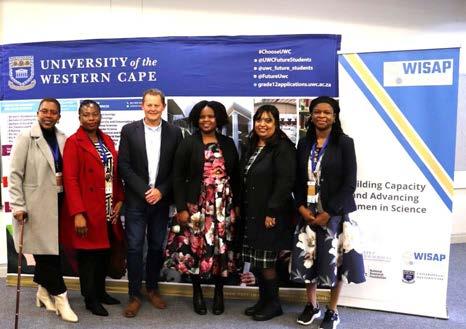
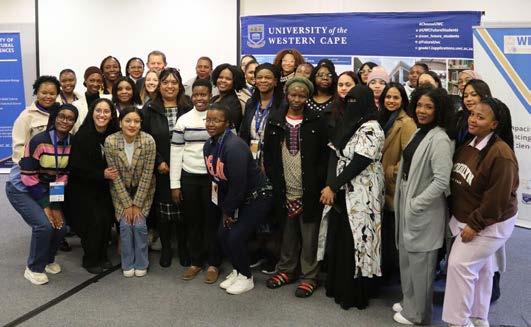
In 2024, UWC’s Faculty of Natural Sciences launched the Women in Science Advancement Programme (WISAP) in response to the persistent underrepresentation of women in Science, Technology, Engineering and Mathematics (STEM) disciplines and the imperative to strengthen gender equity in research and academia.
WISAP builds on the foundations laid by the earlier WAFIRA (Women Advancement Forum International Exchanges, Research and Academia) programme and is tailored to empower female early-career researchers in the natural sciences.
Key features of the WISAP workshop included:
• Development of purpose and values in research;
• Enhanced research presentation and communication skills; and
• Strengthened community engagement capabilities to ground scientific work in societal contexts.
WISAP is more than a skills workshop; it is a strategic investment in creating a more inclusive and connected research ecosystem. By equipping women researchers, fostering mentorship, and promoting community-engaged science, WISAP contributes to UWC’s vision of nurturing talent that is fully integrated into global research networks, and responsive to local challenges.
Scan the QR code to read the full article:
In 2024, the University of the Western Cape (UWC) proudly welcomed scholars, practitioners, and activists from across the world to the Southern African - Nordic Centre (SANORD) International Conference. With more than 330 delegates in attendance, the gathering became a vibrant space for dialogue, reflection, and collaboration around the theme “Social and Epistemic Justice: Imagining Sustainable Futures through Agency.”
Returning to its birthplace at UWC, the conference honoured the legacy of former Rector and ViceChancellor, the late Prof Brian O’Connell, and reaffirmed the University’s longstanding commitment to advancing social justice and inclusive development. It offered a timely opportunity to revisit questions of justice, knowledge, and power in a world faced with deep social, environmental, and political challenges. Through keynote addresses, workshops, and panel discussions, delegates explored how reimagining knowledge systems and strengthening global partnerships could shape more equitable and sustainable futures.
In her opening keynote, UWC’s Deputy Vice-Chancellor: Research & Innovation, Prof José Frantz, called on participants to rethink their roles in shaping a world grounded in dignity, agency, and inclusivity; principles that have long defined UWC’s institutional ethos. Rector and Vice-Chancellor, Prof Tyrone Pretorius, reflected on scholarly resilience in times of crisis, while Prof Mohamed Seedat’s powerful engagement on decolonising futures inspired deep reflection under UWC’s eucalyptus trees.
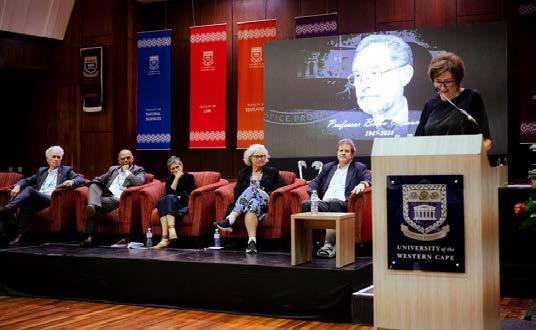
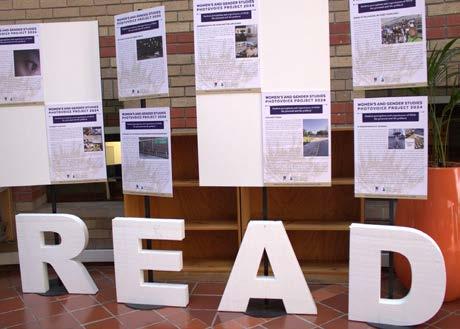
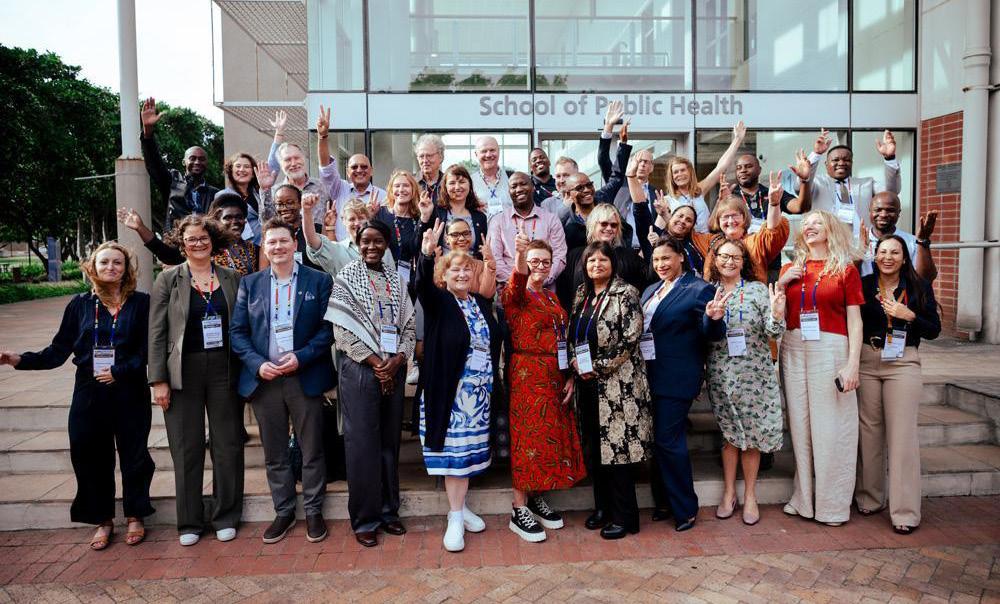
Throughout the event, conversations centred on the intersections between sustainability and justice; reminding us that the pursuit of a sustainable future cannot be separated from social, cultural, and epistemic transformation. Delegates were urged to move beyond theory into action: to dismantle inequitable systems, elevate marginalised voices, and co-create knowledge that reflects the lived realities of all communities.
For UWC, hosting SANORD 2024 was more than a moment of recognition; it was a reaffirmation of the University’s role in nurturing globally connected research ecosystems built on collaboration, compassion, and shared purpose. As participants departed, they carried forward a collective call to transform reflection into meaningful change and continue building a world where justice, equity, and sustainability are not only ideals but lived realities.
Scan the QR code to read the full article:

Webinars were a significant driver of UWC’s engagement activities in 2024, providing accessible and interactive platforms for dialogue across sectors and borders. These sessions drew together academics, policymakers, students, civil society organisations, and international partners to cocreate knowledge.
A total of 4 webinars was held in 2024, with a focus on:
• Innovation Pathways to Catalyse Youth-Led Economic Growth: Advancing SDGs in South Africa.
• Bridging Gaps: Interdisciplinary Approaches to Gender Equality and Social Justice in Higher Education.
• Interdisciplinary Pathways to Water Security and Justice: Sustainable Cities and Ecosystem Resilience.
• Multilingual Excellence in Research: Understanding and Implementing Inclusive Language Policies in South African Higher Education.
4.5.1. Innovation Pathways to Catalyse YouthLed Economic Growth: Advancing SDGs in South Africa
As part of UWC’s commitment to building inclusive research ecosystems that foster global collaboration, the DVC: Research and Innovation hosted a webinar titled “Innovation Pathways to Catalyse Youth-Led Economic Growth: Advancing SDGs in South Africa.”
Held during Youth Month, this session explored how research, innovation, and technology can empower young people to drive sustainable development and economic transformation. The discussion highlighted the role of youth-led initiatives in advancing the SDGs, with particular focus on economic growth, digital inclusion, and entrepreneurship.
Speakers shared practical examples of how applied research and design thinking can translate into tangible innovations that address societal challenges while creating new economic opportunities. Case studies, such as UWC’s Samsung Future Innovation Lab and youth-founded tech start-ups illustrate how collaborative, cross-sector partnerships can accelerate impact.
The webinar underscored UWC’s role as a catalyst for interdisciplinary engagement; bridging academia, government, and industry to co-create solutions for inclusive, youth-driven development.
Scan the QR code to watch the full webinar recording

The DVC: Research and Innovation hosted a webinar titled “Bridging Gaps: Interdisciplinary Approaches to Gender Equality and Social Justice in Higher Education” during Women’s Month, exemplifying UWC’s commitment to building inclusive research ecosystems through collaboration across disciplines and borders. The discussion explored how interdisciplinary approaches can advance gender equality and social justice within higher education, drawing together perspectives from education, gender studies, and community-based research.
The session highlighted the value of integrating lived experience, feminist scholarship, and crosssector partnerships to create more equitable and context-responsive universities. By connecting local engagement with international collaboration, the webinar demonstrated how research-driven dialogue can foster institutional transformation and contribute to global conversations on gender justice.
Through initiatives such as this, UWC continues to strengthen its role in building research ecosystems for global collaboration, where shared knowledge and collective inquiry drive meaningful social impact.
Scan the QR code to watch the full webinar recording
The DVC: Research and Innovation hosted a webinar titled “Interdisciplinary Pathways to Water Security and Justice: Sustainable Cities and Ecosystem Resilience,” bringing together researchers from across disciplines to explore solutions to one of the world’s most urgent challenges, water security.

The discussion highlighted how interdisciplinary collaboration can inform policy, law, and science in advancing sustainable
development and ecosystem resilience. Presentations addressed key issues, such as marine and coastal justice, legal strategies for urban water governance, and climate change adaptation. Together, these insights demonstrate the value of bridging research across environmental, legal, and social domains to strengthen global sustainability efforts.
This webinar underscores UWC’s commitment to advancing research that not only deepens understanding of critical global challenges but also contributes to building resilient, equitable societies.
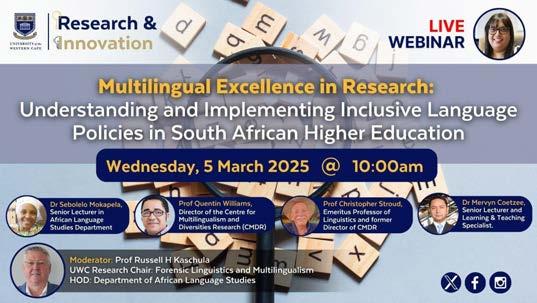
The DVC: Research and Innovation hosted a webinar titled “Multilingual Excellence in Research”, representing UWC’s commitment to building inclusive research ecosystems that bridge linguistic and cultural divides. Drawing participants from across South Africa and abroad, the session explored how multilingualism strengthens research, teaching, and collaboration in higher education.
Speakers from diverse disciplines highlighted pioneering initiatives, such as translating course materials into isiXhosa and integrating Afrikaaps into curricula, that advance linguistic diversity and social justice. The dialogue underscored the transformative potential of multilingual education in fostering access, belonging, and innovation.
The webinar concluded with a shared commitment to deepen cross-faculty collaboration, expand research on multilingual pedagogies, and shape policies that promote equitable participation in the global knowledge community.
Scan the QR code to watch the full webinar recording

The University of the Western Cape hosted its annual Research Week from 16 to 19 September 2024 under the theme “Emerging Economies for a Better Tomorrow: SDGs Research and Innovation for Social Change.”
The virtual event created a vibrant platform for intellectual exchange and collaboration, bringing together academics, students, and international partners to explore how research can drive sustainable and inclusive growth.
In his opening remarks, Prof Tyrone Pretorius, Rector and Vice-Chancellor, reaffirmed UWC’s vision of research as a force for transformation; one that extends beyond theory to practical solutions aligned with the SDGs. Prof José Frantz, Deputy Vice-Chancellor: Research and Innovation, highlighted the need for contextually relevant, interdisciplinary, and impact-driven research to achieve meaningful social change.
The programme featured eight thematic research streams, including Net Zero Transformation and Environmental Sustainability; One Health, Human Rights, Poverty and Social Justice, Geopolitical Governance: Challenges & Vulnerabilities, Emerging Economies; Transforming Education, Technology:4IR and Digital Transformation, and Nanotechnology and Astrophysics. These sessions reflected the breadth of UWC’s scholarship and its commitment to addressing complex global challenges through innovation and collaboration.
International keynote speakers, among them, Dr Joeri Both from Vrije Universiteit Amsterdam and Dr Dag-Håkon Eriksen from VID Specialized University in Norway, shared insights on open science and engaged scholarship, reinforcing the importance of knowledge exchange across borders. The week also celebrated the achievements of postgraduate researchers through the Three-Minute Thesis (3MT) Competition, where Ms Rucia Vern-Clare November emerged as the winner for her work on performance analysis in professional cricket coaching.
Research Week 2024 concluded with a renewed focus on strengthening research networks and partnerships, affirming UWC’s commitment to fostering a collaborative ecosystem that connects ideas, disciplines, and communities for lasting social impact.
Scan the QR code to watch the full webinar recording https://www.uwc.ac.za/news-and-announcements/news/seeds-of-changecultivating-innovation-for-sustainable-futures-through-research-week

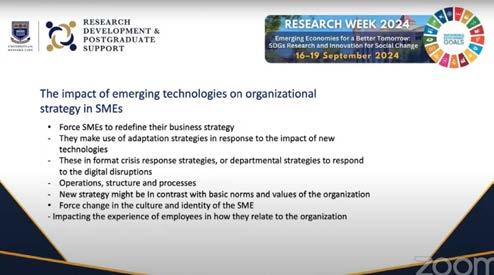
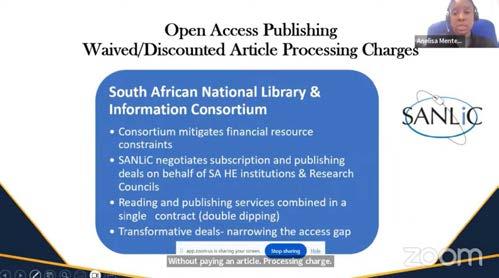
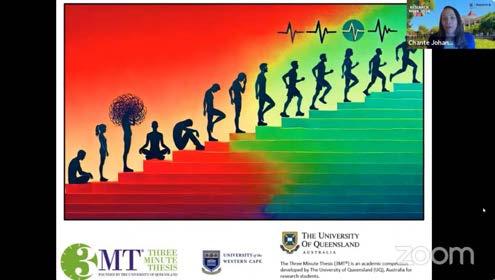

Across faculties, several key themes emerge as focal points for UWC’s internationalisation strategy:
UWC’s scholars are at the forefront of addressing health challenges that disproportionately affect vulnerable populations. Research in the biomedical sciences explores the neurological effects of HIV treatment, substance abuse, and cancer therapies, while health sciences colleagues are pioneering addiction recovery studies that focus on women with complex needs. These initiatives not only contribute to reducing the global burden of disease but also ensure that interventions are responsive to contexts in the Global South, advancing equity in global healthcare.
4, SDG 10)
Through collaborative projects in pedagogy, language education, and teacher training, UWC is preparing graduates for global citizenship. Initiatives such as multilingual pedagogy with Dutch and Belgian universities and immersive excursions for trainee teachers address educational inequality while fostering resilience and professional identity. Leadership labs and study tools also strengthen higher education access and quality. These interventions directly confront inequities in learning opportunities, ensuring education remains a transformative force for both social inclusion and academic excellence.
16)
UWC’s scholars are shaping global debates on gender equality and justice through research that bridges law, language, and society. Projects range from feminist jurisprudence and corruption studies to comparative judicial dialogues and forensic linguistics. These efforts ensure that issues of gender, justice, and institutional strength are addressed in ways that resonate across both local and international contexts. By convening global conversations, UWC reinforces its commitment to creating inclusive legal systems and advancing social transformation through equitable policies.
In a world of rapid change, UWC’s leadership studies are making significant contributions to global conversations on the future of work. Through the Leadership Lab and collaborations with European universities, our scholars are pioneering approaches to workplace resilience, leadership transformation, and decent work practices. Research outputs including symposia, books, and international publications are shaping organisational studies while equipping graduates with the skills to thrive in evolving economies. These efforts ensure UWC’s relevance in advancing inclusive growth and innovation.
Every international initiative at UWC underscores the critical role of partnerships in driving research impact. From early career awards that connect young academics with global laboratories to research chairs co-hosting international conferences, collaboration forms the backbone of UWC’s strategy. By building bridges across the Global North and Global South, UWC positions itself as a convenor of networks that not only advances scholarly outputs but also deliver policy-relevant, socially responsive research with global and local significance.
From early-career researchers gaining new skills in international laboratories to senior chairs leading global debates, UWC demonstrates a continuum of internationalisation that strengthens research ecosystems, enhances global visibility, and contributes directly to the SDGs. Our focus on equity, justice, health, and education ensures that our work is not only globally relevant but also deeply rooted in the priorities of the Global South. In this way, UWC embodies its mission to be a research-led university that makes research count locally and globally.
Internationalisation has become one of the defining features of UWC’s research strategy. By fos tering partnerships across the Global North and Global South, our academics from early career scholars to established research chairs are contributing to knowledge that transcends borders while tackling some of the most pressing global challenges. These collaborations not only enrich UWC’s research capacity but also align directly with the United Nations SDGs, affirming our commitment to producing research that matters locally and globally.
Our early career researchers demonstrate how internationalisation builds essential skills, opens global networks, and positions UWC as a hub for the next generation of scholars.
For example, in the biomedical sciences, Dr Chontrelle Willemse used her Early Career Award to train at the University at Buffalo in the USA, learning advanced blood-brain barrier modelling techniques. Her work contributes to SDG 3 (Good Health and Well-being) and SDG 17 (Partnerships for the Goals) by advancing affordable treatments for HIV, cancer, and substance abuse, while simultaneously creating postgraduate training opportunities.
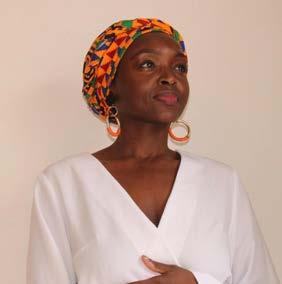

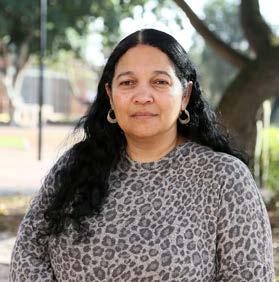
In Law, Dr Anzanilufuno Munyai extended collaborations initiated at Lund University, Sweden, to explore corruption and transitional justice issues at the heart of SDG 16 (Peace, Justice, and Strong Institutions). Her participation in global colloquia and consultancy work in Sudan demonstrates how UWC scholars contribute to solutions in both the Global South and Global North.
In Education, Dr Susanna Louw (left) and Dr Carli Louw (right) advanced international pedagogical innovation with partners in the Netherlands and Belgium. Their projects on AI-driven teaching tools, multilingual pedagogy, and immersive teacher training directly support SDG 4 (Quality Education) and SDG 10 (Reduced Inequalities), helping prepare globally competent teachers.
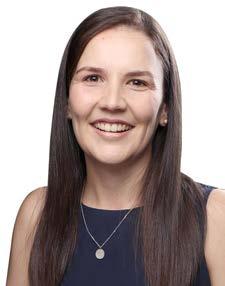

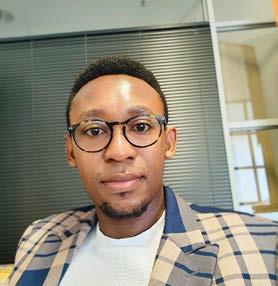
Mid-career researchers are translating these foundations into sustained partnerships and institutional visibility. Dr Khayelihle Makhathini (Natural Sciences) deepened research ties with Buffalo University, advancing understanding of HIV’s neurological impacts. His work aligns with SDG 3 (Good Health and Well - Being) and strengthens UWC’s access to NIH grant opportunities, enhancing the sustainability of our research ecosystem.
Prof Maria Florence (Community and Health Sciences) partnered with Trinity College, Dublin to examine addiction recovery and the quality of life for women with complex needs. This work bridges SDG 3 (Health) and SDG 5 (Gender Equality), highlighting how collaborative research produces socially relevant outcomes.
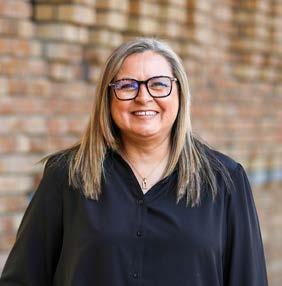
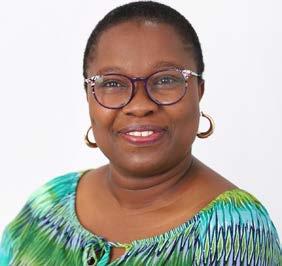
Prof Tolulope Balogun (Economic & Management Sciences) established the UWC Leadership Lab through collaboration with Vrije Universiteit Amsterdam, positioning UWC as a continental hub for leadership and organisational studies. Her work contributes to SDG 4 (Education), SDG 8 (Decent Work), and SDG 17 (Partnerships)
Dr Sagwadi Mabunda (Law) coordinated a series of global seminars and hosted the Georgia Association of Black Women Attorneys at UWC, strengthening SDG 4 (Quality Education), SDG 5 (Gender Equality), and SDG 16 (Peace Justice and Strong Institutions). These initiatives highlight UWC as a trusted partner in international legal dialogue.
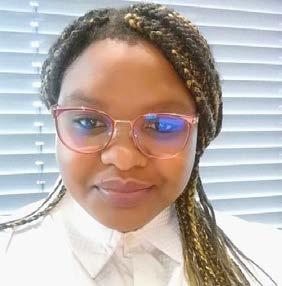

At the senior level, UWC Research Chairs are shaping international academic debates and embedding students in global scholarly ecosystems.
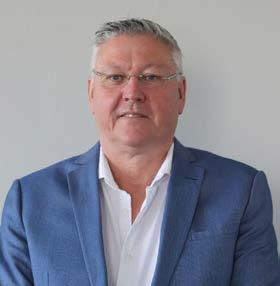
Prof Russell Kaschula, Chair in Forensic Linguistics and Multilingualism, co-hosted the International Association of Forensic and Legal Linguists Conference at UWC, with keynote speakers from Canada, Kenya, Jamaica, and the USA. His work advances SDG 16 (Peace Justice and Strong Institutions) by linking language, law, and equity, and his publications involve student co-authors, reinforcing UWC’s teaching-research nexus.
Prof Karin van Marle, Chair in Feminist Jurisprudence, built strong partnerships with Melbourne, Kent, and Messina universities. Her work explores the intersection of gender, law, and urban justice, aligning with SDG 5 (Gender Equality) and SDG 11 (Sustainable Cities and Communities). By curating international feminist jurisprudence networks, she enhances conceptual debates while ensuring UWC remains at the centre of global legal scholarship.
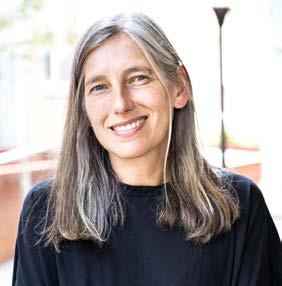
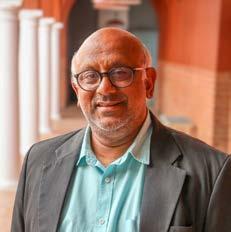
Prof Premesh Lalu, NRF/British Academy SA–UK Bilateral Digital Humanities Chair in Culture and Technics, Research Prof of History, and Founding Director of the Centre for Humanities Research (CHR) at the University of the Western Cape, represents UWC’s commitment to advancing globally connected and innovative research. Through the Digital Humanities Chair, he fosters interdisciplinary collaboration that bridges the arts, technology, and critical scholarship, creating new avenues for international partnership. His appointment to the Academic Senate of the Swedish Collegium for Advanced Study (SCAS) highlights both his scholarly excellence and the growing global impact of UWC’s research ecosystem, strengthening the University’s role in shaping inclusive and transformative knowledge networks across the world.

Acknowledging Our Achievements
6.1.1. Innovation and Technology
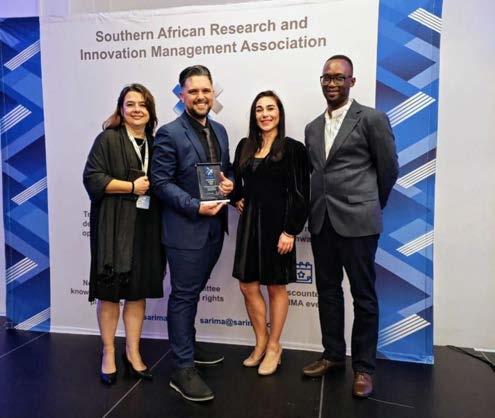
Mr Luan Africa, Commercialisation Specialist at UWC’s Technology Transfer Office (TTO) Professional Excellence in Innovation Management Award at the 2025 Southern African Research and Innovation Management Association (SARIMA) Conference. This award recognises Luan’s outstanding contributions to advancing innovation and technology transfer at UWC and across the region. His leadership has been pivotal in the development and implementation of the UWC Innovation Seed Fund (ISF), strengthening commercialisation pathways for SHAPE (Social Sciences, Humanities, and the Arts for People and the Economy) innovations, and enhancing national and international partnerships that drive research impact.
6.1.2. Analytical chemistry
Prof Priscilla Baker, from the Faculty of Natural Sciences, laureate of the 2025 L’Oréal-UNESCO For Women in Science International Awards for Africa and the Arab States Africa and the Arab States

Prof Baker was rewarded for her outstanding contribution in the field of highly sensitive electrochemical microsensors for detecting contaminants in the environment, with applications in pharmaceuticals, food, health and energy. Her dedication as a mentor in analytical electrochemistry has empowered students and early-career scientists to undertake innovative research projects in this field.
The University of the Western Cape continues to affirm its reputation as a leading centre of research excellence and innovation. During the 2024/2025 period, members of our academic community have been honoured with a range of prestigious national awards that recognise outstanding scholarly and scientific achievement. This section profiles distinctions received from three of South Africa’s foremost research and innovation awarding bodies: the National Research Foundation (NRF), the Higher Education Research and Science Awards (HERS-SA), and the National Science and Technology Forum (NSTF).
The NRF Awards represent one of the highest forms of recognition for research excellence in the country, celebrating individuals whose work has made exceptional contributions to knowledge creation and societal advancement. The HERS-SA Awards acknowledge excellence within the higher education sector, highlighting transformative research and innovation that address critical national and global challenges. Meanwhile, the NSTF Awards, widely regarded as South Africa’s “Science Oscars” pay tribute to outstanding achievement across the fields of science, engineering, technology, and innovation.
Collectively, these national honours reflect UWC’s growing influence in shaping research and innovation agendas, both within South Africa and beyond, and reaffirm our scholars’ dedication to advancing knowledge that drives meaningful impact.

The NSTF Awards is the flagship project of the National Science and Technology Forum (NSTF). The NSTF Awards honour and celebrate outstanding contributions to science, engineering and technology (SET) and innovation. The awards encourage and reward excellence in: Scientific Research Management of SET and innovation, Engineering research capacity development, Water Solutions, The Green Economy, Data for Research; NGO Award; Science Communication, Innovations, 4IR technologies, Clinician-Scientist and Science Diplomacy.
The nominees were announced for the 2024/2025 NSTF-South32 Awards, generally referred to as the "South African Science Oscars". Well done to the following colleagues for appearing in this list.
Dr Keagan Pokpas Senior Lecturer and Researcher: Nanoelectrochemistry and Sensor Technologies (Natural Sciences)
TW Kambule-NSTF Award: Emerging Researcher:
For pioneering low-cost electrochemical sensing technologies for environmental and health monitoring, addressing pollution and disease outbreaks in low-income communities
Dr Anita Burger: Research and Innovation Manager: Institute (Inst) for Microbial Biotechnology: Institute for microbial Biotechnology and Metagenomics (IMBM)
Management Award:
For being the catalyst of IMBM’s successful trajectory in the development of novel biobased technologies
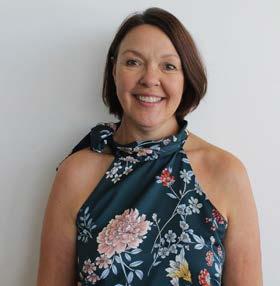
Prof Ajay Kumar Mishra: Department of Chemistry
NSTF-Water Research Commission (WRC) Award:
For his contribution in developing cost-effective and high-performance nanomaterials used for economical and sustainable water treatment systems
Prof Fanelwa Ngece-Ajayi Director; Deputy Dean: Research and Innovation, (NS) Associate Prof: Physical Chemistry; Research Leader: SensorLab Laboratories, Department of Chemistry
AmaQawe ngeMfundo - Non-Governmental Organisation (NGO) Award:
For empowering marginalised South African learners by making STEM education accessible through hands-on learning, mentorship, localised instruction, and career exposure, equipping them with skills to solve community challenges and drive national development (STEM Science, Technology, Engineering and Mathematics)
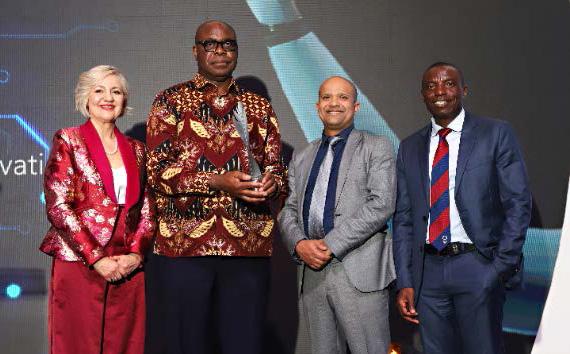
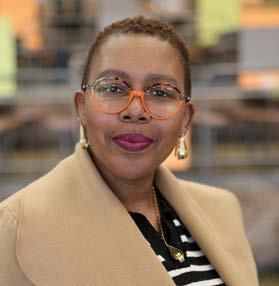
Prof Emmanuel Iwuoha has been honoured with the NSTF-South32 Engineering Research Capacity Development Award sponsored by Eskom, recognising that his work pushes boundaries in functional materials and nano-electrochemistry while fostering a new generation of researchers and innovators.
DSTI/NRF Centre of Excellence in Food Security (CoE-FS):
Communicating the Learning Journey – Prof Julian May, Director; Chair-holder: UNESCO, Science and Education for African Food Systems: For using strategic communication to reinforce the importance of placebased food systems in addressing food security challenges.
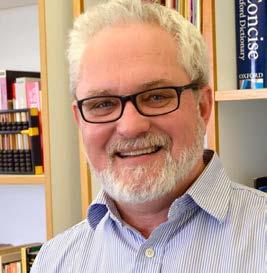

Prof Nkoala was the first runner-up in the Distinguished Young Women Researchers in the Humanities and Social Sciences category for her "outstanding contribution to building South Africa's scientific and research knowledge base", at the National Institute of Humanities and Social Sciences awards in 2024.
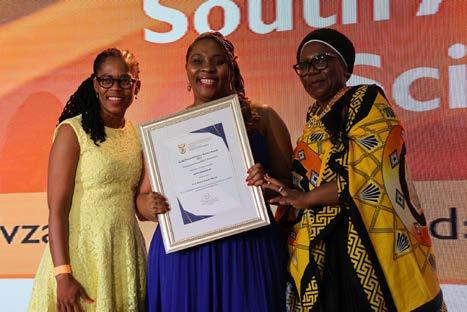
In a world often dominated by STEM disciplines, Associate Prof Sisanda Nkoala from UWC’s Department of Linguistics is redefining research excellence through her pioneering work in media, rhetoric and language. Her scholarship highlights the vital role of communication in shaping understanding and driving social change.
During the year under review, Prof Nkoala received two of South Africa’s most prestigious national research honours: she was first runner-up in the Department of Science and Innovation’s South African Women in Science Awards (SAWiSA) for Distinguished Young Women Researchers in the Humanities and Social Sciences, and a recipient of the NRF Research Excellence Award for Early Career/Emerging Researchers. These awards affirm both the calibre of her research and the growing recognition of the humanities and social sciences as essential contributors to innovation and knowledge creation.
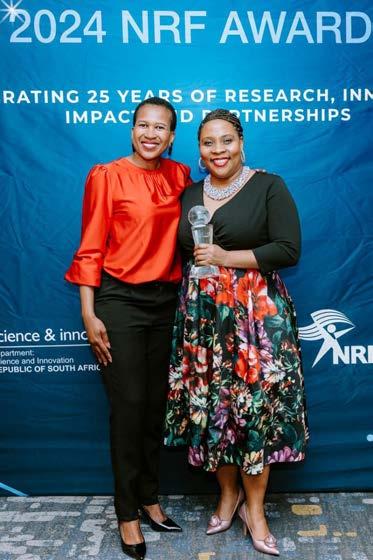
Her interdisciplinary research combines rhetoric, media studies, digital humanities, journalism education and computational methods, exploring themes such as the persuasive power of struggle songs, science communication on social media, and the digitisation of the early South African Black Press.
Beyond academia, Prof Nkoala is a strong advocate for public engagement and responsible journalism, frequently contributing to media platforms such as SABC, Newzroom Afrika and CapeTalk, and serving in leadership roles with the South African Press Council, SANEF, and international academic associations.
Having transitioned from an initial path in chemical engineering to media studies, she now works to expand the definition of “scientist” to include the social sciences. Her achievements continue to inspire young scholars, especially women in the humanities to “take up space and challenge the status quo”, affirming the enduring relevance of the humanities in understanding and shaping the world.
Higher Education Resource Services South Africa (HERS-SA) is a self-sustaining non-profit organisation dedicated to advancing women’s leadership in higher education. Established in 2003 and registered with the Department of Social Development, HERS-SA has become a driving force for gender equity across the sector.
Through its innovative leadership development programmes, HERS-SA equips women in academia with the knowledge, confidence and networks needed to advance their careers and influence institutional transformation. The organisation’s initiatives not only promote professional growth but also foster inclusive leadership cultures within universities.
Guided by the principles of the United Nations SDGs and the African Union’s Agenda 2063, HERSSA continues to champion women’s empowerment as a cornerstone of sustainable development and academic excellence. Its ongoing impact stands as a testament to the power of collective action in reshaping higher education and creating pathways for the next generation of women leaders.
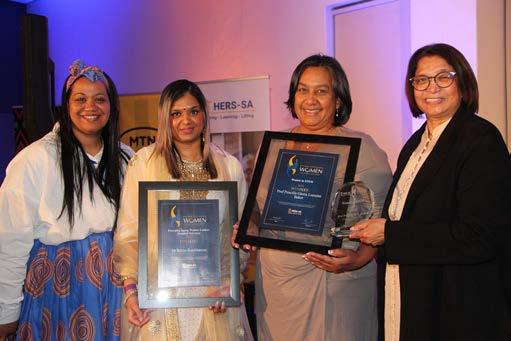
Prof Priscilla Baker (UWC) (on right-hand side) – is a Senior Professor in Chemistry and Director of the Electrochemical Sensors of the Nano-micro manufacturing facility at UWC. She seeks to combine her expertise in nanomaterials engineering and high-end analytical instrumentation to advance efficient technology solutions. She is internationally recognised as a scientific leader, prolific author, plenary speaker and knowledge advocate for science and technology.
Dr Rekha Rambharose (UWC) (on left-hand side) – is a Teaching and Learning Specialist at the University of the Western Cape. She is the head of the RPL unit and chairs the international Implementation, Assessment and Articulation of Recognition of Prior Learning (IAARPL) Association for Recognition of Prior Learning (RPL) Practitioners at UWC. She is the principal investigator on the Technology-enhanced RPL implementation (TERI) research project which focuses on the assessment, up-skilling and academic development of mature adults who gain access to university via alternative access pathways.
Scan the QR code to read the full article https://www.uwc.ac.za/news-and-announcements/news/two-uwc-womenleaders-clinch-prestigious-hers-sa-awards
The University of the Western Cape upholds a strong commitment to advancing research excellence and innovation. In affirmation of this commitment, the institution recognises and honours the significant achievements of its academic community through the annual Research Recognition Awards. The 2024 awards reflect the breadth and depth of research excellence demonstrated by UWC scholars across disciplines and career levels.
The 2024 Research Recognition Awards play a central role in advancing UWC’s commitment to research excellence.
1. Celebrating Exceptional Achievement: The awards honour researchers whose work demonstrates outstanding expertise, dedication, and impact in their fields.
2. Inspiring Scholarly Ambition: By highlighting the accomplishments of UWC’s top researchers, the awards encourage the broader academic community to strive for excellence in their own research pursuits.
3. Strengthening UWC’s Research Profile: Recognition through these awards showcases the University’s research and innovation strengths to both internal and external audiences.
4. Encouraging Collaboration: By acknowledging achievements across a range of disciplines, the awards promote interdisciplinary engagement and knowledge sharing.
5. Supporting Career Development: For early-career researchers, the awards provide meaningful recognition that can enhance professional profiles and open doors to further opportunities.
The following sections highlight the recipients of the 2024 Research Recognition Awards across multiple categories, reflecting the breadth and impact of research excellence at UWC.
Scan the QR code to read more about the 2024 Research Recognition Awards https://www.uwc.ac.za/news-and-announcements/news/uwc-celebrate sresearch-excellence-2024-awards-shine-spotlight-on-research-and-innovation

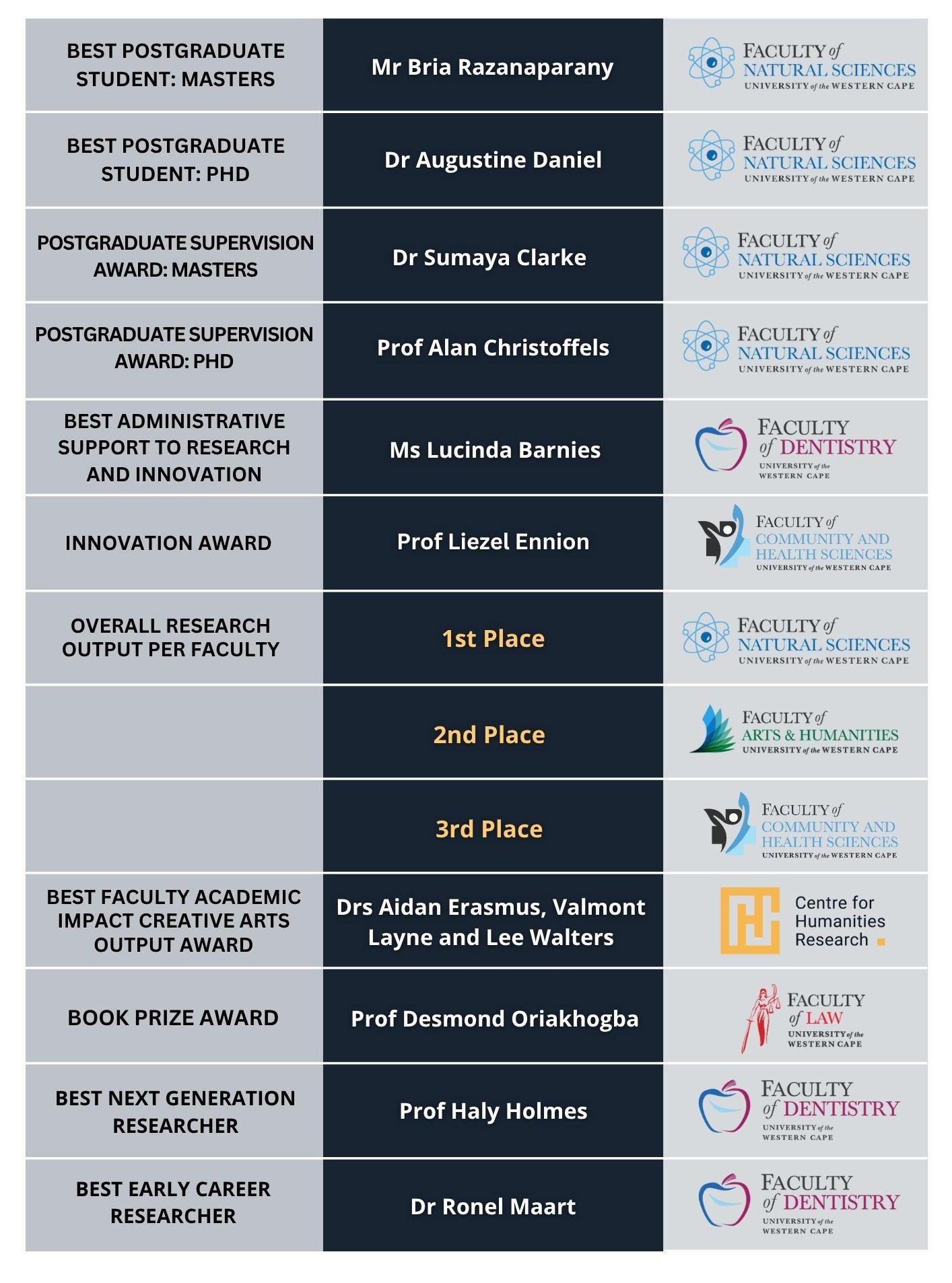
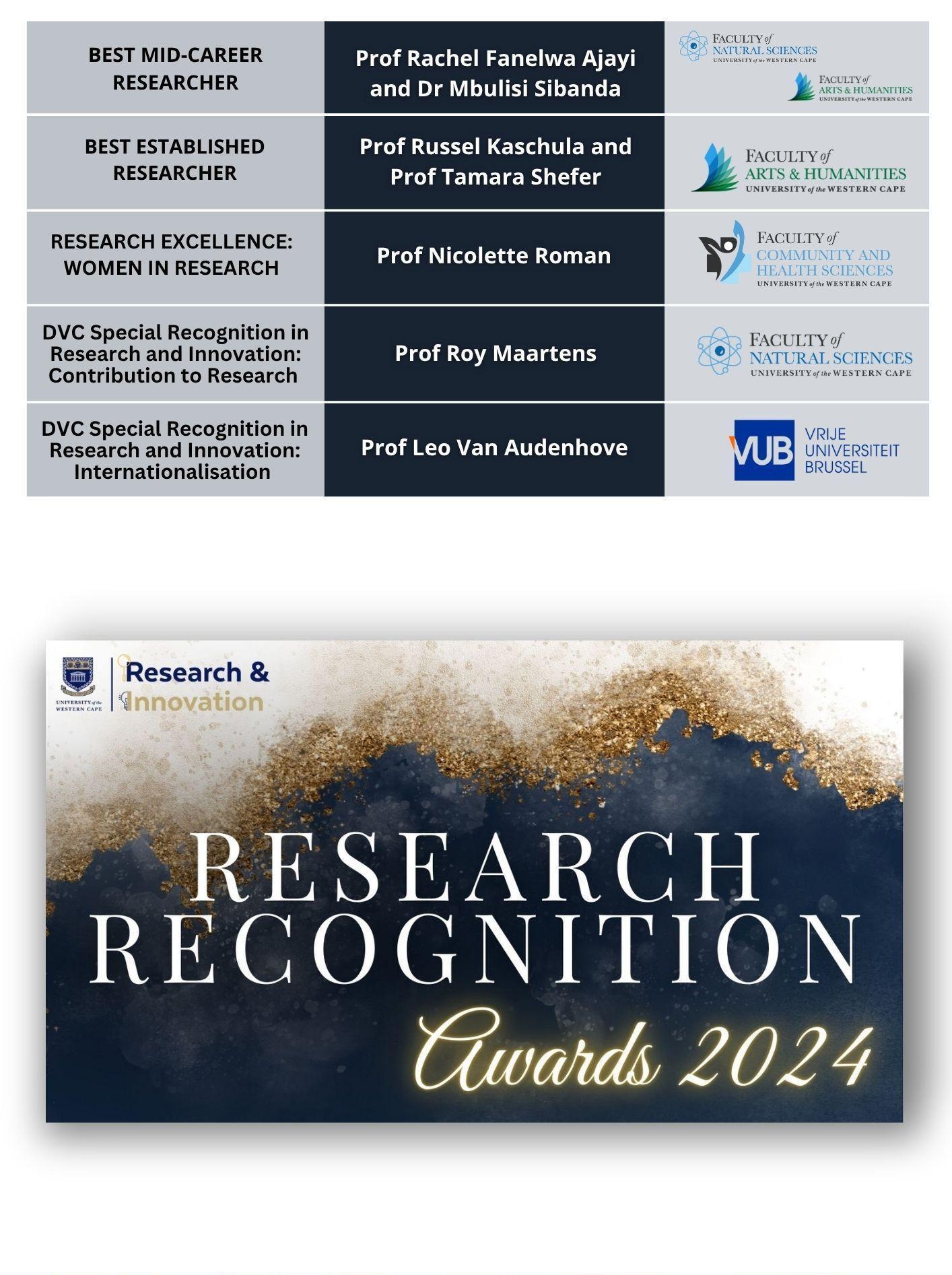
Awardees are UWC-affiliated academics and researchers who have published with The Conversation Africa within the review period (2023).
Award 1: UWC Author with the most number of published articles on The Conversation Africa over the period in review, 1 January - 31st December 2023 - Prof Keith Gottschalk
Award 2: UWC Author with the single most read article on The Conversation Africa over the period in review, 1 January - 31st December 2023 - Dr Catherine Pereira -Kotze
Award 3: Most published UWC author since the inception of The Conversation Africa - Prof Keith Gottschalk
Award 4: Single Most Read article by a UWC academic/researcher since the inception of The Conversation Africa - Emeritus Prof Sudeshni Naidoo
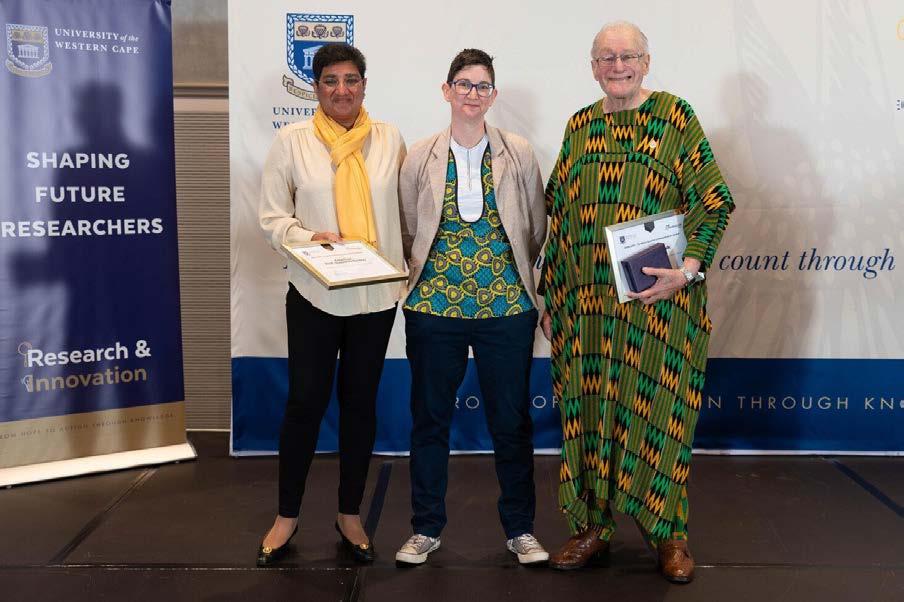

Established in 1969, the South African Medical Research Council (SAMRC) stands as the country’s leading authority in health research funding and scientific advancement. The Council’s mandate is to strengthen South Africa’s health research landscape by supporting innovative studies that address pressing medical and public health priorities. Through a comprehensive portfolio of grants and strategic initiatives, the SAMRC invests in research spanning infectious and non-communicable diseases, maternal and child health, and the optimisation of health systems.
A key focus of SAMRC is nurturing research talent and capacity at all levels of the academic pipeline. Its funding programmes are designed to support scientists at various stages of their careers, from emerging investigators to established researchers fostering an environment of sustained scientific excellence and innovation.
By enabling research that informs evidence-based policy and practice, SAMRC continues to play a transformative role in improving health outcomes and reducing inequities. Its support empowers researchers and institutions alike to generate knowledge that not only advances medical science but also contributes to the well-being of communities across South Africa and beyond.
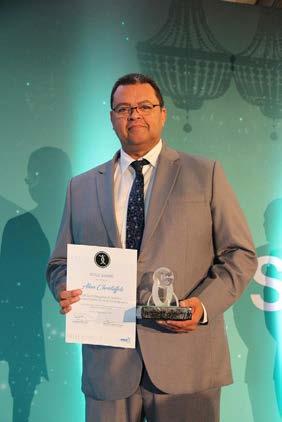
Prof Alan Christoffels, Director of the South African National Bioinformatics Institute (SANBI) and the SAMRC Bioinformatics Unit at the University of the Western Cape, was honoured with the 2023 South African Medical Research Council Gold Scientific Achievement Award for his outstanding contribution to science and public health. The award recognises senior scientists whose work has made a significant impact on improving health outcomes, particularly in developing nations. Prof Christoffels’ pioneering research in bioinformatics and health genomics has advanced computational methods to analyse biological data, with applications ranging from multidrug-resistant tuberculosis to continental pathogen surveillance, and through initiatives such as the Africa CDC’s Pathogen Genomics Programme.
This recognition reflects UWC’s commitment to Building Research Ecosystems for Global Collaboration, as Prof Christoffels’ success underscores the value of teamwork, mentorship, and strategic partnerships in advancing scientific discovery. By fostering international collaborations and developing local expertise, his work exemplifies how UWC researchers are shaping globally relevant, locally impactful solutions that strengthen research capacity and promote innovation across Africa and beyond.
The National Research Foundation (NRF) rating system plays a pivotal role in strengthening South Africa’s global competitiveness in science and innovation. It serves as a key benchmark for assessing the quality and impact of the country’s researchers in comparison with leading scholars worldwide.
Ratings are awarded based on a rigorous evaluation of a researcher’s recent body of work typically over the past eight years by both local and international peers. This process not only measures research output and influence but also highlights individuals who are recognised as leaders in their respective fields.
By promoting excellence and rewarding sustained, high-quality research, the NRF rating system encourages scholars to publish in prominent journals and outlets. Furthermore, rated researchers contribute significantly to research capacity development, as their supervision and mentorship equip the next generation of academics with advanced, globally relevant skills.
Many South African universities use NRF ratings as a strategic tool to strengthen their reputation as research-intensive institutions. In addition, several provide recognition and incentives to their rated researchers, acknowledging their contributions to advancing the national research agenda and enhancing South Africa’s presence on the global research stage.
In 2023, the University of the Western Cape had a total of 171 rated researchers, comprising 110 males and 61 females. In 2024, this number slightly decreased to 167 rated researchers, with 107 males and 60 females. While the overall total declined by four researchers, the gender distribution remained relatively stable, reflecting a consistent representation of male and female researchers within UWC’s rated cohort.